US11771029B2 - Microbial compositions for the prevention or reduction of growth of fungal pathogens on plants - Google Patents
Microbial compositions for the prevention or reduction of growth of fungal pathogens on plants Download PDFInfo
- Publication number
- US11771029B2 US11771029B2 US16/990,882 US202016990882A US11771029B2 US 11771029 B2 US11771029 B2 US 11771029B2 US 202016990882 A US202016990882 A US 202016990882A US 11771029 B2 US11771029 B2 US 11771029B2
- Authority
- US
- United States
- Prior art keywords
- seq
- microbe
- plant
- produce
- treatment
- Prior art date
- Legal status (The legal status is an assumption and is not a legal conclusion. Google has not performed a legal analysis and makes no representation as to the accuracy of the status listed.)
- Active, expires
Links
Images




Classifications
-
- A—HUMAN NECESSITIES
- A01—AGRICULTURE; FORESTRY; ANIMAL HUSBANDRY; HUNTING; TRAPPING; FISHING
- A01H—NEW PLANTS OR NON-TRANSGENIC PROCESSES FOR OBTAINING THEM; PLANT REPRODUCTION BY TISSUE CULTURE TECHNIQUES
- A01H3/00—Processes for modifying phenotypes, e.g. symbiosis with bacteria
-
- A—HUMAN NECESSITIES
- A01—AGRICULTURE; FORESTRY; ANIMAL HUSBANDRY; HUNTING; TRAPPING; FISHING
- A01C—PLANTING; SOWING; FERTILISING
- A01C1/00—Apparatus, or methods of use thereof, for testing or treating seed, roots, or the like, prior to sowing or planting
- A01C1/06—Coating or dressing seed
-
- A—HUMAN NECESSITIES
- A01—AGRICULTURE; FORESTRY; ANIMAL HUSBANDRY; HUNTING; TRAPPING; FISHING
- A01C—PLANTING; SOWING; FERTILISING
- A01C21/00—Methods of fertilising, sowing or planting
-
- A—HUMAN NECESSITIES
- A01—AGRICULTURE; FORESTRY; ANIMAL HUSBANDRY; HUNTING; TRAPPING; FISHING
- A01N—PRESERVATION OF BODIES OF HUMANS OR ANIMALS OR PLANTS OR PARTS THEREOF; BIOCIDES, e.g. AS DISINFECTANTS, AS PESTICIDES OR AS HERBICIDES; PEST REPELLANTS OR ATTRACTANTS; PLANT GROWTH REGULATORS
- A01N37/00—Biocides, pest repellants or attractants, or plant growth regulators containing organic compounds containing a carbon atom having three bonds to hetero atoms with at the most two bonds to halogen, e.g. carboxylic acids
- A01N37/44—Biocides, pest repellants or attractants, or plant growth regulators containing organic compounds containing a carbon atom having three bonds to hetero atoms with at the most two bonds to halogen, e.g. carboxylic acids containing at least one carboxylic group or a thio analogue, or a derivative thereof, and a nitrogen atom attached to the same carbon skeleton by a single or double bond, this nitrogen atom not being a member of a derivative or of a thio analogue of a carboxylic group, e.g. amino-carboxylic acids
- A01N37/46—N-acyl derivatives
-
- A—HUMAN NECESSITIES
- A01—AGRICULTURE; FORESTRY; ANIMAL HUSBANDRY; HUNTING; TRAPPING; FISHING
- A01N—PRESERVATION OF BODIES OF HUMANS OR ANIMALS OR PLANTS OR PARTS THEREOF; BIOCIDES, e.g. AS DISINFECTANTS, AS PESTICIDES OR AS HERBICIDES; PEST REPELLANTS OR ATTRACTANTS; PLANT GROWTH REGULATORS
- A01N43/00—Biocides, pest repellants or attractants, or plant growth regulators containing heterocyclic compounds
- A01N43/713—Biocides, pest repellants or attractants, or plant growth regulators containing heterocyclic compounds having rings with four or more nitrogen atoms as the only ring hetero atoms
-
- A—HUMAN NECESSITIES
- A01—AGRICULTURE; FORESTRY; ANIMAL HUSBANDRY; HUNTING; TRAPPING; FISHING
- A01N—PRESERVATION OF BODIES OF HUMANS OR ANIMALS OR PLANTS OR PARTS THEREOF; BIOCIDES, e.g. AS DISINFECTANTS, AS PESTICIDES OR AS HERBICIDES; PEST REPELLANTS OR ATTRACTANTS; PLANT GROWTH REGULATORS
- A01N43/00—Biocides, pest repellants or attractants, or plant growth regulators containing heterocyclic compounds
- A01N43/72—Biocides, pest repellants or attractants, or plant growth regulators containing heterocyclic compounds having rings with nitrogen atoms and oxygen or sulfur atoms as ring hetero atoms
-
- A—HUMAN NECESSITIES
- A01—AGRICULTURE; FORESTRY; ANIMAL HUSBANDRY; HUNTING; TRAPPING; FISHING
- A01N—PRESERVATION OF BODIES OF HUMANS OR ANIMALS OR PLANTS OR PARTS THEREOF; BIOCIDES, e.g. AS DISINFECTANTS, AS PESTICIDES OR AS HERBICIDES; PEST REPELLANTS OR ATTRACTANTS; PLANT GROWTH REGULATORS
- A01N63/00—Biocides, pest repellants or attractants, or plant growth regulators containing microorganisms, viruses, microbial fungi, animals or substances produced by, or obtained from, microorganisms, viruses, microbial fungi or animals, e.g. enzymes or fermentates
- A01N63/20—Bacteria; Substances produced thereby or obtained therefrom
-
- A—HUMAN NECESSITIES
- A01—AGRICULTURE; FORESTRY; ANIMAL HUSBANDRY; HUNTING; TRAPPING; FISHING
- A01N—PRESERVATION OF BODIES OF HUMANS OR ANIMALS OR PLANTS OR PARTS THEREOF; BIOCIDES, e.g. AS DISINFECTANTS, AS PESTICIDES OR AS HERBICIDES; PEST REPELLANTS OR ATTRACTANTS; PLANT GROWTH REGULATORS
- A01N63/00—Biocides, pest repellants or attractants, or plant growth regulators containing microorganisms, viruses, microbial fungi, animals or substances produced by, or obtained from, microorganisms, viruses, microbial fungi or animals, e.g. enzymes or fermentates
- A01N63/20—Bacteria; Substances produced thereby or obtained therefrom
- A01N63/22—Bacillus
-
- A—HUMAN NECESSITIES
- A01—AGRICULTURE; FORESTRY; ANIMAL HUSBANDRY; HUNTING; TRAPPING; FISHING
- A01N—PRESERVATION OF BODIES OF HUMANS OR ANIMALS OR PLANTS OR PARTS THEREOF; BIOCIDES, e.g. AS DISINFECTANTS, AS PESTICIDES OR AS HERBICIDES; PEST REPELLANTS OR ATTRACTANTS; PLANT GROWTH REGULATORS
- A01N63/00—Biocides, pest repellants or attractants, or plant growth regulators containing microorganisms, viruses, microbial fungi, animals or substances produced by, or obtained from, microorganisms, viruses, microbial fungi or animals, e.g. enzymes or fermentates
- A01N63/20—Bacteria; Substances produced thereby or obtained therefrom
- A01N63/27—Pseudomonas
-
- A—HUMAN NECESSITIES
- A01—AGRICULTURE; FORESTRY; ANIMAL HUSBANDRY; HUNTING; TRAPPING; FISHING
- A01N—PRESERVATION OF BODIES OF HUMANS OR ANIMALS OR PLANTS OR PARTS THEREOF; BIOCIDES, e.g. AS DISINFECTANTS, AS PESTICIDES OR AS HERBICIDES; PEST REPELLANTS OR ATTRACTANTS; PLANT GROWTH REGULATORS
- A01N63/00—Biocides, pest repellants or attractants, or plant growth regulators containing microorganisms, viruses, microbial fungi, animals or substances produced by, or obtained from, microorganisms, viruses, microbial fungi or animals, e.g. enzymes or fermentates
- A01N63/30—Microbial fungi; Substances produced thereby or obtained therefrom
- A01N63/32—Yeast
-
- A—HUMAN NECESSITIES
- A01—AGRICULTURE; FORESTRY; ANIMAL HUSBANDRY; HUNTING; TRAPPING; FISHING
- A01N—PRESERVATION OF BODIES OF HUMANS OR ANIMALS OR PLANTS OR PARTS THEREOF; BIOCIDES, e.g. AS DISINFECTANTS, AS PESTICIDES OR AS HERBICIDES; PEST REPELLANTS OR ATTRACTANTS; PLANT GROWTH REGULATORS
- A01N63/00—Biocides, pest repellants or attractants, or plant growth regulators containing microorganisms, viruses, microbial fungi, animals or substances produced by, or obtained from, microorganisms, viruses, microbial fungi or animals, e.g. enzymes or fermentates
- A01N63/50—Isolated enzymes; Isolated proteins
-
- A—HUMAN NECESSITIES
- A01—AGRICULTURE; FORESTRY; ANIMAL HUSBANDRY; HUNTING; TRAPPING; FISHING
- A01P—BIOCIDAL, PEST REPELLANT, PEST ATTRACTANT OR PLANT GROWTH REGULATORY ACTIVITY OF CHEMICAL COMPOUNDS OR PREPARATIONS
- A01P3/00—Fungicides
-
- C—CHEMISTRY; METALLURGY
- C12—BIOCHEMISTRY; BEER; SPIRITS; WINE; VINEGAR; MICROBIOLOGY; ENZYMOLOGY; MUTATION OR GENETIC ENGINEERING
- C12N—MICROORGANISMS OR ENZYMES; COMPOSITIONS THEREOF; PROPAGATING, PRESERVING, OR MAINTAINING MICROORGANISMS; MUTATION OR GENETIC ENGINEERING; CULTURE MEDIA
- C12N1/00—Microorganisms; Compositions thereof; Processes of propagating, maintaining or preserving microorganisms or compositions thereof; Processes of preparing or isolating a composition containing a microorganism; Culture media therefor
- C12N1/14—Fungi; Culture media therefor
- C12N1/16—Yeasts; Culture media therefor
-
- C—CHEMISTRY; METALLURGY
- C12—BIOCHEMISTRY; BEER; SPIRITS; WINE; VINEGAR; MICROBIOLOGY; ENZYMOLOGY; MUTATION OR GENETIC ENGINEERING
- C12N—MICROORGANISMS OR ENZYMES; COMPOSITIONS THEREOF; PROPAGATING, PRESERVING, OR MAINTAINING MICROORGANISMS; MUTATION OR GENETIC ENGINEERING; CULTURE MEDIA
- C12N1/00—Microorganisms; Compositions thereof; Processes of propagating, maintaining or preserving microorganisms or compositions thereof; Processes of preparing or isolating a composition containing a microorganism; Culture media therefor
- C12N1/20—Bacteria; Culture media therefor
Definitions
- the present application is filed with a Sequence Listing in electronic format.
- the Sequence Listing is provided as a file entitled 51401_701_301_SL.txt, created Jul. 31, 2020, which is 15 kilobytes in size.
- the information in the electronic format of the Sequence Listing is incorporated by reference in its entirety.
- the following biological material has been deposited with the Westerdijk Fungal Biodiversity Institute (“CBS”) in the Netherlands, and bears the following designations, deposit numbers, and dates of deposit: Gluconobacter cerinus , BC18B (GICC03610, Feb. 11, 2021); and Hanseniaspora uvarum , BC18Y (aka BC18A) (GICC03611, Feb. 11, 2021).
- CBS Westerdijk Fungal Biodiversity Institute
- the deposits were made in accordance with the provisions of the Budapest Treaty for the International Recognition of the Deposit of Microorganisms for the Purpose of Patent Procedure. The strains were tested by the CBS and determined to be viable.
- Microbes having anti-fungal properties have been developed as biological control agents to reduce both crop loss and food spoilage by these fungal pathogens.
- Commercially available products may not show the desired plant or fungal specificity or effectiveness.
- biocontrol compositions to prevent fungal growth can provide alternatives to currently available products.
- biocontrol compositions comprising: (i) at least one microbe, and (ii) a carrier; wherein the at least one microbe has a 16S rRNA sequence greater than 99% identical to a 16S rRNA sequence selected from the group of SEQ ID NO: 1 and SEQ ID NO: 9 or wherein the at least one microbe has an ITS sequence greater than 99% identical to an ITS sequence selected from the group of SEQ ID NO: 17 and SEQ ID NO: 20 or wherein the at least one microbe has an ITS sequence greater than 90% identical to an ITS sequence of SEQ ID NO:18.
- biocontrol compositions comprising: (i) at least one microbe, and (ii) a carrier; wherein the at least one microbe comprises a rRNA sequence greater than 99% identical to a sequence of greater than 200 bases, the sequence comprising a rRNA sequence selected from the group consisting of SEQ ID NO: 1 and SEQ ID NO: 9 or wherein the at least one microbe has an ITS sequence greater than 99% identical to an ITS sequence of SEQ ID NO: 17 or wherein the at least one microbe has an ITS sequence greater than 90% identical to SEQ ID NO: 18.
- biocontrol compositions comprising: (i) at least one microbe, and (ii) a carrier, wherein the biocontrol composition is capable of inhibiting growth of Fusarium oxysporum 25% or more relative to a control not exposed to the biocontrol composition, or inhibiting growth of Verticillium dahliae 60% or more relative to a control not exposed to the biocontrol composition as determined by measuring survival of Fusarium oxysporum or Verticillium dahliae , respectively.
- biocontrol compositions comprising (i) at least one microbe, and (ii) a carrier, wherein the at least one microbe has a 16S rRNA sequence greater than 99% identical to a 16S rRNA sequence of SEQ ID NO: 22.
- biocontrol compositions comprising (i) at least one microbe, and (ii) a carrier, wherein the at least one microbe has a 16S rRNA sequence greater than 99% identical to a 16S rRNA sequence of SEQ ID NO: 23.
- biocontrol compositions comprising (i) at least one microbe, and (ii) a carrier, wherein the at least one microbe has a 16S rRNA sequence greater than 99% identical to a 16S rRNA sequence selected from the group of SEQ ID NO: 24 or wherein the at least one microbe has an ITS sequence greater than 99% identical to an ITS sequence selected from the group of SEQ ID NO: 25 or wherein the at least one microbe has an ITS sequence greater than 90% identical to an ITS sequence of SEQ ID NO: 25.
- biocontrol compositions comprising (i) at least one microbe, and (ii) a carrier, wherein the biocontrol composition is capable of inhibiting growth of Botrytis cinerea 25% or more relative to a control not exposed to the biocontrol composition.
- biocontrol compositions comprising (i) at least one microbe, and (ii) a carrier, wherein the biocontrol composition is capable of inhibiting growth of Monilinia vaccinii - corymbosi 25% or more relative to a control not exposed to the biocontrol composition.
- biocontrol compositions comprising (i) at least one microbe, and (ii) a carrier, wherein the biocontrol composition is capable of inhibiting growth of Colletotrichum spaethanium 25% or more relative to a control not exposed to the biocontrol composition.
- biocontrol compositions comprising (i) at least one microbe, and (ii) a carrier, wherein the biocontrol composition is capable of inhibiting growth of Puccinia sorghi 25% or more relative to a control not exposed to the biocontrol composition.
- biocontrol compositions comprising (i) at least one microbe, and (ii) a carrier, wherein the biocontrol composition is capable of inhibiting growth of Plasmopara viticola 25% or more relative to a control not exposed to the biocontrol composition.
- biocontrol compositions comprising (i) at least one microbe, and (ii) a carrier, wherein the biocontrol composition is capable of inhibiting growth of Erysiphe necator 25% or more relative to a control not exposed to the biocontrol composition.
- biocontrol compositions comprising (i) at least one microbe, and (ii) a carrier, wherein the biocontrol composition is capable of inhibiting growth of Podasphaera macularis 25% or more relative to a control not exposed to the biocontrol composition.
- biocontrol compositions comprising (i) at least one microbe, and (ii) a carrier, wherein the biocontrol composition is capable of inhibiting growth of an organism in the genus Pytium 25% or more relative to a control not exposed to the biocontrol composition.
- biocontrol compositions comprising (i) at least one microbe, and (ii) a carrier, wherein the biocontrol composition is capable of inhibiting growth of a organism in the genus Rhizopus 25% or more relative to a control not exposed to the biocontrol composition.
- biocontrol compositions comprising: (i) a secondary metabolite of at least one microbe, and (ii) a carrier; wherein the at least one microbe has a ITS sequence greater than 99% identical to a ITS sequence selected from the group of SEQ ID NO: 17, SEQ ID NO: 18, SEQ ID NO: 19, SEQ ID NO: 20, SEQ ID NO: 21, and SEQ ID NO: 25.
- biocontrol compositions comprising: (i) a secondary metabolite of at least one microbe, and (ii) a carrier; wherein the at least one microbe has a 16S rRNA sequence greater than 99% identical to a 16S rRNA sequence selected from the group of SEQ ID NO: 1, SEQ ID NO: 9, SEQ ID NO: 22, SEQ ID NO: 23, and SEQ ID NO: 24.
- the biocontrol composition further comprises a second microbe, wherein the second microbe is not identical to the at least one microbe.
- the second microbe can comprise a RNA sequence that is at least 95% identical to a sequence selected from the group consisting of: SEQ ID NO: 1-25.
- the second microbe can comprise a 16S rRNA sequence that is at least 95% identical to a 16S rRNA sequence selected from the group consisting of: SEQ ID NO: 1, 2, 3, 4, 5, 6, 7, 8, 9, 10, 11, 12, 13, 14, 15, 16, 22, 23, and 24.
- the second microbe can comprise an internal transcribed spacer (ITS) sequence that is at least 95% identical to an ITS sequence selected from the group consisting of: SEQ ID NO: 17, 18, 19, 20, 21, and 25.
- ITS internal transcribed spacer
- the second microbe can comprise a 16S rRNA sequence that is at least 99% identical to a 16S rRNA sequence selected from the group consisting of: SEQ ID NO: 1, 2, 3, 4, 5, 6, 7, 8, 9, 10, 11, 12, 13, 14, 15, 16, 22, 23, and 24.
- the second microbe can comprise an internal transcribed spacer (ITS) sequence that is at least 99% identical to an ITS sequence selected from the group consisting of: SEQ ID NO: 17, 18, 19, 20, 21, and 25.
- the second microbe can comprise a 16S rRNA sequence that is a 16S rRNA sequence selected from the group consisting of: SEQ ID NO: 1, 2, 3, 4, 5, 6, 7, 8, 9, 10, 11, 12, 13, 14, 15, 16, 22, 23, and 24.
- the second microbe can comprise an internal transcribed spacer (ITS) sequence that is an ITS sequence selected from the group consisting of: SEQ ID NO: 17, 18, 19, 20, 21, and 25.
- the at least microbe comprises a 16S rRNA sequence that is at least 99% identical to SEQ ID NO: 24 and the second microbe comprises an ITS sequence that is at least 99% identical to SEQ ID: NO 25.
- the biocontrol composition further comprises a third microbe, and the third microbe is not identical to either the second or the at least one microbe.
- the at least one microbe comprises a 16S rRNA sequence greater than 99% identical to SEQ ID: 23
- the second microbe comprises a 16S rRNA sequence greater than 99% identical to SEQ ID: 23
- the third microbe comprises a 16S rRNA sequence greater than 99% identical to SEQ ID: 23.
- the biocontrol composition further comprises a fourth microbe, and the third microbe is not identical to any of the third, the second or the at least one microbe.
- the biocontrol composition further comprises a fifth microbe, and the fifth microbe is not identical to any of the fourth, the third, the second or the at least one microbe.
- Any of the microbes in the biocontrol composition may be isolated and purified microbes.
- a biocontrol composition as disclosed herein may comprise one or more isolated and purified microbe.
- a biocontrol composition as disclosed herein may comprise one or more, two or more, three or more, four or more, or five or more isolated and purified microbes.
- the biocontrol composition may comprise different strains of isolated and purified microbes that are from a single microbe species.
- the at least one microbe can have an ITS sequence greater than 90% identical to SEQ ID NO: 18 and wherein the second microbe is a Gluconacetobacter species.
- the Gluconacetobacter species can be Gluconacetobacter liquefaciens .
- the Gluconacetobacter species can have a 16S rRNA sequence selected from the group consisting of: SEQ ID NO: 2, SEQ ID NO: 4, SEQ ID NO: 5, SEQ ID NO: 11, SEQ ID NO: 12, SEQ ID NO: 13, SEQ ID NO: 14, and SEQ ID NO: 16.
- the secondary metabolite of the at least one microbe is isolated from a supernatant of a culture of the at least one microbe.
- the secondary metabolite of at least one microbe can comprise a lipopeptide.
- the lipopeptide can be a cyclic lipopeptide selected from the group consisting of: a surfactin, a fengycin, and an iturin.
- the secondary metabolite of at least one microbe can comprise a polyketide.
- the secondary metabolite of at least one microbe can comprise a volatile antifungal compound.
- control is exposed to Bacillus subtilis strain QST 713.
- at least one microbe is isolated and purified.
- the biocontrol composition is a liquid or a powder. In one aspect, the biocontrol composition comprises a spore.
- methods of preventing or reducing the growth of a fungal pathogen on a plant, a seed, a root, soil or furrow into which the seed or plant is added, or a produce thereof comprising: applying to the soil the biocontrol composition described herein, wherein the biocontrol composition has anti-fungal activity.
- methods of preventing or reducing the growth of a fungal pathogen on a produce comprising: spraying or otherwise treating the produce prior to harvest with the biocontrol composition described herein, wherein the biocontrol composition has anti-fungal activity.
- methods of preventing or reducing the growth of a fungal pathogen on a produce comprising: spraying, dipping or otherwise treating the produce with the biocontrol composition described herein, wherein the biocontrol composition has anti-fungal activity.
- methods of preventing or reducing the growth of a fungal pathogen on a produce comprising: applying to a packaging material used to transport or store the produce the biocontrol composition described herein, wherein the biocontrol composition has anti-fungal activity.
- methods of preventing or reducing the growth of a fungal pathogen on a seed or a produce comprising: integrating the biocontrol composition described herein into a process selected from the group consisting of: washing the produce or the seed, coating the produce or the seed, and a combination thereof.
- the plant, seed, or produce thereof is a plant or produce thereof in the family Rosaceae.
- the plant, seed, or produce thereof in the family Rosaceae can be in the genus of: Rubus, Malus, Pyrus, Cydonia, Prunus, Rosa or Fragaria .
- the plant, the seed, or the produce thereof in the genus Rubus can be a raspberry or blackberrry.
- the plant, the seed, or the produce thereof in the genus Fragaria can be a strawberry.
- the plant, the seed, or the produce thereof in the genus Pyrus can be a pear.
- the plant, the seed, or the produce thereof in the genus Cydonia can be a quince.
- the plant, the seed, or the produce thereof in the genus Prunus can be an almond, a peach, a plum, an apricot, a cherry or a sloe.
- the plant, the seed, or the produce thereof in the genus Rosa can be a rose.
- the plant, the seed, or the produce thereof is in the genus Malus can be an apple.
- the plant, seed, or produce thereof is a plant or produce thereof in the family Ericaceae.
- the plant, the seed, or the produce thereof is a plant, a seed, or a produce thereof in the family Ericaceae can be in the genus of Vaccinium .
- the plant, the seed, or the produce thereof in the genus of Vaccinium can be a blueberry.
- the plant, seed, or produce thereof is a plant or produce thereof in the family Vitaceae.
- the plant, the seed, or the produce thereof is a plant, a seed, or a produce thereof in the family Vitaceae can be in the genus of Vitis
- the plant, the seed, or the produce thereof in the genus of Vitis can be a grape.
- applying the biocontrol composition comprises dusting, dipping, rolling, injecting, rubbing, spraying, or brushing the plant, seed, or the produce with the biocontrol composition.
- Applying the biocontrol composition to the plant can comprise adding the biocontrol composition to a drip line, an irrigation system, a chemigation system, a spray, or a dip.
- Applying the biocontrol composition to the plant can comprise applying the biocontrol composition to a root of the plant.
- Application to the root can be indirect.
- the biocontrol composition can be applied to the produce after the produce has been removed from the plant. In one aspect, the applying does not kill the plant.
- the method further comprises applying to the plant a fertilizer, an herbicide, a pesticide, or a combination thereof.
- the fertilizer, herbicide, or pesticide can be applied before, after, or simultaneously with the biocontrol composition.
- the packaging material comprises: polyethylene terephthalate (PET), molded fiber, oriented polystyrene (OPS), polystyrene (PS) foam, polypropylene (PP), or a combination thereof. Applying to a packaging material can comprise washing or impregnating the packaging material.
- the anti-fungal activity is prevention of growth of the fungal pathogen for at least 1, 2, 3, 4, 5, 6, 7, 8, 9, 10, 11, 12, 13, 14, 15, 16, 17, 18, 19 or 20 days.
- the anti-fungal activity can be reduced growth of the fungal pathogen on the plant, the seed, or the produce thereof relative to growth of the fungal pathogen on a control that is a plant, a seed, or a produce thereof in the family Rosaceae not exposed to the biocontrol composition.
- the growth of the fungal pathogen can be reduced for at least 1, 2, 3, 4, 5, 6, 7, 8, 9, 10, 11, 12, 13, 14, 15, 16, 17, 18, 19 or 20 days after exposure of the fungal pathogen to the biocontrol composition relative to growth of the fungal pathogen on the plant, seed, or produce thereof not exposed to the biocontrol composition.
- the biocontrol composition has anti-fungal activity against a filamentous or non-filamentous fungal pathogen.
- the filamentous or non-filamentous fungal pathogen can be selected from the group consisting of: Albugo candida, Albugo occidentalis, Alternaria alternata, Alternaria cucumerina, Alternaria dauci, Alternaria solani Alternaria tenuis, Alternaria tenuissima, Alternaria tomatophila, Aphanomyces euteiches, Aphanomyces raphani, Armillaria mellea, Botrydia theobromae, Botrytis cinerea, Botrytinia fuckeliana, Bremia lactuca, Cercospora beticola, Cercosporella rubi, Cladosporium herbarum, Colletotrichum acutatum, Colletotrichum gloeosporioides, Colletotrichum lindemuthianum, Colletotrichum musae, Colletotric
- the filamentous fungal pathogen can be selected from the group consisting of: Fusarium oxysporum, Verticillium dahlia, Botrytis cinerea, Colletotrichum spaethaniu, Erysiphe necator, Podosphaera macularis, Monilinia vaccinii - corymbosi, Puccinia sorghi and any combination thereof.
- the plant, the seed, or the produce thereof can be selected from the group consisting of: almond, apricot, apple, artichoke, banana, barley, beet, blackberry, blueberry, broccoli, Brussels sprout, cabbage, cannabis, capsicum, carrot, celery, chard, cherry, citrus, corn, cucurbit, date, fig, garlic, grape, herb, spice, kale, lettuce, oil palm, olive, onion, pea, pear, peach, peanut, papaya, parsnip, pecan, persimmon, plum, pomegranate, potato, quince, radish, raspberry, rose, rice, sloe, sorghum, soybean, spinach, strawberry, sweet potato, tobacco, tomato, turnip greens, walnut, and wheat.
- FIG. 1 illustrates % survival of Verticillium dahliae and Fusarium oxysporum on semi-solid agar following application of 14 candidate microbes compared to a control (Serenade®).
- FIG. 2 illustrates phylogenetic relationships between 16S and ITS sequences in Table 1.
- FIG. 3 illustrates identification of candidates using an understanding of interactions among species in an environment.
- Hanseniaspora uvarum was identified as interacting directly with Fusarium oxysporum , causing growth inhibition of the fungus.
- the ability of Hanseniaspora uvarum to inhibit growth of Fusarium oxysporum was confirmed, and Hanseniaspora uvarum was advanced as a product candidate. Shown here is the identified, first-tier interaction between H. uvarum and F. oxysporum ; the identification and isolation of H. uvarum ; and confirmation of the inhibition of F. oxysporum caused by H. uvarum.
- FIG. 4 illustrates the percent surface area of a raspberries infected with Botrytis cinerea after different treatments: a (+) control infected with Botrytis cinerea , an uninfected ( ⁇ ) control, and a sample infected with Botrytis cinerea but to which the supernatant from a culture of product candidate BC8 ( Bacillus amyloliquefaciens ; strain 28B) has been applied.
- product candidate BC8 Bacillus amyloliquefaciens ; strain 28B
- FIGS. 5 A- 5 C illustrate fungal growth on raspberries after different treatments regimes.
- FIG. 5 A illustrates fungal growth on a control infected with Botrytis cinerea .
- FIG. 5 B illustrates fungal growth on an uninfected control.
- FIG. 5 C illustrates fungal growth on raspberries infected with Botrytis cinerea and to which the supernatant from a culture of product candidate BC8 ( Bacillus amyloliquefaciens ; strain 28B) has been applied.
- product candidate BC8 Bacillus amyloliquefaciens ; strain 28B
- FIG. 6 illustrates a nucleotide alignment of the 16S RNA sequence of the BC8 strain and two B. velezensis FZB42 isolates.
- FIG. 7 illustrates incidence of Botrytis on blueberry bushes on treated and untreated plants
- FIG. 8 illustrates the percent of blueberries infected by Botrytis on treated and untreated plants.
- FIG. 9 illustrates the number of incidences of Botrytis Blossom Blight per blueberry bush on treated and untreated plants.
- FIG. 10 illustrates the percent blueberries infected by Botrytis on treated and untreated plants.
- FIG. 11 illustrates the number of incidences of Botrytis Blossom Blight per blueberry bush on treated and untreated plants.
- FIG. 12 illustrates the percent blueberries infected by Botrytis on treated and untreated plants.
- FIG. 13 A illustrates the number of shootstrikes in treated and untreated blueberry bushes.
- FIG. 13 B illustrates the number of mummified fruit in treated and untreated blueberry bushes.
- FIG. 14 A illustrates the number of shootstrikes in treated and untreated blueberry bushes.
- FIG. 14 B illustrates the number of mummified fruit in treated and untreated blueberry bushes.
- FIG. 15 illustrates the percent disease damage caused by corn rust in treated and untreated corn plants.
- FIG. 16 A illustrates the percent disease damage caused by corn rust in treated and untreated corn plants.
- FIG. 16 B illustrates the disease severity index of corn rust in treated and untreated corn plants.
- FIG. 17 A illustrates the percent disease damage caused by corn rust in treated and untreated corn plants.
- FIG. 17 B illustrates the disease severity index of corn rust in treated and untreated corn plants.
- FIG. 18 A illustrates the percent disease severity of downy mildew in treated and untreated grape leaves.
- FIG. 18 B illustrates the percent disease severity of downy mildew in treated and untreated grape leaves.
- FIG. 19 A illustrates the percent disease severity of Botrytis in treated and untreated grape bunches.
- FIG. 19 B illustrates the percent disease index of Botrytis in treated and untreated grape bunches.
- FIG. 20 A illustrates the percent disease severity of powdery mildew in treated and untreated grape leaves.
- FIG. 20 B illustrates the percent disease index of powdery mildew in treated and untreated grape leaves.
- FIG. 21 A illustrates the percent disease severity of downy mildew in treated and untreated grape leaves.
- FIG. 21 B illustrates the percent disease index of downy mildew in treated and untreated grape leaves.
- FIG. 22 illustrates the percent disease severity of Botrytis in treated and untreated grape bunches.
- FIG. 23 A illustrates the percent disease severity of downy mildew in treated and untreated grape leaves.
- FIG. 23 B illustrates the percent disease index of downy mildew in treated and untreated grape leaves.
- FIG. 24 A illustrates the percent disease severity of downy mildew in treated and untreated grape leaves.
- FIG. 24 B illustrates the percent disease index of downy mildew in treated and untreated grape leaves.
- FIG. 25 A illustrates the percent disease severity of Botrytis in treated and untreated grape bunches.
- FIG. 25 B illustrates the percent disease index of Botrytis in treated and untreated grape bunches.
- FIG. 26 A illustrates the percent disease severity of powdery mildew in treated and untreated grape leaves.
- FIG. 26 B illustrates the percent disease index of powdery mildew in treated and untreated grape leaves.
- FIG. 27 A illustrates the percent average disease severity of Botrytis in treated and untreated raspberry bushes.
- FIG. 27 B illustrates the percent average disease index of Botrytis in treated and untreated raspberry bushes.
- FIG. 28 A illustrates the percent average disease severity of powdery mildew in treated and untreated raspberry leaves.
- FIG. 28 B illustrates the percent average disease index of powdery mildew in treated and untreated raspberry leaves.
- FIG. 29 A illustrates the percent average disease severity of powdery mildew in treated and untreated raspberries.
- FIG. 29 B illustrates the percent average disease index of powdery mildew in treated and untreated raspberries.
- FIG. 30 A illustrates the percent average disease severity of Botrytis in treated and untreated raspberry bushes.
- FIG. 30 B illustrates the percent average disease index of Botrytis in treated and untreated raspberry bushes.
- FIG. 31 A illustrates the percent disease severity of powdery mildew in treated and untreated raspberry leaves.
- FIG. 31 B illustrates the percent disease index of powdery mildew in treated and untreated raspberry leaves.
- FIG. 32 A illustrates the percent disease severity of powdery mildew in treated and untreated raspberries.
- FIG. 32 B illustrates the percent disease index of powdery mildew in treated and untreated raspberries.
- FIG. 33 A illustrates the percent average disease severity of Botrytis in treated and untreated raspberry bushes.
- FIG. 33 B illustrates the percent average disease index of Botrytis in treated and untreated raspberry bushes.
- FIG. 34 A illustrates the percent disease severity of powdery mildew in treated and untreated raspberry leaves.
- FIG. 34 B illustrates the percent disease index of powdery mildew in treated and untreated raspberry leaves.
- FIG. 35 A illustrates the percent disease severity of powdery mildew in treated and untreated raspberries.
- FIG. 35 B illustrates the percent disease index of powdery mildew in treated and untreated raspberries.
- FIG. 36 illustrate the number of decayed strawberries infected by Botrytis and Rhizopus in treated and untreated plants.
- FIG. 37 illustrate the number of decayed strawberries infected by Botrytis and Rhizopus in treated and untreated plants.
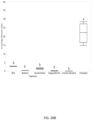
- FIG. 38 illustrate the crop stand per meter of soybean plants infected by Pythium in treated and untreated plants.
- FIG. 39 illustrates treated and untreated raspberries which have been infected with Botrytis cinerea.
- FIG. 40 illustrates treated and untreated grapes which have been infected with Botrytis cinerea.
- FIG. 41 illustrates treated and untreated apples which have been infected with Botrytis cinerea.
- FIG. 42 illustrates treated apples which have been infected with Botrytis cinerea.
- FIG. 43 illustrates the percentage of the apple that was necrotized in treated and untreated apples which have been infected with Botrytis cinerea.
- FIG. 44 illustrates treated and untreated peaches which have been infected with Botrytis cinerea.
- biocontrol compositions described herein can have anti-fungal activity against fungi of agricultural importance and can be formulated to be used at various points in the production process.
- these biocontrol compositions can be formulated for use prior to harvest, such as for example incorporating the composition into an irrigation line or administration in combination with a fertilizer, as well as post-harvest during processing, packaging, transportation, storage, and commercial display of the produce, such as for example spraying the harvested produce with the composition or application of the composition to a packaging material used to store or ship the produce.
- these biocontrol compositions can show improved efficacy when compared to commercial biocontrol compositions.
- disease severity index generally refers to a score representing the degree of disease symptoms visible on the plant.
- a given disease severity index may have a particular number (or range of numbers) of spots on the leaves indicative of a disease.
- a plant that has more symptoms of the disease has a higher disease severity index than a plant that has a lower disease severity index.
- Different species of plants may have a different disease severity index associated with it.
- disease severity or “average disease severity” or “percent average disease severity”, generally refers to the degree of disease symptoms which is visible on a plant or population of plants.
- the disease severity may be calculated by the percentage of the plant that is covered by disease symptoms.
- the percent average disease severity may be calculated for a population using by assessing the disease severity of each plant and averaging the disease severity of each plant.
- the term “disease index”, “average disease index” or “percent average disease index” generally refers to a score for a population of plants representing the degree of disease symptoms visible in a population of plants.
- the disease index may be calculated as the disease incidence multiplied by the disease severity.
- the average disease index may be calculated based on a disease severity index or score for an individual plant, number of plants with that disease severity index, the total number of plants, the maximal disease index, and the percent disease incidence in order to create a weighted average representing the average disease severity.
- a general calculation of the percent average disease index may be done as a [sum (number of plants in a given score multiplied by the score)]/[(total number of plants multiplied by the maximal score)] multiplied by 100.
- compositions for the Prevention or Reduction of Crop Loss and Food Spoilage are Compositions for the Prevention or Reduction of Crop Loss and Food Spoilage
- biocontrol compositions which can prevent or reduce the growth of a fungal pathogen on a plant, a seed, or a produce thereof.
- the term “produce” can be used herein to refer to the edible portion of a plant, such as for example, the leaves, the stem, the seeds, the root, the flowers or the fruit.
- the term “plant” can be used herein to refer to any portion of the plant, such as for example the leaves, the stem, the seeds, the root, or the fruit.
- Preventing or reducing the growth of fungal pathogens on the plant, the seed, or the produce thereof can reduce the amount of crop loss and food spoilage prior to, during, or after harvesting the produce from the plant.
- the at least one microbe can be a bacterium or a yeast.
- the at least one microbe can comprise a microbe from a genus selected from the group consisting of: Bacillus, Burkholderia, Cutaneotrichosporon, Cyberlindnera, Gluconacetobacter, Gluconobacter, Hanseniaspora, Paraburkholderia, Pseudomonas, Torulaspora , and any combination thereof.
- the at least one microbe can comprise a microbe selected from the group consisting of: Bacillus amyloliquefaciens, Bacillus subtilis, Bacillus velezensis, Cutaneotrichosporon jirovecii, Cutaneotrichosporon moniliiforme, Cutaneotrichosporon mucoides, Cyberlindnera mrakii, Cyberlindnera saturnus, Gluconacetobacter liquefaciens, Gluconobacter cerinus, Hanseniaspora uvarum, Paraburkholderia phytofirmans, Pseudomonas fluorescens, Pseudomonas frederiksbergensis, Pseudomonas lini, Pseudomonas migulae, Torulaspora delbrueckii and any combination thereof.
- a microbe selected from the group consisting of: Bacillus amyloliquefaciens
- the at least one microbe can be a microbe from the genus Bacillus .
- the at least one microbe can be a microbe from the genus Burkholderia .
- the at least one microbe can be a microbe from the genus Cutaneotrichosporon .
- the at least one microbe can be a microbe from the genus Cyberlindnera .
- the at least one microbe can be a microbe from the genus Gluconacetobacter .
- the at least one microbe can be a microbe from the genus Gluconobacter .
- the at least one microbe can be a microbe from the genus Hanseniaspora .
- the at least one microbe can be a microbe from the genus Paraburkholderia .
- the at least one microbe can be a microbe from the genus Pseudomonas .
- the at least one microbe can be a microbe from the genus Torulaspora.
- the at least one microbe can be Bacillus amyloliquefaciens .
- the at least one microbe can be Bacillus subtilis .
- the at least one microbe can be Bacillus velezensis .
- the at least one microbe can be Cutaneotrichosporon jivrovecii .
- the at least one microbe can be Cutaneotrichosporon moniliiforme .
- the at least one microbe can be Cutaneotrichosporon mucoides .
- the at least one microbe can be Cyberlindnera mrakii .
- the at least one microbe can be Cyberlindnera saturnus .
- the at least one microbe can be Gluconacetobacter liquefaciens .
- the at least one microbe can be Gluconobacter cerinus .
- the at least one microbe can be Hanseniaspora uvarum .
- the at least one microbe can be Paraburkholderia phytofirmans .
- the at least one microbe can be Paraburkholderia fluroescens .
- the at least one microbe can be Paraburkholderia frederiksbergensis .
- the at least one microbe can be Pseudomonas lini .
- the at least one microbe can be Pseudomonas migulae .
- the at least one microbe can be Torulaspora delbrueckii.
- the at least one microbe can comprise at least one microbe with at least about: 70%, 75%, 80%, 85%, 87%, 90%, 91%, 92%, 93%, 94%, 95%, 96%, 97%, 98%, 99%, 99.5%, or 100% sequence identity to the rRNA of a microorganism selected from the group consisting of: Bacillus amyloliquefaciens, Bacillus subtilis, Bacillus velezensis, Cutaneotrichosporon jirovecii, Cutaneotrichosporon moniliiforme, Cutaneotrichosporon mucoides, Cyberlindnera mrakii, Cyberlindnera saturnus, Gluconacetobacter liquefaciens, Gluconobacter cerinus, Hanseniaspora uvarum, Paraburkholderia phytofirmans, Pseudomonas fluorescens, Pseudomonas frederiksbergens
- the biocontrol composition can comprise: (i) at least one microbe or a secondary metabolite of the at least one microbe, and (ii) a carrier, and wherein the at least one microbe has a 16S rRNA sequence greater than 98% identical to a 16S rRNA sequence selected from the group of SEQ ID NO: 1 and SEQ ID NO: 9 or wherein the at least one microbe has an ITS sequence greater than 98% identical to an ITS sequence selected from the group of SEQ ID NO: 17 and SEQ ID NO: 20 or wherein the at least one microbe has an ITS sequence greater than 90% identical to an ITS sequence of SEQ ID NO: 18.
- the microbe can comprise an RNA sequence with at least about: 85%, 87%, 90%, 92%, 95%, 96%, 97%, 98%, 99%, 99.5%, or 100% sequence identity to a sequence selected from the group consisting of: SEQ ID NO: 1, SEQ ID NO: 2, SEQ ID NO: 3, SEQ ID NO: 4, SEQ ID NO: 5, SEQ ID NO: 6, SEQ ID NO: 7, SEQ ID NO: 8, SEQ ID NO: 9, SEQ ID NO: 10, SEQ ID NO: 11, SEQ ID NO: 12, SEQ ID NO: 13, SEQ ID NO: 14, SEQ ID NO: 15, SEQ ID NO: 16, SEQ ID NO: 17, SEQ ID NO: 18, SEQ ID NO: 19, SEQ ID NO: 20, SEQ ID NO: 21, SEQ ID NO: 22, SEQ ID 23, SEQ ID 24, and SEQ ID 25.
- the biocontrol composition can further comprise a second microbe, wherein the second microbe is not identical to the at least one microbe.
- the second microbe can comprise an RNA sequence with at least about: 85%, 87%, 90%, 92%, 95%, 96%, 97%, 98%, 99%, 99.5%, or 100% sequence identity to a sequence selected from the group consisting of: SEQ ID NO: 1, SEQ ID NO: 2, SEQ ID NO: 3, SEQ ID NO: 4, SEQ ID NO: 5, SEQ ID NO: 6, SEQ ID NO: 7, SEQ ID NO: 8, SEQ ID NO: 9, SEQ ID NO: 10, SEQ ID NO: 11, SEQ ID NO: 12, SEQ ID NO: 13, SEQ ID NO: 14, SEQ ID NO: 15, SEQ ID NO: 16, SEQ ID NO: 17, SEQ ID NO: 18, SEQ ID NO: 19, SEQ ID NO: 20, SEQ ID NO: 21, SEQ ID NO: 22, SEQ ID NO 23, SEQ ID NO: 24, and SEQ ID NO 25.
- the first microbe and the second microbe are the same species.
- the first microbe and the second microbe may both be Bacillus amyloliquefaciens .
- a first microbe and a second microbe, and optionally more than two microbes, each different strains of the same species may be included in a biocontrol composition as disclosed herein.
- the first microbe and second microbe are not the same species.
- the first microbe may be Gluconobacter cerinus and the second microbe may be Hanseniaspora uvarum .
- the first microbe and second microbe are not the same genus.
- the first microbe and second microbe are not in the same family. In some cases, the first microbe and second microbe are not in the same order. In some cases, the first microbe and second microbe are not in the same class. In some cases, the first microbe and second microbe are not in the same phylum. In some cases, the first microbe and second microbe are not in the same kingdom.
- the at least one microbe comprises at least one microbe with at least about: 85%, 87%, 90%, 92%, 95%, 96%, 97%, 98%, 99%, 99.5%, or 100% sequence identity to a rRNA sequence from a Bacillus species.
- the Bacillus species can be Bacillus amyloliquefaciens, Bacillus subtilis , or Bacillus velezensis .
- the rRNA sequence can be a 16S sequence.
- the at least one microbe comprises at least one microbe with at least about: 85%, 87%, 90%, 92%, 95%, 96%, 97%, 98%, 99%, 99.5%, or 100% sequence identity to SEQ ID NO: 1 or SEQ ID NO: 23.
- the at least one microbe comprises at least one microbe with at least about: 85%, 87%, 90%, 92%, 95%, 96%, 97%, 98%, 99%, 99.5%, or 100% sequence identity to a rRNA sequence from a Gluconacetobacter species.
- the Gluconacetobacter species can be Gluconacetobacter liquefaciens .
- the rRNA sequence can be a 16S sequence.
- the at least one microbe comprises at least one microbe with at least about: 85%, 87%, 90%, 92%, 95%, 96%, 97%, 98%, 99%, 99.5%, or 100% sequence identity to SEQ ID NO: 2, SEQ ID NO: 4, SEQ ID NO: 5, SEQ IS NO: 11, SEQ ID NO: 12, SEQ ID NO: 13, SEQ ID NO: 14, or SEQ ID NO: 16.
- the at least one microbe comprises at least one microbe with at least about: 85%, 87%, 90%, 92%, 95%, 96%, 97%, 98%, 99%, 99.5%, or 100% sequence identity to a rRNA sequence from a Gluconobacter species.
- the Gluconobacter species can be Gluconobacter cerinus .
- the rRNA sequence can be a 16S sequence.
- the at least one microbe comprises at least one microbe with at least about: 85%, 87%, 90%, 92%, 95%, 96%, 97%, 98%, 99%, 99.5%, or 100% sequence identity to SEQ ID NO: 24.
- the at least one microbe comprises at least one microbe with at least about: 85%, 87%, 90%, 92%, 95%, 96%, 97%, 98%, 99%, 99.5%, or 100% sequence identity to a rRNA sequence from a Burkholderia species or a Paraburkholderia species.
- the Paraburkholderia species can be Paraburkholderia phytofirmans .
- the rRNA sequence can be a 16S sequence.
- the at least one microbe comprises at least one microbe with at least about: 85%, 87%, 90%, 92%, 95%, 96%, 97%, 98%, 99%, 99.5%, or 100% sequence identity to SEQ ID NO: 3, SEQ ID NO: 7, or SEQ ID NO: 9.
- the at least one microbe comprises at least one microbe with at least about: 85%, 87%, 90%, 92%, 95%, 96%, 97%, 98%, 99%, 99.5%, or 100% sequence identity to a rRNA sequence from a Pseudomonas species.
- the Pseudomonas species can be Pseudomonas fluorescens, Pseudomonas lini, Pseudomonas migulae , or Pseudomonas frederiksbergensis .
- the rRNA sequence can be a 16S sequence.
- the at least one microbe comprises at least one microbe with at least about: 85%, 87%, 90%, 92%, 95%, 96%, 97%, 98%, 99%, 99.5%, or 100% sequence identity to SEQ ID NO: 6, SEQ ID NO: 10, SEQ ID NO: 15, or SEQ ID NO: 22.
- the at least one microbe comprises at least one microbe with at least about: 85%, 87%, 90%, 92%, 95%, 96%, 97%, 98%, 99%, 99.5%, or 100% sequence identity to SEQ ID NO: 8.
- the at least one microbe comprises at least one microbe with at least about: 85%, 87%, 90%, 92%, 95%, 96%, 97%, 98%, 99%, 99.5%, or 100% sequence identity to an rRNA sequence from a Cyberlindnera species.
- the Cyberlindnera species can be Cyberlinderna saturnus or Cyberlindera mrakkii .
- the rRNA sequence can be an ITS sequence.
- the at least one microbe comprises at least one microbe with at least about: 85%, 87%, 90%, 92%, 95%, 96%, 97%, 98%, 99%, 99.5%, or 100% sequence identity to SEQ ID NO: 17.
- the at least one microbe comprises at least one microbe with at least about: 85%, 87%, 90%, 92%, 95%, 96%, 97%, 98%, 99%, 99.5%, or 100% sequence identity to an rRNA sequence from a Hanseniaspora species.
- the Hanseniaspora species can be Hanseniaspora uvarum .
- the rRNA sequence can be an ITS sequence.
- the at least one microbe comprises at least one microbe with at least about: 85%, 87%, 90%, 92%, 95%, 96%, 97%, 98%, 99%, 99.5%, or 100% sequence identity to SEQ ID NO: 18 or SEQ ID: 25.
- the at least one microbe comprises at least one microbe with at least 90% sequence identity to SEQ ID NO: 18 or SEQ ID: 25. In one embodiment, the at least one microbe comprises at least one microbe with at least 95% sequence identity to SEQ ID NO: 18 or SEQ ID: 25. In one embodiment, the at least one microbe comprises at least one microbe with at least 99% sequence identity to SEQ ID NO: 18 or SEQ ID: 25.
- the at least one microbe comprises at least one microbe with at least about: 85%, 87%, 90%, 92%, 95%, 96%, 97%, 98%, 99%, 99.5%, or 100% sequence identity to an rRNA sequence from a Torulaspora species.
- the Torulaspora species can be Torulaspora delbrueckii .
- the rRNA sequence can be an ITS sequence.
- the at least one microbe comprises at least one microbe with at least about: 85%, 87%, 90%, 92%, 95%, 96%, 97%, 98%, 99%, 99.5%, or 100% sequence identity to SEQ ID NO: 19.
- the at least one microbe comprises at least one microbe with at least about: 85%, 87%, 90%, 92%, 95%, 96%, 97%, 98%, 99%, 99.5%, or 100% sequence identity to an rRNA sequence from a Cutaneotrichosporon species.
- the Cutaneotrichosporon species can be Cutaneotrichosporon monilitforme, Cutaneotrichosporon jirovecii , or Cutaneotrichosporon mucoides .
- the rRNA sequence can be an ITS sequence.
- the at least one microbe comprises at least one microbe with at least about: 85%, 87%, 90%, 92%, 95%, 96%, 97%, 98%, 99%, 99.5%, or 100% sequence identity to SEQ ID NO: 20 or SEQ ID NO: 21.
- the biocontrol composition can comprise a consortium of microbes comprising a plurality of microbes.
- the plurality of microbes can be at least two microbes, at least three microbes, at least four microbes, at least five microbes, at least six microbes, at least seven microbes, at least eight microbes, at least nine microbes, or at least ten microbes.
- Each microbe of the plurality of microbes can be a different microbe.
- the biocontrol composition can comprise secondary metabolites from a consortium of microbes comprising a plurality of microbes, wherein the plurality of microbes is at least two microbes, at least three microbes, at least four microbes, at least five microbes, at least six microbes, at least seven microbes, at least eight microbes, at least nine microbes, or at least ten microbes.
- the at least two microbes can comprise at least two microbes selected from the group consisting of: microbes with a 16S rRNA sequence selected from the group consisting of SEQ ID SEQ ID NO: 1, SEQ ID NO: 2, SEQ ID NO: 3, SEQ ID NO: 4, SEQ ID NO: 5, SEQ ID NO: 6, SEQ ID NO: 7, SEQ ID NO: 8, SEQ ID NO: 9, SEQ ID NO: 10, SEQ ID NO: 11, SEQ ID NO: 12, SEQ ID NO: 13, SEQ ID NO: 14, SEQ ID NO: 15, SEQ ID NO: 16, SEQ ID NO: 22, SEQ ID NO: 23, SEQ ID NO: 24 and microbes with an ITS sequence selected from the group consisting of SEQ ID NO: 17, SEQ ID NO: 18, SEQ ID NO: 19, SEQ ID NO: 20, SEQ ID NO: 21, and SEQ ID NO 25.
- ITS sequence selected from the group consisting of SEQ ID NO: 17, SEQ ID NO: 18, SEQ ID NO: 19, SEQ ID NO: 20, SEQ ID NO: 21,
- the at least two microbes can comprise a first microbe with a 16S rRNA sequence selected from SEQ ID NO: 1 or SEQ ID NO: 9 or wherein the first microbe has an ITS sequence greater than 98% identical to an ITS sequence selected from the group of SEQ ID NO: 17 and SEQ ID NO: 20 or wherein the first microbe has an ITS sequence greater than 90% identical to an ITS sequence of SEQ ID NO: 18.
- the at least two microbes can comprise a first microbe having an ITS sequence greater than 90% identical to SEQ ID NO:18 and a second microbe can be a Gluconacetobacter species.
- the Gluconacetobacter species can be Gluconacetobacter liquefaciens .
- the Gluconacetobacter species can be a Gluconacetobacter species having a 16S rRNA sequence selected from the group consisting of: SEQ ID NO: 2, SEQ ID NO: 4, SEQ ID NO: 5, SEQ ID NO: 11, SEQ ID NO: 12, SEQ ID NO: 13, SEQ ID NO: 14, and SEQ ID NO: 16.
- the at least two microbes can comprise a first microbe being a Gluconobacter species and a second microbe being a Hanseniaspora species.
- the at least two microbes can comprise a first microbe being a Gluconobacter cerinus and a second microbe being a Hanseniaspora uvarum.
- the at least two microbes can comprise a first microbe with a 16S sequence greater than 90% identical to SEQ ID NO: 24 and a second microbe with a ITS sequence greater than 90% identical to SEQ ID NO: 25.
- the at least two microbes can comprise a first microbe with a 16S sequence greater than 95% identical to SEQ ID NO: 24 and a second microbe with a ITS sequence greater than 95% identical to SEQ ID NO: 25.
- the at least two microbes can comprise a first microbe with a 16S sequence greater than 98% identical to SEQ ID NO: 24 and a second microbe with a ITS sequence greater than 98% identical to SEQ ID NO: 25.
- the at least three microbes can comprise a first microbe with a with a 16S rRNA sequence greater than 99% identical to SEQ ID: 23, a second microbe with a 16S rRNA sequence greater than 99% identical to SEQ ID: 23, a third microbe with 16S rRNA sequence greater than 99% identical to SEQ ID: 23, wherein the first microbe, second microbe, and third microbe comprise genomes that are not identical.
- the genomes may differ by a single nucleotide polymorphism (SNP).
- SNP single nucleotide polymorphism
- the genomes may differ by more than one SNPs.
- the genomes may differ by the number of the genes in each genome.
- the genomes may differ by rearrangements, such as insertions, deletions, reordering, refactoring or lysogenic or inactive phage, insertion sequences, repetitive genomic sequence or other differing contents of genomic regions or genes.
- the cellular DNA content may differ by the inclusion of one or more plasmids, which may differ from strain to strain.
- the genomes may code for different isoforms of the genes.
- an expressed protein from the gene may contain a point mutation, a deletion, an insertion, which may affect the function of the protein.
- an expressed protein from the gene may contain a point mutation, a deletion, an insertion, which may not affect the function of the protein, or which may not substantially affect the function of the protein.
- the at least three microbes can comprise at least three microbes selected from the group consisting of microbes with a 16S rRNA sequence selected from the group consisting of microbes with a 16S rRNA sequence selected from the group consisting of SEQ ID SEQ ID NO: 1, SEQ ID NO: 2, SEQ ID NO: 3, SEQ ID NO: 4, SEQ ID NO: 5, SEQ ID NO: 6, SEQ ID NO: 7, SEQ ID NO: 8, SEQ ID NO: 9, SEQ ID NO: 10, SEQ ID NO: 11, SEQ ID NO: 12, SEQ ID NO: 13, SEQ ID NO: 14, SEQ ID NO: 15, SEQ ID NO: 16, SEQ ID NO: 22, SEQ ID NO: 23, and SEQ ID NO:24 and microbes with an ITS sequence selected from the group consisting of SEQ ID NO: 17, SEQ ID NO: 18, SEQ ID NO: 19, SEQ ID NO: 20, SEQ ID NO: 21, and SEQ ID NO: 25.
- the at least three microbes can comprise at least one microbe with a 16S rRNA sequence selected from SEQ ID NO: 1, SEQ ID NO: 9, or SEQ ID 23 or an ITS sequence selected from SEQ ID NO: 17, SEQ ID NO: 18, or SEQ ID NO:20.
- the at least four microbes can comprise at least four microbes selected from the group consisting of microbes with a 16S rRNA sequence selected from the group consisting of microbes with a 16S rRNA sequence selected from the group consisting of SEQ ID SEQ ID NO: 1, SEQ ID NO: 2, SEQ ID NO: 3, SEQ ID NO: 4, SEQ ID NO: 5, SEQ ID NO: 6, SEQ ID NO: 7, SEQ ID NO: 8, SEQ ID NO: 9, SEQ ID NO: 10, SEQ ID NO: 11, SEQ ID NO: 12, SEQ ID NO: 13, SEQ ID NO: 14, SEQ ID NO: 15, SEQ ID NO: 16, SEQ ID NO: 22, SEQ ID NO: 23, and SEQ ID NO:24 and microbes with an ITS sequence selected from the group consisting of SEQ ID NO: 17, SEQ ID NO: 18, SEQ ID NO: 19, SEQ ID NO: 20, SEQ ID NO: 21, and SEQ ID NO: 25.
- the at least four microbes can comprise at least one microbe with a 16S rRNA sequence selected from SEQ ID NO: 1 SEQ ID NO: 9 or SEQ ID NO:23 or an ITS sequence selected from SEQ ID NO: 17, SEQ ID NO: 18, or SEQ ID NO:20.
- the at least five microbes can comprise at least five microbes selected from the group consisting of microbes with a 16S rRNA sequence selected from the group consisting of microbes with a 16S rRNA sequence selected from the group consisting of SEQ ID SEQ ID NO: 1, SEQ ID NO: 2, SEQ ID NO: 3, SEQ ID NO: 4, SEQ ID NO: 5, SEQ ID NO: 6, SEQ ID NO: 7, SEQ ID NO: 8, SEQ ID NO: 9, SEQ ID NO: 10, SEQ ID NO: 11, SEQ ID NO: 12, SEQ ID NO: 13, SEQ ID NO: 14, SEQ ID NO: 15, SEQ ID NO: 16, SEQ ID NO: 22, SEQ ID NO: 23, and SEQ ID NO:24 and microbes with an ITS sequence selected from the group consisting of SEQ ID NO: 17, SEQ ID NO: 18, SEQ ID NO: 19, SEQ ID NO: 20, SEQ ID NO: 21, and SEQ ID NO: 25.
- the at least five microbes can comprise at least one microbe with a 16S rRNA sequence selected from SEQ ID NO: 1 SEQ ID NO: 9 or SEQ ID 23 or an ITS sequence selected from SEQ ID NO: 17, SEQ ID NO: 18, or SEQ ID NO: 20.
- Table 1 illustrates the microbial strain identifiers, putative microbial genus or species, and corresponding SEQ ID NOs described herein.
- the at least one microbe can be a microbe in Table 1. Phylogenetic relationships of some of these strains are indicated in FIG. 2 .
- Table 2 illustrates the sequences corresponding to these SEQ ID NOs.
- Microbial strains with anti-fungal activity Microbial strain Putative microbial genus or 16S or identifier(s) species SEQ ID NO. ITS 28B; BC8 Bacillus amyloliquefaciens SEQ ID NO: 1 16S 74A.1; BC12 Gluconacetobacter liquefaciens SEQ ID NO: 2 16S 41A2 Paraburkholderia or Burkholderia SEQ ID NO: 3 16S 253A; B253 Gluconacetobacter liquefaciens SEQ ID NO: 4 16S 254A; B254; BC13 Gluconacetobacter liquefaciens SEQ ID NO: 5 16S B125.D, 125B Pseudomonas fluorescens SEQ ID NO: 6 16S 41A; F41A Paraburkholderia or Burkholderia SEQ ID NO: 7 16S 41A.1; F41A.1 Unknown SEQ ID NO: 8 16S 41A.2;
- the at least one microbe can be grown in a culture.
- the at least one microbe can be isolated and purified from the culture.
- the at least one microbe purified from the culture can comprise a vegetative cell or spore of the at least one microbe.
- the culture can be a solid or semi-solid medium.
- the culture can be a liquid medium.
- the culture can be a bioreactor. Any suitable bioreactor can be used. Examples of bioreactors include, but are not limited to a flask, continuously stirred tank bioreactor (CSTR), a bubbleless bioreactor, an airlift reactor, and a membrane bioreactor.
- a supernatant of the culture comprises a secondary metabolite of the least one microbe.
- the secondary metabolite of the at least one microbe can be isolated and purified from the supernatant.
- the supernatant can be applied as the biocontrol composition as described elsewhere herein.
- the biocontrol composition can comprise one or more secondary metabolites of the at least one microbe.
- the one or more secondary metabolites can have antifungal properties of its own.
- the one or more secondary metabolites may with other microbes in a biocontrol composition have antifungal properties.
- the one or more secondary metabolites can be isolated from a supernatant of the culture of the at least one microbe.
- the one or more secondary metabolites can comprise a lipopeptide, a dipeptide, an aminopolyol, a protein, a siderophore, a phenazine compound, a polyketide, or a combination thereof.
- the lipopeptide can be a linear lipopeptide or a cyclic lipopeptide (CLP).
- lipopeptides include, but are not limitied to a surfactin, a fengycin, an iturin, a massetolide, an amphisin, an arthrofactin, a tolassin, a syringopeptide, a syringomycin, a putisolvin, a bacillomycin, a bacillopeptin, a bacitracin, a polymyxin, a daptomycin, a mycosubtilin, a kurstakin, a tensin, a plipastatin, a viscosin, and an echinocandin.
- the echinocandin can be echinocandib B (ECB).
- the secondary metabolite is a surfatin, a fengycin, an iturin, or
- the dipeptide can be bacilysin or chlorotetain.
- the polyketide can be defficidin, macrolactin, bacillaene, butyrolactol A, soraphen A, hippolachnin A, or forazoline A.
- the secondary metabolite can be an aminopolyol.
- the aminopolyol can be zwittermicin A.
- the secondary metabolite can be a protein.
- the protein can be a bacisubin, subtilin, or a fungicin.
- the siderophore can be a pyoverdine, thioquinolobactin, or a pyochelin.
- the phenazine compound can be a phenzine-1-carboxylic acid, a 1-hydroxyphenazine, or a phenazine-1-carboxaminde.
- the secondary metabolite can be a chitinase, a cellulase, an amylase, or a glucanase.
- the secondary metabolite can be a volatile antifungal compound.
- the biocontrol composition can be formulated as a liquid formulation or a dry formulation.
- the liquid formulation can be a flowable or aqueous suspension.
- the liquid formulation can comprise the at least one microbe or a secondary metabolite thereof suspended in water, oil, or a combination thereof (an emulsion).
- a dry formulation can be a wettable powder, a dry flake, a dust, or a granule.
- a wettable powder can be applied to the plant, the seed, the flower, or the produce thereof as a suspension.
- a dust can be applied to the plant, the seed, or the produce thereof dry, such as to seeds or foliage.
- a granule can be applied dry or can be mixed with water to create a suspension.
- the at least one microbe or a secondary metabolite thereof can be formulated as a microencapsulation, wherein the at least one microbe or a secondary metabolite thereof has a protective inert layer.
- the protective inert layer can comprise any suitable polymer.
- the biocontrol composition can further comprise an additional compound.
- the additional compound can be a carrier, a surfactant, a wetting agent, a penetrant, an emulsifier, a spreader, a sticker, a stabilizer, a nutrient, a binder, a desiccant, a thickener, a dispersant, a UV protectant, or a combination thereof.
- the carrier can be a liquid carrier, a mineral carrier, or an organic carrier. Examples of a liquid carrier include, but are not limited to, vegetable oil or water. Examples of a mineral carrier include, but are not limited to, kaolinite clay or diatomaceous earth. Examples of an organic carrier include, but are not limited to, grain flour.
- the surfactant can be an anionic surfactant, a cationic surfactant, an amphoteric surfactant, or a nonionic surfactant.
- the surfactant can be Tween 20 or Tween 80.
- the wetting agent can comprise a polyoxyethylene ester, an ethoxy sulfate, or a derivative thereof. In some cases a wetting agent is mixed with a nonionic surfactant.
- a penetrant can comprise a hydrocarbon.
- a spreader can comprise a fatty acid, a latex, an aliphatic alcohol, a crop oil (e.g. cottonseed), or an inorganic oil.
- a sticker can comprise emulsified polyethylene, a polymerized resin, a fatty acid, a petroleum distillate, or pregelantinized corn flour.
- the oil can be coconut oil, palm oil, castor oil, or lanolin.
- the stabilizer can be lactose or sodium benzoate.
- the nutrient can be molasses or peptone.
- the binder can be gum arabic or carboxymethylcellulose.
- the desiccant can be silica gel or an anhydrous salt.
- a thickener can comprise a polyacrylamide, a polyethylene polymer, a polysaccharide, xanthan gum, or a vegetable oil.
- the dispersant can be microcrystalline cellulose.
- the UV protectant can be oxybenzone, blankophor BBH, or lignin.
- the biocontrol composition can further comprise dipicolinic acid.
- the at least one microbe can comprise an effective amount of isolated and purified microbes isolated and purified from a liquid culture.
- the at least one microbe from the liquid culture can be air-dried, freeze-dried, spray-dried, or fluidized bed-dried to produce a dry formulation.
- the dry formulation can be reconstituted in a liquid to produce a liquid formulation.
- the biocontrol composition can be formulated such that the at least one microbe can replicate once they are applied/or delivered to the target habitat (e.g. the soil, the plant, the seed, and/or the produce).
- the target habitat e.g. the soil, the plant, the seed, and/or the produce.
- the biocontrol composition can have a shelf life of at least one week, one month, six months, at least one year, at least two years, at least three years, at least four years, or at least five years.
- the shelf life can indicate the length of time the biocontrol composition maintains at least 80%, at least 85%, at least 90%, at least 95%, at least 99%, or 100% of its anti-fungal properties.
- the biocontrol composition can be stored at room temperate, at or below 4° C., at or below 0° C., or at or below ⁇ 20° C.
- the biocontrol composition can comprise spores.
- Spore-containing compositions can be applied by methods described herein. Spore-containing compositions can extend the shelf life of the biocontrol composition. Spore-containing compositions can survive low pH or low temperatures of a target habitat. For example, spore-containing compositions may be applied to the soil at a colder temperature (for example, below 10° C.) and can have anti-fungal properties for a seed planted at a higher temperature (for example, 20° C.). The spores may become vegetative cells, allowing them any advantages of vegetative cells.
- the biocontrol composition can comprise vegetative cells.
- Vegetative cell-containing compositions can be applied by methods described herein.
- Vegetative cells may proliferate and increase efficacy of the composition.
- vegetative cells in the biocontrol composition may proliferate after application increasing the surface area the plant that is exposed to the biocontrol composition.
- vegetative cells in the biocontrol composition may proliferate after application increasing the amount of the time the biocontrol composition survives and thus extending the time the biocontrol composition has efficacy.
- the vegetative cells may proliferate and compete for nutrients with a fungal pathogen.
- the vegetative cells may actively produce one or more secondary metabolites with anti-fungal properties.
- the vegetative cells may become spores, allowing them any advantages of spores.
- the biocontrol composition can have anti-fungal activity, such as prevention of growth of a fungal pathogen or reduction of growth of a fungal pathogen on a plant, a seed, or a produce thereof.
- the biocontrol composition can prevent growth of a fungal pathogen on the plant, seed, or produce thereof for at least 1, at least 2, at least 3, at least 4, or at least 5 days.
- the biocontrol composition can prevent growth of a fungal pathogen on the plant, seed, or produce thereof for at least 1, at least 2, at least 3, at least 4, at least 5 days, at least 6 days, at least 7 days, at least 8 days, at least 9 days, or at least 10 days.
- the biocontrol composition can prevent growth of a fungal pathogen on the plant, seed, or produce thereof for over 10 days.
- the biocontrol composition can reduce growth of the fungal pathogen on the plant, seed, or produce thereof relative to growth of the fungal pathogen on a control that is a plant, a seed, flower, or a produce thereof not exposed to the biocontrol composition.
- the control can be a plant, a seed, or a produce thereof to which no anti-fungal agent has been applied or can be a plant, a seed, flower, or produce thereof to which a commercially available anti-fungal agent has been applied.
- anti-fungal agents examples include, but are not limited to, Bacillus subtilis strain QST713 (Serenade®), Bacillus subtilis strain GB02 (Kodiak®), Bacillus subtilis strain MBI 600 (Subtilex®), Bacillus pumilus strain GB34 (YieldShield), Bacillus licheniformis strain SB3086 (EcoGuard®).
- the biocontrol composition can reduce growth of a fungal pathogen on the plant, seed, or produce thereof for at least 1, at least 2, at least 3, at least 4, or at least 5 days.
- the biocontrol composition can reduce growth of a fungal pathogen on the plant, seed, or produce thereof for at least 1, at least 2, at least 3, at least 4, at least 5 days, at least 6 days, at least 7 days, at least 8 days, at least 9 days, or at least 10 days.
- the biocontrol composition can reduce growth of a fungal pathogen on the plant, seed, or produce thereof for over 10 days.
- the biocontrol composition can reduce growth of the fungal pathogen of at least 25% relative to growth of the fungal pathogen on the control.
- the biocontrol composition can reduce growth of the fungal pathogen of at least 60% relative to growth of the fungal pathogen on the control.
- the biocontrol composition can reduce growth of the fungal pathogen of at least 25%, 30%, 35%, 40%, 45%, 50%, 55%, 60% 65%, 70%, 75%, 80%, 85%, 90%, 95%, 99%, or more relative to growth of the fungal pathogen on the control.
- the fungal pathogen can be a fungal pathogen in the genus Albugo, Alternaria, Aphanomyces, Armillaria, Aspergillus, Botrytis, Botrydiplodia, Botrytinia, Bremia, Cercospora, Cercosporella, Cladosporium, Colletotrichum, Cordana, Corynespora, Cylindrocarpon, Daktulosphaira, Didymella, Elsinoe, Erysiphe, Eutypa, Fusarium, Ganoderma, Guignardia, Gymnoconia, Helminthosporium, Leptosphaeria, Leveillula, Macrophomina, Microsphaera, Monolinia, Mycosphaerella, Oidopsis, Passalora, Peronospora, Phomopsis, Phytophthora, Peronospora, Phoma, Plasmodiophora, Plasmopara, Podosphaera
- the fungal pathogen can be Albugo candida, Albugo occidentalis, Alternaria alternata, Alternaria cucumerina, Alternaria dauci, Alternaria solani Alternaria tenuis, Alternaria tenuissima, Alternaria tomatophila, Aphanomyces euteiches, Aphanomyces raphani, Armillaria mellea, Botrydia theobromae, Botrytis cinerea, Botrytinia fuckeliana, Bremia lactuca, Cercospora beticola, Cercosporella rubi, Cladosporium herbarum, Colletotrichum acutatum, Colletotrichum gloeosporioides, Colletotrichum lindemuthianum, Colletotrichum musae, Colletotrichum spaethanium, Cordana musae, Corynespora cassiicola, Daktulosphaira vitalliae, Didymella bryonia
- the fungal pathogen can be Fusarium oxysporum or Verticillium dahliae .
- the fungal pathogen can be Botrytis cinerea .
- the fungal pathogen can be Colletotrichum spaethanium .
- the fungal pathogen can be Erysiphe necator .
- the fungal pathogen can be Peronospora farinosa .
- the fungal pathogen can be Podosphaera maculari .
- the fungal pathogen can be Monilinia vaccinii - corymbosi .
- the fungal pathogen can be Puccinia sorghi .
- the fungal pathogen can be a fungal pathogen causing Powdery Mildew.
- the fungal pathogen can be a fungal pathogen causing Downy Mildew.
- the fungal pathogen can be a fungal pathogen causing mummy berry.
- the fungal pathogen can be a fungal pathogen causing
- the plant, flower, seed, or produce thereof can be of an almond, apricot, apple, artichoke, banana, barley, beet, blackberry, blueberry, broccoli, Brussels sprout, cabbage, cannabis, capsicum, carrot, celery, chard, cherry, citrus, corn, cucurbit, date, fig, garlic, grape, herb, spice, kale, lettuce, oil palm, olive, onion, pea, pear, peach, peanut, papaya, parsnip, pecan, persimmon, plum, pomegranate, potato, quince, radish, raspberry, rose, rice, sloe, sorghum, soybean, spinach, strawberry, sweet potato, tobacco, tomato, turnip greens, walnut, or wheat.
- the plant, seed, flower, or produce thereof can be a plant or produce thereof can be from the family Rosaceae.
- the plant, flower, seed, or produce thereof from the family Rosaceae can be from the genus Rubus , such as a raspberry or blackberry, Fragaria , such as a strawberry, Pyrus such as a pear, Cydonia such as a quince, Prunus , such as an almond, peach, plum, apricot, cherry or sloe, Rosa, such as a rose, or Malus , such as an apple.
- the plant, seed, flower, or produce thereof can be a plant or produce thereof from the family Ericaceae.
- the plant, seed, flower, or produce thereof from the family Ericaceae can be from the genus Vaccinium , such as a blueberry.
- the plant, seed, flower, or produce thereof can be a plant or produce thereof from the family Ericaceae.
- the plant, seed, flower, or produce thereof from the family Ericaceae can be from the genus Vaccinium , such as a blueberry.
- the plant, seed, flower, or produce thereof can be a plant or produce thereof from the family Vitaceae.
- the plant, seed, flower, or produce thereof from the family Vitaceae can be from the genus Vitis , such as a grape.
- Methods of identifying and/or selecting for a biocontrol composition can comprise culturing the at least one microbe in isolation or with a plurality of other microbes and/or fungal pathogens.
- the at least one microbe can be cultured with a fungal pathogen to identify efficacy of the at least one microbe to inhibit growth of the fungal pathogen.
- the efficacy of the at least one microbe to inhibit the growth of the fungal pathogen can be determined by the observing the growth parameters of the fungal pathogen.
- the lack of living fungal pathogen close to the at least one microbe on a semi-solid or solid growth media may be used determine a high efficacy of inhibition.
- the optical density of a liquid media containing the at least one microbe and the fungal pathogen may be used to identify an efficacy of the at least one microbe.
- the at least one microbe can be identified by a variety of methods.
- the at least one microbe can be subjected to a sequencing reaction.
- the sequencing reaction may identify a sequence of 16S rRNA, 12S rRNA, 18S rRNA, 28S rRNA, 13S rRNA and 23S rRNA, internal transcribed spacer (ITS), ITS1, ITS2, cytochrome oxidase I (COI), cytochrome b, or any combination thereof)
- the sequencing reaction may identify a 16S rRNA sequence, an ITS sequence, or a combination thereof.
- the sequencing reaction may be used to identify the species or strain of the at least one microbe.
- the at least one microbe may be affected by other microbes.
- the microbes can behave synergistically when cultured together such that the anti-fungal properties are improved when cultured together compared to when cultured separately.
- the at least one microbe may have increased viability when cultured with another microbe.
- the at least one microbe may have increased proliferation when cultured with another microbe.
- the at least one microbe may use chemicals or metabolites produced by another microbe.
- the at least one microbe may interact directly with another microbe.
- the at least one microbe and another microbe may form biofilms or a multicellular structure.
- the at least one microbe may produce and/or secrete an increased amount of the secondary metabolite when cultured with another microbe.
- the at least one microbe may produce an intermediate metabolite, which in turn is processed by another microbe resulting in the secondary metabolite.
- Methods disclosed elsewhere herein can be used to identify microbes which may benefit from culturing with another microbe, as well as identify biocontrol compositions comprising a first microbe and a second microbe wherein the second microbe is not identical to the first microbe.
- the at least one microbe may be affected by environmental conditions.
- the at least one microbe may grow or produce a secondary metabolite at a particular pH.
- the pH at which the at least one microbe is grown in may be a pH of 3.0, 4.0, 5.0, 6.0, 6.2, 6.4, 6.6, 6.8, 7.0, 7.2, 7.4, 7.6, 7.8, 8.0, 9.0, 10.0 or higher.
- the pH at which the at least one microbe is grown in may be a pH of 3.0, 4.0, 5.0, 6.0, 6.2, 6.4, 6.6, 6.8, 7.0, 7.2, 7.4, 7.6, 7.8, 8.0, 9.0, 10.0 or lower.
- the at least one microbe may grow or produce a secondary metabolite in the presence of salts.
- the salts may be buffer salts.
- the at least one microbe may grow or produce a secondary metabolite in the presence of sugars or carbohydrates
- the sugar or carbohydrate may be glucose or glycerol.
- the biocontrol compositions can be cultured using a variety of media or substrate.
- the at least one microbe can be cultures on an agar dish.
- the at least one microbe can be cultured on a semi-solid agar dish.
- the at least one microbe can be cultured in a liquid media.
- Methods for identifying or selecting biocontrol compositions comprising microbial consortia can be used. For example, methods as disclosed in U.S. Patent Publication No. US 20180127796 can be used for identifying or selecting for microbial consortia.
- a plurality of microbes can be grown together.
- the method can comprise diluting a sample to form plurality of dilution, wherein a dilution in the plurality of dilutions comprises a subset of the plurality of microbes.
- the dilutions may allow for the generation of a plurality of subsets in which different microbes of the plurality of microbes are allowed to interact.
- the subset of the plurality of microbes can be subjected to culturing such that the microbes may proliferate.
- the subsets can be subjected to sequencing reactions such that sequences of the microbes can be obtained. From the sequencing reaction, the species, strain, or other taxonomic information can be obtained. Sequences to identify a particular microbe are discussed elsewhere herein.
- the subsets can be subjected to varying culturing times such can be subjected to sequencing reactions at various times to monitor the presences and/or relative abundance of a particular species, strain or other taxonomic category. By observing the changes in the presence and/or relative abundance of a particular species, strain or other taxonomic category, the interaction between multiple microbes can be determined.
- a first microbe may have a higher relative abundance when cultured with a second microbe when compared to a relative abundance when not cultured with the second microbe.
- the first microbe may interact with the second microbe such that the first microbe's overall viability is increased.
- the plurality of dilutions can each be subjected to sequencing reactions such that the microbes of each dilution can be identified, and can allow for a multiplexed, high throughput approach.
- the plurality of microbes can be diluted such that a subset of the plurality of microbes are grown together. In some cases, diluting the plurality of microbes serially to form a plurality of serial dilutions of the sample can be performed. Microbes in the plurality of serial dilutions of the sample can be due to dispersal or chance. The plurality of serial dilutions can be different in different implementations. In some embodiments, the plurality of serial dilutions of the sample can comprise, or about, 1:10, 1:100, 1:1000, 1:10000, 1:100000, 1:1000000, 1:10000000, 1:100000000, 1:1000000000, or a number or a range between any two of these values, dilutions of the sample.
- the plurality of serial dilutions of the sample can comprise at least, or at most, 1:10, 1:100, 1:1000, 1:10000, 1:100000, 1:1000000, 1:10000000, 1:100000000, or 1:1000000000 dilutions of the sample.
- a sample can be diluted 10 times into a 1:10 dilution of the sample using, for example, a buffer.
- the 1:10 dilution of the sample can be diluted 10 times into a 1:100 dilution of the sample.
- the plurality of serial dilutions can comprise the 1:10 dilution of the sample, 1:100 dilution of the sample, and other dilutions of the sample similarly prepared.
- a sample can be diluted 10 times into a 1:10 dilution of the sample using, for example, a buffer.
- the sample can be diluted 100 times into a 1:100 dilution of the sample.
- the plurality of serial dilutions can comprise the 1:10 dilution of the sample, 1:100 dilution of the sample, and other dilutions of the sample similarly prepared.
- cultivating the plurality of dilutions of the sample in the first cultivation condition comprises cultivating the plurality of dilutions of the sample in the first cultivation condition for a plurality of time durations, which can vary by as little as one minute, up to one year.
- the plurality of microbes can be subjected to a sequencing reaction and specific microbes can be identified.
- the overall percentage representation of each microbe in the subset may change from the percentage at the start of culturing.
- microbes which remain viable among other microbes after different periods of culturing may indicate a symbiotic relationship or interaction between the microbes of the culture and these microbes may form a microbial consortium.
- the microbial consortia can be tested for efficacy of inhibiting the growth of a fungal pathogen in a manner similar to methods used for identifying the efficacy of the at least one microbe as described elsewhere herein.
- Isolation of particular microbes may also be performed for use in methods or compositions described elsewhere herein.
- the plurality of microbes can be subjected to serial dilutions such that a colony of a particular microbe can be isolated.
- the serial dilutions can each be cultured in liquid, semi-solid, or solid media.
- a semi-solid or solid media such as an agar plate
- the plurality of microbes can form colonies.
- the colonies can be well dispersed so that a colony can contain a single strain or species of microbe.
- Isolation of a particular microbe can also be performed using physical separation methods such a centrifugation.
- a plurality of microbes may be cultured in liquid media and centrifuged in order to isolate the microbes from the culture.
- a particular microbe may also be isolated using a particular growth condition. For example, a particular microbe may have higher viability when compared to another microbe when cultured in anaerobic conditions.
- a particular microbe may have a high viability compared to another microbe when cultured in a media rich in a particular nutrient.
- Methods of preventing or reducing the growth of a fungal pathogen on a plant, a seed, or a produce thereof can comprise applying to the plant, the seed, flower, or the produce, before it has been harvested, a biocontrol composition comprising at least one microbe described herein or one or more secondary metabolites thereof and a carrier.
- Harvesting the produce can refer to the removal of the edible portion of the plant from the remainder of the plant, or can refer to removal of the entire plant with subsequent removal of the edible portion later.
- Applying the biocontrol composition prior to harvest can comprise dusting, injecting, spraying, or brushing the plant, the seed, or the produce thereof with the biocontrol composition.
- Applying the biocontrol composition can comprise adding the biocontrol composition to a drip line, an irrigation system, a chemigation system, a spray, or a dip.
- the biocontrol composition is applied to the root of the plant, the seed of the plant, the foliage of the plant, the soil surrounding the plant or the edible portion of the plant which is also referred to herein as the produce of the plant
- the method can further comprise applying to the plant a fertilizer, an herbicide, a pesticide, other biocontrols, or a combination thereof.
- a fertilizer an herbicide, a pesticide, other biocontrols, or a combination thereof.
- the fertilizer, herbicide, pesticide, other biocontrols or combination thereof is applied before, after, or simultaneous with the biocontrol composition.
- Method of preventing or reducing the growth of a fungal pathogen can comprise applying to the seed a biocontrol composition comprising at least one microbe described herein or a secondary metabolite thereof and a carrier. Applying the biocontrol composition to the seed of the plant can occur before planting, during planting, or after planting prior to germination. For example, the biocontrol composition can be applied to the surface of the seed prior to planting.
- a seed treatment occurring before planting can comprise addition of a colorant or dye, a carrier, a binder, a sticker, an anti-foam agent, a lubricant, a nutrient, or a combination thereof to the biocontrol composition.
- Method of preventing or reducing the growth of a fungal pathogen can comprise applying to the soil a biocontrol composition comprising at least one microbe described herein or a secondary metabolite thereof and a carrier.
- the biocontrol composition can be applied to the soil before, after, or during planting the soil with a seed, or before transfer of the plant to a new site.
- a soil amendment is added to the soil prior to planting, wherein the soil amendment results in improved growth of a plant, and wherein the soil amendment comprises the biocontrol composition.
- the soil amendment further comprises a fertilizer.
- Method of preventing or reducing the growth of a fungal pathogen can comprise applying to the root a biocontrol composition comprising at least one microbe described herein or a secondary metabolite thereof and a carrier.
- the biocontrol composition can be directly applied to the root.
- One example of a direct application to the root of the plant can comprise dipping the root in a solution that includes the biocontrol composition.
- the biocontrol composition can be applied to the root indirectly.
- One example of an indirect application to the root of the plant can comprise spraying the biocontrol composition near the base of the plant, wherein the biocontrol composition permeates the soil to reach the roots.
- Methods of preventing or reducing the growth of a fungal pathogen on a produce can comprise applying to the produce, before or after it has been harvested, a biocontrol composition comprising at least one microbe described herein or a secondary metabolite thereof and a carrier.
- Applying the biocontrol composition before or after harvest can comprise dusting, dipping, rolling, injecting, rubbing, spraying, or brushing the produce of the plant with the biocontrol composition.
- the biocontrol composition can be applied to the produce immediately prior to harvest or immediately after harvesting or within 1 day, 2 days, 3 days, 4 days, 5 days, 6 days, or 1 week of harvesting.
- the biocontrol composition is applied by the entity doing the harvesting, in a process treating the produce immediately prior to harvest or post-harvest, by the entity packaging the produce, by the entity transporting the produce, or by the entity commercially displaying the produce for sale, or a consumer.
- Applying the biocontrol composition after harvest can further comprise integrating the biocontrol composition into a process to treat the produce post-harvest.
- the produce can be treated immediately post-harvest, for example in one or multiple washes.
- the one or multiple washes can comprise the use of water that has had bleach (chlorine) and/or sodium bicarbonate added to it, or ozonated water.
- the produce may also be treated with oils, resins, or structural or chemical matrices.
- the biocontrol composition may be mixed with the oils, resins, or structural or chemical matrices for application.
- the produce can be treated before or after drying the produce.
- the biocontrol composition can be added to a wax, gum arabic or other coating used to coat the produce.
- the biocontrol composition may be added at any point in the process, included in one of the washes, as part of a new wash, or mixed with the wax, gum arabic or other coating of the produce.
- Methods of preventing or reducing the growth of a fungal pathogen on a produce can comprise applying to a packaging material used to transport or store the produce a biocontrol composition comprising at least one microbe described herein or a secondary metabolite thereof and a carrier.
- the packaging material can comprise: polyethylene terephthalate (PET), molded fiber, oriented polystyrene (OPS), polystyrene (PS) foam, polypropylene (PP), or a combination thereof.
- PET polyethylene terephthalate
- OPS oriented polystyrene
- PS polystyrene
- the packaging material can comprise cardboard, solid board, Styrofoam, or molded pulp.
- the packaging material can comprise a substrate, such as cellulose.
- the packaging material can be a horizontal flow (HFFS) package, a vertical flow (VFFS) package, a thermoformed package, a sealed tray, or a stretch film.
- the thermoformed package can be a clam shell package.
- the packaging material can be a punnet, a tray, a basket, or a clam shell.
- the packaging material treated with the biocontrol composition can be an insert.
- the insert can be a pad, a sheet, or a blanket.
- the insert can be placed into or over the punnet, the tray, the basket, or the clam shell.
- the insert can comprise cellulose or a cellulose derivative.
- the insert can comprise at least one layer of a micro porous polymer such as polyethylene or polypropylene and at least one layer of a superabsorbent polymer.
- the insert comprises an outer layer and an inner layer.
- the inner layer can be a water-absorbing layer.
- the inner layer can comprise a carboxymethyl cellulose, cellulose ether, polyvinyl pyrrolidon, starch, dextrose, gelatin, pectin, or a combination thereof.
- the outer layer can be a water pervious layer.
- Applying the biocontrol composition to the packaging material can comprise washing, spraying, or impregnating the packaging material with the biocontrol composition.
- Microbes were screened for their ability to prevent the growth of the fungal pests Verticillium dahliae and Fusarium oxysporum .
- Fourteen candidates were identified as active in a first-tier screen, which was to form clearing zones on lawns of fungi (for example, see FIG. 3 regarding identification of Hanseniaspora uvarum as inhibiting Fusarium oxysporum ).
- These fourteen candidates were then screened in a second tier assay designed to simulate the structured soil environment by making use of semi-solid agar. In this assay, growth of fungi without treatment was set to 100%, and the reduction of growth was determined relative to the untreated fungi.
- the commercially-available product Serenade containing an active ingredient of a QST 713 strain of Bacillus subtilis , was used as a control, and reduced the growth of F. oxysporum by ⁇ 25%, and V. dahliae by >99%.
- 10 reduced the growth of F. oxysporum by more than Serenade®
- 11 reduced the growth of V. dahliae at a level indistinguishable from Serenade ( FIG. 1 ).
- Candidate strains tested are found in Table 3, along with the closest identified microbial species or genus.
- the anti-fungal activity of the supernatant from a culture of an isolated strain of Bacillus amyloliquefaciens (strain 28B; BC8) against Botrytis cinerea on raspberries was determined. After 120 hours, the raspberries to which the supernatant of the Bacillus amyloliquefaciens strain had been applied showed fungal growth similar to the negative control raspberries (which were not infected with Botrytis cinerea ), with fungal growth covering less than 5% of the surface area of the raspberries. In contrast, the positive control raspberries (which had been infected with Botrytis cinerea ) showed about 90% surface area covered with fungal growth after 120 hours ( FIG. 4 ; FIGS. 5 A- 5 C ).
- All treatment segments also received standard commercial fertility and insecticide program.
- the treatment products were mixed in a water volume of 75 gallons (at 0.9 L/treatment or according to the label specification) and applied using a spray device to plants at regular intervals.
- Bushes were treated at the different stages of growth including, early green tip (EGT), late green tip (LGT), pink bud (PB), bloom (BLM), petal fall (PF), green fruit (GRF), 10% blue fruit (BLF).
- the bushes were grown and maintained according to grower standard practice.
- Botrytis cinerea infection was assessed by counting the number of blossom blights per blueberry bush. Four replicates per treatment were conducted, in a randomized plot design format.
- BC8 was effective at reducing the incidence of blossom blight by about 55% compared to untreated controls.
- BC16 was assessed for its efficacy against Botrytis cinerea and Colletotrichum spaethanium induced blossom blights in blueberry.
- Blueberry bushes were treated with BC16 or a control treatments. As control treatments, bushes were either left untreated or treated with Lifegard (Certis), a combination of Stargus and Nufilm (Fertrell), or a sequential treatment of Bravo Weatherstik (Syngenta), Captevate (Aresta) and Pristine (Bayer). All treatment segments also received standard commercial fertility and insecticide program.
- the treatment products were mixed in a water volume of 75 gallons (at 0.9 L/treatment or according to manufacturer's specifications) and applied using a spray device to plants at regular intervals.
- BC16 treated bushes in harvest 1 had a 5% incidence of berry decay ( FIG. 10 ), while untreated berries in harvest 1 had a decay of 85% in harvest 1 ( FIG. 10 ).
- BC16 was as effective as Bravo Weatherstik (Syngenta), Captevate (Aresta) and Pristine (Bayer), the commercial standard, in reducing post-harvest decay in blueberry crop ( FIG. 10 ).
- BC17 was assessed for its efficacy against Botrytis cinerea and Colletotrichum spaethanium induced blossom blights in blueberry.
- Blueberry bushes were treated with BC17 or a control product. As control treatments, bushes were either left untreated or treated with Lifegard (Certis), a combination of Stargus and Nufilm (Fertrell), or a sequential treatment of Bravo Weatherstik (Syngenta), Captevate (Aresta) and Pristine (Bayer). All treatment segments also received standard commercial fertility and insecticide program.
- the treatment products were mixed in a water volume of 75 gallons at 0.9 L/treatment or according to manufacturer's specifications and applied using a spray device to plants at regular intervals.
- Botrytis cinerea infection was assessed by counting the number of blossom blights per blueberry bush. Four replicates per treatment were conducted, in a randomized plot design format.
- BC17 was effective at reducing the incidence of blossom blight by 80% compared to untreated controls.
- BC17 was assessed for its efficacy against post-harvest decay caused by Botrytis cinerea or Colletotrichum sp. infection on blueberry crop.
- Blueberry bushes were treated with BC17 or a control treatments prior to harvest and blueberries obtained therefrom were observed post-harvest.
- As control treatments berries were either left untreated or treated with Lifegard (Certis), a combination of Stargus and Nufilm (Fertrell), or a sequential treatment of Bravo Weatherstik (Syngenta), Captevate (Aresta) and Pristine (Bayer). 50 berries were harvested and assessed for post-harvest decay caused by B. cinerea and Colletrotrichum sp. after placement in humidity chambers at room temperature for 12-14 days.
- BC17 treated bushes had a 7% incidence of berry decay ( FIG. 12 ), while untreated berries had a decay of 85%. ( FIG. 12 ).
- BC17 was as effective as Bravo Weatherstik (Syngenta), Captevate (Aresta) and Pristine (Bayer), the commercial standard, in reducing post-harvest decay in blueberry crop ( FIG. 12 ).
- BC16 was assessed for its efficacy against Monilinia vaccinii - corynbosi induced mummyberry on blueberry crop.
- bushes were either left untreated or treated with a combination of Bravo Weatherstik (Syngenta), Indar 2F (Corteva Agriscience; active ingredent: fenbuconazole) and Pristine (Bayer). All treatment segments also received standard commercial fertility and insecticide program.
- the treatment products were mixed in a water volume of 75 gallons at 0.9 L/treatment or according to manufacturer's specifications and applied using a spray device to plants at regular intervals, approximately weekly.
- Mummyberry disease incidence due to Monilinia vaccinn - coryrnbosi infection was assessed by the presence of blueberry shoots affected by blight, commonly referred to as shootstrikes.
- the results, expressed as incidence of M. vaccinn - corymbosi induced shootstrikes (per Bush) are shown in FIG. 13 A .
- BC16 was effective at reducing the incidence of blossom blight by about 52%.
- BC16 was effective at reducing the number of mummified fruit by about 59%, as compared to the untreated control.
- BC17 was assessed for its efficacy against Monilinia vaccinii - corynbosi induced mummyberry on blueberry crop.
- Bushes were treated with BC17 or a control treatment.
- As control treatments bushes were either left untreated or treated with a combination of Bravo Weatherstik (Syngenta), Indar 2F (Corteva Agriscience) and Pristine (BASF). All treatment segments also received standard commercial fertility and insecticide program.
- the treatment products were mixed in a water volume of 75 gallons at 0.9 L/treatment or according to manufacturer's specifications and applied using a spray device to plants at regular intervals.
- Bushes were treated at the different stages of growth including, early green tip (EGT), late green tip (LGT), pink bud (PB), bloom (BLM), petal fall (PF), green fruit (GRF), 10% blue fruit (BLF). Bushes were grown and maintained according to grower standard practice. Four replicates per treatment were conducted, in a randomized plot design format. Infection was assessed prior to fruit production and after berry production.
- Mummyberry disease due to Monilinia vaccinii - corymbosi infection was assessed by the presence of blueberry shoots affected by blight, commonly referred to as shootstrikes. Results, expressed as incidence of shootstrikes per bush are shown in FIG. 14 A . BC17 was effective at reducing the incidence of blossom blight by about 75% in comparison to untreated controls.
- BC17 was effective at reducing the number of mummified fruit by about 80% respectively, as compared to the untreated control.
- BC8 was assessed for its efficacy against corn rust caused by the fungal pathogen Puccinia sorghi in corn crop.
- BC8 treatment consisted of three applications at the rate of 40 qt/acre at 7-10 day intervals. Two rows each of 20 feet length were treated with BC8 with one row preserved as buffer between treatment plots. Four replicates were conducted in each treatment protocol.
- the treatment products were mixed in a water volume of 20 gallons/acre and applied using a knapsack sprayer (7.5 foot boom with flat fan nozzles at 28 psi) to plants at regular intervals. Crops were treated at the beginning of the conventional timing (late June), or at first sign of disease (whichever occurred earlier).
- BC8 was effective at inhibiting rust and the damage caused by the disease in corn when compared to the untreated plots.
- the average disease damage in plots treated with BC8. 4 days after the last treatment was observed to be around 8.8% compared to untreated plots, where the disease damage was observed to be around 20% ( FIG. 15 ).
- BC8 was more effective than the commercial treatment in inhibiting damage caused by corn rust in corn crop ( FIG. 15 ).
- BC16 was assessed for its efficacy against corn rust caused by the fungal pathogen Puccinia sorghi in corn crop.
- BC16 treatment consisted of three applications at the rate of 20 qt/acre or 40 qt/acre at 7-10 day intervals. Two rows each of 20 feet length were treated with BC16 with one row preserved as buffer between treatment plots. Four replicates were conducted in each treatment protocol.
- BC16 was effective at inhibiting rust and the damage caused by the disease in corn when compared to the untreated plots.
- BC16 was more effective in inhibiting damage caused by corn rust in corn crop than the standard commercial treatment ( FIG. 16 A ).
- BC17 was assessed for its efficacy against corn rust caused by the fungal pathogen Puccinia sorghi in corn crop.
- BC17 treatment consisted of three applications at the rate of 20 qt/acre at 7-10 day intervals. Two rows each of 20 feet length were treated with BC17 with one row preserved as buffer between treatment plots. Four replicates were conducted in each treatment protocol.
- bushes were either left untreated or treated Daconil SDG (Syngenta). All treatment segments also received standard commercial fertility and insecticide program. The bushes were grown and maintained according to grower standard practice. The treatment products were mixed in a water volume of 20 gallons/acre and applied using a knapsack sprayer (7.5 foot boom with flat fan nozzles at 28 psi) to plants at regular intervals. Crops were treated at the beginning of the conventional timing (late June), or at first sign of disease (whichever occurred earlier).
- BC17 was effective at inhibiting corn rust and the damage caused by the disease in corn when compared to the untreated plots.
- BC17 was more effective in inhibiting damage caused by corn rust in corn crop than Daconil SDG (Syngenta), the standard commercial treatment ( FIG. 17 A ).
- BC8 was assessed for its efficacy against the progression of downy mildew caused by Plasmopara viticola in Vignoles grapes. Vines were treated with either BC8 or a control treatment. BC8 treatment consisted of eight applications applied at 7-14 day intervals depending on growth stages. The first four applications were applied at the rate of 40 gallons/acre and the last four applications at the rate of 50 gallons/acre. As control treatments, vines were either left untreated or treated with a combination of RevusTop (Syngenta; active ingredients: madnipropamid, defenoconazole) and Intuity (Valent USA; active ingredient: mandestrobin) (referenced in FIG. 18 A and FIG.
- BC8 treatment resulted in efficacious control of Downy mildew in leaves induced by Plasmopara viticola , shown by a reduction in both disease severity ( FIG. 18 A ) and disease index ( FIG. 18 B ), compared to leaves in untreated grape plants.
- BC8 was assessed for its efficacy against rot caused by Botrytis cinerea in Vignoles grapes.
- BC8 treatment consisted of eight application applied at 7-14 day intervals depending on growth stages. The first four applications were applied at the rate of 40 gallons/acre and the last four applications were at the rate of 50 gallons/acre.
- vines were either left untreated or treated with a combination of RevusTop (Syngenta) and Intuity (Valent USA) (referenced in FIG. 19 A and FIG. 19 B as Intuity), or a combination of Manzate (Keystone Pest Solutions) and Pristine (Bayer) (referenced in FIG. 19 A and FIG. 19 B as Commercial Standard). All treatment segments also received standard commercial fertility and insecticide program. Vines were grown and maintained according to grower standard practice.
- the treatment products were mixed in water according to manufacturer's instruction applied to the vines using a Spray bloom device.
- BC8 treatment resulted in an effective control of rot induced by Botrytis cinerea cinerea in grape bunches, shown by a reduction in both disease severity by nearly 32% ( FIG. 19 A ) and a reduction in disease index by about 50% ( FIG. 19 B ), compared to untreated grape bunches.
- BC8 was assessed for its efficacy against powdery mildew caused by Erysiphe necator in Vignoles grapes. Vines were treated with either BC8 or a control treatment. BC8 treatment consisted of eight applications applied at 7-14 day intervals depending on growth stages. The first four applications were applied at the rate of 40 gallons/acre and the last four applications were applied at the rate of 50 gallons/acre. As control treatments, vines were either left untreated or treated with a combination of RevusTop (Syngenta) and Intuity (Valent USA) (“Intuity” in FIG. 20 A and FIG. 20 B ), or a combination of Manzate (Keystone Pest Solutions) and Pristine (Bayer) (“Commercial Standard” in FIG. 20 A and FIG. 20 B ). All treatment segments also received standard commercial fertility and insecticide program. Grapes were grown and maintained according to grower standard practice.
- the treatment products were mixed in water according to manufacturer's specification and applied to the vines using a Spray bloom device. Four experimental replicates were conducted for each treatment. A randomized plot design was adopted for the study.
- BC8 treatment reduced powdery mildew induced by Erysiphe necator in grape leaves, shown by a reduction in both disease severity by nearly 30% ( FIG. 20 A ) and a reduction in disease index by about 50% ( FIG. 20 B ), compared to leaves in untreated grape bunches.
- BC16 was assessed for its efficacy against the progression of downy mildew caused by Plasmopara viticola in Vignoles grapes. Vines were treated with either a BC16 or a control treatment. BC16 treatment consisted of eight applications applied at 7-14 day intervals depending on growth stages. The first four applications were applied at the rate of 40 gallons/acre and the last four applications at the rate of 50 gallons/acre. As control treatments, vines were either left untreated or treated with a combination of RevusTop (Syngenta) and Intuity (Valent USA) (“Intuity” in FIG. 21 A and FIG.
- the treatment products were mixed in water according to manufacturer's specifications and applied to the vine
- BC16 treatment reduced Downy mildew in leaves induced by Plasmopara viticola , shown by a reduction in both disease severity ( FIG. 21 A ) and disease index ( FIG. 21 B ), compared to leaves in untreated grape plants.
- BC16 was assessed for its efficacy against rot caused by Botrytis cinerea cinerea in Vignoles grapes. Vines were treated with BC16 or a control treatment. BC16 treatment consisted of eight applications applied at 7-14 day intervals depending on growth stages. The first four applications were applied at the rate of 40 gallons/acre and the last four applications were at the rate of 50 gallons/acre. As control treatments, vines were either left untreated or treated with a combination of RevusTop (Syngenta) and Intuity (Valent USA) (“Intuity” in FIG. 22 ), or a combination of Manzate (Keystone Pest Solutions) and Pristine (Bayer) (“Commercial Standard” in FIG. 22 ). All treatment segments also received standard commercial fertility and insecticide program. Vines were grown and maintained according to grower standard practice.
- the treatment products were mixed in water according to manufacturer's specifications and applied to the vines using a Spray bloom device. Four experimental replicates were conducted for each treatment. A randomized plot design was adopted for the study.
- BC16 treatment inhibited rot induced by Botrytis cinerea in grape bunches, shown by a reduction in both disease severity by nearly 32% ( FIG. 22 ), compared to untreated grape bunches.
- BC16 was assessed for its efficacy against powdery mildew caused by Erysiphe necator in Vignoles grapes. Vines were treated with either a BC16 treatment or a control treatment. BC16 treatment consisted of eight applications applied at 7-14 day intervals depending on growth stages. The first four applications were applied at the rate of 40 gallons/acre and the last four applications were applied at the rate of 50 gallons/acre. As control treatments, vines were either left untreated or treated with a combination of RevusTop (Syngenta) and Intuity (Valent USA) (referred to as “Intuity” in FIG. 23 A and FIG.
- the treatment products were mixed in water according to manufacturer's specification and applied to the vines using a Spray bloom device. Four experimental replicates were conducted for each treatment. A randomized plot design was adopted for the study.
- BC16 treatment reduced the severity of powdery mildew induced by Erysiphe necator in grape leaves ( FIG. 23 A ) leading to a reduction in disease index by about 30% ( FIG. 23 B ), compared to leaves in untreated grape bunches.
- BC18 was assessed for its efficacy against the progression of downy mildew caused by Plasmopara viticola in Vignoles grapes. Vines were treated with either BC18 or a control treatment. BC18 treatment consisted of eight applications applied at 7-14 day intervals depending on growth stages. The first four applications were applied at the rate of 40 gallons/acre and the last four applications at the rate of 50 gallons/acre. As control treatments, vines were either left untreated or treated with a combination of RevusTop (Syngenta) and Intuity (Valent USA) (“Intuity” in FIG. 24 A and FIG. 24 B ), or a combination of Manzate (Keystone Pest Solutions) and Pristine (Bayer) (“Commercial Standard” in FIG. 24 A and FIG. 24 B ). All treatment segments also received standard commercial fertility and insecticide program. The vines were grown and maintained according to grower standard practice.
- the treatment products were mixed in water according to manufacturer's specification and applied to the vines using a Spray bloom device. Four experimental replicates were conducted for each treatment. A randomized plot design was adopted for the study.
- BC18 was as effective as the commercial standard treatment in controlling Downy mildew in grape leaves ( FIG. 24 A and FIG. 24 B respectively). BC18 treatment reduced Downy mildew in leaves induced by Plasmopara viticola , shown by a reduction in disease severity by about 71% ( FIG. 24 A ) and disease index by about 80% ( FIG. 24 B ), compared to leaves in untreated grape plants.
- BC18 was assessed for its efficacy against rot caused by Botrytis cinerea in Vignoles grapes. Vines were treated with either BC18 or a control treatment. BC18 treatment consisted of eight application applied at 7-14 day intervals depending on growth stages. The first four applications were applied at the rate of 40 gallons/acre and the last four applications were at the rate of 50 gallons/acre. As control treatments, vines were either left untreated or treated with a combination of RevusTop (Syngenta) and Intuity (Valent USA) (“Intuity” in FIG. 25 A and FIG. 25 B ), or a combination of Manzate (Keystone Pest Solutions) and Pristine (Bayer) (“Commercial Standard” in FIG. 25 A and FIG. 25 B ). All treatment segments also received standard commercial fertility and insecticide. Vines were grown and maintained according to grower standard practice.
- the treatment products were mixed in water according to manufactures' specifications and applied to the vines using a Spray bloom device. Four experimental replicates were conducted for each treatment. A randomized plot design was adopted for the study.
- BC18 was as effective as the commercial standard treatment in controlling Botrytis cinerea infection in grape bunches ( FIG. 25 A and FIG. 25 B respectively). BC18 treatment inhibited rot induced by Botrytis cinerea in grape bunches, shown by a reduction in disease severity by nearly 80% ( FIG. 25 A ) and a reduction in disease index by about 87% ( FIG. 25 B ), compared to untreated grape bunches.
- BC18 was assessed for its efficacy against powdery mildew caused by Erysiphe necator in Vignoles grapes. Vines were treated with either BC18 or a control treatment. BC18 treatment consisted of eight applications applied at 7-14 day intervals depending on growth stages. The first four applications were applied at the rate of 40 gallons/acre and the last four applications were applied at the rate of 50 gallons/acre. As control treatments, vines were either left untreated or treated with a combination of RevusTop (Syngenta) and Intuity (Valent USA) (“Intuity” in FIG. 26 A and FIG. 26 B ), or a combination of Manzate (Keystone Pest Solutions) and Pristine (Bayer) (“Commercial Standard” in FIG. 26 A and FIG. 26 B ). All treatment segments also received standard commercial fertility and insecticide program. Vines were grown and maintained according to grower standard practice.
- the treatment products were mixed in water according to manufacturers' specification and applied to the vines using a Spray bloom device. Four experimental replicates were conducted for each treatment. A randomized plot design was adopted for the study.
- BC18 was as effective as Commercial Standard and Intuity treatment in controlling powdery mildew in grape leaves ( FIG. 26 A and FIG. 26 B respectively). BC18 treatment reduced the severity of powdery mildew induced by Erysiphe necator in grape leaves by about 80% ( FIG. 26 A ) and leading to a reduction in disease index by about 87% ( FIG. 26 B ), compared to leaves in untreated grape bunches.
- BC8 was assessed for its efficacy against powdery mildew caused by Botrytis cinerea and Podosphaera macularis on Raspberry.
- the bushes were treated with either BC8 or a control treatment.
- BC8 treatments were applied at 14 day intervals or 7 day intervals depending upon growth stages. Treatment consisted of a total of 5-6 applications at a rate of 39 gallons/acre.
- bushes were either left untreated or treated with Industry Standard (a combination of Rally (Corteva Agriscience; active ingredient: mycobutanil), Pristine (BASF), Elevate (Arysta LifeScience; active ingredient: fenhexamid) and Switch (Syngenta)), or biological controls including Botector (Nufarm; active ingredient: Aureobasidium pullalans ), Double Nickel (Certis; active ingredient: Bacillus amyloliquefaciens strain D747) or Stargus/NuFilm P. All treatment segments also received standard commercial fertility and insecticide program. The bushes were grown and maintained according to grower standard practice.
- the treatment products were mixed in water according to manufacturer's specification and applied to plants at regular intervals. Four experimental replicates were conducted for each treatment. A randomized plot protocol was adopted for the study using 10′ plots per treatment.
- BC8 was as effective as the commercial treatments in controlling Botrytis cinerea infection in raspberry bushes. BC8 treatment reduced severity of Botrytis cinerea infection on raspberry plants by about 75% ( FIG. 27 A ) and average disease index by more than 90% ( FIG. 27 B ) compared to untreated controls.
- BC8 was assessed for its efficacy against powdery mildew caused by Podosphaera macularis on Raspberry bushes.
- the bushes were either treated with BC8 or a control treatment.
- BC8 treatments were applied at 14 day intervals or 7 day intervals depending upon growth stages. Treatment consisted of a total of 5-6 applications at a rate of 39 gallons/acre.
- As control treatments bushes were either left untreated or treated with Industry Standard (a combination of Rally (Corteva Agriscience), Pristine (Bayer), Elevate (Arysta LifeScience) and Switch (Syngenta)), or biological controls including Botector, Double Nickel or Stargus/NuFilm P. All treatment segments also received standard commercial fertility and insecticide program. Bushes were grown and maintained according to grower standard practice.
- the treatment products were mixed in water according to manufacturer's specification and applied to plants at regular intervals. Four experimental replicates were conducted for each treatment. A randomized plot protocol was adopted for the study using 10′ plots per treatment.
- FIG. 28 A and FIG. 28 B Efficacy of BC8 against powdery mildew as measured by reduction in average disease severity and average disease index in raspberry leaves is shown in FIG. 28 A and FIG. 28 B , respectively.
- BC8 treatment reduced severity of Podosphaera macularis infection on raspberry leaves by about 75% ( FIG. 28 A ).
- BC8 treatment was as effective as the commercial treatment and reduced average disease index by about 70% ( FIG. 28 B ) compared to untreated controls.
- FIG. 29 A and FIG. 29 B Efficacy of BC8 against powdery mildew as measured by reduction in average disease severity and disease index in raspberry berries is shown in FIG. 29 A and FIG. 29 B respectively.
- BC8 treatment reduced severity of Podosphaera macularis infection on raspberry berries by about 70% ( FIG. 29 A ).
- BC8 treatment reduced average disease index in raspberry berries by about 90% ( FIG. 29 B ) compared to untreated controls.
- BC16 was assessed for its efficacy against powdery mildew caused by Botrytis cinerea and Podosphaera macularis on Raspberry.
- the bushes were treated with either BC16 or a control treatment. BC16 treatments were applied at 14 day intervals or 7 day intervals depending upon growth stages. Treatment consisted of a total of 5-6 applications at a rate of 39 gallons/acre.
- As control treatments bushes were either left untreated or treated with Industry Standard (a combination of Rally (Corteva Agriscience), Pristine (Bayer), Elevate (Arysta LifeScience) and Switch (Syngenta)), or biological controls including Botector, Double Nickel or Stargus/NuFilm P. All treatment segments also received standard commercial fertility and insecticide program. The bushes were grown and maintained according to grower standard practice.
- the treatment products were mixed in water according to manufacturer's specification and applied to plants at regular intervals. Four experimental replicates were conducted for each treatment. A randomized plot protocol was adopted for the study using 10′ plots for treatment.
- BC16 was as effective in controlling Botrytis cinerea infection in raspberry bushes. BC16 treatment reduced severity of Botrytis cinerea infection on raspberry plants by about 50% ( FIG. 30 A ) and average disease index by more than 63% ( FIG. 30 B ) compared to untreated controls.
- BC16 was assessed for its efficacy against powdery mildew caused by Podosphaera macularis on Raspberry bushes.
- the bushes were treated with either BC16 or a control treatment.
- BC16 treatments were applied at 14 day intervals or 7 day intervals depending upon growth stages. Treatment consisted of a total of 5-6 applications at a rate of 39 gallons/acre.
- As control treatments bushes were either left untreated or treated with Industry Standard (a combination of Rally (Corteva Agriscience), Pristine (Bayer), Elevate (Arysta LifeScience) and Switch (Syngenta)), or biological controls including Botector, Double Nickel or Stargus/NuFilm P. All treatment segments also received standard commercial fertility and insecticide program consisting. Bushes were grown and maintained according to grower standard practice.
- the treatment products were mixed in water according to manufacturer's specification and applied to plants at regular intervals. Four experimental replicates were conducted for each treatment. A randomized plot protocol was adopted for the study using 10′ plots per treatment.
- FIG. 31 A and FIG. 31 B Efficacy of BC16 against powdery mildew as measured by reduction in disease severity and disease index in raspberry leaves is shown in FIG. 31 A and FIG. 31 B respectively.
- BC16 treatment reduced severity of Podosphaera macularis infection on raspberry leaves by about 56% ( FIG. 31 A ).
- BC16 treatment reduced average disease index by about 70% ( FIG. 31 B ) compared to untreated controls.
- FIG. 32 A and FIG. 32 B Efficacy of BC16 against powdery mildew as measured by reduction in disease severity and disease index in raspberry berries is shown in FIG. 32 A and FIG. 32 B respectively.
- BC16 treatment reduced severity of Podosphaera macularis infection on raspberry berries by about 50% ( FIG. 32 A ).
- BC16 treatment reduced average disease index in raspberry berries by about 55% ( FIG. 32 B ) compared to untreated controls.
- BC17 was assessed for its efficacy against powdery mildew caused by Botrytis cinerea and Podosphaera macularis on Raspberry.
- the bushes were treated with either BC17 or a control treatment. BC17 treatments were applied at 14 day intervals or 7 day intervals depending upon growth stages. Treatment consisted of a total of 5-6 applications at a rate of 39 gallons/acre.
- As control treatments bushes were either left untreated or treated with Industry Standard (a combination of Rally (Corteva Agriscience), Pristine (Bayer), Elevate (Arysta LifeScience) and Switch (Syngenta)), or biological controls including Botector, Double Nickel or Stargus/NuFilm P. All treatment segments also received standard commercial fertility and insecticide program. The bushes were grown and maintained according to grower standard practice.
- the treatment products were mixed in water according to manufacturer's specifications and applied to plants at regular intervals. Four experimental replicates were conducted for each treatment. A randomized plot protocol was adopted for the study.
- BC17 was effective in controlling Botrytis cinerea infection in raspberry bushes. BC17 treatment reduced severity of Botrytis cinerea infection on raspberry plants by about 50% ( FIG. 33 A ) and average disease index by more than 55% ( FIG. 33 B ) compared to untreated controls.
- BC17 was assessed for its efficacy against powdery mildew caused by Podosphaera macularis on Raspberry bushes.
- Bushes were treated with either BC17 or a control treatment. BC17 treatments were applied at 14 day intervals or 7 day intervals depending upon growth stages. Treatment consisted of a total of 5-6 applications at a rate of 39 gallons/acre.
- As control treatments bushes were either left untreated or treated with Industry Standard (a combination of Rally (Corteva Agriscience), Pristine (Bayer), Elevate (Arysta LifeScience) and Switch (Syngenta)), or biological controls including Botector, Double Nickel or Stargus/NuFilm P. All treatment segments also received standard commercial fertility and insecticide program. Bushes were grown and maintained according to grower standard practice.
- the treatment products were mixed in water according to manufacturer's specification and applied to plants at regular intervals. Four experimental replicates were conducted for each treatment. A randomized plot protocol was adopted for the study.
- FIG. 34 A and FIG. 34 B Efficacy of BC17 against powdery mildew as measured by reduction in disease severity and disease index in raspberry leaves is shown in FIG. 34 A and FIG. 34 B respectively.
- BC17 treatment reduced severity of Podosphaera macularis infection on raspberry leaves by about 45% ( FIG. 34 A ).
- BC17 treatment reduced average disease index by about 70% ( FIG. 34 B ) compared to untreated controls.
- FIG. 35 A and FIG. 35 B Efficacy of BC17 against powdery mildew as measured by reduction in disease severity and disease index in raspberry berries is shown in FIG. 35 A and FIG. 35 B respectively.
- BC17 treatment reduced severity of Podosphaera macularis infection on raspberry berries by about 50% ( FIG. 35 A ).
- BC17 treatment reduced average disease index in raspberry berries by about 50% ( FIG. 35 B ) compared to untreated controls.
- BC16 was assessed for its efficacy against rot caused by Botrytis cinerea and Rhizopus spp. on strawberry fruit Plots of strawberry forbs were treated with either BC16 or a control treatment.
- BC16 treatment consisted of five foliar applications applied weekly at the rate of 40 quarts/acre.
- plots were either left untreated or treated with the commercial standard including CAPTAN (Keystone Pest solutions) and Procidic (Greenspire Global Inc.; active ingredient: citric acid), Aviv (Sym Agro; active ingredient: Bacillus subtilis strain IAB/BS03), Stk 73 (STK), Procidic (Greenspire Global Inc.). All treatment segments also received standard commercial fertility and insecticide program.
- the forbs were grown and maintained according to grower standard practice.
- the treatment products were mixed in a water volume of 150 gallons per acre and applied to the forbs using a handheld CO 2 backpack spray with 8 nozzles.
- Four experimental replicates were conducted for each treatment.
- a randomized plot design was adopted for the study. The first harvest was taken the day after last application and the second harvest taken 7 days after the last application. Data was collected from 32 ripe berries collected from each plot and observed for 12-14 days to assess berry decay due to the presence of Botrytis cinerea or Rhizopus spp.
- BC17 was assessed for its efficacy against rot caused by Botrytis cinerea and Rhizopus spp. on strawberry fruit Plots of strawberry forbs were treated with either BC17 or a control treatment.
- BC17 treatment consisted of five foliar applications applied weekly at the rate of 40 quarts/acre.
- bushes were either left untreated or treated with the commercial standards including CAPTAN (Keystone Pest solutions) and Procidic (Greenspire Global Inc.), Aviv (Sym Agro), Stk 73 (STK), Procidic (Greenspire Global Inc.). All treatment segments also received standard commercial fertility and insecticide program. The bushes were grown and maintained according to grower standard practice.
- the treatment products were mixed in a water volume of 150 gallons per acre and applied to the bushes using a handheld CO 2 backpack spray with 8 nozzles.
- Four experimental replicates were conducted for each treatment.
- a randomized plot design was adopted for the study. The first harvest was taken the day after last application and the second harvest taken 7 days after the last application. Data was collected from 32 ripe berries collected from each plot and observed for 12-14 days to assess berry decay due to the presence of Botrytis cinerea or Rhizopus spp.
- BC17 was assessed for its efficacy against root rot caused by Pythium sp. on soybean. Plots were treated with either BC17 or a control treatment. BC17 treatments consisted of three applications on Credenz variety of soybean. The first application was at planting either in furrow or drench on top of seed line after planting. The second application drench was at 100% emergence and the third application was conducted 7-10 days after the second application. Treatment consisted of two different application rates of 20 quarts/acre or 40 quarts/acre. As control treatments, plots were either left untreated or treated with the commercial standard, Daconil SDG (Syngenta) (“Commercial Standard” in FIG. 38 . All treatment segments also received standard commercial fertility and insecticide program consisting. The plots were grown and maintained according to grower standard practice.
- Daconil SDG Synercial Standard
- the treatment products were mixed in a water volume of 20 gallons per acre and applied using a knapsack sprayer (0.5 foot boom with flood nozzles at 28 psi) to plants at the conventional seasonal times (late June) or first sign of disease (whichever comes earlier).
- Four experimental replicates were conducted for each treatment. Two rows each of 20 feet length were treated with BC17 with 1 row preserved as buffer between treatment plots. Four replicates were conducted in each treatment protocol. A randomized complete block design was adopted for this study.
- Crop stand evaluation was performed as a measure of plant health and the emergence rate. The results expressed as Crop stand (per meter) are shown in FIG. 38 . Crop stand count was assessed at second application, prior to third application and 14 days after third application. BC17 treatment at 40 qts/acre significantly increase soybean crop stand when compared to the untreated soybean. BC17 performed better than the commercial standard in increasing crop stand.
- Raspberries were harvested from a plant and placed in a sterile container.
- the raspberries did not have any noticeable fungal infection.
- the raspberries were deliberately infected with Botrytis cinerea .
- Two groups of raspberries were evaluated; one which has been treated with a supernatant of a BC8 culture, and the other was left untreated.
- the treatment was applied by dipping the fruit treatment formulation and may also be integrated into the packaging which holds the raspberries, or applied as a spray or using other suitable methods as described elsewhere herein. After 3 days, a visible fungal infection was observed in the untreated raspberries.
- the BC8 treated raspberries did not show an infection even after 5 days. Treated and untreated raspberries are shown in FIG. 39 .
- Grapes were harvested from a plant and placed in a sterile container. The grapes did not have any noticeable fungal infection. Two groups of grapes were deliberately infected with Botrytis cinerea. FIG. 40 shows three groups of grapes which were evaluated. One was deliberately not infected labeled ( ⁇ ) ctrl, one was deliberately infected and was treated with a biocontrol composition BC16 labeled BC16 Product, and one was deliberately infected and was left untreated labeled (+) ctrl. The treatment was applied by dipping the fruit in the treatment formulation and may also be integrated into the packaging which holds the grapes, or applied as a spray or using other suitable methods as described elsewhere herein. The BC16 treated grapes showed no noticeable fungal infection.
- FIG. 42 shows three apples which were evaluated.
- One apple was deliberately not infected labeled ( ⁇ ) ctrl, one apple was deliberately infected and was treated with a biocontrol composition BC16 labeled BC16 Product, and one apple was deliberately infected and was left untreated labeled (+) ctrl.
- the treatment was applied by dipping the fruit in the treatment formulation and may also be integrated into the packaging which holds the apple or applied as a spray or using other suitable methods as described elsewhere herein.
- the BC16 treated apples showed a smaller area of fungal infection compared to the untreated apples.
- FIG. 42 shows a percentage of the fruit that necrotized of the various apples.
- Peaches were harvested from a plant and placed in a sterile container. The peaches did not have any noticeable fungal infection. Peaches were deliberately infected with Botrytis cinerea .
- FIG. 44 shows three peaches which were evaluated. One peach was not deliberately infected labeled ( ⁇ ) control, one peach was deliberately infected and was treated with a biocontrol composition BC17 labeled BC17, and one peach was deliberately infected and was left untreated labeled (+) control. The treatment was applied by dipping the fruit in the treatment formulation and may also be integrated into the packaging which holds the peach or applied as a spray or using other suitable methods as described elsewhere herein. The BC17 treated peaches showed no noticeable fungal infection.
Landscapes
- Life Sciences & Earth Sciences (AREA)
- Engineering & Computer Science (AREA)
- Health & Medical Sciences (AREA)
- Zoology (AREA)
- General Health & Medical Sciences (AREA)
- Microbiology (AREA)
- Environmental Sciences (AREA)
- Wood Science & Technology (AREA)
- Plant Pathology (AREA)
- Pest Control & Pesticides (AREA)
- Biotechnology (AREA)
- Dentistry (AREA)
- Agronomy & Crop Science (AREA)
- Virology (AREA)
- Mycology (AREA)
- Chemical & Material Sciences (AREA)
- Botany (AREA)
- Bioinformatics & Cheminformatics (AREA)
- Organic Chemistry (AREA)
- Genetics & Genomics (AREA)
- Soil Sciences (AREA)
- Developmental Biology & Embryology (AREA)
- Proteomics, Peptides & Aminoacids (AREA)
- Biochemistry (AREA)
- Tropical Medicine & Parasitology (AREA)
- Biomedical Technology (AREA)
- Medicinal Chemistry (AREA)
- General Engineering & Computer Science (AREA)
- General Chemical & Material Sciences (AREA)
- Chemical Kinetics & Catalysis (AREA)
- Agricultural Chemicals And Associated Chemicals (AREA)
- Pretreatment Of Seeds And Plants (AREA)
- Micro-Organisms Or Cultivation Processes Thereof (AREA)
Abstract
Description
| TABLE 1 |
| Microbial strains with anti-fungal activity |
| Microbial strain | Putative microbial genus or | 16S or | |
| identifier(s) | species | SEQ ID NO. | ITS |
| 28B; BC8 | Bacillus amyloliquefaciens | SEQ ID NO: 1 | 16S |
| 74A.1; BC12 | Gluconacetobacter liquefaciens | SEQ ID NO: 2 | 16S |
| 41A2 | Paraburkholderia or Burkholderia | SEQ ID NO: 3 | 16S |
| 253A; B253 | Gluconacetobacter liquefaciens | SEQ ID NO: 4 | 16S |
| 254A; B254; BC13 | Gluconacetobacter liquefaciens | SEQ ID NO: 5 | 16S |
| B125.D, 125B | Pseudomonas fluorescens | SEQ ID NO: 6 | 16S |
| 41A; F41A | Paraburkholderia or Burkholderia | SEQ ID NO: 7 | 16S |
| 41A.1; F41A.1 | Unknown | SEQ ID NO: 8 | 16S |
| 41A.2; F41A.2; BC10 | Paraburkholderia or Burkholderia | SEQ ID NO: 9 | 16S |
| B31 | Pseudomonas lini | SEQ ID NO: 10 | 16S |
| 233B; BC11 | Gluconacetobacter liquefaciens | SEQ ID NO: 11 | 16S |
| 234B; B234 | Gluconacetobacter liquefaciens | SEQ ID NO: 12 | 16S |
| 239B; B239 | Gluconacetobacter liquefaciens | SEQ ID NO: 13 | 16S |
| B240; BC15 | Gluconacetobacter liquefaciens | SEQ ID NO: 14 | 16S |
| B125B2; B125.B2 | Pseudomonas sp. | SEQ ID NO: 15 | 16S |
| 258B; BCM | Gluconacetobacter liquefaciens | SEQ ID NO: 16 | 16S |
| 1C; BC1 | Cyberlindnera mrakii or | SEQ ID NO: 17 | ITS |
| Cyberlindnera saturnus | |||
| 74.2; BC2 | Hanseniaspora uvarum | SEQ ID NO: 18 | ITS |
| 74.3; BC9 | Torulaspora delbrueckii | SEQ ID NO: 19 | ITS |
| 125B; B125B1A | Cutaneotrichosporon moniliiforme | SEQ ID NO: 20 | ITS |
| 125B.1; B125B1 | Cutaneotrichosporon or | SEQ ID NO: 21 | ITS |
| Trichosporon | |||
| BC16 | Pseudomonas sp. | SEQ ID NO: 22 | 16S |
| BC17 | Bacillus amyloliquefaciens | SEQ ID NO: 23 | 16S |
| BC18 | Gluconobacter cerinus | SEQ ID NO: 24 | 16S |
| BC18 | Hanseniaspora uvarum | SEQ ID NO: 25 | ITS |
| TABLE 2 |
| Sequences |
| SEQ ID | |||
| NO | Sequence | ||
| SEQ ID | CAAGCGTTGTCCGGAATTNTTGGGCGTAAAGGGCTNCG | ||
| NO: 1 | CAGGCGGTTTNCTTAAGTCTGATGTGAAAGCCCCCGGC | ||
| TCAACCGGGGAGGGTCATTTGGAAACTGGGGAACTTGA | |||
| GTGCAGAAGAGGAGAGTGGAATTCCACGTGTAGCGGTG | |||
| AAATGCGTAGAGATGTGGAGGAACACCAGTGGCGAAG | |||
| GCGACTCTCTGGTCTGTAACTGACGCT | |||
| SEQ ID | CGGAATGAGTGGGCGTAAAGGGCGCGTAGGCGGTATGG | ||
| NO: 2 | ACAGTCAGATGTGAAATTCCTGGGCTTAACCTGGGGGC | ||
| TGCATTTGATACGTCCAAAACTAGAGTGTGAGAGAGGG | |||
| TTGTGGAATTCCCAGTGTAGAGGTGAAATTCGTAGATA | |||
| TTGGGAAGAACACCGGTGGCGAAGGCGGCAACCTGGCT | |||
| CATAACTGACGCTGA | |||
| SEQ ID | CGTTAATCGGAATTACTGGGCGTAAAGCGTGCGCAGGC | ||
| NO: 3 | GGTTCGCTAAGACAGATGTGAAATCCCCGGGCTTAACC | ||
| TGGGAACTGCATTTGTGACTGGCGGGCTAGAGTATGGC | |||
| AGAGGGGGGTAGAATTCCACGTGTAGCAGTGAAATGCG | |||
| TAGAGATGTGGAGGAATACCGATGGCGAAGGCAGCCCC | |||
| CTGGGCCAATACTGACGCTCATGCA | |||
| SEQ ID | AAGGGGGCTAGCGTTGCTCGGAATGACTGGGCGTAAAG | ||
| NO: 4 | GGCGCGTAGGCGGTATGGACAGTCAGATGTGAAATTCC | ||
| TGGGCTTAACCTGGGGGCTGCATTTGATACGTCCAAAC | |||
| TAGAGTGTGAGAGAGGGTTGTGGAATTCCCAGTGTAGA | |||
| GGTGAAATTCGTAGATATTGGGAAGAACACCGGTGGCG | |||
| AAGGCGGCAACCTGGCTCATAACTGACGCTGAGGCGCG | |||
| AAAGCGTGG | |||
| SEQ ID | GAAGGGGGCTAGCGTTGCTCGGAATGACTGGGCGTAAA | ||
| NO: 5 | GGGCGCGTAGGCGGTATGGACAGTCAGATGTGAAATTC | ||
| CTGGGCTTAACCTGGGGGCTGCATTTGATACGTCCAAA | |||
| CTAGAGTGTGAGAGAGGGTTGTGGAATTCCCAGTGTAG | |||
| AGGTGAAATTCGTAGATATTGGGAAGAACACCGGTGGC | |||
| GAAGGCGGCAACCTGGCTCATAACTGACGCTGAGGCGC | |||
| GAAAGCGTGGGGAGCAAACAGGATTAGATACCCCCGTA | |||
| GTCCCTGTCTCTTATACACATCTCCGAGCCCACGAGAC | |||
| A | |||
| SEQ ID | GCAAGCGTTAATCGGAATTACTGGGCGTAAAGCGCGCG | ||
| NO: 6 | TAGGTGGTTCGTTAAGTTGGATGTGAAATCCCCGGGCT | ||
| CAACCTGGGAACTGCATTCAAAACTGTCGAGCTAGAGT | |||
| ATGGTAGAGGGTGGTGGAATTTCCTGTGTAGCGGTGAA | |||
| ATGCGTAGATATAGGAAGGAACACCAGTGGCGAAGGCG | |||
| ACCACCTGGACTGATACTGACACTGAGGTGCGAAAGCG | |||
| TGGGGAGCAAACAGGATTAGATACCCCCGTAG | |||
| SEQ ID | GTAATACGTAGGGTGCAAGCGTTAATCGGAATTACTGG | ||
| NO: 7 | GCGTAAAGCGTGCGCAGGCGGTTCGCTAAGACAGATGT | ||
| GAAATCCCCGGGCTTAACCTGGGAACTGCATTTGTGAC | |||
| TGGCGGGCTAGAGTATGGCAGAGGGGGGTAGAATTCCA | |||
| CGTGTAGCAGTGAAATGCGTAGAGATGTGGAGGAATAC | |||
| CGATGGCGAAGGCAGCCCCCTGGGCCAATACTGACGCT | |||
| CATGCACGAAAGCGTGGGGAGCAAACAGGATTAGATAC | |||
| CCCCGTAGTCCCTGTCTCTTATACACATCTCCGAGCCC | |||
| ACGAGACA | |||
| SEQ ID | GCAAGCGTTAATCGGAATTACTGGGCGTAAAGCGCGCG | ||
| NO: 8 | TAGGTGGTTTGTTAAGTTGGATGTGAAAGCCCCGGGCT | ||
| CAACCTGGGAACTGCATTCAAAACTGACAAGCTAGAGT | |||
| ATGGTAGAGGGTGGTGGAATTTCCTGTGTAGCGGTGAA | |||
| ATGCGTAGATATAGGAAGGAACACCAGTGGCGAAGGCG | |||
| ACCACCTGGACTGATACTGACACTGAGGTGCGAAAGCG | |||
| TGGGGAGCAAACAGGATTAGATACCCCCGTAGTCCCTG | |||
| TCTCTTATACACATCTCCGAGCCCACGAGACA | |||
| SEQ ID | TGTTTTGTCGGCAGCGTCAGATGTGTATAAGAGACAGG | ||
| NO: 9 | TGTCAGCAGCCGCGGTAATACGTAGGGTGCAAGCGTTA | ||
| ATCGGAATTACTGGGCGTAAAGCGTGCGCAGGNGNNTC | |||
| GCTAAGACAGATGTGAAATCCCCGGGCTTAACCTGGGA | |||
| ACTGCATTTGTGACTGGCGGGCTAGAGTATGGCAGAGG | |||
| GGGGTAGAATTCCACGTGTAGCAGTGAAATGCGTAGAG | |||
| ATGTGGAGGAATACCGATGGCGAAGGCAGCCCCCTGGG | |||
| CCAATACTGACGCTCATGCACGAAAGCGTGGGGAGCAA | |||
| ACAGGATTAGATACCCCGGTAGTCCCTGTCTCTTATAC | |||
| ACATCTCCGAGCCCACGAGACA | |||
| SEQ ID | CAAGCGTTAATCGGAATTACTGGGCGTAAAGCGCGCGT | ||
| NO: 10 | AGGTGGTTCGTTAAGTTGGATGTGAAATCCCCGGGCTC | ||
| AACCTGGGAACTGCATTCAAAACTGTCGAGCTAGAGTA | |||
| TGGTAGAGGGTGGTGGAATTTCCTGTGTAGCGGTGAAA | |||
| TGCGTAGATATAGGAAGGAACACCAGTGGCGAAGGCGA | |||
| CCACCTGGACTGATACTGACACTGAGGTGCGAAAGCGT | |||
| SEQ ID | TTGTTTCGTCGGCAGCGTCAGATGTGTATAAGAGACAG | ||
| NO: 11 | GTGTCAGCCGCCGCGGTAATACGAAGGGGGCTAGCGTT | ||
| GCTCGGAATGACTGGGCGTAAAGGGCGCGTAGGCGGTA | |||
| TGGACAGTCAGATGTGAAATTCCTGGGCTTAACCTGGG | |||
| GGCTGCATTTGATACGTCCAAACTAGAGTGTGAGAGAG | |||
| GGTTGTGGAATTCCCAGTGTAGAGGTGAAATTCGTAGA | |||
| TATTGGGAAGAACACCGGTGGCGAAGGCGGCAACCTGG | |||
| CTCATAACTGACGCTGAGGCGNGAAAGCGTGGGGAG | |||
| SEQ ID | AAGGGGGCTAGCGTTGCTCGGAATGACTGGGCGTAAAG | ||
| NO: 12 | GGCGCGTAGGCGGTATGGACAGTCAGATGTGAAATTCC | ||
| TGGGCTTAACCTGGGGGCTGCATTTGATACGTCCAAAC | |||
| TAGAGTGTGAGAGAGGGTTGTGGAATTCCCAGTGTAGA | |||
| GGTGAAATTCGTAGATATTGGGAAGAACACCGGTGGCG | |||
| AAGGCGGCAACCTGGCTCATAACTGACGCTGAGGCGC | |||
| SEQ ID | AAGGGGGCTAGCGTTGCTCGGAATGACTGGGCGTAAAG | ||
| NO: 13 | GGCGCGTAGGCGGTATGGACAGTCAGATGTGAAATTCC | ||
| TGGGCTTAACCTGGGGGCTGCATTTGATACGTCCAAAC | |||
| TAGAGTGTGAGAGAGGGTTGTGGAATTCCCAGTGTAGA | |||
| GGTGAAATTCGTAGATATTGGGAAGAACACCGGTGGCG | |||
| AAGGCGGCAACCTGGCTCATAACTGACGCTGAGGCG | |||
| SEQ ID | AAGGGGGCTAGCGTTGCTCGGAATGACTGGGCGTAAAG | ||
| NO: 14 | GGCGCGTAGGCGGTATGGACAGTCAGATGTGAAATTCC | ||
| TGGGCTTAACCTGGGGGCTGCATTTGATACGTCCAAAC | |||
| TAGAGTGTGAGAGAGGGTTGTGGAATTCCCAGTGTAGA | |||
| GGTGAAATTCGTAGATATTGGGAAGAACACCGGTGGCG | |||
| AAAGGCGGCAACCTGGCTCATAACTGACGCTGAGGCGC | |||
| GAAGCGT | |||
| SEQ ID | TGCAAGCGTTAATCGGAATTACTGGGCGTAAAGCGCGC | ||
| NO: 15 | GTAGGTGGTTCGTTAAGTTGGATGTGAAATCCCCGGGC | ||
| TCAACCTGGGAACTGCATTCAAAACTGTCGAGCTAGAG | |||
| TATGGTAGAGGGTGGTGGAATTTCCTGTGTAGCGGTGA | |||
| AATGCGTAGATATAGGAAGGAACACCAGTGGCGAAGGC | |||
| GACCACCTGGACTGATACTGACACTGAGGTGCGAAAGC | |||
| GTGGGGAGC | |||
| SEQ ID | AGGGGGCTAGCGTTNCTCGGAATGACTGGGCGTAAAGG | ||
| NO: 16 | GCGCGTAGGCGGTATGGACAGTCAGATGTGAAATTCCT | ||
| GGGCTTAACCTGGGGGCTGCATTTGATACGTCCAAACT | |||
| AGAGTGTGAGAGAGGGTTGTGGAATTCCCAGTGTAGAG | |||
| GTGAAATTCGTAGATATTGGGAAGAACACCGGTGGCGA | |||
| AGGCGGCAACCTGGCTCATAACTGACGCTGAGGCGCGA | |||
| SEQ ID | AGGTGAACCTGCGGAAGGATCATTAAAGTATTCTTCGG | ||
| NO: 17 | TGCAGCCAGCGCTTCCACAGCGCGGCAGCCCAAACCTT | ||
| CACGAAGTGGCCAAAGGTTCTTAAACACAAAAGATTTA | |||
| CTATNATCTTTCAAAACTTT | |||
| SEQ ID | AATNGCGCNGCTTCTTTAGAGTGTCGCAGTAAAAGTAG | ||
| NO: 18 | TCTTGCTTGAATCTCAGTCAACGCTACACACATTCGGA | ||
| GTTTTTTTATTTTATTTTATTTCTTTCGCTTTTGATTC | |||
| AAGAGGTCCAGGCCAAAAACCAACCCCAACCATTTTAA | |||
| TTTATTTTTAAATTATTTNAAACCTTTCA | |||
| SEQ ID | CCATTAAGAAGAAATTCTATATGAATGAAGTTAGAGGA | ||
| NO: 19 | CGTCTAAAGATACTGTAAGAGAGGATCTGGTTCAAGAC | ||
| CAGCGCTTAATTGCGCGGTTGCGGCTNGGTTCGCCTTT | |||
| TGCGGAACATGTCTTTTCTCGTTGTTAACTCTACTTCA | |||
| ACTTCTACAACACTGTGGAGTTTTCTACACAACTTTTC | |||
| TTCTTTGGGAAGATACGTCTTGTGCGTGCTTCCCAGAG | |||
| GTGACAAACACAAACAACTTTTTATTATTATAAACCAG | |||
| TCAA | |||
| AACCAATTTCGTTATGAAATTAAAAATATTTAAAACTT | |||
| TCAACAACGGATCTCTTGGTTCTCGCATCGATGAAGAA | |||
| CGCAGCCTGTCTCTTATACACATCTCC | |||
| SEQ ID | GTGAATTGCTCTCTGAGCGTTAAACTATATCCATCTAC | ||
| NO: 20 | ACCTGTGAACTGTTGATTGACTTCGGTCGAATTACTTT | ||
| TACAAACATTGTGTAATGAACGTCATGTTATTATAACA | |||
| AAAAATAAC | |||
| SEQ ID | TCGTAACAAGGTTTCCGTAGGTGAACCTGCGGAAGGAT | ||
| NO: 21 | CATTAGTGAATTGCTCTCTGAGCGTTAAACTATATCCA | ||
| TCTACACCTGTGAACTGTTGATTGACTTCGGTCAATTA | |||
| CTTTTACAAACATTGTGTAATGAACGTCATGTTATTAT | |||
| AACAAAAATAACTTTCAACAACGGA | |||
| SEQ ID | CAAGCGTTAATCGGAATTACTGGGCGTAAAGCGCGCGT | ||
| NO: 22 | AGGTGGTTCGTTAAGTTGGATGTGAAATCCCCGGGCTC | ||
| AACCTGGGAACTGCATTCAAAACTGTCGAGCTAGAGTA | |||
| TGGTAGAGGGTGGTGGAATTTCCTGTGTAGCGGTGAAA | |||
| TGCGTAGATATAGGAAGGAACACCAGTGGCGAAGGCGA | |||
| CCACCTGGACTGATACTGACACTGAGGTGCGAAAGCGT | |||
| SEQ ID | ACGTAGGTGGCAAGCGTTGTCCGGAATTATTGGGCGTA | ||
| NO: 23 | AAGGGCTCGCAGGCGGTTTCTTAAGTCTGATGTGAAAG | ||
| CCCCCGGCTCAACCGGGGAGGGTCATTGGAAACTGGGG | |||
| AACTTGAGTGCAGAAGAGGAGAGTGGAATTCCACGTGT | |||
| AGCGGTGAAATGCGTAGAGATGTGGAGGAACACCAGTG | |||
| GCGAAGGCGACTCTCTGGTCTGTAACTGACGCTGAGGA | |||
| GCGAAAGCGTGGGGAGCGAACAG | |||
| SEQ ID | CGAAGGGGGCTAGCGTTGCTCGGAATGACTGGGCGTAA | ||
| NO: 24 | AGGGCGCGTAGGCGGTTTATGCAGTCAGATGTGAAATC | ||
| CCCGGGCTTAACCTGGGAACTGCATTTGAGACGCATAG | |||
| ACTAGAGGTCGAGAGAGGGTTGTGGAATTCCCAGTGTA | |||
| GAGGTGAAATTCGTAGATATTGGGAAGAACACCGGTGG | |||
| CGAAGGCGGCAACCTGGCTCGATACTGACGCTGAGGCG | |||
| CGAAAGCGTGGGGAGCAAACAG | |||
| SEQ ID | AGTCGTAACAAGGTTTCCGTAGGTGAACCTGCGGAAGG | ||
| NO: 25 | ATCATTAGATTGAATTATCATTGTTGCTCGAGTTCTTG | ||
| TTTAGATCTTTTACAATAATGTGTATCTTTATTGAAGA | |||
| TGTGCGCTTAATTGCGCTGCTTCTTTAAAGTGTCGCAG | |||
| TGAAAGTAGTCTTGCTTGAATCTCAGTCAACGCTACAC | |||
| ACATTGGAGTTTTTTTACTTTAATTTAATTCTTTCTGC | |||
| TTTGAATCGAAAGGTTCAAGGCAAAAAACAAACACAAA | |||
| CAATTTTATTTTATTATAATTTTTTAAACTAAACCAAA | |||
| ATTCCTAACGGAAATTTTAAAATAATTTAAAACTTTCA | |||
| ACAACGGATCTCTTGGTTCTCT | |||
| TABLE 3 |
| Candidate microbial strains tested for anti-fungal |
| activity compared to Serenade ® |
| Microbial strain | |||||
| identifier from | Putative microbial genus or | 16S or | |||
| FIG. 1 | species | SEQ ID NO. | ITS | ||
| 1 | 74.2 | Hanseniaspora uvarum | SEQ ID NO: 18 | ITS |
| 2 | 253 | Gluconacetobacter liquefaciens | SEQ ID NO: 4 | |
| 3 | 1C | Cyberlindnera mrakii or | SEQ ID NO: 17 | ITS |
|
|
||||
| 4 | 41A.2 | Paraburkholderia or Burkholderia | SEQ ID NO: 9 | |
| 5 | 28B | Bacillus amyloliquefaciens | SEQ ID NO: 1 | |
| 6 | 74.3 | Torulaspora delbrueckii | SEQ ID NO: 19 | ITS |
| 7 | 233B | Gluconacetobacter liquefaciens | SEQ ID NO: 11 | |
| 8 | 41A | Paraburkholderia or Burkholderia | SEQ ID NO: 7 | 16S |
| 9 | B31 | Pseudomonas lini | SEQ ID NO: 10 | |
| 10 | 254A | Gluconacetobacter liquefaciens | SEQ ID NO: 5 | 16S |
| 11 | 234B | Gluconacetobacter liquefaciens | SEQ ID NO: 12 | 16S |
| 12 | 258B | Gluconacetobacter liquefaciens | SEQ ID NO: 16 | 16S |
| 13 | 125B | Cutaneotrichosporon moniliiforme | SEQ ID NO: 20 | ITS |
| 14 | 239B | Gluconacetobacter liquefaciens | SEQ ID NO: 13 | 16S |
Claims (19)
Priority Applications (1)
| Application Number | Priority Date | Filing Date | Title |
|---|---|---|---|
| US16/990,882 US11771029B2 (en) | 2018-02-12 | 2020-08-11 | Microbial compositions for the prevention or reduction of growth of fungal pathogens on plants |
Applications Claiming Priority (3)
| Application Number | Priority Date | Filing Date | Title |
|---|---|---|---|
| US201862629525P | 2018-02-12 | 2018-02-12 | |
| PCT/US2019/017692 WO2019157518A1 (en) | 2018-02-12 | 2019-02-12 | Microbial compositions for the prevention or reduction of growth of fungal pathogens on plants |
| US16/990,882 US11771029B2 (en) | 2018-02-12 | 2020-08-11 | Microbial compositions for the prevention or reduction of growth of fungal pathogens on plants |
Related Parent Applications (1)
| Application Number | Title | Priority Date | Filing Date |
|---|---|---|---|
| PCT/US2019/017692 Continuation WO2019157518A1 (en) | 2018-02-12 | 2019-02-12 | Microbial compositions for the prevention or reduction of growth of fungal pathogens on plants |
Publications (2)
| Publication Number | Publication Date |
|---|---|
| US20210112815A1 US20210112815A1 (en) | 2021-04-22 |
| US11771029B2 true US11771029B2 (en) | 2023-10-03 |
Family
ID=67548594
Family Applications (1)
| Application Number | Title | Priority Date | Filing Date |
|---|---|---|---|
| US16/990,882 Active 2039-06-09 US11771029B2 (en) | 2018-02-12 | 2020-08-11 | Microbial compositions for the prevention or reduction of growth of fungal pathogens on plants |
Country Status (14)
| Country | Link |
|---|---|
| US (1) | US11771029B2 (en) |
| EP (1) | EP3751991A4 (en) |
| JP (2) | JP2021513559A (en) |
| KR (1) | KR102765604B1 (en) |
| CN (2) | CN111867363B (en) |
| AR (1) | AR119643A1 (en) |
| AU (1) | AU2019218391B2 (en) |
| BR (1) | BR112020016351A2 (en) |
| CA (1) | CA3090004A1 (en) |
| CL (1) | CL2020002057A1 (en) |
| IL (1) | IL276163A (en) |
| MX (2) | MX2020008383A (en) |
| WO (1) | WO2019157518A1 (en) |
| ZA (1) | ZA202004552B (en) |
Families Citing this family (27)
| Publication number | Priority date | Publication date | Assignee | Title |
|---|---|---|---|---|
| CN111867363B (en) | 2018-02-12 | 2022-05-06 | 博思特生物群落公司 | Microbial compositions for preventing or reducing the growth of fungal pathogens on plants |
| IL290303B2 (en) * | 2019-08-09 | 2025-10-01 | Boost Biomes Inc | Microbial compositions for use with plants for the prevention or reduction of fungal pathogens |
| KR20220042443A (en) * | 2019-08-14 | 2022-04-05 | 부스트 바이옴즈, 인크. | Microbial composition for preventing or reducing the growth of fungal pathogens in plants |
| BR112022003209A8 (en) | 2019-08-22 | 2024-02-06 | Microbial Discovery Group Llc | Method of feeding an animal, commercial packaging, food additive for an animal feed, additive for an animal's drinking water, animal feed composition, and use of an additive comprising an isolated bacillus strain |
| WO2022040279A1 (en) | 2020-08-21 | 2022-02-24 | Microbial Discovery Group, Llc | Microbial strains and antibiotics |
| CA3192065A1 (en) | 2020-08-21 | 2022-02-24 | Microbial Discovery Group, Llc | Microbials and antibiotics |
| CN111961629B (en) * | 2020-08-28 | 2022-12-20 | 山东省果树研究所 | Cherry preservative and fresh-keeping microbial preparation and preparation method and application thereof |
| CN111925966B (en) * | 2020-08-28 | 2022-04-08 | 山东省果树研究所 | Bacillus belgii and culture method and application thereof |
| CN112195135B (en) * | 2020-11-06 | 2022-02-18 | 青岛农业大学 | Bacillus belgii and application thereof in preventing and treating plant downy mildew disease |
| CN112646739B (en) * | 2020-11-25 | 2021-11-19 | 山东碧蓝生物科技有限公司 | Bacillus and application thereof |
| CN112920975B (en) * | 2021-03-25 | 2022-05-06 | 海南大学 | Bacillus belgii YL94 and application thereof |
| CN113355262A (en) * | 2021-05-20 | 2021-09-07 | 福建省农业科学院植物保护研究所 | Burkholderia, bacterial agent comprising Burkholderia, bacterial fertilizer, preparation method and application |
| CN113278551B (en) * | 2021-05-20 | 2022-05-24 | 福建省农业科学院植物保护研究所 | Burkholderia, bacterial agent comprising Burkholderia, bacterial fertilizer, preparation method and application |
| CN113416104A (en) * | 2021-06-10 | 2021-09-21 | 中国农业科学院油料作物研究所 | Spraying type preparation for biologically preventing sclerotinia and promoting high yield of rape and preparation method thereof |
| CN113502246B (en) * | 2021-07-08 | 2022-06-14 | 广西科学院 | Composite microbial inoculum and its preparation method and application |
| CN114657097B (en) * | 2022-03-25 | 2023-04-07 | 青岛农业大学 | Bacillus belgii LGT-1 capable of efficiently antagonizing ralstonia solanacearum and application thereof |
| CN114736821B (en) * | 2022-04-03 | 2023-02-28 | 中国热带农业科学院橡胶研究所 | Bacillus belgii SF305 with antagonistic effect on rubber tree red root pathogen and application thereof |
| CN114752514B (en) * | 2022-04-19 | 2023-06-06 | 青岛农业大学 | A strain of Torula daerkeii MP023 with antibacterial effect and its application |
| CN114807417B (en) * | 2022-04-21 | 2026-01-27 | 南京鼓楼医院 | Application of fungus microbiome as marker for diagnosing gastric cancer |
| CN115109731B (en) * | 2022-07-28 | 2023-11-24 | 西北农林科技大学 | Bacillus bailii and fermentation method and application thereof |
| EP4599045A2 (en) * | 2022-10-05 | 2025-08-13 | Microbial Discovery Group, LLC | Microbial strain compositions |
| EP4609714A1 (en) * | 2024-03-01 | 2025-09-03 | Vioryl Chemical and Agricultural Industry, Research S.A. | Composition and use of the composition for controlling and/or combatting a fungal plant pathogen and/or preventing and/or treating a fungal disease in a plant |
| BE1032746B1 (en) * | 2024-07-03 | 2026-02-09 | Biocsol | PSEUDOMONAS ARVENSIS SP. NOV. |
| CN119799568B (en) * | 2025-01-02 | 2025-12-09 | 贵州大学 | Burkholderia gladioli BG-GF5, composition and application thereof |
| CN120290774A (en) * | 2025-04-25 | 2025-07-11 | 中国热带农业科学院环境与植物保护研究所 | Primers and kit for detecting mango resistance to anthracnose |
| CN121022682A (en) * | 2025-10-10 | 2025-11-28 | 广东省农业科学院蔬菜研究所 | A type of Bacillus belye and its application in controlling bacterial wilt in Solanaceae crops |
| CN121227598B (en) * | 2025-12-01 | 2026-03-17 | 山东滨农科技有限公司 | Bacillus bailii strain B12, microbial inoculum containing same and application of microbial inoculum |
Citations (28)
| Publication number | Priority date | Publication date | Assignee | Title |
|---|---|---|---|---|
| WO1998021964A1 (en) | 1996-11-18 | 1998-05-28 | Agritope, Inc. | Biological control of plant fungal infections |
| US5780023A (en) | 1988-04-04 | 1998-07-14 | The United States Of America As Represented By The Secretary Of Agriculture | Inhibiting plant pathogens with an antagonistic microorganism(s) |
| WO1999046405A1 (en) | 1998-03-11 | 1999-09-16 | E. & J. Gallo Winery | Detection of fermentation-related microorganisms |
| WO2002045513A2 (en) | 2000-12-04 | 2002-06-13 | Wisconsin Alumni Research Foundation | Bacterial inoculants for enhancing plant growth |
| KR20060110546A (en) | 2005-04-20 | 2006-10-25 | 재단법인 목암생명공학연구소 | Improved secretion efficiency of recombinant foreign protein in yeast expression system |
| CN1934241A (en) | 2004-03-24 | 2007-03-21 | 韩国化学研究院 | Bacillus subtilis strain having antagonistic activity for controling plant diseases |
| JP2009072168A (en) | 2007-09-18 | 2009-04-09 | Univ Of Occupational & Environmental Health Japan | Method for distinguishing microorganisms |
| CN101423812A (en) | 2008-12-17 | 2009-05-06 | 河南省农业科学院 | Bacillus amyloliquefaciens and microbiological preparation and preparation method thereof |
| US20100311819A1 (en) | 2004-10-04 | 2010-12-09 | Devgen Pte Ltd. | Method for down-regulating gene expression in fungi |
| CN102333857A (en) | 2009-01-27 | 2012-01-25 | 乐斯福公司 | Saccharomyces cerevisiae strains capable of controlling plant diseases |
| KR20130124752A (en) | 2012-05-07 | 2013-11-15 | 대한민국(농촌진흥청장) | Novel acetobacter sp. sea623-2, citrus mandarin vinegar and preparation method thereof |
| CN103740604A (en) | 2014-01-26 | 2014-04-23 | 北京绿环国际科技有限公司 | Hanseniaspora uvarum and application thereof |
| US20140314718A1 (en) | 2011-10-28 | 2014-10-23 | Investigaciones Y Aplicacions Biotecno-Logicas, S.L. | New strain of bacillus subtilis for combating plant diseases |
| WO2015114552A1 (en) | 2014-01-29 | 2015-08-06 | University Of Pretoria | Plant growth promoting rhizobacterial strains and their uses |
| WO2015200902A2 (en) | 2014-06-26 | 2015-12-30 | Symbiota, LLC | Endophytes, associated compositions, and methods of use thereof |
| US20160010114A1 (en) | 2014-07-11 | 2016-01-14 | Uniwersytet Warszawski | Consortium and preparation of microorganisms for catalyzing cellulose hydrolysis, preparation for methane fermentation supplementation, combination preparation, use thereof and method using the same |
| WO2016123191A1 (en) | 2015-01-27 | 2016-08-04 | Board Of Regents, The University Of Texas System | Fungicide enhancers effective for treating plants infected with fungal pathogens |
| US20160262402A1 (en) | 2013-03-15 | 2016-09-15 | Spogen Biotech Inc. | Plant growth-promoting bacteria and methods of use |
| US20160366892A1 (en) | 2015-05-01 | 2016-12-22 | Indigo Agriculture, Inc. | Designed complex endophyte compositions and methods for improved plant traits |
| US20170049102A1 (en) | 2014-04-23 | 2017-02-23 | Hexima Limited | Agents and methods for treatment of pathogens |
| WO2017088081A1 (en) * | 2015-11-27 | 2017-06-01 | Pontificia Universidad Católica De Valparaíso | Gluconobacter cerinus plus hanseniaspora osmophila for controlling fungal infections in plants and fruits |
| WO2017112827A1 (en) | 2015-12-21 | 2017-06-29 | Indigo Agriculture, Inc. | Endophyte compositions and methods for improvement of plant traits in plants of agronomic importance |
| WO2017136944A1 (en) | 2016-02-11 | 2017-08-17 | Her Majesty The Queen In Right Of Canada, As Represented By The Minister Of Agriculture And Agri-Food | Biopesticides for potato late blight disease |
| US20180222966A1 (en) | 2013-04-29 | 2018-08-09 | Agrosavfe N.V. | Transgenic plant comprising a polynucleotide encoding a variable domain of heavy-chain antibody |
| US20190085352A1 (en) | 2017-09-18 | 2019-03-21 | Indigo Ag, Inc. | Markers of plant health |
| WO2019157518A1 (en) | 2018-02-12 | 2019-08-15 | Boost Biomes, Inc. | Microbial compositions for the prevention or reduction of growth of fungal pathogens on plants |
| WO2021030195A2 (en) | 2019-08-09 | 2021-02-18 | Boost Biomes, Inc. | Microbial compositions for use with plants for the prevention or reduction of fungal pathogens |
| WO2021030577A1 (en) | 2019-08-14 | 2021-02-18 | Boost Biomes, Inc. | Microbial compositions for the prevention or reduction of growth of fungal pathogens on plants |
Family Cites Families (3)
| Publication number | Priority date | Publication date | Assignee | Title |
|---|---|---|---|---|
| US6500425B1 (en) * | 1988-04-04 | 2002-12-31 | The United States Of America As Represented By The Secretary Of Agriculture | Inhibiting plant pathogens with an antagonistic microorganism(s) |
| US8709977B2 (en) * | 2009-03-23 | 2014-04-29 | Donaghys Industries Limited | Bio-stimulant for improved plant growth and development |
| CN105002100B (en) * | 2015-07-14 | 2019-01-29 | 烟台绿云生物科技有限公司 | Bio-control yeast bacterium and its dry powder formulations and application |
-
2019
- 2019-02-12 CN CN201980012991.6A patent/CN111867363B/en active Active
- 2019-02-12 AU AU2019218391A patent/AU2019218391B2/en active Active
- 2019-02-12 CA CA3090004A patent/CA3090004A1/en active Pending
- 2019-02-12 KR KR1020207026397A patent/KR102765604B1/en active Active
- 2019-02-12 EP EP19751388.0A patent/EP3751991A4/en active Pending
- 2019-02-12 MX MX2020008383A patent/MX2020008383A/en unknown
- 2019-02-12 BR BR112020016351-1A patent/BR112020016351A2/en unknown
- 2019-02-12 WO PCT/US2019/017692 patent/WO2019157518A1/en not_active Ceased
- 2019-02-12 CN CN202210471296.XA patent/CN114794150A/en active Pending
- 2019-02-12 JP JP2020564811A patent/JP2021513559A/en not_active Withdrawn
- 2019-02-12 AR ARP190100339A patent/AR119643A1/en unknown
-
2020
- 2020-07-20 IL IL276163A patent/IL276163A/en unknown
- 2020-07-22 ZA ZA2020/04552A patent/ZA202004552B/en unknown
- 2020-08-07 CL CL2020002057A patent/CL2020002057A1/en unknown
- 2020-08-10 MX MX2023012561A patent/MX2023012561A/en unknown
- 2020-08-11 US US16/990,882 patent/US11771029B2/en active Active
-
2024
- 2024-01-05 JP JP2024000625A patent/JP7836340B2/en active Active
Patent Citations (33)
| Publication number | Priority date | Publication date | Assignee | Title |
|---|---|---|---|---|
| US5780023A (en) | 1988-04-04 | 1998-07-14 | The United States Of America As Represented By The Secretary Of Agriculture | Inhibiting plant pathogens with an antagonistic microorganism(s) |
| WO1998021964A1 (en) | 1996-11-18 | 1998-05-28 | Agritope, Inc. | Biological control of plant fungal infections |
| WO1999046405A1 (en) | 1998-03-11 | 1999-09-16 | E. & J. Gallo Winery | Detection of fermentation-related microorganisms |
| WO2002045513A2 (en) | 2000-12-04 | 2002-06-13 | Wisconsin Alumni Research Foundation | Bacterial inoculants for enhancing plant growth |
| CN1934241A (en) | 2004-03-24 | 2007-03-21 | 韩国化学研究院 | Bacillus subtilis strain having antagonistic activity for controling plant diseases |
| US20100311819A1 (en) | 2004-10-04 | 2010-12-09 | Devgen Pte Ltd. | Method for down-regulating gene expression in fungi |
| KR20060110546A (en) | 2005-04-20 | 2006-10-25 | 재단법인 목암생명공학연구소 | Improved secretion efficiency of recombinant foreign protein in yeast expression system |
| JP2009072168A (en) | 2007-09-18 | 2009-04-09 | Univ Of Occupational & Environmental Health Japan | Method for distinguishing microorganisms |
| CN101423812A (en) | 2008-12-17 | 2009-05-06 | 河南省农业科学院 | Bacillus amyloliquefaciens and microbiological preparation and preparation method thereof |
| CN102333857A (en) | 2009-01-27 | 2012-01-25 | 乐斯福公司 | Saccharomyces cerevisiae strains capable of controlling plant diseases |
| US20140314718A1 (en) | 2011-10-28 | 2014-10-23 | Investigaciones Y Aplicacions Biotecno-Logicas, S.L. | New strain of bacillus subtilis for combating plant diseases |
| KR20130124752A (en) | 2012-05-07 | 2013-11-15 | 대한민국(농촌진흥청장) | Novel acetobacter sp. sea623-2, citrus mandarin vinegar and preparation method thereof |
| US20160262402A1 (en) | 2013-03-15 | 2016-09-15 | Spogen Biotech Inc. | Plant growth-promoting bacteria and methods of use |
| US20180222966A1 (en) | 2013-04-29 | 2018-08-09 | Agrosavfe N.V. | Transgenic plant comprising a polynucleotide encoding a variable domain of heavy-chain antibody |
| CN103740604A (en) | 2014-01-26 | 2014-04-23 | 北京绿环国际科技有限公司 | Hanseniaspora uvarum and application thereof |
| WO2015114552A1 (en) | 2014-01-29 | 2015-08-06 | University Of Pretoria | Plant growth promoting rhizobacterial strains and their uses |
| US20170049102A1 (en) | 2014-04-23 | 2017-02-23 | Hexima Limited | Agents and methods for treatment of pathogens |
| WO2015200902A2 (en) | 2014-06-26 | 2015-12-30 | Symbiota, LLC | Endophytes, associated compositions, and methods of use thereof |
| US20160010114A1 (en) | 2014-07-11 | 2016-01-14 | Uniwersytet Warszawski | Consortium and preparation of microorganisms for catalyzing cellulose hydrolysis, preparation for methane fermentation supplementation, combination preparation, use thereof and method using the same |
| WO2016123191A1 (en) | 2015-01-27 | 2016-08-04 | Board Of Regents, The University Of Texas System | Fungicide enhancers effective for treating plants infected with fungal pathogens |
| US20160366892A1 (en) | 2015-05-01 | 2016-12-22 | Indigo Agriculture, Inc. | Designed complex endophyte compositions and methods for improved plant traits |
| WO2017088081A1 (en) * | 2015-11-27 | 2017-06-01 | Pontificia Universidad Católica De Valparaíso | Gluconobacter cerinus plus hanseniaspora osmophila for controlling fungal infections in plants and fruits |
| US20190059387A1 (en) | 2015-11-27 | 2019-02-28 | Pontificia Universidad Católica De Valparaíso | Gluconobacter cerinus plus hanseniaspora osmophila for controlling fungal infections in plants and fruits |
| WO2017112827A1 (en) | 2015-12-21 | 2017-06-29 | Indigo Agriculture, Inc. | Endophyte compositions and methods for improvement of plant traits in plants of agronomic importance |
| US20190008158A1 (en) | 2015-12-21 | 2019-01-10 | Indigo Ag, Inc. | Endophyte compositions and methods for improvement of plant traits in plants of agronomic importance |
| WO2017136944A1 (en) | 2016-02-11 | 2017-08-17 | Her Majesty The Queen In Right Of Canada, As Represented By The Minister Of Agriculture And Agri-Food | Biopesticides for potato late blight disease |
| US20190085352A1 (en) | 2017-09-18 | 2019-03-21 | Indigo Ag, Inc. | Markers of plant health |
| WO2019157518A1 (en) | 2018-02-12 | 2019-08-15 | Boost Biomes, Inc. | Microbial compositions for the prevention or reduction of growth of fungal pathogens on plants |
| EP3751991A1 (en) | 2018-02-12 | 2020-12-23 | Boost Biomes, Inc. | Microbial compositions for the prevention or reduction of growth of fungal pathogens on plants |
| WO2021030195A2 (en) | 2019-08-09 | 2021-02-18 | Boost Biomes, Inc. | Microbial compositions for use with plants for the prevention or reduction of fungal pathogens |
| WO2021030577A1 (en) | 2019-08-14 | 2021-02-18 | Boost Biomes, Inc. | Microbial compositions for the prevention or reduction of growth of fungal pathogens on plants |
| EP4014000A1 (en) | 2019-08-14 | 2022-06-22 | Boost Biomes, Inc. | Microbial compositions for the prevention or reduction of growth of fungal pathogens on plants |
| US20220256861A1 (en) | 2019-08-14 | 2022-08-18 | Boost Biomes, Inc. | Microbial compositions for the prevention or reduction of growth of fungal pathogens on plants |
Non-Patent Citations (34)
| Title |
|---|
| [No Author] Bacillus amyloliquefaciens subs, plantarum strain D747. List of studies which are considered as relied upon by the RMS for the evaluation with a view to Annex I renewal and for which the main submitter has claimed data protection. Rapporteur Member State: Germany. Feb. 2016. |
| Albertin, et al. Hanseniaspora uvarum from Winemaking Environments Show Spatial and Temporal Genetic Clustering. Front Microbiol. Jan. 20, 2016;6:1569. |
| Breen, et al. Surveying the potential of secreted antimicrobial peptides to enhance plant disease resistance. Front Plant Sci. 2015; 6: 900. Published online Oct. 27, 2015. doi: 10.3389/fpls.2015.00900. |
| Cadez, et al. Molecular identification and genetic diversity within species of the genera Hanseniaspora and Kloeckera. FEMS Yeast Res. Jan. 2002;1(4):279-89. |
| Castellano, et al. Strategies for Pathogen Biocontrol Using Lactic Acid Bacteria and Their Metabolites: A Focus on Meat Ecosystems and Industrial Environments. Microorganisms. Sep. 2017; 5(3): 38. Published online Jul. 11, 2017. |
| Certis USA. Label for Double Nickel55 Biofungicide—WaterDispersible Granular Biofungicide. Available at http://www.certisusa.com/pdf-labels/DoubleNickel_55_label.pdf. Accessed Nov. 22, 2017. |
| Chen, et al. Comparative analysis of the complete genome sequence of the plant growthpromoting bacterium Bacillus amyloliquefaciens FZB42. Nat Biotechnol. Sep. 2007;25(9):1007-14. Epub Aug. 19, 2007. |
| Co-pending U.S. Appl. No. 17/666,449, inventors GarciaVeronica et al., filed Feb. 7, 2022. |
| Database EMBL [Online] "Hanseniaspora uvarum culture CBS:314 small subunit ribosomal RNA gene, partial sequence; internal transcribed spacer 1, 5.8S ribosomal RNA gene, and internal transcribed spacer 2, complete sequence; and large subunit ribosomal RNA gene, partial sequence.", Nov. 23, 2016, Database accession No. KY103558. |
| EP19751388.0 Extended European Search Report dated Jul. 1, 2022. |
| EP19751388.0 Partial Supplementary European Search Report dated Mar. 16, 2022. |
| GenBank databases, NCBI. Accession No. KY816895, [online], Apr. 7, 2017, https://www.ncbi.nlm.nih.gov/nuccore/KY816895. |
| GenBank databases, NCBI. Accession No. LN623599, [online], Feb. 27, 2015, https://www.ncbi.nlm.nih.gov/nuccore/LN623599. |
| Gulay, et al. Internal Porosity of Mineral Coating Supports Microbial Activity in Rapid Sand Filters for Groundwater Treatment. Appl Environ Microbiol. Nov. 2014; 80(22): 7010-7020. |
| Irkin, et al. Novel food packaging systems with natural antimicrobial agents. J Food Sci Technol. Oct. 2015; 52(10): 6095-6111. |
| Isagro USA. Slides fortraining—Isagro TAEGRO 2 biofungicide Product Training. 2017. |
| Jayawardena, et al., Notes on currently accepted species of colletotrichum, Mycosphere, Dec. 26, 2016; 7(8): 1192-1260. |
| Kamat, et al. Xylitol production by Cyberlindnera (Williopsis) saturnus, a tropical mangrove yeast from xylose and corn cob hydrolysate. J Appl Microbiol. Dec. 2013;115(6):1357-67. doi: 10.1111/jam.12327. Epub Sep. 13, 2013. |
| Kaur, et al. Draft Genome Sequence of Phosphate-Solubilizing Bacterium Paraburkholderia tropica Strain P-31 Isolated from Pomegranate (Punica granatum) Rhizosphere. Genome Announc. Jul.-Aug. 2016; 4(4): e00844-16. |
| Kim, et al. Effectiveness of Different Classes of Fungicides on Botrytis cinerea Causing Gray Mold on Fruit and Vegetables. Plant Pathol J. Dec. 2016; 32(6): 570-574. Published online Dec. 1, 2016. |
| Liu, et al. Inhibitory activity of tea polyphenol and Hanseniaspora uvarum against Botrytis cinerea infections. Letters in Applied Microbiology. 51(3):258-263, Sep. 2010. |
| Murphy, J.F. et al., Rhizobacteria-Mediated Growth Promotion of Tomato Leads to Protection Against Cucumber mosaic virus. Phytopathology. Oct. 2003;93(10):1301-7. doi: 10.1094/PHYTO.2003.93.10.1301. PMID: 18944330. |
| PCT/US2019/017692 International Search Report and Written Opinion dated Jun. 18, 2019. |
| PCT/US2020/045426 International Search Report and Written Opinion dated Jan. 28, 2021. |
| PCT/US2020/046165 International Search Report and Written Opinion dated Dec. 2, 2020. |
| Radler, et al. Killer toxin of Hanseniaspora uvarum. Arch Microbiol. 1990;154(2):175-8. |
| Radler, et al. Killer toxins in new isolates of the yeasts Hanseniaspora uvarum and Pichia kluyveri. FEMS Microbiology Letters. vol. 29, Issue 3, Sep. 1985, pp. 269-272. |
| Romano, et al. Biometric Study of Acetoin Production in Hanseniaspora guilliermondii and Kloeckera apiculata. Appl Environ Microbiol. Jun. 1993;59(6):1838-41. |
| Ruiz-Moyano, et al. Yeasts isolated from figs (Ficus carica L.) as biocontrol agents of postharvest fruit diseases. Food Microbiol. Aug. 2016;57:45-53. |
| Salas, et al. Antifungal Microbial Agents for Food Biopreservation—A Review. Microorganisms. Sep. 2017; 5(3): 37. |
| Sarma, et al. Microbial consortium-mediated plant defense against phytopathogens: Readdressing for enhancing efficacy. Soil biology & biochemistry 2015 v.87 pp. 25-33. |
| Scherm, et al. Biological control of infection of blueberry flowers caused by Monilinia vaccinii-corymbosi, Biological control. Feb. 1, 2004; 29(2): 199-206. |
| Taqarort, et al. Screening and identification of epiphytic yeasts with potential for biological control of green mold of citrus fruits. World Journal of Microbiology and Biotechnology; Oxford vol. 24, Iss. 12, (Dec. 2008): 3031-3038. |
| Yuan, et al. Antifungal activity of Bacillus amyloliquefaciens NJN-6 volatile compounds against Fusarium oxysporum f. sp. cubense. Appl Environ Microbiol. Aug. 2012;78(16):5942-4. doi: 10.1128/AEM.01357-12. Epub Jun. 8, 2012. |
Also Published As
| Publication number | Publication date |
|---|---|
| US20210112815A1 (en) | 2021-04-22 |
| KR102765604B1 (en) | 2025-02-07 |
| MX2023012561A (en) | 2023-11-08 |
| JP2021513559A (en) | 2021-05-27 |
| MX2020008383A (en) | 2020-11-09 |
| CN114794150A (en) | 2022-07-29 |
| JP7836340B2 (en) | 2026-03-26 |
| EP3751991A1 (en) | 2020-12-23 |
| BR112020016351A2 (en) | 2020-12-15 |
| IL276163A (en) | 2020-09-30 |
| AU2019218391B2 (en) | 2025-07-24 |
| AU2019218391A1 (en) | 2020-08-13 |
| JP2024024071A (en) | 2024-02-21 |
| EP3751991A4 (en) | 2022-08-03 |
| CN111867363A (en) | 2020-10-30 |
| CA3090004A1 (en) | 2019-08-15 |
| CL2020002057A1 (en) | 2020-12-18 |
| ZA202004552B (en) | 2023-02-22 |
| CN111867363B (en) | 2022-05-06 |
| WO2019157518A1 (en) | 2019-08-15 |
| AR119643A1 (en) | 2022-01-05 |
| KR20200141440A (en) | 2020-12-18 |
Similar Documents
| Publication | Publication Date | Title |
|---|---|---|
| US11771029B2 (en) | Microbial compositions for the prevention or reduction of growth of fungal pathogens on plants | |
| US11771090B2 (en) | Fungal endophytes for improved crop yields and protection from pests | |
| Tronsmo et al. | Biological control with Trichoderma species | |
| CN114556032A (en) | Microbial compositions for preventing or reducing growth of fungal pathogens on plants | |
| EP1774854A1 (en) | Microbial pesticide inhibiting the outbreak of plant disease damage | |
| US20220264894A1 (en) | Microbial compositions for use with plants for the prevention or reduction of fungal pathogens | |
| TW202606574A (en) | Biocontrol compositions and methods | |
| TW202520991A (en) | Biocontrol compositions and methods | |
| Rungjindamai | Biological control of brown rot disease caused by Monilinia laxa in cherries and plums |
Legal Events
| Date | Code | Title | Description |
|---|---|---|---|
| FEPP | Fee payment procedure |
Free format text: ENTITY STATUS SET TO UNDISCOUNTED (ORIGINAL EVENT CODE: BIG.); ENTITY STATUS OF PATENT OWNER: LARGE ENTITY |
|
| AS | Assignment |
Owner name: BOOST BIOMES, INC., CALIFORNIA Free format text: ASSIGNMENT OF ASSIGNORS INTEREST;ASSIGNORS:MCBRIDE, ROBERT;HUNT, KAREN;BACHER, JAMIE;AND OTHERS;SIGNING DATES FROM 20201103 TO 20201109;REEL/FRAME:054472/0313 |
|
| STPP | Information on status: patent application and granting procedure in general |
Free format text: APPLICATION DISPATCHED FROM PREEXAM, NOT YET DOCKETED |
|
| STPP | Information on status: patent application and granting procedure in general |
Free format text: DOCKETED NEW CASE - READY FOR EXAMINATION |
|
| STPP | Information on status: patent application and granting procedure in general |
Free format text: NON FINAL ACTION MAILED |
|
| STPP | Information on status: patent application and granting procedure in general |
Free format text: RESPONSE TO NON-FINAL OFFICE ACTION ENTERED AND FORWARDED TO EXAMINER |
|
| STPP | Information on status: patent application and granting procedure in general |
Free format text: NON FINAL ACTION MAILED |
|
| STPP | Information on status: patent application and granting procedure in general |
Free format text: RESPONSE TO NON-FINAL OFFICE ACTION ENTERED AND FORWARDED TO EXAMINER |
|
| STPP | Information on status: patent application and granting procedure in general |
Free format text: NOTICE OF ALLOWANCE MAILED -- APPLICATION RECEIVED IN OFFICE OF PUBLICATIONS |
|
| AS | Assignment |
Owner name: BOOST BIOMES, INC., CALIFORNIA Free format text: ASSIGNMENT OF ASSIGNORS INTEREST;ASSIGNOR:PEARCE, JAMES;REEL/FRAME:064571/0216 Effective date: 20230811 |
|
| STPP | Information on status: patent application and granting procedure in general |
Free format text: PUBLICATIONS -- ISSUE FEE PAYMENT VERIFIED |
|
| STCF | Information on status: patent grant |
Free format text: PATENTED CASE |
|
| AS | Assignment |
Owner name: NIHON NOHYAKU CO., LTD., JAPAN Free format text: ASSIGNMENT OF ASSIGNORS INTEREST;ASSIGNOR:CMBG FBC-BOOST BIOMES, LLC;REEL/FRAME:068424/0231 Effective date: 20240524 Owner name: CMBG FBC-BOOST BIOMES, LLC, CALIFORNIA Free format text: ASSIGNMENT OF ASSIGNORS INTEREST;ASSIGNOR:BOOST BIOMES, INC.;REEL/FRAME:068210/0466 Effective date: 20240503 |