US11768590B2 - Configuring objective-effectuators for synthesized reality settings - Google Patents
Configuring objective-effectuators for synthesized reality settings Download PDFInfo
- Publication number
- US11768590B2 US11768590B2 US16/959,333 US201916959333A US11768590B2 US 11768590 B2 US11768590 B2 US 11768590B2 US 201916959333 A US201916959333 A US 201916959333A US 11768590 B2 US11768590 B2 US 11768590B2
- Authority
- US
- United States
- Prior art keywords
- objective
- effectuator
- environment
- selectable
- configuration control
- Prior art date
- Legal status (The legal status is an assumption and is not a legal conclusion. Google has not performed a legal analysis and makes no representation as to the accuracy of the status listed.)
- Active
Links
Images



Classifications
-
- G—PHYSICS
- G06—COMPUTING OR CALCULATING; COUNTING
- G06F—ELECTRIC DIGITAL DATA PROCESSING
- G06F3/00—Input arrangements for transferring data to be processed into a form capable of being handled by the computer; Output arrangements for transferring data from processing unit to output unit, e.g. interface arrangements
- G06F3/01—Input arrangements or combined input and output arrangements for interaction between user and computer
- G06F3/011—Arrangements for interaction with the human body, e.g. for user immersion in virtual reality
-
- G—PHYSICS
- G06—COMPUTING OR CALCULATING; COUNTING
- G06F—ELECTRIC DIGITAL DATA PROCESSING
- G06F3/00—Input arrangements for transferring data to be processed into a form capable of being handled by the computer; Output arrangements for transferring data from processing unit to output unit, e.g. interface arrangements
- G06F3/01—Input arrangements or combined input and output arrangements for interaction between user and computer
- G06F3/048—Interaction techniques based on graphical user interfaces [GUI]
- G06F3/0484—Interaction techniques based on graphical user interfaces [GUI] for the control of specific functions or operations, e.g. selecting or manipulating an object, an image or a displayed text element, setting a parameter value or selecting a range
- G06F3/04845—Interaction techniques based on graphical user interfaces [GUI] for the control of specific functions or operations, e.g. selecting or manipulating an object, an image or a displayed text element, setting a parameter value or selecting a range for image manipulation, e.g. dragging, rotation, expansion or change of colour
-
- A—HUMAN NECESSITIES
- A63—SPORTS; GAMES; AMUSEMENTS
- A63F—CARD, BOARD, OR ROULETTE GAMES; INDOOR GAMES USING SMALL MOVING PLAYING BODIES; VIDEO GAMES; GAMES NOT OTHERWISE PROVIDED FOR
- A63F13/00—Video games, i.e. games using an electronically generated display having two or more dimensions
- A63F13/50—Controlling the output signals based on the game progress
- A63F13/53—Controlling the output signals based on the game progress involving additional visual information provided to the game scene, e.g. by overlay to simulate a head-up display [HUD] or displaying a laser sight in a shooting game
- A63F13/533—Controlling the output signals based on the game progress involving additional visual information provided to the game scene, e.g. by overlay to simulate a head-up display [HUD] or displaying a laser sight in a shooting game for prompting the player, e.g. by displaying a game menu
-
- A—HUMAN NECESSITIES
- A63—SPORTS; GAMES; AMUSEMENTS
- A63F—CARD, BOARD, OR ROULETTE GAMES; INDOOR GAMES USING SMALL MOVING PLAYING BODIES; VIDEO GAMES; GAMES NOT OTHERWISE PROVIDED FOR
- A63F13/00—Video games, i.e. games using an electronically generated display having two or more dimensions
- A63F13/55—Controlling game characters or game objects based on the game progress
- A63F13/57—Simulating properties, behaviour or motion of objects in the game world, e.g. computing tyre load in a car race game
-
- A—HUMAN NECESSITIES
- A63—SPORTS; GAMES; AMUSEMENTS
- A63F—CARD, BOARD, OR ROULETTE GAMES; INDOOR GAMES USING SMALL MOVING PLAYING BODIES; VIDEO GAMES; GAMES NOT OTHERWISE PROVIDED FOR
- A63F13/00—Video games, i.e. games using an electronically generated display having two or more dimensions
- A63F13/60—Generating or modifying game content before or while executing the game program, e.g. authoring tools specially adapted for game development or game-integrated level editor
- A63F13/63—Generating or modifying game content before or while executing the game program, e.g. authoring tools specially adapted for game development or game-integrated level editor by the player, e.g. authoring using a level editor
-
- A—HUMAN NECESSITIES
- A63—SPORTS; GAMES; AMUSEMENTS
- A63F—CARD, BOARD, OR ROULETTE GAMES; INDOOR GAMES USING SMALL MOVING PLAYING BODIES; VIDEO GAMES; GAMES NOT OTHERWISE PROVIDED FOR
- A63F13/00—Video games, i.e. games using an electronically generated display having two or more dimensions
- A63F13/70—Game security or game management aspects
- A63F13/79—Game security or game management aspects involving player-related data, e.g. identities, accounts, preferences or play histories
-
- G—PHYSICS
- G06—COMPUTING OR CALCULATING; COUNTING
- G06F—ELECTRIC DIGITAL DATA PROCESSING
- G06F3/00—Input arrangements for transferring data to be processed into a form capable of being handled by the computer; Output arrangements for transferring data from processing unit to output unit, e.g. interface arrangements
- G06F3/01—Input arrangements or combined input and output arrangements for interaction between user and computer
- G06F3/048—Interaction techniques based on graphical user interfaces [GUI]
- G06F3/0481—Interaction techniques based on graphical user interfaces [GUI] based on specific properties of the displayed interaction object or a metaphor-based environment, e.g. interaction with desktop elements like windows or icons, or assisted by a cursor's changing behaviour or appearance
- G06F3/0482—Interaction with lists of selectable items, e.g. menus
-
- G—PHYSICS
- G06—COMPUTING OR CALCULATING; COUNTING
- G06F—ELECTRIC DIGITAL DATA PROCESSING
- G06F3/00—Input arrangements for transferring data to be processed into a form capable of being handled by the computer; Output arrangements for transferring data from processing unit to output unit, e.g. interface arrangements
- G06F3/01—Input arrangements or combined input and output arrangements for interaction between user and computer
- G06F3/048—Interaction techniques based on graphical user interfaces [GUI]
- G06F3/0484—Interaction techniques based on graphical user interfaces [GUI] for the control of specific functions or operations, e.g. selecting or manipulating an object, an image or a displayed text element, setting a parameter value or selecting a range
- G06F3/04847—Interaction techniques to control parameter settings, e.g. interaction with sliders or dials
-
- G—PHYSICS
- G06—COMPUTING OR CALCULATING; COUNTING
- G06T—IMAGE DATA PROCESSING OR GENERATION, IN GENERAL
- G06T19/00—Manipulating three-dimensional [3D] models or images for computer graphics
- G06T19/006—Mixed reality
-
- A—HUMAN NECESSITIES
- A63—SPORTS; GAMES; AMUSEMENTS
- A63F—CARD, BOARD, OR ROULETTE GAMES; INDOOR GAMES USING SMALL MOVING PLAYING BODIES; VIDEO GAMES; GAMES NOT OTHERWISE PROVIDED FOR
- A63F2300/00—Features of games using an electronically generated display having two or more dimensions, e.g. on a television screen, showing representations related to the game
- A63F2300/50—Features of games using an electronically generated display having two or more dimensions, e.g. on a television screen, showing representations related to the game characterized by details of game servers
- A63F2300/55—Details of game data or player data management
- A63F2300/5546—Details of game data or player data management using player registration data, e.g. identification, account, preferences, game history
- A63F2300/5553—Details of game data or player data management using player registration data, e.g. identification, account, preferences, game history user representation in the game field, e.g. avatar
Definitions
- the present disclosure generally relates to configuring objective-effectuators for synthesized reality settings.
- Some devices are capable of generating and presenting synthesized reality settings.
- Some synthesized reality settings include virtual reality settings that are synthesized replacements of physical settings.
- Some synthesized reality settings include augmented reality settings that are modified versions of physical settings.
- Some devices that present synthesized reality settings include mobile communication devices such as smartphones, head-mountable displays (HMDs), eyeglasses, heads-up displays (HUDs), and optical projection systems.
- HMDs head-mountable displays
- HUDs heads-up displays
- Some previously available devices are ineffective at presenting synthesized reality settings, and many previously available devices are ineffective at configuring synthesized reality settings.
- FIGS. 1 A- 1 G are diagrams of an example user interface for configuring an objective-effectuator in accordance with some implementations.
- FIG. 2 is a block diagram of an example objective-effectuator configurator for configuring an objective-effectuator in accordance with some implementations.
- FIGS. 3 A- 3 D are flowchart representations of a method of configuring an objective-effectuator in accordance with some implementations.
- FIGS. 4 A- 4 C are flowchart representations of a method of generating an objective-effectuator in accordance with some implementations.
- FIG. 5 is a block diagram of a server system that configures an objective-effectuator in accordance with some implementations.
- a device includes a non-transitory memory and one or more processors coupled with the non-transitory memory.
- a method includes obtaining a set of preselected attribute values for an objective-effectuator.
- the method includes while displaying a user interface including a plurality of configuration control affordances provided to effect configuration of one or more attributes characterizing the objective-effectuator, in response to receiving an input indicative of manipulation of a first configuration control affordance, setting a corresponding first attribute to a particular preselected attribute value, and modifying display of the plurality of configuration control affordances in order to change the number of the plurality of configuration control affordances displayed.
- the method includes configuring the objective-effectuator at least based on the particular preselected attribute value of the first attribute.
- the objective-effectuator is associated with a set of predefined actions.
- a method includes obtaining a request to create an objective-effectuator for a synthesized reality setting.
- the request indicates a set of attribute values for the objective-effectuator.
- the method includes determining whether the set of attribute values indicated in the request satisfy a set of preselected attribute values for the objective-effectuator.
- the method includes in response to determining that the set of attribute values indicated in the request satisfy the set of preselected attribute values for the objective-effectuator, generating the objective-effectuator based on the set of attribute values indicated in the request.
- the method includes transmitting a data container that includes the objective-effectuator.
- a device includes one or more processors, a non-transitory memory, and one or more programs.
- the one or more programs are stored in the non-transitory memory and are executed by the one or more processors.
- the one or more programs include instructions for performing or causing performance of any of the methods described herein.
- a non-transitory computer readable storage medium has stored therein instructions that, when executed by one or more processors of a device, cause the device to perform or cause performance of any of the methods described herein.
- a device includes one or more processors, a non-transitory memory, and means for performing or causing performance of any of the methods described herein.
- a physical setting refers to a world that individuals can sense and/or with which individuals can interact without assistance of electronic systems.
- Physical settings e.g., a physical forest
- physical elements e.g., physical trees, physical structures, and physical animals. Individuals can directly interact with and/or sense the physical setting, such as through touch, sight, smell, hearing, and taste.
- a synthesized reality (SR) setting refers to an entirely or partly computer-created setting that individuals can sense and/or with which individuals can interact via an electronic system.
- SR a subset of an individual's movements is monitored, and, responsive thereto, one or more attributes of one or more virtual objects in the SR setting is changed in a manner that conforms with one or more physical laws.
- a SR system may detect an individual walking a few paces forward and, responsive thereto, adjust graphics and audio presented to the individual in a manner similar to how such scenery and sounds would change in a physical setting. Modifications to attribute(s) of virtual object(s) in a SR setting also may be made responsive to representations of movement (e.g., audio instructions).
- An individual may interact with and/or sense a SR object using any one of his senses, including touch, smell, sight, taste, and sound.
- an individual may interact with and/or sense aural objects that create a multi-dimensional (e.g., three dimensional) or spatial aural setting, and/or enable aural transparency.
- Multi-dimensional or spatial aural settings provide an individual with a perception of discrete aural sources in multi-dimensional space.
- Aural transparency selectively incorporates sounds from the physical setting, either with or without computer-created audio.
- an individual may interact with and/or sense only aural objects.
- a VR setting refers to a simulated setting that is designed only to include computer-created sensory inputs for at least one of the senses.
- a VR setting includes multiple virtual objects with which an individual may interact and/or sense. An individual may interact and/or sense virtual objects in the VR setting through a simulation of a subset of the individual's actions within the computer-created setting, and/or through a simulation of the individual or his presence within the computer-created setting.
- a MR setting refers to a simulated setting that is designed to integrate computer-created sensory inputs (e.g., virtual objects) with sensory inputs from the physical setting, or a representation thereof.
- a mixed reality setting is between, and does not include, a VR setting at one end and an entirely physical setting at the other end.
- computer-created sensory inputs may adapt to changes in sensory inputs from the physical setting.
- some electronic systems for presenting MR settings may monitor orientation and/or location with respect to the physical setting to enable interaction between virtual objects and real objects (which are physical elements from the physical setting or representations thereof). For example, a system may monitor movements so that a virtual plant appears stationery with respect to a physical building.
- An AR setting refers to a simulated setting in which at least one virtual object is superimposed over a physical setting, or a representation thereof.
- an electronic system may have an opaque display and at least one imaging sensor for capturing images or video of the physical setting, which are representations of the physical setting. The system combines the images or video with virtual objects, and displays the combination on the opaque display.
- An individual using the system, views the physical setting indirectly via the images or video of the physical setting, and observes the virtual objects superimposed over the physical setting.
- image sensor(s) to capture images of the physical setting, and presents the AR setting on the opaque display using those images, the displayed images are called a video pass-through.
- an electronic system for displaying an AR setting may have a transparent or semi-transparent display through which an individual may view the physical setting directly.
- the system may display virtual objects on the transparent or semi-transparent display, so that an individual, using the system, observes the virtual objects superimposed over the physical setting.
- a system may comprise a projection system that projects virtual objects into the physical setting.
- the virtual objects may be projected, for example, on a physical surface or as a holograph, so that an individual, using the system, observes the virtual objects superimposed over the physical setting.
- An augmented reality setting also may refer to a simulated setting in which a representation of a physical setting is altered by computer-created sensory information. For example, a portion of a representation of a physical setting may be graphically altered (e.g., enlarged), such that the altered portion may still be representative of but not a faithfully-reproduced version of the originally captured image(s). As another example, in providing video pass-through, a system may alter at least one of the sensor images to impose a particular viewpoint different than the viewpoint captured by the image sensor(s). As an additional example, a representation of a physical setting may be altered by graphically obscuring or excluding portions thereof.
- An AV setting refers to a simulated setting in which a computer-created or virtual setting incorporates at least one sensory input from the physical setting.
- the sensory input(s) from the physical setting may be representations of at least one characteristic of the physical setting.
- a virtual object may assume a color of a physical element captured by imaging sensor(s).
- a virtual object may exhibit characteristics consistent with actual weather conditions in the physical setting, as identified via imaging, weather-related sensors, and/or online weather data.
- an augmented reality forest may have virtual trees and structures, but the animals may have features that are accurately reproduced from images taken of physical animals.
- a head mounted system may have an opaque display and speaker(s).
- a head mounted system may be designed to receive an external display (e.g., a smartphone).
- the head mounted system may have imaging sensor(s) and/or microphones for taking images/video and/or capturing audio of the physical setting, respectively.
- a head mounted system also may have a transparent or semi-transparent display.
- the transparent or semi-transparent display may incorporate a substrate through which light representative of images is directed to an individual's eyes.
- the display may incorporate LEDs, OLEDs, a digital light projector, a laser scanning light source, liquid crystal on silicon, or any combination of these technologies.
- the substrate through which the light is transmitted may be a light waveguide, optical combiner, optical reflector, holographic substrate, or any combination of these substrates.
- the transparent or semi-transparent display may transition selectively between an opaque state and a transparent or semi-transparent state.
- the electronic system may be a projection-based system.
- a projection-based system may use retinal projection to project images onto an individual's retina.
- a projection system also may project virtual objects into a physical setting (e.g., onto a physical surface or as a holograph).
- SR systems include heads up displays, automotive windshields with the ability to display graphics, windows with the ability to display graphics, lenses with the ability to display graphics, headphones or earphones, speaker arrangements, input mechanisms (e.g., controllers having or not having haptic feedback), tablets, smartphones, and desktop or laptop computers.
- the present disclosure provides methods, systems, and/or devices for configuring objective-effectuators for synthesized reality settings.
- the present disclosure provides methods, systems, and/or devices that allow a user to configure an objective-effectuator of an asset while enabling an entity that owns the asset to enforce restrictions on the configuration of the objective-effectuator.
- a user interface guides the user towards configurations that satisfy the restrictions placed by the entity that owns the asset.
- the user interface changes the number of configuration control affordances thereby guiding the user towards a configuration that is permitted and away from configurations that are not permitted.
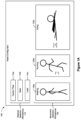
- FIGS. 1 A- 1 G are diagrams of an example user interface 100 that allows a user to configure objective-effectuators.
- an objective-effectuator refers to a character/equipment representation that can be instantiated in a synthesized reality setting, or an environment of the synthesized reality setting.
- an objective-effectuator performs one or more actions in order to effectuate (e.g., complete, satisfy, or achieve) one or more objectives. While pertinent features are shown, those of ordinary skill in the art will appreciate from the present disclosure that various other features have not been illustrated for the sake of brevity and so as not to obscure more pertinent aspects of the example implementations disclosed herein. In the example of FIG.
- the user interface 100 allows the user to configure an objective-effectuator that corresponds to an action figure from fictional material.
- the objective-effectuator is a representation of a character from fictional material.
- the user interface 100 includes various configuration control affordances such as material selection affordances 110 and movement selection affordances 120 .
- the material selection affordances 110 enable selection of a material for the objective-effectuator.
- the material selection affordances 110 include a carbon fiber selection affordance 110 a, a steel selection affordance 110 b, and a lead selection affordance 110 c.
- a selection of the carbon fiber selection affordance 110 a results in the objective-effectuator being made from carbon fiber.
- a selection of the steel selection affordance 110 b results in the objective-effectuator being made from steel.
- a selection of the lead selection affordance 110 c results in the objective-effectuator being made from lead.
- the movement selection affordances 120 enable selection of movement type for the objective-effectuator.
- the movement selection affordances 120 include a walking selection affordance 120 a, a running selection affordance 120 b, and a flying selection affordance 120 c.
- a selection of the walking selection affordance 120 a results in the objective-effectuator utilizing walking as its way of moving.
- a selection of the running selection affordance 120 b results in the objective-effectuator utilizing running as its way of moving.
- a selection of the flying selection affordance 120 c results in the objective-effectuator utilizing flying as its way of moving.
- the selectability of the movement selection affordances 120 is based on the selection of the material selection affordances 110 .
- an entity that creates/owns the action figure provides rules that restrict the selectability of the movement selection affordances 120 based on the selection of the material selection affordances 110 .
- the rules collectively form a rules engine (e.g., the rules engine 218 shown in FIG. 2 ).
- the rules affecting the selectability of the movement selection affordances 120 are:
- Movement selection Rule Material selection affordances 120 that are # 110 that has been selected available for selection 1 Carbon fiber selection affordance Walking selection affordance 110a 120a Running selection affordance 120b Flying selection affordance 120c 2 Steel selection affordance 110b Walking selection affordance 120a Running selection affordance 120b 3 Lead selection affordance 110c Walking selection affordance 120a
- the user interface 100 receives a user input 130 a selecting the carbon fiber selection affordance 110 a.
- the user input 130 a indicates that the user has selected carbon fiber as the material with which to build the objective-effectuator.
- a selection of the carbon fiber selection affordance 110 a results in all movement selection affordances 120 being selectable.
- the walking selection affordance 120 a, the running selection affordance 120 b, and the flying selecting affordance 120 c are available for selection after the carbon fiber selection affordance 110 a has been selected.
- the user interface 100 receives a user input 130 b selecting the steel selection affordance 110 b.
- the user input 130 b indicates that the user has selected steel as the material with which to build the objective-effectuator.
- a selection of the steel selection affordance 110 b results in the flying selection affordance 120 c being unselectable, and the walking selection affordance 120 a and the running selection affordance 120 b being selectable.
- the user interface 100 overlays an unselectable affordance indicator 140 on the flying selection affordance 120 c in order to indicate that the flying selection affordance 120 c is no longer selectable.
- the user interface 100 changes a visual property of the flying selection affordance 120 c in order to indicate that the flying selection affordance 120 c is not selectable (e.g., the user interface 100 changes a background color of the flying selection affordance 120 c by, for example, graying out the flying selection affordance 120 c in order to indicates its unselectability).
- the user interface 100 receives a user input 130 c selecting the lead selection affordance 110 c.
- the user input 130 c indicates that the user has selected lead as the material with which to build the objective-effectuator.
- a selection of the lead selection affordance 110 c results in the running selection affordance 120 b and the flying selection affordance 120 c being unselectable, and the walking selection affordance 120 a being selectable.
- the user interface 100 removes the running selection affordance 120 b and the flying selection affordance 120 c in order to indicate that the running selection affordance 120 b and the flying selection affordance 120 c are no longer selectable.
- the user interface 100 changes a visual property of the running selection affordance 120 b and the flying selection affordance 120 c in order to indicate that the running selection affordance 120 b and the flying selection affordance 120 c are not selectable (e.g., the user interface 100 occludes the running selection affordance 120 b and the flying selection affordance 120 c in order to indicate their unselectability, for example, by overlaying (not shown) the unselectable affordance indicator 140 on the running selection affordance 120 b and the flying selection affordance 120 c ).
- the user interface 100 allows the user to configure the objective-effectuator while enabling an asset creator (e.g., an entity that created an asset represented by the objective-effectuator) to enforce restrictions on the configurations of the objective-effectuator via the rules.
- an asset creator e.g., an entity that created an asset represented by the objective-effectuator
- the user interface 100 allows the user to configure the objective-effectuator to move in different ways while allowing the asset creator to restrict certain movements for specific materials.
- Rule 3 allows the asset creator to restrict an objective-effectuator made of lead from running or flying because the relatively high weight of lead makes the objective-effectuator too heavy to run or fly.
- the user interface 100 enables configurations that result in more realistic/sensible objective-effectuators.
- FIG. 2 is a block diagram of an example system 200 for configuring objective-effectuators in accordance with some implementations.
- the system 200 includes an objective-effectuator configurator 210 that configures an objective-effectuator 212 based on a user input 222 .
- the objective-effectuator configurator 210 includes a rules engine 218 and a user interface presenter 220 .
- the rules engine 218 includes one or more rules for configuring the objective-effectuator 212 (e.g., the Rules 1 - 3 described herein).
- the rules are provided by an asset creator entity 230 that creates/owns the asset that the objective-effectuator 212 represents.
- the rules are provided by an asset creator entity 230 that creates a character/equipment represented by the objective-effectuator 212 .
- the user interface presenter 220 presents a user interface (e.g., the user interface 100 shown in FIGS. 1 A- 1 G ) that allows a user to configure the objective-effectuator 212 .
- the user interface includes various configuration control affordances (e.g., the material selection affordances 110 and/or the movement selection affordances 120 shown in FIGS. 1 A- 1 G ) that enable configuration of the objective-effectuator 212 .
- the user interface presenter 220 receives the user input 222 (e.g., the user input 130 a shown in FIG. 1 B , the user input 130 b shown in FIG. 1 D , or the user input 130 c shown in FIG. 1 F ) indicating a requested configuration for the objective-effectuator 212 .
- the user interface presenter 220 modifies the user interface based on the user input 222 and the rules provided by the rules engine 218 . For example, in some implementations, the user interface presenter 220 changes a number of configuration control affordances that are selectable based on the user input 222 and the rules specified by the rules engine 218 . For example, referring to FIGS. 1 D- 1 E , in response to a selection of the steel selection affordance 110 b, in accordance with Rule 2 , the user interface presenter 220 reduces the number of movement selection affordances 120 that remain selectable.
- the user interface presenter 220 modifies the display of the configuration control affordances. For example, in some implementations, the user interface presenter 220 changes the number of configuration control affordances. In some implementations, the user interface presenter 220 increases the number of configuration control affordances. In some implementations, the user interface presenter 220 decreases the number of configuration control affordances. In some implementations, the user interface presenter 220 modifies the display of the configuration control affordances by changing a visual property of at least some of the configuration control affordances. For example, in some implementations, the user interface presenter 220 overlays the unselectable affordance indicator 140 (shown in FIG. 1 E ) on the configuration control affordances that are no longer selectable.
- the user interface presenter 220 changes a font and/or a color (e.g., a background color) of a configuration control affordance in order to indicate that the configuration control affordance cannot be selected. For example, in some implementations, the user interface presenter 220 grays out a configuration control affordance in order to indicate that the configuration control affordance is unselectable.
- a color e.g., a background color
- the asset creator entity 230 provides preselected attributes 232 for the objective-effectuator 212 .
- the preselected attributes 232 include preselected textures 232 a, preselected geometry 232 b, preselected materials 232 c, preselected musicals 232 d, preselected physics 232 e, and/or preselected behavior 232 f.
- the asset creator entity 230 stores the preselected attributes 232 in a datastore 234 that is accessible to the objective-effectuator configurator 210 .
- the user interface presenter 220 presents configuration control affordances that enable selection of one or more of the preselected attributes 232 provided by the asset creator entity 230 .
- the objective-effectuator configurator 210 receives information 214 indicating other objective-effectuators that are instantiated in a synthesized reality setting.
- the rules engine 218 utilizes rules to determine which of the preselected attributes 232 are selectable based on the information 214 regarding the other instantiated objective-effectuators. For example, if the information 214 indicates that some of the other objective-effectuators instantiated in the synthesized reality setting are known to be hostile, then the rules engine 218 changes the selectability of the preselected materials 232 c (e.g., less protective materials such as cotton are no longer selectable, but more protective materials such as steel remain or become selectable).
- the user interface presenter 220 modifies the display of the configuration control affordances in order to indicate the change in the selectability of the preselected materials 232 c (e.g., the user interface presenter 220 makes the configuration control affordance for cotton unselectable, but makes or leaves the configuration control affordance for steel selectable).
- the objective-effectuator configurator 210 receives scene information 216 corresponding to a synthesized reality setting.
- the scene information 216 indicates dimensions, shape, location, and/or a terrain associated with the synthesized reality setting.
- the rules engine 218 utilizes rules to determine which of the preselected attributes 232 are selectable based on the scene information 216 . For example, if the scene information 216 indicates that the weather within the synthesized reality setting is hot, then the rules engine 218 changes the selectability of the preselected materials 232 c (e.g., warmer materials such as wool are no longer selectable, but cooler materials such as cotton become or remain selectable).
- the user interface presenter 220 modifies the display of the configuration control affordances in order to indicate the change in the selectability of the preselected materials 232 c (e.g., the user interface presenter 220 makes the configuration control affordance for wool unselectable, but makes or leaves the configuration control affordance for cotton selectable).
- FIG. 3 A is a flowchart representation of a method 300 of configuring an objective-effectuator for a synthesized reality setting.
- the method 300 is performed by a device with a non-transitory memory and one or more processors coupled with the non-transitory memory.
- the method 300 is performed by processing logic, including hardware, firmware, software, or a combination thereof.
- the method 300 is performed by a processor executing code stored in a non-transitory computer-readable medium (e.g., a memory).
- the method 300 includes obtaining a set of preselected attribute values for an objective-effectuator, displaying a user interface including a plurality of configuration control affordances, setting a first attribute and modifying display of configuration control affordances, and configuring the objective-effectuator based on the first attribute.
- the method 300 includes obtaining a set of preselected attribute values for an objective-effectuator. For example, referring to FIG. 2 , the method 300 includes obtaining (e.g., receiving) the preselected attributes 232 from the asset creator entity 230 .
- the method 300 includes displaying a user interface including a plurality of configuration control affordances provided to effect configuration of one or more attributes characterizing the objective-effectuator.
- the method 300 includes displaying the user interface 100 with the material selection affordances 110 to enable selection of a material (e.g., carbon fiber, steel, or lead) and the movement selection affordances 120 to enable selection of a movement (e.g., walking, running, or flying).
- a material e.g., carbon fiber, steel, or lead
- a movement selection affordances 120 e.g., walking, running, or flying.
- the method 300 includes in response to receiving an input indicative of manipulation of a first configuration control affordance, setting a corresponding first attribute to a particular preselected attribute value. For example, referring to FIG. 1 B , in response to receiving the user input 130 a indicative of manipulation of the carbon fiber selection affordance 110 a, the method 300 includes setting the material for the objective-effectuator to carbon fiber. In some implementations, the method 300 includes modifying display of the plurality of configuration control affordances in order to change the number of the plurality of configuration control affordances displayed. For example, referring to FIG. 1 G , in response to receiving a selection of the lead selection affordance 110 c, the running selection affordance 120 b and the flying selection affordance 120 c have been removed.
- the method 300 includes configuring the objective-effectuator at least based on the particular preselected attribute value of the first attribute. For example, referring to FIG. 1 G , the objective-effectuator is configured to be made from lead. In some implementations, the objective-effectuator is associated with a set of predefined actions. In some implementations, the method 300 includes presenting the objective-effectuator at least based on the particular preselected attribute value.
- the method 300 includes obtaining preselected physical attributes including preselected textures, preselected geometry, preselected materials, preselected musicals, and/or preselected physics.
- the method 300 includes obtaining (e.g., receiving) the preselected textures 232 a, the preselected geometry 232 b, the preselected materials 232 c, the preselected musicals, and/or the preselected physics 232 e.
- the method 300 includes receiving the preselected physical attributes from an asset creator entity (e.g., the asset creator entity 230 shown in FIG. 2 ).
- the method 300 includes obtaining behavioral attributes for the objective-effectuator. For example, referring to FIG. 2 , in some implementations, the method 300 includes obtaining (e.g., receiving) the preselected behavior 232 f. In some implementations, the method 300 includes receiving the preselected behavioral attributes from an asset creator entity (e.g., the asset creator entity 230 shown in FIG. 2 ).
- an asset creator entity e.g., the asset creator entity 230 shown in FIG. 2 .
- the method 300 includes obtaining a set of preselected actions that the objective-effectuator can perform in a synthesized reality setting.
- the method 300 includes receiving the set of preselected actions from an asset creator entity (e.g., the asset creator entity 230 shown in FIG. 2 ) that creates the objective-effectuator.
- an asset creator entity e.g., the asset creator entity 230 shown in FIG. 2
- the method 300 includes obtaining preselected attributes that indicate synthesized reality settings for the objective-effectuator.
- the method 300 includes receiving types of synthesized reality settings in which the objective-effectuator can be placed.
- the method 300 includes receiving information regarding synthesized reality settings in which the objective-effectuator can be placed.
- the method 300 includes receiving environmental information and/or terrain information for synthesized reality settings in which the objective-effectuator can be placed.
- the method 300 includes obtaining preselected attributes that indicate other objective-effectuators with which the objective-effectuator can interact. In some implementations, the method 300 receiving information indicating other character/equipment representations with which the objective-effectuator can interact.
- the objective-effectuator includes a representation of a character from fictional material such as a novel, a movie, a comic, etc.
- the objective-effectuator includes a representation of an equipment.
- the objective-effectuator is a representation of a real-world equipment, such as a fighter plane.
- the objective-effectuator is a representation of a fictional equipment, such as a time travel machine.
- the objective-effectuator includes an object representation that represents an object such as a person, a thing, or a place.
- the method 300 includes presenting a first configuration control affordance in response to determining that the first configuration control affordance allows selection of attribute value that are within the set of preselected attribute values.
- the method 300 includes forgoing presentation of a second configuration control affordance in response to determining that the second configuration control affordance allows selection of attribute values that are outside the set of preselected attribute values.
- the method 300 includes selecting the configuration control affordances based on the objective-effectuator. For example, in some implementations, the method 300 includes selecting a first set of configuration control affordances for a first objective-effectuator, and selecting a second set of configuration control affordances for a second objective-effectuator.
- the method 300 includes selecting the configuration control affordances based on the preselected attribute values. For example, in some implementations, the method 300 includes selecting a first set of configuration control affordances for display for a first set of preselected attribute values, and selecting a second set of configuration control affordances for display for a second set of preselected attribute values.
- the method 300 includes reducing the number of configuration control affordances. For example, referring to FIG. 1 G , the number of movement selection affordances 120 has been reduced from three to one.
- the method 300 includes increasing the number of configuration control affordances. In some implementations, increasing the number of configuration control affordances provides more configuration options to the user.
- the method 300 includes changing a visual property of some configuration control affordances in order to indicate the unselectability of the configuration control affordances.
- the method 300 includes overlaying an indicator (e.g., the unselectable affordance indicator 140 shown in FIG. 1 E ) on top of a configuration control affordance in order to indicate that the configuration control affordance is not selectable.
- the method 300 includes determining, by a rules engine, the change in the number of configuration control affordances. For example, referring to FIG. 2 , the rules engine 218 determines the change in the number of configuration control affordances. In some implementations, the method 300 includes utilizing one or more rules in the rules engine to determine the change in the number of configuration control affordances. In some implementations, the method 300 includes increasing the number of configuration control affordances. In some implementations, the method 300 includes decreasing the number of configuration control affordances (e.g., as shown in FIG. 1 G ).
- the method 300 includes obtaining the rules that form the rules engine. For example, in some implementations, the method 300 includes obtaining (e.g., receiving) the rules from an entity that controls (e.g., owns) the objective-effectuator. In some implementations, the method 300 includes receiving the rules from an asset creator entity (e.g., the asset creator entity 230 shown in FIG. 2 ).
- an asset creator entity e.g., the asset creator entity 230 shown in FIG. 2 .
- the method 300 includes selecting attribute values that are within a degree of similarity to requested attribute values. In some implementations, the method 300 includes that the requested attribute values are not within the preselected attribute values. In such implementations, the method 300 includes selected alternative attribute values from the preselected attribute values that are within a degree of similarity to the requested attribute values.
- a configuration control affordance that is manipulated corresponds to a visual characteristic of the objective-effectuator, and an attribute corresponding to a behavioral characteristic is set.
- the method 300 includes receiving a selection of a configuration control affordance that relates to a first type of attribute, and setting a second type of attribute in response to selection of the configuration control affordance.
- the method 300 includes displaying the objective-effectuator in a synthesized reality setting. In some implementations, the method 300 includes displaying the objective-effectuator in accordance with the configuration configured via the user input.
- the method 300 includes generating and displaying the synthesized reality setting.
- the synthesized reality setting is displayed at an electronic device such as a smartphone, a tablet, a laptop, a desktop, or the like.
- the synthesized reality setting is displayed by a head-mountable device (HMD) that can be worn by a user.
- the HMD includes a head-mountable enclosure.
- the head-mountable enclosure is shaped to form a receptacle for receiving an electronic device that has a display.
- the HMD include an integrated display.
- the method 300 includes transmitting a data container including the objective-effectuator. In some implementations, the method 300 includes receiving a request for the objective-effectuator. In such implementations, the method 300 includes generating the objective-effectuator, and transmitting the objective-effectuator in a data container to a device that requested the objective-effectuator.
- the method 300 includes in response to an input manipulating a second configuration control affordance, setting a second attribute and maintaining the display of the configuration control affordances. In some implementations, the method 300 includes maintaining the number of configuration control affordances.
- the method 300 includes maintaining the visual property of the configuration control affordances in order to indicate the selectability of the configuration control affordances. For example, in some implementations, the method 300 includes forgoing changing the visual property of the configuration control affordances. In some implementations, the method 300 includes forgoing overlaying an indicator on a configuration control affordance that indicates that the configuration control affordance is not selectable.
- FIG. 4 A is a flowchart representation of a method 400 of generating an objective-effectuator for a synthesized reality setting.
- the method 400 is performed by a device with a non-transitory memory and one or more processors coupled with the non-transitory memory.
- the method 300 is performed by processing logic, including hardware, firmware, software, or a combination thereof.
- the method 400 is performed by a processor executing code stored in a non-transitory computer-readable medium (e.g., a memory).
- the method 400 includes obtaining a request to generate an objective-effectuator, determining whether the request satisfied a set of preselected attribute values, generating the objective-effectuator, and transmitting a data container including the objective-effectuator.
- the method 400 includes obtaining a request to create an objective-effectuator for a synthesized reality setting.
- the request indicates a set of attribute values for the objective-effectuator.
- the method 400 includes determining whether the request satisfies a set of preselected attribute values for the objective-effectuator. For example, in some implementations, the method 400 includes determining whether the set of attribute values indicated in the request satisfy the set of preselected attribute values for the objective-effectuator.
- the method 400 includes generating the objective-effectuator based on the request. For example, in some implementations, the method 400 includes in response to determining that the set of attribute values indicated in the request satisfy the set of preselected attribute values for the objective-effectuator, generating the objective-effectuator based on the set of attribute values indicated in the request.
- the method 400 includes transmitting a data container including the objective-effectuator.
- the method 400 includes encapsulating the objective-effectuator in a HTML wrapper.
- the method 400 includes obtaining the set of preselected attribute values.
- the method 400 includes receiving the set of preselected attribute values from an asset creator entity that creates an asset corresponding to the objective-effectuator.
- the method 400 includes obtaining preselected physical attributes including preselected textures, preselected geometry, preselected materials, preselected musicals, and/or preselected physics.
- the method 400 includes obtaining (e.g., receiving) the preselected textures 232 a, the preselected geometry 232 b, the preselected materials 232 c, the preselected musicals, and/or the preselected physics 232 e.
- the method 400 includes receiving the preselected physical attributes from an asset creator entity (e.g., the asset creator entity 230 shown in FIG. 2 ).
- the method 400 includes obtaining behavioral attributes for the objective-effectuator. For example, referring to FIG. 2 , in some implementations, the method 400 includes obtaining (e.g., receiving) the preselected behavior 232 f. In some implementations, the method 400 includes receiving the preselected behavioral attributes from an asset creator entity (e.g., the asset creator entity 230 shown in FIG. 2 ).
- an asset creator entity e.g., the asset creator entity 230 shown in FIG. 2 .
- the method 400 includes obtaining a set of preselected actions that the objective-effectuator can perform in a synthesized reality setting.
- the method 400 includes receiving the set of preselected actions from an asset creator entity (e.g., the asset creator entity 230 shown in FIG. 2 ) that creates the objective-effectuator.
- an asset creator entity e.g., the asset creator entity 230 shown in FIG. 2
- the method 400 includes obtaining preselected attributes that indicate synthesized reality settings for the objective-effectuator.
- the method 400 includes receiving types of synthesized reality settings in which the objective-effectuator can be placed.
- the method 400 includes receiving information regarding synthesized reality settings in which the objective-effectuator can be placed.
- the method 400 includes receiving environmental information and/or terrain information for synthesized reality settings in which the objective-effectuator can be placed.
- the method 400 includes obtaining preselected attributes that indicate other objective-effectuators with which the objective-effectuator can interact. In some implementations, the method 400 receiving information indicating other character/equipment representations with which the objective-effectuator can interact.
- the objective-effectuator includes a representation of a character from fictional material such as a novel, a movie, a comic, etc.
- the objective-effectuator includes a representation of an equipment.
- the objective-effectuator is a representation of a real-world equipment, such as a fighter plane.
- the objective-effectuator is a representation of a fictional equipment, such as a time travel machine.
- the objective-effectuator includes an object representation that represents an object such as a person, a thing, or a place.
- the method 400 includes in response to determining that the requested attribute values do not satisfy the set of preselected attributes, generating the objective-effectuator based on alternative attribute values from the set of preselected attributes that are within a degree of similarity to the requested attribute values.
- the method 400 includes, determining, by a rules engine (e.g., the rules engine 218 shown in FIG. 2 ), whether the request satisfies the preselected attributes.
- a rules engine e.g., the rules engine 218 shown in FIG. 2
- the method 400 includes obtaining (e.g., receiving) the rules that form the rules engine.
- the method 400 includes receiving the rules from an asset creator entity that creates the asset represented by the objective-effectuator.
- FIG. 5 is a block diagram of a server system 500 enabled with one or more components of a device in accordance with some implementations. While certain specific features are illustrated, those of ordinary skill in the art will appreciate from the present disclosure that various other features have not been illustrated for the sake of brevity, and so as not to obscure more pertinent aspects of the implementations disclosed herein. To that end, as a non-limiting example, in some implementations the server system 500 includes one or more processing units (CPUs) 501 , a network interface 502 , a programming interface 503 , a memory 504 , and one or more communication buses 505 for interconnecting these and various other components.
- CPUs processing units
- the network interface 502 is provided to, among other uses, establish and maintain a metadata tunnel between a cloud hosted network management system and at least one private network including one or more compliant devices.
- the communication buses 505 include circuitry that interconnects and controls communications between system components.
- the memory 504 includes high-speed random access memory, such as DRAM, SRAM, DDR RAM or other random access solid state memory devices, and may include non-volatile memory, such as one or more magnetic disk storage devices, optical disk storage devices, flash memory devices, or other non-volatile solid state storage devices.
- the memory 504 optionally includes one or more storage devices remotely located from the CPU(s) 501 .
- the memory 504 comprises a non-transitory computer readable storage medium.
- the memory 504 or the non-transitory computer readable storage medium of the memory 504 stores the following programs, modules and data structures, or a subset thereof including an optional operating system 506 , the objective-effectuator configurator 210 that includes the rules engine 218 and the user interface presenter 220 .
- the objective-effectuator 210 allows a user to configure an objective-effectuator while enabling an asset creator that creates the corresponding asset to enforce restrictions on the configurations.
- the rules engine 218 includes one or more rules that determine the available configurations for the objective-effectuator.
- the user interface presenter 220 presents a user interface that allows a user to configure the objective-effectuator.
- first first
- second second
- first node first node
- first node second node
- first node first node
- second node second node
- the first node and the second node are both nodes, but they are not the same node.
- the term “if” may be construed to mean “when” or “upon” or “in response to determining” or “in accordance with a determination” or “in response to detecting,” that a stated condition precedent is true, depending on the context.
- the phrase “if it is determined [that a stated condition precedent is true]” or “if [a stated condition precedent is true]” or “when [a stated condition precedent is true]” may be construed to mean “upon determining” or “in response to determining” or “in accordance with a determination” or “upon detecting” or “in response to detecting” that the stated condition precedent is true, depending on the context.
Landscapes
- Engineering & Computer Science (AREA)
- Multimedia (AREA)
- Theoretical Computer Science (AREA)
- General Engineering & Computer Science (AREA)
- Physics & Mathematics (AREA)
- Human Computer Interaction (AREA)
- General Physics & Mathematics (AREA)
- General Business, Economics & Management (AREA)
- Computer Security & Cryptography (AREA)
- Business, Economics & Management (AREA)
- Optics & Photonics (AREA)
- Computer Hardware Design (AREA)
- Computer Graphics (AREA)
- Software Systems (AREA)
- User Interface Of Digital Computer (AREA)
- Processing Or Creating Images (AREA)
Abstract
Description
| Movement selection | |||
| Rule | Material | affordances | 120 that are |
| # | 110 that has been selected | available for selection | |
| 1 | Carbon fiber selection affordance | Walking selection affordance | |
| 110a | 120a | ||
| |
|||
| 120b | |||
| |
|||
| 120c | |||
| 2 | |
|
|
| 120a | |||
| |
|||
| 120b | |||
| 3 | |
|
|
| 120a | |||
Claims (16)
Priority Applications (1)
| Application Number | Priority Date | Filing Date | Title |
|---|---|---|---|
| US16/959,333 US11768590B2 (en) | 2018-01-22 | 2019-01-18 | Configuring objective-effectuators for synthesized reality settings |
Applications Claiming Priority (4)
| Application Number | Priority Date | Filing Date | Title |
|---|---|---|---|
| US201862620371P | 2018-01-22 | 2018-01-22 | |
| US201862734034P | 2018-09-20 | 2018-09-20 | |
| PCT/US2019/014188 WO2019143933A1 (en) | 2018-01-22 | 2019-01-18 | Configuring objective-effectuators for synthesized reality settings |
| US16/959,333 US11768590B2 (en) | 2018-01-22 | 2019-01-18 | Configuring objective-effectuators for synthesized reality settings |
Publications (2)
| Publication Number | Publication Date |
|---|---|
| US20210042022A1 US20210042022A1 (en) | 2021-02-11 |
| US11768590B2 true US11768590B2 (en) | 2023-09-26 |
Family
ID=65279792
Family Applications (1)
| Application Number | Title | Priority Date | Filing Date |
|---|---|---|---|
| US16/959,333 Active US11768590B2 (en) | 2018-01-22 | 2019-01-18 | Configuring objective-effectuators for synthesized reality settings |
Country Status (5)
| Country | Link |
|---|---|
| US (1) | US11768590B2 (en) |
| KR (1) | KR102471580B1 (en) |
| CN (1) | CN111602103B (en) |
| DE (1) | DE112019000474T5 (en) |
| WO (1) | WO2019143933A1 (en) |
Families Citing this family (4)
| Publication number | Priority date | Publication date | Assignee | Title |
|---|---|---|---|---|
| JP7146884B2 (en) * | 2020-12-08 | 2022-10-04 | 株式会社スクウェア・エニックス | Video game processing program and video game processing system |
| CN113448635A (en) * | 2021-06-01 | 2021-09-28 | 青岛小鸟看看科技有限公司 | Configuration method and device of head-mounted display equipment and head-mounted display equipment |
| CN113946266B (en) * | 2021-10-18 | 2023-03-10 | 贵州振华信息技术有限公司 | Manuscript demonstration system and demonstration method |
| US12321568B1 (en) * | 2022-06-03 | 2025-06-03 | Apple Inc. | Container file viewing |
Citations (19)
| Publication number | Priority date | Publication date | Assignee | Title |
|---|---|---|---|---|
| JP2001100906A (en) | 1999-09-30 | 2001-04-13 | Suzuki Motor Corp | 3D data display device |
| US20020082065A1 (en) | 2000-12-26 | 2002-06-27 | Fogel David B. | Video game characters having evolving traits |
| JP2002224439A (en) | 2001-02-02 | 2002-08-13 | Toyota Central Res & Dev Lab Inc | Driving game program and recording medium recording the same |
| US6545682B1 (en) * | 2000-05-24 | 2003-04-08 | There, Inc. | Method and apparatus for creating and customizing avatars using genetic paradigm |
| JP2004127026A (en) | 2002-10-03 | 2004-04-22 | Sony Corp | Information management system and method, information management device and method, information processing device and method, recording medium, and program |
| CN101276475A (en) | 2008-03-31 | 2008-10-01 | 康佳集团股份有限公司 | Method for implementing real time altering virtual role appearance in network game |
| US20090147008A1 (en) * | 2007-12-10 | 2009-06-11 | International Business Machines Corporation | Arrangements for controlling activites of an avatar |
| US20110022965A1 (en) * | 2009-07-23 | 2011-01-27 | Apple Inc. | Personalized shopping avatar |
| US20110276918A1 (en) * | 2010-05-07 | 2011-11-10 | Microsoft Corporation | One step selection of disabled options |
| US20120023560A1 (en) * | 2010-07-22 | 2012-01-26 | Brother Kogyo Kabushiki Kaisha | Information processing apparatus |
| CN102486815A (en) | 2010-12-03 | 2012-06-06 | 腾讯科技(深圳)有限公司 | Method and system for controlling plug-in in network games |
| US20160067604A1 (en) | 2014-09-05 | 2016-03-10 | Trigger Global Inc. | Augmented reality gaming systems and methods |
| US20170312614A1 (en) | 2016-05-02 | 2017-11-02 | Bao Tran | Smart device |
| US9884254B2 (en) * | 2014-09-05 | 2018-02-06 | Trigger Global Inc. | Augmented reality gaming systems and methods |
| US20180107367A1 (en) * | 2016-10-14 | 2018-04-19 | Sap Se | User Interface Control for Smart Range Slider |
| US20190004783A1 (en) * | 2016-01-21 | 2019-01-03 | Playgiga S.L. | Modification of software behavior in run time |
| CN109589840A (en) | 2018-12-28 | 2019-04-09 | 南通市晗泰化工有限公司 | Agitator tank is used in a kind of production of water paint |
| US20190188773A1 (en) * | 2017-12-19 | 2019-06-20 | Futurewei Technologies, Inc. | Determining thermal insulation levels of clothing to wear at a destination |
| US10699462B1 (en) * | 2017-07-26 | 2020-06-30 | Roblox Corporation | Character morphing system |
Family Cites Families (1)
| Publication number | Priority date | Publication date | Assignee | Title |
|---|---|---|---|---|
| CN107589840A (en) * | 2017-08-31 | 2018-01-16 | 维沃移动通信有限公司 | The analogy method and intelligent terminal of a kind of virtual role |
-
2019
- 2019-01-18 CN CN201980008260.4A patent/CN111602103B/en active Active
- 2019-01-18 KR KR1020207021387A patent/KR102471580B1/en active Active
- 2019-01-18 DE DE112019000474.3T patent/DE112019000474T5/en active Pending
- 2019-01-18 US US16/959,333 patent/US11768590B2/en active Active
- 2019-01-18 WO PCT/US2019/014188 patent/WO2019143933A1/en not_active Ceased
Patent Citations (20)
| Publication number | Priority date | Publication date | Assignee | Title |
|---|---|---|---|---|
| JP2001100906A (en) | 1999-09-30 | 2001-04-13 | Suzuki Motor Corp | 3D data display device |
| US6545682B1 (en) * | 2000-05-24 | 2003-04-08 | There, Inc. | Method and apparatus for creating and customizing avatars using genetic paradigm |
| US20020082065A1 (en) | 2000-12-26 | 2002-06-27 | Fogel David B. | Video game characters having evolving traits |
| US20040053690A1 (en) * | 2000-12-26 | 2004-03-18 | Fogel David B. | Video game characters having evolving traits |
| JP2002224439A (en) | 2001-02-02 | 2002-08-13 | Toyota Central Res & Dev Lab Inc | Driving game program and recording medium recording the same |
| JP2004127026A (en) | 2002-10-03 | 2004-04-22 | Sony Corp | Information management system and method, information management device and method, information processing device and method, recording medium, and program |
| US20090147008A1 (en) * | 2007-12-10 | 2009-06-11 | International Business Machines Corporation | Arrangements for controlling activites of an avatar |
| CN101276475A (en) | 2008-03-31 | 2008-10-01 | 康佳集团股份有限公司 | Method for implementing real time altering virtual role appearance in network game |
| US20110022965A1 (en) * | 2009-07-23 | 2011-01-27 | Apple Inc. | Personalized shopping avatar |
| US20110276918A1 (en) * | 2010-05-07 | 2011-11-10 | Microsoft Corporation | One step selection of disabled options |
| US20120023560A1 (en) * | 2010-07-22 | 2012-01-26 | Brother Kogyo Kabushiki Kaisha | Information processing apparatus |
| CN102486815A (en) | 2010-12-03 | 2012-06-06 | 腾讯科技(深圳)有限公司 | Method and system for controlling plug-in in network games |
| US20160067604A1 (en) | 2014-09-05 | 2016-03-10 | Trigger Global Inc. | Augmented reality gaming systems and methods |
| US9884254B2 (en) * | 2014-09-05 | 2018-02-06 | Trigger Global Inc. | Augmented reality gaming systems and methods |
| US20190004783A1 (en) * | 2016-01-21 | 2019-01-03 | Playgiga S.L. | Modification of software behavior in run time |
| US20170312614A1 (en) | 2016-05-02 | 2017-11-02 | Bao Tran | Smart device |
| US20180107367A1 (en) * | 2016-10-14 | 2018-04-19 | Sap Se | User Interface Control for Smart Range Slider |
| US10699462B1 (en) * | 2017-07-26 | 2020-06-30 | Roblox Corporation | Character morphing system |
| US20190188773A1 (en) * | 2017-12-19 | 2019-06-20 | Futurewei Technologies, Inc. | Determining thermal insulation levels of clothing to wear at a destination |
| CN109589840A (en) | 2018-12-28 | 2019-04-09 | 南通市晗泰化工有限公司 | Agitator tank is used in a kind of production of water paint |
Non-Patent Citations (4)
| Title |
|---|
| Don Caldwell, "You Cannot Fast Travel", May 31, 2017, Knowyourmeme.com, pp. 3-5 (Year: 2017). * |
| International Search Report and Written Opinion dated Jun. 12, 2019, International Application No. PCT/US2019/014188, pp. 1-16. |
| Mateus Pelegrino, et al., "Creating and Designing customized and dynamic game interfaces using smartphones and touchscreen", 2014, IEEE computer society, all pages (Year: 2014). * |
| Pelegrino et al. "Creating and Designing Customized and Dynamic Game Interfaces Using Smartphones and Touchscreen", ResearchGate, Conference Paper, Nov. 2014, 8 pages. |
Also Published As
| Publication number | Publication date |
|---|---|
| US20210042022A1 (en) | 2021-02-11 |
| CN111602103B (en) | 2023-08-11 |
| WO2019143933A1 (en) | 2019-07-25 |
| DE112019000474T5 (en) | 2020-10-01 |
| CN111602103A (en) | 2020-08-28 |
| KR20200099592A (en) | 2020-08-24 |
| KR102471580B1 (en) | 2022-11-25 |
Similar Documents
| Publication | Publication Date | Title |
|---|---|---|
| US9934614B2 (en) | Fixed size augmented reality objects | |
| US11768590B2 (en) | Configuring objective-effectuators for synthesized reality settings | |
| US11710283B2 (en) | Visual search refinement for computer generated rendering environments | |
| US20210398360A1 (en) | Generating Content Based on State Information | |
| US20240054732A1 (en) | Intermediary emergent content | |
| US12249016B2 (en) | Influencing actions of agents | |
| US20210286701A1 (en) | View-Based Breakpoints For A Display System | |
| US11836842B2 (en) | Moving an avatar based on real-world data | |
| US12380334B2 (en) | Objective-effectuators in synthesized reality settings | |
| KR102632448B1 (en) | Computationally efficient model selection | |
| US12394157B2 (en) | Planner for an objective-effectuator | |
| WO2020219643A1 (en) | Training a model with human-intuitive inputs | |
| US11645797B1 (en) | Motion control for an object | |
| US20200364568A1 (en) | Generating objectives for objective-effectuators in synthesized reality settings | |
| WO2020068740A1 (en) | Model with multiple concurrent timescales | |
| US11733848B2 (en) | Emergent content containers | |
| US11436813B2 (en) | Generating directives for objective-effectuators | |
| US11379471B1 (en) | Hierarchical datastore for an agent |
Legal Events
| Date | Code | Title | Description |
|---|---|---|---|
| FEPP | Fee payment procedure |
Free format text: ENTITY STATUS SET TO UNDISCOUNTED (ORIGINAL EVENT CODE: BIG.); ENTITY STATUS OF PATENT OWNER: LARGE ENTITY |
|
| STPP | Information on status: patent application and granting procedure in general |
Free format text: NON FINAL ACTION MAILED |
|
| STPP | Information on status: patent application and granting procedure in general |
Free format text: RESPONSE TO NON-FINAL OFFICE ACTION ENTERED AND FORWARDED TO EXAMINER |
|
| STPP | Information on status: patent application and granting procedure in general |
Free format text: FINAL REJECTION MAILED |
|
| STPP | Information on status: patent application and granting procedure in general |
Free format text: DOCKETED NEW CASE - READY FOR EXAMINATION |
|
| STPP | Information on status: patent application and granting procedure in general |
Free format text: NON FINAL ACTION MAILED |
|
| STPP | Information on status: patent application and granting procedure in general |
Free format text: RESPONSE TO NON-FINAL OFFICE ACTION ENTERED AND FORWARDED TO EXAMINER |
|
| STPP | Information on status: patent application and granting procedure in general |
Free format text: FINAL REJECTION MAILED |
|
| STPP | Information on status: patent application and granting procedure in general |
Free format text: DOCKETED NEW CASE - READY FOR EXAMINATION |
|
| STPP | Information on status: patent application and granting procedure in general |
Free format text: NON FINAL ACTION MAILED |
|
| STPP | Information on status: patent application and granting procedure in general |
Free format text: RESPONSE TO NON-FINAL OFFICE ACTION ENTERED AND FORWARDED TO EXAMINER |
|
| STPP | Information on status: patent application and granting procedure in general |
Free format text: NOTICE OF ALLOWANCE MAILED -- APPLICATION RECEIVED IN OFFICE OF PUBLICATIONS |
|
| STPP | Information on status: patent application and granting procedure in general |
Free format text: AWAITING TC RESP, ISSUE FEE PAYMENT VERIFIED |
|
| STPP | Information on status: patent application and granting procedure in general |
Free format text: PUBLICATIONS -- ISSUE FEE PAYMENT VERIFIED |
|
| STCF | Information on status: patent grant |
Free format text: PATENTED CASE |