US1167332A - Calculating-machine. - Google Patents
Calculating-machine. Download PDFInfo
- Publication number
- US1167332A US1167332A US74178613A US1913741786A US1167332A US 1167332 A US1167332 A US 1167332A US 74178613 A US74178613 A US 74178613A US 1913741786 A US1913741786 A US 1913741786A US 1167332 A US1167332 A US 1167332A
- Authority
- US
- United States
- Prior art keywords
- shaft
- calculating
- arm
- carriage
- wheel
- Prior art date
- Legal status (The legal status is an assumption and is not a legal conclusion. Google has not performed a legal analysis and makes no representation as to the accuracy of the status listed.)
- Expired - Lifetime
Links
Images




Classifications
-
- G—PHYSICS
- G06—COMPUTING OR CALCULATING; COUNTING
- G06C—DIGITAL COMPUTERS IN WHICH ALL THE COMPUTATION IS EFFECTED MECHANICALLY
- G06C7/00—Input mechanisms
- G06C7/10—Transfer mechanisms, e.g. transfer of a figure from a ten-key keyboard into the pin carriage
Definitions
- This invention has for ltSObjGCtlihB pre-- duction of. a calculating machine, which is particularlysimple in construction and of its 'parts;
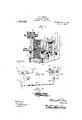
- FIG. 1 is a plan of my calculating ma chine.
- Fig. 2 is a. side elevation thereof.
- FIG. 3 is a fragmentary longitudinal sectional view, parts "being removed, showing particularly the eliminator keyand mechanism.
- Fig. 5 is a fragmentary elementsand carriage therefor, and the operating member and contiguous parts, and a portion of the decimal mechanism in top plan, the calculating wheels being also shown.
- -Fig. 6 is a. plan of detached parts, ofthe calculating mechanism illustrating the carriages for the controlling elements
- Fig. 7 is a plan view of 'the rear portion of the frame of the machine showing the. relative positions of the clearing mechanism and carrying over mechanism and carriage for calculating wheels carried by the detachable ,supplemental frame, andv also the connections be: tween the main operating elementand said mechanisms.
- Fig. 7 is a detail Viewv of the alined shafts of the carrying ing mechanisms and contiguous parts of the frame.
- Fig. 8 is an elevation of parts seen in 3, showing particularly the cam or corresponding Fig. i is a longitudinal sectional view through the.
- Fig. 8 is a fragmentaryview of' 'the"operatin m' member and'contiguous parts.
- Figsofiea 10 are longitudinal sectional views through the controlling elements, calculating-eleing omitted, control-ling. elements, calculatlng wheel carrrage, and the operationof the carrying over mechanism.
- Fig. 11 is a fragmentary sectional View illustrat' of the-mechanism for return ing the calculating wheel and platenicanj ing a portion riages, and parts movable therewith, to their rear or normal position andfor holding the same in such position.
- Fig. 12 isjazview' similar .to Fig.
- Fig. 13 is. ai'cletail' view illustrating the operation of the'deci- Patented Jan. a, 1915'.
- Fig l is a detail view 'ofthe shaft of the.
- Fig. ⁇ 20 is aninner face riage in section.
- FIG. 2 is a plan of thecalculating parts. I wheel carriage,show1ng the zero eliminating taken on the plane of zero eliminating pawls.
- Fig.- 24 is asectionaltview of the plane of line B-B, Fig. 21, showing means'for resetting the zero eliminating pawls.
- Fig. 25 is a fragmentary view illustrating said pawls in rear elevation;
- lhis calculating machine comprises, genseries of calculating elemen ts, ling elements being'movable';1nto numeral Figs. 22 and 23 .are detail VIGWS. line A -A Fig. 21, the operation of. the
- one series of elements being movable into and out of connection with the other series of elements, means for controlling the setting of the controlling elements in numerical positions, carrying over mechanism, clearing mechanism, recording mechanism, and an actuating member operable to actuate the controlling elements and cfi'ect the movement of, or control the operations of, the carrying over mechanism, the record ing mechanism, and the movement of one series of elements into and out of connection With the other series of elements.
- Figs. 3 and 7 is a supplemental frame detachably mounted in the main frame and carrying mechanisms to be hereinafter de-
- the frame 2 closes the rear side of the frame 1 and is detachable by a rearward movement after unloosening fastening members as screws 2, Fig.
- the controlling elements are mounted in any suitable manner on the shaft 4, Figs. 2, 5 and 6, extending transversely of the case and journaled in bearings formed in up rights 5, Figs. 1 and 2, projecting from the top plate of the frame, the shaft 1 being ere shown as shiftable axially in its bearings for the purpose of carrying the elements 3 into and out of denominational positions.
- Said shaft constitutes part of a carriage which also includes a depending frame 6, Figs. 3, 5 and 6, having hubs 7 on the shaft at opposite ends of the series of controlling elements 3, the frame 6 also having an arc shape supporting plate 8, Figs.
- the frame 6 is alsoformed at its front side with a flange 9, F ig's. 1 and 6, running upon the top plate 10 of theframe 1, and supporting a rack 11 cooperating with escapement pawls which control the movement of the shaft 4, and frame 6 to the left to carrv the elements 3 into denominational positions.
- Each controlling element 3 is here shown as toothed, the teeth 12 thereof being shown as extending but part Way around the same and as provided with type 13 at their ends, and each element 3 is weighted .so as to move about its axis into numeral positions, see Fig. 10, when relieved of means tending to normally restrain it from such movement.
- Some ofthe teeth 4: are unprovided with these teeth are normally arranged rinting line of the machine, so that when the elements 3 remaining in their starting position when a number is set in other elements, will not make a record.
- each element 3 from that teeth 12 are located is formed with peripheral indicating numerals corresponding to the type of the gear teeth, and these numerals are visible through a sight opening in a plate 15 on the front side of the frame 1, Fig. 3.
- the means for determining the numerical positions of the elements 3 comprises a plu rality of series of stops or abutments 16, Figs. 3, 9 and 10, located in holes extending radially through the are shaped plate 8. of the frame 6, there being one series of stops for each element 3, Fig. 6, and each stop corresponding to a number or value from 0 to 9 inclusive and being adapted to be operated by one of the series of keys 17 on the key board of the machine.
- each stop 16' Upon the operation of each stop 16' by its corresponding key 17, it is moved into the path of a radially extending shoulder 18, Figs. 9 and 10, on the corresponding controlling element 3 and hence limits the movement of said controlling element 3 about its axis under the influence of its weighted portion, when said element is relieved of its restraining means to be presently described.
- the keys 1? are here shown as including angle levers, Fig. 3, mounted at their angles on a shaft 19 located at the front end of the frame, corresponding arms of the lovers 17 having key heads, and the other arms there of being connected by links 20 to arms 21 on rock shafts 22, Figs. 3 and (3, having other arms coacting with the stops 16 respectively of one series, to press the same above the surface of the plate 8 into the path of the radially extending shoulder 13.
- the levers 17 also coact with a universal bar 24: which Works the escapement.
- the restraining means for the controlling elements 3 comprises a detent in the form of a bar 25, Figs. 5, b and 9, extending parallel to the shaft 1 and normally engaging with the shoulders 18 of the elements 3, this bar 2-5 being carried by a rock arm 26, F jg. 3, on a rock shaft 27, Figs. 4 and 5, which is journaled in one of the uprights 5 of the frameand which is encircled by a spring 28 normally restraining rocking of the shaft 27.
- All of the controlling elements 3 are normally arranged'in their starting position side on which the gear" parts trons,
- element 3 turns by gravity until its shoulder ing on the bar or detent 25,
- the spring 29, tends to move the controlling elements and the carriage including the shaft 4 and frame 6 to the left, and such movement is controlled by an escapement 34, comprising a rock shaft 35 thereof is moving in the opposite direction causing the knock-off device 39 to push the pawl 38 out of engagement with the rack.
- the rock shaft 35 is connected to the universal bar 24 operated by links 40. Any form. of escapement may be usedforcontrolling the feeding of the carriage to the left.
- These elements 41 are the calculating elements, and in this embodiment 'of my invention, said elements are shown as movable into and out of connection with the controlling elements 3.
- These elements 41 are gear wheels mounted upon a shaft 42, Figs. 7, 9 and 10, supported at its opposite ends in side pieces of the carriage 43, the carriage 43 being movable for carrying the wheels into and out of mesh with the teeth 12 of the controlling elements 3 in which a number has been set.
- the wheels 41 are mounted on the shaft to rotate about the sameindependently of each other. As here-shown the wheels 41 are connected to the shaft 42 by spring pressed ratchets consisting of balls 41 at opposite ends of transverse passages 42 in the shaft 42 and coacting -with internal rounding ratchet teeth on the wheels 41.
- the controlling elements are driving wheels and the calculating elements driven wheels and said driving wheels are actuated as hereinafter described.
- the teeth of the calculating wheels 41 are also provided with type 44 at their ends for the purpose of printing the total.
- the carriage 43 is pivoted to the supplemental frame 2 and is mounted ona shaft 45 supported at itsopposite ends in the sides of the supplemental frame 2.
- '46 is a platen movable in one direction into and out of cooperation with the type 13 of the elements 3 and in another direction into. and out of'cocperation with the type 1449f the gear teeth of the calculating*wheels 41,
- a suitable ribbon 47 Fig. 2 being interposed between the platen 46 and' the elements 3 and 41, and the platen being provided'with suitable means as a shield 48 for guiding the paper from a reel 49 supported by brackets plemental frame 2
- the ribbon is operated by suitable mechanism.
- the '50 projecting from the-rear end of the sup-v platen 46' is mountedona carriage 51 ineluding side arms pivoted at their lower ends on the shaft 45 of the'side arms of the carriage 43, and forwardly extending brackside arms'and carrying attheir front ends a shaft 54 on which the platenismounted.
- Both thecarriages 43 and 51 are pivoted to forwardly extending side pieces 56 on the supplemental frame 2Iand are hence removable with said frame.
- The'earriages 43 and 51 move as a unit toward and from the controlling elements 3, and a spring 57, Fig. 3,
- the wheels" 41 and platen 46 are arranged so that when the wheels 41 are in mesh with the'teeth'12 of the elements 3, the platen 46 does not cooperate with the type of the wheels 3 but is broughtinto and out of coiipe'ration with the elements 3 by the overthrow or hammer effect of said platen and it's carriage.
- the means for actuating the controlling elements 3 from the numerical positions comprises rock arms 58, Figs. 3, 5, 9 and 10, mounted on the shaft 4 to move-therewith, said arms 58 carrying a roller 59 'at their ends which is movable over the inner face of the arc shape plate 8 for the abutments or stops 16, for depressing such stops, and into engagement with the shoulders 18 of the elements 3 in which a number has been set, for carrying said elements in a retrograde direction about their axes to their starting position; and during this operation, the elements 3 in which an example or item is set,-a're in mesh with the calculating equal to the actuation of the elements 3.
- the means for operating the arms 58 also controls the movement of the calculating wheel carriage 43 and the platen carriage wheels 41 and actuate the same an amount 85 ets 52.
- pivoted-at 53 at the upper ends of the 51 and comprises a member, here shown as a sleeve 60, Figs. 2, 5, 7 and 8, journaled in one of the uprights 5 of the frame and mounted on one end of the shaft 4 and connected thereto by a key 61 associated With the shaft 4, the key extending into a keyway 62 of greater width than the key so that the sleeve 60 is connected to the shaft 4 by lost motion for the purpose hereinafter explained.
- the calculating wheel carriage 43 and the -.platen carriage 51 are moved forwardly to carry the calculating wheels 41 and platen 46 into cooperation with the controlling ele ments 3, by a spring 64, Figs. 6 and 11, which is tensioned by the operation of the sleeve 60, as hereinafter described, so that the sleeve 60 is the prime mover.
- This spring 64 encircles a rod 65 pivoted at its rear end at 66, to one of the side arms of the calculating tending at its other end through a stud 67, Fig. 11, depending from the top plate of the frame 1, the spring being connected at one end to the stud and at its other end to the rod.
- the movement of the calculating wheel carriage 43 and the platen carriage 51 by the Spring 64, is controlled by eccentric or cam means provided on the sleeve 60; this cam means having high and low points arranged so that the carriages will have a sudden movement forwardly on the initial movement of the sleeve.
- This cam means consists of an arm 68, Fig. 8, normally projecting roarwardly from the sleeve and another arm or shoulder 69, Figs.
- the arm 68 coacting with a holding arm 70 secured at 71 to one side arm of thecal- 4 culating wheel carriage 43 and having a rearwardly extending arm 72 connected to one side arm of the platen carriage 51 by a pin and-slot 73 for the purpose of permitting the overthrow of the carriage 51 relatively to the calculating wheel carriage 43, when the carriages are pulled forwardly by the spring 64.
- the arm 68 is formed integral with a cam 74 forming part of the decimal mechanism to behereinafter de scribed, and the arm 68 is arranged so that the arm 70 will move off the end thereof to the base or low point of thecam during the initial part of the rotationof the sleeve 60.
- the arm 68 and'cam 74 are moved in the direction indicated by the arrow, Fig. 8, so that the arm 68 moves clear of the holding arm 70, permittin the holding arm to jump to the low point of.
- the sleeve is operated wheel carriage, the rodex the cam as the spring 64 reacts and pulls the calculating wheel carriage and platen roll carriage forwardly.
- the cam or eccentric pin 69 engages a shoulder 76 on a push rod or arm 77 con nected to the calculating wheel carriage 43 causing the carriages 43 and 51 to be moved rearwardly until the arm can again engage the end of the arm 68.
- Said arm 77 has an outension 78 at its front end which rides on the shaft 4 and prevents the arm 7 from falling downwardly out of position when the'calculating wheel carriage 43 is in its rearmost position.
- a suitable lock is provided for holding the calculating wheel carriage 43 in its forward position while the calculating wheels 41 are in mesh with the controlling elements 3, this look being here shown as a lever 79, Figs. 3, S, and 11, having a hub 80 concentric with the axis of the calculating wheels 41 and having a. latch arm 81 which coacts with a 'lixed shoulder 82 on the detachable frame member 2.
- the lock 79 is operated by the push arm 77 which ispivoted eccentrioally at 83 thereto, so that the preliminary movement of the push arm 70 rocks the latch arm 81 out of engagement with the shoulder 82 before the rearward movement of the calculating wheel carriage and platen carriage begins.
- the pivotal movement of the latch 79 is limited by a stop 84 on the corresponding side arm of the calculating wheel carriage 43.
- the latch 79 is mounted on the calculating wheel shaft 42.
- the handle 63 is then swung to the limit of its forward movement effecting the return of the controlling elements 3, shaft 4 and frame6 to the right.
- the pin or cam 69 on the sleeve 60 engages the shoulder 7 6 on the push arm 77 and-returns the calculating wheel carriage and the platen carriage to their rear position and reengages the cam or arm 68 with the holding arm 70.
- controllingelements 3 are shifted to the right by means of a spring 29, Fig. 6, and are controlled in such shifting movement by an escapement operated by the keys.B
- the carriage 1s returned to the right and the spring tensioned by means of a cam 85 mounted on the sleeve 60 yoke the carriage for the controlling elements v
- the cam 85 engages the plunger 86 which in turn actuates the collar 89 about the shaft 30, thus tensioning the spring 29, one end of which is connected to said collar and the other end of which is connected to the collar 92 fixed to a yoke 93 in which the rock shaft is journaled, this 93 being secured to the inner face of one-of the sides of the frame 1.
- the shoulder 90 of the collar 89 is normally engaged with the shoulder 91 of the .rock arm 31 so that uponthe first depression of a key 17, and the operation of the escapement, the arm 31 will be rocked to push the carriage for the elements 3 one step to the left.
- Said means comprises a lock 96 movable into the path of the front end ofthe rod 65, Fig. 3 in order to prevent movement of said rod by the spring 64, this look 96 being operated by an eliminator 'key 97 Figs. 1 and 3 which is connected thereto by suitable means 98.
- the lock 96 is here shown as a horizontal lever pivoted between its; ends to the frame,
- the lever 96 is also formed with a vertically extending arm 96 which is connected to one end of a link 96 which extends forwardly and has its front end downturned forming a shoulder 96 arranged in the path of the universal bar 24: so that upon the operation of any numerical key, the lock 96 is reset in its startingor ineffective position.
- a record of the total in the calculating wheels 11 is made by moving the arms or brackets 52 of the platen carriage 51 downwardly on their pivot 53 against the action of the spring 55, Fig. 3.
- this movementof the platen 4:6 is effected by a total lever 99, Figs. 4:, 15 and 16, the lever extending from front to rear of the machine and having an elongated key head 100 at its front end exposed on the key board, see Fig. 1, and being mounted on a shaft 101 at its rear end, the shaft 101 being located at the rear of the frame 1 and mounted in the side arms 56 of the supplemental frame 2.
- the rear portion of this lever is bifurcated and the bifurcations 102 are loosely mounted on the shaft 101.
- the shaft 101 forms part of the carrying over and clearing mechanism 'to be described.
- One of the bifurcations 102 isconnected by a link 103to one of the arms or brackets so that upon with the type at the printing line of the calculating wheels 41, Fig. 15.
- the link 103 is pivoted at its lower end at 104 to one of the bifurcations of the lever 99, and is pivoted at 105 the carriage and the other arm of is limited by at its upperend to one arm of an angle or bell crank lever 106 which is pivoted at its angle at 107 tothe platen carriage on an axis coincident with that-of the arm of said angle lever is pivoted at 108 to one end of a link 109, the other end of which link 109 is pivoted at 110 to one end of the platen eccentric to the axis thereof.
- the platen 46 will be rotated slightly preliminary to the depression of the arms 52 in order that a too wide space will not intervene between the item and total records.
- the link 103 is here shown as formed with an open ended slot forengaging the pivot 105 and as held from disengagement by reason of the open ended-slot by a spring 112 connected at one end to the link 103- a'ndat its other end to the lever 99.
- lever 99 The movement of the lever 99 is against the action of a returning spring 113, Fig. 4. Said lever 99 also actuates means for eliminating the zeros at the printing line of the inactive Wheels 41, as hereinafter described.
- suitable locking means for this purpose is provided which is actuated by the total lever 99.
- Said means comprises a locking detent or pawl 114, Fig. 4, located at one side of the machine as seen in Fig. 1, and mounted on the shaft 101 and connected to the lever 99 to work therewith, the detent having ahook 115 at its upper e nd which coacts with a shoulder 116 projecting inwardly from the handle 63.
- the locking detent 114 is formed with a forwardly extending arm 117 which is suitably connected at 118 by a pin-and-slot to a lever 119 pivoted between its ends at 120 to one of the sides of the frame 1, the forward arm of the lever having an upwardly extending portion 121 which is shifted infront of the universal. bar 24, and hence 3 actuation of the bar and the of the hey levers.
- the slot of the pin-and-slot connection 118 is open at its rear end to permit the detachment of the lock 114 during the removal of the supplemental frame 2 and partscarried thereby.
- the forwardly extending arm 117 of the detent 114 is arranged in the path of a laterally extending pin or shoulder 99 on one of the bifurcations of said lever 99 so that the downward movement of the lever 99 will move the lock 114 into operative position.
- the spring 113 is here shown as connected to said shoulder.
- a spring pressed detent 122 impositively holds the locking pawl 114 in either of its positions.
- the lock 114 is moved out of operative po' sition by means to be described forming part 'of the clearing mechanism but in case a total is taken and the machine not cleared, the lock 114 may be moved to its inoperative position against the holding force of the detent 122 by depressing a key 119, Fig. 4, connected to the lever 119 in front of its pivot 120.
- the first two wheels at the right of the calculating wheels 41 are'rescrved for decimals or cents, and the decimal mechanism comprises means by which after a number including the decimal has been set in the machine, the carriage for the controlling wheels 3 is moved to the right two steps, preliminary to the actuation of said elements by the roller 59,'that is preliminary to the rotation of the shaft 4.
- This decimal means comprises means operated by a decimal key for clutching the shaft 4 to the mechanism operating to return the shaft 4 and the controlling wheels 3 and frame 6 to the right two steps preliminary to the rotation of the shaft 4.
- the clutch consists of a sliding pin 123 carried by a lever 124 and slidable relatively thereto into and out of notches or teeth 125, Fig.
- the clutch pin 123 Upon the operation of the decimal key, the clutch pin 123 is thrown into one of the notches of the shaft 4 and out of the path'of the shoulder 125 and there is sutlicient space between the roller on the lever 124 and the bottom of a. notch 131 in the periphery of the cam 74 to permit the shaft 4 and controlling elements 3 to shift two steps of the escapement As here shown,.
- This shoulder engages the extension 132 when the shaft is shifted to the limit of its movement to the left except two steps, and as the clutch pin 123 is engaged with theshoulder 125, further movement of the'shaft 4 to the left is prevented until the decimal key is operated.
- the two controlling elyet e locking bar 25 so that during the rotation of the elements 3 by the shaft 4 and roller 59, the shoulders 18 ofthese two elements will engage the bar 25.
- the advance edges of these shoulders 18 are formed rounding or inclined, Figs. 9 and 10, in order to act as cams and'rock the bar 25 about the axis of its supporting shaft 27 and against the influence of its" spring 28, out of the path of said shoulders 18.
- the carrying over mechanism for the calculating wheels 41 comprises a plurality of sets of members as pawls133, Figs. 9, 10 and 12, coacting with ratchet wheels 134on the wheels 41, there being one pawl 133 for each wheel 41, except the first wheel to the right, and latches 135 for coacting with the pawls respectively tonormally' hold the pawls out of position to engage theratchet wheels 134 of the companion calculating wheels 41.
- Said latches are arranged to be operated by the wheels 41 of lower denomination than the wheels with which their companion latches coact, and the latches are operated by the wheels 41 when the wheels make complete revolutions, with means for coacti'ng with the latch of the wheel of next higher denominatiomin order to cause the latch of higher denomination to release its pawl and permit it to move into position to coact with the ratchet teeth of the wheel of higher denomination after the wheel of lower denomination has made a complete revolution.
- Each pawl 133 is angular in form and is pivoted at its angle on ashaft 136 common the shaft being carried by the supplemental frame 2 so that the pawls are fixed from movement with the calof'th e machine.
- f is formed with pin 123 is clutched and 138 for cooperating with the'ratc'helshifted to the right-- the cylindrical pe and each pawl is provided oulating wheel carriage 43 and coiip'eratev with said wheels during the rearward move ment ofthefcarriage 43 uponeach operation advance and rear teeth 1 .37
- Each latch is also angular and is pivotedat its angle on a rod 135 common to all of the latches, and is formed with up wardly extendingarm at its upper end which coacts with a long tooth 139 projecting radially from, the ratchet-wheel 134.
- Each ratchet wheel is formed with a deep notch 140 in the rear of having a tooth 135 the long tooth 139.
- each latch is formed with a notch or shoulder 142 which -'coacts with alaterally extending shoulder 143 on the tail of its companion pawl andholds the pawl out of operative position. supported on a cross bar 135 carried at its ends'by forwardly extending arms 135 associated with the supplementalframe 2.
- Each pawl-133 is formed with a shoulder 144 depending from its horizontal arm for the purpose of cooking its companion latch during the resetting of the parts,- and each pawl is also formed with a "laterally extending shoulder 145 projecting from its tail or vertical arm for tripping the latch of the pawl of next higher denomination when the tooth 137 of the pawl of lower denomination en.
- the parts are in such position that the long teeth are in front of I the teeth 135 of the latches 135.
- the wheel makes a. complete revolution bringing the long tooth 139 in the rear of the tooth 135", Figs. 9 and 10, of the latch, coacting with the tens wheel pawl 133 so that upon the next rota-tive step of the units wheel by a controlling element 3, said latch is released and the pawl 133 held thereby is likewise released and coacts with the ratchet teeth of the tens wheel during the retrograde movement ofthe carriage 43.
- any addition made in the unit is carried over to the tens wheel and from the tensto the hundreds wheel, etc.
- the advance tooth 137 of any pawl thathas been tripped first engages a tooth of the companion ratchet wheel 134 and advances the wheel part of the step, the advance tooth then moves outof engagement with said tooth of the ratchet wheel and the rear tooth 138 of the pawl engages the next tooth of the ratchet wheel and completes the step.
- the pawls 133 and latches are reset during each operation of the handle 63 and therefore are reset during each forward and rearward movement of the calculating wheel carriage 43.
- Such resetting movement is effected by means of a swinging bar or yoke .46, Figs. 9, 10 and 12, which engages the tails or vertical arms of the pawls 133 and moves the same until the shoulders 143 thereof are engaged by the latches 135 or the shoulders 142 thereof.
- the bar or yoke 146 is actuated from the operating member or sleeve 60, and is here shown as carried by swinging arms 148 mounted on the shaft 136,v one of said arms being provided with an arm 149 having a cam 150 which coacts' with a rock arm 151 mounted on the rock shaft 101 journaled in the supplemental frame 2 and connected to the operating sleeve or member 60 to be operated thereby.
- the arrangement of the arms 148 and 149 and the shape of the cam 150 are such that when the rock arm 151 is moved from its normal or upright position, Fig. 9, item gages the cam 150 and moves the bar 146 to first swing the tails of the pawls 133 to their fullest extent, Fig. 12, thereby carrying the shoulders 143 into engagement with the shoulders 142 of the latches 135 and moving the latches into operative position by reason of the fact that the shoulders 144 on the pawls engage the horizontal arms 141 of the latches.
- the rock arm 151 next swings forwardly out of engagement with the cam 150, Fig. 10, permitting the bar 146 to be swung slightly in the reverse direction and withdraw the shoulders 144. out of engagement with the latches, and then said rock arm swings to its starting position.
- the spring 153 resists the move ment of the bar 146 by the arm 149 and normally holds said bar 156 out of the way of the tails of the pawls.
- the rock shaft 101 is connected to the sleeve 60 by .rneans of a toothed segment 154, Fig. 11. mounted on the shaft 101 and meshing i an idler 155 meshing with a gear 156 mi .inted on the sleeve 60.
- the clearing mechanism carried by the supplemental frame 2 comprises means for rotating the shaft 42 and calculating wheels 41 until the long teeth 139 of said wheels are limited by the rear teeth 138 of the 70 pawls 133 and then turning said wheels slightly forwardly until the long teeth are in their normal position, that is, in front of the teeth 135 of the latch 135.
- the clearing mechanism comprises a shaft arranged in axial alinement with the shaft 101 and being here shown as a sleeve 157 mountedon the shaft 101 on the side of the niachi'nebpposite to that on which the seg- S0 ment 154 is located, a segment 158 mounted to rock with said sleeve and meshing with a gear wheel 159 mounted on a shaft 160 arranged above the shafts 155 and 157, and a segment 161 loosely mounted on the shaft 160 and meshing with a gear wheel 162 on the shaft .42 carrying the calculating wheels.
- Said mechanism also includes means for clutching the segment 161 to the during the movement of the seg-.
- this means comprises a rock arm 163 mounted on the shaft 160 contiguous to the segment 161 and coacting with a shoulder or pin 164 projecting from one side of the segment 161, this rock arm 163 having a single tooth at its end which is alined with one of the teeth of the segment.
- the shaft or sleeve 157 is provided with a handle lever 165 on theoutside of the case and during the movement of said lever forwardly, the shaft 157 and power-transmit ting parts 158, 159 and 163 carry the segment 167 upwardly rotating the gear 162 and the shaft 42 to carry the calculating wheels 41 in a retrograde direction to their full extent.
- the arm 163 does not .transfer movement to the segmentltll, but the tooth at the end of said arm engages the wheel 162 and rotates the same one step in a forward direction, carrying the long teeth 139 of the calculating Wheels 41 in front of the teeth 135" of the latches.
- the segment 161 falls to its starting position during the first forward movement of the calculating wheel carriage 43 after the clean ing operation.
- the shafts 101 and 157 are journaled in suitable hearings in the frame 1 and sides 56 of the frame 2 and are held in the bearings by keys 101 and 157, Figs. 2, 7, and 7*, as screws extending upwardly from the lower sides of the machine through said bearings and into circumferential grooves 101 and 157 in said shafts. Upon the withdrawing of the screws 101 and 157, the shafts 101 and 157 can be withdrawn axially and the frame 2 removed rearwardly upon the removing the screws 2.
Landscapes
- Engineering & Computer Science (AREA)
- Physics & Mathematics (AREA)
- Computer Hardware Design (AREA)
- Computing Systems (AREA)
- General Physics & Mathematics (AREA)
- Theoretical Computer Science (AREA)
- Handcart (AREA)
Description
w. H-i BROWNw I Y CALCULATING MACHINE.
V APPLICATION FILED JAN-13,1QI3- Patented 111. 1, 1916.
I2 SHEETS-SHEET I.
WITNESSES:
IN ENTO g ATTORNEYS Z Z I i Patented Jan, 4, 1916. x
" HEET$-SHEET 2.
v w H BROWN CALCULATING'MACHINE. APPLICATION.HLED JAN. 13, 1913- 1,167,332
WITNESSES;
V V .H. BROWN. I CALCULATING MACHINE. APPLICATION FILEDPJANI I3, 1913- Patented Jan. 4, 1916.
, 12 SHEETS-SHEET 3.
IIIIIIIII WITNESSES:
. Y I -|NVENTO q I ATTORNEYS WITNESSES: 5
W. H BROWN. CALCULATING MACHINE. APPLICATION mso JAN. 1a. 1913.
I2 S'HEETSESHEET 4- Patented Jan. 4,1916.
- APPLICATION FILED mus. 191s.v
w. H. BROWN. CALCULATING MACHINE.
1-2 SHEETS-SHEET 5.
-' Patented JanA, 1916.
w. H. BROWN. I CALQULATING MACHINE.
APPLICATION FILED JAN-13,1913- Patented Jan. 4, 1916.
12-SHEETSSHEET d.
WiTNESSES:
ATFORNEYS w. HJBRQWN. CALCULATING MACHINE. APPLICATION FILED JAN.13. 1913'. r Patented Jan. 4:, 19M).
12 SHEETS-SHEEI 1.
oooeooooe W. H. BRQWDL- CALCULATING MACHINE.
APPLICATION FILED JAN. 13, I913.
Patented Jan. 4, 1916.
12 SHEETS-SHEET 8.
g. I /,////MM A} W. H. BROWN. CALCULATING MACHINE. APPLICATION FILED J N. I3. 1913! Patented Jan. 4
l2 SHEETSSHEET 9.
/'%Y TOR a BY @w @TORNEYS WITNESSES W. H. BROWN. vCALCULATING MACHINE. APPLI'CATION FILED JAN. 13, 1913.
Patent-ed Jan. 4, 1916.
l2 SHEETSw-SHEET l0.
UNITED sr 'r- @FFKQ.
WILIIAM H. BROWN, or sYnAcUsn, NEW YORK. Assmno'n T0 n. H. rnan rtin MAN'UL FAoruniNe COMPANY, orsYnAcUsE, NEW YORK, 22. conrortarriouor NEW YORK.
CALCULATING-MACHINE. I
I specification bf Letters Patent.
To all whom it may concern 4 Be it known that 1, WILLIAM H. BROWN,
I of Syracuse, in the county of Onondagaand' State .of New York, have invented a new "and useful Calculating-Machine, of which theffollowing is a specification.
.This invention has for ltSObjGCtlihB pre-- duction of. a calculating machine, which is particularlysimple in construction and of its 'parts;
'structions hereinafter set forth and "claimed. gIn describing this invention reference is had to the a'ceompanying drawings in which like characters designate parts in all the views.
other parts being operated View, showing particularly the controlling Figure 1 ,is a plan of my calculating ma chine. Fig. 2 is a. side elevation thereof.
is longitudinal sectional view, the
removed. Fig. 3 is a fragmentary longitudinal sectional view, parts "being removed, showing particularly the eliminator keyand mechanism.
machine, the calculating mechanism being removed,-. showing the total key and parts thereby; Fig. 5 is a fragmentary elementsand carriage therefor, and the operating member and contiguous parts, and a portion of the decimal mechanism in top plan, the calculating wheels being also shown. -Fig. 6 is a. plan of detached parts, ofthe calculating mechanism illustrating the carriages for the controlling elements,
I the calculating elements and the platen, the
key operated rock shafts which control the setting of .the controlling elements, the
spring motor for feeding the controlling the left, and the escapement for 1 elements to controlling such feeding movement. Fig. 7 is a plan view of 'the rear portion of the frame of the machine showing the. relative positions of the clearing mechanism and carrying over mechanism and carriage for calculating wheels carried by the detachable ,supplemental frame, andv also the connections be: tween the main operating elementand said mechanisms. Fig. 7 is a detail Viewv of the alined shafts of the carrying ing mechanisms and contiguous parts of the frame. Fig. 8 is an elevation of parts seen in 3, showing particularly the cam or corresponding Fig. i is a longitudinal sectional view through the.
pawls.
' illustrating steps in over and clear p I erally, a SGIIGS. of controllingelements, a
the controleccentric means associated with theoperatingmemher and not shown in Fig. ,3. Fig;- V
8 is a fragmentaryview of' 'the"operatin m' member and'contiguous parts. Figsofiea 10 are longitudinal sectional views through the controlling elements, calculating-eleing omitted, control-ling. elements, calculatlng wheel carrrage, and the operationof the carrying over mechanism. Fig." 11 is a fragmentary sectional View illustrat' of the-mechanism for return ing the calculating wheel and platenicanj ing a portion riages, and parts movable therewith, to their rear or normal position andfor holding the same in such position. Fig. 12 isjazview' similar .to Fig. 9, the controlling means being omitted, illustrating the first step in the" cp eration of'the resetting means for the carrying over mechanism, Fig. 13 is. ai'cletail' view illustrating the operation of the'deci- Patented Jan. a, 1915'.
'ments and associated parts, other-"partsfber" illustrating the setting-of fthe i the movement of the mal mechanism, shown in plan in Fig. 5. f
Fig l is a detail view 'ofthe shaft of the.
controlling wheel carriage, illustrating the teeth therein forming part of the decimal Fig. 16 .is. 85.
the rear portion of the frameof the machine and carried by the'supplemental frame,- 17, showing a portion of the calculating car;-
riage, Figs. 18 and 19, showingjsaid'can Fig.}20 is aninner face riage in section.
view of the clearing lever'and contiguous Fig. 2 is a plan of thecalculating parts. I wheel carriage,show1ng the zero eliminating taken on the plane of zero eliminating pawls. Fig.- 24 is asectionaltview of the plane of line B-B, Fig. 21, showing means'for resetting the zero eliminating pawls. Fig. 25 is a fragmentary view illustrating said pawls in rear elevation;
lhis calculating machine comprises, genseries of calculating elemen ts, ling elements being'movable';1nto numeral Figs. 22 and 23 .are detail VIGWS. line A -A Fig. 21, the operation of. the
. scribed.
positions, one series of elements being movable into and out of connection with the other series of elements, means for controlling the setting of the controlling elements in numerical positions, carrying over mechanism, clearing mechanism, recording mechanism, and an actuating member operable to actuate the controlling elements and cfi'ect the movement of, or control the operations of, the carrying over mechanism, the record ing mechanism, and the movement of one series of elements into and out of connection With the other series of elements.
1 is the main frame of the machine, and 2, Figs. 3 and 7, is a supplemental frame detachably mounted in the main frame and carrying mechanisms to be hereinafter de- The frame 2 closes the rear side of the frame 1 and is detachable by a rearward movement after unloosening fastening members as screws 2, Fig.
3 are the controlling elements here shown as oscillatory and movable from a starting position in one direction about their axis into numerical positions and movable axially step by step into denominational positions. I
In the illustrated form of my invention, the controlling elements are mounted in any suitable manner on the shaft 4, Figs. 2, 5 and 6, extending transversely of the case and journaled in bearings formed in up rights 5, Figs. 1 and 2, projecting from the top plate of the frame, the shaft 1 being ere shown as shiftable axially in its bearings for the purpose of carrying the elements 3 into and out of denominational positions. Said shaft constitutes part of a carriage which also includes a depending frame 6, Figs. 3, 5 and 6, having hubs 7 on the shaft at opposite ends of the series of controlling elements 3, the frame 6 also having an arc shape supporting plate 8, Figs. 3, 9 and 10,.concentric with the axis of the shaft 4- and elements 3, and carrying means for limiting the movement of the elements 3 in numerical positions. The frame 6 is alsoformed at its front side with a flange 9, F ig's. 1 and 6, running upon the top plate 10 of theframe 1, and supporting a rack 11 cooperating with escapement pawls which control the movement of the shaft 4, and frame 6 to the left to carrv the elements 3 into denominational positions.
Each controlling element 3 is here shown as toothed, the teeth 12 thereof being shown as extending but part Way around the same and as provided with type 13 at their ends, and each element 3 is weighted .so as to move about its axis into numeral positions, see Fig. 10, when relieved of means tending to normally restrain it from such movement. Some ofthe teeth 4: are unprovided with these teeth are normally arranged rinting line of the machine, so that when the elements 3 remaining in their starting position when a number is set in other elements, will not make a record.
The diametrically opposite side of each element 3 from that teeth 12 are located, is formed with peripheral indicating numerals corresponding to the type of the gear teeth, and these numerals are visible through a sight opening in a plate 15 on the front side of the frame 1, Fig. 3.
The means for determining the numerical positions of the elements 3 comprises a plu rality of series of stops or abutments 16, Figs. 3, 9 and 10, located in holes extending radially through the are shaped plate 8. of the frame 6, there being one series of stops for each element 3, Fig. 6, and each stop corresponding to a number or value from 0 to 9 inclusive and being adapted to be operated by one of the series of keys 17 on the key board of the machine. There are ten numeral keys, Fig, 1, representing values from O to 9 inclusive.
Upon the operation of each stop 16' by its corresponding key 17, it is moved into the path of a radially extending shoulder 18, Figs. 9 and 10, on the corresponding controlling element 3 and hence limits the movement of said controlling element 3 about its axis under the influence of its weighted portion, when said element is relieved of its restraining means to be presently described.
The keys 1? are here shown as including angle levers, Fig. 3, mounted at their angles on a shaft 19 located at the front end of the frame, corresponding arms of the lovers 17 having key heads, and the other arms there of being connected by links 20 to arms 21 on rock shafts 22, Figs. 3 and (3, having other arms coacting with the stops 16 respectively of one series, to press the same above the surface of the plate 8 into the path of the radially extending shoulder 13. The levers 17 also coact with a universal bar 24: which Works the escapement. There are ten rock shafts 22, Figs. 3 and 5, corresponding to the number of abutments or steps 16 in each series, and there area plurality of series of abutments or stops 16 arranged side by side transversely of the machine, there being one series for each of the elements 3, see Fig. 6.
The restraining means for the controlling elements 3 comprises a detent in the form of a bar 25, Figs. 5, b and 9, extending parallel to the shaft 1 and normally engaging with the shoulders 18 of the elements 3, this bar 2-5 being carried by a rock arm 26, F jg. 3, on a rock shaft 27, Figs. 4 and 5, which is journaled in one of the uprights 5 of the frameand which is encircled by a spring 28 normally restraining rocking of the shaft 27.
All of the controlling elements 3 are normally arranged'in their starting position side on which the gear" parts trons,
. element 3 turns by gravity until its shoulder ing on the bar or detent 25,
with the shoulders 18, Figs. 3 and 9, restand during the and associated to the left into denominational positheshoulders 18 are carried one by one, ofi the end of the bar 25, so that each shifting of the elements 3 18 engages the stop of its companion-series of abutments 16, which stop has been previously set by the operation of the proper numeral key 17.
"The carriage composed of the shaft 4 and frame 6 is moved. to the left by means of a spring 29, Fig. 6, tensioned by the main operating member, this spring 29 being mounted on a rock shaft 30 which is provided with a rock arm 31-connected to a rod 32 to one side of the frame 6 as at 33, Figs. 3 and 6.
The spring 29, tends to move the controlling elements and the carriage including the shaft 4 and frame 6 to the left, and such movement is controlled by an escapement 34, comprising a rock shaft 35 thereof is moving in the opposite direction causing the knock-off device 39 to push the pawl 38 out of engagement with the rack. The rock shaft 35 is connected to the universal bar 24 operated by links 40. Any form. of escapement may be usedforcontrolling the feeding of the carriage to the left.
41 are the calculating elements, and in this embodiment 'of my invention, said elements are shown as movable into and out of connection with the controlling elements 3. These elements 41 are gear wheels mounted upon a shaft 42, Figs. 7, 9 and 10, supported at its opposite ends in side pieces of the carriage 43, the carriage 43 being movable for carrying the wheels into and out of mesh with the teeth 12 of the controlling elements 3 in which a number has been set. The wheels 41 are mounted on the shaft to rotate about the sameindependently of each other. As here-shown the wheels 41 are connected to the shaft 42 by spring pressed ratchets consisting of balls 41 at opposite ends of transverse passages 42 in the shaft 42 and coacting -with internal rounding ratchet teeth on the wheels 41. The controlling elements are driving wheels and the calculating elements driven wheels and said driving wheels are actuated as hereinafter described. The teeth of the calculating wheels 41 are also provided with type 44 at their ends for the purpose of printing the total. As here shown, the carriage 43 is pivoted to the supplemental frame 2 and is mounted ona shaft 45 supported at itsopposite ends in the sides of the supplemental frame 2.
, '46 is a platen movable in one direction into and out of cooperation with the type 13 of the elements 3 and in another direction into. and out of'cocperation with the type 1449f the gear teeth of the calculating*wheels 41,
a suitable ribbon 47 Fig. 2, being interposed between the platen 46 and' the elements 3 and 41, and the platen being provided'with suitable means as a shield 48 for guiding the paper from a reel 49 supported by brackets plemental frame 2 The ribbon is operated by suitable mechanism. As here shown the '50 projecting from the-rear end of the sup-v platen 46' is mountedona carriage 51 ineluding side arms pivoted at their lower ends on the shaft 45 of the'side arms of the carriage 43, and forwardly extending brackside arms'and carrying attheir front ends a shaft 54 on which the platenismounted.
.Pivotal movement of the arms 52-is resisted by a spring55', Fig. 3., I
Both thecarriages 43 and 51 are pivoted to forwardly extending side pieces 56 on the supplemental frame 2Iand are hence removable with said frame. The'earriages 43 and 51 move as a unit toward and from the controlling elements 3, and a spring 57, Fig. 3,
is interposed between said carriages to permit overthrow of the platen 46. The wheels" 41 and platen 46 are arranged so that when the wheels 41 are in mesh with the'teeth'12 of the elements 3, the platen 46 does not cooperate with the type of the wheels 3 but is broughtinto and out of coiipe'ration with the elements 3 by the overthrow or hammer effect of said platen and it's carriage.
. The means operable to actuate the controlling elements 3 from their numerical positions and for efl'ecting'the movement of the calculating wheel carriage 43 and platen carriage 51, will now be described.
The means for actuating the controlling elements 3 from the numerical positions, comprises rock arms 58, Figs. 3, 5, 9 and 10, mounted on the shaft 4 to move-therewith, said arms 58 carrying a roller 59 'at their ends which is movable over the inner face of the arc shape plate 8 for the abutments or stops 16, for depressing such stops, and into engagement with the shoulders 18 of the elements 3 in which a number has been set, for carrying said elements in a retrograde direction about their axes to their starting position; and during this operation, the elements 3 in which an example or item is set,-a're in mesh with the calculating equal to the actuation of the elements 3.
The means for operating the arms 58 also controls the movement of the calculating wheel carriage 43 and the platen carriage wheels 41 and actuate the same an amount 85 ets 52. pivoted-at 53 at the upper ends of the 51, and comprises a member, here shown as a sleeve 60, Figs. 2, 5, 7 and 8, journaled in one of the uprights 5 of the frame and mounted on one end of the shaft 4 and connected thereto by a key 61 associated With the shaft 4, the key extending into a keyway 62 of greater width than the key so that the sleeve 60 is connected to the shaft 4 by lost motion for the purpose hereinafter explained. The by a suitable handle 63, Figs. 2, 5 and 7, which is here shown as mounted directly thereon but obviously may be mounted in any other location and connected to the sleeve in any other suitable manner.
The calculating wheel carriage 43 and the -.platen carriage 51 are moved forwardly to carry the calculating wheels 41 and platen 46 into cooperation with the controlling ele ments 3, by a spring 64, Figs. 6 and 11, which is tensioned by the operation of the sleeve 60, as hereinafter described, so that the sleeve 60 is the prime mover. This spring 64 encircles a rod 65 pivoted at its rear end at 66, to one of the side arms of the calculating tending at its other end through a stud 67, Fig. 11, depending from the top plate of the frame 1, the spring being connected at one end to the stud and at its other end to the rod.
The movement of the calculating wheel carriage 43 and the platen carriage 51 by the Spring 64, is controlled by eccentric or cam means provided on the sleeve 60; this cam means having high and low points arranged so that the carriages will have a sudden movement forwardly on the initial movement of the sleeve. This cam means consists of an arm 68, Fig. 8, normally projecting roarwardly from the sleeve and another arm or shoulder 69, Figs. 1 and 8, projecting from the inner end of the sleeve 60, the arm 68 coacting with a holding arm 70 secured at 71 to one side arm of thecal- 4 culating wheel carriage 43 and having a rearwardly extending arm 72 connected to one side arm of the platen carriage 51 by a pin and-slot 73 for the purpose of permitting the overthrow of the carriage 51 relatively to the calculating wheel carriage 43, when the carriages are pulled forwardly by the spring 64. The arm 68 is formed integral with a cam 74 forming part of the decimal mechanism to behereinafter de scribed, and the arm 68 is arranged so that the arm 70 will move off the end thereof to the base or low point of thecam during the initial part of the rotationof the sleeve 60.
During the initial movement of the sleeve 60 by the hand lever, the arm 68 and'cam 74 are moved in the direction indicated by the arrow, Fig. 8, so that the arm 68 moves clear of the holding arm 70, permittin the holding arm to jump to the low point of.
sleeve is operated wheel carriage, the rodex the cam as the spring 64 reacts and pulls the calculating wheel carriage and platen roll carriage forwardly. During the movement of the sleeve 60 in a retrograde direction, the cam or eccentric pin 69 engages a shoulder 76 on a push rod or arm 77 con nected to the calculating wheel carriage 43 causing the carriages 43 and 51 to be moved rearwardly until the arm can again engage the end of the arm 68. Said arm 77 has an outension 78 at its front end which rides on the shaft 4 and prevents the arm 7 from falling downwardly out of position when the'calculating wheel carriage 43 is in its rearmost position.
A suitable lock is provided for holding the calculating wheel carriage 43 in its forward position while the calculating wheels 41 are in mesh with the controlling elements 3, this look being here shown as a lever 79, Figs. 3, S, and 11, having a hub 80 concentric with the axis of the calculating wheels 41 and having a. latch arm 81 which coacts with a 'lixed shoulder 82 on the detachable frame member 2. The lock 79 is operated by the push arm 77 which ispivoted eccentrioally at 83 thereto, so that the preliminary movement of the push arm 70 rocks the latch arm 81 out of engagement with the shoulder 82 before the rearward movement of the calculating wheel carriage and platen carriage begins. The pivotal movement of the latch 79 is limited by a stop 84 on the corresponding side arm of the calculating wheel carriage 43. As here illustrated the latch 79 is mounted on the calculating wheel shaft 42.
The operation of the machine as thus far described is as follows: Upon the depressing of any key 17, the corresponding rock shaft 22 will be operated and the corresponding abutment l6 moved into operative position, and the escapemcnt operated permitting the controlling elements 3, to feed one step tothe left, carrying the first element 3 to the left off the end of the rod 25, so that said element will move by gravity aboutits axis ,until its shoulder 18 engages its abutment or stop 16 set by the key operated. The operation of additional keys 17 will cause this operation to be repeated moving the elements 3 successively step by step into denominational positions and permitting the same to move into numerical positions. It will be understood that when a number is set up in the machine the key levers 17 must be struck in order, for instance, if 129 is to be added, the key 17 representing the number 1 must be first struck, then the key number 2 and lastly the lzeyaepreseuting the number 9. The handle is then pulled forwardly, ac hating; the 1 iv: 60 to permit the arm or cam therecn'to naiv clear of the holding arm "ZO of the caicelat...
The handle 63 is then swung to the limit of its forward movement effecting the return of the controlling elements 3, shaft 4 and frame6 to the right. During the reverse movement of the handle 63, the pin or cam 69 on the sleeve 60 engages the shoulder 7 6 on the push arm 77 and-returns the calculating wheel carriage and the platen carriage to their rear position and reengages the cam or arm 68 with the holding arm 70.
' As before stated the controllingelements 3 are shifted to the right by means of a spring 29, Fig. 6, and are controlled in such shifting movement by an escapement operated by the keys.B The carriage 1s returned to the right and the spring tensioned by means of a cam 85 mounted on the sleeve 60 yoke the carriage for the controlling elements v During the latter part bf the movement of the lever 63 forwardly, the cam 85 engages the plunger 86 which in turn actuates the collar 89 about the shaft 30, thus tensioning the spring 29, one end of which is connected to said collar and the other end of which is connected to the collar 92 fixed to a yoke 93 in which the rock shaft is journaled, this 93 being secured to the inner face of one-of the sides of the frame 1. \Vhile the spring 29 is being tensioned bythe rock shaft 30 the arm 31 remains in the position to which it has been shifted. Subsequently a portion of the lever 63 engages a second plunger .94, Figs. 2 and 6, whlch coacts with a rock arm the extreme end of the forward movement of the lever 63, the plunger 94 will be depressed, the shaft 30 rotated in the reverse direction until the shoulder 91 of the rock the upper end of a plunger- 95 fixed to the shaft 30 so that at arm 31 is again in engagement with the shoulder 90 on the collar 89-. This arrangement of parts causes the spring to be tensioned and the carriage for the controlling elements 3 to be returned tothe right successively.
The shoulder 90 of the collar 89 is normally engaged with the shoulder 91 of the .rock arm 31 so that uponthe first depression of a key 17, and the operation of the escapement, the arm 31 will be rocked to push the carriage for the elements 3 one step to the left.
If a wrong number should be set inthe controlling elements, the same may be eliminated by operating the handle 63; and in order that the number eliminated may not be transferred to the calculating wheels and a record thereof made on the paper on the platen, means is provided for preventing the forward movement of the calculating wheel carriage and the platen carriage. Said means comprises a lock 96 movable into the path of the front end ofthe rod 65, Fig. 3 in order to prevent movement of said rod by the spring 64, this look 96 being operated by an eliminator 'key 97 Figs. 1 and 3 which is connected thereto by suitable means 98.
The lock 96 is here shown as a horizontal lever pivoted between its; ends to the frame,
and having one end arranged to move into the path of the rod 65 and its other end arranged under a shoulder 97- on the eliminator key 97. The lever 96 is also formed with a vertically extending arm 96 which is connected to one end of a link 96 which extends forwardly and has its front end downturned forming a shoulder 96 arranged in the path of the universal bar 24: so that upon the operation of any numerical key, the lock 96 is reset in its startingor ineffective position.
The downward movement of the key' 97 isagainst the action of a returning spring 97*.
A record of the total in the calculating wheels 11 is made by moving the arms or brackets 52 of the platen carriage 51 downwardly on their pivot 53 against the action of the spring 55, Fig. 3. In this form of my invention, this movementof the platen 4:6 is effected by a total lever 99, Figs. 4:, 15 and 16, the lever extending from front to rear of the machine and having an elongated key head 100 at its front end exposed on the key board, see Fig. 1, and being mounted on a shaft 101 at its rear end, the shaft 101 being located at the rear of the frame 1 and mounted in the side arms 56 of the supplemental frame 2. The rear portion of this lever is bifurcated and the bifurcations 102 are loosely mounted on the shaft 101. The shaft 101 forms part of the carrying over and clearing mechanism 'to be described.
One of the bifurcations 102 isconnected by a link 103to one of the arms or brackets so that upon with the type at the printing line of the calculating wheels 41, Fig. 15. In this form of my invention, the link 103 is pivoted at its lower end at 104 to one of the bifurcations of the lever 99, and is pivoted at 105 the carriage and the other arm of is limited by at its upperend to one arm of an angle or bell crank lever 106 which is pivoted at its angle at 107 tothe platen carriage on an axis coincident with that-of the arm of said angle lever is pivoted at 108 to one end of a link 109, the other end of which link 109 is pivoted at 110 to one end of the platen eccentric to the axis thereof. Hence upon the depression of the lever 99, the platen 46 will be rotated slightly preliminary to the depression of the arms 52 in order that a too wide space will not intervene between the item and total records.
The movement of the platen about its axis astop 111 on the adjacent bracket or arm 52 of the platen carriage, which stop 111 cooperates with the opposite end walls of a recess in one end of the platen, as clearly-seen in Fig. 15. The link 103 is here shown as formed with an open ended slot forengaging the pivot 105 and as held from disengagement by reason of the open ended-slot by a spring 112 connected at one end to the link 103- a'ndat its other end to the lever 99.
The movement of the lever 99 is against the action of a returning spring 113, Fig. 4. Said lever 99 also actuates means for eliminating the zeros at the printing line of the inactive Wheels 41, as hereinafter described.
In order that when the total is being taken, the operating lever 63 and the key levers 17 will be locked from movement, suitable locking means for this purpose is provided which is actuated by the total lever 99. Said means comprises a locking detent or pawl 114, Fig. 4, located at one side of the machine as seen in Fig. 1, and mounted on the shaft 101 and connected to the lever 99 to work therewith, the detent having ahook 115 at its upper e nd which coacts with a shoulder 116 projecting inwardly from the handle 63.
The locking detent 114 is formed with a forwardly extending arm 117 which is suitably connected at 118 by a pin-and-slot to a lever 119 pivoted between its ends at 120 to one of the sides of the frame 1, the forward arm of the lever having an upwardly extending portion 121 which is shifted infront of the universal. bar 24, and hence 3 actuation of the bar and the of the hey levers. The slot of the pin-and-slot connection 118 is open at its rear end to permit the detachment of the lock 114 during the removal of the supplemental frame 2 and partscarried thereby. The forwardly extending arm 117 of the detent 114 is arranged in the path of a laterally extending pin or shoulder 99 on one of the bifurcations of said lever 99 so that the downward movement of the lever 99 will move the lock 114 into operative position. The spring 113 is here shown as connected to said shoulder. A spring pressed detent 122 impositively holds the locking pawl 114 in either of its positions.
The lock 114 is moved out of operative po' sition by means to be described forming part 'of the clearing mechanism but in case a total is taken and the machine not cleared, the lock 114 may be moved to its inoperative position against the holding force of the detent 122 by depressing a key 119, Fig. 4, connected to the lever 119 in front of its pivot 120.
The first two wheels at the right of the calculating wheels 41 are'rescrved for decimals or cents, and the decimal mechanism comprises means by which after a number including the decimal has been set in the machine, the carriage for the controlling wheels 3 is moved to the right two steps, preliminary to the actuation of said elements by the roller 59,'that is preliminary to the rotation of the shaft 4. This decimal means comprises means operated by a decimal key for clutching the shaft 4 to the mechanism operating to return the shaft 4 and the controlling wheels 3 and frame 6 to the right two steps preliminary to the rotation of the shaft 4. Figs. 5 and 13, the clutch consists of a sliding pin 123 carried by a lever 124 and slidable relatively thereto into and out of notches or teeth 125, Fig. 14, in the shaft 4 and said pin is operated by means of decimal lever key 126 connected by a link 127 to an arm 128 mounted on a rock shaft 129. which is provided with a shifting arm 130 coacting with the rear end of the pin 123. The lever 124 is one arm of an angle lever, the other arm of which is provided with a roller coacting with the cam 74, previously referred to, on the sleeve 60. The rear end of the clutch pin 123 normally extends into a recess 125 in the underside of the lever 125, and abuts against a stationary shoulder 125 which normally prevents pivotal movement of the lever 125 to the left. Upon the operation of the decimal key, the clutch pin 123 is thrown into one of the notches of the shaft 4 and out of the path'of the shoulder 125 and there is sutlicient space between the roller on the lever 124 and the bottom of a. notch 131 in the periphery of the cam 74 to permit the shaft 4 and controlling elements 3 to shift two steps of the escapement As here shown,.
to the left before the roller engages the bots two steps whereupon 'ments .3 at the right are moved under to. all of the 'pawls,
tom of the notch131rin the cam 74. Upon the initial part ofjthe forward movement'of the lever 63, the cam 74 engaging-the roller on the lever 124 will move the angle-lever on its pivot, and, as the v into one of th'enot'ches of the shaft 4, will cause theshaft to be ripheral surface of the shaftwill have come into engagement with the 'pin 123 and return the same ,to its normal position. "lhe' lever 124 is also provided with an extension 132 extending under the shaft 4 into the path ofa peripheral shoulder thereon at; the inner end'of the key 61. This shoulder engages the extension 132 when the shaft is shifted to the limit of its movement to the left except two steps, and as the clutch pin 123 is engaged with theshoulder 125, further movement of the'shaft 4 to the left is prevented until the decimal key is operated. During the retrograde movement of the shaft 4, frame 6 and elements 3 by the decimal mechanism, the two controlling elyet e locking bar 25 so that during the rotation of the elements 3 by the shaft 4 and roller 59, the shoulders 18 ofthese two elements will engage the bar 25. The advance edges of these shoulders 18 are formed rounding or inclined, Figs. 9 and 10, in order to act as cams and'rock the bar 25 about the axis of its supporting shaft 27 and against the influence of its" spring 28, out of the path of said shoulders 18.
The carrying over mechanism for the calculating wheels 41, comprises a plurality of sets of members as pawls133, Figs. 9, 10 and 12, coacting with ratchet wheels 134on the wheels 41, there being one pawl 133 for each wheel 41, except the first wheel to the right, and latches 135 for coacting with the pawls respectively tonormally' hold the pawls out of position to engage theratchet wheels 134 of the companion calculating wheels 41. Said latches are arranged to be operated by the wheels 41 of lower denomination than the wheels with which their companion latches coact, and the latches are operated by the wheels 41 when the wheels make complete revolutions, with means for coacti'ng with the latch of the wheel of next higher denominatiomin order to cause the latch of higher denomination to release its pawl and permit it to move into position to coact with the ratchet teeth of the wheel of higher denomination after the wheel of lower denomination has made a complete revolution.
Each pawl 133 is angular in form and is pivoted at its angle on ashaft 136 common the shaft being carried by the supplemental frame 2 so that the pawls are fixed from movement with the calof'th e machine. f is formed with pin 123 is clutched and 138 for cooperating with the'ratc'helshifted to the right-- the cylindrical pe and each pawl is provided oulating wheel carriage 43 and coiip'eratev with said wheels during the rearward move ment ofthefcarriage 43 uponeach operation advance and rear teeth 1 .37
ters the deep notch 140 of the corresponding calculating wheel 41. p i
As thus far described the parts are in such position that the long teeth are in front of I the teeth 135 of the latches 135. As nine is being accumulateddnthe first wheel which is the decimal wheel but for convenience will 'be considered the units wheel, the wheel makes a. complete revolution bringing the long tooth 139 in the rear of the tooth 135", Figs. 9 and 10, of the latch, coacting with the tens wheel pawl 133 so that upon the next rota-tive step of the units wheel by a controlling element 3, said latch is released and the pawl 133 held thereby is likewise released and coacts with the ratchet teeth of the tens wheel during the retrograde movement ofthe carriage 43. If 99 is accu mulated in the units and\ the tens wheels and one 'is added or if any number is accw mulated therein and a number is added to carry the total to 100 the deep notch 140 of the tens wheel is positioned'to receive the tens wheel pawl which enters said deep notch 140 and in so doing, tripshy means of its shoulder 145 the latch holding pawl 133 of the wheel of next higher denomination, that is the hundreds wheel, permitting the hundreds wheel pawl to coiiperate with the ratchet teeth of the said wheel during the The'pivot rod 135 is next rearward movement of the calculating wheel carriage 43. Thus any addition made in the unit is carried over to the tens wheel and from the tensto the hundreds wheel, etc. During the rearward movement of the carriage 43, the advance tooth 137 of any pawl thathas been tripped, first engages a tooth of the companion ratchet wheel 134 and advances the wheel part of the step, the advance tooth then moves outof engagement with said tooth of the ratchet wheel and the rear tooth 138 of the pawl engages the next tooth of the ratchet wheel and completes the step. v
The pawls 133 and latches are reset during each operation of the handle 63 and therefore are reset during each forward and rearward movement of the calculating wheel carriage 43. Such resetting movement is effected by means of a swinging bar or yoke .46, Figs. 9, 10 and 12, which engages the tails or vertical arms of the pawls 133 and moves the same until the shoulders 143 thereof are engaged by the latches 135 or the shoulders 142 thereof. The resetting movement of the pawls is against the action of the springs 14' The bar or yoke 146 is actuated from the operating member or sleeve 60, and is here shown as carried by swinging arms 148 mounted on the shaft 136,v one of said arms being provided with an arm 149 having a cam 150 which coacts' with a rock arm 151 mounted on the rock shaft 101 journaled in the supplemental frame 2 and connected to the operating sleeve or member 60 to be operated thereby.
The arrangement of the arms 148 and 149 and the shape of the cam 150 are such that when the rock arm 151 is moved from its normal or upright position, Fig. 9, item gages the cam 150 and moves the bar 146 to first swing the tails of the pawls 133 to their fullest extent, Fig. 12, thereby carrying the shoulders 143 into engagement with the shoulders 142 of the latches 135 and moving the latches into operative position by reason of the fact that the shoulders 144 on the pawls engage the horizontal arms 141 of the latches. The rock arm 151 next swings forwardly out of engagement with the cam 150, Fig. 10, permitting the bar 146 to be swung slightly in the reverse direction and withdraw the shoulders 144. out of engagement with the latches, and then said rock arm swings to its starting position. The spring 153 resists the move ment of the bar 146 by the arm 149 and normally holds said bar 156 out of the way of the tails of the pawls.
The rock shaft 101 is connected to the sleeve 60 by .rneans of a toothed segment 154, Fig. 11. mounted on the shaft 101 and meshing i an idler 155 meshing with a gear 156 mi .inted on the sleeve 60.
' shaft The clearing mechanism carried by the supplemental frame 2 comprises means for rotating the shaft 42 and calculating wheels 41 until the long teeth 139 of said wheels are limited by the rear teeth 138 of the 70 pawls 133 and then turning said wheels slightly forwardly until the long teeth are in their normal position, that is, in front of the teeth 135 of the latch 135.
The clearing mechanism, Figs. 7, 17, 18, 19 and 20 as here shown, comprises a shaft arranged in axial alinement with the shaft 101 and being here shown as a sleeve 157 mountedon the shaft 101 on the side of the niachi'nebpposite to that on which the seg- S0 ment 154 is located, a segment 158 mounted to rock with said sleeve and meshing with a gear wheel 159 mounted on a shaft 160 arranged above the shafts 155 and 157, and a segment 161 loosely mounted on the shaft 160 and meshing with a gear wheel 162 on the shaft .42 carrying the calculating wheels. Said mechanism also includes means for clutching the segment 161 to the during the movement of the seg-. ment in one direction, and as here shown this means comprises a rock arm 163 mounted on the shaft 160 contiguous to the segment 161 and coacting with a shoulder or pin 164 projecting from one side of the segment 161, this rock arm 163 having a single tooth at its end which is alined with one of the teeth of the segment.
The shaft or sleeve 157 is provided with a handle lever 165 on theoutside of the case and during the movement of said lever forwardly, the shaft 157 and power-transmit ting parts 158, 159 and 163 carry the segment 167 upwardly rotating the gear 162 and the shaft 42 to carry the calculating wheels 41 in a retrograde direction to their full extent. During the movement of the lever rearwardly, the arm 163 does not .transfer movement to the segmentltll, but the tooth at the end of said arm engages the wheel 162 and rotates the same one step in a forward direction, carrying the long teeth 139 of the calculating Wheels 41 in front of the teeth 135" of the latches. The segment 161 falls to its starting position during the first forward movement of the calculating wheel carriage 43 after the clean ing operation.
The shafts 101 and 157 are journaled in suitable hearings in the frame 1 and sides 56 of the frame 2 and are held in the bearings by keys 101 and 157, Figs. 2, 7, and 7*, as screws extending upwardly from the lower sides of the machine through said bearings and into circumferential grooves 101 and 157 in said shafts. Upon the withdrawing of the screws 101 and 157, the shafts 101 and 157 can be withdrawn axially and the frame 2 removed rearwardly upon the removing the screws 2.
Priority Applications (1)
| Application Number | Priority Date | Filing Date | Title |
|---|---|---|---|
| US74178613A US1167332A (en) | 1913-01-13 | 1913-01-13 | Calculating-machine. |
Applications Claiming Priority (1)
| Application Number | Priority Date | Filing Date | Title |
|---|---|---|---|
| US74178613A US1167332A (en) | 1913-01-13 | 1913-01-13 | Calculating-machine. |
Publications (1)
| Publication Number | Publication Date |
|---|---|
| US1167332A true US1167332A (en) | 1916-01-04 |
Family
ID=3235351
Family Applications (1)
| Application Number | Title | Priority Date | Filing Date |
|---|---|---|---|
| US74178613A Expired - Lifetime US1167332A (en) | 1913-01-13 | 1913-01-13 | Calculating-machine. |
Country Status (1)
| Country | Link |
|---|---|
| US (1) | US1167332A (en) |
Cited By (3)
| Publication number | Priority date | Publication date | Assignee | Title |
|---|---|---|---|---|
| US2473509A (en) * | 1949-06-21 | Cash register | ||
| US2645419A (en) * | 1949-10-08 | 1953-07-14 | Ct D Etudes M B A Sa | Item and total printing mechanism for calculating machines |
| US2646929A (en) * | 1953-07-28 | Gourdon |
-
1913
- 1913-01-13 US US74178613A patent/US1167332A/en not_active Expired - Lifetime
Cited By (3)
| Publication number | Priority date | Publication date | Assignee | Title |
|---|---|---|---|---|
| US2473509A (en) * | 1949-06-21 | Cash register | ||
| US2646929A (en) * | 1953-07-28 | Gourdon | ||
| US2645419A (en) * | 1949-10-08 | 1953-07-14 | Ct D Etudes M B A Sa | Item and total printing mechanism for calculating machines |
Similar Documents
| Publication | Publication Date | Title |
|---|---|---|
| US809075A (en) | Calculator. | |
| US2019900A (en) | Accounting machine | |
| US2400244A (en) | Calculating machine | |
| US3384009A (en) | Computer controlled multi-order parallel printer | |
| US1045258A (en) | Adding-machine. | |
| US1930475A (en) | Calculating machine | |
| US1117179A (en) | Multiple cash-register. | |
| US2749033A (en) | Latour | |
| US1188878A (en) | Adding-machine. | |
| US1153820A (en) | Adding-machine. | |
| US2570931A (en) | Printing tabulating mechanism | |
| US3072329A (en) | Control for motor operated business machines | |
| US709362A (en) | Calculating-machine. | |
| US3064892A (en) | Mvscozzafxva | |
| US974996A (en) | Adding and listing machine. | |
| US2251249A (en) | cleven | |
| USRE13334E (en) | schuman | |
| US1185143A (en) | Combined type-writing and computing machine. | |
| US1326428A (en) | Calculating-machine. | |
| US1152582A (en) | Departmental cash-register. | |
| US1137919A (en) | Multiple-counter cash-register. | |
| US1147959A (en) | Combined type-writing and computing machine. | |
| US824510A (en) | Calculating-machine. | |
| US1279861A (en) | Combined type-writing and computing machine. | |
| US1072934A (en) | Calculating-machine. |