US11599577B2 - System and method for content-hashed object storage - Google Patents
System and method for content-hashed object storage Download PDFInfo
- Publication number
- US11599577B2 US11599577B2 US16/597,911 US201916597911A US11599577B2 US 11599577 B2 US11599577 B2 US 11599577B2 US 201916597911 A US201916597911 A US 201916597911A US 11599577 B2 US11599577 B2 US 11599577B2
- Authority
- US
- United States
- Prior art keywords
- feature
- hash
- hash key
- metadata
- edge processing
- Prior art date
- Legal status (The legal status is an assumption and is not a legal conclusion. Google has not performed a legal analysis and makes no representation as to the accuracy of the status listed.)
- Active, expires
Links
Images



Classifications
-
- G—PHYSICS
- G06—COMPUTING OR CALCULATING; COUNTING
- G06F—ELECTRIC DIGITAL DATA PROCESSING
- G06F16/00—Information retrieval; Database structures therefor; File system structures therefor
- G06F16/90—Details of database functions independent of the retrieved data types
- G06F16/901—Indexing; Data structures therefor; Storage structures
- G06F16/9014—Indexing; Data structures therefor; Storage structures hash tables
-
- G—PHYSICS
- G06—COMPUTING OR CALCULATING; COUNTING
- G06F—ELECTRIC DIGITAL DATA PROCESSING
- G06F16/00—Information retrieval; Database structures therefor; File system structures therefor
- G06F16/10—File systems; File servers
- G06F16/13—File access structures, e.g. distributed indices
- G06F16/137—Hash-based
-
- G—PHYSICS
- G06—COMPUTING OR CALCULATING; COUNTING
- G06F—ELECTRIC DIGITAL DATA PROCESSING
- G06F16/00—Information retrieval; Database structures therefor; File system structures therefor
- G06F16/10—File systems; File servers
- G06F16/14—Details of searching files based on file metadata
- G06F16/148—File search processing
- G06F16/152—File search processing using file content signatures, e.g. hash values
-
- G—PHYSICS
- G06—COMPUTING OR CALCULATING; COUNTING
- G06F—ELECTRIC DIGITAL DATA PROCESSING
- G06F16/00—Information retrieval; Database structures therefor; File system structures therefor
- G06F16/20—Information retrieval; Database structures therefor; File system structures therefor of structured data, e.g. relational data
- G06F16/22—Indexing; Data structures therefor; Storage structures
- G06F16/2228—Indexing structures
- G06F16/2255—Hash tables
-
- G—PHYSICS
- G06—COMPUTING OR CALCULATING; COUNTING
- G06N—COMPUTING ARRANGEMENTS BASED ON SPECIFIC COMPUTATIONAL MODELS
- G06N3/00—Computing arrangements based on biological models
- G06N3/02—Neural networks
- G06N3/04—Architecture, e.g. interconnection topology
- G06N3/0464—Convolutional networks [CNN, ConvNet]
-
- G—PHYSICS
- G06—COMPUTING OR CALCULATING; COUNTING
- G06N—COMPUTING ARRANGEMENTS BASED ON SPECIFIC COMPUTATIONAL MODELS
- G06N3/00—Computing arrangements based on biological models
- G06N3/02—Neural networks
- G06N3/08—Learning methods
-
- G—PHYSICS
- G06—COMPUTING OR CALCULATING; COUNTING
- G06N—COMPUTING ARRANGEMENTS BASED ON SPECIFIC COMPUTATIONAL MODELS
- G06N3/00—Computing arrangements based on biological models
- G06N3/02—Neural networks
- G06N3/08—Learning methods
- G06N3/088—Non-supervised learning, e.g. competitive learning
Definitions
- the present disclosure is directed to a system and method that facilitates content-hashed object storage.
- features are detected from a sensor signal via a deep-learning network or other feature engineering methods in an edge processing node.
- Machine-learned metadata is created that describes the features, and a hash is created with the machine-learned metadata.
- the sensor signal is stored as a content object at the edge processing node, the object being keyed with the hash at the edge processing node.
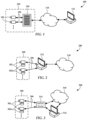
- FIGS. 1 - 3 are diagrams of edge processing networks according to example embodiments
- FIG. 4 is a block diagram of an edge processing architecture according to example embodiments.
- FIG. 5 is a block diagram of an object storage device according to example embodiments.
- FIG. 6 is a block diagram of diagram an active storage module according to example embodiments.
- FIG. 7 is a block diagram of a content-hashed key according to an example embodiment
- FIG. 8 is a block diagram showing content-hashed object keys created under scenarios according to example embodiments.
- FIGS. 9 and 10 are flowcharts of methods according to example embodiments.
- the present disclosure generally relates to object-based data storage.
- storage devices such as hard disk drives (HDDs) and solid-state drives (SSDs) are usually configured as block storage devices.
- HDDs hard disk drives
- SSDs solid-state drives
- the storage device presents the storage media (e.g., disks, flash memory) as a series of data blocks identified by addresses, e.g., logical block addresses.
- addresses e.g., logical block addresses.
- disk drives these blocks would generally be directly mapped to the disk sectors on which the data was stored, although other arrangements (e.g., SSDs) may utilize a more flexible mapping of the logical to physical addresses.
- a block storage device receives access commands from a host machine, such as reads and writes that are targeted to logical block addresses.
- the storage device services these requests without regard to the data that is being stored or the context in which the data is being used.
- the data stored in the blocks and associated structures are determined at a higher level of abstraction, e.g., via a disk controller card, host operating system, etc.
- an operating system may implement a filesystem that governs how data hierarchies (e.g., directory trees) and data objects (e.g., files, streams) are defined and mapped to the underlying block addresses.
- the specific structures of the filesystem are stored at predefined block addresses as filesystem metadata.
- object storage data are managed as objects, which include not only the underlying data of interest (e.g., pixels that define an image), but also includes metadata and a globally unique identifier.
- the underlying details of the storage e.g., the physical addresses on which the data is stored
- Object storage can be implemented at many different levels, e.g., the operating system, within the data storage device, within an interface therebetween.
- the present disclosure is directed to storage devices that implement object-based storage within the data storage device itself, such that the storage device and host communicate using object identifiers instead of (or in addition to) block addresses.
- Device-level object-based storage has some advantages over traditional storage architectures.
- the device can manage aspects of the storage (e.g., data integrity, deduplication, indexing, security, etc.) without the intervention or involvement of the higher levels of the computer system (e.g., drivers and utilities of the operating system, as well as the users who administer those systems).
- the interface between the object storage device and the host computer utilizes commands to manage objects (e.g., create, delete, get/set attributes, read, write modify, etc.) instead of the block-oriented commands used by a conventional storage device.
- a content-based storage device has information that is either preconfigured or added programmatically that has knowledge of the content of the stored objects. This knowledge may include binary formats used to store the object data, metadata embedded in the objects via external sources, processing that can be performed on the object (e.g., indexing, signal processing, machine learning), access modes typically used to access the object (e.g., download versus streaming), etc.
- Embodiments described herein utilize a content-hashed, active object storage architecture for information storage.
- the architecture provides content-based information archiving and efficient information retrieval for general-purpose data store tasks and can be flexibly integrated to broad customer systems.
- in-store computing e.g., processors that are enclosed in a drive housing
- the data source and content are hashed into unique keys, which are later used to store data as (key-value) pairs. This hashing is based on an algorithm that is customized for the specific types of content known to the storage device.
- the content-hashed object store uses the object keys to carry rich metadata which is encapsulated within the stored objects. Information retrieval can be conducted by searching on smaller sized keys instead of larger sized values while offloading the computing work to the drive without adding burden to customer systems that integrate the storage devices.
- the object keys can also evolve by appending a new key segment when additional set of metadata becomes available after objects get stored.
- the new content descriptor can be integrated with the existing hash content value, e.g., appended to the end of the hash, recalculating the hash based on the new content descriptors. This allows access to previous learned knowledge representations, and is extensible to facilitate new learned knowledge representations. Further data analysis can be continued on subsets narrowed down by already learned data content coded hash key.
- these descriptors may be hashed and used to update the original hash (or part thereof) indicating the existence/and or features of the newly learned features items. This hash can still retain any originally detected facial features, such that previous searches on those features will still obtain the same results.
- FIGS. 1 - 3 diagrams illustrate systems 100 , 200 , 300 that can use object storage devices according to example embodiments.
- the system 100 includes one or more sensors 102 (here shown as video cameras) coupled to a storage array 104 via signal lines 106 .
- the signal lines 106 may be analog or digital, and multiple signals may be multiplexed onto an individual line.
- the storage array 104 collects data gathered by the sensor 102 and disseminates it to cloud storage 110 , which may include data centers accessible via private or public internetworks.
- the data may be pulled from the storage array 104 by cloud storage servers and/or the storage array 104 may push the sensor data to the cloud storage servers.
- the sensor data may be accessed via a client computer 1112 coupled to the cloud storage 110 .
- the sensors 102 , storage array 104 , and signal lines 106 may be collectively consider part of an edge computing layer 108 .
- the edge computing layer 108 includes relatively low-powered devices (at least in terms of processing power and storage capacity) that collect, process, and store at least some sensor data before it is sent to the cloud storage 110 for larger-scale dissemination and longer-term storage.
- edge computing components are considered to have at least some capability to gather, process, and store data, although such functions may be distributed to different components.
- sensors 202 , 302 include integrated storage 202 a , 302 a . As such, these devices 202 , 302 may perform all of the edge processing functionality.
- signal lines 206 couple the sensors 202 to a computer 212 , which may be configured as one or both of a client computer or a server.
- the computer 212 may optionally be configured to send sensor data to a cloud storage 210 .
- network signal lines 306 couple the sensors 302 to a switch router 314 , which enables sending the sensor data directly to a cloud storage 310 and/or an individual computer 312 .
- edge computing applications such as video surveillance systems that use conventional computing architectures and file-based storage system
- challenges such as data scalability, real-time response latency, increasing need for power-consuming data analytics processing.
- the disclosure describes an edge computing architecture based on active object storage.
- the architecture which can be implemented in the edge layers such as 108 , 208 , and 308 , provides in-store computing, flexible computing and storage scalability, and efficient information archiving and retrieval needed for high-performance surveillance.
- the architecture implements content-based object storage that data, such as video/image data, is saved as a (key, value) pair with the key representing the data source and content.
- Computing work is distributed to multiple object-based computing storage modules (also referred to herein as active object store modules) to reduce computing burden on customer premises.
- object-based computing storage modules also referred to herein as active object store modules
- the use of the object-based storage modules enables or expand real-time computing capability without transmitting large amounts of data to remote data center, cloud storage, etc. This arrangement offers flexible scalability of both computing and storage capacity.
- the object-based storage modules Due to advances in processor technology, modern low-power processing units (e.g., mobile device processors) can have computing performance that approaches that of desktop processors. This allows a storage device to include significant processing overhead while retaining the small form factor and relatively low power-consumption of a conventional HDD or SSD. Because much of the processing is done at the edge layer by the object-based storage modules, the architecture allows computing to be performed closer to the application (e.g., the region being surveilled for video surveillance applications), which reduces the response latency and data transmission requirements. Because the object-based storage modules are self-contained computing units, they can be deployed as add-ons to existing customer data distribution systems or data creation devices, or as stand-alone systems.
- a modern video surveillance system may process a large number (e.g. >128) of channels that require fast read/write.
- the system may need large storage capacity for video and video metadata storage, as well as management of the data (e.g., generation of thumbnail images, indexing).
- Other features such as real time video analysis, efficient playback, and video search can require large amounts of processing and network bandwidth if implemented entirely using a centralized cloud storage/compute facility.
- FIG. 4 a diagram shows an edge processing architecture according to example embodiments.
- This diagram again illustrates a video surveillance system as an example application but may be adapted to other data gathering and processing applications.
- the functional units in FIG. 4 are labeled as modules, and for this purpose the modules may be implemented as individual nodes, e.g., network nodes, object storage nodes of a storage array, etc.
- An array of camera feed signals 402 are input to a task management module 406 .
- the task management module 406 may include a general-purpose central-processing unit (CPU) that handles data stream and task distribution.
- CPU central-processing unit
- the task management module 406 may be implemented using a dedicated CPU, part of existing customer system, such as a network video recorder (NVR), embedded CPU in data creation device, system-on-a-chip (SoC), etc.
- NVR network video recorder
- SoC system-on-a-chip
- the task management module 406 manages data and computation distribution to active object storage modules 408 as well as pre-distribution data preparation, which may include transform on the sensor signal 402 , such as a discrete wavelet transform, a Fourier transform, reduction in resolution, conversion to different coloring/shading scheme, etc. This transform can reduce the size of the data distributed but still meet the requirement for knowledge presentation leaning at the feature extractor 604 .
- the task management module 406 also manages query requests 416 and distribute subtasks to correspondent modules 408 , 410 as indicated by query keys 412 , 413 and result 414 .
- the system uses an array of N+1 object-based computing storage modules 408 , 410 .
- Each module 408 , 410 can located in one active object storage unit.
- the object store modules 408 are configured to learn specific knowledge representation that can be used for real-time detection or decision making.
- the object store modules 408 may include a neural network or other machine learning processor that is pre-trained to learn face representations in a single frame or groups of frames.
- the object store modules 408 store the video content using a content-based hash key, which will be described in greater detail below.
- the key-query handling module 410 stores keys associated with stored objects across all active object store modules 408 . Queries that are received, e.g., from client terminal 404 via the task management module 406 , are sent as a query request 416 to the key-query handling module 410 .
- the key-query handling module 410 handles query requests 416 by processing key ranges and locating matching stored object keys. One or more keys 413 are returned in response to the requests 416 .
- the task management module 406 uses these keys 413 to direct the query to one of the active store modules 408 that has a match, e.g., as indicated by query key 412 . Any active store modules 408 that have a match to the query return a result, e.g., result 414 , and this can be directed to an end user, e.g., client terminal 404 .
- FIG. 5 a block diagram shows a diagram of hardware and software components of an object storage device 500 according to an example embodiment.
- the object storage device 500 includes one or more processors 520 , such as a CPU, co-processors, digital signal processors, application-specific integrated circuits (ASIC), etc.
- the processor utilizes memory 522 , e.g., random-access memory (RAM) to temporarily hold instructions and data as it is being processed.
- the object storage device 500 also includes input/output (I/O) circuitry 524 that facilitates communications between the processor 520 and other hardware (e.g., host interface 504 , channel interface 510 , storage media 512 ) discussed below.
- I/O input/output
- the object storage device 500 may be entirely enclosed within a housing 502 that conforms to mechanical and electrical drive enclosure standards, e.g., 1.8′′, 2.5′′, 3.5′′, M.2 NVMe, M.2 SATA, etc. These standards may also define aspects of a host interface 504 that is used to couple the object storage device 500 to a host 514 .
- the connector type and layout of the host interface 504 hardware, power requirements, connector location, etc. may all conform to the appropriate drive standards so that the device 500 can easily be integrated into existing infrastructure, e.g., housings, racks, etc.
- the host interface 504 facilitates communications between the host 514 and a command parser 506 that interprets incoming commands, performs the required actions, and provides the appropriate responses back to the host 514 .
- the communications will include object-based commands instead of or in addition to block-access commands.
- the object-based commands are used by the command parser 506 to perform functions via an application-specific logic section 508 .
- the application-specific logic section 508 can be configurable to perform a specific function, e.g., configured one time upon initialization or dynamically configurable and reconfigurable during use. This allows the device 500 to perform the different functions of modules 408 , 410 shown in FIG. 4 , for example, including machine learning and the forming of content-hashed keys.
- configuration of the application-specific logic section 508 may also be used to extend the functionality of the command parser 506 , e.g., adding/changing commands, adding/changing data types, etc.
- Data storage is still an objective of the object storage device 500 , and so it includes a channel interface 510 that facilitates access to one or more types of storage media 512 .
- the functionality of the channel interface 510 and storage media 512 may use technology like that of conventional data storage drives. Because the channel interface 510 is directly accessible by the application-specific logic 508 , the device 500 may be able to perform some data operations internally as fast or faster than if the data had to be sent via the host interface for the same processing, even if the processor 520 of the device 500 is not as powerful as that of the host. This may include cases where data needs to be regularly cycled in and out of the media 512 , preferably at high data transfer rates.
- the object storage device 500 may include facilities at the host interface 504 (or at other interfaces) that facilitate transferring external data into the device 500 via I/O circuitry 524 .
- the storage device 500 may implement a known data transfer interface such as file transfer protocol (FTP), real-time streaming protocol (RTSP), etc., that existing sensors may already be able to utilize to transfer data over networks and/or direct data lines.
- FTP file transfer protocol
- RTSP real-time streaming protocol
- the sensor signals may be received in an analog format, in which case the object storage device 500 may include analog circuitry to process the signals, and an analog-to-digital converter to convert the signal to a digital form.
- an object storage device 500 can be configured to continuously receive, process, and store data independently of a host, although a host computer may also be used to manage some aspects (e.g., functions of task management module 406 in FIG. 4 ).
- a system may deploy large numbers of object storage devices 500 that operate as active store modules 408 described in relation to FIG. 4 .
- FIG. 6 a diagram shows additional details of the active storage module 408 according to an example embodiment.
- the functions of the active storage module 408 can be implemented in an object data store such as shown in FIG. 5 or may be implemented using a non-object-based storage, e.g., using a storage interface processor.
- Sensor data/signals 600 are received at the active storage module 408 and processed by a feature extraction function 604 .
- the feature extractor 604 may build derived values (features), from the input sensor signal 600 , intended to be informative and non-redundant, facilitating the subsequent learning and generalization steps, and in some cases leading to better data interpretations.
- the feature extraction methods may be low-level feature engineering that use domain knowledge of the data to create features that facilitate machine learning algorithms. It may also use such techniques as deep learning, convolutional neural networks, to learn high level features of the data. Generally, a neural network, generative adversarial network, support vector machine or other machine learning structure may be trained to detect the features of interest for the appropriate sensor data type.
- the machine learning structure process the incoming data stream 600 to extract features based on classification, anomaly detection, etc.
- the feature extractor 604 sends the features to a knowledge representation function 602 .
- the knowledge representation function 602 maps the incoming features to metadata that can be used at higher levels of abstraction within the system.
- the knowledge representation function 602 uses trained machine learning models to learn knowledge of interest for the appropriate sensor data type, such as, classification, anomaly detection, etc.
- a neural network may be configured to produce a probability that a feature (e.g., person, vehicle) is present in a video or still image, and if the probability exceeds a threshold, the features is considered detected and given a label that is used consistently throughout the system, e.g., “person,” “vehicle.” These labels may be human-readable text or numeric codes.
- this machine learned metadata describes characteristics of the sensor data that are of interest to the system designer and can be used to search within the stored data.
- the machine-leaned metadata can be used to produce real time detections/decisions 606 that can be sent to the task manager 406 via path 606 .
- the alerts can be tailored to be triggered if a recently identified feature in the incoming data stream 600 satisfies a predefined condition, e.g., one that is set by a client via terminal 404 in FIG. 4 .
- Machine-learned metadata 611 from the knowledge representation module 602 is also used by a content-based hashing function 610 .
- the content-based hashing function 610 processes the metadata 611 to produce a compact representation of the knowledge in the form of a hash key 609 .
- the hash key can be formed such that one or more bits are set to one or zero based on whether the content meets the search criteria for a particular feature.
- the key can also include similarity-preserving vectors that are mapped from the features extracted by feature extractor 604 .
- the sensor data stream 600 is stored as object value in the storage media 608 together with the content-based hash key 609 as an object key.
- the hash key 609 is a globally unique identifier (GUID) associated with the content, or a portion thereof, the data source, such as data channel, an identifier of the active storage module 408 , e.g., a node identifier, network address, etc.
- the content-based hash key 609 is also stored with the key query handing module 410 via path 612 .
- the content-hashed object key 609 classifies the stored object content based on the learned knowledges and features. This allows querying the stored content based on a particular segment of the hash key. Each segment of the key may represent different type of knowledge representations, for example, whether a face is present, whether the face is male/female, if glasses are worn, etc. Any content that is keyed within that hash segment will be flagged as matching the query. These representations may not mutually exclusive but may use differently trained classifiers in the feature extractor 604 . These classifiers can be set up in series or in parallel. As an example of the former, if a face is detected, then that image can be fed into other classifiers that look for specific facial features, context, identities, etc. As an example of the latter, the classifiers may look for multiple objects that may be in the same scene, e.g., people, vehicles, etc.
- the task manager 406 may first query the key query handler 410 (see FIG. 4 ) to obtain a list of matching keys, each of which satisfies the query and uniquely identified an object stored in an active object store module 408 . As indicated by dashed line 614 , the queried key is used to directly access the requested video object by the key. Note that the data pathways in FIG. 6 with solid lines indicate communications that occur in a real-time mode while the dashed lines indicate communications that occur in a search mode.
- a diagram shows a content-hashed object key 700 according to an example embodiment.
- the key is stored with the data and used a descriptor of the source and content of the frame/video.
- the key includes metadata 702 that may be inserted by the sensor and/or the task manager 406 , such as a camera identifier, date, time, frame number(s), etc.
- Fields 704 may include binary values reflect desired descriptors of the object, such as whether subjects such as motion, faces, vehicles, etc., were detected.
- Fields 704 may also include segments that reflect detected features of these subjects. Each segment can be semantic description of a specific subject, such as object tag, color, shape, vehicle plate number, etc., learned by knowledge representation 602 .
- the segment can also be similarity-preserving vectors that are mapped from features of a specific subject, for example, those extracted at feature extractor 604 .
- the searched-for features in the query request is processed into respective fields of a query code.
- the list of key stored will be evaluated against such generated query key for matching likelihood.
- the respective field of the stored keys may be combined into a Bloom filter such that matching bit values of the hashed value with corresponding bits of a query key indicates a high likelihood that a searched-for feature is included in the respective field.
- the respective field of the stored keys and query key may also be used as input for a classification/clustering model trained by machine learning methods, such as k-NN classification, k-means or agglomerative clustering, to classify or learn the similarity of the stored keys against the query key.
- a classification/clustering model trained by machine learning methods, such as k-NN classification, k-means or agglomerative clustering, to classify or learn the similarity of the stored keys against the query key.
- FIG. 8 a diagram shows use of content-hashed object keys under example scenarios.
- Images 800 - 803 represent video frames of the same scene (a hallway) taken at different times with different detectable features in the frame.
- Content-hashed object keys 804 - 807 are generated by the object-based storage and stored with the respective frames 800 - 803 and/or video segments to which the frames 800 - 803 belong.
- fields 808 - 810 can be filled in without any machine learning, as they are generated e.g., by camera firmware and system clocks. Starting with field 811 , additional data is added that is detected via machine learning.
- a subsequent field is not added (e.g., field 812 ) unless the immediately preceding field indicates that a broader feature category is detected.
- the feature categories in fields 811 - 814 from broadest to narrowest are detection of motion, detection of a person, detection of a face, and detected facial features. Note that in other embodiments, the fields may not require this hierarchy. For example, if a person is detected in a scene but is not moving, field 812 may still be populated (as well as fields 813 , 814 if applicable) even if field 811 indicates ‘no.’
- FIG. 9 a flowchart shows a method according to an example embodiment.
- the method involves detecting 900 features from a sensor signal via a deep-learning network in an edge processing node and creating 901 machine-learned metadata that describes the features.
- a hash is created 902 with the machine-learned metadata and the sensor signal is stored as a content object at the edge processing node. The object keyed with the hash.
- FIG. 10 a flowchart shows a method according to another example embodiment that includes additional steps that may take place after the processing shown in FIG. 9 .
- the method involves storing 1000 the hash in a key query handling node separate from the edge processing node.
- the hash facilitates access to the content stored at the edge processing node.
- the key query handling module stores hash keys for content objects stored on a plurality of edge processing nodes.
- the method further involves receiving 1001 a query at the key query handling node from a client and sending one or more queried keys to the client 1002 .
- the queried keys indicate a subset of the edge processing nodes having content objects matching the query.
- the queried keys are sent 1003 from the client to the subset of edge processing nodes to retrieve the matching content objects.
- the matching content objects are sent 1004 from the subset of edge processing nodes to the client in response to the sending of the queried keys.
Landscapes
- Engineering & Computer Science (AREA)
- Theoretical Computer Science (AREA)
- Physics & Mathematics (AREA)
- Data Mining & Analysis (AREA)
- General Physics & Mathematics (AREA)
- General Engineering & Computer Science (AREA)
- Databases & Information Systems (AREA)
- Software Systems (AREA)
- General Health & Medical Sciences (AREA)
- Evolutionary Computation (AREA)
- Computational Linguistics (AREA)
- Molecular Biology (AREA)
- Computing Systems (AREA)
- Biophysics (AREA)
- Biomedical Technology (AREA)
- Mathematical Physics (AREA)
- Artificial Intelligence (AREA)
- Life Sciences & Earth Sciences (AREA)
- Health & Medical Sciences (AREA)
- Library & Information Science (AREA)
- Information Retrieval, Db Structures And Fs Structures Therefor (AREA)
Abstract
Description
Claims (20)
Priority Applications (1)
| Application Number | Priority Date | Filing Date | Title |
|---|---|---|---|
| US16/597,911 US11599577B2 (en) | 2019-10-10 | 2019-10-10 | System and method for content-hashed object storage |
Applications Claiming Priority (1)
| Application Number | Priority Date | Filing Date | Title |
|---|---|---|---|
| US16/597,911 US11599577B2 (en) | 2019-10-10 | 2019-10-10 | System and method for content-hashed object storage |
Publications (2)
| Publication Number | Publication Date |
|---|---|
| US20210109971A1 US20210109971A1 (en) | 2021-04-15 |
| US11599577B2 true US11599577B2 (en) | 2023-03-07 |
Family
ID=75383039
Family Applications (1)
| Application Number | Title | Priority Date | Filing Date |
|---|---|---|---|
| US16/597,911 Active 2040-06-18 US11599577B2 (en) | 2019-10-10 | 2019-10-10 | System and method for content-hashed object storage |
Country Status (1)
| Country | Link |
|---|---|
| US (1) | US11599577B2 (en) |
Families Citing this family (2)
| Publication number | Priority date | Publication date | Assignee | Title |
|---|---|---|---|---|
| US12052794B2 (en) * | 2020-06-18 | 2024-07-30 | Hewlett Packard Enterprise Development Lp | Systems and methods for wireless camera detection |
| US12008120B2 (en) * | 2021-06-04 | 2024-06-11 | International Business Machines Corporation | Data distribution and security in a multilayer storage infrastructure |
Citations (17)
| Publication number | Priority date | Publication date | Assignee | Title |
|---|---|---|---|---|
| US6011901A (en) | 1995-05-18 | 2000-01-04 | Timepres Corporation | Compressed digital video record and playback system |
| US6597660B1 (en) | 1997-01-03 | 2003-07-22 | Telecommunications Research Laboratory | Method for real-time traffic analysis on packet networks |
| US20060195861A1 (en) * | 2003-10-17 | 2006-08-31 | Morris Lee | Methods and apparatus for identifying audio/video content using temporal signal characteristics |
| US20070111185A1 (en) | 2005-10-24 | 2007-05-17 | Krebs Andreas S | Delta versioning for learning objects |
| US20120026898A1 (en) | 2010-07-30 | 2012-02-02 | Cisco Technology, Inc | Formatting Messages from Sensor Nodes in a Sensor Network |
| US8224931B1 (en) | 2010-03-31 | 2012-07-17 | Amazon Technologies, Inc. | Managing use of intermediate destination computing nodes for provided computer networks |
| US20120197856A1 (en) | 2011-01-28 | 2012-08-02 | Cisco Technology, Inc. | Hierarchical Network for Collecting, Aggregating, Indexing, and Searching Sensor Data |
| US8489760B2 (en) | 2011-03-31 | 2013-07-16 | Juniper Networks, Inc. | Media file storage format and adaptive delivery system |
| US20130318025A1 (en) | 2012-05-23 | 2013-11-28 | Research In Motion Limited | Apparatus, and associated method, for slicing and using knowledgebase |
| US8599266B2 (en) | 2002-07-01 | 2013-12-03 | The Regents Of The University Of California | Digital processing of video images |
| US20140188912A1 (en) * | 2012-12-28 | 2014-07-03 | Fujitsu Limited | Storage apparatus, control method, and computer product |
| US9087098B2 (en) | 2012-12-17 | 2015-07-21 | General Electric Company | System and method for storage, querying, and analysis service for time series data |
| US20150254342A1 (en) * | 2011-05-30 | 2015-09-10 | Lei Yu | Video dna (vdna) method and system for multi-dimensional content matching |
| US20190327506A1 (en) * | 2019-06-27 | 2019-10-24 | Intel Corporation | Dynamic rebalancing of edge resources for multi-camera video streaming |
| US20200005048A1 (en) * | 2018-06-29 | 2020-01-02 | Hewlett Packard Enterprise Development Lp | Transformation of video streams |
| US20200026949A1 (en) * | 2018-07-17 | 2020-01-23 | Avigilon Corporation | Hash-based appearance search |
| US20200210623A1 (en) * | 2018-12-31 | 2020-07-02 | Lyft, Inc. | Determining vehicle data integrity |
-
2019
- 2019-10-10 US US16/597,911 patent/US11599577B2/en active Active
Patent Citations (17)
| Publication number | Priority date | Publication date | Assignee | Title |
|---|---|---|---|---|
| US6011901A (en) | 1995-05-18 | 2000-01-04 | Timepres Corporation | Compressed digital video record and playback system |
| US6597660B1 (en) | 1997-01-03 | 2003-07-22 | Telecommunications Research Laboratory | Method for real-time traffic analysis on packet networks |
| US8599266B2 (en) | 2002-07-01 | 2013-12-03 | The Regents Of The University Of California | Digital processing of video images |
| US20060195861A1 (en) * | 2003-10-17 | 2006-08-31 | Morris Lee | Methods and apparatus for identifying audio/video content using temporal signal characteristics |
| US20070111185A1 (en) | 2005-10-24 | 2007-05-17 | Krebs Andreas S | Delta versioning for learning objects |
| US8224931B1 (en) | 2010-03-31 | 2012-07-17 | Amazon Technologies, Inc. | Managing use of intermediate destination computing nodes for provided computer networks |
| US20120026898A1 (en) | 2010-07-30 | 2012-02-02 | Cisco Technology, Inc | Formatting Messages from Sensor Nodes in a Sensor Network |
| US20120197856A1 (en) | 2011-01-28 | 2012-08-02 | Cisco Technology, Inc. | Hierarchical Network for Collecting, Aggregating, Indexing, and Searching Sensor Data |
| US8489760B2 (en) | 2011-03-31 | 2013-07-16 | Juniper Networks, Inc. | Media file storage format and adaptive delivery system |
| US20150254342A1 (en) * | 2011-05-30 | 2015-09-10 | Lei Yu | Video dna (vdna) method and system for multi-dimensional content matching |
| US20130318025A1 (en) | 2012-05-23 | 2013-11-28 | Research In Motion Limited | Apparatus, and associated method, for slicing and using knowledgebase |
| US9087098B2 (en) | 2012-12-17 | 2015-07-21 | General Electric Company | System and method for storage, querying, and analysis service for time series data |
| US20140188912A1 (en) * | 2012-12-28 | 2014-07-03 | Fujitsu Limited | Storage apparatus, control method, and computer product |
| US20200005048A1 (en) * | 2018-06-29 | 2020-01-02 | Hewlett Packard Enterprise Development Lp | Transformation of video streams |
| US20200026949A1 (en) * | 2018-07-17 | 2020-01-23 | Avigilon Corporation | Hash-based appearance search |
| US20200210623A1 (en) * | 2018-12-31 | 2020-07-02 | Lyft, Inc. | Determining vehicle data integrity |
| US20190327506A1 (en) * | 2019-06-27 | 2019-10-24 | Intel Corporation | Dynamic rebalancing of edge resources for multi-camera video streaming |
Non-Patent Citations (2)
| Title |
|---|
| Lawson et al., "Image compression using wavelets and JPEG2000: a tutorial", Electronics & Communication Engineering Journal, Jun. 2002, pp. 112-121. |
| U.S. Appl. No. 16/189,018, filed Nov. 13, 2018, Erden. |
Also Published As
| Publication number | Publication date |
|---|---|
| US20210109971A1 (en) | 2021-04-15 |
Similar Documents
| Publication | Publication Date | Title |
|---|---|---|
| CN113313170B (en) | Full-time and full-domain training big data platform based on artificial intelligence | |
| US10061791B2 (en) | Data management for connected devices | |
| Hua et al. | SmartEye: Real-time and efficient cloud image sharing for disaster environments | |
| US11586667B1 (en) | Hyperzoom attribute analytics on the edge | |
| JP6403784B2 (en) | Surveillance camera system | |
| CN110502664A (en) | Video tab indexes base establishing method, video tab generation method and device | |
| US10719735B2 (en) | Information processing method, information processing device and video surveillance system | |
| Huang et al. | Toward efficient encrypted image retrieval in cloud environment | |
| US11611630B2 (en) | Assisted multimedia content enhancement | |
| Wang et al. | Duplicate discovery on 2 billion internet images | |
| CN112202919B (en) | Picture ciphertext storage and retrieval method and system under cloud storage environment | |
| Xu et al. | Graph-based topic-focused retrieval in distributed camera network | |
| US10733454B2 (en) | Transformation of video streams | |
| US20210109971A1 (en) | System and method for content-hashed object storage | |
| CN111917855A (en) | Content pushing method and device, electronic equipment and storage medium | |
| CN114817717A (en) | Search method, search device, computer equipment and storage medium | |
| Van et al. | Content‐based image retrieval based on binary signatures cluster graph | |
| CN118244977A (en) | Method and system for storing aerial images on a data storage device | |
| CN116244453B (en) | An efficient encrypted image retrieval method based on neural networks | |
| Ushapreethi et al. | Action recongnition in video survillance using hipi and map reducing model | |
| CN115146103A (en) | Image retrieval method, image retrieval apparatus, computer device, storage medium, and program product | |
| CN111401482B (en) | Feature point matching method and device, equipment and storage medium | |
| WO2022201235A1 (en) | Secret search method, secret search system, secret search device, encryption device, searcher terminal, and program | |
| Chaudhari et al. | Survey of image deduplication for cloud storage | |
| KR20240099104A (en) | System for certifying non-recognition and method thereof using deep learning with distributed ledger |
Legal Events
| Date | Code | Title | Description |
|---|---|---|---|
| AS | Assignment |
Owner name: SEAGATE TECHNOLOGY LLC, CALIFORNIA Free format text: ASSIGNMENT OF ASSIGNORS INTEREST;ASSIGNORS:ZHONG, LIJUAN;SUBRAMANIAN, KRISHNAN;ERDEN, MEHMET FATIH;AND OTHERS;REEL/FRAME:050676/0043 Effective date: 20190927 |
|
| FEPP | Fee payment procedure |
Free format text: ENTITY STATUS SET TO UNDISCOUNTED (ORIGINAL EVENT CODE: BIG.); ENTITY STATUS OF PATENT OWNER: LARGE ENTITY |
|
| STPP | Information on status: patent application and granting procedure in general |
Free format text: NON FINAL ACTION MAILED |
|
| STPP | Information on status: patent application and granting procedure in general |
Free format text: RESPONSE TO NON-FINAL OFFICE ACTION ENTERED AND FORWARDED TO EXAMINER |
|
| STPP | Information on status: patent application and granting procedure in general |
Free format text: FINAL REJECTION MAILED |
|
| STPP | Information on status: patent application and granting procedure in general |
Free format text: ADVISORY ACTION MAILED |
|
| STPP | Information on status: patent application and granting procedure in general |
Free format text: DOCKETED NEW CASE - READY FOR EXAMINATION |
|
| STPP | Information on status: patent application and granting procedure in general |
Free format text: NON FINAL ACTION MAILED |
|
| STPP | Information on status: patent application and granting procedure in general |
Free format text: RESPONSE TO NON-FINAL OFFICE ACTION ENTERED AND FORWARDED TO EXAMINER |
|
| STPP | Information on status: patent application and granting procedure in general |
Free format text: NOTICE OF ALLOWANCE MAILED -- APPLICATION RECEIVED IN OFFICE OF PUBLICATIONS |
|
| STCF | Information on status: patent grant |
Free format text: PATENTED CASE |