US11597477B2 - Membrane type insulation system for cryogenic liquefied gas carrier cargo tank and liquefied gas fuel container - Google Patents

Membrane type insulation system for cryogenic liquefied gas carrier cargo tank and liquefied gas fuel container Download PDF

Info

Publication number
US11597477B2
US11597477B2 US16/621,124 US201816621124A US11597477B2 US 11597477 B2 US11597477 B2 US 11597477B2 US 201816621124 A US201816621124 A US 201816621124A US 11597477 B2 US11597477 B2 US 11597477B2
Authority
US
United States
Prior art keywords
securing
lower panel
panels
panel
insulation layer
Prior art date
Legal status (The legal status is an assumption and is not a legal conclusion. Google has not performed a legal analysis and makes no representation as to the accuracy of the status listed.)
Active, expires
Application number
US16/621,124
Other versions
US20210284290A1 (en
Inventor
Seong Woo Park
Seung Min KWON
Hyeon Seung KIM
Joong Kyoo Kang
Current Assignee (The listed assignees may be inaccurate. Google has not performed a legal analysis and makes no representation or warranty as to the accuracy of the list.)
Hanwha Ocean Co Ltd
Original Assignee
Daewoo Shipbuilding and Marine Engineering Co Ltd
Priority date (The priority date is an assumption and is not a legal conclusion. Google has not performed a legal analysis and makes no representation as to the accuracy of the date listed.)
Filing date
Publication date
Application filed by Daewoo Shipbuilding and Marine Engineering Co Ltd filed Critical Daewoo Shipbuilding and Marine Engineering Co Ltd
Assigned to DAEWOO SHIPBUILDING & MARINE ENGINEERING CO., LTD. reassignment DAEWOO SHIPBUILDING & MARINE ENGINEERING CO., LTD. ASSIGNMENT OF ASSIGNORS INTEREST (SEE DOCUMENT FOR DETAILS). Assignors: KANG, JOONG KYOO, KIM, HYEON SEUNG, KWON, SEUNG MIN, PARK, SEONG WOO
Publication of US20210284290A1 publication Critical patent/US20210284290A1/en
Application granted granted Critical
Publication of US11597477B2 publication Critical patent/US11597477B2/en
Assigned to HANWHA OCEAN CO., LTD. reassignment HANWHA OCEAN CO., LTD. CHANGE OF NAME (SEE DOCUMENT FOR DETAILS). Assignors: DAEWOO SHIPBUILDING & MARINE ENGINEERING CO., LTD.
Active legal-status Critical Current
Adjusted expiration legal-status Critical

Links

Images

Classifications

    • BPERFORMING OPERATIONS; TRANSPORTING
    • B63SHIPS OR OTHER WATERBORNE VESSELS; RELATED EQUIPMENT
    • B63BSHIPS OR OTHER WATERBORNE VESSELS; EQUIPMENT FOR SHIPPING 
    • B63B25/00Load-accommodating arrangements, e.g. stowing, trimming; Vessels characterised thereby
    • B63B25/02Load-accommodating arrangements, e.g. stowing, trimming; Vessels characterised thereby for bulk goods
    • B63B25/08Load-accommodating arrangements, e.g. stowing, trimming; Vessels characterised thereby for bulk goods fluid
    • B63B25/12Load-accommodating arrangements, e.g. stowing, trimming; Vessels characterised thereby for bulk goods fluid closed
    • B63B25/16Load-accommodating arrangements, e.g. stowing, trimming; Vessels characterised thereby for bulk goods fluid closed heat-insulated
    • BPERFORMING OPERATIONS; TRANSPORTING
    • B63SHIPS OR OTHER WATERBORNE VESSELS; RELATED EQUIPMENT
    • B63BSHIPS OR OTHER WATERBORNE VESSELS; EQUIPMENT FOR SHIPPING 
    • B63B3/00Hulls characterised by their structure or component parts
    • B63B3/14Hull parts
    • B63B3/68Panellings; Linings, e.g. for insulating purposes
    • BPERFORMING OPERATIONS; TRANSPORTING
    • B63SHIPS OR OTHER WATERBORNE VESSELS; RELATED EQUIPMENT
    • B63BSHIPS OR OTHER WATERBORNE VESSELS; EQUIPMENT FOR SHIPPING 
    • B63B73/00Building or assembling vessels or marine structures, e.g. hulls or offshore platforms
    • B63B73/40Building or assembling vessels or marine structures, e.g. hulls or offshore platforms characterised by joining methods
    • B63B73/43Welding, e.g. laser welding
    • BPERFORMING OPERATIONS; TRANSPORTING
    • B63SHIPS OR OTHER WATERBORNE VESSELS; RELATED EQUIPMENT
    • B63BSHIPS OR OTHER WATERBORNE VESSELS; EQUIPMENT FOR SHIPPING 
    • B63B73/00Building or assembling vessels or marine structures, e.g. hulls or offshore platforms
    • B63B73/40Building or assembling vessels or marine structures, e.g. hulls or offshore platforms characterised by joining methods
    • B63B73/49Building or assembling vessels or marine structures, e.g. hulls or offshore platforms characterised by joining methods by means of threaded members, e.g. screws, threaded bolts or nuts
    • FMECHANICAL ENGINEERING; LIGHTING; HEATING; WEAPONS; BLASTING
    • F17STORING OR DISTRIBUTING GASES OR LIQUIDS
    • F17CVESSELS FOR CONTAINING OR STORING COMPRESSED, LIQUEFIED OR SOLIDIFIED GASES; FIXED-CAPACITY GAS-HOLDERS; FILLING VESSELS WITH, OR DISCHARGING FROM VESSELS, COMPRESSED, LIQUEFIED, OR SOLIDIFIED GASES
    • F17C3/00Vessels not under pressure
    • F17C3/02Vessels not under pressure with provision for thermal insulation
    • F17C3/025Bulk storage in barges or on ships
    • F17C3/027Wallpanels for so-called membrane tanks
    • FMECHANICAL ENGINEERING; LIGHTING; HEATING; WEAPONS; BLASTING
    • F17STORING OR DISTRIBUTING GASES OR LIQUIDS
    • F17CVESSELS FOR CONTAINING OR STORING COMPRESSED, LIQUEFIED OR SOLIDIFIED GASES; FIXED-CAPACITY GAS-HOLDERS; FILLING VESSELS WITH, OR DISCHARGING FROM VESSELS, COMPRESSED, LIQUEFIED, OR SOLIDIFIED GASES
    • F17C3/00Vessels not under pressure
    • F17C3/02Vessels not under pressure with provision for thermal insulation
    • F17C3/04Vessels not under pressure with provision for thermal insulation by insulating layers
    • F17C3/06Vessels not under pressure with provision for thermal insulation by insulating layers on the inner surface, i.e. in contact with the stored fluid
    • BPERFORMING OPERATIONS; TRANSPORTING
    • B63SHIPS OR OTHER WATERBORNE VESSELS; RELATED EQUIPMENT
    • B63BSHIPS OR OTHER WATERBORNE VESSELS; EQUIPMENT FOR SHIPPING 
    • B63B2221/00Methods and means for joining members or elements
    • B63B2221/02Methods and means for joining members or elements by welding
    • BPERFORMING OPERATIONS; TRANSPORTING
    • B63SHIPS OR OTHER WATERBORNE VESSELS; RELATED EQUIPMENT
    • B63BSHIPS OR OTHER WATERBORNE VESSELS; EQUIPMENT FOR SHIPPING 
    • B63B2221/00Methods and means for joining members or elements
    • B63B2221/08Methods and means for joining members or elements by means of threaded members, e.g. screws, threaded bolts or nuts
    • BPERFORMING OPERATIONS; TRANSPORTING
    • B63SHIPS OR OTHER WATERBORNE VESSELS; RELATED EQUIPMENT
    • B63BSHIPS OR OTHER WATERBORNE VESSELS; EQUIPMENT FOR SHIPPING 
    • B63B2231/00Material used for some parts or elements, or for particular purposes
    • B63B2231/32Vegetable materials or material comprising predominately vegetable material
    • B63B2231/34Wood or wood products
    • BPERFORMING OPERATIONS; TRANSPORTING
    • B63SHIPS OR OTHER WATERBORNE VESSELS; RELATED EQUIPMENT
    • B63BSHIPS OR OTHER WATERBORNE VESSELS; EQUIPMENT FOR SHIPPING 
    • B63B2231/00Material used for some parts or elements, or for particular purposes
    • B63B2231/40Synthetic materials
    • B63B2231/52Fibre reinforced plastics materials
    • FMECHANICAL ENGINEERING; LIGHTING; HEATING; WEAPONS; BLASTING
    • F17STORING OR DISTRIBUTING GASES OR LIQUIDS
    • F17CVESSELS FOR CONTAINING OR STORING COMPRESSED, LIQUEFIED OR SOLIDIFIED GASES; FIXED-CAPACITY GAS-HOLDERS; FILLING VESSELS WITH, OR DISCHARGING FROM VESSELS, COMPRESSED, LIQUEFIED, OR SOLIDIFIED GASES
    • F17C2201/00Vessel construction, in particular geometry, arrangement or size
    • F17C2201/01Shape
    • F17C2201/0147Shape complex
    • F17C2201/0157Polygonal
    • FMECHANICAL ENGINEERING; LIGHTING; HEATING; WEAPONS; BLASTING
    • F17STORING OR DISTRIBUTING GASES OR LIQUIDS
    • F17CVESSELS FOR CONTAINING OR STORING COMPRESSED, LIQUEFIED OR SOLIDIFIED GASES; FIXED-CAPACITY GAS-HOLDERS; FILLING VESSELS WITH, OR DISCHARGING FROM VESSELS, COMPRESSED, LIQUEFIED, OR SOLIDIFIED GASES
    • F17C2201/00Vessel construction, in particular geometry, arrangement or size
    • F17C2201/05Size
    • F17C2201/052Size large (>1000 m3)
    • FMECHANICAL ENGINEERING; LIGHTING; HEATING; WEAPONS; BLASTING
    • F17STORING OR DISTRIBUTING GASES OR LIQUIDS
    • F17CVESSELS FOR CONTAINING OR STORING COMPRESSED, LIQUEFIED OR SOLIDIFIED GASES; FIXED-CAPACITY GAS-HOLDERS; FILLING VESSELS WITH, OR DISCHARGING FROM VESSELS, COMPRESSED, LIQUEFIED, OR SOLIDIFIED GASES
    • F17C2203/00Vessel construction, in particular walls or details thereof
    • F17C2203/03Thermal insulations
    • F17C2203/0304Thermal insulations by solid means
    • F17C2203/0329Foam
    • F17C2203/0333Polyurethane
    • FMECHANICAL ENGINEERING; LIGHTING; HEATING; WEAPONS; BLASTING
    • F17STORING OR DISTRIBUTING GASES OR LIQUIDS
    • F17CVESSELS FOR CONTAINING OR STORING COMPRESSED, LIQUEFIED OR SOLIDIFIED GASES; FIXED-CAPACITY GAS-HOLDERS; FILLING VESSELS WITH, OR DISCHARGING FROM VESSELS, COMPRESSED, LIQUEFIED, OR SOLIDIFIED GASES
    • F17C2203/00Vessel construction, in particular walls or details thereof
    • F17C2203/03Thermal insulations
    • F17C2203/0304Thermal insulations by solid means
    • F17C2203/0345Fibres
    • F17C2203/035Glass wool
    • FMECHANICAL ENGINEERING; LIGHTING; HEATING; WEAPONS; BLASTING
    • F17STORING OR DISTRIBUTING GASES OR LIQUIDS
    • F17CVESSELS FOR CONTAINING OR STORING COMPRESSED, LIQUEFIED OR SOLIDIFIED GASES; FIXED-CAPACITY GAS-HOLDERS; FILLING VESSELS WITH, OR DISCHARGING FROM VESSELS, COMPRESSED, LIQUEFIED, OR SOLIDIFIED GASES
    • F17C2203/00Vessel construction, in particular walls or details thereof
    • F17C2203/03Thermal insulations
    • F17C2203/0304Thermal insulations by solid means
    • F17C2203/0354Wood
    • FMECHANICAL ENGINEERING; LIGHTING; HEATING; WEAPONS; BLASTING
    • F17STORING OR DISTRIBUTING GASES OR LIQUIDS
    • F17CVESSELS FOR CONTAINING OR STORING COMPRESSED, LIQUEFIED OR SOLIDIFIED GASES; FIXED-CAPACITY GAS-HOLDERS; FILLING VESSELS WITH, OR DISCHARGING FROM VESSELS, COMPRESSED, LIQUEFIED, OR SOLIDIFIED GASES
    • F17C2203/00Vessel construction, in particular walls or details thereof
    • F17C2203/03Thermal insulations
    • F17C2203/0304Thermal insulations by solid means
    • F17C2203/0358Thermal insulations by solid means in form of panels
    • FMECHANICAL ENGINEERING; LIGHTING; HEATING; WEAPONS; BLASTING
    • F17STORING OR DISTRIBUTING GASES OR LIQUIDS
    • F17CVESSELS FOR CONTAINING OR STORING COMPRESSED, LIQUEFIED OR SOLIDIFIED GASES; FIXED-CAPACITY GAS-HOLDERS; FILLING VESSELS WITH, OR DISCHARGING FROM VESSELS, COMPRESSED, LIQUEFIED, OR SOLIDIFIED GASES
    • F17C2209/00Vessel construction, in particular methods of manufacturing
    • F17C2209/22Assembling processes
    • F17C2209/221Welding
    • FMECHANICAL ENGINEERING; LIGHTING; HEATING; WEAPONS; BLASTING
    • F17STORING OR DISTRIBUTING GASES OR LIQUIDS
    • F17CVESSELS FOR CONTAINING OR STORING COMPRESSED, LIQUEFIED OR SOLIDIFIED GASES; FIXED-CAPACITY GAS-HOLDERS; FILLING VESSELS WITH, OR DISCHARGING FROM VESSELS, COMPRESSED, LIQUEFIED, OR SOLIDIFIED GASES
    • F17C2209/00Vessel construction, in particular methods of manufacturing
    • F17C2209/22Assembling processes
    • F17C2209/228Assembling processes by screws, bolts or rivets
    • FMECHANICAL ENGINEERING; LIGHTING; HEATING; WEAPONS; BLASTING
    • F17STORING OR DISTRIBUTING GASES OR LIQUIDS
    • F17CVESSELS FOR CONTAINING OR STORING COMPRESSED, LIQUEFIED OR SOLIDIFIED GASES; FIXED-CAPACITY GAS-HOLDERS; FILLING VESSELS WITH, OR DISCHARGING FROM VESSELS, COMPRESSED, LIQUEFIED, OR SOLIDIFIED GASES
    • F17C2221/00Handled fluid, in particular type of fluid
    • F17C2221/03Mixtures
    • F17C2221/032Hydrocarbons
    • F17C2221/033Methane, e.g. natural gas, CNG, LNG, GNL, GNC, PLNG
    • FMECHANICAL ENGINEERING; LIGHTING; HEATING; WEAPONS; BLASTING
    • F17STORING OR DISTRIBUTING GASES OR LIQUIDS
    • F17CVESSELS FOR CONTAINING OR STORING COMPRESSED, LIQUEFIED OR SOLIDIFIED GASES; FIXED-CAPACITY GAS-HOLDERS; FILLING VESSELS WITH, OR DISCHARGING FROM VESSELS, COMPRESSED, LIQUEFIED, OR SOLIDIFIED GASES
    • F17C2223/00Handled fluid before transfer, i.e. state of fluid when stored in the vessel or before transfer from the vessel
    • F17C2223/01Handled fluid before transfer, i.e. state of fluid when stored in the vessel or before transfer from the vessel characterised by the phase
    • F17C2223/0146Two-phase
    • F17C2223/0153Liquefied gas, e.g. LPG, GPL
    • F17C2223/0161Liquefied gas, e.g. LPG, GPL cryogenic, e.g. LNG, GNL, PLNG
    • FMECHANICAL ENGINEERING; LIGHTING; HEATING; WEAPONS; BLASTING
    • F17STORING OR DISTRIBUTING GASES OR LIQUIDS
    • F17CVESSELS FOR CONTAINING OR STORING COMPRESSED, LIQUEFIED OR SOLIDIFIED GASES; FIXED-CAPACITY GAS-HOLDERS; FILLING VESSELS WITH, OR DISCHARGING FROM VESSELS, COMPRESSED, LIQUEFIED, OR SOLIDIFIED GASES
    • F17C2223/00Handled fluid before transfer, i.e. state of fluid when stored in the vessel or before transfer from the vessel
    • F17C2223/03Handled fluid before transfer, i.e. state of fluid when stored in the vessel or before transfer from the vessel characterised by the pressure level
    • F17C2223/033Small pressure, e.g. for liquefied gas
    • FMECHANICAL ENGINEERING; LIGHTING; HEATING; WEAPONS; BLASTING
    • F17STORING OR DISTRIBUTING GASES OR LIQUIDS
    • F17CVESSELS FOR CONTAINING OR STORING COMPRESSED, LIQUEFIED OR SOLIDIFIED GASES; FIXED-CAPACITY GAS-HOLDERS; FILLING VESSELS WITH, OR DISCHARGING FROM VESSELS, COMPRESSED, LIQUEFIED, OR SOLIDIFIED GASES
    • F17C2260/00Purposes of gas storage and gas handling
    • F17C2260/03Dealing with losses
    • F17C2260/031Dealing with losses due to heat transfer
    • F17C2260/033Dealing with losses due to heat transfer by enhancing insulation
    • FMECHANICAL ENGINEERING; LIGHTING; HEATING; WEAPONS; BLASTING
    • F17STORING OR DISTRIBUTING GASES OR LIQUIDS
    • F17CVESSELS FOR CONTAINING OR STORING COMPRESSED, LIQUEFIED OR SOLIDIFIED GASES; FIXED-CAPACITY GAS-HOLDERS; FILLING VESSELS WITH, OR DISCHARGING FROM VESSELS, COMPRESSED, LIQUEFIED, OR SOLIDIFIED GASES
    • F17C2270/00Applications
    • F17C2270/01Applications for fluid transport or storage
    • F17C2270/0102Applications for fluid transport or storage on or in the water
    • F17C2270/0105Ships
    • F17C2270/0107Wall panels

Definitions

  • the present invention relates to a membrane type insulation system for cryogenic liquefied gas carrier cargo tank and liquefied gas fuel container, and more particularly, to a membrane type insulation system for cryogenic liquefied gas carrier cargo tank and liquefied gas fuel container, in which a secondary insulation layer is composed of a plurality of panels stacked in a multilayer structure for improvement in thermal insulation performance by arranging upper and lower panels to intersect each other in order to minimize heat loss from a gap between the panels and deformation of the panels due to a temperature difference.
  • natural gas is transported in a gaseous state via onshore or offshore gas pipelines, or is transported to a distant destination by an LNG carrier after being liquefied into LNG.
  • LNG is obtained by cooling natural gas to cryogenic temperatures, for example, about ⁇ 163° C. and has a volume of about 1/600 that of natural gas in a gaseous state.
  • LNG is suited to long distance transport by sea.
  • An LNG carrier which is designed to carry LNG by sea to an onshore source of demand, or an LNG regasification vessel (LNG RV), which is designed to carry LNG by sea to an onshore source of demand, regasify the LNG, and discharge the regasified LNG to the onshore source of demand, is provided with a storage tank capable of withstanding cryogenic temperatures of LNG, that is, a cargo tank.
  • Such a floating offshore structure is also provided with a cargo tank that is used in LNG carriers or LNG RV.
  • FPSO LNG-floating production, storage and offloading
  • FSRU LNG-floating storage and regasification unit
  • An LNG-FPSO is a floating offshore structure that is designed to liquefy produced natural gas, store the liquefied natural gas in a cargo tank, and, if necessary, offload the LNG onto an LNG carrier.
  • An LNG-FSRU is a floating offshore structure that is designed to store LNG offloaded from an LNG carrier in a cargo tank and, if necessary, regasify the LNG and supply the regasified LNG to an onshore source of demand.
  • Such an offshore vessel carrying LNG by sea or storing LNG such as LNG carrier, LNG RV, LNG FPSO, and LNG FSRU, is provided therein with a cargo tank storing LNG in a cryogenic state.
  • Cargo tanks are classified into an independent type and a membrane type depending upon whether load of a liquid cargo is directly applied to a heat insulator of the cargo tank.
  • the membrane type cargo tank is divided into a GTT NO 96-type tank and a TGZ Mark III-type
  • the independent cargo tank is divided into an MOSS-type tank and an IHI-SPB-type tank.
  • the insulation material and structure of the membrane type cargo tank may vary depending upon the type of a special metal sheet that is used as a material for the cargo tank.
  • the GTT NO 96-type cargo tank is manufactured using an Invar sheet (an alloy mainly composed of iron and nickel and having a very low coefficient of thermal expansion) and the Mark III-type tank is manufactured using a stainless steel sheet.
  • the GTT NO 96-type cargo tank has a structure in which primary and secondary membranes formed of an Invar sheet having a thickness of 0.5 mm to 1.5 mm and primary and secondary heat insulation walls formed of a plywood box and perlite are alternately stacked on an inner wall of a hull.
  • An insulation system of the GTT NO 96-type cargo tank is composed of two layers in which Invar (36% nickel) and insulation boxes formed of perlite and plywood are stacked.
  • Invar 36% nickel
  • plywood is used as a material for the insulation boxes.
  • a conventional insulation system of a liquefied gas cargo tank has a technical limitation in thickness reduction of a primary insulation layer in order to maintain thermal insulation performance of the primary insulation layer. That is, excessive reduction in thickness of the primary insulation layer can cause problems in terms of thermal insulation performance and settling of the primary insulation layer.
  • a liquefied cargo tank includes a plurality of insulation panels formed of polyurethane foam (PUF).
  • PEF polyurethane foam
  • the heat insulation structure formed of polyurethane foam can be insufficient in effective insulation of cryogenic liquefied natural gas, the thickness of the insulation panels is excessively enlarged to improve thermal insulation performance.
  • this structure has problems of reduction in loading volume of the cargo tank and increase in manufacturing costs and transportation costs due to increase in thickness and weight of the insulation panels.
  • insulation panels formed of other materials instead of polyurethane foam or Styrofoam typically used in the art has a problem of deterioration in thermal insulation performance or a problem of low strength or impact resistance despite good thermal insulation performance.
  • FIG. 1 is sectional views of a typical secondary insulation layer and a secondary insulation layer having a thickness-increased monolithic structure.
  • FIG. 2 is a sectional view illustrating heat loss from a gap between the secondary insulation layers having the thickness-increased monolithic structure and
  • FIG. 3 is a sectional view illustrating thermal shrinkage of the secondary insulation layer having the thickness-increased monolithic structure.
  • a secondary insulation layer 20 of a monolithic structure manufactured just by increasing thickness of a secondary insulation layer 10 is used.
  • a panel having an increased thickness has a reduced thermal path under conditions of actual temperature, thereby causing heat loss, such as convection and the like.
  • heat loss such as convection and the like.
  • FIG. 3 there is a problem of significant deformation of the secondary insulation layer of the monolithic structure upon thermal shrinkage.
  • a primary insulation layer has a composite structure of plywood, a heat insulator and a composite material to have a thickness set to 20% to 30% of the thickness of a secondary insulation layer, which has a sandwich structure of glass fiber-reinforced polyurethane foam and plywood.
  • the secondary insulation layer is formed by stacking a plurality of panels in a thickness direction such that upper and lower panels are arranged to intersect each other in order to minimize heat loss from a gap between the panels and deformation of the panels due to a temperature difference between the panels, instead of using a conventional method of increasing the thickness of the polyurethane foam constituting the secondary insulation layer.
  • an insulation system including a secondary insulation layer disposed on an inner wall of a hull and a primary insulation layer disposed at a liquefied gas side, wherein the secondary insulation layer includes a plurality of panels separately stacked in a multilayer structure in a thickness direction of the secondary insulation layer such that upper and lower panels are arranged to intersect each other.
  • the insulation system may further include a panel securing unit securing the plurality of panels, and the panel securing unit may include a lower panel securing portion and an upper panel securing portion.
  • the lower panel securing portion may include: a lower panel securing portion for center securing disposed at a center of a lower panel; and a lower panel securing portion for corner securing disposed near four corners of the lower panel.
  • the lower panel securing portion for center securing may include: a securing rod welded to the inner wall of the hull and disposed to pass through a securing hole (through-hole) formed at the center of the lower panel; and a securing base having a screw portion formed at a lower portion thereof to be coupled to an upper end of the securing rod and provided with upper panel securing stud bolts to be coupled to four corners of the upper panel.
  • the lower panel securing portion for corner securing may include: a lower panel securing stud bolt secured to the inner wall of the hull on which the lower panel is disposed; a nut fastened to the lower panel securing stud bolt to secure the lower panel; a washer spring fitted into the lower panel securing stud bolt and allowing resilience regulation depending upon a degree of deformation of the inner wall of the hull; a compression securing mold fitted into the lower panel securing stud bolt and stacked under the washer spring to prevent local damage to the lower panel; and a reference wedge allowing height adjustment thereof depending upon a degree of deformation of the inner wall of the hull.
  • the upper panel securing portion may include: a nut fastened to each of the upper panel securing stud bolts to secure the upper panel; a washer spring fitted into each of the upper panel securing stud bolts and allowing resilience regulation; and a compression securing mold fitted into each of the upper panel securing stud bolts and stacked under the washer spring to prevent local damage to the upper panel.
  • the primary insulation layer may have a composite structure of plywood, a heat insulator and a composite material to have a thickness set to 20% to 30% of a thickness of a secondary insulation layer.
  • the secondary insulation layer may have a sandwich structure of glass fiber-reinforced polyurethane foam and plywood.
  • the insulation system according to the present invention employs a multilayer stack of plural panels, thereby overcoming the limit to increase in thickness of the panel.
  • increase in thickness of the single panel for improvement in thermal insulation can cause thermal shrinkage due to a temperature difference caused by liquefied gas between upper part and lower part in panels of a secondary insulation layer.
  • increase in insulation thickness results in further increase in thermal shrinkage of the panels to generate a gap therebetween, thereby causing deterioration in heat insulation performance.
  • the plural panels disposed to intersect each other have a sandwich structure in which the plywood or the composite material on the surface of the panel undergoes less thermal shrinkage than polyurethane foam, the plural panels undergo smaller shrinkage than a single panel, and intersectional arrangement of the upper panel and the lower panel can suppress generation of a gap between the panels while substantially suppressing heat loss by preventing heat loss from the gap between the upper panels from affecting heat loss from a gap between the lower panels of the secondary insulation layer.
  • the upper panel on the lower panel presses the lower panel in a downward direction and suppresses deformation of the lower panel, deformation of the secondary insulation layer can be minimized, thereby significantly reducing stress applied to a secondary membrane due to deformation of the secondary insulation layer.
  • FIG. 1 is sectional views of a typical secondary insulation layer and a secondary insulation layer having a thickness-increased monolithic structure.
  • FIG. 2 is a sectional view illustrating heat loss from a gap between the secondary insulation layers having the thickness-increased monolithic structure.
  • FIG. 3 is a sectional view illustrating thermal shrinkage of the secondary insulation layer having the thickness-increased monolithic structure.
  • FIG. 4 is a perspective view of a lower panel of a secondary insulation layer in a membrane type insulation system for cryogenic liquefied gas carrier cargo tank and liquefied gas fuel container according to the present invention.
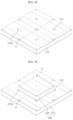
  • FIG. 5 is a perspective view of upper and lower panels of the secondary insulation layer in the membrane type insulation system for cryogenic liquefied gas carrier cargo tank and liquefied gas fuel container according to the present invention.
  • FIG. 6 is a perspective view of the upper and lower panels and a secondary membrane of the secondary insulation layer in the membrane type insulation system for cryogenic liquefied gas carrier cargo tank and liquefied gas fuel container according to the present invention.
  • FIG. 7 is a sectional view of a lower panel securing portion for center securing in the membrane type insulation system for cryogenic liquefied gas carrier cargo tank and liquefied gas fuel container according to the present invention.
  • FIG. 8 is a sectional view of the lower panel securing portion for corner securing indicated by Part A of FIG. 6 .
  • FIG. 9 is a sectional view of the upper panel securing portion indicated by Part B of FIG. 6 .
  • FIG. 10 is a sectional view illustrating prevention of heat loss from a gap between panels according to the present invention.
  • FIG. 11 is a sectional view illustrating thermal shrinkage of panels according to the present invention.
  • FIG. 12 is a perspective view of a primary insulation layer composed of plywood according to the present invention.
  • FIG. 13 is a perspective view of a primary insulation layer composed of a composite material according to the present invention.
  • FIG. 4 is a perspective view of a lower panel of a secondary insulation layer in a membrane type insulation system for cryogenic liquefied gas carrier cargo tank and liquefied gas fuel container according to the present invention.
  • FIG. 5 is a perspective view of upper and lower panels of the secondary insulation layer in the membrane type insulation system for cryogenic liquefied gas carrier cargo tank and liquefied gas fuel container according to the present invention.
  • FIG. 6 is a perspective view of the upper and lower panels and a secondary membrane of the secondary insulation layer in the membrane type insulation system for cryogenic liquefied gas carrier cargo tank and liquefied gas fuel container according to the present invention.
  • FIG. 7 is a sectional view of a lower panel securing portion for center securing in the membrane type insulation system for cryogenic liquefied gas carrier cargo tank and liquefied gas fuel container according to the present invention
  • FIG. 8 is a sectional view of the lower panel securing portion for corner securing indicated by Part A of FIG. 6
  • FIG. 9 is a sectional view of the upper panel securing portion indicated by Part B of FIG. 6 .
  • the membrane type insulation system for cryogenic liquefied gas carrier cargo tank and liquefied gas fuel container includes a secondary insulation layer 200 disposed on an inner wall 1 of a hull and a primary insulation layer 100 disposed at a liquefied gas side, wherein the secondary insulation layer 200 includes a plurality of panels stacked in a multilayer structure in a thickness direction thereof such that upper and lower panels are arranged to intersect each other.
  • the secondary insulation layer 200 includes a plurality of panels 210 , 220 separately stacked in the multilayer structure in the thickness direction such that upper and lower panels 210 , 220 are arranged to intersect each other, thereby minimizing heat loss from a gap between the panels 210 , 220 while suppressing deformation of the panels due to a temperature difference therebetween.
  • the secondary insulation layer 200 will be illustrated by way of example as being composed of a bilayer structure, that is, a lower panel 210 and an upper panel 220 for convenience of description.
  • the panels 120 , 220 constituting the secondary insulation layer 200 may have a sandwich structure of glass fiber-reinforced polyurethane foam (R-PUF) and plywood.
  • R-PUF glass fiber-reinforced polyurethane foam
  • the membrane type insulation system may further include a panel securing unit adapted to secure the lower panel 210 and the upper panel 220 .
  • the panel securing unit includes a lower panel securing portion adapted to secure the lower panel 210 to the inner wall 1 of the hull, and an upper panel securing portion 400 adapted to secure the upper panel 220 .
  • the lower panel securing portion includes a lower panel securing portion for center securing 310 disposed at a center of the lower panel 210 and a lower panel securing portion for corner securing 320 disposed near four corners of the lower panel 210 .
  • the lower panel securing portion for center securing 310 includes: a securing rod 311 welded to the inner wall 1 of the hull and disposed to pass through a securing hole (through-hole) H 2 formed at the center of the lower panel 210 ; and a securing base 312 having a screw portion 312 a formed at a lower portion thereof to be coupled to an upper end of the securing rod 311 and provided with four upper panel securing stud bolts 312 b to be coupled to four corners of the upper panel 220 .
  • the lower panel securing portion for corner securing 320 includes: a lower panel securing stud bolt 321 secured to the inner wall 1 of the hull on which the lower panel 210 is disposed; a nut 322 fastened to the lower panel securing stud bolt 321 to secure the lower panel 210 ; a washer spring 323 fitted into the lower panel securing stud bolt 321 and allowing resilience regulation depending upon a degree of deformation of the inner wall 1 of the hull; a compression securing mold 324 fitted into the lower panel securing stud bolt 321 and stacked under the washer spring 323 to prevent local damage to the lower panel 210 ; and a reference wedge 325 configured to allow height adjustment thereof depending upon the degree of deformation of the inner wall 1 of the hull.
  • the membrane type insulation system may be secured with different degrees of resilience depending upon deformation conditions of the inner wall 1 of the hull of the cargo tank, and may include the stud bolts 321 , the nut 322 , the washer spring 323 , the compression securing mold 324 , and the reference wedge 325 .
  • the lower panel securing stud bolt 321 is secured to the inner wall 1 of the hull on which the lower panel 210 is disposed.
  • the lower panel securing stud bolt 321 may be secured thereto by typical fastening means, for example, welding and the like.
  • the nut 322 is fastened to the lower panel securing stud bolt 321 to secure the lower panel 210 .
  • the washer spring 323 is fitted into the lower panel securing stud bolt 321 and is configured to allow resilience regulation depending upon a degree of deformation of the lower panel 210 on the inner wall 1 of the hull.
  • the washer spring 323 may be replaced by a three-stage type or a five-stage type.
  • the compression securing mold 324 is fitted into the lower panel securing stud bolt 321 and is stacked under the washer spring 323 to prevent local damage to the lower panel 210 and may be formed of high density PUF, compressed wood, or the like.
  • the reference wedge 325 is secured to the inner wall 1 of the hull and the stud bolt 321 is secured perpendicularly to the reference wedge 325 .
  • the reference wedge 325 is configured to allow height regulation depending upon the degree of deformation of the lower panel 210 on the inner wall 1 of the hull.
  • a filling plug 326 may be provided to the remaining space of the securing hole (through-hole) H 2 formed at the center of the lower panel 210 to prevent damage to the lower panel 210 .
  • the upper panel securing portion 400 includes: a nut 422 fastened to each of the upper panel securing stud bolts 312 b to secure the upper panel 220 ; a washer spring 423 fitted into each of the upper panel securing stud bolts 312 b and allowing resilience regulation; and a compression securing mold 424 fitted into each of the upper panel securing stud bolts 312 b and stacked under the washer spring 423 to prevent local damage to the upper panel 220 .
  • a filling plug 426 may be provided to the remaining space of each of securing holes (through-hole) H formed at the corners of the upper panel 220 to prevent damage to the upper panel 220 .
  • the lower panel 210 is primarily secured on the inner wall 1 of the hull using the lower panel securing portion for corner securing 320 and is additionally secured thereto using the lower panel securing portion for center securing 310 .
  • Primary securing of the lower panel 210 on the inner wall 1 of the hull using the lower panel securing portion for corner securing 320 may be realized by fastening the nut 322 to the lower panel securing stud bolt 321 welded to the inner wall 1 of the hull, with the lower panel securing stud bolt 321 inserted into the securing hole (through-hole) H 1 punched near each of four corners of the lower panel 210 .
  • the lower panel 210 may be additionally secured thereto using the lower panel securing portion for center securing 310 . That is, the lower panel 210 may be firmly secured to the inner wall 1 of the hull by fastening the securing rod 311 to a screw portion 312 a of the securing base 312 .
  • the securing base 312 may be secured to an upper surface of the lower panel 210 by rivets and the like.
  • the upper panel 220 is separately stacked on the lower panel 210 in the thickness direction such that the lower panel 210 and the upper panel 220 are arranged to intersect each other, thereby minimizing heat loss from a gap between the lower panel 210 and the upper panel 220 while suppressing deformation thereof caused by a temperature difference therebetween.
  • securing of the upper panel 220 on the lower panel 210 may be realized by the upper panel securing portion 400 .
  • the configuration of the upper panel securing portion 400 is similar to that of the lower panel securing portion for corner securing 320 and detailed description thereof will be omitted.
  • a secondary membrane 201 and the primary insulation layer 100 are sequentially installed on the upper panel 220 .
  • the primary insulation layer 100 may be constituted by a plurality of plywood sheets, as shown in FIG. 12 , or may be constituted by a composite of plywood, a heat insulator and a composite material, as shown in FIG. 13 , to have a thickness set to 20% to 30% of a thickness of the secondary insulation layer 200 .
  • the heat insulator may be at least one selected from the group of glass wool, polyurethane foam (PUF), and glass-reinforced polyurethane foam (R-PUF).
  • the secondary insulation layer 200 is constituted by a plurality of panels, for example, the lower panel 210 and the upper panel 220 separately stacked in a bilayer structure and arranged to intersect each other, as shown in FIG. 10 , thereby minimizing heat loss from the gap between the panels. That is, the membrane type insulation system has an enlarged thermal path, thereby preventing heat loss such as convection.
  • the upper panel 220 is separately stacked on the lower panel 210 in the thickness direction such that the upper panel 220 and the lower panel 210 are arranged to intersect each other, thereby minimizing deformation of the secondary insulation layer by suppressing deformation thereof due to a temperature difference therebetween upon thermal shrinkage.
  • the insulation system according to the present invention employs a multilayer stack of a plurality of panels, thereby overcoming the limit to increase in heat insulation thickness of the panels.
  • Increase in thickness of the single panel for improvement in thermal insulation can cause thermal shrinkage due to a temperature difference between the upper part and lower part in panels of the secondary insulation layer, in which an upper portion of the secondary insulation layer undergoes more shrinkage than a lower portion thereof and increase in insulation thickness results in increase in thermal shrinkage, thereby generating a gap between the panels.
  • the plural panels disposed to intersect each other have a sandwich structure in which the plywood or the composite material on the surface of the panel undergoes less thermal shrinkage than polyurethane foam, the plural panels undergo smaller shrinkage than a single panel, and intersectional arrangement of the upper panel and the lower panel can suppress generation of a gap between the panels while substantially suppressing heat loss by preventing heat loss from the gap between the upper panels from affecting heat loss from a gap between the lower panels of the secondary insulation layer.
  • the upper panel on the lower panel presses the lower panel in a downward direction and suppresses deformation of the lower panel, deformation of the secondary insulation layer can be minimized, thereby significantly reducing stress applied to a secondary membrane due to deformation of the secondary insulation layer.
  • the primary and secondary insulation layers are illustrated as an insulation panel adjacent to liquefied gas and an insulation layer adjacent to an inner wall of a hull in the above description, this description is arbitrarily provided for convenience of description and the sequence of the primary and secondary insulation layers may be changed in a different way.

Landscapes

  • Engineering & Computer Science (AREA)
  • Mechanical Engineering (AREA)
  • Chemical & Material Sciences (AREA)
  • Combustion & Propulsion (AREA)
  • Ocean & Marine Engineering (AREA)
  • Physics & Mathematics (AREA)
  • Thermal Sciences (AREA)
  • General Engineering & Computer Science (AREA)
  • Architecture (AREA)
  • Structural Engineering (AREA)
  • Optics & Photonics (AREA)
  • Filling Or Discharging Of Gas Storage Vessels (AREA)

Abstract

In a membrane type heat insulation system for a cryogenic liquefied gas carrier cargo tank and a liquefied gas fuel container, a secondary heat insulation layer comprises a plurality of panels which are stacked in multiple layers while each pair of upper and lower panels is arranged to intersect each other, whereby heat loss which may occur in the gap between the panels can be minimized and deformation due to a temperature difference can be minimized.

Description

TECHNICAL FIELD
The present invention relates to a membrane type insulation system for cryogenic liquefied gas carrier cargo tank and liquefied gas fuel container, and more particularly, to a membrane type insulation system for cryogenic liquefied gas carrier cargo tank and liquefied gas fuel container, in which a secondary insulation layer is composed of a plurality of panels stacked in a multilayer structure for improvement in thermal insulation performance by arranging upper and lower panels to intersect each other in order to minimize heat loss from a gap between the panels and deformation of the panels due to a temperature difference.
BACKGROUND ART
Generally, natural gas is transported in a gaseous state via onshore or offshore gas pipelines, or is transported to a distant destination by an LNG carrier after being liquefied into LNG.
LNG is obtained by cooling natural gas to cryogenic temperatures, for example, about −163° C. and has a volume of about 1/600 that of natural gas in a gaseous state. Thus, LNG is suited to long distance transport by sea.
An LNG carrier, which is designed to carry LNG by sea to an onshore source of demand, or an LNG regasification vessel (LNG RV), which is designed to carry LNG by sea to an onshore source of demand, regasify the LNG, and discharge the regasified LNG to the onshore source of demand, is provided with a storage tank capable of withstanding cryogenic temperatures of LNG, that is, a cargo tank.
Recently, there is increasing demand for floating offshore structures, such as LNG-floating production, storage and offloading (FPSO) or LNG-floating storage and regasification unit (FSRU). Such a floating offshore structure is also provided with a cargo tank that is used in LNG carriers or LNG RV.
An LNG-FPSO is a floating offshore structure that is designed to liquefy produced natural gas, store the liquefied natural gas in a cargo tank, and, if necessary, offload the LNG onto an LNG carrier.
An LNG-FSRU is a floating offshore structure that is designed to store LNG offloaded from an LNG carrier in a cargo tank and, if necessary, regasify the LNG and supply the regasified LNG to an onshore source of demand.
Such an offshore vessel carrying LNG by sea or storing LNG, such as LNG carrier, LNG RV, LNG FPSO, and LNG FSRU, is provided therein with a cargo tank storing LNG in a cryogenic state.
Cargo tanks are classified into an independent type and a membrane type depending upon whether load of a liquid cargo is directly applied to a heat insulator of the cargo tank.
In addition, the membrane type cargo tank is divided into a GTT NO 96-type tank and a TGZ Mark III-type, and the independent cargo tank is divided into an MOSS-type tank and an IHI-SPB-type tank.
The insulation material and structure of the membrane type cargo tank may vary depending upon the type of a special metal sheet that is used as a material for the cargo tank. Specifically, the GTT NO 96-type cargo tank is manufactured using an Invar sheet (an alloy mainly composed of iron and nickel and having a very low coefficient of thermal expansion) and the Mark III-type tank is manufactured using a stainless steel sheet.
The GTT NO 96-type cargo tank has a structure in which primary and secondary membranes formed of an Invar sheet having a thickness of 0.5 mm to 1.5 mm and primary and secondary heat insulation walls formed of a plywood box and perlite are alternately stacked on an inner wall of a hull.
An insulation system of the GTT NO 96-type cargo tank is composed of two layers in which Invar (36% nickel) and insulation boxes formed of perlite and plywood are stacked. Here, plywood is used as a material for the insulation boxes.
A conventional insulation system of a liquefied gas cargo tank has a technical limitation in thickness reduction of a primary insulation layer in order to maintain thermal insulation performance of the primary insulation layer. That is, excessive reduction in thickness of the primary insulation layer can cause problems in terms of thermal insulation performance and settling of the primary insulation layer.
DISCLOSURE Technical Problem
A liquefied cargo tank includes a plurality of insulation panels formed of polyurethane foam (PUF). Conventionally, since the heat insulation structure formed of polyurethane foam can be insufficient in effective insulation of cryogenic liquefied natural gas, the thickness of the insulation panels is excessively enlarged to improve thermal insulation performance. However, this structure has problems of reduction in loading volume of the cargo tank and increase in manufacturing costs and transportation costs due to increase in thickness and weight of the insulation panels.
Moreover, insulation panels formed of other materials instead of polyurethane foam or Styrofoam typically used in the art has a problem of deterioration in thermal insulation performance or a problem of low strength or impact resistance despite good thermal insulation performance.
FIG. 1 is sectional views of a typical secondary insulation layer and a secondary insulation layer having a thickness-increased monolithic structure. FIG. 2 is a sectional view illustrating heat loss from a gap between the secondary insulation layers having the thickness-increased monolithic structure and FIG. 3 is a sectional view illustrating thermal shrinkage of the secondary insulation layer having the thickness-increased monolithic structure.
Referring to FIG. 1 , conventionally, in order to improve thermal insulation performance of the secondary insulation layer 10, a secondary insulation layer 20 of a monolithic structure manufactured just by increasing thickness of a secondary insulation layer 10 is used.
In an insulation system composed of polyurethane foam and plywood constituting the secondary insulation layer, although increase in thickness of the polyurethane foam is required to improve thermal insulation performance, there is a limit to quantitative increase in thickness of the polyurethane foam.
As shown in FIG. 2 , a panel having an increased thickness has a reduced thermal path under conditions of actual temperature, thereby causing heat loss, such as convection and the like. In addition, as shown in FIG. 3 , there is a problem of significant deformation of the secondary insulation layer of the monolithic structure upon thermal shrinkage.
According to the present invention, in order to solve such problems, metal membranes capable of being used under cryogenic conditions are used as primary and secondary membranes, and a primary insulation layer has a composite structure of plywood, a heat insulator and a composite material to have a thickness set to 20% to 30% of the thickness of a secondary insulation layer, which has a sandwich structure of glass fiber-reinforced polyurethane foam and plywood. In addition, in order to improve thermal insulation performance of an insulation system according to the present invention through increase in thickness of the secondary insulation layer, the secondary insulation layer is formed by stacking a plurality of panels in a thickness direction such that upper and lower panels are arranged to intersect each other in order to minimize heat loss from a gap between the panels and deformation of the panels due to a temperature difference between the panels, instead of using a conventional method of increasing the thickness of the polyurethane foam constituting the secondary insulation layer.
Technical Solution
In accordance with one aspect of the present invention, there is provided an insulation system including a secondary insulation layer disposed on an inner wall of a hull and a primary insulation layer disposed at a liquefied gas side, wherein the secondary insulation layer includes a plurality of panels separately stacked in a multilayer structure in a thickness direction of the secondary insulation layer such that upper and lower panels are arranged to intersect each other.
The insulation system may further include a panel securing unit securing the plurality of panels, and the panel securing unit may include a lower panel securing portion and an upper panel securing portion.
The lower panel securing portion may include: a lower panel securing portion for center securing disposed at a center of a lower panel; and a lower panel securing portion for corner securing disposed near four corners of the lower panel.
The lower panel securing portion for center securing may include: a securing rod welded to the inner wall of the hull and disposed to pass through a securing hole (through-hole) formed at the center of the lower panel; and a securing base having a screw portion formed at a lower portion thereof to be coupled to an upper end of the securing rod and provided with upper panel securing stud bolts to be coupled to four corners of the upper panel.
The lower panel securing portion for corner securing may include: a lower panel securing stud bolt secured to the inner wall of the hull on which the lower panel is disposed; a nut fastened to the lower panel securing stud bolt to secure the lower panel; a washer spring fitted into the lower panel securing stud bolt and allowing resilience regulation depending upon a degree of deformation of the inner wall of the hull; a compression securing mold fitted into the lower panel securing stud bolt and stacked under the washer spring to prevent local damage to the lower panel; and a reference wedge allowing height adjustment thereof depending upon a degree of deformation of the inner wall of the hull.
The upper panel securing portion may include: a nut fastened to each of the upper panel securing stud bolts to secure the upper panel; a washer spring fitted into each of the upper panel securing stud bolts and allowing resilience regulation; and a compression securing mold fitted into each of the upper panel securing stud bolts and stacked under the washer spring to prevent local damage to the upper panel.
The primary insulation layer may have a composite structure of plywood, a heat insulator and a composite material to have a thickness set to 20% to 30% of a thickness of a secondary insulation layer.
The secondary insulation layer may have a sandwich structure of glass fiber-reinforced polyurethane foam and plywood.
Advantageous Effects
As described above, although a conventional technique suggests increase in thickness of a single panel for improvement in thermal insulation, there is a limit in thickness of the panel. That is, the conventional technique has a limit to increase in thickness of the panel due to a limit to foaming height of polyurethane foam. However, the insulation system according to the present invention employs a multilayer stack of plural panels, thereby overcoming the limit to increase in thickness of the panel.
Typically, increase in thickness of the single panel for improvement in thermal insulation can cause thermal shrinkage due to a temperature difference caused by liquefied gas between upper part and lower part in panels of a secondary insulation layer. Here, since the upper panel disposed closer to the liquefied gas than the lower panel suffers from more thermal shrinkage than the lower panel, increase in insulation thickness results in further increase in thermal shrinkage of the panels to generate a gap therebetween, thereby causing deterioration in heat insulation performance.
In order to solve such a problem, according to the present invention, since plural panels disposed to intersect each other have a sandwich structure in which the plywood or the composite material on the surface of the panel undergoes less thermal shrinkage than polyurethane foam, the plural panels undergo smaller shrinkage than a single panel, and intersectional arrangement of the upper panel and the lower panel can suppress generation of a gap between the panels while substantially suppressing heat loss by preventing heat loss from the gap between the upper panels from affecting heat loss from a gap between the lower panels of the secondary insulation layer.
In addition, since the upper panel on the lower panel presses the lower panel in a downward direction and suppresses deformation of the lower panel, deformation of the secondary insulation layer can be minimized, thereby significantly reducing stress applied to a secondary membrane due to deformation of the secondary insulation layer.
DESCRIPTION OF DRAWINGS
FIG. 1 is sectional views of a typical secondary insulation layer and a secondary insulation layer having a thickness-increased monolithic structure.
FIG. 2 is a sectional view illustrating heat loss from a gap between the secondary insulation layers having the thickness-increased monolithic structure.
FIG. 3 is a sectional view illustrating thermal shrinkage of the secondary insulation layer having the thickness-increased monolithic structure.
FIG. 4 is a perspective view of a lower panel of a secondary insulation layer in a membrane type insulation system for cryogenic liquefied gas carrier cargo tank and liquefied gas fuel container according to the present invention.
FIG. 5 is a perspective view of upper and lower panels of the secondary insulation layer in the membrane type insulation system for cryogenic liquefied gas carrier cargo tank and liquefied gas fuel container according to the present invention.
FIG. 6 is a perspective view of the upper and lower panels and a secondary membrane of the secondary insulation layer in the membrane type insulation system for cryogenic liquefied gas carrier cargo tank and liquefied gas fuel container according to the present invention.
FIG. 7 is a sectional view of a lower panel securing portion for center securing in the membrane type insulation system for cryogenic liquefied gas carrier cargo tank and liquefied gas fuel container according to the present invention.
FIG. 8 is a sectional view of the lower panel securing portion for corner securing indicated by Part A of FIG. 6 .
FIG. 9 is a sectional view of the upper panel securing portion indicated by Part B of FIG. 6 .
FIG. 10 is a sectional view illustrating prevention of heat loss from a gap between panels according to the present invention.
FIG. 11 is a sectional view illustrating thermal shrinkage of panels according to the present invention.
FIG. 12 is a perspective view of a primary insulation layer composed of plywood according to the present invention.
FIG. 13 is a perspective view of a primary insulation layer composed of a composite material according to the present invention.
BEST MODE
Hereinafter, embodiments of the present invention will be described in detail with reference to the accompanying drawings.
FIG. 4 is a perspective view of a lower panel of a secondary insulation layer in a membrane type insulation system for cryogenic liquefied gas carrier cargo tank and liquefied gas fuel container according to the present invention.
FIG. 5 is a perspective view of upper and lower panels of the secondary insulation layer in the membrane type insulation system for cryogenic liquefied gas carrier cargo tank and liquefied gas fuel container according to the present invention.
FIG. 6 is a perspective view of the upper and lower panels and a secondary membrane of the secondary insulation layer in the membrane type insulation system for cryogenic liquefied gas carrier cargo tank and liquefied gas fuel container according to the present invention.
FIG. 7 is a sectional view of a lower panel securing portion for center securing in the membrane type insulation system for cryogenic liquefied gas carrier cargo tank and liquefied gas fuel container according to the present invention, FIG. 8 is a sectional view of the lower panel securing portion for corner securing indicated by Part A of FIG. 6 and FIG. 9 is a sectional view of the upper panel securing portion indicated by Part B of FIG. 6 .
Referring to these drawings, the membrane type insulation system for cryogenic liquefied gas carrier cargo tank and liquefied gas fuel container according to the present invention includes a secondary insulation layer 200 disposed on an inner wall 1 of a hull and a primary insulation layer 100 disposed at a liquefied gas side, wherein the secondary insulation layer 200 includes a plurality of panels stacked in a multilayer structure in a thickness direction thereof such that upper and lower panels are arranged to intersect each other.
Specifically, according to the present invention, the secondary insulation layer 200 includes a plurality of panels 210, 220 separately stacked in the multilayer structure in the thickness direction such that upper and lower panels 210, 220 are arranged to intersect each other, thereby minimizing heat loss from a gap between the panels 210, 220 while suppressing deformation of the panels due to a temperature difference therebetween.
In this embodiment, the secondary insulation layer 200 will be illustrated by way of example as being composed of a bilayer structure, that is, a lower panel 210 and an upper panel 220 for convenience of description.
In this embodiment, the panels 120, 220 constituting the secondary insulation layer 200 may have a sandwich structure of glass fiber-reinforced polyurethane foam (R-PUF) and plywood.
According to this embodiment, the membrane type insulation system may further include a panel securing unit adapted to secure the lower panel 210 and the upper panel 220.
The panel securing unit includes a lower panel securing portion adapted to secure the lower panel 210 to the inner wall 1 of the hull, and an upper panel securing portion 400 adapted to secure the upper panel 220.
The lower panel securing portion includes a lower panel securing portion for center securing 310 disposed at a center of the lower panel 210 and a lower panel securing portion for corner securing 320 disposed near four corners of the lower panel 210.
First, referring to FIG. 7 , the lower panel securing portion for center securing 310 includes: a securing rod 311 welded to the inner wall 1 of the hull and disposed to pass through a securing hole (through-hole) H2 formed at the center of the lower panel 210; and a securing base 312 having a screw portion 312 a formed at a lower portion thereof to be coupled to an upper end of the securing rod 311 and provided with four upper panel securing stud bolts 312 b to be coupled to four corners of the upper panel 220.
In addition, referring to FIG. 8 , the lower panel securing portion for corner securing 320 includes: a lower panel securing stud bolt 321 secured to the inner wall 1 of the hull on which the lower panel 210 is disposed; a nut 322 fastened to the lower panel securing stud bolt 321 to secure the lower panel 210; a washer spring 323 fitted into the lower panel securing stud bolt 321 and allowing resilience regulation depending upon a degree of deformation of the inner wall 1 of the hull; a compression securing mold 324 fitted into the lower panel securing stud bolt 321 and stacked under the washer spring 323 to prevent local damage to the lower panel 210; and a reference wedge 325 configured to allow height adjustment thereof depending upon the degree of deformation of the inner wall 1 of the hull.
That is, according to this embodiment, the membrane type insulation system may be secured with different degrees of resilience depending upon deformation conditions of the inner wall 1 of the hull of the cargo tank, and may include the stud bolts 321, the nut 322, the washer spring 323, the compression securing mold 324, and the reference wedge 325.
The lower panel securing stud bolt 321 is secured to the inner wall 1 of the hull on which the lower panel 210 is disposed. The lower panel securing stud bolt 321 may be secured thereto by typical fastening means, for example, welding and the like.
The nut 322 is fastened to the lower panel securing stud bolt 321 to secure the lower panel 210.
The washer spring 323 is fitted into the lower panel securing stud bolt 321 and is configured to allow resilience regulation depending upon a degree of deformation of the lower panel 210 on the inner wall 1 of the hull. For resilience regulation, the washer spring 323 may be replaced by a three-stage type or a five-stage type.
The compression securing mold 324 is fitted into the lower panel securing stud bolt 321 and is stacked under the washer spring 323 to prevent local damage to the lower panel 210 and may be formed of high density PUF, compressed wood, or the like.
The reference wedge 325 is secured to the inner wall 1 of the hull and the stud bolt 321 is secured perpendicularly to the reference wedge 325. The reference wedge 325 is configured to allow height regulation depending upon the degree of deformation of the lower panel 210 on the inner wall 1 of the hull.
A filling plug 326 may be provided to the remaining space of the securing hole (through-hole) H2 formed at the center of the lower panel 210 to prevent damage to the lower panel 210.
Referring to FIG. 9 , the upper panel securing portion 400 includes: a nut 422 fastened to each of the upper panel securing stud bolts 312 b to secure the upper panel 220; a washer spring 423 fitted into each of the upper panel securing stud bolts 312 b and allowing resilience regulation; and a compression securing mold 424 fitted into each of the upper panel securing stud bolts 312 b and stacked under the washer spring 423 to prevent local damage to the upper panel 220.
A filling plug 426 may be provided to the remaining space of each of securing holes (through-hole) H formed at the corners of the upper panel 220 to prevent damage to the upper panel 220.
Next, installation of the secondary insulation layer 200 and the primary insulation layer 100 will be described with reference to the accompanying drawings (see FIG. 12 ). First, the lower panel 210 is primarily secured on the inner wall 1 of the hull using the lower panel securing portion for corner securing 320 and is additionally secured thereto using the lower panel securing portion for center securing 310.
Primary securing of the lower panel 210 on the inner wall 1 of the hull using the lower panel securing portion for corner securing 320 may be realized by fastening the nut 322 to the lower panel securing stud bolt 321 welded to the inner wall 1 of the hull, with the lower panel securing stud bolt 321 inserted into the securing hole (through-hole) H1 punched near each of four corners of the lower panel 210.
In addition, the lower panel 210 may be additionally secured thereto using the lower panel securing portion for center securing 310. That is, the lower panel 210 may be firmly secured to the inner wall 1 of the hull by fastening the securing rod 311 to a screw portion 312 a of the securing base 312. The securing base 312 may be secured to an upper surface of the lower panel 210 by rivets and the like.
Next, the upper panel 220 is separately stacked on the lower panel 210 in the thickness direction such that the lower panel 210 and the upper panel 220 are arranged to intersect each other, thereby minimizing heat loss from a gap between the lower panel 210 and the upper panel 220 while suppressing deformation thereof caused by a temperature difference therebetween.
Here, securing of the upper panel 220 on the lower panel 210 may be realized by the upper panel securing portion 400. The configuration of the upper panel securing portion 400 is similar to that of the lower panel securing portion for corner securing 320 and detailed description thereof will be omitted.
After completion of the lower panel 210 and the upper panel 220, a secondary membrane 201 and the primary insulation layer 100 are sequentially installed on the upper panel 220.
According to this embodiment, the primary insulation layer 100 may be constituted by a plurality of plywood sheets, as shown in FIG. 12 , or may be constituted by a composite of plywood, a heat insulator and a composite material, as shown in FIG. 13 , to have a thickness set to 20% to 30% of a thickness of the secondary insulation layer 200. Here, the heat insulator may be at least one selected from the group of glass wool, polyurethane foam (PUF), and glass-reinforced polyurethane foam (R-PUF).
In the membrane type insulation system for cryogenic liquefied gas carrier cargo tank and liquefied gas fuel container according to the present invention, the secondary insulation layer 200 is constituted by a plurality of panels, for example, the lower panel 210 and the upper panel 220 separately stacked in a bilayer structure and arranged to intersect each other, as shown in FIG. 10 , thereby minimizing heat loss from the gap between the panels. That is, the membrane type insulation system has an enlarged thermal path, thereby preventing heat loss such as convection.
Further, as shown in FIG. 11 , the upper panel 220 is separately stacked on the lower panel 210 in the thickness direction such that the upper panel 220 and the lower panel 210 are arranged to intersect each other, thereby minimizing deformation of the secondary insulation layer by suppressing deformation thereof due to a temperature difference therebetween upon thermal shrinkage.
Although a conventional technique suggests increase in thickness of a single panel for improvement of thermal insulation, such a conventional technique has a limit to increase in thickness of the panel due to a limit to increase in thickness of the panel (limit to foaming height). However, the insulation system according to the present invention employs a multilayer stack of a plurality of panels, thereby overcoming the limit to increase in heat insulation thickness of the panels.
Increase in thickness of the single panel for improvement in thermal insulation can cause thermal shrinkage due to a temperature difference between the upper part and lower part in panels of the secondary insulation layer, in which an upper portion of the secondary insulation layer undergoes more shrinkage than a lower portion thereof and increase in insulation thickness results in increase in thermal shrinkage, thereby generating a gap between the panels. On the other hand, according to the present invention, since the plural panels disposed to intersect each other have a sandwich structure in which the plywood or the composite material on the surface of the panel undergoes less thermal shrinkage than polyurethane foam, the plural panels undergo smaller shrinkage than a single panel, and intersectional arrangement of the upper panel and the lower panel can suppress generation of a gap between the panels while substantially suppressing heat loss by preventing heat loss from the gap between the upper panels from affecting heat loss from a gap between the lower panels of the secondary insulation layer.
In addition, since the upper panel on the lower panel presses the lower panel in a downward direction and suppresses deformation of the lower panel, deformation of the secondary insulation layer can be minimized, thereby significantly reducing stress applied to a secondary membrane due to deformation of the secondary insulation layer.
It will be apparent to those skilled in the art that the present invention is not limited to the embodiments described above and that various modifications, changes, alterations, and equivalent embodiments can be made without departing from the spirit and scope of the present invention.
Therefore, such modifications, changes, alterations, and equivalent embodiments fall within the spirit and scope of claims.
For example, although the primary and secondary insulation layers are illustrated as an insulation panel adjacent to liquefied gas and an insulation layer adjacent to an inner wall of a hull in the above description, this description is arbitrarily provided for convenience of description and the sequence of the primary and secondary insulation layers may be changed in a different way.
Furthermore, it should be understood that spatially relative terms such as “upper” and “lower” are also arbitrarily defined for convenience of description and the term “upper” can be used interchangeably with the term “lower” depending upon a viewing direction and location of a cargo tank.

Claims (8)

The invention claimed is:
1. A membrane type insulation system for cryogenic liquefied gas carrier cargo tank and liquefied gas fuel container, the membrane type insulation system comprising:
a primary insulation layer disposed at a liquefied gas side;
a secondary insulation layer disposed on an inner wall of a hull, wherein the secondary insulation layer comprises a plurality of panels separately stacked in a multilayer structure in a thickness direction of the secondary insulation layer such that upper and lower panels are staggered; and
a panel securing unit configured to secure an upper panel of the plurality of panels to the inner wall of the hull via a lower panel of the plurality of panels that is provided between the upper panel and the inner wall of the hull.
2. The membrane type insulation system according to claim 1, wherein the panel securing unit comprises:
a lower panel securing portion configured to secure the lower panels of the plurality of panels to the inner wall of the hull; and
an upper panel securing portion configured to secure the upper panels of the plurality of panels to the inner wall of the hull.
3. The membrane type insulation system according to claim 2, wherein the lower panel securing portion comprises:
a center-securing lower panel securing portion disposed at a center of the lower panel; and
a corner-securing lower panel securing portion disposed near four corners of the lower panel.
4. The membrane type insulation system according to claim 3, wherein the center-securing lower panel securing portion comprises:
a securing rod welded to the inner wall of the hull and disposed to pass through a securing hole formed at the center of the lower panel; and
a securing base having a screw portion formed at a lower portion thereof to be coupled to an upper end of the securing rod and provided with upper panel securing stud bolts to be coupled to four corners of the upper panel.
5. The membrane type insulation system according to claim 3, wherein the corner-securing lower panel securing portion comprises:
a lower panel securing stud bolt secured to the inner wall of the hull on which the lower panel is disposed;
a nut fastened to the lower panel securing stud bolt to secure the lower panel to the inner wall of the hull;
a washer spring fitted into the lower panel securing stud bolt and configured to allow resilience regulation depending upon a degree of deformation of the inner wall of the hull;
a compression securing mold fitted into the lower panel securing stud bolt and stacked under the washer spring to prevent local damage to the lower panel; and
a reference wedge configured to allow height adjustment thereof depending upon a degree of deformation of the inner wall of the hull.
6. The membrane type insulation system according to claim 4, wherein the upper panel securing portion comprises:
a nut fastened to each of the upper panel securing stud bolts to secure the upper panel to the inner wall of the hull;
a washer spring fitted into each of the upper panel securing stud bolts and configured to allow resilience regulation; and
a compression securing mold fitted into each of the upper panel securing stud bolts and stacked under the washer spring to prevent local damage to the upper panel.
7. The membrane type insulation system according to claim 1, wherein the primary insulation layer has a composite structure of plywood, a heat insulator and a composite material to have a thickness set to 20% to 30% of a thickness of the secondary insulation layer, and the secondary insulation layer has a sandwich structure of glass fiber-reinforced polyurethane foam and plywood.
8. The membrane type insulation system according to claim 1, wherein the secondary insulation layer has a structure in which the plurality of panels are separately stacked in the multilayer structure in the thickness direction of the secondary insulation layer such that the upper panels and the lower panels are staggered to minimize heat loss from a gap between the panels while suppressing deformation of the panels due to a temperature difference therebetween.
US16/621,124 2017-12-27 2018-12-27 Membrane type insulation system for cryogenic liquefied gas carrier cargo tank and liquefied gas fuel container Active 2039-10-19 US11597477B2 (en)

Applications Claiming Priority (3)

Application Number Priority Date Filing Date Title
KR1020170180711A KR102003407B1 (en) 2017-12-27 2017-12-27 Insulation system for natural gas cargo of carrier and liquefied natural gas fuel tank
KR10-2017-0180711 2017-12-27
PCT/KR2018/016706 WO2019132531A1 (en) 2017-12-27 2018-12-27 Membrane type heat insulation system for cryogenic liquefied gas carrier cargo tank and liquefied gas fuel container

Publications (2)

Publication Number Publication Date
US20210284290A1 US20210284290A1 (en) 2021-09-16
US11597477B2 true US11597477B2 (en) 2023-03-07

Family

ID=67067838

Family Applications (1)

Application Number Title Priority Date Filing Date
US16/621,124 Active 2039-10-19 US11597477B2 (en) 2017-12-27 2018-12-27 Membrane type insulation system for cryogenic liquefied gas carrier cargo tank and liquefied gas fuel container

Country Status (5)

Country Link
US (1) US11597477B2 (en)
EP (1) EP3733501A4 (en)
KR (1) KR102003407B1 (en)
CN (1) CN110785346B (en)
WO (1) WO2019132531A1 (en)

Cited By (1)

* Cited by examiner, † Cited by third party
Publication number Priority date Publication date Assignee Title
ES3034305A1 (en) * 2025-05-20 2025-08-14 Soluciones Integrales Economia Circular S L Cryogenic and thermal insulation for tanks

Families Citing this family (1)

* Cited by examiner, † Cited by third party
Publication number Priority date Publication date Assignee Title
CN111231484B (en) * 2020-01-10 2022-12-02 江苏雅克科技股份有限公司 Polyurethane composite cryogenic insulation board and preparation method thereof

Citations (11)

* Cited by examiner, † Cited by third party
Publication number Priority date Publication date Assignee Title
EP0214007A1 (en) 1985-08-06 1987-03-11 Gaz-Transport Thermally insulated impervious container, and ship carrying it
KR20120015741A (en) 2010-08-13 2012-02-22 삼성중공업 주식회사 Insulation structure of liquid cargo hold
KR20130075259A (en) 2011-12-27 2013-07-05 대우조선해양 주식회사 Multiple insulation box for a lng storage tank and its manufacturing method
KR20130099906A (en) 2013-07-19 2013-09-06 삼성중공업 주식회사 Cargo barrier structure
WO2014132661A1 (en) 2013-03-01 2014-09-04 パナソニック株式会社 Insulating container
CN105026819A (en) 2013-02-22 2015-11-04 气体运输技术公司 Method for producing a sealed and thermally insulating barrier for a storage tank
WO2016027460A1 (en) 2014-08-21 2016-02-25 パナソニックIpマネジメント株式会社 Heat insulation container
CN106499946A (en) 2012-10-09 2017-03-15 气体运输技术公司 The sealed, thermally insulated tank of the corrugated metal thin film comprising an orthogonal folding
CN106573664A (en) 2014-07-30 2017-04-19 三星重工业有限公司 Barrier sheet used for liquefied gas cargo hold, liquefied gas cargo hold using same, and manufacturing method therefor
KR20170050586A (en) 2015-10-30 2017-05-11 대우조선해양 주식회사 Insulation System For Membrane Type in LNG Storage Tank
WO2017104988A1 (en) 2015-12-15 2017-06-22 주식회사 경동원 Structure for connecting alternately stacked vacuum insulation panels of independent type liquefied gas storage tank

Family Cites Families (1)

* Cited by examiner, † Cited by third party
Publication number Priority date Publication date Assignee Title
FR2780942B1 (en) 1998-07-10 2000-09-08 Gaz Transport & Technigaz WATERPROOF AND THERMALLY INSULATING TANK WITH IMPROVED ANGLE STRUCTURE, INTEGRATED INTO A SHIP-CARRIED STRUCTURE

Patent Citations (13)

* Cited by examiner, † Cited by third party
Publication number Priority date Publication date Assignee Title
EP0214007A1 (en) 1985-08-06 1987-03-11 Gaz-Transport Thermally insulated impervious container, and ship carrying it
KR20120015741A (en) 2010-08-13 2012-02-22 삼성중공업 주식회사 Insulation structure of liquid cargo hold
KR20130075259A (en) 2011-12-27 2013-07-05 대우조선해양 주식회사 Multiple insulation box for a lng storage tank and its manufacturing method
CN106499946A (en) 2012-10-09 2017-03-15 气体运输技术公司 The sealed, thermally insulated tank of the corrugated metal thin film comprising an orthogonal folding
CN105026819A (en) 2013-02-22 2015-11-04 气体运输技术公司 Method for producing a sealed and thermally insulating barrier for a storage tank
WO2014132661A1 (en) 2013-03-01 2014-09-04 パナソニック株式会社 Insulating container
CN104981645A (en) 2013-03-01 2015-10-14 松下知识产权经营株式会社 Insulating container
KR20130099906A (en) 2013-07-19 2013-09-06 삼성중공업 주식회사 Cargo barrier structure
CN106573664A (en) 2014-07-30 2017-04-19 三星重工业有限公司 Barrier sheet used for liquefied gas cargo hold, liquefied gas cargo hold using same, and manufacturing method therefor
WO2016027460A1 (en) 2014-08-21 2016-02-25 パナソニックIpマネジメント株式会社 Heat insulation container
KR20170050586A (en) 2015-10-30 2017-05-11 대우조선해양 주식회사 Insulation System For Membrane Type in LNG Storage Tank
WO2017104988A1 (en) 2015-12-15 2017-06-22 주식회사 경동원 Structure for connecting alternately stacked vacuum insulation panels of independent type liquefied gas storage tank
KR20170071623A (en) 2015-12-15 2017-06-26 주식회사 경동원 Cross stacked insulation panel installation structure of independent type liquefied gas storage tank

Non-Patent Citations (4)

* Cited by examiner, † Cited by third party
Title
Extended European Search Report in European Application No. 18896602 dated Sep. 24, 2021 in 7 pages.
First Office Action of Chinese Patent Application No. 201880039181.5—16 pages (dated Mar. 17, 2021).
International Search Report of corresponding PCT Application No. PCT/KR2018/016706—4 pages (dated Apr. 12, 2019).
Office Action of corresponding Korean Patent Application No. 10-2017-0180711—4 pages (dated Jan. 18, 2019).

Cited By (1)

* Cited by examiner, † Cited by third party
Publication number Priority date Publication date Assignee Title
ES3034305A1 (en) * 2025-05-20 2025-08-14 Soluciones Integrales Economia Circular S L Cryogenic and thermal insulation for tanks

Also Published As

Publication number Publication date
EP3733501A4 (en) 2021-10-27
KR20190078922A (en) 2019-07-05
US20210284290A1 (en) 2021-09-16
WO2019132531A1 (en) 2019-07-04
CN110785346B (en) 2021-11-30
CN110785346A (en) 2020-02-11
KR102003407B1 (en) 2019-07-24
EP3733501A1 (en) 2020-11-04

Similar Documents

Publication Publication Date Title
KR101034472B1 (en) Insulation Structure of Independent Liquefied Gas Tank and Formation Method
KR102150458B1 (en) Insulation System For Membrane Type in LNG Storage Tank
KR101751852B1 (en) Insulation System For Membrane Type in LNG Storage Tank
KR20180061945A (en) Insulation system of membraine type storage tank and membrain type storage tank
KR102150457B1 (en) Insulation System For Membrane Type in LNG Storage Tank
US11597477B2 (en) Membrane type insulation system for cryogenic liquefied gas carrier cargo tank and liquefied gas fuel container
KR102019273B1 (en) Insulation system for natural gas cargo of carrier and liquefied natural gas fuel tank
KR102203735B1 (en) Insulation system for natural gas cargo of carrier and liquefied natural gas fuel tank
KR102233195B1 (en) Insulation System For Membrane Type in LNG Storage Tank
KR102203741B1 (en) Insulation System For Membrane Type in LNG Storage Tank
KR102282053B1 (en) Liquefied gas storage tank and vessel comprising the same
US20200318790A1 (en) Membrane bonding structure and liquefied gas storage tank comprising the same
KR102361517B1 (en) Insulation System For Membrane Type in LNG Storage Tank
KR102185817B1 (en) Insulation system for natural gas cargo of carrier and liquefied natural gas fuel tank
KR102782172B1 (en) Insulation Box Reinforcement Structure of Liquefied Gas Storage Tank
KR102249073B1 (en) Liquefied gas storage tank and vessel comprising the same
KR102095423B1 (en) Insulation system for natural gas cargo of carrier and liquefied natural gas fuel tank
KR20180061944A (en) Insulation system of membraine type storage tank and membrain type storage tank
KR102525945B1 (en) Insulation system of liquefied natural gas storage tank
KR101775046B1 (en) Insulation System For Membrane Type in LNG Storage Tank
KR20210040693A (en) Insulation Box Reinforcement Structure of Liquefied Gas Storage Tank
KR20210040687A (en) Insulation Box Reinforcement Structure of Liquefied Gas Storage Tank
KR20200024458A (en) Insulation system for natural gas cargo of carrier and liquefied natural gas fuel tank
KR102282095B1 (en) Liquefied gas storage tank and vessel comprising the same
KR102785851B1 (en) Insulation Box Reinforcement Structure of Liquefied Gas Storage Tank

Legal Events

Date Code Title Description
FEPP Fee payment procedure

Free format text: ENTITY STATUS SET TO UNDISCOUNTED (ORIGINAL EVENT CODE: BIG.); ENTITY STATUS OF PATENT OWNER: LARGE ENTITY

AS Assignment

Owner name: DAEWOO SHIPBUILDING & MARINE ENGINEERING CO., LTD., KOREA, REPUBLIC OF

Free format text: ASSIGNMENT OF ASSIGNORS INTEREST;ASSIGNORS:PARK, SEONG WOO;KWON, SEUNG MIN;KIM, HYEON SEUNG;AND OTHERS;REEL/FRAME:051252/0776

Effective date: 20191205

STPP Information on status: patent application and granting procedure in general

Free format text: DOCKETED NEW CASE - READY FOR EXAMINATION

STPP Information on status: patent application and granting procedure in general

Free format text: NON FINAL ACTION MAILED

STPP Information on status: patent application and granting procedure in general

Free format text: RESPONSE TO NON-FINAL OFFICE ACTION ENTERED AND FORWARDED TO EXAMINER

STPP Information on status: patent application and granting procedure in general

Free format text: NOTICE OF ALLOWANCE MAILED -- APPLICATION RECEIVED IN OFFICE OF PUBLICATIONS

STCF Information on status: patent grant

Free format text: PATENTED CASE

AS Assignment

Owner name: HANWHA OCEAN CO., LTD., KOREA, REPUBLIC OF

Free format text: CHANGE OF NAME;ASSIGNOR:DAEWOO SHIPBUILDING & MARINE ENGINEERING CO., LTD.;REEL/FRAME:066358/0391

Effective date: 20230523