US11588440B2 - Test apparatus of solar cell, and photovoltaic system including the same - Google Patents
Test apparatus of solar cell, and photovoltaic system including the same Download PDFInfo
- Publication number
- US11588440B2 US11588440B2 US17/024,432 US202017024432A US11588440B2 US 11588440 B2 US11588440 B2 US 11588440B2 US 202017024432 A US202017024432 A US 202017024432A US 11588440 B2 US11588440 B2 US 11588440B2
- Authority
- US
- United States
- Prior art keywords
- solar cell
- cell
- information
- output
- learning
- Prior art date
- Legal status (The legal status is an assumption and is not a legal conclusion. Google has not performed a legal analysis and makes no representation as to the accuracy of the status listed.)
- Active, expires
Links
Images




Classifications
-
- H—ELECTRICITY
- H02—GENERATION; CONVERSION OR DISTRIBUTION OF ELECTRIC POWER
- H02S—GENERATION OF ELECTRIC POWER BY CONVERSION OF INFRARED RADIATION, VISIBLE LIGHT OR ULTRAVIOLET LIGHT, e.g. USING PHOTOVOLTAIC [PV] MODULES
- H02S50/00—Monitoring or testing of PV systems, e.g. load balancing or fault identification
- H02S50/10—Testing of PV devices, e.g. of PV modules or single PV cells
-
- G—PHYSICS
- G06—COMPUTING OR CALCULATING; COUNTING
- G06F—ELECTRIC DIGITAL DATA PROCESSING
- G06F18/00—Pattern recognition
- G06F18/20—Analysing
- G06F18/24—Classification techniques
-
- G—PHYSICS
- G06—COMPUTING OR CALCULATING; COUNTING
- G06N—COMPUTING ARRANGEMENTS BASED ON SPECIFIC COMPUTATIONAL MODELS
- G06N20/00—Machine learning
-
- H—ELECTRICITY
- H02—GENERATION; CONVERSION OR DISTRIBUTION OF ELECTRIC POWER
- H02S—GENERATION OF ELECTRIC POWER BY CONVERSION OF INFRARED RADIATION, VISIBLE LIGHT OR ULTRAVIOLET LIGHT, e.g. USING PHOTOVOLTAIC [PV] MODULES
- H02S40/00—Components or accessories in combination with PV modules, not provided for in groups H02S10/00 - H02S30/00
- H02S40/30—Electrical components
- H02S40/36—Electrical components characterised by special electrical interconnection means between two or more PV modules, e.g. electrical module-to-module connection
-
- Y—GENERAL TAGGING OF NEW TECHNOLOGICAL DEVELOPMENTS; GENERAL TAGGING OF CROSS-SECTIONAL TECHNOLOGIES SPANNING OVER SEVERAL SECTIONS OF THE IPC; TECHNICAL SUBJECTS COVERED BY FORMER USPC CROSS-REFERENCE ART COLLECTIONS [XRACs] AND DIGESTS
- Y02—TECHNOLOGIES OR APPLICATIONS FOR MITIGATION OR ADAPTATION AGAINST CLIMATE CHANGE
- Y02E—REDUCTION OF GREENHOUSE GAS [GHG] EMISSIONS, RELATED TO ENERGY GENERATION, TRANSMISSION OR DISTRIBUTION
- Y02E10/00—Energy generation through renewable energy sources
- Y02E10/50—Photovoltaic [PV] energy
Definitions
- the present disclosure relates to a test apparatus of a solar cell, and a photovoltaic system including the same, and more particularly, to a test apparatus of a solar cell, and a photovoltaic system including the same capable of reducing an output deviation of a solar cell module including a plurality of solar cells.
- a cell efficiency rating is given to a solar cell.
- the cell efficiency rating is given by an output, light, and the like of the solar cell.
- a solar module having a target output of approximately 350, 355, or 360 Watt is produced in a combination of 60 or 72 solar cells by using such cell efficiency rating information.
- the present disclosure provides a test apparatus of a solar cell, and a photovoltaic system including the same capable of reducing an output deviation of a solar cell module including a plurality of solar cells.
- the present disclosure also provides a test apparatus of a solar cell, and a photovoltaic system including the same capable of enhancing production efficiency of a solar cell module including a plurality of solar cells.
- a test apparatus of a solar cell which includes: an interface to receive cell information including cell efficiency, cell voltage, and cell current of a solar cell; and a processor to perform learning based on the cell information of the solar cell and line information of a string line including the solar cell, predict an output of a solar cell module including the solar cell based on the learning, and output an output prediction value of the solar cell module.
- the processor may perform the learning based on the cell information of the solar cell, the line information of the string line including the solar cell, and module information of the solar cell module including the string line, predict the output of the solar cell module based on the learning, and output the output prediction value of the solar cell module.
- the test apparatus of a solar cell may further include a communicator to receive a learning model from a server, in which the processor may perform the learning based on the learning model and predict the output of the solar cell module based on the learning.
- the test apparatus of a solar cell may further include a second interface to transmit the output prediction value of the solar cell module to a solar cell classifying apparatus.
- the cell information may further include resistance information and temperature information of the solar cell.
- the solar cell module may include a solar cell of a reference value or more and in case in which the cell rating is given based on the output prediction value, the solar cell module may include a solar cell having cell efficiency equal to or higher than a second reference value lower than the first reference value.
- a photovoltaic system which includes: a solar cell test apparatus to receive cell information including cell efficiency, cell voltage, and cell current of a solar cell, perform learning based on the cell information of the solar cell and line information of a string line including the solar cell, predict an output of a solar cell module including the solar cell based on the learning, and output an output prediction value of the solar cell module; and a solar cell classifying apparatus to classify a rating of the solar cell based on the output prediction value of the solar cell module from the solar cell test apparatus.
- the solar cell classifying apparatus may classify the ratings of the solar cell for each output power of the solar cell module.
- the solar cell test apparatus may perform the learning based on the cell information of the solar cell, the line information of the string line including the solar cell, and module information of the solar cell module including the string line, predict the output of the solar cell module based on the learning, and output the output prediction value of the solar cell module.
- the photovoltaic system may further include a server to perform learning by using the cell information of the solar cell and a plurality of learning models, select any one learning model of the plurality of learning models, and transmit the selected learning model to the solar cell test apparatus.
- the solar cell test apparatus may perform learning based on the learning model received from the server and predict the output of the solar cell module.
- the plurality of learning models may include a plurality of machine learning model and a plurality of regression analysis learning model.
- the cell information may further include resistance information and temperature information of the solar cell.
- a test apparatus of a solar cell which includes: an interface to receive cell information including cell efficiency, cell voltage, and cell current of a solar cell; and a processor to perform learning based on the cell information of the solar cell and line information of a string line including the solar cell, predict an output of a solar cell module including the solar cell based on the learning, output an output prediction value of the solar cell module, and classify a rating of the solar cell based on the output prediction value of the solar cell module.
- the test apparatus of a solar cell may further include a communicator to receive a learning model from a server, in which the processor may perform the learning based on the learning model and predict the output of the solar cell module based on the learning.
- the cell information may further include resistance information and temperature information of the solar cell.
- the solar cell module may include a solar cell of a reference value or more and in case in which the cell rating is given based on the output prediction value, the solar cell module may include a solar cell having cell efficiency equal to or higher than a second reference value lower than the first reference value.
- FIG. 1 is a diagram illustrating an example of a photovoltaic system including a test apparatus of a solar cell according to an embodiment of the present disclosure
- FIG. 2 is a front view of a solar cell module according to an embodiment of the present disclosure.
- FIG. 3 illustrates a voltage versus current curve of the solar cell module FIG. 2 ;
- FIG. 4 illustrates a voltage versus power curve of the solar cell module FIG. 2 ;
- FIG. 5 is a schematic internal block diagram of the photovoltaic system of FIG. 1 ;
- FIG. 6 A illustrates an example of an internal block diagram of a processor of a server of FIG. 5 ;
- FIG. 6 B illustrates an example of the internal block diagram of the test apparatus of a solar cell of FIG. 5 ;
- FIGS. 7 to 11 D are diagrams referred for describing an operation of the photovoltaic system of FIG. 5 .
- module and “unit” for components used in the following description are given in consideration of easy preparation of the specification only and do not have their own particularly important meanings or roles. Accordingly, the “module” and “unit” may be used interchangeably.
- FIG. 1 is a diagram illustrating an example of a photovoltaic system including a test apparatus of a solar cell according to an embodiment of the present disclosure.
- the solar cell module manufacturing apparatus 500 may manufacture the plurality of solar cells CE 1 to CE 10 by various processes.
- the number of solar cells CE 1 to CE 10 is 10, but is not limited thereto and the plurality of solar cells may be manufactured.
- the present disclosure presents a method for manufacturing the solar cell module SLM by performing learning based on cell information including the cell efficiency, cell voltage, and cell current and line information of a string line including the solar cell, predicting the output of the solar cell module including the solar cell based on the learning, and using an output prediction value of the solar cell module, at the time of manufacturing the solar cell module SLM in order to solve the disadvantage that the output dispersion of the solar cell module SLM increases.
- the solar cell test apparatus 200 includes an interface ( 210 a of FIG. 5 ) receiving cell information including the cell efficiency, cell voltage, and cell current and a processor ( 270 of FIG. 5 ) performing learning based on the cell information of the solar cell and line information of a string line including the solar cell, predicting an output of the solar cell module SLM including the solar cell based on the learning, and outputting an output prediction value of the solar cell module SLM.
- the output deviation of the solar cell module SLM including the plurality of solar cells can be reduced.
- the production efficiency of the solar cell module SLM including the plurality of solar cells can be enhanced.
- the processor may perform the learning based on the cell information of the solar cell, the line information of the string line including the solar cell, and module information of the solar cell module SLM including the string line, predict the output of the solar cell module SLM based on the learning, and output the output prediction value of the solar cell module SLM.
- the output deviation of the solar cell module SLM including the plurality of solar cells can be reduced.
- the solar cell module manufacturing apparatus 500 manufactures the solar cell module SLM including the plurality of solar cells according to the rating of the solar cell based on the output prediction value of the solar cell module SLM classified in the solar cell classifying apparatus 400 . Accordingly, the production efficiency of the solar cell module SLM can be enhanced.
- the server 100 may perform learning by using the cell information of the solar cell and a plurality of learning models, select any one learning model of the plurality of learning models, and transmit the selected learning model to the solar cell test apparatus 200 .
- the output deviation of the solar cell module SLM including the plurality of solar cells can be reduced based on an optimal learning model.
- FIG. 2 is a front view of a solar cell module according to an embodiment of the present disclosure.
- the solar cell module SLM may include a plurality of solar cells.
- the solar cell module SLM may further include a first sealing material (not illustrated) and a second sealing material (not illustrated) located on the bottom and the top of the plurality of solar cells, a rear-surface substrate (not illustrated) located on the bottom of the first sealing material (not illustrated), and a front-surface substrate (not illustrated) located on the top of the second sealing material (not illustrated).
- the solar cell as a semiconductor device that converts solar energy into electrical energy may be a silicon solar cell, a compound semiconductor solar cell, and a tandem solar cell.
- the solar cell is constituted by a light receiving surface on which sunlight incident and a back surface which is opposite to the light receiving surface.
- the solar cell may include a first conductive silicon substrate, a second conductive semiconductor layer formed on the silicon substrate and having a conductivity type opposite to a first conductivity type, an anti-reflection film including at least one opening for exposing a partial surface of the second conductive semiconductor layer and formed on the second conductive semiconductor layer, a front-surface electrode contacting a partial surface of the second conductive semiconductor layer exposed through at least one or more openings, and a rear-surface electrode formed on a rear surface of the silicon substrate.
- each string line may include ten solar cells.
- the number of solar cells per string line may be variously modified.
- each solar cell string line may be electrically connected by a bus ribbon.
- FIG. 2 illustrates that a first solar cell string line 140 a and a second solar cell string line 140 b , a third solar cell string line 140 c and a fourth solar cell string line 140 d , and a fifth solar cell string line 140 e and a sixth solar cell string line 140 f are electrically connected by bus ribbons 145 a , 145 c , and 145 e disposed below the solar cell module SLM, respectively.
- FIG. 2 illustrates that the second solar cell string line 140 b and the third solar cell string line 140 c and the fourth solar cell string line 140 d and the fifth solar cell string line 140 e are electrically connected by bus ribbons 145 b and 145 d disposed above the solar cell module SLM, respectively.
- a ribbon connected to a first string line, the bus ribbons 145 b and 145 d , and a ribbon connected to a fourth string line are electrically connected to first to fourth conductive lines (not shown), respectively and the first to fourth conductive lines are connected with a bypass diode (not illustrated) in a junction box (not illustrated) disposed on the rear surface of the solar cell module SLM.
- the first to fourth conductive lines may extend to the rear surface of the solar cell module SLM through the opening formed on the solar cell module SLM.
- FIG. 3 illustrates a voltage versus current curve of the solar cell module of FIG. 2
- FIG. 4 illustrates a voltage versus power curve of the solar cell module of FIG. 2 .
- maximum power Pmpp supplied from the solar cell module SLM may be calculated by a maximum power point tracking (MPPT).
- MPPT maximum power point tracking
- the power is calculated for each voltage and it is determined whether the calculated power is the maximum power. Since the power increases from the voltage V 1 to the voltage Vmpp, the calculated power is updated and stored. In addition, since the power decreases from the voltage Vmpp to the voltage V 2 , Pmpp corresponding to the voltage Vmpp is determined as the maximum power.
- the maximum power may be simply calculated only by exploring interval V 1 to interval V 2 .
- FIG. 5 is a schematic internal block diagram of the photovoltaic system of FIG. 1 .
- a photovoltaic system 10 may include a solar cell module SLM including a plurality of solar cells, a solar cell test apparatus 200 outputting an output prediction value of the solar cell module SLM, a solar cell classifying apparatus 400 classifying ratings of the solar cells, a solar cell module manufacturing apparatus 500 manufacturing the solar cells, a server 100 , and a database 300 storing data for the solar cell.
- the database 300 may store cell information including cell efficiency, cell voltage, and cell current of the solar cell.
- the database 300 may store cell information including the cell efficiency, cell voltage, and cell current of the solar cell, and resistance information and temperature information of the solar cell.
- the solar cell test apparatus 200 performs learning based on the cell information including the cell efficiency, cell voltage, and cell current of the solar cell and the line information of the string line including the solar cell, predicts the output of the solar cell module SLM including the solar cell based on the learning, and outputs the output prediction value of the solar cell module SLM.
- the output deviation of the solar cell module SLM including the plurality of solar cells can be reduced.
- the production efficiency of the solar cell module SLM including the plurality of solar cells can be enhanced.
- the solar cell test apparatus 200 includes an interface 210 a receiving cell information including the cell efficiency, cell voltage, and cell current and a processor 270 performing learning based on the cell information of the solar cell and line information of a string line including the solar cell, predicting an output of the solar cell module SLM including the solar cell based on the learning, and outputting an output prediction value of the solar cell module SLM.
- the output deviation of the solar cell module SLM including the plurality of solar cells can be reduced.
- the production efficiency of the solar cell module SLM including the plurality of solar cells can be enhanced.
- the interface 210 a may receive cell information including cell efficiency, cell voltage Voc, and cell current Isc of the solar cell.
- the interface 210 a may receive, from the database 300 , the cell information including the cell efficiency, cell voltage Voc, and cell current Isc of the solar cell, and the resistance information and temperature information of the solar cell.
- the cell information may include the cell efficiency, cell voltage Voc, and cell current Isc of the solar cell, and the resistance information and temperature information of the solar cell, maximum power point current information Imp, and maximum power point voltage information Vmp.
- the line information may include efficiency information, voltage information Voc, current information Isc, maximum power point current information Imp, maximum power point voltage information Vmp, process line information, and the like of the string line.
- the processor 270 may perform the learning based on the cell information of the solar cell, the line information of the string line including the solar cell, and module information of the solar cell module SLM including the string line, predict the output of the solar cell module SLM based on the learning, and output the output prediction value of the solar cell module SLM. As a result, the output deviation of the solar cell module SLM including the plurality of solar cells can be reduced.
- the module information may include efficiency information, voltage information Voc, current information Isc, maximum power point current information Imp, maximum power point voltage information Vmp, process module information, and the like of the solar cell module SLM.
- the solar cell test apparatus 200 may further include a communicator 235 receiving the learning model from the server 100 and the processor 270 may perform the learning based on the learning model and predict the output of the solar cell module SLM based on the learning. As a result, the output deviation of the solar cell module SLM including the plurality of solar cells can be reduced.
- the solar cell test apparatus may further include a second interface 210 b transmitting the output prediction value of the solar cell module SLM to the solar cell classifying apparatus 400 .
- a second interface 210 b transmitting the output prediction value of the solar cell module SLM to the solar cell classifying apparatus 400 .
- the cell information may further include resistance information and temperature information of the solar cell.
- the output deviation of the solar cell module SLM including the plurality of solar cells can be reduced.
- the solar cell module SLM may include a solar cell of a reference value or more and in case in which the cell rating is given based on the output prediction value, the solar cell module SLM may include a solar cell having cell efficiency equal to or higher than a second reference value lower than the first reference value.
- the production efficiency of the solar cell module SLM including the plurality of solar cells can be enhanced.
- the solar cell classifying apparatus 400 may classify the rating of the solar cell based on the output prediction value of the solar cell module SLM from the solar cell test apparatus 200 . As a result, the output deviation of the solar cell module SLM including the plurality of solar cells can be reduced.
- the solar cell classifying apparatus 400 may classify the plurality of solar cells CE 1 to CE 10 of FIG. 1 into a first rating for manufacturing a 330 W module, a second rating for manufacturing a 335 W module, a third rating for manufacturing a 340 W module, etc.
- the solar cell module manufacturing apparatus 500 manufactures the solar cell module SLM including the plurality of solar cells according to the rating of the solar cell based on the output prediction value of the solar cell module SLM classified in the solar cell classifying apparatus 400 . Accordingly, the production efficiency of the solar cell module SLM can be enhanced.
- the server 100 may perform learning by using the cell information of the solar cell and a plurality of learning models, select any one learning model of the plurality of learning models, and transmit the selected learning model to the solar cell test apparatus 200 .
- the output deviation of the solar cell module SLM including the plurality of solar cells can be reduced.
- the production efficiency of the solar cell module SLM including the plurality of solar cells can be enhanced.
- the server 100 may include a communicator 135 , a processor 170 , a memory 140 , and a screen provider 165 .
- the communicator 135 may exchange data with an external database 300 or the solar cell test apparatus 200 .
- the communicator 135 may receive the cell information including the cell efficiency, cell voltage, and cell current of the solar cell from the database 300 .
- the communicator 135 may receive, from the database 300 , the cell information including the cell efficiency, cell voltage, and cell current of the solar cell, and the resistance information and temperature information of the solar cell.
- the communicator 135 may transmit the selected learning model to the solar cell test apparatus 200 .
- the memory 140 may store data required for the operation of the server 100 .
- the memory 140 may store a plurality of learning models to be performed by the server 100 .
- the learning model may include a plurality of machine learning models and a plurality of regression analysis learning models.
- the processor 170 may control all operations of the server 100 .
- the processor 170 may perform the learning for each of the plurality of learning models and predict the output of the solar cell module SLM based on the cell information including the cell efficiency, cell voltage, and cell current of the solar cell and the line information of the string line including the solar cell.
- the processor 170 compares a prediction output and an actual output of the solar cell module SLM to select a learning model in which a prediction error is smallest.
- the processor 170 may control information on the selected learning model to be transmitted to the solar cell test apparatus 200 through the communicator 135 .
- the screen provider 165 may provide various learning results performed by the processor 170 through a graphical bottom surface for a user.
- FIG. 5 it is illustrated that the solar cell test apparatus 200 and the solar cell classifying apparatus 400 are separate apparatuses, but unlike this, the solar cell test apparatus 200 and the solar cell classifying apparatus 400 may be implemented as one apparatus.
- the solar cell test apparatus 200 when the solar cell test apparatus 200 and the solar cell classifying apparatus 400 are implemented while being integrated into the solar cell test apparatus 200 , the solar cell test apparatus 200 according to another embodiment of the present disclosure includes an interface 210 a receiving cell information including the cell efficiency, cell voltage, and cell current and a processor 270 performing learning based on the cell information of the solar cell and line information of a string line including the solar cell, predicting an output of the solar cell module SLM including the solar cell based on the learning, outputting an output prediction value of the solar cell module SLM, and classifying the rating of the solar cell based on the output prediction value of the solar cell module SLM.
- the output deviation of the solar cell module SLM including the plurality of solar cells can be reduced.
- the production efficiency of the solar cell module SLM including the plurality of solar cells can be enhanced.
- the processor 270 may perform the learning based on the cell information of the solar cell, the line information of the string line including the solar cell, and module information of the solar cell module SLM including the string line, predict the output of the solar cell module SLM based on the learning, and output the output prediction value of the solar cell module SLM. As a result, the output deviation of the solar cell module SLM including the plurality of solar cells can be reduced.
- the solar cell test apparatus 200 may further include a communicator 235 receiving the learning model from the server 100 and the processor 270 may perform the learning based on the learning model and predict the output of the solar cell module SLM based on the learning. As a result, the output deviation of the solar cell module SLM including the plurality of solar cells can be reduced.
- the solar cell module SLM may include a solar cell of a reference value or more and in case in which the cell rating is given based on the output prediction value, the solar cell module SLM may include a solar cell having cell efficiency equal to or higher than a second reference value lower than the first reference value.
- the production efficiency of the solar cell module SLM including the plurality of solar cells can be enhanced.
- FIG. 6 A illustrates an example of an internal block diagram of a processor of a server of FIG. 5 .
- the processor 170 of the server 100 may include a data collector 310 and a data processor 320 .
- the data collector 310 may collect the cell information including the cell efficiency, cell voltage, and cell current of the solar cell from the database 300 .
- the data collector 310 may collect, from the database 300 , the cell information including the cell efficiency, cell voltage, and cell current of the solar cell, and the resistance information and temperature information of the solar cell.
- the data processor 320 includes a learning module 322 performing the learning based on the learning model and a prediction module 324 performing prediction based on the learning model.
- the data processor 320 may perform the learning for each of the plurality of learning models and predict the output of the solar cell module SLM based on the cell information including the cell efficiency, cell voltage, and cell current of the solar cell and the line information of the string line including the solar cell.
- the data processor 320 compares a prediction output and an actual output of the solar cell module SLM to select a learning model in which a prediction error is smallest.
- the data processor 320 may control information on the selected learning model to be transmitted to the solar cell test apparatus 200 through the communicator 135 .
- FIG. 6 B illustrates an example of the internal block diagram of the test apparatus of a solar cell of FIG. 5 .
- the processor 170 of the solar cell test apparatus 200 may include a data processor 220 .
- the data processor 220 includes a learning module 222 performing the learning based on the learning model and a prediction module 224 performing prediction based on the learning model.
- the data processor 220 may perform the learning based on the cell information of the solar cell and the line information of the string line including the solar cell, predict the output of the solar cell module SLM based on the learning, and output the output prediction value of the solar cell module SLM.
- the data processor 220 may perform the learning based on the cell information of the solar cell, the line information of the string line including the solar cell, and module information of the solar cell module SLM including the string line, predict the output of the solar cell module SLM based on the learning, and output the output prediction value of the solar cell module SLM.
- the data processor 220 may perform the learning based on the learning model received from the server 100 and predict the output of the solar cell module SLM based on the learning. As a result, the output deviation of the solar cell module SLM including the plurality of solar cells can be reduced.
- FIGS. 7 to 11 D are diagrams referred for describing an operation of the photovoltaic system of FIG. 5 .
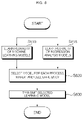
- FIG. 7 is a diagram illustrating an operation method of a solar cell test apparatus 200 according to an embodiment of the present disclosure.
- the solar cell test apparatus 200 first receives cell information, line information, and module information from the database 300 .
- the processor 270 in the solar cell test apparatus 200 performs learning based on the cell information, the line information, and the module information (S 720 ).
- the processor 270 in the solar cell test apparatus 200 predicts a module output of the solar cell module SLM as a result of performing the learning (S 730 ).
- the processor 270 in the solar cell test apparatus 200 controls to output a module output value of the solar cell module SLM (S 740 ).
- the module output value of the solar cell module SLM is transferred to the solar cell classifying apparatus 400 through the second interface 210 b.
- the solar cell classifying apparatus 400 may classify a plurality of solar cells for each rating based on the received module output value of the solar cell module SLM.
- FIG. 8 is a diagram illustrating an operation method of a server 100 according to an embodiment of the present disclosure.
- the server 100 first receives cell information, line information, and module information from the database 300 and performs learning by using a plurality of learning models based thereon.
- the processor 170 of the server 100 may perform learning based on a plurality of machine learning models among the plurality of learning models (S 810 ) and perform learning based on a plurality of regression analysis learning models (S 815 ).
- the processor 170 of the server 100 may select any one of the plurality of learning models based on a process, a wafer, cell efficiency, and the like (S 820 ).
- the processor 170 of the server 100 may control to transmit the selected learning model to the solar cell test apparatus 200 (S 830 ).
- the selected learning model information is transferred to the solar cell test apparatus 200 through the communicator 135 .
- the solar cell test apparatus 200 may perform the learning according to an optimal learning model and calculate the module output value of the solar cell module SLM based thereon.
- FIG. 9 is a diagram illustrating module output data compared with cell efficiency.
- a horizontal axis indicates the cell efficiency of the solar cell and a vertical axis indicates the module output data.
- the solar cell module At the time of manufacturing the solar cell module based on the cell efficiency in the related art, due to the output dispersion of the module, the solar cell module should be manufactured by using only a solar cell in which the cell efficiency is equal to or more than a first reference value ref. Accordingly, the production efficiency of the solar cell module is low.
- the solar cell module when the solar cell module is manufactured, since the cell current, the cell voltage, the line information, etc., are further considered in addition to the cell efficiency, a solar cell in which the cell efficiency is less than the first reference value ref may also be used. Accordingly, the production efficiency of the solar cell module including the plurality of solar cells can be enhanced.
- FIG. 10 A is a diagram illustrating a difference between cell efficiency depending on prediction A and prediction B, and actual cell efficiency.
- prediction A corresponds to cell rating prediction based on the cell efficiency in the related art and prediction B corresponds to cell rating prediction based on the cell efficiency, the cell current, the cell voltage, the line information, etc., according to an embodiment of the present disclosure.
- the cell efficiency of prediction A is predicted as 23.0% and the cell efficiency of prediction B is predicted as 22.95%, and the actual cell efficiency is measured as 22.96%. Accordingly, it can be seen that prediction B is more accurate than prediction A.
- the cell efficiency of prediction A is predicted as 23.4% and the cell efficiency of prediction B is predicted as 23.24%, and the actual cell efficiency is measured as 23.25%. Accordingly, it can be seen that prediction B is more accurate than prediction A.
- FIG. 10 B is a diagram illustrating a reference value at the time of manufacturing a module based on cell efficiency in the related art and a reference value at the time of manufacturing the module according to the present disclosure.
- the solar cell module should be manufactured by using only the solar cell having cell efficiency of the first reference value or more.
- the first reference value may be approximately 23.4%.
- the solar cell module may be manufactured by using a solar cell having cell efficiency equal to or higher than a second reference value lower than the first reference value.
- the second reference value may be approximately 23.24%.
- the production efficiency of the solar cell module may be enhanced at the time of manufacturing the solar cell module.
- the solar cell module should be manufactured by using only the solar cell having cell efficiency of the first reference value or more.
- the first reference value may be approximately 23.0%.
- the solar cell module may be manufactured by using a solar cell having cell efficiency equal to or higher than a second reference value lower than the first reference value.
- the second reference value may be approximately 22.95%.
- the production efficiency of the solar cell module may be enhanced at the time of manufacturing the solar cell module.
- FIG. 11 A illustrates an efficiency versus maximum output graph of a solar cell module in the related art and an efficiency versus maximum output graph of a solar cell module in the present disclosure.
- a lower graph shows the efficiency versus maximum output graph of the solar cell module in the related art and an upper graph shows an efficiency versus maximum output graph of the solar cell module in the present disclosure.
- graa shows that a level of the efficiency versus maximum output graph of the solar cell module in the present disclosure is higher than that of the efficiency versus maximum output graph of the solar cell module in the related art by approximately 3 W or more at the time of manufacturing the solar cell module of 335 W.
- grab shows that a level of the efficiency versus maximum output graph of the solar cell module in the present disclosure is higher than that of the efficiency versus maximum output graph of the solar cell module in the related art by approximately 3 W or more at the time of manufacturing the solar cell module of 340 W.
- FIG. 11 B illustrates a voltage versus maximum output graph of a solar cell module in the related art and a voltage versus maximum output graph of a solar cell module in the present disclosure.
- grba shows that the level of the voltage versus maximum output graph of the solar cell module in the present disclosure is higher than that of the voltage versus maximum output graph of the solar cell module in the related art by approximately 1 W or more at the time of manufacturing the solar cell module of 335 W.
- grbb shows that the level of the voltage versus maximum output graph of the solar cell module in the present disclosure is higher than that of the voltage versus maximum output graph of the solar cell module in the related art by approximately 1.5 W or more at the time of manufacturing the solar cell module of 340 W.
- the maximum output power of the solar cell module further increases as compared with the related art.
- FIG. 11 C illustrates a power versus maximum output graph of a solar cell module in the related art and a power versus maximum output graph of a solar cell module in the present disclosure.
- Araa shows that the level of the power versus maximum output graph of the solar cell module in the present disclosure is higher than that of the power versus maximum output graph of the solar cell module in the related art by approximately 0.5 W or more at the time of manufacturing the solar cell module of 335 W.
- Arab shows that the level of the output versus maximum output of the solar cell module in the present disclosure is higher than that of the output versus maximum output of the solar cell module in the related art by approximately 0.5 W or more at the time of manufacturing the solar cell module of 340 W.
- the maximum output power of the solar cell module further increases as compared with the related art.
- FIG. 11 D illustrates a power versus power loss graph of a solar cell module in the related art and a power versus power loss graph of a solar cell module in the present disclosure.
- Arba shows that the level of the power versus power loss of the solar cell module in the present disclosure is lower than that of the power versus power loss of the solar cell module in the related art by approximately 0.1 or more at the time of manufacturing the solar cell module of 335 W.
- Arbb shows that the level of the efficiency versus power loss of the solar cell module in the present disclosure is lower than that of the output versus power loss of the solar cell module in the related art by approximately 0.1 or more at the time of manufacturing the solar cell module of 340 W.
- the power loss of the solar cell module further decreases as compared with the related art.
- the configurations and the methods of the embodiments described above may not be limitedly applied to the test apparatus of a solar cell and the photovoltaic system including the same according to the embodiments of the present disclosure, but the embodiments may be configured by selectively combining all or some of the respective embodiments so as to be variously modified.
- the test apparatus of a solar cell includes an interface to receive cell information including cell efficiency, cell voltage, and cell current and a processor to perform learning based on the cell information of the solar cell and line information of a string line including the solar cell, predict an output of a solar cell module including the solar cell based on the learning, and output an output prediction value of the solar cell module.
- an output deviation of the solar cell module including a plurality of solar cells can be reduced.
- production efficiency of the solar cell module including the plurality of solar cells can be enhanced.
- the processor can perform the learning based on the cell information of the solar cell, the line information of the string line including the solar cell, and module information of the solar cell module including the string line, predict the output of the solar cell module based on the learning, and output the output prediction value of the solar cell module.
- the output deviation of the solar cell module including the plurality of solar cells can be reduced.
- the test apparatus of a solar cell may further include a communicator to receive a learning model from a server and the processor may perform the learning based on the learning model and predict the output of the solar cell module based on the learning. As a result, the output deviation of the solar cell module including the plurality of solar cells can be reduced.
- the test apparatus of a solar cell may further include a second interface to transmit the output prediction value of the solar cell module to a solar cell classifying apparatus. As a result, the output deviation of the solar cell module including the plurality of solar cells can be reduced.
- the cell information may further include resistance information and temperature information of the solar cell. As a result, the output deviation of the solar cell module including the plurality of solar cells can be reduced.
- the solar cell module may include a solar cell of a reference value or more and in case in which the cell rating is given based on the output prediction value, the solar cell module may include a solar cell having cell efficiency equal to or higher than a second reference value lower than the first reference value.
- a photovoltaic system includes a test apparatus of a solar cell, which receives cell efficiency, cell voltage, and cell current of the solar cell, performs learning based on cell information of the solar cell and line information of a string line including the solar cell, outputs an output of a solar cell module including the solar cell, and outputs an output prediction value of the solar cell module, and a solar cell classifying apparatus to classify ratings of the solar cell based on the output prediction value of the solar cell module from the test apparatus of a solar cell.
- the output deviation of the solar cell module including the plurality of solar cells can be reduced.
- the production efficiency of the solar cell module including the plurality of solar cells can be enhanced.
- the solar cell classifying apparatus may classify the ratings of the solar cell for each output power of the solar cell module. As a result, the output deviation of the solar cell module including the plurality of solar cells can be reduced.
- the test apparatus of a solar cell may perform the learning based on the cell information of the solar cell, the line information of the string line including the solar cell, and module information of the solar cell module including the string line, predict the output of the solar cell module based on the learning, and output the output prediction value of the solar cell module.
- the output deviation of the solar cell module including the plurality of solar cells can be reduced.
- the photovoltaic system may further include a server which performs learning by using the cell information of the solar cell and a plurality of learning models, selects any one learning model of a plurality of learning models, and transmits the selected learning model to the test apparatus of a solar cell.
- a server which performs learning by using the cell information of the solar cell and a plurality of learning models, selects any one learning model of a plurality of learning models, and transmits the selected learning model to the test apparatus of a solar cell.
- the test apparatus of a solar cell may perform learning based on the learning model received from the server and predict the output of the solar cell module based on the learning. As a result, the output deviation of the solar cell module including the plurality of solar cells can be reduced.
- the plurality of learning models may include a plurality of machine learning models and a plurality of regression analysis learning models. As a result, the output deviation of the solar cell module including the plurality of solar cells can be reduced.
- the cell information may further include resistance information and temperature information of the solar cell. As a result, the output deviation of the solar cell module including the plurality of solar cells can be reduced.
- the solar cell module may include a solar cell of a reference value or more and in case in which the cell rating is given based on the output prediction value, the solar cell module may include a solar cell having cell efficiency equal to or higher than a second reference value lower than the first reference value.
- a test apparatus of a solar cell includes an interface to receive cell information including cell efficiency, cell voltage, and cell current and a processor to perform learning based on the cell information of the solar cell and line information of a string line including the solar cell, predict an output of a solar cell module including the solar cell based on the learning, output an output prediction value of the solar cell module, and classify ratings of the solar cell based on the output prediction value of the solar cell module.
- the output deviation of the solar cell module including the plurality of solar cells can be reduced.
- the production efficiency of the solar cell module including the plurality of solar cells can be enhanced.
- the processor can perform the learning based on the cell information of the solar cell, the line information of the string line including the solar cell, and module information of the solar cell module including the string line, predict the output of the solar cell module based on the learning, and output the output prediction value of the solar cell module.
- the output deviation of the solar cell module including the plurality of solar cells can be reduced.
- the test apparatus of a solar cell may further include a communicator to receive a learning model from a server and the processor may perform the learning based on the learning model and predict the output of the solar cell module based on the learning. As a result, the output deviation of the solar cell module including the plurality of solar cells can be reduced.
- the cell information may further include resistance information and temperature information of the solar cell. As a result, the output deviation of the solar cell module including the plurality of solar cells can be reduced.
- the solar cell module may include a solar cell of a reference value or more and in case in which the cell rating is given based on the output prediction value, the solar cell module may include a solar cell having cell efficiency equal to or higher than a second reference value lower than the first reference value.
Landscapes
- Engineering & Computer Science (AREA)
- Theoretical Computer Science (AREA)
- Data Mining & Analysis (AREA)
- Software Systems (AREA)
- Evolutionary Computation (AREA)
- General Physics & Mathematics (AREA)
- Computer Vision & Pattern Recognition (AREA)
- Physics & Mathematics (AREA)
- Artificial Intelligence (AREA)
- General Engineering & Computer Science (AREA)
- Mathematical Physics (AREA)
- Medical Informatics (AREA)
- Computing Systems (AREA)
- Life Sciences & Earth Sciences (AREA)
- Bioinformatics & Cheminformatics (AREA)
- Bioinformatics & Computational Biology (AREA)
- Evolutionary Biology (AREA)
- Photovoltaic Devices (AREA)
- Testing Of Individual Semiconductor Devices (AREA)
Abstract
Description
Claims (14)
Applications Claiming Priority (2)
| Application Number | Priority Date | Filing Date | Title |
|---|---|---|---|
| KR10-2019-0114155 | 2019-09-17 | ||
| KR1020190114155A KR102919575B1 (en) | 2019-09-17 | 2019-09-17 | Test apparatus of solar cell, and photovoltaic system including the same |
Publications (2)
| Publication Number | Publication Date |
|---|---|
| US20210083622A1 US20210083622A1 (en) | 2021-03-18 |
| US11588440B2 true US11588440B2 (en) | 2023-02-21 |
Family
ID=74869859
Family Applications (1)
| Application Number | Title | Priority Date | Filing Date |
|---|---|---|---|
| US17/024,432 Active 2041-01-20 US11588440B2 (en) | 2019-09-17 | 2020-09-17 | Test apparatus of solar cell, and photovoltaic system including the same |
Country Status (2)
| Country | Link |
|---|---|
| US (1) | US11588440B2 (en) |
| KR (1) | KR102919575B1 (en) |
Families Citing this family (1)
| Publication number | Priority date | Publication date | Assignee | Title |
|---|---|---|---|---|
| KR20240136794A (en) * | 2023-03-07 | 2024-09-19 | 한화솔루션 주식회사 | Micro inverter inspection system and method |
Citations (4)
| Publication number | Priority date | Publication date | Assignee | Title |
|---|---|---|---|---|
| JP2004046727A (en) * | 2002-07-15 | 2004-02-12 | Sharp Corp | Photovoltaic power generation device design method and photovoltaic power generation device design support device |
| JP2012015199A (en) * | 2010-06-29 | 2012-01-19 | Jx Nippon Oil & Energy Corp | Predicted electric power generation amount calculating device and method |
| WO2017221463A1 (en) * | 2016-06-21 | 2017-12-28 | パナソニックIpマネジメント株式会社 | Power generation amount prediction device for solar cells, power generation amount prediction method, and power generation amount prediction program |
| CN108614612A (en) * | 2018-04-24 | 2018-10-02 | 青岛高校信息产业股份有限公司 | Solar-energy photo-voltaic cell maximum power tracing method and system |
Family Cites Families (1)
| Publication number | Priority date | Publication date | Assignee | Title |
|---|---|---|---|---|
| US20180159468A1 (en) * | 2016-12-01 | 2018-06-07 | Bt Imaging Pty Ltd | Determining the condition of photovoltaic modules |
-
2019
- 2019-09-17 KR KR1020190114155A patent/KR102919575B1/en active Active
-
2020
- 2020-09-17 US US17/024,432 patent/US11588440B2/en active Active
Patent Citations (5)
| Publication number | Priority date | Publication date | Assignee | Title |
|---|---|---|---|---|
| JP2004046727A (en) * | 2002-07-15 | 2004-02-12 | Sharp Corp | Photovoltaic power generation device design method and photovoltaic power generation device design support device |
| JP2012015199A (en) * | 2010-06-29 | 2012-01-19 | Jx Nippon Oil & Energy Corp | Predicted electric power generation amount calculating device and method |
| WO2017221463A1 (en) * | 2016-06-21 | 2017-12-28 | パナソニックIpマネジメント株式会社 | Power generation amount prediction device for solar cells, power generation amount prediction method, and power generation amount prediction program |
| CN108614612A (en) * | 2018-04-24 | 2018-10-02 | 青岛高校信息产业股份有限公司 | Solar-energy photo-voltaic cell maximum power tracing method and system |
| CN108614612B (en) * | 2018-04-24 | 2021-02-19 | 青岛高校信息产业股份有限公司 | Method and system for tracking maximum power of solar photovoltaic cell |
Also Published As
| Publication number | Publication date |
|---|---|
| KR102919575B1 (en) | 2026-01-28 |
| US20210083622A1 (en) | 2021-03-18 |
| KR20210032748A (en) | 2021-03-25 |
Similar Documents
| Publication | Publication Date | Title |
|---|---|---|
| Yu et al. | Selecting tandem partners for silicon solar cells | |
| Bergveld et al. | Module-level DC/DC conversion for photovoltaic systems: The delta-conversion concept | |
| Pearsall | Introduction to photovoltaic system performance | |
| Liu et al. | The realistic energy yield potential of GaAs-on-Si tandem solar cells: a theoretical case study | |
| Langenhorst et al. | Energy yield of all thin‐film perovskite/CIGS tandem solar modules | |
| Kangas et al. | Digitalisation in wind and solar power technologies | |
| Ripalda et al. | Solar cell designs by maximizing energy production based on machine learning clustering of spectral variations | |
| Liu et al. | A worldwide theoretical comparison of outdoor potential for various silicon-based tandem module architecture | |
| Roche et al. | Analysis and control of mismatch power loss in photovoltaic arrays | |
| CN111181196A (en) | Photovoltaic power station configuration method and device | |
| CN106779374A (en) | Photovoltaic generation transmits peak power energy storage Optimization Modeling method | |
| US11588440B2 (en) | Test apparatus of solar cell, and photovoltaic system including the same | |
| Rodríguez‐Gallegos et al. | PV‐GO: A multiobjective and robust optimization approach for the grid metallization design of Si‐based solar cells and modules | |
| Tan et al. | Exploring the optimal design space of transparent perovskite solar cells for four-terminal tandem applications through Pareto front optimization | |
| Hossain et al. | Numerical simulation of all-inorganic two-terminal AlSb/Al0. 15Ga0. 85Sb tandem solar cell with high-open circuit voltage (> 1.90 V) and> 40% conversion efficiency | |
| Mouodo et al. | Comparison and classification of photovoltaic system architectures for limiting the impact of the partial shading phenomenon | |
| Von Roedern et al. | The role of polycrystalline thin-film PV technologies for achieving midterm market-competitive PV modules | |
| Sibai | Maximizing aged photovoltaic array power: a computer modelling study | |
| Pavlík et al. | Determination of effect of photovoltaic cells defect on electricity produce by use mathematical model | |
| Malik et al. | Optimizing solar PV systems: balancing cost and efficiency for sustainable energy deployment | |
| Blom et al. | Comparison on Module Performance and Degradation Robustness of Two‐, Three‐, and Four‐Terminal Perovskite Silicon Configurations Under Realistic Operating Conditions | |
| Rauer et al. | The challenge of measuring busbarless solar cells and the impact on cell-to-module losses | |
| Gallegos | Modelling and Optimization of Photovoltaic Cells, Modules, and Systems | |
| Hameiri | Photovoltaics Literature Survey (No. 194). | |
| Nag et al. | A novel centralized storage model for distributed photovoltaic generation systems |
Legal Events
| Date | Code | Title | Description |
|---|---|---|---|
| FEPP | Fee payment procedure |
Free format text: ENTITY STATUS SET TO UNDISCOUNTED (ORIGINAL EVENT CODE: BIG.); ENTITY STATUS OF PATENT OWNER: LARGE ENTITY |
|
| STPP | Information on status: patent application and granting procedure in general |
Free format text: APPLICATION DISPATCHED FROM PREEXAM, NOT YET DOCKETED |
|
| STPP | Information on status: patent application and granting procedure in general |
Free format text: DOCKETED NEW CASE - READY FOR EXAMINATION |
|
| STPP | Information on status: patent application and granting procedure in general |
Free format text: NON FINAL ACTION MAILED |
|
| STPP | Information on status: patent application and granting procedure in general |
Free format text: FINAL REJECTION MAILED |
|
| STPP | Information on status: patent application and granting procedure in general |
Free format text: RESPONSE AFTER FINAL ACTION FORWARDED TO EXAMINER |
|
| STPP | Information on status: patent application and granting procedure in general |
Free format text: NOTICE OF ALLOWANCE MAILED -- APPLICATION RECEIVED IN OFFICE OF PUBLICATIONS |
|
| AS | Assignment |
Owner name: LG ELECTRONICS INC., KOREA, REPUBLIC OF Free format text: ASSIGNMENT OF ASSIGNORS INTEREST;ASSIGNORS:LEE, JAEHOON;TAE, KYONGPIL;JUNG, BOHYUN;REEL/FRAME:062423/0703 Effective date: 20221227 |
|
| STCF | Information on status: patent grant |
Free format text: PATENTED CASE |