US11562807B2 - Systems and methods for predicting structure and properties of atomic elements and alloy materials - Google Patents

Systems and methods for predicting structure and properties of atomic elements and alloy materials Download PDF

Info

Publication number
US11562807B2
US11562807B2 US16/299,699 US201916299699A US11562807B2 US 11562807 B2 US11562807 B2 US 11562807B2 US 201916299699 A US201916299699 A US 201916299699A US 11562807 B2 US11562807 B2 US 11562807B2
Authority
US
United States
Prior art keywords
atomic
atomic elements
elements
local
file
Prior art date
Legal status (The legal status is an assumption and is not a legal conclusion. Google has not performed a legal analysis and makes no representation as to the accuracy of the status listed.)
Active, expires
Application number
US16/299,699
Other versions
US20200066376A1 (en
Inventor
Soumyadipta Maiti
Shashank Mishra
Balarama Sridhar DWADASI
Beena Rai
Current Assignee (The listed assignees may be inaccurate. Google has not performed a legal analysis and makes no representation or warranty as to the accuracy of the list.)
Tata Consultancy Services Ltd
Original Assignee
Tata Consultancy Services Ltd
Priority date (The priority date is an assumption and is not a legal conclusion. Google has not performed a legal analysis and makes no representation as to the accuracy of the date listed.)
Filing date
Publication date
Application filed by Tata Consultancy Services Ltd filed Critical Tata Consultancy Services Ltd
Assigned to TATA CONSULTANCY SERVICES LIMITED reassignment TATA CONSULTANCY SERVICES LIMITED ASSIGNMENT OF ASSIGNORS INTEREST (SEE DOCUMENT FOR DETAILS). Assignors: Dwadasi, Balarama Sridhar, MAITI, Soumyadipta, MISHRA, SHASHANK, RAI, BEENA
Publication of US20200066376A1 publication Critical patent/US20200066376A1/en
Application granted granted Critical
Publication of US11562807B2 publication Critical patent/US11562807B2/en
Active legal-status Critical Current
Adjusted expiration legal-status Critical

Links

Images

Classifications

    • CCHEMISTRY; METALLURGY
    • C22METALLURGY; FERROUS OR NON-FERROUS ALLOYS; TREATMENT OF ALLOYS OR NON-FERROUS METALS
    • C22CALLOYS
    • C22C45/00Amorphous alloys
    • GPHYSICS
    • G16INFORMATION AND COMMUNICATION TECHNOLOGY [ICT] SPECIALLY ADAPTED FOR SPECIFIC APPLICATION FIELDS
    • G16CCOMPUTATIONAL CHEMISTRY; CHEMOINFORMATICS; COMPUTATIONAL MATERIALS SCIENCE
    • G16C20/00Chemoinformatics, i.e. ICT specially adapted for the handling of physicochemical or structural data of chemical particles, elements, compounds or mixtures
    • G16C20/30Prediction of properties of chemical compounds, compositions or mixtures
    • GPHYSICS
    • G06COMPUTING OR CALCULATING; COUNTING
    • G06FELECTRIC DIGITAL DATA PROCESSING
    • G06F30/00Computer-aided design [CAD]
    • GPHYSICS
    • G06COMPUTING OR CALCULATING; COUNTING
    • G06FELECTRIC DIGITAL DATA PROCESSING
    • G06F30/00Computer-aided design [CAD]
    • G06F30/20Design optimisation, verification or simulation
    • GPHYSICS
    • G16INFORMATION AND COMMUNICATION TECHNOLOGY [ICT] SPECIALLY ADAPTED FOR SPECIFIC APPLICATION FIELDS
    • G16CCOMPUTATIONAL CHEMISTRY; CHEMOINFORMATICS; COMPUTATIONAL MATERIALS SCIENCE
    • G16C20/00Chemoinformatics, i.e. ICT specially adapted for the handling of physicochemical or structural data of chemical particles, elements, compounds or mixtures
    • G16C20/10Analysis or design of chemical reactions, syntheses or processes
    • GPHYSICS
    • G16INFORMATION AND COMMUNICATION TECHNOLOGY [ICT] SPECIALLY ADAPTED FOR SPECIFIC APPLICATION FIELDS
    • G16CCOMPUTATIONAL CHEMISTRY; CHEMOINFORMATICS; COMPUTATIONAL MATERIALS SCIENCE
    • G16C20/00Chemoinformatics, i.e. ICT specially adapted for the handling of physicochemical or structural data of chemical particles, elements, compounds or mixtures
    • G16C20/20Identification of molecular entities, parts thereof or of chemical compositions
    • GPHYSICS
    • G16INFORMATION AND COMMUNICATION TECHNOLOGY [ICT] SPECIALLY ADAPTED FOR SPECIFIC APPLICATION FIELDS
    • G16CCOMPUTATIONAL CHEMISTRY; CHEMOINFORMATICS; COMPUTATIONAL MATERIALS SCIENCE
    • G16C60/00Computational materials science, i.e. ICT specially adapted for investigating the physical or chemical properties of materials or phenomena associated with their design, synthesis, processing, characterisation or utilisation
    • GPHYSICS
    • G16INFORMATION AND COMMUNICATION TECHNOLOGY [ICT] SPECIALLY ADAPTED FOR SPECIFIC APPLICATION FIELDS
    • G16CCOMPUTATIONAL CHEMISTRY; CHEMOINFORMATICS; COMPUTATIONAL MATERIALS SCIENCE
    • G16C10/00Computational theoretical chemistry, i.e. ICT specially adapted for theoretical aspects of quantum chemistry, molecular mechanics, molecular dynamics or the like

Definitions

  • the disclosure herein generally relates to multi-scale modeling of atomic elements and alloy materials, and, more particularly, to systems and methods for predicting structure and properties of atomic elements and alloy materials thereof.
  • Embodiments of the present disclosure present technological improvements as solutions to one or more of the above-mentioned technical problems recognized by the inventors in conventional systems. For example, in one aspect, there is provided a processor implemented method for predicting structure and properties of atomic elements and alloy materials thereof.
  • the method comprises receiving, via one or more hardware processors, information pertaining to at least one of a plurality of atomic elements, and associated composition thereof specific to an alloy material, wherein the plurality of atomic elements comprise of one or more atomic metallic elements; generating, via the one or more hardware processors, a Molecular Dynamics Potential (MDP) file comprising sequential data of similar and dissimilar atomic interactions of the plurality of atomic elements based on the information; generating, via a structure equilibration executed by the one or more hardware processors, a Three-Dimensional (3D) structure file for the associated composition of each of the plurality of atomic elements specific to the alloy material by using the MDP file, wherein Three-Dimensional (3D) structure file comprises 3D coordinates for each of the plurality of atomic elements and associated type thereof; and generating, via one or more Monte Carlo applications executed by the one or more hardware processors, an optimized evolved 3D structure file comprising at least one of an atomic positions output and a thermodynamic output, by using the
  • the method may further comprise introducing one or more line defects and dislocations in the optimized evolved 3D structure file for predicting structure evolution and mechanical properties of the alloy material.
  • the Molecular Dynamics Potential (MDP) file is generated based on the information and by calculating an embedded function for each of the plurality of the atomic elements and one or more parameters pertaining to pairwise interaction of the plurality of the atomic elements.
  • the atomic positions output comprises of at least one of local composition of the plurality of atomic elements, Short-range-order/short-range clustering (SRO/SRC) of the plurality of atomic elements, lattice distortion of local atomic structure of the plurality of atomic elements, local strains of the local atomic structure of the plurality of atomic elements, one or more defects, nano-clusters of the plurality of atomic elements, one or more morphological changes comprising distribution of the plurality of atomic elements, one or more Phase Field (PF) parameters, one or more interfaces of phases or clusters in the plurality of atomic elements, an evolution sequence of the alloy material, real time-scale prediction of structure evolution of the alloy material.
  • SRO/SRC Short-range-order/short-range clustering
  • the thermodynamic output comprises at least one of lattice potential energy of the plurality of atomic elements, a change in enthalpy of the plurality of atomic elements, a change in Gibbs free energy of the plurality of atomic elements and a change in entropy of the plurality of atomic elements, Stacking Fault Energy (SFE) of the plurality of atomic elements, local thermodynamic changes of the plurality of atomic elements, and phonons of the plurality of atomic elements.
  • SFE Stacking Fault Energy
  • a system for predicting structure and properties of atomic elements and alloy materials thereof comprises: a memory storing instructions; one or more communication interfaces; and one or more hardware processors coupled to the memory via the one or more communication interfaces, wherein the one or more hardware processors are configured by the instructions to: receive information pertaining to at least one of a plurality of atomic elements, and associated composition thereof specific to an alloy material, wherein the plurality of atomic elements comprise of one or more atomic metallic elements; generate a Molecular Dynamics Potential (MDP) file comprising sequential data of similar and dissimilar atomic interactions of the plurality of atomic elements based on the information; generate, via a structure equilibration executed by the one or more hardware processors, a Three-Dimensional (3D) structure file for the associated composition of each of the plurality of atomic elements specific to the alloy material by using the MDP file, wherein Three-Dimensional (3D) structure file comprises 3D coordinates for each of the plurality of atomic elements and
  • the one or more hardware processors are further configured by the instructions to introduce one or more line defects and dislocations in the optimized evolved 3D structure file for predicting structure evolution and mechanical properties of the alloy material.
  • the Molecular Dynamics Potential (MDP) file is generated based on the information and by calculating an embedded function for each of the plurality of the atomic elements and one or more parameters pertaining to pairwise interaction of the plurality of the atomic elements.
  • the atomic positions output comprises of at least one of local composition of the plurality of atomic elements, Short-range-order/short-range clustering (SRO/SRC) of the plurality of atomic elements, lattice distortion of local atomic structure of the plurality of atomic elements, local strains of the local atomic structure of the plurality of atomic elements, one or more defects, nano-clusters of the plurality of atomic elements, one or more morphological changes comprising distribution of the plurality of atomic elements, one or more Phase Field (PF) parameters, one or more interfaces of phases or clusters in the plurality of atomic elements, an evolution sequence of the alloy material, real time-scale prediction of structure evolution of the alloy material.
  • SRO/SRC Short-range-order/short-range clustering
  • the thermodynamic output comprises at least one of lattice potential energy of the plurality of atomic elements, a change in enthalpy of the plurality of atomic elements, a change in Gibbs free energy of the plurality of atomic elements and a change in entropy of the plurality of atomic elements, Stacking Fault Energy (SFE) of the plurality of atomic elements, local thermodynamic changes of the plurality of atomic elements, and phonons of the plurality of atomic elements.
  • SFE Stacking Fault Energy
  • one or more non-transitory machine readable information storage mediums comprising one or more instructions which when executed by one or more hardware processors causes predicting structure and properties of atomic elements and alloy materials thereof by receiving, via the one or more hardware processors, information pertaining to at least one of a plurality of atomic elements, and associated composition thereof specific to an alloy material, wherein the plurality of atomic elements comprise of one or more atomic metallic elements; generating, via the one or more hardware processors, a Molecular Dynamics Potential (MDP) file comprising sequential data of similar and dissimilar atomic interactions of the plurality of atomic elements based on the information; generating, via a structure equilibration executed by the one or more hardware processors, a Three-Dimensional (3D) structure file for the associated composition of each of the plurality of atomic elements specific to the alloy material by using the MDP file, wherein Three-Dimensional (3D) structure file comprises 3D coordinates for each of the plurality of atomic elements and associated type thereof
  • MDP Molecular Dynamics
  • the method may further comprise introducing one or more line defects and dislocations in the optimized evolved 3D structure file for predicting structure evolution and mechanical properties of the alloy material.
  • the Molecular Dynamics Potential (MDP) file is generated based on the information and by calculating an embedded function for each of the plurality of the atomic elements and one or more parameters pertaining to pairwise interaction of the plurality of the atomic elements.
  • the atomic positions output comprises of at least one of local composition of the plurality of atomic elements, Short-range-order/short-range clustering (SRO/SRC) of the plurality of atomic elements, lattice distortion of local atomic structure of the plurality of atomic elements, local strains of the local atomic structure of the plurality of atomic elements, one or more defects, nano-clusters of the plurality of atomic elements, one or more morphological changes comprising distribution of the plurality of atomic elements, one or more Phase Field (PF) parameters, one or more interfaces of phases or clusters in the plurality of atomic elements, an evolution sequence of the alloy material, real time-scale prediction of structure evolution of the alloy material.
  • SRO/SRC Short-range-order/short-range clustering
  • the thermodynamic output comprises at least one of lattice potential energy of the plurality of atomic elements, a change in enthalpy of the plurality of atomic elements, a change in Gibbs free energy of the plurality of atomic elements and a change in entropy of the plurality of atomic elements, Stacking Fault Energy (SFE) of the plurality of atomic elements, local thermodynamic changes of the plurality of atomic elements, and phonons of the plurality of atomic elements.
  • SFE Stacking Fault Energy
  • FIG. 1 illustrates an exemplary block diagram of a system for predicting structure and properties of atomic elements and alloy materials thereof in accordance with an embodiment of the present disclosure.
  • FIG. 2 illustrates an exemplary flow diagram of a method for predicting structure and properties of atomic elements and alloy materials thereof using the system 100 of FIG. 1 in accordance with an embodiment of the present disclosure.
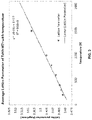
  • FIG. 3 depicts a graphical representation of a fitted straight line curve denoting Lattice Parameter (LP) of an alloy material (e.g., TaNbHfZr alloy material) for various temperatures in accordance with an embodiment of the present disclosure.
  • LP Lattice Parameter
  • FIG. 4 depicts an initial spatial configuration containing atomic metallic elements of the alloy material with statistically random distribution of solid solutions in accordance with an embodiment of the present disclosure.
  • FIG. 5 depicts a local atomic structure of TaNbHfZr evolved at 2000K until 14 attempted MC swaps/atom in accordance with an example embodiment of the present disclosure.
  • FIG. 6 depicts a local atomic structure of TaNbHfZr evolved at 2000K until 28 attempted MC swaps/atom in accordance with an example embodiment of the present disclosure.
  • FIG. 7 A depicts local structural domain-like features created by Short-Range Clusterings (SRCs) for the alloy annealed for 1 day in accordance with an example embodiment of the present disclosure.
  • SRCs Short-Range Clusterings
  • FIG. 7 B depicts local structural domain-like features created by Short-Range Clusterings (SRCs) for the alloy annealed for 4 days in accordance with an example embodiment of the present disclosure.
  • SRCs Short-Range Clusterings
  • FIG. 8 depicts a graphical representation illustrating local atomic fractions across a planer SRC, experimentally obtained from Atom Probe Tomography (APT) reconstructions of annealed TaNbHfZr alloy material in accordance with an example embodiment of the present disclosure.
  • APT Atom Probe Tomography
  • FIG. 9 depicts a graphical representation illustrating local atomic fractions across a planer Short-Range Clustering (SRC), obtained from Monte Carlo (MC) structure evolutions and binning analysis of annealed TaNbHfZr alloy material in accordance with an example embodiment of the present disclosure.
  • SRC Short-Range Clustering
  • FIG. 10 depicts a graphical representation illustrating a change in thermodynamic enthalpy of MC evolved TaNbHfZr alloy material at 2000K in accordance with an example embodiment of the present disclosure.
  • FIG. 11 depicts a graphical representation illustrating TaNbHfZr alloy material's compressive yield strength and ductility (peak strain to fracture) changes with annealing time in accordance with an example embodiment of the present disclosure.
  • FIG. 12 depicts an edge-dislocation line introduced in a pure atomic metallic element (say pure Nb) in accordance with an embodiment of present disclosure.
  • FIG. 13 depicts an edge-dislocation line introduced in MC evolved TaNbHfZr alloy material in accordance with an embodiment of present disclosure.
  • FIGS. 14 A- 14 B show movement of dislocation line (from left to right) under application of shear stress in accordance with an example embodiment of the present disclosure.
  • Metallic alloys comprise of wide varieties of structures such as solid solutions, intermetallic and Bulk Metallic Glasses (BMG). Alloys are generally much more superior than constituting major elements in terms of strength, toughness, corrosion resistance, thermal properties etc.
  • the common alloys in practical uses are Fe, Ni, Al, Ti-based alloys. Due to ongoing scientific research and development activities, new Mg, Cu, Co, refractory-based and complex concentrated alloys (like high-entropy alloys) etc. are getting importance as functional and futuristic alloys.
  • the matrix comprises of one principal element based single/multi-phase body/face-centered cubic (BCC/FCC) substitutional/interstitial structure. But in complex concentrated alloys there may be multiple principal alloying elements present.
  • FIGS. 1 through 14 B where similar reference characters denote corresponding features consistently throughout the figures, there are shown preferred embodiments and these embodiments are described in the context of the following exemplary system and/or method.
  • FIG. 1 illustrates an exemplary block diagram of a system for predicting structure and properties of atomic elements and alloy materials thereof in accordance with an embodiment of the present disclosure.
  • the system 100 includes one or more processors 104 , communication interface device(s) or input/output (I/O) interface(s) 106 , and one or more data storage devices or memory 102 operatively coupled to the one or more processors 104 .
  • the one or more processors 104 may be one or more software processing modules and/or hardware processors.
  • the hardware processors can be implemented as one or more microprocessors, microcomputers, microcontrollers, digital signal processors, central processing units, state machines, logic circuitries, and/or any devices that manipulate signals based on operational instructions.
  • the processor(s) is configured to fetch and execute computer-readable instructions stored in the memory.
  • the device 100 can be implemented in a variety of computing systems, such as laptop computers, notebooks, hand-held devices, workstations, mainframe computers, servers, a network cloud and the like.
  • the I/O interface device(s) 106 can include a variety of software and hardware interfaces, for example, a web interface, a graphical user interface, and the like and can facilitate multiple communications within a wide variety of networks N/W and protocol types, including wired networks, for example, LAN, cable, etc., and wireless networks, such as WLAN, cellular, or satellite.
  • the I/O interface device(s) can include one or more ports for connecting a number of devices to one another or to another server.
  • the memory 102 may include any computer-readable medium known in the art including, for example, volatile memory, such as static random access memory (SRAM) and dynamic random access memory (DRAM), and/or non-volatile memory, such as read only memory (ROM), erasable programmable ROM, flash memories, hard disks, optical disks, and magnetic tapes.
  • volatile memory such as static random access memory (SRAM) and dynamic random access memory (DRAM)
  • non-volatile memory such as read only memory (ROM), erasable programmable ROM, flash memories, hard disks, optical disks, and magnetic tapes.
  • ROM read only memory
  • FIG. 2 illustrates an exemplary flow diagram of a method for predicting structure and properties of atomic elements and alloy materials thereof using the system 100 of FIG. 1 in accordance with an embodiment of the present disclosure.
  • the system(s) 100 comprises one or more data storage devices or the memory 102 operatively coupled to the one or more hardware processors 104 and is configured to store instructions for execution of steps of the method by the one or more processors 104 .
  • the steps of the method of the present disclosure will now be explained with reference to the components of the system 100 as depicted in FIG. 1 , and the flow diagram.
  • the one or more hardware processors 104 receive information pertaining to a plurality of atomic elements (also referred as ‘atomic elements’ and may be interchangeably used hereinafter) and their corresponding compositions.
  • the atomic elements and the associated composition are specific to an alloy material, wherein the plurality of atomic elements comprise of one or more atomic metallic elements and optionally one or more non-metallic elements/one or more atomic non-metallic elements (e.g., carbon).
  • the one or more hardware processors 104 generate a Molecular Dynamics Potential (MDP) file comprising sequential data of similar and dissimilar atomic interactions of the plurality of atomic elements based on the information.
  • MDP Molecular Dynamics Potential
  • metallic alloy material as created initially may be primarily studied by MD simulations for its structural property evaluations.
  • EAM type or hybrid EAM+LJ Embedded-atom method+Lennard-Jones
  • Tershoff type potentials etc. is used for generated the MDP file.
  • MD potential files will be generated and used accordingly.
  • Externally provided EAM or modified EAM potentials can also be used in combination with the generated potentials, in one example embodiment.
  • the Molecular Dynamics Potential (MDP) file is generated based on the information and by calculating an embedded function for each of the plurality of the atomic elements and one or more parameters (e.g., force distance curves—derived from physical constants, or handbook) pertaining to pairwise interaction (e.g., 2 body or multi-body interaction such as atom number 10 and atom number 15) of the plurality of the atomic elements.
  • parameters e.g., force distance curves—derived from physical constants, or handbook
  • pairwise interaction e.g., 2 body or multi-body interaction such as atom number 10 and atom number 15
  • the embedded function and pairwise interaction are obtained by receiving inputs from physical constants, scaling analysis, and from first principle and literature, etc.
  • Input parameters from elemental physical constants may comprise but are not limited to cohesive energy, vacancy formation energy, lattice parameters, atomic radius, second order elastic stiffness constants, anisotropic ratio etc. which get utilized for the construction of the Embedding function and pairwise atomic interactions.
  • inputs from scaling analysis include but are not limited to, electron density around atoms from different references, shapes and trends of embedding function and pairwise interactions of different materials from literature may be compared and scaled. This analysis is then used to create Embedding function and Pairwise interactions for new systems under study.
  • the one or more hardware processors 104 generate, via a structure equilibration (also referred hereinafter as ‘structure equilibration technique’), a Three-Dimensional (3D) structure file for the associated composition of each of the plurality of atomic elements specific to the alloy material by using the MDP file.
  • a structure equilibration also referred hereinafter as ‘structure equilibration technique’
  • the Three-Dimensional (3D) structure file comprises 3D coordinates for each of the plurality of atomic elements and associated type thereof.
  • the 3D structure file generation is an initial stage on the structure evolution scheme, where the real/hypothetical local structure may be first stabilized/equilibrated by NPT/NVT/NVE based MD or MS method, wherein NPT refers to Constant pressure and temperature, NVT refers to Constant volume and temperature, and NVE refers to Constant volume and energy.
  • the initial input for the structure should contain the constituting elements of the metallic material and their stoichiometric ratios.
  • the average structural framework type for example, solid solutions (BBC, FCC or Hexagonal Closed Packed (HCP)), Intermetallics and Bulk Metallic Glass (BMGs) are generated in the structure equilibration process.
  • the structure may or may not contain the initial structural defects and the structural equilibration is done based on the created MD potential file.
  • the one or more hardware processors 104 generate, via one or more Monte Carlo applications executed by the one or more hardware processors, an optimized evolved 3D structure file by using the 3D structure file and one or more heat treatment schemes.
  • the optimized evolved 3D structure file comprises at least one of an atomic positions output and a thermodynamic output.
  • the temperature schedules of a system under investigation may be programmed or tabulated for its structural evolution.
  • the heat treatment schedule is fed as an input to the one or more Monte Carlo (MC) applications.
  • the MC application(s) e.g., also referred as MD combined with Monte Carlo (a kind of statistical sampling process) techniques
  • MD combined with Monte Carlo a kind of statistical sampling process
  • the MC application(s) can either be executed automatically or by way of one or more inputs from user(s) (e.g., manual mode).
  • the initial structures may or may not contain structural defects for example, dislocations, stacking faults, etc.
  • the hardware processors 104 may further be configured to introduce one or more line defects and dislocations in the optimized evolved 3D structure file for predicting structure evolution and mechanical properties of the alloy material in on example embodiment.
  • the evolved atomic structures can be saved at some fixed MC intervals or at user(s) discretion.
  • the system 100 takes temperature inputs from the heat-treatment schemes and equilibrates the initial local structure. NPT simulation by system specific MD potentials would indicate the average Lattice Parameter (LP) of the initial structure and this LP may be transferred to a lattice energy simulation technique. For high temperature heat treatment schedules, the LP may be numerically extrapolated from lower temperature NPT simulations of stable lattice structures.
  • LP Lattice Parameter
  • the lattice energy simulation technique When the lattice energy simulation technique is executed by the system 100 , at first the lattice energy may be minimized by Conjugate Gradient (CG) or Hessian-free truncated Newton (HFTN) etc. methods while keeping the average LP constant.
  • average LP can be changed when the simulation system has experienced 1 attempted atomic swaps/atom. Atoms are swapped with respect to their previous positions towards new positions. The atoms can be chosen randomly from any lattice site, neighboring sites, other sub-lattice or interstitial sites as well. Swaps can be between either two atoms, atom and vacancy or between a cluster of atoms.
  • swaps between different local structural configurations may be performed which would continuously evolve during the running of this MC application(s) at different temperatures.
  • the swapping between two atomic configurations may be accepted by a probability, which is by default given by established Metropolis-type MC as the default automatic method. After one accepted atomic swap, the structure is transferred again to Lattice energy minimization technique until the structure evolves.
  • the system 100 enables to perform the following:
  • atoms are swapped with respect to their previous positions towards new positions.
  • One or more atoms can be chosen randomly from any lattice site, neighboring sites, other sub-lattice or interstitial sites as well.
  • Swaps can be between either two atoms, atom and vacancy or between a cluster of atoms.
  • swaps between different local structural configurations can also be performed which would continuously evolve during the running of the MC application(s) at different temperatures.
  • the swapping between two atomic configurations may be accepted by a probability, which is calculated from Metropolis/Glauber/Swendsen-Wang etc., type MC criteria.
  • one or more properties pertaining to the plurality of atomic elements and associated composition thereof specific to the alloy material are predicted by using at least one of the atomic positions output and the thermodynamic output.
  • the atomic positions output is generated by extracting the atomic coordinates and the atom types of the MC output structure.
  • any traces of SRO/SRC can be identified, local strains and atomic relaxation displacements can be quantified, and defect cluster evolution, morphological changes in local chemical compositions, structure evolution sequence etc. can be obtained.
  • Also directional local composition scan, quantification of the morphologies of SRO/SRC/nano-precipitates can be performed.
  • the atomic positions output comprises of at least one of local composition of the plurality of atomic elements, Short-range-order/short-range clustering (SRO/SRC) of the plurality of atomic elements, lattice distortion of local atomic structure of the plurality of atomic elements, local strains of the local atomic structure of the plurality of atomic elements, one or more defects, nano-clusters of the plurality of atomic elements, one or more morphological changes comprising distribution of the plurality of atomic elements, one or more Phase Field (PF) parameters (e.g., micro and milli meter scaling parameters (or multi-scale modeling technique(s))), one or more interfaces of phases or clusters in the plurality of atomic elements, an evolution sequence of the alloy material, real time-scale prediction of structure evolution of the alloy material.
  • PF Phase Field
  • thermodynamic properties can be obtained such as Lattice potential energy, ⁇ H (Change in enthalpy), ⁇ G (change in Gibbs free energy), ⁇ S (change in entropy), SFE (Stacking Fault Energy), local thermodynamic changes with MC sequence, internal energy and phonons. Also the interfacial energy of the SRO/SRC/nano-precipitates with respect to the adjacent matrix can be obtained quantitatively/semi-quantitatively.
  • thermodynamic output comprises at least one of lattice potential energy of the plurality of atomic elements, a change in enthalpy of the plurality of atomic elements, a change in Gibbs free energy of the plurality of atomic elements and a change in entropy of the plurality of atomic elements, Stacking Fault Energy (SFE) of the plurality of atomic elements, local thermodynamic changes of the plurality of atomic elements, and phonons of the plurality of atomic elements.
  • SFE Stacking Fault Energy
  • the system 100 further enables properties prediction without Molecular Dynamics wherein certain mechanical properties can be obtained without performing any further MD simulations. This can include extra strengthening due to the formation of SRO/SRC/nano-precipitates, their number densities, relative morphology and dispersions in the alloy matrix. Also the stacking fault energy, local lattice distortions and variation of lattice potential energy etc. can provide qualitative/semi quantitative information about the mechanical properties of alloys.
  • MC evolved structures may contain SRO/SRC or nano-precipitates which add extra strength to the alloy.
  • the change in local potential energy of the evolved structure is compared with respect to the initial structure before MC. This change in internal potential energy may be related to the strengthening effect.
  • the average size and spacing between the nano-precipitates/SROs obtained from the “Atomic positions output” can be related to the strengthening effects due to dislocation activities.
  • the system 100 enables properties prediction with Molecular Dynamics by simulating the obtained atomistic structures by different types of MD methodologies applicable for different types of property predictions.
  • These predicted properties could be of types, for example, but are not limited to: Strengthening effects, dislocation mobility, fracture, plasticity, Cohesive zone modeling (CZM), nano-indentation, wear and radiation/defect damage related properties etc.
  • properties prediction with Molecular Dynamics may be performed by (i) addition of line defects and dislocations, (ii) executing Deformation stress application(s), (iii) using Strengthening outputs, (iv) creation of Fracture surface/interface, (v) executing Fracture/debonding stress application (s), (vi) using Fracture related outputs, (vii) executing Indentation simulation, (viii) executing Scratch simulation, (ix) using wear properties, (x) Particle bombarding, (xi) Radiation damage, and the like.
  • Line defects such as edge, screw or mixed dislocations are created and other structural defects for example, vacancy or interstitial loops are introduced.
  • Deformation stress application execution The mechanical properties of the metal/alloy may be obtained by moving the dislocations created as discussed above.
  • the stress application can be executed in a shear mode on the top surface atoms keeping the bottom surface atoms fixed to subject the simulated system for dislocation movement and the required shear stress level can be obtained.
  • Strengthening refers to means ratio of the deformation stress of the investigated material with respect to that predicted by pure elements from rule of mixture.
  • the measures of strengthening can either come from simulations involving dislocation movement or nano-indentation etc.
  • the velocities of dislocation movement under different applied stress levels gives dislocation mobility parameters, which can be useful to multi-scale modeling involving dislocation dynamics and crystal plasticity.
  • the results obtained might be quantitative or semi-quantitative in nature, in one example embodiment.
  • Fracture surface/interface creation A notch in the system under investigation may be created for fracture and create 2-material interface for fracture/debonding investigations.
  • the notch can be created by deleting some atoms at particular crystallographic input directions.
  • Fracture/debonding stress application execution For fracture simulations, stress is applied to the atomistic structure in different user input loading directions and modes. The tensile or shear stress may be applied to some particular surface atoms while keeping the opposite surface atoms fixed.
  • Fracture related outputs By applying the stress at the notch and interfaces, the stress versus deformation/debonding curves can be obtained for various crystallographic orientations and stress loading modes. This gives the quantitative/semi-quantitative ideas on fracture energy and CZM energy for debonding, indication of ductility, etc.
  • the atomic structural changes during the fracture stress applications is captured by saving the structural coordinates. This indicates the local stress levels in fracture/debonding and/or any local structural phase transformations under the stresses.
  • Deforming/fracturing system under consideration can also be done by nano-indentation simulations and quantitative/semi-quantitative idea about plasticity and fracture can also be obtained from indentations.
  • Indentation simulation In Non-scale indentation simulations, a mutually rigid group of atoms/metal-atom indenter can act as one block and the alloy material can be treated as a second block. The first block of atoms can be pressed/indented on the second block either by imposed displacement/external force. The consequential atomic movements on the second block of atoms are stored for their 3-d coordinate and internal stresses. The state of plastic deformations obtained from the local co-ordinates and internal stresses are transferred to the outputs related to strengthening, plasticity and fracture toughness.
  • Nano-scale scratch simulations may be performed by dividing the atoms into two groups, namely the scratch-indenter and the investigated alloy. Similar to the “indentation simulation”, a first block of atoms can be pressed/indented on a second block either by imposed displacement/external force. Then the first indenter block is given a lateral displacement towards the length of the second block of atoms. During the indenter displacement, the atomic coordinates are saved to account for plastic deformation and material pull-up by the indenter.
  • Wear properties Systems of atomic structural coordinates generated by the “Scratch simulation” technique. By analyzing the internal/surface plastic deformation and material pull-up by the indenter, a quantitative/semi-quantitative measure of the wear resistance property is obtained.
  • Particle bombarding This simulation technique enables to simulate the phenomena of shooting atoms/particles of different mass and energy towards a block/surface of the atomic structure of the metal/alloy.
  • user(s) can define the particle bombarding parameters for example, the mass of particle, angle, velocity, etc.
  • the atomic-coordinates of a system under consideration are saved for further analysis of radiation damage.
  • the output structure can again be coupled to “Monte Carlo application(s)” to accelerate the local structural evolutions.
  • Radiation damage Structural-coordinate data from the particle bombarding technique are taken wherein the atomic co-ordinates are analyzed and pointed out for the types of local structural defects/radiation damage produced by “Particle bombarding”. Quantification of radiation damage is based on the number of vacancy/interstitial sites/vacancy-loops/local stacking faults created in the alloy atomic structure.
  • HEA high-entropy alloy
  • This alloy contains high melting temperature refractory elements and this type of HEAs are potential candidate for high temperature and high strength materials for functional and aerospace applications, etc.
  • the average structure type, lattice parameters and local real structure, local chemical compositions with respect to high-temperature annealing has been well characterized.
  • the effect of long term annealing heat treatment on the mechanical properties such as hardness, strength and ductility has been also experimentally measured.
  • alloy's average structure type, overall chemical composition, MD potentials (can be generated by this program/externally supplied) and heat treatment temperatures are required.
  • Experimentally obtained lattice parameter (LP) of 3.43 ⁇ was taken as the starting value for the alloy material.
  • the initial LP may be taken from the rule of mixture of elemental lattice parameters or atomic volumes using Vegard's/Zen's law.
  • the alloy system was created by creating a supercell of dimension 18 ⁇ 18 ⁇ 18 units oriented towards ⁇ 1 0 0> type directions containing 11664 atoms.
  • the atomic positions of this solid solution structure were assigned a statistically randomly distributed solid solution structure of the proper atomic composition by generating random numbers.
  • Another structure was created which was oriented in X: [1 1 1], Y: [ ⁇ 1 1 0] and Z: [ ⁇ 1 ⁇ 1 2] directions, which essentially is oriented along a slip direction [1 1 1] and edge dislocation slip plane ( ⁇ 1 1 0).
  • This second structure had 48000 atoms. Both these structures were subjected to local structure evolution and then passed on to property prediction section.
  • the initial structures may contain atoms in random order or in some predefined SRO/SRC order.
  • the structure may also contain defects like line defects (edge, screw or mixed dislocations) or structural defects like vacancy loops or interstitial atoms.
  • an EAM type potential is required, which essentially consists of three parts: embedding function, pairwise interactions and electron densities around atoms.
  • the potentials were created by taking inputs from accurate physical parameters for example, cohesive energy, unrelaxed vacancy formation energy, lattice parameters, atomic radius, second order elastic stiffness constants, anisotropic ratio, proper pairwise interaction formulas related to the elements Ta, Nb, Hf and Zr as mentioned in the above description.
  • the structures that has been initialized was passed on to the Monte Carlo application(s) with additional inputs from the heat treatment scheme(s).
  • the TaNbHfZr alloy materials as initialized was subjected to heat treatment annealing at 2000K temperature.
  • the LP of the initial average structure was adjusted.
  • the alloy material containing 11664 atoms was subjected to NPT equilibration for 100 ps of simulation time and for a wide and discrete temperature range from 200-1500K.
  • the obtained lattice parameters of the alloys were then fitted by regression and also quantitative/semi-quantitative estimate of coefficient of thermal expansion was obtained.
  • the LP of the alloy to be annealed at 2000K was obtained from the data-fitted extrapolated linear curve.
  • the above structure was then recreated with the newly fitted LP for the temperature of interest. After this the scheme of Monte Carlo (MC) application(s) was employed.
  • the above recreated structure was subjected to energy minimization using conjugate-gradient method and the potential energy of the system under consideration was recorded. Then, two random atoms were picked and their positions were interchanged (or swapped), and the system under consideration was subjected to minimization process. The potential energy was again recorded and then this swap of atom was accepted or rejected according to Metropolis type MC criterion based on the values of the potential energies.
  • the LP was kept constant in all the energy minimization and MC swapping procedures. This process was repeated until the number of attempted atomic swaps was around 524880.
  • the evolved structures from the above described methods contain atomic coordinates and the element types.
  • the local composition evolution of the simulated structures due to SRO/SRC/nano-precipitate formation can be calculated quantitatively/semi-quantitatively. This is done for the TaNbHfZr alloys by dividing the spatial co-ordinates in bins of width 3 ⁇ as described above. Then the number of atoms of each element species in each bin were counted to get the atomic fraction and thus the local compositions.
  • the internal potential energy of the system under consideration was also saved after every/specified interval of MC application(s) execution.
  • the relative change of potential energy per atom was then calculated which provided a measure of the change in enthalpy ( ⁇ H) of the system under consideration.
  • the change in configurational entropy ( ⁇ S) was calculated by scanning through the local compositions of the structure, or the number of bonds between different species with respect to (also referred as w.r.t and may be interchangeably used hereinafter) the atom's local neighbours.
  • the strengthening of the alloy under investigation can be determined by two major paths, one is “prediction without MD” and another by “prediction with MD” as described above by introducing additional defects and dislocations.
  • both the ways have been briefly explored.
  • Experimentally it was found that, with prolonged annealing of TaNbHfZr at 2073K, the hardness and Yield Strength (YS) had increased by 65% and 75%, respectively.
  • the experiments for real validation purpose were carried out at the temperature at which it is very close to the temperature used in simulations (close to 3.5%). This can be explained by the change in local lattice potential energy/enthalpy due to the SRCs found by experimental characterizations, as well as by MC structure evolution simulations.
  • the EAM type MD potential file generated/created for this alloy was based on accurate/proper elemental input parameters for example, but are not limited to, cohesive energy, unrelaxed vacancy formation energy, lattice parameters, atomic radius, second order elastic stiffness constants, proper pairwise interaction formulas.
  • the following Table 1 shows the inputs that has gone in tabulating the EAM potential files (or MDP file) for the alloy.
  • E c cohesive energy
  • E f unrelaxed vacancy formation energy
  • C 11 , C 12 and C 44 are second order elastic constants for cubic systems.
  • the annealing temperature can be kept constant or varied from structure evolution sequence to sequence. Here the systems under consideration was evolved at 2000K. The annealing temperatures were kept constant and the MC structural evolution was carried out for until around 45 attempted atomic swaps have taken place.
  • the lattice parameter of the alloy composition under study was first determined in the initial structure equilibration technique. Average LP for the alloy for any given heat treatment temperature was obtained.
  • FIG. 3 depicts a graphical representation of a fitted straight line curve denoting Lattice Parameter (LP) of the alloy material (e.g., TaNbHfZr alloy) for various temperatures in accordance with an embodiment of the present disclosure.
  • the average structure LPs determined for annealing at 2000K was 3.52 ⁇ .
  • FIG. 4 depicts an initial spatial configuration containing atomic metallic elements of the alloy material with statistically random distribution of solid solutions in accordance with an embodiment of the present disclosure.
  • element Ta is represented by a small black dot (.)
  • element Nb is represented by plus symbol (+)
  • element Hf is represented by a slightly larger black dot (.)
  • element Zr is represented by a square solid block respectively.
  • FIGS. 5 and 6 depict the automatic structure evolution mode of MC simulation.
  • the MC simulation for structural evolution was carried out at 2000K.
  • FIGS. 5 and 6 are placed sequentially so that it gives a visual impression of the evolution of the short-range clustering locally rich in mostly Zr and some Hf concentrations.
  • FIG. 5 depicts a local atomic structure of TaNbHfZr evolved at 2000K until 14 attempted MC swaps/atom in accordance with an example embodiment of the present disclosure.
  • FIG. 6 depicts a local atomic structure of TaNbHfZr evolved at 2000K until 14 attempted MC swaps/atom in accordance with an example embodiment of the present disclosure.
  • FIGS. 5 and 6 depict a local atomic structure of TaNbHfZr evolved at 2000K until 28 attempted MC swaps/atom in accordance with an example embodiment of the present disclosure.
  • Ta, Nb, Hf and Zr atoms are plotted with different symbols as shown in FIGS. 5 and 6 .
  • element Ta is represented by a small black dot (.)
  • element Nb is represented by plus symbol (+)
  • element Hf is represented by a slightly larger black dot (.)
  • element Zr is represented by a square solid block respectively.
  • the structural evolution sequence is represented by number of attempted MC swaps per atom. In other words, FIGS.
  • 5 and 6 show the local evolved and heat treated structures with 14 and 28 attempted MC swaps/atom.
  • the atomic structure was graphically shown with its periodic neighbours so that the effect of SRC becomes visible with its compositional and directional effects.
  • the plotting scheme of the different constituting elements with different symbols remain same as that of FIG. 4 .
  • FIG. 1 through 6 depicts local structural domain-like features created by Short-Range Clusterings (SRCs) for the alloy annealed for 1 day in accordance with an example embodiment of the present disclosure.
  • FIG. 7 B depicts local structural domain-like features created by Short-Range Clusterings (SRCs) for the alloy annealed for 4 days in accordance with an example embodiment of the present disclosure.
  • SRCs Short-Range Clusterings
  • SAED selected area electron diffraction
  • FIGS. 7 A and 7 B show remarkable resemblance with the simulated evolved structures by the MC application(s) executed and implemented by the system 100 .
  • the similarities between simulated and experimental nanostructures were found in terms of the directionality of the evolving SRCs, their gradual growth and interconnectivity.
  • the above simulated and experimental FIGS. show that with longer annealing time, the SRCs grow and touch each other so that the alloy matrix gets divided into cuboid-like local domains.
  • FIG. 8 depicts a graphical representation illustrating local atomic fractions across a planer SRC, experimentally obtained from Atom Probe Tomography (APT) reconstructions of annealed TaNbHfZr alloy material in accordance with an example embodiment of the present disclosure.
  • FIG. 9 depicts local atomic fractions across SRC as obtained from the MC evolved structure w.r.t spatial distance. More specifically, FIG.
  • FIGS. 1 through 8 depicts a graphical representation illustrating local atomic fractions across a planer Short-Range Clustering (SRC), obtained from Monte Carlo (MC) structure evolutions and binning analysis of annealed TaNbHfZr alloy material in accordance with an example embodiment of the present disclosure.
  • SRC Short-Range Clustering
  • MC Monte Carlo
  • the local compositions from the MC evolved structures were extracted by doing binning analysis as discussed in the above description.
  • FIG. 10 shows the change in ⁇ H of the simulated TaNbHfZr average alloy material evolved at 2000K w.r.t. the number of attempted MC swaps/atom. More specifically, FIG. 10 , with reference to FIGS. 1 through 9 , depicts a graphical representation illustrating a change in thermodynamic enthalpy of MC evolved TaNbHfZr alloy material at 2000K in accordance with an example embodiment of the present disclosure.
  • the alloy material may not be subjected to any further MD simulations to predict further materials related properties.
  • FIG. 11 depicts a graphical representation illustrating TaNbHfZr alloy material's compressive yield strength and ductility (peak strain to fracture) changes with annealing time in accordance with an example embodiment of the present disclosure.
  • the change in lattice energy by the formation of SRCs were calculated. If one planer SRC laying on the ⁇ 1 0 0 ⁇ type plane was introduced, the local change in lattice potential energy was calculated to be 62 meV/atom. This affects in creating local barriers for dislocation movements and hence extra strengthening effect of calculated 1079 MPa, which is close to the experimentally measured value of 995 MPa.
  • edge type dislocations were introduced in a commonly occurring slip direction [1 1 1] and edge dislocation slip plane ( ⁇ 1 1 0) in BCC structures.
  • the details of the dislocation creation is stated are discussed above in the description.
  • the created dislocation line in Nb and annealed TaNbHfZr alloy material is shown in FIGS. 12 and 13 , respectively.
  • FIG. 12 depicts an edge-dislocation line introduced in a pure atomic metallic element (say pure Nb) in accordance with an embodiment of present disclosure.
  • FIG. 13 depicts an edge-dislocation line introduced in MC evolved TaNbHfZr alloy material in accordance with an embodiment of present disclosure.
  • the continuous line of dislocation defect is visible with the white atoms, while the matrix atoms are grey atom dots, which retains the local BCC structural symmetry.
  • the dislocation line in alloys appears to be locally kinky in nature, which suggests/indicates a locally distorted average lattice structure of the alloy.
  • FIGS. 14 A- 14 B show movement of dislocation line (from left to right) under application of shear stress in accordance with an example embodiment of the present disclosure. More particularly, FIGS. 14 A- 14 B show movement of edge dislocation (from left to right direction) in TaNbHfZr alloy material MC evolved for 5 attempted MC swaps/atom.
  • CRSS Critically Resolved Shear-Stress
  • the CRSS values of pure elements such as Ta and Nb have also been simulated for comparison with experimentally obtained values and calculation of the strengthening factors.
  • the closeness of the simulation obtained CRSS values of Ta and Nb with the experimental values show the goodness of the developed EAM potential. It can be found that the CRSS of the initial TaNbHfZr alloy material is more than 2 times that of the pure elements. Also the CRSS values of the alloy go on increasing along with the number of MC swaps/atom. This corresponds to the additional strengthening effect of the alloy due to the formation of increasing amount of SRCs, which have been experimentally also found and depicted in FIG. 11 .
  • the hardware device can be any kind of device which can be programmed including e.g. any kind of computer like a server or a personal computer, or the like, or any combination thereof.
  • the device may also include means which could be e.g. hardware means like e.g. an application-specific integrated circuit (ASIC), a field-programmable gate array (FPGA), or a combination of hardware and software means, e.g.
  • ASIC application-specific integrated circuit
  • FPGA field-programmable gate array
  • the means can include both hardware means and software means.
  • the method embodiments described herein could be implemented in hardware and software.
  • the device may also include software means.
  • the embodiments may be implemented on different hardware devices, e.g. using a plurality of CPUs.
  • the embodiments herein can comprise hardware and software elements.
  • the embodiments that are implemented in software include but are not limited to, firmware, resident software, microcode, etc.
  • the functions performed by various modules described herein may be implemented in other modules or combinations of other modules.
  • a computer-usable or computer readable medium can be any apparatus that can comprise, store, communicate, propagate, or transport the program for use by or in connection with the instruction execution system, apparatus, or device.
  • a computer-readable storage medium refers to any type of physical memory on which information or data readable by a processor may be stored.
  • a computer-readable storage medium may store instructions for execution by one or more processors, including instructions for causing the processor(s) to perform steps or stages consistent with the embodiments described herein.
  • the term “computer-readable medium” should be understood to include tangible items and exclude carrier waves and transient signals, i.e., be non-transitory. Examples include random access memory (RAM), read-only memory (ROM), volatile memory, nonvolatile memory, hard drives, CD ROMs, DVDs, flash drives, disks, and any other known physical storage media.

Landscapes

  • Engineering & Computer Science (AREA)
  • Theoretical Computer Science (AREA)
  • Computing Systems (AREA)
  • Chemical & Material Sciences (AREA)
  • Life Sciences & Earth Sciences (AREA)
  • Bioinformatics & Cheminformatics (AREA)
  • Bioinformatics & Computational Biology (AREA)
  • Crystallography & Structural Chemistry (AREA)
  • Physics & Mathematics (AREA)
  • General Physics & Mathematics (AREA)
  • Analytical Chemistry (AREA)
  • Evolutionary Computation (AREA)
  • General Engineering & Computer Science (AREA)
  • Chemical Kinetics & Catalysis (AREA)
  • Computer Hardware Design (AREA)
  • Geometry (AREA)
  • Spectroscopy & Molecular Physics (AREA)
  • Metallurgy (AREA)
  • Mechanical Engineering (AREA)
  • Organic Chemistry (AREA)
  • Materials Engineering (AREA)
  • Investigating And Analyzing Materials By Characteristic Methods (AREA)
  • Artificial Intelligence (AREA)
  • Computational Mathematics (AREA)
  • Health & Medical Sciences (AREA)
  • General Health & Medical Sciences (AREA)
  • Nonlinear Science (AREA)
  • Algebra (AREA)
  • Powder Metallurgy (AREA)
  • Investigating Strength Of Materials By Application Of Mechanical Stress (AREA)
  • Data Mining & Analysis (AREA)
  • Mathematical Analysis (AREA)
  • Mathematical Optimization (AREA)
  • Pure & Applied Mathematics (AREA)
  • Mathematical Physics (AREA)
  • Software Systems (AREA)
  • Testing Resistance To Weather, Investigating Materials By Mechanical Methods (AREA)
  • Management, Administration, Business Operations System, And Electronic Commerce (AREA)

Abstract

Metallic alloy development has been traditionally based on experimental or theoretical equilibrium phase diagrams and the like. The synthesis, processing and mechanical testing of small and large real samples are a challenging task requiring huge amount of effort in terms of time, money, resource, tedious testing and processing equipment and man-hour for which conventional Calphad calculations etc. alone do not help much in their local structure and related property prediction. Embodiments of the present disclosure provide simulation systems and methods for structure evolution and property prediction Molecular Dynamics (MD) combined with accelerated Monte Carlo techniques, wherein information on atomic elements and composition specific to alloy material is obtained to generate a MD potential file that is further used to generate a 3D structure file by executing a structure equilibration technique. An optimized evolved 3D structure file is then generated that has atomic positions output and/or thermodynamic output for predicting properties.

Description

PRIORITY CLAIM
This U.S. patent application claims priority under 35 U.S.C. § 119 to: India Application No. 201821031567, filed on Aug. 23, 2018. The entire contents of the aforementioned application are incorporated herein by reference.
TECHNICAL FIELD
The disclosure herein generally relates to multi-scale modeling of atomic elements and alloy materials, and, more particularly, to systems and methods for predicting structure and properties of atomic elements and alloy materials thereof.
BACKGROUND
Traditionally metallic alloy development has been based on past experiences and on some experimental or theoretical equilibrium phase diagrams etc. The synthesis, processing and mechanical testing of small and large real samples are a challenging task requiring huge amount of effort in terms of time, money, resource, tedious testing and processing equipment and man-hours. Moreover most of the engineering metallic materials have non-equilibrium or metastable structures for which conventional Calphad calculations etc. alone do not help much in their local structure and related property prediction. Also the long-term performance prediction remains a challenge for metals and alloys as it is largely dependent on experiences and long experiments, raising the barrier for time to market products.
SUMMARY
Embodiments of the present disclosure present technological improvements as solutions to one or more of the above-mentioned technical problems recognized by the inventors in conventional systems. For example, in one aspect, there is provided a processor implemented method for predicting structure and properties of atomic elements and alloy materials thereof. The method comprises receiving, via one or more hardware processors, information pertaining to at least one of a plurality of atomic elements, and associated composition thereof specific to an alloy material, wherein the plurality of atomic elements comprise of one or more atomic metallic elements; generating, via the one or more hardware processors, a Molecular Dynamics Potential (MDP) file comprising sequential data of similar and dissimilar atomic interactions of the plurality of atomic elements based on the information; generating, via a structure equilibration executed by the one or more hardware processors, a Three-Dimensional (3D) structure file for the associated composition of each of the plurality of atomic elements specific to the alloy material by using the MDP file, wherein Three-Dimensional (3D) structure file comprises 3D coordinates for each of the plurality of atomic elements and associated type thereof; and generating, via one or more Monte Carlo applications executed by the one or more hardware processors, an optimized evolved 3D structure file comprising at least one of an atomic positions output and a thermodynamic output, by using the 3D structure file and one or more heat treatment schemes, wherein one or more properties pertaining to the plurality of atomic elements and associated composition thereof specific to the alloy material are predicted by using at least one of the atomic positions output and the thermodynamic output.
In an embodiment, the method may further comprise introducing one or more line defects and dislocations in the optimized evolved 3D structure file for predicting structure evolution and mechanical properties of the alloy material.
In an embodiment, the Molecular Dynamics Potential (MDP) file is generated based on the information and by calculating an embedded function for each of the plurality of the atomic elements and one or more parameters pertaining to pairwise interaction of the plurality of the atomic elements.
In an embodiment, the atomic positions output comprises of at least one of local composition of the plurality of atomic elements, Short-range-order/short-range clustering (SRO/SRC) of the plurality of atomic elements, lattice distortion of local atomic structure of the plurality of atomic elements, local strains of the local atomic structure of the plurality of atomic elements, one or more defects, nano-clusters of the plurality of atomic elements, one or more morphological changes comprising distribution of the plurality of atomic elements, one or more Phase Field (PF) parameters, one or more interfaces of phases or clusters in the plurality of atomic elements, an evolution sequence of the alloy material, real time-scale prediction of structure evolution of the alloy material.
In an embodiment, the thermodynamic output comprises at least one of lattice potential energy of the plurality of atomic elements, a change in enthalpy of the plurality of atomic elements, a change in Gibbs free energy of the plurality of atomic elements and a change in entropy of the plurality of atomic elements, Stacking Fault Energy (SFE) of the plurality of atomic elements, local thermodynamic changes of the plurality of atomic elements, and phonons of the plurality of atomic elements.
In another aspect, there is provided a system for predicting structure and properties of atomic elements and alloy materials thereof. The system comprises: a memory storing instructions; one or more communication interfaces; and one or more hardware processors coupled to the memory via the one or more communication interfaces, wherein the one or more hardware processors are configured by the instructions to: receive information pertaining to at least one of a plurality of atomic elements, and associated composition thereof specific to an alloy material, wherein the plurality of atomic elements comprise of one or more atomic metallic elements; generate a Molecular Dynamics Potential (MDP) file comprising sequential data of similar and dissimilar atomic interactions of the plurality of atomic elements based on the information; generate, via a structure equilibration executed by the one or more hardware processors, a Three-Dimensional (3D) structure file for the associated composition of each of the plurality of atomic elements specific to the alloy material by using the MDP file, wherein Three-Dimensional (3D) structure file comprises 3D coordinates for each of the plurality of atomic elements and associated type thereof; and generate, via one or more Monte Carlo applications executed by the one or more hardware processors, an optimized evolved 3D structure file comprising at least one of an atomic positions output and a thermodynamic output, by using the 3D structure file and one or more heat treatment schemes, wherein one or more properties pertaining to the plurality of atomic elements and associated composition thereof specific to the alloy material are predicted by using at least one of the atomic positions output and the thermodynamic output.
In an embodiment, the one or more hardware processors are further configured by the instructions to introduce one or more line defects and dislocations in the optimized evolved 3D structure file for predicting structure evolution and mechanical properties of the alloy material.
In an embodiment, the Molecular Dynamics Potential (MDP) file is generated based on the information and by calculating an embedded function for each of the plurality of the atomic elements and one or more parameters pertaining to pairwise interaction of the plurality of the atomic elements.
In an embodiment, the atomic positions output comprises of at least one of local composition of the plurality of atomic elements, Short-range-order/short-range clustering (SRO/SRC) of the plurality of atomic elements, lattice distortion of local atomic structure of the plurality of atomic elements, local strains of the local atomic structure of the plurality of atomic elements, one or more defects, nano-clusters of the plurality of atomic elements, one or more morphological changes comprising distribution of the plurality of atomic elements, one or more Phase Field (PF) parameters, one or more interfaces of phases or clusters in the plurality of atomic elements, an evolution sequence of the alloy material, real time-scale prediction of structure evolution of the alloy material.
In an embodiment, the thermodynamic output comprises at least one of lattice potential energy of the plurality of atomic elements, a change in enthalpy of the plurality of atomic elements, a change in Gibbs free energy of the plurality of atomic elements and a change in entropy of the plurality of atomic elements, Stacking Fault Energy (SFE) of the plurality of atomic elements, local thermodynamic changes of the plurality of atomic elements, and phonons of the plurality of atomic elements.
In yet another aspect, there are provided one or more non-transitory machine readable information storage mediums comprising one or more instructions which when executed by one or more hardware processors causes predicting structure and properties of atomic elements and alloy materials thereof by receiving, via the one or more hardware processors, information pertaining to at least one of a plurality of atomic elements, and associated composition thereof specific to an alloy material, wherein the plurality of atomic elements comprise of one or more atomic metallic elements; generating, via the one or more hardware processors, a Molecular Dynamics Potential (MDP) file comprising sequential data of similar and dissimilar atomic interactions of the plurality of atomic elements based on the information; generating, via a structure equilibration executed by the one or more hardware processors, a Three-Dimensional (3D) structure file for the associated composition of each of the plurality of atomic elements specific to the alloy material by using the MDP file, wherein Three-Dimensional (3D) structure file comprises 3D coordinates for each of the plurality of atomic elements and associated type thereof; and generating, via one or more Monte Carlo applications executed by the one or more hardware processors, an optimized evolved 3D structure file comprising at least one of an atomic positions output and a thermodynamic output, by using the 3D structure file and one or more heat treatment schemes, wherein one or more properties pertaining to the plurality of atomic elements and associated composition thereof specific to the alloy material are predicted by using at least one of the atomic positions output and the thermodynamic output.
In an embodiment, the method may further comprise introducing one or more line defects and dislocations in the optimized evolved 3D structure file for predicting structure evolution and mechanical properties of the alloy material.
In an embodiment, the Molecular Dynamics Potential (MDP) file is generated based on the information and by calculating an embedded function for each of the plurality of the atomic elements and one or more parameters pertaining to pairwise interaction of the plurality of the atomic elements.
In an embodiment, the atomic positions output comprises of at least one of local composition of the plurality of atomic elements, Short-range-order/short-range clustering (SRO/SRC) of the plurality of atomic elements, lattice distortion of local atomic structure of the plurality of atomic elements, local strains of the local atomic structure of the plurality of atomic elements, one or more defects, nano-clusters of the plurality of atomic elements, one or more morphological changes comprising distribution of the plurality of atomic elements, one or more Phase Field (PF) parameters, one or more interfaces of phases or clusters in the plurality of atomic elements, an evolution sequence of the alloy material, real time-scale prediction of structure evolution of the alloy material.
In an embodiment, the thermodynamic output comprises at least one of lattice potential energy of the plurality of atomic elements, a change in enthalpy of the plurality of atomic elements, a change in Gibbs free energy of the plurality of atomic elements and a change in entropy of the plurality of atomic elements, Stacking Fault Energy (SFE) of the plurality of atomic elements, local thermodynamic changes of the plurality of atomic elements, and phonons of the plurality of atomic elements.
It is to be understood that both the foregoing general description and the following detailed description are exemplary and explanatory only and are not restrictive of the invention, as claimed.
BRIEF DESCRIPTION OF THE DRAWINGS
The accompanying drawings, which are incorporated in and constitute a part of this disclosure, illustrate exemplary embodiments and, together with the description, serve to explain the disclosed principles.
FIG. 1 illustrates an exemplary block diagram of a system for predicting structure and properties of atomic elements and alloy materials thereof in accordance with an embodiment of the present disclosure.
FIG. 2 illustrates an exemplary flow diagram of a method for predicting structure and properties of atomic elements and alloy materials thereof using the system 100 of FIG. 1 in accordance with an embodiment of the present disclosure.
FIG. 3 depicts a graphical representation of a fitted straight line curve denoting Lattice Parameter (LP) of an alloy material (e.g., TaNbHfZr alloy material) for various temperatures in accordance with an embodiment of the present disclosure.
FIG. 4 depicts an initial spatial configuration containing atomic metallic elements of the alloy material with statistically random distribution of solid solutions in accordance with an embodiment of the present disclosure.
FIG. 5 depicts a local atomic structure of TaNbHfZr evolved at 2000K until 14 attempted MC swaps/atom in accordance with an example embodiment of the present disclosure.
FIG. 6 depicts a local atomic structure of TaNbHfZr evolved at 2000K until 28 attempted MC swaps/atom in accordance with an example embodiment of the present disclosure.
FIG. 7A depicts local structural domain-like features created by Short-Range Clusterings (SRCs) for the alloy annealed for 1 day in accordance with an example embodiment of the present disclosure.
FIG. 7B depicts local structural domain-like features created by Short-Range Clusterings (SRCs) for the alloy annealed for 4 days in accordance with an example embodiment of the present disclosure.
FIG. 8 depicts a graphical representation illustrating local atomic fractions across a planer SRC, experimentally obtained from Atom Probe Tomography (APT) reconstructions of annealed TaNbHfZr alloy material in accordance with an example embodiment of the present disclosure.
FIG. 9 depicts a graphical representation illustrating local atomic fractions across a planer Short-Range Clustering (SRC), obtained from Monte Carlo (MC) structure evolutions and binning analysis of annealed TaNbHfZr alloy material in accordance with an example embodiment of the present disclosure.
FIG. 10 depicts a graphical representation illustrating a change in thermodynamic enthalpy of MC evolved TaNbHfZr alloy material at 2000K in accordance with an example embodiment of the present disclosure.
FIG. 11 depicts a graphical representation illustrating TaNbHfZr alloy material's compressive yield strength and ductility (peak strain to fracture) changes with annealing time in accordance with an example embodiment of the present disclosure.
FIG. 12 depicts an edge-dislocation line introduced in a pure atomic metallic element (say pure Nb) in accordance with an embodiment of present disclosure.
FIG. 13 depicts an edge-dislocation line introduced in MC evolved TaNbHfZr alloy material in accordance with an embodiment of present disclosure.
FIGS. 14A-14B show movement of dislocation line (from left to right) under application of shear stress in accordance with an example embodiment of the present disclosure.
DETAILED DESCRIPTION
Exemplary embodiments are described with reference to the accompanying drawings. In the figures, the left-most digit(s) of a reference number identifies the figure in which the reference number first appears. Wherever convenient, the same reference numbers are used throughout the drawings to refer to the same or like parts. While examples and features of disclosed principles are described herein, modifications, adaptations, and other implementations are possible without departing from the spirit and scope of the disclosed embodiments. It is intended that the following detailed description be considered as exemplary only, with the true scope and spirit being indicated by the following claims.
Metallic alloys comprise of wide varieties of structures such as solid solutions, intermetallic and Bulk Metallic Glasses (BMG). Alloys are generally much more superior than constituting major elements in terms of strength, toughness, corrosion resistance, thermal properties etc. The common alloys in practical uses are Fe, Ni, Al, Ti-based alloys. Due to ongoing scientific research and development activities, new Mg, Cu, Co, refractory-based and complex concentrated alloys (like high-entropy alloys) etc. are getting importance as functional and futuristic alloys. Usually in conventional solid solution alloys, the matrix comprises of one principal element based single/multi-phase body/face-centered cubic (BCC/FCC) substitutional/interstitial structure. But in complex concentrated alloys there may be multiple principal alloying elements present.
The synthesis, processing and mechanical testing of small and large real samples are a challenging task requiring huge amount of effort in terms of time, money, resource, tedious testing and processing equipment and man-hours. As discussed above, most of the engineering metallic materials have non-equilibrium or metastable structures for which conventional Calphad calculations etc. alone do not help much in their local structure and related property prediction. In engineering applications, temperature and time dependent local structural evolution involving short-range ordering/clustering (SRO/SRC), nano-precipitate phase etc. significantly affect material performance properties. Long-term performance prediction thus remains a challenge for metals and alloys as it is largely dependent on experiences and long experiments, raising the barrier for product launching. Although there are a lot of alloys commercially available for example, over 1000 steel grades, there is a need for new product and process dependent property improvements. New high performance product development as a whole is largely based on a lot of trial-error methods and people often do not have a directed guidance for the product development. Alloy development and product launching in the conventional way at its present condition can take around staggering 10-20 years approximately.
Referring now to the drawings, and more particularly to FIGS. 1 through 14B, where similar reference characters denote corresponding features consistently throughout the figures, there are shown preferred embodiments and these embodiments are described in the context of the following exemplary system and/or method.
FIG. 1 illustrates an exemplary block diagram of a system for predicting structure and properties of atomic elements and alloy materials thereof in accordance with an embodiment of the present disclosure. In an embodiment, the system 100 includes one or more processors 104, communication interface device(s) or input/output (I/O) interface(s) 106, and one or more data storage devices or memory 102 operatively coupled to the one or more processors 104. The one or more processors 104 may be one or more software processing modules and/or hardware processors. In an embodiment, the hardware processors can be implemented as one or more microprocessors, microcomputers, microcontrollers, digital signal processors, central processing units, state machines, logic circuitries, and/or any devices that manipulate signals based on operational instructions. Among other capabilities, the processor(s) is configured to fetch and execute computer-readable instructions stored in the memory. In an embodiment, the device 100 can be implemented in a variety of computing systems, such as laptop computers, notebooks, hand-held devices, workstations, mainframe computers, servers, a network cloud and the like.
The I/O interface device(s) 106 can include a variety of software and hardware interfaces, for example, a web interface, a graphical user interface, and the like and can facilitate multiple communications within a wide variety of networks N/W and protocol types, including wired networks, for example, LAN, cable, etc., and wireless networks, such as WLAN, cellular, or satellite. In an embodiment, the I/O interface device(s) can include one or more ports for connecting a number of devices to one another or to another server.
The memory 102 may include any computer-readable medium known in the art including, for example, volatile memory, such as static random access memory (SRAM) and dynamic random access memory (DRAM), and/or non-volatile memory, such as read only memory (ROM), erasable programmable ROM, flash memories, hard disks, optical disks, and magnetic tapes. In an embodiment a database 108 can be stored in the memory 102, wherein the database 108 may comprise, but are not limited to information pertaining to atomic elements and their composition that are specific to alloy material(s), output(s) generated by one or more simulation technique(s), one or more modeling technique(s), etc. In an embodiment, the memory 102 may store the one or more modeling technique(s), the one or more simulation technique(s), which are executed by the one or more hardware processors 104 to perform the methodology described herein.
FIG. 2 , with reference to FIG. 1 , illustrates an exemplary flow diagram of a method for predicting structure and properties of atomic elements and alloy materials thereof using the system 100 of FIG. 1 in accordance with an embodiment of the present disclosure. In an embodiment, the system(s) 100 comprises one or more data storage devices or the memory 102 operatively coupled to the one or more hardware processors 104 and is configured to store instructions for execution of steps of the method by the one or more processors 104. The steps of the method of the present disclosure will now be explained with reference to the components of the system 100 as depicted in FIG. 1 , and the flow diagram. In an embodiment of the present disclosure, at step 202, the one or more hardware processors 104 receive information pertaining to a plurality of atomic elements (also referred as ‘atomic elements’ and may be interchangeably used hereinafter) and their corresponding compositions. The atomic elements and the associated composition are specific to an alloy material, wherein the plurality of atomic elements comprise of one or more atomic metallic elements and optionally one or more non-metallic elements/one or more atomic non-metallic elements (e.g., carbon).
In an embodiment of the present disclosure, at step 204, the one or more hardware processors 104 generate a Molecular Dynamics Potential (MDP) file comprising sequential data of similar and dissimilar atomic interactions of the plurality of atomic elements based on the information. In an embodiment, metallic alloy material as created initially may be primarily studied by MD simulations for its structural property evaluations. In the present disclosure, EAM type or hybrid EAM+LJ (Embedded-atom method+Lennard-Jones) or Tershoff type potentials etc., is used for generated the MDP file. Based on the elements present in the alloy, MD potential files will be generated and used accordingly. Externally provided EAM or modified EAM potentials can also be used in combination with the generated potentials, in one example embodiment. In an embodiment of the present disclosure, the Molecular Dynamics Potential (MDP) file is generated based on the information and by calculating an embedded function for each of the plurality of the atomic elements and one or more parameters (e.g., force distance curves—derived from physical constants, or handbook) pertaining to pairwise interaction (e.g., 2 body or multi-body interaction such as atom number 10 and atom number 15) of the plurality of the atomic elements.
The embedded function and pairwise interaction are obtained by receiving inputs from physical constants, scaling analysis, and from first principle and literature, etc. Input parameters from elemental physical constants may comprise but are not limited to cohesive energy, vacancy formation energy, lattice parameters, atomic radius, second order elastic stiffness constants, anisotropic ratio etc. which get utilized for the construction of the Embedding function and pairwise atomic interactions.
Likewise, inputs from scaling analysis include but are not limited to, electron density around atoms from different references, shapes and trends of embedding function and pairwise interactions of different materials from literature may be compared and scaled. This analysis is then used to create Embedding function and Pairwise interactions for new systems under study.
Similarly, inputs from first principle and literature, Potfit program is used, and materials handbook and other academic publications for Embedded-Atom Method (EAM), MEAM (Modified Embedded Atom Method) or LJ type interactions etc. can be analyzed for a proper choice for the development of unknown pairwise-interactions, Ab-initio based MD of alloy system and multiple configuration study.
Referring to step 206, in an embodiment of the present disclosure, the one or more hardware processors 104 generate, via a structure equilibration (also referred hereinafter as ‘structure equilibration technique’), a Three-Dimensional (3D) structure file for the associated composition of each of the plurality of atomic elements specific to the alloy material by using the MDP file. In an embodiment, the Three-Dimensional (3D) structure file comprises 3D coordinates for each of the plurality of atomic elements and associated type thereof. In an embodiment, the 3D structure file generation is an initial stage on the structure evolution scheme, where the real/hypothetical local structure may be first stabilized/equilibrated by NPT/NVT/NVE based MD or MS method, wherein NPT refers to Constant pressure and temperature, NVT refers to Constant volume and temperature, and NVE refers to Constant volume and energy. The initial input for the structure should contain the constituting elements of the metallic material and their stoichiometric ratios. The average structural framework type for example, solid solutions (BBC, FCC or Hexagonal Closed Packed (HCP)), Intermetallics and Bulk Metallic Glass (BMGs) are generated in the structure equilibration process. The structure may or may not contain the initial structural defects and the structural equilibration is done based on the created MD potential file.
In an embodiment of the present disclosure, at step 208, the one or more hardware processors 104 generate, via one or more Monte Carlo applications executed by the one or more hardware processors, an optimized evolved 3D structure file by using the 3D structure file and one or more heat treatment schemes. The optimized evolved 3D structure file comprises at least one of an atomic positions output and a thermodynamic output.
Using the one or more heat treatment schemes, the temperature schedules of a system under investigation may be programmed or tabulated for its structural evolution. The heat treatment schedule is fed as an input to the one or more Monte Carlo (MC) applications. The MC application(s) (e.g., also referred as MD combined with Monte Carlo (a kind of statistical sampling process) techniques) is implemented and executed by the system 100 for the evolution of local structure. In an embodiment, the MC application(s) can either be executed automatically or by way of one or more inputs from user(s) (e.g., manual mode). In an embodiment, the initial structures may or may not contain structural defects for example, dislocations, stacking faults, etc. In the absence of line-defects, dislocations and the like, the hardware processors 104 may further be configured to introduce one or more line defects and dislocations in the optimized evolved 3D structure file for predicting structure evolution and mechanical properties of the alloy material in on example embodiment. The evolved atomic structures can be saved at some fixed MC intervals or at user(s) discretion.
During an automatic mode operation of the MC application(s), the system 100 takes temperature inputs from the heat-treatment schemes and equilibrates the initial local structure. NPT simulation by system specific MD potentials would indicate the average Lattice Parameter (LP) of the initial structure and this LP may be transferred to a lattice energy simulation technique. For high temperature heat treatment schedules, the LP may be numerically extrapolated from lower temperature NPT simulations of stable lattice structures.
When the lattice energy simulation technique is executed by the system 100, at first the lattice energy may be minimized by Conjugate Gradient (CG) or Hessian-free truncated Newton (HFTN) etc. methods while keeping the average LP constant. During structure evolution, average LP can be changed when the simulation system has experienced 1 attempted atomic swaps/atom. Atoms are swapped with respect to their previous positions towards new positions. The atoms can be chosen randomly from any lattice site, neighboring sites, other sub-lattice or interstitial sites as well. Swaps can be between either two atoms, atom and vacancy or between a cluster of atoms. Other than the atomic swap, swaps between different local structural configurations may be performed which would continuously evolve during the running of this MC application(s) at different temperatures. The swapping between two atomic configurations may be accepted by a probability, which is by default given by established Metropolis-type MC as the default automatic method. After one accepted atomic swap, the structure is transferred again to Lattice energy minimization technique until the structure evolves.
During a manual (or user assisted) mode operation of the MC application(s) execution, the system 100 enables to perform the following:
    • 1. Lattice energy minimization with CG/HFTN methods with fixed LP
    • 2. Hybrid MC techniques like user defined NPT/NVT equilibration steps between atomic swaps
    • 3. More than 2 atom swaps, replica exchange, cluster swap method etc.
    • 4. Relaxation of LP by NPT simulation intermittently between one or more atomic swaps
During the user assisted mode operation of the MC application(s) atoms are swapped with respect to their previous positions towards new positions. One or more atoms can be chosen randomly from any lattice site, neighboring sites, other sub-lattice or interstitial sites as well. Swaps can be between either two atoms, atom and vacancy or between a cluster of atoms. Other than the atomic swap, swaps between different local structural configurations can also be performed which would continuously evolve during the running of the MC application(s) at different temperatures. The swapping between two atomic configurations may be accepted by a probability, which is calculated from Metropolis/Glauber/Swendsen-Wang etc., type MC criteria.
Upon executing the above techniques, one or more properties pertaining to the plurality of atomic elements and associated composition thereof specific to the alloy material are predicted by using at least one of the atomic positions output and the thermodynamic output.
The atomic positions output is generated by extracting the atomic coordinates and the atom types of the MC output structure. By post processing the coordinates of the evolved local structure, any traces of SRO/SRC can be identified, local strains and atomic relaxation displacements can be quantified, and defect cluster evolution, morphological changes in local chemical compositions, structure evolution sequence etc. can be obtained. Also directional local composition scan, quantification of the morphologies of SRO/SRC/nano-precipitates can be performed.
In other words, the atomic positions output comprises of at least one of local composition of the plurality of atomic elements, Short-range-order/short-range clustering (SRO/SRC) of the plurality of atomic elements, lattice distortion of local atomic structure of the plurality of atomic elements, local strains of the local atomic structure of the plurality of atomic elements, one or more defects, nano-clusters of the plurality of atomic elements, one or more morphological changes comprising distribution of the plurality of atomic elements, one or more Phase Field (PF) parameters (e.g., micro and milli meter scaling parameters (or multi-scale modeling technique(s))), one or more interfaces of phases or clusters in the plurality of atomic elements, an evolution sequence of the alloy material, real time-scale prediction of structure evolution of the alloy material.
By analyzing the MC evolved structures, thermodynamic properties can be obtained such as Lattice potential energy, ΔH (Change in enthalpy), ΔG (change in Gibbs free energy), ΔS (change in entropy), SFE (Stacking Fault Energy), local thermodynamic changes with MC sequence, internal energy and phonons. Also the interfacial energy of the SRO/SRC/nano-precipitates with respect to the adjacent matrix can be obtained quantitatively/semi-quantitatively.
In other words, the thermodynamic output comprises at least one of lattice potential energy of the plurality of atomic elements, a change in enthalpy of the plurality of atomic elements, a change in Gibbs free energy of the plurality of atomic elements and a change in entropy of the plurality of atomic elements, Stacking Fault Energy (SFE) of the plurality of atomic elements, local thermodynamic changes of the plurality of atomic elements, and phonons of the plurality of atomic elements.
The system 100 further enables properties prediction without Molecular Dynamics wherein certain mechanical properties can be obtained without performing any further MD simulations. This can include extra strengthening due to the formation of SRO/SRC/nano-precipitates, their number densities, relative morphology and dispersions in the alloy matrix. Also the stacking fault energy, local lattice distortions and variation of lattice potential energy etc. can provide qualitative/semi quantitative information about the mechanical properties of alloys.
In an embodiment, MC evolved structures may contain SRO/SRC or nano-precipitates which add extra strength to the alloy. The change in local potential energy of the evolved structure is compared with respect to the initial structure before MC. This change in internal potential energy may be related to the strengthening effect. Also, the average size and spacing between the nano-precipitates/SROs obtained from the “Atomic positions output” can be related to the strengthening effects due to dislocation activities.
Systems which show growth or evolution of SRO/SRC/nano-precipitates by MC simulations, Phase-field and microstructure modeling parameters are of importance for multi-scale microstructure modeling. The “interfacial energy” of the SRO/SRC/nano-precipitates and their morphological “strength of anisotropy” may be utilized in Phase-field modeling. Also the growth and local compositional aspects of the SRO/SRC/nano-precipitates can be modelled for larger micron-scale microstructure by multi-scale modelling methods like cellular automata etc.
The system 100 enables properties prediction with Molecular Dynamics by simulating the obtained atomistic structures by different types of MD methodologies applicable for different types of property predictions. These predicted properties could be of types, for example, but are not limited to: Strengthening effects, dislocation mobility, fracture, plasticity, Cohesive zone modeling (CZM), nano-indentation, wear and radiation/defect damage related properties etc.
In other words, properties prediction with Molecular Dynamics may be performed by (i) addition of line defects and dislocations, (ii) executing Deformation stress application(s), (iii) using Strengthening outputs, (iv) creation of Fracture surface/interface, (v) executing Fracture/debonding stress application (s), (vi) using Fracture related outputs, (vii) executing Indentation simulation, (viii) executing Scratch simulation, (ix) using wear properties, (x) Particle bombarding, (xi) Radiation damage, and the like.
Addition of line defects and dislocations: Line defects such as edge, screw or mixed dislocations are created and other structural defects for example, vacancy or interstitial loops are introduced.
Deformation stress application execution: The mechanical properties of the metal/alloy may be obtained by moving the dislocations created as discussed above. The stress application can be executed in a shear mode on the top surface atoms keeping the bottom surface atoms fixed to subject the simulated system for dislocation movement and the required shear stress level can be obtained.
Strengthening outputs: Strengthening refers to means ratio of the deformation stress of the investigated material with respect to that predicted by pure elements from rule of mixture. The measures of strengthening can either come from simulations involving dislocation movement or nano-indentation etc. Also the velocities of dislocation movement under different applied stress levels gives dislocation mobility parameters, which can be useful to multi-scale modeling involving dislocation dynamics and crystal plasticity. The results obtained might be quantitative or semi-quantitative in nature, in one example embodiment.
Fracture surface/interface creation: A notch in the system under investigation may be created for fracture and create 2-material interface for fracture/debonding investigations. The notch can be created by deleting some atoms at particular crystallographic input directions.
Fracture/debonding stress application execution: For fracture simulations, stress is applied to the atomistic structure in different user input loading directions and modes. The tensile or shear stress may be applied to some particular surface atoms while keeping the opposite surface atoms fixed.
Fracture related outputs: By applying the stress at the notch and interfaces, the stress versus deformation/debonding curves can be obtained for various crystallographic orientations and stress loading modes. This gives the quantitative/semi-quantitative ideas on fracture energy and CZM energy for debonding, indication of ductility, etc. The atomic structural changes during the fracture stress applications is captured by saving the structural coordinates. This indicates the local stress levels in fracture/debonding and/or any local structural phase transformations under the stresses. Deforming/fracturing system under consideration can also be done by nano-indentation simulations and quantitative/semi-quantitative idea about plasticity and fracture can also be obtained from indentations.
Indentation simulation: In Non-scale indentation simulations, a mutually rigid group of atoms/metal-atom indenter can act as one block and the alloy material can be treated as a second block. The first block of atoms can be pressed/indented on the second block either by imposed displacement/external force. The consequential atomic movements on the second block of atoms are stored for their 3-d coordinate and internal stresses. The state of plastic deformations obtained from the local co-ordinates and internal stresses are transferred to the outputs related to strengthening, plasticity and fracture toughness.
Scratch simulation: Nano-scale scratch simulations may be performed by dividing the atoms into two groups, namely the scratch-indenter and the investigated alloy. Similar to the “indentation simulation”, a first block of atoms can be pressed/indented on a second block either by imposed displacement/external force. Then the first indenter block is given a lateral displacement towards the length of the second block of atoms. During the indenter displacement, the atomic coordinates are saved to account for plastic deformation and material pull-up by the indenter.
Wear properties: Systems of atomic structural coordinates generated by the “Scratch simulation” technique. By analyzing the internal/surface plastic deformation and material pull-up by the indenter, a quantitative/semi-quantitative measure of the wear resistance property is obtained.
Particle bombarding: This simulation technique enables to simulate the phenomena of shooting atoms/particles of different mass and energy towards a block/surface of the atomic structure of the metal/alloy. Here user(s) can define the particle bombarding parameters for example, the mass of particle, angle, velocity, etc. The atomic-coordinates of a system under consideration are saved for further analysis of radiation damage. The output structure can again be coupled to “Monte Carlo application(s)” to accelerate the local structural evolutions.
Radiation damage: Structural-coordinate data from the particle bombarding technique are taken wherein the atomic co-ordinates are analyzed and pointed out for the types of local structural defects/radiation damage produced by “Particle bombarding”. Quantification of radiation damage is based on the number of vacancy/interstitial sites/vacancy-loops/local stacking faults created in the alloy atomic structure.
Experimental Validation of the Above Simulation Technique(s):
In the present disclosure, developed structure evolution and property prediction has been tested for a well characterized equiatomic Ta0.25Nb0.25Hf0.25Zr0.25 high-entropy alloy (HEA) system (or structure). This alloy contains high melting temperature refractory elements and this type of HEAs are potential candidate for high temperature and high strength materials for functional and aerospace applications, etc. The average structure type, lattice parameters and local real structure, local chemical compositions with respect to high-temperature annealing has been well characterized. The effect of long term annealing heat treatment on the mechanical properties such as hardness, strength and ductility has been also experimentally measured.
In the above case scenario, “structure evolution” was carried out at elevated/high temperature by hybrid Monte-Carlo (MC) application(s). Then the evolved structure containing various types of SRCs were transferred to the “property prediction”, where the compositional, thermodynamic and mechanical strengthening related properties were extracted.
Model Structure Input and Applied Methods
In the above case scenario, the simulation methods employed for evolution of local nano-structure of a high entropy alloy Ta0.25Nb0.25Hf0.25Zr0.25 and comparison of its evaluated Peierls stress/Critically Resolved Shear-Stress (CRSS) with its constituent metals are being discussed. The subsequent sections describe the initial structure related requirements, methodologies applied for local structure evolution and property predictions.
Structure Input:
To start this structure evolution and property prediction technique, alloy's average structure type, overall chemical composition, MD potentials (can be generated by this program/externally supplied) and heat treatment temperatures are required. Experimentally obtained lattice parameter (LP) of 3.43 Å was taken as the starting value for the alloy material. The initial LP may be taken from the rule of mixture of elemental lattice parameters or atomic volumes using Vegard's/Zen's law. The alloy system was created by creating a supercell of dimension 18×18×18 units oriented towards <1 0 0> type directions containing 11664 atoms. The atomic positions of this solid solution structure were assigned a statistically randomly distributed solid solution structure of the proper atomic composition by generating random numbers. Additionally, another structure was created which was oriented in X: [1 1 1], Y: [−1 1 0] and Z: [−1 −1 2] directions, which essentially is oriented along a slip direction [1 1 1] and edge dislocation slip plane (−1 1 0). This second structure had 48000 atoms. Both these structures were subjected to local structure evolution and then passed on to property prediction section. However, the initial structures may contain atoms in random order or in some predefined SRO/SRC order. The structure may also contain defects like line defects (edge, screw or mixed dislocations) or structural defects like vacancy loops or interstitial atoms.
For the molecular statics/dynamics simulations, an EAM type potential is required, which essentially consists of three parts: embedding function, pairwise interactions and electron densities around atoms. The potentials were created by taking inputs from accurate physical parameters for example, cohesive energy, unrelaxed vacancy formation energy, lattice parameters, atomic radius, second order elastic stiffness constants, anisotropic ratio, proper pairwise interaction formulas related to the elements Ta, Nb, Hf and Zr as mentioned in the above description.
Structure Evolution Method(s)
The structures that has been initialized, was passed on to the Monte Carlo application(s) with additional inputs from the heat treatment scheme(s). The TaNbHfZr alloy materials as initialized, was subjected to heat treatment annealing at 2000K temperature. For this, the LP of the initial average structure was adjusted. The alloy material containing 11664 atoms was subjected to NPT equilibration for 100 ps of simulation time and for a wide and discrete temperature range from 200-1500K. The obtained lattice parameters of the alloys were then fitted by regression and also quantitative/semi-quantitative estimate of coefficient of thermal expansion was obtained. The LP of the alloy to be annealed at 2000K was obtained from the data-fitted extrapolated linear curve.
The above structure was then recreated with the newly fitted LP for the temperature of interest. After this the scheme of Monte Carlo (MC) application(s) was employed. The above recreated structure was subjected to energy minimization using conjugate-gradient method and the potential energy of the system under consideration was recorded. Then, two random atoms were picked and their positions were interchanged (or swapped), and the system under consideration was subjected to minimization process. The potential energy was again recorded and then this swap of atom was accepted or rejected according to Metropolis type MC criterion based on the values of the potential energies. The LP was kept constant in all the energy minimization and MC swapping procedures. This process was repeated until the number of attempted atomic swaps was around 524880.
Property Prediction Method(s)
The evolved structures from the above described methods contain atomic coordinates and the element types. The local composition evolution of the simulated structures due to SRO/SRC/nano-precipitate formation can be calculated quantitatively/semi-quantitatively. This is done for the TaNbHfZr alloys by dividing the spatial co-ordinates in bins of width 3 Å as described above. Then the number of atoms of each element species in each bin were counted to get the atomic fraction and thus the local compositions.
Along with the MC steps running or getting executed, the internal potential energy of the system under consideration was also saved after every/specified interval of MC application(s) execution. The relative change of potential energy per atom was then calculated which provided a measure of the change in enthalpy (ΔH) of the system under consideration. The change in configurational entropy (ΔS) was calculated by scanning through the local compositions of the structure, or the number of bonds between different species with respect to (also referred as w.r.t and may be interchangeably used hereinafter) the atom's local neighbours.
The strengthening of the alloy under investigation can be determined by two major paths, one is “prediction without MD” and another by “prediction with MD” as described above by introducing additional defects and dislocations. In the case in scenario, both the ways have been briefly explored. Experimentally it was found that, with prolonged annealing of TaNbHfZr at 2073K, the hardness and Yield Strength (YS) had increased by 65% and 75%, respectively. The experiments for real validation purpose were carried out at the temperature at which it is very close to the temperature used in simulations (close to 3.5%). This can be explained by the change in local lattice potential energy/enthalpy due to the SRCs found by experimental characterizations, as well as by MC structure evolution simulations.
Other than the strengthening due to the long term annealing, at the initial formation stage of the alloy, strengthening of a factor around 4.9 was found w.r.t. the strength value obtained from the rule of mixture of the elemental constituents. This phenomenon of solid solution hardening was explained by introducing an edge dislocation in a commonly observed glide plane and stressing the dislocation to a shear slip direction. The stress required to move/glide the dislocation was simulated and noted for pure elements as well as for the random solid solution alloy and evolved structures containing SRCs. All these were done by a second set of MD simulations under the “properties prediction with MD” as described above.
Validation Outputs of the Simulated Results
In this section, the case under scenario, simulated results from this structure evolution and property prediction technique have been compared with experimentally obtained characterizations and measurements on the TaNbHfZr alloy system. The simulated results and their validations have been presented in accordance with example embodiment(s) as below:
Structure Evolution
MD Potential (MDP) File Creation/Generation:
The EAM type MD potential file generated/created for this alloy was based on accurate/proper elemental input parameters for example, but are not limited to, cohesive energy, unrelaxed vacancy formation energy, lattice parameters, atomic radius, second order elastic stiffness constants, proper pairwise interaction formulas. The following Table 1 shows the inputs that has gone in tabulating the EAM potential files (or MDP file) for the alloy.
TABLE 1
Physical input parameters for the created EAM potential (or MDP) file:
Atomic
Element Radius (Å) Ec (eV) Ef (eV) C11 (eV/Å3) C12 (eV/Å3) C44 (eV/Å3)
Tantalum 1.430 9.71 2.95 1.648 0.986 0.516
(Ta)
Niobium 1.429 8.21 2.75 1.529 0.824 0.177
(Nb)
Hafnium 1.572 7.56 2.39 0.818 0.643 0.281
(Hf)
Zirconium 1.608 6.31 2.30 0.649 0.580 0.237
(Zr)
In the above Table 1, Ec is cohesive energy, Ef is unrelaxed vacancy formation energy, C11, C12 and C44 are second order elastic constants for cubic systems.
Heat Treatment Scheme(s):
Temperature of the heat treatment/annealing was given as input (for user to select). The annealing temperature can be kept constant or varied from structure evolution sequence to sequence. Here the systems under consideration was evolved at 2000K. The annealing temperatures were kept constant and the MC structural evolution was carried out for until around 45 attempted atomic swaps have taken place.
Initial Structure Equilibration:
The lattice parameter of the alloy composition under study was first determined in the initial structure equilibration technique. Average LP for the alloy for any given heat treatment temperature was obtained. FIG. 3 , with reference to FIGS. 1 through 2 , depicts a graphical representation of a fitted straight line curve denoting Lattice Parameter (LP) of the alloy material (e.g., TaNbHfZr alloy) for various temperatures in accordance with an embodiment of the present disclosure. The average structure LPs determined for annealing at 2000K was 3.52 Å.
With the initial lattice parameter fixed, an alloy material supercell containing 11664 atoms of dimension ˜6.3×6.3×6.3 nm3 was made (or created). FIG. 4 , with reference to FIGS. 1 through 3 , depicts an initial spatial configuration containing atomic metallic elements of the alloy material with statistically random distribution of solid solutions in accordance with an embodiment of the present disclosure. In FIG. 4 , element Ta is represented by a small black dot (.), element Nb is represented by plus symbol (+), element Hf is represented by a slightly larger black dot (.), and element Zr is represented by a square solid block respectively.
Monte Carlo Application(s) Execution by the System 100:
Here the automatic structure evolution mode of MC simulation was chosen and after some MC atomic swaps the structures were presented as depicted in FIGS. 5 and 6 . Here the MC simulation for structural evolution was carried out at 2000K. FIGS. 5 and 6 are placed sequentially so that it gives a visual impression of the evolution of the short-range clustering locally rich in mostly Zr and some Hf concentrations. More particularly, FIG. 5 , with reference to FIGS. 1 through 4 , depicts a local atomic structure of TaNbHfZr evolved at 2000K until 14 attempted MC swaps/atom in accordance with an example embodiment of the present disclosure. More particularly, FIG. 6 , with reference to FIGS. 1 through 5 , depicts a local atomic structure of TaNbHfZr evolved at 2000K until 28 attempted MC swaps/atom in accordance with an example embodiment of the present disclosure. Ta, Nb, Hf and Zr atoms (or atomic elements or chemical element) are plotted with different symbols as shown in FIGS. 5 and 6 . In FIGS. 5 and 6 , element Ta is represented by a small black dot (.), element Nb is represented by plus symbol (+), element Hf is represented by a slightly larger black dot (.), and element Zr is represented by a square solid block respectively. The structural evolution sequence is represented by number of attempted MC swaps per atom. In other words, FIGS. 5 and 6 show the local evolved and heat treated structures with 14 and 28 attempted MC swaps/atom. The atomic structure was graphically shown with its periodic neighbours so that the effect of SRC becomes visible with its compositional and directional effects. The plotting scheme of the different constituting elements with different symbols remain same as that of FIG. 4 .
Structure Outputs:
While running the MC application(s) for structural evolution, the atomic coordinate files were saved at some intervals. These structure output files had 3D spatial coordinates of all atoms and their element types and atom identification number as a data file. Also the internal potential energy, MC swap probability and atomic identity numbers of swapping atoms were recorded throughout the whole MC application simulations or execution of the MC application(s).
Properties Prediction:
Atomic Positions Output:
The 3D atomic coordinate and individual atomic element types were saved as a data file and the atoms were first visualized in different data symbols. At a first glance in FIGS. 5 and 6 , it can be found that Zr and Hf atoms have a tendency of clustering together, while Zr shows this tendency more. The whole simulated system slowly form interconnected directional SRCs appearing in the {1 0 0} set of crystallographic planes. Similar nano-structural features were also found in the high-resolution transmission electron micrograph on the heat treated TaNbHfZr alloys experimentally. FIG. 7A, with reference to FIGS. 1 through 6 , depicts local structural domain-like features created by Short-Range Clusterings (SRCs) for the alloy annealed for 1 day in accordance with an example embodiment of the present disclosure. FIG. 7B, with reference to FIGS. 1 through 7A, depicts local structural domain-like features created by Short-Range Clusterings (SRCs) for the alloy annealed for 4 days in accordance with an example embodiment of the present disclosure. In the inset of the FIGS. 7A and 7B, the selected area electron diffraction (SAED) pattern (denoted by 702) is also included, which shows a main spot pattern of average body-centered cubic structure and also some diffuse streaks (shown with tiny alloys in 7A) which indicates the presence of directional SRO/SRCs.
The High-Resolution Transmission Electron Microscopy (HRTEM) images depicted in FIGS. 7A and 7B show remarkable resemblance with the simulated evolved structures by the MC application(s) executed and implemented by the system 100. The similarities between simulated and experimental nanostructures were found in terms of the directionality of the evolving SRCs, their gradual growth and interconnectivity. The above simulated and experimental FIGS. show that with longer annealing time, the SRCs grow and touch each other so that the alloy matrix gets divided into cuboid-like local domains.
The local elemental composition across the SRCs in annealed TaNbHfZr alloy were measured experimentally from the compositional mapping by atom probe tomography (APT). The composition scan for atomic fraction is presented w.r.t the spatial distance as shown in FIG. 8 . More specifically FIG. 8 , with reference to FIGS. 1 through 7B, depicts a graphical representation illustrating local atomic fractions across a planer SRC, experimentally obtained from Atom Probe Tomography (APT) reconstructions of annealed TaNbHfZr alloy material in accordance with an example embodiment of the present disclosure. Similarly, local atomic fractions across SRC as obtained from the MC evolved structure w.r.t spatial distance, is plotted in FIG. 9 . More specifically, FIG. 9 , reference to FIGS. 1 through 8 , depicts a graphical representation illustrating local atomic fractions across a planer Short-Range Clustering (SRC), obtained from Monte Carlo (MC) structure evolutions and binning analysis of annealed TaNbHfZr alloy material in accordance with an example embodiment of the present disclosure. The local compositions from the MC evolved structures were extracted by doing binning analysis as discussed in the above description.
It could be found from both experiment and simulations that the evolved SRCs are greatly rich in Zr concentration and depleted in Ta and Nb concentration, as compared to the surrounding alloy matrix. Also both experiment and simulations show similarity of certain degree of Hf co-clustering with Zr; and the full-width at half maximum (FWHM) of the SRCs w.r.t the local compositions in experiment and simulation are also comparable (around 10 Å).
Thermodynamic Output(s):
While evolving the structures by MC application(s) execution, the potential energies were noted after each MC atomic swaps. The relative change of the potential energy with respect to the very first configuration is here depicted as the change in thermodynamic enthalpy (ΔH, in units of electron volt/atom). FIG. 10 shows the change in ΔH of the simulated TaNbHfZr average alloy material evolved at 2000K w.r.t. the number of attempted MC swaps/atom. More specifically, FIG. 10 , with reference to FIGS. 1 through 9 , depicts a graphical representation illustrating a change in thermodynamic enthalpy of MC evolved TaNbHfZr alloy material at 2000K in accordance with an example embodiment of the present disclosure.
Prediction without Molecular Dynamics (MD):
In this type of properties prediction, the alloy material may not be subjected to any further MD simulations to predict further materials related properties.
Strengthening Due to SRO/SRC:
It has been found experimentally that upon annealing the TaNbHfZr alloy material, yield strength significantly went up as shown in FIG. 11 . More specifically, FIG. 11 , with reference to FIGS. 1 through 10 , depicts a graphical representation illustrating TaNbHfZr alloy material's compressive yield strength and ductility (peak strain to fracture) changes with annealing time in accordance with an example embodiment of the present disclosure. Here the change in lattice energy by the formation of SRCs were calculated. If one planer SRC laying on the {1 0 0} type plane was introduced, the local change in lattice potential energy was calculated to be 62 meV/atom. This affects in creating local barriers for dislocation movements and hence extra strengthening effect of calculated 1079 MPa, which is close to the experimentally measured value of 995 MPa.
Prediction with MD:
In this type of properties prediction, additional MD techniques were applied on the MC evolved structures from the structure evolution section. Here in the case scenario, the effect of alloy strengthening in the TaNbHfZr alloy has been analysed as described below.
Addition of Dislocations:
In different MC evolved structures, edge type dislocations were introduced in a commonly occurring slip direction [1 1 1] and edge dislocation slip plane (−1 1 0) in BCC structures. The details of the dislocation creation is stated are discussed above in the description. However, before introducing dislocation, the alloy and pure element structures with around 48000 atoms were replicated with its periodic images so that volume of system under consideration (also referred as SUC and may be interchangeably used hereinafter) is increased by 2×2×2=8 times its original volume. This was done for pure elements of the alloy for example, Ta and Nb, initial alloy material and annealed alloys as well. The created dislocation line in Nb and annealed TaNbHfZr alloy material is shown in FIGS. 12 and 13 , respectively. More specifically, FIG. 12 , with reference to, FIGS. 1 through 11 , depicts an edge-dislocation line introduced in a pure atomic metallic element (say pure Nb) in accordance with an embodiment of present disclosure. FIG. 13 , with reference to, FIGS. 1 through 12 , depicts an edge-dislocation line introduced in MC evolved TaNbHfZr alloy material in accordance with an embodiment of present disclosure. The continuous line of dislocation defect is visible with the white atoms, while the matrix atoms are grey atom dots, which retains the local BCC structural symmetry. The dislocation line in alloys appears to be locally kinky in nature, which suggests/indicates a locally distorted average lattice structure of the alloy.
Deformation/Shear:
The introduced dislocation was created in the middle of the SUC and then shear force was applied on the top surface of the block of atoms, while keeping the bottom surface atoms fixed. This type of MD simulations were carried out at different shear-stress levels for systems with different degrees of structural evolution. FIGS. 14A-14B, with reference to, FIGS. 1 through 13 , show movement of dislocation line (from left to right) under application of shear stress in accordance with an example embodiment of the present disclosure. More particularly, FIGS. 14A-14B show movement of edge dislocation (from left to right direction) in TaNbHfZr alloy material MC evolved for 5 attempted MC swaps/atom. The minimum shear stress required to move the dislocation called Critically Resolved Shear-Stress (CRSS) was noted for all systems under study (or SUC). The dislocation core remains kinky due to local lattice distortions. Additionally the dislocation line deviates from its initial linear nature to a rather zigzag nature due to its interaction with evolving SRCs.
Strengthening Properties:
The CRSS values of different pure elements and evolved alloy systems obtained at 50K is tabulated in Table 2. Table 2 gives a quantitative/semi quantitative measure of the alloy strengthening effect. Experimentally it was observed that the hardness and the compressive yield strength of the initial as synthesized condition of TaNbHfZr are 3575 MPa and 1315 MPa respectively, which are 2.4 and 4.9 times (strengthening factors), respectively, of what expected from the rule of mixture. After annealing treatment the yield strength touched a maximum of 2310 MPa. Similarly, from the CRSS values (Table 2) obtained from the property prediction with MD simulations, it is seen that there is a similar increasing trend in the values. The CRSS values of pure elements such as Ta and Nb have also been simulated for comparison with experimentally obtained values and calculation of the strengthening factors. The closeness of the simulation obtained CRSS values of Ta and Nb with the experimental values show the goodness of the developed EAM potential. It can be found that the CRSS of the initial TaNbHfZr alloy material is more than 2 times that of the pure elements. Also the CRSS values of the alloy go on increasing along with the number of MC swaps/atom. This corresponds to the additional strengthening effect of the alloy due to the formation of increasing amount of SRCs, which have been experimentally also found and depicted in FIG. 11 .
TABLE 2
Simulated CRSS values of TaNbHfZr alloys
and pure elements at 50 K:
CRSS Values of Element/Alloy
(Edge dislocation movement) Stress (Mpa)
Niobium 342.5
Niobium (Experimental value) 250
Tantalum 250
Tantalum (Experimental value) 275
HfNbTaZr-Initial 725
HfNbTaZr-After 2 attempted MC swaps 775
HfNbTaZr-After 5 attempted MC swaps 825
The written description describes the subject matter herein to enable any person skilled in the art to make and use the embodiments. The scope of the subject matter embodiments is defined by the claims and may include other modifications that occur to those skilled in the art. Such other modifications are intended to be within the scope of the claims if they have similar elements that do not differ from the literal language of the claims or if they include equivalent elements with insubstantial differences from the literal language of the claims.
It is to be understood that the scope of the protection is extended to such a program and in addition to a computer-readable means having a message therein; such computer-readable storage means contain program-code means for implementation of one or more steps of the method, when the program runs on a server or mobile device or any suitable programmable device. The hardware device can be any kind of device which can be programmed including e.g. any kind of computer like a server or a personal computer, or the like, or any combination thereof. The device may also include means which could be e.g. hardware means like e.g. an application-specific integrated circuit (ASIC), a field-programmable gate array (FPGA), or a combination of hardware and software means, e.g. an ASIC and an FPGA, or at least one microprocessor and at least one memory with software modules located therein. Thus, the means can include both hardware means and software means. The method embodiments described herein could be implemented in hardware and software. The device may also include software means. Alternatively, the embodiments may be implemented on different hardware devices, e.g. using a plurality of CPUs.
The embodiments herein can comprise hardware and software elements. The embodiments that are implemented in software include but are not limited to, firmware, resident software, microcode, etc. The functions performed by various modules described herein may be implemented in other modules or combinations of other modules. For the purposes of this description, a computer-usable or computer readable medium can be any apparatus that can comprise, store, communicate, propagate, or transport the program for use by or in connection with the instruction execution system, apparatus, or device.
The illustrated steps are set out to explain the exemplary embodiments shown, and it should be anticipated that ongoing technological development will change the manner in which particular functions are performed. These examples are presented herein for purposes of illustration, and not limitation. Further, the boundaries of the functional building blocks have been arbitrarily defined herein for the convenience of the description. Alternative boundaries can be defined so long as the specified functions and relationships thereof are appropriately performed. Alternatives (including equivalents, extensions, variations, deviations, etc., of those described herein) will be apparent to persons skilled in the relevant art(s) based on the teachings contained herein. Such alternatives fall within the scope and spirit of the disclosed embodiments. Also, the words “comprising,” “having,” “containing,” and “including,” and other similar forms are intended to be equivalent in meaning and be open ended in that an item or items following any one of these words is not meant to be an exhaustive listing of such item or items, or meant to be limited to only the listed item or items. It must also be noted that as used herein and in the appended claims, the singular forms “a,” “an,” and “the” include plural references unless the context clearly dictates otherwise.
Furthermore, one or more computer-readable storage media may be utilized in implementing embodiments consistent with the present disclosure. A computer-readable storage medium refers to any type of physical memory on which information or data readable by a processor may be stored. Thus, a computer-readable storage medium may store instructions for execution by one or more processors, including instructions for causing the processor(s) to perform steps or stages consistent with the embodiments described herein. The term “computer-readable medium” should be understood to include tangible items and exclude carrier waves and transient signals, i.e., be non-transitory. Examples include random access memory (RAM), read-only memory (ROM), volatile memory, nonvolatile memory, hard drives, CD ROMs, DVDs, flash drives, disks, and any other known physical storage media.
It is intended that the disclosure and examples be considered as exemplary only, with a true scope and spirit of disclosed embodiments being indicated by the following claims.

Claims (9)

What is claimed is:
1. A processor implemented method, comprising:
receiving, via one or more hardware processors, information pertaining to a plurality of atomic elements and a composition of each of the plurality of atomic elements, wherein
the composition of each of the plurality of atomic elements is specific to an alloy material, and
the plurality of atomic elements comprises one or more atomic metallic elements and one or more non-metallic elements;
calculating an embedded function for each of the plurality of the atomic elements and one or more parameters of a pairwise interaction of the plurality of atomic elements, wherein
the one or more parameters of the pairwise interaction includes force distance curves, the force distance curves being derived using input from physical constants,
the input from the physical constants comprises cohesive energy, vacancy formation energy, lattice parameters, atomic radius, second order elastic stiffness constants, and an anisotropic ratio, and
the calculation of the embedded function is based on the input from the physical constants;
generating, via the one or more hardware processors, a Molecular Dynamics Potential (MDP) file comprising sequential data of similar atomic interactions and dissimilar atomic interactions of the plurality of atomic elements, wherein the generation of the MDP file is based on the received information and the calculated embedded function;
generating, via a structure equilibration executed by the one or more hardware processors, a Three-Dimensional (3D) structure file for the composition of each of the plurality of atomic elements, by using the MDP file, wherein the 3D structure file comprises 3D coordinates for each of the plurality of atomic elements;
generating, via one or more Monte Carlo applications executed by the one or more hardware processors, an optimized evolved 3D structure file by using the 3D structure file and one or more heat treatment schemes, wherein
the optimized evolved 3D structure file comprises an atomic positions output and a thermodynamic output, and
a heat treatment schedule of the one or more heat treatment schemes is fed as an input to the one or more Monte Carlo applications,
one or more properties pertaining to the plurality of atomic elements and the composition are predicted by using the atomic positions output and the thermodynamic output,
the atomic positions output is generated by extracting atomic coordinates and atom types of output of the one or more Monte Carlo applications, and
the thermodynamic output comprises a lattice potential energy of the plurality of atomic elements, a change in entropy of the plurality of atomic elements, and local thermodynamic changes of the plurality of atomic elements, and
the one or more Monte Carlo applications are executed in an automatic operation mode;
stabilizing, during the automatic operation mode, an initial local structure of each of the plurality of atomic elements using temperature inputs from the one or more heat treatment schemes;
adding, based on absence of one or more line-defects and dislocations, the one or more line defects and the dislocations in the optimized evolved 3D structure file; and
predicting structure evolution and mechanical properties of the alloy material, wherein the prediction is based on each of:
(i) the addition of the one or more line defects and the dislocations, wherein the one or more line defects includes one of edge dislocations, screw dislocations, mixed dislocations, or interstitial loops,
(ii) executing deformation stress applications, wherein the deformation stress application is executed in a shear mode on a top surface the plurality of atoms, keeping a bottom surface of the plurality of atoms fixed to a subject,
(iii) using strengthening outputs, wherein the strengthening outputs refers to a means ratio of a deformation stress of an investigated material and a predicted deformation stress by pure elements,
(iv) creation of a fracture surface, wherein the creation of the fracture surface refers to creating a notch by deleting specific atoms of the plurality of atoms at a particular crystallographic input direction,
(v) using Fracture related outputs, wherein the Fracture related outputs are obtained by applying the stress at the notch,
(vi) executing Indentation simulation, wherein the indentation simulations are executed by pressing a first block of atoms of the plurality of atomic elements on a second block of atoms of the plurality of atomic elements,
(vii) executing Scratch simulation, wherein the Scratch simulation is performed by dividing the plurality of atoms into two groups, namely a scratch-indenter and an investigated alloy, and
(viii) using wear properties, wherein the wear properties are obtained by analyzing a surface plastic deformation of the plurality of atoms.
2. The processor implemented method of claim 1, wherein the atomic positions output comprises local composition of the plurality of atomic elements, Short-range-order (SRO) of the plurality of atomic elements, lattice distortion of local atomic structure of the plurality of atomic elements, local strains of the local atomic structure of the plurality of atomic elements, one or more defects, nano-clusters of the plurality of atomic elements, one or more morphological changes comprising distribution of the plurality of atomic elements, one or more Phase Field (PF) parameters, one or more interfaces of phases or clusters in the plurality of atomic elements, an evolution sequence of the alloy material, and real time-scale prediction of structure evolution of the alloy material.
3. The processor implemented method of claim 1, wherein the thermodynamic output further comprises at least one of change in enthalpy of the plurality of atomic elements, a change in Gibbs free energy of the plurality of atomic elements Stacking Fault Energy (SFE) of the plurality of atomic elements, and phonons of the plurality of atomic elements.
4. A system, comprising:
a memory storing instructions;
one or more communication interfaces; and
one or more hardware processors coupled to the memory via the one or more communication interfaces, wherein the one or more hardware processors are configured by the instructions to:
receive information pertaining to a plurality of atomic elements and a composition of each of the plurality of atomic elements, wherein
the composition of each of the plurality of atomic elements is specific to an alloy material,
the plurality of atomic elements comprises one or more atomic metallic elements and one or more non-metallic elements;
calculate an embedded function for each of the plurality of the atomic elements and one or more parameters of a pairwise interaction of the plurality of atomic elements, wherein
the one or more parameters of the pairwise interaction includes force distance curves, the force distance curves being derived using input from physical constants,
the input from the physical constants comprises cohesive energy, vacancy formation energy, lattice parameters, atomic radius, second order elastic stiffness constants, and an anisotropic ratio, and
the calculation of the embedded function is based on the input from the physical constants;
generate a Molecular Dynamics Potential (MDP) file comprising sequential data of similar atomic interactions and dissimilar atomic interactions of the plurality of atomic elements, wherein the generation of the MDP file is based on the received information and the calculated embedded function;
generate, via a structure equilibration executed by the one or more hardware processors, a Three-Dimensional (3D) structure file for the composition of each of the plurality of atomic elements by using the MDP file, wherein the 3D structure file comprises 3D coordinates for each of the plurality of atomic elements;
generate, via one or more Monte Carlo applications executed by the one or more hardware processors, an optimized evolved 3D structure file by using the 3D structure file and one or more heat treatment schemes, wherein
the optimized evolved 3D structure file comprises an atomic positions output and a thermodynamic output,
a heat treatment schedule of the one or more heat treatment schemes is fed as an input to the one or more Monte Carlo applications,
one or more properties pertaining to the plurality of atomic elements and a the composition are predicted by using at least one of the atomic positions output and the thermodynamic output,
the atomic positions output is generated by extracting atomic coordinates and atom types of output of the one or more Monte Carlo applications,
the thermodynamic output comprises a lattice potential energy of the plurality of atomic elements, a change in entropy of the plurality of atomic elements, and local thermodynamic changes of the plurality of atomic elements
the one or more Monte Carlo applications are executed in an automatic operation mode;
stabilize, during the automatic operation mode, an initial local structure of each of the plurality of atomic elements using temperature inputs from the one or more heat treatment schemes;
add, based on absence of one or more line-defects and dislocations, the one or more line defects and the dislocations in the optimized evolved 3D structure file; and
predict structure evolution and mechanical properties of the alloy material, wherein the prediction is based on each of:
(i) the addition of the one or more line defects and the dislocations, wherein the one or more line defects includes one of edge dislocations, screw dislocations, mixed dislocations, or interstitial loops,
(ii) executing deformation stress applications, wherein the deformation stress application is executed in a shear mode on a top surface the plurality of atomic elements, keeping a bottom surface of the plurality of atomic elements fixed to a subject,
(iii) using strengthening outputs, wherein the strengthening outputs refers to a means ratio of a deformation stress of an investigated material and a predicted deformation stress by pure elements,
(iv) creation of fracture surface, wherein the creation of the fracture surface refers to creating a notch by deleting specific atoms of the plurality of atomic elements at a particular crystallographic input direction,
(v) using Fracture related outputs, wherein the Fracture related outputs are obtained by applying the stress at the notch,
(vi) executing Indentation simulation, wherein the indentation simulations are executed by pressing a first block of atoms of the plurality of atomic elements on a second block of atoms of the plurality of atomic elements,
(viii) executing Scratch simulation, wherein the Scratch simulation is performed by dividing the plurality of atomic elements into two groups, namely a scratch-indenter and an investigated alloy, and
(viii) using wear properties, wherein the wear properties are obtained by analyzing a surface plastic deformation of the plurality of atomic elements.
5. The system of claim 4, wherein the atomic positions output comprises local composition of the plurality of atomic elements, Short-range-order (SRO) of the plurality of atomic elements, lattice distortion of local atomic structure of the plurality of atomic elements, local strains of the local atomic structure of the plurality of atomic elements, one or more defects, nano-clusters of the plurality of atomic elements, one or more morphological changes comprising distribution of the plurality of atomic elements, one or more Phase Field (PF) parameters, one or more interfaces of phases or clusters in the plurality of atomic elements, an evolution sequence of the alloy material, and real time-scale prediction of structure evolution of the alloy material.
6. The system of claim 4, wherein the thermodynamic output further comprises at least one of a change in enthalpy of the plurality of atomic elements, a change in Gibbs free energy of the plurality of atomic elements Stacking Fault Energy (SFE) of the plurality of atomic elements, and phonons of the plurality of atomic elements.
7. One or more non-transitory machine readable information storage mediums comprising one or more instructions which when executed by one or more hardware processors cause:
receiving, via the one or more hardware processors, information pertaining to a plurality of atomic elements and associated a composition of each of the plurality of atomic elements, wherein
the composition of each of the plurality of atomic elements is specific to an alloy material and one or more non-metallic elements,
the plurality of atomic elements comprises one or more atomic metallic elements and one or more non-metallic elements;
calculating an embedded function for each of the plurality of the atomic elements and one or more parameters of a pairwise interaction of the plurality of atomic elements, wherein
the one or more parameters of the pairwise interaction includes force distance curves, the force distance curves being derived using input from physical constants,
the input from the physical constants comprises cohesive energy, vacancy formation energy, lattice parameters, atomic radius, second order elastic stiffness constants, and an anisotropic ratio, and
the calculation of the embedded function is based on the input from the physical constants;
generating, via the one or more hardware processors, a Molecular Dynamics Potential (MDP) file comprising sequential data of similar atomic interactions and dissimilar atomic interactions of the plurality of atomic elements based on the received information, wherein;
generating, via a structure equilibration executed by the one or more hardware processors, a Three-Dimensional (3D) structure file for composition of each of the plurality of atomic elements, by using the MDP file, wherein the 3D structure file comprises 3D coordinates for each of the plurality of atomic elements;
generating, via one or more Monte Carlo applications executed by the one or more hardware processors, an optimized evolved 3D structure file by using the 3D structure file and one or more heat treatment schemes, wherein
the optimized evolved 3D structure file comprises an atomic positions output and a thermodynamic output, and
a heat treatment schedule of the one or more heat treatment schemes is fed as an input to the one or more Monte Carlo applications,
one or more properties pertaining to the plurality of atomic elements the composition are predicted by using the atomic positions output and the thermodynamic output,
the atomic positions output is generated by extracting the atomic coordinates and the atom types of output of the one or more Monte Carlo applications, and
the thermodynamic output comprises a lattice potential energy of the plurality of atomic elements, a change in entropy of the plurality of atomic elements, and local thermodynamic changes of the plurality of atomic elements, and
the one or more Monte Carlo applications are executed in an automatic operation mode;
stabilizing, during the automatic operation mode, an initial local structure of each of the plurality of atomic elements using temperature inputs from the one or more heat treatment schemes;
adding, based on absence of one or more line-defects and dislocations, the one or more line defects and the dislocations in the optimized evolved 3D structure file; and
predicting structure evolution and mechanical properties of the alloy material, wherein the prediction is based on each of:
(i) the addition of the one or more line defects and the dislocations, wherein the one or more line defects includes one of edge dislocations, screw dislocations, mixed dislocations, or interstitial loops,
(ii) executing deformation stress applications, wherein the deformation stress application is executed in a shear mode on a top surface the plurality of atoms, keeping a bottom surface of the plurality of atoms fixed to a subject,
(iii) using strengthening outputs, wherein the strengthening outputs refers to a means ratio of a deformation stress of an investigated material and a predicted deformation stress by pure elements,
(iv) creation of a fracture surface, wherein the creation of the fracture surface refers to creating a notch by deleting specific atoms of the plurality of atoms at a particular crystallographic input direction,
(v) using Fracture related outputs, wherein the Fracture related outputs are obtained by applying the stress at the notch,
(vi) executing Indentation simulation, wherein the indentation simulations are executed by pressing a first block of atoms of the plurality of atomic elements on a second block of atoms of the plurality of atomic elements,
(vii) executing Scratch simulation, wherein the Scratch simulation is performed by dividing the plurality of atoms into two groups, namely a scratch-indenter and an investigated alloy, and
(viii) using wear properties, wherein the wear properties are obtained by analyzing a surface plastic deformation of the plurality of atoms.
8. The one or more non-transitory machine readable information storage mediums of claim 7, wherein the atomic positions output comprises local composition of the plurality of atomic elements, Short-range-order (SRO) of the plurality of atomic elements, lattice distortion of local atomic structure of the plurality of atomic elements, local strains of the local atomic structure of the plurality of atomic elements, one or more defects, nano-clusters of the plurality of atomic elements, one or more morphological changes comprising distribution of the plurality of atomic elements, one or more Phase Field (PF) parameters, one or more interfaces of phases or clusters in the plurality of atomic elements, an evolution sequence of the alloy material, and real time-scale prediction of structure evolution of the alloy material.
9. The one or more non-transitory machine readable information storage mediums of claim 7, wherein the thermodynamic output further comprises at least one of a change in enthalpy of the plurality of atomic elements, a change in Gibbs free energy of the plurality of atomic elements Stacking Fault Energy (SFE) of the plurality of atomic elements, and phonons of the plurality of atomic elements.
US16/299,699 2018-08-23 2019-03-12 Systems and methods for predicting structure and properties of atomic elements and alloy materials Active 2041-10-18 US11562807B2 (en)

Applications Claiming Priority (2)

Application Number Priority Date Filing Date Title
IN201821031567 2018-08-23

Publications (2)

Publication Number Publication Date
US20200066376A1 US20200066376A1 (en) 2020-02-27
US11562807B2 true US11562807B2 (en) 2023-01-24

Family

ID=65729198

Family Applications (1)

Application Number Title Priority Date Filing Date
US16/299,699 Active 2041-10-18 US11562807B2 (en) 2018-08-23 2019-03-12 Systems and methods for predicting structure and properties of atomic elements and alloy materials

Country Status (6)

Country Link
US (1) US11562807B2 (en)
EP (1) EP3614389B1 (en)
JP (1) JP6847992B2 (en)
KR (1) KR102313343B1 (en)
CN (1) CN110858505B (en)
RU (1) RU2727631C1 (en)

Cited By (2)

* Cited by examiner, † Cited by third party
Publication number Priority date Publication date Assignee Title
US12368503B2 (en) 2023-12-27 2025-07-22 Quantum Generative Materials Llc Intent-based satellite transmit management based on preexisting historical location and machine learning
US12524924B2 (en) 2023-06-30 2026-01-13 Rtx Corporation Generation of microstructural images of titanium alloys as a function of heat treatment conditions using conditional generative adversarial networks

Families Citing this family (34)

* Cited by examiner, † Cited by third party
Publication number Priority date Publication date Assignee Title
CN111323079B (en) * 2020-03-04 2022-05-06 金华职业技术学院 Comprehensive performance testing method of amorphous alloy materials
CN111326220B (en) * 2020-04-16 2023-08-15 重庆大学 Design method of high-strength and high-toughness zirconium-titanium-based alloy
CN111554354B (en) * 2020-04-21 2023-03-24 湘潭大学 Damage analysis method for heavy ion radiation silicon carbide diode under bias electric field
CN111681721B (en) * 2020-05-11 2022-07-29 季华实验室 Yield criterion obtaining method of polycrystalline metal material
CN111783284B (en) * 2020-06-15 2021-12-03 北京科技大学 Parallel solving method for simulating dislocation motion of nuclear reactor key material
CN111933226B (en) * 2020-06-19 2024-05-14 江苏师范大学 Artificial intelligence material screening method based on hierarchical classification model
CN111785337B (en) * 2020-07-07 2024-04-30 山东大学 Alloy classification method and system based on atomic configuration
CN111816261B (en) * 2020-07-13 2024-04-05 西安建筑科技大学 Molecular dynamics geometric model construction method for amplitude modulation decomposition distribution
CN112084622B (en) * 2020-07-28 2023-06-23 浙江师范大学 Simulation method, device and electronic device for microscopic morphology of composite materials
CN112185488B (en) * 2020-09-30 2023-08-18 中南大学 Prediction method based on data-driven multi-component nickel-based superalloy gamma' -phase evolution
CN112349352B (en) * 2020-11-06 2022-05-27 福州大学 High-entropy alloy lattice distortion quantity calculation method based on atom occupying ordering behavior
CN112635000B (en) * 2021-01-07 2022-05-27 福州大学 High-entropy alloy configuration entropy calculation method based on atom occupying ordering behavior
KR20220132873A (en) 2021-03-24 2022-10-04 현대자동차주식회사 Method for performing molecular design of ternary catalyst using machine learnig
CN113094885B (en) * 2021-03-31 2022-07-15 湖南大学 Strength prediction method of high-entropy alloys with defect structures
CN114089762B (en) * 2021-11-22 2024-06-21 江苏科技大学 A path planning method for amphibious unmanned aerial vehicle based on reinforcement learning
CN114528698B (en) * 2022-01-25 2024-06-14 北京应用物理与计算数学研究所 Novel dynamic Monte Carlo modeling method for defective metal material
CN114678086B (en) * 2022-02-24 2025-06-06 中国科学院合肥物质科学研究院 A low-activation high-entropy alloy and its design method based on machine learning
CN114692508B (en) * 2022-04-18 2024-12-06 北航(四川)西部国际创新港科技有限公司 A simulation method for aging process of multi-component alloy system
CN115221674B (en) * 2022-05-09 2025-01-17 北京理工大学 A method for optimizing the design of heterogeneous lattices with customized mechanical responses
CN114662346B (en) * 2022-05-24 2022-08-09 山东大学 A Simulation and Prediction Method of Dislocation Propagation Characteristics in Semiconductor Lasers
CN115394369B (en) * 2022-08-31 2025-08-05 昆明理工大学 Method for screening bismuth-containing alloy welding material and bismuth-containing alloy welding material
CN115472248B (en) * 2022-09-23 2023-06-13 哈尔滨工业大学 Molecular dynamics simulation calculation method for nano indentation test of CuZrAl amorphous alloy
CN115881249B (en) * 2022-09-23 2023-07-21 哈尔滨工业大学 A Calculation Method of Free Energy of Amorphous Alloy Based on Molecular Dynamics Simulation
KR20240054041A (en) * 2022-10-18 2024-04-25 주식회사 Lg 경영개발원 Device, method and program for predicting mixture properties based on artificial intelligence
CN115631816A (en) * 2022-11-02 2023-01-20 苏州热工研究院有限公司 A Calculation Method of Combination Propensity Between Cluster Elements
CN116705188A (en) * 2023-06-15 2023-09-05 西北有色金属研究院 A method for searching stable structures of high-entropy alloys
CN116844678B (en) * 2023-07-31 2025-12-05 西北有色金属研究院 A method for predicting the mechanical properties of graphene/aluminum composites
CN117133367B (en) * 2023-08-30 2025-08-26 西安热工研究院有限公司 A method, device and storage medium for simulating second phase precipitation process
JP2025104568A (en) * 2023-12-28 2025-07-10 住友化学株式会社 Prediction method, computer program, prediction device, and method for producing metal-organic framework
JP2025104569A (en) * 2023-12-28 2025-07-10 住友化学株式会社 Prediction method, computer program, prediction device, and method for producing porous material
CN118658536B (en) * 2024-04-01 2025-04-22 兰州交通大学 Modeling method for regulating mechanical properties of copper alloys by nickel content under neutron irradiation
CN118737332B (en) * 2024-06-05 2026-02-13 哈尔滨工业大学 A method for optimizing the composition of Ti2AlNb alloys based on first-principles calculations and phase diagram calculations
CN118800369B (en) * 2024-09-12 2024-11-29 浙江大学 Atomic scale characterization method and system for ultralight elements in crystalline materials
CN120015158B (en) * 2025-02-05 2025-12-05 西北工业大学 A Machine Learning-Based Composition Design Method for High-Entropy Alloys with Low Stacking Fault Energy

Citations (4)

* Cited by examiner, † Cited by third party
Publication number Priority date Publication date Assignee Title
US20030216867A1 (en) 2002-03-26 2003-11-20 Campbell Phil G. Methods and systems for molecular modeling
CN101957285A (en) 2009-07-15 2011-01-26 中国科学院金属研究所 Scratch simulation tester and using method thereof
US20120232685A1 (en) * 2011-03-09 2012-09-13 GM Global Technology Operations LLC Systems and methods for computationally developing manufacturable and durable cast components
US20140039851A1 (en) * 2007-09-11 2014-02-06 The University Of Akron Methods and systems for accurate simulation of surfaces and interfaces of fcc metals

Family Cites Families (17)

* Cited by examiner, † Cited by third party
Publication number Priority date Publication date Assignee Title
JPH09259156A (en) * 1996-03-21 1997-10-03 Hitachi Ltd Material design method and material design apparatus for performing the method
WO1997046949A1 (en) * 1996-06-07 1997-12-11 Hitachi, Ltd. Molecular modeling system and molecular modeling method
JPH10334076A (en) * 1997-05-29 1998-12-18 Nec Corp Temperature control method in molecular dynamic method
EP1379978A4 (en) * 2001-03-12 2005-06-08 Pdf Solutions Inc METHOD FOR EXTRACTING DENSITY AND DEFECT SIZE DISTRIBUTIONS
US6685772B2 (en) * 2001-03-28 2004-02-03 California Institute Of Technology De novo processing of electronic materials
JP4132719B2 (en) * 2001-04-27 2008-08-13 みずほ情報総研株式会社 Analysis support system, substance / material design support system, analysis support method, and substance / material design support method using task flow
US6810510B2 (en) * 2002-06-11 2004-10-26 Heuristics Physics Laboratories, Inc. Method for eliminating false failures saved by redundant paths during circuit area analysis on an integrated circuit layout
JP4368594B2 (en) * 2003-02-24 2009-11-18 株式会社インシリコサイエンス Protein structure prediction apparatus, protein structure prediction method, program, and recording medium
JP3909054B2 (en) * 2003-12-05 2007-04-25 核燃料サイクル開発機構 Operation condition judgment method under irradiation environment such as ordered structure alloys
JP2006282929A (en) * 2005-04-04 2006-10-19 Taiyo Nippon Sanso Corp Molecular structure prediction method
JP2008040673A (en) * 2006-08-03 2008-02-21 Sumitomo Heavy Ind Ltd Atomic arrangement simulation method, atomic arrangement simulation apparatus, atomic arrangement simulation program and recording medium recoeded with same program
JP5524839B2 (en) * 2007-08-21 2014-06-18 ザ、リージェンツ、オブ、ザ、ユニバーシティ、オブ、カリフォルニア Thermoelectric device with nanostructures and method of operating the device
GB201302743D0 (en) * 2013-02-18 2013-04-03 Rolls Royce Plc Method and system for designing a material
JP6492439B2 (en) * 2014-07-24 2019-04-03 横浜ゴム株式会社 Method for creating model for analyzing specific substance, computer program for creating model for analyzing specific substance, simulation method for specific substance, and computer program for simulating specific substance
CN104778329B (en) * 2015-04-24 2017-11-28 中国石油大学(华东) A kind of method of Analysis for CO 2/CH4 adsorption mechanisms in lignite
CN106682400B (en) * 2016-12-12 2019-03-12 西安电子科技大学 A Monte Carlo Simulation Method Suitable for Studying Alloy Group Scattering in ZnMgO/ZnO Heterojunctions
CN107391863A (en) * 2017-07-28 2017-11-24 佛山科学技术学院 Method for calculating solid solution alloy material Dislocations structure and mechanical property

Patent Citations (4)

* Cited by examiner, † Cited by third party
Publication number Priority date Publication date Assignee Title
US20030216867A1 (en) 2002-03-26 2003-11-20 Campbell Phil G. Methods and systems for molecular modeling
US20140039851A1 (en) * 2007-09-11 2014-02-06 The University Of Akron Methods and systems for accurate simulation of surfaces and interfaces of fcc metals
CN101957285A (en) 2009-07-15 2011-01-26 中国科学院金属研究所 Scratch simulation tester and using method thereof
US20120232685A1 (en) * 2011-03-09 2012-09-13 GM Global Technology Operations LLC Systems and methods for computationally developing manufacturable and durable cast components

Non-Patent Citations (6)

* Cited by examiner, † Cited by third party
Title
Bringa, E. M.; Wirth, B. D.; Caturla, M. J.; Stölken, J.; Kalantar, D. Metals Far from Equilibrium: From Shocks to Radiation Damage. Nuclear Instruments and Methods in Physics Research Section B: Beam Interactions with Materials and Atoms 2003, 202, 56-63. *
Daw, M.S.; Foiles, S. M.; Baskes, M. I. The Embedded-Atom Method: A Review of Theory and Applications. Materials Science Reports 1993, 9 (7-8), 251-310. *
Mulliah, D. Molecular Dynamics Simulations of Nanofriction and Wear. Doctoral Thesis, Loughborough University, Loughborough, England, 2004. *
Sandia Corporation. LAMMPS Users Manual. 2003. *
Smith, H. et al. (Apr. 2017). "A Case Study in Manual and Automated Monte Carlo Variance Reduction with a Deep Penetration Reactor Shielding Problem," Nuclear Science and Engineering, vol. 149, No. 1; pp. 23-37.
Widom, M. et al. (Jan. 2014). "Hybrid Monte Carlo/molecular dynamics simulation of a refractory metal high entropy alloy," Metallurgical and Materials Transactions A, vol. 45, issue 1; pp. 196-200.

Cited By (2)

* Cited by examiner, † Cited by third party
Publication number Priority date Publication date Assignee Title
US12524924B2 (en) 2023-06-30 2026-01-13 Rtx Corporation Generation of microstructural images of titanium alloys as a function of heat treatment conditions using conditional generative adversarial networks
US12368503B2 (en) 2023-12-27 2025-07-22 Quantum Generative Materials Llc Intent-based satellite transmit management based on preexisting historical location and machine learning

Also Published As

Publication number Publication date
US20200066376A1 (en) 2020-02-27
EP3614389A2 (en) 2020-02-26
CN110858505B (en) 2023-06-20
KR20200023164A (en) 2020-03-04
EP3614389C0 (en) 2023-10-11
JP2020030796A (en) 2020-02-27
JP6847992B2 (en) 2021-03-24
EP3614389A3 (en) 2020-09-02
EP3614389B1 (en) 2023-10-11
CN110858505A (en) 2020-03-03
RU2727631C1 (en) 2020-07-22
KR102313343B1 (en) 2021-10-14

Similar Documents

Publication Publication Date Title
US11562807B2 (en) Systems and methods for predicting structure and properties of atomic elements and alloy materials
Goodfellow Strengthening mechanisms in polycrystalline nickel-based superalloys
Wang et al. Disentangling diffusion heterogeneity in high-entropy alloys
Sangid et al. A physically based fatigue model for prediction of crack initiation from persistent slip bands in polycrystals
Ivasishin et al. A 3-D Monte-Carlo (Potts) model for recrystallization and grain growth in polycrystalline materials
Ojha et al. Twin nucleation in Fe-based bcc alloys—modeling and experiments
Ruestes et al. Dislocation emission and propagation under a nano-indenter in a model high entropy alloy
Ojha et al. Twin migration in Fe-based bcc crystals: theory and experiments
Liu et al. Nanocrystalline gold with small size: inverse Hall–Petch between mixed regime and super-soft regime
Zhao High-throughput experimental tools for the materials genome initiative
Sun et al. Gradient structure regulated plastic deformation mechanisms in polycrystalline nanotwinned copper
Kim et al. Solid solution induced back-stress in multi-principal element alloys: experiment and modeling
Svyetlichnyy A three-dimensional frontal cellular automaton model for simulation of microstructure evolution—initial microstructure module
Bozzolo et al. Modeling of the site preference in ternary B2-ordered Ni–Al–Fe alloys
Zhang et al. Slip analysis and mechanical deformation behavior in dual-phase titanium alloy: Integrating crystal plasticity simulations with in-situ micro-compression
Smirnov et al. Hierarchical simulation of plastic deformation and fracture of complexly alloyed brass
Su et al. Strain rate-dependent hardening with dislocation-twin interaction of Fe–Mn–Al–C steel using crystal plasticity
Schusteritsch et al. The effect of Ag, Pb and Bi impurities on grain boundary sliding and intergranular decohesion in Copper
Bakhtiyari et al. Evolution of edge dislocations under elastic and inelastic strains: a nanoscale phase-field study
Jiang et al. 3D phase-field simulations to machine-learn 3D information from 2D micrographs
Molnar et al. Atomistic multiscale simulations on the anisotropic tensile behaviour of copper-alloyed alpha-iron at different states of thermal ageing
Yagodzinskyy et al. Hydrogen-induced strain localisation in oxygen-free copper in the initial stage of plastic deformation
Zhuang et al. Effect of particle size, fraction and carbide banding on deformation and damage behavior of ferrite–cementite steel under tensile/shear loads
Foiles et al. Fatigue-driven acceleration of abnormal grain growth in nanocrystalline wires
Bozzolo et al. Atomistic modeling of Pd site preference in NiTi

Legal Events

Date Code Title Description
AS Assignment

Owner name: TATA CONSULTANCY SERVICES LIMITED, INDIA

Free format text: ASSIGNMENT OF ASSIGNORS INTEREST;ASSIGNORS:MAITI, SOUMYADIPTA;MISHRA, SHASHANK;DWADASI, BALARAMA SRIDHAR;AND OTHERS;REEL/FRAME:048574/0976

Effective date: 20180720

FEPP Fee payment procedure

Free format text: ENTITY STATUS SET TO UNDISCOUNTED (ORIGINAL EVENT CODE: BIG.); ENTITY STATUS OF PATENT OWNER: LARGE ENTITY

STPP Information on status: patent application and granting procedure in general

Free format text: NON FINAL ACTION MAILED

STPP Information on status: patent application and granting procedure in general

Free format text: RESPONSE TO NON-FINAL OFFICE ACTION ENTERED AND FORWARDED TO EXAMINER

STPP Information on status: patent application and granting procedure in general

Free format text: FINAL REJECTION MAILED

STPP Information on status: patent application and granting procedure in general

Free format text: ADVISORY ACTION MAILED

STPP Information on status: patent application and granting procedure in general

Free format text: DOCKETED NEW CASE - READY FOR EXAMINATION

STPP Information on status: patent application and granting procedure in general

Free format text: NOTICE OF ALLOWANCE MAILED -- APPLICATION RECEIVED IN OFFICE OF PUBLICATIONS

STPP Information on status: patent application and granting procedure in general

Free format text: PUBLICATIONS -- ISSUE FEE PAYMENT VERIFIED

STCF Information on status: patent grant

Free format text: PATENTED CASE