US11550287B2 - Electronic apparatus and method - Google Patents
Electronic apparatus and method Download PDFInfo
- Publication number
- US11550287B2 US11550287B2 US16/807,322 US202016807322A US11550287B2 US 11550287 B2 US11550287 B2 US 11550287B2 US 202016807322 A US202016807322 A US 202016807322A US 11550287 B2 US11550287 B2 US 11550287B2
- Authority
- US
- United States
- Prior art keywords
- transmission signal
- state
- wireless communication
- control target
- signal
- Prior art date
- Legal status (The legal status is an assumption and is not a legal conclusion. Google has not performed a legal analysis and makes no representation as to the accuracy of the status listed.)
- Active
Links
Images




Classifications
-
- G—PHYSICS
- G05—CONTROLLING; REGULATING
- G05B—CONTROL OR REGULATING SYSTEMS IN GENERAL; FUNCTIONAL ELEMENTS OF SUCH SYSTEMS; MONITORING OR TESTING ARRANGEMENTS FOR SUCH SYSTEMS OR ELEMENTS
- G05B19/00—Program-control systems
- G05B19/02—Program-control systems electric
- G05B19/04—Program control other than numerical control, i.e. in sequence controllers or logic controllers
- G05B19/042—Program control other than numerical control, i.e. in sequence controllers or logic controllers using digital processors
-
- G—PHYSICS
- G05—CONTROLLING; REGULATING
- G05B—CONTROL OR REGULATING SYSTEMS IN GENERAL; FUNCTIONAL ELEMENTS OF SUCH SYSTEMS; MONITORING OR TESTING ARRANGEMENTS FOR SUCH SYSTEMS OR ELEMENTS
- G05B19/00—Program-control systems
- G05B19/02—Program-control systems electric
- G05B19/04—Program control other than numerical control, i.e. in sequence controllers or logic controllers
- G05B19/05—Programmable logic controllers, e.g. simulating logic interconnections of signals according to ladder diagrams or function charts
- G05B19/054—Input/output
-
- G—PHYSICS
- G05—CONTROLLING; REGULATING
- G05B—CONTROL OR REGULATING SYSTEMS IN GENERAL; FUNCTIONAL ELEMENTS OF SUCH SYSTEMS; MONITORING OR TESTING ARRANGEMENTS FOR SUCH SYSTEMS OR ELEMENTS
- G05B2219/00—Program-control systems
- G05B2219/10—Plc systems
- G05B2219/13—Plc programming
- G05B2219/13009—State machine instructions
-
- G—PHYSICS
- G05—CONTROLLING; REGULATING
- G05B—CONTROL OR REGULATING SYSTEMS IN GENERAL; FUNCTIONAL ELEMENTS OF SUCH SYSTEMS; MONITORING OR TESTING ARRANGEMENTS FOR SUCH SYSTEMS OR ELEMENTS
- G05B2219/00—Program-control systems
- G05B2219/10—Plc systems
- G05B2219/15—Plc structure of the system
- G05B2219/15117—Radio link, wireless
Definitions
- Embodiments described herein relate generally to an electronic apparatus and a method for instructing an operation of an electronic apparatus at a communication destination.
- a wireless communication apparatus that can transmit an instruction for an operation (a position, speed, a rotation angle, the number of rotations, and the like) of an electronic apparatus such as a robot at a communication destination.
- an instruction for an operation a position, speed, a rotation angle, the number of rotations, and the like
- communication of a transmission signal including the instruction for the operation is delayed and the electronic apparatus does not operate as instructed. Therefore, there is a demand for a wireless communication apparatus capable of instructing the operation of an electronic apparatus which is less affected by the state of wireless communication.
- FIG. 1 is a diagram showing a communication system according to a first embodiment.
- FIG. 2 is a configuration diagram of a wireless control apparatus in the first embodiment.
- FIG. 3 is a configuration diagram of a control target apparatus in the first embodiment.
- FIG. 4 is a diagram for explaining an example of an instruction for a target value by the wireless control apparatus and driving of the control target apparatus.
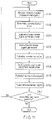
- FIG. 5 is a flowchart of the operation of the wireless control apparatus.
- FIG. 6 is a diagram for explaining LIFO of a storing unit.
- FIG. 7 is a flowchart of the operation of the control target apparatus.
- FIG. 8 is a diagram for explaining a different example of the instruction for the target value by the wireless control apparatus and the driving of the control target apparatus.
- FIG. 9 is a diagram showing a modification of the communication system in the first embodiment.
- FIG. 10 is a configuration diagram of a wireless control apparatus according to a second embodiment.
- FIG. 11 is a flowchart of the operation of the wireless control apparatus.
- FIG. 12 is a configuration diagram of a wireless control apparatus according to a third embodiment.
- FIG. 13 is a flowchart of the operation of the wireless control apparatus.
- an electronic apparatus includes a receiver, a processor and a transmitter.
- the receiver receives a reception signal including a value indicating a physical quantity related to operation of a control target object at a communication destination.
- the processor determines, based on at least one of electric power of a signal and the reception signal, a state of wireless communication between the electronic apparatus and the communication destination.
- the processor calculates, based on the value indicating the physical quantity, a target value of the physical quantity for instructing operation of the control target object.
- the processor generates, according to the state of the wireless communication, a transmission signal including a value obtained by modifying the target value.
- the transmitter transmits the transmission signal to the control target object.
- FIG. 1 shows a wireless communication system according to the first embodiment.
- a wireless control apparatus 100 is a wireless communication apparatus that transmits a wireless signal (this wireless signal is hereinafter referred to as transmission signal) for instructing the operation of a control target apparatus 150 .
- the wireless control apparatus 100 may be referred to as an electronic apparatus.
- the control target apparatus 150 is an electronic apparatus that receives the transmission signal of the wireless control apparatus 100 and operates.
- the control target apparatus 150 is, for example, an AGV (Automatic (Automated) Guided Vehicle), a robot, a robot arm, or the like and may be a motor included in these apparatuses.
- AGV Automatic (Automated) Guided Vehicle
- An instruction for the operation of the control target apparatus 150 is performed by instructing a target value of a physical quantity related to the operation of the control target apparatus 150 .
- a target value of a position, speed, acceleration, or the like related to the operation of the control target apparatus 150 is included in the transmission signal and transmitted.
- the target value includes at least one of the position, the speed, and the acceleration.
- the position, the speed, and the acceleration include not only values in a three-dimensional space but also a position, speed, and acceleration in rotation.
- the position includes a rotation angle and the number of rotations
- the speed includes rotational speed
- the acceleration includes rotational acceleration.
- the control target apparatus 150 receives the transmission signal and operates to achieve the target value of the instructed operation. In operating, the control target apparatus 150 measures a value indicating a physical quantity related to the operation.
- the physical quantity is, for example, the position, the speed, the acceleration, or the like.
- the value measured by the control target apparatus is referred to as measurement value as well.
- the measurement value may include measured time.
- the control target apparatus 150 transmits a wireless signal including the measurement value to the wireless control apparatus 100 (this signal is hereinafter referred to as measurement signal as well).
- the wireless control apparatus 100 receives the measurement signal.
- the measurement signal is a reception signal.
- the reception signal of the wireless control apparatus 100 represents the measurement signal.
- the wireless control apparatus 100 modifies the target value of the control target apparatus 150 based on the measurement value included in the reception signal and communicates the target value to the control target apparatus 150 with the next transmission signal.
- interference due to an electromagnetic wave sometimes occurs.
- the electromagnetic wave is, for example, an electromagnetic wave generated by an apparatus different from the wireless control apparatus 100 and the control target apparatus 150 (such an electromagnetic wave is hereinafter referred to as interference electromagnetic wave as well).
- Communication between the wireless control apparatus 100 and the control target apparatus 150 is hindered by the interference electromagnetic wave.
- the wireless control apparatus 100 does not transmit the transmission signal until electric power of the interference electromagnetic wave becomes smaller than a preset value.
- the transmission of the transmission signal by the wireless control apparatus 100 is sometimes delayed. Therefore, in some case, the control target apparatus 150 is late in receiving the transmission signal from the wireless control apparatus 100 .
- the operation of the control target apparatus 150 is different from operation instructed by the wireless control apparatus 100 .
- the wireless control apparatus 100 needs to instruct the operation of the control target apparatus 150 which is less affected by a state of wireless communication between the wireless control apparatus 100 and the control target apparatus 150 (hereinafter simply referred to as state of wireless communication as well).
- the wireless control apparatus 100 determines the state of the wireless communication from at least one of electric power of a signal received from the control target apparatus 150 and the reception signal.
- the wireless control apparatus 100 modifies, based on the state of the wireless communication and the measurement value included in the reception signal, the target value calculated by the wireless control apparatus 100 and transmits a transmission signal including the modified target value to the control target apparatus 150 .
- the wireless control apparatus 100 modifies the target value considering a delay in reception of the transmission signal by the control target apparatus 150 . Accordingly, the wireless control apparatus 100 can instruct the operation of the control target apparatus 150 while being less affected by the state of the wireless communication between the wireless control apparatus 100 and the control target apparatus 150 .
- the communication standard is, for example, wireless LAN, 3G, 4G, LTE, 5G, Bluetooth (registered trademark), or ZigBee (registered trademark).
- the communication by the wireless LAN is explained.
- the wireless control apparatus 100 includes a receiver 101 , a storage 102 , a transmitter 103 , and a processor 110 .
- the processor 110 includes a determining unit 111 and a signal generator 112 .
- the receiver 101 receives, as a reception signal, a measurement signal including a measurement value.
- the receiver 101 receives the reception signal from the control target apparatus 150 .
- the receiver 101 may receive the reception signal via a relay and a relay system.
- the receiver 101 decrypts the reception signal and sends the reception signal to the determining unit 111 and the signal generator 112 .
- the decrypted reception signal is used for determination of the state of the wireless communication.
- At least the measurement value in the decrypted reception signal is use for calculation of a target value in the signal generator 112 .
- Information sent to the determining unit 111 and the signal generator 112 by the receiver 101 does not need to be the same.
- the receiver 101 may send the decrypted reception signal to the determining unit 111 and send the measurement value included in the decrypted reception signal to the signal generator 112 .
- the receiver 101 receives a signal other than the reception signal in a wireless communication link between the wireless control apparatus 100 and the control target apparatus 150 (hereinafter simply referred to as wireless communication link).
- the receiver 101 can measure electric power of the received signal.
- the receiver 101 sends information based on the electric power to the determining unit 111 .
- the information including the electric power is used for determination of the state of the wireless communication in the determining unit 111 .
- the determining unit 111 determines the state of the wireless communication based on at least one of the information included in the decrypted reception signal and the information concerning the electric power of the signal in the wireless communication link sent from the receiver 101 .
- the information included in the decrypted reception signal means, besides the measurement value in the control target apparatus 150 , a time interval in which a frame included in the reception signal is input to the determining unit 111 , the number of times and a ratio of retransmitting of the reception signal, a data size of the frame included in the reception signal, a power level of the reception signal, an MCS (Modulation and Coding Scheme) of the reception signal, and the like.
- MCS Modulation and Coding Scheme
- the determining unit 111 determines the state of the wireless communication based on the information concerning the electric power of the signal in the wireless communication link.
- the determining unit 111 sends information representing the determined state of the wireless communication to the signal generator 112 .
- the information representing the state of the wireless communication is used for modification of the target value in the signal generator 112 .
- the determining unit 111 determines that the state of the wireless communication is a first state indicating that the wireless communication between the wireless control apparatus 100 and the control target apparatus 150 is hindered.
- the determining unit 111 determines that the state of the wireless communication is a second state indicating that the wireless communication between the wireless control apparatus 100 and the control target apparatus 150 is not hindered.
- the determining unit 111 may determine the state of the wireless communication based on a ratio of a time in which the electric power of the signal in the wireless communication link is equal to or larger than the preset threshold. For example, when the ratio of the time in which the electric power of the signal in the wireless communication link is equal to or larger than the preset threshold is equal to or larger than a preset threshold of the ratio, the determining unit 111 determines that the state of the wireless communication is the first state indicating that the wireless communication between the wireless control apparatus 100 and the control target apparatus 150 is hindered.
- the determining unit 111 determines that the state of the wireless communication is the second state indicating that the wireless communication between the wireless control apparatus 100 and the control target apparatus 150 is not hindered.
- the signal generator 112 generates a transmission signal including a target value corresponding to the state of the wireless communication.
- the signal generator 112 calculates a provisional target value (hereinafter referred to as provisional value as well) from the measurement value sent from the receiver 101 .
- provisional value is a target value at the time when the state of the wireless communication is not deteriorated.
- the signal generator 112 modifies the target value to a value corresponding to the state of the wireless communication based on the information representing the state of the wireless communication sent from the determining unit 111 .
- the signal generator 112 modifies the provisional value and sets the modified provisional value as a target value.
- the signal generator 112 generates a transmission signal including the target value.
- the signal generator 112 stores the generated transmission signal to the storage 102 .
- the signal generator 112 does not need to always modify the target value. For example, the signal generator 112 does not need to modify the target value when there is no problem in the communication between the wireless control apparatus 100 and the control target apparatus 150 based on the information representing the state of the wireless communication sent from the determining unit 111 . In such a case, a delay causing a problem does not occur in the communication between the wireless control apparatus 100 and the control target apparatus 150 . Therefore, the signal generator 112 does not need to modify the target value.
- the signal generator 112 generates a transmission signal including the provisional value as the target value.
- the storage 102 stores the transmission signal sent from the signal generator 112 and outputs the transmission signal to the transmitter 103 on an LIFO (Last-In First-Out) scheme.
- the storage 102 is a memory or the like and, for example, a RAM (Random Access Memory), a PROM (Programmable ROM), an EPROM (Erasable PROM), an EEPROM (Electrically EPROM), a flash memory, or a register.
- the storage 102 may be provided on the outside of the wireless control apparatus 100 .
- the storage 102 may be the cloud that stores information through the Internet.
- the transmitter 103 extracts the transmission signal from the storage 102 , modulates the transmission signal, and transmits the transmission signal to the control target apparatus 150 .
- the processor 110 including the determining unit 111 and the signal generator 112 is an electronic circuit including a controller and an arithmetic apparatus.
- Examples of the electronic circuit can include a general-purpose processor, a central processing unit (CPU), a microprocessor, a digital signal processor (DSP), an ASIC, an FPGA, and a combination of the foregoing.
- the components of the wireless control apparatus 100 are explained above. Connection among the components may be wired connection or may be wireless connection.
- the wireless control apparatus 100 may be implemented as an IC (Integrated Circuit) or an LSI (Large Scale Integration).
- the components of the wireless control apparatus 100 may be collectively implemented on one chip or a part of the components may be implemented on the other chip.
- the control target apparatus 150 is an apparatus that receives a transmission signal transmitted from the wireless control apparatus 100 and performs operation.
- the control target apparatus 150 is, for example, a robot that moves using wheels or a robot that walks using a plurality of legs.
- the control target apparatus 150 includes a robot arm and a tip-movable endoscope.
- the control target apparatus 150 includes a vehicle, a truck, and a flying object (a manned airplane or an unmanned aerial vehicle (UAV) such as a drone).
- UAV unmanned aerial vehicle
- the control target apparatus is explained as the robot that moves using the wheels.
- a configuration example of the control target apparatus 150 is shown in FIG. 3 .
- the control target apparatus 150 includes a receiver 151 , a power controller 161 , a signal generator 162 , a power unit 152 , a measuring unit 153 , a transmitter 154 , and a processor 160 .
- the processor 160 includes a power controller 161 and a signal generator 162 .
- the receiver 151 receives a transmission signal including a target value.
- the receiver 151 decrypts the transmission signal and sends information including the target value to the power controller 161 .
- the power controller 161 instructs the operation of the power unit 152 based on the information.
- the power unit 152 is a driving device mounted on the control target apparatus 150 .
- the power unit 152 is, for example, a motor, a wheel, an engine, or a propeller. In this embodiment, as an example, the power unit 152 is explained as a motor or a wheel.
- the power unit 152 is driven by the instruction of the power controller 161 and drives the control target apparatus 150 . For example, when the number of rotations of the power unit 152 is instructed by the power controller 161 , the power unit 152 is driven at the instructed number of rotations.
- the measuring unit 153 measures the position of the control target apparatus 150 .
- the position of the control target apparatus 150 may be, for example, a three-dimensional position of the control target apparatus 150 or a position in rotation including a rotating direction, a rotation angle, and the number of rotations of the power unit 152 .
- the measuring unit 153 sends a measurement value of the measurement to the signal generator 162 . Any apparatus may is applicable to the measuring unit 153 if the position of the control target apparatus 150 can be measured.
- the measuring unit 153 is an encoder that measures a position in rotation of the motor.
- the measuring unit 153 may be, for example, a GNSS (Global Navigation Satellite System) that acquires a three-dimensional position of the control target apparatus 150 .
- GNSS Global Navigation Satellite System
- the signal generator 162 generates a measurement signal including the measurement value sent from the measuring unit 153 .
- the signal generator 162 sends the measurement signal to the transmitter 154 .
- the transmitter 154 modulates the measurement signal sent from the signal generator 162 and transmits the modulated measurement signal to the wireless control apparatus 100 .
- the measurement signal is received by the receiver 101 as a reception signal.
- the processor 160 including the power controller 161 and the signal generator 162 is an electronic circuit including a controller and an arithmetic apparatus.
- Examples of the electronic circuit can include a general-purpose processor, a central processing unit (CPU), a microprocessor, a digital signal processor (DSP), an ASIC, an FPGA, and a combination of the foregoing.
- connection among the components may be wired connection or may be wireless connection.
- the wireless control apparatus 100 is an apparatus that receives the measurement signal including the measurement value of the control target apparatus 150 and modifies, according to the state of the wireless communication between the wireless control apparatus 100 and the control target apparatus 150 , the target value transmitted to the control target apparatus 150 .
- the operations of the wireless control apparatus 100 and the control target apparatus 150 are explained with reference to FIG. 4 showing time, the number of rotations, and rotational speed of the power unit 152 .
- the power unit 152 is rotating at rotational speed R 1 at time t 0 and the number of rotations, which is a measurement value, is N 0 .
- the rotational speed is represented by an alternate long and short dash line.
- a target value of the rotational speed at time t 3 is R 2 .
- the target value in this originally assumed case is a provisional value calculated on the premise that the state of the wireless communication is not deteriorated.
- the wireless control apparatus 100 modifies, considering the delay of the transmission signal, the target value of the rotational speed to be smaller than the originally assumed target value. For example, the wireless control apparatus 100 calculates rotational speed at time t 3 as a provisional value R 2 .
- the wireless control apparatus 100 determines that the state of the wireless communication is deteriorated, the wireless control apparatus 100 modifies the rotational speed to R 2′ smaller than the provisional value and sets R 2′ as a target value.
- the rotational speed is represented by a solid line. In this case, it is assumed that a decrease in the rotational speed has started at time t 2 because of the delay of the transmission signal.
- the wireless control apparatus 100 modifies, considering the delay of the transmission signal, the rotational speed to a value smaller than the provisional value (to a value closer to 0), sets the value as a target value, and finally reduces the rotational speed to 0 at the number of rotations N n . Consequently, even if the delay of the transmission signal occurs, it is possible to reduce the rotational speed to 0 at the number of rotations N n .
- FIG. 5 is a flowchart of the operation of the wireless control apparatus 100 .
- FIG. 7 is a flowchart of the operation of the control target apparatus 150 .
- the receiver 101 receives the measurement signal from the control target apparatus 150 as a reception signal (step S 101 ).
- the reception signal includes a measurement value of the number of rotations in the power unit 152 of the control target apparatus 150 (hereinafter simply referred to as number of rotations as well).
- the receiver 101 decrypts the reception signal and sends the measurement value to the signal generator 112 .
- the receiver 101 has measured electric power of a signal in the wireless communication link for a preset time.
- the receiver 101 sends, according to the electric power of the signal, to the determining unit 111 , a signal indicating whether the wireless control apparatus 100 and the control target apparatus 150 are communicable.
- the preset time is optional.
- the measurement of the electric power of the signal by the receiver 101 and the communication of the signal indicating whether the wireless control apparatus 100 and the control target apparatus 150 are communicable may be performed irrespective of steps.
- the determining unit 111 determines the state of the wireless communication between the wireless control apparatus 100 and the control target apparatus 150 based on the signal indicating whether the wireless control apparatus 100 and the control target apparatus 150 are communicable sent from the receiver 101 (step S 102 ).
- the determining unit 111 measures a time in which the wireless control apparatus 100 and the control target apparatus 150 are uncommunicable and calculates a ratio to a preset time.
- the determining unit 111 determines the state of the wireless communication based on the ratio. For example, when the ratio exceeds a preset threshold, the determining unit 111 determines that the state of the wireless communication is deteriorated.
- the determining unit 111 sends information representing the determined state of the wireless communication to the signal generator 112 .
- the signal generator 112 calculates a provisional value based on the measurement value sent from the receiver 101 (step S 103 ). In this embodiment, as an example, the signal generator 112 calculates rotational speed of the control target apparatus 150 from the measurement value of the number of rotations sent from the receiver 101 and calculates a provisional value of the rotational speed. For example, the signal generator 112 calculates rotational speed at time t 3 as R 2 .
- the signal generator 112 modifies the calculated provisional value based on the information representing the state of the wireless communication sent from the determining unit 111 and determines a target value corresponding to the state of the wireless communication (step S 104 ).
- the signal generator 112 modifies the calculated provisional value based on the information representing the state of the wireless communication sent from the determining unit 111 and determines the modified provisional value as a target value. For example, when the state of the wireless communication is deteriorated, the signal generator 112 determines the target value of the rotational speed as a value R 2′ smaller than R 2 . When the state of the wireless communication is not deteriorated, the signal generator 112 does not modify the provisional value and determines the provisional value as the target value.
- the signal generator 112 generates a transmission signal including the determined target value (step S 105 ) and stores the transmission signal to the storage 102 .
- the transmitter 103 extracts the transmission signal stored by the storage 102 according to the LIFO, modulates the transmission signal, and transmits the modulated transmission signal to the control target apparatus 150 (step S 106 ).
- the LIFO is a scheme for preferentially extracting a transmission signal input at later time as shown in FIG. 6 .
- the storage 102 stores a transmission signal 1 and a transmission signal 2 .
- Time when the transmission signal 1 is generated is t A and time when the transmission signal 2 is generated is t B . Since the time t B is later than the time t A , the transmission signal 2 is a signal generated later than the transmission signal 1 .
- the transmitter 103 extracts the transmission signal 2 .
- the transmitter 103 preferentially extracts the transmission signal generated later.
- the determining unit 111 confirms whether an end instruction for ending the operation of the wireless control apparatus 100 has been received (step S 107 ).
- the end instruction is an instruction for ending the operation of the wireless control apparatus 100 in this flow.
- the end instruction is input to the wireless control apparatus 100 by a user or the wireless control apparatus 100 acquires a signal including the end instruction, whereby the end instruction is conveyed to the determining unit 111 .
- the end instruction may be an instruction for immediately ending the operation of the wireless control apparatus 100 .
- step S 107 When the end instruction has not been received by the determining unit 111 (No in step S 107 ), the flow returns to step S 101 . On the other hand, when the end instruction has been received by the determining unit 111 (Yes in step S 107 ), the flow ends and the wireless control apparatus 100 ends the operation.
- the operation of the wireless control apparatus 100 in this embodiment is explained above.
- the operation of the control target apparatus 150 is explained below.
- the control target apparatus 150 is driven to achieve a target value transmitted from the wireless control apparatus 100 .
- the control target apparatus 150 measures a physical quantity related to the operation and transmits a measurement signal including a measurement value of the physical quantity to the wireless control apparatus 100 .
- setting of a target value by a transmission signal and communication of a measurement value by a measurement signal have been already performed once or more between the wireless control apparatus 100 and the control target apparatus 150 . Therefore, it is assumed that the measuring unit 153 is continuing measurement of the number of rotations of the power unit 152 during the operation of the control target apparatus 150 explained below.
- the receiver 151 receives a transmission signal transmitted from the wireless control apparatus 100 (step S 151 ).
- the receiver 151 decrypts the transmission signal and sends a target value of rotational speed included in the transmission signal to the power controller 161 .
- the power controller 161 instructs the power unit 152 to be driven according to the target value sent from the receiver 151 (step S 152 ).
- the power unit 152 is driven to achieve the instruction of the control signal sent from the power control unit 161 (step S 153 ). In this embodiment, as an example, the power unit 152 is driven at the rotational speed of the target value.
- the measuring unit 153 acquires a measurement value of the number of rotations of the power unit 152 being measured and sends the measurement value to the signal generator 162 (step S 154 ). Timing when the measuring unit 153 sends the measurement value is optional. However, in this embodiment, as an example, the measuring unit 153 sends a measurement value of the number of rotations at every preset time to the signal generator 162 together with time when the measurement value is acquired. Note that the addition of the time when the measurement value is acquired may be performed by the signal generator 162 .
- the signal generator 162 generates a measurement signal including the measurement value sent from the measuring unit 153 (step S 155 ). Timing when the signal generator 162 generates the measurement signal is optional. In this embodiment, as an example, the timing is a preset time. A plurality of measurement values may be included in the measurement signal.
- the signal generator 162 sends the generated measurement signal to the transmitter 154 .
- the transmitter 154 modulates the measurement signal sent from the signal generator 162 and transmits the modulated measurement signal to the wireless control apparatus 100 (step S 156 ).
- the power controller 161 confirms whether an end instruction for ending the operation of the control target apparatus 150 has been received (step S 157 ).
- the end instruction is an instruction for ending the operation of the control target apparatus 150 in this flow.
- the end instruction is input to the control target apparatus 150 by the user or the control target apparatus 150 acquires a signal including the end instruction, whereby the end instruction is conveyed to the power controller 161 .
- the end instruction may be an instruction for immediately ending the operation of the control target apparatus 150 .
- step S 157 When the end instruction has not been received by the power controller 161 (No in step S 157 ), the flow returns to step S 151 . On the other hand, when the end instruction has been received by the power controller 161 (Yes in step S 157 ), the flow ends.
- the control target apparatus 150 ends the operation.
- the determining unit 111 determines the state of the wireless communication between the wireless control apparatus 100 and the control target apparatus 150 based on the signal indicating whether the wireless control apparatus 100 and the control target apparatus 150 are communicable sent from the receiver 101 .
- the state of the wireless communication various examples are applicable other than the above.
- the determining unit 111 may receive the decrypted reception signal from the receiver 101 and determine the state of the wireless communication based on the information included in the reception signal. For example, when using the measurement value, the determining unit 111 may compare the measurement value with the target value transmitted to the control target apparatus 150 . When the target value is 1000 rpm, the power unit 152 rotates 16.7 times per second. The determining unit 111 may compare the target value and the number of rotations per second of the measurement value and determine the state of the wireless communication according to whether a difference between the target value and the number of rotations exceeds a preset threshold.
- the determining unit 111 may determine the state of the wireless communication according to a time interval of a frame of the reception signal sent from the receiver 101 . When the state of the wireless communication is deteriorated, the time interval of the frame of the reception signal sent from the receiver 101 increases.
- the determining unit 111 may measure the time interval and determine the state of the wireless communication according to whether the time interval exceeds a preset threshold.
- the time interval may be a time period from time when communication of a certain frame to the determining unit 111 is started until time when communication of the next frame to the determining unit 111 is started or may be a time period from time when communication of a certain frame to the determining unit 111 is ended until time when communication of the next frame to the determining unit 111 is started.
- the determining unit 111 may determine the state of the wireless communication from information indicating whether the measurement signal is retransmitted included in the reception signal.
- the determining unit 111 may acquire a data size of a frame included in the reception signal and determine the state of the wireless communication according to whether the data size exceeds a preset threshold.
- the determining unit 111 may acquire information concerning an MCS of the reception signal and determine the state of the wireless communication according to a type of the MCS.
- the determining unit 111 may acquire information concerning strength (a level) of electric power of the reception signal from the receiver 101 and determine the state of the wireless communication according to whether the strength (the level) exceeds a preset threshold.
- the determining unit 111 may acquire information concerning a transmission signal generated in the past rather than the reception signal to determine the state of the wireless communication. For example, the state of the wireless communication can be determined even in the case of the transmission signal according to the various kinds of information included therein. Not only presence or absence of retransmitting but also the number of times of retransmitting can be acquired according to the information indicating whether the transmission signal is retransmitted.
- the determining unit 111 may determine the state of the wireless communication from information representing the number of times of retransmitting of the transmission signal. Besides, the determining unit 111 may acquire information concerning a transmission rate of the transmission signal and determine the state of the wireless communication according to whether the transmission rate exceeds a preset threshold.
- the determining unit 111 may determine the state of the wireless communication according to whether the number of transmission signals stored in the storage 102 exceeds a preset threshold.
- the number of transmission signals may be the number of frames or may be a data size.
- the determining unit 111 determines whether the state of the wireless communication is deteriorated. However, the determining unit 111 may determine degrees of the deterioration in the state of the wireless communication in a plurality of stages. For example, the determining unit 111 may determine degrees of the deterioration in the state of the wireless communication according to a preset plurality of thresholds.
- the signal generator 112 may receive the degrees of the deterioration determined by the determining unit 111 and use the degrees of the deterioration for the modification of the target value. For example, in this embodiment, when the state of the wireless communication is deteriorated, the signal generator 112 modifies the target value of the rotational speed of the power unit 152 to be small.
- the signal generator 112 may modify the target value of the rotational speed of the power unit 152 to be smaller as a deterioration degree of the wireless communication is larger. By modifying the target value according to the deterioration degree of the state of the wireless communication, the wireless control apparatus 100 can instruct the operation to the control target apparatus 150 while improving the state of the wireless communication.
- the determining unit 111 determines that the state of the wireless communication is deteriorated. However, the determining unit 111 may determine whether the state of the wireless communication is satisfactory and whether the state of the wireless communication is satisfactory, normal, or deteriorated.
- the signal generator 112 may calculate, as a provisional value, a value of the state of the wireless communication assumed to be normal or deteriorated and modify the provisional value and determine a target value when the state of the wireless communication is better than the assumed state of the wireless communication.
- the operation of the wireless control apparatus 100 explained with reference to FIG. 5 and the operation of the control target apparatus 150 explained with reference to FIG. 7 may be partially independent.
- An example in which the operation of the wireless control apparatus 100 and the operation of the control target apparatus 150 are independent is explained below.
- the reception of the reception signal in step S 101 and the determination of the state of the wireless communication in step S 102 may be independent.
- the reception and the decryption of the reception signal and the communication of the measurement value in step S 101 are performed as appropriate when the reception signal is received.
- the determination of the state of the wireless communication in step S 102 , the calculation of the provisional value in step S 103 , the modification of the provisional value and the determination of the target value in step S 104 , and the generation of the transmission signal in step S 105 may be performed according to timing of generation of a transmission signal preset in the wireless control apparatus 100 .
- the reception of the transmission signal to the driving of the power unit (steps S 151 to S 153 ), the acquisition of the measurement value in step S 154 , the generation and the transmission of the reception signal in steps S 155 and S 156 , and the like may be independent.
- the steps from the reception of the transmission signal to the driving of the power unit (steps S 151 to S 153 ) are performed as appropriate when the control target apparatus 150 receives the transmission signal.
- the acquisition of the measurement value in step S 154 is performed at preset time. For example, the acquisition of the measurement value in step S 154 is performed at every second.
- the generation and the transmission of the reception signal in steps S 155 and S 156 are performed at preset time. For example, the generation and the transmission of the reception signal in steps S 155 and S 156 are performed at every ten seconds.
- the reception signal may include a measurement value for ten seconds.
- the wireless control apparatus 100 reduces the target value of the rotational speed according to the state of the wireless communication.
- the target value is not limited to the rotational speed.
- the wireless control apparatus 100 may modify the number of rotations (a rotation angle) set as a goal and, at the same time, modify the rotational speed.
- the control target apparatus 150 is a robot arm
- the robot arm rotates according to a rotation angle of a driving unit.
- the state of the wireless communication is deteriorated, it is likely that deceleration of the rotating power unit 152 is delayed and the rotation angle exceeds a target value of the rotation angle.
- a final target value of the rotation angle is ⁇ 1 and the signal generator 112 appropriately transmits, to the robot arm, a target value of the rotational speed for achieving the rotation angle ⁇ 1 .
- the signal generator 112 calculates the rotation angle ⁇ 1 as a provisional value.
- the signal generator 112 modifies the rotation angle to ⁇ 1 ′ smaller than ⁇ 1 and sets ⁇ 1 ′ as a target value.
- the wireless control apparatus 100 may modify the calculated various provisional values to be small and set the modified provisional values as target values. Consequently, it is possible to reduce likelihood that the control target apparatus 150 exceeds the provisional value of the rotation angle and collides with an object, a person, or the like.
- the wireless control apparatus 100 modifies the provisional value to be small according to the state of the wireless communication.
- the wireless control apparatus 100 may modify the provisional value to be large according to the state of the wireless communication.
- rotational acceleration is set as a target value and a target value transmitted to the control target apparatus 150 in the past is modified.
- FIG. 8 is a diagram showing an example of rotational speed of the power unit 152 at time and rotational acceleration set as a target value.
- rotational speed 0 at time t 0 is increased to R n at time t n .
- operation of the power unit 152 is operation for accelerating the power unit 152 at constant rotational acceleration a 1 from time t 0 and increasing the rotational speed to R n at time t n .
- both of the rotational speed and the rotational acceleration are represented by alternate long and short dash lines. In this case, it is assumed that a measurement value of the rotational speed at time t 2 is R 2 .
- the wireless control apparatus 100 when the state of the wireless communication between the wireless control apparatus 100 and the control target apparatus 150 is deteriorated, it is assumed that a transmission signal transmitted to the control target apparatus 150 is delayed.
- the acceleration of the power unit 152 is delayed while the transmission signal is delayed.
- the acceleration of the power unit 152 is performed from time t 1 because of the delay of the transmission signal.
- the delay in the acceleration of the power unit 152 can also be recognized from a measurement value received by the wireless control apparatus 100 .
- the rotational speed of the power unit 152 at time t 2 is assumed to be R 2 if there is no delay. However, actually, since the rotational speed is R 2′ smaller than R 2 , the wireless control apparatus 100 can recognize that a delay has occurred.
- the wireless control apparatus 100 modifies the target value of the rotational acceleration to be larger than the originally assumed target value (provisional value) considering the delay of the transmission signal and the delay in acceleration. For example, the wireless control apparatus 100 modifies the target value of the rotational acceleration at time t 3 to a 1 ′ larger than a 1 transmitted to the control target apparatus 150 in the past.
- the rotational speed is represented by an alternate long and short dash line between time t 0 to time t 3 , and is represented by a solid line after time t 3 .
- transmission time of a transmission signal including the modified target value is set to time t 2 . Acceleration at the rotational acceleration a 1 ′ is performed from time t 3 because of the delay of the transmission signal. Consequently, even if the delay of the transmission signal occurs, the rotational speed can be increased to R n at time t n .
- the wireless control apparatus 100 may modify the target value to be increased according to the state of the wireless communication. For example, when the control target apparatus 150 is an AGV or the like, it is possible to reduce likelihood that acceleration of the AGV is delayed and the AGV collides with the other vehicle or the like.
- the signal generator 112 determines the target value using the measurement value measured by the measuring unit 153 .
- the signal generator 112 may determine the target value according to an image acquired by the control target apparatus 150 .
- the measuring unit 153 acquires an image of the outside of the control target apparatus 150 .
- the measuring unit 153 is, for example, a camera.
- a wireless communication system in this case is shown in FIG. 9 .
- the measuring unit 153 acquires an image including a target object 170 .
- the signal generator 112 calculates a position of the control target apparatus 150 from the image.
- the signal generator 112 determines the target value as in this embodiment from the calculated position of the control target apparatus 150 .
- the operations of the wireless control apparatus 100 and the control target apparatus 150 in this case are the same as the operations in this embodiment except that the measuring unit 153 acquires the image of the outside of the control target apparatus 150 . Therefore, explanation of the operations is omitted. Even when the control target apparatus 150 acquires an image in this way, the wireless control apparatus 100 can instruct operation to the control target apparatus 150 while improving the state of the wireless communication.
- the determining unit 111 determines the state of the wireless communication according to the preset threshold.
- a different threshold may be set. For example, in determination after the deterioration in the state of the wireless communication is determined, the determining unit 111 determines the deterioration using a second threshold with which the deterioration is more easily determined.
- the determining unit 111 determines the deterioration in the state of the wireless communication, it is considered that a factor that hinders communication is present between the wireless control apparatus 100 and the control target apparatus 150 . To stabilize the communication, it is necessary to determine, with a strict standard, whether the element that hinders the communication is eliminated. Therefore, in the determination after the determining unit 111 determines the deterioration in the state of the wireless communication, the determining unit 111 determines the deterioration using the second threshold with which the deterioration is more easily determined and determines, with the stricter standard, whether the element that hinders the communication is eliminated.
- the determining unit 111 may use a plurality of thresholds. For example, when the determining unit 111 determines even a deterioration degree of the state of the wireless communication, if the deterioration in the state of the wireless communication is determined, the determining unit 111 may determine the deterioration using a plurality of thresholds with which a larger deterioration degree is easily determined than a threshold concerning each deterioration degree. Consequently, it is possible to stabilize the communication between the wireless control apparatus 100 and the control target apparatus 150 .
- the wireless control apparatus 100 modifies the target value transmitted to the control target apparatus 150 according to the state of the wireless communication. Consequently, it is possible to instruct the operation of the control target apparatus 150 while reducing the influence of the state of the wireless communication.
- time when the signal generator 112 generates a transmission signal is not considered.
- the signal generator 112 can generate a transmission signal according to a state of wireless communication by determining time when the signal generator 112 generates the transmission signal.
- a transmitter 103 When the state of the wireless communication is deteriorated, in some case, a transmitter 103 is late in transmitting a transmission signal and the transmission signal is accumulated in the storage 102 .
- the transmitter 103 transmits the transmission signal to the control target apparatus 150 according to LIFO. Therefore, a transmission signal generated anew is preferentially transmitted and the storage 102 stores old transmission signals.
- a timing generator 211 instructs generation timing of a transmission signal by the signal generator 112 , whereby old transmission signals stored in the storage 102 can be reduced.
- the wireless control apparatus 200 is an apparatus in which the timing generator 211 is added to the wireless control apparatus 100 explained in the first embodiment.
- a processor 210 including the timing generator 211 is the same as the processor 110 explained in the first embodiment.
- the same components as the components of the wireless control apparatus 100 are denoted by the same reference numerals and signs and explanation of the components is omitted.
- the control target apparatus 150 is the same as the control target apparatus 150 in the first embodiment. Therefore, explanation of the control target apparatus 150 is omitted.
- the determining unit 111 sends information representing the determined state of the wireless communication not only to the signal generator 112 but also to the timing generator 211 . This information is used in order to determine timing when the signal generator 112 generates a transmission signal.
- the timing generator 211 determines, from the information representing the state of the wireless communication sent from the determining unit 111 , time when the signal generator 112 generates a transmission signal.
- the timing generator 211 sends, according to the time, an instruction for generating a transmission signal to the signal generator 112 .
- the timing generator 211 may instruct a time interval at which the signal generator 112 generates a transmission signal.
- the signal generator 112 generates a transmission signal according to the instruction sent from the timing generator 211 .
- the wireless control apparatus 200 is an apparatus that determines, according to the state of the wireless communication, timing for generating a transmission signal and generates a transmission signal based on the timing in addition to the operation of the wireless control apparatus 100 .
- a flowchart of the operation of the wireless control apparatus 200 is shown in FIG. 11 . Differences of the operation of the wireless control apparatus 200 from the operation of the wireless control apparatus 100 explained in the first embodiment are explained. The same steps as the steps of the wireless control apparatus 100 are denoted by the same signs and explanation of the steps is omitted.
- step S 102 the determining unit 111 sends information representing the determined state of the wireless communication to the timing generator 211 .
- the timing generator 211 determines, based on the state of the wireless communication, time when the signal generator 112 generates a transmission signal (step S 201 ). In this embodiment, as an example, it is assumed that, when the state of the wireless communication is not deteriorated, the timing generator 211 instructs the signal generator 112 to generate a transmission signal at every 50 ms.
- the timing generator 211 determines 200 ms as a time interval for instructing the signal generator 112 to generate a transmission signal.
- the timing generator 211 instructs the signal generator 112 to generate a transmission signal at the determined time (step S 202 ).
- a method of the instruction is optional.
- the timing generator 211 may instruct the signal generator 112 to generate a transmission signal when the determined time comes or may designate a time for generating a transmission signal to the signal generator 112 set in advance.
- the timing generator 211 may instruct the signal generator 112 to generate a transmission signal at every determined time interval.
- step S 103 the signal generator 112 generates a transmission signal according to the instruction sent from the timing generator 211 .
- the signal generator 112 generates a transmission signal based on the latest measurement value among measurement values sent from the receiver 101 .
- the wireless control apparatus 200 in this embodiment is explained above. As in the first embodiment, various modifications can be implemented and executed. For example, the modifications explained in the first embodiment are applicable. Modifications applicable to this embodiment are also explained below.
- the state of the wireless communication determined by the determining unit 111 is used for determination of time in transmission signal generation and modification of a provisional value.
- the determining unit 111 may respectively determine a state of wireless communication for the determination of time in the transmission signal generation and a state of wireless communication for the modification of the provisional value.
- steps S 201 and S 202 explained with reference to FIG. 11 is not limited to be performed between steps S 102 and S 103 .
- the timing generator 211 may determine, according to the respective stages, time when the signal generator 112 generates a transmission signal. For example, when the determining unit 111 determines a deterioration degree of the state of the wireless communication in a plurality of stages, the timing generator 211 may determine the time when the signal generator 112 generates a transmission signal to be later as the deterioration degree of the state of the wireless communication is larger.
- the wireless control apparatus 200 determines, according to the state of the wireless communication, the time for generating a transmission signal. Consequently, in addition to the effects explained in the first embodiment, it is possible to generate a transmission signal according to the state of the wireless communication. It is possible to reduce old unnecessary transmission signals stored in the storage 102 .
- the transmitter 103 extracts a transmission signal from the storage 102 in the LIFO scheme.
- old transmission signals are accumulated in the storage 102 .
- a wireless control apparatus 300 can effectively utilize the storage 102 by erasing old transmission signals accumulated in the storage 102 according to a state of wireless communication.
- the wireless control apparatus 300 is an apparatus in which a signal arranging unit 311 is added to the wireless control apparatus 200 explained in the second embodiment.
- a processor 310 including the signal arranging unit 311 is the same as the processor 110 explained in the first embodiment and the processor 210 explained in the second embodiment.
- the same components as the components of the wireless control apparatus 100 and the wireless control apparatus 200 are denoted by the same reference numerals and signs and explanation of the components is omitted.
- the control target apparatus 150 is the same as the control target apparatus 150 in the first and second embodiments. Therefore, explanation of the control target apparatus 150 is omitted.
- the determining unit 111 transmits the information representing the determined state of the wireless communication to the signal arranging unit 311 besides the signal generator 112 and the timing generator 211 . This information is used for determination of a transmission signal deleted by the signal arranging unit 311 .
- the signal arranging unit 311 deletes, based on the information representing the state of the wireless communication sent from the determining unit 111 , signals generated at early times among transmission signals stored in the storage 102 .
- the wireless control apparatus 300 is an apparatus that deletes, according to the state of the wireless communication, signals generated at early times among transmission signals stored in the storage 102 in addition to the operation of the wireless control apparatus 200 .
- a flowchart of the operation of the wireless control apparatus 300 is shown in FIG. 13 . Differences of the operation of the wireless control apparatus 300 from the operation of the wireless control apparatus 200 explained in the second embodiment are explained. The same steps as the steps in the wireless control apparatus 200 are denoted by the same signs and explanation of the steps is omitted.
- step S 102 the determining unit 111 sends the information representing the determined state of the wireless communication to the signal arranging unit 311 as well. For example, the determining unit 111 sends information indicating that the state of the wireless communication is deteriorated to the signal arranging unit 311 .
- the signal arranging unit 311 deletes, based on the information representing the state of the wireless communication sent from the determining unit 111 , signals generated at early times among the transmission signals stored in the storage 102 (step S 301 ). For example, when the state of the wireless communication is deteriorated, the signal arranging unit 311 deletes a preset number of transmission signals in order from the oldest one.
- the wireless control apparatus 300 in this embodiment is explained above.
- Various modifications can be implemented and executed as in the first embodiment and the second embodiment.
- the modifications explained in the first embodiment and the second embodiment are applicable. Modifications applicable to this embodiment are also explained below.
- the signal arranging unit 311 may delete transmission signals according to the respective stages.
- the signal arranging unit 311 may delete a larger number of transmission signals as a deterioration degree of the state of the wireless communication is larger.
- the state of the wireless communication determined by the determining unit 111 is use for determination of time in transmission signal generation, modification of a provisional value, and arrangement of transmission signals in the storing unit.
- the determining unit 111 may respectively determine states of the wireless communication applied to the determination of the time, the modification of the provisional value, and the arrangement of the transmission signals. The same state may not necessarily be applied to all of the states of the wireless communication applied to the determination of the time, the modification of the provisional value, and the arrangement of the transmission signals.
- step S 301 explained with reference to FIG. 13 is applicable between step S 102 and step S 106 rather than being parallel processing.
- Timing when the signal arranging unit 311 deletes transmission signals is not limited to the timing explained in this embodiment.
- the deletion of transmission signals may be performed at a time interval different from the time interval at which the determining unit 111 determines the communication state.
- the wireless control apparatus 300 deletes, according to the state of the wireless communication, the transmission signals generated at early times. Consequently, in addition to the effects explained in the first embodiment and the second embodiment, it is possible to delete transmission signals according to the state of the wireless communication. It is possible to effectively use the storage 102 .
Landscapes
- Physics & Mathematics (AREA)
- General Physics & Mathematics (AREA)
- Engineering & Computer Science (AREA)
- Automation & Control Theory (AREA)
- Selective Calling Equipment (AREA)
- Transmitters (AREA)
- Feedback Control In General (AREA)
- Control Of Position, Course, Altitude, Or Attitude Of Moving Bodies (AREA)
Abstract
Description
Claims (18)
Applications Claiming Priority (3)
| Application Number | Priority Date | Filing Date | Title |
|---|---|---|---|
| JPJP2019-170918 | 2019-09-19 | ||
| JP2019170918A JP7271380B2 (en) | 2019-09-19 | 2019-09-19 | Wireless communication device and method |
| JP2019-170918 | 2019-09-19 |
Publications (2)
| Publication Number | Publication Date |
|---|---|
| US20210088997A1 US20210088997A1 (en) | 2021-03-25 |
| US11550287B2 true US11550287B2 (en) | 2023-01-10 |
Family
ID=74876421
Family Applications (1)
| Application Number | Title | Priority Date | Filing Date |
|---|---|---|---|
| US16/807,322 Active US11550287B2 (en) | 2019-09-19 | 2020-03-03 | Electronic apparatus and method |
Country Status (2)
| Country | Link |
|---|---|
| US (1) | US11550287B2 (en) |
| JP (1) | JP7271380B2 (en) |
Families Citing this family (2)
| Publication number | Priority date | Publication date | Assignee | Title |
|---|---|---|---|---|
| JPWO2022202855A1 (en) | 2021-03-22 | 2022-09-29 | ||
| CN119325579A (en) * | 2022-06-13 | 2025-01-17 | Abb瑞士股份有限公司 | Connection guidance control for industrial systems |
Citations (24)
| Publication number | Priority date | Publication date | Assignee | Title |
|---|---|---|---|---|
| EP1047224A2 (en) | 1999-04-23 | 2000-10-25 | Matsushita Electric Industrial Co., Ltd. | Network security monitor and method of monitoring |
| KR20040061903A (en) * | 2002-12-31 | 2004-07-07 | 이지로보틱스 주식회사 | Robot device and method for controlling the same |
| US20100256784A1 (en) | 2009-04-07 | 2010-10-07 | Stephen George Seberger | Methods and apparatus to limit a change of a drive value in an electro-pneumatic controller |
| JP2011150516A (en) | 2010-01-21 | 2011-08-04 | Ihi Aerospace Co Ltd | Semiautonomous traveling system for unmanned vehicle |
| US20130041481A1 (en) | 2009-04-07 | 2013-02-14 | Fisher Controls International Llc | Methods and apparatus to limit a change of a drive value in an electro-pneumatic controller |
| WO2013069188A1 (en) | 2011-11-09 | 2013-05-16 | 日本電気株式会社 | Transmitted sound monitoring method, sound input/output device, program for monitoring transmitted sound |
| US20150147976A1 (en) * | 2013-10-09 | 2015-05-28 | SZ DJI Technology Co., Ltd | Remote control methods and systems |
| JP2016201731A (en) | 2015-04-13 | 2016-12-01 | パナソニックIpマネジメント株式会社 | Communication system, terminal, base station, and communication control method |
| US20170029107A1 (en) * | 2015-07-29 | 2017-02-02 | Lattice Semiconductor Corporation | Wireless control of unmanned aerial vehicle with distance ranging and channel sensing |
| JP2017046075A (en) | 2015-08-24 | 2017-03-02 | 株式会社東芝 | Remote control system, control method, and computer program |
| US20170238802A1 (en) * | 2014-11-13 | 2017-08-24 | Nihon Kohden Corporation | Biological signal recording system |
| WO2018034191A1 (en) | 2016-08-17 | 2018-02-22 | 日本電気株式会社 | Remote control device, system, method and recording medium |
| US20180196424A1 (en) * | 2015-07-29 | 2018-07-12 | Lg Electronics Inc. | Mobile terminal and method for controlling the same |
| JP2018116385A (en) | 2017-01-17 | 2018-07-26 | トヨタ自動車株式会社 | Remote control system |
| KR20180129768A (en) * | 2016-01-18 | 2018-12-05 | 비아비 솔루션즈 아이엔씨. | Method and apparatus for detecting distortion or corruption of a mobile communication signal |
| US20180364705A1 (en) * | 2017-06-15 | 2018-12-20 | Hitachi, Ltd. | Monitoring control system, monitoring control device, and monitoring control method |
| WO2019161531A1 (en) * | 2018-02-22 | 2019-08-29 | SZ DJI Technology Co., Ltd. | Monitoring method and device |
| US10491312B1 (en) * | 2018-09-05 | 2019-11-26 | Toyota Jidosha Kabushiki Kaisha | Simultaneous reception of vehicle-to-everything (V2X) messages over multiple channels in multi-channel V2X networks |
| US20200068584A1 (en) * | 2016-12-05 | 2020-02-27 | Kddi Corporation | Flying device, control device, communication control method, and control method |
| US10721089B1 (en) * | 2015-11-17 | 2020-07-21 | Olibra Llc | Device, system, and method of wirelessly controlling electronic devices and appliances |
| US10866302B2 (en) * | 2015-07-17 | 2020-12-15 | Origin Wireless, Inc. | Method, apparatus, and system for wireless inertial measurement |
| US20210069911A1 (en) * | 2019-09-09 | 2021-03-11 | Fanuc Corporation | Robot controller |
| CN112882393A (en) * | 2021-01-12 | 2021-06-01 | 广州三星通信技术研究有限公司 | Electrical device, method of controlling electrical device, and controller |
| US11137753B2 (en) * | 2016-04-18 | 2021-10-05 | Rhombus Systems Group, Inc. | System for communications with unmanned aerial vehicles using two frequency bands |
-
2019
- 2019-09-19 JP JP2019170918A patent/JP7271380B2/en active Active
-
2020
- 2020-03-03 US US16/807,322 patent/US11550287B2/en active Active
Patent Citations (31)
| Publication number | Priority date | Publication date | Assignee | Title |
|---|---|---|---|---|
| JP2000307603A (en) | 1999-04-23 | 2000-11-02 | Matsushita Electric Ind Co Ltd | Network monitoring method and apparatus |
| EP1047224A2 (en) | 1999-04-23 | 2000-10-25 | Matsushita Electric Industrial Co., Ltd. | Network security monitor and method of monitoring |
| KR20040061903A (en) * | 2002-12-31 | 2004-07-07 | 이지로보틱스 주식회사 | Robot device and method for controlling the same |
| US20100256784A1 (en) | 2009-04-07 | 2010-10-07 | Stephen George Seberger | Methods and apparatus to limit a change of a drive value in an electro-pneumatic controller |
| US20130041481A1 (en) | 2009-04-07 | 2013-02-14 | Fisher Controls International Llc | Methods and apparatus to limit a change of a drive value in an electro-pneumatic controller |
| JP2011150516A (en) | 2010-01-21 | 2011-08-04 | Ihi Aerospace Co Ltd | Semiautonomous traveling system for unmanned vehicle |
| WO2013069188A1 (en) | 2011-11-09 | 2013-05-16 | 日本電気株式会社 | Transmitted sound monitoring method, sound input/output device, program for monitoring transmitted sound |
| JP2015535377A (en) | 2012-10-17 | 2015-12-10 | フィッシャー コントロールズ インターナショナル リミテッド ライアビリティー カンパニー | Method and apparatus for limiting drive value changes in an electropneumatic controller |
| US9864370B2 (en) * | 2013-10-09 | 2018-01-09 | SZ DJI Technology Co., Ltd | Remote control methods and systems |
| US20150147976A1 (en) * | 2013-10-09 | 2015-05-28 | SZ DJI Technology Co., Ltd | Remote control methods and systems |
| US9397782B2 (en) * | 2013-10-09 | 2016-07-19 | SZ DJI Technology Co., Ltd | Remote control methods and systems |
| US10514689B2 (en) * | 2013-10-09 | 2019-12-24 | Sz Dji Technology, Co., Ltd. | Remote control methods and systems |
| US20170238802A1 (en) * | 2014-11-13 | 2017-08-24 | Nihon Kohden Corporation | Biological signal recording system |
| JP2016201731A (en) | 2015-04-13 | 2016-12-01 | パナソニックIpマネジメント株式会社 | Communication system, terminal, base station, and communication control method |
| US10866302B2 (en) * | 2015-07-17 | 2020-12-15 | Origin Wireless, Inc. | Method, apparatus, and system for wireless inertial measurement |
| US20170029107A1 (en) * | 2015-07-29 | 2017-02-02 | Lattice Semiconductor Corporation | Wireless control of unmanned aerial vehicle with distance ranging and channel sensing |
| US20180196424A1 (en) * | 2015-07-29 | 2018-07-12 | Lg Electronics Inc. | Mobile terminal and method for controlling the same |
| JP2017046075A (en) | 2015-08-24 | 2017-03-02 | 株式会社東芝 | Remote control system, control method, and computer program |
| US10721089B1 (en) * | 2015-11-17 | 2020-07-21 | Olibra Llc | Device, system, and method of wirelessly controlling electronic devices and appliances |
| KR20180129768A (en) * | 2016-01-18 | 2018-12-05 | 비아비 솔루션즈 아이엔씨. | Method and apparatus for detecting distortion or corruption of a mobile communication signal |
| US11137753B2 (en) * | 2016-04-18 | 2021-10-05 | Rhombus Systems Group, Inc. | System for communications with unmanned aerial vehicles using two frequency bands |
| US20190215254A1 (en) | 2016-08-17 | 2019-07-11 | Nec Corporation | Remote control device, system, method, and recording medium |
| WO2018034191A1 (en) | 2016-08-17 | 2018-02-22 | 日本電気株式会社 | Remote control device, system, method and recording medium |
| US20200068584A1 (en) * | 2016-12-05 | 2020-02-27 | Kddi Corporation | Flying device, control device, communication control method, and control method |
| JP2018116385A (en) | 2017-01-17 | 2018-07-26 | トヨタ自動車株式会社 | Remote control system |
| US20180364705A1 (en) * | 2017-06-15 | 2018-12-20 | Hitachi, Ltd. | Monitoring control system, monitoring control device, and monitoring control method |
| WO2019161531A1 (en) * | 2018-02-22 | 2019-08-29 | SZ DJI Technology Co., Ltd. | Monitoring method and device |
| US20200382983A1 (en) * | 2018-02-22 | 2020-12-03 | SZ DJI Technology Co., Ltd. | Monitoring method and device |
| US10491312B1 (en) * | 2018-09-05 | 2019-11-26 | Toyota Jidosha Kabushiki Kaisha | Simultaneous reception of vehicle-to-everything (V2X) messages over multiple channels in multi-channel V2X networks |
| US20210069911A1 (en) * | 2019-09-09 | 2021-03-11 | Fanuc Corporation | Robot controller |
| CN112882393A (en) * | 2021-01-12 | 2021-06-01 | 广州三星通信技术研究有限公司 | Electrical device, method of controlling electrical device, and controller |
Non-Patent Citations (1)
| Title |
|---|
| Yoshida, et al., "Dynamic State-Predictive Control for a Remote Control System with Large Delay Fluctuation", 2018 IEEE International Conference on Consumer Electronics (ICCE), 2018, 6 pages. |
Also Published As
| Publication number | Publication date |
|---|---|
| JP7271380B2 (en) | 2023-05-11 |
| US20210088997A1 (en) | 2021-03-25 |
| JP2021047745A (en) | 2021-03-25 |
Similar Documents
| Publication | Publication Date | Title |
|---|---|---|
| US12013694B2 (en) | Operation-security system for an automated vehicle | |
| CN109150949B (en) | Supervisory control system, supervisory control device, and supervisory control method | |
| JP7147867B2 (en) | Communication device, communication control method, and program | |
| CN103906668B (en) | Device for determining train occupancy estimation range, on-board device, and method for determining train occupancy estimation range | |
| US20150210387A1 (en) | First-Person Viewer for Unmanned Vehicles | |
| CN112955943A (en) | System, server computer, in-vehicle device, control method, semiconductor integrated circuit, and computer program | |
| US20210088997A1 (en) | Electronic apparatus and method | |
| CN109552320B (en) | Vehicle control system, vehicle external electronic control unit, vehicle control method, and recording medium | |
| EP3492338B1 (en) | Automatic remote control of a moving conveyance | |
| CN113498013B (en) | Communication device, communication method, recording medium on which communication program is recorded, and vehicle | |
| US10078960B2 (en) | Communication device and communication method | |
| JP2012533115A (en) | System and method for remote coordinated vehicle | |
| US12333930B2 (en) | Electronic apparatus, control target apparatus, electronic system, method, and computer program | |
| KR20160037544A (en) | System and method for controlling group driving based on v2v and das sensor | |
| US11568509B2 (en) | Transport request processing device, method and storage medium | |
| US20170358211A1 (en) | Warning system for an automated vehicle | |
| CN116339308B (en) | Driving control device and method thereof, computer readable medium, and queue driving control system | |
| CN110312977A (en) | Target device, method and control unit for following a target vehicle | |
| JP7115869B2 (en) | Map generation system | |
| US20220137598A1 (en) | Electronic apparatus, electronic system, method, and computer readable medium | |
| JP6452665B2 (en) | Flight apparatus and communication method | |
| US20230259125A1 (en) | Control device, control method, and non-transitory computer-readable recording medium | |
| CN110955257B (en) | Multi-target transmission method, system, remote control equipment and unmanned aerial vehicle | |
| US11924844B2 (en) | Method and server configured for allocating downlink transmission resources and for transmitting obstacle detection enhancement data, computer program product, and storage medium | |
| US12309020B2 (en) | Management device, remote operation system, and management method |
Legal Events
| Date | Code | Title | Description |
|---|---|---|---|
| FEPP | Fee payment procedure |
Free format text: ENTITY STATUS SET TO UNDISCOUNTED (ORIGINAL EVENT CODE: BIG.); ENTITY STATUS OF PATENT OWNER: LARGE ENTITY |
|
| AS | Assignment |
Owner name: KABUSHIKI KAISHA TOSHIBA, JAPAN Free format text: ASSIGNMENT OF ASSIGNORS INTEREST;ASSIGNORS:KOGAWA, TSUYOSHI;NABETANI, TOSHIHISA;AOKI, TSUGUHIDE;SIGNING DATES FROM 20200619 TO 20200623;REEL/FRAME:053193/0143 |
|
| STPP | Information on status: patent application and granting procedure in general |
Free format text: DOCKETED NEW CASE - READY FOR EXAMINATION |
|
| STPP | Information on status: patent application and granting procedure in general |
Free format text: NON FINAL ACTION MAILED |
|
| STPP | Information on status: patent application and granting procedure in general |
Free format text: RESPONSE TO NON-FINAL OFFICE ACTION ENTERED AND FORWARDED TO EXAMINER |
|
| STPP | Information on status: patent application and granting procedure in general |
Free format text: FINAL REJECTION MAILED |
|
| STPP | Information on status: patent application and granting procedure in general |
Free format text: DOCKETED NEW CASE - READY FOR EXAMINATION |
|
| STPP | Information on status: patent application and granting procedure in general |
Free format text: NOTICE OF ALLOWANCE MAILED -- APPLICATION RECEIVED IN OFFICE OF PUBLICATIONS |
|
| STPP | Information on status: patent application and granting procedure in general |
Free format text: NOTICE OF ALLOWANCE MAILED -- APPLICATION RECEIVED IN OFFICE OF PUBLICATIONS |
|
| STPP | Information on status: patent application and granting procedure in general |
Free format text: PUBLICATIONS -- ISSUE FEE PAYMENT VERIFIED |
|
| STCF | Information on status: patent grant |
Free format text: PATENTED CASE |
|
| STPP | Information on status: patent application and granting procedure in general |
Free format text: WITHDRAW FROM ISSUE AWAITING ACTION |
|
| STPP | Information on status: patent application and granting procedure in general |
Free format text: PUBLICATIONS -- ISSUE FEE PAYMENT VERIFIED |
|
| STCF | Information on status: patent grant |
Free format text: PATENTED CASE |