US11459335B2 - N/O-linked Degrons and Degronimers for protein degradation - Google Patents
N/O-linked Degrons and Degronimers for protein degradation Download PDFInfo
- Publication number
- US11459335B2 US11459335B2 US16/721,650 US201916721650A US11459335B2 US 11459335 B2 US11459335 B2 US 11459335B2 US 201916721650 A US201916721650 A US 201916721650A US 11459335 B2 US11459335 B2 US 11459335B2
- Authority
- US
- United States
- Prior art keywords
- alkyl
- linker
- crystal structure
- chem
- pdb
- Prior art date
- Legal status (The legal status is an assumption and is not a legal conclusion. Google has not performed a legal analysis and makes no representation as to the accuracy of the status listed.)
- Active, expires
Links
- 0 CC.[1*]C1([14*])C=CCCC1.[1*]C1([14*])CCCCC1([10*])[11*] Chemical compound CC.[1*]C1([14*])C=CCCC1.[1*]C1([14*])CCCCC1([10*])[11*] 0.000 description 143
- XSPUGEIXMPFQNH-UHFFFAOYSA-N O=C1CCC(Nc2cccnc2)C(=O)N1 Chemical compound O=C1CCC(Nc2cccnc2)C(=O)N1 XSPUGEIXMPFQNH-UHFFFAOYSA-N 0.000 description 4
- DTIVTHOMUDEPOH-UHFFFAOYSA-N CC(C)(C)OC(=O)N1CCN(c2ccc(OC3CCC(=O)NC3=O)cc2)CC1 Chemical compound CC(C)(C)OC(=O)N1CCN(c2ccc(OC3CCC(=O)NC3=O)cc2)CC1 DTIVTHOMUDEPOH-UHFFFAOYSA-N 0.000 description 3
- VXUZZMINCYCICJ-UHFFFAOYSA-N O=C1CCC(OC2CCN(c3ccccc3)CC2)C(=O)N1 Chemical compound O=C1CCC(OC2CCN(c3ccccc3)CC2)C(=O)N1 VXUZZMINCYCICJ-UHFFFAOYSA-N 0.000 description 3
- YPERYFCYXHFYOH-UHFFFAOYSA-N CC(=O)CCc1ccc(OC2CCC(=O)NC2=O)cc1 Chemical compound CC(=O)CCc1ccc(OC2CCC(=O)NC2=O)cc1 YPERYFCYXHFYOH-UHFFFAOYSA-N 0.000 description 2
- WIDBYLMQNDYJNF-UHFFFAOYSA-N CC(=O)Oc1ccc(N2CCN(C)CC2)cc1.CN1CCN(c2ccc(O)cc2)CC1.CN1CCN(c2ccc(O)cc2)CC1.CN1CCN(c2ccc(OC3CCC(=O)NC3=O)cc2)CC1.O=C1CCC(Br)C(=O)N1.Oc1ccc(N2CCNCC2)cc1 Chemical compound CC(=O)Oc1ccc(N2CCN(C)CC2)cc1.CN1CCN(c2ccc(O)cc2)CC1.CN1CCN(c2ccc(O)cc2)CC1.CN1CCN(c2ccc(OC3CCC(=O)NC3=O)cc2)CC1.O=C1CCC(Br)C(=O)N1.Oc1ccc(N2CCNCC2)cc1 WIDBYLMQNDYJNF-UHFFFAOYSA-N 0.000 description 2
- KHRJALMPQLIOJR-UHFFFAOYSA-N CC(=O)c1cc(C)ccc1OC1CCC(=O)NC1=O Chemical compound CC(=O)c1cc(C)ccc1OC1CCC(=O)NC1=O KHRJALMPQLIOJR-UHFFFAOYSA-N 0.000 description 2
- RQWYIMQQNDWDSL-UHFFFAOYSA-N CC(=O)c1ccccc1OC1CCC(=O)NC1=O Chemical compound CC(=O)c1ccccc1OC1CCC(=O)NC1=O RQWYIMQQNDWDSL-UHFFFAOYSA-N 0.000 description 2
- YERPFCSZQFDDNJ-UHFFFAOYSA-N CC(C)(C)CCCCCCOC(C)(C)C.CC(C)(C)CCCCCOC(C)(C)C.CC(C)(C)CCCCOC(C)(C)C.CC(C)(C)CCCOC(C)(C)C.CC(C)(C)CCOC(C)(C)C Chemical compound CC(C)(C)CCCCCCOC(C)(C)C.CC(C)(C)CCCCCOC(C)(C)C.CC(C)(C)CCCCOC(C)(C)C.CC(C)(C)CCCOC(C)(C)C.CC(C)(C)CCOC(C)(C)C YERPFCSZQFDDNJ-UHFFFAOYSA-N 0.000 description 2
- WVNFXYGTTCHSPR-UHFFFAOYSA-N CC(C)(C)OC(=O)N1CCC(c2ccc(NC3CCC(=O)NC3=O)cc2)CC1 Chemical compound CC(C)(C)OC(=O)N1CCC(c2ccc(NC3CCC(=O)NC3=O)cc2)CC1 WVNFXYGTTCHSPR-UHFFFAOYSA-N 0.000 description 2
- OLAGXZJSQNBDHR-UHFFFAOYSA-N CC(C)(C)OC(=O)N1CCC(n2cc(CC3CCC(=O)NC3=O)cn2)CC1 Chemical compound CC(C)(C)OC(=O)N1CCC(n2cc(CC3CCC(=O)NC3=O)cn2)CC1 OLAGXZJSQNBDHR-UHFFFAOYSA-N 0.000 description 2
- CQPSZTZUSAJWON-UHFFFAOYSA-N CC(C)(C)OC(=O)N1CCN(c2ccc(COC3CCC(=O)NC3=O)cc2)CC1 Chemical compound CC(C)(C)OC(=O)N1CCN(c2ccc(COC3CCC(=O)NC3=O)cc2)CC1 CQPSZTZUSAJWON-UHFFFAOYSA-N 0.000 description 2
- UPMYCYMVYXMYKZ-UHFFFAOYSA-N CC(C)(C)OC(=O)N1CCN(c2cccc(NC3CCC(=O)NC3=O)c2)CC1 Chemical compound CC(C)(C)OC(=O)N1CCN(c2cccc(NC3CCC(=O)NC3=O)c2)CC1 UPMYCYMVYXMYKZ-UHFFFAOYSA-N 0.000 description 2
- DMRJMLCNEFSILN-UHFFFAOYSA-N CC(C)(C)OC(=O)N1CCN(c2nccc(CC3CCC(=O)NC3=O)n2)CC1 Chemical compound CC(C)(C)OC(=O)N1CCN(c2nccc(CC3CCC(=O)NC3=O)n2)CC1 DMRJMLCNEFSILN-UHFFFAOYSA-N 0.000 description 2
- ZJNYRMUSMHXRBV-UHFFFAOYSA-N CC(C)(C)OC(=O)N1CCc2cc(CC3CCC(=O)NC3=O)ccc2C1 Chemical compound CC(C)(C)OC(=O)N1CCc2cc(CC3CCC(=O)NC3=O)ccc2C1 ZJNYRMUSMHXRBV-UHFFFAOYSA-N 0.000 description 2
- SMNUVQSIUVYMFE-UHFFFAOYSA-N CC(C)(C)OC(=O)N1Cc2cnc(NC3CCC(=O)NC3=O)nc2C1 Chemical compound CC(C)(C)OC(=O)N1Cc2cnc(NC3CCC(=O)NC3=O)nc2C1 SMNUVQSIUVYMFE-UHFFFAOYSA-N 0.000 description 2
- JATQHLSIQSKNGC-UHFFFAOYSA-N CC(C)(C)c1ccccc1CC1CCC(=O)NC1=O Chemical compound CC(C)(C)c1ccccc1CC1CCC(=O)NC1=O JATQHLSIQSKNGC-UHFFFAOYSA-N 0.000 description 2
- QJXHTVNUKBBDIV-UHFFFAOYSA-N CC.CC.CC Chemical compound CC.CC.CC QJXHTVNUKBBDIV-UHFFFAOYSA-N 0.000 description 2
- ZRJQXIUCMSAEEB-UHFFFAOYSA-N CC1(C)Cc2cccc(OC3CCC(=O)NC3=O)c2O1 Chemical compound CC1(C)Cc2cccc(OC3CCC(=O)NC3=O)c2O1 ZRJQXIUCMSAEEB-UHFFFAOYSA-N 0.000 description 2
- KWUVWHJFWBPGOJ-UHFFFAOYSA-N CCCOc1ccc(CC2CCC(=O)NC2=O)cc1 Chemical compound CCCOc1ccc(CC2CCC(=O)NC2=O)cc1 KWUVWHJFWBPGOJ-UHFFFAOYSA-N 0.000 description 2
- SGVBIAOCRKZYCM-UHFFFAOYSA-N CCOc1cccc(OC2CCC(=O)NC2=O)c1 Chemical compound CCOc1cccc(OC2CCC(=O)NC2=O)c1 SGVBIAOCRKZYCM-UHFFFAOYSA-N 0.000 description 2
- NBSKGXVPUBSESW-UHFFFAOYSA-N CCc1ccc(OC2CCC(=O)NC2=O)cc1 Chemical compound CCc1ccc(OC2CCC(=O)NC2=O)cc1 NBSKGXVPUBSESW-UHFFFAOYSA-N 0.000 description 2
- XJOFFYRKLNBCKR-UHFFFAOYSA-N CN(C)c1cccc(OC2CCC(=O)NC2=O)c1 Chemical compound CN(C)c1cccc(OC2CCC(=O)NC2=O)c1 XJOFFYRKLNBCKR-UHFFFAOYSA-N 0.000 description 2
- HXSXTBKCLLQOFW-UHFFFAOYSA-N CN(C1CN(C(=O)OC(C)(C)C)C1)C1CCC(=O)NC1=O Chemical compound CN(C1CN(C(=O)OC(C)(C)C)C1)C1CCC(=O)NC1=O HXSXTBKCLLQOFW-UHFFFAOYSA-N 0.000 description 2
- FGMQNNIUAUJVSI-UHFFFAOYSA-N CN(C1COC1)C1CCC(=O)NC1=O Chemical compound CN(C1COC1)C1CCC(=O)NC1=O FGMQNNIUAUJVSI-UHFFFAOYSA-N 0.000 description 2
- BGWZOSSNHRNGBA-UHFFFAOYSA-N CN(Cc1ccccc1)C1CCC(=O)NC1=O Chemical compound CN(Cc1ccccc1)C1CCC(=O)NC1=O BGWZOSSNHRNGBA-UHFFFAOYSA-N 0.000 description 2
- QWQIKEWGZOXYSV-UHFFFAOYSA-N CN(c1ccc(Br)cc1)C1CCC(=O)NC1=O Chemical compound CN(c1ccc(Br)cc1)C1CCC(=O)NC1=O QWQIKEWGZOXYSV-UHFFFAOYSA-N 0.000 description 2
- XHJRVHXQELNEIU-UHFFFAOYSA-N CN(c1ccc(C(F)(F)F)cc1)C1CCC(=O)NC1=O Chemical compound CN(c1ccc(C(F)(F)F)cc1)C1CCC(=O)NC1=O XHJRVHXQELNEIU-UHFFFAOYSA-N 0.000 description 2
- CMXLJGDKKFOOEA-UHFFFAOYSA-N CN(c1ccc(Cl)c(Cl)c1)C1CCC(=O)NC1=O Chemical compound CN(c1ccc(Cl)c(Cl)c1)C1CCC(=O)NC1=O CMXLJGDKKFOOEA-UHFFFAOYSA-N 0.000 description 2
- PIVNOOOWZQOLBL-UHFFFAOYSA-N CN(c1ccc(F)cc1)C1CCC(=O)NC1=O Chemical compound CN(c1ccc(F)cc1)C1CCC(=O)NC1=O PIVNOOOWZQOLBL-UHFFFAOYSA-N 0.000 description 2
- DZRJOSAVROEMQV-UHFFFAOYSA-N CN(c1cccc(Br)c1)C1CCC(=O)NC1=O Chemical compound CN(c1cccc(Br)c1)C1CCC(=O)NC1=O DZRJOSAVROEMQV-UHFFFAOYSA-N 0.000 description 2
- DXVZQISRZXGWHR-UHFFFAOYSA-N CN(c1cccc(C(F)(F)F)c1)C1CCC(=O)NC1=O Chemical compound CN(c1cccc(C(F)(F)F)c1)C1CCC(=O)NC1=O DXVZQISRZXGWHR-UHFFFAOYSA-N 0.000 description 2
- RZUCULPEDZWEGX-UHFFFAOYSA-N CN(c1cccc(Cl)c1)C1CCC(=O)NC1=O Chemical compound CN(c1cccc(Cl)c1)C1CCC(=O)NC1=O RZUCULPEDZWEGX-UHFFFAOYSA-N 0.000 description 2
- HCKWXNLHPCYVEC-UHFFFAOYSA-N CN(c1cccc(F)c1)C1CCC(=O)NC1=O Chemical compound CN(c1cccc(F)c1)C1CCC(=O)NC1=O HCKWXNLHPCYVEC-UHFFFAOYSA-N 0.000 description 2
- UHOXVEPDHOFOGR-UHFFFAOYSA-N CN(c1cccc(N2CCNCC2)c1)C1CCC(=O)NC1=O Chemical compound CN(c1cccc(N2CCNCC2)c1)C1CCC(=O)NC1=O UHOXVEPDHOFOGR-UHFFFAOYSA-N 0.000 description 2
- IBWPBKVTRNJMOP-UHFFFAOYSA-N CN1CCN(c2ccc(CC3CCC(=O)NC3=O)cc2)CC1 Chemical compound CN1CCN(c2ccc(CC3CCC(=O)NC3=O)cc2)CC1 IBWPBKVTRNJMOP-UHFFFAOYSA-N 0.000 description 2
- QTIPLBDVENQJQE-UHFFFAOYSA-N CN1CCN(c2ccc(OC3CCC(=O)NC3=O)cc2)CC1 Chemical compound CN1CCN(c2ccc(OC3CCC(=O)NC3=O)cc2)CC1 QTIPLBDVENQJQE-UHFFFAOYSA-N 0.000 description 2
- SEWNAJMCSLKSOJ-UHFFFAOYSA-N CN1CCc2ccc(NC3CCC(=O)NC3=O)cc2C1=O Chemical compound CN1CCc2ccc(NC3CCC(=O)NC3=O)cc2C1=O SEWNAJMCSLKSOJ-UHFFFAOYSA-N 0.000 description 2
- YSGONVMPSQSTCL-UHFFFAOYSA-N CN1Cc2cc(CC3CCC(=O)NC3=O)ccc2C1=O Chemical compound CN1Cc2cc(CC3CCC(=O)NC3=O)ccc2C1=O YSGONVMPSQSTCL-UHFFFAOYSA-N 0.000 description 2
- GEYDPJYXYPQKSH-UHFFFAOYSA-N COC(=O)c1ccccc1OC1CCC(=O)NC1=O Chemical compound COC(=O)c1ccccc1OC1CCC(=O)NC1=O GEYDPJYXYPQKSH-UHFFFAOYSA-N 0.000 description 2
- XARWKQBPALHBJX-UHFFFAOYSA-N COc1c(Cl)cccc1NC1CCC(=O)NC1=O Chemical compound COc1c(Cl)cccc1NC1CCC(=O)NC1=O XARWKQBPALHBJX-UHFFFAOYSA-N 0.000 description 2
- IVEAUFCSVAOWMF-UHFFFAOYSA-N COc1cc(CC2CCC(=O)NC2=O)cc(C(F)(F)F)c1 Chemical compound COc1cc(CC2CCC(=O)NC2=O)cc(C(F)(F)F)c1 IVEAUFCSVAOWMF-UHFFFAOYSA-N 0.000 description 2
- HOASZDMQUNFYKQ-UHFFFAOYSA-N COc1cc(Cl)c(C)cc1NC1CCC(=O)NC1=O Chemical compound COc1cc(Cl)c(C)cc1NC1CCC(=O)NC1=O HOASZDMQUNFYKQ-UHFFFAOYSA-N 0.000 description 2
- KGWPHMHXZHRCJO-UHFFFAOYSA-N COc1cc(Cl)ccc1NC1CCC(=O)NC1=O Chemical compound COc1cc(Cl)ccc1NC1CCC(=O)NC1=O KGWPHMHXZHRCJO-UHFFFAOYSA-N 0.000 description 2
- LHJSJSMWHDDZRN-UHFFFAOYSA-N COc1cc(F)ccc1NC1CCC(=O)NC1=O Chemical compound COc1cc(F)ccc1NC1CCC(=O)NC1=O LHJSJSMWHDDZRN-UHFFFAOYSA-N 0.000 description 2
- RVWVFTIITLFLKT-UHFFFAOYSA-N COc1cc(OC)nc(NC2CCC(=O)NC2=O)n1 Chemical compound COc1cc(OC)nc(NC2CCC(=O)NC2=O)n1 RVWVFTIITLFLKT-UHFFFAOYSA-N 0.000 description 2
- WMXHGUAOJMETKO-UHFFFAOYSA-N COc1ccc(C(C)(C)C)cc1NC1CCC(=O)NC1=O Chemical compound COc1ccc(C(C)(C)C)cc1NC1CCC(=O)NC1=O WMXHGUAOJMETKO-UHFFFAOYSA-N 0.000 description 2
- AZUDUUSCYSETDN-UHFFFAOYSA-N COc1ccc(C(F)(F)F)cc1NC1CCC(=O)NC1=O Chemical compound COc1ccc(C(F)(F)F)cc1NC1CCC(=O)NC1=O AZUDUUSCYSETDN-UHFFFAOYSA-N 0.000 description 2
- JCPFVIPEJGJSEQ-UHFFFAOYSA-N COc1ccc(C)cc1NC1CCC(=O)NC1=O Chemical compound COc1ccc(C)cc1NC1CCC(=O)NC1=O JCPFVIPEJGJSEQ-UHFFFAOYSA-N 0.000 description 2
- XISJIQPKZFRUIC-UHFFFAOYSA-N COc1ccc(CC2CCC(=O)NC2=O)c(C)c1 Chemical compound COc1ccc(CC2CCC(=O)NC2=O)c(C)c1 XISJIQPKZFRUIC-UHFFFAOYSA-N 0.000 description 2
- AAPAQPGEUTYXQV-UHFFFAOYSA-N COc1ccc(CC2CCC(=O)NC2=O)c(F)c1 Chemical compound COc1ccc(CC2CCC(=O)NC2=O)c(F)c1 AAPAQPGEUTYXQV-UHFFFAOYSA-N 0.000 description 2
- HXTAXTMLUYDCOG-UHFFFAOYSA-N COc1ccc(CC2CCC(=O)NC2=O)cc1 Chemical compound COc1ccc(CC2CCC(=O)NC2=O)cc1 HXTAXTMLUYDCOG-UHFFFAOYSA-N 0.000 description 2
- FSMAGCGGSIPRCE-UHFFFAOYSA-N COc1ccc(CC2CCC(=O)NC2=O)cc1Cl Chemical compound COc1ccc(CC2CCC(=O)NC2=O)cc1Cl FSMAGCGGSIPRCE-UHFFFAOYSA-N 0.000 description 2
- LLUFPHHSQHAUHQ-UHFFFAOYSA-N COc1ccc(CC2CCC(=O)NC2=O)cc1F Chemical compound COc1ccc(CC2CCC(=O)NC2=O)cc1F LLUFPHHSQHAUHQ-UHFFFAOYSA-N 0.000 description 2
- MILWUTWJGIDIGY-UHFFFAOYSA-N COc1ccc(Cl)c(NC2CCC(=O)NC2=O)c1 Chemical compound COc1ccc(Cl)c(NC2CCC(=O)NC2=O)c1 MILWUTWJGIDIGY-UHFFFAOYSA-N 0.000 description 2
- KOXZFARGOJVXLM-UHFFFAOYSA-N COc1ccc(Cl)cc1NC1CCC(=O)NC1=O Chemical compound COc1ccc(Cl)cc1NC1CCC(=O)NC1=O KOXZFARGOJVXLM-UHFFFAOYSA-N 0.000 description 2
- RBSVLJGYBCLWRW-UHFFFAOYSA-N COc1ccc(N(C)C2CCC(=O)NC2=O)c(OC)c1 Chemical compound COc1ccc(N(C)C2CCC(=O)NC2=O)c(OC)c1 RBSVLJGYBCLWRW-UHFFFAOYSA-N 0.000 description 2
- VBUCURYCJFQAMU-UHFFFAOYSA-N COc1ccc(N(C)C2CCC(=O)NC2=O)cc1 Chemical compound COc1ccc(N(C)C2CCC(=O)NC2=O)cc1 VBUCURYCJFQAMU-UHFFFAOYSA-N 0.000 description 2
- QMKGZPDQXMIWOX-UHFFFAOYSA-N COc1ccc(NC2CCC(=O)NC2=O)c(OC)c1 Chemical compound COc1ccc(NC2CCC(=O)NC2=O)c(OC)c1 QMKGZPDQXMIWOX-UHFFFAOYSA-N 0.000 description 2
- MQUIDHDFXPAAKV-UHFFFAOYSA-N COc1cccc(CC2CCC(=O)NC2=O)c1 Chemical compound COc1cccc(CC2CCC(=O)NC2=O)c1 MQUIDHDFXPAAKV-UHFFFAOYSA-N 0.000 description 2
- XDCSZLOEGMKPTQ-UHFFFAOYSA-N COc1cccc(N(C)C2CCC(=O)NC2=O)c1 Chemical compound COc1cccc(N(C)C2CCC(=O)NC2=O)c1 XDCSZLOEGMKPTQ-UHFFFAOYSA-N 0.000 description 2
- ADCHMFLSINKCBJ-UHFFFAOYSA-N COc1ccccc1CC1CCC(=O)NC1=O Chemical compound COc1ccccc1CC1CCC(=O)NC1=O ADCHMFLSINKCBJ-UHFFFAOYSA-N 0.000 description 2
- XDYPJASYXQVYJG-UHFFFAOYSA-N CS(=O)(=O)c1cccc(OC2CCC(=O)NC2=O)c1 Chemical compound CS(=O)(=O)c1cccc(OC2CCC(=O)NC2=O)c1 XDYPJASYXQVYJG-UHFFFAOYSA-N 0.000 description 2
- DTNTYBVKRGXVCD-UHFFFAOYSA-N Cc1ccc(C#N)cc1NC1CCC(=O)NC1=O Chemical compound Cc1ccc(C#N)cc1NC1CCC(=O)NC1=O DTNTYBVKRGXVCD-UHFFFAOYSA-N 0.000 description 2
- HBZWRRVBPHOCFT-UHFFFAOYSA-N Cc1ccc(CC2CCC(=O)NC2=O)cc1 Chemical compound Cc1ccc(CC2CCC(=O)NC2=O)cc1 HBZWRRVBPHOCFT-UHFFFAOYSA-N 0.000 description 2
- KZJADJNZSNIKGY-UHFFFAOYSA-N Cc1ccc(CC2CCC(=O)NC2=O)cc1C#N Chemical compound Cc1ccc(CC2CCC(=O)NC2=O)cc1C#N KZJADJNZSNIKGY-UHFFFAOYSA-N 0.000 description 2
- QZKXIYQZSXXSFG-UHFFFAOYSA-N Cc1cccc(N(C)C2CCC(=O)NC2=O)c1 Chemical compound Cc1cccc(N(C)C2CCC(=O)NC2=O)c1 QZKXIYQZSXXSFG-UHFFFAOYSA-N 0.000 description 2
- KUWAQSYEBTXTPP-UHFFFAOYSA-N Cc1cccc(NC2CCC(=O)NC2=O)c1C#N Chemical compound Cc1cccc(NC2CCC(=O)NC2=O)c1C#N KUWAQSYEBTXTPP-UHFFFAOYSA-N 0.000 description 2
- BYAHONGKQLMRGV-UHFFFAOYSA-N Cc1ccccc1CC1CCC(=O)NC1=O Chemical compound Cc1ccccc1CC1CCC(=O)NC1=O BYAHONGKQLMRGV-UHFFFAOYSA-N 0.000 description 2
- ZZEPSGAMJGFHMP-UHFFFAOYSA-N Cc1ccccc1N(C)C1CCC(=O)NC1=O Chemical compound Cc1ccccc1N(C)C1CCC(=O)NC1=O ZZEPSGAMJGFHMP-UHFFFAOYSA-N 0.000 description 2
- DVURDGSIGAEEKJ-UHFFFAOYSA-N Cc1ccn(-c2ccc(OC3CCC(=O)NC3=O)cc2)n1 Chemical compound Cc1ccn(-c2ccc(OC3CCC(=O)NC3=O)cc2)n1 DVURDGSIGAEEKJ-UHFFFAOYSA-N 0.000 description 2
- QASBZQKFJFVYDX-UHFFFAOYSA-N Cn1c(NC2CCC(=O)NC2=O)nc2ccccc21 Chemical compound Cn1c(NC2CCC(=O)NC2=O)nc2ccccc21 QASBZQKFJFVYDX-UHFFFAOYSA-N 0.000 description 2
- PZURUTKOCPGKEP-UHFFFAOYSA-N Cn1ccc2cc(NC3CCC(=O)CC3=O)ccc21 Chemical compound Cn1ccc2cc(NC3CCC(=O)CC3=O)ccc21 PZURUTKOCPGKEP-UHFFFAOYSA-N 0.000 description 2
- RVHYRGFCLLMVRV-UHFFFAOYSA-N Cn1ccc2cc(OC3CCC(=O)NC3=O)ccc21 Chemical compound Cn1ccc2cc(OC3CCC(=O)NC3=O)ccc21 RVHYRGFCLLMVRV-UHFFFAOYSA-N 0.000 description 2
- XYCOFZNARGEZBY-UHFFFAOYSA-N Cn1cnc2c(NC3CCC(=O)CC3=O)cccc21 Chemical compound Cn1cnc2c(NC3CCC(=O)CC3=O)cccc21 XYCOFZNARGEZBY-UHFFFAOYSA-N 0.000 description 2
- CNBLOIBNHRYVPL-UHFFFAOYSA-N Cn1cnc2cc(CC3CCC(=O)NC3=O)ccc21 Chemical compound Cn1cnc2cc(CC3CCC(=O)NC3=O)ccc21 CNBLOIBNHRYVPL-UHFFFAOYSA-N 0.000 description 2
- GRTIATIYUOQBLP-UHFFFAOYSA-N Cn1cnc2cc(OC3CCC(=O)NC3=O)ccc21 Chemical compound Cn1cnc2cc(OC3CCC(=O)NC3=O)ccc21 GRTIATIYUOQBLP-UHFFFAOYSA-N 0.000 description 2
- UEQHFFWKWJDIFI-UHFFFAOYSA-N Cn1nc(NC2CCC(=O)NC2=O)c2ccccc21 Chemical compound Cn1nc(NC2CCC(=O)NC2=O)c2ccccc21 UEQHFFWKWJDIFI-UHFFFAOYSA-N 0.000 description 2
- QYLXWEIYJSSDIZ-UHFFFAOYSA-N N#Cc1ccc2cc(OC3CCC(=O)NC3=O)ccc2c1 Chemical compound N#Cc1ccc2cc(OC3CCC(=O)NC3=O)ccc2c1 QYLXWEIYJSSDIZ-UHFFFAOYSA-N 0.000 description 2
- ZSIKVQZQTSDQHP-UHFFFAOYSA-N N#Cc1cccc(CC2CCC(=O)NC2=O)c1 Chemical compound N#Cc1cccc(CC2CCC(=O)NC2=O)c1 ZSIKVQZQTSDQHP-UHFFFAOYSA-N 0.000 description 2
- GTYRFVGHYNRSKT-UHFFFAOYSA-N O=C1C=C(Cc2ccccc2)C(=O)N1 Chemical compound O=C1C=C(Cc2ccccc2)C(=O)N1 GTYRFVGHYNRSKT-UHFFFAOYSA-N 0.000 description 2
- HTOWFMBDMQLOSL-UHFFFAOYSA-N O=C1CCC(Br)C(=O)N1.O=C1CCC(Oc2ccccc2)C(=O)N1.Oc1ccccc1 Chemical compound O=C1CCC(Br)C(=O)N1.O=C1CCC(Oc2ccccc2)C(=O)N1.Oc1ccccc1 HTOWFMBDMQLOSL-UHFFFAOYSA-N 0.000 description 2
- FUMBLMGKILFCEV-UHFFFAOYSA-N O=C1CCC(Cc2c(F)cccc2Cl)C(=O)N1 Chemical compound O=C1CCC(Cc2c(F)cccc2Cl)C(=O)N1 FUMBLMGKILFCEV-UHFFFAOYSA-N 0.000 description 2
- PVOHCJAYYVLXIH-UHFFFAOYSA-N O=C1CCC(Cc2c(F)cccc2F)C(=O)N1 Chemical compound O=C1CCC(Cc2c(F)cccc2F)C(=O)N1 PVOHCJAYYVLXIH-UHFFFAOYSA-N 0.000 description 2
- FTQANZLJVGKRIL-UHFFFAOYSA-N O=C1CCC(Cc2ccc(-c3ccccc3)cc2)C(=O)N1 Chemical compound O=C1CCC(Cc2ccc(-c3ccccc3)cc2)C(=O)N1 FTQANZLJVGKRIL-UHFFFAOYSA-N 0.000 description 2
- AXKXGWCMJJEYSA-UHFFFAOYSA-N O=C1CCC(Cc2ccc(C(F)(F)F)cc2)C(=O)N1 Chemical compound O=C1CCC(Cc2ccc(C(F)(F)F)cc2)C(=O)N1 AXKXGWCMJJEYSA-UHFFFAOYSA-N 0.000 description 2
- FSZDDZLSQSNQIR-UHFFFAOYSA-N O=C1CCC(Cc2ccc(C3CCNCC3)cn2)C(=O)N1 Chemical compound O=C1CCC(Cc2ccc(C3CCNCC3)cn2)C(=O)N1 FSZDDZLSQSNQIR-UHFFFAOYSA-N 0.000 description 2
- RMMIBZBSXDNJRX-UHFFFAOYSA-N O=C1CCC(Cc2ccc(CN3CCOCC3)cc2)C(=O)N1 Chemical compound O=C1CCC(Cc2ccc(CN3CCOCC3)cc2)C(=O)N1 RMMIBZBSXDNJRX-UHFFFAOYSA-N 0.000 description 2
- PNPLYIUMWFHECA-UHFFFAOYSA-N O=C1CCC(Cc2ccc(Cl)cc2)C(=O)N1 Chemical compound O=C1CCC(Cc2ccc(Cl)cc2)C(=O)N1 PNPLYIUMWFHECA-UHFFFAOYSA-N 0.000 description 2
- ARWNSICWNFCHRI-UHFFFAOYSA-N O=C1CCC(Cc2ccc(F)cc2)C(=O)N1 Chemical compound O=C1CCC(Cc2ccc(F)cc2)C(=O)N1 ARWNSICWNFCHRI-UHFFFAOYSA-N 0.000 description 2
- ICUQEUDIQAAJPC-UHFFFAOYSA-N O=C1CCC(Cc2ccc(F)cc2Cl)C(=O)N1 Chemical compound O=C1CCC(Cc2ccc(F)cc2Cl)C(=O)N1 ICUQEUDIQAAJPC-UHFFFAOYSA-N 0.000 description 2
- OESIUSWXZDBJMS-UHFFFAOYSA-N O=C1CCC(Cc2ccc(N3CCNCC3)nc2)C(=O)N1 Chemical compound O=C1CCC(Cc2ccc(N3CCNCC3)nc2)C(=O)N1 OESIUSWXZDBJMS-UHFFFAOYSA-N 0.000 description 2
- IALCFHLEHFHFLT-UHFFFAOYSA-N O=C1CCC(Cc2ccc(N3CCOCC3)cc2)C(=O)N1 Chemical compound O=C1CCC(Cc2ccc(N3CCOCC3)cc2)C(=O)N1 IALCFHLEHFHFLT-UHFFFAOYSA-N 0.000 description 2
- QMFVYRGNHJZHHG-UHFFFAOYSA-N O=C1CCC(Cc2ccc(Oc3ccccc3)cc2)C(=O)N1 Chemical compound O=C1CCC(Cc2ccc(Oc3ccccc3)cc2)C(=O)N1 QMFVYRGNHJZHHG-UHFFFAOYSA-N 0.000 description 2
- GYQQGMHSUBZVSM-UHFFFAOYSA-N O=C1CCC(Cc2ccc3c(c2)CCNC3)C(=O)N1 Chemical compound O=C1CCC(Cc2ccc3c(c2)CCNC3)C(=O)N1 GYQQGMHSUBZVSM-UHFFFAOYSA-N 0.000 description 2
- OXRHWPZNUMZEBL-UHFFFAOYSA-N O=C1CCC(Cc2ccc3ccccc3n2)C(=O)N1 Chemical compound O=C1CCC(Cc2ccc3ccccc3n2)C(=O)N1 OXRHWPZNUMZEBL-UHFFFAOYSA-N 0.000 description 2
- MCZVCPBPQMTWCQ-UHFFFAOYSA-N O=C1CCC(Cc2ccc3cccnc3c2)C(=O)N1 Chemical compound O=C1CCC(Cc2ccc3cccnc3c2)C(=O)N1 MCZVCPBPQMTWCQ-UHFFFAOYSA-N 0.000 description 2
- VJSQLXLQVGXMBP-UHFFFAOYSA-N O=C1CCC(Cc2cccc(-c3ccccc3)c2)C(=O)N1 Chemical compound O=C1CCC(Cc2cccc(-c3ccccc3)c2)C(=O)N1 VJSQLXLQVGXMBP-UHFFFAOYSA-N 0.000 description 2
- YUQRJDMJRRXWHC-UHFFFAOYSA-N O=C1CCC(Cc2cccc(-c3ccccn3)c2)C(=O)N1 Chemical compound O=C1CCC(Cc2cccc(-c3ccccn3)c2)C(=O)N1 YUQRJDMJRRXWHC-UHFFFAOYSA-N 0.000 description 2
- CMKIASUDUWPLHZ-UHFFFAOYSA-N O=C1CCC(Cc2cccc(-c3cnco3)c2)C(=O)N1 Chemical compound O=C1CCC(Cc2cccc(-c3cnco3)c2)C(=O)N1 CMKIASUDUWPLHZ-UHFFFAOYSA-N 0.000 description 2
- VHGMCQUYMMONCR-UHFFFAOYSA-N O=C1CCC(Cc2cccc(C(F)(F)F)c2)C(=O)N1 Chemical compound O=C1CCC(Cc2cccc(C(F)(F)F)c2)C(=O)N1 VHGMCQUYMMONCR-UHFFFAOYSA-N 0.000 description 2
- QVYLFVYDEWEGMR-UHFFFAOYSA-N O=C1CCC(Cc2cccc(CN3CCCCC3)c2)C(=O)N1 Chemical compound O=C1CCC(Cc2cccc(CN3CCCCC3)c2)C(=O)N1 QVYLFVYDEWEGMR-UHFFFAOYSA-N 0.000 description 2
- MEAXQOPYSJFTNF-UHFFFAOYSA-N O=C1CCC(Cc2cccc(Cl)c2)C(=O)N1 Chemical compound O=C1CCC(Cc2cccc(Cl)c2)C(=O)N1 MEAXQOPYSJFTNF-UHFFFAOYSA-N 0.000 description 2
- AGFWGCRUSZAGKN-UHFFFAOYSA-N O=C1CCC(Cc2cccc(F)c2)C(=O)N1 Chemical compound O=C1CCC(Cc2cccc(F)c2)C(=O)N1 AGFWGCRUSZAGKN-UHFFFAOYSA-N 0.000 description 2
- INODESYPSBZUCO-UHFFFAOYSA-N O=C1CCC(Cc2cccc(N3CCOCC3)c2)C(=O)N1 Chemical compound O=C1CCC(Cc2cccc(N3CCOCC3)c2)C(=O)N1 INODESYPSBZUCO-UHFFFAOYSA-N 0.000 description 2
- KKDPDKBZCCMMTB-UHFFFAOYSA-N O=C1CCC(Cc2cccc(Oc3ccccc3)c2)C(=O)N1 Chemical compound O=C1CCC(Cc2cccc(Oc3ccccc3)c2)C(=O)N1 KKDPDKBZCCMMTB-UHFFFAOYSA-N 0.000 description 2
- DWECOIMZJCQELO-UHFFFAOYSA-N O=C1CCC(Cc2ccccc2CN2CCCC2)C(=O)N1 Chemical compound O=C1CCC(Cc2ccccc2CN2CCCC2)C(=O)N1 DWECOIMZJCQELO-UHFFFAOYSA-N 0.000 description 2
- JROLYIAVPXYELR-UHFFFAOYSA-N O=C1CCC(Cc2ccccc2Cl)C(=O)N1 Chemical compound O=C1CCC(Cc2ccccc2Cl)C(=O)N1 JROLYIAVPXYELR-UHFFFAOYSA-N 0.000 description 2
- KQUJURRQMRSMOB-UHFFFAOYSA-N O=C1CCC(Cc2ccccc2F)C(=O)N1 Chemical compound O=C1CCC(Cc2ccccc2F)C(=O)N1 KQUJURRQMRSMOB-UHFFFAOYSA-N 0.000 description 2
- AADOPKWYXMBPAA-UHFFFAOYSA-N O=C1CCC(Cc2ccccc2OC(F)(F)F)C(=O)N1 Chemical compound O=C1CCC(Cc2ccccc2OC(F)(F)F)C(=O)N1 AADOPKWYXMBPAA-UHFFFAOYSA-N 0.000 description 2
- ULFUIQXMUMRHHW-UHFFFAOYSA-N O=C1CCC(Cc2ccccc2OC(F)F)C(=O)N1 Chemical compound O=C1CCC(Cc2ccccc2OC(F)F)C(=O)N1 ULFUIQXMUMRHHW-UHFFFAOYSA-N 0.000 description 2
- FMEROVQFCBTXLE-UHFFFAOYSA-N O=C1CCC(Cc2ccccc2Oc2ccccc2)C(=O)N1 Chemical compound O=C1CCC(Cc2ccccc2Oc2ccccc2)C(=O)N1 FMEROVQFCBTXLE-UHFFFAOYSA-N 0.000 description 2
- RPOHSJJSOOKICX-UHFFFAOYSA-N O=C1CCC(N2CCc3cccnc32)C(=O)N1 Chemical compound O=C1CCC(N2CCc3cccnc32)C(=O)N1 RPOHSJJSOOKICX-UHFFFAOYSA-N 0.000 description 2
- QQUPFBGTLDXZDB-UHFFFAOYSA-N O=C1CCC(NC2CC(=O)N(c3ccccc3)C2)C(=O)N1 Chemical compound O=C1CCC(NC2CC(=O)N(c3ccccc3)C2)C(=O)N1 QQUPFBGTLDXZDB-UHFFFAOYSA-N 0.000 description 2
- AZXCRJPGRPFVBG-UHFFFAOYSA-N O=C1CCC(Nc2cc(C(=O)N3CCCC3)ccn2)C(=O)N1 Chemical compound O=C1CCC(Nc2cc(C(=O)N3CCCC3)ccn2)C(=O)N1 AZXCRJPGRPFVBG-UHFFFAOYSA-N 0.000 description 2
- ZIYKDISOVNTKRU-UHFFFAOYSA-N O=C1CCC(Nc2cc(Cl)ccc2O)C(=O)N1 Chemical compound O=C1CCC(Nc2cc(Cl)ccc2O)C(=O)N1 ZIYKDISOVNTKRU-UHFFFAOYSA-N 0.000 description 2
- DSXCGIQXGUDASN-UHFFFAOYSA-N O=C1CCC(Nc2cc(F)ccc2Cl)C(=O)N1 Chemical compound O=C1CCC(Nc2cc(F)ccc2Cl)C(=O)N1 DSXCGIQXGUDASN-UHFFFAOYSA-N 0.000 description 2
- WVVFLRPIVNZLID-UHFFFAOYSA-N O=C1CCC(Nc2ccc(C3CCNCC3)cc2)C(=O)N1 Chemical compound O=C1CCC(Nc2ccc(C3CCNCC3)cc2)C(=O)N1 WVVFLRPIVNZLID-UHFFFAOYSA-N 0.000 description 2
- MPNXCOGEWHEKLP-UHFFFAOYSA-N O=C1CCC(Nc2cccc(N3CCNCC3)c2)C(=O)N1 Chemical compound O=C1CCC(Nc2cccc(N3CCNCC3)c2)C(=O)N1 MPNXCOGEWHEKLP-UHFFFAOYSA-N 0.000 description 2
- OGOIUQVLFVIIML-UHFFFAOYSA-N O=C1CCC(Nc2cccc3ccccc23)C(=O)N1 Chemical compound O=C1CCC(Nc2cccc3ccccc23)C(=O)N1 OGOIUQVLFVIIML-UHFFFAOYSA-N 0.000 description 2
- VMZRWDAIRZNZGO-UHFFFAOYSA-N O=C1CCC(Nc2ccccc2-c2ccccc2)C(=O)N1 Chemical compound O=C1CCC(Nc2ccccc2-c2ccccc2)C(=O)N1 VMZRWDAIRZNZGO-UHFFFAOYSA-N 0.000 description 2
- WBYAHIPMCICAIV-UHFFFAOYSA-N O=C1CCC(Nc2ccccc2N2CCOCC2)C(=O)N1 Chemical compound O=C1CCC(Nc2ccccc2N2CCOCC2)C(=O)N1 WBYAHIPMCICAIV-UHFFFAOYSA-N 0.000 description 2
- AXVPAPJQHIZHSA-UHFFFAOYSA-N O=C1CCC(Nc2ccn(-c3ccccc3)n2)C(=O)N1 Chemical compound O=C1CCC(Nc2ccn(-c3ccccc3)n2)C(=O)N1 AXVPAPJQHIZHSA-UHFFFAOYSA-N 0.000 description 2
- CYEXDMHXBBCIMU-UHFFFAOYSA-N O=C1CCC(Nc2cnn(-c3ccccc3)c2)C(=O)N1 Chemical compound O=C1CCC(Nc2cnn(-c3ccccc3)c2)C(=O)N1 CYEXDMHXBBCIMU-UHFFFAOYSA-N 0.000 description 2
- DVMDBOCBCKEIJA-UHFFFAOYSA-N O=C1CCC(Oc2ccc(C3CCCC3)cc2)C(=O)N1 Chemical compound O=C1CCC(Oc2ccc(C3CCCC3)cc2)C(=O)N1 DVMDBOCBCKEIJA-UHFFFAOYSA-N 0.000 description 2
- KDDHGEAGVGFSMU-UHFFFAOYSA-N O=C1CCC(Oc2ccc(N3CCNCC3)cc2)C(=O)N1 Chemical compound O=C1CCC(Oc2ccc(N3CCNCC3)cc2)C(=O)N1 KDDHGEAGVGFSMU-UHFFFAOYSA-N 0.000 description 2
- DBAJGFITBLEDEO-UHFFFAOYSA-N O=C1CCC(Oc2ccc3c(c2)CCCC3=O)C(=O)N1 Chemical compound O=C1CCC(Oc2ccc3c(c2)CCCC3=O)C(=O)N1 DBAJGFITBLEDEO-UHFFFAOYSA-N 0.000 description 2
- IBVAJZLCMXYVBT-UHFFFAOYSA-N O=C1CCC(Oc2ccc3c(c2)OCO3)C(=O)N1 Chemical compound O=C1CCC(Oc2ccc3c(c2)OCO3)C(=O)N1 IBVAJZLCMXYVBT-UHFFFAOYSA-N 0.000 description 2
- NRACGBWTLWNNGU-UHFFFAOYSA-N O=C1CCC(Oc2ccc3ccccc3c2)C(=O)N1 Chemical compound O=C1CCC(Oc2ccc3ccccc3c2)C(=O)N1 NRACGBWTLWNNGU-UHFFFAOYSA-N 0.000 description 2
- FEQGJFZCTGBURJ-UHFFFAOYSA-N O=C1CCC(Oc2cccc3cccnc23)C(=O)N1 Chemical compound O=C1CCC(Oc2cccc3cccnc23)C(=O)N1 FEQGJFZCTGBURJ-UHFFFAOYSA-N 0.000 description 2
- GMJUVTAVCOKWKN-UHFFFAOYSA-N O=C1CCC(Oc2ccccc2C(=O)N2CCCC2)C(=O)N1 Chemical compound O=C1CCC(Oc2ccccc2C(=O)N2CCCC2)C(=O)N1 GMJUVTAVCOKWKN-UHFFFAOYSA-N 0.000 description 2
- MBJWLRITHSKECU-UHFFFAOYSA-N Brc1ccc(OCc2ccccc2)nc1OCc1ccccc1.CC(C)(C)OC(=O)N1CC=C(B2OC(C)(C)C(C)(C)O2)CC1.CC(C)(C)OC(=O)N1CC=C(c2ccc(Cc3ccc(OCc4ccccc4)nc3OCc3ccccc3)nc2)CC1.CC(C)(C)OC(=O)N1CC=C(c2ccc(N)nc2)CC1.CC(C)(C)OC(=O)N1CCC(c2ccc(CC3CCC(=O)NC3=O)nc2)CC1.Nc1ccc(Br)cn1 Chemical compound Brc1ccc(OCc2ccccc2)nc1OCc1ccccc1.CC(C)(C)OC(=O)N1CC=C(B2OC(C)(C)C(C)(C)O2)CC1.CC(C)(C)OC(=O)N1CC=C(c2ccc(Cc3ccc(OCc4ccccc4)nc3OCc3ccccc3)nc2)CC1.CC(C)(C)OC(=O)N1CC=C(c2ccc(N)nc2)CC1.CC(C)(C)OC(=O)N1CCC(c2ccc(CC3CCC(=O)NC3=O)nc2)CC1.Nc1ccc(Br)cn1 MBJWLRITHSKECU-UHFFFAOYSA-N 0.000 description 1
- AUXWIYDYLRBIJH-UHFFFAOYSA-N Brc1ccc(OCc2ccccc2)nc1OCc1ccccc1.CCC1CCC(=O)NC1=O.CCc1ccc(OCc2ccccc2)nc1OCc1ccccc1.CN.c1ccc(COc2cccc(OCc3ccccc3)n2)cc1 Chemical compound Brc1ccc(OCc2ccccc2)nc1OCc1ccccc1.CCC1CCC(=O)NC1=O.CCc1ccc(OCc2ccccc2)nc1OCc1ccccc1.CN.c1ccc(COc2cccc(OCc3ccccc3)n2)cc1 AUXWIYDYLRBIJH-UHFFFAOYSA-N 0.000 description 1
- REDWZIOVKXCUEN-UHFFFAOYSA-N Brc1ccc(OCc2ccccc2)nc1OCc1ccccc1.CN1CCc2nc(OC3CCC(=O)NC3=O)ncc2C1.CN1CCc2nc(S(C)(=O)=O)ncc2C1.Oc1ccc(OCc2ccccc2)nc1OCc1ccccc1 Chemical compound Brc1ccc(OCc2ccccc2)nc1OCc1ccccc1.CN1CCc2nc(OC3CCC(=O)NC3=O)ncc2C1.CN1CCc2nc(S(C)(=O)=O)ncc2C1.Oc1ccc(OCc2ccccc2)nc1OCc1ccccc1 REDWZIOVKXCUEN-UHFFFAOYSA-N 0.000 description 1
- MLCGVJDFNMYYAU-UHFFFAOYSA-N Brc1ccc(OCc2ccccc2)nc1OCc1ccccc1.CN1Cc2cc(CC3CCC(=O)NC3=O)ccc2C1=O.CN1Cc2cc(Cc3ccc(OCc4ccccc4)nc3OCc3ccccc3)ccc2C1=O.CN1Cc2cc(N)ccc2C1=O Chemical compound Brc1ccc(OCc2ccccc2)nc1OCc1ccccc1.CN1Cc2cc(CC3CCC(=O)NC3=O)ccc2C1=O.CN1Cc2cc(Cc3ccc(OCc4ccccc4)nc3OCc3ccccc3)ccc2C1=O.CN1Cc2cc(N)ccc2C1=O MLCGVJDFNMYYAU-UHFFFAOYSA-N 0.000 description 1
- QOZMULQTPOIXQN-UHFFFAOYSA-N Brc1ccc(OCc2ccccc2)nc1OCc1ccccc1.COC(=O)c1cccnc1CC1CCC(=O)NC1=O.COC(=O)c1cccnc1Cc1ccc(OCc2ccccc2)nc1OCc1ccccc1.COC(=O)c1cccnc1N Chemical compound Brc1ccc(OCc2ccccc2)nc1OCc1ccccc1.COC(=O)c1cccnc1CC1CCC(=O)NC1=O.COC(=O)c1cccnc1Cc1ccc(OCc2ccccc2)nc1OCc1ccccc1.COC(=O)c1cccnc1N QOZMULQTPOIXQN-UHFFFAOYSA-N 0.000 description 1
- QGXZQWYDFSPKRP-UHFFFAOYSA-N Brc1ccc(OCc2ccccc2)nc1OCc1ccccc1.C[Pd].Cc1cnc(N)cn1.Cc1cnc(NC2CCC(=O)NC2=O)cn1.Cc1cnc(Nc2ccc(OCc3ccccc3)nc2OCc2ccccc2)cn1 Chemical compound Brc1ccc(OCc2ccccc2)nc1OCc1ccccc1.C[Pd].Cc1cnc(N)cn1.Cc1cnc(NC2CCC(=O)NC2=O)cn1.Cc1cnc(Nc2ccc(OCc3ccccc3)nc2OCc2ccccc2)cn1 QGXZQWYDFSPKRP-UHFFFAOYSA-N 0.000 description 1
- UQIXJRHWAWPQLZ-UHFFFAOYSA-N Brc1ccc(OCc2ccccc2)nc1OCc1ccccc1.Ic1ccccc1.OC1CCN(c2ccccc2)CC1.OC1CCNCC1.Oc1ccc(OCc2ccccc2)nc1OCc1ccccc1.Oc1ccc(OCc2ccccc2)nc1OCc1ccccc1.[H]C(=O)c1ccc(OCc2ccccc2)nc1OCc1ccccc1.c1ccc(COc2ccc(OC3CCN(c4ccccc4)CC3)c(OCc3ccccc3)n2)cc1 Chemical compound Brc1ccc(OCc2ccccc2)nc1OCc1ccccc1.Ic1ccccc1.OC1CCN(c2ccccc2)CC1.OC1CCNCC1.Oc1ccc(OCc2ccccc2)nc1OCc1ccccc1.Oc1ccc(OCc2ccccc2)nc1OCc1ccccc1.[H]C(=O)c1ccc(OCc2ccccc2)nc1OCc1ccccc1.c1ccc(COc2ccc(OC3CCN(c4ccccc4)CC3)c(OCc3ccccc3)n2)cc1 UQIXJRHWAWPQLZ-UHFFFAOYSA-N 0.000 description 1
- VPIJEBWINCNXRF-UHFFFAOYSA-N C#Cc1cccc(OC2CCC(=O)CC2=O)c1 Chemical compound C#Cc1cccc(OC2CCC(=O)CC2=O)c1 VPIJEBWINCNXRF-UHFFFAOYSA-N 0.000 description 1
- QWRVOZGSSQLEDW-UHFFFAOYSA-N C#Cc1cccc(OC2CCC(=O)NC2=O)c1 Chemical compound C#Cc1cccc(OC2CCC(=O)NC2=O)c1 QWRVOZGSSQLEDW-UHFFFAOYSA-N 0.000 description 1
- CGFLEUUUWWUDGS-UHFFFAOYSA-N C.C.C.C.C.CC.CC.CC.CC.CC.CC.CC.CC Chemical compound C.C.C.C.C.CC.CC.CC.CC.CC.CC.CC.CC CGFLEUUUWWUDGS-UHFFFAOYSA-N 0.000 description 1
- HTGQPTJSZRESDF-UHFFFAOYSA-N C.C.C.CC(C)(C)CCCCCCNC(C)(C)C.CC(C)(C)CCCOCCNC(C)(C)C.CC(C)(C)COCCCCNC(C)(C)C.CC(C)(C)COCCCNC(C)(C)C.CC(C)(C)COCCCOCCCCNC(C)(C)C.CC(C)(C)COCCCOCCCNC(C)(C)C.CC(C)(C)COCCCOCCCOC(C)(C)C.CC(C)(C)COCCCOCCNC(C)(C)C.CC(C)(C)COCCCS(=O)(=O)CCNC(C)(C)C.CC(C)(C)COCCCS(=O)CCNC(C)(C)C.CC(C)(C)COCCCSCCNC(C)(C)C.CC(C)(C)COCCOCCCNC(C)(C)C.CC(C)(C)COCCOCCOCCCCNC(C)(C)C.CC(C)(C)COCCOCCOCCNC(C)(C)C.CC(C)(C)COCCOCCOCCOCCNC(C)(C)C.CC(C)(C)NCCCCCOC(C)(C)C.CC(C)(C)NCCOC(C)(C)C.CC(C)(C)NCCOCCOC(C)(C)C.CC(C)(C)NCCOCCOCCCCOCCOCCOC(C)(C)C.CC(C)(C)NCCOCCOCCCOCCOCCOC(C)(C)C.CC(C)(C)NCCOCCOCCOC(C)(C)C.CC(C)(C)NCCOCCOCCOCCOC(C)(C)C.CC(C)(C)NCCOCCOCCOCCOCCOC(C)(C)C.CC(C)(C)NCCOCCOCCOCCOCCOCCOC(C)(C)C Chemical compound C.C.C.CC(C)(C)CCCCCCNC(C)(C)C.CC(C)(C)CCCOCCNC(C)(C)C.CC(C)(C)COCCCCNC(C)(C)C.CC(C)(C)COCCCNC(C)(C)C.CC(C)(C)COCCCOCCCCNC(C)(C)C.CC(C)(C)COCCCOCCCNC(C)(C)C.CC(C)(C)COCCCOCCCOC(C)(C)C.CC(C)(C)COCCCOCCNC(C)(C)C.CC(C)(C)COCCCS(=O)(=O)CCNC(C)(C)C.CC(C)(C)COCCCS(=O)CCNC(C)(C)C.CC(C)(C)COCCCSCCNC(C)(C)C.CC(C)(C)COCCOCCCNC(C)(C)C.CC(C)(C)COCCOCCOCCCCNC(C)(C)C.CC(C)(C)COCCOCCOCCNC(C)(C)C.CC(C)(C)COCCOCCOCCOCCNC(C)(C)C.CC(C)(C)NCCCCCOC(C)(C)C.CC(C)(C)NCCOC(C)(C)C.CC(C)(C)NCCOCCOC(C)(C)C.CC(C)(C)NCCOCCOCCCCOCCOCCOC(C)(C)C.CC(C)(C)NCCOCCOCCCOCCOCCOC(C)(C)C.CC(C)(C)NCCOCCOCCOC(C)(C)C.CC(C)(C)NCCOCCOCCOCCOC(C)(C)C.CC(C)(C)NCCOCCOCCOCCOCCOC(C)(C)C.CC(C)(C)NCCOCCOCCOCCOCCOCCOC(C)(C)C HTGQPTJSZRESDF-UHFFFAOYSA-N 0.000 description 1
- SGULCQUPZKFSKT-UHFFFAOYSA-N C.CC(C)(C)C1=NC(C(C)(C)C)=NC1.CC(C)(C)c1c[nH]c(C(C)(C)C)n1.CC(C)(C)c1cnc(C(C)(C)C)o1.CC(C)(C)c1cnc(C(C)(C)C)s1.CC(C)(C)c1coc(C(C)(C)C)n1.CC(C)(C)c1csc(C(C)(C)C)n1.CC(C)(C)c1ncn(C(C)(C)C)n1.CC(C)(C)c1ncnn1C(C)(C)C.CC(C)(C)c1nonc1C(C)(C)C Chemical compound C.CC(C)(C)C1=NC(C(C)(C)C)=NC1.CC(C)(C)c1c[nH]c(C(C)(C)C)n1.CC(C)(C)c1cnc(C(C)(C)C)o1.CC(C)(C)c1cnc(C(C)(C)C)s1.CC(C)(C)c1coc(C(C)(C)C)n1.CC(C)(C)c1csc(C(C)(C)C)n1.CC(C)(C)c1ncn(C(C)(C)C)n1.CC(C)(C)c1ncnn1C(C)(C)C.CC(C)(C)c1nonc1C(C)(C)C SGULCQUPZKFSKT-UHFFFAOYSA-N 0.000 description 1
- GHXGBSZMTSNKRN-YGJXFZMTSA-N C.CC(C)(C)OC(=O)N1CCN(c2ccc(N)cc2)CC1.CC(C)(C)OC(=O)N1CCN(c2ccc(NC3CCC(=O)NC3=O)cc2)CC1.Cl.Cl.O=C1CCC(Br)C(=O)N1.O=C1CCC(Nc2ccc(N3CCNCC3)cc2)C(=O)N1.[2H]CF Chemical compound C.CC(C)(C)OC(=O)N1CCN(c2ccc(N)cc2)CC1.CC(C)(C)OC(=O)N1CCN(c2ccc(NC3CCC(=O)NC3=O)cc2)CC1.Cl.Cl.O=C1CCC(Br)C(=O)N1.O=C1CCC(Nc2ccc(N3CCNCC3)cc2)C(=O)N1.[2H]CF GHXGBSZMTSNKRN-YGJXFZMTSA-N 0.000 description 1
- YCFCIVZPNXKCQJ-UHFFFAOYSA-N C.CC.CC.CC.CC.CC.CC.CC.CC Chemical compound C.CC.CC.CC.CC.CC.CC.CC.CC YCFCIVZPNXKCQJ-UHFFFAOYSA-N 0.000 description 1
- UKDWFEZTDRTPHU-UHFFFAOYSA-N C.CN1CCc2c(CC3CCC(=O)NC3=O)ccnc21.CN1CCc2cc(CC3CCC(=O)NC3=O)ccc21.CN1CCn2nc(CC3CCC(=O)NC3=O)cc2C1.CN1CCn2ncc(CC3CCC(=O)NC3=O)c2C1.CN1Cc2ccc(CC3CCC(=O)NC3=O)cc2C1=O.CN1Cc2cccc(CC3CCC(=O)NC3=O)c2C1=O.Cn1c(=O)oc2c(CC3CCC(=O)NC3=O)cccc21.O=C1CCC(Cc2cnc3c(c2)C(=O)CC3)C(=O)N1 Chemical compound C.CN1CCc2c(CC3CCC(=O)NC3=O)ccnc21.CN1CCc2cc(CC3CCC(=O)NC3=O)ccc21.CN1CCn2nc(CC3CCC(=O)NC3=O)cc2C1.CN1CCn2ncc(CC3CCC(=O)NC3=O)c2C1.CN1Cc2ccc(CC3CCC(=O)NC3=O)cc2C1=O.CN1Cc2cccc(CC3CCC(=O)NC3=O)c2C1=O.Cn1c(=O)oc2c(CC3CCC(=O)NC3=O)cccc21.O=C1CCC(Cc2cnc3c(c2)C(=O)CC3)C(=O)N1 UKDWFEZTDRTPHU-UHFFFAOYSA-N 0.000 description 1
- IQNRGCVMIPZJPK-UHFFFAOYSA-N C=C1NC(=O)CCC1N(C)C1CC(=O)N(C)C1.C=C1NC(=O)CCC1N(C)C1CC(=O)N(c2ccccc2)C1.C=C1NC(=O)CCC1N(C)C1CCN(C)C(=O)C1.C=C1NC(=O)CCC1N(C)C1CN(C)C1.C=C1NC(=O)CCC1N(C)CC(N)=O.C=C1NC(=O)CCC1Nc1nc2ccccc2n1C.Cn1ccc2ccc(NC3CCC(=O)NC3=O)cc21 Chemical compound C=C1NC(=O)CCC1N(C)C1CC(=O)N(C)C1.C=C1NC(=O)CCC1N(C)C1CC(=O)N(c2ccccc2)C1.C=C1NC(=O)CCC1N(C)C1CCN(C)C(=O)C1.C=C1NC(=O)CCC1N(C)C1CN(C)C1.C=C1NC(=O)CCC1N(C)CC(N)=O.C=C1NC(=O)CCC1Nc1nc2ccccc2n1C.Cn1ccc2ccc(NC3CCC(=O)NC3=O)cc21 IQNRGCVMIPZJPK-UHFFFAOYSA-N 0.000 description 1
- YHQNDDXXFODSBM-UHFFFAOYSA-N C=C1NC(=O)CCC1N(C)Cc1ccccc1.C=C1NC(=O)CCC1N(C)c1ccc(N2CCN(C(=O)OC(C)(C)C)CC2)cc1.C=C1NC(=O)CCC1Nc1cccc(N2CCNCC2)c1.C=C1NC(=O)CCC1Nc1cccnc1.C=C1NC(=O)CCC1Oc1ccc(N2CCN(C)CC2)cc1.C=C1NC(=O)CCC1Oc1ccccc1.C=C1NC(=O)CCC1Oc1ccccc1.CC Chemical compound C=C1NC(=O)CCC1N(C)Cc1ccccc1.C=C1NC(=O)CCC1N(C)c1ccc(N2CCN(C(=O)OC(C)(C)C)CC2)cc1.C=C1NC(=O)CCC1Nc1cccc(N2CCNCC2)c1.C=C1NC(=O)CCC1Nc1cccnc1.C=C1NC(=O)CCC1Oc1ccc(N2CCN(C)CC2)cc1.C=C1NC(=O)CCC1Oc1ccccc1.C=C1NC(=O)CCC1Oc1ccccc1.CC YHQNDDXXFODSBM-UHFFFAOYSA-N 0.000 description 1
- TVONPMFLWWUKEX-UHFFFAOYSA-N C=C1NC(=O)CCC1N(C)c1ccc(Br)cc1.C=C1NC(=O)CCC1N(C)c1ccc(F)cc1F.C=C1NC(=O)CCC1N(C)c1ccccc1.C=C1NC(=O)CCC1N(C)c1ccccc1.C=C1NC(=O)CCC1Nc1cc(C)c(Cl)cc1OC.C=C1NC(=O)CCC1Nc1ccc(-c2ccccc2)cc1.C=C1NC(=O)CCC1Nc1cccc(-c2ccccc2)c1.C=C1NC(=O)CCC1Nc1ccccc1.C=C1NC(=O)CCC1Nc1ccccc1.C=C1NC(=O)CCC1Nc1ccccc1-c1ccccc1.CC.CC Chemical compound C=C1NC(=O)CCC1N(C)c1ccc(Br)cc1.C=C1NC(=O)CCC1N(C)c1ccc(F)cc1F.C=C1NC(=O)CCC1N(C)c1ccccc1.C=C1NC(=O)CCC1N(C)c1ccccc1.C=C1NC(=O)CCC1Nc1cc(C)c(Cl)cc1OC.C=C1NC(=O)CCC1Nc1ccc(-c2ccccc2)cc1.C=C1NC(=O)CCC1Nc1cccc(-c2ccccc2)c1.C=C1NC(=O)CCC1Nc1ccccc1.C=C1NC(=O)CCC1Nc1ccccc1.C=C1NC(=O)CCC1Nc1ccccc1-c1ccccc1.CC.CC TVONPMFLWWUKEX-UHFFFAOYSA-N 0.000 description 1
- ARTALQAVVKAZKP-UHFFFAOYSA-N C=C1NC(=O)CCC1N(C)c1ccc(C)cc1.C=C1NC(=O)CCC1N(C)c1ccc(Cl)c(Cl)c1.C=C1NC(=O)CCC1N(C)c1ccccc1C.C=C1NC(=O)CCC1Nc1c(F)cccc1F.C=C1NC(=O)CCC1Nc1cccc(C)c1C#N.C=C1NC(=O)CCC1Nc1cccc(Cl)c1OC.C=C1NC(=O)CCC1Nc1cccc(N2CCOCC2)c1.C=C1NC(=O)CCC1Nc1ccccc1C Chemical compound C=C1NC(=O)CCC1N(C)c1ccc(C)cc1.C=C1NC(=O)CCC1N(C)c1ccc(Cl)c(Cl)c1.C=C1NC(=O)CCC1N(C)c1ccccc1C.C=C1NC(=O)CCC1Nc1c(F)cccc1F.C=C1NC(=O)CCC1Nc1cccc(C)c1C#N.C=C1NC(=O)CCC1Nc1cccc(Cl)c1OC.C=C1NC(=O)CCC1Nc1cccc(N2CCOCC2)c1.C=C1NC(=O)CCC1Nc1ccccc1C ARTALQAVVKAZKP-UHFFFAOYSA-N 0.000 description 1
- XYEJHEHELFCZLV-UHFFFAOYSA-N C=C1NC(=O)CCC1N(C)c1ccc(F)cc1.C=C1NC(=O)CCC1N(C)c1ccc(OC)cc1.C=C1NC(=O)CCC1N(C)c1cccc(C)c1.C=C1NC(=O)CCC1N(C)c1cccc(OC)c1.C=C1NC(=O)CCC1Nc1cc(C(F)(F)F)ccc1OC.C=C1NC(=O)CCC1Nc1cc(Cl)ccc1O.C=C1NC(=O)CCC1Nc1cccc(-c2ccccn2)c1.C=C1NC(=O)CCC1Nc1ccccc1OC.C=C1NC(=O)CCC1Nc1ccccc1OC.C=C1NC(=O)CCC1Nc1ccccc1Oc1ccccc1 Chemical compound C=C1NC(=O)CCC1N(C)c1ccc(F)cc1.C=C1NC(=O)CCC1N(C)c1ccc(OC)cc1.C=C1NC(=O)CCC1N(C)c1cccc(C)c1.C=C1NC(=O)CCC1N(C)c1cccc(OC)c1.C=C1NC(=O)CCC1Nc1cc(C(F)(F)F)ccc1OC.C=C1NC(=O)CCC1Nc1cc(Cl)ccc1O.C=C1NC(=O)CCC1Nc1cccc(-c2ccccn2)c1.C=C1NC(=O)CCC1Nc1ccccc1OC.C=C1NC(=O)CCC1Nc1ccccc1OC.C=C1NC(=O)CCC1Nc1ccccc1Oc1ccccc1 XYEJHEHELFCZLV-UHFFFAOYSA-N 0.000 description 1
- LCKGHODKHPJBIH-UHFFFAOYSA-N C=C1NC(=O)CCC1N(C)c1ccc(OC)cc1C.C=C1NC(=O)CCC1N(C)c1cccc(Cl)c1.C=C1NC(=O)CCC1N(C)c1cccc(F)c1.C=C1NC(=O)CCC1Nc1ccc(C)cc1.C=C1NC(=O)CCC1Nc1ccc(Cl)cc1.C=C1NC(=O)CCC1Nc1ccc(OC)cc1C.C=C1NC(=O)CCC1Nc1cccc(-c2cnco2)c1.C=C1NC(=O)CCC1Nc1cccc(C)c1.C=C1NC(=O)CCC1Nc1cccc(Cl)c1 Chemical compound C=C1NC(=O)CCC1N(C)c1ccc(OC)cc1C.C=C1NC(=O)CCC1N(C)c1cccc(Cl)c1.C=C1NC(=O)CCC1N(C)c1cccc(F)c1.C=C1NC(=O)CCC1Nc1ccc(C)cc1.C=C1NC(=O)CCC1Nc1ccc(Cl)cc1.C=C1NC(=O)CCC1Nc1ccc(OC)cc1C.C=C1NC(=O)CCC1Nc1cccc(-c2cnco2)c1.C=C1NC(=O)CCC1Nc1cccc(C)c1.C=C1NC(=O)CCC1Nc1cccc(Cl)c1 LCKGHODKHPJBIH-UHFFFAOYSA-N 0.000 description 1
- JDWUHUTUDMCVCK-UHFFFAOYSA-N C=C1NC(=O)CCC1N(C)c1ccc(OC)cc1OC.C=C1NC(=O)CCC1Nc1cc(C#N)ccc1C.C=C1NC(=O)CCC1Nc1ccc(CN2CCCC2)cc1.C=C1NC(=O)CCC1Nc1ccc(CN2CCCCC2)cc1.C=C1NC(=O)CCC1Nc1ccc(N2CCN(C)CC2)cc1.C=C1NC(=O)CCC1Nc1ccc(N2CCOCC2)cc1.C=C1NC(=O)CCC1Nc1ccc(OC)cc1OC Chemical compound C=C1NC(=O)CCC1N(C)c1ccc(OC)cc1OC.C=C1NC(=O)CCC1Nc1cc(C#N)ccc1C.C=C1NC(=O)CCC1Nc1ccc(CN2CCCC2)cc1.C=C1NC(=O)CCC1Nc1ccc(CN2CCCCC2)cc1.C=C1NC(=O)CCC1Nc1ccc(N2CCN(C)CC2)cc1.C=C1NC(=O)CCC1Nc1ccc(N2CCOCC2)cc1.C=C1NC(=O)CCC1Nc1ccc(OC)cc1OC JDWUHUTUDMCVCK-UHFFFAOYSA-N 0.000 description 1
- UGBSFYOHKVCBSL-UHFFFAOYSA-N C=C1NC(=O)CCC1N(C)c1cccc(Br)c1.C=C1NC(=O)CCC1N(C)c1cccc(C)c1.C=C1NC(=O)CCC1Nc1ccc(OC)cc1.C=C1NC(=O)CCC1Nc1cccc(C#N)c1.C=C1NC(=O)CCC1Nc1ccccc1C.C=C1NC(=O)CCC1Nc1ccccc1Cl.C=C1NC(=O)CCC1Nc1ccccc1Cl.C=C1NC(=O)CCC1Nc1ccccc1F.C=C1NC(=O)CCC1Nc1ccccc1OC(F)F Chemical compound C=C1NC(=O)CCC1N(C)c1cccc(Br)c1.C=C1NC(=O)CCC1N(C)c1cccc(C)c1.C=C1NC(=O)CCC1Nc1ccc(OC)cc1.C=C1NC(=O)CCC1Nc1cccc(C#N)c1.C=C1NC(=O)CCC1Nc1ccccc1C.C=C1NC(=O)CCC1Nc1ccccc1Cl.C=C1NC(=O)CCC1Nc1ccccc1Cl.C=C1NC(=O)CCC1Nc1ccccc1F.C=C1NC(=O)CCC1Nc1ccccc1OC(F)F UGBSFYOHKVCBSL-UHFFFAOYSA-N 0.000 description 1
- GCCQXLKORWMVSJ-UHFFFAOYSA-N C=C1NC(=O)CCC1N(C)c1ccccc1 Chemical compound C=C1NC(=O)CCC1N(C)c1ccccc1 GCCQXLKORWMVSJ-UHFFFAOYSA-N 0.000 description 1
- HKTFKJYSWSUIPE-UHFFFAOYSA-N C=C1NC(=O)CCC1Nc1cc(C(C)(C)C)ccc1OC.C=C1NC(=O)CCC1Nc1cc(OC)cc(C(F)(F)F)c1.C=C1NC(=O)CCC1Nc1ccc(C)cc1.C=C1NC(=O)CCC1Nc1ccc(CN2CCOCC2)cc1.C=C1NC(=O)CCC1Nc1ccc(Oc2ccccc2)cc1.C=C1NC(=O)CCC1Nc1cccc(OCCC)c1.C=C1NC(=O)CCC1Nc1cccc(Oc2ccccc2)c1 Chemical compound C=C1NC(=O)CCC1Nc1cc(C(C)(C)C)ccc1OC.C=C1NC(=O)CCC1Nc1cc(OC)cc(C(F)(F)F)c1.C=C1NC(=O)CCC1Nc1ccc(C)cc1.C=C1NC(=O)CCC1Nc1ccc(CN2CCOCC2)cc1.C=C1NC(=O)CCC1Nc1ccc(Oc2ccccc2)cc1.C=C1NC(=O)CCC1Nc1cccc(OCCC)c1.C=C1NC(=O)CCC1Nc1cccc(Oc2ccccc2)c1 HKTFKJYSWSUIPE-UHFFFAOYSA-N 0.000 description 1
- RIQSWOVXWWMEOR-UHFFFAOYSA-N C=C1NC(=O)CCC1Nc1cc(C)ccc1OC.C=C1NC(=O)CCC1Nc1cc(Cl)ccc1OC.C=C1NC(=O)CCC1Nc1cc(F)ccc1Cl.C=C1NC(=O)CCC1Nc1cc(OC)ccc1Cl.C=C1NC(=O)CCC1Nc1ccc(Cl)cc1OC.C=C1NC(=O)CCC1Nc1ccc(F)cc1Cl.C=C1NC(=O)CCC1Nc1ccc(OC)c(Cl)c1.C=C1NC(=O)CCC1Nc1cccc(C(C)(C)C)c1.C=C1NC(=O)CCC1Nc1cccc(C)c1 Chemical compound C=C1NC(=O)CCC1Nc1cc(C)ccc1OC.C=C1NC(=O)CCC1Nc1cc(Cl)ccc1OC.C=C1NC(=O)CCC1Nc1cc(F)ccc1Cl.C=C1NC(=O)CCC1Nc1cc(OC)ccc1Cl.C=C1NC(=O)CCC1Nc1ccc(Cl)cc1OC.C=C1NC(=O)CCC1Nc1ccc(F)cc1Cl.C=C1NC(=O)CCC1Nc1ccc(OC)c(Cl)c1.C=C1NC(=O)CCC1Nc1cccc(C(C)(C)C)c1.C=C1NC(=O)CCC1Nc1cccc(C)c1 RIQSWOVXWWMEOR-UHFFFAOYSA-N 0.000 description 1
- BLEAPVJOVUTLLY-UHFFFAOYSA-N C=C1NC(=O)CCC1Nc1ccc(C)c(C#N)c1.C=C1NC(=O)CCC1Nc1ccc(F)cc1.C=C1NC(=O)CCC1Nc1ccc(F)cc1OC.C=C1NC(=O)CCC1Nc1ccc(OC)c(F)c1.C=C1NC(=O)CCC1Nc1ccc(OC)cc1F.C=C1NC(=O)CCC1Nc1cccc(F)c1.C=C1NC(=O)CCC1Nc1cccc(N2CCOCC2)c1.C=C1NC(=O)CCC1Nc1cccc(OC)c1 Chemical compound C=C1NC(=O)CCC1Nc1ccc(C)c(C#N)c1.C=C1NC(=O)CCC1Nc1ccc(F)cc1.C=C1NC(=O)CCC1Nc1ccc(F)cc1OC.C=C1NC(=O)CCC1Nc1ccc(OC)c(F)c1.C=C1NC(=O)CCC1Nc1ccc(OC)cc1F.C=C1NC(=O)CCC1Nc1cccc(F)c1.C=C1NC(=O)CCC1Nc1cccc(N2CCOCC2)c1.C=C1NC(=O)CCC1Nc1cccc(OC)c1 BLEAPVJOVUTLLY-UHFFFAOYSA-N 0.000 description 1
- YVTYDFAZOZNZCS-UHFFFAOYSA-N C=C1NC(=O)CCC1Nc1ccc(C2CCN(C(=O)OC(C)(C)C)CC2)cc1.C=C1NC(=O)CCC1Nc1ccc(C2CCNCC2)cc1.C=C1NC(=O)CCC1Nc1ccc(N2CCN(C(=O)OC(C)(C)C)CC2)cc1.C=C1NC(=O)CCC1Nc1ccc(N2CCNCC2)cc1.C=C1NC(=O)CCC1Nc1cccc(N2CCNCC2)c1 Chemical compound C=C1NC(=O)CCC1Nc1ccc(C2CCN(C(=O)OC(C)(C)C)CC2)cc1.C=C1NC(=O)CCC1Nc1ccc(C2CCNCC2)cc1.C=C1NC(=O)CCC1Nc1ccc(N2CCN(C(=O)OC(C)(C)C)CC2)cc1.C=C1NC(=O)CCC1Nc1ccc(N2CCNCC2)cc1.C=C1NC(=O)CCC1Nc1cccc(N2CCNCC2)c1 YVTYDFAZOZNZCS-UHFFFAOYSA-N 0.000 description 1
- NUJZWCRFCBLJTJ-UHFFFAOYSA-N C=CC(C)(C)C.CCC(C)(C)C Chemical compound C=CC(C)(C)C.CCC(C)(C)C NUJZWCRFCBLJTJ-UHFFFAOYSA-N 0.000 description 1
- DZYCQXHYVPIGCO-UHFFFAOYSA-N CC(=O)NC(C(C)C)C(C)(C)C.CC(C)(C)C(=O)C(C)(C)C.CC(C)(C)C(O)C(C)(C)C.CC(C)(C)C(OCc1ccccc1)C(C)(C)C.CC(C)(C)C1(C(C)(C)C)CCC1.CC(C)(C)CC1CCCCC1C(C)(C)C.CC(C)(C)CCC(C)(C)C.CC(C)(C)CCCC(C)(C)C.CC(C)(C)CCOC(C)(C)C.CC(C)(C)OC(=O)C(C)(C)C.CC(C)(C)OC(=O)C(C)(C)C.CC(C)C(C)(C)C.CN(C)C(C(C)(C)C)C(C)(C)C.CNC(C(C)(C)C)C(C)(C)C.COC(=O)NC(C(C)C)C(C)(C)C.COC(C(C)(C)C)C(C)(C)C Chemical compound CC(=O)NC(C(C)C)C(C)(C)C.CC(C)(C)C(=O)C(C)(C)C.CC(C)(C)C(O)C(C)(C)C.CC(C)(C)C(OCc1ccccc1)C(C)(C)C.CC(C)(C)C1(C(C)(C)C)CCC1.CC(C)(C)CC1CCCCC1C(C)(C)C.CC(C)(C)CCC(C)(C)C.CC(C)(C)CCCC(C)(C)C.CC(C)(C)CCOC(C)(C)C.CC(C)(C)OC(=O)C(C)(C)C.CC(C)(C)OC(=O)C(C)(C)C.CC(C)C(C)(C)C.CN(C)C(C(C)(C)C)C(C)(C)C.CNC(C(C)(C)C)C(C)(C)C.COC(=O)NC(C(C)C)C(C)(C)C.COC(C(C)(C)C)C(C)(C)C DZYCQXHYVPIGCO-UHFFFAOYSA-N 0.000 description 1
- UIKCAQVGWZKSNB-UHFFFAOYSA-N CC(C)(C)C#CC(C)(C)C.CC(C)(C)C#CCC(C)(C)C.CC(C)(C)C#CCCC(C)(C)C.CC(C)(C)C#CCCCC(C)(C)C.CC(C)(C)C#CCCCCC(C)(C)C.CC(C)(C)C#CCCCCCC(C)(C)C.CC(C)(C)C#CCCCCCCC(C)(C)C.CC(C)(C)C#CCCCCCCCC(C)(C)C.CC(C)(C)C#CCCCCCCCCC(C)(C)C.CC(C)(C)C#CCn1cc(CC(C)(C)C)nn1 Chemical compound CC(C)(C)C#CC(C)(C)C.CC(C)(C)C#CCC(C)(C)C.CC(C)(C)C#CCCC(C)(C)C.CC(C)(C)C#CCCCC(C)(C)C.CC(C)(C)C#CCCCCC(C)(C)C.CC(C)(C)C#CCCCCCC(C)(C)C.CC(C)(C)C#CCCCCCCC(C)(C)C.CC(C)(C)C#CCCCCCCCC(C)(C)C.CC(C)(C)C#CCCCCCCCCC(C)(C)C.CC(C)(C)C#CCn1cc(CC(C)(C)C)nn1 UIKCAQVGWZKSNB-UHFFFAOYSA-N 0.000 description 1
- ACZLBFMNSRSJQE-UHFFFAOYSA-N CC(C)(C)C#CC(C)(C)Cn1cc(CC(C)(C)C)nn1.CC(C)(C)C#CC(C)(C)Cn1cc(CN2CCN(C(C)(C)C)CC2)nn1.CC(C)(C)CCCCCn1cc(CCC(C)(C)C)nn1.CC(C)(C)Cc1cn(CCCCCCN2CCN(C(C)(C)C)CC2)nn1.CC(C)(C)Cc1cn(CCN2CCN(C(C)(C)C)CC2)nn1.CC(C)(C)N1CC2(C1)CN(C(C)(C)C)C2 Chemical compound CC(C)(C)C#CC(C)(C)Cn1cc(CC(C)(C)C)nn1.CC(C)(C)C#CC(C)(C)Cn1cc(CN2CCN(C(C)(C)C)CC2)nn1.CC(C)(C)CCCCCn1cc(CCC(C)(C)C)nn1.CC(C)(C)Cc1cn(CCCCCCN2CCN(C(C)(C)C)CC2)nn1.CC(C)(C)Cc1cn(CCN2CCN(C(C)(C)C)CC2)nn1.CC(C)(C)N1CC2(C1)CN(C(C)(C)C)C2 ACZLBFMNSRSJQE-UHFFFAOYSA-N 0.000 description 1
- NKGWPZJJTWOANJ-UHFFFAOYSA-N CC(C)(C)C#CCCCCCCCCCCn1cc(CC(C)(C)C)nn1.CC(C)(C)C#CCCCCCCCCCn1cc(CC(C)(C)C)nn1.CC(C)(C)C#CCCCCCCCCn1cc(CC(C)(C)C)nn1.CC(C)(C)C#CCCCCCCCn1cc(CC(C)(C)C)nn1 Chemical compound CC(C)(C)C#CCCCCCCCCCCn1cc(CC(C)(C)C)nn1.CC(C)(C)C#CCCCCCCCCCn1cc(CC(C)(C)C)nn1.CC(C)(C)C#CCCCCCCCCn1cc(CC(C)(C)C)nn1.CC(C)(C)C#CCCCCCCCn1cc(CC(C)(C)C)nn1 NKGWPZJJTWOANJ-UHFFFAOYSA-N 0.000 description 1
- CGRSIFZLZWCQIJ-UHFFFAOYSA-N CC(C)(C)C#CCCCCCCn1cc(CC(C)(C)C)nn1.CC(C)(C)C#CCCCCCn1cc(CC(C)(C)C)nn1.CC(C)(C)C#CCCCCn1cc(CC(C)(C)C)nn1.CC(C)(C)C#CCCCn1cc(CC(C)(C)C)nn1.CC(C)(C)C#CCCn1cc(CC(C)(C)C)nn1 Chemical compound CC(C)(C)C#CCCCCCCn1cc(CC(C)(C)C)nn1.CC(C)(C)C#CCCCCCn1cc(CC(C)(C)C)nn1.CC(C)(C)C#CCCCCn1cc(CC(C)(C)C)nn1.CC(C)(C)C#CCCCn1cc(CC(C)(C)C)nn1.CC(C)(C)C#CCCn1cc(CC(C)(C)C)nn1 CGRSIFZLZWCQIJ-UHFFFAOYSA-N 0.000 description 1
- OOMZYGGPZSFIGP-UHFFFAOYSA-N CC(C)(C)C#CCCCCCCn1cc(CC(C)(C)C)nn1.CC(C)(C)C#CCCCCCn1cc(CC(C)(C)C)nn1.CC(C)(C)C#CCCCCn1cc(CC(C)(C)C)nn1.CC(C)(C)Cc1cn(CCCCCCCCCCNC(C)(C)C)nn1.CC(C)(C)Cc1cn(CCCCCCNC(C)(C)C)nn1 Chemical compound CC(C)(C)C#CCCCCCCn1cc(CC(C)(C)C)nn1.CC(C)(C)C#CCCCCCn1cc(CC(C)(C)C)nn1.CC(C)(C)C#CCCCCn1cc(CC(C)(C)C)nn1.CC(C)(C)Cc1cn(CCCCCCCCCCNC(C)(C)C)nn1.CC(C)(C)Cc1cn(CCCCCCNC(C)(C)C)nn1 OOMZYGGPZSFIGP-UHFFFAOYSA-N 0.000 description 1
- PQOMYKFBQUHUFX-ZUBAEBHNSA-N CC(C)(C)C(=O)COCCOc1ccc(-c2ccc(C(C)(C)C)cc2)cc1.CC(C)(C)C(=O)COCCOc1ccc(-c2ccc(C(C)(C)C)cc2)cc1.CC(C)(C)C(=O)COCCOc1ccc(-c2ccc(C(C)(C)C)cc2)cc1.CC(C)(C)CCCCC(=O)C(C)(C)C.CC(C)(C)CCCCCCOCC(=O)C(C)(C)C.CC(C)(C)CCCOCCOCC(=O)C(C)(C)C.CC(C)(C)CCOCCOCCC(=O)C(C)(C)C.CC(C)(C)CCOCCOCCC(C)(C)C.CC(C)(C)OC1CC2(CC(OCC(=O)C(C)(C)C)C2)C1.C[C@H](OCCC(C)(C)C)[C@H](C)OCCC(C)(C)C.N.N Chemical compound CC(C)(C)C(=O)COCCOc1ccc(-c2ccc(C(C)(C)C)cc2)cc1.CC(C)(C)C(=O)COCCOc1ccc(-c2ccc(C(C)(C)C)cc2)cc1.CC(C)(C)C(=O)COCCOc1ccc(-c2ccc(C(C)(C)C)cc2)cc1.CC(C)(C)CCCCC(=O)C(C)(C)C.CC(C)(C)CCCCCCOCC(=O)C(C)(C)C.CC(C)(C)CCCOCCOCC(=O)C(C)(C)C.CC(C)(C)CCOCCOCCC(=O)C(C)(C)C.CC(C)(C)CCOCCOCCC(C)(C)C.CC(C)(C)OC1CC2(CC(OCC(=O)C(C)(C)C)C2)C1.C[C@H](OCCC(C)(C)C)[C@H](C)OCCC(C)(C)C.N.N PQOMYKFBQUHUFX-ZUBAEBHNSA-N 0.000 description 1
- NJAXXVHQEIHHIJ-UHFFFAOYSA-N CC(C)(C)C(=O)COCc1ccc(Oc2ccc(C(C)(C)C)cc2)cc1.CC(C)(C)CCOCC(=O)C(C)(C)C.CC(C)(C)CCOCCCCOCC(=O)C(C)(C)C.CC(C)(C)CCOCCCOCC(=O)C(C)(C)C.CC(C)(C)OCCn1ccc(-c2ccc(CC(=O)C(C)(C)C)cc2)n1 Chemical compound CC(C)(C)C(=O)COCc1ccc(Oc2ccc(C(C)(C)C)cc2)cc1.CC(C)(C)CCOCC(=O)C(C)(C)C.CC(C)(C)CCOCCCCOCC(=O)C(C)(C)C.CC(C)(C)CCOCCCOCC(=O)C(C)(C)C.CC(C)(C)OCCn1ccc(-c2ccc(CC(=O)C(C)(C)C)cc2)n1 NJAXXVHQEIHHIJ-UHFFFAOYSA-N 0.000 description 1
- CGYCJMNLKIERDH-UHFFFAOYSA-N CC(C)(C)C(F)(F)C(F)(F)C(C)(C)C.CC(C)(C)C(F)(F)C(F)(F)C(F)(F)C(F)(F)C(F)(F)C(F)(F)C(F)(F)C(C)(C)C.CC(C)(C)C(F)(F)C(F)(F)C(F)(F)C(F)(F)C(F)(F)C(F)(F)C(F)(F)C(F)(F)C(C)(C)C.CC(C)(C)C(F)(F)C(F)(F)C(F)(F)C(F)(F)C(F)(F)C(F)(F)C(F)(F)C(F)(F)C(F)(F)C(C)(C)C.CC(C)(C)C(F)(F)C(F)(F)C(F)(F)C(F)(F)C(F)(F)C(F)(F)C(F)(F)C(F)(F)C(F)(F)C(F)(F)C(C)(C)C.CC(C)(C)C(F)(F)C(F)(F)C(F)(F)C(F)(F)C(F)(F)C(F)(F)C(F)(F)C(F)(F)C(F)(F)C(F)(F)C(F)(F)C(C)(C)C.CC(C)(C)CC(F)(F)COC(F)(F)COC(F)(F)CNC(C)(C)C.CC(C)(C)OC(F)(F)C(F)(F)C(F)(F)OC(F)(F)C(F)(F)C(F)(F)C(F)(F)C(F)(F)C(F)(F)C(C)(C)C.CC(C)(C)OC(F)(F)C(F)(F)COCC(F)(F)C(F)(F)C(F)(F)C(F)(F)C(F)(F)C(C)(C)C.CC(C)(C)OC(F)(F)C(F)(F)OC(F)(F)C(F)(F)OC(F)(F)C(F)(F)OC(C)(C)C.CC(C)(C)OC(F)(F)C(F)(F)OC(F)(F)C(F)(F)OC(F)(F)C(F)(F)OC(F)(F)C(C)(C)C.CC(C)(C)OCC(F)(F)C(F)(F)C(F)(F)COCC(F)(F)C(F)(F)OC(C)(C)C.CC(C)(C)OCC(F)(F)OCC(F)(F)OCC(F)(F)OC(C)(C)C Chemical compound CC(C)(C)C(F)(F)C(F)(F)C(C)(C)C.CC(C)(C)C(F)(F)C(F)(F)C(F)(F)C(F)(F)C(F)(F)C(F)(F)C(F)(F)C(C)(C)C.CC(C)(C)C(F)(F)C(F)(F)C(F)(F)C(F)(F)C(F)(F)C(F)(F)C(F)(F)C(F)(F)C(C)(C)C.CC(C)(C)C(F)(F)C(F)(F)C(F)(F)C(F)(F)C(F)(F)C(F)(F)C(F)(F)C(F)(F)C(F)(F)C(C)(C)C.CC(C)(C)C(F)(F)C(F)(F)C(F)(F)C(F)(F)C(F)(F)C(F)(F)C(F)(F)C(F)(F)C(F)(F)C(F)(F)C(C)(C)C.CC(C)(C)C(F)(F)C(F)(F)C(F)(F)C(F)(F)C(F)(F)C(F)(F)C(F)(F)C(F)(F)C(F)(F)C(F)(F)C(F)(F)C(C)(C)C.CC(C)(C)CC(F)(F)COC(F)(F)COC(F)(F)CNC(C)(C)C.CC(C)(C)OC(F)(F)C(F)(F)C(F)(F)OC(F)(F)C(F)(F)C(F)(F)C(F)(F)C(F)(F)C(F)(F)C(C)(C)C.CC(C)(C)OC(F)(F)C(F)(F)COCC(F)(F)C(F)(F)C(F)(F)C(F)(F)C(F)(F)C(C)(C)C.CC(C)(C)OC(F)(F)C(F)(F)OC(F)(F)C(F)(F)OC(F)(F)C(F)(F)OC(C)(C)C.CC(C)(C)OC(F)(F)C(F)(F)OC(F)(F)C(F)(F)OC(F)(F)C(F)(F)OC(F)(F)C(C)(C)C.CC(C)(C)OCC(F)(F)C(F)(F)C(F)(F)COCC(F)(F)C(F)(F)OC(C)(C)C.CC(C)(C)OCC(F)(F)OCC(F)(F)OCC(F)(F)OC(C)(C)C CGYCJMNLKIERDH-UHFFFAOYSA-N 0.000 description 1
- LCXDYBVTRGKMAP-UHFFFAOYSA-N CC(C)(C)C1CCN(C(C)(C)C)CC1.CC(C)(C)C1CCN(C(C)(C)C)CC1.CC(C)(C)CCCCCCCNC1CCN(C(C)(C)C)CC1.CC(C)(C)CCCCCCNC1CCN(C(C)(C)C)CC1.CC(C)(C)CCCCCNC1CCN(C(C)(C)C)CC1.CC(C)(C)CCCCNC1CCN(C(C)(C)C)CC1.CC(C)(C)CCCNC1CCN(C(C)(C)C)CC1.CC(C)(C)CCNC1CCN(C(C)(C)C)CC1.CC(C)(C)CNC1CCN(C(C)(C)C)CC1.CC(C)(C)NC1CCN(C(C)(C)C)CC1 Chemical compound CC(C)(C)C1CCN(C(C)(C)C)CC1.CC(C)(C)C1CCN(C(C)(C)C)CC1.CC(C)(C)CCCCCCCNC1CCN(C(C)(C)C)CC1.CC(C)(C)CCCCCCNC1CCN(C(C)(C)C)CC1.CC(C)(C)CCCCCNC1CCN(C(C)(C)C)CC1.CC(C)(C)CCCCNC1CCN(C(C)(C)C)CC1.CC(C)(C)CCCNC1CCN(C(C)(C)C)CC1.CC(C)(C)CCNC1CCN(C(C)(C)C)CC1.CC(C)(C)CNC1CCN(C(C)(C)C)CC1.CC(C)(C)NC1CCN(C(C)(C)C)CC1 LCXDYBVTRGKMAP-UHFFFAOYSA-N 0.000 description 1
- YWTXSPSHCKHQCF-UHFFFAOYSA-N CC(C)(C)C1CN(C(C)(C)C)C1.CC(C)(C)CCCCCCCN1CC(C(C)(C)C)C1.CC(C)(C)CCCCCCCN1CC=C(C(C)(C)C)CC1.CC(C)(C)CCCCCCCN1CCC(O)(C(C)(C)C)CC1.CC(C)(C)CCCCCCCNCCNC(=O)C(C)(C)C.CC(C)(C)CCCCCCN1CC(C(C)(C)C)C1.CC(C)(C)CCCCCN1CC(C(C)(C)C)C1.CC(C)(C)CCCCN1CC(C(C)(C)C)C1.CC(C)(C)CCCN1CC(C(C)(C)C)C1.CC(C)(C)CCN1CC(C(C)(C)C)C1.CC(C)(C)CN1CC(C(C)(C)C)C1 Chemical compound CC(C)(C)C1CN(C(C)(C)C)C1.CC(C)(C)CCCCCCCN1CC(C(C)(C)C)C1.CC(C)(C)CCCCCCCN1CC=C(C(C)(C)C)CC1.CC(C)(C)CCCCCCCN1CCC(O)(C(C)(C)C)CC1.CC(C)(C)CCCCCCCNCCNC(=O)C(C)(C)C.CC(C)(C)CCCCCCN1CC(C(C)(C)C)C1.CC(C)(C)CCCCCN1CC(C(C)(C)C)C1.CC(C)(C)CCCCN1CC(C(C)(C)C)C1.CC(C)(C)CCCN1CC(C(C)(C)C)C1.CC(C)(C)CCN1CC(C(C)(C)C)C1.CC(C)(C)CN1CC(C(C)(C)C)C1 YWTXSPSHCKHQCF-UHFFFAOYSA-N 0.000 description 1
- KJBHXERGJALFQS-UHFFFAOYSA-N CC(C)(C)CC#CC#CCOCC(=O)C(C)(C)C.CC(C)(C)CC#CC#CCOCCC(=O)C(C)(C)C.CC(C)(C)CC#CC#CCOCCCC(=O)C(C)(C)C.CC(C)(C)CCCCCOC(=O)C(C)(C)C.CC(C)(C)CCCCCOCC(=O)C(C)(C)C.CC(C)(C)CCCCCOCCC(=O)C(C)(C)C.CC(C)(C)CCOCCC(=O)C(C)(C)C.CC(C)(C)CCOCCOC(=O)C(C)(C)C.CC(C)(C)CCOCCOCC(=O)C(C)(C)C.CN(CCCCCOCC(=O)C(C)(C)C)C(C)(C)C.CN(CCOCCOCC(=O)C(C)(C)C)C(C)(C)C Chemical compound CC(C)(C)CC#CC#CCOCC(=O)C(C)(C)C.CC(C)(C)CC#CC#CCOCCC(=O)C(C)(C)C.CC(C)(C)CC#CC#CCOCCCC(=O)C(C)(C)C.CC(C)(C)CCCCCOC(=O)C(C)(C)C.CC(C)(C)CCCCCOCC(=O)C(C)(C)C.CC(C)(C)CCCCCOCCC(=O)C(C)(C)C.CC(C)(C)CCOCCC(=O)C(C)(C)C.CC(C)(C)CCOCCOC(=O)C(C)(C)C.CC(C)(C)CCOCCOCC(=O)C(C)(C)C.CN(CCCCCOCC(=O)C(C)(C)C)C(C)(C)C.CN(CCOCCOCC(=O)C(C)(C)C)C(C)(C)C KJBHXERGJALFQS-UHFFFAOYSA-N 0.000 description 1
- HUVCVTBOWFMGGP-UHFFFAOYSA-N CC(C)(C)CC(=O)NCCCCCCCCCCC(=O)C(C)(C)C.CC(C)(C)CC(=O)NCCCCCCCCCCS(=O)(=O)C(C)(C)C.CC(C)(C)CCCCCCCCCCC(=O)C(C)(C)C.CC(C)(C)CCCCCCCCCCC(C)(C)C.CC(C)(C)CCCCCCCCCCS(=O)(=O)C(C)(C)C.CC(C)(C)CCCCCCCn1cc(C(C)(C)C)nn1.CC(C)(C)CCCCCCCn1nncc1CC(C)(C)C.CC(C)(C)CCCCCCS(=O)(=O)C(C)(C)C Chemical compound CC(C)(C)CC(=O)NCCCCCCCCCCC(=O)C(C)(C)C.CC(C)(C)CC(=O)NCCCCCCCCCCS(=O)(=O)C(C)(C)C.CC(C)(C)CCCCCCCCCCC(=O)C(C)(C)C.CC(C)(C)CCCCCCCCCCC(C)(C)C.CC(C)(C)CCCCCCCCCCS(=O)(=O)C(C)(C)C.CC(C)(C)CCCCCCCn1cc(C(C)(C)C)nn1.CC(C)(C)CCCCCCCn1nncc1CC(C)(C)C.CC(C)(C)CCCCCCS(=O)(=O)C(C)(C)C HUVCVTBOWFMGGP-UHFFFAOYSA-N 0.000 description 1
- QTKQNTXTKWTRHK-UHFFFAOYSA-N CC(C)(C)CCC(C)(C)C.CC(C)(C)CCCC(C)(C)C.CC(C)(C)CCCCC(C)(C)C.CC(C)(C)CCCCCC(=O)CNC(C)(C)C.CC(C)(C)CCCCCC(=O)COC(C)(C)C.CC(C)(C)CCCCCC(C)(C)C.CC(C)(C)CCCCCCC(C)(C)C.CC(C)(C)CCCCCCCNC(C)(C)C.CC(C)(C)CCCCCCCOC(C)(C)C.CC(C)(C)CCCCCCNC(C)(C)C.CC(C)(C)CCCCCNC(C)(C)C.CC(C)(C)CCCCNC(C)(C)C.CC(C)(C)CCCNC(C)(C)C.CC(C)(C)CCCOCCC(C)(C)C.CC(C)(C)CCNC(C)(C)C Chemical compound CC(C)(C)CCC(C)(C)C.CC(C)(C)CCCC(C)(C)C.CC(C)(C)CCCCC(C)(C)C.CC(C)(C)CCCCCC(=O)CNC(C)(C)C.CC(C)(C)CCCCCC(=O)COC(C)(C)C.CC(C)(C)CCCCCC(C)(C)C.CC(C)(C)CCCCCCC(C)(C)C.CC(C)(C)CCCCCCCNC(C)(C)C.CC(C)(C)CCCCCCCOC(C)(C)C.CC(C)(C)CCCCCCNC(C)(C)C.CC(C)(C)CCCCCNC(C)(C)C.CC(C)(C)CCCCNC(C)(C)C.CC(C)(C)CCCNC(C)(C)C.CC(C)(C)CCCOCCC(C)(C)C.CC(C)(C)CCNC(C)(C)C QTKQNTXTKWTRHK-UHFFFAOYSA-N 0.000 description 1
- WTIZJWCUAUODHV-UHFFFAOYSA-N CC(C)(C)CCC(C)(C)C.CC(C)(C)CCCC(C)(C)C.CC(C)(C)CCCCC(C)(C)C.CC(C)(C)CCCCCC(C)(C)C.CC(C)(C)CCCCCCC(C)(C)C.CC(C)(C)CCCCCCCNC(C)(C)C.CC(C)(C)CCCCCCCOC(C)(C)C.CC(C)(C)CCCCCCNC(C)(C)C.CC(C)(C)CCCCCNC(C)(C)C.CC(C)(C)CCCCNC(C)(C)C.CC(C)(C)CCCNC(C)(C)C.CC(C)(C)CCCOCCC(C)(C)C.CC(C)(C)CCNC(C)(C)C.CC(C)NCC(=O)CCCCCC(C)(C)C.CC(C)OCC(=O)CCCCCC(C)(C)C Chemical compound CC(C)(C)CCC(C)(C)C.CC(C)(C)CCCC(C)(C)C.CC(C)(C)CCCCC(C)(C)C.CC(C)(C)CCCCCC(C)(C)C.CC(C)(C)CCCCCCC(C)(C)C.CC(C)(C)CCCCCCCNC(C)(C)C.CC(C)(C)CCCCCCCOC(C)(C)C.CC(C)(C)CCCCCCNC(C)(C)C.CC(C)(C)CCCCCNC(C)(C)C.CC(C)(C)CCCCNC(C)(C)C.CC(C)(C)CCCNC(C)(C)C.CC(C)(C)CCCOCCC(C)(C)C.CC(C)(C)CCNC(C)(C)C.CC(C)NCC(=O)CCCCCC(C)(C)C.CC(C)OCC(=O)CCCCCC(C)(C)C WTIZJWCUAUODHV-UHFFFAOYSA-N 0.000 description 1
- ABSPNMCQLBXZJM-FRAIPEOISA-N CC(C)(C)CCC(C)(C)CCOCCCOCC(=O)C(C)(C)C.CC(C)(C)CCC(O)CCOCCCOCC(=O)C(C)(C)C.CC(C)(C)CCCCCOCCCOCC(=O)C(C)(C)C.CC(C)(C)CCCCOCCCCOCC(=O)C(C)(C)C.CC(C)(C)CCCCOCCCOCC(=O)C(C)(C)C.CC(C)(C)CCCOCCCCOCC(=O)C(C)(C)C.CC(C)(C)CCOCCOCCOCC(=O)C(C)(C)C.C[C@@H](OCCOCC(=O)C(C)(C)C)[C@@H](C)OCCC(C)(C)C.C[C@H](OCCOCC(=O)C(C)(C)C)[C@H](C)OCCC(C)(C)C Chemical compound CC(C)(C)CCC(C)(C)CCOCCCOCC(=O)C(C)(C)C.CC(C)(C)CCC(O)CCOCCCOCC(=O)C(C)(C)C.CC(C)(C)CCCCCOCCCOCC(=O)C(C)(C)C.CC(C)(C)CCCCOCCCCOCC(=O)C(C)(C)C.CC(C)(C)CCCCOCCCOCC(=O)C(C)(C)C.CC(C)(C)CCCOCCCCOCC(=O)C(C)(C)C.CC(C)(C)CCOCCOCCOCC(=O)C(C)(C)C.C[C@@H](OCCOCC(=O)C(C)(C)C)[C@@H](C)OCCC(C)(C)C.C[C@H](OCCOCC(=O)C(C)(C)C)[C@H](C)OCCC(C)(C)C ABSPNMCQLBXZJM-FRAIPEOISA-N 0.000 description 1
- SPSFNGRCFBPEFS-UHFFFAOYSA-N CC(C)(C)CCCCC(=O)NCC1CCCN(C(C)(C)C)C1.CC(C)(C)CCCCCCCN1CCC(C(C)(C)C)CC1.CC(C)(C)CCCCCCCN1CCC(CC(C)(C)C)CC1.CC(C)(C)CCCCCCCN1CCC(O)(C(C)(C)C)CC1.CC(C)(C)CCCCCCCN1CCC(OC(C)(C)C)CC1.CC(C)(C)CCCCCCCN1CCN(C(C)(C)C)CC1.CC(C)(C)CCCCN1CC2(CCCN2C(C)(C)C)C1.CC(C)(C)CCCCN1CC2(CCN(C(C)(C)C)C2)C1.CC(C)(C)CCCCNC1CCN(C(C)(C)C)C1.CC(C)(C)CCCCc1ccc(C2CCCN2C(C)(C)C)cc1.CC(C)(C)CCOCCN1CCC(OC(C)(C)C)CC1.CN(C1CCN(CCCCCCC#CC(C)(C)C)C1)C(C)(C)C Chemical compound CC(C)(C)CCCCC(=O)NCC1CCCN(C(C)(C)C)C1.CC(C)(C)CCCCCCCN1CCC(C(C)(C)C)CC1.CC(C)(C)CCCCCCCN1CCC(CC(C)(C)C)CC1.CC(C)(C)CCCCCCCN1CCC(O)(C(C)(C)C)CC1.CC(C)(C)CCCCCCCN1CCC(OC(C)(C)C)CC1.CC(C)(C)CCCCCCCN1CCN(C(C)(C)C)CC1.CC(C)(C)CCCCN1CC2(CCCN2C(C)(C)C)C1.CC(C)(C)CCCCN1CC2(CCN(C(C)(C)C)C2)C1.CC(C)(C)CCCCNC1CCN(C(C)(C)C)C1.CC(C)(C)CCCCc1ccc(C2CCCN2C(C)(C)C)cc1.CC(C)(C)CCOCCN1CCC(OC(C)(C)C)CC1.CN(C1CCN(CCCCCCC#CC(C)(C)C)C1)C(C)(C)C SPSFNGRCFBPEFS-UHFFFAOYSA-N 0.000 description 1
- MQXJYOYHKIKXTF-UHFFFAOYSA-N CC(C)(C)CCCCCCCCN1CCC(C(C)(C)C)CC1.CC(C)(C)CCCCCCCN1CCC(C(C)(C)C)CC1.CC(C)(C)CCCCCCN1CCC(C(C)(C)C)CC1.CC(C)(C)CCCCCN1CCC(C(C)(C)C)CC1.CC(C)(C)CCCCN1CCC(C(C)(C)C)CC1.CC(C)(C)CCCN1CCC(C(C)(C)C)CC1.CC(C)(C)CCN1CCC(C(C)(C)C)CC1.CC(C)(C)CN1CCC(C(C)(C)C)CC1.CN(CCCCCCC(C)(C)C)C1CCN(C(C)(C)C)CC1.CN(CCCCCCC(C)(C)C)CCC(C)(C)C Chemical compound CC(C)(C)CCCCCCCCN1CCC(C(C)(C)C)CC1.CC(C)(C)CCCCCCCN1CCC(C(C)(C)C)CC1.CC(C)(C)CCCCCCN1CCC(C(C)(C)C)CC1.CC(C)(C)CCCCCN1CCC(C(C)(C)C)CC1.CC(C)(C)CCCCN1CCC(C(C)(C)C)CC1.CC(C)(C)CCCN1CCC(C(C)(C)C)CC1.CC(C)(C)CCN1CCC(C(C)(C)C)CC1.CC(C)(C)CN1CCC(C(C)(C)C)CC1.CN(CCCCCCC(C)(C)C)C1CCN(C(C)(C)C)CC1.CN(CCCCCCC(C)(C)C)CCC(C)(C)C MQXJYOYHKIKXTF-UHFFFAOYSA-N 0.000 description 1
- DABMUGKPLKAHLK-UHFFFAOYSA-N CC(C)(C)CCCCCCCN1CCC(F)(C(C)(C)C)CC1.CC(C)(C)CCCCCCCN1CCN(C(C)(C)C)C(=O)C1.CC(C)(C)CCCCn1cc(CCCC(C)(C)C)nn1 Chemical compound CC(C)(C)CCCCCCCN1CCC(F)(C(C)(C)C)CC1.CC(C)(C)CCCCCCCN1CCN(C(C)(C)C)C(=O)C1.CC(C)(C)CCCCn1cc(CCCC(C)(C)C)nn1 DABMUGKPLKAHLK-UHFFFAOYSA-N 0.000 description 1
- VEWFNQHDLPLFTG-UHFFFAOYSA-N CC(C)(C)CCCCCCCN1CCN(C(C)(C)C)CC1.CC(C)(C)CCCCCCN1CCN(C(C)(C)C)CC1.CC(C)(C)CCCCCCn1cc(C2(C(C)(C)C)CC2)nn1.CC(C)(C)CCCCCN1CCN(C(C)(C)C)CC1.CC(C)(C)CCCCN1CCN(C(C)(C)C)CC1.CC(C)(C)CCCCOCCN1CCN(C(C)(C)C)CC1.CC(C)(C)CCCN1CCN(C(C)(C)C)CC1.CC(C)(C)CCCOCCCN1CCN(C(C)(C)C)CC1.CC(C)(C)CCN1CCN(C(C)(C)C)CC1.CC(C)(C)CN1CCN(C(C)(C)C)CC1.CC(C)(C)N1CCN(C(C)(C)C)CC1 Chemical compound CC(C)(C)CCCCCCCN1CCN(C(C)(C)C)CC1.CC(C)(C)CCCCCCN1CCN(C(C)(C)C)CC1.CC(C)(C)CCCCCCn1cc(C2(C(C)(C)C)CC2)nn1.CC(C)(C)CCCCCN1CCN(C(C)(C)C)CC1.CC(C)(C)CCCCN1CCN(C(C)(C)C)CC1.CC(C)(C)CCCCOCCN1CCN(C(C)(C)C)CC1.CC(C)(C)CCCN1CCN(C(C)(C)C)CC1.CC(C)(C)CCCOCCCN1CCN(C(C)(C)C)CC1.CC(C)(C)CCN1CCN(C(C)(C)C)CC1.CC(C)(C)CN1CCN(C(C)(C)C)CC1.CC(C)(C)N1CCN(C(C)(C)C)CC1 VEWFNQHDLPLFTG-UHFFFAOYSA-N 0.000 description 1
- SLPMPHGZCOILAT-UHFFFAOYSA-N CC(C)(C)CCCCCN1CCC(CC(C)(C)C)CC1.CC(C)(C)CCCCCN1CCC(CCC(C)(C)C)CC1.CC(C)(C)CCN1CCN(CCC(C)(C)C)CC1.CC(C)(C)CCOCCC(C)(C)C.CC(C)(C)Cc1cn(CCOCCOCCS(=O)(=O)C(C)(C)C)nn1.CC(C)(C)Cc1cn(CCOCCOCCS(=O)(=O)C(C)(C)C)nn1 Chemical compound CC(C)(C)CCCCCN1CCC(CC(C)(C)C)CC1.CC(C)(C)CCCCCN1CCC(CCC(C)(C)C)CC1.CC(C)(C)CCN1CCN(CCC(C)(C)C)CC1.CC(C)(C)CCOCCC(C)(C)C.CC(C)(C)Cc1cn(CCOCCOCCS(=O)(=O)C(C)(C)C)nn1.CC(C)(C)Cc1cn(CCOCCOCCS(=O)(=O)C(C)(C)C)nn1 SLPMPHGZCOILAT-UHFFFAOYSA-N 0.000 description 1
- QSCNSGITPJAJHL-SWHTZCJASA-N CC(C)(C)CCCCOCCCNC(C)(C)C.CC(C)(C)CCN1CC(=O)N(CCCNC(C)(C)C)CC1=O.CC(C)(C)CCN1CC(=O)N(CCNC(C)(C)C)CC1=O.CC(C)(C)CCN1CCN(CCCNC(C)(C)C)C(=O)C1.CC(C)(C)CCN1CCN(CCCNC(C)(C)C)CC1.CC(C)(C)CCN1CCN(CCCNC(C)(C)C)CC1=O.CC(C)(C)CCN1CCN(CCNC(C)(C)C)C(=O)C1.CC(C)(C)CCN1CCN(CCNC(C)(C)C)CC1.CC(C)(C)CCN1CCN(CCNC(C)(C)C)CC1=O.CC(C)(C)CCOCCOCCNC(C)(C)C.CC(C)(C)COC/C=C\COCCNC(C)(C)C.CC(C)(C)COCCCOC1CN(C(C)(C)C)C1.CC(C)(C)COCCO[C@H]1C[C@@H](NC(C)(C)C)C1.CC(C)(C)COCCO[C@H]1C[C@H](NC(C)(C)C)C1.C[C@@H](OCCCOCCNC(C)(C)C)C(C)(C)C.C[C@H](OCCCOCCNC(C)(C)C)C(C)(C)C Chemical compound CC(C)(C)CCCCOCCCNC(C)(C)C.CC(C)(C)CCN1CC(=O)N(CCCNC(C)(C)C)CC1=O.CC(C)(C)CCN1CC(=O)N(CCNC(C)(C)C)CC1=O.CC(C)(C)CCN1CCN(CCCNC(C)(C)C)C(=O)C1.CC(C)(C)CCN1CCN(CCCNC(C)(C)C)CC1.CC(C)(C)CCN1CCN(CCCNC(C)(C)C)CC1=O.CC(C)(C)CCN1CCN(CCNC(C)(C)C)C(=O)C1.CC(C)(C)CCN1CCN(CCNC(C)(C)C)CC1.CC(C)(C)CCN1CCN(CCNC(C)(C)C)CC1=O.CC(C)(C)CCOCCOCCNC(C)(C)C.CC(C)(C)COC/C=C\COCCNC(C)(C)C.CC(C)(C)COCCCOC1CN(C(C)(C)C)C1.CC(C)(C)COCCO[C@H]1C[C@@H](NC(C)(C)C)C1.CC(C)(C)COCCO[C@H]1C[C@H](NC(C)(C)C)C1.C[C@@H](OCCCOCCNC(C)(C)C)C(C)(C)C.C[C@H](OCCCOCCNC(C)(C)C)C(C)(C)C QSCNSGITPJAJHL-SWHTZCJASA-N 0.000 description 1
- NGAGOIVAZPYZDC-UHFFFAOYSA-N CC(C)(C)CCCOCCC(F)(F)CCNC(C)(C)C.CC(C)(C)NCC(F)(F)COCCCNC(=O)COC(C)(C)C.CC(C)(C)NCC(F)(F)COCCOCCOC(C)(C)C.CC(C)(C)NCC(F)COCCOCCOC(C)(C)C.CC(C)(C)NCCC(F)(F)C(F)(F)C(F)(F)CCNC(C)(C)C.CC(C)(C)NCCCCCNC(=O)COC(C)(C)C.CC(C)(C)NCCCCOCCCCOC(C)(C)C.CC(C)(C)NCCCCOCCNC(=O)COC(C)(C)C.CC(C)(C)NCCCCOCCNC(C)(C)C.CC(C)(C)NCCCOCC(F)(F)CNC(=O)COC(C)(C)C.CC(C)(C)NCCCOCC(F)CNC(=O)COC(C)(C)C.CC(C)(C)NCCCOCCCC(=O)COC(C)(C)C.CC(C)(C)NCCCOCCOCCOC(C)(C)C.CC(C)(C)NCCOCC(F)(F)CCNC(C)(C)C.CC(C)(C)NCCOCC(F)CCNC(C)(C)C.CC(C)(C)NCCOCCCCC(=O)COC(C)(C)C.CC(C)(C)NCCOCCNC(=O)COC(C)(C)C.CC(C)(C)NCCOCCOCCOC(C)(C)C Chemical compound CC(C)(C)CCCOCCC(F)(F)CCNC(C)(C)C.CC(C)(C)NCC(F)(F)COCCCNC(=O)COC(C)(C)C.CC(C)(C)NCC(F)(F)COCCOCCOC(C)(C)C.CC(C)(C)NCC(F)COCCOCCOC(C)(C)C.CC(C)(C)NCCC(F)(F)C(F)(F)C(F)(F)CCNC(C)(C)C.CC(C)(C)NCCCCCNC(=O)COC(C)(C)C.CC(C)(C)NCCCCOCCCCOC(C)(C)C.CC(C)(C)NCCCCOCCNC(=O)COC(C)(C)C.CC(C)(C)NCCCCOCCNC(C)(C)C.CC(C)(C)NCCCOCC(F)(F)CNC(=O)COC(C)(C)C.CC(C)(C)NCCCOCC(F)CNC(=O)COC(C)(C)C.CC(C)(C)NCCCOCCCC(=O)COC(C)(C)C.CC(C)(C)NCCCOCCOCCOC(C)(C)C.CC(C)(C)NCCOCC(F)(F)CCNC(C)(C)C.CC(C)(C)NCCOCC(F)CCNC(C)(C)C.CC(C)(C)NCCOCCCCC(=O)COC(C)(C)C.CC(C)(C)NCCOCCNC(=O)COC(C)(C)C.CC(C)(C)NCCOCCOCCOC(C)(C)C NGAGOIVAZPYZDC-UHFFFAOYSA-N 0.000 description 1
- BVCLYIZPSHIRFZ-UHFFFAOYSA-N CC(C)(C)CCCOCCCNC(C)(C)C.CC(C)(C)NCCCCCC(=O)COC(C)(C)C.CC(C)(C)NCCCCCCCNC(C)(C)C.CC(C)(C)NCCCCCOCCCC(=O)COC(C)(C)C.CC(C)(C)NCCCCOCCCCC(=O)COC(C)(C)C.CC(C)(C)NCCCCOCCCOC(C)(C)C.CC(C)(C)NCCCCOCCNC(C)(C)C.CC(C)(C)NCCCCOCCOC(C)(C)C.CC(C)(C)NCCCCOCCOCCOC(C)(C)C.CC(C)(C)NCCCOCCCNC(=O)COC(C)(C)C.CC(C)(C)NCCCOCCCNC(C)(C)C.CC(C)(C)NCCCOCCCOC(C)(C)C.CC(C)(C)NCCCOCCCOCCCOC(C)(C)C.CC(C)(C)NCCCOCCCOCCOC(C)(C)C.CC(C)(C)NCCOCCNC(C)(C)C.CC(C)(C)NCCOCCOCCOCCOC(C)(C)C Chemical compound CC(C)(C)CCCOCCCNC(C)(C)C.CC(C)(C)NCCCCCC(=O)COC(C)(C)C.CC(C)(C)NCCCCCCCNC(C)(C)C.CC(C)(C)NCCCCCOCCCC(=O)COC(C)(C)C.CC(C)(C)NCCCCOCCCCC(=O)COC(C)(C)C.CC(C)(C)NCCCCOCCCOC(C)(C)C.CC(C)(C)NCCCCOCCNC(C)(C)C.CC(C)(C)NCCCCOCCOC(C)(C)C.CC(C)(C)NCCCCOCCOCCOC(C)(C)C.CC(C)(C)NCCCOCCCNC(=O)COC(C)(C)C.CC(C)(C)NCCCOCCCNC(C)(C)C.CC(C)(C)NCCCOCCCOC(C)(C)C.CC(C)(C)NCCCOCCCOCCCOC(C)(C)C.CC(C)(C)NCCCOCCCOCCOC(C)(C)C.CC(C)(C)NCCOCCNC(C)(C)C.CC(C)(C)NCCOCCOCCOCCOC(C)(C)C BVCLYIZPSHIRFZ-UHFFFAOYSA-N 0.000 description 1
- VPISEACVFZTVFN-OMTVLGNXSA-N CC(C)(C)CCc1cccc(OCCNC(C)(C)C)c1.CC(C)(C)COCCC(=O)N1CC[C@@H](NC(C)(C)C)C1.CC(C)(C)COCCN1CCC(NC(C)(C)C)CC1.CC(C)(C)COCCc1ccc(CNC(C)(C)C)cc1.CC(C)(C)Cc1ccc(CCCCNC(C)(C)C)cc1 Chemical compound CC(C)(C)CCc1cccc(OCCNC(C)(C)C)c1.CC(C)(C)COCCC(=O)N1CC[C@@H](NC(C)(C)C)C1.CC(C)(C)COCCN1CCC(NC(C)(C)C)CC1.CC(C)(C)COCCc1ccc(CNC(C)(C)C)cc1.CC(C)(C)Cc1ccc(CCCCNC(C)(C)C)cc1 VPISEACVFZTVFN-OMTVLGNXSA-N 0.000 description 1
- JVDKVSPLCLQWDF-HAMUEDBQSA-N CC(C)(C)COc1ccccc1C(=O)N1CC[C@@H](NC(C)(C)C)C1.CC(C)(C)Cc1ccc(OCCNC(C)(C)C)cc1.CC(C)(C)Cc1cccc(COCCCNC(C)(C)C)c1.CC(C)(C)NCCOCCn1ccc(C(C)(C)C)n1.CC(NC(C)(C)C)c1ccc(N2CC[C@@H](NCC(C)(C)C)C2)cc1.CC(NC(C)(C)C)c1ccc(N2CC[C@@H](OCC(C)(C)C)C2)cc1.CC(NC(C)(C)C)c1ccc(N2CC[C@H](NCC(C)(C)C)C2)cc1.CC(NC(C)(C)C)c1ccc(N2CC[C@H](OCC(C)(C)C)C2)cc1 Chemical compound CC(C)(C)COc1ccccc1C(=O)N1CC[C@@H](NC(C)(C)C)C1.CC(C)(C)Cc1ccc(OCCNC(C)(C)C)cc1.CC(C)(C)Cc1cccc(COCCCNC(C)(C)C)c1.CC(C)(C)NCCOCCn1ccc(C(C)(C)C)n1.CC(NC(C)(C)C)c1ccc(N2CC[C@@H](NCC(C)(C)C)C2)cc1.CC(NC(C)(C)C)c1ccc(N2CC[C@@H](OCC(C)(C)C)C2)cc1.CC(NC(C)(C)C)c1ccc(N2CC[C@H](NCC(C)(C)C)C2)cc1.CC(NC(C)(C)C)c1ccc(N2CC[C@H](OCC(C)(C)C)C2)cc1 JVDKVSPLCLQWDF-HAMUEDBQSA-N 0.000 description 1
- OAQOANBLZKSESC-MXFSHRMRSA-N CC(C)(C)Cc1ccc(C(C)(C)NC(C)(C)C)cc1.CC(C)(C)Cc1ccc(C2(NC(C)(C)C)CC2)cc1.CC(C)(C)Cc1ccc(NC(C)(C)C)cc1.CC(C)(C)Cc1ccc(NC(C)(C)C)cc1.CF.C[C@@H](NC(C)(C)C)c1ccc(CC(C)(C)C)cc1.C[C@H](NC(C)(C)C)c1ccc(CC(C)(C)C)cc1 Chemical compound CC(C)(C)Cc1ccc(C(C)(C)NC(C)(C)C)cc1.CC(C)(C)Cc1ccc(C2(NC(C)(C)C)CC2)cc1.CC(C)(C)Cc1ccc(NC(C)(C)C)cc1.CC(C)(C)Cc1ccc(NC(C)(C)C)cc1.CF.C[C@@H](NC(C)(C)C)c1ccc(CC(C)(C)C)cc1.C[C@H](NC(C)(C)C)c1ccc(CC(C)(C)C)cc1 OAQOANBLZKSESC-MXFSHRMRSA-N 0.000 description 1
- BTCWWAIRYAYGAZ-UHFFFAOYSA-N CC(C)(C)Cc1cccc(NC(C)(C)C)c1.CC(C)(C)Cc1cccc(NC(C)(C)C)c1.CC(NC(C)(C)C)c1ccc(-c2cnn(CC(C)(C)C)c2)cc1.CC(NC(C)(C)C)c1ccc(-c2cnn(CC(C)(C)C)c2)cc1.CC(NC(C)(C)C)c1ccc(-c2cnn(CC(C)(C)C)c2)cc1.CC(NC(C)(C)C)c1ccc(-c2cnn(CC(C)(C)C)c2)cc1.CF.CF.CF Chemical compound CC(C)(C)Cc1cccc(NC(C)(C)C)c1.CC(C)(C)Cc1cccc(NC(C)(C)C)c1.CC(NC(C)(C)C)c1ccc(-c2cnn(CC(C)(C)C)c2)cc1.CC(NC(C)(C)C)c1ccc(-c2cnn(CC(C)(C)C)c2)cc1.CC(NC(C)(C)C)c1ccc(-c2cnn(CC(C)(C)C)c2)cc1.CC(NC(C)(C)C)c1ccc(-c2cnn(CC(C)(C)C)c2)cc1.CF.CF.CF BTCWWAIRYAYGAZ-UHFFFAOYSA-N 0.000 description 1
- MFTQQLRJZMDSDC-MAVJJGFTSA-N CC(C)(C)NC1CC(NC(C)(C)C)C1.CC(C)(C)NC1CC(OC(C)(C)C)C1.CC(C)(C)NC1CC(OC(C)(C)C)C1.CC(C)(C)NC1CN(C(C)(C)C)C1.CC(C)(C)NC1CN(C(C)(C)C)C1.CC(C)(C)N[C@H]1C[C@@H](NC(C)(C)C)C1.CC(C)(C)N[C@H]1C[C@@H](NC(C)(C)C)C1.CC(C)(C)N[C@H]1C[C@@H](OC(C)(C)C)C1.CC(C)(C)N[C@H]1C[C@@H](OC(C)(C)C)C1.CC(C)(C)N[C@H]1C[C@@H](OC(C)(C)C)C1.CC(C)(C)N[C@H]1C[C@@H](OC(C)(C)C)C1.CC(C)(C)N[C@H]1C[C@H](NC(C)(C)C)C1.CC(C)(C)N[C@H]1C[C@H](NC(C)(C)C)C1.CC(C)(C)N[C@H]1C[C@H](OC(C)(C)C)C1.CC(C)(C)N[C@H]1C[C@H](OC(C)(C)C)C1.CC(C)(C)N[C@H]1C[C@H](OC(C)(C)C)C1.CC(C)(C)N[C@H]1C[C@H](OC(C)(C)C)C1.CC(C)(C)OC1CN(C(C)(C)C)C1.CC(C)(C)OC1CN(C(C)(C)C)C1 Chemical compound CC(C)(C)NC1CC(NC(C)(C)C)C1.CC(C)(C)NC1CC(OC(C)(C)C)C1.CC(C)(C)NC1CC(OC(C)(C)C)C1.CC(C)(C)NC1CN(C(C)(C)C)C1.CC(C)(C)NC1CN(C(C)(C)C)C1.CC(C)(C)N[C@H]1C[C@@H](NC(C)(C)C)C1.CC(C)(C)N[C@H]1C[C@@H](NC(C)(C)C)C1.CC(C)(C)N[C@H]1C[C@@H](OC(C)(C)C)C1.CC(C)(C)N[C@H]1C[C@@H](OC(C)(C)C)C1.CC(C)(C)N[C@H]1C[C@@H](OC(C)(C)C)C1.CC(C)(C)N[C@H]1C[C@@H](OC(C)(C)C)C1.CC(C)(C)N[C@H]1C[C@H](NC(C)(C)C)C1.CC(C)(C)N[C@H]1C[C@H](NC(C)(C)C)C1.CC(C)(C)N[C@H]1C[C@H](OC(C)(C)C)C1.CC(C)(C)N[C@H]1C[C@H](OC(C)(C)C)C1.CC(C)(C)N[C@H]1C[C@H](OC(C)(C)C)C1.CC(C)(C)N[C@H]1C[C@H](OC(C)(C)C)C1.CC(C)(C)OC1CN(C(C)(C)C)C1.CC(C)(C)OC1CN(C(C)(C)C)C1 MFTQQLRJZMDSDC-MAVJJGFTSA-N 0.000 description 1
- PAIXLMBJMUTSPI-UHFFFAOYSA-N CC(C)(C)NCC(F)(F)COCC(F)(F)COC(C)(C)C.CC(C)(C)NCC(F)(F)COCC(F)CNC(=O)COC(C)(C)C.CC(C)(C)NCC(F)(F)COCC(F)COC(C)(C)C.CC(C)(C)NCC(F)(F)COCCCOC(C)(C)C.CC(C)(C)NCC(F)COCC(F)(F)CNC(=O)COC(C)(C)C.CC(C)(C)NCC(F)COCC(F)(F)COC(C)(C)C.CC(C)(C)NCC(F)COCC(F)CNC(=O)COC(C)(C)C.CC(C)(C)NCC(F)COCC(F)COC(C)(C)C.CC(C)(C)NCC(F)COCCCNC(=O)COC(C)(C)C.CC(C)(C)NCC(F)COCCCOC(C)(C)C.CC(C)(C)NCCC(F)(F)COCCOCCOC(C)(C)C.CC(C)(C)NCCC(F)COCCOCCOC(C)(C)C.CC(C)(C)NCCCOCC(F)(F)COC(C)(C)C Chemical compound CC(C)(C)NCC(F)(F)COCC(F)(F)COC(C)(C)C.CC(C)(C)NCC(F)(F)COCC(F)CNC(=O)COC(C)(C)C.CC(C)(C)NCC(F)(F)COCC(F)COC(C)(C)C.CC(C)(C)NCC(F)(F)COCCCOC(C)(C)C.CC(C)(C)NCC(F)COCC(F)(F)CNC(=O)COC(C)(C)C.CC(C)(C)NCC(F)COCC(F)(F)COC(C)(C)C.CC(C)(C)NCC(F)COCC(F)CNC(=O)COC(C)(C)C.CC(C)(C)NCC(F)COCC(F)COC(C)(C)C.CC(C)(C)NCC(F)COCCCNC(=O)COC(C)(C)C.CC(C)(C)NCC(F)COCCCOC(C)(C)C.CC(C)(C)NCCC(F)(F)COCCOCCOC(C)(C)C.CC(C)(C)NCCC(F)COCCOCCOC(C)(C)C.CC(C)(C)NCCCOCC(F)(F)COC(C)(C)C PAIXLMBJMUTSPI-UHFFFAOYSA-N 0.000 description 1
- IRVWALWCWSWIJD-LJDGLEEZSA-N CC(C)(C)N[C@@H]1CCN(C(C)(C)C)C1.CC(C)(C)N[C@@H]1CCN(C(C)(C)C)C1.CC(C)(C)N[C@H]1CCN(C(C)(C)C)C1.CC(C)(C)N[C@H]1CCN(C(C)(C)C)C1.CC(C)(C)O[C@@H]1CCN(C(C)(C)C)C1.CC(C)(C)O[C@@H]1CCN(C(C)(C)C)C1.CC(C)(C)O[C@H]1CCN(C(C)(C)C)C1.CC(C)(C)O[C@H]1CCN(C(C)(C)C)C1 Chemical compound CC(C)(C)N[C@@H]1CCN(C(C)(C)C)C1.CC(C)(C)N[C@@H]1CCN(C(C)(C)C)C1.CC(C)(C)N[C@H]1CCN(C(C)(C)C)C1.CC(C)(C)N[C@H]1CCN(C(C)(C)C)C1.CC(C)(C)O[C@@H]1CCN(C(C)(C)C)C1.CC(C)(C)O[C@@H]1CCN(C(C)(C)C)C1.CC(C)(C)O[C@H]1CCN(C(C)(C)C)C1.CC(C)(C)O[C@H]1CCN(C(C)(C)C)C1 IRVWALWCWSWIJD-LJDGLEEZSA-N 0.000 description 1
- YXVIYMSVNGSGDP-UHFFFAOYSA-N CC(C)(C)Nc1c(F)cccc1F.CC(C)(C)Nc1cccc(C#N)c1.CC(C)(C)Nc1cccc(N2CCOCC2)c1.CC(C)(C)Nc1ccccc1Cl.CC(C)(C)Nc1ccccc1F.CC(C)(C)Nc1ccccc1OC(F)F.CN(c1ccc(Cl)c(Cl)c1)C(C)(C)C.CN(c1cccc(Br)c1)C(C)(C)C.COc1c(Cl)cccc1NC(C)(C)C.COc1ccc(NC(C)(C)C)cc1.Cc1ccc(N(C)C(C)(C)C)cc1.Cc1cccc(N(C)C(C)(C)C)c1.Cc1cccc(NC(C)(C)C)c1C#N.Cc1ccccc1N(C)C(C)(C)C.Cc1ccccc1NC(C)(C)C.Cc1ccccc1NC(C)(C)C Chemical compound CC(C)(C)Nc1c(F)cccc1F.CC(C)(C)Nc1cccc(C#N)c1.CC(C)(C)Nc1cccc(N2CCOCC2)c1.CC(C)(C)Nc1ccccc1Cl.CC(C)(C)Nc1ccccc1F.CC(C)(C)Nc1ccccc1OC(F)F.CN(c1ccc(Cl)c(Cl)c1)C(C)(C)C.CN(c1cccc(Br)c1)C(C)(C)C.COc1c(Cl)cccc1NC(C)(C)C.COc1ccc(NC(C)(C)C)cc1.Cc1ccc(N(C)C(C)(C)C)cc1.Cc1cccc(N(C)C(C)(C)C)c1.Cc1cccc(NC(C)(C)C)c1C#N.Cc1ccccc1N(C)C(C)(C)C.Cc1ccccc1NC(C)(C)C.Cc1ccccc1NC(C)(C)C YXVIYMSVNGSGDP-UHFFFAOYSA-N 0.000 description 1
- NTZZWQVRKWHGSE-UHFFFAOYSA-N CC(C)(C)Nc1cc(Cl)ccc1O.CC(C)(C)Nc1cccc(-c2ccccn2)c1.CC(C)(C)Nc1cccc(N2CCOCC2)c1.CC(C)(C)Nc1ccccc1Oc1ccccc1.CN(c1ccc(F)cc1)C(C)(C)C.COc1ccc(C(F)(F)F)cc1NC(C)(C)C.COc1ccc(N(C)C(C)(C)C)cc1.COc1ccc(NC(C)(C)C)c(F)c1.COc1cccc(N(C)C(C)(C)C)c1.COc1cccc(NC(C)(C)C)c1.COc1ccccc1NC(C)(C)C.COc1ccccc1NC(C)(C)C.Cc1ccc(NC(C)(C)C)cc1C#N.Cc1cccc(N(C)C(C)(C)C)c1 Chemical compound CC(C)(C)Nc1cc(Cl)ccc1O.CC(C)(C)Nc1cccc(-c2ccccn2)c1.CC(C)(C)Nc1cccc(N2CCOCC2)c1.CC(C)(C)Nc1ccccc1Oc1ccccc1.CN(c1ccc(F)cc1)C(C)(C)C.COc1ccc(C(F)(F)F)cc1NC(C)(C)C.COc1ccc(N(C)C(C)(C)C)cc1.COc1ccc(NC(C)(C)C)c(F)c1.COc1cccc(N(C)C(C)(C)C)c1.COc1cccc(NC(C)(C)C)c1.COc1ccccc1NC(C)(C)C.COc1ccccc1NC(C)(C)C.Cc1ccc(NC(C)(C)C)cc1C#N.Cc1cccc(N(C)C(C)(C)C)c1 NTZZWQVRKWHGSE-UHFFFAOYSA-N 0.000 description 1
- JZURLESMLUCXSJ-UHFFFAOYSA-N CC(C)(C)Nc1cc(F)ccc1Cl.CC(C)(C)Nc1ccc(Cl)cc1.CC(C)(C)Nc1ccc(F)cc1Cl.CC(C)(C)Nc1cccc(-c2cnco2)c1.CC(C)(C)Nc1cccc(C(C)(C)C)c1.CC(C)(C)Nc1cccc(Cl)c1.CC(C)(C)Nc1ccccc1Cl.COc1cc(Cl)ccc1NC(C)(C)C.COc1ccc(C)cc1NC(C)(C)C.COc1ccc(Cl)c(NC(C)(C)C)c1.COc1ccc(Cl)cc1NC(C)(C)C.COc1ccc(NC(C)(C)C)cc1Cl.Cc1ccc(NC(C)(C)C)cc1.Cc1cccc(NC(C)(C)C)c1 Chemical compound CC(C)(C)Nc1cc(F)ccc1Cl.CC(C)(C)Nc1ccc(Cl)cc1.CC(C)(C)Nc1ccc(F)cc1Cl.CC(C)(C)Nc1cccc(-c2cnco2)c1.CC(C)(C)Nc1cccc(C(C)(C)C)c1.CC(C)(C)Nc1cccc(Cl)c1.CC(C)(C)Nc1ccccc1Cl.COc1cc(Cl)ccc1NC(C)(C)C.COc1ccc(C)cc1NC(C)(C)C.COc1ccc(Cl)c(NC(C)(C)C)c1.COc1ccc(Cl)cc1NC(C)(C)C.COc1ccc(NC(C)(C)C)cc1Cl.Cc1ccc(NC(C)(C)C)cc1.Cc1cccc(NC(C)(C)C)c1 JZURLESMLUCXSJ-UHFFFAOYSA-N 0.000 description 1
- NIRRMPXVJCWJKX-UHFFFAOYSA-N CC(C)(C)Nc1ccc(C2CCN(C(=O)OC(C)(C)C)CC2)cc1.CC(C)(C)Nc1ccc(CN2CCCC2)cc1.CC(C)(C)Nc1ccc(CN2CCCCC2)cc1.CC(C)(C)Nc1ccc(N2CCNCC2)cc1.CC(C)(C)Nc1ccc(N2CCOCC2)cc1.CN1CCN(c2ccc(NC(C)(C)C)cc2)CC1.COc1ccc(N(C)C(C)(C)C)c(OC)c1.COc1ccc(NC(C)(C)C)c(OC)c1.Cc1ccc(C#N)cc1NC(C)(C)C Chemical compound CC(C)(C)Nc1ccc(C2CCN(C(=O)OC(C)(C)C)CC2)cc1.CC(C)(C)Nc1ccc(CN2CCCC2)cc1.CC(C)(C)Nc1ccc(CN2CCCCC2)cc1.CC(C)(C)Nc1ccc(N2CCNCC2)cc1.CC(C)(C)Nc1ccc(N2CCOCC2)cc1.CN1CCN(c2ccc(NC(C)(C)C)cc2)CC1.COc1ccc(N(C)C(C)(C)C)c(OC)c1.COc1ccc(NC(C)(C)C)c(OC)c1.Cc1ccc(C#N)cc1NC(C)(C)C NIRRMPXVJCWJKX-UHFFFAOYSA-N 0.000 description 1
- ZIOOEBYVRXRHBQ-UHFFFAOYSA-N CC(C)(C)Nc1ccc(CN2CCOCC2)cc1.CC(C)(C)Nc1ccc(Oc2ccccc2)cc1.CC(C)(C)Nc1cccc(Oc2ccccc2)c1.CCCOc1cccc(NC(C)(C)C)c1.CN(c1cccc(Cl)c1)C(C)(C)C.CN(c1cccc(F)c1)C(C)(C)C.COc1cc(NC(C)(C)C)cc(C(F)(F)F)c1.COc1ccc(C(C)(C)C)cc1NC(C)(C)C.COc1ccc(N(C)C(C)(C)C)c(C)c1.COc1ccc(NC(C)(C)C)c(C)c1.Cc1ccc(NC(C)(C)C)cc1.Cc1cccc(NC(C)(C)C)c1 Chemical compound CC(C)(C)Nc1ccc(CN2CCOCC2)cc1.CC(C)(C)Nc1ccc(Oc2ccccc2)cc1.CC(C)(C)Nc1cccc(Oc2ccccc2)c1.CCCOc1cccc(NC(C)(C)C)c1.CN(c1cccc(Cl)c1)C(C)(C)C.CN(c1cccc(F)c1)C(C)(C)C.COc1cc(NC(C)(C)C)cc(C(F)(F)F)c1.COc1ccc(C(C)(C)C)cc1NC(C)(C)C.COc1ccc(N(C)C(C)(C)C)c(C)c1.COc1ccc(NC(C)(C)C)c(C)c1.Cc1ccc(NC(C)(C)C)cc1.Cc1cccc(NC(C)(C)C)c1 ZIOOEBYVRXRHBQ-UHFFFAOYSA-N 0.000 description 1
- QAQFKKGUTDROPO-UHFFFAOYSA-N CC(C)(C)OC(=O)CCc1ccc(CC2CCC(=O)NC2=O)cc1.CC(C)(C)OC(=O)CCc1ccc(N)cc1.Cl.NCc1ccc(CC2CCC(=O)NC2=O)cc1.O=C1CCC(Br)C(=O)N1 Chemical compound CC(C)(C)OC(=O)CCc1ccc(CC2CCC(=O)NC2=O)cc1.CC(C)(C)OC(=O)CCc1ccc(N)cc1.Cl.NCc1ccc(CC2CCC(=O)NC2=O)cc1.O=C1CCC(Br)C(=O)N1 QAQFKKGUTDROPO-UHFFFAOYSA-N 0.000 description 1
- ZIXXYHQMLABTDY-UHFFFAOYSA-N CC(C)(C)OC(=O)N1CCC(c2ccc(CC3CCC(=O)NC3=O)nc2)CC1 Chemical compound CC(C)(C)OC(=O)N1CCC(c2ccc(CC3CCC(=O)NC3=O)nc2)CC1 ZIXXYHQMLABTDY-UHFFFAOYSA-N 0.000 description 1
- CPNBNVOSIKFQHF-UHFFFAOYSA-N CC(C)(C)OC(=O)N1CCC(n2cc(CC3CCC(=O)NC3=O)cn2)CC1.CC(C)(C)OC(=O)N1CCC(n2cc(N)cn2)CC1.O=C1CCC(Br)C(=O)N1.O=C1CCC(Cc2cnn(C3CCNCC3)c2)C(=O)N1 Chemical compound CC(C)(C)OC(=O)N1CCC(n2cc(CC3CCC(=O)NC3=O)cn2)CC1.CC(C)(C)OC(=O)N1CCC(n2cc(N)cn2)CC1.O=C1CCC(Br)C(=O)N1.O=C1CCC(Cc2cnn(C3CCNCC3)c2)C(=O)N1 CPNBNVOSIKFQHF-UHFFFAOYSA-N 0.000 description 1
- YDHFXZGUXGYRBG-UHFFFAOYSA-N CC(C)(C)OC(=O)N1CCN(C2=CC(=O)NC2=O)CC1 Chemical compound CC(C)(C)OC(=O)N1CCN(C2=CC(=O)NC2=O)CC1 YDHFXZGUXGYRBG-UHFFFAOYSA-N 0.000 description 1
- SCJCLGAPJNMHFB-UHFFFAOYSA-N CC(C)(C)OC(=O)N1CCN(C2=CC(=O)NC2=O)CC1.CC(C)(C)OC(=O)N1CCNCC1.O=C1C=C(Br)C(=O)N1.O=C1C=CC(=O)N1 Chemical compound CC(C)(C)OC(=O)N1CCN(C2=CC(=O)NC2=O)CC1.CC(C)(C)OC(=O)N1CCNCC1.O=C1C=C(Br)C(=O)N1.O=C1C=CC(=O)N1 SCJCLGAPJNMHFB-UHFFFAOYSA-N 0.000 description 1
- XIRQMRNSEUEEPR-UHFFFAOYSA-N CC(C)(C)OC(=O)N1CCN(c2ccc(C=O)cc2)CC1.CC(C)(C)OC(=O)N1CCN(c2ccc(CO)cc2)CC1.CC(C)(C)OC(=O)N1CCN(c2ccc(OCC3CCC(=O)NC3=O)cc2)CC1.O=C1CCC(Br)C(=O)N1 Chemical compound CC(C)(C)OC(=O)N1CCN(c2ccc(C=O)cc2)CC1.CC(C)(C)OC(=O)N1CCN(c2ccc(CO)cc2)CC1.CC(C)(C)OC(=O)N1CCN(c2ccc(OCC3CCC(=O)NC3=O)cc2)CC1.O=C1CCC(Br)C(=O)N1 XIRQMRNSEUEEPR-UHFFFAOYSA-N 0.000 description 1
- YCIBVAHHKBJGSC-UHFFFAOYSA-N CC(C)(C)OC(=O)N1CCN(c2ccc(CC3CCC(=O)NC3=O)cn2)CC1 Chemical compound CC(C)(C)OC(=O)N1CCN(c2ccc(CC3CCC(=O)NC3=O)cn2)CC1 YCIBVAHHKBJGSC-UHFFFAOYSA-N 0.000 description 1
- PXKYXTXYWJKTSQ-UHFFFAOYSA-N CC(C)(C)OC(=O)N1CCN(c2ccc(CO)cc2)CC1 Chemical compound CC(C)(C)OC(=O)N1CCN(c2ccc(CO)cc2)CC1 PXKYXTXYWJKTSQ-UHFFFAOYSA-N 0.000 description 1
- HTHOSSNKRKTUOO-UHFFFAOYSA-N CC(C)(C)OC(=O)N1CCN(c2ccc(N)cc2)CC1.CC(C)(C)OC(=O)N1CCN(c2ccc(NC3CCC(=O)NC3=O)cc2)CC1.O=C1CCC(Br)C(=O)N1.O=C1CCC(Nc2ccc(N3CCNCC3)cc2)C(=O)N1 Chemical compound CC(C)(C)OC(=O)N1CCN(c2ccc(N)cc2)CC1.CC(C)(C)OC(=O)N1CCN(c2ccc(NC3CCC(=O)NC3=O)cc2)CC1.O=C1CCC(Br)C(=O)N1.O=C1CCC(Nc2ccc(N3CCNCC3)cc2)C(=O)N1 HTHOSSNKRKTUOO-UHFFFAOYSA-N 0.000 description 1
- RMHRRMBFHGEDSR-UHFFFAOYSA-N CC(C)(C)OC(=O)N1CCN(c2ccc(N)cn2)CC1 Chemical compound CC(C)(C)OC(=O)N1CCN(c2ccc(N)cn2)CC1 RMHRRMBFHGEDSR-UHFFFAOYSA-N 0.000 description 1
- AVMAQSSMHMINCC-UHFFFAOYSA-N CC(C)(C)OC(=O)N1CCN(c2ccc(N)cn2)CC1.CC(C)(C)OC(=O)N1CCN(c2ccc(NC3CCC(=O)NC3=O)cn2)CC1.CC(C)(C)OC(=O)N1CCN(c2ccc(Nc3ccc(OCc4ccccc4)nc3OCc3ccccc3)cn2)CC1.CC(C)(C)OC(=O)N1CCN(c2ccc([N+](=O)[O-])cn2)CC1.CC(C)(C)OC(=O)N1CCNCC1.Cc1nc(OCc2ccccc2)ccc1Br.O=[N+]([O-])c1ccc(Cl)nc1 Chemical compound CC(C)(C)OC(=O)N1CCN(c2ccc(N)cn2)CC1.CC(C)(C)OC(=O)N1CCN(c2ccc(NC3CCC(=O)NC3=O)cn2)CC1.CC(C)(C)OC(=O)N1CCN(c2ccc(Nc3ccc(OCc4ccccc4)nc3OCc3ccccc3)cn2)CC1.CC(C)(C)OC(=O)N1CCN(c2ccc([N+](=O)[O-])cn2)CC1.CC(C)(C)OC(=O)N1CCNCC1.Cc1nc(OCc2ccccc2)ccc1Br.O=[N+]([O-])c1ccc(Cl)nc1 AVMAQSSMHMINCC-UHFFFAOYSA-N 0.000 description 1
- KUAGMBOABFUJRK-UHFFFAOYSA-N CC(C)(C)OC(=O)N1CCN(c2ccc(NC3CCC(=O)NC3=O)cn2)CC1 Chemical compound CC(C)(C)OC(=O)N1CCN(c2ccc(NC3CCC(=O)NC3=O)cn2)CC1 KUAGMBOABFUJRK-UHFFFAOYSA-N 0.000 description 1
- SDSVUJAHUXHLEB-UHFFFAOYSA-N CC(C)(C)OC(=O)N1CCN(c2ccc(NC3CCC(=O)NC3=O)cn2)CC1.O=C1CCC(Cc2ccc(N3CCNCC3)nc2)C(=O)N1 Chemical compound CC(C)(C)OC(=O)N1CCN(c2ccc(NC3CCC(=O)NC3=O)cn2)CC1.O=C1CCC(Cc2ccc(N3CCNCC3)nc2)C(=O)N1 SDSVUJAHUXHLEB-UHFFFAOYSA-N 0.000 description 1
- GVRDOQXSLCIXLL-UHFFFAOYSA-N CC(C)(C)OC(=O)N1CCN(c2ccc(Nc3ccc(OCc4ccccc4)nc3OCc3ccccc3)cn2)CC1 Chemical compound CC(C)(C)OC(=O)N1CCN(c2ccc(Nc3ccc(OCc4ccccc4)nc3OCc3ccccc3)cn2)CC1 GVRDOQXSLCIXLL-UHFFFAOYSA-N 0.000 description 1
- YEHWSWXESXPBOS-UHFFFAOYSA-N CC(C)(C)OC(=O)N1CCN(c2ccc(O)cc2)CC1 Chemical compound CC(C)(C)OC(=O)N1CCN(c2ccc(O)cc2)CC1 YEHWSWXESXPBOS-UHFFFAOYSA-N 0.000 description 1
- FWVWVGPTXLNJRH-UHFFFAOYSA-N CC(C)(C)OC(=O)N1CCN(c2ccc(O)cc2)CC1.CC(C)(C)OC(=O)N1CCN(c2ccc(OC3CCC(=O)NC3=O)cc2)CC1.O=C1CCC(Br)C(=O)N1.Oc1ccc(N2CCNCC2)cc1 Chemical compound CC(C)(C)OC(=O)N1CCN(c2ccc(O)cc2)CC1.CC(C)(C)OC(=O)N1CCN(c2ccc(OC3CCC(=O)NC3=O)cc2)CC1.O=C1CCC(Br)C(=O)N1.Oc1ccc(N2CCNCC2)cc1 FWVWVGPTXLNJRH-UHFFFAOYSA-N 0.000 description 1
- NZTKVEISSMYZPY-UHFFFAOYSA-N CC(C)(C)OC(=O)N1CCN(c2ccc(OC3CCC(=O)NC3=O)cc2)CC1.O=C1CCC(Oc2ccc(N3CCNCC3)cc2)C(=O)N1 Chemical compound CC(C)(C)OC(=O)N1CCN(c2ccc(OC3CCC(=O)NC3=O)cc2)CC1.O=C1CCC(Oc2ccc(N3CCNCC3)cc2)C(=O)N1 NZTKVEISSMYZPY-UHFFFAOYSA-N 0.000 description 1
- SUWKOEMQNOBJEQ-UHFFFAOYSA-N CC(C)(C)OC(=O)N1CCN(c2ccc([N+](=O)[O-])nc2)CC1 Chemical compound CC(C)(C)OC(=O)N1CCN(c2ccc([N+](=O)[O-])nc2)CC1 SUWKOEMQNOBJEQ-UHFFFAOYSA-N 0.000 description 1
- MXQAYGKJJFSUTP-UHFFFAOYSA-N CC(C)(C)OC(=O)N1CCN(c2nccc(Cc3ccc(OCc4ccccc4)nc3OCc3ccccc3)n2)CC1 Chemical compound CC(C)(C)OC(=O)N1CCN(c2nccc(Cc3ccc(OCc4ccccc4)nc3OCc3ccccc3)n2)CC1 MXQAYGKJJFSUTP-UHFFFAOYSA-N 0.000 description 1
- GXWJUFLNESLJBM-UHFFFAOYSA-N CC(C)(C)OC(=O)N1Cc2cc(OC3CCC(=O)NC3=O)cnc2C1.CN1CCc2ccc(OC3CCC(=O)NC3=O)cc21.CN1Cc2cnc(OC3CCC(=O)NC3=O)cc2C1=O.CN1Cc2ncc(OC3CCC(=O)NC3=O)cc2C1=O.Cn1ccc2cc(OC3CCC(=O)NC3=O)cnc21.O=C1CCC(Oc2cnnc3ccccc23)C(=O)N1 Chemical compound CC(C)(C)OC(=O)N1Cc2cc(OC3CCC(=O)NC3=O)cnc2C1.CN1CCc2ccc(OC3CCC(=O)NC3=O)cc21.CN1Cc2cnc(OC3CCC(=O)NC3=O)cc2C1=O.CN1Cc2ncc(OC3CCC(=O)NC3=O)cc2C1=O.Cn1ccc2cc(OC3CCC(=O)NC3=O)cnc21.O=C1CCC(Oc2cnnc3ccccc23)C(=O)N1 GXWJUFLNESLJBM-UHFFFAOYSA-N 0.000 description 1
- WNMBGEADVZSIMC-UHFFFAOYSA-N CC(C)(C)OC(=O)N1Cc2cnc(Nc3ccc(OCc4ccccc4)nc3OCc3ccccc3)nc2C1 Chemical compound CC(C)(C)OC(=O)N1Cc2cnc(Nc3ccc(OCc4ccccc4)nc3OCc3ccccc3)nc2C1 WNMBGEADVZSIMC-UHFFFAOYSA-N 0.000 description 1
- BENGZVMPRWCXRC-UHFFFAOYSA-N CC(C)(C)OC(=O)NC1CN(c2ccccc2)C1.CC(C)(C)OC(=O)NC1CNC1.CN(C(=O)OC(C)(C)C)C1CN(c2ccccc2)C1.CN(C1CN(c2ccccc2)C1)C1CCC(=O)NC1=O.CNC1CN(c2ccccc2)C1.Ic1ccccc1.O=C1CCC(Br)C(=O)N1 Chemical compound CC(C)(C)OC(=O)NC1CN(c2ccccc2)C1.CC(C)(C)OC(=O)NC1CNC1.CN(C(=O)OC(C)(C)C)C1CN(c2ccccc2)C1.CN(C1CN(c2ccccc2)C1)C1CCC(=O)NC1=O.CNC1CN(c2ccccc2)C1.Ic1ccccc1.O=C1CCC(Br)C(=O)N1 BENGZVMPRWCXRC-UHFFFAOYSA-N 0.000 description 1
- LMEHWVJAINHRQY-UHFFFAOYSA-N CC(C)(C)OC(=O)NCc1cccc(CC2CCC(=O)NC2=O)c1.CC(C)(C)OC(=O)NCc1cccc(N)c1.Cl.Cl.NCc1cccc(CC2CCC(=O)NC2=O)c1.O=C1CCC(Br)C(=O)N1 Chemical compound CC(C)(C)OC(=O)NCc1cccc(CC2CCC(=O)NC2=O)c1.CC(C)(C)OC(=O)NCc1cccc(N)c1.Cl.Cl.NCc1cccc(CC2CCC(=O)NC2=O)c1.O=C1CCC(Br)C(=O)N1 LMEHWVJAINHRQY-UHFFFAOYSA-N 0.000 description 1
- RCAVEUFYQAFAQB-UHFFFAOYSA-N CC(C)(C)OC(=O)n1cc(C#N)c(N)n1.CC(C)(C)OC(=O)n1cc(C#N)c(NC2CCC(=O)NC2=O)n1.N#Cc1c[nH]nc1N Chemical compound CC(C)(C)OC(=O)n1cc(C#N)c(N)n1.CC(C)(C)OC(=O)n1cc(C#N)c(NC2CCC(=O)NC2=O)n1.N#Cc1c[nH]nc1N RCAVEUFYQAFAQB-UHFFFAOYSA-N 0.000 description 1
- RKQCQEVFCRENRM-UHFFFAOYSA-N CC(C)(C)OC(=O)n1cc(C#N)c(NC2CCC(=O)NC2=O)n1 Chemical compound CC(C)(C)OC(=O)n1cc(C#N)c(NC2CCC(=O)NC2=O)n1 RKQCQEVFCRENRM-UHFFFAOYSA-N 0.000 description 1
- BJKAJPUGVBUNJH-UHFFFAOYSA-N CC(C)(C)OC(=O)n1cc(C#N)c(NC2CCC(=O)NC2=O)n1.N#Cc1c[nH]nc1NC1CCC(=O)NC1=O Chemical compound CC(C)(C)OC(=O)n1cc(C#N)c(NC2CCC(=O)NC2=O)n1.N#Cc1c[nH]nc1NC1CCC(=O)NC1=O BJKAJPUGVBUNJH-UHFFFAOYSA-N 0.000 description 1
- UULJUJHCQOPVJT-UHFFFAOYSA-N CC(C)(C)OP(=O)(O)C(C)(C)C.CC(C)P(=O)(O)C(C)(C)C Chemical compound CC(C)(C)OP(=O)(O)C(C)(C)C.CC(C)P(=O)(O)C(C)(C)C UULJUJHCQOPVJT-UHFFFAOYSA-N 0.000 description 1
- OOWNNCMFKFBNOF-UHFFFAOYSA-N CC(C)(C)c1ccc(C(C)(C)C)cc1.N Chemical compound CC(C)(C)c1ccc(C(C)(C)C)cc1.N OOWNNCMFKFBNOF-UHFFFAOYSA-N 0.000 description 1
- LCIYLRNELOWJDY-UHFFFAOYSA-N CC(C)(C)c1ccc(C(C)(C)C)nc1.CC(C)(C)c1ccc(C(C)(C)C)nc1 Chemical compound CC(C)(C)c1ccc(C(C)(C)C)nc1.CC(C)(C)c1ccc(C(C)(C)C)nc1 LCIYLRNELOWJDY-UHFFFAOYSA-N 0.000 description 1
- HHHGGGSPSHSODT-BDAXSIPSSA-N CC(C)[C@H](CO)c1nc(Cc2ccc(C(=O)CCCN)c(Cl)c2)c2ncn(C(C)C)c2n1.COc1cc(OC)cc(-c2cc3cnc(NCCCN4CCN(CCCN)CC4)nc3nc2NC(=O)NC(C)(C)C)c1.Cc1[nH]c(/C=C2\C(=O)Cc3ccc(F)cc32)c(C)c1C(=O)CCCCCCCN.Cn1c(=O)c(-c2c(Cl)cccc2Cl)cc2cnc(Nc3ccc(CN)cc3)nc21.NCc1ccc(Nc2ncc(F)c(Nc3ccccc3)n2)cc1 Chemical compound CC(C)[C@H](CO)c1nc(Cc2ccc(C(=O)CCCN)c(Cl)c2)c2ncn(C(C)C)c2n1.COc1cc(OC)cc(-c2cc3cnc(NCCCN4CCN(CCCN)CC4)nc3nc2NC(=O)NC(C)(C)C)c1.Cc1[nH]c(/C=C2\C(=O)Cc3ccc(F)cc32)c(C)c1C(=O)CCCCCCCN.Cn1c(=O)c(-c2c(Cl)cccc2Cl)cc2cnc(Nc3ccc(CN)cc3)nc21.NCc1ccc(Nc2ncc(F)c(Nc3ccccc3)n2)cc1 HHHGGGSPSHSODT-BDAXSIPSSA-N 0.000 description 1
- FWQSFZPBGRVCHF-UHFFFAOYSA-N CC.CN1CCC(N(C)C2CCC(=O)NC2=O)CC1=O.CNC1CCN(C)C(=O)C1.COc1ccc(CN(C)C2CCN(C)C(=O)C2)cc1.COc1ccc(CN)cc1.COc1ccc(CNC2CCNC(=O)C2)cc1.O=C1CCC(Br)C(=O)N1.O=C1CCNC(=O)C1 Chemical compound CC.CN1CCC(N(C)C2CCC(=O)NC2=O)CC1=O.CNC1CCN(C)C(=O)C1.COc1ccc(CN(C)C2CCN(C)C(=O)C2)cc1.COc1ccc(CN)cc1.COc1ccc(CNC2CCNC(=O)C2)cc1.O=C1CCC(Br)C(=O)N1.O=C1CCNC(=O)C1 FWQSFZPBGRVCHF-UHFFFAOYSA-N 0.000 description 1
- XWBYTKFOUGGSJO-UHFFFAOYSA-N CCC(=O)CN(C)C1CCC(=O)NC1=O Chemical compound CCC(=O)CN(C)C1CCC(=O)NC1=O XWBYTKFOUGGSJO-UHFFFAOYSA-N 0.000 description 1
- PFJQKJBIXRMESP-UHFFFAOYSA-N CCC(=O)CN(C)C1CCC(=O)NC1=O.CN(CC(=O)O)C1CCC(=O)NC1=O Chemical compound CCC(=O)CN(C)C1CCC(=O)NC1=O.CN(CC(=O)O)C1CCC(=O)NC1=O PFJQKJBIXRMESP-UHFFFAOYSA-N 0.000 description 1
- PQHXMPMCMUAKDK-UHFFFAOYSA-N CCC1CCC(=O)NC1=O.CCc1ccc(C)nc1OCc1ccccc1.Cc1ccc(N)c(OCc2ccccc2)n1 Chemical compound CCC1CCC(=O)NC1=O.CCc1ccc(C)nc1OCc1ccccc1.Cc1ccc(N)c(OCc2ccccc2)n1 PQHXMPMCMUAKDK-UHFFFAOYSA-N 0.000 description 1
- LEIWISAUWPAKAP-UNLTZKRVSA-N CCn1c(-c2nonc2N)nc2cncc(OCCCCNCCOCCOCCN)c21.CNC(=O)c1ccccc1Nc1nc(Nc2ccc(N3CCNCC3)cc2)ncc1Cl.CNS(=O)(=O)c1ccccc1Nc1nc(CC2C=CC(CN)=CC2)ncc1Cl.CN[C@@H]1C[C@H]2O[C@@](C)([C@@H]1OC)n1c3ccccc3c3c4c(c5c6ccccc6n2c5c31)C(=O)NC4.COC(=O)c1ccc2c(c1)NC(=O)/C2=C(\Nc1ccc(N(C)C(=O)CN2CCN(CCOCCOCCN)CC2)cc1)c1ccccc1.COc1cc2c(Nc3ccc(Br)cc3F)ncnc2cc1OCCCCN.N#CCc1ccc(Nc2nc(NCCCN)cc(Nc3cc(C4CC4)[nH]n3)n2)cc1.NCCCn1cc(C2=C(c3c[nH]c4ccccc34)C(=O)NC2=O)c2ccccc21.NCCOc1ccc(Nc2ncc3ccc(=O)n(C4CCCC4)c3n2)cc1 Chemical compound CCn1c(-c2nonc2N)nc2cncc(OCCCCNCCOCCOCCN)c21.CNC(=O)c1ccccc1Nc1nc(Nc2ccc(N3CCNCC3)cc2)ncc1Cl.CNS(=O)(=O)c1ccccc1Nc1nc(CC2C=CC(CN)=CC2)ncc1Cl.CN[C@@H]1C[C@H]2O[C@@](C)([C@@H]1OC)n1c3ccccc3c3c4c(c5c6ccccc6n2c5c31)C(=O)NC4.COC(=O)c1ccc2c(c1)NC(=O)/C2=C(\Nc1ccc(N(C)C(=O)CN2CCN(CCOCCOCCN)CC2)cc1)c1ccccc1.COc1cc2c(Nc3ccc(Br)cc3F)ncnc2cc1OCCCCN.N#CCc1ccc(Nc2nc(NCCCN)cc(Nc3cc(C4CC4)[nH]n3)n2)cc1.NCCCn1cc(C2=C(c3c[nH]c4ccccc34)C(=O)NC2=O)c2ccccc21.NCCOc1ccc(Nc2ncc3ccc(=O)n(C4CCCC4)c3n2)cc1 LEIWISAUWPAKAP-UNLTZKRVSA-N 0.000 description 1
- BPQSDNYVUOTAPJ-UHFFFAOYSA-N CN(C(=O)c1ccc(Br)cc1)C1CCC(=O)NC1=O Chemical compound CN(C(=O)c1ccc(Br)cc1)C1CCC(=O)NC1=O BPQSDNYVUOTAPJ-UHFFFAOYSA-N 0.000 description 1
- IBCDOYUMSJLZRE-UHFFFAOYSA-N CN(C1CC(=O)N(c2ccccc2)C1)C1CCC(=O)NC1=O Chemical compound CN(C1CC(=O)N(c2ccccc2)C1)C1CCC(=O)NC1=O IBCDOYUMSJLZRE-UHFFFAOYSA-N 0.000 description 1
- LPXRYRAOIHBUMK-UHFFFAOYSA-N CN(C1CC(=O)N(c2ccccc2)C1)C1CCC(=O)NC1=O.CNC1CC(=O)N(c2ccccc2)C1.COc1ccc(C=O)cc1.COc1ccc(CN(C)C2CC(=O)N(c3ccccc3)C2)cc1.COc1ccc(CNC2CC(=O)N(c3ccccc3)C2)cc1.Cl.NC1CC(=O)N(c2ccccc2)C1.O=C1CCC(Br)C(=O)N1 Chemical compound CN(C1CC(=O)N(c2ccccc2)C1)C1CCC(=O)NC1=O.CNC1CC(=O)N(c2ccccc2)C1.COc1ccc(C=O)cc1.COc1ccc(CN(C)C2CC(=O)N(c3ccccc3)C2)cc1.COc1ccc(CNC2CC(=O)N(c3ccccc3)C2)cc1.Cl.NC1CC(=O)N(c2ccccc2)C1.O=C1CCC(Br)C(=O)N1 LPXRYRAOIHBUMK-UHFFFAOYSA-N 0.000 description 1
- JROULBWQBCLOGT-UHFFFAOYSA-N CN(C1CN(C(=O)OC(C)(C)C)C1)C1CCC(=O)NC1=O.CN(C1CNC1)C1CCC(=O)NC1=O Chemical compound CN(C1CN(C(=O)OC(C)(C)C)C1)C1CCC(=O)NC1=O.CN(C1CNC1)C1CCC(=O)NC1=O JROULBWQBCLOGT-UHFFFAOYSA-N 0.000 description 1
- PQKYUFISLPVKJX-UHFFFAOYSA-N CN(C1CN(c2ccccc2)C1)C1CCC(=O)NC1=O Chemical compound CN(C1CN(c2ccccc2)C1)C1CCC(=O)NC1=O PQKYUFISLPVKJX-UHFFFAOYSA-N 0.000 description 1
- ZKKZQBBGLMSEAE-UHFFFAOYSA-N CN(C1CNC1)C1CCC(=O)NC1=O Chemical compound CN(C1CNC1)C1CCC(=O)NC1=O ZKKZQBBGLMSEAE-UHFFFAOYSA-N 0.000 description 1
- CDBNRYZPDKQHFS-UHFFFAOYSA-N CN(C1CNC1)C1CCC(=O)NC1=O.CN1CC(N(C)C2CCC(=O)NC2=O)C1 Chemical compound CN(C1CNC1)C1CCC(=O)NC1=O.CN1CC(N(C)C2CCC(=O)NC2=O)C1 CDBNRYZPDKQHFS-UHFFFAOYSA-N 0.000 description 1
- RMKZDLTWEQENLV-UHFFFAOYSA-N CN(CC(=O)Cc1ccccc1)C1CCC(=O)NC1=O Chemical compound CN(CC(=O)Cc1ccccc1)C1CCC(=O)NC1=O RMKZDLTWEQENLV-UHFFFAOYSA-N 0.000 description 1
- SGQXUCFNFJRGBR-UHFFFAOYSA-N CN(CC(=O)Cc1ccccc1)C1CCC(=O)NC1=O.CN(CC(=O)O)C1CCC(=O)NC1=O.Nc1ccccc1 Chemical compound CN(CC(=O)Cc1ccccc1)C1CCC(=O)NC1=O.CN(CC(=O)O)C1CCC(=O)NC1=O.Nc1ccccc1 SGQXUCFNFJRGBR-UHFFFAOYSA-N 0.000 description 1
- LGUZOTRCZYHDNQ-UHFFFAOYSA-N CN(CC(=O)O)C1CCC(=O)NC1=O Chemical compound CN(CC(=O)O)C1CCC(=O)NC1=O LGUZOTRCZYHDNQ-UHFFFAOYSA-N 0.000 description 1
- ISXIJPHSEVRMRX-UHFFFAOYSA-N CN(CC(=O)O)C1CCC(=O)NC1=O.CN(CC(=O)OCc1ccccc1)C1CCC(=O)NC1=O.CNC1CCC(=O)NC1=O.O=C(CBr)OCc1ccccc1 Chemical compound CN(CC(=O)O)C1CCC(=O)NC1=O.CN(CC(=O)OCc1ccccc1)C1CCC(=O)NC1=O.CNC1CCC(=O)NC1=O.O=C(CBr)OCc1ccccc1 ISXIJPHSEVRMRX-UHFFFAOYSA-N 0.000 description 1
- CTIWWRWCTNXPSD-UHFFFAOYSA-N CN(CC(=O)O)C1CCC(=O)NC1=O.CN(CC(N)=O)C1CCC(=O)NC1=O Chemical compound CN(CC(=O)O)C1CCC(=O)NC1=O.CN(CC(N)=O)C1CCC(=O)NC1=O CTIWWRWCTNXPSD-UHFFFAOYSA-N 0.000 description 1
- WPGHCCOMSCWEFH-UHFFFAOYSA-N CN(CC(N)=O)C1CCC(=O)NC1=O Chemical compound CN(CC(N)=O)C1CCC(=O)NC1=O WPGHCCOMSCWEFH-UHFFFAOYSA-N 0.000 description 1
- QSLJNRQVTTYNQI-UHFFFAOYSA-N CN(c1ccc(F)cc1F)C1CCC(=O)NC1=O Chemical compound CN(c1ccc(F)cc1F)C1CCC(=O)NC1=O QSLJNRQVTTYNQI-UHFFFAOYSA-N 0.000 description 1
- ZNCDMSWKOTVSFF-UHFFFAOYSA-N CN(c1cccc(N2CCN(C(=O)OC(C)(C)C)CC2)c1)C1CCC(=O)NC1=O Chemical compound CN(c1cccc(N2CCN(C(=O)OC(C)(C)C)CC2)c1)C1CCC(=O)NC1=O ZNCDMSWKOTVSFF-UHFFFAOYSA-N 0.000 description 1
- SVQCBKFBNAEURT-UHFFFAOYSA-N CN(c1ccccc1)C1CCC(=O)NC1=O Chemical compound CN(c1ccccc1)C1CCC(=O)NC1=O SVQCBKFBNAEURT-UHFFFAOYSA-N 0.000 description 1
- NCGGIPPXFKTUPS-UHFFFAOYSA-N CN1CC(N(C)C2CCC(=O)NC2=O)C1 Chemical compound CN1CC(N(C)C2CCC(=O)NC2=O)C1 NCGGIPPXFKTUPS-UHFFFAOYSA-N 0.000 description 1
- NYAZRPFNGAQJRM-UHFFFAOYSA-N CN1CC(N(C)C2CCC(=O)NC2=O)CC1=O Chemical compound CN1CC(N(C)C2CCC(=O)NC2=O)CC1=O NYAZRPFNGAQJRM-UHFFFAOYSA-N 0.000 description 1
- DFEFEMMINGGHSG-UHFFFAOYSA-N CN1CC(N(C)C2CCC(=O)NC2=O)CC1=O.CN1CC(N)CC1=O.CNC1CC(=O)N(C)C1.COc1ccc(C=O)cc1.COc1ccc(CN(C)C2CC(=O)N(C)C2)cc1.COc1ccc(CNC2CC(=O)N(C)C2)cc1.Cl Chemical compound CN1CC(N(C)C2CCC(=O)NC2=O)CC1=O.CN1CC(N)CC1=O.CNC1CC(=O)N(C)C1.COc1ccc(C=O)cc1.COc1ccc(CN(C)C2CC(=O)N(C)C2)cc1.COc1ccc(CNC2CC(=O)N(C)C2)cc1.Cl DFEFEMMINGGHSG-UHFFFAOYSA-N 0.000 description 1
- QHALYAQMEVYPRL-UHFFFAOYSA-N CN1CCC(N(C)C2CCC(=O)NC2=O)CC1=O Chemical compound CN1CCC(N(C)C2CCC(=O)NC2=O)CC1=O QHALYAQMEVYPRL-UHFFFAOYSA-N 0.000 description 1
- KMBLDEZGDWKQMK-UHFFFAOYSA-N CN1CCc2cc(CC3CCC(=O)NC3=O)cnc21.CN1CCc2nc(CC3CCC(=O)NC3=O)ncc2C1.CN1Cc2ccc(CC3CCC(=O)NC3=O)cc2C1.O=C1CCC(Cc2cc3ccccc3cn2)C(=O)N1.O=C1CCC(Cc2ccc3ccccc3n2)C(=O)N1.O=C1CCC(Cc2cnc3ccccc3n2)C(=O)N1.O=C1CCC(Cc2cncc3ccccc23)C(=O)N1.O=C1CCC(Cc2cnnc3ccccc23)C(=O)N1.O=C1CCC(Cc2ncc3ccccc3n2)C(=O)N1.O=C1CCC(Cc2nncc3ccccc23)C(=O)N1 Chemical compound CN1CCc2cc(CC3CCC(=O)NC3=O)cnc21.CN1CCc2nc(CC3CCC(=O)NC3=O)ncc2C1.CN1Cc2ccc(CC3CCC(=O)NC3=O)cc2C1.O=C1CCC(Cc2cc3ccccc3cn2)C(=O)N1.O=C1CCC(Cc2ccc3ccccc3n2)C(=O)N1.O=C1CCC(Cc2cnc3ccccc3n2)C(=O)N1.O=C1CCC(Cc2cncc3ccccc23)C(=O)N1.O=C1CCC(Cc2cnnc3ccccc23)C(=O)N1.O=C1CCC(Cc2ncc3ccccc3n2)C(=O)N1.O=C1CCC(Cc2nncc3ccccc23)C(=O)N1 KMBLDEZGDWKQMK-UHFFFAOYSA-N 0.000 description 1
- WPUIDOBIVRKKRC-UHFFFAOYSA-N CN1CCc2cc(I)ccc21.CN1CCc2cc(OC3CCC(=O)NC3=O)ccc21.O=C1CCC(O)C(=O)N1 Chemical compound CN1CCc2cc(I)ccc21.CN1CCc2cc(OC3CCC(=O)NC3=O)ccc21.O=C1CCC(O)C(=O)N1 WPUIDOBIVRKKRC-UHFFFAOYSA-N 0.000 description 1
- JAFBIUJCNUUZPS-UHFFFAOYSA-N CN1Cc2c(CC3CCC(=O)NC3=O)nn(C)c2C1.Cn1ccc2ncc(CC3CCC(=O)NC3=O)cc21.O=C1CCC(Cc2ccnc3ccccc23)C(=O)N1.O=C1CCC(Cc2cnc3ccccc3c2)C(=O)N1 Chemical compound CN1Cc2c(CC3CCC(=O)NC3=O)nn(C)c2C1.Cn1ccc2ncc(CC3CCC(=O)NC3=O)cc21.O=C1CCC(Cc2ccnc3ccccc23)C(=O)N1.O=C1CCC(Cc2cnc3ccccc3c2)C(=O)N1 JAFBIUJCNUUZPS-UHFFFAOYSA-N 0.000 description 1
- XVNJCZGKGWFYIE-UHFFFAOYSA-N CN1Cc2cc(Cc3ccc(OCc4ccccc4)nc3OCc3ccccc3)ccc2C1=O Chemical compound CN1Cc2cc(Cc3ccc(OCc4ccccc4)nc3OCc3ccccc3)ccc2C1=O XVNJCZGKGWFYIE-UHFFFAOYSA-N 0.000 description 1
- PZDQUGHAAHBNSW-UHFFFAOYSA-N CN1Cc2ccc(CC3CCC(=O)NC3=O)cc2C1=O Chemical compound CN1Cc2ccc(CC3CCC(=O)NC3=O)cc2C1=O PZDQUGHAAHBNSW-UHFFFAOYSA-N 0.000 description 1
- KAWWODSJQFEBON-UHFFFAOYSA-N CN1Cc2ccc(CC3CCC(=O)NC3=O)cc2C1=O.CN1Cc2ccc(N)cc2C1=O.O=C1CCC(Br)C(=O)N1 Chemical compound CN1Cc2ccc(CC3CCC(=O)NC3=O)cc2C1=O.CN1Cc2ccc(N)cc2C1=O.O=C1CCC(Br)C(=O)N1 KAWWODSJQFEBON-UHFFFAOYSA-N 0.000 description 1
- GGDDNAPKSKAFKL-UHFFFAOYSA-N COC(=O)c1cccnc1CC1CCC(=O)NC1=O Chemical compound COC(=O)c1cccnc1CC1CCC(=O)NC1=O GGDDNAPKSKAFKL-UHFFFAOYSA-N 0.000 description 1
- DUVHOMSEKXAIJG-UHFFFAOYSA-N COc1cc(OC)nc(Nc2ccc(OCc3ccccc3)nc2OCc2ccccc2)n1 Chemical compound COc1cc(OC)nc(Nc2ccc(OCc3ccccc3)nc2OCc2ccccc2)n1 DUVHOMSEKXAIJG-UHFFFAOYSA-N 0.000 description 1
- HHUAVVMZQPSLHD-UHFFFAOYSA-N Cc1cc(OCc2ccccc2)ccc1N.Cn1nc(Br)cc1-c1ccccc1.Cn1nc(Br)cc1Br.Cn1nc(NC2CCC(=O)NC2=O)cc1-c1ccccc1.Cn1nc(Nc2ccc(OCc3ccccc3)nc2OCc2ccccc2)cc1-c1ccccc1.OB(O)c1ccccc1 Chemical compound Cc1cc(OCc2ccccc2)ccc1N.Cn1nc(Br)cc1-c1ccccc1.Cn1nc(Br)cc1Br.Cn1nc(NC2CCC(=O)NC2=O)cc1-c1ccccc1.Cn1nc(Nc2ccc(OCc3ccccc3)nc2OCc2ccccc2)cc1-c1ccccc1.OB(O)c1ccccc1 HHUAVVMZQPSLHD-UHFFFAOYSA-N 0.000 description 1
- FDLSKFBGOLRHBG-UHFFFAOYSA-N Cc1ccc(Br)c(OCc2ccccc2)n1.Cc1ccc(N)c(OCc2ccccc2)n1.N=C(c1ccccc1)c1ccccc1 Chemical compound Cc1ccc(Br)c(OCc2ccccc2)n1.Cc1ccc(N)c(OCc2ccccc2)n1.N=C(c1ccccc1)c1ccccc1 FDLSKFBGOLRHBG-UHFFFAOYSA-N 0.000 description 1
- OHJWDYNYEMEMPM-UHFFFAOYSA-N Cc1ccc(O)c(OCc2ccccc2)n1.Cc1ccc(OC2CCc3ccccc3C2)c(OCc2ccccc2)n1.O=C1CCC(OC2CCc3ccccc3C2)C(=O)N1.OC1CCc2ccccc2C1 Chemical compound Cc1ccc(O)c(OCc2ccccc2)n1.Cc1ccc(OC2CCc3ccccc3C2)c(OCc2ccccc2)n1.O=C1CCC(OC2CCc3ccccc3C2)C(=O)N1.OC1CCc2ccccc2C1 OHJWDYNYEMEMPM-UHFFFAOYSA-N 0.000 description 1
- BHOHIOIFTDVZRL-UHFFFAOYSA-N Cc1cnc(NC2CCC(=O)NC2=O)cn1 Chemical compound Cc1cnc(NC2CCC(=O)NC2=O)cn1 BHOHIOIFTDVZRL-UHFFFAOYSA-N 0.000 description 1
- GWSVEUUIYBFTMO-UHFFFAOYSA-N Cc1nnc2n1-c1ccc(-c3cnn(CCCCCC=O)c3)cc1C(c1ccc(Cl)cc1)=NC21CC1.Cc1nnc2n1-c1ccc(-c3cnn(CCCCCCN4CCN(c5ccc(NC6CCC(=O)NC6=O)cc5)CC4)c3)cc1C(c1ccc(Cl)cc1)=NC21CC1.Cl.O=C1CCC(Nc2ccc(N3CCNCC3)cc2)C(=O)N1 Chemical compound Cc1nnc2n1-c1ccc(-c3cnn(CCCCCC=O)c3)cc1C(c1ccc(Cl)cc1)=NC21CC1.Cc1nnc2n1-c1ccc(-c3cnn(CCCCCCN4CCN(c5ccc(NC6CCC(=O)NC6=O)cc5)CC4)c3)cc1C(c1ccc(Cl)cc1)=NC21CC1.Cl.O=C1CCC(Nc2ccc(N3CCNCC3)cc2)C(=O)N1 GWSVEUUIYBFTMO-UHFFFAOYSA-N 0.000 description 1
- CYZNLZCEQIHJMZ-UHFFFAOYSA-N Cc1nnc2n1-c1ccc(-c3cnn(CCCCCCN4CCN(c5ccc(NC6CCC(=O)NC6=O)cc5)CC4)c3)cc1C(c1ccc(Cl)cc1)=NC21CC1 Chemical compound Cc1nnc2n1-c1ccc(-c3cnn(CCCCCCN4CCN(c5ccc(NC6CCC(=O)NC6=O)cc5)CC4)c3)cc1C(c1ccc(Cl)cc1)=NC21CC1 CYZNLZCEQIHJMZ-UHFFFAOYSA-N 0.000 description 1
- GFKBTJVSANXVPK-SRPIGOIYSA-N Cc1sc2c(c1C)C(c1ccc(Cl)cc1)=N[C@@H](CC(=O)NCCCCCCCC=O)c1nnc(C)n1-2.Cc1sc2c(c1C)C(c1ccc(Cl)cc1)=N[C@@H](CC(=O)NCCCCCCCCO)c1nnc(C)n1-2.Cc1sc2c(c1C)C(c1ccc(Cl)cc1)=N[C@@H](CC(=O)O)c1nnc(C)n1-2.NCCCCCCCCO.O=C1CCC(Cc2ccc(N3CCNCC3)cc2)C(=O)N1.[H]C(CCCCCCCNC(=O)C[C@@H]1N=C(c2ccc(Cl)cc2)c2c(sc(C)c2C)-n2c(C)nnc21)N1CCN(c2ccc(NC3CCC(=O)NC3=O)cc2)CC1 Chemical compound Cc1sc2c(c1C)C(c1ccc(Cl)cc1)=N[C@@H](CC(=O)NCCCCCCCC=O)c1nnc(C)n1-2.Cc1sc2c(c1C)C(c1ccc(Cl)cc1)=N[C@@H](CC(=O)NCCCCCCCCO)c1nnc(C)n1-2.Cc1sc2c(c1C)C(c1ccc(Cl)cc1)=N[C@@H](CC(=O)O)c1nnc(C)n1-2.NCCCCCCCCO.O=C1CCC(Cc2ccc(N3CCNCC3)cc2)C(=O)N1.[H]C(CCCCCCCNC(=O)C[C@@H]1N=C(c2ccc(Cl)cc2)c2c(sc(C)c2C)-n2c(C)nnc21)N1CCN(c2ccc(NC3CCC(=O)NC3=O)cc2)CC1 GFKBTJVSANXVPK-SRPIGOIYSA-N 0.000 description 1
- RFXOSXADFNPSPJ-UHFFFAOYSA-N Cl.NCc1ccc(CC2CCC(=O)NC2=O)cc1 Chemical compound Cl.NCc1ccc(CC2CCC(=O)NC2=O)cc1 RFXOSXADFNPSPJ-UHFFFAOYSA-N 0.000 description 1
- FKQOCDVQECOOCS-UHFFFAOYSA-N Cn1cc(O)ccc1=O.Cn1cc(OC2CCC(=O)NC2=O)ccc1=O.Ic1ccc(OCc2ccccc2)nc1OCc1ccccc1 Chemical compound Cn1cc(O)ccc1=O.Cn1cc(OC2CCC(=O)NC2=O)ccc1=O.Ic1ccc(OCc2ccccc2)nc1OCc1ccccc1 FKQOCDVQECOOCS-UHFFFAOYSA-N 0.000 description 1
- QTARZIKZOQXHQX-UHFFFAOYSA-N Cn1ccc2c(CC3CCC(=O)NC3=O)ccnc21.Cn1ccc2cc(CC3CCC(=O)NC3=O)cnc21.O=C1CCC(Cc2ccc3cncn3c2)C(=O)N1 Chemical compound Cn1ccc2c(CC3CCC(=O)NC3=O)ccnc21.Cn1ccc2cc(CC3CCC(=O)NC3=O)cnc21.O=C1CCC(Cc2ccc3cncn3c2)C(=O)N1 QTARZIKZOQXHQX-UHFFFAOYSA-N 0.000 description 1
- AQIILDNWAZONNW-UHFFFAOYSA-N Cn1ccc2cc(O)ccc21.Cn1ccc2cc(OC3CCC(=O)NC3=O)ccc21.O=C1CCC(Br)C(=O)N1 Chemical compound Cn1ccc2cc(O)ccc21.Cn1ccc2cc(OC3CCC(=O)NC3=O)ccc21.O=C1CCC(Br)C(=O)N1 AQIILDNWAZONNW-UHFFFAOYSA-N 0.000 description 1
- PMOUWJCVQRITNN-UHFFFAOYSA-N Cn1nc(Br)cc1-c1ccccc1 Chemical compound Cn1nc(Br)cc1-c1ccccc1 PMOUWJCVQRITNN-UHFFFAOYSA-N 0.000 description 1
- LPODAAFFUCDBLT-UHFFFAOYSA-N Cn1nc(CC2CCC(=O)NC2=O)cc1-c1ccccc1 Chemical compound Cn1nc(CC2CCC(=O)NC2=O)cc1-c1ccccc1 LPODAAFFUCDBLT-UHFFFAOYSA-N 0.000 description 1
- YNTPXICIQNNGQE-UHFFFAOYSA-N Cn1nc(NC2CCC(=O)NC2=O)cc1-c1ccccc1 Chemical compound Cn1nc(NC2CCC(=O)NC2=O)cc1-c1ccccc1 YNTPXICIQNNGQE-UHFFFAOYSA-N 0.000 description 1
- PYNHUPNVSZXWKA-UHFFFAOYSA-N Cn1nc(Nc2ccc(OCc3ccccc3)nc2OCc2ccccc2)c2ccccc21 Chemical compound Cn1nc(Nc2ccc(OCc3ccccc3)nc2OCc2ccccc2)c2ccccc21 PYNHUPNVSZXWKA-UHFFFAOYSA-N 0.000 description 1
- MJFPLFUTCIVIAC-UHFFFAOYSA-N Cn1nc(Nc2ccc(OCc3ccccc3)nc2OCc2ccccc2)cc1-c1ccccc1 Chemical compound Cn1nc(Nc2ccc(OCc3ccccc3)nc2OCc2ccccc2)cc1-c1ccccc1 MJFPLFUTCIVIAC-UHFFFAOYSA-N 0.000 description 1
- LZLPZWORWIEWGW-UHFFFAOYSA-N Cn1nc(O)c2ccccc21.Cn1nc(OC2CCC(=O)NC2=O)c2ccccc21.O=C1CCC(Br)C(=O)N1.O=C1CCC(O)C(=O)N1.OCc1ccccc1 Chemical compound Cn1nc(O)c2ccccc21.Cn1nc(OC2CCC(=O)NC2=O)c2ccccc21.O=C1CCC(Br)C(=O)N1.O=C1CCC(O)C(=O)N1.OCc1ccccc1 LZLPZWORWIEWGW-UHFFFAOYSA-N 0.000 description 1
- MUDLNAZRFDNRMB-MRFPDIQHSA-N Ic1ccccc1.O=C1C(O)CCN1c1ccccc1.O=C1C(Oc2ccc(OCc3ccccc3)nc2OCc2ccccc2)CCN1c1ccccc1.O=C1CC[C@@H](O[C@H]2CCN(c3ccccc3)C2=O)C(=O)N1.O=C1CC[C@H](O[C@H]2CCN(c3ccccc3)C2=O)C(=O)N1.O=C1NCCC1O.Oc1ccc(OCc2ccccc2)nc1OCc1ccccc1 Chemical compound Ic1ccccc1.O=C1C(O)CCN1c1ccccc1.O=C1C(Oc2ccc(OCc3ccccc3)nc2OCc2ccccc2)CCN1c1ccccc1.O=C1CC[C@@H](O[C@H]2CCN(c3ccccc3)C2=O)C(=O)N1.O=C1CC[C@H](O[C@H]2CCN(c3ccccc3)C2=O)C(=O)N1.O=C1NCCC1O.Oc1ccc(OCc2ccccc2)nc1OCc1ccccc1 MUDLNAZRFDNRMB-MRFPDIQHSA-N 0.000 description 1
- LONGARDIYWCIST-UHFFFAOYSA-N N#Cc1c[nH]nc1NC1CCC(=O)NC1=O Chemical compound N#Cc1c[nH]nc1NC1CCC(=O)NC1=O LONGARDIYWCIST-UHFFFAOYSA-N 0.000 description 1
- LIDBPNAFSSGCOB-UHFFFAOYSA-N N#Cc1ccc(-c2ccc(OC3CCC(=O)NC3=O)cc2)cc1 Chemical compound N#Cc1ccc(-c2ccc(OC3CCC(=O)NC3=O)cc2)cc1 LIDBPNAFSSGCOB-UHFFFAOYSA-N 0.000 description 1
- RCJGUMRLRTWPIX-UHFFFAOYSA-N NCc1cccc(CC2CCC(=O)NC2=O)c1 Chemical compound NCc1cccc(CC2CCC(=O)NC2=O)c1 RCJGUMRLRTWPIX-UHFFFAOYSA-N 0.000 description 1
- PSPFMMXSGMAEEN-UHFFFAOYSA-N O=C(c1ccnc(Nc2ccc(OCc3ccccc3)nc2OCc2ccccc2)c1)N1CCCC1 Chemical compound O=C(c1ccnc(Nc2ccc(OCc3ccccc3)nc2OCc2ccccc2)c1)N1CCCC1 PSPFMMXSGMAEEN-UHFFFAOYSA-N 0.000 description 1
- MGTFMXUHCLPQIV-UHFFFAOYSA-N O=C1C(O)CCN1c1ccccc1 Chemical compound O=C1C(O)CCN1c1ccccc1 MGTFMXUHCLPQIV-UHFFFAOYSA-N 0.000 description 1
- SPSUIINDLWODEB-UHFFFAOYSA-N O=C1C(Oc2ccc(OCc3ccccc3)nc2OCc2ccccc2)CCN1c1ccccc1 Chemical compound O=C1C(Oc2ccc(OCc3ccccc3)nc2OCc2ccccc2)CCN1c1ccccc1 SPSUIINDLWODEB-UHFFFAOYSA-N 0.000 description 1
- WYECUGKWMGUTRK-UHFFFAOYSA-N O=C1CCC(Cc2cnn(C3CCNCC3)c2)C(=O)N1 Chemical compound O=C1CCC(Cc2cnn(C3CCNCC3)c2)C(=O)N1 WYECUGKWMGUTRK-UHFFFAOYSA-N 0.000 description 1
- CHXUEVQRXAXREA-UHFFFAOYSA-N O=C1CCC(Nc2ccc(N3CCNCC3)cc2)C(=O)N1 Chemical compound O=C1CCC(Nc2ccc(N3CCNCC3)cc2)C(=O)N1 CHXUEVQRXAXREA-UHFFFAOYSA-N 0.000 description 1
- IMJAVZDZCOZXOZ-UHFFFAOYSA-N O=C1CCC(Nc2ccccc2)C(=O)N1 Chemical compound O=C1CCC(Nc2ccccc2)C(=O)N1 IMJAVZDZCOZXOZ-UHFFFAOYSA-N 0.000 description 1
- OXYRJECCEIXMTM-UHFFFAOYSA-N O=C1CCC(Oc2ccccc2)C(=O)N1 Chemical compound O=C1CCC(Oc2ccccc2)C(=O)N1 OXYRJECCEIXMTM-UHFFFAOYSA-N 0.000 description 1
- XDNFPEBHHUDDAQ-NEPJUHHUSA-N O=C1CC[C@@H](O[C@H]2CCN(c3ccccc3)C2=O)C(=O)N1 Chemical compound O=C1CC[C@@H](O[C@H]2CCN(c3ccccc3)C2=O)C(=O)N1 XDNFPEBHHUDDAQ-NEPJUHHUSA-N 0.000 description 1
- AGPIAAOOBZLYCJ-LSLZMFIXSA-N O=C1CC[C@@H](O[C@H]2CCN(c3ccccc3)C2=O)C(=O)N1.O=C1CC[C@H](O[C@H]2CCN(c3ccccc3)C2=O)C(=O)N1 Chemical compound O=C1CC[C@@H](O[C@H]2CCN(c3ccccc3)C2=O)C(=O)N1.O=C1CC[C@H](O[C@H]2CCN(c3ccccc3)C2=O)C(=O)N1 AGPIAAOOBZLYCJ-LSLZMFIXSA-N 0.000 description 1
- XDNFPEBHHUDDAQ-RYUDHWBXSA-N O=C1CC[C@H](O[C@H]2CCN(c3ccccc3)C2=O)C(=O)N1 Chemical compound O=C1CC[C@H](O[C@H]2CCN(c3ccccc3)C2=O)C(=O)N1 XDNFPEBHHUDDAQ-RYUDHWBXSA-N 0.000 description 1
- FMHLUYMKOSEANZ-UHFFFAOYSA-N OC1CCN(c2ccccc2)CC1 Chemical compound OC1CCN(c2ccccc2)CC1 FMHLUYMKOSEANZ-UHFFFAOYSA-N 0.000 description 1
- VHAKEZHBQXGZIS-UHFFFAOYSA-N Oc1ccc(OCc2ccccc2)nc1OCc1ccccc1 Chemical compound Oc1ccc(OCc2ccccc2)nc1OCc1ccccc1 VHAKEZHBQXGZIS-UHFFFAOYSA-N 0.000 description 1
- GWAOIUAJLLGJCI-UHFFFAOYSA-N [C-]#[N+]c1ccc(-c2ccc(OC3CCC(=O)NC3=O)cc2)cc1 Chemical compound [C-]#[N+]c1ccc(-c2ccc(OC3CCC(=O)NC3=O)cc2)cc1 GWAOIUAJLLGJCI-UHFFFAOYSA-N 0.000 description 1
- LXLHIMQPPRUXQK-UHFFFAOYSA-N [C-]#[N+]c1ccc(N2C(=O)C(C)(C)N(C(C)C)C2=S)cc1C Chemical compound [C-]#[N+]c1ccc(N2C(=O)C(C)(C)N(C(C)C)C2=S)cc1C LXLHIMQPPRUXQK-UHFFFAOYSA-N 0.000 description 1
- FABXERDLLMCZKR-UHFFFAOYSA-N [C-]#[N+]c1ccc(N2C(=O)C(C)(C)N(C(C)C)C2=S)cc1C.[C-]#[N+]c1ccc(N2C(=O)C3(CCC3)N(c3ccc(OC(C)C)c(F)c3)C2=S)cc1C.[C-]#[N+]c1ccc(N2C(=O)C3(CCCC3)N(C(C)C)C2=S)cc1C.[C-]#[N+]c1ccc(N2C(=O)C3(CCCC3)N(c3ccc(C(C)C)c(F)c3)C2=S)cc1C Chemical compound [C-]#[N+]c1ccc(N2C(=O)C(C)(C)N(C(C)C)C2=S)cc1C.[C-]#[N+]c1ccc(N2C(=O)C3(CCC3)N(c3ccc(OC(C)C)c(F)c3)C2=S)cc1C.[C-]#[N+]c1ccc(N2C(=O)C3(CCCC3)N(C(C)C)C2=S)cc1C.[C-]#[N+]c1ccc(N2C(=O)C3(CCCC3)N(c3ccc(C(C)C)c(F)c3)C2=S)cc1C FABXERDLLMCZKR-UHFFFAOYSA-N 0.000 description 1
- SJYZOKYOCUPOIA-UHFFFAOYSA-N [C-]#[N+]c1ccc(N2C(=O)C3(CCC3)N(c3ccc(OC(C)C)c(F)c3)C2=S)cc1C Chemical compound [C-]#[N+]c1ccc(N2C(=O)C3(CCC3)N(c3ccc(OC(C)C)c(F)c3)C2=S)cc1C SJYZOKYOCUPOIA-UHFFFAOYSA-N 0.000 description 1
- AQGZNVPWCOXEDS-UHFFFAOYSA-N [C-]#[N+]c1ccc(N2C(=O)C3(CCCC3)N(C(C)C)C2=S)cc1C.[C-]#[N+]c1ccc(N2C(=O)C3(CCCC3)N(c3ccc(C(C)C)c(F)c3)C2=S)cc1C Chemical compound [C-]#[N+]c1ccc(N2C(=O)C3(CCCC3)N(C(C)C)C2=S)cc1C.[C-]#[N+]c1ccc(N2C(=O)C3(CCCC3)N(c3ccc(C(C)C)c(F)c3)C2=S)cc1C AQGZNVPWCOXEDS-UHFFFAOYSA-N 0.000 description 1
- WASPEZBHLRJYIZ-UHFFFAOYSA-N [H]C(=O)c1ccc(OCc2ccccc2)nc1OCc1ccccc1 Chemical compound [H]C(=O)c1ccc(OCc2ccccc2)nc1OCc1ccccc1 WASPEZBHLRJYIZ-UHFFFAOYSA-N 0.000 description 1
- KAFZWFVFEFZAKD-HTIIIDOHSA-N [H]C(CCCCCCCNC(=O)C[C@@H]1N=C(c2ccc(Cl)cc2)c2c(sc(C)c2C)-n2c(C)nnc21)N1CCN(c2ccc(NC3CCC(=O)NC3=O)cc2)CC1 Chemical compound [H]C(CCCCCCCNC(=O)C[C@@H]1N=C(c2ccc(Cl)cc2)c2c(sc(C)c2C)-n2c(C)nnc21)N1CCN(c2ccc(NC3CCC(=O)NC3=O)cc2)CC1 KAFZWFVFEFZAKD-HTIIIDOHSA-N 0.000 description 1
- RYPJIFCFWKSGRP-UHFFFAOYSA-N c1ccc(COc2ccc(Cc3ccc4ccccc4n3)c(OCc3ccccc3)n2)cc1 Chemical compound c1ccc(COc2ccc(Cc3ccc4ccccc4n3)c(OCc3ccccc3)n2)cc1 RYPJIFCFWKSGRP-UHFFFAOYSA-N 0.000 description 1
- NAUHECLBJJZZRG-UHFFFAOYSA-N c1ccc(COc2ccc(N3CCc4cccnc43)c(OCc3ccccc3)n2)cc1 Chemical compound c1ccc(COc2ccc(N3CCc4cccnc43)c(OCc3ccccc3)n2)cc1 NAUHECLBJJZZRG-UHFFFAOYSA-N 0.000 description 1
- AGPHMXCCYNKDNK-UHFFFAOYSA-N c1ccc(COc2ccc(Nc3cccnc3)c(OCc3ccccc3)n2)cc1 Chemical compound c1ccc(COc2ccc(Nc3cccnc3)c(OCc3ccccc3)n2)cc1 AGPHMXCCYNKDNK-UHFFFAOYSA-N 0.000 description 1
- VAUDFOJKKFNDLS-UHFFFAOYSA-N c1ccc(COc2ccc(Nc3ccn(-c4ccccc4)n3)c(OCc3ccccc3)n2)cc1 Chemical compound c1ccc(COc2ccc(Nc3ccn(-c4ccccc4)n3)c(OCc3ccccc3)n2)cc1 VAUDFOJKKFNDLS-UHFFFAOYSA-N 0.000 description 1
- VWAOZFSHMXVXCX-UHFFFAOYSA-N c1ccc(COc2ccc(OC3CCN(c4ccccc4)CC3)c(OCc3ccccc3)n2)cc1 Chemical compound c1ccc(COc2ccc(OC3CCN(c4ccccc4)CC3)c(OCc3ccccc3)n2)cc1 VWAOZFSHMXVXCX-UHFFFAOYSA-N 0.000 description 1
Images


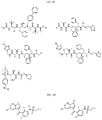


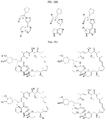


Classifications
-
- C—CHEMISTRY; METALLURGY
- C07—ORGANIC CHEMISTRY
- C07D—HETEROCYCLIC COMPOUNDS
- C07D495/00—Heterocyclic compounds containing in the condensed system at least one hetero ring having sulfur atoms as the only ring hetero atoms
- C07D495/12—Heterocyclic compounds containing in the condensed system at least one hetero ring having sulfur atoms as the only ring hetero atoms in which the condensed system contains three hetero rings
- C07D495/14—Ortho-condensed systems
-
- A—HUMAN NECESSITIES
- A61—MEDICAL OR VETERINARY SCIENCE; HYGIENE
- A61K—PREPARATIONS FOR MEDICAL, DENTAL OR TOILETRY PURPOSES
- A61K45/00—Medicinal preparations containing active ingredients not provided for in groups A61K31/00 - A61K41/00
- A61K45/06—Mixtures of active ingredients without chemical characterisation, e.g. antiphlogistics and cardiaca
-
- A—HUMAN NECESSITIES
- A61—MEDICAL OR VETERINARY SCIENCE; HYGIENE
- A61P—SPECIFIC THERAPEUTIC ACTIVITY OF CHEMICAL COMPOUNDS OR MEDICINAL PREPARATIONS
- A61P35/00—Antineoplastic agents
-
- A—HUMAN NECESSITIES
- A61—MEDICAL OR VETERINARY SCIENCE; HYGIENE
- A61P—SPECIFIC THERAPEUTIC ACTIVITY OF CHEMICAL COMPOUNDS OR MEDICINAL PREPARATIONS
- A61P35/00—Antineoplastic agents
- A61P35/02—Antineoplastic agents specific for leukemia
-
- C—CHEMISTRY; METALLURGY
- C07—ORGANIC CHEMISTRY
- C07D—HETEROCYCLIC COMPOUNDS
- C07D207/00—Heterocyclic compounds containing five-membered rings not condensed with other rings, with one nitrogen atom as the only ring hetero atom
- C07D207/02—Heterocyclic compounds containing five-membered rings not condensed with other rings, with one nitrogen atom as the only ring hetero atom with only hydrogen or carbon atoms directly attached to the ring nitrogen atom
- C07D207/44—Heterocyclic compounds containing five-membered rings not condensed with other rings, with one nitrogen atom as the only ring hetero atom with only hydrogen or carbon atoms directly attached to the ring nitrogen atom having three double bonds between ring members or between ring members and non-ring members
- C07D207/444—Heterocyclic compounds containing five-membered rings not condensed with other rings, with one nitrogen atom as the only ring hetero atom with only hydrogen or carbon atoms directly attached to the ring nitrogen atom having three double bonds between ring members or between ring members and non-ring members having two doubly-bound oxygen atoms directly attached in positions 2 and 5
- C07D207/456—Heterocyclic compounds containing five-membered rings not condensed with other rings, with one nitrogen atom as the only ring hetero atom with only hydrogen or carbon atoms directly attached to the ring nitrogen atom having three double bonds between ring members or between ring members and non-ring members having two doubly-bound oxygen atoms directly attached in positions 2 and 5 with hetero atoms or with carbon atoms having three bonds to hetero atoms with at the most one bond to halogen, e.g. ester or nitrile radicals, directly attached to other ring carbon atoms
-
- C—CHEMISTRY; METALLURGY
- C07—ORGANIC CHEMISTRY
- C07D—HETEROCYCLIC COMPOUNDS
- C07D211/00—Heterocyclic compounds containing hydrogenated pyridine rings, not condensed with other rings
- C07D211/04—Heterocyclic compounds containing hydrogenated pyridine rings, not condensed with other rings with only hydrogen or carbon atoms directly attached to the ring nitrogen atom
- C07D211/06—Heterocyclic compounds containing hydrogenated pyridine rings, not condensed with other rings with only hydrogen or carbon atoms directly attached to the ring nitrogen atom having no double bonds between ring members or between ring members and non-ring members
- C07D211/36—Heterocyclic compounds containing hydrogenated pyridine rings, not condensed with other rings with only hydrogen or carbon atoms directly attached to the ring nitrogen atom having no double bonds between ring members or between ring members and non-ring members with hetero atoms or with carbon atoms having three bonds to hetero atoms with at the most one bond to halogen, e.g. ester or nitrile radicals, directly attached to ring carbon atoms
- C07D211/40—Oxygen atoms
- C07D211/42—Oxygen atoms attached in position 3 or 5
-
- C—CHEMISTRY; METALLURGY
- C07—ORGANIC CHEMISTRY
- C07D—HETEROCYCLIC COMPOUNDS
- C07D211/00—Heterocyclic compounds containing hydrogenated pyridine rings, not condensed with other rings
- C07D211/04—Heterocyclic compounds containing hydrogenated pyridine rings, not condensed with other rings with only hydrogen or carbon atoms directly attached to the ring nitrogen atom
- C07D211/06—Heterocyclic compounds containing hydrogenated pyridine rings, not condensed with other rings with only hydrogen or carbon atoms directly attached to the ring nitrogen atom having no double bonds between ring members or between ring members and non-ring members
- C07D211/36—Heterocyclic compounds containing hydrogenated pyridine rings, not condensed with other rings with only hydrogen or carbon atoms directly attached to the ring nitrogen atom having no double bonds between ring members or between ring members and non-ring members with hetero atoms or with carbon atoms having three bonds to hetero atoms with at the most one bond to halogen, e.g. ester or nitrile radicals, directly attached to ring carbon atoms
- C07D211/56—Nitrogen atoms
-
- C—CHEMISTRY; METALLURGY
- C07—ORGANIC CHEMISTRY
- C07D—HETEROCYCLIC COMPOUNDS
- C07D211/00—Heterocyclic compounds containing hydrogenated pyridine rings, not condensed with other rings
- C07D211/04—Heterocyclic compounds containing hydrogenated pyridine rings, not condensed with other rings with only hydrogen or carbon atoms directly attached to the ring nitrogen atom
- C07D211/80—Heterocyclic compounds containing hydrogenated pyridine rings, not condensed with other rings with only hydrogen or carbon atoms directly attached to the ring nitrogen atom having two double bonds between ring members or between ring members and non-ring members
- C07D211/84—Heterocyclic compounds containing hydrogenated pyridine rings, not condensed with other rings with only hydrogen or carbon atoms directly attached to the ring nitrogen atom having two double bonds between ring members or between ring members and non-ring members with hetero atoms or with carbon atoms having three bonds to hetero atoms, with at the most one bond to halogen directly attached to ring carbon atoms
- C07D211/86—Oxygen atoms
- C07D211/88—Oxygen atoms attached in positions 2 and 6, e.g. glutarimide
-
- C—CHEMISTRY; METALLURGY
- C07—ORGANIC CHEMISTRY
- C07D—HETEROCYCLIC COMPOUNDS
- C07D401/00—Heterocyclic compounds containing two or more hetero rings, having nitrogen atoms as the only ring hetero atoms, at least one ring being a six-membered ring with only one nitrogen atom
- C07D401/02—Heterocyclic compounds containing two or more hetero rings, having nitrogen atoms as the only ring hetero atoms, at least one ring being a six-membered ring with only one nitrogen atom containing two hetero rings
- C07D401/12—Heterocyclic compounds containing two or more hetero rings, having nitrogen atoms as the only ring hetero atoms, at least one ring being a six-membered ring with only one nitrogen atom containing two hetero rings linked by a chain containing hetero atoms as chain links
-
- C—CHEMISTRY; METALLURGY
- C07—ORGANIC CHEMISTRY
- C07D—HETEROCYCLIC COMPOUNDS
- C07D401/00—Heterocyclic compounds containing two or more hetero rings, having nitrogen atoms as the only ring hetero atoms, at least one ring being a six-membered ring with only one nitrogen atom
- C07D401/14—Heterocyclic compounds containing two or more hetero rings, having nitrogen atoms as the only ring hetero atoms, at least one ring being a six-membered ring with only one nitrogen atom containing three or more hetero rings
-
- C—CHEMISTRY; METALLURGY
- C07—ORGANIC CHEMISTRY
- C07D—HETEROCYCLIC COMPOUNDS
- C07D403/00—Heterocyclic compounds containing two or more hetero rings, having nitrogen atoms as the only ring hetero atoms, not provided for by group C07D401/00
- C07D403/02—Heterocyclic compounds containing two or more hetero rings, having nitrogen atoms as the only ring hetero atoms, not provided for by group C07D401/00 containing two hetero rings
- C07D403/04—Heterocyclic compounds containing two or more hetero rings, having nitrogen atoms as the only ring hetero atoms, not provided for by group C07D401/00 containing two hetero rings directly linked by a ring-member-to-ring-member bond
-
- C—CHEMISTRY; METALLURGY
- C07—ORGANIC CHEMISTRY
- C07D—HETEROCYCLIC COMPOUNDS
- C07D405/00—Heterocyclic compounds containing both one or more hetero rings having oxygen atoms as the only ring hetero atoms, and one or more rings having nitrogen as the only ring hetero atom
- C07D405/02—Heterocyclic compounds containing both one or more hetero rings having oxygen atoms as the only ring hetero atoms, and one or more rings having nitrogen as the only ring hetero atom containing two hetero rings
- C07D405/12—Heterocyclic compounds containing both one or more hetero rings having oxygen atoms as the only ring hetero atoms, and one or more rings having nitrogen as the only ring hetero atom containing two hetero rings linked by a chain containing hetero atoms as chain links
-
- C—CHEMISTRY; METALLURGY
- C07—ORGANIC CHEMISTRY
- C07D—HETEROCYCLIC COMPOUNDS
- C07D413/00—Heterocyclic compounds containing two or more hetero rings, at least one ring having nitrogen and oxygen atoms as the only ring hetero atoms
- C07D413/02—Heterocyclic compounds containing two or more hetero rings, at least one ring having nitrogen and oxygen atoms as the only ring hetero atoms containing two hetero rings
- C07D413/12—Heterocyclic compounds containing two or more hetero rings, at least one ring having nitrogen and oxygen atoms as the only ring hetero atoms containing two hetero rings linked by a chain containing hetero atoms as chain links
-
- C—CHEMISTRY; METALLURGY
- C07—ORGANIC CHEMISTRY
- C07D—HETEROCYCLIC COMPOUNDS
- C07D471/00—Heterocyclic compounds containing nitrogen atoms as the only ring hetero atoms in the condensed system, at least one ring being a six-membered ring with one nitrogen atom, not provided for by groups C07D451/00 - C07D463/00
- C07D471/02—Heterocyclic compounds containing nitrogen atoms as the only ring hetero atoms in the condensed system, at least one ring being a six-membered ring with one nitrogen atom, not provided for by groups C07D451/00 - C07D463/00 in which the condensed system contains two hetero rings
- C07D471/04—Ortho-condensed systems
-
- C—CHEMISTRY; METALLURGY
- C07—ORGANIC CHEMISTRY
- C07D—HETEROCYCLIC COMPOUNDS
- C07D487/00—Heterocyclic compounds containing nitrogen atoms as the only ring hetero atoms in the condensed system, not provided for by groups C07D451/00 - C07D477/00
- C07D487/02—Heterocyclic compounds containing nitrogen atoms as the only ring hetero atoms in the condensed system, not provided for by groups C07D451/00 - C07D477/00 in which the condensed system contains two hetero rings
- C07D487/04—Ortho-condensed systems
-
- C—CHEMISTRY; METALLURGY
- C07—ORGANIC CHEMISTRY
- C07D—HETEROCYCLIC COMPOUNDS
- C07D495/00—Heterocyclic compounds containing in the condensed system at least one hetero ring having sulfur atoms as the only ring hetero atoms
- C07D495/02—Heterocyclic compounds containing in the condensed system at least one hetero ring having sulfur atoms as the only ring hetero atoms in which the condensed system contains two hetero rings
- C07D495/04—Ortho-condensed systems
-
- G—PHYSICS
- G07—CHECKING-DEVICES
- G07F—COIN-FREED OR LIKE APPARATUS
- G07F17/00—Coin-freed apparatus for hiring articles; Coin-freed facilities or services
- G07F17/32—Coin-freed apparatus for hiring articles; Coin-freed facilities or services for games, toys, sports, or amusements
- G07F17/3202—Hardware aspects of a gaming system, e.g. components, construction, architecture thereof
- G07F17/3204—Player-machine interfaces
- G07F17/3211—Display means
-
- G—PHYSICS
- G07—CHECKING-DEVICES
- G07F—COIN-FREED OR LIKE APPARATUS
- G07F17/00—Coin-freed apparatus for hiring articles; Coin-freed facilities or services
- G07F17/32—Coin-freed apparatus for hiring articles; Coin-freed facilities or services for games, toys, sports, or amusements
- G07F17/3225—Data transfer within a gaming system, e.g. data sent between gaming machines and users
-
- G—PHYSICS
- G07—CHECKING-DEVICES
- G07F—COIN-FREED OR LIKE APPARATUS
- G07F17/00—Coin-freed apparatus for hiring articles; Coin-freed facilities or services
- G07F17/32—Coin-freed apparatus for hiring articles; Coin-freed facilities or services for games, toys, sports, or amusements
- G07F17/3244—Payment aspects of a gaming system, e.g. payment schemes, setting payout ratio, bonus or consolation prizes
-
- G—PHYSICS
- G07—CHECKING-DEVICES
- G07F—COIN-FREED OR LIKE APPARATUS
- G07F17/00—Coin-freed apparatus for hiring articles; Coin-freed facilities or services
- G07F17/32—Coin-freed apparatus for hiring articles; Coin-freed facilities or services for games, toys, sports, or amusements
- G07F17/3244—Payment aspects of a gaming system, e.g. payment schemes, setting payout ratio, bonus or consolation prizes
- G07F17/3246—Payment aspects of a gaming system, e.g. payment schemes, setting payout ratio, bonus or consolation prizes involving coins and/or banknotes
-
- G—PHYSICS
- G07—CHECKING-DEVICES
- G07F—COIN-FREED OR LIKE APPARATUS
- G07F17/00—Coin-freed apparatus for hiring articles; Coin-freed facilities or services
- G07F17/32—Coin-freed apparatus for hiring articles; Coin-freed facilities or services for games, toys, sports, or amusements
- G07F17/326—Game play aspects of gaming systems
- G07F17/3272—Games involving multiple players
-
- G—PHYSICS
- G07—CHECKING-DEVICES
- G07F—COIN-FREED OR LIKE APPARATUS
- G07F17/00—Coin-freed apparatus for hiring articles; Coin-freed facilities or services
- G07F17/32—Coin-freed apparatus for hiring articles; Coin-freed facilities or services for games, toys, sports, or amusements
- G07F17/3286—Type of games
- G07F17/3288—Betting, e.g. on live events, bookmaking
Definitions
- This invention provides Degronimers that have E3 Ubiquitin Ligase targeting moieties (Degrons) that can be linked to a targeting ligand for a protein that has been selected for in vivo degradation, and methods of use and compositions thereof as well as methods for their preparation.
- the invention also provides Degrons that can be used to treat disorders mediated by cereblon or an Ikaros family protein.
- Protein degradation is a highly regulated and essential process that maintains cellular homeostasis.
- the selective identification and removal of damaged, misfolded, or excess proteins is achieved via the ubiquitin-proteasome pathway (UPP).
- UPP ubiquitin-proteasome pathway
- the UPP is central to the regulation of almost all cellular processes, including antigen processing, apoptosis, biogenesis of organelles, cell cycling, DNA transcription and repair, differentiation and development, immune response and inflammation, neural and muscular degeneration, morphogenesis of neural networks, modulation of cell surface receptors, ion channels and the secretory pathway, the response to stress and extracellular modulators, ribosome biogenesis and viral infection.
- Covalent attachment of multiple ubiquitin molecules by an E3 ubiquitin ligase to a terminal lysine residue marks the protein for proteasome degradation, where the protein is digested into small peptides and eventually into its constituent amino acids that serve as building blocks for new proteins.
- Defective proteasomal degradation has been linked to a variety of clinical disorders including Alzheimer's disease, Parkinson's disease, Huntington's disease, muscular dystrophies, cardiovascular disease, and cancer among others.
- E3 ubiquitin ligases which facilitate the ubiquitination of different proteins in vivo, which can be divided into four families: HECT-domain E3s, U-box E3s, monomeric RING E3s and multi-subunit E3s. See generally Li et al. ( PLOS One, 2008, 3, 1487) titled “Genome-wide and functional annotation of human E3 ubiquitin ligases identifies MULAN, a mitochondrial E3 that regulates the organelle's dynamics and signaling”; Berndsen et al. ( Nat. Struct. Mol. Biol., 2014, 21, 301-307) titled “New insights into ubiquitin E3 ligase mechanism”; Deshaies et al.
- Proteinex, Inc. filed a patent application in February 1999 that issued as U.S. Pat. No. 6,306,663 claiming a method of generating a compound for activating the ubiquitination of a Target Protein which comprises covalently linking a Target Protein binding element able to bind specifically to the Target Protein via a ubiquitination recognition element.
- Proteinex described that the invention can be used to control protein levels in eukaryotes. While the '663 patent may have been based on the first patent application to describe the high level concept of how to manipulate the UPP system to degrade selected proteins in vivo, the patent did not provide sufficient detail to allow persons of skill to easily construct the range of proposed compounds.
- ubiquitination recognition elements For example, for the ubiquitination recognition elements, the skilled person was told among other things to use standard methods for drug discovery and screen for appropriate small molecules that would bind to the ligase. Proteinex also emphasized the use of peptides as ubiquitination recognition elements, which can pose significant difficulties for oral drug administration.
- the first E3 ligase successfully targeted with a small molecule was MDM2, which ubiquitinates the tumor suppressor p53.
- the targeting ligand was an HDM2/MDM2 inhibitor identified in Vassilev et al. ( Science 2004, 303, 844-848) titled “In Vivo Activation of the P53 Pathway by Small-Molecule Antagonists of MDM2”.
- WO 2013/170147 filed by Crews et al. titled “Compounds Useful for Promoting Protein Degradation and Methods of Using Same” describes compounds comprising a protein degradation moiety covalently bound to a linker, wherein the C log P of the compound is equal to or higher than 1.5.
- the specification discloses protein degrading compounds that incorporate certain small molecules that can bind to an E3 ubiquitin ligase.
- cereblon is a thalidomide binding protein. Cereblon forms part of an E3 ubiquitin ligase protein complex which interacts with damaged DNA binding protein 1, forming an E3 ubiquitin ligase complex with Cullin 4 and the E2-binding protein ROC1 (also known as RBX1) where it functions as a substrate receptor to select proteins for ubiquitination.
- ROC1 also known as RBX1
- thalidomide binds to the cereblon E3 ubiquitin ligase led to research to investigate incorporating thalidomide and certain derivatives into compounds for the targeted destruction of proteins.
- Two seminal papers were published in Science in 2014: G. Lu et al., The Myeloma Drug Lenalidomide Promotes the Cereblon-Dependent Destruction of Ikaros Proteins, Science, 343, 305-309 (2014); and J. Kronke et al., Lenalidomide Causes Selective Degradation of IKZF1 and IKZF3 in Multiple Myeloma Cells, Science, 343, 301-305 (2014).
- Phthalimide Conjugation as a Strategy for in Vivo Target Protein Degradation describes thalidomide based Target Protein degradation technology.
- WO 2015/160845 assigned to Arvinas Inc. titled “Imide Based Modulators of Proteolysis and Associated Methods of Use” describes protein degradation compounds that incorporate thalidomide and certain derivatives which bind to a cereblon E3 ligase. Additional patent applications filed by Arvinas Inc. directed to the degradation of a Target Protein using known E3 ligase ligands to direct the Target Protein to the proteasome for degradation include U.S. 2016/0058872 titled “Imide Based Modulators of Proteolysis and Associated Methods of Use”; U.S. 2016/0045607 titled “Estrogen-related Receptor Alpha Based PROTAC Compounds and Associated Methods of Use”; U.S.
- C4 Therapeutics has filed patent applications directed to the degradation of a Target Protein using E3 Ligase Ligands to direct the Target Protein to the proteasome for degradation.
- These filings include WO 2017/197051 titled “Amine-Linked C3-Glutarimide Degronimers for Target Protein Degradation”; WO 2017/197036 titled “Spirocyclic Degronimers for Target Protein Degradation”; WO 2017/197055 titled “Heterocyclic Degronimers for Target Protein Degradation”; WO 2017/197056 titled “Bromodomain Targeting Degronimers for Target Protein Degradation”; WO 2017/197046 titled “C3-Carbon Linked Glutarimide Degronimers for Target Protein Degradation.”
- Degronimers are provided that cause degradation of a targeted protein via the ubiquitin proteasome pathway (UPP).
- Degrons are provided that bind to an E3 Ubiquitin Ligase (typically cereblon).
- E3 Ubiquitin Ligase typically cereblon
- the binding of the Degron to cereblon results in increased interactions of cereblon with Ikaros or Aiolos, leading to their subsequent ubiquitination and degradation in the proteasome. Decreased levels of Ikaros or Aiolos leads to changes in transcriptional regulation of their downstream proteins.
- a selected Degron disclosed herein, its pharmaceutically acceptable salt, or its pharmaceutically acceptable composition can be used to treat a disorder mediated by Ikaros or Aiolos, for example, a hematopoietic malignancy such as multiple myeloma, leukemia, acute myeloid leukemia, acute lymphoblastic leukemia, chronic lymphoblastic leukemia, or a myelodysplastic syndrome. Therefore, in some embodiments a method to treat a host (typically a human) with a disorder mediated by Ikaros or Aiolos, is provided that includes administering an effective amount of the Degron or its pharmaceutically acceptable salt to the host, optionally as a pharmaceutically acceptable composition. The compounds can also be used to achieve immunomodulation or reduce angiogenesis.
- the Degronimer is a compound of Formula I, Formula II, Formula III, or Formula IV, that includes a “Targeting Ligand” that binds (typically non-covalently) to a selected Target Protein, a “Degron” which binds (typically non-covalently) to an E3 Ligase (typically cereblon) and optionally a Linker that covalently links the Targeting Ligand to the Degron.
- the Degronimer provided herein or its pharmaceutically acceptable salt and/or its pharmaceutically acceptable composition can be used to treat a disorder which is mediated by the selected Target Protein that binds to the Targeting Ligand. Therefore, in some embodiments a method to treat a host with a disorder mediated by the Target Protein is provided that includes administering an effective amount of the Degronimer or its pharmaceutically acceptable salt described herein to the host, typically a human, optionally in a pharmaceutically acceptable composition.
- the selected Target Protein is derived from a gene that has undergone an amplification, translocation, deletion, or inversion event which causes or is caused by a medical disorder.
- the selected Target Protein has been post-translationally modified by one, or combinations, of phosphorylation, acetylation, acylation including propionylation and crotylation, N-linked glycosylation, amidation, hydroxylation, methylation, poly-methylation, O-linked glycosylation, pyroglutamoylation, myristoylation, farnesylation, geranylation, ubiquitination, sumoylation, or sulfation which causes or is caused by a medical disorder.
- the Target Protein can be covalently modified by a Targeting Ligand that has been functionalized to create a covalent bond with the Target Protein, and the covalently bond can be irreversible or reversible.
- composition a pharmaceutically acceptable salt, N-oxide, isotopic derivative, or prodrug thereof, optionally in a pharmaceutically acceptable carrier to form a composition;
- W 1 is CR 6 R 7 , C ⁇ O, C ⁇ S, C ⁇ CH 2 , SO 2 , S(O), P(O)Oalkyl, P(O)NHalkyl, P(O)N(alkyl) 2 , P(O)alkyl, P(O)OH, or P(O)NH 2 ;
- W 2 is CR 8 R 0 , C ⁇ O, C ⁇ S, C ⁇ CH 2 , SO 2 , S(O), P(O)Oalkyl, P(O)NHalkyl, P(O)N(alkyl) 2 , P(O)alkyl, P(O)OH, or P(O)NH 2 ;
- W 1 is C ⁇ O
- W 2 is C ⁇ O
- X is independently selected from the group consisting of NH, NR 3 , CH 2 , CHR 3 , C(R 3 ) 2 , O, and S;
- n 0, 1, 2, or 3;
- n 0, 1, 2, or 3;
- n 0, 1, or 2;
- R 1 is selected from
- each R 1 is optionally substituted with one or more substituents independently selected from R 5 ;
- R 2 is independently alkyl, hydrogen, aliphatic, heteroaliphatic, aryl, heteroaryl, or heterocyclic;
- alkyl is C 1 -C 6 , C 1 -C 5 , C 1 -C 4 , C 1 -C 3 , C 1 -C 2 , or methyl;
- R 1 * is selected from
- R 1 * is selected from
- R 3 is selected at each instance from alkyl, —C(O)H, —C(O)OH, —C(O)alkyl, —C(O)Oalkyl, alkene, and alkyne;
- R 4 is selected at each instance from alkyl, alkene, alkyne, halogen, hydroxyl, alkoxy, azide, amino, —NHalkyl, —N(alkyl) 2 , —NHSO 2 alkyl, —N(alkyl)SO 2 alkyl, —NHSO 2 aryl, —N(alkyl)SO 2 aryl, —NHSO 2 alkenyl, —N(alkyl)SO 2 alkenyl, —NHSO 2 alkynyl, —N(alkyl)SO 2 alkynyl, and haloalkyl;
- R 5 and R 14 are selected at each instance from hydrogen, alkyl, alkene, alkyne, halogen, hydroxyl, alkoxy, azide, amino, cyano, —NH(aliphatic, including alkyl), —N(aliphatic, including alkyl) 2 , —NHSO 2 (aliphatic, including alkyl), —N(aliphatic, including alkyl)SO 2 alkyl, —NHSO 2 (aryl, heteroaryl or heterocyclic), C(O)R 4 , —N(alkyl)SO 2 (aryl, heteroaryl or heterocyclic) —NHSO 2 alkenyl, —N(alkyl)SO 2 alkenyl, —NHSO 2 alkynyl, —N(alkyl)SO 2 alkynyl, haloalkyl, aliphatic, heteroaliphatic, aryl, heteroaryl, heteroalkyl and carbocyclic;
- R 5 can be optionally substituted, for example, with one or more substituents selected from alkyl, alkene, alkyne, halogen, hydroxyl, alkoxy, azide, amino, —NHalkyl, —N(alkyl) 2 , aryl, heterocyclo, heteroaryl, haloalkyl, and cycloalkyl, or as otherwise described herein;
- R 6 , R 7 , R 8 , R 9 , R 10 , and R 11 are independently selected from hydrogen, alkyl, aliphatic, heteroaliphatic, hydroxyl, alkoxy, amine, —NH(aliphatic, including alkyl), and —N(aliphatic, including alkyl) 2 ;
- R 6 and R 7 together with the carbon to which they are bound form a 3-, 4-, 5-, or 6-membered spirocarbocycle, or a 4-, 5-, or 6-membered spiroheterocycle comprising 1 or 2 heteroatoms selected from N and O;
- R 8 and R 9 together with the carbon to which they are bound form a 3-, 4-, 5-, or 6-membered spirocarbocycle, or a 4-, 5-, or 6-membered spiroheterocycle comprising 1 or 2 heteroatoms selected from N and O;
- R 10 and R 11 together with the carbon to which they are bound form a 3-, 4-, 5-, or 6-membered spirocarbocycle, or a 4-, 5-, or 6-membered spiroheterocycle comprising 1 or 2 heteroatoms selected from N and O;
- R 6 and R 8 form a 1 or 2 carbon bridged ring
- R 6 and R 10 form a 1 or 2 carbon bridged ring
- R 8 and R 10 form a 1 or 2 carbon bridged ring
- R 14 and R 6 form a 3, 4, 5, or 6 carbon fused ring
- R 14 and R 8 form a 1 or 2 carbon bridged ring
- R 14 and R 4 form a 3, 4, 5, or 6 carbon fused ring wherein R 4 is on the carbon alpha to R 14 or a 1, 2, 3, or 4 carbon bridged ring wherein R 4 is not on the carbon alpha to R 14 ;
- R 12 is Linker-Targeting Ligand
- Linker is a chemical group that attaches the Degron to a Targeting Ligand
- Targeting Ligand is a moiety that binds to a Target Protein.
- R 4 is hydrogen
- composition a pharmaceutically acceptable salt, N-oxide, isotopic derivative, prodrug, optionally in a pharmaceutically acceptable carrier to form a composition;
- R 16 is selected from
- each R 16 is optionally substituted with one or more substituents independently selected from R 5 ;
- the structure of the Degronimer is typically selected such that it is sufficiently stable to sustain a shelf life of at least two, three, four, or five months at ⁇ 20° C. In one embodiment the structure of the Degronimer is typically selected such that it is sufficiently stable to sustain a shelf life of at least two, three, four, or five months under ambient conditions. To accomplish this, each of the R groups described herein must be sufficiently stable to sustain the corresponding desired shelf life of at least two, three, four or five months under ambient conditions.
- One of ordinary skill in the art is well aware of the stability of chemical moieties and can avoid those that are not stable or are too reactive under the appropriate conditions.
- the Degronimer (Degron, Linker and Targeting Ligand), including any of the “R” groups defined herein, may be optionally substituted as described below in Section I. Definitions, if desired to achieve the target effect, results in a stable R moiety and final compound that makes chemical sense to the routineer, and if a final compound for therapy, is pharmaceutically acceptable. Also, all R groups, with or without optional substituents, should be interpreted in a manner that does not include redundancy (i.e., as known in the art, alkyl substituted with alkyl is redundant; however for examples, alkoxy substituted with alkoxy is not redundant).
- Degronimers of Formula I, Formula II, Formula III, and Formula IV are bifunctional with E3 Ubiquitin Ligase targeting moieties (Degrons) linked to protein Targeting Ligands (described in more detail below), which function to recruit Targeted Proteins to E3 Ubiquitin Ligase for degradation.
- E3 Ubiquitin Ligase targeting moieties (Degrons) linked to protein Targeting Ligands (described in more detail below), which function to recruit Targeted Proteins to E3 Ubiquitin Ligase for degradation.
- a disorder treatable by such compounds is abnormal cellular proliferation, such as a tumor or cancer, wherein the Targeted Protein is an oncogenic protein or a signaling mediator of an abnormal cellular proliferative pathway and its degradation decreases abnormal cell growth.
- a disorder mediated by a protein that is targeted for selective degradation that includes administering an effective amount of one or a combination of the Formula I, Formula II, Formula III, or Formula IV compounds described herein to a patient (typically a human) in need thereof, optionally in a pharmaceutically acceptable carrier.
- the disorder is selected from a benign growth, neoplasm, tumor, cancer, immune disorder, autoimmune disorder, inflammatory disorder, graft-versus-host rejection, viral infection, bacterial infection, an amyloid-based proteinopathy, a proteinopathy, or fibrotic disorder.
- the patient is a human.
- the present invention provides Degron moieties which are covalently linked to a Targeting Ligand through a Linker which can be of varying length and functionality.
- the Degron moiety is linked directly to the Targeting Ligand (i.e., the Linker is a bond).
- the Linker can be any chemically stable group that attaches the Degron to the Targeting Ligand.
- the Linker has a chain of 2 to 14, 15, 16, 17, 18 or 20 or more carbon atoms of which one or more carbons can be replaced by a heteroatom such as O, N, S, P, as long as the resulting molecule has a stable shelf life for at least 2 months, 3 months, 6 months or 1 year as part of a pharmaceutically acceptable dosage form, and itself is pharmaceutically acceptable.
- the chain has 2, 3, 4, 5, 6, 7, 8, 9, 10, 11, 12, 13, or 14 contiguous atoms in the chain.
- the chain may include 1 or more ethylene glycol units, and in some embodiments, may have at least 2, 3, 4, 5, 6, 7, 8, 9, or 10 or more contiguous, partially contiguous or non-contiguous ethylene glycol units in the Linker.
- the chain has at least 1, 2, 3, 4, 5, 6, 7, or 8 branches which can be independently alkyl, heteroalkyl, aryl, heteroaryl, alkenyl, or alkynyl substituents, which in one embodiment, each branch has 10, 8, 6, 4, 3, 2 carbons or one carbon.
- the Targeted Protein is a protein that is not druggable in the classic sense in that it does not have a binding pocket or an active site that can be inhibited or otherwise bound, and cannot be easily allosterically controlled. In another embodiment, the Targeted Protein is a protein that is druggable in the classic sense. Examples of Targeted Proteins are provided below.
- Compounds of the present application may offer important clinical benefits to patients, in particular for the treatment of the disease states and conditions modulated by the proteins of interest.
- a Degron as described herein can be used alone (i.e., not as part of a Degronimer) as an in vivo binder of cereblon, which can be administered to a host, for example, a human, in need thereof, in an effective amount, optionally as a pharmaceutically acceptable salt, and optionally in a pharmaceutically acceptable composition, for any therapeutic indication which can be treated by modulating the function and or activity of the cereblon-containing E3 Ubiquitin Ligase Protein Complex, including but not limited to uses known for the cereblon binders thalidomide, pomalidomide or lenalidomide.
- the compound of Formula V or Formula VI can activate, decrease or change the natural activity of cereblon.
- Non-limiting examples of disorders that can be treated with cereblon binders include multiple myeloma, a hematological disorder such as myelodysplastic syndrome, cancer, tumors, abnormal cellular proliferation, HIV/AIDS, Crohn's disease, sarcoidosis, graft-versus-host disease, rheumatoid arthritis, Behcet's disease, tuberculosis, and myelofibrosis.
- a hematological disorder such as myelodysplastic syndrome, cancer, tumors, abnormal cellular proliferation, HIV/AIDS, Crohn's disease, sarcoidosis, graft-versus-host disease, rheumatoid arthritis, Behcet's disease, tuberculosis, and myelofibrosis.
- the Degron is a compound of Formula V or Formula VI. This compound may bind to cereblon resulting in increased interactions of cereblon with Ikaros or
- Aiolos leading to their subsequent ubiquitination and degradation in the proteasome. Decreased levels of Ikaros or Aiolos leads to changes in transcriptional regulation of their downstream proteins.
- R 13 is selected from
- each R 13 is optionally substituted with one or more substituents independently selected from R 5 ;
- R 13 is selected from
- each R 13 is optionally substituted with one or more substituents independently selected from R 5 ;
- R 13 is selected from
- R 2 is independently alkyl, hydrogen, aliphatic, heteroaliphatic, aryl, heteroaryl or heterocyclic;
- R 4 is hydrogen
- the compounds of Formulas V and VI do not include a Linker or a Targeting Ligand.
- the compound of Formula V or Formula VI can activate, decrease or change the natural activity of cereblon.
- These Formula V or Formula VI compounds are useful as therapeutic agents when administered in an effective amount to a host, including a human, for the treatment of a medical disorder including, but not limited to, abnormal cellular proliferation, including a tumor or cancer, or a myelo- or lymphoproliferative disorder such as B- or T-cell lymphomas, multiple myeloma, Waldenstrom's macroglobulinemia, Wiskott-Aldrich syndrome, or a post-transplant lymphoproliferative disorder; an immune disorder, including autoimmune disorders such as Addison disease, Celiac disease, dermatomyositis, Graves disease, thyroiditis, multiple sclerosis, pernicious anemia, reactive arthritis, lupus, or type I diabetes; a disease of cardiologic malfunction, including hypercholesterolemia;
- compounds and methods are presented for the treatment of a disorder which can be treated by thalidomide, pomalidomide, or lenalidomide.
- disorders that may be treated by thalidomide, pomalidomide, or lenalidomide include, but are not limited to, benign growth, neoplasm, tumor, cancer, abnormal cellular proliferation, immune disorder, inflammatory disorder, graft-versus-host rejection, viral infection, bacterial infection, an amyloid-based proteinopathy, a proteinopathy, or a fibrotic disorder.
- other disorders are described below which can be treated with an effective amount of a compound described herein.
- the compound of Formula I, Formula II, Formula III, Formula IV, Formula V, or Formula VI has at least one desired isotopic substitution of an atom, at an amount above the natural abundance of the isotope, i.e., enriched.
- the compound of Formula I, Formula II, Formula III, Formula IV, Formula V, or Formula VI includes a deuterium or multiple deuterium atoms.
- R 12 is Linker-Hydrogen instead of Linker-Targeting Ligand.
- the compound of Formula I, Formula II, Formula III, or Formula IV may be a useful synthetic intermediate, or alternatively may be used to treat a disorder mediated by cereblon or an Ikaros family protein.
- Non-limiting illustrative examples of this embodiment include:
- the present invention thus includes at least the following features:
- a Degronimer of Formula I, Formula II, Formula III, or Formula IV in an effective amount in the treatment of a patient, including a human, with a disorder mediated by a Targeted Protein, including abnormal cellular proliferation such as a tumor or cancer, an immune or autoimmune disorder or inflammatory disorder, a cardiologic disorder, an infectious disease, or other disorder that responds to such treatment;
- a method for manufacturing a medicament intended for the therapeutic treatment of a viral infection including but not limited to HIV, HBV, HCV and RSV, characterized in that a compound of Formula I, Formula II, Formula III, or Formula IV, as described herein is used in the manufacture;
- a pharmaceutical formulation comprising an effective host-treating amount of the compound of Formula I, Formula II, Formula III, Formula IV, Formula V, or Formula VI or a pharmaceutically acceptable salt, isotopic derivative or prodrug thereof together with a pharmaceutically acceptable carrier or diluent;
- FIG. 1A-1C present examples of Retenoid X Receptor (RXR) Targeting Ligands wherein R is the point at which the Linker is attached.
- FIG. 1D-1F present examples of general Dihydrofolate reductase (DHFR) Targeting Ligands wherein R is the point at which the Linker is attached.
- DHFR Dihydrofolate reductase
- FIG. 1G presents examples of Bacillus anthracis Dihydrofolate reductase (BaDHFR) Targeting Ligands wherein R is the point at which the Linker is attached.
- BaDHFR Bacillus anthracis Dihydrofolate reductase
- FIG. 1H-1J present examples of Heat Shock Protein 90 (HSP90) Targeting Ligands wherein R is the point at which the Linker is attached.
- FIG. 1K-1Q present examples of General Kinase and Phosphatase Targeting Ligands wherein R is the point at which the Linker is attached.
- FIG. 1R-1S present examples of Tyrosine Kinase Targeting Ligands wherein R is the point at which the Linker is attached.
- FIG. 1T presents examples of Aurora Kinase Targeting Ligands wherein R is the point at which the Linker is attached.
- FIG. 1U presents examples of Protein Tyrosine Phosphatase Targeting Ligands wherein R is the point at which the Linker is attached.
- FIG. 1V presents examples of ALK Targeting Ligands wherein R is the point at which the Linker is attached.
- FIG. 1W presents examples of ABL Targeting Ligands wherein R is the point at which the Linker is attached.
- FIG. 1X presents examples of JAK2 Targeting Ligands wherein R is the point at which the Linker is attached.
- FIG. 1Y-1Z present examples of MET Targeting Ligands wherein R is the point at which the Linker is attached.
- FIG. 1AA presents examples of mTORC1 and/or mTORC2 Targeting Ligands wherein R is the point at which the Linker is attached.
- FIG. 1DD presents examples of IGF1R and/or IR Targeting Ligands wherein R is the point at which the Linker is attached.
- FIG. 1GG-1MM present examples of BET Bromodomain-Containing Protein Targeting Ligands wherein R is the point at which the Linker is attached.
- FIG. 1QQ-1TT present examples of Androgen Receptor Targeting Ligands wherein R is the point at which the Linker is attached.
- FIG. 1VV-1WW present examples of Thyroid Hormone Receptor Targeting Ligands wherein R is the point at which the Linker is attached.
- FIG. 1XX presents examples of HIV Protease Targeting Ligands wherein R is the point at which the Linker is attached.
- FIG. 1ZZ presents examples of HCV Protease Targeting Ligands wherein R is the point at which the Linker is attached.
- FIG. 1 AAA presents examples of AP1 and/or AP2 Targeting Ligands wherein R is the point at which the Linker is attached.
- FIG. 1 BBB- 1 CCC present examples of MCL-1 Targeting Ligands wherein R is the point at which the Linker is attached.
- FIG. 1 DDD presents examples of IDH1 Targeting Ligands wherein R is the point at which the Linker is attached.
- FIG. 1 GGG presents examples of MERTK or MER Targeting Ligands wherein R is the point at which the linker is attached.
- FIG. 1 HHH- 1 III present examples of EGFR Targeting Ligands wherein R is the point at which the Linker is attached.
- FIG. 1 JJJ- 1 KKK present examples of FLT3 Targeting Ligands wherein R is the point at which the Linker is attached.
- FIG. 1 LLL presents examples of SMRCA2 Targeting Ligands wherein R is the point at which the Linker is attached.
- FIG. 2A presents examples of the kinase inhibitor Targeting Ligands U09-CX-5279 (derivatized) wherein R is the point at which the Linker is attached.
- FIG. 2D presents examples of kinase inhibitor Targeting Ligands, including the kinase inhibitor compounds 6TP and 0TP (derivatized) wherein R is the point at which the Linker is attached.
- R is the point at which the Linker is attached.
- FIG. 2E presents examples of kinase inhibitor Targeting Ligands, including the kinase inhibitor compound 07U wherein R is the point at which the Linker is attached.
- R is the point at which the Linker is attached.
- kinase inhibitors identified in Van Eis et al. “2 6-Naphthyridines as potent and selective inhibitors of the novel protein kinase C isozymes” Biorg. Med. Chem. Lett., 21(24): 7367-72 (2011).
- FIG. 2F presents examples of kinase inhibitor Targeting Ligands, including the kinase inhibitor compound YCF, wherein R is the point at which the Linker is attached.
- R is the point at which the Linker is attached.
- kinase inhibitors identified in Lountos et al. “Structural Characterization of Inhibitor Complexes with Checkpoint Kinase 2 (Chk2) a Drug Target for Cancer Therapy” J. Struct. Biol., 176: 292 (2011).
- FIG. 2G-2H present examples of kinase inhibitor Targeting Ligands, including the kinase inhibitors XK9 and NXP (derivatized) wherein R is the point at which the Linker is attached.
- R is the point at which the Linker is attached.
- FIG. 2I-2J present examples of kinase inhibitor Targeting Ligands wherein R is the point at which the Linker r is attached.
- FIG. 2K-2M present examples of Cyclin Dependent Kinase 9 (CDK9) Targeting Ligands wherein R is the point at which the Linker is attached.
- CDK9 Cyclin Dependent Kinase 9
- FIG. 2K-2M present examples of Cyclin Dependent Kinase 9 (CDK9) Targeting Ligands wherein R is the point at which the Linker is attached.
- CDK9/cyclin T1 Cyclin Dependent Kinase 9
- FIG. 2Q presents examples of Cyclin Dependent Kinase 12 and/or Cyclin Dependent Kinase 13 Targeting Ligands wherein R is the point at which the Linker is attached.
- R is the point at which the Linker is attached.
- FIG. 2R-2S present examples of Glucocorticoid Receptor Targeting Ligands wherein R is the point at which the Linker is attached.
- FIG. 2T-2U present examples of RasG12C Targeting Ligands wherein R is the point at which the Linker is attached.
- FIG. 2V presents examples of Her3 Targeting Ligands wherein R is the point at which the Linker is attached and R′ is
- FIG. 2W presents examples of Bcl-2 or Bcl-XL Targeting Ligands wherein R is the point at which the Linker is attached.
- FIG. 2X-2NN present examples of BCL2 Targeting Ligands wherein R is the point at which the Linker is attached.
- R is the point at which the Linker is attached.
- Toure B. B. et al. The role of the acidity of N-heteroaryl sulfonamides as inhibitors of bcl-2 family protein-protein interactions.”
- ABT-199 a potent and selective BCL-2 inhibitor achieves antitumor activity while sparing platelets.” Nature Med. 19: 202-208 (2013); Angelo Aguilar et al. “A Potent and Highly Efficacious Bcl-2/Bcl-xL Inhibitor” J Med Chem. 56(7): 3048-3067 (2013); Longchuan Bai et al. “BM-1197: A Novel and Specific Bcl-2/Bcl-xL Inhibitor Inducing Complete and Long-Lasting Tumor Regression In Vivo” PLoS ONE 9(6): e99404; Fariba Ne'matil et al.
- FIG. 2OO-2UU present examples of BCL-XL Targeting Ligands wherein R is the point at which the Linker is attached.
- R is the point at which the Linker is attached.
- FIG. 2OO-2UU present examples of BCL-XL Targeting Ligands wherein R is the point at which the Linker is attached.
- FIG. 2VV presents examples of PPAR-gamma Targeting Ligands wherein R is the point at which the Linker is attached.
- FIG. 2WW-2YY present examples of EGFR Targeting Ligands that target the EGFR L858R mutant, including erlotinib, gefitnib, afatinib, neratinib, and dacomitinib, wherein R is the point at which the Linker is attached.
- FIG. 2ZZ - 2 FFF present examples of EGFR Targeting Ligands that target the EGFR T790M mutant, including osimertinib, rociletinib, olmutinib, naquotinib, josartinib, PF-06747775, Icotinib, Neratinib Avitinib, Tarloxotinib, PF-0645998, Tesevatinib, Transtinib, WZ-3146, WZ8040, and CNX-2006, wherein R is the point at which the Linker is attached.
- FIG. 2 GGG presents examples of EGFR Targeting Ligands that target the EGFR C797S mutant, including EAI045, wherein R is the point at which the Linker is attached.
- FIG. 2 HHH presents examples of BCR-ABL Targeting Ligands that target the BCR-ABL T315I mutantm including Nilotinib and Dasatinib, wherein R is the point at which the Linker is attached. See for example, the crystal structure PDB 3CS9.
- FIG. 2 III presents examples of Targeting Ligands that target BCR-ABL, including Nilotinib, Dasatinib Ponatinib and Bosutinib, wherein R is the point at which the Linker is attached.
- FIG. 2 JJJ- 2 KKK present examples of ALK Targeting Ligands that target the ALK L1196M mutant including Ceritinib, wherein R is the point at which the Linker is attached. See for example, the crystal structure PDB 4MKC.
- FIG. 2 LLL presents examples of JAK2 Targeting Ligands that target the JAK2V617F mutant, including Ruxolitinib, wherein R is the point at which the Linker is attached.
- FIG. 2 MMM presents examples of BRAF Targeting Ligands that target the BRAF V600E mutant including Vemurafenib, wherein R is the point at which the Linker is attached.
- R is the point at which the Linker is attached.
- FIG. 2 NNN presents examples of BRAF Targeting Ligands, including Dabrafenib, wherein R is the point at which the Linker is attached.
- FIG. 2 OOO presents examples of LRRK2 Targeting Ligands that target the LRRK2 R1441C mutant wherein R is the point at which the Linker is attached.
- FIG. 2 PPP presents examples of LRRK2 Targeting Ligands that target the LRRK2 G2019S mutant wherein R is the point at which the Linker is attached.
- FIG. 2 QQQ presents examples of LRRK2 Targeting Ligands that target the LRRK2 I2020T mutant wherein R is the point at which the Linker is attached.
- FIG. 2 RRR- 2 TTT present examples of PDGFR ⁇ Targeting Ligands that target the PDGFR ⁇ T674I mutant, including AG-1478, CHEMBL94431, Dovitinib, erlotinib, gefitinib, imatinib, Janex 1, Pazopanib, PD153035, Sorafenib, Sunitinib, and WHI-P180, wherein R is the point at which the Linker is attached.
- FIG. 2 UUU presents examples of RET Targeting Ligands that target the RET G691S mutant, including tozasertib, wherein R is the point at which the Linker is attached.
- FIG. 2 VVV presents examples of RET Targeting Ligands that target the RET R749T mutant, including tozasertib, wherein R is the point at which the Linker is attached.
- FIG. 2 WWW presents examples of RET Targeting Ligands that target the RET E762Q mutant, including tozasertib, wherein R is the point at which the Linker is attached.
- FIG. 2 XXX presents examples of RET Targeting Ligands that target the RET Y791F mutant, including tozasertib, wherein R is the point at which the Linker is attached.
- FIG. 2 YYY presents examples of RET Targeting Ligands that target the RET V804M mutant, including tozasertib, wherein R is the point at which the Linker is attached.
- FIG. 2 ZZZ presents examples of RET Targeting Ligands that target the RET M918T mutant, including tozasertib, wherein R is the point at which the Linker is attached.
- FIG. 2 AAAA presents examples of Fatty Acid Binding Protein Targeting Ligands wherein R is the point at which the Linker is attached.
- FIG. 2 BBBB presents examples of 5-Lipoxygenase Activating Protein (FLAP) Targeting Ligands wherein R is the point at which the Linker is attached.
- FLAP 5-Lipoxygenase Activating Protein
- FIG. 2 CCCC presents examples of Kringle Domain V 4BVV Targeting Ligands wherein R is the point at which the Linker is attached.
- FIG. 2 DDDD presents examples of Lactoylglutathione Lyase Targeting Ligands wherein R is the point at which the Linker is attached.
- FIG. 2 EEEE- 2 FFFF present examples of mPGES-1 Targeting Ligands wherein R is the point at which the Linker is attached.
- FIG. 2 GGGG- 2 JJJJ present examples of Factor Xa Targeting Ligands wherein R is the point at which the Linker is attached.
- R is the point at which the Linker is attached.
- Maignan S. et al. “Crystal structures of human factor Xa complexed with potent inhibitors.” J. Med. Chem. 43: 3226-3232 (2000); Matsusue T. et al. “Factor Xa Specific Inhibitor that Induces the Novel Binding Model in Complex with Human Fxa.” (to be published); the crystal structures PDB 1iqh, 1iqi, 1iqk, and 1iqm; Adler M. et al.
- FIG. 2 KKKK presents examples of Kallikrein 7 Targeting Ligands wherein R is the point at which the Linker is attached.
- R is the point at which the Linker is attached.
- FIG. 2 LLLL- 2 MMMM present examples of Cathepsin K Targeting Ligands wherein R is the point at which the Linker is attached.
- R is the point at which the Linker is attached.
- Rankovic Z. et al. Design and optimization of a series of novel 2-cyano-pyrimidines as cathepsin K inhibitors” Bioorg. Med. Chem. Lett. 20: 1524-1527 (2010); and, Cai J. et al. “Trifluoromethylphenyl as P2 for ketoamide-based cathepsin S inhibitors.” Bioorg. Med. Chem. Lett. 20: 6890-6894 (2010).
- FIG. 2 NNNN presents examples of Cathepsin L Targeting Ligands wherein R is the point at which the Linker is attached.
- R is the point at which the Linker is attached.
- FIG. 2 OOOO presents examples of Cathepsin S Targeting Ligands wherein R is the point at which the Linker is attached.
- R is the point at which the Linker is attached.
- Jadhav P. K. et al. “Discovery of Cathepsin S Inhibitor LY3000328 for the Treatment of Abdominal Aortic Aneurysm” ACS Med. Chem. Lett. 5: 1138-1142.” (2014).
- FIG. 2 PPPP- 2 SSSS present examples of MTH1 Targeting Ligands wherein R is the point at which the Linker is attached.
- R is the point at which the Linker is attached.
- MTH1 Targeting Ligands wherein R is the point at which the Linker is attached.
- Kettle J. G. et al. “Potent and Selective Inhibitors of Mth1 Probe its Role in Cancer Cell Survival.” J. Med. Chem. 59: 2346 (2016); Huber K. V. M. et al. “Stereospecific Targeting of Mth1 by (S)-Crizotinib as an Anticancer Strategy.” Nature 508: 222 (2014); Gad H. et al. “MTH1 inhibition eradicates cancer by preventing sanitation of the dNTP pool.” Nature 508: 215-221 (2014); Nissink J.
- FIG. 2 TTTT- 2 ZZZZ present examples of MDM2 and/or MDM4 Targeting Ligands wherein R is the point at which the Linker is attached.
- R is the point at which the Linker is attached.
- Popowicz G. M. et al. Structure of low molecular weight inhibitors bound to MDMX and MDM2 reveal new approaches for p53-MDMX/MDM2 antagonist drug discovery.” Cell Cycle, 9 (2010); Miyazaki M. et al. “Synthesis and evaluation of novel orally active p53-MDM2 interaction inhibitors.” Bioorg. Med. Chem. 21: 4319-4331 (2013); Miyazaki M. et al.
- FIG. 2 AAAAA- 2 EEEEE present examples of PARP1, PARP2, and/or PARP3 Targeting Ligands wherein R is the point at which the Linker is attached.
- R is the point at which the Linker is attached.
- FIG. 2 FFFFF- 2 GGGGG present examples of PARP14 Targeting Ligands wherein R is the point at which the Linker is attached.
- FIG. 2 HHHHH presents examples of PARP15 Targeting Ligands wherein R is the point at which the Linker is attached.
- FIG. 2 IIIII presents examples of PDZ domain Targeting Ligands wherein R is the point at which the Linker(s) are attached.
- FIG. 2 JJJJJ presents examples of Phospholipase A2 domain Targeting Ligands wherein R is the point at which the Linker is attached.
- FIG. 2 KKKKK presents examples of Protein S100-A7 2WOS Targeting Ligands wherein R is the point at which the Linker is attached.
- FIG. 2 LLLLL- 2 MMMMM present examples of Saposin-B Targeting Ligands wherein R is the point at which the Linker is attached.
- FIG. 2 NNNNN- 2 OOOOO present examples of Sec7 Targeting Ligands wherein R is the point at which the Linker is attached.
- FIG. 2 PPPPP- 2 QQQQQ present examples of SH2 domain of pp60 Src Targeting Ligands wherein R is the point at which the Linker is attached.
- FIG. 2 RRRRR presents examples of Tank1 Targeting Ligands wherein R is the point at which the Linker is attached.
- FIG. 2 SSSSS presents examples of Ubc9 SUMO E2 ligase SF6D Targeting Ligands wherein R is the point at which the Linker is attached.
- FIG. 2 TTTTT presents examples of Src Targeting Ligands, including AP23464, wherein R is the point at which the Linker is attached.
- FIG. 2 UUUUU- 2 XXXX present examples of Src-AS1 and/or Src AS2 Targeting Ligands wherein R is the point at which the Linker is attached.
- FIG. 2 YYYYY presents examples of JAK3 Targeting Ligands, including Tofacitinib, wherein R is the point at which the Linker is attached.
- FIG. 2 ZZZZZ presents examples of ABL Targeting Ligands, including Tofacitinib and Ponatinib, wherein R is the point at which the Linker is attached.
- FIG. 3A-3B present examples of MEK1 Targeting Ligands, including PD318088, Trametinib and G-573, wherein R is the point at which the Linker is attached.
- FIG. 3C presents examples of KIT Targeting Ligands, including Regorafenib, wherein R is the point at which the Linker is attached.
- FIG. 3D-3E present examples of HIV Reverse Transcriptase Targeting Ligands, including Efavirenz, Tenofovir, Emtricitabine, Ritonavir, Raltegravir, and Atazanavir, wherein R is the point at which the Linker is attached.
- FIG. 3F-3G present examples of HIV Protease Targeting Ligands, including Ritonavir, Raltegravir, and Atazanavir, wherein R is the point at which the Linker is attached.
- FIG. 3H-3I present examples of KSR1 Targeting Ligands wherein R is the point at which the Linker is attached.
- FIG. 3J-3L present examples of CNNTB1 Targeting Ligands wherein R is the point at which the Linker is attached.
- FIG. 3M presents examples of BCL6 Targeting Ligands wherein R is the point at which the Linker is attached.
- FIG. 3N-3O present examples of PAK1 Targeting Ligands wherein R is the point at which the Linker is attached.
- FIG. 3P-3R present examples of PAK4 Targeting Ligands wherein R is the point at which the Linker is attached.
- FIG. 3S-3T present examples of TNIK Targeting Ligands wherein R is the point at which the Linker is attached.
- FIG. 3U presents examples of MEN1 Targeting Ligands wherein R is the point at which the Linker is attached.
- FIG. 3V-3W present examples of ERK1 Targeting Ligands wherein R is the point at which the Linker is attached.
- FIG. 3X presents examples of IDO1 Targeting Ligands wherein R is the point at which the Linker is attached.
- FIG. 3Y presents examples of CBP Targeting Ligands wherein R is the point at which the Linker is attached.
- FIG. 3Z-3SS present examples of MCL1 Targeting Ligands wherein R is the point at which the Linker is attached.
- R is the point at which the Linker is attached.
- Tanaka Y. et al “Discovery of potent Mc1-1/Bcl-xL dual inhibitors by using a hybridization strategy based on structural analysis of target proteins.” J. Med. Chem. 56: 9635-9645 (2013); Friberg A. et al. “Discovery of potent myeloid cell leukemia 1 (Mc1-1) inhibitors using fragment-based methods and structure-based design.” J. Med. Chem. 56: 15-30 (2013); Petros A. M.
- FIG. 3TT presents examples of ASH1L Targeting Ligands wherein R is the point at which the Linker is attached. See for example, the crystal structure PDB 4YNM (“Human ASH1L SET domain in complex with S-adenosyl methionine (SAM)” Rogawski D. S. et al.)
- FIG. 3UU-3WW present examples of ATAD2 Targeting Ligands wherein R is the point at which the Linker is attached.
- R is the point at which the Linker is attached.
- FIG. 3UU-3WW present examples of ATAD2 Targeting Ligands wherein R is the point at which the Linker is attached.
- FIG. 3XX - 3 AAA present examples of BAZ2A and BAZ2B Targeting Ligands wherein R is the point at which the Linker is attached.
- R is the point at which the Linker is attached.
- the crystal structure PDB 4CUU (“Human Baz2B in Complex with Fragment-6 N09645” Bradley A. et al.); the crystal structure PDB 5CUA (“Second Bromodomain of Bromodomain Adjacent to Zinc Finger Domain Protein 2B (BAZ2B) in complex with 1-Acetyl-4-(4-hydroxyphenyl)piperazine”. Bradley A. et al.); Ferguson F. M. et al.
- FIG. 3 BBB presents examples of BRD1 Targeting Ligands wherein R is the point at which the Linker is attached.
- PDB 5AME the Crystal Structure of the Bromodomain of Human Surface Epitope Engineered Brd1A in Complex with 3D Consortium Fragment 4-Acetyl-Piperazin-2-One Pearce”, N. M. et al.
- PDB 5AMF Crystal Structure of the Bromodomain of Human Surface Epitope Engineered Brd1A in Complex with 3D Consortium Fragment Ethyl 4 5 6 7-Tetrahydro-1H-Indazole-5-Carboxylate”, Pearce N. M.
- FIG. 3 CCC- 3 EEE present examples of BRD2 Bromodomain 1 Targeting Ligands wherein R is the point at which the Linker is attached.
- R is the point at which the Linker is attached.
- FIG. 3 FFF- 3 HHH present examples of BRD2 Bromodomain 2 Targeting Ligands wherein R is the point at which the Linker is attached.
- R is the point at which the Linker is attached.
- FIG. 3 III- 3 JJJ present examples of BRD4 Bromodomain 1 Targeting Ligands wherein R is the point at which the Linker is attached.
- R is the point at which the Linker is attached.
- the crystal structure PDB 5WUU and the crystal structure PDB 5F5Z see, the crystal structure PDB 5WUU and the crystal structure PDB 5F5Z.
- FIG. 3 KKK- 3 LLL present examples of BRD4 Bromodomain 2 Targeting Ligands wherein R is the point at which the Linker is attached.
- R is the point at which the Linker is attached.
- Chung C. W. et al. “Discovery and Characterization of Small Molecule Inhibitors of the Bet Family Bromodomains” J. Med. Chem. 54: 3827 (2011) and Ran X. et al. “Structure-Based Design of gamma-Carboline Analogues as Potent and Specific BET Bromodomain Inhibitors” J. Med. Chem. 58: 4927-4939 (2015).
- FIG. 3 MMM presents examples of BRDT Targeting Ligands wherein R is the point at which the Linker is attached.
- R is the point at which the Linker is attached.
- FIG. 3 NNN- 3 QQQ present examples of BRD9 Targeting Ligands wherein R is the point at which the Linker is attached.
- R is the point at which the Linker is attached.
- the crystal structure PDB 4nqn the crystal structure PDB 4uit; the crystal structure PDB 4uiu; the crystal structure PDB 4uiu; the crystal structure PDB 4z6h; the crystal structure PDB 4z6i; the crystal structure PDB 5e9v; the crystal structure PDB 5eul; the crystal structure PDB 5f1h; and, the crystal structure PDB 5fp2.
- FIG. 3 RRR presents examples of SMARCA4 PB1 and/or SMARCA2 Targeting Ligands wherein R is the point at which the Linker is attached, A is N or CH, and m is 0 1 2 3 4 5 6 7 or 8.
- FIG. 3 SSS- 3 XXX present examples of additional Bromodomain Targeting Ligands wherein R is the point at which the Linker is attached.
- R is the point at which the Linker is attached.
- additional examples and related ligands see, Hewings et al. “3 5-Dimethylisoxazoles Act as Acetyl-lysine Bromodomain Ligands.” J. Med. Chem. 54 6761-6770 (2011); Dawson et al.
- FIG. 3 YYY presents examples of PB1 Targeting Ligands wherein R is the point at which the Linker is attached.
- R is the point at which the Linker is attached.
- FIG. 3 ZZZ presents examples of SMARCA4 Targeting Ligands wherein R is the point at which the Linker is attached.
- R is the point at which the Linker is attached.
- FIG. 3 AAAA presents examples of SMARCA2 Targeting Ligands wherein R is the point at which the Linker is attached.
- R is the point at which the Linker is attached.
- FIG. 3 BBBB presents examples of TRIM24 (TIF1a) and/or BRPF1 Targeting Ligands wherein R is the point at which the Linker is attached and m is 0 1 2 3 4 5 6 7 or 8.
- FIG. 3 CCCC presents examples of TRIM24 (TIF1a) Targeting Ligands wherein R is the point at which the Linker is attached.
- R is the point at which the Linker is attached.
- FIG. 3 DDDD- 3 FFFF present examples of BRPF1 Targeting Ligands wherein R is the point at which the Linker is attached.
- R is the point at which the Linker is attached.
- the crystal structure PDB 4uye the crystal structure PDB 5c7n; the crystal structure PDB 5c87; the crystal structure PDB 5c89; the crystal structure PDB 5d7x; the crystal structure PDB 5dya; the crystal structure PDB 5epr; the crystal structure PDB 5eq1; the crystal structure PDB 5etb; the crystal structure PDB 5ev9; the crystal structure PDB 5eva; the crystal structure PDB 5ewv; the crystal structure PDB 5eww; the crystal structure PDB 5ffy; the crystal structure PDB 5fg5; and, the crystal structure PDB 5g4r.
- FIG. 3 GGGG presents examples of CECR2 Targeting Ligands wherein R is the point at which the Linker is attached.
- R is the point at which the Linker is attached.
- FIG. 3 HHHH- 3 OOOO present examples of CREBBP Targeting Ligands wherein R is the point at which the Linker is attached, A is N or CH, and m is 0 1 2 3 4 5 6 7 or 8.
- R is the point at which the Linker is attached
- A is N or CH
- m is 0 1 2 3 4 5 6 7 or 8.
- FIG. 3 PPPP presents examples of EP300 Targeting Ligands wherein R is the point at which the Linker is attached.
- R is the point at which the Linker is attached.
- PDB 5BT3 crystal structure
- FIG. 3 QQQQ presents examples of PCAF Targeting Ligands wherein R is the point at which the Linker is attached. See for example, M. Ghizzoni et al. Bioorg. Med. Chem. 18: 5826-5834 (2010).
- FIG. 3 RRRR presents examples of PHIP Targeting Ligands wherein R is the point at which the Linker is attached.
- R is the point at which the Linker is attached.
- FIG. 3 SSSS presents examples of TAF1 and TAF1L Targeting Ligands wherein R is the point at which the Linker is attached.
- R is the point at which the Linker is attached.
- FIG. 3 TTTT presents examples of Histone Deacetylase 2 (HDAC2) Targeting Ligands wherein R is the point at which the Linker is attached.
- HDAC2 Histone Deacetylase 2
- FIG. 3 UUUU- 3 VVVV present examples of Histone Deacetylase 4 (HDAC4) Targeting Ligands wherein R is the point at which the Linker is attached.
- HDAC4 Histone Deacetylase 4
- FIG. 3 ZZZZ- 3 DDDDD present examples of Histone Deacetylase 8 Targeting Ligands wherein R is the point at which the Linker is attached.
- R is the point at which the Linker is attached.
- FIG. 3 ZZZZ- 3 DDDDD present examples of Histone Deacetylase 8 Targeting Ligands wherein R is the point at which the Linker is attached.
- FIG. 3 FFFFF- 3 GGGGG present examples of Histone Acetyltransferase (KAT2A) Targeting Ligands wherein R is the point at which the Linker is attached.
- KAT2A Histone Acetyltransferase
- FIG. 3 HHHHH presents examples of Histone Acetyltransferase Type B Catalytic Unit (HAT1) Targeting Ligands wherein R is the point at which the Linker is attached.
- HAT1 Histone Acetyltransferase Type B Catalytic Unit
- FIG. 3 IIIII presents examples of Cyclic AMP-dependent Transcription Factor (ATF2) Targeting Ligands wherein R is the point at which the Linker is attached.
- ATF2 Cyclic AMP-dependent Transcription Factor
- FIG. 3 JJJJJ presents examples of Histone Acetyltransferase (KAT5) Targeting Ligands wherein R is the point at which the Linker is attached.
- FIG. 3 KKKKK- 3 MMMMM present examples of Lysine-specific histone demethylase 1A (KDM1A) Targeting Ligands wherein R is the point at which the Linker is attached.
- KDM1A Lysine-specific histone demethylase 1A
- FIG. 3 NNNNN presents examples of HDAC6 Zn Finger Domain Targeting Ligands wherein R is the point at which the Linker is attached.
- FIG. 3 QQQQQ- 3 TTTTT present examples of DOT1L Targeting Ligands wherein R is the point at which the Linker is attached, A is N or CH, and m is 0 1 2 3 4 5 6 7 or 8.
- R is the point at which the Linker is attached
- A is N or CH
- m is 0 1 2 3 4 5 6 7 or 8.
- the crystal structure PDB SMVS (“Dot1L in complex with adenosine and inhibitor CPD1” Be C. et al.); the crystal structure PDB 5MW4 (“Dot1L in complex inhibitor CPD7” Be C. et al.); the crystal structure PDB SDRT (“Dot1L in complex inhibitor CPD2” Be C. et al.); Be C. et al. ACS Med. Lett. 8: 338-343 (2017); the crystal structure PDB 5JUW “(Dot1L in complex with SS148” Yu W. et al. Structural Genomics Consortium).
- FIG. 3 VVVVV presents examples of EHMT2 Targeting Ligands wherein R is the point at which the Linker is attached.
- R is the point at which the Linker is attached.
- PDB 5TUY (“EHMT2 in complex with inhibitor MS0124”, Babault N. et al.); the PDB crystal structure 5TTF (“EHMT2 in complex with inhibitor MS012”, Dong A. et al.); the PDB crystal structure 3RJW (Dong A. et al., Structural Genomics Consortium); the PDB crystal structure 3K5K; Liu F. et al. J. Med. Chem. 52: 7950-7953 (2009); and, the PDB crystal structure 4NVQ (“EHMT2 in complex with inhibitor A-366” Sweis R. F. et al.).
- FIG. 3 WWWWW presents examples of SETD2 Targeting Ligands wherein R is the point at which the Linker is attached.
- R is the point at which the Linker is attached.
- PDB crystal structure 5LSY (“SETD2 in complex with cyproheptadine”, Tisi D. et al.); Tisi D. et al. ACS Chem. Biol. 11: 3093-3105 (2016); the crystal structures PDB 5LSS, 5LSX, 5LSZ, 5LT6, 5LT7, and 5LT8; the PDB crystal structure 4FMU; and, Zheng W. et al. J. Am. Chem. Soc. 134: 18004-18014 (2012).
- FIG. 3 XXXXX- 3 YYYYY present examples of SETD7 Targeting Ligands wherein R is the point at which the Linker is attached.
- R is the point at which the Linker is attached.
- PDB crystal structure 5AYF (“SETD7 in complex with cyproheptadine.” Niwa H. et al.); the PDB crystal structure 4JLG (“SETD7 in complex with (R)-PFI-2”, Dong A. et al.); the PDB crystal structure 4JDS (Dong A. et. al Structural Genomics Consortium); the PDB crystal structure 4E47 (Walker J. R. et al.
- FIG. 3 ZZZZZ presents examples of SETD8 Targeting Ligands wherein R is the point at which the Linker is attached.
- R is the point at which the Linker is attached.
- PDB crystal structure 5TH7 (“SETD8 in complex with MS453”, Yu W. et al.) and the PDB crystal structure 5T5G (Yu W et. al.; to be published).
- FIG. 4A-4B present examples of SETDB1 Targeting Ligands wherein R is the point at which the Linker is attached.
- PDB crystal structure 5KE2 (“SETDB1 in complex with inhibitor XST06472A”, Iqbal A. et al.); the PDB crystal structure 5KE3 (“SETDB1 in complex with fragment MRT0181a”, Iqbal A. et al.); the PDB crystal structure 5KH6 (“SETDB1 in complex with fragment methyl 3-(methylsulfonylamino)benzoate”, Walker J. R. et al. Structural Genomics Consortium); and, the PDB crystal structure 5KCO (“SETDB1 in complex with [N]-(4-chlorophenyl)methanesulfonamide”, Walker J. R. et al.)
- FIG. 4C-4P present examples of SMYD2 Targeting Ligands wherein R is the point at which the Linker is attached.
- R is the point at which the Linker is attached.
- PDB crystal structure 5KJK (“SMYD2 in complex with inhibitor AZ13450370”, Cowen S. D. et al.); the PDB crystal structure 5KJM (“SMYD2 in complex with AZ931”, Cowen S. D. et al.); the PDB crystal structure 5KJN (“SMYD2 in complex with AZ506”, Cowen S. D.
- the PDB crystal structure 4WUY (“SMYD2 in complex with LLY-507”, Nguyen H. et al.); and, the PDB crystal structure 3S7B (“N-cyclohexyl-N ⁇ 3 ⁇ -[2-(3 4-dichlorophenyl)ethyl]-N-(2- ⁇ [2-(5-hydroxy-3-oxo-3 4-dihydro-2H-1 4-benzoxazin-8-yl)ethyl]amino ⁇ ethyl)-beta-alaninamide”, Ferguson A. D. et al.).
- FIG. 4Q-4R present examples of SMYD3 Targeting Ligands wherein R is the point at which the Linker is attached.
- R is the point at which the Linker is attached.
- the crystal structure 5H17 (“SMYD3 in complex with 5′- ⁇ [(3S)-3-amino-3-carboxypropyl][3-(dimethylamino)propyl]amino ⁇ -5′-deoxyadenosine”, Van Aller G. S. et al.); the crystal structure 5CCL (“SMYD3 in complex with oxindole compound”, Mitchell L. H. et al.); and, the crystal structure 5CCM (“Crystal structure of SMYD3 with SAM and EPZ030456”).
- FIG. 4S presents examples of SUV4-20H1 Targeting Ligands wherein R is the point at which the Linker is attached.
- R is the point at which the Linker is attached.
- PDB crystal structure 5CPR (“SUV4-20H1 in complex with inhibitor A-196”, Bromberg K. D. et al.).
- FIG. 4T-4AA present examples of Wild Type Androgen Receptor Targeting Ligands wherein R is the point at which the Linker is attached.
- R is the point at which the Linker is attached.
- PDB crystal structures 5T8E and 5T8J (“Androgen Receptor in complex with 4-(pyrrolidin-1-yl)benzonitrile derivatives”, Asano M. et al.); Asano M. et al. Bioorg. Med. Chem. Lett. 27: 1897-1901 (2017)
- the PDB crystal structure 5JJM (“Androgen Receptor”, Nadal M.
- the PDB crystal structure 5CJ6 (“Androgen Receptor in complex with 2-Chloro-4-[[(1R 2R)-2-hydroxy-2-methyl-cyclopentyl]amino]-3-methyl-benzonitrile derivatives”, Saeed A. et al.); the PDB crystal structure 4QL8 (“Androgen Receptor in complex with 3-alkoxy-pyrrolo[1 2-b]pyrazolines derivatives”, Ullrich T. et al.); the PDB crystal structure 4HLW (“Androgen Receptor Binding Function 3 (BF3) Site of the Human Androgen Receptor through Virtual Screening”, Munuganti R. S.
- BF3 Androgen Receptor Binding Function 3
- FIG. 4BB presents examples of Mutant T877A Androgen Receptor Targeting Ligands wherein R is the point at which the Linker is attached.
- R is the point at which the Linker is attached.
- PDB crystal structure 4OGH ‘Androgen Receptor T877A-AR-LBD”, Hsu C. L. et al.
- PDB crystal structure 2OZ7 (“Androgen Receptor T877A-AR-LBD”, Bohl C. E. et al.).
- FIG. 4CC presents examples of Mutant W741L Androgen Receptor Targeting Ligands wherein R is the point at which the Linker is attached.
- R is the point at which the Linker is attached.
- PDB crystal structure 4OJB (“Androgen Receptor T877A-AR-LBD”, Hsu C. L. et al.).
- FIG. 4DD-4EE presents examples of Estrogen and/or Androgen Targeting Ligands wherein R is the point at which the Linker is attached.
- FIG. 5A presents examples of Afatinib, a Targeting Ligands for the EGFR and ErbB2/4 receptors.
- R is the point at which the Linker is attached.
- FIG. 5B presents examples of Axitinib, a Targeting Ligands for the VEGFR1/2/3, PDGFR ⁇ , and Kit receptors.
- R is the point at which the Linker is attached.
- FIG. 5C-5D present examples of Bosutinib, a Targeting Ligands for the BCR-Abl, Src, Lyn and Hck receptors.
- R is the point at which the Linker is attached.
- FIG. 5E presents examples of Cabozantinib, a Targeting Ligands for the RET, c-Met, VEGFR1/2/3, Kit, TrkB, Flt3, Ax1, and Tie 2 receptors.
- R is the point at which the Linker is attached.
- FIG. 5F presents examples of Ceritinib, a Targeting Ligands for the ALK, IGF-1R, InsR, and ROS1 receptors.
- R is the point at which the Linker is attached.
- FIG. 5G presents examples of Crizotinib, a Targeting Ligands for the ALK, c-Met, HGFR, ROS1, and MST1R receptors.
- R is the point at which the Linker is attached.
- FIG. 5H presents examples of Dabrafenib, a Targeting Ligands for the B-Raf receptor.
- R is the point at which the Linker is attached.
- FIG. 5I presents examples of Dasatinib, a Targeting Ligands for the BCR-Abl, Src, Lck, Lyn, Yes, Fyn, Kit, EphA2, and PDGFR ⁇ receptors.
- R is the point at which the Linker is attached.
- FIG. 5J presents examples of Erlotinib, a Targeting Ligands for the EGFR receptor.
- R is the point at which the Linker is attached.
- FIG. 5K-5M presents examples of Everolimus, a Targeting Ligands for the HER2 breast cancer receptor, the PNET receptor, the RCC receptors, the RAML receptor, and the SEGA receptor.
- R is the point at which the Linker is attached.
- FIG. 5N presents examples of Gefitinib, a Targeting Ligands for the EGFR and PDGFR receptors.
- R is the point at which the Linker is attached.
- FIG. 5O presents examples of Ibrutinib, a Targeting Ligands for the BTK receptor.
- R is the point at which the Linker is attached.
- FIG. 5P-5Q present examples of Imatinib, a Targeting Ligands for the BCR-Abl, Kit, and PDGFR receptors.
- R is the point at which the Linker is attached.
- FIG. 5R-5S present examples of Lapatinib, a Targeting Ligands for the EGFR and ErbB2 receptors.
- R is the point at which the Linker is attached.
- FIG. 5T presents examples of Lenvatinib, a Targeting Ligands for the VEGFR1/2/3, FGFR1/2/3/4, PDGFR ⁇ , Kit, and RET receptors.
- R is the point at which the Linker is attached.
- FIG. 5U-5V a present examples of Nilotinib, a Targeting Ligands for the BCR-Abl, PDGRF, and DDR1 receptors.
- R is the point at which the Linker is attached.
- FIG. 5W-5X present examples of Nintedanib, a Targeting Ligands for the FGFR1/2/3, Flt3, Lck, PDGFR ⁇ / ⁇ , and VEGFR1/2/3 receptors.
- R is the point at which the Linker is attached.
- FIG. 5Y-5Z present examples of Palbociclib, a Targeting Ligands for the CDK4/6 receptor.
- R is the point at which the Linker is attached.
- FIG. 5AA presents examples of Pazopanib, a Targeting Ligands for the VEGFR1/2/3, PDGFR ⁇ / ⁇ , FGFR1/3, Kit, Lck, Fms, and Itk receptors.
- R is the point at which the Linker is attached.
- FIG. 5BB-5CC present examples of Ponatinib, a Targeting Ligands for the BCR-Abl, T315I VEGFR, PDGFR, FGFR, EphR, Src family kinases, Kit, RET, Tie2, and Flt3 receptors.
- R is the point at which the Linker is attached.
- FIG. 5DD presents examples of Regorafenib, a Targeting Ligands for the VEGFR1/2/3, BCR-Abl, B-Raf, B-Raf (V600E), Kit, PDGFR ⁇ / ⁇ , RET, FGFR1/2, Tie2, and Eph2A.
- R is the point at which the Linker is attached.
- FIG. 5EE presents examples of Ruxolitinib, a Targeting Ligands for the JAK1/2 receptors.
- R is the point at which the Linker is attached.
- FIG. 5FF-5GG present examples of Sirolimus, a Targeting Ligands for the FKBP12/mTOR receptors.
- R is the point at which the Linker is attached.
- FIG. 5HH presents examples of Sorafenib, a Targeting Ligands for the B-Raf, CDK8, Kit, Flt3, RET, VEGFR1/2/3, and PDGFR receptors.
- R is the point at which the Linker is attached.
- FIG. 5II-5JJ present examples of Sunitinib, a Targeting Ligands for PDGFR ⁇ / ⁇ , VEGFR1/2/3, Kit, Flt3, CSF-1R, RET.
- R is the point at which the Linker is attached.
- FIG. 5KK-5LL present examples of Temsirolimus, a Targeting Ligands FKBP12/mTOR.
- R is the point at which the Linker is attached.
- FIG. 5MM presents examples of Tofacitinib, a Targeting Ligands for JAK3 receptors.
- R is the point at which the Linker is attached.
- FIG. 5NN presents examples of Trametinib, a Targeting Ligands for the MEK1/2 receptors.
- R is the point at which the Linker is attached.
- FIG. 5OO-5PP presents examples of Vandetanib, a Targeting Ligands for the EGFR, VEGFR, RET, Tie2, Brk, and EphR.
- R is the point at which the Linker is attached.
- FIG. 5QQ presents examples of Vemurafenib, a Targeting Ligands for the A/B/C-Raf, KSR1, and B-Raf (V600E) receptors.
- R is the point at which the Linker is attached.
- FIG. 5RR presents examples of Idelasib, a Targeting Ligands for the PI3Ka receptor.
- R is the point at which the Linker is attached.
- FIG. 5SS presents examples of Buparlisib, a Targeting Ligands for the PI3Ka receptor.
- R is the point at which the Linker is attached.
- FIG. 5TT presents examples of Taselisib, a Targeting Ligands for the PI3Ka receptor.
- R is the point at which the Linker is attached.
- FIG. 5UU presents examples of Copanlisib, a Targeting Ligands for the PI3Ka.
- R is the point at which the Linker is attached.
- FIG. 5VV presents examples of Alpelisib, a Targeting Ligands for the PI3Ka.
- R is the point at which the Linker is attached.
- FIG. 5WW presents examples of Niclosamide, a Targeting Ligands for the CNNTB1.
- R is the point at which the Linker is attached.
- FIG. 6A-6B present examples of the BRD4 Bromodomains of PCAF and GCN5 receptors 1 Targeting Ligands wherein R is the point at which the Linker is attached.
- R is the point at which the Linker is attached.
- PDB crystal structure 5tpx Discovery of a PCAF Bromodomain Chemical Probe”
- the PDB crystal structure 5m1j (“Discovery of a Potent, Cell Penetrant, and Selective p300/CBP-Associated Factor (PCAF)/General Control Nonderepressible 5 (GCN5) Bromodomain Chemical Probe”
- Humphreys P. G. et al. J. Med. Chem. 60: 695 (2017).
- FIG. 6C-6D present examples of G9a (EHMT2) Targeting Ligands wherein R is the point at which the Linker is attached.
- EHMT2 Targeting Ligands
- R is the point at which the Linker is attached.
- PDB crystal structure 3k5k (“Discovery of a 2,4-diamino-7-aminoalkoxyquinazoline as a potent and selective inhibitor of histone lysine methyltransferase G9a”); Liu, F. et al. J. Med. Chem. 52: 7950 (2009); the PDB crystal structure 3rjw (“A chemical probe selectively inhibits G9a and GLP methyltransferase activity in cells”); Vedadi, M. et al. Nat. Chem. Biol.
- FIG. 6E-6G present examples of EZH2 Targeting Ligands wherein R is the point at which the Linker is attached.
- R is the point at which the Linker is attached.
- PDB crystal structure 5ij 8 Polycomb repressive complex 2 structure with inhibitor reveals a mechanism of activation and drug resistance”
- FIG. 6H-6I present examples of EED Targeting Ligands wherein R is the point at which the Linker is attached.
- R is the point at which the Linker is attached.
- PDB crystal structures 5h15 and 5h19 (“Discovery and Molecular Basis of a Diverse Set of Polycomb Repressive Complex 2 Inhibitors Recognition by EED”); Li, L. et al. PLoS ONE 12: e0169855 (2017); and, the PDB crystal structure 5h19.
- FIG. 6J presents examples of KMT5A (SETD8) Targeting Ligands wherein R is the point at which the Linker is attached. See for example, the PDB crystal structure 5t5g.
- FIG. 6K-6L present examples of DOT1L Targeting Ligands wherein R is the point at which the Linker is attached.
- R is the point at which the Linker is attached.
- the PDB crystal structure 4eki Conformational adaptation drives potent, selective and durable inhibition of the human protein methyltransferase DOT1L”
- Basavapathruni A. et al. Chem. Biol. Drug Des. 80: 971 (2012)
- the PDB crystal structure 4hra Patent inhibition of DOT1L as treatment of MLL-fusion leukemia”
- Daigle S. R. et al.
- FIG. 6M-6N present examples of PRMT3 Targeting Ligands wherein R is the point at which the Linker is attached.
- R is the point at which the Linker is attached.
- PDB crystal structure 3smq An allosteric inhibitor of protein arginine methyltransferase 3”
- Siarheyeva A. et al. Structure 20: 1425 (2012)
- PDB crystal structure 4ryl A Potent, Selective and Cell-Active Allosteric Inhibitor of Protein Arginine Methyltransferase 3 (PRMT3)”
- PRMT3 Potent, Selective and Cell-Active Allosteric Inhibitor of Protein Arginine Methyltransferase 3
- Kaniskan H. U. et al. Angew. Chem. Int. Ed. Engl. 54: 5166 (2015).
- FIG. 6O presents examples of CARM1 (PRMT4) Targeting Ligands wherein R is the point at which the Linker is attached.
- PRMT4 CARM1
- R is the point at which the Linker is attached.
- FIG. 6P presents examples of PRMT5 Targeting Ligands wherein R is the point at which the Linker is attached.
- R is the point at which the Linker is attached.
- FIG. 6Q presents examples of PRMT6 Targeting Ligands wherein R is the point at which the Linker is attached.
- R is the point at which the Linker is attached.
- FIG. 6R presents examples of LSD1 (KDM1A) Targeting Ligands wherein R is the point at which the Linker is attached.
- KDM1A LSD1
- FIG. 6R presents examples of LSD1 (KDM1A) Targeting Ligands wherein R is the point at which the Linker is attached.
- R is the point at which the Linker is attached.
- PDB crystal structure 51gu and related ligands described in “Thieno[3,2-b]pyrrole-5-carboxamides as New Reversible Inhibitors of Histone Lysine Demethylase KDM1A/LSD1. Part 2: Structure-Based Drug Design and Structure-Activity Relationship”. Vianello, P. et al. J. Med. Chem. 60: 1693 (2017).
- FIG. 6S-6T present examples of KDM4 Targeting Ligands wherein R is the point at which the Linker is attached.
- R is the point at which the Linker is attached.
- PDB crystal structure 3rvh the PDB crystal structure 5a7p and related ligands described in “Docking and Linking of Fragments to Discover Jumonji Histone Demethylase Inhibitors.” Korczynska, M., et al. J. Med. Chem.
- FIG. 6U presents examples of KDM5 Targeting Ligands wherein R is the point at which the Linker is attached.
- R is the point at which the Linker is attached.
- PDB crystal structure 3fun and related ligands described in “Structural Analysis of Human Kdm5B Guides Histone Demethylase Inhibitor Development”. Johansson, C. et al. Nat. Chem. Biol. 12: 539 (2016) and the PDB crystal structure 5ceh and related ligands described in “An inhibitor of KDM5 demethylases reduces survival of drug-tolerant cancer cells”. Vinogradova, M. et al. Nat. Chem. Biol. 12: 531 (2016).
- FIG. 6V-6W present examples of KDM6 Targeting Ligands wherein R is the point at which the Linker is attached.
- R is the point at which the Linker is attached.
- FIG. 6X presents examples of L3MBTL3 targeting ligands wherein R is the point at which the Linker is attached. See for example, the PDB crystal structure 4fl6.
- FIG. 6Y presents examples of Menin Targeting Ligands wherein R is the point at which the Linker is attached.
- R is the point at which the Linker is attached.
- FIG. 6Z-6AA present examples of HDAC6 Targeting Ligands wherein R is the point at which the Linker is attached. See for example, the PDB crystal structures 5kh3 and 5eei.
- FIG. 6BB presents examples of HDAC7 Targeting Ligands wherein R is the point at which the Linker is attached.
- R is the point at which the Linker is attached.
- FIG. 7A-7C present examples of Protein Tyrosine Phosphatase, Non-Receptor Type 1, PTP1B Targeting Ligands wherein R is the point at which the Linker is attached.
- R is the point at which the Linker is attached.
- PDB crystal structure 1bzj described in “Structural basis for inhibition of the protein tyrosine phosphatase 1B by phosphotyrosine peptide mimetics” Groves, M. R. et al.
- FIG. 7D presents examples of Tyrosine-protein phosphatase non-receptor type 11, SHP2 Targeting Ligands wherein R is the point at which the Linker is attached.
- R is the point at which the Linker is attached.
- FIG. 7E presents examples of Tyrosine-protein phosphatase non-receptor type 22 Targeting Ligands wherein R is the point at which the Linker is attached.
- R is the point at which the Linker is attached.
- crystal structure PDB 4j 51 described in “A Potent and Selective Small-Molecule Inhibitor for the Lymphoid-Specific Tyrosine Phosphatase (LYP), a Target Associated with Autoimmune Diseases.” He, Y. et al. J. Med. Chem. 56: 4990-5008 (2013).
- FIG. 7F presents examples of Scavenger mRNA-decapping enzyme DcpS Targeting Ligands wherein R is the point at which the Linker is attached.
- DcpS Targeting Ligands wherein R is the point at which the Linker is attached.
- FIG. 8A-8S present examples of BRD4 Bromodomain 1 Targeting Ligands wherein R is the point at which the Linker is attached.
- R is the point at which the Linker is attached.
- FIG. 8A-8S present examples of BRD4 Bromodomain 1 Targeting Ligands wherein R is the point at which the Linker is attached.
- FIG. 8T-8V present examples of ALK Targeting Ligands wherein R is the point at which the Linker is attached.
- R is the point at which the Linker is attached.
- FIG. 8W-8X present examples of BTK Targeting Ligands wherein R is the point at which the Linker is attached.
- R is the point at which the Linker is attached.
- PDB 3gen, 3piz and related ligands described in Marcotte, D. J. et al. “Structures of human Bruton's tyrosine kinase in active and inactive conformations suggest a mechanism of activation for TEC family kinases.” Protein Sci. 19: 429-439 (2010) and Kuglstatter, A. et al. “Insights into the conformational flexibility of Bruton's tyrosine kinase from multiple ligand complex structures” Protein Sci.
- FIG. 8BB-8CC present examples of NTRK1, NTRK2, and NTRK3 Targeting Ligands wherein R is the point at which the Linker is attached.
- R is the point at which the Linker is attached.
- PDB 4aoj and related ligands described in Wang, T. et al. “Discovery of Disubstituted Imidazo[4,5-B]Pyridines and Purines as Potent Trka Inhibitors.” ACS Med. Chem. Lett. 3: 705 (2012); the crystal structures PDB 4pmm, 4pmp, 4pms and 4pmt and related ligands described in Stachel, S. J. et al.
- FIG. 8DD-8EE present examples of FGFR1 Targeting Ligands wherein R is the point at which the Linker is attached.
- R is the point at which the Linker is attached.
- PDB 3tto and 2fgi and related ligands described in Brison, Y. et al. “Functional and structural characterization of alpha-(1-2) branching sucrase derived from DSR-E glucansucrase.” J. Biol. Chem. 287: 7915-7924 (2012) and Mohammadi, M. et al. “Crystal structure of an angiogenesis inhibitor bound to the FGF receptor tyrosine kinase domain.” EMBO J.
- FIG. 8FF presents examples of FGFR2 Targeting Ligands wherein R is the point at which the Linker is attached.
- R is the point at which the Linker is attached.
- PDB 2pvf and related ligands described in Chen, H. et al. “A molecular brake in the kinase hinge region regulates the activity of receptor tyrosine kinases.” Mol. Cell 27: 717-730 (2007).
- FIG. 8NN-8OO present examples of KIT Targeting Ligands wherein R is the point at which the Linker is attached.
- R is the point at which the Linker is attached.
- PDB 1t46 and related ligands described in Mol, C. D. et al. “Structural basis for the autoinhibition and STI-571 inhibition of c-Kit tyrosine kinase.” J. Biol. Chem. 279: 31655-31663 (2004); and, the crystal structure PDB 4u0i and related ligands described in Garner, A. P. et al.
- FIG. 88PP-8VV present examples of EGFR Targeting Ligands wherein R is the point at which the Linker is attached.
- R is the point at which the Linker is attached.
- FIG. 88PP-8VV present examples of EGFR Targeting Ligands wherein R is the point at which the Linker is attached.
- Trisubstituted imidazoles with a rigidized hinge binding motif act as single digit nM inhibitors of clinically relevant EGFR L858R/T790M and L858R/T790M/C797S mutants: An example of target hopping.” J. Med. Chem . DOI: 10.1021/acs.jmedchem.7b00178 (2017).
- FIG. 8WW-8XX present examples of PAK1 Targeting Ligands wherein R is the point at which the Linker is attached.
- R is the point at which the Linker is attached.
- FIG. 8YY presents examples of PAK4 Targeting Ligands wherein R is the point at which the Linker is attached.
- R is the point at which the Linker is attached.
- Staben S T et al. J. Med Chem. 13; 57(3):1033-45 (2014) and Guo, C. et al. “Discovery of pyrroloaminopyrazoles as novel PAK inhibitors” J. Med. Chem. 55, 4728-4739 (2012).
- FIG. 8ZZ - 8 AAA present examples of IDO Targeting Ligands wherein R is the point at which the Linker is attached.
- R is the point at which the Linker is attached.
- FIG. 8 BBB- 8 EEE present examples of ERK1 and ERK2 Targeting Ligands wherein R is the point at which the Linker is attached.
- R is the point at which the Linker is attached.
- FIG. 8 FFF- 8 III present examples of ABL1 Targeting Ligands wherein R is the point at which the Linker is attached.
- R is the point at which the Linker is attached.
- PDB 1fpu and 2e2b and related ligands described in Schindler, T., et al. “Structural mechanism for STI-571 inhibition of abelson tyrosine kinase”, Science 289: 1938-1942 (2000); and Horio, T. et al. “Structural factors contributing to the Abl/Lyn dual inhibitory activity of 3-substituted benzamide derivatives”, Bioorg. Med. Chem. Lett.
- Crystal Structure of the T315I Mutant of Abl Kinase Chem. Biol. Drug Des. 70: 171-181 (2007); the crystal structure PDB 2gqg and 2qoh and related ligands described in Tokarski, J. S. et al. “The Structure of Dasatinib (BMS-354825) Bound to Activated ABL Kinase Domain Elucidates Its Inhibitory Activity against Imatinib-Resistant ABL Mutants”, Cancer Res. 66: 5790-5797 (2006) and Zhou, T. et al. “Crystal Structure of the T315I Mutant of Abl Kinase”, Chem. Biol. Drug Des.
- FIG. 8 JJJ presents examples of ABL2 Targeting Ligands wherein R is the point at which the Linker is attached.
- R is the point at which the Linker is attached.
- PDB 2xyn and related ligands described in Salah, E. et al. “Crystal Structures of Abl-Related Gene (Abl2) in Complex with Imatinib, Tozasertib (Vx-680), and a Type I Inhibitor of the Triazole Carbothioamide Class”, J. Med. Chem. 54: 2359 (2011); the crystal structure PDB 4x1i and related ligands described in Ha, B. H. et al.
- FIG. 8 KKK- 8 MMM present examples of AKT1 Targeting Ligands wherein R is the point at which the Linker is attached.
- R is the point at which the Linker is attached.
- FIG. 8 KKK- 8 MMM present examples of AKT1 Targeting Ligands wherein R is the point at which the Linker is attached.
- FIG. 8 NNN- 8 OOO present examples of AKT2 Targeting Ligands wherein R is the point at which the Linker is attached.
- R is the point at which the Linker is attached.
- FIG. 8 PPP presents examples of BMX Targeting Ligands wherein R is the point at which the Linker is attached.
- R is the point at which the Linker is attached.
- PDB 3sxr and 3sxr and related ligands described in Muckelbauer, J. et al. “X-ray crystal structure of bone marrow kinase in the x chromosome: a Tec family kinase”, Chem. Biol. Drug Des. 78: 739-748 (2011).
- FIG. 8 QQQ- 8 SSS present examples of CSF1R Targeting Ligands wherein R is the point at which the Linker is attached.
- R is the point at which the Linker is attached.
- FIG. 8 TTT presents examples of CSK Targeting Ligands wherein R is the point at which the Linker is attached.
- R is the point at which the Linker is attached.
- FIG. 8 UUU- 8 YYY present examples of DDR1 Targeting Ligands wherein R is the point at which the Linker is attached.
- R is the point at which the Linker is attached.
- FIG. 8 ZZZ- 8 CCCC present examples of EPHA2 Targeting Ligands wherein R is the point at which the Linker is attached.
- R is the point at which the Linker is attached.
- FIG. 8 DDDD- 8 FFFF present examples of EPHA3 Targeting Ligands wherein R is the point at which the Linker is attached.
- R is the point at which the Linker is attached.
- FIG. 8 GGGG presents examples of EPHA4 Targeting Ligands wherein R is the point at which the Linker is attached.
- R is the point at which the Linker is attached.
- FIG. 8 HHHH presents examples of EPHA7 Targeting Ligands wherein R is the point at which the Linker is attached.
- R is the point at which the Linker is attached.
- PDB 3dko and related ligands described in Walker, J. R. et al. “Kinase domain of human ephrin type-a receptor 7 (epha7) in complex with ALW-II-49-7”, to be published.
- FIG. 8 IIII- 8 LLLL presents examples of EPHB4 Targeting Ligands wherein R is the point at which the Linker is attached.
- R is the point at which the Linker is attached.
- FIG. 8 IIII- 8 LLLL presents examples of EPHB4 Targeting Ligands wherein R is the point at which the Linker is attached.
- PDB 2vx1 and related ligands described in Bardelle, C. et al. “Inhibitors of the Tyrosine Kinase Ephb4. Part 2: Structure-Based Discovery and Optimisation of 3,5-Bis Substituted Anilinopyrimidines”, Bioorg. Med. Chem. Lett. 18: 5717(2008); the crystal structure PDB 2x9f and related ligands described in Bardelle, C. et al. “Inhibitors of the Tyrosine Kinase Ephb4.
- Part 3 Identification of Non-Benzodioxole-Based Kinase Inhibitors”, Bioorg. Med. Chem. Lett. 20: 6242-6245 (2010); the crystal structure PDB 2xvd and related ligands described in Barlaam, B. et al. “Inhibitors of the Tyrosine Kinase Ephb4.
- Part 4 Discovery and Optimization of a Benzylic Alcohol Series”, Bioorg. Med. Chem. Lett. 21: 2207 (2011); the crystal structure PDB 3zew and related ligands described in Overman, R. C. et al. “Completing the Structural Family Portrait of the Human Ephb Tyrosine Kinase Domains”, Protein Sci.
- FIG. 8 MMMM presents examples of ERBB2 Targeting Ligands wherein R is the point at which the Linker is attached.
- R is the point at which the Linker is attached.
- FIG. 8 NNNN presents examples of ERBB3 Targeting Ligands wherein R is the point at which the Linker is attached.
- R is the point at which the Linker is attached.
- FIG. 8 OOOO presents examples ERBB4 Targeting Ligands wherein R is the point at which the Linker is attached.
- R is the point at which the Linker is attached.
- FIG. 8 PPPP- 8 QQQQ present examples of FES Targeting Ligands wherein R is the point at which the Linker is attached.
- R is the point at which the Linker is attached.
- Filippakopoulos P. et al “Structural Coupling of SH2-Kinase Domains Links Fes and Abl Substrate Recognition and Kinase Activation.” Cell 134: 793-803 (2008) and Hellwig, S. et al. “Small-Molecule Inhibitors of the c-Fes Protein-Tyrosine Kinase”, Chem. Biol. 19: 529-540 (2012).
- FIG. 8 RRRR presents examples of FYN Targeting Ligands wherein R is the point at which the Linker is attached.
- R is the point at which the Linker is attached.
- FIG. 8 SSSS- 8 VVVV present examples of GSG2 (Haspin) Targeting Ligands wherein R is the point at which the Linker is attached.
- R is the point at which the Linker is attached.
- FIG. 8 WWWW- 8 AAAAA present examples of HCK Targeting Ligands wherein R is the point at which the Linker is attached.
- R is the point at which the Linker is attached.
- FIG. 8 BBBBB- 8 FFFFF present examples of IGF1R Targeting Ligands wherein R is the point at which the Linker is attached.
- R is the point at which the Linker is attached.
- FIG. 8 GGGGG- 8 JJJJJ present examples of INSR Targeting Ligands wherein R is the point at which the Linker is attached.
- R is the point at which the Linker is attached.
- FIG. 8 KKKKK- 8 PPPPP present examples of HBV Targeting Ligands wherein R is the point at which the Linker is attached, Y is methyl or isopropyl, and X is N or C.
- R is the point at which the Linker is attached
- Y is methyl or isopropyl
- X is N or C.
- HBV Targeting Ligands wherein R is the point at which the Linker is attached, Y is methyl or isopropyl, and X is N or C.
- FIG. 9 is a dendrogram of the human bromodomain family of proteins organized into eight sub families, which are involved in epigenetic signaling and chromatin biology. Any of the proteins of the bromodomain family in FIG. 9 can be selected as a Target Protein according to the present invention.
- FIG. 10 depicts the six general formulas of the present invention.
- Formula I, Formula II, Formula III, and Formula IV depict Degronimers of the present invention.
- Formula V and Formula VI depict Degrons of the present invention. The variables used are defined herein.
- the compounds in any of the Formulas described herein may be in the form of a racemate, enantiomer, mixture of enantiomers, diastereomer, mixture of diastereomers, tautomer, N-oxide, isomer; such as rotamer, as if each is specifically described unless specifically excluded by context.
- the present invention includes compounds of Formula I, Formula II, Formula III, Formula IV, Formula V, and Formula VI with at least one desired isotopic substitution of an atom, at an amount above the natural abundance of the isotope, i.e., enriched.
- Isotopes are atoms having the same atomic number but different mass numbers, i.e., the same number of protons but a different number of neutrons.
- isotopes examples include isotopes of hydrogen, carbon, nitrogen, oxygen, phosphorous, fluorine, chlorine and iodine such as 2 H, 3 H, 11 C, 13 C, 14 C, 15 N, 18 F 31 P, 32 P, 35 S, 36 Cl and 125 I respectively.
- isotopically labelled compounds can be used in metabolic studies (with, for example 14 C) reaction kinetic studies (with, for example 2 H or 3 H), detection or imaging techniques, such as positron emission tomography (PET) or single-photon emission computed tomography (SPECT) including drug or substrate tissue distribution assays, or in radioactive treatment of patients.
- metabolic studies with, for example 14 C
- reaction kinetic studies with, for example 2 H or 3 H
- detection or imaging techniques such as positron emission tomography (PET) or single-photon emission computed tomography (SPECT) including drug or substrate tissue distribution assays, or in radioactive treatment of patients.
- PET positron emission tomography
- an 18 F labeled compound may be particularly desirable for PET or SPECT studies.
- Isotopically labeled compounds of this invention and prodrugs thereof can generally be prepared by carrying out the procedures disclosed in the schemes or in the examples and preparations described below by substituting a readily available isotopically labeled reagent for a non-isotopically labeled reagent.
- Isotopic substitutions for example deuterium substitutions, can be partial or complete. Partial deuterium substitution means that at least one hydrogen is substituted with deuterium.
- the isotope is 90, 95 or 99% or more enriched in an isotope at any location of interest. In one non-limiting embodiment, deuterium is 90, 95 or 99% enriched at a desired location.
- the substitution of a hydrogen atom for a deuterium atom can be provided in any compound of Formula I, Formula II, Formula III, Formula IV, Formula V, or Formula VI. In one non-limiting embodiment, the substitution of a hydrogen atom for a deuterium atom occurs within one or more groups selected from any of R's or variables described herein, Linker, and Targeting Ligand.
- the alkyl residue may be deuterated (in non-limiting embodiments, CDH 2 , CD 2 H, CD 3 , CH 2 CD 3 , CD 2 CD 3 , CHDCH 2 D, CH 2 CD 3 , CHDCHD 2 , OCDH 2 , OCD 2 H, or OCD 3 etc.).
- the unsubstituted carbons may be deuterated when two substituents are combined to form a cycle.
- the compound of the present invention may form a solvate with a solvent (including water). Therefore, in one non-limiting embodiment, the invention includes a solvated form of the compound.
- solvate refers to a molecular complex of a compound of the present invention (including a salt thereof) with one or more solvent molecules.
- solvents are water, ethanol, isopropanol, dimethyl sulfoxide, acetone and other common organic solvents.
- hydrate refers to a molecular complex comprising a compound of the invention and water.
- Pharmaceutically acceptable solvates in accordance with the invention include those wherein the solvent may be isotopically substituted, e.g. D 2 O, d 6 -acetone, d 6 -DMSO.
- a solvate can be in a liquid or solid form.
- a dash (“-”) that is not between two letters or symbols is used to indicate a point of attachment for a substituent.
- —(C ⁇ O)NH 2 is attached through carbon of the carbonyl (C ⁇ O) group.
- Alkyl is a branched or straight chain saturated aliphatic hydrocarbon group.
- the alkyl group contains from 1 to about 12 carbon atoms, more generally from 1 to about 6 carbon atoms or from 1 to about 4 carbon atoms.
- the alkyl contains from 1 to about 8 carbon atoms.
- the alkyl is C 1 -C 2 , C 1 -C 3 , C 1 -C 4 , C 1 -C 5 , or C 1 -C 6 .
- the specified ranges as used herein indicate an alkyl group having each member of the range described as an independent species.
- C 1 -C 6 alkyl indicates a straight or branched alkyl group having from 1, 2, 3, 4, 5, or 6 carbon atoms and is intended to mean that each of these is described as an independent species and therefore each subset is considered separately disclosed.
- C 1 -C 4 alkyl indicates a straight or branched alkyl group having from 1, 2, 3, or 4 carbon atoms and is intended to mean that each of these is described as an independent species.
- alkyl examples include, but are not limited to, methyl, ethyl, n-propyl, isopropyl, n-butyl, isobutyl, sec-butyl, t-butyl, n-pentyl, isopentyl, tert-pentyl, neopentyl, n-hexyl, 2-methylpentane, 3-methylpentane, 2,2-dimethylbutane, and 2,3-dimethylbutane.
- the alkyl group is optionally substituted.
- alkyl also encompasses cycloalkyl or carbocyclic groups.
- cycloalkyl or “carbocyclic” can be considered part of the definition, unless unambiguously excluded by the context.
- alkyl, alkoxy, haloalkyl, etc. can all be considered to include the cyclic forms of alkyl, unless unambiguously excluded by context.
- Alkenyl is a linear or branched aliphatic hydrocarbon groups having one or more carbon-carbon double bonds that may occur at a stable point along the chain.
- the specified ranges as used herein indicate an alkenyl group having each member of the range described as an independent species, as described above for the alkyl moiety.
- alkenyl radicals include, but are not limited to ethenyl, propenyl, allyl, propenyl, butenyl and 4-methylbutenyl.
- alkenyl also embodies “cis” and “trans” alkenyl geometry, or alternatively, “E” and “Z” alkenyl geometry. In an alternative embodiment, the alkenyl group is optionally substituted.
- Alkenyl also encompasses cycloalkyl or carbocyclic groups possessing at least one point of unsaturation.
- Alkynyl is a branched or straight chain aliphatic hydrocarbon group having one or more carbon-carbon triple bonds that may occur at any stable point along the chain.
- the specified ranges as used herein indicate an alkynyl group having each member of the range described as an independent species, as described above for the alkyl moiety.
- alkynyl examples include, but are not limited to, ethynyl, propynyl, 1-butynyl, 2-butynyl, 3-butynyl, 1-pentynyl, 2-pentynyl, 3-pentynyl, 4-pentynyl, 1-hexynyl, 2-hexynyl, 3-hexynyl, 4-hexynyl and 5-hexynyl.
- the alkynyl group is optionally substituted.
- Alkynyl also encompasses cycloalkyl or carbocyclic groups possessing at least one triple bond.
- Alkylene is a bivalent saturated hydrocarbon. Alkylenes, for example, can be a 1, 2, 3, 4, 5, 6, 7 to 8 carbon moiety, 1 to 6 carbon moiety, or an indicated number of carbon atoms, for example C 1 -C 2 alkylene, C 1 -C 3 alkylene, C 1 -C 4 alkylene, C 1 -C 5 alkylene, or C 1 -C 6 alkylene.
- Alkenylene is a bivalent hydrocarbon having at least one carbon-carbon double bond. Alkenylenes, for example, can be a 2 to 8 carbon moiety, 2 to 6 carbon moiety, or an indicated number of carbon atoms, for example C 2 -C 4 alkenylene.
- Alkynylene is a bivalent hydrocarbon having at least one carbon-carbon triple bond.
- Alkynylenes for example, can be a 2 to 8 carbon moiety, 2 to 6 carbon moiety, or an indicated number of carbon atoms, for example C 2 -C 4 alkynylene.
- Halo and Halogen refers to fluorine, chlorine, bromine or iodine.
- Haloalkyl is a branched or straight-chain alkyl groups substituted with 1 or more halo atoms described above, up to the maximum allowable number of halogen atoms.
- haloalkyl groups include, but are not limited to, fluoromethyl, difluoromethyl, trifluoromethyl, chloromethyl, dichloromethyl, trichloromethyl, pentafluoroethyl, heptafluoropropyl, difluorochloromethyl, dichlorofluoromethyl, difluoroethyl, difluoropropyl, dichloroethyl and dichloropropyl.
- Perhaloalkyl means an alkyl group having all hydrogen atoms replaced with halogen atoms. Examples include but are not limited to, trifluoromethyl and pentafluoroethyl.
- Chain indicates a linear chain to which all other chains, long or short or both, may be regarded as being pendant. Where two or more chains could equally be considered to be the main chain “chain” refers to the one which leads to the simplest representation of the molecule.
- Haloalkoxy indicates a haloalkyl group as defined herein attached through an oxygen bridge (oxygen of an alcohol radical).
- Heterocycloalkyl is an alkyl group as defined herein substituted with a heterocyclo group as defined herein.
- Arylalkyl is an alkyl group as defined herein substituted with an aryl group as defined herein.
- Heteroarylalkyl is an alkyl group as defined herein substituted with a heteroaryl group as defined herein.
- aryl refers to a radical of a monocyclic or polycyclic (e.g., bicyclic or tricyclic) 4n+2 aromatic ring system (e.g., having 6, 10, or 14 ⁇ electrons shared in a cyclic array) having 6-14 ring carbon atoms and zero heteroatoms provided in the aromatic ring system (“C 6-14 aryl”).
- an aryl group has 6 ring carbon atoms (“C 6 aryl”; e.g., phenyl).
- an aryl group has 10 ring carbon atoms (“C 10 aryl”; e.g., naphthyl such as 1-naphthyl and 2-naphthyl).
- an aryl group has 14 ring carbon atoms (“C 14 aryl”; e.g., anthracyl).
- Aryl also includes ring systems wherein the aryl ring, as defined above, is fused with one or more carbocyclyl or heterocyclyl groups wherein the radical or point of attachment is on the aryl ring, and in such instances, the number of carbon atoms continue to designate the number of carbon atoms in the aryl ring system.
- the one or more fused carbocyclyl or heterocyclyl groups can be 4 to 7 or 5 to 7-membered saturated or partially unsaturated carbocyclyl or heterocyclyl groups that optionally contain 1, 2, or 3 heteroatoms independently selected from nitrogen, oxygen, phosphorus, sulfur, silicon and boron, to form, for example, a 3,4-methylenedioxyphenyl group.
- aryl groups are pendant.
- An example of a pendant ring is a phenyl group substituted with a phenyl group.
- the aryl group is optionally substituted as described above.
- the aryl group is an unsubstituted C 6-14 aryl.
- the aryl group is a substituted C 6-14 aryl.
- An aryl group may be optionally substituted with one or more functional groups that include but are not limited to, halo, hydroxy, nitro, amino, cyano, haloalkyl, aryl, heteroaryl, and heterocyclo.
- heterocyclyl includes saturated, and partially saturated heteroatom-containing ring radicals, where the heteroatoms may be selected from nitrogen, sulfur and oxygen.
- Heterocyclic rings comprise monocyclic 3-8 membered rings, as well as 5-16 membered bicyclic ring systems (which can include bridged fused and spiro-fused bicyclic ring systems). It does not include rings containing —O—O—.—O—S— or —S—S— portions.
- Said “heterocyclyl” group may be optionally substituted, for example, with 1, 2, 3, 4 or more substituents that include but are not limited to, hydroxyl, Boc, halo, haloalkyl, cyano, alkyl, aralkyl, oxo, alkoxy, and amino.
- saturated heterocyclo groups include saturated 3- to 6-membered heteromonocyclic groups containing 1 to 4 nitrogen atoms [e.g. pyrrolidinyl, imidazolidinyl, piperidinyl, pyrrolinyl, piperazinyl]; saturated 3 to 6-membered heteromonocyclic group containing 1 to 2 oxygen atoms and 1 to 3 nitrogen atoms [e.g.
- morpholinyl saturated 3 to 6-membered heteromonocyclic group containing 1 to 2 sulfur atoms and 1 to 3 nitrogen atoms [e.g., thiazolidinyl].
- partially saturated heterocyclyl radicals include but are not limited to, dihydrothienyl, dihydropyranyl, dihydrofuryl, and dihydrothiazolyl.
- Examples of partially saturated and saturated heterocyclo groups include but are not limited to, pyrrolidinyl, imidazolidinyl, piperidinyl, pyrrolinyl, pyrazolidinyl, piperazinyl, morpholinyl, tetrahydropyranyl, thiazolidinyl, dihydrothienyl, 2,3-dihydro-benzo[1,4]dioxanyl, indolinyl, isoindolinyl, dihydrobenzothienyl, dihydrobenzofuryl, isochromanyl, chromanyl, 1,2-dihydroquinolyl, 1,2,3,4-tetrahydro-isoquinolyl, 1,2,3,4-tetrahydro-quinolyl, 2,3,4,4a,9,9a-hexahydro-1H-3-aza-fluorenyl, 5,6,7-trihydro-1,2,4-triazolo[3,4-a]isoquinoly
- Heterocyclo groups also include radicals where heterocyclic radicals are fused/condensed with aryl or heteroaryl radicals: such as unsaturated condensed heterocyclic group containing 1 to 5 nitrogen atoms, for example, indoline, isoindoline, unsaturated condensed heterocyclic group containing 1 to 2 oxygen atoms and 1 to 3 nitrogen atoms, unsaturated condensed heterocyclic group containing 1 to 2 sulfur atoms and 1 to 3 nitrogen atoms, and saturated, partially unsaturated and unsaturated condensed heterocyclic group containing 1 to 2 oxygen or sulfur atoms.
- unsaturated condensed heterocyclic group containing 1 to 5 nitrogen atoms for example, indoline, isoindoline
- unsaturated condensed heterocyclic group containing 1 to 2 oxygen atoms and 1 to 3 nitrogen atoms unsaturated condensed heterocyclic group containing 1 to 2 sulfur atoms and 1 to 3 nitrogen atoms
- heteroaryl denotes aryl ring systems that contain one or more heteroatoms selected from O, N and S, wherein the ring nitrogen and sulfur atom(s) are optionally oxidized, and nitrogen atom(s) are optionally quarternized.
- Examples include but are not limited to, unsaturated 5 to 6 membered heteromonocyclyl groups containing 1 to 4 nitrogen atoms, such as pyrrolyl, imidazolyl, pyrazolyl, 2-pyridyl, 3-pyridyl, 4-pyridyl, pyrimidyl, pyrazinyl, pyridazinyl, triazolyl [e.g., 4H-1,2,4-triazolyl, IH-1,2,3-triazolyl, 2H-1,2,3-triazolyl]; unsaturated 5- to 6-membered heteromonocyclic groups containing an oxygen atom, for example, pyranyl, 2-furyl, 3-furyl, etc.; unsaturated 5 to 6-membered heteromonocyclic groups containing a sulfur atom, for example, 2-thienyl, 3-thienyl, etc.; unsaturated 5- to 6-membered heteromonocyclic groups containing 1 to 2 oxygen atoms and
- the term “optionally substituted” denotes the substitution of a group herein by a moiety including, but not limited to, C 1 -C 10 alkyl, C 2 -C 10 alkenyl, C 2 -C 10 alkynyl, C 3 -C 12 cycloalkyl, C 3 -C 12 cycloalkenyl, C 1 -C 12 heterocycloalkyl, C 3 -C 12 heterocycloalkenyl, C 1 -C 10 alkoxy, aryl, aryloxy, heteroaryl, heteroaryloxy, amino, C 1 -C 10 alkylamino, C 1 -C 10 dialkylamino, arylamino, diarylamino, C 1 -C 10 alkylsulfonamino, arylsulfonamino, C 1 -C 10 alkylimino, arylimino, C 1 -C 10 alkylsulfonimino, arylsulfoni
- any suitable group may be present on a “substituted” or “optionally substituted” position if indicated that forms a stable molecule and meets the desired purpose of the invention and includes, but is not limited to, e.g., halogen (which can independently be F, Cl, Br or I); cyano; hydroxyl; nitro; azido; alkanoyl (such as a C 2 -C 6 alkanoyl group); carboxamide; alkyl, cycloalkyl, alkenyl, alkynyl, alkoxy, aryloxy such as phenoxy; thioalkyl including those having one or more thioether linkages; alkylsulfinyl; alkylsulfonyl groups including those having one or more sulfonyl linkages; aminoalkyl groups including groups having more than one N atoms; aryl (e.g., phenyl, biphenyl, naphthyl, or the like,
- “optionally substituted” includes one or more substituents independently selected from halogen, hydroxyl, amino, cyano, —CHO, —COOH, —CONH 2 , alkyl including C 1 -C 6 alkyl, alkenyl including C 2 -C 6 alkenyl, alkynyl including C 2 -C 6 alkynyl, —C 1 -C 6 alkoxy, alkanoyl including C 2 -C 6 alkanoyl, C 1 -C 6 alkylester, (mono- and di-C 1 -C 6 alkylamino)C 0 -C 2 alkyl, haloalkyl including C 1 -C 6 haloalkyl, hydoxyC 1 -C 6 alkyl, ester, carbamate, urea, sulfonamide, —C 1 -C 6 alkyl(hetero
- “Aliphatic” refers to a saturated or unsaturated, straight, branched, or cyclic hydrocarbon. “Aliphatic” is intended herein to include, but is not limited to, alkyl, alkenyl, alkynyl, cycloalkyl, cycloalkenyl, and cycloalkynyl moieties, and thus incorporates each of these definitions.
- “aliphatic” is used to indicate those aliphatic groups having 1-20 carbon atoms. The aliphatic chain can be, for example, mono-unsaturated, di-unsaturated, tri-unsaturated, or polyunsaturated, or alkynyl.
- Unsaturated aliphatic groups can be in a cis or trans configuration.
- the aliphatic group contains from 1 to about 12 carbon atoms, more generally from 1 to about 6 carbon atoms or from 1 to about 4 carbon atoms.
- the aliphatic group contains from 1 to about 8 carbon atoms.
- the aliphatic group is C 1 -C 2 , C 1 -C 3 , C 1 -C 4 , C 1 -C 5 or C 1 -C 6 .
- the specified ranges as used herein indicate an aliphatic group having each member of the range described as an independent species.
- C 1 -C 6 aliphatic as used herein indicates a straight or branched alkyl, alkenyl, or alkynyl group having from 1, 2, 3, 4, 5, or 6 carbon atoms and is intended to mean that each of these is described as an independent species.
- C 1 -C 4 aliphatic as used herein indicates a straight or branched alkyl, alkenyl, or alkynyl group having from 1, 2, 3, or 4 carbon atoms and is intended to mean that each of these is described as an independent species.
- the aliphatic group is substituted with one or more functional groups that results in the formation of a stable moiety.
- heteroaliphatic refers to an aliphatic moiety that contains at least one heteroatom in the chain, for example, an amine, carbonyl, carboxy, oxo, thio, phosphate, phosphonate, nitrogen, phosphorus, silicon, or boron atoms in place of a carbon atom.
- the only heteroatom is nitrogen.
- the only heteroatom is oxygen.
- the only heteroatom is sulfur.
- Heteroaliphatic is intended herein to include, but is not limited to, heteroalkyl, heteroalkenyl, heteroalkynyl, heterocycloalkyl, heterocycloalkenyl, and heterocycloalkynyl moieties.
- a “dosage form” means a unit of administration of an active agent.
- dosage forms include tablets, capsules, injections, suspensions, liquids, emulsions, implants, particles, spheres, creams, ointments, suppositories, inhalable forms, transdermal forms, buccal, sublingual, topical, gel, mucosal, and the like.
- a “dosage form” can also include an implant, for example an optical implant.
- an “effective amount” as used herein means an amount which provides a therapeutic or prophylactic benefit.
- endogenous refers to any material from or produced inside an organism, cell, tissue or system.
- exogenous refers to any material introduced from or produced outside an organism, cell, tissue or system.
- moduleating mediating a detectable increase or decrease in the level of a response in a subject compared with the level of a response in the subject in the absence of a treatment or compound, and/or compared with the level of a response in an otherwise identical but untreated subject.
- the term encompasses perturbing and/or affecting a native signal or response thereby mediating a beneficial therapeutic response in a subject, preferably, a human.
- peptide As used herein, the terms “peptide,” “polypeptide,” and “protein” are used interchangeably, and refer to a compound comprised of amino acid residues covalently linked by peptide bonds.
- a protein or peptide must contain at least two amino acids, and no limitation is placed on the maximum number of amino acids that can comprise a protein's or peptide's sequence.
- Polypeptides include any peptide or protein comprising two or more amino acids joined to each other by peptide bonds.
- the term refers to both short chains, which also commonly are referred to in the art as peptides, oligopeptides and oligomers, for example, and to longer chains, which generally are referred to in the art as proteins, of which there are many types.
- Polypeptides include, for example, biologically active fragments, substantially homologous polypeptides, oligopeptides, homodimers, heterodimers, variants of polypeptides, modified polypeptides, derivatives, analogs, fusion proteins, among others.
- the polypeptides include natural peptides, recombinant peptides, synthetic peptides, or a combination thereof.
- “pharmaceutically acceptable salt” is a derivative of the disclosed compound in which the parent compound is modified by making inorganic and organic, non-toxic, acid or base addition salts thereof.
- the salts of the present compounds can be synthesized from a parent compound that contains a basic or acidic moiety by conventional chemical methods. Generally, such salts can be prepared by reacting free acid forms of these compounds with a stoichiometric amount of the appropriate base (such as Na, Ca, Mg, or K hydroxide, carbonate, bicarbonate, or the like), or by reacting free base forms of these compounds with a stoichiometric amount of the appropriate acid. Such reactions are typically carried out in water or in an organic solvent, or in a mixture of the two.
- salts of the present compounds further include solvates of the compounds and of the compound salts.
- Examples of pharmaceutically acceptable salts include, but are not limited to, mineral or organic acid salts of basic residues such as amines; alkali or organic salts of acidic residues such as carboxylic acids; and the like.
- the pharmaceutically acceptable salts include the conventional non-toxic salts and the quaternary ammonium salts of the parent compound formed, for example, from non-toxic inorganic or organic acids.
- conventional non-toxic acid salts include those derived from inorganic acids such as hydrochloric, hydrobromic, sulfuric, sulfamic, phosphoric, nitric and the like; and the salts prepared from organic acids such as acetic, propionic, succinic, glycolic, stearic, lactic, malic, tartaric, citric, ascorbic, pamoic, maleic, hydroxymaleic, phenylacetic, glutamic, benzoic, salicylic, mesylic, esylic, besylic, sulfanilic, 2-acetoxybenzoic, fumaric, toluenesulfonic, methanesulfonic, ethane disulfonic, oxalic, isethionic, HOOC—(CH 2 )Z n —COOH where n is 0-4, and the like, or using a different acid that produces the same counterion. Lists of additional suitable salts may be found,
- a “pharmaceutically acceptable excipient” means an excipient that is useful in preparing a pharmaceutical composition/combination that is generally safe, non-toxic and neither biologically nor otherwise inappropriate for administration to a host, typically a human. In one embodiment, an excipient is used that is acceptable for veterinary use.
- a “patient” or “host” or “subject” is a human or non-human animal in need of treatment or prevention of any of the disorders as specifically described herein, for example that is modulated by a natural (wild-type) or modified (non-wild type) protein that can be degraded according to the present invention, resulting in a therapeutic effect.
- the host is a human.
- a “host” may alternatively refer to for example, a mammal, primate (e.g., human), cow, sheep, goat, horse, dog, cat, rabbit, rat, mice, fish, bird and the like.
- a “therapeutically effective amount” of a pharmaceutical composition/combination of this invention means an amount effective, when administered to a host, to provide a therapeutic benefit such as an amelioration of symptoms or reduction or diminution of the disease itself.
- composition or a pharmaceutically acceptable salt, N-oxide, isotopic derivative, prodrug, optionally in a pharmaceutically acceptable carrier to form a composition; with variables as defined above.
- Degron refers to the portion of the molecule to which R 12 is attached. For example if the compound of Formula I is
- Non-Limiting Examples of R 1 include:
- composition or a pharmaceutically acceptable salt, N-oxide, isotopic derivative, prodrug, optionally in a pharmaceutically acceptable carrier to form a composition; with variables as defined above.
- Non-Limiting Examples of R 13 include:
- Linker is included in the Degronimers of Formula I, Formula II, Formula III, and Formula IV.
- Linker is a bond or a chemically stable group that attaches a Degron to a Targeting Ligand.
- any of the Linkers described herein can be used in either direction, i.e., either the left end is linked to the Degron and the right end to the Target Linker, or the left end is linked to the Target Linker and the right end is linked to the Degron.
- any desired linker can be used as long as the resulting compound has a stable shelf life for at least 2 months, 3 months, 6 months or 1 year as part of a pharmaceutically acceptable dosage form, and itself is pharmaceutically acceptable.
- the Linker has a chain of 2 to 14, 15, 16, 17, 18 or 20 or more carbon atoms of which one or more carbons can be replaced by a heteroatom such as O, N, S, or P.
- the chain has 2, 3, 4, 5, 6, 7, 8, 9, 10, 11, 12, 13, 14, 15, 16, 17, 18, 19 or 20 contiguous atoms in the chain.
- the chain may include 1 or more ethylene glycol units that can be contiguous, partially contiguous or non-contiguous (for example, 2, 3, 4, 5, 6, 7, 8, 9, 10, 11 or 12 ethylene glycol units).
- the chain has at least 1, 2, 3, 4, 5, 6, 7, or 8 contiguous chains which can have branches which can be independently alkyl, heteroalkyl, aryl, heteroaryl, alkenyl, or alkynyl, aliphatic, heteroaliphatic, cycloalkyl or heterocyclic substituents.
- the linker can include or be comprised of one or more of ethylene glycol, propylene glycol, lactic acid and/or glycolic acid.
- propylene glycol adds hydrophobicity, while propylene glycol adds hydrophilicity.
- Lactic acid segments tend to have a longer half-life than glycolic acid segments.
- Block and random lactic acid-co-glycolic acid moieties, as well as ethylene glycol and propylene glycol, are known in the art to be pharmaceutically acceptable and can be modified or arranged to obtain the desired half-life and hydrophilicity.
- these units can be flanked or interspersed with other moieties, such as aliphatic, including alkyl, heteroaliphatic, aryl, heteroaryl, heterocyclic, cycloalkyl, etc., as desired to achieve the appropriate drug properties.
- moieties such as aliphatic, including alkyl, heteroaliphatic, aryl, heteroaryl, heterocyclic, cycloalkyl, etc., as desired to achieve the appropriate drug properties.
- the Linker is a moiety selected from Formula LI, Formula LII, Formula LIII, Formula LIV, Formula LV, Formula LVI, and Formula LVII:
- X 1 and X 2 are independently selected from bond, NH, NR 25 , CH 2 , CHR 25 , C(R 25 ) 2 , O, and S;
- R 20 , R 21 , R 22 , R 23 , and R 24 are independently selected from bond, alkyl, —C(O)— —C(O)O—, —OC(O)—, —C(O)alkyl, —C(O)Oalkyl, —C(S)—, —SO 2 —, —S(O)—, —C(S)—, —C(O)NH—, —NHC(O)—, —N(alkyl)C(O)—, —C(O)N(alkyl)-, —O—, —S—, —NH—, —N(alkyl)-, —CH(—O—R 26 )—, —CH(—NHR 25 )—, —CH(—NH 2 )—, —CH(—NR 25 2 )—, —C(—O—R 26 )alkyl-, —C(—NHR 25 )alkyl-
- R 20 , R 21 , R 22 , R 23 , and R 24 can in addition to those above be independently selected from heteroarylalkyl, aryl, arylalkyl, heterocycle, aliphatic, heteroaliphatic, heteroaryl, polypropylene glycol, lactic acid, glycolic acid, carbocycle, —O—(CH 2 ) 1-12 —O—, —NH—(CH 2 ) 1-12 —NH—, —NH—(CH 2 ) 1-12 —O—, or —O—(CH 2 ) 1-12 —NH—, —S—(CH 2 ) 1-12 —O—, —O—(CH 2 ) 1-12 —S—, —S—(CH 2 ) 1-12 —S—, —S—(CH 2 ) 1-12 —NH—, and —NH—(CH 2 ) 1-12 —S—; (and wherein the 1-12 can be independently 1, 2, 3, 4, 5, 6, 7, 8, 9, 10, 11 or 12, and where
- Certain nonlimiting examples include —O—CH(CH 3 )—CH(CH 3 )CH—O—, —O—CH 2 —CH(CH 3 )CH—O—, —O—CH(CH 3 )—CH 2 CH—O—, etc.,
- R 20 , R 21 , R 22 , R 23 , and R 24 is optionally substituted with one or more sub stituents selected from R 101 or alternatively as described in Section 1. Definitions;
- R 101 is independently selected at each occurrence from the group consisting of hydrogen, alkyl, alkene, alkyne, haloalkyl, alkoxy, hydroxyl, aryl, heteroaryl, heterocycle, arylalkyl, heteroarylalkyl, heterocycloalkyl, aryloxy, heteroaryloxy, CN, —COOalkyl, COOH, NO 2 , F, Cl, Br, I, CF 3 , NH 2 , NHalkyl, N(alkyl) 2 , aliphatic, and heteroaliphatic;
- R 25 is selected at each instance from the group consisting of alkyl, —C(O)H, —C(O)OH, —C(O)alkyl, —C(O)Oalkyl, alkenyl, and alkynyl;
- R 26 is hydrogen, alkyl, silane, arylalkyl, heteroarylalkyl, alkene, or alkyne;
- R 27 and R 28 are independently selected from the group consisting of hydrogen, alkyl, and amine, or together with the carbon atom to which they are attached, form C(O), C(S), C ⁇ CH 2 , a C 3 -C 6 spirocarbocycle, or a 4-, 5-, or 6-membered spiroheterocycle comprising 1 or 2 heteroatoms selected from N and O, or form a 1 or 2 carbon bridged ring.
- the Linker is a moiety selected from Formula LVIII, LIX, and LX:
- each variable is as it is defined in Formula LI.
- a carbocyclic ring is used in place of the heterocycle.
- Formula LI, Formula LII, Formula LIII, Formula LIV, Formula LV, Formula LVI, or Formula LVII include:
- Linker is selected from the group consisting of:
- X 1 is attached to the Targeting Ligand. In another embodiment X 2 is attached to the Targeting Ligand.
- Non-limiting examples of moieties of R 20 , R 21 , R 22 , R 23 , and R 24 include:
- moieties of R 20 , R 21 , R 22 , R 23 , and R 24 include:
- moieties of R 20 , R 21 , R 22 , R 23 , and R 24 include:
- the Linker group is an optionally substituted (poly)ethylene glycol having at least 1, at least 2, at least 3, at least 4, at least 5, at least 6, at least 7, at least 8, at least 9, at least 10, ethylene glycol units, or optionally substituted alkyl groups interspersed with optionally substituted, O, N, S, P or Si atoms.
- the Linker is flanked, substituted, or interspersed with an aryl, phenyl, benzyl, alkyl, alkylene, or heterocycle group.
- the Linker may be asymmetric or symmetrical.
- the Linker is a substituted or unsubstituted polyethylene glycol group ranging in size from about 1 to about 12 ethylene glycol units, between 1 and about 10 ethylene glycol units, about 2 about 6 ethylene glycol units, between about 2 and 5 ethylene glycol units, between about 2 and 4 ethylene glycol units.
- the Linker group may be any suitable moiety as described herein.
- the Linker is selected from the group consisting of:
- the Linker is selected from the group consisting of:
- the Linker is selected from the group consisting of:
- n2, o1, p1, q2, and r1 are independently 1, 2, 3, 4, or 5.
- the Linker is selected from the group consisting of:
- the Linker is selected from the group consisting of:
- the Linker is selected from:
- R 71 is —O—, —NH, Nalkyl, heteroaliphatic, aliphatic, or —NMe.
- the Linker is selected from the group consisting of:
- the Linker is selected from the group consisting of:
- the Linker is selected from the group consisting of:
- the Linker is selected from:
- the Linker is selected from the group consisting of:
- the Linker is selected from the group consisting of:
- the Linker is selected from the group consisting of:
- Linker can be a 4-24 carbon atom linear chains, wherein one or more the carbon atoms in the linear chain can be replaced or substituted with oxygen, nitrogen, amide, fluorinated carbon, etc., such as the following:
- Linker can be a nonlinear chain, and can be, or include, aliphatic or aromatic or heteroaromatic cyclic moieties.
- the Linker may include contiguous, partially contiguous or non-contiguous ethylene glycol unit groups ranging in size from about 1 to about 12 ethylene glycol units, between 1 and about 10 ethylene glycol units, about 2 about 6 ethylene glycol units, between about 2 and 5 ethylene glycol units, between about 2 and 4 ethylene glycol units, for example, 1, 2, 3, 4, 6, 6, 7, 8, 9, 10, 11 or 12 ethylene glycol units.
- the Linker may have 1, 2, 3, 4, 5, 6, 7, 8, 9, 10, 11, 12, 13, 14, or 15 fluorine substituents.
- the Linker is perfluorinated.
- the Linker is a partially or fully fluorinated poly ether.
- fluorinated Linkers include:
- selectivity may be enhanced by varying Linker length where the ligand binds some of its targets in different binding pockets, e.g., deeper or shallower binding pockets than others. Therefore, the length can be adjusted as desired.
- the present application relates to the Degron-Linker (DL) having the following structure:
- Degradation of cellular proteins is required for cell homeostasis and normal cell function, such as proliferation, differentiation and cell death.
- this system becomes dysfunctional or does not identify and abate abnormal protein behavior in vivo, a disease state can arise in a host, such as a human.
- a large range of proteins can cause, modulate or amplify diseases in vivo, as well known to those skilled in the art, published in literature and patent filings as well as presented in scientific presentations.
- a selected Degronimer compound of the present invention can be administered in vivo in an effective amount to a host in need thereof to degrade a selected protein that mediates a disorder to be treated.
- the selected protein target may modulate a disorder in a human via a mechanism of action such as modification of a biological pathway, pathogenic signaling or modulation of a signal cascade or cellular entry.
- the Target Protein is a protein that is not druggable in the classic sense in that it does not have a binding pocket or an active site that can be inhibited or otherwise bound, and cannot be easily allosterically controlled.
- the Target Protein is a protein that is druggable in the classic sense, yet for therapeutic purposes, degradation of the protein is preferred to inhibition.
- Target Protein is recruited with a Targeting Ligand, which is a ligand for the Target Protein.
- Targeting Ligand binds the Target Protein in a non-covalent fashion.
- the Target Protein is covalently bound to the Degron in a manner that can be irreversible or reversible.
- the selected Target Protein is expressed from a gene that has undergone an amplification, translocation, deletion, or inversion event which causes or is caused by a medical disorder.
- the selected Target Protein has been post-translationally modified by one, or a combination, of phosphorylation, acetylation, acylation including propionylation and crotylation, N-linked glycosylation, amidation, hydroxylation, methylation and poly-methylation, O-linked glycosylation, pyrogultamoylation, myristoylation, farnesylation, geranylgeranylation, ubiquitination, sumoylation, or sulfation which causes or is caused by a medical disorder.
- the present invention includes an Degronimer with a Targeting Ligand that binds to a Target Protein of interest.
- the Target Protein is any amino acid sequence to which an Degronimer can be bound which by degradation thereof, causes a beneficial therapeutic effect in vivo.
- the Target Protein is a non-endogenous peptide such as that from a pathogen or toxin.
- the Target Protein can be an endogenous protein that mediates a disorder.
- the endogenous protein can be either the normal form of the protein or an aberrant form.
- the Target Protein can be a mutant protein found in cancer cells, or a protein, for example, where a partial, or full, gain-of-function or loss-of-function is encoded by nucleotide polymorphisms.
- the Degronimer targets the aberrant form of the protein and not the normal form of the protein.
- the Target Protein can mediate an inflammatory disorder or an immune disorder, including an auto-immune disorder.
- the Target Protein is a non-endogenous protein from a virus, as non-limiting examples, HIV, HBV, HCV, RSV, HPV, CMV, flavivirus, pestivirus, coronavirus, noroviridae, etc.
- the Target Protein is a non-endogenous protein from a bacteria, which may be for example, a gram positive bacteria, gram negative bacteria or other, and can be a drug-resistant form of bacteria. In one embodiment, the Target Protein is a non-endogenous protein from a fungus. In one embodiment, the Target Protein is a non-endogenous protein from a prion. In one embodiment, the Target Protein is a protein derived from a eukaryotic pathogen, for example a protist, helminth, etc.
- the Target Protein mediates chromatin structure and function.
- the Target Protein may mediate an epigenetic action such as DNA methylation or covalent modification of histones.
- An example is histone deacetylase (HDAC 1, 2, 3, 4, 5, 6, 7, 8, 9, 10 or 11).
- the Target Protein may be a bromodomain, which are readers of lysine acetylation (for example, BRD1, 2, 3, 4, 5, 6, 7, 8, 9 and T.
- FIG. 9 illustrates the proteins of the bromodomain family, which, for example, can act as Target Proteins according to the present invention.
- Target Proteins are a structural protein, receptor, enzyme, cell surface protein, a protein involved in apoptotic signaling, aromatase, helicase, mediator of a metabolic process (anabolism or catabolism), antioxidant, protease, kinase, oxidoreductase, transferase, hydrolase, lyase, isomerase, ligase, enzyme regulator, signal transducer, structural molecule, binding activity (protein, lipid carbohydrate), cell motility protein, membrane fusion protein, cell communication mediator, regulator of biological processes, behavioral protein, cell adhesion protein, protein involved in cell death, protein involved in transport (including protein transporter activity, nuclear transport, ion transporter, channel transporter, carrier activity, permease, secretase or secretion mediator, electron transporter, chaperone regulator, nucleic acid binding, transcription regulator, extracellular organization and biogenesis regulator, and translation regulator).
- ligase enzyme regulator, signal transducer, structural molecule, binding activity (protein, lipid carb
- the Target Protein is a modulator of a signaling cascade related to a known disease state.
- the Target Protein mediates a disorder by a mechanism different from modulating a signaling cascade.
- Any protein in a eukaryotic system or a microbial system, including a virus, bacteria or fungus, as otherwise described herein, are targets for proteasomal degradation using the present invention.
- the Target Protein may be a eukaryotic protein, and in some embodiments, a human protein.
- the Target Protein is RXR, DHFR, Hsp90, a kinase, HDM2, MDM2, BET bromodomain-containing protein, HDAC, IDH1, Mc1-1, human lysine methyltransferase, a nuclear hormone receptor, aryl hydrocarbon receptor (AHR), RAS, RAF, FLT, SMARC, KSR, NF2L, CTNB, CBLB, BCL.
- a bromodomain containing protein has histone acetyl transferase activity.
- the bromodomain containing protein is BRD2, BRD3, BRD4, BRDT or ASH1L.
- the bromodomain containing protein is a non-BET protein.
- the non-BET protein is BRD7 or BRD9.
- the FLT is not FLT 3.
- the RAS is not RASK.
- the RAF is not RAF1.
- the SMARC is not SMARC2.
- the KSR is not KSR1.
- the NF2L is not NF2L2.
- the CTNB is not CTNB1.
- the BCL is not BCL6.
- the Target Protein is selected from EGFR, FLT3, RAF1, SMRCA2, KSR1, NF2L2, CTNB1, CBLB, BCL6, and RASK.
- Target Protein is not selected from EGFR, FLT3, RAF1, SMRCA2, KSR1, NF2L2, CTNB1, CBLB, BCL6, and RASK.
- the Targeting Ligand is an EGFR ligand, a FLT3 ligand, a RAF1 ligand, a SMRCA2 ligand, a KSR1 ligand, a NF2L2 ligand, a CTNB1 ligand, a CBLB ligand, a BCL6 ligand, or a RASK ligand.
- the Targeting Ligand is not a EGFR ligand, a FLT3 ligand, a RAF1 ligand, a SMRCA2 ligand, a KSR1 ligand, a NF2L2 ligand, a CTNB1 ligand, a CBLB ligand, a BCL6 ligand, or a RASK ligand.
- the present invention may be used to treat a wide range of disease states and/or conditions, including any disease state and/or condition in which a protein is dysregulated and where a patient would benefit from the degradation of proteins.
- a Target Protein can be selected that is a known target for a human therapeutic, and the therapeutic can be used as the Targeting Ligand when incorporated into the Degronimer according to the present invention.
- proteins which may be used to restore function in a polygenic disease including for example B7.1 and B7, TINFR1m, TNFR2, NADPH oxidase, Bcl2/Bax and other partners in the apoptosis pathway, C5a receptor, HMG-CoA reductase, PDE V phosphodiesterase type, PDE IV phosphodiesterase type 4, PDE I, PDEII, PDEIII, squalene cyclase inhibitor, CXCR1, CXCR2, nitric oxide (NO) synthase, cyclo-oxygenase 1, cyclo-oxygenase 2, 5HT receptors, dopamine receptors, G Proteins, e.g.., Gq, histamine receptors, 5-lipoxygenase,
- Additional protein targets include, for example, ecdysone 20-monooxygenase, ion channel of the GABA gated chloride channel, acetylcholinesterase, voltage-sensitive sodium channel protein, calcium release channel, and chloride channels. Still further Target Proteins include Acetyl-CoA carboxylase, adenylosuccinate synthetase, protoporphyrinogen oxidase, and enolpyruvylshikimate-phosphate synthase.
- the Target Protein is derived from a kinase to which the Targeting Ligand is capable of binding or binds including, but not limited to, a tyrosine kinase (e.g., AATK, ABL, ABL2, ALK, AXL, BLK, BMX, BTK, CSF1R, CSK, DDR1, DDR2, EGFR, EPHA1, EPHA2, EPHA3, EPHA4, EPHA5, EPHA6, EPHA7, EPHA8, EPHA10, EPHB1, EPHB2, EPHB3, EPHB4, EPHB6, ERBB2, ERBB3, ERBB4, FER, FES, FGFR1, FGFR2, FGFR3, FGFR4, FGR, FLT1, FLT3, FLT4, FRK, FYN, GSG2, HCK, IGF1R, ILK, INSR, INSRR, IRAK4, ITK, JAK1, JAK2, JAK3, KDR, KIT, KSR1, LCK, LMTK2,
- the Target Protein is derived from a kinase to which the Targeting Ligand is capable of binding or binds including, but not limited to, a serine/threonine kinase (e.g., casein kinase 2, protein kinase A, protein kinase B, protein kinase C, Raf kinases, CaM kinases, AKT1, AKT2, AKT3, ALK1, ALK2, ALK3, ALK4, Aurora A, Aurora B, Aurora C, CHK1, CHK2, CLK1, CLK2, CLK3, DAPK1, DAPK2, DAPK3, DMPK, ERK1, ERK2, ERKS, GCK, GSK3, HIPK, KHS1, LKB1, LOK, MAPKAPK2, MAPKAPK, MNK1, MSSK1, MST1, MST2, MST4, NDR, NEK2, NEK3, NEK6, NEK7, NEK9, NEK11, PA
- the Target Protein is derived from a kinase to which the Targeting Ligand is capable of binding or binds including, but not limited to a cyclin dependent kinase for example CDK1, CDK2, CDK3, CDK4, CDK5, CDK6, CDK7, CDK8, CDK9, CDK10, CDK11, CDK12, or CDK13.
- a cyclin dependent kinase for example CDK1, CDK2, CDK3, CDK4, CDK5, CDK6, CDK7, CDK8, CDK9, CDK10, CDK11, CDK12, or CDK13.
- the Target Protein is derived from a kinase to which the Targeting Ligand is capable of binding or binds including, but not limited to a leucine-rich repeat kinase (e.g., LRRK2).
- a leucine-rich repeat kinase e.g., LRRK2
- the Target Protein is derived from a kinase to which the Targeting Ligand is capable of binding or binds including, but not limited to a lipid kinase (e.g., PIK3CA, PIK3CB) or a sphingosine kinase (e.g. S1P).
- a lipid kinase e.g., PIK3CA, PIK3CB
- S1P sphingosine kinase
- the Target Protein is derived from a BET bromodomain-containing protein to which the Targeting Ligand is capable of binding or binds including, but not limited to, ASH1L, ATAD2, BAZ1A, BAZ1B, BAZ2A, BAZ2B, BRD1, BRD2, BRD3, BRD4, BRD5, BRD6, BRD7, BRD8, BRD9, BRD10, BRDT, BRPF1, BRPF3, BRWD3, CECR2, CREBBP, EP300, FALZ, GCN5L2, KIAA1240, LOC93349, MLL, PB1, PCAF, PHIP, PRKCBP1, SMARCA2, SMARCA4, SP100, SP110, SP140, TAF1, TAF1L, TIF1a, TRIM28, TRIM33, TRIM66, WDR9, ZMYND11, and MLL4.
- a BET bromodomain-containing protein is BRD4.
- the Target Protein is derived from a nuclear protein to which the Targeting Ligand is capable of binding or binds including, but not limited to, BRD2, BRD3, BRD4, Antennapedia Homeodomain Protein, BRCA1, BRCA2, CCAAT-Enhanced-Binding Proteins, histones, Polycomb-group proteins, High Mobility Group Proteins, Telomere Binding Proteins, FANCA, FANCD2, FANCE, FANCF, hepatocyte nuclear factors, Mad2, NF-kappa B, Nuclear Receptor Coactivators, CREB-binding protein, p55, p107, p130, Rb proteins, p53, c-fos, c-jun, c-mdm2, c-myc, and c-rel.
- the Target Protein is a member of the Retinoid X Receptor (RXR) family and the disorder treated is a neuropsychiatric or neurodegenerative disorder. In certain embodiments, the Target Protein is a member of the Retinoid X Receptor (RXR) family and the disorder treated is schizophrenia.
- the Target Protein is dihydrofolate reductase (DHFR) and the disorder treated is cancer. In certain embodiments, the Target Protein is dihydrofolate reductase (DHFR) and the disorder treated is microbial.
- Target Protein is dihydrofolate reductase from Bacillus anthracis (BaDHFR) and the disorder treated is anthrax.
- Target Protein is a kinase or phosphatase and the disorder treated is cancer.
- Target Protein is HDM2 and or MDM2 and the disorder treated is cancer.
- Target Protein is a BET bromodomain containing protein and the disorder treated is cancer.
- the Target Protein is a lysine methyltransferase and the disorder treated is cancer.
- the Target Protein belongs to the RAF family and the disorder treated is cancer.
- the Target Protein belongs to the FKBP family and the disorder treated is an autoimmune disorder. In certain embodiments, the Target Protein belongs to the FKBP family and the disorder treated is organ rejection. In certain embodiments, the Target Protein belongs to the FKBP family and the compound is given prophylactically to prevent organ failure.
- Target Protein is an estrogen receptor and the disorder treated is cancer.
- the Target Protein is a viral protein and the disorder treated is a viral infection. In certain embodiments, the Target Protein is a viral protein and the disorder treated is HIV, HPV, or HCV.
- Target Protein is an AP-1 or AP-2 transcription factor and the disorder treated is cancer.
- the Target Protein is a HIV protease and the disorder treated is a HIV infection. In certain embodiments, the Target Protein is a HIV integrase and the disorder treated is a HIV infection. In certain embodiments, the Target Protein is a HCV protease and the disorder treated is a HCV infection. In certain embodiments, the treatment is prophylactic and the Target Protein is a viral protein.
- the Target Protein is a member of the histone deacetylase (HDAC) family and the disorder is a neurodegenerative disorder.
- the Target Protein is a member of the histone deacetylase (HDAC) family and the disorder is Huntingon's, Parkinson's, Kennedy disease, amyotropic lateral sclerosis, Rubinstein-Taybi syndrome, or stroke.
- the Target Protein as referred to herein is named by the gene that expresses it.
- the person skilled in the art will recognize that when a gene is referred to as a Target Protein, the protein encoded by the gene is the Target Protein.
- ligands for the protein SMCA2 which is encoded by SMRCA2 are referred to as SMRCA2 Targeting Ligands.
- the Targeting Ligand is a ligand which covalently or non-covalently binds to a Target Protein which has been selected for proteasomal degradation by the selected Degronimer.
- a Targeting Ligand is a small molecule or moiety (for example a peptide, nucleotide, antibody, antibody fragment, aptamer, biomolecule or other chemical structure) that binds to a Target Protein, and wherein the Target Protein is a mediator of disease in a host as described in detail below.
- Exemplary Target Ligands are provided in FIGS. 1A - 8 PPPPP.
- the Targeting Ligand binds to an endogenous protein which has been selected for degradation as a means to achieve a therapeutic effect on the host.
- Illustrative Targeting Ligands include: RXR ligands, DHFR ligands, Hsp90 inhibitors, kinase inhibitors, HDM2 and MDM2 inhibitors, compounds targeting Human BET bromodomain-containing proteins, HDAC inhibitors, ligands of MerTK, ligands of IDH1, ligands of Mcl-1, ligands of SMRCA2, ligands of EGFR, ligands of RAF, ligands of cRAF, human lysine methyltransferase inhibitors, angiogenesis inhibitors, nuclear hormone receptor compounds, immunosuppressive compounds, and compounds targeting the aryl hydrocarbon receptor (AHR), among numerous others.
- Targeting Ligands also considered to include their pharmaceutically acceptable salts, prodrugs and isotopic derivatives.
- the Targeting Ligand binds to a dehalogenase enzyme in a patient or subject or in a diagnostic assay and is a haloalkane (preferably a C 1 -C 10 alkyl group which is substituted with at least one halo group, preferably a halo group at the distal end of the alkyl group (i.e., away from the Linker).
- the Targeting Ligand is a haloalkyl group, wherein said alkyl group generally ranges in size from about 1 or 2 carbons to about 12 carbons in length, often about 2 to 10 carbons in length, often about 3 carbons to about 8 carbons in length, more often about 4 carbons to about 6 carbons in length.
- haloalkyl groups are generally linear alkyl groups (although branched-chain alkyl groups may also be used) and are end-capped with at least one halogen group, preferably a single halogen group, often a single chloride group.
- Haloalkyl PT, groups for use in the present invention are preferably represented by the chemical structure —(CH 2 ) v -Halo where v is any integer from 2 to about 12, often about 3 to about 8, more often about 4 to about 6.
- Halo may be any halogen, but is preferably Cl or Br, more often Cl.
- the Targeting Ligand is a retinoid X receptor (RXR) agonist or antagonist.
- RXR retinoid X receptor
- Non-limiting examples include retinol, retinoic acid, bexarotene, docosahexenoic acid, compounds disclosed in WO 9929324, the publication by Canan Koch et al. (J. Med. Chem. 1996, 39, 3229-3234) titled “Identification of the First Retinoid X Receptor Homodimer Antagonist”, WO 9712853, EP 0947496A1, WO 2016002968, and analogs thereof.
- the Targeting Ligand is a DHFR agonist or antagonist.
- Non-limiting examples include folic acid, methotrexate, 8,10-dideazatetrahydrofolate compounds disclosed by Tian et al. (Chem. Biol. Drug Des. 2016, 87, 444-454) titled “Synthesis, Antifolate and Anticancer Activities of N5-Substituted 8,10-Dideazatetrahydrofolate Analogues”, compounds prepared by Kaur et al. (Biorg. Med. Chem. Lett.
- the Targeting Ligand derived from estrogen, an estrogen analog, SERM (selective estrogen receptor modulator), a SERD (selective estrogen receptor degrader), a complete estrogen receptor degrader, or another form of partial or complete estrogen antagonist or agonist.
- SERM selective estrogen receptor modulator
- SERD selective estrogen receptor degrader
- a complete estrogen receptor degrader or another form of partial or complete estrogen antagonist or agonist.
- examples are the partial anti-estrogens raloxifene and tamoxifen and the complete antiestrogen fulvestrant.
- Non-limiting examples of anti-estrogen compounds are provided in WO 2014/19176 assigned to Astra Zeneca, WO2013/090921, WO 2014/203129, WO 2014/203132, and US2013/0178445 assigned to Olema Pharmaceuticals, and U.S. Pat. Nos.
- anti-estrogen compounds include: SERMS such as anordrin, adoxifene, broparestriol, chlorotrianisene, clomiphene citrate, cyclofenil, lasofoxifene, ormeloxifene, raloxifene, tamoxifen, toremifene, and fulvestrant; aromatase inhibitors such as aminoglutethimide, testolactone, anastrozole, exemestane, fadrozole, formestane, and letrozole; and antigonadotropins such as leuprorelin, cetrorelix, allylestrenol, chloromadinone acetate, cyproterone acetate, delmadinone acetate, dydrogester
- estrogenic ligands that can be used according to the present invention are described in U.S. Pat. Nos. 4,418,068; 5,478,847; 5,393,763; and 5,457,117, WO2011/156518, U.S. Pat. Nos.
- the Targeting Ligand is a HSP90 inhibitor identified in Vallee et al. ( J. Med. Chem. 2011, 54, 7206-7219) titled “Tricyclic Series of Heat Shock Protein 90 (Hsp90) Inhibitors Part I: Discovery of Tricyclic Imidazo[4,5-C]Pyridines as Potent Inhibitors of the Hsp90 Molecular Chaperone”, including YKB (N-[4-(3H-imidazo[4,5-C]Pyridin-2-yl)-9H-Fluoren-9-yl]-succinamide), a HSP90 inhibitors (modified) identified in Brough et al. ( J. Med. Chem.
- Hsp90 Targeting Ligands include SNX5422 currently in phase I clinical trials Reddy et al. ( Clin. Lymphoma Myeloma Leuk.
- the Targeting Ligand is a kinase inhibitor identified in Millan et al. ( J. Med. Chem. 2011, 54, 7797-7814) titled “Design and Synthesis of Inhaled P38 Inhibitors for the Treatment of Chronic Obstructive Pulmonary Disease”, including the kinase inhibitors Y1W and Y1X, a kinase inhibitor identified in Schenkel et al. ( J. Med. Chem. 2011, 54, 8440-8450) titled “Discovery of Potent and Highly Selective Thienopyridine Janus Kinase 2 Inhibitors”, including the compounds 6TP and 0TP, a kinase inhibitor identified in van Eis et al. ( Biorg. Med.
- the Targeting Ligand is a HDM2/MDM2 inhibitor identified in Vassilev et al. ( Science 2004, 303, 844-848) titled “In Vivo Activation of the P53 Pathway by Small-Molecule Antagonists of Mdm2”, and Schneekloth et al. ( Bioorg. Med. Chem. Lett. 2008, 18, 5904-5908) titled “Targeted Intracellular Protein Degradation Induced by a Small Molecule: En Route to Chemical Proteomics”, including the compounds nutlin-3, nutlin-2, and nutlin-1.
- the Targeting Ligand is a Human BET Bromodomain Targeting Ligand identified in Filippakopoulos et al. ( Nature 2010, 468, 1067-1073) titled “Selective Inhibition of Bet Bromodomains” such as JQ1; a ligand identified in Nicodeme et al. ( Nature 2010, 468, 1119-1123) titled “Suppression of Inflammation by a Synthetic Histone Mimic”; Chung et al. ( J. Med. Chem. 2011, 54, 3827-3838) titled “Discovery and Characterization of Small Molecule Inhibitors of the Bet Family Bromodomains”; a compound disclosed in Hewings et al. ( J. Med.
- Chem. 2011, 54, 6761-6770 titled “3,5-Dimethylisoxazoles Act as Acetyl-Lysine-Mimetic Bromodomain Ligands”; a ligand identified in Dawson et al. ( Nature 2011, 478, 529-533) titled “Inhibition of Bet Recruitment to Chromatin as an Effective Treatment for MLL-Fusion Leukaemia”; or a ligand identified in the following patent applications US 2015/0256700, US 2015/0148342, WO 2015/074064, WO 2015/067770, WO 2015/022332, WO 2015/015318, and WO 2015/011084.
- the Targeting Ligand is a HDAC Targeting Ligand identified in Finnin et al. ( Nature 1999, 401, 188-193) titled “Structures of a Histone Deacetylase Homologue Bound to the Tsa and Saha Inhibitors”, or a ligand identified as Formula (I) in PCT WO0222577.
- the Targeting Ligand is a Human Lysine Methyltransferase ligand identified in Chang et al. ( Nat Struct Mol Biol 2009, 16, 312-317) titled “Structural Basis for G9a-Like Protein Lysine Methyltransferase Inhibition by Bix-01294”, a ligand identified in Liu et al. ( J Med Chem 2009, 52, 7950-7953) titled “Discovery of a 2,4-Diamino-7-Aminoalkoxyquinazoline as a Potent and Selective Inhibitor of Histone Lysine Methyltransferase G9a”, azacitidine, decitabine, or an analog thereof.
- the Targeting Ligand is an angiogenesis inhibitor.
- angiogenesis inhibitors include: GA-1, estradiol, testosterone, ovalicin, fumagillin, and analogs thereof.
- the Targeting Ligand is an immunosuppressive compound.
- immunosuppressive compounds include: AP21998, hydrocortisone, prednisone, prednisolone, methylprednisolone, beclometasone dipropionate, methotrexate, ciclosporin, tacrolimus, actinomycin, and analogues thereof.
- the Targeting Ligand is an Aryl Hydrocarbon Receptor (AHR) ligand.
- AHR ligands include: apigenin, SR1, LGC006, and analogues thereof.
- the Targeting Ligand is a MerTK or Mer Targeting ligand.
- MerTK Targeting Ligands are included in WO2013/177168 and WO2014/085225, both titled “Pyrimidine Compounds for the Treatment of Cancer” filed by Wang, et al.
- the Targeting Ligand is an EGFR ligand. In certain embodiments the Targeting Ligand is an EGRF ligand selected from Afatinib, Dacomitinib, Neratinib, Poziotinib, and Canertinib, or derivatives thereof.
- the Targeting Ligand is a FLT3 Ligand. In certain embodiments, the Targeting Ligand is a FLT3 ligand selected from Tandutinib, Lestaurtinib, Sorafenib, Midostaurin, Quizartinib, and Crenolanib.
- the Targeting Ligand is a RAF inhibitor. In certain embodiments the Targeting Ligand is a RAF inhibitor selected from Dabrafenib, Regorafenib, and Vemurafenib. In certain embodiments the Targeting Ligand is a cRAF inhibitor.
- the Targeting Ligand is an Ubc9 SUMO E2 ligase 5F6D Targeting Ligand including but not limited to those described in “Insights Into the Allosteric Inhibition of the SUMO E2 Enzyme Ubc9.” by Hewitt, W. M., et. al. (2016) Angew. Chem. Int. Ed. Engl. 55: 5703-5707
- the Targeting Ligand is a Tankl Targeting Ligand including but not limited to those described in “Structure of human tankyrase 1 in complex with small-molecule inhibitors PJ34 and XAV939.” Kirby, C. A., Cheung, A., Fazal, A., Shultz, M. D., Stams, T, (2012) Acta Crystallogr., Sect. F 68: 115-118; and “Structure-Efficiency Relationship of [1,2,4]Triazol-3-ylamines as Novel Nicotinamide Isosteres that Inhibit Tankyrases.” Shultz, M. D., et al. (2013) J. Med. Chem. 56: 7049-7059.
- the Targeting Ligand is a Sec? domain Targeting Ligand including but not limited to those described in “The Lysosomal Protein Saposin B Binds Chloroquine,” Huta, B. P., et al., (2016) Chemmedchem 11: 277.
- the Targeting Ligand is a Saposin-B Targeting Ligand including but not limited to those described in “The structure of cytomegalovirus immune modulator UL141 highlights structural Ig-fold versatility for receptor binding” I. Nemcovicova and D. M. Zajonc Acta Cryst. (2014). D70, 851-862.
- the Targeting Ligand is a Protein S100-A7 2OWS Targeting Ligand including but not limited to those described in “2WOS STRUCTURE OF HUMAN S100A7 IN COMPLEX WITH 2,6 ANS” DOI: 10.2210/pdb2wos/pdb; and “Identification and Characterization of Binding Sites on S100A7, a Participant in Cancer and Inflammation Pathways.” Leon, R., Murray, et al., (2009) Biochemistry 48: 10591-10600.
- the Targeting Ligand is a Phospholipase A2 Targeting Ligand including but not limited to those described in “Structure-based design of the first potent and selective inhibitor of human non-pancreatic secretory phospholipase A2” Schevitz, R. W., et al., Nat. Struct. Biol. 1995, 2, 458-465.
- the Targeting Ligand is a PHIP Targeting Ligand including but not limited to those described in “A Poised Fragment Library Enables Rapid Synthetic Expansion Yielding the First Reported Inhibitors of PHIP(2), an Atypical Bromodomain” Krojer, T.; et al. Chem. Sci. 2016, 7, 2322-2330.
- the Targeting Ligand is a PDZ Targeting Ligand including but not limited to those described in “Discovery of Low-Molecular-Weight Ligands for the AF6 PDZ Domain” Mangesh Joshi, et al. Angew. Chem. Int. Ed. 2006, 45, 3790-3795.
- the Targeting Ligand is a PARP15 Targeting Ligand including but not limited to those described in “Structural Basis for Lack of ADP-ribosyltransferase Activity in Poly(ADP-ribose) Polymerase-13/Zinc Finger Antiviral Protein.” Karlberg, T., et al., (2015) J. Biol. Chem. 290: 7336-7344.
- the Targeting Ligand is a PARP14 Targeting Ligand including but not limited to those described in “Discovery of Ligands for ADP-Ribosyltransferases via Docking-Based Virtual Screening.” Andersson, C. D., et al., (2012) J. Med. Chem. 55: 7706-7718.; “Family-wide chemical profiling and structural analysis of PARP and tankyrase inhibitors. “Wahlberg, E., et al. (2012) Nat. Biotechnol. 30: 283-288.; “Discovery of Ligands for ADP-Ribosyltransferases via Docking-Based Virtual Screening. “Andersson, C. D., et al. (2012) J. Med. Chem. 55: 7706-7718.
- the Targeting Ligand is a MTH1 Targeting Ligand including but not limited to those described in “MTH1 inhibition eradicates cancer by preventing sanitation of the dNTP pool” Helge Gad, et. al. Nature, 2014, 508, 215-221.
- the Targeting Ligand is a mPGES-1 Targeting Ligand including but not limited to those described in “Crystal Structures of mPGES-1 Inhibitor Complexes Form a Basis for the Rational Design of Potent Analgesic and Anti-Inflammatory Therapeutics.” Luz, J. G., et al., (2015) J. Med. Chem. 58: 4727-4737.
- the Targeting Ligand is a FLAP-5-lipoxygenase-activating protein Targeting Ligand including but not limited to those described in “Crystal structure of inhibitor-bound human 5-lipoxygenase-activating protein, “Ferguson, A. D., McKeever, B. M., Xu, S., Wisniewski, D., Miller, D. K., Yamin, T. T., Spencer, R. H., Chu, L., Ujjainwalla, F., Cunningham, B. R., Evans, J. F., Becker, J. W. (2007) Science 317: 510-512.
- the Targeting Ligand is a FA Binding Protein Targeting Ligand including but not limited to those described in “A Real-World Perspective on Molecular Design.” Kuhn, B.; et al. J. Med. Chem. 2016, 59, 4087-4102.
- the Targeting Ligand is a BCL2 Targeting Ligand including but not limited to those described in “ABT-199, a potent and selective BCL-2 inhibitor, achieves antitumor activity while sparing platelets.” Souers, A. J., et al. (2013) NAT. MED. (N.Y.) 19: 202-208.
- the Targeting Ligand is a NF2L2 Targeting Ligand.
- the Targeting Ligand is a CTNNB1 Targeting Ligand.
- the Targeting Ligand is a CBLB Targeting Ligand.
- Targeting Ligand is a BCL6 Targeting Ligand.
- the Targeting Ligand is a RASK Targeting Ligand.
- the Targeting Ligand is a TNIK Targeting Ligand.
- the Targeting Ligand is a MEN1 Targeting Ligand.
- the Targeting Ligand is a PI3Ka Targeting Ligand.
- the Targeting Ligand is a IDO1 Targeting Ligand.
- the Targeting Ligand is a MCL1 Targeting Ligand.
- Targeting Ligand is a PTPN2 Targeting Ligand.
- the Targeting Ligand is a HER2 Targeting Ligand.
- the Targeting Ligand is an EGFR Targeting Ligand.
- the Targeting Ligand is selected from erlotinib (Tarceva), gefitinib (Iressa), afatinib (Gilotrif), rociletinib (CO-1686), osimertinib (Tagrisso), olmutinib (Olita), naquotinib (ASP8273), soloartinib (EGF816), PF-06747775 (Pfizer), icotinib (BPI-2009), neratinib (HKI-272; PB272); avitinib (AC0010), EA1045, tarloxotinib (TH-4000; PR-610), PF-06459988 (Pfizer), tesevatinib (XL647; EXEL-7647; KD-019), transtinib, WZ-3146, WZ8040,
- the linker can be placed on these Targeting Ligands in any location that does not interfere with the Ligands binding to EGFR.
- Non-limiting examples of Linker binding locations are provided in the below tables.
- the EGFR Targeting Ligand binds the L858R mutant of EGFR.
- the EGFR Targeting Ligand binds the T790M mutant of EGFR.
- the EGFR Targeting Ligand binds the C797G or C797S mutant of EGFR.
- the EGFR Targeting Ligand is selected from erlotinib, gefitinib, afatinib, neratinib, and dacomitinib and binds the L858R mutant of EGFR.
- the EGFR Targeting Ligand is selected from osimertinib, rociletinib, olmutinib, naquotinib, josartinib, PF-06747775, Icotinib, Neratinib, Avitinib, Tarloxotinib, PF-0645998, Tesevatinib, Transtinib, WZ-3146, WZ8040, and CNX-2006 and binds the T790M mutant of EGFR.
- the EGFR Targeting Ligand is EAI045 and binds the C797G or C797S mutant of EGFR.
- the protein target and Targeting Ligand pair are chosen by screening a library of ligands. Such a screening is exemplified in “Kinase Inhibitor Profiling Reveals Unexpected Opportunities to Inhibit Disease-Associated Mutant Kinases” by Duong-Ly et al.; Cell Reports 14, 772-781 Feb. 2, 2016.
- the protein target and Targeting Ligand pair are discovered by screening promiscuous kinase binding ligands for context-specific degradation.
- targeting ligands are shown below and are found in “Optimized Chemical Proteomics Assay for Kinase Inhibitor Profiling”
- R is the point at which the Linker is attached.
- the Targeting Ligand is covalently bound to the Linker in any manner that achieves the desired results of the Degronimer for therapeutic use.
- the Targeting Ligand is bound to the Linker with a functional group that does not adversely affect the binding of the Ligand to the Target Protein.
- the attachment points below are exemplary in nature and one of ordinary skill in the art would be able to determine different appropriate attachment points.
- R is the point at which the Linker is attached to the Targeting Ligand.
- the Targeting Ligand is a compound of Formula TL-I:
- a 1 is S or C ⁇ C
- a 2 is NRa 5 or O
- nn1 is 0, 1, or 2;
- each Ra 1 is independently C 1 -C 3 alkyl, (CH 2 ) 0-3 —CN, (CH 2 ) 0-3 -halogen, (CH 2 ) 0-3 —OH, (CH 2 ) 0-3 —C 1 -C 3 alkoxy, or R;
- Ra 2 is H, C 1 -C 6 alkyl, (CH 2 ) 0-3 -heterocyclyl, (CH 2 ) 0-3 -phenyl, or R, wherein the heterocyclyl comprises one saturated 5- or 6-membered ring and 1-2 heteroatoms selected from N, O, and S and is optionally substituted with C 1 -C 3 alkyl and wherein the phenyl is optionally substituted with C 1 -C 3 alkyl, CN, halogen, OH, C 1 -C 3 alkoxy;
- nn2 is 0, 1, 2, or 3;
- each Ra 3 is independently C 1 -C 3 alkyl, (CH 2 ) 0-3 —CN, (CH 2 ) 0-3 -halogen, or R;
- Ra 4 is C 1 -C 3 alkyl
- Ra 5 is H or C 1 -C 3 alkyl
- R is the point at which the Linker is attached
- the Targeting Ligand is a compound of Formula TL-VIII or Formula TL-IX:
- a 1 is S.
- a 1 is C ⁇ C.
- a 2 is NRa 5 .
- Ra 5 is H.
- Ra 5 is C 1 -C 3 alkyl (e.g., methyl, ethyl, propyl, or i-propyl).
- Ra 5 is methyl.
- a 2 is O.
- nn1 is 0.
- nn1 is 1.
- nn1 is 2.
- At least one Ra 1 is C 1 -C 3 alkyl (e.g., methyl, ethyl, propyl, or i-propyl). In further embodiments, at least one Ra 1 is methyl. In further embodiments, two Ra 1 are methyl.
- At least one Ra 1 is CN, (CH 2 )—CN, (CH 2 ) 2 —CN, or (CH 2 ) 3 —CN. In further embodiments, at least one Ra 1 is (CH 2 )—CN.
- At least one Ra 1 is halogen (e.g., F, Cl, or Br), (CH 2 )-halogen, (CH 2 ) 2 -halogen, or (CH 2 ) 3 -halogen. In further embodiments, at least one Ra 1 is Cl, (CH 2 )—Cl, (CH 2 ) 2 —Cl, or (CH 2 ) 3 —Cl.
- halogen e.g., F, Cl, or Br
- at least one Ra 1 is Cl, (CH 2 )—Cl, (CH 2 ) 2 —Cl, or (CH 2 ) 3 —Cl.
- At least one Ra 1 is OH, (CH 2 )—OH, (CH 2 ) 2 —OH, or (CH 2 ) 3 —OH.
- At least one Ra 1 is C 1 -C 3 alkoxy (e.g., methoxy, ethoxy, or propoxy), (CH 2 )—C 1 -C 3 alkoxy, (CH 2 ) 2 —C 1 -C 3 alkoxy, or (CH 2 ) 3 —C 1 -C 3 alkoxy. In certain embodiments, at least one Ra 1 is methoxy.
- Ra 5 is H. In other embodiments, Ra 5 is C 1 -C 3 alkyl (e.g., methyl, ethyl, propyl, or i-propyl).
- Ra 5 is H. In other embodiments, Ra 5 is C 1 -C 3 alkyl (e.g., methyl, ethyl, propyl, or i-propyl). In other embodiments, Ra 5 is methyl.
- one Ra 1 is R.
- Ra 2 is H.
- Ra 2 is straight-chain C 1 -C 6 or branched C 3 -C 6 alkyl (e.g., methyl, ethyl, propyl, i-propyl, butyl, i-butyl, t-butyl, pentyl, or hexyl). In further embodiments, Ra 2 is methyl, ethyl, or t-butyl.
- Ra 2 is heterocyclyl, (CH 2 )-heterocyclyl, (CH 2 ) 2 -heterocyclyl, or (CH 2 ) 3 -heterocyclyl. In further embodiments, Ra 2 is (CH 2 ) 3 -heterocyclyl.
- the heterocyclyl is selected from pyrrolidinyl, pyrazolidinyl, imidazolidinyl, oxazolidinyl, isoxazolidinyl, thiazolidinyl, isothiazolidinyl, piperidinyl, piperazinyl, hexahydropyrimidinyl, morpholinyl, and thiomorpholinyl. In further embodiments, the heterocyclyl is piperazinyl.
- the heterocyclyl is substituted with C 1 -C 3 alkyl (e.g., methyl, ethyl, propyl, or i-propyl).
- C 1 -C 3 alkyl e.g., methyl, ethyl, propyl, or i-propyl.
- Ra 2 is phenyl, (CH 2 )-phenyl, (CH 2 ) 2 -phenyl, or (CH 2 ) 3 -phenyl. In further embodiments, Ra 2 is phenyl.
- the phenyl is substituted with C 1 -C 3 alkyl (e.g., methyl, ethyl, propyl, or i-propyl). In certain embodiments, the phenyl is substituted with CN. In certain embodiments, the phenyl is substituted with halogen (e.g., F, Cl, or Br). In certain embodiments, the phenyl is substituted with OH. In certain embodiments, the phenyl is substituted with C 1 -C 3 alkoxy (e.g., methoxy, ethoxy, or propoxy).
- Ra 2 is R.
- nn2 is 0.
- nn2 is 1.
- nn2 is 2.
- nn2 is 3.
- At least one Ra 3 is C 1 -C 3 alkyl (e.g., methyl, ethyl, propyl, or i-propyl). In further embodiments, at least one Ra 3 is methyl.
- At least one Ra 3 is CN, (CH 2 )—CN, (CH 2 ) 2 —CN, or (CH 2 ) 3 —CN. In further embodiments, at least one Ra 3 is CN.
- At least one Ra 3 is halogen (e.g., F, Cl, or Br), (CH 2 )-halogen, (CH 2 ) 2 -halogen, or (CH 2 ) 3 -halogen.
- at least one Ra 3 is Cl, (CH 2 )—Cl, (CH 2 ) 2 —Cl, or (CH 2 ) 3 —Cl.
- at least one Ra 3 is Cl.
- one Ra 3 is R.
- Ra 5 is H. In other embodiments, Ra 5 is C 1 -C 3 alkyl (e.g., methyl, ethyl, propyl, or i-propyl).
- Ra 4 is C 1 -C 3 alkyl (e.g., methyl, ethyl, propyl, or i-propyl). In further embodiments, Ra 4 is methyl.
- Ra 5 is H.
- Ra 5 is C 1 -C 3 alkyl (e.g., methyl, ethyl, propyl, or i-propyl). In further embodiments, Ra 5 is methyl.
- a 1 is S.
- a 1 is C ⁇ C.
- a 1 is C ⁇ C.
- a 2 is NH
- Ra 2 is (CH 2 ) 0-3 -heterocyclyl. In further embodiments, Ra 2 is (CH 2 ) 3 -heterocyclyl.
- a 2 is NH
- Ra 2 is (CH 2 ) 0-3 -phenyl.
- Ra 2 is phenyl.
- the phenyl is substituted with OH.
- a 2 is NH, and Ra 2 is R.
- a 2 is NH
- Ra 2 is H or C 1 -C 6 alkyl. In further embodiments, Ra 2 is C 1 -C 4 alkyl.
- a 2 is O, and Ra 2 is H or C 1 -C 6 alkyl. In further embodiments, Ra 2 is C 1 -C 4 alkyl.
- the compounds of Formula I, Formula II, Formula III, Formula IV, Formula V, and Formula VI are used in an effective amount to treat a host, including a human, in need thereof, optionally in a pharmaceutically acceptable carrier to treat any of the disorders described herein.
- treat refers to any action providing a benefit to a patient for which the present compounds may be administered, including the treatment of any disease state or condition which is modulated through the protein to which the present compounds bind.
- disease state or condition which is modulated through the protein to which the present compounds bind.
- Illustrative non-limiting disease states or conditions, including cancer, which may be treated using compounds according to the present invention are set forth herein.
- the Degronimers of Formula I, Formula II, Formula III, and Formula IV as described herein are used to degrade a Target Protein which is a mediator of the disorder affecting the patient, such as a human.
- the control of protein level afforded by the Degronimer of Formula I, Formula II, Formula III, or Formula IV provides treatment of a disease state or condition, which is modulated through the Target Protein by lowering the level of that protein in the cell, e.g., cell of a patient.
- the method comprises administering an effective amount of the compound as described herein, optionally including a pharmaceutically acceptable excipient, carrier, adjuvant, i.e., a pharmaceutically acceptable composition, optionally in combination with another bioactive agent or combination of agents.
- disease state or condition when used in connection with a Degronimer of Formula I, Formula II, Formula III, or Formula IV is meant to refer to any disease state or condition wherein protein dysregulation (i.e., the amount of protein expressed in a patient is elevated) occurs via a Target Protein and where degradation of such protein in a patient may provide beneficial therapy or relief of symptoms to a patient in need thereof.
- protein dysregulation i.e., the amount of protein expressed in a patient is elevated
- degradation of such protein in a patient may provide beneficial therapy or relief of symptoms to a patient in need thereof.
- the disease state or condition may be cured.
- the compounds of Formula I, Formula II, Formula III, and Formula IV are for example useful as therapeutic agents when administered in an effective amount to a host, including a human, to treat a myelo- or lymphoproliferative disorder such as B- or T-cell lymphomas, multiple myeloma, Waldenstrom's macroglobulinemia, Wiskott-Aldrich syndrome, or a post-transplant lymphoproliferative disorder; an immune disorder, including autoimmune disorders such as Addison disease, Celiac disease, dermatomyositis, Graves disease, thyroiditis, multiple sclerosis, pernicious anemia, reactive arthritis, lupus, or type I diabetes; a disease of cardiologic malfunction, including hypercholesterolemia; an infectious disease, including viral and/or bacterial infections; an inflammatory condition, including asthma, chronic peptic ulcers, tuberculosis, rheumatoid arthritis, periodontitis, ulcerative colitis, Crohn's disease, or hepati
- disease state or condition when used in connection with a Compound of Formula V or Formula VI for example, refers to any therapeutic indication which can be treated by modulating the activity of cereblon or a cereblon-containing E3 Ligase, including but not limited to uses known for the cereblon binders thalidomide, pomalidomide or lenalidomide.
- Non-limiting examples of uses for cereblon binders are multiple myeloma, a hematological disorder such as myelodysplastic syndrome, cancer, tumor, abnormal cellular proliferation, HIV/AIDS, HBV, HCV, hepatitis, Crohn's disease, sarcoidosis, graft-versus-host disease, rheumatoid arthritis, Behcet's disease, tuberculosis, and myelofibrosis.
- a hematological disorder such as myelodysplastic syndrome, cancer, tumor, abnormal cellular proliferation, HIV/AIDS, HBV, HCV, hepatitis, Crohn's disease, sarcoidosis, graft-versus-host disease, rheumatoid arthritis, Behcet's disease, tuberculosis, and myelofibrosis.
- myelo- or lymphoproliferative disorder such as B- or T-cell lymphomas, Waldenstrom's macroglobulinemia, Wiskott-Aldrich syndrome, or a post-transplant lymphoproliferative disorder
- an immune disorder including autoimmune disorders such as Addison disease, Celiac disease, dermatomyositis, Graves disease, thyroiditis, multiple sclerosis, pernicious anemia, arthritis, and in particular rheumatoid arthritis, lupus, or type I diabetes
- a disease of cardiologic malfunction including hypercholesterolemia
- infectious disease including viral and/or bacterial infection, as described generally herein
- an inflammatory condition including asthma, chronic peptic ulcers, tuberculosis, rheumatoid arthritis, periodontitis and ulcerative colitis.
- disease state or condition refers to any disease state or condition that is mediated by Ikaros or Aiolos, such as cellular proliferation, or by proteins that are downstream of the Ikaros or Aiolos, and where degradation of such protein in a patient may provide beneficial therapy or relief of symptoms to a patient in need thereof.
- the disease state or condition may be cured.
- disease state or condition refers to a disorder that lenalidomide, pomalidamide, or thalidomide is used to treat.
- a compound or its corresponding pharmaceutically acceptable salt, isotopic derivative, or prodrug as described herein can be used in an effective amount to treat a host, for example a human, with a lymphoma or lymphocytic or myelocytic proliferation disorder or abnormality.
- a compound as described herein can be administered to a host suffering from a Hodgkin Lymphoma or a Non-Hodgkin Lymphoma.
- the host can be suffering from a Non-Hodgkin Lymphoma such as, but not limited to: an AIDS-Related Lymphoma; Anaplastic Large-Cell Lymphoma; Angioimmunoblastic Lymphoma; Blastic NK-Cell Lymphoma; Burkitt's Lymphoma; Burkitt-like Lymphoma (Small Non-Cleaved Cell Lymphoma); diffuse small-cleaved cell lymphoma (DSCCL); Chronic Lymphocytic Leukemia/Small Lymphocytic Lymphoma; Cutaneous T-Cell Lymphoma; Diffuse Large B-Cell Lymphoma; Enteropathy-Type T-Cell Lymphoma; Follicular Lymphoma; Hepatosplenic Gamma-Delta T-Cell Lymphoma; Lymphoblastic Lymphoma; Mantle Cell Lymphoma; Marginal Zone Lymphoma; Nasal T-
- a compound or its corresponding pharmaceutically acceptable salt, isotopic derivative, or prodrug as described herein can be used in an effective amount to treat a host, for example a human, with a Hodgkin lymphoma, such as, but not limited to: Nodular Sclerosis Classical Hodgkin's Lymphoma (CHL); Mixed Cellularity CHL; Lymphocyte-depletion CHL; Lymphocyte-rich CHL; Lymphocyte Predominant Hodgkin Lymphoma; or Nodular Lymphocyte Predominant HL.
- CHL Nodular Sclerosis Classical Hodgkin's Lymphoma
- Mixed Cellularity CHL Lymphocyte-depletion CHL
- Lymphocyte-rich CHL Lymphocyte Predominant Hodgkin Lymphoma
- Lymphocyte Predominant Hodgkin Lymphoma or Nodular Lymphocyte Predominant HL.
- the present invention provides for administering a compound of Formula I, Formula II, Formula III, Formula IV, Formula V, or Formula VI to a patient, for example, a human, having an infectious disease, wherein the therapy targets a protein of the infectious agent, optionally in combination with another bioactive agent.
- the disease state or condition may be a disease caused by a microbial agent or other exogenous agent such as a virus (as non-limiting examples, HIV, HBV, HCV, HSV, HPV, RSV, CMV, Ebola, Flavivirus, Pestivirus, Rotavirus, Influenza, Coronavirus, EBV, viral pneumonia, drug-resistant viruses, Bird flu, RNA virus, DNA virus, adenovirus, poxvirus, Picornavirus, Togavirus, Orthomyxovirus, Retrovirus or Hepadnovirus), bacteria (Gram-negative, Gram-positive, fungus, protozoa, helminth, worms, prion, parasite, or other microbe or may be a disease state, which is caused by overexpression of a protein, which leads to a disease state and/or condition
- a virus as non-limiting examples, HIV, HBV, HCV, HSV, HPV, RSV, CMV, Ebola, Flavivirus, Pestivirus, Rotavirus, Influenza
- the condition treated with a compound of the present invention is a disorder related to abnormal cellular proliferation.
- Abnormal cellular proliferation notably hyperproliferation, can occur as a result of a wide variety of factors, including genetic mutation, infection, exposure to toxins, autoimmune disorders, and benign or malignant tumor induction.
- Psoriasis is a benign disease of human skin generally characterized by plaques covered by thickened scales. The disease is caused by increased proliferation of epidermal cells of unknown cause. Chronic eczema is also associated with significant hyperproliferation of the epidermis.
- Other diseases caused by hyperproliferation of skin cells include atopic dermatitis, lichen planus, warts, pemphigus vulgaris, actinic keratosis, basal cell carcinoma and squamous cell carcinoma.
- hyperproliferative cell disorders include blood vessel proliferation disorders, fibrotic disorders, autoimmune disorders, graft-versus-host rejection, tumors and cancers.
- Blood vessel proliferative disorders include angiogenic and vasculogenic disorders. Proliferation of smooth muscle cells in the course of development of plaques in vascular tissue cause, for example, restenosis, retinopathies and atherosclerosis. Both cell migration and cell proliferation play a role in the formation of atherosclerotic lesions.
- Fibrotic disorders are often due to the abnormal formation of an extracellular matrix.
- fibrotic disorders include hepatic cirrhosis and mesangial proliferative cell disorders.
- Hepatic cirrhosis is characterized by the increase in extracellular matrix constituents resulting in the formation of a hepatic scar.
- Hepatic cirrhosis can cause diseases such as cirrhosis of the liver.
- An increased extracellular matrix resulting in a hepatic scar can also be caused by viral infection such as hepatitis. Lipocytes appear to play a major role in hepatic cirrhosis.
- Mesangial disorders are brought about by abnormal proliferation of mesangial cells.
- Mesangial hyperproliferative cell disorders include various human renal diseases, such as glomerulonephritis, diabetic nephropathy, malignant nephrosclerosis, thrombotic micro-angiopathy syndromes, transplant rejection, and glomerulopathies.
- Rheumatoid arthritis is generally considered an autoimmune disease that is thought to be associated with activity of autoreactive T cells, and to be caused by autoantibodies produced against collagen and IgE.
- pulmonary embolism Other disorders that can include an abnormal cellular proliferative component include Bechet's syndrome, acute respiratory distress syndrome (ARDS), ischemic heart disease, post-dialysis syndrome, leukemia, acquired immune deficiency syndrome, vasculitis, lipid histiocytosis, septic shock and inflammation in general.
- ARDS acute respiratory distress syndrome
- ischemic heart disease post-dialysis syndrome
- leukemia CAD
- acquired immune deficiency syndrome vasculitis
- vasculitis lipid histiocytosis
- septic shock inflammation in general.
- Cutaneous contact hypersensitivity and asthma are just two examples of immune responses that can be associated with significant morbidity.
- Others include atopic dermatitis, eczema, Sjogren's Syndrome, including keratoconjunctivitis sicca secondary to Sjogren's Syndrome, alopecia areata, allergic responses due to arthropod bite reactions, Crohn's disease, aphthous ulcer, ulceris, conjunctivitis, keratoconjunctivitis, ulcerative colitis, cutaneous lupus erythematosus, scleroderma, vaginitis, proctitis, and drug eruptions.
- immunologically mediated leukocyte infiltration In atopic dermatitis, and eczema in general, immunologically mediated leukocyte infiltration (particularly infiltration of mononuclear cells, lymphocytes, neutrophils, and eosinophils) into the skin importantly contributes to the pathogenesis of these diseases. Chronic eczema also is associated with significant hyperproliferation of the epidermis. Immunologically mediated leukocyte infiltration also occurs at sites other than the skin, such as in the airways in asthma and in the tear producing gland of the eye in keratoconjunctivitis sicca.
- compounds of the present invention are used as topical agents in treating contact dermatitis, atopic dermatitis, eczematous dermatitis, psoriasis, Sjogren's Syndrome, including keratoconjunctivitis sicca secondary to Sjogren's Syndrome, alopecia areata, allergic responses due to arthropod bite reactions, Crohn's disease, aphthous ulcer, ulceris, conjunctivitis, keratoconjunctivitis, ulcerative colitis, asthma, allergic asthma, cutaneous lupus erythematosus, scleroderma, vaginitis, proctitis, and drug eruptions.
- novel method may also be useful in reducing the infiltration of skin by malignant leukocytes in diseases such as mycosis fungoides.
- These compounds can also be used to treat an aqueous-deficient dry eye state (such as immune mediated keratoconjunctivitis) in a patient suffering therefrom, by administering the compound topically to the eye.
- Disease states of conditions which may be treated using compounds according to the present invention include, for example, asthma, autoimmune diseases such as multiple sclerosis, various cancers, ciliopathies, cleft palate, diabetes, heart disease, hypertension, inflammatory bowel disease, mental retardation, mood disorder, obesity, refractive error, infertility, Angelman syndrome, Canavan disease, Coeliac disease, Charcot-Marie-Tooth disease, Cystic fibrosis, Duchenne muscular dystrophy, Haemochromatosis, Haemophilia, Klinefelter's syndrome, Neurofibromatosis, Phenylketonuria, Polycystic kidney disease 1 (PKD1) or 2 (PKD2) Prader-Willi syndrome, Sickle-cell disease, Tay-Sachs disease, Turner syndrome.
- autoimmune diseases such as multiple sclerosis, various cancers, ciliopathies, cleft palate, diabetes, heart disease, hypertension, inflammatory bowel disease, mental retardation, mood disorder, obesity, refractive error
- Further disease states or conditions which may be treated by compounds according to the present invention include Alzheimer's disease, Amyotrophic lateral sclerosis (Lou Gehrig's disease), Anorexia nervosa, Anxiety disorder, Atherosclerosis, Attention deficit hyperactivity disorder, Autism, Bipolar disorder, Chronic fatigue syndrome, Chronic obstructive pulmonary disease, Crohn's disease, Coronary heart disease, Dementia, Depression, Diabetes mellitus type 1, Diabetes mellitus type 2, Epilepsy, Guillain-Barré syndrome, Irritable bowel syndrome, Lupus, Metabolic syndrome, Multiple sclerosis, Myocardial infarction, Obesity, Obsessive-compulsive disorder, Panic disorder, Parkinson's disease, Psoriasis, Rheumatoid arthritis, Sarcoidosis, Schizophrenia, Stroke, Thromboangiitis obliterans, Tourette syndrome, Vasculitis.
- Alzheimer's disease Amyotrophic lateral sclerosis
- Still additional disease states or conditions which can be treated by compounds according to the present invention include aceruloplasminemia, Achondrogenesis type II, achondroplasia, Acrocephaly, Gaucher disease type 2, acute intermittent porphyria, Canavan disease, Adenomatous Polyposis Coli , ALA dehydratase deficiency, adenylosuccinate lyase deficiency, Adrenogenital syndrome, Adrenoleukodystrophy, ALA-D porphyria, ALA dehydratase deficiency, Alkaptonuria, Alexander disease, Alkaptonuric ochronosis, alpha 1-antitrypsin deficiency, alpha-1 proteinase inhibitor, emphysema, amyotrophic lateral sclerosis Alström syndrome, Alexander disease, Amelogenesis imperfecta, ALA dehydratase deficiency, Anderson-Fabry disease, androgen insensitivity syndrome, Anemia Angiokeratoma Corporis D
- neoplasia or “cancer” is used throughout the specification to refer to the pathological process that results in the formation and growth of a cancerous or malignant neoplasm, i.e., abnormal tissue that grows by cellular proliferation, often more rapidly than normal and continues to grow after the stimuli that initiated the new growth cease.
- malignant neoplasms show partial or complete lack of structural organization and functional coordination with the normal tissue and most invade surrounding tissues, metastasize to several sites, and are likely to recur after attempted removal and to cause the death of the patient unless adequately treated.
- neoplasia is used to describe all cancerous disease states and embraces or encompasses the pathological process associated with malignant hematogenous, ascitic and solid tumors.
- Exemplary cancers which may be treated by the present compounds either alone or in combination with at least one additional anti-cancer agent include squamous-cell carcinoma, basal cell carcinoma, adenocarcinoma, hepatocellular carcinomas, and renal cell carcinomas, cancer of the bladder, bowel, breast, cervix, colon, esophagus, head, kidney, liver, lung, neck, ovary, pancreas, prostate, and stomach; leukemias; benign and malignant lymphomas, particularly Burkitt's lymphoma and Non-Hodgkin's lymphoma; benign and malignant melanomas; myeloproliferative diseases; sarcomas, including Ewing's sarcoma, hemangiosarcoma, Kaposi's sar
- Additional cancers which may be treated using compounds according to the present invention include, for example, T-lineage Acute lymphoblastic Leukemia (T-ALL), T-lineage lymphoblastic Lymphoma (T-LL), Peripheral T-cell lymphoma, Adult T-cell Leukemia, Pre-B ALL, Pre-B Lymphomas, Large B-cell Lymphoma, Burkitts Lymphoma, B-cell ALL, Philadelphia chromosome positive ALL and Philadelphia chromosome positive CML.
- T-ALL T-lineage Acute lymphoblastic Leukemia
- T-LL T-lineage lymphoblastic Lymphoma
- Peripheral T-cell lymphoma Peripheral T-cell lymphoma
- Adult T-cell Leukemia Pre-B ALL
- Pre-B Lymphomas Large B-cell Lymphoma
- Burkitts Lymphoma B-cell ALL
- Philadelphia chromosome positive ALL Philadelphia chromosome positive CML.
- bioactive agent is used to describe an agent, other than a compound according to the present invention, which is used in combination with the present compounds as an agent with biological activity to assist in effecting an intended therapy, inhibition and/or prevention/prophylaxis for which the present compounds are used.
- Preferred bioactive agents for use herein include those agents which have pharmacological activity similar to that for which the present compounds are used or administered and include for example, anti-cancer agents, antiviral agents, especially including anti-HIV agents and anti-HCV agents, antimicrobial agents, antifungal agents, etc.
- the compounds of Formula I, Formula II, Formula III, Formula IV, Formula V, and Formula VI can be used in an effective amount alone or in combination to treat a host such as a human with a disorder as described herein.
- the disclosed compounds described herein can be used in an effective amount alone or in combination with another compound of the present invention or another bioactive agent to treat a host such as a human with a disorder as described herein.
- bioactive agent is used to describe an agent, other than the selected compound according to the present invention, which can be used in combination or alternation with a compound of the present invention to achieve a desired result of therapy.
- the compound of the present invention and the bioactive agent are administered in a manner that they are active in vivo during overlapping time periods, for example, have time-period overlapping Cmax, Tmax, AUC or other pharmacokinetic parameter.
- the compound of the present invention and the bioactive agent are administered to a host in need thereof that do not have overlapping pharmacokinetic parameter, however, one has a therapeutic impact on the therapeutic efficacy of the other.
- the bioactive agent is an immune modulator, including but not limited to a checkpoint inhibitor, including as non-limiting examples, a PD-1 inhibitor, PD-L1 inhibitor, PD-L2 inhibitor, CTLA-4 inhibitor, LAG-3 inhibitor, TIM-3 inhibitor, V-domain Ig suppressor of T-cell activation (VISTA) inhibitors, small molecule, peptide, nucleotide, or other inhibitor.
- a checkpoint inhibitor including as non-limiting examples, a PD-1 inhibitor, PD-L1 inhibitor, PD-L2 inhibitor, CTLA-4 inhibitor, LAG-3 inhibitor, TIM-3 inhibitor, V-domain Ig suppressor of T-cell activation (VISTA) inhibitors, small molecule, peptide, nucleotide, or other inhibitor.
- VISTA V-domain Ig suppressor of T-cell activation
- the immune modulator is an antibody, such as a monoclonal antibody.
- PD-L1 inhibitors that block the interaction of PD-1 and PD-L1 by binding to the PD-L1 receptor, and in turn inhibits immune suppression, include for example, atezolizumab (Tecentriq), durvalumab (AstraZeneca and MedImmune), KN035 (Alphamab), and BMS-936559 (Bristol-Myers Squibb).
- CTLA-4 checkpoint inhibitors that bind to CTLA-4 and inhibits immune suppression include, but are not limited to, ipilimumab, tremelimumab (AstraZeneca and MedImmune), AGEN1884 and AGEN2041 (Agenus).
- LAG-3 checkpoint inhibitors include, but are not limited to, BMS-986016 (Bristol-Myers Squibb), GSK2831781 (GlaxoSmithKline), IMP321 (Prima BioMed), LAG525 (Novartis), and the dual PD-1 and LAG-3 inhibitor MGD013 (MacroGenics).
- BMS-986016 Bristol-Myers Squibb
- GSK2831781 GaxoSmithKline
- IMP321 Primary BioMed
- LAG525 Novartis
- MGD013 Non-Genics
- An example of a TIM-3 inhibitor is TSR-022 (Tesaro).
- one of the active compounds described herein can be administered in an effective amount for the treatment of abnormal tissue of the female reproductive system such as breast, ovarian, endometrial, or uterine cancer, in combination or alternation with an effective amount of an estrogen inhibitor including but not limited to a SERM (selective estrogen receptor modulator), a SERD (selective estrogen receptor degrader), a complete estrogen receptor degrader, or another form of partial or complete estrogen antagonist or agonist.
- Partial anti-estrogens like raloxifene and tamoxifen retain some estrogen-like effects, including an estrogen-like stimulation of uterine growth, and also, in some cases, an estrogen-like action during breast cancer progression which actually stimulates tumor growth.
- fulvestrant a complete anti-estrogen, is free of estrogen-like action on the uterus and is effective in tamoxifen-resistant tumors.
- anti-estrogen compounds are provided in WO 2014/19176 assigned to Astra Zeneca, WO2013/090921, WO 2014/203129, WO 2014/203132, and US2013/0178445 assigned to Olema Pharmaceuticals, and U.S. Pat. Nos. 9,078,871, 8,853,423, and 8,703, 810, as well as US 2015/0005286, WO 2014/205136, and WO 2014/205138.
- anti-estrogen compounds include: SERMS such as anordrin, ciprofene, broparestriol, chlorotrianisene, clomiphene citrate, cyclofenil, lasofoxifene, ormeloxifene, raloxifene, tamoxifen, toremifene, and fulvestratnt; aromatase inhibitors such as aminoglutethimide, testolactone, anastrozole, exemestane, fadrozole, formestane, and letrozole; and antigonadotropins such as leuprorelin, cetrorelix, allylestrenol, chloromadinone acetate, cyproterone acetate, delmadinone acetate, dydrogesterone, medroxyprogesterone acetate, megestrol acetate, nomegestrol acetate, norethisterone acetate,
- SERMS
- estrogenic ligands that can be used according to the present invention are described in U.S. Pat. Nos. 4,418,068; 5,478,847; 5,393,763; and 5,457,117, WO2011/156518, U.S. Pat. Nos.
- an active compounds described herein can be administered in an effective amount for the treatment of abnormal tissue of the male reproductive system such as prostate or testicular cancer, in combination or alternation with an effective amount of an androgen (such as testosterone) inhibitor including but not limited to a selective androgen receptor modulator, a selective androgen receptor degrader, a complete androgen receptor degrader, or another form of partial or complete androgen antagonist.
- an androgen such as testosterone
- the prostate or testicular cancer is androgen-resistant.
- anti-androgen compounds are provided in WO 2011/156518 and U.S. Pat. Nos. 8,455,534 and 8,299,112.
- anti-androgen compounds include: enzalutamide, apalutamide, cyproterone acetate, chlormadinone acetate, spironolactone, canrenone, drospirenone, ketoconazole, topilutamide, abiraterone acetate, and cimetidine.
- the bioactive agent is an ALK inhibitor.
- ALK inhibitors include but are not limited to Crizotinib, Alectinib, ceritinib, TAE684 (NVP-TAE684), GSK1838705A, AZD3463, ASP3026, PF-06463922, entrectinib (RXDX-101), and AP26113.
- the bioactive agent is an HER-2 inhibitor.
- HER-2 inhibitors include trastuzumab, lapatinib, ado-trastuzumab emtansine, and pertuzumab.
- the bioactive agent is a CD20 inhibitor.
- CD20 inhibitors include obinutuzumab, rituximab, fatumumab, ibritumomab, tositumomab, and ocrelizumab.
- the bioactive agent is a JAK3 inhibitor.
- JAK3 inhibitors include tasocitinib.
- the bioactive agent is a BCL-2 inhibitor.
- BCL-2 inhibitors include venetoclax, ABT-199 (4-[4-[[2-(4-Chlorophenyl)-4,4-dimethylcyclohex-1-en-1-yl]methyl]piperazin-1-yl]-N-[[3-nitro-4-[[(tetrahydro-2H-pyran-4-yl)methyl]amino]phenyl]sulfonyl]-2-[(1H-pyrrolo[2,3-b]pyridin-5-yl)oxy]benzamide), ABT-737 (4-[4-[[2-(4-chlorophenyl)phenyl]methyl]piperazin-1-yl]-N-[4-[[(2R)-4-(dimethylamino)-1-phenylsulfanylbutan-2-yl]amino]-3-nitrophenyl]sulfonylbenzamide) (navitoclax
- the bioactive agent is a kinase inhibitor.
- the kinase inhibitor is selected from a phosphoinositide 3-kinase (PI3K) inhibitor, a Bruton's tyrosine kinase (BTK) inhibitor, or a spleen tyrosine kinase (Syk) inhibitor, or a combination thereof.
- PI3K phosphoinositide 3-kinase
- BTK Bruton's tyrosine kinase
- Syk spleen tyrosine kinase
- PI3 kinase inhibitors include but are not limited to Wortmannin, demethoxyviridin, perifosine, idelalisib, Pictilisib, Palomid 529, ZSTK474, PWT33597, CUDC-907, and AEZS-136, duvelisib, GS-9820, BKM120, GDC-0032 (Taselisib) (2-[4-[2-(2-Isopropyl-5-methyl-1,2,4-triazol-3-yl)-5,6-dihydroimidazo[1,2-d][1,4]benzoxazepin-9-yl]pyrazol-1-yl]-2-methylpropanamide), MLN-1117 ((2R)-1-Phenoxy-2-butanyl hydrogen (S)-methylphosphonate; or Methyl(oxo) ⁇ [(2R)-1-phenoxy-2-butanyl]oxy ⁇ phosphonium)), B
- BTK inhibitors examples include ibrutinib (also known as PCI-32765)(ImbruvicaTM)(1-[(3R)-3-[4-amino-3-(4-phenoxy-phenyl)pyrazolo[3,4-d]pyrimidin-1-yl]piperidin-1-yl]prop-2-en-1-one), dianilinopyrimidine-based inhibitors such as AVL-101 and AVL-291/292 (N-(3-((5-fluoro-2-((4-(2-methoxyethoxy)phenyl)amino)pyrimidin-4-yl)amino)phenyl)acrylamide) (Avila Therapeutics) (see US Patent Publication No 2011/0117073, incorporated herein in its entirety), Dasatinib ([N-(2-chloro-6-methylphenyl)-2-(6-(4-(2-hydroxyethyl)piperazin-1-yl)-2-methylpyrimidin
- Syk inhibitors include, for example, Cerdulatinib (4-(cyclopropylamino)-2-((4-(4-(ethylsulfonyl)piperazin-1-yl)phenyl)amino)pyrimidine-5-carboxamide), entospletinib (6-(1H-indazol-6-yl)-N-(4-morpholinophenyl)imidazo[1,2-a]pyrazin-8-amine), fostamatinib ([6-( ⁇ 5-Fluoro-2-[(3,4,5-trimethoxyphenyl)amino]-4-pyrimidinyl ⁇ amino)-2,2-dimethyl-3-oxo-2,3-dihydro-4H-pyrido[3,2-b][1,4]oxazin-4-yl]methyl dihydrogen phosphate), fostamatinib disodium salt (sodium (6-((5-fluoro-2-((3,4,5
- the bioactive agent is a MEK inhibitor.
- MEK inhibitors are well known, and include, for example, trametinib/GSK1120212 (N-(3- ⁇ 3-Cyclopropyl-5-[(2-fluoro-4-iodophenyl)amino]-6,8-dimethyl-2,4,7-trioxo-3,4,6,7-tetrahydropyrido[4,3-d]pyrimidin-1(2H-yl ⁇ phenyl)acetamide), selumetinib (6-(4-bromo-2-chloroanilino)-7-fluoro-N-(2-hydroxyethoxy)-3-methylbenzimidazole-5-carboxamide), pimasertib/AS703026/MSC 1935369 ((S)—N-(2,3-dihydroxypropyl)-3-((2-fluoro-4-iodophenyl)amino)isonicotinamide), XL
- the bioactive agent is a Raf inhibitor.
- Raf inhibitors include, for example, Vemurafinib (N-[3-[[5-(4-Chlorophenyl)-1H-pyrrolo[2,3-b]pyridin-3-yl]carbonyl]-2,4-difluorophenyl]-1-propanesulfonamide), sorafenib tosylate (4-[4-[[4-chloro-3-(trifluoromethyl)phenyl]carbamoylamino]phenoxy]-N-methylpyridine-2-carboxamide; 4-methylbenzenesulfonate), AZ628 (3-(2-cyanopropan-2-yl)-N-(4-methyl-3-(3-methyl-4-oxo-3,4-dihydroquinazolin-6-ylamino)phenyl)benzamide), NVP-BHG712 (4-methyl-3-(1-methyl-6-(pyridin-3
- the bioactive agent is an AKT inhibitor, including but not limited to, MK-2206, GSK690693, Perifosine, (KRX-0401), GDC-0068, Triciribine, AZD5363, Honokiol, PF-04691502, and Miltefosine, a FLT-3 inhibitor, including but not limited to, P406, Dovitinib, Quizartinib (AC220), Amuvatinib (W-470), Tandutinib (MLN518), ENMD-2076, and KW-2449, or a combination thereof.
- AKT inhibitor including but not limited to, MK-2206, GSK690693, Perifosine, (KRX-0401), GDC-0068, Triciribine, AZD5363, Honokiol, PF-04691502, and Miltefosine
- a FLT-3 inhibitor including but not limited to, P406, Dovitinib, Quizartinib (AC
- the bioactive agent is an mTOR inhibitor.
- mTOR inhibitors include but are not limited to rapamycin and its analogs, everolimus (Afinitor), temsirolimus, ridaforolimus, sirolimus, and deforolimus.
- MEK inhibitors include but are not limited to tametinib/GSK1120212 (N-(3- ⁇ 3-Cyclopropyl-5-[(2-fluoro-4-iodophenyl)amino]-6,8-dimethyl-2,4,7-trioxo-3,4,6,7-tetrahydropyrido[4,3-d]pyrimidin-1(2H-yl ⁇ phenyl)acetamide), selumetinob (6-(4-bromo-2-chloroanilino)-7-fluoro-N-(2-hydroxyethoxy)-3-methylbenzimidazole-5-carboxamide), pimasertib/AS703026/MSC1935369 ((S)—N-(2,3-dihydroxypropyl)-3-((2-fluoro-4-iodophenyl)amino)isonicotinamide), XL-518/GDC-0973 (1-(3,4-d
- the bioactive agent is a RAS inhibitor.
- RAS inhibitors include but are not limited to Reolysin and siG12D LODER.
- the bioactive agent is a HSP inhibitor.
- HSP inhibitors include but are not limited to Geldanamycin or 17-N-Allylamino-17-demethoxygeldanamycin (17AAG), and Radicicol.
- Additional bioactive compounds include, for example, everolimus, trabectedin, abraxane, TLK 286, AV-299, DN-101, pazopanib, GSK690693, RTA 744, ON 0910.Na, AZD 6244 (ARRY-142886), AMN-107, TKI-258, GSK461364, AZD 1152, enzastaurin, vandetanib, ARQ-197, MK-0457, MLN8054, PHA-739358, R-763, AT-9263, a FLT-3 inhibitor, a VEGFR inhibitor, an aurora kinase inhibitor, a PIK-1 modulator, an HDAC inhibitor, a c-MET inhibitor, a PARP inhibitor, a Cdk inhibitor, an IGFR-TK inhibitor, an anti-HGF antibody, a focal adhesion kinase inhibitor, a Map kinase kinase (mek) inhibitor, a VEGF trap antibody,
- the bioactive agent is selected from, but are not limited to, Imatinib mesylate (Gleevac®), Dasatinib (Sprycel®), Nilotinib (Tasigna®), Bosutinib (Bosulif®), Trastuzumab (Herceptin®), trastuzumab-DM1, Pertuzumab (PerjetaTM), Lapatinib (Tykerb®), Gefitinib (Iressa®), Erlotinib (Tarceva®), Cetuximab (Erbitux®), Panitumumab (Vectibix®), Vandetanib (Caprelsa®), Vemurafenib (Zelboraf®), Vorinostat (Zolinza®), Romidepsin (Istodax®), Bexarotene (Tagretin®), Alitretinoin (Panretin®), Tretinoin (Vesanoi
- the bioactive agent is an anti-inflammatory agent, a chemotherapeutic agent, a radiotherapeutic, an additional therapeutic agent, or an immunosuppressive agent.
- Suitable chemotherapeutic bioactive agents include, but are not limited to, a radioactive molecule, a toxin, also referred to as cytotoxin or cytotoxic agent, which includes any agent that is detrimental to the viability of cells, and liposomes or other vesicles containing chemotherapeutic compounds.
- General anticancer pharmaceutical agents include: Vincristine (Oncovin®) or liposomal vincristine (Marqibo®), Daunorubicin (daunomycin or Cerubidine®) or doxorubicin (Adriamycin®), Cytarabine (cytosine arabinoside, ara-C, or Cytosar®), L-asparaginase (Elspar®) or PEG-L-asparaginase (pegaspargase or Oncaspar®), Etoposide (VP-16), Teniposide (Vumon®), 6-mercaptopurine (6-MP or Purinethol®), Methotrexate, Cyclophosphamide (Cytoxan®), Prednisone, Dexamethasone (Decadron), imatinib (Gleevec®), dasatinib (Sprycel®), nilotinib (Tasigna®), bosutinib (Bosul
- chemotherapeutic agents include but are not limited to 1-dehydrotestosterone, 5-fluorouracil decarbazine, 6-mercaptopurine, 6-thioguanine, actinomycin D, adriamycin, aldesleukin, an alkylating agent, allopurinol sodium, altretamine, amifostine, anastrozole, anthramycin (AMC)), an anti-mitotic agent, cis-dichlorodiamine platinum (II) (DDP) cisplatin), diamino dichloro platinum, anthracycline, an antibiotic, an antimetabolite, asparaginase, BCG live (intravesical), betamethasone sodium phosphate and betamethasone acetate, bicalutamide, bleomycin sulfate, busulfan, calcium leucouorin, calicheamicin, capecitabine, carboplatin, lomustine (CCNU), carmustine (BSNU)
- Additional therapeutic agents that can be administered in combination with a degronimer disclosed herein can include bevacizumab, sutinib, sorafenib, 2-methoxyestradiol or 2ME2, finasunate, vatalanib, vandetanib, aflibercept, volociximab, etaracizumab (MEDI-522), cilengitide, erlotinib, cetuximab, panitumumab, gefitinib, trastuzumab, dovitinib, figitumumab, atacicept, rituximab, alemtuzumab, aldesleukine, atlizumab, tocilizumab, temsirolimus, everolimus, lucatumumab, dacetuzumab, HLL1, huN901-DM1, atiprimod, natalizumab, bortezomib, carfilzom
- the disclosed compound is administered in combination with an anti-infective agent, for example but not limited to an anti-HIV agent, anti-HCV agent, anti-HBV agent, or other anti-viral or anti-bacterial agent.
- an anti-infective agent for example but not limited to an anti-HIV agent, anti-HCV agent, anti-HBV agent, or other anti-viral or anti-bacterial agent.
- the anti-HIV agent can be, but is not limited to, for example, a nucleoside reverse transcriptase inhibitor (NRTI), other non-nucloeoside reverse transcriptase inhibitor, protease inhibitor, fusion inhibitor, among others.
- NRTI nucleoside reverse transcriptase inhibitor
- Nucleoside/Nucleotide Reverse Transcriptase Inhibitors include, but are not limited to, Abacavir or ABC (Ziagen), Didanosine or ddl (Videx), Emtricitabine or FTC (Emtriva), Lamivudine or 3TC (Epivir), ddC (zalcitabine), Stavudine or d4T (Zerit), Tenofovircor TDF (Viread), D-D4FC (Reverset), and Zidovudine or AZT or ZDV (Retrovir).
- NRTIs Non-nucleoside Reverse Transcriptase Inhibitors
- Deavirdine Resscriptor
- Efavirenz Sustiva
- Etravirine Intelence
- Nevirapine Nevirapine
- Rilpivirine Rilpivirine
- Anti-HIV Protease Inhibitors include, but are not limited to, Atazanavir or ATV (Reyataz), Darunavir or DRV (Prezista), Fosamprenavir or FPV (Lexiva), Indinavir or IDV (Crixivan), Lopinavir+ritonavir, or LPV/r (Kaletra), Nelfinavir or NFV (Viracept), Ritonavir or RTV (Norvir), Saquinavir or SQV (Invirase), Tipranavir, or TPV (Aptivus), Cobicistat (Tybost), Atazanavir+cobicistat, or ATV/COBI (Evotaz), Darunavir+cobicistat, or DRV/COBI (Prezcobix).
- Anti-HIV Fusion Inhibitors include, but are not limited to, Enfuvirtide or ENF or T-20 (Fuzeon). Anti-HIV also include, but are not limited to, Maraviroc or MVC (Selzentry). Anti-HIV Integrase Inhibitors include, but are not limited to Dolutegravir (Tivicay), Elvitegravir (Vitekta), Raltegravir (Isentress).
- Anti-HIV combinations agents include Abacavir+Dolutegravir+lamivudine, or ABC/DTG/3TC (Triumeq), Abacavir+lamivudine or ABC/3TC (Epzicom), Abacavir+lamivudine+zidovudine, or ABC/3TC/ZDV (Trizivir), Efavirenz+emtricitabine+tenofovir or EFV/FTC/TDF (Atripla, Tribuss), elvitegravir, cobicistat, emtricitabine, tenofovir alafenamide or EVG/COBI/FTC/TAF or ECF/TAF (Genvoya; (Stribild), emtricitabine+rilpivirine+tenofovir or FTC/RPV/TAF (Odefsey); Emtricitabine+rilpivirine+tenofovir or FTC/RPV/TDF (Complera), Emtricitabine+
- anti-HIV compounds include, but are not limited to Racivir, L-FddC, L-FD4C, SQVM (Saquinavir mesylate), IDV (Indinavir), SQV (Saquinavir), APV (Amprenavir), LPV (Lopinavir), fusion inhibitors such as T20, among others, fuseon and mixtures thereof, including anti-HIV compounds presently in clinical trials or in development.
- NNRTIs may be selected from the group consisting of nevirapine (BI-R6-587), delavirdine (U-90152S/T), efavirenz (DMP-266), UC-781 (N-[4-chloro-3-(3-methyl-2-butenyloxy)phenyl]-2methyl3-furancarbothiamide), etravirine (TMC 125), Trovirdine (Ly300046.HCl), HI-236, HI-240, HI-280, HI-281, rilpivirine (TMC-278), MSC-127, HBY 097, DMP266, Baicalin (TJN-151) ADAM-II (Methyl 3′,3′-dichloro-4′,4′′-dimethoxy-5′,5′′-bis(methoxycarbonyl)-6,6-diphenylhexeno
- the disclosed compound when used to treat an HCV infection can be administered in combination with another anti-HCV agent.
- Anti-HCV agents are known in the art. To date, a number of fixed dose drug combinations have been approved for the treatment of HCV. Harvoni® (Gilead Sciences, Inc.) contains the NS5A inhibitor ledipasvir and the NS5B inhibitor sofosbuvir. TechnivieTM (AbbVie, Inc.) is a fixed-dose combination containing ombitasvir, an NS5A inhibitor; paritaprevir, an NS3/4A protease inhibitor; and ritonavir, a CYP3A inhibitor.
- DaklinzaTM (daclatasvir, Bristol-Myers Squibb) is a HCV NS5A inhibitor indicated for use with sofosbuvir for the treatment of chronic genotype 3 infection.
- ZepatierTM (Merck & Co.) has recently been approved for the treatment of chronic HCV genotypes 1 and 4.
- ZepatierTM is a fixed-dose combination product containing elbasvir, an HCV NS5A inhibitor, and grazoprevir, an HCV NS3/4A protease inhibitor.
- ZepatierTM is indicated with or without ribavirin.
- Epclusa® (Gilead Sciences, Inc.) is a fixed-dose combination tablet containing sofosbuvir and velpatasvir.
- Additional anti-HCV agents and combinations thereof include those described in U.S. Pat. Nos. 9,382,218; 9,321,753; 9,249,176; 9,233,974; 9,221,833; 9,211,315; 9,194,873; 9,186,369; 9,180,193; 9,156,823; 9,138,442; 9,133,170; 9,108,999; 9,090,559; 9,079,887; 9,073,943; 9,073,942; 9,056,090; 9,051,340; 9,034,863; 9,029,413; 9,011,938; 8,987,302; 8,945,584; 8,940,718; 8,927,484; 8,921,341; 8,884,030; 8,841,278; 8,822,430; 8,772,022; 8,765,722; 8,742,101; 8,741,946; 8,674,085; 8,673,288; 8,669,234; 8,663,648; 8,
- the additional therapy is a monoclonal antibody (MAb).
- MAbs stimulate an immune response that destroys cancer cells. Similar to the antibodies produced naturally by B cells, these MAbs may “coat” the cancer cell surface, triggering its destruction by the immune system.
- bevacizumab targets vascular endothelial growth factor(VEGF), a protein secreted by tumor cells and other cells in the tumor's microenvironment that promotes the development of tumor blood vessels. When bound to bevacizumab, VEGF cannot interact with its cellular receptor, preventing the signaling that leads to the growth of new blood vessels.
- VEGF vascular endothelial growth factor
- cetuximab and panitumumab target the epidermal growth factor receptor (EGFR), and trastuzumab targets the human epidermal growth factor receptor 2 (HER-2).
- MAbs that bind to cell surface growth factor receptors prevent the targeted receptors from sending their normal growth-promoting signals. They may also trigger apoptosis and activate the immune system to destroy tumor cells.
- the bioactive agent is an immunosuppressive agent.
- the immunosuppressive agent can be a calcineurin inhibitor, e.g. a cyclosporin or an ascomycin, e.g. Cyclosporin A (NEORAL®), FK506 (tacrolimus), pimecrolimus, a mTOR inhibitor, e.g. rapamycin or a derivative thereof, e.g.
- Sirolimus (RAPAMUNE®), Everolimus (Certican®), temsirolimus, zotarolimus, biolimus-7, biolimus-9, a rapalog, e.g.ridaforolimus, azathioprine, campath 1H, a S11 3 receptor modulator, e.g. fingolimod or an analogue thereof, an anti IL-8 antibody, mycophenolic acid or a salt thereof, e.g. sodium salt, or a prodrug thereof, e.g.
- Mycophenolate Mofetil (CELLCEPT®), OKT3 (ORTHOCLONE OKT3®), Prednisone, ATGAM®, THYMOGLOBULIN®, Brequinar Sodium, OKT4, T10B9.A-3A, 33B3.1, 15-deoxyspergualin, tresperimus, Leflunomide ARAVA®, CTLAI-Ig, anti-CD25, anti-IL2R, Basiliximab (SIMULECT®), Daclizumab (ZENAPAX®), mizorbine, methotrexate, dexamethasone, ISAtx-247, SDZ ASM 981 (pimecrolimus, Elidel®), CTLA41g (Abatacept), belatacept, LFA31g, etanercept (sold as Enbrel® by Immunex), adalimumab (Humira®), infliximab (Remicade®), an anti-LFA-1 antibody, natal
- the compounds of Formula I, Formula II, Formula III, Formula IV, Formula V, and Formula VI as disclosed herein can be administered as the neat chemical, but are more typically administered as a pharmaceutical composition, that includes an effective amount for a host, typically a human, in need of such treatment for any of the disorders described herein. Accordingly, the disclosure provides pharmaceutical compositions comprising an effective amount of compound or pharmaceutically acceptable salt together with at least one pharmaceutically acceptable carrier for any of the uses described herein.
- the pharmaceutical composition may contain a compound or salt as the only active agent, or, in an alternative embodiment, the compound and at least one additional active agent.
- the pharmaceutical composition is in a dosage form that contains from about 0.1 mg to about 2000 mg, from about 10 mg to about 1000 mg, from about 100 mg to about 800 mg, or from about 200 mg to about 600 mg of the active compound and optionally from about 0.1 mg to about 2000 mg, from about 10 mg to about 1000 mg, from about 100 mg to about 800 mg, or from about 200 mg to about 600 mg of an additional active agent in a unit dosage form.
- Examples are dosage forms with at least 0.1, 1, 5, 10, 25, 50, 100, 200, 250, 300, 400, 500, 600, 700, or 750 mg of active compound, or its salt.
- the pharmaceutical composition may also include a molar ratio of the active compound and an additional active agent.
- the pharmaceutical composition may contain a molar ratio of about 0.5:1, about 1:1, about 2:1, about 3:1 or from about 1.5:1 to about 4:1 of an anti-inflammatory or immunosuppressing agent.
- Compounds disclosed herein may be administered orally, topically, parenterally, by inhalation or spray, sublingually, via implant, including ocular implant, transdermally, via buccal administration, rectally, as an ophthalmic solution, injection, including ocular injection, intraveneous, intra-aortal, intracranial, subdermal, intraperitioneal, subcutaneous, transnasal, sublingual, or rectal or by other means, in dosage unit formulations containing conventional pharmaceutically acceptable carriers.
- the compound can be administered, as desired, for example, via intravitreal, intrastromal, intracameral, sub-tenon, sub-retinal, retro-bulbar, peribulbar, suprachorodial, conjunctival, subconjunctival, episcleral, periocular, transscleral, retrobulbar, posterior juxtascleral, circumcorneal, or tear duct injections, or through a mucus, mucin, or a mucosal barrier, in an immediate or controlled release fashion or via an ocular device.
- the pharmaceutical composition may be formulated as any pharmaceutically useful form, e.g., as an aerosol, a cream, a gel, a pill, an injection or infusion solution, a capsule, a tablet, a syrup, a transdermal patch, a subcutaneous patch, a dry powder, an inhalation formulation, in a medical device, suppository, buccal, or sublingual formulation, parenteral formulation, or an ophthalmic solution.
- Some dosage forms, such as tablets and capsules are subdivided into suitably sized unit doses containing appropriate quantities of the active components, e.g., an effective amount to achieve the desired purpose.
- Carriers include excipients and diluents and must be of sufficiently high purity and sufficiently low toxicity to render them suitable for administration to the patient being treated.
- the carrier can be inert or it can possess pharmaceutical benefits of its own.
- the amount of carrier employed in conjunction with the compound is sufficient to provide a practical quantity of material for administration per unit dose of the compound.
- Classes of carriers include, but are not limited to binders, buffering agents, coloring agents, diluents, disintegrants, emulsifiers, flavorants, glidents, lubricants, preservatives, stabilizers, surfactants, tableting agents, and wetting agents.
- Some carriers may be listed in more than one class, for example vegetable oil may be used as a lubricant in some formulations and a diluent in others.
- Exemplary pharmaceutically acceptable carriers include sugars, starches, celluloses, powdered tragacanth, malt, gelatin; talc, and vegetable oils.
- Optional active agents may be included in a pharmaceutical composition, which do not substantially interfere with the activity of the compound of the present invention.
- compositions/combinations can be formulated for oral administration.
- These compositions can contain any amount of active compound that achieves the desired result, for example between 0.1 and 99 weight % (wt. %) of the compound and usually at least about 5 wt. % of the compound.
- Some embodiments contain from about 25 wt. % to about 50 wt. % or from about 5 wt. % to about 75 wt. % of the compound.
- Formulations suitable for rectal administration are typically presented as unit dose suppositories. These may be prepared by admixing the active compound with one or more conventional solid carriers, for example, cocoa butter, and then shaping the resulting mixture.
- conventional solid carriers for example, cocoa butter
- Formulations suitable for topical application to the skin preferably take the form of an ointment, cream, lotion, paste, gel, spray, aerosol, or oil.
- Carriers which may be used include petroleum jelly, lanoline, polyethylene glycols, alcohols, transdermal enhancers, and combinations of two or more thereof.
- Formulations suitable for transdermal administration may be presented as discrete patches adapted to remain in intimate contact with the epidermis of the recipient for a prolonged period of time. Formulations suitable for transdermal administration may also be delivered by iontophoresis (see, for example, Pharmaceutical Research 3 (6):318 (1986)) and typically take the form of an optionally buffered aqueous solution of the active compound.
- microneedle patches or devices are provided for delivery of drugs across or into biological tissue, particularly the skin. The microneedle patches or devices permit drug delivery at clinically relevant rates across or into skin or other tissue barriers, with minimal or no damage, pain, or irritation to the tissue.
- Formulations suitable for administration to the lungs can be delivered by a wide range of passive breath driven and active power driven single/-multiple dose dry powder inhalers (DPI).
- DPI dry powder inhalers
- the devices most commonly used for respiratory delivery include nebulizers, metered-dose inhalers, and dry powder inhalers.
- nebulizers include jet nebulizers, ultrasonic nebulizers, and vibrating mesh nebulizers. Selection of a suitable lung delivery device depends on parameters, such as nature of the drug and its formulation, the site of action, and pathophysiology of the lung.
Landscapes
- Chemical & Material Sciences (AREA)
- Organic Chemistry (AREA)
- General Physics & Mathematics (AREA)
- Physics & Mathematics (AREA)
- Health & Medical Sciences (AREA)
- Life Sciences & Earth Sciences (AREA)
- General Health & Medical Sciences (AREA)
- Veterinary Medicine (AREA)
- Public Health (AREA)
- Pharmacology & Pharmacy (AREA)
- Medicinal Chemistry (AREA)
- Animal Behavior & Ethology (AREA)
- Chemical Kinetics & Catalysis (AREA)
- General Chemical & Material Sciences (AREA)
- Nuclear Medicine, Radiotherapy & Molecular Imaging (AREA)
- Oncology (AREA)
- Hematology (AREA)
- Epidemiology (AREA)
- Pharmaceuticals Containing Other Organic And Inorganic Compounds (AREA)
- Medicines That Contain Protein Lipid Enzymes And Other Medicines (AREA)
Abstract
Description

or a pharmaceutically acceptable salt, N-oxide, isotopic derivative, or prodrug thereof, optionally in a pharmaceutically acceptable carrier to form a composition;
wherein:


or a pharmaceutically acceptable salt, N-oxide, isotopic derivative, prodrug, optionally in a pharmaceutically acceptable carrier to form a composition;
wherein:


or a pharmaceutically acceptable salt, N-oxide, isotopic derivative, prodrug, optionally in a pharmaceutically acceptable carrier to form a composition;
wherein:
R13 is selected from


wherein X1, R21, R22, R23, R24, and R25 are as defined in the Linker section below.


or a pharmaceutically acceptable salt, N-oxide, isotopic derivative, prodrug, optionally in a pharmaceutically acceptable carrier to form a composition; with variables as defined above.

the Degron portion of the compound is


or a pharmaceutically acceptable salt, N-oxide, isotopic derivative, prodrug, optionally in a pharmaceutically acceptable carrier to form a composition; with variables as defined above.

or a pharmaceutically acceptable salt, N-oxide, isotopic derivative, prodrug, optionally in a pharmaceutically acceptable composition; with all variables as defined above.


wherein:


- —NR61(CH2)n1-(lower alkyl)-, —NR61(CH2)n1-(lower alkoxyl)-,
- —NR61(CH2)n1-(lower alkoxyl)-OCH2—, —NR61(CH2)n1-(lower alkoxyl)-(lower alkyl)-OCH2—,
- —NR61(CH2)n1-(cycloalkyl)-(lower alkyl)-OCH2—, —NR61(CH2)n1-(heterocycloalkyl)-,
- —NR61(CH2CH2O)n1-(lower alkyl)-O—CH2—, —NR61(CH2CH2O)n1-(heterocycloalkyl)-O—CH2—,
- —NR61(CH2CH2O)n1-Aryl-O—CH2—, —NR61(CH2CH2O)n1-(heteroaryl)-O—CH2—,
- —NR61(CH2CH2O)n1-(cycloalkyl)-O-(heteroaryl)-O—CH2—,
- —NR61(CH2CH2O)n1-(cycloalkyl)-O-Aryl-O—CH2—,
- —NR61(CH2CH2O)n1-(lower alkyl)-NH-Aryl-O—CH2—,
- —NR61(CH2CH2O)n1-(lower alkyl)-O-Aryl-CH2,
- —NR61(CH2CH2O)n1-cycloalkyl-O-Aryl-, —NR61(CH2CH2O)n1-cycloalkyl-O-heteroaryl-,
- —NR61(CH2CH2)n1-(cycloalkyl)-O-(heterocycle)-CH2,
- —NR61(CH2CH2)n1-(heterocycle)-(heterocycle)-CH2, and —NR61-(heterocycle)-CH2;
- wherein n1 is 0, 1, 2, 3, 4, 5, 6, 7, 8, 9, or 10; and
- R61 is H, methyl, or ethyl.
- —N(R61)—(CH2)m1—O(CH2)n2—O(CH2)o1—O(CH2)p1—O(CH2)q1—O(CH2)r1—OCH2—,
- —O—(CH2)m1—O(CH2)n2—O(CH2)o1—O(CH2)p1—O(CH2)q1—O(CH2)r1—OCH2—,
- —O—(CH2)m1—O(CH2)n2—O(CH2)o1—O(CH2)p1—O(CH2)q1—O(CH2)r1—O—;
- —N(R61)—(CH2)m1—O(CH2)n2—O(CH2)o1—O(CH2)p1—O(CH2)q1—O(CH2)r1—O—;
- —(CH2)m1—O(CH2)n2—O(CH2)o1—O(CH2)p1—O(CH2)q1—O(CH2)r1—O—;
- —(CH2)m1—O(CH2)n2—O(CH2)o1—O(CH2)p1—O(CH2)q1—O(CH2)r1—OCH2—;
- —O(CH2)m1O(CH2)n2O(CH2)p1O(CH2)q1OCH2—;
- —O(CH2)m1O(CH2)n2O(CH2)p1O(CH2)q1OCH2—; wherein
- m1, n2, o1, p1, q1, and r1 are independently 1, 2, 3, 4, or 5; and
- R61 is H, methyl, or ethyl.


Wherein m1, n2, o1, p1, q2, and r1 are independently 1, 2, 3, 4, or 5.


wherein R71 is —O—, —NH, Nalkyl, heteroaliphatic, aliphatic, or —NMe.


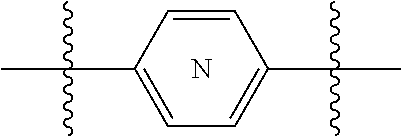
represents


wherein each of the variables is as described above in Formula I and Formula LI, and a Targeting Ligand is covalently bonded to the DL with the


wherein:
R is the point at which the Linker is attached.
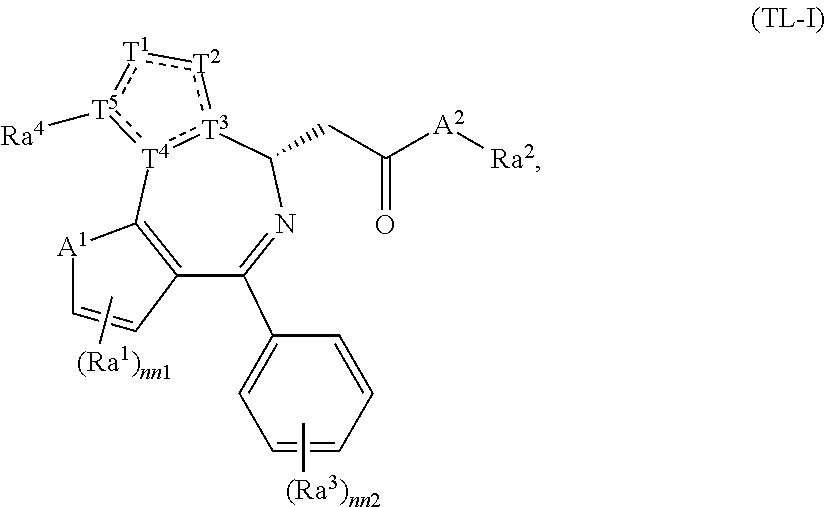
or a pharmaceutically acceptable salt thereof, wherein:


wherein the compound of Formula TL-VIII or TL-IX is substituted with only one R.


and A1 is S.

and A1 is C═C.

and A1 is C═C.


General Procedure A

General Procedure B


Step-1

Step-1

Step 1:

Step 1:


Step 1:

Step 1: Preparation of 3-Amino-4-cyano-pyrazole-1-carboxylic acid tert-butyl ester (8-2)


Step-1

Step-1

Step-1

Step-1

Step-1


Step-1


Step 1:


General Procedure for the Preparation of Compounds 113-121


Step-1: 2-(2,6-Bis-benzyloxy-pyridin-3-ylamino)-nicotinic acid methyl ester (22-3)
Yield: 35%
LC MS: ES+ 442.0.
Step-2:

Step-1:

Step 1:


Step-1


Step 1:


Step-1

Step-1


Step-1


Step-1


Step-1


Step-1


Reaction Scale: 100-150 mg/reaction
Displacement Reaction
General Procedure—A:
| TABLE 1 |
| O-Linked Compounds Synthesized with the General Methods Descirbed Herein. |
| Cmp | ||||
| # | Structure | Method | Yield | Data |
| 135 |
 |
General procedure A | 34% | 1H NMR (400 MHz, DMSO-d6) δ 10.99 (s, 1H), 8.17 (d, J = 7.52 Hz, 1H), 7.89-7.87 (m, 1H), 7.56-7.47 (m, 3H), 7.42 (t, J = 7.96 Hz, 1H), 7.14 (d, J = 7.68 Hz, 1H), 5.44-5.40 (dd, J = 9.84, |
| 5.68 Hz, 1H), 2.84-2.64 (m, 2H), | ||||
| 2.36-2.25 (m, 2H); LC MS: ES+ | ||||
| 256.1. | ||||
| 136 |
 |
General procedure A | 15% | 1H NMR (400 MHz, DMSO-d6) δ 10.94 (s, 1H), 7.34-7.32 (m, 1H), 7.18-7.17 (m, 2H), 7.01 (t, J = 7.32 Hz, 1H), 5.24-5.23 (m, 1H), 3.40-3.38 (m, 2H), 3.22 (m, 1H), 3.07 (m, 1H), 2.68-2.66 (m, 1H), 2.60-2.50 (m, 2H), 2.16- 2.10 (m, 2H), 1.82-1.76 (m, 3H); |
| LC MS: ES+ 303.2. | ||||
| 137 |
 |
General procedure A | 16% | 1H NMR (400 MHz, DMSO-d6) δ 10.90 (s, 1H), 7.11 (d, J = 8.04 Hz, 2H), 6.92 (d, J = 8.0 Hz, 2H), 5.12-5.11 (m, 1H), 2.70- 2.66 (m, 1H), 2.61-2.50 (m, 3H), 2.17-2.11 (m, 2H), 1.14 (t, J = |
| 7.22 Hz, 3H); LC MS: ES+ | ||||
| 234.2. | ||||
| 138 |
 |
General procedure A | 54% | 1H NMR (400 MHz, DMSO-d6) δ 11.02 (s, 1H), 8.49 (s, 1H), 8.00 (d, J = 9.04 Hz, 1H), 7.91 (d, J = 8.52 Hz, 1H), 7.72 (d, J = 7.92 Hz, 1H), 7.57 (br s, 1H), 7.41-7.39 (m, 1H), 5.50-5.46 |
| (dd, J = 10.92, 5.46 Hz, 1H), | ||||
| 2.82-2.73 (m, 1H), 2.68-2.63 (m, | ||||
| 1H), 2.29-2.20 (m, 2H); LC MS: | ||||
| ES− 279.1. | ||||
| 139 |
 |
General procedure B | 28% | 1H NMR (400 MHz, DMSO-d6) δ 10.96 (s, 1H), 7.88-7.86 (m, 4H), 7.71 (d, J = 8.12 Hz, 2H), 7.14 (d, J = 7.56 Hz, 2H), 5.33- 5.32 (m, 1H), 2.74-2.71 (m, 1H), 2.65-2.60 (m, 1H), 2.33-2.22 (m, 2H); LC MS: ES− 305.1. |
| 140 |
 |
|
8% | 1H NMR (400 MHz, DMSO-d6) δ 10.87 (s, 1H), 7.31-7.27 (m, 2H), 7.17 (br s, 1H), 6.88 (br s, 1H), 6.31 (bs, 1H), 5.06 (m, 1H), 3.75 (s, 3H), 2.62-2.50 (m, 2H), 2.19-2.11 (m, 2H); LC MS: ES+ 259.2. |
| 141 |
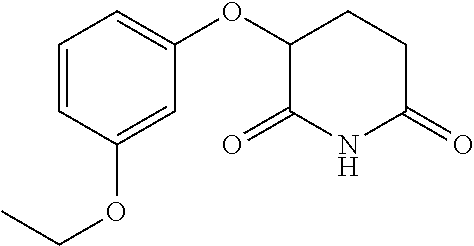 |
General procedure A | 25% | 1H NMR (400 MHz, DMSO-d6) δ 10.90 (s, 1H), 7.18-7.13 (m, 1H), 6.58-6.56 (m, 2H), 6.53- 6.51 (m, 1H), 5.21-5.17 (dd, J = 16.0, 5.2 Hz, 1H), 4.01-3.96 (q, J = 7.0, 14.0 Hz, 2H), 2.71-2.68 (m, 1H), 2.66-2.57 (m, 1H), 2.20-2.08 (m, 2H), 1.30 (t, J = |
| 6.94 Hz, 3H); LC MS: | ||||
| ES+ 250.2. | ||||
| 142 |
 |
|
7% | 1H NMR (400 MHz, DMSO-d6) δ 10.90 (s, 1H), 8.11 (s, 1H), 7.45 (d, J = 8.76 Hz, 1H), 7.31 (s, 1H), 6.98 (d, J = 6.52 Hz, 1H), 5.20-5.16 (dd, J = 10.28, 4.76 Hz, 1H), 3.80 (s, 3H), 2.72- |
| 2.59 (m, 2H), 2.32-2.13 (m, 2H); | ||||
| LC MS: ES+ 260.2. | ||||
| 143 |
 |
|
11% | 1H NMR (400 MHz, DMSO-d6) δ 10.94 (s, 1H), 8.25 (s, 1H), 7.67 (d, J = 8.88 Hz, 2H), 7.09 (d, J = 8.92 Hz, 2H), 6.28 (s, 1H), 5.25-5.21 (dd, J = 10.92, 5.08 Hz, 1H), 2.77-2.59 (m, 2H), 2.25 (s, 3H), 2.21-2.13 (m, |
| 2H); LC MS: ES+ 286.2. | ||||
| 144 |
 |
General procedure B | 18% | 1H NMR (400 MHz, DMSO-d6) δ 10.99 (s, 1H), 7.59-7.50 (m, 3H), 7.36-7.35 (m, 1H), 5.42- 5.38 (dd, J = 10.68, 5.44 Hz, 1H), 3.21 (s, 3H), 2.77-2.61 (m, 2H), 2.32-2.18 (m, 2H), LC MS: ES+ 284.1. |
| 145 |
 |
General procedure B | 30% | 1H NMR (400 MHz, DMSO-d6) δ 10.89 (s, 1H), 6.86-6.81 (m, 2H), 6.72-6.68 (m, 1H), 5.10- 5.07 (dd, J = 10.04, 4.84 Hz, 1H), 2.99 (s, 2H), 2.66-2.60 (m, 2H), 2.15-2.10 (m, 2H), 1.41 (S, 6H); LC MS: ES+ 276.2. |
| 146 |
 |
General procedure B | 13% | 1H NMR (400 MHz, DMSO-d6) δ 10.97 (s, 1H), 7.36 (m, 1H), 7.32-7.30 (m, 1H), 7.15-7.13 (m, 1H), 5.37-5.33 (dd, J = 11.0, 5.12 Hz, 1H), 2.74-2.70 (m, 1H), 2.65-2.60 (m, 1H), 2.51 (s, 3H), 2.32-2.18 (m, 5H); LC MS: ES+ 262.2. |
| 147 |
 |
General procedure B | 22% | 1H NMR (400 MHz, DMSO-d6) δ 10.97 (s, 1H), 8.87 (s, 1H), 8.33 (d, J = 7.88 Hz, 1H), 7.58- 7.48 (m, 3H), 7.36 (d, J = 7.6 Hz, 1H), 5.51-5.47 (m, 1H), 2.71- 2.70 (m, 2H), 2.32 (m, 2H); LC MS: ES+ 257.2. |
| 148 |
 |
|
10% | 1H NMR (400 MHz, DMSO-d6) δ 10.98 (s, 1H), 7.81 (d, J = 9.12 Hz, 1H), 6.95 (br s, 2H), 5.41- 5.37 (dd, J = 10.44, 5.4 Hz, 1H), 2.89 (m, 2H), 2.73-2.67 (m, 1H), 2.59 (m, 1H), 2.62-2.50 (m, 2H), 2.21-2.14 (m, 2H), 2.01 (m, 2H); |
| LC MS: ES+ 274.1. | ||||
| 149 |
 |
General procedure B | 36% | 1H NMR (400 MHz, DMSO-d6) δ 10.89 (s, 1H), 6.80 (d, J = 8.48 Hz, 1H), 6.72 (m, 1H), 6.47-6.45 (m, 1H), 5.96 (s, 2H), 5.05-5.01 (dd, J = 10.36, 4.84 Hz, 1H), 2.67-2.60 (m, 2H), 2.19-2.07 (m, |
| 2H); LC MS: ES+ 250.1. | ||||
| 150 |
 |
General procedure B | 45% | 1H NMR (400 MHz, DMSO-d6) δ 10.94 (s, 1H), 7.29 (t, J = 7.84 Hz, 1H), 7.12-7.08 (m, 1H), 7.06-7.05 (m, 2H), 5.30-5.26 (dd, J = 10.44, 4.76 Hz, 1H), 4.18 (s, 1H), 2.71-2.67 (m, 1H), 2.62-2.56 (m, 1H), 2.18-2.12 (m, 2H); LC MS: ES+ 230.1. |
| 151 |
 |
General procedure B | 27.63% | 1H NMR (400 MHz, DMSO-d6) δ 10.88 (s, 1H), 7.05 (t, J = 8.16 Hz, 1H), 6.32 (t, J = 8 Hz 3H), 5.17-5.13 (m, 1H), 2.86 (s, 6H), 2.74-2.66 (m, 1H), 2.62-2.55 (m, 1H), 2.19-2.04 (m, 2H), LC MS: ES+ 249.2. |
| 152 |
 |
General procedure B | 14.84% | 1H NMR (400 MHz, DMSO-d6) δ 10.89 (s, 1H), 7.15 (d, J = 8.52 Hz, 2H), 6.92 (d, J = 8.56 Hz, 2H), 7.14-7.10 (m, 1H), 2.95- 2.86 (m, 1H), 2.62-2.66 (m, 1H), 2.20-2.05 (m, 2H), 2.00-1.96 (m, 2H), 1.78-1.70 (m, 2H), 1.64- 1.61 (m, 2H), 1.52-1.43 (m, 2H); LC MS: ES− 272.2. |
| 153 |
 |
General procedure B | 11.97% | 1H NMR (400 MHz, DMSO-d6) δ 11.00 (s, 1H), 7.57 (d, J = 7.52 Hz, 1H), 7.53 (t, J = 7.88 Hz 1H), 7.26 (d, J = 8.40 Hz, 1H), 7.06 (t, J = 7.36 Hz, 1H), 5.44-5.40 (m, 1H), 2.80-2.71 (m, 1H), 2.65- 2.61 (m, 1H), 2.53 (s, 3H), 2.30- 2.19 (m, 2H); LC MS: |
| ES+ 248.2. | ||||
| 154 |
 |
General procedure B | 16.7% | 1H NMR (400 MHz, DMSO-d6) δ 10.91 (s, 1H), 7.11 (d, J = 8.08 Hz, 2H), 6.91 (d, J = 8.16 Hz, 2H), 5.54-5.16 (m, 1H), 2.71- 2.61 (br s, 6H), 2.17-2.08 (br s, 5H); LC MS: ES+ 276.2. |
| 155 |
 |
General procedure C | 9.97% | 1H NMR (400 MHz, DMSO-d6) δ 10.94 (s, 1H), 7.66 (d, J = 7.60 Hz, 1H), 7.54 (t, J = 7.64 Hz 1H), 7.29 (d, J = 8.44 Hz, 1H), 7.08 (t, J = 7.60 Hz, 1H), 5.25-5.21 (m, 1H), 3.76 (s, 3H), 2.66 (t, J = 6.4 Hz, 2H), 2.24-2.13 (m, 2H),; LC MS: ES+ 264.0 |

Step-1


Step-1


Step-1


Step-1


FP=1000*(S−G*P)/(S+G*P).
| TABLE 3 |
| Compounds of the Present Invention |
| Compound | |||
| | Structure | Kd | |
| 1 |
 |
++++ |
| 2 |
 |
++ |
| 3 |
 |
++++ |
| 4 |
 |
++++ |
| 5 |
 |
++++ |
| 6 |
 |
++++ |
| 7 |
 |
++++ |
| 8 |
 |
+++ |
| 9 |
 |
++++ |
| 10 |
 |
++++ |
| 11 |
 |
++++ |
| 12 |
 |
++++ |
| 13 |
 |
++++ |
| 14 |
 |
+++ |
| 15 |
 |
++++ |
| 16 |
 |
++++ |
| 17 |
 |
+++ |
| 18 |
 |
++++ |
| 19 |
 |
++++ |
| 20 |
 |
++++ |
| 21 |
 |
+++ |
| 22 |
 |
++++ |
| 23 |
 |
++++ |
| 24 |
 |
+++ |
| 25 |
 |
++ |
| 26 |
 |
++++ |
| 27 |
 |
++++ |
| 28 |
 |
++++ |
| 29 |
 |
++++ |
| 30 |
 |
++++ |
| 31 |
 |
++++ |
| 32 |
 |
++++ |
| 33 |
 |
++++ |
| 34 |
 |
++++ |
| 35 |
 |
++++ |
| 36 |
 |
++++ |
| 37 |
 |
++++ |
| 38 |
 |
++++ |
| 39 |
 |
++++ |
| 40 |
 |
++++ |
| 41 |
 |
++++ |
| 42 |
 |
++++ |
| 43 |
 |
++++ |
| 44 |
 |
++++ |
| 45 |
 |
++++ |
| 46 |
 |
++++ |
| 47 |
 |
++++ |
| 48 |
 |
++++ |
| 49 |
 |
++++ |
| 50 |
 |
++++ |
| 51 |
 |
++++ |
| 52 |
 |
++++ |
| 53 |
 |
++++ |
| 54 |
 |
++++ |
| 55 |
 |
++++ |
| 56 |
 |
++++ |
| 57 |
 |
++++ |
| 58 |
 |
++++ |
| 59 |
 |
++++ |
| 60 |
 |
++++ |
| 61 |
 |
++++ |
| 62 |
 |
++++ |
| 63 |
 |
+++ |
| 64 |
 |
++++ |
| 65 |
 |
++++ |
| 66 |
 |
++++ |
| 67 |
 |
++++ |
| 68 |
 |
+ |
| 69 |
 |
+++ |
| 70 |
 |
++++ |
| 71 |
 |
+++ |
| 72 |
 |
+++ |
| 73 |
 |
++ |
| 74 |
 |
+++ |
| 75 |
 |
+++ |
| 76 |
 |
+++ |
| 77 |
 |
++++ |
| 78 |
 |
+++ |
| 79 |
 |
++++ |
| 80 |
 |
+++ |
| 81 |
 |
++++ |
| 82 |
 |
++++ |
| 83 |
 |
+++ |
| 84 |
 |
+++ |
| 85 |
 |
++++ |
| 86 |
 |
++++ |
| 87 |
 |
+++ |
| 88 |
 |
++++ |
| 89 |
 |
+++ |
| 90 |
 |
+++ |
| 91 |
 |
+++ |
| 92 |
 |
+ |
| 93 |
 |
++ |
| 94 |
 |
+++ |
| 95 |
 |
+ |
| 96 |
 |
+ |
| 97 |
 |
+ |
| 98 |
 |
++ |
| 99 |
 |
+ |
| 100 |
 |
++ |
| 101 |
 |
+ |
| 102 |
 |
+ |
| 103 |
 |
+++ |
| 104 |
 |
++ |
| 105 |
 |
++ |
| 106 |
 |
+ |
| 107 |
 |
+ |
| 108 |
 |
+++ |
| 109 |
 |
+ |
| 110 |
 |
+++ |
| 111 |
 |
+ |
| 112 |
 |
+ |
| 113 |
 |
++ |
| 114 |
 |
+++ |
| 115 |
 |
+++ |
| 116 |
 |
+++ |
| 117 |
 |
++ |
| 118 |
 |
+ |
| 119 |
 |
++ |
| 120 |
 |
+++ |
| 121 |
 |
++ |
| 122 |
 |
+ |
| 123 |
 |
+++ |
| 124 |
 |
+++ |
| 125 |
 |
+++ |
| 126 |
 |
++++ |
| In Table 2 above >100 μM = +; 50-100 μM = ++; 10-50 μM = +++; <10 μM = ++++ | ||
| TABLE 3 |
| Additional Compounds of the Present Invention |
| Compound | ||
| Number | Structure | Kd |
| 129 |
 |
+++ |
| 130 |
 |
+++ |
| 131 |
 |
+++ |
| 132 |
 |
++++ |
| 133 |
 |
++++ |
| 134 |
 |
+ |
| 135 |
 |
++++ |
| 136 |
 |
+ |
| 137 |
 |
++++ |
| 138 |
 |
++++ |
| 139 |
 |
++++ |
| 140 |
 |
++++ |
| 141 |
 |
++++ |
| 142 |
 |
+++ |
| 143 |
 |
+++ |
| 144 |
 |
+++ |
| 145 |
 |
++++ |
| 146 |
 |
++ |
| 147 |
 |
++++ |
| 148 |
 |
++++ |
| 149 |
 |
++++ |
| 150 |
 |
++++ |
| 151 |
 |
++++ |
| 152 |
 |
++++ |
| 153 |
 |
++ |
| 154 |
 |
++++ |
| 155 |
 |
++ |
| 156 |
 |
+++ |
| 157 |
 |
+++ |
| 158 |
 |
+++ |
| 159 |
 |
++++ |
| 160 |
 |
++++ |
| 161 |
 |
++ |
| 162 |
 |
+++ |
| 163 |
 |
+++ |
| In Table 3 above >100 μM = +; 50-100 μM = ++; 10-50 μM = +++; <10 μM = ++++ . | ||
| TABLE 4 | ||
| Compound | ||
| Number | | Kd |
| Degronimer | ||
| 1 |
 |
++++ |
| |
 |
++++ |
| In Table 4 above >100 μM = +; 50-100 μM = ++; 10-50 μM = +++; <10 μM = ++++ . | ||
Claims (23)


Priority Applications (4)
| Application Number | Priority Date | Filing Date | Title |
|---|---|---|---|
| US16/721,650 US11459335B2 (en) | 2017-06-20 | 2019-12-19 | N/O-linked Degrons and Degronimers for protein degradation |
| US17/959,144 US12180225B2 (en) | 2017-06-20 | 2022-10-03 | N/O-linked degrons and degronimers for protein degradation |
| US18/973,867 US12441740B2 (en) | 2017-06-20 | 2024-12-09 | N/O-linked degrons and degronimers for protein degradation |
| US19/336,152 US20260015362A1 (en) | 2017-06-20 | 2025-09-22 | N/o-linked degrons and degronimers for protein degradation |
Applications Claiming Priority (3)
| Application Number | Priority Date | Filing Date | Title |
|---|---|---|---|
| US201762522541P | 2017-06-20 | 2017-06-20 | |
| PCT/US2018/038534 WO2018237026A1 (en) | 2017-06-20 | 2018-06-20 | N/o-linked degrons and degronimers for protein degradation |
| US16/721,650 US11459335B2 (en) | 2017-06-20 | 2019-12-19 | N/O-linked Degrons and Degronimers for protein degradation |
Related Parent Applications (1)
| Application Number | Title | Priority Date | Filing Date |
|---|---|---|---|
| PCT/US2018/038534 Continuation WO2018237026A1 (en) | 2017-06-20 | 2018-06-20 | N/o-linked degrons and degronimers for protein degradation |
Related Child Applications (2)
| Application Number | Title | Priority Date | Filing Date |
|---|---|---|---|
| US17/946,353 Continuation US12091422B2 (en) | 2015-01-06 | 2022-09-16 | System and method of wagering on a plurality of events |
| US17/959,144 Continuation US12180225B2 (en) | 2017-06-20 | 2022-10-03 | N/O-linked degrons and degronimers for protein degradation |
Publications (2)
| Publication Number | Publication Date |
|---|---|
| US20200140456A1 US20200140456A1 (en) | 2020-05-07 |
| US11459335B2 true US11459335B2 (en) | 2022-10-04 |
Family
ID=64737853
Family Applications (4)
| Application Number | Title | Priority Date | Filing Date |
|---|---|---|---|
| US16/721,650 Active 2038-07-21 US11459335B2 (en) | 2017-06-20 | 2019-12-19 | N/O-linked Degrons and Degronimers for protein degradation |
| US17/959,144 Active US12180225B2 (en) | 2017-06-20 | 2022-10-03 | N/O-linked degrons and degronimers for protein degradation |
| US18/973,867 Active US12441740B2 (en) | 2017-06-20 | 2024-12-09 | N/O-linked degrons and degronimers for protein degradation |
| US19/336,152 Pending US20260015362A1 (en) | 2017-06-20 | 2025-09-22 | N/o-linked degrons and degronimers for protein degradation |
Family Applications After (3)
| Application Number | Title | Priority Date | Filing Date |
|---|---|---|---|
| US17/959,144 Active US12180225B2 (en) | 2017-06-20 | 2022-10-03 | N/O-linked degrons and degronimers for protein degradation |
| US18/973,867 Active US12441740B2 (en) | 2017-06-20 | 2024-12-09 | N/O-linked degrons and degronimers for protein degradation |
| US19/336,152 Pending US20260015362A1 (en) | 2017-06-20 | 2025-09-22 | N/o-linked degrons and degronimers for protein degradation |
Country Status (4)
| Country | Link |
|---|---|
| US (4) | US11459335B2 (en) |
| EP (2) | EP4717317A2 (en) |
| CN (2) | CN110769822A (en) |
| WO (1) | WO2018237026A1 (en) |
Cited By (8)
| Publication number | Priority date | Publication date | Assignee | Title |
|---|---|---|---|---|
| US11802131B2 (en) | 2017-09-04 | 2023-10-31 | C4 Therapeutics, Inc. | Glutarimides for medical treatment |
| US12049464B2 (en) | 2020-03-05 | 2024-07-30 | C4 Therapeutics, Inc. | Compounds for targeted degradation of BRD9 |
| US12091397B2 (en) | 2017-09-04 | 2024-09-17 | C4 Therapeutics, Inc. | Dihydroquinolinones for medical treatment |
| US12391686B2 (en) | 2019-01-29 | 2025-08-19 | Foghorn Therapeutics Inc. | Compounds and uses thereof |
| US12441740B2 (en) | 2017-06-20 | 2025-10-14 | C4 Therapeutics, Inc. | N/O-linked degrons and degronimers for protein degradation |
| US12528825B2 (en) | 2020-01-29 | 2026-01-20 | Foghorn Therapeutics Inc. | Compounds and uses thereof |
| US12559492B2 (en) | 2020-06-19 | 2026-02-24 | C4 Therapeutics, Inc. | BRAF degraders |
| US12590079B2 (en) | 2019-07-31 | 2026-03-31 | Foghorn Therapeutics Inc. | Compounds and uses thereof |
Families Citing this family (130)
| Publication number | Priority date | Publication date | Assignee | Title |
|---|---|---|---|---|
| ES2990061T3 (en) | 2016-05-10 | 2024-11-28 | C4 Therapeutics Inc | Spirocyclic degronimers for the degradation of target proteins |
| EP3454856B1 (en) | 2016-05-10 | 2024-09-11 | C4 Therapeutics, Inc. | Heterocyclic degronimers for target protein degradation |
| WO2019060742A1 (en) | 2017-09-22 | 2019-03-28 | Kymera Therapeutics, Inc | Protein degraders and uses thereof |
| US11358948B2 (en) | 2017-09-22 | 2022-06-14 | Kymera Therapeutics, Inc. | CRBN ligands and uses thereof |
| CN111372585A (en) | 2017-11-16 | 2020-07-03 | C4医药公司 | Degradants and degrons for target protein degradation |
| IL315310A (en) | 2017-12-26 | 2024-10-01 | Kymera Therapeutics Inc | IRAK joints and used in them |
| WO2019140387A1 (en) | 2018-01-12 | 2019-07-18 | Kymera Therapeutics, Inc. | Crbn ligands and uses thereof |
| WO2019140380A1 (en) | 2018-01-12 | 2019-07-18 | Kymera Therapeutics, Inc. | Protein degraders and uses thereof |
| EP3746135A4 (en) | 2018-01-30 | 2022-03-09 | Foghorn Therapeutics Inc. | Methods and compounds for treating disorders |
| EP3781156A4 (en) | 2018-04-16 | 2022-05-18 | C4 Therapeutics, Inc. | SPIROCYCLIC COMPOUNDS |
| EP3578561A1 (en) | 2018-06-04 | 2019-12-11 | F. Hoffmann-La Roche AG | Spiro compounds |
| WO2020010227A1 (en) | 2018-07-06 | 2020-01-09 | Kymera Therapeutics, Inc. | Protein degraders and uses thereof |
| WO2020010177A1 (en) | 2018-07-06 | 2020-01-09 | Kymera Therapeutics, Inc. | Tricyclic crbn ligands and uses thereof |
| WO2020027225A1 (en) | 2018-07-31 | 2020-02-06 | ファイメクス株式会社 | Heterocyclic compound |
| WO2020051235A1 (en) | 2018-09-04 | 2020-03-12 | C4 Therapeutics, Inc. | Compounds for the degradation of brd9 or mth1 |
| WO2020092528A1 (en) | 2018-10-31 | 2020-05-07 | Gilead Sciences, Inc. | Substituted 6-azabenzimidazole compounds having hpk1 inhibitory activity |
| US11203591B2 (en) | 2018-10-31 | 2021-12-21 | Gilead Sciences, Inc. | Substituted 6-azabenzimidazole compounds |
| CA3119773A1 (en) | 2018-11-30 | 2020-06-04 | Kymera Therapeutics, Inc. | Irak degraders and uses thereof |
| CN113473987B (en) | 2018-12-19 | 2024-09-03 | 细胞基因公司 | Substituted 3- ((3-aminophenyl) amino) piperidine-2, 6-dione compounds, compositions thereof, and methods of treatment using the same |
| CN113453681B (en) | 2018-12-19 | 2024-10-11 | 细胞基因公司 | Substituted 3-((3-aminophenyl)amino)piperidine-2,6-dione compounds, compositions thereof, and methods of treatment using the same |
| CN120698983A (en) | 2018-12-20 | 2025-09-26 | C4医药公司 | Targeted protein degradation |
| US12384776B2 (en) | 2019-01-29 | 2025-08-12 | Foghorn Therapeutics Inc. | Compounds and uses thereof |
| US20230066136A1 (en) | 2019-01-29 | 2023-03-02 | Foghorn Therapeutics Inc. | Compounds and uses thereof |
| EP3917517A4 (en) | 2019-01-29 | 2023-01-25 | Foghorn Therapeutics Inc. | Compounds and uses thereof |
| ES2995214T3 (en) | 2019-03-06 | 2025-02-07 | C4 Therapeutics Inc | Heterocyclic compounds for medical treatment |
| CN120574283A (en) | 2019-04-05 | 2025-09-02 | 凯麦拉医疗公司 | STAT degraders and their uses |
| WO2020210630A1 (en) | 2019-04-12 | 2020-10-15 | C4 Therapeutics, Inc. | Tricyclic degraders of ikaros and aiolos |
| EP3972695A1 (en) | 2019-05-23 | 2022-03-30 | Gilead Sciences, Inc. | Substituted exo-methylene-oxindoles which are hpk1/map4k1 inhibitors |
| WO2020251972A1 (en) | 2019-06-10 | 2020-12-17 | Kymera Therapeutics, Inc. | Smarca degraders and uses thereof |
| WO2020257278A2 (en) * | 2019-06-18 | 2020-12-24 | Dana-Farber Cancer Institute, Inc. | Small molecule target bromo/acetyl proteins and uses thereof |
| WO2020263830A1 (en) | 2019-06-25 | 2020-12-30 | Gilead Sciences, Inc. | Flt3l-fc fusion proteins and methods of use |
| PH12022500002A1 (en) | 2019-06-28 | 2023-04-03 | Kymera Therapeutics Inc | Irak degraders and uses thereof |
| WO2021011868A1 (en) | 2019-07-17 | 2021-01-21 | Kymera Therapeutics, Inc. | Irak degraders and uses thereof |
| WO2021022076A1 (en) * | 2019-08-01 | 2021-02-04 | St. Jude Children's Research Hospital | Molecules and methods related to treatment of uncontrolled cellular proliferation |
| CN112625036A (en) * | 2019-10-08 | 2021-04-09 | 上海海和药物研究开发股份有限公司 | Compound with BRD4 inhibitory activity, preparation method and application thereof |
| CA3154386A1 (en) * | 2019-10-17 | 2021-04-22 | Michael Berlin | Bifunctional molecules containing an e3 ubiquitine ligase binding moiety linked to a bcl6 targeting moiety |
| WO2021105335A1 (en) | 2019-11-27 | 2021-06-03 | Captor Therapeutics S.A. | Piperidine-2, 6-dione derivatives which bind to cereblon, and methods of use thereof |
| JP7852923B2 (en) | 2019-11-27 | 2026-04-28 | キャプター セラピューティクス エス.エー. | Piperidine-2,6-dione derivatives that bind to cereblon, and methods for using the same |
| WO2021119159A1 (en) | 2019-12-10 | 2021-06-17 | Kymera Therapeutics, Inc. | Irak degraders and uses thereof |
| EP4076524A4 (en) | 2019-12-17 | 2023-11-29 | Kymera Therapeutics, Inc. | IRAQ DEGRADATION AGENTS AND THEIR USES |
| WO2021126973A1 (en) * | 2019-12-17 | 2021-06-24 | Orionis Biosciences, Inc. | Compounds modulating protein recruitment and/or degradation |
| US20230099031A1 (en) * | 2019-12-17 | 2023-03-30 | Orionis Biosciences, Inc. | Bifunctional agents for protein recruitment and/or degradation |
| KR20220145325A (en) | 2019-12-17 | 2022-10-28 | 카이메라 쎄라퓨틱스 인코포레이티드 | IRAK disintegrants and uses thereof |
| EP4077319A1 (en) * | 2019-12-20 | 2022-10-26 | Calico Life Sciences LLC | Protein tyrosine phosphatase degraders and methods of use thereof |
| KR20220119415A (en) | 2019-12-20 | 2022-08-29 | 씨4 테라퓨틱스, 인코포레이티드 | Isoindolinone and indazole compounds for EGFR degradation |
| EP4081308A4 (en) | 2019-12-23 | 2024-01-24 | Kymera Therapeutics, Inc. | SMARCA DEGRADERS AND USES THEREOF |
| EP4081217A1 (en) * | 2019-12-24 | 2022-11-02 | F. Hoffmann-La Roche AG | Pharmaceutical combination of antiviral agents targeting hbv and/or an immune modulator for treatment of hbv |
| EP4096651A4 (en) | 2020-01-29 | 2024-01-24 | Foghorn Therapeutics Inc. | Compounds and uses thereof |
| TWI890283B (en) | 2020-02-14 | 2025-07-11 | 美商基利科學股份有限公司 | Antibodies and fusion proteins that bind to ccr8 and uses thereof |
| EP4121046A4 (en) * | 2020-03-18 | 2024-04-24 | Dana-Farber Cancer Institute, Inc. | TARGETED DEGRADER OF ABERRANTE DEW BASED ON THE PET TRACER PBB3 |
| KR20230005160A (en) | 2020-03-19 | 2023-01-09 | 카이메라 쎄라퓨틱스 인코포레이티드 | MDM2 degraders and uses thereof |
| TW202210483A (en) | 2020-06-03 | 2022-03-16 | 美商凱麥拉醫療公司 | Crystalline forms of irak degraders |
| KR20230027066A (en) * | 2020-06-24 | 2023-02-27 | 셀진 코포레이션 | Cereblon binding compounds, compositions thereof, and methods of treatment therewith |
| US11839659B2 (en) | 2020-07-02 | 2023-12-12 | Northwestern University | Proteolysis-targeting chimeric molecules (PROTACs) that induce degradation of indoleamine 2,3-dioxygenase (IDO) protein |
| CN114341128B (en) * | 2020-07-24 | 2024-06-25 | 恩瑞生物医药科技(上海)有限公司 | Bifunctional protein degradation targeting chimera compound and preparation method and medical use thereof |
| US11787800B2 (en) | 2020-07-29 | 2023-10-17 | Foghorn Therapeutics Inc. | BRD9 degraders and uses thereof |
| US20240294489A1 (en) | 2020-08-03 | 2024-09-05 | Captor Therapeutics S.A. | Low molecular weight protein degraders and their applications |
| IL300397A (en) * | 2020-08-05 | 2023-04-01 | C4 Therapeutics Inc | Compounds for targeted degradation of ret |
| TWI887465B (en) * | 2020-08-07 | 2025-06-21 | 美商C4醫藥公司 | Advantageous therapies for disorders mediated by ikaros or aiolos |
| CN112239469B (en) * | 2020-10-20 | 2021-09-28 | 苏州大学 | Targeted protein degradation c-Met degradation agent and preparation method and application thereof |
| CN112266404A (en) * | 2020-10-28 | 2021-01-26 | 北京大学深圳研究生院 | Group transfer method for selectively modifying target protein and application thereof |
| WO2022120355A1 (en) | 2020-12-02 | 2022-06-09 | Ikena Oncology, Inc. | Tead degraders and uses thereof |
| EP4259144A4 (en) | 2020-12-09 | 2025-08-20 | Kymera Therapeutics Inc | SMARCA DECORATORS AND USES THEREOF |
| US20240124465A1 (en) * | 2020-12-18 | 2024-04-18 | St. Jude Children's Research Hospital | Molecules and methods related to treatment of disorders associated with jak-2 signaling dysfunction |
| CN116867758A (en) | 2020-12-30 | 2023-10-10 | 凯麦拉医疗公司 | IRAK degraders and their uses |
| WO2022146151A1 (en) | 2020-12-30 | 2022-07-07 | Captor Therapeutics S.A. | Novel compounds which bind to cereblon, and methods of use thereof |
| US12171768B2 (en) | 2021-02-15 | 2024-12-24 | Kymera Therapeutics, Inc. | IRAK4 degraders and uses thereof |
| KR20230171979A (en) | 2021-04-16 | 2023-12-21 | 아비나스 오퍼레이션스, 인코포레이티드 | Modulators of BCL6 protein degradation and related methods of use |
| CN115232108B (en) | 2021-04-23 | 2025-04-18 | 领泰生物医药(绍兴)有限公司 | SOS1 degradation agent and preparation method and application thereof |
| US11981678B2 (en) | 2021-04-29 | 2024-05-14 | Northwestern University | Substituted [1,2,4]triazolo[4,3-c]pyrimidin-5-amines and proteolysis-targeting chimeric derivatives thereof (PROTACs) that induce degradation of embryonic ectoderm development (EED) protein |
| US12042543B2 (en) | 2021-04-30 | 2024-07-23 | Northwestern University | Substituted 3-amino-5-phenylbenzamide compounds as covalent inhibitors of enhancer zeste homolog 2 (EZH2) and proteolysis-targeting chimeric derivatives thereof (PROTACs) that induce degradation of EZH2 |
| TW202309039A (en) | 2021-05-05 | 2023-03-01 | 美商百健Ma公司 | Compounds for targeting degradation of bruton's tyrosine kinase |
| KR20240020735A (en) | 2021-05-07 | 2024-02-15 | 카이메라 쎄라퓨틱스 인코포레이티드 | CDK2 degraders and their uses |
| WO2022245671A1 (en) | 2021-05-18 | 2022-11-24 | Gilead Sciences, Inc. | Methods of using flt3l-fc fusion proteins |
| WO2022255890A1 (en) | 2021-06-01 | 2022-12-08 | Captor Therapeutics S.A. | Compounds which bind to cereblon, and use thereof |
| WO2022255889A1 (en) | 2021-06-01 | 2022-12-08 | Captor Therapeutics S.A. | Compounds which bind to cereblon, and use thereof |
| MX2023014059A (en) | 2021-06-08 | 2024-03-12 | C4 Therapeutics Inc | THERAPEUTIC FOR THE DEGRADATION OF A MUTANT SERINE/THREONINE PROTEIN KINASE. |
| WO2023274418A1 (en) * | 2021-07-02 | 2023-01-05 | 南京明德新药研发有限公司 | Proteolysis-targeting chimeric compound |
| WO2023283130A1 (en) | 2021-07-04 | 2023-01-12 | Newave Pharmaceutical Inc. | Isoquinoline derivatives as mutant egfr modulators and uses thereof |
| US11767330B2 (en) | 2021-07-06 | 2023-09-26 | Foghorn Therapeutics Inc. | Citrate salt, pharmaceutical compositions, and methods of making and using the same |
| EP4367113A1 (en) | 2021-07-07 | 2024-05-15 | Biogen MA Inc. | Compounds for targeting degradation of irak4 proteins |
| US20250018046A1 (en) | 2021-07-07 | 2025-01-16 | Biogen Ma Inc | Compounds for targeting degradation of irak4 proteins |
| EP4423086A1 (en) | 2021-10-25 | 2024-09-04 | Kymera Therapeutics, Inc. | Tyk2 degraders and uses thereof |
| AU2022375782B2 (en) | 2021-10-28 | 2026-02-26 | Gilead Sciences, Inc. | Pyridizin-3(2h)-one derivatives |
| JP7787991B2 (en) | 2021-10-29 | 2025-12-17 | ギリアード サイエンシーズ, インコーポレイテッド | CD73 compound |
| CA3236265A1 (en) | 2021-10-29 | 2023-05-04 | William Leong | Irak4 degraders and synthesis thereof |
| EP4438603A4 (en) | 2021-11-25 | 2025-06-11 | Jiangsu Hengrui Pharmaceuticals Co., Ltd. | Chimeric compound for targeted degradation of androgen receptor protein, preparation method therefor, and medical use thereof |
| KR20240123836A (en) | 2021-12-22 | 2024-08-14 | 길리애드 사이언시즈, 인코포레이티드 | Icarus zinc finger family decomposers and their uses |
| US12122764B2 (en) | 2021-12-22 | 2024-10-22 | Gilead Sciences, Inc. | IKAROS zinc finger family degraders and uses thereof |
| KR20240128831A (en) | 2021-12-30 | 2024-08-27 | 베이진 스위찰랜드 게엠베하 | Degradation and use of Bruton's tyrosine kinase (BTK) by conjugation of an inhibitor of BTK and an E3 ligase ligand |
| TW202340168A (en) | 2022-01-28 | 2023-10-16 | 美商基利科學股份有限公司 | Parp7 inhibitors |
| CA3243560A1 (en) | 2022-01-31 | 2023-08-03 | Kymera Therapeutics, Inc. | Irak degraders and uses thereof |
| WO2023178181A1 (en) | 2022-03-17 | 2023-09-21 | Gilead Sciences, Inc. | Ikaros zinc finger family degraders and uses thereof |
| CR20240451A (en) | 2022-04-21 | 2024-12-04 | Gilead Sciences Inc | Kras g12d modulating compounds |
| WO2023215354A1 (en) * | 2022-05-03 | 2023-11-09 | Board Of Regents, The University Of Texas System | Menin proteolysis targeting chimeras (protacs) |
| CA3247639A1 (en) | 2022-05-06 | 2023-11-09 | PAQ Therapeutics Inc. | Kras g12d proteolysis targeting chimeras |
| CN114853751B (en) * | 2022-05-13 | 2024-01-16 | 郑州大学第一附属医院 | Group of phenothiazine derivatives and application thereof |
| KR20250028371A (en) | 2022-07-01 | 2025-02-28 | 길리애드 사이언시즈, 인코포레이티드 | CD73 compound |
| WO2024064358A1 (en) | 2022-09-23 | 2024-03-28 | Ifm Due, Inc. | Compounds and compositions for treating conditions associated with sting activity |
| WO2024073507A1 (en) | 2022-09-28 | 2024-04-04 | Theseus Pharmaceuticals, Inc. | Macrocyclic compounds and uses thereof |
| CN119998290A (en) | 2022-10-03 | 2025-05-13 | 公立大学法人横滨市立大学 | Imidazolopyridine derivatives with bicyclic structure |
| WO2024086759A1 (en) * | 2022-10-19 | 2024-04-25 | Arvinas Operations, Inc. | Modulators of bcl6 proteolysis and associated methods of use |
| KR20240076746A (en) * | 2022-11-22 | 2024-05-30 | 주식회사 이노큐어테라퓨틱스 | DEGRADER degrading BRD protein and a pharmaceutical composition comprising the same |
| WO2024123195A1 (en) * | 2022-12-06 | 2024-06-13 | Captor Therapeutics S.A. | Targeted protein degradation using prodrugs of bifunctional compounds that bind ubiquitin ligase and target mcl-1 protein |
| KR20250130610A (en) * | 2022-12-06 | 2025-09-02 | 캡터 테라퓨틱스 에스.에이. | Targeted protein degradation using a bifunctional compound that binds to ubiquitin ligase and the target MCL-1 protein. |
| AU2023409398A1 (en) | 2022-12-22 | 2025-06-05 | Gilead Sciences, Inc. | Prmt5 inhibitors and uses thereof |
| CN120530094A (en) | 2023-01-12 | 2025-08-22 | 田边三菱制药株式会社 | Cereblon E3 ligase binding compound, pharmaceutical composition containing the same and method for manufacturing the same |
| CN120569372A (en) | 2023-01-24 | 2025-08-29 | 第一三共株式会社 | Substituted benzene compounds |
| WO2024167423A1 (en) | 2023-02-07 | 2024-08-15 | Captor Therapeutics S.A. | Gspt1 degrader compounds |
| CN118946561A (en) * | 2023-03-10 | 2024-11-12 | 标新生物医药科技(上海)有限公司 | Novel E3 ubiquitin ligase ligands, protein degraders and their applications |
| AU2024252725A1 (en) | 2023-04-11 | 2025-11-06 | Gilead Sciences, Inc. | Kras modulating compounds |
| CN116462627A (en) * | 2023-04-19 | 2023-07-21 | 南京优氟医药科技有限公司 | A kind of preparation method of 3-bromopiperidine-2,6-dione |
| CR20250446A (en) | 2023-04-21 | 2025-12-02 | Gilead Sciences Inc | PRMT5 INHIBITORS AND THEIR USES |
| CN118852335A (en) * | 2023-04-28 | 2024-10-29 | 中科中山药物创新研究院 | Thiadiazolidinone derivatives and preparation methods and applications thereof |
| WO2024240246A1 (en) | 2023-05-24 | 2024-11-28 | 江苏恒瑞医药股份有限公司 | Amorphous substance and crystal of dioxopiperidine compound or pharmaceutically acceptable salt thereof, preparation method, and use |
| EP4735452A2 (en) | 2023-06-30 | 2026-05-06 | Merck Patent GmbH | Heterobifunctional compounds for the degradation of kras protein |
| EP4735438A2 (en) | 2023-06-30 | 2026-05-06 | Merck Patent GmbH | Heterobifunctional compounds for the degradation of kras |
| AU2024306338A1 (en) | 2023-06-30 | 2026-01-08 | Gilead Sciences, Inc. | Kras modulating compounds |
| AU2024298923A1 (en) | 2023-07-25 | 2026-01-22 | Monte Rosa Therapeutics Ag | Substituted piperidinediones for targeted protein degradation |
| CN121620513A (en) | 2023-07-26 | 2026-03-06 | 吉利德科学公司 | PARP7 inhibitors |
| KR20260046403A (en) | 2023-07-26 | 2026-04-07 | 길리애드 사이언시즈, 인코포레이티드 | PARP7 inhibitor |
| US20250109147A1 (en) | 2023-09-08 | 2025-04-03 | Gilead Sciences, Inc. | Kras g12d modulating compounds |
| US20250101042A1 (en) | 2023-09-08 | 2025-03-27 | Gilead Sciences, Inc. | Kras g12d modulating compounds |
| TW202530189A (en) | 2023-09-29 | 2025-08-01 | 日商第一三共股份有限公司 | 3-Phenylpropylamine derivatives |
| CN121941690A (en) | 2023-10-03 | 2026-04-28 | Paq医疗公司 | KRAS protein hydrolysis targeting chimera |
| US20250154172A1 (en) | 2023-11-03 | 2025-05-15 | Gilead Sciences, Inc. | Prmt5 inhibitors and uses thereof |
| WO2025137640A1 (en) | 2023-12-22 | 2025-06-26 | Gilead Sciences, Inc. | Azaspiro wrn inhibitors |
| WO2025245003A1 (en) | 2024-05-21 | 2025-11-27 | Gilead Sciences, Inc. | Prmt5 inhibitors and uses thereof |
| US20260098049A1 (en) | 2024-08-12 | 2026-04-09 | Gilead Sciences, Inc. | Kras modulating compounds |
| CN119751591B (en) * | 2025-03-06 | 2025-05-16 | 中南大学 | Polypeptide of targeted stability-enhancing BRD7 tumor-inhibiting protein and application of polypeptide in preparation of solid tumor treatment drugs |
Citations (114)
| Publication number | Priority date | Publication date | Assignee | Title |
|---|---|---|---|---|
| US5635517A (en) | 1996-07-24 | 1997-06-03 | Celgene Corporation | Method of reducing TNFα levels with amino substituted 2-(2,6-dioxopiperidin-3-yl)-1-oxo-and 1,3-dioxoisoindolines |
| WO1998011111A1 (en) | 1996-09-13 | 1998-03-19 | Yoshitomi Pharmaceutical Industries, Ltd. | Thienotriazolodiazepine compounds and medicinal uses thereof |
| US6306663B1 (en) | 1999-02-12 | 2001-10-23 | Proteinex, Inc. | Controlling protein levels in eucaryotic organisms |
| WO2002059106A1 (en) | 2000-12-27 | 2002-08-01 | Celgene Corporation | Isoindole-imide compounds, compositions, and uses thereof |
| US20060069067A1 (en) | 2002-07-30 | 2006-03-30 | Bhatnagar Ajay S | Combination of an aromatase inhibitor with a bisphosphonate |
| US7041298B2 (en) | 2000-09-08 | 2006-05-09 | California Institute Of Technology | Proteolysis targeting chimeric pharmaceutical |
| WO2006102557A2 (en) | 2005-03-22 | 2006-09-28 | The President And Fellows Of Harvard College | Treatment of protein degradation disorders |
| WO2006135383A2 (en) | 2004-08-04 | 2006-12-21 | Myriad Genetics, Inc. | Indazoles |
| WO2007031791A1 (en) | 2005-09-16 | 2007-03-22 | Arrow Therapeutics Limited | Biphenyl derivatives and their use in treating hepatitis c |
| US7208157B2 (en) | 2000-09-08 | 2007-04-24 | California Institute Of Technology | Proteolysis targeting chimeric pharmaceutical |
| WO2007065948A1 (en) | 2005-12-09 | 2007-06-14 | Solvay Pharmaceuticals Gmbh | Novel n-sulfamoyl-piperidineamides for the prophylaxis or treatment of obesity and related conditions |
| WO2008027542A2 (en) | 2006-08-30 | 2008-03-06 | Celgene Corporation | 5-substituted isoindoline compounds |
| WO2008033567A1 (en) | 2006-09-15 | 2008-03-20 | Celgene Corporation | N-methylaminomethyl isoindole compounds and compositions comprising and methods of using the same |
| WO2008039489A2 (en) | 2006-09-26 | 2008-04-03 | Celgene Corporation | 5-substituted quinazolinone derivatives as antitumor agents |
| WO2008079909A1 (en) | 2006-12-21 | 2008-07-03 | Plexxikon, Inc. | Pyrrolo [2,3-b] pyridines as kinase modulators |
| WO2008115516A2 (en) | 2007-03-20 | 2008-09-25 | Celgene Corporation | 4'-o-substituted isoindoline derivatives and compositions comprising and methods of using the same |
| WO2008122038A1 (en) | 2007-04-02 | 2008-10-09 | President And Fellows Of Harvard College | Regulating autophagy |
| WO2009042177A1 (en) | 2007-09-26 | 2009-04-02 | Celgene Corporation | 6-, 7-, or 8-substituted quinazolinone derivatives and compositions comprising and methods of using the same |
| WO2009139880A1 (en) | 2008-05-13 | 2009-11-19 | Celgene Corporation | Thioxoisoindoline compounds and compositions and methods of using the same |
| WO2009145899A1 (en) | 2008-05-30 | 2009-12-03 | Celgene Corporation | 5-substituted isoindoline compounds |
| WO2010053732A1 (en) | 2008-10-29 | 2010-05-14 | Celgene Corporation | Isoindoline compounds for use in the treatment of cancer |
| WO2010107485A1 (en) | 2009-03-17 | 2010-09-23 | The Trustees Of Columbia University In The City Of New York | E3 ligase inhibitors |
| WO2011017561A1 (en) | 2009-08-05 | 2011-02-10 | Biogen Idec Ma Inc. | Bicyclic aryl sphingosine 1-phosphate analogs |
| WO2011097218A1 (en) | 2010-02-02 | 2011-08-11 | Wayne State University | Anti-cancer therapeutic agents |
| WO2011143669A2 (en) | 2010-05-14 | 2011-11-17 | Dana-Farber Cancer Institute, Inc | Compositions and methods for treating neoplasia, inflammatory disease and other disorders |
| WO2012079022A1 (en) | 2010-12-10 | 2012-06-14 | Concert Pharmaceuticals, Inc. | Substituted dioxopiperidinyl phthalimide derivatives |
| WO2012178208A2 (en) | 2011-06-24 | 2012-12-27 | The Trustees Of The Stevens Institute Of Technology | Selective inhibitors of histone deacetylase isoform 6 and methods thereof |
| WO2013059215A1 (en) | 2011-10-17 | 2013-04-25 | Biotheryx, Inc. | Substituted biaryl alkyl amides |
| BRPI1100318A2 (en) | 2011-02-18 | 2013-05-21 | Univ Estadual Paulista Jelio De Mesquita Filho | A process for obtaining compounds derived from steroidal anti-inflammatory drugs (s), pharmaceutical compositions containing such compounds and their uses in the treatment of inflammatory diseases. |
| WO2013089278A1 (en) | 2011-12-14 | 2013-06-20 | Taiho Pharmaceutical Co., Ltd. | Recombinant prpk-tprkb and uses thereof |
| WO2013106646A2 (en) | 2012-01-12 | 2013-07-18 | Yale University | Compounds and methods for the inhibition of vcb e3 ubiquitin ligase |
| US20130190340A1 (en) | 2010-06-30 | 2013-07-25 | Brandeis University | Small-Molecule-Targeted Protein Degradation |
| WO2013170147A1 (en) | 2012-05-11 | 2013-11-14 | Yale University | Compounds useful for promoting protein degradation and methods using same |
| CN103421061A (en) | 2013-08-14 | 2013-12-04 | 中国药科大学 | Lenalidomide derivative and preparation method and pharmaceutical application thereof |
| WO2014023081A1 (en) | 2012-08-07 | 2014-02-13 | 中国科学院上海生命科学研究院 | Artemisinin derivatives, preparation process and use thereof |
| WO2014145887A1 (en) | 2013-03-15 | 2014-09-18 | Whitehead Institute For Biomedical Research | Benzimidazole derivatives and uses thereof |
| US20140302523A1 (en) | 2010-12-07 | 2014-10-09 | Yale University | Small-Molecule Hydrophobic Tagging of Fusion Proteins and Induced Degradation of Same |
| US20140356322A1 (en) | 2012-01-12 | 2014-12-04 | Yale University | Compounds & Methods for the Enhanced Degradation of Targeted Proteins & Other Polypeptides by an E3 Ubiquitin Ligase |
| US9125915B2 (en) | 2007-12-28 | 2015-09-08 | Mitsubishi Tanabe Pharma Corporation | Antitumor agent |
| US20150274738A1 (en) | 2012-10-19 | 2015-10-01 | Dana-Farber Cancer, Institute, Inc. | Hydrophobically tagged small molecules as inducers of protein degradation |
| US20150291562A1 (en) | 2014-04-14 | 2015-10-15 | Arvinas, Inc. | Imide-based modulators of proteolysis and associated methods of use |
| US20160016966A1 (en) | 2013-03-14 | 2016-01-21 | Glaxosmithkline Intellectual Property (No.2) Limited | Furopyridines as bromodomain inhibitors |
| US20160022642A1 (en) | 2014-07-25 | 2016-01-28 | Yale University | Compounds Useful for Promoting Protein Degradation and Methods Using Same |
| US9249161B2 (en) | 2010-12-02 | 2016-02-02 | Constellation Pharmaceuticals, Inc. | Bromodomain inhibitors and uses thereof |
| US20160046661A1 (en) | 2013-03-13 | 2016-02-18 | Dana-Farber Cancer Institute, Inc. | Ras inhibitors and uses thereof |
| US20160045607A1 (en) | 2014-08-11 | 2016-02-18 | Yale University | Estrogen-related receptor alpha based protac compounds and associated methods of use |
| US20160058872A1 (en) | 2014-04-14 | 2016-03-03 | Arvinas, Inc. | Imide-based modulators of proteolysis and associated methods of use |
| WO2016065139A1 (en) | 2014-10-24 | 2016-04-28 | Fl Therapeutics Llc | 3-substituted piperidine-2, 6-diones and non-covalent complexes with albumin |
| US20160176916A1 (en) | 2014-12-23 | 2016-06-23 | Dana-Farber Cancer Institute, Inc. | Methods to induce targeted protein degradation through bifunctional molecules |
| WO2016105518A1 (en) | 2014-12-23 | 2016-06-30 | Dana-Farber Cancer Institute, Inc. | Methods to induce targeted protein degradation through bifunctional molecules |
| US20160214972A1 (en) | 2015-01-20 | 2016-07-28 | Arvinas, Inc. | Compounds and methods for the targeted degradation of androgen receptor |
| US20160272639A1 (en) | 2015-03-18 | 2016-09-22 | Arvinas, Inc. | Compounds and methods for the enhanced degradation of targeted proteins |
| WO2016146985A1 (en) | 2015-03-13 | 2016-09-22 | University Of Dundee | Derivatives of 1-[(cyclopentyl or 2-pyrrolidinyl)carbonylaminomethyl]-4-(1,3-thiazol-5-yl) benzene which are useful for the treatment of proliferative, autoimmune or inflammatory diseases |
| WO2016169989A1 (en) | 2015-04-22 | 2016-10-27 | Glaxosmithkline Intellectual Property Development Limited | Iap e3 ligase directed proteolysis targeting chimeric molecules |
| WO2016191178A1 (en) | 2015-05-22 | 2016-12-01 | Biotheryx, Inc. | Compounds targeting proteins, compositions, methods, and uses thereof |
| WO2016197032A1 (en) | 2015-06-04 | 2016-12-08 | Arvinas, Inc. | Imide-based modulators of proteolysis and associated methods of use |
| WO2016197114A1 (en) | 2015-06-05 | 2016-12-08 | Arvinas, Inc. | Tank-binding kinase-1 protacs and associated methods of use |
| US20170008904A1 (en) | 2015-07-10 | 2017-01-12 | Arvinas, Inc. | Mdm2-based modulators of proteolysis and associated methods of use |
| WO2017007612A1 (en) | 2015-07-07 | 2017-01-12 | Dana-Farber Cancer Institute, Inc. | Methods to induce targeted protein degradation through bifunctional molecules |
| WO2017024319A1 (en) | 2015-08-06 | 2017-02-09 | Dana-Farber Cancer Institute, Inc. | Tunable endogenous protein degradation |
| US20170037004A1 (en) | 2015-07-13 | 2017-02-09 | Arvinas, Inc. | Alanine-based modulators of proteolysis and associated methods of use |
| WO2017024317A2 (en) | 2015-08-06 | 2017-02-09 | Dana-Farber Cancer Institute, Inc. | Methods to induce targeted protein degradation through bifunctional molecules |
| US20170065719A1 (en) | 2015-08-19 | 2017-03-09 | Arvinas, Inc. | Compounds and methods for the targeted degradation of bromodomain-containing proteins |
| WO2017079267A1 (en) | 2015-11-02 | 2017-05-11 | Yale University | Proteolysis targeting chimera compounds and methods of preparing and using same |
| WO2017161119A1 (en) | 2016-03-16 | 2017-09-21 | H. Lee Moffitt Cancer Center & Research Institute, Inc. | Small molecules against cereblon to enhance effector t cell function |
| WO2017176957A1 (en) | 2016-04-06 | 2017-10-12 | The Regents Of The University Of Michigan | Mdm2 protein degraders |
| WO2017176958A1 (en) | 2016-04-06 | 2017-10-12 | The Regents Of The University Of Michigan | Monofunctional intermediates for ligand-dependent target protein degradation |
| WO2017176708A1 (en) | 2016-04-05 | 2017-10-12 | Arvinas, Inc. | Protein-protein interaction inducing technology |
| WO2017180417A1 (en) | 2016-04-12 | 2017-10-19 | The Regents Of The University Of Michigan | Bet protein degraders |
| WO2017197056A1 (en) | 2016-05-10 | 2017-11-16 | C4 Therapeutics, Inc. | Bromodomain targeting degronimers for target protein degradation |
| WO2017197051A1 (en) | 2016-05-10 | 2017-11-16 | C4 Therapeutics, Inc. | Amine-linked c3-glutarimide degronimers for target protein degradation |
| WO2017197240A1 (en) | 2016-05-12 | 2017-11-16 | The Regents Of The University Of Michigan | Ash1l inhibitors and methods of treatment therewith |
| WO2017197036A1 (en) | 2016-05-10 | 2017-11-16 | C4 Therapeutics, Inc. | Spirocyclic degronimers for target protein degradation |
| WO2017197046A1 (en) | 2016-05-10 | 2017-11-16 | C4 Therapeutics, Inc. | C3-carbon linked glutarimide degronimers for target protein degradation |
| WO2017197055A1 (en) | 2016-05-10 | 2017-11-16 | C4 Therapeutics, Inc. | Heterocyclic degronimers for target protein degradation |
| WO2017201449A1 (en) | 2016-05-20 | 2017-11-23 | Genentech, Inc. | Protac antibody conjugates and methods of use |
| WO2017201069A1 (en) | 2016-05-18 | 2017-11-23 | Biotheryx, Inc. | Oxoindoline derivatives as protein function modulators |
| US20180015087A1 (en) | 2016-07-13 | 2018-01-18 | Araxes Pharma Llc | Conjugates of cereblon binding compounds and g12c mutant kras, hras or nras protein modulating compounds and methods of use thereof |
| WO2018023029A1 (en) | 2016-07-28 | 2018-02-01 | Mayo Foundation For Medical Education And Research | Small molecule activators of parkin enzyme function |
| WO2018051107A1 (en) | 2016-09-14 | 2018-03-22 | University Of Dundee | Fluorohydroxyproline derivatives useful in the preparation of proteolysis targeted chimeras |
| WO2018053354A1 (en) | 2016-09-15 | 2018-03-22 | Arvinas, Inc. | Indole derivatives as estrogen receptor degraders |
| WO2018052945A1 (en) | 2016-09-13 | 2018-03-22 | The Regents Of The University Of Michigan | Fused 1,4-oxazepines as bet protein degraders |
| WO2018052949A1 (en) | 2016-09-13 | 2018-03-22 | The Regents Of The University Of Michigan | Fused 1,4-diazepines as bet protein degraders |
| WO2018071606A1 (en) | 2016-10-11 | 2018-04-19 | Arvinas, Inc. | Compounds and methods for the targeted degradation of androgen receptor |
| WO2018085247A1 (en) | 2016-11-01 | 2018-05-11 | Cornell University | Compounds for malt1 degradation |
| WO2018102067A2 (en) | 2016-11-01 | 2018-06-07 | Arvinas, Inc. | Tau-protein targeting protacs and associated methods of use |
| WO2018102725A1 (en) | 2016-12-01 | 2018-06-07 | Arvinas, Inc. | Tetrahydronaphthalene and tetrahydroisoquinoline derivatives as estrogen receptor degraders |
| WO2018119357A1 (en) | 2016-12-24 | 2018-06-28 | Arvinas, Inc. | Compounds and methods for the targeted degradation of enhancer of zeste homolog 2 polypeptide |
| WO2018118598A1 (en) | 2016-12-23 | 2018-06-28 | Arvinas, Inc. | Compounds and methods for the targeted degradation of fetal liver kinase polypeptides |
| WO2018119441A1 (en) | 2016-12-23 | 2018-06-28 | Arvinas, Inc. | Egfr proteolysis targeting chimeric molecules and associated methods of use |
| WO2018119448A1 (en) | 2016-12-23 | 2018-06-28 | Arvinas, Inc. | Compounds and methods for the targeted degradation of rapidly accelerated fibrosarcoma polypeptides |
| WO2018118947A1 (en) | 2016-12-21 | 2018-06-28 | Biotheryx, Inc. | Thienopyrrole derivatives for use in targeting proteins, compositions, methods, and uses thereof |
| WO2018140809A1 (en) | 2017-01-26 | 2018-08-02 | Arvinas, Inc. | Modulators of estrogen receptor proteolysis and associated methods of use |
| WO2018144649A1 (en) | 2017-01-31 | 2018-08-09 | Arvinas, Inc. | Cereblon ligands and bifunctional compounds comprising the same |
| WO2018169777A1 (en) | 2017-03-14 | 2018-09-20 | Biotheryx, Inc. | Compounds targeting proteins, compositions, methods, and uses thereof |
| WO2018183411A1 (en) | 2017-03-28 | 2018-10-04 | The Regents Of The University Of Michigan | Small molecule dcn1 inhibitors and therapeutic methods using the same |
| WO2018191199A1 (en) | 2017-04-10 | 2018-10-18 | The Regents Of The University Of Michigan | Covalent small molecule dcn1 inhibitors and therapeutic methods using the same |
| WO2018189554A1 (en) | 2017-04-14 | 2018-10-18 | University Of Dundee | Small molecules |
| WO2018237026A1 (en) | 2017-06-20 | 2018-12-27 | C4 Therapeutics, Inc. | N/o-linked degrons and degronimers for protein degradation |
| WO2019060693A1 (en) | 2017-09-22 | 2019-03-28 | Kymera Therapeutics, Inc. | Crbn ligands and uses thereof |
| WO2019060742A1 (en) | 2017-09-22 | 2019-03-28 | Kymera Therapeutics, Inc | Protein degraders and uses thereof |
| WO2019099868A2 (en) | 2017-11-16 | 2019-05-23 | C4 Therapeutics, Inc. | Degraders and degrons for targeted protein degradation |
| US10351568B2 (en) | 2010-01-28 | 2019-07-16 | President And Fellows Of Harvard College | Compositions and methods for enhancing proteasome activity |
| WO2019140387A1 (en) | 2018-01-12 | 2019-07-18 | Kymera Therapeutics, Inc. | Crbn ligands and uses thereof |
| WO2019152440A1 (en) | 2018-01-30 | 2019-08-08 | Foghorn Therapeutics Inc. | Methods and compounds for treating disorders |
| WO2019165229A1 (en) | 2018-02-23 | 2019-08-29 | Dana-Farber Cancer Institute, Inc. | Small molecules for inducing selective protein degradation and uses thereof |
| WO2019199816A1 (en) | 2018-04-13 | 2019-10-17 | Arvinas Operations, Inc. | Cereblon ligands and bifunctional compounds comprising the same |
| WO2019204354A1 (en) | 2018-04-16 | 2019-10-24 | C4 Therapeutics, Inc. | Spirocyclic compounds |
| WO2019213005A1 (en) | 2018-04-30 | 2019-11-07 | Dana-Farber Cancer Institute, Inc. | Small molecule degraders of polybromo-1 (pbrm1) |
| US20200207764A1 (en) | 2017-09-04 | 2020-07-02 | C4 Therapeutics, Inc. | Dihydrobenzimidazolones for medical treatment |
| US20200207783A1 (en) | 2017-09-04 | 2020-07-02 | C4 Therapeutics, Inc. | Glutarimides for medical treatment |
| US20200207733A1 (en) | 2017-09-04 | 2020-07-02 | C4 Therapeutics, Inc. | Dihydroquinolinones for medical treatment |
| US20200308171A1 (en) | 2017-12-18 | 2020-10-01 | Hoffmann-La Roche Inc. | Bifunctional inhibitors with egfr having a e3 ubiquitin ligase moiety |
| US20200361930A1 (en) | 2018-02-05 | 2020-11-19 | Hoffmann-La Roche Inc. | Bifunctional molecules that degrade egfr |
Family Cites Families (380)
| Publication number | Priority date | Publication date | Assignee | Title |
|---|---|---|---|---|
| US4418068A (en) | 1981-04-03 | 1983-11-29 | Eli Lilly And Company | Antiestrogenic and antiandrugenic benzothiophenes |
| TW366342B (en) | 1992-07-28 | 1999-08-11 | Lilly Co Eli | The use of 2-phenyl-3-aroylbenzothiophenes in inhibiting bone loss |
| US5565215A (en) | 1993-07-23 | 1996-10-15 | Massachusettes Institute Of Technology | Biodegradable injectable particles for imaging |
| GB9322014D0 (en) | 1993-10-26 | 1993-12-15 | Co Ordinated Drug Dev | Improvements in and relating to carrier particles for use in dry powder inhalers |
| US5478847A (en) | 1994-03-02 | 1995-12-26 | Eli Lilly And Company | Methods of use for inhibiting bone loss and lowering serum cholesterol |
| SE9401109D0 (en) | 1994-03-31 | 1994-03-31 | Leiras Oy | Opthalmic composition II |
| SE9401108D0 (en) | 1994-03-31 | 1994-03-31 | Leiras Oy | Ophthalmic composition I |
| GB9412273D0 (en) | 1994-06-18 | 1994-08-10 | Univ Nottingham | Administration means |
| US6007845A (en) | 1994-07-22 | 1999-12-28 | Massachusetts Institute Of Technology | Nanoparticles and microparticles of non-linear hydrophilic-hydrophobic multiblock copolymers |
| GB9501841D0 (en) | 1995-01-31 | 1995-03-22 | Co Ordinated Drug Dev | Improvements in and relating to carrier particles for use in dry powder inhalers |
| US6413539B1 (en) | 1996-10-31 | 2002-07-02 | Poly-Med, Inc. | Hydrogel-forming, self-solvating absorbable polyester copolymers, and methods for use thereof |
| GB9515182D0 (en) | 1995-07-24 | 1995-09-20 | Co Ordinated Drug Dev | Improvements in and relating to powders for use in dry powder inhalers |
| WO1997012853A1 (en) | 1995-10-06 | 1997-04-10 | Ligand Pharmaceuticals Incorporated | Dimer-selective rxr modulators and methods for their use |
| TW397821B (en) | 1996-04-19 | 2000-07-11 | American Home Produits Corp | 3-[4-(2-phenyl-indole-1-ylmethyl)-phenyl]-acrylamides and 2-phenyl-1-[4-(amino-1-yl-alk-1-ynyl)-benzyl]-1H-indol-5-ol as well as pharmaceutical compositions of estrogenic agents thereof |
| US5780497A (en) | 1996-04-19 | 1998-07-14 | American Home Products Corporation | 2-phenyl-1- 4-(amino-1-yl-alk-1-ynyl)-benzyl!-1H-indol-5-ols as estrogenic agents |
| US5998402A (en) | 1996-04-19 | 1999-12-07 | American Home Products Corporation | 2-phenyl-1-[4-(2-aminoethoxy)-benzyl]-indoles as estrogenic agents |
| US5880137A (en) | 1996-04-19 | 1999-03-09 | American Home Products Corporation | 2-phenyl-1- 4-(amino-1-yl-alk-1-ynyl)-benzyl!-1H-indol-5-ols as estrogenic agents |
| US6005102A (en) | 1997-10-15 | 1999-12-21 | American Home Products Corporation | Aryloxy-alkyl-dialkylamines |
| ID24568A (en) | 1997-11-06 | 2000-07-27 | American Home Prod | ORAL CONTRACEPTION THAT CONTAINS ANTI-ESTROGEN PLUS PROGESTIN |
| US6326392B1 (en) | 1997-11-06 | 2001-12-04 | American Home Products Corporation | Anti-estrogen plus progestin containing oral contraceptives |
| JP4204657B2 (en) | 1997-12-05 | 2009-01-07 | 有限会社ケムフィズ | Diabetes prevention and treatment |
| FR2776657B1 (en) | 1998-03-31 | 2000-05-26 | Cird Galderma | BICYCLIC-AROMATIC COMPOUNDS AND THEIR USE IN HUMAN OR VETERINARY MEDICINE AND IN COSMETOLOGY |
| US6583170B1 (en) | 1998-05-15 | 2003-06-24 | Wyeth | 2-Phenyl-1-[4-(amino-1-yl-alk-1-ynyl)-benzyl]-1H-indol-5-ol and estrogen formulations |
| US6479535B1 (en) | 1998-05-15 | 2002-11-12 | Wyeth | 2-phenyl-1-[4-(2-aminoethoxy)-benzyl]-indole and estrogen formulations |
| GB9827145D0 (en) | 1998-12-09 | 1999-02-03 | Co Ordinated Drug Dev | Improvements in or relating to powders |
| US6287588B1 (en) | 1999-04-29 | 2001-09-11 | Macromed, Inc. | Agent delivering system comprised of microparticle and biodegradable gel with an improved releasing profile and methods of use thereof |
| CO5271696A1 (en) | 2000-01-12 | 2003-04-30 | Pfizer Prod Inc | PROCEDURE TO REDUCE MORBILITY AND RISK OF MORTALITY |
| CO5271709A1 (en) | 2000-01-12 | 2003-04-30 | Pfizer Prod Inc | COMPOSITIONS AND PROCEDURES FOR THE AND TREATMENT OF AFFECTIONS RESPONDING TO STROGENS |
| CO5271697A1 (en) | 2000-01-12 | 2003-04-30 | Pfizer Prod Inc | COMPOSITIONS AND PROCEDURES FOR THE TREATMENT OF AFFECTIONS THAT RESPOND TO AN INCREASE OF TESTOSTERONE |
| CO5251465A1 (en) | 2000-01-26 | 2003-02-28 | Pfizer Prod Inc | COMPOSITIONS AND PROCEDURES TO TREAT OSTEOPOROSIS AND REDUCE CHOLESTEROL |
| WO2001074400A1 (en) | 2000-04-03 | 2001-10-11 | Santen Pharmaceutical Co., Ltd. | Transporters and drug delivery system by using the same |
| GB0009468D0 (en) | 2000-04-17 | 2000-06-07 | Vectura Ltd | Improvements in or relating to formulations for use in inhaler devices |
| GB0009469D0 (en) | 2000-04-17 | 2000-06-07 | Vectura Ltd | Improvements in or relating to formalities for use in inhaler devices |
| US20020013327A1 (en) | 2000-04-18 | 2002-01-31 | Lee Andrew G. | Compositions and methods for treating female sexual dysfunction |
| US6589549B2 (en) | 2000-04-27 | 2003-07-08 | Macromed, Incorporated | Bioactive agent delivering system comprised of microparticles within a biodegradable to improve release profiles |
| MY164523A (en) | 2000-05-23 | 2017-12-29 | Univ Degli Studi Cagliari | Methods and compositions for treating hepatitis c virus |
| US6495164B1 (en) | 2000-05-25 | 2002-12-17 | Alkermes Controlled Therapeutics, Inc. I | Preparation of injectable suspensions having improved injectability |
| EP1736478B1 (en) | 2000-05-26 | 2015-07-22 | IDENIX Pharmaceuticals, Inc. | Methods and compositions for treating flaviviruses and pestiviruses |
| JP5698423B2 (en) | 2000-06-27 | 2015-04-08 | ベクトゥラ・リミテッド | Process for the production of particles for use in pharmaceutical compositions |
| WO2002003990A2 (en) | 2000-07-06 | 2002-01-17 | Wyeth | Use of substituted insole compounds for treating excessive intraocular pressure |
| AU2001271785A1 (en) | 2000-07-06 | 2002-01-21 | American Home Products Corporation | Combinations of statins, estrogenic agents and optionally estrogens |
| AR030064A1 (en) | 2000-07-06 | 2003-08-13 | Wyeth Corp | METHODS TO INHIBIT THE UTEROTROPHIC EFFECTS OF ESTROGEN AGENTS |
| MXPA03000170A (en) | 2000-07-06 | 2003-05-27 | Wyeth Corp | Combinations of ssri and estrogenic agents. |
| WO2002003986A2 (en) | 2000-07-06 | 2002-01-17 | Wyeth | Use of substituted indole compounds for treating breast disorders |
| WO2002003989A2 (en) | 2000-07-06 | 2002-01-17 | Wyeth | Use of substituted indole compounds for treating sphincter incontinence |
| AU2001273144A1 (en) | 2000-07-06 | 2002-01-21 | Wyeth | Use of substituted indole compounds for treating neuropeptide y-related conditions |
| AU2001271784A1 (en) | 2000-07-06 | 2002-01-21 | Wyeth | Therapy for prosthesis-related bone degeneration |
| AU2001273125A1 (en) | 2000-07-06 | 2002-01-21 | American Home Products Corporation | Combinations of bisphosphonates, estrogenic agents and optionally estrogens |
| AU7178301A (en) | 2000-07-06 | 2002-01-21 | American Home Prod | Methods for increasing nitric oxide synthase activity |
| GB2364919A (en) | 2000-07-21 | 2002-02-13 | Cambridge Consultants | Inhalers |
| EP1177787A3 (en) | 2000-07-28 | 2003-09-10 | Pfizer Products Inc. | Use of an estrogen agonist/antagonist for treating cataracts |
| JP2004507465A (en) | 2000-08-11 | 2004-03-11 | ワイス | Methods of treating estrogen receptor positive carcinoma |
| PE20020354A1 (en) | 2000-09-01 | 2002-06-12 | Novartis Ag | HYDROXAMATE COMPOUNDS AS HISTONE-DESACETILASE (HDA) INHIBITORS |
| EP1192945A3 (en) | 2000-09-21 | 2004-03-03 | Pfizer Products Inc. | Use of an estrogen agonist/antagonist for treating osteoarthritis |
| IL145838A (en) | 2000-10-16 | 2008-11-03 | Pfizer Prod Inc | Use of an estrogen agonist/antagonist for the manufacture of a medicament for treating vaginitis |
| CN1507357A (en) | 2000-10-31 | 2004-06-23 | PRҩƷ����˾ | Methods and compositions for enhanced delivery of biologically active molecules |
| DE60140268D1 (en) | 2000-11-30 | 2009-12-03 | Vectura Ltd | PARTICLES FOR USE IN A PHARMACEUTICAL COMPOSITION |
| US8481712B2 (en) | 2001-01-22 | 2013-07-09 | Merck Sharp & Dohme Corp. | Nucleoside derivatives as inhibitors of RNA-dependent RNA viral polymerase |
| AU781168B2 (en) | 2001-01-26 | 2005-05-12 | Pfizer Products Inc. | Method of treating certain cancers using an estrogen agonist/antagonist |
| US7326536B2 (en) | 2001-05-03 | 2008-02-05 | Eli Lilly And Company | Agents for treatment of HCV and methods of use |
| GB0122318D0 (en) | 2001-09-14 | 2001-11-07 | Novartis Ag | Organic compounds |
| EP1435974A4 (en) | 2001-09-28 | 2006-09-06 | Idenix Cayman Ltd | METHOD AND COMPOSITIONS FOR TREATING HEPATITIS C VIRUS WITH 4'-MODIFIED NUCLEOSIDES |
| US7935812B2 (en) | 2002-02-20 | 2011-05-03 | Merck Sharp & Dohme Corp. | RNA interference mediated inhibition of hepatitis C virus (HCV) expression using short interfering nucleic acid (siNA) |
| AU2003219817B2 (en) | 2002-02-20 | 2006-08-31 | Sirna Therapeutics, Inc. | RNA interference mediated inhibition of hepatitis C virus |
| NZ537662A (en) | 2002-06-28 | 2007-10-26 | Idenix Cayman Ltd | 2'-C-methyl-3'-O-L-valine ester ribofuranosyl cytidine for treatment of flaviviridae infections |
| CN1678326A (en) | 2002-06-28 | 2005-10-05 | 埃迪尼克斯(开曼)有限公司 | 2'-C-methyl-3'-O-L-valine ester ribofuranocytidine for the treatment of flavivirus infection |
| US7608600B2 (en) | 2002-06-28 | 2009-10-27 | Idenix Pharmaceuticals, Inc. | Modified 2′ and 3′-nucleoside prodrugs for treating Flaviviridae infections |
| GB0215293D0 (en) | 2002-07-03 | 2002-08-14 | Rega Foundation | Viral inhibitors |
| LT1576138T (en) | 2002-11-15 | 2017-06-26 | Idenix Pharmaceuticals Llc | 2`-methyl nucleosides in combination with interferon and flaviviridae mutation |
| KR20050111306A (en) | 2002-11-19 | 2005-11-24 | 아칠리온 파르마세우티칼스 인코포레이티드 | Substituted aryl thioureas and related compounds; inhibitors of viral replication |
| DK1583542T3 (en) | 2003-01-14 | 2008-09-22 | Gilead Sciences Inc | Compositions and Methods for Antiviral Combination Therapy |
| US7871607B2 (en) | 2003-03-05 | 2011-01-18 | Halozyme, Inc. | Soluble glycosaminoglycanases and methods of preparing and using soluble glycosaminoglycanases |
| CA2522067C (en) | 2003-04-09 | 2010-07-06 | Canadian Blood Services | Detection, characterization and treatment of viral infection and methods thereof |
| EA014685B1 (en) | 2003-04-25 | 2010-12-30 | Джилид Сайэнс, Инк. | Phosphonate-containing antiviral compounds (variants) and pharmaceutical composition based thereon |
| HUE029877T2 (en) | 2003-05-30 | 2017-04-28 | Gilead Pharmasset Llc | Modified fluorinated nucleoside analogues |
| US20050009910A1 (en) | 2003-07-10 | 2005-01-13 | Allergan, Inc. | Delivery of an active drug to the posterior part of the eye via subconjunctival or periocular delivery of a prodrug |
| BRPI0412502A (en) | 2003-07-10 | 2006-09-19 | Achillion Pharmaceuticals Inc | substituted arylthiourea derivatives useful as viral replication inhibitors |
| US20050075309A1 (en) | 2003-07-25 | 2005-04-07 | Richard Storer | Purine nucleoside analogues for treating Flaviviridae including hepatitis C |
| JP2007505831A (en) | 2003-09-15 | 2007-03-15 | ベクトゥラ・リミテッド | Pharmaceutical composition for treating premature ejaculation by pulmonary inhalation |
| KR20060085246A (en) | 2003-09-18 | 2006-07-26 | 마커사이트, 인코포레이티드 | Trans scleral delivery |
| US8354518B2 (en) | 2003-11-05 | 2013-01-15 | Merck Sharp & Dohme Corp. | HCV replicons containing NS5B from genotype 2B |
| EP2161273B1 (en) | 2003-12-22 | 2015-04-15 | K.U.Leuven Research & Development | Imidazo[4,5-c]pyridine compounds and methods of antiviral treatment |
| TW200528459A (en) | 2004-01-06 | 2005-09-01 | Achillion Pharmaceuticals Inc | Azabenzofuran substituted thioureas; inhibitors of viral replication |
| EP1711516A4 (en) | 2004-01-09 | 2009-12-30 | Merck & Co Inc | RNA POLYMERASE DEPENDENT OF HCV RNA |
| EP1735470B1 (en) | 2004-03-24 | 2010-04-21 | Achillion Pharmaceuticals, Inc. | Quantitative assay for detection of newly synthesized rna in a cell-free system and identification of rna synthesis inhibitors |
| US7741334B2 (en) | 2004-04-01 | 2010-06-22 | Achillion Pharmaceuticals, Inc. | Low dose therapy for treating viral infections |
| GB0407627D0 (en) | 2004-04-02 | 2004-05-05 | Vectura Ltd | Corkscrew pump |
| ES2246694B1 (en) | 2004-04-29 | 2007-05-01 | Instituto Cientifico Y Tecnologico De Navarra, S.A. | PEGILATED NANOPARTICLES. |
| WO2005107708A1 (en) | 2004-04-30 | 2005-11-17 | Allergan, Inc. | Biodegradable intravitreal tyrosine kinase inhibitors implants |
| US7771742B2 (en) | 2004-04-30 | 2010-08-10 | Allergan, Inc. | Sustained release intraocular implants containing tyrosine kinase inhibitors and related methods |
| US20050244469A1 (en) | 2004-04-30 | 2005-11-03 | Allergan, Inc. | Extended therapeutic effect ocular implant treatments |
| TW200600492A (en) | 2004-05-18 | 2006-01-01 | Achillion Pharmaceuticals Inc | Substituted aryl acylthioureas and related compounds; inhibitors of viral replication |
| CA2568379A1 (en) | 2004-06-15 | 2005-12-29 | Merck & Co., Inc. | C-purine nucleoside analogs as inhibitors of rna-dependent rna viral polymerase |
| US7842815B2 (en) | 2004-06-17 | 2010-11-30 | Infinity Pharmaceuticals, Inc. | Compounds and methods for inhibiting the interaction of BCL proteins with binding partners |
| CN101023094B (en) | 2004-07-21 | 2011-05-18 | 法莫赛特股份有限公司 | Preparation of alkyl-substituted 2-deoxy-2-fluoro-d-ribofuranosyl pyrimidines and purines and their derivatives |
| AU2005330489B2 (en) | 2004-07-27 | 2011-08-25 | Gilead Sciences, Inc. | Nucleoside phosphonate conjugates as anti HIV agents |
| US8492539B2 (en) | 2004-09-14 | 2013-07-23 | Gilead Pharmasset Llc | Preparation of 2′-fluoro-2′-alkyl-substituted or other optionally substituted ribofuranosyl pyrimidines and purines and their derivatives |
| WO2006071619A1 (en) | 2004-12-23 | 2006-07-06 | Novartis Ag | Compositions for hcv treatment |
| US7659399B2 (en) | 2005-01-05 | 2010-02-09 | Achillion Pharmaceuticals, Inc. | 1-thia-2,4a-diaza-cyclopenta[b]napththalene-3,4-diones and related compounds as anti-infective agents |
| AU2006206446A1 (en) | 2005-01-21 | 2006-07-27 | Janssen Pharmaceutica N.V. | Novel heterocyclic benzo[c]chromene derivatives useful as modulators of the estrogen receptors |
| US7199128B2 (en) | 2005-02-02 | 2007-04-03 | Achillion Pharmaceuticals, Inc. | 8-N-substituted-2H-isothiazolo[5,4-b]quinolizine-3,4-diones and related compounds as antiinfective agents |
| US8663639B2 (en) | 2005-02-09 | 2014-03-04 | Santen Pharmaceutical Co., Ltd. | Formulations for treating ocular diseases and conditions |
| DK1848431T3 (en) | 2005-02-09 | 2016-04-18 | Santen Pharmaceutical Co Ltd | LIQUID FORMULATIONS FOR TREATMENT OF DISEASES OR CONDITIONS |
| BRPI0607723A2 (en) | 2005-02-16 | 2009-10-06 | Achillion Pharmaceuticals Inc | isothiazoloquinolones and related compounds as anti-infectious agents |
| AU2006242475B2 (en) | 2005-05-02 | 2011-07-07 | Merck Sharp & Dohme Corp. | HCV NS3 protease inhibitors |
| UA92746C2 (en) | 2005-05-09 | 2010-12-10 | Акилайон Фармасьютикалз, Инк. | Thiazole compounds and methods of use |
| ES2302402B1 (en) | 2005-06-16 | 2009-05-08 | Proyecto De Biomedicina Cima, S.L. | USE OF A CYTOQUINE OF THE INTERLEUQUINA-6 FAMILY IN THE PREPARATION OF A COMPOSITION FOR ADMINISTRATION COMBINED WITH INTERFERON-ALFA. |
| WO2006133911A2 (en) | 2005-06-17 | 2006-12-21 | Istituto Di Ricerche Di Biologia Molecolare P Angeletti Spa | Hepatitis c virus nucleic acid vaccine |
| CN102016814B (en) | 2005-06-17 | 2013-10-23 | 北卡罗来纳大学查珀尔希尔分校 | Nanoparticle fabrication methods, systems, and materials |
| AU2006261607A1 (en) | 2005-06-24 | 2006-12-28 | Gilead Sciences, Inc. | Pyrido(3,2-d)pyrimidines and pharmaceutical compositions useful for treating hepatitis C. |
| TWI387603B (en) | 2005-07-20 | 2013-03-01 | Merck Sharp & Dohme | Hcv ns3 protease inhibitors |
| AU2006272571B2 (en) | 2005-07-27 | 2012-03-08 | Achillion Pharmaceuticals, Inc. | 8-methoxy-9H-isothiazolo[5,4-B]quinoline-3,4-diones and related compounds as anti-infective agents |
| BRPI0614205A2 (en) | 2005-08-01 | 2016-11-22 | Merck & Co Inc | compound, pharmaceutical composition and compound use |
| CA2618560A1 (en) | 2005-08-09 | 2007-02-22 | Merck & Co., Inc. | Ribonucleoside cyclic acetal derivatives for the treatment of rna-dependent rna viral infection |
| US20070071756A1 (en) | 2005-09-26 | 2007-03-29 | Peyman Gholam A | Delivery of an agent to ameliorate inflammation |
| EA200800932A1 (en) | 2005-09-26 | 2008-10-30 | Фармассет, Инк. | MODIFIED 4`-NUCLEOSIDE AS ANTI-VIRUS AGENTS |
| WO2007056561A2 (en) | 2005-11-09 | 2007-05-18 | Liquidia Technologies, Inc. | Medical device, materials, and methods |
| WO2007081876A2 (en) | 2006-01-04 | 2007-07-19 | Liquidia Technologies, Inc. | Nanostructured surfaces for biomedical/biomaterial applications and processes thereof |
| JP5819579B2 (en) | 2006-01-13 | 2015-11-24 | サーモディクス,インコーポレイティド | Microparticles containing matrices for drug delivery |
| JP5315060B2 (en) | 2006-02-03 | 2013-10-16 | バイオノミックス リミテッド | Substituted benzofurans, benzothiophenes, benzoselenophenes and indoles and their use as tubulin polymerization inhibitors |
| EP1987050A2 (en) | 2006-02-14 | 2008-11-05 | Merck & Co., Inc. | Nucleoside aryl phosphoramidates for the treatment of rna-dependent rna viral infection |
| ES2563288T3 (en) | 2006-03-23 | 2016-03-14 | Santen Pharmaceutical Co., Ltd | Rapamycin in low doses for the treatment of diseases related to vascular permeability |
| US20080166411A1 (en) | 2006-04-10 | 2008-07-10 | Pfizer Inc | Injectable Depot Formulations And Methods For Providing Sustained Release Of Poorly Soluble Drugs Comprising Nanoparticles |
| WO2007133808A2 (en) | 2006-05-15 | 2007-11-22 | Liquidia Technologies, Inc. | Nano-particles for cosmetic applications |
| NZ574605A (en) | 2006-07-13 | 2011-11-25 | Achillion Pharmaceuticals Inc | 4-amino-4-oxobutanoyl peptides as inhibitors of viral replication |
| US8338435B2 (en) | 2006-07-20 | 2012-12-25 | Gilead Sciences, Inc. | Substituted pyrido(3,2-D) pyrimidines and pharmaceutical compositions for treating viral infections |
| WO2008021491A2 (en) | 2006-08-16 | 2008-02-21 | Achillion Pharmaceuticals, Inc. | Method for synthesis of 8-alkoxy-9h-isothiazolo[5,4-b]quinoline-3,4-diones |
| US8138164B2 (en) | 2006-10-24 | 2012-03-20 | Merck Sharp & Dohme Corp. | HCV NS3 protease inhibitors |
| JP2010507656A (en) | 2006-10-24 | 2010-03-11 | メルク エンド カムパニー インコーポレーテッド | HCV NS3 protease inhibitor |
| CN101583372A (en) | 2006-10-24 | 2009-11-18 | 默克公司 | HCV NS3 protease inhibitors |
| AU2007318164B2 (en) | 2006-10-27 | 2013-02-07 | Merck Sharp & Dohme Corp. | HCV NS3 protease inhibitors |
| US20100216928A1 (en) | 2006-11-15 | 2010-08-26 | The University of North Carolona at Chapel Hill | Polymer particle composite having high fidelity order, size, and shape particles |
| WO2008133669A2 (en) | 2006-12-14 | 2008-11-06 | Gilead Sciences, Inc. | Viral inhibitors |
| AU2007338899A1 (en) | 2006-12-20 | 2008-07-03 | Istituto Di Ricerche Di Biologia Molecolare P. Angeletti S.P.A. | Nucleoside cyclic phosphoramidates for the treatment of RNA-dependent RNA viral infection |
| WO2008082488A1 (en) | 2006-12-22 | 2008-07-10 | Schering Corporation | 4, 5-ring annulated indole derivatives for treating or preventing of hcv and related viral infections |
| US8557848B2 (en) | 2006-12-22 | 2013-10-15 | Merck Sharp & Dohme Corp. | 4,5-ring annulated indole derivatives for treating or preventing of HCV and related viral infections |
| WO2008077650A1 (en) | 2006-12-26 | 2008-07-03 | Gilead Sciences, Inc. | Pyrido(3,2-d)pyrimidines useful for treating viral infections |
| TW200840584A (en) | 2006-12-26 | 2008-10-16 | Gilead Sciences Inc | Pyrido(3,2-d)pyrimidines useful for treating viral infections |
| WO2008077649A1 (en) | 2006-12-26 | 2008-07-03 | Gilead Sciences, Inc. | Pyrido(3,2-d)pyrimidines useful for treating viral infectons |
| US20080261913A1 (en) | 2006-12-28 | 2008-10-23 | Idenix Pharmaceuticals, Inc. | Compounds and pharmaceutical compositions for the treatment of liver disorders |
| JP2010515680A (en) | 2007-01-05 | 2010-05-13 | メルク・シャープ・エンド・ドーム・コーポレイション | Nucleoside aryl phosphoramidates for the treatment of RNA-dependent RNA viral infections |
| WO2008100447A2 (en) | 2007-02-09 | 2008-08-21 | Gilead Sciences, Inc. | Nucleoside analogs for antiviral treatment |
| WO2008106130A2 (en) | 2007-02-26 | 2008-09-04 | Achillion Pharmaceuticals, Inc. | Tertiary amine substituted peptides useful as inhibitors of hcv replication |
| US7964580B2 (en) | 2007-03-30 | 2011-06-21 | Pharmasset, Inc. | Nucleoside phosphoramidate prodrugs |
| US8945584B2 (en) | 2007-04-13 | 2015-02-03 | Hvidovre Hospital | Cell culture system of a hepatitis C genotype 3a and 2a chimera |
| US8618275B2 (en) | 2007-05-18 | 2013-12-31 | Hvidovre Hospital | Efficient cell culture system for hepatitis C virus genotype 5A |
| MX2009012613A (en) | 2007-05-22 | 2010-04-21 | Achillion Pharmaceuticals Inc | Heteroaryl substituted thiazoles and their use as antiviral agents. |
| EP2581081A3 (en) | 2007-06-01 | 2013-07-31 | The Trustees Of Princeton University | Treatment of viral infections by modulation of host cell metabolic pathways |
| AR066820A1 (en) | 2007-06-04 | 2009-09-16 | Novartis Ag | TIADIAZOLIDIN-3 ONA COMPOUNDS |
| WO2009005677A2 (en) | 2007-06-29 | 2009-01-08 | Gilead Sciences, Inc. | Antiviral compounds |
| EA019749B1 (en) | 2007-06-29 | 2014-06-30 | Джилид Сайэнс, Инк. | Antiviral compounds |
| AU2008277377B2 (en) | 2007-07-19 | 2013-08-01 | Msd Italia S.R.L. | Macrocyclic compounds as antiviral agents |
| ATE541845T1 (en) | 2007-08-29 | 2012-02-15 | Schering Corp | 2,3-SUBSTITUTED AZAINDOLE DERIVATIVES FOR THE TREATMENT OF VIRUS INFECTIONS |
| US20090060866A1 (en) | 2007-08-31 | 2009-03-05 | Idenix Pharmaceuticals, Inc. | Phosphadiazine hcv polymerase inhibitors i and ii |
| WO2009042668A2 (en) | 2007-09-24 | 2009-04-02 | Achillion Pharmaceuticals, Inc. | Urea-containing peptides as inhibitors of viral replication |
| US20090318380A1 (en) | 2007-11-20 | 2009-12-24 | Pharmasset, Inc. | 2',4'-substituted nucleosides as antiviral agents |
| RU2490272C2 (en) | 2008-02-04 | 2013-08-20 | Айденикс Фармасьютикалз, Инк. | Macrocyclic serine protease inhibitors |
| WO2009100176A2 (en) | 2008-02-07 | 2009-08-13 | Abbott Laboratories | Pharmaceutical dosage form for oral administration of tyrosine kinase inhibitor |
| TWI444384B (en) | 2008-02-20 | 2014-07-11 | Gilead Sciences Inc | Nucleotide analogues and their use in the treatment of malignancies |
| GB2471806B (en) | 2008-04-03 | 2012-12-19 | Spring Bank Pharmaceuticals Inc | Compositions and methods for treating viral infections |
| US9943401B2 (en) | 2008-04-04 | 2018-04-17 | Eugene de Juan, Jr. | Therapeutic device for pain management and vision |
| WO2009132265A2 (en) | 2008-04-25 | 2009-10-29 | The University Of North Carolina At Chapel Hill | Degradable compounds and methods of use thereof, particularly with particle replication in non-wetting templates |
| WO2009132206A1 (en) | 2008-04-25 | 2009-10-29 | Liquidia Technologies, Inc. | Compositions and methods for intracellular delivery and release of cargo |
| AU2009241445A1 (en) | 2008-04-28 | 2009-11-05 | Merck Sharp & Dohme Corp. | HCV NS3 protease inhibitors |
| US8106209B2 (en) | 2008-06-06 | 2012-01-31 | Achillion Pharmaceuticals, Inc. | Substituted aminothiazole prodrugs of compounds with anti-HCV activity |
| US8173621B2 (en) | 2008-06-11 | 2012-05-08 | Gilead Pharmasset Llc | Nucleoside cyclicphosphates |
| WO2010002998A1 (en) | 2008-07-03 | 2010-01-07 | Gilead Sciences, Inc. | 2,4,6-TRISUBSTITUTED PYRIDO (3,2-d) PYRIMIDINES USEFUL FOR TREATING VIRAL INFECTIONS |
| WO2010009087A1 (en) | 2008-07-15 | 2010-01-21 | Eyegate Pharmaceuticals, Inc. | Iontophoretic delivery of a controlled-release formulation in the eye |
| PT2540350E (en) | 2008-07-22 | 2014-08-27 | Merck Sharp & Dohme | Combinations of a macrocyclic quinoxaline compound which is an hcv ns3 protease inhibitor with other hcv agents |
| TW201020245A (en) | 2008-08-20 | 2010-06-01 | Schering Corp | Ethynyl-substituted pyridine and pyrimidine derivatives and their use in treating viral infections |
| US8470834B2 (en) | 2008-08-20 | 2013-06-25 | Merck Sharp & Dohme Corp. | AZO-substituted pyridine and pyrimidine derivatives and their use in treating viral infections |
| ES2439009T3 (en) | 2008-08-20 | 2014-01-21 | Merck Sharp & Dohme Corp. | Pyridine and pyrimidine derivatives substituted with ethenyl and their use in the treatment of viral infections |
| EP2326627A1 (en) | 2008-08-20 | 2011-06-01 | Schering Corporation | Substituted pyridine and pyrimidine derivatives and their use in treating viral infections |
| US9034863B2 (en) | 2008-09-02 | 2015-05-19 | The Board Of Trustees Of The University Of Illinois | Compositions and methods for inhibiting entry of a hepatic virus |
| WO2010027951A1 (en) | 2008-09-02 | 2010-03-11 | The Board Of Trustees Of The University Of Illinois | Compositions and methods for inhibiting entry of a hepatic virus |
| EP2346519B1 (en) | 2008-10-02 | 2015-12-02 | George Zabrecky | Methods and formulations for treating chronic liver disease |
| WO2010037403A1 (en) | 2008-10-03 | 2010-04-08 | Hvidovre Hospital | Hepatitis c virus expressing reporter tagged ns5a protein |
| CA2743912A1 (en) | 2008-11-20 | 2010-05-27 | Achillion Pharmaceuticals, Inc. | Cyclic carboxamide compounds and analogues thereof as of hepatitis c virus |
| KR101690643B1 (en) | 2008-12-05 | 2016-12-28 | 리퀴디아 테크놀로지스 인코포레이티드 | Method for producing patterned materials |
| EA022134B1 (en) | 2008-12-10 | 2015-11-30 | Ачиллион Фармасьютикалз, Инк. | 4-amino-4-oxobutanoyl peptides as inhibitors of viral replication |
| NZ593649A (en) | 2008-12-23 | 2013-11-29 | Gilead Pharmasset Llc | Nucleoside analogs |
| PA8855601A1 (en) | 2008-12-23 | 2010-07-27 | NUCLEOSID FORFORMIDATES | |
| AU2009329872B2 (en) | 2008-12-23 | 2016-07-07 | Gilead Pharmasset Llc | Synthesis of purine nucleosides |
| AU2010208046B2 (en) | 2009-01-29 | 2014-10-02 | Forsight Vision4, Inc. | Posterior segment drug delivery |
| US8623395B2 (en) | 2010-01-29 | 2014-01-07 | Forsight Vision4, Inc. | Implantable therapeutic device |
| WO2010091187A2 (en) | 2009-02-04 | 2010-08-12 | The Brigham And Women's Hospital, Inc. | Polymeric nanoparticles with enhanced drug-loading and methods of use thereof |
| EP2393815A4 (en) | 2009-02-06 | 2012-11-21 | Rfs Pharma Llc | NUCLEOSIDE MONOPHOSPHATE PURINE PRODRUGS FOR THE TREATMENT OF CANCER AND VIRAL INFECTIONS |
| WO2010093662A2 (en) | 2009-02-10 | 2010-08-19 | Psivida Us, Inc. | Ocular trocar assembly |
| KR101674904B1 (en) | 2009-02-26 | 2016-11-10 | 더 유니버시티 오브 노쓰 캐롤라이나 엣 채플 힐 | Interventional drug delivery system and associated methods |
| JP5690286B2 (en) | 2009-03-04 | 2015-03-25 | イデニク プハルマセウティカルス,インコーポレイテッド | Phosphothiophene and phosphothiazole HCV polymerase inhibitors |
| DK2410844T3 (en) | 2009-03-27 | 2016-07-04 | Merck Sharp & Dohme | Inhibitors of hepatitis C virus replication |
| WO2010115184A2 (en) | 2009-04-03 | 2010-10-07 | Achillion Pharmaceuticals, Inc. | Hydroxythienoquinolones and related compounds as anti-infective agents |
| WO2010118078A1 (en) | 2009-04-08 | 2010-10-14 | Idenix Pharmaceuticals, Inc. | Macrocyclic serine protease inhibitors |
| PT2421879E (en) | 2009-04-22 | 2013-12-09 | Acad Of Science Czech Republic | Novel 7-deazapurine nucleosides for therapeutic uses |
| EP2430015B1 (en) | 2009-05-12 | 2015-06-17 | Merck Sharp & Dohme Corp. | Fused tricyclic compounds useful for the treatment of viral diseases |
| HUE030465T2 (en) | 2009-05-13 | 2017-05-29 | Antiviral compounds | |
| US10952965B2 (en) | 2009-05-15 | 2021-03-23 | Baxter International Inc. | Compositions and methods for drug delivery |
| US8618076B2 (en) | 2009-05-20 | 2013-12-31 | Gilead Pharmasset Llc | Nucleoside phosphoramidates |
| TWI583692B (en) | 2009-05-20 | 2017-05-21 | 基利法瑪席特有限責任公司 | Nucleoside phosphoramidates |
| JP2012528195A (en) | 2009-05-29 | 2012-11-12 | メルク・シャープ・アンド・ドーム・コーポレーション | Antibacterial compounds composed of three linked aryl moieties for treating diseases such as hepatitis C |
| EP2435421A1 (en) | 2009-05-29 | 2012-04-04 | Schering Corporation | Antiviral compounds composed of three aligned aryl moieties to treat diseases such as hepatitis c |
| EP2437684B1 (en) | 2009-06-03 | 2022-06-15 | ForSight Vision5, Inc. | Anterior segment drug delivery |
| JP5656996B2 (en) | 2009-07-13 | 2015-01-21 | ザ ユニバーシティ オブ ノース キャロライナ アット チャペル ヒル | Engineered aerosol particles and related methods |
| AU2010276441B2 (en) | 2009-07-21 | 2015-07-02 | Gilead Sciences, Inc. | Inhibitors of Flaviviridae viruses |
| US8828930B2 (en) | 2009-07-30 | 2014-09-09 | Merck Sharp & Dohme Corp. | Hepatitis C virus NS3 protease inhibitors |
| TW201117812A (en) | 2009-08-05 | 2011-06-01 | Idenix Pharmaceuticals Inc | Macrocyclic serine protease inhibitors |
| EP2470189A4 (en) | 2009-08-27 | 2013-01-23 | Merck Sharp & Dohme | METHODS FOR PREPARING HEPATITIS C VIRUS PROTEASE INHIBITORS |
| WO2011031669A1 (en) | 2009-09-09 | 2011-03-17 | Gilead Sciences, Inc. | Inhibitors of flaviviridae viruses |
| US9556426B2 (en) | 2009-09-16 | 2017-01-31 | Celgene Avilomics Research, Inc. | Protein kinase conjugates and inhibitors |
| JP5694345B2 (en) | 2009-10-22 | 2015-04-01 | ギリアード サイエンシーズ, インコーポレイテッド | Regulators of TOLL-like receptors |
| EP2490620A4 (en) | 2009-10-23 | 2017-03-22 | Forsight Labs, Llc | Conformable therapeutic shield for vision and pain |
| US20130066283A1 (en) | 2009-10-23 | 2013-03-14 | Nexisvision, Inc. | Corneal Denervation for Treatment of Ocular Pain |
| US8927484B2 (en) | 2009-12-03 | 2015-01-06 | Gilead Sciences, Inc. | Antiviral compounds |
| US8476225B2 (en) | 2009-12-04 | 2013-07-02 | Gilead Sciences, Inc. | Antiviral compounds |
| PH12012501216A1 (en) | 2009-12-18 | 2012-11-05 | Boehringer Ingelheim Int | Hcv combination therapy |
| MX2012006877A (en) | 2009-12-18 | 2012-08-31 | Idenix Pharmaceuticals Inc | 5,5-fused arylene or heteroarylene hepatitis c virus inhibitors. |
| US8524764B2 (en) | 2010-01-15 | 2013-09-03 | Gilead Sciences, Inc. | Inhibitors of Flaviviridae viruses |
| MX2012008211A (en) | 2010-01-15 | 2012-08-08 | Gilead Sciences Inc | Inhibitors of flaviviridae viruses. |
| WO2013022801A1 (en) | 2011-08-05 | 2013-02-14 | Forsight Vision4, Inc. | Small molecule delivery with implantable therapeutic device |
| WO2011109384A2 (en) | 2010-03-02 | 2011-09-09 | Allergan, Inc. | Biodegradable polymers for lowering intraocular pressure |
| EP2545060B1 (en) | 2010-03-09 | 2015-11-25 | Merck Sharp & Dohme Corp. | Fused tricyclic silyl compounds and methods of use thereof for the treatment of viral diseases |
| US8563530B2 (en) | 2010-03-31 | 2013-10-22 | Gilead Pharmassel LLC | Purine nucleoside phosphoramidate |
| EP2552203B1 (en) | 2010-04-01 | 2017-03-22 | Idenix Pharmaceuticals LLC. | Compounds and pharmaceutical compositions for the treatment of viral infections |
| US9125904B1 (en) | 2010-05-11 | 2015-09-08 | Achillion Pharmaceuticals, Inc. | Biphenyl imidazoles and related compounds useful for treating HCV infections |
| EP2571882A1 (en) | 2010-05-21 | 2013-03-27 | Gilead Sciences, Inc. | Heterocyclic flaviviridae virus inhibitors |
| WO2011153310A1 (en) | 2010-06-02 | 2011-12-08 | Trius Therapeutics | Dihydrofolate reductase inhibitors |
| RS56042B1 (en) | 2010-06-10 | 2017-09-29 | Seragon Pharmaceuticals Inc | MODULATORS OF ESTROGENIC RECEPTORS AND THEIR USE |
| US8853423B2 (en) | 2010-06-17 | 2014-10-07 | Seragon Pharmaceuticals, Inc. | Indane estrogen receptor modulators and uses thereof |
| JP2013529627A (en) | 2010-06-24 | 2013-07-22 | パンメド リミテッド | Treatment of hepatitis C virus-related disease using hydroxychloroquine or a combination of hydroxychloroquine and an antiviral agent |
| PT3012258T (en) | 2010-06-24 | 2018-12-14 | Gilead Sciences Inc | PHARMACEUTICAL COMPOSITION UNDERSTANDING A PIRAZOLE [1,5-A] PYRIMIDINE DERIVATIVE AS AN ANTIVIRAL AGENT |
| AU2011282241B2 (en) | 2010-07-19 | 2015-07-30 | Gilead Sciences, Inc. | Methods for the preparation of diasteromerically pure phosphoramidate prodrugs |
| CA2807508A1 (en) | 2010-08-05 | 2012-02-09 | Forsight Vision4, Inc. | Subconjunctival implant for posterior segment drug delivery |
| CN103209664A (en) | 2010-08-05 | 2013-07-17 | 弗赛特影像4股份有限公司 | implantable therapeutic device |
| AU2011285548B2 (en) | 2010-08-05 | 2014-02-06 | Forsight Vision4, Inc. | Combined drug delivery methods and apparatus |
| EP3861969A1 (en) | 2010-08-05 | 2021-08-11 | ForSight Vision4, Inc. | Injector apparatus for drug delivery |
| US8859595B2 (en) | 2010-08-26 | 2014-10-14 | Rfs Pharma, Llc | Potent and selective inhibitors of hepatitis C virus |
| GB2483736B (en) | 2010-09-16 | 2012-08-29 | Aragon Pharmaceuticals Inc | Estrogen receptor modulators and uses thereof |
| NZ607996A (en) | 2010-09-22 | 2014-07-25 | Alios Biopharma Inc | Substituted nucleotide analogs |
| EP2619215B1 (en) | 2010-09-22 | 2018-09-05 | Alios Biopharma, Inc. | Azido nucleosides and nucleotide analogs |
| JP2013540122A (en) | 2010-09-29 | 2013-10-31 | メルク・シャープ・エンド・ドーム・コーポレイション | Fused tetracyclic compound derivatives and methods of use thereof for the treatment of viral diseases |
| US10005750B2 (en) | 2010-10-06 | 2018-06-26 | J-Pharma Co., Ltd. | Developing potent urate transporter inhibitors: compounds designed for their uricosuric action |
| US20140033800A1 (en) | 2010-11-11 | 2014-02-06 | Forsight Vision4, Inc. | Methods and apparatus to determine diffusion properties of porous structures for drug delivery |
| TW201304822A (en) | 2010-11-15 | 2013-02-01 | Vectura Ltd | Compositions and uses |
| NZ710567A (en) | 2010-11-17 | 2017-01-27 | Gilead Sciences Inc | Antiviral compounds |
| WO2012068549A2 (en) | 2010-11-19 | 2012-05-24 | Forsight Vision4, Inc. | Therapeutic agent formulations for implanted devices |
| CA2818853A1 (en) | 2010-11-30 | 2012-06-07 | Gilead Pharmasset Llc | 2'-spirocyclo-nucleosides for use in therapy of hcv or dengue virus |
| PY1153144A (en) | 2010-12-10 | 2015-01-01 | Gilead Sciences Inc | MACROCYCLIC INHIBITORS OF FLAVIVIRIDAE VIRUS |
| EP2651884A2 (en) | 2010-12-14 | 2013-10-23 | Merck Sharp & Dohme Corp. | Process and intermediates for preparing macrolactams |
| US8771665B2 (en) | 2010-12-17 | 2014-07-08 | Cocrystal Discovery, Inc. | Inhibitors of hepatitis C virus polymerase |
| CA2819041A1 (en) | 2010-12-22 | 2012-06-28 | Alios Biopharma, Inc. | Cyclic nucleotide analogs |
| CA2819299A1 (en) | 2010-12-24 | 2012-06-28 | Merck Sharp & Dohme B.V. | N-substituted azetidine derivatives |
| US9353100B2 (en) | 2011-02-10 | 2016-05-31 | Idenix Pharmaceuticals Llc | Macrocyclic serine protease inhibitors, pharmaceutical compositions thereof, and their use for treating HCV infections |
| US8835456B1 (en) | 2011-03-18 | 2014-09-16 | Achillion Pharmaceuticals, Inc. | NS5A inhibitors useful for treating HCV |
| US9243025B2 (en) | 2011-03-31 | 2016-01-26 | Idenix Pharmaceuticals, Llc | Compounds and pharmaceutical compositions for the treatment of viral infections |
| EP2697242B1 (en) | 2011-04-13 | 2018-10-03 | Merck Sharp & Dohme Corp. | 2'-azido substituted nucleoside derivatives and methods of use thereof for the treatment of viral diseases |
| BR112013026345A2 (en) | 2011-04-13 | 2019-04-24 | Merck Sharp & Dohe Corp. | compound, pharmaceutical composition, use of a compound, and method for treating an hcv infected patient |
| WO2012142093A2 (en) | 2011-04-13 | 2012-10-18 | Merck Sharp & Dohme Corp. | 2'-cyano substituted nucleoside derivatives and methods of use thereof for the treatment of viral diseases |
| NO2694640T3 (en) | 2011-04-15 | 2018-03-17 | ||
| JP6198721B2 (en) | 2011-05-27 | 2017-09-20 | アキリオン ファーマシューティカルズ,インコーポレーテッド | Substituted aliphane, cyclophane, heteraphan, heterophane, hetero-heteraphane and metallocenes useful for treating HCV infection |
| JP2014520772A (en) | 2011-06-30 | 2014-08-25 | ステラ・アンパルトセルスカブ | HCV combination therapy |
| PT2734515E (en) | 2011-07-13 | 2016-03-11 | Gilead Sciences Inc | Thiophen-2-carboxylic acid derivatives useful as inhibitors of flaviviridae viruses |
| BR112014003802A2 (en) | 2011-08-19 | 2017-06-13 | Merck Sharp & Dohme | compound, compound pharmaceutical composition, use of a compound, method for making a compound, and preparation of a medicament |
| WO2013033900A1 (en) | 2011-09-08 | 2013-03-14 | Merck Sharp & Dohme Corp. | Tetracyclic heterocycle compounds and methods of use thereof for the treatment of viral diseases |
| CA2847892A1 (en) | 2011-09-12 | 2013-03-21 | Idenix Pharmaceuticals, Inc. | Compounds and pharmaceutical compositions for the treatment of viral infections |
| JP5989780B2 (en) | 2011-09-14 | 2016-09-07 | フォーサイト・ビジョン5・インコーポレイテッドForsight Vision5,Inc. | Eye insertion device and method |
| PT2755600T (en) | 2011-09-16 | 2021-04-19 | Forsight Vision4 Inc | Fluid exchange apparatus and methods |
| CN107266498B (en) | 2011-10-07 | 2023-10-03 | 吉利德科学公司 | Method for preparing antiviral nucleotide analogues |
| RU2014117587A (en) | 2011-10-10 | 2015-11-20 | Ф. Хоффманн-Ля Рош Аг | ANTI-VIRAL COMPOUNDS |
| US8507460B2 (en) | 2011-10-14 | 2013-08-13 | Idenix Pharmaceuticals, Inc. | Substituted 3′,5′-cyclic phosphates of purine nucleotide compounds and pharmaceutical compositions for the treatment of viral infections |
| US9328138B2 (en) | 2011-11-15 | 2016-05-03 | Msd Italia S.R.L. | HCV NS3 protease inhibitors |
| CN105837584B (en) | 2011-11-16 | 2018-07-13 | 吉利德制药有限责任公司 | The imidazole radicals imidazoles of condensation as antiviral compound |
| US8889159B2 (en) | 2011-11-29 | 2014-11-18 | Gilead Pharmasset Llc | Compositions and methods for treating hepatitis C virus |
| WO2013082111A2 (en) | 2011-11-29 | 2013-06-06 | The University Of North Carolina At Chapel Hill | Geometrically engineered particles and methods for modulating macrophage or immune responses |
| WO2013090829A1 (en) | 2011-12-14 | 2013-06-20 | Aragon Pharmaceuticals, Inc. | Estrogen receptor modulators and uses thereof |
| KR20140104030A (en) | 2011-12-16 | 2014-08-27 | 에프. 호프만-라 로슈 아게 | Inhibitors of hcv ns5a |
| EP2791128A4 (en) | 2011-12-16 | 2015-04-22 | Olema Pharmaceuticals Inc | Novel benzopyran compounds, compositions and uses thereof |
| AU2012357940B2 (en) | 2011-12-20 | 2017-02-16 | Riboscience Llc | 2',4'-difluoro-2'-methyl substituted nucleoside derivatives as inhibitors of HCV RNA replication |
| BR112014015197A8 (en) | 2011-12-21 | 2017-06-13 | Novira Therapeutics Inc | hepatitis b antiviral agents |
| CA2860234A1 (en) | 2011-12-22 | 2013-06-27 | Alios Biopharma, Inc. | Substituted phosphorothioate nucleotide analogs |
| SG10201913554YA (en) | 2011-12-22 | 2020-03-30 | Alios Biopharma Inc | Substituted nucleosides, nucleotides and analogs thereof |
| JP6122868B2 (en) | 2011-12-22 | 2017-04-26 | ギリアード サイエンシーズ, インコーポレイテッド | Pyrazolo [1,5-A] pyrimidine as an antiviral agent |
| PT2797652T (en) | 2011-12-27 | 2019-02-19 | Vectura Gmbh | Inhalation device with feedback system |
| EP2724741B1 (en) | 2012-10-26 | 2017-06-14 | Vectura GmbH | Inhalation device for use in aerosol therapy |
| US9040479B2 (en) | 2012-01-12 | 2015-05-26 | Cocrystal Pharma, Inc. | HCV NS3 protease inhibitors |
| WO2013116061A1 (en) | 2012-02-03 | 2013-08-08 | Forsight Vision4, Inc. | Insertion and removal methods and apparatus for therapeutic devices |
| AU2013217224B2 (en) | 2012-02-10 | 2017-04-06 | Lupin Limited | Antiviral compounds with a dibenzooxaheterocycle moiety |
| JP6092261B2 (en) | 2012-02-24 | 2017-03-08 | エフ.ホフマン−ラ ロシュ アーゲーF. Hoffmann−La Roche Aktiengesellschaft | Antiviral compounds |
| EP2846859B1 (en) | 2012-03-09 | 2017-01-04 | Vectura GmbH | Mixing channel for an inhalation device and inhalation device |
| US8846896B2 (en) | 2012-03-21 | 2014-09-30 | Alios Biopharma, Inc. | Methods of preparing substituted nucleotide analogs |
| WO2013142157A1 (en) | 2012-03-22 | 2013-09-26 | Alios Biopharma, Inc. | Pharmaceutical combinations comprising a thionucleotide analog |
| US20140107025A1 (en) | 2012-04-16 | 2014-04-17 | Jade Therapeutics, Llc | Ocular drug delivery system |
| AU2013249280B2 (en) | 2012-04-17 | 2017-10-12 | Gilead Sciences, Inc. | Compounds and methods for antiviral treatment |
| US9079887B2 (en) | 2012-05-16 | 2015-07-14 | Gilead Sciences, Inc. | Antiviral compounds |
| US9296778B2 (en) | 2012-05-22 | 2016-03-29 | Idenix Pharmaceuticals, Inc. | 3′,5′-cyclic phosphate prodrugs for HCV infection |
| AU2013266438B2 (en) | 2012-05-22 | 2017-09-07 | The University Of North Carolina At Chapel Hill | Pyrimidine compounds for the treatment of cancer |
| WO2013177188A1 (en) | 2012-05-22 | 2013-11-28 | Idenix Pharmaceuticals, Inc. | 3',5'-cyclic phosphoramidate prodrugs for hcv infection |
| US9056860B2 (en) | 2012-06-05 | 2015-06-16 | Gilead Pharmasset Llc | Synthesis of antiviral compound |
| US8969588B2 (en) | 2012-06-05 | 2015-03-03 | Gilead Pharmasset Llc | Solid forms of an antiviral compound |
| PT2861604T (en) | 2012-06-08 | 2017-05-05 | Gilead Sciences Inc | Macrocyclic inhibitors of flaviviridae viruses |
| AR091279A1 (en) | 2012-06-08 | 2015-01-21 | Gilead Sciences Inc | MACROCICLIC INHIBITORS OF VIRUS FLAVIVIRIDAE |
| BR112014030649A2 (en) | 2012-06-08 | 2017-06-27 | Gilead Sciences Inc | macrocyclic flaviviridae virus inhibitors |
| UA119315C2 (en) | 2012-07-03 | 2019-06-10 | Гіліад Фармассет Елелсі | HEPATITIS VIRUS INHIBITORS C |
| WO2014019176A1 (en) | 2012-08-01 | 2014-02-06 | 华为技术有限公司 | Synchronization method, apparatus, and system |
| TW201408669A (en) | 2012-08-08 | 2014-03-01 | Merck Sharp & Dohme | HCV NS3 protease inhibitors |
| US8759544B2 (en) | 2012-08-17 | 2014-06-24 | Gilead Sciences, Inc. | Synthesis of an antiviral compound |
| US8927741B2 (en) | 2012-08-17 | 2015-01-06 | Gilead Sciences, Inc. | Synthesis of an antiviral compound |
| EA026957B1 (en) | 2012-08-28 | 2017-06-30 | Янссен Сайенсиз Айрлэнд Юси | Fused bicyclic sulfamoyl derivatives and the use thereof as medicaments for the treatment of hepatitis b |
| EP2895146A1 (en) | 2012-09-17 | 2015-07-22 | BIND Therapeutics, Inc. | Therapeutic nanoparticles comprising a therapeutic agent and methods of making and using same |
| KR20150090038A (en) | 2012-09-20 | 2015-08-05 | 아키나, 인크. | Biodegradable microcapsules containing filling material |
| EP2909209B1 (en) | 2012-10-17 | 2022-08-03 | Merck Sharp & Dohme LLC | 2'-cyano substituted nucleoside derivatives and methods of use thereof for treatment of viral diseases |
| RU2652063C2 (en) | 2012-10-26 | 2018-04-24 | Форсайт Вижн5, Инк. | Ophthalmic system for sustained release of drug to eye |
| AU2013337717B2 (en) | 2012-11-01 | 2018-10-25 | Infinity Pharmaceuticals, Inc. | Treatment of cancers using PI3 kinase isoform modulators |
| US9353423B2 (en) | 2012-11-07 | 2016-05-31 | Gilead Sciences, Inc. | HCV genotype 6 replicons |
| EP2925752A4 (en) | 2012-11-27 | 2016-06-01 | Univ North Carolina | PYRIMIDINE-BASED COMPOUNDS FOR USE IN THE TREATMENT OF CANCER |
| EP2935304A1 (en) | 2012-12-19 | 2015-10-28 | IDENIX Pharmaceuticals, Inc. | 4'-fluoro nucleosides for the treatment of hcv |
| BR112015014457A2 (en) | 2012-12-21 | 2017-11-21 | Alios Biopharma Inc | pharmaceutically acceptable salt or compound thereof and pharmaceutical composition and its uses and processes for improving or treating hcv infection, for inhibiting hepatitis c virus ns5b polymerase activity and hepatitis c virus replication |
| EA030003B1 (en) | 2012-12-21 | 2018-06-29 | Джилид Сайэнс, Инк. | Polycyclic carbamoylpyridone compound and pharmaceutical use thereof for treating hiv infection |
| US9233974B2 (en) | 2012-12-21 | 2016-01-12 | Gilead Sciences, Inc. | Antiviral compounds |
| WO2014121418A1 (en) | 2013-02-07 | 2014-08-14 | Merck Sharp & Dohme Corp. | Tetracyclic heterocycle compounds and methods of use thereof for the treatment of hepatitis c |
| WO2014121416A1 (en) | 2013-02-07 | 2014-08-14 | Merck Sharp & Dohme Corp. | Tetracyclic heterocycle compounds and methods of use thereof for the treatment of hepatitis c |
| WO2014137926A1 (en) | 2013-03-04 | 2014-09-12 | Idenix Pharmaceuticals, Inc. | 3'-deoxy nucleosides for the treatment of hcv |
| WO2014137930A1 (en) | 2013-03-04 | 2014-09-12 | Idenix Pharmaceuticals, Inc. | Thiophosphate nucleosides for the treatment of hcv |
| WO2014135423A1 (en) | 2013-03-05 | 2014-09-12 | F. Hoffmann-La Roche Ag | N-heteroaryl substituted aniline derivatives as hcv-antivirals |
| WO2014152928A2 (en) | 2013-03-14 | 2014-09-25 | Achillion Pharmaceuticals, Inc. | Novel processes for producing sovaprevir |
| WO2014152959A1 (en) | 2013-03-14 | 2014-09-25 | Forsight Vision4, Inc. | Systems for sustained intraocular delivery of low solubility compounds from a port delivery system implant |
| MX362075B (en) | 2013-03-14 | 2019-01-07 | Abbott Lab | Hcv antigen-antibody combination assay and methods and compositions for use therein. |
| WO2014145507A1 (en) | 2013-03-15 | 2014-09-18 | Achillion Pharmaceuticals, Inc. | A process for making a 4-amino-4-oxobutanoyl peptide cyclic analogue, an inhibitor of viral replication, and intermediates thereof |
| AU2014227849A1 (en) | 2013-03-15 | 2015-10-01 | Achillion Pharmaceuticals, Inc. | Sovaprevir polymorphs and methods of manufacture thereof |
| US9085607B2 (en) | 2013-03-15 | 2015-07-21 | Achillion Pharmaceuticals, Inc. | ACH-0142684 sodium salt polymorph, composition including the same, and method of manufacture thereof |
| CN105246438B (en) | 2013-03-28 | 2018-01-26 | 弗赛特影像4股份有限公司 | Ophthalmic implants for delivery of therapeutic substances |
| AU2014248460B2 (en) | 2013-04-01 | 2019-04-11 | Allergan, Inc. | Microsphere drug delivery system for sustained intraocular release |
| EP2981542B1 (en) | 2013-04-01 | 2021-09-15 | Idenix Pharmaceuticals LLC | 2',4'-fluoro nucleosides for the treatment of hcv |
| MA38678A1 (en) | 2013-05-16 | 2017-07-31 | Riboscience Llc | Nucleoside derivatives 4'-azido, 3'-deoxy-3'-fluoro substituted |
| UY35590A (en) | 2013-05-28 | 2014-11-28 | Astrazeneca Ab | NEW COMPOUNDS FOR CANCER TREATMENT |
| WO2014203132A1 (en) | 2013-06-19 | 2014-12-24 | Olema Pharmaceuticals, Inc. | Substituted benzopyran compounds, compositions and uses thereof |
| EA031077B1 (en) | 2013-06-19 | 2018-11-30 | Серагон Фармасьютикалз, Инк. | Estrogen receptor modulator and uses thereof |
| WO2014203129A1 (en) | 2013-06-19 | 2014-12-24 | Olema Pharmaceuticals, Inc. | Combinations of benzopyran compounds, compositions and uses thereof |
| CA2915534A1 (en) | 2013-06-19 | 2014-12-24 | Seragon Pharmaceuticals, Inc. | Azetidine estrogen receptor modulators and uses thereof |
| WO2014205593A1 (en) | 2013-06-24 | 2014-12-31 | Merck Sharp & Dohme Corp. | Substituted benzofuran compounds and methods of use thereof for treatment of viral diseases |
| ES2648876T3 (en) | 2013-07-23 | 2018-01-08 | Bayer Pharma Aktiengesellschaft | Dihydropyrid [3,4-b] substituted pyrazinones as dual inhibitors of BET proteins and pole-type kinases |
| FR3008978A1 (en) | 2013-07-23 | 2015-01-30 | Servier Lab | "NOVEL INDOLE AND PYRROLE DERIVATIVES, PROCESS FOR PREPARING THEM AND PHARMACEUTICAL COMPOSITIONS CONTAINING THEM" |
| JP6542212B2 (en) | 2013-07-31 | 2019-07-10 | ゼニス・エピジェネティクス・リミテッドZenith Epigenetics Ltd. | Novel quinazolinones as bromodomain inhibitors |
| US20150051208A1 (en) | 2013-08-14 | 2015-02-19 | Boehringer Ingelheim International Gmbh | Pyridinones |
| MX377396B (en) | 2013-09-12 | 2025-03-10 | Janssen Biopharma Inc | AZAPIRIDONE COMPOUNDS AND THEIR USES. |
| EP3057514A4 (en) | 2013-10-15 | 2017-08-02 | Forsight Vision5, Inc. | Formulations and methods for increasing or reducing mucus |
| WO2015057945A1 (en) | 2013-10-18 | 2015-04-23 | Indiana University Research And Technology Corporation | Hepatitis b viral assembly effectors |
| US9428513B2 (en) | 2013-11-07 | 2016-08-30 | Boehringer Ingelheim International Gmbh | Triazolopyrazine |
| WO2015073774A1 (en) | 2013-11-14 | 2015-05-21 | Novira Therapeutics, Inc. | Azepane derivatives and methods of treating hepatitis b infections |
| CN110627770A (en) | 2013-11-18 | 2019-12-31 | 福马疗法公司 | Tetrahydroquinoline compositions as BET bromodomain inhibitors |
| US9399640B2 (en) | 2013-11-26 | 2016-07-26 | Incyte Corporation | Substituted pyrrolo[2,3-c]pyridines and pyrazolo[3,4-c]pyridines as BET protein inhibitors |
| US20160296627A1 (en) | 2013-12-06 | 2016-10-13 | Envisia Therapeutics Inc. | Intracameral implant for treatment of an ocular condition |
| WO2015085234A1 (en) | 2013-12-06 | 2015-06-11 | Forsight Vision4, Inc. | Implantable therapeutic devices |
| FR3015483B1 (en) | 2013-12-23 | 2016-01-01 | Servier Lab | NOVEL THIENOPYRIMIDINE DERIVATIVES, PROCESS FOR THEIR PREPARATION AND PHARMACEUTICAL COMPOSITIONS CONTAINING SAME |
| JP6351306B2 (en) | 2014-03-06 | 2018-07-04 | キヤノン株式会社 | Image processing apparatus, image processing apparatus control method, and program |
| ES2748029T3 (en) | 2014-03-13 | 2020-03-12 | Univ Indiana Res & Tech Corp | Allosteric modulators of hepatitis B core protein |
| WO2015136016A2 (en) | 2014-03-13 | 2015-09-17 | F. Hoffmann-La Roche Ag | Therapeutic combinations with estrogen receptor modulators |
| US9428515B2 (en) | 2014-05-09 | 2016-08-30 | Boehringer Ingelheim International Gmbh | Benzimidazole derivatives |
| MA40060A (en) | 2014-07-01 | 2016-01-07 | Takeda Pharmaceuticals Co | HETEROCYCLIC COMPOUNDS AND THEIR USE AS GAMMA-T INHIBITORS OF THE ORPHAN-RELATED RETINOID RECEPTOR (MMR) RECEPTOR) |
| WO2016022890A1 (en) | 2014-08-08 | 2016-02-11 | Duquesne University Of The Holy Spirit | Pyrimidine compounds and pyrimido indole compounds and methods of use |
| JO3474B1 (en) | 2014-08-29 | 2020-07-05 | Amgen Inc | Tetrahydronaphthalene derivatives that inhibit mcl-1 protein |
| KR101520275B1 (en) | 2014-09-05 | 2015-05-14 | 주식회사 보승엘티디 | Cosmetic brush case |
| TWI874834B (en) | 2014-12-18 | 2025-03-01 | 瑞士商赫孚孟拉羅股份公司 | TETRAHYDRO-PYRIDO[3,4-b]INDOLE ESTROGEN RECEPTOR MODULATORS AND USES THEREOF |
| FR3037959B1 (en) | 2015-06-23 | 2017-08-04 | Servier Lab | NOVEL BICYCLIC DERIVATIVES, PROCESS FOR PREPARING THEM AND PHARMACEUTICAL COMPOSITIONS CONTAINING SAME |
| EP3773576A4 (en) | 2018-03-26 | 2021-12-29 | C4 Therapeutics, Inc. | Cereblon binders for the degradation of ikaros |
| EP3578561A1 (en) | 2018-06-04 | 2019-12-11 | F. Hoffmann-La Roche AG | Spiro compounds |
| CN120698983A (en) | 2018-12-20 | 2025-09-26 | C4医药公司 | Targeted protein degradation |
| ES2995214T3 (en) | 2019-03-06 | 2025-02-07 | C4 Therapeutics Inc | Heterocyclic compounds for medical treatment |
| WO2020210630A1 (en) | 2019-04-12 | 2020-10-15 | C4 Therapeutics, Inc. | Tricyclic degraders of ikaros and aiolos |
| KR20220119415A (en) | 2019-12-20 | 2022-08-29 | 씨4 테라퓨틱스, 인코포레이티드 | Isoindolinone and indazole compounds for EGFR degradation |
| TW202146412A (en) | 2020-03-05 | 2021-12-16 | 美商C4醫藥公司 | Compounds for targeted degradation of brd9 |
| JP2023530030A (en) | 2020-06-19 | 2023-07-12 | シーフォー セラピューティクス, インコーポレイテッド | BRAF decomposer |
| IL300397A (en) | 2020-08-05 | 2023-04-01 | C4 Therapeutics Inc | Compounds for targeted degradation of ret |
| TWI887465B (en) | 2020-08-07 | 2025-06-21 | 美商C4醫藥公司 | Advantageous therapies for disorders mediated by ikaros or aiolos |
| MX2023004374A (en) | 2020-10-14 | 2023-07-06 | C4 Therapeutics Inc | Tricyclic ligands for degradation of ikzf2 or ikzf4. |
| CN116723839A (en) | 2020-10-14 | 2023-09-08 | C4医药公司 | Tricyclic heterobifunctional compounds for degrading target proteins |
| CA3194351A1 (en) | 2020-10-14 | 2022-04-21 | Christopher G. Nasveschuk | Tricyclic compounds to degrade neosubstrates for medical therapy |
| CA3174207A1 (en) | 2021-05-26 | 2022-12-01 | Christopher G. Nasveschuck | Egfr degraders to treat cancer metastasized to the brain or cns |
| MX2023014059A (en) | 2021-06-08 | 2024-03-12 | C4 Therapeutics Inc | THERAPEUTIC FOR THE DEGRADATION OF A MUTANT SERINE/THREONINE PROTEIN KINASE. |
| CA3174290A1 (en) | 2021-09-09 | 2023-03-09 | Katrina L. Jackson | Selected compounds for targeted degradation of brd9 |
| JP2025505687A (en) | 2022-02-09 | 2025-02-28 | シーフォー セラピューティクス, インコーポレイテッド | Morphic forms of CFT7455 and methods for their preparation |
-
2018
- 2018-06-20 CN CN201880041214.XA patent/CN110769822A/en active Pending
- 2018-06-20 EP EP26158881.8A patent/EP4717317A2/en active Pending
- 2018-06-20 CN CN202311673470.XA patent/CN118440096A/en active Pending
- 2018-06-20 WO PCT/US2018/038534 patent/WO2018237026A1/en not_active Ceased
- 2018-06-20 EP EP18821251.8A patent/EP3641762B1/en active Active
-
2019
- 2019-12-19 US US16/721,650 patent/US11459335B2/en active Active
-
2022
- 2022-10-03 US US17/959,144 patent/US12180225B2/en active Active
-
2024
- 2024-12-09 US US18/973,867 patent/US12441740B2/en active Active
-
2025
- 2025-09-22 US US19/336,152 patent/US20260015362A1/en active Pending
Patent Citations (122)
| Publication number | Priority date | Publication date | Assignee | Title |
|---|---|---|---|---|
| US5635517A (en) | 1996-07-24 | 1997-06-03 | Celgene Corporation | Method of reducing TNFα levels with amino substituted 2-(2,6-dioxopiperidin-3-yl)-1-oxo-and 1,3-dioxoisoindolines |
| US5635517B1 (en) | 1996-07-24 | 1999-06-29 | Celgene Corp | Method of reducing TNFalpha levels with amino substituted 2-(2,6-dioxopiperidin-3-YL)-1-oxo-and 1,3-dioxoisoindolines |
| WO1998011111A1 (en) | 1996-09-13 | 1998-03-19 | Yoshitomi Pharmaceutical Industries, Ltd. | Thienotriazolodiazepine compounds and medicinal uses thereof |
| US6306663B1 (en) | 1999-02-12 | 2001-10-23 | Proteinex, Inc. | Controlling protein levels in eucaryotic organisms |
| US7041298B2 (en) | 2000-09-08 | 2006-05-09 | California Institute Of Technology | Proteolysis targeting chimeric pharmaceutical |
| US7208157B2 (en) | 2000-09-08 | 2007-04-24 | California Institute Of Technology | Proteolysis targeting chimeric pharmaceutical |
| WO2002059106A1 (en) | 2000-12-27 | 2002-08-01 | Celgene Corporation | Isoindole-imide compounds, compositions, and uses thereof |
| US20060069067A1 (en) | 2002-07-30 | 2006-03-30 | Bhatnagar Ajay S | Combination of an aromatase inhibitor with a bisphosphonate |
| WO2006135383A2 (en) | 2004-08-04 | 2006-12-21 | Myriad Genetics, Inc. | Indazoles |
| WO2006102557A2 (en) | 2005-03-22 | 2006-09-28 | The President And Fellows Of Harvard College | Treatment of protein degradation disorders |
| WO2007031791A1 (en) | 2005-09-16 | 2007-03-22 | Arrow Therapeutics Limited | Biphenyl derivatives and their use in treating hepatitis c |
| WO2007065948A1 (en) | 2005-12-09 | 2007-06-14 | Solvay Pharmaceuticals Gmbh | Novel n-sulfamoyl-piperidineamides for the prophylaxis or treatment of obesity and related conditions |
| WO2008027542A2 (en) | 2006-08-30 | 2008-03-06 | Celgene Corporation | 5-substituted isoindoline compounds |
| WO2008033567A1 (en) | 2006-09-15 | 2008-03-20 | Celgene Corporation | N-methylaminomethyl isoindole compounds and compositions comprising and methods of using the same |
| WO2008039489A2 (en) | 2006-09-26 | 2008-04-03 | Celgene Corporation | 5-substituted quinazolinone derivatives as antitumor agents |
| WO2008079909A1 (en) | 2006-12-21 | 2008-07-03 | Plexxikon, Inc. | Pyrrolo [2,3-b] pyridines as kinase modulators |
| WO2008115516A2 (en) | 2007-03-20 | 2008-09-25 | Celgene Corporation | 4'-o-substituted isoindoline derivatives and compositions comprising and methods of using the same |
| WO2008122038A1 (en) | 2007-04-02 | 2008-10-09 | President And Fellows Of Harvard College | Regulating autophagy |
| WO2009042177A1 (en) | 2007-09-26 | 2009-04-02 | Celgene Corporation | 6-, 7-, or 8-substituted quinazolinone derivatives and compositions comprising and methods of using the same |
| US9125915B2 (en) | 2007-12-28 | 2015-09-08 | Mitsubishi Tanabe Pharma Corporation | Antitumor agent |
| WO2009139880A1 (en) | 2008-05-13 | 2009-11-19 | Celgene Corporation | Thioxoisoindoline compounds and compositions and methods of using the same |
| WO2009145899A1 (en) | 2008-05-30 | 2009-12-03 | Celgene Corporation | 5-substituted isoindoline compounds |
| WO2010053732A1 (en) | 2008-10-29 | 2010-05-14 | Celgene Corporation | Isoindoline compounds for use in the treatment of cancer |
| WO2010107485A1 (en) | 2009-03-17 | 2010-09-23 | The Trustees Of Columbia University In The City Of New York | E3 ligase inhibitors |
| WO2011017561A1 (en) | 2009-08-05 | 2011-02-10 | Biogen Idec Ma Inc. | Bicyclic aryl sphingosine 1-phosphate analogs |
| US10351568B2 (en) | 2010-01-28 | 2019-07-16 | President And Fellows Of Harvard College | Compositions and methods for enhancing proteasome activity |
| WO2011097218A1 (en) | 2010-02-02 | 2011-08-11 | Wayne State University | Anti-cancer therapeutic agents |
| WO2011143669A2 (en) | 2010-05-14 | 2011-11-17 | Dana-Farber Cancer Institute, Inc | Compositions and methods for treating neoplasia, inflammatory disease and other disorders |
| US20130190340A1 (en) | 2010-06-30 | 2013-07-25 | Brandeis University | Small-Molecule-Targeted Protein Degradation |
| US9249161B2 (en) | 2010-12-02 | 2016-02-02 | Constellation Pharmaceuticals, Inc. | Bromodomain inhibitors and uses thereof |
| US20140302523A1 (en) | 2010-12-07 | 2014-10-09 | Yale University | Small-Molecule Hydrophobic Tagging of Fusion Proteins and Induced Degradation of Same |
| WO2012079022A1 (en) | 2010-12-10 | 2012-06-14 | Concert Pharmaceuticals, Inc. | Substituted dioxopiperidinyl phthalimide derivatives |
| BRPI1100318A2 (en) | 2011-02-18 | 2013-05-21 | Univ Estadual Paulista Jelio De Mesquita Filho | A process for obtaining compounds derived from steroidal anti-inflammatory drugs (s), pharmaceutical compositions containing such compounds and their uses in the treatment of inflammatory diseases. |
| WO2012178208A2 (en) | 2011-06-24 | 2012-12-27 | The Trustees Of The Stevens Institute Of Technology | Selective inhibitors of histone deacetylase isoform 6 and methods thereof |
| WO2013059215A1 (en) | 2011-10-17 | 2013-04-25 | Biotheryx, Inc. | Substituted biaryl alkyl amides |
| WO2013089278A1 (en) | 2011-12-14 | 2013-06-20 | Taiho Pharmaceutical Co., Ltd. | Recombinant prpk-tprkb and uses thereof |
| US20140356322A1 (en) | 2012-01-12 | 2014-12-04 | Yale University | Compounds & Methods for the Enhanced Degradation of Targeted Proteins & Other Polypeptides by an E3 Ubiquitin Ligase |
| WO2013106646A2 (en) | 2012-01-12 | 2013-07-18 | Yale University | Compounds and methods for the inhibition of vcb e3 ubiquitin ligase |
| WO2013170147A1 (en) | 2012-05-11 | 2013-11-14 | Yale University | Compounds useful for promoting protein degradation and methods using same |
| US20150119435A1 (en) | 2012-05-11 | 2015-04-30 | Yale University | Compounds useful for promoting protein degradation and methods using same |
| WO2014023081A1 (en) | 2012-08-07 | 2014-02-13 | 中国科学院上海生命科学研究院 | Artemisinin derivatives, preparation process and use thereof |
| US20150274738A1 (en) | 2012-10-19 | 2015-10-01 | Dana-Farber Cancer, Institute, Inc. | Hydrophobically tagged small molecules as inducers of protein degradation |
| US20160046661A1 (en) | 2013-03-13 | 2016-02-18 | Dana-Farber Cancer Institute, Inc. | Ras inhibitors and uses thereof |
| US20160016966A1 (en) | 2013-03-14 | 2016-01-21 | Glaxosmithkline Intellectual Property (No.2) Limited | Furopyridines as bromodomain inhibitors |
| WO2014145887A1 (en) | 2013-03-15 | 2014-09-18 | Whitehead Institute For Biomedical Research | Benzimidazole derivatives and uses thereof |
| CN103421061A (en) | 2013-08-14 | 2013-12-04 | 中国药科大学 | Lenalidomide derivative and preparation method and pharmaceutical application thereof |
| US20150291562A1 (en) | 2014-04-14 | 2015-10-15 | Arvinas, Inc. | Imide-based modulators of proteolysis and associated methods of use |
| WO2015160845A2 (en) | 2014-04-14 | 2015-10-22 | Arvinas, Inc. | Imide-based modulators of proteolysis and associated methods of use |
| US20160058872A1 (en) | 2014-04-14 | 2016-03-03 | Arvinas, Inc. | Imide-based modulators of proteolysis and associated methods of use |
| US20160022642A1 (en) | 2014-07-25 | 2016-01-28 | Yale University | Compounds Useful for Promoting Protein Degradation and Methods Using Same |
| US20160045607A1 (en) | 2014-08-11 | 2016-02-18 | Yale University | Estrogen-related receptor alpha based protac compounds and associated methods of use |
| WO2016065139A1 (en) | 2014-10-24 | 2016-04-28 | Fl Therapeutics Llc | 3-substituted piperidine-2, 6-diones and non-covalent complexes with albumin |
| US20160176916A1 (en) | 2014-12-23 | 2016-06-23 | Dana-Farber Cancer Institute, Inc. | Methods to induce targeted protein degradation through bifunctional molecules |
| WO2016105518A1 (en) | 2014-12-23 | 2016-06-30 | Dana-Farber Cancer Institute, Inc. | Methods to induce targeted protein degradation through bifunctional molecules |
| US20180085465A1 (en) | 2014-12-23 | 2018-03-29 | Dana-Farber Cancer Institute, Inc. | Methods to induce targeted protein degradation through bifunctional molecules |
| US20160214972A1 (en) | 2015-01-20 | 2016-07-28 | Arvinas, Inc. | Compounds and methods for the targeted degradation of androgen receptor |
| WO2016146985A1 (en) | 2015-03-13 | 2016-09-22 | University Of Dundee | Derivatives of 1-[(cyclopentyl or 2-pyrrolidinyl)carbonylaminomethyl]-4-(1,3-thiazol-5-yl) benzene which are useful for the treatment of proliferative, autoimmune or inflammatory diseases |
| US20160272639A1 (en) | 2015-03-18 | 2016-09-22 | Arvinas, Inc. | Compounds and methods for the enhanced degradation of targeted proteins |
| WO2016169989A1 (en) | 2015-04-22 | 2016-10-27 | Glaxosmithkline Intellectual Property Development Limited | Iap e3 ligase directed proteolysis targeting chimeric molecules |
| WO2016191178A1 (en) | 2015-05-22 | 2016-12-01 | Biotheryx, Inc. | Compounds targeting proteins, compositions, methods, and uses thereof |
| WO2016197032A1 (en) | 2015-06-04 | 2016-12-08 | Arvinas, Inc. | Imide-based modulators of proteolysis and associated methods of use |
| WO2016197114A1 (en) | 2015-06-05 | 2016-12-08 | Arvinas, Inc. | Tank-binding kinase-1 protacs and associated methods of use |
| WO2017007612A1 (en) | 2015-07-07 | 2017-01-12 | Dana-Farber Cancer Institute, Inc. | Methods to induce targeted protein degradation through bifunctional molecules |
| US20170008904A1 (en) | 2015-07-10 | 2017-01-12 | Arvinas, Inc. | Mdm2-based modulators of proteolysis and associated methods of use |
| US20170037004A1 (en) | 2015-07-13 | 2017-02-09 | Arvinas, Inc. | Alanine-based modulators of proteolysis and associated methods of use |
| WO2017024318A1 (en) | 2015-08-06 | 2017-02-09 | Dana-Farber Cancer Institute, Inc. | Targeted protein degradation to attenuate adoptive t-cell therapy associated adverse inflammatory responses |
| WO2017024317A2 (en) | 2015-08-06 | 2017-02-09 | Dana-Farber Cancer Institute, Inc. | Methods to induce targeted protein degradation through bifunctional molecules |
| WO2017024319A1 (en) | 2015-08-06 | 2017-02-09 | Dana-Farber Cancer Institute, Inc. | Tunable endogenous protein degradation |
| US20170065719A1 (en) | 2015-08-19 | 2017-03-09 | Arvinas, Inc. | Compounds and methods for the targeted degradation of bromodomain-containing proteins |
| WO2017079267A1 (en) | 2015-11-02 | 2017-05-11 | Yale University | Proteolysis targeting chimera compounds and methods of preparing and using same |
| WO2017161119A1 (en) | 2016-03-16 | 2017-09-21 | H. Lee Moffitt Cancer Center & Research Institute, Inc. | Small molecules against cereblon to enhance effector t cell function |
| WO2017176708A1 (en) | 2016-04-05 | 2017-10-12 | Arvinas, Inc. | Protein-protein interaction inducing technology |
| WO2017176957A1 (en) | 2016-04-06 | 2017-10-12 | The Regents Of The University Of Michigan | Mdm2 protein degraders |
| WO2017176958A1 (en) | 2016-04-06 | 2017-10-12 | The Regents Of The University Of Michigan | Monofunctional intermediates for ligand-dependent target protein degradation |
| WO2017180417A1 (en) | 2016-04-12 | 2017-10-19 | The Regents Of The University Of Michigan | Bet protein degraders |
| WO2017197056A1 (en) | 2016-05-10 | 2017-11-16 | C4 Therapeutics, Inc. | Bromodomain targeting degronimers for target protein degradation |
| WO2017197046A1 (en) | 2016-05-10 | 2017-11-16 | C4 Therapeutics, Inc. | C3-carbon linked glutarimide degronimers for target protein degradation |
| WO2017197055A1 (en) | 2016-05-10 | 2017-11-16 | C4 Therapeutics, Inc. | Heterocyclic degronimers for target protein degradation |
| WO2017197036A1 (en) | 2016-05-10 | 2017-11-16 | C4 Therapeutics, Inc. | Spirocyclic degronimers for target protein degradation |
| US10646575B2 (en) | 2016-05-10 | 2020-05-12 | C4 Therapeutics, Inc. | Heterocyclic degronimers for target protein degradation |
| US10660968B2 (en) | 2016-05-10 | 2020-05-26 | C4 Therapeutics, Inc. | Spirocyclic degronimers for target protein degradation |
| US10849982B2 (en) | 2016-05-10 | 2020-12-01 | C4 Therapeutics, Inc. | C3-carbon linked glutarimide degronimers for target protein degradation |
| WO2017197051A1 (en) | 2016-05-10 | 2017-11-16 | C4 Therapeutics, Inc. | Amine-linked c3-glutarimide degronimers for target protein degradation |
| WO2017197240A1 (en) | 2016-05-12 | 2017-11-16 | The Regents Of The University Of Michigan | Ash1l inhibitors and methods of treatment therewith |
| WO2017201069A1 (en) | 2016-05-18 | 2017-11-23 | Biotheryx, Inc. | Oxoindoline derivatives as protein function modulators |
| WO2017201449A1 (en) | 2016-05-20 | 2017-11-23 | Genentech, Inc. | Protac antibody conjugates and methods of use |
| US20180015087A1 (en) | 2016-07-13 | 2018-01-18 | Araxes Pharma Llc | Conjugates of cereblon binding compounds and g12c mutant kras, hras or nras protein modulating compounds and methods of use thereof |
| WO2018023029A1 (en) | 2016-07-28 | 2018-02-01 | Mayo Foundation For Medical Education And Research | Small molecule activators of parkin enzyme function |
| WO2018052949A1 (en) | 2016-09-13 | 2018-03-22 | The Regents Of The University Of Michigan | Fused 1,4-diazepines as bet protein degraders |
| WO2018052945A1 (en) | 2016-09-13 | 2018-03-22 | The Regents Of The University Of Michigan | Fused 1,4-oxazepines as bet protein degraders |
| WO2018051107A1 (en) | 2016-09-14 | 2018-03-22 | University Of Dundee | Fluorohydroxyproline derivatives useful in the preparation of proteolysis targeted chimeras |
| WO2018053354A1 (en) | 2016-09-15 | 2018-03-22 | Arvinas, Inc. | Indole derivatives as estrogen receptor degraders |
| WO2018071606A1 (en) | 2016-10-11 | 2018-04-19 | Arvinas, Inc. | Compounds and methods for the targeted degradation of androgen receptor |
| WO2018085247A1 (en) | 2016-11-01 | 2018-05-11 | Cornell University | Compounds for malt1 degradation |
| WO2018102067A2 (en) | 2016-11-01 | 2018-06-07 | Arvinas, Inc. | Tau-protein targeting protacs and associated methods of use |
| WO2018102725A1 (en) | 2016-12-01 | 2018-06-07 | Arvinas, Inc. | Tetrahydronaphthalene and tetrahydroisoquinoline derivatives as estrogen receptor degraders |
| WO2018118947A1 (en) | 2016-12-21 | 2018-06-28 | Biotheryx, Inc. | Thienopyrrole derivatives for use in targeting proteins, compositions, methods, and uses thereof |
| WO2018119448A1 (en) | 2016-12-23 | 2018-06-28 | Arvinas, Inc. | Compounds and methods for the targeted degradation of rapidly accelerated fibrosarcoma polypeptides |
| WO2018118598A1 (en) | 2016-12-23 | 2018-06-28 | Arvinas, Inc. | Compounds and methods for the targeted degradation of fetal liver kinase polypeptides |
| WO2018119441A1 (en) | 2016-12-23 | 2018-06-28 | Arvinas, Inc. | Egfr proteolysis targeting chimeric molecules and associated methods of use |
| WO2018119357A1 (en) | 2016-12-24 | 2018-06-28 | Arvinas, Inc. | Compounds and methods for the targeted degradation of enhancer of zeste homolog 2 polypeptide |
| WO2018140809A1 (en) | 2017-01-26 | 2018-08-02 | Arvinas, Inc. | Modulators of estrogen receptor proteolysis and associated methods of use |
| WO2018144649A1 (en) | 2017-01-31 | 2018-08-09 | Arvinas, Inc. | Cereblon ligands and bifunctional compounds comprising the same |
| WO2018169777A1 (en) | 2017-03-14 | 2018-09-20 | Biotheryx, Inc. | Compounds targeting proteins, compositions, methods, and uses thereof |
| WO2018183411A1 (en) | 2017-03-28 | 2018-10-04 | The Regents Of The University Of Michigan | Small molecule dcn1 inhibitors and therapeutic methods using the same |
| WO2018191199A1 (en) | 2017-04-10 | 2018-10-18 | The Regents Of The University Of Michigan | Covalent small molecule dcn1 inhibitors and therapeutic methods using the same |
| WO2018189554A1 (en) | 2017-04-14 | 2018-10-18 | University Of Dundee | Small molecules |
| WO2018237026A1 (en) | 2017-06-20 | 2018-12-27 | C4 Therapeutics, Inc. | N/o-linked degrons and degronimers for protein degradation |
| US20200207733A1 (en) | 2017-09-04 | 2020-07-02 | C4 Therapeutics, Inc. | Dihydroquinolinones for medical treatment |
| US20200207764A1 (en) | 2017-09-04 | 2020-07-02 | C4 Therapeutics, Inc. | Dihydrobenzimidazolones for medical treatment |
| US20200207783A1 (en) | 2017-09-04 | 2020-07-02 | C4 Therapeutics, Inc. | Glutarimides for medical treatment |
| WO2019060742A1 (en) | 2017-09-22 | 2019-03-28 | Kymera Therapeutics, Inc | Protein degraders and uses thereof |
| WO2019060693A1 (en) | 2017-09-22 | 2019-03-28 | Kymera Therapeutics, Inc. | Crbn ligands and uses thereof |
| WO2019099868A2 (en) | 2017-11-16 | 2019-05-23 | C4 Therapeutics, Inc. | Degraders and degrons for targeted protein degradation |
| US20200308171A1 (en) | 2017-12-18 | 2020-10-01 | Hoffmann-La Roche Inc. | Bifunctional inhibitors with egfr having a e3 ubiquitin ligase moiety |
| WO2019140387A1 (en) | 2018-01-12 | 2019-07-18 | Kymera Therapeutics, Inc. | Crbn ligands and uses thereof |
| WO2019152440A1 (en) | 2018-01-30 | 2019-08-08 | Foghorn Therapeutics Inc. | Methods and compounds for treating disorders |
| US20200361930A1 (en) | 2018-02-05 | 2020-11-19 | Hoffmann-La Roche Inc. | Bifunctional molecules that degrade egfr |
| WO2019165229A1 (en) | 2018-02-23 | 2019-08-29 | Dana-Farber Cancer Institute, Inc. | Small molecules for inducing selective protein degradation and uses thereof |
| WO2019199816A1 (en) | 2018-04-13 | 2019-10-17 | Arvinas Operations, Inc. | Cereblon ligands and bifunctional compounds comprising the same |
| WO2019204354A1 (en) | 2018-04-16 | 2019-10-24 | C4 Therapeutics, Inc. | Spirocyclic compounds |
| WO2019213005A1 (en) | 2018-04-30 | 2019-11-07 | Dana-Farber Cancer Institute, Inc. | Small molecule degraders of polybromo-1 (pbrm1) |
Non-Patent Citations (77)
| Title |
|---|
| Agafonov Roman et al., Poster Presentation titled "Quantitative and high throughput method for measuring complex formation between target proteins and E3 ubiquitin ligase", EMBO, Sep. 16, 2017. |
| Bartlett et al., "The evolution of thalidomide and its IMiD derivatives as anticancer agents", Nat. Rev. Cancer, 2004, 4, 314-322. |
| Basu et al. "Palladium-catalysed amination of halopryridines on a KF-alumina surface", Tetrahedron Letters, Oct. 28, 2002, vol. 43, pp. 7967-7969. |
| Berndsen et al., "New insights into ubiquitin E3 ligase mechanism", Nat. Struct. Mol. Biol., 2014, 21, 301-307. |
| Bondeson et al., "Catalytic in Vivo Protein Knockdown by Small-Molecule Protacs", Nat. Chem. Biol., 2015, 11, 611-617. |
| Buckley et al., "HaloPROTACS: Use of Small Molecule PROTACS to Induce Degradation of HaloTag Fusion Proteins" ACS Chemical Biology 2015, 10:1831-1837. |
| Buckley et al., "Small-Molecule Control of Intracellular Protein Levels through Modulation of the Ubiquitin Proteasome System" Angewandte Reviews, 2014, 53:2312-2330. |
| Buckley et al., "Targeting the Von Hippel-Lindau E3 Ubiquitin Ligase Using Small Molecules to Disrupt the Vh1/Hif-1alpha Interaction" J. Am. Chem. Soc. 2012, 134:4465-4468. |
| Burkhard et al., "Synthesis and Stability of Oxetane Analogs of Thalidomide and Lenalidomide" Organic Letters 2013, 15(7):4312-4315. |
| CAS No. 1497069-18-7-Database registry, chemical abstract service, Dec. 17, 2013. |
| CAS No. 1520292-42-5-Database registry, chemical abstract service, Jan. 15, 2014. |
| CAS No. 1543782-66-6 and 1543741-33-8—Database registry, chemical abstract service, Feb. 14, 2014. |
| CAS No. 1925297-97-7; 1925251-45-1; 1924733-64-1; 1924729-55-4; 1925160-62-8; 1925146-56-0; and 1925146-89-9—Database registry, chemical abstract service, Jun. 5, 2016. |
| CAS No. 1967150-07-7-Database registry, chemical abstract service, Aug. 5, 2016. |
| Chamberlain et al., "Structure of the human cereblon-DDB1-lenalidomide complex reveals basis for responsiveness to thalidomide analogs" Nature Structural and Molecule Biology, 2014, 21(9):803-809. |
| Chang, X. and Stewart, K. A., "What is the functional role of the thalidomide binding protein cereblon?" Int J Biochem Mol Bio. 2011, 2(3):287-294. |
| Collins et al., "Chemical approaches to targeted protein degradation through modulation of the ubiquitin-proteasome pathway", Biochemical Journal, Mar. 15, 2017, vol. 474, pp. 1127-1147; p. 1139. |
| Contino-Pepin, et al., "Preliminary biological evaluations of new thalidomide analogues for multiple sclerosis application", Bioorganic & Medicinal Chemistry Letters, 2009, 19(3), 878-881. |
| Corson et al., "Design and applications of bifunctional small molecules: Why two heads are better than one" ACS Chemical Biology 2008, 3(11): 677-692. |
| Crew, C. M., "Targeting the undruggable proteome: the small molecules of my dreams" Chemistry and Biology 2010, 17(6):551-555. |
| Deshaies et al., "Ring domain E3 ubiquitin ligases." Ann. Rev. Biochem. 2009, 78:399-434. |
| Elam W.A., et al, Poster Presentation titled "Application of Biophysical Techniques to the Targeted Protein Degradation Therapeutic Strategy", Sep. 24, 2017. |
| European Search Report for EP18821251 dated Feb. 8, 2021. |
| Faden et al., "Generic tools for conditionally altering protein abundance and phenotypes on demain" Biol. Chem. 2014, 395(7-8):737-762. |
| Fischer et al. "The Molecular Basis of CRL4DDB2/CSA Ubiquitin Ligase Architecture, Targeting, and Activation," Cell 2011, 147:1024-1039. |
| Fischer et al., "Structure of the DDB1-CRBN E3 ubiquitin ligase in complex with thalidomide" Nature 2014, 512:49-53. |
| Fisher et al., "Targeted protein degradation and the enzymology of degraders", Current Opinion of Chemical Biology, 2018, 44, 47-55. |
| Gosink et al., "Redirecting the Specificity of Ubiquitination by Modifying Ubiquitin-Conjugating Enzymes", Proc. Natl. Acad. Sci. USA, 1995, 92, 9117-9121. |
| Grant, Johnathan W. et al., "Toward the Development of a Cephalosporin-Based Dual-Release Prodrug for Use in ADEPT", Journal of Organic Chemistry, vol. 69, No. 23, Nov. 1, 2004, pp. 7965-7970. XP55639681, US ISSN: 0022-3263, DOI: 10.1021/jo048970i *5-Thia-1-azabicyclo[4.2.0]oct-2-ene-2-carboxylic acid, 3-[[[[[4-[(3R)-ethyl-2,6-dioxo-3-piperidinyl)phenyl]amino]-8-oxo-, diphenylmethyl ester, (6R, 7E). |
| Gustafson et al., "Small-Molecule-Mediated Degradation of the Androgen Receptor through Hydrophobic Tagging", Angewandte Chemie, International Edition in English, 2015, 54, 9659-9662. |
| Hines et al., "Posttranslational protein knockdown couple to receptor tyrosine kinase activation with phosphoPROTACs" PNAS 2013, 110(22):8942-8947. |
| International search report and Written Opinion for PCT/US2018/038534 dated Oct. 16, 2018. |
| Ito et al., "Identification of a Primary Target of Thalidomide Teratogenicity" Science 2010, 327(5971):1345-1350. |
| Itoh et al., "Protein knockdown using methyl bestatin-ligand hybrid molecules: design and synthesis of inducers of ubiquitination-mediated degradation of cellular retinoic acid-binding proteins" Journal of the American Chemical Society 2010, 132(16), 5820-5826. |
| Jacques et al., "Differentiation of anti-inflammatory and antitumorigenic properties of stabilized enantiomers of thalidomide analogs" PNAS 2015, 112, E1471-E1479. |
| Jarman, M. et al., "Selective inhibition of cholesterol side-chain cleavage by potential pro-drug forms of aminoglutethimide", Anti-Cancer Drug Design, vol. 3, 1988, pp. 185-190, XPOO9517051, *N-{4-{3-ethyl-2,6-dioxo-3-piperidinyl)-4-methyl-4-(4-methylphenyl)-2,5-dioxo-1-imidazolidineacetamide. |
| JONATHAN W. GRANT, TIMOTHY P. SMYTH: "Toward the Development of a Cephalosporin-Based Dual-Release Prodrug for Use in ADEPT", THE JOURNAL OF ORGANIC CHEMISTRY, AMERICAN CHEMICAL SOCIETY, vol. 69, no. 23, 1 November 2004 (2004-11-01), pages 7965 - 7970, XP055639681, ISSN: 0022-3263, DOI: 10.1021/jo048970i |
| Kronke et al., "Lenalidomide Causes Selective Degradation of IKZF1 and IKZF3 in Multiple Myeloma Cells" Science 2014, 343(6168):301-305. |
| Kronke et al., "Lenalidomide induces ubiquitination and degradation of CDK1[alpha] in del(5q) MDS" Nature 2015, 523(7559):183-188. |
| Lai et al. "Modular PROTAC Design for the Degradation of Oncogenic BCR-ABL" Angewandte Chemie International Edition 2016, 55:807-810. |
| Lee et al., "Targeted Degradation of the Aryl Hydrocarbon Receptor by the PROTAC Approach: A Useful Chemical Genetic Tool" ChemBioChem 2007, 8:2058-2062. |
| Li et al., "Genome-wide and functional annotation of human E3 ubiquitin ligases identifies MULAN, a mitochondrial E3 that regulates the organelle's dynamics and signaling" PLOS One 2008, 3:1487. |
| Liu et al., "Design and biological characterization of hybrid compounds of curcumin and thalidomide for multiple myeloma" Organic and Biomolecular Chemistry 2013, 11:4757. |
| Lu et al. "The myeloma drug lenalidomide promotes the cereblon-dependent destruction of Ikaros proteins" Science 2014, 343:305-309. |
| Lu et al., "Hijacking the E3 Ubiquitin Ligase Cereblon to Efficiently Target BRD4" Chemistry and Biology 2015, 22(6):755-763. |
| Nawaz et al., "Proteasome-Dependent Degradation of the Human Estrogen Receptor" Proc. Natl. Acad. Sci. USA 1999, 96:1858-1862. |
| Neklesa et al. "Small-molecule hydrophobic tagging-induced degradation of HaloTag fusion proteins." Nat Chem Biol 2011, 7(8):538-543. |
| Patel, J., Poster Presentation titled "Diverse Utility of Targeted Protein Degradation at C4 Therapeutics", Sep. 17, 2017. |
| Phillips A., Presentation titled "Targeted Protein Degradation", Applied Pharmaceutical Chemistry, Cambridge, MA. Apr. 5, 2018. |
| Pubmed Compound Summary for CID 19751892, "2-(Cyclohexyloxy)naphthalene", U.S. National Library of Medicine, Dec. 5, 2007, p. 1-12. |
| Raina et al., "Chemical Inducers of Targeted Protein Degradation" Journal of Biological Chemistry 2010, 285:11057-11060. |
| Rodriguez-Gonzalez et al. "Targeting steroid hormone receptors for ubiquitination and degradation in breast and prostate cancer" Oncogene 2008, 27:7201-7211. |
| Ruchelman et al., "Isosteric analogs of lenalidomide and pomalidomide: Synthesis and biological activity" Bioorganic and Medicinal Chemistry Letters 2013, 23:360-365. |
| Sakamoto et al. "Protacs: chimeric molecules that target proteins to the Skp1-Cullin-F box complex for ubiquitination and degradation" PNAS 2001, 98(15):8554-8559. |
| Sakamoto et al., "Development of Protacs to Target Cancer-Promoting Proteins for Ubiquitination and Degradation" Molecular and Cellular Proteomics 2003, 2(12):1350-1357. |
| Schneekloth et al. "Chemical approaches to controlling intracellular protein degradation" Chem. Biochem., 2005, 6(1):40-46. |
| Schneekloth et al. "Chemical Genetic Control of Protein Levels: Selective in Vivo Targeted Degradation" Journal of the American Chemical Society 2004, 126(12):3748-3754. |
| Schneekloth et al. "Targeted Intracellular Protein Degradation Induced by a Small Molecule: En Route to Chemical Proteomics" Bioorganic and Medicinal Chemistry Letters 2008, 18:5904-5908. |
| Shoji, et al., "Modified DNA Aptamer That Binds the (R)-Isomer of a Thalidomide Derivative with High Enantioselectivity", J. Am. Chem. Soc., 2007, 129, 1456-1464. |
| Smith et al., "Targeted Intracellular Protein Degradation Induced by a Small Molecule: En Route to Chemical Proteomics" Bioorg. Med. Chem. Lett. 2008, 18(22), 5904-5908. |
| Spratt et al., "RBR E3 ubiquitin ligases: new structures, new insights, new questions." Biochem, 2014, 458:421-437. |
| Toure et al., "Small-Molecule Protacs: New Approaches to Protein Degradation", Angew. Chem. Int. Ed., 2016, 55, 1966-1973. |
| U.S. Appl. No. 16/872,225, Phillips et al., filed May 11, 2020. |
| U.S. Appl. No. 16/874,475, Phillips et al., filed May 15, 2020. |
| U.S. Appl. No. 16/882,236, Phillips et al., filed May 22, 2020. |
| U.S. Appl. No. 17/031,550, Henderson et al, filed Sep. 24, 2020. |
| U.S. Appl. No. 17/072,896, Nasveschuk et al, filed Oct. 16, 2020. |
| U.S. Appl. No. 17/103,621, Nasveschuk et al, filed Nov. 24, 2020. |
| U.S. Appl. No. 17/107,781, Phillips et al., filed Nov. 30, 2020. |
| U.S. Appl. No. 17/121,389, Phillips et al., filed Dec. 14, 2020. |
| Vassilev et al., "In Vivo Activation of the P53 Pathway by Small-Molecule Antagonists of MDM2", Science, 2004, 303, 844-848. |
| Vieux Ellen et al., Poster Presentation titled "Measuring Small Molecule Induced Ubiquitination of Proteins", EMBO, Sep. 18, 2017. |
| Wang et al., "Roles of F-box proteins in cancer", Nat. Rev. Cancer., 2014, 14, 233-347. |
| Winter et al., "Phthalimide Conjugation as a Strategy for in Vivo Target Protein Degradation", Science, 2015, 348, 1376-1381. |
| Zeid Rhamy, Presentation titled "Targeted protein degradation as a novel therapeutic approach", Gordon Research Conference, Jun. 26, 2017. |
| Zengerle et al., "Selective Small Molecule Induced Degradation of the BET Bromodomain Protein BRD4" ACS Chem. Biol. 2015, 10:1770-1777. |
| Zhou et al., "Harnessing the Ubiquitination Machinery to Target the Degradation of Specific Cellular Proteins", Mol. Cell, 2000, 6, 751-756. |
Cited By (8)
| Publication number | Priority date | Publication date | Assignee | Title |
|---|---|---|---|---|
| US12441740B2 (en) | 2017-06-20 | 2025-10-14 | C4 Therapeutics, Inc. | N/O-linked degrons and degronimers for protein degradation |
| US11802131B2 (en) | 2017-09-04 | 2023-10-31 | C4 Therapeutics, Inc. | Glutarimides for medical treatment |
| US12091397B2 (en) | 2017-09-04 | 2024-09-17 | C4 Therapeutics, Inc. | Dihydroquinolinones for medical treatment |
| US12391686B2 (en) | 2019-01-29 | 2025-08-19 | Foghorn Therapeutics Inc. | Compounds and uses thereof |
| US12590079B2 (en) | 2019-07-31 | 2026-03-31 | Foghorn Therapeutics Inc. | Compounds and uses thereof |
| US12528825B2 (en) | 2020-01-29 | 2026-01-20 | Foghorn Therapeutics Inc. | Compounds and uses thereof |
| US12049464B2 (en) | 2020-03-05 | 2024-07-30 | C4 Therapeutics, Inc. | Compounds for targeted degradation of BRD9 |
| US12559492B2 (en) | 2020-06-19 | 2026-02-24 | C4 Therapeutics, Inc. | BRAF degraders |
Also Published As
| Publication number | Publication date |
|---|---|
| US12180225B2 (en) | 2024-12-31 |
| EP3641762C0 (en) | 2026-02-18 |
| CN110769822A (en) | 2020-02-07 |
| US20230279023A1 (en) | 2023-09-07 |
| EP3641762A4 (en) | 2021-03-10 |
| EP4717317A2 (en) | 2026-04-01 |
| EP3641762B1 (en) | 2026-02-18 |
| US20260015362A1 (en) | 2026-01-15 |
| EP3641762A1 (en) | 2020-04-29 |
| CN118440096A (en) | 2024-08-06 |
| US20250101037A1 (en) | 2025-03-27 |
| WO2018237026A1 (en) | 2018-12-27 |
| US20200140456A1 (en) | 2020-05-07 |
| US12441740B2 (en) | 2025-10-14 |
Similar Documents
| Publication | Publication Date | Title |
|---|---|---|
| US12441740B2 (en) | N/O-linked degrons and degronimers for protein degradation | |
| US12570626B2 (en) | Degraders and degrons for targeted protein degradation | |
| US20250127903A1 (en) | Substituted piperidine degronimers for target protein degradation | |
| US20260015338A1 (en) | Targeted protein degradation | |
| US12605450B2 (en) | C3-carbon linked glutarimide Degronimers for target protein degradation | |
| US12076405B2 (en) | Heterocyclic degronimers for target protein degradation | |
| US12048748B2 (en) | Spirocyclic degronimers for target protein degradation | |
| HK40121096A (en) | Heterocyclic degronimers for target protein degradation | |
| HK40004829A (en) | Heterocyclic degronimers for target protein degradation | |
| HK40004829B (en) | Heterocyclic degronimers for target protein degradation |
Legal Events
| Date | Code | Title | Description |
|---|---|---|---|
| FEPP | Fee payment procedure |
Free format text: ENTITY STATUS SET TO UNDISCOUNTED (ORIGINAL EVENT CODE: BIG.); ENTITY STATUS OF PATENT OWNER: LARGE ENTITY |
|
| AS | Assignment |
Owner name: C4 THERAPEUTICS, INC., MASSACHUSETTS Free format text: ASSIGNMENT OF ASSIGNORS INTEREST;ASSIGNORS:PHILLIPS, ANDREW J.;NASVESCHUK, CHRISTOPHER G.;HENDERSON, JAMES A.;AND OTHERS;SIGNING DATES FROM 20191106 TO 20191109;REEL/FRAME:051539/0965 |
|
| AS | Assignment |
Owner name: PERCEPTIVE CREDIT HOLDINGS III, LP, NEW YORK Free format text: SECURITY AGREEMENT;ASSIGNOR:C4 THERAPEUTICS, INC.;REEL/FRAME:052874/0768 Effective date: 20200605 |
|
| STPP | Information on status: patent application and granting procedure in general |
Free format text: DOCKETED NEW CASE - READY FOR EXAMINATION |
|
| STPP | Information on status: patent application and granting procedure in general |
Free format text: NON FINAL ACTION MAILED |
|
| STPP | Information on status: patent application and granting procedure in general |
Free format text: RESPONSE TO NON-FINAL OFFICE ACTION ENTERED AND FORWARDED TO EXAMINER |
|
| STPP | Information on status: patent application and granting procedure in general |
Free format text: NON FINAL ACTION MAILED |
|
| STPP | Information on status: patent application and granting procedure in general |
Free format text: RESPONSE TO NON-FINAL OFFICE ACTION ENTERED AND FORWARDED TO EXAMINER |
|
| STPP | Information on status: patent application and granting procedure in general |
Free format text: FINAL REJECTION MAILED |
|
| STPP | Information on status: patent application and granting procedure in general |
Free format text: NOTICE OF ALLOWANCE MAILED -- APPLICATION RECEIVED IN OFFICE OF PUBLICATIONS |
|
| STPP | Information on status: patent application and granting procedure in general |
Free format text: PUBLICATIONS -- ISSUE FEE PAYMENT VERIFIED |
|
| STCF | Information on status: patent grant |
Free format text: PATENTED CASE |
|
| AS | Assignment |
Owner name: C4 THERAPEUTICS, INC., MASSACHUSETTS Free format text: RELEASE BY SECURED PARTY;ASSIGNOR:PERCEPTIVE CREDIT HOLDING III, LP;REEL/FRAME:065500/0944 Effective date: 20230728 Owner name: C4 THERAPEUTICS, INC., MASSACHUSETTS Free format text: RELEASE OF SECURITY INTEREST;ASSIGNOR:PERCEPTIVE CREDIT HOLDING III, LP;REEL/FRAME:065500/0944 Effective date: 20230728 |
|
| MAFP | Maintenance fee payment |
Free format text: PAYMENT OF MAINTENANCE FEE, 4TH YEAR, LARGE ENTITY (ORIGINAL EVENT CODE: M1551); ENTITY STATUS OF PATENT OWNER: LARGE ENTITY Year of fee payment: 4 |