US11434357B2 - Expandable polymer particles - Google Patents
Expandable polymer particles Download PDFInfo
- Publication number
- US11434357B2 US11434357B2 US16/765,675 US201916765675A US11434357B2 US 11434357 B2 US11434357 B2 US 11434357B2 US 201916765675 A US201916765675 A US 201916765675A US 11434357 B2 US11434357 B2 US 11434357B2
- Authority
- US
- United States
- Prior art keywords
- polymer particles
- catalyst
- methacrylate
- alkyl
- structural units
- Prior art date
- Legal status (The legal status is an assumption and is not a legal conclusion. Google has not performed a legal analysis and makes no representation as to the accuracy of the status listed.)
- Active, expires
Links
- 0 *OC([1*])(C)CC([2*])OS([3*])(=O)=O Chemical compound *OC([1*])(C)CC([2*])OS([3*])(=O)=O 0.000 description 8
- WYOYYJJXVRYYGM-UHFFFAOYSA-N CCC(C)(C)C(=O)OC(C)(C)C Chemical compound CCC(C)(C)C(=O)OC(C)(C)C WYOYYJJXVRYYGM-UHFFFAOYSA-N 0.000 description 1
Classifications
-
- C—CHEMISTRY; METALLURGY
- C08—ORGANIC MACROMOLECULAR COMPOUNDS; THEIR PREPARATION OR CHEMICAL WORKING-UP; COMPOSITIONS BASED THEREON
- C08L—COMPOSITIONS OF MACROMOLECULAR COMPOUNDS
- C08L33/00—Compositions of homopolymers or copolymers of compounds having one or more unsaturated aliphatic radicals, each having only one carbon-to-carbon double bond, and only one being terminated by only one carboxyl radical, or of salts, anhydrides, esters, amides, imides or nitriles thereof; Compositions of derivatives of such polymers
- C08L33/04—Homopolymers or copolymers of esters
- C08L33/06—Homopolymers or copolymers of esters of esters containing only carbon, hydrogen and oxygen, which oxygen atoms are present only as part of the carboxyl radical
- C08L33/08—Homopolymers or copolymers of acrylic acid esters
-
- C—CHEMISTRY; METALLURGY
- C08—ORGANIC MACROMOLECULAR COMPOUNDS; THEIR PREPARATION OR CHEMICAL WORKING-UP; COMPOSITIONS BASED THEREON
- C08F—MACROMOLECULAR COMPOUNDS OBTAINED BY REACTIONS ONLY INVOLVING CARBON-TO-CARBON UNSATURATED BONDS
- C08F2/00—Processes of polymerisation
- C08F2/12—Polymerisation in non-solvents
- C08F2/16—Aqueous medium
- C08F2/18—Suspension polymerisation
-
- C—CHEMISTRY; METALLURGY
- C08—ORGANIC MACROMOLECULAR COMPOUNDS; THEIR PREPARATION OR CHEMICAL WORKING-UP; COMPOSITIONS BASED THEREON
- C08F—MACROMOLECULAR COMPOUNDS OBTAINED BY REACTIONS ONLY INVOLVING CARBON-TO-CARBON UNSATURATED BONDS
- C08F2/00—Processes of polymerisation
- C08F2/12—Polymerisation in non-solvents
- C08F2/16—Aqueous medium
- C08F2/22—Emulsion polymerisation
-
- C—CHEMISTRY; METALLURGY
- C08—ORGANIC MACROMOLECULAR COMPOUNDS; THEIR PREPARATION OR CHEMICAL WORKING-UP; COMPOSITIONS BASED THEREON
- C08F—MACROMOLECULAR COMPOUNDS OBTAINED BY REACTIONS ONLY INVOLVING CARBON-TO-CARBON UNSATURATED BONDS
- C08F220/00—Copolymers of compounds having one or more unsaturated aliphatic radicals, each having only one carbon-to-carbon double bond, and only one being terminated by only one carboxyl radical or a salt, anhydride ester, amide, imide or nitrile thereof
- C08F220/02—Monocarboxylic acids having less than ten carbon atoms; Derivatives thereof
- C08F220/10—Esters
- C08F220/12—Esters of monohydric alcohols or phenols
- C08F220/14—Methyl esters, e.g. methyl (meth)acrylate
-
- C—CHEMISTRY; METALLURGY
- C08—ORGANIC MACROMOLECULAR COMPOUNDS; THEIR PREPARATION OR CHEMICAL WORKING-UP; COMPOSITIONS BASED THEREON
- C08J—WORKING-UP; GENERAL PROCESSES OF COMPOUNDING; AFTER-TREATMENT NOT COVERED BY SUBCLASSES C08B, C08C, C08F, C08G or C08H
- C08J3/00—Processes of treating or compounding macromolecular substances
- C08J3/12—Powdering or granulating
- C08J3/126—Polymer particles coated by polymer, e.g. core shell structures
-
- C—CHEMISTRY; METALLURGY
- C08—ORGANIC MACROMOLECULAR COMPOUNDS; THEIR PREPARATION OR CHEMICAL WORKING-UP; COMPOSITIONS BASED THEREON
- C08J—WORKING-UP; GENERAL PROCESSES OF COMPOUNDING; AFTER-TREATMENT NOT COVERED BY SUBCLASSES C08B, C08C, C08F, C08G or C08H
- C08J9/00—Working-up of macromolecular substances to porous or cellular articles or materials; After-treatment thereof
- C08J9/0014—Use of organic additives
- C08J9/0033—Use of organic additives containing sulfur
-
- C—CHEMISTRY; METALLURGY
- C08—ORGANIC MACROMOLECULAR COMPOUNDS; THEIR PREPARATION OR CHEMICAL WORKING-UP; COMPOSITIONS BASED THEREON
- C08J—WORKING-UP; GENERAL PROCESSES OF COMPOUNDING; AFTER-TREATMENT NOT COVERED BY SUBCLASSES C08B, C08C, C08F, C08G or C08H
- C08J9/00—Working-up of macromolecular substances to porous or cellular articles or materials; After-treatment thereof
- C08J9/02—Working-up of macromolecular substances to porous or cellular articles or materials; After-treatment thereof using blowing gases generated by the reacting monomers or modifying agents during the preparation or modification of macromolecules
-
- C—CHEMISTRY; METALLURGY
- C08—ORGANIC MACROMOLECULAR COMPOUNDS; THEIR PREPARATION OR CHEMICAL WORKING-UP; COMPOSITIONS BASED THEREON
- C08J—WORKING-UP; GENERAL PROCESSES OF COMPOUNDING; AFTER-TREATMENT NOT COVERED BY SUBCLASSES C08B, C08C, C08F, C08G or C08H
- C08J9/00—Working-up of macromolecular substances to porous or cellular articles or materials; After-treatment thereof
- C08J9/16—Making expandable particles
-
- C—CHEMISTRY; METALLURGY
- C08—ORGANIC MACROMOLECULAR COMPOUNDS; THEIR PREPARATION OR CHEMICAL WORKING-UP; COMPOSITIONS BASED THEREON
- C08J—WORKING-UP; GENERAL PROCESSES OF COMPOUNDING; AFTER-TREATMENT NOT COVERED BY SUBCLASSES C08B, C08C, C08F, C08G or C08H
- C08J9/00—Working-up of macromolecular substances to porous or cellular articles or materials; After-treatment thereof
- C08J9/16—Making expandable particles
- C08J9/20—Making expandable particles by suspension polymerisation in the presence of the blowing agent
-
- C—CHEMISTRY; METALLURGY
- C08—ORGANIC MACROMOLECULAR COMPOUNDS; THEIR PREPARATION OR CHEMICAL WORKING-UP; COMPOSITIONS BASED THEREON
- C08L—COMPOSITIONS OF MACROMOLECULAR COMPOUNDS
- C08L33/00—Compositions of homopolymers or copolymers of compounds having one or more unsaturated aliphatic radicals, each having only one carbon-to-carbon double bond, and only one being terminated by only one carboxyl radical, or of salts, anhydrides, esters, amides, imides or nitriles thereof; Compositions of derivatives of such polymers
- C08L33/04—Homopolymers or copolymers of esters
-
- C—CHEMISTRY; METALLURGY
- C08—ORGANIC MACROMOLECULAR COMPOUNDS; THEIR PREPARATION OR CHEMICAL WORKING-UP; COMPOSITIONS BASED THEREON
- C08F—MACROMOLECULAR COMPOUNDS OBTAINED BY REACTIONS ONLY INVOLVING CARBON-TO-CARBON UNSATURATED BONDS
- C08F220/00—Copolymers of compounds having one or more unsaturated aliphatic radicals, each having only one carbon-to-carbon double bond, and only one being terminated by only one carboxyl radical or a salt, anhydride ester, amide, imide or nitrile thereof
- C08F220/02—Monocarboxylic acids having less than ten carbon atoms; Derivatives thereof
- C08F220/10—Esters
- C08F220/12—Esters of monohydric alcohols or phenols
- C08F220/16—Esters of monohydric alcohols or phenols of phenols or of alcohols containing two or more carbon atoms
- C08F220/18—Esters of monohydric alcohols or phenols of phenols or of alcohols containing two or more carbon atoms with acrylic or methacrylic acids
- C08F220/1804—C4-(meth)acrylate, e.g. butyl (meth)acrylate, isobutyl (meth)acrylate or tert-butyl (meth)acrylate
-
- C—CHEMISTRY; METALLURGY
- C08—ORGANIC MACROMOLECULAR COMPOUNDS; THEIR PREPARATION OR CHEMICAL WORKING-UP; COMPOSITIONS BASED THEREON
- C08F—MACROMOLECULAR COMPOUNDS OBTAINED BY REACTIONS ONLY INVOLVING CARBON-TO-CARBON UNSATURATED BONDS
- C08F2500/00—Characteristics or properties of obtained polyolefins; Use thereof
- C08F2500/24—Polymer with special particle form or size
-
- C—CHEMISTRY; METALLURGY
- C08—ORGANIC MACROMOLECULAR COMPOUNDS; THEIR PREPARATION OR CHEMICAL WORKING-UP; COMPOSITIONS BASED THEREON
- C08J—WORKING-UP; GENERAL PROCESSES OF COMPOUNDING; AFTER-TREATMENT NOT COVERED BY SUBCLASSES C08B, C08C, C08F, C08G or C08H
- C08J2333/00—Characterised by the use of homopolymers or copolymers of compounds having one or more unsaturated aliphatic radicals, each having only one carbon-to-carbon double bond, and only one being terminated by only one carboxyl radical, or of salts, anhydrides, esters, amides, imides, or nitriles thereof; Derivatives of such polymers
- C08J2333/04—Characterised by the use of homopolymers or copolymers of compounds having one or more unsaturated aliphatic radicals, each having only one carbon-to-carbon double bond, and only one being terminated by only one carboxyl radical, or of salts, anhydrides, esters, amides, imides, or nitriles thereof; Derivatives of such polymers esters
-
- C—CHEMISTRY; METALLURGY
- C08—ORGANIC MACROMOLECULAR COMPOUNDS; THEIR PREPARATION OR CHEMICAL WORKING-UP; COMPOSITIONS BASED THEREON
- C08J—WORKING-UP; GENERAL PROCESSES OF COMPOUNDING; AFTER-TREATMENT NOT COVERED BY SUBCLASSES C08B, C08C, C08F, C08G or C08H
- C08J2333/00—Characterised by the use of homopolymers or copolymers of compounds having one or more unsaturated aliphatic radicals, each having only one carbon-to-carbon double bond, and only one being terminated by only one carboxyl radical, or of salts, anhydrides, esters, amides, imides, or nitriles thereof; Derivatives of such polymers
- C08J2333/04—Characterised by the use of homopolymers or copolymers of compounds having one or more unsaturated aliphatic radicals, each having only one carbon-to-carbon double bond, and only one being terminated by only one carboxyl radical, or of salts, anhydrides, esters, amides, imides, or nitriles thereof; Derivatives of such polymers esters
- C08J2333/06—Characterised by the use of homopolymers or copolymers of compounds having one or more unsaturated aliphatic radicals, each having only one carbon-to-carbon double bond, and only one being terminated by only one carboxyl radical, or of salts, anhydrides, esters, amides, imides, or nitriles thereof; Derivatives of such polymers esters of esters containing only carbon, hydrogen, and oxygen, the oxygen atom being present only as part of the carboxyl radical
- C08J2333/08—Homopolymers or copolymers of acrylic acid esters
-
- C—CHEMISTRY; METALLURGY
- C08—ORGANIC MACROMOLECULAR COMPOUNDS; THEIR PREPARATION OR CHEMICAL WORKING-UP; COMPOSITIONS BASED THEREON
- C08J—WORKING-UP; GENERAL PROCESSES OF COMPOUNDING; AFTER-TREATMENT NOT COVERED BY SUBCLASSES C08B, C08C, C08F, C08G or C08H
- C08J2433/00—Characterised by the use of homopolymers or copolymers of compounds having one or more unsaturated aliphatic radicals, each having only one carbon-to-carbon double bond, and only one being terminated by only one carboxyl radical, or of salts, anhydrides, esters, amides, imides, or nitriles thereof; Derivatives of such polymers
- C08J2433/04—Characterised by the use of homopolymers or copolymers of compounds having one or more unsaturated aliphatic radicals, each having only one carbon-to-carbon double bond, and only one being terminated by only one carboxyl radical, or of salts, anhydrides, esters, amides, imides, or nitriles thereof; Derivatives of such polymers esters
- C08J2433/06—Characterised by the use of homopolymers or copolymers of compounds having one or more unsaturated aliphatic radicals, each having only one carbon-to-carbon double bond, and only one being terminated by only one carboxyl radical, or of salts, anhydrides, esters, amides, imides, or nitriles thereof; Derivatives of such polymers esters of esters containing only carbon, hydrogen, and oxygen, the oxygen atom being present only as part of the carboxyl radical
- C08J2433/08—Homopolymers or copolymers of acrylic acid esters
Definitions
- the present invention relates to an aqueous dispersion of polymer particles functionalized with groups capable of forming an expansion gas, and a process for preparing the dispersion.
- Thermally expandable polymer particles having diameters in the range of 100 nm to 50 ⁇ m are useful in applications requiring light-weight materials, insulation, and foaming.
- the preparation of thermally expandable particles by way of pyrolysis and in situ gas-generation of a polymer particle is described, for example, in JP 11147971A, JP 05991851B2, and US 2015/0361236.
- These publications disclose particles comprising a polymeric core bearing pyrolyzable side-chain groups and encapsulated within a polymeric shell of low gas permeability; when these particles are heated to temperatures in the range of 180° C. to 250° C. in the dry state, the polymeric core releases a gas that causes particle expansion.
- the present invention addresses a need in the art by providing, in a first aspect, a composition comprising an aqueous dispersion of first polymer particles functionalized with structural units of t-butyl methacrylate or t-butyl acrylate, and imbibed with from 0.1 to 10 weight percent, based on the weight of the first polymer particles, of a catalyst of Structure I:
- R is H, C 1 -C 6 -alkyl; or C(O)C 1 -C 6 -alkyl;
- R 1 is H or C 1 -C 6 -alkyl;
- R 2 is H or CH 3 ;
- R 3 is C 1 -C 18 -alkyl, phenyl-(R 3a ) b , or benzyl-(R 3a ) b , where b is 0, 1, 2, or 3; and each R 3a is independently methyl, halo, methoxy, cyano, nitro, trifluoromethyl, or acetylamino;
- the first polymer particles have an average particle size diameter in the range of from 100 nm to 500 ⁇ m, and a solids content in the range of from 10 to 60 weight percent, based on the weight of the aqueous dispersion of the first polymer particles.
- the present invention is a composition
- a composition comprising an aqueous dispersion of core-shell polymer particles, wherein the core is functionalized with structural units of t-butyl methacrylate or t-butyl acrylate; and the shell has a calculated T g in the range of from 70° C. to 150° C.; wherein the polymer particles are imbibed with from 0.1 to 10 weight percent, based on the weight of the polymer particles, of a catalyst of Structure I:
- R is H, C 1 -C 6 -alkyl; or C(O)C 1 -C 6 -alkyl;
- R 1 is H or C 1 -C 6 -alkyl;
- R 2 is H or CH 3 ;
- R 3 is C 1 -C 18 -alkyl, phenyl-(R 3a ) b , or benzyl-(R 3a ) b , where b is 0, 1, 2, or 3; and each R 3a is independently methyl, halo, methoxy, cyano, nitro, trifluoromethyl, or acetylamino;
- the first polymer particles have an average particle size diameter in the range of from 100 nm to 500 ⁇ m, and a solids content in the range of from 10 to 60 weight percent, based on the weight of the aqueous dispersion of first polymer particles.
- the present invention is a process comprising the steps of:
- first polymer particles have an average particle size diameter in the range of from 100 nm to 500 ⁇ m, and a solids content in the range of from 10 to 60 weight percent, based on the weight of the aqueous dispersion of the first polymer particles.
- the present invention addresses a need in the art by providing an aqueous dispersion of polymer particles that can undergo thermal expansion in the dry state at temperatures considerably lower than similar dispersions known in the art.
- the present invention is a composition
- a composition comprising an aqueous dispersion of first polymer particles functionalized with structural units of t-butyl methacrylate or t-butyl acrylate, and imbibed with from 0.1 to 10 weight percent, based on the weight of the first polymer particles, of a catalyst of Structure I:
- R is H, C 1 -C 6 -alkyl; or C(O)C 1 -C 6 -alkyl;
- R 1 is H or C 1 -C 6 -alkyl, preferably CH 3 ;
- R 2 is H or CH 3 ;
- R 3 is C 1 -C 18 -alkyl, phenyl-(R 3a ) b , or benzyl-(R 3a ) b , where b is 0, 1, 2, or 3; and each R 3a is independently methyl, halo, methoxy, cyano, nitro, trifluoromethyl, or acetylamino;
- the first polymer particles have an average particle size diameter in the range of from 100 nm to 500 ⁇ m, and a solids content in the range of from 10 to 60 weight percent, based on the weight of the aqueous dispersion of the first polymer particles.
- structural unit of the named monomer, refers to the remnant of the monomer after polymerization.
- structural unit of t-butyl methacrylate is illustrated by the following structure:
- Average particle size diameters are determined by different methods, depending on the size of the particles. For particles having diameters in the range of from 100 nm to 1.1 ⁇ m, particle size refers to Z-average particle size (D z ); for particles having a particle size in the range of greater than 1.1 ⁇ m to 30 ⁇ m, particle size refers to median weight (D 50 ) particle size as measured by Disc Centrifuge Photosedimentometry. Average particles size for particles greater than 30 ⁇ m refers to D 50 particle size measured by laser diffraction.
- the first polymer particles are preferably functionalized with from 1 to 100, more preferably to 99 weight percent structural units of t-butyl methacrylate or t-butyl acrylate.
- the first polymer particles further comprise from 1, more preferably from 5, to preferably 99, more preferably to 50, and most preferably to 20 weight percent structural units of one or more ancillary monoethylenically unsaturated nonionic monomers (other than t-butyl methacrylate or t-butyl acrylate), examples of which include C 1 -C 20 alkyl esters of acrylic acid and methacrylic acid such as methyl methacrylate, methyl acrylate, ethyl acrylate, n-butyl acrylate, n-butyl methacrylate, isobutyl methacrylate, 2-ethylhexyl acrylate, 2-propylheptyl acrylate, and hydroxyethyl methacrylate; vinyl benzenes
- the first polymer particles may also further comprise, based on the weight of the first polymer particles, from 0.05, more preferably from 0.1, to preferably 5, and more preferably 2 weight percent structural units of one or more monoethylenically unsaturated anionic monomers or salts thereof, examples of which include monoethylenically unsaturated carboxylic acids such as acrylic acid, methacrylic acid, and itaconic acid, and salts thereof and combinations thereof; monoethylenically unsaturated sulfonic acids such as 2-acrylamido-2-methylpropane sulfonic acid, vinyl sulfonic acid, 2-sulfoethyl acrylate, 2-sulfoethyl methacrylate, 3-sulfopropyl acrylate, 3-sulfopropyl methacrylate, sodium styrene sulfonate, and 2-propene-1-sulfonic acid, and salts thereof and combinations thereof; and phosphorus acid monomers such as 2-
- Sipomer PAM-100, Sipomer PAM-200, Sipomer PAM-600, and Kayamer PM-21 phosphate esters are examples of commercially available compounds of within the scope of Formula II.
- the first polymer particles may also be functionalized with multiethylenically unsaturated monomers such as divinyl benzene, allyl methacrylate, trimethylolpropane triacrylate, and trimethylolpropane trimethacrylate may also be used, preferably in the range of from 0.1 to 5 weight percent, based on the weight of the core.
- multiethylenically unsaturated monomers such as divinyl benzene, allyl methacrylate, trimethylolpropane triacrylate, and trimethylolpropane trimethacrylate may also be used, preferably in the range of from 0.1 to 5 weight percent, based on the weight of the core.
- the first polymer particles are imbibed with from 0.1, preferably from 0.2, and more preferably from 0.5 weight percent, to 10, preferably to 5 weight percent of the catalyst of Structure I:
- R is preferably H, CH 3 , or C(O)CH 3 , more preferably H;
- R 1 is preferably CH 3 ; and
- R 3 is preferably phenyl, o-methylphenyl, p-methylphenyl, o-methoxyphenyl, or p-methoxyphenyl.
- “imbibed” means that the catalyst of Structure I is incorporated into the first polymer particles in the stated concentration range.
- Incorporation of the catalyst of Structure I into the first polymer particles is advantageously accomplished in situ by contacting the catalyst with a monomer emulsion comprising t-butyl methacrylate or t-butyl acrylate and optionally one or more ancillary ethylenically unsaturated monomers under emulsion or suspension polymerization conditions.
- Incorporation of the catalyst of Structure I into the first polymer particles may also be accomplished by contacting the dispersion of first polymer particles with the catalyst, preferably as an aqueous emulsion, and transporting the catalyst into the first polymer particles using vigorous mixing.
- Dispersions of particles in the range of 100 nm to 500 ⁇ m can be prepared by a variety of known methods; for example, particles with diameters of 500 ⁇ m can be prepared as described in US 2015/0361236 A1 and U.S. Pat. No. 8,722,751 B2.
- the first particles have a D 50 particle size diameter in the range of from greater than 1.1 ⁇ m to 30 ⁇ m, more preferably to 10 ⁇ m.
- the present invention is a composition comprising and aqueous dispersion of core-shell polymer particles imbibed with the catalyst of Structure I, wherein the shell has a glass transition temperature (T g ), as calculated by the Fox equation, in the range of from 70° C., preferably from 100° C., to 150° C.
- T g glass transition temperature
- the first polymer particles become the cores of the core-shell polymer particles.
- the aqueous dispersion of core-shell polymer particles is advantageously prepared by contacting the aqueous dispersion of first polymer particles imbibed with the catalyst of Structure I with one or more shell monomers under emulsion polymerization conditions to form a polymer shell encapsulating the core.
- Suitable shell monomers are those capable of forming a shell having a T g , as calculated by the Fox equation, in the range of from 70° C. to 150° C.
- the makeup of the shell monomers necessarily includes one or more monomers whose homopolymers have a T g of at least 70° C. (high T g monomers) but may also include one or monomers whose homopolymers have a T g of less than 70° C. (low T g monomers), provided that the T g of the copolymer that forms the shell has a T g in the prescribed range.
- Suitable high T g shell monomers include vinyl benzenes; ethylenically unsaturated nitriles; ethylenically unsaturated amides; isobornyl methacrylate, cyclohexyl methacrylate, N-phenyl maleimide, and methyl methacrylate;
- examples of low T g monomers that may be used in combination with the high T g monomers include vinylidene chloride, ethyl acrylate, butyl acrylate, butyl methacrylate, hydroxyethyl methacrylate, and 2-ethylhexyl methacrylate.
- the shell comprises structural units of one or monomer high T g monomers selected from the group consisting of styrene, methyl methacrylate, acrylonitrile, and methacrylonitrile; and structural units of the low T g monomer vinylidene chloride.
- Multiethylenically unsaturated monomers may also be used, preferably in the range of from 0.1 to 5 weight percent, based on the weight of the shell.
- the weight-to-weight ratio of the shell to the core is preferably in the range of from 1:100 to 200:1.
- the catalyst of Structure I may be loaded during the shell polymerization stag; in this embodiment, the catalyst may be introduced in the first stage and the second stage or just the second stage.
- the core-shell polymer particles are designed to undergo particle expansion, which can be measured by first placing a diluted solution of the dispersion of polymer particles onto a substrate, then allowing water to evaporate to provide dried and spatially separated core-shell polymer particles, then heating the substrate to a sufficient temperature and for a sufficient time to expand the core-shell polymer particles.
- the present invention is a process comprising the steps of:
- the first polymer particles have an average particle size diameter in the range of from 100 nm to 500 ⁇ m, and a solids content in the range of from 10 to 60 weight percent, based on the weight of the aqueous dispersion of the first polymer particles.
- Water is advantageously removed from either the dispersion of first polymer particles or the dispersion of core-shell polymer particles to form dried polymer particles, which undergo expansion when heated at a temperature in the range of from 130° C. to 150° C.
- the presence of the catalyst of Structure I in the core provides a pathway for release of an expansion gas (isobutylene) from the core at a decomposition temperature in the range of from 130° C. to 150° C.
- release of the expansion gas has been demonstrated to occur at 190° C. or higher without the inclusion of the catalyst.
- the presence of the imbibed catalyst reduces the amount of energy as heat required to cause expansion.
- the inclusion of the catalyst of Structure I in the first polymer particles (or the core of the core-shell polymer particles) provides a mechanism for using the dispersion of particles in applications that require the in situ generation of expansion gas, with concomitant expansion of particles, at temperatures substantially lower than the current expandable particles previously described.
- the density of paperboard incorporated with the expandable particles imbibed with the catalyst of Structure I can be reduced to create a light-weight material by subjecting the paperboard to temperatures not exceeding the temperature limitations of the drier sections of the paper making machine.
- Particle sizes up to 1.1 ⁇ m were measured using a Malvern Zetasizer Nano ZS90 Analyzer, which measures Z-average particle size (D z ) using dynamic light scattering (DLS) at a scattering angle of 90° using Zetasizer software version 7.11.
- a drop of the dispersion was diluted using an aqueous solution of 0.01 M NaCl (in ultrapure water, type 1, ISO 3696), and further diluted as needed to achieve a particle count in the range of 100-400 thousand counts/s (Kcps).
- Particle size measurements were carried using instrument's particle sizing method and D z was computed by the software.
- D z is also known as the intensity-based harmonic mean average particle size and expressed as;
- D z ⁇ ⁇ ⁇ S i ⁇ ⁇ ( S i / D i )
- S i is scattered intensity from particle i with diameter D i .
- DLS particle size analysis-Dynamic light scattering
- a diluted aqueous solution of polymer particles was deposited on a standard glass microscope slide.
- the water was allowed to evaporate to give dried and spatially separated particles, which were imaged with a Leitz Orthoplan Trinocular Microscope equipped with an Evolution VF Monochrome camera.
- a drop of an immersion oil (Type A, Cargille) was placed on the dried sample and a glass coverslip was placed onto the droplet of oil; a second drop of oil was placed onto the glass coverslip and a third droplet onto on the condenser lens of the microscope.
- Images were collected using a Zeiss 100 ⁇ oil-immersion lens using Q-Capture software (version 2.9.13).
- ImageJ software version 1.50i, NIH, USA.
- the image scale in ImageJ was set as 21.27 pixel/ ⁇ m (as determined previously from the image of a stage micrometer of known dimensions under the same imaging conditions).
- the diameters of a minimum of ten representative particles were measured manually using ImageJ's measure function. An average of the measurements was recorded to determine the average particle diameter.
- D 50 particle diameters (from 1.1 ⁇ m to 30 ⁇ m) were measured using a Disc Centrifuge Photosedimentometer (DCP, CPS Instruments, Inc., Prairieville, La.), which separates particle size modes by centrifugation and sedimentation through a sucrose gradient. Samples were prepared by adding 1 to 2 drops of a particle dispersion into 10 mL of deionized (DI) water containing 0.1% sodium lauryl sulfate, followed by injection of 0.1 mL of the sample into a spinning disc filled with 15 g of aqueous sucrose solution.
- DI deionized
- sucrose gradient on a spinning disc was established using two separate peristaltic pumps, where the first pump delivered a high sucrose concentration solution (8%) and the second pump delivered a low sucrose concentration solution (2%).
- the samples were applied to the disc spinning at 10,000 rpm, and a 596-nm polystyrene calibration standard was injected prior to the injection of the sample.
- the D 50 particle size was calculated using the instrument's algorithm.
- a dispersion of polymer particles ( ⁇ 5 g) was placed onto an aluminum pan and allowed to dry overnight under ambient conditions. The dried solids were ground using a mortar and pestle to provide a finely powdered material. A small amount of the powder (2-10 mg) was weighed into a TGA crucible on an analytical balance, and the sample weight loss was measured from 25° C. to 300° C. at a 5 C.°/min temperature ramp using a TA instruments model TGA Q5000 with Universal Analysis software V3.15 Build 263. The derivative of the weight loss profile as a function of temperature was generated using the instrument's algorithm, and the maximum of the derivative was taken as the decomposition temperature. This point corresponds to the maximum mass loss rate during heating.
- a dispersion of the acrylic oligomer seed ( ⁇ 0.1 g) was dissolved in tetrahydrofuran (THF, ⁇ 8 g, HPLC grade) and filtered through 0.45 ⁇ m PTFE filter.
- Size Exclusion Chromatography (SEC) was carried out on a liquid chromatograph equipped with an Agilent 1100 Model isocratic pump, a vacuum degasser, a variable injection size autosampler, and an Agilent 1100 HPLC G1362A Refractive Index detector. Data was processed with Agilent ChemStation, version B.04.03 and Agilent GPC-Addon version B.01.01. SEC separations were carried out at 40° C.
- the instrument was calibrated using ten narrow molecular weight polystyrene standards and fitted with a 1 st order calibration curve.
- the weight average molecular weights (M w in Daltons) of the standards were as follows: 630; 1,370; 2,930; 4,900; 10,190; 22,210; 50,550; 111,400; 214,700; and 363,600.
- a monomer emulsion (ME) was prepared in a vessel by combining deionized water (87.5 g), ammonium nonoxynol-4-sulfate (Triton XN-45S, 1.2 g, 60% active in ethanol), NH 4 OH (0.2 g, 28% aq. solution), t-butyl methacrylate (t-BMA, 217.0 g), and n-butyl acrylate (n-BA, 45.4 g).
- deionized water 600 g
- the reactor was heated to 87° C., after which time ammonium persulfate solution (APS, 1.5 g in 15 g water) and the acrylic polymer seed (52 n-BA/46.5 methyl methacrylate (MMA)/1.5 methacrylic acid (MAA) 13.0 g, 44.7% active, 95 nm Z-average diameter as measured by DLS) were added to the reactor.
- APS ammonium persulfate solution
- MMA methyl methacrylate
- MAA methacrylic acid
- the ME and a separately prepared APS solution (0.42 g in 49 g water) were fed concurrently into the reactor over 140 min while maintaining the reactor temperature at 83° C.
- the reactor temperature was maintained at 82° C. for 30 min, and then cooled to 35° C.
- the resultant dispersion was filtered through a 45- ⁇ m screen.
- the filtrate was analyzed for percent solids (24.1%) and the Z-average particle size was determined to be 328 nm, as measured DLS.
- the decomposition temperature of the powdered material was 191° C., as measured by the TGA method described hereinabove.
- a monomer emulsion (ME) was prepared in a vessel by combining deionized water (187.5 g), Triton XN-45S (1.7 g, 60% active in ethanol), Solvay Sipomer PAM-200 phosphate esters of PPG monomethacrylate (PAM-200, 5.8 g, 97% active), t-BMA, (500.0 g), and n-BA (56.0 g).
- Deionized water 900.0 g was added to a 4-neck, 5-L round reactor fitted with an overhead stirrer, condenser, and thermocouple.
- the reactor was heated to 93° C., after which time APS (2.3 g in 25.0 g water) and an acrylic polymer (83 t-BMA/13 n-BA/4 PAM-200, 300 g, 22.7% active, 336 nm Z-average particle size as measured by DLS) was added to the reactor.
- the ME and a separately prepared APS solution (0.8 g in 130 g water) were fed concurrently into the reactor over 140 min while maintaining the reactor temperature at 84° C.
- NH 4 OH 1.4 g, 28% aq.
- the resultant dispersion was filtered through a 150- ⁇ m screen.
- the filtrate was analyzed for percent solids (28.2%) and the Z-average particle size was determined to be 678 nm by DLS.
- the decomposition temperature of the dried and powdered material was 190° C., as measured by TGA.
- An emulsion of initiator was prepared by combining DI water (2.5 g), Polystep A-16-22 branched alkylbenzene sulfonate (A-16-22, 0.15 g, 22.0% aq. solution), 4-hydroxy 2,2,6,6-tetramethylpiperidine (4-hydroxy-TEMPO, 0.2 g), and t-amyl peroxy-2-ethylhexanoate (TAPEH, 3.50 g, 98% active), followed by homogenization at 15,000 rpm for 10 min.
- the initiator emulsion was then added to a pre-weighed dispersion of the acrylic oligomer seed (15.0 g, 32.4% solids) in a vessel, and the contents were mixed for 70 min.
- a monomer emulsion (ME) was prepared in a separate vessel by combining deionized water (125.0 g), hydroxyethyl cellulose QP-3L (QP-3L, 3.0 g, 99% active), PAM-200 (3.0 g, 97% active), A-16-22 (4.8 g, 22.0% solution), 4-hydroxy-TEMPO (0.2 g), t-butyl acrylate (t-BA, 291.0 g), and allyl methacrylate (ALMA, 6.0 g).
- Deionized water (1575 g) was added to a 4-neck, 5-L round bottom reactor fitted with an overhead stirrer, condenser, and thermocouple.
- the reactor was heated to 70° C., after which time the initiator/oligomer seed mixture was added to the reactor.
- the ME was then fed into the reactor over 17 min. After an induction period of 82 min, a resulting exotherm caused the reactor temperature to rise to a maximum temperature of 80° C.
- the reactor temperature was then increased to 85° C. and maintained for 30 min, followed by cooling to 30° C.
- the resultant dispersion was filtered through a 45- ⁇ m screen. The filtrate was analyzed for percent solids (13.5%) and a D 50 particle size was found to be 2.8 ⁇ m, as measured by DCP.
- the decomposition temperature of the dried and powdered material was 194° C., as measured by TGA.
- a monomer emulsion (ME) was prepared in a flask by combining deionized water (94.0 g), A-16-22 (1.9 g, 22.0% aq. solution), PAM-200 (2.7 g, 97% active), t-BMA (231.0 g), n-BA (25.5 g), and 3-hydroxy-3-methylbutyl 4-methyl-benzenesulfonate (Catalyst 1, 2.7 g, 99% active).
- DI water 1200.0 g
- a solution of glacial acetic acid 0.8 g, 99.7% active in 15.0 g water
- the reactor was heated to 92° C., after which time NaPS (2.4 g in 25.0 g water) and an acrylic polymer seed as described in Comparative Example 2 (217.0 g, 28.2% active, 678 nm as measured by DLS) were added to the reactor.
- the ME and a separately prepared NaPS solution (0.6 g in 60.0 g water) were fed concurrently into the reactor over 70 min while maintaining the reactor temperature at 85° C.
- the reactor temperature was maintained at 85° C. for 30 min, and then cooled to 30° C.
- the resultant dispersion was filtered through a 45- ⁇ m screen. The filtrate was analyzed for percent solids (15.6%) and Z-average particle size was determined to be 804 nm by DLS.
- the decomposition temperature of the dried powdered material was 142° C., as measured by TGA.
- a monomer emulsion (ME) was prepared in a vessel by combining DI water (43.8 g), A-16-22 (1.1 g, 22.0% aq. solution), PAM-200 (0.7 g, 97% active), t-BMA (120.7 g), n-BA (13.1 g), and Catalyst 1 (2.8 g, 99% active).
- DI water (190.0 g) was added to a 4-neck, 1-L round bottom reactor fitted with an overhead stirrer, condenser, and thermocouple.
- the reactor was heated to 70° C., and then a solution of FeSO 4 .7H 2 O (5.0 g, 0.15% aq solution) and an acrylic polymer seed (89.5 t-BMA/10 n-BA/0.5 PAM-200, 119.0 g, 29.7% active, 563 nm as measured by DLS) was added to the reactor.
- the ME and separately prepared solutions of t-butyl hydroperoxide solution (t-BHP, 0.7 g (70% aq.) in 35.0 g water) and isoascorbic acid (IAA, 0.5 g in 35.0 g water) were fed concurrently into the reactor over 130 min while maintaining the reactor temperature at 70° C.
- the reactor Upon completion of the addition of the cofeeds, the reactor was cooled to 30° C. The resultant dispersion was filtered through a 45- ⁇ m screen. The filtrate was analyzed for percent solids (27.8%) and the Z-average particle size was determined to be 933 nm by DLS. The decomposition temperature of the dried and powdered material was 147° C. by TGA.
- An emulsion of catalyst was prepared in a 1-oz glass vial equipped with a stir bar by combining DI water (0.2 g), octoxynol-40 (Triton X-405, 0.15 g, 70.0% aq. solution), and 2,4-pentanediol, 2-methyl-, 4-(4-methylbenzenesulfonate) (Catalyst 2, 1.0 g, 90% active), followed by vigorous mixing.
- a small amount of the catalyst emulsion (0.11 g) was added to a portion of the particle dispersion prepared in Comparative Example 1 (15.0 g) and the mixture was agitated on a rotating shaker for 1 h. The resulting mixture was dried overnight at room temperature and the decomposition temperature of the powdered material was 146° C. by TGA.
- Example 3 A small amount of the catalyst emulsion described in Example 3 (0.25 g) was added to a portion of the dispersion obtained in Comparative Example 3 (35.0 g) and the resulting mixture was agitated on a rotating shaker for 1 h. The resulting mixture was dried overnight at room temperature and the decomposition temperature of the powdered material was 138 C by TGA.
- a monomer emulsion (ME) was prepared in a vessel by combining DI water (11.0 g), A-16-22 (0.7 g, 22.0% aq. solution), sodium laureth-12-sulfate (FES-993, 0.2 g, 30% active), styrene (31.0 g), acrylonitrile (10.5 g), and divinylbenzene (0.25 g, 85% active).
- DI water (200.0 g) was added to a 4-neck, 1-L round-bottom reactor fitted with an overhead stirrer, condenser, and thermocouple. The reactor was heated to 70° C., after which time FeSO 4 .7H 2 O (1.2 g, 0.15% aq.
- Example 2 a portion of the dispersion prepared in Example 2 (150.0 g, 27.8% active) was added to the reactor.
- the ME and separately prepared solutions of t-BHP (0.3 g (70% aq.) in 30.0 g water) and IAA (0.2 g in 30.0 g water) were fed concurrently into the reactor over 90 min while maintaining the reactor temperature at 70° C.
- a second monomer emulsion was prepared in a 1-oz glass vial by combining DI water (1.7 g), A-16-22 (0.1 g, 22.0% aq. solution), and styrene (6.2 g), followed by vigorous mixing.
- This second monomer emulsion was added to the reactor; after 5 minutes, t-BHP (0.5 g (70% aq.) in 20.0 g water) and IAA (0.3 g in 20.0 g water) were fed concurrently into the reactor over 35 min while maintaining reactor temperature at 70° C. Upon completion of addition of the cofeeds, the reactor was cooled to 30° C. The resultant dispersion was filtered through a 45- ⁇ m screen. The filtrate was analyzed for percent solids (14.2%) and Z-average particle size (1.1 ⁇ m by DLS).
- One drop ( ⁇ 10 ⁇ L) of the dispersion prepared as described in Example 5 was diluted with 15 mL of DI water.
- a drop of the diluted dispersion was placed onto a standard microscope glass slide and allowed to dry at ambient temperature for ⁇ 1 h.
- the average diameter of the dried particles was 1.2 ⁇ 0.1 ⁇ m by the Microscopy Particle Sizing Method described hereinabove.
- a slide containing dried particles was then placed onto an IKA hot plate pre-heated to a temperature sufficient to raise the temperature of the glass slide to 150° C., as measured using a thermal contact probe. Once the temperature of the glass slide reached 150° C., the glass slide was maintained at this temperature for 3 min, after which time the slide was removed and cooled to room temperature.
- the average diameter of the resulting particles was 1.8 ⁇ 0.1 ⁇ m by the Microscopy Particle Sizing Method.
Landscapes
- Chemical & Material Sciences (AREA)
- Health & Medical Sciences (AREA)
- Chemical Kinetics & Catalysis (AREA)
- Medicinal Chemistry (AREA)
- Polymers & Plastics (AREA)
- Organic Chemistry (AREA)
- Engineering & Computer Science (AREA)
- Materials Engineering (AREA)
- Crystallography & Structural Chemistry (AREA)
- Addition Polymer Or Copolymer, Post-Treatments, Or Chemical Modifications (AREA)
- Graft Or Block Polymers (AREA)
- Compositions Of Macromolecular Compounds (AREA)
Abstract
Description
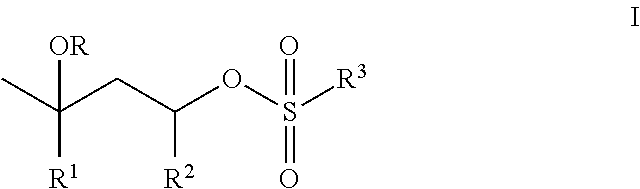
where R is H, C1-C6-alkyl; or C(O)C1-C6-alkyl; R1 is H or C1-C6-alkyl; R2 is H or CH3; and R3 is C1-C18-alkyl, phenyl-(R3a)b, or benzyl-(R3a)b, where b is 0, 1, 2, or 3; and each R3a is independently methyl, halo, methoxy, cyano, nitro, trifluoromethyl, or acetylamino; wherein the first polymer particles have an average particle size diameter in the range of from 100 nm to 500 μm, and a solids content in the range of from 10 to 60 weight percent, based on the weight of the aqueous dispersion of the first polymer particles.
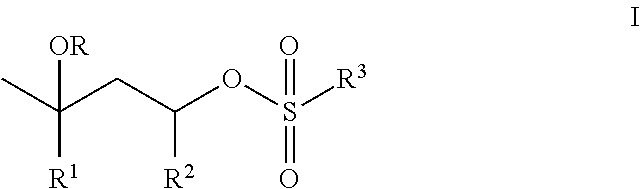
where R is H, C1-C6-alkyl; or C(O)C1-C6-alkyl; R1 is H or C1-C6-alkyl; R2 is H or CH3; and R3 is C1-C18-alkyl, phenyl-(R3a)b, or benzyl-(R3a)b, where b is 0, 1, 2, or 3; and each R3a is independently methyl, halo, methoxy, cyano, nitro, trifluoromethyl, or acetylamino; wherein the first polymer particles have an average particle size diameter in the range of from 100 nm to 500 μm, and a solids content in the range of from 10 to 60 weight percent, based on the weight of the aqueous dispersion of first polymer particles.

where R is H, C1-C6-alkyl; or C(O)C1-C6-alkyl; R1 is H or C1-C6-alkyl, preferably CH3; R2 is H or CH3; and R3 is C1-C18-alkyl, phenyl-(R3a)b, or benzyl-(R3a)b, where b is 0, 1, 2, or 3; and each R3a is independently methyl, halo, methoxy, cyano, nitro, trifluoromethyl, or acetylamino; wherein the first polymer particles have an average particle size diameter in the range of from 100 nm to 500 μm, and a solids content in the range of from 10 to 60 weight percent, based on the weight of the aqueous dispersion of the first polymer particles.


or a salt thereof; wherein R4 is H or CH3, wherein R5 and R6 are each independently H or CH3, with the proviso that no two adjacent CR5CR6 groups are each substituted with methyl groups; each R7 is independently linear or branched C2-C6 alkylene; m is from 2 to 10; n is from 0 to 5; x is 1 or 2; and y is 1 or 2; and x+y=3. Sipomer PAM-100, Sipomer PAM-200, Sipomer PAM-600, and Kayamer PM-21 phosphate esters are examples of commercially available compounds of within the scope of Formula II.

Here, Si is scattered intensity from particle i with diameter Di. Detailed Dz calculations are described in ISO 22412:2017 (Particle size analysis-Dynamic light scattering (DLS)).
Claims (9)


Priority Applications (1)
| Application Number | Priority Date | Filing Date | Title |
|---|---|---|---|
| US16/765,675 US11434357B2 (en) | 2018-02-21 | 2019-02-15 | Expandable polymer particles |
Applications Claiming Priority (3)
| Application Number | Priority Date | Filing Date | Title |
|---|---|---|---|
| US201862633219P | 2018-02-21 | 2018-02-21 | |
| US16/765,675 US11434357B2 (en) | 2018-02-21 | 2019-02-15 | Expandable polymer particles |
| PCT/US2019/018140 WO2019164754A1 (en) | 2018-02-21 | 2019-02-15 | Expandable polymer particles |
Publications (2)
| Publication Number | Publication Date |
|---|---|
| US20200377712A1 US20200377712A1 (en) | 2020-12-03 |
| US11434357B2 true US11434357B2 (en) | 2022-09-06 |
Family
ID=65635824
Family Applications (1)
| Application Number | Title | Priority Date | Filing Date |
|---|---|---|---|
| US16/765,675 Active 2039-09-05 US11434357B2 (en) | 2018-02-21 | 2019-02-15 | Expandable polymer particles |
Country Status (8)
| Country | Link |
|---|---|
| US (1) | US11434357B2 (en) |
| EP (1) | EP3755741A1 (en) |
| JP (1) | JP7258897B2 (en) |
| KR (1) | KR102751715B1 (en) |
| CN (1) | CN111630090B (en) |
| BR (1) | BR112020015187A2 (en) |
| CA (1) | CA3089993A1 (en) |
| WO (1) | WO2019164754A1 (en) |
Families Citing this family (1)
| Publication number | Priority date | Publication date | Assignee | Title |
|---|---|---|---|---|
| EP4480976A4 (en) * | 2022-02-18 | 2026-01-21 | Sekisui Kasei Co Ltd | Hollow resin particles, methods for their production and uses |
Citations (9)
| Publication number | Priority date | Publication date | Assignee | Title |
|---|---|---|---|---|
| JPH11147971A (en) | 1997-09-11 | 1999-06-02 | Mitsui Chem Inc | Foamable polymer particle |
| JP2004043732A (en) * | 2002-07-15 | 2004-02-12 | Three M Innovative Properties Co | Foaming adhesive composition |
| EP1764374A1 (en) | 2005-09-16 | 2007-03-21 | Rohm and Haas Company | Swellable particles |
| US20130065976A1 (en) | 2010-03-31 | 2013-03-14 | Hiroyuki Morita | Thermally expandable microcapsule, method for producing thermally expandable microcapsule, foamable masterbatch, and foam molded article |
| US20130085192A1 (en) | 2010-03-31 | 2013-04-04 | Hiroshi Yamauchi | Thermally expandable microcapsule and process for production of thermally expandable microcapsule |
| JP2013237779A (en) | 2012-05-15 | 2013-11-28 | Sekisui Chem Co Ltd | Thermally expansible microcapsule |
| US8722751B2 (en) | 2003-10-30 | 2014-05-13 | Evonik Rohm Gmbh | Thermostable microporous polymethacrylimide foams |
| US20150361236A1 (en) * | 2013-02-15 | 2015-12-17 | Evonik Roehm Gmbh | Bead polymer for producing pmi foams |
| WO2017141653A1 (en) | 2016-02-19 | 2017-08-24 | 松本油脂製薬株式会社 | Heat-expandable microspheres and uses thereof |
Family Cites Families (1)
| Publication number | Priority date | Publication date | Assignee | Title |
|---|---|---|---|---|
| US4477618A (en) * | 1982-09-29 | 1984-10-16 | Ppg Industries, Inc. | Aminoplast curable coating compositions containing sulfonic acid esters as latent acid catalysts |
-
2019
- 2019-02-15 CN CN201980009333.1A patent/CN111630090B/en active Active
- 2019-02-15 JP JP2020540542A patent/JP7258897B2/en active Active
- 2019-02-15 CA CA3089993A patent/CA3089993A1/en active Pending
- 2019-02-15 BR BR112020015187-4A patent/BR112020015187A2/en not_active Application Discontinuation
- 2019-02-15 KR KR1020207025079A patent/KR102751715B1/en active Active
- 2019-02-15 WO PCT/US2019/018140 patent/WO2019164754A1/en not_active Ceased
- 2019-02-15 US US16/765,675 patent/US11434357B2/en active Active
- 2019-02-15 EP EP19708729.9A patent/EP3755741A1/en not_active Withdrawn
Patent Citations (11)
| Publication number | Priority date | Publication date | Assignee | Title |
|---|---|---|---|---|
| JPH11147971A (en) | 1997-09-11 | 1999-06-02 | Mitsui Chem Inc | Foamable polymer particle |
| JP2004043732A (en) * | 2002-07-15 | 2004-02-12 | Three M Innovative Properties Co | Foaming adhesive composition |
| US8722751B2 (en) | 2003-10-30 | 2014-05-13 | Evonik Rohm Gmbh | Thermostable microporous polymethacrylimide foams |
| EP1764374A1 (en) | 2005-09-16 | 2007-03-21 | Rohm and Haas Company | Swellable particles |
| US8686096B2 (en) | 2005-09-16 | 2014-04-01 | Rohm And Haas Company | Swellable particles |
| US20130065976A1 (en) | 2010-03-31 | 2013-03-14 | Hiroyuki Morita | Thermally expandable microcapsule, method for producing thermally expandable microcapsule, foamable masterbatch, and foam molded article |
| US20130085192A1 (en) | 2010-03-31 | 2013-04-04 | Hiroshi Yamauchi | Thermally expandable microcapsule and process for production of thermally expandable microcapsule |
| JP2013237779A (en) | 2012-05-15 | 2013-11-28 | Sekisui Chem Co Ltd | Thermally expansible microcapsule |
| JP5991851B2 (en) | 2012-05-15 | 2016-09-14 | 積水化学工業株式会社 | Thermally expandable microcapsules |
| US20150361236A1 (en) * | 2013-02-15 | 2015-12-17 | Evonik Roehm Gmbh | Bead polymer for producing pmi foams |
| WO2017141653A1 (en) | 2016-02-19 | 2017-08-24 | 松本油脂製薬株式会社 | Heat-expandable microspheres and uses thereof |
Non-Patent Citations (1)
| Title |
|---|
| I. Eryazici; M. Carter; W. Sattler; J. Yang; S. Wills; F. J. Huby et al. Gas-Generating Polymer Particles: Reducing the Decomposition Temperature of Poly(tert-Butyl Methacrylate) Side Chains Using an Encapsulated Acid Catalyst Approach. ACS Appl. Polym. Mater. 2020, 2, 11, 5179-5187 (Year: 2020). * |
Also Published As
| Publication number | Publication date |
|---|---|
| CN111630090A (en) | 2020-09-04 |
| BR112020015187A2 (en) | 2021-01-26 |
| CA3089993A1 (en) | 2019-08-29 |
| KR102751715B1 (en) | 2025-01-07 |
| EP3755741A1 (en) | 2020-12-30 |
| WO2019164754A1 (en) | 2019-08-29 |
| JP7258897B2 (en) | 2023-04-17 |
| CN111630090B (en) | 2022-12-27 |
| US20200377712A1 (en) | 2020-12-03 |
| JP2021514408A (en) | 2021-06-10 |
| KR20200123430A (en) | 2020-10-29 |
Similar Documents
| Publication | Publication Date | Title |
|---|---|---|
| EP3401341B1 (en) | Process for preparing an aqueous dispersion of polymeric microspheres | |
| KR102014858B1 (en) | Water-based polymer emulsions for opaque films and coatings applications on flexible substrates | |
| KR101200124B1 (en) | High-molecular dispersant for inorganic pigments | |
| US10040932B2 (en) | Bimorphological latex | |
| US10308730B2 (en) | Preparation of a redox initiated bimorphological latex | |
| US11434357B2 (en) | Expandable polymer particles | |
| US7741378B2 (en) | Porous monodispersed particles and method for production thereof, and use thereof | |
| US9856372B2 (en) | In situ preparation of a bimorphological latex | |
| CN105777967B (en) | A kind of preparation method of morphology controllable double-sided polymerization object particle | |
| KR20070026122A (en) | Elliptic spherical organic polymer particles and preparation method thereof | |
| KR20210084529A (en) | Aqueous Dispersion of Polymer Composite Microspheres | |
| RU2678101C1 (en) | Acrylic polymer particles, method for manufacture thereof, printing ink composition and coating composition | |
| JP5421214B2 (en) | Method for producing polymer particles | |
| JP5535118B2 (en) | Hollow carbon particles and method for producing the same | |
| US9574021B1 (en) | Polymer nanoparticle preparation by miniemulsion polymerization | |
| JP2020132866A (en) | Aqueous dispersion of polymer composite microspheres | |
| JP7650617B2 (en) | Organic fine particles and method for producing same | |
| TW202444777A (en) | Resin particles for forming pores in polyimide porous membranes and method for producing the same | |
| JP2022076614A (en) | Quantification method of hydrophobicity of aqueous dispersion particle | |
| JP2006265286A (en) | POLYMER-COATED MAGNETIC PARTICLE AND METHOD FOR PRODUCING THE SAME, BIOCHEMICAL SUPPORT | |
| Guckian | Synthesis of styrene and acrylic emulsion polymer systems by semi-continuous seeded polymerization processes |
Legal Events
| Date | Code | Title | Description |
|---|---|---|---|
| FEPP | Fee payment procedure |
Free format text: ENTITY STATUS SET TO UNDISCOUNTED (ORIGINAL EVENT CODE: BIG.); ENTITY STATUS OF PATENT OWNER: LARGE ENTITY |
|
| STPP | Information on status: patent application and granting procedure in general |
Free format text: APPLICATION UNDERGOING PREEXAM PROCESSING |
|
| STPP | Information on status: patent application and granting procedure in general |
Free format text: DOCKETED NEW CASE - READY FOR EXAMINATION |
|
| STPP | Information on status: patent application and granting procedure in general |
Free format text: NOTICE OF ALLOWANCE MAILED -- APPLICATION RECEIVED IN OFFICE OF PUBLICATIONS |
|
| AS | Assignment |
Owner name: ROHM AND HAAS COMPANY, PENNSYLVANIA Free format text: ASSIGNMENT OF ASSIGNORS INTEREST;ASSIGNORS:CARTER, MATTHEW;ERYAZICI, IBRAHIM;REEL/FRAME:060441/0057 Effective date: 20181010 Owner name: DOW GLOBAL TECHNOLOGIES LLC, MICHIGAN Free format text: ASSIGNMENT OF ASSIGNORS INTEREST;ASSIGNOR:BANCROFT, PATRICIA ANSEMS;REEL/FRAME:060302/0112 Effective date: 20181009 |
|
| STPP | Information on status: patent application and granting procedure in general |
Free format text: PUBLICATIONS -- ISSUE FEE PAYMENT RECEIVED |
|
| STPP | Information on status: patent application and granting procedure in general |
Free format text: PUBLICATIONS -- ISSUE FEE PAYMENT VERIFIED |
|
| STCF | Information on status: patent grant |
Free format text: PATENTED CASE |
|
| MAFP | Maintenance fee payment |
Free format text: PAYMENT OF MAINTENANCE FEE, 4TH YEAR, LARGE ENTITY (ORIGINAL EVENT CODE: M1551); ENTITY STATUS OF PATENT OWNER: LARGE ENTITY Year of fee payment: 4 |