US11431491B2 - Protection of the execution of cipher algorithms - Google Patents
Protection of the execution of cipher algorithms Download PDFInfo
- Publication number
- US11431491B2 US11431491B2 US16/903,209 US202016903209A US11431491B2 US 11431491 B2 US11431491 B2 US 11431491B2 US 202016903209 A US202016903209 A US 202016903209A US 11431491 B2 US11431491 B2 US 11431491B2
- Authority
- US
- United States
- Prior art keywords
- data
- key
- shares
- paths
- operations
- Prior art date
- Legal status (The legal status is an assumption and is not a legal conclusion. Google has not performed a legal analysis and makes no representation as to the accuracy of the status listed.)
- Active, expires
Links
Images




Classifications
-
- H—ELECTRICITY
- H04—ELECTRIC COMMUNICATION TECHNIQUE
- H04L—TRANSMISSION OF DIGITAL INFORMATION, e.g. TELEGRAPHIC COMMUNICATION
- H04L9/00—Cryptographic mechanisms or cryptographic arrangements for secret or secure communications; Network security protocols
- H04L9/002—Countermeasures against attacks on cryptographic mechanisms
-
- H—ELECTRICITY
- H04—ELECTRIC COMMUNICATION TECHNIQUE
- H04L—TRANSMISSION OF DIGITAL INFORMATION, e.g. TELEGRAPHIC COMMUNICATION
- H04L9/00—Cryptographic mechanisms or cryptographic arrangements for secret or secure communications; Network security protocols
- H04L9/08—Key distribution or management, e.g. generation, sharing or updating, of cryptographic keys or passwords
- H04L9/0861—Generation of secret information including derivation or calculation of cryptographic keys or passwords
-
- H—ELECTRICITY
- H04—ELECTRIC COMMUNICATION TECHNIQUE
- H04L—TRANSMISSION OF DIGITAL INFORMATION, e.g. TELEGRAPHIC COMMUNICATION
- H04L9/00—Cryptographic mechanisms or cryptographic arrangements for secret or secure communications; Network security protocols
- H04L9/06—Cryptographic mechanisms or cryptographic arrangements for secret or secure communications; Network security protocols the encryption apparatus using shift registers or memories for block-wise or stream coding, e.g. DES systems or RC4; Hash functions; Pseudorandom sequence generators
- H04L9/0618—Block ciphers, i.e. encrypting groups of characters of a plain text message using fixed encryption transformation
- H04L9/0625—Block ciphers, i.e. encrypting groups of characters of a plain text message using fixed encryption transformation with splitting of the data block into left and right halves, e.g. Feistel based algorithms, DES, FEAL, IDEA or KASUMI
-
- H—ELECTRICITY
- H04—ELECTRIC COMMUNICATION TECHNIQUE
- H04L—TRANSMISSION OF DIGITAL INFORMATION, e.g. TELEGRAPHIC COMMUNICATION
- H04L9/00—Cryptographic mechanisms or cryptographic arrangements for secret or secure communications; Network security protocols
- H04L9/08—Key distribution or management, e.g. generation, sharing or updating, of cryptographic keys or passwords
- H04L9/0816—Key establishment, i.e. cryptographic processes or cryptographic protocols whereby a shared secret becomes available to two or more parties, for subsequent use
- H04L9/0819—Key transport or distribution, i.e. key establishment techniques where one party creates or otherwise obtains a secret value, and securely transfers it to the other(s)
-
- H—ELECTRICITY
- H04—ELECTRIC COMMUNICATION TECHNIQUE
- H04L—TRANSMISSION OF DIGITAL INFORMATION, e.g. TELEGRAPHIC COMMUNICATION
- H04L9/00—Cryptographic mechanisms or cryptographic arrangements for secret or secure communications; Network security protocols
- H04L9/08—Key distribution or management, e.g. generation, sharing or updating, of cryptographic keys or passwords
- H04L9/0894—Escrow, recovery or storing of secret information, e.g. secret key escrow or cryptographic key storage
-
- H—ELECTRICITY
- H04—ELECTRIC COMMUNICATION TECHNIQUE
- H04L—TRANSMISSION OF DIGITAL INFORMATION, e.g. TELEGRAPHIC COMMUNICATION
- H04L2209/00—Additional information or applications relating to cryptographic mechanisms or cryptographic arrangements for secret or secure communication H04L9/00
- H04L2209/08—Randomization, e.g. dummy operations or using noise
-
- H—ELECTRICITY
- H04—ELECTRIC COMMUNICATION TECHNIQUE
- H04L—TRANSMISSION OF DIGITAL INFORMATION, e.g. TELEGRAPHIC COMMUNICATION
- H04L9/00—Cryptographic mechanisms or cryptographic arrangements for secret or secure communications; Network security protocols
- H04L9/06—Cryptographic mechanisms or cryptographic arrangements for secret or secure communications; Network security protocols the encryption apparatus using shift registers or memories for block-wise or stream coding, e.g. DES systems or RC4; Hash functions; Pseudorandom sequence generators
Definitions
- the present disclosure generally relates to electronic circuits and, more specifically, to circuits executing symmetric encryption algorithms.
- the present disclosure more specifically relates to the protection of the execution of algorithms of symmetric encryption in rounds against side-channel attacks.
- secret data may be considered as being data to which access is desired to be reserved to certain users or circuits.
- secret key algorithms There in particular exist symmetric encryption algorithms or secret key algorithms, which enable to cipher and to decipher messages using a same cryptographic key.
- Embodiments disclosed herein may facilitate overcoming all or part of the disadvantages of usual methods and circuits of protection of data manipulated by symmetric encryption algorithms against side-channel attacks.
- An embodiment provides a method of protecting the execution, by an electronic circuit, of a symmetric cipher algorithm in rounds of a data by a key, wherein:
- At least one among the data and the key is masked by at least one mask
- a round function is applied, at each round of the cipher algorithm, to the masked key or data and to said mask.
- said data and said key are masked by at least one mask
- said round function is applied, at each round of the cipher algorithm, to the masked key, to the masked data, and to said mask.
- said mask or masks are randomly selected.
- the number of applications of the round function to a data share among the masked key and said data mask is, at any time, smaller than the number of applications of the round function to a key share among the masked key and said key mask.
- the number of applications of the round function to a data share among the masked key and said data mask is smaller than or equal to the number of applications of the round function to a key share among the masked key and said key mask.
- the round function is, for a round of same rank, successively applied to all the key shares and then to all the data shares.
- the round function is, for a round of same rank, alternately applied to a key share and then to a data share.
- the round function uses, at each round of the cipher algorithm:
- the key share used to cipher each data share is, at each round of the cipher algorithm, randomly selected.
- a plurality of different hardware entities apply the round function to the masked key, to said key mask, to the masked data, and to said data mask.
- the hardware entities applying the round function are, at each round of the cipher algorithm, randomly selected.
- the hardware entities perform a calculation independent from the cipher algorithm when they do not apply the round function.
- the key is masked by a plurality of key masks and the data are masked by a plurality of data masks.
- Some embodiments provide an electronic circuit configured to implement such method.
- a system may be summarized as comprising a plurality of circuits that, in operation execute cryptographic operations to generate cryptographic information and protect secret data associated with the cryptographic operations.
- the plurality of circuits are configured, in connection with protection of the secret data, to generate a first plurality of key shares by performing block cipher operations involving a masked cryptographic key; generate a second plurality of key shares by performing block cipher operations involving a first mask; generate a first plurality of data shares by performing block cipher operations involving masked data and the first plurality of key shares; and generate a second plurality of data shares by performing block cipher operations involving a second mask and the second plurality of key shares.
- the first plurality of key shares may be generated by a first circuit of the plurality of circuits.
- the second plurality of key shares may be generated by a second circuit of the plurality of circuits.
- the first plurality of data shares may be generated by a third circuit of the plurality of circuits.
- the second plurality of data shares may be generated by a fourth circuit of the plurality of circuits.
- the first plurality of key shares, the second plurality of key shares, the first plurality of date shares, and the second plurality of data shares may be generated via a plurality of block cipher operations.
- One or more individual circuits of the plurality of circuits may be configured to perform a dummy operation in parallel with performance of a block cipher operation by at least one other circuit of the plurality of circuits.
- the plurality of circuits in operation may generate a third plurality of key shares by performing block cipher operations involving a third mask; and generate a third plurality of data shares by performing block operations involving a fourth mask and the third plurality of key shares.
- the first plurality of key shares, the second plurality of key shares, the first plurality of data shares, and the second plurality of data shares may be generated by randomly selected circuits of the plurality of circuits.
- a device may be summarized as including a plurality of processing circuits that operate in parallel to generate ciphered data of a data block; and protect secret data.
- the plurality of processing circuits are configured, as part of protection of the secret data, to generate a plurality of key shares using a cryptographic key as input to a first plurality of iterative cipher operations and using a first mask as input to a second plurality of iterative cipher operations; generate a first plurality of data shares using a data block and a first key of the plurality of key shares as input to a third plurality of iterative cipher operations; and generate a second plurality of data shares using a second mask and a second key the plurality of key shares as input to a fourth plurality of iterative cipher operations.
- remaining circuits of the plurality of processing circuits may perform dummy operations in parallel with performance of the cipher operations by one or more circuits.
- the plurality of processing circuits may be configured to combine one data share of the first plurality of data shares and one data share of the second plurality of data shares to generate the ciphered data.
- a method may be summarized as comprising executing cryptographic operations to generate cryptographic information and protecting secret data associated with the cryptographic operations.
- the protecting includes generating, by a first circuit, a first plurality of key shares by performing block cipher operations involving a cryptographic key; generating, by a second circuit, a second plurality of key shares by performing block cipher operations involving a first mask; generating, by a third circuit, a first plurality of data shares by performing block cipher operations involving a data block and the first plurality of key shares; and generating, by a fourth circuit, a second plurality of data shares by performing block cipher operations involving a second mask and the second plurality of key shares.
- the method may comprise generating the cryptographic information by at least combining one data share of the first plurality of data shares and one data share of the second plurality of data shares.
- the cryptographic key may be a masked cryptographic key generated using the first mask and an unmasked cryptographic key
- the data block may be masked data generated using the second mask.
- the method may comprise performing a first dummy operation by the second circuit in parallel with generating a key share of the first plurality of key shares by the first circuit.
- the method may comprise performing a second dummy operation by the fourth circuit in parallel with generating a data share of the first plurality of data shares by the third circuit.
- the method may comprise generating, by a fifth circuit, a third plurality of key shares by performing block cipher operations involving a third mask; and generating, by a sixth circuit, a third plurality of data shares by performing block cipher operations involving a fourth mask and the third plurality of key shares.
- the method may comprise generating the cryptographic information by at least combining one data share of the first plurality of data shares, one data share of the second plurality of data shares, and one data share of the third plurality of data shares.
- Generating the second plurality of key shares may be performed subsequent to generating an initial key share of the first plurality of key shares. Generating an initial data share of the first plurality of data shares may be performed subsequent to generating an initial key share of the second plurality of key shares. Generating an initial data share of the first plurality of data shares may be performed subsequent to generating the initial key share of the first plurality of key shares. One or more of the second plurality of key shares are generated in parallel with one or more of the first plurality of key shares. One or more of the second plurality of data shares may be generated in parallel with one or more of the first plurality of data shares.
- FIG. 1 schematically shows an embodiment of an electronic circuit
- FIG. 2 shows, in the form of blocks, a schematic diagram of the execution of an embodiment of a symmetric cipher algorithm
- FIG. 3 schematically shows steps of execution of a symmetric cipher algorithm
- FIG. 4 schematically shows an example of a method of protection of the execution of a symmetric cipher algorithm
- FIG. 5 schematically shows another example of a method of protection of the execution of a symmetric cipher algorithm
- FIG. 6 schematically shows an implementation mode of a method of protection of the execution of a symmetric cipher algorithm
- FIG. 7 schematically shows another implementation mode of a method of protection of the execution of a symmetric cipher algorithm.
- FIG. 8 schematically shows still another implementation mode of a method of protection of the execution of a symmetric cipher algorithm.
- connection is used to designate a direct electrical connection between circuit elements with no intermediate elements other than conductors
- coupled is used to designate an electrical connection between circuit elements that may be direct, or may be via one or more intermediate elements.
- FIG. 1 schematically shows an embodiment of an electronic circuit 1 .
- circuit 1 comprises:
- Processing circuitry 11 which may be, by way of non-limiting example, a state machine, a microprocessor, a programmable logic circuit, etc.;
- MEM volatile and/or non-volatile storage areas 13
- I/O input-output interface 17
- Circuit 1 may include various other circuits according to the application, symbolized in FIG. 1 by a block 19 (FCT).
- FCT block 19
- FIG. 2 shows, in the form of blocks, a schematic diagram of the execution of an embodiment of a symmetric cipher algorithm, such as block cipher algorithms and stream cipher algorithms.
- the present disclosure relates to performance of block cipher algorithms in successive rounds or iterations, for example, algorithms of AES, SM4, etc., type.
- a symmetric encryption or cipher algorithm may be executed by the electronic circuit 1 in rounds to transform data (e.g., a message, plain alphanumeric text) with a secret key to obtain ciphered data (e.g., a ciphered message, ciphered alphanumeric text).
- the electronic circuit 1 executing the cipher algorithm may be a state machine or a processor that is specifically configured to execute the symmetric encryption or cipher algorithm.
- Such specific configuration may be achieved via specific configuration of a programmable logic circuit, field programmable gate array, application specific integrated circuit, system on a chip, etc., for example, that are included in the circuit 1 .
- Block cipher algorithms generally provide a first so-called initialization step (block 21 , INITIALIZATION).
- the initialization step enables to perform operations prior to the actual ciphering.
- the plain text or text (PLAIN TEXT) is typically, during initialization step 21 , divided, broken down or split into blocks having a fixed size (for example, 64 or 128 bits). If the data to be ciphered occur to have a size which is not a multiple of the size of a block, at least one block (for example, the last block) can then be completed with as many bits or bytes to fill the block.
- the secret key (KEY) used to cipher the data is generally selected or calculated or generated at the time of initialization step 21 .
- an iterative ciphering or processing process is then started (block 23 , ROUND).
- the iterative processing comprises applying, to each of the blocks forming the plain text and to the secret key, successive transformations.
- it is started by calculating or generating (block 231 , KEY PATH) a subkey (SUBKEY) from the secret key or the subkey of the previous round.
- the subkey is used to transform or cipher (block 233 , DATA PATH) each of the blocks forming the data.
- New blocks having a size identical to that of the blocks forming the plain text are then obtained at the output of a round.
- the new blocks are then injected back (arrow 235 ) into the processing or cipher process, thus playing the role, at the next round, of input data for the application of round function 23 .
- each new subkey is, at the output of a round, injected back (arrow 237 ) to enable to generate the subkey of the next round.
- the blocks obtained by the last application of round function 23 form the ciphered or encrypted message (CIPHER TEXT).
- the algorithm or process of symmetric cipher in rounds successively comprises, in addition to the initialization step:
- Number N of rounds is also called number of iterations. Number N of rounds generally depends on the respective sizes of the blocks and on the secret key.
- the round function 23 applied at each round is, for example, comprised of substitution, row shifting, and column mixing operations followed by a combination (for example, XOR) with the subkey of the considered round.
- Round function 23 typically aims at obtaining an algorithm provided with properties of confusion (that is, as complex a relation as possible between the secret key and the plain text) and of diffusion (that is, a dissipation, in the statistics of the ciphered text, of a statistic redundancy of the plain text). Such is typically the case for an AES- or SM4-type algorithm.
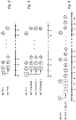
- FIG. 3 schematically shows steps of execution of a symmetric cipher algorithm.
- a sequence, over time (t), of successive steps of a symmetric cipher algorithm in rounds for example, the algorithm discussed in relation with FIG. 2 , is considered. It is assumed that the cipher algorithm comprises a number N of rounds. The rounds are, hereafter, numbered from 1 to N. In this example, the initialization step ( 21 , FIG. 2 ) is not taken into account.
- FIG. 3 shows:
- each block thus represents an application of the round function to the key or to the blocks forming the data to be ciphered, as discussed in relation with FIG. 2 .
- the applications of the round function to the key and the applications of the round function to the data are, most of the time, carried out by two different hardware entities (not shown) or physical units. In other words, a hardware entity is assigned to the calculation of the subkey specific to each round while another different hardware entity is dedicated to the ciphering of the data.
- a computing system such as the circuit 1 , includes a processing unit (e.g., included in the processing circuitry 11 ) comprising a plurality of individual processing circuits or processor cores that each, in operation, process information independently from and in parallel with each other.
- the individual processing circuits may be referred to herein as hardware entities. Individual processing circuits may be tasked with either application of round functions to the key or application of round functions to the blocks forming the data.
- the computing system may be configured to assign tasks (e.g., cipher operations) to individual processing circuits.
- a computing system may include a plurality of processing units each comprising the aforementioned individual processing circuits. The plurality of individual processing circuits or processor cores may be contained in a single integrated circuit.
- a first round of the cipher algorithm starts.
- the hardware entity dedicated to the calculation of the subkeys applies (block 301 ) the round function to the secret key.
- a first subkey is thus obtained.
- the hardware entity dedicated to the ciphering of the data remains generally inactive during the calculation 301 of the first subkey.
- the round function is applied (block 501 ) to the plain text by the hardware entity dedicated to the data ciphering. This thus enables to perform a first ciphering 501 of the plain text by using the first subkey resulting from calculation 301 .
- first ciphering 501 is over, the first round of the algorithm ends.
- a second round of the cipher algorithm starts by the application (block 303 ) of the round function to the first subkey resulting from calculation 301 . A second subkey is thus obtained.
- the round function is applied (block 503 ) to the data originating from the first ciphering 501 , by means of the first subkey, of the plain text. This thus enables to perform a second ciphering 503 of the data by means of the second subkey resulting from calculation 303 . Once this second ciphering 503 is over, the second round of the algorithm ends. In parallel with the execution of the second round 503 applied to the data, a third round of the cipher algorithm starts by the application (block 305 ) of the round function to the second subkey resulting from calculation 303 . A third subkey is thus obtained.
- the round function is applied (block 505 ) to the data originating from the second ciphering 503 , by means of the second subkey, of the data. This thus enables to perform a third ciphering 505 of the data by means of the third subkey resulting from calculation 305 . Once this third ciphering 505 is over, the third round of the algorithm ends. In parallel with the execution of third round 505 applied to the data, a fourth round of the cipher algorithm starts by the application (not shown) of the round function to the third subkey resulting from calculation 305 . A fourth subkey is thus obtained.
- the recursive cipher process ends by a final application (block 507 ) of the round function to the data.
- the data obtained at the end of the last ciphering 507 by means of the N-th key, then form the ciphered data.
- the hardware entity assigned to the calculation of the subkeys remains generally inactive during the last application 507 of the round function to the data.
- the time sequence of the steps of the cipher algorithm extends over a time period theoretically equal to N+1 multiplied by the time taken for the application of the round function to the data or to the key.
- An execution similar to that which has just been described in relation with FIG. 3 has the disadvantage of directly manipulating the plain text during the first round of the cipher algorithm. This makes the execution particularly vulnerable to side-channel attacks, which may enable an attacker or hacker to trace back secret information (for example, the plain text) manipulated by a circuit, for example, circuit 1 ( FIG. 1 ).
- FIG. 4 schematically shows an example of a method of protection of the execution of a symmetric cipher algorithm.
- the plain text is first masked before being ciphered by the execution of the algorithm.
- the masking of the plain text is performed, for example, by combining the plain text, noted X, with two numbers, noted R1 and R2. Numbers R1 and R2 are generally randomly selected.
- the masking of plain text X by random numbers R1 and R2 enables to secure the execution of the cipher algorithm by avoiding directly manipulating plain text X.
- a time variation of the steps of a symmetric cipher algorithm in rounds is considered.
- the cipher algorithm is assumed to comprise a number N of rounds.
- the rounds are, hereafter, numbered from 1 to N.
- the initialization step ( 21 , FIG. 2 ) is not taken into account.
- FIG. 4 shows:
- each block thus represents an application of the round function to the key and to the blocks forming a data share (among masked data X0 and data masks R1 and R2).
- the applications of the round function to the key and the applications of the round function to each data share X0, R1, and R2 are, still in this example, performed by four different hardware entities (not shown).
- a hardware entity is assigned to the calculation of the subkey specific to each round while three other separate hardware entities are dedicated to the ciphering of the three data shares X0, R1, and R2.
- a separation, called spatial separation, of the execution of the cipher algorithm is thus achieved within the circuit.
- a first round of the cipher algorithm starts.
- the hardware entity dedicated to the calculation of the subkeys applies (block 301 ) the round function to the secret key.
- a first subkey is thus obtained.
- the three hardware entities dedicated to the ciphering of data shares X0, R1, and R2 remain generally inactive during the calculation 301 of the first subkey.
- the round function is simultaneously applied (blocks 511 , 531 , and 551 ) to masked data X0 and to the two data masks R1 and R2 by the hardware entities dedicated to the ciphering of data shares X0, R1, and R2.
- This thus enables to perform first ciphering 511 , 531 , and 551 of data shares X0, R1, and R2 by using the first subkey resulting from calculation 301 .
- the first round of the algorithm ends.
- a second round of the cipher algorithm starts by the application (block 303 ) of the round function to the first subkey resulting from calculation 301 .
- a second subkey is thus obtained.
- the round function is simultaneously applied (blocks 513 , 533 , and 553 ) to the data shares originating from the first operations of ciphering 511 , 531 , and 551 , by means of the first subkey, of data shares X0, R1, and R2.
- This thus enables to perform second operations of ciphering 513 , 533 , and 553 of data shares X0, R1, and R2 by using the second subkey resulting from calculation 303 .
- the second round of the algorithm ends.
- a third round of the cipher algorithm starts by the application (block 305 ) of the round function to the second subkey resulting from calculation 303 .
- a third subkey is thus obtained.
- the round function is simultaneously applied (blocks 515 , 535 , and 555 ) to the data shares originating from the second operations of ciphering 513 , 533 , and 553 , by means of the second subkey, of the data shares.
- This thus enables to perform third operations of ciphering 515 , 535 , and 555 of data shares X0, R1, and R2 by using the third subkey resulting from calculation 305 .
- the third round of the algorithm ends.
- a fourth round of the cipher algorithm starts by the application (not shown) of the round function to the third subkey resulting from calculation 305 .
- a fourth subkey is thus obtained.
- the recursive ciphering process ends by a final simultaneous application (blocks 517 , 537 , and 557 ) of the round function to each data share X0, R1, and R2.
- the hardware entity assigned to the calculation of the subkeys remains generally inactive during the last applications 517 , 537 , and 557 of the round function to the data shares.
- the time sequence of the steps of the cipher algorithm extends over a time period theoretically equal to N+1 multiplied by the time taken for the application of the round function to a data share or to the key.
- FIG. 5 schematically shows another example of a method of protection of the execution of a symmetric cipher algorithm.
- the plain text is, as in the previous example discussed in relation with FIG. 4 , first masked before being ciphered by the execution of the algorithm.
- the three data shares X0, R1, and R2 are thus obtained.
- a time variation of the steps of a symmetric cipher algorithm in rounds is considered.
- the cipher algorithm is assumed to comprise a number N of rounds.
- the rounds are, hereafter, numbered from 1 to N.
- the initialization step ( 21 , FIG. 2 ) is not taken into account.
- FIG. 5 shows:
- each block thus represents an application of the round function to the key or to the blocks forming data shares X0, R1, and R2.
- the applications of the round function to the key and the applications of the round function to data shares X0, R1, and R2 are, still in this example, performed by two different hardware entities (not shown).
- a hardware entity is assigned to the calculation of the subkey specific to each round while another separate hardware entity is dedicated to the ciphering of the three data shares X0, R1, and R2.
- a separation, called time separation, of the execution of the cipher algorithm is thus achieved.
- a first round of the cipher algorithm starts.
- the hardware entity dedicated to the calculation of the subkeys applies (block 301 ) the round function to the secret key.
- a first subkey is thus obtained.
- the hardware entity dedicated to the ciphering of data shares X0, R1, and R2 remains generally inactive during the calculation 301 of the first subkey.
- the round function is applied (block 511 ) to a first data share, for example, masked data X0, by the hardware entity dedicated to the ciphering of data shares This thus enables to perform a first ciphering 511 of masked data X0 by using the first subkey resulting from calculation 301 .
- the hardware entity assigned to the calculation of the subkeys remains generally inactive during ciphering 511 .
- the round function is applied (block 531 ) to a second data share, for example, first data mask R1, by the hardware entity dedicated to the ciphering of the data shares.
- a second data share for example, first data mask R1
- the hardware entity assigned to the calculation of the subkeys remains generally inactive during ciphering 531 .
- the round function is applied (block 551 ) to a third data share, for example, second data mask R2, by the hardware entity dedicated to the ciphering of the data shares.
- a third data share for example, second data mask R2
- the hardware entity dedicated to the ciphering of the data shares This thus enables to perform a first ciphering 551 of second data mask R2 by using the first subkey resulting from calculation 301 .
- the first round of the algorithm ends.
- a second round of the cipher algorithm starts by the application (block 303 ) of the round function to the first subkey resulting from calculation 301 . A second subkey is thus obtained.
- the round function is applied (block 513 ) to the data share originating from the first ciphering 511 , by means of the first subkey, of the first data share (in this example, masked data X0). This thus enables to perform a second ciphering 513 of masked data X0 by means of the second subkey resulting from calculation 303 .
- the hardware entity assigned to the calculation of the subkeys remains generally inactive during ciphering 513 .
- the round function is applied (block 533 ) to the data share originating from the first ciphering 531 , by means of the first subkey, of the second data share (in this example, first data mask R1). This thus enables to perform a second ciphering 533 of first data mask R1 by means of the second subkey resulting from calculation 303 .
- the hardware entity assigned to the calculation of the subkeys remains generally inactive during ciphering 533 .
- the round function is applied (block 553 ) to the data share resulting from the first ciphering 551 , by means of the first subkey, of the third data share (in this example, second data mask R2).
- This thus enables to perform a second ciphering 553 of second data mask R2 by means of the second subkey resulting from calculation 303 .
- the second round of the algorithm ends.
- a third round of the cipher algorithm starts by the application (block 305 ) of the round function to the second subkey resulting from calculation 303 .
- a third subkey is thus obtained.
- the round function is applied (block 515 ) to the data share originating from the second ciphering 513 , by means of the second subkey, of the first data share (in this example, masked data X0). This thus enables to perform a third ciphering 515 of masked data X0 by means of the third subkey resulting from calculation 305 .
- the hardware entity assigned to the calculation of the subkeys remains generally inactive during ciphering 515 .
- the round function is applied (block 535 ) to the data share originating from the second ciphering 533 , by means of the second subkey, of the second data share (in this example, first data mask R1). This thus enables to perform a third ciphering 535 of first data mask R1 by means of the third subkey resulting from calculation 305 .
- the hardware entity assigned to the calculation of the subkeys remains generally inactive during ciphering 535 .
- the round function is applied (block 555 ) to the data share resulting from the second ciphering 553 , by means of the second subkey, of the third data share (in this example, second data mask R2).
- This thus enables to perform a third ciphering 555 of second data mask R2 by means of the third subkey resulting from calculation 305 .
- the third round of the algorithm ends.
- a fourth round of the cipher algorithm starts by the application (not shown) of the round function to the third subkey resulting from calculation 305 .
- a fourth subkey is thus obtained.
- the process of recursive ciphering of the first data share ends with a final application (block 517 ) of the round function to the first data share.
- the process of recursive ciphering of the second data share ends with a final application (block 537 ) of the round function to the second data share.
- the process of recursive ciphering of the third data share ends with a final application (block 557 ) of the round function to the third data share.
- the hardware entity assigned to the calculation of the subkeys remains generally inactive during the last three applications 517 , 537 , and 557 of the round function to the data shares X0, R1, and R2.
- the time sequence of the steps of the cipher algorithm extends over a time period theoretically equal to 3*N+1 multiplied by the time taken for the application of the round function to a data share or to the key.
- FIG. 6 schematically shows an implementation mode of a method of protection of the execution of a symmetric cipher algorithm.
- the secret key is masked.
- Such a masking of the secret key is performed like the masking of the data.
- the secret key, noted K is, for example, combined with two numbers, noted R3 and R4. Numbers R3 and R4 may be randomly selected. The masking of the secret key with random numbers R3 and R4 enables to secure the execution of the cipher algorithm by avoiding directly manipulating secret key K.
- plain text X is also masked by two random data masks R1 and R2, thus forming masked data X0 as discussed in relation with FIGS. 4 and 5 .
- two masks are applied to the data and two masks are applied to the key. This corresponds to a so-called “second order masking”.
- Other cases where one or a plurality of masks are used to mask the data and/or the key can also be imagined.
- a time variation of the steps of a symmetric cipher algorithm in rounds is considered.
- the cipher algorithm is assumed to comprise a number N of rounds.
- the rounds are, hereafter, numbered from 1 to N.
- the initialization step ( 21 , FIG. 2 ) is not taken into account.
- FIG. 6 shows:
- DATA PATH SHARE 1 the successive applications of the round function to a first data share, for example, masked data X0;
- each block thus represents an application of the round function to a key share (among masked key K0 and key masks R3 and R4) or to the blocks forming a data share (among masked data X0 and data masks R1 and R2).
- the applications of the round function to each key share K0, R3, and R4 and the applications of the round function to each data share X0, R1, and R2 are, still in this example, performed by six different hardware entities (not shown).
- the hardware entities are assigned to the calculation, starting from the three key shares K0, R3, and R4, of the three subkeys specific to each round while three other separate hardware entities are dedicated to the ciphering of the three data shares X0, R1, and R2.
- a separation, called spatial separation, of the execution of the cipher algorithm is thus achieved within the circuit.
- a first round of the cipher algorithm starts.
- the first hardware entity dedicated to the calculation of the subkeys applies (block 311 ) the round function to a first key share, for example, masked key K0.
- a first subkey is thus obtained.
- the two hardware entities dedicated to the calculation of the other subkeys from the other key shares (key masks R3 and R4, in this example) as well as the three hardware entities dedicated to the ciphering of data shares X0, R1, and R2 remain generally inactive during the calculation 311 of the first subkey.
- the second hardware entity dedicated to the calculation of the subkeys applies (block 331 ) the round function to a second key share, for example, first key mask R3.
- a second subkey is thus obtained.
- a second round of the cipher algorithm starts by the application (block 313 ) of the round function to the first subkey resulting from calculation 311 .
- a third subkey is thus obtained.
- the third hardware entity dedicated to the calculation of the subkey from the third key share (second key mask R4, in this example) as well as the three hardware entities dedicated to the ciphering of data shares X0, R1, and R2, remain inactive during calculation 331 of the second subkey and calculation 313 of the third subkey.
- the third hardware entity dedicated to the calculation of the subkeys applies (block 351 ) the round function to a third key share, for example, second key mask R4.
- a fourth subkey is thus obtained.
- the second hardware entity dedicated to the calculation of the subkeys applies (block 333 ) the round function to a second key share (first key mask R3 in this example).
- a fifth subkey is thus obtained.
- a third round of the cipher algorithm starts by the application (block 315 ) of the round function to the third subkey resulting from calculation 313 .
- a sixth subkey is thus obtained.
- the three hardware entities dedicated to the ciphering of data shares X0, R1, and R2 remain inactive during calculations 351 , 333 , and 315 of the fourth, fifth, and sixth subkeys, respectively.
- the round function is applied (block 511 ) to a first data share, for example, masked data X0, by the hardware entity dedicated to the ciphering of the first data share.
- a first data share for example, masked data X0
- the hardware entity dedicated to the ciphering of the first data share This thus enables to perform a first ciphering 511 of masked data X0 by using, for example, the first subkey resulting from calculation 311 .
- the third hardware entity dedicated to the calculation of the subkeys applies (block 353 ) the round function to the fourth subkey resulting from calculation 351 .
- a seventh subkey is thus obtained.
- the second hardware entity dedicated to the calculation of the subkeys applies (block 335 ) the round function to the fifth subkey resulting from calculation 333 .
- An eighth subkey is thus obtained.
- the two hardware entities dedicated to the ciphering of the other data shares (data masks R1 and R2, in this example) remain inactive during ciphering 511 and calculations 353 and 335 .
- the round function is applied (block 531 ) to a second data share, for example, first data mask R1, by the hardware entity dedicated to the ciphering of the second data share.
- a second data share for example, first data mask R1
- the round function is applied (block 513 ) to the data share originating from the first ciphering 511 , by means of the first subkey, of the first data share (in this example, masked data X0).
- the third hardware entity dedicated to the calculation of the subkeys applies (block 355 ) the round function to the seventh subkey resulting from calculation 353 .
- a ninth subkey is thus obtained.
- the third hardware entity dedicated to the calculation of the third data share (second data mask R2, in this example) remains inactive during cipher operations 531 and 513 and calculation 355 .
- the round function is applied (block 551 ) to a third data share, for example, second data mask R2, by the hardware entity dedicated to the ciphering of the third data share.
- a third data share for example, second data mask R2
- the round function is applied (block 533 ) to the data share originating from the first ciphering 531 , by means of the second subkey, of the second data share (in this example, first data mask R1).
- the round function is applied (block 515 ) to the data share originating from the second ciphering 513 , by means of the third subkey, of the first data share (in this example, masked data X0).
- the round function is applied (block 553 ) to the data share resulting from first ciphering 551 , by means of the fourth subkey, of the third data share (in this example, second data mask R2). This thus enables to perform a second ciphering 553 of second data mask R2 by using, for example, the seventh subkey resulting from calculation 353 .
- the round function is applied (block 535 ) to the data share resulting from the second ciphering 533 , by means of the fifth subkey, of the second data share (in this example, first data mask R1). This thus enables to perform a third ciphering 535 of first data mask R1 by using, for example, the eighth subkey resulting from calculation 335 .
- the round function is applied (block 555 ) to the data share originating from the second ciphering 553 , by means of the seventh subkey, of the third data share (in this example, second data mask R2). This thus enables to perform a third ciphering 555 of second data mask R2 by using, for example, the ninth subkey resulting from calculation 355 .
- the steps of execution of the cipher algorithm thus follow one another until a time t 8 when a last (N-th) round of the cipher algorithm starts.
- the first hardware entity dedicated to the calculation of the subkeys then calculates (block 317 ) an antepenultimate subkey.
- the second hardware entity dedicated to the calculation of the subkeys then calculates (block 337 ) a penultimate subkey.
- the first hardware entity dedicated to the calculation of the subkeys remains inactive during calculation 337 of the penultimate subkey.
- the third hardware entity dedicated to the calculation of the subkeys then calculates (block 357 ) a last subkey.
- the two other hardware entities dedicated to the calculation of the subkeys remain inactive during calculation 357 of this last subkey.
- the round function is applied (block 517 ) by the hardware entity dedicated to the ciphering of the first data share (masked data X0, in this example). This thus enables to perform a final ciphering 517 of masked data X0 by using, for example, the antepenultimate subkey resulting from calculation 317 .
- the three hardware entities dedicated to the calculation of the subkeys remain inactive during final ciphering 517 of the first data share.
- the round function is applied (block 537 ) by the hardware entity dedicated to the ciphering of the second data share (first data mask R1 in this example).
- first data mask R1 in this example.
- This thus enables to perform a final ciphering 537 of first data mask R1 by using, for example, the penultimate subkey resulting from calculation 337 .
- the three hardware entities dedicated to the calculation of the subkeys and the hardware entity dedicated to the ciphering of the first data share remain inactive during final ciphering 537 of the second data share.
- the round function is applied (block 557 ) by the hardware entity dedicated to the ciphering of the third data share (second data mask R2 in this example).
- second data mask R2 in this example.
- This thus enables to perform a final ciphering 557 of second data mask R2 by using, for example, the last subkey resulting from calculation 357 .
- the three hardware entities dedicated to the calculation of the subkeys and the two other hardware entities respectively dedicated to the ciphering of the first and of the second data shares remain inactive during final ciphering 557 of the third data share.
- the time sequence of the steps of the cipher algorithm extends over a time period theoretically equal to N+5 multiplied by the time taken for the application of the round function to a data share or to a key share.
- FIG. 7 schematically shows another implementation mode of a method of protection of the execution of a symmetric cipher algorithm.
- the embodiment discussed hereabove in relation with FIG. 7 comprises elements common with the embodiment previously discussed in relation with FIG. 6 .
- the common elements will not be detailed again hereafter.
- the embodiment discussed in relation with FIG. 7 differs from the embodiment discussed in relation with FIG. 6 mainly in that the ciphering of each data share occurs, for a round of same rank, immediately after the calculation of the associated subkey.
- the round function is, for a round of same rank, alternately applied to a key share K0, R3, R4, and then to a data share X0, R1, R2.
- calculations 311 , 331 , and 351 of the first three subkeys, from key shares K0, R3, and R4, are successively performed at times t 0 , t 1 , and t 2 .
- the operations of ciphering 511 , 531 , and 551 of the blocks of data shares X0, R1, and R2 then respectively take place at times t 1 and t 2 and at a time t 3 .
- Cipher operations 511 , 531 , and 551 respectively use the subkeys resulting from calculations 311 , 331 , and 351 .
- the calculations 313 , 333 , and 353 of the next three subkeys, from the subkeys respectively resulting from calculations 311 , 331 , and 351 are successively performed at times t 1 , t 2 , and t 3 .
- the operations of ciphering 513 , 533 , and 553 of the blocks resulting from cipher operations 511 , 531 , and 551 then respectively take place at times t 2 and t 3 and at a time t 4 .
- Cipher operations 513 , 533 , and 553 respectively use the subkeys resulting from calculations 313 , 333 , and 353 .
- calculations 315 , 335 , and 355 of the next three subkeys, from the subkeys respectively resulting from calculations 313 , 333 , and 353 are successively performed at times t 2 , t 3 , and t 4 .
- the operations of ciphering 515 , 535 , and 555 of the blocks originating from cipher operations 513 , 533 , and 553 then respectively take place at times t 3 and t 4 and at a time t 5 .
- Cipher operations 515 , 535 , and 555 respectively use the subkeys resulting from calculations 315 , 335 , and 355 .
- the rounds of the cipher algorithm then follow one another until a last (N-th) round of the cipher algorithm.
- the calculations 317 , 337 , and 357 of the last three subkeys, obtained from the calculations (not shown) of the subkeys of the previous round, are successively performed at times t 6 , t 7 , and t 8 .
- the operations of ciphering 517 , 537 , and 557 of the blocks resulting from the cipher operations (not shown) of the previous round then respectively take place at times t 7 and t 8 and at a time t 9 .
- Cipher operations 517 , 537 , and 557 respectively use the subkeys resulting from calculations 317 , 337 , and 357 .
- the time sequence of the steps of the cipher algorithm extends over a time period theoretically equal to N+3 multiplied by the time taken for the application of the round function to a data share or to a key share.
- the entity may perform an arbitrarily or randomly determined calculation 700 , also referred to herein as a dummy operation.
- Calculation 700 is independent from the execution of the cipher algorithm. According to the embodiment of FIG. 7 , all the hardware entities thus remain simultaneously active all along the duration of execution of the cipher algorithm (that is, from time t 0 when calculation 311 starts to a time (not shown) when the last ciphering 557 ends).
- one or more other hardware entities may perform a dummy operation in parallel with performance of the round function by the first hardware entity to obfuscate secret data associated with operation of the circuit 1 or portions thereof.
- Calculation 700 particularly enables each hardware entity to maintain a substantially constant or stable electric power consumption and electromagnetic radiation all along the duration of execution of the cipher algorithm.
- a circuit executing this algorithm for example, circuit 1 ( FIG. 1 ), is thus protected against possible side channelside-channel attacks.
- the execution of the algorithm according to the embodiment discussed in relation with FIG. 7 also has the advantage of comprising up to six simultaneous executions, in parallel. This greatly complicates a task of identification, by an attacker analyzing the execution of the algorithm by circuit 1 , of the manipulated data and/or keys, all the more as the data and the keys have been previously masked. It is thus theoretically impossible to trace back the data and/or keys manipulated by the algorithm by recombining information originating from the analysis of its execution by circuit 1 .
- FIG. 8 schematically shows still another embodiment of a method of protection of the execution of a symmetric cipher algorithm.
- FIG. 8 In an embodiment, discussed hereafter in relation with FIG. 8 , comprises elements common with the embodiment previously discussed in relation with FIG. 7 . The common elements will not be detailed again hereafter.
- the embodiment discussed in relation with FIG. 8 differs from the embodiment discussed in relation with FIG. 7 mainly in that the hardware entities applying the round function are, at each round of the cipher algorithm, randomly selected. Further, the key share used to cipher each data share is, at each round of the cipher algorithm, randomly selected.
- the subkey used, at a round of same rank, to cipher one or a plurality of blocks originating from a same data share X0, R1, or R2 is randomly selected from the three subkeys originating from the three key shares K0, R3, and R4.
- FIG. 8 shows:
- the calculation 311 of the first subkey is performed, at a time t 0 , by a hardware entity dedicated to the calculation of the randomly-selected subkeys, for example, the second unit dedicated to the calculation of the subkeys.
- the first subkey for example, originates from masked key K0.
- Calculation 331 of the second subkey is performed, at a time t 1 , by a randomly-selected hardware entity dedicated to the calculation of the subkeys, for example, the first unit dedicated to the calculation of the subkeys.
- the second subkey for example, originates from first key mask R3.
- Calculation 351 of the third subkey is performed, at a time t 2 , by a randomly-selected hardware entity dedicated to the calculation of the subkeys, for example, the third unit dedicated to the calculation of the subkeys.
- the third subkey for example, originates from second key mask R4.
- the first ciphering 511 of the first data share is then performed, at a time t 3 , by a randomly-selected hardware entity dedicated to the ciphering, for example, the third unit dedicated to the ciphering.
- Ciphering 511 uses a randomly-selected subkey, for example, the third subkey resulting from calculation 351 .
- the first ciphering 531 of the first data share is then performed, at a time t 4 , by a randomly-selected hardware entity dedicated to the ciphering, for example, the first unit dedicated to the ciphering.
- Ciphering 531 uses a randomly-selected subkey, for example, the second subkey resulting from calculation 331 .
- the first ciphering 551 of the third data share is then performed, at a time t 5 , by a randomly-selected hardware entity dedicated to the ciphering, for example, the first unit dedicated to the ciphering.
- Ciphering 551 uses a randomly selected subkey, for example, the first subkey resulting from calculation 311 .
- the first round of the algorithm ends after ciphering 551 .
- the calculation 313 of the fourth subkey is performed, at a time t 1 , by a hardware entity dedicated to the calculation of the randomly-selected subkeys, for example, the third unit dedicated to the calculation of the subkeys.
- the fourth subkey in this example, originates from masked key K0.
- Calculation 333 of the fifth subkey is performed, at time t 2 , by a randomly-selected hardware entity dedicated to the calculation of the subkeys, for example, the second unit dedicated to the calculation of the subkeys.
- the fifth subkey originates from first key mask R3.
- Calculation 353 of the sixth subkey is performed, at time t 3 , by a randomly-selected hardware entity dedicated to the calculation of the subkeys, for example, the second unit dedicated to the calculation of the subkeys.
- the sixth subkey originates from second key mask R4.
- the second ciphering 513 of the first data share (masked data X0 in this example) is then performed, at a time t 4 , by a randomly-selected hardware entity dedicated to the ciphering, for example, the third unit dedicated to the ciphering.
- Ciphering 513 uses a randomly-selected subkey, for example, the sixth subkey resulting from calculation 353 .
- the second ciphering 533 of the second data share (first data mask R1 in this example) is then performed, at a time t 5 , by a randomly-selected hardware entity dedicated to the ciphering, for example, the second unit dedicated to the ciphering.
- Ciphering 533 uses a randomly-selected subkey, for example, the fourth subkey resulting from calculation 313 .
- the second ciphering 553 of the third data share (second data mask R2 in this example) is then performed, at a time t 6 , by a randomly-selected hardware entity dedicated to the ciphering, for example, the third unit dedicated to the ciphering.
- Ciphering 553 uses a randomly selected subkey, for example, the fifth subkey resulting from calculation 333 .
- the second round of the algorithm ends after ciphering 553 .
- the calculation 315 of the seventh subkey is performed, at time t 2 , by a hardware entity dedicated to the calculation of the randomly-selected subkeys, for example, the first unit dedicated to the calculation of the subkeys.
- the seventh subkey in this example, originates from masked key K0.
- Calculation 335 of the eighth subkey is performed, at time t 3 , by a randomly-selected hardware entity dedicated to the calculation of the subkeys, for example, the third unit dedicated to the calculation of the subkeys.
- the eighth subkey originates from first key mask R3.
- Calculation 355 of the ninth subkey is performed, at time t 4 , by a randomly-selected hardware entity dedicated to the calculation of the subkeys, for example, the first unit dedicated to the calculation of the subkeys.
- the ninth subkey originates from second key mask R4.
- the third ciphering 515 of the first data share (masked data X0 in this example) is then performed, at a time t 5 , by a randomly-selected hardware entity dedicated to the ciphering, for example, the third unit dedicated to the ciphering.
- Ciphering 515 uses a randomly-selected subkey, for example, the seventh subkey resulting from calculation 315 .
- the third ciphering 535 of the second data share (first data mask R1 in this example) is then performed, at a time t 6 , by a randomly-selected hardware entity dedicated to the ciphering, for example, the second unit dedicated to the ciphering.
- Ciphering 535 uses a randomly-selected subkey, for example, the ninth subkey resulting from calculation 355 .
- the third ciphering 555 of the third data share (second data mask R2 in this example) is then performed, at a time t 7 , by a randomly-selected hardware entity dedicated to the ciphering, for example, the third unit dedicated to the ciphering.
- Ciphering 555 uses a randomly selected subkey, for example, the eighth subkey resulting from calculation 335 .
- the third round of the algorithm ends after ciphering 555 .
- the rounds of the cipher algorithm then follow one another until a last (N-th) round of the cipher algorithm.
- the calculation 317 of the antepenultimate subkey is performed, at a time t 8 , by a hardware entity dedicated to the calculation of the randomly-selected subkeys, for example, the third unit dedicated to the calculation of the subkeys.
- the antepenultimate subkey in this example, originates from masked key K0.
- Calculation 337 of the penultimate subkey is performed, at a time t 9 , by a randomly-selected hardware entity dedicated to the calculation of the subkeys, for example, the first unit dedicated to the calculation of the subkeys.
- the penultimate subkey originates from first key mask R3.
- Calculation 357 of the last subkey is performed, at a time t 10 , by a randomly-selected hardware entity dedicated to the calculation of the subkeys, for example, the second unit dedicated to the calculation of the subkeys.
- the last subkey originates from second key mask R4.
- the last ciphering 517 of the first data share (masked data X0 in this example) is then performed, at a time t 11 , by a randomly-selected hardware entity dedicated to the ciphering, for example, the first unit dedicated to the ciphering.
- Ciphering 517 uses a randomly-selected subkey, for example, the penultimate subkey resulting from calculation 337 .
- the last ciphering 537 of the second data share (first data mask R1 in this example) is then performed, at a time t 12 , by a randomly-selected hardware entity dedicated to the ciphering, for example, the first unit dedicated to the ciphering.
- Ciphering 537 uses a randomly-selected subkey, for example, the last subkey resulting from calculation 357 .
- the last ciphering 557 of the third data share (second data mask R2 in this example) is then performed, at a time t 13 , by a randomly-selected hardware entity dedicated to the ciphering, for example, the second unit dedicated to the ciphering.
- Ciphering 557 uses a randomly selected subkey, for example, the antepenultimate subkey resulting from calculation 317 .
- the last round of the algorithm ends after ciphering 557 .
- the time sequence of the steps of the cipher algorithm extends over a time period theoretically equal to N+5 multiplied by the time taken for the application of the round function to a data share or to a key share.
- all the hardware entities remain simultaneously active all along the duration of execution of the cipher algorithm (that is, from time t 0 when calculation 311 starts to a time (not shown) when the last ciphering 557 ends).
- the entity may perform a calculation 700 independent from the execution of the cipher algorithm.
- the calculation 700 may be a dummy operation in which an operation is performed to generate arbitrary data that is unassociated with generation of cryptographic information.
- Calculation 700 for example, processes any data, random data, etc., which is not involved in the result of the ciphering (dummy computation).
- the execution of the algorithm according to the embodiment discussed in relation with FIG. 8 further has the advantage of introducing a random character in the selection of the hardware entities used to calculate the subkeys and to cipher the data blocks.
- the subkeys, originating from key shares K0, R3, and R4, are also randomly used to cipher the data.
- circuit 1 in FIG. 1 This greatly complicates a task of identification, by an attacker analyzing the execution of the algorithm by a circuit (for example, circuit 1 in FIG. 1 ), of the manipulated data and/or keys, all the more as the data and the keys have been previously masked. Fault-injection attacks or profiled attacks, comprising a training phase, are thus very difficult to implement. It is thus theoretically impossible to trace back the data and/or keys manipulated by the algorithm by recombining information originating from the analysis of its execution by the circuit 1 .
- the number of applications of the round function to a data share X0, R1, R2 is, at any time, smaller than the number of applications of the round function to a key share K0, R3, R4. It can similarly be observed that the number of applications of the round function to a data share X0, R1, R2 is, for a round of same rank, systematically smaller than or equal to the number of applications of the round function to a key share K0, R3, R4. In other words, a data share cannot be ciphered as long as the subkey used for the ciphering has not been calculated.
- FIGS. 6 to 8 are compatible with any number of data masks R1, R2 and of key masks R3, R4, in other words, with any masking order. These embodiments may be applied to protect many encryption algorithms, among which AES- and SM4-type algorithms.
- a computer readable medium comprising a computer program adapted to perform one or more of the methods or functions described herein.
- the medium may be a physical storage medium, such as for example a Read Only Memory (ROM) chip, or a disk such as a Digital Versatile Disk (DVD-ROM), Compact Disk (CD-ROM), a hard disk, a memory, a network, or a portable media article to be read by an appropriate drive or via an appropriate connection, including as encoded in one or more barcodes or other related codes stored on one or more such computer-readable mediums and being readable by an appropriate reader device.
- ROM Read Only Memory
- DVD-ROM Digital Versatile Disk
- CD-ROM Compact Disk
- some or all of the methods and/or functionality may be implemented or provided in other manners, such as at least partially in firmware and/or hardware, including, but not limited to, one or more application-specific integrated circuits (ASICs), digital signal processors, discrete circuitry, logic gates, standard integrated circuits, controllers (e.g., by executing appropriate instructions, convolutional accelerators, and including microcontrollers and/or embedded controllers), field-programmable gate arrays (FPGAs), complex programmable logic devices (CPLDs), etc., and various combinations thereof.
- ASICs application-specific integrated circuits
- DSPs digital signal processors
- discrete circuitry discrete circuitry
- logic gates e.g., logic gates, standard integrated circuits
- controllers e.g., by executing appropriate instructions, convolutional accelerators, and including microcontrollers and/or embedded controllers
- FPGAs field-programmable gate arrays
- CPLDs complex programmable logic devices
Landscapes
- Engineering & Computer Science (AREA)
- Computer Security & Cryptography (AREA)
- Computer Networks & Wireless Communication (AREA)
- Signal Processing (AREA)
- Storage Device Security (AREA)
- Television Signal Processing For Recording (AREA)
Abstract
Description
Claims (24)
Applications Claiming Priority (2)
| Application Number | Priority Date | Filing Date | Title |
|---|---|---|---|
| FR1906485 | 2019-06-17 | ||
| FR1906485A FR3097348B1 (en) | 2019-06-17 | 2019-06-17 | Encryption Algorithm Execution Protection |
Publications (2)
| Publication Number | Publication Date |
|---|---|
| US20200396068A1 US20200396068A1 (en) | 2020-12-17 |
| US11431491B2 true US11431491B2 (en) | 2022-08-30 |
Family
ID=68501699
Family Applications (1)
| Application Number | Title | Priority Date | Filing Date |
|---|---|---|---|
| US16/903,209 Active 2040-10-21 US11431491B2 (en) | 2019-06-17 | 2020-06-16 | Protection of the execution of cipher algorithms |
Country Status (3)
| Country | Link |
|---|---|
| US (1) | US11431491B2 (en) |
| EP (1) | EP3754893A1 (en) |
| FR (1) | FR3097348B1 (en) |
Families Citing this family (7)
| Publication number | Priority date | Publication date | Assignee | Title |
|---|---|---|---|---|
| JP7314108B2 (en) * | 2020-08-27 | 2023-07-25 | 株式会社東芝 | Cryptographic processing device, cryptographic processing method and program |
| WO2022133165A1 (en) | 2020-12-18 | 2022-06-23 | Agita Labs, Inc. | Privacy-enhanced computation via sequestered encryption |
| DE102021101697B3 (en) * | 2021-01-26 | 2022-02-17 | Infineon Technologies Ag | DATA PROCESSING DEVICE AND METHOD FOR PROCESSING SECRET DATA |
| CN113076090B (en) * | 2021-04-23 | 2022-07-05 | 中国人民解放军国防科技大学 | A loop statement execution method and device for side channel security protection |
| US12506604B2 (en) | 2021-10-19 | 2025-12-23 | Cryptography Research, Inc. | Low-latency multi-key encryption and decryption engine and techniques |
| CN116455560B (en) * | 2023-06-16 | 2023-08-29 | 北京智芯微电子科技有限公司 | Data encryption method, data decryption method, device, equipment and medium |
| WO2025188307A1 (en) * | 2024-03-07 | 2025-09-12 | Pqsecure Technologies, Llc | Computer processing system and method configured to perform side-channel countermeasures |
Citations (2)
| Publication number | Priority date | Publication date | Assignee | Title |
|---|---|---|---|---|
| US20170026169A1 (en) * | 2015-07-22 | 2017-01-26 | Megachips Corporation | Memory device, host device, and memory system |
| US10187200B1 (en) * | 2017-12-18 | 2019-01-22 | Secure Channels Inc. | System and method for generating a multi-stage key for use in cryptographic operations |
-
2019
- 2019-06-17 FR FR1906485A patent/FR3097348B1/en active Active
-
2020
- 2020-06-11 EP EP20179428.6A patent/EP3754893A1/en not_active Withdrawn
- 2020-06-16 US US16/903,209 patent/US11431491B2/en active Active
Patent Citations (2)
| Publication number | Priority date | Publication date | Assignee | Title |
|---|---|---|---|---|
| US20170026169A1 (en) * | 2015-07-22 | 2017-01-26 | Megachips Corporation | Memory device, host device, and memory system |
| US10187200B1 (en) * | 2017-12-18 | 2019-01-22 | Secure Channels Inc. | System and method for generating a multi-stage key for use in cryptographic operations |
Non-Patent Citations (3)
| Title |
|---|
| Itoh et al., "DPA Countermeasure Based on the "Masking Method"", Electronic Publishing, Artistic Imaging, and Digital Typography, vol. 2288, 2001, pp. 440-456. |
| Itoh, Kouichi, Masahiko Takenaka, and Naoya Torii. "DPA countermeasure based on the "masking method"." International Conference on Information Security and Cryptology. Springer, Berlin, Heidelberg, 2001. (Year: 2001). * |
| Mangard, "A Simple Power Analysis (SPA) Attack on Implementations of the AES Key Expansion", 12 th European Conference on Computer Vision, ECCV 2012, 2003, pp. 343-358. |
Also Published As
| Publication number | Publication date |
|---|---|
| US20200396068A1 (en) | 2020-12-17 |
| FR3097348B1 (en) | 2021-07-16 |
| FR3097348A1 (en) | 2020-12-18 |
| EP3754893A1 (en) | 2020-12-23 |
Similar Documents
| Publication | Publication Date | Title |
|---|---|---|
| US11431491B2 (en) | Protection of the execution of cipher algorithms | |
| US9760737B2 (en) | Techniques for integrated circuit data path confidentiality and extensions thereof | |
| US11507705B2 (en) | Determining cryptographic operation masks for improving resistance to external monitoring attacks | |
| US8094816B2 (en) | System and method for stream/block cipher with internal random states | |
| EP3143720B1 (en) | Differential power analysis countermeasures | |
| CN108964872B (en) | Encryption method and device based on AES | |
| CN106487497B (en) | DPA protection for RIJNDAEL algorithm | |
| CN106487498B (en) | Verification of the resistance of an electronic circuit to side-channel attacks | |
| KR102397579B1 (en) | Method and apparatus for white-box cryptography for protecting against side channel analysis | |
| CN106487499B (en) | protection of Rijndael algorithm | |
| US12500738B2 (en) | Protection of cryptographic substitution-permutation networks from fault injection attacks | |
| US12158978B2 (en) | Protection of data processed by an encryption algorithm | |
| EP4307155A1 (en) | Method and circuit for protecting an electronic device from a side-channel attack | |
| EP3078154B1 (en) | A computing device for iterative application of table networks | |
| EP3286869B1 (en) | High-speed aes with transformed keys | |
| US12375263B2 (en) | Protection of a cipher algorithm | |
| CN115333824A (en) | Encryption method, device, device and storage medium for resisting error injection attack | |
| US12511434B2 (en) | Data processing device and method for processing secret data | |
| US12169570B2 (en) | Data processing device and method for processing secret data | |
| US20150270973A1 (en) | Device and method for carrying out a cryptographic method | |
| EP3475825B1 (en) | Cryptographic operations employing non-linear share encoding for protecting from external monitoring attacks | |
| CN117278212A (en) | Key generation method, device, system, electronic equipment and readable storage medium | |
| CN116094715B (en) | Methods and related products for encrypting data | |
| CN120074789A (en) | Dual-core TEE (test element) safety system constructed based on open source E902 processor |
Legal Events
| Date | Code | Title | Description |
|---|---|---|---|
| FEPP | Fee payment procedure |
Free format text: ENTITY STATUS SET TO UNDISCOUNTED (ORIGINAL EVENT CODE: BIG.); ENTITY STATUS OF PATENT OWNER: LARGE ENTITY |
|
| STPP | Information on status: patent application and granting procedure in general |
Free format text: DOCKETED NEW CASE - READY FOR EXAMINATION |
|
| AS | Assignment |
Owner name: STMICROELECTRONICS (ROUSSET) SAS, FRANCE Free format text: ASSIGNMENT OF ASSIGNORS INTEREST;ASSIGNORS:SARNO, THOMAS;LINGE, YANIS;SIGNING DATES FROM 20200612 TO 20200616;REEL/FRAME:054971/0121 |
|
| STPP | Information on status: patent application and granting procedure in general |
Free format text: NON FINAL ACTION MAILED |
|
| STPP | Information on status: patent application and granting procedure in general |
Free format text: RESPONSE TO NON-FINAL OFFICE ACTION ENTERED AND FORWARDED TO EXAMINER |
|
| STPP | Information on status: patent application and granting procedure in general |
Free format text: NOTICE OF ALLOWANCE MAILED -- APPLICATION RECEIVED IN OFFICE OF PUBLICATIONS |
|
| AS | Assignment |
Owner name: STMICROELECTRONICS (ROUSSET) SAS, FRANCE Free format text: ASSIGNMENT OF ASSIGNORS INTEREST;ASSIGNOR:LINGE, YANIS;REEL/FRAME:060539/0150 Effective date: 20220608 |
|
| STPP | Information on status: patent application and granting procedure in general |
Free format text: PUBLICATIONS -- ISSUE FEE PAYMENT RECEIVED |
|
| STPP | Information on status: patent application and granting procedure in general |
Free format text: PUBLICATIONS -- ISSUE FEE PAYMENT VERIFIED |
|
| STCF | Information on status: patent grant |
Free format text: PATENTED CASE |
|
| MAFP | Maintenance fee payment |
Free format text: PAYMENT OF MAINTENANCE FEE, 4TH YEAR, LARGE ENTITY (ORIGINAL EVENT CODE: M1551); ENTITY STATUS OF PATENT OWNER: LARGE ENTITY Year of fee payment: 4 |