US11411300B2 - Electronic device comprising plurality of antennas - Google Patents

Electronic device comprising plurality of antennas Download PDF

Info

Publication number
US11411300B2
US11411300B2 US17/272,985 US201917272985A US11411300B2 US 11411300 B2 US11411300 B2 US 11411300B2 US 201917272985 A US201917272985 A US 201917272985A US 11411300 B2 US11411300 B2 US 11411300B2
Authority
US
United States
Prior art keywords
conductive pattern
electronic device
antenna
conductive
disposed
Prior art date
Legal status (The legal status is an assumption and is not a legal conclusion. Google has not performed a legal analysis and makes no representation as to the accuracy of the status listed.)
Active
Application number
US17/272,985
Other versions
US20220052437A1 (en
Inventor
Jonghyuck Lee
Haeyeon KIM
Sehyun PARK
Current Assignee (The listed assignees may be inaccurate. Google has not performed a legal analysis and makes no representation or warranty as to the accuracy of the list.)
Samsung Electronics Co Ltd
Original Assignee
Samsung Electronics Co Ltd
Priority date (The priority date is an assumption and is not a legal conclusion. Google has not performed a legal analysis and makes no representation as to the accuracy of the date listed.)
Filing date
Publication date
Application filed by Samsung Electronics Co Ltd filed Critical Samsung Electronics Co Ltd
Assigned to SAMSUNG ELECTRONICS CO., LTD. reassignment SAMSUNG ELECTRONICS CO., LTD. ASSIGNMENT OF ASSIGNORS INTEREST (SEE DOCUMENT FOR DETAILS). Assignors: Kim, Haeyeon, LEE, JONGHYUCK, PARK, SEHYUN
Publication of US20220052437A1 publication Critical patent/US20220052437A1/en
Application granted granted Critical
Publication of US11411300B2 publication Critical patent/US11411300B2/en
Active legal-status Critical Current
Anticipated expiration legal-status Critical

Links

Images

Classifications

    • HELECTRICITY
    • H01ELECTRIC ELEMENTS
    • H01QANTENNAS, i.e. RADIO AERIALS
    • H01Q1/00Details of, or arrangements associated with, antennas
    • H01Q1/12Supports; Mounting means
    • H01Q1/22Supports; Mounting means by structural association with other equipment or articles
    • H01Q1/24Supports; Mounting means by structural association with other equipment or articles with receiving set
    • H01Q1/241Supports; Mounting means by structural association with other equipment or articles with receiving set used in mobile communications, e.g. GSM
    • H01Q1/242Supports; Mounting means by structural association with other equipment or articles with receiving set used in mobile communications, e.g. GSM specially adapted for hand-held use
    • H01Q1/243Supports; Mounting means by structural association with other equipment or articles with receiving set used in mobile communications, e.g. GSM specially adapted for hand-held use with built-in antennas
    • HELECTRICITY
    • H01ELECTRIC ELEMENTS
    • H01QANTENNAS, i.e. RADIO AERIALS
    • H01Q21/00Antenna arrays or systems
    • H01Q21/28Combinations of substantially independent non-interacting antenna units or systems
    • HELECTRICITY
    • H01ELECTRIC ELEMENTS
    • H01QANTENNAS, i.e. RADIO AERIALS
    • H01Q5/00Arrangements for simultaneous operation of antennas on two or more different wavebands, e.g. dual-band or multi-band arrangements
    • H01Q5/30Arrangements for providing operation on different wavebands
    • H01Q5/307Individual or coupled radiating elements, each element being fed in an unspecified way
    • H01Q5/342Individual or coupled radiating elements, each element being fed in an unspecified way for different propagation modes
    • H01Q5/357Individual or coupled radiating elements, each element being fed in an unspecified way for different propagation modes using a single feed point
    • H01Q5/364Creating multiple current paths
    • H01Q5/371Branching current paths
    • HELECTRICITY
    • H01ELECTRIC ELEMENTS
    • H01QANTENNAS, i.e. RADIO AERIALS
    • H01Q5/00Arrangements for simultaneous operation of antennas on two or more different wavebands, e.g. dual-band or multi-band arrangements
    • H01Q5/30Arrangements for providing operation on different wavebands
    • H01Q5/378Combination of fed elements with parasitic elements
    • HELECTRICITY
    • H01ELECTRIC ELEMENTS
    • H01QANTENNAS, i.e. RADIO AERIALS
    • H01Q9/00Electrically-short antennas having dimensions not more than twice the operating wavelength and consisting of conductive active radiating elements
    • H01Q9/04Resonant antennas
    • H01Q9/30Resonant antennas with feed to end of elongated active element, e.g. unipole
    • H01Q9/42Resonant antennas with feed to end of elongated active element, e.g. unipole with folded element, the folded parts being spaced apart a small fraction of the operating wavelength
    • HELECTRICITY
    • H04ELECTRIC COMMUNICATION TECHNIQUE
    • H04MTELEPHONIC COMMUNICATION
    • H04M1/00Substation equipment, e.g. for use by subscribers
    • H04M1/02Constructional features of telephone sets
    • H04M1/0202Portable telephone sets, e.g. cordless phones, mobile phones or bar type handsets
    • H04M1/026Details of the structure or mounting of specific components
    • HELECTRICITY
    • H03ELECTRONIC CIRCUITRY
    • H03FAMPLIFIERS
    • H03F2200/00Indexing scheme relating to amplifiers
    • H03F2200/294Indexing scheme relating to amplifiers the amplifier being a low noise amplifier [LNA]
    • HELECTRICITY
    • H04ELECTRIC COMMUNICATION TECHNIQUE
    • H04BTRANSMISSION
    • H04B1/00Details of transmission systems, not covered by a single one of groups H04B3/00 - H04B13/00; Details of transmission systems not characterised by the medium used for transmission
    • H04B1/38Transceivers, i.e. devices in which transmitter and receiver form a structural unit and in which at least one part is used for functions of transmitting and receiving
    • H04B1/40Circuits
    • HELECTRICITY
    • H04ELECTRIC COMMUNICATION TECHNIQUE
    • H04MTELEPHONIC COMMUNICATION
    • H04M1/00Substation equipment, e.g. for use by subscribers
    • H04M1/02Constructional features of telephone sets
    • H04M1/0202Portable telephone sets, e.g. cordless phones, mobile phones or bar type handsets
    • H04M1/0249Details of the mechanical connection between the housing parts or relating to the method of assembly
    • HELECTRICITY
    • H04ELECTRIC COMMUNICATION TECHNIQUE
    • H04MTELEPHONIC COMMUNICATION
    • H04M1/00Substation equipment, e.g. for use by subscribers
    • H04M1/02Constructional features of telephone sets
    • H04M1/0202Portable telephone sets, e.g. cordless phones, mobile phones or bar type handsets
    • H04M1/026Details of the structure or mounting of specific components
    • H04M1/0277Details of the structure or mounting of specific components for a printed circuit board assembly

Definitions

  • Various embodiments relate to an electronic device, and, more particularly, to an electronic device including a plurality of antennas.
  • a smartphone includes functions of an audio reproduction device, an imaging device, or a digital diary, in addition to a communication function, and a greater variety of functions may be implemented in the smartphone through installation of additional applications.
  • An electronic device may be provided with various pieces of information in real time by accessing a server or another electronic device in a wired or wireless manner as well as by executing an installed application or a stored file.
  • an application or a stored information file may be directly transmitted/received between electronic devices or between an electronic device and a server without passing through a storage medium.
  • an electronic device may be equipped with a larger number of and more various types of antennas so as to enhance user convenience.
  • an electronic device may be provided with antennas for two-way communication such as commercial communication network access, wireless local area network (w-LAN), and near field communication (NFC), a broadcasting reception antenna, an earth satellite navigation system (GNSS) antenna, or a wireless power reception antenna.
  • w-LAN wireless local area network
  • NFC near field communication
  • GNSS earth satellite navigation system
  • each antenna may have a certain electrical or physical length depending on the operating frequency, and a sufficient distance from other antennas may be required in order to avoid electromagnetic interference.
  • a miniaturized electronic device for example, in an electronic device that a user carries and uses, it may be difficult to secure the size of an antenna or a distance of the antenna from another antenna.
  • the difference between operating frequencies formed by two adjacent antennas e.g., the radiating conductors
  • the difference between the operating frequencies is only about several hundred MHz
  • the electromagnetic interference between these two antennas may be greater.
  • Various embodiments of the disclosure may provide an antenna capable of performing stable wireless communication while securing operating frequencies in multiple different frequency bands, or an electronic device including the same.
  • Various embodiments of the disclosure may provide an antenna, which, while radiating conductors thereof are arranged adjacent to each other, suppresses electromagnetic interference while securing operating frequencies in multiple different frequency bands, or an electronic device including the same.
  • Various embodiments of the disclosure may provide an antenna capable of improving wireless communication performance by securing operating frequencies in multiple frequency bands, or an electronic device including the same.
  • an electronic device may include: a housing including a front plate, a rear plate facing away from the front plate, and a side bezel structure surrounding a space between the front plate and rear plate, and the side bezel structure including a first conductive portion, a second conductive portion, and a first insulative portion disposed between the first conductive portion and second conductive portion; a printed circuit board disposed inside the housing and including at least one ground layer electrically connected to a first position of the first conductive portion adjacent to the first insulative portion; a first conductive pattern electrically connected to a second position of the first conductive portion spaced further away from the first insulative portion than the first position and disposed between the first position and the second position when viewed from an outside of the side bezel structure; a first wireless communication circuit electrically connected to the second position so as to transmit and receive a first signal having a first frequency and electrically connected to a third position of the second conductive portion so as to transmit and receive a second signal having a second frequency;
  • an electronic device may include: a housing including a side bezel structure at least partially formed of an electrically conductive material; a first antenna including a first conductive portion made of a conductive material in the side bezel structure, and a first conductive pattern disposed in an inner space of the housing; a second antenna including a second conductive portion made of a conductive material in the side bezel structure; a second conductive pattern disposed in the inner space of the housing and forming a capacitive coupling with the first conductive portion or the first conductive pattern; and a processor or communication module electrically connected to the first antenna and the second antenna.
  • the processor or the communication module may receive at least global positioning system (GPS) information using at least one of the first antenna and the second antenna.
  • GPS global positioning system
  • an electronic device is capable of securing operating frequencies in multiple different frequency bands using a conductive material part of the housing.
  • stable wireless communication can be performed while one antenna and a conductive pattern provided as a part of another antenna are arranged adjacent to each other, it may be easy to mount the antenna in a miniaturized electronic device.
  • FIG. 1 is a block diagram illustrating an electronic device according to various embodiments of the disclosure within a network environment
  • FIG. 2 is a perspective view illustrating the rear side of an electronic device according to various embodiments
  • FIG. 3 is a perspective view illustrating the rear side of the electronic device illustrated in FIG. 2 ;
  • FIG. 4 is an exploded perspective view illustrating the electronic device illustrated in FIG. 2 ;
  • FIG. 5 is a view for describing an arrangement of antennas in an electronic device according to various embodiments of the disclosure.
  • FIG. 6 is a view illustrating a configuration on which conductive patterns are disposed in an electronic device according to various embodiments of the disclosure
  • FIG. 7 is a view for describing the configuration of antennas in an electronic device according to various embodiments of the disclosure.
  • FIG. 8 is a view for describing the operations of the antennas illustrated in FIG. 7 ;
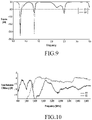
  • FIG. 9 is a view showing radiating characteristics measured before and after the second conductive pattern is disposed in the electronic device illustrated in FIG. 7 ;
  • FIG. 10 is a view showing radiating efficiency of each of the first antenna and the second antenna measured in the electronic device illustrated in FIG. 7 ;
  • FIG. 11 is a view showing radiating efficiency of the second antenna measured before and after the second conductive pattern is disposed in the electronic device illustrated in FIG. 7 ;
  • FIG. 12 is a view for describing a modification of an antenna arrangement in an electronic device according to various embodiments of the disclosure.
  • FIGS. 13 to 15 are view for describing a modification of conductive patterns in the electronic device according to various embodiments of the disclosure.
  • FIG. 16 is a block diagram illustrating an antenna system of an electronic device according to various embodiments of the disclosure.
  • the terms are used merely for the purpose to distinguish an element from the other elements.
  • a first element could be termed a second element, and similarly, a second element could be also termed a first element without departing from the scope of the disclosure.
  • the term “and/or” includes any and all combinations of one or more associated items. It is to be understood that if an element (e.g., a first element) is referred to, with or without the term “operatively” or “communicatively”, as “coupled with,” or “connected with,” it means that the element may be coupled with the other element directly (e.g., wiredly), wirelessly, or via a third element.
  • a front surface a rear surface
  • a top surface a bottom surface
  • the relative terms “a front surface”, “a rear surface”, “a top surface”, “a bottom surface”, and the like which are described with respect to the orientation in the drawings may be replaced by ordinal numbers such as first and second.
  • ordinal numbers such as first and second their order are determined in the mentioned order or arbitrarily and may not be arbitrarily changed if necessary.
  • an electronic device may be a random device, and the electronic device may be called a terminal, a portable terminal, a mobile terminal, a communication terminal, a portable communication terminal, a portable mobile terminal, a touch screen, or the like.
  • the electronic device may be a smartphone, a portable phone, a game player, a TV, a display unit, a heads-up display unit for a vehicle, a notebook computer, a laptop computer, a tablet Personal Computer (PC), a Personal Media Player (PMP), a Personal Digital Assistants (PDA), and the like.
  • the electronic device may be implemented as a portable communication terminal which has a wireless communication function and a pocket size.
  • the electronic device may be a flexible device or a flexible display device.
  • the electronic device may communicate with an external electronic device, such as a server or the like, or perform an operation through an interworking with the external electronic device.
  • the electronic device may transmit an image photographed by a camera and/or position information detected by a sensor unit to the server through a network.
  • the network may be a mobile or cellular communication network, a Local Area Network (LAN), a Wireless Local Area Network (WLAN), a Wide Area Network (WAN), an Internet, a Small Area Network (SAN) or the like, but is not limited thereto.
  • FIG. 1 is a block diagram illustrating an electronic device 101 in a network environment 100 according to various embodiments.
  • the electronic device 101 in the network environment 100 may communicate with an electronic device 102 via a first network 198 (e.g., a short-range wireless communication network), or an electronic device 104 or a server 108 via a second network 199 (e.g., a long-range wireless communication network).
  • a first network 198 e.g., a short-range wireless communication network
  • an electronic device 104 or a server 108 via a second network 199 (e.g., a long-range wireless communication network).
  • the electronic device 101 may communicate with the electronic device 104 via the server 108 .
  • the electronic device 101 may include a processor 120 , memory 130 , an input device 150 , a sound output device 155 , a display device 160 , an audio module 170 , a sensor module 176 , an interface 177 , a haptic module 179 , a camera module 180 , a power management module 188 , a battery 189 , a communication module 190 , a subscriber identification module (SIM) 196 , or an antenna module 197 .
  • at least one (e.g., the display device 160 or the camera module 180 ) of the components may be omitted from the electronic device 101 , or one or more other components may be added in the electronic device 101 .
  • the components may be implemented as single integrated circuitry.
  • the sensor module 176 e.g., a fingerprint sensor, an iris sensor, or an illuminance sensor
  • the display device 160 e.g., a display
  • the processor 120 may execute, for example, software (e.g., a program 140 ) to control at least one other component (e.g., a hardware or software component) of the electronic device 101 coupled with the processor 120 , and may perform various data processing or computation. According to one embodiment, as at least part of the data processing or computation, the processor 120 may load a command or data received from another component (e.g., the sensor module 176 or the communication module 190 ) in volatile memory 132 , process the command or the data stored in the volatile memory 132 , and store resulting data in non-volatile memory 134 .
  • software e.g., a program 140
  • the processor 120 may load a command or data received from another component (e.g., the sensor module 176 or the communication module 190 ) in volatile memory 132 , process the command or the data stored in the volatile memory 132 , and store resulting data in non-volatile memory 134 .
  • the processor 120 may include a main processor 121 (e.g., a central processing unit (CPU) or an application processor (AP)), and an auxiliary processor 123 (e.g., a graphics processing unit (GPU), an image signal processor (ISP), a sensor hub processor, or a communication processor (CP)) that is operable independently from, or in conjunction with, the main processor 121 .
  • auxiliary processor 123 may be adapted to consume less power than the main processor 121 , or to be specific to a specified function.
  • the auxiliary processor 123 may be implemented as separate from, or as part of the main processor 121 .
  • the auxiliary processor 123 may control, for example, at least some of functions or states related to at least one component (e.g., the display device 160 , the sensor module 176 , or the communication module 190 ) among the components of the electronic device 101 , instead of the main processor 121 while the main processor 121 is in an inactive (e.g., sleep) state, or together with the main processor 121 while the main processor 121 is in an active (e.g., executing an application) state.
  • the auxiliary processor 123 e.g., an image signal processor or a communication processor
  • the memory 130 may store various data used by at least one component (e.g., the processor 120 or the sensor module 176 ) of the electronic device 101 .
  • the various data may include, for example, software (e.g., the program 140 ) and input data or output data for a command related thereto.
  • the memory 130 may include the volatile memory 132 or the non-volatile memory 134 .
  • the program 140 may be stored in the memory 130 as software, and may include, for example, an operating system (OS) 142 , middleware 144 , or an application 146 .
  • OS operating system
  • middleware middleware
  • application application
  • the input device 150 may receive a command or data to be used by a component (e.g., the processor 120 ) of the electronic device 101 , from the outside (e.g., a user) of the electronic device 101 .
  • the input device 150 may include, for example, a microphone, a mouse, or a keyboard.
  • the sound output device 155 may output sound signals to the outside of the electronic device 101 .
  • the sound output device 155 may include, for example, a speaker or a receiver.
  • the speaker may be used for general purposes, such as playing multimedia or playing record or as a dedicated speaker for call receiving, and the receiver may be used for incoming calls. According to an embodiment, the receiver may be implemented as separate from, or as part of the speaker.
  • the display device 160 may visually provide information to the outside (e.g., a user) of the electronic device 101 .
  • the display device 160 may include, for example, a display, a hologram device, or a projector and control circuitry to control a corresponding one of the display, hologram device, and projector.
  • the display device 160 may include touch circuitry adapted to detect a touch, or sensor circuitry (e.g., a pressure sensor) adapted to measure the intensity of force incurred by the touch.
  • the audio module 170 may convert a sound into an electrical signal and vice versa. According to an embodiment, the audio module 170 may obtain the sound via the input device 150 , or output the sound via the sound output device 155 or an external electronic device (e.g., an electronic device 102 (e.g., a speaker or a headphone)) directly or wirelessly coupled with the electronic device 101 .
  • an electronic device 102 e.g., a speaker or a headphone
  • the sensor module 176 may detect an operational state (e.g., power or temperature) of the electronic device 101 or an environmental state (e.g., a state of a user) external to the electronic device 101 , and then generate an electrical signal or data value corresponding to the detected state.
  • the sensor module 176 may include, for example, a gesture sensor, a gyro sensor, an atmospheric pressure sensor, a magnetic sensor, an acceleration sensor, a grip sensor, a proximity sensor, a color sensor, an infrared (IR) sensor, a biometric sensor, a temperature sensor, a humidity sensor, or an illuminance sensor.
  • the interface 177 may support one or more specified protocols to be used for the electronic device 101 to be coupled with the external electronic device (e.g., the electronic device 102 ) directly or wirelessly.
  • the interface 177 may include, for example, a high definition multimediainterface (HDMI), a universal serial bus (USB) interface, a secure digital (SD) card interface, or an audio interface.
  • HDMI high definition multimediainterface
  • USB universal serial bus
  • SD secure digital
  • a connecting terminal 178 may include a connector via which the electronic device 101 may be physically connected with the external electronic device (e.g., the electronic device 102 ).
  • the connecting terminal 178 may include, for example, a HDMI connector, a USB connector, a SD card connector, or an audio connector (e.g., a headphone connector).
  • the haptic module 179 may convert an electrical signal into a mechanical stimulus (e.g., a vibration or a movement) or electrical stimulus which may be recognized by a user via his tactile sensation or kinesthetic sensation.
  • the haptic module 179 may include, for example, a motor, a piezoelectric element, or an electric stimulator.
  • the camera module 180 may capture a still image and moving images.
  • the camera module 180 may include one or more lenses, image sensors, image signal processors, or flashes.
  • the power management module 188 may manage power supplied to the electronic device 101 .
  • the power management module 188 may be implemented as at least part of, for example, a power management integrated circuit (PMIC).
  • PMIC power management integrated circuit
  • the battery 189 may supply power to at least one component of the electronic device 101 .
  • the battery 189 may include, for example, a primary cell which is not rechargeable, a secondary cell which is rechargeable, or a fuel cell.
  • the communication module 190 may support establishing a direct (e.g., wired) communication channel or a wireless communication channel between the electronic device 101 and the external electronic device (e.g., the electronic device 102 , the electronic device 104 , or the server 108 ) and performing communication via the established communication channel.
  • the communication module 190 may include one or more communication processors that are operable independently from the processor 120 (e.g., the application processor (AP)) and support a direct (e.g., wired) communication or a wireless communication.
  • AP application processor
  • the communication module 190 may include a wireless communication module 192 (e.g., a cellular communication module, a short-range wireless communication module, or a global navigation satellite system (GNSS) communication module) or a wired communication module 194 (e.g., a local area network (LAN) communication module or a power line communication (PLC) module).
  • a wireless communication module 192 e.g., a cellular communication module, a short-range wireless communication module, or a global navigation satellite system (GNSS) communication module
  • GNSS global navigation satellite system
  • wired communication module 194 e.g., a local area network (LAN) communication module or a power line communication (PLC) module.
  • LAN local area network
  • PLC power line communication
  • a corresponding one of these communication modules may communicate with the external electronic device via the first network 198 (e.g., a short-range communication network, such as BluetoothTM, wireless-fidelity (Wi-Fi) direct, or infrared data association (IrDA)) or the second network 199 (e.g., a long-range communication network, such as a cellular network, the Internet, or a computer network (e.g., LAN or wide area network (WAN)).
  • the first network 198 e.g., a short-range communication network, such as BluetoothTM, wireless-fidelity (Wi-Fi) direct, or infrared data association (IrDA)
  • the second network 199 e.g., a long-range communication network, such as a cellular network, the Internet, or a computer network (e.g., LAN or wide area network (WAN)
  • These various types of communication modules may be implemented as a single component (e.g., a single chip), or may be implemented as multi components (e.
  • the wireless communication module 192 may identify and authenticate the electronic device 101 in a communication network, such as the first network 198 or the second network 199 , using subscriber information (e.g., international mobile subscriber identity (IMSI)) stored in the subscriber identification module 196 .
  • subscriber information e.g., international mobile subscriber identity (IMSI)
  • the antenna module 197 may transmit or receive a signal or power to or from the outside (e.g., the external electronic device) of the electronic device 101 .
  • the antenna module 197 may include a plurality of antennas.
  • at least one antenna appropriate for a communication scheme used in the communication network such as the first network 198 or the second network 199 , may be selected, for example, by the communication module 190 .
  • the signal or the power may then be transmitted or received between the communication module 190 and the external electronic device via the selected at least one antenna.
  • At least some of the above-described components may be coupled mutually and communicate signals (e.g., commands or data) therebetween via an inter-peripheral communication scheme (e.g., a bus, general purpose input and output (GPIO), serial peripheral interface (SPI), or mobile industry processor interface (MIPI)).
  • an inter-peripheral communication scheme e.g., a bus, general purpose input and output (GPIO), serial peripheral interface (SPI), or mobile industry processor interface (MIPI)
  • commands or data may be transmitted or received between the electronic device 101 and the external electronic device 104 via the server 108 coupled with the second network 199 .
  • Each of the electronic devices 102 and 104 may be a device of a same type as, or a different type, from the electronic device 101 .
  • all or some of operations to be executed at the electronic device 101 may be executed at one or more of the external electronic devices 102 , 104 , or 108 .
  • the electronic device 101 may request the one or more external electronic devices to perform at least part of the function or the service.
  • the one or more external electronic devices receiving the request may perform the at least part of the function or the service requested, or an additional function or an additional service related to the request, and transfer an outcome of the performing to the electronic device 101 .
  • the electronic device 101 may provide the outcome, with or without further processing of the outcome, as at least part of a reply to the request.
  • a cloud computing, distributed computing, or client-server computing technology may be used, for example.
  • module may include a unit configured in hardware, software, or firmware, and may interchangeably be used with other terms, for example, “logic,” “logic block,” “part,” or “circuitry”.
  • a module may be a single integral component, or a minimum unit or part thereof, adapted to perform one or more functions.
  • the module may be configured in an application-specific integrated circuit (ASIC).
  • ASIC application-specific integrated circuit
  • FIG. 2 is a perspective view illustrating the front side of an electronic device 200 according to various embodiments.
  • FIG. 3 is a perspective view illustrating the rear side of the electronic device 200 illustrated in FIG. 2 .
  • the electronic device 200 may include a housing 210 including a first surface (or a front surface) 210 A, a second surface (or a rear surface) 210 B, and a side surface 210 C surrounding the space between the first surface 210 A and the second surface 210 B.
  • the term “housing” may refer to a structure forming some of the first surface 210 A, the second surface 210 B, and the side surface 210 C of FIG. 2 .
  • at least a portion of the first surface 210 A may be formed by a substantially transparent front plate 202 (e.g., a glass plate or a polymer plate including various coating layers).
  • the front plate 202 may be coupled to the housing 210 so as to form an inner space with the housing 210 .
  • the term “inner space” may mean the space between the front plate 202 and a first support member (e.g., the first support member 411 in FIG. 4 ) to be described later.
  • the term “inner space” may mean the inner space of the housing 210 that accommodates at least a portion of a display 201 to be described later or the display 430 in FIG. 4 .
  • the second surface 210 B may be formed by a substantially opaque rear plate 211 .
  • the rear plate 211 may be made of, for example, coated or colored glass, ceramic, a polymer, a metal (e.g., aluminum, stainless steel (STS), or magnesium), or a combination of two or more of these materials.
  • the side surface 210 C may be provided by a side bezel structure (or a “side member”) 218 coupled to the front plate 202 and the rear plate 211 and including a metal and/or a polymer.
  • the rear plate 211 and the side bezel structure 218 may be integrally formed, and may include the same material (e.g., a metal material such as aluminum).
  • the front plate 202 may include, at the long opposite side edges thereof, two first areas 210 D (e.g., the curved portions R in FIG. 4 ), which are bent from the first surface 210 A toward the rear plate 211 and extend seamlessly.
  • the rear plate 211 may include, at the long opposite side edges thereof, two second areas 210 E, which are bent from the second face 210 B towards the front plate 202 and extend seamlessly.
  • the front plate 202 (or the rear plate 211 ) may include only one of the first areas 210 D (or the second areas 210 E). In another embodiment, some of the first areas 210 D or the second areas 210 E may not be included.
  • the side bezel structure 218 when viewed from a side of the electronic device 200 , may have a first thickness (or width) on the side surface in which the first areas 210 D or the second areas 210 E are not included (e.g., the side surface in which the connector hole 208 is disposed), and may have a second thickness, which is smaller than the first thickness, on the side surface in which the first areas 210 D or the second areas 210 E are included (e.g., the side surfaces in which the key input devices 217 are disposed).
  • the electronic device 200 may include at least one of a display 201 , audio modules 203 , 207 , and 214 , sensor modules 204 , 216 , and 219 , camera modules 205 , 212 , and 213 , key input devices 217 , light-emitting elements 206 , and connector holes 208 and 209 .
  • at least one of the components e.g., the key input devices 217 or the light-emitting elements 206
  • the electronic device 100 may additionally include other components.
  • the display 201 may be exposed through, for example, a considerable portion of the front plate 202 .
  • at least a portion of the display 201 may be exposed through the front plate 202 forming the first surface 210 A and the first areas 210 D of the side surfaces 210 C.
  • the edges of the display 201 may be formed to be substantially the same as the shape of the periphery of the front plate 202 adjacent thereto.
  • the distance between the periphery of the display 201 and the periphery of the front plate 202 may be substantially constant in order to enlarge the exposed area of the display 201 .
  • recesses or openings may be formed in a portion of a screen display area (e.g., an active area) or an area (e.g., a non-active area) out of the screen display area of the display 201 , and at least one of the audio module 214 , the sensor modules 204 , the camera modules 205 , and the light-emitting elements 206 , which are aligned with the recesses or the openings, may be included.
  • the rear surface of the screen display area of the display 201 may include at least one of the audio modules 214 , the sensor modules 204 , the camera modules 205 , the fingerprint sensor 216 , and the light-emitting elements 206 .
  • the display 201 may be coupled to or disposed adjacent to a touch-sensitive circuit, a pressure sensor capable of measuring a touch intensity (pressure), and/or a digitizer configured to detect a magnetic-field-type stylus pen.
  • a touch-sensitive circuit capable of measuring a touch intensity (pressure)
  • a digitizer configured to detect a magnetic-field-type stylus pen.
  • at least some of the sensor modules 204 and 219 and/or at least some of the key input devices 217 may be disposed in the first areas 210 D and/or the second areas 210 E.
  • the audio modules 203 , 207 , and 214 may include a microphone hole 203 and speaker holes 207 and 214 .
  • the microphone hole 203 may include a microphone disposed therein so as to acquire external sound, and in various embodiments, multiple microphones may be disposed therein so as to detect the direction of sound.
  • the speaker holes 207 and 214 may include an external speaker hole 207 and a phone call receiver hole 214 .
  • the speaker holes 207 and 214 and the microphone hole 203 may be implemented as a single hole, or a speaker (e.g., a piezo speaker) may be included without the speaker holes 207 and 214 .
  • the sensor modules 204 , 216 , and 219 may generate electrical signals or data values corresponding to the internal operating state or the external environmental state of the electronic device 200 .
  • the sensor modules 204 , 216 , and 219 may include, for example, a first sensor module 204 (e.g., a proximity sensor), a second sensor module (not illustrated) (e.g., a fingerprint sensor) disposed on the first surface 210 A of the housing 210 , a third sensor module 219 (e.g., an HRM sensor), and/or a fourth sensor module 216 (e.g., a fingerprint sensor) disposed on the second surface 210 B of the housing 210 .
  • a first sensor module 204 e.g., a proximity sensor
  • a second sensor module not illustrated
  • a fingerprint sensor disposed on the first surface 210 A of the housing 210
  • a third sensor module 219 e.g., an HRM sensor
  • a fourth sensor module 216 e.g.,
  • the fingerprint sensor may be disposed not only on the first surface 210 A (e.g., the display 201 ) of the housing 210 , but also on the second surface 210 B.
  • the electronic device 200 may further include at least one of sensor modules (not illustrated), such as a gesture sensor, a gyro sensor, an atmospheric pressure sensor, a magnetic sensor, an acceleration sensor, a grip sensor, a color sensor, an infrared (IR) sensor, a biometric sensor, a temperature sensor, a humidity sensor, or an illuminance sensor 204 .
  • sensor modules not illustrated, such as a gesture sensor, a gyro sensor, an atmospheric pressure sensor, a magnetic sensor, an acceleration sensor, a grip sensor, a color sensor, an infrared (IR) sensor, a biometric sensor, a temperature sensor, a humidity sensor, or an illuminance sensor 204 .
  • the camera modules 205 , 212 , and 213 may include a first camera device 205 disposed on the first surface 210 A of the electronic device 200 , and a second camera device 212 and/or a flash 213 disposed on the second surface 210 B.
  • the camera modules 205 and 212 may include one or more lenses, an image sensor, and/or an image signal processor.
  • the flash 213 may include, for example, a light-emitting diode or a xenon lamp.
  • two or more lenses e.g., an infrared camera lens, a wide-angle lens, and a telephoto lens
  • image sensors may be disposed on one surface of the electronic device 200 .
  • the key input devices 217 may be disposed on the side surface 210 C of the housing 210 .
  • the electronic device 200 may not include some or all of the above-mentioned key input devices 217 , and a key input device 217 , which is not included therein, may be implemented in another form of a soft key or the like on the display 201 .
  • the key input devices may include a sensor module 216 disposed on the second surface 210 B of the housing 210 .
  • the light-emitting elements 206 may be disposed, for example, on the first surface 210 A of the housing 210 .
  • the light-emitting elements 206 may provide, for example, information about the state of the electronic device 200 in an optical form.
  • the light-emitting elements 206 may provide a light source that is interlocked with, for example, the operation of the camera modules 205 .
  • the light-emitting elements 206 may include, for example, an LED, an IR LED, and a xenon lamp.
  • the connector holes 208 and 209 may include a first connector hole 208 , which is capable of accommodating a connector (e.g., a USB connector) for transmitting/receiving power and/or data to/from an external electronic device, and/or a second connector hole 209 , which is capable of accommodating a connector (e.g., an earphone jack) for transmitting/receiving an audio signal to/from an external electronic device.
  • a connector e.g., a USB connector
  • a second connector hole 209 which is capable of accommodating a connector (e.g., an earphone jack) for transmitting/receiving an audio signal to/from an external electronic device.
  • FIG. 4 is an exploded perspective view illustrating the electronic device illustrated in FIG. 2 .
  • an electronic device 400 may include a side bezel structure 410 , a first support member 411 (e.g., a bracket), a front plate 420 , a display 430 , a printed circuit board 440 , a battery 450 , a second support member 460 (e.g., a rear case), an antenna 470 , and a rear plate 480 .
  • a first support member 411 e.g., a bracket
  • a front plate 420 e.g., a bracket
  • a display 430 e.g., a display 430
  • a printed circuit board 440 e.g., a battery 450
  • a second support member 460 e.g., a rear case
  • an antenna 470 e.g., a rear plate 480
  • a rear plate 480 e.g., a rear plate 480 .
  • at least one of the components e.g., the first support member 411 or the second support member
  • the first support member 411 may be disposed inside the electronic device 400 , and may be connected to the side bezel structure 410 or may be integrated with the side bezel structure 410 .
  • the first support member 411 may be formed of, for example, a metal material and/or a non-metal material (e.g., a polymer).
  • the display 430 may be coupled to one surface of the first support member 411
  • the printed circuit board 440 may be coupled to the other surface of the first support member 411 .
  • a processor, a memory, and/or an interface may be mounted on the printed circuit board 440 .
  • the processor may include at least one of, for example, a central processing unit, an application processor, a graphics processor, an image signal processor, a sensor hub processor, or a communication processor.
  • Substantially the entire area of the display 430 may be attached to the inner surface of the front plate 420 , and an opaque layer may be disposed in the periphery of or around the area in which the display 430 is attached on the inner surface of the front plate 420 . In the area of the front plate 420 in which the display 430 is not disposed, such an opaque layer may block the exposure of a portion of an inner structure (e.g., the first support member 411 ) of the electronic device 400 to the outside.
  • an inner structure e.g., the first support member 411
  • the memory may include, for example, a volatile memory or a nonvolatile memory.
  • the interface may include, for example, a high-definition multimedia interface (HDMI), a universal serial bus (USB) interface, an SD card interface, and/or an audio interface.
  • HDMI high-definition multimedia interface
  • USB universal serial bus
  • the interface may electrically or physically connect, for example, the electronic device 400 to an external electronic device, and may include a USB connector, an SD card/MMC connector, or an audio connector.
  • the battery 450 is a device for supplying power to at least one component of the electronic device 400 , and may include, for example, a non-rechargeable primary battery, a rechargeable secondary battery, or a fuel cell. At least a portion of the battery 450 may be disposed on substantially the same plane as, for example, the printed circuit board 440 .
  • the battery 450 may be integrally disposed inside the electronic device 400 , or may be detachably disposed on the electronic device 400 .
  • the antenna 470 may be disposed between the rear plate 480 and the battery 450 .
  • the antenna 470 may include, for example, a near field communication (NFC) antenna, a wireless charging antenna, and/or a magnetic secure transmission (MST) antenna.
  • the antenna 470 is capable of, for example, performing short-range communication with an external device or transmitting/receiving power required for charging to/from an external device in a wireless manner.
  • an antenna structure may be formed by the side bezel structure 410 and/or a portion of the first support member 411 , or a combination thereof.
  • antennas according to various embodiments of the disclosure will be described with reference to FIGS. 5 to 15 .
  • the electronic devices 100 , 200 , and 400 of FIGS. 1 to 4 may be further referred to as necessary.
  • the same reference numerals may be assigned or omitted, and a detailed description thereof may also be omitted.
  • FIG. 5 is a plan view for describing an arrangement of antennas 502 and 503 in an electronic device 500 according to various embodiments of the disclosure.
  • FIG. 6 is a view illustrating the configuration in which conductive patterns 515 and 517 are provided in the electronic device 500 according to various embodiments of the disclosure.
  • each of a first antenna 502 and a second antenna 503 may include at least a portion of a side bezel structure 510 (e.g., the side bezel structure 410 in FIG. 4 ) of the electronic device 500 (e.g., the electronic device 400 of FIG. 4 ) as a radiating conductor.
  • the side bezel structure 510 may include a portion made of a conductive material or a portion made of a non-conductive material.
  • the first support member 511 e.g., the first support member 411 in FIG. 4
  • the side bezel structure 510 may include insulative portions configured integrally with a non-conductive material portion of the first support member 411 , for example, insulating members 511 a and 511 b.
  • a first conductive portion 513 a may be provided as a portion of a radiating conductor of the first antenna 502 .
  • the first conductive portion 513 a may substantially configure a portion of the exterior of the electronic device 500 (e.g., at least a portion of the upper end of the electronic device 500 ).
  • the insulating members 511 a and 511 b may be disposed at opposite ends of the first conductive portion 513 a so as to provide an insulating structure between the first conductive portion 513 a and another conductive material portion of the side bezel structure 510 (e.g., the second conductive portion 513 b ).
  • the first conductive portion 513 a may be electrically connected to a ground layer G at a first position L 1 adjacent to the first insulating member 511 a , and may be electrically connected to a communication module (e.g., the first or second wireless communication circuit 1692 a or 1692 b in FIG. 16 ) at a second position L 2 located further away from the first insulating member 511 a than the first position L 1 .
  • the first antenna 502 may include a first power-feeding pin 521 a and a first shorting pin 521 b extending from the inner surface of the first conductive portion 513 a .
  • the first power-feeding pin 521 a may protrude from the second position L 2 into the inner space of the housing, and the first shorting pin 521 b may protrude from the first position L 1 into the inner space of the housing.
  • the term “inner space of the housing” may mean the space between the front plate 420 and the rear plate 480 in FIG. 4 , which is surrounded by the side bezel structure 510 .
  • the first shorting pin 521 b and the first power supply pin 521 a may electrically connect the first conductive portion 513 a to the ground layer G or the communication module.
  • the first antenna 502 may include a first conductive pattern 515 .
  • the first conductive pattern 515 may be configured on the second support member 660 (e.g., the second support member 460 in FIG. 4 ).
  • the first conductive pattern 515 may include, for example, a conductive pattern formed by processing the surface of the second support member 660 of a non-conductive material using laser, i.e., through laser direct structuring (LDS).
  • LDS laser direct structuring
  • the second support member 660 may be disposed in the inner space of the housing in the state in which one surface thereof faces one surface of the circuit board 540 (e.g., the printed circuit board 440 in FIG. 4 ). It is noted that the second support member 660 is omitted in FIG. 5 in order to indicate the position of the first conductive pattern 515 .
  • the first conductive pattern 515 when the second support member 660 is coupled to the side bezel structure 510 , the first conductive pattern 515 may form a branched structure with the first conductive portion 513 a or the first power-feeding pin 521 a .
  • the first conductive pattern 515 when viewed from the outside of the side bezel structure 510 , for example, when viewed from the side of the electronic device 400 of FIG. 4 , the first conductive pattern 515 may be disposed between the first position L 1 (e.g., the first shorting pin 521 b ) and the second position L 2 (e.g., the first power-feeding pin 521 a ).
  • the first conductive pattern 515 may form an electrically branched structure with the first power-feeding pin 521 a .
  • the first conductive pattern 515 may be electrically connected to the first conductive portion 513 a so as to form another portion of the first antenna 502 .
  • a contact member 519 e.g., a C-clip
  • a communication module e.g., the communication module 190 in FIG. 1 or the first and second wireless communication circuits 1692 a and 1692 b in FIG. 16
  • a communication module may be provided on the circuit board 540 to be electrically connected to the first antenna 502 .
  • the first power-feeding pin 521 a and the first shorting pin 521 b may be electrically connected to the circuit board 540 through another contact member (not illustrated).
  • the first power-feeding pin 521 a may be electrically connected to a first power-feeding unit F 1 in FIG. 7 to be described later or a communication module of the circuit board 540
  • the first shorting pin 521 b may be electrically connected to a ground layer G of the substrate 540 (e.g., the ground portion G in FIG. 7 to be described later).
  • the first conductive portion 513 a may form a planar type inverted-F antenna (PIFA) structure, and the first conductive pattern 515 may be implemented in various shape such as an L shape, a U shape, an I shape, or a meander line shape.
  • the first conductive pattern 515 may receive power in common with the first conductive portion 513 a from a power-feeding unit (e.g., the first power-feeding unit F 1 in FIG. 7 ) to radiate the first antenna 502 so as to act as a radiating conductor.
  • a power-feeding unit e.g., the first power-feeding unit F 1 in FIG. 7
  • the first antenna 502 may form an operating frequency in an about 800 MHz or 1.8 GHz band using the first conductive portion 513 a .
  • the first antenna 502 may further form an operating frequency in an about 1.2 GHz band, in addition in the about 800 MHz or 1.8 GHz band.
  • the numerical values for the bands of the operating frequency are described as an example, and may vary depending on specifications required for an actual product or depending on the size or shape of the manufactured first antenna 502 .
  • the second conductive portion 513 b of the side bezel structure 510 may be included in the radiating conductor of the second antenna 503 of the electronic device 500 .
  • the second conductive portion 513 b may substantially form at least a portion of the exterior of the electronic device 500 .
  • the first insulating member 511 a may be interposed between one end of the second conductive portion 513 b and one end of the first conductive portion 513 a.
  • the second antenna 503 may include a second power-feeding pin 521 c and a second shorting pin 521 d extending from the inner surface of the second conductive portion 513 b .
  • the second power-feeding pin 521 c and the second shorting pin 521 d may protrude into the inner space of the housing.
  • the second power-feeding pin 521 c and the second shorting pin 521 d may be electrically connected to the circuit board 540 through another contact member (not illustrated).
  • the second antenna 503 may be electrically connected to a communication module (e.g., the first or second communication circuit 1692 a or 1692 b in FIG.
  • the second shorting pin 521 d may electrically connect the second conductive portion 513 a to a ground layer G of the circuit board 540 (e.g., the ground portion G in FIG. 7 ) at a fourth position different form the third position L 3 .
  • the second antenna 503 is fed with independent power independently from the first antenna 502 , and may form an operating frequency in a frequency band different from that of the first antenna 502 .
  • the second antenna 503 may form an operating frequency in an about 2.3 GHz band and in an about 1.5 GHz band.
  • a processor e.g., the processor 120 in FIG. 1
  • a communication module e.g., the communication module 190 of FIG. 1 or the first and second wireless communication circuits 1692 a and 1692 b of FIG. 16
  • the electronic device 500 may transmit and receive wireless signals using at least one of the first antenna 502 and the second antenna 503 .
  • the electronic device 500 may receive earth satellite navigation system (GNSS) signals using each of an operating frequency secured by arranging the first conductive pattern 515 on the first antenna 502 and an operating frequency formed by the second antenna 503 .
  • GNSS earth satellite navigation system
  • an operating frequency of an about 1.2 GHz band or a 1.5 GHz band is a frequency band in which GNSS signals are transmitted and received, and the electronic device 500 may receive such GNSS signals in multiple frequency bands.
  • the earth satellite navigation system signal may include global positioning system (GPS) information.
  • the electronic device 500 may include a second conductive pattern 517 connected to a ground portion provided in the housing (e.g., a ground layer G (e.g., the ground portion G in FIG. 7 )).
  • the second conductive pattern 517 may be formed by processing the surface of the second support member 660 using a laser.
  • the second conductive pattern 517 a structure on the same surface as the first conductive pattern 515 on the second support member 660 is illustrated.
  • the disclosure is not limited thereto, and the second conductive pattern 517 may be configured on the second support member 660 on a surface different from that of the first conductive pattern 515 .
  • the second conductive pattern 517 when the second support member 660 is coupled to the side bezel structure 510 , the second conductive pattern 517 may be disposed between the third position L 3 (e.g., the second power-feeding pin 521 c ) and the second position L 2 (e.g., the first power-feeding pin 521 a ) when viewed from the outside of the side bezel structure 510 , for example, when viewed from the side of the electronic device 400 of FIG. 4 .
  • the second conductive pattern 517 may form an electromagnetic isolation structure between the second antenna 503 and the first antenna 502 (e.g., the first conductive pattern 515 ).
  • the second conductive pattern 517 may improve an isolation characteristic by reducing electromagnetic interference between the second antenna 503 and the first antenna 502 .
  • the operating frequency e.g., the operating frequency in the 1.2 GHz band
  • the operating frequency secured by the arrangement of the first conductive pattern 515 is has a difference of about several hundred MHz from the operating frequency of the second antenna 503 (e.g., the operating frequency in the 1.5 GHz band) of the second antenna 503 .
  • the second antenna 503 and the first antenna 502 are disposed adjacent to each other, the transmission/reception efficiency in some operating frequency bands may be degraded due to electromagnetic interference.
  • the electronic device 500 is capable of securing a stable wireless communication environment even when the second antenna 503 and the first antenna 502 are disposed adjacent to each other.
  • the electronic device 500 or an electronic device including the same e.g., the electronic device 400 in FIG. 4 ) may be easily miniaturized.
  • FIG. 7 is a view illustrating an arrangement of antennas 702 and 703 in an electronic device 700 according to various embodiments of the disclosure.
  • FIG. 8 is a view illustrating the operations of the antennas 702 and 703 illustrated in FIG. 7 .
  • the electronic device 700 may include a first antenna 702 including a first conductive portion 713 a made of a conductive material as a portion of a side bezel structure (e.g., the side bezel structure 510 in FIG. 5 ) and a first conductive pattern 715 and a second antenna 703 including a second conductive portion 713 b made of a conductive material as another part of the side bezel structure.
  • the first conductive portion 713 a and the first conductive pattern 715 may be included in the radiating conductor of the first antenna 702
  • the second conductive portion 713 a may be included in the radiating conductor of the second antenna 703
  • the first conductive pattern 715 may be configured on the surface of a second support member (e.g., the second member 460 or 660 in FIG. 4 or FIG. 6 ) between the above-mentioned front and rear plates (e.g., the front and rear plates 420 and 480 in FIG. 4 ).
  • the first antenna 702 may include a first power-feeding pin 721 a electrically connecting the first conductive portion 713 a to a first power-feeding unit F 1 (e.g., the communication module 190 of FIG. 1 ), and the first conductive pattern 715 may form a branched structure with the first power-feeding fin 721 a .
  • the first conductive portion 713 a and the first conductive pattern 715 are fed with common power via the first power-feeding unit F 1 , and the first antenna 702 may form operating frequencies in at least two different frequency bands using the first conductive portion 713 a and the first conductive pattern 715 .
  • the first conductive portion 713 a may include a first shorting pin 721 b provided at one end thereof (e.g., a first position L 1 adjacent to the second conductive portion 713 b or the first insulating member 511 a of FIG. 5 ), and when the first shorting pin 721 b is connected the ground portion G, the first conductive portion 713 a may form a PIFA structure.
  • the first power-feeding pin 721 a or the first shorting pin 721 b may be replaced by another structure such as a wire or a spring terminal that electrically connects the first conductive portion 713 a to the first power-feeding unit F 1 or the ground portion G.
  • the second antenna 703 may include a second power-feeding pin 721 c , which electrically connects the second conductive portion 713 b to the second power-feeding unit F 2 (e.g., the communication module 190 in FIG. 1 ).
  • the second antenna 703 may include the second conductive portion 713 b connected to the second power-feeding unit F 2 via the second power-feeding pin 721 c .
  • the second conductive portion 713 b may be connected to the ground portion G by including a shorting pin (not illustrated) (e.g., the second shorting pin 521 d in FIG. 5 ).
  • one end of the second conductive portion 713 b may be disposed adjacent to one end of the first conductive portion 713 a , and the first conductive portion 713 a and the second conductive portion 713 b may form at least a portion of the exterior of the electronic device 700 (e.g., the electronic device 400 of FIG. 4 ).
  • the electronic device 700 may further include a second conductive pattern 717 .
  • the second conductive pattern 717 may be formed on the surface of a second support member (e.g., the second support member 660 in FIG. 6 ).
  • the second support member 660 is disposed the an inner space of the housing, for example, in the space surrounded by the side bezel structure 510 of FIG.
  • the second conductive pattern 717 may be disposed in the area or space between the first antenna 702 (e.g., the first conductive pattern 715 ) and the second antenna 703 to form and the second antenna 703 so as to form an electromagnetic field separation structure between the second antenna 703 and the first antenna 702 (e.g., the first conductive pattern 715 ), thereby improving a separation degree characteristic.
  • the second conductive pattern 717 may be electrically connected to the ground part G (e.g., the ground layer G in FIG. 5 ), and may provide an electromagnetic field separation structure by forming a capacitive coupling C with the first conductive portion 713 a or the first conductive pattern 715 .
  • a signal fed to the first conductive portion 713 a or the first conductive pattern 715 via the first power-feeding unit F 1 may form a radiating current P 1 corresponding to the electrical length of the first conductive portion 713 a or the first conductive pattern 715 .
  • the second conductive pattern 717 may form a capacitive coupling C with the first conductive portion 713 a or the second conductive pattern 717 .
  • at least the second conductive pattern 717 may be connected to the ground portion G so as to prevent the radiating current P 1 of the first antenna 702 from interfering with the operation of the second antenna 703 .
  • the second power-feeding pin 721 c may be configured on the second conductive portion 713 b and located adjacent to the first shorting pin 721 b of the first conductive portion 713 a .
  • the signal fed to the second antenna 703 via the second power-feeding portion F 2 may form a radiating current P 2 corresponding to the electrical length of the second conductive portion 713 b .
  • another capacitive coupling C may be formed between the second power-feeding pin 721 c and the first shorting pin 721 b .
  • at least the first shorting pin 721 b may be connected to the ground part G so as to prevent the radiating current P 2 of the second antenna 703 from interfering with the operation of the first antenna 702 .
  • the second conductive pattern 717 or the first shorting pin 721 b may be connected to the ground portion G between the first antenna 702 (e.g., the first conductive pattern 715 ) and the second antenna 703 .
  • the first antenna 702 and the second antenna 703 are capable of conducting stable wireless communication without causing electromagnetic interference with each other.
  • FIG. 9 is a view showing radiating characteristics measured before and after the second conductive pattern 717 is disposed in the electronic device 700 illustrated in FIG. 7 .
  • FIG. 9 is a graph showing a result of measuring a S-parameter, for example, a reflection coefficient S 11 of an antenna (e.g., the antennas 702 and 703 in FIG. 7 ), in which “S 1 ” represents a result of measuring the reflection coefficient of the first antenna 702 in the state in which the second conductive pattern 717 is disposed, and “S 2 ” represents a result of measuring the reflection coefficient of the first antenna 702 in the state in which the second conductive pattern 717 is not disposed.
  • S 1 represents a result of measuring the reflection coefficient of the first antenna 702 in the state in which the second conductive pattern 717 is disposed
  • S 2 represents a result of measuring the reflection coefficient of the first antenna 702 in the state in which the second conductive pattern 717 is not disposed.
  • the reflection coefficient S 11 may be adjusted by disposing the second conductive pattern 717 , and it can be seen that wireless communication performance at one of the operating frequencies formed by the first antenna 702 , for example, in at an about 1.2 GHz band is improved.
  • the second conductive pattern 717 may be so as to adjust impedance, and the conductive pattern 717 may provide an impedance matching function in the operating frequency band depending on the shape of the second conductive pattern 717 or the interval between the first conductive pattern 715 and the second conductive pattern 717 .
  • the first antenna 702 forms an operating frequency of about 1.2 GHz or 1.3 GHz, and that, by disposing the second conductive pattern 717 , the reflection coefficient is improved by about 15 dB at an operating frequency of at least about 1.3 GHz.
  • the second antenna 703 and the first antenna 702 are capable of receiving position information based on GNSS signals including at least GPS signals in different frequency bands while being disposed adjacent to each other.
  • a change in radiation characteristics of the second antenna according to the arrangement of the first conductive pattern 715 and/or the second conductive pattern 717 will be described with reference to FIGS. 10 and 11 .
  • FIG. 10 is a view showing radiating efficiency of each of the first antenna 702 and the second antenna 703 measured in the electronic device 700 illustrated in FIG. 7 .
  • “E 1 ” represents a result of measuring the radiating efficiency of the first antenna 702
  • “E 2 ” represents a result of measuring the radiating efficiency of the second antenna 703
  • the first antenna 702 forms an operating frequency in an about 800 MHz, 1.2 GHz, or 1.8 GHz band
  • the second antenna 703 forms an operating frequency in a frequency band of about 1.5 GHz or higher.
  • the operating frequency of about 1.5 GHz frequency band formed by the second antenna 703 and the operating frequency of the about 1.2 GHz frequency band formed by the first antenna 702 may be used as frequencies at which GNSS signals are received.
  • a processor or a communication module may receive GNSS signals while conducting wireless communication using the second antenna 703 and at least the first antenna 702 .
  • the first antenna 702 e.g., the first conductive pattern 715
  • electromagnetic interference is blocked between the first antenna 702 and the second antenna 703 by further disposing the second conductive pattern 717 .
  • FIG. 11 is a view illustrating the radiating efficiency of the second antenna 703 measured before and after disposing conductive patterns (e.g., the first conductive pattern 715 and the second conductive pattern 717 ) in the electronic device 700 illustrated in FIG. 7 .
  • conductive patterns e.g., the first conductive pattern 715 and the second conductive pattern 717
  • An antenna e.g., the antenna 702 or 703 in FIG. 7
  • an electronic device including the same e.g., the electronic device 700 in FIG. 7
  • the second conductive pattern 717 is electrically connected to a ground portion of the electronic device (e.g., the ground portion G in FIG. 7 ), and may at least partially form a capacitive coupling (e.g., the capacitive coupling C in FIG. 7 ) with the first conductive portion (e.g., the first conductive portion 713 a in FIG. 7 ) of the side bezel structure (e.g., the side bezel structure 510 in FIG. 5 ) or the first conductive pattern 715 .
  • a capacitive coupling e.g., the capacitive coupling C in FIG. 7
  • the side bezel structure e.g., the side bezel structure 510 in FIG. 5
  • the second conductive pattern 717 may be disposed between the second antenna 703 and the first antenna 702 (e.g., the first conductive pattern 715 ) so as to prevent the operating characteristics of the second antenna 703 from being distorted by the operation of the first antenna 702 .
  • FIG. 11 shows the radiating efficiency of the second antenna 703 before and after the first conductive pattern 715 or the second conductive pattern 717 is disposed.
  • “E 2 ” represents a result of measuring the radiating efficiency of the second antenna 703 before disposing the conductive patterns (e.g., the first conductive pattern 715 and the second conductive pattern 717 in FIG. 7 ), in which the radiating efficiency may be substantially the same as the radiating efficiency of the second antenna 703 in FIG. 10 .
  • “E 2 - 1 ” represents the result of measuring the radiating efficiency of the second antenna 703 in the state in which the first conductive pattern 715 and the second conductive pattern 717 are disposed.
  • the second antenna 703 forms an operating frequency in an about 1.5 GHz frequency band, and that a change in the radiating efficiency of the second antenna 703 at the operating frequency according to whether or not the first conductive pattern 715 or the second conductive pattern 717 is disposed is insignificant.
  • the first conductive pattern 715 it is possible to additionally secure an operating frequency for receiving GNSS signals, and by disposing the second conductive pattern 717 , the second antenna 703 is capable of conducting stable wireless communication.
  • an antenna e.g., the antennas 502 , 503 , 702 , or 703 of FIG. 5 or 7
  • an electronic device including the same is capable of securing an operation frequency in an additional frequency band (e.g., an about 1.2 GHz frequency band) by including the first conductive pattern 515 or 715 .
  • the antenna according to various embodiments of the disclosure is capable of maintaining or securing stable wireless communication performance of the second antenna 503 or 703 even when the first conductive pattern 515 or 7157 is disposed adjacent to the second antenna 503 or 703 .
  • the antenna according to various embodiments of the disclosure is capable of securing an additional operating frequency while substantially maintaining the size or mounting space of an electronic device.
  • a processor or a communication module of an electronic device is capable of improving the accuracy of position information by receiving at least GPS information using the second antenna 503 or 703 and the first conductive pattern 515 or 715 .
  • FIG. 12 is a plan view for describing a modification of an arrangement of antennas 1202 and 1203 in an electronic device 1200 (e.g., the electronic device 400 ) according to various embodiments of the disclosure.
  • FIGS. 13 to 15 are views for describing a modification of conductive patterns 1215 and 1217 in the electronic device according to various embodiments of the disclosure.
  • the electronic device 1200 may include at least a portion of a side bezel structure 1210 (e.g., the side bezel structure 410 in FIG. 4 ) as antennas (e.g., a first antenna 1202 and a second antenna 1203 ).
  • a side bezel structure 1210 and a first support member 1211 may be at least partially made of a non-conductive material, and the non-conductive material may be provided as insulating members 1211 a and 1211 b in the side bezel structure 1210 .
  • a first conductive portion 1213 a may be provided as a portion (e.g., a radiating conductor) of the first antenna 1202 .
  • the second conductive portion 1213 a may substantially form at least a portion of the exterior of the electronic device 1200 .
  • the insulating members 1211 a and 1211 b may be disposed at opposite ends of the first conductive portion 1213 a so as to provide an insulating structure between the first conductive portion 1213 a and another conductive material portion of the side bezel structure (e.g., the second conductive portion 1213 b ).
  • the first conductive portion 1213 a may include a first power-feeding pin 1221 a and a first shorting pin 1221 b extending from the inner surface thereof.
  • the first power-feeding pin 1221 a and the first shorting pin 1221 b may protrude into the inner space of the housing.
  • the first antenna 1202 may include a first conductive pattern 1215 .
  • the first conductive pattern 1215 may include a printed circuit pattern configured on the second support member 1360 (e.g., the second support member 460 in FIG. 4 ).
  • the first conductive pattern 1215 may include, for example, a conductive pattern formed by processing the surface of the second support member 1360 of a non-conductive material using a laser, i.e., through laser direct structuring (LDS).
  • the second support member 1360 may be disposed to face the circuit board 1240 (e.g., the printed circuit board 440 in FIG. 4 ), and it is noted that the second support member 1360 is omitted in FIG. 12 in order to show the positional relationship of the first conductive pattern.
  • the first conductive pattern 1215 may form an electrically branched structure with the first power-feeding pin 1221 a .
  • the first conductive pattern 1215 may be electrically connected to the first conductive portion 1213 a so as to form a portion of the first antenna 1202 .
  • a contact member (not illustrated) (e.g., a C-clip) may be provided on the circuit board 1240 so as to electrically connect the first conductive pattern 1215 to the circuit board 1240 .
  • a communication module e.g., the communication module 190 in FIG. 1
  • the first power-feeding pin 1221 a and the first shorting pin 1221 b may be electrically connected to the circuit board 1240 through another contact member (not illustrated).
  • the first power-feeding pin 1221 a may be electrically connected to a first power-feeding unit (e.g., the first power-feeding unit F 1 in FIG. 7 ) or a communication module (e.g., the communication module 190 in FIG. 1 ), and the first shorting pin 1221 b may be electrically connected to a ground portion of the circuit board (e.g., the ground portion G in FIG. 7 ).
  • the first conductive portion 1213 a may form a planar type inverted-F antenna (PIFA) structure, and the first conductive pattern 1215 may be implemented in various shape such as an L shape, a U shape, an I shape, or a meander line shape.
  • the first conductive pattern 1215 is fed with power in common with the first conductive portion 1231 a via the first power-feeding unit F 1 , and the first antenna 1202 may form operating frequencies in multiple different frequency bands using the first conductive portion 1213 a and the first conductive pattern 1215 .
  • PIFA planar type inverted-F antenna
  • the first antenna 1202 may form an operating frequency in an about 800 MHz or 1.8 GHz band using the first conductive portion 1213 a .
  • the first antenna 1202 may further form an operating frequency (e.g., 1.176 GHz) in an about 1.2 GHz band in addition to the operating frequency formed using the first conductive portion 1215 .
  • the second conductive portion 1213 b of the side bezel structure may be provided as the second antenna 1203 of the electronic device 1200 or as a portion of the second antenna 1203 .
  • the second conductive portion 1213 b may substantially form another portion of the exterior of the electronic device 1200 .
  • one end of the second conductive portion 1213 b may be positioned adjacent to one end of the first conductive portion 1213 a , and a first insulating member 1211 a may be disposed between the one end of the second conductive portion 1213 b and the one end of the first conductive portion 1213 a.
  • the second antenna 1203 may include a second power-feeding pin 1221 c or a second shorting pin 1221 d extending from the inner surface of the second conductive portion 1213 b .
  • the second power-feeding pin 1221 c may protrude into the inner space of the housing.
  • the second power-feeding pin 1221 c may be electrically connected to a second power-feeding unit (e.g., the second power-feeding unit F 2 in FIG. 7 ), such as a communication module (e.g., the communication module 190 in FIG. 1 ), provided on the circuit board 1240 via another contact member (not illustrated).
  • the second antenna 1203 is fed with independent power independently from the first antenna 1202 , and may form an operating frequency in a frequency band different from that of the first antenna 1202 .
  • the second antenna 1203 may form an operating frequency (e.g., 1.575 GHz) in an about 2.3 GHz band or a 1.5 GHz band according to a fed signal.
  • the processor or communication module of the electronic device may access a commercial communication network or receive GPS information using the second antenna 1203 .
  • the second shorting pin 1221 d may be electrically connected to a ground portion (e.g., the ground layer G in FIG. 5 or the ground portion G in FIG. 7 ) via a contact member (not illustrated).
  • a processor or a communication module (e.g., the processor 120 or the communication module 190 in FIG. 1 ) of an electronic device may transmit and receive a wireless signal using at least one of the first antenna 1202 and the second antenna 1203 .
  • the electronic device 1200 may receive position information (e.g., GPS information) using each of an operating frequency formed by the first conductive pattern 1215 and an operating frequency formed by the second antenna 1203 .
  • position information e.g., GPS information
  • an operating frequency of an about 1.2 GHz band or a 1.5 GHz band is a frequency band in which signals related to position information (e.g., GPS signals) are transmitted and received, and the electronic device 1200 may receive position information in multiple frequency bands. This makes it possible to improve the accuracy of position information in an electronic device including the electronic device 1200 .
  • the electronic device 1200 may include a second conductive pattern 1217 connected to a ground portion provided in the housing (e.g., the ground portion G in FIG. 7 ).
  • the second conductive pattern 1217 may be formed by processing the surface of the second support member 1360 using a laser.
  • a dielectric material e.g., a portion of the second support member 1360
  • the second conductive pattern 1217 a structure formed on a surface different from that of the first conductive pattern 1215 on the second support member 1360 is illustrated.
  • the second conductive pattern 1217 when the second conductive pattern 1217 is formed on a surface different from the first conductive pattern 1215 on the second support member 1360 , at least a portion of the first conductive pattern 1215 may be disposed to overlap a portion of the second conductive pattern 1217 .
  • the first conductive pattern 1215 and the second conductive pattern 1217 are disposed on different surfaces of the second support member 1360 , respectively.
  • the wording “at least a portion of the first conductive pattern 1215 overlaps a portion of the second conductive pattern 1217 ” means that when viewed from one surface of the second support member 1360 , at least a portion of the first conductive pattern 1215 overlaps a portion of the second conductive pattern 1217 , with the second support member 1360 interposed therebetween.
  • one of the first conductive pattern 1215 and the second conductive pattern 1217 may be disposed closer to the front plate (e.g., the front plate 202 in FIG. 2 ) than the other, and may partially face the first plate, with the member 1360 interposed therebetween.
  • the second conductive pattern 1217 may form an electromagnetic isolation structure between the second antenna 1203 and the first antenna 1202 (e.g., the first conductive pattern 1215 ).
  • the second conductive pattern 1217 may reduce electromagnetic interference between the second antenna 1203 and the first conductive pattern 1215 .
  • transmission/reception efficiency may be lowered by electromagnetic interference.
  • an antenna according to various embodiments of the disclosure or an electronic device including the same is capable of securing a stable wireless communication environment even when the second antenna 1203 and the first conductive pattern 1215 are disposed adjacent to each other.
  • the electronic device 1200 or an electronic device including the same is capable of being miniaturized while securing an operating frequency in an additional frequency band.
  • FIG. 16 is a block diagram illustrating an antenna system 1600 of an electronic device according to various embodiments of the disclosure.
  • the antenna system 1600 may include a first antenna 1602 , a second antenna 1603 , a communication module (e.g., a first wireless communication circuit 1692 a and/or a second wireless communication circuit 1692 b ).
  • the communication module may be at least a portion of the communication module 190 of FIG. 1 , and may be disposed on the printed circuit board 440 of FIG. 4 .
  • the first antenna 1602 and the second antenna 1603 may include, for example, a first antenna 502 , 702 , or 1202 and a second antenna 503 , 703 , or 1203 in FIG. 5 , FIG. 7 , or FIG. 12 .
  • each of the first antenna 1602 and the second antenna 1603 may include a radiating conductor formed to include a portion of a side bezel structure (e.g., the side bezel structure 510 in FIG. 5 ) or a conductive pattern (e.g., the first conductive pattern 515 , 715 , or 1215 in FIG. 5 , FIG. 7 , or FIG. 12 ).
  • a side bezel structure e.g., the side bezel structure 510 in FIG. 5
  • a conductive pattern e.g., the first conductive pattern 515 , 715 , or 1215 in FIG. 5 , FIG. 7 , or FIG. 12 .
  • the first wireless communication circuit 1692 a is configured to support, for example, cellular communication, and may transmit and receive a signal having a first frequency between about 600 MHz and about 2100 MHz using the first antenna 1602 .
  • the first wireless communication circuit 1692 a may transmit and receive a signal having an operating frequency of about 800 MHz or about 1.8 GHz via the first antenna 1602 , and may include transceivers 1643 a and 1643 b corresponding to each operating frequency.
  • the first wireless communication circuit 1692 a may include a switch circuit 1641 disposed between the first antenna 1602 and the transceivers 1643 a and 1643 b .
  • the first wireless communication circuit 1692 a may transmit and receive a signal having a second frequency between about 1400 MHz and about 3000 MHz using the second antenna 1603 .
  • the first wireless communication circuit 1692 a may transmit and receive a signal having an operating frequency of about 2.3 GHz via the second antenna 1603 , and may include another transceiver 1643 c corresponding to the operating frequency.
  • the second wireless communication circuit 1692 b may be configured to receive, for example, a GNSS signal.
  • the GNSS signal may include, for example, a GPS signal.
  • the second wireless communication circuit 1692 b may transmit and receive a signal having a third frequency between about 1100 MHz and about 1300 MHz using the first antenna 1602 .
  • the second wireless communication circuit 1692 b may receive a signal having an operating frequency of about 1200 MHz via the first antenna 1602 .
  • the second wireless communication circuit 1692 b may transmit and receive a signal having a fourth frequency between about 1500 MHz and about 1600 MHz using the first antenna 1603 .
  • the second wireless communication circuit 1692 b may receive a signal having an operating frequency of about 1500 MHz via the second antenna 1603 .
  • transmission lines 1621 and 1631 may be provided between the first antenna 1602 and a communication module (e.g., the first wireless communication circuit 1692 a and the second wireless communication circuit 1692 b ) or between the second antenna 1603 and the communication module.
  • a communication module e.g., the first wireless communication circuit 1692 a and the second wireless communication circuit 1692 b
  • the transmission lines 1621 and 1631 transmit cellular communication signals by providing extractors 1611 a and 1611 b , in which the GNSS signals received through the first antenna 1602 and the second antenna 1603 may be separated and transmitted to the second wireless communication circuit 1692 b .
  • the transmission lines 1621 and 1631 may include the extractors 1611 a and 1611 b , low-noise amplifiers 1613 a and 1613 b , or filters 1615 a and 1615 b .
  • the GNSS signals received via the first antenna 1602 and the second antenna 1603 may be separated by the extractors 1611 a and 1611 b , and may be transmitted to the second wireless communication circuit 1692 b via the low-noise amplifiers 1613 a and 1613 b or the filters 1615 a and 1615 b .
  • the second wireless communication circuit 1692 b may include a sensor hub or a software-defined radio (SDR) configured to receive and process a position information signal, such as a GNSS signal including a GPS signal.
  • SDR software-defined radio
  • an electronic device may include: a housing (e.g., the housing 210 in FIG. 2 ) including a front plate (e.g., the front plate 202 in FIG. 2 ), a rear plate (e.g., the rear plate 211 in FIG. 2 ), which faces away from the front plate, and a side bezel structure (e.g., the side bezel structure 218 or 510 in FIG. 2 or FIG.
  • a housing e.g., the housing 210 in FIG. 2
  • a front plate e.g., the front plate 202 in FIG. 2
  • a rear plate e.g., the rear plate 211 in FIG. 2
  • a side bezel structure e.g., the side bezel structure 218 or 510 in FIG. 2 or FIG.
  • first conductive portion e.g., the first conductive portion 513 a or 713 a in FIG. 5 or FIG. 7
  • second conductive portion e.g., the second conductive portion 513 b or 713 b in FIG. 5 or FIG. 7
  • first insulative portion e.g., the first insulative portion 511 a in FIG. 5
  • a printed circuit board e.g., the circuit board 440 or 450 in FIG. 4 or FIG. 5
  • at least one ground layer e.g., the ground layer G in FIG.
  • a first position e.g., the first position L 1 or a position at which the first shorting pin 521 b or 721 b is provided in FIG. 5 or FIG. 7
  • a first conductive pattern e.g., the first conductive pattern 515 or 715 in FIG. 5 or FIG. 7
  • a second position e.g., the second position L 2 or the position at which the first power-feeding pin 521 a or 721 a is provided in FIG. 5 or FIG.
  • a first wireless communication circuit (e.g., the first wireless communication circuit 1692 a in FIG. 16 ), which is electrically connected to the second position so as to transmit and receive a first signal having a first frequency and is electrically connected to a third position of the second conductive portion so as to transmit and receive a second signal having a second frequency; a second conductive pattern (e.g., the second conductive pattern 517 or 717 in FIG. 5 or FIG.
  • a second wireless communication circuit (e.g., the second wireless communication circuit 1692 b in FIG. 16 ), which is electrically connected to the second position so as to receive a third signal having a third frequency and is electrically connected to the third position so as to receive a fourth signal having a fourth frequency.
  • the first frequency may include a frequency between about 600 MHz and about 2100 MHz
  • the second frequency may include a frequency between about 1400 MHz and about 3000 MHz
  • the third frequency may include a frequency between about 1100 MHz and about 1300 MHz
  • the fourth frequency may include a frequency between about 1500 MHz and about 1600 MHz.
  • the first wireless communication circuit may be configured to support cellular communication
  • the second wireless communication circuit may be configured to receive a global navigation satellite system (GNSS) signal.
  • GNSS global navigation satellite system
  • the first wireless communication circuit and the second wireless communication circuit may be disposed on the printed circuit board.
  • one of the first conductive pattern and the second conductive pattern when viewed from the outside of the side bezel structure, one of the first conductive pattern and the second conductive pattern may be disposed at a closer distance to the front plate, and when viewed from above the front plate, the first conductive pattern and the second conductive pattern may at least partially overlap each other.
  • the second conductive pattern may be configured to form a capacitive coupling (e.g., the capacitive coupling C in FIG. 8 ) with the first conductive portion or the first conductive pattern.
  • a capacitive coupling e.g., the capacitive coupling C in FIG. 8
  • the third position may be located adjacent to the first insulative portion.
  • the electronic device described above may further include a support member (e.g., the support member 460 or 660 in FIG. 4 or FIG. 6 ) disposed between the front plate and the rear plate and is at least partially surrounded by the side bezel structure, and each of the first conductive pattern and the second conductive pattern may be disposed on the support member.
  • a support member e.g., the support member 460 or 660 in FIG. 4 or FIG. 6
  • each of the first conductive pattern and the second conductive pattern may be disposed on the support member.
  • the second conductive pattern may be formed on the same surface as the first conductive pattern on the support member, and may be disposed in an area between the first conductive pattern and the second antenna.
  • an electronic device may include: a housing (e.g., the housing 210 in FIG. 2 ) including a side bezel structure (e.g., the side bezel structure 410 or 510 in FIG. 4 or FIG. 5 ), which is at least partially formed of an electrically conductive material; a first antenna (e.g., the first antenna 502 , 702 , or 1202 in FIG. 5 , FIG. 7 , or FIG.
  • a housing e.g., the housing 210 in FIG. 2
  • a side bezel structure e.g., the side bezel structure 410 or 510 in FIG. 4 or FIG. 5
  • a first antenna e.g., the first antenna 502 , 702 , or 1202 in FIG. 5 , FIG. 7 , or FIG.
  • first conductive portion e.g., the first conductive portion 513 a , 713 a , or 1213 a of FIG. 5 , FIG. 7 , or FIG. 12
  • first conductive pattern e.g., the first conductive pattern 515 , 715 , or 1215 of FIG. 5 , FIG. 7 , or FIG. 12
  • second antenna e.g., the second antenna 503 , 703 , or 1203 in FIG. 5 , FIG. 7 , or FIG.
  • a second conductive portion e.g., the second conductive portion 513 b , 713 b , or 1213 b in FIG. 5 , FIG. 7 , or FIG. 12
  • a second conductive pattern e.g., the second conductive pattern 517 , 717 , or 1217 of FIG. 5 , FIG. 7 , or FIG. 12
  • a capacitive coupling e.g., the capacitive coupling C in FIG.
  • the processor or the communication module may be configured to receive at least global positioning system (GPS) information using at least one of the first antenna and the second antenna.
  • GPS global positioning system
  • the electronic device may further include a ground portion (e.g., the ground portion G in FIG. 7 ), which is provided inside the housing, in which the second conductive pattern may be electrically connected to the ground portion.
  • a ground portion e.g., the ground portion G in FIG. 7
  • the electronic device may further include: a front plate (e.g., the front plate 420 in FIG. 4 ), which is coupled to a front surface of the housing so as to form a first surface; a rear plate (e.g., the rear plate 480 in FIG. 4 ), which is coupled to a rear surface of the housing so as to form a second surface; and a support member (e.g., the second support member 460 , 660 , or 130 in FIG. 4 , FIG. 6 , or FIG. 13 ), which is made of a non-conductive material and is disposed between the front plate and the rear plate, in which at least one of the first conductive pattern and the second conductive pattern may be disposed on the support member.
  • a front plate e.g., the front plate 420 in FIG. 4
  • a rear plate e.g., the rear plate 480 in FIG. 4
  • a support member e.g., the second support member 460 , 660 , or 130 in FIG. 4 ,
  • the first conductive pattern and the second conductive pattern may be disposed on the same surface on the support member.
  • the first conductive pattern and the second conductive pattern may be disposed on different surfaces on the support member.
  • the second conductive pattern may be disposed in an area or a space between the first conductive pattern and the second antenna.
  • the electronic device may further include: a support member made of a non-conductive material and disposed in an inner space of the housing, wherein the second conductive pattern may be disposed on one surface of the support member, electrically connected to a ground portion of the electronic device and may be configured to form a capacitive coupling with the first conductive portion or the first conductive pattern.
  • the first conductive pattern may be disposed on one of opposite surfaces of the support member.
  • the second conductive pattern may be disposed in an area or a space between the first conductive pattern and the second antenna.
  • one end of the second conductive portion may be disposed adjacent to one end of the first conductive portion.
  • the electronic device may further include an insulating member interposed between the one end of the second conductive portion and the one end of the first conductive portion.
  • the first shorting pin 521 b , the second power-feeding pin 521 c , or the like of FIG. 5 is disposed at the ends of the conductive portions 513 a and 513 b .
  • the positions of the shorting pin, the power-feeding pin, or the like may vary depending on specifications required by an electronic device.

Landscapes

  • Engineering & Computer Science (AREA)
  • Signal Processing (AREA)
  • Computer Networks & Wireless Communication (AREA)
  • Telephone Set Structure (AREA)

Abstract

An electronic device according to various embodiments of the present invention can comprise: a housing comprising a front plate, a rear plate which faces the opposite direction from the front plate, and a lateral bezel structure which surrounds a space between the front plate and rear plate, and the side bezel structure comprises a first conductive part, a second conductive part and a first insulating part formed between the first conductive part and second conductive part; a printed circuit board which is disposed inside the housing and comprises at least one ground layer electrically connected in a first position of the first conductive part adjacent to the first insulating part; a first conductive pattern which is electrically connected in a second position of the first conductive part further away from the first insulating part than the first position, and is disposed between the first position and second position when seen from the outside of the lateral bezel structure; a first wireless communication circuit which is electrically connected in a second position and transmits and receives a first signal having a first frequency, and is electrically connected in a third position of the second conductive part and transmits and receives a second signal having a second frequency; a second conductive pattern which is disposed between the second position and third position when seen from the outside of a lateral member, and is electrically connected to the ground layer; and a second wireless communication circuit which is electrically connected in the second position and receives a third signal having a third frequency, and is electrically connected in the third position and receives a fourth signal having a fourth frequency. Various other embodiments may be possible.

Description

CROSS-REFERENCE TO RELATED APPLICATION(S)
This application is a National Phase Entry of PCT International Application No. PCT/KR2019/012569, which was filed on Sep. 27, 2019 and claims priority to Korean Patent Application No. 10-2018-0116110, which was filed on Sep. 28, 2018 in the Korean Intellectual Property Office, the contents of which are incorporated herein by reference.
1. FIELD
Various embodiments relate to an electronic device, and, more particularly, to an electronic device including a plurality of antennas.
2. DESCRIPTION OF THE RELATED ART
As electronic, information, and communication technologies have developed, various functions have come to be integrated into a single electronic device. For example, a smartphone includes functions of an audio reproduction device, an imaging device, or a digital diary, in addition to a communication function, and a greater variety of functions may be implemented in the smartphone through installation of additional applications. An electronic device may be provided with various pieces of information in real time by accessing a server or another electronic device in a wired or wireless manner as well as by executing an installed application or a stored file. For example, an application or a stored information file may be directly transmitted/received between electronic devices or between an electronic device and a server without passing through a storage medium.
Recently, an environment in which not only data but also charging power is wirelessly transmitted and received has been provided, and electronic devices may be equipped with a larger number of and more various types of antennas so as to enhance user convenience. For example, an electronic device may be provided with antennas for two-way communication such as commercial communication network access, wireless local area network (w-LAN), and near field communication (NFC), a broadcasting reception antenna, an earth satellite navigation system (GNSS) antenna, or a wireless power reception antenna.
SUMMARY
Meanwhile, in an electronic device that a user carries and uses, such as a mobile communication terminal, it may be difficult to arrange various types of antennas, for example, radiating conductors. For example, each antenna may have a certain electrical or physical length depending on the operating frequency, and a sufficient distance from other antennas may be required in order to avoid electromagnetic interference. However, in a miniaturized electronic device, for example, in an electronic device that a user carries and uses, it may be difficult to secure the size of an antenna or a distance of the antenna from another antenna. Moreover, when the difference between operating frequencies formed by two adjacent antennas, e.g., the radiating conductors, is not large, e.g., the difference between the operating frequencies is only about several hundred MHz, the electromagnetic interference between these two antennas may be greater.
Various embodiments of the disclosure may provide an antenna capable of performing stable wireless communication while securing operating frequencies in multiple different frequency bands, or an electronic device including the same.
Various embodiments of the disclosure may provide an antenna, which, while radiating conductors thereof are arranged adjacent to each other, suppresses electromagnetic interference while securing operating frequencies in multiple different frequency bands, or an electronic device including the same.
Various embodiments of the disclosure may provide an antenna capable of improving wireless communication performance by securing operating frequencies in multiple frequency bands, or an electronic device including the same.
According to various embodiments of the disclosure, an electronic device may include: a housing including a front plate, a rear plate facing away from the front plate, and a side bezel structure surrounding a space between the front plate and rear plate, and the side bezel structure including a first conductive portion, a second conductive portion, and a first insulative portion disposed between the first conductive portion and second conductive portion; a printed circuit board disposed inside the housing and including at least one ground layer electrically connected to a first position of the first conductive portion adjacent to the first insulative portion; a first conductive pattern electrically connected to a second position of the first conductive portion spaced further away from the first insulative portion than the first position and disposed between the first position and the second position when viewed from an outside of the side bezel structure; a first wireless communication circuit electrically connected to the second position so as to transmit and receive a first signal having a first frequency and electrically connected to a third position of the second conductive portion so as to transmit and receive a second signal having a second frequency; a second conductive pattern disposed between the second position and the third position when viewed from the outside of the side bezel structure and electrically connected to the ground layer; and a second wireless communication circuit electrically connected to the second position so as to receive a third signal having a third frequency and electrically connected to the third position so as to receive a fourth signal having a fourth frequency.
According to various embodiments of the disclosure, an electronic device may include: a housing including a side bezel structure at least partially formed of an electrically conductive material; a first antenna including a first conductive portion made of a conductive material in the side bezel structure, and a first conductive pattern disposed in an inner space of the housing; a second antenna including a second conductive portion made of a conductive material in the side bezel structure; a second conductive pattern disposed in the inner space of the housing and forming a capacitive coupling with the first conductive portion or the first conductive pattern; and a processor or communication module electrically connected to the first antenna and the second antenna. The processor or the communication module may receive at least global positioning system (GPS) information using at least one of the first antenna and the second antenna.
According to various embodiments of the disclosure, an electronic device is capable of securing operating frequencies in multiple different frequency bands using a conductive material part of the housing. In an embodiment, since stable wireless communication can be performed while one antenna and a conductive pattern provided as a part of another antenna are arranged adjacent to each other, it may be easy to mount the antenna in a miniaturized electronic device.
BRIEF DESCRIPTION OF THE DRAWINGS
FIG. 1 is a block diagram illustrating an electronic device according to various embodiments of the disclosure within a network environment;
FIG. 2 is a perspective view illustrating the rear side of an electronic device according to various embodiments;
FIG. 3 is a perspective view illustrating the rear side of the electronic device illustrated in FIG. 2;
FIG. 4 is an exploded perspective view illustrating the electronic device illustrated in FIG. 2;
FIG. 5 is a view for describing an arrangement of antennas in an electronic device according to various embodiments of the disclosure;
FIG. 6 is a view illustrating a configuration on which conductive patterns are disposed in an electronic device according to various embodiments of the disclosure;
FIG. 7 is a view for describing the configuration of antennas in an electronic device according to various embodiments of the disclosure;
FIG. 8 is a view for describing the operations of the antennas illustrated in FIG. 7;
FIG. 9 is a view showing radiating characteristics measured before and after the second conductive pattern is disposed in the electronic device illustrated in FIG. 7;
FIG. 10 is a view showing radiating efficiency of each of the first antenna and the second antenna measured in the electronic device illustrated in FIG. 7;
FIG. 11 is a view showing radiating efficiency of the second antenna measured before and after the second conductive pattern is disposed in the electronic device illustrated in FIG. 7;
FIG. 12 is a view for describing a modification of an antenna arrangement in an electronic device according to various embodiments of the disclosure;
FIGS. 13 to 15 are view for describing a modification of conductive patterns in the electronic device according to various embodiments of the disclosure; and
FIG. 16 is a block diagram illustrating an antenna system of an electronic device according to various embodiments of the disclosure.
DETAILED DESCRIPTION
As the disclosure allows for various changes and numerous embodiments, some exemplary embodiments will be described in detail with reference to the accompanying drawings. However, it should be understood that the disclosure is not limited to the specific embodiments, but the disclosure includes all modifications, equivalents, and alternatives within the spirit and the scope of the disclosure.
With regard to the description of the drawings, similar reference numerals may be used to refer to similar or related elements. It is to be understood that a singular form of a noun corresponding to an item may include one or more of the things, unless the relevant context clearly indicates otherwise. As used herein, each of such phrases as “A or B,” “at least one of A and B,” “at least one of A or B,” “A, B, or C,” “at least one of A, B, and C,” and “at least one of A, B, or C,” may include all possible combinations of the items enumerated together in a corresponding one of the phrases. Although ordinal terms such as “first” and “second” may be used to describe various elements, these elements are not limited by the terms. The terms are used merely for the purpose to distinguish an element from the other elements. For example, a first element could be termed a second element, and similarly, a second element could be also termed a first element without departing from the scope of the disclosure. As used herein, the term “and/or” includes any and all combinations of one or more associated items. It is to be understood that if an element (e.g., a first element) is referred to, with or without the term “operatively” or “communicatively”, as “coupled with,” or “connected with,”, it means that the element may be coupled with the other element directly (e.g., wiredly), wirelessly, or via a third element.
Further, the relative terms “a front surface”, “a rear surface”, “a top surface”, “a bottom surface”, and the like which are described with respect to the orientation in the drawings may be replaced by ordinal numbers such as first and second. In the ordinal numbers such as first and second, their order are determined in the mentioned order or arbitrarily and may not be arbitrarily changed if necessary.
In the disclosure, the terms are used to describe specific embodiments, and are not intended to limit the disclosure. As used herein, the singular forms are intended to include the plural forms as well, unless the context clearly indicates otherwise. In the description, it should be understood that the terms “include” or “have” indicate existence of a feature, a number, a step, an operation, a structural element, parts, or a combination thereof, and do not previously exclude the existences or probability of addition of one or more another features, numeral, steps, operations, structural elements, parts, or combinations thereof.
Unless defined differently, all terms used herein, which include technical terminologies or scientific terminologies, have the same meaning as that understood by a person skilled in the art to which the disclosure belongs. Such terms as those defined in a generally used dictionary are to be interpreted to have the meanings equal to the contextual meanings in the relevant field of art, and are not to be interpreted to have ideal or excessively formal meanings unless clearly defined in the specification.
In the disclosure, an electronic device may be a random device, and the electronic device may be called a terminal, a portable terminal, a mobile terminal, a communication terminal, a portable communication terminal, a portable mobile terminal, a touch screen, or the like.
For example, the electronic device may be a smartphone, a portable phone, a game player, a TV, a display unit, a heads-up display unit for a vehicle, a notebook computer, a laptop computer, a tablet Personal Computer (PC), a Personal Media Player (PMP), a Personal Digital Assistants (PDA), and the like. The electronic device may be implemented as a portable communication terminal which has a wireless communication function and a pocket size. Further, the electronic device may be a flexible device or a flexible display device.
The electronic device may communicate with an external electronic device, such as a server or the like, or perform an operation through an interworking with the external electronic device. For example, the electronic device may transmit an image photographed by a camera and/or position information detected by a sensor unit to the server through a network. The network may be a mobile or cellular communication network, a Local Area Network (LAN), a Wireless Local Area Network (WLAN), a Wide Area Network (WAN), an Internet, a Small Area Network (SAN) or the like, but is not limited thereto.
FIG. 1 is a block diagram illustrating an electronic device 101 in a network environment 100 according to various embodiments.
Referring to FIG. 1, the electronic device 101 in the network environment 100 may communicate with an electronic device 102 via a first network 198 (e.g., a short-range wireless communication network), or an electronic device 104 or a server 108 via a second network 199 (e.g., a long-range wireless communication network). According to an embodiment, the electronic device 101 may communicate with the electronic device 104 via the server 108. According to an embodiment, the electronic device 101 may include a processor 120, memory 130, an input device 150, a sound output device 155, a display device 160, an audio module 170, a sensor module 176, an interface 177, a haptic module 179, a camera module 180, a power management module 188, a battery 189, a communication module 190, a subscriber identification module (SIM) 196, or an antenna module 197. In some embodiments, at least one (e.g., the display device 160 or the camera module 180) of the components may be omitted from the electronic device 101, or one or more other components may be added in the electronic device 101. In some embodiments, some of the components may be implemented as single integrated circuitry. For example, the sensor module 176 (e.g., a fingerprint sensor, an iris sensor, or an illuminance sensor) may be implemented as embedded in the display device 160 (e.g., a display).
The processor 120 may execute, for example, software (e.g., a program 140) to control at least one other component (e.g., a hardware or software component) of the electronic device 101 coupled with the processor 120, and may perform various data processing or computation. According to one embodiment, as at least part of the data processing or computation, the processor 120 may load a command or data received from another component (e.g., the sensor module 176 or the communication module 190) in volatile memory 132, process the command or the data stored in the volatile memory 132, and store resulting data in non-volatile memory 134. According to an embodiment, the processor 120 may include a main processor 121 (e.g., a central processing unit (CPU) or an application processor (AP)), and an auxiliary processor 123 (e.g., a graphics processing unit (GPU), an image signal processor (ISP), a sensor hub processor, or a communication processor (CP)) that is operable independently from, or in conjunction with, the main processor 121. Additionally or alternatively, the auxiliary processor 123 may be adapted to consume less power than the main processor 121, or to be specific to a specified function. The auxiliary processor 123 may be implemented as separate from, or as part of the main processor 121.
The auxiliary processor 123 may control, for example, at least some of functions or states related to at least one component (e.g., the display device 160, the sensor module 176, or the communication module 190) among the components of the electronic device 101, instead of the main processor 121 while the main processor 121 is in an inactive (e.g., sleep) state, or together with the main processor 121 while the main processor 121 is in an active (e.g., executing an application) state. According to an embodiment, the auxiliary processor 123 (e.g., an image signal processor or a communication processor) may be implemented as part of another component (e.g., the camera module 180 or the communication module 190) functionally related to the auxiliary processor 123.
The memory 130 may store various data used by at least one component (e.g., the processor 120 or the sensor module 176) of the electronic device 101. The various data may include, for example, software (e.g., the program 140) and input data or output data for a command related thereto. The memory 130 may include the volatile memory 132 or the non-volatile memory 134.
The program 140 may be stored in the memory 130 as software, and may include, for example, an operating system (OS) 142, middleware 144, or an application 146.
The input device 150 may receive a command or data to be used by a component (e.g., the processor 120) of the electronic device 101, from the outside (e.g., a user) of the electronic device 101. The input device 150 may include, for example, a microphone, a mouse, or a keyboard.
The sound output device 155 may output sound signals to the outside of the electronic device 101. The sound output device 155 may include, for example, a speaker or a receiver. The speaker may be used for general purposes, such as playing multimedia or playing record or as a dedicated speaker for call receiving, and the receiver may be used for incoming calls. According to an embodiment, the receiver may be implemented as separate from, or as part of the speaker.
The display device 160 may visually provide information to the outside (e.g., a user) of the electronic device 101. The display device 160 may include, for example, a display, a hologram device, or a projector and control circuitry to control a corresponding one of the display, hologram device, and projector. According to an embodiment, the display device 160 may include touch circuitry adapted to detect a touch, or sensor circuitry (e.g., a pressure sensor) adapted to measure the intensity of force incurred by the touch.
The audio module 170 may convert a sound into an electrical signal and vice versa. According to an embodiment, the audio module 170 may obtain the sound via the input device 150, or output the sound via the sound output device 155 or an external electronic device (e.g., an electronic device 102 (e.g., a speaker or a headphone)) directly or wirelessly coupled with the electronic device 101.
The sensor module 176 may detect an operational state (e.g., power or temperature) of the electronic device 101 or an environmental state (e.g., a state of a user) external to the electronic device 101, and then generate an electrical signal or data value corresponding to the detected state. According to an embodiment, the sensor module 176 may include, for example, a gesture sensor, a gyro sensor, an atmospheric pressure sensor, a magnetic sensor, an acceleration sensor, a grip sensor, a proximity sensor, a color sensor, an infrared (IR) sensor, a biometric sensor, a temperature sensor, a humidity sensor, or an illuminance sensor.
The interface 177 may support one or more specified protocols to be used for the electronic device 101 to be coupled with the external electronic device (e.g., the electronic device 102) directly or wirelessly. According to an embodiment, the interface 177 may include, for example, a high definition multimediainterface (HDMI), a universal serial bus (USB) interface, a secure digital (SD) card interface, or an audio interface.
A connecting terminal 178 may include a connector via which the electronic device 101 may be physically connected with the external electronic device (e.g., the electronic device 102). According to an embodiment, the connecting terminal 178 may include, for example, a HDMI connector, a USB connector, a SD card connector, or an audio connector (e.g., a headphone connector).
The haptic module 179 may convert an electrical signal into a mechanical stimulus (e.g., a vibration or a movement) or electrical stimulus which may be recognized by a user via his tactile sensation or kinesthetic sensation. According to an embodiment, the haptic module 179 may include, for example, a motor, a piezoelectric element, or an electric stimulator.
The camera module 180 may capture a still image and moving images. According to an embodiment, the camera module 180 may include one or more lenses, image sensors, image signal processors, or flashes.
The power management module 188 may manage power supplied to the electronic device 101. According to one embodiment, the power management module 188 may be implemented as at least part of, for example, a power management integrated circuit (PMIC).
The battery 189 may supply power to at least one component of the electronic device 101. According to an embodiment, the battery 189 may include, for example, a primary cell which is not rechargeable, a secondary cell which is rechargeable, or a fuel cell.
The communication module 190 may support establishing a direct (e.g., wired) communication channel or a wireless communication channel between the electronic device 101 and the external electronic device (e.g., the electronic device 102, the electronic device 104, or the server 108) and performing communication via the established communication channel. The communication module 190 may include one or more communication processors that are operable independently from the processor 120 (e.g., the application processor (AP)) and support a direct (e.g., wired) communication or a wireless communication. According to an embodiment, the communication module 190 may include a wireless communication module 192 (e.g., a cellular communication module, a short-range wireless communication module, or a global navigation satellite system (GNSS) communication module) or a wired communication module 194 (e.g., a local area network (LAN) communication module or a power line communication (PLC) module). A corresponding one of these communication modules may communicate with the external electronic device via the first network 198 (e.g., a short-range communication network, such as Bluetooth™, wireless-fidelity (Wi-Fi) direct, or infrared data association (IrDA)) or the second network 199 (e.g., a long-range communication network, such as a cellular network, the Internet, or a computer network (e.g., LAN or wide area network (WAN)). These various types of communication modules may be implemented as a single component (e.g., a single chip), or may be implemented as multi components (e.g., multi chips) separate from each other.
The wireless communication module 192 may identify and authenticate the electronic device 101 in a communication network, such as the first network 198 or the second network 199, using subscriber information (e.g., international mobile subscriber identity (IMSI)) stored in the subscriber identification module 196.
The antenna module 197 may transmit or receive a signal or power to or from the outside (e.g., the external electronic device) of the electronic device 101. According to an embodiment, the antenna module 197 may include a plurality of antennas. In such a case, at least one antenna appropriate for a communication scheme used in the communication network, such as the first network 198 or the second network 199, may be selected, for example, by the communication module 190. The signal or the power may then be transmitted or received between the communication module 190 and the external electronic device via the selected at least one antenna.
At least some of the above-described components may be coupled mutually and communicate signals (e.g., commands or data) therebetween via an inter-peripheral communication scheme (e.g., a bus, general purpose input and output (GPIO), serial peripheral interface (SPI), or mobile industry processor interface (MIPI)).
According to an embodiment, commands or data may be transmitted or received between the electronic device 101 and the external electronic device 104 via the server 108 coupled with the second network 199. Each of the electronic devices 102 and 104 may be a device of a same type as, or a different type, from the electronic device 101. According to an embodiment, all or some of operations to be executed at the electronic device 101 may be executed at one or more of the external electronic devices 102, 104, or 108. For example, if the electronic device 101 should perform a function or a service automatically, or in response to a request from a user or another device, the electronic device 101, instead of, or in addition to, executing the function or the service, may request the one or more external electronic devices to perform at least part of the function or the service. The one or more external electronic devices receiving the request may perform the at least part of the function or the service requested, or an additional function or an additional service related to the request, and transfer an outcome of the performing to the electronic device 101. The electronic device 101 may provide the outcome, with or without further processing of the outcome, as at least part of a reply to the request. To that end, a cloud computing, distributed computing, or client-server computing technology may be used, for example.
As used herein, the term “module” may include a unit configured in hardware, software, or firmware, and may interchangeably be used with other terms, for example, “logic,” “logic block,” “part,” or “circuitry”. A module may be a single integral component, or a minimum unit or part thereof, adapted to perform one or more functions. For example, the module may be configured in an application-specific integrated circuit (ASIC).
FIG. 2 is a perspective view illustrating the front side of an electronic device 200 according to various embodiments. FIG. 3 is a perspective view illustrating the rear side of the electronic device 200 illustrated in FIG. 2.
Referring to FIGS. 2 and 3, according to an embodiment, the electronic device 200 may include a housing 210 including a first surface (or a front surface) 210A, a second surface (or a rear surface) 210B, and a side surface 210C surrounding the space between the first surface 210A and the second surface 210B. In another embodiment (not illustrated), the term “housing” may refer to a structure forming some of the first surface 210A, the second surface 210B, and the side surface 210C of FIG. 2. According to an embodiment, at least a portion of the first surface 210A may be formed by a substantially transparent front plate 202 (e.g., a glass plate or a polymer plate including various coating layers). In another embodiment, the front plate 202 may be coupled to the housing 210 so as to form an inner space with the housing 210. Here, the term “inner space” may mean the space between the front plate 202 and a first support member (e.g., the first support member 411 in FIG. 4) to be described later. In various embodiments, the term “inner space” may mean the inner space of the housing 210 that accommodates at least a portion of a display 201 to be described later or the display 430 in FIG. 4.
According to various embodiments, the second surface 210B may be formed by a substantially opaque rear plate 211. The rear plate 211 may be made of, for example, coated or colored glass, ceramic, a polymer, a metal (e.g., aluminum, stainless steel (STS), or magnesium), or a combination of two or more of these materials. The side surface 210C may be provided by a side bezel structure (or a “side member”) 218 coupled to the front plate 202 and the rear plate 211 and including a metal and/or a polymer. In various embodiments, the rear plate 211 and the side bezel structure 218 may be integrally formed, and may include the same material (e.g., a metal material such as aluminum).
In the illustrated embodiment, the front plate 202 may include, at the long opposite side edges thereof, two first areas 210D (e.g., the curved portions R in FIG. 4), which are bent from the first surface 210A toward the rear plate 211 and extend seamlessly. In the illustrated embodiment (see FIG. 3), the rear plate 211 may include, at the long opposite side edges thereof, two second areas 210E, which are bent from the second face 210B towards the front plate 202 and extend seamlessly. In various embodiments, the front plate 202 (or the rear plate 211) may include only one of the first areas 210D (or the second areas 210E). In another embodiment, some of the first areas 210D or the second areas 210E may not be included. In the above embodiments, when viewed from a side of the electronic device 200, the side bezel structure 218 may have a first thickness (or width) on the side surface in which the first areas 210D or the second areas 210E are not included (e.g., the side surface in which the connector hole 208 is disposed), and may have a second thickness, which is smaller than the first thickness, on the side surface in which the first areas 210D or the second areas 210E are included (e.g., the side surfaces in which the key input devices 217 are disposed).
According to an embodiment, the electronic device 200 may include at least one of a display 201, audio modules 203, 207, and 214, sensor modules 204, 216, and 219, camera modules 205, 212, and 213, key input devices 217, light-emitting elements 206, and connector holes 208 and 209. In various embodiments, at least one of the components (e.g., the key input devices 217 or the light-emitting elements 206) may be omitted from the electronic device 200, or the electronic device 100 may additionally include other components.
The display 201 may be exposed through, for example, a considerable portion of the front plate 202. In various embodiments, at least a portion of the display 201 may be exposed through the front plate 202 forming the first surface 210A and the first areas 210D of the side surfaces 210C. In various embodiments, the edges of the display 201 may be formed to be substantially the same as the shape of the periphery of the front plate 202 adjacent thereto. In another embodiment (not illustrated), the distance between the periphery of the display 201 and the periphery of the front plate 202 may be substantially constant in order to enlarge the exposed area of the display 201.
In another embodiment (not illustrated), recesses or openings may be formed in a portion of a screen display area (e.g., an active area) or an area (e.g., a non-active area) out of the screen display area of the display 201, and at least one of the audio module 214, the sensor modules 204, the camera modules 205, and the light-emitting elements 206, which are aligned with the recesses or the openings, may be included. In another embodiment (not illustrated), the rear surface of the screen display area of the display 201 may include at least one of the audio modules 214, the sensor modules 204, the camera modules 205, the fingerprint sensor 216, and the light-emitting elements 206. In another embodiment (not illustrated), the display 201 may be coupled to or disposed adjacent to a touch-sensitive circuit, a pressure sensor capable of measuring a touch intensity (pressure), and/or a digitizer configured to detect a magnetic-field-type stylus pen. In some embodiments, at least some of the sensor modules 204 and 219 and/or at least some of the key input devices 217 may be disposed in the first areas 210D and/or the second areas 210E.
The audio modules 203, 207, and 214 may include a microphone hole 203 and speaker holes 207 and 214. The microphone hole 203 may include a microphone disposed therein so as to acquire external sound, and in various embodiments, multiple microphones may be disposed therein so as to detect the direction of sound. The speaker holes 207 and 214 may include an external speaker hole 207 and a phone call receiver hole 214. In some embodiments, the speaker holes 207 and 214 and the microphone hole 203 may be implemented as a single hole, or a speaker (e.g., a piezo speaker) may be included without the speaker holes 207 and 214.
The sensor modules 204, 216, and 219 may generate electrical signals or data values corresponding to the internal operating state or the external environmental state of the electronic device 200. The sensor modules 204, 216, and 219 may include, for example, a first sensor module 204 (e.g., a proximity sensor), a second sensor module (not illustrated) (e.g., a fingerprint sensor) disposed on the first surface 210A of the housing 210, a third sensor module 219 (e.g., an HRM sensor), and/or a fourth sensor module 216 (e.g., a fingerprint sensor) disposed on the second surface 210B of the housing 210. The fingerprint sensor may be disposed not only on the first surface 210A (e.g., the display 201) of the housing 210, but also on the second surface 210B. The electronic device 200 may further include at least one of sensor modules (not illustrated), such as a gesture sensor, a gyro sensor, an atmospheric pressure sensor, a magnetic sensor, an acceleration sensor, a grip sensor, a color sensor, an infrared (IR) sensor, a biometric sensor, a temperature sensor, a humidity sensor, or an illuminance sensor 204.
The camera modules 205, 212, and 213 may include a first camera device 205 disposed on the first surface 210A of the electronic device 200, and a second camera device 212 and/or a flash 213 disposed on the second surface 210B. The camera modules 205 and 212 may include one or more lenses, an image sensor, and/or an image signal processor. The flash 213 may include, for example, a light-emitting diode or a xenon lamp. In various embodiments, two or more lenses (e.g., an infrared camera lens, a wide-angle lens, and a telephoto lens) and image sensors may be disposed on one surface of the electronic device 200.
The key input devices 217 may be disposed on the side surface 210C of the housing 210. In another embodiment, the electronic device 200 may not include some or all of the above-mentioned key input devices 217, and a key input device 217, which is not included therein, may be implemented in another form of a soft key or the like on the display 201. In some embodiments, the key input devices may include a sensor module 216 disposed on the second surface 210B of the housing 210.
The light-emitting elements 206 may be disposed, for example, on the first surface 210A of the housing 210. The light-emitting elements 206 may provide, for example, information about the state of the electronic device 200 in an optical form. In another embodiment, the light-emitting elements 206 may provide a light source that is interlocked with, for example, the operation of the camera modules 205. The light-emitting elements 206 may include, for example, an LED, an IR LED, and a xenon lamp.
The connector holes 208 and 209 may include a first connector hole 208, which is capable of accommodating a connector (e.g., a USB connector) for transmitting/receiving power and/or data to/from an external electronic device, and/or a second connector hole 209, which is capable of accommodating a connector (e.g., an earphone jack) for transmitting/receiving an audio signal to/from an external electronic device.
FIG. 4 is an exploded perspective view illustrating the electronic device illustrated in FIG. 2.
Referring to FIG. 4, an electronic device 400 may include a side bezel structure 410, a first support member 411 (e.g., a bracket), a front plate 420, a display 430, a printed circuit board 440, a battery 450, a second support member 460 (e.g., a rear case), an antenna 470, and a rear plate 480. In various embodiments, in the electronic device 400, at least one of the components (e.g., the first support member 411 or the second support member 460) may be omitted, or other components may be additionally included. At least one of the components of the electronic device 400 may be the same as or similar to at least one of the components of the electronic device 200 of FIG. 2 or 3, and a redundant description thereof is omitted below.
The first support member 411 may be disposed inside the electronic device 400, and may be connected to the side bezel structure 410 or may be integrated with the side bezel structure 410. The first support member 411 may be formed of, for example, a metal material and/or a non-metal material (e.g., a polymer). The display 430 may be coupled to one surface of the first support member 411, and the printed circuit board 440 may be coupled to the other surface of the first support member 411. On the printed circuit board 440, a processor, a memory, and/or an interface may be mounted. The processor may include at least one of, for example, a central processing unit, an application processor, a graphics processor, an image signal processor, a sensor hub processor, or a communication processor.
Substantially the entire area of the display 430 may be attached to the inner surface of the front plate 420, and an opaque layer may be disposed in the periphery of or around the area in which the display 430 is attached on the inner surface of the front plate 420. In the area of the front plate 420 in which the display 430 is not disposed, such an opaque layer may block the exposure of a portion of an inner structure (e.g., the first support member 411) of the electronic device 400 to the outside.
The memory may include, for example, a volatile memory or a nonvolatile memory.
The interface may include, for example, a high-definition multimedia interface (HDMI), a universal serial bus (USB) interface, an SD card interface, and/or an audio interface. The interface may electrically or physically connect, for example, the electronic device 400 to an external electronic device, and may include a USB connector, an SD card/MMC connector, or an audio connector.
The battery 450 is a device for supplying power to at least one component of the electronic device 400, and may include, for example, a non-rechargeable primary battery, a rechargeable secondary battery, or a fuel cell. At least a portion of the battery 450 may be disposed on substantially the same plane as, for example, the printed circuit board 440. The battery 450 may be integrally disposed inside the electronic device 400, or may be detachably disposed on the electronic device 400.
The antenna 470 may be disposed between the rear plate 480 and the battery 450. The antenna 470 may include, for example, a near field communication (NFC) antenna, a wireless charging antenna, and/or a magnetic secure transmission (MST) antenna. The antenna 470 is capable of, for example, performing short-range communication with an external device or transmitting/receiving power required for charging to/from an external device in a wireless manner. In another embodiment, an antenna structure may be formed by the side bezel structure 410 and/or a portion of the first support member 411, or a combination thereof.
Hereinafter, antennas according to various embodiments of the disclosure will be described with reference to FIGS. 5 to 15. In describing the antennas according to various embodiments of the disclosure, the electronic devices 100, 200, and 400 of FIGS. 1 to 4 may be further referred to as necessary. For a configuration that can be easily understood based on a configuration of a preceding embodiment, the same reference numerals may be assigned or omitted, and a detailed description thereof may also be omitted.
FIG. 5 is a plan view for describing an arrangement of antennas 502 and 503 in an electronic device 500 according to various embodiments of the disclosure. FIG. 6 is a view illustrating the configuration in which conductive patterns 515 and 517 are provided in the electronic device 500 according to various embodiments of the disclosure.
Referring to FIGS. 5 and 6, each of a first antenna 502 and a second antenna 503 may include at least a portion of a side bezel structure 510 (e.g., the side bezel structure 410 in FIG. 4) of the electronic device 500 (e.g., the electronic device 400 of FIG. 4) as a radiating conductor. According to an embodiment, the side bezel structure 510 may include a portion made of a conductive material or a portion made of a non-conductive material. For example, the first support member 511 (e.g., the first support member 411 in FIG. 4) may be at least partially made of a non-conductive material while being configured integrally with the side bezel structure 510. The side bezel structure 510 may include insulative portions configured integrally with a non-conductive material portion of the first support member 411, for example, insulating members 511 a and 511 b.
According to various embodiments, among the conductive material portions of the side bezel structure 510, a first conductive portion 513 a may be provided as a portion of a radiating conductor of the first antenna 502. In an embodiment, the first conductive portion 513 a may substantially configure a portion of the exterior of the electronic device 500 (e.g., at least a portion of the upper end of the electronic device 500). In an embodiment, the insulating members 511 a and 511 b may be disposed at opposite ends of the first conductive portion 513 a so as to provide an insulating structure between the first conductive portion 513 a and another conductive material portion of the side bezel structure 510 (e.g., the second conductive portion 513 b).
According to various embodiments, the first conductive portion 513 a may be electrically connected to a ground layer G at a first position L1 adjacent to the first insulating member 511 a, and may be electrically connected to a communication module (e.g., the first or second wireless communication circuit 1692 a or 1692 b in FIG. 16) at a second position L2 located further away from the first insulating member 511 a than the first position L1. In an embodiment, the first antenna 502 may include a first power-feeding pin 521 a and a first shorting pin 521 b extending from the inner surface of the first conductive portion 513 a. The first power-feeding pin 521 a may protrude from the second position L2 into the inner space of the housing, and the first shorting pin 521 b may protrude from the first position L1 into the inner space of the housing. Here, the term “inner space of the housing” may mean the space between the front plate 420 and the rear plate 480 in FIG. 4, which is surrounded by the side bezel structure 510. In an embodiment, the first shorting pin 521 b and the first power supply pin 521 a may electrically connect the first conductive portion 513 a to the ground layer G or the communication module.
According to various embodiments, the first antenna 502 may include a first conductive pattern 515. In an embodiment, the first conductive pattern 515 may be configured on the second support member 660 (e.g., the second support member 460 in FIG. 4). The first conductive pattern 515 may include, for example, a conductive pattern formed by processing the surface of the second support member 660 of a non-conductive material using laser, i.e., through laser direct structuring (LDS). In an embodiment, the second support member 660 may be disposed in the inner space of the housing in the state in which one surface thereof faces one surface of the circuit board 540 (e.g., the printed circuit board 440 in FIG. 4). It is noted that the second support member 660 is omitted in FIG. 5 in order to indicate the position of the first conductive pattern 515.
According to various embodiments, when the second support member 660 is coupled to the side bezel structure 510, the first conductive pattern 515 may form a branched structure with the first conductive portion 513 a or the first power-feeding pin 521 a. According to an embodiment, when viewed from the outside of the side bezel structure 510, for example, when viewed from the side of the electronic device 400 of FIG. 4, the first conductive pattern 515 may be disposed between the first position L1 (e.g., the first shorting pin 521 b) and the second position L2 (e.g., the first power-feeding pin 521 a).
According to various embodiments, the first conductive pattern 515 may form an electrically branched structure with the first power-feeding pin 521 a. For example, the first conductive pattern 515 may be electrically connected to the first conductive portion 513 a so as to form another portion of the first antenna 502. In some embodiments, a contact member 519 (e.g., a C-clip) may be provided on the circuit board 540 so as to electrically connect the first conductive pattern 515 to the circuit board 540. For example, a communication module (e.g., the communication module 190 in FIG. 1 or the first and second wireless communication circuits 1692 a and 1692 b in FIG. 16) may be provided on the circuit board 540 to be electrically connected to the first antenna 502.
According to various embodiments, the first power-feeding pin 521 a and the first shorting pin 521 b may be electrically connected to the circuit board 540 through another contact member (not illustrated). For example, the first power-feeding pin 521 a may be electrically connected to a first power-feeding unit F1 in FIG. 7 to be described later or a communication module of the circuit board 540, and the first shorting pin 521 b may be electrically connected to a ground layer G of the substrate 540 (e.g., the ground portion G in FIG. 7 to be described later).
According to various embodiments, the first conductive portion 513 a may form a planar type inverted-F antenna (PIFA) structure, and the first conductive pattern 515 may be implemented in various shape such as an L shape, a U shape, an I shape, or a meander line shape. The first conductive pattern 515 may receive power in common with the first conductive portion 513 a from a power-feeding unit (e.g., the first power-feeding unit F1 in FIG. 7) to radiate the first antenna 502 so as to act as a radiating conductor. According to an embodiment, when the first conductive pattern 515 is not disposed in the structure, the first antenna 502 may form an operating frequency in an about 800 MHz or 1.8 GHz band using the first conductive portion 513 a. When the first conductive pattern 515 forms the radiating conductor of the first antenna 502 together with the first conductive portion 513 a, the first antenna 502 may further form an operating frequency in an about 1.2 GHz band, in addition in the about 800 MHz or 1.8 GHz band. The numerical values for the bands of the operating frequency are described as an example, and may vary depending on specifications required for an actual product or depending on the size or shape of the manufactured first antenna 502.
According to various embodiments, the second conductive portion 513 b of the side bezel structure 510 may be included in the radiating conductor of the second antenna 503 of the electronic device 500. In an embodiment, the second conductive portion 513 b may substantially form at least a portion of the exterior of the electronic device 500. In another embodiment, the first insulating member 511 a may be interposed between one end of the second conductive portion 513 b and one end of the first conductive portion 513 a.
According to various embodiments, the second antenna 503 may include a second power-feeding pin 521 c and a second shorting pin 521 d extending from the inner surface of the second conductive portion 513 b. For example, the second power-feeding pin 521 c and the second shorting pin 521 d may protrude into the inner space of the housing. According to an embodiment, the second power-feeding pin 521 c and the second shorting pin 521 d may be electrically connected to the circuit board 540 through another contact member (not illustrated). For example, the second antenna 503 may be electrically connected to a communication module (e.g., the first or second communication circuit 1692 a or 1692 b in FIG. 16) via the second power-feeding pin 521 c at a third position L3 adjacent to the first insulating member 511 a. In another embodiment, the second shorting pin 521 d may electrically connect the second conductive portion 513 a to a ground layer G of the circuit board 540 (e.g., the ground portion G in FIG. 7) at a fourth position different form the third position L3. According to an embodiment, the second antenna 503 is fed with independent power independently from the first antenna 502, and may form an operating frequency in a frequency band different from that of the first antenna 502. For example, the second antenna 503 may form an operating frequency in an about 2.3 GHz band and in an about 1.5 GHz band.
According to various embodiments, a processor (e.g., the processor 120 in FIG. 1) or a communication module (e.g., the communication module 190 of FIG. 1 or the first and second wireless communication circuits 1692 a and 1692 b of FIG. 16) of the electronic device 500 may transmit and receive wireless signals using at least one of the first antenna 502 and the second antenna 503. According to an embodiment, the electronic device 500 may receive earth satellite navigation system (GNSS) signals using each of an operating frequency secured by arranging the first conductive pattern 515 on the first antenna 502 and an operating frequency formed by the second antenna 503. For example, an operating frequency of an about 1.2 GHz band or a 1.5 GHz band is a frequency band in which GNSS signals are transmitted and received, and the electronic device 500 may receive such GNSS signals in multiple frequency bands. In an embodiment, the earth satellite navigation system signal may include global positioning system (GPS) information.
According to various embodiments, the electronic device 500 may include a second conductive pattern 517 connected to a ground portion provided in the housing (e.g., a ground layer G (e.g., the ground portion G in FIG. 7)). In an embodiment, the second conductive pattern 517 may be formed by processing the surface of the second support member 660 using a laser. In the present embodiment, as the second conductive pattern 517, a structure on the same surface as the first conductive pattern 515 on the second support member 660 is illustrated. However, the disclosure is not limited thereto, and the second conductive pattern 517 may be configured on the second support member 660 on a surface different from that of the first conductive pattern 515.
According to various embodiments, when the second support member 660 is coupled to the side bezel structure 510, the second conductive pattern 517 may be disposed between the third position L3 (e.g., the second power-feeding pin 521 c) and the second position L2 (e.g., the first power-feeding pin 521 a) when viewed from the outside of the side bezel structure 510, for example, when viewed from the side of the electronic device 400 of FIG. 4. In an embodiment, the second conductive pattern 517 may form an electromagnetic isolation structure between the second antenna 503 and the first antenna 502 (e.g., the first conductive pattern 515). For example, the second conductive pattern 517 may improve an isolation characteristic by reducing electromagnetic interference between the second antenna 503 and the first antenna 502. The operating frequency (e.g., the operating frequency in the 1.2 GHz band) secured by the arrangement of the first conductive pattern 515 is has a difference of about several hundred MHz from the operating frequency of the second antenna 503 (e.g., the operating frequency in the 1.5 GHz band) of the second antenna 503. Thus, when the second antenna 503 and the first antenna 502 are disposed adjacent to each other, the transmission/reception efficiency in some operating frequency bands may be degraded due to electromagnetic interference. According to various embodiments of the disclosure, by including the second conductive pattern 517, the electronic device 500 is capable of securing a stable wireless communication environment even when the second antenna 503 and the first antenna 502 are disposed adjacent to each other. For example, since the second conductive pattern 517 is disposed, the electronic device 500 or an electronic device including the same (e.g., the electronic device 400 in FIG. 4) may be easily miniaturized.
FIG. 7 is a view illustrating an arrangement of antennas 702 and 703 in an electronic device 700 according to various embodiments of the disclosure. FIG. 8 is a view illustrating the operations of the antennas 702 and 703 illustrated in FIG. 7.
Referring to FIGS. 7 and 8, the electronic device 700 (e.g., the electronic device 500 in FIG. 5) may include a first antenna 702 including a first conductive portion 713 a made of a conductive material as a portion of a side bezel structure (e.g., the side bezel structure 510 in FIG. 5) and a first conductive pattern 715 and a second antenna 703 including a second conductive portion 713 b made of a conductive material as another part of the side bezel structure. For example, the first conductive portion 713 a and the first conductive pattern 715 may be included in the radiating conductor of the first antenna 702, and the second conductive portion 713 a may be included in the radiating conductor of the second antenna 703. In an embodiment, the first conductive pattern 715 may be configured on the surface of a second support member (e.g., the second member 460 or 660 in FIG. 4 or FIG. 6) between the above-mentioned front and rear plates (e.g., the front and rear plates 420 and 480 in FIG. 4).
According to various embodiments, the first antenna 702 may include a first power-feeding pin 721 a electrically connecting the first conductive portion 713 a to a first power-feeding unit F1 (e.g., the communication module 190 of FIG. 1), and the first conductive pattern 715 may form a branched structure with the first power-feeding fin 721 a. For example, the first conductive portion 713 a and the first conductive pattern 715 are fed with common power via the first power-feeding unit F1, and the first antenna 702 may form operating frequencies in at least two different frequency bands using the first conductive portion 713 a and the first conductive pattern 715. The first conductive portion 713 a may include a first shorting pin 721 b provided at one end thereof (e.g., a first position L1 adjacent to the second conductive portion 713 b or the first insulating member 511 a of FIG. 5), and when the first shorting pin 721 b is connected the ground portion G, the first conductive portion 713 a may form a PIFA structure. In some embodiments, the first power-feeding pin 721 a or the first shorting pin 721 b may be replaced by another structure such as a wire or a spring terminal that electrically connects the first conductive portion 713 a to the first power-feeding unit F1 or the ground portion G.
According to various embodiments, the second antenna 703 may include a second power-feeding pin 721 c, which electrically connects the second conductive portion 713 b to the second power-feeding unit F2 (e.g., the communication module 190 in FIG. 1). For example, the second antenna 703 may include the second conductive portion 713 b connected to the second power-feeding unit F2 via the second power-feeding pin 721 c. In an embodiment, the second conductive portion 713 b may be connected to the ground portion G by including a shorting pin (not illustrated) (e.g., the second shorting pin 521 d in FIG. 5). According to another embodiment, one end of the second conductive portion 713 b may be disposed adjacent to one end of the first conductive portion 713 a, and the first conductive portion 713 a and the second conductive portion 713 b may form at least a portion of the exterior of the electronic device 700 (e.g., the electronic device 400 of FIG. 4).
According to various embodiments, when the second antenna 703 is disposed adjacent to the first conductive pattern 715, the electronic device 700 may further include a second conductive pattern 717. In an embodiment, the second conductive pattern 717 may be formed on the surface of a second support member (e.g., the second support member 660 in FIG. 6). When the second support member 660 is disposed the an inner space of the housing, for example, in the space surrounded by the side bezel structure 510 of FIG. 5, the second conductive pattern 717 may be disposed in the area or space between the first antenna 702 (e.g., the first conductive pattern 715) and the second antenna 703 to form and the second antenna 703 so as to form an electromagnetic field separation structure between the second antenna 703 and the first antenna 702 (e.g., the first conductive pattern 715), thereby improving a separation degree characteristic.
According to various embodiments, the second conductive pattern 717 may be electrically connected to the ground part G (e.g., the ground layer G in FIG. 5), and may provide an electromagnetic field separation structure by forming a capacitive coupling C with the first conductive portion 713 a or the first conductive pattern 715. For example, a signal fed to the first conductive portion 713 a or the first conductive pattern 715 via the first power-feeding unit F1 may form a radiating current P1 corresponding to the electrical length of the first conductive portion 713 a or the first conductive pattern 715. In an embodiment, by the radiating current P1 formed in the first conductive pattern 715, the second conductive pattern 717 may form a capacitive coupling C with the first conductive portion 713 a or the second conductive pattern 717. For example, at least the second conductive pattern 717 may be connected to the ground portion G so as to prevent the radiating current P1 of the first antenna 702 from interfering with the operation of the second antenna 703.
In an embodiment, the second power-feeding pin 721 c may be configured on the second conductive portion 713 b and located adjacent to the first shorting pin 721 b of the first conductive portion 713 a. The signal fed to the second antenna 703 via the second power-feeding portion F2 may form a radiating current P2 corresponding to the electrical length of the second conductive portion 713 b. In an embodiment, when the second power-feeding pin 721 c is located adjacent to the first shorting pin 721 b, another capacitive coupling C may be formed between the second power-feeding pin 721 c and the first shorting pin 721 b. For example, at least the first shorting pin 721 b may be connected to the ground part G so as to prevent the radiating current P2 of the second antenna 703 from interfering with the operation of the first antenna 702.
As described above, the second conductive pattern 717 or the first shorting pin 721 b may be connected to the ground portion G between the first antenna 702 (e.g., the first conductive pattern 715) and the second antenna 703. For example, by the second conductive pattern 717 or the first shorting pin 721 b, the first antenna 702 and the second antenna 703 are capable of conducting stable wireless communication without causing electromagnetic interference with each other.
FIG. 9 is a view showing radiating characteristics measured before and after the second conductive pattern 717 is disposed in the electronic device 700 illustrated in FIG. 7.
FIG. 9 is a graph showing a result of measuring a S-parameter, for example, a reflection coefficient S11 of an antenna (e.g., the antennas 702 and 703 in FIG. 7), in which “S1” represents a result of measuring the reflection coefficient of the first antenna 702 in the state in which the second conductive pattern 717 is disposed, and “S2” represents a result of measuring the reflection coefficient of the first antenna 702 in the state in which the second conductive pattern 717 is not disposed. As illustrated in FIG. 9, the reflection coefficient S11 may be adjusted by disposing the second conductive pattern 717, and it can be seen that wireless communication performance at one of the operating frequencies formed by the first antenna 702, for example, in at an about 1.2 GHz band is improved. In some embodiments, the second conductive pattern 717 may be so as to adjust impedance, and the conductive pattern 717 may provide an impedance matching function in the operating frequency band depending on the shape of the second conductive pattern 717 or the interval between the first conductive pattern 715 and the second conductive pattern 717.
According to various embodiments, in the structure in which the second antenna 703 and the first antenna 702 (e.g., the first conductive pattern 715) are disposed adjacent to each other, it can be seen that the first antenna 702 forms an operating frequency of about 1.2 GHz or 1.3 GHz, and that, by disposing the second conductive pattern 717, the reflection coefficient is improved by about 15 dB at an operating frequency of at least about 1.3 GHz. For example, the second antenna 703 and the first antenna 702 are capable of receiving position information based on GNSS signals including at least GPS signals in different frequency bands while being disposed adjacent to each other.
A change in radiation characteristics of the second antenna according to the arrangement of the first conductive pattern 715 and/or the second conductive pattern 717 will be described with reference to FIGS. 10 and 11.
FIG. 10 is a view showing radiating efficiency of each of the first antenna 702 and the second antenna 703 measured in the electronic device 700 illustrated in FIG. 7.
In FIG. 10, “E1” represents a result of measuring the radiating efficiency of the first antenna 702, and “E2” represents a result of measuring the radiating efficiency of the second antenna 703. As illustrated in FIG. 10, it can be seen that the first antenna 702 forms an operating frequency in an about 800 MHz, 1.2 GHz, or 1.8 GHz band, and that the second antenna 703 forms an operating frequency in a frequency band of about 1.5 GHz or higher. For example, the operating frequency of about 1.5 GHz frequency band formed by the second antenna 703 and the operating frequency of the about 1.2 GHz frequency band formed by the first antenna 702 may be used as frequencies at which GNSS signals are received. For example, a processor or a communication module (e.g., the processor 120 or the communication module 190 in FIG. 1) may receive GNSS signals while conducting wireless communication using the second antenna 703 and at least the first antenna 702. As described above, when the first antenna 702 (e.g., the first conductive pattern 715) is disposed adjacent to the second antenna 703, electromagnetic interference is blocked between the first antenna 702 and the second antenna 703 by further disposing the second conductive pattern 717.
FIG. 11 is a view illustrating the radiating efficiency of the second antenna 703 measured before and after disposing conductive patterns (e.g., the first conductive pattern 715 and the second conductive pattern 717) in the electronic device 700 illustrated in FIG. 7.
Since the difference between some of the operating frequencies formed by the first antenna 702 and some of the operating frequencies formed by the second antenna 703 is only several hundred MHz, when the first and second antennas are disposed adjacent to each other, electromagnetic interference may occur, and radiating efficiency may decrease. An antenna (e.g., the antenna 702 or 703 in FIG. 7) according to various embodiments of the disclosure or an electronic device including the same (e.g., the electronic device 700 in FIG. 7) may reduce the electromagnetic interference using the second conductive pattern 717 or the first shorting pin 721 b disposed in the area or space between the second antenna 703 and the first conductive pattern 715. In an embodiment, the second conductive pattern 717 is electrically connected to a ground portion of the electronic device (e.g., the ground portion G in FIG. 7), and may at least partially form a capacitive coupling (e.g., the capacitive coupling C in FIG. 7) with the first conductive portion (e.g., the first conductive portion 713 a in FIG. 7) of the side bezel structure (e.g., the side bezel structure 510 in FIG. 5) or the first conductive pattern 715. For example, the second conductive pattern 717 may be disposed between the second antenna 703 and the first antenna 702 (e.g., the first conductive pattern 715) so as to prevent the operating characteristics of the second antenna 703 from being distorted by the operation of the first antenna 702.
FIG. 11 shows the radiating efficiency of the second antenna 703 before and after the first conductive pattern 715 or the second conductive pattern 717 is disposed. In FIG. 11, “E2” represents a result of measuring the radiating efficiency of the second antenna 703 before disposing the conductive patterns (e.g., the first conductive pattern 715 and the second conductive pattern 717 in FIG. 7), in which the radiating efficiency may be substantially the same as the radiating efficiency of the second antenna 703 in FIG. 10. In FIG. 11, “E2-1” represents the result of measuring the radiating efficiency of the second antenna 703 in the state in which the first conductive pattern 715 and the second conductive pattern 717 are disposed. It can be seen that the second antenna 703 forms an operating frequency in an about 1.5 GHz frequency band, and that a change in the radiating efficiency of the second antenna 703 at the operating frequency according to whether or not the first conductive pattern 715 or the second conductive pattern 717 is disposed is insignificant. For example, by disposing the first conductive pattern 715, it is possible to additionally secure an operating frequency for receiving GNSS signals, and by disposing the second conductive pattern 717, the second antenna 703 is capable of conducting stable wireless communication.
As described above, an antenna (e.g., the antennas 502, 503, 702, or 703 of FIG. 5 or 7) according to various embodiments of the disclosure or an electronic device including the same is capable of securing an operation frequency in an additional frequency band (e.g., an about 1.2 GHz frequency band) by including the first conductive pattern 515 or 715. By further including the second conductive pattern 517 or 717, the antenna according to various embodiments of the disclosure is capable of maintaining or securing stable wireless communication performance of the second antenna 503 or 703 even when the first conductive pattern 515 or 7157 is disposed adjacent to the second antenna 503 or 703. The antenna according to various embodiments of the disclosure is capable of securing an additional operating frequency while substantially maintaining the size or mounting space of an electronic device. In some embodiments, a processor or a communication module of an electronic device is capable of improving the accuracy of position information by receiving at least GPS information using the second antenna 503 or 703 and the first conductive pattern 515 or 715.
FIG. 12 is a plan view for describing a modification of an arrangement of antennas 1202 and 1203 in an electronic device 1200 (e.g., the electronic device 400) according to various embodiments of the disclosure. FIGS. 13 to 15 are views for describing a modification of conductive patterns 1215 and 1217 in the electronic device according to various embodiments of the disclosure.
Referring to FIGS. 12 to 15, the electronic device 1200 may include at least a portion of a side bezel structure 1210 (e.g., the side bezel structure 410 in FIG. 4) as antennas (e.g., a first antenna 1202 and a second antenna 1203). According to an embodiment, a side bezel structure 1210 and a first support member 1211 (e.g., the first support member 411 in FIG. 4) may be at least partially made of a non-conductive material, and the non-conductive material may be provided as insulating members 1211 a and 1211 b in the side bezel structure 1210.
According to various embodiments, among the conductive material portions of the side bezel structure 1210, a first conductive portion 1213 a may be provided as a portion (e.g., a radiating conductor) of the first antenna 1202. In an embodiment, the second conductive portion 1213 a may substantially form at least a portion of the exterior of the electronic device 1200. In an embodiment, the insulating members 1211 a and 1211 b may be disposed at opposite ends of the first conductive portion 1213 a so as to provide an insulating structure between the first conductive portion 1213 a and another conductive material portion of the side bezel structure (e.g., the second conductive portion 1213 b). In another embodiment, the first conductive portion 1213 a may include a first power-feeding pin 1221 a and a first shorting pin 1221 b extending from the inner surface thereof. The first power-feeding pin 1221 a and the first shorting pin 1221 b may protrude into the inner space of the housing.
According to various embodiments, the first antenna 1202 may include a first conductive pattern 1215. The first conductive pattern 1215 may include a printed circuit pattern configured on the second support member 1360 (e.g., the second support member 460 in FIG. 4). The first conductive pattern 1215 may include, for example, a conductive pattern formed by processing the surface of the second support member 1360 of a non-conductive material using a laser, i.e., through laser direct structuring (LDS). In an embodiment, the second support member 1360 may be disposed to face the circuit board 1240 (e.g., the printed circuit board 440 in FIG. 4), and it is noted that the second support member 1360 is omitted in FIG. 12 in order to show the positional relationship of the first conductive pattern.
According to various embodiments, the first conductive pattern 1215 may form an electrically branched structure with the first power-feeding pin 1221 a. For example, the first conductive pattern 1215 may be electrically connected to the first conductive portion 1213 a so as to form a portion of the first antenna 1202. In some embodiments, a contact member (not illustrated) (e.g., a C-clip) may be provided on the circuit board 1240 so as to electrically connect the first conductive pattern 1215 to the circuit board 1240. For example, a communication module (e.g., the communication module 190 in FIG. 1) may be disposed on the circuit board 1240 to be electrically connected to the first antenna 1202.
According to various embodiments, the first power-feeding pin 1221 a and the first shorting pin 1221 b may be electrically connected to the circuit board 1240 through another contact member (not illustrated). For example, the first power-feeding pin 1221 a may be electrically connected to a first power-feeding unit (e.g., the first power-feeding unit F1 in FIG. 7) or a communication module (e.g., the communication module 190 in FIG. 1), and the first shorting pin 1221 b may be electrically connected to a ground portion of the circuit board (e.g., the ground portion G in FIG. 7).
According to various embodiments, the first conductive portion 1213 a may form a planar type inverted-F antenna (PIFA) structure, and the first conductive pattern 1215 may be implemented in various shape such as an L shape, a U shape, an I shape, or a meander line shape. The first conductive pattern 1215 is fed with power in common with the first conductive portion 1231 a via the first power-feeding unit F1, and the first antenna 1202 may form operating frequencies in multiple different frequency bands using the first conductive portion 1213 a and the first conductive pattern 1215. According to an embodiment, in the structure in which the first conductive pattern 1215 is not disposed, the first antenna 1202 may form an operating frequency in an about 800 MHz or 1.8 GHz band using the first conductive portion 1213 a. In the structure in which the first conductive pattern 1215 is disposed, the first antenna 1202 may further form an operating frequency (e.g., 1.176 GHz) in an about 1.2 GHz band in addition to the operating frequency formed using the first conductive portion 1215.
According to various embodiments, the second conductive portion 1213 b of the side bezel structure may be provided as the second antenna 1203 of the electronic device 1200 or as a portion of the second antenna 1203. In an embodiment, the second conductive portion 1213 b may substantially form another portion of the exterior of the electronic device 1200. In another embodiment, one end of the second conductive portion 1213 b may be positioned adjacent to one end of the first conductive portion 1213 a, and a first insulating member 1211 a may be disposed between the one end of the second conductive portion 1213 b and the one end of the first conductive portion 1213 a.
According to various embodiments, the second antenna 1203 may include a second power-feeding pin 1221 c or a second shorting pin 1221 d extending from the inner surface of the second conductive portion 1213 b. The second power-feeding pin 1221 c may protrude into the inner space of the housing. For example, the second power-feeding pin 1221 c may be electrically connected to a second power-feeding unit (e.g., the second power-feeding unit F2 in FIG. 7), such as a communication module (e.g., the communication module 190 in FIG. 1), provided on the circuit board 1240 via another contact member (not illustrated). For example, the second antenna 1203 is fed with independent power independently from the first antenna 1202, and may form an operating frequency in a frequency band different from that of the first antenna 1202. For example, the second antenna 1203 may form an operating frequency (e.g., 1.575 GHz) in an about 2.3 GHz band or a 1.5 GHz band according to a fed signal. The processor or communication module of the electronic device may access a commercial communication network or receive GPS information using the second antenna 1203. In an embodiment, the second shorting pin 1221 d may be electrically connected to a ground portion (e.g., the ground layer G in FIG. 5 or the ground portion G in FIG. 7) via a contact member (not illustrated).
According to various embodiments, a processor or a communication module (e.g., the processor 120 or the communication module 190 in FIG. 1) of an electronic device may transmit and receive a wireless signal using at least one of the first antenna 1202 and the second antenna 1203. According to an embodiment, the electronic device 1200 may receive position information (e.g., GPS information) using each of an operating frequency formed by the first conductive pattern 1215 and an operating frequency formed by the second antenna 1203. For example, an operating frequency of an about 1.2 GHz band or a 1.5 GHz band is a frequency band in which signals related to position information (e.g., GPS signals) are transmitted and received, and the electronic device 1200 may receive position information in multiple frequency bands. This makes it possible to improve the accuracy of position information in an electronic device including the electronic device 1200.
According to various embodiments, the electronic device 1200 may include a second conductive pattern 1217 connected to a ground portion provided in the housing (e.g., the ground portion G in FIG. 7). In an embodiment, the second conductive pattern 1217 may be formed by processing the surface of the second support member 1360 using a laser. In an embodiment, a dielectric material (e.g., a portion of the second support member 1360) may be disposed between the first conductive pattern 1215 and the second conductive pattern 1217. For example, as the second conductive pattern 1217, a structure formed on a surface different from that of the first conductive pattern 1215 on the second support member 1360 is illustrated.
According to various embodiments of the disclosure, when the second conductive pattern 1217 is formed on a surface different from the first conductive pattern 1215 on the second support member 1360, at least a portion of the first conductive pattern 1215 may be disposed to overlap a portion of the second conductive pattern 1217. Here, the first conductive pattern 1215 and the second conductive pattern 1217 are disposed on different surfaces of the second support member 1360, respectively. Thus, the wording “at least a portion of the first conductive pattern 1215 overlaps a portion of the second conductive pattern 1217” means that when viewed from one surface of the second support member 1360, at least a portion of the first conductive pattern 1215 overlaps a portion of the second conductive pattern 1217, with the second support member 1360 interposed therebetween. For example, one of the first conductive pattern 1215 and the second conductive pattern 1217 may be disposed closer to the front plate (e.g., the front plate 202 in FIG. 2) than the other, and may partially face the first plate, with the member 1360 interposed therebetween.
According to various embodiments, the second conductive pattern 1217 may form an electromagnetic isolation structure between the second antenna 1203 and the first antenna 1202 (e.g., the first conductive pattern 1215). For example, the second conductive pattern 1217 may reduce electromagnetic interference between the second antenna 1203 and the first conductive pattern 1215. There is a difference of about several hundred MHz between the operating frequency of the second antenna 1203 and the operating frequency of the first conductive pattern 1215. Thus, when the second antenna 1203 and the first conductive pattern 1215 are disposed adjacent to each other, transmission/reception efficiency may be lowered by electromagnetic interference. By including the second conductive pattern 1217, an antenna according to various embodiments of the disclosure or an electronic device including the same is capable of securing a stable wireless communication environment even when the second antenna 1203 and the first conductive pattern 1215 are disposed adjacent to each other. For example, by disposing the second conductive pattern 1217, the electronic device 1200 or an electronic device including the same is capable of being miniaturized while securing an operating frequency in an additional frequency band.
FIG. 16 is a block diagram illustrating an antenna system 1600 of an electronic device according to various embodiments of the disclosure.
Referring to FIG. 16, the antenna system 1600 may include a first antenna 1602, a second antenna 1603, a communication module (e.g., a first wireless communication circuit 1692 a and/or a second wireless communication circuit 1692 b). The communication module may be at least a portion of the communication module 190 of FIG. 1, and may be disposed on the printed circuit board 440 of FIG. 4. The first antenna 1602 and the second antenna 1603 may include, for example, a first antenna 502, 702, or 1202 and a second antenna 503, 703, or 1203 in FIG. 5, FIG. 7, or FIG. 12. For example, each of the first antenna 1602 and the second antenna 1603 may include a radiating conductor formed to include a portion of a side bezel structure (e.g., the side bezel structure 510 in FIG. 5) or a conductive pattern (e.g., the first conductive pattern 515, 715, or 1215 in FIG. 5, FIG. 7, or FIG. 12).
According to various embodiments, the first wireless communication circuit 1692 a is configured to support, for example, cellular communication, and may transmit and receive a signal having a first frequency between about 600 MHz and about 2100 MHz using the first antenna 1602. For example, the first wireless communication circuit 1692 a may transmit and receive a signal having an operating frequency of about 800 MHz or about 1.8 GHz via the first antenna 1602, and may include transceivers 1643 a and 1643 b corresponding to each operating frequency. In an embodiment, the first wireless communication circuit 1692 a may include a switch circuit 1641 disposed between the first antenna 1602 and the transceivers 1643 a and 1643 b. In some embodiments, the first wireless communication circuit 1692 a may transmit and receive a signal having a second frequency between about 1400 MHz and about 3000 MHz using the second antenna 1603. For example, the first wireless communication circuit 1692 a may transmit and receive a signal having an operating frequency of about 2.3 GHz via the second antenna 1603, and may include another transceiver 1643 c corresponding to the operating frequency.
According to various embodiments, the second wireless communication circuit 1692 b may be configured to receive, for example, a GNSS signal. The GNSS signal may include, for example, a GPS signal. In an embodiment, the second wireless communication circuit 1692 b may transmit and receive a signal having a third frequency between about 1100 MHz and about 1300 MHz using the first antenna 1602. For example, the second wireless communication circuit 1692 b may receive a signal having an operating frequency of about 1200 MHz via the first antenna 1602. In another embodiment, the second wireless communication circuit 1692 b may transmit and receive a signal having a fourth frequency between about 1500 MHz and about 1600 MHz using the first antenna 1603. For example, the second wireless communication circuit 1692 b may receive a signal having an operating frequency of about 1500 MHz via the second antenna 1603.
According to various embodiments, transmission lines 1621 and 1631 may be provided between the first antenna 1602 and a communication module (e.g., the first wireless communication circuit 1692 a and the second wireless communication circuit 1692 b) or between the second antenna 1603 and the communication module. In an embodiment, between the first antenna 1602 and the first wireless communication circuit 1692 a or between the second antenna 1603 and the first wireless communication circuit 1692 a, the transmission lines 1621 and 1631 transmit cellular communication signals by providing extractors 1611 a and 1611 b, in which the GNSS signals received through the first antenna 1602 and the second antenna 1603 may be separated and transmitted to the second wireless communication circuit 1692 b. In another embodiment, between the first antenna 1602 and the second wireless communication circuit 1692 b or between the second antenna 1603 and the second wireless communication circuit 1692 b, the transmission lines 1621 and 1631 may include the extractors 1611 a and 1611 b, low- noise amplifiers 1613 a and 1613 b, or filters 1615 a and 1615 b. For example, the GNSS signals received via the first antenna 1602 and the second antenna 1603 may be separated by the extractors 1611 a and 1611 b, and may be transmitted to the second wireless communication circuit 1692 b via the low- noise amplifiers 1613 a and 1613 b or the filters 1615 a and 1615 b. The second wireless communication circuit 1692 b may include a sensor hub or a software-defined radio (SDR) configured to receive and process a position information signal, such as a GNSS signal including a GPS signal.
According to various embodiments of the disclosure, an electronic device (e.g., the electronic device 200, 400, 500, 700, or 1200 in FIG. 2, FIG. 4, FIG. 5, FIG. 7, or FIG. 12) may include: a housing (e.g., the housing 210 in FIG. 2) including a front plate (e.g., the front plate 202 in FIG. 2), a rear plate (e.g., the rear plate 211 in FIG. 2), which faces away from the front plate, and a side bezel structure (e.g., the side bezel structure 218 or 510 in FIG. 2 or FIG. 5), which surrounds the space between the front plate and rear plate and includes a first conductive portion (e.g., the first conductive portion 513 a or 713 a in FIG. 5 or FIG. 7), a second conductive portion (e.g., the second conductive portion 513 b or 713 b in FIG. 5 or FIG. 7), and a first insulative portion (e.g., the first insulative portion 511 a in FIG. 5), which is disposed between the first conductive portion and second conductive portion; a printed circuit board (e.g., the circuit board 440 or 450 in FIG. 4 or FIG. 5), which is disposed inside the housing and includes at least one ground layer (e.g., the ground layer G in FIG. 5 or the ground portion G in FIG. 7) electrically connected to a first position (e.g., the first position L1 or a position at which the first shorting pin 521 b or 721 b is provided in FIG. 5 or FIG. 7) of the first conductive portion adjacent to the first insulative portion; a first conductive pattern (e.g., the first conductive pattern 515 or 715 in FIG. 5 or FIG. 7), which is electrically connected to a second position (e.g., the second position L2 or the position at which the first power-feeding pin 521 a or 721 a is provided in FIG. 5 or FIG. 7) of the first conductive portion spaced further away from the first insulative portion than the first position and is disposed between the first position and the second position when viewed from an outside of the side bezel structure; a first wireless communication circuit, (e.g., the first wireless communication circuit 1692 a in FIG. 16), which is electrically connected to the second position so as to transmit and receive a first signal having a first frequency and is electrically connected to a third position of the second conductive portion so as to transmit and receive a second signal having a second frequency; a second conductive pattern (e.g., the second conductive pattern 517 or 717 in FIG. 5 or FIG. 7), which is disposed between the second position and the third position when viewed from the outside of the side bezel structure and is electrically connected to the ground layer; and a second wireless communication circuit (e.g., the second wireless communication circuit 1692 b in FIG. 16), which is electrically connected to the second position so as to receive a third signal having a third frequency and is electrically connected to the third position so as to receive a fourth signal having a fourth frequency.
According to various embodiments, the first frequency may include a frequency between about 600 MHz and about 2100 MHz, the second frequency may include a frequency between about 1400 MHz and about 3000 MHz, the third frequency may include a frequency between about 1100 MHz and about 1300 MHz, and the fourth frequency may include a frequency between about 1500 MHz and about 1600 MHz.
According to various embodiments, the first wireless communication circuit may be configured to support cellular communication, and the second wireless communication circuit may be configured to receive a global navigation satellite system (GNSS) signal.
According to various embodiments, the first wireless communication circuit and the second wireless communication circuit may be disposed on the printed circuit board.
According to various embodiments, when viewed from the outside of the side bezel structure, one of the first conductive pattern and the second conductive pattern may be disposed at a closer distance to the front plate, and when viewed from above the front plate, the first conductive pattern and the second conductive pattern may at least partially overlap each other.
According to various embodiments, the second conductive pattern may be configured to form a capacitive coupling (e.g., the capacitive coupling C in FIG. 8) with the first conductive portion or the first conductive pattern.
According to various embodiments, the third position may be located adjacent to the first insulative portion.
According to various embodiments, the electronic device described above may further include a support member (e.g., the support member 460 or 660 in FIG. 4 or FIG. 6) disposed between the front plate and the rear plate and is at least partially surrounded by the side bezel structure, and each of the first conductive pattern and the second conductive pattern may be disposed on the support member.
According to various embodiments, the second conductive pattern may be formed on the same surface as the first conductive pattern on the support member, and may be disposed in an area between the first conductive pattern and the second antenna.
According to various embodiments of the disclosure, an electronic device (e.g., the electronic device 100, 200, or 400 in FIG. 1, FIG. 2, or FIG. 4) may include: a housing (e.g., the housing 210 in FIG. 2) including a side bezel structure (e.g., the side bezel structure 410 or 510 in FIG. 4 or FIG. 5), which is at least partially formed of an electrically conductive material; a first antenna (e.g., the first antenna 502, 702, or 1202 in FIG. 5, FIG. 7, or FIG. 12) including a first conductive portion (e.g., the first conductive portion 513 a, 713 a, or 1213 a of FIG. 5, FIG. 7, or FIG. 12), which is made of a conductive material in the side bezel structure, and a first conductive pattern (e.g., the first conductive pattern 515, 715, or 1215 of FIG. 5, FIG. 7, or FIG. 12), which is disposed in an inner space of the housing; a second antenna (e.g., the second antenna 503, 703, or 1203 in FIG. 5, FIG. 7, or FIG. 12) including a second conductive portion (e.g., the second conductive portion 513 b, 713 b, or 1213 b in FIG. 5, FIG. 7, or FIG. 12), which is made of a conductive material in the side bezel structure; a second conductive pattern (e.g., the second conductive pattern 517, 717, or 1217 of FIG. 5, FIG. 7, or FIG. 12), which is disposed in the inner space of the housing and configured to forms a capacitive coupling (e.g., the capacitive coupling C in FIG. 7) with the first conductive portion or the first conductive pattern; and a processor or communication module (e.g., the processor 120 or the communication module 190 in FIG. 1), which is electrically connected to the first antenna and the second antenna. The processor or the communication module may be configured to receive at least global positioning system (GPS) information using at least one of the first antenna and the second antenna.
According to various embodiments, the electronic device may further include a ground portion (e.g., the ground portion G in FIG. 7), which is provided inside the housing, in which the second conductive pattern may be electrically connected to the ground portion.
According to various embodiments, the electronic device may further include: a front plate (e.g., the front plate 420 in FIG. 4), which is coupled to a front surface of the housing so as to form a first surface; a rear plate (e.g., the rear plate 480 in FIG. 4), which is coupled to a rear surface of the housing so as to form a second surface; and a support member (e.g., the second support member 460, 660, or 130 in FIG. 4, FIG. 6, or FIG. 13), which is made of a non-conductive material and is disposed between the front plate and the rear plate, in which at least one of the first conductive pattern and the second conductive pattern may be disposed on the support member.
According to various embodiments, the first conductive pattern and the second conductive pattern may be disposed on the same surface on the support member.
According to various embodiments, the first conductive pattern and the second conductive pattern may be disposed on different surfaces on the support member.
According to various embodiments, the second conductive pattern may be disposed in an area or a space between the first conductive pattern and the second antenna.
According to various embodiments, the electronic device may further include: a support member made of a non-conductive material and disposed in an inner space of the housing, wherein the second conductive pattern may be disposed on one surface of the support member, electrically connected to a ground portion of the electronic device and may be configured to form a capacitive coupling with the first conductive portion or the first conductive pattern.
According to various embodiments, the first conductive pattern may be disposed on one of opposite surfaces of the support member.
According to various embodiments, the second conductive pattern may be disposed in an area or a space between the first conductive pattern and the second antenna.
According to various embodiments, one end of the second conductive portion may be disposed adjacent to one end of the first conductive portion.
According to various embodiments, the electronic device may further include an insulating member interposed between the one end of the second conductive portion and the one end of the first conductive portion.
In the foregoing detailed description, specific embodiments of the disclosure have been described. However, it will be evident to a person ordinarily skilled in the art that various modifications may be made without departing from the scope of the disclosure.
For example, in describing the embodiments of the disclosure, it is described that the first shorting pin 521 b, the second power-feeding pin 521 c, or the like of FIG. 5 is disposed at the ends of the conductive portions 513 a and 513 b. However, the positions of the shorting pin, the power-feeding pin, or the like may vary depending on specifications required by an electronic device.

Claims (15)

What is claimed is:
1. An electronic device comprising:
a housing comprising a front plate, a rear plate facing away from the front plate, and a side bezel structure surrounding a space between the front plate and rear plate, and the side bezel structure comprising a first conductive portion, a second conductive portion, and a first insulative portion disposed between the first conductive portion and second conductive portion;
a printed circuit board disposed inside the housing and comprising at least one ground layer electrically connected to a first position of the first conductive portion adjacent to the first insulative portion;
a first conductive pattern electrically connected to a second position of the first conductive portion spaced further away from the first insulative portion than the first position and disposed between the first position and the second position when viewed from an outside of the side bezel structure;
a first wireless communication circuit electrically connected to the second position so as to transmit and receive a first signal having a first frequency and electrically connected to a third position of the second conductive portion so as to transmit and receive a second signal having a second frequency;
a second conductive pattern disposed between the second position and the third position when viewed from the outside of the side bezel structure and electrically connected to the ground layer; and
a second wireless communication circuit electrically connected to the second position so as to receive a third signal having a third frequency and electrically connected to the third position so as to receive a fourth signal having a fourth frequency.
2. The electronic device of claim 1, wherein the first frequency comprises a frequency between about 600 MHz and about 2100 MHz, the second frequency comprises a frequency between about 1400 MHz and about 3000 MHz, the third frequency comprises a frequency between about 1100 MHz and about 1300 MHz, and the fourth frequency comprises a frequency between about 1500 MHz and about 1600 MHz.
3. The electronic device of claim 1, wherein, when viewed from the outside of the side bezel structure, one of the first conductive pattern and the second conductive pattern is disposed at a closer distance to the front plate, and
when viewed from above the front plate, the first conductive pattern and the second conductive pattern at least partially overlap each other.
4. The electronic device of claim 1, wherein the second conductive pattern is configured to form a capacitive coupling with the first conductive portion or the first conductive pattern.
5. The electronic device of claim 1, wherein the third position is located adjacent to the first insulative portion.
6. The electronic device of claim 1, further comprising:
a support member disposed between the front plate and the rear plate and at least partially surrounded by the side bezel structure,
wherein each of the first conductive pattern and the second conductive pattern is disposed on the support member.
7. An electronic device comprising:
a housing comprising a side bezel structure at least partially formed of an electrically conductive material;
a first antenna comprising a first conductive portion made of a conductive material in the side bezel structure, and a first conductive pattern disposed in an inner space of the housing;
a second antenna comprising a second conductive portion made of a conductive material in the side bezel structure;
a second conductive pattern disposed in the inner space of the housing and configured to form a capacitive coupling with the first conductive portion or the first conductive pattern; and
a processor or communication module electrically connected to the first antenna and the second antenna,
wherein the processor or the communication module is/are configured to receive at least global positioning system (GPS) information using at least one of the first antenna and the second antenna.
8. The electronic device of claim 7, further comprising:
a ground portion provided inside the housing,
wherein the second conductive pattern is electrically connected to the ground portion.
9. The electronic device of claim 8, further comprising:
a front plate coupled to a front surface of the housing so as to form a first surface;
a rear plate coupled to a rear surface of the housing so as to form a second surface; and
a support member made of a non-conductive material and disposed between the front plate and the rear plate,
wherein at least one of the first conductive pattern and the second conductive pattern is disposed on the support member.
10. The electronic device of claim 9, wherein the first conductive pattern and the second conductive pattern are disposed on a same surface on the support member.
11. The electronic device of claim 9, wherein the first conductive pattern and the second conductive pattern are disposed on different surfaces on the support member.
12. The electronic device of claim 8, wherein the second conductive pattern is disposed in an area or a space between the first conductive pattern and the second antenna.
13. The electronic device of claim 7, further comprising:
a support member made of a non-conductive material and disposed in an inner space of the housing,
wherein the second conductive pattern is disposed on one surface of the support member, electrically connected to a ground portion of the electronic device, and configured to form a capacitive coupling with the first conductive portion or the first conductive pattern.
14. The electronic device of claim 7, wherein one end of the second conductive portion is disposed adjacent to one end of the first conductive portion.
15. The electronic device of claim 14, further comprising:
an insulating member interposed between the one end of the second conductive portion and the one end of the first conductive portion.
US17/272,985 2018-09-28 2019-09-27 Electronic device comprising plurality of antennas Active US11411300B2 (en)

Applications Claiming Priority (3)

Application Number Priority Date Filing Date Title
KR10-2018-0116110 2018-09-28
KR1020180116110A KR102604494B1 (en) 2018-09-28 2018-09-28 Electronic device including a plurality of antennas
PCT/KR2019/012569 WO2020067755A1 (en) 2018-09-28 2019-09-27 Electronic device comprising plurality of antennas

Publications (2)

Publication Number Publication Date
US20220052437A1 US20220052437A1 (en) 2022-02-17
US11411300B2 true US11411300B2 (en) 2022-08-09

Family

ID=69952358

Family Applications (1)

Application Number Title Priority Date Filing Date
US17/272,985 Active US11411300B2 (en) 2018-09-28 2019-09-27 Electronic device comprising plurality of antennas

Country Status (3)

Country Link
US (1) US11411300B2 (en)
KR (1) KR102604494B1 (en)
WO (1) WO2020067755A1 (en)

Cited By (1)

* Cited by examiner, † Cited by third party
Publication number Priority date Publication date Assignee Title
EP4175064A4 (en) * 2020-08-03 2024-01-03 Samsung Electronics Co., Ltd. ELECTRONIC DEVICE COMPRISING AN ANTENNA AND A SEGMENTATION PART

Families Citing this family (13)

* Cited by examiner, † Cited by third party
Publication number Priority date Publication date Assignee Title
KR102774101B1 (en) * 2020-07-10 2025-02-27 삼성전자주식회사 Antenna and electronic device including the same
KR102768563B1 (en) * 2020-07-13 2025-02-17 삼성전자주식회사 Antenna module and electronic device including the same
KR102792482B1 (en) * 2020-07-31 2025-04-08 삼성전자주식회사 Antenna and electronic device including the same
KR102876484B1 (en) * 2020-08-04 2025-10-27 삼성전자주식회사 Antenna and electronic device comprising the same
KR102792604B1 (en) 2020-08-04 2025-04-08 삼성전자주식회사 Electronic device including conductive housing and antenna
KR102893858B1 (en) 2020-12-02 2025-12-03 삼성전자 주식회사 Antenna feeding sturcture including flexible printed circuit board and electronic device including the same
KR102889352B1 (en) * 2020-12-04 2025-11-21 삼성전자주식회사 Electronic device including antenna and printed circuit board
TWI792570B (en) * 2021-09-17 2023-02-11 和碩聯合科技股份有限公司 Electronic device
KR20230046035A (en) * 2021-09-29 2023-04-05 삼성전자주식회사 Electronic device including antenna structure
KR102657485B1 (en) * 2021-11-25 2024-04-16 주식회사 유니크 Positional tracking device
KR20230082839A (en) * 2021-12-02 2023-06-09 삼성전자주식회사 Electronic device including emitter
WO2024075994A1 (en) * 2022-10-05 2024-04-11 삼성전자 주식회사 Electronic device comprising antenna
CN121002724A (en) * 2023-03-24 2025-11-21 三星电子株式会社 Electronic devices including antennas

Citations (12)

* Cited by examiner, † Cited by third party
Publication number Priority date Publication date Assignee Title
KR100895886B1 (en) 2008-05-08 2009-05-04 주식회사 파이칩스 Dual Band GPS / BALIELO Satellite Signal Receiver
JP2009188714A (en) 2008-02-06 2009-08-20 Panasonic Corp Mobile phone equipment
JP2015070302A (en) 2013-09-26 2015-04-13 京セラ株式会社 Electronic apparatus
US20170047638A1 (en) * 2015-08-13 2017-02-16 Samsung Electronics Co., Ltd. Antenna device and electronic device including same
US20170048363A1 (en) * 2015-08-13 2017-02-16 Samsung Electronics Co., Ltd. Antenna and electronic device including the same
US20170047641A1 (en) * 2015-08-13 2017-02-16 Samsung Electronics Co., Ltd Antenna device and electronic device including the same
KR20170080412A (en) 2015-12-30 2017-07-10 삼성전기주식회사 Ant communication apparatus with improved isolation between antennas
US20170201010A1 (en) 2016-01-11 2017-07-13 Lg Electronics Inc. Mobile terminal
KR20170084632A (en) 2016-01-12 2017-07-20 엘지전자 주식회사 Mobile terminal
US20170338545A1 (en) 2014-12-26 2017-11-23 Byd Company Limited Mobile terminal and antenna of mobile terminal
CN107425258A (en) 2017-06-22 2017-12-01 瑞声科技(新加坡)有限公司 Antenna system and mobile terminal
US20180026332A1 (en) 2016-07-21 2018-01-25 Chiun Mai Communication Systems, Inc. Antenna structure and wireless communication device using same

Family Cites Families (3)

* Cited by examiner, † Cited by third party
Publication number Priority date Publication date Assignee Title
JP2002151923A (en) * 2000-11-13 2002-05-24 Samsung Yokohama Research Institute Co Ltd Portable terminal
KR100799875B1 (en) * 2006-11-22 2008-01-30 삼성전기주식회사 Chip antenna and mobile terminal including the same
KR100856310B1 (en) * 2007-02-28 2008-09-03 삼성전기주식회사 Mobile-communication terminal

Patent Citations (14)

* Cited by examiner, † Cited by third party
Publication number Priority date Publication date Assignee Title
JP2009188714A (en) 2008-02-06 2009-08-20 Panasonic Corp Mobile phone equipment
KR100895886B1 (en) 2008-05-08 2009-05-04 주식회사 파이칩스 Dual Band GPS / BALIELO Satellite Signal Receiver
JP2015070302A (en) 2013-09-26 2015-04-13 京セラ株式会社 Electronic apparatus
US20160209513A1 (en) 2013-09-26 2016-07-21 Kyocera Corporation Electronic apparatus
US20170338545A1 (en) 2014-12-26 2017-11-23 Byd Company Limited Mobile terminal and antenna of mobile terminal
US20170047641A1 (en) * 2015-08-13 2017-02-16 Samsung Electronics Co., Ltd Antenna device and electronic device including the same
US20170048363A1 (en) * 2015-08-13 2017-02-16 Samsung Electronics Co., Ltd. Antenna and electronic device including the same
US20170047638A1 (en) * 2015-08-13 2017-02-16 Samsung Electronics Co., Ltd. Antenna device and electronic device including same
KR20170080412A (en) 2015-12-30 2017-07-10 삼성전기주식회사 Ant communication apparatus with improved isolation between antennas
US20170201010A1 (en) 2016-01-11 2017-07-13 Lg Electronics Inc. Mobile terminal
KR20170084632A (en) 2016-01-12 2017-07-20 엘지전자 주식회사 Mobile terminal
US20180026332A1 (en) 2016-07-21 2018-01-25 Chiun Mai Communication Systems, Inc. Antenna structure and wireless communication device using same
CN107425258A (en) 2017-06-22 2017-12-01 瑞声科技(新加坡)有限公司 Antenna system and mobile terminal
US20180375193A1 (en) 2017-06-22 2018-12-27 AAC Technologies Pte. Ltd. Antenna system and mobile terminal

Cited By (2)

* Cited by examiner, † Cited by third party
Publication number Priority date Publication date Assignee Title
EP4175064A4 (en) * 2020-08-03 2024-01-03 Samsung Electronics Co., Ltd. ELECTRONIC DEVICE COMPRISING AN ANTENNA AND A SEGMENTATION PART
US12166272B2 (en) 2020-08-03 2024-12-10 Samsung Electronics Co., Ltd. Electronic device comprising antenna and segmentation part

Also Published As

Publication number Publication date
US20220052437A1 (en) 2022-02-17
KR102604494B1 (en) 2023-11-22
KR20200036460A (en) 2020-04-07
WO2020067755A1 (en) 2020-04-02

Similar Documents

Publication Publication Date Title
US11411300B2 (en) Electronic device comprising plurality of antennas
US12470648B2 (en) Plurality of antennas and electronic device comprising same
US11283156B2 (en) Antenna and electronic device including conductive member adjacent to the antenna
US12126095B2 (en) Electronic device comprising antenna
US10833403B2 (en) Antenna and electronic device including same
US11522271B2 (en) Antenna and electronic device comprising same
US10985463B2 (en) Loop type antenna and electronic device including same
KR102664682B1 (en) Antenna using conductive side member and electronic device including the same
KR102699066B1 (en) Antenna and electronic device including the same
US20240250412A1 (en) Antenna and electronic device comprising same
US20250174885A1 (en) Antenna structure and electronic device with same
EP3671949B1 (en) Electronic device with antenna
US11252851B2 (en) Electronic device comprising connector
US10819018B2 (en) Conductive structure disposed to correspond to antenna module and electronic device including the same
US11563280B2 (en) Electronic device including antenna
US12224479B2 (en) Electronic device comprising an antenna and microphone
US20260046350A1 (en) Plurality of antennas and electronic device comprising same
US20240120643A1 (en) Electronic device comprising antenna
US12550280B2 (en) Electronic device comprising antenna
US20250105517A1 (en) Electronic device comprising antenna
US20250284320A1 (en) Camera structure and electronic device including same
US20230247789A1 (en) Electronic device comprising antenna
US20230327323A1 (en) Electronic device comprising an antenna
KR20250043203A (en) electronic device comprising antenna

Legal Events

Date Code Title Description
AS Assignment

Owner name: SAMSUNG ELECTRONICS CO., LTD., KOREA, REPUBLIC OF

Free format text: ASSIGNMENT OF ASSIGNORS INTEREST;ASSIGNORS:LEE, JONGHYUCK;KIM, HAEYEON;PARK, SEHYUN;REEL/FRAME:055473/0521

Effective date: 20210226

FEPP Fee payment procedure

Free format text: ENTITY STATUS SET TO UNDISCOUNTED (ORIGINAL EVENT CODE: BIG.); ENTITY STATUS OF PATENT OWNER: LARGE ENTITY

STPP Information on status: patent application and granting procedure in general

Free format text: DOCKETED NEW CASE - READY FOR EXAMINATION

STPP Information on status: patent application and granting procedure in general

Free format text: NOTICE OF ALLOWANCE MAILED -- APPLICATION RECEIVED IN OFFICE OF PUBLICATIONS

STCF Information on status: patent grant

Free format text: PATENTED CASE

MAFP Maintenance fee payment

Free format text: PAYMENT OF MAINTENANCE FEE, 4TH YEAR, LARGE ENTITY (ORIGINAL EVENT CODE: M1551); ENTITY STATUS OF PATENT OWNER: LARGE ENTITY

Year of fee payment: 4