US11373418B2 - Information processing apparatus, information processing method, program, and mobile object - Google Patents
Information processing apparatus, information processing method, program, and mobile object Download PDFInfo
- Publication number
- US11373418B2 US11373418B2 US16/634,580 US201816634580A US11373418B2 US 11373418 B2 US11373418 B2 US 11373418B2 US 201816634580 A US201816634580 A US 201816634580A US 11373418 B2 US11373418 B2 US 11373418B2
- Authority
- US
- United States
- Prior art keywords
- movement
- section
- enabling region
- normal direction
- mobile object
- Prior art date
- Legal status (The legal status is an assumption and is not a legal conclusion. Google has not performed a legal analysis and makes no representation as to the accuracy of the status listed.)
- Active, expires
Links
Images




Classifications
-
- G—PHYSICS
- G01—MEASURING; TESTING
- G01C—MEASURING DISTANCES, LEVELS OR BEARINGS; SURVEYING; NAVIGATION; GYROSCOPIC INSTRUMENTS; PHOTOGRAMMETRY OR VIDEOGRAMMETRY
- G01C21/00—Navigation; Navigational instruments not provided for in groups G01C1/00 - G01C19/00
- G01C21/26—Navigation; Navigational instruments not provided for in groups G01C1/00 - G01C19/00 specially adapted for navigation in a road network
- G01C21/34—Route searching; Route guidance
- G01C21/36—Input/output arrangements for on-board computers
- G01C21/3602—Input other than that of destination using image analysis, e.g. detection of road signs, lanes, buildings, real preceding vehicles using a camera
-
- G—PHYSICS
- G01—MEASURING; TESTING
- G01C—MEASURING DISTANCES, LEVELS OR BEARINGS; SURVEYING; NAVIGATION; GYROSCOPIC INSTRUMENTS; PHOTOGRAMMETRY OR VIDEOGRAMMETRY
- G01C21/00—Navigation; Navigational instruments not provided for in groups G01C1/00 - G01C19/00
- G01C21/26—Navigation; Navigational instruments not provided for in groups G01C1/00 - G01C19/00 specially adapted for navigation in a road network
- G01C21/34—Route searching; Route guidance
- G01C21/3407—Route searching; Route guidance specially adapted for specific applications
-
- G—PHYSICS
- G01—MEASURING; TESTING
- G01S—RADIO DIRECTION-FINDING; RADIO NAVIGATION; DETERMINING DISTANCE OR VELOCITY BY USE OF RADIO WAVES; LOCATING OR PRESENCE-DETECTING BY USE OF THE REFLECTION OR RERADIATION OF RADIO WAVES; ANALOGOUS ARRANGEMENTS USING OTHER WAVES
- G01S17/00—Systems using the reflection or reradiation of electromagnetic waves other than radio waves, e.g. lidar systems
- G01S17/86—Combinations of lidar systems with systems other than lidar, radar or sonar, e.g. with direction finders
-
- G—PHYSICS
- G01—MEASURING; TESTING
- G01S—RADIO DIRECTION-FINDING; RADIO NAVIGATION; DETERMINING DISTANCE OR VELOCITY BY USE OF RADIO WAVES; LOCATING OR PRESENCE-DETECTING BY USE OF THE REFLECTION OR RERADIATION OF RADIO WAVES; ANALOGOUS ARRANGEMENTS USING OTHER WAVES
- G01S17/00—Systems using the reflection or reradiation of electromagnetic waves other than radio waves, e.g. lidar systems
- G01S17/88—Lidar systems specially adapted for specific applications
- G01S17/89—Lidar systems specially adapted for specific applications for mapping or imaging
-
- G—PHYSICS
- G01—MEASURING; TESTING
- G01S—RADIO DIRECTION-FINDING; RADIO NAVIGATION; DETERMINING DISTANCE OR VELOCITY BY USE OF RADIO WAVES; LOCATING OR PRESENCE-DETECTING BY USE OF THE REFLECTION OR RERADIATION OF RADIO WAVES; ANALOGOUS ARRANGEMENTS USING OTHER WAVES
- G01S17/00—Systems using the reflection or reradiation of electromagnetic waves other than radio waves, e.g. lidar systems
- G01S17/88—Lidar systems specially adapted for specific applications
- G01S17/93—Lidar systems specially adapted for specific applications for anti-collision purposes
- G01S17/931—Lidar systems specially adapted for specific applications for anti-collision purposes of land vehicles
-
- G—PHYSICS
- G05—CONTROLLING; REGULATING
- G05D—SYSTEMS FOR CONTROLLING OR REGULATING NON-ELECTRIC VARIABLES
- G05D1/00—Control of position, course, altitude or attitude of land, water, air or space vehicles, e.g. using automatic pilots
- G05D1/02—Control of position or course in two dimensions
-
- G—PHYSICS
- G06—COMPUTING OR CALCULATING; COUNTING
- G06F—ELECTRIC DIGITAL DATA PROCESSING
- G06F18/00—Pattern recognition
- G06F18/20—Analysing
- G06F18/25—Fusion techniques
- G06F18/251—Fusion techniques of input or preprocessed data
-
- G—PHYSICS
- G06—COMPUTING OR CALCULATING; COUNTING
- G06T—IMAGE DATA PROCESSING OR GENERATION, IN GENERAL
- G06T7/00—Image analysis
- G06T7/10—Segmentation; Edge detection
-
- G—PHYSICS
- G06—COMPUTING OR CALCULATING; COUNTING
- G06T—IMAGE DATA PROCESSING OR GENERATION, IN GENERAL
- G06T7/00—Image analysis
- G06T7/10—Segmentation; Edge detection
- G06T7/11—Region-based segmentation
-
- G—PHYSICS
- G06—COMPUTING OR CALCULATING; COUNTING
- G06T—IMAGE DATA PROCESSING OR GENERATION, IN GENERAL
- G06T7/00—Image analysis
- G06T7/10—Segmentation; Edge detection
- G06T7/194—Segmentation; Edge detection involving foreground-background segmentation
-
- G—PHYSICS
- G06—COMPUTING OR CALCULATING; COUNTING
- G06T—IMAGE DATA PROCESSING OR GENERATION, IN GENERAL
- G06T7/00—Image analysis
- G06T7/20—Analysis of motion
-
- G—PHYSICS
- G06—COMPUTING OR CALCULATING; COUNTING
- G06T—IMAGE DATA PROCESSING OR GENERATION, IN GENERAL
- G06T7/00—Image analysis
- G06T7/50—Depth or shape recovery
-
- G—PHYSICS
- G06—COMPUTING OR CALCULATING; COUNTING
- G06T—IMAGE DATA PROCESSING OR GENERATION, IN GENERAL
- G06T7/00—Image analysis
- G06T7/70—Determining position or orientation of objects or cameras
-
- G—PHYSICS
- G06—COMPUTING OR CALCULATING; COUNTING
- G06V—IMAGE OR VIDEO RECOGNITION OR UNDERSTANDING
- G06V10/00—Arrangements for image or video recognition or understanding
- G06V10/40—Extraction of image or video features
- G06V10/44—Local feature extraction by analysis of parts of the pattern, e.g. by detecting edges, contours, loops, corners, strokes or intersections; Connectivity analysis, e.g. of connected components
-
- G—PHYSICS
- G06—COMPUTING OR CALCULATING; COUNTING
- G06V—IMAGE OR VIDEO RECOGNITION OR UNDERSTANDING
- G06V10/00—Arrangements for image or video recognition or understanding
- G06V10/40—Extraction of image or video features
- G06V10/60—Extraction of image or video features relating to illumination properties, e.g. using a reflectance or lighting model
-
- G—PHYSICS
- G06—COMPUTING OR CALCULATING; COUNTING
- G06V—IMAGE OR VIDEO RECOGNITION OR UNDERSTANDING
- G06V10/00—Arrangements for image or video recognition or understanding
- G06V10/70—Arrangements for image or video recognition or understanding using pattern recognition or machine learning
- G06V10/77—Processing image or video features in feature spaces; using data integration or data reduction, e.g. principal component analysis [PCA] or independent component analysis [ICA] or self-organising maps [SOM]; Blind source separation
- G06V10/80—Fusion, i.e. combining data from various sources at the sensor level, preprocessing level, feature extraction level or classification level
- G06V10/803—Fusion, i.e. combining data from various sources at the sensor level, preprocessing level, feature extraction level or classification level of input or preprocessed data
-
- G—PHYSICS
- G06—COMPUTING OR CALCULATING; COUNTING
- G06V—IMAGE OR VIDEO RECOGNITION OR UNDERSTANDING
- G06V20/00—Scenes; Scene-specific elements
- G06V20/50—Context or environment of the image
- G06V20/56—Context or environment of the image exterior to a vehicle by using sensors mounted on the vehicle
- G06V20/588—Recognition of the road, e.g. of lane markings; Recognition of the vehicle driving pattern in relation to the road
-
- G—PHYSICS
- G06—COMPUTING OR CALCULATING; COUNTING
- G06V—IMAGE OR VIDEO RECOGNITION OR UNDERSTANDING
- G06V20/00—Scenes; Scene-specific elements
- G06V20/60—Type of objects
- G06V20/64—Three-dimensional objects
- G06V20/647—Three-dimensional objects by matching two-dimensional images to three-dimensional objects
-
- G—PHYSICS
- G08—SIGNALLING
- G08G—TRAFFIC CONTROL SYSTEMS
- G08G1/00—Traffic control systems for road vehicles
- G08G1/16—Anti-collision systems
-
- G—PHYSICS
- G06—COMPUTING OR CALCULATING; COUNTING
- G06T—IMAGE DATA PROCESSING OR GENERATION, IN GENERAL
- G06T2200/00—Indexing scheme for image data processing or generation, in general
- G06T2200/04—Indexing scheme for image data processing or generation, in general involving 3D image data
-
- G—PHYSICS
- G06—COMPUTING OR CALCULATING; COUNTING
- G06T—IMAGE DATA PROCESSING OR GENERATION, IN GENERAL
- G06T2207/00—Indexing scheme for image analysis or image enhancement
- G06T2207/10—Image acquisition modality
- G06T2207/10028—Range image; Depth image; 3D point clouds
-
- G—PHYSICS
- G06—COMPUTING OR CALCULATING; COUNTING
- G06T—IMAGE DATA PROCESSING OR GENERATION, IN GENERAL
- G06T2207/00—Indexing scheme for image analysis or image enhancement
- G06T2207/30—Subject of image; Context of image processing
- G06T2207/30248—Vehicle exterior or interior
- G06T2207/30252—Vehicle exterior; Vicinity of vehicle
-
- G—PHYSICS
- G06—COMPUTING OR CALCULATING; COUNTING
- G06T—IMAGE DATA PROCESSING OR GENERATION, IN GENERAL
- G06T2207/00—Indexing scheme for image analysis or image enhancement
- G06T2207/30—Subject of image; Context of image processing
- G06T2207/30248—Vehicle exterior or interior
- G06T2207/30252—Vehicle exterior; Vicinity of vehicle
- G06T2207/30261—Obstacle
Definitions
- the present disclosure relates to an information processing apparatus, an information processing method, a program, and a mobile object. More particularly, the disclosure relates to an information processing apparatus capable of detecting a plane constituting a movement-enabling region, as well as to an information processing method, a program, and a mobile object.
- the normal direction information obtained from the polarized images is not three-dimensional information, objects in the images can be recognized but the distances to these objects cannot be recognized. This makes it impossible to directly generate a local map.
- One particular object of the present disclosure is to provide means for generating a local map by recognizing a plane in a three-dimensional space constituting a movement-enabling region on the basis of normal direction information obtained from polarized images.
- an information processing apparatus including: a movement-enabling region normal line detection section configured to detect a normal direction of a plane constituting a movement-enabling region for a mobile object; a position identification section configured to identify a position of a point on the plane constituting the movement-enabling region; and a plane identification section configured to identify the plane constituting the movement-enabling region on the basis of the normal direction of the movement-enabling region and the position of the point in the movement-enabling region.
- the information processing apparatus may further include a polarization camera configured to acquire polarized images in multiple polarizing directions.
- the movement-enabling region normal line detection section may detect, on the basis of the polarized images, the normal direction of the plane constituting the movement-enabling region for the mobile object.
- the information processing apparatus may further include: a normal direction detection section configured to detect, in units of pixels, the normal direction of a surface of a subject in the polarized images before outputting the detected normal direction as a normal vector map; a reconstruction section configured to reconstruct an unpolarized image from the multiple polarized images; and an attribute setting section configured to set an attribute of the subject to each of the pixels in the unpolarized image.
- the movement-enabling region normal line detection section may detect a dominant normal direction on the normal vector map corresponding to a region having those pixels in the unpolarized image of which the attribute is set to the movement-enabling region by the attribute setting section, the dominant normal direction being the normal direction of the plane constituting the movement-enabling region.
- the attribute setting section may set, through semantic segmentation, the attribute of the subject to each of the pixels in the unpolarized image.
- the information processing apparatus may further include an environmental mapping section configured to generate an environmental map on the basis of information regarding the attribute of the subject set to each of the pixels in the unpolarized image and information regarding the plane identified by the plane identification section.
- the environmental mapping section may generate the environmental map on the basis of information regarding the pixels of which the attribute is set to the movement-enabling region and information regarding the pixels of which the attribute is set to an obstacle, the environmental map being indicative of the position of the obstacle on the plane constituting the movement-enabling region.
- the environmental mapping section may generate the environmental map by taking the position on the plane constituting the movement-enabling region and corresponding to a boundary pixel in a vertically downward direction between the region of the pixels of which the attribute is set to the movement-enabling region on one hand and the region of the pixels of which the attribute is set to the obstacle on the other hand, as the position of the obstacle on the plane constituting the movement-enabling region.
- the environmental map may be an occupancy grid map (Occupancy Grid Map).
- the information processing apparatus may further include a coordinate system integration section configured to integrate a coordinate system indicative of a position of a point identified by the position identification section in the movement-enabling region with a coordinate system of the polarized images acquired by the polarization camera.
- a coordinate system integration section configured to integrate a coordinate system indicative of a position of a point identified by the position identification section in the movement-enabling region with a coordinate system of the polarized images acquired by the polarization camera.
- the information processing apparatus may further include a ranging section configured to measure the distance to the point in the movement-enabling region.
- the position identification section may identify the position of the point in the movement-enabling region on the basis of the distance, measured by the ranging section, to the point in the movement-enabling region.
- the ranging section may be a laser ranging sensor, a stereo camera, or a millimeter-wave radar.
- the movement-enabling region may be a road surface.
- an information processing method including the steps of: detecting, on the basis of a polarized image, a normal direction of a plane constituting a movement-enabling region for a mobile object; identifying a position of a point in the movement-enabling region; and identifying the plane constituting the movement-enabling region on the basis of the normal direction of the movement-enabling region and the position of the point in the movement-enabling region.
- a program for causing a computer to execute a process including: a movement-enabling region normal line detection section configured to detect, on the basis of a polarized image, a normal direction of a plane constituting a movement-enabling region for a mobile object; a position identification section configured to identify a position of a point on the plane constituting the movement-enabling region; and a plane identification section configured to identify the plane constituting the movement-enabling region on the basis of the normal direction of the movement-enabling region and the position of the point in the movement-enabling region.
- a mobile object including a movement-enabling region normal line detection section configured to detect, on the basis of a polarized image, a normal direction of a plane constituting a movement-enabling region for a mobile object; a position identification section configured to identify a position of a point on the plane constituting the movement-enabling region; a plane identification section configured to identify the plane constituting the movement-enabling region on the basis of the normal direction of the movement-enabling region and the position of the point in the movement-enabling region; an environmental mapping section configured to generate an environmental map on the basis of the plane identified by the plane identification section; a planning section configured to plan a movement route on the basis of the environmental map generated by the environmental mapping section, and a control section configured to control an action of the mobile object on the basis of the movement route planned by the planning section.
- a normal direction of a plane constituting a movement-enabling region for a mobile object is detected on the basis of polarized images.
- a position of a point on the plane constituting the movement-enabling region is identified.
- the plane constituting the movement-enabling region is then identified on the basis of the normal direction of the movement-enabling region and the position of the point in the movement-enabling region.
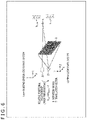
- FIG. 1 is a view explaining the principle for identifying a plane constituting a road surface according to the present disclosure.
- FIG. 2 is a view explaining a method of generating an environmental map based on the plane constituting the road surface.
- FIG. 3 is a block diagram explaining an exemplary configuration of a mobile object control system for controlling a mobile object according to the present disclosure.
- FIG. 4 is a detailed block diagram of an exemplary configuration for generating an environmental map according to the present disclosure.
- FIG. 5 is a view explaining a laser ranging sensor.
- FIG. 6 is a view explaining the transformation between the coordinate system of a laser ranging sensor and the coordinate system of a polarization camera.
- FIG. 7 is a view explaining an example of detecting normal directions of a surface of a subject in images.
- FIG. 8 is a view explaining a method of obtaining the plane constituting the road surface.
- FIG. 9 is a view explaining semantic segmentation.
- FIG. 10 is a view explaining a method of generating an environmental map.
- FIG. 11 is a flowchart explaining an environmental map generating process.
- FIG. 12 is a flowchart explaining an environmental mapping process.
- FIG. 13 is a view explaining an exemplary configuration of a general-purpose computer.
- the mobile object of the present disclosure is a mobile object that generates a local map required for autonomous movement.
- FIG. 1 illustrates the mobile object 11 as it advances on a road surface 13 in a rightward direction as seen in the drawing, for example.
- the mobile object 11 includes a polarization camera 21 and a laser ranging sensor 22 .
- the polarization camera 21 acquires polarized images with a field angle Z 1 in multiple polarizing directions of the front in the advancing direction of the mobile object 11 .
- the mobile object 11 On the basis of the polarized images in multiple polarized directions acquired by the polarization camera 21 , the mobile object 11 detects a normal direction (normal vector) N (nx, ny, nz) of the plane S constituting the road surface 13 , as depicted in the right part of FIG. 1 .
- a normal direction normal vector
- N normal vector
- the laser ranging sensor 22 measures the distance from the mobile object 11 in its advancing direction to the road surface 13 using the ToF (Time of Flight) method.
- the distance to the road surface 13 is obtained, for example, by measuring the time period from the time when laser light is projected to the road surface 13 until the time when reflected light from a point X on the road surface 13 is received.
- the position measured by the laser ranging sensor 22 is a distance to that position on the road surface 13 of which the direction from the mobile object 11 is identified beforehand. It follows that once the distance is obtained, the position of the point X (x, y, z) on the plane S is measured.
- the plane S constituting the road surface 13 is then identified from the normal direction N (nx, ny, nz) of the plane S and from the point X (x, y, z) on the plane S.
- X stands for the coordinates X measured on the plane S by the laser ranging sensor 22 , N for the normal vector of the plane S, T for transposition, and d for a coefficient.
- the coefficient d is obtained by solving the above equation (1) with the normal vector N of the plane S and the coordinate position X input thereto. The acquired coefficient d is then used to identify the plane S.
- the polarization camera 21 acquires an image P 1 with the field angle Z 1 from a composition in which a person 34 is on a road surface 31 in a space flanked left and right by three-dimensional structures 32 - 1 and 32 - 2 against the background of a sky 33 being visible.
- the image P 1 in the left part of FIG. 2 is an ordinary unpolarized image reconstructed from averaging the images in the multiple polarizing directions.
- the types of subjects in the image P can be identified in units of pixels by semantic segmentation techniques including machine learning such as deep learning to be discussed later.
- the pixels in the image P 1 are categorized by semantic segmentation as follows:
- the pixels belonging to a zone Z 31 in the lower part of the image P 1 represent the road surface 31 ;
- the pixels belonging to zones Z 32 - 1 and Z 32 - 2 represent the left and right three-dimensional structures 32 - 1 and 32 - 2 , respectively;
- the pixels belonging to a zone Z 33 represent the sky 33 up in the background; and
- the pixels belonging to a zone Z 34 represent the person 34 .
- the image P 1 is a two-dimensional image, the position of each pixel in the three-dimensional space cannot be recognized.
- the plane S constituting the road surface 31 can be identified by measuring the distance to a predetermined point on the road surface 31 using the laser ranging sensor 22 .
- the coordinates of each of the pixels in the zone Z 31 of the image P 1 can be identified on the plane S constituting the corresponding road surface 31 .
- the boundaries in the image P 1 between each of the zones Z 32 - 1 and Z 32 - 2 of the three-dimensional structures 32 - 1 and 32 - 2 and the zone Z 34 of the person 34 on one hand and the zone Z 31 of the road surface 31 in the vertically downward direction on the other hand may be considered to represent the very positions of the road surface 31 on which the three-dimensional structures 32 - 1 and 32 - 2 as well as the person 34 stand.
- the boundary pixels 51 belonging to the boundary between the zone Z 31 of the road surface 31 on one hand and the zones Z 32 - 1 and Z 32 - 2 of the three-dimensional structures 32 - 1 and 32 - 2 and the zone Z 34 of the person 34 on the other hand have the same position on the plane S.
- the boundary pixel 51 and an intersection point 61 on the plane S along the same line of sight are associated with each other.
- the association makes it possible to identify the positions, on the plane S constituting the road surface, of the obstacles such as the three-dimensional structures 32 - 1 and 32 - 2 and the person 34 belonging to the boundary pixels 51 .
- a local map is generated in which bar-like objects with a predetermined height each are assumed to be present at intersection point groups 61 - 1 , 61 - 2 , and 62 including a group of intersection points 61 on the plane S constituting the road surface 31 at the positions where the three-dimensional structures 32 - 1 and 32 - 2 and the person 34 are assumed to exist.
- boundary pixels 51 there are no boundary pixels 51 set on the boundary between a zone Z 33 belonging to the sky 33 on one hand and the road surface 31 on the other hand in the image P 1 .
- the boundary pixels 51 are not set with the sky 33 because the sky 33 does not stand on the road surface 31 .
- the boundary pixels 51 may be arranged to exclude the pixels on the boundary between the zone Z 33 of the sky 33 on one hand and the road surface 31 in the vertically downward direction on the other hand.
- polarized images are acquired by the polarization camera 21 .
- the polarized images thus acquired are used in detecting the normal direction N of the plane constituting the road surface 13 .
- the point X on the plane constituting the road surface 13 is identified using the laser ranging sensor 22 .
- the plane S of the road surface 13 is then identified using the normal direction N and the point X.
- an unpolarized image is reconstructed from multiple polarized images.
- the attributes of the zones in the unpolarized image are identified.
- a local map is then generated by identifying the positions on the plane S constituting the road surface corresponding to the boundary pixels between the zone constituting the road surface on one hand and the zones of the other constituents in the vertically downward direction in the unpolarized image on the other hand.
- FIG. 3 is a block diagram explaining an exemplary configuration of a schematic function of a mobile object control system 100 that controls the mobile object 11 according to the present disclosure.
- the mobile object control system 100 in FIG. 3 is an example of the mobile object control system to which the present technology may be applied. This system may, for example, be used to control other mobile objects such as aircrafts, ships, drones, and robots.
- the mobile object control system 100 includes an input section 101 , a data acquisition section 102 , a communication section 103 , mobile object internal devices 104 , an output control section 105 , an output section 106 , a drive train control section 107 , a drive train system 108 , a storage section 109 , and an automated driving control section 110 .
- the input section 101 , the data acquisition section 102 , the communication section 103 , the output control section 105 , the drive train control section 107 , the storage section 109 , and the automated driving control section 110 are interconnected via a communication network 121 .
- the communication network 121 may be a communication network, a bus, or the like complying with appropriate protocols such as those of CAN (Controller Area Network), LIN (Local Interconnect Network), LAN (Local Area Network), or FlexRay (registered trademark).
- CAN Controller Area Network
- LIN Local Interconnect Network
- LAN Local Area Network
- FlexRay registered trademark
- the input section 101 includes apparatuses used by a passenger for inputting various data, instructions, and the like.
- the input section 101 includes operating devices for manual input such as a touch panel, buttons, a microphone, switches, and levers, as well as operating devices capable of non-manual input such as by voice, gesture, or the like.
- the input section 101 may be a remote control apparatus that uses infrared rays or radio waves, or an externally connected device such as a mobile device or a wearable device supporting the operation of the mobile object control system 100 .
- the input section 101 generates input signals on the basis of the data, instructions or the like input by the passenger and supplies the generated signals to the components of the mobile object control system 100 .
- the data acquisition section 102 includes various sensors and the like for acquiring data for use in processing by the mobile object control system 100 .
- the data acquisition section 102 supplies the acquired data to the components of the mobile object control system 100 .
- the data acquisition section 102 includes various sensors for detecting the status of the mobile object and other information.
- the data acquisition section 102 includes, for example, a gyro sensor, an acceleration sensor, an inertial measurement unit (IMU), and sensors for detecting the amount of operation of the accelerator pedal, the operation amount of the brake pedal, the steering angle of the steering wheel, engine speed, motor speed, wheel rotational speed, and the like.
- a gyro sensor for detecting the amount of operation of the accelerator pedal, the operation amount of the brake pedal, the steering angle of the steering wheel, engine speed, motor speed, wheel rotational speed, and the like.
- IMU inertial measurement unit
- the data acquisition section 102 includes various sensors for detecting information regarding the outside of the mobile object.
- the data acquisition section 102 includes, for example, an imaging apparatus such as a ToF (Time Of Flight) camera, a stereo camera, a monocular camera, an infrared ray camera, a polarization camera, and other cameras.
- the data acquisition section 102 includes environment sensors for detecting the weather, meteorological conditions or the like, and surrounding information detection sensors for detecting objects surrounding the mobile object.
- the environment sensors include, for example, a raindrop sensor, a fog sensor, a sunshine sensor, a snow sensor, and the like.
- the surrounding information detection sensors include, for example, a laser ranging sensor, an ultrasonic sensor, a radar, a LiDAR (Light Detection and Ranging, Laser Imaging Detection and Ranging), a sonar, and the like. It is to be noted that in the mobile object control system 100 of the present disclosure, the data acquisition section 102 has the polarization camera in FIG. 1 as an imaging apparatus and the laser ranging sensor 22 in FIG. 1 as a surrounding information detection sensor.
- the data acquisition section 102 includes various sensors for detecting the current position of the mobile object.
- the data acquisition section 102 includes, for example, a GNSS (Global Navigation Satellite System) receiver for receiving GNSS signals from GNSS satellites, or the like.
- GNSS Global Navigation Satellite System
- the data acquisition section 102 includes various sensors for detecting information regarding an inside of the mobile object.
- the data acquisition section 102 includes, for example, an imaging apparatus for imaging the driver, a biosensor for detecting biological information regarding the driver, microphones for collecting sounds from inside the mobile object, and the like.
- the biosensor is attached to a seat, a steering wheel, or the like, for example, in order to detect biological information regarding the passenger sitting on the seat or the driver holding the steering wheel.
- the communication section 103 communicates with the mobile object internal devices 104 and with various devices, servers, and base stations external to the mobile object. In carrying out communications, the communication section 103 transmits to the internal and external devices the data supplied from various components of the mobile object control system 100 and supplies such system components with the data received from these devices.
- the communication protocol that the communication section 103 supports is not limited to anything specific. Further, the communication section 103 can support multiple types of communication protocols.
- the communication section 103 communicates wirelessly with the mobile object internal devices 104 via wireless LAN, Bluetooth (registered trademark), NFC (Near Field Communication), WUSB (Wireless USB), or the like.
- the communication section 103 communicates by wire with the mobile object internal devices 104 by means of a connection terminal (and a cable if necessary), not depicted, using USB (Universal Serial Bus), HDMI (registered trademark) (High-Definition Multimedia Interface), MHL (Mobile High-definition Link), or the like.
- the communication section 103 communicates, via a base station or an access point, with devices (e.g., application servers or control servers) that exist on external networks (e.g., the Internet, cloud networks, or proprietary networks of business operators).
- devices e.g., application servers or control servers
- external networks e.g., the Internet, cloud networks, or proprietary networks of business operators.
- the communication section 103 communicates with terminals close to the mobile object (e.g., terminals held by pedestrians or set up by shops or MTC (Machine Type Communication) terminals) using P2P (Peer TO Peer) technology.
- P2P Peer TO Peer
- the communication section 103 performs V2X communication such as vehicle to vehicle (Vehicle to Vehicle) communication, vehicle to infrastructure (Vehicle to Infrastructure) communication, mobile object to home (Vehicle to Home) communication, and vehicle to pedestrian (Vehicle to Pedestrian) communication.
- V2X communication such as vehicle to vehicle (Vehicle to Vehicle) communication, vehicle to infrastructure (Vehicle to Infrastructure) communication, mobile object to home (Vehicle to Home) communication, and vehicle to pedestrian (Vehicle to Pedestrian) communication.
- V2X communication such as vehicle to vehicle (Vehicle to Vehicle) communication, vehicle to infrastructure (Vehicle to Infrastructure) communication, mobile object to home (Vehicle to Home) communication, and vehicle to pedestrian (Vehicle to Pedestrian) communication.
- the communication section 103 includes a beacon receiver that receives radio waves or electromagnetic waves emitted from wireless stations set up along the road or the like so as to acquire such information as the
- the mobile object internal devices 104 include, for example, a mobile device or a wearable device carried or worn by a passenger, an information device brought on board or attached to the mobile object, and a navigation apparatus that searches for the route to a desired destination.
- the output control section 105 controls the output of diverse information regarding the passenger of the mobile object or regarding the outside of the mobile object. For example, the output control section 105 generates an output signal that includes at least either visual information (e.g., image data) or audio information (e.g., voice data) and supplies the generated output signal to the output section 106 . The output control section 105 then controls output of the visual information and the audio information by the output section 106 . Specifically, the output control section 105 generates a bird's-eye image or a panoramic image by combining image data acquired by a different imaging apparatus in the data acquisition section 102 , and supplies an output signal that includes the generated image to the output section 106 .
- visual information e.g., image data
- audio information e.g., voice data
- the output control section 105 generates audio data that includes a warning sound, a warning message or the like against dangers such as collision, contact, or entry into a hazardous zone, and supplies an output signal that includes the generated audio data to the output section 106 .
- the output section 106 includes apparatuses capable of outputting visual information or audio information to the passenger of the mobile object or to the outside of the mobile object.
- the output section 106 includes a display apparatus, an instrument panel, audio speakers, headphones, a wearable device such as a spectacle type display worn by the passenger, a projector, lamps, and the like.
- the display apparatus included in the output section 106 may be an apparatus having an ordinary display, or instead a head-up display, a transmissive display, or an apparatus having an AR (Augmented Reality) display function for displaying visual information in the driver's visual field, for example.
- the drive train control section 107 generates various control signals and supplies the generated signals to the drive train system 108 to control the drive train system 108 .
- the drive train control section 107 supplies, as needed, control signals to components other than the drive train system 108 so as to notify these components of the control status of the drive train system 108 , or the like.
- the drive train system 108 includes various apparatuses related to the drive train of the mobile object.
- the drive train system 108 includes a drive power generation apparatus for causing an internal combustion engine, a drive motor, or the like to generate drive power, a drive power transmission mechanism for transmitting drive power to the wheels, a steering mechanism for adjusting the steering angle, a braking apparatus for generating braking force, ABS (Antilock Brake System), ESC (Electronic Stability Control), an electric power steering apparatus, and the like.
- the storage section 109 includes, for example, a magnetic storage device such as a ROM (Read Only Memory), a RAM (Random Access Memory), or an HDD (Hard Disc Drive), a semiconductor device, an optical storage device, a magneto-optical storage device, and the like.
- the storage section 109 stores various programs, data, and the like for use by the components of the mobile object control system 100 .
- the storage section 109 stores map data constituting three-dimensional high-precision maps such as dynamic maps, global maps having lower precision but covering wider areas than high-precision maps, and local maps including information regarding the surroundings of the mobile object.
- the automated driving control section 110 performs control related to automated driving such as autonomous locomotion or drive assistance. Specifically, the automated driving control section 110 performs, for example, collision avoidance or impact mitigation of the mobile object, tracking movement based on the distance between mobile objects, constant speed movement of the mobile object, or coordinated control intended to implement a function of giving a collision warning for the mobile object. As another example, the automated driving control section 110 carries out coordinated control intended to accomplish automated driving for autonomous locomotion without recourse to the driver's operations, or the like.
- the automated driving control section 110 includes a detection section 131 , a self-position estimation section 132 , a state analysis section 133 , a planning section 134 , and an operation control section 135 .
- the detection section 131 detects diverse information necessary for control of automated driving.
- the detection section 131 includes a mobile object outside information detection section 141 , a mobile object inside information detection section 142 , and a mobile object status detection section 143 .
- the mobile object outside information detection section 141 performs processes of detecting information regarding the outside of the mobile object on the basis of the data or signals from the components of the mobile object control system 100 .
- the mobile object outside information detection section 141 performs processes of detecting, recognizing, and tracking objects surrounding the mobile object, as well as a process of detecting distances to the objects.
- the objects targeted for detection include, for example, mobile objects, persons, obstacles, structures, roads, traffic lights, traffic signs, road markings, and the like.
- the mobile object outside information detection section 141 performs processes of detecting the environment surrounding the mobile object.
- the surrounding environment targeted for detection include, for example, weather, temperature, humidity, brightness, road surface conditions, and the like.
- the mobile object outside information detection section 141 supplies data indicative of the result of the detection processes to the self-position estimation section 132 , to a map analysis section 151 and a state recognition section 152 in the state analysis section 133 , the operation control section 135 , and the like.
- the mobile object inside information detection section 142 performs processes of detecting information regarding the inside of the mobile object on the basis of the data or signals from the components of the mobile object control system 100 .
- the mobile object inside information detection section 142 performs a process of authenticating and recognizing the driver, a process of detecting the driver's status, a process of detecting a passenger, a process of detecting the internal environment of the mobile object, and the like.
- the driver's status targeted for detection includes, for example, the physical condition, degree of vigilance, degree of concentration, degree of fatigue, line-of-sight direction, and the like of the driver.
- the internal environment of the mobile object targeted for detection includes, for example, temperature, humidity, brightness, odor, and the like.
- the mobile object inside information detection section 142 supplies data indicative of the result of the detection processes to the state recognition section 152 in the state analysis section 133 , the operation control section 135 , and the like.
- the mobile object status detection section 143 performs processes of detecting the status of the mobile object on the basis of the data or signals from the components of the mobile object control system 100 .
- the status of the mobile object targeted for detection includes, for example, speed, acceleration, steering angle, presence or absence of an anomaly with details, driving operation status, position and tilt of the power seat, door lock status, status of other onboard devices of the mobile object, and the like.
- the mobile object status detection section 143 supplies data indicative of the result of the detection processes to the state recognition section 152 in the state analysis section 133 , the operation control section 135 , and the like.
- the self-position estimation section 132 performs processes of estimating the position, the posture, and the like of the mobile object on the basis of the data or signals from the components of the mobile object control system 100 such as the mobile object outside information detection section 141 and the state recognition section 152 in the state analysis section 133 . Further, the self-position estimation section 132 generates, as needed, a local map for use in estimating the self-position (the map is hereinafter referred to as the self-position estimation map).
- the self-position estimation map may be a high-precision map that uses techniques such as SLAM (Simultaneous Localization and Mapping).
- the self-position estimation section 132 supplies data indicative of the result of the estimation processes to the map analysis section 151 and state recognition section 152 in the state analysis section 133 , and the like. Furthermore, the self-position estimation section 132 causes the storage section 109 to store the self-position estimation map.
- the state analysis section 133 performs processes of analyzing the state of the mobile object and the state of its surroundings.
- the state analysis section 133 includes the map analysis section 151 , the state recognition section 152 , and a state prediction section 153 .
- the map analysis section 151 creates a map that includes information required for the processing of automated driving, by performing processes of analyzing various maps stored in the storage section 109 while using, as needed, the data or signals from the components of the mobile object control system 100 such as the self-position estimation section 132 and the mobile object outside information detection section 141 .
- the map analysis section 151 supplies the map thus created to the state recognition section 152 and the state prediction section 153 as well as to a route planning section 161 , an action planning section 162 , and an operation planning section 163 in the planning section 134 .
- the state recognition section 152 performs processes of recognizing the state of the mobile object on the basis of the data or signals from the components of the mobile object control system 100 such as the self-position estimation section 132 , the mobile object outside information detection section 141 , the mobile object inside information detection section 142 , the mobile object status detection section 143 , and the map analysis section 151 .
- the state recognition section 152 performs processes of recognizing the state of the mobile object, the state of the surroundings of the mobile object, the state of the mobile object driver, and the like.
- the state recognition section 152 may, as needed, generate a local map for use in recognizing the state of the surroundings of the mobile object (the map is hereinafter referred to as the state recognition map).
- the state recognition map may be an occupancy grid map (Occupancy Grid Map), for example.
- the state of the mobile object targeted for recognition includes, for example, the position, posture, and movement of the mobile object (e.g., speed, acceleration, moving direction, and the like), as well as the presence or absence of an anomaly with details, and the like.
- the state of the surroundings of the mobile object targeted for recognition includes, for example, the types and positions of motionless objects nearby; the types, positions, and movements of animal bodies nearby (e.g., speed, acceleration, moving direction, and the like); the configuration of the surrounding roads and conditions of the road surface; the ambient weather, temperature, humidity, and brightness; and the like.
- the state of the driver targeted for recognition includes, for example, the physical condition, degree of vigilance, degree of concentration, degree of fatigue, line-of-sight direction, driving operations, and the like of the driver.
- the state recognition section 152 supplies data indicative of the result of the recognition processes (including the state recognition map as needed) to the self-position estimation section 132 , the state prediction section 153 , and the like. Further, the state recognition section 152 causes the storage section 109 to store the state recognition map.
- the state prediction section 153 performs processes of predicting the state related to the mobile object on the basis of the data or signals from the components of the mobile object control system 100 such as the map analysis section 151 and the state recognition section 152 .
- the state prediction section 153 performs processes of predicting the state of the mobile object, the state of the surroundings of the mobile object, the state of the driver, and the like.
- the state of the mobile object targeted for prediction includes, for example, the behavior of the mobile object, the occurrence of an anomaly of the mobile object, the movable distance, and the like of the mobile object.
- the state of the surroundings of the mobile object targeted for prediction includes, for example, the behavior of any animal body near the mobile object, changes of traffic lights, environmental changes such as those of the weather, and the like.
- the state of the driver targeted for prediction includes, for example, the behavior and physical condition of the driver and the like.
- the state prediction section 153 supplies data indicative of the result of the prediction processes, together with data from the state prediction section 152 , to the route planning section 161 , the action planning section 162 , and the operation planning section 163 in the planning section 134 and the like.
- the route planning section 161 plans the route to the destination on the basis of the data or signals from the components of the mobile object control system 100 such as the map analysis section 151 and the state prediction section 153 .
- the route planning section 161 sets the route from the current position to the designated destination on the basis of the global map.
- the route planning section 161 changes the route as appropriate on the basis of the state of traffic congestion, accidents, traffic controls, road repairing, and the like, as well as on the physical condition and the like of the driver.
- the route planning section 161 supplies data indicative of the planned route to the action planning section 162 and the like.
- the action planning section 162 plans actions of the mobile object for safe movement in a planned period of time along the route planned by the route planning section 161 , on the basis of the data or signals from the components of the mobile object control system 100 such as the map analysis section 151 and the state prediction section 153 .
- the action planning section 162 plans start, stop, advancing direction (e.g., forward, backward, left turn, right turn, change of direction, or the like), moving speed, passing, and the like.
- the action planning section 162 supplies data indicative of the planned actions of the mobile object to the operation planning section 163 and the like.
- the operation planning section 163 plans operations of the mobile object for implementing the actions planned by the action planning section 162 on the basis of the data or signals from the components of the mobile object control system 100 such as the map analysis section 151 and the state prediction section 153 .
- the operation planning section 163 plans acceleration, deceleration, course of movement, and the like.
- the operation planning section 163 supplies data indicative of the planned operations of the mobile object to the operation control section 135 and the like.
- the operation control section 135 controls the operations of the mobile object.
- the operation control section 135 performs processes of detecting an emergency situation such as collision, contact, entry into a hazardous zone, an anomaly of the driver, or an anomaly of the mobile object on the basis of the result of the detection by the mobile object outside information detection section 141 , mobile object inside information detection section 142 , and mobile object status detection section 143 .
- the operation control section 135 plans the operation of the mobile object such as a sudden stop or a sharp turn to avert the emergency.
- the operation control section 135 controls acceleration and deceleration for implementing the operation of the mobile object planned by the operation planning section 163 .
- the operation control section 135 computes a control target value for the drive power generation apparatus or for the braking apparatus to execute the planned acceleration, deceleration, or sudden stop.
- the operation control section 135 supplies a control command indicative of the computed control target value to the drive train control section 107 .
- the operation control section 135 performs directional control for implementing the operation of the mobile object planned by the operation planning section 163 .
- the operation control section 135 computes a control target value for the steering mechanism to implement the course of movement or the sharp turn planned by the operation planning section 163 .
- the operation control section 135 supplies a control command indicative of the computed control target value to the drive train control section 107 .
- the environmental map referenced here is the above-mentioned state recognition map, which is a local map used for recognizing the surrounding state of the mobile object. More specifically, the environmental map includes an occupancy grid map (Occupancy Grid Map).
- the detailed exemplary configuration for generating the environmental map is constituted, as depicted in FIG. 4 , by the data acquisition section 102 , by the mobile object outside information detection section 141 in the detection section 131 of the automated driving control section 110 , and by the state recognition section 152 in the state analysis section 133 .
- the data acquisition section 102 includes the laser ranging sensor 22 and the polarization camera 21 .
- the mobile object outside information detection section 141 includes a three-dimensional distance measurement section 301 , a coordinate system integration section 302 , a normal line detection section 303 , a road surface plane normal line detection section 304 , an image reconstruction section 305 , a semantic segmentation section 306 , and a road surface plane calculation section 307 .
- the state recognition section includes an environmental mapping section 321 .
- the laser ranging sensor 22 projects infrared laser light from the mobile object 11 to a predetermined point on the road surface 13 at a predetermined angle relative to the road surface 13 and, given reflection of the projected infrared laser light from the predetermined point on the road surface 13 , measures the distance to that point on the road surface 13 to which infrared laser light is projected from the mobile object 11 at the predetermined angle, on the basis of a round-trip time of the infrared laser light.
- the laser ranging sensor 22 outputs the result of the measurement to the three-dimensional distance measurement section 301 . It is to be noted that the laser ranging sensor 22 will be discussed later in detail with reference to FIG. 5 .
- the polarization camera 21 acquires polarized images in multiple polarizing directions through filters of multiple polarizing directions.
- the polarization camera 21 outputs the polarized images thus acquired to the normal line detection section 303 and to the image reconstruction section 305 .
- the three-dimensional distance measurement section 301 acquires information from the laser ranging sensor 22 regarding the distance from the mobile object 11 to the point on the road surface 13 to which the infrared laser light is projected at the predetermined angle. The three-dimensional distance measurement section 301 then acquires information regarding three-dimensional coordinates of the point on the plane constituting the road surface 13 , and outputs the acquired information to the coordinate system integration section 302 .
- the coordinate system integration section 302 transforms the three-dimensional point coordinates into a coordinate system of the polarization camera 21 for integration with a camera coordinate system of the polarization camera 201 , and outputs the transformed coordinates to the road surface plane calculation section 307 .
- the integration of the coordinate system of the laser ranging sensor with that of the polarization camera will be discussed later in detail with reference to FIG. 6 .
- the normal line detection section 303 generates, on the basis of the polarized images in multiple polarizing directions, a normal vector map constituted by normal directions of the surfaces of the subjects in units of pixels of the polarized images.
- the normal line detection section 303 outputs the normal vector map thus generated to the road surface plane normal line detection section 304 and to the semantic segmentation section 306 . It is to be noted that the detection of normal lines by the normal line detection section 303 will be discussed later in detail with reference to FIG. 7 .
- the image reconstruction section 305 reconstructs an unpolarized image by obtaining mean values of the pixels of the polarized images in the multiple polarizing directions.
- the image reconstruction section 305 outputs the reconstructed unpolarized image to the semantic segmentation section 306 .
- the semantic segmentation section 306 estimates the type of the subject to which each pixel belongs using machine learning such as deep learning, on the basis of the normal vector map and the unpolarized image, sets the result of the estimation as a semantic label, and outputs the semantic label to the environmental mapping section 328 . Further, the semantic segmentation section 306 outputs to the road surface plane normal line detection section 304 information regarding the pixels labeled to the road surface 13 out of the information regarding the pixels categorized by semantic label. It is to be noted that semantic segmentation will be discussed later in detail with reference to FIG. 9 .
- the road surface plane normal line detection section 304 obtains the normal direction of the plane constituting the road surface 13 (normal vector of the road surface) using the normal vector map from the normal line detection section 303 and the information regarding the pixels labeled to the road surface 13 .
- the normal line detection section 303 outputs the obtained normal direction as the information regarding the road surface normal line to the road surface plane calculation section 307 . It is to be noted that detection of the normal line of the road surface plane will be discussed later in detail with reference to FIG. 8 .
- the road surface plane calculation section 307 calculates the plane constituting the road surface on the basis of the information regarding the normal vector of the plane constituting the road surface plane as the information regarding the road surface normal line and of the information regarding the three-dimensional coordinates of the point on the plane.
- the road surface plane calculation section 307 outputs the plane thus calculated to the environmental mapping section 308 .
- the environmental mapping section 321 generates an environmental map through an environmental mapping process on the basis of the information regarding the plane constituting the road surface 13 and the semantic labeling information. It is to be noted that environmental mapping will be discussed later in detail with reference to FIG. 10 .
- the laser ranging sensor 22 is explained next in detail with reference to FIG. 5 .
- the laser ranging sensor 22 includes, as depicted in FIG. 5 , a ranging section 351 , a light projection section 352 , and a light reception section 353 .
- the ranging section 351 controls the light projection section 352 to project infrared laser light in the direction of the road surface 13 at a predetermined angle relative to the road surface 13 . At this time, the ranging section 351 stores the time at which the light projection section 352 was caused to project the infrared laser light.
- the ranging section 351 further controls the light reception section 353 to receive reflection of the projected infrared laser light from an obstacle 361 (corresponding to the road surface 13 ). At the same time, the ranging section 351 stores the time at which the reflected infrared laser light was received.
- the ranging section 351 then obtains the round-trip time to the obstacle 361 from the difference between the time at which infrared laser light was projected by the light projection section 352 and the time at which the reflected light from the obstacle 361 was received by the light reception section 353 . From the round-trip time thus obtained, the ranging section 351 measures the distance to the obstacle 361 .
- the illustration in FIG. 5 is merely intended to explain the principle of ranging used by the laser ranging sensor 22 .
- the laser ranging sensor 22 measures the distance from the mobile object 11 to a predetermined point on the road surface 13 at a predetermined angle relative to the road surface 13 .
- R stands for the rotation matrix indicative of the angle between the laser ranging sensor 22 and the polarization camera 21
- T for a translation vector obtained from the positional relationship between the laser ranging sensor 22 and the polarization camera 21 .
- the coordinate system integration section 302 transforms the coordinates of the point X on the plane constituting the road surface 13 , the coordinates being measured as information regarding the coordinate system of the laser ranging sensor 22 , into the camera coordinate system for integration of the two coordinate systems.
- the normal line detection section 303 obtains the normal direction of the surface of the subject to which each pixel in the images belongs, as polar coordinates with a zenith angle ⁇ and an azimuth angle ⁇ , to thereby generate a normal vector map.
- the distribution of arrows indicative of normal directions is regarded as the normal vector map (the leftmost part in FIG. 8 ).
- a region below an approximate center of the image P 1 is regarded as the zone Z 31 of the road surface 31 ; left and right regions in the image P 1 are regarded as the zones Z 32 - 1 and Z 32 - 2 (of the walls) of the three-dimensional structures 32 - 1 and 32 - 2 ; a region in a top center is regarded as the zone Z 33 of the sky 33 ; and a region of the person 34 on the left of the zone Z 32 - 2 of the right-side three-dimensional structure 32 - 2 and above the zone Z 31 of the road surface 31 is regarded as the zone Z 34 .
- arrows indicative of the normal direction perpendicular to the road surface 31 are distributed.
- arrows indicative of the rightward direction perpendicular to the wall in FIG. 7 are distributed.
- arrows indicative of the leftward direction perpendicular to the wall in FIG. 7 are distributed.
- the normal line of the road surface plane which is a normal line of the plane constituting the road surface, is detected as the dominant normal direction of the pixels in the region labeled by semantic segmentation to the road surface in the normal vector map.
- the zone Z 11 of the normal vector map is extracted as an ROI (Region of Interest) zone (zone of interest).
- a histogram of the remaining normal lines is then generated, and the dominant normal line is extracted.
- Information regarding the normal line is constituted by polar coordinates with the zenith angle ⁇ and the azimuth angle ⁇ .
- the normal line information constituted by the polar coordinates is transformed into an orthogonal coordinate system and, as depicted in the rightmost part of FIG. 8 , is output as a normal vector N [nx, ny, nz] of the plane S constituting the road surface.
- Semantic segmentation is next explained with reference to FIG. 9 .
- the subject to which each pixel in the image belongs is estimated through machine learning such as deep learning.
- the result of the estimation is provided as semantic labels.
- the zone Z 31 in which an absolute value of an inner product between the vertical direction and the detected normal vector is larger than a predetermined value may be semantically labeled as the road surface 31 .
- the three-dimensional structures 32 - 1 and 32 - 2 as well as the person 34 may be semantically labeled collectively as obstacles.
- zone Z 33 in the upper part of the image where the luminance level is high may be semantically labeled as the sky 33 .
- the zone Z 31 of the road surface 31 , the zones Z 32 - 1 and Z 32 - 2 of the three-dimensional structure 32 - 1 and 32 - 2 , the zone Z 33 of the sky 33 , and the zone Z 34 of the person 34 are each semantically labeled by semantic segmentation. It is assumed here that the zones Z 32 - 1 , Z 32 - 2 , and Z 34 , regarded as obstacles apart from the zone Z 31 of the road surface 31 and the zone Z 33 of the sky 33 , constitute obstacle zones.
- the pixels (pixels indicated as square cells) of the boundary between the zone Z 31 of the road surface 31 on one hand and the obstacle zones Z 32 - 1 , Z 32 - 2 , and Z 34 on the other hand in the vertically downward direction are extracted as boundary pixels 51 .
- xi and yi represent the pixel position in an image D acquired by the polarization camera 21 with the center pixel Pc taken as the origin
- f denotes the focal point distance from the polarization camera 21 with its focal position at the image center (center pixel) Pc.
- an intersection point Xp corresponding to the boundary pixel 51 between the line of sight from the polarization camera 21 and the plane S constituting the road surface 31 is defined by the following expression (3):
- s stands for a coefficient, which is a scalar quantity.
- the vector starting from the polarization camera 21 up to the intersection point Xp is a line-of-sight vector Ve multiplied by the coefficient s.
- the constant s is obtained by assigning the mathematical expression (3) to the equation of the plane S constituting the road surface, the equation being defined by the above expression (1). With the constant s obtained, the coordinates of the intersection point 61 on the plane S are acquired accordingly.
- a distribution of intersection point groups 61 - 1 , 61 - 2 , and 62 corresponding to the obstacle zones Z 32 - 1 , Z 32 - 2 , and Z 34 as viewed from above the plane S is generated as an environmental map M.
- step S 11 the polarization camera 21 acquires polarized images in multiple polarizing directions of the front of the mobile object at a predetermined field angle relative thereto through filters of the multiple polarizing directions, for example.
- the polarization camera 21 outputs the acquired polarized images to the normal line detection section 303 and to the image reconstruction section 305 .
- step S 12 the laser ranging sensor 22 projects laser light to the road surface and receives reflected light from the road surface as explained above with reference to FIG. 5 .
- the laser ranging sensor 22 measures the distance to the road surface 13 by what is generally called the ToF method based on the difference between the time at which light is projected and the time at which reflected light is received.
- the laser ranging sensor 22 outputs the result of the measurement to the three-dimensional distance measurement section 301 .
- step S 13 on the basis of the result of ranging by the laser ranging sensor 22 , the three-dimensional distance measurement section 301 identifies the three-dimensional coordinates of the point from which the laser light was reflected and which is on the plane S constituting the road surface 13 , in terms of coordinates in the coordinate system of the laser ranging sensor 22 .
- the three-dimensional distance measurement section 301 outputs the coordinates thus identified to the coordinate system integration section 302 .
- step S 14 the coordinate system integration section 302 transforms the three-dimensional coordinates of the point on the plane S constituting the road surface 13 in the coordinate system of the laser ranging sensor 22 into coordinates of the camera system coordinates of the polarization camera 21 , as explained above with reference to FIG. 6 .
- the coordinate system integration section 302 outputs the transformed coordinates to the road surface plane calculation section 307 .
- step S 15 the image reconstruction section 305 reconstructs an unpolarized image by obtaining mean values of the pixels of the images in the multiple polarizing directions.
- the image reconstruction section 305 outputs the reconstructed unpolarized image to the semantic segmentation section 306 .
- step S 16 on the basis of the polarized images, the normal line detection section 303 detects the normal direction of each pixel on the surface of the subject in the polarized images as explained above with reference to FIG. 7 .
- the normal line detection section 303 outputs the detected normal direction as a normal vector map to the road surface plane normal line detection section 304 and to the semantic segmentation section 306 .
- step S 17 on the basis of the unpolarized image and the normal vector map, the semantic segmentation section 306 labels through semantic segmentation each pixel in the unpolarized image as to which subject in the image the pixel belongs, as explained above with reference to FIG. 9 .
- the semantic segmentation section 306 attaches the semantic label to each pixel before outputting the label to the environmental mapping section 321 in units of pixels.
- the semantic segmentation section 306 outputs information regarding the pixels labeled to the road surface to the road surface plane normal line detection section 304 .
- step S 18 the road surface plane normal line detection section 304 detects the normal direction of the road surface from the normal vector map and from the information regarding the pixels labeled to the road surface, as explained above with reference to FIG. 8 .
- the road surface plane normal line detection section 304 outputs the detected normal direction to the road surface plane calculation section 307 .
- step S 19 the road surface plane calculation section 307 calculates the equation of the plane S constituting the road surface 13 on the basis of the information regarding the normal direction of the road surface and the information regarding the three-dimensional coordinates of the point on the plane constituting the road surface, as explained above with reference to FIG. 1 .
- the road surface plane calculation section 307 outputs the calculated equation as information regarding the road surface plane to the environmental mapping section 321 .
- step S 20 the environmental mapping section 321 generates and outputs an environmental map by performing an environmental mapping process on the basis of the information regarding the road surface plane and on the semantic labels. It is to be noted that the environmental mapping process will be discussed later in detail with reference to the flowchart of FIG. 12 .
- step S 21 it is determined whether an end of the process is ordered. If an end is not ordered, control is returned to step S 11 and the subsequent steps are repeated. If it is determined in step S 21 that an end of the process is ordered, the process is terminated.
- the above process provides the three-dimensional coordinates of the point on the plane constituting the road surface, the distance to the point being measured by the laser ranging sensor 22 , and the normal direction of the plane constituting the road surface obtained from the polarized images in multiple polarizing directions acquired by the polarization camera 21 .
- the plane S constituting the road surface is then identified from the information regarding the three-dimensional coordinates of the point on the plane constituting the road surface and the normal direction of the plane constituting the road surface.
- the environmental map is generated by the environmental mapping process using the information regarding the plane S constituting the identified road surface.
- the environmental mapping process performed by the environmental mapping section 321 is next explained with reference to the flowchart of FIG. 12 .
- step S 31 the environmental mapping section 321 detects, on the basis of the segmentation labels, the boundary pixel 51 on the boundary between the zone Z 31 of the road surface 31 on one hand and the zones Z 32 - 1 , Z 32 - 2 , and Z 34 of the obstacles 32 - 1 , 32 - 2 , and 34 on the other hand in the unpolarized image, as explained above with reference to the left part of FIG. 10 .
- step S 32 the environmental mapping section 321 transforms the coordinates of the boundary pixel 51 in the unpolarized image to the coordinates of the corresponding intersection point 61 on the plane constituting the road surface 31 , as explained above with reference to the center part of FIG. 10 .
- step S 33 the environmental mapping section 321 generates and outputs the environmental map indicative of the positions where there exist the obstacles on the plane constituting the road surface 31 , on the basis of the information regarding the coordinates of the intersection point 61 with the boundary pixel 51 on the plane, as explained above with reference to the right part of FIG. 10 .
- the above process makes it possible to generate the environmental map on the basis of the information regarding the road surface and the obstacles included in the unpolarized image.
- the laser ranging sensor 22 measures the distance to a single point on the road surface so that a single intersection point constitutes the road surface.
- the distances to multiple points on the road surface may be measured, and multiple intersection points on the road surface may be used to identify the plane constituting the road surface.
- not only the laser ranging sensor 32 but also a stereo camera or a millimeter-wave radar may be used to detect the point.
- the road surface is a plane with no irregularities.
- the dominant normal direction from among the normal direction of each of the pixels labeled to the road surface is utilized. That means an average normal direction covering the irregularities on the road surface may be used as the dominant normal direction.
- multiple intersection points on the road surface may be obtained and averaged so as to acquire an average plane constituting the road surface.
- the plane constituting the road surface relative to the moving direction of the mobile object 11 .
- the plane be such as to constitute a movement-enabling region into which the mobile object is about to move.
- the dominant normal direction is obtained from among the normal direction of each of the pixels to which the attribute of the road surface is set through the use of the normal vector map acquired from polarized images in multiple polarizing directions.
- any other suitable method may be used to obtain the normal direction.
- existing map information may be used to obtain the normal direction.
- a stereo camera may be employed to acquire the normal direction.
- the series of processes described above may be executed either by hardware or by software. Where the series of processes is to be carried out by software, the programs constituting the software are installed into a suitable computer from recording media. Variations of the computer include one with the software installed beforehand in its dedicated hardware and a general-purpose personal computer or like equipment capable of executing diverse functions on the basis of the programs installed therein.
- FIG. 13 is a view depicting an exemplary configuration of a general-purpose computer.
- This computer incorporates a CPU (Central Processing Unit) 1001 .
- the CPU 1001 is connected with an input/output interface 1005 via a bus 1004 .
- the bus 1004 is connected with a ROM (Read Only Memory) 1002 and a RAM (Random Access Memory) 1003 .
- ROM Read Only Memory
- RAM Random Access Memory
- the input/output interface 1005 is connected with an input section 1006 , an output section 1007 , a storage section 1008 , and a communication section 1009 .
- the input section 1006 includes input devices such as a keyboard and a mouse with which a user inputs operation commands.
- the output section 1007 outputs process operation screens and images of the results of processing to a display device.
- the storage section 1008 includes a hard disk drive for storing programs and diverse data.
- the communication section 1009 includes a LAN (Local Area Network) adapter and the like and executes communication processes via networks typified by the Internet.
- LAN Local Area Network
- the input/output interface 1005 is further connected with a drive 1010 that writes and reads data to and from removable media 1011 such as magnetic discs (including flexible discs), optical discs (including CD-ROM (Compact Disc-Read Only Memory) and DVD (Digital Versatile Disc)), magneto-optical discs (including MD (Mini Disc)), or a semiconductor memory.
- removable media 1011 such as magnetic discs (including flexible discs), optical discs (including CD-ROM (Compact Disc-Read Only Memory) and DVD (Digital Versatile Disc)), magneto-optical discs (including MD (Mini Disc)), or a semiconductor memory.
- the CPU 1001 carries out diverse processes in accordance with programs stored in the ROM 1002 or with programs loaded into the RAM 1003 from the storage section 1008 in which these programs were installed after being read out from the removable media 1011 such as magnetic discs, optical discs, magneto-optical discs, or a semiconductor memory.
- the RAM 1003 also stores the data required by the CPU 1001 in executing the diverse processes.
- the CPU 1001 performs the above-mentioned series of processing by loading appropriate programs, for example, from the storage section 1008 into the RAM 1003 via the input/output interface 1005 and the bus 1004 and by executing the loaded programs.
- the programs to be executed by the computer may be recorded, for example, on the removable media 1011 as packaged media, when offered.
- the programs may alternatively be offered via wired or wireless transmission media such as local area networks, the Internet, and digital satellite broadcasting.
- the programs may be installed in the storage section 1008 from the removable media 1011 attached to the drive 1010 , via the input/output interface 1005 .
- the programs may also be installed in the storage section 1008 after being received by the communication section 1009 via wired or wireless transmission media.
- the programs may alternatively be preinstalled in the ROM 1002 or in the storage section 1008 .
- the programs to be executed by the computer may each be processed chronologically, i.e., in the sequence depicted in this description, in parallel with other programs, or in otherwise appropriately timed fashion such as when the program is invoked as needed.
- the CPU 1001 in FIG. 13 implements the function of the automated driving control section 110 in FIG. 3 .
- the storage section 1008 in FIG. 13 implements the function of the storage section 109 in FIG. 3 .
- system refers to an aggregate of multiple components (e.g., apparatuses, modules (parts) or the like). It does not matter whether all components are housed in the same enclosure. Thus, a system may be configured with multiple apparatuses housed in separate enclosures and interconnected via a network, or with a single apparatus in a single enclosure that houses multiple modules.
- the present disclosure may be implemented as a cloud computing setup in which a single function is processed cooperatively by multiple networked apparatuses on a shared basis.
- each of the steps discussed in reference to the above-described flowcharts may be executed either by a single apparatus or by multiple apparatuses on a shared basis.
- a single step includes multiple processes, these processes may be executed either by a single apparatus or by multiple apparatuses on a shared basis.
- An information processing apparatus including:
- a movement-enabling region normal line detection section configured to detect a normal direction of a plane constituting a movement-enabling region for a mobile object
- a position identification section configured to identify a position of a point on the plane constituting the movement-enabling region
- a plane identification section configured to identify the plane constituting the movement-enabling region on the basis of the normal direction of the movement-enabling region and the position of the point in the movement-enabling region.
- a polarization camera configured to acquire polarized images in multiple polarizing directions, in which
- the movement-enabling region normal line detection section detects, on the basis of the polarized images, the normal direction of the plane constituting the movement-enabling region for the mobile object.
- a normal direction detection section configured to detect, in units of pixels, a normal direction of a surface of a subject in the polarized images before outputting the detected normal direction as a normal vector map
- a reconstruction section configured to reconstruct an unpolarized image from the multiple polarized images
- an attribute setting section configured to set an attribute of the subject to each of the pixels in the unpolarized image, in which
- the movement-enabling region normal line detection section detects a dominant normal direction on the normal vector map corresponding to a region having those pixels in the unpolarized image of which the attribute is set to the movement-enabling region by the attribute setting section, the dominant normal direction being the normal direction of the plane constituting the movement-enabling region.
- the attribute setting section sets, through semantic segmentation, the attribute of the subject to each of the pixels in the unpolarized image.
- an environmental mapping section configured to generate an environmental map on the basis of information regarding the attribute of the subject set to each of the pixels in the unpolarized image and information regarding the plane identified by the plane identification section.
- the environmental mapping section generates the environmental map on the basis of information regarding the pixels of which the attribute is set to the movement-enabling region and information regarding the pixels of which the attribute is set to an obstacle, the environmental map being indicative of a position of the obstacle on the plane constituting the movement-enabling region.
- the environmental mapping section generates the environmental map by taking the position on the plane constituting the movement-enabling region and corresponding to a boundary pixel in a vertically downward direction between the region of the pixels of which the attribute is set to the movement-enabling region on one hand and the region of the pixels of which the attribute is set to the obstacle on the other hand, as the position of the obstacle on the plane constituting the movement-enabling region.
- the environmental map is an occupancy grid map (Occupancy Grid Map).
- a coordinate system integration section configured to integrate a coordinate system indicative of the position of the point identified by the position identification section in the movement-enabling region with a coordinate system of the polarized images acquired by the polarization camera.
- a ranging section configured to measure a distance to a point in the movement-enabling region
- the position identification section identifies the position of the point in the movement-enabling region on the basis of the distance, measured by the ranging section, to the point in the movement-enabling region.
- the ranging section includes a laser ranging sensor, a stereo camera, or a millimeter-wave radar.
- the movement-enabling region includes a road surface.
- An information processing method including the steps of:
- a program for causing a computer to execute a process including:
- a movement-enabling region normal line detection section configured to detect, on the basis of a polarized image, a normal direction of a plane constituting a movement-enabling region for a mobile object
- a position identification section configured to identify a position of a point on the plane constituting the movement-enabling region
- a plane identification section configured to identify the plane constituting the movement-enabling region on the basis of the normal direction of the movement-enabling region and the position of the point in the movement-enabling region.
- a mobile object including:
- a movement-enabling region normal line detection section configured to detect, on the basis of a polarized image, a normal direction of a plane constituting a movement-enabling region for the mobile object
- a position identification section configured to identify a position of a point on the plane constituting the movement-enabling region
- a plane identification section configured to identify the plane constituting the movement-enabling region on the basis of the normal direction of the movement-enabling region and the position of the point in the movement-enabling region;
- an environmental mapping section configured to generate an environmental map on the basis of the plane identified by the plane identification section
- a planning section configured to plan a movement route on the basis of the environmental map generated by the environmental mapping section
- control section configured to control an operation of the mobile object on the basis of the movement route planned by the planning section.
Landscapes
- Engineering & Computer Science (AREA)
- Physics & Mathematics (AREA)
- General Physics & Mathematics (AREA)
- Theoretical Computer Science (AREA)
- Computer Vision & Pattern Recognition (AREA)
- Remote Sensing (AREA)
- Radar, Positioning & Navigation (AREA)
- Multimedia (AREA)
- Automation & Control Theory (AREA)
- Software Systems (AREA)
- Electromagnetism (AREA)
- Artificial Intelligence (AREA)
- Computer Networks & Wireless Communication (AREA)
- Evolutionary Computation (AREA)
- General Health & Medical Sciences (AREA)
- Medical Informatics (AREA)
- Databases & Information Systems (AREA)
- Data Mining & Analysis (AREA)
- Health & Medical Sciences (AREA)
- Computing Systems (AREA)
- Aviation & Aerospace Engineering (AREA)
- Evolutionary Biology (AREA)
- General Engineering & Computer Science (AREA)
- Bioinformatics & Computational Biology (AREA)
- Bioinformatics & Cheminformatics (AREA)
- Life Sciences & Earth Sciences (AREA)
- Traffic Control Systems (AREA)
- Control Of Driving Devices And Active Controlling Of Vehicle (AREA)
- Image Input (AREA)
- Control Of Position, Course, Altitude, Or Attitude Of Moving Bodies (AREA)
- Image Analysis (AREA)
Applications Claiming Priority (4)
| Application Number | Priority Date | Filing Date | Title |
|---|---|---|---|
| JPJP2017-151476 | 2017-08-04 | ||
| JP2017151476 | 2017-08-04 | ||
| JP2017-151476 | 2017-08-04 | ||
| PCT/JP2018/027840 WO2019026714A1 (ja) | 2017-08-04 | 2018-07-25 | 情報処理装置、および情報処理方法、プログラム、並びに移動体 |
Publications (2)
| Publication Number | Publication Date |
|---|---|
| US20200272834A1 US20200272834A1 (en) | 2020-08-27 |
| US11373418B2 true US11373418B2 (en) | 2022-06-28 |
Family
ID=65233831
Family Applications (1)
| Application Number | Title | Priority Date | Filing Date |
|---|---|---|---|
| US16/634,580 Active 2039-03-31 US11373418B2 (en) | 2017-08-04 | 2018-07-25 | Information processing apparatus, information processing method, program, and mobile object |
Country Status (5)
| Country | Link |
|---|---|
| US (1) | US11373418B2 (de) |
| EP (1) | EP3663882B1 (de) |
| JP (1) | JP7259749B2 (de) |
| CN (1) | CN110959143B (de) |
| WO (1) | WO2019026714A1 (de) |
Cited By (2)
| Publication number | Priority date | Publication date | Assignee | Title |
|---|---|---|---|---|
| US20220055670A1 (en) * | 2019-03-22 | 2022-02-24 | Mitsubishi Heavy Industries Engineering, Ltd. | Position detection system, vehicle, and position detection method |
| US20220084181A1 (en) * | 2020-09-17 | 2022-03-17 | Evonik Operations Gmbh | Qualitative or quantitative characterization of a coating surface |
Families Citing this family (18)
| Publication number | Priority date | Publication date | Assignee | Title |
|---|---|---|---|---|
| US10657388B2 (en) * | 2018-03-13 | 2020-05-19 | Honda Motor Co., Ltd. | Robust simultaneous localization and mapping via removal of dynamic traffic participants |
| WO2020163742A1 (en) * | 2019-02-08 | 2020-08-13 | Photon-X, Inc. | Integrated spatial phase imaging |
| CN113994408B (zh) | 2019-06-14 | 2024-10-29 | 索尼集团公司 | 信息处理装置、信息处理方法和程序 |
| WO2021030454A1 (en) | 2019-08-12 | 2021-02-18 | Photon-X, Inc. | Data management system for spatial phase imaging |
| WO2021067665A2 (en) | 2019-10-03 | 2021-04-08 | Photon-X, Inc. | Enhancing artificial intelligence routines using 3d data |
| JP7327077B2 (ja) * | 2019-10-18 | 2023-08-16 | トヨタ自動車株式会社 | 路上障害物検知装置、路上障害物検知方法、及び路上障害物検知プログラム |
| US11532168B2 (en) * | 2019-11-15 | 2022-12-20 | Nvidia Corporation | Multi-view deep neural network for LiDAR perception |
| WO2021131797A1 (ja) * | 2019-12-25 | 2021-07-01 | ソニーグループ株式会社 | 情報処理装置、情報処理システム及び情報処理方法 |
| CN111595328B (zh) * | 2020-06-01 | 2023-04-25 | 四川阿泰因机器人智能装备有限公司 | 基于深度相机的真实障碍物地图构建和导航方法及系统 |
| US11691648B2 (en) * | 2020-07-24 | 2023-07-04 | SafeAI, Inc. | Drivable surface identification techniques |
| CN112171668A (zh) * | 2020-09-21 | 2021-01-05 | 河南颂达信息技术有限公司 | 一种基于人工智能的轨道式机器人防卡死检测方法及装置 |
| CN112389440B (zh) * | 2020-11-07 | 2021-06-04 | 吉林大学 | 一种基于车路作用机理的越野环境中车辆行驶风险预测方法 |
| WO2022222011A1 (zh) * | 2021-04-19 | 2022-10-27 | 浙江大学 | 一种可驱动的隐式三维人体表示方法 |
| JP2022173682A (ja) * | 2021-05-10 | 2022-11-22 | ソニーグループ株式会社 | 移動体、移動制御方法、およびプログラム |
| CN113741429A (zh) * | 2021-08-16 | 2021-12-03 | 合肥芯福传感器技术有限公司 | 基于红外偏振图像传感器的自动驾驶方法及系统 |
| WO2023047653A1 (ja) * | 2021-09-27 | 2023-03-30 | ソニーセミコンダクタソリューションズ株式会社 | 情報処理装置、情報処理方法 |
| WO2025155017A1 (ko) * | 2024-01-17 | 2025-07-24 | 삼성전자 주식회사 | 가상 객체의 이동경로 생성 방법 및 이를 위한 전자 장치 |
| CN119656579B (zh) * | 2024-11-20 | 2025-12-05 | 网易(杭州)网络有限公司 | 一种模型处理方法、装置、电子设备和存储介质 |
Citations (12)
| Publication number | Priority date | Publication date | Assignee | Title |
|---|---|---|---|---|
| JP2007264998A (ja) | 2006-03-28 | 2007-10-11 | Matsushita Electric Works Ltd | 自律移動装置、並びに、自律移動システム |
| US20110026833A1 (en) * | 2009-08-03 | 2011-02-03 | Honda Motor Co., Ltd. | Environment recognition system, environment recognition method and robot |
| US8184194B2 (en) * | 2008-06-26 | 2012-05-22 | Panasonic Corporation | Image processing apparatus, image division program and image synthesising method |
| US20120268602A1 (en) * | 2009-12-25 | 2012-10-25 | Hideaki Hirai | Object identifying apparatus, moving body control apparatus, and information providing apparatus |
| US9025027B2 (en) * | 2010-09-16 | 2015-05-05 | Ricoh Company, Ltd. | Object identification device, moving object controlling apparatus having object identification device, information presenting apparatus having object identification device, and spectroscopic image capturing apparatus |
| JP2015114307A (ja) | 2013-12-16 | 2015-06-22 | ソニー株式会社 | 画像処理装置と画像処理方法および撮像装置 |
| JP2015170127A (ja) | 2014-03-06 | 2015-09-28 | トヨタ自動車株式会社 | 自律移動ロボット、及びその制御方法 |
| EP3113150A1 (de) | 2014-02-24 | 2017-01-04 | Nissan Motor Co., Ltd. | Lokale ortungsberechnungsvorrichtung und lokales ortungsberechnungsverfahren |
| JP2017501474A (ja) | 2013-12-19 | 2017-01-12 | アクチエボラゲット エレクトロルックス | ロボット掃除機およびランドマーク認識方法 |
| WO2017057058A1 (ja) | 2015-09-30 | 2017-04-06 | ソニー株式会社 | 情報処理装置、情報処理方法、およびプログラム |
| WO2017056822A1 (ja) | 2015-09-30 | 2017-04-06 | ソニー株式会社 | 画像処理装置と画像処理方法および車両制御システム |
| US10812735B2 (en) * | 2016-11-15 | 2020-10-20 | Sony Corporation | Image processing device and image processing method |
Family Cites Families (4)
| Publication number | Priority date | Publication date | Assignee | Title |
|---|---|---|---|---|
| JP5429986B2 (ja) * | 2009-12-25 | 2014-02-26 | 株式会社Ihiエアロスペース | 移動ロボットの遠方環境認識装置及び方法 |
| CN104899855A (zh) * | 2014-03-06 | 2015-09-09 | 株式会社日立制作所 | 三维障碍物检测方法和装置 |
| US9098754B1 (en) * | 2014-04-25 | 2015-08-04 | Google Inc. | Methods and systems for object detection using laser point clouds |
| JP6648411B2 (ja) * | 2014-05-19 | 2020-02-14 | 株式会社リコー | 処理装置、処理システム、処理プログラム及び処理方法 |
-
2018
- 2018-07-25 EP EP18841153.2A patent/EP3663882B1/de active Active
- 2018-07-25 JP JP2019534073A patent/JP7259749B2/ja active Active
- 2018-07-25 US US16/634,580 patent/US11373418B2/en active Active
- 2018-07-25 WO PCT/JP2018/027840 patent/WO2019026714A1/ja not_active Ceased
- 2018-07-25 CN CN201880049231.8A patent/CN110959143B/zh active Active
Patent Citations (19)
| Publication number | Priority date | Publication date | Assignee | Title |
|---|---|---|---|---|
| JP2007264998A (ja) | 2006-03-28 | 2007-10-11 | Matsushita Electric Works Ltd | 自律移動装置、並びに、自律移動システム |
| US8184194B2 (en) * | 2008-06-26 | 2012-05-22 | Panasonic Corporation | Image processing apparatus, image division program and image synthesising method |
| US20110026833A1 (en) * | 2009-08-03 | 2011-02-03 | Honda Motor Co., Ltd. | Environment recognition system, environment recognition method and robot |
| US20120268602A1 (en) * | 2009-12-25 | 2012-10-25 | Hideaki Hirai | Object identifying apparatus, moving body control apparatus, and information providing apparatus |
| US9317754B2 (en) * | 2009-12-25 | 2016-04-19 | Ricoh Company, Ltd. | Object identifying apparatus, moving body control apparatus, and information providing apparatus |
| US9025027B2 (en) * | 2010-09-16 | 2015-05-05 | Ricoh Company, Ltd. | Object identification device, moving object controlling apparatus having object identification device, information presenting apparatus having object identification device, and spectroscopic image capturing apparatus |
| JP2015114307A (ja) | 2013-12-16 | 2015-06-22 | ソニー株式会社 | 画像処理装置と画像処理方法および撮像装置 |
| JP2017501474A (ja) | 2013-12-19 | 2017-01-12 | アクチエボラゲット エレクトロルックス | ロボット掃除機およびランドマーク認識方法 |
| EP3113150A1 (de) | 2014-02-24 | 2017-01-04 | Nissan Motor Co., Ltd. | Lokale ortungsberechnungsvorrichtung und lokales ortungsberechnungsverfahren |
| US20170018087A1 (en) * | 2014-02-24 | 2017-01-19 | Nissan Motor Co., Ltd. | Self-Position Calculating Apparatus and Self-Position Calculating Method |
| US9778029B2 (en) * | 2014-02-24 | 2017-10-03 | Nissan Motor Co., Ltd. | Self-position calculating apparatus and self-position calculating method |
| JP2015170127A (ja) | 2014-03-06 | 2015-09-28 | トヨタ自動車株式会社 | 自律移動ロボット、及びその制御方法 |
| WO2017057058A1 (ja) | 2015-09-30 | 2017-04-06 | ソニー株式会社 | 情報処理装置、情報処理方法、およびプログラム |
| WO2017056822A1 (ja) | 2015-09-30 | 2017-04-06 | ソニー株式会社 | 画像処理装置と画像処理方法および車両制御システム |
| US20180284260A1 (en) * | 2015-09-30 | 2018-10-04 | Sony Corporation | Information processing apparatus, information processing method, and program |
| US20180301032A1 (en) * | 2015-09-30 | 2018-10-18 | Sony Corporation | Image processing apparatus, image processing method, and vehicle control system |
| US10591594B2 (en) * | 2015-09-30 | 2020-03-17 | Sony Corporation | Information processing apparatus, information processing method, and program |
| US10769951B2 (en) * | 2015-09-30 | 2020-09-08 | Sony Corporation | Image processing apparatus, image processing method, and vehicle control system to determine the presence of an object from an image of a peripheral area of a moving body |
| US10812735B2 (en) * | 2016-11-15 | 2020-10-20 | Sony Corporation | Image processing device and image processing method |
Non-Patent Citations (2)
| Title |
|---|
| Extended European search report dated Jul. 14, 2020, in corresponding to European patent Application No. 18841153.2, 9 pages. |
| International Search Report and Written Opinion dated Oct. 23, 2018 for PCT/JP2018/027840 filed on Jul. 25, 2018, 6 pages including English Translation of the International Search Report. |
Cited By (5)
| Publication number | Priority date | Publication date | Assignee | Title |
|---|---|---|---|---|
| US20220055670A1 (en) * | 2019-03-22 | 2022-02-24 | Mitsubishi Heavy Industries Engineering, Ltd. | Position detection system, vehicle, and position detection method |
| US12296873B2 (en) * | 2019-03-22 | 2025-05-13 | Mitsubishi Heavy Industries, Ltd. | Position detection system, vehicle, and position detection method |
| US20220084181A1 (en) * | 2020-09-17 | 2022-03-17 | Evonik Operations Gmbh | Qualitative or quantitative characterization of a coating surface |
| US12203868B2 (en) * | 2020-09-17 | 2025-01-21 | Evonik Operations Gmbh | Qualitative or quantitative characterization of a coating surface |
| US12467874B2 (en) | 2020-09-17 | 2025-11-11 | Evonik Operations Gmbh | Qualitative or quantitative characterization of a coating surface |
Also Published As
| Publication number | Publication date |
|---|---|
| EP3663882A1 (de) | 2020-06-10 |
| WO2019026714A1 (ja) | 2019-02-07 |
| EP3663882B1 (de) | 2022-06-22 |
| EP3663882A4 (de) | 2020-08-12 |
| JP7259749B2 (ja) | 2023-04-18 |
| CN110959143A (zh) | 2020-04-03 |
| US20200272834A1 (en) | 2020-08-27 |
| CN110959143B (zh) | 2023-09-22 |
| JPWO2019026714A1 (ja) | 2020-08-27 |
Similar Documents
| Publication | Publication Date | Title |
|---|---|---|
| US11373418B2 (en) | Information processing apparatus, information processing method, program, and mobile object | |
| JP7103359B2 (ja) | 制御装置、および制御方法、プログラム、並びに移動体 | |
| EP3893194B1 (de) | Informationsverarbeitungsvorrichtung, informationsverarbeitungsverfahren, programm, mobilkörpersteuerungsvorrichtung und mobilkörper | |
| US11543532B2 (en) | Signal processing apparatus, signal processing method, program, and mobile object for map generation baded on LiDAR and image processing | |
| US11288860B2 (en) | Information processing apparatus, information processing method, program, and movable object | |
| US11100675B2 (en) | Information processing apparatus, information processing method, program, and moving body | |
| CN111886626A (zh) | 信号处理设备和信号处理方法、程序及移动体 | |
| US20200230820A1 (en) | Information processing apparatus, self-localization method, program, and mobile body | |
| EP3951663B1 (de) | Informationsverarbeitungsverfahren, programm und informationsverarbeitungsvorrichtung | |
| WO2020196003A1 (ja) | 信号処理装置、信号処理方法、プログラム、及び、情報処理装置 | |
| US12259949B2 (en) | Information processing device, information processing method, and program | |
| JPWO2020116204A1 (ja) | 情報処理装置、情報処理方法、プログラム、移動体制御装置、及び、移動体 | |
| US20240257508A1 (en) | Information processing device, information processing method, and program | |
| US11366237B2 (en) | Mobile object, positioning system, positioning program, and positioning method | |
| US20250102657A1 (en) | Information processing system, information processing apparatus, and information processing method |
Legal Events
| Date | Code | Title | Description |
|---|---|---|---|
| FEPP | Fee payment procedure |
Free format text: ENTITY STATUS SET TO UNDISCOUNTED (ORIGINAL EVENT CODE: BIG.); ENTITY STATUS OF PATENT OWNER: LARGE ENTITY |
|
| AS | Assignment |
Owner name: SONY CORPORATION, JAPAN Free format text: ASSIGNMENT OF ASSIGNORS INTEREST;ASSIGNORS:MOTOYAMA, TAKUTO;OYAIZU, HIDEKI;SUTOU, YASUHIRO;AND OTHERS;SIGNING DATES FROM 20200226 TO 20200302;REEL/FRAME:052088/0121 |
|
| STPP | Information on status: patent application and granting procedure in general |
Free format text: DOCKETED NEW CASE - READY FOR EXAMINATION |
|
| STPP | Information on status: patent application and granting procedure in general |
Free format text: NON FINAL ACTION MAILED |
|
| STPP | Information on status: patent application and granting procedure in general |
Free format text: NOTICE OF ALLOWANCE MAILED -- APPLICATION RECEIVED IN OFFICE OF PUBLICATIONS |
|
| STPP | Information on status: patent application and granting procedure in general |
Free format text: PUBLICATIONS -- ISSUE FEE PAYMENT RECEIVED |
|
| STPP | Information on status: patent application and granting procedure in general |
Free format text: PUBLICATIONS -- ISSUE FEE PAYMENT VERIFIED |
|
| STCF | Information on status: patent grant |
Free format text: PATENTED CASE |
|
| FEPP | Fee payment procedure |
Free format text: MAINTENANCE FEE REMINDER MAILED (ORIGINAL EVENT CODE: REM.); ENTITY STATUS OF PATENT OWNER: LARGE ENTITY |