US11368295B2 - Communication system using a random code as an encryption code - Google Patents
Communication system using a random code as an encryption code Download PDFInfo
- Publication number
- US11368295B2 US11368295B2 US16/516,278 US201916516278A US11368295B2 US 11368295 B2 US11368295 B2 US 11368295B2 US 201916516278 A US201916516278 A US 201916516278A US 11368295 B2 US11368295 B2 US 11368295B2
- Authority
- US
- United States
- Prior art keywords
- terminal
- controller
- random code
- encrypted
- rkey
- Prior art date
- Legal status (The legal status is an assumption and is not a legal conclusion. Google has not performed a legal analysis and makes no representation as to the accuracy of the status listed.)
- Expired - Fee Related, expires
Links
Images




Classifications
-
- H—ELECTRICITY
- H04—ELECTRIC COMMUNICATION TECHNIQUE
- H04L—TRANSMISSION OF DIGITAL INFORMATION, e.g. TELEGRAPHIC COMMUNICATION
- H04L9/00—Cryptographic mechanisms or cryptographic arrangements for secret or secure communications; Network security protocols
- H04L9/08—Key distribution or management, e.g. generation, sharing or updating, of cryptographic keys or passwords
- H04L9/0816—Key establishment, i.e. cryptographic processes or cryptographic protocols whereby a shared secret becomes available to two or more parties, for subsequent use
- H04L9/0819—Key transport or distribution, i.e. key establishment techniques where one party creates or otherwise obtains a secret value, and securely transfers it to the other(s)
- H04L9/0822—Key transport or distribution, i.e. key establishment techniques where one party creates or otherwise obtains a secret value, and securely transfers it to the other(s) using key encryption key
-
- G—PHYSICS
- G06—COMPUTING OR CALCULATING; COUNTING
- G06K—GRAPHICAL DATA READING; PRESENTATION OF DATA; RECORD CARRIERS; HANDLING RECORD CARRIERS
- G06K7/00—Methods or arrangements for sensing record carriers, e.g. for reading patterns
- G06K7/08—Methods or arrangements for sensing record carriers, e.g. for reading patterns by means detecting the change of an electrostatic or magnetic field, e.g. by detecting change of capacitance between electrodes
- G06K7/082—Methods or arrangements for sensing record carriers, e.g. for reading patterns by means detecting the change of an electrostatic or magnetic field, e.g. by detecting change of capacitance between electrodes using inductive or magnetic sensors
- G06K7/087—Methods or arrangements for sensing record carriers, e.g. for reading patterns by means detecting the change of an electrostatic or magnetic field, e.g. by detecting change of capacitance between electrodes using inductive or magnetic sensors flux-sensitive, e.g. magnetic, detectors
-
- H—ELECTRICITY
- H04—ELECTRIC COMMUNICATION TECHNIQUE
- H04L—TRANSMISSION OF DIGITAL INFORMATION, e.g. TELEGRAPHIC COMMUNICATION
- H04L63/00—Network architectures or network communication protocols for network security
- H04L63/04—Network architectures or network communication protocols for network security for providing a confidential data exchange among entities communicating through data packet networks
- H04L63/0428—Network architectures or network communication protocols for network security for providing a confidential data exchange among entities communicating through data packet networks wherein the data content is protected, e.g. by encrypting or encapsulating the payload
-
- H—ELECTRICITY
- H04—ELECTRIC COMMUNICATION TECHNIQUE
- H04L—TRANSMISSION OF DIGITAL INFORMATION, e.g. TELEGRAPHIC COMMUNICATION
- H04L63/00—Network architectures or network communication protocols for network security
- H04L63/06—Network architectures or network communication protocols for network security for supporting key management in a packet data network
- H04L63/061—Network architectures or network communication protocols for network security for supporting key management in a packet data network for key exchange, e.g. in peer-to-peer networks
-
- H—ELECTRICITY
- H04—ELECTRIC COMMUNICATION TECHNIQUE
- H04L—TRANSMISSION OF DIGITAL INFORMATION, e.g. TELEGRAPHIC COMMUNICATION
- H04L63/00—Network architectures or network communication protocols for network security
- H04L63/12—Applying verification of the received information
-
- H—ELECTRICITY
- H04—ELECTRIC COMMUNICATION TECHNIQUE
- H04L—TRANSMISSION OF DIGITAL INFORMATION, e.g. TELEGRAPHIC COMMUNICATION
- H04L9/00—Cryptographic mechanisms or cryptographic arrangements for secret or secure communications; Network security protocols
- H04L9/08—Key distribution or management, e.g. generation, sharing or updating, of cryptographic keys or passwords
- H04L9/0816—Key establishment, i.e. cryptographic processes or cryptographic protocols whereby a shared secret becomes available to two or more parties, for subsequent use
- H04L9/0819—Key transport or distribution, i.e. key establishment techniques where one party creates or otherwise obtains a secret value, and securely transfers it to the other(s)
-
- H—ELECTRICITY
- H04—ELECTRIC COMMUNICATION TECHNIQUE
- H04L—TRANSMISSION OF DIGITAL INFORMATION, e.g. TELEGRAPHIC COMMUNICATION
- H04L9/00—Cryptographic mechanisms or cryptographic arrangements for secret or secure communications; Network security protocols
- H04L9/08—Key distribution or management, e.g. generation, sharing or updating, of cryptographic keys or passwords
- H04L9/0861—Generation of secret information including derivation or calculation of cryptographic keys or passwords
- H04L9/0869—Generation of secret information including derivation or calculation of cryptographic keys or passwords involving random numbers or seeds
-
- H—ELECTRICITY
- H04—ELECTRIC COMMUNICATION TECHNIQUE
- H04L—TRANSMISSION OF DIGITAL INFORMATION, e.g. TELEGRAPHIC COMMUNICATION
- H04L9/00—Cryptographic mechanisms or cryptographic arrangements for secret or secure communications; Network security protocols
- H04L9/08—Key distribution or management, e.g. generation, sharing or updating, of cryptographic keys or passwords
- H04L9/0861—Generation of secret information including derivation or calculation of cryptographic keys or passwords
- H04L9/0877—Generation of secret information including derivation or calculation of cryptographic keys or passwords using additional device, e.g. trusted platform module [TPM], smartcard, USB or hardware security module [HSM]
-
- H—ELECTRICITY
- H04—ELECTRIC COMMUNICATION TECHNIQUE
- H04L—TRANSMISSION OF DIGITAL INFORMATION, e.g. TELEGRAPHIC COMMUNICATION
- H04L9/00—Cryptographic mechanisms or cryptographic arrangements for secret or secure communications; Network security protocols
- H04L9/08—Key distribution or management, e.g. generation, sharing or updating, of cryptographic keys or passwords
- H04L9/0894—Escrow, recovery or storing of secret information, e.g. secret key escrow or cryptographic key storage
-
- H—ELECTRICITY
- H04—ELECTRIC COMMUNICATION TECHNIQUE
- H04L—TRANSMISSION OF DIGITAL INFORMATION, e.g. TELEGRAPHIC COMMUNICATION
- H04L9/00—Cryptographic mechanisms or cryptographic arrangements for secret or secure communications; Network security protocols
- H04L9/12—Transmitting and receiving encryption devices synchronised or initially set up in a particular manner
-
- H—ELECTRICITY
- H04—ELECTRIC COMMUNICATION TECHNIQUE
- H04L—TRANSMISSION OF DIGITAL INFORMATION, e.g. TELEGRAPHIC COMMUNICATION
- H04L9/00—Cryptographic mechanisms or cryptographic arrangements for secret or secure communications; Network security protocols
- H04L9/14—Cryptographic mechanisms or cryptographic arrangements for secret or secure communications; Network security protocols using a plurality of keys or algorithms
- H04L9/16—Cryptographic mechanisms or cryptographic arrangements for secret or secure communications; Network security protocols using a plurality of keys or algorithms the keys or algorithms being changed during operation
-
- H—ELECTRICITY
- H04—ELECTRIC COMMUNICATION TECHNIQUE
- H04L—TRANSMISSION OF DIGITAL INFORMATION, e.g. TELEGRAPHIC COMMUNICATION
- H04L2463/00—Additional details relating to network architectures or network communication protocols for network security covered by H04L63/00
- H04L2463/062—Additional details relating to network architectures or network communication protocols for network security covered by H04L63/00 applying encryption of the keys
-
- H—ELECTRICITY
- H04—ELECTRIC COMMUNICATION TECHNIQUE
- H04L—TRANSMISSION OF DIGITAL INFORMATION, e.g. TELEGRAPHIC COMMUNICATION
- H04L9/00—Cryptographic mechanisms or cryptographic arrangements for secret or secure communications; Network security protocols
- H04L9/32—Cryptographic mechanisms or cryptographic arrangements for secret or secure communications; Network security protocols including means for verifying the identity or authority of a user of the system or for message authentication, e.g. authorization, entity authentication, data integrity or data verification, non-repudiation, key authentication or verification of credentials
-
- H—ELECTRICITY
- H04—ELECTRIC COMMUNICATION TECHNIQUE
- H04L—TRANSMISSION OF DIGITAL INFORMATION, e.g. TELEGRAPHIC COMMUNICATION
- H04L9/00—Cryptographic mechanisms or cryptographic arrangements for secret or secure communications; Network security protocols
- H04L9/32—Cryptographic mechanisms or cryptographic arrangements for secret or secure communications; Network security protocols including means for verifying the identity or authority of a user of the system or for message authentication, e.g. authorization, entity authentication, data integrity or data verification, non-repudiation, key authentication or verification of credentials
- H04L9/3234—Cryptographic mechanisms or cryptographic arrangements for secret or secure communications; Network security protocols including means for verifying the identity or authority of a user of the system or for message authentication, e.g. authorization, entity authentication, data integrity or data verification, non-repudiation, key authentication or verification of credentials involving additional secure or trusted devices, e.g. TPM, smartcard, USB or software token
Definitions
- the present invention is related to encryption of communication process, and in particular to a communication system using a random code as an encryption code.
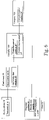
- the prior art encryption system mainly includes a first terminal 10 ′ which is used to transfer the input data to a far end for identification. In the transfer process, the data should be encoded, decoded, encrypted, and decrypted.
- the first terminal 10 ′ is stored with a master key (mKey) 30 ′.
- a second terminal 20 ′ is signally connected to the first terminal 10 ′ for receiving data from the first terminal 10 ′.
- the second terminal 20 is stored with the master key (mKey) 30 ′.
- the first terminal 10 desires to transfer a message (MES) 60 ′;
- the message (MES) 60 ′ is encrypted with the master key (mKey) 30 ′ to acquire an encrypted message (eMES) 62 ′ which is then transferred to the second terminal 20 ′.
- the eMES is decrypted by using the master key (mKey) 30 ′ so as to get the message (MES) 60 ′. Then the proceeding process is performed.
- Above mentioned encryption way is frequently used in the door access control.
- the master key (mKey) 30 ′ is easily to be got illegally so that an intruder can intrude the door access system and thus the problem about door access safety occurs.
- the object of the present invention is to provide a communication system using a random code as an encryption code, wherein
- the random code (rKey) 40 from the second terminal 20 is used to encrypt the command (CMD) 50 (or message (MES) 60 ) instead of the master key (mKey) 30 .
- the object of this design is to avoid that the master key (mKey) 30 is captured.
- the safety in data transmission is promoted greatly.
- the encryption is performed with a uncertain random code (rKey) which is also varied. Therefore, the problem of the door control occurred in the prior art that the master key is possible to be captured is resolved.
- the encryption of the present invention can be used to a door access system which includes a mobile phone, a card reader, a door access controller, and a server program (such as ACX server program).
- the present invention may assure that the communications between these devices are highly safe.
- the present invention provides a communication system using a random code as an encryption code, comprising: a first terminal for transferring data to a far end terminal; the first terminal being stored with a master key (mKey); a second terminal signally connected to the first terminal for receiving the data from the first terminal; the second terminal being also stored with the master key (mKey); the second terminal including a random signal generator for generating a random (rKey); wherein the first terminal serves to transfer a command (CMD) for requesting a random code; before transferring, the command (CMD) is encrypted to become an encrypted command (eCMD) which is then transferred to the second terminal; when the second terminal receives the encrypted command (eCMD) from the first terminal, the encrypted command (eCMD) is decrypted by the same master key (mKey) to get the command (CMD); then the second terminal instructs the random signal generator to generate a random code (rKey); then the random code (rKey) is encrypted by the master key (mKey) to generate an encrypted random code
- the system can be used in a door access system.
- FIG. 1 is a structural schematic view about the element assembly of the present invention.
- FIG. 2 is a schematic view about the operation of the command transfer of the first terminal.
- FIG. 3 is a schematic view about the operation of the random code generation of the present invention by the second terminal.
- FIG. 4 is an operation schematic view showing that the message encryption and decryption by using the random code in the present invention.
- FIG. 5 is a structural assembly schematic view in the first embodiment of the present invention.
- FIG. 6 is a structural assembly schematic view in the second embodiment of the present invention.
- FIG. 7 is another structural assembly schematic view in the second embodiment of the present invention.
- FIG. 8 is a structural assembly schematic view in the prior art.
- a first terminal 10 serves to transfer data to a far end terminal for identification.
- the data is possible to be coded, decoded, encrypted or decrypted.
- the first terminal 10 is stored with a master key (mKey) 30 .
- a second terminal 20 is signally connected to the first terminal 10 for receiving the data from the first terminal 10 . As illustrated in FIG. 1 , the second terminal 20 is also stored with the master key (mKey) 30 . The second terminal 20 includes a random signal generator 22 for generating a random (rKey) 40 .
- the first terminal 10 serves to transfer a command (CMD) 50 for requesting a random code.
- the command (CMD) 50 is encrypted to become an encrypted command (eCMD) 52 which is then transferred to the second terminal 20 .
- the second terminal 20 when the second terminal 20 receives the encrypted command (eCMD) 52 from the first terminal 10 , the encrypted command (eCMD) 52 is decrypted by the same master key (mKey) 30 to get the command (CMD) 50 . Then the second terminal 20 instructs the random signal generator 22 to generate a random code (rKey) 40 . Then the random code (rKey) 40 is encrypted by the master key (mKey) 30 to generate an encrypted random code (erKey) 42 which is transferred back to the first terminal 10 .
- the first terminal 10 When the first terminal 10 receives the encrypted random code (erKey) 42 from the second terminal 20 , the first terminal 10 decrypts the encrypted random code (erKey) 42 by using the master key (mKey) 30 to acquire the random code (rKey) 40 .
- the message (MES) 60 to be transferred is encrypted by using the random code (rKey) 40 to have an encrypted message (eMES) 62 which is then transferred to the second terminal 20 .
- the encrypted message (eMES) 62 is decrypted by using the random code (rKey) 40 to acquire the message (MES) 60 .
- the message (MES) 60 to be transferred is encrypted by using the random code (rKey) 40 from the second terminal 20 instead of the master key (mKey) 30 .
- the object is to avoid that the message (MES) 60 is captured illegally.
- the first application of the present invention is that in all the communication process, only a random code (rKey) 40 is used.
- the random code (rKey) 40 in the communication process is unchanged.
- the second application of the present invention is that the random code (rKey) 40 is changed each time a message (MES) 60 is transferred.
- the third application of the present invention is that the random code (rKey) 40 is changed in a predetermined time period, that is, after the time period set is elapsed, the first terminal 10 requestss the second terminal 20 to transfer a new random code (rKey) 40 .
- This present embodiment includes the following elements.
- a mobile phone 16 includes the first terminal 10 .
- a card reader 26 includes the second terminal 20 .
- the first terminal 10 and the second terminal 20 communicates by the way in the above embodiment.
- the message (MES) 60 to be transferred from the first terminal 10 to the second terminal 20 is an identification data of a person.
- This present embodiment includes the following elements.
- a mobile phone 16 includes the first terminal 10 .
- a card reader 26 includes the second terminal 20 .
- the first terminal 10 and the second terminal 20 communicates by the way in the above embodiment.
- the message (MES) 60 to be transferred from the first terminal 10 to the second terminal 20 is an identification data of a person.
- the card reader 26 further includes a card reader first terminal 10 ′.
- a controller 100 includes a controller second terminal 20 ′.
- the card reader first terminal 10 ′ is functioned as the first terminal 10
- the controller second terminal 20 ′ is functioned as the second terminal 20 .
- the card reader 26 reads the personal identification data from the mobile phone 16 and then the personal identification data is transferred from the card reader first terminal 10 ′ to the controller second terminal 20 ′ and thus to the controller 100 .
- An operation machine 80 is connected to the controller 100 for receiving instructions from the controller 100 and then performs instructed operations.
- the controller 100 further includes a controller first terminal 10 ′′.
- a computer 200 includes a computer second terminal 20 ′′.
- the communication between the controller first terminal 10 ′′ and the computer second terminal 20 ′′ is identical to the communication between the first terminal 10 and the second terminal 20 . That is, the controller first terminal 10 ′′ is functioned as the first terminal 10 and the computer second terminal 20 ′′ is functioned as the second terminal 20 .
- the controller 100 receives the personal identification data from the card reader 26 and then the personal identification data is transferred from the controller first terminal 10 ′′ to the computer second terminal 20 ′′.
- the computer 200 determines whether the personal identification data is acceptable. Then a result after identified is transferred back to the controller 100 .
- the controller 100 instructs the operation machine 80 to perform desired operations.
- the operation machine 80 includes an electric door lock 82 and a door electromagnetic unit 84 .
- the electric door lock 82 serves to open or close a door 90 .
- the door electromagnetic unit 84 serves to detect whether the door 90 is opened or closed and transfers the detection result to the controller 100 .
- the controller 100 will add the detection result from the door electromagnetic unit 84 to the personal identification data and then transfers to the computer 200 for further identification.
- the controller 100 When the controller 100 receives a message from the computer 200 to show that the personal identification data is a permissible one, the controller 100 will instruct the electric door lock 82 to open the door 90 , otherwise the controller 100 instruct the electric door lock 82 to close the door 90 .
- FIG. 7 is a schematic view showing a practical usage of this embodiment.
- the controller 100 is a door access controller 100 ′.
- the computer 200 is a server 200 ′.
- the computer second terminal 20 ′′ is a server program 21 .
- the random code (rKey) 40 from the second terminal 20 is used to encrypt the command (CMD) 50 (or message (MES) 60 ) instead of the master key (mKey) 30 .
- the object of this design is to avoid that the master key (mKey) 30 is captured.
- the safety in data transmission is promoted greatly.
- the encryption is performed with a uncertain random code (rKey) which is also varied. Therefore, the problem of the door control occurred in the prior art that the master key is possible to be captured is resolved.
- the encryption of the present invention can be used to a door access system which includes a mobile phone, a card reader, a door access controller, and a server program (such as ACX server program).
- the present invention may assure that the communications between these devices are highly safe.
Landscapes
- Engineering & Computer Science (AREA)
- Computer Security & Cryptography (AREA)
- Computer Networks & Wireless Communication (AREA)
- Signal Processing (AREA)
- Computer Hardware Design (AREA)
- Computing Systems (AREA)
- General Engineering & Computer Science (AREA)
- Artificial Intelligence (AREA)
- Computer Vision & Pattern Recognition (AREA)
- Physics & Mathematics (AREA)
- General Physics & Mathematics (AREA)
- Theoretical Computer Science (AREA)
- Lock And Its Accessories (AREA)
- Mobile Radio Communication Systems (AREA)
Abstract
Description
Claims (5)
Priority Applications (1)
| Application Number | Priority Date | Filing Date | Title |
|---|---|---|---|
| US16/516,278 US11368295B2 (en) | 2019-07-19 | 2019-07-19 | Communication system using a random code as an encryption code |
Applications Claiming Priority (1)
| Application Number | Priority Date | Filing Date | Title |
|---|---|---|---|
| US16/516,278 US11368295B2 (en) | 2019-07-19 | 2019-07-19 | Communication system using a random code as an encryption code |
Publications (2)
| Publication Number | Publication Date |
|---|---|
| US20210021415A1 US20210021415A1 (en) | 2021-01-21 |
| US11368295B2 true US11368295B2 (en) | 2022-06-21 |
Family
ID=74344217
Family Applications (1)
| Application Number | Title | Priority Date | Filing Date |
|---|---|---|---|
| US16/516,278 Expired - Fee Related US11368295B2 (en) | 2019-07-19 | 2019-07-19 | Communication system using a random code as an encryption code |
Country Status (1)
| Country | Link |
|---|---|
| US (1) | US11368295B2 (en) |
Families Citing this family (3)
| Publication number | Priority date | Publication date | Assignee | Title |
|---|---|---|---|---|
| US11275820B2 (en) | 2019-03-08 | 2022-03-15 | Master Lock Company Llc | Locking device biometric access |
| CN110784317B (en) * | 2019-10-30 | 2022-09-13 | 京东方科技集团股份有限公司 | Data encryption interaction method, device and system |
| CN114500098B (en) * | 2022-03-03 | 2024-12-10 | 广州市智荟环保有限公司 | A verification method, device, computer equipment and readable storage medium |
Citations (6)
| Publication number | Priority date | Publication date | Assignee | Title |
|---|---|---|---|---|
| US20090214037A1 (en) * | 2008-02-26 | 2009-08-27 | Keystone Technology Solutions, Llc | Methods and Apparatuses to Secure Data Transmission in RFID Systems Against Eavesdropping |
| US20130117815A1 (en) * | 2010-06-04 | 2013-05-09 | Ubiqu B.V. | Method of Authorizing a Person, an Authorizing Architecture and a Computer Program Product |
| US20140341375A1 (en) * | 2013-05-16 | 2014-11-20 | Megachips Corporation | Random number generating device, cipher processing device, storage device, and information processing system |
| US20150102899A1 (en) * | 2013-10-11 | 2015-04-16 | Samsung Electronics Co., Ltd. | Door lock apparatus, display apparatus, mobile device, and method for controlling thereof |
| US20200349786A1 (en) * | 2017-09-28 | 2020-11-05 | Gate Labs Inc. | Access management system |
| US20210058252A1 (en) * | 2019-08-23 | 2021-02-25 | Samsung Electronics Co., Ltd. | Electronic device and method, performed by electronic device, of transmitting control command to target device |
-
2019
- 2019-07-19 US US16/516,278 patent/US11368295B2/en not_active Expired - Fee Related
Patent Citations (6)
| Publication number | Priority date | Publication date | Assignee | Title |
|---|---|---|---|---|
| US20090214037A1 (en) * | 2008-02-26 | 2009-08-27 | Keystone Technology Solutions, Llc | Methods and Apparatuses to Secure Data Transmission in RFID Systems Against Eavesdropping |
| US20130117815A1 (en) * | 2010-06-04 | 2013-05-09 | Ubiqu B.V. | Method of Authorizing a Person, an Authorizing Architecture and a Computer Program Product |
| US20140341375A1 (en) * | 2013-05-16 | 2014-11-20 | Megachips Corporation | Random number generating device, cipher processing device, storage device, and information processing system |
| US20150102899A1 (en) * | 2013-10-11 | 2015-04-16 | Samsung Electronics Co., Ltd. | Door lock apparatus, display apparatus, mobile device, and method for controlling thereof |
| US20200349786A1 (en) * | 2017-09-28 | 2020-11-05 | Gate Labs Inc. | Access management system |
| US20210058252A1 (en) * | 2019-08-23 | 2021-02-25 | Samsung Electronics Co., Ltd. | Electronic device and method, performed by electronic device, of transmitting control command to target device |
Also Published As
| Publication number | Publication date |
|---|---|
| US20210021415A1 (en) | 2021-01-21 |
Similar Documents
| Publication | Publication Date | Title |
|---|---|---|
| US11184173B2 (en) | Secure distributed information system | |
| CN102682506B (en) | Intelligent Bluetooth door access control method and device based on symmetric cryptographic technique | |
| CN109218263B (en) | A control method and device | |
| US20190385392A1 (en) | Digital door lock having unique master key and method of operating the digital door | |
| EP1806869A1 (en) | Communication device, and communication method | |
| CN112398824B (en) | Permission verification method, storage medium and electronic device | |
| US9307403B2 (en) | System and method for NFC peer-to-peer authentication and secure data transfer | |
| US20210021415A1 (en) | Communication system using a random code as an encryption code | |
| CN102945526A (en) | Device and method for improving online payment security of mobile equipment | |
| CN110278083B (en) | Identity authentication request processing method and device, and equipment resetting method and device | |
| KR20150011377A (en) | Electronic authentication client system and processing method, and electronic authentication system and method | |
| CN113674456A (en) | Unlocking method, unlocking device, electronic equipment and storage medium | |
| US10008055B2 (en) | Reverse trace-preventing wireless recognition secure entry method and secure entry system using same | |
| CN116994364B (en) | Entrance guard card-free data loading interaction method | |
| CN109005144B (en) | Identity authentication method, equipment, medium and system | |
| CN110113153B (en) | NFC secret key updating method, terminal and system | |
| CN104125072A (en) | Method and system for non-contact dynamic password authentication | |
| CN106685931B (en) | Smart card application management method and system, terminal and smart card | |
| CN106169136A (en) | Remote control method and system applied to mobile equipment and mobile equipment | |
| CN111510416A (en) | Data information transmission method, electronic device and readable storage medium | |
| US11315355B2 (en) | Electric lock and control method thereof | |
| US20220058258A1 (en) | System and control device | |
| CN113315632B (en) | Method and system, apparatus, communication device for determining a key generator | |
| WO2016012604A1 (en) | Method and apparatus for duplicating keys with electronic code | |
| CN112214753A (en) | Authentication method and device, electronic equipment and storage medium |
Legal Events
| Date | Code | Title | Description |
|---|---|---|---|
| FEPP | Fee payment procedure |
Free format text: ENTITY STATUS SET TO UNDISCOUNTED (ORIGINAL EVENT CODE: BIG.); ENTITY STATUS OF PATENT OWNER: SMALL ENTITY |
|
| FEPP | Fee payment procedure |
Free format text: ENTITY STATUS SET TO SMALL (ORIGINAL EVENT CODE: SMAL); ENTITY STATUS OF PATENT OWNER: SMALL ENTITY |
|
| STPP | Information on status: patent application and granting procedure in general |
Free format text: NON FINAL ACTION MAILED |
|
| STPP | Information on status: patent application and granting procedure in general |
Free format text: RESPONSE TO NON-FINAL OFFICE ACTION ENTERED AND FORWARDED TO EXAMINER |
|
| STPP | Information on status: patent application and granting procedure in general |
Free format text: FINAL REJECTION MAILED |
|
| STPP | Information on status: patent application and granting procedure in general |
Free format text: RESPONSE AFTER FINAL ACTION FORWARDED TO EXAMINER |
|
| STPP | Information on status: patent application and granting procedure in general |
Free format text: NOTICE OF ALLOWANCE MAILED -- APPLICATION RECEIVED IN OFFICE OF PUBLICATIONS |
|
| STPP | Information on status: patent application and granting procedure in general |
Free format text: PUBLICATIONS -- ISSUE FEE PAYMENT VERIFIED |
|
| STCF | Information on status: patent grant |
Free format text: PATENTED CASE |
|
| FEPP | Fee payment procedure |
Free format text: MAINTENANCE FEE REMINDER MAILED (ORIGINAL EVENT CODE: REM.); ENTITY STATUS OF PATENT OWNER: SMALL ENTITY |
|
| LAPS | Lapse for failure to pay maintenance fees |
Free format text: PATENT EXPIRED FOR FAILURE TO PAY MAINTENANCE FEES (ORIGINAL EVENT CODE: EXP.); ENTITY STATUS OF PATENT OWNER: SMALL ENTITY |
|
| STCH | Information on status: patent discontinuation |
Free format text: PATENT EXPIRED DUE TO NONPAYMENT OF MAINTENANCE FEES UNDER 37 CFR 1.362 |