US11368115B2 - Vehicle driving device and method thereof - Google Patents
Vehicle driving device and method thereof Download PDFInfo
- Publication number
- US11368115B2 US11368115B2 US17/128,176 US202017128176A US11368115B2 US 11368115 B2 US11368115 B2 US 11368115B2 US 202017128176 A US202017128176 A US 202017128176A US 11368115 B2 US11368115 B2 US 11368115B2
- Authority
- US
- United States
- Prior art keywords
- phase
- stator winding
- winding
- phase voltage
- current
- Prior art date
- Legal status (The legal status is an assumption and is not a legal conclusion. Google has not performed a legal analysis and makes no representation as to the accuracy of the status listed.)
- Active
Links
Images


Classifications
-
- H—ELECTRICITY
- H02—GENERATION; CONVERSION OR DISTRIBUTION OF ELECTRIC POWER
- H02P—CONTROL OR REGULATION OF ELECTRIC MOTORS, ELECTRIC GENERATORS OR DYNAMO-ELECTRIC CONVERTERS; CONTROLLING TRANSFORMERS, REACTORS OR CHOKE COILS
- H02P21/00—Arrangements or methods for the control of electric machines by vector control, e.g. by control of field orientation
- H02P21/06—Rotor flux based control involving the use of rotor position or rotor speed sensors
-
- H—ELECTRICITY
- H02—GENERATION; CONVERSION OR DISTRIBUTION OF ELECTRIC POWER
- H02P—CONTROL OR REGULATION OF ELECTRIC MOTORS, ELECTRIC GENERATORS OR DYNAMO-ELECTRIC CONVERTERS; CONTROLLING TRANSFORMERS, REACTORS OR CHOKE COILS
- H02P23/00—Arrangements or methods for the control of AC motors characterised by a control method other than vector control
- H02P23/0004—Control strategies in general, e.g. linear type, e.g. P, PI, PID, using robust control
-
- H—ELECTRICITY
- H02—GENERATION; CONVERSION OR DISTRIBUTION OF ELECTRIC POWER
- H02P—CONTROL OR REGULATION OF ELECTRIC MOTORS, ELECTRIC GENERATORS OR DYNAMO-ELECTRIC CONVERTERS; CONTROLLING TRANSFORMERS, REACTORS OR CHOKE COILS
- H02P21/00—Arrangements or methods for the control of electric machines by vector control, e.g. by control of field orientation
- H02P21/50—Vector control arrangements or methods not otherwise provided for in H02P21/00- H02P21/36
-
- B—PERFORMING OPERATIONS; TRANSPORTING
- B60—VEHICLES IN GENERAL
- B60L—PROPULSION OF ELECTRICALLY-PROPELLED VEHICLES; SUPPLYING ELECTRIC POWER FOR AUXILIARY EQUIPMENT OF ELECTRICALLY-PROPELLED VEHICLES; ELECTRODYNAMIC BRAKE SYSTEMS FOR VEHICLES IN GENERAL; MAGNETIC SUSPENSION OR LEVITATION FOR VEHICLES; MONITORING OPERATING VARIABLES OF ELECTRICALLY-PROPELLED VEHICLES; ELECTRIC SAFETY DEVICES FOR ELECTRICALLY-PROPELLED VEHICLES
- B60L15/00—Methods, circuits, or devices for controlling the traction-motor speed of electrically-propelled vehicles
- B60L15/007—Physical arrangements or structures of drive train converters specially adapted for the propulsion motors of electric vehicles
-
- B—PERFORMING OPERATIONS; TRANSPORTING
- B60—VEHICLES IN GENERAL
- B60L—PROPULSION OF ELECTRICALLY-PROPELLED VEHICLES; SUPPLYING ELECTRIC POWER FOR AUXILIARY EQUIPMENT OF ELECTRICALLY-PROPELLED VEHICLES; ELECTRODYNAMIC BRAKE SYSTEMS FOR VEHICLES IN GENERAL; MAGNETIC SUSPENSION OR LEVITATION FOR VEHICLES; MONITORING OPERATING VARIABLES OF ELECTRICALLY-PROPELLED VEHICLES; ELECTRIC SAFETY DEVICES FOR ELECTRICALLY-PROPELLED VEHICLES
- B60L15/00—Methods, circuits, or devices for controlling the traction-motor speed of electrically-propelled vehicles
- B60L15/02—Methods, circuits, or devices for controlling the traction-motor speed of electrically-propelled vehicles characterised by the form of the current used in the control circuit
- B60L15/025—Methods, circuits, or devices for controlling the traction-motor speed of electrically-propelled vehicles characterised by the form of the current used in the control circuit using field orientation; Vector control; Direct Torque Control [DTC]
-
- G—PHYSICS
- G05—CONTROLLING; REGULATING
- G05B—CONTROL OR REGULATING SYSTEMS IN GENERAL; FUNCTIONAL ELEMENTS OF SUCH SYSTEMS; MONITORING OR TESTING ARRANGEMENTS FOR SUCH SYSTEMS OR ELEMENTS
- G05B11/00—Automatic controllers
- G05B11/01—Automatic controllers electric
- G05B11/36—Automatic controllers electric with provision for obtaining particular characteristics, e.g. proportional, integral, differential
- G05B11/42—Automatic controllers electric with provision for obtaining particular characteristics, e.g. proportional, integral, differential for obtaining a characteristic which is both proportional and time-dependent, e.g. P. I., P. I. D.
-
- H—ELECTRICITY
- H02—GENERATION; CONVERSION OR DISTRIBUTION OF ELECTRIC POWER
- H02P—CONTROL OR REGULATION OF ELECTRIC MOTORS, ELECTRIC GENERATORS OR DYNAMO-ELECTRIC CONVERTERS; CONTROLLING TRANSFORMERS, REACTORS OR CHOKE COILS
- H02P21/00—Arrangements or methods for the control of electric machines by vector control, e.g. by control of field orientation
- H02P21/22—Current control, e.g. using a current control loop
-
- H—ELECTRICITY
- H02—GENERATION; CONVERSION OR DISTRIBUTION OF ELECTRIC POWER
- H02P—CONTROL OR REGULATION OF ELECTRIC MOTORS, ELECTRIC GENERATORS OR DYNAMO-ELECTRIC CONVERTERS; CONTROLLING TRANSFORMERS, REACTORS OR CHOKE COILS
- H02P23/00—Arrangements or methods for the control of AC motors characterised by a control method other than vector control
- H02P23/14—Estimation or adaptation of motor parameters, e.g. rotor time constant, flux, speed, current or voltage
-
- H—ELECTRICITY
- H02—GENERATION; CONVERSION OR DISTRIBUTION OF ELECTRIC POWER
- H02P—CONTROL OR REGULATION OF ELECTRIC MOTORS, ELECTRIC GENERATORS OR DYNAMO-ELECTRIC CONVERTERS; CONTROLLING TRANSFORMERS, REACTORS OR CHOKE COILS
- H02P27/00—Arrangements or methods for the control of AC motors characterised by the kind of supply voltage
- H02P27/04—Arrangements or methods for the control of AC motors characterised by the kind of supply voltage using variable-frequency supply voltage, e.g. inverter or converter supply voltage
- H02P27/06—Arrangements or methods for the control of AC motors characterised by the kind of supply voltage using variable-frequency supply voltage, e.g. inverter or converter supply voltage using DC to AC converters or inverters
-
- B—PERFORMING OPERATIONS; TRANSPORTING
- B60—VEHICLES IN GENERAL
- B60L—PROPULSION OF ELECTRICALLY-PROPELLED VEHICLES; SUPPLYING ELECTRIC POWER FOR AUXILIARY EQUIPMENT OF ELECTRICALLY-PROPELLED VEHICLES; ELECTRODYNAMIC BRAKE SYSTEMS FOR VEHICLES IN GENERAL; MAGNETIC SUSPENSION OR LEVITATION FOR VEHICLES; MONITORING OPERATING VARIABLES OF ELECTRICALLY-PROPELLED VEHICLES; ELECTRIC SAFETY DEVICES FOR ELECTRICALLY-PROPELLED VEHICLES
- B60L2220/00—Electrical machine types; Structures or applications thereof
- B60L2220/50—Structural details of electrical machines
- B60L2220/58—Structural details of electrical machines with more than three phases
-
- B—PERFORMING OPERATIONS; TRANSPORTING
- B60—VEHICLES IN GENERAL
- B60L—PROPULSION OF ELECTRICALLY-PROPELLED VEHICLES; SUPPLYING ELECTRIC POWER FOR AUXILIARY EQUIPMENT OF ELECTRICALLY-PROPELLED VEHICLES; ELECTRODYNAMIC BRAKE SYSTEMS FOR VEHICLES IN GENERAL; MAGNETIC SUSPENSION OR LEVITATION FOR VEHICLES; MONITORING OPERATING VARIABLES OF ELECTRICALLY-PROPELLED VEHICLES; ELECTRIC SAFETY DEVICES FOR ELECTRICALLY-PROPELLED VEHICLES
- B60L2240/00—Control parameters of input or output; Target parameters
- B60L2240/40—Drive Train control parameters
- B60L2240/42—Drive Train control parameters related to electric machines
- B60L2240/427—Voltage
-
- B—PERFORMING OPERATIONS; TRANSPORTING
- B60—VEHICLES IN GENERAL
- B60L—PROPULSION OF ELECTRICALLY-PROPELLED VEHICLES; SUPPLYING ELECTRIC POWER FOR AUXILIARY EQUIPMENT OF ELECTRICALLY-PROPELLED VEHICLES; ELECTRODYNAMIC BRAKE SYSTEMS FOR VEHICLES IN GENERAL; MAGNETIC SUSPENSION OR LEVITATION FOR VEHICLES; MONITORING OPERATING VARIABLES OF ELECTRICALLY-PROPELLED VEHICLES; ELECTRIC SAFETY DEVICES FOR ELECTRICALLY-PROPELLED VEHICLES
- B60L2240/00—Control parameters of input or output; Target parameters
- B60L2240/40—Drive Train control parameters
- B60L2240/42—Drive Train control parameters related to electric machines
- B60L2240/429—Current
-
- H—ELECTRICITY
- H02—GENERATION; CONVERSION OR DISTRIBUTION OF ELECTRIC POWER
- H02P—CONTROL OR REGULATION OF ELECTRIC MOTORS, ELECTRIC GENERATORS OR DYNAMO-ELECTRIC CONVERTERS; CONTROLLING TRANSFORMERS, REACTORS OR CHOKE COILS
- H02P2205/00—Indexing scheme relating to controlling arrangements characterised by the control loops
- H02P2205/01—Current loop, i.e. comparison of the motor current with a current reference
-
- H—ELECTRICITY
- H02—GENERATION; CONVERSION OR DISTRIBUTION OF ELECTRIC POWER
- H02P—CONTROL OR REGULATION OF ELECTRIC MOTORS, ELECTRIC GENERATORS OR DYNAMO-ELECTRIC CONVERTERS; CONTROLLING TRANSFORMERS, REACTORS OR CHOKE COILS
- H02P2207/00—Indexing scheme relating to controlling arrangements characterised by the type of motor
- H02P2207/05—Synchronous machines, e.g. with permanent magnets or DC excitation
-
- H—ELECTRICITY
- H02—GENERATION; CONVERSION OR DISTRIBUTION OF ELECTRIC POWER
- H02P—CONTROL OR REGULATION OF ELECTRIC MOTORS, ELECTRIC GENERATORS OR DYNAMO-ELECTRIC CONVERTERS; CONTROLLING TRANSFORMERS, REACTORS OR CHOKE COILS
- H02P25/00—Arrangements or methods for the control of AC motors characterised by the kind of AC motor or by structural details
- H02P25/16—Arrangements or methods for the control of AC motors characterised by the kind of AC motor or by structural details characterised by the circuit arrangement or by the kind of wiring
- H02P25/22—Multiple windings; Windings for more than three phases
Definitions
- the present disclosure relates to a vehicle driving device and a vehicle driving method. More particularly, the present disclosure relates to a vehicle driving device and a vehicle driving method of a hybrid electric vehicle.
- the general field-oriented control (FOC) theory mainly controls the magnitude of the three-phase current according to the position of the motor rotor and the phase of the corresponding stator magnetic field.
- the power transistors MOSFET or IGBT
- MOSFET power transistors
- IGBT current sensor
- the most typical feedback compensation control theory is a proportional-integral-derivative (PID) controller.
- PID proportional-integral-derivative
- the duty cycle for turning on and off the three-phase power transistor is controlled according to the current phasor, the coordinate conversion and the feedback compensation so as to stably control the output power of the motor, so that the driving mode and the power generating mode of the motor are regulated.
- the motor control of the inverter of the 48V hybrid electric vehicle is mainly based on the FOC theory, but the FOC theory must be established under the certain assumptions. As a result, the assumptions and the problem of controlling the accuracy of the feedback signal must be considered in the operation. In view of the problems in the above FOC theory, how to develop an accurate detecting device and a detecting method for the feedback signal which becomes the goal of the public and relevant industry efforts.
- a vehicle driving device driven by a power unit includes a three-phase motor, a first current sensor, a second current sensor, a first power module and a second power module.
- the three-phase motor includes a first stator winding and a second stator winding.
- the first stator winding is connected in parallel to the second stator winding.
- the first stator winding and the second stator winding are synchronized with each other, and each of the first stator winding and the second stator winding includes a first-phase winding end, a second-phase winding end and a third-phase winding end.
- the first current sensor has a first end and a second end.
- the first end of the first current sensor is coupled to the first-phase winding end of the first stator winding, and the first current sensor is configured to measure a first-phase current of the first stator winding.
- the second current sensor has a first end and a second end. The first end of the second current sensor is coupled to the second-phase winding end of the first stator winding, and the second current sensor is configured to measure a second-phase current of the first stator winding.
- the first power module is electrically connected to the power unit, the second end of the first current sensor, the second end of the second current sensor and the third-phase winding end of the first stator winding.
- the second power module is connected in parallel to the first power module and electrically connected to the power unit, and the first-phase winding end, the second-phase winding end and the third-phase winding end of the second stator winding.
- a third-phase current of the first stator winding is generated according to a calculating procedure of the first-phase current and the second-phase current of the first stator winding.
- a duty cycle between the first power module and the second power module is controlled according to a feedback compensation of the first-phase current, the second-phase current and the third-phase current of the first stator winding.
- a vehicle driving method includes a paralleling step, a measuring step, a calculating step and a controlling step.
- the paralleling step is performed to connect the first stator winding and the second stator winding in parallel to form the three-phase motor.
- the first stator winding and the second stator winding are synchronized with each other, and each of the first stator winding and the second stator winding includes the first-phase winding end, the second-phase winding end and the third-phase winding end.
- the measuring step is performed to drive the first current sensor to measure the first-phase current of the first stator winding according to the first-phase winding end of the first stator winding, and drive the second current sensor to measure the second-phase current of the first stator winding according to the second-phase winding end of the first stator winding.
- the first current sensor is coupled to the first-phase winding end of the first stator winding
- the second current sensor is coupled to the second-phase winding end of the first stator winding.
- the calculating step is performed to calculate the first-phase current and the second-phase current of the first stator winding according to the calculating procedure to generate the third-phase current of the first stator winding.
- the controlling step is performed to drive the first power module and the second power module to control the duty cycle between the first power module and the second power module according to the feedback compensation of the first-phase current, the second-phase current and the third-phase current of the first stator winding.
- FIG. 1 shows a schematic view of a vehicle driving device according to an embodiment of a structural aspect of the present disclosure.
- FIG. 2 shows a circuit diagram of the vehicle driving device and a power supply unit of FIG. 1 .
- FIG. 3 shows a schematic view of a vehicle driving device according to another embodiment of the structural aspect of the present disclosure.
- FIG. 4 shows a circuit diagram of the vehicle driving device and a power supply unit of FIG. 3 .
- FIG. 5 shows a flow chart of a vehicle driving method according to an embodiment of a methodical aspect of the present disclosure.
- FIG. 6 shows a flow chart of a receiving step of the vehicle driving method of FIG. 5 .
- FIG. 7 shows a flow chart of a detecting step of the vehicle driving method of FIG. 5 .
- FIG. 1 shows a schematic view of a vehicle driving device 100 according to an embodiment of a structural aspect of the present disclosure.
- FIG. 2 shows a circuit diagram of the vehicle driving device 100 and a power supply unit 110 of FIG. 1 .
- the vehicle driving device 100 is driven by the power supply unit 110 and includes a three-phase motor 120 , a sensing unit 130 and a power unit 140 .
- the three-phase motor 120 is electrically connected to the sensing unit 130 and the power unit 140 .
- the sensing unit 130 is coupled between the three-phase motor 120 and the power unit 140 .
- the power unit 140 operates the three-phase motor 120 according to a duty cycle (not shown).
- the circuit diagrams of the vehicle driving device 100 and the power supply unit 110 and the operating relationship of the internal components thereof will be described in detail below.
- the power supply unit 110 can be a first power supply V 1 .
- the sensing unit 130 can include a first current sensor 131 and a second current sensor 132 .
- the power unit 140 can include a first power module 141 and a second power module 142 .
- the vehicle driving device 100 is powered by the first power supply V 1 .
- the three-phase motor 120 includes a first stator winding 121 and a second stator winding 122 .
- the first stator winding 121 is connected in parallel to the second stator winding 122 .
- the first stator winding 121 and the second stator winding 122 are synchronized with each other; in other words, the first stator winding 121 and the second stator winding 122 have no phase difference therebetween.
- the first stator winding 121 includes a first-phase winding end U, a second-phase winding end V and a third-phase winding end W.
- the second stator winding 122 includes a first-phase winding end U′, a second-phase winding end V′ and a third-phase winding end W′.
- the first current sensor 131 has a first end and a second end.
- the first end of the first current sensor 131 is coupled to the first-phase winding end U of the first stator winding 121 , and the first current sensor 131 is configured to measure a first-phase current 1211 of the first stator winding 121 (shown in FIG. 4 ).
- the second current sensor 132 has a first end and a second end. The first end of the second current sensor 132 is coupled to the second-phase winding end V of the first stator winding 121 , and the second current sensor 132 is configured to measure a second-phase current 1212 of the first stator winding 121 (shown in FIG. 4 ).
- the first power module 141 is electrically connected to the first power supply V 1 , the second end of the first current sensor 131 , the second end of the second current sensor 132 and the third-phase winding end W of the first stator winding 121 .
- the second power module 142 is connected in parallel to the first power module 141 and electrically connected to the first power supply V 1 , and the first-phase winding end U′, the second-phase winding end V′ and the third-phase winding end W of the second stator winding 122 .
- a third-phase current (not shown) of the first stator winding 121 is generated according to a calculating procedure of the first-phase current 1211 and the second-phase current 1212 of the first stator winding 121 .
- the duty cycle between the first power module 141 and the second power module 142 is controlled according to a feedback compensation of the first-phase current 1211 , the second-phase current 1212 and the third-phase current of the first stator winding 121 .
- the first power module 141 can include two first power elements Q 1 , Q 2 , two second power elements Q 3 , Q 4 and two third power elements Q 5 , Q 6 .
- the first power elements Q 1 , Q 2 are connected in series to form a first bridge arm B 1 .
- the first power elements Q 1 , Q 2 have two controlling signals AH_ 1 , AL_ 1 , respectively.
- the first bridge arm B 1 is electrically connected to the second end of the first current sensor 131 .
- the second power elements Q 3 , Q 4 are connected in series to form a second bridge arm B 2 .
- the second power elements Q 3 , Q 4 have two controlling signals BH_ 1 , BL_ 1 , respectively.
- the second bridge arm B 2 is electrically connected to the second end of the second current sensor 132 .
- the third power elements Q 5 , Q 6 are connected in series to form a third bridge arm B 3 .
- the third power elements Q 5 , Q 6 have two controlling signals CH_ 1 , CL_ 1 , respectively.
- the third bridge arm B 3 is electrically connected to the third-phase winding end W of the first stator winding 121 .
- the second power module 142 can include two first power elements Q 7 , Q 8 , two second power elements Q 9 , Q 10 and two third power elements Q 11 , Q 12 .
- the first power elements Q 7 , Q 8 are connected in series to form a first bridge arm b 1 .
- the first power elements Q 7 , Q 8 have two controlling signals AH_ 2 , AL_ 2 , respectively.
- the first bridge arm b 1 is electrically connected to the first-phase winding end U′ of the second stator winding 122 .
- the second power elements Q 9 , Q 10 are connected in series to form a second bridge arm b 2 .
- the second power elements Q 9 , Q 10 have two controlling signals BH_ 2 , BL_ 2 , respectively.
- the second bridge arm b 2 is electrically connected to the second-phase winding end V′ of the second stator winding 122 .
- the third power elements Q 11 , Q 12 are connected in series to form a third bridge arm b 3 .
- the third power elements Q 11 , Q 12 have two controlling signals CH_ 2 , CL_ 2 , respectively.
- the third bridge arm b 3 is electrically connected to the third-phase winding end W of the second stator winding 122 .
- Each of the power elements can be a Metal-Oxide-Semiconductor Field-Effect Transistor (MOSFET) or an Insulated Gate Bipolar Transistor (IGBT) as a switch, and each of the power elements can be driven by an isolated gate driver (not shown).
- MOSFET Metal-Oxide-Semiconductor Field-Effect Transistor
- IGBT Insulated Gate Bipolar Transistor
- the calculating procedure which calculates the third-phase current is similar to a field-oriented control (FOC) theory, wherein the third-phase current is controlled by the feedback of the first-phase current 1211 and the second-phase current 1212 . Since the three-phase radian is 2 ⁇ (that is, 360°), the third-phase current is calculated through a microcontroller (or a microprocessor).
- the FOC theory is the conventional art, and will not be detailedly described herein. It is worth noting that, the first stator winding 121 and the second stator winding 122 can be Y-connected (Star) or ⁇ -connected (Delta) to each other, and the stator windings of the three-phase motor 120 can also be plural.
- the stator windings are connected in parallel in the winding groove of the motor. No matter how many sets of the stator windings are connected in parallel, the control of the three-phase motor 120 only needs to detect two phase currents of one set of the stator windings and perform the feedback compensation according to a scale between the first stator winding 121 and the second stator winding 122 .
- the reference of the controlling current is not to measure all of the phase currents of the three-phase motor 120 . Therefore, the harmonics related to the phase currents are reduced, and the hunting phenomenon caused by the oscillation of the feedback currents is reduced.
- the embodiment of the present disclosure includes two stator windings.
- the first-phase current 1211 , the second-phase current 1212 and the third-phase current are multiplied by two times via the two stator windings to stably control the torque and the speed of the three-phase motor 120 or the power generation of the three-phase motor 120 , but the present disclosure is not limited to the embodiment.
- FIG. 3 shows a schematic view of a vehicle driving device 100 a according to another embodiment of the structural aspect of the present disclosure.
- FIG. 4 shows a circuit diagram of the vehicle driving device 100 a and a power supply unit 110 a of FIG. 3 .
- the arrangement relationship between the three-phase motor 120 , the sensing unit 130 and the power unit 140 of the vehicle driving device 100 a is the same as the corresponding elements in the embodiment of FIG. 1 .
- the elements inside the first power module 141 and the second power module 142 are the same as the corresponding elements in the circuit diagram of FIG. 2 , and will not be detailedly described herein.
- FIG. 4 shows a schematic view of a vehicle driving device 100 a according to another embodiment of the structural aspect of the present disclosure.
- FIG. 4 shows a circuit diagram of the vehicle driving device 100 a and a power supply unit 110 a of FIG. 3 .
- the vehicle driving device 100 a of the present disclosure can reduce the use of the expensive current sensors. However, the phase signals of the power element which do not have the current sensors cannot be monitored.
- the vehicle driving device 100 a of the present disclosure can further include a controlling unit 150 and a detecting module 160 in order to achieve the safe motor control, wherein the vehicle driving device 100 a is driven by the power supply unit 110 a .
- the controlling unit 150 is electrically connected to the power supply unit 110 a and the power unit 140 .
- the power supply unit 110 a is coupled between the controlling unit 150 and the power unit 140 .
- the detecting module 160 is coupled to the three-phase motor 120 , the sensing unit 130 and the power unit 140 .
- the controlling unit 150 controls the duty cycle of the power unit 140 to operate the three-phase motor 120 .
- the circuit diagram of the vehicle driving device 100 a and the power supply unit 110 a and the operating relationship of the internal components thereof will be described in detail below.
- the detecting module 160 is coupled to the first stator winding 121 and the second stator winding 122 and outputs a plurality of detecting signals (its reference numeral is omitted) according to the first stator winding 121 and the second stator winding 122 , wherein the detecting signals are a first-phase voltage signal 1611 , a second-phase voltage signal 1621 and a third-phase voltage signal 1631 , respectively.
- the detecting module 160 can include a first comparator 161 , a second comparator 162 and a third comparator 163 .
- the first comparator 161 is electrically connected to the first-phase winding end U of the first stator winding 121 and the first-phase winding end U′ of the second stator winding 122 .
- the second comparator 162 is electrically connected to the second-phase winding end V of the first stator winding 121 and the second-phase winding end V′ of the second stator winding 122 .
- the third comparator 163 is electrically connected to the third-phase winding end W of the first stator winding 121 and the third-phase winding end W′ of the second stator winding 122 .
- the first comparator 161 includes a plurality of resistors R 1 , R 2 , R 3 , R 4 .
- the second comparator 162 includes a plurality of resistors R 5 , R 6 , R 7 , R 8 .
- the third comparator 163 includes a plurality of resistors R 9 , R 10 , R 11 , R 12 .
- the resistors R 1 , R 2 , R 3 , R 4 , R 5 , R 6 , R 7 , R 8 , R 9 , R 10 , R 11 , R 12 are configured to divide the phase voltages from the first stator winding 121 and the second stator winding 122 .
- the first comparator 161 generates the first-phase voltage signal 1611 according to the first-phase winding end U of the first stator winding 121 and the first-phase winding end U′ of the second stator winding 122 .
- the second comparator 162 generates the second-phase voltage signal 1621 according to the second-phase winding end V of the first stator winding 121 and the second-phase winding end V′ of the second stator winding 122 .
- the third comparator 163 generates the third-phase voltage signal 1631 according to the third-phase winding end W of the first stator winding 121 and the third-phase winding end W of the second stator winding 122 .
- the power supply unit 110 a can further include an inductor L, a first power supply V 1 and a second power supply V 2 .
- the inductor L is disposed between the first power supply V 1 and the second power supply V 2 , and electrically connected to the first power supply V 1 and the second power supply V 2 .
- the first power supply V 1 is electrically connected to the first power module 141 and the second power module 142 .
- the controlling unit 150 is electrically connected to the second power supply V 2 and includes a controller 151 .
- the controller 151 receives the detecting signals and generates a detecting result according to the detecting signals (i.e., the first-phase voltage signal 1611 , the second-phase voltage signal 1621 and the third-phase voltage signal 1631 ).
- the controlling unit 150 can further include a first switch S 1 and a second switch S 2 .
- the first switch S 1 is coupled to the first power module 141 .
- the second switch S 2 is coupled to the second power module 142 .
- the vehicle driving device 100 a can further include a first signal amplifier 1311 and a second signal amplifier 1321 .
- the first signal amplifier 1311 is electrically connected to the first end of the first current sensor 131 for generating the first-phase current 1211 of the first stator winding 121 .
- the second signal amplifier 1321 is electrically connected to the first end of the second current sensor 132 for generating the second-phase current 1212 of the first stator winding 121 .
- the controller 151 receives the first-phase current 1211 and the second-phase current 1212 , and generates a third-phase current according to a calculating procedure of the first-phase current 1211 and the second-phase current 1212 of the first stator winding 121 . More notably, the controller 151 synchronizes the first power module 141 and the second power module 142 through the first switch S 1 and the second switch S 2 ; in other words, the first switch S 1 and the second switch S 2 are mainly configured to diagnose the power elements of the first power module 141 and the power elements of the second power module 142 .
- the controller 151 is mainly configured to calculate the duty cycle through the FOC theory. When the duty cycle is controlled, the first power module 141 and the second power module 142 are driven to synchronize with each other through the first switch S 1 and the second switch S 2 .
- the controlling unit 150 and the detecting module 160 mainly use three sets of isolated operational amplifiers to measure the signals having the same phase in the first stator winding 121 and the second stator winding 122 (that is, the signals having the same phase in the first power module 141 and the second power module 142 ), and go with the controller 151 to synchronize the first power module 141 and the second power module 142 through the first switch S 1 and the second switch S 2 and independently detect the first power module 141 and the second power module 142 . More detail, the controller 151 sets a range value according to each of the phases of the three-phase motor 120 .
- the first-phase winding end U of the first stator winding 121 and the first-phase winding end U′ of the second stator winding 122 are set to a specific condition that the normal operating voltage range is 2 to 3V.
- the controlling unit 150 receives the voltage signal of each of the phases of the three-phase motor 120 from the detecting module 160 , the controlling unit 150 independently judges whether each of the phases of the three-phase motor 120 is normal according to the voltage range to generate the detecting result.
- FIG. 5 shows a flow chart of a vehicle driving method S 100 according to an embodiment of a methodical aspect of the present disclosure.
- the vehicle driving method S 100 includes a paralleling step S 110 , a measuring step S 120 , a calculating step S 130 and a controlling step S 140 .
- the paralleling step S 110 is performed to connect the first stator winding 121 and the second stator winding 122 in parallel to form the three-phase motor 120 , wherein the first stator winding 121 and the second stator winding 122 are synchronized with each other.
- the first stator winding 121 includes the first-phase winding end U, the second-phase winding end V and the third-phase winding end W.
- the second stator winding 122 includes the first-phase winding end U′, the second-phase winding end V′ and the third-phase winding end W′.
- the measuring step S 120 is performed to drive the first current sensor 131 to measure the first-phase current 1211 of the first stator winding 121 according to the first-phase winding end U of the first stator winding 121 , wherein the first current sensor 131 is coupled to the first-phase winding end U of the first stator winding 121 .
- the measuring step S 120 is also performed to drive the second current sensor 132 to measure the second-phase current 1212 of the first stator winding 121 according to the second-phase winding end V of the first stator winding 121 , wherein the second current sensor 132 is coupled to the second-phase winding end V of the first stator winding 121 .
- the calculating step S 130 is performed to calculate the first-phase current 1211 and the second-phase current 1212 of the first stator winding 121 according to the calculating procedure to generate the third-phase current of the first stator winding 121 , wherein the calculating procedure is similar to the FOC theory which controls the three-phase motor 120 according to the feedback compensation of the first-phase current 1211 and the second-phase current 1212 . Since the three-phase radian is 2 ⁇ (that is, 360°), the third-phase current is calculated through the controlling unit 150 .
- the FOC theory is the conventional art, and will not be detailedly described herein.
- the controlling step S 140 is performed to drive the first power module 141 and the second power module 142 to control the duty cycle between the first power module 141 and the second power module 142 according to the feedback compensation of the first-phase current 1211 , the second-phase current 1212 and the third-phase current of the first stator winding 121 . Therefore, the vehicle driving method S 100 of the present disclosure uses the paralleling step S 110 , the measuring step S 120 , the calculating step S 130 and the controlling step S 140 to connect the stator windings (i.e., the first stator winding 121 and the second stator winding 122 ) of the three-phase motor 120 in parallel and calculate the feedback current according to the scale between the first stator winding 121 and the second stator winding 122 .
- the stator windings i.e., the first stator winding 121 and the second stator winding 122
- the induced currents are generated between the stator windings and the rotor of the three-phase motor 120 .
- the vehicle driving method S 100 of the present disclosure is favorable for reducing a fluctuation of the induced currents.
- the duty cycle for turning on and off the first power module 141 and the second power module 142 is controlled according to the current phasor, the coordinate conversion and the feedback compensation so as to stably control the output power of the motor.
- the vehicle driving method S 100 can further include a receiving step S 150 and a detecting step S 160 .
- the receiving step S 150 is performed to drive the detecting module 160 to receive the first-phase voltage, the second-phase voltage and the third-phase voltage of the first stator winding 121 .
- the receiving step S 150 is also performed to drive the detecting module 160 to receive the first-phase voltage, the second-phase voltage and the third-phase voltage of the second stator winding 122 .
- the detecting step S 160 is performed to drive the detecting module 160 to detect the first-phase voltage, the second-phase voltage and the third-phase voltage of the first stator winding 121 corresponding to the first-phase voltage, the second-phase voltage and the third-phase voltage of the second stator winding 122 to generate the detecting signals.
- the detecting signals are the first-phase voltage signal 1611 , the second-phase voltage signal 1621 and the third-phase voltage signal 1631 , respectively.
- FIG. 6 shows a flow chart of the receiving step S 150 of the vehicle driving method S 100 of FIG. 5 .
- the receiving step S 150 can further include a receiving sub-step S 151 and a synchronizing sub-step S 152 .
- the receiving sub-step S 151 is performed to drive the controlling unit 150 to receive the detecting signals, wherein the controlling unit 150 includes the controller 151 , the first switch S 1 and the second switch S 2 , and the controller 151 generates the detecting result according to the detecting signals.
- the synchronizing sub-step S 152 is performed to drive the controller 151 to synchronize the first power module 141 and the second power module 142 through the first switch S 1 and the second switch S 2 , wherein the controller 151 independently detects the first power module 141 and the second power module 142 .
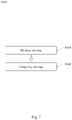
- FIG. 7 shows a flow chart of the detecting step S 160 of the vehicle driving method S 100 of FIG. 5 .
- the detecting step S 160 can include a dividing sub-step S 161 and a comparing sub-step S 162 .
- the dividing sub-step S 161 is performed to drive a first resistor module to divide the first-phase voltage of the first stator winding 121 and the first-phase voltage of the second stator winding 122 .
- the dividing sub-step S 161 is also performed to drive a second resistor module to divide the second-phase voltage of the first stator winding 121 and the second-phase voltage of the second stator winding 122 .
- the dividing sub-step S 161 is also performed to drive a third resistor module to divide the third-phase voltage of the first stator winding 121 and the third-phase voltage of the second stator winding 122 .
- the comparing sub-step S 162 is performed to drive the first comparator 161 to generate the first-phase voltage signal 1611 according to the first-phase voltage of the first stator winding 121 and the first-phase voltage of the second stator winding 122 .
- the comparing sub-step S 162 is also performed to drive the second comparator 162 to generate the second-phase voltage signal 1621 according to the second-phase voltage of the first stator winding 121 and the second-phase voltage of the second stator winding 122 .
- the comparing sub-step S 162 is also performed to drive the third comparator 163 to generate the third-phase voltage signal 1631 according to the third-phase voltage of the first stator winding 121 and the third-phase voltage of the second stator winding 122 .
- the present disclosure has the following advantages: First, it is favorable for connecting the stator windings of the motor in parallel and calculating the feedback current used as the reference for the controlling current with the independent power modules according to the scale between the stator windings, so that the harmonics related to the phase currents can be reduced. Second, it is favorable for avoiding measuring the fluctuation of the feedback currents of other parallel windings so as to improve the output power and the efficiency of the motor. Third, it is favorable for reducing the use of the current sensors, so that the manufacturing cost of the vehicle driving device can be reduced.
Landscapes
- Engineering & Computer Science (AREA)
- Power Engineering (AREA)
- Transportation (AREA)
- Mechanical Engineering (AREA)
- Physics & Mathematics (AREA)
- General Physics & Mathematics (AREA)
- Automation & Control Theory (AREA)
- Electric Propulsion And Braking For Vehicles (AREA)
- Control Of Ac Motors In General (AREA)
Abstract
Description
Claims (5)
Applications Claiming Priority (2)
| Application Number | Priority Date | Filing Date | Title |
|---|---|---|---|
| CN202011054109.5 | 2020-09-30 | ||
| CN202011054109.5A CN112234903A (en) | 2020-09-30 | 2020-09-30 | Vehicle driving apparatus and method thereof |
Publications (2)
| Publication Number | Publication Date |
|---|---|
| US20220103103A1 US20220103103A1 (en) | 2022-03-31 |
| US11368115B2 true US11368115B2 (en) | 2022-06-21 |
Family
ID=74120427
Family Applications (1)
| Application Number | Title | Priority Date | Filing Date |
|---|---|---|---|
| US17/128,176 Active US11368115B2 (en) | 2020-09-30 | 2020-12-20 | Vehicle driving device and method thereof |
Country Status (2)
| Country | Link |
|---|---|
| US (1) | US11368115B2 (en) |
| CN (1) | CN112234903A (en) |
Citations (5)
| Publication number | Priority date | Publication date | Assignee | Title |
|---|---|---|---|---|
| JPH08280192A (en) | 1995-04-07 | 1996-10-22 | Meidensha Corp | Method and device for operating inverters in parallel |
| CN103001578A (en) | 2011-09-15 | 2013-03-27 | 株式会社东芝 | Motor control device |
| US20180175779A1 (en) * | 2014-04-10 | 2018-06-21 | Hitachi Automotive Systems, Ltd | Controller and control method for electric motor |
| CN109318722A (en) | 2017-07-31 | 2019-02-12 | 上海蔚来汽车有限公司 | The motor driven systems of electric car |
| US20190149072A1 (en) * | 2017-11-15 | 2019-05-16 | Denso Corporation | Motor controller |
Family Cites Families (19)
| Publication number | Priority date | Publication date | Assignee | Title |
|---|---|---|---|---|
| JPH08289587A (en) * | 1995-04-13 | 1996-11-01 | Toyo Electric Mfg Co Ltd | Parallel operation device of voltage source inverter |
| JP4491434B2 (en) * | 2006-05-29 | 2010-06-30 | トヨタ自動車株式会社 | Power control device and vehicle equipped with the same |
| JP4946854B2 (en) * | 2007-06-25 | 2012-06-06 | マツダ株式会社 | Control device and control method for hybrid vehicle |
| JP2009196625A (en) * | 2008-01-24 | 2009-09-03 | Advics Co Ltd | Brake hydraulic pressure control device |
| US7795827B2 (en) * | 2008-03-03 | 2010-09-14 | Young-Chun Jeung | Control system for controlling motors for heating, ventilation and air conditioning or pump |
| CN202260954U (en) * | 2011-09-27 | 2012-05-30 | 浙江博望科技发展有限公司 | Three-phase polymorphic servo motor |
| CN103434415A (en) * | 2013-08-09 | 2013-12-11 | 浙江吉利汽车研究院有限公司 | Motor vehicle driving system |
| CN103684196B (en) * | 2013-11-19 | 2016-02-17 | 南京航空航天大学 | A kind of PMSM Drive System of changeable winding |
| DE102014203568A1 (en) * | 2014-02-27 | 2015-08-27 | Robert Bosch Gmbh | Electric drive system |
| CN105429536A (en) * | 2014-09-12 | 2016-03-23 | 乐金电子研发中心(上海)有限公司 | Integrated starting power generation system |
| JP2017123702A (en) * | 2016-01-05 | 2017-07-13 | 日立オートモティブシステムズ株式会社 | Inverter controller, motor drive device including the same, and electric power steering device |
| EP3431366B1 (en) * | 2016-03-14 | 2019-10-23 | Mitsubishi Electric Corporation | Electric motor control system and electric power steering device equipped with same |
| JP6282331B1 (en) * | 2016-10-31 | 2018-02-21 | 三菱電機株式会社 | Power converter |
| CN109891738A (en) * | 2016-11-11 | 2019-06-14 | 日本精工株式会社 | Electric power steering apparatus |
| GB2555839B (en) * | 2016-11-11 | 2022-09-21 | Trw Ltd | A motor circuit |
| CN108621862B (en) * | 2017-03-15 | 2020-11-17 | 华为技术有限公司 | Electric drive control system, electric vehicle and electric drive control method |
| CN108183644B (en) * | 2018-01-19 | 2020-05-12 | 长安大学 | Magnetic field orientation control method for double-motor four-bridge-arm inverter driving circuit |
| CN111277191B (en) * | 2020-03-01 | 2021-07-27 | 华中科技大学 | A dynamic response active control method and device for a brushless dual electromechanical port motor |
| CN111654125A (en) * | 2020-06-04 | 2020-09-11 | 大连智鼎科技有限公司 | A multi-working mode permanent magnet synchronous motor and its control method |
-
2020
- 2020-09-30 CN CN202011054109.5A patent/CN112234903A/en active Pending
- 2020-12-20 US US17/128,176 patent/US11368115B2/en active Active
Patent Citations (6)
| Publication number | Priority date | Publication date | Assignee | Title |
|---|---|---|---|---|
| JPH08280192A (en) | 1995-04-07 | 1996-10-22 | Meidensha Corp | Method and device for operating inverters in parallel |
| CN103001578A (en) | 2011-09-15 | 2013-03-27 | 株式会社东芝 | Motor control device |
| CN103001578B (en) | 2011-09-15 | 2015-05-06 | 株式会社东芝 | motor control unit |
| US20180175779A1 (en) * | 2014-04-10 | 2018-06-21 | Hitachi Automotive Systems, Ltd | Controller and control method for electric motor |
| CN109318722A (en) | 2017-07-31 | 2019-02-12 | 上海蔚来汽车有限公司 | The motor driven systems of electric car |
| US20190149072A1 (en) * | 2017-11-15 | 2019-05-16 | Denso Corporation | Motor controller |
Also Published As
| Publication number | Publication date |
|---|---|
| CN112234903A (en) | 2021-01-15 |
| US20220103103A1 (en) | 2022-03-31 |
Similar Documents
| Publication | Publication Date | Title |
|---|---|---|
| US7977898B2 (en) | Current sensing for a multi-phase DC/DC boost converter | |
| US6806670B2 (en) | Energy converter control apparatus, and control method thereof | |
| JP4022630B2 (en) | Power conversion control device, power conversion control method, and program for power conversion control | |
| CN104321656B (en) | Method and controller for an electric motor with fault detection | |
| CN101295937B (en) | Inverter apparatus and a semiconductor device used for the same | |
| US10348222B2 (en) | Systems and methods for reducing DC link voltage dynamics with limited energy storage element | |
| BR102012025991B1 (en) | METHOD AND SYSTEM FOR ESTIMATING THE ROTOR ANGLE OF AN ELECTRICAL MACHINE | |
| US11290036B2 (en) | Control device | |
| US11349422B2 (en) | Power detecting device and method thereof | |
| US20050154543A1 (en) | Power saving effect display device in an inverter device | |
| CN100530929C (en) | Inverter unit | |
| JP2009232604A (en) | Rotating electric machine control system | |
| CN108288934B (en) | A control method for correcting PMSM motor compensation items | |
| US20220103103A1 (en) | Vehicle driving device and method thereof | |
| JP2001078486A (en) | Vector controller of permanent magnet system of synchronous motor | |
| CN114696620B (en) | Resonant power supply, primary side feedback excitation power supply controller and method, and control device | |
| CN113300621A (en) | Device and method for self-correcting bus current zero drift of three-phase two-level inverter | |
| US10727766B2 (en) | Rotation speed calculation device | |
| JP2002034281A (en) | Motor control device and air conditioner | |
| JP7789503B2 (en) | Calculation program, calculation method, and three-phase AC motor system | |
| KR20200090005A (en) | Apparatus for controlling compressor and method for controlling compressor | |
| JP2005039891A (en) | Control unit of synchronous machine | |
| US20250364932A1 (en) | Precision two-stage integrated motor control | |
| US20140225539A1 (en) | Control device of ac motor | |
| JP2010063210A (en) | Current detecting circuit for ac motor, and driving circuit for linear motor |
Legal Events
| Date | Code | Title | Description |
|---|---|---|---|
| FEPP | Fee payment procedure |
Free format text: ENTITY STATUS SET TO UNDISCOUNTED (ORIGINAL EVENT CODE: BIG.); ENTITY STATUS OF PATENT OWNER: LARGE ENTITY |
|
| AS | Assignment |
Owner name: UNIVERSAL SCIENTIFIC INDUSTRIAL (SHANGHAI) CO., LTD., CHINA Free format text: ASSIGNMENT OF ASSIGNORS INTEREST;ASSIGNORS:CHEN, CHIH-HUANG;WANG, SU-HUI;HUANG, CHIH-HUNG;AND OTHERS;REEL/FRAME:054703/0820 Effective date: 20201117 |
|
| STPP | Information on status: patent application and granting procedure in general |
Free format text: FINAL REJECTION MAILED |
|
| STPP | Information on status: patent application and granting procedure in general |
Free format text: RESPONSE AFTER FINAL ACTION FORWARDED TO EXAMINER |
|
| STPP | Information on status: patent application and granting procedure in general |
Free format text: NOTICE OF ALLOWANCE MAILED -- APPLICATION RECEIVED IN OFFICE OF PUBLICATIONS |
|
| STPP | Information on status: patent application and granting procedure in general |
Free format text: PUBLICATIONS -- ISSUE FEE PAYMENT RECEIVED |
|
| STPP | Information on status: patent application and granting procedure in general |
Free format text: PUBLICATIONS -- ISSUE FEE PAYMENT VERIFIED |
|
| STCF | Information on status: patent grant |
Free format text: PATENTED CASE |
|
| MAFP | Maintenance fee payment |
Free format text: PAYMENT OF MAINTENANCE FEE, 4TH YEAR, LARGE ENTITY (ORIGINAL EVENT CODE: M1551); ENTITY STATUS OF PATENT OWNER: LARGE ENTITY Year of fee payment: 4 |