US11323627B2 - Method and electronic device for applying beauty effect setting - Google Patents
Method and electronic device for applying beauty effect setting Download PDFInfo
- Publication number
- US11323627B2 US11323627B2 US17/012,668 US202017012668A US11323627B2 US 11323627 B2 US11323627 B2 US 11323627B2 US 202017012668 A US202017012668 A US 202017012668A US 11323627 B2 US11323627 B2 US 11323627B2
- Authority
- US
- United States
- Prior art keywords
- beauty
- ratio
- beauty ratio
- electronic device
- predefined
- Prior art date
- Legal status (The legal status is an assumption and is not a legal conclusion. Google has not performed a legal analysis and makes no representation as to the accuracy of the status listed.)
- Active, expires
Links
Images


Classifications
-
- H04N5/232935—
-
- G—PHYSICS
- G06—COMPUTING OR CALCULATING; COUNTING
- G06V—IMAGE OR VIDEO RECOGNITION OR UNDERSTANDING
- G06V40/00—Recognition of biometric, human-related or animal-related patterns in image or video data
- G06V40/10—Human or animal bodies, e.g. vehicle occupants or pedestrians; Body parts, e.g. hands
- G06V40/16—Human faces, e.g. facial parts, sketches or expressions
- G06V40/168—Feature extraction; Face representation
- G06V40/169—Holistic features and representations, i.e. based on the facial image taken as a whole
-
- G—PHYSICS
- G06—COMPUTING OR CALCULATING; COUNTING
- G06F—ELECTRIC DIGITAL DATA PROCESSING
- G06F18/00—Pattern recognition
- G06F18/20—Analysing
- G06F18/21—Design or setup of recognition systems or techniques; Extraction of features in feature space; Blind source separation
-
- G—PHYSICS
- G06—COMPUTING OR CALCULATING; COUNTING
- G06T—IMAGE DATA PROCESSING OR GENERATION, IN GENERAL
- G06T11/00—Two-dimensional [2D] image generation
- G06T11/10—Texturing; Colouring; Generation of textures or colours
-
- G—PHYSICS
- G06—COMPUTING OR CALCULATING; COUNTING
- G06T—IMAGE DATA PROCESSING OR GENERATION, IN GENERAL
- G06T11/00—Two-dimensional [2D] image generation
- G06T11/60—Creating or editing images; Combining images with text
-
- G—PHYSICS
- G06—COMPUTING OR CALCULATING; COUNTING
- G06T—IMAGE DATA PROCESSING OR GENERATION, IN GENERAL
- G06T3/00—Geometric image transformations in the plane of the image
- G06T3/40—Scaling of whole images or parts thereof, e.g. expanding or contracting
-
- G—PHYSICS
- G06—COMPUTING OR CALCULATING; COUNTING
- G06T—IMAGE DATA PROCESSING OR GENERATION, IN GENERAL
- G06T7/00—Image analysis
- G06T7/0002—Inspection of images, e.g. flaw detection
-
- G—PHYSICS
- G06—COMPUTING OR CALCULATING; COUNTING
- G06V—IMAGE OR VIDEO RECOGNITION OR UNDERSTANDING
- G06V10/00—Arrangements for image or video recognition or understanding
- G06V10/70—Arrangements for image or video recognition or understanding using pattern recognition or machine learning
-
- G—PHYSICS
- G06—COMPUTING OR CALCULATING; COUNTING
- G06V—IMAGE OR VIDEO RECOGNITION OR UNDERSTANDING
- G06V10/00—Arrangements for image or video recognition or understanding
- G06V10/70—Arrangements for image or video recognition or understanding using pattern recognition or machine learning
- G06V10/82—Arrangements for image or video recognition or understanding using pattern recognition or machine learning using neural networks
-
- G—PHYSICS
- G06—COMPUTING OR CALCULATING; COUNTING
- G06V—IMAGE OR VIDEO RECOGNITION OR UNDERSTANDING
- G06V40/00—Recognition of biometric, human-related or animal-related patterns in image or video data
- G06V40/10—Human or animal bodies, e.g. vehicle occupants or pedestrians; Body parts, e.g. hands
- G06V40/16—Human faces, e.g. facial parts, sketches or expressions
- G06V40/161—Detection; Localisation; Normalisation
- G06V40/165—Detection; Localisation; Normalisation using facial parts and geometric relationships
-
- G—PHYSICS
- G06—COMPUTING OR CALCULATING; COUNTING
- G06V—IMAGE OR VIDEO RECOGNITION OR UNDERSTANDING
- G06V40/00—Recognition of biometric, human-related or animal-related patterns in image or video data
- G06V40/10—Human or animal bodies, e.g. vehicle occupants or pedestrians; Body parts, e.g. hands
- G06V40/16—Human faces, e.g. facial parts, sketches or expressions
- G06V40/168—Feature extraction; Face representation
-
- H—ELECTRICITY
- H04—ELECTRIC COMMUNICATION TECHNIQUE
- H04N—PICTORIAL COMMUNICATION, e.g. TELEVISION
- H04N23/00—Cameras or camera modules comprising electronic image sensors; Control thereof
- H04N23/60—Control of cameras or camera modules
- H04N23/63—Control of cameras or camera modules by using electronic viewfinders
- H04N23/631—Graphical user interfaces [GUI] specially adapted for controlling image capture or setting capture parameters
- H04N23/632—Graphical user interfaces [GUI] specially adapted for controlling image capture or setting capture parameters for displaying or modifying preview images prior to image capturing, e.g. variety of image resolutions or capturing parameters
-
- H—ELECTRICITY
- H04—ELECTRIC COMMUNICATION TECHNIQUE
- H04N—PICTORIAL COMMUNICATION, e.g. TELEVISION
- H04N23/00—Cameras or camera modules comprising electronic image sensors; Control thereof
- H04N23/80—Camera processing pipelines; Components thereof
-
- G—PHYSICS
- G06—COMPUTING OR CALCULATING; COUNTING
- G06T—IMAGE DATA PROCESSING OR GENERATION, IN GENERAL
- G06T2207/00—Indexing scheme for image analysis or image enhancement
- G06T2207/20—Special algorithmic details
- G06T2207/20084—Artificial neural networks [ANN]
-
- G—PHYSICS
- G06—COMPUTING OR CALCULATING; COUNTING
- G06T—IMAGE DATA PROCESSING OR GENERATION, IN GENERAL
- G06T2207/00—Indexing scheme for image analysis or image enhancement
- G06T2207/30—Subject of image; Context of image processing
- G06T2207/30196—Human being; Person
- G06T2207/30201—Face
-
- G—PHYSICS
- G06—COMPUTING OR CALCULATING; COUNTING
- G06V—IMAGE OR VIDEO RECOGNITION OR UNDERSTANDING
- G06V40/00—Recognition of biometric, human-related or animal-related patterns in image or video data
- G06V40/10—Human or animal bodies, e.g. vehicle occupants or pedestrians; Body parts, e.g. hands
- G06V40/16—Human faces, e.g. facial parts, sketches or expressions
- G06V40/178—Human faces, e.g. facial parts, sketches or expressions estimating age from face image; using age information for improving recognition
Definitions
- the disclosure relates to a beauty effect recommendation system. More particularly, the disclosure relates to a method and electronic device for applying a beauty effect setting.
- a camera system can be used to recommend and take perfect pictures with appropriate beauty features adjusted according to ethnicity. While capturing the picture, an image processing is used to identify faces and machine learning is used to predict beauty setting effects. Based on the predicted beauty setting effects, manual changes are required to predict the beauty values of the face, which is just an editor effect. This results in reducing the user experience.
- the beauty effect is provided based on a gender recognition, a face width, face height, eye width, eye height, jaw width, and jaw height. In other existing methods, the beauty effect is provided based on a person's age, gender and skin color.
- an aspect of the disclosure is to provide a method and electronic device for applying a beauty effect setting.
- Another aspect of the disclosure is to detect user face from a current previewed frame in a viewfinder of a camera.
- Another aspect of the disclosure is to extract a plurality of feature points from the detected user face.
- Another aspect of the disclosure is to determine at least one beauty ratio based on the plurality of extracted feature points.
- Another aspect of the disclosure is to determine spatial data comprising at least one of a plurality of vertical distances from the plurality of extracted feature points and a plurality of horizontal distances from the plurality of extracted feature points.
- Another aspect of the disclosure is to superimpose the at least one beauty ratio with a predefined beauty ratio.
- Another aspect of the disclosure is to map the at least one superimposed beauty ratio to at least one camera beauty effect.
- Another aspect of the disclosure is to apply the beauty effect setting on the user face based on the at least one mapped camera beauty effect.
- a method for applying a beauty effect setting in an electronic device includes detecting, by the electronic device, user face from a current previewed frame in a viewfinder of a camera. Further, the method includes extracting, by the electronic device, a plurality of feature points from the detected user face. Further, the method includes determining, by the electronic device, at least one beauty ratio based on the plurality of extracted feature points. Further, the method includes superimposing, by the electronic device, the at least one beauty ratio with a predefined beauty ratio. Further, the method includes mapping, by the electronic device, the at least one superimposed beauty ratio to at least one camera beauty effect. Further, the method includes applying, by the electronic device, the beauty effect setting on the user face based on the at least one mapped camera beauty effect.
- determining, by the electronic device, the at least one beauty ratio based on the plurality of extracted feature points includes determining spatial data comprising at least one of a plurality of vertical distances from the plurality of extracted feature points and a plurality of horizontal distances from the plurality of extracted feature points, and determining the beauty ratio based on the determined spatial data.
- the beauty ratio is at least one of a standard beauty ratio, a vertical beauty ratio, and a horizontal beauty ratio.
- superimposing the at least one beauty ratio with the predefined beauty ratio includes determining that maximum values associated with the at least one beauty ratio are deflecting with values associated with the predefined beauty ratio, and superimposing the at least one beauty ratio with the predefined beauty ratio based on the determination.
- superimposing the at least one beauty ratio with the predefined beauty ratio includes determining that minimum values associated with the at least one beauty ratio are deflecting with values associated with the predefined beauty ratio, mapping the at least one beauty ratio with the predefined beauty ratio based on at least one of an average distance of the minimum values associated with the at least one beauty ratio based on the determination, and superimposing the at least one beauty ratio with the predefined beauty ratio based on the mapping.
- superimposing the at least one beauty ratio with the predefined beauty ratio includes determining that minimum values associated with the at least one beauty ratio are deflecting with values associated with the predefined beauty ratio, mapping the at least one beauty ratio with the predefined beauty ratio based on at least one of an average distance of the minimum values associated with the at least one beauty ratio based on the determination, determining a distortion parameter using a neural network and superimposing the at least one beauty ratio with the predefined beauty ratio based on the mapping and the distortion parameter.
- an electronic device for applying a beauty effect setting includes a processor coupled with a memory.
- the processor is configured to detect user face from a current previewed frame in a viewfinder of a camera and extract a plurality of feature points from the detected user face. Further, the processor is configured to determine at least one beauty ratio based on the plurality of extracted feature points and superimpose the at least one beauty ratio with a predefined beauty ratio. Further, the processor is configured to map the at least one superimposed beauty ratio to at least one camera beauty effect and apply the beauty effect setting on the user face based on the at least one mapped camera beauty effect.
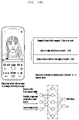
- FIG. 1 illustrates an electronic device for applying a beauty effect setting according to an embodiment of the disclosure
- FIG. 2 illustrates various hardware components of an electronic device for applying a beauty effect setting, according to an embodiment of the disclosure
- FIG. 3 illustrates various hardware components of a processor, according to an embodiment of the disclosure
- FIG. 4 is a flow chart illustrating a method for applying a beauty effect setting in an electronic device, according to an embodiment of the disclosure
- FIGS. 5A, 5B, 5C, 5D, 5E, and 5F are example scenarios in which an electronic device detects a user face from a current previewed frame in a viewfinder of a camera, according to various embodiments of the disclosure;
- FIG. 6 is an example scenario in which an electronic device extracts a plurality of feature points from a user face, according to an embodiment of the disclosure
- FIGS. 7A and 7B are example scenarios in which an electronic device determines at least one beauty ratio based on a plurality of extracted feature points, according to various embodiments of the disclosure
- FIGS. 8A, 8B, 8C, 8DA, 8DB, 8EA, 8EB, 8F, and 8G are example scenarios in which an electronic device applies a beauty effect setting on a user face based on at least one mapped camera beauty effect, according to various embodiments of the disclosure;
- FIGS. 9A and 9B are example scenarios in which a beauty effect prediction is explained, according to various embodiments of the disclosure.
- FIGS. 10A, 10B, 10C, 10D, and 10E are example scenarios in which an electronic device applies a beauty effect setting on a user face based on at least one mapped camera beauty effect, according to various embodiments of the disclosure.
- circuits may, for example, be embodied in one or more semiconductor chips, or on substrate supports such as printed circuit boards and the like.
- circuits constituting a block may be implemented by dedicated hardware, or by a processor (e.g., one or more programmed microprocessors and associated circuitry), or by a combination of dedicated hardware to perform some functions of the block and a processor to perform other functions of the block.
- a processor e.g., one or more programmed microprocessors and associated circuitry
- Each block of the embodiments may be physically separated into two or more interacting and discrete blocks without departing from the scope of the disclosure.
- the blocks of the embodiments may be physically combined into more complex blocks without departing from the scope of the disclosure.
- inventions herein achieve a method for applying a beauty effect setting in an electronic device.
- the method includes detecting, by the electronic device, user face from a current previewed frame in a viewfinder of a camera. Further, the method includes extracting, by the electronic device, a plurality of feature points from the detected user face. Further, the method includes determining, by the electronic device, at least one beauty ratio based on the plurality of extracted feature points. Further, the method includes superimposing, by the electronic device, the at least one beauty ratio with a predefined beauty ratio. Further, the method includes mapping, by the electronic device, the at least one superimposed beauty ratio to at least one camera beauty effect. Further, the method includes applying, by the electronic device, the beauty effect setting on the user face based on the at least one mapped camera beauty effect.
- the proposed method can be used to apply the beauty effect setting by a camera through machine learning (AI).
- AI machine learning
- the proposed method can be used to predict best beauty effects for user face by modifying structural changes in user facial features through the AI.
- the method can be used to provide enormous precision, accuracy, and faster AI generated image of the user face so that user photography experience is enhanced.
- the method can be used to enhance structural quality of the user face, so as to reduce abnormalities in face structure.
- the method can be used to reduce user manual effort for applying the beauty effects.
- FIGS. 1 to 4 5A to 5F, 6, 7A, 7B, 8A to 8G, 9A, 9B, and 10A to 10E , there are shown preferred embodiments.
- FIG. 1 illustrates an electronic device for applying a beauty effect setting according to an embodiment of the disclosure.
- an electronic device 100 can be, for example, but not limited to a cellular phone, a smart phone, a Personal Digital Assistant (PDA), a tablet computer, a laptop computer, a virtual reality device, a smart watch, an Internet of Things (IoT) and the like.
- the beauty effect setting can be, for example, but not limited to a large eye setting mode, a slim face setting mode, a shape correction setting mode, a nose reshape setting mode, a forehead setting mode, a jaw setting mode, a thin nose setting mode, and the like.
- the electronic device 100 receives an input image and a beauty effect on the input image is provided based on various techniques.
- the beauty effect is provided based on a gender recognition, a face width, a face height, an eye width, an eye height, a jaw width, and jaw height.
- the beauty effect is provided based on a person's age, a gender and a skin colour.
- Based on the proposed methods, as shown in an electronic device 100 c is configured to detect user face from a current previewed frame in a viewfinder of a camera.
- FIGS. 5A, 5B, 5C, 5D, 5E, and 5F are example scenarios in which an electronic device detects a user face from a current previewed frame in a viewfinder of a camera, according to various embodiments of the disclosure.
- the electronic device 100 receives an input image.
- the electronic device 100 generates a red green blue (RGB) graph from a trained set of images.
- RGB red green blue
- FIG. 5C illustrates that face pixels have a distinctive range of colours that corresponds to region(s) in RGB colour space.
- Equation 1 determines that it is face or not based on the probability distribution/density function (PDF).
- PDF probability distribution/density function
- FIG. 5E it indicates the probabilistic face classification function in which P(face): is proportion of face pixels in training set and P(face
- the electronic device 100 can calculate P(R
- P ⁇ ( face / R ) P ⁇ ( R
- face ) # ⁇ ⁇ face ⁇ ⁇ pixels ⁇ ⁇ with ⁇ ⁇ color ⁇ ⁇ R # ⁇ ⁇ face ⁇ ⁇ pixels Equation ⁇ ⁇ 4
- the electronic device 100 is configured to extract a plurality of feature points.
- FIG. 6 is an example scenario in which an electronic device extracts a plurality of feature points from a user face, according to an embodiment of the disclosure.
- FIG. 6 it indicates that 3d model for face which has 40 feature points where each point have value in Point (x, y, z) planes.
- ⁇ i.e. 40 feature points.
- Features 8 , 9 , 10 , 11 , 13 , 14 , 18 and 19 are enumerated as an example.
- the plurality of feature points are determined based on the Equation 5
- FIGS. 7A and 7B are example scenarios in which an electronic device determines at least one beauty ratio based on a plurality of extracted feature points, according to various embodiments of the disclosure.
- the electronic device 100 is configured to determine at least one beauty ratio based on the plurality of extracted feature points.
- the at least one beauty ratio is determined by determining spatial data comprising at least one of a plurality of vertical distances from the plurality of extracted feature points and a plurality of horizontal distances from the plurality of extracted feature points.
- the beauty ratio is at least one of a standard beauty ratio, a vertical beauty ratio, and a horizontal beauty ratio.
- the obtained 40 feature points are used to calculate the horizontal and vertical ratio along with beauty ratio.
- the beauty ratio is an irrational number, approximately 1.618, the vertical beauty ratio is 0.36, and the horizontal beauty ratio is 0.47.
- the beauty ratio are driven from various parameters (e.g., pupils, chin, top of face, central lip, tip of chin, nostril or the like).
- Element 701 of FIG. 7A indicates that vertical distance of various parameters.
- Element “ 703 of FIG. 7A indicates the beauty ratio table.
- Element 705 of FIG. 7A indicates an ideal curve for the beauty ratio.
- FIG. 7B it indicates the horizontal beauty ratio and a vertical beauty ratio along with ideal curve for the horizontal beauty ratio and the vertical beauty ratio.
- table indicates that the beauty ratio is determined based on the various dimensions.
- the electronic device 100 is configured to superimpose the at least one beauty ratio with a predefined beauty ratio.
- the predefined beauty ratio is a standard beauty ratio which has taken as reference for the perfect face and contribute ratio value to 1.618 for 6 beauty components.
- the electronic device 100 is configured to map the at least one superimposed beauty ratio to at least one camera beauty effect.
- FIGS. 8A, 8B, 8C, 8DA, 8DB, 8EA, 8EB, 8F, and 8G are example scenarios in which an electronic device applies a beauty effect setting on a user face based on at least one mapped camera beauty effect, according to various embodiments of the disclosure.
- the at least one beauty ratio is superimposed with the predefined beauty ratio by determining that maximum values (i.e., at least three values from six values) associated with the at least one beauty ratio are deflecting with values associated with the predefined beauty ratio, and superimposing the at least one beauty ratio with the predefined beauty ratio based on the determination.
- maximum values i.e., at least three values from six values
- the operations and functions of the superimposed process is explained in conjunction with FIGS. 8DA and 8DB .
- the at least one beauty ratio is superimposed with the predefined beauty ratio by determining that minimum values (i.e., two values from six values) associated with the at least one beauty ratio are deflecting with values associated with the predefined beauty ratio, mapping the at least one beauty ratio with the predefined beauty ratio based on at least one of an average distance of the minimum values associated with the at least one beauty ratio based on the determination, and superimposing the at least one beauty ratio with the predefined beauty ratio based on the mapping.
- the operations and functions of the superimposed process is explained in conjunction with FIG. 9A and FIG. 9B .
- the minimum values are changeable based on the at least one beauty ratio which is determined by an original equipment manufacturer (OEM level) or setting by the user.
- OEM level original equipment manufacturer
- the standard beauty ratio has 9 values, in that case minimum value will be less than 4.
- the at least one beauty ratio is superimposed with the predefined beauty ratio by determining that minimum values (i.e., two values from six values) associated with the at least one beauty ratio are deflecting with values associated with the predefined beauty ratio, mapping the at least one beauty ratio with the predefined beauty ratio based on at least one of an average distance of the minimum values associated with the at least one beauty ratio based on the determination, determining the distortion parameter using a neural network and superimposing the at least one beauty ratio with the predefined beauty ratio based on the mapping and the distortion parameter.
- minimum values i.e., two values from six values
- the superimposed process is considered first instead of using the neural network for applying the beauty effect setting on the user face. This results in reducing time for applying the beauty effect setting on the user face based on the at least one mapped camera beauty effect in a cost effective manner.
- the electronic device 100 is configured to apply the beauty effect setting on the user face based on the at least one mapped camera beauty effect.
- the beauty effect setting can be, for example, but not limited to, increasing or decreasing the facial width of the user as suitable for the user, increasing or decreasing distance between eye corners and enlarging eye pupils according to the user, and changing the facial distances like vertical and horizontal distances to make a perfect aligned face according to the user.
- the electronic device 100 is configured to increase the eye size of the user as suitable for the user based on the beauty ratio. In another example, as shown in FIG. 8B , the electronic device 100 is configured to decrease the eye size of the user as suitable for the user based on the beauty ratio.
- the electronic device 100 is configured to increase the eye size of the user as suitable for the user by determining the beauty ratio (K).
- K (Number of beauty ratio lie on curve*(sum of differences in ratio's))/(Normalization factor)
- FIGS. 8DA, 8DB, 8EA and 8EB based on the input pictures, various values of beauty ratios of the input picture is obtained and the standard curve for the beauty ratios is obtained.
- the display 140 shows the final output.
- the electronic device 100 have 6 beauty components so standard beauty components should be in use.
- the element 803 of FIG. 8DA indicates various values of beauty ratios of the input picture as shown in element 801 of FIG. 8DA .
- the element 805 of FIG. 8DA indicates the standard curve for the beauty ratios.
- the element 807 of FIG. 8DA indicates the super-impose current beauty curve to standard to obtain best beauty effect for the picture.
- the element 809 of FIG. 8DB indicates the beauty curve after superimposing.
- the element 811 of FIG. 8DB indicates the final output image.
- the element 823 of FIG. 8EA indicates various values of beauty ratios of the input picture as shown in element 821 of FIG. 8EA .
- the element 825 of FIG. 8EA indicates the standard vertical ratio curve for the beauty ratios.
- the element 827 of FIG. 8EA indicates the super-impose current beauty curve to standard to obtain best beauty effect for the picture.
- the element 829 of FIG. 8EB indicates the beauty curve after superimposing.
- the element 831 of FIG. 8EB indicates the final output image.
- the electronic device 100 pass 3 components (i.e., beauty ratio, possible component combination count (9*9*9), and facial feature points) to the neural network. Further, the electronic device 100 will be checking the value of beauty ratio's and try to superimpose those values to the standard beauty curve (as explained in FIGS. 8C, 8DA, 8DB, 8EA and 8EB ). As the proposed methods utilizes an un-supervised learning (super-imposing), so there will be chance for most of the times the electronic device 100 to obtain the correct image and for less time the electronic device 100 to obtain distortion in the image. In order to avoid the distortion, the electronic device 100 passes the calculated values to the deep learning module to predict the correct beauty effect for the corresponding face and apply that beauty effect.
- the operations and functions of the beauty effect setting determination for FIG. 8G is similar to FIG. 8F .
- FIG. 1 shows overview of the electronic device 100 but it is to be understood that other embodiments are not limited thereon.
- the electronic device 100 may include less or more number of components.
- the labels or names of the components are used only for illustrative purpose and does not limit the scope of the disclosure.
- FIG. 2 illustrates various hardware components of an electronic device 100 for applying a beauty effect setting, according to an embodiment of the disclosure.
- the electronic device 100 includes a processor 110 , a communicator 120 , a memory 130 , a display 140 , a camera 150 and a viewfinder 160 .
- the processor 110 is coupled with the communicator 120 , the memory 130 , the display 140 , the camera 150 and the viewfinder 160 .
- the processor 110 is configured to detect user face from the current previewed frame in the viewfinder 160 of the camera 150 . Based on the detected user face, the processor 110 is configured to extract the plurality of feature points. Further, the processor 110 is configured to determine at least one the beauty ratio based on the plurality of extracted feature points. The at least one beauty ratio is determined by determining spatial data comprising at least one of the plurality of vertical distances from the plurality of extracted feature points and the plurality of horizontal distances from the plurality of extracted feature points. In an embodiment, the beauty ratio is at least one of the standard beauty ratio, the vertical beauty ratio, and the horizontal beauty ratio.
- the processor 110 is configured to superimpose the at least one beauty ratio with the predefined beauty ratio. Further, the processor 110 is configured to map the at least one superimposed beauty ratio to at least one camera beauty effect. Further, the processor 110 is configured to apply the beauty effect setting on the user face based on the at least one mapped camera beauty effect. The display 140 display the user face based on the applied beauty effect setting.
- the processor 110 is configured to execute instructions stored in the memory 130 and to perform various processes.
- the communicator ( 120 ) is configured for communicating internally between internal hardware components and with external devices via one or more networks.
- the memory 130 also stores instructions to be executed by the processor 110 .
- the memory 130 may include non-volatile storage elements. Examples of such non-volatile storage elements may include magnetic hard discs, optical discs, floppy discs, flash memories, or forms of electrically programmable memories (EPROM) or electrically erasable and programmable (EEPROM) memories.
- the memory 130 may, in some examples, be considered a non-transitory storage medium.
- the term “non-transitory” may indicate that the storage medium is not embodied in a carrier wave or a propagated signal. However, the term “non-transitory” should not be interpreted that the memory 130 is non-movable.
- the memory 130 can be configured to store larger amounts of information than the memory.
- a non-transitory storage medium may store data that can, over time, change (e.g., in Random Access Memory (RAM) or cache).
- RAM Random Access Memory
- FIG. 2 it shows various hardware components of electronic device 100 but it is to be understood that other embodiments are not limited thereon.
- the electronic device 100 may include less or more number of components.
- the labels or names of the components are used only for illustrative purpose and does not limit the scope of the disclosure.
- One or more components can be combined together to perform same or substantially similar function to apply the beauty effect setting in the electronic device 100 .
- FIG. 3 illustrates various hardware components of a processor, according to an embodiment of the disclosure.
- the processor 110 includes a user face detector ( 110 a ), a feature point extraction engine 110 b , a beauty ratio generator 110 c and a beauty effect generator ( 110 d ).
- the user face detector 110 a is configured to detect user face from the current previewed frame in the viewfinder 160 of the camera ( 150 ). Based on the detected user face, the feature point extraction engine ( 110 b ) is configured to extract the plurality of feature points.
- the beauty ratio generator 110 c is configured to determine at least one beauty ratio based on the plurality of extracted feature points. Further, the beauty ratio generator 110 c is configured to superimpose the at least one beauty ratio with the predefined beauty ratio. Further, the beauty ratio generator 110 c is configured to map the at least one superimposed beauty ratio to at least one camera beauty effect. Further, the beauty effect generator 110 d is configured to apply the beauty effect setting on the user face based on the at least one mapped camera beauty effect.
- FIG. 3 shows various hardware components of the processor 110 , it is to be understood that other embodiments are not limited thereto.
- the processor 110 may include less or more components.
- the labels or names of the components are used only for illustrative purpose and does not limit the scope of the disclosure.
- One or more components can be combined together to perform same or substantially similar function to apply the beauty effect setting in the electronic device 100 .
- FIG. 4 is a flow chart illustrating a method for applying a beauty effect setting in an electronic device, according to an embodiment of the disclosure.
- the method includes detecting the user face from the current previewed frame in the viewfinder 160 of the camera 150 .
- the method includes extracting the plurality of feature points from the detected user face.
- the method includes determining the at least one beauty ratio based on the plurality of extracted feature points.
- the method includes superimposing the at least one beauty ratio with the predefined beauty ratio.
- the method includes mapping the at least one superimposed beauty ratio to at least one camera beauty effect.
- the method includes applying the beauty effect setting on the user face based on the at least one mapped camera beauty effect.
- FIGS. 9A and 9B are example scenarios in which a beauty effect prediction is explained, according to various embodiments of the disclosure.
- FIG. 9B This has to be done at backend and neural network will see whether or not the value has to be increased as shown in FIG. 9B .
- FIG. 9B when more than n/2 beauty components lie on a curve then average superimposition leads to a better effect as distortion and cost function value of neural network can increase, the electronic device 100 took the example where out of 3 beauty ratios 2 lie on the standard curve and 1 does not lie on the curve, so the electronic device prefers to do average moment of the curve to get the best beauty effect.
- FIGS. 10A, 10B, 10C, 10D, and 10E are example scenarios in which an electronic device applies a beauty effect setting on a user face based on at least one mapped camera beauty effect, according to various embodiments of the disclosure.
- the beauty ratio is mapped to shape correction setting mode based on the mapping table (indicated in FIG. 10A ).
- the method can be used to predict value of shape correction effect to make the good look for the user.
- the beauty ratio is mapped to a nose reshape setting mode based on the mapping table (indicated in FIG. 10B ).
- the method can be used to predict value of nose reshape effect to make the good look of nose for the user.
- the standard beauty ratio is mapped to a forehead setting mode based on the mapping table (indicated in FIG. 10C ).
- the method can be used to predict the value of the forehead effect to change automatically resize forehead for the user.
- the standard beauty ratio is mapped to the jaw setting mode based on the mapping table (indicated in FIG. 10D ).
- the method can be used to predict value of the JAW effect to change automatically size of the Jaw for the user.
- the standard beauty ratio is mapped to a thin nose setting mode based on the mapping table (indicated in FIG. 10E ).
- the method can be used to predict value of the thin nose effect to thin nose for the user.
- the method can be explained from perspective of the human face, but the proposed method can be applied to other objects as well.
- the object can be, for example but not limited to a flower, leaf, an animal, or the like.
- the embodiments disclosed herein can be implemented using at least one software program running on at least one hardware device and performing network management functions to control the elements.
Landscapes
- Engineering & Computer Science (AREA)
- Theoretical Computer Science (AREA)
- Physics & Mathematics (AREA)
- General Physics & Mathematics (AREA)
- Health & Medical Sciences (AREA)
- Multimedia (AREA)
- Oral & Maxillofacial Surgery (AREA)
- Computer Vision & Pattern Recognition (AREA)
- General Health & Medical Sciences (AREA)
- Evolutionary Computation (AREA)
- Human Computer Interaction (AREA)
- Artificial Intelligence (AREA)
- Software Systems (AREA)
- Computing Systems (AREA)
- Medical Informatics (AREA)
- Databases & Information Systems (AREA)
- Signal Processing (AREA)
- Geometry (AREA)
- Data Mining & Analysis (AREA)
- Quality & Reliability (AREA)
- General Engineering & Computer Science (AREA)
- Bioinformatics & Cheminformatics (AREA)
- Evolutionary Biology (AREA)
- Life Sciences & Earth Sciences (AREA)
- Bioinformatics & Computational Biology (AREA)
- Studio Devices (AREA)
Abstract
Description
K=(Number of beauty ratio lie on curve*(sum of differences in ratio's))/(Normalization factor)
K=(2*25.5)/100=0.51

Claims (18)
Applications Claiming Priority (2)
| Application Number | Priority Date | Filing Date | Title |
|---|---|---|---|
| IN201941036765 | 2019-09-12 | ||
| IN201941036765 | 2019-09-12 |
Publications (2)
| Publication Number | Publication Date |
|---|---|
| US20210084232A1 US20210084232A1 (en) | 2021-03-18 |
| US11323627B2 true US11323627B2 (en) | 2022-05-03 |
Family
ID=74867265
Family Applications (1)
| Application Number | Title | Priority Date | Filing Date |
|---|---|---|---|
| US17/012,668 Active 2040-09-09 US11323627B2 (en) | 2019-09-12 | 2020-09-04 | Method and electronic device for applying beauty effect setting |
Country Status (2)
| Country | Link |
|---|---|
| US (1) | US11323627B2 (en) |
| WO (1) | WO2021049824A1 (en) |
Citations (16)
| Publication number | Priority date | Publication date | Assignee | Title |
|---|---|---|---|---|
| US20060104504A1 (en) * | 2004-11-16 | 2006-05-18 | Samsung Electronics Co., Ltd. | Face recognition method and apparatus |
| US20110135205A1 (en) * | 2008-05-30 | 2011-06-09 | Seung-Chul Rhee | Method and apparatus for providing face analysis service |
| US8997757B1 (en) * | 2013-10-15 | 2015-04-07 | Anastasia Soare | Golden ratio eyebrow shaping method |
| US20160125229A1 (en) * | 2014-11-03 | 2016-05-05 | Anastasia Soare | Facial structural shaping |
| US20170076474A1 (en) * | 2014-02-23 | 2017-03-16 | Northeastern University | System for Beauty, Cosmetic, and Fashion Analysis |
| US9652661B2 (en) | 2013-11-28 | 2017-05-16 | Xiaomi Inc. | Method and terminal device for image processing |
| KR20170134256A (en) | 2016-05-26 | 2017-12-06 | 주식회사 시어스랩 | Method and apparatus for correcting face shape |
| US20180032797A1 (en) | 2016-07-29 | 2018-02-01 | Samsung Electronics Co., Ltd. | Apparatus and method for processing a beauty effect |
| US20180077347A1 (en) | 2015-03-26 | 2018-03-15 | Panasonic Intellectual Property Management Co., Ltd. | Image synthesis device and image synthesis method |
| US20180286057A1 (en) * | 2015-12-28 | 2018-10-04 | Andrew John-Haidukewych Hayduke | System and method for analyzing features of a human face using one or more overlay facial grids |
| US20180359411A1 (en) * | 2016-01-13 | 2018-12-13 | Nixie Labs, Inc. | Cameras with autonomous adjustment and learning functions, and associated systems and methods |
| US20190130538A1 (en) | 2017-10-31 | 2019-05-02 | Guangdong Oppo Mobile Telecommunications Corp., Ltd. | Image processing method and device, electronic device and computer-readable storage medium |
| US20190244408A1 (en) | 2016-10-24 | 2019-08-08 | Panasonic Intellectual Property Management Co., Ltd. | Image processing device, image processing method, and non-transitory computer-readable recording medium storing image processing program |
| US20190269224A1 (en) | 2017-07-13 | 2019-09-05 | Shiseido Americas Corporation | Systems and Methods for Virtual Facial Makeup Removal and Simulation, Fast Facial Detection and Landmark Tracking, Reduction in Input Video Lag and Shaking, and Method for Recommending Makeup |
| US10446052B2 (en) | 2017-04-27 | 2019-10-15 | Cal-Comp Big Data, Inc. | Lip gloss guide and method thereof |
| US10479109B2 (en) | 2016-06-02 | 2019-11-19 | Zong Jing Investment, Inc. | Automatic facial makeup method |
-
2020
- 2020-09-04 US US17/012,668 patent/US11323627B2/en active Active
- 2020-09-04 WO PCT/KR2020/011938 patent/WO2021049824A1/en not_active Ceased
Patent Citations (18)
| Publication number | Priority date | Publication date | Assignee | Title |
|---|---|---|---|---|
| US20060104504A1 (en) * | 2004-11-16 | 2006-05-18 | Samsung Electronics Co., Ltd. | Face recognition method and apparatus |
| US20110135205A1 (en) * | 2008-05-30 | 2011-06-09 | Seung-Chul Rhee | Method and apparatus for providing face analysis service |
| US8997757B1 (en) * | 2013-10-15 | 2015-04-07 | Anastasia Soare | Golden ratio eyebrow shaping method |
| US9652661B2 (en) | 2013-11-28 | 2017-05-16 | Xiaomi Inc. | Method and terminal device for image processing |
| US20170076474A1 (en) * | 2014-02-23 | 2017-03-16 | Northeastern University | System for Beauty, Cosmetic, and Fashion Analysis |
| US20160125229A1 (en) * | 2014-11-03 | 2016-05-05 | Anastasia Soare | Facial structural shaping |
| US20180077347A1 (en) | 2015-03-26 | 2018-03-15 | Panasonic Intellectual Property Management Co., Ltd. | Image synthesis device and image synthesis method |
| US20180286057A1 (en) * | 2015-12-28 | 2018-10-04 | Andrew John-Haidukewych Hayduke | System and method for analyzing features of a human face using one or more overlay facial grids |
| US20180359411A1 (en) * | 2016-01-13 | 2018-12-13 | Nixie Labs, Inc. | Cameras with autonomous adjustment and learning functions, and associated systems and methods |
| KR20170134256A (en) | 2016-05-26 | 2017-12-06 | 주식회사 시어스랩 | Method and apparatus for correcting face shape |
| US20190206031A1 (en) | 2016-05-26 | 2019-07-04 | Seerslab, Inc. | Facial Contour Correcting Method and Device |
| US10479109B2 (en) | 2016-06-02 | 2019-11-19 | Zong Jing Investment, Inc. | Automatic facial makeup method |
| US20180032797A1 (en) | 2016-07-29 | 2018-02-01 | Samsung Electronics Co., Ltd. | Apparatus and method for processing a beauty effect |
| US10303933B2 (en) | 2016-07-29 | 2019-05-28 | Samsung Electronics Co., Ltd. | Apparatus and method for processing a beauty effect |
| US20190244408A1 (en) | 2016-10-24 | 2019-08-08 | Panasonic Intellectual Property Management Co., Ltd. | Image processing device, image processing method, and non-transitory computer-readable recording medium storing image processing program |
| US10446052B2 (en) | 2017-04-27 | 2019-10-15 | Cal-Comp Big Data, Inc. | Lip gloss guide and method thereof |
| US20190269224A1 (en) | 2017-07-13 | 2019-09-05 | Shiseido Americas Corporation | Systems and Methods for Virtual Facial Makeup Removal and Simulation, Fast Facial Detection and Landmark Tracking, Reduction in Input Video Lag and Shaking, and Method for Recommending Makeup |
| US20190130538A1 (en) | 2017-10-31 | 2019-05-02 | Guangdong Oppo Mobile Telecommunications Corp., Ltd. | Image processing method and device, electronic device and computer-readable storage medium |
Non-Patent Citations (7)
| Title |
|---|
| Bottino A, Laurentini A. The analysis of facial beauty: an emerging area of research in pattern analysis. InInternational Conference Image Analysis and Recognition Jun. 21, 2010 (pp. 425-435). Springer, Berlin, Heidelberg. (Year: 2010). * |
| Chen F, Xiao X, Zhang D. Data-driven facial beauty analysis: prediction, retrieval and manipulation. IEEE Transactions on Affective Computing. Aug. 11, 2016;9(2):205-16. (Year: 2018). * |
| Fan YY, Liu S, Li B, Guo Z, Samal A, Wan J, Li SZ. Label distribution-based facial attractiveness computation by deep residual learning. IEEE Transactions on Multimedia. Dec. 6, 2017;20(8):2196-208. (Year: 2017). * |
| International Search Report dated Dec. 3, 2020, issued in International Patent Application No. PCT/KR2020/011938. |
| Roy H, Dhar S, Dey K, Acharjee S, Ghosh D. An automatic face attractiveness improvement using the golden ratio. InAdvanced Computational and Communication Paradigms 2018 (pp. 755-763). Springer, Singapore. (Year: 2018). * |
| Woo J, Kim YJ, Kim S, Choe W. Visual cubism. In2015 International Symposium on Consumer Electronics (ISCE) Jun. 24, 2015 (pp. 1-2). IEEE. (Year: 2015). * |
| X. Liang, S. Tong, T. Kumada and S. Iwaki, "Golden Ratio: The Attributes of Facial Attractiveness Learned By CNN," 2019 IEEE International Conference on Image Processing (ICIP), 2019, pp. 2124-2128, doi: 10.1109/ICIP.2019.8803166. (Year: 2019). * |
Also Published As
| Publication number | Publication date |
|---|---|
| US20210084232A1 (en) | 2021-03-18 |
| WO2021049824A1 (en) | 2021-03-18 |
Similar Documents
| Publication | Publication Date | Title |
|---|---|---|
| US10872420B2 (en) | Electronic device and method for automatic human segmentation in image | |
| EP3916627A1 (en) | Living body detection method based on facial recognition, and electronic device and storage medium | |
| US20230343137A1 (en) | Method and apparatus for detecting key point of image, computer device and storage medium | |
| US8983202B2 (en) | Smile detection systems and methods | |
| US9104914B1 (en) | Object detection with false positive filtering | |
| US9691136B2 (en) | Eye beautification under inaccurate localization | |
| CN113269149B (en) | Method and device for detecting living body face image, computer equipment and storage medium | |
| US20190080149A1 (en) | Occlusion detection for facial recognition processes | |
| EP3454250A1 (en) | Facial image processing method and apparatus and storage medium | |
| CN110929805B (en) | Neural network training methods, target detection methods and equipment, circuits and media | |
| US20090285488A1 (en) | Face tracking method for electronic camera device | |
| US20120114198A1 (en) | Facial image gender identification system and method thereof | |
| CN107909057A (en) | Image processing method, device, electronic device, and computer-readable storage medium | |
| CN105096267B (en) | A kind of method and apparatus that eye brightness is adjusted based on identification of taking pictures | |
| CN104978710A (en) | Method and device for identifying and adjusting human face luminance based on photographing | |
| CN106056064A (en) | Face recognition method and face recognition device | |
| CN107742274A (en) | Image processing method, device, computer-readable storage medium, and electronic device | |
| CN110427972B (en) | Certificate video feature extraction method and device, computer equipment and storage medium | |
| US12198795B2 (en) | Calculation method of food volume and food calories, electronic apparatus, electronic device and storage medium | |
| CN107911625A (en) | Light measuring method, light measuring device, readable storage medium and computer equipment | |
| WO2021169625A1 (en) | Method and apparatus for detecting reproduced network photograph, computer device, and storage medium | |
| CN106651879A (en) | Method and system for extracting nail image | |
| Rahman et al. | Real-time face-priority auto focus for digital and cell-phone cameras | |
| CN110288560A (en) | A kind of image fuzzy detection method and device | |
| US11074676B2 (en) | Correction of misaligned eyes in images |
Legal Events
| Date | Code | Title | Description |
|---|---|---|---|
| AS | Assignment |
Owner name: SAMSUNG ELECTRONICS CO., LTD., KOREA, REPUBLIC OF Free format text: ASSIGNMENT OF ASSIGNORS INTEREST;ASSIGNORS:CHOPRA, ASHISH;DAHIYA, RAJAN;KOHLI, VIVEK KUMAR;REEL/FRAME:053696/0592 Effective date: 20200603 |
|
| FEPP | Fee payment procedure |
Free format text: ENTITY STATUS SET TO UNDISCOUNTED (ORIGINAL EVENT CODE: BIG.); ENTITY STATUS OF PATENT OWNER: LARGE ENTITY |
|
| STPP | Information on status: patent application and granting procedure in general |
Free format text: APPLICATION DISPATCHED FROM PREEXAM, NOT YET DOCKETED |
|
| STPP | Information on status: patent application and granting procedure in general |
Free format text: DOCKETED NEW CASE - READY FOR EXAMINATION |
|
| STPP | Information on status: patent application and granting procedure in general |
Free format text: NON FINAL ACTION MAILED |
|
| STPP | Information on status: patent application and granting procedure in general |
Free format text: RESPONSE TO NON-FINAL OFFICE ACTION ENTERED AND FORWARDED TO EXAMINER |
|
| STPP | Information on status: patent application and granting procedure in general |
Free format text: NOTICE OF ALLOWANCE MAILED -- APPLICATION RECEIVED IN OFFICE OF PUBLICATIONS |
|
| STPP | Information on status: patent application and granting procedure in general |
Free format text: PUBLICATIONS -- ISSUE FEE PAYMENT VERIFIED |
|
| STCF | Information on status: patent grant |
Free format text: PATENTED CASE |
|
| MAFP | Maintenance fee payment |
Free format text: PAYMENT OF MAINTENANCE FEE, 4TH YEAR, LARGE ENTITY (ORIGINAL EVENT CODE: M1551); ENTITY STATUS OF PATENT OWNER: LARGE ENTITY Year of fee payment: 4 |