US11272425B2 - NAN-based communication control method, and electronic device for supporting same - Google Patents
NAN-based communication control method, and electronic device for supporting same Download PDFInfo
- Publication number
- US11272425B2 US11272425B2 US16/771,051 US201816771051A US11272425B2 US 11272425 B2 US11272425 B2 US 11272425B2 US 201816771051 A US201816771051 A US 201816771051A US 11272425 B2 US11272425 B2 US 11272425B2
- Authority
- US
- United States
- Prior art keywords
- cluster
- electronic device
- synchronization
- attribute information
- processor
- Prior art date
- Legal status (The legal status is an assumption and is not a legal conclusion. Google has not performed a legal analysis and makes no representation as to the accuracy of the status listed.)
- Active
Links
Images






Classifications
-
- H—ELECTRICITY
- H04—ELECTRIC COMMUNICATION TECHNIQUE
- H04W—WIRELESS COMMUNICATION NETWORKS
- H04W56/00—Synchronisation arrangements
- H04W56/001—Synchronization between nodes
-
- H—ELECTRICITY
- H04—ELECTRIC COMMUNICATION TECHNIQUE
- H04W—WIRELESS COMMUNICATION NETWORKS
- H04W40/00—Communication routing or communication path finding
- H04W40/24—Connectivity information management, e.g. connectivity discovery or connectivity update
-
- H—ELECTRICITY
- H04—ELECTRIC COMMUNICATION TECHNIQUE
- H04W—WIRELESS COMMUNICATION NETWORKS
- H04W40/00—Communication routing or communication path finding
- H04W40/24—Connectivity information management, e.g. connectivity discovery or connectivity update
- H04W40/244—Connectivity information management, e.g. connectivity discovery or connectivity update using a network of reference devices, e.g. beaconing
-
- H—ELECTRICITY
- H04—ELECTRIC COMMUNICATION TECHNIQUE
- H04W—WIRELESS COMMUNICATION NETWORKS
- H04W40/00—Communication routing or communication path finding
- H04W40/24—Connectivity information management, e.g. connectivity discovery or connectivity update
- H04W40/246—Connectivity information discovery
-
- H—ELECTRICITY
- H04—ELECTRIC COMMUNICATION TECHNIQUE
- H04W—WIRELESS COMMUNICATION NETWORKS
- H04W40/00—Communication routing or communication path finding
- H04W40/24—Connectivity information management, e.g. connectivity discovery or connectivity update
- H04W40/32—Connectivity information management, e.g. connectivity discovery or connectivity update for defining a routing cluster membership
-
- H—ELECTRICITY
- H04—ELECTRIC COMMUNICATION TECHNIQUE
- H04W—WIRELESS COMMUNICATION NETWORKS
- H04W56/00—Synchronisation arrangements
-
- H—ELECTRICITY
- H04—ELECTRIC COMMUNICATION TECHNIQUE
- H04W—WIRELESS COMMUNICATION NETWORKS
- H04W84/00—Network topologies
- H04W84/18—Self-organising networks, e.g. ad-hoc networks or sensor networks
- H04W84/20—Leader-follower arrangements
Definitions
- the disclosure relates to technologies of merging neighbor awareness networking (NAN) clusters.
- NAN neighbor awareness networking
- a proximity service of a neighbor awareness networking (NAN) specification based on a short-range wireless communication technology supports low-power high-speed data transmission and reception between electronic devices adjacent to each other.
- NAN neighbor awareness networking
- the proximity service of the NAN specification may form a set of electronic devices, which is called a cluster.
- an electronic device included in a first cluster may discover a second cluster adjacent to the first cluster through a scanning operation and may perform synchronization with the second cluster.
- the electronic device included in the first cluster may receive service data from the second cluster and may perform the synchronization to the second cluster, when attribute (e.g., cluster grade) information of the second cluster, which is included in the service data, is relatively higher than attribute information of the first cluster.
- attribute e.g., cluster grade
- an attribute of the second cluster is relatively lower than an attribute of the first cluster
- an electronic device included in the first cluster may fail to perform synchronization to the second cluster.
- merging may not be implemented between the first cluster and the second cluster, which are adjacent to each other, and the electronic device included in the first cluster may be required to perform another scanning operation for discovering an adjacent cluster.
- merging of the first cluster may not be implemented. This may be a factor of delaying the merging of the first cluster.
- an aspect of the disclosure is to provide a method for controlling communication based on neighbor awareness networking (NAN) to implement merging between clusters adjacent to each other, irrespective of an attribute (e.g., a cluster grade) of a NAN cluster and an electronic device supporting the same.
- NAN neighbor awareness networking
- an electronic device may include a wireless communication module configured to communicate with at least one external electronic device, a memory for storing attribute information of a first cluster including the electronic device; and, a processor electrically connected with the wireless communication module and the memory.
- the processor may perform synchronization with the first cluster, in conjunction with performing communication based on neighbor awareness networking (NAN), may receive a first signal including attribute information of a second cluster from an external electronic device included in the second cluster via the wireless communication module, may compare attribute information of the first cluster, the attribute information being stored in the memory, with the attribute information of the second cluster, may perform synchronization with the second cluster while maintaining the synchronization with the first cluster, when a specified condition is met between the attribute information of the first cluster and the attribute information of the second cluster, and may transmit a second signal including information related to the first cluster to the external electronic device via the wireless communication module based at least in part on the synchronization with the second cluster.
- NAN neighbor awareness networking
- a merging platform which is not limited to attributes (e.g., cluster grades) of the clusters may be provided.
- the electronic device may reduce power consumption by minimizing a cluster scanning operation of the electronic device included in a NAN cluster.
- FIG. 1 is a block diagram illustrating an electronic device in a network environment according to an embodiment
- FIG. 2 is a drawing illustrating a cluster including electronic devices according to an embodiment
- FIG. 3 is a drawing illustrating a time clock of an electronic device according to an embodiment
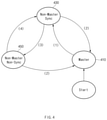
- FIG. 4 is a drawing illustrating a state transition form among a plurality of electronic devices included in a cluster according to an embodiment
- FIG. 5 is a drawing illustrating a signal transmission and reception form of an electronic device according to an embodiment
- FIG. 6 is a drawing illustrating a merging form between a plurality of clusters according to an embodiment
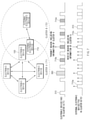
- FIG. 7 is a drawing illustrating a merging process between a plurality of clusters according to an embodiment
- FIG. 8 is a flowchart illustrating a method for controlling communication based on NAN in an electronic device according to an embodiment.
- FIG. 9 is a flowchart illustrating a method for transmitting cluster information in an electronic device according to an embodiment.
- the electronic device may be various types of devices.
- the electronic device may include, for example, at least one of a portable communication device (e.g., a smartphone), a computer device, a portable multimedia device, a mobile medical appliance, a camera, a wearable device, or a home appliance.
- a portable communication device e.g., a smartphone
- a computer device e.g
- a first”, “a second”, “the first”, or “the second”, used in herein may refer to various components regardless of the order and/or the importance, but do not limit the corresponding components.
- the above expressions are used merely for the purpose of distinguishing a component from the other components. It should be understood that when a component (e.g., a first component) is referred to as being (operatively or communicatively) “connected,” or “coupled,” to another component (e.g., a second component), it may be directly connected or coupled directly to the other component or any other component (e.g., a third component) may be interposed between them.
- the expression “configured to” used in the disclosure may be used as, for example, the expression “suitable for”, “having the capacity to”, “designed to”, “adapted to”, “made to”, or “capable of”.
- the term “configured to” must not mean only “specifically designed to” in hardware. Instead, the expression “a device configured to” may mean that the device is “capable of” operating together with another device or other parts.
- a “processor configured to (or set to) perform A, B, and C” may mean a dedicated processor (e.g., an embedded processor) for performing a corresponding operation or a generic-purpose processor (e.g., a central processing unit (CPU) or an application processor) which performs corresponding operations by executing one or more software programs which are stored in a memory device.
- a dedicated processor e.g., an embedded processor
- a generic-purpose processor e.g., a central processing unit (CPU) or an application processor
- An electronic device may include at least one of, for example, smartphones, tablet personal computers (PCs), mobile phones, video telephones, electronic book readers, desktop PCs, laptop PCs, netbook computers, workstations, servers, personal digital assistants (PDAs), portable multimedia players (PMPs), Motion Picture Experts Group (MPEG-1 or MPEG-2) Audio Layer 3 (MP3) players, mobile medical devices, cameras, or wearable devices.
- PCs tablet personal computers
- PDAs personal digital assistants
- PMPs Portable multimedia players
- MPEG-1 or MPEG-2 Motion Picture Experts Group Audio Layer 3
- MP3 Motion Picture Experts Group Audio Layer 3
- the wearable device may include at least one of an accessory type (e.g., watches, rings, bracelets, anklets, necklaces, glasses, contact lens, or head-mounted-devices (HMDs)), a fabric or garment-integrated type (e.g., an electronic apparel), a body-attached type (e.g., a skin pad or tattoos), or a bio-implantable type (e.g., an implantable circuit).
- an accessory type e.g., watches, rings, bracelets, anklets, necklaces, glasses, contact lens, or head-mounted-devices (HMDs)
- a fabric or garment-integrated type e.g., an electronic apparel
- a body-attached type e.g., a skin pad or tattoos
- a bio-implantable type e.g., an implantable circuit
- the electronic device may be a home appliance.
- the home appliances may include at least one of, for example, televisions (TVs), digital versatile disc (DVD) players, audios, refrigerators, air conditioners, cleaners, ovens, microwave ovens, washing machines, air cleaners, set-top boxes, home automation control panels, security control panels, TV boxes (e.g., Samsung HomeSyncTM, Apple TVTM, or Google TVTM), game consoles (e.g., XboxTM or PlayStationTM), electronic dictionaries, electronic keys, camcorders, electronic picture frames, and the like.
- TVs televisions
- DVD digital versatile disc
- an electronic device may include at least one of various medical devices (e.g., various portable medical measurement devices (e.g., a blood glucose monitoring device, a heartbeat measuring device, a blood pressure measuring device, a body temperature measuring device, and the like), a magnetic resonance angiography (MRA), a magnetic resonance imaging (MRI), a computed tomography (CT), scanners, and ultrasonic devices), navigation devices, Global Navigation Satellite System (GNSS), event data recorders (EDRs), flight data recorders (FDRs), vehicle infotainment devices, electronic equipment for vessels (e.g., navigation systems and gyrocompasses), avionics, security devices, head units for vehicles, industrial or home robots, automated teller machines (ATMs), points of sales (POSs) of stores, or internet of things (e.g., light bulbs, various sensors, electric or gas meters, sprinkler devices, fire alarms, thermostats, street lamps, toasters, exercise equipment, hot water tanks, heaters, boilers, and the like.
- the electronic device may include at least one of parts of furniture or buildings/structures, electronic boards, electronic signature receiving devices, projectors, or various measuring instruments (e.g., water meters, electricity meters, gas meters, or wave meters, and the like).
- the electronic device may be one of the above-described devices or a combination thereof.
- An electronic device according to an embodiment may be a flexible electronic device.
- an electronic device according to an embodiment of the present disclosure may not be limited to the above-described electronic devices and may include other electronic devices and new electronic devices according to the development of technologies.
- the term “user” may refer to a person who uses an electronic device or may refer to a device (e.g., an artificial intelligence electronic device) that uses the electronic device.
- FIG. 1 is a block diagram of an electronic device in a network environment according to various embodiments.
- an electronic device 101 may communicate with an electronic device 102 through a first network 198 (e.g., a short-range wireless communication) or may communicate with an electronic device 104 or a server 108 through a second network 199 (e.g., a long-distance wireless communication) in a network environment 100 .
- the electronic device 101 may communicate with the electronic device 104 through the server 108 .
- the electronic device 101 may include a processor 120 , a memory 130 , an input device 150 , a sound output device 155 , a display device 160 , an audio module 170 , a sensor module 176 , an interface 177 , a haptic module 179 , a camera module 180 , a power management module 188 , a battery 189 , a communication module 190 , a subscriber identification module 196 , and an antenna module 197 .
- at least one e.g., the display device 160 or the camera module 180
- some components may be integrated and implemented as in the case of the sensor module 176 (e.g., a fingerprint sensor, an iris sensor, or an illuminance sensor) embedded in the display device 160 (e.g., a display).
- the processor 120 may operate, for example, software (e.g., a program 140 ) to control at least one of other components (e.g., a hardware or software component) of the electronic device 101 connected to the processor 120 and may process and compute a variety of data.
- the processor 120 may load a command set or data, which is received from other components (e.g., the sensor module 176 or the communication module 190 ), into a volatile memory 132 , may process the loaded command or data, and may store result data into a nonvolatile memory 134 .
- the processor 120 may include a main processor 121 (e.g., a central processing unit or an application processor) and an auxiliary processor 123 (e.g., a graphic processing device, an image signal processor, a sensor hub processor, or a communication processor), which operates independently from the main processor 121 , additionally or alternatively uses less power than the main processor 121 , or is specified to a designated function.
- the auxiliary processor 123 may operate separately from the main processor 121 or embedded.
- the auxiliary processor 123 may control, for example, at least some of functions or states associated with at least one component (e.g., the display device 160 , the sensor module 176 , or the communication module 190 ) among the components of the electronic device 101 instead of the main processor 121 while the main processor 121 is in an inactive (e.g., sleep) state or together with the main processor 121 while the main processor 121 is in an active (e.g., an application execution) state.
- the auxiliary processor 123 e.g., the image signal processor or the communication processor
- the memory 130 may store a variety of data used by at least one component (e.g., the processor 120 or the sensor module 176 ) of the electronic device 101 , for example, software (e.g., the program 140 ) and input data or output data with respect to commands associated with the software.
- the memory 130 may include the volatile memory 132 or the nonvolatile memory 134 .
- the program 140 may be stored in the memory 130 as software and may include, for example, an operating system 142 , a middleware 144 , or an application 146 .
- the input device 150 may be a device for receiving a command or data, which is used for a component (e.g., the processor 120 ) of the electronic device 101 , from an outside (e.g., a user) of the electronic device 101 and may include, for example, a microphone, a mouse, or a keyboard.
- a component e.g., the processor 120
- an outside e.g., a user
- a keyboard e.g., a keyboard
- the sound output device 155 may be a device for outputting a sound signal to the outside of the electronic device 101 and may include, for example, a speaker used for general purposes, such as multimedia play or recordings play, and a receiver used only for receiving calls. According to an embodiment, the receiver and the speaker may be either integrally or separately implemented.
- the display device 160 may be a device for visually presenting information to the user of the electronic device 101 and may include, for example, a display, a hologram device, or a projector and a control circuit for controlling a corresponding device. According to an embodiment, the display device 160 may include a touch circuitry or a pressure sensor for measuring an intensity of pressure on the touch.
- the audio module 170 may convert a sound and an electrical signal in dual directions. According to an embodiment, the audio module 170 may obtain the sound through the input device 150 or may output the sound through an external electronic device (e.g., the electronic device 102 (e.g., a speaker or a headphone)) wired or wirelessly connected to the sound output device 155 or the electronic device 101 .
- an external electronic device e.g., the electronic device 102 (e.g., a speaker or a headphone)
- the sensor module 176 may generate an electrical signal or a data value corresponding to an operating state (e.g., power or temperature) inside or an environmental state outside the electronic device 101 .
- the sensor module 176 may include, for example, a gesture sensor, a gyro sensor, a barometric pressure sensor, a magnetic sensor, an acceleration sensor, a grip sensor, a proximity sensor, a color sensor, an infrared sensor, a biometric sensor, a temperature sensor, a humidity sensor, or an illuminance sensor.
- the interface 177 may support a designated protocol wired or wirelessly connected to the external electronic device (e.g., the electronic device 102 ).
- the interface 177 may include, for example, an HDMI (high-definition multimedia interface), a USB (universal serial bus) interface, an SD card interface, or an audio interface.
- a connecting terminal 178 may include a connector that physically connects the electronic device 101 to the external electronic device (e.g., the electronic device 102 ), for example, an HDMI connector, a USB connector, an SD card connector, or an audio connector (e.g., a headphone connector).
- the external electronic device e.g., the electronic device 102
- an HDMI connector e.g., a USB connector
- SD card connector e.g., an SD card connector
- an audio connector e.g., a headphone connector
- the haptic module 179 may convert an electrical signal to a mechanical stimulation (e.g., vibration or movement) or an electrical stimulation perceived by the user through tactile or kinesthetic sensations.
- the haptic module 179 may include, for example, a motor, a piezoelectric element, or an electric stimulator.
- the camera module 180 may shoot a still image or a video image.
- the camera module 180 may include, for example, at least one lens, an image sensor, an image signal processor, or a flash.
- the power management module 188 may be a module for managing power supplied to the electronic device 101 and may serve as at least a part of a power management integrated circuit (PMIC).
- PMIC power management integrated circuit
- the battery 189 may be a device for supplying power to at least one component of the electronic device 101 and may include, for example, a non-rechargeable (primary) battery, a rechargeable (secondary) battery, or a fuel cell.
- the communication module 190 may establish a wired or wireless communication channel between the electronic device 101 and the external electronic device (e.g., the electronic device 102 , the electronic device 104 , or the server 108 ) and support communication execution through the established communication channel.
- the communication module 190 may include at least one communication processor operating independently from the processor 120 (e.g., the application processor) and supporting the wired communication or the wireless communication.
- the communication module 190 may include a wireless communication module 192 (e.g., a cellular communication module, a short-range wireless communication module, or a GNSS (global navigation satellite system) communication module) or a wired communication module 194 (e.g., an LAN (local area network) communication module or a power line communication module) and may communicate with the external electronic device using a corresponding communication module among them through the first network 198 (e.g., the short-range communication network such as a Bluetooth, a WiFi direct, or an IrDA (infrared data association)) or the second network 199 (e.g., the long-distance wireless communication network such as a cellular network, an internet, or a computer network (e.g., LAN or WAN)).
- the above-mentioned various communication modules 190 may be implemented into one chip or into separate chips, respectively.
- the wireless communication module 192 may identify and authenticate the electronic device 101 using user information stored in the subscriber identification module 196 in the communication network.
- the antenna module 197 may include one or more antennas to transmit or receive the signal or power to or from an external source.
- the communication module 190 e.g., the wireless communication module 192
- Some components among the components may be connected to each other through a communication method (e.g., a bus, a GPIO (general purpose input/output), an SPI (serial peripheral interface), or an MIPI (mobile industry processor interface)) used between peripheral devices to exchange signals (e.g., a command or data) with each other.
- a communication method e.g., a bus, a GPIO (general purpose input/output), an SPI (serial peripheral interface), or an MIPI (mobile industry processor interface) used between peripheral devices to exchange signals (e.g., a command or data) with each other.
- the command or data may be transmitted or received between the electronic device 101 and the external electronic device 104 through the server 108 connected to the second network 199 .
- Each of the electronic devices 102 and 104 may be the same or different types as or from the electronic device 101 .
- all or some of the operations performed by the electronic device 101 may be performed by another electronic device or a plurality of external electronic devices.
- the electronic device 101 may request the external electronic device to perform at least some of the functions related to the functions or services, in addition to or instead of performing the functions or services by itself.
- the external electronic device receiving the request may carry out the requested function or the additional function and transmit the result to the electronic device 101 .
- the electronic device 101 may provide the requested functions or services based on the received result as is or after additionally processing the received result.
- a cloud computing, distributed computing, or client-server computing technology may be used.
- the electronic device may be various types of devices.
- the electronic device may include, for example, at least one of a portable communication device (e.g., a smartphone), a computer device, a portable multimedia device, a mobile medical appliance, a camera, a wearable device, or a home appliance.
- a portable communication device e.g., a smartphone
- a computer device e.g
- a first”, “a second”, “the first”, or “the second”, used in herein may refer to various components regardless of the order and/or the importance, but do not limit the corresponding components.
- the above expressions are used merely for the purpose of distinguishing a component from the other components. It should be understood that when a component (e.g., a first component) is referred to as being (operatively or communicatively) “connected,” or “coupled,” to another component (e.g., a second component), it may be directly connected or coupled directly to the other component or any other component (e.g., a third component) may be interposed between them.
- module used herein may represent, for example, a unit including one or more combinations of hardware, software and firmware.
- module may be interchangeably used with the terms “logic”, “logical block”, “part” and “circuit”.
- the “module” may be a minimum unit of an integrated part or may be a part thereof.
- the “module” may be a minimum unit for performing one or more functions or a part thereof.
- the “module” may include an application-specific integrated circuit (ASIC).
- ASIC application-specific integrated circuit
- Various embodiments of the present disclosure may be implemented by software (e.g., the program 140 ) including an instruction stored in a machine-readable storage media (e.g., an internal memory 136 or an external memory 138 ) readable by a machine (e.g., a computer).
- the machine may be a device that calls the instruction from the machine-readable storage media and operates depending on the called instruction and may include the electronic device (e.g., the electronic device 101 ).
- the processor e.g., the processor 120
- the processor may perform a function corresponding to the instruction directly or using other components under the control of the processor.
- the instruction may include a code generated or executed by a compiler or an interpreter.
- the machine-readable storage media may be provided in the form of non-transitory storage media.
- non-transitory is a limitation of the medium itself (i.e., tangible, not a signal) as opposed to a limitation on data storage persistency.
- the method according to various embodiments disclosed in the present disclosure may be provided as a part of a computer program product.
- the computer program product may be traded between a seller and a buyer as a product.
- the computer program product may be distributed in the form of machine-readable storage medium (e.g., a compact disc read only memory (CD-ROM)) or may be distributed only through an application store (e.g., a Play StoreTM).
- an application store e.g., a Play StoreTM
- at least a portion of the computer program product may be temporarily stored or generated in a storage medium such as a memory of a manufacturer's server, an application store's server, or a relay server.
- Each component may include at least one of the above components, and a portion of the above sub-components may be omitted, or additional other sub-components may be further included.
- some components e.g., the module or the program
- Operations performed by a module, a programming, or other components according to various embodiments of the present disclosure may be executed sequentially, in parallel, repeatedly, or in a heuristic method. Also, at least some operations may be executed in different sequences, omitted, or other operations may be added.
- FIG. 2 is a drawing illustrating a cluster including electronic devices according to an embodiment.
- a cluster described below may be understood as a neighbor awareness networking (NAN) cluster conforming to the NAN specification.
- NAN neighbor awareness networking
- the NAN cluster may refer to a set of at least one electronic device which transmits and receives data (or a signal) based on a proximity network.
- at least one electronic device in the NAN cluster may use a set of the same parameters (e.g., a discovery window, an interval duration between discovery windows, a beacon interval, a NAN channel, or the like) in conjunction with operating the proximity network.
- At least one electronic device 100 , 210 , 230 , and/or 250 may establish a network for operating a low-power proximity communication service of the NAN specification and may form a cluster 20 to interact.
- the at least one electronic device 100 , 210 , 230 , and/or 250 included in the cluster 20 may transmit and receive data (or a signal) based on a synchronized communication duration (e.g., a discovery window) conforming to the NAN specification.
- the at least one electronic device 100 , 210 , 230 , and/or 250 may transmit and receive a synchronization beacon including information associated with mutual synchronization over the synchronized communication duration.
- the at least one electronic device 100 , 210 , 230 , and/or 250 may transmit and receive a service discovery frame associated with sharing a service advertisement or service information over the synchronized communication duration.
- the at least one electronic device 100 , 210 , 230 , and/or 250 may operate in a low-power state (e.g., a sleep state) in a duration (e.g., an interval duration between synchronized communication durations) except for the synchronized communication duration and may operate a network of another communication mode except for low-power proximity communication of the NAN specification.
- FIG. 3 is a drawing illustrating a time clock of an electronic device according to an embodiment.
- an electronic device transmits and receives a signal over a sync channel (e.g., channel 6 ) conforming to the NAN specification.
- a sync channel e.g., channel 6
- At least one external electronic included in a cluster (e.g., 20 of FIG. 2 ) may occupy 16 time units according to the NAN specification and may transmit a synchronization beacon and a service discovery frame in a synchronized communication duration 310 (e.g., a discovery window (DW)) which is present at intervals of 512 time units.
- the transmission of the synchronization beacon 320 and the service discovery frame 330 may be performed based on competition between at least one electronic device 100 , 210 , 230 , and/or 250 .
- the synchronization beacon 320 may be a signal for maintaining synchronization (e.g., time clock synchronization) between the at least one electronic device 100 , 210 , 230 , and/or 250 in the cluster 20 .
- the synchronization beacon 320 may include at least one information involved in the synchronization between the at least one electronic device 100 , 210 , 230 , and/or 250 .
- the synchronization beacon 320 may include at least one of a frame control (FC) field indicating a function (e.g., a beacon) of a signal, a broadcast address, a media access control (MAC) address of an electronic device which transmits the synchronization beacon 320 , a cluster identifier, a sequence control field, a time stamp for a beacon frame, a beacon interval field indicating an interval between start points of synchronized communication durations 310 , or capability information of the electronic device which transmits the synchronization beacon 320 .
- the synchronization beacon 320 may include an information element related to at least one proximity network, and may include, for example, service related content capable of being provided based on the proximity network.
- the above-mentioned synchronization beacon 320 may be transmitted by an electronic device defined as an anchor master device, a master device, or a non-master sync device among the at least one electronic device 100 , 210 , 230 , and/or 250 in the cluster 20 .
- the service discovery frame 330 may be a signal for advertising a service between the at least one electronic device 100 , 210 , 230 , and/or 250 in the cluster 20 and exchanging information associated with the service based on a proximity network.
- the service discovery frame 330 may be a vendor specific public action frame, which may include various fields.
- the service discovery frame 330 may include a category field, an action field, or the like, and may include an information element related to at least one proximity network.
- the at least one electronic device 100 , 210 , 230 , and/or 250 may transmit a discovery beacon 350 in a duration 340 (e.g., an interval duration between the synchronized communication durations 310 ) except for the synchronized communication duration 310 .
- the discovery beacon 350 may be a signal of a function of advertising the cluster 20 , which is transmitted such that at least one other electronic device which does not participates in the cluster 20 may discover the cluster 20 .
- at least one electronic device, which does not participates in the cluster 20 may discover the cluster 20 to participate in the cluster 20 by performing a passive scan to detect the discovery beacon 350 transmitted from the at least one electronic device 100 , 210 , 230 , and/or 250 in the cluster 20 .
- the discovery beacon 350 may include at least one information for synchronization to the cluster 20 .
- the discovery beacon 350 may include at least one of a frame control (FC) field indicating a function (e.g., a beacon) of a signal, a broadcast address, a media access control (MAC) address of an electronic device which transmits the discovery beacon 350 , a cluster identifier, a sequence control field, a time stamp for a beacon frame, a beacon interval field indicating a transmit interval of the discovery beacon 350 , or capability information of the electronic device which transmits the discovery beacon 350 .
- the discovery beacon 350 may include an information element related to at least one proximity network.
- the information element may include attribute (e.g., cluster grade) information of the cluster 20 .
- Master Rank Master Preference*2 ⁇ circumflex over ( ) ⁇ 56+Random Factor*2 ⁇ circumflex over ( ) ⁇ 48+MAC[5]*2 ⁇ circumflex over ( ) ⁇ 40++MAC[0] [Equation 1]
- Equation 1 above may represent a master rank referenced in conjunction with determining an attribute (e.g., a cluster grade) of a cluster.
- the master rank may indicate a relative importance or numerical size of an electronic device to play a master role among at least one electronic device forming the cluster.
- the master rank may be composed of factors such as a master preference (e.g., values of 0 to 128), a random factor (e.g., values of 0 to 255), and a MAC address (e.g., an interface address of a NAN electronic device), and a master rank value according to a value obtained by adding the factors may refer to a size or level of a cluster attribute (e.g., a cluster grade).
- an attribute of cluster A is relatively higher (or greater) than an attribute of cluster B.
- an attribute (e.g., a cluster grade) of the cluster may be determined by a master rank value calculated with reference to only some (e.g., a master preference) of factors constituting the master rank.
- the attribute (e.g., the cluster grade) of the cluster may be determined with reference to the number of electronic devices forming the cluster (or included in the cluster), the number of services provided by the cluster, a security level of the cluster, or the like, excluding the above-mentioned master rank value.
- proximity network related information element which is included in the synchronization beacon 320 , the service discovery frame 330 , or the discovery beacon 350 , may include an identifier indicating a type of information, a length of the information, or a body field.
- the body field may include at least one of master indication information, cluster information, service identifier list information, service descriptor information, connection capability information, wireless LAN infrastructure information, peer to peer (P2P) operation information, independent basic service set (IBSS) information, mesh information, additional proximity network service discovery information, further availability map information, country code information, ranging information, cluster discovery information, or vendor specific information.
- FIG. 4 is a drawing illustrating a state transition form among a plurality of electronic devices included in a cluster according to an embodiment.
- At least one electronic device included in a cluster (e.g., 20 of FIG. 2 ) may have a role and state of any one of a master device 410 , a non-master sync device 430 , or a non-master non-sync device 450 .
- an electronic device may determine whether to transmit a synchronization beacon (e.g., 320 of FIG. 3 ) and/or a discovery beacon (e.g., 350 of FIG. 3 ) depending on a corresponding role or state.
- the electronic device when starting a cluster or participating in the cluster, the electronic device may have a role and state of the master device 410 , and the role and state of the electronic device may switch according to a specified condition.
- an electronic device having a role and state of the master device 410 may switch to a role and state of the non-master sync device 430 (see reference numeral 1).
- the electronic device having the role and state of the master device 410 should receive a synchronization beacon, a received signal strength indication (RSSI) of which is higher than RSSI_close (e.g., a value greater than ⁇ 60 dBm), from an electronic device in the same cluster.
- RSSI received signal strength indication
- a master rank of an electronic device which transmits the synchronization beacon should be higher than a master rank of the electronic device having the role and state of the master device 410 .
- the electronic device having the role and state of the master device 410 should receive synchronization beacons, each of which has an RSSI higher than RSSI_middle (e.g., a value greater than 75 dBm and is less than RSSI_close), from three or more electronic devices in the same cluster.
- Master ranks of the electronic devices which transmit the synchronization beacons should be higher than the master rank of the electronic device having the role and state of the master device 410 .
- an electronic device having a role and state of the non-master device 430 and/or 450 may switch to the role and state of the master device 410 until the synchronized communication duration is ended (see reference numeral 2).
- the electronic device having the role and state of the non-master device 430 and/or 450 should not receive a synchronization beacon, an RSSI of which is higher than RSSI_close, from an electronic device in the same cluster.
- a master rank of the electronic device which transmits the synchronization beacon should be higher than the master rank of the electronic device having the role and state of the master device 410 .
- the electronic device having the role and state of the non-master device 430 and/or 450 should receive synchronization beacons, each of which has an RSSI higher than RSSI_middle, from less than three electronic devices in the same cluster. Master ranks of the electronic devices which transmit the synchronization beacon should be higher than the master rank of the electronic device having the role and state of the master device 410 .
- the electronic device having the role and state of the non-master sync device 430 may switch to the role and state of the non-master non-sync device 450 (see reference numeral 3).
- the electronic device having the role and state of the non-master sync device 430 should receive a synchronization beacon, an RSSI of which is higher than RSSI_close, from an electronic device in the same cluster.
- An AMR value of the synchronization beacon should be the same as an AMR value stored in the electronic device having the role and state of the non-master sync device 430 .
- a hop count field value of the electronic device, which transmits the synchronization beacon should be less than or equal to a hop count field value of the electronic device having the role and state of the non-master sync device 430 .
- a master rank of the electronic device, which transmits the synchronization beacon should be higher than a master rank of the electronic device having the role and state of the non-master sync device 430 .
- the electronic device having the role and state of the non-master sync device 430 should receive synchronization beacons, each of which has an RSSI higher than RSSI_close, from three or more electronic devices in the same cluster.
- AMR values of the synchronization beacons should be the same as an AMR value stored in the electronic device having the role and state of the non-master sync device 430 .
- Hop count field values of the electronic devices, which transmit the synchronization beacons should be less than or equal to a hop count field value of the electronic device having the role and state of the non-master sync device 430 .
- Master ranks of the electronic devices, which transmit the synchronization beacons should be higher than a master rank of the electronic device having the role and state of the non-master sync device 430 .
- the electronic device having the role and state of the non-master non-sync device 450 may switch to the role and state of the master sync device 430 until a synchronized communication duration (e.g., a discovery window) is ended (see reference numeral 4).
- a synchronized communication duration e.g., a discovery window
- the electronic device having the role and state of the non-master sync device 450 should not receive a synchronization beacon, an RSSI of which is higher than RSSI_close, from an electronic device in the same cluster.
- An AMR value of the synchronization beacon should be the same as an AMR value stored in the electronic device having the role and state of the non-master sync device 450 .
- a hop count field value of the electronic device, which transmits the synchronization beacon should be less than or equal to a hop count field value of the electronic device having the role and state of the non-master sync device 450 .
- a master rank of the electronic device, which transmits the synchronization beacon should be higher than a master rank of the electronic device having the role and state of the non-master sync device 450 .
- the electronic device having the role and state of the non-master sync device 450 should receive synchronization beacons, each of which has an RSSI higher than RSSI_close, from less than electronic devices in the same cluster.
- AMR values of the synchronization beacons should be the same as an AMR value stored in the electronic device having the role and state of the non-master sync device 450 .
- Hop count field values of the electronic devices, which transmit the synchronization beacons should be less than or equal to a hop count field value of the electronic device having the role and state of the non-master sync device 450 .
- Master ranks of the electronic devices, which transmit the synchronization beacons should be higher than a master rank of the electronic device having the role and state of the non-master sync device 450 .
- FIG. 5 is a drawing illustrating a signal (or data) transmission and reception form of an electronic device according to an embodiment.
- a first electronic device 100 may transmit a synchronization beacon 320 and a service discovery frame 330 in a synchronized communication duration 310 (e.g., a discovery window (DW)).
- a second electronic device 210 , a third electronic device 230 , and/or a fourth electronic device 250 in a cluster may receive the synchronization beacon 320 and the service discovery frame 330 , which are transmitted by the first electronic device 100 , over the synchronized communication duration 310 .
- the second electronic device 210 , the third electronic device 230 , and/or the fourth electronic device 250 may maintain synchronization with another electronic device in the cluster 20 based on the reception of the synchronization beacon 320 .
- the second electronic device 210 , the third electronic device 230 , and/or the fourth electronic device 250 may discover a service advertised by the first electronic device 100 to obtain service information by receiving the service discovery frame 330 .
- At least one electronic device ( 100 , 210 , 230 , and/or 250 ) in the cluster 20 may reduce power consumption by operating in a wake state in only the synchronized communication duration 310 on a time clock and operating in a sleep state in a duration 340 (e.g., an interval duration between the synchronized communication durations 310 ) except for the synchronized communication duration 310 .
- the at least one electronic device 100 , 210 , 230 , and/or 250 in the cluster 20 may operate a network of another communication mode except for low-power proximity communication of the NAN specification in a duration (e.g., the interval 340 between DWs) except for the synchronized communication duration 310 .
- FIG. 6 is a drawing illustrating a merging form between a plurality of clusters according to an embodiment.
- electronic device D 100 e.g., an electronic device 101 of FIG. 1
- cluster A 61 or 71 may play a role as a master device or an anchor master device and may include a state of the master device or the anchor master device.
- each of cluster A 61 and cluster B 62 may include at least one electronic device.
- a range of cluster A 61 or cluster B 62 may be changed by movement of any electronic device (or a change in signal intensity of the electronic device) synchronized to cluster A 61 or cluster B 62 .
- At least a portion of cluster A 61 and at least a portion of cluster B 62 may be overlapped with each other according to the change in range.
- Cluster A 61 and cluster B 62 may be merged based on attributes (e.g., cluster grades) of the clusters 61 and 62 .
- electronic device D 100 included in cluster A 61 may perform a passive scan to receive proximity service data of cluster B 62 , which is transmitted from any electronic device included in cluster B 62 .
- electronic device D 100 may be determined as a cluster overlapped with or adjacent to cluster A 61 with respect to cluster B 62 .
- the proximity service data provided from cluster B 62 may include at least one of a synchronization beacon, a service discovery frame, or a discovery beacon for cluster B 62 .
- electronic device D 100 may compare attributes (e.g., cluster grades) of cluster A 61 , in which electronic device D 100 is currently participating, and cluster B 62 and may select a cluster for synchronization. For example, when it is determined that an attribute of cluster A 61 is relatively higher (or greater) than an attribute of cluster B 62 by electronic device D 100 , electronic device D 100 may maintain synchronization to cluster A 61 . In this operation, electronic device D 100 may guide at least one electronic device (e.g., electronic device E 610 ) included in cluster B 62 to perform synchronization to cluster A 61 .
- attributes e.g., cluster grades
- electronic device D 100 may advertise cluster A 61 by performing temporal synchronization to cluster B 62 and transmitting information related to cluster A 61 using a communication duration of a period which is the same as or similar to a synchronized communication duration (e.g., a discovery window) of cluster B 62 . It will be described with reference to FIG. 7 below.
- a synchronized communication duration e.g., a discovery window
- electronic device E 610 included in cluster B 62 may receive proximity service data of cluster A 61 overlapped with or adjacent to cluster B 62 and may compare attributes (e.g., cluster grades) of cluster B 62 and cluster A 61 . In an embodiment, when the attribute of cluster B 62 is relatively lower (or less) than the attribute of cluster A 61 by electronic device E 610 , electronic device E 610 may perform synchronization to cluster A 61 .
- FIG. 7 is a drawing illustrating a merging process between a plurality of clusters according to an embodiment.
- an electronic device 100 in cluster A 71 may detect proximity service data transmitted from an external cluster overlapped with or adjacent to cluster A 71 over some duration on a time clock.
- the electronic device 100 may detect a synchronization beacon or a discovery beacon transmitted from an external electronic device 710 in cluster B 72 over a passive scan duration 360 corresponding to a portion of a duration (e.g., an interval duration between synchronized communication durations 310 ) except for the synchronized communication duration 310 (e.g., a discovery window).
- the electronic device 100 may select a cluster to be synchronized between cluster A 71 in which the electronic device 100 is currently participating and cluster B 72 overlapped with or adjacent to cluster A 71 .
- the electronic device 100 may compare an attribute (e.g., a cluster grade) of cluster B 72 , which is included in a synchronization beacon or a discovery beacon transmitted from the external electronic device 710 , with an attribute of cluster A 71 .
- the attribute of cluster A 71 which is determined by the electronic device 100 , may be relatively higher (or greater) than the attribute of cluster B 72 .
- the electronic device 100 may maintain synchronization to cluster A 71 and may perform synchronization with cluster B 72 in conjunction with advertising cluster A 71 .
- Performing the synchronization with cluster B 72 may refer to configuring a synchronization communication duration 710 b of a period, which is the same as or similar to a synchronized communication duration 710 a of cluster B 72 , using at least some duration except for the synchronized communication duration 310 of cluster A 71 on a time clock according to cluster A 71 .
- the electronic device 100 may advertise cluster A 71 over the synchronization communication duration 710 b of a period which is the same as or similar to the synchronized communication duration 710 a of cluster B 72 .
- the electronic device 100 may advertise cluster A 71 to at least one external electronic device included in cluster B 72 and may guide the at least one external electronic device to perform synchronization to cluster A 71 by transmitting a synchronization beacon or a service discovery frame, including information related to synchronization to cluster A 71 , over the synchronization communication duration 710 b .
- the external electronic device 710 in cluster B 72 may receive a synchronization beacon or a service discovery frame, transmitted from the electronic device 100 , over the synchronized communication duration 710 according to cluster B 72 .
- the external electronic device 710 included in cluster B 72 may receive a synchronization beacon or a service discovery frame, transmitted from the electronic device 100 , over the synchronized communication duration 710 a according to cluster B 72 and may discover presence of cluster A 71 .
- the external electronic device 710 may compare attributes (e.g., cluster grades) between cluster B 72 in which the external electronic device 710 is currently participating and cluster A 71 discovered. In an embodiment, as it is determined that the attribute of cluster B 72 is relatively lower (or less) than the attribute of cluster A 71 , the external electronic device 710 may release the current synchronized communication duration 710 a according to cluster B 72 (see reference numeral 710 c ) and may perform synchronization to the synchronized communication duration 310 according to cluster A 71 .
- attributes e.g., cluster grades
- the electronic device 100 included in cluster A 71 may release synchronization of the synchronization communication duration 710 b newly configured (see reference numeral 710 d ) and may maintain only the synchronized communication duration 310 according to cluster A 71 .
- An electronic device may include a wireless communication module (e.g., a wireless communication module 192 of FIG. 1 ) for communicating with at least one external electronic device, a memory (e.g., a memory 130 of FIG. 1 ) for storing attribute information of a first cluster including the electronic device 101 , and a processor (e.g., a processor 120 of FIG. 1 ) electrically connected with the wireless communication module 192 and the memory 130 .
- a wireless communication module e.g., a wireless communication module 192 of FIG. 1
- a memory e.g., a memory 130 of FIG. 1
- a processor e.g., a processor 120 of FIG. 1
- the processor 120 may perform synchronization with the first cluster in conjunction with performing communication based on neighbor awareness networking (NAN), may receive a first signal including attribute information of a second cluster from an external electronic device included in the second cluster via the wireless communication module 192 , may compare attribute information of the first cluster, the attribute information being stored in the memory 130 , with the attribute information of the second cluster, may perform synchronization with the second cluster while maintaining the synchronization with the first cluster, when a specified condition is met between the attribute information of the first cluster and the attribute information of the second cluster, and may transmit a second signal including information related to the first cluster to the external electronic device via the wireless communication module 192 based at least in part on the synchronization with the second cluster.
- NAN neighbor awareness networking
- the processor 120 may perform the synchronization with the second cluster while maintaining the synchronization with the first cluster, when a master preference value included in the attribute information of the first cluster is greater than a master preference value included in the attribute information of the second cluster.
- the processor 120 may compare a random factor value included in the attribute information of the first cluster with a random factor value included in the attribute information of the second cluster, when the master preference values are the same as each other between the attribute information of the first cluster and the attribute information of the second cluster.
- the processor 120 may perform the synchronization with the second cluster while maintaining the synchronization with the first cluster, when the number of devices forming the first cluster, the number of devices being included in the attribute information of the first cluster, is greater than the number of devices forming the second cluster, the number of devices being included in the attribute information of the second cluster.
- the processor 120 may perform the synchronization with the second cluster while maintaining the synchronization with the first cluster, when the number of services provided by the first cluster, the number of services being included in the attribute information of the first cluster, is greater than the number of services provided by the second cluster, the number of services being included in the attribute information of the second cluster.
- the processor 120 may synchronize a second discovery window of the second cluster to at least a portion of a duration except for a first discovery window of the first cluster.
- the processor 120 may transmit the second signal including information related to the first cluster, through the synchronized second discovery window of the second cluster.
- the processor 120 may release the synchronization with the second cluster after transmitting the second signal.
- An electronic device may include a wireless communication module (e.g., a wireless communication module 192 of FIG. 1 ) for communicating with at least one external electronic device, a memory (e.g., a memory 130 of FIG. 1 ) for storing attribute information of a first cluster including the electronic device 101 , and a processor (e.g., a processor 120 of FIG. 1 ) electrically connected with the wireless communication module 192 and the memory 130 .
- a wireless communication module e.g., a wireless communication module 192 of FIG. 1
- a memory e.g., a memory 130 of FIG. 1
- a processor e.g., a processor 120 of FIG. 1
- the memory 130 may store instructions, when executed, causing the processor 120 to perform synchronization with the first cluster, receive a first signal including attribute information of a second cluster from an external electronic device included in the second cluster via the wireless communication module 192 , compare attribute information of the first cluster, the attribute information being stored in the memory 130 , with the attribute information of the second cluster, perform synchronization with the second cluster while maintaining the synchronization with the first cluster, when a master rank value included in the attribute information of the first cluster is greater than a master rank value included in the attribute information of the second cluster, and transmit a second signal including information related to the first cluster to the external electronic device via the wireless communication module 192 based at least in part on the synchronization with the second cluster.
- the instructions may include instructions causing the processor 120 to synchronize a second discovery window of the second cluster to at least a portion of a duration except for a first discovery window of the first cluster.
- the instructions may include instructions causing the processor 120 to transmit the second signal including the information related to the first cluster, through the synchronized second discovery window of the second cluster.
- the instructions may include instructions causing the processor 120 to release the synchronization with the second cluster after transmitting the second signal.
- An electronic device may include a wireless communication module (e.g., a wireless communication module 192 of FIG. 1 ) for communicating with at least one external electronic device, a memory (e.g., a memory 130 of FIG. 1 ) for storing attribute information of a first cluster including the electronic device 101 , and a processor (e.g., a processor 120 of FIG. 1 ) electrically connected with the wireless communication module 192 and the memory 130 .
- a wireless communication module e.g., a wireless communication module 192 of FIG. 1
- a memory e.g., a memory 130 of FIG. 1
- a processor e.g., a processor 120 of FIG. 1
- the processor 102 may perform synchronization with the first cluster, may receive a first signal including attribute information of a second cluster from an external electronic device included in the second cluster, through a discovery window of the first cluster, may compare the attribute information of the first cluster, the attribute information being stored in the memory 130 , with the attribute information of the second cluster, and may perform synchronization with the second cluster while releasing the synchronization with the first cluster, when an attribute information level of the second cluster is relatively higher than an attribute information level of the first cluster.
- FIG. 8 is a flowchart illustrating a method for controlling communication based on NAN in an electronic device according to an embodiment.
- cluster A e.g., cluster A 61 of FIG. 6 or cluster A 71 of FIG. 7
- an electronic device e.g., an electronic device 101 of FIG. 1 or an electronic device 100 of FIG. 6 or 7
- cluster B overlapped with or adjacent to cluster A 61 or 71 .
- a duplicated description may be omitted with respect to an operation or function of the electronic device 100 , which is similar to that described above.
- a memory (e.g., a memory 130 of FIG. 1 ) of the electronic device 100 may store attribute (e.g., cluster grade) information of a cluster in which the electronic device 100 is participating or may store attribute information of an external cluster, which is received from the external cluster.
- a wireless communication module (e.g., a wireless communication module 192 of FIG. 1 ) of the electronic device 100 may establish a network for communicating with at least one external electronic device, under control of a processor (e.g., a processor 120 of FIG. 1 ), and may transmit and receive a signal or data based on access to the network.
- the wireless communication module 192 may support operation of a low-power proximity communication service of the NAN specification, under control of the processor 120 .
- the processor 120 may control the wireless communication module 192 to establish a network for the low-power proximity communication service of the NAN specification and may transmit and receive a signal or data over a synchronized communication duration (e.g., a discovery window) with another electronic device in a cluster to which the electronic device 100 belongs.
- a synchronized communication duration e.g., a discovery window
- the processor 120 may discover presence of another cluster overlapped with or adjacent to the cluster to which the electronic device 100 belongs, based on proximity service data received over a passive scan duration. For example, when receiving a synchronization beacon or a discovery beacon transmitted from another cluster over the passive scan duration, the processor 120 may discover presence of the other cluster overlapped or adjacent to the cluster including the electronic device 100 .
- the processor 120 may discover presence of another cluster overlapped or adjacent to the cluster of the electronic device 100 using a cluster discovery attribute of the received beacon or probe response signal.
- the processor 120 may determine a cluster to be synchronized, based on a cluster attribute (e.g., a cluster grade) of the electronic device 100 and an attribute of the discovered other cluster.
- the processor 120 may determine a cluster to be synchronized, based on a cluster attribute including at least one of the number of electronic devices included in the cluster, the number of services provided by the cluster, or a security level of the cluster.
- the processor 120 may determine a cluster, the electronic devices of which are large in number, a cluster, the services of which are large in number, or a cluster, a security level of which is high, as the cluster to be synchronized.
- An operation of the electronic device 100 described below with reference to FIG. 8 or 9 , may be performed by the processor 120 or may be implemented as the processor 120 controls another component (e.g., the wireless communication module 192 or the like) of the electronic device 100 .
- the processor 120 of the electronic device 100 may control the wireless communication module 192 to perform synchronization with cluster A 61 or 71 .
- the processor 120 may perform synchronization of a time clock for operating a proximity service of the NAN specification by transmitting and receiving a synchronization beacon using a parameter (e.g., a discovery window) which functions in the same manner in at least one electronic device included in cluster A 61 or 71 .
- the electronic device 100 may be understood as a role and state of any one of the master device, the non-master sync device, or a non-master non-sync device, which is described above.
- the processor 120 may receive attribute (e.g., cluster grade) information of cluster B (e.g., cluster B 62 of FIG. 6 or cluster B 72 of FIG. 7 ) from an external electronic device in cluster B 62 or 72 overlapped or adjacent to cluster A 61 or 71 including the electronic device 100 .
- the processor 120 may receive a synchronization beacon or a discovery beacon of cluster B 62 or 72 , which is transmitted by an external electronic device included in cluster B 62 or 72 , over a passive scan duration corresponding to some duration on the time clock, and may obtain attribute information of cluster B 62 or 72 , which is included in the synchronization beacon or the discovery beacon.
- the processor 120 may compare attribute information of cluster A 61 or 71 , which is stored in the memory 130 , with the obtained attribute information of cluster B 62 or 72 to determine a relative magnitude (being large and small in level or size).
- the processor 120 may determine that an attribute of cluster A 61 or 71 in which the electronic device 100 is currently participating is relatively higher (or greater) than the obtained attribute of cluster B 62 or 72 . In this case, the processor 120 may maintain the synchronization with the electronic device 100 to cluster A 61 or 71 and may control temporal synchronization (synchronization during a specified time) of the electronic device 100 to cluster B 62 or 72 .
- the temporal synchronization to cluster B 62 or 72 may refer to configuring a third synchronized communication duration of a period, which is the same as or similar to a second synchronized communication duration of cluster B 62 or 72 , using some duration except for a first synchronized communication duration of cluster A 61 or 71 on a time clock according to cluster A 61 or 71 .
- the processor 120 may release the synchronization with cluster A 61 or 71 and may perform synchronization to cluster B 62 or 72 .
- the processor 120 may transmit a synchronization beacon or a service discovery frame, including information related to the synchronization to cluster A 61 or 71 , over the third synchronization communication duration.
- the external electronic device included in cluster B 62 or 72 may discover presence of cluster A 61 or 71 by receiving the synchronization beacon or the service discovery frame, transmitted from the electronic device 100 , over the second synchronization communication duration of cluster B 62 or 72 .
- the synchronization beacon or the service discovery frame transmitted over the third synchronization communication duration of the period, which is the same as or similar to the second synchronization communication duration of cluster B 62 or 72 , by the electronic device 100 may guide or support the external electronic device included in cluster B 62 or 72 to perform synchronization to cluster A 61 or 71 , an attribute of which is relatively high (or great).
- FIG. 9 is a flowchart illustrating a method for transmitting cluster information in an electronic device according to an embodiment.
- the electronic device may establish a network for a low-power proximity communication service of the NAN specification and may start cluster A (e.g., cluster A 61 of FIG. 6 or cluster A 71 of FIG. 7 ) or may participate in cluster A 61 or 71 .
- the electronic device 100 in cluster A 61 or 71 may transmit a synchronization beacon and a service discovery frame over a synchronized communication duration (e.g., a discovery window) conforming to the NAN specification or may receive a synchronization beacon and a service discovery frame from another electronic device in cluster A 61 or 71 .
- a synchronized communication duration e.g., a discovery window
- the electronic device 100 may detect a discovery beacon transmitted from cluster B (e.g., cluster B 62 of FIG. 6 or cluster B 72 of FIG. 7 ) over a passive scan duration corresponding to a portion of a duration (e.g., an interval duration between the synchronized communication durations) except for the synchronized communication duration on a time clock.
- the passive scan duration may be configured by being triggered by execution of an application program, which is loaded or installed into the electronic device 100 and supports operation of a low-power proximity communication service of the NAN specification, and may be configured by being related to a time when the application program is executed.
- the electronic device 100 may determine cluster B 62 or 72 as being overlapped or adjacent to cluster A 61 or 71 in which the electronic device 100 is currently participating.
- the discovery beacon transmitted from cluster B 62 or 72 may include attribute (e.g., cluster grade) information of cluster B 62 or 72 .
- the electronic device 100 may compare attribute information of cluster A 61 or 71 , which is stored in a memory (e.g., a memory 130 of FIG. 1 ), with the attribute information of cluster B 62 or 72 received from cluster B 62 or 72 .
- the attribute information may include a NAN master rank indicating a grade of a corresponding cluster, and the NAN master rank may be understood as a value obtained by adding a master preference, a random factor, and a MAC address (e.g., an interface address of a NAN electronic device).
- the electronic device 100 may compare levels of master rank values according to the value obtained by adding factors such as the master preference, the random factor, and the MAC address.
- the electronic device 100 may first refer to a level of a master rank value according to a master preference value.
- the electronic device 100 may sequentially refer to a random factor and a MAC address value of each of cluster A 61 or 71 and cluster B 62 or 72 .
- the attribute of the cluster may include information about the number of electronic devices included in the cluster, information about the number of services provided by the cluster, or information about a security level of the cluster, other than grade information (e.g., a master rank value) of the cluster.
- the electronic device 100 may cause at least one other electronic device included in cluster A 61 or 71 to recognize presence of cluster B 62 or 72 by including information related to synchronization to cluster B 62 or 72 in a synchronization beacon transmitted by cluster A 61 or 71 .
- the electronic device 100 may perform synchronization to cluster B 62 or 72 , an attribute of which is higher than cluster A 61 or 71 in which the electronic device 100 is currently participating, according to the NAN specification, and may participate in cluster B 62 or 72 .
- the electronic device 100 may maintain the synchronization with cluster A 61 or 71 in which the electronic device 100 is currently participating.
- Operations of the electronic device 100 may be understood as an operation of advertising cluster A 61 or 71 to at least one external electronic device forming cluster B 62 or 72 overlapped or adjacent to cluster A 61 or 71 , at the same time as maintaining the synchronization with cluster A 61 or 71 , or an operation of guiding or supporting the at least one external electronic device to perform synchronization to cluster A 61 or 71 .
- the electronic device 100 may perform temporal synchronization with cluster B 62 or 72 while maintaining the synchronization with cluster A 61 or 71 .
- the electronic device 100 may newly configure a synchronized communication duration of a period, which is the same as or similar to a synchronized communication duration of cluster B 62 or 72 , using at least some duration except for a synchronized communication duration of cluster A 61 or 71 on a time clock according to cluster A 61 or 71 .
- the electronic device 100 may transmit a synchronization beacon or a service discovery frame, including information related to the synchronization to cluster A 61 or 71 , over the newly configured synchronization communication duration.
- the electronic device 100 may transmit a synchronization beacon or a service discovery frame, including information of cluster A 61 or 71 , a predetermined number of times or during a specified time range, such that an external electronic device included in cluster B 62 or 72 may receive information related to cluster A 61 or 71 in which the electronic device 100 is participating.
- the external electronic device included in cluster B 62 or 72 may discover presence of cluster A 61 or 71 by receiving the synchronization beacon or the service discovery frame, transmitted from the electronic device 100 , over the synchronization communication duration of cluster B 62 or 72 . Thereafter, the external electronic device included in cluster B 62 or 72 may compare attributes between cluster B 62 or 72 and cluster A 61 or 71 in the same or similar manner to being described above, and may release the synchronization communication duration of old cluster B 62 or 72 as it is determined that the attribute of cluster B 62 or 72 is relatively lower (or less) than the attribute of cluster A 61 or 71 and perform synchronization to cluster A 61 or 71 (e.g., synchronization to the synchronization communication duration of cluster A 61 or 71 ).
- the electronic device 100 included in cluster A 61 or 71 may release the synchronization of the newly configured synchronization communication duration and may maintain only the synchronization with cluster A 61 or 71 .
- a method for controlling communication based on neighbor awareness networking (NAN) in an electronic device may include performing synchronization with a first cluster including the electronic device, receiving a first signal including attribute information of a second cluster from an external electronic device included in the second cluster, comparing attribute information of the first cluster with the attribute information of the second cluster, performing synchronization with the second cluster while maintaining the synchronization with the first cluster, when a specified condition is met between the attribute information of the first cluster and the attribute information of the second cluster, and transmitting a second signal including information related to the first cluster to the external electronic device based at least in part on the synchronization with the second cluster.
- NAN neighbor awareness networking
- the performing of the synchronization with the second cluster while maintaining the synchronization with the first cluster may include performing the synchronization with the second cluster while maintaining the synchronization with the first cluster, when a master preference value included in the attribute information of the first cluster is greater than a master preference value included in the attribute information of the second cluster.
- the comparing of the attribute information of the first cluster and the attribute information of the second cluster may include comparing a random factor value included in the attribute information of the first cluster with a random factor value included in the attribute information of the second cluster, when the master preference values are the same as each other between the attribute information of the first cluster and the attribute information of the second cluster.
- the performing of the synchronization with the second cluster while maintaining the synchronization with the first cluster may include performing the synchronization with the second cluster while maintaining the synchronization with the first cluster, when the number of devices forming the first cluster, the number of devices being included in the attribute information of the first cluster, is greater than the number of devices forming the second cluster, the number of devices being included in the attribute information of the second cluster.
- the performing of the synchronization with the second cluster while maintaining the synchronization with the first cluster may include performing the synchronization with the second cluster while maintaining the synchronization with the first cluster, when the number of services provided by the first cluster, the number of services being included in the attribute information of the first cluster, is greater than the number of services provided by the second cluster, the number of services being included in the attribute information of the second cluster.
- the performing of the synchronization with the second cluster while maintaining the synchronization with the first cluster may include synchronizing a second discovery window of the second cluster to at least a portion of a duration except for a first discovery window of the first cluster.
- the transmitting of the second signal including the information related to the first cluster to the external electronic device may include transmitting the second signal including the information related to the first cluster, through the synchronized second discovery window of the second cluster.
- the method may further include releasing the synchronization with the second cluster after transmitting the second signal.
Landscapes
- Engineering & Computer Science (AREA)
- Computer Networks & Wireless Communication (AREA)
- Signal Processing (AREA)
- Mobile Radio Communication Systems (AREA)
Abstract
Description
Master Rank=Master Preference*2{circumflex over ( )}56+Random Factor*2{circumflex over ( )}48+MAC[5]*2{circumflex over ( )}40++MAC[0] [Equation 1]
| TABLE 1 | ||
| Role and state | Discover beacon | Synchronization Beacon |
| master device | Transmissible | Transmissible |
| non-master sync | Non-transmissible | Transmissible |
| non-master non-sync | Non-transmissible | Non-transmissible |
Claims (15)
Applications Claiming Priority (3)
| Application Number | Priority Date | Filing Date | Title |
|---|---|---|---|
| KR10-2017-0179538 | 2017-12-26 | ||
| KR1020170179538A KR102477589B1 (en) | 2017-12-26 | 2017-12-26 | Method for controlling communication based on neighbor awareness networking and electronic device supporting the same |
| PCT/KR2018/008532 WO2019132151A1 (en) | 2017-12-26 | 2018-07-27 | Nan-based communication control method, and electronic device for supporting same |
Publications (2)
| Publication Number | Publication Date |
|---|---|
| US20200322872A1 US20200322872A1 (en) | 2020-10-08 |
| US11272425B2 true US11272425B2 (en) | 2022-03-08 |
Family
ID=67064201
Family Applications (1)
| Application Number | Title | Priority Date | Filing Date |
|---|---|---|---|
| US16/771,051 Active US11272425B2 (en) | 2017-12-26 | 2018-07-27 | NAN-based communication control method, and electronic device for supporting same |
Country Status (3)
| Country | Link |
|---|---|
| US (1) | US11272425B2 (en) |
| KR (1) | KR102477589B1 (en) |
| WO (1) | WO2019132151A1 (en) |
Families Citing this family (5)
| Publication number | Priority date | Publication date | Assignee | Title |
|---|---|---|---|---|
| WO2023014024A1 (en) | 2021-08-02 | 2023-02-09 | Samsung Electronics Co., Ltd. | Method and pan device for managing pan devices in cluster |
| US12550047B2 (en) * | 2021-08-24 | 2026-02-10 | Meta Platforms Technologies, Llc | Systems and methods of narrowband discovery for wireless devices |
| CN119404532A (en) * | 2022-07-01 | 2025-02-07 | 三星电子株式会社 | An electronic device for performing cluster merging of NAN communication and an operating method thereof |
| EP4672833A4 (en) * | 2023-04-12 | 2026-04-01 | Samsung Electronics Co Ltd | ELECTRONIC DEVICE FOR IMPLEMENTING DATA COMMUNICATION AND OPERATIONS FOR THAT |
| CN121569505A (en) * | 2023-07-25 | 2026-02-24 | 三星电子株式会社 | Electronic device for searching for external electronic device and method of operating the same |
Citations (18)
| Publication number | Priority date | Publication date | Assignee | Title |
|---|---|---|---|---|
| US20140321317A1 (en) * | 2013-04-26 | 2014-10-30 | Nokia Corporation | Method, apparatus, and computer program product for network type determination |
| US20150098388A1 (en) * | 2013-08-13 | 2015-04-09 | Huawei Device Co., Ltd. | Method, device, and system for joining neighbor awareness network device cluster |
| US20150200811A1 (en) | 2014-01-14 | 2015-07-16 | Nokia Corporation | Method, apparatus, and computer program product for wireless network cluster discovery and concurrency management |
| US20150358800A1 (en) | 2014-06-10 | 2015-12-10 | Intel IP Corporation | Apparatus, system and method of discovering a wireless communication device |
| US20160014565A1 (en) | 2014-07-09 | 2016-01-14 | Intel Corporation | Apparatus, system and method of performing a position measurement |
| US20160112986A1 (en) | 2014-10-16 | 2016-04-21 | Qualcomm Incorporated | Communication between devices of a neighbor aware network |
| US20160150465A1 (en) | 2014-11-25 | 2016-05-26 | Samsung Electronics Co., Ltd. | Method for transmitting and receiving signals in proximity network and electronic device thereof |
| US20160192273A1 (en) * | 2014-12-24 | 2016-06-30 | Intel Corporation | System and method for joining neighbor awareness networking hidden clusters |
| US20160286476A1 (en) | 2015-03-26 | 2016-09-29 | Qualcomm Incorporated | Data link behavior for merger of wireless network clusters |
| US20170034769A1 (en) | 2014-04-02 | 2017-02-02 | Lg Electronics Inc. | Method and apparatus for transceiving signal by nan terminal in wireless communication system |
| WO2017051501A1 (en) | 2015-09-24 | 2017-03-30 | Canon Kabushiki Kaisha | Transmission of number of nan cluster users in a nan |
| US20170111849A1 (en) | 2014-05-07 | 2017-04-20 | Lg Electronics Inc. | Method and apparatus for receiving signal by nan device in wireless communication system |
| US20170135019A1 (en) | 2015-11-08 | 2017-05-11 | Qualcomm Incorporated | Context aware wireless local area network connection |
| US20170150296A1 (en) | 2015-11-25 | 2017-05-25 | Samsung Electronics Co., Ltd. | Method for synchronizing proximity network and electronic device thereof |
| US20170156102A1 (en) | 2015-03-27 | 2017-06-01 | Samsung Electronics Co., Ltd. | Method and system for dynamically forming service aware bluetooth low energy (ble) mesh network |
| US20170171169A1 (en) | 2015-12-14 | 2017-06-15 | Qualcomm Incorporated | Packet number determination in a neighbor aware network |
| US9819750B2 (en) * | 2014-06-03 | 2017-11-14 | Qualcomm Incorporated | Neighbor aware network cluster topology establishment based on proximity measurements |
| US10177222B2 (en) | 2010-11-01 | 2019-01-08 | Magnachip Semiconductor, Ltd. | Semiconductor device and method of fabricating the same |
-
2017
- 2017-12-26 KR KR1020170179538A patent/KR102477589B1/en active Active
-
2018
- 2018-07-27 US US16/771,051 patent/US11272425B2/en active Active
- 2018-07-27 WO PCT/KR2018/008532 patent/WO2019132151A1/en not_active Ceased
Patent Citations (44)
| Publication number | Priority date | Publication date | Assignee | Title |
|---|---|---|---|---|
| US10177222B2 (en) | 2010-11-01 | 2019-01-08 | Magnachip Semiconductor, Ltd. | Semiconductor device and method of fabricating the same |
| US20140321317A1 (en) * | 2013-04-26 | 2014-10-30 | Nokia Corporation | Method, apparatus, and computer program product for network type determination |
| US9480013B2 (en) | 2013-08-13 | 2016-10-25 | Huawei Device Co., Ltd. | Method, device, and system for joining neighbor awareness network cluster |
| US9888438B2 (en) | 2013-08-13 | 2018-02-06 | Huawei Device (Dongguan) Co., Ltd. | Method, device, and system for joining neighbor awareness network cluster |
| KR20160042009A (en) | 2013-08-13 | 2016-04-18 | 후아웨이 디바이스 컴퍼니 리미티드 | Method, device and system for joining neighbor awareness network cluster |
| US20150098388A1 (en) * | 2013-08-13 | 2015-04-09 | Huawei Device Co., Ltd. | Method, device, and system for joining neighbor awareness network device cluster |
| US9258193B2 (en) | 2014-01-14 | 2016-02-09 | Nokia Technologies Oy | Method, apparatus, and computer program product for wireless network cluster discovery and concurrency management |
| US20150200811A1 (en) | 2014-01-14 | 2015-07-16 | Nokia Corporation | Method, apparatus, and computer program product for wireless network cluster discovery and concurrency management |
| US20170034769A1 (en) | 2014-04-02 | 2017-02-02 | Lg Electronics Inc. | Method and apparatus for transceiving signal by nan terminal in wireless communication system |
| US10080182B2 (en) | 2014-04-02 | 2018-09-18 | Lg Electronics Inc. | Method and apparatus for transceiving signal by NAN terminal in wireless communication system |
| US9924446B2 (en) | 2014-05-07 | 2018-03-20 | Lg Electronics Inc. | Method and apparatus for receiving signal by NAN device in wireless communication system |
| US20170111849A1 (en) | 2014-05-07 | 2017-04-20 | Lg Electronics Inc. | Method and apparatus for receiving signal by nan device in wireless communication system |
| US9819750B2 (en) * | 2014-06-03 | 2017-11-14 | Qualcomm Incorporated | Neighbor aware network cluster topology establishment based on proximity measurements |
| US10200950B2 (en) | 2014-06-10 | 2019-02-05 | Intel IP Corporation | Apparatus, system and method of discovering a wireless communication device |
| US20150358800A1 (en) | 2014-06-10 | 2015-12-10 | Intel IP Corporation | Apparatus, system and method of discovering a wireless communication device |
| US9572007B2 (en) | 2014-06-10 | 2017-02-14 | Intel IP Corporation | Apparatus, system and method of discovering a wireless communication device |
| US10271277B2 (en) | 2014-06-10 | 2019-04-23 | Intel IP Corporation | Apparatus, system and method of discovering a wireless communication device |
| US20170111862A1 (en) | 2014-06-10 | 2017-04-20 | Intel IP Corporation | Apparatus, system and method of discovering a wireless communication device |
| US20170111782A1 (en) | 2014-06-10 | 2017-04-20 | Intel IP Corporation | Apparatus, system and method of discovering a wireless communication device |
| US20180227707A1 (en) | 2014-07-09 | 2018-08-09 | Intel Corporation | Apparatus, system and method of performing a position measurement |
| US9525974B2 (en) | 2014-07-09 | 2016-12-20 | Intel Corporation | Apparatus, system and method of performing a position measurement |
| US10433109B2 (en) | 2014-07-09 | 2019-10-01 | Intel Corporation | Apparatus, system and method of performing a position measurement |
| US20170156031A1 (en) | 2014-07-09 | 2017-06-01 | Intel Corporation | Apparatus, system and method of performing a position measurement |
| US9949084B2 (en) | 2014-07-09 | 2018-04-17 | Intel Corporation | Apparatus, system and method of performing a position measurement |
| US20160014565A1 (en) | 2014-07-09 | 2016-01-14 | Intel Corporation | Apparatus, system and method of performing a position measurement |
| US9961668B2 (en) | 2014-10-16 | 2018-05-01 | Qualcomm Incorporated | Communication between devices of a neighbor aware network |
| US20170164327A1 (en) | 2014-10-16 | 2017-06-08 | Qualcomm Incorporated | Communication between devices of a neighbor aware network |
| US20160112986A1 (en) | 2014-10-16 | 2016-04-21 | Qualcomm Incorporated | Communication between devices of a neighbor aware network |
| US20190268834A1 (en) | 2014-11-25 | 2019-08-29 | Samsung Electronics Co,, Ltd, | Method for transmitting and receiving signals in proximity network and electronic device thereof |
| US10313961B2 (en) | 2014-11-25 | 2019-06-04 | Samsung Electronics Co., Ltd | Method for transmitting and receiving signals in proximity network and electronic device thereof |
| US20160150465A1 (en) | 2014-11-25 | 2016-05-26 | Samsung Electronics Co., Ltd. | Method for transmitting and receiving signals in proximity network and electronic device thereof |
| US20160192273A1 (en) * | 2014-12-24 | 2016-06-30 | Intel Corporation | System and method for joining neighbor awareness networking hidden clusters |
| US20160286461A1 (en) | 2015-03-26 | 2016-09-29 | Qualcomm Incorporated | Data link behavior for merger of wireless network clusters |
| US20160286476A1 (en) | 2015-03-26 | 2016-09-29 | Qualcomm Incorporated | Data link behavior for merger of wireless network clusters |
| US9788257B2 (en) | 2015-03-27 | 2017-10-10 | Samsung Electronics Co., Ltd. | Method and system for dynamically forming service aware bluetooth low energy (BLE) mesh network |
| US20170156102A1 (en) | 2015-03-27 | 2017-06-01 | Samsung Electronics Co., Ltd. | Method and system for dynamically forming service aware bluetooth low energy (ble) mesh network |
| US20190028875A1 (en) | 2015-09-24 | 2019-01-24 | Canon Kabushiki Kaisha | Wireless communication apparatus, wireless communication method, program, and storage medium |
| WO2017051501A1 (en) | 2015-09-24 | 2017-03-30 | Canon Kabushiki Kaisha | Transmission of number of nan cluster users in a nan |
| US10511953B2 (en) | 2015-09-24 | 2019-12-17 | Canon Kabushiki Kaisha | Wireless communication apparatus, wireless communication method, program, and storage medium |
| US20200145811A1 (en) | 2015-09-24 | 2020-05-07 | Canon Kabushiki Kaisha | Wireless communication apparatus, wireless communication method, program, and storage medium |
| US20170135019A1 (en) | 2015-11-08 | 2017-05-11 | Qualcomm Incorporated | Context aware wireless local area network connection |
| US10009746B2 (en) | 2015-11-25 | 2018-06-26 | Samsung Electronics Co., Ltd | Method for synchronizing proximity network and electronic device thereof |
| US20170150296A1 (en) | 2015-11-25 | 2017-05-25 | Samsung Electronics Co., Ltd. | Method for synchronizing proximity network and electronic device thereof |
| US20170171169A1 (en) | 2015-12-14 | 2017-06-15 | Qualcomm Incorporated | Packet number determination in a neighbor aware network |
Non-Patent Citations (1)
| Title |
|---|
| Korean Search Report dated Nov. 30, 2021. |
Also Published As
| Publication number | Publication date |
|---|---|
| WO2019132151A1 (en) | 2019-07-04 |
| US20200322872A1 (en) | 2020-10-08 |
| KR102477589B1 (en) | 2022-12-15 |
| KR20190077947A (en) | 2019-07-04 |
Similar Documents
| Publication | Publication Date | Title |
|---|---|---|
| US11445433B2 (en) | Method of transmitting proximity service data and electronic device for the same | |
| US10009746B2 (en) | Method for synchronizing proximity network and electronic device thereof | |
| JP6858826B2 (en) | How to provide notifications and their electronic devices | |
| US10902772B2 (en) | Display driving method, display driver integrated circuit, and electronic device comprising the same | |
| KR102251353B1 (en) | Method for organizing proximity network and an electronic device thereof | |
| KR102239090B1 (en) | Method and apparatus for providing location information | |
| US10908568B2 (en) | Electronic device for controlling IoT device to correspond to state of external electronic device and operation method thereof | |
| US10231185B2 (en) | Method for controlling apparatus according to request information, and apparatus supporting the method | |
| US20200322872A1 (en) | Nan-based communication control method, and electronic device for supporting same | |
| KR102246267B1 (en) | Method for organizing proximity network and an electronic device thereof | |
| US11509504B2 (en) | Electronic device for performing positioning and control method of electronic device | |
| EP3108328B1 (en) | Electronic device and power saving method thereof | |
| US10254958B2 (en) | Electronic device and display method thereof | |
| US20160351047A1 (en) | Method and system for remote control of electronic device | |
| US20200363923A1 (en) | Method for transmitting graphical user interface determined based on vehicle identification information to vehicle, and electronic device supporting same | |
| US20160066326A1 (en) | Communication channel management method and electronic device supporting the same | |
| US11323880B2 (en) | Method for wireless connection and electronic device therefor | |
| KR20210053532A (en) | Method for cluster merging based on neighbor awareness networking and electronic device supporting the same | |
| US20200068658A1 (en) | Communication configuration method of electronic device, and device thereof | |
| US10334529B2 (en) | Power saving method in ad-hoc network, and electronic device performing the method | |
| US20200389675A1 (en) | Electronic device for sharing real-time content data | |
| US20200267538A1 (en) | Electronic device and method for controlling information exchange in electronic device | |
| US11251641B2 (en) | Electronic device comprising a battery | |
| KR20200048821A (en) | Electronic device for controlling scan frequency based on detection pattern and controlling method thereof | |
| US20200275252A1 (en) | Apparatus and method for controlling signal related to external device |
Legal Events
| Date | Code | Title | Description |
|---|---|---|---|
| AS | Assignment |
Owner name: SAMSUNG ELECTRONICS CO., LTD., KOREA, REPUBLIC OF Free format text: ASSIGNMENT OF ASSIGNORS INTEREST;ASSIGNOR:JUNG, BU SEOP;REEL/FRAME:052879/0934 Effective date: 20200529 |
|
| FEPP | Fee payment procedure |
Free format text: ENTITY STATUS SET TO UNDISCOUNTED (ORIGINAL EVENT CODE: BIG.); ENTITY STATUS OF PATENT OWNER: LARGE ENTITY |
|
| STPP | Information on status: patent application and granting procedure in general |
Free format text: APPLICATION DISPATCHED FROM PREEXAM, NOT YET DOCKETED |
|
| STPP | Information on status: patent application and granting procedure in general |
Free format text: DOCKETED NEW CASE - READY FOR EXAMINATION |
|
| STPP | Information on status: patent application and granting procedure in general |
Free format text: NON FINAL ACTION MAILED |
|
| STPP | Information on status: patent application and granting procedure in general |
Free format text: RESPONSE TO NON-FINAL OFFICE ACTION ENTERED AND FORWARDED TO EXAMINER |
|
| STPP | Information on status: patent application and granting procedure in general |
Free format text: NOTICE OF ALLOWANCE MAILED -- APPLICATION RECEIVED IN OFFICE OF PUBLICATIONS |
|
| STPP | Information on status: patent application and granting procedure in general |
Free format text: NOTICE OF ALLOWANCE MAILED -- APPLICATION RECEIVED IN OFFICE OF PUBLICATIONS |
|
| STCF | Information on status: patent grant |
Free format text: PATENTED CASE |
|
| MAFP | Maintenance fee payment |
Free format text: PAYMENT OF MAINTENANCE FEE, 4TH YEAR, LARGE ENTITY (ORIGINAL EVENT CODE: M1551); ENTITY STATUS OF PATENT OWNER: LARGE ENTITY Year of fee payment: 4 |