US11265313B2 - Authentication control device and authentication control method - Google Patents
Authentication control device and authentication control method Download PDFInfo
- Publication number
- US11265313B2 US11265313B2 US16/368,997 US201916368997A US11265313B2 US 11265313 B2 US11265313 B2 US 11265313B2 US 201916368997 A US201916368997 A US 201916368997A US 11265313 B2 US11265313 B2 US 11265313B2
- Authority
- US
- United States
- Prior art keywords
- authentication
- information
- control device
- authentication control
- terminal
- Prior art date
- Legal status (The legal status is an assumption and is not a legal conclusion. Google has not performed a legal analysis and makes no representation as to the accuracy of the status listed.)
- Expired - Fee Related, expires
Links
Images





Classifications
-
- H—ELECTRICITY
- H04—ELECTRIC COMMUNICATION TECHNIQUE
- H04L—TRANSMISSION OF DIGITAL INFORMATION, e.g. TELEGRAPHIC COMMUNICATION
- H04L63/00—Network architectures or network communication protocols for network security
- H04L63/08—Network architectures or network communication protocols for network security for authentication of entities
- H04L63/0853—Network architectures or network communication protocols for network security for authentication of entities using an additional device, e.g. smartcard, SIM or a different communication terminal
-
- B—PERFORMING OPERATIONS; TRANSPORTING
- B64—AIRCRAFT; AVIATION; COSMONAUTICS
- B64C—AEROPLANES; HELICOPTERS
- B64C39/00—Aircraft not otherwise provided for
- B64C39/02—Aircraft not otherwise provided for characterised by special use
- B64C39/024—Aircraft not otherwise provided for characterised by special use of the remote controlled vehicle type, i.e. RPV
-
- B64C2201/146—
-
- B—PERFORMING OPERATIONS; TRANSPORTING
- B64—AIRCRAFT; AVIATION; COSMONAUTICS
- B64U—UNMANNED AERIAL VEHICLES [UAV]; EQUIPMENT THEREFOR
- B64U2101/00—UAVs specially adapted for particular uses or applications
- B64U2101/60—UAVs specially adapted for particular uses or applications for transporting passengers; for transporting goods other than weapons
- B64U2101/64—UAVs specially adapted for particular uses or applications for transporting passengers; for transporting goods other than weapons for parcel delivery or retrieval
-
- B—PERFORMING OPERATIONS; TRANSPORTING
- B64—AIRCRAFT; AVIATION; COSMONAUTICS
- B64U—UNMANNED AERIAL VEHICLES [UAV]; EQUIPMENT THEREFOR
- B64U2201/00—UAVs characterised by their flight controls
- B64U2201/20—Remote controls
-
- B—PERFORMING OPERATIONS; TRANSPORTING
- B64—AIRCRAFT; AVIATION; COSMONAUTICS
- B64U—UNMANNED AERIAL VEHICLES [UAV]; EQUIPMENT THEREFOR
- B64U50/00—Propulsion; Power supply
- B64U50/30—Supply or distribution of electrical power
-
- H—ELECTRICITY
- H04—ELECTRIC COMMUNICATION TECHNIQUE
- H04L—TRANSMISSION OF DIGITAL INFORMATION, e.g. TELEGRAPHIC COMMUNICATION
- H04L63/00—Network architectures or network communication protocols for network security
- H04L63/04—Network architectures or network communication protocols for network security for providing a confidential data exchange among entities communicating through data packet networks
- H04L63/0428—Network architectures or network communication protocols for network security for providing a confidential data exchange among entities communicating through data packet networks wherein the data content is protected, e.g. by encrypting or encapsulating the payload
- H04L63/0492—Network architectures or network communication protocols for network security for providing a confidential data exchange among entities communicating through data packet networks wherein the data content is protected, e.g. by encrypting or encapsulating the payload by using a location-limited connection, e.g. near-field communication or limited proximity of entities
-
- H—ELECTRICITY
- H04—ELECTRIC COMMUNICATION TECHNIQUE
- H04W—WIRELESS COMMUNICATION NETWORKS
- H04W12/00—Security arrangements; Authentication; Protecting privacy or anonymity
- H04W12/60—Context-dependent security
- H04W12/63—Location-dependent; Proximity-dependent
Definitions
- the embodiment discussed herein is an authentication control technique.
- IoT Internet of things
- FIDO Fast identity online
- an authentication control device includes one or more memories, and one or more processors coupled to the one or more memories and the one or more processor configured to perform storing of a first authentication key received from a server device in the one or more memories, the first authentication key relating to a second authentication key stored in a terminal of a user, in communication between the authentication control device and the terminal in the state where the authentication control device is uncommunicable with the server device, in response to receiving, from the terminal, first information encoded in accordance with the second authentication key, perform decoding of the first information by the stored first authentication key, and execute an authentication process of the user in accordance with second information acquired by the decoding.
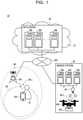
- FIG. 1 is a view illustrating an example of an authentication control system
- FIG. 2 is a view illustrating another example of the authentication control system
- FIG. 3 is a view illustrating an example of the hardware configuration of a portable terminal
- FIG. 4 is a view illustrating an example of the hardware configuration of a service server
- FIG. 5 is a view illustrating an example of the hardware configuration of a drone device
- FIG. 6 is a block diagram illustrating an example of the authentication control system
- FIG. 7A is a view illustrating an example of an ID storage part of the portable terminal.
- FIG. 7B is a view illustrating an example of a secret key storage part
- FIG. 8A is a view illustrating an example of a user information storage part
- FIG. 8B is a view illustrating an example of a public key storage part
- FIG. 9A is a view illustrating an example of a duplicate key storage part
- FIG. 9B is a view illustrating an example of an ID storage part of the drone device.
- FIG. 10A is a view illustrating an example of connection information set to a connection part
- FIG. 10B is a view illustrating an example of connection information set to a router part
- FIG. 11 is a processing sequence diagram (Part 1) illustrating an example of processing at request of transport;
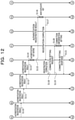
- FIG. 12 is a processing sequence diagram (Part 2) illustrating an example of processing at request of transport;
- FIG. 13 is a processing sequence diagram (Part 3) illustrating an example of processing at request of transport
- FIGS. 14A to 14D are views illustrating an example of a screen displayed on the portable terminal at request of transport;
- FIG. 15 is a processing sequence diagram (Part 1) illustrating an example of processing at authentication of the user
- FIG. 16 is a processing sequence diagram (Part 2) illustrating an example of processing at authentication of the user
- FIG. 17 is a processing sequence diagram (Part 3) illustrating an example of processing at authentication of the user
- FIG. 18 is a processing sequence diagram (Part 4) illustrating an example of processing at authentication of the user.
- FIGS. 19A to 19D are views illustrating an example of the screen displayed on the portable terminal at authentication of the user.
- the home delivery locker Since the home delivery locker is installed at a particular place, the home delivery locker may communicate with the server on the Internet and authenticate the user. In the case of a movable information processor such as a drone device, the information processor may not communicate with the server on the Internet and authenticate the user.
- the information processor may be uncommunicable with the server due to a failure or damage of a communication facility, failing to authenticate the user.
- FIG. 1 illustrates an example of an authentication control system ST.
- FIG. 2 illustrates another example of the authentication control system ST.
- the authentication control system ST includes a portable terminal 100 , a service server 200 , an authentication server 300 , and a drone device 400 .
- the portable terminal 100 is an example of a terminal device, such as a smartphone, a tablet terminal, and a wearable terminal.
- the terminal device may be a notebook personal computer (PC) having an internal or external biometric authentication sensor.
- the service server 200 is a server device managed by a first provider that offers a cargo transport service.
- the service server 200 is installed, for example, at a service station SB managed by the first provider. Examples of the service station SB include a roof of a facility and a parking lot that are used by the first provider.
- the authentication server 300 is a server device managed by a second provider that offers a cloud service of online authentication. Accordingly, the authentication server 300 is installed on a cloud CL (specifically, in a data center DC). As described above, since the first provider and the second provider are different providers, for example, the second provider is inaccessible to user information managed by the first provider.
- the drone device 400 is an example of a mobile information processor.
- the drone device 400 may be referred to as a multicomputer or an unmanned aircraft.
- the mobile information processor is not limited to a movable body such as the drone device 400 , and may be a movable body, for example, moving on the ground or water surface. Examples of such movable body include vehicles, ships, and robots.
- a notebook PC having a biometric authentication function may be mounted in a vehicle, ship, or flight vehicle to constitute the mobile information processor.
- the service server 200 sets various connection information about communicative connection to the drone device 400 .
- the service server 200 uses wireless communication WL 2 at an access point AP installed in the service station SB to set the various connection information.
- Examples of the wireless communication WL 2 include near-field wireless communication such as Wi-Fi (registered trademark) and Bluetooth (registered trademark).
- the authentication server 300 registers various authentication information about authentication of the user 10 to the drone device 400 under the control of the service server 200 .
- the authentication server 300 also registers the various authentication information by the wireless communication WL 2 .
- the portable terminal 100 and the drone device 400 generate and exchange respective identification information.
- the operator who operates in the service station SB stores the cargo requested by the user 10 in a transport box 450 of the drone device 400 , and locks the transport box 450 .
- the operator accesses the service server 200 via an operation screen (not illustrated) of the drone device 400 , sets positional information about the user 10 to a destination, and causes the drone device 400 to fly.
- the drone device 400 is transferred from the service station SB to the user 10 located in the disaster area DA.
- the positional information about the user 10 is transmitted from the portable terminal 100 to the service server 200 .
- the drone device 400 authenticates the user 10 . Specifically, first, when the user 10 brings the portable terminal 100 closer to the drone device 400 , the portable terminal 100 starts communication by wireless communication WL 3 , and requests connection to the drone device 400 .
- An example of the wireless communication WL 3 is proximity wireless communication such as near field communication (NFC).
- NFC near field communication
- the portable terminal 100 and the drone device 400 transmit respective identification information each other, and confirm whether or not the transmitted identification information coincides the held identification information.
- the NFC uses an NFC code (for example, QR code (registered trademark)) and an NFC reader (for example, QR code (registered trademark) scanner).
- NFC code for example, QR code (registered trademark)
- QR code registered trademark
- the portable terminal 100 may determine that the drone device 400 corresponds to the requested drone device 400 , and the drone device 400 may determine that the portable terminal 100 corresponds to the requesting portable terminal 100 . In this manner, mutual spoofing of portable terminal 100 and the drone device 400 may be reduced.
- the drone device 400 shuts off communication with the portable terminal 100 .
- the drone device 400 allows connection to the portable terminal 100 , establishes a communication channel to the portable terminal 100 , and keeps the communication channel. Using the connection information set from the service server 200 , the drone device 400 establishes a path to the authentication information registered in the drone device 400 . Then, the drone device 400 generates a challenge and transmits the challenge to the portable terminal 100 , and the portable terminal 100 encodes the challenge using the own authentication information and returns the encoded challenge.
- the challenge is information formed by unintentionally (randomly) combining at least one character, at least one figure, and at least one sign.
- the drone device 400 decodes the encoded challenge using the own authentication information and compares the decoded challenge with the challenge transmitted by itself to verify a comparison result.
- the drone device 400 determines that the user 10 is a valid user, and unlocks the transport box 450 . This enables the user 10 to take out the cargo from the transport box 450 .
- the type of the cargo is not specifically limited as long as it can be stored in the transport box 450 and the drone device 400 carrying the cargo can fly.
- a drug is described as an example of the cargo.
- the cargo may be foods and luxuries in addition to relief goods.
- FIG. 3 illustrates an example of the hardware configuration of the portable terminal 100 .
- the portable terminal 100 includes a central processing unit (CPU) 100 A that is a hardware processor, a random access memory (RAM) 100 B, a read only memory (ROM) 100 C, a non-volatile memory (NVM) 100 D, and a wide-area communication circuit 100 E.
- the wide-area communication circuit 100 E is a hardware circuit implementing the wide-area wireless communication.
- An antenna 100 E′ is connected to the wide-area communication circuit 100 E.
- the portable terminal 100 includes an authentication device 100 F, a proximity communication circuit 100 G, a touch panel 100 H, a display 100 I, and a global positioning system (GPS) sensor 100 J.
- the portable terminal 100 may include a camera, a speaker, and a microphone.
- the authentication device 100 F stores a biometric authentication sensor and biometric information that identifies the user 10 .
- the biometric authentication sensor may use face, fingerprint, and iris as an authenticated target.
- the authenticated target is not specifically limited, and may be vein and palm.
- the proximity communication circuit 100 G is a hardware circuit implementing proximity wireless communication.
- the GPS sensor 100 J may identify the position of the user 10 who holds the portable terminal 100 .
- the CPU 100 A to the GPS sensor 100 J are interconnected via an internal bus 100 K. In place of the CPU 100 A, a micro processing unit (MPU) may be used as a hardware processor.
- MPU micro processing unit
- the CPU 100 A temporarily stores programs stored in the ROM 100 C and the NVM 100 D in the above-mentioned RAM 100 B.
- the CPU 100 A executes the program including a plurality of commands to implement below-mentioned various functions and execute below-mentioned various processing.
- the program may be selected according to below-mentioned processing sequence diagrams.
- FIG. 4 illustrates an example of the hardware configuration of the service server 200 .
- the above-mentioned authentication server 300 has the basically same hardware configuration as the hardware configuration of the service server 200 and thus, description thereof is omitted.
- the service server 200 includes at least a CPU 200 A that is a hardware processor, a RAM 200 B, a ROM 200 C, and a network I/F (interface) 200 D.
- an MPU may be used as a hardware processor.
- the service server 200 may include at least one of a hard disk drive (HDD) 200 E, an input I/F 200 F, an output I/F 200 G, an input and output I/F 200 H, and a drive device 200 I.
- the CPU 200 A to the drive device 200 I are interconnected via an internal bus 200 J.
- An input device 710 is connected to the input I/F 200 F.
- Examples of the input device 710 include a keyboard and a mouse.
- a display device 720 is connected to the output I/F 200 G.
- An example of the display device 720 is a liquid crystal display.
- a semiconductor memory 730 is connected to the input and output I/F 200 H. Examples of the semiconductor memory 730 include a Universal Serial Bus (USB) memory and a flash memory.
- the input and output I/F 200 H reads programs and data in the semiconductor memory 730 .
- the input I/F 200 F and the input and output I/F 200 H each have, for example, an USB port.
- the output I/F 200 G has, for example, a display port.
- a portable recording medium 740 is inserted into the drive device 200 I.
- Examples of the portable recording medium 740 include removable discs such as compact disc (CD)-ROM and digital versatile disc (DVD).
- the drive device 200 I reads programs and data in the portable recording medium 740 .
- the network I/F 200 D has, for example, a LAN port.
- the network I/F 200 D is connected to the above-mentioned communication network NW.
- the CPU 200 A temporarily stores the programs stored in the ROM 200 C and the HDD 200 E in the above-mentioned RAM 200 B.
- the CPU 200 A temporarily stores a program stored in the portable recording medium 740 in the RAM 200 B.
- the CPU 200 A executes the program including a plurality of commands to implement below-mentioned various functions and execute below-mentioned various processing.
- the program may be selected according to below-mentioned processing sequence diagrams.
- FIG. 5 illustrates an example of the hardware configuration of the drone device 400 .
- the drone device 400 includes a built-in circuit 400 A, an NVM 400 B, a near-field communication circuit 400 C, a proximity communication circuit 400 D, and an open-close switch 400 E.
- the built-in circuit 400 A is a hardware circuit including a CPU, a RAM, a ROM, and so on.
- the built-in circuit 400 A is detachable from the drone device 400 .
- An antenna 400 C′ is connected to the near-field communication circuit 400 C.
- the open-close switch 400 E is connected to an electronic lock 400 E′ of the transport box 450 to lock or unlock the electronic lock 400 E′.
- the open-close switch 400 E may be implemented by a relay circuit.
- the built-in circuit 400 A to the open-close switch 400 E are interconnected via a first internal bus 400 F. That is, the drone device 400 may be implemented by a computer.
- the drone device 400 includes a drive circuit 400 G, a GPS sensor 400 H, a camera 400 I, and a power switch 400 J.
- the drive circuit 400 G to the power switch 400 J are interconnected via a second internal bus 400 K.
- the drive circuit 400 G is a hardware circuit for driving a propeller 400 G′.
- the drive circuit 400 G and the propeller 400 G′ are examples of a drive part.
- the power switch 400 J is a hardware circuit for switching a destination of electric power supplied from a power source 400 J′ such as a battery.
- a power source 400 J′ such as a battery.
- the power switch 400 J switches the destination of electric power from the second internal bus 400 K to the first internal bus 400 F. This may reduce power consumption of the power source 400 J′.
- the power switch 400 J and the power source 400 J′ are examples of a supply part.
- the drone device 400 may not use the wireless communication WL 1 . For this reason, when the drone device 400 falls outside the communicable area of the access point AP, the drone device 400 may not use the Internet. As a result, the drone device 400 may not access the authentication server 300 , failing to perform online authentication using the authentication server 300 .
- FIG. 6 is a block diagram illustrating an example of the authentication control system ST.
- the portable terminal 100 includes a wide-area communication part 101 , a display control part 102 , an authentication control part 103 , an authentication part 104 , a proximity communication part 105 , an ID storage part 106 , and a secret key storage part 107 .
- the wide-area communication part 101 may be implemented by the above-mentioned wide-area communication circuit 100 E and antenna 100 E′.
- the display control part 102 may be implemented by causing the above-mentioned CPU 100 A to execute an application program (hereinafter referred to as service application) including a plurality of commands distributed from the service server 200 .
- service application application program
- the authentication control part 103 may be implemented by causing the above-mentioned CPU 100 A to execute a client application program (hereinafter referred to as authentication client) including a plurality of commands pursuant to FIDO authentication.
- the authentication part 104 may be implemented by the above-mentioned authentication device 100 F.
- the proximity communication part 105 may be implemented by the above-mentioned proximity communication circuit 100 G.
- the ID storage part 106 and the secret key storage part 107 may be implemented by the RAM 100 B or the NVM 100 D.
- the wide-area communication part 101 controls wide-area wireless communication between the portable terminal 100 , and the service server 200 and the authentication server 300 .
- the wide-area communication part 101 transmits various information outputted from the display control part 102 to the service server 200 and the authentication server 300 .
- the wide-area communication part 101 receives the various information transmitted from the service server 200 and the authentication server 300 , and outputs the information to the display control part 102 .
- the display control part 102 displays the service provided from the service server 200 on the display 100 I (see FIG. 3 ). For example, when the user 10 operates the touch panel 100 H (see FIG. 3 ), the display control part 102 displays various screens such as a first service screen for accepting a request of service and a second service screen for selecting a drug. According to the accepted operation, the display control part 102 transmits various instruction information (commands) to the wide-area communication part 101 and the authentication control part 103 .
- the authentication control part 103 controls the entire authentication operations of the portable terminal 100 , including intermediation between the display control part 102 and the authentication part 104 .
- the authentication control part 103 transmits an authentication registration request to register the authentication information to the authentication part 104 .
- the authentication control part 103 generates first identification information for temporarily identifying the portable terminal 100 , and saves the generated first identification information in the ID storage part 106 as well as the first identification information that is common to (or same as) the generated first identification information to the authentication part 104 .
- the authentication control part 103 associates the first identification information with second identification information that temporarily identify an application ID and the drone device 400 .
- the application ID is uniform resource locator (URL) of the service server 200 distributing the service application.
- the ID storage part 106 stores the first identification information associated with the application ID and the second identification information.
- the first identification information and the second identification information each are information formed by unintentionally (randomly) combining at least one character, at least one number, and at least one sign.
- the first identification information, the second identification information, and the above-mentioned challenge are different from one another.
- the authentication part 104 When receiving the authentication registration request from the authentication control part 103 , the authentication part 104 displays a biometric authentication screen on the display 100 I (see FIG. 3 ). When receiving an identity confirmation request for identifying the user 10 from the authentication control part 103 , the authentication part 104 displays the biometric authentication screen on the display 100 I (see FIG. 3 ). For example, in the case of iris authentication, the authentication part 104 displays the biometric authentication screen including a message to promote iris authentication.
- the authentication part 104 acquires the iris of the user 10 as biometric information, and compares the acquired biometric information with pre-registered biometric information to identify the user 10 .
- the authentication part 104 generates a pair of a secret key and a public key having an expiration date as an authentication key for encoding information, and saves the secret key in the secret key storage part 107 .
- the authentication part 104 associates the secret key with the application ID and saves the secret key.
- the secret key storage part 107 stores the secret key associated with the application ID.
- the authentication part 104 encodes the first identification information transmitted from the authentication control part 103 using the secret key to generate an electronic signature, and transmits a user ID identifying the user 10 , the public key, and the electronic signature to the authentication server 300 .
- the user ID, the public key, and the electronic signature arrive at the service server 200 from the authentication part 104 via the authentication control part 103 , the display control part 102 , the wide-area communication part 101 , the portable base station BS, and the communication network NW.
- the service server 200 transmits the user ID, the public key, and the electronic signature to the drone device 400 .
- the service server 200 transmits the user ID and the public key to the authentication server 300 without transmitting the electronic signature to the authentication server 300 .
- the public key arrives at the authentication server 300 .
- the public key cryptography is used and however, secret key cryptography may be used.
- the proximity communication part 105 communicates with a below-mentioned proximity communication part 408 of the drone device 400 , and acquires the first identification information held by the drone device 400 .
- the first identification information is information for temporarily identifying the portable terminal 100 .
- the proximity communication part 105 transmits the second identification information held by the portable terminal 100 to the drone device 400 .
- the second identification information is information for temporarily identifying the drone device 400 .
- the proximity communication part 105 transmits the acquired first identification information to the authentication control part 103 .
- the authentication control part 103 may compare the first identification information stored in the ID storage part 106 with the acquired first identification information to verify a comparison result.
- the service server 200 includes a communication part 201 , a service provision part 202 , a user information storage part 203 , and a connection setting part 204 .
- the communication part 201 may be implemented by the above-mentioned network I/F 200 D.
- the service provision part 202 and the connection setting part 204 may be implemented by causing the above-mentioned CPU 100 A to execute the application program providing the transport service.
- the user information storage part 203 may be implemented by the RAM 200 B or the HDD 200 E.
- the communication part 201 controls communication between the service server 200 , and the portable terminal 100 , the authentication server 300 , and the drone device 400 .
- the communication part 201 transmits various information to the portable terminal 100 , the authentication server 300 , and the drone device 400 .
- the communication part 201 receives the various information transmitted from the portable terminal 100 , the authentication server 300 , and the drone device 400 .
- the service provision part 202 manages the service application, and when the communication part 201 accepts distribution of the service application from the portable terminal 100 , the service provision part 202 distributes the service application to the portable terminal 100 .
- the service provision part 202 manages a first Web page for accepting the drug transport service and a second Web page for selecting drugs. When the communication part 201 accepts a viewing request of the first Web page, the service provision part 202 distributes the first Web page, and when the communication part 201 accepts the viewing request of the second Web page, the service provision part 202 distributes the second Web page.
- the user information storage part 203 stores user information. As illustrated in FIG. 8A , the user information includes various attributes including user ID, name, positional information, birth data, sex, and qualification of the user 10 . For example, when the user 10 requests drug transport, the service provision part 202 checks the user information storage part 203 to determine whether or not the user 10 is qualified to deal with a drug to be transported.
- the connection setting part 204 When accepting a transport request transmitted from the service provision part 202 , under the control of the service provision part 202 , the connection setting part 204 sets various connection information about communicative connection to the drone device 400 . Describing in more detail, the connection setting part 204 outputs the connection information to the communication part 201 , and the communication part 201 transmits the connection information to the drone device 400 .
- the connection information includes a service set identifier (SSID), a passcode (or password), an expiration date, URLK of the service server 200 , an IP address of a dynamic host configuration protocol (DHCP) server, an IP address of default gateway (GW), an IP address of a domain name system (DNS), and so on.
- SSID service set identifier
- DHCP dynamic host configuration protocol
- GW IP address of default gateway
- DNS domain name system
- the authentication server 300 includes a communication part 301 , a verification part 302 , a public key storage part 303 , and a duplicate key transmission part 304 .
- the communication part 201 may be implemented by the above-mentioned network I/F 200 D.
- the verification part 302 and the duplicate key transmission part 304 may be implemented by causing the above-mentioned CPU 100 A to execute the application program provided by the online authentication service.
- the public key storage part 303 may be implemented by the RAM 200 B or the HDD 200 E.
- the communication part 301 controls communication between the authentication server 300 , and the portable terminal 100 , the service server 200 , and the drone device 400 .
- the communication part 301 transmits various information to the portable terminal 100 , the service server 200 , and the drone device 400 .
- the communication part 301 receives the various information transmitted from the portable terminal 100 , the service server 200 , and the drone device 400 .
- the verification part 302 saves the public key in the public key storage part 303 .
- the public key storage part 303 stores the public key.
- the public key is associated with the user ID.
- the challenge is not associated.
- the verification part 302 generates the challenge, associates the generated challenge with the public key, and saves them.
- the duplicate key transmission part 304 acquires a public key of a target user from the public key storage part 303 , duplicates the public key, and transmits the duplicated public key as a duplicate key to the drone device 400 .
- the duplicate key transmission part 304 outputs the duplicated public key to the communication part 301 , and the communication part 301 transmits the duplicated public key to the drone device 400 .
- the drone device 400 includes a near-field communication part 401 , a temporary verification part 402 , an entry part 403 , a drone control part 404 , and a duplicate key storage part 405 as constituents.
- the drone control part 404 includes an authentication processing part for executing authentication processing of authenticating the user 10 and a non-authentication processing part for executing non-authentication processing other than the authentication processing.
- the non-authentication processing is processing of controlling the open-close switch 400 E and the drive circuit 400 G.
- the drone device 400 includes a connection part 406 , a router part 407 , a proximity communication part 408 , an authentication control part 409 , and an ID storage part 410 as constituents as constituent.
- the temporary verification part 402 and the drone control part 404 are examples of a processing part and however, the processing part may include any constituent other than the temporary verification part 402 and the drone control part 404 .
- the duplicate key storage part 405 is an example of a storage part and however, the storage part may include any constituent other than the duplicate key storage part 405 .
- the near-field communication part 401 may be implemented by the above-mentioned near-field communication circuit 400 C.
- the proximity communication part 408 may be implemented by the above-mentioned proximity communication circuit 400 D.
- the temporary verification part 402 , the entry part 403 , the drone control part 404 , the duplicate key storage part 405 , the connection part 406 , the router part 407 , the authentication control part 409 , and the ID storage part 410 may be implemented by the built-in circuit 400 A and the NVM 400 B.
- the authentication processing part of the drone control part 404 may be implemented by causing the CPU of the built-in circuit 400 A to execute the program including a plurality of commands, which is stored in the ROM of the built-in circuit 400 A.
- the non-authentication processing part of the drone control part 404 may be implemented by causing the CPU of the built-in circuit 400 A to execute the program stored in the NVM 400 B.
- the authentication processing part of the drone control part 404 since the authentication processing part of the drone control part 404 is implemented by the program stored in the ROM, it is difficult to change contents of the program, for example, change an access destination.
- the non-authentication processing part of the drone control part 404 is implemented by the program stored in the NVM 400 B. For this reason, while the drone device 400 stays in the service station SB, the NVM 400 B may receive a control program limited to the service from the service server 200 , thereby limiting functions of the drone device 400 . For example, the drone device 400 may be safely operated by changing the functions of the drone device 400 or limiting the use of unnecessary functions according to the control program.
- the near-field communication part 401 controls communication between the drone device 400 , and the service server 200 and the authentication server 300 . For example, according the type of information, the near-field communication part 401 transmits various information to the service server 200 or the authentication server 300 . The near-field communication part 401 receives the various information transmitted from the service server 200 and the authentication server 300 .
- the temporary verification part 402 When the near-field communication part 401 receives the public key and the electronic signature from the service server 200 , the temporary verification part 402 outputs the public key and the electronic signature to the authentication control part 409 .
- the temporary verification part 402 saves the user ID and the duplicate key in the duplicate key storage part 405 .
- the duplicate key storage part 405 stores the duplicate key.
- the challenge is not associated with the duplicate key.
- the temporary verification part 402 generates the challenge, associates the generated challenge with the duplicate key, and saves them.
- the functions of the temporary verification part 402 are common to the functions of the verification part 302 of the authentication server 300 .
- the entry part 403 In response to a request from the drone control part 404 , the entry part 403 requests the temporary verification part 402 to confirm the identity of the user 10 , or to delete the duplicate key. Basically, functions of the entry part 403 are common to the functions of the service server 200 .
- the drone control part 404 authenticates the user 10 .
- the drone control part 404 transmits various information to the entry part 403 via the connection part 406 and the router part 407 .
- the drone control part 404 receives various information from the entry part 403 via the router part 407 and the connection part 406 .
- the drone control part 404 authenticates the user 10 through transmission and reception of the various information.
- the drone device 400 stops its flying, the drone control part 404 switches the power switch 400 J (see FIG. 5 ) from the second internal bus 400 K (see FIG. 5 ) to the first internal bus 400 F (see FIG. 5 ).
- the drone control part 404 unlocks the open-close switch 400 E (see FIG. 5 ).
- the router part 407 is an access point to be referred to by the connection part 406 .
- the router part 407 acquires and holds the received connection information.
- the connection information is set to the router part 407 .
- the connection information held by the router part 407 includes the SSID, the passcode, the expiration date, the URL, the IP address of the DHCP server, the IP address of the default GW, and the IP address of the DNS server. That is, the connection information includes various information required to set the channel.
- connection part 406 When the near-field communication part 401 receives connection information, the connection part 406 acquires and holds a part of the received connection information. Thereby, the connection information is set to the connection part 406 .
- the connection information received by the near-field communication part 401 indicates connection to the router part 407 as illustrated in FIG. 10B , the connection part 406 is connected to the router part 407 by wired communication or wireless communication.
- the connection part 406 indicates connection to the access point AP
- the connection part 406 is connected to the near-field communication part 401 .
- the access point AP of the service station SB is connected to the drone device 400 by the wireless communication WL 2 . In this manner, based on the connection information, the connection part 406 changes the access destination and is connected thereto.
- the proximity communication part 408 communicates with the proximity communication part 105 of the portable terminal 100 , and acquires the second identification information held by the portable terminal 100 .
- the proximity communication part 408 transmits the first identification information held by the drone device 400 to the portable terminal 100 .
- the proximity communication part 408 transmits the acquired second identification information to the authentication control part 409 .
- the authentication control part 409 may compare the second identification information stored in the ID storage part 410 with the acquired second identification information, and verify the comparison result.
- the authentication control part 409 controls the entire authentication operations of the drone device 400 , such as intermediation between the drone control part 404 and the proximity communication part 408 .
- the authentication control part 409 decodes the electronic signature using the public key to restore the first identification information and then, generates the second identification information.
- the authentication control part 409 associates the decoded first identification information with the generated second identification information, and saves them in the ID storage part 410 and then, transmits the second identification information that is common to (or the same as) the generated second identification information to the drone control part 404 .
- the authentication control part 409 associates the first identification information and the second identification information with the application ID, and saves them.
- the ID storage part 410 stores the first identification information and the second identification information that are associated with the application ID.
- FIG. 11 is a processing sequence diagram (Part 1) illustrating an example of processing at request of transport.
- FIG. 12 is a processing sequence diagram (Part 2) illustrating an example of processing at request of transport.
- FIG. 13 is a processing sequence diagram (Part 3) illustrating an example of processing at request of transport.
- FIGS. 14A to 14D are an example of the screen displayed on the portable terminal 100 at request of transport.
- FIGS. 11 to 13 are continuous using corresponding signs such as “A 1 ”.
- the display control part 102 of the portable terminal 100 transmits a transport request to the service server 200 (Step S 101 ).
- the display control part 102 accesses the service provision part 202 of the service server 200 via the wide-area communication part 101 .
- the display control part 102 acquires the first Web page for starting the drug transport service from a plurality of Web pages managed by the service provision part 202 via the wide-area communication part 101 , and displays the first service screen corresponding to the first Web page on the display 100 I (see FIG. 3 ).
- the portable terminal 100 displays the first service screen.
- the display control part 102 When the user 10 operates the first service screen to input the user ID and press a request button BT 1 , the display control part 102 again accesses the service provision part 202 of the service server 200 using the user ID inputted via the wide-area communication part 101 . Then, the display control part 102 acquires the second Web page for selecting drugs from a plurality of Web pages managed by the service provision part 202 via the wide-area communication part 101 , and displays the second service screen corresponding to the second Web page on the display 100 I (see FIG. 3 ). Thereby, as illustrated in FIG. 14B , the portable terminal 100 displays the second service screen.
- the second service screen includes the user ID inputted to the first service screen, and a plurality of check boxes BX 1 , BX 2 , and BX 3 for selecting drugs to be transported.
- the display control part 102 transmits a transport request to the service server 200 via the wide-area communication part 101 .
- the transport request includes the user ID and the name of the selected drug. Accordingly, for example, as illustrated in FIG. 14B , when drugs “drug A 2 ” and “drug C 3 ” are selected, the transport request includes the user ID, the drug A 2 and the drug C 3 .
- the service server 200 transmits the authentication information registration request to the authentication server 300 (Step S 102 ).
- the service provision part 202 of the service server 200 waits for a request from the display control part 102 . Then, when the received request is the transport request, the service provision part 202 searches the user information storage part 203 based on the user ID included in the transport request. When identifying user information including the user ID included in the transport request, the service provision part 202 associates the identified user information with the drug name included in the transport request and saves them. The service provision part 202 saves the drug name and then, transmits the authentication information registration request including the user ID and the URL of the service server 200 to the authentication server 300 via the communication part 201 .
- the authentication server 300 checks the authentication key (Step S 103 ), and transmits the authentication registration request to the service server 200 (Step S 104 ). Describing in more detail, the verification part 302 of the authentication server 300 waits for the request from the service provision part 202 . Then, when the received request is the authentication information registration request, the verification part 302 extracts the user ID from the authentication information registration request, and determines whether or not information (hereinafter referred to as entry) including the user ID common to the extracted user ID is present in the public key storage part 303 to check the presence of absence of the authentication key.
- entry information
- the verification part 302 When determining that the entry including the user ID common to the extracted user ID is not present, the verification part 302 generates a new entry including the extracted user ID, and saves the generated entry in the public key storage part 303 . After that, the verification part 302 transmits the authentication registration request including the user ID and the application ID represented by the URL of the service server 200 to the service server 200 via the communication part 301 .
- Step S 104 the service server 200 transmits the authentication registration request to the display control part 102 (Step S 105 ).
- the service provision part 202 of the service server 200 waits for a response to the authentication information registration request transmitted by itself, and when the response is the authentication registration request, transmits the authentication registration request to the display control part 102 via the communication part 201 .
- the display control part 102 transmits the authentication registration request to the authentication control part 103 (Step S 106 ). Describing in more detail, the display control part 102 waits a response to the transport request transmitted by itself, and when the response is the authentication registration request, transmits the authentication registration request to the authentication control part 103 .
- the display control part 102 may display the predetermined screen on the display 100 I (see FIG. 3 ) based on the information.
- the authentication control part 103 When the processing in Step S 106 is completed, the authentication control part 103 generates the first identification information and saves the generated first identification information in the ID storage part 106 (Step S 107 ). Describing in more detail, the authentication control part 103 waits for the request from the display control part 102 . Then, when the received request is the authentication registration request, the authentication control part 103 generates the first identification information, extracts the application ID from the authentication registration request, associates the generated first identification information with the extracted application ID, and saves them in the ID storage part 106 . Thereby, the ID storage part 106 stores a combination of the first identification information and the application ID (see FIG. 7A ). At this time, the combination of the first identification information and the application ID is not associated with the second identification information.
- the authentication control part 103 transmits the authentication registration request to the authentication part 104 (Step S 108 ). Describing in more detail, the authentication control part 103 transmits the authentication registration request including the generated first identification information, the application ID, and the user ID. The authentication control part 103 transmits the authentication registration request and then, waits for a response from the authentication part 104 .
- the authentication part 104 displays the biometric authentication screen, and generates the authentication key (Step S 109 ). Describing in more detail, the authentication part 104 waits for a request. Then, when the received request is the authentication registration request, the authentication part 104 displays the biometric authentication screen on the display 100 I (see FIG. 3 ). Thereby, as illustrated in FIG. 14C , the portable terminal 100 displays the biometric authentication screen.
- the authentication part 104 displays the eyes of the user 10 on the biometric authentication screen of the portable terminal 100 , and acquires the iris of the user 10 as the biometric information.
- the authentication part 104 compares the biometric information stored in itself with the acquired biometric information, and when the comparison of the two pieces of biometric information can authenticate the user 10 , generates a pair of the secret key and the public key as the authentication key.
- the authentication part 104 extracts the application ID included in the authentication registration request, associates the generated secret key with the application ID, and stores them in the secret key storage part 107 .
- the secret key storage part 107 associates the secret key with the application ID and stores them (see FIG. 7B ).
- the authentication part 104 transmits an authentication registration result to the authentication control part 103 (Step S 110 ).
- the authentication part 104 generates an electronic signature generated by encoding the first identification information using the secret key, and transmits the authentication registration result including the generated electronic signature, the generated public key, and the user ID.
- the authentication part 104 transmits the authentication registration result and then, waits for a request.
- the authentication control part 103 transmits the authentication registration result to the display control part 102 (Step S 111 ). Describing in more detail, the authentication control part 103 determines whether or not the received response is the authentication registration result, and when the received response is the authentication registration result, transmits the authentication registration result. The authentication control part 103 transmits the authentication registration result and then, waits for a next request.
- the display control part 102 transmits the authentication registration result to the service server 200 (Step S 112 ). Describing in more detail, the display control part 102 determines whether or not the received response is the authentication registration result, and when received response is the authentication registration result, transmits the authentication registration result via the wide-area communication part 101 . The authentication control part 103 transmits the authentication registration result and then, waits for a response from the service server 200 .
- the service server 200 transmits the authentication registration result to the authentication server 300 (Step S 113 ).
- the service provision part 202 of the service server 200 transmits the authentication registration result to the authentication server 300 via the communication part 201 and then, waits for a response from the authentication server 300 .
- the authentication server 300 saves the authentication key (Step S 114 ).
- the verification part 302 of the authentication server 300 extracts the user ID and the public key as the authentication key in the authentication registration result. Then, the verification part 302 searches the public key storage part 303 based on the extracted user ID, associates the entry including the extracted user ID with the extracted public key, and saves them in the public key storage part 303 .
- the entry including the extracted user ID is generated by the processing in Step S 103 .
- the public key storage part 303 stores the entry including a combination of the user ID and the public key (see FIG. 8B ). At this time, the combination is not associated with the challenge.
- the authentication server 300 transmits the authentication registration result to the temporary verification part 402 (Step S 115 ).
- the verification part 302 of the authentication server 300 saves the public key as the authentication key and then, outputs the transmission instruction of the public key to the duplicate key transmission part 304 .
- the duplicate key transmission part 304 extracts the public key associated with the user ID included in the authentication registration result from the public key storage part 303 , and duplicates the extracted public key.
- the duplicate key transmission part 304 transmits the authentication registration result including the user ID and the duplicate key to the temporary verification part 402 of the drone device 400 via the communication part 301 .
- the temporary verification part 402 saves the duplicate key (Step S 116 ) and then, transmits the registration completion to the authentication server 300 (Step S 117 ).
- the temporary verification part 402 extracts the user ID and the duplicate key in the authentication registration result, associates the user ID with the duplicate key, and saves them in the duplicate key storage part 405 .
- the duplicate key storage part 405 stores a combination of the user ID and the duplicate key (see FIG. 9A ). At this time, the combination is not associated with the challenge.
- the temporary verification part 402 transmits the registration completion of the authentication registration result to the authentication server 300 .
- the authentication server 300 transmits the registration completion to the service server 200 (Step S 118 ).
- the duplicate key transmission part 304 of the authentication server 300 receives the registration completion from the communication part 301
- the duplicate key transmission part 304 transmits the registration completion of the authentication registration result to the service provision part 202 via the communication part 301 .
- the service server 200 transmits a connection setting request to the connection part 406 (Step S 119 ).
- the service provision part 202 of the service server 200 generates the connection information, and transmits the connection setting request including the generated connection information to the connection part 406 via the communication part 201 .
- the service provision part 202 transmits the connection setting request and then, waits for a connection setting response.
- the connection information includes SSID, passcode, expiration date, URL of the service server 200 , IP address of the DHCP server, IP address of the default GW, and IP address of the DNS server.
- connection part 406 sets the connection information (Step S 120 ). Describing in more detail, as illustrated in FIG. 10B , the connection part 406 holds the SSID, the passcode, and the expiration date in the connection information. Thereby, the connection information is set to the connection part 406 .
- the connection part 406 transmits connection setting response to the service server 200 (Step S 121 ).
- the service server 200 transmits the connection setting request to the router part 407 (Step S 122 ).
- the service provision part 202 of the service server 200 transmits the connection setting request including the connection information generated in the processing in Step S 119 via the communication part 201 .
- the service provision part 202 transmits the connection setting request and then, waits for a second connection setting response.
- the router part 407 sets the connection information (Step S 123 ). Describing in more detail, as illustrated in FIG. 10A , the router part 407 holds SSID, passcode, URL of the service server 200 , and so on in the connection information. Thereby, the connection information is set to the connection part 406 .
- the connection part 406 transmits the connection setting response to the service server 200 (Step S 124 ).
- the service server 200 transmits the authentication registration result to the authentication control part 409 (Step S 125 ).
- the service provision part 202 of the service server 200 transmits the authentication registration result including the application ID, the public key, and the electronic signature to the authentication control part 409 via the communication part 201 .
- the electronic signature included in the authentication registration result is the encoded first identification information.
- the service provision part 202 transmits the authentication registration result and then, waits for the registration completion.
- the authentication control part 409 saves the first identification information, and generates and saves the second identification information (Step S 126 ).
- the authentication control part 409 extracts the electronic signature, the public key, and the application ID in the authentication registration result.
- the authentication control part 409 decodes the electronic signature by using the public key. This restores the first identification information.
- the authentication control part 409 generates the second identification information, associates the generated second identification information and the decoded first identification information with the application ID, and saves them in the ID storage part 410 .
- the ID storage part 410 stores a combination of the application ID, the first identification information, and the second identification information (see FIG. 9B ).
- the authentication control part 409 transmits the registration completion to the service server 200 (Step S 127 ). Describing in more detail, the authentication control part 409 transmits the registration completion including the application ID and the generated second identification information.
- Step S 127 the service server 200 transmits an authentication information registration response to the display control part 102 (Step S 128 ).
- the service provision part 202 of the service server 200 extracts the application ID and the second identification information in the registration completion, and transmits the authentication information registration response including the extracted application ID and the second identification information via the communication part 201 .
- Step S 129 the display control part 102 transmits a saving request of the second identification information to the authentication control part 103 (Step S 129 ).
- the display control part 102 extracts the application ID and the second identification information in the authentication information registration response, and transmits the saving request including the extracted application ID and the second identification information.
- the authentication control part 103 saves the second identification information (Step S 130 ). Describing in more detail, the authentication control part 103 extracts application ID and the second identification information in the saving request, and searches the ID storage part 106 based on the extracted application ID. Then, the authentication control part 103 associates the first identification information associated with the application ID common to the extracted application ID with the extracted second identification information, and saves them in the ID storage part 106 . Thereby, the ID storage part 106 stores a combination of the application ID, the first identification information, and the second identification information (see FIG. 7A ).
- the authentication control part 103 transmits a saving response of the second identification information to the display control part 102 (Step S 131 ).
- the display control part 102 displays an acceptance completion screen on the display 100 I.
- the portable terminal 100 displays the acceptance completion screen.
- the operator operates the drone device 400 to set the positional information of the user 10 .
- the positional information of the user 10 may be acquired from the user information storage part 203 of the service server 200 .
- the drone device 400 starts its flight to the set positional information as the destination.
- FIG. 15 is a processing sequence diagram (Part 1) illustrating an example of processing at authentication of the user.
- FIG. 16 is a processing sequence diagram (Part 2) illustrating an example of processing at authentication of the user.
- FIG. 17 is a processing sequence diagram (Part 3) illustrating an example of processing at authentication of the user.
- FIG. 18 is a processing sequence diagram (Part 4) illustrating an example of processing at authentication of the user.
- FIGS. 19A to 19D illustrates an example of a screen displayed on the portable terminal 100 at authentication of the user.
- FIGS. 15 to 18 are continuous using corresponding signs such as “A 5 ”.
- the proximity communication part 105 of the portable terminal 100 transmits a connection request to the proximity communication part 408 of the drone device 400 (Step S 201 ).
- the drone device 400 starts to descend.
- the service provision part 202 previously calculates a scheduled arrival time of the drone device 400 , and when the current time coincides with the scheduled arrival time, notifies the arrival of the drone device 400 to the display control part 102 .
- the display control part 102 displays a notification screen for notifying the arrival of the drone device 400 on the display 100 I (see FIG. 3 ).
- the portable terminal 100 displays the notification screen.
- the display control part 102 displays the notification screen for a predetermined time and then, displays a communication trial start screen to prompt to bring the portable terminal 100 closer to the drone device 400 on the display 100 I (see FIG. 3 ). Thereby, as illustrated in FIG. 19B , the portable terminal 100 displays the communication trial start screen.
- the proximity communication part 105 transmits the connection request including the user ID and the application ID to the proximity communication part 408 of the drone device 400 , and tries to establish a communication channel.
- the proximity communication part 408 transmits an ID acquisition request to the authentication control part 409 (Step S 202 ). Describing in more detail, when receiving the connection request, the proximity communication part 408 extracts the application ID from the connection request, and transmits the ID acquisition request including the extracted application ID.
- the authentication control part 409 acquires the first identification information and the second identification information (Step S 203 ). Describing in more detail, when receiving the ID acquisition request, the authentication control part 409 searches the ID storage part 410 based on the application ID included in the ID acquisition request. The authentication control part 409 acquires the first identification information and the second identification information, which are associated with the application ID included in the ID acquisition request, from the ID storage part 410 .
- the authentication control part 409 transmits an ID 1 confirmation request to the proximity communication part 408 (Step S 204 ).
- the authentication control part 409 includes the application ID and the first identification information, and transmits the ID 1 confirmation request including no second identification information. Until the reception of a below-mentioned ID 2 confirmation request, the authentication control part 409 holds the second identification information.
- the proximity communication part 408 transmits a connection response to the proximity communication part 105 (Step S 205 ).
- the proximity communication part 408 extracts the application ID and the first identification information in the ID 1 confirmation request, and transmits the connection response including the extracted application ID and the first identification information.
- the connection response is a response to the connection request transmitted from the proximity communication part 105 .
- the proximity communication part 105 transmits the ID 1 confirmation request to the authentication control part 103 (Step S 206 ). Describing in more detail, when receiving the connection response, the proximity communication part 105 extracts the application ID and the first identification information in the connection response, and transmits the ID 1 confirmation request including the extracted application ID and the first identification information.
- the authentication control part 103 acquires the first identification information and the second identification information, and verifies the comparison result of the first identification information (Step S 207 ).
- the authentication control part 103 acquires the first identification information and the second identification information, which are associated with the application ID common to the application ID included in the ID 1 confirmation request, from the ID storage part 106 . Then, the authentication control part 103 compares the first identification information included in the ID 1 confirmation request with the first identification information acquired from the ID storage part 106 , and verifies a comparison result of the two pieces of first identification information.
- Step S 207 the authentication control part 103 transmits the ID 2 confirmation request to the proximity communication part 105 (Step S 208 ).
- the authentication control part 103 transmits the ID 2 confirmation request including the application ID and the acquired second identification information.
- the proximity communication part 105 transmits the ID 2 confirmation request to the proximity communication part 408 (Step S 209 ).
- the proximity communication part 408 transmits the authentication control part 409 to the ID 2 confirmation request (Step S 210 ).
- the authentication control part 409 verifies a comparison result of the second identification information (Step S 211 ). Describing in more detail, when receiving the ID 2 confirmation request, the authentication control part 409 compares the second identification information included in the ID 2 confirmation request with the second identification information held in the processing in Step S 203 to verify a comparison result of the two pieces of second identification information.
- the authentication control part 409 transmits an ID 2 confirmation response to the proximity communication part 408 (Step S 212 ).
- the authentication control part 409 transmits the ID 2 confirmation response.
- the ID 2 confirmation response is a response indicating that the two pieces of second identification information coincide with each other, in response to the ID 2 confirmation request.
- the proximity communication part 408 establishes proximity connection to the proximity communication part 105 (Step S 213 ). This establishes the communication channel between the proximity communication part 105 and the proximity communication part 408 , such that various information may be exchanged.
- the proximity communication part 408 transmits a connection request to the connection part 406 (Step S 214 ).
- the connection request to transmit from the proximity communication part 408 to the connection part 406 is a request about a connection trial between the connection part 406 and the router part 407 .
- the connection part 406 transmits the connection trial to the router part 407 (Step S 215 ).
- the connection part 406 transmits the connection trial including the SSID and the passcode, which are set to itself, to the router part 407 .
- the router part 407 assigns the URL (Step S 216 ).
- the router part 407 extracts the SSID and the passcode in the received connection trial, and compares a combination of the extracted SSID and passcode with a combination of the SSID and the passcode set to itself. As the result of comparison, when the combinations coincide with each other, the router part 407 assigns the URL set to itself to the entry part 403 .
- the entry part 403 is represented as the service server 200 in a pseudo manner.
- the router part 407 transmits the connection response to the connection part 406 (Step S 217 ).
- the connection response transmitted from the router part 407 to the connection part 406 is a response indicating that connection between the connection part 406 and the router part 407 has succeeded and completed.
- connection part 406 transmits the connection response to the proximity communication part 408 (Step S 218 ).
- the proximity communication part 408 transmits an authentication request to the authentication control part 409 (Step S 219 ).
- the authentication request includes the user ID and the application ID.
- the authentication control part 409 transmits the authentication request to the drone control part 404 (Step S 220 ).
- the drone control part 404 transmits the authentication request to the entry part 403 (Step S 221 ). Describing in more detail, the drone control part 404 transmits the authentication request including the URL of the connection destination, which is incorporated into itself.
- the URL included in the authentication request indicates both of the service server 200 and the entry part 403 .
- the drone device 400 may not be communicably connected to the communication network NW in the disaster area DA and this, may not communicate with the service server 200 .
- the drone control part 404 may transmit the authentication request to the connection part 406 , causing the entry part 403 to receive the authentication request via the connection part 406 and the router part 407 . In this manner, the drone control part 404 may indirectly transmit the authentication request to the entry part 403 .
- the entry part 403 transmits the authentication request to the temporary verification part 402 (Step S 222 ).
- the temporary verification part 402 generates the challenge (Step S 223 ).
- the temporary verification part 402 when receiving the authentication request, the temporary verification part 402 generates the challenge, and saves the challenge in the duplicate key storage part 405 (see FIG. 9A ).
- the temporary verification part 402 associates the challenge with the duplicate key stored in the duplicate key storage part 405 , and saves the challenge.
- the temporary verification part 402 transmits the identity confirmation request to the entry part 403 (Step S 224 ). Describing in more detail, the temporary verification part 402 extracts the application ID included the authentication request, and transmits the identity confirmation request including the extracted application ID and the generated challenge.
- the entry part 403 transmits the identity confirmation request to the drone control part 404 (Step S 225 ). Since the router part 407 is communicably connected to the connection part 406 , the entry part 403 may indirectly transmit the identity confirmation request to the drone control part 404 by using communicative connection between the router part 407 and the connection part 406 .
- the drone control part 404 transmits the identity confirmation request to the authentication control part 409 (Step S 226 ).
- the authentication control part 409 transmits the identity confirmation request to the authentication part 104 of the portable terminal 100 (Step S 227 ).
- the identity confirmation request transmitted from the authentication control part 409 arrives at the authentication part 104 via the proximity communication part 408 , and the proximity communication part 105 and the authentication control part 103 of the portable terminal 100 . That is, the authentication control part 409 may indirectly transmit the identity confirmation request to the authentication part 104 .
- the authentication part 104 executes biometric authentication (Step S 228 ).
- the authentication part 104 displays the biometric authentication screen on the display 100 I (see FIG. 3 ).
- the portable terminal 100 displays the biometric authentication screen.
- the biometric authentication sensor for example, camera
- the authentication part 104 displays the eyes of the user 10 on the biometric authentication screen of the portable terminal 100 , and acquires the iris of the user 10 as the biometric information.
- the authentication part 104 compares the biometric information stored in itself with the acquired biometric information, and executes the biometric authentication.
- the authentication part 104 transmits an identity confirmation result to the authentication control part 409 of the drone device 400 (Step S 229 ).
- the authentication part 104 extracts the challenge included in the identity confirmation request, and acquires the secret key corresponding to the application ID included in the identity confirmation request from the secret key storage part 107 .
- the authentication part 104 encodes the challenge using the secret key to generate the electronic signature.
- the authentication part 104 indirectly transmits the identity confirmation result including the generated electronic signature to the authentication control part 409 .
- the authentication control part 409 transmits the identity confirmation result to the drone control part 404 (Step S 230 ).
- the drone control part 404 transmits the identity confirmation result to the entry part 403 (Step S 231 ). Thereby, the drone control part 404 starts authentication of the user 10 .
- the entry part 403 transmits the identity confirmation result to the temporary verification part 402 (Step S 232 ).
- the temporary verification part 402 verifies a confirmation result (Step S 233 ). Describing in more detail, the temporary verification part 402 extracts the electronic signature included in the identity confirmation result, and acquires the duplicate key and the challenge from the duplicate key storage part 405 . Then, the temporary verification part 402 decodes the electronic signature by using the duplicate key to restore the challenge, and compares the acquired challenge with the decoded challenge, verifying the confirmation result. Since the duplicate key is a duplicated public key, the electronic signature may be restored.
- the temporary verification part 402 transmits an identity confirmation response to the entry part 403 (Step S 234 ).
- the temporary verification part 402 indirectly transmits the identity confirmation response to the entry part 403 .
- the identity confirmation response includes the success of authentication of the user 10 .
- the entry part 403 transmits the identity confirmation response to the drone control part 404 (Step S 235 ).
- the drone control part 404 unlocks the electronic lock 400 E′ (Step S 236 ).
- the drone control part 404 finishes authentication of the user 10 .
- the drone control part 404 transmits a guidance notification notifying the completion of unlocking of the electronic lock 400 E′ to the display control part 102 .
- the display control part 102 displays a guidance screen on the display 100 I (see FIG. 3 ). Thereby, as illustrated in FIG.
- the portable terminal 100 displays the guidance screen. Accordingly, the user 10 may check the guidance screen to take out the drug from the transport box 450 .
- the drone control part 404 transmits a completion request to the entry part 403 (Step S 237 ).
- Step S 237 when the processing in Step S 237 is completed, the entry part 403 transmits a key deletion request to the temporary verification part 402 (Step S 238 ).
- the temporary verification part 402 deletes the duplicate key (Step S 239 ). Describing in more detail, the temporary verification part 402 deletes the user ID, the expiration date, and the challenge that are associated with the duplicate key and the duplicate key, which are stored in the duplicate key storage part 405 . Thereby, the authentication function of the user 10 disappears from the drone device 400 .
- the temporary verification part 402 transmits a key deletion response to the entry part 403 (Step S 240 ).
- the entry part 403 transmits a completion response to the drone control part 404 (Step S 241 ).
- the drone control part 404 transmits the completion request to the authentication control part 409 (Step S 242 ).
- the authentication control part 409 transmits the completion request to the proximity communication part 408 (Step S 243 ).
- Step S 243 When the processing in Step S 243 is completed, the proximity communication part 408 releases proximity connection (Step S 244 ). As a result, communication between the proximity communication part 408 and the proximity communication part 105 is shut off. When the processing in Step S 244 is completed, the proximity communication part 408 transmits a connection release request to the connection part 406 (Step S 245 ).
- connection part 406 transmits the connection release request to the router part 407 (Step S 246 ).
- the connection part 406 transmit the connection release request to stop connection to the router part 407 .
- the router part 407 releases the connection (Step S 247 ). Describing in more detail, when receiving the connection release request, the router part 407 releases the connection to the connection part 406 .
- the drone control part 404 controls a completion button (not illustrated) of the drone device 400 from an impressable state to a pressable state.
- the drone control part 404 checks locking of the electronic lock 400 E′ and then, switches the destination of electric power from the open-close switch 400 E to the drive circuit 400 G. After that, the drone device 400 takes off the ground, and returns to the service station SB.
- the state of communication between the drone device 400 and the authentication server 300 varies.
- the drone device 400 includes the duplicate key storage part 405 .
- the authentication server 300 transmits the duplicate key to the drone device 400 in a first communication state in which the drone device 400 may communicate with the authentication server 300 , such that the duplicate key storage part 405 stores the duplicate key.
- the duplicate key is formed by duplicating the public key held by the authentication server 300 , which corresponds to the secret key held by the portable terminal 100 of the user 10 .
- the drone device 400 includes the temporary verification part 402 and the drone control part 404 .
- the temporary verification part 402 transmits the challenge to the portable terminal 100 .
- the portable terminal 100 receives the electronic signature formed by encoding the challenge based on the secret key
- the temporary verification part 402 decodes the electronic signature based on the duplicate key.
- the temporary verification part 402 decodes the electronic signature, such that the drone control part 404 authenticates the user 10 . Accordingly, the drone device 400 may authenticate the user 10 even in the state the drone device 400 may not communicate with the authentication server 300 .
- the present disclosure is not limited to a particular embodiment and may be modified and changed within the scope of the subject matter of the present disclosure, which is described in CLAIMS.
- PIN personal identification number
- the authentication device 100 F stores a PIN input device and the PIN.
- the authentication part 104 displays a confirmation screen including a message to prompt PIN authentication in place of the biometric authentication screen.
- the temporary verification part 402 deletes the duplicate key of the duplicate key storage part 405 and then, the authentication result is stored in the duplicate key storage part 405 after authentication of the user 10 and the drone device returns from the disaster area DA to the service station SB, the authentication result stored in the duplicate key storage part 405 may be held in the authentication server 300 . This may monitor the operating state of the drone device 400 . At the timing when the drone device 400 may use the public wireless communication WL 2 , the temporary verification part 402 may allow the authentication server 300 to hold the authentication result.
Landscapes
- Engineering & Computer Science (AREA)
- Computer Hardware Design (AREA)
- Computer Security & Cryptography (AREA)
- Computing Systems (AREA)
- General Engineering & Computer Science (AREA)
- Computer Networks & Wireless Communication (AREA)
- Signal Processing (AREA)
- Aviation & Aerospace Engineering (AREA)
- Selective Calling Equipment (AREA)
Abstract
Description
Claims (15)
Applications Claiming Priority (3)
| Application Number | Priority Date | Filing Date | Title |
|---|---|---|---|
| JP2018-083752 | 2018-04-25 | ||
| JP2018083752A JP7106965B2 (en) | 2018-04-25 | 2018-04-25 | Information processing device, authentication control system, and authentication control program |
| JPJP2018-083752 | 2018-04-25 |
Publications (2)
| Publication Number | Publication Date |
|---|---|
| US20190334889A1 US20190334889A1 (en) | 2019-10-31 |
| US11265313B2 true US11265313B2 (en) | 2022-03-01 |
Family
ID=68290759
Family Applications (1)
| Application Number | Title | Priority Date | Filing Date |
|---|---|---|---|
| US16/368,997 Expired - Fee Related US11265313B2 (en) | 2018-04-25 | 2019-03-29 | Authentication control device and authentication control method |
Country Status (2)
| Country | Link |
|---|---|
| US (1) | US11265313B2 (en) |
| JP (1) | JP7106965B2 (en) |
Cited By (1)
| Publication number | Priority date | Publication date | Assignee | Title |
|---|---|---|---|---|
| US20220144427A1 (en) * | 2020-09-14 | 2022-05-12 | DroneUp, LLC | Methods and apparatus for automatic drone resupply of a product to an individual based on gps location, without human intervention |
Families Citing this family (6)
| Publication number | Priority date | Publication date | Assignee | Title |
|---|---|---|---|---|
| JP7262964B2 (en) * | 2018-10-12 | 2023-04-24 | 株式会社東芝 | Information processing device and information processing system |
| JP7399727B2 (en) * | 2020-01-30 | 2023-12-18 | 株式会社東芝 | Authentication devices and authentication systems |
| EP4134847B1 (en) * | 2020-04-10 | 2025-12-03 | NEC Corporation | Authentication server, authentication system, authentication server control method, and storage medium |
| CN115515460A (en) * | 2020-04-20 | 2022-12-23 | 丹尼尔·S·奥图尔 | Temperature control equipment for drone docking station with hot and cold zones |
| US11164415B1 (en) * | 2020-09-29 | 2021-11-02 | Ident Llc | Touchless, automated and remote premise entry systems and methods |
| JP7721978B2 (en) * | 2021-06-21 | 2025-08-13 | コニカミノルタ株式会社 | Authentication system and method for controlling authentication system |
Citations (9)
| Publication number | Priority date | Publication date | Assignee | Title |
|---|---|---|---|---|
| US20040107109A1 (en) * | 2000-12-29 | 2004-06-03 | Naoya Nakanishi | Contents directory service system |
| WO2005057447A1 (en) | 2003-12-09 | 2005-06-23 | Matsushita Electric Industrial Co., Ltd. | Authentication system, authentication device, and recording medium |
| US20140180914A1 (en) | 2007-01-12 | 2014-06-26 | Raj Abhyanker | Peer-to-peer neighborhood delivery multi-copter and method |
| US20150154416A1 (en) * | 2013-12-02 | 2015-06-04 | Oberthur Technologies | Processing method for making electronic documents secure |
| JP2016115079A (en) | 2014-12-12 | 2016-06-23 | 日本ユニシス株式会社 | Authentication system with positional information, authentication apparatus, authentication management server and, and portable authentication device |
| JP2018049415A (en) | 2016-09-21 | 2018-03-29 | コニカミノルタ株式会社 | Authentication apparatus, authentication method, program, and system |
| US20180285555A1 (en) * | 2015-10-14 | 2018-10-04 | Alibaba Group Holding Limited | Authentication method, device and system |
| US20190028443A1 (en) * | 2017-07-19 | 2019-01-24 | Hyundai Motor Company | Vehicle system and control method thereof |
| US20190116044A1 (en) | 2017-10-17 | 2019-04-18 | Canon Kabushiki Kaisha | System and method for providing services via a network |
Family Cites Families (1)
| Publication number | Priority date | Publication date | Assignee | Title |
|---|---|---|---|---|
| JP6667371B2 (en) | 2016-05-31 | 2020-03-18 | Kddi株式会社 | Communication system, communication device, communication method, and program |
-
2018
- 2018-04-25 JP JP2018083752A patent/JP7106965B2/en not_active Expired - Fee Related
-
2019
- 2019-03-29 US US16/368,997 patent/US11265313B2/en not_active Expired - Fee Related
Patent Citations (11)
| Publication number | Priority date | Publication date | Assignee | Title |
|---|---|---|---|---|
| US20040107109A1 (en) * | 2000-12-29 | 2004-06-03 | Naoya Nakanishi | Contents directory service system |
| WO2005057447A1 (en) | 2003-12-09 | 2005-06-23 | Matsushita Electric Industrial Co., Ltd. | Authentication system, authentication device, and recording medium |
| US20070168674A1 (en) | 2003-12-09 | 2007-07-19 | Masao Nonaka | Authentication system, authentication apparatus, and recording medium |
| US20140180914A1 (en) | 2007-01-12 | 2014-06-26 | Raj Abhyanker | Peer-to-peer neighborhood delivery multi-copter and method |
| US20150154416A1 (en) * | 2013-12-02 | 2015-06-04 | Oberthur Technologies | Processing method for making electronic documents secure |
| JP2016115079A (en) | 2014-12-12 | 2016-06-23 | 日本ユニシス株式会社 | Authentication system with positional information, authentication apparatus, authentication management server and, and portable authentication device |
| US20180285555A1 (en) * | 2015-10-14 | 2018-10-04 | Alibaba Group Holding Limited | Authentication method, device and system |
| JP2018049415A (en) | 2016-09-21 | 2018-03-29 | コニカミノルタ株式会社 | Authentication apparatus, authentication method, program, and system |
| US20190028443A1 (en) * | 2017-07-19 | 2019-01-24 | Hyundai Motor Company | Vehicle system and control method thereof |
| US20190116044A1 (en) | 2017-10-17 | 2019-04-18 | Canon Kabushiki Kaisha | System and method for providing services via a network |
| JP2019075721A (en) | 2017-10-17 | 2019-05-16 | キヤノン株式会社 | System and method of the same |
Non-Patent Citations (1)
| Title |
|---|
| JPOA—Office Action of Japanese Patent Application No. 2018-083752 dated Nov. 30, 2021 with Full Machine Translation. |
Cited By (2)
| Publication number | Priority date | Publication date | Assignee | Title |
|---|---|---|---|---|
| US20220144427A1 (en) * | 2020-09-14 | 2022-05-12 | DroneUp, LLC | Methods and apparatus for automatic drone resupply of a product to an individual based on gps location, without human intervention |
| US12428170B2 (en) * | 2020-09-14 | 2025-09-30 | DroneUp, LLC | Methods and apparatus for automatic drone resupply of a product to an individual based on GPS location, without human intervention |
Also Published As
| Publication number | Publication date |
|---|---|
| US20190334889A1 (en) | 2019-10-31 |
| JP7106965B2 (en) | 2022-07-27 |
| JP2019193100A (en) | 2019-10-31 |
Similar Documents
| Publication | Publication Date | Title |
|---|---|---|
| US20190334889A1 (en) | Authentication control device and authentication control method | |
| US11950101B2 (en) | Checkpoint identity verification using mobile identification credential | |
| US10362613B2 (en) | Pairing management method, recording medium, and terminal apparatus | |
| CN110178161B (en) | Access control system with secure pass through | |
| JP5862969B2 (en) | Mobile network connection system and mobile network connection method | |
| EP3662430B1 (en) | System and method for authenticating a transaction | |
| US11409857B2 (en) | Recording medium, information processing method, information processing apparatus, and information processing terminal | |
| US11308191B2 (en) | Short-distance network electronic authentication | |
| US20160063313A1 (en) | Ad-hoc, face-recognition-driven content sharing | |
| CN105981031A (en) | Assisted device provisioning in a network | |
| US11818775B2 (en) | Communication system, electronic devices and non-transitory computer-readable recording medium therefor | |
| US11062050B2 (en) | Devices, systems, and methods for securely storing and managing sensitive information | |
| CN105227516A (en) | The access method of Smart Home, control centre's equipment and dress terminal | |
| JP6399771B2 (en) | Information processing apparatus, control method thereof, and program | |
| US20190372977A1 (en) | System and a method for granting ad-hoc access and controlling privileges to physical devices | |
| US10708045B2 (en) | Confidential information setting method, confidential information setting system, and confidential information setting apparatus | |
| JP2009151568A (en) | Security management system, security management method, information processing terminal device, and authentication device | |
| JP2010045618A (en) | Authentication coordination system, terminal apparatus, storage medium, authentication coordination method, and authentication coordination program | |
| ES3031792T3 (en) | Method for controlling an access device | |
| JP2017045192A (en) | Authentication system, authentication device, information terminal, and program | |
| JP2023520209A (en) | Multi-step authentication method and system | |
| JP5937545B2 (en) | Mobile terminal, server device, information terminal, and shared terminal management system | |
| CN115460017B (en) | Block chain-based digital identity authority verification system | |
| JP2015177453A (en) | Authentication system, electronic apparatus, method for renewing certificate, and program | |
| US20180288042A1 (en) | A biometric face recognition based continuous authentication and authorization system |
Legal Events
| Date | Code | Title | Description |
|---|---|---|---|
| AS | Assignment |
Owner name: FUJITSU LIMITED, JAPAN Free format text: ASSIGNMENT OF ASSIGNORS INTEREST;ASSIGNORS:ITO, HIDENOBU;NIMURA, KAZUAKI;NAKAMURA, YOSUKE;AND OTHERS;SIGNING DATES FROM 20190308 TO 20190312;REEL/FRAME:048749/0285 |
|
| FEPP | Fee payment procedure |
Free format text: ENTITY STATUS SET TO UNDISCOUNTED (ORIGINAL EVENT CODE: BIG.); ENTITY STATUS OF PATENT OWNER: LARGE ENTITY |
|
| STPP | Information on status: patent application and granting procedure in general |
Free format text: NON FINAL ACTION MAILED |
|
| STPP | Information on status: patent application and granting procedure in general |
Free format text: RESPONSE TO NON-FINAL OFFICE ACTION ENTERED AND FORWARDED TO EXAMINER |
|
| STPP | Information on status: patent application and granting procedure in general |
Free format text: FINAL REJECTION MAILED |
|
| STPP | Information on status: patent application and granting procedure in general |
Free format text: DOCKETED NEW CASE - READY FOR EXAMINATION |
|
| STPP | Information on status: patent application and granting procedure in general |
Free format text: NOTICE OF ALLOWANCE MAILED -- APPLICATION RECEIVED IN OFFICE OF PUBLICATIONS |
|
| STPP | Information on status: patent application and granting procedure in general |
Free format text: PUBLICATIONS -- ISSUE FEE PAYMENT VERIFIED |
|
| STPP | Information on status: patent application and granting procedure in general |
Free format text: WITHDRAW FROM ISSUE AWAITING ACTION |
|
| STPP | Information on status: patent application and granting procedure in general |
Free format text: AWAITING TC RESP., ISSUE FEE NOT PAID |
|
| STCF | Information on status: patent grant |
Free format text: PATENTED CASE |
|
| FEPP | Fee payment procedure |
Free format text: MAINTENANCE FEE REMINDER MAILED (ORIGINAL EVENT CODE: REM.); ENTITY STATUS OF PATENT OWNER: LARGE ENTITY |
|
| LAPS | Lapse for failure to pay maintenance fees |
Free format text: PATENT EXPIRED FOR FAILURE TO PAY MAINTENANCE FEES (ORIGINAL EVENT CODE: EXP.); ENTITY STATUS OF PATENT OWNER: LARGE ENTITY |
|
| STCH | Information on status: patent discontinuation |
Free format text: PATENT EXPIRED DUE TO NONPAYMENT OF MAINTENANCE FEES UNDER 37 CFR 1.362 |
|
| FP | Lapsed due to failure to pay maintenance fee |
Effective date: 20260301 |