US11240534B2 - Extended multiple transform selection for video coding - Google Patents
Extended multiple transform selection for video coding Download PDFInfo
- Publication number
- US11240534B2 US11240534B2 US16/838,553 US202016838553A US11240534B2 US 11240534 B2 US11240534 B2 US 11240534B2 US 202016838553 A US202016838553 A US 202016838553A US 11240534 B2 US11240534 B2 US 11240534B2
- Authority
- US
- United States
- Prior art keywords
- transform
- dct
- current block
- codeword
- video
- Prior art date
- Legal status (The legal status is an assumption and is not a legal conclusion. Google has not performed a legal analysis and makes no representation as to the accuracy of the status listed.)
- Active
Links
Images




Classifications
-
- H—ELECTRICITY
- H04—ELECTRIC COMMUNICATION TECHNIQUE
- H04N—PICTORIAL COMMUNICATION, e.g. TELEVISION
- H04N19/00—Methods or arrangements for coding, decoding, compressing or decompressing digital video signals
- H04N19/60—Methods or arrangements for coding, decoding, compressing or decompressing digital video signals using transform coding
- H04N19/61—Methods or arrangements for coding, decoding, compressing or decompressing digital video signals using transform coding in combination with predictive coding
-
- H—ELECTRICITY
- H04—ELECTRIC COMMUNICATION TECHNIQUE
- H04N—PICTORIAL COMMUNICATION, e.g. TELEVISION
- H04N19/00—Methods or arrangements for coding, decoding, compressing or decompressing digital video signals
- H04N19/10—Methods or arrangements for coding, decoding, compressing or decompressing digital video signals using adaptive coding
- H04N19/102—Methods or arrangements for coding, decoding, compressing or decompressing digital video signals using adaptive coding characterised by the element, parameter or selection affected or controlled by the adaptive coding
- H04N19/12—Selection from among a plurality of transforms or standards, e.g. selection between discrete cosine transform [DCT] and sub-band transform or selection between H.263 and H.264
- H04N19/122—Selection of transform size, e.g. 8x8 or 2x4x8 DCT; Selection of sub-band transforms of varying structure or type
-
- H—ELECTRICITY
- H04—ELECTRIC COMMUNICATION TECHNIQUE
- H04N—PICTORIAL COMMUNICATION, e.g. TELEVISION
- H04N19/00—Methods or arrangements for coding, decoding, compressing or decompressing digital video signals
- H04N19/10—Methods or arrangements for coding, decoding, compressing or decompressing digital video signals using adaptive coding
- H04N19/134—Methods or arrangements for coding, decoding, compressing or decompressing digital video signals using adaptive coding characterised by the element, parameter or criterion affecting or controlling the adaptive coding
- H04N19/157—Assigned coding mode, i.e. the coding mode being predefined or preselected to be further used for selection of another element or parameter
- H04N19/159—Prediction type, e.g. intra-frame, inter-frame or bidirectional frame prediction
-
- H—ELECTRICITY
- H04—ELECTRIC COMMUNICATION TECHNIQUE
- H04N—PICTORIAL COMMUNICATION, e.g. TELEVISION
- H04N19/00—Methods or arrangements for coding, decoding, compressing or decompressing digital video signals
- H04N19/10—Methods or arrangements for coding, decoding, compressing or decompressing digital video signals using adaptive coding
- H04N19/169—Methods or arrangements for coding, decoding, compressing or decompressing digital video signals using adaptive coding characterised by the coding unit, i.e. the structural portion or semantic portion of the video signal being the object or the subject of the adaptive coding
- H04N19/17—Methods or arrangements for coding, decoding, compressing or decompressing digital video signals using adaptive coding characterised by the coding unit, i.e. the structural portion or semantic portion of the video signal being the object or the subject of the adaptive coding the unit being an image region, e.g. an object
- H04N19/176—Methods or arrangements for coding, decoding, compressing or decompressing digital video signals using adaptive coding characterised by the coding unit, i.e. the structural portion or semantic portion of the video signal being the object or the subject of the adaptive coding the unit being an image region, e.g. an object the region being a block, e.g. a macroblock
-
- H—ELECTRICITY
- H04—ELECTRIC COMMUNICATION TECHNIQUE
- H04N—PICTORIAL COMMUNICATION, e.g. TELEVISION
- H04N19/00—Methods or arrangements for coding, decoding, compressing or decompressing digital video signals
- H04N19/60—Methods or arrangements for coding, decoding, compressing or decompressing digital video signals using transform coding
- H04N19/625—Methods or arrangements for coding, decoding, compressing or decompressing digital video signals using transform coding using discrete cosine transform [DCT]
-
- H—ELECTRICITY
- H04—ELECTRIC COMMUNICATION TECHNIQUE
- H04N—PICTORIAL COMMUNICATION, e.g. TELEVISION
- H04N19/00—Methods or arrangements for coding, decoding, compressing or decompressing digital video signals
- H04N19/70—Methods or arrangements for coding, decoding, compressing or decompressing digital video signals characterised by syntax aspects related to video coding, e.g. related to compression standards
-
- H—ELECTRICITY
- H04—ELECTRIC COMMUNICATION TECHNIQUE
- H04N—PICTORIAL COMMUNICATION, e.g. TELEVISION
- H04N19/00—Methods or arrangements for coding, decoding, compressing or decompressing digital video signals
- H04N19/90—Methods or arrangements for coding, decoding, compressing or decompressing digital video signals using coding techniques not provided for in groups H04N19/10-H04N19/85, e.g. fractals
- H04N19/91—Entropy coding, e.g. variable length coding [VLC] or arithmetic coding
Definitions
- This disclosure relates to video coding, including video encoding and video decoding.
- Digital video capabilities can be incorporated into a wide range of devices, including digital televisions, digital direct broadcast systems, wireless broadcast systems, personal digital assistants (PDAs), laptop or desktop computers, tablet computers, e-book readers, digital cameras, digital recording devices, digital media players, video gaming devices, video game consoles, cellular or satellite radio telephones, so-called “smart phones,” video teleconferencing devices, video streaming devices, and the like.
- PDAs personal digital assistants
- laptop or desktop computers tablet computers
- e-book readers digital cameras
- digital recording devices digital media players
- video gaming devices video game consoles
- cellular or satellite radio telephones so-called “smart phones”
- video teleconferencing devices video streaming devices, and the like.
- Digital video devices implement video coding techniques, such as those described in the standards defined by MPEG-2, MPEG-4, ITU-T H.263, ITU-T H.264/MPEG-4, Part 10, Advanced Video Coding (AVC), the High Efficiency Video Coding (HEVC) standard, ITU-T H.265/High Efficiency Video Coding (HEVC), and extensions of such standards.
- the video devices may transmit, receive, encode, decode, and/or store digital video information more efficiently by implementing such video coding techniques.
- Video coding techniques include spatial (intra-picture) prediction and/or temporal (inter-picture) prediction to reduce or remove redundancy inherent in video sequences.
- a video slice e.g., a video picture or a portion of a video picture
- video blocks may also be referred to as coding tree units (CTUs), coding units (CUs) and/or coding nodes.
- Video blocks in an intra-coded (I) slice of a picture are encoded using spatial prediction with respect to reference samples in neighboring blocks in the same picture.
- Video blocks in an inter-coded (P or B) slice of a picture may use spatial prediction with respect to reference samples in neighboring blocks in the same picture or temporal prediction with respect to reference samples in other reference pictures.
- Pictures may be referred to as frames, and reference pictures may be referred to as reference frames.
- this disclosure describes techniques related to transform coding in video coding.
- Transform coding is an important element of modern video compression standards.
- This disclosure describes multiple transform selection (MTS) designs that extend other MTS tools, such as those of Versatile Video Coding (VVC)/ITU-T H.266. Since the designs described in this disclosure allow an encoder to choose a transform from more transform candidates, these techniques can improve coding efficiency.
- MTS multiple transform selection
- This disclosure also describes various simplified versions of Low-Frequency Non-separable Transformation (LFNST) that can reduce encoder and decoder complexity without significant degradation in coding efficiency.
- LNNST Low-Frequency Non-separable Transformation
- these techniques may be used in advanced video codecs and next generation video coding standards, such as VVC.
- a method of coding (encoding or decoding) video data includes coding a first codeword representing a selected transform scheme of a set of transform candidates of a multiple transform selection (MTS) scheme for a current block of video data, the selected transform scheme being a secondary transform of a set of available secondary transforms to be applied in addition to a primary transform; coding a second codeword representing the secondary transform from the set of available secondary transforms; and applying the primary transform and the secondary transform during coding of residual data for the current block.
- MTS multiple transform selection
- a device for coding video data includes a memory configured to store video data; and one or more processors implemented in circuitry and configured to: code a first codeword representing a selected transform scheme of a set of transform candidates of a multiple transform selection (MTS) scheme for a current block of video data, the selected transform scheme being a secondary transform of a set of available secondary transforms to be applied in addition to a primary transform; code a second codeword representing the secondary transform from the set of available secondary transforms; and apply the primary transform and the secondary transform during coding of residual data for the current block.
- MTS multiple transform selection
- a device for coding video data includes means for coding a first codeword representing a selected transform scheme of a set of transform candidates of a multiple transform selection (MTS) scheme for a current block of video data, the selected transform scheme being a secondary transform of a set of available secondary transforms to be applied in addition to a primary transform; means for coding a second codeword representing the secondary transform from the set of available secondary transforms; and means for applying the primary transform and the secondary transform during coding of residual data for the current block.
- MTS multiple transform selection
- a computer-readable storage medium has stored thereon instructions that, when executed, cause a processor to code a first codeword representing a selected transform scheme of a set of transform candidates of a multiple transform selection (MTS) scheme for a current block of video data, the selected transform scheme being a secondary transform of a set of available secondary transforms to be applied in addition to a primary transform; code a second codeword representing the secondary transform from the set of available secondary transforms; and apply the primary transform and the secondary transform during coding of residual data for the current block.
- MTS multiple transform selection
- FIG. 1 is a block diagram illustrating an example video encoding and decoding system that may perform the techniques of this disclosure.
- FIGS. 2A and 2B are conceptual diagrams illustrating an example quadtree binary tree (QTBT) structure, and a corresponding coding tree unit (CTU).
- QTBT quadtree binary tree
- CTU coding tree unit
- FIGS. 3A and 3B are conceptual diagrams illustrating an example transform scheme based on a residual quadtree of High Efficiency Video Coding (HEVC).
- HEVC High Efficiency Video Coding
- FIG. 4 is a block diagram illustrating an example system for hybrid video encoding with adaptive transform selection.
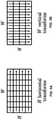
- FIGS. 5A and 5B are conceptual diagrams illustrating horizontal and vertical transforms as a separate transform implementation.
- FIG. 6 is a conceptual diagram representing an example of multiple transform selection (MTS) signaling used to identify two transforms.
- MTS multiple transform selection
- FIG. 7 is a conceptual diagram illustrating an example transform assignment and corresponding unary codewords.
- FIG. 8 is a conceptual diagram illustrating an example MTS design supporting secondary transforms.
- FIG. 9 is a conceptual diagram illustrating examples of low-frequency non-separable transforms (LFNST) that a video coder (video encoder or video decoder) may apply.
- LNNST low-frequency non-separable transforms
- FIG. 10 is a conceptual diagram illustrating an example of an LFNST applied to a subset of coefficients (at the top-left part) of an H ⁇ W block.
- FIGS. 11A and 11B are conceptual diagrams illustrating an example two-step LFNST process implementation.
- FIG. 12 is a block diagram illustrating an example video encoder that may perform the techniques of this disclosure.
- FIG. 13 is a block diagram illustrating an example video decoder that may perform the techniques of this disclosure.
- FIG. 14 is a flowchart illustrating an example method for encoding a current block according to the techniques of this disclosure.
- FIG. 15 is a flowchart illustrating an example method for decoding a current block of video data according to the techniques of this disclosure.
- FIG. 16 is a flowchart illustrating an example video encoding method in accordance with the techniques of this disclosure.
- FIG. 17 is a flowchart illustrating an example video decoding method in accordance with the techniques of this disclosure.
- This disclosure describes techniques related to transform coding, which is an important element of modern video compression standards, e.g., as discussed in M. Wien, High Efficiency Video Coding: Coding Tools and Specification, Springer-Verlag, Berlin, 2015. This disclosure describes extended multiple transform selection (MTS) techniques.
- MTS extended multiple transform selection
- video data is represented as a sequential series of pictures.
- a video coder partitions the pictures into blocks, and codes each of the blocks. Coding generally includes prediction and residual coding.
- the video coder may form a prediction block using intra-prediction (in which the prediction block is formed from neighboring, previously coded blocks of the same picture) or inter-prediction (in which the prediction block is formed from previously coded blocks of previously coded pictures).
- a residual block represents pixel-by-pixel differences between the prediction block and an original, uncoded block.
- a video encoder may apply a transform to the residual block to produce a transform block including transform coefficients, whereas a video decoder may apply an inverse transform to the transform block to reproduce a version of the residual block.
- N-point vector [x 0 , x 1 , . . . , x N-1 ] T
- y [y 0 , y 1 , . . . , y N-1 ] T by multiplying a matrix, the process of which can be further illustrated according to one of the following transform formulation, wherein k ranges from 0 through N ⁇ 1, inclusive:
- the transform type is specified by the mathematical formulation of the transform basis function. For example, 4-point DST-VII and 8-point DST-VII have the same transform type, regardless the value of N.
- T is the transform matrix specified by the definition of one certain transform, e.g., DCT Type-I ⁇ DCT Type-VIII, or DST Type-I ⁇ DST Type-VIII, and the row vectors of T, e.g., [T i,0 , T i,1 , T i,2 , . . . , T i,N-1 ] are the i th transform basis vectors.
- a transform applied on the N-point input vector is called an N-point transform.
- transforms as introduced above are applied on 1-D input data, and transforms can be also extended for 2-D input data sources.
- Supposing X is an input M ⁇ N data array.
- the typical methods of applying transform on 2-D input data include separable and non-separable 2-D transforms.
- T′ is an (M*N) ⁇ (M*N) transform matrix.
- separable 2-D transforms are generally applied, because separable 2-D transforms typically require fewer operation (addition and multiplication) counts compared to 1-D transforms.
- DCT Discrete Cosine Transform
- DST Discrete Sine Transform
- DST Type-VII is more efficient than DCT Type-II for residuals vectors generated along the Intra prediction directions.
- DST Type-VII is more efficient than DCT Type-II for row residual vectors generated by the horizontal Intra prediction direction.
- HEVC an integer approximation of 4-point DST Type-VII is applied only for 4 ⁇ 4 luma Intra prediction residual blocks. The 4-point DST-VII used in HEVC is shown below,
- FIG. 1 is a block diagram illustrating an example video encoding and decoding system 100 that may perform the techniques of this disclosure.
- the techniques of this disclosure are generally directed to coding (encoding and/or decoding) video data.
- video data includes any data for processing a video.
- video data may include raw, uncoded video, encoded video, decoded (e.g., reconstructed) video, and video metadata, such as signaling data.
- system 100 includes a source device 102 that provides encoded video data to be decoded and displayed by a destination device 116 , in this example.
- source device 102 provides the video data to destination device 116 via a computer-readable medium 110 .
- Source device 102 and destination device 116 may comprise any of a wide range of devices, including desktop computers, notebook (i.e., laptop) computers, tablet computers, set-top boxes, telephone handsets such smartphones, televisions, cameras, display devices, digital media players, video gaming consoles, video streaming device, or the like.
- source device 102 and destination device 116 may be equipped for wireless communication, and thus may be referred to as wireless communication devices.
- source device 102 includes video source 104 , memory 106 , video encoder 200 , and output interface 108 .
- Destination device 116 includes input interface 122 , video decoder 300 , memory 120 , and display device 118 .
- video encoder 200 of source device 102 and video decoder 300 of destination device 116 may be configured to apply the techniques for coding MTS data.
- source device 102 represents an example of a video encoding device
- destination device 116 represents an example of a video decoding device.
- a source device and a destination device may include other components or arrangements.
- source device 102 may receive video data from an external video source, such as an external camera.
- destination device 116 may interface with an external display device, rather than including an integrated display device.
- System 100 as shown in FIG. 1 is merely one example.
- any digital video encoding and/or decoding device may perform techniques for coding MTS data.
- Source device 102 and destination device 116 are merely examples of such coding devices in which source device 102 generates coded video data for transmission to destination device 116 .
- This disclosure refers to a “coding” device as a device that performs coding (encoding and/or decoding) of data.
- video encoder 200 and video decoder 300 represent examples of coding devices, in particular, a video encoder and a video decoder, respectively.
- devices 102 , 116 may operate in a substantially symmetrical manner such that each of devices 102 , 116 include video encoding and decoding components.
- system 100 may support one-way or two-way video transmission between video devices 102 , 116 , e.g., for video streaming, video playback, video broadcasting, or video telephony.
- video source 104 represents a source of video data (i.e., raw, uncoded video data) and provides a sequential series of pictures (also referred to as “frames”) of the video data to video encoder 200 , which encodes data for the pictures.
- Video source 104 of source device 102 may include a video capture device, such as a video camera, a video archive containing previously captured raw video, and/or a video feed interface to receive video from a video content provider.
- video source 104 may generate computer graphics-based data as the source video, or a combination of live video, archived video, and computer-generated video.
- video encoder 200 encodes the captured, pre-captured, or computer-generated video data.
- Video encoder 200 may rearrange the pictures from the received order (sometimes referred to as “display order”) into a coding order for coding. Video encoder 200 may generate a bitstream including encoded video data. Source device 102 may then output the encoded video data via output interface 108 onto computer-readable medium 110 for reception and/or retrieval by, e.g., input interface 122 of destination device 116 .
- Memory 106 of source device 102 and memory 120 of destination device 116 represent general purpose memories.
- memories 106 , 120 may store raw video data, e.g., raw video from video source 104 and raw, decoded video data from video decoder 300 .
- memories 106 , 120 may store software instructions executable by, e.g., video encoder 200 and video decoder 300 , respectively. Although shown separately from video encoder 200 and video decoder 300 in this example, it should be understood that video encoder 200 and video decoder 300 may also include internal memories for functionally similar or equivalent purposes.
- memories 106 , 120 may store encoded video data, e.g., output from video encoder 200 and input to video decoder 300 .
- portions of memories 106 , 120 may be allocated as one or more video buffers, e.g., to store raw, decoded, and/or encoded video data.
- Computer-readable medium 110 may represent any type of medium or device capable of transporting the encoded video data from source device 102 to destination device 116 .
- computer-readable medium 110 represents a communication medium to enable source device 102 to transmit encoded video data directly to destination device 116 in real-time, e.g., via a radio frequency network or computer-based network.
- Output interface 108 may modulate a transmission signal including the encoded video data, and input interface 122 may demodulate the received transmission signal, according to a communication standard, such as a wireless communication protocol.
- the communication medium may comprise any wireless or wired communication medium, such as a radio frequency (RF) spectrum or one or more physical transmission lines.
- RF radio frequency
- the communication medium may form part of a packet-based network, such as a local area network, a wide-area network, or a global network such as the Internet.
- the communication medium may include routers, switches, base stations, or any other equipment that may be useful to facilitate communication from source device 102 to destination device 116 .
- source device 102 may output encoded data from output interface 108 to storage device 112 .
- destination device 116 may access encoded data from storage device 112 via input interface 122 .
- Storage device 116 may include any of a variety of distributed or locally accessed data storage media such as a hard drive, Blu-ray discs, DVDs, CD-ROMs, flash memory, volatile or non-volatile memory, or any other suitable digital storage media for storing encoded video data.
- source device 102 may output encoded video data to file server 114 or another intermediate storage device that may store the encoded video generated by source device 102 .
- Destination device 116 may access stored video data from file server 114 via streaming or download.
- File server 114 may be any type of server device capable of storing encoded video data and transmitting that encoded video data to the destination device 116 .
- File server 114 may represent a web server (e.g., for a website), a File Transfer Protocol (FTP) server, a content delivery network device, or a network attached storage (NAS) device.
- Destination device 116 may access encoded video data from file server 114 through any standard data connection, including an Internet connection.
- This may include a wireless channel (e.g., a Wi-Fi connection), a wired connection (e.g., DSL, cable modem, etc.), or a combination of both that is suitable for accessing encoded video data stored on file server 114 .
- File server 114 and input interface 122 may be configured to operate according to a streaming transmission protocol, a download transmission protocol, or a combination thereof.
- Output interface 108 and input interface 122 may represent wireless transmitters/receiver, modems, wired networking components (e.g., Ethernet cards), wireless communication components that operate according to any of a variety of IEEE 802.11 standards, or other physical components.
- output interface 108 and input interface 122 may be configured to transfer data, such as encoded video data, according to a cellular communication standard, such as 4G, 4G-LTE (Long-Term Evolution), LTE Advanced, 5G, or the like.
- output interface 108 comprises a wireless transmitter
- output interface 108 and input interface 122 may be configured to transfer data, such as encoded video data, according to other wireless standards, such as an IEEE 802.11 specification, an IEEE 802.15 specification (e.g., ZigBeeTM), a BluetoothTM standard, or the like.
- source device 102 and/or destination device 116 may include respective system-on-a-chip (SoC) devices.
- SoC system-on-a-chip
- source device 102 may include an SoC device to perform the functionality attributed to video encoder 200 and/or output interface 108
- destination device 116 may include an SoC device to perform the functionality attributed to video decoder 300 and/or input interface 122 .
- the techniques of this disclosure may be applied to video coding in support of any of a variety of multimedia applications, such as over-the-air television broadcasts, cable television transmissions, satellite television transmissions, Internet streaming video transmissions, such as dynamic adaptive streaming over HTTP (DASH), digital video that is encoded onto a data storage medium, decoding of digital video stored on a data storage medium, or other applications.
- multimedia applications such as over-the-air television broadcasts, cable television transmissions, satellite television transmissions, Internet streaming video transmissions, such as dynamic adaptive streaming over HTTP (DASH), digital video that is encoded onto a data storage medium, decoding of digital video stored on a data storage medium, or other applications.
- DASH dynamic adaptive streaming over HTTP
- Input interface 122 of destination device 116 receives an encoded video bitstream from computer-readable medium 110 (e.g., storage device 112 , file server 114 , or the like).
- the encoded video bitstream of computer-readable medium 110 may include signaling information defined by video encoder 200 , which is also used by video decoder 300 , such as syntax elements having values that describe characteristics and/or processing of video blocks or other coded units (e.g., slices, pictures, groups of pictures, sequences, or the like).
- Display device 118 displays decoded pictures of the decoded video data to a user.
- Display device 118 may represent any of a variety of display devices such as a cathode ray tube (CRT), a liquid crystal display (LCD), a plasma display, an organic light emitting diode (OLED) display, or another type of display device.
- CTR cathode ray tube
- LCD liquid crystal display
- plasma display a plasma display
- OLED organic light emitting diode
- video encoder 200 and video decoder 300 may each be integrated with an audio encoder and/or audio decoder, and may include appropriate MUX-DEMUX units, or other hardware and/or software, to handle multiplexed streams including both audio and video in a common data stream. If applicable, MUX-DEMUX units may conform to the ITU H.223 multiplexer protocol, or other protocols such as the user datagram protocol (UDP).
- MUX-DEMUX units may conform to the ITU H.223 multiplexer protocol, or other protocols such as the user datagram protocol (UDP).
- Video encoder 200 and video decoder 300 each may be implemented as any of a variety of suitable encoder and/or decoder circuitry, such as one or more microprocessors, digital signal processors (DSPs), application specific integrated circuits (ASICs), field programmable gate arrays (FPGAs), discrete logic, software, hardware, firmware or any combinations thereof.
- DSPs digital signal processors
- ASICs application specific integrated circuits
- FPGAs field programmable gate arrays
- a device may store instructions for the software in a suitable, non-transitory computer-readable medium and execute the instructions in hardware using one or more processors to perform the techniques of this disclosure.
- Each of video encoder 200 and video decoder 300 may be included in one or more encoders or decoders, either of which may be integrated as part of a combined encoder/decoder (CODEC) in a respective device.
- a device including video encoder 200 and/or video decoder 300 may comprise an integrated circuit, a microprocessor, and/or a wireless communication device, such as a cellular telephone.
- Video encoder 200 and video decoder 300 may operate according to a video coding standard, such as ITU-T H.265, also referred to as High Efficiency Video Coding (HEVC) or extensions thereto, such as the multi-view and/or scalable video coding extensions.
- video encoder 200 and video decoder 300 may operate according to other proprietary or industry standards, such as the upcoming Versatile Video Coding (VVC) standard, which is planned to become ITU-T H.266.
- VVC Versatile Video Coding
- VVC Verssatile Video Coding (Draft 5)” Joint Video Experts Team (JVET) of ITU-T SG 16 WP 3 and ISO/IEC JTC 1/SC 29/WG 11, 14th Meeting, Geneva, CH, 19-27 Mar. 2019, document JVET-N1001-v5.
- JVET Joint Video Experts Team
- video encoder 200 and video decoder 300 may perform block-based coding of pictures.
- the term “block” generally refers to a structure including data to be processed (e.g., encoded, decoded, or otherwise used in the encoding and/or decoding process).
- a block may include a two-dimensional matrix of samples of luminance and/or chrominance data.
- video encoder 200 and video decoder 300 may code video data represented in a YUV (e.g., Y, Cb, Cr) format.
- YUV e.g., Y, Cb, Cr
- video encoder 200 and video decoder 300 may code luminance and chrominance components, where the chrominance components may include both red hue and blue hue chrominance components.
- video encoder 200 converts received RGB formatted data to a YUV representation prior to encoding
- video decoder 300 converts the YUV representation to the RGB format.
- pre- and post-processing units may perform these conversions.
- This disclosure may generally refer to coding (e.g., encoding and decoding) of pictures to include the process of encoding or decoding data of the picture.
- this disclosure may refer to coding of blocks of a picture to include the process of encoding or decoding data for the blocks, e.g., prediction and/or residual coding.
- An encoded video bitstream generally includes a series of values for syntax elements representative of coding decisions (e.g., coding modes) and partitioning of pictures into blocks.
- references to coding a picture or a block should generally be understood as coding values for syntax elements forming the picture or block.
- HEVC defines various blocks, including coding units (CUs), prediction units (PUs), and transform units (TUs).
- a video coder (such as video encoder 200 ) partitions a coding tree unit (CTU) into CUs according to a quadtree structure. That is, the video coder partitions CTUs and CUs into four equal, non-overlapping squares, and each node of the quadtree has either zero or four child nodes. Nodes without child nodes may be referred to as “leaf nodes,” and CUs of such leaf nodes may include one or more PUs and/or one or more TUs.
- the video coder may further partition PUs and TUs.
- a residual quadtree represents partitioning of TUs.
- PUs represent inter-prediction data
- TUs represent residual data.
- CUs that are intra-predicted include intra-prediction information, such as an intra-mode indication.
- video encoder 200 and video decoder 300 may be configured to operate according to VVC.
- a video coder such as video encoder 200 partitions a picture into a plurality of coding tree units (CTUs).
- Video encoder 200 may partition a CTU according to a tree structure, such as a quadtree-binary tree (QTBT) structure.
- the QTBT structure of VVC removes the concepts of multiple partition types, such as the separation between CUs, PUs, and TUs of HEVC.
- a QTBT structure of VVC includes two levels: a first level partitioned according to quadtree partitioning, and a second level partitioned according to binary tree partitioning.
- a root node of the QTBT structure corresponds to a CTU.
- Leaf nodes of the binary trees correspond to coding units (CUs).
- video encoder 200 and video decoder 300 may use a single QTBT structure to represent each of the luminance and chrominance components, while in other examples, video encoder 200 and video decoder 300 may use two or more QTBT structures, such as one QTBT structure for the luminance component and another QTBT structure for both chrominance components (or two QTBT structures for respective chrominance components).
- Video encoder 200 and video decoder 300 may be configured to use quadtree partitioning per HEVC, QTBT partitioning according to VVC, or other partitioning structures.
- quadtree partitioning per HEVC, QTBT partitioning according to VVC, or other partitioning structures.
- the description of the techniques of this disclosure is presented with respect to QTBT partitioning.
- the techniques of this disclosure may also be applied to video coders configured to use quadtree partitioning, or other types of partitioning as well.
- N ⁇ N and N by N interchangeably to refer to the sample dimensions of a block (such as a CU or other video block) in terms of vertical and horizontal dimensions, e.g., 16 ⁇ 16 samples or 16 by 16 samples.
- an N ⁇ N CU generally has N samples in a vertical direction and N samples in a horizontal direction, where N represents a nonnegative integer value.
- the samples in a CU may be arranged in rows and columns.
- CUs need not necessarily have the same number of samples in the horizontal direction as in the vertical direction.
- CUs may comprise N ⁇ M samples, where M is not necessarily equal to N.
- Video encoder 200 encodes video data for CUs representing prediction and/or residual information, and other information.
- the prediction information indicates how the CU is to be predicted in order to form a prediction block for the CU.
- the residual information generally represents sample-by-sample differences between samples of the CU prior to encoding and the prediction block.
- video encoder 200 may generally form a prediction block for the CU through inter-prediction or intra-prediction.
- Inter-prediction generally refers to predicting the CU from data of a previously coded picture
- intra-prediction generally refers to predicting the CU from previously coded data of the same picture.
- video encoder 200 may generate the prediction block using one or more motion vectors.
- Video encoder 200 may generally perform a motion search to identify a reference block that closely matches the CU, e.g., in terms of differences between the CU and the reference block.
- Video encoder 200 may calculate a difference metric using a sum of absolute difference (SAD), sum of squared differences (SSD), mean absolute difference (MAD), mean squared differences (MSD), or other such difference calculations to determine whether a reference block closely matches the current CU.
- video encoder 200 may predict the current CU using uni-directional prediction or bi-directional prediction.
- VVC also provides an affine motion compensation mode, which may be considered an inter-prediction mode.
- affine motion compensation mode video encoder 200 may determine two or more motion vectors that represent non-translational motion, such as zoom in or out, rotation, perspective motion, or other irregular motion types.
- video encoder 200 may select an intra-prediction mode to generate the prediction block.
- VVC provides sixty-seven intra-prediction modes, including various directional modes, as well as planar mode and DC mode.
- video encoder 200 selects an intra-prediction mode that describes neighboring samples to a current block (e.g., a block of a CU) from which to predict samples of the current block. Such samples may generally be above, above and to the left, or to the left of the current block in the same picture as the current block, assuming video encoder 200 codes CTUs and CUs in raster scan order (left to right, top to bottom).
- Video encoder 200 encodes data representing the prediction mode for a current block. For example, for inter-prediction modes, video encoder 200 may encode data representing which of the various available inter-prediction modes is used, as well as motion information for the corresponding mode. For uni-directional or bi-directional inter-prediction, for example, video encoder 200 may encode motion vectors using advanced motion vector prediction (AMVP) or merge mode. Video encoder 200 may use similar modes to encode motion vectors for affine motion compensation mode.
- AMVP advanced motion vector prediction
- Video encoder 200 may use similar modes to encode motion vectors for affine motion compensation mode.
- video encoder 200 may calculate residual data for the block.
- the residual data such as a residual block, represents sample by sample differences between the block and a prediction block for the block, formed using the corresponding prediction mode.
- Video encoder 200 may apply one or more transforms to the residual block, to produce transformed data in a transform domain instead of the sample domain.
- video encoder 200 may apply a discrete cosine transform (DCT), an integer transform, a wavelet transform, or a conceptually similar transform to residual video data.
- DCT discrete cosine transform
- an integer transform an integer transform
- wavelet transform or a conceptually similar transform
- video encoder 200 may apply a secondary transform following the first transform, such as a mode-dependent non-separable secondary transform (MDNSST), a signal dependent transform, a Karhunen-Loeve transform (KLT), or the like.
- Video encoder 200 produces transform coefficients following application of the one or more transforms.
- video encoder 200 may determine a particular type of transform (or multiple transform) to apply to a residual block for a current block.
- the determined type of transform may include a primary transform, which may be a separable transform including a horizontal transform and a vertical transform.
- the determined type of transform may further include a secondary transform (e.g., a nonseparable transform).
- Video encoder 200 may encode a first codeword representing the selected type of transform, which represents the primary transform and whether or not the selected type of transform includes a secondary transform. In the case that the first codeword indicates that the selected type of transform includes the secondary transform, video encoder 200 may further encode a second codeword representing a selected secondary transform of a set of available secondary transforms.
- video encoder 200 may apply both the primary transform and the secondary transform. Examples of such combinations of codewords are explained in greater detail below with respect to Tables 1-12 and FIGS. 6-8 .
- video encoder 200 may perform quantization of the transform coefficients.
- Quantization generally refers to a process in which transform coefficients are quantized to possibly reduce the amount of data used to represent the coefficients, providing further compression.
- video encoder 200 may reduce the bit depth associated with some or all of the coefficients. For example, video encoder 200 may round an n-bit value down to an m-bit value during quantization, where n is greater than m.
- video encoder 200 may perform a bitwise right-shift of the value to be quantized.
- video encoder 200 may scan the transform coefficients, producing a one-dimensional vector from the two-dimensional matrix including the quantized transform coefficients.
- the scan may be designed to place higher energy (and therefore lower frequency) coefficients at the front of the vector and to place lower energy (and therefore higher frequency) transform coefficients at the back of the vector.
- video encoder 200 may utilize a predefined scan order to scan the quantized transform coefficients to produce a serialized vector, and then entropy encode the quantized transform coefficients of the vector.
- video encoder 200 may perform an adaptive scan.
- video encoder 200 may entropy encode the one-dimensional vector, e.g., according to context-adaptive binary arithmetic coding (CABAC).
- Video encoder 200 may also entropy encode values for syntax elements describing metadata associated with the encoded video data for use by video decoder 300 in decoding the video data.
- CABAC context-adaptive binary arithmetic coding
- video encoder 200 may assign a context within a context model to a symbol to be transmitted.
- the context may relate to, for example, whether neighboring values of the symbol are zero-valued or not.
- the probability determination may be based on a context assigned to the symbol.
- Video encoder 200 may further generate syntax data, such as block-based syntax data, picture-based syntax data, and sequence-based syntax data, to video decoder 300 , e.g., in a picture header, a block header, a slice header, or other syntax data, such as a sequence parameter set (SPS), picture parameter set (PPS), or video parameter set (VPS).
- Video decoder 300 may likewise decode such syntax data to determine how to decode corresponding video data.
- video encoder 200 may generate a bitstream including encoded video data, e.g., syntax elements describing partitioning of a picture into blocks (e.g., CUs) and prediction and/or residual information for the blocks.
- video decoder 300 may receive the bitstream and decode the encoded video data.
- video decoder 300 performs a reciprocal process to that performed by video encoder 200 to decode the encoded video data of the bitstream.
- video decoder 300 may decode values for syntax elements of the bitstream using CABAC in a manner substantially similar to, albeit reciprocal to, the CABAC encoding process of video encoder 200 .
- the syntax elements may define partitioning information of a picture into CTUs, and partitioning of each CTU according to a corresponding partition structure, such as a QTBT structure, to define CUs of the CTU.
- the syntax elements may further define prediction and residual information for blocks (e.g., CUs) of video data.
- the residual information may be represented by, for example, quantized transform coefficients.
- Video decoder 300 may inverse quantize and inverse transform the quantized transform coefficients of a block to reproduce a residual block for the block.
- video decoder 300 may decode a first codeword representing a type of transform to be applied to decoded transform coefficients for a current block of video data.
- the type of transform may represent a primary transform, which may be a separable transform including a horizontal transform and a vertical transform.
- the type of transform may further include a secondary transform. If the type of transform includes the secondary transform, video decoder 300 may decode a second codeword representing the secondary transform, which may be included in a set of available secondary transforms.
- Video decoder 300 may then apply the secondary transform to the decoded transform coefficients to produce an intermediate set of transform coefficients, then apply the primary transform to the intermediate set of transform coefficients to reproduce a residual block for the current block.
- Video decoder 300 uses a signaled prediction mode (intra- or inter-prediction) and related prediction information (e.g., motion information for inter-prediction) to form a prediction block for the block. Video decoder 300 may then combine the prediction block and the residual block (on a sample-by-sample basis) to reproduce the original block. Video decoder 300 may perform additional processing, such as performing a deblocking process to reduce visual artifacts along boundaries of the block.
- a signaled prediction mode intra- or inter-prediction
- related prediction information e.g., motion information for inter-prediction
- Video decoder 300 may then combine the prediction block and the residual block (on a sample-by-sample basis) to reproduce the original block.
- Video decoder 300 may perform additional processing, such as performing a deblocking process to reduce visual artifacts along boundaries of the block.
- video encoder 200 and video decoder 300 may apply CABAC encoding and decoding to values of syntax elements.
- video encoder 200 may binarize the value of the syntax element to form a series of one or more bits, which are referred to as “bins.”
- video encoder 200 may identify a coding context.
- the coding context may identify probabilities of bins having particular values. For instance, a coding context may indicate a 0.7 probability of coding a 0-valued bin and a 0.3 probability of coding a 1-valued bin.
- video encoder 200 may divide an interval into a lower sub-interval and an upper sub-interval. One of the sub-intervals may be associated with the value 0 and the other sub-interval may be associated with the value 1.
- the widths of the sub-intervals may be proportional to the probabilities indicated for the associated values by the identified coding context. If a bin of the syntax element has the value associated with the lower sub-interval, the encoded value may be equal to the lower boundary of the lower sub-interval. If the same bin of the syntax element has the value associated with the upper sub-interval, the encoded value may be equal to the lower boundary of the upper sub-interval.
- video encoder 200 may repeat these steps with the interval being the sub-interval associated with the value of the encoded bit. When video encoder 200 repeats these steps for the next bin, video encoder 200 may use modified probabilities based on the probabilities indicated by the identified coding context and the actual values of bins encoded.
- video decoder 300 may identify a coding context. Video decoder 300 may then divide an interval into a lower sub-interval and an upper sub-interval. One of the sub-intervals may be associated with the value 0 and the other sub-interval may be associated with the value 1. The widths of the sub-intervals may be proportional to the probabilities indicated for the associated values by the identified coding context. If the encoded value is within the lower sub-interval, video decoder 300 may decode a bin having the value associated with the lower sub-interval.
- video decoder 300 may decode a bin having the value associated with the upper sub-interval. To decode a next bin of the syntax element, video decoder 300 may repeat these steps with the interval being the sub-interval that contains the encoded value. When video decoder 300 repeats these steps for the next bin, video decoder 300 may use modified probabilities based on the probabilities indicated by the identified coding context and the decoded bins. Video decoder 300 may then inverse binarize the bins to recover the value of the syntax element.
- DCT-2 In video coding standards prior to HEVC, only a fixed separable transform is used where DCT-2 is used both vertically and horizontally. In HEVC, in addition to DCT-2, DST-7 is also employed for 4 ⁇ 4 blocks as a fixed separable transform.
- U.S. Pat. No. 10,306,229, U.S. Patent Publication 2018/0020218, and U.S. Provisional Patent application 62/679,570 describe multiple transform selection (MTS) techniques.
- MTS was previously called Adaptive Multiple Transforms (AMT).
- AMT Adaptive Multiple Transforms
- An example of MTS in U.S. Provisional Patent application 62/679,570 has been adopted in the Joint Experimental Model (JEM-7.0) of the Joint Video Experts Team (JVET), and later a simplified version of MTS is adopted in VVC.
- This disclosure may generally refer to “signaling” certain information, such as syntax elements.
- the term “signaling” may generally refer to the communication of values syntax elements and/or other data used to decode encoded video data. That is, video encoder 200 may signal values for syntax elements in the bitstream. In general, signaling refers to generating a value in the bitstream.
- source device 102 may transport the bitstream to destination device 116 substantially in real time, or not in real time, such as might occur when storing syntax elements to storage device 112 for later retrieval by destination device 116 .
- FIGS. 2A and 2B are conceptual diagram illustrating an example quadtree binary tree (QTBT) structure 130 , and a corresponding coding tree unit (CTU) 132 .
- the solid lines represent quadtree splitting, and dotted lines indicate binary tree splitting.
- each split (i.e., non-leaf) node of the binary tree one flag is signaled to indicate which splitting type (i.e., horizontal or vertical) is used, where 0 indicates horizontal splitting and 1 indicates vertical splitting in this example.
- splitting type i.e., horizontal or vertical
- video encoder 200 may encode, and video decoder 300 may decode, syntax elements (such as splitting information) for a region tree level of QTBT structure 130 (i.e., the solid lines) and syntax elements (such as splitting information) for a prediction tree level of QTBT structure 130 (i.e., the dashed lines).
- Video encoder 200 may encode, and video decoder 300 may decode, video data, such as prediction and transform data, for CUs represented by terminal leaf nodes of QTBT structure 130 .
- CTU 132 of FIG. 2B may be associated with parameters defining sizes of blocks corresponding to nodes of QTBT structure 130 at the first and second levels. These parameters may include a CTU size (representing a size of CTU 132 in samples), a minimum quadtree size (MinQTSize, representing a minimum allowed quadtree leaf node size), a maximum binary tree size (MaxBTSize, representing a maximum allowed binary tree root node size), a maximum binary tree depth (MaxBTDepth, representing a maximum allowed binary tree depth), and a minimum binary tree size (MinBTSize, representing the minimum allowed binary tree leaf node size).
- CTU size representing a size of CTU 132 in samples
- MinQTSize representing a minimum allowed quadtree leaf node size
- MaxBTSize representing a maximum binary tree root node size
- MaxBTDepth representing a maximum allowed binary tree depth
- MinBTSize representing the minimum allowed binary tree leaf node size
- the root node of a QTBT structure corresponding to a CTU may have four child nodes at the first level of the QTBT structure, each of which may be partitioned according to quadtree partitioning. That is, nodes of the first level are either leaf nodes (having no child nodes) or have four child nodes.
- the example of QTBT structure 130 represents such nodes as including the parent node and child nodes having solid lines for branches. Nodes of the first level that are not larger than the maximum allowed binary tree root node size (MaxBTSize) can be further partitioned by respective binary trees.
- the binary tree splitting of one node can be iterated until the nodes resulting from the split reach the minimum allowed binary tree leaf node size (MinBTSize) or the maximum allowed binary tree depth (MaxBTDepth).
- MinBTSize minimum allowed binary tree leaf node size
- MaxBTDepth maximum allowed binary tree depth
- the example of QTBT structure 130 represents such nodes as having dashed lines for branches.
- the binary tree leaf node is referred to as a coding unit (CU), which is used for prediction (e.g., intra-picture or inter-picture prediction) and transform, without any further partitioning.
- CUs may also be referred to as “video blocks” or “blocks.”
- the CTU size is set as 128 ⁇ 128 (luma samples and two corresponding 64 ⁇ 64 chroma samples), the MinQTSize is set as 16 ⁇ 16, the MaxBTSize is set as 64 ⁇ 64, the MinBTSize (for both width and height) is set as 4, and the MaxBTDepth is set as 4.
- the quadtree partitioning is applied to the CTU first to generate quad-tree leaf nodes.
- the quadtree leaf nodes may have a size from 16 ⁇ 16 (i.e., the MinQTSize) to 128 ⁇ 128 (i.e., the CTU size).
- leaf quadtree node If the leaf quadtree node is 128 ⁇ 128, it will not be further split by the binary tree, since the size exceeds the MaxBTSize (i.e., 64 ⁇ 64, in this example). Otherwise, the leaf quadtree node will be further partitioned by the binary tree. Therefore, the quadtree leaf node is also the root node for the binary tree and has the binary tree depth as 0. When the binary tree depth reaches MaxBTDepth (4, in this example), no further splitting is permitted. When the binary tree node has width equal to MinBTSize (4, in this example), it implies no further horizontal splitting is permitted. Similarly, a binary tree node having a height equal to MinBTSize implies no further vertical splitting is permitted for that binary tree node. As noted above, leaf nodes of the binary tree are referred to as CUs, and are further processed according to prediction and transform without further partitioning.
- FIGS. 3A and 3B are conceptual diagrams illustrating an example transform scheme based on a residual quadtree of HEVC.
- a transform coding structure using the residual quadtree (RQT) is applied to adapt various characteristics of residual blocks, which is briefly described as follows, adapted from www.hhi.fraunhofer.de/fields-of-competence/image-processing/research-groups/image-video-coding/hevc-high-efficiency-video-coding/transform-coding-using-the-residual-quadtree-rqt.html.
- each picture is divided into coding tree units (CTU), which are coded in raster scan order for a specific tile or slice.
- CTU coding tree units
- a CTU is a square block and represents the root of a quadtree, i.e., the coding tree.
- the CTU size may range from 8 ⁇ 8 to 64 ⁇ 64 luma samples, but typically 64 ⁇ 64 is used.
- Each CTU can be further split into smaller square blocks called coding units (CUs).
- each CU is further divided into prediction units (PU) and transform units (TU).
- PU prediction units
- TU transform units
- the partitioning of a CU into TUs is carried out recursively based on a quadtree approach, therefore the residual signal of each CU is coded by a tree structure namely, the residual quadtree (RQT).
- RQT allows TU sizes from 4 ⁇ 4 up to 32 ⁇ 32 luma samples.
- FIG. 3A depicts an example where a CU includes 10 TUs, labeled with the letters a to j, and the corresponding block partitioning.
- Each node of the RQT shown in FIG. 3B is actually a transform unit (TU) corresponding to FIG. 3A .
- the individual TUs are processed in depth-first tree traversal order, which is illustrated in FIG. 3A as alphabetical order, which follows a recursive Z-scan with depth-first traversal.
- the quadtree approach enables the adaptation of the transform to the varying space-frequency characteristics of the residual signal.
- the encoder mode decision for example based on rate-distortion optimization technique.
- the rate-distortion optimization technique calculates a weighted sum of coding bits and reconstruction distortion, i.e., the rate-distortion cost, for each coding mode (e.g., a specific RQT splitting structure), and select the coding mode with least rate-distortion cost as the best mode.
- the maximum depth of the tree Three parameters are defined in the RQT per HEVC: the maximum depth of the tree, the minimum allowed transform size and the maximum allowed transform size.
- the minimum and maximum transform sizes can vary within the range from 4 ⁇ 4 to 32 ⁇ 32 samples, which correspond to the supported block transforms mentioned in the previous paragraph.
- the maximum allowed depth of the RQT restricts the number of TUs. A maximum depth equal to zero means that a CB cannot be split any further if each included TB reaches the maximum allowed transform size, e.g., 32 ⁇ 32.
- the RQT parameters i.e., maximum RQT depth, minimum and maximum transform size, are transmitted in the bitstream at the sequence parameter set level, per HEVC.
- RQT depth different values can be specified and signaled for intra and inter coded CUs.
- the quadtree transform is applied for both Intra and Inter residual blocks in HEVC.
- the DCT-II transform of the same size of the current residual quadtree partition is applied for a residual block.
- the current residual quadtree block is 4 ⁇ 4 and is generated by Intra prediction, the above 4 ⁇ 4 DST-VII transform is applied.
- FIG. 4 is a block diagram illustrating an example system 140 for hybrid video encoding with adaptive transform selection.
- the techniques of this disclosure may be performed by such a system, or a corresponding decoding system.
- the techniques of this disclosure are applicable to an adaptive transform coding scheme, where for each block of prediction residuals, different transforms can be selected by a video encoder, signaled as side information, and determined by a video decoder using the side information.
- System 140 of FIG. 4 includes block separation unit 142 , block prediction unit 144 , residual generation unit 146 , block transformation unit 148 , transform bank 150 , quantization unit 152 , entropy encoding unit 154 , inverse quantization unit 156 , inverse block transformation unit 158 , block reconstruction unit 160 , and frame buffer 162 .
- Block separation unit 142 generally receives raw, uncoded video data and partitions pictures of the video data into blocks.
- Block prediction unit 144 generates a prediction block for a current block of video data to be encoded.
- Block separation unit 142 provides the current block to residual generation unit 146 and block prediction unit 144 provides the prediction block to residual generation unit 146 .
- Residual generation unit 146 generates a residual block (r) and provides the residual block to block transformation unit 148 .
- Block transformation unit 148 selects one or more transforms from transform bank 150 .
- transform bank 150 may include one or more primary transforms (e.g., separable transforms) and one or more secondary transforms (e.g., non-separable transforms).
- Block transformation unit 148 may then apply the primary and, if applicable, the secondary transform to generate transform coefficients.
- block transformation unit 148 may send an indication (t) of the transform(s) to entropy encoding unit 154 .
- Block transformation unit 148 provides the transform coefficients (T (t) r) to quantization unit 152 .
- Quantization unit 152 quantizes the transform coefficients, e.g., by reducing bit depth of the transform coefficients according to a quantization parameter (QP) for the current block. Quantization unit 152 provides the quantized transform coefficients to entropy encoding unit 154 and inverse quantization unit 156 .
- QP quantization parameter
- Entropy encoding unit 154 performs entropy encoding of values for syntax elements, including the indications of transforms (t) and quantized transform coefficients.
- entropy encoding unit 154 may encode a first codeword representing a selected transform scheme of a set of transform candidates of a multiple transform selection (MTS) scheme for a current block of video data.
- the selected transform scheme may include a primary transform and, in some examples, a secondary transform to be applied in addition to the primary transform.
- entropy encoding unit 154 may encode a second codeword representing the secondary transform in a set of available secondary transforms.
- Entropy encoding unit 154 may include the entropy encoded data (e.g., the first and/or second codewords and entropy encoded syntax elements for the quantized transform coefficients) in an encoded video bitstream.
- Inverse quantization unit 156 may inverse quantize the quantized transform coefficients and pass the resulting transform coefficients to inverse block transformation unit 158 .
- Inverse block transformation unit 158 may apply the primary transform and, if applicable, the secondary transform to the transform coefficients to reproduce the residual block.
- Inverse block transformation unit 158 may provide the residual block to block reconstruction unit 160 , which may combine the residual block with the prediction block to produce a reconstructed block, and store the reconstructed block in frame buffer 162 .
- Frame buffer 162 may also be referred to as a decoded picture buffer (DPB).
- DPB decoded picture buffer
- Each of the various components of FIG. 4 may be implemented in hardware, software, firmware, or a combination thereof.
- instructions for the various operations may be stored in a memory and executed by one or more processing units.
- the processing units and memory may be implemented in circuitry.
- the processing units may include, for example, one or more digital signal processors (DSPs), general purpose microprocessors, application specific integrated circuits (ASICs), field programmable gate arrays (FPGAs), or other equivalent integrated or discrete logic circuitry, in any combination.
- DSPs digital signal processors
- ASICs application specific integrated circuits
- FPGAs field programmable gate arrays
- system 140 of FIG. 4 represents an example of a video encoder including a memory configured to store video data; and one or more processors implemented in circuitry and configured to: code a first codeword representing a selected transform scheme of a set of transform candidates of a multiple transform selection (MTS) scheme for a current block of video data, the selected transform scheme being a secondary transform of a set of available secondary transforms to be applied in addition to a primary transform; code a second codeword representing the secondary transform from the set of available secondary transforms; and apply the primary transform and the secondary transform during coding of residual data for the current block.
- MTS multiple transform selection
- FIGS. 5A and 5B are conceptual diagrams illustrating horizontal and vertical transforms as a separate transform implementation.
- horizontal and vertical lines of residual values may be transformed independently using the horizontal and vertical transforms (e.g., to reduce computational complexity, the block transforms may be computed in a separable manner).
- JEM Joint Experimental Model
- JVET Joint Video Experts Team
- JVET Joint Video Experts Team
- JEM Software available at jvet.hhi.fraunhofer.de/svn/svn_HMJEMSoftware/tags/HM-16.6-JEM-7.0.
- FIG. 6 is a conceptual diagram representing an example of MTS signaling used to identify two transforms.
- VTM Very Video Coding
- JVET Joint Video Experts Team
- ITU-T SG 16 WP 3 ISO/IEC JTC 1/SC 29/WG 11, 13th Meeting: Marrakech, Mass., 9-18 Jan. 2019, Document JVET-M1001, available at phenix.it-sudparis.eu/jvet/doc_end_user/documents/13_Marrakech/wg11/JVET-M1001-v7.zip
- multiple transform candidates are signaled based on a truncated unary binarization, which can be illustrated by concatenating binary tree in FIGS. 6 and 7 .
- the transform candidates are associated with the codewords obtained by the concatenation.
- FIG. 7 is a conceptual diagram illustrating an example transform assignment and corresponding unary codewords.
- MTS Signaling in the current version of VVC includes assigning transforms to codewords obtained by concatenating the binary tree in FIG. 6 , where “H: DCT-8, V: DST-7” means DCT-8 is applied horizontally and DST-7 is applied vertically for separable transformation, and IDT denotes 1-D identity transform (performing scaling).
- the MTS (multiple-transform-selection) design of VVC uses six transform candidates (as in FIG. 7 ), and it supports combinations with DST-7 and DCT-8 other than using a single type of transform in both horizontal and vertical directions (i.e., applying IDT, DCT-2 and DST-7 horizontally and vertically). In practice, a better coding efficiency can be achieved by allowing a larger number of transform candidates.
- This disclosure describes various extensions of the current MTS design that may improve coding efficiency.
- An MTS scheme may be defined by assigning transforms to codewords of a specified signaling method.
- Video encoder 200 and/or video decoder 300 may be configured according to the techniques of this disclosure, as discussed above and in greater detail below.
- an MTS scheme according to this disclosure may be defined by assigning transforms to codewords of a specified signaling method. So, an MTS scheme may be completely defined by specifying: (i) a single set or multiple sets of transforms (i.e., transform candidates), and (ii) an associated signaling method.
- video encoder 200 and video decoder 300 may be configured to code an indication of an MTS scheme using any of the techniques of this disclosure, alone or in any combination.
- the indication of the MTS scheme may be a codeword.
- the MTS scheme may include both a primary transform, such as a separable transform (e.g., a horizontal transform and a vertical transform), and a secondary transform.
- video encoder 200 and video decoder 300 may code a second codeword representing the secondary transform, where the second codeword may identify the secondary transform in a set of available secondary transforms.
- the MTS design in VVC uses a single set of transforms including 6 separable transform candidates as shown in Table 1 below:
- the example six transform candidates above may be signaled using the codewords generated by concatenating a binary tree ( FIG. 6 ) as shown in FIG. 7 (right). For each codeword, a transform candidate may be assigned as illustrated in FIG. 7 (left).
- Video encoder 200 and video decoder 300 may perform any of the techniques described below, alone or in any combination.
- secondary transforms can be included in an MTS design in addition to separable transforms.
- Table 12 presents an example of MTS where the H: DCT-8, V: DCT-8 combination is replaced by a set of secondary transforms.
- Secondary transforms may include the aspects described in U.S. application Ser. No. 15/270,455, filed Sep. 20, 2016 and Ser. No. 16/364,007 filed Mar. 25, 2019. Specifically, at the encoder side a secondary transform can be applied to a subset of primary transform coefficients (e.g., obtained from 2-D DCT-2), where the order is reversed at the decoder (first inverse secondary transform is applied, then a primary transformation is applied).
- primary transform coefficients e.g., obtained from 2-D DCT-2
- Secondary transforms may require an additional signaling to determine the transform selected among multiple secondary transforms as illustrated in FIG. 8 and discussed in greater detail below. Note that, if there is only a single secondary transform candidate (i.e., the set may be only a single secondary transform), no additional signaling is required on top of the MTS signaling in Table 12.
- transform candidates may also depend on one or combinations of prediction mode, block-size and block-shape.
- FIG. 8 is a conceptual diagram illustrating an example MTS design supporting secondary transforms. If a secondary transform is signaled/chosen, additional signaling may be used to indicate a secondary transform among N possible secondary transforms. That is, video encoder 200 may encode a first codeword indicating a primary transform and that a secondary transform is to be applied in addition to the primary transform, and further encode a second codeword indicating the secondary transform of a set of transforms (e.g., one of the N available transforms depicted in FIG. 8 ). Similarly, video decoder 300 may decode the first codeword and determine that the first codeword indicates a primary transform and that a secondary transform is to be applied. Thus, video decoder 300 may further decode a second codeword in response to the first codeword, and use the second codeword to determine the secondary transform. Video encoder 200 and video decoder 300 may further apply both the primary and secondary transforms.
- video encoder 200 and video decoder 300 may further apply both the primary and secondary transforms.
- the secondary transform may be a Low-Frequency Non-separable Transformation (LFNST).
- LFNST Low-Frequency Non-separable Transformation
- FIGS. 9 and 10 are conceptual diagrams illustrating the use of Low-Frequency Non-separable Transformation (LFNST).
- LFNST is used in JEM-7.0 to further improve the coding efficiency of MTS, where an implementation of LFNST is based on a Hypercube-Givens Transform (HyGT), which is described in U.S. Patent Publication No. 2017/0238013, U.S. Patent Publication Nos. 2017/0094313, 2017/0238014, U.S. patent application Ser. No. 16/364,007, and U.S. Provisional Patent Applications 62/668,105 and 62/849,689 (describing alternative designs and further details).
- HyGT Hypercube-Givens Transform
- LFNST was previously called non-separable secondary transform (NSST) or secondary transform, but LFNST, NSST, and secondary transform may generally refer to the same techniques.
- LFNST was adopted into the draft VVC standard, as described in Koo et al., “CE6: Reduced Secondary Transform (RST) (CE6-3.1),” Joint Video Experts Team (JVET) of ITU-T SG 16 WP 3 and ISO/IEC JTC 1/SC 29/WG 11, 14 th Meeting, Geneva, CH, 19-27 Mar. 2019, document JVET-N0193.
- FIG. 9 is a conceptual diagram illustrating LFNST transforms applied by video encoder 200 and video decoder 300 .
- LFNST introduces a new stage between separable transformation and quantization in a codec.
- FIG. 10 is a conceptual diagram illustrating LFNST applied to a subset of coefficients (at the top-left part) of an H ⁇ W block.
- VVC Draft 5 includes the following specifications that introduce some encoder/decoder complexity with no significant coding benefit:
- This disclosure describes techniques that may simplify the LFNST design by addressing the above issues.
- the LFNST designs described in this disclosure may be used individually or in any combination.
- LFNST includes 3 modes, which are signaled using LFNST index values 0, 1 and 2, where:
- LFNST can be restricted to be used under certain conditions:
- video encoder 200 may add to a bitstream that comprises an encoded representation of the video data, a LFNST index for a current block of the video data if one or more restrictions on the signaling of the LFNST index do not apply for the current block. Additionally, in this example, video encoder 200 may apply a transform to residual data for the current block to generate to generate intermediate data for the current block. In this example, based on a value of the LFNST index, video encoder 200 may apply a LFNST to the intermediate data to generate transform coefficients for the current block. Video encoder 200 may include data representing the transform coefficients for the current block in the bitstream.
- video decoder 300 may obtain, from a bitstream including an encoded representation of the video data, a LFNST index for a current block of the video data if one or more restrictions on the signaling of the LFNST index do not apply for the current block.
- video decoder 300 may determine, based on data in the bitstream, a block of transform coefficients. Based on a value of the LFNST index, video decoder 300 may apply an inverse LFNST to the block of transform coefficients to generate intermediate data for the current block.
- Video decoder 300 may apply an inverse of a transform to the intermediate data for the current block to generate residual data for the current block.
- video decoder 300 may reconstruct samples of the current block based on the residual data for the current block.
- FIGS. 11A and 11B are conceptual diagrams illustrating an example two-step LFNST process implementation per the VVC test model (VTM) of May 30, 2019.
- the LFNST is applied on top of a subset of separable transform coefficients (e.g., MTS coefficients) within the darker-shaded subblock at the top-left region.
- This two-step procedure may be unavoidable for the block shapes/sizes in FIG. 11A .
- LFNST and separable transform sizes are aligned (i.e., the support of LFNST and separable transforms may include the same coefficient locations/positions within the darker-shaded block).
- this transform process can be reduced to a single-stage non-separable transform as follows:
- video encoder 200 may determine residual data for a first block of the video data. Additionally, video encoder 200 may determine residual data for a second block of the video data. Based on a width of the first block being equal to a height of the first block: video encoder 200 may apply a non-separable transform to the residual data for the first block to generate transform coefficients for the first block; and include, in a bitstream that includes an encoded representation of the video data, data representing the transform coefficients for the first block.
- video encoder 200 may apply a transform to the residual data for the second block to generate intermediate data for the second block; apply a LFNST to the intermediate data for the second block to generate transform coefficients for the second block; and include, in the bitstream, data representing the transform coefficients for the second block.
- video decoder 300 may determine, based on first data in a bitstream that includes an encoded representation of the video data, transform coefficients for a first block of the video. Additionally, video decoder 300 may determine, based on second data in the bitstream, transform coefficients for a second block of the video data. Based on a width of the first block being equal to a height of the first block, video decoder 300 may apply an inverse of a non-separable transform to the transform coefficients for the first block to generate residual data for the first block; and reconstruct samples of the first block based on the residual data for the first block.
- video decoder 300 may apply an inverse transform to the transform coefficients for the second block to generate intermediate data for the second block; apply an inverse of a LFNST to the intermediate data for the second block to generate residual data for the second block; and reconstruct samples of the second block based on the residual data for the second block.
- FIG. 12 is a block diagram illustrating an example video encoder 200 that may perform the techniques of this disclosure.
- FIG. 12 is provided for purposes of explanation and should not be considered limiting of the techniques as broadly exemplified and described in this disclosure.
- this disclosure describes video encoder 200 in the context of video coding standards such as the HEVC video coding standard and the H.266/VVC video coding standard in development.
- video coding standards such as the HEVC video coding standard and the H.266/VVC video coding standard in development.
- the techniques of this disclosure are not limited to these video coding standards, and are applicable generally to video encoding and decoding.
- video encoder 200 includes video data memory 230 , mode selection unit 202 , residual generation unit 204 , transform processing unit 206 , quantization unit 208 , inverse quantization unit 210 , inverse transform processing unit 212 , reconstruction unit 214 , filter unit 216 , decoded picture buffer (DPB) 218 , and entropy encoding unit 220 .
- FIG. 12 may further include a transform bank from which transform processing unit 206 and inverse transform processing unit 212 select transforms according to the techniques of this disclosure, as shown in FIG. 4 above. Likewise, as shown in FIG.
- transform processing unit 206 may provide an indication of a selected transform to entropy encoding unit 220 , which may encode data according to the techniques of this disclosure representing which of a variety of transforms for an MTS scheme is selected for a current block of video data.
- Video data memory 230 may store video data to be encoded by the components of video encoder 200 .
- Video encoder 200 may receive the video data stored in video data memory 230 from, for example, video source 104 ( FIG. 1 ).
- DPB 218 may act as a reference picture memory that stores reference video data for use in prediction of subsequent video data by video encoder 200 .
- Video data memory 230 and DPB 218 may be formed by any of a variety of memory devices, such as dynamic random access memory (DRAM), including synchronous DRAM (SDRAM), magnetoresistive RAM (MRAM), resistive RAM (RRAM), or other types of memory devices.
- Video data memory 230 and DPB 218 may be provided by the same memory device or separate memory devices.
- video data memory 230 may be on-chip with other components of video encoder 200 , as illustrated, or off-chip relative to those components.
- reference to video data memory 230 should not be interpreted as being limited to memory internal to video encoder 200 , unless specifically described as such, or memory external to video encoder 200 , unless specifically described as such. Rather, reference to video data memory 230 should be understood as reference memory that stores video data that video encoder 200 receives for encoding (e.g., video data for a current block that is to be encoded). Memory 106 of FIG. 1 may also provide temporary storage of outputs from the various units of video encoder 200 .
- the various units of FIG. 12 are illustrated to assist with understanding the operations performed by video encoder 200 .
- the units may be implemented as fixed-function circuits, programmable circuits, or a combination thereof.
- Fixed-function circuits refer to circuits that provide particular functionality, and are preset on the operations that can be performed.
- Programmable circuits refer to circuits that can programmed to perform various tasks, and provide flexible functionality in the operations that can be performed.
- programmable circuits may execute software or firmware that cause the programmable circuits to operate in the manner defined by instructions of the software or firmware.
- Fixed-function circuits may execute software instructions (e.g., to receive parameters or output parameters), but the types of operations that the fixed-function circuits perform are generally immutable.
- the one or more of the units may be distinct circuit blocks (fixed-function or programmable), and in some examples, the one or more units may be integrated circuits.
- Video encoder 200 may include arithmetic logic units (ALUs), elementary function units (EFUs), digital circuits, analog circuits, and/or programmable cores, formed from programmable circuits.
- ALUs arithmetic logic units
- EFUs elementary function units
- digital circuits analog circuits
- programmable cores formed from programmable circuits.
- memory 106 FIG. 1
- memory 106 may store the object code of the software that video encoder 200 receives and executes, or another memory within video encoder 200 (not shown) may store such instructions.
- Video data memory 230 is configured to store received video data.
- Video encoder 200 may retrieve a picture of the video data from video data memory 230 and provide the video data to residual generation unit 204 and mode selection unit 202 .
- Video data in video data memory 230 may be raw video data that is to be encoded.
- Mode selection unit 202 includes a motion estimation unit 222 , motion compensation unit 224 , and an intra-prediction unit 226 .
- Mode selection unit 202 may include additional functional units to perform video prediction in accordance with other prediction modes.
- mode selection unit 202 may include a palette unit, an intra-block copy unit (which may be part of motion estimation unit 222 and/or motion compensation unit 224 ), an affine unit, a linear model (LM) unit, or the like.
- LM linear model
- Mode selection unit 202 generally coordinates multiple encoding passes to test combinations of encoding parameters and resulting rate-distortion values for such combinations.
- the encoding parameters may include partitioning of CTUs into CUs, prediction modes for the CUs, transform types for residual data of the CUs, quantization parameters for residual data of the CUs, and so on.
- Mode selection unit 202 may ultimately select the combination of encoding parameters having rate-distortion values that are better than the other tested combinations.
- Video encoder 200 may partition a picture retrieved from video data memory 230 into a series of CTUs, and encapsulate one or more CTUs within a slice.
- Mode selection unit 202 may partition a CTU of the picture in accordance with a tree structure, such as the QTBT structure or the quad-tree structure of HEVC described above.
- video encoder 200 may form one or more CUs from partitioning a CTU according to the tree structure.
- Such a CU may also be referred to generally as a “video block” or “block.”
- mode selection unit 202 also controls the components thereof (e.g., motion estimation unit 222 , motion compensation unit 224 , and intra-prediction unit 226 ) to generate a prediction block for a current block (e.g., a current CU, or in HEVC, the overlapping portion of a PU and a TU).
- motion estimation unit 222 may perform a motion search to identify one or more closely matching reference blocks in one or more reference pictures (e.g., one or more previously coded pictures stored in DPB 218 ).
- motion estimation unit 222 may calculate a value representative of how similar a potential reference block is to the current block, e.g., according to sum of absolute difference (SAD), sum of squared differences (SSD), mean absolute difference (MAD), mean squared differences (MSD), or the like. Motion estimation unit 222 may generally perform these calculations using sample-by-sample differences between the current block and the reference block being considered. Motion estimation unit 222 may identify a reference block having a lowest value resulting from these calculations, indicating a reference block that most closely matches the current block.
- SAD sum of absolute difference
- SSD sum of squared differences
- MAD mean absolute difference
- MSD mean squared differences
- Motion estimation unit 222 may form one or more motion vectors (MVs) that defines the positions of the reference blocks in the reference pictures relative to the position of the current block in a current picture. Motion estimation unit 222 may then provide the motion vectors to motion compensation unit 224 . For example, for uni-directional inter-prediction, motion estimation unit 222 may provide a single motion vector, whereas for bi-directional inter-prediction, motion estimation unit 222 may provide two motion vectors. Motion compensation unit 224 may then generate a prediction block using the motion vectors. For example, motion compensation unit 224 may retrieve data of the reference block using the motion vector. As another example, if the motion vector has fractional sample precision, motion compensation unit 224 may interpolate values for the prediction block according to one or more interpolation filters. Moreover, for bi-directional inter-prediction, motion compensation unit 224 may retrieve data for two reference blocks identified by respective motion vectors and combine the retrieved data, e.g., through sample-by-sample averaging or weighted averaging.
- intra-prediction unit 226 may generate the prediction block from samples neighboring the current block. For example, for directional modes, intra-prediction unit 226 may generally mathematically combine values of neighboring samples and populate these calculated values in the defined direction across the current block to produce the prediction block. As another example, for DC mode, intra-prediction unit 226 may calculate an average of the neighboring samples to the current block and generate the prediction block to include this resulting average for each sample of the prediction block.
- Mode selection unit 202 provides the prediction block to residual generation unit 204 .
- Residual generation unit 204 receives a raw, uncoded version of the current block from video data memory 230 and the prediction block from mode selection unit 202 .
- Residual generation unit 204 calculates sample-by-sample differences between the current block and the prediction block. The resulting sample-by-sample differences define a residual block for the current block.
- residual generation unit 204 may also determine differences between sample values in the residual block to generate a residual block using residual differential pulse code modulation (RDPCM).
- RPCM residual differential pulse code modulation
- residual generation unit 204 may be formed using one or more subtractor circuits that perform binary subtraction.
- each PU may be associated with a luma prediction unit and corresponding chroma prediction units.
- Video encoder 200 and video decoder 300 may support PUs having various sizes. As indicated above, the size of a CU may refer to the size of the luma coding block of the CU and the size of a PU may refer to the size of a luma prediction unit of the PU. Assuming that the size of a particular CU is 2N ⁇ 2N, video encoder 200 may support PU sizes of 2N ⁇ 2N or N ⁇ N for intra prediction, and symmetric PU sizes of 2N ⁇ 2N, 2N ⁇ N, N ⁇ 2N, N ⁇ N, or similar for inter prediction. Video encoder 200 and video decoder 300 may also support asymmetric partitioning for PU sizes of 2N ⁇ nU, 2N ⁇ nD, nL ⁇ 2N, and nR ⁇ 2N for inter prediction.
- each CU may be associated with a luma coding block and corresponding chroma coding blocks.
- the size of a CU may refer to the size of the luma coding block of the CU.
- the video encoder 200 and video decoder 300 may support CU sizes of 2N ⁇ 2N, 2N ⁇ N, or N ⁇ 2N.
- mode selection unit 202 For other video coding techniques such as an intra-block copy mode coding, an affine-mode coding, and linear model (LM) mode coding, as few examples, mode selection unit 202 , via respective units associated with the coding techniques, generates a prediction block for the current block being encoded. In some examples, such as palette mode coding, mode selection unit 202 may not generate a prediction block, and instead generate syntax elements that indicate the manner in which to reconstruct the block based on a selected palette. In such modes, mode selection unit 202 may provide these syntax elements to entropy encoding unit 220 to be encoded.
- mode selection unit 202 via respective units associated with the coding techniques, generates a prediction block for the current block being encoded.
- mode selection unit 202 may not generate a prediction block, and instead generate syntax elements that indicate the manner in which to reconstruct the block based on a selected palette. In such modes, mode selection unit 202 may provide these syntax elements to entropy encoding unit 220 to be encoded.
- residual generation unit 204 receives the video data for the current block and the corresponding prediction block. Residual generation unit 204 then generates a residual block for the current block. To generate the residual block, residual generation unit 204 calculates sample-by-sample differences between the prediction block and the current block.
- Transform processing unit 206 applies one or more transforms to the residual block to generate a block of transform coefficients (referred to herein as a “transform coefficient block”).
- Transform processing unit 206 may apply various transforms to a residual block to form the transform coefficient block.
- transform processing unit 206 may apply a discrete cosine transform (DCT), a directional transform, a Karhunen-Loeve transform (KLT), or a conceptually similar transform to a residual block.
- transform processing unit 206 may perform multiple transforms to a residual block, e.g., a primary transform and a secondary transform, such as a rotational transform.
- transform processing unit 206 does not apply transforms to a residual block.
- transform processing unit 206 may select a transform scheme (e.g., an MTS scheme) including both a primary transform and a secondary transform.
- the primary transform may be a separable transform including a horizontal transform and a vertical transform, such as one of a variety of DCTs and/or DSTs.
- the secondary transform may be an LFNST.
- Transform processing unit 206 may additionally provide an indication of the selected transform scheme and, if the selected transform scheme includes a secondary transform, an indication of the selected secondary transform to entropy encoding unit 220 .
- Entropy encoding unit 220 may, in turn, encode a first codeword representing the selected transform scheme (which may also indicate whether the selected transform scheme includes a secondary transform).
- entropy encoding unit 220 may further encode a second codeword representing the selected secondary transform.
- Video encoder 200 may determine that the selected transform scheme includes the secondary transform if, for example, the primary transform includes a DCT-2 horizontal transform and a DCT-2 vertical transform, as discussed above.
- transform processing unit 206 may apply the primary transform to the residual block. If the selected transform scheme includes the secondary transform, transform processing unit 206 may also apply the secondary transform following the primary transform.
- Quantization unit 208 may quantize the transform coefficients in a transform coefficient block, to produce a quantized transform coefficient block. Quantization unit 208 may quantize transform coefficients of a transform coefficient block according to a quantization parameter (QP) value associated with the current block. Video encoder 200 (e.g., via mode selection unit 202 ) may adjust the degree of quantization applied to the coefficient blocks associated with the current block by adjusting the QP value associated with the CU. Quantization may introduce loss of information, and thus, quantized transform coefficients may have lower precision than the original transform coefficients produced by transform processing unit 206 .
- QP quantization parameter
- Inverse quantization unit 210 and inverse transform processing unit 212 may apply inverse quantization and inverse transforms to a quantized transform coefficient block, respectively, to reconstruct a residual block from the transform coefficient block.
- inverse transform processing unit 212 may apply an inverse secondary transform and then an inverse primary transform to the transform coefficients.
- Reconstruction unit 214 may produce a reconstructed block corresponding to the current block (albeit potentially with some degree of distortion) based on the reconstructed residual block and a prediction block generated by mode selection unit 202 . For example, reconstruction unit 214 may add samples of the reconstructed residual block to corresponding samples from the prediction block generated by mode selection unit 202 to produce the reconstructed block.
- Filter unit 216 may perform one or more filter operations on reconstructed blocks. For example, filter unit 216 may perform deblocking operations to reduce blockiness artifacts along edges of CUs. Operations of filter unit 216 may be skipped, in some examples.
- Video encoder 200 stores reconstructed blocks in DPB 218 .
- reconstruction unit 214 may store reconstructed blocks to DPB 218 .
- filter unit 216 may store the filtered reconstructed blocks to DPB 218 .
- Motion estimation unit 222 and motion compensation unit 224 may retrieve a reference picture from DPB 218 , formed from the reconstructed (and potentially filtered) blocks, to inter-predict blocks of subsequently encoded pictures.
- intra-prediction unit 226 may use reconstructed blocks in DPB 218 of a current picture to intra-predict other blocks in the current picture.
- entropy encoding unit 220 may entropy encode syntax elements received from other functional components of video encoder 200 .
- entropy encoding unit 220 may entropy encode quantized transform coefficient blocks from quantization unit 208 .
- entropy encoding unit 220 may entropy encode prediction syntax elements (e.g., motion information for inter-prediction or intra-mode information for intra-prediction) from mode selection unit 202 .
- Entropy encoding unit 220 may perform one or more entropy encoding operations on the syntax elements, which are another example of video data, to generate entropy-encoded data.
- entropy encoding unit 220 may perform a context-adaptive variable length coding (CAVLC) operation, a CABAC operation, a variable-to-variable (V2V) length coding operation, a syntax-based context-adaptive binary arithmetic coding (SBAC) operation, a Probability Interval Partitioning Entropy (PIPE) coding operation, an Exponential-Golomb encoding operation, or another type of entropy encoding operation on the data.
- entropy encoding unit 220 may operate in bypass mode where syntax elements are not entropy encoded.
- Video encoder 200 may output a bitstream that includes the entropy encoded syntax elements needed to reconstruct blocks of a slice or picture.
- entropy encoding unit 220 may output the bitstream
- the operations described above are described with respect to a block. Such description should be understood as being operations for a luma coding block and/or chroma coding blocks.
- the luma coding block and chroma coding blocks are luma and chroma components of a CU.
- the luma coding block and the chroma coding blocks are luma and chroma components of a PU.
- operations performed with respect to a luma coding block need not be repeated for the chroma coding blocks.
- operations to identify a motion vector (MV) and reference picture for a luma coding block need not be repeated for identifying a MV and reference picture for the chroma blocks. Rather, the MV for the luma coding block may be scaled to determine the MV for the chroma blocks, and the reference picture may be the same.
- the intra-prediction process may be the same for the luma coding blocks and the chroma coding blocks.
- Video encoder 200 represents an example of a device configured to encode video data including a memory configured to store video data, and one or more processing units implemented in circuitry and configured to code a first codeword representing a selected transform scheme of a set of transform candidates of a multiple transform selection (MTS) scheme for a current block of video data, the selected transform scheme being a secondary transform of a set of available secondary transforms to be applied in addition to a primary transform; code a second codeword representing the secondary transform from the set of available secondary transforms; and apply the primary transform and the secondary transform during coding of residual data for the current block.
- MTS multiple transform selection
- FIG. 13 is a block diagram illustrating an example video decoder 300 that may perform the techniques of this disclosure.
- FIG. 13 is provided for purposes of explanation and is not limiting on the techniques as broadly exemplified and described in this disclosure.
- this disclosure describes video decoder 300 is described according to the techniques of VVC and HEVC.
- the techniques of this disclosure may be performed by video coding devices that are configured to other video coding standards.
- video decoder 300 includes coded picture buffer (CPB) memory 320 , entropy decoding unit 302 , prediction processing unit 304 , inverse quantization unit 306 , inverse transform processing unit 308 , reconstruction unit 310 , filter unit 312 , and decoded picture buffer (DPB) 314 .
- FIG. 13 may further include a transform bank from which inverse transform processing unit 308 select transforms according to the techniques of this disclosure, as shown in FIG. 4 above. Likewise, reciprocal to the techniques shown in FIG.
- entropy decoding unit 302 may decode data according to the techniques of this disclosure representing which of a variety of transforms for an MTS scheme is selected for a current block of video data and provide an indication of the transform to inverse transform processing unit 308 .
- Prediction processing unit 304 includes motion compensation unit 316 and intra-prediction unit 318 .
- Prediction processing unit 304 may include addition units to perform prediction in accordance with other prediction modes.
- prediction processing unit 304 may include a palette unit, an intra-block copy unit (which may form part of motion compensation unit 316 ), an affine unit, a linear model (LM) unit, or the like.
- video decoder 300 may include more, fewer, or different functional components.
- CPB memory 320 may store video data, such as an encoded video bitstream, to be decoded by the components of video decoder 300 .
- the video data stored in CPB memory 320 may be obtained, for example, from computer-readable medium 110 ( FIG. 1 ).
- CPB memory 320 may include a CPB that stores encoded video data (e.g., syntax elements) from an encoded video bitstream.
- CPB memory 320 may store video data other than syntax elements of a coded picture, such as temporary data representing outputs from the various units of video decoder 300 .
- DPB 314 generally stores decoded pictures, which video decoder 300 may output and/or use as reference video data when decoding subsequent data or pictures of the encoded video bitstream.
- CPB memory 320 and DPB 314 may be formed by any of a variety of memory devices, such as dynamic random access memory (DRAM), including synchronous DRAM (SDRAM), magnetoresistive RAM (MRAM), resistive RAM (RRAM), or other types of memory devices.
- DRAM dynamic random access memory
- SDRAM synchronous DRAM
- MRAM magnetoresistive RAM
- RRAM resistive RAM
- CPB memory 320 and DPB 314 may be provided by the same memory device or separate memory devices.
- CPB memory 320 may be on-chip with other components of video decoder 300 , or off-chip relative to those components.
- video decoder 300 may retrieve coded video data from memory 120 ( FIG. 1 ). That is, memory 120 may store data as discussed above with CPB memory 320 . Likewise, memory 120 may store instructions to be executed by video decoder 300 , when some or all of the functionality of video decoder 300 is implemented in software to executed by processing circuitry of video decoder 300 .
- the various units shown in FIG. 13 are illustrated to assist with understanding the operations performed by video decoder 300 .
- the units may be implemented as fixed-function circuits, programmable circuits, or a combination thereof. Similar to FIG. 12 , fixed-function circuits refer to circuits that provide particular functionality, and are preset on the operations that can be performed.
- Programmable circuits refer to circuits that can programmed to perform various tasks, and provide flexible functionality in the operations that can be performed. For instance, programmable circuits may execute software or firmware that cause the programmable circuits to operate in the manner defined by instructions of the software or firmware.
- Fixed-function circuits may execute software instructions (e.g., to receive parameters or output parameters), but the types of operations that the fixed-function circuits perform are generally immutable.
- the one or more of the units may be distinct circuit blocks (fixed-function or programmable), and in some examples, the one or more units may be integrated circuits.
- Video decoder 300 may include ALUs, EFUs, digital circuits, analog circuits, and/or programmable cores formed from programmable circuits. In examples where the operations of video decoder 300 are performed by software executing on the programmable circuits, on-chip or off-chip memory may store instructions (e.g., object code) of the software that video decoder 300 receives and executes.
- instructions e.g., object code
- Entropy decoding unit 302 may receive encoded video data from the CPB and entropy decode the video data to reproduce syntax elements.
- Prediction processing unit 304 , inverse quantization unit 306 , inverse transform processing unit 308 , reconstruction unit 310 , and filter unit 312 may generate decoded video data based on the syntax elements extracted from the bitstream.
- entropy decoding unit 302 may decode a first codeword representing a transform scheme to be applied to decoded transform coefficients for a current block of video data. Entropy decoding unit 302 may further determine whether the selected transform scheme includes a secondary transform (e.g., an LFNST) to be applied in addition to a primary transform. For example, if the primary transform includes a DCT-2 horizontal transform and a DCT-2 vertical transform, entropy decoding unit 302 may determine that the secondary transform is also to be applied. Moreover, in response to determining that the secondary transform is to be applied, entropy decoding unit 302 may also decode a second codeword representing the secondary transform of a set of available secondary transforms.
- a secondary transform e.g., an LFNST
- video decoder 300 reconstructs a picture on a block-by-block basis.
- Video decoder 300 may perform a reconstruction operation on each block individually (where the block currently being reconstructed, i.e., decoded, may be referred to as a “current block”).
- Entropy decoding unit 302 may entropy decode syntax elements defining quantized transform coefficients of a quantized transform coefficient block, as well as transform information, such as a quantization parameter (QP) and/or transform mode indication(s).
- Inverse quantization unit 306 may use the QP associated with the quantized transform coefficient block to determine a degree of quantization and, likewise, a degree of inverse quantization for inverse quantization unit 306 to apply.
- Inverse quantization unit 306 may, for example, perform a bitwise left-shift operation to inverse quantize the quantized transform coefficients. Inverse quantization unit 306 may thereby form a transform coefficient block including transform coefficients.
- inverse transform processing unit 308 may apply one or more inverse transforms to the transform coefficient block to generate a residual block associated with the current block. For example, inverse transform processing unit 308 may apply an inverse DCT, an inverse integer transform, an inverse Karhunen-Loeve transform (KLT), an inverse rotational transform, an inverse directional transform, or another inverse transform to the coefficient block. If the transform scheme includes a secondary transform, inverse quantization unit 306 may apply the secondary transform prior to applying a primary transform.
- KLT Karhunen-Loeve transform
- prediction processing unit 304 generates a prediction block according to prediction information syntax elements that were entropy decoded by entropy decoding unit 302 .
- the prediction information syntax elements indicate that the current block is inter-predicted
- motion compensation unit 316 may generate the prediction block.
- the prediction information syntax elements may indicate a reference picture in DPB 314 from which to retrieve a reference block, as well as a motion vector identifying a location of the reference block in the reference picture relative to the location of the current block in the current picture.
- Motion compensation unit 316 may generally perform the inter-prediction process in a manner that is substantially similar to that described with respect to motion compensation unit 224 ( FIG. 12 ).
- intra-prediction unit 318 may generate the prediction block according to an intra-prediction mode indicated by the prediction information syntax elements. Again, intra-prediction unit 318 may generally perform the intra-prediction process in a manner that is substantially similar to that described with respect to intra-prediction unit 226 ( FIG. 12 ). Intra-prediction unit 318 may retrieve data of neighboring samples to the current block from DPB 314 .
- Reconstruction unit 310 may reconstruct the current block using the prediction block and the residual block. For example, reconstruction unit 310 may add samples of the residual block to corresponding samples of the prediction block to reconstruct the current block.
- Filter unit 312 may perform one or more filter operations on reconstructed blocks. For example, filter unit 312 may perform deblocking operations to reduce blockiness artifacts along edges of the reconstructed blocks. Operations of filter unit 312 are not necessarily performed in all examples.
- Video decoder 300 may store the reconstructed blocks in DPB 314 .
- DPB 314 may provide reference information, such as samples of a current picture for intra-prediction and previously decoded pictures for subsequent motion compensation, to prediction processing unit 304 .
- video decoder 300 may output decoded pictures from DPB for subsequent presentation on a display device, such as display device 118 of FIG. 1 .
- Video decoder 300 represents an example of a video decoding device including a memory configured to store video data, and one or more processing units implemented in circuitry and configured to code a first codeword representing a selected transform scheme of a set of transform candidates of a multiple transform selection (MTS) scheme for a current block of video data, the selected transform scheme being a secondary transform of a set of available secondary transforms to be applied in addition to a primary transform; code a second codeword representing the secondary transform from the set of available secondary transforms; and apply the primary transform and the secondary transform during coding of residual data for the current block.
- MTS multiple transform selection
- FIG. 14 is a flowchart illustrating an example method for encoding a current block according to the techniques of this disclosure.
- the current block may comprise a current CU.
- video encoder 200 FIGS. 1 and 12
- other devices may be configured to perform a method similar to that of FIG. 14 .
- video encoder 200 initially predicts the current block ( 350 ). For example, video encoder 200 may form a prediction block for the current block. Video encoder 200 may then calculate a residual block for the current block ( 352 ). To calculate the residual block, video encoder 200 may calculate a difference between the original, uncoded block and the prediction block for the current block. Video encoder 200 may then select a transform and use the selected transform and quantize coefficients of the residual block ( 354 ). The selected transform may include a primary transform and/or a secondary transform, such as an LFNST. Video encoder 200 may apply either or both of a primary transform and/or the secondary transform according to the selected transform.
- video encoder 200 may scan the quantized transform coefficients of the residual block ( 356 ). During the scan, or following the scan, video encoder 200 may entropy encode the coefficients, as well as data representing the selected transform ( 358 ). For example, video encoder 200 may entropy encode data representing the transform using any of the various techniques of this disclosure as discussed above. Video encoder 200 may encode the coefficients using CAVLC or CABAC. In particular, video encoder 200 may select a transform scheme according to the techniques of this disclosure and entropy encode a codeword representing the selected transform according to any of the techniques of this disclosure.
- video encoder 200 may further encode a second codeword representing the secondary transform from a set of available secondary transforms, e.g., as discussed above with respect to FIG. 8 . Video encoder 200 may then output the entropy encoded data representing the transform(s) and coefficients of the block ( 360 ).
- the method of FIG. 14 represents an example of a method of encoding video data, the method including coding a first codeword representing a selected transform scheme of a set of transform candidates of a multiple transform selection (MTS) scheme for a current block of video data, the selected transform scheme being a secondary transform of a set of available secondary transforms to be applied in addition to a primary transform; coding a second codeword representing the secondary transform from the set of available secondary transforms; and applying the primary transform and the secondary transform during coding of residual data for the current block.
- MTS multiple transform selection
- FIG. 15 is a flowchart illustrating an example method for decoding a current block of video data according to the techniques of this disclosure.
- the current block may comprise a current CU.
- video decoder 300 FIGS. 1 and 13
- other devices may be configured to perform a method similar to that of FIG. 15 .
- Video decoder 300 may receive entropy coded data for the current block, such as entropy coded prediction information and entropy coded data for coefficients of a residual block corresponding to the current block ( 370 ). Video decoder 300 may entropy decode the entropy coded data to determine prediction information for the current block, a transform for the current block, and to reproduce coefficients of the residual block ( 372 ). Video decoder 300 may entropy decode the transform information according to any of the various techniques of this disclosure. Video decoder 300 may predict the current block ( 374 ), e.g., using an intra- or inter-prediction mode as indicated by the prediction information for the current block, to calculate a prediction block for the current block.
- entropy coded data for the current block such as entropy coded prediction information and entropy coded data for coefficients of a residual block corresponding to the current block ( 370 ).
- Video decoder 300 may entropy decode the entrop
- Video decoder 300 may then inverse scan the reproduced coefficients ( 376 ), to create a block of quantized transform coefficients. Video decoder 300 may then inverse quantize and inverse transform the coefficients using the indicated transform to produce a residual block ( 378 ). For example, video decoder 300 may decode a codeword representing a transform to be applied according to any of the techniques of this disclosure. Video decoder 300 may ultimately decode the current block by combining the prediction block and the residual block ( 380 ).
- the method of FIG. 15 represents an example of a method of decoding video data, the method including coding a first codeword representing a selected transform scheme of a set of transform candidates of a multiple transform selection (MTS) scheme for a current block of video data, the selected transform scheme being a secondary transform of a set of available secondary transforms to be applied in addition to a primary transform; coding a second codeword representing the secondary transform from the set of available secondary transforms; and applying the primary transform and the secondary transform during coding of residual data for the current block.
- MTS multiple transform selection
- FIG. 16 is a flowchart illustrating an example video encoding method in accordance with the techniques of this disclosure. For purposes of example, the method of FIG. 16 is explained with respect to video encoder 200 of FIGS. 1 and 12 , although it should be understood that other video encoders may be configured to perform this or a similar method.
- video encoder 200 may select a transform scheme including a primary and a secondary transform ( 400 ).
- Mode selection unit 202 may also select the secondary transform from a set of available secondary transforms ( 402 ).
- mode selection unit 202 may cause the various components of video encoder 200 to perform various encoding passes, including testing of various transform schemes.
- Mode selection unit 202 may calculate rate-distortion metrics and determine that the selected transform scheme, including the primary and the selected secondary transform, yields the best tested rate-distortion characteristics.
- Video encoder 200 may then encode a first codeword representing the selected transform scheme ( 404 ). Additionally, video encoder 200 may encode a second codeword representing the selected secondary transform scheme ( 406 ). In particular, entropy encoding unit 220 may entropy encode the first and second codewords.
- Video encoder 200 may then apply the primary transform to a residual block ( 408 ).
- transform processing unit 206 may apply the primary transform to the residual block, producing a transform block of transform coefficients.
- Video encoder 200 (in particular, transform processing unit 206 ) may also apply the secondary transform to the transform block ( 410 ).
- the method of FIG. 16 represents an example of a method of encoding video data, the method including coding a first codeword representing a selected transform scheme of a set of transform candidates of a multiple transform selection (MTS) scheme for a current block of video data, the selected transform scheme being a secondary transform of a set of available secondary transforms to be applied in addition to a primary transform; coding a second codeword representing the secondary transform from the set of available secondary transforms; and applying the primary transform and the secondary transform during coding of residual data for the current block.
- MTS multiple transform selection
- FIG. 17 is a flowchart illustrating an example video decoding method in accordance with the techniques of this disclosure. For purposes of example, the method of FIG. 17 is explained with respect to video decoder 300 of FIGS. 1 and 13 , although it should be understood that other video encoders may be configured to perform this or a similar method.
- Video decoder 300 may initially decode a first codeword representing a transform scheme that includes both a primary transform and a secondary transform ( 420 ).
- entropy decoding unit 302 may entropy decode the first codeword.
- Entropy decoding unit 302 of video decoder 300 may also entropy decode a second codeword representing the secondary transform in a set of available secondary transforms ( 422 ). For example, the second codeword may act as an index into the set of available secondary transforms.
- Video decoder 300 may then apply the secondary transform to decoded transform coefficients of a transform block ( 424 ) to produce an intermediate transform block. Video decoder 300 may also apply the primary transform to the intermediate transform block to reproduce a residual block ( 426 ). In particular, inverse transform processing unit 308 may apply the secondary and primary transforms.
- the method of FIG. 17 represents an example of a method of decoding video data, the method including coding a first codeword representing a selected transform scheme of a set of transform candidates of a multiple transform selection (MTS) scheme for a current block of video data, the selected transform scheme being a secondary transform of a set of available secondary transforms to be applied in addition to a primary transform; coding a second codeword representing the secondary transform from the set of available secondary transforms; and applying the primary transform and the secondary transform during coding of residual data for the current block.
- MTS multiple transform selection
- Computer-readable media may include computer-readable storage media, which corresponds to a tangible medium such as data storage media, or communication media including any medium that facilitates transfer of a computer program from one place to another, e.g., according to a communication protocol.
- Computer-readable media generally may correspond to (1) tangible computer-readable storage media which is non-transitory or (2) a communication medium such as a signal or carrier wave.
- Data storage media may be any available media that can be accessed by one or more computers or one or more processors to retrieve instructions, code and/or data structures for implementation of the techniques described in this disclosure.
- a computer program product may include a computer-readable medium.
- such computer-readable storage media can comprise RAM, ROM, EEPROM, CD-ROM or other optical disk storage, magnetic disk storage, or other magnetic storage devices, flash memory, or any other medium that can be used to store desired program code in the form of instructions or data structures and that can be accessed by a computer.
- any connection is properly termed a computer-readable medium.
- a computer-readable medium For example, if instructions are transmitted from a website, server, or other remote source using a coaxial cable, fiber optic cable, twisted pair, digital subscriber line (DSL), or wireless technologies such as infrared, radio, and microwave, then the coaxial cable, fiber optic cable, twisted pair, DSL, or wireless technologies such as infrared, radio, and microwave are included in the definition of medium.
- DSL digital subscriber line
- Disk and disc includes compact disc (CD), laser disc, optical disc, digital versatile disc (DVD), floppy disk and Blu-ray disc, where disks usually reproduce data magnetically, while discs reproduce data optically with lasers. Combinations of the above should also be included within the scope of computer-readable media.
- processors such as one or more digital signal processors (DSPs), general purpose microprocessors, application specific integrated circuits (ASICs), field programmable gate arrays (FPGAs), or other equivalent integrated or discrete logic circuitry.
- DSPs digital signal processors
- ASICs application specific integrated circuits
- FPGAs field programmable gate arrays
- processors may refer to any of the foregoing structure or any other structure suitable for implementation of the techniques described herein.
- the functionality described herein may be provided within dedicated hardware and/or software modules configured for encoding and decoding, or incorporated in a combined codec. Also, the techniques could be fully implemented in one or more circuits or logic elements.
- the techniques of this disclosure may be implemented in a wide variety of devices or apparatuses, including a wireless handset, an integrated circuit (IC) or a set of ICs (e.g., a chip set).
- IC integrated circuit
- a set of ICs e.g., a chip set.
- Various components, modules, or units are described in this disclosure to emphasize functional aspects of devices configured to perform the disclosed techniques, but do not necessarily require realization by different hardware units. Rather, as described above, various units may be combined in a codec hardware unit or provided by a collection of interoperative hardware units, including one or more processors as described above, in conjunction with suitable software and/or firmware.
Landscapes
- Engineering & Computer Science (AREA)
- Multimedia (AREA)
- Signal Processing (AREA)
- Physics & Mathematics (AREA)
- Discrete Mathematics (AREA)
- General Physics & Mathematics (AREA)
- Compression Or Coding Systems Of Tv Signals (AREA)
Priority Applications (10)
| Application Number | Priority Date | Filing Date | Title |
|---|---|---|---|
| US16/838,553 US11240534B2 (en) | 2019-04-05 | 2020-04-02 | Extended multiple transform selection for video coding |
| EP20723622.5A EP3949399A1 (en) | 2019-04-05 | 2020-04-03 | Extended multiple transform selection for video coding |
| KR1020217030566A KR20210142642A (ko) | 2019-04-05 | 2020-04-03 | 비디오 코딩을 위한 확장된 다중 변환 선택 |
| JP2021557963A JP7545410B2 (ja) | 2019-04-05 | 2020-04-03 | ビデオコーディングのための拡張されたマルチプル変換選択 |
| CN202080023522.7A CN113632472A (zh) | 2019-04-05 | 2020-04-03 | 用于视频译码的扩展的多变换选择 |
| SG11202109470V SG11202109470VA (en) | 2019-04-05 | 2020-04-03 | Extended multiple transform selection for video coding |
| PCT/US2020/026620 WO2020206286A1 (en) | 2019-04-05 | 2020-04-03 | Extended multiple transform selection for video coding |
| BR112021018855A BR112021018855A2 (pt) | 2019-04-05 | 2020-04-03 | Seleção de multitransformadas estendida para codificação de vídeo |
| CN202510026244.5A CN119865607A (zh) | 2019-04-05 | 2020-04-03 | 用于视频译码的扩展的多变换选择 |
| US17/450,509 US11683527B2 (en) | 2019-04-05 | 2021-10-11 | Extended multiple transform selection for video coding |
Applications Claiming Priority (3)
| Application Number | Priority Date | Filing Date | Title |
|---|---|---|---|
| US201962830125P | 2019-04-05 | 2019-04-05 | |
| US201962855398P | 2019-05-31 | 2019-05-31 | |
| US16/838,553 US11240534B2 (en) | 2019-04-05 | 2020-04-02 | Extended multiple transform selection for video coding |
Related Child Applications (1)
| Application Number | Title | Priority Date | Filing Date |
|---|---|---|---|
| US17/450,509 Continuation US11683527B2 (en) | 2019-04-05 | 2021-10-11 | Extended multiple transform selection for video coding |
Publications (2)
| Publication Number | Publication Date |
|---|---|
| US20200322636A1 US20200322636A1 (en) | 2020-10-08 |
| US11240534B2 true US11240534B2 (en) | 2022-02-01 |
Family
ID=72663297
Family Applications (2)
| Application Number | Title | Priority Date | Filing Date |
|---|---|---|---|
| US16/838,553 Active US11240534B2 (en) | 2019-04-05 | 2020-04-02 | Extended multiple transform selection for video coding |
| US17/450,509 Active US11683527B2 (en) | 2019-04-05 | 2021-10-11 | Extended multiple transform selection for video coding |
Family Applications After (1)
| Application Number | Title | Priority Date | Filing Date |
|---|---|---|---|
| US17/450,509 Active US11683527B2 (en) | 2019-04-05 | 2021-10-11 | Extended multiple transform selection for video coding |
Country Status (8)
| Country | Link |
|---|---|
| US (2) | US11240534B2 (enExample) |
| EP (1) | EP3949399A1 (enExample) |
| JP (1) | JP7545410B2 (enExample) |
| KR (1) | KR20210142642A (enExample) |
| CN (2) | CN119865607A (enExample) |
| BR (1) | BR112021018855A2 (enExample) |
| SG (1) | SG11202109470VA (enExample) |
| WO (1) | WO2020206286A1 (enExample) |
Cited By (1)
| Publication number | Priority date | Publication date | Assignee | Title |
|---|---|---|---|---|
| US20230059802A1 (en) * | 2019-06-19 | 2023-02-23 | Lg Electronics Inc. | Signaling of information indicating transform kernel set in image coding |
Families Citing this family (31)
| Publication number | Priority date | Publication date | Assignee | Title |
|---|---|---|---|---|
| WO2019004749A1 (ko) * | 2017-06-28 | 2019-01-03 | 엘지전자 주식회사 | 비디오 압축을 위한 변환 커널의 저복잡도 연산을 수행하는 방법 및 장치 |
| US11240534B2 (en) | 2019-04-05 | 2022-02-01 | Qualcomm Incorporated | Extended multiple transform selection for video coding |
| AU2019232801A1 (en) | 2019-09-17 | 2021-04-01 | Canon Kabushiki Kaisha | Method, apparatus and system for encoding and decoding a block of video samples |
| US11252410B2 (en) * | 2019-06-11 | 2022-02-15 | Tencent America LLC | Method and apparatus for video coding |
| US11695960B2 (en) | 2019-06-14 | 2023-07-04 | Qualcomm Incorporated | Transform and last significant coefficient position signaling for low-frequency non-separable transform in video coding |
| US11949870B2 (en) | 2019-06-21 | 2024-04-02 | Qualcomm Incorporated | Context modeling for low-frequency non-separable transformation signaling for video coding |
| WO2020254256A1 (en) * | 2019-06-21 | 2020-12-24 | Telefonaktiebolaget Lm Ericsson (Publ) | Method and apparatus for non-separable transform selection in an encoder and decoder |
| WO2021023552A1 (en) * | 2019-08-06 | 2021-02-11 | Interdigital Vc Holdings France, Sas | Secondary transform for video encoding and decoding |
| KR20220057630A (ko) * | 2019-09-13 | 2022-05-09 | 인터디지털 브이씨 홀딩스 프랑스 에스에이에스 | 코딩 툴들과의 변환 크기 상호작용들 |
| US20220377334A1 (en) * | 2019-09-16 | 2022-11-24 | lnterDigital VC Holdings France, SAS | Secondary transform for fast video encoder |
| KR20260092487A (ko) * | 2019-09-21 | 2026-06-18 | 엘지전자 주식회사 | 변환에 기반한 영상 코딩 방법 및 그 장치 |
| US12238339B2 (en) * | 2019-10-04 | 2025-02-25 | Lg Electronics Inc. | Transform-based image coding method, and device therefor |
| CN114830655B (zh) * | 2019-12-12 | 2023-08-18 | 寰发股份有限公司 | 视频编解码的方法与装置 |
| US12095997B2 (en) * | 2020-01-10 | 2024-09-17 | Lg Electronics Inc. | Transform-based image coding method and device for same |
| CN115668923A (zh) * | 2020-05-27 | 2023-01-31 | 抖音视界有限公司 | 编解码视频中多重变换矩阵的指示 |
| US11683490B2 (en) * | 2020-09-10 | 2023-06-20 | Tencent America LLC | Context adaptive transform set |
| US11924471B2 (en) * | 2020-11-12 | 2024-03-05 | Qualcomm Incorporated | Context-based transform index signaling in video coding |
| EP4397041A4 (en) * | 2021-08-30 | 2024-12-18 | Tencent America LLC | METHOD AND APPARATUS FOR SECONDARY TRANSFORMATION WITH ADAPTIVE KERNEL OPTIONS |
| US12003731B2 (en) | 2021-09-29 | 2024-06-04 | Qualcomm Incorporated | Adaptive determination of multiple transform candidates for video coding |
| US12452423B2 (en) * | 2021-12-03 | 2025-10-21 | Intel Corporation | Low frequency non-separable transform and multiple transform selection deadlock prevention |
| CN114422782B (zh) * | 2021-12-23 | 2023-09-19 | 北京达佳互联信息技术有限公司 | 视频编码方法、装置、存储介质及电子设备 |
| CN118511519A (zh) * | 2022-01-07 | 2024-08-16 | 联发科技股份有限公司 | 变换编解码的信号 |
| EP4550781A4 (en) * | 2022-07-01 | 2026-07-01 | Lg Electronics Inc | METHOD AND DEVICE FOR IMAGE ENCODING AND DECODING, AND RECORDING MEDIUM ON WHICH A BINARY STREAM IS STORED |
| WO2024080795A1 (ko) * | 2022-10-12 | 2024-04-18 | 엘지전자 주식회사 | 영상 인코딩/디코딩 방법 및 장치, 그리고 비트스트림을 저장한 기록 매체 |
| EP4604543A1 (en) * | 2022-10-12 | 2025-08-20 | LG Electronics Inc. | Image encoding/decoding method and apparatus, and recording medium on which bitstream is stored |
| WO2024158549A1 (en) * | 2023-01-24 | 2024-08-02 | Guangdong Oppo Mobile Telecommunications Corp., Ltd. | Determination of intra prediction mode for indexation into non-separable transform kernels |
| WO2024208638A1 (en) * | 2023-04-06 | 2024-10-10 | Interdigital Ce Patent Holdings, Sas | Non-separable transforms for low delay applications |
| US12621489B2 (en) * | 2023-11-28 | 2026-05-05 | Tencent America LLC | Systems and methods for applying non-separable transforms on inter prediction residuals |
| WO2025116668A1 (ko) * | 2023-11-30 | 2025-06-05 | 엘지전자 주식회사 | 영상 인코딩/디코딩 방법 및 장치, 그리고 비트스트림을 저장한 기록 매체 |
| US20250233992A1 (en) * | 2024-01-12 | 2025-07-17 | Tencent America LLC | List construction and signaling of transform types and transform sets |
| WO2025209169A1 (en) * | 2024-04-03 | 2025-10-09 | Mediatek Inc. | Methods and apparatus for low-frequency non-separable transform with multiple transform sets in a video coding system |
Citations (14)
| Publication number | Priority date | Publication date | Assignee | Title |
|---|---|---|---|---|
| US8063801B2 (en) * | 2010-02-26 | 2011-11-22 | Research In Motion Limited | Encoding and decoding methods and devices using a secondary codeword indicator |
| US20120008675A1 (en) * | 2010-07-09 | 2012-01-12 | Qualcomm Incorporated | Coding syntax elements for adaptive scans of transform coefficients for video coding |
| US20120134412A1 (en) * | 2009-08-06 | 2012-05-31 | Youji Shibahara | Encoding method, decoding method, encoding device and decoding device |
| US20140247871A1 (en) * | 2011-11-11 | 2014-09-04 | Fraunhofer-Gesellschaft Zur Foerderung Der Angewandten Forschung E.V. | Adaptive partition coding |
| US20160219290A1 (en) * | 2015-01-26 | 2016-07-28 | Qualcomm Incorporated | Enhanced multiple transforms for prediction residual |
| US20170094314A1 (en) * | 2015-09-29 | 2017-03-30 | Qualcomm Incorporated | Non-separable secondary transform for video coding with reorganizing |
| US20180020218A1 (en) | 2016-07-15 | 2018-01-18 | Qualcomm Incorporated | Look-up table for enhanced multiple transform |
| US20180103252A1 (en) | 2016-10-12 | 2018-04-12 | Qualcomm Incorporated | Primary transform and secondary transform in video coding |
| US10349085B2 (en) | 2016-02-15 | 2019-07-09 | Qualcomm Incorporated | Efficient parameter storage for compact multi-pass transforms |
| US20190297351A1 (en) | 2018-03-26 | 2019-09-26 | Qualcomm Incorporated | Minimization of transform memory and latency via parallel factorizations |
| US10448053B2 (en) * | 2016-02-15 | 2019-10-15 | Qualcomm Incorporated | Multi-pass non-separable transforms for video coding |
| US20190373261A1 (en) * | 2018-06-01 | 2019-12-05 | Qualcomm Incorporated | Coding adaptive multiple transform information for video coding |
| US20200288121A1 (en) * | 2019-03-09 | 2020-09-10 | Tencent America LLC | Method and apparatus for video coding |
| US20200322623A1 (en) * | 2019-04-03 | 2020-10-08 | Mediatek Inc. | Interaction Between Core Transform And Secondary Transform |
Family Cites Families (6)
| Publication number | Priority date | Publication date | Assignee | Title |
|---|---|---|---|---|
| US9667994B2 (en) * | 2012-10-01 | 2017-05-30 | Qualcomm Incorporated | Intra-coding for 4:2:2 sample format in video coding |
| KR102135997B1 (ko) * | 2013-09-27 | 2020-07-20 | 퀄컴 인코포레이티드 | 심도 인트라 예측 모드들에 대한 잔차 코딩 |
| FI3975559T3 (fi) * | 2016-10-04 | 2024-09-13 | B1 Institute Image Technology Inc | Menetelmä ja laitteisto kuvadatan koodaamiseksi/dekoodaamiseksi |
| WO2019009129A1 (ja) * | 2017-07-03 | 2019-01-10 | パナソニック インテレクチュアル プロパティ コーポレーション オブ アメリカ | 符号化装置、復号装置、符号化方法及び復号方法 |
| CA3073674C (en) * | 2017-08-04 | 2022-11-29 | Lg Electronics Inc. | Method and apparatus for configuring transform for video compression |
| US11240534B2 (en) | 2019-04-05 | 2022-02-01 | Qualcomm Incorporated | Extended multiple transform selection for video coding |
-
2020
- 2020-04-02 US US16/838,553 patent/US11240534B2/en active Active
- 2020-04-03 CN CN202510026244.5A patent/CN119865607A/zh active Pending
- 2020-04-03 BR BR112021018855A patent/BR112021018855A2/pt unknown
- 2020-04-03 KR KR1020217030566A patent/KR20210142642A/ko active Pending
- 2020-04-03 CN CN202080023522.7A patent/CN113632472A/zh active Pending
- 2020-04-03 EP EP20723622.5A patent/EP3949399A1/en active Pending
- 2020-04-03 SG SG11202109470V patent/SG11202109470VA/en unknown
- 2020-04-03 JP JP2021557963A patent/JP7545410B2/ja active Active
- 2020-04-03 WO PCT/US2020/026620 patent/WO2020206286A1/en not_active Ceased
-
2021
- 2021-10-11 US US17/450,509 patent/US11683527B2/en active Active
Patent Citations (19)
| Publication number | Priority date | Publication date | Assignee | Title |
|---|---|---|---|---|
| US20120134412A1 (en) * | 2009-08-06 | 2012-05-31 | Youji Shibahara | Encoding method, decoding method, encoding device and decoding device |
| US8063801B2 (en) * | 2010-02-26 | 2011-11-22 | Research In Motion Limited | Encoding and decoding methods and devices using a secondary codeword indicator |
| US20110291867A1 (en) * | 2010-02-26 | 2011-12-01 | Research In Motion Limited | Encoding and decoding methods and devices using a secondary codeword indicator |
| US8638246B2 (en) * | 2010-02-26 | 2014-01-28 | Blackberry Limited | Encoding and decoding methods and devices using a secondary codeword indicator |
| US20120008675A1 (en) * | 2010-07-09 | 2012-01-12 | Qualcomm Incorporated | Coding syntax elements for adaptive scans of transform coefficients for video coding |
| US20140247871A1 (en) * | 2011-11-11 | 2014-09-04 | Fraunhofer-Gesellschaft Zur Foerderung Der Angewandten Forschung E.V. | Adaptive partition coding |
| US20160219290A1 (en) * | 2015-01-26 | 2016-07-28 | Qualcomm Incorporated | Enhanced multiple transforms for prediction residual |
| US10306229B2 (en) | 2015-01-26 | 2019-05-28 | Qualcomm Incorporated | Enhanced multiple transforms for prediction residual |
| US20170094314A1 (en) * | 2015-09-29 | 2017-03-30 | Qualcomm Incorporated | Non-separable secondary transform for video coding with reorganizing |
| US10681379B2 (en) | 2015-09-29 | 2020-06-09 | Qualcomm Incorporated | Non-separable secondary transform for video coding with reorganizing |
| US10491922B2 (en) | 2015-09-29 | 2019-11-26 | Qualcomm Incorporated | Non-separable secondary transform for video coding |
| US10448053B2 (en) * | 2016-02-15 | 2019-10-15 | Qualcomm Incorporated | Multi-pass non-separable transforms for video coding |
| US10349085B2 (en) | 2016-02-15 | 2019-07-09 | Qualcomm Incorporated | Efficient parameter storage for compact multi-pass transforms |
| US20180020218A1 (en) | 2016-07-15 | 2018-01-18 | Qualcomm Incorporated | Look-up table for enhanced multiple transform |
| US20180103252A1 (en) | 2016-10-12 | 2018-04-12 | Qualcomm Incorporated | Primary transform and secondary transform in video coding |
| US20190297351A1 (en) | 2018-03-26 | 2019-09-26 | Qualcomm Incorporated | Minimization of transform memory and latency via parallel factorizations |
| US20190373261A1 (en) * | 2018-06-01 | 2019-12-05 | Qualcomm Incorporated | Coding adaptive multiple transform information for video coding |
| US20200288121A1 (en) * | 2019-03-09 | 2020-09-10 | Tencent America LLC | Method and apparatus for video coding |
| US20200322623A1 (en) * | 2019-04-03 | 2020-10-08 | Mediatek Inc. | Interaction Between Core Transform And Secondary Transform |
Non-Patent Citations (40)
| Title |
|---|
| "Information technology—Dynamic Adaptive Streaming over HTTP {DASH)—Part 1: Media Presentation Description and Segment Formats," ISO/IEC 23009-1, International Standard, Draft third edition, Jan. 9, 2017, 216 pp. |
| ANIL K. JAIN: "A Sinusoidal Family of Unitary Transforms", IEEE TRANSACTIONS ON PATTERN ANALYSIS AND MACHINE INTELLIGENCE, IEEE COMPUTER SOCIETY., USA, vol. 30, no. 4, 1 October 1979 (1979-10-01), USA , pages 356 - 365, XP011242370, ISSN: 0162-8828 |
| Bossen F., et al., "JEM Software Manual," Joint Collaborative Team on Video Coding (JCT-VC) of ITU-T SG16 WP3 and ISO/IEC JTC1/SC29/WG11, Document: JCTVC-Software Manual, Retrieved on Aug. 3, 2016, pp. 1-29. |
| Bossen F., et al., "JVET Common Test Conditions and Software Reference Configurations for SDR Video", Joint Video Experts Team (JVET) of ITU-T SG 16 WP 3 and ISO/IEC14 UTC 1/5C 29/WG 11, 14th Meeting: Geneva, CH, Mar. 19-27, 2019, JVET-N1010, pp. 1-6. |
| Bross B., et al., "Non-CE8: Unified Transform Type Signalling and Residual Coding for Transform Skip", Joint Video Experts Team (JVET) of ITU-T SG 16 WP 3 and ISO/IEC JTC 1/SC 29/WG 11, JVET-M0464-v4, 13th Meeting, Jan. 9-18, 2019, 13 pages. |
| Bross B., et al., "Versatile Video Coding (Draft 4)", Joint Video Experts Team (JVET) of ITU-T SG 16 WP 3 and ISO/IEC JTC 1/SC 29/WG 11, 13th Meeting: Marrakech, MA, Jan. 9-18, 2019, JVET-M1001-V7, 299 Pages. |
| Bross B., et al., "Versatile Video Coding (Draft 5)", Joint Video Experts Team (JVET) of ITU-T SG 16 WP 3 and ISO/IEC JTC 1/SC 29/WG 11, 14th Meeting: Geneva, CH, Mar. 19-27, 2019, Document: JVET-N1001-v7, 386 Pages. |
| Bross B., et al., "Versatile Video Coding (Draft 5)", Joint Video Experts Team (JVET) of ITU-T SG 16 WP 3 and ISO/IEC JTC 1/Sc 29/WG 11, JVET-N1001-v5, 14th Meeting: Geneva, CH, Mar. 19-27, 2019, 374 pages. |
| Chen J., et al., "Algorithm Description of Joint Exploration Test Model 1," 1, JVET Meeting, Oct. 19-21, 2015, Geneva;(The Joint Video Exploration Team of ISO/IEC JTC1/SC29WG11 and ITU-T SG.16 ); URL: http://phenix.int-evry.fr/jvet/ ,, No. JVET-A1001 Feb. 24, 2016 (Feb. 24, 2016), XP030150000, 27 pages. |
| Chen J., et al., "Algorithm Description of Joint Exploration Test Model 7 (JEM7)", JVET-G1001-V1, Joint Video Exploration Team (JVET) of ITU-T SG 16 WP3 and ISO/IEC JTC 1/SC 29/WG 11, No. N17055, 7th Meeting, Jul. 13, 2017-Jul. 21, 2017, Torino, Aug. 19, 2017 (Aug. 19, 2017), XP030150980, 48 Pages, pages i-iv, Retrieved from the Internet: URL: http://phenix.int-evry.fr/jvet/doc_end_user/documents/7_Torino/wg11/JVET-G0001-v1.zip, section 2.3.5. |
| Egilmez H.E, et al., "Non-CE6: An MTS-based Restriction for LFNST beyond Transform Skip", Joint Video Experts Team (JVET) of ITU-T SG 16 WP 3 and ISO/IEC JTC 1/SC 29/WG 11, JVET-O0368-v4, 15th Meeting: Gothenburg, SE, Jul. 3-12, 2019, 7 pages. |
| Han J., et al., "Towards jointly optimal spatial prediction and adaptive transform in video/image coding," IEEE International Conference on Acoustics, Speech and Signal Processing (ICASSP), pp. 726-729 (Mar. 2010). |
| Hong Z., et al., "Improve the Efficiency of Low Frequency Non-Separable Secondary Transform Based on Implicit Multiple Transform Selection", 2019 International Conference on Artificial Intelligence and Advanced Manufacturing (AIAM), IEEE, Oct. 16, 2019 (Oct. 16, 2019), pp. 148-151, XP033688375, DOI: 10.1109/AIAM48774.2019.00037, [retrieved on Jan. 6, 2020], the whole document. |
| HONG ZHU; LIN JUCAI; JIANG DONG; YIN JUN: "Improve the Efficiency of Low Frequency Non-Separable Secondary Transform Based on Implicit Multiple Transform Selection", 2019 INTERNATIONAL CONFERENCE ON ARTIFICIAL INTELLIGENCE AND ADVANCED MANUFACTURING (AIAM), IEEE, 16 October 2019 (2019-10-16), pages 148 - 151, XP033688375, DOI: 10.1109/AIAM48774.2019.00037 |
| International Search Report and Written Opinion—PCT/US2020/026620—ISAEPO—Jul. 6, 2020. |
| ITU-T H.264, Series H: Audiovisual and Multimedia Systems, Infrastructure of audiovisual services—Coding of moving video, Advanced video coding for generic audiovisual services, The International Telecommunication Union. Jun. 2011, 674 pp. |
| ITU-T H.265, Series H: Audiovisual and Multimedia Systems, Infrastructure of Audiovisual Services—Coding of Moving Video, High Efficiency Video Coding, The International Telecommunication Union, Dec. 2016, 664 Pages. |
| J. CHEN (QUALCOMM), E. ALSHINA (SAMSUNG), G.-J. SULLIVAN (MICROSOFT), J.-R. OHM (RWTH-AACHEN), J. BOYCE (INTEL): "Algorithm Description of Joint Exploration Test Model 1", 1. JVET MEETING; 20151019 - 20151021; GENEVA; (THE JOINT VIDEO EXPLORATION TEAM OF ISO/IEC JTC1/SC29/WG11 AND ITU-T SG.16 ), 24 February 2016 (2016-02-24), XP030150000 |
| J. CHEN, E. ALSHINA, G. J. SULLIVAN, J.-R. OHM, J. BOYCE (EDITORS): "Algorithm description of Joint Exploration Test Model 7 (JEM7)", 7. JVET MEETING; 20170713 - 20170721; TORINO; (THE JOINT VIDEO EXPLORATION TEAM OF ISO/IEC JTC1/SC29/WG11 AND ITU-T SG.16 ), 13-7-2017 - 21-7-2017; TORINO, no. G1001_v1, 19 August 2017 (2017-08-19), 13-7-2017 - 21-7-2017; Torino , pages 1 - 48, XP030150980 |
| Jain A.K., "A Sinusoidal Family of Unitary Transforms", IEEE Transactions on Pattern Analysis and Machine Intelligence, Oct. 1, 1979, pp. 356-365, IEEE Service Center, XP011242370, ISSN: 0162-8828. |
| Koo M., et al., "CE6: Reduced Secondary Transform (RST) (CE6-3.1)", JVET-N0193-r3, Joint Video Experts Team (JVET) of ITU-T SG 16 WP 3 and ISO/IEC JTC 1/SC 29/WG 11, JVET-N0193, 14th Meeting: Geneva, CH, Mar. 19-27, 2019, 19 pages. |
| Marpe D., et al., "Transform Coding Using the Residual Quadtree (RQT)", Fraunhofer Heinrich Hertz Institute, 4pp. URL: http://www.hhi.fraunhofer.de/fields-of-competence/image-processing/researchgroups/ image-video-coding/hevc-high-efficiency-video-coding/transform-coding-using-the-residual-quadtree-rqt.html ; [ Retrieved on Feb. 9, 2017]. |
| MARTUCCI S A: "SYMMETRIC CONVOLUTION AND THE DISCRETE SINE AND COSINE TRANSFORMS", TRANSACTIONS OF THE IRE PROFESSIONAL GROUP ON AUDIO., IEEE INC. NEW YORK., US, vol. 42, no. 05, 1 May 1994 (1994-05-01), US , pages 1038 - 1051, XP000863873 |
| Martucci S.A., et al., "Symmetric convolution and the discrete sine and cosine transforms," IEEE Transactions on Signal Processing, vol. 42, No. 5, May 1, 1994, pp. 1038-1051, IEEE Signal Processing Society, XP000863873. |
| Said A., et al., "Description of Core Experiment 6 (CE6): Transforms and Transform Signalling", Joint Video Experts Team (JVET) of ITU-T SG 16 WP 3 and ISO/IEC JTC 1/SC 29/WG 11, JVET-L1026-v3, 12th Meeting: Macao, CN, Oct. 3-12, 2018, 14 pages. |
| Siekmann M., et al., "CE6-2.1: Simplification of Low Frequency Non-Separable Transform", Joint Video Experts Team (JVET) of ITU-T SG 16 WP 3 and ISO/IEC JTC 1/SC 29/WG 11, JVET-00094-r1, 15th Meeting: Gothenburg, SE, Jul. 3-12, 2019, 8 pages. |
| U.S. Appl. No. 15/931,271, filed May 13, 2018, 54 Pages (1414-778US01/192919). |
| U.S. Appl. No. 62/668,105, filed May 7, 2018, 44 Pages (183188P1). |
| U.S. Appl. No. 62/799,410, filed Jan. 31, 2019, 34 Pages (191396P1). |
| Wien M, "High Efficiency Video Coding, Coding Tools and specification", Chapter 5, 2015, pp. 133-160. |
| X. ZHAO (TENCENT), X. LI (TENCENT), S. LIU (TENCENT): "CE6: Coupled primary and secondary transform (Test 6.3.2)", 12. JVET MEETING; 20181003 - 20181012; MACAO; (THE JOINT VIDEO EXPLORATION TEAM OF ISO/IEC JTC1/SC29/WG11 AND ITU-T SG.16 ), 2 October 2018 (2018-10-02), XP030194312 |
| XIN ZHAO, JIANLE CHEN, MARTA KARCZEWICZ, AMIR SAID, VADIM SEREGIN: "Joint Separable and Non-Separable Transforms for Next-Generation Video Coding", IEEE TRANSACTIONS ON IMAGE PROCESSING, IEEE, USA, vol. 27, no. 5, 1 May 2018 (2018-05-01), USA, pages 2514 - 2525, XP055688223, ISSN: 1057-7149, DOI: 10.1109/TIP.2018.2802202 |
| Zhao (TENCENT) X., et al., "CE6: Coupled Primary and Secondary Transform (Test 6.3.2)", 12. JVET Meeting, 20181003-20181012, MACAO, (The Joint Video Exploration Team of ISO/IEC JTC1/SC29/WG11 and ITU-T SG.16), No. JVET-L0288-r1, Oct. 2, 2018 (Oct. 2, 2018), XP030194312, 4 Pages, Retrieved from the Internet: URL: http://phenix.int-evry.fr/jvet/doc_end_user/documents/12_Macao/wg11/JVET-L0288-v2.zip JVET-L0288_ri.docx, [retrieved on Oct. 2, 2018], the whole document. |
| Zhao X., et al., "CE6: Summary Report on Transforms and Transform Signaling ", Joint Video Experts Team (JVET) of ITU-T SG 16 WP 3 and ISO/IEC JTC 1/SC 29/WG 11, Document: JVET-N0026-v2, 14th Meeting: Geneva, CH, Mar. 19-27, 2019, pp. 1-15. |
| Zhao X., et al., "Coupled Primary and Secondary Transform for Next Generation Video Coding", 2018 IEEE Visual Communications and Image Processing (VCIP), IEEE, Dec. 9, 2018 (Dec. 9, 2018), 4 Pages, XP033541863, DOI: 10.1109/VCIP.2018.8698635, [retrieved on Apr. 24, 2019], the whole document. |
| Zhao X., et al., "Description of Core Experiment 6 (CE6): Transforms and Transform Signalling", Joint Video Experts Team (JVET) of ITU-T SG 16 WP 3 and ISO/IEC JTC 1/SC 29/WG 11, JVET-M1026-v4, 13th Meeting: Marrakech, MA, Jan. 9-18, 2019, 9 pages. |
| Zhao X., et al., "Enhanced Multiple Transform for Video Coding", Data Compression Conference, Mar. 30, 2016, XP033027689, DOI: 10.1109/DCC.2016.9 [retrieved on Dec. 15, 2016], pp. 73-82. |
| Zhao X., et al., "Joint Separable and Non-Separable Transforms for Next-Generation Video Coding", IEEE Transactions on Image Processing., vol. 27, No. 5, May 1, 2018 (May 1, 2018), pp. 2514-2525, XP055688223, US, ISSN: 1057-7149, DOI: 10.1109/TIP.2018.2802202, the whole document. |
| ZHAO XIN; CHEN JIANLE; KARCZEWICZ MARTA; ZHANG LI; LI XIANG; CHIEN WEI-JUNG: "Enhanced Multiple Transform for Video Coding", 2016 DATA COMPRESSION CONFERENCE (DCC), IEEE, 30 March 2016 (2016-03-30), pages 73 - 82, XP033027689, DOI: 10.1109/DCC.2016.9 |
| ZHAO XIN; LI LI; LI ZHU; LI XIANG; LIU SHAN: "Coupled Primary and Secondary Transform for Next Generation Video Coding", 2018 IEEE VISUAL COMMUNICATIONS AND IMAGE PROCESSING (VCIP), IEEE, 9 December 2018 (2018-12-09), pages 1 - 4, XP033541863, DOI: 10.1109/VCIP.2018.8698635 |
Cited By (2)
| Publication number | Priority date | Publication date | Assignee | Title |
|---|---|---|---|---|
| US20230059802A1 (en) * | 2019-06-19 | 2023-02-23 | Lg Electronics Inc. | Signaling of information indicating transform kernel set in image coding |
| US11895300B2 (en) * | 2019-06-19 | 2024-02-06 | Lg Electronics Inc. | Signaling of information indicating transform kernel set in image coding |
Also Published As
| Publication number | Publication date |
|---|---|
| JP2022526375A (ja) | 2022-05-24 |
| CN113632472A (zh) | 2021-11-09 |
| BR112021018855A2 (pt) | 2021-11-30 |
| CN119865607A (zh) | 2025-04-22 |
| US11683527B2 (en) | 2023-06-20 |
| SG11202109470VA (en) | 2021-10-28 |
| KR20210142642A (ko) | 2021-11-25 |
| US20220030278A1 (en) | 2022-01-27 |
| US20200322636A1 (en) | 2020-10-08 |
| JP7545410B2 (ja) | 2024-09-04 |
| EP3949399A1 (en) | 2022-02-09 |
| WO2020206286A1 (en) | 2020-10-08 |
Similar Documents
| Publication | Publication Date | Title |
|---|---|---|
| US11683527B2 (en) | Extended multiple transform selection for video coding | |
| US10986340B2 (en) | Coding adaptive multiple transform information for video coding | |
| US20250247563A1 (en) | Transform and last significant coefficient position signaling for low-frequency non-separable transform in video coding | |
| US11025903B2 (en) | Coding video data using derived chroma mode | |
| US11070812B2 (en) | Coefficient domain block differential pulse-code modulation in video coding | |
| US11539982B2 (en) | Merge estimation region for multi-type-tree block structure | |
| US11202101B2 (en) | Grouped coding for palette syntax in video coding | |
| US11539952B2 (en) | Implicit transform selection in video coding | |
| US11722675B2 (en) | Sign prediction for multiple color components in video coding | |
| US11677984B2 (en) | Low-frequency non-separable transform (LFNST) signaling | |
| US11259052B2 (en) | Transform variations of multiple separable transform selection | |
| US20230179776A1 (en) | Secondary transform designs for partitioned transform units in video coding | |
| US11323748B2 (en) | Tree-based transform unit (TU) partition for video coding | |
| US20190320181A1 (en) | Generation of motion vector predictors from multiple neighboring blocks in video coding | |
| US11722692B2 (en) | History-based motion vector predictor constraint for merge estimation region | |
| US20230328255A1 (en) | Sign prediction for multiple color components in video coding | |
| US20220312043A1 (en) | Context modeling for sign prediction for video coding | |
| US12368883B2 (en) | Block vector difference binarization and coding in video coding | |
| US20210195192A1 (en) | Coefficient group based restriction on multiple transform selection signaling in video coding | |
| US20200267415A1 (en) | Chroma deblocking filter for intra block copy mode for video coding | |
| US11432014B2 (en) | Parametric graph-based separable transforms for video coding | |
| US20250260836A1 (en) | Block vector difference binarization and coding in video coding | |
| HK40057742A (en) | Extended multiple transform selection for video coding |
Legal Events
| Date | Code | Title | Description |
|---|---|---|---|
| FEPP | Fee payment procedure |
Free format text: ENTITY STATUS SET TO UNDISCOUNTED (ORIGINAL EVENT CODE: BIG.); ENTITY STATUS OF PATENT OWNER: LARGE ENTITY |
|
| AS | Assignment |
Owner name: QUALCOMM INCORPORATED, CALIFORNIA Free format text: ASSIGNMENT OF ASSIGNORS INTEREST;ASSIGNORS:EGILMEZ, HILMI ENES;SEREGIN, VADIM;SAID, AMIR;AND OTHERS;SIGNING DATES FROM 20200615 TO 20200812;REEL/FRAME:054254/0506 |
|
| STPP | Information on status: patent application and granting procedure in general |
Free format text: NON FINAL ACTION MAILED |
|
| STPP | Information on status: patent application and granting procedure in general |
Free format text: RESPONSE TO NON-FINAL OFFICE ACTION ENTERED AND FORWARDED TO EXAMINER |
|
| STPP | Information on status: patent application and granting procedure in general |
Free format text: NOTICE OF ALLOWANCE MAILED -- APPLICATION RECEIVED IN OFFICE OF PUBLICATIONS |
|
| STPP | Information on status: patent application and granting procedure in general |
Free format text: AWAITING TC RESP., ISSUE FEE NOT PAID |
|
| STPP | Information on status: patent application and granting procedure in general |
Free format text: NOTICE OF ALLOWANCE MAILED -- APPLICATION RECEIVED IN OFFICE OF PUBLICATIONS |
|
| STPP | Information on status: patent application and granting procedure in general |
Free format text: AWAITING TC RESP., ISSUE FEE NOT PAID |
|
| STPP | Information on status: patent application and granting procedure in general |
Free format text: NOTICE OF ALLOWANCE MAILED -- APPLICATION RECEIVED IN OFFICE OF PUBLICATIONS |
|
| STPP | Information on status: patent application and granting procedure in general |
Free format text: DOCKETED NEW CASE - READY FOR EXAMINATION |
|
| STPP | Information on status: patent application and granting procedure in general |
Free format text: NOTICE OF ALLOWANCE MAILED -- APPLICATION RECEIVED IN OFFICE OF PUBLICATIONS |
|
| STPP | Information on status: patent application and granting procedure in general |
Free format text: PUBLICATIONS -- ISSUE FEE PAYMENT VERIFIED |
|
| STCF | Information on status: patent grant |
Free format text: PATENTED CASE |
|
| MAFP | Maintenance fee payment |
Free format text: PAYMENT OF MAINTENANCE FEE, 4TH YEAR, LARGE ENTITY (ORIGINAL EVENT CODE: M1551); ENTITY STATUS OF PATENT OWNER: LARGE ENTITY Year of fee payment: 4 |