US11225504B2 - Functional polypeptide and its application thereof in preparing medicament for preventing and treating pulmonary fibrosis - Google Patents
Functional polypeptide and its application thereof in preparing medicament for preventing and treating pulmonary fibrosis Download PDFInfo
- Publication number
- US11225504B2 US11225504B2 US16/331,995 US201816331995A US11225504B2 US 11225504 B2 US11225504 B2 US 11225504B2 US 201816331995 A US201816331995 A US 201816331995A US 11225504 B2 US11225504 B2 US 11225504B2
- Authority
- US
- United States
- Prior art keywords
- functional polypeptide
- pulmonary fibrosis
- polypeptide
- treating pulmonary
- preventing
- Prior art date
- Legal status (The legal status is an assumption and is not a legal conclusion. Google has not performed a legal analysis and makes no representation as to the accuracy of the status listed.)
- Active, expires
Links
Images

Classifications
-
- A—HUMAN NECESSITIES
- A61—MEDICAL OR VETERINARY SCIENCE; HYGIENE
- A61P—SPECIFIC THERAPEUTIC ACTIVITY OF CHEMICAL COMPOUNDS OR MEDICINAL PREPARATIONS
- A61P11/00—Drugs for disorders of the respiratory system
-
- A—HUMAN NECESSITIES
- A61—MEDICAL OR VETERINARY SCIENCE; HYGIENE
- A61K—PREPARATIONS FOR MEDICAL, DENTAL OR TOILETRY PURPOSES
- A61K31/00—Medicinal preparations containing organic active ingredients
- A61K31/33—Heterocyclic compounds
- A61K31/395—Heterocyclic compounds having nitrogen as a ring hetero atom, e.g. guanethidine or rifamycins
- A61K31/435—Heterocyclic compounds having nitrogen as a ring hetero atom, e.g. guanethidine or rifamycins having six-membered rings with one nitrogen as the only ring hetero atom
- A61K31/44—Non condensed pyridines; Hydrogenated derivatives thereof
- A61K31/4418—Non condensed pyridines; Hydrogenated derivatives thereof having a carbocyclic group directly attached to the heterocyclic ring, e.g. cyproheptadine
-
- A—HUMAN NECESSITIES
- A61—MEDICAL OR VETERINARY SCIENCE; HYGIENE
- A61K—PREPARATIONS FOR MEDICAL, DENTAL OR TOILETRY PURPOSES
- A61K38/00—Medicinal preparations containing peptides
- A61K38/04—Peptides having up to 20 amino acids in a fully defined sequence; Derivatives thereof
- A61K38/10—Peptides having 12 to 20 amino acids
-
- C—CHEMISTRY; METALLURGY
- C07—ORGANIC CHEMISTRY
- C07K—PEPTIDES
- C07K7/00—Peptides having 5 to 20 amino acids in a fully defined sequence; Derivatives thereof
- C07K7/04—Linear peptides containing only normal peptide links
- C07K7/08—Linear peptides containing only normal peptide links having 12 to 20 amino acids
-
- A—HUMAN NECESSITIES
- A61—MEDICAL OR VETERINARY SCIENCE; HYGIENE
- A61K—PREPARATIONS FOR MEDICAL, DENTAL OR TOILETRY PURPOSES
- A61K38/00—Medicinal preparations containing peptides
Definitions
- the current invention belongs to the technical field of medicine, and particularly relates to a functional polypeptide and its application thereof in preparing a medicament for preventing and treating pulmonary fibrosis.
- IPF Idiopathic pulmonary fibrosis
- UPF Usual Interstitial Pneumonia
- cytotoxic drugs are still the main treatment for IPF, but only less than 30% of patients have a therapeutic response, while those drugs show toxic side effects.
- the Guidelines suggest that the vast majority of patients should not be treated with glucocorticoids, cyclosporine A, colchicine, IFN- ⁇ , bosentan or etanercept, nor do they recommend a combination therapy of glucocorticoids and immunosuppressants.
- pirfenidone for the treatment of IPF, which is currently used to treat mild to moderate IPF.
- IPF idiopathic pulmonary fibrosis
- the present invention aims to provide a functional polypeptide; it can significantly inhibit bleomycin-induced pulmonary fibrosis formation, and has a remarkable effect of preventing and treating pulmonary fibrosis.
- the present invention and the described functional polypeptide is a derivative with one or more amino group substitutions at the number 1, 2, 8, 9, 11, 13, and 14 positions of the amino acid sequence shown in SEQ ID No. 1 with the same or similar functional amino groups.
- the invention also provides a nucleotide sequence encoding to the above described functional polypeptide sequence.
- the invention also provides a vector containing the above described nucleotide sequence.
- the invention also provides a host cell containing the above described vector.
- the invention also provides the utility of the above described functional polypeptide, which can be used for preparing a medicament for preventing and treating pulmonary fibrosis, or as an active ingredient for drugs preventing and treating pulmonary fibrosis, or using the functional polypeptide as an optimizable precursor for preventing and treating pulmonary fibrosis, or combination with drugs treating pulmonary fibrosis.
- the specific plan is as follows:
- a medicament for the treatment of pulmonary fibrosis containing the polypeptides described in the invention.
- the functional polypeptide of the present invention has a good effect of preventing and treating IPF, and the levels of hydroxyproline (HYP) in the lung tissue and malondialdehyde (MDA) in the plasma were significantly reduced; plasma levels of total superoxide dismutase (T-SOD) and glutathione peroxidase (GSH-PX) were significantly increased;
- HEP hydroxyproline
- MDA malondialdehyde
- T-SOD total superoxide dismutase
- GSH-PX glutathione peroxidase
- the functional polypeptide of the present invention can be used to prepare a medicament, an active ingredient or a prodrug of a drug for preventing and treating IPF;
- the medicine or health care products for preventing and treating pulmonary fibrosis containing the functional polypeptide described in the present invention can be formulated as a powder or an injection or an oral product, and can be used as a final product alone or as an active ingredient to compound with physiological saline solution, glucose solution or other adjuvant solutions, and can also be used in combination with drugs currently used for treating pulmonary fibrosis.
- FIG. 1 is the LC-MS/MS structural analysis of the functional polypeptide of the present invention
- FIG. 2 is a graph showing the analysis results by SDS-PAGE electrophoresis of the functional peptide of the present invention
- FIG. 3 is a graph showing the analysis results of the anti-bacterial activity of the functional polypeptide of the present invention.
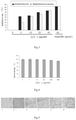
- FIG. 4 is a graph showing the growth effects of the functional polypeptide of the present invention on human normal lung epithelial cell BEAS-2B;
- FIG. 5 is a graph showing the results of HE staining ( ⁇ 200) of mouse lung tissue sections in the IPF inhibition experiment by EZY-1 polypeptide; wherein, 1. control group; 2. model group; 3. 0.25 mg/kg EZY-1 polypeptide dose group; 4. 0.5 mg/kg EZY-1 polypeptide dose group; 5. 1.0 mg/kg EZY-1 polypeptide dose group; 6. 50 mg/kg pirfenidone dose group.
- the present invention provides a functional polypeptide which is
- sequence of SEQ ID No. 1 is RTGACFCVIYNGILYP.
- the present invention and the described functional polypeptide is a derivative with one or more amino group substitutions at the number 1, 2, 8, 9, 11, 13, and 14 positions of the amino acid sequence shown in SEQ ID No. 1 with the same or similar functional amino groups. Specifically, it may be selected, but not limited to, one or more of the following substitutions: the first amino acid R in the sequence of SEQ ID No.
- the invention also provides a nucleotide sequence encoding to the above described functional polypeptide sequence.
- the invention also provides a vector containing the above described nucleotide sequence.
- the invention also provides a host cell containing the above described vector.
- the invention also provides the utility of the above described functional polypeptide, which can be used for preparing a medicament for preventing and treating pulmonary fibrosis, or as an active ingredient for drugs preventing and treating pulmonary fibrosis, or using the functional polypeptide as an optimizable precursor for preventing and treating pulmonary fibrosis, or combination with drugs treating pulmonary fibrosis.
- the specific plan is as follows:
- the functional polypeptide compound of the present invention can be used in the prevention and treatment of IPF in the following ways:
- Method 1 The functional polypeptide compound of the present invention is orally administered at a dose of 1 to 10 mg/kg once a day for at least 35 days.
- Method 2 The functional polypeptide compound of the present invention is injected from 0.1 to 1 mg/kg once every three days for at least 35 days.
- Method 3 In combination with drugs currently used for treating IPF (for example, pirfenidone), the EZY-1 polypeptide compound is administered orally in an amount of 1 to 10 mg/kg once a day.
- drugs currently used for treating IPF for example, pirfenidone
- a medicament for the treatment of pulmonary fibrosis contains the polypeptide described in the present invention.
- the functional polypeptide described in the present invention can be synthesized using amino acids as raw materials by polypeptide synthesis equipment according to the amino acid sequence of SEQ ID No. 1, and purified by high performance liquid chromatography. The product can be tested; the results are shown in FIGS. 1-4 .
- FIG. 1 is the LC-MS/MS structural analysis of the functional polypeptide of the present invention
- FIG. 2 is a graph showing the analysis results by SDS-PAGE electrophoresis of the functional peptide of the present invention
- FIG. 3 is a graph showing the analysis results of the anti-bacterial activity of the functional polypeptide of the present invention. The result shows that the functional polypeptide has a certain bacteriostatic effect
- FIG. 4 is a graph showing the growth effects of the functional polypeptide of the present invention on human normal lung epithelial cell BEAS-2B and the results show that the functional polypeptide of the present invention has low toxicity to normal cells.
- mice SPF grade C57 mice, 22 g ⁇ 2 g, 60 mice, females.
- mice was divided into the following groups using the random digits table: the control group, the model group, the pirfenidone group (50 mg/kg), the EZY-1 polypeptide low dose group (0.25 mg/kg), the EZY-1 polypeptide medium dose group (0.5 mg/kg), the EZY-1 polypeptide high dose group (1.0 mg/kg), 10 animals per group.
- mice were anesthetized by intraperitoneal injection of 1% sodium pentobarbital at a dose of 50 mg/kg, they are fixed to the operation console on their back. Their tongues were pulled out with tweezers to expose the trachea, and 5 mg/kg Bleomycin was slowly injected under a cold light source magnifying glass. Immediately after the injection, the operation console was erected and rotated for 3 minutes to evenly distribute the drug solution in the lungs. The control group was injected with an equal volume of isotonic saline in the same way as the previous method. After 10 days, the mice were intra-gastrically administered with 0.1 ml/10 g with drugs. The control group and the model group were intra-gastrically administered with an equal volume of isotonic saline. The other groups were intra-gastrically administered with the corresponding dose of the drug for 35 days, once a day.
- mice were anesthetized and sacrificed, and the two intact lung tissues were isolated and weighed. The same part of the right upper lobe was taken, fixed with 4% paraformaldehyde for 48 hours, and paraffin sections were generated for Hematoxylin-Eosin (HE) staining for histopathological observations.
- HE Hematoxylin-Eosin
- the same part of the left middle lobe was taken for the measurement of HYP content in the lung tissue.
- HYP hydroxyproline
- the lung structure of the control group was clear, while the alveolar space of the model group was significantly widened and the alveolar structure was severely damaged and there is severe atrophy collapse, dramatically increased collagen fibers, and infiltration of a large number of inflammatory cells.
- the low, medium and high dose groups of EZY-1 peptide and pirfenidone treated group can reduce alveolar structural damage, reduce collagen fiber production, and inhibit the inflammatory cell infiltration. This demonstrates that the drug treatment gradually reduced pulmonary fibrosis.
Landscapes
- Health & Medical Sciences (AREA)
- Chemical & Material Sciences (AREA)
- Life Sciences & Earth Sciences (AREA)
- Organic Chemistry (AREA)
- Medicinal Chemistry (AREA)
- General Health & Medical Sciences (AREA)
- Public Health (AREA)
- Pharmacology & Pharmacy (AREA)
- Proteomics, Peptides & Aminoacids (AREA)
- Veterinary Medicine (AREA)
- Animal Behavior & Ethology (AREA)
- Engineering & Computer Science (AREA)
- Bioinformatics & Cheminformatics (AREA)
- Molecular Biology (AREA)
- Biochemistry (AREA)
- Biophysics (AREA)
- Genetics & Genomics (AREA)
- Epidemiology (AREA)
- Pulmonology (AREA)
- Chemical Kinetics & Catalysis (AREA)
- General Chemical & Material Sciences (AREA)
- Nuclear Medicine, Radiotherapy & Molecular Imaging (AREA)
- Gastroenterology & Hepatology (AREA)
- Immunology (AREA)
- Medicines That Contain Protein Lipid Enzymes And Other Medicines (AREA)
- Peptides Or Proteins (AREA)
- Micro-Organisms Or Cultivation Processes Thereof (AREA)
Abstract
Description
- a functional polypeptide which is
- 1) a polypeptide having the amino acid sequence of SEQ ID No. 1; or
- 2) a polypeptide having a substitution or deletion or addition of one or several amino acids from the sequence shown in SEQ ID No. 1 that has the same or similar function.
| TABLE 1 |
| Comparison of biochemical indicators in each group |
| HYP (μg/g lung | ||||
| tissues Wet | T-SOD | MDA | GSH-PX | |
| Group | weight | (U/mL) | (nmal/mL) | (active unit) |
| The control group | 17.08 ± 1.23 | 180.98 ± 5.96 | 3.92 ± 0.34 | 1102.01 ± 72.23 |
| The Model group | 85.36 ± 5.85*# | 85.28 ± 13.67*# | 25.42 ± 5.64*# | 349.99 ± 22.51*# |
| The EZY-1 polypeptide | 67.82 ± 6.18*# | 128.06 ± 12.75*# | 16.63 ± 5.02*# | 462.56 ± 68.17*# |
| low dose group | ||||
| (0.25 mg/kg) | ||||
| The EZY-1 polypeptide | 62.80 ± 9.75*# | 138.04 ± 7.36*# | 9.88 ± 0.92*# | 612.56 ± 20.63*# |
| medium dose group | ||||
| (0.5 mg/kg) | ||||
| The EZY-1 polypeptide | 58.66 ± 7.17*# | 140.75 ± 18.58*# | 7.96 ± 0.69*# | 728.83 ± 38.52*# |
| high dose group | ||||
| (1.0 mg/kg) | ||||
| The pirfenidone group | 48.36 ± 5.01*# | 156.05 ± 17.32*# | 6.52 ± 0.71*# | 672.92 ± 98.72*# |
| (50 mg/kg) | ||||
| Compared with the control group: *P < 0.01; | ||||
| Compared with the model group: #P < 0.01. | ||||
Claims (10)
Applications Claiming Priority (3)
| Application Number | Priority Date | Filing Date | Title |
|---|---|---|---|
| CN201711141671.X | 2017-11-17 | ||
| CN201711141671.XA CN107987128B (en) | 2017-11-17 | 2017-11-17 | A functional polypeptide and its application in the preparation of a drug for preventing and treating pulmonary fibrosis |
| PCT/CN2018/091731 WO2019095685A1 (en) | 2017-11-17 | 2018-06-16 | Functional polypeptide and application thereof in preparing medicament for prevention and treatment of pulmonary fibrosis |
Publications (2)
| Publication Number | Publication Date |
|---|---|
| US20210047370A1 US20210047370A1 (en) | 2021-02-18 |
| US11225504B2 true US11225504B2 (en) | 2022-01-18 |
Family
ID=62031560
Family Applications (1)
| Application Number | Title | Priority Date | Filing Date |
|---|---|---|---|
| US16/331,995 Active 2039-03-05 US11225504B2 (en) | 2017-11-17 | 2018-06-16 | Functional polypeptide and its application thereof in preparing medicament for preventing and treating pulmonary fibrosis |
Country Status (6)
| Country | Link |
|---|---|
| US (1) | US11225504B2 (en) |
| EP (1) | EP3553076A4 (en) |
| JP (1) | JP6826268B2 (en) |
| CN (1) | CN107987128B (en) |
| AU (1) | AU2018353935B2 (en) |
| WO (1) | WO2019095685A1 (en) |
Families Citing this family (5)
| Publication number | Priority date | Publication date | Assignee | Title |
|---|---|---|---|---|
| CN107987128B (en) | 2017-11-17 | 2019-06-11 | 广东医科大学 | A functional polypeptide and its application in the preparation of a drug for preventing and treating pulmonary fibrosis |
| CN108530519B (en) * | 2018-04-04 | 2020-11-03 | 广东医科大学 | Sixteen-peptide compound and preparation method and application thereof |
| CN108329381B (en) * | 2018-04-04 | 2021-04-23 | 广东医科大学 | A kind of hexadeceptide derived from Kirin cabbage and its application in the preparation of drugs for preventing and treating malignant tumor metastasis |
| CN114409733B (en) * | 2022-01-18 | 2023-10-03 | 中南大学湘雅二医院 | Polypeptide and/or derivative for targeted inhibition of MLKL acetylation and application thereof |
| CN115925807B (en) * | 2022-07-28 | 2026-05-12 | 广东医科大学 | A new use of a functional peptide |
Citations (4)
| Publication number | Priority date | Publication date | Assignee | Title |
|---|---|---|---|---|
| CN105263948A (en) | 2013-03-15 | 2016-01-20 | 得克萨斯州大学系统董事会 | Inhibition of pulmonary fibrosis with Nutlin-3a and peptides |
| CN106913858A (en) | 2017-05-02 | 2017-07-04 | 广东医科大学 | Eucheuma polypeptide prevents and treats the application of pulmonary fibrosis |
| CN107987128A (en) | 2017-11-17 | 2018-05-04 | 广东医科大学 | A kind of functional polypeptide and its application in prevention pulmonary fibrosis medicine is prepared |
| CN108329381A (en) | 2018-04-04 | 2018-07-27 | 广东医科大学 | A kind of ten hexapeptides from Eucheuma and its application in preparing prevention Malignant tumor of bonal metastasis drug |
Family Cites Families (1)
| Publication number | Priority date | Publication date | Assignee | Title |
|---|---|---|---|---|
| SG194135A1 (en) * | 2011-04-12 | 2013-11-29 | Matrix Inc Moerae | Compositions and methods for preventing or treating diseases, conditions, or processes characterized by aberrant fibroblast proliferation and extracellular matrix deposition |
-
2017
- 2017-11-17 CN CN201711141671.XA patent/CN107987128B/en active Active
-
2018
- 2018-06-16 EP EP18865340.6A patent/EP3553076A4/en not_active Withdrawn
- 2018-06-16 US US16/331,995 patent/US11225504B2/en active Active
- 2018-06-16 JP JP2019570612A patent/JP6826268B2/en active Active
- 2018-06-16 WO PCT/CN2018/091731 patent/WO2019095685A1/en not_active Ceased
- 2018-06-16 AU AU2018353935A patent/AU2018353935B2/en not_active Ceased
Patent Citations (5)
| Publication number | Priority date | Publication date | Assignee | Title |
|---|---|---|---|---|
| CN105263948A (en) | 2013-03-15 | 2016-01-20 | 得克萨斯州大学系统董事会 | Inhibition of pulmonary fibrosis with Nutlin-3a and peptides |
| CN106913858A (en) | 2017-05-02 | 2017-07-04 | 广东医科大学 | Eucheuma polypeptide prevents and treats the application of pulmonary fibrosis |
| CN107987128A (en) | 2017-11-17 | 2018-05-04 | 广东医科大学 | A kind of functional polypeptide and its application in prevention pulmonary fibrosis medicine is prepared |
| WO2019095685A1 (en) * | 2017-11-17 | 2019-05-23 | 广东医科大学 | Functional polypeptide and application thereof in preparing medicament for prevention and treatment of pulmonary fibrosis |
| CN108329381A (en) | 2018-04-04 | 2018-07-27 | 广东医科大学 | A kind of ten hexapeptides from Eucheuma and its application in preparing prevention Malignant tumor of bonal metastasis drug |
Non-Patent Citations (4)
| Title |
|---|
| "Amino Acids reference charts", https://www.sigmaldrich.com/life-science-metabolomics/learning-center/amino-acid-reference-chart.html, 1991, accessed Apr. 21, 2021 (Year: 1991). * |
| ISA; State Intellectual Property Office of the P.R. China; Beijing China; Aug. 7, 2018. |
| Loomis-King. Current Opinion in Pharmacology, 2013, 13, 377-385 (Year: 2013). * |
| STN CAS Registry: Exact and pattern searching of protein sequences, 2008, p. 12 (Year: 2008). * |
Also Published As
| Publication number | Publication date |
|---|---|
| US20210047370A1 (en) | 2021-02-18 |
| JP2020511161A (en) | 2020-04-16 |
| CN107987128A (en) | 2018-05-04 |
| EP3553076A4 (en) | 2020-05-13 |
| WO2019095685A1 (en) | 2019-05-23 |
| AU2018353935B2 (en) | 2020-05-14 |
| JP6826268B2 (en) | 2021-02-03 |
| EP3553076A1 (en) | 2019-10-16 |
| CN107987128B (en) | 2019-06-11 |
| AU2018353935A1 (en) | 2019-06-06 |
Similar Documents
| Publication | Publication Date | Title |
|---|---|---|
| AU2018353935B2 (en) | A functional polypeptide and its application thereof in preparing medicament for preventing and treating pulmonary fibrosis | |
| EP2119444B1 (en) | Therapeutic agent for pain disease | |
| US20040072754A1 (en) | Amyloid precursor protein and APP-deprived peptides inhibit tumor growth and metastasis | |
| CN115192573B (en) | Application of demethylene berberine hydrochloride in preparation of medicine for treating pulmonary fibrosis | |
| KR102001437B1 (en) | A Pharmaceutical composition for preventing or treating of fibrosis | |
| JP2025507180A (en) | Use of hypoxanthine compounds in the preparation of a medicament for the treatment of pulmonary fibrosis | |
| US10716831B2 (en) | Methods for inhibiting infectious peritonitis | |
| CN104188973B (en) | Application of alkaloid in preparing pharmaceutical compositions for preventing and treating pulmonary fibrosis | |
| KR102084341B1 (en) | Short synthetic peptides and uses thereof | |
| CN114432298A (en) | Application of wild horse sesquiterpene lactone in the preparation of drugs for preventing or treating pulmonary fibrosis | |
| CN118767111A (en) | Application of Hydrostatin-AMP3, an active peptide against drug-resistant bacteria, in the treatment of bacterial sepsis | |
| CA2433652A1 (en) | Active metabolite of antifungal compound | |
| TW202404616A (en) | Use of rhamnose in the preparation of drugs for the treatment or prevention of neurodegenerative diseases, pharmaceutical compositions and applications thereof | |
| CN115400117A (en) | Application of wogonin in the preparation of drugs for preventing or treating pulmonary fibrosis | |
| KR20220013612A (en) | Composition comprising pseudin-2 derivative for preventing or treating endotoxemia or sepsis | |
| CN115504970B (en) | Flavonoid derivative for treating myocardial ischemia and preparation method thereof | |
| KR102758643B1 (en) | Pharmaceutical composition for preventing or treating diabetes comprising quinizarin | |
| WO2014122638A2 (en) | Thalidomide and thalidomide analogues for the stimulation in human/animals of stem cell factor to increase regenerative potential in aging conditions | |
| CN110845510A (en) | A kind of xanthone compound and its preparation method and use | |
| US20240010681A1 (en) | Peptides and methods of use | |
| KR20240012958A (en) | Composition for anti-obesity comprising HDAC inhibitor | |
| CN117357545A (en) | Application of glycyrrhizin in preparation of medicines for treating kidney injury caused by vancomycin | |
| CN122036889A (en) | Cyclized antibacterial peptide CycP-1 of targeted multi-drug resistant klebsiella pneumoniae, composition and application thereof | |
| CN119326751A (en) | Application of 7,8-dihydroxyflavone in the preparation of drugs for preventing and treating pulmonary fibrosis | |
| US20200109170A1 (en) | Short synthetic peptide and uses thereof |
Legal Events
| Date | Code | Title | Description |
|---|---|---|---|
| FEPP | Fee payment procedure |
Free format text: ENTITY STATUS SET TO UNDISCOUNTED (ORIGINAL EVENT CODE: BIG.); ENTITY STATUS OF PATENT OWNER: SMALL ENTITY |
|
| AS | Assignment |
Owner name: GUANGDONG MEDICAL UNIVERSITY, CHINA Free format text: ASSIGNMENT OF ASSIGNORS INTEREST;ASSIGNORS:ZHANG, HAITAO;YU, HUAJUN;WU, JUN;AND OTHERS;REEL/FRAME:048748/0407 Effective date: 20190301 |
|
| FEPP | Fee payment procedure |
Free format text: ENTITY STATUS SET TO SMALL (ORIGINAL EVENT CODE: SMAL); ENTITY STATUS OF PATENT OWNER: SMALL ENTITY |
|
| STPP | Information on status: patent application and granting procedure in general |
Free format text: RESPONSE TO NON-FINAL OFFICE ACTION ENTERED AND FORWARDED TO EXAMINER |
|
| STPP | Information on status: patent application and granting procedure in general |
Free format text: NON FINAL ACTION MAILED |
|
| STPP | Information on status: patent application and granting procedure in general |
Free format text: RESPONSE TO NON-FINAL OFFICE ACTION ENTERED AND FORWARDED TO EXAMINER |
|
| STPP | Information on status: patent application and granting procedure in general |
Free format text: FINAL REJECTION MAILED |
|
| STPP | Information on status: patent application and granting procedure in general |
Free format text: RESPONSE AFTER FINAL ACTION FORWARDED TO EXAMINER |
|
| STPP | Information on status: patent application and granting procedure in general |
Free format text: NOTICE OF ALLOWANCE MAILED -- APPLICATION RECEIVED IN OFFICE OF PUBLICATIONS |
|
| STPP | Information on status: patent application and granting procedure in general |
Free format text: PUBLICATIONS -- ISSUE FEE PAYMENT VERIFIED |
|
| STCF | Information on status: patent grant |
Free format text: PATENTED CASE |
|
| MAFP | Maintenance fee payment |
Free format text: PAYMENT OF MAINTENANCE FEE, 4TH YR, SMALL ENTITY (ORIGINAL EVENT CODE: M2551); ENTITY STATUS OF PATENT OWNER: SMALL ENTITY Year of fee payment: 4 |