US11214596B2 - Method for producing surfactin by using bacillus amyloliquefaciens - Google Patents
Method for producing surfactin by using bacillus amyloliquefaciens Download PDFInfo
- Publication number
- US11214596B2 US11214596B2 US16/220,147 US201816220147A US11214596B2 US 11214596 B2 US11214596 B2 US 11214596B2 US 201816220147 A US201816220147 A US 201816220147A US 11214596 B2 US11214596 B2 US 11214596B2
- Authority
- US
- United States
- Prior art keywords
- surfactin
- ammonium
- bacillus amyloliquefaciens
- fermentation medium
- fermentation
- Prior art date
- Legal status (The legal status is an assumption and is not a legal conclusion. Google has not performed a legal analysis and makes no representation as to the accuracy of the status listed.)
- Expired - Fee Related, expires
Links
Images


Classifications
-
- C—CHEMISTRY; METALLURGY
- C12—BIOCHEMISTRY; BEER; SPIRITS; WINE; VINEGAR; MICROBIOLOGY; ENZYMOLOGY; MUTATION OR GENETIC ENGINEERING
- C12N—MICROORGANISMS OR ENZYMES; COMPOSITIONS THEREOF; PROPAGATING, PRESERVING, OR MAINTAINING MICROORGANISMS; MUTATION OR GENETIC ENGINEERING; CULTURE MEDIA
- C12N1/00—Microorganisms; Compositions thereof; Processes of propagating, maintaining or preserving microorganisms or compositions thereof; Processes of preparing or isolating a composition containing a microorganism; Culture media therefor
- C12N1/20—Bacteria; Culture media therefor
- C12N1/205—Bacterial isolates
-
- C—CHEMISTRY; METALLURGY
- C07—ORGANIC CHEMISTRY
- C07K—PEPTIDES
- C07K7/00—Peptides having 5 to 20 amino acids in a fully defined sequence; Derivatives thereof
- C07K7/64—Cyclic peptides containing only normal peptide links
-
- A—HUMAN NECESSITIES
- A61—MEDICAL OR VETERINARY SCIENCE; HYGIENE
- A61K—PREPARATIONS FOR MEDICAL, DENTAL OR TOILETRY PURPOSES
- A61K35/00—Medicinal preparations containing materials or reaction products thereof with undetermined constitution
- A61K35/66—Microorganisms or materials therefrom
- A61K35/74—Bacteria
-
- A—HUMAN NECESSITIES
- A61—MEDICAL OR VETERINARY SCIENCE; HYGIENE
- A61K—PREPARATIONS FOR MEDICAL, DENTAL OR TOILETRY PURPOSES
- A61K35/00—Medicinal preparations containing materials or reaction products thereof with undetermined constitution
- A61K35/66—Microorganisms or materials therefrom
- A61K35/74—Bacteria
- A61K35/741—Probiotics
- A61K35/742—Spore-forming bacteria, e.g. Bacillus coagulans, Bacillus subtilis, clostridium or Lactobacillus sporogenes
-
- A—HUMAN NECESSITIES
- A61—MEDICAL OR VETERINARY SCIENCE; HYGIENE
- A61K—PREPARATIONS FOR MEDICAL, DENTAL OR TOILETRY PURPOSES
- A61K38/00—Medicinal preparations containing peptides
- A61K38/04—Peptides having up to 20 amino acids in a fully defined sequence; Derivatives thereof
- A61K38/12—Cyclic peptides, e.g. bacitracins; Polymyxins; Gramicidins S, C; Tyrocidins A, B or C
-
- A—HUMAN NECESSITIES
- A61—MEDICAL OR VETERINARY SCIENCE; HYGIENE
- A61P—SPECIFIC THERAPEUTIC ACTIVITY OF CHEMICAL COMPOUNDS OR MEDICINAL PREPARATIONS
- A61P3/00—Drugs for disorders of the metabolism
- A61P3/06—Antihyperlipidemics
-
- A—HUMAN NECESSITIES
- A61—MEDICAL OR VETERINARY SCIENCE; HYGIENE
- A61P—SPECIFIC THERAPEUTIC ACTIVITY OF CHEMICAL COMPOUNDS OR MEDICINAL PREPARATIONS
- A61P31/00—Antiinfectives, i.e. antibiotics, antiseptics, chemotherapeutics
- A61P31/04—Antibacterial agents
-
- A—HUMAN NECESSITIES
- A61—MEDICAL OR VETERINARY SCIENCE; HYGIENE
- A61P—SPECIFIC THERAPEUTIC ACTIVITY OF CHEMICAL COMPOUNDS OR MEDICINAL PREPARATIONS
- A61P31/00—Antiinfectives, i.e. antibiotics, antiseptics, chemotherapeutics
- A61P31/10—Antimycotics
-
- A—HUMAN NECESSITIES
- A61—MEDICAL OR VETERINARY SCIENCE; HYGIENE
- A61P—SPECIFIC THERAPEUTIC ACTIVITY OF CHEMICAL COMPOUNDS OR MEDICINAL PREPARATIONS
- A61P31/00—Antiinfectives, i.e. antibiotics, antiseptics, chemotherapeutics
- A61P31/12—Antivirals
-
- A—HUMAN NECESSITIES
- A61—MEDICAL OR VETERINARY SCIENCE; HYGIENE
- A61P—SPECIFIC THERAPEUTIC ACTIVITY OF CHEMICAL COMPOUNDS OR MEDICINAL PREPARATIONS
- A61P35/00—Antineoplastic agents
-
- A—HUMAN NECESSITIES
- A61—MEDICAL OR VETERINARY SCIENCE; HYGIENE
- A61P—SPECIFIC THERAPEUTIC ACTIVITY OF CHEMICAL COMPOUNDS OR MEDICINAL PREPARATIONS
- A61P7/00—Drugs for disorders of the blood or the extracellular fluid
- A61P7/02—Antithrombotic agents; Anticoagulants; Platelet aggregation inhibitors
-
- C—CHEMISTRY; METALLURGY
- C07—ORGANIC CHEMISTRY
- C07K—PEPTIDES
- C07K7/00—Peptides having 5 to 20 amino acids in a fully defined sequence; Derivatives thereof
- C07K7/04—Linear peptides containing only normal peptide links
- C07K7/06—Linear peptides containing only normal peptide links having 5 to 11 amino acids
-
- C—CHEMISTRY; METALLURGY
- C09—DYES; PAINTS; POLISHES; NATURAL RESINS; ADHESIVES; COMPOSITIONS NOT OTHERWISE PROVIDED FOR; APPLICATIONS OF MATERIALS NOT OTHERWISE PROVIDED FOR
- C09K—MATERIALS FOR MISCELLANEOUS APPLICATIONS, NOT PROVIDED FOR ELSEWHERE
- C09K8/00—Compositions for drilling of boreholes or wells; Compositions for treating boreholes or wells, e.g. for completion or for remedial operations
- C09K8/58—Compositions for enhanced recovery methods for obtaining hydrocarbons, i.e. for improving the mobility of the oil, e.g. displacing fluids
- C09K8/582—Compositions for enhanced recovery methods for obtaining hydrocarbons, i.e. for improving the mobility of the oil, e.g. displacing fluids characterised by the use of bacteria
-
- C—CHEMISTRY; METALLURGY
- C09—DYES; PAINTS; POLISHES; NATURAL RESINS; ADHESIVES; COMPOSITIONS NOT OTHERWISE PROVIDED FOR; APPLICATIONS OF MATERIALS NOT OTHERWISE PROVIDED FOR
- C09K—MATERIALS FOR MISCELLANEOUS APPLICATIONS, NOT PROVIDED FOR ELSEWHERE
- C09K8/00—Compositions for drilling of boreholes or wells; Compositions for treating boreholes or wells, e.g. for completion or for remedial operations
- C09K8/58—Compositions for enhanced recovery methods for obtaining hydrocarbons, i.e. for improving the mobility of the oil, e.g. displacing fluids
- C09K8/584—Compositions for enhanced recovery methods for obtaining hydrocarbons, i.e. for improving the mobility of the oil, e.g. displacing fluids characterised by the use of specific surfactants
-
- C—CHEMISTRY; METALLURGY
- C12—BIOCHEMISTRY; BEER; SPIRITS; WINE; VINEGAR; MICROBIOLOGY; ENZYMOLOGY; MUTATION OR GENETIC ENGINEERING
- C12N—MICROORGANISMS OR ENZYMES; COMPOSITIONS THEREOF; PROPAGATING, PRESERVING, OR MAINTAINING MICROORGANISMS; MUTATION OR GENETIC ENGINEERING; CULTURE MEDIA
- C12N1/00—Microorganisms; Compositions thereof; Processes of propagating, maintaining or preserving microorganisms or compositions thereof; Processes of preparing or isolating a composition containing a microorganism; Culture media therefor
- C12N1/20—Bacteria; Culture media therefor
-
- C—CHEMISTRY; METALLURGY
- C12—BIOCHEMISTRY; BEER; SPIRITS; WINE; VINEGAR; MICROBIOLOGY; ENZYMOLOGY; MUTATION OR GENETIC ENGINEERING
- C12P—FERMENTATION OR ENZYME-USING PROCESSES TO SYNTHESISE A DESIRED CHEMICAL COMPOUND OR COMPOSITION OR TO SEPARATE OPTICAL ISOMERS FROM A RACEMIC MIXTURE
- C12P21/00—Preparation of peptides or proteins
- C12P21/02—Preparation of peptides or proteins having a known sequence of two or more amino acids, e.g. glutathione
-
- C—CHEMISTRY; METALLURGY
- C12—BIOCHEMISTRY; BEER; SPIRITS; WINE; VINEGAR; MICROBIOLOGY; ENZYMOLOGY; MUTATION OR GENETIC ENGINEERING
- C12R—INDEXING SCHEME ASSOCIATED WITH SUBCLASSES C12C - C12Q, RELATING TO MICROORGANISMS
- C12R2001/00—Microorganisms ; Processes using microorganisms
- C12R2001/01—Bacteria or Actinomycetales ; using bacteria or Actinomycetales
- C12R2001/07—Bacillus
Definitions
- the disclosure herein relates to a method for producing surfactin by using Bacillus amyloliquefaciens , belonging to the technical field of industrial microorganisms.
- Surfactin is a cyclic lipopeptide linked by a long-chain fatty acid (C 12 -C 17 ) and a polypeptide containing seven amino acids via a lactone bond, which is synthesized by Bacillus subtilis through a nonribosomal peptide synthetase (NRPS) pathway.
- NRPS nonribosomal peptide synthetase pathway.
- Surfactin has antibacterial, antiviral, antitumor, thrombolytic and cholesterol-lowering medicinal effects and a superior surface active function.
- the broad-spectrum antibacterial effect of surfactin is expected to make up for the ubiquitous antibiotic resistance problem nowadays.
- the antiviral and antitumor functions of surfactin also provide some options for the design of new drugs, while surfactin has broad application prospects in cosmetics, pharmaceuticals, emulsifiers, humectants and fine chemicals because of its superior surface active function (which can reduce the surface tension of water molecules from 72 mN/M to 27 mN/M).
- the output value of the world surfactant industry in 2006 was more than 20 billion U.S. dollars, of which North America, Western Europe and China accounted for more than 70% of market shares.
- surfactin has shown broad application value and market prospects. Therefore, the development of microbial strains and production processes capable of efficiently synthesizing surfactin are of great significance for the industrial production and popularization of surfactin.
- the selection of producing bacteria of surfactin mainly adopts a method of combining mutation breeding and random screening.
- the surfactin yield of the mutagenized strain is improved, it still cannot be applied to industrial production due to low yield and poor stability of the strain. Screening a wild-type high-yield strain is still a primary task to achieve industrial production of surfactin.
- Bacillus subtilis Bacillus amyloliquefaciens
- Bacillus subtilis Bacillus amyloliquefaciens
- synthesis of surfactin is feedback-inhibited, and then the metabolic synthesis of surfactin is terminated.
- Bacillus in nature achieves the purpose of coping with environmental pressure and gaining competitive advantage by forming the biofilm, and thus has poor surfactin synthetic ability and can only synthesize the dose inducing biofilm formation.
- surfactin has antibiotic activity, and cytoplasmic leakage is formed via non-specifically attacking the phospholipid bilayer of a cell membrane, thereby achieving the purpose of killing microorganisms. This is another reason why most Bacillus cannot synthesize surfactin excessively.
- the original yield by wild-type Bacillus is generally 100-200 mg/L.
- the yield of surfactin can be increased to some extent after being subjected to a fermentation medium and fermentation condition, an expensive special fermentation equipment is required to continue to increase the yield of surfactin.
- the highest yield of surfactin by Bacillus subtilis is about 6.5 g/L.
- the invention first provides a Bacillus amyloliquefaciens MT45 strain synthesizing surfactin in a super-efficient way, which was deposited in China General Microbiological Culture Collection Center, Institute of Microbiology, Chinese Academy of Sciences, No. 3, Campus #1, Beichen West Road, Chaoyang District, Beijing, on Jun. 6, 2016 with the preservation number of CGMCC NO. 12593.
- the colony morphology of the Bacillus amyloliquefaciens MT45 strain is that: colonies are round and translucent with smooth and not rugose surface, a biofilm is not formed, the central of colony is slightly convex, cells are rod-shaped under a microscope, spores are formed, and a Gram stain result is positive.
- the invention also provides a method for producing surfactin by using the above Bacillus amyloliquefaciens MT45, including the following steps:
- a formula of the seed medium is 2% of glucose, 1% of yeast powder, and 0.5% of sodium chloride, natural pH.
- a formula of the fermentation medium is 10-100 g/L of carbon source, 1-10 g/L of nitrogen source, 0.1-1.5 g/L of peptone, 2-10 g/L of potassium dihydrogen phosphate, 2-10 g/L of disodium hydrogen phosphate, and 0-0.2 g/L of magnesium sulfate;
- the carbon source includes one or more of sucrose, glucose, fructose, mannose, chitosan, glycerol, soluble starch, and dextrin;
- the nitrogen source includes one or more of ammonium nitrate, ammonium sulfate, ammonium chloride, ammonium carbonate, and ammonium bicarbonate.
- the carbon source of the fermentation medium is sucrose, glucose, fructose, or glycerol.
- the carbon source of the fermentation medium is glucose or sucrose.
- the nitrogen source of the fermentation medium is ammonium nitrate, ammonium carbonate or ammonium sulfate.
- the formula of the fermentation medium is 10-30 g/L of carbon source, 2-6 g/L of nitrogen source, 0.1-1.5 g/L of peptone, 2-10 g/L of potassium dihydrogen phosphate, 2-10 g/L of disodium hydrogen phosphate, and 0-0.2 g/L of magnesium sulfate.
- the formula of the fermentation medium is 10-30 g/L of sucrose or glucose, 2-6 g/L of ammonium nitrate or sodium carbonate or ammonium sulfate, 0.1-1.5 g/L of peptone, 2-10 g/L of potassium dihydrogen phosphate, 2-10 g/L of disodium hydrogen phosphate, and 0.01-0.2 g/L of magnesium sulfate.
- the formula of the fermentation medium is 30 g/L of sucrose, 6 g/L of ammonium nitrate, 0.5 g/L of peptone, 2-10 g/L of potassium dihydrogen phosphate, 2-10 g/L of disodium hydrogen phosphate, and 0.18 g/L of magnesium sulfate.
- the formula of the fermentation medium is 10 g/L of sucrose, 6 g/L of ammonium nitrate, 1.5 g/L of peptone, 2 g/L of potassium dihydrogen phosphate, and 2 g/L of disodium hydrogen phosphate.
- the formula of the fermentation medium is 30 g/L of sucrose, 6 g/L of ammonium nitrate, 0.5 g/L of peptone, 2-10 g/L of potassium dihydrogen phosphate, 2-10 g/L of disodium hydrogen phosphate, and 0.18 g/L of magnesium sulfate.
- the formula of the fermentation medium is 10 g/L of sucrose, 6 g/L of nitrogen source, 1.5 g/L of peptone, 0.14 g/L of zinc sulfate, 4 g/L of potassium dihydrogen phosphate, 2 g/L of disodium hydrogen phosphate, and 0.18 g/L of magnesium sulfate.
- step (1) a pure colony of Bacillus amyloliquefaciens CGMCC NO. 12593 is picked and inoculated into a seed medium, which is cultured at a temperature of 37° C. and a shaker speed of 200 rpm for 24 h to obtain a seed culture solution.
- the invention has the following beneficial effects.
- the invention provides a novel Bacillus amyloliquefaciens MT45 strain, which is capable of synthesizing surfactin in a super-efficient way by using an inorganic salt medium.
- the strain synthesizes surfactin synchronizing with the growth of thalli, which has the characteristics that the product (surfactin) synthesis and the growth of the strain are synchronous without a lag period, the strain does not form a biofilm to avoid the feedback inhibition of the product and is highly tolerant to the product.
- the culture method provided by the invention can produce up to 9.43 g/L of surfactin via fermentation for 55 h by using preferred carbon and nitrogen sources and a preferred ratio of carbon source and nitrogen source, which can meet the requirements of industrial large-scale production and have great industrial application prospects.
- FIG. 1 shows the colony morphology (A) and micrograph (B) of Bacillus amyloliquefaciens MT45 on nutrient agar plates.
- FIG. 2 is a phylogenetic tree of Bacillus amyloliquefaciens MT45 based on 16s rRNA sequence alignment.
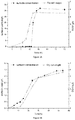
- FIG. 3A and 3B are growth curves of Bacillus amyloliquefaciens MT45 ( FIG. 3B ) and a model microorganism Bacillus subtilis ATCC 6051 ( FIG. 3A ) in a fermentation medium and their respective synthetic curve of surfactin.
- FIG. 4 Purification of surfactin produced by Bacillus amyloliquefaciens.
- composition of the activated culture solution is: based on mass percent, 1%-5% of glucose, 1%-5% of yeast powder, 0.3%-1.0% of sodium chloride, and the balance of water; pH 6.5-7.0.
- composition of the solid medium 1-10 mM of potassium phosphate, 50-100 mM of Mops, 2-6 mM of magnesium chloride, 0.1-1 mM of calcium chloride, 10-80 ⁇ M of manganese chloride, 10-80 ⁇ M of ferric chloride, 2-6 ⁇ M of zinc chloride, 2-6 ⁇ M of thiamine, 0.1-1% of glycerol, 0.1-1% of glutamic acid, and 1%-2% of agar.
- Nutrient medium 2% of peptone, 1% of yeast powder, and 0.5% of glucose, pH 7.5.
- Seed medium 2% of glucose, 1% of yeast powder, and 0.5% of sodium chloride, natural pH.
- Fermentation medium 10-100 g/L of carbon source, 1-10 g/L of nitrogen source, 0.1-1.5 g/L of peptone, 2-10 g/L of potassium dihydrogen phosphate, 2-10 g/L of disodium hydrogen phosphate, and 0.01-0.1 g/L of magnesium sulfate.
- a sample were collected from high temperature Daqu (starter) of Chinese liquor fermentation, and a 5 g sample was dissolved in 10 ml of sodium chloride solution with the mass percent of 1%. After vortexing and mixing, 1 mL was pipetted and inoculated into the activated culture solution, which was activated at a temperature of 50-60° C. and at a speed of 200 rpm for 24-36 h to prepare a mature and activated bacterial solution.
- the mature and activated bacterial solution was taken and diluted by adding a sodium chloride solution with the mass percent of 1%.
- a dilution with a dilution gradient of 10 ⁇ 2 -10 ⁇ 6 was selected and applied sequentially to a solid medium plate.
- the culture was carried out for 48-72 h at a temperature of 30° C. and a humidity of 40%-60%, and a large number of single colonies were obtained. After the obtained single colony was inoculated into the nutrient medium for fermentation and culture, the surfactin content in a fermentation broth was detected, and finally a pure culture producing high level of surfactin was obtained and numbered MT45.
- the fermentation broth was centrifuged at 8000 rpm, 4° C. for 10 min.
- a fermentation supernatant was adjusted to pH 2.0 with 6 mol/L of hydrochloric acid, allowed to stand in a refrigerator at 4° C. for 2 hours, and then centrifuged at 12,000 rpm, 4° C. for 30 min to obtain a precipitate.
- the precipitate was extracted with methanol to obtain crude surfactin.
- Determination method of surfactin in fermentation broth Accurate quantification of surfactin was carried out by ultra-performance liquid chromatography. The waters BEH C18 chromatographic column was used, and mobile phases were (A) 0.1% aqueous formic acid solution and (B) HPLC grade methanol, respectively. The elution condition is 30%-70% of methanol for 5 min and 70%-100% of methanol for 1 min. The sample was detected at 210 nm using a diode array detector. After integrating obtained chromatographic peaks, an interpolation method was used to compare with a standard curve to obtain the accurate content of surfactin.
- Example 3 the Strain Identification of the Strain Screened in Example 1
- Example 1 The strain numbered MT45 and obtained in Example 1 was subjected to strain identification.
- the Bacillus amyloliquefaciens MT45 strain formed round and translucent colonies on the solid plate medium.
- the surface of the colony was smooth and not rugose, and no biofilm represented by rugose colonies was formed.
- the central of colony was slightly convex.
- the cells were rod-shaped under the microscope, spores were formed, and a Gram stain result was positive ( FIG. 1 ).
- the 16r rRNA gene sequence of the strain was sequenced (SEQ ID NO. 1) and compared with a database. A phylogenetic tree analysis was performed to identify MT45 as Bacillus amyloliquefaciens ( FIG. 2 ).
- Bacillus amyloliquefaciens MT45 was deposited in China General Microbiological Culture Collection Center on Jun. 6, 2016 with the preservation number of CGMCC NO. 12593.
- the Bacillus amyloliquefaciens MT45 strain identified in Example 3 was activated in the seed medium and then inoculated into a fermentation medium at an inoculum size of 5%.
- the composition of the fermentation medium was 10 g/L of glucose, 1.5 g/L of peptone, 2 g/L of potassium dihydrogen phosphate, 2 g/L of disodium hydrogen phosphate, and 0.18 g/L of magnesium sulfate. 100 mL of liquid was added into a 500 ml triangular flask and the fermentation was carried out at 37° C., 200 rpm. Samples were taken regularly to determine the amount of cell growth and surfactin production during fermentation. The results were shown in FIG. 3 .
- the Bacillus amyloliquefaciens MT45 can synthesize up to 3.0 g/L of surfactin via fermentation time for 55 h.
- Bacillus amyloliquefaciens MT45 can synthesize surfactin in a super-efficient way, and the highest yield can reach 50% of biomass.
- the high-concentration surfactin synthesized during culture also reflected the high tolerance of strain MT45 against the product.
- surfactin synthesis was synchronized with the growth of thalli, and the product synthesis had no lag period.
- Bacillus amyloliquefaciens MT45 can produce surfactin using various saccharides as carbon sources, and the saccharides mainly included sucrose, glucose, fructose, mannose, chitosan, glycerol, soluble starch, and dextrin. Other components of the fermentation medium were: 0.5 g/L of peptone, 2.7 g/L of potassium dihydrogen phosphate, 5 g/L of disodium hydrogen phosphate, and 0.5 g/L of magnesium sulfate. The concentration of the carbon source was 10 g/L. 50 mL of a sample was added into a 250 mL erlenmeyer flask at an inoculum size of 2% and cultured at 37° C., 200 rpm. The results were shown in Table 1.
- Bacillus amyloliquefaciens MT45 can produce surfactin using various inorganic ammonium salts, and the inorganic ammonium salts mainly included ammonium nitrate, ammonium sulfate, ammonium chloride, ammonium carbonate, and ammonium bicarbonate.
- Other components of the fermentation medium were: 20 g/L of sucrose, 0.5 g/L of peptone, 2.7 g/L of potassium dihydrogen phosphate, 5 g/L of disodium hydrogen phosphate, and 0.5 g/L of magnesium sulfate.
- the concentration of the nitrogen source was 8 g/L. 50 mL of a sample was added into a 250 mL erlenmeyer flask at an inoculum size of 2% and cultured at 37° C., 200 rpm. The results were shown in Table 2.
- Example 7 the Production of Surfactin by Bacillus amyloliquefaciens MT45 Using Different Fermentation Mediums
- Bacillus amyloliquefaciens MT45 was inoculated into an LB medium and cultured overnight at 37° C., 200 rpm. A seed solution was transferred to the fermentation medium at an inoculum size of 2%, and cultured at 37° C., 200 rpm for 48 h. The biosurfactant yield of fermentation mediums having different components was shown in Table 3.
- the fermentation broth was centrifuged at 8000 rpm, 4° C. for 10 min.
- the fermentation supernatant was adjusted to pH 2.0 with 6 mol/L of hydrochloric acid, allowed to stand in a refrigerator at 4° C. for 2 h, and then centrifuged at 12,000 rpm, 4° C. for 30 min to obtain a precipitate.
- the precipitate was extracted with methanol to obtain crude surfactin.
- the crude surfactin obtained in Example 7 was purified by Preparative HPLC.
- a C18 chromatographic column was used, the mobile phases were 0.1% aqueous formic acid and methanol, and the elution conditions were linear elution (30%-70% methanol for 60 min).
- the detection wavelength of a UV detector was set to 210 nm.
- the eluted fraction was collected between 40.5 min and 53.5 min, which was subjected to rotary evaporation by a rotary evaporator to remove a solvent to obtain pure surfactin ( FIG. 4 ).
Landscapes
- Health & Medical Sciences (AREA)
- Chemical & Material Sciences (AREA)
- Life Sciences & Earth Sciences (AREA)
- Organic Chemistry (AREA)
- Engineering & Computer Science (AREA)
- General Health & Medical Sciences (AREA)
- Medicinal Chemistry (AREA)
- Bioinformatics & Cheminformatics (AREA)
- Zoology (AREA)
- Genetics & Genomics (AREA)
- Wood Science & Technology (AREA)
- Biotechnology (AREA)
- Biochemistry (AREA)
- Microbiology (AREA)
- Animal Behavior & Ethology (AREA)
- Public Health (AREA)
- Pharmacology & Pharmacy (AREA)
- Veterinary Medicine (AREA)
- Proteomics, Peptides & Aminoacids (AREA)
- General Engineering & Computer Science (AREA)
- Molecular Biology (AREA)
- Chemical Kinetics & Catalysis (AREA)
- General Chemical & Material Sciences (AREA)
- Virology (AREA)
- Nuclear Medicine, Radiotherapy & Molecular Imaging (AREA)
- Epidemiology (AREA)
- Tropical Medicine & Parasitology (AREA)
- Biomedical Technology (AREA)
- Materials Engineering (AREA)
- General Life Sciences & Earth Sciences (AREA)
- Oil, Petroleum & Natural Gas (AREA)
- Biophysics (AREA)
- Mycology (AREA)
- Gastroenterology & Hepatology (AREA)
- Immunology (AREA)
- Communicable Diseases (AREA)
- Oncology (AREA)
- Hematology (AREA)
- Diabetes (AREA)
- Obesity (AREA)
Abstract
Description
| TABLE 1 |
| Utilization of carbon sources by Bacillus amyloliquefaciens MT45 |
| No. | Carbon source | Surfactin yield in fermentation broth (G/L) |
| 1 | Sucrose | 6.65 |
| 2 | Glucose | 3.12 |
| 3 | Fructose | 2.18 |
| 4 | Mannose | 0.20 |
| 5 | Chitosan | 0.17 |
| 6 | Glycerol | 1.74 |
| 7 | Soluble Starch | 0.08 |
| 8 | Dextrin | 0.05 |
| TABLE 2 |
| Utilization of ammonium salts by Bacillus amyloliquefaciens MT45 |
| Inorganic ammonium | Surfactin yield in | |
| No. | salts | fermentation broth (g/L) |
| 1 | Ammonium nitrate | 8.65 |
| 2 | Ammonium sulfate | 6.81 |
| 3 | Ammonium chloride | 3.42 |
| 4 | Ammonium carbonate | 6.83 |
| 5 | Ammonium bicarbonate | 6.13 |
| TABLE 3 |
| The production of surfactin by Bacillus amyloliquefaciens MT45 using different |
| fermentation mediums wherein, LB medium: 10 g/L of peptone, 5 g/L of yeast |
| powder, and 10 g/L of sodium chloride. |
| Potassium | Disodium | |||||||
| Ammonium | Zinc | Magnesium | dihydrogen | hydrogen | Surfactant | |||
| Sucrose | nitrate | Peptone | sulfate | sulfate | phosphate | phosphate | yield | |
| No. | g/L | g/L | g/L | g/L | g/L | g/L | g/L | g/ |
| 1 | 30 | 2 | 1.5 | 0.14 | 0 | 4 | 2 | 4.46 |
| 2 | 10 | 6 | 0.5 | 0.14 | 0.18 | 2 | 2 | 0.02 |
| 3 | 10 | 2 | 0.5 | 0.14 | 0 | 2 | 6 | 7.40 |
| 4 | 30 | 6 | 0.5 | 0.14 | 0 | 4 | 2 | 3.38 |
| 5 | 30 | 6 | 1.5 | 0 | 0 | 4 | 6 | 6.11 |
| 6 | 10 | 2 | 1.5 | 0 | 0.18 | 4 | 6 | 7.31 |
| 7 | 10 | 2 | 0.5 | 0 | 0 | 2 | 2 | 0.08 |
| 8 | 30 | 2 | 0.5 | 0.14 | 1 | 2 | 6 | 7.56 |
| 9 | 10 | 6 | 1.5 | 0.14 | 0.18 | 4 | 2 | 8.10 |
| 10 | 30 | 6 | 0.5 | 0 | 0.18 | 4 | 6 | 9.43 |
| 11 | 30 | 2 | 1.5 | 0 | 0.18 | 2 | 2 | 6.63 |
| 12 | 10 | 6 | 1.5 | 0 | 0 | 2 | 6 | 8.50 |
Claims (6)
Applications Claiming Priority (3)
| Application Number | Priority Date | Filing Date | Title |
|---|---|---|---|
| CN201610852329.X | 2016-09-26 | ||
| CN201610852329.XA CN106635869B (en) | 2016-09-26 | 2016-09-26 | A method of producing surfactin using bacillus amyloliquefaciens |
| PCT/CN2017/082424 WO2018054059A1 (en) | 2016-09-26 | 2017-04-28 | Method of producing surfactin by applying bacillus amyloliquefaciens |
Related Parent Applications (1)
| Application Number | Title | Priority Date | Filing Date |
|---|---|---|---|
| PCT/CN2017/082424 Continuation WO2018054059A1 (en) | 2016-09-26 | 2017-04-28 | Method of producing surfactin by applying bacillus amyloliquefaciens |
Publications (2)
| Publication Number | Publication Date |
|---|---|
| US20190144505A1 US20190144505A1 (en) | 2019-05-16 |
| US11214596B2 true US11214596B2 (en) | 2022-01-04 |
Family
ID=58854179
Family Applications (1)
| Application Number | Title | Priority Date | Filing Date |
|---|---|---|---|
| US16/220,147 Expired - Fee Related US11214596B2 (en) | 2016-09-26 | 2018-12-14 | Method for producing surfactin by using bacillus amyloliquefaciens |
Country Status (3)
| Country | Link |
|---|---|
| US (1) | US11214596B2 (en) |
| CN (1) | CN106635869B (en) |
| WO (1) | WO2018054059A1 (en) |
Families Citing this family (15)
| Publication number | Priority date | Publication date | Assignee | Title |
|---|---|---|---|---|
| CN107245889A (en) * | 2017-06-07 | 2017-10-13 | 常州道博化工有限公司 | A kind of method of preparation and use of bicomponent web high temperature disperse leveler |
| CN108293990B (en) * | 2018-03-14 | 2021-02-12 | 安徽农业大学 | Special synergist for pesticide spray and preparation method and application thereof |
| CN109486882A (en) * | 2018-12-29 | 2019-03-19 | 上海邦成生物工程有限公司 | A kind of anti-G- bacterium antibacterial peptide of bacillus amyloliquefaciens and its fermentation method for producing |
| CN110724653B (en) * | 2019-07-04 | 2020-09-01 | 淮阴师范学院 | Enterobacter cloacae HYN-P47 and biological suspending agent prepared from same |
| CN110331179B (en) * | 2019-07-25 | 2023-10-10 | 中国矿业大学 | Green synthesis method of biological dust suppressant |
| CN110522704B (en) * | 2019-09-02 | 2022-10-25 | 广州美中生物科技有限公司 | Straw cleansing composition and preparation method thereof |
| CN110699408A (en) * | 2019-10-21 | 2020-01-17 | 天津大学 | Method for improving surfactant yield by mixed fermentation |
| CN110669811A (en) * | 2019-10-21 | 2020-01-10 | 天津大学 | Method for improving surfactant yield |
| CN110790826B (en) * | 2019-11-15 | 2021-09-28 | 江南大学 | Method for separating and purifying lipopeptide surfactin family compound |
| CN110904002B (en) * | 2019-11-25 | 2022-04-29 | 天津大学 | A method for biological removal of tetracycline antibiotics |
| WO2021183526A1 (en) * | 2020-03-10 | 2021-09-16 | Locus Ip Company, Llc | Compositions for replacing chemical surfactants |
| BE1028228B1 (en) * | 2020-04-22 | 2021-11-30 | Living Tech Cvba | PROCEDURE FOR REDUCING THE EFFECTIVE RESIDENCE OF VIRUS PARTICLES ON SURFACES AND THEIR COMPOSITION |
| CN112430556A (en) * | 2020-12-16 | 2021-03-02 | 河北省微生物研究所 | Solid fermentation method of bacillus amyloliquefaciens HM9902 |
| CN116135984A (en) * | 2021-11-16 | 2023-05-19 | 中国科学院生态环境研究中心 | A method for remediation of petroleum hydrocarbon-contaminated soil based on high-production lipopeptide surfactant strains |
| CN118834788B (en) * | 2024-07-03 | 2025-11-18 | 中国农业科学院果树研究所 | A type of Bacillus subtilis SW2 and its application |
Citations (3)
| Publication number | Priority date | Publication date | Assignee | Title |
|---|---|---|---|---|
| CN101418271A (en) | 2008-10-27 | 2009-04-29 | 华中农业大学 | Bacillus amyloliquefaciens producing lipopeptide to promote fungi apoptosis and lipopeptide prepared by the same and use |
| CN103243044A (en) | 2013-04-09 | 2013-08-14 | 中国食品发酵工业研究院 | Bacillus amyloliquefaciens and application thereof |
| CN105695543A (en) | 2016-01-22 | 2016-06-22 | 南京农业大学 | Production method of bio-surfactin |
-
2016
- 2016-09-26 CN CN201610852329.XA patent/CN106635869B/en active Active
-
2017
- 2017-04-28 WO PCT/CN2017/082424 patent/WO2018054059A1/en not_active Ceased
-
2018
- 2018-12-14 US US16/220,147 patent/US11214596B2/en not_active Expired - Fee Related
Patent Citations (3)
| Publication number | Priority date | Publication date | Assignee | Title |
|---|---|---|---|---|
| CN101418271A (en) | 2008-10-27 | 2009-04-29 | 华中农业大学 | Bacillus amyloliquefaciens producing lipopeptide to promote fungi apoptosis and lipopeptide prepared by the same and use |
| CN103243044A (en) | 2013-04-09 | 2013-08-14 | 中国食品发酵工业研究院 | Bacillus amyloliquefaciens and application thereof |
| CN105695543A (en) | 2016-01-22 | 2016-06-22 | 南京农业大学 | Production method of bio-surfactin |
Non-Patent Citations (4)
| Title |
|---|
| Rong, Yanjun, "Antibacterial Activity of the Lipopeptides Produced by Bacillus amyloliquefaciens R3 against Multidrug-resistant Pathogenic E. coli", China Master's Theses Full-Text Database(Basic Sciences), Feb. 15, 2015 (Feb. 15, 2015), pp. A006-227. |
| Tang, Minxin et al., "Effect of Bacillus amyloliquefaciens ES-2 on Carcass Characteristics, Meat Quality and Antioxidative Status of Broilers", Journal of Nanjing Agricultural University, Mar. 30, 2016(Mar. 30, 2016) pp. 255-261. |
| Zhang Bao:"Purification, Identification and Mechanism of Action of Lipopeptide Antibiotic Bacillomycin L Produced by Bacillus amyloliquefaciens", Science-Engineering(A), China Doctoral Dissertations Full-Text Database, Aug. 15, 2014(Aug. 15, 2014), pp. B024-9. |
| Zhi, Y. et al., "Genome and Transcriptome Analysis of Surfactin Biosynthesis in Bacillus Amyloliquefaciens MT45", Scientific Reports, vol. 7, Jan. 23, 2017(Jan. 23, 2017), article 40976. |
Also Published As
| Publication number | Publication date |
|---|---|
| US20190144505A1 (en) | 2019-05-16 |
| WO2018054059A1 (en) | 2018-03-29 |
| CN106635869B (en) | 2018-10-16 |
| CN106635869A (en) | 2017-05-10 |
Similar Documents
| Publication | Publication Date | Title |
|---|---|---|
| US11214596B2 (en) | Method for producing surfactin by using bacillus amyloliquefaciens | |
| CN101838621B (en) | Preparation method of bacillus subtilis and lipopeptide biosurfactant | |
| CN102965311B (en) | Bacillus subtilis and application thereof in preparation of gamma-D-polyglutamic acid | |
| Zou et al. | Production of polymalic acid and malic acid from xylose and corncob hydrolysate by a novel Aureobasidium pullulans YJ 6–11 strain | |
| CN103865855A (en) | Bacillus subtilis strain and its application | |
| CN102352227A (en) | Lipopeptide biosurfactant, preparation method thereof, and application thereof | |
| US9689017B2 (en) | Method of semi-solid state fermentation for producing surfactin from a mutant strain of Bacillus subtilis subsp | |
| US10053744B2 (en) | Yeast strain with high yield of glutathione | |
| CN113637607B (en) | A Mycobacterium pseudomycobacterium and its application | |
| Yang et al. | Production of erythritol from glucose by an osmophilic mutant of Candida magnoliae | |
| CN102978122A (en) | Gibberellin and GA produced by fermentation of gibberellin4+7Method (2) | |
| CN101338291B (en) | A method for preparing coronatin and its special strain | |
| US5262315A (en) | Production of vanillin by bioconversion of benzenoid precursors by pyenoporus | |
| CN107893033A (en) | Aspergillus fumigatus SQH4 and the application in biotransformation method prepares texifolin | |
| CN105713851B (en) | One plant of Clostridium beijerinckii and its application | |
| CN103642723A (en) | Streptomyces and method for preparing two antibiotics by utilizing same | |
| Survase et al. | A novel medium for the enhanced production of cyclosporin A by Tolypocladium inflatum MTCC 557 using solid state fermentation | |
| CN102839130B (en) | Bacterial strain for producing gliotoxin and method for producing gliotoxin by adopting bacterial strain | |
| CN101392224A (en) | A Aspergillus niger strain with high production of chlorogenic acid hydrolase and its application | |
| CN103013863B (en) | Sphingomonas and application thereof in preparation of rhamsan | |
| CN107760732A (en) | A kind of production method of agriculture level γ polyglutamic acids | |
| CN103627747B (en) | A kind of solid state fermentation production method of prodigiosin | |
| CN102242073B (en) | Method for preparing daptomycin by fermentation | |
| CN116179377A (en) | A method for converting gluconic acid (salt) into erythritol by using Yarrowia lipolytica | |
| Křen et al. | Glycosylation of ergot alkaloids by free and immobilized cells of Claviceps purpurea |
Legal Events
| Date | Code | Title | Description |
|---|---|---|---|
| AS | Assignment |
Owner name: JIANGNAN UNIVERSITY, CHINA Free format text: ASSIGNMENT OF ASSIGNORS INTEREST;ASSIGNORS:XU, YAN;WU, QUN;REEL/FRAME:047775/0156 Effective date: 20181129 |
|
| FEPP | Fee payment procedure |
Free format text: ENTITY STATUS SET TO UNDISCOUNTED (ORIGINAL EVENT CODE: BIG.); ENTITY STATUS OF PATENT OWNER: SMALL ENTITY |
|
| FEPP | Fee payment procedure |
Free format text: ENTITY STATUS SET TO SMALL (ORIGINAL EVENT CODE: SMAL); ENTITY STATUS OF PATENT OWNER: SMALL ENTITY |
|
| STPP | Information on status: patent application and granting procedure in general |
Free format text: APPLICATION DISPATCHED FROM PREEXAM, NOT YET DOCKETED |
|
| STPP | Information on status: patent application and granting procedure in general |
Free format text: DOCKETED NEW CASE - READY FOR EXAMINATION |
|
| STPP | Information on status: patent application and granting procedure in general |
Free format text: NON FINAL ACTION MAILED |
|
| STPP | Information on status: patent application and granting procedure in general |
Free format text: RESPONSE TO NON-FINAL OFFICE ACTION ENTERED AND FORWARDED TO EXAMINER |
|
| STPP | Information on status: patent application and granting procedure in general |
Free format text: NON FINAL ACTION MAILED |
|
| STPP | Information on status: patent application and granting procedure in general |
Free format text: RESPONSE TO NON-FINAL OFFICE ACTION ENTERED AND FORWARDED TO EXAMINER |
|
| STPP | Information on status: patent application and granting procedure in general |
Free format text: NOTICE OF ALLOWANCE MAILED -- APPLICATION RECEIVED IN OFFICE OF PUBLICATIONS |
|
| STPP | Information on status: patent application and granting procedure in general |
Free format text: PUBLICATIONS -- ISSUE FEE PAYMENT RECEIVED |
|
| STPP | Information on status: patent application and granting procedure in general |
Free format text: PUBLICATIONS -- ISSUE FEE PAYMENT VERIFIED |
|
| STCF | Information on status: patent grant |
Free format text: PATENTED CASE |
|
| FEPP | Fee payment procedure |
Free format text: MAINTENANCE FEE REMINDER MAILED (ORIGINAL EVENT CODE: REM.); ENTITY STATUS OF PATENT OWNER: SMALL ENTITY |
|
| LAPS | Lapse for failure to pay maintenance fees |
Free format text: PATENT EXPIRED FOR FAILURE TO PAY MAINTENANCE FEES (ORIGINAL EVENT CODE: EXP.); ENTITY STATUS OF PATENT OWNER: SMALL ENTITY |
|
| STCH | Information on status: patent discontinuation |
Free format text: PATENT EXPIRED DUE TO NONPAYMENT OF MAINTENANCE FEES UNDER 37 CFR 1.362 |
|
| FP | Lapsed due to failure to pay maintenance fee |
Effective date: 20260104 |