US11116428B2 - Biosensor for sensing analytes in the sweat, and manufacturing method thereof - Google Patents
Biosensor for sensing analytes in the sweat, and manufacturing method thereof Download PDFInfo
- Publication number
- US11116428B2 US11116428B2 US15/163,822 US201615163822A US11116428B2 US 11116428 B2 US11116428 B2 US 11116428B2 US 201615163822 A US201615163822 A US 201615163822A US 11116428 B2 US11116428 B2 US 11116428B2
- Authority
- US
- United States
- Prior art keywords
- electrode
- structural layer
- biosensor
- bioactive region
- hydrogel
- Prior art date
- Legal status (The legal status is an assumption and is not a legal conclusion. Google has not performed a legal analysis and makes no representation as to the accuracy of the status listed.)
- Active, expires
Links
- 238000004519 manufacturing process Methods 0.000 title claims description 10
- 210000004243 sweat Anatomy 0.000 title description 10
- 239000000017 hydrogel Substances 0.000 claims abstract description 89
- 230000000975 bioactive effect Effects 0.000 claims abstract description 40
- 239000012530 fluid Substances 0.000 claims abstract description 16
- 238000004891 communication Methods 0.000 claims abstract description 4
- 239000000758 substrate Substances 0.000 claims description 33
- 238000000034 method Methods 0.000 claims description 23
- 108090000790 Enzymes Proteins 0.000 claims description 17
- 102000004190 Enzymes Human genes 0.000 claims description 17
- 229940088598 enzyme Drugs 0.000 claims description 17
- 108010015776 Glucose oxidase Proteins 0.000 claims description 9
- 108010073450 Lactate 2-monooxygenase Proteins 0.000 claims description 8
- 229920001730 Moisture cure polyurethane Polymers 0.000 claims description 8
- 239000000178 monomer Substances 0.000 claims description 8
- 229920000671 polyethylene glycol diacrylate Polymers 0.000 claims description 8
- 239000004366 Glucose oxidase Substances 0.000 claims description 7
- 229940116332 glucose oxidase Drugs 0.000 claims description 7
- 235000019420 glucose oxidase Nutrition 0.000 claims description 7
- 239000004372 Polyvinyl alcohol Substances 0.000 claims description 6
- -1 polypropylene Polymers 0.000 claims description 6
- 229920002451 polyvinyl alcohol Polymers 0.000 claims description 6
- 239000000463 material Substances 0.000 claims description 5
- 229920001223 polyethylene glycol Polymers 0.000 claims description 5
- 229920002338 polyhydroxyethylmethacrylate Polymers 0.000 claims description 4
- 239000002202 Polyethylene glycol Substances 0.000 claims description 3
- NIXOWILDQLNWCW-UHFFFAOYSA-M acrylate group Chemical group C(C=C)(=O)[O-] NIXOWILDQLNWCW-UHFFFAOYSA-M 0.000 claims description 3
- 125000004386 diacrylate group Chemical group 0.000 claims description 3
- 238000007254 oxidation reaction Methods 0.000 claims description 3
- KIUKXJAPPMFGSW-DNGZLQJQSA-N (2S,3S,4S,5R,6R)-6-[(2S,3R,4R,5S,6R)-3-Acetamido-2-[(2S,3S,4R,5R,6R)-6-[(2R,3R,4R,5S,6R)-3-acetamido-2,5-dihydroxy-6-(hydroxymethyl)oxan-4-yl]oxy-2-carboxy-4,5-dihydroxyoxan-3-yl]oxy-5-hydroxy-6-(hydroxymethyl)oxan-4-yl]oxy-3,4,5-trihydroxyoxane-2-carboxylic acid Chemical class CC(=O)N[C@H]1[C@H](O)O[C@H](CO)[C@@H](O)[C@@H]1O[C@H]1[C@H](O)[C@@H](O)[C@H](O[C@H]2[C@@H]([C@@H](O[C@H]3[C@@H]([C@@H](O)[C@H](O)[C@H](O3)C(O)=O)O)[C@H](O)[C@@H](CO)O2)NC(C)=O)[C@@H](C(O)=O)O1 KIUKXJAPPMFGSW-DNGZLQJQSA-N 0.000 claims description 2
- 229920002307 Dextran Polymers 0.000 claims description 2
- 239000004743 Polypropylene Substances 0.000 claims description 2
- LYCAIKOWRPUZTN-UHFFFAOYSA-N ethylene glycol Substances OCCO LYCAIKOWRPUZTN-UHFFFAOYSA-N 0.000 claims description 2
- 229920002674 hyaluronan Polymers 0.000 claims description 2
- 229960003160 hyaluronic acid Drugs 0.000 claims description 2
- CERQOIWHTDAKMF-UHFFFAOYSA-M methacrylate group Chemical group C(C(=C)C)(=O)[O-] CERQOIWHTDAKMF-UHFFFAOYSA-M 0.000 claims description 2
- GKTNLYAAZKKMTQ-UHFFFAOYSA-N n-[bis(dimethylamino)phosphinimyl]-n-methylmethanamine Chemical compound CN(C)P(=N)(N(C)C)N(C)C GKTNLYAAZKKMTQ-UHFFFAOYSA-N 0.000 claims description 2
- 229920002627 poly(phosphazenes) Chemical group 0.000 claims description 2
- 229920001155 polypropylene Polymers 0.000 claims description 2
- 230000008878 coupling Effects 0.000 claims 1
- 238000010168 coupling process Methods 0.000 claims 1
- 238000005859 coupling reaction Methods 0.000 claims 1
- 239000010410 layer Substances 0.000 description 107
- 230000005855 radiation Effects 0.000 description 23
- 238000006116 polymerization reaction Methods 0.000 description 16
- 238000004132 cross linking Methods 0.000 description 14
- XLYOFNOQVPJJNP-UHFFFAOYSA-N water Substances O XLYOFNOQVPJJNP-UHFFFAOYSA-N 0.000 description 13
- 239000012491 analyte Substances 0.000 description 10
- 239000003999 initiator Substances 0.000 description 10
- 239000011159 matrix material Substances 0.000 description 10
- JVTAAEKCZFNVCJ-UHFFFAOYSA-M Lactate Chemical compound CC(O)C([O-])=O JVTAAEKCZFNVCJ-UHFFFAOYSA-M 0.000 description 8
- 238000000151 deposition Methods 0.000 description 8
- 230000008021 deposition Effects 0.000 description 8
- 239000000203 mixture Substances 0.000 description 8
- 230000008569 process Effects 0.000 description 8
- WQZGKKKJIJFFOK-GASJEMHNSA-N Glucose Natural products OC[C@H]1OC(O)[C@H](O)[C@@H](O)[C@@H]1O WQZGKKKJIJFFOK-GASJEMHNSA-N 0.000 description 7
- 239000008103 glucose Substances 0.000 description 7
- 229920000642 polymer Polymers 0.000 description 7
- 229910001868 water Inorganic materials 0.000 description 7
- KFZMGEQAYNKOFK-UHFFFAOYSA-N Isopropanol Chemical compound CC(C)O KFZMGEQAYNKOFK-UHFFFAOYSA-N 0.000 description 6
- 238000004458 analytical method Methods 0.000 description 6
- 239000008367 deionised water Substances 0.000 description 6
- 229910021641 deionized water Inorganic materials 0.000 description 6
- 230000002255 enzymatic effect Effects 0.000 description 6
- 229910052751 metal Inorganic materials 0.000 description 6
- 239000002184 metal Substances 0.000 description 6
- BASFCYQUMIYNBI-UHFFFAOYSA-N platinum Chemical compound [Pt] BASFCYQUMIYNBI-UHFFFAOYSA-N 0.000 description 6
- WQZGKKKJIJFFOK-VFUOTHLCSA-N beta-D-glucose Chemical compound OC[C@H]1O[C@@H](O)[C@H](O)[C@@H](O)[C@@H]1O WQZGKKKJIJFFOK-VFUOTHLCSA-N 0.000 description 5
- 238000012544 monitoring process Methods 0.000 description 5
- 238000006479 redox reaction Methods 0.000 description 5
- 238000004528 spin coating Methods 0.000 description 5
- 239000004696 Poly ether ether ketone Substances 0.000 description 4
- BLRPTPMANUNPDV-UHFFFAOYSA-N Silane Chemical compound [SiH4] BLRPTPMANUNPDV-UHFFFAOYSA-N 0.000 description 4
- 238000005516 engineering process Methods 0.000 description 4
- 229920002530 polyetherether ketone Polymers 0.000 description 4
- 229920000139 polyethylene terephthalate Polymers 0.000 description 4
- 239000005020 polyethylene terephthalate Substances 0.000 description 4
- 229910000077 silane Inorganic materials 0.000 description 4
- 150000004756 silanes Chemical class 0.000 description 4
- XMLYCEVDHLAQEL-UHFFFAOYSA-N 2-hydroxy-2-methyl-1-phenylpropan-1-one Chemical compound CC(C)(O)C(=O)C1=CC=CC=C1 XMLYCEVDHLAQEL-UHFFFAOYSA-N 0.000 description 3
- QTBSBXVTEAMEQO-UHFFFAOYSA-N Acetic acid Chemical compound CC(O)=O QTBSBXVTEAMEQO-UHFFFAOYSA-N 0.000 description 3
- OKTJSMMVPCPJKN-UHFFFAOYSA-N Carbon Chemical compound [C] OKTJSMMVPCPJKN-UHFFFAOYSA-N 0.000 description 3
- 238000003287 bathing Methods 0.000 description 3
- 229910052799 carbon Inorganic materials 0.000 description 3
- 229920001940 conductive polymer Polymers 0.000 description 3
- VGBAECKRTWHKHC-UHFFFAOYSA-N cyclopenta-1,3-diene;1-ethenylcyclopenta-1,3-diene;iron(2+) Chemical compound [Fe+2].C=1C=C[CH-]C=1.[CH2-]C=C1C=CC=C1 VGBAECKRTWHKHC-UHFFFAOYSA-N 0.000 description 3
- 238000011161 development Methods 0.000 description 3
- PCHJSUWPFVWCPO-UHFFFAOYSA-N gold Chemical compound [Au] PCHJSUWPFVWCPO-UHFFFAOYSA-N 0.000 description 3
- 229910052737 gold Inorganic materials 0.000 description 3
- 239000010931 gold Substances 0.000 description 3
- 239000002207 metabolite Substances 0.000 description 3
- 229920002120 photoresistant polymer Polymers 0.000 description 3
- 229910052697 platinum Inorganic materials 0.000 description 3
- 239000011112 polyethylene naphthalate Substances 0.000 description 3
- 229910052709 silver Inorganic materials 0.000 description 3
- 239000004332 silver Substances 0.000 description 3
- SXRSQZLOMIGNAQ-UHFFFAOYSA-N Glutaraldehyde Chemical compound O=CCCCC=O SXRSQZLOMIGNAQ-UHFFFAOYSA-N 0.000 description 2
- BQCADISMDOOEFD-UHFFFAOYSA-N Silver Chemical compound [Ag] BQCADISMDOOEFD-UHFFFAOYSA-N 0.000 description 2
- 229910021607 Silver chloride Inorganic materials 0.000 description 2
- 239000012790 adhesive layer Substances 0.000 description 2
- 230000015572 biosynthetic process Effects 0.000 description 2
- 239000008280 blood Substances 0.000 description 2
- 210000004369 blood Anatomy 0.000 description 2
- 238000006243 chemical reaction Methods 0.000 description 2
- 239000003795 chemical substances by application Substances 0.000 description 2
- 125000004122 cyclic group Chemical group 0.000 description 2
- KTWOOEGAPBSYNW-UHFFFAOYSA-N ferrocene Chemical class [Fe+2].C=1C=C[CH-]C=1.C=1C=C[CH-]C=1 KTWOOEGAPBSYNW-UHFFFAOYSA-N 0.000 description 2
- 239000011521 glass Substances 0.000 description 2
- 230000003993 interaction Effects 0.000 description 2
- 230000014759 maintenance of location Effects 0.000 description 2
- 238000005259 measurement Methods 0.000 description 2
- 239000007769 metal material Substances 0.000 description 2
- 239000008363 phosphate buffer Substances 0.000 description 2
- 229920003023 plastic Polymers 0.000 description 2
- 239000004033 plastic Substances 0.000 description 2
- 229920003207 poly(ethylene-2,6-naphthalate) Polymers 0.000 description 2
- 230000004044 response Effects 0.000 description 2
- 239000010703 silicon Substances 0.000 description 2
- 229910052710 silicon Inorganic materials 0.000 description 2
- HKZLPVFGJNLROG-UHFFFAOYSA-M silver monochloride Chemical compound [Cl-].[Ag+] HKZLPVFGJNLROG-UHFFFAOYSA-M 0.000 description 2
- 238000004544 sputter deposition Methods 0.000 description 2
- XDLMVUHYZWKMMD-UHFFFAOYSA-N 3-trimethoxysilylpropyl 2-methylprop-2-enoate Chemical compound CO[Si](OC)(OC)CCCOC(=O)C(C)=C XDLMVUHYZWKMMD-UHFFFAOYSA-N 0.000 description 1
- WCMMJBFOEIBTEH-ISZCHLLWSA-N B[C@@]1(O[C@@H]2OC(C(=O)O)C(OC)[C@H](O)C2OC(=O)C=CC2=CC=CC=C2)C(O)C(CO)O[C@@H](C)C1C Chemical compound B[C@@]1(O[C@@H]2OC(C(=O)O)C(OC)[C@H](O)C2OC(=O)C=CC2=CC=CC=C2)C(O)C(CO)O[C@@H](C)C1C WCMMJBFOEIBTEH-ISZCHLLWSA-N 0.000 description 1
- BXCGPXRAWZSSAP-UHFFFAOYSA-N C.C.C.C.C=CC(=O)NCC1OCCC(CC(O)CC)O1.C=CC(=O)OCC(CO)OC(C)CC(O)CC Chemical compound C.C.C.C.C=CC(=O)NCC1OCCC(CC(O)CC)O1.C=CC(=O)OCC(CO)OC(C)CC(O)CC BXCGPXRAWZSSAP-UHFFFAOYSA-N 0.000 description 1
- DOWTXKUREKSFER-UHFFFAOYSA-N C.C.C.C.CC(O)COC(=O)C=CC(=O)OCCOO Chemical compound C.C.C.C.CC(O)COC(=O)C=CC(=O)OCCOO DOWTXKUREKSFER-UHFFFAOYSA-N 0.000 description 1
- MLWHFHHCMHBLRB-UHFFFAOYSA-N C.C.C=C(C)C(=O)OCCOC(=O)C(=C)C Chemical compound C.C.C=C(C)C(=O)OCCOC(=O)C(=C)C MLWHFHHCMHBLRB-UHFFFAOYSA-N 0.000 description 1
- PWAUBEAVHCJGGC-UHFFFAOYSA-N C.C.C=CC(=O)OCCOC(=O)C=C Chemical compound C.C.C=CC(=O)OCCOC(=O)C=C PWAUBEAVHCJGGC-UHFFFAOYSA-N 0.000 description 1
- XKTSCUMBKDAYAF-RICMBTRFSA-N C=C(C)C(=O)OC1[C@@H](OC)OC(CC)[C@@H](O)[C@H]1O Chemical compound C=C(C)C(=O)OC1[C@@H](OC)OC(CC)[C@@H](O)[C@H]1O XKTSCUMBKDAYAF-RICMBTRFSA-N 0.000 description 1
- CRUFITZJZGASJI-UHFFFAOYSA-N CCC(C)(C)C(=O)OCCO Chemical compound CCC(C)(C)C(=O)OCCO CRUFITZJZGASJI-UHFFFAOYSA-N 0.000 description 1
- BTANRVKWQNVYAZ-UHFFFAOYSA-N CCC(C)O Chemical compound CCC(C)O BTANRVKWQNVYAZ-UHFFFAOYSA-N 0.000 description 1
- KOQLIOGTHNYWET-JXMROGBWSA-N CN=P(C)(OC/C=C/C1=CC=CC=C1)OCCOCCOC Chemical compound CN=P(C)(OC/C=C/C1=CC=CC=C1)OCCOCCOC KOQLIOGTHNYWET-JXMROGBWSA-N 0.000 description 1
- AJLOREDGZFHPOC-UHFFFAOYSA-N CN=P(C)(OCCOCCOC)OCCOCCOC Chemical compound CN=P(C)(OCCOCCOC)OCCOCCOC AJLOREDGZFHPOC-UHFFFAOYSA-N 0.000 description 1
- VEXZGXHMUGYJMC-UHFFFAOYSA-M Chloride anion Chemical compound [Cl-] VEXZGXHMUGYJMC-UHFFFAOYSA-M 0.000 description 1
- DGAQECJNVWCQMB-PUAWFVPOSA-M Ilexoside XXIX Chemical compound C[C@@H]1CC[C@@]2(CC[C@@]3(C(=CC[C@H]4[C@]3(CC[C@@H]5[C@@]4(CC[C@@H](C5(C)C)OS(=O)(=O)[O-])C)C)[C@@H]2[C@]1(C)O)C)C(=O)O[C@H]6[C@@H]([C@H]([C@@H]([C@H](O6)CO)O)O)O.[Na+] DGAQECJNVWCQMB-PUAWFVPOSA-M 0.000 description 1
- 206010028980 Neoplasm Diseases 0.000 description 1
- AHGFXGSMYLFWEC-UHFFFAOYSA-N [SiH4].CC(=C)C(O)=O Chemical class [SiH4].CC(=C)C(O)=O AHGFXGSMYLFWEC-UHFFFAOYSA-N 0.000 description 1
- 150000001412 amines Chemical class 0.000 description 1
- 238000013459 approach Methods 0.000 description 1
- QVGXLLKOCUKJST-UHFFFAOYSA-N atomic oxygen Chemical compound [O] QVGXLLKOCUKJST-UHFFFAOYSA-N 0.000 description 1
- 239000011230 binding agent Substances 0.000 description 1
- 239000012620 biological material Substances 0.000 description 1
- 201000011510 cancer Diseases 0.000 description 1
- 239000002775 capsule Substances 0.000 description 1
- 230000015556 catabolic process Effects 0.000 description 1
- 150000001875 compounds Chemical class 0.000 description 1
- 239000004020 conductor Substances 0.000 description 1
- 239000000470 constituent Substances 0.000 description 1
- 230000007812 deficiency Effects 0.000 description 1
- 238000006731 degradation reaction Methods 0.000 description 1
- 238000004925 denaturation Methods 0.000 description 1
- 230000036425 denaturation Effects 0.000 description 1
- 206010012601 diabetes mellitus Diseases 0.000 description 1
- 239000003792 electrolyte Substances 0.000 description 1
- 230000007613 environmental effect Effects 0.000 description 1
- 238000007306 functionalization reaction Methods 0.000 description 1
- 230000036541 health Effects 0.000 description 1
- 230000007062 hydrolysis Effects 0.000 description 1
- 238000006460 hydrolysis reaction Methods 0.000 description 1
- 150000002433 hydrophilic molecules Chemical class 0.000 description 1
- 229920001477 hydrophilic polymer Polymers 0.000 description 1
- 239000003112 inhibitor Substances 0.000 description 1
- 230000007794 irritation Effects 0.000 description 1
- 208000028867 ischemia Diseases 0.000 description 1
- 238000001540 jet deposition Methods 0.000 description 1
- 150000002739 metals Chemical class 0.000 description 1
- 125000005395 methacrylic acid group Chemical group 0.000 description 1
- 230000005012 migration Effects 0.000 description 1
- 238000013508 migration Methods 0.000 description 1
- 238000012986 modification Methods 0.000 description 1
- 230000004048 modification Effects 0.000 description 1
- 150000007523 nucleic acids Chemical class 0.000 description 1
- 102000039446 nucleic acids Human genes 0.000 description 1
- 108020004707 nucleic acids Proteins 0.000 description 1
- 150000001282 organosilanes Chemical class 0.000 description 1
- 230000003204 osmotic effect Effects 0.000 description 1
- 229910052760 oxygen Inorganic materials 0.000 description 1
- 239000001301 oxygen Substances 0.000 description 1
- 238000001020 plasma etching Methods 0.000 description 1
- 238000009832 plasma treatment Methods 0.000 description 1
- 239000011505 plaster Substances 0.000 description 1
- 239000002243 precursor Substances 0.000 description 1
- 230000009467 reduction Effects 0.000 description 1
- 238000009877 rendering Methods 0.000 description 1
- 125000005373 siloxane group Chemical group [SiH2](O*)* 0.000 description 1
- 229910052708 sodium Inorganic materials 0.000 description 1
- 239000011734 sodium Substances 0.000 description 1
- 239000002904 solvent Substances 0.000 description 1
- 238000003756 stirring Methods 0.000 description 1
- 208000024891 symptom Diseases 0.000 description 1
- 230000005068 transpiration Effects 0.000 description 1
Images



Classifications
-
- A—HUMAN NECESSITIES
- A61—MEDICAL OR VETERINARY SCIENCE; HYGIENE
- A61B—DIAGNOSIS; SURGERY; IDENTIFICATION
- A61B5/00—Measuring for diagnostic purposes; Identification of persons
- A61B5/145—Measuring characteristics of blood in vivo, e.g. gas concentration or pH-value ; Measuring characteristics of body fluids or tissues, e.g. interstitial fluid or cerebral tissue
- A61B5/14507—Measuring characteristics of blood in vivo, e.g. gas concentration or pH-value ; Measuring characteristics of body fluids or tissues, e.g. interstitial fluid or cerebral tissue specially adapted for measuring characteristics of body fluids other than blood
- A61B5/14517—Measuring characteristics of blood in vivo, e.g. gas concentration or pH-value ; Measuring characteristics of body fluids or tissues, e.g. interstitial fluid or cerebral tissue specially adapted for measuring characteristics of body fluids other than blood for sweat
-
- G—PHYSICS
- G01—MEASURING; TESTING
- G01N—INVESTIGATING OR ANALYSING MATERIALS BY DETERMINING THEIR CHEMICAL OR PHYSICAL PROPERTIES
- G01N27/00—Investigating or analysing materials by the use of electric, electrochemical, or magnetic means
- G01N27/26—Investigating or analysing materials by the use of electric, electrochemical, or magnetic means by investigating electrochemical variables; by using electrolysis or electrophoresis
- G01N27/416—Systems
-
- A—HUMAN NECESSITIES
- A61—MEDICAL OR VETERINARY SCIENCE; HYGIENE
- A61B—DIAGNOSIS; SURGERY; IDENTIFICATION
- A61B5/00—Measuring for diagnostic purposes; Identification of persons
- A61B5/145—Measuring characteristics of blood in vivo, e.g. gas concentration or pH-value ; Measuring characteristics of body fluids or tissues, e.g. interstitial fluid or cerebral tissue
- A61B5/14532—Measuring characteristics of blood in vivo, e.g. gas concentration or pH-value ; Measuring characteristics of body fluids or tissues, e.g. interstitial fluid or cerebral tissue for measuring glucose, e.g. by tissue impedance measurement
-
- A—HUMAN NECESSITIES
- A61—MEDICAL OR VETERINARY SCIENCE; HYGIENE
- A61B—DIAGNOSIS; SURGERY; IDENTIFICATION
- A61B5/00—Measuring for diagnostic purposes; Identification of persons
- A61B5/145—Measuring characteristics of blood in vivo, e.g. gas concentration or pH-value ; Measuring characteristics of body fluids or tissues, e.g. interstitial fluid or cerebral tissue
- A61B5/14546—Measuring characteristics of blood in vivo, e.g. gas concentration or pH-value ; Measuring characteristics of body fluids or tissues, e.g. interstitial fluid or cerebral tissue for measuring analytes not otherwise provided for, e.g. ions, cytochromes
-
- A—HUMAN NECESSITIES
- A61—MEDICAL OR VETERINARY SCIENCE; HYGIENE
- A61B—DIAGNOSIS; SURGERY; IDENTIFICATION
- A61B5/00—Measuring for diagnostic purposes; Identification of persons
- A61B5/145—Measuring characteristics of blood in vivo, e.g. gas concentration or pH-value ; Measuring characteristics of body fluids or tissues, e.g. interstitial fluid or cerebral tissue
- A61B5/1468—Measuring characteristics of blood in vivo, e.g. gas concentration or pH-value ; Measuring characteristics of body fluids or tissues, e.g. interstitial fluid or cerebral tissue using chemical or electrochemical methods, e.g. by polarographic means
- A61B5/1486—Measuring characteristics of blood in vivo, e.g. gas concentration or pH-value ; Measuring characteristics of body fluids or tissues, e.g. interstitial fluid or cerebral tissue using chemical or electrochemical methods, e.g. by polarographic means using enzyme electrodes, e.g. with immobilised oxidase
-
- C—CHEMISTRY; METALLURGY
- C12—BIOCHEMISTRY; BEER; SPIRITS; WINE; VINEGAR; MICROBIOLOGY; ENZYMOLOGY; MUTATION OR GENETIC ENGINEERING
- C12Q—MEASURING OR TESTING PROCESSES INVOLVING ENZYMES, NUCLEIC ACIDS OR MICROORGANISMS; COMPOSITIONS OR TEST PAPERS THEREFOR; PROCESSES OF PREPARING SUCH COMPOSITIONS; CONDITION-RESPONSIVE CONTROL IN MICROBIOLOGICAL OR ENZYMOLOGICAL PROCESSES
- C12Q1/00—Measuring or testing processes involving enzymes, nucleic acids or microorganisms; Compositions therefor; Processes of preparing such compositions
- C12Q1/001—Enzyme electrodes
- C12Q1/004—Enzyme electrodes mediator-assisted
-
- G—PHYSICS
- G01—MEASURING; TESTING
- G01N—INVESTIGATING OR ANALYSING MATERIALS BY DETERMINING THEIR CHEMICAL OR PHYSICAL PROPERTIES
- G01N33/00—Investigating or analysing materials by specific methods not covered by groups G01N1/00 - G01N31/00
- G01N33/48—Biological material, e.g. blood, urine; Haemocytometers
- G01N33/50—Chemical analysis of biological material, e.g. blood, urine; Testing involving biospecific ligand binding methods; Immunological testing
- G01N33/53—Immunoassay; Biospecific binding assay; Materials therefor
- G01N33/543—Immunoassay; Biospecific binding assay; Materials therefor with an insoluble carrier for immobilising immunochemicals
- G01N33/5436—Immunoassay; Biospecific binding assay; Materials therefor with an insoluble carrier for immobilising immunochemicals with ligand physically entrapped within the solid phase
-
- A—HUMAN NECESSITIES
- A61—MEDICAL OR VETERINARY SCIENCE; HYGIENE
- A61B—DIAGNOSIS; SURGERY; IDENTIFICATION
- A61B2562/00—Details of sensors; Constructional details of sensor housings or probes; Accessories for sensors
- A61B2562/12—Manufacturing methods specially adapted for producing sensors for in-vivo measurements
- A61B2562/125—Manufacturing methods specially adapted for producing sensors for in-vivo measurements characterised by the manufacture of electrodes
Definitions
- the present invention relates to a biosensor, and more particularly to a biosensor for sensing analytes in a fluid and related methods.
- a biosensor is a device for sensing an analyte.
- a biosensor comprises a bio-recognition element (i.e. a sensitive biological element) and a sensing element that coverts the signal resulting from interaction of the analyte with the sensitive biological element into a signal that may easily be measured and quantified.
- Electrolytes are the components of sweat that may be analyzed most easily. Metabolites, such as, for example, lactate and glucose, are more difficult to measure. However, there is interest in monitoring these metabolites on account of their fundamental diagnostic role. Lactate, for example, is an indicator of a deficiency of oxygen; an excessive increase of lactate is a symptom of ischaemia and is an indicator of some types of cancer. Monitoring of glucose, instead, is of fundamental importance in management of diabetes. There is a direct correlation between the concentrations of glucose and lactate in blood and those present in the sweat.
- the current approaches used for monitoring metabolites through analysis of sweat evision using a typical technique, such as reverse iontophoresis are provided with electrical terminals (i.e. cathode and anode), arranged in contact with the skin of the patient, between which an electric current may flow.
- electrical terminals i.e. cathode and anode
- Supply between the cathode and the anode of the device of a low electric current, through the skin of the patient causes an osmotic migration of sodium and chloride ions that transport the glucose and lactate molecules present in the sweat towards the cathode and the anode, respectively.
- the enzyme specific for the analyte Arranged on one of them is the enzyme specific for the analyte, so that from the enzyme-analyte interaction it is possible to measure the analyte concentration.
- devices based upon this technology may cause discomfort or irritation to the skin of sensitive patients on account of the presence of the electric current that flows through the skin itself.
- a biosensor is for sensing analytes in a fluid.
- the biosensor may include a first structural layer having a first hydrogel, a second structural layer having a second hydrogel, and a bioactive region extending between the first structural layer and the second structural layer and having a third hydrogel.
- the biosensor may include a first electrode coupled to the bioactive region, and a second electrode coupled to the first structural layer and being spaced apart from the bioactive region.
- the second structural layer may have a through opening adjacent the bioactive region, and the bioactive region may be configured to be in fluid communication with an environment external to the biosensor for receiving the fluid comprising the analytes.
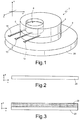
- FIG. 1 is a schematic perspective view of a biosensor, according to an embodiment of the present disclosure.
- FIGS. 2-11 are schematic cross-section views of steps for making the biosensor of FIG. 1 .
- FIGS. 12-18 are schematic cross-section views of steps for making another embodiment of the biosensor.
- FIG. 19 is a schematic perspective view of yet another embodiment of the biosensor.
- FIG. 1 includes, in a triaxial reference system X, Y, Z, a biosensor 1 .
- the biosensor 1 comprises a first structural layer 2 of photosensitive hydrogel; a second structural layer 4 , of photosensitive hydrogel, which extends over the first structural layer 2 ; and a sensing region 6 , including a matrix of photosensitive hydrogel dispersed in which are bio-recognition elements, in particular enzymes such as GOx (glucose oxidase) and LOx (lactate oxidase).
- the second structural layer 4 has a through opening 8 in the sensing region 6 such that the sensing region 6 is, at least partially, exposed towards the outer environment through the through opening 8 .
- a working electrical terminal 10 is arranged in electrical contact with the sensing region 6 .
- a counter-electrode electrical terminal 12 is arranged on the first layer 2 (or, in part, in the first layer 2 ), alongside the sensing region 6 , and not in direct electrical contact with the sensing region 6 .
- a reference electrical terminal 14 extends over the first layer 2 (or, in part, in the first layer 2 ), alongside the sensing region 6 , and not in direct electrical contact with the sensing region 6 .
- the sensing region 6 extends, in top plan view in the plane XY, between the counter-electrode electrical terminal 12 and the reference electrical terminal 14 .
- the working electrical terminal 10 , the counter-electrode electrical terminal 12 and the reference electrical terminal 14 are made of conductive material, such as, for example, an inert metal chosen from gold, silver, platinum, conductive polymers, and carbon.
- the reference electrode 14 may likewise be made of silver chloride, AgCl.
- the biosensor 1 provides, in practice, an electrochemical cell with three electrodes.
- Hydrogels which are typical in the state of the art, are particularly attractive for manufacture of biochemical sensors since they are constituted by polymeric chains of hydrophilic molecules that form an excellent matrix for encapsulating functional enzymes, cells, and other biological material.
- the environmental conditions within the hydrogel are ideal for minimizing denaturation of the biological elements dispersed therein, favoring functionality thereof.
- the photosensitive hydrogel used for forming the first structural layer 2 , the second structural layer 4 , and the sensing region 6 includes hydrophilic polymers that comprise polymeric chains cross-linked with one another with both covalent bonds and non-covalent bonds. Their monomers or pre-polymers are soluble in water, whereas the polymers are insoluble in water at physiological temperature, pH, and ionic force.
- the polymers may have a molecular weight in the range of 500-200000 dalton, and their properties including viscosity, softening point, and degradation temperature are optimized according to the specific application.
- the first structural layer 2 , the second structural layer 4 , and the sensing region 6 may comprise: monomers, oligomers, or pre-polymers (the molecular weight of pre-polymers controls the mechanical properties and viscosity), or binders that regulate the mechanical properties of the mixture (adhesion, etc.); one or more solvents that further control the mechanical properties, such as for example the viscosity of the mixture; and photo-active compounds (PACs) or photo-inhibitors (PhIs).
- PACs photo-active compounds
- PhIs photo-inhibitors
- the hydrogel of the first structural layer 2 , of the second structural layer 4 , and of the sensing region 6 functions like a negative photoresist used in photolithographic processes, so that controlled ultraviolet (UV) irradiation of a portion of the second structural layer 4 and of the sensing region 6 causes polymerization of just the irradiated regions, enabling removal of the non-irradiated regions by development in water.
- the hydrogel contains monomers or oligomers or precursor pre-polymers, and by exposure to incident UV radiation, for example, undergoes a reaction of photo-polymerization and/or photo-cross-linking. Photo-cross-linking of the layers involved determines an increase of their molecular weight, which causes an advantageous reduction of the solubility of the layers in water.
- hydrogels made up of simple monomers or mixtures of different monomers which may be used according to the present disclosure, are:
- PEG-DA polyethylene glycol diacrylate
- PVA polyvinyl alcohol
- FIGS. 2-11 show, in lateral view in the plane XZ, successive steps of manufacture the biosensor 1 of FIG. 1 , according to one aspect of the present disclosure.
- a substrate 20 is first prepared ( FIG. 2 ), for example of glass, or silicon, or plastic material (e.g., polyethylene terephthalate, polyethylene terephthalate (PET), polyethylene naphthalate, polyethylene naphthalate (PEN), polyether ether ketone, polyether ether ketone (PEEK)).
- PET polyethylene terephthalate
- PEN polyethylene naphthalate
- PEEK polyether ether ketone
- a first photo-definible hydrogel layer 22 is formed on the substrate 20 , as described in what follows.
- a pre-polymeric mixture is prepared by adding a PEG-DA photo-initiator, in a percentage of 2-3% v/v. Any photo-initiator, with the capacity of absorbing UV radiation and undergoing photoreaction, producing reactive species, radicals that polymerize, and constituents of the pre-polymeric mixture is suited for the purpose.
- 2-hydroxy-2-methyl-1-phenylpropan-1-one also commercially known as DarocurTM is used as photo-initiator.
- the pre-polymeric solution thus formed is deposited, using the spin-coating technique, on the substrate 20 (at 700-1000 rpm, for 8-15 s, in particular 800 rpm for 10 s).
- the first photo-definible hydrogel layer 22 has a thickness comprised between 100 nm and 1000 nm, for example 200 nm.
- the deposition parameters may be adjusted according to the viscosity of the hydrogel-based solution used for obtaining a layer 22 having the desired thickness.
- the next step is the arrangement of (commercially available) conductive filaments that form the working electrical terminal 10 , the counter-electrode electrical terminal 12 , and the reference electrical terminal 14 .
- the aforesaid filaments have, for example, a diameter between 50 nm and 200 nm and are made of a material chosen from gold, silver, platinum, conductive polymers, and carbon.
- the filaments are arranged on the layer 22 prior to the cross-linking step.
- the filaments penetrate only partially into the layer 22 . In this way, they (and in particular the working electrical terminal 10 ) are electrically accessible from above.
- a cross-linking step is carried out, using a UV lamp 23 that generates UV radiation 25 , on selective portions of the first photo-definible hydrogel layer 22 .
- a mask 24 is used provided with opaque regions 24 a , which are designed to block the incident UV radiation 25 , and transparent regions 24 b , which are transparent to the incident UV radiation 25 . In this way, only the portions of the first photo-definible hydrogel layer 22 that extend in the transparent regions 24 b undergo a process of cross-linking since the hydrogel behaves like a negative photoresist.
- the filaments which form the working electrical terminal 10 , the counter-electrode electrical terminal 12 , and the reference electrical terminal 14 , extend partially inside the regions of the first photo-definible hydrogel layer 22 that are polymerized and partially outside so that, as illustrated in FIG. 6 , after the polymerization step, the filaments will be electrically accessible from outside the first structural layer 2 formed.
- the polymerization step is carried out using the following exposure parameters: wavelength of UV radiation chosen according to the photo-initiator used, for example (in the case of use of DarocurTM), 365 nm; exposure power comprised in the range between 12 mW/cm 2 and 20 mW/cm 2 , in particular 18 mW/cm 2 ; exposure time comprised between 5 s and 20 s, in particular 7 s.
- a subsequent step of bathing in deionized water enables removal in a few minutes of the portions of the first non-polymerized photo-definible hydrogel layer 22 , to form the first structural layer 2 , as illustrated in FIG. 6 .
- a second photo-definible hydrogel layer 26 (provided with bio-recognition elements, for example enzymes) is formed on the substrate 20 and the first structural layer 2 .
- the second photo-definible hydrogel layer 26 forms the sensing region 6 in subsequent manufacturing steps.
- the second photo-definible hydrogel layer 26 is formed starting from a pre-polymeric solution of hydrogel (e.g., PEG-DA), a photo-initiator (e.g., DarocurTM) at 3% v/v, and an reduction-oxidation (redox) mediator at 1% v/v.
- the redox mediator is a molecule able to mediate a reduction-oxidation reaction or, in other words, able to facilitate the flow of electrons, generated by the reduction-oxidation reaction, through the hydrogel matrix.
- the redox mediator is, for example, a derivative of ferrocene, such as vinylferrocene.
- An enzymatic solution is prepared by dissolving appropriate enzymes in a phosphate buffer (PBS), with pH ranging between 6 and 6.5, and glutaraldehyde as agent for improving retention of the enzyme in the matrix.
- PBS phosphate buffer
- the enzymes are chosen, according to one embodiment, from between glucose oxidase (GOx) and lactate oxidase (LOx).
- the concentration of the enzymes in PBS is, for example, 20 mg/mL.
- the pre-polymeric solution and the enzymatic solution thus prepared are mixed together for a time comprised between 4 h and 5 h at a temperature comprised between 4° C. and 5° C. (e.g., 4° C.).
- the ratio between the pre-polymeric solution and the enzymatic solution is 10:1 v/v but may be varied according to the need.
- the mixture thus obtained (known as “sensing matrix”) forms the second photo-definible hydrogel layer 26 , which is deposited on the substrate 20 and on the first structural layer 2 using the spin-coating technique, in a way similar to what has already been described with reference to the first photo-definible hydrogel layer 22 .
- the second photo-definible hydrogel layer 26 has a thickness comprised between 100 nm and 1000 nm, for example 200 nm. Also in this case, the deposition parameters may be adjusted according to the viscosity of the solution used for the second photo-definible hydrogel layer 26 for obtaining a layer 26 (and thus the sensing region 6 ) having the desired thickness.
- a step of exposure to UV radiation is carried out to favor cross-linking of selective portions of the second photo-definible hydrogel layer 26 , using an appropriate mask 28 .
- Exposure is obtained, for example, using the same UV lamp 23 used previously, which generates UV radiation 25 .
- the mask 28 is used provided with opaque regions 28 a , which are designed to block the incident UV radiation 25 , and transparent regions 28 b , which are transparent to the incident UV radiation 25 . In this way, only the portions of the second photo-definible hydrogel layer 26 that extend in the transparent regions 28 b are subjected to a cross-linking process.
- the metal filament that forms the working electrical terminal 10 extends partially inside the regions of the second photo-definible hydrogel layer 26 , which is polymerized, and partially outside so that, after the polymerization step, the filament will be electrically accessible from outside the sensing region 6 thus formed.
- the polymerization step is carried out using the following exposure parameters: wavelength of the UV radiation chosen according to the photo-initiator used, for example, (in the case of use of DarocurTM) 365 nm; exposure power comprised in the range between 12 mW/cm 2 and 20 mW/cm 2 , in particular 18 mW/Cm 2 ; exposure time comprised between 5 s and 20 s, in particular 7 s.
- FIG. 9 a step of bathing in deionized water is carried out, which enables removal in a few minutes of the portions of the second photo-definible hydrogel layer 26 that has not been polymerized, to form the sensing region 6 in an area corresponding to the working electrode 10 and in electrical contact therewith.
- FIG. 10 the second structural layer 4 is formed.
- a third photo-definible hydrogel layer 34 is formed on the substrate 20 , on the first structural layer 2 , and on the sensing region 6 .
- a pre-polymeric mixture is prepared by adding to polyethylene glycol diacrylate (in what follows, PEG-DA) a photo-initiator, in a percentage of 2-3% v/v, as described with reference to the first photo-definible hydrogel layer 22 .
- PEG-DA polyethylene glycol diacrylate
- 2-hydroxy-2-methyl-1-phenylpropan-1-one also known commercially as DarocurTM
- the pre-polymeric solution thus formed is deposited, using the spin-coating technique, on the substrate 20 , on the first structural layer 2 , and on the sensing region 6 . Spin-coating is carried out between 700 rpm and 1000 rpm, for 8-15 s, in particular 800 rpm for 10 s.
- the third photo-definible hydrogel layer 34 thus formed has a thickness comprised between 100 nm and 1000 nm, for example 200 nm.
- the deposition parameters may be adjusted according to the viscosity of the hydrogel-based solution used for obtaining a layer 34 having the desired thickness.
- a step of exposure to UV radiation is carried out to favor cross-linking of selective portions of the third photo-definible hydrogel layer 34 , using an appropriate mask 36 . Exposure is obtained, for example, using the same UV lamp 23 used previously, which generates UV radiation 25 .
- the mask 36 is provided with opaque regions 36 a , designed to block the incident UV radiation 25 , and transparent regions 36 b , transparent to the incident UV radiation 25 . In this way, only the portions of the third photo-definible hydrogel layer 34 that extend in the transparent regions 36 b are subjected to a cross-linking process.
- the step of polymerization of the third photo-definible hydrogel layer 34 is carried out using the following exposure parameters: wavelength of UV radiation chosen according to the photo-initiator used, for example, (in the case of use of DarocurTM) 365 nm; exposure power comprised in the range between 12 mW/cm 2 and 20 mW/cm 2 , in particular 18 mW/cm 2 ; exposure time comprised between 5 s and 20 s, in particular 7 s.
- a subsequent step of development in deionized water enables removal of the portions of the third non-polymerized photo-definible hydrogel layer 34 , to form the second structural layer 4 , as illustrated in FIG. 11 .
- the mask 36 is provided with an opaque region that covers, in use (i.e., when the mask 36 is arranged aligned to the third photo-definible hydrogel layer 34 ), the portion of the third photo-definible hydrogel layer 34 that extends over the sensing region 6 .
- the portion of the third photo-definible hydrogel layer 34 on the sensing region 6 does not undergo the cross-linking process and is removed during the step of development in deionized water.
- the through opening 8 is thus formed, through which the sensing region 6 is exposed, at least in part.
- the biosensor 1 of FIG. 1 is thus formed.
- the substrate 20 is removed to obtain the biosensor 1 of FIG. 1 .
- the step of peeling of the substrate 20 is optional.
- FIGS. 12-19 show steps for manufacturing a biosensor 1 ′ according to a further embodiment.
- a substrate 40 is first prepared, for example, glass, or silicon, or plastic material (e.g., PET, PEN, PEEK).
- a first photo-definible hydrogel layer 42 is formed on the substrate 40 in a way similar to what has been described with reference to the layer 22 of FIG. 3 , and not described any further herein.
- a cross-linking step is carried out, using a UV lamp 23 which generates UV radiation 25 , on selective portions of the first photo-definible hydrogel layer 42 .
- a mask 44 is used provided with opaque regions 44 a , which are designed to block the incident UV radiation 25 , and transparent regions 44 b , which are transparent to the incident UV radiation 25 . In this way, only the portions of the first photo-definible hydrogel layer 42 that extend in the transparent regions 44 b , undergo a cross-linking process.
- the first photo-definible hydrogel layer 42 is not irradiated in a region thereof that extends over a portion 40 ′ of the substrate 40 that, in subsequent manufacturing steps, will house the working electrical terminal 10 ′, the counter-electrode electrical terminal 12 ′, and the reference electrical terminal 14 ′.
- the portion 40 ′ of the substrate 40 may be chosen freely according to the geometrical shape that it is desired to bestow on the first structural layer 2 (after the polymerization step); for example, the portion 40 ′ of the substrate 40 extends along the periphery of the substrate 40 .
- FIG. 14 a bath in deionized water is carried out, which enables removal in a few minutes of the portions of the first non-polymerized photo-definible hydrogel layer 42 to form a first structural layer 2 ′.
- This is followed ( FIG. 15A ) by a step of deposition, by sputtering, of metal material, such as for example gold deposition by sputtering is assisted by a mask (not illustrated) designed to enable deposition of the metal material in specific regions of the substrate 40 and of the first structural layer 2 ′. Metal strips are thus formed that extend from the surface of the first structural layer 2 ′ towards the portion 40 ′ of the substrate 40 .
- FIG. 15B shows, in top plan view in the plane XY, the substrate 40 provided with the first structural layer 2 ′ and with the working electrical terminal 10 ′, the counter-electrode electrical terminal 12 ′, and the reference electrical terminal 14 ′ thus formed. They may be made also of metals such as silver, platinum, or of conductive polymers, or carbon. Then ( FIG. 16 ), a sensing region 6 ′ is obtained, similar to the sensing region 6 of the biosensor 1 .
- a second photo-definible hydrogel layer 46 is formed (provided with bio-recognition elements, e.g. enzymes) on the substrate 40 , the first structural layer 2 ′, and the working electrical terminal 10 ′, of the counter-electrode electrical terminal 12 ′, and the reference electrical terminal 14 ′.
- the second photo-definible hydrogel layer 46 forms, in subsequent manufacturing steps, the sensing region 6 ′.
- the second photo-definible hydrogel layer 46 is formed as described previously with reference to the second photo-definible hydrogel layer 26 , starting from a pre-polymeric solution of hydrogel (e.g., PEG-DA), a photo-initiator (e.g., 2-hydroxy-2-methyl-1-phenylpropan-1-one) at 3% v/v, and a redox mediator (e.g., a derivative of ferrocene, such as vinylferrocene) at 1% v/v.
- An enzymatic solution is prepared by dissolving appropriate enzymes in a PBS phosphate buffer with pH levels ranging between 6 and 6.5 and glutaraldehyde as agent for improving retention of the enzyme in the matrix.
- the enzymes are chosen, according to one embodiment, between glucose oxidase (GOx) and lactate oxidase (LOx).
- the concentration of the enzymes in PBS is, for example, 20 mg/mL.
- the pre-polymeric solution and the enzymatic solution thus prepared are mixed together for a time comprised between 4 h and 5 h at a temperature comprised between 4° C. and 5° C. (e.g., 4° C.).
- the ratio between the pre-polymeric solution and the enzymatic solution is 10:1 v/v, but may be varied according to the need.
- the mixture thus obtained (known as “sensing matrix”) is deposited using the spin-coating technique and forms the second photo-definible hydrogel layer 46 , in a way similar to what has already been described with reference to the second photo-definible hydrogel layer 26 .
- the second photo-definible hydrogel layer 46 has a thickness comprised between 100 nm and 1000 nm, for example 200 nm. Also in this case, the deposition parameters may be adjusted according to the viscosity of the solution used for the second photo-definible hydrogel layer 46 for obtaining a layer 46 (and thus the sensing region 6 ′) having the desired thickness.
- a step of exposure to UV radiation is carried out to favor cross-linking of selective portions of the second photo-definible hydrogel layer 46 , using an appropriate mask (not illustrated). Exposure is obtained, for example, used the same UV lamp 23 previously used, which generates UV radiation 25 .
- a mask is used provided with opaque regions, designed to block the incident UV radiation 25 , and regions transparent to the incident UV radiation 25 . In this way, only the portions of the second photo-definible hydrogel layer 46 aligned, along Z, to the transparent regions are subjected to a cross-linking process since the hydrogel behaves like a negative photoresist.
- the polymerization step is carried out using the exposure parameters already previously indicated for polymerization of the second photo-definible hydrogel layer 26 .
- a subsequent step of bathing in deionized water enables removal in a few minutes of the portions of the second photo-definible hydrogel layer 46 that has not been polymerized, to form the sensing region 6 ′, as illustrated in FIG. 17 .
- the metal path that forms the working electrical terminal 10 ′ extends in direct contact with the sensing region 6 ′.
- the metal paths that form the counter-electrode electrical terminal 12 ′ and reference electrical terminal 14 ′ are not in direct contact with the sensing region 6 ′, but extend alongside it.
- a second structural layer 4 ′ is formed, similar to the second structural layer 4 of the biosensor 1 .
- the steps for producing the second structural layer 4 ′ are similar to those described previously for the second structural layer 4 (see the description of FIGS. 10 and 11 ) and are not referred to any further herein.
- the process for producing the second structural layer 4 ′ evisions formation of a through opening 8 ′ in the sensing region 6 ′.
- the sensing region 6 ′ is exposed, at least in part, through the through opening 8 ′.
- FIG. 19 shows, in perspective view, the biosensor 1 ′ produced according to the steps of FIGS. 12-18 .
- the substrate 40 is not removed, in so far as it functions as support for the working electrical terminal 10 ′, the counter-electrode electrical terminal 12 ′, and the reference electrical terminal 14 ′.
- an adhesive layer for example an organosilane-based adhesive layer, between the substrate 40 and the first structural layer 2 ′, prior to the step of deposition of the first hydrogel layer 42 of FIG. 12 .
- the substrate 40 with silane molecules is obtained according to a procedure, for example described in U.S. Pat. No. 9,244,067 to Di Matteo et al.
- the substrate is treated by an oxygen-plasma treatment (a common plasma-etching system is used for this purpose).
- a silane solution (2% v/v) is likewise prepared with 3-(trimethoxysilyl)propyl methacrylate in isopropyl alcohol, correcting the pH with acetic acid, to bring it to a value of 4.5-5.
- the solution then undergoes gentle stirring, and then it is necessary to wait a few minutes (i.e., at least 30 minutes) before using it. This enables hydrolysis of the siloxane groups.
- the substrate 40 is then dipped in the silane solution, washed in isopropyl alcohol and then heated to 120° C. for 60 minutes.
- the substrate 40 is thus functionalized with silane molecules that expose methacrylic groups, to which the hydrogel 42 will subsequently bind during its polymerization, to form the state 2 ′.
- the silanes are chosen according to the type of hydrogel that is deposited on the substrate. In the case of PEG-DA-based hydrogel, the silanes may be chosen in the family of acrylate or methacrylate silanes, cyclic azosilanes, silanes with amine terminations, dipodal silanes, and carboxylate silanes.
- the biosensor 1 , 1 ′ may be used by laying it directly on the skin of the patient to be monitored, so that the sensing region 6 , 6 ′ faces the skin through the through opening 8 , 8 ′.
- the through opening 8 , 8 ′ formed through the second structural hydrogel layer 4 , 4 ′ provides, in use, a closed chamber that does not prevent natural transpiration of the skin, but considerably limits exchange of air with the external environment, causing a rapid increase of the local temperature of the skin up to values of approximately 35-40° C.
- the vapor that is generated within the through opening 8 , 8 ′ saturates the environment and favors formation of sweat, which, coming into contact with the sensing region 6 , 6 ′, enables the biological analysis to be carried out.
- the hydrogel matrix used according to the present disclosure to create the sensing region 6 , 6 ′ provides a linear response in the range of concentrations of 10 ⁇ M to 4 mM for glucose, and 1 ⁇ M to 4 mM for lactate, i.e., in ranges compatible with the concentrations typically present in human sweat.
- the biosensor 1 functions as amperometric sensor.
- an amperometric sensor is based upon the measurement of the current between the working electrical terminal 10 and the counter-electrode electrical terminal 12 , a current that is induced by the redox reaction between the analyte and the enzyme that is obtained on the working electrical terminal 10 .
- the current is proportional to the concentration of the analyte to be monitored.
- a constant potential (determined by the redox potential of the mediator, previously evaluated via cyclic voltammetric measurements) is applied to the electrochemical cell, and the response of the current is monitored.
- This potential enables operation in optimal conditions for monitoring of the current.
- the working electrode 10 is fixed at a potential, for example of 0.25 V, with respect to the reference electrical terminal 14 .
- the value of 0.25 V is the peak anode potential, measured by the present applicant, of the mediator in vinylferrocene immobilized in the hydrogel matrix.
- the counter-electrode terminal is an auxiliary electrode and functions as drain of the current generated during the redox reaction on the working electrical terminal 10 (the counter-electrode 12 “collects” the electrons generated by the enzyme-analyte reaction).
- the three-electrode configuration may provide the presence of a stable potential between the working electrical terminal 10 and the reference electrical terminal 14 .
- other configurations in particular a configuration with two electrodes (in which the reference electrode coincides with the counter-electrode) may likewise be used according to a further aspect of the present disclosure.
- a potentiostat may be operatively coupled to the working electrical terminal 10 , to the counter-electrode electrical terminal 12 , and to the reference electrical terminal 14 , and is configured to control the voltage through the working terminal/counter-electrode terminal pair and to adjust it to maintain the difference of potential imposed between the working terminal 10 and the reference terminal 14 .
- the reference electrical terminal measures and controls the potential of the working electrical terminal 10
- the counter-electrode electrical terminal 12 allows passage of all the other for balancing the current that is still observed on the working electrical terminal 10 .
- the current generated by the redox reaction is made to pass between the working terminal 10 and the counter-electrode terminal 12 . This current, which may be measured, indicates a concentration of electroactive species present in the analyte.
- the biosensor 1 ′ functions in a way similar to the biosensor 1 , according to what has been described above.
- the advantages that may be obtained with the invention described are evident from the foregoing description.
- the first structural layer 2 and the second structural layer 4 operate as a capsule that supports, protects, and contains the sensing region 6 and, at the same time, function as insulating layer between the electrodes.
- further supporting and containment layers are not necessary, rendering the biosensor 1 simple and inexpensive to produce.
- the manufacturing process evisions use of devices and technologies widely employed in the field of microfabrication of micro-electromechanical devices, and in particular the shape of the layers 2 , 2 ′, 4 , 4 ′ is defined through simple photolithographic steps.
- the biosensor 1 , 1 ′ may thus be integrated within more complex electronic devices or MEMS, exploiting the same manufacturing technology.
- the hydrogel enables a biosensor to be obtained that does not cause discomfort during use (being of flexible material) and that has the appearance, for example, of a small plaster. It is thus simple to use, self-contained, and aesthetically discreet.
- the biosensor in question further works at low potentials. It may further be integrated in a discreet way in medical devices or in other wearable devices, such as a bracelet. Since the analysis is conducted on the basis of the patient's sweat, use of the biosensor 1 , 1 ′ does not cause any pain.
- the electrical terminals 10 , 10 ′, 12 , 12 ′, 14 , 14 ′ may be obtained using other technologies, for example by ink-jet deposition.
- the bio-recognition elements trapped in the bioactive region 6 may be different from the enzymes GOx and Lox; for example, they may be chosen from enzymes of another type, or else from: antibodies, nucleic acids, and cell receptors.
Landscapes
- Health & Medical Sciences (AREA)
- Life Sciences & Earth Sciences (AREA)
- Physics & Mathematics (AREA)
- Engineering & Computer Science (AREA)
- Chemical & Material Sciences (AREA)
- Molecular Biology (AREA)
- General Health & Medical Sciences (AREA)
- Immunology (AREA)
- Biomedical Technology (AREA)
- Pathology (AREA)
- Biophysics (AREA)
- Heart & Thoracic Surgery (AREA)
- Animal Behavior & Ethology (AREA)
- Surgery (AREA)
- Public Health (AREA)
- Veterinary Medicine (AREA)
- Medical Informatics (AREA)
- Optics & Photonics (AREA)
- Organic Chemistry (AREA)
- Biochemistry (AREA)
- Analytical Chemistry (AREA)
- Hematology (AREA)
- Proteomics, Peptides & Aminoacids (AREA)
- Biotechnology (AREA)
- Microbiology (AREA)
- Wood Science & Technology (AREA)
- Zoology (AREA)
- Urology & Nephrology (AREA)
- Chemical Kinetics & Catalysis (AREA)
- General Physics & Mathematics (AREA)
- Emergency Medicine (AREA)
- General Chemical & Material Sciences (AREA)
- Genetics & Genomics (AREA)
- Bioinformatics & Cheminformatics (AREA)
- Cell Biology (AREA)
- General Engineering & Computer Science (AREA)
- Food Science & Technology (AREA)
- Medicinal Chemistry (AREA)
- Electrochemistry (AREA)
- Measurement Of The Respiration, Hearing Ability, Form, And Blood Characteristics Of Living Organisms (AREA)
Abstract
Description

polyethylene glycol diacrylate (PEG-DA),

PEG dimethacrylate,

polypropylene fumarate-co-ethylene glycol,

dextran modified with methacrylate,

Commutated hyaluronic acid,

polyvinyl alcohol (PVA)

PVA modified with acrylate,

poly[bis(methoxyethoxyethoxy)phosphazene] (MEEP),

Polyphosphazene,

Polyhydroxyethylmethacrylate (PHEMA)
Claims (20)
Applications Claiming Priority (2)
| Application Number | Priority Date | Filing Date | Title |
|---|---|---|---|
| IT102015000056972 | 2015-09-30 | ||
| ITUB2015A004036A ITUB20154036A1 (en) | 2015-09-30 | 2015-09-30 | BIOSENSOR FOR DETECTION OF ANALYTES IN SWEAT, AND METHOD OF MANUFACTURE OF THE BIOSENSOR |
Publications (2)
| Publication Number | Publication Date |
|---|---|
| US20170086715A1 US20170086715A1 (en) | 2017-03-30 |
| US11116428B2 true US11116428B2 (en) | 2021-09-14 |
Family
ID=54884341
Family Applications (1)
| Application Number | Title | Priority Date | Filing Date |
|---|---|---|---|
| US15/163,822 Active 2038-05-03 US11116428B2 (en) | 2015-09-30 | 2016-05-25 | Biosensor for sensing analytes in the sweat, and manufacturing method thereof |
Country Status (4)
| Country | Link |
|---|---|
| US (1) | US11116428B2 (en) |
| EP (1) | EP3150714B1 (en) |
| CN (2) | CN106556635B (en) |
| IT (1) | ITUB20154036A1 (en) |
Families Citing this family (10)
| Publication number | Priority date | Publication date | Assignee | Title |
|---|---|---|---|---|
| ITUB20154036A1 (en) * | 2015-09-30 | 2017-03-30 | St Microelectronics Srl | BIOSENSOR FOR DETECTION OF ANALYTES IN SWEAT, AND METHOD OF MANUFACTURE OF THE BIOSENSOR |
| CN107422016A (en) * | 2017-07-21 | 2017-12-01 | 上海第二工业大学 | The preparation method of the minimally invasive glucose sensor of spiral shape implantable of PVA/PEG composite aquogel outer membrane structures |
| CN108469460B (en) * | 2018-03-09 | 2019-03-29 | 深圳市刷新智能电子有限公司 | Perspiration sensor and preparation method thereof |
| CN108169307B (en) * | 2018-03-09 | 2019-10-18 | 深圳市刷新智能电子有限公司 | Dual chip perspiration sensor and preparation method thereof |
| CN108828043A (en) * | 2018-06-25 | 2018-11-16 | 湖北中医药大学 | A kind of flexibility perspiration sensor and its preparation method and application |
| CN108852366A (en) * | 2018-08-06 | 2018-11-23 | 泉州市海膜生物科技有限公司 | The integrated flexible wearable sensors of multicomponent sweat detection |
| CA3119738A1 (en) | 2018-11-13 | 2020-05-22 | Nix, Inc. | Wearable systems, devices, and methods for measurement and analysis of body fluids |
| CN109916980A (en) * | 2019-03-06 | 2019-06-21 | 北京大学 | A kind of wearable sensors and its method for sensing of body fluid analysis object |
| US20220255356A1 (en) * | 2019-07-23 | 2022-08-11 | The Regents Of The University Of California | Biocompatible sensor device and method for detecting environmental stimuli therewith |
| US11123011B1 (en) | 2020-03-23 | 2021-09-21 | Nix, Inc. | Wearable systems, devices, and methods for measurement and analysis of body fluids |
Citations (7)
| Publication number | Priority date | Publication date | Assignee | Title |
|---|---|---|---|---|
| US5735273A (en) * | 1995-09-12 | 1998-04-07 | Cygnus, Inc. | Chemical signal-impermeable mask |
| WO1999038003A1 (en) | 1998-01-23 | 1999-07-29 | I-Stat Corporation | Microfabricated aperture-based sensor |
| US6120676A (en) * | 1997-02-06 | 2000-09-19 | Therasense, Inc. | Method of using a small volume in vitro analyte sensor |
| US6485703B1 (en) | 1998-07-31 | 2002-11-26 | The Texas A&M University System | Compositions and methods for analyte detection |
| US20070189928A1 (en) * | 2006-02-10 | 2007-08-16 | Peter Sabol | Personal portable blood glucose meter with replaceable cartridge of test strips |
| US20100200538A1 (en) | 2009-02-09 | 2010-08-12 | Edwards Lifesciences Corporation | Analyte Sensor and Fabrication Methods |
| US20140017772A1 (en) | 2012-07-10 | 2014-01-16 | Stmicroelectronics S.R.I. | Biosensor |
Family Cites Families (4)
| Publication number | Priority date | Publication date | Assignee | Title |
|---|---|---|---|---|
| EP1776035A2 (en) * | 2004-07-01 | 2007-04-25 | Vivomedical, Inc. | Non-invasive glucose measurement |
| US8660628B2 (en) * | 2009-12-21 | 2014-02-25 | Medtronic Minimed, Inc. | Analyte sensors comprising blended membrane compositions and methods for making and using them |
| US9918667B2 (en) * | 2014-03-07 | 2018-03-20 | Stmicroelectronics Pte. Ltd. | Flexible electrochemical micro-sensor |
| ITUB20154036A1 (en) * | 2015-09-30 | 2017-03-30 | St Microelectronics Srl | BIOSENSOR FOR DETECTION OF ANALYTES IN SWEAT, AND METHOD OF MANUFACTURE OF THE BIOSENSOR |
-
2015
- 2015-09-30 IT ITUB2015A004036A patent/ITUB20154036A1/en unknown
-
2016
- 2016-03-22 EP EP16161756.8A patent/EP3150714B1/en active Active
- 2016-03-29 CN CN201610189240.XA patent/CN106556635B/en active Active
- 2016-03-29 CN CN201620252660.3U patent/CN205879857U/en not_active Expired - Lifetime
- 2016-05-25 US US15/163,822 patent/US11116428B2/en active Active
Patent Citations (7)
| Publication number | Priority date | Publication date | Assignee | Title |
|---|---|---|---|---|
| US5735273A (en) * | 1995-09-12 | 1998-04-07 | Cygnus, Inc. | Chemical signal-impermeable mask |
| US6120676A (en) * | 1997-02-06 | 2000-09-19 | Therasense, Inc. | Method of using a small volume in vitro analyte sensor |
| WO1999038003A1 (en) | 1998-01-23 | 1999-07-29 | I-Stat Corporation | Microfabricated aperture-based sensor |
| US6485703B1 (en) | 1998-07-31 | 2002-11-26 | The Texas A&M University System | Compositions and methods for analyte detection |
| US20070189928A1 (en) * | 2006-02-10 | 2007-08-16 | Peter Sabol | Personal portable blood glucose meter with replaceable cartridge of test strips |
| US20100200538A1 (en) | 2009-02-09 | 2010-08-12 | Edwards Lifesciences Corporation | Analyte Sensor and Fabrication Methods |
| US20140017772A1 (en) | 2012-07-10 | 2014-01-16 | Stmicroelectronics S.R.I. | Biosensor |
Non-Patent Citations (3)
| Title |
|---|
| Gibas et al., "Review: Synthetic Polymer Hydrogels for Biomedical Applications," Chemistry & Chemical Technology, vol. 4, No. 4, Jan. 1, 2010, pp. 297-304. |
| Makaram et al., "Trends in Nanomaterial-Based Non-Invasive Diabetes Sensing Technologies," Diagnostics 2014, 4, Apr. 21, 2014, pp. 27-46. |
| Yan et al., "Immobilizing Enzymes Onto Electrode Arrays by Hydrogel Photolithography to Fabricate Multi-Analyte Electrochemical Biosensors," Applied Materials & Interfaces, vol. 2, No. 3, Feb. 16, 2010, pp. 748-755. |
Also Published As
| Publication number | Publication date |
|---|---|
| US20170086715A1 (en) | 2017-03-30 |
| CN106556635A (en) | 2017-04-05 |
| ITUB20154036A1 (en) | 2017-03-30 |
| EP3150714B1 (en) | 2018-11-28 |
| CN205879857U (en) | 2017-01-11 |
| EP3150714A1 (en) | 2017-04-05 |
| CN106556635B (en) | 2019-08-27 |
Similar Documents
| Publication | Publication Date | Title |
|---|---|---|
| EP3150714B1 (en) | Biosensor for sensing analytes in the sweat, and manufacturing method thereof | |
| Duan et al. | Wearable electrochemical biosensors for advanced healthcare monitoring | |
| Kusama et al. | Transdermal electroosmotic flow generated by a porous microneedle array patch | |
| Zheng et al. | Microneedle coupled epidermal sensor for multiplexed electrochemical detection of kidney disease biomarkers | |
| Li et al. | Implantable hydrogel-protective DNA aptamer-based sensor supports accurate, continuous electrochemical analysis of drugs at multiple sites in living rats | |
| Aerathupalathu Janardhanan et al. | Sensitive detection of sweat cortisol using an organic electrochemical transistor featuring nanostructured poly (3, 4-ethylenedioxythiophene) derivatives in the channel layer | |
| Khodagholy et al. | Organic electrochemical transistor incorporating an ionogel as a solid state electrolyte for lactate sensing | |
| Caliò et al. | Polymeric microneedles based enzymatic electrodes for electrochemical biosensing of glucose and lactic acid | |
| US9237865B2 (en) | Analyte sensors and methods for making and using them | |
| Park et al. | Highly-sensitive single-step sensing of levodopa by swellable microneedle-mounted nanogap sensors | |
| CN117783242B (en) | Working electrode of glucose sensor suitable for mass production | |
| US11359300B1 (en) | Electrochemical method for enzyme immobilization on biosensor electrodes | |
| CN103348015A (en) | Electrode compositions for use with analyte sensors | |
| TWI895375B (en) | Method for the preparation of a working electrode, an analyte sensor, use of the same, and method for measuring an analyte in a sample | |
| EP2393424A2 (en) | Analyte sensor and fabrication methods | |
| Chen et al. | Recent advances of tissue-interfaced chemical biosensors | |
| Zhan et al. | A 3D-printed microneedle extraction system integrated with patterned electrodes for minimally invasive transdermal detection | |
| US20250221637A1 (en) | COIN-SIZED, FULLY INTEGRATED AND MINIMALLY INVASIVE CONTINUOUS GLUCOSE MONITORING SYSTEM (CGMs) BASED ON ORGANIC ELECTROCHEMICAL TRANSISTORS | |
| Brennan et al. | Flexible substrate sensors for multiplex biomarker monitoring | |
| EP3077805A1 (en) | Sensor membrane with low temperature coefficient | |
| US20220397545A1 (en) | Photochemical-based method for enzyme immobilization on biosensor electrodes | |
| Montornes et al. | Glucose biosensors | |
| Cui et al. | A stretchable continuous glucose monitor for skin-conformable wound management. | |
| TW202402236A (en) | Opening formation in a membrane | |
| Cui et al. | A continuous wound monitoring patch based on stretchable organic electrochemical transistors |
Legal Events
| Date | Code | Title | Description |
|---|---|---|---|
| AS | Assignment |
Owner name: STMICROELECTRONICS S.R.L., ITALY Free format text: ASSIGNMENT OF ASSIGNORS INTEREST;ASSIGNORS:IUELE, HELENA;DI PALMA, VINCENZA;SIGNING DATES FROM 20160413 TO 20160503;REEL/FRAME:038728/0968 |
|
| STPP | Information on status: patent application and granting procedure in general |
Free format text: RESPONSE TO NON-FINAL OFFICE ACTION ENTERED AND FORWARDED TO EXAMINER |
|
| STPP | Information on status: patent application and granting procedure in general |
Free format text: FINAL REJECTION MAILED |
|
| STPP | Information on status: patent application and granting procedure in general |
Free format text: ADVISORY ACTION MAILED |
|
| STPP | Information on status: patent application and granting procedure in general |
Free format text: DOCKETED NEW CASE - READY FOR EXAMINATION |
|
| STPP | Information on status: patent application and granting procedure in general |
Free format text: NON FINAL ACTION MAILED |
|
| STPP | Information on status: patent application and granting procedure in general |
Free format text: RESPONSE TO NON-FINAL OFFICE ACTION ENTERED AND FORWARDED TO EXAMINER |
|
| STPP | Information on status: patent application and granting procedure in general |
Free format text: FINAL REJECTION MAILED |
|
| STPP | Information on status: patent application and granting procedure in general |
Free format text: RESPONSE AFTER FINAL ACTION FORWARDED TO EXAMINER |
|
| STPP | Information on status: patent application and granting procedure in general |
Free format text: DOCKETED NEW CASE - READY FOR EXAMINATION |
|
| STPP | Information on status: patent application and granting procedure in general |
Free format text: NOTICE OF ALLOWANCE MAILED -- APPLICATION RECEIVED IN OFFICE OF PUBLICATIONS |
|
| STPP | Information on status: patent application and granting procedure in general |
Free format text: PUBLICATIONS -- ISSUE FEE PAYMENT VERIFIED |
|
| STCF | Information on status: patent grant |
Free format text: PATENTED CASE |
|
| MAFP | Maintenance fee payment |
Free format text: PAYMENT OF MAINTENANCE FEE, 4TH YEAR, LARGE ENTITY (ORIGINAL EVENT CODE: M1551); ENTITY STATUS OF PATENT OWNER: LARGE ENTITY Year of fee payment: 4 |