US11101092B2 - Electromagnetic relay - Google Patents
Electromagnetic relay Download PDFInfo
- Publication number
- US11101092B2 US11101092B2 US16/131,923 US201816131923A US11101092B2 US 11101092 B2 US11101092 B2 US 11101092B2 US 201816131923 A US201816131923 A US 201816131923A US 11101092 B2 US11101092 B2 US 11101092B2
- Authority
- US
- United States
- Prior art keywords
- movable
- contact
- movement direction
- armature
- contact movement
- Prior art date
- Legal status (The legal status is an assumption and is not a legal conclusion. Google has not performed a legal analysis and makes no representation as to the accuracy of the status listed.)
- Active, expires
Links
- 238000003780 insertion Methods 0.000 claims description 22
- 230000037431 insertion Effects 0.000 claims description 22
- 238000003475 lamination Methods 0.000 claims description 19
- 230000002093 peripheral effect Effects 0.000 claims description 7
- 238000013459 approach Methods 0.000 description 5
- 238000003908 quality control method Methods 0.000 description 5
- 238000000034 method Methods 0.000 description 4
- 238000003466 welding Methods 0.000 description 3
- 239000000696 magnetic material Substances 0.000 description 2
- 238000004519 manufacturing process Methods 0.000 description 2
- 238000012986 modification Methods 0.000 description 2
- 230000004048 modification Effects 0.000 description 2
- 238000005192 partition Methods 0.000 description 2
- 238000000926 separation method Methods 0.000 description 2
- 238000013461 design Methods 0.000 description 1
- 230000005284 excitation Effects 0.000 description 1
- 238000003754 machining Methods 0.000 description 1
- 238000005259 measurement Methods 0.000 description 1
- 230000000717 retained effect Effects 0.000 description 1
Images




Classifications
-
- H—ELECTRICITY
- H01—ELECTRIC ELEMENTS
- H01H—ELECTRIC SWITCHES; RELAYS; SELECTORS; EMERGENCY PROTECTIVE DEVICES
- H01H50/00—Details of electromagnetic relays
- H01H50/16—Magnetic circuit arrangements
- H01H50/18—Movable parts of magnetic circuits, e.g. armature
-
- H—ELECTRICITY
- H01—ELECTRIC ELEMENTS
- H01H—ELECTRIC SWITCHES; RELAYS; SELECTORS; EMERGENCY PROTECTIVE DEVICES
- H01H50/00—Details of electromagnetic relays
- H01H50/02—Bases; Casings; Covers
-
- H—ELECTRICITY
- H01—ELECTRIC ELEMENTS
- H01H—ELECTRIC SWITCHES; RELAYS; SELECTORS; EMERGENCY PROTECTIVE DEVICES
- H01H50/00—Details of electromagnetic relays
- H01H50/14—Terminal arrangements
-
- H—ELECTRICITY
- H01—ELECTRIC ELEMENTS
- H01H—ELECTRIC SWITCHES; RELAYS; SELECTORS; EMERGENCY PROTECTIVE DEVICES
- H01H50/00—Details of electromagnetic relays
- H01H50/16—Magnetic circuit arrangements
- H01H50/18—Movable parts of magnetic circuits, e.g. armature
- H01H50/20—Movable parts of magnetic circuits, e.g. armature movable inside coil and substantially lengthwise with respect to axis thereof; movable coaxially with respect to coil
-
- H—ELECTRICITY
- H01—ELECTRIC ELEMENTS
- H01H—ELECTRIC SWITCHES; RELAYS; SELECTORS; EMERGENCY PROTECTIVE DEVICES
- H01H50/00—Details of electromagnetic relays
- H01H50/16—Magnetic circuit arrangements
- H01H50/18—Movable parts of magnetic circuits, e.g. armature
- H01H50/32—Latching movable parts mechanically
-
- H—ELECTRICITY
- H01—ELECTRIC ELEMENTS
- H01H—ELECTRIC SWITCHES; RELAYS; SELECTORS; EMERGENCY PROTECTIVE DEVICES
- H01H50/00—Details of electromagnetic relays
- H01H50/16—Magnetic circuit arrangements
- H01H50/36—Stationary parts of magnetic circuit, e.g. yoke
-
- H—ELECTRICITY
- H01—ELECTRIC ELEMENTS
- H01H—ELECTRIC SWITCHES; RELAYS; SELECTORS; EMERGENCY PROTECTIVE DEVICES
- H01H50/00—Details of electromagnetic relays
- H01H50/54—Contact arrangements
-
- H—ELECTRICITY
- H01—ELECTRIC ELEMENTS
- H01H—ELECTRIC SWITCHES; RELAYS; SELECTORS; EMERGENCY PROTECTIVE DEVICES
- H01H50/00—Details of electromagnetic relays
- H01H50/64—Driving arrangements between movable part of magnetic circuit and contact
- H01H50/645—Driving arrangements between movable part of magnetic circuit and contact intermediate part making a resilient or flexible connection
-
- H—ELECTRICITY
- H01—ELECTRIC ELEMENTS
- H01H—ELECTRIC SWITCHES; RELAYS; SELECTORS; EMERGENCY PROTECTIVE DEVICES
- H01H2221/00—Actuators
- H01H2221/036—Return force
- H01H2221/044—Elastic part on actuator or casing
-
- H—ELECTRICITY
- H01—ELECTRIC ELEMENTS
- H01H—ELECTRIC SWITCHES; RELAYS; SELECTORS; EMERGENCY PROTECTIVE DEVICES
- H01H2235/00—Springs
- H01H2235/01—Spiral spring
Definitions
- the present invention relates to an electromagnetic relay.
- Japanese Patent Number 6110109 discloses contactor device provided with a pair of fixed contacts and a movable contact.
- the fixed contacts are electrically isolated from each other, and the movable contact forms a square plate that makes contact with and separates from the pair of fixed contacts.
- Each of the fixed contacts of the pair provided to the contactor device include a supporting conductive portion and a C-shaped portion.
- the supporting conductive part is secured to a fixed-contact insulating base-plate in a device housing.
- the C-shaped portion connects to the end of the supporting conductive portion inside the device housing.
- Each C-shaped portion is made up of an upper portion, a lower portion, and an intermediate portion.
- the lower portion is opposite the upper portion which connects to the supporting conductive portion, and the intermediate portion connects the upper and lower portions.
- a contact point is provided on surface of the lower portion facing the upper portion. Both lengthwise ends of the movable contact sit between the upper and lower plates of the C-shaped portions facing the contacts.
- the contactor device also includes a connecting shaft connected therein at the lengthwise center of the movable contact.
- the connecting shaft extends in the direction of closure and separation for the pair of fixed contacts; on one end of this extending direction the connecting shaft passes through an insulating tube provided opposite the fixed-contact insulating base-plate from inside to outside the device housing.
- the movable plunger of an electromagnet unit is attached to the end of the connecting shaft outside the device housing. The movable plunger moves along the closure and separation direction based on the excitation state of the electromagnet unit.
- the connecting shaft and the movable plunger are screwed together in the aforementioned contactor device; however, the connection between the connecting shaft and the movable plunger may be riveted or welded together. Improving the quality of these kinds of connections thus requires installing and adjusting the appropriate equipment and quality control and thus may require expert skills.
- One or more embodiments of the present invention provide an electromagnetic relay that facilitates connection of the movable shaft and the movable armature.
- An electromagnetic relay includes: a housing including a chamber; a first fixed contact terminal secured to the housing and extending from outside the housing to the chamber, the first fixed contact terminal including a first fixed contact point in the chamber; a second fixed contact terminal secured to the housing and extending from outside the housing to the chamber, the second fixed contact terminal electrically isolated from the first fixed contact terminal and including a second fixed contact point in the chamber; a movable contact arranged in the chamber, and including a first movable contact point and a second movable contact point, the first and second movable contact points facing the first and second fixed contact points respectively; the first and second movable contact points traveling in a contact movement direction in which the first and second movable contact points make contact with and separate from the first and second fixed contact points; a movable shaft arranged in the chamber extending in the contact movement direction with one end in the extension direction connected to the movable contact and configured to move therewith; and a solenoid arranged in the chamber on one end in the
- the movable armature faces the movable contact and includes a groove 661 that opens in at least one direction intersecting with the contact movement direction and allows the movable shaft to be inserted from a direction intersecting with the contact movement direction.
- Another end of the movable shaft includes a first locking part and the movable armature 66 includes a second locking part that allows engagement with the first locking part.
- the movable shaft and the movable armature engage in the contact movement direction with the engagement of the first locking part and the second locking part and move integrally in the contact movement direction.
- the movable shaft and movable armature may be easily connected without relying on processes such as welding that require special equipment, and without relying on quality control, or the like.
- FIG. 1 is a perspective view of an electromagnetic relay according to one or more embodiments of the present invention.
- FIG. 2 is a cross-sectional view of the electromagnetic relay along the line II-II in FIG. 1 ;
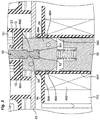
- FIG. 3 is a magnified view of the portion near the movable armature in the cross-sectional view of FIG. 2 ;
- FIG. 4 is a perspective view of the movable contact, movable shaft, movable armature, and fixed armature in the electromagnetic relay in FIG. 1 ;
- FIG. 5 is a perspective view of the movable contact and the movable shaft in the electromagnetic relay in FIG. 1 ;
- FIG. 6 is a perspective view of the movable armature in the electromagnetic relay in FIG. 1 ;
- FIG. 7 is a perspective view of the movable armature for describing a first example of modifying the electromagnetic relay in FIG. 1 ;
- FIG. 8 is a cross-sectional view along the line VIII-VIII for describing a second example of modifying the electromagnetic relay in FIG. 1 ;
- FIG. 9 is a cross-sectional view along the line IX-IX for describing a second example of modifying the electromagnetic relay in FIG. 1 ;
- FIG. 10 is a partial magnified view along the line II-II for describing a third example of modifying the electromagnetic relay in FIG. 1 ;
- FIG. 11 is a perspective view of the movable armature for describing a fourth example of modifying the electromagnetic relay in FIG. 1 ;
- FIG. 12 is a perspective view of the movable armature for describing a fifth example of modifying the electromagnetic relay in FIG. 1 ;
- FIG. 13 is a perspective view of the movable armature for describing a sixth example of modifying the electromagnetic relay in FIG. 1 ;
- FIG. 14 is a perspective view of the movable armature for describing a seventh example of modifying the electromagnetic relay in FIG. 1 ;
- FIG. 15 is a perspective view of the movable shaft for describing an eighth example of modifying the electromagnetic relay in FIG. 1 ;
- FIG. 16 is a first schematic view of the movable armature for describing the eighth example of modifying the electromagnetic relay in FIG. 1 ;
- FIG. 17 is a second schematic view for describing the eighth example of modifying the electromagnetic relay in FIG. 1 ;
- FIG. 18 is a plan view of the movable shaft for describing a ninth example of modifying the electromagnetic relay in FIG. 1 ;
- FIG. 19 is a plan view of the movable shaft for describing a tenth example of modifying the electromagnetic relay in FIG. 1 ;
- FIG. 20 is a plan view of the movable shaft for describing an eleventh example of modifying the electromagnetic relay in FIG. 1 ;
- FIG. 21 is a plan view of the movable shaft for describing a twelfth example of modifying the electromagnetic relay in FIG. 1 ;
- FIG. 22 is a plan view of the movable shaft for describing a thirteenth example of modifying the electromagnetic relay in FIG. 1 ;
- FIG. 23 is a plan view of the movable shaft for describing a fourteenth example of modifying the electromagnetic relay in FIG. 1 .
- An electromagnetic relay is provided with a housing 10 , a first fixed contact terminal 20 and a second fixed contact terminal 30 as illustrated in FIG. 1 .
- the first and second fixed contact terminals 20 , 30 are secured in the housing 10 and are electrically isolated from each other.
- a movable contact 40 which includes a first movable contact point 41 and a second movable contact point 42 , a movable shaft 50 connected on one end to the movable contact 40 , and a solenoid 60 that drives the movable shaft 50 are all located in the chamber 11 .
- the housing 10 includes a box-like truncated rectangle ( FIG. 1 ) wherein an insulating wall 12 partitions the chamber 11 along the length of the housing 10 . That is, the insulating wall 12 partitions the chamber 11 along the length of the housing 10 to create a first compartment 111 and a second compartment 112 parallel to each other.
- the flat first fixed contact terminal 20 is disposed in one direction connecting the first movable contact point 41 and the second movable contact point 42 in the housing 10 ( FIG. 2 , i.e., from left to right and referred to below as the arrangement direction).
- the first fixed contact terminal 20 extends from outside the housing 10 into the first compartment 111 and is secured to a first wall 101 that extends along the length of the housing 10 .
- the end of the first fixed contact terminal 20 near the first compartment 111 i.e., the right end in FIG. 2 includes a first fixed contact point 21 arranged in the first compartment 111 .
- the flat second fixed contact terminal 30 is disposed along the arrangement direction in the other direction in the housing 10 ( FIG. 2 ).
- the second fixed contact terminal 30 extends from outside the housing 10 into the first compartment 111 and is secured to a second wall 102 that extends along the length of the housing 10 .
- the second fixed contact terminal 30 is electrically isolated from the first fixed contact terminal 20 .
- the end of the second fixed contact terminal 30 near the first compartment 111 i.e., the left end in FIG. 2 , includes a second fixed contact point 31 arranged in the first compartment 111 .
- the first and second fixed contact points 21 , 31 face the first and second movable contact points 41 , 42 of the movable contact 40 inside the first compartment 111 .
- the first and second fixed contact points 21 , 31 are also located between the first and second movable contact points 41 , 42 and the insulating wall 12 .
- the first and second fixed contact points 21 , 31 are substantially orthogonal to the first and second walls 101 , 102 lengthwise of the housing 10 (i.e., vertically, FIG. 2 ).
- the first and second walls 101 , 102 are substantially equidistant from a third wall 103 ; the first, second, and third walls 101 , 102 , 103 together with the insulating wall 12 create the first compartment 111 .
- the movable contact 40 is configured to move along the length of the housing 10 between the first and second fixed contact points 21 , 31 and the third wall 103 of the housing 10 .
- the movable contact 40 includes a substantially rectangular contact body 401 , a coil spring 44 connected to the contact body 401 and a coil spring retainer 45 for holding the coil spring 44 .
- the contact body 401 includes a first flat surface 402 that is opposite the first and second fixed contact points 21 , 31 , and a second flat surface 403 that is opposite the third wall 103 of the housing 10 .
- the first and second movable contact points 41 , 42 are separate from each other on the first flat surface 402 along the length of the movable contact 40 and face the first and second fixed contact points 21 , 31 respectively.
- the contact body 401 includes a through-hole 43 at substantially the center lengthwise of the movable contact 40 (i.e., laterally, FIG. 2 ) through the thickness thereof (i.e., vertically, FIG. 2 ).
- One end of the movable shaft 50 is connected to the contact body 401 and passes through the through-hole 43 .
- the one end of movable shaft 50 travels relative to the contact body 401 along the thickness thereof.
- the coil spring retainer 45 includes a first holder 451 between the contact body 401 and the insulating wall 12 in the direction the first and second movable contact points 41 , 42 contact with and separate from the first and second fixed contact points 21 , 31 (i.e., lengthwise of the housing 10 , and referred to below as the contact movement direction); the first holder 451 is connected to the contact body 401 .
- the coil spring 44 is in the first compartment 111 between the movable contact 40 and the insulating wall 12 in the contact movement direction to bias the first and second movable contact points 41 , 42 toward the first and second fixed contact points 21 , 31 opposite thereto.
- the coil spring 44 is held by the first holder 451 in the coil spring retainer 45 for the movable contact 40 , and a later-described second holder 53 on the movable shaft 50 . In this embodiment the coil spring 44 is held compressed.
- the movable shaft 50 is a roughly circular column extending in the contact movement direction from the first compartment 111 to the second compartment 112 .
- a first end 51 of the movable shaft 50 in the extension direction is in the first compartment 111 while another second end 52 in the extension direction is in the second compartment 112 via a through-hole 121 in the insulating wall 12 .
- the first end 51 of the movable shaft 50 connects to the movable contact 40 in the first compartment 111 and is configured to travel with the movable contact 40 in the contact movement direction.
- the second holder 53 is provided at the first end 51 of the movable shaft 50 .
- the second holder 53 is located between the contact body 401 of the movable contact 40 and the first holder 451 in the coil spring retainer 45 .
- the second holder 53 extends in a direction intersecting with the extension direction of the movable shaft 50 and together with the first holder 451 holds the coil spring 44 .
- the solenoid 60 is made up of an electromagnet 61 that extends in the contact movement direction, a substantially rectangular and flat first yoke 62 , a substantially U-shaped second yoke 63 , a fixed armature 65 , and the movable armature 66 ( FIG. 2 ).
- the first yoke 62 extends in the arrangement direction along the insulating wall 12 ; the second yoke 63 together with the first yoke 62 wraps around the electromagnet 61 in a direction orthogonal to the contact movement and the arrangement directions (i.e., a direction passing through the FIG. 2 ).
- the fixed armature 65 is connected to the second yoke 63 ; and the movable armature 66 , which is connected to the second end 52 of the movable shaft 50 , is configured to travel in the contact movement direction relative to the fixed armature 65 .
- the solenoid 60 drives the movable shaft 50 in the contact movement direction when the electromagnet 61 is energized.
- the electromagnet 61 extends in the contact movement direction and includes a spool 64 .
- the spool 64 includes a drum 641 with a through-hole 642 that can accommodate the second end 52 of the movable shaft 50 .
- the drum 641 in the spool 64 includes a coil 641 wound therearound in the contact movement direction.
- the fixed armature 65 is secured in the through-hole 642 of the drum 641 with the end part thereof away from the insulating wall 12 along the contact movement direction connected to the second yoke 63 .
- the movable armature 66 is situated between the fixed armature 65 in the through-hole 642 in the drum 641 and the insulating wall 12 ; the second end 52 of the movable shaft 50 is connected to the movable armature 66 so that the movable armature 66 travels with the movable shaft 50 in the contact movement direction.
- a return spring 67 is provided between the fixed armature 65 and movable armature 66 in the through-hole 642 ; the return spring 67 biases the movable armature 66 along the contact movement direction towards the insulating wall 12 .
- the return spring 67 biases the movable armature 66 in the contact movement direction so that the movable armature 66 approaches the insulating wall 12 , and the insulating wall 12 limits the movement of the movable armature 66 in the contact movement direction.
- the movable contact 40 is also the furthest from the insulating wall 12 in the contact movement direction when the movable armature 66 is at the return position, and the first and second movable contact points 41 , 42 are separated from the first and second fixed contact points 21 , 31 opposite thereto.
- the movable armature 66 travels towards the fixed armature 65 along the contact movement direction in opposition to the biasing force of the return spring 67 .
- the movable contact 40 travels towards the insulating wall 12 along the contact movement direction with the movement of the movable armature 66 , and the first and second movable contact points 41 , 42 contact the first and second fixed contact points 21 , 31 opposite thereto.
- the movable armature 66 is at an operating position where the movable armature 66 is limited in how far the same moves away from the insulating wall 12 in the contact movement direction.
- the solenoid 60 in the electromagnetic relay 1 is configured so that the movable armature 66 can travel between a return position and an operation position along the contact movement direction.
- the solenoid 60 is also configured so that the direction the movable contact 40 approaches the solenoid 60 is the same as the direction along which the movable armature 66 travels from the operation position to the return position (i.e., the direction the separated movable contact points 41 , 42 approach and contact the corresponding fixed contact points 21 , 31 ).
- the first compartment 111 in the housing 10 also include a pair of permanent magnets 71 , 72 provided in the arrangement direction sandwiching the movable contact 40 .
- the permanent magnets 71 , 72 are situated between the first wall 101 and first fixed contact terminal 20 and the second wall 102 and the second fixed contact terminal 30 respectively in the housing 10 .
- the movable shaft 50 and the solenoid 60 are described in detail with reference to FIG. 3 through FIG. 6 .
- the movable armature 66 faces the insulating wall 12 (i.e., the movable contact 40 ) in the electromagnetic relay 1 ; and at least one side of the electromagnetic relay 1 is open in a direction intersecting with (e.g., orthogonal to) the contact movement direction and includes a groove 661 through which the movable shaft 50 may be inserted from the direction intersecting with (e.g., orthogonal to) the contact movement direction.
- a first locking part 54 is provided at the second end 52 of the movable shaft 50 and a second locking part 662 is provided in the groove 661 in the movable armature 66 and may engage the first locking part 54 .
- the first locking part 54 and the second locking part 662 are configured so that when engaged, the movable shaft 50 and the movable armature 66 are locked and can move integrally in the contact movement direction.
- the fixed armature 65 and the movable armature 66 are flat and substantially cuboid shapes made up of a plurality of flat, substantially rectangular laminations 81 , 82 layered in a direction intersecting (e.g., orthogonal to) the direction the second end 52 of the movable shaft 50 is inserted into the groove 661 of the movable armature 66 .
- this direction the second end 52 is inserted intersects both the contact movement direction and the arrangement direction, and is referred to below as the insertion direction.
- Each of the laminations 81 , 82 is made of a magnetic material.
- the plurality of laminations 82 making up the movable armature 66 are secured to each other and integrally formed, the plurality of laminations 81 making up the fixed armature 65 are not mutually secured and are not integrally formed.
- the first locking part 54 at the second end 52 of the movable shaft 50 includes an engagement groove 541 which is a radial depression that spans from the entire periphery of the movable shaft 50 to a central shaft.
- the groove 661 in the movable armature 66 extends along the contact movement direction from one end to the other end lengthwise of the laminations 82 (i.e., from the upper end toward the lower end of FIG. 6 ) with both sides along the thickness of the laminations 82 open to allow insertion of the movable shaft 50 .
- the second locking part 662 in the groove 661 includes a pair of locking projections 663 ; the locking projections 663 protrude toward each other along the width direction of the groove 661 . Note that this width direction is orthogonal to the contact movement direction and the insertion direction.
- the locking projections 663 are mutually opposite and extend like rails in the insertion direction allowing the same to engage with the engagement groove 541 of the movable shaft 50 .
- the engagement groove 541 includes a groove shoulder, i.e., the first engagement surface 543 near the second end 52 of the movable shaft 50 along the extension direction of the movable shaft 50 (i.e., vertically, FIG. 5 ) and orthogonal to the engagement groove 541 .
- the locking projections 663 of the groove 661 in the movable armature 66 are roughly the same height from the groove floor 667 in the direction the groove 661 extends (i.e., vertically in FIG. 6 ).
- the locking projections 663 also include a second engagement surface 668 positioned mutually opposite the groove floor 667 and on the same plane.
- the movable shaft 50 and the movable armature 66 engage in the contact movement direction when the first engagement surface 543 and the second engagement surface 668 come into contact, and the engagement groove 541 of the movable shaft 50 engages with the locking projections 663 on the movable armature 66 .
- the first engagement surface 543 in the engagement groove 541 and the second engagement surface 668 on the locking projections 663 allow the movable shaft 50 and the movable armature 66 to move more freely in the contact movement direction; this improves the operating characteristics of the electromagnetic relay 1 .
- the first engagement surface 543 and the second engagement surface 668 on the movable shaft 50 and on the movable armature 66 respectively are not required elements and may be eliminated depending on the design of the electromagnetic relay 1 .
- At least one of the plurality of laminations 82 making up the movable armature 66 includes a protrusion 664 provided on each widthwise end thereof.
- the protrusion 664 makes contact with the inner peripheral surface of the through-hole 642 in the drum 641 and can slide along the inner peripheral surface of the drum 641 with the movement of the movable armature 66 .
- the movable armature 66 faces the movable contact 40 and includes a groove 661 that opens in at least one direction intersecting with the contact movement direction and allows the movable shaft 50 to be inserted from a direction intersecting with the contact movement direction.
- the end 52 of the movable shaft 50 includes a first locking part 54 and the groove 661 in the movable armature 66 includes a second locking part 662 that allows engagement with the first locking part 54 .
- the movable shaft 50 and the movable armature 66 engage in the contact movement direction with the engagement of the first locking part 54 and the second locking part 662 and move integrally in the contact movement direction.
- the movable shaft 50 and movable armature 66 may be easily connected without relying on processes such as welding that require special equipment, and without relying on quality control, or the like. Additionally, the processes for manufacturing an electromagnetic relay 1 may be simplified because no special equipment or quality control is needed; this also reduces the cost of producing the electromagnetic relay 1 .
- the movable armature 66 is made up of a plurality of laminations 82 that are layered along the direction the movable shaft 50 is inserted. At least one of the laminations include a protrusion 664 provided on both sides in the width direction which is orthogonal to the contact movement direction and the arrangement direction. The protrusion 664 reduces the contact surface area between the movable armature 66 and the drum 641 of the spool 64 allowing the movable armature 66 to travel freely.
- the locking projections 663 on the movable armature 66 is not limited to being almost rectangular parts that extend like rails; the locking projections 663 can be any form as long as the locking projections 663 can engage with the engagement groove 541 on the movable shaft 50 .
- the locking projections 663 may be made up of a plurality of protrusions that protrude toward each other from both sides along the width of the groove 661 , and are not necessarily rail-like.
- the locking projections 663 may appear roughly trapezoid shaped, or roughly arc-shaped and not limited to being roughly rectangular when viewed from the insertion direction.
- the protrusion 664 provided on both sides widthwise of the movable armature 66 may be omitted.
- the groove 661 in the movable armature 66 is not limited to opening on both sides in the insertion direction of the movable shaft 50 .
- the groove 661 may open on only one side along the insertion direction as illustrated in FIG. 7 .
- the end of the groove 661 on the other side in the insertion direction may include a position limiting part 665 that restricts the position of the second end 52 of the movable shaft 50 in the direction the movable shaft 50 is inserted in the groove 661 .
- the position limiting part 665 on the movable armature 66 allows more precise control of the location to which the second end 52 of the movable shaft 50 is inserted in the groove 661 .
- the movable contact 40 , the movable shaft 50 , and the movable armature 66 may travel more freely in the contact movement direction, thereby improving the operating characteristics of the electromagnetic relay 1 .
- the spool 64 includes a protruding portion 644 capable of preventing the second end 52 of the movable shaft 50 from shifting in the insertion direction.
- This protruding portion 644 extends from the inner peripheral surface constituting the through-hole 642 of the drum 641 in the insertion direction, and can be accommodated in the groove 661 of the movable armature 66 .
- a protruding portion 644 may be provided on the spool 64 for preventing the movable shaft 50 from shifting from position whereby the second end 52 of the movable shaft 50 is retained more reliably when inserted in the groove 661 .
- the movable contact 40 , the movable shaft 50 , and the movable armature 66 may travel more freely in the contact movement direction, thereby improving the operating characteristics of the electromagnetic relay 1 .
- the solenoid 60 may include a retaining tube 68 surrounding the movable armature 66 about the contact movement direction to hold the same.
- the movable armature 66 made up of the plurality of laminations 82 may thus be integrated and easily accommodated in the through-hole 642 of the drum 641 in the spool 64 . This simplifies the assembly of the electromagnetic relay 1 .
- the protrusion 664 provided on each side along the width of the movable armature 66 makes contact with the inner peripheral surface of the retaining tube 68 and is configured to slide along the inner peripheral surface of the retaining tube 68 as the movable armature 66 moves.
- the fixed armature 65 and the movable armature 66 do not need to be made up of a plurality of laminations 81 , 82 , and may be a single part composed of magnetic material.
- the fixed armature 65 and the movable armature 66 are also not limited to being substantially cuboid, and may be a substantially cylindrical.
- FIGS. 11 through 13 depict the movable armature 66 as a single part
- FIG. 14 depict the movable armature 66 as substantially cylindrical.
- the movable armature 66 in FIG. 11 is the movable armature 66 illustrated in FIG. 7 constituted from a single part.
- the movable armature 66 in FIG. 12 is the movable armature 66 in FIG.
- the auxiliary groove 666 is provided on both surfaces of the groove 661 in the insertion direction and extends from the bottom of the groove 661 toward the fixed armature 65 (i.e., downward in FIG. 12 ) along the contact movement direction.
- the auxiliary groove 666 allows the second end 52 of the movable shaft 50 to be more easily and reliably held by the protruding portion 644 on the spool 64 .
- the movable armature 66 in FIG. 13 is the movable armature 66 illustrated in FIG. 11 provided with the auxiliary groove 666 .
- the movable armature 66 in FIG. 14 is the movable armature 66 illustrated in FIG. 11 as a substantially cylindrical component.
- the movable shaft 50 is not limited to being substantially cylindrical, and may be substantially rectangular as illustrated in FIG. 15 .
- the housing 10 can be thinner in the external dimensions L when the movable shaft 50 is substantially rectangular compared to when the movable shaft 50 is cylindrical (i.e., L1>L2) as illustrated in FIGS. 16 and 17 and thus the electromagnetic relay 1 can have a smaller footprint.
- the cross-sectional area is roughly the same whether the movable shaft 50 is substantially rectangular or substantially cylindrical.
- the movable shaft 50 may also be easily produced via press machining, thus reducing the cost of manufacturing the electromagnetic relay 1 .
- the engagement groove 541 on the movable shaft 50 in FIG. 15 is provided only on both sides along the width of the movable shaft 50 (i.e., in the arrangement direction); however, no engagement grooves are provided on both sides in the thickness direction of the movable shaft 50 (i.e., in the insertion direction).
- the first locking part 54 on the second end 52 of the movable shaft 50 is not limited to including the engagement groove 541 which is a radial depression spanning from the periphery to a central shaft.
- the engagement groove 541 merely needs to engage with the second locking part 662 of the groove 661 in the movable armature 66 so that the engagement of the first locking part 54 and the second locking part 662 connect the movable shaft 50 and the movable armature 66 in the contact movement direction.
- the movable shaft 50 illustrated in FIG. 18 and FIG. 19 is provided with one or a plurality of engagement grooves 541 on a part of the periphery of the movable shaft 50 .
- the movable shaft 50 illustrated in FIG. 20 also includes engagement grooves 541 in a pair of opposing side surfaces with the engagement grooves 541 each slanting radially outward with distance from the central shaft thereof.
- the movable shaft 50 and the movable armature 66 in FIG. 20 do not include the first engagement surface 543 and the second engagement surface 668 .
- the movable armature 66 is depicted with dotted lines in FIGS. 18 through 20 .
- the first locking part 54 and the second locking part 662 may be any desired form so long as first locking part 54 and the second locking part 662 engage with each other to allow the movable shaft 50 and the movable armature 66 to move integrally in the contact movement direction. That is, the first locking part may be a locking projection that protrudes radially outward from the periphery of the movable shaft 50 , and the second locking part may be engagement grooves that extend away from each other into the groove 661 along the width of the movable armature 66 .
- FIGS. 21 through 23 illustrate examples of a locking projection 542 provided on the movable shaft 50 protruding radially outward from the periphery of the movable shaft 50 to serves as the first locking part.
- the movable shaft 50 illustrated in FIGS. 21 and 22 includes a locking projection 542 provided at the second end 52 protruding in a straight line radially outward from the movable shaft 50 .
- the movable shaft 50 includes the locking projection 542 similar to the locking projection 542 on the movable shaft 50 depicted in FIG. 21 .
- This locking projection 542 includes a slanted shoulder that slopes outward to inward radially from the second end 52 toward the first end 51 .
- the movable shaft 50 and the movable armature 66 in FIG. 23 do not include the first engagement surface 543 and the second engagement surface 668 .
- the movable armature 66 is depicted with dotted lines in FIGS. 21 through 23 .
- the present invention is not limited to an electromagnetic relay 1 where the direction the movable contact 40 approaches the solenoid 60 and the direction the movable contact points 41 , 42 contact the corresponding fixed contact points 21 , 31 are the same.
- electromagnetic relays 1 according to one or more embodiments of the present invention, the direction the movable contact 40 approaches the solenoid 60 and the direction the movable contact points 41 , 42 contact the corresponding fixed contact points 21 , 31 are different.
- the electromagnetic relay 1 is not limited to the first fixed contact terminal 20 and the second fixed contact terminal 30 each secured to the first wall 101 and the second wall 102 of the housing 10 ; for instance, according to one or more embodiments of the present invention, the first and second fixed contact terminals 20 , 30 are secured to the third wall of the housing.
- a first embodiment of an electromagnetic relay 1 includes:
- first fixed contact terminal 20 secured to the housing 10 and extending from outside the housing 10 to the chamber 11 , the first fixed contact terminal 20 including a first fixed contact point 21 in the chamber 11 ;
- a second fixed contact terminal 30 secured to the housing 10 and extending from outside the housing 10 to the chamber 11 , the second fixed contact terminal 30 electrically isolated from the first fixed contact terminal 20 and including a second fixed contact point 31 in the chamber; a movable contact 40 arranged in the chamber 11 and including a first movable contact point 41 and a second movable contact point 42 , the first and second movable contact points 41 , 42 facing the first and second fixed contact points 21 , 31 respectively; the first and second movable contact points 41 , 42 traveling in a contact movement direction in which the first and second movable contact points 41 , 42 make contact with and separate from the first and second fixed contact points 21 , 31 ; a movable shaft 50 arranged in the chamber 11 extending in the contact movement direction with one end in the extension direction connected to the movable contact 40 and configured to move therewith; and a solenoid 60 arranged in the chamber 11 on one end in the contact movement direction relative to the movable contact 40 , the solenoid 60 connected to the
- the movable armature 66 faces the movable contact 40 and includes a groove 661 that opens in at least one direction intersecting with the contact movement direction and allows the movable shaft 50 to be inserted from a direction intersecting with the contact movement direction.
- the end 52 of the movable shaft 50 includes a first locking part 54 and the groove 661 in the movable armature 66 includes a second locking part 662 that allows engagement with the first locking part 54 .
- the movable shaft 50 and the movable armature 66 engage in the contact movement direction with the engagement of the first locking part 54 and the second locking part 662 and move integrally in the contact movement direction.
- the movable shaft 50 and movable armature 66 may be easily connected without relying on processes such as welding that require special equipment, and without relying on quality control, or the like.
- the movable armature 66 includes a position limiting part 665 provided on one end of the groove 661 along the insertion direction of the movable shaft 50 , the position limiting part 665 configured to limit the position of the other end 52 of the movable shaft 50 in the groove 661 along the insertion direction of the movable shaft 50 .
- the position of the other end 52 of the movable shaft 50 may be more precisely controlled in the groove 661 along the insertion direction of the movable shaft 50 .
- the movable contact 40 , the movable shaft 50 , and the movable armature 66 may travel more freely in the contact movement direction, thereby improving the operating characteristics of the electromagnetic relay 1 .
- the spool 64 includes a protruding portion 644 extending in the insertion direction of the movable shaft 50 from the inner peripheral surface of the through-hole 642 in the drum 641 , the protruding portion 644 contained in the groove 661 and configured to prevent the other end of the movable shaft 50 from shifting position.
- the other end 52 of the movable shaft 50 may be more reliably held in the groove 661 at a prescribed position along the insertion direction.
- the movable contact 40 , the movable shaft 50 , and the movable armature 66 may travel more freely in the contact movement direction, thereby improving the operating characteristics of the electromagnetic relay 1 .
- the movable armature 66 is made up of a plurality of laminations 82 layered in the insertion direction of the movable shaft 50 ;
- At least one of the plurality of laminations 82 includes a protrusion 664 on both sides in the width direction which is orthogonal to the contact movement direction and the insertion direction.
- the protrusion 664 reduces the contact surface area between the movable armature 66 and the drum 641 of the spool 64 allowing the movable armature 66 to travel freely.
- the solenoid 60 includes a retainer tube 68 wrapped around the movable armature 66 in the contact movement direction and holding the movable armature 66 .
- the movable armature 66 made up of the plurality of laminations 82 may thus be integrated and easily accommodated in the through-hole 642 of the drum 641 in the spool 64 . This simplifies the assembly of the electromagnetic relay 1 .
- the electromagnetic relay according to one or more embodiments of the present invention may be adopted in an electric vehicle.
Landscapes
- Physics & Mathematics (AREA)
- Electromagnetism (AREA)
- Electromagnets (AREA)
Abstract
Description
a
a
a
the
a
a fixed
a
the other end of the
the
the
Claims (8)
Applications Claiming Priority (2)
| Application Number | Priority Date | Filing Date | Title |
|---|---|---|---|
| JP2017-211097 | 2017-10-31 | ||
| JP2017211097A JP6856001B2 (en) | 2017-10-31 | 2017-10-31 | Electromagnetic relay |
Publications (2)
| Publication Number | Publication Date |
|---|---|
| US20190131093A1 US20190131093A1 (en) | 2019-05-02 |
| US11101092B2 true US11101092B2 (en) | 2021-08-24 |
Family
ID=66137917
Family Applications (1)
| Application Number | Title | Priority Date | Filing Date |
|---|---|---|---|
| US16/131,923 Active 2038-12-13 US11101092B2 (en) | 2017-10-31 | 2018-09-14 | Electromagnetic relay |
Country Status (4)
| Country | Link |
|---|---|
| US (1) | US11101092B2 (en) |
| JP (1) | JP6856001B2 (en) |
| CN (1) | CN109727815B (en) |
| DE (1) | DE102018215643B4 (en) |
Families Citing this family (17)
| Publication number | Priority date | Publication date | Assignee | Title |
|---|---|---|---|---|
| JP6668997B2 (en) * | 2016-07-29 | 2020-03-18 | オムロン株式会社 | Electromagnetic relay |
| JP6828294B2 (en) * | 2016-07-29 | 2021-02-10 | オムロン株式会社 | Electromagnetic relay |
| US10950402B2 (en) * | 2017-10-17 | 2021-03-16 | Solarbos, Inc. | Electrical contactor |
| JP6801629B2 (en) * | 2017-10-31 | 2020-12-16 | オムロン株式会社 | Electromagnetic relay |
| JP6919504B2 (en) * | 2017-10-31 | 2021-08-18 | オムロン株式会社 | Electromagnetic relay |
| JP2019083174A (en) * | 2017-10-31 | 2019-05-30 | オムロン株式会社 | Electromagnetic relay |
| JP7036047B2 (en) * | 2019-01-18 | 2022-03-15 | オムロン株式会社 | relay |
| JP7310474B2 (en) * | 2019-09-13 | 2023-07-19 | オムロン株式会社 | relay |
| JP7351157B2 (en) * | 2019-09-18 | 2023-09-27 | オムロン株式会社 | relay |
| JP7451910B2 (en) * | 2019-09-18 | 2024-03-19 | オムロン株式会社 | relay |
| EP4235726A3 (en) * | 2019-12-02 | 2023-10-04 | Fuji Electric Fa Components & Systems Co., Ltd. | Electric device |
| CN211208340U (en) * | 2019-12-04 | 2020-08-07 | Ls产电株式会社 | Arc path forming part and DC relay including the same |
| CN114946006B (en) * | 2020-01-23 | 2025-06-10 | 三菱电机株式会社 | Shutter device |
| KR102531476B1 (en) * | 2020-09-25 | 2023-05-11 | 엘에스일렉트릭(주) | Moving contactor part and direct current relay include the same |
| JP7801098B2 (en) * | 2021-02-26 | 2026-01-16 | オムロン株式会社 | electromagnetic relay |
| JP7501409B2 (en) * | 2021-03-05 | 2024-06-18 | オムロン株式会社 | Electromagnetic Relay |
| JP7452470B2 (en) * | 2021-03-05 | 2024-03-19 | オムロン株式会社 | electromagnetic relay |
Citations (9)
| Publication number | Priority date | Publication date | Assignee | Title |
|---|---|---|---|---|
| JPS58182339U (en) | 1982-05-31 | 1983-12-05 | 松下電工株式会社 | Magnetic holding type electromagnetic drive device |
| CN101438364A (en) | 2006-05-12 | 2009-05-20 | 欧姆龙株式会社 | Electromagnetic relay |
| JP2010118206A (en) | 2008-11-12 | 2010-05-27 | Kyoritsu Keiki Co Ltd | Electromagnetic contactor |
| US20140092517A1 (en) * | 2011-06-20 | 2014-04-03 | Nissan Motor Co., Ltd. | Electromagnetic relay |
| US20150054605A1 (en) * | 2013-08-26 | 2015-02-26 | Fujitsu Component Limited | Electromagnetic relay |
| CN204497154U (en) | 2014-12-25 | 2015-07-22 | 惠州比亚迪实业有限公司 | A kind of relay pushing mechanism and relay |
| US20150213984A1 (en) | 2012-11-15 | 2015-07-30 | Fuji Electric Fa Components & Systems Co., Ltd. | Electromagnetic contactor |
| EP3139396A1 (en) | 2015-09-04 | 2017-03-08 | Omron Corporation | Contact switching device |
| US9916952B2 (en) * | 2015-06-12 | 2018-03-13 | Te Connectivity Corporation | Carrier sub-assembly for an electrical relay device |
Family Cites Families (6)
| Publication number | Priority date | Publication date | Assignee | Title |
|---|---|---|---|---|
| JPS5588680A (en) | 1978-12-27 | 1980-07-04 | Kibun Kk | Preparation of marine fish-paste product |
| DE3417093A1 (en) | 1984-05-09 | 1985-11-14 | Küsters, Eduard, 4150 Krefeld | ROTATING CONNECTION HEAD FOR HEATABLE OR COOLABLE ROLLERS |
| JP2007305467A (en) * | 2006-05-12 | 2007-11-22 | Omron Corp | Electromagnetic relay, its adjustment method and adjustment system |
| CN201332062Y (en) * | 2009-01-09 | 2009-10-21 | 浙江致威电子科技有限公司 | Starting relay with arc extinguishing mechanism |
| JP5569349B2 (en) * | 2009-12-11 | 2014-08-13 | 株式会社デンソー | Electromagnetic relay |
| CN205508730U (en) * | 2016-03-31 | 2016-08-24 | 浙江众信新能源科技股份有限公司 | Movable contact assembly among high -voltage direct -current relay |
-
2017
- 2017-10-31 JP JP2017211097A patent/JP6856001B2/en active Active
-
2018
- 2018-09-14 CN CN201811073328.0A patent/CN109727815B/en active Active
- 2018-09-14 DE DE102018215643.3A patent/DE102018215643B4/en active Active
- 2018-09-14 US US16/131,923 patent/US11101092B2/en active Active
Patent Citations (12)
| Publication number | Priority date | Publication date | Assignee | Title |
|---|---|---|---|---|
| JPS58182339U (en) | 1982-05-31 | 1983-12-05 | 松下電工株式会社 | Magnetic holding type electromagnetic drive device |
| CN101438364A (en) | 2006-05-12 | 2009-05-20 | 欧姆龙株式会社 | Electromagnetic relay |
| US20090237191A1 (en) * | 2006-05-12 | 2009-09-24 | Omron Corporation | Electromagnetic relay |
| JP2010118206A (en) | 2008-11-12 | 2010-05-27 | Kyoritsu Keiki Co Ltd | Electromagnetic contactor |
| US20140092517A1 (en) * | 2011-06-20 | 2014-04-03 | Nissan Motor Co., Ltd. | Electromagnetic relay |
| US20150213984A1 (en) | 2012-11-15 | 2015-07-30 | Fuji Electric Fa Components & Systems Co., Ltd. | Electromagnetic contactor |
| JP6110109B2 (en) | 2012-11-15 | 2017-04-05 | 富士電機機器制御株式会社 | Magnetic contactor |
| US20150054605A1 (en) * | 2013-08-26 | 2015-02-26 | Fujitsu Component Limited | Electromagnetic relay |
| CN204497154U (en) | 2014-12-25 | 2015-07-22 | 惠州比亚迪实业有限公司 | A kind of relay pushing mechanism and relay |
| US9916952B2 (en) * | 2015-06-12 | 2018-03-13 | Te Connectivity Corporation | Carrier sub-assembly for an electrical relay device |
| EP3139396A1 (en) | 2015-09-04 | 2017-03-08 | Omron Corporation | Contact switching device |
| US20170069452A1 (en) | 2015-09-04 | 2017-03-09 | Omron Corporation | Contact switching device |
Non-Patent Citations (3)
| Title |
|---|
| Chinese Office Action in corresponding Application No. 201811073328.0 dated Aug. 29, 2019 (14 pages). |
| Notice of Reasons for Refusal issued in Japanese Application No. 2017-211097, dated Oct. 20, 2020 (6 pages). |
| Office Action issued in the counterpart Chinese Patent Application No. 201811073328.0, dated May 7, 2020 (15 pages). |
Also Published As
| Publication number | Publication date |
|---|---|
| JP6856001B2 (en) | 2021-04-07 |
| CN109727815B (en) | 2020-11-06 |
| DE102018215643A1 (en) | 2019-05-02 |
| DE102018215643B4 (en) | 2023-06-01 |
| JP2019083171A (en) | 2019-05-30 |
| US20190131093A1 (en) | 2019-05-02 |
| CN109727815A (en) | 2019-05-07 |
Similar Documents
| Publication | Publication Date | Title |
|---|---|---|
| US11101092B2 (en) | Electromagnetic relay | |
| US10892125B2 (en) | Electromagnetic relay | |
| US10714289B2 (en) | Electromagnetic relay | |
| US10714290B2 (en) | Electromagnetic relay | |
| US10720294B2 (en) | Electromagnetic relay | |
| USRE49236E1 (en) | Contact device and electromagnetic relay | |
| US9881758B2 (en) | Contact device and electromagnetic relay equipped with the contact device | |
| US9799474B2 (en) | Contactor and electromagnetic relay | |
| US11657995B2 (en) | Electromagnetic relay with positional securement for fixed terminals | |
| US10026577B2 (en) | Contact switching device | |
| US8354906B2 (en) | Electromagnetic relay | |
| US20190013171A1 (en) | Contact mechanism and electromagnetic relay | |
| CN113412528B (en) | relay | |
| US20210082649A1 (en) | Electromagnetic relay | |
| JP7135590B2 (en) | electromagnetic relay | |
| US12261005B2 (en) | Electromagnetic relay and electromagnetic device | |
| JP2012199126A (en) | Contact device and electromagnetic switching device using the same | |
| KR20180113453A (en) | Electromagnetic relay | |
| JP2020074333A (en) | Electromagnetic relay | |
| JP2019117809A (en) | Contact arrangement and electromagnetic relay | |
| WO2020049756A1 (en) | Relay and relay production method | |
| EP4276877B1 (en) | Electromagnetic relay | |
| US20240355565A1 (en) | Electromagnetic relay | |
| US20220102102A1 (en) | Relay | |
| HK1090751A1 (en) | Electromagnetic relay |
Legal Events
| Date | Code | Title | Description |
|---|---|---|---|
| FEPP | Fee payment procedure |
Free format text: ENTITY STATUS SET TO UNDISCOUNTED (ORIGINAL EVENT CODE: BIG.); ENTITY STATUS OF PATENT OWNER: LARGE ENTITY |
|
| STPP | Information on status: patent application and granting procedure in general |
Free format text: APPLICATION DISPATCHED FROM PREEXAM, NOT YET DOCKETED |
|
| AS | Assignment |
Owner name: OMRON CORPORATION, JAPAN Free format text: ASSIGNMENT OF ASSIGNORS INTEREST;ASSIGNORS:MINOWA, RYOTA;MORI, SHINGO;KAWAGUCHI, NAOKI;REEL/FRAME:047608/0784 Effective date: 20181009 |
|
| STPP | Information on status: patent application and granting procedure in general |
Free format text: DOCKETED NEW CASE - READY FOR EXAMINATION |
|
| STPP | Information on status: patent application and granting procedure in general |
Free format text: NON FINAL ACTION MAILED |
|
| STPP | Information on status: patent application and granting procedure in general |
Free format text: RESPONSE TO NON-FINAL OFFICE ACTION ENTERED AND FORWARDED TO EXAMINER |
|
| STPP | Information on status: patent application and granting procedure in general |
Free format text: NOTICE OF ALLOWANCE MAILED -- APPLICATION RECEIVED IN OFFICE OF PUBLICATIONS |
|
| STPP | Information on status: patent application and granting procedure in general |
Free format text: PUBLICATIONS -- ISSUE FEE PAYMENT VERIFIED |
|
| STPP | Information on status: patent application and granting procedure in general |
Free format text: AWAITING TC RESP., ISSUE FEE NOT PAID |
|
| STPP | Information on status: patent application and granting procedure in general |
Free format text: NON FINAL ACTION MAILED |
|
| STPP | Information on status: patent application and granting procedure in general |
Free format text: FINAL REJECTION MAILED |
|
| STPP | Information on status: patent application and granting procedure in general |
Free format text: RESPONSE AFTER FINAL ACTION FORWARDED TO EXAMINER |
|
| STPP | Information on status: patent application and granting procedure in general |
Free format text: ADVISORY ACTION MAILED |
|
| STPP | Information on status: patent application and granting procedure in general |
Free format text: DOCKETED NEW CASE - READY FOR EXAMINATION |
|
| STPP | Information on status: patent application and granting procedure in general |
Free format text: NOTICE OF ALLOWANCE MAILED -- APPLICATION RECEIVED IN OFFICE OF PUBLICATIONS |
|
| STPP | Information on status: patent application and granting procedure in general |
Free format text: PUBLICATIONS -- ISSUE FEE PAYMENT RECEIVED |
|
| STPP | Information on status: patent application and granting procedure in general |
Free format text: PUBLICATIONS -- ISSUE FEE PAYMENT VERIFIED |
|
| STCF | Information on status: patent grant |
Free format text: PATENTED CASE |
|
| MAFP | Maintenance fee payment |
Free format text: PAYMENT OF MAINTENANCE FEE, 4TH YEAR, LARGE ENTITY (ORIGINAL EVENT CODE: M1551); ENTITY STATUS OF PATENT OWNER: LARGE ENTITY Year of fee payment: 4 |