US11038517B1 - Multiplying digital-to-analog converter (MDAC) with nonlinear calibration - Google Patents
Multiplying digital-to-analog converter (MDAC) with nonlinear calibration Download PDFInfo
- Publication number
- US11038517B1 US11038517B1 US16/744,614 US202016744614A US11038517B1 US 11038517 B1 US11038517 B1 US 11038517B1 US 202016744614 A US202016744614 A US 202016744614A US 11038517 B1 US11038517 B1 US 11038517B1
- Authority
- US
- United States
- Prior art keywords
- mdac
- terminal
- output
- resistor
- calibration
- Prior art date
- Legal status (The legal status is an assumption and is not a legal conclusion. Google has not performed a legal analysis and makes no representation as to the accuracy of the status listed.)
- Active
Links
- 238000010438 heat treatment Methods 0.000 claims description 63
- 238000012937 correction Methods 0.000 claims description 42
- 238000000034 method Methods 0.000 claims description 16
- 238000012360 testing method Methods 0.000 claims description 4
- 238000010586 diagram Methods 0.000 description 12
- 101001078093 Homo sapiens Reticulocalbin-1 Proteins 0.000 description 9
- 102100025335 Reticulocalbin-1 Human genes 0.000 description 9
- 230000008859 change Effects 0.000 description 2
- 238000005516 engineering process Methods 0.000 description 2
- 230000009471 action Effects 0.000 description 1
- 230000008901 benefit Effects 0.000 description 1
- 230000003247 decreasing effect Effects 0.000 description 1
- 230000001419 dependent effect Effects 0.000 description 1
- 238000013461 design Methods 0.000 description 1
- 229920005994 diacetyl cellulose Polymers 0.000 description 1
- 230000020169 heat generation Effects 0.000 description 1
- 238000012986 modification Methods 0.000 description 1
- 230000004048 modification Effects 0.000 description 1
- 230000035755 proliferation Effects 0.000 description 1
- 230000003068 static effect Effects 0.000 description 1
Images



Classifications
-
- H—ELECTRICITY
- H03—ELECTRONIC CIRCUITRY
- H03M—CODING; DECODING; CODE CONVERSION IN GENERAL
- H03M1/00—Analogue/digital conversion; Digital/analogue conversion
- H03M1/10—Calibration or testing
- H03M1/1009—Calibration
- H03M1/1033—Calibration over the full range of the converter, e.g. for correcting differential non-linearity
-
- H—ELECTRICITY
- H03—ELECTRONIC CIRCUITRY
- H03M—CODING; DECODING; CODE CONVERSION IN GENERAL
- H03M1/00—Analogue/digital conversion; Digital/analogue conversion
- H03M1/10—Calibration or testing
- H03M1/1009—Calibration
- H03M1/1028—Calibration at two points of the transfer characteristic, i.e. by adjusting two reference values, e.g. offset and gain error
-
- H—ELECTRICITY
- H03—ELECTRONIC CIRCUITRY
- H03M—CODING; DECODING; CODE CONVERSION IN GENERAL
- H03M1/00—Analogue/digital conversion; Digital/analogue conversion
- H03M1/66—Digital/analogue converters
- H03M1/72—Sequential conversion in series-connected stages
-
- H—ELECTRICITY
- H03—ELECTRONIC CIRCUITRY
- H03M—CODING; DECODING; CODE CONVERSION IN GENERAL
- H03M1/00—Analogue/digital conversion; Digital/analogue conversion
-
- H—ELECTRICITY
- H03—ELECTRONIC CIRCUITRY
- H03M—CODING; DECODING; CODE CONVERSION IN GENERAL
- H03M1/00—Analogue/digital conversion; Digital/analogue conversion
- H03M1/001—Analogue/digital/analogue conversion
-
- H—ELECTRICITY
- H03—ELECTRONIC CIRCUITRY
- H03M—CODING; DECODING; CODE CONVERSION IN GENERAL
- H03M1/00—Analogue/digital conversion; Digital/analogue conversion
- H03M1/06—Continuously compensating for, or preventing, undesired influence of physical parameters
-
- H—ELECTRICITY
- H03—ELECTRONIC CIRCUITRY
- H03M—CODING; DECODING; CODE CONVERSION IN GENERAL
- H03M1/00—Analogue/digital conversion; Digital/analogue conversion
- H03M1/06—Continuously compensating for, or preventing, undesired influence of physical parameters
- H03M1/08—Continuously compensating for, or preventing, undesired influence of physical parameters of noise
- H03M1/089—Continuously compensating for, or preventing, undesired influence of physical parameters of noise of temperature variations
-
- H—ELECTRICITY
- H03—ELECTRONIC CIRCUITRY
- H03M—CODING; DECODING; CODE CONVERSION IN GENERAL
- H03M1/00—Analogue/digital conversion; Digital/analogue conversion
- H03M1/10—Calibration or testing
-
- H—ELECTRICITY
- H03—ELECTRONIC CIRCUITRY
- H03M—CODING; DECODING; CODE CONVERSION IN GENERAL
- H03M1/00—Analogue/digital conversion; Digital/analogue conversion
- H03M1/66—Digital/analogue converters
Definitions
- DAC digital-to-analog converter
- MDAC multiplying DAC
- a system comprises a multiplying digital-to-analog converter (MDAC).
- MDAC multiplying digital-to-analog converter
- the system also comprises an input-side component coupled to the MDAC and configured to provide a code to the MDAC.
- the system also comprises a reference voltage source coupled to the MDAC and configured to provide a reference voltage to the MDAC.
- the MDAC comprises a nonlinear calibration circuit configured to adjust an output of the MDAC nonlinearly based on the code, the reference voltage, and an output of the nonlinear calibration circuit.
- an MDAC comprises a resistor ladder circuit with switches controlled by a code.
- the MDAC also comprises a nonlinear calibration circuit.
- the nonlinear calibration circuit comprises a calibration resistor with a first end coupled to an output of the resistor ladder circuit and with a second end coupled to an operational amplifier input node.
- the nonlinear calibration circuit also comprises a calibration current source configured to apply a calibration current at the operational amplifier input node.
- a method receiving, by a multiplying digital-to-analog converter (MDAC), a reference voltage and a multi-bit code.
- the method also comprises providing a calibration current based on the multi-bit code and self-heating correction parameters of the MDAC.
- the method also comprises adjusting an output current of the MDAC nonlinearly based on the calibration current.
- FIG. 1 is a block diagram showing an electrical system in accordance with some examples
- FIG. 2 is a schematic diagram showing a multiplying digital-to-analog converter (MDAC) and an operational amplifier in accordance with some examples;
- MDAC multiplying digital-to-analog converter
- FIG. 3 is a diagram showing an MDAC with an operational amplifier and a nonlinear calibration circuit in accordance with some examples
- FIG. 4 is a simplified diagram showing an MDAC with an operational amplifier and a nonlinear calibration circuit in accordance with some examples
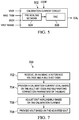
- FIG. 5 is a block diagram showing a calibration current circuit for nonlinear MDAC calibration in accordance with some examples
- FIG. 6 is a schematic diagram showing a calibration current circuit for nonlinear MDAC calibration in accordance with some examples.
- FIG. 7 is a flow chart showing an MDAC method involving nonlinear calibration in accordance with some examples.
- MDAC multiplying digital-to-analog converter
- the MDAC is configured to provide an output voltage based on a multi-bit code (referred to as a “code” herein) and a reference voltage.
- the nonlinear calibration circuit is configured to correct for self-heating of an MDAC, where the self-heating is a function of the code provided to the MDAC.
- an MDAC device e.g., an integrated circuit (IC), or multi-die module (MDM), having an MDAC and possibly other components
- the MDAC device also includes a nonlinear calibration circuit, where the nonlinear calibration circuit includes a calibration resistor with a first end coupled to an output of the resistor ladder circuit and with a second end coupled to an output node.
- the output node is coupled to one of the inputs of an operational amplifier included with or coupled to the MDAC device.
- the nonlinear calibration circuit also includes a calibration current source configured to apply a calibration current at the output node.
- the calibration current source includes a pre-scaling circuit and a digital-to-analog converter (DAC) coupled to the pre-scaling circuit, where the pre-scaling circuit scales the reference voltage based at least in part on a self-heating curvature correction value.
- the DAC is configured to output the calibration current based on the scaled reference voltage, the code, and a self-heating curvature correction sign value. When applied to the output node, the calibration current corrects an MDAC output for nonlinear self-heating error, and thus increases accuracy of the MDAC.
- the output node is coupled to an operational amplifier included with or separate from the other components of an MDAC device (e.g., an IC, MDM, or other MDAC device).
- an MDAC device e.g., an IC, MDM, or other MDAC device.
- the operational amplifier With the operational amplifier, the output current from a resistor ladder circuit of an MDAC is converted to an output voltage.
- a negative feedback loop with a feedback resistor is used with the operational amplifier. In such examples, the value of the calibration resistor is less than the feedback resistor to minimize noise.
- FIG. 1 is a block diagram showing an electrical system 100 in accordance with some examples.
- the electrical system 100 includes an MDAC 104 with a nonlinear calibration circuit 106 .
- the MDAC 104 is coupled to and receives a code from input-side component(s) 102 .
- Example input-side component(s) 102 include a microprocessor, an analog-to-digital converter (ADC), a central processor unit (CPU), and/or other components.
- the MDAC 104 also receives a reference voltage (VREF) from a VREF source (not shown), where the output voltage (VOUT) of the MDAC 104 is a function of VREF and the code.
- VREF reference voltage
- the MDAC 104 includes a nonlinear calibration circuit 106 , which is configured to provide a nonlinear correction to VOUT that accounts for self-heating error.
- the output of the MDAC 104 is provided to output-side component(s) 108 .
- the output-side component(s) 108 is an operational amplifier included with or separate from the MDAC 104 on an IC, MDM, or other MDAC device. With the operational amplifier, an output current of the MDAC 104 is converted into an output voltage.
- FIG. 2 is a schematic diagram showing an MDAC 200 and an operational amplifier 206 in accordance with some examples.
- the MDAC 200 includes a VREF node 202 configured to receive VREF.
- the MDAC 200 also includes a resistor ladder circuit corresponding to a first resistor ladder portion 210 , such as a 4-bit most-significant bit (MSB) thermometric resistive digital-to-analog converter (RDAC).
- the resistor ladder circuit of the MDAC 200 also includes a second resistor ladder portion 212 , such as a 14-bit least-significant bit (LSB) R2R DAC.
- MSB most-significant bit
- LSB least-significant bit
- the first and second resistor ladder portions 210 and 212 include switches to selectively couple the R resistors to a ground node (DACGND) or an output node 204 of the MDAC 200 .
- the output node 204 provides an output current of the MDAC 200 .
- a negative input of the operational amplifier 206 is coupled to the output node 204 of the MDAC 200 , while a positive input of the operational amplifier 206 is coupled to a ground node.
- a feedback path with a feedback resistor (RFB) is used between the output and the negative input of the operational amplifier 206 .
- IOUT of the MDAC 200 is converted to an output voltage (VOUT), where the accuracy of VOUT is negatively affected by self-heating of the feedback resistor (RFB) due to IOUT flowing through RFB.
- a nonlinear calibration circuit is omitted, and thus VOUT does not include nonlinear corrections to account for self-heating errors as described herein.
- Self-heating causes the resistance value of the resistors of the MDAC 200 to change depending on the voltage across the resistor.
- the change in resistance due to self-heating be computed as follows:
- R Ro ⁇ (1+c 0 ⁇ V), where c 0 is a 0 *TC 1 /(R*W).
- V ⁇ O ⁇ U ⁇ T - ( V ⁇ REF ⁇ code R ) ⁇ R ⁇ F ⁇ B ⁇ ( 1 + co ⁇ ⁇ VOUT ⁇ ) .
- V ⁇ O ⁇ U ⁇ T - ( VREF ⁇ code R ) ⁇ R ⁇ F ⁇ B ⁇ ( 1 + c ⁇ o ⁇ ( VREF ⁇ code R ) ⁇ R ⁇ F ⁇ B ) .
- self-heating results in INL of several LSBs.
- FIG. 3 is a diagram showing an MDAC 300 with a nonlinear calibration circuit 318 in accordance with some examples.
- the MDAC 300 includes a VREF node 302 configured to receive VREF.
- the MDAC 300 also includes a resistor ladder circuit corresponding to a first resistor ladder portion 310 , such as a 4-bit MSB thermometric RDAC.
- the resistor ladder circuit of the MDAC 300 also includes a second resistor ladder portion 312 , such as a 14-bit LSB R2R DAC.
- the first and second resistor ladder portions 310 and 312 include switches to selectively couple the R resistors to a ground node (DACGND) or an output node 304 of the MDAC 300 . These switches are controlled by a switch manager 314 , which provides control signals for the switches based a code received by the MDAC 300 .
- the output node 304 provides an output current (IOUT) of the MDAC 300 based on VREF and the code.
- a linear IOUT (a function of the code) flows through feedback resistor RFB results in self-heating of RFB and non-linearity in VOUT.
- a nonlinear calibration circuit 318 is used, where the nonlinear calibration circuit 318 is coupled to or includes the output node 304 of the MDAC 300 .
- the nonlinear calibration circuit 318 is configured to apply a 2 nd order nonlinearity correction to cancel self-heating nonlinearity of the MDAC 300 .
- the nonlinear calibration circuit 318 includes a calibration resistor (RCAL) with a first end coupled to the output node 304 .
- the nonlinear calibration circuit 318 also includes a calibration current circuit 320 coupled to a calibration node 322 at the second end of RCAL.
- the calibration current circuit 320 is configured to apply a calibration current (ICAL) to the calibration node 322 , where ICAL is based on the code for the MDAC 300 (the code received by the switch manager 314 ) and self-heating correction parameters of the MDAC 300 determined by previous testing or other means.
- ICAL calibration current
- the operational amplifier 306 converts IOUT* to an output voltage (VOUT*) that includes a correction applied by the nonlinear calibration circuit 318 .
- a negative input of an operational amplifier 306 is coupled to the calibration node 322
- a positive input of the operational amplifier 306 is coupled to a ground node.
- a feedback path with RFB is used between the output and the negative input of the operational amplifier 306 .
- the output (VOUT*) of the operational amplifier 306 corresponds to the output of the MDAC 300 , where the accuracy of VOUT* of FIG. 3 is improved relative to the accuracy of VOUT in FIG. 2 . This is because the nonlinear calibration circuit 318 corrects for self-heating error of the RFB, which is due to code dependent current (IOUT) flowing through RFB.
- the calibration current circuit 320 pumps ICAL into RCAL, where
- V 1 varying with code, there is a second order nonlinearity in VOUT. This nonlinearity can be made equal and opposite to the nonlinearity caused by self-heating, thereby correcting the second order nonlinearity due to self-heating.
- second order nonlinearity due to self-heating is corrected using a variable resistor and a fixed current source.
- RCAL would be a variable resistor that varies as a function of the code and self-heating correction parameters.
- the calibration current circuit 320 would be a fixed current source.
- FIG. 4 is a simplified diagram showing an MDAC 400 with nonlinear calibration in accordance with some examples.
- the MDAC 400 includes a variable DAC resistor (VRDAC) that receives VREF, where the variance of VRDAC is based on
- VRDAC variable DAC resistor
- R ⁇ F ⁇ B ⁇ 2 M code where RFB is the value of RFB in the feedback loop of the operational amplifier 406 , M is the number of thermometric bits, and code is the input code for an MDAC.
- the node 410 in FIG. 4 corresponds to the output node of an MDAC.
- the MDAC 400 also includes a variable voltage source 420 coupled between the node 410 and the operational amplifier 406 , where the variable voltage source 420 applies a voltage equal to b 1 *code*VREF, where b 1 is a scaling factor.
- b 1 is a function of self-heating correction parameters as described herein.
- a feedback loop with RFB is between the output of the operational amplifier 406 and the node 410 .
- the output voltage (VOUT*) of the operational amplifier 406 is calibrated based on the variable voltage source 420 .
- the variable voltage source 420 provides a nonlinear calibration and is a function of ICAL*RCAL as described in FIG. 3 .
- the variable voltage source 420 is accomplished using a variable resistor and a fixed current.
- the MDAC 400 shows the introduction of 2 nd order nonlinearity in VOUT. More specifically,
- V ⁇ O ⁇ U ⁇ T V ⁇ R ⁇ E ⁇ F ( 1 2 M + b ⁇ 1 ) ⁇ code + b ⁇ 1 2 M ⁇ code 2 .
- a 2 nd order nonlinearity is used to cancel the nonlinearity introduced by self-heating.
- FIG. 5 is a block diagram showing a calibration current circuit 502 (an example of the calibration current circuit 320 in FIG. 3 ) for nonlinear MDAC calibration in accordance with some examples.
- the calibration current circuit 502 includes a pre-scaling network 504 coupled to a DAC 506 .
- a pre-scaling network 504 coupled to a DAC 506 .
- the inputs to the calibration current circuit 502 include an input code (e.g., the code input to the MDAC 300 ), VREF (e.g., VREF input to the MDAC 300 ), a self-heating curvature correction magnitude value (MAG_TRIM), a self-heating curvature correction sign value (SIGN), and a VREF range value (e.g., to indicate different REF range options such as 8V-10V, 12-15V, and so on).
- MAG_TRIM and SIGN are determined by testing a related MDAC to determine self-heating correction parameters.
- the pre-scaling network is configured to scale VREF based at least in part on MAG_TRIM and the VREF range value.
- the DAC 506 is configured to generate ICAL based on the scaled version VREF (output from the pre-scaling network 504 ), the code, and the value of SIGN.
- the 2 nd order nonlinearity due to self-heating can have positive or negative curvature.
- the calibration current circuit uses the value of SIGN.
- the magnitude of self-heating curvature correction is to be trimmed for every device. This magnitude is MAG_TRIM.
- a programmable register value (e.g., a static value) is used to specify the VREF range.
- the VREF range is used to scale ICAL.
- FIG. 6 is a schematic diagram showing a calibration current circuit 602 (an example of the calibration current circuit 320 in FIG. 3 , or the calibration current circuit 502 in FIG. 5 ) for nonlinear MDAC calibration in accordance with some examples.
- the calibration current circuit 602 includes a pre-scaling network 604 (an example of the pre-scaling network 504 in FIG. 5 ) and a DAC 606 .
- the pre-scaling network 604 includes a scaling resistor (RSCALE) with a first end coupled to a VREF node 612 .
- the second end of RSCALE is coupled to a first variable resistor (VR 1 ) whose value varies as a function a VREF range value.
- RSCALE scaling resistor
- the second end of RSCALE is also coupled to a second variable resistor (VR 2 ) whose value varies as a function a MAG_TRIM.
- VR 1 and VR 2 are coupled between the second end of RSCALE and a ground node.
- VREF is scaled to account for the VREF range and MAG_TRIM.
- the output of the pre-scaling network 504 is provided to the DAC 606 , which comprises a network of R and 2R resistors.
- the DAC 606 which comprises a network of R and 2R resistors.
- different combinations of R and 2R resistors are selectively coupled to ground or to an output node 614 of the DAC 606 by controlling switch groups (S 1 , S 2 , S 3 ).
- S 1 and S 3 switches are closed depending on the code value, and S 2 switches are open.
- an adjusted MDAC IOUT (e.g., IOUT* at output node 304 ) accounts for a nonlinear correction (e.g., to account for self-heating error of an MDAC).
- FIG. 7 is a flow chart showing an MDAC method 700 involving nonlinear calibration in accordance with some examples.
- the method 700 includes receiving, by an MDAC, VREF and a multi-bit code at block 702 .
- a calibration current (ICAL) is provided based on the multi-bit code and self-heating correction parameters.
- the IOUT of the MDAC related to the method 700 is adjusted based on the calibration current (e.g., resulting in IOUT* as in FIG. 3 ).
- an output voltage (VOUT) is provided based on the adjusted IOUT.
- providing the calibration current at block 704 involves receiving, by a calibration current circuit, the self-heating correction parameters, wherein the self-heating correction parameters comprise a self-heating curvature correction magnitude value and a self-heating curvature correction sign value.
- the method 700 also includes testing the MDAC to determine the self-heating curvature correction magnitude value and the self-heating curvature correction sign value.
- providing the calibration current at block 704 involves: scaling a reference voltage based on a scaling resistor, the self-heating curvature correction magnitude value, and a voltage reference range value; and converting the scaled reference voltage to the calibration current based on the multi-bit code and the self-heating curvature correction sign value.
- providing the calibration current based on the multi-bit code and self-heating correction parameters of the MDAC involves a variable resistor and a fixed current source.
- the method 700 also includes providing, by an operational amplifier, an output voltage based on the adjusted output current.
- the width of RFB could be increased until the INL due to self-heating complies with a target.
- RFB width has to be increased to ⁇ 2400 um, which is not practical.
- Another option is to employ a digital solution to implement second order curvature algorithm. This would involve a multiplier and other digital hardware, which are area and switching power intensive.
- the proposed solution to provide nonlinear calibration is accomplished without digital hardware and with minimal analog circuitry.
- RCAL e.g., ⁇ 100 ohm
- Couple is used throughout the specification.
- the term may cover connections, communications, or signal paths that enable a functional relationship consistent with the description of the present disclosure. For example, if device A generates a signal to control device B to perform an action, in a first example device A is coupled to device B by direct connection, or in a second example device A is coupled to device B through intervening component C if intervening component C does not alter the functional relationship between device A and device B such that device B is controlled by device A via the control signal generated by device A.
Landscapes
- Engineering & Computer Science (AREA)
- Theoretical Computer Science (AREA)
- Physics & Mathematics (AREA)
- Nonlinear Science (AREA)
- Analogue/Digital Conversion (AREA)
Abstract
Description
where a0 is a self-heating coefficient, V is the voltage across a resistor, and W is the resistor width. Also,
where TC1 is the temperature coefficient. Also
[code=0, 1, . . . , 2M−1; M number of thermometric bits]. Also,
[where R=RFB*2M]. Due to self-heating, RFB changes with VOUT. Hence,
Also,
Also,
where
In different scenarios, self-heating results in INL of several LSBs.
and where RCALDAC is the resistance of a DAC of the calibration
With V1 varying with code, there is a second order nonlinearity in VOUT. This nonlinearity can be made equal and opposite to the nonlinearity caused by self-heating, thereby correcting the second order nonlinearity due to self-heating.
where RFB is the value of RFB in the feedback loop of the
Also, V1=−b1×VREF×code. By solving these equations,
Thus, in some examples, a 2nd order nonlinearity is used to cancel the nonlinearity introduced by self-heating.
Claims (20)
Priority Applications (1)
| Application Number | Priority Date | Filing Date | Title |
|---|---|---|---|
| US16/744,614 US11038517B1 (en) | 2019-12-31 | 2020-01-16 | Multiplying digital-to-analog converter (MDAC) with nonlinear calibration |
Applications Claiming Priority (2)
| Application Number | Priority Date | Filing Date | Title |
|---|---|---|---|
| US201962955613P | 2019-12-31 | 2019-12-31 | |
| US16/744,614 US11038517B1 (en) | 2019-12-31 | 2020-01-16 | Multiplying digital-to-analog converter (MDAC) with nonlinear calibration |
Publications (2)
| Publication Number | Publication Date |
|---|---|
| US11038517B1 true US11038517B1 (en) | 2021-06-15 |
| US20210203339A1 US20210203339A1 (en) | 2021-07-01 |
Family
ID=76321096
Family Applications (1)
| Application Number | Title | Priority Date | Filing Date |
|---|---|---|---|
| US16/744,614 Active US11038517B1 (en) | 2019-12-31 | 2020-01-16 | Multiplying digital-to-analog converter (MDAC) with nonlinear calibration |
Country Status (1)
| Country | Link |
|---|---|
| US (1) | US11038517B1 (en) |
Cited By (1)
| Publication number | Priority date | Publication date | Assignee | Title |
|---|---|---|---|---|
| US20230036760A1 (en) * | 2021-07-13 | 2023-02-02 | Realtek Semiconductor Corporation | Digital-to-analog conversion circuit and method having signal calibration mechanism |
Citations (1)
| Publication number | Priority date | Publication date | Assignee | Title |
|---|---|---|---|---|
| US20130293401A1 (en) * | 2012-05-02 | 2013-11-07 | Honeywell International Inc. | Sigma-delta digital-to-analog converter |
-
2020
- 2020-01-16 US US16/744,614 patent/US11038517B1/en active Active
Patent Citations (1)
| Publication number | Priority date | Publication date | Assignee | Title |
|---|---|---|---|---|
| US20130293401A1 (en) * | 2012-05-02 | 2013-11-07 | Honeywell International Inc. | Sigma-delta digital-to-analog converter |
Cited By (2)
| Publication number | Priority date | Publication date | Assignee | Title |
|---|---|---|---|---|
| US20230036760A1 (en) * | 2021-07-13 | 2023-02-02 | Realtek Semiconductor Corporation | Digital-to-analog conversion circuit and method having signal calibration mechanism |
| US12003249B2 (en) * | 2021-07-13 | 2024-06-04 | Realtek Semiconductor Corporation | Digital-to-analog conversion circuit and method having signal calibration mechanism |
Also Published As
| Publication number | Publication date |
|---|---|
| US20210203339A1 (en) | 2021-07-01 |
Similar Documents
| Publication | Publication Date | Title |
|---|---|---|
| US10574247B1 (en) | Digital-to-analog converter transfer function modification | |
| US20030160713A1 (en) | Piecewise linear calibration method and circuit to correct transfer function errors of digital to analog converters | |
| US7796060B2 (en) | Circuits and methods to minimize nonlinearity errors in interpolating circuits | |
| US6556154B1 (en) | Offset voltage calibration DAC with reduced sensitivity to mismatch errors | |
| US7545295B2 (en) | Self-calibrating digital-to-analog converter and method thereof | |
| US10862493B2 (en) | Techniques to improve linearity of R-2R ladder digital-to-analog converters (DACs) | |
| US4647907A (en) | Digital-to-analogue converter including calibrated current sources | |
| US11711090B2 (en) | Current steering digital to analog converter (DAC) system to perform DAC static linearity calibration | |
| US7068193B2 (en) | Integrated digital calibration circuit and digital to analog converter (DAC) | |
| CN110431747B (en) | Resistor-Based Configuration System | |
| US20210203339A1 (en) | Multiplying digital-to-analog converter (mdac) with nonlinear calibration | |
| CN119276261A (en) | Digital-to-analog converter and calibration method and calibration system thereof | |
| US12267084B2 (en) | Trimming procedure and code reuse for highly precise DC-DC converters | |
| WO2023116452A1 (en) | Linear dac by input code modification | |
| US11757463B2 (en) | Self-calibration of reference voltage drop in digital to analog converter | |
| EP1872478B1 (en) | Improved trim circuits and methodologies for data converters | |
| US6512471B2 (en) | Intentionally non-monotonic digital-to-analog converter | |
| US20250202494A1 (en) | Self-calibrating digital to analog converter | |
| JPS6161577B2 (en) | ||
| US12368450B2 (en) | Method of calibrating output of ADC and ADC using the same | |
| CN119892097B (en) | Digital-to-analog converter, current compensation method for digital-to-analog converter and storage medium | |
| JPH02288616A (en) | Self-calibration type d/a converter and self-calibration type a/d converter using the d/a converter | |
| JPS63121320A (en) | Da converter with error correcting circuit | |
| JP2004235796A (en) | Gain stabilizing circuit for digital/analog converter | |
| JPH08330958A (en) | Analog output board and method for conversion table generation |
Legal Events
| Date | Code | Title | Description |
|---|---|---|---|
| AS | Assignment |
Owner name: TEXAS INSTRUMENTS INCORPORATED, TEXAS Free format text: ASSIGNMENT OF ASSIGNORS INTEREST;ASSIGNOR:THINAKARAN, RAJAVELU;REEL/FRAME:051535/0892 Effective date: 20200116 |
|
| FEPP | Fee payment procedure |
Free format text: ENTITY STATUS SET TO UNDISCOUNTED (ORIGINAL EVENT CODE: BIG.); ENTITY STATUS OF PATENT OWNER: LARGE ENTITY |
|
| STCF | Information on status: patent grant |
Free format text: PATENTED CASE |
|
| MAFP | Maintenance fee payment |
Free format text: PAYMENT OF MAINTENANCE FEE, 4TH YEAR, LARGE ENTITY (ORIGINAL EVENT CODE: M1551); ENTITY STATUS OF PATENT OWNER: LARGE ENTITY Year of fee payment: 4 |