US11037301B2 - Target object detection method, readable storage medium, and electronic device - Google Patents
Target object detection method, readable storage medium, and electronic device Download PDFInfo
- Publication number
- US11037301B2 US11037301B2 US16/564,507 US201916564507A US11037301B2 US 11037301 B2 US11037301 B2 US 11037301B2 US 201916564507 A US201916564507 A US 201916564507A US 11037301 B2 US11037301 B2 US 11037301B2
- Authority
- US
- United States
- Prior art keywords
- target object
- execution period
- current execution
- image data
- computer program
- Prior art date
- Legal status (The legal status is an assumption and is not a legal conclusion. Google has not performed a legal analysis and makes no representation as to the accuracy of the status listed.)
- Active, expires
Links
Images




Classifications
-
- G—PHYSICS
- G06—COMPUTING OR CALCULATING; COUNTING
- G06T—IMAGE DATA PROCESSING OR GENERATION, IN GENERAL
- G06T7/00—Image analysis
- G06T7/20—Analysis of motion
-
- G—PHYSICS
- G06—COMPUTING OR CALCULATING; COUNTING
- G06T—IMAGE DATA PROCESSING OR GENERATION, IN GENERAL
- G06T7/00—Image analysis
- G06T7/20—Analysis of motion
- G06T7/246—Analysis of motion using feature-based methods, e.g. the tracking of corners or segments
-
- G06K9/00791—
-
- G—PHYSICS
- G06—COMPUTING OR CALCULATING; COUNTING
- G06V—IMAGE OR VIDEO RECOGNITION OR UNDERSTANDING
- G06V20/00—Scenes; Scene-specific elements
- G06V20/40—Scenes; Scene-specific elements in video content
- G06V20/46—Extracting features or characteristics from the video content, e.g. video fingerprints, representative shots or key frames
-
- G—PHYSICS
- G06—COMPUTING OR CALCULATING; COUNTING
- G06V—IMAGE OR VIDEO RECOGNITION OR UNDERSTANDING
- G06V20/00—Scenes; Scene-specific elements
- G06V20/40—Scenes; Scene-specific elements in video content
- G06V20/48—Matching video sequences
-
- G—PHYSICS
- G06—COMPUTING OR CALCULATING; COUNTING
- G06V—IMAGE OR VIDEO RECOGNITION OR UNDERSTANDING
- G06V20/00—Scenes; Scene-specific elements
- G06V20/50—Context or environment of the image
- G06V20/56—Context or environment of the image exterior to a vehicle by using sensors mounted on the vehicle
-
- G—PHYSICS
- G06—COMPUTING OR CALCULATING; COUNTING
- G06V—IMAGE OR VIDEO RECOGNITION OR UNDERSTANDING
- G06V20/00—Scenes; Scene-specific elements
- G06V20/50—Context or environment of the image
- G06V20/56—Context or environment of the image exterior to a vehicle by using sensors mounted on the vehicle
- G06V20/58—Recognition of moving objects or obstacles, e.g. vehicles or pedestrians; Recognition of traffic objects, e.g. traffic signs, traffic lights or roads
-
- G—PHYSICS
- G06—COMPUTING OR CALCULATING; COUNTING
- G06T—IMAGE DATA PROCESSING OR GENERATION, IN GENERAL
- G06T2207/00—Indexing scheme for image analysis or image enhancement
- G06T2207/30—Subject of image; Context of image processing
- G06T2207/30241—Trajectory
-
- G—PHYSICS
- G06—COMPUTING OR CALCULATING; COUNTING
- G06T—IMAGE DATA PROCESSING OR GENERATION, IN GENERAL
- G06T2207/00—Indexing scheme for image analysis or image enhancement
- G06T2207/30—Subject of image; Context of image processing
- G06T2207/30248—Vehicle exterior or interior
- G06T2207/30252—Vehicle exterior; Vicinity of vehicle
-
- G—PHYSICS
- G06—COMPUTING OR CALCULATING; COUNTING
- G06V—IMAGE OR VIDEO RECOGNITION OR UNDERSTANDING
- G06V10/00—Arrangements for image or video recognition or understanding
- G06V10/40—Extraction of image or video features
- G06V10/62—Extraction of image or video features relating to a temporal dimension, e.g. time-based feature extraction; Pattern tracking
-
- G—PHYSICS
- G06—COMPUTING OR CALCULATING; COUNTING
- G06V—IMAGE OR VIDEO RECOGNITION OR UNDERSTANDING
- G06V2201/00—Indexing scheme relating to image or video recognition or understanding
- G06V2201/07—Target detection
Definitions
- the present disclosure relates to detection technical field, and in particular, to a target object detection method, a readable storage medium, and an electronic device.
- Detecting a target object in a driving environment is a crucial step, which can provide a basis for determining a driving strategy.
- a video of a surrounding environment is generally obtained, and image identification is performed on each video frame in the video to identify a target object, so that the location and other related information of the target object can be determined.
- the image identification needs to be performed on each video frame, resulting in a greater data calculation amount and worse real-time performance.
- An objective of the present disclosure is to provide a target object detection method, a readable storage medium, and an electronic device, which can effectively reduce the data calculation amount and effectively improve the real-time performance.
- a target object detection method including:
- N is a positive integer, and N is less than the total number of frames of image data that can be obtained within the current execution period;
- the method further includes:
- the method further includes:
- N 1.
- the time length of the execution period is determined in the following manner:
- the method is applied to an embedded platform.
- a computer readable storage medium wherein a computer program is stored thereon, and the program implements the steps of any one of the methods of the first aspect described above when being executed by a processor.
- an electronic device including:
- a processor configured to execute the computer program in the memory to implement the steps of any one of the methods of the first aspect described above.
- the method provided in the present disclosure is periodically executed, and the target object can be re-identified at the beginning of each execution period, and a new target object can also be found in real time, thereby further improving the tracking accuracy of the target object, and improving the detection accuracy of the target object.
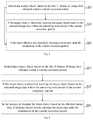
- FIG. 1 is a flow chart of a target object detection method provided by an embodiment of the present disclosure
- FIG. 2 is a flow chart of a target object detection method provided by another embodiment of the present disclosure.
- FIG. 3 is a flow chart of a target object detection method provided by another embodiment of the present disclosure.
- FIG. 4 is a block diagram of a target object detection apparatus provided by an embodiment of the present disclosure.
- FIG. 5 is a block diagram of an electronic device shown according to an exemplary embodiment
- FIG. 6 is a block diagram of an electronic device shown according to an exemplary embodiment.
- FIG. 1 it is a flow chart of a target object detection method provided by an embodiment of the present disclosure, the method is periodically executed, and as shown in FIG. 1 , the method may include:
- a target object is identified based on the first N frames of image data obtained within a current execution period, wherein N is a positive integer, and the N is less than the total number of frames of image data that can be obtained within the current execution period.
- the method can be applied to a variety of fields, such as traffic, monitoring, and the like.
- the target object can be pedestrian(s), vehicle(s) or traffic sign(s) and the like; and when the method is applied to the monitoring field, the target object can be pedestrian(s), animal(s) and the like.
- the target object can also be other objects with shapes and boundaries.
- the remaining time period of the current execution period is a time period from the moment when the target object is identified to the termination of the current execution period.
- the identified target object can be tracked by using a tracking algorithm, for example, the MOSSE (Minimum Output Sum of Squared Error) algorithm, wherein when the target object is tracked based on the MOSSE algorithm, the frames per second is usually greater than 1000, therefore, for typical universal 30 FPS (Frames Per Second) image data (for example, video streams), the corresponding image data are substantially the same within a relatively short period of time, therefore the tracking accuracy of the target object can be effectively guaranteed.
- MOSSE Minimum Output Sum of Squared Error
- the method provided in the present disclosure is periodically executed, and the target object can be re-identified at the beginning of each execution period, and a new target object can also be found in real time, thereby further improving the tracking accuracy of the target object, and improving the detection accuracy of the target object.
- N 1
- the target object when the target object is identified based on the first N frames of image data obtained within the current execution period, the target object can be identified only based on the first frame image obtained within the current execution period, therefore the data calculation amount can be further reduced, the waste of resources caused by the target object detection can be avoided, and the instantaneity of the target object detection can be improved.
- a target object identification model can be pre-trained, and the target object identification model is used for identifying the target object in the input image data.
- the target object identification model can be trained by using a deep learning method, for example, the target object can be detected by an SSD (Single Shot MultiBox Detector) algorithm or a YOLO (You Only Look Once) algorithm.
- a training image of the target object identification model can be marked according to the application scenario of the target object detection method.
- the number of training images can be set based on the accuracy of the target object identification model, and the higher the precision requirements of the target object identification model is, the greater the number of the training images can be set.
- the manner for training the model in the deep learning manner is the prior art and thus is not described herein again.
- the target object identification model is pre-trained, only the first frame image needs to be input to the target object identification model, and then the target object in the image can be quickly and accurately identified, thereby effectively ensuring accuracy of target object identification, but also ensuring the efficiency of the target object identification and improving the instantaneity of the target object detection method.
- the identifying the target object based on the first N frames of image data obtained within the current execution period includes:
- a step 12 can be directly executed if the target object is identified based on the target image.
- the target object is not identified based on the target image, using the next frame image as the target image, and inputting the target image to the target object identification model, until the target object is identified or the first N frame images are input to the target object identification model.
- N can be set according to the actual usage scenario.
- the first frame image obtained within the current execution period is input as the target image to the target object identification model
- the next frame image (at this time, it is a second frame image) obtained within the current execution period is input as the target image to the target object identification model again
- the step 12 is executed, if the target object is not identified based on the target image, the next frame image (at this time, it is a third frame image) obtained within the current execution period is input as the target image to the target object identification model again
- the step 12 is executed, if the target object is not identified based on the target image, the first three frame images are all input to the target object identification model, and this time, it can be determined that the target object is not identified within the current execution period.
- the target object of the current execution period can be identified, and when the target object is identified, the target object is directly tracked, thereby effectively reducing the data calculation amount required for identifying the target object within the current execution period, and furthermore, the target object is detected via multiple frame images, the detection accuracy of the target object can also be effectively ensured.
- FIG. 2 it is a flow chart of a target object detection method provided by another embodiment of the present disclosure, and as shown in FIG. 2 , the method further includes:
- the time length of the execution period is generally short.
- the time length of the execution period is determined in the following manner: the greater the moving speed of a collection apparatus of the image data is, the shorter the time length of the execution period is.
- the collection apparatus of the image data can be a camera apparatus installed on the vehicle, and the moving speed thereof is the moving speed of the current vehicle.
- the time length range of the execution period can be [0.33 S, 3 S].
- the time length of the execution period can be set as 0.5 S
- the time length of the execution period can be set as 2 S.
- the target object exists in the first N frames of image data obtained within the current execution period, but has not been identified yet.
- the sleep state can be enter when the target object is not identified, that is, it is unnecessary to perform a corresponding operation within the current execution period, and the method is executed again until within the next execution period. Therefore, by adoption of the above technical solution, when the target object is not identified, the sleep state is entered, so that the waste of resources caused by unnecessary calculation can be effectively avoided, and the method can be re-executed until the arrival of the next execution period, thereby ensuring the instantaneity of the target object detection and guaranteeing the user experience.
- FIG. 3 it is a flow chart of a target object detection method provided by another embodiment of the present disclosure, and as shown in FIG. 3 , the method further includes:
- the target object is tracked based on the obtained image data within the remaining time period of the current execution period.
- the target object may leave the field of view corresponding to the image data within the current execution period, and at this time, the tracking failure can be determined.
- the tracking algorithm itself may also be unable to track the target object, and at this time, the tracking failure can also be determined.
- the sleep state is entered, and the method is re-executed until the arrival of the next execution period. Since the execution period is relatively short, when the sleep state is entered in the case of the tracking failure, no obvious delay occurs during the target object detection, the calculation resources can be saved, and the resource utilization rate can be improved.
- the data calculation amount can be effectively reduced, so that the target object detection method can be applied to a system having high instantaneity requirements with relatively insufficient calculating capability.
- the method can be applied to an embedded platform.
- the present disclosure further provides a target object detection apparatus, as shown in FIG. 4 , the apparatus 10 including:
- an identifying module 100 configured to identify a target object based on the first N frames of image data obtained within a current execution period, wherein N is a positive integer, and N is less than the total number of frames of image data that can be obtained within the current execution period;
- a tracking module 200 configured to, if the target object is identified, track the target object based on the obtained image data within the remaining time period of the current execution period.
- the tracking module is further configured to:
- the tracking module is further configured to:
- N 1.
- the time length of the execution period is determined in the following manner:
- the method is applied to an embedded platform.
- FIG. 5 is a block diagram of an electronic device 700 shown according to an exemplary embodiment.
- the electronic device 700 may include a processor 701 and a memory 702 .
- the electronic device 700 may also include one or more of a multimedia component 703 , an input/output (I/O) interface 704 and a communication component 705 .
- I/O input/output
- the processor 701 is configured to control the overall operation of the electronic device 700 to complete all or a part of steps in the foregoing target object detection method.
- the memory 702 is configured to store various types of data to support operations at the electronic device 700 , for example, these data may include instructions for operating any application program or method on the electronic device 700 , and related data of the application program, for example, contact data, sent and received messages, pictures, audio, videos, and so on.
- the memory 702 can be implemented by any type of volatile or non-volatile storage device or a combination thereof, such as a Static Random Access Memory (referred to as SRAM), an Electrically Erasable Programmable Read-Only Memory (referred to as EEPROM), an Erasable Programmable Read-Only Memory (referred to as EPROM), a Programmable Read-Only Memory (referred to as PROM), a Read-Only Memory (referred to as ROM), a magnetic memory, a flash memory, a magnetic disk or an optical disk.
- the multimedia component 703 may include a screen and an audio component.
- the screen can be, for example, a touch screen, and the audio component is configured to output and/or input an audio signal.
- the audio component may include a microphone for receiving an external audio signal.
- the received audio signal can be further stored in the memory 702 or sent by the communication component 705 .
- the audio component further includes at least one loudspeaker for outputting the audio signal.
- the I/O interface 704 provides an interface between the processor 701 and other interface modules.
- the other interface modules can be keyboards, mice, buttons, and the like. These buttons may be virtual buttons or physical buttons.
- the communication component 705 is used for wired or wireless communication between the electronic device 700 and other devices.
- the wireless communication includes, such as Wi-Fi, Bluetooth, Near Field Communication (referred to as NFC), 2G, 3G, 4G, NB-IOT, eMTC, or other 5G and the like, or the combination of one or more of them, and it is not limited herein. Therefore, the corresponding communication component 705 may include: a Wi-Fi module, a Bluetooth module, an NFC module, and the like.
- the electronic device 700 may be implemented by one or more Application Specific Integrated Circuits (referred to as ASICs), Digital Signal Processor (referred to as DSP), Digital Signal Processing Device (referred to as DSPD), Programmable Logic Device (referred to as PLD), Field Programmable Gate Array (referred to as FPGA), controllers, microcontrollers, microprocessors or other electronic components, and is configured to execute the target object detection method described above.
- ASICs Application Specific Integrated Circuits
- DSP Digital Signal Processor
- DSPD Digital Signal Processing Device
- PLD Programmable Logic Device
- FPGA Field Programmable Gate Array
- controllers microcontrollers, microprocessors or other electronic components, and is configured to execute the target object detection method described above.
- a computer readable storage medium including program instructions is further provided, and the program instructions implement the steps of the target object detection method described above when being executed by the processor.
- the computer readable storage medium can be the above memory 702 including the program instructions, and the program instructions can be executed by the processor 701 of the electronic device 700 to complete the target object detection method described above.
- a computer program product includes a computer program executable by a programmable apparatus, and the computer program has a code portion for executing the target object detection method described above when being executed by the programmable apparatus.
- FIG. 6 is a block diagram of an electronic device 1900 shown according to an exemplary embodiment.
- electronic device 1900 can be provided as a server.
- the electronic device 1900 includes a processor 1922 , which may be one or more, and a memory 1932 for storing a computer program executed by the processor 1922 .
- the computer program stored in the memory 1932 may include one or more modules, wherein each corresponds to a group of instructions.
- the processor 1922 can be configured to execute the computer program to execute the target object detection method described above.
- the electronic device 1900 may further include a power supply component 1926 and a communication component 1950 , the power supply component 1926 may be configured to execute power supply management of the electronic device 1900 , and the communication component 1950 may be configured to achieve the communication of the electronic device 1900 , for example, wired or wireless communication. Additionally, the electronic device 1900 may further include an input/output (I/O) interface 1958 .
- the electronic device 1900 can operate an operating system stored in the memory 1932 , such as Windows ServerTM, Mac OS XTM, UnixTM, LinuxTM, and the like.
- a computer readable storage medium including program instructions are further provided, and the program instructions implement the steps of the target object detection method described above when being executed by the processor.
- the computer readable storage medium can be the above memory 1932 including the program instructions, and the program instructions can be executed by the processor 1922 of the electronic device 1900 to complete the target object detection method described above.
- a computer program product includes a computer program executable by a programmable apparatus, and the computer program has a code portion for executing the target object detection method described above when being executed by the programmable apparatus.
Landscapes
- Engineering & Computer Science (AREA)
- Physics & Mathematics (AREA)
- General Physics & Mathematics (AREA)
- Multimedia (AREA)
- Theoretical Computer Science (AREA)
- Computer Vision & Pattern Recognition (AREA)
- Image Analysis (AREA)
Abstract
Description
Claims (12)
Applications Claiming Priority (2)
| Application Number | Priority Date | Filing Date | Title |
|---|---|---|---|
| CN201910285913.5 | 2019-04-10 | ||
| CN201910285913.5A CN110110604A (en) | 2019-04-10 | 2019-04-10 | Target object detection method, device, readable storage medium storing program for executing and electronic equipment |
Publications (2)
| Publication Number | Publication Date |
|---|---|
| US20200327677A1 US20200327677A1 (en) | 2020-10-15 |
| US11037301B2 true US11037301B2 (en) | 2021-06-15 |
Family
ID=67484015
Family Applications (1)
| Application Number | Title | Priority Date | Filing Date |
|---|---|---|---|
| US16/564,507 Active 2039-10-07 US11037301B2 (en) | 2019-04-10 | 2019-09-09 | Target object detection method, readable storage medium, and electronic device |
Country Status (2)
| Country | Link |
|---|---|
| US (1) | US11037301B2 (en) |
| CN (1) | CN110110604A (en) |
Families Citing this family (5)
| Publication number | Priority date | Publication date | Assignee | Title |
|---|---|---|---|---|
| CN111710028B (en) * | 2020-05-27 | 2023-06-30 | 北京东软医疗设备有限公司 | Three-dimensional contrast image generation method, device, storage medium and electronic equipment |
| CN112562159B (en) * | 2020-11-24 | 2022-10-14 | 恒安嘉新(北京)科技股份公司 | Access control method and device, computer equipment and storage medium |
| CN112712051B (en) * | 2021-01-12 | 2024-07-26 | 腾讯科技(深圳)有限公司 | Object tracking method, device, computer equipment and storage medium |
| CN112991393A (en) * | 2021-04-15 | 2021-06-18 | 北京澎思科技有限公司 | Target detection and tracking method and device, electronic equipment and storage medium |
| CN113361388B (en) * | 2021-06-03 | 2023-11-24 | 北京百度网讯科技有限公司 | Image data correction method, device, electronic equipment and autonomous vehicle |
Citations (11)
| Publication number | Priority date | Publication date | Assignee | Title |
|---|---|---|---|---|
| US20080231564A1 (en) * | 2007-03-16 | 2008-09-25 | Sony Corporation | Display apparatus and method for controlling the same |
| US20110158475A1 (en) * | 2009-07-17 | 2011-06-30 | Kabushiki Kaisha Topcon | Position Measuring Method And Position Measuring Instrument |
| US20130194438A1 (en) * | 2011-08-18 | 2013-08-01 | Qualcomm Incorporated | Smart camera for sharing pictures automatically |
| US20130201344A1 (en) * | 2011-08-18 | 2013-08-08 | Qualcomm Incorporated | Smart camera for taking pictures automatically |
| US20160063344A1 (en) * | 2014-08-27 | 2016-03-03 | International Business Machines Corporation | Long-term static object detection |
| US20170053409A1 (en) * | 2015-08-18 | 2017-02-23 | Canon Kabushiki Kaisha | Information processing apparatus, information processing method and program |
| CN108307116A (en) | 2018-02-07 | 2018-07-20 | 腾讯科技(深圳)有限公司 | Image capturing method, device, computer equipment and storage medium |
| US20180213166A1 (en) * | 2017-01-25 | 2018-07-26 | Samsung Electronics Co., Ltd. | Electronic device and method for capturing image in electronic device |
| CN108596955A (en) | 2018-04-25 | 2018-09-28 | Oppo广东移动通信有限公司 | A kind of image detecting method, image detection device and mobile terminal |
| US10176683B2 (en) * | 2014-09-18 | 2019-01-08 | Honeywell International Inc. | Virtual panoramic thumbnail to summarize and visualize video content in video surveillance and in connected home business |
| US20200042010A1 (en) * | 2018-07-31 | 2020-02-06 | Casio Computer Co., Ltd. | Autonomous mobile apparatus, autonomous movement method, and non-transitory recording medium |
-
2019
- 2019-04-10 CN CN201910285913.5A patent/CN110110604A/en active Pending
- 2019-09-09 US US16/564,507 patent/US11037301B2/en active Active
Patent Citations (11)
| Publication number | Priority date | Publication date | Assignee | Title |
|---|---|---|---|---|
| US20080231564A1 (en) * | 2007-03-16 | 2008-09-25 | Sony Corporation | Display apparatus and method for controlling the same |
| US20110158475A1 (en) * | 2009-07-17 | 2011-06-30 | Kabushiki Kaisha Topcon | Position Measuring Method And Position Measuring Instrument |
| US20130194438A1 (en) * | 2011-08-18 | 2013-08-01 | Qualcomm Incorporated | Smart camera for sharing pictures automatically |
| US20130201344A1 (en) * | 2011-08-18 | 2013-08-08 | Qualcomm Incorporated | Smart camera for taking pictures automatically |
| US20160063344A1 (en) * | 2014-08-27 | 2016-03-03 | International Business Machines Corporation | Long-term static object detection |
| US10176683B2 (en) * | 2014-09-18 | 2019-01-08 | Honeywell International Inc. | Virtual panoramic thumbnail to summarize and visualize video content in video surveillance and in connected home business |
| US20170053409A1 (en) * | 2015-08-18 | 2017-02-23 | Canon Kabushiki Kaisha | Information processing apparatus, information processing method and program |
| US20180213166A1 (en) * | 2017-01-25 | 2018-07-26 | Samsung Electronics Co., Ltd. | Electronic device and method for capturing image in electronic device |
| CN108307116A (en) | 2018-02-07 | 2018-07-20 | 腾讯科技(深圳)有限公司 | Image capturing method, device, computer equipment and storage medium |
| CN108596955A (en) | 2018-04-25 | 2018-09-28 | Oppo广东移动通信有限公司 | A kind of image detecting method, image detection device and mobile terminal |
| US20200042010A1 (en) * | 2018-07-31 | 2020-02-06 | Casio Computer Co., Ltd. | Autonomous mobile apparatus, autonomous movement method, and non-transitory recording medium |
Non-Patent Citations (1)
| Title |
|---|
| Office Action for corresponding Chinese Patent Application No. 201910285913.5, dated Sep. 25, 2020. |
Also Published As
| Publication number | Publication date |
|---|---|
| US20200327677A1 (en) | 2020-10-15 |
| CN110110604A (en) | 2019-08-09 |
Similar Documents
| Publication | Publication Date | Title |
|---|---|---|
| US20200327677A1 (en) | Target object detection method, readable storage medium, and electronic device | |
| US12397826B2 (en) | Method and apparatus for detecting drivable area, mobile device and storage medium | |
| CN113011323B (en) | Method for acquiring traffic state, related device, road side equipment and cloud control platform | |
| CN111369590A (en) | Multi-target tracking method and device, storage medium and electronic equipment | |
| CN101465955B (en) | Method and apparatus for updating background | |
| CN115616937B (en) | Automatic driving simulation test method, device, equipment and computer readable medium | |
| CN113095563B (en) | A method and device for reviewing prediction results of artificial intelligence model | |
| US12093348B2 (en) | Systems and methods for bayesian likelihood estimation of fused objects | |
| US11258991B2 (en) | Video processing request system for converting synchronous video processing task requests to asynchronous video processing requests | |
| KR102473272B1 (en) | Target tracking method and device | |
| CN112650300B (en) | Unmanned aerial vehicle obstacle avoidance method and device | |
| CN110688873A (en) | Multi-target tracking method and face recognition method | |
| CN110909804A (en) | Method, device, server and storage medium for detecting abnormal data of base station | |
| CN110493521A (en) | Automatic driving camera control method, device, electronic device, storage medium | |
| CN112700657A (en) | Method and device for generating detection information, road side equipment and cloud control platform | |
| WO2024098992A1 (en) | Vehicle reversing detection method and apparatus | |
| CN112558036B (en) | Method and device for outputting information | |
| CN108401003A (en) | Synchronous method, device, equipment and the computer storage media of radar data | |
| JP2023011912A (en) | Method, device and edge computing device for fusion and association of traffic object in traveling environment | |
| CN117135066A (en) | Data processing method, system, device and medium | |
| CN112507957B (en) | Vehicle association method and device, road side equipment and cloud control platform | |
| CN104125600B (en) | The method for recognizing flux of mobile terminal and device | |
| CN110348374B (en) | Vehicle detection method and device, electronic equipment and storage medium | |
| CN105791888A (en) | Method and device for video analysis | |
| CN116500565B (en) | Method, device and equipment for evaluating automatic driving perception detection capability |
Legal Events
| Date | Code | Title | Description |
|---|---|---|---|
| FEPP | Fee payment procedure |
Free format text: ENTITY STATUS SET TO UNDISCOUNTED (ORIGINAL EVENT CODE: BIG.); ENTITY STATUS OF PATENT OWNER: LARGE ENTITY |
|
| AS | Assignment |
Owner name: NEUSOFT CORPORATION, CHINA Free format text: ASSIGNMENT OF ASSIGNORS INTEREST;ASSIGNORS:YANG, MENGHUI;ZHANG, MICHAEL;REEL/FRAME:051410/0143 Effective date: 20190517 |
|
| STPP | Information on status: patent application and granting procedure in general |
Free format text: NON FINAL ACTION MAILED |
|
| STPP | Information on status: patent application and granting procedure in general |
Free format text: RESPONSE TO NON-FINAL OFFICE ACTION ENTERED AND FORWARDED TO EXAMINER |
|
| STPP | Information on status: patent application and granting procedure in general |
Free format text: NOTICE OF ALLOWANCE MAILED -- APPLICATION RECEIVED IN OFFICE OF PUBLICATIONS |
|
| STPP | Information on status: patent application and granting procedure in general |
Free format text: PUBLICATIONS -- ISSUE FEE PAYMENT RECEIVED |
|
| STPP | Information on status: patent application and granting procedure in general |
Free format text: PUBLICATIONS -- ISSUE FEE PAYMENT VERIFIED |
|
| STCF | Information on status: patent grant |
Free format text: PATENTED CASE |
|
| MAFP | Maintenance fee payment |
Free format text: PAYMENT OF MAINTENANCE FEE, 4TH YEAR, LARGE ENTITY (ORIGINAL EVENT CODE: M1551); ENTITY STATUS OF PATENT OWNER: LARGE ENTITY Year of fee payment: 4 |