US10956966B2 - Method, non-transitory computer-readable medium, and system for online transaction using offline experience - Google Patents
Method, non-transitory computer-readable medium, and system for online transaction using offline experience Download PDFInfo
- Publication number
- US10956966B2 US10956966B2 US15/701,513 US201715701513A US10956966B2 US 10956966 B2 US10956966 B2 US 10956966B2 US 201715701513 A US201715701513 A US 201715701513A US 10956966 B2 US10956966 B2 US 10956966B2
- Authority
- US
- United States
- Prior art keywords
- product
- internal image
- image
- electronic device
- virtual object
- Prior art date
- Legal status (The legal status is an assumption and is not a legal conclusion. Google has not performed a legal analysis and makes no representation as to the accuracy of the status listed.)
- Active
Links
Images




Classifications
-
- G—PHYSICS
- G06—COMPUTING OR CALCULATING; COUNTING
- G06Q—INFORMATION AND COMMUNICATION TECHNOLOGY [ICT] SPECIALLY ADAPTED FOR ADMINISTRATIVE, COMMERCIAL, FINANCIAL, MANAGERIAL OR SUPERVISORY PURPOSES; SYSTEMS OR METHODS SPECIALLY ADAPTED FOR ADMINISTRATIVE, COMMERCIAL, FINANCIAL, MANAGERIAL OR SUPERVISORY PURPOSES, NOT OTHERWISE PROVIDED FOR
- G06Q30/00—Commerce
- G06Q30/06—Buying, selling or leasing transactions
- G06Q30/0601—Electronic shopping [e-shopping]
- G06Q30/0641—Electronic shopping [e-shopping] utilising user interfaces specially adapted for shopping
- G06Q30/0643—Electronic shopping [e-shopping] utilising user interfaces specially adapted for shopping graphically representing goods, e.g. 3D product representation
-
- G—PHYSICS
- G06—COMPUTING OR CALCULATING; COUNTING
- G06F—ELECTRIC DIGITAL DATA PROCESSING
- G06F16/00—Information retrieval; Database structures therefor; File system structures therefor
- G06F16/50—Information retrieval; Database structures therefor; File system structures therefor of still image data
-
- G—PHYSICS
- G06—COMPUTING OR CALCULATING; COUNTING
- G06F—ELECTRIC DIGITAL DATA PROCESSING
- G06F3/00—Input arrangements for transferring data to be processed into a form capable of being handled by the computer; Output arrangements for transferring data from processing unit to output unit, e.g. interface arrangements
- G06F3/01—Input arrangements or combined input and output arrangements for interaction between user and computer
- G06F3/03—Arrangements for converting the position or the displacement of a member into a coded form
- G06F3/0304—Detection arrangements using opto-electronic means
-
- G—PHYSICS
- G06—COMPUTING OR CALCULATING; COUNTING
- G06K—GRAPHICAL DATA READING; PRESENTATION OF DATA; RECORD CARRIERS; HANDLING RECORD CARRIERS
- G06K19/00—Record carriers for use with machines and with at least a part designed to carry digital markings
- G06K19/06—Record carriers for use with machines and with at least a part designed to carry digital markings characterised by the kind of the digital marking, e.g. shape, nature, code
-
- G—PHYSICS
- G06—COMPUTING OR CALCULATING; COUNTING
- G06Q—INFORMATION AND COMMUNICATION TECHNOLOGY [ICT] SPECIALLY ADAPTED FOR ADMINISTRATIVE, COMMERCIAL, FINANCIAL, MANAGERIAL OR SUPERVISORY PURPOSES; SYSTEMS OR METHODS SPECIALLY ADAPTED FOR ADMINISTRATIVE, COMMERCIAL, FINANCIAL, MANAGERIAL OR SUPERVISORY PURPOSES, NOT OTHERWISE PROVIDED FOR
- G06Q30/00—Commerce
- G06Q30/02—Marketing; Price estimation or determination; Fundraising
- G06Q30/0241—Advertisements
- G06Q30/0251—Targeted advertisements
- G06Q30/0259—Targeted advertisements based on store location
-
- G—PHYSICS
- G06—COMPUTING OR CALCULATING; COUNTING
- G06Q—INFORMATION AND COMMUNICATION TECHNOLOGY [ICT] SPECIALLY ADAPTED FOR ADMINISTRATIVE, COMMERCIAL, FINANCIAL, MANAGERIAL OR SUPERVISORY PURPOSES; SYSTEMS OR METHODS SPECIALLY ADAPTED FOR ADMINISTRATIVE, COMMERCIAL, FINANCIAL, MANAGERIAL OR SUPERVISORY PURPOSES, NOT OTHERWISE PROVIDED FOR
- G06Q30/00—Commerce
- G06Q30/06—Buying, selling or leasing transactions
- G06Q30/0601—Electronic shopping [e-shopping]
-
- G—PHYSICS
- G06—COMPUTING OR CALCULATING; COUNTING
- G06Q—INFORMATION AND COMMUNICATION TECHNOLOGY [ICT] SPECIALLY ADAPTED FOR ADMINISTRATIVE, COMMERCIAL, FINANCIAL, MANAGERIAL OR SUPERVISORY PURPOSES; SYSTEMS OR METHODS SPECIALLY ADAPTED FOR ADMINISTRATIVE, COMMERCIAL, FINANCIAL, MANAGERIAL OR SUPERVISORY PURPOSES, NOT OTHERWISE PROVIDED FOR
- G06Q30/00—Commerce
- G06Q30/06—Buying, selling or leasing transactions
- G06Q30/0601—Electronic shopping [e-shopping]
- G06Q30/0633—Managing shopping lists, e.g. compiling or processing purchase lists
-
- G—PHYSICS
- G06—COMPUTING OR CALCULATING; COUNTING
- G06T—IMAGE DATA PROCESSING OR GENERATION, IN GENERAL
- G06T19/00—Manipulating 3D models or images for computer graphics
- G06T19/006—Mixed reality
-
- G—PHYSICS
- G06—COMPUTING OR CALCULATING; COUNTING
- G06T—IMAGE DATA PROCESSING OR GENERATION, IN GENERAL
- G06T7/00—Image analysis
- G06T7/0002—Inspection of images, e.g. flaw detection
- G06T7/0004—Industrial image inspection
- G06T7/001—Industrial image inspection using an image reference approach
-
- G—PHYSICS
- G06—COMPUTING OR CALCULATING; COUNTING
- G06F—ELECTRIC DIGITAL DATA PROCESSING
- G06F3/00—Input arrangements for transferring data to be processed into a form capable of being handled by the computer; Output arrangements for transferring data from processing unit to output unit, e.g. interface arrangements
- G06F3/01—Input arrangements or combined input and output arrangements for interaction between user and computer
- G06F3/011—Arrangements for interaction with the human body, e.g. for user immersion in virtual reality
-
- H—ELECTRICITY
- H04—ELECTRIC COMMUNICATION TECHNIQUE
- H04N—PICTORIAL COMMUNICATION, e.g. TELEVISION
- H04N2201/00—Indexing scheme relating to scanning, transmission or reproduction of documents or the like, and to details thereof
- H04N2201/32—Circuits or arrangements for control or supervision between transmitter and receiver or between image input and image output device, e.g. between a still-image camera and its memory or between a still-image camera and a printer device
- H04N2201/3201—Display, printing, storage or transmission of additional information, e.g. ID code, date and time or title
- H04N2201/3225—Display, printing, storage or transmission of additional information, e.g. ID code, date and time or title of data relating to an image, a page or a document
- H04N2201/3245—Display, printing, storage or transmission of additional information, e.g. ID code, date and time or title of data relating to an image, a page or a document of image modifying data, e.g. handwritten addenda, highlights or augmented reality information
Definitions
- Exemplary embodiments of the present invention relate to an online transaction processing technology.
- Korean Patent Registration No. 10-0460008, registered on Nov. 25, 2004, discloses an online shopping search service providing method and system that may construct a database systematically including information about a product registrant, a product registered by the product registrant, and a seller selling the product, and may perform a series of processes associated with an online shopping search service using the database.
- Exemplary embodiments of the present invention provide a method and system that may provide an offline shopping experience in an online open market.
- Exemplary embodiments also provide a method and system that may display detailed information of a product selected by a user through an offline shopping experience and may connect to an actual purchase.
- Exemplary embodiments also provide a method and system that may link a shopping model of providing an offline shopping experience with local advertising.
- An exemplary embodiment of the present invention discloses a product information providing method performed by a product information providing system configured as a computer, the method including providing, to an electronic device, an internal image of an offline store registered as an affiliate to an online open market; recognizing a product displayed in the offline store in the internal image; generating a user interface using a virtual object for the product recognized in the internal image; and providing a service associated with a corresponding product with respect to a product selected through the user interface.
- the internal image of the offline store may be a real image that is captured from an interior of the offline store through a network-based photographing device or a virtual reality (VR) image that is created as an indoor panoramic photo of the offline store.
- a network-based photographing device or a virtual reality (VR) image that is created as an indoor panoramic photo of the offline store.
- VR virtual reality
- the providing of the internal image may include recommending at least one adjacent affiliate based on a location specified by the electronic device.
- the providing of the internal image may include providing at least one affiliate in which a specific product and a substitute product associated with the specific product are included in a pre-stored display product list in response to a user of the electronic device searching for the specific product.
- the product information providing system may further include manipulating the internal image in response to a manipulation request of the electronic device for the internal image.
- the internal image of the offline store may be a real image that is captured from an interior of the offline store through a network-based photographing device, and the manipulating of the internal image may include transferring an image control signal to the photographing device in response to the manipulation request and controlling the photographing device to manipulate the internal image.
- the recognizing of the product may include recognizing the product by recognizing at least one of a unique identification code and a text in an image corresponding to the internal image.
- the recognizing of the product may include recognizing the product in the internal image through an image search in conjunction with an image database on the Internet.
- the generating of the user interface may include generating and displaying a virtual object that includes information about the product recognized in the internal image.
- the generating of the user interface may include generating and displaying a virtual object using a user interface for a movement function to a page that includes detailed information of a corresponding product with respect to products recognized in the internal image or a payment function for the corresponding product.
- the generating of the user interface may include generating and displaying a virtual object distinguished from other products with respect to a portion of products recognized in the internal image.
- the providing of the service may include moving to a page that includes detailed information of the selected product or providing a payment function for the selected product.
- An exemplary embodiment of the present invention also discloses a non-transitory computer-readable recording medium storing instructions that, when executed by a processor, cause the processor to perform a product information providing method including providing, to an electronic device, an internal image of an offline store registered as an affiliate to an online open market; recognizing a product displayed in the offline store in the internal image; generating a user interface using a virtual object for the product recognized in the internal image; and moving to a page that includes detailed information or providing a payment function in conjunction with a service associated with a corresponding product with respect to a product selected through the user interface.
- An exemplary embodiment of the present invention also discloses a product information providing system configured as a computer, including at least one processor configured to execute computer-readable instructions, wherein the at least one processor provides a provider configured to provide, to an electronic device, an internal image of an offline store registered as an affiliate to an online open market; a recognizer configured to recognize a product displayed in the offline store in the internal image; a generator configured to generate a user interface using a virtual object for the product recognized in the internal image; and an interlocker configured to move to a page that includes detailed information or to provide a payment function in conjunction with a service associated with a corresponding product with respect to a product selected through the user interface.
- a product information providing system configured as a computer, including at least one processor configured to execute computer-readable instructions, wherein the at least one processor provides a provider configured to provide, to an electronic device, an internal image of an offline store registered as an affiliate to an online open market; a recognizer configured to recognize a product displayed in the offline store in the internal image; a generator configured to
- FIG. 1 illustrates an example of a network environment according to exemplary embodiments.
- FIG. 2 illustrates an example of an electronic device and a server according to exemplary embodiments.
- FIG. 3 illustrates an example of components includable in a processor of a server according to exemplary embodiments.
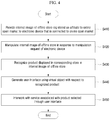
- FIG. 4 is a flowchart illustrating an example of a method performed by a server according to exemplary embodiments.
- FIG. 5 illustrates an example of a service screen that provides an internal image of an offline store according to exemplary embodiments.
- FIG. 6 illustrates an example of a map screen that provides a location of an affiliate according to exemplary embodiments.
- FIG. 7 illustrates an example of a service screen that provides an enlarged internal image of an offline store according to exemplary embodiments.
- FIG. 8 illustrates an example of a process of recognizing a product in an internal image of an offline store according to exemplary embodiments.
- FIGS. 9, 10, and 11 illustrate examples of a process of generating a virtual object for a product recognized in an internal image of an offline store according to exemplary embodiments.
- the illustrated exemplary embodiments are to be understood as providing exemplary features of varying detail of various exemplary embodiments. Therefore, unless otherwise specified, the features, components, modules, layers, films, panels, regions, and/or aspects of the various illustrations may be otherwise combined, separated, interchanged, and/or rearranged without departing from the disclosed exemplary embodiments. Further, in the accompanying figures, the size and relative sizes of layers, films, panels, regions, etc., may be exaggerated for clarity and descriptive purposes. When an exemplary embodiment may be implemented differently, a specific process order may be performed differently from the described order. For example, two consecutively described processes may be performed substantially at the same time or performed in an order opposite to the described order. Also, like reference numerals denote like elements.
- an element or layer When an element or layer is referred to as being “on,” “connected to,” or “coupled to” another element or layer, it may be directly on, connected to, or coupled to the other element or layer or intervening elements or layers may be present. When, however, an element or layer is referred to as being “directly on,” “directly connected to,” or “directly coupled to” another element or layer, there are no intervening elements or layers present.
- the x-axis, the y-axis, and the z-axis are not limited to three axes of a rectangular coordinate system, and may be interpreted in a broader sense.
- the x-axis, the y-axis, and the z-axis may be perpendicular to one another, or may represent different directions that are not perpendicular to one another.
- “at least one of X, Y, and Z” and “at least one selected from the group consisting of X, Y, and Z” may be construed as X only, Y only, Z only, or any combination of two or more of X, Y, and Z, such as, for instance, XYZ, XYY, YZ, and ZZ.
- the term “and/or” includes any and all combinations of one or more of the associated listed items.
- first,” “second,” etc. may be used herein to describe various elements, components, regions, layers, and/or sections, these elements, components, regions, layers, and/or sections should not be limited by these terms. These terms are used to distinguish one element, component, region, layer, and/or section from another element, component, region, layer, and/or section. Thus, a first element, component, region, layer, and/or section discussed below could be termed a second element, component, region, layer, and/or section without departing from the teachings of the present disclosure.
- Spatially relative terms such as “beneath,” “below,” “lower,” “above,” “upper,” and the like, may be used herein for descriptive purposes, and, thereby, to describe one element or feature's relationship to another element(s) or feature(s) as illustrated in the drawings.
- Spatially relative terms are intended to encompass different orientations of an apparatus in use, operation, and/or manufacture in addition to the orientation depicted in the drawings. For example, if the apparatus in the drawings is turned over, elements described as “below” or “beneath” other elements or features would then be oriented “above” the other elements or features.
- the exemplary term “below” can encompass both an orientation of above and below.
- the apparatus may be otherwise oriented (e.g., rotated 90 degrees or at other orientations), and, as such, the spatially relative descriptors used herein interpreted accordingly.
- X, Y, and Z can be construed as X only, Y only, Z only, or any combination of two or more items X, Y, and Z (e.g., XYZ, XYY, YZ, ZZ).
- the exemplary embodiments relate to an online transaction processing technology, and more particularly, to a shopping model for providing an offline shopping experience in an online open market.
- the exemplary embodiments disclosed herein may configure an online shopping model using an online shopping experience and may also achieve advantages in terms of efficiency, convenience, cost saving, and the like.
- FIG. 1 illustrates an example of a network environment according to exemplary embodiments.
- the network environment includes a plurality of electronic devices 110 , 120 , 130 , and 140 , a plurality of servers 150 and 160 , and a network 170 .
- FIG. 1 is provided as an example only, and a number of electronic devices and/or a number of servers are not limited thereto.
- Each of the plurality of electronic devices 110 , 120 , 130 , and 140 may be a fixed terminal or a mobile terminal configured as a computer device.
- the plurality of electronic devices 110 , 120 , 130 , and 140 may be a smartphone, a mobile phone, navigation, a computer, a laptop computer, a digital broadcasting terminal, a personal digital assistant (PDA), a portable multimedia player (PMP), a tablet personal computer (PC), and the like.
- the electronic device 110 may communicate with other electronic devices 120 , 130 , and/or 140 , and/or the servers 150 and/or 160 over the network 170 in a wired communication manner or in a wireless communication manner.
- the communication scheme is not particularly limited and may include a communication method that uses a near field communication between devices as well as a communication method using a communication network, for example, a mobile communication network, the wired Internet, the wireless Internet, and a broadcasting network, which may be included in the network 170 .
- the network 170 may include at least one of network topologies that include networks, for example, a personal area network (PAN), a local area network (LAN), a campus area network (CAN), a metropolitan area network (MAN), a wide area network (WAN), a broadband network (BBN), the Internet, and the like.
- PAN personal area network
- LAN local area network
- CAN campus area network
- MAN metropolitan area network
- WAN wide area network
- BBN broadband network
- the network 170 may include at least one of network topologies that include a bus network, a star network, a ring network, a mesh network, a star-bus network, a tree or hierarchical network, and the like.
- network topologies that include a bus network, a star network, a ring network, a mesh network, a star-bus network, a tree or hierarchical network, and the like.
- these are only examples and exemplary embodiments are not limited thereto.
- Each of the servers 150 and 160 may be configured as a computer apparatus or a plurality of computer apparatuses that provides instructions, codes, files, contents, services, and the like, through communication with the plurality of electronic devices 110 , 120 , 130 , and/or 140 over the network 170 .
- the electronic device 110 may connect to the server 150 under control of at least one program, for example, a browser or a dedicated application, or an operating system (OS) included in the electronic device 110 , and may receive a service or content provided from the server 150 .
- the server 150 may transmit a code corresponding to the service request message to the electronic device 110 .
- the electronic device 110 may provide the content to the user by configuring and displaying a screen corresponding to the code under control of the application.
- FIG. 2 illustrates an example of a configuration of an electronic device and a server according to exemplary embodiments.
- FIG. 2 illustrates a configuration of the electronic device 110 as an example for a single electronic device and illustrates a configuration of the server 150 as an example for a single server.
- the same or similar components may be applicable to other electronic devices 120 , 130 , and/or 140 , or the server 160 , and also to still other electronic devices or still other servers.
- the electronic device 110 may include a memory 211 , a processor 212 , a communication module 213 , and an input/output (I/O) interface 214
- the server 150 may include a memory 221 , a processor 222 , a communication module 223 , and an I/O interface 224
- the memory 211 , 221 may include a permanent mass storage device, such as random access memory (RAM), read only memory (ROM), a disk drive, etc., as a computer-readable storage medium.
- an OS or at least one program code for example, a code for a browser or a dedicated application installed and executed on the electronic device 110 , may be stored in the memory 211 , 221 .
- Such software components may be loaded from another computer-readable storage medium separate from the memory 211 , 221 .
- the other computer-readable storage medium may include, for example, a floppy drive, a disk, a tape, a DVD/CD-ROM drive, a memory card, etc.
- software components may be loaded to the memory 211 , 221 through the communication module 213 , 223 , instead of, or in addition to, the computer-readable storage medium.
- at least one program may be loaded to the memory 211 , 221 based on a program, for example, the dedicated application, installed by files provided over the network 170 from developers or a file distribution system (not shown) that provides an installation file of the application.
- the processor 212 , 222 may be configured to process computer-readable instructions by performing basic arithmetic operations, logic operations, and I/O operations.
- the computer-readable instructions may be provided from the memory 211 , 221 and/or the communication module 213 , 223 to the processor 212 , 222 .
- the processor 212 , 222 may be configured to execute received instructions in response to the program code stored in the storage device, such as the memory 211 , 221 .
- the communication module 213 , 223 may provide a function for communication between the electronic device 110 and the server 150 over the network 170 , and may provide a function for communication with another electronic device, for example, the electronic device 120 or another server, for example, the server 160 .
- the processor 212 of the electronic device 110 may transfer a request created based on a program code stored in the storage device such as the memory 211 , to the server 150 over the network 170 under control of the communication module 213 .
- a control signal, an instruction, content, a file, etc., provided under control of the processor 222 of the server 150 may be received at the electronic device 110 through the communication module 213 of the electronic device 110 by going through the communication module 223 and the network 170 .
- a control signal, an instruction, etc., of the server 150 received through the communication module 213 may be transferred to the processor 212 or the memory 211 , and content, a file, etc., may be stored in a storage medium further includable in the electronic device 110 .
- the I/O interface 214 may be a device used for interface with an I/O device 215 .
- an input device may include a keyboard, a mouse, etc.
- an output device may include a device, such as a display for displaying a communication session of an application.
- the I/O interface 214 may be a device for interface with an apparatus in which an input function and an output function are integrated into a single function, such as a touch screen.
- the processor 212 of the electronic device 110 may display a service screen configured using data provided from the server 150 or the electronic device 120 , or may display content on a display through the I/O interface 214 .
- the electronic device 110 and the server 150 may include a greater or lesser number of components than the number of components shown in FIG. 2 .
- the electronic device 110 may include at least a portion of the I/O device 215 , or may further include other components, for example, a transceiver, a global positioning system (GPS) module, a camera, a variety of sensors, a database, and the like.
- GPS global positioning system
- the electronic device 110 may be configured to further include a variety of components, for example, an accelerometer sensor, a gyro sensor, a camera, various physical buttons, a button using a touch panel, an I/O port, a vibrator for vibration, etc., which are generally included in the smartphone.
- FIG. 3 illustrates an example of components includable in a processor according to exemplary embodiments
- FIG. 4 is a flowchart illustrating an example of a method performed by a server according to exemplary embodiments.
- the processor 222 of the server 150 may be configured with instructions to provide software modules that include a provider 310 , a manipulator 320 , a recognizer 330 , a generator 340 , and an interlocker 350 .
- the processor 222 and the components of the processor 222 may control the server 150 to perform operations S 410 through S 450 included in the method of FIG. 4 .
- the processor 222 and the components of the processor 222 may be configured to execute an instruction according to a code of at least one program and a code of the OS included in the memory 221 .
- the components of the processor 222 may be representations of different functions performed by the processor 222 in response to a control instruction provided from the OS or the application.
- the provider 310 may be used as a functional expression that the processor 222 provides an image of an online shop in response to the control instruction.
- the provider 310 may provide an internal image of an offline store registered as an affiliate to an online open market to the electronic device 110 that is connected to the online open market.
- the online open market is an e-commerce site that is open to both sellers and purchasers, and refers to an intermediary Internet shopping mall in which an individual or a small company may freely trade products online.
- the server 150 may serve as a service platform for the online open market and accordingly, the provider 310 may provide a store image of an affiliate registered on the service platform to service users.
- the internal image of the offline store contains an image of the offline store in which products are displayed and may be a real image that is captured from an interior of the offline store, a virtual reality (VR) image, and the like, which are received from a terminal device associated with the offline store.
- a virtual reality (VR) image and the like, which are received from a terminal device associated with the offline store.
- the server 150 may interwork with an IP camera service for the offline store, and may receive an actual internal image of the offline store in real time or periodically through a cameral installed in the offline store.
- the server 150 may construct in advance a VR image, such as an indoor panoramic photo, on the service platform with respect to each offline store. That is, the provider 310 may provide products displayed in the offline store to the user using a real image that is captured through a photographing device, such as a network-based closed-circuit television (CCTV), from the offline store or an image that is created as virtual content, such as VR, in the online open market.
- a photographing device such as a network-based closed-circuit television (CCTV)
- CCTV network-based closed-circuit television
- FIG. 5 illustrates an example of a service screen that provides an internal image of an offline store according to exemplary embodiments.
- the provider 310 may display an internal image 510 of an offline store specified by the user of the electronic device 110 on a service screen 500 of an online open market.
- the provider 310 may show products that are actually displayed in a corresponding store through a real image or a VR image of the offline store to provide an offline shopping experience to the user in the online open market.
- the server 150 may construct in advance, on a service platform, identification information, location information, a list of displayed products, detailed information of each product, uniform resource locator (ULR) information, etc., of an offline store as information associated with the offline store with respect to each of offline stores registered as affiliates.
- the provider 310 may provide a service for searching for or recommending an affiliate that provides an internal image of an offline store, a product displayed in a store of each affiliate, in the online open market, based on the constructed information. For example, the provider 310 may select and recommend at least one affiliate that is present within a predetermined radius from a location specified by the electronic device 110 , for example, a current location of the electronic device 110 or a set location of the electronic device 110 .
- the provider 310 may select and recommend at least one affiliate based on profile information collected about the user of the electronic device 110 , for example, a gender, an age, a service use history or preference, and the like.
- the provider 310 may provide at least one affiliate corresponding to the search request as a search result.
- the provider 310 may provide at least one affiliate in which the specific product is displayed as the search result.
- an affiliate recommendation or search logic may induce a use of a corresponding affiliate in conjunction with local advertising.
- the provider 310 may select at least one affiliate during a recommendation process or a search process and may display the selected at least one affiliate in a form of a map or a list for the user. For example, referring to FIG. 6 , in response to the user searching for “product A” in the online open market, the provider 310 may provide a map screen 620 that includes locations of affiliates each in which the product A is displayed. When providing a search result, the provider 310 may pin an affiliate available by the user on a map in conjunction with local advertising and may induce the user to use the affiliate.
- the provider 310 may display information about an offline store registered as an affiliate using a variety of methods in the online open market. In response to receiving a selection on a specific affiliate among affiliates provided through a recommendation process or a search process from the electronic device 110 , the provider 310 may provide the internal image 510 of the selected affiliate of FIG. 5 to the electronic device 110 .
- the manipulator 320 may manipulate the internal image of the offline store in response to a manipulation request of the electronic device 110 for the internal image of the offline store.
- the manipulator 320 may provide an image control interface for a viewpoint movement, zoom-in, zoom-out, etc., with respect to the internal image of the offline store that is provided in the online open market.
- the user may search for products displayed in the corresponding store while controlling the internal image of the offline store through the user control interface.
- an image control interface 511 including a viewpoint movement interface for moving a viewpoint in all directions with respect to the internal image 510 of the offline store, a zoom-in/out interface for enlarging or reducing the internal image, and the like, may be provided.
- the manipulator 320 may control the internal image 510 of the offline store that is displayed on the service screen 500 of the online open market.
- the manipulator 320 may directly transfer an image control signal corresponding to the manipulation request of the user to the photographing device installed in the store, and may control an image of the store in real time.
- the internal image 510 of the offline store is a VR image, such as an indoor panoramic photo created in advance on a service platform, the user may control the image on a service immediately.
- an enlarged internal image 710 of the offline store may be displayed on the service screen 500 of the online open market as shown in FIG. 7 .
- the recognizer 330 may recognize products displayed in the corresponding store in the internal image of the offline store.
- the recognizer 330 may recognize a product in an image by recognizing a unique identification code, such as a barcode, a quick read (QR) code, etc., printed on the product, or a text such as a brand name.
- the recognizer 330 may recognize a product in an image through a scheme of extracting a local feature in the image, using an image analysis technology, a learning model, and the like.
- the recognizer 330 may recognize a product in an image by performing an image search on a region of interest (IOR) in the image in conjunction with an image database on the Internet.
- IOR region of interest
- a technology for recognizing a product in an image is not limited thereto and at least one known art may be used.
- FIG. 8 illustrates an example of a process of recognizing a product in an internal image of an offline store according to exemplary embodiments.
- the recognizer 330 may recognize products in an internal image 810 of an offline store, that is, products 801 displayed in the offline store using various technologies for recognizing an object included in an image.
- the recognizer 330 may extract information about a corresponding product from information constructed on a service platform or an Internet product database with respect to each of the products 801 recognized in the internal image 810 of the offline store.
- the generator 340 may generate a user interface using a virtual object with respect to the product recognized in the internal image of the offline store.
- the generator 340 may generate a virtual object with respect to a product recognized in an internal image of an offline store and may display the virtual object on a corresponding image screen.
- the virtual object may include information about the product that is recognized through a barcode recognition, an image recognition, etc.
- the virtual object may be configured as a user interface for a movement function to a page that includes detailed information of the product or a payment function for the product.
- FIGS. 9 and 10 illustrate examples of a process of generating a virtual object for a product recognized in an internal image of an offline store according to exemplary embodiments.
- a virtual object 903 may be provided for each product 901 recognized in an internal image 910 of an offline store.
- the virtual object 903 may be configured as a user interface for moving to a product detailed page or a payment page.
- the virtual object 903 including product information, for example, a product name, etc. may be displayed at a location of the corresponding product 901 with respect to each of the products 901 recognized in the internal image 910 .
- product information for example, a product name, etc.
- a virtual object 1003 may be configured in a form of an identifier indicating a product recognized in an internal image 1010 of an offline store and displayed.
- Per-product information for example, a product name, a product description, etc., may be displayed on a separate screen area 1020 . It is provided as an example only and a virtual object for a product may be configured using various schemes and forms.
- the generator 340 may generate a virtual object with respect to all of the products recognized in the internal image of the offline store. As another example, the generator 340 may generate a virtual object with respect to a portion of the products recognized in an image, for example, a product retrieved by the user, a product recommended to the user, a product specified with respect to the user of the electronic device 110 , and the like. As another example, the generator 340 may generate a virtual object with respect to all of the products recognized in an internal image of an offline store and, in this instance, may display a portion of products, for example, event products, designated by a corresponding affiliate to be distinguished from other objects using the virtual object. Referring to FIG.
- the generator 340 may generate and display a virtual object 1103 with respect to each recognized product.
- the product A designated as an event product may be displayed using the virtual object 1103 distinguished from other products.
- the virtual object 1103 may be distinguished between products based on a display attribute such as a shape, a color, a size, etc., of the virtual object 1103 or a separate display element.
- the interlocker 350 may interwork with at least one service associated with a corresponding product in response to receiving a selection on the product of which a virtual object is configured in the internal image of the offline store through a user interface of the corresponding product. For example, in response to the user of the electronic device 110 selecting a specific product in an internal image of an offline store, it is possible to move to a detailed information page of the selected specific product. Instead of moving to the detailed information page, detailed information of the selected specific product may be provided using a popup screen. As another example, in response to the user of the electronic device 110 selecting the specific product in the internal image of the offline store, the interlocker 350 may perform payment processing on the selected product in conjunction with a payment service.
- a real image or a VR image that contains an image of an offline store in which products are displayed, instead of simply listing and displaying only product information in an online open market.
- the apparatuses described herein may be implemented using hardware components, software components, and/or a combination thereof.
- the apparatuses and components described in the exemplary embodiments may be implemented using one or more general-purpose or special purpose computers, such as, for example, a processor, a controller and an arithmetic logic unit (ALU), a digital signal processor, a microcomputer, a field programmable gate array (FPGA), a programmable logic unit (PLU), a microprocessor or any other device capable of responding to and executing instructions in a defined manner.
- the processing device may run an OS and one or more software applications that run on the OS.
- the processing device also may access, store, manipulate, process, and create data in response to execution of the software.
- a processing device may include multiple processing elements and multiple types of processing elements.
- a processing device may include multiple processors or a processor and a controller.
- different processing configurations are possible, such as parallel processors.
- the software may include a computer program, a piece of code, an instruction, or some combination thereof, for independently or collectively instructing or configuring the processing device to operate as desired.
- Software and/or data may be embodied permanently or temporarily in any type of machine, component, physical or virtual equipment, computer storage medium or device, or in a propagated signal wave capable of providing instructions or data to or being interpreted by the processing device.
- the software also may be distributed over network coupled computer systems so that the software is stored and executed in a distributed fashion.
- the software and data may be stored by one or more computer readable recording mediums.
- the methods according to the exemplary embodiments may be recorded in non-transitory computer-readable media including program instructions to implement various operations embodied by a computer.
- the media may also include, alone or in combination with the program instructions, data files, data structures, and the like.
- the media and program instructions may be those specially designed and constructed for the purposes of the present disclosure, or they may be of the kind well-known and available to those having skill in the computer software arts.
- non-transitory computer-readable media examples include magnetic media such as hard disks, floppy disks, and magnetic tape; optical media such as CD ROM disks and DVD; magneto-optical media such as floptical disks; and hardware devices that are specially configured to store and perform program instructions, such as read-only memory (ROM), random access memory (RAM), flash memory, and the like.
- program instructions include both machine code, such as produced by a compiler, and files containing higher level code that may be executed by the computer using an interpreter.
- the described hardware devices may be configured to act as one or more software modules in order to perform the operations of the above-described embodiments.
Landscapes
- Engineering & Computer Science (AREA)
- Business, Economics & Management (AREA)
- Theoretical Computer Science (AREA)
- Accounting & Taxation (AREA)
- Finance (AREA)
- General Physics & Mathematics (AREA)
- Physics & Mathematics (AREA)
- Development Economics (AREA)
- Strategic Management (AREA)
- Marketing (AREA)
- General Business, Economics & Management (AREA)
- Economics (AREA)
- General Engineering & Computer Science (AREA)
- Human Computer Interaction (AREA)
- Software Systems (AREA)
- Computer Graphics (AREA)
- Computer Hardware Design (AREA)
- Computer Vision & Pattern Recognition (AREA)
- Quality & Reliability (AREA)
- Entrepreneurship & Innovation (AREA)
- Game Theory and Decision Science (AREA)
- Data Mining & Analysis (AREA)
- Databases & Information Systems (AREA)
- Management, Administration, Business Operations System, And Electronic Commerce (AREA)
- User Interface Of Digital Computer (AREA)
- Remote Sensing (AREA)
- Radar, Positioning & Navigation (AREA)
- Multimedia (AREA)
- Signal Processing (AREA)
Abstract
Description
Claims (15)
Applications Claiming Priority (2)
| Application Number | Priority Date | Filing Date | Title |
|---|---|---|---|
| KR10-2016-0119454 | 2016-09-19 | ||
| KR1020160119454A KR102674189B1 (en) | 2016-09-19 | 2016-09-19 | Method and system for online transaction using offline experience |
Publications (2)
| Publication Number | Publication Date |
|---|---|
| US20180082360A1 US20180082360A1 (en) | 2018-03-22 |
| US10956966B2 true US10956966B2 (en) | 2021-03-23 |
Family
ID=61618107
Family Applications (1)
| Application Number | Title | Priority Date | Filing Date |
|---|---|---|---|
| US15/701,513 Active US10956966B2 (en) | 2016-09-19 | 2017-09-12 | Method, non-transitory computer-readable medium, and system for online transaction using offline experience |
Country Status (3)
| Country | Link |
|---|---|
| US (1) | US10956966B2 (en) |
| JP (1) | JP2018049612A (en) |
| KR (1) | KR102674189B1 (en) |
Cited By (1)
| Publication number | Priority date | Publication date | Assignee | Title |
|---|---|---|---|---|
| US20220198762A1 (en) * | 2020-12-21 | 2022-06-23 | Toyota Jidosha Kabushiki Kaisha | Display system, display device, and program |
Families Citing this family (11)
| Publication number | Priority date | Publication date | Assignee | Title |
|---|---|---|---|---|
| US11212439B2 (en) | 2018-07-24 | 2021-12-28 | Ricoh Company, Ltd. | Communication terminal, display method, and non-transitory computer-readable medium for displaying images and controller |
| KR102292420B1 (en) * | 2019-10-21 | 2021-08-23 | 이혁락 | Apparatus, system and method for producing virtual reality contents |
| KR102331901B1 (en) | 2020-06-26 | 2021-11-26 | 박홍일 | Online shopping mall system using automatic processing of contents category and map |
| JP6873448B1 (en) * | 2020-07-29 | 2021-05-19 | 株式会社セオン | EC device |
| KR102463558B1 (en) * | 2020-08-05 | 2022-11-04 | 이인숙 | A method and system for electronic commerce relating CCTV |
| AU2021339550A1 (en) * | 2020-09-08 | 2023-05-25 | Block, Inc. | E-commerce tags in multimedia content |
| US11677736B2 (en) * | 2021-03-25 | 2023-06-13 | International Business Machines Corporation | Transient identification generation |
| JP2023127990A (en) * | 2022-03-02 | 2023-09-14 | デンカ株式会社 | Content provision server, content provision program and content provision system |
| KR102836255B1 (en) * | 2022-11-17 | 2025-07-22 | (주)에스유지 | Platform for open market of ship goods |
| CN120359761A (en) * | 2022-12-22 | 2025-07-22 | 博医来股份公司 | Virtual camera source for display device focus area |
| KR102830453B1 (en) * | 2023-02-15 | 2025-07-04 | 세종대학교산학협력단 | Augmented reality based shopping mall service providing method and apparatus |
Citations (16)
| Publication number | Priority date | Publication date | Assignee | Title |
|---|---|---|---|---|
| WO2001086533A1 (en) | 2000-05-10 | 2001-11-15 | Kim Sug Bae | Electronic commerce system and method using live images of online shopping mall on the internet |
| JP2003099629A (en) | 2001-09-21 | 2003-04-04 | Matsushita Electric Works Ltd | Remote selling system and method for merchandise |
| KR100460008B1 (en) | 2004-05-04 | 2004-12-04 | 엔에이치엔(주) | A method for providing an on-line shopping search service and a system thereof |
| JP2005250586A (en) | 2004-03-01 | 2005-09-15 | Nippon Telegr & Teleph Corp <Ntt> | Low-priced product store search service method, store terminal, location information management server, and regional store product information management server |
| US20090049285A1 (en) * | 2006-03-30 | 2009-02-19 | Canon Kabushiki Kaisha | Information delivery apparatus, information reproduction apparatus, and information processing method |
| US7945484B1 (en) * | 2006-09-28 | 2011-05-17 | A9.Com, Inc. | Local product information |
| US20120099756A1 (en) * | 2010-10-20 | 2012-04-26 | Faiz Feisal Sherman | Product Identification |
| US20120233003A1 (en) * | 2011-03-08 | 2012-09-13 | Bank Of America Corporation | Providing retail shopping assistance |
| JP2012190094A (en) | 2011-03-09 | 2012-10-04 | Sony Corp | Server device, and information processing method and program |
| JP2013167973A (en) | 2012-02-14 | 2013-08-29 | Rakuten Inc | Retrieval device, retrieval method, retrieval program, and recording medium for storing the program |
| JP2014218313A (en) | 2013-05-01 | 2014-11-20 | 學思行數位行銷股▲分▼有限公司 | Image recognition system for inventory control and marketing |
| JP2014228916A (en) | 2013-05-20 | 2014-12-08 | 株式会社ディエムアイ | Hands-on e-commerce site system |
| US20150026156A1 (en) * | 2013-05-31 | 2015-01-22 | Michele Meek | Systems and methods for facilitating the retail shopping experience online |
| JP2016071525A (en) | 2014-09-29 | 2016-05-09 | 株式会社リス | Commodity transaction system, commodity transaction method, and commodity transaction program |
| US20160260161A1 (en) * | 2015-03-06 | 2016-09-08 | Wal-Mart Stores, Inc. | Shopping facility assistance systems, devices and methods |
| US20160283996A1 (en) * | 2015-03-27 | 2016-09-29 | Apple Inc. | System for management of online content affiliate program for offline retail business |
Family Cites Families (3)
| Publication number | Priority date | Publication date | Assignee | Title |
|---|---|---|---|---|
| KR100445327B1 (en) * | 2001-10-29 | 2004-08-25 | 설호규 | Method for on-line shopping through realtime moving picture and system thereof |
| JP4196628B2 (en) * | 2002-09-27 | 2008-12-17 | 富士フイルム株式会社 | Customer support system and information providing server |
| KR20130123097A (en) * | 2012-05-02 | 2013-11-12 | 김주동 | Online shopping system |
-
2016
- 2016-09-19 KR KR1020160119454A patent/KR102674189B1/en active Active
-
2017
- 2017-09-12 JP JP2017174670A patent/JP2018049612A/en active Pending
- 2017-09-12 US US15/701,513 patent/US10956966B2/en active Active
Patent Citations (17)
| Publication number | Priority date | Publication date | Assignee | Title |
|---|---|---|---|---|
| WO2001086533A1 (en) | 2000-05-10 | 2001-11-15 | Kim Sug Bae | Electronic commerce system and method using live images of online shopping mall on the internet |
| JP2003099629A (en) | 2001-09-21 | 2003-04-04 | Matsushita Electric Works Ltd | Remote selling system and method for merchandise |
| JP2005250586A (en) | 2004-03-01 | 2005-09-15 | Nippon Telegr & Teleph Corp <Ntt> | Low-priced product store search service method, store terminal, location information management server, and regional store product information management server |
| KR100460008B1 (en) | 2004-05-04 | 2004-12-04 | 엔에이치엔(주) | A method for providing an on-line shopping search service and a system thereof |
| US20070055579A1 (en) | 2004-05-04 | 2007-03-08 | Ha Woo S | Method for providing on-line shopping search service and system thereof |
| US20090049285A1 (en) * | 2006-03-30 | 2009-02-19 | Canon Kabushiki Kaisha | Information delivery apparatus, information reproduction apparatus, and information processing method |
| US7945484B1 (en) * | 2006-09-28 | 2011-05-17 | A9.Com, Inc. | Local product information |
| US20120099756A1 (en) * | 2010-10-20 | 2012-04-26 | Faiz Feisal Sherman | Product Identification |
| US20120233003A1 (en) * | 2011-03-08 | 2012-09-13 | Bank Of America Corporation | Providing retail shopping assistance |
| JP2012190094A (en) | 2011-03-09 | 2012-10-04 | Sony Corp | Server device, and information processing method and program |
| JP2013167973A (en) | 2012-02-14 | 2013-08-29 | Rakuten Inc | Retrieval device, retrieval method, retrieval program, and recording medium for storing the program |
| JP2014218313A (en) | 2013-05-01 | 2014-11-20 | 學思行數位行銷股▲分▼有限公司 | Image recognition system for inventory control and marketing |
| JP2014228916A (en) | 2013-05-20 | 2014-12-08 | 株式会社ディエムアイ | Hands-on e-commerce site system |
| US20150026156A1 (en) * | 2013-05-31 | 2015-01-22 | Michele Meek | Systems and methods for facilitating the retail shopping experience online |
| JP2016071525A (en) | 2014-09-29 | 2016-05-09 | 株式会社リス | Commodity transaction system, commodity transaction method, and commodity transaction program |
| US20160260161A1 (en) * | 2015-03-06 | 2016-09-08 | Wal-Mart Stores, Inc. | Shopping facility assistance systems, devices and methods |
| US20160283996A1 (en) * | 2015-03-27 | 2016-09-29 | Apple Inc. | System for management of online content affiliate program for offline retail business |
Non-Patent Citations (3)
| Title |
|---|
| Marder, M., Using Image Analysis to Monitor Retail Store Shelves, Mar. 1, 2015, IBM Journal of Research and Development, vol. 59, pp. 3:1-3:11 (Year: 2015). * |
| Office Action dated Jun. 19, 2018, issued in Japanese Patent Application No. 2017-174670. |
| The Japanese Decision of Refeusal dated Feb. 26, 2019, issued in Japanese Pantent Application No. 2017-174670. |
Cited By (1)
| Publication number | Priority date | Publication date | Assignee | Title |
|---|---|---|---|---|
| US20220198762A1 (en) * | 2020-12-21 | 2022-06-23 | Toyota Jidosha Kabushiki Kaisha | Display system, display device, and program |
Also Published As
| Publication number | Publication date |
|---|---|
| US20180082360A1 (en) | 2018-03-22 |
| JP2018049612A (en) | 2018-03-29 |
| KR20180031864A (en) | 2018-03-29 |
| KR102674189B1 (en) | 2024-06-12 |
Similar Documents
| Publication | Publication Date | Title |
|---|---|---|
| US10956966B2 (en) | Method, non-transitory computer-readable medium, and system for online transaction using offline experience | |
| US10482512B2 (en) | Systems and methods for facilitating the retail shopping experience online | |
| US11887183B2 (en) | Systems and methods of sharing an augmented environment with a companion | |
| US10121176B2 (en) | Methods and systems for simplifying ordering from online shops | |
| US20130036043A1 (en) | Image-based product mapping | |
| US20190012717A1 (en) | Appratus and method of providing online sales information of offline product in augmented reality | |
| KR20160122232A (en) | Saving a state of a communication session | |
| WO2014031898A2 (en) | Detecting items of interest within local shops | |
| CN108292425A (en) | Self-Guided Image Capture and Display | |
| US9857177B1 (en) | Personalized points of interest for mapping applications | |
| JP7252748B2 (en) | Information recommendation method and computer system | |
| US10963938B2 (en) | Systems and methods for providing an interactive virtual environment | |
| US10290041B2 (en) | Online product recommendation method and device | |
| US11706585B2 (en) | Location based mobile messaging shopping network | |
| JP6293341B1 (en) | Product purchase support system and product purchase support method | |
| WO2018033954A1 (en) | Shopping assistance system and shopping assistance method | |
| US12333594B1 (en) | System and method for providing personalized and immersive shopping experience | |
| US11030197B2 (en) | System, method, and non-transitory computer-readable storage media for locating a receipt for a product | |
| Karunarathna et al. | A Fully Functional Shopping Mall Application--SHOPPING EYE | |
| KR102211453B1 (en) | system for providing shopping information | |
| KR20200041120A (en) | Method for recommending a bouquet | |
| US9971501B2 (en) | Method and system for providing adaptive arrangement and representation of user interface elements | |
| US10068268B2 (en) | Transaction processing method and transaction processing system using communication device | |
| JP7212696B2 (en) | METHOD AND SYSTEM FOR PROVIDING PRODUCT INFORMATION USING MESSENGER AND NON-TEMPORARY COMPUTER-READABLE RECORDING MEDIUM | |
| US12067610B2 (en) | Learning engine-based navigation system |
Legal Events
| Date | Code | Title | Description |
|---|---|---|---|
| AS | Assignment |
Owner name: NHN ENTERTAINMENT CORPORATION, KOREA, REPUBLIC OF Free format text: ASSIGNMENT OF ASSIGNORS INTEREST;ASSIGNOR:LEE, YOUN SIK;REEL/FRAME:043551/0816 Effective date: 20170911 |
|
| FEPP | Fee payment procedure |
Free format text: ENTITY STATUS SET TO UNDISCOUNTED (ORIGINAL EVENT CODE: BIG.); ENTITY STATUS OF PATENT OWNER: LARGE ENTITY |
|
| STPP | Information on status: patent application and granting procedure in general |
Free format text: DOCKETED NEW CASE - READY FOR EXAMINATION |
|
| STPP | Information on status: patent application and granting procedure in general |
Free format text: NON FINAL ACTION MAILED |
|
| STPP | Information on status: patent application and granting procedure in general |
Free format text: RESPONSE TO NON-FINAL OFFICE ACTION ENTERED AND FORWARDED TO EXAMINER |
|
| STPP | Information on status: patent application and granting procedure in general |
Free format text: FINAL REJECTION MAILED |
|
| STPP | Information on status: patent application and granting procedure in general |
Free format text: RESPONSE AFTER FINAL ACTION FORWARDED TO EXAMINER |
|
| STPP | Information on status: patent application and granting procedure in general |
Free format text: DOCKETED NEW CASE - READY FOR EXAMINATION |
|
| STPP | Information on status: patent application and granting procedure in general |
Free format text: NON FINAL ACTION MAILED |
|
| STPP | Information on status: patent application and granting procedure in general |
Free format text: NOTICE OF ALLOWANCE MAILED -- APPLICATION RECEIVED IN OFFICE OF PUBLICATIONS |
|
| STCF | Information on status: patent grant |
Free format text: PATENTED CASE |
|
| AS | Assignment |
Owner name: NHN CORPORATION, KOREA, REPUBLIC OF Free format text: ASSIGNMENT OF ASSIGNORS INTEREST;ASSIGNOR:NHN ENTERTAINMENT CORPORATION;REEL/FRAME:060175/0681 Effective date: 20220520 Owner name: NHN COMMERCE CORPORATION, KOREA, REPUBLIC OF Free format text: ASSIGNMENT OF ASSIGNORS INTEREST;ASSIGNOR:NHN CORPORATION;REEL/FRAME:060175/0678 Effective date: 20220520 Owner name: NHN CORPORATION, KOREA, REPUBLIC OF Free format text: ASSIGNMENT OF ASSIGNORS INTEREST;ASSIGNOR:LEE, YOUN SIK;REEL/FRAME:060175/0649 Effective date: 20170911 Owner name: NHN COMMERCE CORPORATION, KOREA, REPUBLIC OF Free format text: ASSIGNMENT OF ASSIGNORS INTEREST;ASSIGNOR:LEE, YOUN SIK;REEL/FRAME:060006/0798 Effective date: 20170911 |
|
| AS | Assignment |
Owner name: NHN COMMERCE CORPORATION, KOREA, REPUBLIC OF Free format text: CHANGE ASSIGNEE FROM NHN ENTERTAINMENT CORPORATION TO NHN CORPORATION;ASSIGNOR:NHN CORPORATION;REEL/FRAME:060574/0154 Effective date: 20220520 |
|
| MAFP | Maintenance fee payment |
Free format text: PAYMENT OF MAINTENANCE FEE, 4TH YEAR, LARGE ENTITY (ORIGINAL EVENT CODE: M1551); ENTITY STATUS OF PATENT OWNER: LARGE ENTITY Year of fee payment: 4 |