US10915744B2 - Method for evaluating fashion style using deep learning technology and system therefor - Google Patents
Method for evaluating fashion style using deep learning technology and system therefor Download PDFInfo
- Publication number
- US10915744B2 US10915744B2 US16/201,423 US201816201423A US10915744B2 US 10915744 B2 US10915744 B2 US 10915744B2 US 201816201423 A US201816201423 A US 201816201423A US 10915744 B2 US10915744 B2 US 10915744B2
- Authority
- US
- United States
- Prior art keywords
- clothing
- user
- style
- color
- fashion
- Prior art date
- Legal status (The legal status is an assumption and is not a legal conclusion. Google has not performed a legal analysis and makes no representation as to the accuracy of the status listed.)
- Active, expires
Links
Images





Classifications
-
- G06K9/00369—
-
- G—PHYSICS
- G06—COMPUTING OR CALCULATING; COUNTING
- G06Q—INFORMATION AND COMMUNICATION TECHNOLOGY [ICT] SPECIALLY ADAPTED FOR ADMINISTRATIVE, COMMERCIAL, FINANCIAL, MANAGERIAL OR SUPERVISORY PURPOSES; SYSTEMS OR METHODS SPECIALLY ADAPTED FOR ADMINISTRATIVE, COMMERCIAL, FINANCIAL, MANAGERIAL OR SUPERVISORY PURPOSES, NOT OTHERWISE PROVIDED FOR
- G06Q30/00—Commerce
- G06Q30/06—Buying, selling or leasing transactions
- G06Q30/0601—Electronic shopping [e-shopping]
- G06Q30/0631—Recommending goods or services
-
- G—PHYSICS
- G06—COMPUTING OR CALCULATING; COUNTING
- G06V—IMAGE OR VIDEO RECOGNITION OR UNDERSTANDING
- G06V40/00—Recognition of biometric, human-related or animal-related patterns in image or video data
- G06V40/20—Movements or behaviour, e.g. gesture recognition
- G06V40/23—Recognition of whole body movements, e.g. for sport training
-
- G06K9/3241—
-
- G—PHYSICS
- G06—COMPUTING OR CALCULATING; COUNTING
- G06N—COMPUTING ARRANGEMENTS BASED ON SPECIFIC COMPUTATIONAL MODELS
- G06N20/00—Machine learning
- G06N20/20—Ensemble learning
-
- G—PHYSICS
- G06—COMPUTING OR CALCULATING; COUNTING
- G06N—COMPUTING ARRANGEMENTS BASED ON SPECIFIC COMPUTATIONAL MODELS
- G06N3/00—Computing arrangements based on biological models
- G06N3/02—Neural networks
- G06N3/04—Architecture, e.g. interconnection topology
- G06N3/044—Recurrent networks, e.g. Hopfield networks
-
- G—PHYSICS
- G06—COMPUTING OR CALCULATING; COUNTING
- G06N—COMPUTING ARRANGEMENTS BASED ON SPECIFIC COMPUTATIONAL MODELS
- G06N3/00—Computing arrangements based on biological models
- G06N3/02—Neural networks
- G06N3/04—Architecture, e.g. interconnection topology
- G06N3/045—Combinations of networks
-
- G—PHYSICS
- G06—COMPUTING OR CALCULATING; COUNTING
- G06N—COMPUTING ARRANGEMENTS BASED ON SPECIFIC COMPUTATIONAL MODELS
- G06N3/00—Computing arrangements based on biological models
- G06N3/02—Neural networks
- G06N3/04—Architecture, e.g. interconnection topology
- G06N3/0464—Convolutional networks [CNN, ConvNet]
-
- G—PHYSICS
- G06—COMPUTING OR CALCULATING; COUNTING
- G06N—COMPUTING ARRANGEMENTS BASED ON SPECIFIC COMPUTATIONAL MODELS
- G06N3/00—Computing arrangements based on biological models
- G06N3/02—Neural networks
- G06N3/08—Learning methods
- G06N3/09—Supervised learning
-
- G—PHYSICS
- G06—COMPUTING OR CALCULATING; COUNTING
- G06Q—INFORMATION AND COMMUNICATION TECHNOLOGY [ICT] SPECIALLY ADAPTED FOR ADMINISTRATIVE, COMMERCIAL, FINANCIAL, MANAGERIAL OR SUPERVISORY PURPOSES; SYSTEMS OR METHODS SPECIALLY ADAPTED FOR ADMINISTRATIVE, COMMERCIAL, FINANCIAL, MANAGERIAL OR SUPERVISORY PURPOSES, NOT OTHERWISE PROVIDED FOR
- G06Q30/00—Commerce
- G06Q30/06—Buying, selling or leasing transactions
- G06Q30/0601—Electronic shopping [e-shopping]
- G06Q30/0623—Electronic shopping [e-shopping] by investigating goods or services
- G06Q30/0625—Electronic shopping [e-shopping] by investigating goods or services by formulating product or service queries, e.g. using keywords or predefined options
-
- G—PHYSICS
- G06—COMPUTING OR CALCULATING; COUNTING
- G06T—IMAGE DATA PROCESSING OR GENERATION, IN GENERAL
- G06T19/00—Manipulating three-dimensional [3D] models or images for computer graphics
- G06T19/20—Editing of three-dimensional [3D] images, e.g. changing shapes or colours, aligning objects or positioning parts
-
- G—PHYSICS
- G06—COMPUTING OR CALCULATING; COUNTING
- G06T—IMAGE DATA PROCESSING OR GENERATION, IN GENERAL
- G06T7/00—Image analysis
- G06T7/0002—Inspection of images, e.g. flaw detection
-
- G—PHYSICS
- G06—COMPUTING OR CALCULATING; COUNTING
- G06T—IMAGE DATA PROCESSING OR GENERATION, IN GENERAL
- G06T7/00—Image analysis
- G06T7/90—Determination of colour characteristics
-
- G—PHYSICS
- G06—COMPUTING OR CALCULATING; COUNTING
- G06V—IMAGE OR VIDEO RECOGNITION OR UNDERSTANDING
- G06V10/00—Arrangements for image or video recognition or understanding
- G06V10/40—Extraction of image or video features
- G06V10/56—Extraction of image or video features relating to colour
-
- G—PHYSICS
- G06—COMPUTING OR CALCULATING; COUNTING
- G06V—IMAGE OR VIDEO RECOGNITION OR UNDERSTANDING
- G06V10/00—Arrangements for image or video recognition or understanding
- G06V10/70—Arrangements for image or video recognition or understanding using pattern recognition or machine learning
- G06V10/764—Arrangements for image or video recognition or understanding using pattern recognition or machine learning using classification, e.g. of video objects
-
- G—PHYSICS
- G06—COMPUTING OR CALCULATING; COUNTING
- G06V—IMAGE OR VIDEO RECOGNITION OR UNDERSTANDING
- G06V10/00—Arrangements for image or video recognition or understanding
- G06V10/70—Arrangements for image or video recognition or understanding using pattern recognition or machine learning
- G06V10/82—Arrangements for image or video recognition or understanding using pattern recognition or machine learning using neural networks
-
- G—PHYSICS
- G06—COMPUTING OR CALCULATING; COUNTING
- G06V—IMAGE OR VIDEO RECOGNITION OR UNDERSTANDING
- G06V40/00—Recognition of biometric, human-related or animal-related patterns in image or video data
- G06V40/10—Human or animal bodies, e.g. vehicle occupants or pedestrians; Body parts, e.g. hands
- G06V40/103—Static body considered as a whole, e.g. static pedestrian or occupant recognition
-
- G—PHYSICS
- G06—COMPUTING OR CALCULATING; COUNTING
- G06T—IMAGE DATA PROCESSING OR GENERATION, IN GENERAL
- G06T2219/00—Indexing scheme for manipulating 3D models or images for computer graphics
- G06T2219/20—Indexing scheme for editing of 3D models
- G06T2219/2024—Style variation
Definitions
- the present invention relates to a clothing style evaluation using a telecommunication network, and more particularly, to a method and system for evaluating a clothing style on an image of a person wearing clothing.
- clothing In addition to its essential functions such as maintaining body temperature and protecting skin, clothing also has a function as a means of self-expression. People protect their bodies by wearing clothes to adapt to climate change and express their personality by dressing to suit themselves. When these functions of clothing are effectively exercised in the attire of everyday life, it is possible to enjoy physically pleasant and psychologically satisfactory lifestyle.
- Korean Patent Application Laid-Open No. 10-2016-0144277 discloses a method for providing a clothing coordination service comprising the steps of transmitting user fashion information to an externally-linked server through a user terminal, receiving evaluation/recommendation information on the user's fashion information, and providing a customized clothing coordination service, wherein the externally-linked server corresponds to an online community or a makeup/fashion experts group.
- Korean Patent No. 10-2009-0095532 discloses a comprehensive fashion coordination information providing system based on the Internet, which connects a user who wants a fashion coordination service with a professional coordinator having a career of providing fashion advices to a famous person, provides fashion coordination information based on personal information such as the user's photograph, physical information, and a preferred color provided by the user, and provides a clothing coordination service through a video conversation.
- the clothing coordination rating app ‘Otgeori,’ which is downloadable from the Google Play Store, provides a service that allows users to upload their photos on the app and receive ratings from other users.
- ‘Otjang’ a downloadable app from the Google Play Store, provides freestyle coordinating/shopping application services using virtual objects (avatars). The app allows users to select their desired virtual objects and link coordinated clothing to shopping malls.
- apps such as ‘Codicon’ have been launched, which allow users to coordinate virtual clothing with virtual objects and receive ratings from other users.
- these apps have a disadvantage in that the physical features of the actual user are not taken into consideration since the apps evaluate virtual clothing coordinated on the virtual objects.
- An object of the present invention is to provide a method and system for evaluating a clothing style that can provide an objective evaluation result by excluding human intervention in a clothing style evaluation process using a telecommunication network.
- Another object of the present invention is to provide a method and system for evaluating a clothing style that can automate clothing style evaluation system while providing a satisfactory and reliable evaluation result.
- Another object of the present invention is to provide a method and system for evaluating a clothing style that can provide an evaluation result in consideration of factors such as a skin tone that may affect the clothing style.
- a deep learning-based clothing style evaluation method comprising receiving at least one image provided by a user terminal, analyzing objects included in the at least one image and extracting a plurality of fashion features related to a user using deep learning algorithm when the user exists in the object, extracting matching information between the extracted plurality of fashion features using deep learning algorithm, evaluating a clothing style of the user based on the matching information, and transmitting an evaluation result to the user terminal, wherein the fashion feature is one of the number of clothing worn by the user, type of clothing, color of clothing, style of clothing, skin tone of the user, and other information affecting fashion style, and wherein the matching information comprises essentially of matching information between the skin tone of the user and any one of the fashion features other than the skin tone.
- the matching information includes matching information between the color of the clothing worn by the user and the skin tone of the user.
- the matching information includes matching information between colors of two or more pieces of clothing worn by the user.
- a deep learning-based clothing style evaluation method wherein the matching information includes information on the style of the clothing worn by the user.
- a deep learning-based clothing style evaluation method wherein the extracting of the skin tone includes classifying the user's skin tone according to a predetermined skin tone classification criterion and retrieving at least one color group matching the extracted skin tone.
- a deep learning-based clothing style evaluation method wherein the extracting of the matching information between the color of the clothing worn by the user and the user's skin tone is performed by comparing the color of the clothing worn by the user with the color group matching the extracted skin tone.
- a deep learning-based clothing style evaluation method wherein the extracting of the matching information between the colors of two or more pieces of clothing worn by the user is accomplished by determining whether a tone-on-tone or tone-in-tone matching exists based on a color of one piece of clothing designated from the clothing worn by the user in a predetermined color chart.
- a deep learning-based clothing style evaluation method wherein the evaluating of the clothing style includes calculating a total score by putting one or more of the number of clothing having a color matching the skin tone, the number of colors matches between clothing and the total number of clothing styles into a predetermined equation.
- a deep learning-based clothing style evaluation method further comprising extracting a recommended clothing using deep learning algorithm based on the evaluation result or at the request of the user, and transmitting the recommended clothing to the user terminal.
- a deep learning-based clothing style evaluation method wherein the extracting of the recommended clothing includes loading a tone-on-tone matching color group and a tone-in-tone matching color group in a predetermined color chart based on a color of one piece of clothing designated from the clothing worn by the user, selecting at least one recommended color by comparing the color groups with a color group matching the skin tone of the user, and selecting a most frequent style among the styles of the clothing worn by the user as a recommended clothing style.
- a deep learning-based clothing style evaluation system comprising a server receiving at least one image provided by a user terminal, and a deep learning unit linked to the server, wherein the deep learning unit analyzes an object included in the at least one image, extracts a plurality of fashion features related to a user by using deep learning algorithm when the user exists in the object, extracts matching information between the plurality of fashion features, and evaluates clothing style of the user based on the matching information, wherein the fashion feature is one of the number of clothing worn by the user, type of clothing, color of clothing, style of clothing, skin tone of the user, and other information affecting fashion style, and wherein the matching information comprises essentially of matching information between the skin tone of the user and any one of the fashion features other than the skin tone.
- a deep learning-based clothing style evaluation system wherein the matching information includes matching information between the color of the clothing worn by the user and the skin tone of the user.
- a deep learning-based clothing style evaluation system wherein the matching information includes matching information between colors of two or more pieces of clothing worn by the user.
- a deep learning-based clothing style evaluation system wherein the matching information includes information on the style of the clothing worn by the user.
- a deep learning-based clothing style evaluation system wherein extracting of the skin tone includes classifying the user's skin tone according to a predetermined skin tone classification criterion and retrieving at least one color group matching the extracted skin tone.
- a deep learning-based clothing style evaluation system wherein the extracting of the matching information between the color of the clothing worn by the user and the user's skin tone is performed by comparing the color of the clothing worn by the user with the color group matching the extracted skin tone.
- a deep learning-based clothing style evaluation system wherein the extracting of the matching information between the colors of two or more pieces of clothing worn by the user is accomplished by determining whether a tone-on-tone or tone-in-tone matching exists based on a color of one piece of clothing designated from the clothing worn by the user in a predetermined color chart.
- a deep learning-based clothing style evaluation system wherein the evaluating of the clothing style includes calculating a total score by putting one or more of the number of clothing having a color matching the skin tone, the number of colors matches between clothing and the total number of clothing styles into a predetermined equation.
- a deep learning-based clothing style evaluation system further comprising extracting a recommended clothing using deep learning algorithm based on the evaluation result or at the request of the user, and transmitting the recommended clothing to the user terminal.
- a deep learning-based clothing style evaluation system wherein the extracting of the recommended clothing includes loading a tone-on-tone matching color group and a tone-in-tone matching color group in a predetermined color chart based on the color of one piece of clothing designated from the clothing worn by the user, selecting at least one recommended color by comparing the color groups with a color group matching the skin tone of the user, and selecting a most frequent style among the styles of the clothing worn by the user as a recommended clothing style.
- the present invention uses a deep learning technology, a human intervention is not necessary for the clothing style evaluation, so that an objective and consistent evaluation can be provided. In addition, since there is no need to wait for human intervention, immediate evaluation is possible.
- FIG. 1 illustrates a clothing style evaluation system according to an embodiment of the present invention.
- FIG. 2 illustrates extraction of fashion features such as a user's skin tone, clothing worn by the user, etc. from an image of a user wearing clothes, according to an embodiment of the present invention.
- FIG. 3 illustrates a method of recognizing a user's skin tone in FIG. 2 in detail.
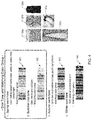
- FIG. 4 illustrates the comparison of the color of the clothing with a skin-tone-matching color table, according to an embodiment of the present invention.
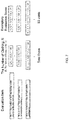
- FIG. 5 illustrates the determination of whether or not colors are matched among the clothes worn by the user, according to an embodiment of the present invention.
- FIG. 6 illustrates the determination of whether or not styles are matched among the clothes worn by the user, according to an embodiment of the present invention.
- FIG. 7 illustrates an exemplary equation for calculating an evaluation score according to each evaluation item, according to an embodiment of the present invention.
- FIG. 8 illustrates the recommendation of a clothing style to a user, according to an embodiment of the present invention.
- a ‘telecommunication network’ used throughout the present specification refers to a set of terminals, links, or nodes connected for the purpose of enabling communication between terminal users, and is a concept encompassing a computer network, the Internet, and a telephone network.
- ‘clothing’ or ‘clothes’ is used not only as a top, bottoms, and a coat, but also a concept covering any product made of cloth, leather or the like that can be worn on a person's body, such as a hat or a shoe. Also, the expression ‘matched’ between clothing, between a physical feature and clothing, and so on is used to indicate to be harmonized and fit in terms of fashion coordination.
- FIG. 1 illustrates a clothing style evaluation system 100 according to an embodiment of the present invention.
- a user terminal 11 As shown in FIG. 1 , a user terminal 11 , an administrator terminal 10 and a server 3 are connected via a telecommunication network 5 in the clothing style evaluation system 100 of the present invention.
- the server 3 can exchange data with the user terminal 11 via the wired/wireless telecommunication network 5 , and the administrator terminal 10 can be connected to the server 3 directly or remotely via the telecommunication network.
- FIG. 2 schematically illustrates an embodiment of a method of recognizing a user's face, clothing worn by the user, etc. from an image of a user wearing clothes.
- the user may upload an image of the clothing wearing state 9 photographed by the user terminal 11 , by using a solution such as a smartphone app for providing clothing style evaluation service according to the present invention.
- the uploaded image is input to the server 3 on the service provider side, and the user's face and clothing worn by the user are then recognized separately using a software, for example, a face recognition software or a clothing recognition software, which is installed on or linked with the server 3 and capable of recognizing the existence of a person, a face, clothing, etc. from an image.
- a software for example, a face recognition software or a clothing recognition software, which is installed on or linked with the server 3 and capable of recognizing the existence of a person, a face, clothing, etc. from an image.
- Google has released a face recognition software in 2012, and Microsoft Azure®, which is available on the market, implements the function of detecting a human face in an image.
- the above-mentioned software may be software based on deep learning as described below.
- the object included in the image is then analyzed.
- a person that is, a user exists in the object, the user's face, clothing worn by the user and the like are separated and recognized through the above-described software.
- fashion features 12 are extracted from the separated and recognized information using a deep learning algorithm.
- the acquired image is compared only with the pre-stored images, so that only a typical pattern recognition is applied to the acquired image, and there is a limitation that it cannot cope with images of various types of data.
- Deep learning is a generic term for machine learning algorithms that use deep hierarchical artificial neural networks.
- Deep learning teaches a computer to distinguish objects through a process imitating the information processing way of the human brain which finds patterns in a large number of data and discerns objects.
- deep learning enables a machine to cluster or classify the discerned data.
- Deep learning technology makes it possible for a computer to perceive, reason, and judge by itself without having to set all standard of judgment, so it can be widely used for voice or image recognition, photo analysis, etc.
- Deep learning is derived from artificial neural networks.
- An artificial neural network refers to a statistical learning algorithm that is inspired by the biological neural network (animal's central nervous system). Specifically, it refers to all models in which artificial neuron (node) that forms a network by the synapse combination changes the combining strength of synapses so as to have the ability to solve problems.
- the core of deep learning using artificial neural networks is prediction through classification.
- neural networks are used to solve a wide range of problems, such as computer vision or voice recognition, which are generally difficult to solve with rule-based programming.
- the fashion features extracted through the above-described deep learning algorithm may include the skin tone of the user, the type, number, color, length, pattern, style and the like of the clothing worn by the user.
- Types of clothing can be classified in detail such as shirts, short sleeves, suit vests, slacks, slip-on shoes, and so on.
- the style of clothing can be selected from various styles such as natural look, vintage look, modern look, sporty look, outdoor look, dandy look, military look, school look, etc.
- the fashion features 12 relating to the user's skin tone 15 and the clothes 20 a , 20 b , 20 c , 20 d and 20 e worn by the user are extracted. Specifically, a red stripped short-sleeved T-shirt 20 a , a blue short sleeves check shirt 20 b , a dark blue suit vest 20 c , a gray slim fit slacks 20 d , and white slip-on shoes 20 e were extracted with respect to the clothing worn by the user.
- the classification standard to be applied is determined in advance.
- the color groups M 1 , M 2 , M 3 , and M 4 matched respectively to each skin tone classified according to the above standards are known. These color groups are classified according to the tone of the color, that is, the difference in the saturation and the brightness. The classification according to the tone difference will be described in detail below.
- the skin tone of a specific user is necessarily classified as one type, and it is also possible to judge the skin tone based on the other skin region without being limited to the face.
- the photographing condition such as the lighting state when photographing an image or to directly input, e.g., through the smartphone app, the photographing environment such as indoor, outdoor, sunny or cloudy.
- additional information such as eye color or hair color can be additionally considered.
- information such as: 1. Spring worm tone—Eyes: light brown, Hair: brown or orange; 2. Summer cool tone—Eyes: cloudy gray, Hair: dark brown or grayish brown; 3. Autumn warm tone—Eyes: dark brown, Hair: dark brown; 4. Winter cool tone—Eyes: the white is blue and the pupil is deep and clear, Hair: bluish dark brown or black, can be considered.
- the skin tone 15 of the user is classified by the deep learning algorithm to correspond to 1. spring warm tone and 2. summer cool tone (marked by the square of FIG. 3 ).
- the colors that match the skin tone 15 are those included in the color groups M 1 and M 2 .
- FIG. 4 there is shown a method of extracting matching information between the colors of the clothing 20 a , 20 b , 20 c , 20 d , and 20 e worn by the user and the skin tone 15 .
- the deep learning algorithm used in this case has learned colors that match various skin tones (e.g., four tones).
- the matching can be accomplished by deep learning techniques even when the various skin tones are not completely matched with previously entered data.
- the red stripped short-sleeved T-shirt 20 a was matched to one color (checked) of the color group M 1
- the blue short sleeves check shirt 20 b was matched to one color (checked) of the color group M 2 .
- the navy blue suit vest 20 c and the gray slim fit slacks 20 d were each matched to the color group M 4 which was not matched to the skin tone 15 of the user.
- FIG. 5 illustrates extraction of matching information between colors of clothing worn by the user, according to an embodiment of the present invention.
- tone In extracting matching information between colors, the above-mentioned concept of tone may be used.
- all colors have three attributes: hue, saturation, and brightness.
- the tone is used to refer to the concept incorporating saturation and brightness out of the three attributes.
- ‘tone’ indicates the brightness and darkness, lightness and deepness, and murkiness and pureness of colors comprehensively, and it is also called ‘shade’ or ‘impression of color’.
- Tone-on-tone refers to a gradation from the brightest and lightest color to the darkest and deepest color in one color.
- a color combination such as wearing beige with brown color or blue with navy can be a tone-on-tone. In other words, totally different colors are not used.
- Tone-in-tone is made up of colors with similar brightness or density, but it does not matter if the colors are different. Pastel tone is a good example of tone-in-tone.
- Tone-on-tone fashion based on the coordination with similar colors, gives a sense of unity, calmness, and sophistication. On the contrary, tone-on-tone fashions could seem complicated because they are mixed in different colors, but they can give a feeling of liveliness by coordinating tones of not too many colors.
- the matching information of the colors between the clothing worn by the user can be extracted using the deep learning algorithm in which the reference color chart 30 relating to the tone-on-tone and tone-in-tone as described above was learned.
- the vertical direction corresponds to tone-on-tone
- the horizontal direction corresponds to tone-in-tone.
- a reference color In order to determine whether the tone is matched based on tone-on-tone and tone-in-tone concept, a reference color should be designated.
- the color of the bottoms i.e., the gray slim-fit slacks 20 d were used as the reference color.
- the color group M 5 represents the tone-on-tone matching color group
- the color group M 6 represents the tone-in-tone matching color group
- the clothing belonging to these color groups M 5 and M 6 are the dark blue suit vest 20 c and the white slip-on shoes 20 e in addition to the gray slim fit slacks 20 d . They all correspond to tone-on-tone matching.
- FIG. 6 illustrates extraction of a matching information between clothing worn by the user, according to an embodiment of the present invention.
- matching information of clothing styles can be extracted between the clothing worn by the user 20 a , 20 b , 20 c , 20 d and 20 e using a deep learning algorithm in which various clothing styles are learned for each clothing.
- information regarding A. Natural look, B. Vintage look, C. Modern look, D. Sporty look, E. Outdoor look, F. Dandy Look, G. military look, and H. School look is deep-learned as clothing styles, and the styles of the clothing worn by the user are judged based on this. It is also possible that one piece of clothing corresponds to plural styles.
- the wearing clothing 20 a , 20 b , 20 c , 20 d , and 20 e had three clothing styles, namely, A. natural look, C. modern look, and F. dandy look.
- the clothing 20 b and 20 e corresponded to two styles, respectively.
- the clothing evaluation the less the number of styles of the clothing worn by the user is, the higher the evaluation score is obtained. In other words, it is advantageous that the clothing style has as much unity as possible.
- FIGS. 4 to 6 illustrating an embodiment of the present invention, the following matching information has been extracted.
- the total number of styles of the clothing 3.
- evaluation items 1 to 3 The above matching information is referred to as evaluation items 1 to 3, and for the evaluation items 1 and 2, the higher the number is, the higher the score is, and for the evaluation item 3, the lower the number is, the higher the score is (See FIG. 7 ).
- Total score evaluation item 1+evaluation item 2+evaluation item 3
- N the number of clothing worn by the user
- E the total number of evaluation items
- a the number of clothing having a color matching user's skin tone
- b the number of colors matching among the clothing worn by the user
- c the total number of styles of clothing worn by the user
- the total score of the clothing style evaluation on the clothing worn by the user is 60 points.
- Clothing coordination evaluation based on deep learning can be done as above.
- the clothing coordination can be recommended on the basis of the deep learning-based information utilized in the above-mentioned coordination evaluation.
- This may be automatically performed when the above-mentioned coordination evaluation score falls short of a predetermined reference value or may be performed according to the request of the user.
- FIG. 8 illustrates a method of recommending a clothing style to a user in accordance with an embodiment of the present invention.
- colors belonging to the tone-on-tone and tone-in-tone matching color groups M 5 and M 6 were detected.
- colors belonging to the color chart 30 among the color groups M 1 and M 2 were checked and displayed. Among them, three colors belonging to the color group M 5 were detected.
- the clothing 40 a , 40 b and 40 c corresponding to the above three colors and also corresponding to the most frequent style currently worn, in this case, Dandy look can be recommended.
- a recommended clothing coordination 42 can be displayed.
- the present invention based on the deep learning method, it is not necessary for a person to intervene until the clothing style evaluation is accomplished, so that an objective and consistent evaluation can be provided. In addition, it is possible to immediately provide a recommended clothing or recommended clothing coordination to the user.
- server 5 telecommunication network 10: administrator terminal 11: user terminal 12: fashion feature 15: skin tone 20a, 20b, 20c, 20d, 20e: clothing worn by the user M1, M2, M3, M4, M5, M6: color group 30: color chart 40a, 40b, 40c: recommended clothing 42: recommended clothing coordination
Landscapes
- Engineering & Computer Science (AREA)
- Theoretical Computer Science (AREA)
- Physics & Mathematics (AREA)
- General Physics & Mathematics (AREA)
- Software Systems (AREA)
- Evolutionary Computation (AREA)
- General Health & Medical Sciences (AREA)
- Health & Medical Sciences (AREA)
- Artificial Intelligence (AREA)
- Computing Systems (AREA)
- Computer Vision & Pattern Recognition (AREA)
- Multimedia (AREA)
- General Engineering & Computer Science (AREA)
- Business, Economics & Management (AREA)
- Data Mining & Analysis (AREA)
- Mathematical Physics (AREA)
- Medical Informatics (AREA)
- Molecular Biology (AREA)
- Finance (AREA)
- Accounting & Taxation (AREA)
- Life Sciences & Earth Sciences (AREA)
- Biomedical Technology (AREA)
- Biophysics (AREA)
- Computational Linguistics (AREA)
- Databases & Information Systems (AREA)
- Human Computer Interaction (AREA)
- Development Economics (AREA)
- General Business, Economics & Management (AREA)
- Strategic Management (AREA)
- Marketing (AREA)
- Economics (AREA)
- Psychiatry (AREA)
- Social Psychology (AREA)
- Quality & Reliability (AREA)
- Architecture (AREA)
- Computer Hardware Design (AREA)
- Computer Graphics (AREA)
- Image Analysis (AREA)
Abstract
Description
(a/N)×(1/E)×100
(b/N)×(1/E)×100
(N−c+1)/N×(1/E)×100
Total score=
(a/N)×(1/E)×100=(3/5)×(1/3)×100=20
(b/N)×(1/E)×100=(3/5)×(1/3)×100=20
(N−c+1)/N×(1/E)×100=(5−3+1)/5×(1/3)×100=20
| 3: server | 5: telecommunication network |
| 10: administrator terminal | 11: user terminal |
| 12: fashion feature | 15: |
| 20a, 20b, 20c, 20d, 20e: clothing worn by the user |
| M1, M2, M3, M4, M5, M6: color group |
| 30: |
40a, 40b, 40c: recommended clothing |
| 42: recommended clothing coordination |
Claims (15)
Applications Claiming Priority (3)
| Application Number | Priority Date | Filing Date | Title |
|---|---|---|---|
| KR1020180120490A KR20200044198A (en) | 2018-10-10 | 2018-10-10 | Method for evaluating fashion style using deep learning technology and system therefor |
| KR10-2018-0120490 | 2018-10-10 | ||
| KR1020180120490 | 2018-10-10 |
Publications (2)
| Publication Number | Publication Date |
|---|---|
| US20200117890A1 US20200117890A1 (en) | 2020-04-16 |
| US10915744B2 true US10915744B2 (en) | 2021-02-09 |
Family
ID=70161917
Family Applications (1)
| Application Number | Title | Priority Date | Filing Date |
|---|---|---|---|
| US16/201,423 Active 2039-03-16 US10915744B2 (en) | 2018-10-10 | 2018-11-27 | Method for evaluating fashion style using deep learning technology and system therefor |
Country Status (2)
| Country | Link |
|---|---|
| US (1) | US10915744B2 (en) |
| KR (1) | KR20200044198A (en) |
Families Citing this family (10)
| Publication number | Priority date | Publication date | Assignee | Title |
|---|---|---|---|---|
| KR102381566B1 (en) * | 2020-07-03 | 2022-03-31 | 건국대학교 글로컬산학협력단 | Simulation apparatus and method for fashion styling |
| CN112418273B (en) * | 2020-11-02 | 2024-03-26 | 深圳大学 | Clothing popularity evaluation method and device, intelligent terminal and storage medium |
| JP7133177B2 (en) * | 2020-12-01 | 2022-09-08 | 公紀 岩中 | Evaluation server device for coordination, control method for evaluation server device for coordination, and program and recording medium used therefor |
| KR102602480B1 (en) * | 2021-09-23 | 2023-11-16 | 김원식 | Electronic device for recommending beauty styling to user and method for operation thereof |
| CN114662412B (en) * | 2022-05-23 | 2022-10-11 | 深圳市远湖科技有限公司 | Deep learning-based garment design method, device, equipment and storage medium |
| JP2024002174A (en) * | 2022-06-23 | 2024-01-11 | キヤノン株式会社 | Color adjustment device and method, program |
| KR20240030109A (en) * | 2022-08-29 | 2024-03-07 | 삼성전자주식회사 | An electronic apparatus for providing avatar based on an user's face and a method for operating the same |
| JP7388649B1 (en) * | 2023-05-12 | 2023-11-29 | 株式会社リプラス | Outfit suggestion device, outfit suggestion method, outfit suggestion program |
| WO2025049635A1 (en) * | 2023-08-30 | 2025-03-06 | Snap Inc. | Recommending fashion item fit style using landmarks |
| KR102689540B1 (en) | 2023-10-30 | 2024-07-26 | 장혜진 | Method and apparatus for providing artificial intelligence based apparel recommendation service using personal color analysis |
Citations (9)
| Publication number | Priority date | Publication date | Assignee | Title |
|---|---|---|---|---|
| US20080262944A1 (en) * | 2007-04-18 | 2008-10-23 | Wu Chih-Chen | Online clothing display system and method therefor |
| US20140022238A1 (en) * | 2012-07-20 | 2014-01-23 | Clo Virtual Fashion Inc. | System for simulating user clothing on an avatar |
| US9953217B2 (en) * | 2015-11-30 | 2018-04-24 | International Business Machines Corporation | System and method for pose-aware feature learning |
| US10052026B1 (en) * | 2017-03-06 | 2018-08-21 | Bao Tran | Smart mirror |
| US10109051B1 (en) * | 2016-06-29 | 2018-10-23 | A9.Com, Inc. | Item recommendation based on feature match |
| US10262432B1 (en) * | 2017-12-30 | 2019-04-16 | Gabriel Keilholz | System and method for measuring and comparing items using computer vision |
| US10321728B1 (en) * | 2018-04-20 | 2019-06-18 | Bodygram, Inc. | Systems and methods for full body measurements extraction |
| US20190236677A1 (en) * | 2018-01-30 | 2019-08-01 | Myntra Designs Private Limited | System and method for prediction of sellability of fashion products |
| US10593023B2 (en) * | 2018-02-13 | 2020-03-17 | Adobe Inc. | Deep-learning-based automatic skin retouching |
-
2018
- 2018-10-10 KR KR1020180120490A patent/KR20200044198A/en not_active Ceased
- 2018-11-27 US US16/201,423 patent/US10915744B2/en active Active
Patent Citations (9)
| Publication number | Priority date | Publication date | Assignee | Title |
|---|---|---|---|---|
| US20080262944A1 (en) * | 2007-04-18 | 2008-10-23 | Wu Chih-Chen | Online clothing display system and method therefor |
| US20140022238A1 (en) * | 2012-07-20 | 2014-01-23 | Clo Virtual Fashion Inc. | System for simulating user clothing on an avatar |
| US9953217B2 (en) * | 2015-11-30 | 2018-04-24 | International Business Machines Corporation | System and method for pose-aware feature learning |
| US10109051B1 (en) * | 2016-06-29 | 2018-10-23 | A9.Com, Inc. | Item recommendation based on feature match |
| US10052026B1 (en) * | 2017-03-06 | 2018-08-21 | Bao Tran | Smart mirror |
| US10262432B1 (en) * | 2017-12-30 | 2019-04-16 | Gabriel Keilholz | System and method for measuring and comparing items using computer vision |
| US20190236677A1 (en) * | 2018-01-30 | 2019-08-01 | Myntra Designs Private Limited | System and method for prediction of sellability of fashion products |
| US10593023B2 (en) * | 2018-02-13 | 2020-03-17 | Adobe Inc. | Deep-learning-based automatic skin retouching |
| US10321728B1 (en) * | 2018-04-20 | 2019-06-18 | Bodygram, Inc. | Systems and methods for full body measurements extraction |
Also Published As
| Publication number | Publication date |
|---|---|
| KR20200044198A (en) | 2020-04-29 |
| US20200117890A1 (en) | 2020-04-16 |
Similar Documents
| Publication | Publication Date | Title |
|---|---|---|
| US20200117890A1 (en) | Method for evaluating fashion style using deep learning technology and system therefor | |
| CN110198437B (en) | Image processing method, device, storage medium and electronic device | |
| US8260684B2 (en) | System and method for coordinating and evaluating apparel | |
| US11682143B2 (en) | System and method for hair analysis of user | |
| KR101563124B1 (en) | Personal color matching system and matching method thereof | |
| CN116420155A (en) | Commodity recommendation device and method based on image database analysis | |
| CN110232253B (en) | Computer device, equipment, storage medium and method for generating clothing matching scheme | |
| US10109051B1 (en) | Item recommendation based on feature match | |
| JP2016502713A (en) | Clothing matching system and method | |
| KR20180070293A (en) | Apparatus and method for matching personal color | |
| KR20190114448A (en) | Method for recommending user optimized clothes and server performing the same | |
| US20220366675A1 (en) | Apparatus and method for developing style analysis model based on data augmentation | |
| KR101074691B1 (en) | Apparatus and method for providing personal image in on-line interface | |
| CN114647984B (en) | Intelligent clothing design method and system based on customer preference | |
| KR20140124087A (en) | System and method for recommending hair based on face and style recognition | |
| JP2009266166A (en) | Harmony determination apparatus, harmony determination method and harmony determination program | |
| CN120147460A (en) | A character scene generation system based on AI interaction | |
| KR20220128200A (en) | Personal color diagnosis method | |
| KR102310565B1 (en) | Clothing recommendation device and method | |
| US20220358752A1 (en) | Apparatus and method for developing space analysis model based on data augmentation | |
| KR102429863B1 (en) | Method for servicing personal styling | |
| CN111476908A (en) | Dress designing system | |
| KR102775944B1 (en) | Apparel Styling Recommendation Device And Recommendation Method | |
| CN118470270A (en) | Image processing method, device, equipment, medium and program product | |
| CN113127663A (en) | Target image searching method, device, equipment and computer readable storage medium |
Legal Events
| Date | Code | Title | Description |
|---|---|---|---|
| FEPP | Fee payment procedure |
Free format text: ENTITY STATUS SET TO UNDISCOUNTED (ORIGINAL EVENT CODE: BIG.); ENTITY STATUS OF PATENT OWNER: SMALL ENTITY |
|
| AS | Assignment |
Owner name: FEELINGKI. CO., LTD, KOREA, REPUBLIC OF Free format text: ASSIGNMENT OF ASSIGNORS INTEREST;ASSIGNORS:PARK, JI HYEON;LEE, HYO YUN;SIGNING DATES FROM 20181118 TO 20181123;REEL/FRAME:047791/0601 |
|
| FEPP | Fee payment procedure |
Free format text: ENTITY STATUS SET TO SMALL (ORIGINAL EVENT CODE: SMAL); ENTITY STATUS OF PATENT OWNER: SMALL ENTITY |
|
| FEPP | Fee payment procedure |
Free format text: PETITION RELATED TO MAINTENANCE FEES GRANTED (ORIGINAL EVENT CODE: PTGR); ENTITY STATUS OF PATENT OWNER: SMALL ENTITY |
|
| STPP | Information on status: patent application and granting procedure in general |
Free format text: NON FINAL ACTION MAILED |
|
| STCF | Information on status: patent grant |
Free format text: PATENTED CASE |
|
| MAFP | Maintenance fee payment |
Free format text: PAYMENT OF MAINTENANCE FEE, 4TH YR, SMALL ENTITY (ORIGINAL EVENT CODE: M2551); ENTITY STATUS OF PATENT OWNER: SMALL ENTITY Year of fee payment: 4 |