US10899734B2 - Small molecule modulators of pantothenate kinases - Google Patents
Small molecule modulators of pantothenate kinases Download PDFInfo
- Publication number
- US10899734B2 US10899734B2 US16/307,473 US201716307473A US10899734B2 US 10899734 B2 US10899734 B2 US 10899734B2 US 201716307473 A US201716307473 A US 201716307473A US 10899734 B2 US10899734 B2 US 10899734B2
- Authority
- US
- United States
- Prior art keywords
- further aspect
- alkyl
- appropriate
- halogen
- compounds
- Prior art date
- Legal status (The legal status is an assumption and is not a legal conclusion. Google has not performed a legal analysis and makes no representation as to the accuracy of the status listed.)
- Active
Links
- 0 *C1=NN=C(CC(=O)*C2=C(*)C(*)=C([2*])C=C2)C=C1 Chemical compound *C1=NN=C(CC(=O)*C2=C(*)C(*)=C([2*])C=C2)C=C1 0.000 description 90
- DXBKDDHPHGKYOG-UHFFFAOYSA-N CC(C)C(=O)C1(C(C)C)CC1 Chemical compound CC(C)C(=O)C1(C(C)C)CC1 DXBKDDHPHGKYOG-UHFFFAOYSA-N 0.000 description 17
- GTHFOPZAZMTSCS-UHFFFAOYSA-N C=C(C)C1=CC=C(N2CCN(C(=O)NC3=CC=C(C(C)C)C=C3)CC2)C=C1 Chemical compound C=C(C)C1=CC=C(N2CCN(C(=O)NC3=CC=C(C(C)C)C=C3)CC2)C=C1 GTHFOPZAZMTSCS-UHFFFAOYSA-N 0.000 description 4
- OWUCBQQJZIWZPE-ROUUACIJSA-N CC(C)C1=C(F)C=C(CC(=O)N[C@H]2CN(C3=NN=C(C#N)C=C3)C[C@@H]2O)C=C1 Chemical compound CC(C)C1=C(F)C=C(CC(=O)N[C@H]2CN(C3=NN=C(C#N)C=C3)C[C@@H]2O)C=C1 OWUCBQQJZIWZPE-ROUUACIJSA-N 0.000 description 4
- FVUVQGIOZZCYTL-UHFFFAOYSA-N CC(C)C1=CCN(C(C)C)CC1.CC(C)CC1CCN(C(C)C)C1.CC(C)CC1CN(C(C)C)CC12CC2.CC(C)CC1CN(C(C)C)CC1=O.CC(C)CC1CN(C(C)C)CC1O.CC(C)CCCNC(C)C.CC(C)N1CC(C)N(C(C)C)C(C)C1.CC(C)N1CC(C)N(C(C)C)C(C)C1.CC(C)N1CC2CC1CN2C(C)C.CC(C)N1CC2CN(C(C)C)CC2C1.CC(C)N1CCC(O)(C(C)C)CC1.CC(C)N1CCC2(CCN(C(C)C)C2)C1.CC(C)N1CCCN(C(C)C)CC1.CC(C)N1CCN(C(C)C)C(C)C1.CC(C)N1CCN(C(C)C)C(C)C1.CC(C)N1CCN(C(C)C)C(C)C1C.CC(C)NC1CCN(C(C)C)C1.CC(C)NC1CN(C(C)C)C1.CC(C)NC1CN(C(C)C)C1.CC(C)NC1CN(C(C)C)CC12CC2.CC(C)NC1CN(C(C)C)CC1=O.CC(C)NC1CN(C(C)C)CC1O Chemical compound CC(C)C1=CCN(C(C)C)CC1.CC(C)CC1CCN(C(C)C)C1.CC(C)CC1CN(C(C)C)CC12CC2.CC(C)CC1CN(C(C)C)CC1=O.CC(C)CC1CN(C(C)C)CC1O.CC(C)CCCNC(C)C.CC(C)N1CC(C)N(C(C)C)C(C)C1.CC(C)N1CC(C)N(C(C)C)C(C)C1.CC(C)N1CC2CC1CN2C(C)C.CC(C)N1CC2CN(C(C)C)CC2C1.CC(C)N1CCC(O)(C(C)C)CC1.CC(C)N1CCC2(CCN(C(C)C)C2)C1.CC(C)N1CCCN(C(C)C)CC1.CC(C)N1CCN(C(C)C)C(C)C1.CC(C)N1CCN(C(C)C)C(C)C1.CC(C)N1CCN(C(C)C)C(C)C1C.CC(C)NC1CCN(C(C)C)C1.CC(C)NC1CN(C(C)C)C1.CC(C)NC1CN(C(C)C)C1.CC(C)NC1CN(C(C)C)CC12CC2.CC(C)NC1CN(C(C)C)CC1=O.CC(C)NC1CN(C(C)C)CC1O FVUVQGIOZZCYTL-UHFFFAOYSA-N 0.000 description 4
- HJXYMOFZXXLPIW-UHFFFAOYSA-N CC(C)C1=CCN(C(C)C)CC1.CC(C)CC1CCN(C(C)C)C1.CC(C)CC1CN(C(C)C)CC12CC2.CC(C)CC1CN(C(C)C)CC1=O.CC(C)CC1CN(C(C)C)CC1O.CC(C)CCCNC(C)C.CC(C)N1CC(C)N(C(C)C)C(C)C1.CC(C)N1CC(C)N(C(C)C)C(C)C1.CC(C)N1CCC(O)(C(C)C)CC1.CC(C)N1CCN(C(C)C)C(C)C1.CC(C)N1CCN(C(C)C)C(C)C1.CC(C)N1CCN(C(C)C)C(C)C1C.CC(C)NC1CCN(C(C)C)C1.CC(C)NC1CN(C(C)C)C1.CC(C)NC1CN(C(C)C)C1.CC(C)NC1CN(C(C)C)CC12CC2.CC(C)NC1CN(C(C)C)CC1=O.CC(C)NC1CN(C(C)C)CC1O Chemical compound CC(C)C1=CCN(C(C)C)CC1.CC(C)CC1CCN(C(C)C)C1.CC(C)CC1CN(C(C)C)CC12CC2.CC(C)CC1CN(C(C)C)CC1=O.CC(C)CC1CN(C(C)C)CC1O.CC(C)CCCNC(C)C.CC(C)N1CC(C)N(C(C)C)C(C)C1.CC(C)N1CC(C)N(C(C)C)C(C)C1.CC(C)N1CCC(O)(C(C)C)CC1.CC(C)N1CCN(C(C)C)C(C)C1.CC(C)N1CCN(C(C)C)C(C)C1.CC(C)N1CCN(C(C)C)C(C)C1C.CC(C)NC1CCN(C(C)C)C1.CC(C)NC1CN(C(C)C)C1.CC(C)NC1CN(C(C)C)C1.CC(C)NC1CN(C(C)C)CC12CC2.CC(C)NC1CN(C(C)C)CC1=O.CC(C)NC1CN(C(C)C)CC1O HJXYMOFZXXLPIW-UHFFFAOYSA-N 0.000 description 4
- PVMJHSFIPQJTPC-UHFFFAOYSA-N CC(C)C1=CCN(C(C)C)CC1.CC(C)CC1CCN(C(C)C)C1.CC(C)CC1CN(C(C)C)CC12CC2.CC(C)CC1CN(C(C)C)CC1=O.CC(C)CC1CN(C(C)C)CC1O.CC(C)CCCNC(C)C.CC(C)N1CC(C)N(C(C)C)C(C)C1.CC(C)N1CCC(O)(C(C)C)CC1.CC(C)N1CCN(C(C)C)C(C)C1.CC(C)N1CCN(C(C)C)C(C)C1.CC(C)NC1CCN(C(C)C)C1.CC(C)NC1CN(C(C)C)C1.CC(C)NC1CN(C(C)C)C1.CC(C)NC1CN(C(C)C)CC12CC2.CC(C)NC1CN(C(C)C)CC1=O.CC(C)NC1CN(C(C)C)CC1O Chemical compound CC(C)C1=CCN(C(C)C)CC1.CC(C)CC1CCN(C(C)C)C1.CC(C)CC1CN(C(C)C)CC12CC2.CC(C)CC1CN(C(C)C)CC1=O.CC(C)CC1CN(C(C)C)CC1O.CC(C)CCCNC(C)C.CC(C)N1CC(C)N(C(C)C)C(C)C1.CC(C)N1CCC(O)(C(C)C)CC1.CC(C)N1CCN(C(C)C)C(C)C1.CC(C)N1CCN(C(C)C)C(C)C1.CC(C)NC1CCN(C(C)C)C1.CC(C)NC1CN(C(C)C)C1.CC(C)NC1CN(C(C)C)C1.CC(C)NC1CN(C(C)C)CC12CC2.CC(C)NC1CN(C(C)C)CC1=O.CC(C)NC1CN(C(C)C)CC1O PVMJHSFIPQJTPC-UHFFFAOYSA-N 0.000 description 4
- QZKADHZQGVEXHS-UHFFFAOYSA-N CC(C)C1CCCCC1.CC(C)C1CCCCC1.CC(C)N1CCCCC1.CC(C)N1CCCCC1.CC(C)N1CCCCC1 Chemical compound CC(C)C1CCCCC1.CC(C)C1CCCCC1.CC(C)N1CCCCC1.CC(C)N1CCCCC1.CC(C)N1CCCCC1 QZKADHZQGVEXHS-UHFFFAOYSA-N 0.000 description 4
- LAGKMXGVLCDQDT-UHFFFAOYSA-N COC1=CC=C(NC(=O)N2CCN(C3=NC=C(C#N)C=C3)CC2)C=C1 Chemical compound COC1=CC=C(NC(=O)N2CCN(C3=NC=C(C#N)C=C3)CC2)C=C1 LAGKMXGVLCDQDT-UHFFFAOYSA-N 0.000 description 4
- OIGKOCQCPNJKLX-UHFFFAOYSA-N CC(C)(C)c1ccc(CC(N(CC2)CCN2c(cc2)nnc2Cl)=O)cc1 Chemical compound CC(C)(C)c1ccc(CC(N(CC2)CCN2c(cc2)nnc2Cl)=O)cc1 OIGKOCQCPNJKLX-UHFFFAOYSA-N 0.000 description 3
- YMSRPDOSEUGWAE-UHFFFAOYSA-N CC(C)C1=CC=C(C(=O)N2CCN(C3=NN=C(C#N)C=C3)CC2)C=C1 Chemical compound CC(C)C1=CC=C(C(=O)N2CCN(C3=NN=C(C#N)C=C3)CC2)C=C1 YMSRPDOSEUGWAE-UHFFFAOYSA-N 0.000 description 3
- ZKJDWCUEMAUHMD-QGZVFWFLSA-N CC(C)C1=CC=C(CC(=O)C[C@H]2CCN(C3=NN=C(C#N)C=C3)C2)C=C1 Chemical compound CC(C)C1=CC=C(CC(=O)C[C@H]2CCN(C3=NN=C(C#N)C=C3)C2)C=C1 ZKJDWCUEMAUHMD-QGZVFWFLSA-N 0.000 description 3
- DSWWRKSWFPXIBC-UHFFFAOYSA-N CC(C)C1=CC=C(CC(=O)N2CCN(C3=NN=C(C#N)C=C3)CC2)S1 Chemical compound CC(C)C1=CC=C(CC(=O)N2CCN(C3=NN=C(C#N)C=C3)CC2)S1 DSWWRKSWFPXIBC-UHFFFAOYSA-N 0.000 description 3
- MRQXTSUBYXAWLG-MRXNPFEDSA-N CC(C)C1=CC=C(CC(=O)N2CCN(C3=NN=C(C#N)C=C3)C[C@H]2C)C=C1 Chemical compound CC(C)C1=CC=C(CC(=O)N2CCN(C3=NN=C(C#N)C=C3)C[C@H]2C)C=C1 MRQXTSUBYXAWLG-MRXNPFEDSA-N 0.000 description 3
- ZQSONULHRVZMQP-UHFFFAOYSA-N CC(C)C1=CC=C(NC(=O)N2CCN(C3=NC=C(C#N)C=C3)CC2)C=C1.CC1=CC(N2CCN(C(=O)NC3=CC=C(C(C)C)C=C3)CC2)=CC=C1.CC1=CC=C(N2CCN(C(=O)NC3=CC=C(C(C)C)C=C3)CC2)C=C1.CC1=CC=C(N2CCN(C(=O)NC3=CC=C(C(C)C)C=C3)CC2)C=C1.CC1=CN=C(N2CCN(C(=O)NC3=CC=C(C(C)(C)C)C=C3)CC2)C=C1.CC1=NN=C(N2CCN(C(=O)NC3=CC=C(C(C)C)C=C3)CC2)C=C1 Chemical compound CC(C)C1=CC=C(NC(=O)N2CCN(C3=NC=C(C#N)C=C3)CC2)C=C1.CC1=CC(N2CCN(C(=O)NC3=CC=C(C(C)C)C=C3)CC2)=CC=C1.CC1=CC=C(N2CCN(C(=O)NC3=CC=C(C(C)C)C=C3)CC2)C=C1.CC1=CC=C(N2CCN(C(=O)NC3=CC=C(C(C)C)C=C3)CC2)C=C1.CC1=CN=C(N2CCN(C(=O)NC3=CC=C(C(C)(C)C)C=C3)CC2)C=C1.CC1=NN=C(N2CCN(C(=O)NC3=CC=C(C(C)C)C=C3)CC2)C=C1 ZQSONULHRVZMQP-UHFFFAOYSA-N 0.000 description 3
- RKTPIPBGTJLBFC-UHFFFAOYSA-N CC(C)C1=CC=C(NC(=O)N2CCN(C3=NC=CC=C3C#N)CC2)C=C1.CC1=CC(N2CCN(C(=O)NC3=CC=C(C(C)C)C=C3)CC2)=NC=C1.CC1=CN=C(N2CCN(C(=O)NC3=CC=C(C(C)C)C=C3)CC2)C=C1.CC1=CN=C(N2CCN(C(=O)NC3=CC=C(C(C)C)C=C3)CC2)C=C1.CC1=CN=C(N2CCN(C(=O)NC3=CC=C(C(C)C)C=C3)CC2)C=C1.CC1=CN=C(N2CCN(C(=O)NC3=CC=C(C(C)C)C=C3)CC2)C=C1 Chemical compound CC(C)C1=CC=C(NC(=O)N2CCN(C3=NC=CC=C3C#N)CC2)C=C1.CC1=CC(N2CCN(C(=O)NC3=CC=C(C(C)C)C=C3)CC2)=NC=C1.CC1=CN=C(N2CCN(C(=O)NC3=CC=C(C(C)C)C=C3)CC2)C=C1.CC1=CN=C(N2CCN(C(=O)NC3=CC=C(C(C)C)C=C3)CC2)C=C1.CC1=CN=C(N2CCN(C(=O)NC3=CC=C(C(C)C)C=C3)CC2)C=C1.CC1=CN=C(N2CCN(C(=O)NC3=CC=C(C(C)C)C=C3)CC2)C=C1 RKTPIPBGTJLBFC-UHFFFAOYSA-N 0.000 description 3
- DYDBHGUBTDQTKP-UHFFFAOYSA-N CC(C)C1=CCN(C(C)C)CC1.CC(C)C1CCN(C(C)C)CC1.CC(C)CC1CCN(C(C)C)C1.CC(C)CC1CN(C(C)C)CC12CC2.CC(C)CC1CN(C(C)C)CC1=O.CC(C)CC1CN(C(C)C)CC1CO.CC(C)CC1CN(C(C)C)CC1O.CC(C)CCCNC(C)C.CC(C)N1CC(C)N(C(C)C)C(C)C1.CC(C)N1CC(C)N(C(C)C)C(C)C1.CC(C)N1CC2CC1CN2C(C)C.CC(C)N1CC2CN(C(C)C)CC2C1.CC(C)N1CCC(O)(C(C)C)CC1.CC(C)N1CCC2(CCN(C(C)C)C2)C1.CC(C)N1CCCN(C(C)C)CC1.CC(C)N1CCN(C(C)C)C(C)C1.CC(C)N1CCN(C(C)C)C(C)C1.CC(C)N1CCN(C(C)C)C(C)C1C.CC(C)NC1CCN(C(C)C)C1.CC(C)NC1CN(C(C)C)C1.CC(C)NC1CN(C(C)C)C1.CC(C)NC1CN(C(C)C)CC12CC2.CC(C)NC1CN(C(C)C)CC1=O.CC(C)NC1CN(C(C)C)CC1O Chemical compound CC(C)C1=CCN(C(C)C)CC1.CC(C)C1CCN(C(C)C)CC1.CC(C)CC1CCN(C(C)C)C1.CC(C)CC1CN(C(C)C)CC12CC2.CC(C)CC1CN(C(C)C)CC1=O.CC(C)CC1CN(C(C)C)CC1CO.CC(C)CC1CN(C(C)C)CC1O.CC(C)CCCNC(C)C.CC(C)N1CC(C)N(C(C)C)C(C)C1.CC(C)N1CC(C)N(C(C)C)C(C)C1.CC(C)N1CC2CC1CN2C(C)C.CC(C)N1CC2CN(C(C)C)CC2C1.CC(C)N1CCC(O)(C(C)C)CC1.CC(C)N1CCC2(CCN(C(C)C)C2)C1.CC(C)N1CCCN(C(C)C)CC1.CC(C)N1CCN(C(C)C)C(C)C1.CC(C)N1CCN(C(C)C)C(C)C1.CC(C)N1CCN(C(C)C)C(C)C1C.CC(C)NC1CCN(C(C)C)C1.CC(C)NC1CN(C(C)C)C1.CC(C)NC1CN(C(C)C)C1.CC(C)NC1CN(C(C)C)CC12CC2.CC(C)NC1CN(C(C)C)CC1=O.CC(C)NC1CN(C(C)C)CC1O DYDBHGUBTDQTKP-UHFFFAOYSA-N 0.000 description 3
- YOEVOOGKTRIIBM-UHFFFAOYSA-N CC(C)C1CCN(C(C)C)CC1.CC(C)CC1(C)CCN(C(C)C)C1.CC(C)CC1CN(C(C)C)CC1CO.CC(C)CC1CN(C(C)C)CC1N.CC(C)CC1CN(C(C)C)CC1N(C)C.CC(C)N1CC2CC1CN2C(C)C.CC(C)N1CC2CN(C(C)C)CC2C1.CC(C)N1CCC2(CCN(C(C)C)C2)C1.CC(C)N1CCCN(C(C)C)CC1.CC(C)N1CCN(C(C)C)C(C)(C)C1.CC(C)N1CCN(C(C)C)CC1.CC(C)NC1CCCN(C(C)C)C1.CC(C)NC1CCCN(C(C)C)C1.CNC1CN(C(C)C)CC1CC(C)C Chemical compound CC(C)C1CCN(C(C)C)CC1.CC(C)CC1(C)CCN(C(C)C)C1.CC(C)CC1CN(C(C)C)CC1CO.CC(C)CC1CN(C(C)C)CC1N.CC(C)CC1CN(C(C)C)CC1N(C)C.CC(C)N1CC2CC1CN2C(C)C.CC(C)N1CC2CN(C(C)C)CC2C1.CC(C)N1CCC2(CCN(C(C)C)C2)C1.CC(C)N1CCCN(C(C)C)CC1.CC(C)N1CCN(C(C)C)C(C)(C)C1.CC(C)N1CCN(C(C)C)CC1.CC(C)NC1CCCN(C(C)C)C1.CC(C)NC1CCCN(C(C)C)C1.CNC1CN(C(C)C)CC1CC(C)C YOEVOOGKTRIIBM-UHFFFAOYSA-N 0.000 description 3
- ZLCGTIGJDVUFHK-UHFFFAOYSA-N CC(C)CC1(C)CCN(C(C)C)C1.CC(C)CC1CN(C(C)C)CC1CO.CC(C)CC1CN(C(C)C)CC1N.CC(C)CC1CN(C(C)C)CC1N(C)C.CC(C)N1CCN(C(C)C)CC1 Chemical compound CC(C)CC1(C)CCN(C(C)C)C1.CC(C)CC1CN(C(C)C)CC1CO.CC(C)CC1CN(C(C)C)CC1N.CC(C)CC1CN(C(C)C)CC1N(C)C.CC(C)N1CCN(C(C)C)CC1 ZLCGTIGJDVUFHK-UHFFFAOYSA-N 0.000 description 3
- KKMQQHCMKJQMNR-UHFFFAOYSA-N CC(C)CC1(C)CCN(C(C)C)C1.CC(C)CC1CN(C(C)C)CC1N.CC(C)CC1CN(C(C)C)CC1N(C)C.CC(C)N1CCN(C(C)C)CC1.CNC1CN(C(C)C)CC1CC(C)C Chemical compound CC(C)CC1(C)CCN(C(C)C)C1.CC(C)CC1CN(C(C)C)CC1N.CC(C)CC1CN(C(C)C)CC1N(C)C.CC(C)N1CCN(C(C)C)CC1.CNC1CN(C(C)C)CC1CC(C)C KKMQQHCMKJQMNR-UHFFFAOYSA-N 0.000 description 3
- RGXPXBUXNROPLY-UHFFFAOYSA-N CC(C)c(cc1)ccc1NC(N(CC1)CCN1c(nc1)nc(OC)c1Br)=O Chemical compound CC(C)c(cc1)ccc1NC(N(CC1)CCN1c(nc1)nc(OC)c1Br)=O RGXPXBUXNROPLY-UHFFFAOYSA-N 0.000 description 3
- ZOSQLLQRPNBFQS-UHFFFAOYSA-N CC(C)c(cc1)ccc1NC(N(CC1)CCN1c(nc1)ncc1Br)=O Chemical compound CC(C)c(cc1)ccc1NC(N(CC1)CCN1c(nc1)ncc1Br)=O ZOSQLLQRPNBFQS-UHFFFAOYSA-N 0.000 description 3
- BJSPAWGKONTVKV-UHFFFAOYSA-N CC(C)c(cc1)ccc1OC(N(CC1)CCN1c(cc1)nnc1Cl)=O Chemical compound CC(C)c(cc1)ccc1OC(N(CC1)CCN1c(cc1)nnc1Cl)=O BJSPAWGKONTVKV-UHFFFAOYSA-N 0.000 description 3
- GJJSTZKLKPQYHC-UHFFFAOYSA-N CC(C)c(cc1)ncc1NC(N(CC1)CCN1c(cc1)nnc1C#N)=O Chemical compound CC(C)c(cc1)ncc1NC(N(CC1)CCN1c(cc1)nnc1C#N)=O GJJSTZKLKPQYHC-UHFFFAOYSA-N 0.000 description 3
- KKOLUVANADLONF-UHFFFAOYSA-N CC(C)c1ccc(CC(N(CC2)CCN2c(cc2)nnc2Cl)=O)cc1 Chemical compound CC(C)c1ccc(CC(N(CC2)CCN2c(cc2)nnc2Cl)=O)cc1 KKOLUVANADLONF-UHFFFAOYSA-N 0.000 description 3
- UTBACXQEJZGLEI-UHFFFAOYSA-N CC(C)c1ncc(CC(N(CC2)CCN2c(cc2)nnc2C#N)=O)cc1 Chemical compound CC(C)c1ncc(CC(N(CC2)CCN2c(cc2)nnc2C#N)=O)cc1 UTBACXQEJZGLEI-UHFFFAOYSA-N 0.000 description 3
- UGROPVRZLBTLRC-UHFFFAOYSA-N CC1=C(C(C)C)C=CC(OC(=O)N2CCN(C3=NN=C(C#N)C=C3)CC2)=C1 Chemical compound CC1=C(C(C)C)C=CC(OC(=O)N2CCN(C3=NN=C(C#N)C=C3)CC2)=C1 UGROPVRZLBTLRC-UHFFFAOYSA-N 0.000 description 3
- MBIUBBRWLRZNOJ-UHFFFAOYSA-N CCC(C)C1=CC=C(NC(=O)N2CCN(C3=NN=C(C#N)C=C3)CC2)C=C1 Chemical compound CCC(C)C1=CC=C(NC(=O)N2CCN(C3=NN=C(C#N)C=C3)CC2)C=C1 MBIUBBRWLRZNOJ-UHFFFAOYSA-N 0.000 description 3
- CNWJVYHXHDHEDF-UHFFFAOYSA-N N#CC1=CN=C(N2CCN(C(=O)NCC3=CC=CO3)CC2)C=C1 Chemical compound N#CC1=CN=C(N2CCN(C(=O)NCC3=CC=CO3)CC2)C=C1 CNWJVYHXHDHEDF-UHFFFAOYSA-N 0.000 description 3
- CIQLQWZJBBQVRS-UHFFFAOYSA-N C.CC1=NN=C(CC(=O)CC2=C3C=CC(C(C)C)=CC3C=N2)C=C1.CC1=NN=C(CC(=O)CC2=C3C=CC(C(C)C)=CN3C=C2)C=C1.CC1=NN=C(CC(=O)CC2=CC=C(C(C)(C)C)C=C2)C=C1.CC1=NN=C(CC(=O)CC2=CC=C(C(C)C(F)(F)F)C=C2)C=C1.CC1=NN=C(CC(=O)CC2=CC=C(C(C)C)C=C2)C=C1.CC1=NN=C(CC(=O)CC2=CC=C(C(C)CN)C=C2)C=C1.CC1=NN=C(CC(=O)CC2=CC=C(C(C)CO)C=C2)C=C1.CC1=NN=C(CC(=O)CC2=CC=C(C(Cl)Cl)C=C2)C=C1.CC1=NN=C(CC(=O)CC2=CC=C(C(F)F)C=C2)C=C1.CC1=NN=C(CC(=O)CC2=CN=C(C(C)C)C=C2)C=C1.CC1=NN=C(CC(=O)CC2=CSC(C(C)C)=C2)C=C1.CC1=NN=C(CC(=O)CC2=NC(C(C)C)=CS2)C=C1 Chemical compound C.CC1=NN=C(CC(=O)CC2=C3C=CC(C(C)C)=CC3C=N2)C=C1.CC1=NN=C(CC(=O)CC2=C3C=CC(C(C)C)=CN3C=C2)C=C1.CC1=NN=C(CC(=O)CC2=CC=C(C(C)(C)C)C=C2)C=C1.CC1=NN=C(CC(=O)CC2=CC=C(C(C)C(F)(F)F)C=C2)C=C1.CC1=NN=C(CC(=O)CC2=CC=C(C(C)C)C=C2)C=C1.CC1=NN=C(CC(=O)CC2=CC=C(C(C)CN)C=C2)C=C1.CC1=NN=C(CC(=O)CC2=CC=C(C(C)CO)C=C2)C=C1.CC1=NN=C(CC(=O)CC2=CC=C(C(Cl)Cl)C=C2)C=C1.CC1=NN=C(CC(=O)CC2=CC=C(C(F)F)C=C2)C=C1.CC1=NN=C(CC(=O)CC2=CN=C(C(C)C)C=C2)C=C1.CC1=NN=C(CC(=O)CC2=CSC(C(C)C)=C2)C=C1.CC1=NN=C(CC(=O)CC2=NC(C(C)C)=CS2)C=C1 CIQLQWZJBBQVRS-UHFFFAOYSA-N 0.000 description 2
- JNZZUKYNEDTJJT-MRXNPFEDSA-N C=C(C)C1=C(F)C=C(CC(=O)C[C@H]2CCN(C3=NN=C(C#N)C=C3)C2)C=C1 Chemical compound C=C(C)C1=C(F)C=C(CC(=O)C[C@H]2CCN(C3=NN=C(C#N)C=C3)C2)C=C1 JNZZUKYNEDTJJT-MRXNPFEDSA-N 0.000 description 2
- UZXCORORTWSFRV-OAHLLOKOSA-N C=C(C)C1=CC(F)=C(CC(=O)C[C@H]2CCN(C3=NN=C(C#N)C=C3)C2)C=C1 Chemical compound C=C(C)C1=CC(F)=C(CC(=O)C[C@H]2CCN(C3=NN=C(C#N)C=C3)C2)C=C1 UZXCORORTWSFRV-OAHLLOKOSA-N 0.000 description 2
- JEYFCLMEVATXCA-UHFFFAOYSA-N CC(=O)C1=CC=C(N2CCN(C(=O)NC3=CC=C(C(C)C)C=C3)CC2)C=C1 Chemical compound CC(=O)C1=CC=C(N2CCN(C(=O)NC3=CC=C(C(C)C)C=C3)CC2)C=C1 JEYFCLMEVATXCA-UHFFFAOYSA-N 0.000 description 2
- DJEKANODZCLSOZ-UHFFFAOYSA-N CC(=O)C1=CC=C(NC(=O)N2CCN(C3=NC=C(C#N)C=C3)CC2)C=C1 Chemical compound CC(=O)C1=CC=C(NC(=O)N2CCN(C3=NC=C(C#N)C=C3)CC2)C=C1 DJEKANODZCLSOZ-UHFFFAOYSA-N 0.000 description 2
- GPJWKHGQNCPDRU-UHFFFAOYSA-N CC(C)(C)C1=CC=C(C(F)(F)C(=O)N2CCN(C3=NN=C(C#N)C=C3)CC2)C=C1 Chemical compound CC(C)(C)C1=CC=C(C(F)(F)C(=O)N2CCN(C3=NN=C(C#N)C=C3)CC2)C=C1 GPJWKHGQNCPDRU-UHFFFAOYSA-N 0.000 description 2
- IJBRFFMMIQNWEV-UHFFFAOYSA-N CC(C)(C)C1=CC=C(CC(=O)N2CCN(C3=NC=C(C#N)C=C3)CC2)C=C1 Chemical compound CC(C)(C)C1=CC=C(CC(=O)N2CCN(C3=NC=C(C#N)C=C3)CC2)C=C1 IJBRFFMMIQNWEV-UHFFFAOYSA-N 0.000 description 2
- LJDIZTOHARVVMJ-UHFFFAOYSA-N CC(C)(C)C1=CC=C(CC(=O)N2CCN(C3=NN=C(C#N)C=C3)CC2)C=C1 Chemical compound CC(C)(C)C1=CC=C(CC(=O)N2CCN(C3=NN=C(C#N)C=C3)CC2)C=C1 LJDIZTOHARVVMJ-UHFFFAOYSA-N 0.000 description 2
- RQOPMGLOTDXXHX-SFHVURJKSA-N CC(C)(C)C1=CC=C(CS(=O)(=O)N[C@H]2CCN(C3=NN=C(C#N)C=C3)C2)C=C1 Chemical compound CC(C)(C)C1=CC=C(CS(=O)(=O)N[C@H]2CCN(C3=NN=C(C#N)C=C3)C2)C=C1 RQOPMGLOTDXXHX-SFHVURJKSA-N 0.000 description 2
- WPAWIBUDSFBBFI-UHFFFAOYSA-N CC(C)(C)C1=CC=C(NC(=O)N2CCN(C3=NC=C(C#N)C=C3)CC2)C=C1 Chemical compound CC(C)(C)C1=CC=C(NC(=O)N2CCN(C3=NC=C(C#N)C=C3)CC2)C=C1 WPAWIBUDSFBBFI-UHFFFAOYSA-N 0.000 description 2
- SLUPOQCBWPKRRJ-UHFFFAOYSA-N CC(C)(C)NC(=O)N1CCN(C2=NC=C(C#N)C=C2)CC1 Chemical compound CC(C)(C)NC(=O)N1CCN(C2=NC=C(C#N)C=C2)CC1 SLUPOQCBWPKRRJ-UHFFFAOYSA-N 0.000 description 2
- UAEDXRWASDYGMG-UHFFFAOYSA-N CC(C)(CO)C1=CC=C(NC(=O)N2CCN(C3=NC=C(C#N)C=C3)CC2)C=C1 Chemical compound CC(C)(CO)C1=CC=C(NC(=O)N2CCN(C3=NC=C(C#N)C=C3)CC2)C=C1 UAEDXRWASDYGMG-UHFFFAOYSA-N 0.000 description 2
- HJUOQALVRXZJTI-MRXNPFEDSA-N CC(C)C1=C(F)C=C(CC(=O)C[C@H]2CCN(C3=NN=C(C#N)C=C3)C2)C=C1 Chemical compound CC(C)C1=C(F)C=C(CC(=O)C[C@H]2CCN(C3=NN=C(C#N)C=C3)C2)C=C1 HJUOQALVRXZJTI-MRXNPFEDSA-N 0.000 description 2
- OWUCBQQJZIWZPE-QZTJIDSGSA-N CC(C)C1=C(F)C=C(CC(=O)N[C@@H]2CN(C3=NN=C(C#N)C=C3)C[C@H]2O)C=C1 Chemical compound CC(C)C1=C(F)C=C(CC(=O)N[C@@H]2CN(C3=NN=C(C#N)C=C3)C[C@H]2O)C=C1 OWUCBQQJZIWZPE-QZTJIDSGSA-N 0.000 description 2
- GYADHNCZLSPSRD-OAHLLOKOSA-N CC(C)C1=CC(F)=C(CC(=O)C[C@H]2CCN(C3=NN=C(C#N)C=C3)C2)C=C1 Chemical compound CC(C)C1=CC(F)=C(CC(=O)C[C@H]2CCN(C3=NN=C(C#N)C=C3)C2)C=C1 GYADHNCZLSPSRD-OAHLLOKOSA-N 0.000 description 2
- SIWXTEBQTFAPMD-UHFFFAOYSA-N CC(C)C1=CC=C(C(=O)C(=O)N2CCN(C3=NN=C(C#N)C=C3)CC2)C=C1 Chemical compound CC(C)C1=CC=C(C(=O)C(=O)N2CCN(C3=NN=C(C#N)C=C3)CC2)C=C1 SIWXTEBQTFAPMD-UHFFFAOYSA-N 0.000 description 2
- MKUSUKQYBIYFGR-UHFFFAOYSA-N CC(C)C1=CC=C(C(=O)CN2CCN(C3=NC=C(C#N)C=C3)CC2)C=C1 Chemical compound CC(C)C1=CC=C(C(=O)CN2CCN(C3=NC=C(C#N)C=C3)CC2)C=C1 MKUSUKQYBIYFGR-UHFFFAOYSA-N 0.000 description 2
- WFPYSBHEJHGQBJ-UHFFFAOYSA-N CC(C)C1=CC=C(C(=O)CN2CCN(C3=NN=C(C#N)C=C3)CC2)C=C1 Chemical compound CC(C)C1=CC=C(C(=O)CN2CCN(C3=NN=C(C#N)C=C3)CC2)C=C1 WFPYSBHEJHGQBJ-UHFFFAOYSA-N 0.000 description 2
- USJRBXULTDGILU-UHFFFAOYSA-N CC(C)C1=CC=C(C(=O)N2CCN(C3=NC=C(C#N)C=C3)CC2)C=C1 Chemical compound CC(C)C1=CC=C(C(=O)N2CCN(C3=NC=C(C#N)C=C3)CC2)C=C1 USJRBXULTDGILU-UHFFFAOYSA-N 0.000 description 2
- OZBGMQJCOAGOAZ-UHFFFAOYSA-N CC(C)C1=CC=C(C(O)C(=O)N2CCN(C3=NC=C(C#N)C=C3)CC2)C=C1 Chemical compound CC(C)C1=CC=C(C(O)C(=O)N2CCN(C3=NC=C(C#N)C=C3)CC2)C=C1 OZBGMQJCOAGOAZ-UHFFFAOYSA-N 0.000 description 2
- UJNKOBBIZMWUSE-IBGZPJMESA-N CC(C)C1=CC=C(C2(C(=O)N[C@H]3CCN(C4=NN=C(C#N)C=C4)C3)CC2)C=C1 Chemical compound CC(C)C1=CC=C(C2(C(=O)N[C@H]3CCN(C4=NN=C(C#N)C=C4)C3)CC2)C=C1 UJNKOBBIZMWUSE-IBGZPJMESA-N 0.000 description 2
- WAMPIWWBDFBAHW-UHFFFAOYSA-N CC(C)C1=CC=C(CC(=O)CCCNC2=NN=C(C#N)C=C2)C=C1 Chemical compound CC(C)C1=CC=C(CC(=O)CCCNC2=NN=C(C#N)C=C2)C=C1 WAMPIWWBDFBAHW-UHFFFAOYSA-N 0.000 description 2
- ZKJDWCUEMAUHMD-KRWDZBQOSA-N CC(C)C1=CC=C(CC(=O)C[C@@H]2CCN(C3=NN=C(C#N)C=C3)C2)C=C1 Chemical compound CC(C)C1=CC=C(CC(=O)C[C@@H]2CCN(C3=NN=C(C#N)C=C3)C2)C=C1 ZKJDWCUEMAUHMD-KRWDZBQOSA-N 0.000 description 2
- LNJGEFRHVSTGHN-GOSISDBHSA-N CC(C)C1=CC=C(CC(=O)C[C@H]2CCCN(C3=NN=C(C#N)C=C3)C2)C=C1 Chemical compound CC(C)C1=CC=C(CC(=O)C[C@H]2CCCN(C3=NN=C(C#N)C=C3)C2)C=C1 LNJGEFRHVSTGHN-GOSISDBHSA-N 0.000 description 2
- UMUXTKYWMWITEL-OAHLLOKOSA-N CC(C)C1=CC=C(CC(=O)C[C@H]2CCN(C3=CC=C(C#N)N=N3)C2)N=C1 Chemical compound CC(C)C1=CC=C(CC(=O)C[C@H]2CCN(C3=CC=C(C#N)N=N3)C2)N=C1 UMUXTKYWMWITEL-OAHLLOKOSA-N 0.000 description 2
- DSBRMHCPPSTCTB-MRXNPFEDSA-N CC(C)C1=CC=C(CC(=O)C[C@H]2CCN(C3=NN=C(C#N)C=C3)C2)C=N1 Chemical compound CC(C)C1=CC=C(CC(=O)C[C@H]2CCN(C3=NN=C(C#N)C=C3)C2)C=N1 DSBRMHCPPSTCTB-MRXNPFEDSA-N 0.000 description 2
- YXIXJDOGODOCER-UHFFFAOYSA-N CC(C)C1=CC=C(CC(=O)N2CC(CC3=NN=C(C#N)C=C3)C2)C=C1 Chemical compound CC(C)C1=CC=C(CC(=O)N2CC(CC3=NN=C(C#N)C=C3)C2)C=C1 YXIXJDOGODOCER-UHFFFAOYSA-N 0.000 description 2
- IZBGYNJQNLIHMA-UHFFFAOYSA-N CC(C)C1=CC=C(CC(=O)N2CC=C(C3=NC=C(C#N)C=C3)CC2)C=C1 Chemical compound CC(C)C1=CC=C(CC(=O)N2CC=C(C3=NC=C(C#N)C=C3)CC2)C=C1 IZBGYNJQNLIHMA-UHFFFAOYSA-N 0.000 description 2
- VUMSHUFAFJTIRL-UHFFFAOYSA-N CC(C)C1=CC=C(CC(=O)N2CCC(CC3=NN=C(C#N)C=C3)C2)C=C1 Chemical compound CC(C)C1=CC=C(CC(=O)N2CCC(CC3=NN=C(C#N)C=C3)C2)C=C1 VUMSHUFAFJTIRL-UHFFFAOYSA-N 0.000 description 2
- AYCSAUQWYROMGQ-UHFFFAOYSA-N CC(C)C1=CC=C(CC(=O)N2CCN(C3=C(N)N=C(Cl)C=N3)CC2)C=C1 Chemical compound CC(C)C1=CC=C(CC(=O)N2CCN(C3=C(N)N=C(Cl)C=N3)CC2)C=C1 AYCSAUQWYROMGQ-UHFFFAOYSA-N 0.000 description 2
- WVNLAQKHOHQTMB-UHFFFAOYSA-N CC(C)C1=CC=C(CC(=O)N2CCN(C3=CN=C(C#N)N=C3)CC2)C=C1 Chemical compound CC(C)C1=CC=C(CC(=O)N2CCN(C3=CN=C(C#N)N=C3)CC2)C=C1 WVNLAQKHOHQTMB-UHFFFAOYSA-N 0.000 description 2
- ZABUHCOUTMKPGC-UHFFFAOYSA-N CC(C)C1=CC=C(CC(=O)N2CCN(C3=CN=C(Cl)C=N3)CC2)C=C1 Chemical compound CC(C)C1=CC=C(CC(=O)N2CCN(C3=CN=C(Cl)C=N3)CC2)C=C1 ZABUHCOUTMKPGC-UHFFFAOYSA-N 0.000 description 2
- HWKKJATTYSOUFT-UHFFFAOYSA-N CC(C)C1=CC=C(CC(=O)N2CCN(C3=CN=C(Cl)C=N3)CC2)S1 Chemical compound CC(C)C1=CC=C(CC(=O)N2CCN(C3=CN=C(Cl)C=N3)CC2)S1 HWKKJATTYSOUFT-UHFFFAOYSA-N 0.000 description 2
- XXRRMBHKKSOJLB-UHFFFAOYSA-N CC(C)C1=CC=C(CC(=O)N2CCN(C3=CN=C([N+](=O)[O-])C=C3)CC2)C=C1 Chemical compound CC(C)C1=CC=C(CC(=O)N2CCN(C3=CN=C([N+](=O)[O-])C=C3)CC2)C=C1 XXRRMBHKKSOJLB-UHFFFAOYSA-N 0.000 description 2
- KJRSRHAWEMYUSP-UHFFFAOYSA-N CC(C)C1=CC=C(CC(=O)N2CCN(C3=NC=C(C#N)C=C3)CC2)C=C1 Chemical compound CC(C)C1=CC=C(CC(=O)N2CCN(C3=NC=C(C#N)C=C3)CC2)C=C1 KJRSRHAWEMYUSP-UHFFFAOYSA-N 0.000 description 2
- ILMXIFWXVCPBTA-UHFFFAOYSA-N CC(C)C1=CC=C(CC(=O)N2CCN(C3=NC=C(N)C=C3)CC2)C=C1 Chemical compound CC(C)C1=CC=C(CC(=O)N2CCN(C3=NC=C(N)C=C3)CC2)C=C1 ILMXIFWXVCPBTA-UHFFFAOYSA-N 0.000 description 2
- RIJMEMICGLQMGX-UHFFFAOYSA-N CC(C)C1=CC=C(CC(=O)N2CCN(C3=NC=CC(Cl)=N3)CC2)C=C1 Chemical compound CC(C)C1=CC=C(CC(=O)N2CCN(C3=NC=CC(Cl)=N3)CC2)C=C1 RIJMEMICGLQMGX-UHFFFAOYSA-N 0.000 description 2
- ZJPXNNJSASGEQA-UHFFFAOYSA-N CC(C)C1=CC=C(CC(=O)N2CCN(C3=NN=C(C#N)C=C3)C(C)(C)C2)C=C1 Chemical compound CC(C)C1=CC=C(CC(=O)N2CCN(C3=NN=C(C#N)C=C3)C(C)(C)C2)C=C1 ZJPXNNJSASGEQA-UHFFFAOYSA-N 0.000 description 2
- LGWDVWIZDPGCFG-UHFFFAOYSA-N CC(C)C1=CC=C(CC(=O)N2CCN(C3=NN=C(C#N)C=C3)CC2)C=C1 Chemical compound CC(C)C1=CC=C(CC(=O)N2CCN(C3=NN=C(C#N)C=C3)CC2)C=C1 LGWDVWIZDPGCFG-UHFFFAOYSA-N 0.000 description 2
- AKQHKPWNUNHPCQ-UHFFFAOYSA-N CC(C)C1=CC=C(CC(=O)N2CCN(C3=NN=C(C#N)C=C3)CC2)C=C1O Chemical compound CC(C)C1=CC=C(CC(=O)N2CCN(C3=NN=C(C#N)C=C3)CC2)C=C1O AKQHKPWNUNHPCQ-UHFFFAOYSA-N 0.000 description 2
- PJYYFIPZDJRBIT-UHFFFAOYSA-N CC(C)C1=CC=C(CC(=O)N2CCN(C3=NN=C(C#N)C=C3)CC2)N=C1 Chemical compound CC(C)C1=CC=C(CC(=O)N2CCN(C3=NN=C(C#N)C=C3)CC2)N=C1 PJYYFIPZDJRBIT-UHFFFAOYSA-N 0.000 description 2
- MRQXTSUBYXAWLG-INIZCTEOSA-N CC(C)C1=CC=C(CC(=O)N2CCN(C3=NN=C(C#N)C=C3)C[C@@H]2C)C=C1 Chemical compound CC(C)C1=CC=C(CC(=O)N2CCN(C3=NN=C(C#N)C=C3)C[C@@H]2C)C=C1 MRQXTSUBYXAWLG-INIZCTEOSA-N 0.000 description 2
- KYYKLHAIQZSBAZ-INIZCTEOSA-N CC(C)C1=CC=C(CC(=O)N2CCN(C3=NN=C(C#N)C=C3)[C@@H](C)C2)C=C1 Chemical compound CC(C)C1=CC=C(CC(=O)N2CCN(C3=NN=C(C#N)C=C3)[C@@H](C)C2)C=C1 KYYKLHAIQZSBAZ-INIZCTEOSA-N 0.000 description 2
- DWPPLXQWYLIJFO-HNNXBMFYSA-N CC(C)C1=CC=C(CC(=O)N2CCN(C3=NN=C(C#N)C=C3)[C@@H](C)C2)C=N1 Chemical compound CC(C)C1=CC=C(CC(=O)N2CCN(C3=NN=C(C#N)C=C3)[C@@H](C)C2)C=N1 DWPPLXQWYLIJFO-HNNXBMFYSA-N 0.000 description 2
- USGXLXOVYFNVGC-AWEZNQCLSA-N CC(C)C1=CC=C(CC(=O)N2CCN(C3=NN=C(C#N)C=C3)[C@@H](C)C2)S1 Chemical compound CC(C)C1=CC=C(CC(=O)N2CCN(C3=NN=C(C#N)C=C3)[C@@H](C)C2)S1 USGXLXOVYFNVGC-AWEZNQCLSA-N 0.000 description 2
- KYYKLHAIQZSBAZ-MRXNPFEDSA-N CC(C)C1=CC=C(CC(=O)N2CCN(C3=NN=C(C#N)C=C3)[C@H](C)C2)C=C1 Chemical compound CC(C)C1=CC=C(CC(=O)N2CCN(C3=NN=C(C#N)C=C3)[C@H](C)C2)C=C1 KYYKLHAIQZSBAZ-MRXNPFEDSA-N 0.000 description 2
- DWPPLXQWYLIJFO-OAHLLOKOSA-N CC(C)C1=CC=C(CC(=O)N2CCN(C3=NN=C(C#N)C=C3)[C@H](C)C2)C=N1 Chemical compound CC(C)C1=CC=C(CC(=O)N2CCN(C3=NN=C(C#N)C=C3)[C@H](C)C2)C=N1 DWPPLXQWYLIJFO-OAHLLOKOSA-N 0.000 description 2
- XTVOFVYFNMNPON-UHFFFAOYSA-N CC(C)C1=CC=C(CC(=O)N2CCN(C3=NN=C(Cl)C=C3)CC2)C=N1 Chemical compound CC(C)C1=CC=C(CC(=O)N2CCN(C3=NN=C(Cl)C=C3)CC2)C=N1 XTVOFVYFNMNPON-UHFFFAOYSA-N 0.000 description 2
- UTBAGZZBCBFCBK-UHFFFAOYSA-N CC(C)C1=CC=C(CC(=O)N2CCN(C3=NN=C(N4CCOCC4)C=C3)CC2)C=C1 Chemical compound CC(C)C1=CC=C(CC(=O)N2CCN(C3=NN=C(N4CCOCC4)C=C3)CC2)C=C1 UTBAGZZBCBFCBK-UHFFFAOYSA-N 0.000 description 2
- DFQKXCDBPCCVPZ-UHFFFAOYSA-N CC(C)C1=CC=C(CC(=O)N2CCN(C3=NN=C(S(C)(=O)=O)C=C3)CC2)C=C1 Chemical compound CC(C)C1=CC=C(CC(=O)N2CCN(C3=NN=C(S(C)(=O)=O)C=C3)CC2)C=C1 DFQKXCDBPCCVPZ-UHFFFAOYSA-N 0.000 description 2
- VUMSHUFAFJTIRL-KRWDZBQOSA-N CC(C)C1=CC=C(CC(=O)N2CC[C@@H](CC3=NN=C(C#N)C=C3)C2)C=C1 Chemical compound CC(C)C1=CC=C(CC(=O)N2CC[C@@H](CC3=NN=C(C#N)C=C3)C2)C=C1 VUMSHUFAFJTIRL-KRWDZBQOSA-N 0.000 description 2
- VWHGSRSTVFAERB-OALUTQOASA-N CC(C)C1=CC=C(CC(=O)N2C[C@@H]3C[C@H]2CN3C2=NN=C(C#N)C=C2)C=C1 Chemical compound CC(C)C1=CC=C(CC(=O)N2C[C@@H]3C[C@H]2CN3C2=NN=C(C#N)C=C2)C=C1 VWHGSRSTVFAERB-OALUTQOASA-N 0.000 description 2
- MHGQSSLXCYZIBS-CALCHBBNSA-N CC(C)C1=CC=C(CC(=O)N2C[C@H](C)N(C3=NN=C(C#N)C=C3)[C@H](C)C2)C=C1 Chemical compound CC(C)C1=CC=C(CC(=O)N2C[C@H](C)N(C3=NN=C(C#N)C=C3)[C@H](C)C2)C=C1 MHGQSSLXCYZIBS-CALCHBBNSA-N 0.000 description 2
- KZIKATCUZOMIHU-UHFFFAOYSA-N CC(C)C1=CC=C(CC(=O)NC2CCN(C3=NN=C(C#N)C=C3)CC2)C=C1 Chemical compound CC(C)C1=CC=C(CC(=O)NC2CCN(C3=NN=C(C#N)C=C3)CC2)C=C1 KZIKATCUZOMIHU-UHFFFAOYSA-N 0.000 description 2
- ZTTBUAMMPAEZSU-MSOLQXFVSA-N CC(C)C1=CC=C(CC(=O)N[C@@H]2CN(C3=NN=C(C#N)C=C3)C[C@@H]2O)C=C1 Chemical compound CC(C)C1=CC=C(CC(=O)N[C@@H]2CN(C3=NN=C(C#N)C=C3)C[C@@H]2O)C=C1 ZTTBUAMMPAEZSU-MSOLQXFVSA-N 0.000 description 2
- ZTTBUAMMPAEZSU-QZTJIDSGSA-N CC(C)C1=CC=C(CC(=O)N[C@@H]2CN(C3=NN=C(C#N)C=C3)C[C@H]2O)C=C1 Chemical compound CC(C)C1=CC=C(CC(=O)N[C@@H]2CN(C3=NN=C(C#N)C=C3)C[C@H]2O)C=C1 ZTTBUAMMPAEZSU-QZTJIDSGSA-N 0.000 description 2
- ZTTBUAMMPAEZSU-ROUUACIJSA-N CC(C)C1=CC=C(CC(=O)N[C@H]2CN(C3=NN=C(C#N)C=C3)C[C@@H]2O)C=C1 Chemical compound CC(C)C1=CC=C(CC(=O)N[C@H]2CN(C3=NN=C(C#N)C=C3)C[C@@H]2O)C=C1 ZTTBUAMMPAEZSU-ROUUACIJSA-N 0.000 description 2
- ZTTBUAMMPAEZSU-ZWKOTPCHSA-N CC(C)C1=CC=C(CC(=O)N[C@H]2CN(C3=NN=C(C#N)C=C3)C[C@H]2O)C=C1 Chemical compound CC(C)C1=CC=C(CC(=O)N[C@H]2CN(C3=NN=C(C#N)C=C3)C[C@H]2O)C=C1 ZTTBUAMMPAEZSU-ZWKOTPCHSA-N 0.000 description 2
- NGMJCBRDMBTFMN-UHFFFAOYSA-N CC(C)C1=CC=C(N(C)C(=O)N2CCN(C3=NN=C(C#N)C=C3)CC2)C=C1 Chemical compound CC(C)C1=CC=C(N(C)C(=O)N2CCN(C3=NN=C(C#N)C=C3)CC2)C=C1 NGMJCBRDMBTFMN-UHFFFAOYSA-N 0.000 description 2
- XFTLSJDFJCRWTM-UHFFFAOYSA-N CC(C)C1=CC=C(NC(=O)C2CCN(C3=NN=C(C#N)C=C3)CC2)C=C1 Chemical compound CC(C)C1=CC=C(NC(=O)C2CCN(C3=NN=C(C#N)C=C3)CC2)C=C1 XFTLSJDFJCRWTM-UHFFFAOYSA-N 0.000 description 2
- MADUHZJLYMXFKY-UHFFFAOYSA-N CC(C)C1=CC=C(NC(=O)C2CCN(C3=NN=C(C#N)C=C3)CC2)N=C1 Chemical compound CC(C)C1=CC=C(NC(=O)C2CCN(C3=NN=C(C#N)C=C3)CC2)N=C1 MADUHZJLYMXFKY-UHFFFAOYSA-N 0.000 description 2
- CQQDBVQJTLMTNS-UHFFFAOYSA-N CC(C)C1=CC=C(NC(=O)N2CCCN(C3=NC=C(C#N)C=C3)CC2)C=C1 Chemical compound CC(C)C1=CC=C(NC(=O)N2CCCN(C3=NC=C(C#N)C=C3)CC2)C=C1 CQQDBVQJTLMTNS-UHFFFAOYSA-N 0.000 description 2
- TZHZVOBZZNWAFB-UHFFFAOYSA-N CC(C)C1=CC=C(NC(=O)N2CCN(C3=CC=C(C#N)C=C3)CC2)C=C1 Chemical compound CC(C)C1=CC=C(NC(=O)N2CCN(C3=CC=C(C#N)C=C3)CC2)C=C1 TZHZVOBZZNWAFB-UHFFFAOYSA-N 0.000 description 2
- JIQXKCCKBHZXPI-UHFFFAOYSA-N CC(C)C1=CC=C(NC(=O)N2CCN(C3=CC=C(Cl)C(Cl)=C3)CC2)C=C1 Chemical compound CC(C)C1=CC=C(NC(=O)N2CCN(C3=CC=C(Cl)C(Cl)=C3)CC2)C=C1 JIQXKCCKBHZXPI-UHFFFAOYSA-N 0.000 description 2
- KIXYTDRUAOYHDW-UHFFFAOYSA-N CC(C)C1=CC=C(NC(=O)N2CCN(C3=CC=C(F)C=C3)CC2)C=C1 Chemical compound CC(C)C1=CC=C(NC(=O)N2CCN(C3=CC=C(F)C=C3)CC2)C=C1 KIXYTDRUAOYHDW-UHFFFAOYSA-N 0.000 description 2
- HEVGKWFLDSGQFQ-UHFFFAOYSA-N CC(C)C1=CC=C(NC(=O)N2CCN(C3=CC=CC(Cl)=C3)CC2)C=C1 Chemical compound CC(C)C1=CC=C(NC(=O)N2CCN(C3=CC=CC(Cl)=C3)CC2)C=C1 HEVGKWFLDSGQFQ-UHFFFAOYSA-N 0.000 description 2
- IWDKOIUPXXCKCJ-UHFFFAOYSA-N CC(C)C1=CC=C(NC(=O)N2CCN(C3=CN=C(C#N)C=N3)CC2)C=C1 Chemical compound CC(C)C1=CC=C(NC(=O)N2CCN(C3=CN=C(C#N)C=N3)CC2)C=C1 IWDKOIUPXXCKCJ-UHFFFAOYSA-N 0.000 description 2
- WPTXILPEPSAYFP-UHFFFAOYSA-N CC(C)C1=CC=C(NC(=O)N2CCN(C3=CN=C(C#N)N=C3)CC2)C=C1 Chemical compound CC(C)C1=CC=C(NC(=O)N2CCN(C3=CN=C(C#N)N=C3)CC2)C=C1 WPTXILPEPSAYFP-UHFFFAOYSA-N 0.000 description 2
- ODJBRYMHKPCJJB-UHFFFAOYSA-N CC(C)C1=CC=C(NC(=O)N2CCN(C3=CN=C(Cl)C=N3)CC2)C=C1 Chemical compound CC(C)C1=CC=C(NC(=O)N2CCN(C3=CN=C(Cl)C=N3)CC2)C=C1 ODJBRYMHKPCJJB-UHFFFAOYSA-N 0.000 description 2
- ZRRYOAYUQRHPGL-UHFFFAOYSA-N CC(C)C1=CC=C(NC(=O)N2CCN(C3=NC=C(Br)C=C3)CC2)C=C1 Chemical compound CC(C)C1=CC=C(NC(=O)N2CCN(C3=NC=C(Br)C=C3)CC2)C=C1 ZRRYOAYUQRHPGL-UHFFFAOYSA-N 0.000 description 2
- CHPXPHSTLAJPSK-UHFFFAOYSA-N CC(C)C1=CC=C(NC(=O)N2CCN(C3=NC=C(C#N)C=C3)CC2)C=C1 Chemical compound CC(C)C1=CC=C(NC(=O)N2CCN(C3=NC=C(C#N)C=C3)CC2)C=C1 CHPXPHSTLAJPSK-UHFFFAOYSA-N 0.000 description 2
- QMGXMUWPMYMGDZ-UHFFFAOYSA-N CC(C)C1=CC=C(NC(=O)N2CCN(C3=NC=C(C(F)(F)F)C=C3)CC2)C=C1 Chemical compound CC(C)C1=CC=C(NC(=O)N2CCN(C3=NC=C(C(F)(F)F)C=C3)CC2)C=C1 QMGXMUWPMYMGDZ-UHFFFAOYSA-N 0.000 description 2
- MINWBCGQSAZMGF-UHFFFAOYSA-N CC(C)C1=CC=C(NC(=O)N2CCN(C3=NC=C(Cl)C=C3)CC2)C=C1 Chemical compound CC(C)C1=CC=C(NC(=O)N2CCN(C3=NC=C(Cl)C=C3)CC2)C=C1 MINWBCGQSAZMGF-UHFFFAOYSA-N 0.000 description 2
- OJVLCBJGQFVUGO-UHFFFAOYSA-N CC(C)C1=CC=C(NC(=O)N2CCN(C3=NC=C(NCC4=CC=CC=C4)C=C3)CC2)C=C1.CC(C)C1=CC=C(NC(=O)N2CCN(C3=NN=C(N4C=CC=C4)C=C3)CC2)C=C1.CC(C)C1=CC=C(NC(=O)N2CCN(C3=NN=CC=C3)CC2)C=C1.CC1=CC=C(N2CCN(C(=O)NC3=CC=C(C(C)C)C=C3)CC2)C=C1.CC1=CN=C(C2=CCN(C(=O)CC3=CC=C(C(C)C)C=C3)CC2)C=C1.CC1=CN=C(N2CCN(C(=O)NC3=CC=C(C(C)C)C=C3)CC2)C=C1 Chemical compound CC(C)C1=CC=C(NC(=O)N2CCN(C3=NC=C(NCC4=CC=CC=C4)C=C3)CC2)C=C1.CC(C)C1=CC=C(NC(=O)N2CCN(C3=NN=C(N4C=CC=C4)C=C3)CC2)C=C1.CC(C)C1=CC=C(NC(=O)N2CCN(C3=NN=CC=C3)CC2)C=C1.CC1=CC=C(N2CCN(C(=O)NC3=CC=C(C(C)C)C=C3)CC2)C=C1.CC1=CN=C(C2=CCN(C(=O)CC3=CC=C(C(C)C)C=C3)CC2)C=C1.CC1=CN=C(N2CCN(C(=O)NC3=CC=C(C(C)C)C=C3)CC2)C=C1 OJVLCBJGQFVUGO-UHFFFAOYSA-N 0.000 description 2
- XSFYSWGPLALYPY-UHFFFAOYSA-N CC(C)C1=CC=C(NC(=O)N2CCN(C3=NC=C([N+](=O)[O-])C=C3)CC2)C=C1 Chemical compound CC(C)C1=CC=C(NC(=O)N2CCN(C3=NC=C([N+](=O)[O-])C=C3)CC2)C=C1 XSFYSWGPLALYPY-UHFFFAOYSA-N 0.000 description 2
- BGJFZJFROCKIOO-UHFFFAOYSA-N CC(C)C1=CC=C(NC(=O)N2CCN(C3=NC=CC(C#N)=C3)CC2)C=C1 Chemical compound CC(C)C1=CC=C(NC(=O)N2CCN(C3=NC=CC(C#N)=C3)CC2)C=C1 BGJFZJFROCKIOO-UHFFFAOYSA-N 0.000 description 2
- BGHYNDCDORYHON-UHFFFAOYSA-N CC(C)C1=CC=C(NC(=O)N2CCN(C3=NC=CC(C#N)=N3)CC2)C=C1 Chemical compound CC(C)C1=CC=C(NC(=O)N2CCN(C3=NC=CC(C#N)=N3)CC2)C=C1 BGHYNDCDORYHON-UHFFFAOYSA-N 0.000 description 2
- UWAKJKCVAYLAME-UHFFFAOYSA-N CC(C)C1=CC=C(NC(=O)N2CCN(C3=NC=CC=C3)CC2)C=C1 Chemical compound CC(C)C1=CC=C(NC(=O)N2CCN(C3=NC=CC=C3)CC2)C=C1 UWAKJKCVAYLAME-UHFFFAOYSA-N 0.000 description 2
- RZUDQCYVBJSODI-UHFFFAOYSA-N CC(C)C1=CC=C(NC(=O)N2CCN(C3=NN=C(C#N)C=C3)CC2)C=C1 Chemical compound CC(C)C1=CC=C(NC(=O)N2CCN(C3=NN=C(C#N)C=C3)CC2)C=C1 RZUDQCYVBJSODI-UHFFFAOYSA-N 0.000 description 2
- XSKDODVTPLNVBZ-UHFFFAOYSA-N CC(C)C1=CC=C(NC(=O)N2CCN(C3=NN=C(Cl)C=C3)CC2)C=C1 Chemical compound CC(C)C1=CC=C(NC(=O)N2CCN(C3=NN=C(Cl)C=C3)CC2)C=C1 XSKDODVTPLNVBZ-UHFFFAOYSA-N 0.000 description 2
- AOCYCAFRSLZTCW-UHFFFAOYSA-N CC(C)C1=CC=C(NC(=O)N2CCN(C3=NN=C(N4C=CN=C4)C=C3)CC2)C=C1 Chemical compound CC(C)C1=CC=C(NC(=O)N2CCN(C3=NN=C(N4C=CN=C4)C=C3)CC2)C=C1 AOCYCAFRSLZTCW-UHFFFAOYSA-N 0.000 description 2
- OHRKFQITIZJABQ-UHFFFAOYSA-N CC(C)C1=CC=C(OC(=O)N2CCN(C3=CN=C(C#N)C=N3)CC2)C=C1 Chemical compound CC(C)C1=CC=C(OC(=O)N2CCN(C3=CN=C(C#N)C=N3)CC2)C=C1 OHRKFQITIZJABQ-UHFFFAOYSA-N 0.000 description 2
- XZDJBJCDAUEKQB-UHFFFAOYSA-N CC(C)C1=CC=C(OC(=O)N2CCN(C3=NC=C(C#N)C=C3)CC2)C=C1 Chemical compound CC(C)C1=CC=C(OC(=O)N2CCN(C3=NC=C(C#N)C=C3)CC2)C=C1 XZDJBJCDAUEKQB-UHFFFAOYSA-N 0.000 description 2
- OLRDMRXCXBJGDL-UHFFFAOYSA-N CC(C)C1=CC=C(OC(=O)N2CCN(C3=NN=C(C#N)C=C3)CC2)C=C1 Chemical compound CC(C)C1=CC=C(OC(=O)N2CCN(C3=NN=C(C#N)C=C3)CC2)C=C1 OLRDMRXCXBJGDL-UHFFFAOYSA-N 0.000 description 2
- KFPXLBMLQIWMDJ-HNNXBMFYSA-N CC(C)C1=CC=C(S(=O)(=O)C[C@H]2CCN(C3=NN=C(C#N)C=C3)C2)C=C1 Chemical compound CC(C)C1=CC=C(S(=O)(=O)C[C@H]2CCN(C3=NN=C(C#N)C=C3)C2)C=C1 KFPXLBMLQIWMDJ-HNNXBMFYSA-N 0.000 description 2
- MBKRSRMEWHEVQN-UHFFFAOYSA-N CC(C)C1=CCN(C(C)C)CC1.CC(C)C1CCN(C(C)C)CC1.CC(C)CC1CCN(C(C)C)C1.CC(C)CC1CN(C(C)C)CC12CC2.CC(C)CC1CN(C(C)C)CC1=O.CC(C)CC1CN(C(C)C)CC1O.CC(C)CCCNC(C)C.CC(C)N1CC(C)N(C(C)C)C(C)C1.CC(C)N1CC(C)N(C(C)C)C(C)C1.CC(C)N1CC2CC1CN2C(C)C.CC(C)N1CC2CN(C(C)C)CC2C1.CC(C)N1CCC(O)(C(C)C)CC1.CC(C)N1CCCN(C(C)C)CC1.CC(C)N1CCN(C(C)C)C(C)C1.CC(C)N1CCN(C(C)C)C(C)C1.CC(C)N1CCN(C(C)C)C(C)C1C.CC(C)NC1CCN(C(C)C)C1.CC(C)NC1CN(C(C)C)C1.CC(C)NC1CN(C(C)C)C1.CC(C)NC1CN(C(C)C)CC12CC2.CC(C)NC1CN(C(C)C)CC1=O.CC(C)NC1CN(C(C)C)CC1O Chemical compound CC(C)C1=CCN(C(C)C)CC1.CC(C)C1CCN(C(C)C)CC1.CC(C)CC1CCN(C(C)C)C1.CC(C)CC1CN(C(C)C)CC12CC2.CC(C)CC1CN(C(C)C)CC1=O.CC(C)CC1CN(C(C)C)CC1O.CC(C)CCCNC(C)C.CC(C)N1CC(C)N(C(C)C)C(C)C1.CC(C)N1CC(C)N(C(C)C)C(C)C1.CC(C)N1CC2CC1CN2C(C)C.CC(C)N1CC2CN(C(C)C)CC2C1.CC(C)N1CCC(O)(C(C)C)CC1.CC(C)N1CCCN(C(C)C)CC1.CC(C)N1CCN(C(C)C)C(C)C1.CC(C)N1CCN(C(C)C)C(C)C1.CC(C)N1CCN(C(C)C)C(C)C1C.CC(C)NC1CCN(C(C)C)C1.CC(C)NC1CN(C(C)C)C1.CC(C)NC1CN(C(C)C)C1.CC(C)NC1CN(C(C)C)CC12CC2.CC(C)NC1CN(C(C)C)CC1=O.CC(C)NC1CN(C(C)C)CC1O MBKRSRMEWHEVQN-UHFFFAOYSA-N 0.000 description 2
- XJDQKPOTVKCSMS-UHFFFAOYSA-N CC(C)C1=NOC(NC(=O)N2CCN(C3=NC=C(C#N)C=C3)CC2)=C1 Chemical compound CC(C)C1=NOC(NC(=O)N2CCN(C3=NC=C(C#N)C=C3)CC2)=C1 XJDQKPOTVKCSMS-UHFFFAOYSA-N 0.000 description 2
- LXZGFAOOSSDCJY-UHFFFAOYSA-N CC(C)C1CCN(C(C)C)CC1.CC(C)CC1(C)CCN(C(C)C)C1.CC(C)CC1CN(C(C)C)CC1CO.CC(C)CC1CN(C(C)C)CC1N.CC(C)CC1CN(C(C)C)CC1N(C)C.CC(C)N1CC(C)N(C(C)C)C(C)C1.CC(C)N1CC2CC1CN2C(C)C.CC(C)N1CC2CN(C(C)C)CC2C1.CC(C)N1CCC2(CCN(C(C)C)C2)C1.CC(C)N1CCCN(C(C)C)CC1.CC(C)N1CCN(C(C)C)C(C)C1C.CC(C)N1CCN(C(C)C)CC1.CNC1CN(C(C)C)CC1CC(C)C Chemical compound CC(C)C1CCN(C(C)C)CC1.CC(C)CC1(C)CCN(C(C)C)C1.CC(C)CC1CN(C(C)C)CC1CO.CC(C)CC1CN(C(C)C)CC1N.CC(C)CC1CN(C(C)C)CC1N(C)C.CC(C)N1CC(C)N(C(C)C)C(C)C1.CC(C)N1CC2CC1CN2C(C)C.CC(C)N1CC2CN(C(C)C)CC2C1.CC(C)N1CCC2(CCN(C(C)C)C2)C1.CC(C)N1CCCN(C(C)C)CC1.CC(C)N1CCN(C(C)C)C(C)C1C.CC(C)N1CCN(C(C)C)CC1.CNC1CN(C(C)C)CC1CC(C)C LXZGFAOOSSDCJY-UHFFFAOYSA-N 0.000 description 2
- JXOGGBVKVQUKBD-UHFFFAOYSA-N CC(C)CC1(C)CCN(C(C)C)C1.CC(C)CC1CN(C(C)C)CC1CO.CC(C)CC1CN(C(C)C)CC1N.CC(C)CC1CN(C(C)C)CC1N(C)C.CC(C)N1CCC2(CCN(C(C)C)C2)C1.CC(C)N1CCN(C(C)C)CC1.CNC1CN(C(C)C)CC1CC(C)C Chemical compound CC(C)CC1(C)CCN(C(C)C)C1.CC(C)CC1CN(C(C)C)CC1CO.CC(C)CC1CN(C(C)C)CC1N.CC(C)CC1CN(C(C)C)CC1N(C)C.CC(C)N1CCC2(CCN(C(C)C)C2)C1.CC(C)N1CCN(C(C)C)CC1.CNC1CN(C(C)C)CC1CC(C)C JXOGGBVKVQUKBD-UHFFFAOYSA-N 0.000 description 2
- NEVGCOAPKMHHCW-UHFFFAOYSA-N CC(C)CC1=NOC(C(=O)N2CCN(C3=NC=C(C#N)C=C3)CC2)=C1 Chemical compound CC(C)CC1=NOC(C(=O)N2CCN(C3=NC=C(C#N)C=C3)CC2)=C1 NEVGCOAPKMHHCW-UHFFFAOYSA-N 0.000 description 2
- HQVHKLPCAAORNH-SKYKFXPNSA-N CC(C)C[C@@H]1CCN(C(C)C)C1.CC(C)C[C@H]1CN(C(C)C)CC12CC2.CC(C)C[C@H]1CN(C(C)C)CC1=O.CC(C)C[C@H]1CN(C(C)C)C[C@@H]1CO.CC(C)C[C@H]1CN(C(C)C)C[C@@H]1N.CC(C)C[C@H]1CN(C(C)C)C[C@@H]1N(C)C.CC(C)C[C@H]1CN(C(C)C)C[C@@H]1O.CC(C)C[C@H]1CN(C(C)C)C[C@H]1O.CC(C)C[C@]1(C)CCN(C(C)C)C1.CC(C)N1CCN(C(C)C)[C@@H](C)C1.CC(C)N1CCN(C(C)C)[C@@H](C)[C@@H]1C.CC(C)N1CCN(C(C)C)[C@H](C)C1.CC(C)N1C[C@@H](C)N(C(C)C)[C@H](C)C1.CC(C)N1C[C@H](C)N(C(C)C)[C@@H](C)C1.CC(C)NC1CN(C(C)C)C1.CC(C)NC1CN(C(C)C)C1.CC(C)N[C@@H]1CCN(C(C)C)C1.CC(C)N[C@H]1CN(C(C)C)CC12CC2.CC(C)N[C@H]1CN(C(C)C)C[C@@H]1O.CC(C)N[C@H]1CN(C(C)C)C[C@H]1O Chemical compound CC(C)C[C@@H]1CCN(C(C)C)C1.CC(C)C[C@H]1CN(C(C)C)CC12CC2.CC(C)C[C@H]1CN(C(C)C)CC1=O.CC(C)C[C@H]1CN(C(C)C)C[C@@H]1CO.CC(C)C[C@H]1CN(C(C)C)C[C@@H]1N.CC(C)C[C@H]1CN(C(C)C)C[C@@H]1N(C)C.CC(C)C[C@H]1CN(C(C)C)C[C@@H]1O.CC(C)C[C@H]1CN(C(C)C)C[C@H]1O.CC(C)C[C@]1(C)CCN(C(C)C)C1.CC(C)N1CCN(C(C)C)[C@@H](C)C1.CC(C)N1CCN(C(C)C)[C@@H](C)[C@@H]1C.CC(C)N1CCN(C(C)C)[C@H](C)C1.CC(C)N1C[C@@H](C)N(C(C)C)[C@H](C)C1.CC(C)N1C[C@H](C)N(C(C)C)[C@@H](C)C1.CC(C)NC1CN(C(C)C)C1.CC(C)NC1CN(C(C)C)C1.CC(C)N[C@@H]1CCN(C(C)C)C1.CC(C)N[C@H]1CN(C(C)C)CC12CC2.CC(C)N[C@H]1CN(C(C)C)C[C@@H]1O.CC(C)N[C@H]1CN(C(C)C)C[C@H]1O HQVHKLPCAAORNH-SKYKFXPNSA-N 0.000 description 2
- LMRNJRLNARSHMQ-UHFFFAOYSA-N CC(C)N1CC(C)N(C(C)C)C(C)C1.CC(C)N1CC(C)N(C(C)C)C(C)C1.CC(C)N1CC2CC1CN2C(C)C.CC(C)N1CCN(C(C)C)C(C)(C)C1.CC(C)N1CCN(C(C)C)C(C)C1.CC(C)N1CCN(C(C)C)C(C)C1.CC(C)N1CCN(C(C)C)C(C)C1C.CC(C)N1CCN(C(C)C)CC1 Chemical compound CC(C)N1CC(C)N(C(C)C)C(C)C1.CC(C)N1CC(C)N(C(C)C)C(C)C1.CC(C)N1CC2CC1CN2C(C)C.CC(C)N1CCN(C(C)C)C(C)(C)C1.CC(C)N1CCN(C(C)C)C(C)C1.CC(C)N1CCN(C(C)C)C(C)C1.CC(C)N1CCN(C(C)C)C(C)C1C.CC(C)N1CCN(C(C)C)CC1 LMRNJRLNARSHMQ-UHFFFAOYSA-N 0.000 description 2
- OQGVDYIZYUDYBK-FGYXOPSTSA-N CC(C)N1CCN(C(C)C)[C@@H](C)C1.CC(C)N1CCN(C(C)C)[C@H](C)C1 Chemical compound CC(C)N1CCN(C(C)C)[C@@H](C)C1.CC(C)N1CCN(C(C)C)[C@H](C)C1 OQGVDYIZYUDYBK-FGYXOPSTSA-N 0.000 description 2
- ULFBKIHMOXGYSG-XLYRLNFPSA-N CC(C)N1CCN(C(C)C)[C@H](C)[C@@H]1C.CC(C)N1C[C@H](C)N(C(C)C)[C@H](C)C1.CC(C)N1C[C@H](C)N(C(C)C)[C@H](C)C1 Chemical compound CC(C)N1CCN(C(C)C)[C@H](C)[C@@H]1C.CC(C)N1C[C@H](C)N(C(C)C)[C@H](C)C1.CC(C)N1C[C@H](C)N(C(C)C)[C@H](C)C1 ULFBKIHMOXGYSG-XLYRLNFPSA-N 0.000 description 2
- GHPTUVVDVGCVSF-UHFFFAOYSA-N CC(C)NC(=O)N1CCN(C2=NC=C(C#N)C=C2)CC1 Chemical compound CC(C)NC(=O)N1CCN(C2=NC=C(C#N)C=C2)CC1 GHPTUVVDVGCVSF-UHFFFAOYSA-N 0.000 description 2
- XAKWFJUZGCEYKC-UHFFFAOYSA-N CC(C)NC1CN(C(C)C)C1.CC(C)NC1CN(C(C)C)C1 Chemical compound CC(C)NC1CN(C(C)C)C1.CC(C)NC1CN(C(C)C)C1 XAKWFJUZGCEYKC-UHFFFAOYSA-N 0.000 description 2
- RDCPAODQUAEZGN-MLCCFXAWSA-N CC(C1=CC=C(CC(=O)N2CCN(C3=NN=C(C#N)C=C3)[C@@H](C)C2)C=C1)C(F)(F)F Chemical compound CC(C1=CC=C(CC(=O)N2CCN(C3=NN=C(C#N)C=C3)[C@@H](C)C2)C=C1)C(F)(F)F RDCPAODQUAEZGN-MLCCFXAWSA-N 0.000 description 2
- RDCPAODQUAEZGN-GICMACPYSA-N CC(C1=CC=C(CC(=O)N2CCN(C3=NN=C(C#N)C=C3)[C@H](C)C2)C=C1)C(F)(F)F Chemical compound CC(C1=CC=C(CC(=O)N2CCN(C3=NN=C(C#N)C=C3)[C@H](C)C2)C=C1)C(F)(F)F RDCPAODQUAEZGN-GICMACPYSA-N 0.000 description 2
- BTVWQHALPXLUBD-UHFFFAOYSA-N CC(C1=CC=C(CC(=O)N2CCN(C3=NN=C(Cl)C=C3)CC2)C=C1)C(F)(F)F Chemical compound CC(C1=CC=C(CC(=O)N2CCN(C3=NN=C(Cl)C=C3)CC2)C=C1)C(F)(F)F BTVWQHALPXLUBD-UHFFFAOYSA-N 0.000 description 2
- ATZUKOODIMBZJH-HNNXBMFYSA-N CC1=C(F)C=C(CC(=O)N[C@H]2CCN(C3=NN=C(C#N)C=C3)C2)C=C1 Chemical compound CC1=C(F)C=C(CC(=O)N[C@H]2CCN(C3=NN=C(C#N)C=C3)C2)C=C1 ATZUKOODIMBZJH-HNNXBMFYSA-N 0.000 description 2
- BFIWVLLBFVANRS-UHFFFAOYSA-N CC1=CC=C(C(C)C)N=N1 Chemical compound CC1=CC=C(C(C)C)N=N1 BFIWVLLBFVANRS-UHFFFAOYSA-N 0.000 description 2
- RFCAAQDKZMYYEA-UHFFFAOYSA-N CC1=CC=C(CNC(=O)N2CCN(C3=NC=C(C#N)C=C3)CC2)C=C1 Chemical compound CC1=CC=C(CNC(=O)N2CCN(C3=NC=C(C#N)C=C3)CC2)C=C1 RFCAAQDKZMYYEA-UHFFFAOYSA-N 0.000 description 2
- YWFAHFORDOHSAF-UHFFFAOYSA-N CC1=CC=C(NC(=O)N2CCN(C3=NC=C(C#N)C=C3)CC2)C=C1 Chemical compound CC1=CC=C(NC(=O)N2CCN(C3=NC=C(C#N)C=C3)CC2)C=C1 YWFAHFORDOHSAF-UHFFFAOYSA-N 0.000 description 2
- AANIGMYVJSNLGQ-UHFFFAOYSA-N CC1=CC=CC(C(C)C)=C1NC(=O)N1CCN(C2=NC=C(C#N)C=C2)CC1 Chemical compound CC1=CC=CC(C(C)C)=C1NC(=O)N1CCN(C2=NC=C(C#N)C=C2)CC1 AANIGMYVJSNLGQ-UHFFFAOYSA-N 0.000 description 2
- QMJTYDIRRVXIGY-UHFFFAOYSA-N CC1=CN=C(N2CCN(C(=O)C(O)C3=CC=C(C(C)C)C=C3)CC2)C=C1.CC1=CN=C(N2CCN(C(=O)CC3=CC=C(C(C)(C)C)C=C3)CC2)C=C1.CC1=CN=C(N2CCN(C(=O)CC3=CC=C(C(C)C)C=C3)CC2)C=C1.CC1=CN=C(N2CCN(C(=O)CC3=CC=C(C4CC4)C=C3)CC2)C=C1.CC1=CN=C(N2CCN(C(=O)NC3=CC(C(C)C)=NO3)CC2)C=C1.CC1=CN=C(N2CCN(C(=O)NC3=CC=C(C(C)C)C=N3)CC2)C=C1.CC1=CN=C(N2CCN(C(=O)OC3=CC=C(C(C)C)C=C3)CC2)C=C1.CC1=CN=C(N2CCN(CC(=O)C3=CC=C(C(C)C)C=C3)CC2)C=C1 Chemical compound CC1=CN=C(N2CCN(C(=O)C(O)C3=CC=C(C(C)C)C=C3)CC2)C=C1.CC1=CN=C(N2CCN(C(=O)CC3=CC=C(C(C)(C)C)C=C3)CC2)C=C1.CC1=CN=C(N2CCN(C(=O)CC3=CC=C(C(C)C)C=C3)CC2)C=C1.CC1=CN=C(N2CCN(C(=O)CC3=CC=C(C4CC4)C=C3)CC2)C=C1.CC1=CN=C(N2CCN(C(=O)NC3=CC(C(C)C)=NO3)CC2)C=C1.CC1=CN=C(N2CCN(C(=O)NC3=CC=C(C(C)C)C=N3)CC2)C=C1.CC1=CN=C(N2CCN(C(=O)OC3=CC=C(C(C)C)C=C3)CC2)C=C1.CC1=CN=C(N2CCN(CC(=O)C3=CC=C(C(C)C)C=C3)CC2)C=C1 QMJTYDIRRVXIGY-UHFFFAOYSA-N 0.000 description 2
- JYUAYKKEPZBPIU-UHFFFAOYSA-N CC1=CN=C(N2CCN(C(=O)CC3=CC=C(C(C)(C)C)C=C3)CC2)C=C1.CC1=CN=C(N2CCN(C(=O)CC3=CC=C(C(C)C)C=C3)CC2)C=C1.CC1=CN=C(N2CCN(C(=O)CC3=CC=C(C4CC4)C=C3)CC2)C=C1.CC1=CN=C(N2CCN(C(=O)NC3=CC=C(C(C)(C)CO)C=C3)CC2)C=C1.CCC(C)C1=CC=C(NC(=O)N2CCN(C3=NC=C(C)C=C3)CC2)C=C1.CCCCC1=CC(C)=C(NC(=O)N2CCN(C3=NC=C(C)C=C3)CC2)C=C1 Chemical compound CC1=CN=C(N2CCN(C(=O)CC3=CC=C(C(C)(C)C)C=C3)CC2)C=C1.CC1=CN=C(N2CCN(C(=O)CC3=CC=C(C(C)C)C=C3)CC2)C=C1.CC1=CN=C(N2CCN(C(=O)CC3=CC=C(C4CC4)C=C3)CC2)C=C1.CC1=CN=C(N2CCN(C(=O)NC3=CC=C(C(C)(C)CO)C=C3)CC2)C=C1.CCC(C)C1=CC=C(NC(=O)N2CCN(C3=NC=C(C)C=C3)CC2)C=C1.CCCCC1=CC(C)=C(NC(=O)N2CCN(C3=NC=C(C)C=C3)CC2)C=C1 JYUAYKKEPZBPIU-UHFFFAOYSA-N 0.000 description 2
- SOAVAABHFXLULI-UHFFFAOYSA-N CC1=CN=C(N2CCN(C(=O)NC3=CC=C(C(C)C)C=C3)CC2)C=C1 Chemical compound CC1=CN=C(N2CCN(C(=O)NC3=CC=C(C(C)C)C=C3)CC2)C=C1 SOAVAABHFXLULI-UHFFFAOYSA-N 0.000 description 2
- DNZSPPVTGGDYJE-UHFFFAOYSA-N CC1=NN=C(N2CCN(C(=O)CC3=CC=C(C(C)C)C=C3)CC2)C=C1 Chemical compound CC1=NN=C(N2CCN(C(=O)CC3=CC=C(C(C)C)C=C3)CC2)C=C1 DNZSPPVTGGDYJE-UHFFFAOYSA-N 0.000 description 2
- FCQADXHEOPLLQB-UHFFFAOYSA-N CC1=NN=C(N2CCN(C(=O)CC3=CC=C(C4CC4)C=C3)CC2)C=C1 Chemical compound CC1=NN=C(N2CCN(C(=O)CC3=CC=C(C4CC4)C=C3)CC2)C=C1 FCQADXHEOPLLQB-UHFFFAOYSA-N 0.000 description 2
- UFYIOMCHSYRAGM-UHFFFAOYSA-N CCC(C)C1=CC=C(NC(=O)N2CCN(C3=NC=C(C#N)C=C3)CC2)C=C1 Chemical compound CCC(C)C1=CC=C(NC(=O)N2CCN(C3=NC=C(C#N)C=C3)CC2)C=C1 UFYIOMCHSYRAGM-UHFFFAOYSA-N 0.000 description 2
- AQQRNQPAKHLUMZ-UHFFFAOYSA-N CCC1=CC=C(NC(=O)N2CCN(C3=NC=C(C#N)C=C3)CC2)C=C1 Chemical compound CCC1=CC=C(NC(=O)N2CCN(C3=NC=C(C#N)C=C3)CC2)C=C1 AQQRNQPAKHLUMZ-UHFFFAOYSA-N 0.000 description 2
- IJDNQMDRQITEOD-UHFFFAOYSA-N CCCC Chemical compound CCCC IJDNQMDRQITEOD-UHFFFAOYSA-N 0.000 description 2
- IEDMAFIPAYRCGX-UHFFFAOYSA-N CCCC(=O)N1CCN(C2=NC=C(C#N)C=C2)CC1 Chemical compound CCCC(=O)N1CCN(C2=NC=C(C#N)C=C2)CC1 IEDMAFIPAYRCGX-UHFFFAOYSA-N 0.000 description 2
- SWPLDFWTMYFSHM-UHFFFAOYSA-N CCCC1=NN=C(C)C=C1 Chemical compound CCCC1=NN=C(C)C=C1 SWPLDFWTMYFSHM-UHFFFAOYSA-N 0.000 description 2
- MEYOEJXXOISPJX-UHFFFAOYSA-N CCCCC1=CC(C)=C(NC(=O)N2CCN(C3=NC=C(C#N)C=C3)CC2)C=C1 Chemical compound CCCCC1=CC(C)=C(NC(=O)N2CCN(C3=NC=C(C#N)C=C3)CC2)C=C1 MEYOEJXXOISPJX-UHFFFAOYSA-N 0.000 description 2
- PGBRPFWDUGOOPS-UHFFFAOYSA-N CCCCC1=CC=C(NC(=O)N2CCN(C3=NC=C(C#N)C=C3)CC2)C=C1 Chemical compound CCCCC1=CC=C(NC(=O)N2CCN(C3=NC=C(C#N)C=C3)CC2)C=C1 PGBRPFWDUGOOPS-UHFFFAOYSA-N 0.000 description 2
- GSRAUSBAOVXRJL-UHFFFAOYSA-N CCCCCC1=CC=C(NC(=O)N2CCN(C3=NC=C(C#N)C=C3)CC2)C=C1 Chemical compound CCCCCC1=CC=C(NC(=O)N2CCN(C3=NC=C(C#N)C=C3)CC2)C=C1 GSRAUSBAOVXRJL-UHFFFAOYSA-N 0.000 description 2
- FHWSCBCIMMCCFO-UHFFFAOYSA-N CCCCCCCCNC(=O)N1CCN(C2=NC=C(C#N)C=C2)CC1 Chemical compound CCCCCCCCNC(=O)N1CCN(C2=NC=C(C#N)C=C2)CC1 FHWSCBCIMMCCFO-UHFFFAOYSA-N 0.000 description 2
- DSOPNIWJJLJMMI-UHFFFAOYSA-N CN(C)C1=CC=C(NC(=O)N2CCN(C3=NC=C(C#N)C=C3)CC2)C=C1 Chemical compound CN(C)C1=CC=C(NC(=O)N2CCN(C3=NC=C(C#N)C=C3)CC2)C=C1 DSOPNIWJJLJMMI-UHFFFAOYSA-N 0.000 description 2
- MLENHULNRPWQHN-UHFFFAOYSA-N CSC1=CC=C(CC(=O)N2CCN(C3=NN=C(C#N)C=C3)CC2)C=C1 Chemical compound CSC1=CC=C(CC(=O)N2CCN(C3=NN=C(C#N)C=C3)CC2)C=C1 MLENHULNRPWQHN-UHFFFAOYSA-N 0.000 description 2
- FQYPPIVKJMHTIK-CQSZACIVSA-N CSC1=CC=C(CC(=O)N2CCN(C3=NN=C(C#N)C=C3)[C@H](C)C2)C=C1 Chemical compound CSC1=CC=C(CC(=O)N2CCN(C3=NN=C(C#N)C=C3)[C@H](C)C2)C=C1 FQYPPIVKJMHTIK-CQSZACIVSA-N 0.000 description 2
- KYOYNHNUMNLTJK-UHFFFAOYSA-N N#CC1=CN=C(N2CCN(C(=O)CC3=CC=C(C4CC4)C=C3)CC2)C=C1 Chemical compound N#CC1=CN=C(N2CCN(C(=O)CC3=CC=C(C4CC4)C=C3)CC2)C=C1 KYOYNHNUMNLTJK-UHFFFAOYSA-N 0.000 description 2
- VJGKEFGOVOLKRE-UHFFFAOYSA-N N#CC1=CN=C(N2CCN(C(=O)NC3=CC4=C(C=C3)CCC4)CC2)C=C1 Chemical compound N#CC1=CN=C(N2CCN(C(=O)NC3=CC4=C(C=C3)CCC4)CC2)C=C1 VJGKEFGOVOLKRE-UHFFFAOYSA-N 0.000 description 2
- DROSYCBDWSZFSV-UHFFFAOYSA-N N#CC1=CN=C(N2CCN(C(=O)NC3=CC=C(Br)C=C3)CC2)C=C1 Chemical compound N#CC1=CN=C(N2CCN(C(=O)NC3=CC=C(Br)C=C3)CC2)C=C1 DROSYCBDWSZFSV-UHFFFAOYSA-N 0.000 description 2
- IYLHYROQZITIBB-UHFFFAOYSA-N N#CC1=CN=C(N2CCN(C(=O)NC3=CC=C(Cl)C(Cl)=C3)CC2)C=C1 Chemical compound N#CC1=CN=C(N2CCN(C(=O)NC3=CC=C(Cl)C(Cl)=C3)CC2)C=C1 IYLHYROQZITIBB-UHFFFAOYSA-N 0.000 description 2
- BNDJWDAKHPVBQP-UHFFFAOYSA-N N#CC1=CN=C(N2CCN(C(=O)NC3=CC=C(Cl)C=C3)CC2)C=C1 Chemical compound N#CC1=CN=C(N2CCN(C(=O)NC3=CC=C(Cl)C=C3)CC2)C=C1 BNDJWDAKHPVBQP-UHFFFAOYSA-N 0.000 description 2
- MCWOJRBAHATSFY-UHFFFAOYSA-N N#CC1=CN=C(N2CCN(C(=O)NC3=CC=CC=C3)CC2)C=C1 Chemical compound N#CC1=CN=C(N2CCN(C(=O)NC3=CC=CC=C3)CC2)C=C1 MCWOJRBAHATSFY-UHFFFAOYSA-N 0.000 description 2
- AMVJFWSRSLKKPM-UHFFFAOYSA-N N#CC1=CN=C(N2CCN(C(=O)NC3C4CC5CC(C4)CC3C5)CC2)C=C1 Chemical compound N#CC1=CN=C(N2CCN(C(=O)NC3C4CC5CC(C4)CC3C5)CC2)C=C1 AMVJFWSRSLKKPM-UHFFFAOYSA-N 0.000 description 2
- WCWJIUGHGXWSRQ-UHFFFAOYSA-N N#CC1=CN=C(N2CCN(C(=O)NC3CCCCC3)CC2)C=C1 Chemical compound N#CC1=CN=C(N2CCN(C(=O)NC3CCCCC3)CC2)C=C1 WCWJIUGHGXWSRQ-UHFFFAOYSA-N 0.000 description 2
- MQWMIRLCXATXIY-UHFFFAOYSA-N N#CC1=NN=C(N2CCN(C(=O)CC3=CC=C(C(F)(F)F)C=C3)CC2)C=C1 Chemical compound N#CC1=NN=C(N2CCN(C(=O)CC3=CC=C(C(F)(F)F)C=C3)CC2)C=C1 MQWMIRLCXATXIY-UHFFFAOYSA-N 0.000 description 2
- CXSADKGUEBUMLH-UHFFFAOYSA-N N#CC1=NN=C(N2CCN(C(=O)CC3=CC=C(C4CC4)C=C3)CC2)C=C1 Chemical compound N#CC1=NN=C(N2CCN(C(=O)CC3=CC=C(C4CC4)C=C3)CC2)C=C1 CXSADKGUEBUMLH-UHFFFAOYSA-N 0.000 description 2
- BIDWKHKLBRSWBB-GFCCVEGCSA-N N#CC1=NN=C(N2CC[C@H](CC(=O)CC3=CC=C(Br)C=N3)C2)C=C1 Chemical compound N#CC1=NN=C(N2CC[C@H](CC(=O)CC3=CC=C(Br)C=N3)C2)C=C1 BIDWKHKLBRSWBB-GFCCVEGCSA-N 0.000 description 2
- OCFWOFNDVKJOEM-UHFFFAOYSA-N [C-]#[N+]C1=CC=C(NC(=O)N2CCN(C3=NC=C(C#N)C=C3)CC2)C=C1 Chemical compound [C-]#[N+]C1=CC=C(NC(=O)N2CCN(C3=NC=C(C#N)C=C3)CC2)C=C1 OCFWOFNDVKJOEM-UHFFFAOYSA-N 0.000 description 2
- GRDLSCNKSWQTBO-UHFFFAOYSA-N [C-]#[N+]C1=CC=CN=C1N1CCN(C(=O)NC2=CC=C(C(C)C)C=C2)CC1 Chemical compound [C-]#[N+]C1=CC=CN=C1N1CCN(C(=O)NC2=CC=C(C(C)C)C=C2)CC1 GRDLSCNKSWQTBO-UHFFFAOYSA-N 0.000 description 2
- WBCBOOMUTXFWQD-UHFFFAOYSA-N [H]C1=NN=C(N2CCN(C(=O)NC3=CC=C(C(C)C)C=C3)CC2)C=C1 Chemical compound [H]C1=NN=C(N2CCN(C(=O)NC3=CC=C(C(C)C)C=C3)CC2)C=C1 WBCBOOMUTXFWQD-UHFFFAOYSA-N 0.000 description 2
- KSVSVNYSSJAMBK-PBZJKLONSA-N C#CC1=NN=C(N2CC(=O)[C@@H](NC(=O)NC3=CC=C(C(C)C)C=C3)C2)C=C1.CC1=NN=C(N2CC(=O)[C@H](NC(=O)NC3=CC=C(C(C)C)C=C3)C2)C=C1.CC1=NN=C(N2C[C@@H](CO)[C@@H](NC(=O)NC3=CC=C(C(C)C)C=C3)C2)C=C1.CC1=NN=C(N2C[C@@H](NC(=O)NC3=CC=C(C(C)C)C=C3)C3(CC3)C2)C=C1.CC1=NN=C(N2C[C@@H](NC(=O)NC3=CC=C(C(C)C)C=C3)[C@H](CO)C2)C=C1.CC1=NN=C(N2C[C@H](CO)[C@@H](NC(=O)NC3=CC=C(C(C)C)C=C3)C2)C=C1.CC1=NN=C(N2C[C@H](CO)[C@H](NC(=O)NC3=CC=C(C(C)C)C=C3)C2)C=C1.CC1=NN=C(N2C[C@H](NC(=O)NC3=CC=C(C(C)C)C=C3)C3(CC3)C2)C=C1 Chemical compound C#CC1=NN=C(N2CC(=O)[C@@H](NC(=O)NC3=CC=C(C(C)C)C=C3)C2)C=C1.CC1=NN=C(N2CC(=O)[C@H](NC(=O)NC3=CC=C(C(C)C)C=C3)C2)C=C1.CC1=NN=C(N2C[C@@H](CO)[C@@H](NC(=O)NC3=CC=C(C(C)C)C=C3)C2)C=C1.CC1=NN=C(N2C[C@@H](NC(=O)NC3=CC=C(C(C)C)C=C3)C3(CC3)C2)C=C1.CC1=NN=C(N2C[C@@H](NC(=O)NC3=CC=C(C(C)C)C=C3)[C@H](CO)C2)C=C1.CC1=NN=C(N2C[C@H](CO)[C@@H](NC(=O)NC3=CC=C(C(C)C)C=C3)C2)C=C1.CC1=NN=C(N2C[C@H](CO)[C@H](NC(=O)NC3=CC=C(C(C)C)C=C3)C2)C=C1.CC1=NN=C(N2C[C@H](NC(=O)NC3=CC=C(C(C)C)C=C3)C3(CC3)C2)C=C1 KSVSVNYSSJAMBK-PBZJKLONSA-N 0.000 description 1
- SXRJJMGEERAJAJ-UDZPAMFJSA-N C#CC1=NN=C(N2CCN(C(=O)CC3=CC=C(C(C)(C)C)C=C3)C[C@@H]2C)C=C1.C#CC1=NN=C(N2CCN(C(=O)CC3=CC=C(C(C)C(F)(F)F)C=C3)CC2)C=C1.C#CC1=NN=C(N2CCN(C(=O)CC3=CC=C(C(C)C(F)(F)F)C=C3)C[C@@H]2C)C=C1.C#CC1=NN=C(N2CCN(C(=O)CC3=CC=C(C(C)C(F)(F)F)C=C3)C[C@H]2C)C=C1.C#CC1=NN=C(N2CCN(C(=O)CC3=CC=C(C(F)(F)F)C=C3)CC2)C=C1.C#CC1=NN=C(N2CCN(C(=O)OC3=CC=C(C(C)C)C=C3)C[C@H]2C)C=C1.CC1=NN=C(N2CCN(C(=O)CC3=CC=C(C(C)C(F)(F)F)C=C3)CC2)C=C1 Chemical compound C#CC1=NN=C(N2CCN(C(=O)CC3=CC=C(C(C)(C)C)C=C3)C[C@@H]2C)C=C1.C#CC1=NN=C(N2CCN(C(=O)CC3=CC=C(C(C)C(F)(F)F)C=C3)CC2)C=C1.C#CC1=NN=C(N2CCN(C(=O)CC3=CC=C(C(C)C(F)(F)F)C=C3)C[C@@H]2C)C=C1.C#CC1=NN=C(N2CCN(C(=O)CC3=CC=C(C(C)C(F)(F)F)C=C3)C[C@H]2C)C=C1.C#CC1=NN=C(N2CCN(C(=O)CC3=CC=C(C(F)(F)F)C=C3)CC2)C=C1.C#CC1=NN=C(N2CCN(C(=O)OC3=CC=C(C(C)C)C=C3)C[C@H]2C)C=C1.CC1=NN=C(N2CCN(C(=O)CC3=CC=C(C(C)C(F)(F)F)C=C3)CC2)C=C1 SXRJJMGEERAJAJ-UDZPAMFJSA-N 0.000 description 1
- CAEBFQSUMNMRFO-VORJEKKNSA-N C#CC1=NN=C(N2CCN(C(=O)CC3=CC=C(C(C)(C)C)C=C3)C[C@H]2C)C=C1.CC1=NN=C(N2CCC(C(=O)NC3=CC=C(C(C)C)C=N3)CC2)C=C1.CC1=NN=C(N2CC[C@H](CC(=O)CC3=CC=C(C(C)C)N=C3)C2)C=C1.CC1=NN=C(N2C[C@@H](O)[C@H](NC(=O)CC3=C(F)C=C(C(C)C)C=C3)C2)C=C1.CC1=NN=C(N2C[C@@H](O)[C@H](NC(=O)CC3=CC(F)=C(C(C)C)C=C3)C2)C=C1 Chemical compound C#CC1=NN=C(N2CCN(C(=O)CC3=CC=C(C(C)(C)C)C=C3)C[C@H]2C)C=C1.CC1=NN=C(N2CCC(C(=O)NC3=CC=C(C(C)C)C=N3)CC2)C=C1.CC1=NN=C(N2CC[C@H](CC(=O)CC3=CC=C(C(C)C)N=C3)C2)C=C1.CC1=NN=C(N2C[C@@H](O)[C@H](NC(=O)CC3=C(F)C=C(C(C)C)C=C3)C2)C=C1.CC1=NN=C(N2C[C@@H](O)[C@H](NC(=O)CC3=CC(F)=C(C(C)C)C=C3)C2)C=C1 CAEBFQSUMNMRFO-VORJEKKNSA-N 0.000 description 1
- BQPUZQMRCZQPTE-MIFMASPOSA-N C#CC1=NN=C(N2CCN(C(=O)OC3=CC=C(C(C)C)C=C3)C[C@@H]2C)C=C1.CC1=NN=C(N2CCN(C(=O)CC3=CC=C(C(C)C)C=C3)CC2(C)C)C=C1.CC1=NN=C(N2CCN(C(=O)CC3=CC=C(C(C)C)C=C3)CC2)C=C1.CC1=NN=C(N2CCN(C(=O)CC3=CC=C(C(C)C)S3)C[C@@H]2C)C=C1.CSC1=CC=C(CC(=O)N2CCN(C3=NN=C(C)C=C3)[C@H](C)C2)C=C1.CSC1=CC=CC(CC(=O)N2CCN(C3=NN=C(C)C=C3)[C@H](C)C2)=C1 Chemical compound C#CC1=NN=C(N2CCN(C(=O)OC3=CC=C(C(C)C)C=C3)C[C@@H]2C)C=C1.CC1=NN=C(N2CCN(C(=O)CC3=CC=C(C(C)C)C=C3)CC2(C)C)C=C1.CC1=NN=C(N2CCN(C(=O)CC3=CC=C(C(C)C)C=C3)CC2)C=C1.CC1=NN=C(N2CCN(C(=O)CC3=CC=C(C(C)C)S3)C[C@@H]2C)C=C1.CSC1=CC=C(CC(=O)N2CCN(C3=NN=C(C)C=C3)[C@H](C)C2)C=C1.CSC1=CC=CC(CC(=O)N2CCN(C3=NN=C(C)C=C3)[C@H](C)C2)=C1 BQPUZQMRCZQPTE-MIFMASPOSA-N 0.000 description 1
- BYAJNVQYVZUMHI-BYVPYBPHSA-N C#CC1=NN=C(N2CC[C@@H](NC(=O)CC3=CC=C(C(C)C)C=C3)C2)C=C1.C#CC1=NN=C(N2CC[C@H](NC(=O)CC3=CC=C(C(C)C)C=C3)C2)C=C1.C#CC1=NN=C(N2C[C@@H](O)[C@H](NC(=O)CC3=CC=C(C(C)C)C=C3)C2)C=C1.C#CC1=NN=C(N2C[C@H](O)[C@H](NC(=O)CC3=CC=C(C(C)C)C=C3)C2)C=C1.CC1=NN=C(N2C[C@@H](O)[C@H](NC(=O)NC3=NC(C(C)C)=CS3)C2)C=C1.CC1=NN=C(N2C[C@H](NC(=O)NC3=NC(C(C)C)=CS3)[C@H](O)C2)C=C1.CC1=NN=C(N2C[C@H](O)[C@@H](NC(=O)NC3=NC(C(C)C)=CS3)C2)C=C1.CC1=NN=C(N2C[C@H](O)[C@H](NC(=O)NC3=NC(C(C)C)=CS3)C2)C=C1 Chemical compound C#CC1=NN=C(N2CC[C@@H](NC(=O)CC3=CC=C(C(C)C)C=C3)C2)C=C1.C#CC1=NN=C(N2CC[C@H](NC(=O)CC3=CC=C(C(C)C)C=C3)C2)C=C1.C#CC1=NN=C(N2C[C@@H](O)[C@H](NC(=O)CC3=CC=C(C(C)C)C=C3)C2)C=C1.C#CC1=NN=C(N2C[C@H](O)[C@H](NC(=O)CC3=CC=C(C(C)C)C=C3)C2)C=C1.CC1=NN=C(N2C[C@@H](O)[C@H](NC(=O)NC3=NC(C(C)C)=CS3)C2)C=C1.CC1=NN=C(N2C[C@H](NC(=O)NC3=NC(C(C)C)=CS3)[C@H](O)C2)C=C1.CC1=NN=C(N2C[C@H](O)[C@@H](NC(=O)NC3=NC(C(C)C)=CS3)C2)C=C1.CC1=NN=C(N2C[C@H](O)[C@H](NC(=O)NC3=NC(C(C)C)=CS3)C2)C=C1 BYAJNVQYVZUMHI-BYVPYBPHSA-N 0.000 description 1
- MCRKKFJLXXYCJW-IMXHIRNZSA-N C#CC1=NN=C(N2CC[C@@H](NC(=O)CC3=CC=C(C(C)CN)C=C3)C2)C=C1.C#CC1=NN=C(N2CC[C@H](NC(=O)CC3=CC=C(C(C)CN)C=C3)C2)C=C1.C#CC1=NN=C(N2C[C@@H](O)[C@H](NC(=O)CC3=CC=C(C(C)CN)C=C3)C2)C=C1.C#CC1=NN=C(N2C[C@H](NC(=O)CC3=CC=C(C(C)C)C=C3)[C@H](O)C2)C=C1.C#CC1=NN=C(N2C[C@H](NC(=O)CC3=CC=C(C(C)CN)C=C3)[C@H](O)C2)C=C1.C#CC1=NN=C(N2C[C@H](O)[C@@H](NC(=O)CC3=CC=C(C(C)C)C=C3)C2)C=C1.C#CC1=NN=C(N2C[C@H](O)[C@@H](NC(=O)CC3=CC=C(C(C)CN)C=C3)C2)C=C1.C#CC1=NN=C(N2C[C@H](O)[C@H](NC(=O)CC3=CC=C(C(C)CN)C=C3)C2)C=C1 Chemical compound C#CC1=NN=C(N2CC[C@@H](NC(=O)CC3=CC=C(C(C)CN)C=C3)C2)C=C1.C#CC1=NN=C(N2CC[C@H](NC(=O)CC3=CC=C(C(C)CN)C=C3)C2)C=C1.C#CC1=NN=C(N2C[C@@H](O)[C@H](NC(=O)CC3=CC=C(C(C)CN)C=C3)C2)C=C1.C#CC1=NN=C(N2C[C@H](NC(=O)CC3=CC=C(C(C)C)C=C3)[C@H](O)C2)C=C1.C#CC1=NN=C(N2C[C@H](NC(=O)CC3=CC=C(C(C)CN)C=C3)[C@H](O)C2)C=C1.C#CC1=NN=C(N2C[C@H](O)[C@@H](NC(=O)CC3=CC=C(C(C)C)C=C3)C2)C=C1.C#CC1=NN=C(N2C[C@H](O)[C@@H](NC(=O)CC3=CC=C(C(C)CN)C=C3)C2)C=C1.C#CC1=NN=C(N2C[C@H](O)[C@H](NC(=O)CC3=CC=C(C(C)CN)C=C3)C2)C=C1 MCRKKFJLXXYCJW-IMXHIRNZSA-N 0.000 description 1
- IFDQXRARIWGBKY-AMEOXBEXSA-N C#CC1=NN=C(N2CC[C@@H](NC(=O)CC3=CC=C(C(C)CO)C=C3)C2)C=C1.C#CC1=NN=C(N2CC[C@H](NC(=O)CC3=CC=C(C(C)CO)C=C3)C2)C=C1.C#CC1=NN=C(N2C[C@@H](O)[C@H](NC(=O)CC3=CC=C(C(C)CO)C=C3)C2)C=C1.C#CC1=NN=C(N2C[C@H](O)[C@H](NC(=O)CC3=CC=C(C(C)CO)C=C3)C2)C=C1.CC1=NN=C(N2CCN(C(=O)CC3=CC=C(C(F)F)C=C3)CC2)C=C1.CC1=NN=C(N2C[C@H](NC(=O)CC3=CC=C(C(C)CO)C=C3)[C@H](O)C2)C=C1.CC1=NN=C(N2C[C@H](O)[C@@H](NC(=O)CC3=CC=C(C(C)CO)C=C3)C2)C=C1 Chemical compound C#CC1=NN=C(N2CC[C@@H](NC(=O)CC3=CC=C(C(C)CO)C=C3)C2)C=C1.C#CC1=NN=C(N2CC[C@H](NC(=O)CC3=CC=C(C(C)CO)C=C3)C2)C=C1.C#CC1=NN=C(N2C[C@@H](O)[C@H](NC(=O)CC3=CC=C(C(C)CO)C=C3)C2)C=C1.C#CC1=NN=C(N2C[C@H](O)[C@H](NC(=O)CC3=CC=C(C(C)CO)C=C3)C2)C=C1.CC1=NN=C(N2CCN(C(=O)CC3=CC=C(C(F)F)C=C3)CC2)C=C1.CC1=NN=C(N2C[C@H](NC(=O)CC3=CC=C(C(C)CO)C=C3)[C@H](O)C2)C=C1.CC1=NN=C(N2C[C@H](O)[C@@H](NC(=O)CC3=CC=C(C(C)CO)C=C3)C2)C=C1 IFDQXRARIWGBKY-AMEOXBEXSA-N 0.000 description 1
- KOZIIHGBUXHWOO-UHFFFAOYSA-M C.C.C.C.C.CC(C)(C)OC(=O)N1CC=C(B2OC(C)(C)C(C)(C)O2)CC1.CC(C)(C)OC(=O)N1CC=C(C2=NC=C(C#N)C=C2)CC1.CC(C)C1=CC=C(CC(=O)N2CC=C(C3=NC=C(C#N)C=C3)CC2)C=C1.CC(C)C1=CC=C(CC(=O)O)C=C1.N#CC1=CC=C(Cl)N=C1.N#CC1=CN=C(C2=CCNCC2)C=C1.O=C(C(Cl)Cl)C(F)(F)F.O=COO[K].[KH] Chemical compound C.C.C.C.C.CC(C)(C)OC(=O)N1CC=C(B2OC(C)(C)C(C)(C)O2)CC1.CC(C)(C)OC(=O)N1CC=C(C2=NC=C(C#N)C=C2)CC1.CC(C)C1=CC=C(CC(=O)N2CC=C(C3=NC=C(C#N)C=C3)CC2)C=C1.CC(C)C1=CC=C(CC(=O)O)C=C1.N#CC1=CC=C(Cl)N=C1.N#CC1=CN=C(C2=CCNCC2)C=C1.O=C(C(Cl)Cl)C(F)(F)F.O=COO[K].[KH] KOZIIHGBUXHWOO-UHFFFAOYSA-M 0.000 description 1
- LUMOSIIGGUXWMY-BEEGPTNBSA-N C.C.C.CC(C)(C)OC(=O)N1CC[C@H](CC(=O)CC2=CC=C(Br)C=N2)C1.CC(C)(C)OC(=O)N1CC[C@H](N)C1.N#CC1=CC=C(N2CC[C@H](CC(=O)CC3=CC=C(Br)C=N3)C2)N=N1.O=C(C(Cl)Cl)C(F)(F)F.O=C(O)CC1=CC=C(Br)C=N1.[C-]#[N+]C1=NN=C(Cl)C=C1 Chemical compound C.C.C.CC(C)(C)OC(=O)N1CC[C@H](CC(=O)CC2=CC=C(Br)C=N2)C1.CC(C)(C)OC(=O)N1CC[C@H](N)C1.N#CC1=CC=C(N2CC[C@H](CC(=O)CC3=CC=C(Br)C=N3)C2)N=N1.O=C(C(Cl)Cl)C(F)(F)F.O=C(O)CC1=CC=C(Br)C=N1.[C-]#[N+]C1=NN=C(Cl)C=C1 LUMOSIIGGUXWMY-BEEGPTNBSA-N 0.000 description 1
- YFNZLDDHGHVENY-JUWHDKQHSA-N C.C.C=C(C)B1OC(C)(C)C(C)(C)O1.C=C(C)C1=CC=C(CC(=O)C[C@H]2CCN(C(=O)OC(C)(C)C)C2)N=C1.C=C(C)C1=CC=C(CC(=O)C[C@H]2CCN(C3=CC=C(C#N)N=N3)C2)N=C1.CC(C)(C)OC(=O)N1CC[C@H](CC(=O)CC2=CC=C(Br)C=N2)C1.O=C(C(Cl)Cl)C(F)(F)F.[C-]#[N+]C1=NN=C(Cl)C=C1 Chemical compound C.C.C=C(C)B1OC(C)(C)C(C)(C)O1.C=C(C)C1=CC=C(CC(=O)C[C@H]2CCN(C(=O)OC(C)(C)C)C2)N=C1.C=C(C)C1=CC=C(CC(=O)C[C@H]2CCN(C3=CC=C(C#N)N=N3)C2)N=C1.CC(C)(C)OC(=O)N1CC[C@H](CC(=O)CC2=CC=C(Br)C=N2)C1.O=C(C(Cl)Cl)C(F)(F)F.[C-]#[N+]C1=NN=C(Cl)C=C1 YFNZLDDHGHVENY-JUWHDKQHSA-N 0.000 description 1
- QNXFGJUGAZGPSP-JAYHNQKCSA-N C.C.C=C(C)C1=CC=C(CC(=O)C[C@H]2CCN(C(=O)OC(C)(C)C)C2)N=C1.CC(C)C1=CC=C(CC(=O)C[C@H]2CCN(C(=O)OC(C)(C)C)C2)N=C1.CC(C)C1=CC=C(CC(=O)C[C@H]2CCN(C3=CC=C(C#N)N=N3)C2)N=C1.[C-]#[N+]C1=NN=C(Cl)C=C1 Chemical compound C.C.C=C(C)C1=CC=C(CC(=O)C[C@H]2CCN(C(=O)OC(C)(C)C)C2)N=C1.CC(C)C1=CC=C(CC(=O)C[C@H]2CCN(C(=O)OC(C)(C)C)C2)N=C1.CC(C)C1=CC=C(CC(=O)C[C@H]2CCN(C3=CC=C(C#N)N=N3)C2)N=C1.[C-]#[N+]C1=NN=C(Cl)C=C1 QNXFGJUGAZGPSP-JAYHNQKCSA-N 0.000 description 1
- DCJWFIKFDAKNPO-UHFFFAOYSA-N C.C.CC(C)C1CCCCC1.CC(C)C1CCCCC1.CC(C)N1CCCCC1.CC(C)N1CCCCC1.CC(C)N1CCCCC1 Chemical compound C.C.CC(C)C1CCCCC1.CC(C)C1CCCCC1.CC(C)N1CCCCC1.CC(C)N1CCCCC1.CC(C)N1CCCCC1 DCJWFIKFDAKNPO-UHFFFAOYSA-N 0.000 description 1
- XTBMBGMCZLVCFI-UHFFFAOYSA-L C.C=C(C)B1OC(C)(C)C(C)(C)O1.C=C(C)C1=NC=C(CC(=O)OC)C=C1.CC(C)C1=NC=C(CC(=O)[Na]O)C=C1.CCC#N.CO.COC(=O)CC1=CN=C(Br)C=C1.COC(=O)CC1=CN=C(C(C)C)C=C1.COC(=O)CC1=CN=C(Cl)C=C1.C[Pd].C[Si](C)(C)Br.O=C(Cl)C(=O)Cl.O=C(O)CC1=CN=C(Cl)C=C1.O[Na].[HH] Chemical compound C.C=C(C)B1OC(C)(C)C(C)(C)O1.C=C(C)C1=NC=C(CC(=O)OC)C=C1.CC(C)C1=NC=C(CC(=O)[Na]O)C=C1.CCC#N.CO.COC(=O)CC1=CN=C(Br)C=C1.COC(=O)CC1=CN=C(C(C)C)C=C1.COC(=O)CC1=CN=C(Cl)C=C1.C[Pd].C[Si](C)(C)Br.O=C(Cl)C(=O)Cl.O=C(O)CC1=CN=C(Cl)C=C1.O[Na].[HH] XTBMBGMCZLVCFI-UHFFFAOYSA-L 0.000 description 1
- AQTVNLHRUSODRI-UYDZQOTCSA-N C.C=C(C)C1=C(F)C=C(CC(=O)C[C@H]2CCN(C3=NN=C(C)C=C3)C2)C=C1.C=C(C)C1=CC(F)=C(CC(=O)C[C@H]2CCN(C3=NN=C(C)C=C3)C2)C=C1.CC1=CC=C(N2CC[C@H](CC(=O)CC3=CC=C(C(C)C)C=N3)C2)N=N1.CC1=NN=C(N2CCN(C(=O)CC3=CC=C(C(C)C)C=N3)CC2)C=C1.CC1=NN=C(N2CC[C@H](CC(=O)CC3=C(F)C=C(C(C)C)C=C3)C2)C=C1.CC1=NN=C(N2CC[C@H](CC(=O)CC3=CC(F)=C(C(C)C)C=C3)C2)C=C1.CC1=NN=C(N2CC[C@H](NC(=O)CC3=CC(F)=C(C)C=C3)C2)C=C1.CC1=NN=C(N2C[C@H](O)[C@@H](NC(=O)CC3=CC(F)=C(C(C)C)C=C3)C2)C=C1 Chemical compound C.C=C(C)C1=C(F)C=C(CC(=O)C[C@H]2CCN(C3=NN=C(C)C=C3)C2)C=C1.C=C(C)C1=CC(F)=C(CC(=O)C[C@H]2CCN(C3=NN=C(C)C=C3)C2)C=C1.CC1=CC=C(N2CC[C@H](CC(=O)CC3=CC=C(C(C)C)C=N3)C2)N=N1.CC1=NN=C(N2CCN(C(=O)CC3=CC=C(C(C)C)C=N3)CC2)C=C1.CC1=NN=C(N2CC[C@H](CC(=O)CC3=C(F)C=C(C(C)C)C=C3)C2)C=C1.CC1=NN=C(N2CC[C@H](CC(=O)CC3=CC(F)=C(C(C)C)C=C3)C2)C=C1.CC1=NN=C(N2CC[C@H](NC(=O)CC3=CC(F)=C(C)C=C3)C2)C=C1.CC1=NN=C(N2C[C@H](O)[C@@H](NC(=O)CC3=CC(F)=C(C(C)C)C=C3)C2)C=C1 AQTVNLHRUSODRI-UYDZQOTCSA-N 0.000 description 1
- JPZRMPJPZKKQTP-VPNJRXBJSA-N C.C=C(C)C1=CC(F)=C(CC(=O)N[C@H]2CCN(C3=NN=C(C)C=C3)C2)C=C1.CC1=CC=C(N2CC[C@H](CC(=O)CC3=CC=C(C(C)C)N=C3)C2)N=N1.CC1=NN=C(CC2CN(C(=O)CC3=CC=C(C(C)C)C=N3)C2)C=C1.CC1=NN=C(C[C@@H]2CCN(C(=O)CC3=CC=C(C(C)C)C=C3)C2)C=C1.CC1=NN=C(N2CCC(C(=O)NC3=CC=C(C(C)C)C=C3)CC2)C=C1.CC1=NN=C(N2CC[C@H](NC(=O)CC3=CC(F)=C(C)C=C3)C2)C=C1.CC1=NN=C(N2C[C@H](O)[C@H](NC(=O)CC3=CC=C(C(C)C)C=C3)C2)C=C1.CC1=NN=C(NCCCC(=O)CC2=CC=C(C(C)C)C=C2)C=C1 Chemical compound C.C=C(C)C1=CC(F)=C(CC(=O)N[C@H]2CCN(C3=NN=C(C)C=C3)C2)C=C1.CC1=CC=C(N2CC[C@H](CC(=O)CC3=CC=C(C(C)C)N=C3)C2)N=N1.CC1=NN=C(CC2CN(C(=O)CC3=CC=C(C(C)C)C=N3)C2)C=C1.CC1=NN=C(C[C@@H]2CCN(C(=O)CC3=CC=C(C(C)C)C=C3)C2)C=C1.CC1=NN=C(N2CCC(C(=O)NC3=CC=C(C(C)C)C=C3)CC2)C=C1.CC1=NN=C(N2CC[C@H](NC(=O)CC3=CC(F)=C(C)C=C3)C2)C=C1.CC1=NN=C(N2C[C@H](O)[C@H](NC(=O)CC3=CC=C(C(C)C)C=C3)C2)C=C1.CC1=NN=C(NCCCC(=O)CC2=CC=C(C(C)C)C=C2)C=C1 JPZRMPJPZKKQTP-VPNJRXBJSA-N 0.000 description 1
- ONSGMWORKFJHTN-UHFFFAOYSA-N C.CC(C)(C)OC(=O)N1CC2CNCC2C1.CC(C)C1=CC=C(N=C=O)C=C1.CC(C)C1=CC=C(NC(=O)N2CC3CN(C4=NN=C(C#N)C=C4)CC3C2)C=C1.CC(C)C1=CC=C(NC(=O)N2CC3CNCC3C2)C=C1.CC(Cl)Cl.ClC1=NN=C(Cl)C=C1 Chemical compound C.CC(C)(C)OC(=O)N1CC2CNCC2C1.CC(C)C1=CC=C(N=C=O)C=C1.CC(C)C1=CC=C(NC(=O)N2CC3CN(C4=NN=C(C#N)C=C4)CC3C2)C=C1.CC(C)C1=CC=C(NC(=O)N2CC3CNCC3C2)C=C1.CC(Cl)Cl.ClC1=NN=C(Cl)C=C1 ONSGMWORKFJHTN-UHFFFAOYSA-N 0.000 description 1
- SDAWVOUVBGIHIU-UHFFFAOYSA-N C.CC(C)C1=CC=C(CC(=O)N2CCN(C3=NN=C(N4CCCCC4)C=C3)CC2)C=C1.CC1=NC(N2CCN(C(=O)NC3=CC=C(C(C)C)C=C3)CC2)=NC=C1.CC1=NC=C(N2CCN(C(=O)CC3=CC=C(C(C)C)C=C3)CC2)N=C1.CC1=NN=C(N2CCN(C(=O)C(F)(F)C3=CC=C(C(C)(C)C)C=C3)CC2)C=C1.CC1=NN=C(N2CCN(C(=O)CC3=CC=C(C(C)(C)C)C=C3)CC2)C=C1.CC1=NN=C(N2CCN(C(=O)CC3=CC=C(C(C)C)N=C3)CC2)C=C1.CC1=NN=C(N2CCN(C(=O)CC3=CC=C(C4CC4)C=C3)CC2)C=C1.CC1=NN=C(N2CCN(C(=O)NC3=CN=C(C(C)C)C=C3)CC2)C=C1.CC1=NN=C(N2CCN(C(=O)OC3=CC(C)=C(C(C)C)C=C3)CC2)C=C1.CCC(C)C1=CC=C(NC(=O)N2CCN(C3=NN=C(C)C=C3)CC2)C=C1 Chemical compound C.CC(C)C1=CC=C(CC(=O)N2CCN(C3=NN=C(N4CCCCC4)C=C3)CC2)C=C1.CC1=NC(N2CCN(C(=O)NC3=CC=C(C(C)C)C=C3)CC2)=NC=C1.CC1=NC=C(N2CCN(C(=O)CC3=CC=C(C(C)C)C=C3)CC2)N=C1.CC1=NN=C(N2CCN(C(=O)C(F)(F)C3=CC=C(C(C)(C)C)C=C3)CC2)C=C1.CC1=NN=C(N2CCN(C(=O)CC3=CC=C(C(C)(C)C)C=C3)CC2)C=C1.CC1=NN=C(N2CCN(C(=O)CC3=CC=C(C(C)C)N=C3)CC2)C=C1.CC1=NN=C(N2CCN(C(=O)CC3=CC=C(C4CC4)C=C3)CC2)C=C1.CC1=NN=C(N2CCN(C(=O)NC3=CN=C(C(C)C)C=C3)CC2)C=C1.CC1=NN=C(N2CCN(C(=O)OC3=CC(C)=C(C(C)C)C=C3)CC2)C=C1.CCC(C)C1=CC=C(NC(=O)N2CCN(C3=NN=C(C)C=C3)CC2)C=C1 SDAWVOUVBGIHIU-UHFFFAOYSA-N 0.000 description 1
- FEKMVRDJCOJDGP-UHFFFAOYSA-N C.CC(C)C1=CC=C(NC(=O)N2CCN(C3=NN=C(N4C=CC=C4)C=C3)CC2)C=C1.CC(C)C1=CC=C(NC(=O)N2CCN(C3=NN=CC=C3)CC2)C=C1.CC1=CN=C(N2CCCN(C(=O)NC3=CC=C(C(C)C)C=C3)CC2)C=C1.CC1=CN=C(N2CCN(C(=O)CC3=CC=C(C(C)C)C=C3)CC2)C=C1.CC1=CN=C(N2CCN(C(=O)NC3=CC=C(C(C)C)C=C3)CC2)C=C1.CC1=CN=C(N2CCN(C(=O)NC3=CC=C(C(C)C)C=C3)CC2)C=C1 Chemical compound C.CC(C)C1=CC=C(NC(=O)N2CCN(C3=NN=C(N4C=CC=C4)C=C3)CC2)C=C1.CC(C)C1=CC=C(NC(=O)N2CCN(C3=NN=CC=C3)CC2)C=C1.CC1=CN=C(N2CCCN(C(=O)NC3=CC=C(C(C)C)C=C3)CC2)C=C1.CC1=CN=C(N2CCN(C(=O)CC3=CC=C(C(C)C)C=C3)CC2)C=C1.CC1=CN=C(N2CCN(C(=O)NC3=CC=C(C(C)C)C=C3)CC2)C=C1.CC1=CN=C(N2CCN(C(=O)NC3=CC=C(C(C)C)C=C3)CC2)C=C1 FEKMVRDJCOJDGP-UHFFFAOYSA-N 0.000 description 1
- BHOVMLPZVCYMDV-UHFFFAOYSA-N C.CC1=CN=C(N2CCCN(C(=O)NC3=CC=C(C(C)C)C=C3)CC2)C=C1.CC1=CN=C(N2CCN(C(=O)C(=O)C3=CC=C(C(C)C)C=C3)CC2)C=C1.CC1=CN=C(N2CCN(C(=O)NC3=CC=C(C(C)C)C=C3)CC2)C=C1 Chemical compound C.CC1=CN=C(N2CCCN(C(=O)NC3=CC=C(C(C)C)C=C3)CC2)C=C1.CC1=CN=C(N2CCN(C(=O)C(=O)C3=CC=C(C(C)C)C=C3)CC2)C=C1.CC1=CN=C(N2CCN(C(=O)NC3=CC=C(C(C)C)C=C3)CC2)C=C1 BHOVMLPZVCYMDV-UHFFFAOYSA-N 0.000 description 1
- HJXHAJJCUYQKLC-UHFFFAOYSA-N C.CC1=CN=C(N2CCCN(C(=O)NC3=CC=C(C(C)C)C=C3)CC2)C=C1.CC1=CN=C(N2CCN(C(=O)CC3=CC=C(C(C)C)C=C3)CC2)C=C1.CC1=CN=C(N2CCN(C(=O)NC3=CC=C(C(C)C)C=C3)CC2)C=C1 Chemical compound C.CC1=CN=C(N2CCCN(C(=O)NC3=CC=C(C(C)C)C=C3)CC2)C=C1.CC1=CN=C(N2CCN(C(=O)CC3=CC=C(C(C)C)C=C3)CC2)C=C1.CC1=CN=C(N2CCN(C(=O)NC3=CC=C(C(C)C)C=C3)CC2)C=C1 HJXHAJJCUYQKLC-UHFFFAOYSA-N 0.000 description 1
- ZQLWLLXHVYPNJC-UHFFFAOYSA-N C.CC1=CN=C(N2CCN(C(=O)NC3=CC=C(C(C)C)C=C3)CC2)N=C1.CC1=NN=C(N2CCN(C(=O)CC3=CC=C(C(C)(C)C)C=C3)CC2)C=C1.CC1=NN=C(N2CCN(C(=O)CC3=CC=C(C(C)C)C=C3)CC2)C=C1.CC1=NN=C(N2CCN(C(=O)OC3=CC=C(C(C)C)C=C3)CC2)C=C1.COC1=NC(N2CCN(C(=O)NC3=CC=C(C(C)C)C=C3)CC2)=NC=C1C Chemical compound C.CC1=CN=C(N2CCN(C(=O)NC3=CC=C(C(C)C)C=C3)CC2)N=C1.CC1=NN=C(N2CCN(C(=O)CC3=CC=C(C(C)(C)C)C=C3)CC2)C=C1.CC1=NN=C(N2CCN(C(=O)CC3=CC=C(C(C)C)C=C3)CC2)C=C1.CC1=NN=C(N2CCN(C(=O)OC3=CC=C(C(C)C)C=C3)CC2)C=C1.COC1=NC(N2CCN(C(=O)NC3=CC=C(C(C)C)C=C3)CC2)=NC=C1C ZQLWLLXHVYPNJC-UHFFFAOYSA-N 0.000 description 1
- IHIZQGGNPDIDHI-UHFFFAOYSA-N C.CC1=NN=C(CC(=O)C2=C3C=CC(C(C)C)=CC3C=N2)C=C1.CC1=NN=C(CC(=O)C2=C3C=CC(C(C)C)=CN3C=N2)C=C1.CC1=NN=C(CC(=O)C2=CN=C(C(C)C)C=C2)C=C1.CC1=NN=C(CC(=O)C2=CSC(C(C)C)=C2)C=C1.CC1=NN=C(CC(=O)C2=NC(C(C)C)=CS2)C=C1 Chemical compound C.CC1=NN=C(CC(=O)C2=C3C=CC(C(C)C)=CC3C=N2)C=C1.CC1=NN=C(CC(=O)C2=C3C=CC(C(C)C)=CN3C=N2)C=C1.CC1=NN=C(CC(=O)C2=CN=C(C(C)C)C=C2)C=C1.CC1=NN=C(CC(=O)C2=CSC(C(C)C)=C2)C=C1.CC1=NN=C(CC(=O)C2=NC(C(C)C)=CS2)C=C1 IHIZQGGNPDIDHI-UHFFFAOYSA-N 0.000 description 1
- FGAUEZJEIDOKPE-UHFFFAOYSA-N C.CC1=NN=C(CC(=O)NC2=C(F)C=C(C(C)C)C=C2)C=C1.CC1=NN=C(CC(=O)NC2=CC(F)=C(C(C)C)C=C2)C=C1.CC1=NN=C(CC(=O)NC2=CC=C(C(C)C)C=C2)C=C1 Chemical compound C.CC1=NN=C(CC(=O)NC2=C(F)C=C(C(C)C)C=C2)C=C1.CC1=NN=C(CC(=O)NC2=CC(F)=C(C(C)C)C=C2)C=C1.CC1=NN=C(CC(=O)NC2=CC=C(C(C)C)C=C2)C=C1 FGAUEZJEIDOKPE-UHFFFAOYSA-N 0.000 description 1
- IUDWTGPIGWCVAF-UHFFFAOYSA-N C.CC1=NN=C(CC2(C3=C4C=CC(C(C)C)=CC4C=N3)CC2)C=C1.CC1=NN=C(CC2(C3=C4C=CC(C(C)C)=CN4C=N3)CC2)C=C1.CC1=NN=C(CC2(C3=CN=C(C(C)C)C=C3)CC2)C=C1.CC1=NN=C(CC2(C3=CSC(C(C)C)=C3)CC2)C=C1.CC1=NN=C(CC2(C3=NC(C(C)C)=CS3)CC2)C=C1 Chemical compound C.CC1=NN=C(CC2(C3=C4C=CC(C(C)C)=CC4C=N3)CC2)C=C1.CC1=NN=C(CC2(C3=C4C=CC(C(C)C)=CN4C=N3)CC2)C=C1.CC1=NN=C(CC2(C3=CN=C(C(C)C)C=C3)CC2)C=C1.CC1=NN=C(CC2(C3=CSC(C(C)C)=C3)CC2)C=C1.CC1=NN=C(CC2(C3=NC(C(C)C)=CS3)CC2)C=C1 IUDWTGPIGWCVAF-UHFFFAOYSA-N 0.000 description 1
- ZUJHKSUVDJOGEG-AQCLMDJOSA-N C.CC1=NN=C(CC2CN(C(=O)CC3=CC=C(C(C)C)C=C3)C2)C=C1.CC1=NN=C(C[C@@H]2CCN(C(=O)CC3=CC=C(C(C)C)C=C3)C2)C=C1.CC1=NN=C(N2CC[C@@H](NC(=O)CC3=CC=C(C(C)C)C=C3)C2)C=C1.CC1=NN=C(N2CC[C@H](NC(=O)CC3=C(F)C=C(C(C)C)C=C3)C2)C=C1.CC1=NN=C(N2CC[C@H](NC(=O)CC3=CC(F)=C(C(C)C)C=C3)C2)C=C1.CC1=NN=C(N2CC[C@H](NC(=O)CC3=CC=C(C(C)C)C=C3)C2)C=C1.CC1=NN=C(N2C[C@@H](O)[C@H](NC(=O)CC3=CC=C(C(C)C)C=C3)C2)C=C1.CC1=NN=C(N2C[C@H](O)[C@@H](NC(=O)CC3=CC=C(C(C)C)C=C3)C2)C=C1.CC1=NN=C(N2C[C@H](O)[C@H](NC(=O)CC3=CC=C(C(C)C)C=C3)C2)C=C1.CC1=NN=C(NCCCC(=O)CC2=CC=C(C(C)C)C=C2)C=C1 Chemical compound C.CC1=NN=C(CC2CN(C(=O)CC3=CC=C(C(C)C)C=C3)C2)C=C1.CC1=NN=C(C[C@@H]2CCN(C(=O)CC3=CC=C(C(C)C)C=C3)C2)C=C1.CC1=NN=C(N2CC[C@@H](NC(=O)CC3=CC=C(C(C)C)C=C3)C2)C=C1.CC1=NN=C(N2CC[C@H](NC(=O)CC3=C(F)C=C(C(C)C)C=C3)C2)C=C1.CC1=NN=C(N2CC[C@H](NC(=O)CC3=CC(F)=C(C(C)C)C=C3)C2)C=C1.CC1=NN=C(N2CC[C@H](NC(=O)CC3=CC=C(C(C)C)C=C3)C2)C=C1.CC1=NN=C(N2C[C@@H](O)[C@H](NC(=O)CC3=CC=C(C(C)C)C=C3)C2)C=C1.CC1=NN=C(N2C[C@H](O)[C@@H](NC(=O)CC3=CC=C(C(C)C)C=C3)C2)C=C1.CC1=NN=C(N2C[C@H](O)[C@H](NC(=O)CC3=CC=C(C(C)C)C=C3)C2)C=C1.CC1=NN=C(NCCCC(=O)CC2=CC=C(C(C)C)C=C2)C=C1 ZUJHKSUVDJOGEG-AQCLMDJOSA-N 0.000 description 1
- GQKJFMXLIJBEOI-UHFFFAOYSA-N C.CC1=NN=C(CCC2=C3C=CC(C(C)C)=CN3C=N2)C=C1.CC1=NN=C(CCC2=CC=C(C(C)C)C=C2)C=C1.CC1=NN=C(CCC2=CC=C(C(C)CN)C=C2)C=C1.CC1=NN=C(CCC2=CC=C(C(C)CO)C=C2)C=C1.CC1=NN=C(CCC2=CN=C(C(C)C)C=C2)C=C1.CC1=NN=C(CCC2=CSC(C(C)C)=C2)C=C1.CC1=NN=C(CCC2=NC(C(C)C)=CS2)C=C1 Chemical compound C.CC1=NN=C(CCC2=C3C=CC(C(C)C)=CN3C=N2)C=C1.CC1=NN=C(CCC2=CC=C(C(C)C)C=C2)C=C1.CC1=NN=C(CCC2=CC=C(C(C)CN)C=C2)C=C1.CC1=NN=C(CCC2=CC=C(C(C)CO)C=C2)C=C1.CC1=NN=C(CCC2=CN=C(C(C)C)C=C2)C=C1.CC1=NN=C(CCC2=CSC(C(C)C)=C2)C=C1.CC1=NN=C(CCC2=NC(C(C)C)=CS2)C=C1 GQKJFMXLIJBEOI-UHFFFAOYSA-N 0.000 description 1
- GRDHKVOXTCNJLF-UHFFFAOYSA-N C.CC1=NN=C(CS(=O)(=O)C2=C3C=CC(C(C)C)=CC3C=N2)C=C1.CC1=NN=C(CS(=O)(=O)C2=C3C=CC(C(C)C)=CN3C=N2)C=C1.CC1=NN=C(CS(=O)(=O)C2=CN=C(C(C)C)C=C2)C=C1.CC1=NN=C(CS(=O)(=O)C2=CSC(C(C)C)=C2)C=C1.CC1=NN=C(CS(=O)(=O)C2=NC(C(C)C)=CS2)C=C1 Chemical compound C.CC1=NN=C(CS(=O)(=O)C2=C3C=CC(C(C)C)=CC3C=N2)C=C1.CC1=NN=C(CS(=O)(=O)C2=C3C=CC(C(C)C)=CN3C=N2)C=C1.CC1=NN=C(CS(=O)(=O)C2=CN=C(C(C)C)C=C2)C=C1.CC1=NN=C(CS(=O)(=O)C2=CSC(C(C)C)=C2)C=C1.CC1=NN=C(CS(=O)(=O)C2=NC(C(C)C)=CS2)C=C1 GRDHKVOXTCNJLF-UHFFFAOYSA-N 0.000 description 1
- MYIDBSHQFRZPSL-UHFFFAOYSA-N C.CC1=NN=C(CS(=O)(=O)CC2=C3C=CC(C(C)C)=CN3C=C2)C=C1.CC1=NN=C(CS(=O)(=O)CC2=CC=C(C(C)(C)C)C=C2)C=C1.CC1=NN=C(CS(=O)(=O)CC2=CC=C(C(C)C(F)(F)F)C=C2)C=C1.CC1=NN=C(CS(=O)(=O)CC2=CC=C(C(C)C)C=C2)C=C1.CC1=NN=C(CS(=O)(=O)CC2=CC=C(C(C)CN)C=C2)C=C1.CC1=NN=C(CS(=O)(=O)CC2=CC=C(C(C)CO)C=C2)C=C1.CC1=NN=C(CS(=O)(=O)CC2=CC=C(C(Cl)Cl)C=C2)C=C1.CC1=NN=C(CS(=O)(=O)CC2=CC=C(C(F)F)C=C2)C=C1.CC1=NN=C(CS(=O)(=O)CC2=CN=C(C(C)C)C=C2)C=C1.CC1=NN=C(CS(=O)(=O)CC2=CSC(C(C)C)=C2)C=C1.CC1=NN=C(CS(=O)(=O)CC2=NC(C(C)C)=CS2)C=C1 Chemical compound C.CC1=NN=C(CS(=O)(=O)CC2=C3C=CC(C(C)C)=CN3C=C2)C=C1.CC1=NN=C(CS(=O)(=O)CC2=CC=C(C(C)(C)C)C=C2)C=C1.CC1=NN=C(CS(=O)(=O)CC2=CC=C(C(C)C(F)(F)F)C=C2)C=C1.CC1=NN=C(CS(=O)(=O)CC2=CC=C(C(C)C)C=C2)C=C1.CC1=NN=C(CS(=O)(=O)CC2=CC=C(C(C)CN)C=C2)C=C1.CC1=NN=C(CS(=O)(=O)CC2=CC=C(C(C)CO)C=C2)C=C1.CC1=NN=C(CS(=O)(=O)CC2=CC=C(C(Cl)Cl)C=C2)C=C1.CC1=NN=C(CS(=O)(=O)CC2=CC=C(C(F)F)C=C2)C=C1.CC1=NN=C(CS(=O)(=O)CC2=CN=C(C(C)C)C=C2)C=C1.CC1=NN=C(CS(=O)(=O)CC2=CSC(C(C)C)=C2)C=C1.CC1=NN=C(CS(=O)(=O)CC2=NC(C(C)C)=CS2)C=C1 MYIDBSHQFRZPSL-UHFFFAOYSA-N 0.000 description 1
- OVEPHAPIMRMQCZ-UHFFFAOYSA-N C.CC1=NN=C(N2CCN(C(=O)C(F)(F)C3=CC=C(C(C)(C)C)C=C3)CC2)C=C1.CC1=NN=C(N2CCN(C(=O)CC3=CC=C(C(C)(C)C)C=C3)CC2)C=C1.CC1=NN=C(N2CCN(C(=O)OC3=CC(C)=C(C(C)C)C=C3)CC2)C=C1 Chemical compound C.CC1=NN=C(N2CCN(C(=O)C(F)(F)C3=CC=C(C(C)(C)C)C=C3)CC2)C=C1.CC1=NN=C(N2CCN(C(=O)CC3=CC=C(C(C)(C)C)C=C3)CC2)C=C1.CC1=NN=C(N2CCN(C(=O)OC3=CC(C)=C(C(C)C)C=C3)CC2)C=C1 OVEPHAPIMRMQCZ-UHFFFAOYSA-N 0.000 description 1
- DFGVBFIYWULTSP-UHFFFAOYSA-N C1=CC(N2CCOCC2)=NN=C1N1CCNCC1.CC(C)(C)OC(=O)N1CCNCC1.CC(C)C1=CC=C(CC(=O)N2CCN(C3=NN=C(N4CCOCC4)C=C3)CC2)C=C1.CC(C)C1=CC=C(CC(=O)O)C=C1.ClC1=NN=C(N2CCOCC2)C=C1.O=C(C(Cl)Cl)C(F)(F)F Chemical compound C1=CC(N2CCOCC2)=NN=C1N1CCNCC1.CC(C)(C)OC(=O)N1CCNCC1.CC(C)C1=CC=C(CC(=O)N2CCN(C3=NN=C(N4CCOCC4)C=C3)CC2)C=C1.CC(C)C1=CC=C(CC(=O)O)C=C1.ClC1=NN=C(N2CCOCC2)C=C1.O=C(C(Cl)Cl)C(F)(F)F DFGVBFIYWULTSP-UHFFFAOYSA-N 0.000 description 1
- CJFVLBUXCFRTFA-UHFFFAOYSA-N C1=CN(C2=NN=C(N3CCNCC3)C=C2)C=N1.CC(C)(C)OC(=O)N1CCNCC1.CC(C)C1=CC=C(N)C=C1.CC(C)C1=CC=C(NC(=O)N2CCN(C3=NN=C(N4C=CN=C4)C=C3)CC2)C=C1.ClC1=NN=C(N2C=CN=C2)C=C1.O=C(C(Cl)Cl)C(F)(F)F Chemical compound C1=CN(C2=NN=C(N3CCNCC3)C=C2)C=N1.CC(C)(C)OC(=O)N1CCNCC1.CC(C)C1=CC=C(N)C=C1.CC(C)C1=CC=C(NC(=O)N2CCN(C3=NN=C(N4C=CN=C4)C=C3)CC2)C=C1.ClC1=NN=C(N2C=CN=C2)C=C1.O=C(C(Cl)Cl)C(F)(F)F CJFVLBUXCFRTFA-UHFFFAOYSA-N 0.000 description 1
- SJRVCNDPRFBDTO-UHFFFAOYSA-N C=C(C)B1OC(C)(C)C(C)(C)O1.C=C(C)C1=CC=C(CC(=O)N2CCN(C(=O)OC(C)(C)C)CC2)N=C1.CC(C)(C)OC(=O)N1CCN(C(=O)CC2=CC=C(Br)C=N2)CC1.CC(C)(C)OC(=O)N1CCNCC1.CC(C)C1=CC=C(CC(=O)N2CCN(C(=O)OC(C)(C)C)CC2)N=C1.CC(C)C1=CC=C(CC(=O)N2CCN(C3=NN=C(C#N)C=C3)CC2)N=C1.N#CC1=NN=C(Cl)C=C1.O=C(C(Cl)Cl)C(F)(F)F.O=C(O)CC1=CC=C(Br)C=N1 Chemical compound C=C(C)B1OC(C)(C)C(C)(C)O1.C=C(C)C1=CC=C(CC(=O)N2CCN(C(=O)OC(C)(C)C)CC2)N=C1.CC(C)(C)OC(=O)N1CCN(C(=O)CC2=CC=C(Br)C=N2)CC1.CC(C)(C)OC(=O)N1CCNCC1.CC(C)C1=CC=C(CC(=O)N2CCN(C(=O)OC(C)(C)C)CC2)N=C1.CC(C)C1=CC=C(CC(=O)N2CCN(C3=NN=C(C#N)C=C3)CC2)N=C1.N#CC1=NN=C(Cl)C=C1.O=C(C(Cl)Cl)C(F)(F)F.O=C(O)CC1=CC=C(Br)C=N1 SJRVCNDPRFBDTO-UHFFFAOYSA-N 0.000 description 1
- DGUBGYASQNDITP-JMZWUOARSA-N C=C(C)B1OC(C)(C)C(C)(C)O1.C=C(C)C1=CC=C(CC(=O)N2CCN(C(=O)OC(C)(C)C)[C@@H](C)C2)S1.CC(C)C1=CC=C(CC(=O)N2CCN(C(=O)OC(C)(C)C)[C@@H](C)C2)S1.CC(C)C1=CC=C(CC(=O)N2CCN(C3=NN=C(C#N)C=C3)[C@@H](C)C2)S1.C[C@H]1CN(C(=O)CC2=CC=C(Br)S2)CCN1C(=O)OC(C)(C)C.C[C@H]1CNCCN1C(=O)OC(C)(C)C.N#CC1=NN=C(Cl)C=C1.O=C(C(Cl)Cl)C(F)(F)F.O=C(O)CC1=CC=C(Br)S1 Chemical compound C=C(C)B1OC(C)(C)C(C)(C)O1.C=C(C)C1=CC=C(CC(=O)N2CCN(C(=O)OC(C)(C)C)[C@@H](C)C2)S1.CC(C)C1=CC=C(CC(=O)N2CCN(C(=O)OC(C)(C)C)[C@@H](C)C2)S1.CC(C)C1=CC=C(CC(=O)N2CCN(C3=NN=C(C#N)C=C3)[C@@H](C)C2)S1.C[C@H]1CN(C(=O)CC2=CC=C(Br)S2)CCN1C(=O)OC(C)(C)C.C[C@H]1CNCCN1C(=O)OC(C)(C)C.N#CC1=NN=C(Cl)C=C1.O=C(C(Cl)Cl)C(F)(F)F.O=C(O)CC1=CC=C(Br)S1 DGUBGYASQNDITP-JMZWUOARSA-N 0.000 description 1
- YRXVGOYFOLWRSM-UHFFFAOYSA-N C=C(C)C1=C(F)C=C(CC(=O)CC2=NN=C(C)C=C2)C=C1.C=C(C)C1=CC(F)=C(CC(=O)CC2=NN=C(C)C=C2)C=C1.C=C(C)C1=CC=C(CC(=O)CC2=NN=C(C)C=C2)C=C1 Chemical compound C=C(C)C1=C(F)C=C(CC(=O)CC2=NN=C(C)C=C2)C=C1.C=C(C)C1=CC(F)=C(CC(=O)CC2=NN=C(C)C=C2)C=C1.C=C(C)C1=CC=C(CC(=O)CC2=NN=C(C)C=C2)C=C1 YRXVGOYFOLWRSM-UHFFFAOYSA-N 0.000 description 1
- ZRISNNMWXQKEJY-LUSFEZHPSA-N C=C(C)C1=C(F)C=C(CC(=O)C[C@H]2CCN(C3=NN=C(C)C=C3)C2)C=C1.CC1=NN=C(N2CCN(C(=O)CC3=CC=C(C(C)C)C=N3)CC2)C=C1.CC1=NN=C(N2CC[C@H](CC(=O)CC3=C(F)C=C(C(C)C)C=C3)C2)C=C1 Chemical compound C=C(C)C1=C(F)C=C(CC(=O)C[C@H]2CCN(C3=NN=C(C)C=C3)C2)C=C1.CC1=NN=C(N2CCN(C(=O)CC3=CC=C(C(C)C)C=N3)CC2)C=C1.CC1=NN=C(N2CC[C@H](CC(=O)CC3=C(F)C=C(C(C)C)C=C3)C2)C=C1 ZRISNNMWXQKEJY-LUSFEZHPSA-N 0.000 description 1
- IZBYXVTTYYBBIY-INIZCTEOSA-N C=C(C)C1=C(F)C=C(CC(=O)N[C@H]2CCN(C3=NN=C(C#N)C=C3)C2)C=C1 Chemical compound C=C(C)C1=C(F)C=C(CC(=O)N[C@H]2CCN(C3=NN=C(C#N)C=C3)C2)C=C1 IZBYXVTTYYBBIY-INIZCTEOSA-N 0.000 description 1
- BMGJUHBZWMSEIY-KIIVKVTMSA-N C=C(C)C1=C(F)C=C(CC(=O)N[C@H]2CCN(C3=NN=C(C#N)C=C3)C2)C=C1.C=C(C)C1=CC(F)=C(CC(=O)N[C@H]2CCN(C3=NN=C(C)C=C3)C2)C=C1 Chemical compound C=C(C)C1=C(F)C=C(CC(=O)N[C@H]2CCN(C3=NN=C(C#N)C=C3)C2)C=C1.C=C(C)C1=CC(F)=C(CC(=O)N[C@H]2CCN(C3=NN=C(C)C=C3)C2)C=C1 BMGJUHBZWMSEIY-KIIVKVTMSA-N 0.000 description 1
- SBPSRXZICWOQSK-GKJYVHHVSA-N C=C(C)C1=C(F)C=C(CC(=O)N[C@H]2CCN(C3=NN=C(C)C=C3)C2)C=C1.C=C(C)C1=CC(F)=C(CC(=O)N[C@H]2CCN(C3=NN=C(C)C=C3)C2)C=C1.CC1=NN=C(N2CC[C@@H](NC(=O)CC3=CC=C(C(C)C)C=C3)C2)C=C1.CC1=NN=C(N2CC[C@H](NC(=O)CC3=C(F)C=C(C(C)C)C=C3)C2)C=C1.CC1=NN=C(N2CC[C@H](NC(=O)CC3=CC(F)=C(C(C)C)C=C3)C2)C=C1.CC1=NN=C(N2CC[C@H](NC(=O)CC3=CC=C(C(C)C)C=C3)C2)C=C1.CC1=NN=C(N2CC[C@H](NC(=O)NC3=CC=C(C(C)C)C=C3)C2)C=C1.CC1=NN=C(N2C[C@@H](O)[C@H](NC(=O)CC3=CC=C(C(C)C)C=C3)C2)C=C1.CC1=NN=C(N2C[C@H](O)[C@@H](NC(=O)CC3=CC=C(C(C)C)C=C3)C2)C=C1 Chemical compound C=C(C)C1=C(F)C=C(CC(=O)N[C@H]2CCN(C3=NN=C(C)C=C3)C2)C=C1.C=C(C)C1=CC(F)=C(CC(=O)N[C@H]2CCN(C3=NN=C(C)C=C3)C2)C=C1.CC1=NN=C(N2CC[C@@H](NC(=O)CC3=CC=C(C(C)C)C=C3)C2)C=C1.CC1=NN=C(N2CC[C@H](NC(=O)CC3=C(F)C=C(C(C)C)C=C3)C2)C=C1.CC1=NN=C(N2CC[C@H](NC(=O)CC3=CC(F)=C(C(C)C)C=C3)C2)C=C1.CC1=NN=C(N2CC[C@H](NC(=O)CC3=CC=C(C(C)C)C=C3)C2)C=C1.CC1=NN=C(N2CC[C@H](NC(=O)NC3=CC=C(C(C)C)C=C3)C2)C=C1.CC1=NN=C(N2C[C@@H](O)[C@H](NC(=O)CC3=CC=C(C(C)C)C=C3)C2)C=C1.CC1=NN=C(N2C[C@H](O)[C@@H](NC(=O)CC3=CC=C(C(C)C)C=C3)C2)C=C1 SBPSRXZICWOQSK-GKJYVHHVSA-N 0.000 description 1
- JEGNGWAWRULBEL-YEMLIIRKSA-N C=C(C)C1=C(F)C=C(CC(=O)N[C@H]2CCN(C3=NN=C(C)C=C3)C2)C=C1.CC1=NN=C(N2CC[C@@H](NC(=O)CC3=CC=C(C(C)C)C=C3)C2)C=C1.CC1=NN=C(N2CC[C@H](NC(=O)CC3=C(F)C=C(C(C)C)C=C3)C2)C=C1.CC1=NN=C(N2CC[C@H](NC(=O)CC3=CC(F)=C(C(C)C)C=C3)C2)C=C1.CC1=NN=C(N2CC[C@H](NC(=O)CC3=CC=C(C(C)C)C=C3)C2)C=C1.CC1=NN=C(N2CC[C@H](NC(=O)NC3=CC=C(C(C)C)C=C3)C2)C=C1.CC1=NN=C(N2C[C@@H](O)[C@H](NC(=O)CC3=CC=C(C(C)C)C=C3)C2)C=C1.CC1=NN=C(N2C[C@H](O)[C@@H](NC(=O)CC3=CC=C(C(C)C)C=C3)C2)C=C1 Chemical compound C=C(C)C1=C(F)C=C(CC(=O)N[C@H]2CCN(C3=NN=C(C)C=C3)C2)C=C1.CC1=NN=C(N2CC[C@@H](NC(=O)CC3=CC=C(C(C)C)C=C3)C2)C=C1.CC1=NN=C(N2CC[C@H](NC(=O)CC3=C(F)C=C(C(C)C)C=C3)C2)C=C1.CC1=NN=C(N2CC[C@H](NC(=O)CC3=CC(F)=C(C(C)C)C=C3)C2)C=C1.CC1=NN=C(N2CC[C@H](NC(=O)CC3=CC=C(C(C)C)C=C3)C2)C=C1.CC1=NN=C(N2CC[C@H](NC(=O)NC3=CC=C(C(C)C)C=C3)C2)C=C1.CC1=NN=C(N2C[C@@H](O)[C@H](NC(=O)CC3=CC=C(C(C)C)C=C3)C2)C=C1.CC1=NN=C(N2C[C@H](O)[C@@H](NC(=O)CC3=CC=C(C(C)C)C=C3)C2)C=C1 JEGNGWAWRULBEL-YEMLIIRKSA-N 0.000 description 1
- FALNCWOKCASKFD-UZXOOSMESA-N C=C(C)C1=CC(F)=C(CC(=O)C[C@H]2CCN(C3=NN=C(C)C=C3)C2)C=C1.CC1=CC=C(N2CC[C@H](CC(=O)CC3=CC=C(Br)C=N3)C2)N=N1.CC1=CC=C(N2CC[C@H](CC(=O)CC3=CC=C(C(C)C)C=N3)C2)N=N1.CC1=NN=C(N2CC[C@H](CC(=O)CC3=CC(F)=C(C(C)C)C=C3)C2)C=C1.CC1=NN=C(N2CC[C@H](NC(=O)CC3=CC(F)=C(C)C=C3)C2)C=C1.CC1=NN=C(N2C[C@@H](O)[C@H](NC(=O)CC3=CC=C(C(C)C)C=C3)C2)C=C1.CC1=NN=C(N2C[C@H](O)[C@@H](NC(=O)CC3=CC(F)=C(C(C)C)C=C3)C2)C=C1.CC1=NN=C(N2C[C@H](O)[C@H](NC(=O)CC3=CC=C(C(C)C)C=C3)C2)C=C1.CC1=NN=C(NCCCC(=O)CC2=CC=C(C(C)C)C=C2)C=C1 Chemical compound C=C(C)C1=CC(F)=C(CC(=O)C[C@H]2CCN(C3=NN=C(C)C=C3)C2)C=C1.CC1=CC=C(N2CC[C@H](CC(=O)CC3=CC=C(Br)C=N3)C2)N=N1.CC1=CC=C(N2CC[C@H](CC(=O)CC3=CC=C(C(C)C)C=N3)C2)N=N1.CC1=NN=C(N2CC[C@H](CC(=O)CC3=CC(F)=C(C(C)C)C=C3)C2)C=C1.CC1=NN=C(N2CC[C@H](NC(=O)CC3=CC(F)=C(C)C=C3)C2)C=C1.CC1=NN=C(N2C[C@@H](O)[C@H](NC(=O)CC3=CC=C(C(C)C)C=C3)C2)C=C1.CC1=NN=C(N2C[C@H](O)[C@@H](NC(=O)CC3=CC(F)=C(C(C)C)C=C3)C2)C=C1.CC1=NN=C(N2C[C@H](O)[C@H](NC(=O)CC3=CC=C(C(C)C)C=C3)C2)C=C1.CC1=NN=C(NCCCC(=O)CC2=CC=C(C(C)C)C=C2)C=C1 FALNCWOKCASKFD-UZXOOSMESA-N 0.000 description 1
- VHHDVJCVGLOEND-UHFFFAOYSA-N C=C(CN1CCN(C2=NN=C(C)C=C2)CC1)C1=CC=C(C(C)C)C=C1.CC(C)C1=CC=C(CC(=O)N2CCN(C3=NN=C(N4CCCCC4)C=C3)CC2)C=C1.CC1=NC(N2CCN(C(=O)NC3=CC=C(C(C)C)C=C3)CC2)=NC=C1.CC1=NC=C(N2CCN(C(=O)CC3=CC=C(C(C)C)C=C3)CC2)N=C1.CC1=NN=C(N2CCN(C(=O)C(F)(F)C3=CC=C(C(C)(C)C)C=C3)CC2)C=C1.CC1=NN=C(N2CCN(C(=O)CC3=CC=C(C(C)C)N=C3)CC2)C=C1.CC1=NN=C(N2CCN(C(=O)NC3=CN=C(C(C)C)C=C3)CC2)C=C1.CC1=NN=C(N2CCN(C(=O)OC3=CC(C)=C(C(C)C)C=C3)CC2)C=C1 Chemical compound C=C(CN1CCN(C2=NN=C(C)C=C2)CC1)C1=CC=C(C(C)C)C=C1.CC(C)C1=CC=C(CC(=O)N2CCN(C3=NN=C(N4CCCCC4)C=C3)CC2)C=C1.CC1=NC(N2CCN(C(=O)NC3=CC=C(C(C)C)C=C3)CC2)=NC=C1.CC1=NC=C(N2CCN(C(=O)CC3=CC=C(C(C)C)C=C3)CC2)N=C1.CC1=NN=C(N2CCN(C(=O)C(F)(F)C3=CC=C(C(C)(C)C)C=C3)CC2)C=C1.CC1=NN=C(N2CCN(C(=O)CC3=CC=C(C(C)C)N=C3)CC2)C=C1.CC1=NN=C(N2CCN(C(=O)NC3=CN=C(C(C)C)C=C3)CC2)C=C1.CC1=NN=C(N2CCN(C(=O)OC3=CC(C)=C(C(C)C)C=C3)CC2)C=C1 VHHDVJCVGLOEND-UHFFFAOYSA-N 0.000 description 1
- MKPYKHZWYLDPCM-PNZSOCKYSA-N CC#[2H]C(=O)C(F)(F)F.CC(C)(C)OC(=O)N1CC[C@H](N)C1.CC(C)C1=CC=C(CS(=O)(=O)C[C@H]2CCN(C3=NN=C(C#N)C=C3)C2)C=C1.CC(C)C1=CC=C(CS(=O)(=O)C[C@H]2CCNC2)C=C1.CC(C)C1=CC=C(CS(=O)(=O)Cl)C=C1.N#CC1=NN=C(Cl)C=C1 Chemical compound CC#[2H]C(=O)C(F)(F)F.CC(C)(C)OC(=O)N1CC[C@H](N)C1.CC(C)C1=CC=C(CS(=O)(=O)C[C@H]2CCN(C3=NN=C(C#N)C=C3)C2)C=C1.CC(C)C1=CC=C(CS(=O)(=O)C[C@H]2CCNC2)C=C1.CC(C)C1=CC=C(CS(=O)(=O)Cl)C=C1.N#CC1=NN=C(Cl)C=C1 MKPYKHZWYLDPCM-PNZSOCKYSA-N 0.000 description 1
- KVGQMDANHBCMDW-LVWLGXFWSA-M CC#[2H]C(=O)C(F)(F)F.CC(C)C1=CC=C(CC(=O)N2CCN(C3=NN=C(Cl)C=C3)[C@@H](C)C2)C=N1.CC(C)C1=NC=C(CC(=O)[Na]O)C=C1.C[C@H]1CN(C(=O)OC(C)(C)C)CCN1.C[C@H]1CN(C(=O)OC(C)(C)C)CCN1C1=NN=C(Cl)C=C1.C[C@H]1CNCCN1C1=NN=C(Cl)C=C1.C[C@H]1CNCCN1C1=NN=C(Cl)C=C1.ClC1=CC=C(Cl)N=N1 Chemical compound CC#[2H]C(=O)C(F)(F)F.CC(C)C1=CC=C(CC(=O)N2CCN(C3=NN=C(Cl)C=C3)[C@@H](C)C2)C=N1.CC(C)C1=NC=C(CC(=O)[Na]O)C=C1.C[C@H]1CN(C(=O)OC(C)(C)C)CCN1.C[C@H]1CN(C(=O)OC(C)(C)C)CCN1C1=NN=C(Cl)C=C1.C[C@H]1CNCCN1C1=NN=C(Cl)C=C1.C[C@H]1CNCCN1C1=NN=C(Cl)C=C1.ClC1=CC=C(Cl)N=N1 KVGQMDANHBCMDW-LVWLGXFWSA-M 0.000 description 1
- PIAPLBGTLOZTPM-UHFFFAOYSA-N CC(=O)C1=CC=C(NC(=O)N2CCN(C3=NC=C(C)C=C3)CC2)C=C1.CC1=CC=C(NC(=O)N2CCN(C3=NC=C(C)C=C3)CC2)C=C1.CC1=CN=C(N2CCN(C(=O)NC(C)(C)C)CC2)C=C1.CC1=CN=C(N2CCN(C(=O)NC3=CC=C(Br)C=C3)CC2)C=C1.CC1=CN=C(N2CCN(C(=O)NC3=CC=C(Cl)C(Cl)=C3)CC2)C=C1.CC1=CN=C(N2CCN(C(=O)NC3=CC=C(Cl)C=C3)CC2)C=C1.CC1=CN=C(N2CCN(C(=O)NC3=CC=C(N(C)C)C=C3)CC2)C=C1.CC1=CN=C(N2CCN(C(=O)NC3CCCCC3)CC2)C=C1.[C-]#[N+]C1=CC=C(NC(=O)N2CCN(C3=NC=C(C)C=C3)CC2)C=C1 Chemical compound CC(=O)C1=CC=C(NC(=O)N2CCN(C3=NC=C(C)C=C3)CC2)C=C1.CC1=CC=C(NC(=O)N2CCN(C3=NC=C(C)C=C3)CC2)C=C1.CC1=CN=C(N2CCN(C(=O)NC(C)(C)C)CC2)C=C1.CC1=CN=C(N2CCN(C(=O)NC3=CC=C(Br)C=C3)CC2)C=C1.CC1=CN=C(N2CCN(C(=O)NC3=CC=C(Cl)C(Cl)=C3)CC2)C=C1.CC1=CN=C(N2CCN(C(=O)NC3=CC=C(Cl)C=C3)CC2)C=C1.CC1=CN=C(N2CCN(C(=O)NC3=CC=C(N(C)C)C=C3)CC2)C=C1.CC1=CN=C(N2CCN(C(=O)NC3CCCCC3)CC2)C=C1.[C-]#[N+]C1=CC=C(NC(=O)N2CCN(C3=NC=C(C)C=C3)CC2)C=C1 PIAPLBGTLOZTPM-UHFFFAOYSA-N 0.000 description 1
- ABPZJDMAGJRSMY-UHFFFAOYSA-N CC(C)(C)OC(=O)N1CCC(C(=O)O)CC1.CC(C)C1=CC=C(NC(=O)C2CCN(C3=NN=C(C#N)C=C3)CC2)N=C1.CC(C)C1=CC=C(NC(=O)C2CCNCC2)N=C1.CC(C)C1=CN=C(N)C=C1.N#CC1=NN=C(Cl)C=C1.O=C(C(Cl)Cl)C(F)(F)F Chemical compound CC(C)(C)OC(=O)N1CCC(C(=O)O)CC1.CC(C)C1=CC=C(NC(=O)C2CCN(C3=NN=C(C#N)C=C3)CC2)N=C1.CC(C)C1=CC=C(NC(=O)C2CCNCC2)N=C1.CC(C)C1=CN=C(N)C=C1.N#CC1=NN=C(Cl)C=C1.O=C(C(Cl)Cl)C(F)(F)F ABPZJDMAGJRSMY-UHFFFAOYSA-N 0.000 description 1
- XLDBCKYGYSHMEU-UHFFFAOYSA-N CC(C)(C)OC(=O)N1CCCNCC1.CC(C)C1=CC=C(N=C=O)C=C1.CC(C)C1=CC=C(NC(=O)N2CCCN(C3=NC=C(C#N)C=C3)CC2)C=C1.CC(C)C1=CC=C(NC(=O)N2CCCNCC2)C=C1.N#CC1=CN=C(Cl)C=C1.O=C(C(Cl)Cl)C(F)(F)F Chemical compound CC(C)(C)OC(=O)N1CCCNCC1.CC(C)C1=CC=C(N=C=O)C=C1.CC(C)C1=CC=C(NC(=O)N2CCCN(C3=NC=C(C#N)C=C3)CC2)C=C1.CC(C)C1=CC=C(NC(=O)N2CCCNCC2)C=C1.N#CC1=CN=C(Cl)C=C1.O=C(C(Cl)Cl)C(F)(F)F XLDBCKYGYSHMEU-UHFFFAOYSA-N 0.000 description 1
- YCLPGJBKDSWEES-HDXUJGPXSA-N CC(C)(C)OC(=O)N1CCN(C(=O)N2C=CN=C2)CC1.CC(C)(C)OC(=O)N1CCNCC1.CC1=C(C(C)C)C=CC(O)=C1.CC1=C(C(C)C)C=CC(OC(=O)N2CCN(C(=O)OC(C)(C)C)CC2)=C1.CC1=C(C(C)C)C=CC(OC(=O)N2CCN(C3=NN=C(C#N)C=C3)CC2)=C1.CC1=C(C(C)C)C=CC(OC(=O)N2CCNCC2)=C1.ClC1=NN=C(Cl)C=C1.O=C(C(Cl)Cl)C(F)(F)F.[2H]CI Chemical compound CC(C)(C)OC(=O)N1CCN(C(=O)N2C=CN=C2)CC1.CC(C)(C)OC(=O)N1CCNCC1.CC1=C(C(C)C)C=CC(O)=C1.CC1=C(C(C)C)C=CC(OC(=O)N2CCN(C(=O)OC(C)(C)C)CC2)=C1.CC1=C(C(C)C)C=CC(OC(=O)N2CCN(C3=NN=C(C#N)C=C3)CC2)=C1.CC1=C(C(C)C)C=CC(OC(=O)N2CCNCC2)=C1.ClC1=NN=C(Cl)C=C1.O=C(C(Cl)Cl)C(F)(F)F.[2H]CI YCLPGJBKDSWEES-HDXUJGPXSA-N 0.000 description 1
- VRKZQXBKPMOXKG-UHFFFAOYSA-N CC(C)(C)OC(=O)N1CCNCC1.CC(C)C1=CC=C(CC(=O)N2CCN(C3=NN=C(C#N)C=C3)CC2)C=C1.CC(C)C1=CC=C(CC(=O)N2CCNCC2)C=C1.CC(C)C1=CC=C(CC(=O)O)C=C1.CC(Cl)Cl.ClC1=NN=C(Cl)C=C1 Chemical compound CC(C)(C)OC(=O)N1CCNCC1.CC(C)C1=CC=C(CC(=O)N2CCN(C3=NN=C(C#N)C=C3)CC2)C=C1.CC(C)C1=CC=C(CC(=O)N2CCNCC2)C=C1.CC(C)C1=CC=C(CC(=O)O)C=C1.CC(Cl)Cl.ClC1=NN=C(Cl)C=C1 VRKZQXBKPMOXKG-UHFFFAOYSA-N 0.000 description 1
- UDPBTNIMALTACF-UHFFFAOYSA-N CC(C)(C)OC(=O)N1CCNCC1.CC(C)C1=CC=C(CC(=O)N2CCN(C3=NN=C(C#N)C=C3)CC2)C=C1.CC(C)C1=CC=C(CC(=O)O)C=C1.N#CC1=NN=C(Cl)C=C1.N#CC1=NN=C(N2CCNCC2)C=C1.O=C(C(Cl)Cl)C(F)(F)F Chemical compound CC(C)(C)OC(=O)N1CCNCC1.CC(C)C1=CC=C(CC(=O)N2CCN(C3=NN=C(C#N)C=C3)CC2)C=C1.CC(C)C1=CC=C(CC(=O)O)C=C1.N#CC1=NN=C(Cl)C=C1.N#CC1=NN=C(N2CCNCC2)C=C1.O=C(C(Cl)Cl)C(F)(F)F UDPBTNIMALTACF-UHFFFAOYSA-N 0.000 description 1
- BYDJRBLGQOIUTG-UHFFFAOYSA-N CC(C)(C)OC(=O)N1CCNCC1.CC(C)C1=CC=C(N=C=O)C=C1.CC(C)C1=CC=C(NC(=O)N2CCN(C3=NN=C(Cl)C=C3)CC2)C=C1.CC(C)C1=CC=C(NC(=O)N2CCNCC2)C=C1.CC(Cl)Cl.ClC1=NN=C(Cl)C=C1 Chemical compound CC(C)(C)OC(=O)N1CCNCC1.CC(C)C1=CC=C(N=C=O)C=C1.CC(C)C1=CC=C(NC(=O)N2CCN(C3=NN=C(Cl)C=C3)CC2)C=C1.CC(C)C1=CC=C(NC(=O)N2CCNCC2)C=C1.CC(Cl)Cl.ClC1=NN=C(Cl)C=C1 BYDJRBLGQOIUTG-UHFFFAOYSA-N 0.000 description 1
- NTIFELYVPQZUAV-UHFFFAOYSA-N CC(C)(C)OC(=O)N1CCNCC1.CC(C)C1=NOC(N=C=O)=C1.CC(C)C1=NOC(NC(=O)N2CCN(C3=NC=C(C#N)C=C3)CC2)=C1.CC(Cl)Cl.N#CC1=CC=C(C#N)N=C1.N#CC1=CN=C(N2CCNCC2)C=C1 Chemical compound CC(C)(C)OC(=O)N1CCNCC1.CC(C)C1=NOC(N=C=O)=C1.CC(C)C1=NOC(NC(=O)N2CCN(C3=NC=C(C#N)C=C3)CC2)=C1.CC(Cl)Cl.N#CC1=CC=C(C#N)N=C1.N#CC1=CN=C(N2CCNCC2)C=C1 NTIFELYVPQZUAV-UHFFFAOYSA-N 0.000 description 1
- UCFQFVAOCGOYKO-KEIKZGIXSA-N CC(C)(C)OC(=O)N1CC[C@H](N)C1.CC(C)C1=CC=C(CC(=O)C[C@H]2CCN(C3=NN=C(C#N)C=C3)C2)C=C1.CC(C)C1=CC=C(CC(=O)C[C@H]2CCNC2)C=C1.CC(C)C1=CC=C(CC(=O)O)C=C1.N#CC1=NN=C(Cl)C=C1.O=C(C(Cl)Cl)C(F)(F)F Chemical compound CC(C)(C)OC(=O)N1CC[C@H](N)C1.CC(C)C1=CC=C(CC(=O)C[C@H]2CCN(C3=NN=C(C#N)C=C3)C2)C=C1.CC(C)C1=CC=C(CC(=O)C[C@H]2CCNC2)C=C1.CC(C)C1=CC=C(CC(=O)O)C=C1.N#CC1=NN=C(Cl)C=C1.O=C(C(Cl)Cl)C(F)(F)F UCFQFVAOCGOYKO-KEIKZGIXSA-N 0.000 description 1
- KKCIJTMKQVLYGT-MXQNDDHXSA-N CC(C)/N=C(\O)C(C)C.[H]/C(=C(/O)C(C)C)C(C)C.[H]C([H])(C(=O)C(C)C)C(C)C.[H]N(C(=O)C(C)C)C(C)C Chemical compound CC(C)/N=C(\O)C(C)C.[H]/C(=C(/O)C(C)C)C(C)C.[H]C([H])(C(=O)C(C)C)C(C)C.[H]N(C(=O)C(C)C)C(C)C KKCIJTMKQVLYGT-MXQNDDHXSA-N 0.000 description 1
- PKPMZNAYLPVACV-OXQOHEQNSA-N CC(C)C1=CC(F)=C(CC(=O)C[C@@H]2CN(C3=NN=C(C#N)C=C3)C[C@H]2O)C=C1 Chemical compound CC(C)C1=CC(F)=C(CC(=O)C[C@@H]2CN(C3=NN=C(C#N)C=C3)C[C@H]2O)C=C1 PKPMZNAYLPVACV-OXQOHEQNSA-N 0.000 description 1
- YPLVNAHCSYNAPO-QZTJIDSGSA-N CC(C)C1=CC(F)=C(CC(=O)N[C@@H]2CN(C3=NN=C(C#N)C=C3)C[C@H]2O)C=C1 Chemical compound CC(C)C1=CC(F)=C(CC(=O)N[C@@H]2CN(C3=NN=C(C#N)C=C3)C[C@H]2O)C=C1 YPLVNAHCSYNAPO-QZTJIDSGSA-N 0.000 description 1
- ZKPQVWKXKUUNBA-UHFFFAOYSA-N CC(C)C1=CC=C(C(=O)CBr)C=C1.CC(C)C1=CC=C(C(=O)CN2CCN(C3=NN=C(C#N)C=C3)CC2)C=C1.N#CC1=NN=C(N2CCNCC2)C=C1 Chemical compound CC(C)C1=CC=C(C(=O)CBr)C=C1.CC(C)C1=CC=C(C(=O)CN2CCN(C3=NN=C(C#N)C=C3)CC2)C=C1.N#CC1=NN=C(N2CCNCC2)C=C1 ZKPQVWKXKUUNBA-UHFFFAOYSA-N 0.000 description 1
- NCTRMKNMLBKNFC-UHFFFAOYSA-N CC(C)C1=CC=C(C(=O)NC2CCN(C3=NN=C(C#N)C=C3)CC2)C=C1 Chemical compound CC(C)C1=CC=C(C(=O)NC2CCN(C3=NN=C(C#N)C=C3)CC2)C=C1 NCTRMKNMLBKNFC-UHFFFAOYSA-N 0.000 description 1
- LIEZYVNNLYKITM-UHFFFAOYSA-N CC(C)C1=CC=C(C(=O)NN2CCN(C3=NN=C(C#N)C=C3)CC2)C=C1 Chemical compound CC(C)C1=CC=C(C(=O)NN2CCN(C3=NN=C(C#N)C=C3)CC2)C=C1 LIEZYVNNLYKITM-UHFFFAOYSA-N 0.000 description 1
- ISZDTGJVCYXGAR-UHFFFAOYSA-N CC(C)C1=CC=C(C(O)C(=O)N2CCN(C3=NC=C(C#N)C=C3)CC2)C=C1.CC(C)C1=CC=C(C(O)C(=O)O)C=C1.N#CC1=CN=C(N2CCNCC2)C=C1 Chemical compound CC(C)C1=CC=C(C(O)C(=O)N2CCN(C3=NC=C(C#N)C=C3)CC2)C=C1.CC(C)C1=CC=C(C(O)C(=O)O)C=C1.N#CC1=CN=C(N2CCNCC2)C=C1 ISZDTGJVCYXGAR-UHFFFAOYSA-N 0.000 description 1
- GEZKPXRQLABKGB-UHFFFAOYSA-N CC(C)C1=CC=C(CC(=O)N2CCN(C3=CN=C(C#N)C=N3)CC2)C=C1.CC(C)C1=CC=C(NC(=O)N2CCN(C3=CN=C(C#N)C=N3)CC2)C=C1 Chemical compound CC(C)C1=CC=C(CC(=O)N2CCN(C3=CN=C(C#N)C=N3)CC2)C=C1.CC(C)C1=CC=C(NC(=O)N2CCN(C3=CN=C(C#N)C=N3)CC2)C=C1 GEZKPXRQLABKGB-UHFFFAOYSA-N 0.000 description 1
- RXPRJLTUJVKJOY-UHFFFAOYSA-N CC(C)C1=CC=C(CC(=O)N2CCN(C3=NC=C(N)C=C3)CC2)C=C1.CC(C)C1=CC=C(CC(=O)N2CCN(C3=NC=C([N+](=O)[O-])C=C3)CC2)C=C1 Chemical compound CC(C)C1=CC=C(CC(=O)N2CCN(C3=NC=C(N)C=C3)CC2)C=C1.CC(C)C1=CC=C(CC(=O)N2CCN(C3=NC=C([N+](=O)[O-])C=C3)CC2)C=C1 RXPRJLTUJVKJOY-UHFFFAOYSA-N 0.000 description 1
- FIJCTJRPFVJXBJ-UHFFFAOYSA-N CC(C)C1=CC=C(CC(=O)N2CCN(C3=NC=CC(Cl)=N3)CC2)C=C1.CC1=NC(N2CCN(C(=O)NC3=CC=C(C(C)C)C=C3)CC2)=NC=C1 Chemical compound CC(C)C1=CC=C(CC(=O)N2CCN(C3=NC=CC(Cl)=N3)CC2)C=C1.CC1=NC(N2CCN(C(=O)NC3=CC=C(C(C)C)C=C3)CC2)=NC=C1 FIJCTJRPFVJXBJ-UHFFFAOYSA-N 0.000 description 1
- JCUKJAOJQMVYSU-AWEZNQCLSA-N CC(C)C1=CC=C(CC(=O)N2CCN(C3=NN=C(Cl)C=C3)[C@@H](C)C2)C=N1 Chemical compound CC(C)C1=CC=C(CC(=O)N2CCN(C3=NN=C(Cl)C=C3)[C@@H](C)C2)C=N1 JCUKJAOJQMVYSU-AWEZNQCLSA-N 0.000 description 1
- JCUKJAOJQMVYSU-CQSZACIVSA-N CC(C)C1=CC=C(CC(=O)N2CCN(C3=NN=C(Cl)C=C3)[C@H](C)C2)C=N1 Chemical compound CC(C)C1=CC=C(CC(=O)N2CCN(C3=NN=C(Cl)C=C3)[C@H](C)C2)C=N1 JCUKJAOJQMVYSU-CQSZACIVSA-N 0.000 description 1
- GGBAOWLTIKBVFE-UHFFFAOYSA-N CC(C)C1=CC=C(CC(=O)N2CCN(C3=NN=C(N4CCCCC4)C=C3)CC2)C=C1 Chemical compound CC(C)C1=CC=C(CC(=O)N2CCN(C3=NN=C(N4CCCCC4)C=C3)CC2)C=C1 GGBAOWLTIKBVFE-UHFFFAOYSA-N 0.000 description 1
- PIVQNEQTACCDPZ-UHFFFAOYSA-N CC(C)C1=CC=C(N(C)C(=O)N2CCN(C3=NN=C(C#N)C=C3)CC2)C=C1.CC(C)C1=CC=C(NC(=O)N2CCN(C3=NN=C(C#N)C=C3)CC2)C=C1 Chemical compound CC(C)C1=CC=C(N(C)C(=O)N2CCN(C3=NN=C(C#N)C=C3)CC2)C=C1.CC(C)C1=CC=C(NC(=O)N2CCN(C3=NN=C(C#N)C=C3)CC2)C=C1 PIVQNEQTACCDPZ-UHFFFAOYSA-N 0.000 description 1
- XZPOWPBTHRKHHV-UHFFFAOYSA-N CC(C)C1=CC=C(N=C=O)C=C1.CC(C)C1=CC=C(NC(=O)N2CCN(C3=CN=C(Cl)C(Cl)=C3)CC2)C=C1.ClC1=CC(N2CCNCC2)=CN=C1Cl Chemical compound CC(C)C1=CC=C(N=C=O)C=C1.CC(C)C1=CC=C(NC(=O)N2CCN(C3=CN=C(Cl)C(Cl)=C3)CC2)C=C1.ClC1=CC(N2CCNCC2)=CN=C1Cl XZPOWPBTHRKHHV-UHFFFAOYSA-N 0.000 description 1
- RXPHMLXMVKORBE-UHFFFAOYSA-N CC(C)C1=CC=C(NC(=O)N2CCN(C3=CN=C(C#N)N=C3)CC2)C=C1.CC1=NC=C(N2CCN(C(=O)CC3=CC=C(C(C)C)C=C3)CC2)C=N1 Chemical compound CC(C)C1=CC=C(NC(=O)N2CCN(C3=CN=C(C#N)N=C3)CC2)C=C1.CC1=NC=C(N2CCN(C(=O)CC3=CC=C(C(C)C)C=C3)CC2)C=N1 RXPHMLXMVKORBE-UHFFFAOYSA-N 0.000 description 1
- IVPBVLTWPGUGMT-UHFFFAOYSA-N CC(C)C1=CC=C(NC(=O)N2CCN(C3=NC=C(NCC4=CC=CC=C4)C=C3)CC2)C=C1.CC(C)C1=CC=C(NC(=O)N2CCN(C3=NC=CC=C3C#N)CC2)C=C1.CC1=CC=C(N2CCN(C(=O)NC3=CC=C(C(C)C)C=C3)CC2)C=C1.CC1=CN=C(C2=CCN(C(=O)CC3=CC=C(C(C)C)C=C3)CC2)C=C1.CC1=CN=C(N2CCN(C(=O)NC3=CC=C(C(C)C)C=C3)CC2)C=C1 Chemical compound CC(C)C1=CC=C(NC(=O)N2CCN(C3=NC=C(NCC4=CC=CC=C4)C=C3)CC2)C=C1.CC(C)C1=CC=C(NC(=O)N2CCN(C3=NC=CC=C3C#N)CC2)C=C1.CC1=CC=C(N2CCN(C(=O)NC3=CC=C(C(C)C)C=C3)CC2)C=C1.CC1=CN=C(C2=CCN(C(=O)CC3=CC=C(C(C)C)C=C3)CC2)C=C1.CC1=CN=C(N2CCN(C(=O)NC3=CC=C(C(C)C)C=C3)CC2)C=C1 IVPBVLTWPGUGMT-UHFFFAOYSA-N 0.000 description 1
- HEDWOTNBESXWNO-UHFFFAOYSA-N CC(C)C1=CC=C(NC(=O)N2CCN(C3=NC=C(NCC4=CC=CC=C4)C=C3)CC2)C=C1.CC(C)C1=CC=C(NC(=O)N2CCN(C3=NN=C(N4C=CC=C4)C=C3)CC2)C=C1.CC(C)C1=CC=C(NC(=O)N2CCN(C3=NN=CC=C3)CC2)C=C1.CC1=CN=C(C2=CCN(C(=O)CC3=CC=C(C(C)C)C=C3)CC2)C=C1.CC1=CN=C(N2CCN(C(=O)NC3=CC=C(C(C)C)C=C3)CC2)C=C1.CC1=CN=C(N2CCN(C(=O)NC3=CC=C(C(C)C)C=C3)CC2)C=C1 Chemical compound CC(C)C1=CC=C(NC(=O)N2CCN(C3=NC=C(NCC4=CC=CC=C4)C=C3)CC2)C=C1.CC(C)C1=CC=C(NC(=O)N2CCN(C3=NN=C(N4C=CC=C4)C=C3)CC2)C=C1.CC(C)C1=CC=C(NC(=O)N2CCN(C3=NN=CC=C3)CC2)C=C1.CC1=CN=C(C2=CCN(C(=O)CC3=CC=C(C(C)C)C=C3)CC2)C=C1.CC1=CN=C(N2CCN(C(=O)NC3=CC=C(C(C)C)C=C3)CC2)C=C1.CC1=CN=C(N2CCN(C(=O)NC3=CC=C(C(C)C)C=C3)CC2)C=C1 HEDWOTNBESXWNO-UHFFFAOYSA-N 0.000 description 1
- QCDJJKRSZNXOTH-UHFFFAOYSA-N CC(C)C1=CC=C(NC(=O)N2CCN(C3=NC=CC=C3)CC2)C=C1.CC(C)C1=CC=C(NC(=O)N2CCN(C3=NN=C(N4C=CC=C4)C=C3)CC2)C=C1.CC1=CC(N2CCN(C(=O)NC3=CC=C(C(C)C)C=C3)CC2)=CC=C1.CC1=CC=C(N2CCN(C(=O)NC3=CC=C(C(C)C)C=C3)CC2)C=C1Cl.CC1=CN=C(N2CCN(C(=O)C3=CC(CC(C)C)=NO3)CC2)C=C1.CC1=CN=C(N2CCN(C(=O)C3=CC=C(C(C)C)C=C3)CC2)C=C1.CC1=CN=C(N2CCN(C(=O)CC3=CC=C(C(C)C)C=C3)CC2)C=C1.CCCC(=O)N1CCN(C2=NC=C(C)C=C2)CC1 Chemical compound CC(C)C1=CC=C(NC(=O)N2CCN(C3=NC=CC=C3)CC2)C=C1.CC(C)C1=CC=C(NC(=O)N2CCN(C3=NN=C(N4C=CC=C4)C=C3)CC2)C=C1.CC1=CC(N2CCN(C(=O)NC3=CC=C(C(C)C)C=C3)CC2)=CC=C1.CC1=CC=C(N2CCN(C(=O)NC3=CC=C(C(C)C)C=C3)CC2)C=C1Cl.CC1=CN=C(N2CCN(C(=O)C3=CC(CC(C)C)=NO3)CC2)C=C1.CC1=CN=C(N2CCN(C(=O)C3=CC=C(C(C)C)C=C3)CC2)C=C1.CC1=CN=C(N2CCN(C(=O)CC3=CC=C(C(C)C)C=C3)CC2)C=C1.CCCC(=O)N1CCN(C2=NC=C(C)C=C2)CC1 QCDJJKRSZNXOTH-UHFFFAOYSA-N 0.000 description 1
- FUDLHAKPGVLRTA-UHFFFAOYSA-N CC(C)C1=CC=C(NC(=O)N2CCN(C3=NN=C(C#N)C=C3)CC2)C=N1.CC1=NN=C(N2CCN(C(=O)CC3=CC=C(C(C)C)N=C3)CC2)C=C1 Chemical compound CC(C)C1=CC=C(NC(=O)N2CCN(C3=NN=C(C#N)C=C3)CC2)C=N1.CC1=NN=C(N2CCN(C(=O)CC3=CC=C(C(C)C)N=C3)CC2)C=C1 FUDLHAKPGVLRTA-UHFFFAOYSA-N 0.000 description 1
- XSOLKINWITXICY-KRWDZBQOSA-N CC(C)C1=CC=C(NC(=O)N[C@H]2CCN(C3=NN=C(C#N)C=C3)C2)C=C1 Chemical compound CC(C)C1=CC=C(NC(=O)N[C@H]2CCN(C3=NN=C(C#N)C=C3)C2)C=C1 XSOLKINWITXICY-KRWDZBQOSA-N 0.000 description 1
- SKLOCPLNGDCKEQ-NNKFRZKZSA-N CC(C)C1=CC=C(NC(=O)N[C@H]2CCN(C3=NN=C(C#N)C=C3)C2)C=C1.CC1=NN=C(N2CCC(C(=O)NC3=CC=C(C(C)C)C=C3)CC2)C=C1 Chemical compound CC(C)C1=CC=C(NC(=O)N[C@H]2CCN(C3=NN=C(C#N)C=C3)C2)C=C1.CC1=NN=C(N2CCC(C(=O)NC3=CC=C(C(C)C)C=C3)CC2)C=C1 SKLOCPLNGDCKEQ-NNKFRZKZSA-N 0.000 description 1
- QWNAAFQSEPOLDC-HNNXBMFYSA-N CC(C)C1=CC=C(OC(=O)N2CCN(C3=NN=C(C#N)C=C3)[C@@H](C)C2)C=C1 Chemical compound CC(C)C1=CC=C(OC(=O)N2CCN(C3=NN=C(C#N)C=C3)[C@@H](C)C2)C=C1 QWNAAFQSEPOLDC-HNNXBMFYSA-N 0.000 description 1
- QWNAAFQSEPOLDC-OAHLLOKOSA-N CC(C)C1=CC=C(OC(=O)N2CCN(C3=NN=C(C#N)C=C3)[C@H](C)C2)C=C1 Chemical compound CC(C)C1=CC=C(OC(=O)N2CCN(C3=NN=C(C#N)C=C3)[C@H](C)C2)C=C1 QWNAAFQSEPOLDC-OAHLLOKOSA-N 0.000 description 1
- LSAATFRURZIWHY-HNNXBMFYSA-N CC(C)C1=CC=C(OC(=O)N2CCN(C3=NN=C(CN)C=C3)[C@@H](C)C2)C=C1 Chemical compound CC(C)C1=CC=C(OC(=O)N2CCN(C3=NN=C(CN)C=C3)[C@@H](C)C2)C=C1 LSAATFRURZIWHY-HNNXBMFYSA-N 0.000 description 1
- LSAATFRURZIWHY-OAHLLOKOSA-N CC(C)C1=CC=C(OC(=O)N2CCN(C3=NN=C(CN)C=C3)[C@H](C)C2)C=C1 Chemical compound CC(C)C1=CC=C(OC(=O)N2CCN(C3=NN=C(CN)C=C3)[C@H](C)C2)C=C1 LSAATFRURZIWHY-OAHLLOKOSA-N 0.000 description 1
- MRCHCBOCTMULPK-UHFFFAOYSA-N CC(C)C1=CCN(C(C)C)CC1.CC(C)C1CCN(C(C)C)CC1.CC(C)CCCNC(C)C.CC(C)N1CC2CC1CN2C(C)C.CC(C)N1CC2CN(C(C)C)CC2C1.CC(C)N1CCC2(CCN(C(C)C)C2)C1.CC(C)N1CCCN(C(C)C)CC1.CC(C)N1CCN(C(C)C)CC1 Chemical compound CC(C)C1=CCN(C(C)C)CC1.CC(C)C1CCN(C(C)C)CC1.CC(C)CCCNC(C)C.CC(C)N1CC2CC1CN2C(C)C.CC(C)N1CC2CN(C(C)C)CC2C1.CC(C)N1CCC2(CCN(C(C)C)C2)C1.CC(C)N1CCCN(C(C)C)CC1.CC(C)N1CCN(C(C)C)CC1 MRCHCBOCTMULPK-UHFFFAOYSA-N 0.000 description 1
- XHIDXOCGHCJZKB-UHFFFAOYSA-N CC(C)C1=CCN(C(C)C)CC1.CC(C)C1CCN(C(C)C)CC1.CC(C)N1CC2CC1CN2C(C)C.CC(C)N1CC2CN(C(C)C)CC2C1.CC(C)N1CCC2(CCN(C(C)C)C2)C1.CC(C)N1CCCN(C(C)C)CC1.CC(C)N1CCN(C(C)C)CC1 Chemical compound CC(C)C1=CCN(C(C)C)CC1.CC(C)C1CCN(C(C)C)CC1.CC(C)N1CC2CC1CN2C(C)C.CC(C)N1CC2CN(C(C)C)CC2C1.CC(C)N1CCC2(CCN(C(C)C)C2)C1.CC(C)N1CCCN(C(C)C)CC1.CC(C)N1CCN(C(C)C)CC1 XHIDXOCGHCJZKB-UHFFFAOYSA-N 0.000 description 1
- CHKYHLPFVNTPLP-UHFFFAOYSA-N CC(C)C1=CCN(C(C)C)CC1.CC(C)C1CCN(C(C)C)CC1.CC(C)N1CCCN(C(C)C)CC1.CC(C)N1CCN(C(C)C)CC1 Chemical compound CC(C)C1=CCN(C(C)C)CC1.CC(C)C1CCN(C(C)C)CC1.CC(C)N1CCCN(C(C)C)CC1.CC(C)N1CCN(C(C)C)CC1 CHKYHLPFVNTPLP-UHFFFAOYSA-N 0.000 description 1
- FBDQHCNOKFTFRY-UHFFFAOYSA-N CC(C)C1=CCN(C(C)C)CC1.CC(C)N1CCCN(C(C)C)CC1.CC(C)N1CCN(C(C)C)CC1 Chemical compound CC(C)C1=CCN(C(C)C)CC1.CC(C)N1CCCN(C(C)C)CC1.CC(C)N1CCN(C(C)C)CC1 FBDQHCNOKFTFRY-UHFFFAOYSA-N 0.000 description 1
- QJFSLBZGQFHMBM-UHFFFAOYSA-N CC(C)C1=NN=C(C#N)C=C1 Chemical compound CC(C)C1=NN=C(C#N)C=C1 QJFSLBZGQFHMBM-UHFFFAOYSA-N 0.000 description 1
- CUYZASCHJXBNQC-UHFFFAOYSA-N CC(C)C1CCCCC1.CC(C)C1CCCCC1.CC(C)N1CCCCC1 Chemical compound CC(C)C1CCCCC1.CC(C)C1CCCCC1.CC(C)N1CCCCC1 CUYZASCHJXBNQC-UHFFFAOYSA-N 0.000 description 1
- BRXHEGDEQPIWPY-UHFFFAOYSA-N CC(C)C1CCN(C(C)C)CC1.CC(C)CC1(C)CCN(C(C)C)C1.CC(C)CC1CN(C(C)C)CC1CO.CC(C)CC1CN(C(C)C)CC1N.CC(C)CC1CN(C(C)C)CC1N(C)C.CC(C)N1CC(C)N(C(C)C)C(C)C1.CC(C)N1CC2CC1CN2C(C)C.CC(C)N1CC2CN(C(C)C)CC2C1.CC(C)N1CCC2(CCN(C(C)C)C2)C1.CC(C)N1CCCN(C(C)C)CC1.CC(C)N1CCN(C(C)C)C(C)(C)C1.CC(C)N1CCN(C(C)C)C(C)C1C.CC(C)N1CCN(C(C)C)CC1.CC(C)NC1CCCN(C(C)C)C1.CC(C)NC1CCCN(C(C)C)C1.CNC1CN(C(C)C)CC1CC(C)C Chemical compound CC(C)C1CCN(C(C)C)CC1.CC(C)CC1(C)CCN(C(C)C)C1.CC(C)CC1CN(C(C)C)CC1CO.CC(C)CC1CN(C(C)C)CC1N.CC(C)CC1CN(C(C)C)CC1N(C)C.CC(C)N1CC(C)N(C(C)C)C(C)C1.CC(C)N1CC2CC1CN2C(C)C.CC(C)N1CC2CN(C(C)C)CC2C1.CC(C)N1CCC2(CCN(C(C)C)C2)C1.CC(C)N1CCCN(C(C)C)CC1.CC(C)N1CCN(C(C)C)C(C)(C)C1.CC(C)N1CCN(C(C)C)C(C)C1C.CC(C)N1CCN(C(C)C)CC1.CC(C)NC1CCCN(C(C)C)C1.CC(C)NC1CCCN(C(C)C)C1.CNC1CN(C(C)C)CC1CC(C)C BRXHEGDEQPIWPY-UHFFFAOYSA-N 0.000 description 1
- SZYUDTWRKBNLMN-UHFFFAOYSA-N CC(C)C1CCN(C(C)C)CC1.CC(C)CC1(C)CCN(C(C)C)C1.CC(C)CC1CN(C(C)C)CC1CO.CC(C)CC1CN(C(C)C)CC1N.CC(C)CC1CN(C(C)C)CC1N(C)C.CC(C)N1CC2CC1CN2C(C)C.CC(C)N1CC2CN(C(C)C)CC2C1.CC(C)N1CCC2(CCN(C(C)C)C2)C1.CC(C)N1CCCN(C(C)C)CC1.CC(C)N1CCN(C(C)C)CC1.CNC1CN(C(C)C)CC1CC(C)C Chemical compound CC(C)C1CCN(C(C)C)CC1.CC(C)CC1(C)CCN(C(C)C)C1.CC(C)CC1CN(C(C)C)CC1CO.CC(C)CC1CN(C(C)C)CC1N.CC(C)CC1CN(C(C)C)CC1N(C)C.CC(C)N1CC2CC1CN2C(C)C.CC(C)N1CC2CN(C(C)C)CC2C1.CC(C)N1CCC2(CCN(C(C)C)C2)C1.CC(C)N1CCCN(C(C)C)CC1.CC(C)N1CCN(C(C)C)CC1.CNC1CN(C(C)C)CC1CC(C)C SZYUDTWRKBNLMN-UHFFFAOYSA-N 0.000 description 1
- BQALXMICSMUJQU-UHFFFAOYSA-N CC(C)CC1(C)CCN(C(C)C)C1.CC(C)CC1CCN(C(C)C)C1.CC(C)CC1CN(C(C)C)CC12CC2.CC(C)CC1CN(C(C)C)CC1=O.CC(C)CC1CN(C(C)C)CC1CO.CC(C)CC1CN(C(C)C)CC1N.CC(C)CC1CN(C(C)C)CC1N(C)C.CC(C)CC1CN(C(C)C)CC1O.CC(C)N1CC(C)N(C(C)C)C(C)C1.CC(C)N1CC(C)N(C(C)C)C(C)C1.CC(C)N1CCN(C(C)C)C(C)C1.CC(C)N1CCN(C(C)C)C(C)C1.CC(C)N1CCN(C(C)C)C(C)C1C.CC(C)NC1CCN(C(C)C)C1.CC(C)NC1CN(C(C)C)C1.CC(C)NC1CN(C(C)C)C1.CC(C)NC1CN(C(C)C)CC12CC2.CC(C)NC1CN(C(C)C)CC1=O.CC(C)NC1CN(C(C)C)CC1O.CNC1CN(C(C)C)CC1CC(C)C Chemical compound CC(C)CC1(C)CCN(C(C)C)C1.CC(C)CC1CCN(C(C)C)C1.CC(C)CC1CN(C(C)C)CC12CC2.CC(C)CC1CN(C(C)C)CC1=O.CC(C)CC1CN(C(C)C)CC1CO.CC(C)CC1CN(C(C)C)CC1N.CC(C)CC1CN(C(C)C)CC1N(C)C.CC(C)CC1CN(C(C)C)CC1O.CC(C)N1CC(C)N(C(C)C)C(C)C1.CC(C)N1CC(C)N(C(C)C)C(C)C1.CC(C)N1CCN(C(C)C)C(C)C1.CC(C)N1CCN(C(C)C)C(C)C1.CC(C)N1CCN(C(C)C)C(C)C1C.CC(C)NC1CCN(C(C)C)C1.CC(C)NC1CN(C(C)C)C1.CC(C)NC1CN(C(C)C)C1.CC(C)NC1CN(C(C)C)CC12CC2.CC(C)NC1CN(C(C)C)CC1=O.CC(C)NC1CN(C(C)C)CC1O.CNC1CN(C(C)C)CC1CC(C)C BQALXMICSMUJQU-UHFFFAOYSA-N 0.000 description 1
- YMZGJNYNNIDUSN-UHFFFAOYSA-N CC(C)CC1(C)CCN(C(C)C)C1.CC(C)CC1CN(C(C)C)CC1CO.CC(C)CC1CN(C(C)C)CC1N.CC(C)CC1CN(C(C)C)CC1N(C)C.CC(C)N1CC(C)N(C(C)C)C(C)C1.CC(C)N1CC2CC1CN2C(C)C.CC(C)N1CC2CN(C(C)C)CC2C1.CC(C)N1CCC2(CCN(C(C)C)C2)C1.CC(C)N1CCCN(C(C)C)CC1.CC(C)N1CCN(C(C)C)C(C)C1C.CC(C)N1CCN(C(C)C)CC1 Chemical compound CC(C)CC1(C)CCN(C(C)C)C1.CC(C)CC1CN(C(C)C)CC1CO.CC(C)CC1CN(C(C)C)CC1N.CC(C)CC1CN(C(C)C)CC1N(C)C.CC(C)N1CC(C)N(C(C)C)C(C)C1.CC(C)N1CC2CC1CN2C(C)C.CC(C)N1CC2CN(C(C)C)CC2C1.CC(C)N1CCC2(CCN(C(C)C)C2)C1.CC(C)N1CCCN(C(C)C)CC1.CC(C)N1CCN(C(C)C)C(C)C1C.CC(C)N1CCN(C(C)C)CC1 YMZGJNYNNIDUSN-UHFFFAOYSA-N 0.000 description 1
- AWGVEQDPEPANGA-UHFFFAOYSA-N CC(C)CC1(C)CCN(C(C)C)C1.CC(C)CC1CN(C(C)C)CC1N.CC(C)CC1CN(C(C)C)CC1N(C)C.CC(C)N1CCN(C(C)C)C(C)(C)C1.CC(C)N1CCN(C(C)C)CC1.CC(C)NC1CCCN(C(C)C)C1.CC(C)NC1CCCN(C(C)C)C1.CNC1CN(C(C)C)CC1CC(C)C Chemical compound CC(C)CC1(C)CCN(C(C)C)C1.CC(C)CC1CN(C(C)C)CC1N.CC(C)CC1CN(C(C)C)CC1N(C)C.CC(C)N1CCN(C(C)C)C(C)(C)C1.CC(C)N1CCN(C(C)C)CC1.CC(C)NC1CCCN(C(C)C)C1.CC(C)NC1CCCN(C(C)C)C1.CNC1CN(C(C)C)CC1CC(C)C AWGVEQDPEPANGA-UHFFFAOYSA-N 0.000 description 1
- SFYIDDVOXPIYGD-UHFFFAOYSA-N CC(C)CCCNC(C)C Chemical compound CC(C)CCCNC(C)C SFYIDDVOXPIYGD-UHFFFAOYSA-N 0.000 description 1
- VZVQMULRCLVTOY-ZFGNPNEKSA-N CC(C)C[C@@H]1CCN(C(C)C)C1.CC(C)C[C@H]1CN(C(C)C)CC12CC2.CC(C)C[C@H]1CN(C(C)C)CC1=O.CC(C)C[C@H]1CN(C(C)C)C[C@@H]1CO.CC(C)C[C@H]1CN(C(C)C)C[C@@H]1N.CC(C)C[C@H]1CN(C(C)C)C[C@@H]1N(C)C.CC(C)C[C@H]1CN(C(C)C)C[C@@H]1O.CC(C)C[C@H]1CN(C(C)C)C[C@H]1CO.CC(C)C[C@H]1CN(C(C)C)C[C@H]1N.CC(C)C[C@H]1CN(C(C)C)C[C@H]1O.CC(C)C[C@]1(C)CCN(C(C)C)C1.CC(C)N[C@@H]1CCN(C(C)C)C1.CC(C)N[C@H]1CN(C(C)C)CC12CC2.CC(C)N[C@H]1CN(C(C)C)CC1=O.CC(C)N[C@H]1CN(C(C)C)C[C@@H]1O.CC(C)N[C@H]1CN(C(C)C)C[C@H]1O.CN[C@@H]1CN(C(C)C)C[C@@H]1CC(C)C.CN[C@H]1CN(C(C)C)C[C@@H]1CC(C)C Chemical compound CC(C)C[C@@H]1CCN(C(C)C)C1.CC(C)C[C@H]1CN(C(C)C)CC12CC2.CC(C)C[C@H]1CN(C(C)C)CC1=O.CC(C)C[C@H]1CN(C(C)C)C[C@@H]1CO.CC(C)C[C@H]1CN(C(C)C)C[C@@H]1N.CC(C)C[C@H]1CN(C(C)C)C[C@@H]1N(C)C.CC(C)C[C@H]1CN(C(C)C)C[C@@H]1O.CC(C)C[C@H]1CN(C(C)C)C[C@H]1CO.CC(C)C[C@H]1CN(C(C)C)C[C@H]1N.CC(C)C[C@H]1CN(C(C)C)C[C@H]1O.CC(C)C[C@]1(C)CCN(C(C)C)C1.CC(C)N[C@@H]1CCN(C(C)C)C1.CC(C)N[C@H]1CN(C(C)C)CC12CC2.CC(C)N[C@H]1CN(C(C)C)CC1=O.CC(C)N[C@H]1CN(C(C)C)C[C@@H]1O.CC(C)N[C@H]1CN(C(C)C)C[C@H]1O.CN[C@@H]1CN(C(C)C)C[C@@H]1CC(C)C.CN[C@H]1CN(C(C)C)C[C@@H]1CC(C)C VZVQMULRCLVTOY-ZFGNPNEKSA-N 0.000 description 1
- QDKFTEOZXAXXEX-JWJFDOGGSA-N CC(C)C[C@@H]1CCN(C(C)C)C1.CC(C)C[C@H]1CN(C(C)C)CC12CC2.CC(C)C[C@H]1CN(C(C)C)CC1=O.CC(C)C[C@]1(C)CCN(C(C)C)C1.CC(C)N[C@@H]1CCN(C(C)C)C1.CC(C)N[C@H]1CN(C(C)C)CC12CC2.CC(C)N[C@H]1CN(C(C)C)CC1=O Chemical compound CC(C)C[C@@H]1CCN(C(C)C)C1.CC(C)C[C@H]1CN(C(C)C)CC12CC2.CC(C)C[C@H]1CN(C(C)C)CC1=O.CC(C)C[C@]1(C)CCN(C(C)C)C1.CC(C)N[C@@H]1CCN(C(C)C)C1.CC(C)N[C@H]1CN(C(C)C)CC12CC2.CC(C)N[C@H]1CN(C(C)C)CC1=O QDKFTEOZXAXXEX-JWJFDOGGSA-N 0.000 description 1
- IFZWZYZNTFOGHO-IYDYEIDFSA-N CC(C)C[C@@H]1CN(C(C)C)CC12CC2.CC(C)C[C@@H]1CN(C(C)C)CC1=O.CC(C)C[C@@H]1CN(C(C)C)C[C@@H]1CO.CC(C)C[C@@H]1CN(C(C)C)C[C@@H]1N.CC(C)C[C@@H]1CN(C(C)C)C[C@@H]1N(C)C.CC(C)C[C@@H]1CN(C(C)C)C[C@@H]1O.CC(C)C[C@@H]1CN(C(C)C)C[C@H]1CO.CC(C)C[C@@H]1CN(C(C)C)C[C@H]1N.CC(C)C[C@@H]1CN(C(C)C)C[C@H]1N(C)C.CC(C)C[C@@H]1CN(C(C)C)C[C@H]1O.CC(C)C[C@@]1(C)CCN(C(C)C)C1.CC(C)C[C@H]1CCN(C(C)C)C1.CC(C)N[C@@H]1CN(C(C)C)CC12CC2.CC(C)N[C@@H]1CN(C(C)C)CC1=O.CC(C)N[C@@H]1CN(C(C)C)C[C@@H]1O.CC(C)N[C@@H]1CN(C(C)C)C[C@H]1O.CC(C)N[C@H]1CCN(C(C)C)C1.CN[C@@H]1CN(C(C)C)C[C@H]1CC(C)C.CN[C@H]1CN(C(C)C)C[C@H]1CC(C)C Chemical compound CC(C)C[C@@H]1CN(C(C)C)CC12CC2.CC(C)C[C@@H]1CN(C(C)C)CC1=O.CC(C)C[C@@H]1CN(C(C)C)C[C@@H]1CO.CC(C)C[C@@H]1CN(C(C)C)C[C@@H]1N.CC(C)C[C@@H]1CN(C(C)C)C[C@@H]1N(C)C.CC(C)C[C@@H]1CN(C(C)C)C[C@@H]1O.CC(C)C[C@@H]1CN(C(C)C)C[C@H]1CO.CC(C)C[C@@H]1CN(C(C)C)C[C@H]1N.CC(C)C[C@@H]1CN(C(C)C)C[C@H]1N(C)C.CC(C)C[C@@H]1CN(C(C)C)C[C@H]1O.CC(C)C[C@@]1(C)CCN(C(C)C)C1.CC(C)C[C@H]1CCN(C(C)C)C1.CC(C)N[C@@H]1CN(C(C)C)CC12CC2.CC(C)N[C@@H]1CN(C(C)C)CC1=O.CC(C)N[C@@H]1CN(C(C)C)C[C@@H]1O.CC(C)N[C@@H]1CN(C(C)C)C[C@H]1O.CC(C)N[C@H]1CCN(C(C)C)C1.CN[C@@H]1CN(C(C)C)C[C@H]1CC(C)C.CN[C@H]1CN(C(C)C)C[C@H]1CC(C)C IFZWZYZNTFOGHO-IYDYEIDFSA-N 0.000 description 1
- HQVHKLPCAAORNH-MVRLBYMQSA-N CC(C)C[C@@H]1CN(C(C)C)CC12CC2.CC(C)C[C@@H]1CN(C(C)C)CC1=O.CC(C)C[C@@H]1CN(C(C)C)C[C@@H]1CO.CC(C)C[C@@H]1CN(C(C)C)C[C@@H]1N.CC(C)C[C@@H]1CN(C(C)C)C[C@@H]1N(C)C.CC(C)C[C@@H]1CN(C(C)C)C[C@@H]1O.CC(C)C[C@@H]1CN(C(C)C)C[C@H]1O.CC(C)C[C@@]1(C)CCN(C(C)C)C1.CC(C)C[C@H]1CCN(C(C)C)C1.CC(C)N1CCN(C(C)C)[C@@H](C)C1.CC(C)N1CCN(C(C)C)[C@H](C)C1.CC(C)N1CCN(C(C)C)[C@H](C)[C@@H]1C.CC(C)N1C[C@H](C)N(C(C)C)[C@H](C)C1.CC(C)N1C[C@H](C)N(C(C)C)[C@H](C)C1.CC(C)NC1CN(C(C)C)C1.CC(C)NC1CN(C(C)C)C1.CC(C)N[C@@H]1CN(C(C)C)CC12CC2.CC(C)N[C@@H]1CN(C(C)C)C[C@@H]1O.CC(C)N[C@@H]1CN(C(C)C)C[C@H]1O.CC(C)N[C@H]1CCN(C(C)C)C1 Chemical compound CC(C)C[C@@H]1CN(C(C)C)CC12CC2.CC(C)C[C@@H]1CN(C(C)C)CC1=O.CC(C)C[C@@H]1CN(C(C)C)C[C@@H]1CO.CC(C)C[C@@H]1CN(C(C)C)C[C@@H]1N.CC(C)C[C@@H]1CN(C(C)C)C[C@@H]1N(C)C.CC(C)C[C@@H]1CN(C(C)C)C[C@@H]1O.CC(C)C[C@@H]1CN(C(C)C)C[C@H]1O.CC(C)C[C@@]1(C)CCN(C(C)C)C1.CC(C)C[C@H]1CCN(C(C)C)C1.CC(C)N1CCN(C(C)C)[C@@H](C)C1.CC(C)N1CCN(C(C)C)[C@H](C)C1.CC(C)N1CCN(C(C)C)[C@H](C)[C@@H]1C.CC(C)N1C[C@H](C)N(C(C)C)[C@H](C)C1.CC(C)N1C[C@H](C)N(C(C)C)[C@H](C)C1.CC(C)NC1CN(C(C)C)C1.CC(C)NC1CN(C(C)C)C1.CC(C)N[C@@H]1CN(C(C)C)CC12CC2.CC(C)N[C@@H]1CN(C(C)C)C[C@@H]1O.CC(C)N[C@@H]1CN(C(C)C)C[C@H]1O.CC(C)N[C@H]1CCN(C(C)C)C1 HQVHKLPCAAORNH-MVRLBYMQSA-N 0.000 description 1
- QDKFTEOZXAXXEX-HNUGQMQXSA-N CC(C)C[C@@H]1CN(C(C)C)CC12CC2.CC(C)C[C@@H]1CN(C(C)C)CC1=O.CC(C)C[C@@]1(C)CCN(C(C)C)C1.CC(C)C[C@H]1CCN(C(C)C)C1.CC(C)N[C@@H]1CN(C(C)C)CC12CC2.CC(C)N[C@@H]1CN(C(C)C)CC1=O.CC(C)N[C@H]1CCN(C(C)C)C1 Chemical compound CC(C)C[C@@H]1CN(C(C)C)CC12CC2.CC(C)C[C@@H]1CN(C(C)C)CC1=O.CC(C)C[C@@]1(C)CCN(C(C)C)C1.CC(C)C[C@H]1CCN(C(C)C)C1.CC(C)N[C@@H]1CN(C(C)C)CC12CC2.CC(C)N[C@@H]1CN(C(C)C)CC1=O.CC(C)N[C@H]1CCN(C(C)C)C1 QDKFTEOZXAXXEX-HNUGQMQXSA-N 0.000 description 1
- FSERFOOQJOMRGO-GVUNKQGSSA-N CC(C)C[C@@H]1CN(C(C)C)C[C@@H]1CO.CC(C)C[C@@H]1CN(C(C)C)C[C@@H]1N.CC(C)C[C@@H]1CN(C(C)C)C[C@@H]1N(C)C.CC(C)C[C@@H]1CN(C(C)C)C[C@@H]1O.CC(C)C[C@@H]1CN(C(C)C)C[C@H]1CO.CC(C)C[C@@H]1CN(C(C)C)C[C@H]1N.CC(C)C[C@@H]1CN(C(C)C)C[C@H]1N(C)C.CC(C)C[C@@H]1CN(C(C)C)C[C@H]1O.CC(C)N[C@@H]1CN(C(C)C)C[C@@H]1O.CC(C)N[C@@H]1CN(C(C)C)C[C@H]1O.CN[C@@H]1CN(C(C)C)C[C@H]1CC(C)C.CN[C@H]1CN(C(C)C)C[C@H]1CC(C)C Chemical compound CC(C)C[C@@H]1CN(C(C)C)C[C@@H]1CO.CC(C)C[C@@H]1CN(C(C)C)C[C@@H]1N.CC(C)C[C@@H]1CN(C(C)C)C[C@@H]1N(C)C.CC(C)C[C@@H]1CN(C(C)C)C[C@@H]1O.CC(C)C[C@@H]1CN(C(C)C)C[C@H]1CO.CC(C)C[C@@H]1CN(C(C)C)C[C@H]1N.CC(C)C[C@@H]1CN(C(C)C)C[C@H]1N(C)C.CC(C)C[C@@H]1CN(C(C)C)C[C@H]1O.CC(C)N[C@@H]1CN(C(C)C)C[C@@H]1O.CC(C)N[C@@H]1CN(C(C)C)C[C@H]1O.CN[C@@H]1CN(C(C)C)C[C@H]1CC(C)C.CN[C@H]1CN(C(C)C)C[C@H]1CC(C)C FSERFOOQJOMRGO-GVUNKQGSSA-N 0.000 description 1
- KBNGQPZQTRLEAU-RIFBIXMGSA-N CC(C)C[C@@H]1CN(C(C)C)C[C@@H]1CO.CC(C)C[C@@H]1CN(C(C)C)C[C@@H]1N.CC(C)C[C@@H]1CN(C(C)C)C[C@@H]1N(C)C.CC(C)C[C@@H]1CN(C(C)C)C[C@@H]1O.CC(C)N[C@@H]1CN(C(C)C)C[C@@H]1O.CNC1CN(C(C)C)C[C@H]1CC(C)C Chemical compound CC(C)C[C@@H]1CN(C(C)C)C[C@@H]1CO.CC(C)C[C@@H]1CN(C(C)C)C[C@@H]1N.CC(C)C[C@@H]1CN(C(C)C)C[C@@H]1N(C)C.CC(C)C[C@@H]1CN(C(C)C)C[C@@H]1O.CC(C)N[C@@H]1CN(C(C)C)C[C@@H]1O.CNC1CN(C(C)C)C[C@H]1CC(C)C KBNGQPZQTRLEAU-RIFBIXMGSA-N 0.000 description 1
- KBNGQPZQTRLEAU-WNLBPNLKSA-N CC(C)C[C@@H]1CN(C(C)C)C[C@H]1CO.CC(C)C[C@@H]1CN(C(C)C)C[C@H]1N.CC(C)C[C@@H]1CN(C(C)C)C[C@H]1N(C)C.CC(C)C[C@@H]1CN(C(C)C)C[C@H]1O.CC(C)N[C@@H]1CN(C(C)C)C[C@H]1O.CN[C@@H]1CN(C(C)C)C[C@H]1CC(C)C Chemical compound CC(C)C[C@@H]1CN(C(C)C)C[C@H]1CO.CC(C)C[C@@H]1CN(C(C)C)C[C@H]1N.CC(C)C[C@@H]1CN(C(C)C)C[C@H]1N(C)C.CC(C)C[C@@H]1CN(C(C)C)C[C@H]1O.CC(C)N[C@@H]1CN(C(C)C)C[C@H]1O.CN[C@@H]1CN(C(C)C)C[C@H]1CC(C)C KBNGQPZQTRLEAU-WNLBPNLKSA-N 0.000 description 1
- STBUIFXCEQNKNM-DUXCMAMISA-N CC(C)C[C@@H]1CN(C(C)C)C[C@H]1CO.CC(C)C[C@@H]1CN(C(C)C)C[C@H]1N.CC(C)C[C@@H]1CN(C(C)C)C[C@H]1N(C)C.CC(C)N1CCN(C(C)C)[C@H](C)[C@H]1C.CC(C)N1C[C@@H](C)N(C(C)C)[C@H](C)C1.CC(C)N1C[C@H](C)N(C(C)C)[C@@H](C)C1.CC(C)N1C[C@H]2C[C@@H]1CN2C(C)C.CC(C)N[C@@H]1CCCN(C(C)C)C1.CC(C)N[C@@H]1CN(C(C)C)CC1=O.CC(C)N[C@H]1CCCN(C(C)C)C1.CN[C@@H]1CN(C(C)C)C[C@H]1CC(C)C.CN[C@H]1CN(C(C)C)C[C@H]1CC(C)C Chemical compound CC(C)C[C@@H]1CN(C(C)C)C[C@H]1CO.CC(C)C[C@@H]1CN(C(C)C)C[C@H]1N.CC(C)C[C@@H]1CN(C(C)C)C[C@H]1N(C)C.CC(C)N1CCN(C(C)C)[C@H](C)[C@H]1C.CC(C)N1C[C@@H](C)N(C(C)C)[C@H](C)C1.CC(C)N1C[C@H](C)N(C(C)C)[C@@H](C)C1.CC(C)N1C[C@H]2C[C@@H]1CN2C(C)C.CC(C)N[C@@H]1CCCN(C(C)C)C1.CC(C)N[C@@H]1CN(C(C)C)CC1=O.CC(C)N[C@H]1CCCN(C(C)C)C1.CN[C@@H]1CN(C(C)C)C[C@H]1CC(C)C.CN[C@H]1CN(C(C)C)C[C@H]1CC(C)C STBUIFXCEQNKNM-DUXCMAMISA-N 0.000 description 1
- FSERFOOQJOMRGO-WYPMKZQWSA-N CC(C)C[C@H]1CN(C(C)C)C[C@@H]1CO.CC(C)C[C@H]1CN(C(C)C)C[C@@H]1N.CC(C)C[C@H]1CN(C(C)C)C[C@@H]1N(C)C.CC(C)C[C@H]1CN(C(C)C)C[C@@H]1O.CC(C)C[C@H]1CN(C(C)C)C[C@H]1CO.CC(C)C[C@H]1CN(C(C)C)C[C@H]1N.CC(C)C[C@H]1CN(C(C)C)C[C@H]1N(C)C.CC(C)C[C@H]1CN(C(C)C)C[C@H]1O.CC(C)N[C@H]1CN(C(C)C)C[C@@H]1O.CC(C)N[C@H]1CN(C(C)C)C[C@H]1O.CN[C@@H]1CN(C(C)C)C[C@@H]1CC(C)C.CN[C@H]1CN(C(C)C)C[C@@H]1CC(C)C Chemical compound CC(C)C[C@H]1CN(C(C)C)C[C@@H]1CO.CC(C)C[C@H]1CN(C(C)C)C[C@@H]1N.CC(C)C[C@H]1CN(C(C)C)C[C@@H]1N(C)C.CC(C)C[C@H]1CN(C(C)C)C[C@@H]1O.CC(C)C[C@H]1CN(C(C)C)C[C@H]1CO.CC(C)C[C@H]1CN(C(C)C)C[C@H]1N.CC(C)C[C@H]1CN(C(C)C)C[C@H]1N(C)C.CC(C)C[C@H]1CN(C(C)C)C[C@H]1O.CC(C)N[C@H]1CN(C(C)C)C[C@@H]1O.CC(C)N[C@H]1CN(C(C)C)C[C@H]1O.CN[C@@H]1CN(C(C)C)C[C@@H]1CC(C)C.CN[C@H]1CN(C(C)C)C[C@@H]1CC(C)C FSERFOOQJOMRGO-WYPMKZQWSA-N 0.000 description 1
- KBNGQPZQTRLEAU-NRJRSZLOSA-N CC(C)C[C@H]1CN(C(C)C)C[C@@H]1CO.CC(C)C[C@H]1CN(C(C)C)C[C@@H]1N.CC(C)C[C@H]1CN(C(C)C)C[C@@H]1N(C)C.CC(C)C[C@H]1CN(C(C)C)C[C@@H]1O.CC(C)N[C@H]1CN(C(C)C)C[C@@H]1O.CN[C@H]1CN(C(C)C)C[C@@H]1CC(C)C Chemical compound CC(C)C[C@H]1CN(C(C)C)C[C@@H]1CO.CC(C)C[C@H]1CN(C(C)C)C[C@@H]1N.CC(C)C[C@H]1CN(C(C)C)C[C@@H]1N(C)C.CC(C)C[C@H]1CN(C(C)C)C[C@@H]1O.CC(C)N[C@H]1CN(C(C)C)C[C@@H]1O.CN[C@H]1CN(C(C)C)C[C@@H]1CC(C)C KBNGQPZQTRLEAU-NRJRSZLOSA-N 0.000 description 1
- KBNGQPZQTRLEAU-VIMHOTFDSA-N CC(C)C[C@H]1CN(C(C)C)C[C@H]1CO.CC(C)C[C@H]1CN(C(C)C)C[C@H]1N.CC(C)C[C@H]1CN(C(C)C)C[C@H]1N(C)C.CC(C)C[C@H]1CN(C(C)C)C[C@H]1O.CC(C)N[C@H]1CN(C(C)C)C[C@H]1O.CN[C@@H]1CN(C(C)C)C[C@@H]1CC(C)C Chemical compound CC(C)C[C@H]1CN(C(C)C)C[C@H]1CO.CC(C)C[C@H]1CN(C(C)C)C[C@H]1N.CC(C)C[C@H]1CN(C(C)C)C[C@H]1N(C)C.CC(C)C[C@H]1CN(C(C)C)C[C@H]1O.CC(C)N[C@H]1CN(C(C)C)C[C@H]1O.CN[C@@H]1CN(C(C)C)C[C@@H]1CC(C)C KBNGQPZQTRLEAU-VIMHOTFDSA-N 0.000 description 1
- STBUIFXCEQNKNM-UOBKPRKDSA-N CC(C)C[C@H]1CN(C(C)C)C[C@H]1CO.CC(C)C[C@H]1CN(C(C)C)C[C@H]1N.CC(C)C[C@H]1CN(C(C)C)C[C@H]1N(C)C.CC(C)N1CCN(C(C)C)[C@H](C)[C@@H]1C.CC(C)N1C[C@@H]2C[C@H]1CN2C(C)C.CC(C)N1C[C@H](C)N(C(C)C)[C@H](C)C1.CC(C)N1C[C@H](C)N(C(C)C)[C@H](C)C1.CC(C)N[C@@H]1CCCN(C(C)C)C1.CC(C)N[C@H]1CCCN(C(C)C)C1.CC(C)N[C@H]1CN(C(C)C)CC1=O.CN[C@@H]1CN(C(C)C)C[C@@H]1CC(C)C.CN[C@H]1CN(C(C)C)C[C@@H]1CC(C)C Chemical compound CC(C)C[C@H]1CN(C(C)C)C[C@H]1CO.CC(C)C[C@H]1CN(C(C)C)C[C@H]1N.CC(C)C[C@H]1CN(C(C)C)C[C@H]1N(C)C.CC(C)N1CCN(C(C)C)[C@H](C)[C@@H]1C.CC(C)N1C[C@@H]2C[C@H]1CN2C(C)C.CC(C)N1C[C@H](C)N(C(C)C)[C@H](C)C1.CC(C)N1C[C@H](C)N(C(C)C)[C@H](C)C1.CC(C)N[C@@H]1CCCN(C(C)C)C1.CC(C)N[C@H]1CCCN(C(C)C)C1.CC(C)N[C@H]1CN(C(C)C)CC1=O.CN[C@@H]1CN(C(C)C)C[C@@H]1CC(C)C.CN[C@H]1CN(C(C)C)C[C@@H]1CC(C)C STBUIFXCEQNKNM-UOBKPRKDSA-N 0.000 description 1
- PHLZKIDYWXIPIQ-JFRORJINSA-N CC(C)C[C@H]1CN(C(C)C)C[C@H]1CO.CC(C)C[C@H]1CN(C(C)C)C[C@H]1N.CC(C)C[C@H]1CN(C(C)C)C[C@H]1N(C)C.CC(C)N1CCN(C(C)C)[C@H](C)[C@@H]1C.CC(C)N1C[C@H](C)N(C(C)C)[C@H](C)C1.CC(C)N1C[C@H](C)N(C(C)C)[C@H](C)C1.CC(C)N[C@H]1CN(C(C)C)CC1=O.CN[C@@H]1CN(C(C)C)C[C@@H]1CC(C)C.CN[C@H]1CN(C(C)C)C[C@@H]1CC(C)C Chemical compound CC(C)C[C@H]1CN(C(C)C)C[C@H]1CO.CC(C)C[C@H]1CN(C(C)C)C[C@H]1N.CC(C)C[C@H]1CN(C(C)C)C[C@H]1N(C)C.CC(C)N1CCN(C(C)C)[C@H](C)[C@@H]1C.CC(C)N1C[C@H](C)N(C(C)C)[C@H](C)C1.CC(C)N1C[C@H](C)N(C(C)C)[C@H](C)C1.CC(C)N[C@H]1CN(C(C)C)CC1=O.CN[C@@H]1CN(C(C)C)C[C@@H]1CC(C)C.CN[C@H]1CN(C(C)C)C[C@@H]1CC(C)C PHLZKIDYWXIPIQ-JFRORJINSA-N 0.000 description 1
- MGPZHOBBQXXLPX-QWHCGFSZSA-N CC(C)C[C@H]1CN(C(C)C)C[C@H]1N(C)C Chemical compound CC(C)C[C@H]1CN(C(C)C)C[C@H]1N(C)C MGPZHOBBQXXLPX-QWHCGFSZSA-N 0.000 description 1
- ZFFYYSIKXWFBQX-UHFFFAOYSA-N CC(C)N1CC(C)N(C(C)C)C(C)C1.CC(C)N1CC(C)N(C(C)C)C(C)C1.CC(C)N1CC2CC1CN2C(C)C.CC(C)N1CCN(C(C)C)C(C)C1.CC(C)N1CCN(C(C)C)C(C)C1.CC(C)N1CCN(C(C)C)C(C)C1C.CC(C)N1CCN(C(C)C)CC1 Chemical compound CC(C)N1CC(C)N(C(C)C)C(C)C1.CC(C)N1CC(C)N(C(C)C)C(C)C1.CC(C)N1CC2CC1CN2C(C)C.CC(C)N1CCN(C(C)C)C(C)C1.CC(C)N1CCN(C(C)C)C(C)C1.CC(C)N1CCN(C(C)C)C(C)C1C.CC(C)N1CCN(C(C)C)CC1 ZFFYYSIKXWFBQX-UHFFFAOYSA-N 0.000 description 1
- YMAOKEUXELFBDQ-UHFFFAOYSA-N CC(C)N1CC2CC1CN2C(C)C.CC(C)N1CC2CN(C(C)C)CC2C1.CC(C)N1CCC2(CCN(C(C)C)C2)C1 Chemical compound CC(C)N1CC2CC1CN2C(C)C.CC(C)N1CC2CN(C(C)C)CC2C1.CC(C)N1CCC2(CCN(C(C)C)C2)C1 YMAOKEUXELFBDQ-UHFFFAOYSA-N 0.000 description 1
- GPFOJHQBKDFMJY-UHFFFAOYSA-N CC(C)N1CCCCC1.CC(C)N1CCCCC1.CC(C)N1CCCCC1 Chemical compound CC(C)N1CCCCC1.CC(C)N1CCCCC1.CC(C)N1CCCCC1 GPFOJHQBKDFMJY-UHFFFAOYSA-N 0.000 description 1
- LEJSPIWXDGLHGP-UHFFFAOYSA-N CC(C)N1CCN(C(C)C)C(C)(C)C1.CC(C)NC1CCCN(C(C)C)C1.CC(C)NC1CCCN(C(C)C)C1 Chemical compound CC(C)N1CCN(C(C)C)C(C)(C)C1.CC(C)NC1CCCN(C(C)C)C1.CC(C)NC1CCCN(C(C)C)C1 LEJSPIWXDGLHGP-UHFFFAOYSA-N 0.000 description 1
- NZIWCJIMKAWXAQ-UHFFFAOYSA-N CC(C)N1CCN(C(C)C)CC1 Chemical compound CC(C)N1CCN(C(C)C)CC1 NZIWCJIMKAWXAQ-UHFFFAOYSA-N 0.000 description 1
- VJMDVVQQYAYLQA-KNUOEBCMSA-N CC(C)N1CCN(C(C)C)[C@@H](C)C1.CC(C)N1CCN(C(C)C)[C@@H](C)[C@@H]1C.CC(C)N1CCN(C(C)C)[C@H](C)C1.CC(C)N1CCN(C(C)C)[C@H](C)[C@@H]1C.CC(C)N1C[C@@H](C)N(C(C)C)[C@H](C)C1.CC(C)N1C[C@@H]2C[C@H]1CN2C(C)C.CC(C)N1C[C@H](C)N(C(C)C)[C@@H](C)C1.CC(C)N1C[C@H](C)N(C(C)C)[C@H](C)C1.CC(C)N1C[C@H](C)N(C(C)C)[C@H](C)C1 Chemical compound CC(C)N1CCN(C(C)C)[C@@H](C)C1.CC(C)N1CCN(C(C)C)[C@@H](C)[C@@H]1C.CC(C)N1CCN(C(C)C)[C@H](C)C1.CC(C)N1CCN(C(C)C)[C@H](C)[C@@H]1C.CC(C)N1C[C@@H](C)N(C(C)C)[C@H](C)C1.CC(C)N1C[C@@H]2C[C@H]1CN2C(C)C.CC(C)N1C[C@H](C)N(C(C)C)[C@@H](C)C1.CC(C)N1C[C@H](C)N(C(C)C)[C@H](C)C1.CC(C)N1C[C@H](C)N(C(C)C)[C@H](C)C1 VJMDVVQQYAYLQA-KNUOEBCMSA-N 0.000 description 1
- NDAHOISQDAJKID-DUCCRRKMSA-N CC(C)N1CCN(C(C)C)[C@@H](C)C1.CC(C)N1CCN(C(C)C)[C@@H](C)[C@@H]1C.CC(C)N1CCN(C(C)C)[C@H](C)C1.CC(C)N1CCN(C(C)C)[C@H](C)[C@@H]1C.CC(C)N1C[C@@H](C)N(C(C)C)[C@H](C)C1.CC(C)N1C[C@H](C)N(C(C)C)[C@@H](C)C1.CC(C)N1C[C@H](C)N(C(C)C)[C@H](C)C1.CC(C)N1C[C@H](C)N(C(C)C)[C@H](C)C1 Chemical compound CC(C)N1CCN(C(C)C)[C@@H](C)C1.CC(C)N1CCN(C(C)C)[C@@H](C)[C@@H]1C.CC(C)N1CCN(C(C)C)[C@H](C)C1.CC(C)N1CCN(C(C)C)[C@H](C)[C@@H]1C.CC(C)N1C[C@@H](C)N(C(C)C)[C@H](C)C1.CC(C)N1C[C@H](C)N(C(C)C)[C@@H](C)C1.CC(C)N1C[C@H](C)N(C(C)C)[C@H](C)C1.CC(C)N1C[C@H](C)N(C(C)C)[C@H](C)C1 NDAHOISQDAJKID-DUCCRRKMSA-N 0.000 description 1
- NDAHOISQDAJKID-FPZNNKDOSA-N CC(C)N1CCN(C(C)C)[C@@H](C)C1.CC(C)N1CCN(C(C)C)[C@H](C)C1.CC(C)N1CCN(C(C)C)[C@H](C)[C@@H]1C.CC(C)N1CCN(C(C)C)[C@H](C)[C@H]1C.CC(C)N1C[C@@H](C)N(C(C)C)[C@H](C)C1.CC(C)N1C[C@H](C)N(C(C)C)[C@@H](C)C1.CC(C)N1C[C@H](C)N(C(C)C)[C@H](C)C1.CC(C)N1C[C@H](C)N(C(C)C)[C@H](C)C1 Chemical compound CC(C)N1CCN(C(C)C)[C@@H](C)C1.CC(C)N1CCN(C(C)C)[C@H](C)C1.CC(C)N1CCN(C(C)C)[C@H](C)[C@@H]1C.CC(C)N1CCN(C(C)C)[C@H](C)[C@H]1C.CC(C)N1C[C@@H](C)N(C(C)C)[C@H](C)C1.CC(C)N1C[C@H](C)N(C(C)C)[C@@H](C)C1.CC(C)N1C[C@H](C)N(C(C)C)[C@H](C)C1.CC(C)N1C[C@H](C)N(C(C)C)[C@H](C)C1 NDAHOISQDAJKID-FPZNNKDOSA-N 0.000 description 1
- VJMDVVQQYAYLQA-JPJPYDMRSA-N CC(C)N1CCN(C(C)C)[C@@H](C)C1.CC(C)N1CCN(C(C)C)[C@H](C)C1.CC(C)N1CCN(C(C)C)[C@H](C)[C@@H]1C.CC(C)N1CCN(C(C)C)[C@H](C)[C@H]1C.CC(C)N1C[C@@H](C)N(C(C)C)[C@H](C)C1.CC(C)N1C[C@H](C)N(C(C)C)[C@@H](C)C1.CC(C)N1C[C@H](C)N(C(C)C)[C@H](C)C1.CC(C)N1C[C@H](C)N(C(C)C)[C@H](C)C1.CC(C)N1C[C@H]2C[C@@H]1CN2C(C)C Chemical compound CC(C)N1CCN(C(C)C)[C@@H](C)C1.CC(C)N1CCN(C(C)C)[C@H](C)C1.CC(C)N1CCN(C(C)C)[C@H](C)[C@@H]1C.CC(C)N1CCN(C(C)C)[C@H](C)[C@H]1C.CC(C)N1C[C@@H](C)N(C(C)C)[C@H](C)C1.CC(C)N1C[C@H](C)N(C(C)C)[C@@H](C)C1.CC(C)N1C[C@H](C)N(C(C)C)[C@H](C)C1.CC(C)N1C[C@H](C)N(C(C)C)[C@H](C)C1.CC(C)N1C[C@H]2C[C@@H]1CN2C(C)C VJMDVVQQYAYLQA-JPJPYDMRSA-N 0.000 description 1
- BNUMNVIEVZGZBS-SWIRGNMOSA-N CC(C)N1CCN(C(C)C)[C@@H](C)[C@@H]1C.CC(C)N1CCN(C(C)C)[C@H](C)[C@@H]1C.CC(C)N1C[C@@H](C)N(C(C)C)[C@H](C)C1.CC(C)N1C[C@H](C)N(C(C)C)[C@@H](C)C1.CC(C)N1C[C@H](C)N(C(C)C)[C@H](C)C1.CC(C)N1C[C@H](C)N(C(C)C)[C@H](C)C1 Chemical compound CC(C)N1CCN(C(C)C)[C@@H](C)[C@@H]1C.CC(C)N1CCN(C(C)C)[C@H](C)[C@@H]1C.CC(C)N1C[C@@H](C)N(C(C)C)[C@H](C)C1.CC(C)N1C[C@H](C)N(C(C)C)[C@@H](C)C1.CC(C)N1C[C@H](C)N(C(C)C)[C@H](C)C1.CC(C)N1C[C@H](C)N(C(C)C)[C@H](C)C1 BNUMNVIEVZGZBS-SWIRGNMOSA-N 0.000 description 1
- ULFBKIHMOXGYSG-BFCAJVJNSA-N CC(C)N1CCN(C(C)C)[C@@H](C)[C@@H]1C.CC(C)N1C[C@@H](C)N(C(C)C)[C@H](C)C1.CC(C)N1C[C@H](C)N(C(C)C)[C@@H](C)C1 Chemical compound CC(C)N1CCN(C(C)C)[C@@H](C)[C@@H]1C.CC(C)N1C[C@@H](C)N(C(C)C)[C@H](C)C1.CC(C)N1C[C@H](C)N(C(C)C)[C@@H](C)C1 ULFBKIHMOXGYSG-BFCAJVJNSA-N 0.000 description 1
- BNUMNVIEVZGZBS-MPUGRUBRSA-N CC(C)N1CCN(C(C)C)[C@H](C)[C@@H]1C.CC(C)N1CCN(C(C)C)[C@H](C)[C@H]1C.CC(C)N1C[C@@H](C)N(C(C)C)[C@H](C)C1.CC(C)N1C[C@H](C)N(C(C)C)[C@@H](C)C1.CC(C)N1C[C@H](C)N(C(C)C)[C@H](C)C1.CC(C)N1C[C@H](C)N(C(C)C)[C@H](C)C1 Chemical compound CC(C)N1CCN(C(C)C)[C@H](C)[C@@H]1C.CC(C)N1CCN(C(C)C)[C@H](C)[C@H]1C.CC(C)N1C[C@@H](C)N(C(C)C)[C@H](C)C1.CC(C)N1C[C@H](C)N(C(C)C)[C@@H](C)C1.CC(C)N1C[C@H](C)N(C(C)C)[C@H](C)C1.CC(C)N1C[C@H](C)N(C(C)C)[C@H](C)C1 BNUMNVIEVZGZBS-MPUGRUBRSA-N 0.000 description 1
- ULFBKIHMOXGYSG-XBXICYDHSA-N CC(C)N1CCN(C(C)C)[C@H](C)[C@H]1C.CC(C)N1C[C@@H](C)N(C(C)C)[C@H](C)C1.CC(C)N1C[C@H](C)N(C(C)C)[C@@H](C)C1 Chemical compound CC(C)N1CCN(C(C)C)[C@H](C)[C@H]1C.CC(C)N1C[C@@H](C)N(C(C)C)[C@H](C)C1.CC(C)N1C[C@H](C)N(C(C)C)[C@@H](C)C1 ULFBKIHMOXGYSG-XBXICYDHSA-N 0.000 description 1
- XMZOJJZBMMEBQW-UHFFFAOYSA-N CC(C)c(nc1)cnc1Cl Chemical compound CC(C)c(nc1)cnc1Cl XMZOJJZBMMEBQW-UHFFFAOYSA-N 0.000 description 1
- HZSPRPQUBPIPSJ-UHFFFAOYSA-N CC(C)c(nc1)cnc1[ClH+] Chemical compound CC(C)c(nc1)cnc1[ClH+] HZSPRPQUBPIPSJ-UHFFFAOYSA-N 0.000 description 1
- IQBHSDBCYFMHRV-UHFFFAOYSA-N CC(C)c(nn1)ccc1[Re] Chemical compound CC(C)c(nn1)ccc1[Re] IQBHSDBCYFMHRV-UHFFFAOYSA-N 0.000 description 1
- UWCUKPISRYXDKT-GOSISDBHSA-N CC(C)c1ccc(CC(N(CC2)C[C@@H]2Nc(cc2)nnc2C#N)=O)cc1 Chemical compound CC(C)c1ccc(CC(N(CC2)C[C@@H]2Nc(cc2)nnc2C#N)=O)cc1 UWCUKPISRYXDKT-GOSISDBHSA-N 0.000 description 1
- NFNUHHIJUXPCNA-KRWDZBQOSA-N CC(C)c1ccc(CC(N[C@@H](CC2)CN2c(cc2)nnc2C#N)=O)nc1 Chemical compound CC(C)c1ccc(CC(N[C@@H](CC2)CN2c(cc2)nnc2C#N)=O)nc1 NFNUHHIJUXPCNA-KRWDZBQOSA-N 0.000 description 1
- KQLJIQRJPGWBOS-GOSISDBHSA-N CC(C)c1ccc(CC(N[C@H](CC2)CN2c(cc2)nnc2C#N)=O)cc1 Chemical compound CC(C)c1ccc(CC(N[C@H](CC2)CN2c(cc2)nnc2C#N)=O)cc1 KQLJIQRJPGWBOS-GOSISDBHSA-N 0.000 description 1
- VYMLCXOMLAPNOR-UHFFFAOYSA-N CC(C1=CC=C(CC(=O)N2CCN(C3=NN=C(C#N)C=C3)CC2)C=C1)C(F)(F)F Chemical compound CC(C1=CC=C(CC(=O)N2CCN(C3=NN=C(C#N)C=C3)CC2)C=C1)C(F)(F)F VYMLCXOMLAPNOR-UHFFFAOYSA-N 0.000 description 1
- YFCWIBWSHILHAD-UHFFFAOYSA-N CC(C1=CC=C(CC(=O)N2CCN(C3=NN=C(CN)C=C3)CC2)C=C1)C(F)(F)F Chemical compound CC(C1=CC=C(CC(=O)N2CCN(C3=NN=C(CN)C=C3)CC2)C=C1)C(F)(F)F YFCWIBWSHILHAD-UHFFFAOYSA-N 0.000 description 1
- OFVHUALAYNDQRX-UHFFFAOYSA-N CC.CC(C)(C)C1=CC=CC=C1 Chemical compound CC.CC(C)(C)C1=CC=CC=C1 OFVHUALAYNDQRX-UHFFFAOYSA-N 0.000 description 1
- WGZWEEHVPCGJOR-UHFFFAOYSA-N CC1=C(C)C(C)=C(C(C)(C)C)C(C)=C1C Chemical compound CC1=C(C)C(C)=C(C(C)(C)C)C(C)=C1C WGZWEEHVPCGJOR-UHFFFAOYSA-N 0.000 description 1
- DCJXXOKIQUFNFI-UHFFFAOYSA-N CC1=CC(N2CCN(C(=O)NC3=CC=C(C(C)C)C=C3)CC2)=CC=C1.CC1=CC=C(N2CCN(C(=O)NC3=CC=C(C(C)C)C=C3)CC2)C=C1.CC1=CC=C(N2CCN(C(=O)NC3=CC=C(C(C)C)C=C3)CC2)C=C1.CC1=CN=C(N2CCN(C(=O)NC3=CC=C(C(C)(C)C)C=C3)CC2)C=C1.CC1=CN=C(N2CCN(C(=O)NC3=CC=C(C(C)C)C=C3)CC2)C=C1.CC1=NN=C(N2CCN(C(=O)NC3=CC=C(C(C)C)C=C3)CC2)C=C1 Chemical compound CC1=CC(N2CCN(C(=O)NC3=CC=C(C(C)C)C=C3)CC2)=CC=C1.CC1=CC=C(N2CCN(C(=O)NC3=CC=C(C(C)C)C=C3)CC2)C=C1.CC1=CC=C(N2CCN(C(=O)NC3=CC=C(C(C)C)C=C3)CC2)C=C1.CC1=CN=C(N2CCN(C(=O)NC3=CC=C(C(C)(C)C)C=C3)CC2)C=C1.CC1=CN=C(N2CCN(C(=O)NC3=CC=C(C(C)C)C=C3)CC2)C=C1.CC1=NN=C(N2CCN(C(=O)NC3=CC=C(C(C)C)C=C3)CC2)C=C1 DCJXXOKIQUFNFI-UHFFFAOYSA-N 0.000 description 1
- NRHZCHYSVWVDRK-UHFFFAOYSA-N CC1=CC(N2CCN(C(=O)NC3=CC=C(C(C)C)C=C3)CC2)=NC=C1.CC1=CN=C(N2CCN(C(=O)CC3=CC=C(C(C)(C)C)C=C3)CC2)C=C1.CC1=CN=C(N2CCN(C(=O)NC3=CC=C(C(C)C)C=C3)CC2)C=C1.CC1=CN=C(N2CCN(C(=O)NC3=CC=C(C(C)C)C=C3)CC2)C=C1.CC1=CN=C(N2CCN(C(=O)NC3=CC=C(C(C)C)C=C3)CC2)C=C1 Chemical compound CC1=CC(N2CCN(C(=O)NC3=CC=C(C(C)C)C=C3)CC2)=NC=C1.CC1=CN=C(N2CCN(C(=O)CC3=CC=C(C(C)(C)C)C=C3)CC2)C=C1.CC1=CN=C(N2CCN(C(=O)NC3=CC=C(C(C)C)C=C3)CC2)C=C1.CC1=CN=C(N2CCN(C(=O)NC3=CC=C(C(C)C)C=C3)CC2)C=C1.CC1=CN=C(N2CCN(C(=O)NC3=CC=C(C(C)C)C=C3)CC2)C=C1 NRHZCHYSVWVDRK-UHFFFAOYSA-N 0.000 description 1
- WXASMDVSGYHPAH-UHFFFAOYSA-N CC1=CC=C(C(C)C)C=N1 Chemical compound CC1=CC=C(C(C)C)C=N1 WXASMDVSGYHPAH-UHFFFAOYSA-N 0.000 description 1
- ORIOLWQYWWUZEJ-UHFFFAOYSA-N CC1=CC=C(CNC(=O)N2CCN(C3=NC=C(C)C=C3)CC2)C=C1.CC1=CN=C(N2CCN(C(=O)NC(C)C)CC2)C=C1.CC1=CN=C(N2CCN(C(=O)NC3=CC4=C(C=C3)CCC4)CC2)C=C1.CC1=CN=C(N2CCN(C(=O)NC3C4CC5CC(C4)CC3C5)CC2)C=C1.CC1=CN=C(N2CCN(C(=O)NCC3=CC=CO3)CC2)C=C1.CCCCCCCCNC(=O)N1CCN(C2=NC=C(C)C=C2)CC1 Chemical compound CC1=CC=C(CNC(=O)N2CCN(C3=NC=C(C)C=C3)CC2)C=C1.CC1=CN=C(N2CCN(C(=O)NC(C)C)CC2)C=C1.CC1=CN=C(N2CCN(C(=O)NC3=CC4=C(C=C3)CCC4)CC2)C=C1.CC1=CN=C(N2CCN(C(=O)NC3C4CC5CC(C4)CC3C5)CC2)C=C1.CC1=CN=C(N2CCN(C(=O)NCC3=CC=CO3)CC2)C=C1.CCCCCCCCNC(=O)N1CCN(C2=NC=C(C)C=C2)CC1 ORIOLWQYWWUZEJ-UHFFFAOYSA-N 0.000 description 1
- COQPMYATJUTOSA-MRXNPFEDSA-N CC1=CC=C(N2CC[C@H](CC(=O)CC3=CC=C(C(C)C)C=N3)C2)N=N1 Chemical compound CC1=CC=C(N2CC[C@H](CC(=O)CC3=CC=C(C(C)C)C=N3)C2)N=N1 COQPMYATJUTOSA-MRXNPFEDSA-N 0.000 description 1
- QSPDNLXPSPGYMK-SRQMHAIASA-N CC1=CC=C(N2CC[C@H](CC(=O)CC3=CC=C(C(C)C)N=C3)C2)N=N1.CC1=NN=C(CC2CN(C(=O)CC3=CC=C(C(C)C)C=C3)C2)C=C1.CC1=NN=C(C[C@@H]2CCN(C(=O)CC3=CC=C(C(C)C)C=C3)C2)C=C1.CC1=NN=C(N2CCC(C(=O)NC3=CC=C(C(C)C)C=C3)CC2)C=C1.CC1=NN=C(N2CC[C@H](NC(=O)CC3=CC(F)=C(C)C=C3)C2)C=C1.CC1=NN=C(N2C[C@H](O)[C@H](NC(=O)CC3=CC=C(C(C)C)C=C3)C2)C=C1.CC1=NN=C(NCCCC(=O)CC2=CC=C(C(C)C)C=C2)C=C1 Chemical compound CC1=CC=C(N2CC[C@H](CC(=O)CC3=CC=C(C(C)C)N=C3)C2)N=N1.CC1=NN=C(CC2CN(C(=O)CC3=CC=C(C(C)C)C=C3)C2)C=C1.CC1=NN=C(C[C@@H]2CCN(C(=O)CC3=CC=C(C(C)C)C=C3)C2)C=C1.CC1=NN=C(N2CCC(C(=O)NC3=CC=C(C(C)C)C=C3)CC2)C=C1.CC1=NN=C(N2CC[C@H](NC(=O)CC3=CC(F)=C(C)C=C3)C2)C=C1.CC1=NN=C(N2C[C@H](O)[C@H](NC(=O)CC3=CC=C(C(C)C)C=C3)C2)C=C1.CC1=NN=C(NCCCC(=O)CC2=CC=C(C(C)C)C=C2)C=C1 QSPDNLXPSPGYMK-SRQMHAIASA-N 0.000 description 1
- KKFHRXHITXZZIB-UHFFFAOYSA-N CC1=CN=C(C(C)C)C=N1.CC1=CN=C(C(C)C)N=C1.CC1=NC=C(C(C)C)C=N1 Chemical compound CC1=CN=C(C(C)C)C=N1.CC1=CN=C(C(C)C)N=C1.CC1=NC=C(C(C)C)C=N1 KKFHRXHITXZZIB-UHFFFAOYSA-N 0.000 description 1
- KCWNIAGYJVHPHZ-UHFFFAOYSA-N CC1=CN=C(N2CCCN(C(=O)NC3=CC=C(C(C)C)C=C3)CC2)C=C1.CC1=CN=C(N2CCN(C(=O)CC3=CC=C(C(C)C)C=C3)CC2)C=C1.CC1=CN=C(N2CCN(C(=O)NC3=CC=C(C(C)C)C=C3)CC2)C=C1 Chemical compound CC1=CN=C(N2CCCN(C(=O)NC3=CC=C(C(C)C)C=C3)CC2)C=C1.CC1=CN=C(N2CCN(C(=O)CC3=CC=C(C(C)C)C=C3)CC2)C=C1.CC1=CN=C(N2CCN(C(=O)NC3=CC=C(C(C)C)C=C3)CC2)C=C1 KCWNIAGYJVHPHZ-UHFFFAOYSA-N 0.000 description 1
- VJWMMQMFWRNVSH-UHFFFAOYSA-N CC1=CN=C(N2CCN(C(=O)CC3=CC=C(C(C)C)C=C3)CC2)C=C1.CC1=CN=C(N2CCN(C(=O)CC3=CC=C(C4CC4)C=C3)CC2)C=C1.CC1=CN=C(N2CCN(C(=O)NC3=CC=C(C(C)(C)CO)C=C3)CC2)C=C1.CCC(C)C1=CC=C(NC(=O)N2CCN(C3=NC=C(C)C=C3)CC2)C=C1.CCCCC1=CC(C)=C(NC(=O)N2CCN(C3=NC=C(C)C=C3)CC2)C=C1 Chemical compound CC1=CN=C(N2CCN(C(=O)CC3=CC=C(C(C)C)C=C3)CC2)C=C1.CC1=CN=C(N2CCN(C(=O)CC3=CC=C(C4CC4)C=C3)CC2)C=C1.CC1=CN=C(N2CCN(C(=O)NC3=CC=C(C(C)(C)CO)C=C3)CC2)C=C1.CCC(C)C1=CC=C(NC(=O)N2CCN(C3=NC=C(C)C=C3)CC2)C=C1.CCCCC1=CC(C)=C(NC(=O)N2CCN(C3=NC=C(C)C=C3)CC2)C=C1 VJWMMQMFWRNVSH-UHFFFAOYSA-N 0.000 description 1
- XAZCFQAMOCJZDO-UHFFFAOYSA-N CC1=CN=C(N2CCN(C(=O)CC3=CC=C(C(C)C)C=C3)CC2)C=C1.CC1=CN=C(N2CCN(C(=O)NC3=CC=C(C(C)(C)C)C=C3)CC2)C=C1.CC1=CN=C(N2CCN(C(=O)NC3=CC=C(C(C)(C)CO)C=C3)CC2)C=C1.CC1=CN=C(N2CCN(C(=O)NC3=CC=C(C4CC4)C=C3)CC2)C=C1.CCC(C)C1=CC=C(NC(=O)N2CCN(C3=NC=C(C)C=C3)CC2)C=C1.CCCCC1=CC(C)=C(NC(=O)N2CCN(C3=NC=C(C)C=C3)CC2)C=C1 Chemical compound CC1=CN=C(N2CCN(C(=O)CC3=CC=C(C(C)C)C=C3)CC2)C=C1.CC1=CN=C(N2CCN(C(=O)NC3=CC=C(C(C)(C)C)C=C3)CC2)C=C1.CC1=CN=C(N2CCN(C(=O)NC3=CC=C(C(C)(C)CO)C=C3)CC2)C=C1.CC1=CN=C(N2CCN(C(=O)NC3=CC=C(C4CC4)C=C3)CC2)C=C1.CCC(C)C1=CC=C(NC(=O)N2CCN(C3=NC=C(C)C=C3)CC2)C=C1.CCCCC1=CC(C)=C(NC(=O)N2CCN(C3=NC=C(C)C=C3)CC2)C=C1 XAZCFQAMOCJZDO-UHFFFAOYSA-N 0.000 description 1
- RPGHYRITKWXDSN-UHFFFAOYSA-N CC1=CN=C(N2CCN(C(=O)NC3=C(C(C)C)C=CC=C3C)CC2)C=C1.CC1=CN=C(N2CCN(C(=O)NC3=CC=CC=C3)CC2)C=C1.CCC1=CC=C(NC(=O)N2CCN(C3=NC=C(C)C=C3)CC2)C=C1.CCCCC1=CC=C(NC(=O)N2CCN(C3=NC=C(C)C=C3)CC2)C=C1.CCCCCC1=CC=C(NC(=O)N2CCN(C3=NC=C(C)C=C3)CC2)C=C1.COC1=CC=C(NC(=O)N2CCN(C3=NC=C(C)C=C3)CC2)C=C1.COC1=CC=C(NC(=O)N2CCN(C3=NC=C(C)C=C3)CC2)C=C1 Chemical compound CC1=CN=C(N2CCN(C(=O)NC3=C(C(C)C)C=CC=C3C)CC2)C=C1.CC1=CN=C(N2CCN(C(=O)NC3=CC=CC=C3)CC2)C=C1.CCC1=CC=C(NC(=O)N2CCN(C3=NC=C(C)C=C3)CC2)C=C1.CCCCC1=CC=C(NC(=O)N2CCN(C3=NC=C(C)C=C3)CC2)C=C1.CCCCCC1=CC=C(NC(=O)N2CCN(C3=NC=C(C)C=C3)CC2)C=C1.COC1=CC=C(NC(=O)N2CCN(C3=NC=C(C)C=C3)CC2)C=C1.COC1=CC=C(NC(=O)N2CCN(C3=NC=C(C)C=C3)CC2)C=C1 RPGHYRITKWXDSN-UHFFFAOYSA-N 0.000 description 1
- DLXGFIRNSOMCFQ-FKZBUNKQSA-N CC1=CN=C(N2CCN(C(=O)NC3=CC=C(C(C)(C)C)C=C3)CC2)C=C1.CC1=NC=C(N2CCN(C(=O)NC3=CC=C(C(C)C)C=C3)CC2)N=C1.CC1=NC=C(N2CCN(C(=O)OC3=CC=C(C(C)C)C=C3)CC2)N=C1.CC1=NN=C(N2CCC(NC(=O)C3=CC=C(C(C)C)C=C3)CC2)C=C1.CC1=NN=C(N2CCC[C@H](CC(=O)CC3=CC=C(C(C)C)C=C3)C2)C=C1.CC1=NN=C(N2CCN(C(=O)CC3=CC=C(C(C)C)C(O)=C3)CC2)C=C1.CC1=NN=C(N2CCN(C(=O)CC3=CC=C(C(C)C)N=C3)CC2)C=C1.CC1=NN=C(N2CCN(C(=O)N(C)C3=CC=C(C(C)C)C=C3)CC2)C=C1 Chemical compound CC1=CN=C(N2CCN(C(=O)NC3=CC=C(C(C)(C)C)C=C3)CC2)C=C1.CC1=NC=C(N2CCN(C(=O)NC3=CC=C(C(C)C)C=C3)CC2)N=C1.CC1=NC=C(N2CCN(C(=O)OC3=CC=C(C(C)C)C=C3)CC2)N=C1.CC1=NN=C(N2CCC(NC(=O)C3=CC=C(C(C)C)C=C3)CC2)C=C1.CC1=NN=C(N2CCC[C@H](CC(=O)CC3=CC=C(C(C)C)C=C3)C2)C=C1.CC1=NN=C(N2CCN(C(=O)CC3=CC=C(C(C)C)C(O)=C3)CC2)C=C1.CC1=NN=C(N2CCN(C(=O)CC3=CC=C(C(C)C)N=C3)CC2)C=C1.CC1=NN=C(N2CCN(C(=O)N(C)C3=CC=C(C(C)C)C=C3)CC2)C=C1 DLXGFIRNSOMCFQ-FKZBUNKQSA-N 0.000 description 1
- AFEUJZLGCIUSOR-UHFFFAOYSA-N CC1=CN=C(N2CCN(C(=O)NC3=CC=C(C(C)C)C=C3)CC2)N=C1.CC1=NN=C(N2CCN(C(=O)CC3=CC=C(C(C)(C)C)C=C3)CC2)C=C1.CC1=NN=C(N2CCN(C(=O)CC3=CC=C(C(C)C)C=C3)CC2)C=C1.CC1=NN=C(N2CCN(C(=O)OC3=CC=C(C(C)C)C=C3)CC2)C=C1.COC1=NC(N2CCN(C(=O)NC3=CC=C(C(C)C)C=C3)CC2)=NC=C1C Chemical compound CC1=CN=C(N2CCN(C(=O)NC3=CC=C(C(C)C)C=C3)CC2)N=C1.CC1=NN=C(N2CCN(C(=O)CC3=CC=C(C(C)(C)C)C=C3)CC2)C=C1.CC1=NN=C(N2CCN(C(=O)CC3=CC=C(C(C)C)C=C3)CC2)C=C1.CC1=NN=C(N2CCN(C(=O)OC3=CC=C(C(C)C)C=C3)CC2)C=C1.COC1=NC(N2CCN(C(=O)NC3=CC=C(C(C)C)C=C3)CC2)=NC=C1C AFEUJZLGCIUSOR-UHFFFAOYSA-N 0.000 description 1
- QNOQVCCAVCWXRB-UHFFFAOYSA-N CC1=CN=C(N2CCN(CC3=CC(C(C)C)=NO3)CC2)C=C1.CC1=CN=C(N2CCN(CC3=CC=C(C(C)(C)C)C=C3)CC2)C=C1.CC1=CN=C(N2CCN(CC3=CC=C(C(C)(C)C)C=N3)CC2)C=C1.CC1=CN=C(N2CCN(CC3=CC=C(C(C)C)C=C3)CC2)C=C1.CC1=CN=C(N2CCN(CC3=CC=C(C4CC4)C=C3)CC2)C=C1 Chemical compound CC1=CN=C(N2CCN(CC3=CC(C(C)C)=NO3)CC2)C=C1.CC1=CN=C(N2CCN(CC3=CC=C(C(C)(C)C)C=C3)CC2)C=C1.CC1=CN=C(N2CCN(CC3=CC=C(C(C)(C)C)C=N3)CC2)C=C1.CC1=CN=C(N2CCN(CC3=CC=C(C(C)C)C=C3)CC2)C=C1.CC1=CN=C(N2CCN(CC3=CC=C(C4CC4)C=C3)CC2)C=C1 QNOQVCCAVCWXRB-UHFFFAOYSA-N 0.000 description 1
- RMYCECUIGCAIBE-QVGHCTNZSA-N CC1=NC(N)=C(N2CCN(C(=O)CC3=CC=C(C(C)C)C=C3)CC2)N=C1.CC1=NC=C(N2CCN(C(=O)CC3=CC=C(C(C)C)C=C3)CC2)C=C1.CC1=NC=C(N2CCN(C(=O)CC3=CC=C(C(C)C)C=C3)CC2)N=C1.CC1=NC=C(N2CCN(C(=O)CC3=CC=C(C(C)C)S3)CC2)N=C1.CC1=NN=C(N2CCC(NC(=O)CC3=CC=C(C(C)C)C=C3)CC2)C=C1.CC1=NN=C(N2CCN(C(=O)CC3=CC=C(C(C)C)S3)CC2)C=C1.CC1=NN=C(N2C[C@@H]3C[C@H]2CN3C(=O)CC2=CC=C(C(C)C)C=C2)C=C1.CSC1=CC=C(CC(=O)N2CCN(C3=NN=C(C)C=C3)CC2)C=C1 Chemical compound CC1=NC(N)=C(N2CCN(C(=O)CC3=CC=C(C(C)C)C=C3)CC2)N=C1.CC1=NC=C(N2CCN(C(=O)CC3=CC=C(C(C)C)C=C3)CC2)C=C1.CC1=NC=C(N2CCN(C(=O)CC3=CC=C(C(C)C)C=C3)CC2)N=C1.CC1=NC=C(N2CCN(C(=O)CC3=CC=C(C(C)C)S3)CC2)N=C1.CC1=NN=C(N2CCC(NC(=O)CC3=CC=C(C(C)C)C=C3)CC2)C=C1.CC1=NN=C(N2CCN(C(=O)CC3=CC=C(C(C)C)S3)CC2)C=C1.CC1=NN=C(N2C[C@@H]3C[C@H]2CN3C(=O)CC2=CC=C(C(C)C)C=C2)C=C1.CSC1=CC=C(CC(=O)N2CCN(C3=NN=C(C)C=C3)CC2)C=C1 RMYCECUIGCAIBE-QVGHCTNZSA-N 0.000 description 1
- DAXYLOAEBGKYBN-UHFFFAOYSA-N CC1=NC(N2CCN(C(=O)CC3=CC=C(C(C)C)C=C3)CC2)=NC=C1.CC1=NC=C(N2CCN(C(=O)CC3=CC=C(C(C)C)C=C3)CC2)C=N1.CC1=NC=C(N2CCN(C(=O)NC3=CC=C(C(C)C)C=C3)CC2)C=N1.CC1=NC=C(N2CCN(C(=O)NC3=CC=C(C(C)C)C=C3)CC2)N=C1.CC1=NN=C(N2CCN(C(=O)C(=O)C3=CC=C(C(C)C)C=C3)CC2)C=C1.CC1=NN=C(N2CCN(C(=O)CC3=CC=C(C(C)(C)C)C=C3)CC2)C=C1.CC1=NN=C(N2CCN(C(=O)CC3=CC=C(C(C)C)C=C3)CC2)C=C1.CC1=NN=C(N2CCN(C(=O)CC3=CC=C(C4CC4)C=C3)CC2)C=C1.CC1=NN=C(N2CCN(C(=O)NC3=CC=C(C(C)C)C=C3)CC2)C=C1.CC1=NN=C(N2CCN(C(=O)OC3=CC=C(C(C)C)C=C3)CC2)C=C1.CCC(C)C1=CC=C(NC(=O)N2CCN(C3=NN=C(C)C=C3)CC2)C=C1 Chemical compound CC1=NC(N2CCN(C(=O)CC3=CC=C(C(C)C)C=C3)CC2)=NC=C1.CC1=NC=C(N2CCN(C(=O)CC3=CC=C(C(C)C)C=C3)CC2)C=N1.CC1=NC=C(N2CCN(C(=O)NC3=CC=C(C(C)C)C=C3)CC2)C=N1.CC1=NC=C(N2CCN(C(=O)NC3=CC=C(C(C)C)C=C3)CC2)N=C1.CC1=NN=C(N2CCN(C(=O)C(=O)C3=CC=C(C(C)C)C=C3)CC2)C=C1.CC1=NN=C(N2CCN(C(=O)CC3=CC=C(C(C)(C)C)C=C3)CC2)C=C1.CC1=NN=C(N2CCN(C(=O)CC3=CC=C(C(C)C)C=C3)CC2)C=C1.CC1=NN=C(N2CCN(C(=O)CC3=CC=C(C4CC4)C=C3)CC2)C=C1.CC1=NN=C(N2CCN(C(=O)NC3=CC=C(C(C)C)C=C3)CC2)C=C1.CC1=NN=C(N2CCN(C(=O)OC3=CC=C(C(C)C)C=C3)CC2)C=C1.CCC(C)C1=CC=C(NC(=O)N2CCN(C3=NN=C(C)C=C3)CC2)C=C1 DAXYLOAEBGKYBN-UHFFFAOYSA-N 0.000 description 1
- SYXNJZGMPXABGK-UHFFFAOYSA-N CC1=NC(N2CCN(C(=O)CC3=CC=C(C(C)C)C=C3)CC2)=NC=C1.CC1=NC=C(N2CCN(C(=O)CC3=CC=C(C(C)C)C=C3)CC2)C=N1.CC1=NC=C(N2CCN(C(=O)NC3=CC=C(C(C)C)C=C3)CC2)C=N1.CC1=NC=C(N2CCN(C(=O)NC3=CC=C(C(C)C)C=C3)CC2)N=C1.CC1=NN=C(N2CCN(C(=O)C(=O)C3=CC=C(C(C)C)C=C3)CC2)C=C1.CC1=NN=C(N2CCN(C(=O)CC3=CC=C(C(C)C)C=C3)CC2)C=C1.CC1=NN=C(N2CCN(C(=O)NC3=CC=C(C(C)C)C=C3)CC2)C=C1.CC1=NN=C(N2CCN(C(=O)OC3=CC=C(C(C)C)C=C3)CC2)C=C1 Chemical compound CC1=NC(N2CCN(C(=O)CC3=CC=C(C(C)C)C=C3)CC2)=NC=C1.CC1=NC=C(N2CCN(C(=O)CC3=CC=C(C(C)C)C=C3)CC2)C=N1.CC1=NC=C(N2CCN(C(=O)NC3=CC=C(C(C)C)C=C3)CC2)C=N1.CC1=NC=C(N2CCN(C(=O)NC3=CC=C(C(C)C)C=C3)CC2)N=C1.CC1=NN=C(N2CCN(C(=O)C(=O)C3=CC=C(C(C)C)C=C3)CC2)C=C1.CC1=NN=C(N2CCN(C(=O)CC3=CC=C(C(C)C)C=C3)CC2)C=C1.CC1=NN=C(N2CCN(C(=O)NC3=CC=C(C(C)C)C=C3)CC2)C=C1.CC1=NN=C(N2CCN(C(=O)OC3=CC=C(C(C)C)C=C3)CC2)C=C1 SYXNJZGMPXABGK-UHFFFAOYSA-N 0.000 description 1
- PGTQKVQDZHXLOP-UHFFFAOYSA-N CC1=NC=C(C(C)C)N=C1 Chemical compound CC1=NC=C(C(C)C)N=C1 PGTQKVQDZHXLOP-UHFFFAOYSA-N 0.000 description 1
- OHYDSZNUTZSETK-UNTXRGDWSA-N CC1=NN=C(C2(O)CCN(C(=O)CC3=CC=C(C(C)C)C=C3)CC2)C=C1.CC1=NN=C(C2=CCN(C(=O)CC3=CC=C(C(C)C)C=C3)CC2)C=C1.CC1=NN=C(N2CC(NC(=O)CC3=CC=C(C(C)C)C=C3)C2)C=C1.CC1=NN=C(N2CCC3(CCN(C(=O)NC4=CC=C(C(C)C)C=C4)C3)C2)C=C1.CC1=NN=C(N2CCN(C(=O)NC3=CC=C(C(C)C)C=C3)C[C@@H]2C)C=C1.CC1=NN=C(N2CCN(C(=O)NC3=CC=C(C(C)C)C=C3)C[C@H]2C)C=C1.CC1=NN=C(N2C[C@H](C)N(C(=O)CC3=CC=C(C(C)C)C=C3)[C@H](C)C2)C=C1.CC1=NN=C(N2C[C@H](C)N(C(=O)CC3=CC=C(C(C)C)C=C3)[C@H](C)C2)C=C1.CC1=NN=C(N2C[C@H]3CN(C(=O)NC4=CC=C(C(C)C)C=C4)C[C@H]3C2)C=C1.CC1=NN=C(N2C[C@H]3CN(C(=O)NC4=CC=C(C(C)C)C=C4)C[C@H]3C2)C=C1.CC1=NN=C(N2[C@@H](C)CN(C(=O)CC3=CC=C(C(C)C)C=C3)C[C@H]2C)C=C1.CC1=NN=C(N2[C@@H](C)CN(C(=O)NC3=CC=C(C(C)C)C=C3)C[C@H]2C)C=C1 Chemical compound CC1=NN=C(C2(O)CCN(C(=O)CC3=CC=C(C(C)C)C=C3)CC2)C=C1.CC1=NN=C(C2=CCN(C(=O)CC3=CC=C(C(C)C)C=C3)CC2)C=C1.CC1=NN=C(N2CC(NC(=O)CC3=CC=C(C(C)C)C=C3)C2)C=C1.CC1=NN=C(N2CCC3(CCN(C(=O)NC4=CC=C(C(C)C)C=C4)C3)C2)C=C1.CC1=NN=C(N2CCN(C(=O)NC3=CC=C(C(C)C)C=C3)C[C@@H]2C)C=C1.CC1=NN=C(N2CCN(C(=O)NC3=CC=C(C(C)C)C=C3)C[C@H]2C)C=C1.CC1=NN=C(N2C[C@H](C)N(C(=O)CC3=CC=C(C(C)C)C=C3)[C@H](C)C2)C=C1.CC1=NN=C(N2C[C@H](C)N(C(=O)CC3=CC=C(C(C)C)C=C3)[C@H](C)C2)C=C1.CC1=NN=C(N2C[C@H]3CN(C(=O)NC4=CC=C(C(C)C)C=C4)C[C@H]3C2)C=C1.CC1=NN=C(N2C[C@H]3CN(C(=O)NC4=CC=C(C(C)C)C=C4)C[C@H]3C2)C=C1.CC1=NN=C(N2[C@@H](C)CN(C(=O)CC3=CC=C(C(C)C)C=C3)C[C@H]2C)C=C1.CC1=NN=C(N2[C@@H](C)CN(C(=O)NC3=CC=C(C(C)C)C=C3)C[C@H]2C)C=C1 OHYDSZNUTZSETK-UNTXRGDWSA-N 0.000 description 1
- WZZZZYQRISGBOY-XITIYQHUSA-N CC1=NN=C(C2(O)CCN(C(=O)CC3=CC=C(C(C)C)C=C3)CC2)C=C1.CC1=NN=C(C2=CCN(C(=O)CC3=CC=C(C(C)C)C=C3)CC2)C=C1.CC1=NN=C(N2CC(NC(=O)CC3=CC=C(C(C)C)C=C3)C2)C=C1.CC1=NN=C(N2CCC3(CCN(C(=O)NC4=CC=C(C(C)C)C=C4)C3)C2)C=C1.CC1=NN=C(N2C[C@H](C)N(C(=O)CC3=CC=C(C(C)C)C=C3)[C@H](C)C2)C=C1.CC1=NN=C(N2C[C@H](C)N(C(=O)CC3=CC=C(C(C)C)C=C3)[C@H](C)C2)C=C1.CC1=NN=C(N2C[C@H]3CN(C(=O)CC4=CC=C(C(C)C)C=C4)C[C@H]3C2)C=C1.CC1=NN=C(N2C[C@H]3CN(C(=O)NC4=CC=C(C(C)C)C=C4)C[C@H]3C2)C=C1.CC1=NN=C(N2[C@@H](C)CN(C(=O)CC3=CC=C(C(C)C)C=C3)C[C@H]2C)C=C1 Chemical compound CC1=NN=C(C2(O)CCN(C(=O)CC3=CC=C(C(C)C)C=C3)CC2)C=C1.CC1=NN=C(C2=CCN(C(=O)CC3=CC=C(C(C)C)C=C3)CC2)C=C1.CC1=NN=C(N2CC(NC(=O)CC3=CC=C(C(C)C)C=C3)C2)C=C1.CC1=NN=C(N2CCC3(CCN(C(=O)NC4=CC=C(C(C)C)C=C4)C3)C2)C=C1.CC1=NN=C(N2C[C@H](C)N(C(=O)CC3=CC=C(C(C)C)C=C3)[C@H](C)C2)C=C1.CC1=NN=C(N2C[C@H](C)N(C(=O)CC3=CC=C(C(C)C)C=C3)[C@H](C)C2)C=C1.CC1=NN=C(N2C[C@H]3CN(C(=O)CC4=CC=C(C(C)C)C=C4)C[C@H]3C2)C=C1.CC1=NN=C(N2C[C@H]3CN(C(=O)NC4=CC=C(C(C)C)C=C4)C[C@H]3C2)C=C1.CC1=NN=C(N2[C@@H](C)CN(C(=O)CC3=CC=C(C(C)C)C=C3)C[C@H]2C)C=C1 WZZZZYQRISGBOY-XITIYQHUSA-N 0.000 description 1
- BSCGNKOKFHMLEY-CTVPNSQNSA-N CC1=NN=C(C2(O)CCN(C(=O)NC3=CC=C(C(C)C)C=C3)CC2)C=C1.CC1=NN=C(C2=CCN(C(=O)NC3=CC=C(C(C)C)C=C3)CC2)C=C1.CC1=NN=C(N2CC(NC(=O)NC3=CC=C(C(C)C)C=C3)C2)C=C1.CC1=NN=C(N2CCN(C(=O)NC3=CC=C(C(C)C)C=C3)[C@@H](C)C2)C=C1.CC1=NN=C(N2CCN(C(=O)NC3=CC=C(C(C)C)C=C3)[C@H](C)C2)C=C1.CC1=NN=C(N2C[C@H](C)N(C(=O)NC3=CC=C(C(C)C)C=C3)[C@H](C)C2)C=C1.CC1=NN=C(N2C[C@H](C)N(C(=O)NC3=CC=C(C(C)C)C=C3)[C@H](C)C2)C=C1.CC1=NN=C(N2C[C@H](NC(=O)CC3=CC=C(C(C)C)C=C3)[C@H](N(C)C)C2)C=C1.CC1=NN=C(N2C[C@H](NC(=O)CC3=CC=C(C(C)C)C=C3)[C@H](N)C2)C=C1.CC1=NN=C(N2[C@@H](C)CN(C(=O)NC3=CC=C(C(C)C)C=C3)C[C@H]2C)C=C1.CN[C@@H]1CN(C2=NN=C(C)C=C2)C[C@@H]1NC(=O)CC1=CC=C(C(C)C)C=C1 Chemical compound CC1=NN=C(C2(O)CCN(C(=O)NC3=CC=C(C(C)C)C=C3)CC2)C=C1.CC1=NN=C(C2=CCN(C(=O)NC3=CC=C(C(C)C)C=C3)CC2)C=C1.CC1=NN=C(N2CC(NC(=O)NC3=CC=C(C(C)C)C=C3)C2)C=C1.CC1=NN=C(N2CCN(C(=O)NC3=CC=C(C(C)C)C=C3)[C@@H](C)C2)C=C1.CC1=NN=C(N2CCN(C(=O)NC3=CC=C(C(C)C)C=C3)[C@H](C)C2)C=C1.CC1=NN=C(N2C[C@H](C)N(C(=O)NC3=CC=C(C(C)C)C=C3)[C@H](C)C2)C=C1.CC1=NN=C(N2C[C@H](C)N(C(=O)NC3=CC=C(C(C)C)C=C3)[C@H](C)C2)C=C1.CC1=NN=C(N2C[C@H](NC(=O)CC3=CC=C(C(C)C)C=C3)[C@H](N(C)C)C2)C=C1.CC1=NN=C(N2C[C@H](NC(=O)CC3=CC=C(C(C)C)C=C3)[C@H](N)C2)C=C1.CC1=NN=C(N2[C@@H](C)CN(C(=O)NC3=CC=C(C(C)C)C=C3)C[C@H]2C)C=C1.CN[C@@H]1CN(C2=NN=C(C)C=C2)C[C@@H]1NC(=O)CC1=CC=C(C(C)C)C=C1 BSCGNKOKFHMLEY-CTVPNSQNSA-N 0.000 description 1
- JLWVIRASTXEGSC-LNRWAILZSA-N CC1=NN=C(C2(O)CCN(C(=O)NC3=CC=C(C(C)C)C=C3)CC2)C=C1.CC1=NN=C(C2=CCN(C(=O)NC3=CC=C(C(C)C)C=C3)CC2)C=C1.CC1=NN=C(N2CC(NC(=O)NC3=CC=C(C(C)C)C=C3)C2)C=C1.CC1=NN=C(N2C[C@H](NC(=O)CC3=CC=C(C(C)C)C=C3)[C@H](N(C)C)C2)C=C1.CC1=NN=C(N2C[C@H](NC(=O)CC3=CC=C(C(C)C)C=C3)[C@H](N)C2)C=C1.CN[C@@H]1CN(C2=NN=C(C)C=C2)C[C@@H]1NC(=O)CC1=CC=C(C(C)C)C=C1.CN[C@H]1CN(C2=NN=C(C)C=C2)C[C@H]1NC(=O)CC1=CC=C(C(C)C)C=C1 Chemical compound CC1=NN=C(C2(O)CCN(C(=O)NC3=CC=C(C(C)C)C=C3)CC2)C=C1.CC1=NN=C(C2=CCN(C(=O)NC3=CC=C(C(C)C)C=C3)CC2)C=C1.CC1=NN=C(N2CC(NC(=O)NC3=CC=C(C(C)C)C=C3)C2)C=C1.CC1=NN=C(N2C[C@H](NC(=O)CC3=CC=C(C(C)C)C=C3)[C@H](N(C)C)C2)C=C1.CC1=NN=C(N2C[C@H](NC(=O)CC3=CC=C(C(C)C)C=C3)[C@H](N)C2)C=C1.CN[C@@H]1CN(C2=NN=C(C)C=C2)C[C@@H]1NC(=O)CC1=CC=C(C(C)C)C=C1.CN[C@H]1CN(C2=NN=C(C)C=C2)C[C@H]1NC(=O)CC1=CC=C(C(C)C)C=C1 JLWVIRASTXEGSC-LNRWAILZSA-N 0.000 description 1
- IEQFGJHXUVBGJV-UHFFFAOYSA-N CC1=NN=C(CC(=O)C2=CC=C(C(C)(C)C)C=C2)C=C1.CC1=NN=C(CC(=O)C2=CC=C(C(C)C)C=C2)C=C1.CC1=NN=C(CC(=O)C2=CC=C(C(C)C)C=C2)C=C1.CC1=NN=C(CC(=O)C2=CC=C(C(C)CN)C=C2)C=C1.CC1=NN=C(CC(=O)C2=CC=C(C(C)CO)C=C2)C=C1.CC1=NN=C(CC(=O)C2=CC=C(C(Cl)Cl)C=C2)C=C1.CC1=NN=C(CC(=O)C2=CC=C(C(F)F)C=C2)C=C1 Chemical compound CC1=NN=C(CC(=O)C2=CC=C(C(C)(C)C)C=C2)C=C1.CC1=NN=C(CC(=O)C2=CC=C(C(C)C)C=C2)C=C1.CC1=NN=C(CC(=O)C2=CC=C(C(C)C)C=C2)C=C1.CC1=NN=C(CC(=O)C2=CC=C(C(C)CN)C=C2)C=C1.CC1=NN=C(CC(=O)C2=CC=C(C(C)CO)C=C2)C=C1.CC1=NN=C(CC(=O)C2=CC=C(C(Cl)Cl)C=C2)C=C1.CC1=NN=C(CC(=O)C2=CC=C(C(F)F)C=C2)C=C1 IEQFGJHXUVBGJV-UHFFFAOYSA-N 0.000 description 1
- SJOMMHJNPNPYBR-UHFFFAOYSA-N CC1=NN=C(CC(=O)CC2=C(F)C=C(C(C)C)C=C2)C=C1.CC1=NN=C(CC(=O)CC2=CC(F)=C(C(C)C)C=C2)C=C1.CC1=NN=C(CC(=O)CC2=CC=C(C(C)C)C=C2)C=C1 Chemical compound CC1=NN=C(CC(=O)CC2=C(F)C=C(C(C)C)C=C2)C=C1.CC1=NN=C(CC(=O)CC2=CC(F)=C(C(C)C)C=C2)C=C1.CC1=NN=C(CC(=O)CC2=CC=C(C(C)C)C=C2)C=C1 SJOMMHJNPNPYBR-UHFFFAOYSA-N 0.000 description 1
- OGGWJGYTKRZOKZ-UHFFFAOYSA-N CC1=NN=C(CC(=O)CC2=CC=C(C(C)C)C=N2)C=C1 Chemical compound CC1=NN=C(CC(=O)CC2=CC=C(C(C)C)C=N2)C=C1 OGGWJGYTKRZOKZ-UHFFFAOYSA-N 0.000 description 1
- PGIAZEOLQGDKRB-UHFFFAOYSA-N CC1=NN=C(CC2(C3=CC=C(C(C)(C)C)C=C3)CC2)C=C1.CC1=NN=C(CC2(C3=CC=C(C(C)C)C=C3)CC2)C=C1.CC1=NN=C(CC2(C3=CC=C(C(C)C)C=C3)CC2)C=C1.CC1=NN=C(CC2(C3=CC=C(C(C)CN)C=C3)CC2)C=C1.CC1=NN=C(CC2(C3=CC=C(C(C)CO)C=C3)CC2)C=C1.CC1=NN=C(CC2(C3=CC=C(C(Cl)Cl)C=C3)CC2)C=C1.CC1=NN=C(CC2(C3=CC=C(C(F)F)C=C3)CC2)C=C1 Chemical compound CC1=NN=C(CC2(C3=CC=C(C(C)(C)C)C=C3)CC2)C=C1.CC1=NN=C(CC2(C3=CC=C(C(C)C)C=C3)CC2)C=C1.CC1=NN=C(CC2(C3=CC=C(C(C)C)C=C3)CC2)C=C1.CC1=NN=C(CC2(C3=CC=C(C(C)CN)C=C3)CC2)C=C1.CC1=NN=C(CC2(C3=CC=C(C(C)CO)C=C3)CC2)C=C1.CC1=NN=C(CC2(C3=CC=C(C(Cl)Cl)C=C3)CC2)C=C1.CC1=NN=C(CC2(C3=CC=C(C(F)F)C=C3)CC2)C=C1 PGIAZEOLQGDKRB-UHFFFAOYSA-N 0.000 description 1
- SLRDJKNVSQHGHH-JSIIHLDRSA-N CC1=NN=C(CC2CCN(C(=O)CC3=CC=C(C(C)C)C=C3)C2)C=C1.CC1=NN=C(CC2CN(C(=O)CC3=CC=C(C(C)C)C=C3)C2)C=C1.CC1=NN=C(C[C@@H]2CCN(C(=O)CC3=CC=C(C(C)C)C=C3)C2)C=C1.CC1=NN=C(N2CCC(C(=O)NC3=CC=C(C(C)C)C=C3)CC2)C=C1.CC1=NN=C(N2CCN(C(=O)CC3=CC=C(C(C)C)C=N3)CC2)C=C1.CC1=NN=C(N2CC[C@@H](CC(=O)CC3=CC=C(C(C)C)C=C3)C2)C=C1.CC1=NN=C(N2CC[C@H](CC(=O)CC3=CC=C(C(C)C)C=C3)C2)C=C1.CC1=NN=C(N2CC[C@H](NC(=O)NC3=CC=C(C(C)C)C=C3)C2)C=C1.CC1=NN=C(N2C[C@H](NC(=O)CC3=CC=C(C(C)C)C=C3)[C@H](O)C2)C=C1.CC1=NN=C(N2C[C@H](O)[C@@H](NC(=O)CC3=CC=C(C(C)C)C=C3)C2)C=C1 Chemical compound CC1=NN=C(CC2CCN(C(=O)CC3=CC=C(C(C)C)C=C3)C2)C=C1.CC1=NN=C(CC2CN(C(=O)CC3=CC=C(C(C)C)C=C3)C2)C=C1.CC1=NN=C(C[C@@H]2CCN(C(=O)CC3=CC=C(C(C)C)C=C3)C2)C=C1.CC1=NN=C(N2CCC(C(=O)NC3=CC=C(C(C)C)C=C3)CC2)C=C1.CC1=NN=C(N2CCN(C(=O)CC3=CC=C(C(C)C)C=N3)CC2)C=C1.CC1=NN=C(N2CC[C@@H](CC(=O)CC3=CC=C(C(C)C)C=C3)C2)C=C1.CC1=NN=C(N2CC[C@H](CC(=O)CC3=CC=C(C(C)C)C=C3)C2)C=C1.CC1=NN=C(N2CC[C@H](NC(=O)NC3=CC=C(C(C)C)C=C3)C2)C=C1.CC1=NN=C(N2C[C@H](NC(=O)CC3=CC=C(C(C)C)C=C3)[C@H](O)C2)C=C1.CC1=NN=C(N2C[C@H](O)[C@@H](NC(=O)CC3=CC=C(C(C)C)C=C3)C2)C=C1 SLRDJKNVSQHGHH-JSIIHLDRSA-N 0.000 description 1
- ZALNWFSWHGMCAR-MYBLBSDHSA-N CC1=NN=C(CC2CCN(C(=O)CC3=CC=C(C(C)C)C=C3)C2)C=C1.CC1=NN=C(CC2CN(C(=O)CC3=CC=C(C(C)C)C=C3)C2)C=C1.CC1=NN=C(C[C@@H]2CCN(C(=O)CC3=CC=C(C(C)C)C=C3)C2)C=C1.CC1=NN=C(N2CCC(C(=O)NC3=CC=C(C(C)C)C=C3)CC2)C=C1.CC1=NN=C(N2CCN(C(=O)CC3=CC=C(C(C)C)C=N3)CC2)C=C1.CC1=NN=C(N2CC[C@@H](CC(=O)CC3=CC=C(C(C)C)C=C3)C2)C=C1.CC1=NN=C(N2CC[C@H](CC(=O)CC3=CC=C(C(C)C)C=C3)C2)C=C1.CC1=NN=C(N2C[C@H](O)[C@@H](NC(=O)CC3=CC=C(C(C)C)C=C3)C2)C=C1 Chemical compound CC1=NN=C(CC2CCN(C(=O)CC3=CC=C(C(C)C)C=C3)C2)C=C1.CC1=NN=C(CC2CN(C(=O)CC3=CC=C(C(C)C)C=C3)C2)C=C1.CC1=NN=C(C[C@@H]2CCN(C(=O)CC3=CC=C(C(C)C)C=C3)C2)C=C1.CC1=NN=C(N2CCC(C(=O)NC3=CC=C(C(C)C)C=C3)CC2)C=C1.CC1=NN=C(N2CCN(C(=O)CC3=CC=C(C(C)C)C=N3)CC2)C=C1.CC1=NN=C(N2CC[C@@H](CC(=O)CC3=CC=C(C(C)C)C=C3)C2)C=C1.CC1=NN=C(N2CC[C@H](CC(=O)CC3=CC=C(C(C)C)C=C3)C2)C=C1.CC1=NN=C(N2C[C@H](O)[C@@H](NC(=O)CC3=CC=C(C(C)C)C=C3)C2)C=C1 ZALNWFSWHGMCAR-MYBLBSDHSA-N 0.000 description 1
- JAERTQBJRIZPSD-UHFFFAOYSA-N CC1=NN=C(CCC2=C3C=CC(C(C)C)=CC3C=N2)C=C1 Chemical compound CC1=NN=C(CCC2=C3C=CC(C(C)C)=CC3C=N2)C=C1 JAERTQBJRIZPSD-UHFFFAOYSA-N 0.000 description 1
- KZCAONHRUJIKSD-UHFFFAOYSA-N CC1=NN=C(CCC2=CC=C(C(C)(C)C)C=C2)C=C1.CC1=NN=C(CCC2=CC=C(C(C)C)C=C2)C=C1.CC1=NN=C(CCC2=CC=C(C(Cl)Cl)C=C2)C=C1.CC1=NN=C(CCC2=CC=C(C(F)F)C=C2)C=C1 Chemical compound CC1=NN=C(CCC2=CC=C(C(C)(C)C)C=C2)C=C1.CC1=NN=C(CCC2=CC=C(C(C)C)C=C2)C=C1.CC1=NN=C(CCC2=CC=C(C(Cl)Cl)C=C2)C=C1.CC1=NN=C(CCC2=CC=C(C(F)F)C=C2)C=C1 KZCAONHRUJIKSD-UHFFFAOYSA-N 0.000 description 1
- YXLQUNDQONZVLM-UHFFFAOYSA-N CC1=NN=C(CS(=O)(=O)C2=CC=C(C(C)(C)C)C=C2)C=C1.CC1=NN=C(CS(=O)(=O)C2=CC=C(C(C)C)C=C2)C=C1.CC1=NN=C(CS(=O)(=O)C2=CC=C(C(C)C)C=C2)C=C1.CC1=NN=C(CS(=O)(=O)C2=CC=C(C(C)CN)C=C2)C=C1.CC1=NN=C(CS(=O)(=O)C2=CC=C(C(C)CO)C=C2)C=C1.CC1=NN=C(CS(=O)(=O)C2=CC=C(C(Cl)Cl)C=C2)C=C1.CC1=NN=C(CS(=O)(=O)C2=CC=C(C(F)F)C=C2)C=C1 Chemical compound CC1=NN=C(CS(=O)(=O)C2=CC=C(C(C)(C)C)C=C2)C=C1.CC1=NN=C(CS(=O)(=O)C2=CC=C(C(C)C)C=C2)C=C1.CC1=NN=C(CS(=O)(=O)C2=CC=C(C(C)C)C=C2)C=C1.CC1=NN=C(CS(=O)(=O)C2=CC=C(C(C)CN)C=C2)C=C1.CC1=NN=C(CS(=O)(=O)C2=CC=C(C(C)CO)C=C2)C=C1.CC1=NN=C(CS(=O)(=O)C2=CC=C(C(Cl)Cl)C=C2)C=C1.CC1=NN=C(CS(=O)(=O)C2=CC=C(C(F)F)C=C2)C=C1 YXLQUNDQONZVLM-UHFFFAOYSA-N 0.000 description 1
- CNTQZLKWWYGVLD-UHFFFAOYSA-N CC1=NN=C(CS(=O)(=O)CC2=C3C=CC(C(C)C)=CC3C=N2)C=C1 Chemical compound CC1=NN=C(CS(=O)(=O)CC2=C3C=CC(C(C)C)=CC3C=N2)C=C1 CNTQZLKWWYGVLD-UHFFFAOYSA-N 0.000 description 1
- NFOAPFSFZBBOSH-LQPOAOKWSA-N CC1=NN=C(N2CC(=O)[C@@H](NC(=O)CC3=CC=C(C(C)C)C=C3)C2)C=C1.CC1=NN=C(N2CC(=O)[C@H](NC(=O)CC3=CC=C(C(C)C)C=C3)C2)C=C1.CC1=NN=C(N2CC[C@@](C)(NC(=O)CC3=CC=C(C(C)C)C=C3)C2)C=C1.CC1=NN=C(N2CC[C@](C)(NC(=O)CC3=CC=C(C(C)C)C=C3)C2)C=C1.CC1=NN=C(N2C[C@@H](CO)[C@@H](NC(=O)CC3=CC=C(C(C)C)C=C3)C2)C=C1.CC1=NN=C(N2C[C@@H](NC(=O)CC3=CC=C(C(C)C)C=C3)C3(CC3)C2)C=C1.CC1=NN=C(N2C[C@@H](NC(=O)CC3=CC=C(C(C)C)C=C3)[C@H](CO)C2)C=C1.CC1=NN=C(N2C[C@H](CO)[C@@H](NC(=O)CC3=CC=C(C(C)C)C=C3)C2)C=C1.CC1=NN=C(N2C[C@H](CO)[C@H](NC(=O)CC3=CC=C(C(C)C)C=C3)C2)C=C1.CC1=NN=C(N2C[C@H](NC(=O)CC3=CC=C(C(C)C)C=C3)C3(CC3)C2)C=C1 Chemical compound CC1=NN=C(N2CC(=O)[C@@H](NC(=O)CC3=CC=C(C(C)C)C=C3)C2)C=C1.CC1=NN=C(N2CC(=O)[C@H](NC(=O)CC3=CC=C(C(C)C)C=C3)C2)C=C1.CC1=NN=C(N2CC[C@@](C)(NC(=O)CC3=CC=C(C(C)C)C=C3)C2)C=C1.CC1=NN=C(N2CC[C@](C)(NC(=O)CC3=CC=C(C(C)C)C=C3)C2)C=C1.CC1=NN=C(N2C[C@@H](CO)[C@@H](NC(=O)CC3=CC=C(C(C)C)C=C3)C2)C=C1.CC1=NN=C(N2C[C@@H](NC(=O)CC3=CC=C(C(C)C)C=C3)C3(CC3)C2)C=C1.CC1=NN=C(N2C[C@@H](NC(=O)CC3=CC=C(C(C)C)C=C3)[C@H](CO)C2)C=C1.CC1=NN=C(N2C[C@H](CO)[C@@H](NC(=O)CC3=CC=C(C(C)C)C=C3)C2)C=C1.CC1=NN=C(N2C[C@H](CO)[C@H](NC(=O)CC3=CC=C(C(C)C)C=C3)C2)C=C1.CC1=NN=C(N2C[C@H](NC(=O)CC3=CC=C(C(C)C)C=C3)C3(CC3)C2)C=C1 NFOAPFSFZBBOSH-LQPOAOKWSA-N 0.000 description 1
- FICAWCYSRADMEY-TWQJIERVSA-N CC1=NN=C(N2CC(=O)[C@@H](NC(=O)CC3=CC=C(C(C)C)C=C3)C2)C=C1.CC1=NN=C(N2CC(=O)[C@H](NC(=O)CC3=CC=C(C(C)C)C=C3)C2)C=C1.CC1=NN=C(N2C[C@@H](NC(=O)CC3=CC=C(C(C)C)C=C3)C3(CC3)C2)C=C1.CC1=NN=C(N2C[C@@H](NC(=O)CC3=CC=C(C(C)C)C=C3)[C@H](CO)C2)C=C1.CC1=NN=C(N2C[C@H](NC(=O)CC3=CC=C(C(C)C)C=C3)C3(CC3)C2)C=C1.CC1=NN=C(N2C[C@H]3C[C@@H]2CN3C(=O)NC2=CC=C(C(C)C)C=C2)C=C1.CN[C@@H]1CN(C2=NN=C(C)C=C2)C[C@@H]1NC(=O)NC1=CC=C(C(C)C)C=C1 Chemical compound CC1=NN=C(N2CC(=O)[C@@H](NC(=O)CC3=CC=C(C(C)C)C=C3)C2)C=C1.CC1=NN=C(N2CC(=O)[C@H](NC(=O)CC3=CC=C(C(C)C)C=C3)C2)C=C1.CC1=NN=C(N2C[C@@H](NC(=O)CC3=CC=C(C(C)C)C=C3)C3(CC3)C2)C=C1.CC1=NN=C(N2C[C@@H](NC(=O)CC3=CC=C(C(C)C)C=C3)[C@H](CO)C2)C=C1.CC1=NN=C(N2C[C@H](NC(=O)CC3=CC=C(C(C)C)C=C3)C3(CC3)C2)C=C1.CC1=NN=C(N2C[C@H]3C[C@@H]2CN3C(=O)NC2=CC=C(C(C)C)C=C2)C=C1.CN[C@@H]1CN(C2=NN=C(C)C=C2)C[C@@H]1NC(=O)NC1=CC=C(C(C)C)C=C1 FICAWCYSRADMEY-TWQJIERVSA-N 0.000 description 1
- HJYDJXYUUIYFRM-IVHUQXLUSA-N CC1=NN=C(N2CC(=O)[C@@H](NC(=O)NC3=CC=C(C(C)C)C=C3)C2)C=C1.CC1=NN=C(N2CC(=O)[C@H](NC(=O)NC3=CC=C(C(C)C)C=C3)C2)C=C1.CC1=NN=C(N2CC[C@@](C)(NC(=O)NC3=CC=C(C(C)C)C=C3)C2)C=C1.CC1=NN=C(N2CC[C@](C)(NC(=O)NC3=CC=C(C(C)C)C=C3)C2)C=C1.CC1=NN=C(N2C[C@@H](CO)[C@@H](NC(=O)NC3=CC=C(C(C)C)C=C3)C2)C=C1.CC1=NN=C(N2C[C@@H](NC(=O)NC3=CC=C(C(C)C)C=C3)C3(CC3)C2)C=C1.CC1=NN=C(N2C[C@@H](NC(=O)NC3=CC=C(C(C)C)C=C3)[C@H](CO)C2)C=C1.CC1=NN=C(N2C[C@H](CO)[C@@H](NC(=O)NC3=CC=C(C(C)C)C=C3)C2)C=C1.CC1=NN=C(N2C[C@H](CO)[C@H](NC(=O)NC3=CC=C(C(C)C)C=C3)C2)C=C1.CC1=NN=C(N2C[C@H](NC(=O)NC3=CC=C(C(C)C)C=C3)C3(CC3)C2)C=C1 Chemical compound CC1=NN=C(N2CC(=O)[C@@H](NC(=O)NC3=CC=C(C(C)C)C=C3)C2)C=C1.CC1=NN=C(N2CC(=O)[C@H](NC(=O)NC3=CC=C(C(C)C)C=C3)C2)C=C1.CC1=NN=C(N2CC[C@@](C)(NC(=O)NC3=CC=C(C(C)C)C=C3)C2)C=C1.CC1=NN=C(N2CC[C@](C)(NC(=O)NC3=CC=C(C(C)C)C=C3)C2)C=C1.CC1=NN=C(N2C[C@@H](CO)[C@@H](NC(=O)NC3=CC=C(C(C)C)C=C3)C2)C=C1.CC1=NN=C(N2C[C@@H](NC(=O)NC3=CC=C(C(C)C)C=C3)C3(CC3)C2)C=C1.CC1=NN=C(N2C[C@@H](NC(=O)NC3=CC=C(C(C)C)C=C3)[C@H](CO)C2)C=C1.CC1=NN=C(N2C[C@H](CO)[C@@H](NC(=O)NC3=CC=C(C(C)C)C=C3)C2)C=C1.CC1=NN=C(N2C[C@H](CO)[C@H](NC(=O)NC3=CC=C(C(C)C)C=C3)C2)C=C1.CC1=NN=C(N2C[C@H](NC(=O)NC3=CC=C(C(C)C)C=C3)C3(CC3)C2)C=C1 HJYDJXYUUIYFRM-IVHUQXLUSA-N 0.000 description 1
- DIFHZEDCNGNYHE-UHFFFAOYSA-N CC1=NN=C(N2CCC3(CCN(C(=O)CC4=CC=C(C(C)C)C=C4)C3)C2)C=C1 Chemical compound CC1=NN=C(N2CCC3(CCN(C(=O)CC4=CC=C(C(C)C)C=C4)C3)C2)C=C1 DIFHZEDCNGNYHE-UHFFFAOYSA-N 0.000 description 1
- MMAWVWWCXRVEPH-PKYFNERHSA-N CC1=NN=C(N2CCC3(CCN(C(=O)CC4=CC=C(C(C)C)C=C4)C3)C2)C=C1.CC1=NN=C(N2CC[C@@H](NS(=O)(=O)CC3=CC=C(C(C)(C)C)C=C3)C2)C=C1.CC1=NN=C(N2CC[C@@H](NS(=O)(=O)CC3=CC=C(C(C)C)C=C3)C2)C=C1.CC1=NN=C(N2CC[C@H](NS(=O)(=O)CC3=CC=C(C(C)C)C=C3)C2)C=C1.CC1=NN=C(N2C[C@@H](O)[C@H](NS(=O)(=O)CC3=CC=C(C(C)(C)C)C=C3)C2)C=C1.CC1=NN=C(N2C[C@@H](O)[C@H](NS(=O)(=O)CC3=CC=C(C(C)C)C=C3)C2)C=C1.CC1=NN=C(N2C[C@H](NS(=O)(=O)CC3=CC=C(C(C)C)C=C3)[C@H](O)C2)C=C1.CC1=NN=C(N2C[C@H](O)[C@@H](NS(=O)(=O)CC3=CC=C(C(C)(C)C)C=C3)C2)C=C1.CC1=NN=C(N2C[C@H](O)[C@@H](NS(=O)(=O)CC3=CC=C(C(C)C)C=C3)C2)C=C1.CC1=NN=C(N2C[C@H](O)[C@H](NS(=O)(=O)CC3=CC=C(C(C)(C)C)C=C3)C2)C=C1.CC1=NN=C(N2C[C@H](O)[C@H](NS(=O)(=O)CC3=CC=C(C(C)C)C=C3)C2)C=C1 Chemical compound CC1=NN=C(N2CCC3(CCN(C(=O)CC4=CC=C(C(C)C)C=C4)C3)C2)C=C1.CC1=NN=C(N2CC[C@@H](NS(=O)(=O)CC3=CC=C(C(C)(C)C)C=C3)C2)C=C1.CC1=NN=C(N2CC[C@@H](NS(=O)(=O)CC3=CC=C(C(C)C)C=C3)C2)C=C1.CC1=NN=C(N2CC[C@H](NS(=O)(=O)CC3=CC=C(C(C)C)C=C3)C2)C=C1.CC1=NN=C(N2C[C@@H](O)[C@H](NS(=O)(=O)CC3=CC=C(C(C)(C)C)C=C3)C2)C=C1.CC1=NN=C(N2C[C@@H](O)[C@H](NS(=O)(=O)CC3=CC=C(C(C)C)C=C3)C2)C=C1.CC1=NN=C(N2C[C@H](NS(=O)(=O)CC3=CC=C(C(C)C)C=C3)[C@H](O)C2)C=C1.CC1=NN=C(N2C[C@H](O)[C@@H](NS(=O)(=O)CC3=CC=C(C(C)(C)C)C=C3)C2)C=C1.CC1=NN=C(N2C[C@H](O)[C@@H](NS(=O)(=O)CC3=CC=C(C(C)C)C=C3)C2)C=C1.CC1=NN=C(N2C[C@H](O)[C@H](NS(=O)(=O)CC3=CC=C(C(C)(C)C)C=C3)C2)C=C1.CC1=NN=C(N2C[C@H](O)[C@H](NS(=O)(=O)CC3=CC=C(C(C)C)C=C3)C2)C=C1 MMAWVWWCXRVEPH-PKYFNERHSA-N 0.000 description 1
- ABWSFCLMBDIBRX-UHFFFAOYSA-N CC1=NN=C(N2CCN(C(=O)C(=O)C3=CC=C(C(C)C)C=C3)CC2)C=C1.CC1=NN=C(N2CCN(C(=O)CC3=CC=C(C(C)C)C=C3)CC2)C=C1.CC1=NN=C(N2CCN(C(=O)CC3=CC=C(C4CC4)C=C3)CC2)C=C1.CC1=NN=C(N2CCN(C(=O)NC3=CC=C(C(C)C)C=C3)CC2)C=C1.CC1=NN=C(N2CCN(C(=O)OC3=CC=C(C(C)C)C=C3)CC2)C=C1.CCC(C)C1=CC=C(NC(=O)N2CCN(C3=NN=C(C)C=C3)CC2)C=C1 Chemical compound CC1=NN=C(N2CCN(C(=O)C(=O)C3=CC=C(C(C)C)C=C3)CC2)C=C1.CC1=NN=C(N2CCN(C(=O)CC3=CC=C(C(C)C)C=C3)CC2)C=C1.CC1=NN=C(N2CCN(C(=O)CC3=CC=C(C4CC4)C=C3)CC2)C=C1.CC1=NN=C(N2CCN(C(=O)NC3=CC=C(C(C)C)C=C3)CC2)C=C1.CC1=NN=C(N2CCN(C(=O)OC3=CC=C(C(C)C)C=C3)CC2)C=C1.CCC(C)C1=CC=C(NC(=O)N2CCN(C3=NN=C(C)C=C3)CC2)C=C1 ABWSFCLMBDIBRX-UHFFFAOYSA-N 0.000 description 1
- VSAZPHOMCYNOQF-UHFFFAOYSA-N CC1=NN=C(N2CCN(C(=O)C3=CC=C(C(C)C)C=C3)CC2)C=C1 Chemical compound CC1=NN=C(N2CCN(C(=O)C3=CC=C(C(C)C)C=C3)CC2)C=C1 VSAZPHOMCYNOQF-UHFFFAOYSA-N 0.000 description 1
- FYKGMYUXFAXAKP-RSAXXLAASA-N CC1=NN=C(N2CCN(C(=O)CC3=CC(F)=C(C(C)C)N=C3)CC2)C=C1.CC1=NN=C(N2CCN(C(=O)CC3=CC(F)=C(C(C)C)N=C3)C[C@@H]2C)C=C1 Chemical compound CC1=NN=C(N2CCN(C(=O)CC3=CC(F)=C(C(C)C)N=C3)CC2)C=C1.CC1=NN=C(N2CCN(C(=O)CC3=CC(F)=C(C(C)C)N=C3)C[C@@H]2C)C=C1 FYKGMYUXFAXAKP-RSAXXLAASA-N 0.000 description 1
- YEKLYJXZSWDYFH-LIEQEGLDSA-N CC1=NN=C(N2CCN(C(=O)CC3=CC(F)=C(C(C)C)N=C3)CC2)C=C1.CC1=NN=C(N2CCN(C(=O)CC3=CC(F)=C(C(C)C)N=C3)C[C@@H]2C)C=C1.CC1=NN=C(N2CCN(C(=O)CC3=CC=C(C(C)(C)F)C=C3)CC2)C=C1.CC1=NN=C(N2CCN(C(=O)CC3=CC=C(C(C)C)C=C3)CC2)C=C1.CC1=NN=C(N2CCN(C(=O)CC3=CC=C(C(C)C)C=C3)CC2)C=C1.CC1=NN=C(N2CCN(C(=O)CC3=CC=C(C(C)C)C=C3)C[C@@H]2C)C=C1.CC1=NN=C(N2CCN(C(=O)CC3=CC=C(C(C)C)C=C3)C[C@@H]2C)C=C1.CC1=NN=C(N2CCN(C(=O)CC3=CC=C(C(C)C)C=C3)C[C@H]2C)C=C1.CCC1=CC=C(CC(=O)N2CCN(C3=NN=C(C)C=C3)CC2)C=C1.COC1=CC=C(CC(=O)N2CCN(C3=NN=C(C)C=C3)CC2)C=C1.[2H]C(C)(C)C1=CC=C(CC(=O)N2CCN(C3=NN=C(C)C=C3)CC2)C=C1 Chemical compound CC1=NN=C(N2CCN(C(=O)CC3=CC(F)=C(C(C)C)N=C3)CC2)C=C1.CC1=NN=C(N2CCN(C(=O)CC3=CC(F)=C(C(C)C)N=C3)C[C@@H]2C)C=C1.CC1=NN=C(N2CCN(C(=O)CC3=CC=C(C(C)(C)F)C=C3)CC2)C=C1.CC1=NN=C(N2CCN(C(=O)CC3=CC=C(C(C)C)C=C3)CC2)C=C1.CC1=NN=C(N2CCN(C(=O)CC3=CC=C(C(C)C)C=C3)CC2)C=C1.CC1=NN=C(N2CCN(C(=O)CC3=CC=C(C(C)C)C=C3)C[C@@H]2C)C=C1.CC1=NN=C(N2CCN(C(=O)CC3=CC=C(C(C)C)C=C3)C[C@@H]2C)C=C1.CC1=NN=C(N2CCN(C(=O)CC3=CC=C(C(C)C)C=C3)C[C@H]2C)C=C1.CCC1=CC=C(CC(=O)N2CCN(C3=NN=C(C)C=C3)CC2)C=C1.COC1=CC=C(CC(=O)N2CCN(C3=NN=C(C)C=C3)CC2)C=C1.[2H]C(C)(C)C1=CC=C(CC(=O)N2CCN(C3=NN=C(C)C=C3)CC2)C=C1 YEKLYJXZSWDYFH-LIEQEGLDSA-N 0.000 description 1
- PZQOVANRPMTXQY-WPGPCIPTSA-N CC1=NN=C(N2CCN(C(=O)CC3=CC(F)=C(C(C)C)N=C3)CC2)C=C1.CC1=NN=C(N2CCN(C(=O)CC3=CC(F)=C(C(C)C)N=C3)C[C@@H]2C)C=C1.CC1=NN=C(N2CCN(C(=O)CC3=CC=C(C(C)C)N=C3)C[C@@H]2C)C=C1.CC1=NN=C(N2CCN(C(=O)CC3=CC=C(C(C)C)N=C3)C[C@@H]2C)C=C1.CC1=NN=C(N2CCN(C(=O)CC3=CC=C(C(C)C)N=C3)C[C@H]2C)C=C1.CC1=NN=C(N2CCN(C(=O)CC3=CC=C(C(C)C)N=C3)C[C@H]2C)C=C1 Chemical compound CC1=NN=C(N2CCN(C(=O)CC3=CC(F)=C(C(C)C)N=C3)CC2)C=C1.CC1=NN=C(N2CCN(C(=O)CC3=CC(F)=C(C(C)C)N=C3)C[C@@H]2C)C=C1.CC1=NN=C(N2CCN(C(=O)CC3=CC=C(C(C)C)N=C3)C[C@@H]2C)C=C1.CC1=NN=C(N2CCN(C(=O)CC3=CC=C(C(C)C)N=C3)C[C@@H]2C)C=C1.CC1=NN=C(N2CCN(C(=O)CC3=CC=C(C(C)C)N=C3)C[C@H]2C)C=C1.CC1=NN=C(N2CCN(C(=O)CC3=CC=C(C(C)C)N=C3)C[C@H]2C)C=C1 PZQOVANRPMTXQY-WPGPCIPTSA-N 0.000 description 1
- GYAAQEDXLFDYPT-WQZPEXLUSA-N CC1=NN=C(N2CCN(C(=O)CC3=CC=C(C(C)(C)F)C=C3)CC2)C=C1.CC1=NN=C(N2CCN(C(=O)CC3=CC=C(C(C)C)C=C3)CC2)C=C1.CC1=NN=C(N2CCN(C(=O)CC3=CC=C(C(C)C)C=C3)CC2)C=C1.CC1=NN=C(N2CCN(C(=O)CC3=CC=C(C(C)C)C=C3)C[C@@H]2C)C=C1.CC1=NN=C(N2CCN(C(=O)CC3=CC=C(C(C)C)C=C3)C[C@@H]2C)C=C1.CC1=NN=C(N2CCN(C(=O)CC3=CC=C(C(C)C)C=C3)C[C@H]2C)C=C1.CC1=NN=C(N2CCN(C(=O)CC3=CN(C(C)C)C=N3)CC2)C=C1.CC1=NN=C(N2CCN(C(=O)CC3=CN(C(C)C)C=N3)C[C@@H]2C)C=C1.CCC1=CC=C(CC(=O)N2CCN(C3=NN=C(C)C=C3)CC2)C=C1.COC1=CC=C(CC(=O)N2CCN(C3=NN=C(C)C=C3)CC2)C=C1.[2H]C(C)(C)C1=CC=C(CC(=O)N2CCN(C3=NN=C(C)C=C3)CC2)C=C1 Chemical compound CC1=NN=C(N2CCN(C(=O)CC3=CC=C(C(C)(C)F)C=C3)CC2)C=C1.CC1=NN=C(N2CCN(C(=O)CC3=CC=C(C(C)C)C=C3)CC2)C=C1.CC1=NN=C(N2CCN(C(=O)CC3=CC=C(C(C)C)C=C3)CC2)C=C1.CC1=NN=C(N2CCN(C(=O)CC3=CC=C(C(C)C)C=C3)C[C@@H]2C)C=C1.CC1=NN=C(N2CCN(C(=O)CC3=CC=C(C(C)C)C=C3)C[C@@H]2C)C=C1.CC1=NN=C(N2CCN(C(=O)CC3=CC=C(C(C)C)C=C3)C[C@H]2C)C=C1.CC1=NN=C(N2CCN(C(=O)CC3=CN(C(C)C)C=N3)CC2)C=C1.CC1=NN=C(N2CCN(C(=O)CC3=CN(C(C)C)C=N3)C[C@@H]2C)C=C1.CCC1=CC=C(CC(=O)N2CCN(C3=NN=C(C)C=C3)CC2)C=C1.COC1=CC=C(CC(=O)N2CCN(C3=NN=C(C)C=C3)CC2)C=C1.[2H]C(C)(C)C1=CC=C(CC(=O)N2CCN(C3=NN=C(C)C=C3)CC2)C=C1 GYAAQEDXLFDYPT-WQZPEXLUSA-N 0.000 description 1
- KWVDUZILTREOLL-PUTKXPNSSA-N CC1=NN=C(N2CCN(C(=O)CC3=CC=C(C(C)C)C=C3)CC2)C=C1.CC1=NN=C(N2CCN(C(=O)CC3=CC=C(C(C)C)C=C3)C[C@@H]2C)C=C1.CC1=NN=C(N2CCN(C(=O)CC3=CC=C(C(C)C)C=C3)C[C@H]2C)C=C1 Chemical compound CC1=NN=C(N2CCN(C(=O)CC3=CC=C(C(C)C)C=C3)CC2)C=C1.CC1=NN=C(N2CCN(C(=O)CC3=CC=C(C(C)C)C=C3)C[C@@H]2C)C=C1.CC1=NN=C(N2CCN(C(=O)CC3=CC=C(C(C)C)C=C3)C[C@H]2C)C=C1 KWVDUZILTREOLL-PUTKXPNSSA-N 0.000 description 1
- OOKDNETYKFVHMW-REHLSLIKSA-N CC1=NN=C(N2CCN(C(=O)CC3=CC=C(C(C)C)C=C3)CC2)C=C1.CC1=NN=C(N2CCN(C(=O)CC3=CC=C(C(C)C)C=C3)C[C@@H]2C)C=C1.CC1=NN=C(N2CCN(C(=O)CC3=CC=C(C(C)C)C=C3)C[C@H]2C)C=C1.[2H]C(C)(C)C1=CC=C(C([2H])([2H])C(=O)N2CCN(C3=NN=C(C)C=C3)CC2)C=C1 Chemical compound CC1=NN=C(N2CCN(C(=O)CC3=CC=C(C(C)C)C=C3)CC2)C=C1.CC1=NN=C(N2CCN(C(=O)CC3=CC=C(C(C)C)C=C3)C[C@@H]2C)C=C1.CC1=NN=C(N2CCN(C(=O)CC3=CC=C(C(C)C)C=C3)C[C@H]2C)C=C1.[2H]C(C)(C)C1=CC=C(C([2H])([2H])C(=O)N2CCN(C3=NN=C(C)C=C3)CC2)C=C1 OOKDNETYKFVHMW-REHLSLIKSA-N 0.000 description 1
- ZSJWXSOKVPPVSQ-YCIBTXKTSA-N CC1=NN=C(N2CCN(C(=O)CC3=CC=C(C(C)C)C=C3)C[C@@H]2C)C=C1.CC1=NN=C(N2CCN(C(=O)CC3=CC=C(C(C)C)C=C3)C[C@H]2C)C=C1.CC1=NN=C(N2CCN(C(=O)CC3=CC=C(C(C)C)C=C3)[C@@H](C)C2)C=C1.CC1=NN=C(N2CCN(C(=O)CC3=CC=C(C(C)C)C=C3)[C@H](C)C2)C=C1.CC1=NN=C(N2CCN(C(=O)CC3=CN=C(C(C)C)C=C3)CC2)C=C1.CC1=NN=C(N2CC[C@H](NC(=O)C3(C4=CC=C(C(C)C)C=C4)CC3)C2)C=C1.CC1=NN=C(N2CC[C@H](NS(=O)(=O)C3=CC=C(C(C)C)C=C3)C2)C=C1.CC1=NN=C(N2CC[C@H](NS(=O)(=O)CC3=CC=C(C(C)(C)C)C=C3)C2)C=C1.CC1=NN=C(N2C[C@@H]3C[C@H]2CN3C(=O)CC2=CC=C(C(C)C)C=C2)C=C1.CC1=NN=C(N2[C@@H](C)CN(C(=O)CC3=CC=C(C(C)C)C=C3)C[C@H]2C)C=C1 Chemical compound CC1=NN=C(N2CCN(C(=O)CC3=CC=C(C(C)C)C=C3)C[C@@H]2C)C=C1.CC1=NN=C(N2CCN(C(=O)CC3=CC=C(C(C)C)C=C3)C[C@H]2C)C=C1.CC1=NN=C(N2CCN(C(=O)CC3=CC=C(C(C)C)C=C3)[C@@H](C)C2)C=C1.CC1=NN=C(N2CCN(C(=O)CC3=CC=C(C(C)C)C=C3)[C@H](C)C2)C=C1.CC1=NN=C(N2CCN(C(=O)CC3=CN=C(C(C)C)C=C3)CC2)C=C1.CC1=NN=C(N2CC[C@H](NC(=O)C3(C4=CC=C(C(C)C)C=C4)CC3)C2)C=C1.CC1=NN=C(N2CC[C@H](NS(=O)(=O)C3=CC=C(C(C)C)C=C3)C2)C=C1.CC1=NN=C(N2CC[C@H](NS(=O)(=O)CC3=CC=C(C(C)(C)C)C=C3)C2)C=C1.CC1=NN=C(N2C[C@@H]3C[C@H]2CN3C(=O)CC2=CC=C(C(C)C)C=C2)C=C1.CC1=NN=C(N2[C@@H](C)CN(C(=O)CC3=CC=C(C(C)C)C=C3)C[C@H]2C)C=C1 ZSJWXSOKVPPVSQ-YCIBTXKTSA-N 0.000 description 1
- HAIIODQIFPSLGL-UHVHVJRASA-N CC1=NN=C(N2CCN(C(=O)CC3=CC=C(C(C)C)C=C3)C[C@@H]2C)C=C1.CC1=NN=C(N2CCN(C(=O)CC3=CC=C(C(C)C)C=C3)C[C@H]2C)C=C1.CC1=NN=C(N2CCN(C(=O)CC3=CC=C(C(C)C)C=C3)[C@@H](C)C2)C=C1.CC1=NN=C(N2CCN(C(=O)CC3=CC=C(C(C)C)C=C3)[C@H](C)C2)C=C1.CC1=NN=C(N2[C@@H](C)CN(C(=O)CC3=CC=C(C(C)C)C=C3)C[C@H]2C)C=C1 Chemical compound CC1=NN=C(N2CCN(C(=O)CC3=CC=C(C(C)C)C=C3)C[C@@H]2C)C=C1.CC1=NN=C(N2CCN(C(=O)CC3=CC=C(C(C)C)C=C3)C[C@H]2C)C=C1.CC1=NN=C(N2CCN(C(=O)CC3=CC=C(C(C)C)C=C3)[C@@H](C)C2)C=C1.CC1=NN=C(N2CCN(C(=O)CC3=CC=C(C(C)C)C=C3)[C@H](C)C2)C=C1.CC1=NN=C(N2[C@@H](C)CN(C(=O)CC3=CC=C(C(C)C)C=C3)C[C@H]2C)C=C1 HAIIODQIFPSLGL-UHVHVJRASA-N 0.000 description 1
- RMDUCDXVWRQISX-UHFFFAOYSA-N CC1=NN=C(N2CCN(C(=O)CC3=CC=C(C(C)C)N=C3)CC2)C=C1 Chemical compound CC1=NN=C(N2CCN(C(=O)CC3=CC=C(C(C)C)N=C3)CC2)C=C1 RMDUCDXVWRQISX-UHFFFAOYSA-N 0.000 description 1
- WBCWWBFMSOZEPZ-VCZVHTMKSA-N CC1=NN=C(N2CCN(C(=O)CC3=CC=C(C(C)C)N=C3)C[C@@H]2C)C=C1.CC1=NN=C(N2CCN(C(=O)CC3=CC=C(C(C)C)N=C3)C[C@@H]2C)C=C1.CC1=NN=C(N2CCN(C(=O)CC3=CC=C(C(C)C)N=C3)C[C@H]2C)C=C1.CC1=NN=C(N2CCN(C(=O)CC3=CC=C(C(C)C)N=C3)C[C@H]2C)C=C1 Chemical compound CC1=NN=C(N2CCN(C(=O)CC3=CC=C(C(C)C)N=C3)C[C@@H]2C)C=C1.CC1=NN=C(N2CCN(C(=O)CC3=CC=C(C(C)C)N=C3)C[C@@H]2C)C=C1.CC1=NN=C(N2CCN(C(=O)CC3=CC=C(C(C)C)N=C3)C[C@H]2C)C=C1.CC1=NN=C(N2CCN(C(=O)CC3=CC=C(C(C)C)N=C3)C[C@H]2C)C=C1 WBCWWBFMSOZEPZ-VCZVHTMKSA-N 0.000 description 1
- OFQFFDVANXUNLJ-HNNXBMFYSA-N CC1=NN=C(N2CCN(C(=O)CC3=CC=C(C(C)C)S3)C[C@@H]2C)C=C1 Chemical compound CC1=NN=C(N2CCN(C(=O)CC3=CC=C(C(C)C)S3)C[C@@H]2C)C=C1 OFQFFDVANXUNLJ-HNNXBMFYSA-N 0.000 description 1
- CKTFJTUCFDGAIL-XZUZCCHPSA-N CC1=NN=C(N2CCN(C(=O)CC3=CC=C(C(F)F)C=C3)CC2)C=C1.CC1=NN=C(N2C[C@H](NC(=O)CC3=CC=C(C(C)CO)C=C3)[C@H](O)C2)C=C1.CC1=NN=C(N2C[C@H](O)[C@@H](NC(=O)CC3=CC=C(C(C)CO)C=C3)C2)C=C1 Chemical compound CC1=NN=C(N2CCN(C(=O)CC3=CC=C(C(F)F)C=C3)CC2)C=C1.CC1=NN=C(N2C[C@H](NC(=O)CC3=CC=C(C(C)CO)C=C3)[C@H](O)C2)C=C1.CC1=NN=C(N2C[C@H](O)[C@@H](NC(=O)CC3=CC=C(C(C)CO)C=C3)C2)C=C1 CKTFJTUCFDGAIL-XZUZCCHPSA-N 0.000 description 1
- CHNLZLWAZSOTLL-KGOHBEHISA-N CC1=NN=C(N2CCN(C(=O)CC3=CC=C(C4(C)COC4)C=C3)CC2)C=C1.CC1=NN=C(N2CCN(C(=O)CC3=CC=C(C4(O)CCC4)C=C3)CC2)C=C1.CC1=NN=C(N2CCN(C(=O)CC3=CC=C(C4(O)CCC4)C=C3)C[C@@H]2C)C=C1.CC1=NN=C(N2CCN(C(=O)CC3=CC=C(C4(O)CCC4)C=C3)C[C@H]2C)C=C1.CC1=NN=C(N2CCN(C(=O)CC3=CN=C(C(C)C)S3)C[C@H]2C)C=C1.CC1=NN=C(N2CCN(C(=O)CC3=CSC(C(C)C)=N3)CC2)C=C1.CC1=NN=C(N2CCN(C(=O)CC3=CSC(C(C)C)=N3)C[C@@H]2C)C=C1.CC1=NN=C(N2CCN(C(=O)CC3=CSC(C(C)C)=N3)C[C@H]2C)C=C1.CC1=NN=C(N2CCN(C(=O)CC3=NC=C(C(C)C)S3)CC2)C=C1.CC1=NN=C(N2CCN(C(=O)CC3=NC=C(C(C)C)S3)C[C@@H]2C)C=C1.CC1=NN=C(N2CCN(C(=O)CC3=NC=C(C(C)C)S3)C[C@H]2C)C=C1 Chemical compound CC1=NN=C(N2CCN(C(=O)CC3=CC=C(C4(C)COC4)C=C3)CC2)C=C1.CC1=NN=C(N2CCN(C(=O)CC3=CC=C(C4(O)CCC4)C=C3)CC2)C=C1.CC1=NN=C(N2CCN(C(=O)CC3=CC=C(C4(O)CCC4)C=C3)C[C@@H]2C)C=C1.CC1=NN=C(N2CCN(C(=O)CC3=CC=C(C4(O)CCC4)C=C3)C[C@H]2C)C=C1.CC1=NN=C(N2CCN(C(=O)CC3=CN=C(C(C)C)S3)C[C@H]2C)C=C1.CC1=NN=C(N2CCN(C(=O)CC3=CSC(C(C)C)=N3)CC2)C=C1.CC1=NN=C(N2CCN(C(=O)CC3=CSC(C(C)C)=N3)C[C@@H]2C)C=C1.CC1=NN=C(N2CCN(C(=O)CC3=CSC(C(C)C)=N3)C[C@H]2C)C=C1.CC1=NN=C(N2CCN(C(=O)CC3=NC=C(C(C)C)S3)CC2)C=C1.CC1=NN=C(N2CCN(C(=O)CC3=NC=C(C(C)C)S3)C[C@@H]2C)C=C1.CC1=NN=C(N2CCN(C(=O)CC3=NC=C(C(C)C)S3)C[C@H]2C)C=C1 CHNLZLWAZSOTLL-KGOHBEHISA-N 0.000 description 1
- NDOGYYHPLWHFFO-QAOGLABXSA-N CC1=NN=C(N2CCN(C(=O)CC3=CC=C(C4(C)COC4)C=C3)C[C@@H]2C)C=C1.CC1=NN=C(N2CCN(C(=O)CC3=CC=C(C4(C)COC4)C=C3)C[C@H]2C)C=C1 Chemical compound CC1=NN=C(N2CCN(C(=O)CC3=CC=C(C4(C)COC4)C=C3)C[C@@H]2C)C=C1.CC1=NN=C(N2CCN(C(=O)CC3=CC=C(C4(C)COC4)C=C3)C[C@H]2C)C=C1 NDOGYYHPLWHFFO-QAOGLABXSA-N 0.000 description 1
- QJICCCXKYVGVCS-DJFLIMHPSA-N CC1=NN=C(N2CCN(C(=O)CC3=CN(C(C)C)C=N3)CC2)C=C1.CC1=NN=C(N2CCN(C(=O)CC3=CN(C(C)C)C=N3)C[C@@H]2C)C=C1.CC1=NN=C(N2CCN(C(=O)CC3=CN(C(C)C)C=N3)C[C@H]2C)C=C1.CC1=NN=C(N2CCN(C(=O)CC3=CN(C(C)C)C=N3)C[C@H]2C)C=C1.CC1=NN=C(N2CCN(C(=O)CC3=CN(C)C(C(C)C)=N3)CC2)C=C1.CC1=NN=C(N2CCN(C(=O)CC3=CN(C)C(C(C)C)=N3)CC2)C=C1.CC1=NN=C(N2CCN(C(=O)CC3=CN(C)C(C(C)C)=N3)C[C@@H]2C)C=C1.CC1=NN=C(N2CCN(C(=O)CC3=CN(C)C(C(C)C)=N3)C[C@@H]2C)C=C1.CC1=NN=C(N2CCN(C(=O)CC3=CN(C)C(C(C)C)=N3)C[C@H]2C)C=C1.CC1=NN=C(N2CCN(C(=O)CC3=CN(C)C(C(C)C)=N3)C[C@H]2C)C=C1 Chemical compound CC1=NN=C(N2CCN(C(=O)CC3=CN(C(C)C)C=N3)CC2)C=C1.CC1=NN=C(N2CCN(C(=O)CC3=CN(C(C)C)C=N3)C[C@@H]2C)C=C1.CC1=NN=C(N2CCN(C(=O)CC3=CN(C(C)C)C=N3)C[C@H]2C)C=C1.CC1=NN=C(N2CCN(C(=O)CC3=CN(C(C)C)C=N3)C[C@H]2C)C=C1.CC1=NN=C(N2CCN(C(=O)CC3=CN(C)C(C(C)C)=N3)CC2)C=C1.CC1=NN=C(N2CCN(C(=O)CC3=CN(C)C(C(C)C)=N3)CC2)C=C1.CC1=NN=C(N2CCN(C(=O)CC3=CN(C)C(C(C)C)=N3)C[C@@H]2C)C=C1.CC1=NN=C(N2CCN(C(=O)CC3=CN(C)C(C(C)C)=N3)C[C@@H]2C)C=C1.CC1=NN=C(N2CCN(C(=O)CC3=CN(C)C(C(C)C)=N3)C[C@H]2C)C=C1.CC1=NN=C(N2CCN(C(=O)CC3=CN(C)C(C(C)C)=N3)C[C@H]2C)C=C1 QJICCCXKYVGVCS-DJFLIMHPSA-N 0.000 description 1
- IUGHCIZGYVIXDX-UCJUOTRZSA-N CC1=NN=C(N2CCN(C(=O)CC3=CN(C)=C(C(C)C)S3)CC2)C=C1.CC1=NN=C(N2CCN(C(=O)CC3=CN=C(C(C)C)S3)CC2)C=C1.CC1=NN=C(N2CCN(C(=O)CC3=CN=C(C(C)C)S3)C[C@@H]2C)C=C1.CC1=NN=C(N2CCN(C(=O)CC3=CN=C(C(C)C)S3)C[C@@H]2C)C=C1.CC1=NN=C(N2CCN(C(=O)CC3=CN=C(C(C)C)S3)C[C@H]2C)C=C1.CC1=NN=C(N2CCN(C(=O)CC3=CSC(C(C)C)=N3)CC2)C=C1.CC1=NN=C(N2CCN(C(=O)CC3=CSC(C(C)C)=N3)C[C@@H]2C)C=C1.CC1=NN=C(N2CCN(C(=O)CC3=CSC(C(C)C)=N3)C[C@H]2C)C=C1.CC1=NN=C(N2CCN(C(=O)CC3=NC=C(C(C)C)S3)CC2)C=C1.CC1=NN=C(N2CCN(C(=O)CC3=NC=C(C(C)C)S3)C[C@@H]2C)C=C1.CC1=NN=C(N2CCN(C(=O)CC3=NC=C(C(C)C)S3)C[C@H]2C)C=C1 Chemical compound CC1=NN=C(N2CCN(C(=O)CC3=CN(C)=C(C(C)C)S3)CC2)C=C1.CC1=NN=C(N2CCN(C(=O)CC3=CN=C(C(C)C)S3)CC2)C=C1.CC1=NN=C(N2CCN(C(=O)CC3=CN=C(C(C)C)S3)C[C@@H]2C)C=C1.CC1=NN=C(N2CCN(C(=O)CC3=CN=C(C(C)C)S3)C[C@@H]2C)C=C1.CC1=NN=C(N2CCN(C(=O)CC3=CN=C(C(C)C)S3)C[C@H]2C)C=C1.CC1=NN=C(N2CCN(C(=O)CC3=CSC(C(C)C)=N3)CC2)C=C1.CC1=NN=C(N2CCN(C(=O)CC3=CSC(C(C)C)=N3)C[C@@H]2C)C=C1.CC1=NN=C(N2CCN(C(=O)CC3=CSC(C(C)C)=N3)C[C@H]2C)C=C1.CC1=NN=C(N2CCN(C(=O)CC3=NC=C(C(C)C)S3)CC2)C=C1.CC1=NN=C(N2CCN(C(=O)CC3=NC=C(C(C)C)S3)C[C@@H]2C)C=C1.CC1=NN=C(N2CCN(C(=O)CC3=NC=C(C(C)C)S3)C[C@H]2C)C=C1 IUGHCIZGYVIXDX-UCJUOTRZSA-N 0.000 description 1
- KCQBRHIXXAABNY-XSDZIUBBSA-N CC1=NN=C(N2CCN(C(=O)NC3=CC=C(C(C)C)C=C3)C[C@@H]2C)C=C1.CC1=NN=C(N2CCN(C(=O)NC3=CC=C(C(C)C)C=C3)C[C@H]2C)C=C1.CC1=NN=C(N2CCN(C(=O)NC3=CC=C(C(C)C)C=C3)[C@@H](C)C2)C=C1.CC1=NN=C(N2CCN(C(=O)NC3=CC=C(C(C)C)C=C3)[C@H](C)C2)C=C1.CC1=NN=C(N2C[C@H](C)N(C(=O)NC3=CC=C(C(C)C)C=C3)[C@H](C)C2)C=C1.CC1=NN=C(N2C[C@H](C)N(C(=O)NC3=CC=C(C(C)C)C=C3)[C@H](C)C2)C=C1.CC1=NN=C(N2[C@@H](C)CN(C(=O)NC3=CC=C(C(C)C)C=C3)C[C@H]2C)C=C1.CC1=NN=C(N2[C@@H](C)CN(C(=O)NC3=CC=C(C(C)C)C=C3)C[C@H]2C)C=C1 Chemical compound CC1=NN=C(N2CCN(C(=O)NC3=CC=C(C(C)C)C=C3)C[C@@H]2C)C=C1.CC1=NN=C(N2CCN(C(=O)NC3=CC=C(C(C)C)C=C3)C[C@H]2C)C=C1.CC1=NN=C(N2CCN(C(=O)NC3=CC=C(C(C)C)C=C3)[C@@H](C)C2)C=C1.CC1=NN=C(N2CCN(C(=O)NC3=CC=C(C(C)C)C=C3)[C@H](C)C2)C=C1.CC1=NN=C(N2C[C@H](C)N(C(=O)NC3=CC=C(C(C)C)C=C3)[C@H](C)C2)C=C1.CC1=NN=C(N2C[C@H](C)N(C(=O)NC3=CC=C(C(C)C)C=C3)[C@H](C)C2)C=C1.CC1=NN=C(N2[C@@H](C)CN(C(=O)NC3=CC=C(C(C)C)C=C3)C[C@H]2C)C=C1.CC1=NN=C(N2[C@@H](C)CN(C(=O)NC3=CC=C(C(C)C)C=C3)C[C@H]2C)C=C1 KCQBRHIXXAABNY-XSDZIUBBSA-N 0.000 description 1
- AGPOJLVAPORERU-UHFFFAOYSA-N CC1=NN=C(N2CCN(CC(=O)C3=CC=C(C(C)C)C=C3)CC2)C=C1 Chemical compound CC1=NN=C(N2CCN(CC(=O)C3=CC=C(C(C)C)C=C3)CC2)C=C1 AGPOJLVAPORERU-UHFFFAOYSA-N 0.000 description 1
- BVMDBWQTYYNFPG-NEOBNSBPSA-N CC1=NN=C(N2CC[C@@H](NC(=O)C3(C4=CC=C(C(C)(C)C)C=C4)CC3)C2)C=C1.CC1=NN=C(N2CC[C@@H](NC(=O)C3(C4=CC=C(C(C)C)C=C4)CC3)C2)C=C1.CC1=NN=C(N2CC[C@H](NC(=O)C3(C4=CC=C(C(C)(C)C)C=C4)CC3)C2)C=C1.CC1=NN=C(N2C[C@@H](O)[C@H](NC(=O)C3(C4=CC=C(C(C)(C)C)C=C4)CC3)C2)C=C1.CC1=NN=C(N2C[C@@H](O)[C@H](NC(=O)C3(C4=CC=C(C(C)C)C=C4)CC3)C2)C=C1.CC1=NN=C(N2C[C@H](NC(=O)C3(C4=CC=C(C(C)C)C=C4)CC3)[C@H](O)C2)C=C1.CC1=NN=C(N2C[C@H](NS(=O)(=O)C3=CC=C(C(C)(C)C)C=C3)[C@H](O)C2)C=C1.CC1=NN=C(N2C[C@H](O)[C@@H](NC(=O)C3(C4=CC=C(C(C)(C)C)C=C4)CC3)C2)C=C1.CC1=NN=C(N2C[C@H](O)[C@@H](NC(=O)C3(C4=CC=C(C(C)C)C=C4)CC3)C2)C=C1.CC1=NN=C(N2C[C@H](O)[C@H](NC(=O)C3(C4=CC=C(C(C)(C)C)C=C4)CC3)C2)C=C1.CC1=NN=C(N2C[C@H](O)[C@H](NC(=O)C3(C4=CC=C(C(C)C)C=C4)CC3)C2)C=C1 Chemical compound CC1=NN=C(N2CC[C@@H](NC(=O)C3(C4=CC=C(C(C)(C)C)C=C4)CC3)C2)C=C1.CC1=NN=C(N2CC[C@@H](NC(=O)C3(C4=CC=C(C(C)C)C=C4)CC3)C2)C=C1.CC1=NN=C(N2CC[C@H](NC(=O)C3(C4=CC=C(C(C)(C)C)C=C4)CC3)C2)C=C1.CC1=NN=C(N2C[C@@H](O)[C@H](NC(=O)C3(C4=CC=C(C(C)(C)C)C=C4)CC3)C2)C=C1.CC1=NN=C(N2C[C@@H](O)[C@H](NC(=O)C3(C4=CC=C(C(C)C)C=C4)CC3)C2)C=C1.CC1=NN=C(N2C[C@H](NC(=O)C3(C4=CC=C(C(C)C)C=C4)CC3)[C@H](O)C2)C=C1.CC1=NN=C(N2C[C@H](NS(=O)(=O)C3=CC=C(C(C)(C)C)C=C3)[C@H](O)C2)C=C1.CC1=NN=C(N2C[C@H](O)[C@@H](NC(=O)C3(C4=CC=C(C(C)(C)C)C=C4)CC3)C2)C=C1.CC1=NN=C(N2C[C@H](O)[C@@H](NC(=O)C3(C4=CC=C(C(C)C)C=C4)CC3)C2)C=C1.CC1=NN=C(N2C[C@H](O)[C@H](NC(=O)C3(C4=CC=C(C(C)(C)C)C=C4)CC3)C2)C=C1.CC1=NN=C(N2C[C@H](O)[C@H](NC(=O)C3(C4=CC=C(C(C)C)C=C4)CC3)C2)C=C1 BVMDBWQTYYNFPG-NEOBNSBPSA-N 0.000 description 1
- UZSUHJJRGBJLIN-CMMAKKSOSA-N CC1=NN=C(N2CC[C@@H](NC(=O)C3(C4=CC=C(C(C)(C)C)C=C4)CC3)C2)C=C1.CC1=NN=C(N2CC[C@H](NC(=O)C3(C4=CC=C(C(C)(C)C)C=C4)CC3)C2)C=C1.CC1=NN=C(N2C[C@@H](O)[C@H](NC(=O)C3(C4=CC=C(C(C)(C)C)C=C4)CC3)C2)C=C1.CC1=NN=C(N2C[C@H](NC(=O)C3(C4=CC=C(C(C)(C)C)C=C4)CC3)[C@H](O)C2)C=C1.CC1=NN=C(N2C[C@H](O)[C@@H](NC(=O)C3(C4=CC=C(C(C)(C)C)C=C4)CC3)C2)C=C1.CC1=NN=C(N2C[C@H](O)[C@H](NC(=O)C3(C4=CC=C(C(C)(C)C)C=C4)CC3)C2)C=C1 Chemical compound CC1=NN=C(N2CC[C@@H](NC(=O)C3(C4=CC=C(C(C)(C)C)C=C4)CC3)C2)C=C1.CC1=NN=C(N2CC[C@H](NC(=O)C3(C4=CC=C(C(C)(C)C)C=C4)CC3)C2)C=C1.CC1=NN=C(N2C[C@@H](O)[C@H](NC(=O)C3(C4=CC=C(C(C)(C)C)C=C4)CC3)C2)C=C1.CC1=NN=C(N2C[C@H](NC(=O)C3(C4=CC=C(C(C)(C)C)C=C4)CC3)[C@H](O)C2)C=C1.CC1=NN=C(N2C[C@H](O)[C@@H](NC(=O)C3(C4=CC=C(C(C)(C)C)C=C4)CC3)C2)C=C1.CC1=NN=C(N2C[C@H](O)[C@H](NC(=O)C3(C4=CC=C(C(C)(C)C)C=C4)CC3)C2)C=C1 UZSUHJJRGBJLIN-CMMAKKSOSA-N 0.000 description 1
- JEJTXAKRALBABF-CMMAKKSOSA-N CC1=NN=C(N2CC[C@@H](NC(=O)C3(C4=CC=C(C(C)C)C=C4)CC3)C2)C=C1.CC1=NN=C(N2CC[C@H](NC(=O)C3(C4=CC=C(C(C)C)C=C4)CC3)C2)C=C1.CC1=NN=C(N2C[C@@H](O)[C@H](NC(=O)C3(C4=CC=C(C(C)C)C=C4)CC3)C2)C=C1.CC1=NN=C(N2C[C@H](NC(=O)C3(C4=CC=C(C(C)C)C=C4)CC3)[C@H](O)C2)C=C1.CC1=NN=C(N2C[C@H](O)[C@@H](NC(=O)C3(C4=CC=C(C(C)C)C=C4)CC3)C2)C=C1.CC1=NN=C(N2C[C@H](O)[C@H](NC(=O)C3(C4=CC=C(C(C)C)C=C4)CC3)C2)C=C1 Chemical compound CC1=NN=C(N2CC[C@@H](NC(=O)C3(C4=CC=C(C(C)C)C=C4)CC3)C2)C=C1.CC1=NN=C(N2CC[C@H](NC(=O)C3(C4=CC=C(C(C)C)C=C4)CC3)C2)C=C1.CC1=NN=C(N2C[C@@H](O)[C@H](NC(=O)C3(C4=CC=C(C(C)C)C=C4)CC3)C2)C=C1.CC1=NN=C(N2C[C@H](NC(=O)C3(C4=CC=C(C(C)C)C=C4)CC3)[C@H](O)C2)C=C1.CC1=NN=C(N2C[C@H](O)[C@@H](NC(=O)C3(C4=CC=C(C(C)C)C=C4)CC3)C2)C=C1.CC1=NN=C(N2C[C@H](O)[C@H](NC(=O)C3(C4=CC=C(C(C)C)C=C4)CC3)C2)C=C1 JEJTXAKRALBABF-CMMAKKSOSA-N 0.000 description 1
- DFYSQNGOEGARIT-ILNXKNJWSA-N CC1=NN=C(N2CC[C@@H](NC(=O)C3=C4C=CC(C(C)C)=CC4C=N3)C2)C=C1.CC1=NN=C(N2CC[C@@H](NC(=O)C3=C4C=CC(C(C)C)=CN4C=N3)C2)C=C1.CC1=NN=C(N2CC[C@H](NC(=O)C3=C4C=CC(C(C)C)=CC4C=N3)C2)C=C1.CC1=NN=C(N2CC[C@H](NC(=O)C3=C4C=CC(C(C)C)=CN4C=N3)C2)C=C1.CC1=NN=C(N2C[C@@H](O)[C@H](NC(=O)C3=C4C=CC(C(C)C)=CN4C=N3)C2)C=C1.CC1=NN=C(N2C[C@H](NC(=O)C3(C4=CC=C(C(C)(C)C)C=C4)CC3)[C@H](O)C2)C=C1.CC1=NN=C(N2C[C@H](NC(=O)C3=C4C=CC(C(C)C)=CN4C=N3)[C@H](O)C2)C=C1.CC1=NN=C(N2C[C@H](O)[C@@H](NC(=O)C3=C4C=CC(C(C)C)=CN4C=N3)C2)C=C1.CC1=NN=C(N2C[C@H](O)[C@H](NC(=O)C3=C4C=CC(C(C)C)=CN4C=N3)C2)C=C1 Chemical compound CC1=NN=C(N2CC[C@@H](NC(=O)C3=C4C=CC(C(C)C)=CC4C=N3)C2)C=C1.CC1=NN=C(N2CC[C@@H](NC(=O)C3=C4C=CC(C(C)C)=CN4C=N3)C2)C=C1.CC1=NN=C(N2CC[C@H](NC(=O)C3=C4C=CC(C(C)C)=CC4C=N3)C2)C=C1.CC1=NN=C(N2CC[C@H](NC(=O)C3=C4C=CC(C(C)C)=CN4C=N3)C2)C=C1.CC1=NN=C(N2C[C@@H](O)[C@H](NC(=O)C3=C4C=CC(C(C)C)=CN4C=N3)C2)C=C1.CC1=NN=C(N2C[C@H](NC(=O)C3(C4=CC=C(C(C)(C)C)C=C4)CC3)[C@H](O)C2)C=C1.CC1=NN=C(N2C[C@H](NC(=O)C3=C4C=CC(C(C)C)=CN4C=N3)[C@H](O)C2)C=C1.CC1=NN=C(N2C[C@H](O)[C@@H](NC(=O)C3=C4C=CC(C(C)C)=CN4C=N3)C2)C=C1.CC1=NN=C(N2C[C@H](O)[C@H](NC(=O)C3=C4C=CC(C(C)C)=CN4C=N3)C2)C=C1 DFYSQNGOEGARIT-ILNXKNJWSA-N 0.000 description 1
- OUVHRFIKIAZACD-AVJKZPMWSA-N CC1=NN=C(N2CC[C@@H](NC(=O)C3=C4C=CC(C(C)C)=CC4C=N3)C2)C=C1.CC1=NN=C(N2CC[C@@H](NC(=O)C3=C4C=CC(C(C)C)=CN4C=N3)C2)C=C1.CC1=NN=C(N2CC[C@H](NC(=O)C3=C4C=CC(C(C)C)=CC4C=N3)C2)C=C1.CC1=NN=C(N2CC[C@H](NC(=O)C3=C4C=CC(C(C)C)=CN4C=N3)C2)C=C1.CC1=NN=C(N2C[C@@H](O)[C@H](NC(=O)C3=C4C=CC(C(C)C)=CN4C=N3)C2)C=C1.CC1=NN=C(N2C[C@H](NC(=O)C3=C4C=CC(C(C)C)=CN4C=N3)[C@H](O)C2)C=C1.CC1=NN=C(N2C[C@H](O)[C@@H](NC(=O)C3=C4C=CC(C(C)C)=CN4C=N3)C2)C=C1.CC1=NN=C(N2C[C@H](O)[C@H](NC(=O)C3=C4C=CC(C(C)C)=CN4C=N3)C2)C=C1 Chemical compound CC1=NN=C(N2CC[C@@H](NC(=O)C3=C4C=CC(C(C)C)=CC4C=N3)C2)C=C1.CC1=NN=C(N2CC[C@@H](NC(=O)C3=C4C=CC(C(C)C)=CN4C=N3)C2)C=C1.CC1=NN=C(N2CC[C@H](NC(=O)C3=C4C=CC(C(C)C)=CC4C=N3)C2)C=C1.CC1=NN=C(N2CC[C@H](NC(=O)C3=C4C=CC(C(C)C)=CN4C=N3)C2)C=C1.CC1=NN=C(N2C[C@@H](O)[C@H](NC(=O)C3=C4C=CC(C(C)C)=CN4C=N3)C2)C=C1.CC1=NN=C(N2C[C@H](NC(=O)C3=C4C=CC(C(C)C)=CN4C=N3)[C@H](O)C2)C=C1.CC1=NN=C(N2C[C@H](O)[C@@H](NC(=O)C3=C4C=CC(C(C)C)=CN4C=N3)C2)C=C1.CC1=NN=C(N2C[C@H](O)[C@H](NC(=O)C3=C4C=CC(C(C)C)=CN4C=N3)C2)C=C1 OUVHRFIKIAZACD-AVJKZPMWSA-N 0.000 description 1
- DIMRWVFXTOTOIB-UPMGVPMESA-N CC1=NN=C(N2CC[C@@H](NC(=O)CC3=CC=C(C(C)C)C=C3)C2)C=C1.CC1=NN=C(N2CC[C@@H](NC(=O)NC3=NC(C(C)C)=CS3)C2)C=C1.CC1=NN=C(N2CC[C@H](NC(=O)CC3=CC=C(C(C)C)C=C3)C2)C=C1.CC1=NN=C(N2CC[C@H](NC(=O)NC3=NC(C(C)C)=CS3)C2)C=C1.CC1=NN=C(N2C[C@@H](O)[C@H](NC(=O)CC3=CC=C(C(C)C)C=C3)C2)C=C1.CC1=NN=C(N2C[C@@H](O)[C@H](NC(=O)NC3=NC(C(C)C)=CS3)C2)C=C1.CC1=NN=C(N2C[C@H](NC(=O)CC3=CC=C(C(Cl)Cl)C=C3)[C@H](O)C2)C=C1.CC1=NN=C(N2C[C@H](NC(=O)NC3=NC(C(C)C)=CS3)[C@H](O)C2)C=C1.CC1=NN=C(N2C[C@H](O)[C@@H](NC(=O)NC3=NC(C(C)C)=CS3)C2)C=C1.CC1=NN=C(N2C[C@H](O)[C@H](NC(=O)CC3=CC=C(C(C)C)C=C3)C2)C=C1.CC1=NN=C(N2C[C@H](O)[C@H](NC(=O)NC3=NC(C(C)C)=CS3)C2)C=C1 Chemical compound CC1=NN=C(N2CC[C@@H](NC(=O)CC3=CC=C(C(C)C)C=C3)C2)C=C1.CC1=NN=C(N2CC[C@@H](NC(=O)NC3=NC(C(C)C)=CS3)C2)C=C1.CC1=NN=C(N2CC[C@H](NC(=O)CC3=CC=C(C(C)C)C=C3)C2)C=C1.CC1=NN=C(N2CC[C@H](NC(=O)NC3=NC(C(C)C)=CS3)C2)C=C1.CC1=NN=C(N2C[C@@H](O)[C@H](NC(=O)CC3=CC=C(C(C)C)C=C3)C2)C=C1.CC1=NN=C(N2C[C@@H](O)[C@H](NC(=O)NC3=NC(C(C)C)=CS3)C2)C=C1.CC1=NN=C(N2C[C@H](NC(=O)CC3=CC=C(C(Cl)Cl)C=C3)[C@H](O)C2)C=C1.CC1=NN=C(N2C[C@H](NC(=O)NC3=NC(C(C)C)=CS3)[C@H](O)C2)C=C1.CC1=NN=C(N2C[C@H](O)[C@@H](NC(=O)NC3=NC(C(C)C)=CS3)C2)C=C1.CC1=NN=C(N2C[C@H](O)[C@H](NC(=O)CC3=CC=C(C(C)C)C=C3)C2)C=C1.CC1=NN=C(N2C[C@H](O)[C@H](NC(=O)NC3=NC(C(C)C)=CS3)C2)C=C1 DIMRWVFXTOTOIB-UPMGVPMESA-N 0.000 description 1
- VWCQQPUYEVHOSW-PWZUUZBDSA-N CC1=NN=C(N2CC[C@@H](NC(=O)CC3=CC=C(C(C)C)S3)C2)C=C1.CC1=NN=C(N2CC[C@@H](NC(=O)CC3=CC=C(C(Cl)Cl)C=C3)C2)C=C1.CC1=NN=C(N2CC[C@H](NC(=O)CC3=CC=C(C(C)C)S3)C2)C=C1.CC1=NN=C(N2CC[C@H](NC(=O)CC3=CC=C(C(Cl)Cl)C=C3)C2)C=C1.CC1=NN=C(N2C[C@@H](O)[C@H](NC(=O)CC3=CC=C(C(C)C)S3)C2)C=C1.CC1=NN=C(N2C[C@@H](O)[C@H](NC(=O)CC3=CC=C(C(Cl)Cl)C=C3)C2)C=C1.CC1=NN=C(N2C[C@H](NC(=O)CC3=CC=C(C(C)C)S3)[C@H](O)C2)C=C1.CC1=NN=C(N2C[C@H](NC(=O)CC3=CC=C(C(F)F)C=C3)[C@H](O)C2)C=C1.CC1=NN=C(N2C[C@H](O)[C@@H](NC(=O)CC3=CC=C(C(C)C)S3)C2)C=C1.CC1=NN=C(N2C[C@H](O)[C@@H](NC(=O)CC3=CC=C(C(Cl)Cl)C=C3)C2)C=C1.CC1=NN=C(N2C[C@H](O)[C@H](NC(=O)CC3=CC=C(C(C)C)S3)C2)C=C1.CC1=NN=C(N2C[C@H](O)[C@H](NC(=O)CC3=CC=C(C(Cl)Cl)C=C3)C2)C=C1 Chemical compound CC1=NN=C(N2CC[C@@H](NC(=O)CC3=CC=C(C(C)C)S3)C2)C=C1.CC1=NN=C(N2CC[C@@H](NC(=O)CC3=CC=C(C(Cl)Cl)C=C3)C2)C=C1.CC1=NN=C(N2CC[C@H](NC(=O)CC3=CC=C(C(C)C)S3)C2)C=C1.CC1=NN=C(N2CC[C@H](NC(=O)CC3=CC=C(C(Cl)Cl)C=C3)C2)C=C1.CC1=NN=C(N2C[C@@H](O)[C@H](NC(=O)CC3=CC=C(C(C)C)S3)C2)C=C1.CC1=NN=C(N2C[C@@H](O)[C@H](NC(=O)CC3=CC=C(C(Cl)Cl)C=C3)C2)C=C1.CC1=NN=C(N2C[C@H](NC(=O)CC3=CC=C(C(C)C)S3)[C@H](O)C2)C=C1.CC1=NN=C(N2C[C@H](NC(=O)CC3=CC=C(C(F)F)C=C3)[C@H](O)C2)C=C1.CC1=NN=C(N2C[C@H](O)[C@@H](NC(=O)CC3=CC=C(C(C)C)S3)C2)C=C1.CC1=NN=C(N2C[C@H](O)[C@@H](NC(=O)CC3=CC=C(C(Cl)Cl)C=C3)C2)C=C1.CC1=NN=C(N2C[C@H](O)[C@H](NC(=O)CC3=CC=C(C(C)C)S3)C2)C=C1.CC1=NN=C(N2C[C@H](O)[C@H](NC(=O)CC3=CC=C(C(Cl)Cl)C=C3)C2)C=C1 VWCQQPUYEVHOSW-PWZUUZBDSA-N 0.000 description 1
- QABQSEGZUXFSMR-ZBGAZKDCSA-N CC1=NN=C(N2CC[C@@H](NC(=O)CC3=CC=C(C(C)C)S3)C2)C=C1.CC1=NN=C(N2CC[C@H](NC(=O)CC3=CC=C(C(C)C)S3)C2)C=C1.CC1=NN=C(N2CC[C@H](NC(=O)CC3=CC=C(C(Cl)Cl)C=C3)C2)C=C1.CC1=NN=C(N2C[C@@H](O)[C@H](NC(=O)CC3=CC=C(C(C)C)S3)C2)C=C1.CC1=NN=C(N2C[C@H](NC(=O)CC3=CC=C(C(C)C)S3)[C@H](O)C2)C=C1.CC1=NN=C(N2C[C@H](NC(=O)CC3=CC=C(C(F)F)C=C3)[C@H](O)C2)C=C1.CC1=NN=C(N2C[C@H](O)[C@@H](NC(=O)CC3=CC=C(C(C)C)S3)C2)C=C1.CC1=NN=C(N2C[C@H](O)[C@@H](NC(=O)CC3=CC=C(C(F)F)C=C3)C2)C=C1.CC1=NN=C(N2C[C@H](O)[C@H](NC(=O)CC3=CC=C(C(C)C)S3)C2)C=C1 Chemical compound CC1=NN=C(N2CC[C@@H](NC(=O)CC3=CC=C(C(C)C)S3)C2)C=C1.CC1=NN=C(N2CC[C@H](NC(=O)CC3=CC=C(C(C)C)S3)C2)C=C1.CC1=NN=C(N2CC[C@H](NC(=O)CC3=CC=C(C(Cl)Cl)C=C3)C2)C=C1.CC1=NN=C(N2C[C@@H](O)[C@H](NC(=O)CC3=CC=C(C(C)C)S3)C2)C=C1.CC1=NN=C(N2C[C@H](NC(=O)CC3=CC=C(C(C)C)S3)[C@H](O)C2)C=C1.CC1=NN=C(N2C[C@H](NC(=O)CC3=CC=C(C(F)F)C=C3)[C@H](O)C2)C=C1.CC1=NN=C(N2C[C@H](O)[C@@H](NC(=O)CC3=CC=C(C(C)C)S3)C2)C=C1.CC1=NN=C(N2C[C@H](O)[C@@H](NC(=O)CC3=CC=C(C(F)F)C=C3)C2)C=C1.CC1=NN=C(N2C[C@H](O)[C@H](NC(=O)CC3=CC=C(C(C)C)S3)C2)C=C1 QABQSEGZUXFSMR-ZBGAZKDCSA-N 0.000 description 1
- IUVPHCYVJCVNSZ-NLYDZIJBSA-N CC1=NN=C(N2CC[C@@H](NC(=O)CC3=CC=C(C(C)CN)C=C3)C2)C=C1.CC1=NN=C(N2CC[C@@H](NC(=O)CC3=CC=C(C(C)CO)C=C3)C2)C=C1.CC1=NN=C(N2CC[C@H](NC(=O)CC3=CC=C(C(C)CN)C=C3)C2)C=C1.CC1=NN=C(N2CC[C@H](NC(=O)CC3=CC=C(C(C)CO)C=C3)C2)C=C1.CC1=NN=C(N2C[C@@H](O)[C@H](NC(=O)CC3=CC=C(C(C)CN)C=C3)C2)C=C1.CC1=NN=C(N2C[C@@H](O)[C@H](NC(=O)CC3=CC=C(C(C)CO)C=C3)C2)C=C1.CC1=NN=C(N2C[C@H](NC(=O)CC3=CC=C(C(C)C)C=C3)[C@H](O)C2)C=C1.CC1=NN=C(N2C[C@H](NC(=O)CC3=CC=C(C(C)CN)C=C3)[C@H](O)C2)C=C1.CC1=NN=C(N2C[C@H](O)[C@@H](NC(=O)CC3=CC=C(C(C)C)C=C3)C2)C=C1.CC1=NN=C(N2C[C@H](O)[C@@H](NC(=O)CC3=CC=C(C(C)CN)C=C3)C2)C=C1.CC1=NN=C(N2C[C@H](O)[C@H](NC(=O)CC3=CC=C(C(C)CN)C=C3)C2)C=C1.CC1=NN=C(N2C[C@H](O)[C@H](NC(=O)CC3=CC=C(C(C)CO)C=C3)C2)C=C1 Chemical compound CC1=NN=C(N2CC[C@@H](NC(=O)CC3=CC=C(C(C)CN)C=C3)C2)C=C1.CC1=NN=C(N2CC[C@@H](NC(=O)CC3=CC=C(C(C)CO)C=C3)C2)C=C1.CC1=NN=C(N2CC[C@H](NC(=O)CC3=CC=C(C(C)CN)C=C3)C2)C=C1.CC1=NN=C(N2CC[C@H](NC(=O)CC3=CC=C(C(C)CO)C=C3)C2)C=C1.CC1=NN=C(N2C[C@@H](O)[C@H](NC(=O)CC3=CC=C(C(C)CN)C=C3)C2)C=C1.CC1=NN=C(N2C[C@@H](O)[C@H](NC(=O)CC3=CC=C(C(C)CO)C=C3)C2)C=C1.CC1=NN=C(N2C[C@H](NC(=O)CC3=CC=C(C(C)C)C=C3)[C@H](O)C2)C=C1.CC1=NN=C(N2C[C@H](NC(=O)CC3=CC=C(C(C)CN)C=C3)[C@H](O)C2)C=C1.CC1=NN=C(N2C[C@H](O)[C@@H](NC(=O)CC3=CC=C(C(C)C)C=C3)C2)C=C1.CC1=NN=C(N2C[C@H](O)[C@@H](NC(=O)CC3=CC=C(C(C)CN)C=C3)C2)C=C1.CC1=NN=C(N2C[C@H](O)[C@H](NC(=O)CC3=CC=C(C(C)CN)C=C3)C2)C=C1.CC1=NN=C(N2C[C@H](O)[C@H](NC(=O)CC3=CC=C(C(C)CO)C=C3)C2)C=C1 IUVPHCYVJCVNSZ-NLYDZIJBSA-N 0.000 description 1
- QVGJRDGFQIONQY-WBWMRONSSA-N CC1=NN=C(N2CC[C@@H](NC(=O)CC3=CC=C(C(Cl)Cl)C=C3)C2)C=C1.CC1=NN=C(N2CC[C@@H](NC(=O)NC3=NC(C(C)C)=CS3)C2)C=C1.CC1=NN=C(N2CC[C@H](NC(=O)NC3=NC(C(C)C)=CS3)C2)C=C1.CC1=NN=C(N2C[C@@H](O)[C@H](NC(=O)CC3=CC=C(C(Cl)Cl)C=C3)C2)C=C1.CC1=NN=C(N2C[C@H](NC(=O)CC3=CC=C(C(Cl)Cl)C=C3)[C@H](O)C2)C=C1.CC1=NN=C(N2C[C@H](O)[C@@H](NC(=O)CC3=CC=C(C(Cl)Cl)C=C3)C2)C=C1.CC1=NN=C(N2C[C@H](O)[C@H](NC(=O)CC3=CC=C(C(Cl)Cl)C=C3)C2)C=C1 Chemical compound CC1=NN=C(N2CC[C@@H](NC(=O)CC3=CC=C(C(Cl)Cl)C=C3)C2)C=C1.CC1=NN=C(N2CC[C@@H](NC(=O)NC3=NC(C(C)C)=CS3)C2)C=C1.CC1=NN=C(N2CC[C@H](NC(=O)NC3=NC(C(C)C)=CS3)C2)C=C1.CC1=NN=C(N2C[C@@H](O)[C@H](NC(=O)CC3=CC=C(C(Cl)Cl)C=C3)C2)C=C1.CC1=NN=C(N2C[C@H](NC(=O)CC3=CC=C(C(Cl)Cl)C=C3)[C@H](O)C2)C=C1.CC1=NN=C(N2C[C@H](O)[C@@H](NC(=O)CC3=CC=C(C(Cl)Cl)C=C3)C2)C=C1.CC1=NN=C(N2C[C@H](O)[C@H](NC(=O)CC3=CC=C(C(Cl)Cl)C=C3)C2)C=C1 QVGJRDGFQIONQY-WBWMRONSSA-N 0.000 description 1
- PPRGFILHVCFNFQ-IDFGHMGTSA-N CC1=NN=C(N2CC[C@@H](NC(=O)CC3=CC=C(C(F)F)C=C3)C2)C=C1.CC1=NN=C(N2CC[C@H](NC(=O)CC3=CC=C(C(F)F)C=C3)C2)C=C1.CC1=NN=C(N2C[C@@H](O)[C@H](NC(=O)C3=C4C=CC(C(C)C)=CC4C=N3)C2)C=C1.CC1=NN=C(N2C[C@@H](O)[C@H](NC(=O)CC3=CC=C(C(F)F)C=C3)C2)C=C1.CC1=NN=C(N2C[C@H](NC(=O)C3=C4C=CC(C(C)C)=CC4C=N3)[C@H](O)C2)C=C1.CC1=NN=C(N2C[C@H](O)[C@@H](NC(=O)C3=C4C=CC(C(C)C)=CC4C=N3)C2)C=C1.CC1=NN=C(N2C[C@H](O)[C@@H](NC(=O)CC3=CC=C(C(F)F)C=C3)C2)C=C1.CC1=NN=C(N2C[C@H](O)[C@H](NC(=O)C3=C4C=CC(C(C)C)=CC4C=N3)C2)C=C1.CC1=NN=C(N2C[C@H](O)[C@H](NC(=O)CC3=CC=C(C(F)F)C=C3)C2)C=C1 Chemical compound CC1=NN=C(N2CC[C@@H](NC(=O)CC3=CC=C(C(F)F)C=C3)C2)C=C1.CC1=NN=C(N2CC[C@H](NC(=O)CC3=CC=C(C(F)F)C=C3)C2)C=C1.CC1=NN=C(N2C[C@@H](O)[C@H](NC(=O)C3=C4C=CC(C(C)C)=CC4C=N3)C2)C=C1.CC1=NN=C(N2C[C@@H](O)[C@H](NC(=O)CC3=CC=C(C(F)F)C=C3)C2)C=C1.CC1=NN=C(N2C[C@H](NC(=O)C3=C4C=CC(C(C)C)=CC4C=N3)[C@H](O)C2)C=C1.CC1=NN=C(N2C[C@H](O)[C@@H](NC(=O)C3=C4C=CC(C(C)C)=CC4C=N3)C2)C=C1.CC1=NN=C(N2C[C@H](O)[C@@H](NC(=O)CC3=CC=C(C(F)F)C=C3)C2)C=C1.CC1=NN=C(N2C[C@H](O)[C@H](NC(=O)C3=C4C=CC(C(C)C)=CC4C=N3)C2)C=C1.CC1=NN=C(N2C[C@H](O)[C@H](NC(=O)CC3=CC=C(C(F)F)C=C3)C2)C=C1 PPRGFILHVCFNFQ-IDFGHMGTSA-N 0.000 description 1
- NQKWYNFWUPFNPX-NDKCVNICSA-N CC1=NN=C(N2CC[C@@H](NC(=O)CC3=CC=C(C(F)F)C=C3)C2)C=C1.CC1=NN=C(N2CC[C@H](NC(=O)CC3=CC=C(C(F)F)C=C3)C2)C=C1.CC1=NN=C(N2C[C@@H](O)[C@H](NC(=O)C3=C4C=CC(C(C)C)=CC4C=N3)C2)C=C1.CC1=NN=C(N2C[C@@H](O)[C@H](NC(=O)CC3=CC=C(C(F)F)C=C3)C2)C=C1.CC1=NN=C(N2C[C@H](NC(=O)C3=C4C=CC(C(C)C)=CC4C=N3)[C@H](O)C2)C=C1.CC1=NN=C(N2C[C@H](O)[C@@H](NC(=O)C3=C4C=CC(C(C)C)=CC4C=N3)C2)C=C1.CC1=NN=C(N2C[C@H](O)[C@H](NC(=O)C3=C4C=CC(C(C)C)=CC4C=N3)C2)C=C1.CC1=NN=C(N2C[C@H](O)[C@H](NC(=O)CC3=CC=C(C(F)F)C=C3)C2)C=C1 Chemical compound CC1=NN=C(N2CC[C@@H](NC(=O)CC3=CC=C(C(F)F)C=C3)C2)C=C1.CC1=NN=C(N2CC[C@H](NC(=O)CC3=CC=C(C(F)F)C=C3)C2)C=C1.CC1=NN=C(N2C[C@@H](O)[C@H](NC(=O)C3=C4C=CC(C(C)C)=CC4C=N3)C2)C=C1.CC1=NN=C(N2C[C@@H](O)[C@H](NC(=O)CC3=CC=C(C(F)F)C=C3)C2)C=C1.CC1=NN=C(N2C[C@H](NC(=O)C3=C4C=CC(C(C)C)=CC4C=N3)[C@H](O)C2)C=C1.CC1=NN=C(N2C[C@H](O)[C@@H](NC(=O)C3=C4C=CC(C(C)C)=CC4C=N3)C2)C=C1.CC1=NN=C(N2C[C@H](O)[C@H](NC(=O)C3=C4C=CC(C(C)C)=CC4C=N3)C2)C=C1.CC1=NN=C(N2C[C@H](O)[C@H](NC(=O)CC3=CC=C(C(F)F)C=C3)C2)C=C1 NQKWYNFWUPFNPX-NDKCVNICSA-N 0.000 description 1
- LJBVOKCTOJTETI-NIJRWKJFSA-N CC1=NN=C(N2CC[C@@H](NS(=O)(=O)C3=CC=C(C(C)(C)C)C=C3)C2)C=C1.CC1=NN=C(N2CC[C@@H](NS(=O)(=O)C3=CC=C(C(C)C)C=C3)C2)C=C1.CC1=NN=C(N2CC[C@H](NS(=O)(=O)C3=CC=C(C(C)(C)C)C=C3)C2)C=C1.CC1=NN=C(N2C[C@@H](O)[C@H](NS(=O)(=O)C3=CC=C(C(C)(C)C)C=C3)C2)C=C1.CC1=NN=C(N2C[C@@H](O)[C@H](NS(=O)(=O)C3=CC=C(C(C)C)C=C3)C2)C=C1.CC1=NN=C(N2C[C@H](NS(=O)(=O)C3=CC=C(C(C)C)C=C3)[C@H](O)C2)C=C1.CC1=NN=C(N2C[C@H](NS(=O)(=O)CC3=CC=C(C(C)(C)C)C=C3)[C@H](O)C2)C=C1.CC1=NN=C(N2C[C@H](O)[C@@H](NS(=O)(=O)C3=CC=C(C(C)(C)C)C=C3)C2)C=C1.CC1=NN=C(N2C[C@H](O)[C@@H](NS(=O)(=O)C3=CC=C(C(C)C)C=C3)C2)C=C1.CC1=NN=C(N2C[C@H](O)[C@H](NS(=O)(=O)C3=CC=C(C(C)(C)C)C=C3)C2)C=C1.CC1=NN=C(N2C[C@H](O)[C@H](NS(=O)(=O)C3=CC=C(C(C)C)C=C3)C2)C=C1 Chemical compound CC1=NN=C(N2CC[C@@H](NS(=O)(=O)C3=CC=C(C(C)(C)C)C=C3)C2)C=C1.CC1=NN=C(N2CC[C@@H](NS(=O)(=O)C3=CC=C(C(C)C)C=C3)C2)C=C1.CC1=NN=C(N2CC[C@H](NS(=O)(=O)C3=CC=C(C(C)(C)C)C=C3)C2)C=C1.CC1=NN=C(N2C[C@@H](O)[C@H](NS(=O)(=O)C3=CC=C(C(C)(C)C)C=C3)C2)C=C1.CC1=NN=C(N2C[C@@H](O)[C@H](NS(=O)(=O)C3=CC=C(C(C)C)C=C3)C2)C=C1.CC1=NN=C(N2C[C@H](NS(=O)(=O)C3=CC=C(C(C)C)C=C3)[C@H](O)C2)C=C1.CC1=NN=C(N2C[C@H](NS(=O)(=O)CC3=CC=C(C(C)(C)C)C=C3)[C@H](O)C2)C=C1.CC1=NN=C(N2C[C@H](O)[C@@H](NS(=O)(=O)C3=CC=C(C(C)(C)C)C=C3)C2)C=C1.CC1=NN=C(N2C[C@H](O)[C@@H](NS(=O)(=O)C3=CC=C(C(C)C)C=C3)C2)C=C1.CC1=NN=C(N2C[C@H](O)[C@H](NS(=O)(=O)C3=CC=C(C(C)(C)C)C=C3)C2)C=C1.CC1=NN=C(N2C[C@H](O)[C@H](NS(=O)(=O)C3=CC=C(C(C)C)C=C3)C2)C=C1 LJBVOKCTOJTETI-NIJRWKJFSA-N 0.000 description 1
- YCXQKGUMYUBRQO-IDMXCERGSA-N CC1=NN=C(N2CC[C@@H](NS(=O)(=O)C3=CC=C(C(C)C)C=C3)C2)C=C1.CC1=NN=C(N2CC[C@H](NS(=O)(=O)C3=CC=C(C(C)C)C=C3)C2)C=C1.CC1=NN=C(N2C[C@@H](O)[C@H](NS(=O)(=O)C3=CC=C(C(C)C)C=C3)C2)C=C1.CC1=NN=C(N2C[C@@H](O)[C@H](NS(=O)(=O)CC3=CC=C(C(C)(C)C)C=C3)C2)C=C1.CC1=NN=C(N2C[C@H](NS(=O)(=O)CC3=CC=C(C(C)(C)C)C=C3)[C@H](O)C2)C=C1.CC1=NN=C(N2C[C@H](O)[C@@H](NS(=O)(=O)CC3=CC=C(C(C)(C)C)C=C3)C2)C=C1.CC1=NN=C(N2C[C@H](O)[C@H](NS(=O)(=O)C3=CC=C(C(C)C)C=C3)C2)C=C1.CC1=NN=C(N2C[C@H](O)[C@H](NS(=O)(=O)CC3=CC=C(C(C)(C)C)C=C3)C2)C=C1 Chemical compound CC1=NN=C(N2CC[C@@H](NS(=O)(=O)C3=CC=C(C(C)C)C=C3)C2)C=C1.CC1=NN=C(N2CC[C@H](NS(=O)(=O)C3=CC=C(C(C)C)C=C3)C2)C=C1.CC1=NN=C(N2C[C@@H](O)[C@H](NS(=O)(=O)C3=CC=C(C(C)C)C=C3)C2)C=C1.CC1=NN=C(N2C[C@@H](O)[C@H](NS(=O)(=O)CC3=CC=C(C(C)(C)C)C=C3)C2)C=C1.CC1=NN=C(N2C[C@H](NS(=O)(=O)CC3=CC=C(C(C)(C)C)C=C3)[C@H](O)C2)C=C1.CC1=NN=C(N2C[C@H](O)[C@@H](NS(=O)(=O)CC3=CC=C(C(C)(C)C)C=C3)C2)C=C1.CC1=NN=C(N2C[C@H](O)[C@H](NS(=O)(=O)C3=CC=C(C(C)C)C=C3)C2)C=C1.CC1=NN=C(N2C[C@H](O)[C@H](NS(=O)(=O)CC3=CC=C(C(C)(C)C)C=C3)C2)C=C1 YCXQKGUMYUBRQO-IDMXCERGSA-N 0.000 description 1
- NPXYIPMWULVRTR-DBJWYBBYSA-N CC1=NN=C(N2CC[C@@H](NS(=O)(=O)C3=CC=C(C(C)C)C=C3)C2)C=C1.CC1=NN=C(N2CC[C@H](NS(=O)(=O)C3=CC=C(C(C)C)C=C3)C2)C=C1.CC1=NN=C(N2C[C@@H](O)[C@H](NS(=O)(=O)C3=CC=C(C(C)C)C=C3)C2)C=C1.CC1=NN=C(N2C[C@H](NS(=O)(=O)C3=CC=C(C(C)C)C=C3)[C@H](O)C2)C=C1.CC1=NN=C(N2C[C@H](NS(=O)(=O)C3=CC=C(C(C)C)C=C3)[C@H](O)C2)C=C1.CC1=NN=C(N2C[C@H](O)[C@@H](NS(=O)(=O)C3=CC=C(C(C)C)C=C3)C2)C=C1.CC1=NN=C(N2C[C@H](O)[C@@H](NS(=O)(=O)C3=CC=C(C(C)C)C=C3)C2)C=C1.CC1=NN=C(N2C[C@H](O)[C@H](NS(=O)(=O)C3=CC=C(C(C)C)C=C3)C2)C=C1 Chemical compound CC1=NN=C(N2CC[C@@H](NS(=O)(=O)C3=CC=C(C(C)C)C=C3)C2)C=C1.CC1=NN=C(N2CC[C@H](NS(=O)(=O)C3=CC=C(C(C)C)C=C3)C2)C=C1.CC1=NN=C(N2C[C@@H](O)[C@H](NS(=O)(=O)C3=CC=C(C(C)C)C=C3)C2)C=C1.CC1=NN=C(N2C[C@H](NS(=O)(=O)C3=CC=C(C(C)C)C=C3)[C@H](O)C2)C=C1.CC1=NN=C(N2C[C@H](NS(=O)(=O)C3=CC=C(C(C)C)C=C3)[C@H](O)C2)C=C1.CC1=NN=C(N2C[C@H](O)[C@@H](NS(=O)(=O)C3=CC=C(C(C)C)C=C3)C2)C=C1.CC1=NN=C(N2C[C@H](O)[C@@H](NS(=O)(=O)C3=CC=C(C(C)C)C=C3)C2)C=C1.CC1=NN=C(N2C[C@H](O)[C@H](NS(=O)(=O)C3=CC=C(C(C)C)C=C3)C2)C=C1 NPXYIPMWULVRTR-DBJWYBBYSA-N 0.000 description 1
- LHHUQKAUCBTQHW-RMJWWPSFSA-N CC1=NN=C(N2CC[C@@H](NS(=O)(=O)CC3=CC=C(C(C)(C)C)C=C3)C2)C=C1.CC1=NN=C(N2CC[C@@H](NS(=O)(=O)CC3=CC=C(C(C)C)C=C3)C2)C=C1.CC1=NN=C(N2CC[C@H](NS(=O)(=O)CC3=CC=C(C(C)C)C=C3)C2)C=C1.CC1=NN=C(N2C[C@@H](O)[C@H](NS(=O)(=O)CC3=CC=C(C(C)C)C=C3)C2)C=C1.CC1=NN=C(N2C[C@H](NS(=O)(=O)CC3=CC=C(C(C)C)C=C3)[C@H](O)C2)C=C1.CC1=NN=C(N2C[C@H](O)[C@@H](NS(=O)(=O)CC3=CC=C(C(C)C)C=C3)C2)C=C1.CC1=NN=C(N2C[C@H](O)[C@H](NS(=O)(=O)CC3=CC=C(C(C)C)C=C3)C2)C=C1 Chemical compound CC1=NN=C(N2CC[C@@H](NS(=O)(=O)CC3=CC=C(C(C)(C)C)C=C3)C2)C=C1.CC1=NN=C(N2CC[C@@H](NS(=O)(=O)CC3=CC=C(C(C)C)C=C3)C2)C=C1.CC1=NN=C(N2CC[C@H](NS(=O)(=O)CC3=CC=C(C(C)C)C=C3)C2)C=C1.CC1=NN=C(N2C[C@@H](O)[C@H](NS(=O)(=O)CC3=CC=C(C(C)C)C=C3)C2)C=C1.CC1=NN=C(N2C[C@H](NS(=O)(=O)CC3=CC=C(C(C)C)C=C3)[C@H](O)C2)C=C1.CC1=NN=C(N2C[C@H](O)[C@@H](NS(=O)(=O)CC3=CC=C(C(C)C)C=C3)C2)C=C1.CC1=NN=C(N2C[C@H](O)[C@H](NS(=O)(=O)CC3=CC=C(C(C)C)C=C3)C2)C=C1 LHHUQKAUCBTQHW-RMJWWPSFSA-N 0.000 description 1
- MDYFZORVDCIPFI-HPPJMSTCSA-N CC1=NN=C(N2CC[C@@](C)(NC(=O)CC3=CC=C(C(C)C)C=C3)C2)C=C1.CC1=NN=C(N2CC[C@](C)(NC(=O)CC3=CC=C(C(C)C)C=C3)C2)C=C1.CC1=NN=C(N2C[C@@H](CO)[C@@H](NC(=O)CC3=CC=C(C(C)C)C=C3)C2)C=C1.CC1=NN=C(N2C[C@@H](N)[C@H](NC(=O)CC3=CC=C(C(C)C)C=C3)C2)C=C1.CC1=NN=C(N2C[C@@H](NC(=O)CC3=CC=C(C(C)C)C=C3)[C@H](N(C)C)C2)C=C1.CC1=NN=C(N2C[C@H](CO)[C@@H](NC(=O)CC3=CC=C(C(C)C)C=C3)C2)C=C1.CC1=NN=C(N2C[C@H](CO)[C@H](NC(=O)CC3=CC=C(C(C)C)C=C3)C2)C=C1 Chemical compound CC1=NN=C(N2CC[C@@](C)(NC(=O)CC3=CC=C(C(C)C)C=C3)C2)C=C1.CC1=NN=C(N2CC[C@](C)(NC(=O)CC3=CC=C(C(C)C)C=C3)C2)C=C1.CC1=NN=C(N2C[C@@H](CO)[C@@H](NC(=O)CC3=CC=C(C(C)C)C=C3)C2)C=C1.CC1=NN=C(N2C[C@@H](N)[C@H](NC(=O)CC3=CC=C(C(C)C)C=C3)C2)C=C1.CC1=NN=C(N2C[C@@H](NC(=O)CC3=CC=C(C(C)C)C=C3)[C@H](N(C)C)C2)C=C1.CC1=NN=C(N2C[C@H](CO)[C@@H](NC(=O)CC3=CC=C(C(C)C)C=C3)C2)C=C1.CC1=NN=C(N2C[C@H](CO)[C@H](NC(=O)CC3=CC=C(C(C)C)C=C3)C2)C=C1 MDYFZORVDCIPFI-HPPJMSTCSA-N 0.000 description 1
- XPATZFSXAKBXPW-XTANXCQGSA-N CC1=NN=C(N2CC[C@@](C)(NC(=O)NC3=CC=C(C(C)C)C=C3)C2)C=C1.CC1=NN=C(N2CC[C@](C)(NC(=O)NC3=CC=C(C(C)C)C=C3)C2)C=C1.CC1=NN=C(N2C[C@@H](N)[C@H](NC(=O)NC3=CC=C(C(C)C)C=C3)C2)C=C1.CC1=NN=C(N2C[C@@H](NC(=O)NC3=CC=C(C(C)C)C=C3)[C@H](N(C)C)C2)C=C1.CC1=NN=C(N2C[C@H](N)[C@@H](NC(=O)NC3=CC=C(C(C)C)C=C3)C2)C=C1.CC1=NN=C(N2C[C@H](NC(=O)NC3=CC=C(C(C)C)C=C3)[C@@H](N(C)C)C2)C=C1.CN[C@@H]1CN(C2=NN=C(C)C=C2)C[C@H]1NC(=O)NC1=CC=C(C(C)C)C=C1 Chemical compound CC1=NN=C(N2CC[C@@](C)(NC(=O)NC3=CC=C(C(C)C)C=C3)C2)C=C1.CC1=NN=C(N2CC[C@](C)(NC(=O)NC3=CC=C(C(C)C)C=C3)C2)C=C1.CC1=NN=C(N2C[C@@H](N)[C@H](NC(=O)NC3=CC=C(C(C)C)C=C3)C2)C=C1.CC1=NN=C(N2C[C@@H](NC(=O)NC3=CC=C(C(C)C)C=C3)[C@H](N(C)C)C2)C=C1.CC1=NN=C(N2C[C@H](N)[C@@H](NC(=O)NC3=CC=C(C(C)C)C=C3)C2)C=C1.CC1=NN=C(N2C[C@H](NC(=O)NC3=CC=C(C(C)C)C=C3)[C@@H](N(C)C)C2)C=C1.CN[C@@H]1CN(C2=NN=C(C)C=C2)C[C@H]1NC(=O)NC1=CC=C(C(C)C)C=C1 XPATZFSXAKBXPW-XTANXCQGSA-N 0.000 description 1
- LZHXOKBZMZREPO-VWPLIPEOSA-N CC1=NN=C(N2CC[C@H](CC(=O)CC3=CC=C(Br)C=N3)C2)C=C1.CC1=NN=C(N2CC[C@H](NC(=O)NC3=CC=C(C(C)C)C=C3)C2)C=C1.CC1=NN=C(N2C[C@@H](O)[C@H](NC(=O)CC3=CC=C(C(C)C)C=C3)C2)C=C1.CC1=NN=C(N2C[C@H](NC(=O)CC3=CC=C(C(C)C)C=C3)[C@H](O)C2)C=C1.CC1=NN=C(N2C[C@H](O)[C@H](NC(=O)CC3=CC=C(C(C)C)C=C3)C2)C=C1.CC1=NN=C(NCCCC(=O)CC2=CC=C(C(C)C)C=C2)C=C1 Chemical compound CC1=NN=C(N2CC[C@H](CC(=O)CC3=CC=C(Br)C=N3)C2)C=C1.CC1=NN=C(N2CC[C@H](NC(=O)NC3=CC=C(C(C)C)C=C3)C2)C=C1.CC1=NN=C(N2C[C@@H](O)[C@H](NC(=O)CC3=CC=C(C(C)C)C=C3)C2)C=C1.CC1=NN=C(N2C[C@H](NC(=O)CC3=CC=C(C(C)C)C=C3)[C@H](O)C2)C=C1.CC1=NN=C(N2C[C@H](O)[C@H](NC(=O)CC3=CC=C(C(C)C)C=C3)C2)C=C1.CC1=NN=C(NCCCC(=O)CC2=CC=C(C(C)C)C=C2)C=C1 LZHXOKBZMZREPO-VWPLIPEOSA-N 0.000 description 1
- DDYNPEVAKNXDKV-HNNXBMFYSA-N CC1=NN=C(N2CC[C@H](NC(=O)CC3=CC(F)=C(C)C=C3)C2)C=C1 Chemical compound CC1=NN=C(N2CC[C@H](NC(=O)CC3=CC(F)=C(C)C=C3)C2)C=C1 DDYNPEVAKNXDKV-HNNXBMFYSA-N 0.000 description 1
- PKSJIJWHOXLZBX-OKPWZHFVSA-N CC1=NN=C(N2C[C@@H](N)[C@H](NC(=O)CC3=CC=C(C(C)C)C=C3)C2)C=C1.CC1=NN=C(N2C[C@@H](NC(=O)CC3=CC=C(C(C)C)C=C3)[C@H](N(C)C)C2)C=C1.CC1=NN=C(N2C[C@H](N)[C@@H](NC(=O)CC3=CC=C(C(C)C)C=C3)C2)C=C1.CC1=NN=C(N2C[C@H](N)[C@H](NC(=O)CC3=CC=C(C(C)C)C=C3)C2)C=C1.CC1=NN=C(N2C[C@H](NC(=O)CC3=CC=C(C(C)C)C=C3)[C@@H](N(C)C)C2)C=C1.CC1=NN=C(N2C[C@H](NC(=O)CC3=CC=C(C(C)C)C=C3)[C@@H](N(C)C)C2)C=C1.CN[C@@H]1CN(C2=NN=C(C)C=C2)C[C@H]1NC(=O)CC1=CC=C(C(C)C)C=C1.CN[C@H]1CN(C2=NN=C(C)C=C2)C[C@@H]1NC(=O)CC1=CC=C(C(C)C)C=C1.CN[C@H]1CN(C2=NN=C(C)C=C2)C[C@@H]1NC(=O)CC1=CC=C(C(C)C)C=C1 Chemical compound CC1=NN=C(N2C[C@@H](N)[C@H](NC(=O)CC3=CC=C(C(C)C)C=C3)C2)C=C1.CC1=NN=C(N2C[C@@H](NC(=O)CC3=CC=C(C(C)C)C=C3)[C@H](N(C)C)C2)C=C1.CC1=NN=C(N2C[C@H](N)[C@@H](NC(=O)CC3=CC=C(C(C)C)C=C3)C2)C=C1.CC1=NN=C(N2C[C@H](N)[C@H](NC(=O)CC3=CC=C(C(C)C)C=C3)C2)C=C1.CC1=NN=C(N2C[C@H](NC(=O)CC3=CC=C(C(C)C)C=C3)[C@@H](N(C)C)C2)C=C1.CC1=NN=C(N2C[C@H](NC(=O)CC3=CC=C(C(C)C)C=C3)[C@@H](N(C)C)C2)C=C1.CN[C@@H]1CN(C2=NN=C(C)C=C2)C[C@H]1NC(=O)CC1=CC=C(C(C)C)C=C1.CN[C@H]1CN(C2=NN=C(C)C=C2)C[C@@H]1NC(=O)CC1=CC=C(C(C)C)C=C1.CN[C@H]1CN(C2=NN=C(C)C=C2)C[C@@H]1NC(=O)CC1=CC=C(C(C)C)C=C1 PKSJIJWHOXLZBX-OKPWZHFVSA-N 0.000 description 1
- MMIGKBJMGKQDKI-SWCZHLFKSA-N CC1=NN=C(N2C[C@@H](N)[C@H](NC(=O)NC3=CC=C(C(C)C)C=C3)C2)C=C1.CC1=NN=C(N2C[C@@H](NC(=O)NC3=CC=C(C(C)C)C=C3)[C@H](N(C)C)C2)C=C1.CC1=NN=C(N2C[C@H](N(C)C)[C@H](NC(=O)NC3=CC=C(C(C)C)C=C3)C2)C=C1.CC1=NN=C(N2C[C@H](N)[C@@H](NC(=O)NC3=CC=C(C(C)C)C=C3)C2)C=C1.CC1=NN=C(N2C[C@H](N)[C@H](NC(=O)NC3=CC=C(C(C)C)C=C3)C2)C=C1.CC1=NN=C(N2C[C@H](NC(=O)NC3=CC=C(C(C)C)C=C3)[C@@H](N(C)C)C2)C=C1.CN[C@@H]1CN(C2=NN=C(C)C=C2)C[C@H]1NC(=O)NC1=CC=C(C(C)C)C=C1.CN[C@H]1CN(C2=NN=C(C)C=C2)C[C@@H]1NC(=O)NC1=CC=C(C(C)C)C=C1.CN[C@H]1CN(C2=NN=C(C)C=C2)C[C@H]1NC(=O)NC1=CC=C(C(C)C)C=C1 Chemical compound CC1=NN=C(N2C[C@@H](N)[C@H](NC(=O)NC3=CC=C(C(C)C)C=C3)C2)C=C1.CC1=NN=C(N2C[C@@H](NC(=O)NC3=CC=C(C(C)C)C=C3)[C@H](N(C)C)C2)C=C1.CC1=NN=C(N2C[C@H](N(C)C)[C@H](NC(=O)NC3=CC=C(C(C)C)C=C3)C2)C=C1.CC1=NN=C(N2C[C@H](N)[C@@H](NC(=O)NC3=CC=C(C(C)C)C=C3)C2)C=C1.CC1=NN=C(N2C[C@H](N)[C@H](NC(=O)NC3=CC=C(C(C)C)C=C3)C2)C=C1.CC1=NN=C(N2C[C@H](NC(=O)NC3=CC=C(C(C)C)C=C3)[C@@H](N(C)C)C2)C=C1.CN[C@@H]1CN(C2=NN=C(C)C=C2)C[C@H]1NC(=O)NC1=CC=C(C(C)C)C=C1.CN[C@H]1CN(C2=NN=C(C)C=C2)C[C@@H]1NC(=O)NC1=CC=C(C(C)C)C=C1.CN[C@H]1CN(C2=NN=C(C)C=C2)C[C@H]1NC(=O)NC1=CC=C(C(C)C)C=C1 MMIGKBJMGKQDKI-SWCZHLFKSA-N 0.000 description 1
- PVXLTSQNMMHNAN-OBXUXOKMSA-N CC1=NN=C(N2C[C@H](N(C)C)[C@H](NC(=O)CC3=CC=C(C(C)C)C=C3)C2)C=C1.CC1=NN=C(N2C[C@H](N)[C@@H](NC(=O)CC3=CC=C(C(C)C)C=C3)C2)C=C1.CC1=NN=C(N2C[C@H](N)[C@H](NC(=O)CC3=CC=C(C(C)C)C=C3)C2)C=C1.CC1=NN=C(N2C[C@H](NC(=O)CC3=CC=C(C(C)C)C=C3)[C@@H](N(C)C)C2)C=C1.CN[C@@H]1CN(C2=NN=C(C)C=C2)C[C@H]1NC(=O)CC1=CC=C(C(C)C)C=C1.CN[C@H]1CN(C2=NN=C(C)C=C2)C[C@@H]1NC(=O)CC1=CC=C(C(C)C)C=C1 Chemical compound CC1=NN=C(N2C[C@H](N(C)C)[C@H](NC(=O)CC3=CC=C(C(C)C)C=C3)C2)C=C1.CC1=NN=C(N2C[C@H](N)[C@@H](NC(=O)CC3=CC=C(C(C)C)C=C3)C2)C=C1.CC1=NN=C(N2C[C@H](N)[C@H](NC(=O)CC3=CC=C(C(C)C)C=C3)C2)C=C1.CC1=NN=C(N2C[C@H](NC(=O)CC3=CC=C(C(C)C)C=C3)[C@@H](N(C)C)C2)C=C1.CN[C@@H]1CN(C2=NN=C(C)C=C2)C[C@H]1NC(=O)CC1=CC=C(C(C)C)C=C1.CN[C@H]1CN(C2=NN=C(C)C=C2)C[C@@H]1NC(=O)CC1=CC=C(C(C)C)C=C1 PVXLTSQNMMHNAN-OBXUXOKMSA-N 0.000 description 1
- ZQWBUPRFUNCFDD-HZMILCEOSA-N CC1=NN=C(N2C[C@H](N(C)C)[C@H](NC(=O)NC3=CC=C(C(C)C)C=C3)C2)C=C1.CC1=NN=C(N2C[C@H](N)[C@H](NC(=O)NC3=CC=C(C(C)C)C=C3)C2)C=C1.CC1=NN=C(N2C[C@H](NC(=O)NC3=CC=C(C(C)C)C=C3)[C@H](N(C)C)C2)C=C1.CC1=NN=C(N2C[C@H](NC(=O)NC3=CC=C(C(C)C)C=C3)[C@H](N)C2)C=C1.CN[C@H]1CN(C2=NN=C(C)C=C2)C[C@@H]1NC(=O)NC1=CC=C(C(C)C)C=C1.CN[C@H]1CN(C2=NN=C(C)C=C2)C[C@H]1NC(=O)NC1=CC=C(C(C)C)C=C1 Chemical compound CC1=NN=C(N2C[C@H](N(C)C)[C@H](NC(=O)NC3=CC=C(C(C)C)C=C3)C2)C=C1.CC1=NN=C(N2C[C@H](N)[C@H](NC(=O)NC3=CC=C(C(C)C)C=C3)C2)C=C1.CC1=NN=C(N2C[C@H](NC(=O)NC3=CC=C(C(C)C)C=C3)[C@H](N(C)C)C2)C=C1.CC1=NN=C(N2C[C@H](NC(=O)NC3=CC=C(C(C)C)C=C3)[C@H](N)C2)C=C1.CN[C@H]1CN(C2=NN=C(C)C=C2)C[C@@H]1NC(=O)NC1=CC=C(C(C)C)C=C1.CN[C@H]1CN(C2=NN=C(C)C=C2)C[C@H]1NC(=O)NC1=CC=C(C(C)C)C=C1 ZQWBUPRFUNCFDD-HZMILCEOSA-N 0.000 description 1
- YZIZJYQMGCUTNQ-CGHKNXDPSA-N CC1=NN=C(N2C[C@H](NC(=O)NC3=CC=C(C(C)C)C=C3)[C@H](N(C)C)C2)C=C1.CC1=NN=C(N2C[C@H](NC(=O)NC3=CC=C(C(C)C)C=C3)[C@H](N)C2)C=C1.CC1=NN=C(N2C[C@H]3C[C@@H]2CN3C(=O)NC2=CC=C(C(C)C)C=C2)C=C1.CN[C@@H]1CN(C2=NN=C(C)C=C2)C[C@@H]1NC(=O)NC1=CC=C(C(C)C)C=C1 Chemical compound CC1=NN=C(N2C[C@H](NC(=O)NC3=CC=C(C(C)C)C=C3)[C@H](N(C)C)C2)C=C1.CC1=NN=C(N2C[C@H](NC(=O)NC3=CC=C(C(C)C)C=C3)[C@H](N)C2)C=C1.CC1=NN=C(N2C[C@H]3C[C@@H]2CN3C(=O)NC2=CC=C(C(C)C)C=C2)C=C1.CN[C@@H]1CN(C2=NN=C(C)C=C2)C[C@@H]1NC(=O)NC1=CC=C(C(C)C)C=C1 YZIZJYQMGCUTNQ-CGHKNXDPSA-N 0.000 description 1
- TZMGVEPYMSOXNG-RTBURBONSA-N CC1=NN=C(N2C[C@H]3C[C@@H]2CN3C(=O)CC2=CC=C(C(C)C)C=C2)C=C1 Chemical compound CC1=NN=C(N2C[C@H]3C[C@@H]2CN3C(=O)CC2=CC=C(C(C)C)C=C2)C=C1 TZMGVEPYMSOXNG-RTBURBONSA-N 0.000 description 1
- MIVBSKZCYXCEJQ-UHFFFAOYSA-N CCN1CCN(C2=NC=C(C)C=C2)CC1 Chemical compound CCN1CCN(C2=NC=C(C)C=C2)CC1 MIVBSKZCYXCEJQ-UHFFFAOYSA-N 0.000 description 1
- NGBUIDCMWINJFM-CQSZACIVSA-N CSC1=CC=CC(CC(=O)N2CCN(C3=NN=C(C#N)C=C3)[C@H](C)C2)=C1 Chemical compound CSC1=CC=CC(CC(=O)N2CCN(C3=NN=C(C#N)C=C3)[C@H](C)C2)=C1 NGBUIDCMWINJFM-CQSZACIVSA-N 0.000 description 1
- MIEKPWPCRYGBIU-MRXNPFEDSA-N C[C@@H]1CN(C(=O)CC2=CC=C(C(C)(C)C)C=C2)CCN1C1=NN=C(CN)C=C1 Chemical compound C[C@@H]1CN(C(=O)CC2=CC=C(C(C)(C)C)C=C2)CCN1C1=NN=C(CN)C=C1 MIEKPWPCRYGBIU-MRXNPFEDSA-N 0.000 description 1
- LMCGJCOWERQIBR-OAHLLOKOSA-N C[C@@H]1CN(C(=O)OC2=CC=C(C(C)(C)C)C=C2)CCN1C1=NN=C(C#N)C=C1 Chemical compound C[C@@H]1CN(C(=O)OC2=CC=C(C(C)(C)C)C=C2)CCN1C1=NN=C(C#N)C=C1 LMCGJCOWERQIBR-OAHLLOKOSA-N 0.000 description 1
- MIEKPWPCRYGBIU-INIZCTEOSA-N C[C@H]1CN(C(=O)CC2=CC=C(C(C)(C)C)C=C2)CCN1C1=NN=C(CN)C=C1 Chemical compound C[C@H]1CN(C(=O)CC2=CC=C(C(C)(C)C)C=C2)CCN1C1=NN=C(CN)C=C1 MIEKPWPCRYGBIU-INIZCTEOSA-N 0.000 description 1
- LMCGJCOWERQIBR-HNNXBMFYSA-N C[C@H]1CN(C(=O)OC2=CC=C(C(C)(C)C)C=C2)CCN1C1=NN=C(C#N)C=C1 Chemical compound C[C@H]1CN(C(=O)OC2=CC=C(C(C)(C)C)C=C2)CCN1C1=NN=C(C#N)C=C1 LMCGJCOWERQIBR-HNNXBMFYSA-N 0.000 description 1
- NHMRHUIOXCYMRW-UHFFFAOYSA-N [H]N1N=C(C)C(C)=C1C.[H]N1N=C(C)C(C)=C1C Chemical compound [H]N1N=C(C)C(C)=C1C.[H]N1N=C(C)C(C)=C1C NHMRHUIOXCYMRW-UHFFFAOYSA-N 0.000 description 1
Images


Classifications
-
- C—CHEMISTRY; METALLURGY
- C07—ORGANIC CHEMISTRY
- C07D—HETEROCYCLIC COMPOUNDS
- C07D403/00—Heterocyclic compounds containing two or more hetero rings, having nitrogen atoms as the only ring hetero atoms, not provided for by group C07D401/00
- C07D403/02—Heterocyclic compounds containing two or more hetero rings, having nitrogen atoms as the only ring hetero atoms, not provided for by group C07D401/00 containing two hetero rings
- C07D403/04—Heterocyclic compounds containing two or more hetero rings, having nitrogen atoms as the only ring hetero atoms, not provided for by group C07D401/00 containing two hetero rings directly linked by a ring-member-to-ring-member bond
-
- C—CHEMISTRY; METALLURGY
- C07—ORGANIC CHEMISTRY
- C07D—HETEROCYCLIC COMPOUNDS
- C07D401/00—Heterocyclic compounds containing two or more hetero rings, having nitrogen atoms as the only ring hetero atoms, at least one ring being a six-membered ring with only one nitrogen atom
- C07D401/02—Heterocyclic compounds containing two or more hetero rings, having nitrogen atoms as the only ring hetero atoms, at least one ring being a six-membered ring with only one nitrogen atom containing two hetero rings
- C07D401/04—Heterocyclic compounds containing two or more hetero rings, having nitrogen atoms as the only ring hetero atoms, at least one ring being a six-membered ring with only one nitrogen atom containing two hetero rings directly linked by a ring-member-to-ring-member bond
-
- A—HUMAN NECESSITIES
- A61—MEDICAL OR VETERINARY SCIENCE; HYGIENE
- A61K—PREPARATIONS FOR MEDICAL, DENTAL OR TOILETRY PURPOSES
- A61K31/00—Medicinal preparations containing organic active ingredients
- A61K31/33—Heterocyclic compounds
- A61K31/395—Heterocyclic compounds having nitrogen as a ring hetero atom, e.g. guanethidine or rifamycins
- A61K31/495—Heterocyclic compounds having nitrogen as a ring hetero atom, e.g. guanethidine or rifamycins having six-membered rings with two or more nitrogen atoms as the only ring heteroatoms, e.g. piperazine or tetrazines
- A61K31/496—Non-condensed piperazines containing further heterocyclic rings, e.g. rifampin, thiothixene or sparfloxacin
-
- A—HUMAN NECESSITIES
- A61—MEDICAL OR VETERINARY SCIENCE; HYGIENE
- A61K—PREPARATIONS FOR MEDICAL, DENTAL OR TOILETRY PURPOSES
- A61K31/00—Medicinal preparations containing organic active ingredients
- A61K31/33—Heterocyclic compounds
- A61K31/395—Heterocyclic compounds having nitrogen as a ring hetero atom, e.g. guanethidine or rifamycins
- A61K31/495—Heterocyclic compounds having nitrogen as a ring hetero atom, e.g. guanethidine or rifamycins having six-membered rings with two or more nitrogen atoms as the only ring heteroatoms, e.g. piperazine or tetrazines
- A61K31/50—Pyridazines; Hydrogenated pyridazines
- A61K31/501—Pyridazines; Hydrogenated pyridazines not condensed and containing further heterocyclic rings
-
- A—HUMAN NECESSITIES
- A61—MEDICAL OR VETERINARY SCIENCE; HYGIENE
- A61P—SPECIFIC THERAPEUTIC ACTIVITY OF CHEMICAL COMPOUNDS OR MEDICINAL PREPARATIONS
- A61P25/00—Drugs for disorders of the nervous system
-
- A—HUMAN NECESSITIES
- A61—MEDICAL OR VETERINARY SCIENCE; HYGIENE
- A61P—SPECIFIC THERAPEUTIC ACTIVITY OF CHEMICAL COMPOUNDS OR MEDICINAL PREPARATIONS
- A61P25/00—Drugs for disorders of the nervous system
- A61P25/28—Drugs for disorders of the nervous system for treating neurodegenerative disorders of the central nervous system, e.g. nootropic agents, cognition enhancers, drugs for treating Alzheimer's disease or other forms of dementia
-
- A—HUMAN NECESSITIES
- A61—MEDICAL OR VETERINARY SCIENCE; HYGIENE
- A61P—SPECIFIC THERAPEUTIC ACTIVITY OF CHEMICAL COMPOUNDS OR MEDICINAL PREPARATIONS
- A61P3/00—Drugs for disorders of the metabolism
- A61P3/08—Drugs for disorders of the metabolism for glucose homeostasis
- A61P3/10—Drugs for disorders of the metabolism for glucose homeostasis for hyperglycaemia, e.g. antidiabetics
-
- A—HUMAN NECESSITIES
- A61—MEDICAL OR VETERINARY SCIENCE; HYGIENE
- A61P—SPECIFIC THERAPEUTIC ACTIVITY OF CHEMICAL COMPOUNDS OR MEDICINAL PREPARATIONS
- A61P43/00—Drugs for specific purposes, not provided for in groups A61P1/00-A61P41/00
-
- C—CHEMISTRY; METALLURGY
- C07—ORGANIC CHEMISTRY
- C07D—HETEROCYCLIC COMPOUNDS
- C07D213/00—Heterocyclic compounds containing six-membered rings, not condensed with other rings, with one nitrogen atom as the only ring hetero atom and three or more double bonds between ring members or between ring members and non-ring members
- C07D213/02—Heterocyclic compounds containing six-membered rings, not condensed with other rings, with one nitrogen atom as the only ring hetero atom and three or more double bonds between ring members or between ring members and non-ring members having three double bonds between ring members or between ring members and non-ring members
- C07D213/04—Heterocyclic compounds containing six-membered rings, not condensed with other rings, with one nitrogen atom as the only ring hetero atom and three or more double bonds between ring members or between ring members and non-ring members having three double bonds between ring members or between ring members and non-ring members having no bond between the ring nitrogen atom and a non-ring member or having only hydrogen or carbon atoms directly attached to the ring nitrogen atom
- C07D213/60—Heterocyclic compounds containing six-membered rings, not condensed with other rings, with one nitrogen atom as the only ring hetero atom and three or more double bonds between ring members or between ring members and non-ring members having three double bonds between ring members or between ring members and non-ring members having no bond between the ring nitrogen atom and a non-ring member or having only hydrogen or carbon atoms directly attached to the ring nitrogen atom with hetero atoms or with carbon atoms having three bonds to hetero atoms with at the most one bond to halogen, e.g. ester or nitrile radicals, directly attached to ring carbon atoms
- C07D213/78—Carbon atoms having three bonds to hetero atoms, with at the most one bond to halogen, e.g. ester or nitrile radicals
- C07D213/84—Nitriles
- C07D213/85—Nitriles in position 3
-
- C—CHEMISTRY; METALLURGY
- C07—ORGANIC CHEMISTRY
- C07D—HETEROCYCLIC COMPOUNDS
- C07D237/00—Heterocyclic compounds containing 1,2-diazine or hydrogenated 1,2-diazine rings
- C07D237/02—Heterocyclic compounds containing 1,2-diazine or hydrogenated 1,2-diazine rings not condensed with other rings
- C07D237/06—Heterocyclic compounds containing 1,2-diazine or hydrogenated 1,2-diazine rings not condensed with other rings having three double bonds between ring members or between ring members and non-ring members
- C07D237/10—Heterocyclic compounds containing 1,2-diazine or hydrogenated 1,2-diazine rings not condensed with other rings having three double bonds between ring members or between ring members and non-ring members with hetero atoms or with carbon atoms having three bonds to hetero atoms with at the most one bond to halogen, e.g. ester or nitrile radicals, directly attached to ring carbon atoms
- C07D237/24—Carbon atoms having three bonds to hetero atoms with at the most one bond to halogen
-
- C—CHEMISTRY; METALLURGY
- C07—ORGANIC CHEMISTRY
- C07D—HETEROCYCLIC COMPOUNDS
- C07D241/00—Heterocyclic compounds containing 1,4-diazine or hydrogenated 1,4-diazine rings
- C07D241/02—Heterocyclic compounds containing 1,4-diazine or hydrogenated 1,4-diazine rings not condensed with other rings
- C07D241/04—Heterocyclic compounds containing 1,4-diazine or hydrogenated 1,4-diazine rings not condensed with other rings having no double bonds between ring members or between ring members and non-ring members
-
- C—CHEMISTRY; METALLURGY
- C07—ORGANIC CHEMISTRY
- C07D—HETEROCYCLIC COMPOUNDS
- C07D401/00—Heterocyclic compounds containing two or more hetero rings, having nitrogen atoms as the only ring hetero atoms, at least one ring being a six-membered ring with only one nitrogen atom
- C07D401/02—Heterocyclic compounds containing two or more hetero rings, having nitrogen atoms as the only ring hetero atoms, at least one ring being a six-membered ring with only one nitrogen atom containing two hetero rings
- C07D401/12—Heterocyclic compounds containing two or more hetero rings, having nitrogen atoms as the only ring hetero atoms, at least one ring being a six-membered ring with only one nitrogen atom containing two hetero rings linked by a chain containing hetero atoms as chain links
-
- C—CHEMISTRY; METALLURGY
- C07—ORGANIC CHEMISTRY
- C07D—HETEROCYCLIC COMPOUNDS
- C07D401/00—Heterocyclic compounds containing two or more hetero rings, having nitrogen atoms as the only ring hetero atoms, at least one ring being a six-membered ring with only one nitrogen atom
- C07D401/14—Heterocyclic compounds containing two or more hetero rings, having nitrogen atoms as the only ring hetero atoms, at least one ring being a six-membered ring with only one nitrogen atom containing three or more hetero rings
-
- C—CHEMISTRY; METALLURGY
- C07—ORGANIC CHEMISTRY
- C07D—HETEROCYCLIC COMPOUNDS
- C07D403/00—Heterocyclic compounds containing two or more hetero rings, having nitrogen atoms as the only ring hetero atoms, not provided for by group C07D401/00
- C07D403/02—Heterocyclic compounds containing two or more hetero rings, having nitrogen atoms as the only ring hetero atoms, not provided for by group C07D401/00 containing two hetero rings
- C07D403/12—Heterocyclic compounds containing two or more hetero rings, having nitrogen atoms as the only ring hetero atoms, not provided for by group C07D401/00 containing two hetero rings linked by a chain containing hetero atoms as chain links
-
- C—CHEMISTRY; METALLURGY
- C07—ORGANIC CHEMISTRY
- C07D—HETEROCYCLIC COMPOUNDS
- C07D409/00—Heterocyclic compounds containing two or more hetero rings, at least one ring having sulfur atoms as the only ring hetero atoms
- C07D409/02—Heterocyclic compounds containing two or more hetero rings, at least one ring having sulfur atoms as the only ring hetero atoms containing two hetero rings
- C07D409/12—Heterocyclic compounds containing two or more hetero rings, at least one ring having sulfur atoms as the only ring hetero atoms containing two hetero rings linked by a chain containing hetero atoms as chain links
-
- C—CHEMISTRY; METALLURGY
- C07—ORGANIC CHEMISTRY
- C07D—HETEROCYCLIC COMPOUNDS
- C07D409/00—Heterocyclic compounds containing two or more hetero rings, at least one ring having sulfur atoms as the only ring hetero atoms
- C07D409/14—Heterocyclic compounds containing two or more hetero rings, at least one ring having sulfur atoms as the only ring hetero atoms containing three or more hetero rings
-
- C—CHEMISTRY; METALLURGY
- C07—ORGANIC CHEMISTRY
- C07D—HETEROCYCLIC COMPOUNDS
- C07D413/00—Heterocyclic compounds containing two or more hetero rings, at least one ring having nitrogen and oxygen atoms as the only ring hetero atoms
- C07D413/14—Heterocyclic compounds containing two or more hetero rings, at least one ring having nitrogen and oxygen atoms as the only ring hetero atoms containing three or more hetero rings
Definitions
- Pantothenate Kinase (PanK, EC 2.7.1.33) catalyzes the biochemical conversion of pantothenate (vitamin B5) to phosphopantothenate and thereby initiates the biosynthesis of coenzyme A (CoA).
- Vitamin B5 pantothenate
- CoA coenzyme A
- the activities of the PanK enzymes regulate the CoA intracellular concentration (Leonardi et al. (2005) Prog. Lipid Res. 44: 125-153; Jackowski and Rock (1981) J. Bacteriol. 148: 926-932; Zano et al. (2015) Mol. Genet. Metab. 116:281-288).
- CoA is an essential cofactor that functions as a carboxylic acid substrate carrier in various synthetic and oxidative metabolic pathways, such as the tricarboxylic acid cycle, sterol biosynthesis, heme biosynthesis, fatty acid and complex lipid synthesis and metabolism, and epigenetic modification of chromatin.
- PanK1 ⁇ , PanK1 ⁇ , PanK2, and PanK3 which are encoded by three genes (Zhou et al. (2001) Nat. Genet. 28: 345-349; Zhang et al. (2005) J. Biol. Chem. 280: 32594-32601; Rock et al. (2002) Gene 291: 35-43).
- PanKs regulate cellular CoA through feedback inhibition of the enzyme activity by CoA or CoA thioesters and each isoform responds to inhibition with a different sensitivity (Leonardi et al. (2005) Prog. Lipid Res. 44: 125-153).
- the PanK isoform expression profiles differ among individual cell types, tissues and organs and the relative abundance of one or more isoforms determines the respective CoA levels (Dansie et al. (2014) Biochem. Soc. Trans. 42:1033-1036).
- PKAN PanK-associated neurodegeneration
- the PANK2 gene is highly expressed in human neuronal tissues and many of the mutations associated with PKAN result in truncated or inactivated PanK2 protein expression, or severely reduced activity (Zhang et al. (2006) J. Biol. Chem. 281:107-114).
- the PANK2 mutations are predicted to result in significantly lower CoA levels, thereby reducing neuronal metabolism and function in PKAN patients. Tools are lacking for investigation of the relationship(s) between CoA levels and neurodegeneration.
- Activation of the PanK1 or PanK3 proteins that are also expressed in neuronal tissues (Leonardi et al. (2007) FEBS Lett. 581:4639-4644) could compensate for the reduction in PanK2 activity because functional redundancy among the isoforms is demonstrated in the Pank1 ⁇ / ⁇ and Pank2 ⁇ / ⁇ mouse models (Leonardi et al. (2010).
- the ob/ob leptin-deficient mouse is a model of obesity-associated type II diabetes that exhibits abnormally high hepatic CoA (Leonardi et al. (2014) Diabetologia 57: 1466-1475). Consistent with the connection between hepatic CoA levels and glucose homeostasis, deletion of Pank1 in the ob/ob mouse reduces hepatic CoA and results in normalization of the diabetic hyperglycemia and associated hyperinsulinemia characteristic of this strain (Leonardi et al. (2014) Diabetologia 57: 1466-1475). A genome-wide association study (Sabatti et al. (2009) Nature Genet.
- PanK activators and inhibitors capable of modulating CoA levels and to assess the feasibility of such compounds as therapeutics in these diseases.
- We recently disclosed our initial high throughput screening effort towards this goal (Sharma et. al. (2015) J. Med. Chem. 58: 1563-1568).
- Our subsequent re-examination, careful filteration of hits and medicinal chemistry efforts identified new chemotypes capable of modulating PanK activity.
- PanK antagonists capable of modulating CoA levels as disease therapeutics is uncertain.
- potent modulators of PanK to investigate the role of CoA in disease.
- the following disclosure describes a group of such compounds, as well as methods for making and using them.
- the invention in one aspect, relates to compositions and methods for use in the prevention and treatment of disorders associated with pantothenate kinase activity such as, for example, PKAN and diabetes.
- A is selected from O, CO, CH 2 , CF 2 , NH, N(CH 3 ), and CH(OH); wherein Q 1 is CH; and wherein R 2 is selected from —SCH 3 , C1-C8 acyclic alkyl, C1-C8 acyclic alkenyl, C1-C8 monohaloalkyl, C1-C8 polyhaloalkyl, C1-C8 alkoxyhaloalkyl, cyclopropyl, cyclobutyl, and oxetene, wherein the cyclopropyl, cyclobutyl, and oxetene are optionally substituted with 1, 2, or 3 groups independently selected from —OH, C1-C4 alkyl, and C1-C4 alkoxy; or wherein Q 1 is N; and R 2 is selected from halogen, —SCH 3 , C1-C8 acyclic alkyl, C1-C8 acyclic alkenyl, C1
- each of R 3a and R 3b is independently selected from hydrogen, halogen, —OH, C1-C4 alkoxy, and C1-C4 alkyl; and wherein R 4 is selected form hydrogen, halogen, —CN, SO 2 NH 2 , SO 2 CH 3 , SO 2 CF 3 , and NO 2 , or a pharmaceutically acceptable salt thereof.
- A is selected from O, CO, CH 2 , CF 2 , NH, N(CH 3 ) and CH(OH); wherein Q 1 is selected from N and CH; wherein R 2 is selected from C1-C8 acyclic alkyl, C1-C8 acyclic alkenyl, C1-C8 monohaloalkyl, C1-C8 polyhaloalkyl, (C1-C8)(C1-C8) dialkylamino, and cyclopropyl; wherein each of R 3a and R 3b is independently selected from hydrogen, halogen, C1-C4 alkyl, and C1-C4 alkoxy; wherein Ar 2 is a structure represented by a formula selected from:
- each of R 20a , R 20b , R 20c , and R 20d when present, is independently selected from hydrogen, halogen, —CN, —NO 2 , —NH 2 , C1-C4 alkyl, C1-C4 monohaloalkyl, C1-C4 polyhaloalkyl, C1-C4 alkoxy, C1-C4 monohaloalkoxy, C1-C4 polyhaloalkoxy, C1-C4 alkylamino, (C1-C4)(C1-C4) dialkylamino, and cyclopropyl; wherein R 21 , when present, is selected from —CN, —NO 2 , SO 2 NH 2 , SO 2 CH 3 , SO 2 CF 3 , and Cy 1 ; wherein Cy 1 , when present, is selected from cycle, heterocycle, aryl, and heteroaryl and substituted with 0, 1, 2, or 3 groups independently selected from halogen, —NO 2 , —CN
- R 24 when present, is selected from —CN, halogen, —NO 2 , SO 2 NH 2 , SO 2 CH 3 , and SO 2 CF 3 , provided that if A is NH or N(CH 3 ) then R 24 is not —NO 2 ; and wherein R 25 , when present, is selected from —CN, —NO 2 , SO 2 NH 2 , SO 2 CH 3 , and SO 2 CF 3 ; or a pharmaceutically acceptable salt thereof.
- Q 2 is a structure selected from:
- Z is selected from O(C ⁇ O), CF 2 CO, COCH 2 , CH 2 CO,
- Ar 1 is selected from aryl and heteroaryl and substituted with 1, 2, or 3 groups independently selected from halogen, —NO 2 , —CN, —OH, —SH, —NH 2 , C1-C8 acyclic alkyl, C1-C8 acyclic alkenyl, C1-C8 hydroxyalkyl, C1-C8 monohaloalkyl, C1-C8 polyhaloalkyl, C1-C8 alkoxy, C1-C8 monohaloalkoxy, C1-C8 polyhaloalkoxy, C1-C8 acyclic alkylamino, (C1-C8)(C1-C8) dialkylamino, —CO(C1-C8 acyclic alkyl), cyclopropyl, cyclobutyl, and oxetene, wherein the cyclogen, —NO 2 , —CN, —OH, —SH, —NH 2 , C1-C
- R 5 when present, is selected from CN, halogen, —NO 2 , SO 2 NH 2 , and SO 2 CH 3 , provided that if R 5 is CN and Z is CO then Ar 1 is not substituted with C1-C8 monohaloalkyl or C1-C8 polyhaloalkyl; provided that if R 5 is halogen then Ar 1 is selected from 5- and 6-membered heteroaryl and Z cannot be CO, or a pharmaceutically acceptable salt thereof.
- A is selected from O, CO, CH 2 , CF 2 , NH, N(CH 3 ), and CH(OH); wherein Q 1 is CH; and wherein R 2 is selected from —SCH 3 , C1-C8 acyclic alkyl, C1-C8 acyclic alkenyl, C1-C8 monohaloalkyl, C1-C8 polyhaloalkyl, C1-C8 alkoxyhaloalkyl, cyclopropyl, cyclobutyl, and oxetene, wherein the cyclopropyl, cyclobutyl, and oxetene are optionally substituted with 1, 2, or 3 groups independently selected from —OH, C1-C4 alkyl, and C1-C4 alkoxy; or wherein Q 1 is N; and R 2 is selected from halogen, —SCH 3 , C1-C8 acyclic alkyl, C1-C8 acyclic alkenyl, C1
- each of R 3a and R 3b is independently selected from hydrogen, halogen, —OH, C1-C4 alkoxy, and C1-C4 alkyl; and wherein R 4 is selected form hydrogen, halogen, —CN, SO 2 NH 2 , SO 2 CH 3 , SO 2 CF 3 , and NO 2 , or a pharmaceutically acceptable salt thereof.
- A is selected from O, CO, CH 2 , CF 2 , NH, N(CH 3 ), and CH(OH); wherein Q 1 is CH; and wherein R 2 is selected from C1-C8 acyclic alkyl, C1-C8 acyclic alkenyl, C1-C8 monohaloalkyl, C1-C8 polyhaloalkyl, and cyclopropyl, or wherein A is selected from O, CO, CH 2 , CF 2 , NH, N(CH 3 ), and CH(OH); wherein Q 1 is N; and R 2 is selected from halogen, C1-C8 acyclic alkyl, C1-C8 acyclic alkenyl, C1-C8 monohaloalkyl, C1-C8 polyhaloalkyl, and cyclopropyl; wherein Q 2 is a structure selected from:
- each of R 3a and R 3b is independently selected from hydrogen, halogen, C1-C4 alkoxy, and C1-C4 alkyl; and wherein R 4 is selected form hydrogen, halogen, CN, SO 2 NH 2 , SO 2 CH 3 , SO 2 CF 3 , and NO 2 , or a pharmaceutically acceptable salt thereof.
- A is selected from O, CO, CH 2 , CF 2 , NH, N(CH 3 ) and CH(OH); wherein Q 1 is selected from N and CH; wherein R 2 is selected from C1-C8 acyclic alkyl, C1-C8 acyclic alkenyl, C1-C8 monohaloalkyl, C1-C8 polyhaloalkyl, (C1-C8)(C1-C8) dialkylamino, and cyclopropyl; wherein each of R 3a and R 3b is independently selected from hydrogen, halogen, C1-C4 alkyl, and C1-C4 alkoxy; wherein Ar 2 is a structure represented by a formula selected from:
- each of R 20a , R 20b , R 20c , and R 20d when present, is independently selected from hydrogen, halogen, CN, NO 2 , C1-C4 alkyl, C1-C4 monohaloalkyl, C1-C4 polyhaloalkyl, C1-C4 alkoxy, C1-C4 monohaloalkoxy, C1-C4 polyhaloalkoxy, C1-C4 alkylamino, (C1-C4)(C1-C4) dialkylamino, and cyclopropyl; wherein R 21 , when present, is selected from —CN, NO 2 , SO 2 NH 2 , SO 2 CH 3 , SO 2 CF 3 , and Cy 1 ; and wherein R 22 , when present, is selected from CN, halogen, NO 2 , SO 2 NH 2 , SO 2 CH 3 , and SO 2 CF 3 , or a pharmaceutically acceptable salt thereof.
- Q 2 is a structure selected from:
- Z is selected from O(C ⁇ O), CF 2 CO, COCH 2 , CH 2 CO,
- Ar 1 is selected from aryl and heteroaryl and substituted with 1, 2, or 3 groups independently selected from halogen, NO 2 , CN, OH, SH, NH 2 , C1-C8 acyclic alkyl, C1-C8 acyclic alkenyl, C1-C8 hydroxyalkyl, C1-C8 monohaloalkyl, C1-C8 polyhaloalkyl, C1-C8 alkoxy, C1-C8 monohaloalkoxy, C1-C8 polyhaloalkoxy, C1-C8 acyclic alkylamino, (C1-C8)(C1-C8) dialkylamino, —CO(C1-C8 acyclic alkyl), and cyclopropyl, or a pharmaceutically acceptable salt thereof.
- each of R 1a , R 1b , and R 1c is independently selected from hydrogen, halogen, NO 2 , CN, OH, SH, NH 2 , C1-C4 alkyl, C1-C4 monohaloalkyl, C1-C4 polyhaloalkyl, C1-C4 alkoxy, C1-C4 alkylamino, and (C1-C4)(C1-C4) dialkylamino; and wherein Z is selected from COCH 2 , O(C ⁇ O), CF 2 CO, and CH(OH)CO; and wherein Ar 1 is selected from aryl and heteroaryl and substituted with 1, 2, or 3 groups independently selected from halogen, NO 2 , CN, OH, SH, NH 2 , C1-C8 acyclic alkyl, C1-C8 acyclic alkenyl, C1-C8 hydroxyalkyl, C1-C8 monohaloalkyl, C1-C8 polyhaloalky
- Ar 1 is selected from furanyl, 3-isopropylisoxazole, 6-isopropylpyridin-3-yl, 5-isopropylpyridin-2-yl, 5-tertbutylpyridin-2-yl, 5-bromopyridin-2-yl, 5-(prop-1-en-2-yl)pyridin-2-yl, 3-pyridinyl, 4-pyridinyl, and pyrimidinyl, and substituted with 0, 1, 2, or 3 groups independently selected from halogen, NO 2 , CN, OH, SH, NH 2 , C1-C4 alkyl, C1-C4 monohaloalkyl, C1-C4 polyhaloalkyl, C1-C4 alkoxy, C1-C4 alkylamino, and (C1-C4)(C1-C4) dialkylamino, or a pharmaceutically acceptable salt thereof.
- A is selected from O, CO, CH 2 , CF 2 , NH, and CH(OH); wherein R 2 is selected from isopropyl and cyclopropyl; wherein Ar 2 is a structure represented by a formula selected from:
- R 20a , R 20b , R 20c , and R 20d when present, is independently selected from hydrogen, halogen, —CN, C1-C4 alkyl, C1-C4 monohaloalkyl, C1-C4 polyhaloalkyl, C1-C4 alkoxy, C1-C4 monohaloalkoxy, C1-C4 polyhaloalkoxy, C1-C4 alkylamino, (C1-C4)(C1-C4) dialkylamino, and cyclopropyl; or wherein A is selected from O, CO, CH 2 , CF 2 , and CH(OH); and wherein Ar 2 is a structure represented by a formula:
- A is selected from O, CO, CH 2 , CF 2 , NH, N(CH 3 ), and CH(OH); wherein Q 1 is CH; and wherein R 2 is selected from C1-C8 acyclic alkyl, C1-C8 acyclic alkenyl, C1-C8 monohaloalkyl, C1-C8 polyhaloalkyl, and cyclopropyl, or wherein A is selected from O, CO, CH 2 , CF 2 , NH, N(CH 3 ), and CH(OH); wherein Q 1 is N; and R 2 is selected from halogen, C1-C8 acyclic alkyl, C1-C8 acyclic alkenyl, C1-C8 monohaloalkyl, C1-C8 polyhaloalkyl, and cyclopropyl; wherein Q 2 is a structure selected from:
- each of R 3a and R 3b is independently selected from hydrogen, halogen, C1-C4 alkoxy and C1-C4 alkyl; and wherein R 4 is selected form hydrogen, halogen, —CN, SO 2 NH 2 , SO 2 CH 3 , SO 2 CF 3 , and NO 2 , or a pharmaceutically acceptable salt thereof.
- A is selected from O, CO, CH 2 , CF 2 , NH, N(CH 3 ) and CH(OH); wherein Q 1 is selected from N and CH; wherein R 2 is selected from C1-C8 acyclic alkyl, C1-C8 acyclic alkenyl, C1-C8 monohaloalkyl, C1-C8 polyhaloalkyl, (C1-C8)(C1-C8) dialkylamino, and cyclopropyl; wherein each of R 3a and R 3b is independently selected from hydrogen, halogen, C1-C4 alkyl, and C1-C4 alkoxy; wherein Ar 1 is a structure represented by a formula selected from:
- each of R 20a , R 20b , R 20c , and R 20d when present, is independently selected from hydrogen, halogen, —CN, —NO 2 , C1-C4 alkyl, C1-C4 monohaloalkyl, C1-C4 polyhaloalkyl, C1-C4 alkoxy, C1-C4 monohaloalkoxy, C1-C4 polyhaloalkoxy, C1-C4 alkylamino, (C1-C4)(C1-C4) dialkylamino, and cyclopropyl; wherein R 21 , when present, is selected from —CN, —NO 2 , SO 2 NH 2 , SO 2 CH 3 , SO 2 CF 3 , and Cy 1 ; wherein Cy 1 , when present, is selected from cycle, heterocycle, aryl, and heteroaryl and substituted with 0, 1, 2, or 3 groups independently selected from halogen, —NO 2 , —CN, —OH,
- compositions comprising at least one disclosed compound.
- Also disclosed are methods of modulating pantothenate kinase activity in at least one cell comprising the step of contacting at least one cell with an effective amount of at least one disclosed compound, or a pharmaceutically acceptable salt thereof.
- FIG. 1 shows a thermal shift assay illustrating the stabilization of hPanK3 by compound 6-(4-(2-(4-isopropylphenyl)acetyl)piperazin-1-yl)pyridazine-3-carbonitrile in the presence of 2 mM ATP/Mg 2+ .
- the data demonstrate interaction between purified protein and compound that increases the protein resistance to thermal denaturation.
- FIG. 2 shows a graph illustrating inhibition of hPanK3 kinase activity by compound 6-(4-(2-(4-isopropylphenyl)acetyl)piperazin-1-yl)pyridazine-3-carbonitrile.
- the data indicate that the compound inhibits the phosphorylation of pantothenate in a concentration-dependent manner in assays performed using purified hPanK3 protein.
- FIG. 3A-C show a cellular Thermal Shift Assay (CETSA):
- A Western blot for cellular hPanK3 illustrating the remaining amount of soluble hPanK3 protein as a function of the temperature in the presence and absence of 24-hour treatment with compound 6-(4-(2-(4-isopropylphenyl)acetyl)piperazin-1-yl)pyridazine-3-carbonitrile
- B CETSA melt curve for PanK3 with compound 6-(4-(2-(4-isopropylphenyl)acetyl)piperazin-1-yl)pyridazine-3-carbonitrile
- C Iso-thermal dose-response fingerprint (ITDRF CETSA ) at 62° C.
- FIG. 4 shows a graph illustrating cellular coenzyme A (CoA) biosynthesis.
- CoA was quantified in cultured mammalian cells and the data show that the compound 6-(4-(2-(4-isopropylphenyl)acetyl)piperazin-1-yl)pyridazine-3-carbonitrile modulates the cellular PanK activity and CoA biosynthesis in the presence of pantothenate supplementation in a concentration-dependent manner. At the lowest pantothenate concentration, the compound inhibits cellular CoA formation from pantothenate and, at higher concentrations, the compound stimulates pantothenate incorporation into CoA.
- FIG. 5 shows a graph of inhibition of hepatic PanK activity.
- Hepatic CoA levels were determined in C57B16 mice maintained on pantothenate-deficient (Pan free) or standard chow (Reg) diets.
- the data show that the compound 6-(4-(2-(4-isopropylphenyl)acetyl)piperazin-1-yl)pyridazine-3-carbonitrile inhibits hepatic PanK activity and CoA biosynthesis in mice on the Pan-free diet, resulting in reduced CoA levels.
- the data show that the compound stimulates the PanK activity and CoA biosynthesis in mice maintained on a Reg diet and with co-administration of 100 mg/kg pantothenate supplement, resulting in elevated hepatic CoA.
- FIG. 6A-F show representative graphs of stimulation of PanK activity in liver and brain. CoA levels were determined in C57B16 mice maintained on standard chow. Without wishing to be bound by theory, the data show that administration of the compound 6-(4-(2-(4-isopropylphenyl)acetyl)piperazin-1-yl)pyridazine-3-carbonitrile at the indicated dosage together with 100 mg/kg pantothenate stimulates PanK activity and CoA biosynthesis in male (A-C) and female (D-F) mice, in liver (A, D), forebrain (B, E) and hindbrain (C, F).
- FIG. 7 shows a representative graph of blood glucose measurements in adult male diabetic ob/ob mice (aka Lep ⁇ / ⁇ mice) maintained on pantothenate-deficient chow.
- the data show that administration of the compound 6-(4-(2-(4-isopropylphenyl)acetyl)piperazin-1-yl)pyridazine-3-carbonitrile at a dosage of 10 mg/kg reduces the blood glucose level to values within the range of non-diabetic mice (120 ⁇ 20 mg/dL).
- Compound was formulated in 30% Captisol ( ⁇ ); 30% Captisol only (•).
- Ranges can be expressed herein as from “about” one particular value, and/or to “about” another particular value. When such a range is expressed, another aspect includes from the one particular value and/or to the other particular value. Similarly, when values are expressed as approximations, by use of the antecedent “about,” it will be understood that the particular value forms another aspect. It will be further understood that the endpoints of each of the ranges are significant both in relation to the other endpoint, and independently of the other endpoint. It is also understood that there are a number of values disclosed herein, and that each value is also herein disclosed as “about” that particular value in addition to the value itself. For example, if the value “10” is disclosed, then “about 10” is also disclosed. It is also understood that each unit between two particular units are also disclosed. For example, if 10 and 15 are disclosed, then 11, 12, 13, and 14 are also disclosed.
- the terms “about” and “at or about” mean that the amount or value in question can be the value designated some other value approximately or about the same. It is generally understood, as used herein, that it is the nominal value indicated ⁇ 10% variation unless otherwise indicated or inferred. The term is intended to convey that similar values promote equivalent results or effects recited in the claims. That is, it is understood that amounts, sizes, formulations, parameters, and other quantities and characteristics are not and need not be exact, but can be approximate and/or larger or smaller, as desired, reflecting tolerances, conversion factors, rounding off, measurement error and the like, and other factors known to those of skill in the art.
- an amount, size, formulation, parameter or other quantity or characteristic is “about” or “approximate” whether or not expressly stated to be such. It is understood that where “about” is used before a quantitative value, the parameter also includes the specific quantitative value itself, unless specifically stated otherwise.
- references in the specification and concluding claims to parts by weight of a particular element or component in a composition denotes the weight relationship between the element or component and any other elements or components in the composition or article for which a part by weight is expressed.
- X and Y are present at a weight ratio of 2:5, and are present in such ratio regardless of whether additional components are contained in the compound.
- a weight percent (wt. %) of a component is based on the total weight of the formulation or composition in which the component is included.
- the terms “optional” or “optionally” means that the subsequently described event or circumstance can or cannot occur, and that the description includes instances where said event or circumstance occurs and instances where it does not.
- the term “subject” can be a vertebrate, such as a mammal, a fish, a bird, a reptile, or an amphibian.
- the subject of the herein disclosed methods can be a human, non-human primate, horse, pig, rabbit, dog, sheep, goat, cow, cat, guinea pig or rodent.
- the term does not denote a particular age or sex. Thus, adult and newborn subjects, as well as fetuses, whether male or female, are intended to be covered.
- the subject is a mammal.
- a patient refers to a subject afflicted with a disease or disorder.
- patient includes human and veterinary subjects.
- treatment refers to the medical management of a patient with the intent to cure, ameliorate, stabilize, or prevent a disease, pathological condition, or disorder.
- This term includes active treatment, that is, treatment directed specifically toward the improvement of a disease, pathological condition, or disorder, and also includes causal treatment, that is, treatment directed toward removal of the cause of the associated disease, pathological condition, or disorder.
- this term includes palliative treatment, that is, treatment designed for the relief of symptoms rather than the curing of the disease, pathological condition, or disorder; preventative treatment, that is, treatment directed to minimizing or partially or completely inhibiting the development of the associated disease, pathological condition, or disorder; and supportive treatment, that is, treatment employed to supplement another specific therapy directed toward the improvement of the associated disease, pathological condition, or disorder.
- the term covers any treatment of a subject, including a mammal (e.g., a human), and includes: (i) preventing the disease from occurring in a subject that can be predisposed to the disease but has not yet been diagnosed as having it; (ii) inhibiting the disease, i.e., arresting its development; or (iii) relieving the disease, i.e., causing regression of the disease.
- the subject is a mammal such as a primate, and, in a further aspect, the subject is a human.
- subject also includes domesticated animals (e.g., cats, dogs, etc.), livestock (e.g., cattle, horses, pigs, sheep, goats, etc.), and laboratory animals (e.g., mouse, rabbit, rat, guinea pig, fruit fly, etc.).
- domesticated animals e.g., cats, dogs, etc.
- livestock e.g., cattle, horses, pigs, sheep, goats, etc.
- laboratory animals e.g., mouse, rabbit, rat, guinea pig, fruit fly, etc.
- prevent refers to precluding, averting, obviating, forestalling, stopping, or hindering something from happening, especially by advance action. It is understood that where reduce, inhibit or prevent are used herein, unless specifically indicated otherwise, the use of the other two words is also expressly disclosed.
- diagnosis means having been subjected to a physical examination by a person of skill, for example, a physician, and found to have a condition that can be diagnosed or treated by the compounds, compositions, or methods disclosed herein.
- administering refers to any method of providing a pharmaceutical preparation to a subject. Such methods are well known to those skilled in the art and include, but are not limited to, oral administration, transdermal administration, administration by inhalation, nasal administration, topical administration, intravaginal administration, ophthalmic administration, intraaural administration, intracerebral administration, rectal administration, sublingual administration, buccal administration, and parenteral administration, including injectable such as intravenous administration, intra-arterial administration, intramuscular administration, and subcutaneous administration. Administration can be continuous or intermittent.
- a preparation can be administered therapeutically; that is, administered to treat an existing disease or condition.
- a preparation can be administered prophylactically; that is, administered for prevention of a disease or condition.
- the terms “effective amount” and “amount effective” refer to an amount that is sufficient to achieve the desired result or to have an effect on an undesired condition.
- a “therapeutically effective amount” refers to an amount that is sufficient to achieve the desired therapeutic result or to have an effect on undesired symptoms, but is generally insufficient to cause adverse side effects.
- the specific therapeutically effective dose level for any particular patient will depend upon a variety of factors including the disorder being treated and the severity of the disorder; the specific composition employed; the age, body weight, general health, sex and diet of the patient; the time of administration; the route of administration; the rate of excretion of the specific compound employed; the duration of the treatment; drugs used in combination or coincidental with the specific compound employed and like factors well known in the medical arts. For example, it is well within the skill of the art to start doses of a compound at levels lower than those required to achieve the desired therapeutic effect and to gradually increase the dosage until the desired effect is achieved. If desired, the effective daily dose can be divided into multiple doses for purposes of administration.
- compositions can contain such amounts or submultiples thereof to make up the daily dose.
- the dosage can be adjusted by the individual physician in the event of any contraindications. Dosage can vary, and can be administered in one or more dose administrations daily, for one or several days. Guidance can be found in the literature for appropriate dosages for given classes of pharmaceutical products.
- a preparation can be administered in a “prophylactically effective amount”; that is, an amount effective for prevention of a disease or condition.
- dosage form means a pharmacologically active material in a medium, carrier, vehicle, or device suitable for administration to a subject.
- a dosage form can comprise a disclosed compound, a product of a disclosed method of making, or a salt, solvate, or polymorph thereof, in combination with a pharmaceutically acceptable excipient, such as a preservative, buffer, saline, or phosphate buffered saline.
- Dosage forms can be made using conventional pharmaceutical manufacturing and compounding techniques.
- Dosage forms can comprise inorganic or organic buffers (e.g., sodium or potassium salts of phosphate, carbonate, acetate, or citrate) and pH adjustment agents (e.g., hydrochloric acid, sodium or potassium hydroxide, salts of citrate or acetate, amino acids and their salts) antioxidants (e.g., ascorbic acid, alpha-tocopherol), surfactants (e.g., polysorbate 20, polysorbate 80, polyoxyethylene9-10 nonyl phenol, sodium desoxycholate), solution and/or cryo/lyo stabilizers (e.g., sucrose, lactose, mannitol, trehalose), osmotic adjustment agents (e.g., salts or sugars), antibacterial agents (e.g., benzoic acid, phenol, gentamicin), antifoaming agents (e.g., polydimethylsilozone), preservatives (e.g., thimerosal, 2-phen
- kit means a collection of at least two components constituting the kit. Together, the components constitute a functional unit for a given purpose. Individual member components may be physically packaged together or separately. For example, a kit comprising an instruction for using the kit may or may not physically include the instruction with other individual member components. Instead, the instruction can be supplied as a separate member component, either in a paper form or an electronic form which may be supplied on computer readable memory device or downloaded from an internet website, or as recorded presentation.
- instruction(s) means documents describing relevant materials or methodologies pertaining to a kit. These materials may include any combination of the following: background information, list of components and their availability information (purchase information, etc.), brief or detailed protocols for using the kit, trouble-shooting, references, technical support, and any other related documents. Instructions can be supplied with the kit or as a separate member component, either as a paper form or an electronic form which may be supplied on computer readable memory device or downloaded from an internet website, or as recorded presentation. Instructions can comprise one or multiple documents, and are meant to include future updates.
- therapeutic agent include any synthetic or naturally occurring biologically active compound or composition of matter which, when administered to an organism (human or nonhuman animal), induces a desired pharmacologic, immunogenic, and/or physiologic effect by local and/or systemic action.
- the term therefore encompasses those compounds or chemicals traditionally regarded as drugs, vaccines, and biopharmaceuticals including molecules such as proteins, peptides, hormones, nucleic acids, gene constructs and the like.
- therapeutic agents include, without limitation, medicaments; vitamins; mineral supplements; substances used for the treatment, prevention, diagnosis, cure or mitigation of a disease or illness; substances that affect the structure or function of the body, or pro-drugs, which become biologically active or more active after they have been placed in a physiological environment.
- the term “therapeutic agent” includes compounds or compositions for use in all of the major therapeutic areas including, but not limited to, adjuvants; anti-infectives such as antibiotics and antiviral agents; analgesics and analgesic combinations, anorexics, anti-inflammatory agents, anti-epileptics, local and general anesthetics, hypnotics, sedatives, antipsychotic agents, neuroleptic agents, antidepressants, anxiolytics, antagonists, neuron blocking agents, anticholinergic and cholinomimetic agents, antimuscarinic and muscarinic agents, antiadrenergics, antiarrhythmics, antihypertensive agents, hormones, and nutrients, antiarthritics, antiasthmatic agents, anticonvulsants, antihistamines, antinauseants, antineoplastics, antipruritics, antipyretics; antispasmodics, cardiovascular preparations (including calcium channel blockers, beta-blockers, an
- the agent may be a biologically active agent used in medical, including veterinary, applications and in agriculture, such as with plants, as well as other areas.
- therapeutic agent also includes without limitation, medicaments; vitamins; mineral supplements; substances used for the treatment, prevention, diagnosis, cure or mitigation of disease or illness; or substances which affect the structure or function of the body; or pro-drugs, which become biologically active or more active after they have been placed in a predetermined physiological environment.
- pharmaceutically acceptable describes a material that is not biologically or otherwise undesirable, i.e., without causing an unacceptable level of undesirable biological effects or interacting in a deleterious manner.
- derivative refers to a compound having a structure derived from the structure of a parent compound (e.g., a compound disclosed herein) and whose structure is sufficiently similar to those disclosed herein and based upon that similarity, would be expected by one skilled in the art to exhibit the same or similar activities and utilities as the claimed compounds, or to induce, as a precursor, the same or similar activities and utilities as the claimed compounds.
- exemplary derivatives include salts, esters, amides, salts of esters or amides, and N-oxides of a parent compound.
- aqueous and nonaqueous carriers include water, ethanol, polyols (such as glycerol, propylene glycol, polyethylene glycol and the like), carboxymethylcellulose and suitable mixtures thereof, vegetable oils (such as olive oil) and injectable organic esters such as ethyl oleate.
- Proper fluidity can be maintained, for example, by the use of coating materials such as lecithin, by the maintenance of the required particle size in the case of dispersions and by the use of surfactants.
- These compositions can also contain adjuvants such as preservatives, wetting agents, emulsifying agents and dispersing agents.
- Prevention of the action of microorganisms can be ensured by the inclusion of various antibacterial and antifungal agents such as paraben, chlorobutanol, phenol, sorbic acid and the like. It can also be desirable to include isotonic agents such as sugars, sodium chloride and the like.
- Prolonged absorption of the injectable pharmaceutical form can be brought about by the inclusion of agents, such as aluminum monostearate and gelatin, which delay absorption.
- Injectable depot forms are made by forming microencapsule matrices of the drug in biodegradable polymers such as polylactide-polyglycolide, poly(orthoesters) and poly(anhydrides). Depending upon the ratio of drug to polymer and the nature of the particular polymer employed, the rate of drug release can be controlled. Depot injectable formulations are also prepared by entrapping the drug in liposomes or microemulsions which are compatible with body tissues.
- the injectable formulations can be sterilized, for example, by filtration through a bacterial-retaining filter or by incorporating sterilizing agents in the form of sterile solid compositions which can be dissolved or dispersed in sterile water or other sterile injectable media just prior to use.
- Suitable inert carriers can include sugars such as lactose. Desirably, at least 95% by weight of the particles of the active ingredient have an effective particle size in the range of 0.01 to 10 micrometers.
- a residue of a chemical species refers to the moiety that is the resulting product of the chemical species in a particular reaction scheme or subsequent formulation or chemical product, regardless of whether the moiety is actually obtained from the chemical species.
- an ethylene glycol residue in a polyester refers to one or more —OCH 2 CH 2 O— units in the polyester, regardless of whether ethylene glycol was used to prepare the polyester.
- a sebacic acid residue in a polyester refers to one or more —CO(CH 2 ) 8 CO— moieties in the polyester, regardless of whether the residue is obtained by reacting sebacic acid or an ester thereof to obtain the polyester.
- the term “substituted” is contemplated to include all permissible substituents of organic compounds.
- the permissible substituents include acyclic and cyclic, branched and unbranched, carbocyclic and heterocyclic, and aromatic and nonaromatic substituents of organic compounds.
- Illustrative substituents include, for example, those described below.
- the permissible substituents can be one or more and the same or different for appropriate organic compounds.
- the heteroatoms, such as nitrogen can have hydrogen substituents and/or any permissible substituents of organic compounds described herein which satisfy the valences of the heteroatoms.
- substitution or “substituted with” include the implicit proviso that such substitution is in accordance with permitted valence of the substituted atom and the substituent, and that the substitution results in a stable compound, e.g., a compound that does not spontaneously undergo transformation such as by rearrangement, cyclization, elimination, etc. It is also contemplated that, in certain aspects, unless expressly indicated to the contrary, individual substituents can be further optionally substituted (i.e., further substituted or unsubstituted).
- a 1 ,” “A 2 ,” “A 3 ,” and “A 4 ” are used herein as generic symbols to represent various specific substituents. These symbols can be any substituent, not limited to those disclosed herein, and when they are defined to be certain substituents in one instance, they can, in another instance, be defined as some other substituents.
- aliphatic or “aliphatic group,” as used herein, denotes a hydrocarbon moiety that may be straight-chain (i.e., unbranched), branched, or cyclic (including fused, bridging, and spirofused polycyclic) and may be completely saturated or may contain one or more units of unsaturation, but which is not aromatic. Unless otherwise specified, aliphatic groups contain 1-20 carbon atoms. Aliphatic groups include, but are not limited to, linear or branched, alkyl, alkenyl, and alkynyl groups, and hybrids thereof such as (cycloalkyl)alkyl, (cycloalkenyl)alkyl or (cycloalkyl)alkenyl.
- alkyl as used herein is a branched or unbranched saturated hydrocarbon group of 1 to 24 carbon atoms, such as methyl, ethyl, n-propyl, isopropyl, n-butyl, isobutyl, s-butyl, t-butyl, n-pentyl, isopentyl, s-pentyl, neopentyl, hexyl, heptyl, octyl, nonyl, decyl, dodecyl, tetradecyl, hexadecyl, eicosyl, tetracosyl, and the like.
- the alkyl group can be cyclic or acyclic.
- the alkyl group can be branched or unbranched.
- the alkyl group can also be substituted or unsubstituted.
- the alkyl group can be substituted with one or more groups including, but not limited to, alkyl, cycloalkyl, alkoxy, amino, ether, halide, hydroxy, nitro, silyl, sulfo-oxo, or thiol, as described herein.
- a “lower alkyl” group is an alkyl group containing from one to six (e.g., from one to four) carbon atoms.
- alkyl group can also be a C1 alkyl, C1-C2 alkyl, C1-C3 alkyl, C1-C4 alkyl, C1-C5 alkyl, C1-C6 alkyl, C1-C7 alkyl, C1-C8 alkyl, C1-C9 alkyl, C1-C10 alkyl, and the like up to and including a C1-C24 alkyl.
- alkyl is generally used to refer to both unsubstituted alkyl groups and substituted alkyl groups; however, substituted alkyl groups are also specifically referred to herein by identifying the specific substituent(s) on the alkyl group.
- halogenated alkyl or “haloalkyl” specifically refers to an alkyl group that is substituted with one or more halide, e.g., fluorine, chlorine, bromine, or iodine.
- the term “monohaloalkyl” specifically refers to an alkyl group that is substituted with a single halide, e.g. fluorine, chlorine, bromine, or iodine.
- polyhaloalkyl specifically refers to an alkyl group that is independently substituted with two or more halides, i.e. each halide substituent need not be the same halide as another halide substituent, nor do the multiple instances of a halide substituent need to be on the same carbon.
- alkoxyalkyl specifically refers to an alkyl group that is substituted with one or more alkoxy groups, as described below.
- aminoalkyl specifically refers to an alkyl group that is substituted with one or more amino groups.
- hydroxyalkyl specifically refers to an alkyl group that is substituted with one or more hydroxy groups.
- cycloalkyl refers to both unsubstituted and substituted cycloalkyl moieties
- the substituted moieties can, in addition, be specifically identified herein; for example, a particular substituted cycloalkyl can be referred to as, e.g., an “alkylcycloalkyl.”
- a substituted alkoxy can be specifically referred to as, e.g., a “halogenated alkoxy”
- a particular substituted alkenyl can be, e.g., an “alkenylalcohol,” and the like.
- the practice of using a general term, such as “cycloalkyl,” and a specific term, such as “alkylcycloalkyl,” is not meant to imply that the general term does not also include the specific term.
- cycloalkyl as used herein is a non-aromatic carbon-based ring composed of at least three carbon atoms.
- examples of cycloalkyl groups include, but are not limited to, cyclopropyl, cyclobutyl, cyclopentyl, cyclohexyl, norbornyl, and the like.
- heterocycloalkyl is a type of cycloalkyl group as defined above, and is included within the meaning of the term “cycloalkyl,” where at least one of the carbon atoms of the ring is replaced with a heteroatom such as, but not limited to, nitrogen, oxygen, sulfur, or phosphorus.
- the cycloalkyl group and heterocycloalkyl group can be substituted or unsubstituted.
- the cycloalkyl group and heterocycloalkyl group can be substituted with one or more groups including, but not limited to, alkyl, cycloalkyl, alkoxy, amino, ether, halide, hydroxy, nitro, silyl, sulfo-oxo, or thiol as described herein.
- polyalkylene group as used herein is a group having two or more CH 2 groups linked to one another.
- the polyalkylene group can be represented by the formula —(CH 2 ) a —, where “a” is an integer of from 2 to 500.
- Alkoxy also includes polymers of alkoxy groups as just described; that is, an alkoxy can be a polyether such as —OA 1 -OA 2 or —OA 1 -(OA 2 ) a OA 3 , where “a” is an integer of from 1 to 200 and A 1 , A 2 , and A 3 are alkyl and/or cycloalkyl groups.
- alkenyl as used herein is a hydrocarbon group of from 2 to 24 carbon atoms with a structural formula containing at least one carbon-carbon double bond.
- Asymmetric structures such as (A 1 A 2 )C ⁇ C(A 3 A 4 ) are intended to include both the E and Z isomers. This can be presumed in structural formulae herein wherein an asymmetric alkene is present, or it can be explicitly indicated by the bond symbol C ⁇ C.
- the alkenyl group can be substituted with one or more groups including, but not limited to, alkyl, cycloalkyl, alkoxy, alkenyl, cycloalkenyl, alkynyl, cycloalkynyl, aryl, heteroaryl, aldehyde, amino, carboxylic acid, ester, ether, halide, hydroxy, ketone, azide, nitro, silyl, sulfo-oxo, or thiol, as described herein.
- groups including, but not limited to, alkyl, cycloalkyl, alkoxy, alkenyl, cycloalkenyl, alkynyl, cycloalkynyl, aryl, heteroaryl, aldehyde, amino, carboxylic acid, ester, ether, halide, hydroxy, ketone, azide, nitro, silyl, sulfo-oxo, or thiol, as described here
- cycloalkenyl as used herein is a non-aromatic carbon-based ring composed of at least three carbon atoms and containing at least one carbon-carbon double bound, i.e., C ⁇ C.
- Examples of cycloalkenyl groups include, but are not limited to, cyclopropenyl, cyclobutenyl, cyclopentenyl, cyclopentadienyl, cyclohexenyl, cyclohexadienyl, norbomenyl, and the like.
- heterocycloalkenyl is a type of cycloalkenyl group as defined above, and is included within the meaning of the term “cycloalkenyl,” where at least one of the carbon atoms of the ring is replaced with a heteroatom such as, but not limited to, nitrogen, oxygen, sulfur, or phosphorus.
- the cycloalkenyl group and heterocycloalkenyl group can be substituted or unsubstituted.
- the cycloalkenyl group and heterocycloalkenyl group can be substituted with one or more groups including, but not limited to, alkyl, cycloalkyl, alkoxy, alkenyl, cycloalkenyl, alkynyl, cycloalkynyl, aryl, heteroaryl, aldehyde, amino, carboxylic acid, ester, ether, halide, hydroxy, ketone, azide, nitro, silyl, sulfo-oxo, or thiol as described herein.
- alkynyl as used herein is a hydrocarbon group of 2 to 24 carbon atoms with a structural formula containing at least one carbon-carbon triple bond.
- the alkynyl group can be unsubstituted or substituted with one or more groups including, but not limited to, alkyl, cycloalkyl, alkoxy, alkenyl, cycloalkenyl, alkynyl, cycloalkynyl, aryl, heteroaryl, aldehyde, amino, carboxylic acid, ester, ether, halide, hydroxy, ketone, azide, nitro, silyl, sulfo-oxo, or thiol, as described herein.
- cycloalkynyl as used herein is a non-aromatic carbon-based ring composed of at least seven carbon atoms and containing at least one carbon-carbon triple bound.
- cycloalkynyl groups include, but are not limited to, cycloheptynyl, cyclooctynyl, cyclononynyl, and the like.
- heterocycloalkynyl is a type of cycloalkenyl group as defined above, and is included within the meaning of the term “cycloalkynyl,” where at least one of the carbon atoms of the ring is replaced with a heteroatom such as, but not limited to, nitrogen, oxygen, sulfur, or phosphorus.
- the cycloalkynyl group and heterocycloalkynyl group can be substituted or unsubstituted.
- the cycloalkynyl group and heterocycloalkynyl group can be substituted with one or more groups including, but not limited to, alkyl, cycloalkyl, alkoxy, alkenyl, cycloalkenyl, alkynyl, cycloalkynyl, aryl, heteroaryl, aldehyde, amino, carboxylic acid, ester, ether, halide, hydroxy, ketone, azide, nitro, silyl, sulfo-oxo, or thiol as described herein.
- aromatic group refers to a ring structure having cyclic clouds of delocalized ⁇ electrons above and below the plane of the molecule, where the ⁇ clouds contain (4n+2) ⁇ electrons.
- aromaticity is found in Morrison and Boyd, Organic Chemistry, (5th Ed., 1987), Chapter 13, entitled “Aromaticity,” pages 477-497, incorporated herein by reference.
- aromatic group is inclusive of both aryl and heteroaryl groups.
- aryl as used herein is a group that contains any carbon-based aromatic group including, but not limited to, benzene, naphthalene, phenyl, biphenyl, anthracene, and the like.
- the aryl group can be substituted or unsubstituted.
- the aryl group can be substituted with one or more groups including, but not limited to, alkyl, cycloalkyl, alkoxy, alkenyl, cycloalkenyl, alkynyl, cycloalkynyl, aryl, heteroaryl, aldehyde, —NH 2 , carboxylic acid, ester, ether, halide, hydroxy, ketone, azide, nitro, silyl, sulfo-oxo, or thiol as described herein.
- biasryl is a specific type of aryl group and is included in the definition of “aryl.”
- the aryl group can be a single ring structure or comprise multiple ring structures that are either fused ring structures or attached via one or more bridging groups such as a carbon-carbon bond.
- biaryl can be two aryl groups that are bound together via a fused ring structure, as in naphthalene, or are attached via one or more carbon-carbon bonds, as in biphenyl.
- aldehyde as used herein is represented by the formula —C(O)H. Throughout this specification “C(O)” or “CO” is a short hand notation for a carbonyl group, i.e., C ⁇ O.
- amine or “amino” as used herein are represented by the formula —NA 1 A 2 , where A 1 and A 2 can be, independently, hydrogen or alkyl, cycloalkyl, alkenyl, cycloalkenyl, alkynyl, cycloalkynyl, aryl, or heteroaryl group as described herein.
- a specific example of amino is —NH 2 .
- alkylamino as used herein is represented by the formula —NH(-alkyl) where alkyl is a described herein.
- Representative examples include, but are not limited to, methylamino group, ethylamino group, propylamino group, isopropylamino group, butylamino group, isobutylamino group, (sec-butyl)amino group, (tert-butyl)amino group, pentylamino group, isopentylamino group, (tert-pentyl)amino group, hexylamino group, and the like.
- dialkylamino as used herein is represented by the formula —N(-alkyl) 2 where alkyl is a described herein.
- Representative examples include, but are not limited to, dimethylamino group, diethylamino group, dipropylamino group, diisopropylamino group, dibutylamino group, diisobutylamino group, di(sec-butyl)amino group, di(tert-butyl)amino group, dipentylamino group, diisopentylamino group, di(tert-pentyl)amino group, dihexylamino group, N-ethyl-N-methylamino group, N-methyl-N-propylamino group, N-ethyl-N-propylamino group and the like.
- carboxylic acid as used herein is represented by the formula —C(O)OH.
- esters as used herein is represented by the formula —OC(O)A 1 or —C(O)OA 1 , where A 1 can be alkyl, cycloalkyl, alkenyl, cycloalkenyl, alkynyl, cycloalkynyl, aryl, or heteroaryl group as described herein.
- polyester as used herein is represented by the formula -(A 1 O(O)C-A 2 -C(O)O) a — or -(A 1 O(O)C-A 2 -OC(O)) a —, where A 1 and A 2 can be, independently, an alkyl, cycloalkyl, alkenyl, cycloalkenyl, alkynyl, cycloalkynyl, aryl, or heteroaryl group described herein and “a” is an integer from 1 to 500. “Polyester” is as the term used to describe a group that is produced by the reaction between a compound having at least two carboxylic acid groups with a compound having at least two hydroxyl groups.
- ether as used herein is represented by the formula A 1 OA 2 , where A 1 and A 2 can be, independently, an alkyl, cycloalkyl, alkenyl, cycloalkenyl, alkynyl, cycloalkynyl, aryl, or heteroaryl group described herein.
- polyether as used herein is represented by the formula -(A 1 O-A 2 O) a —, where A 1 and A 2 can be, independently, an alkyl, cycloalkyl, alkenyl, cycloalkenyl, alkynyl, cycloalkynyl, aryl, or heteroaryl group described herein and “a” is an integer of from 1 to 500.
- Examples of polyether groups include polyethylene oxide, polypropylene oxide, and polybutylene oxide.
- halo halogen
- halide halogen
- pseudohalide pseudohalogen
- pseudohalo pseudohalo
- functional groups include, by way of example, cyano, thiocyanato, azido, trifluoromethyl, trifluoromethoxy, perfluoroalkyl, and perfluoroalkoxy groups.
- heteroalkyl refers to an alkyl group containing at least one heteroatom. Suitable heteroatoms include, but are not limited to, O, N, Si, P and S, wherein the nitrogen, phosphorous and sulfur atoms are optionally oxidized, and the nitrogen heteroatom is optionally quaternized. Heteroalkyls can be substituted as defined above for alkyl groups.
- heteroaryl refers to an aromatic group that has at least one heteroatom incorporated within the ring of the aromatic group.
- heteroatoms include, but are not limited to, nitrogen, oxygen, sulfur, and phosphorus, where N-oxides, sulfur oxides, and dioxides are permissible heteroatom substitutions.
- the heteroaryl group can be substituted or unsubstituted.
- the heteroaryl group can be substituted with one or more groups including, but not limited to, alkyl, cycloalkyl, alkoxy, amino, ether, halide, hydroxy, nitro, silyl, sulfo-oxo, or thiol as described herein.
- Heteroaryl groups can be monocyclic, or alternatively fused ring systems. Heteroaryl groups include, but are not limited to, furyl, imidazolyl, pyrimidinyl, tetrazolyl, thienyl, pyridinyl, pyrrolyl, N-methylpyrrolyl, quinolinyl, isoquinolinyl, pyrazolyl, triazolyl, thiazolyl, oxazolyl, isoxazolyl, oxadiazolyl, thiadiazolyl, isothiazolyl, pyridazinyl, pyrazinyl, benzofuranyl, benzodioxolyl, benzothiophenyl, indolyl, indazolyl, benzimidazolyl, imidazopyridinyl, pyrazolopyridinyl, and pyrazolopyrimidinyl.
- heteroaryl groups include, but are not limited to, pyridinyl, pyridazinyl, pyrimidinyl, pyrazinyl, thiophenyl, pyrazolyl, imidazolyl, benzo[d]oxazolyl, benzo[d]thiazolyl, quinolinyl, quinazolinyl, indazolyl, imidazo[1,2-b]pyridazinyl, imidazo[1,2-a]pyrazinyl, benzo[c][1,2,5]thiadiazolyl, benzo[c][1,2,5]oxadiazolyl, and pyrido[2,3-b]pyrazinyl.
- heterocycle or “heterocyclyl,” as used herein can be used interchangeably and refer to single and multi-cyclic aromatic or non-aromatic ring systems in which at least one of the ring members is other than carbon.
- the term is inclusive of, but not limited to, “heterocycloalkyl”, “heteroaryl”, “bicyclic heterocycle” and “polycyclic heterocycle.”
- Heterocycle includes pyridine, pyrimidine, furan, thiophene, pyrrole, isoxazole, isothiazole, pyrazole, oxazole, thiazole, imidazole, oxazole, including, 1,2,3-oxadiazole, 1,2,5-oxadiazole and 1,3,4-oxadiazole, thiadiazole, including, 1,2,3-thiadiazole, 1,2,5-thiadiazole, and 1,3,4-thiadiazole, triazole, including, 1,2,3-triazole
- heterocyclyl group can also be a C2 heterocyclyl, C2-C3 heterocyclyl, C2-C4 heterocyclyl, C2-C5 heterocyclyl, C2-C6 heterocyclyl, C2-C7 heterocyclyl, C2-C8 heterocyclyl, C2-C9 heterocyclyl, C2-C10 heterocyclyl, C2-C11 heterocyclyl, and the like up to and including a C2-C18 heterocyclyl.
- a C2 heterocyclyl comprises a group which has two carbon atoms and at least one heteroatom, including, but not limited to, aziridinyl, diazetidinyl, dihydrodiazetyl, oxiranyl, thiiranyl, and the like.
- a C5 heterocyclyl comprises a group which has five carbon atoms and at least one heteroatom, including, but not limited to, piperidinyl, tetrahydropyranyl, tetrahydrothiopyranyl, diazepanyl, pyridinyl, and the like. It is understood that a heterocyclyl group may be bound either through a heteroatom in the ring, where chemically possible, or one of carbons comprising the heterocyclyl ring.
- bicyclic heterocycle or “bicyclic heterocyclyl,” as used herein refers to a ring system in which at least one of the ring members is other than carbon.
- Bicyclic heterocyclyl encompasses ring systems wherein an aromatic ring is fused with another aromatic ring, or wherein an aromatic ring is fused with a non-aromatic ring.
- Bicyclic heterocyclyl encompasses ring systems wherein a benzene ring is fused to a 5- or a 6-membered ring containing 1, 2 or 3 ring heteroatoms or wherein a pyridine ring is fused to a 5- or a 6-membered ring containing 1, 2 or 3 ring heteroatoms.
- Bicyclic heterocyclic groups include, but are not limited to, indolyl, indazolyl, pyrazolo[1,5-a]pyridinyl, benzofuranyl, quinolinyl, quinoxalinyl, 1,3-benzodioxolyl, 2,3-dihydro-1,4-benzodioxinyl, 3,4-dihydro-2H-chromenyl, 1H-pyrazolo[4,3-c]pyridin-3-yl; 1H-pyrrolo[3,2-b]pyridin-3-yl; and 1H-pyrazolo[3,2-b]pyridin-3-yl.
- heterocycloalkyl refers to an aliphatic, partially unsaturated or fully saturated, 3- to 14-membered ring system, including single rings of 3 to 8 atoms and bi- and tricyclic ring systems.
- the heterocycloalkyl ring-systems include one to four heteroatoms independently selected from oxygen, nitrogen, and sulfur, wherein a nitrogen and sulfur heteroatom optionally can be oxidized and a nitrogen heteroatom optionally can be substituted.
- heterocycloalkyl groups include, but are not limited to, pyrrolidinyl, pyrazolinyl, pyrazolidinyl, imidazolinyl, imidazolidinyl, piperidinyl, piperazinyl, oxazolidinyl, isoxazolidinyl, morpholinyl, thiazolidinyl, isothiazolidinyl, and tetrahydrofuryl.
- hydroxyl or “hydroxyl” as used herein is represented by the formula —OH.
- ketone as used herein is represented by the formula A 1 C(O)A 2 , where A 1 and A 2 can be, independently, an alkyl, cycloalkyl, alkenyl, cycloalkenyl, alkynyl, cycloalkynyl, aryl, or heteroaryl group as described herein.
- azide or “azido” as used herein is represented by the formula —N 3 .
- nitro as used herein is represented by the formula —NO 2 .
- nitrile or “cyano” as used herein is represented by the formula —CN or —C ⁇ N.
- sil as used herein is represented by the formula —SiA 1 A 2 A 3 , where A 1 , A 2 , and A 3 can be, independently, hydrogen or an alkyl, cycloalkyl, alkoxy, alkenyl, cycloalkenyl, alkynyl, cycloalkynyl, aryl, or heteroaryl group as described herein.
- sulfo-oxo as used herein is represented by the formulas —S(O)A 1 , —S(O) 2 A 1 , —OS(O) 2 A 1 , or —OS(O) 2 OA 1 , where A 1 can be hydrogen or an alkyl, cycloalkyl, alkenyl, cycloalkenyl, alkynyl, cycloalkynyl, aryl, or heteroaryl group as described herein.
- S(O) is a short hand notation for S ⁇ O.
- sulfonyl is used herein to refer to the sulfo-oxo group represented by the formula —S(O) 2 A 1 , where A 1 can be hydrogen or an alkyl, cycloalkyl, alkenyl, cycloalkenyl, alkynyl, cycloalkynyl, aryl, or heteroaryl group as described herein.
- a 1 S(O) 2 A 2 is represented by the formula A 1 S(O) 2 A 2 , where A 1 and A 2 can be, independently, an alkyl, cycloalkyl, alkenyl, cycloalkenyl, alkynyl, cycloalkynyl, aryl, or heteroaryl group as described herein.
- sulfoxide as used herein is represented by the formula A 1 S(O)A 2 , where A 1 and A 2 can be, independently, an alkyl, cycloalkyl, alkenyl, cycloalkenyl, alkynyl, cycloalkynyl, aryl, or heteroaryl group as described herein.
- thiol as used herein is represented by the formula —SH.
- R 1 ,” “R 2 ,” “R 3 ,” “R n ,” where n is an integer, as used herein can, independently, possess one or more of the groups listed above.
- R 1 is a straight chain alkyl group
- one of the hydrogen atoms of the alkyl group can optionally be substituted with a hydroxyl group, an alkoxy group, an alkyl group, a halide, and the like.
- a first group can be incorporated within second group or, alternatively, the first group can be pendant (i.e., attached) to the second group.
- the amino group can be incorporated within the backbone of the alkyl group.
- the amino group can be attached to the backbone of the alkyl group.
- the nature of the group(s) that is (are) selected will determine if the first group is embedded or attached to the second group.
- compounds of the invention may contain “optionally substituted” moieties.
- substituted whether preceded by the term “optionally” or not, means that one or more hydrogen of the designated moiety are replaced with a suitable substituent.
- an “optionally substituted” group may have a suitable substituent at each substitutable position of the group, and when more than one position in any given structure may be substituted with more than one substituent selected from a specified group, the substituent may be either the same or different at every position.
- Combinations of substituents envisioned by this invention are preferably those that result in the formation of stable or chemically feasible compounds.
- individual substituents can be further optionally substituted (i.e., further substituted or unsubstituted).
- stable refers to compounds that are not substantially altered when subjected to conditions to allow for their production, detection, and, in certain aspects, their recovery, purification, and use for one or more of the purposes disclosed herein.
- Suitable monovalent substituents on a substitutable carbon atom of an “optionally substituted” group are independently halogen; —(CH 2 ) 0-4 R ⁇ ; —(CH 2 ) 0-4 OR ⁇ ; —O(CH 2 ) 0-4 R ⁇ , —O—(CH 2 ) 0-4 C(O)OR ⁇ ; —(CH 2 ) 0-4 CH(OR ⁇ ) 2 ; —(CH 2 ) 0-4 SR ⁇ ; —(CH 2 ) 0-4 Ph, which may be substituted with R ⁇ ; —(CH 2 ) 0-4 O(CH 2 ) 0-1 Ph which may be substituted with R ⁇ ; —CH ⁇ CHPh, which may be substituted with R ⁇ ; —(CH 2 ) 0-4 O(CH 2 ) 0-1 -pyridyl which may be substituted with R ⁇ ; —NO 2 ; —CN;
- Suitable monovalent substituents on R ⁇ are independently halogen, —(CH 2 ) 0-2 R • , -(haloR • ), —(CH 2 ) 0-2 OH, —(CH 2 ) 0-2 OR • , —(CH 2 ) 0-2 CH(OR • ) 2 ; —O(haloR • ), —CN, —N 3 , —(CH 2 ) 0-2 C(O)R • , —(CH 2 ) 0-2 C(O)OH, —(CH 2 ) 0-2 C(O)OR • , —(CH 2 ) 0-2 SR • , —(CH 2 ) 0-2 SH, —(CH 2 ) 0-2 NH 2 , —(CH 2 ) 0-2 NHR • , —(CH 2 ) 0-2 NR • 2
- Suitable divalent substituents on a saturated carbon atom of an “optionally substituted” group include the following: ⁇ O, ⁇ S, ⁇ NNR* 2 , ⁇ NNHC(O)R*, ⁇ NNHC(O)OR*, ⁇ NNHS(O) 2 R*, ⁇ NR*, ⁇ NOR*, —O(C(R* 2 )) 2-3 O—, or —S(C(R* 2 )) 2-3 S—, wherein each independent occurrence of R* is selected from hydrogen, C 1-6 aliphatic which may be substituted as defined below, or an unsubstituted 5-6-membered saturated, partially unsaturated, or aryl ring having 0-4 heteroatoms independently selected from nitrogen, oxygen, or sulfur.
- Suitable divalent substituents that are bound to vicinal substitutable carbons of an “optionally substituted” group include: —O(CR* 2 ) 2-3 O—, wherein each independent occurrence of R* is selected from hydrogen, C 1-6 aliphatic which may be substituted as defined below, or an unsubstituted 5-6-membered saturated, partially unsaturated, or aryl ring having 0-4 heteroatoms independently selected from nitrogen, oxygen, or sulfur.
- Suitable substituents on the aliphatic group of R* include halogen, —R • , -(haloR • ), —OH, —OR • , —O(haloR • ), —CN, —C(O)OH, —C(O)OR • , —NH 2 , —NHR • , —NR • 2 , or —NO 2 , wherein each R • is unsubstituted or where preceded by “halo” is substituted only with one or more halogens, and is independently C 1-4 aliphatic, —CH 2 Ph, —O(CH 2 ) 0-1 Ph, or a 5-6-membered saturated, partially unsaturated, or aryl ring having 0-4 heteroatoms independently selected from nitrogen, oxygen, or sulfur.
- Suitable substituents on a substitutable nitrogen of an “optionally substituted” group include —R ⁇ , —NR ⁇ 2 , —C(O)R ⁇ , —C(O)OR ⁇ , —C(O)C(O)R ⁇ , —C(O)CH 2 C(O)R ⁇ , —S(O) 2 R ⁇ , —S(O) 2 NR ⁇ 2 , —C(S)NR ⁇ 2 , —C(NH)NR ⁇ 2 , or —N(R ⁇ )S(O) 2 R ⁇ ; wherein each R ⁇ is independently hydrogen, C 1-6 aliphatic which may be substituted as defined below, unsubstituted —OPh, or an unsubstituted 5-6-membered saturated, partially unsaturated, or aryl ring having 0-4 heteroatoms independently selected from nitrogen, oxygen, or sulfur, or, notwithstanding the definition above, two independent occurrence
- Suitable substituents on the aliphatic group of R ⁇ are independently halogen, —R • , -(haloR • ), —OH, —OR • , —O(haloR • ), —CN, —C(O)OH, —C(O)OR • , —NH 2 , —NHR • , —NR • 2 , or —NO 2 , wherein each R • is unsubstituted or where preceded by “halo” is substituted only with one or more halogens, and is independently C 1-4 aliphatic, —CH 2 Ph, —O(CH 2 ) 0-1 Ph, or a 5-6-membered saturated, partially unsaturated, or aryl ring having 0-4 heteroatoms independently selected from nitrogen, oxygen, or sulfur.
- leaving group refers to an atom (or a group of atoms) with electron withdrawing ability that can be displaced as a stable species, taking with it the bonding electrons.
- suitable leaving groups include halides and sulfonate esters, including, but not limited to, triflate, mesylate, tosylate, and brosylate.
- hydrolysable group and “hydrolysable moiety” refer to a functional group capable of undergoing hydrolysis, e.g., under basic or acidic conditions.
- hydrolysable residues include, without limitation, acid halides, activated carboxylic acids, and various protecting groups known in the art (see, for example, “Protective Groups in Organic Synthesis,” T. W. Greene, P. G. M. Wuts, Wiley-Interscience, 1999).
- organic residue defines a carbon containing residue, i.e., a residue comprising at least one carbon atom, and includes but is not limited to the carbon-containing groups, residues, or radicals defined hereinabove.
- Organic residues can contain various heteroatoms, or be bonded to another molecule through a heteroatom, including oxygen, nitrogen, sulfur, phosphorus, or the like. Examples of organic residues include but are not limited alkyl or substituted alkyls, alkoxy or substituted alkoxy, mono or di-substituted amino, amide groups, etc.
- Organic residues can preferably comprise 1 to 18 carbon atoms, 1 to 15, carbon atoms, 1 to 12 carbon atoms, 1 to 8 carbon atoms, 1 to 6 carbon atoms, or 1 to 4 carbon atoms.
- an organic residue can comprise 2 to 18 carbon atoms, 2 to 15, carbon atoms, 2 to 12 carbon atoms, 2 to 8 carbon atoms, 2 to 4 carbon atoms, or 2 to 4 carbon atoms.
- radical for example an alkyl
- substituted alkyl can be further modified (i.e., substituted alkyl) by having bonded thereto one or more “substituent radicals.”
- the number of atoms in a given radical is not critical to the present invention unless it is indicated to the contrary elsewhere herein.
- Organic radicals contain one or more carbon atoms.
- An organic radical can have, for example, 1-26 carbon atoms, 1-18 carbon atoms, 1-12 carbon atoms, 1-8 carbon atoms, 1-6 carbon atoms, or 1-4 carbon atoms.
- an organic radical can have 2-26 carbon atoms, 2-18 carbon atoms, 2-12 carbon atoms, 2-8 carbon atoms, 2-6 carbon atoms, or 2-4 carbon atoms.
- Organic radicals often have hydrogen bound to at least some of the carbon atoms of the organic radical.
- an organic radical that comprises no inorganic atoms is a 5, 6, 7, 8-tetrahydro-2-naphthyl radical.
- an organic radical can contain 1-10 inorganic heteroatoms bound thereto or therein, including halogens, oxygen, sulfur, nitrogen, phosphorus, and the like.
- organic radicals include but are not limited to an alkyl, substituted alkyl, cycloalkyl, substituted cycloalkyl, mono-substituted amino, di-substituted amino, acyloxy, cyano, carboxy, carboalkoxy, alkylcarboxamide, substituted alkylcarboxamide, dialkylcarboxamide, substituted dialkylcarboxamide, alkylsulfonyl, alkylsulfinyl, thioalkyl, thiohaloalkyl, alkoxy, substituted alkoxy, haloalkyl, haloalkoxy, aryl, substituted aryl, heteroaryl, heterocyclic, or substituted heterocyclic radicals, wherein the terms are defined elsewhere herein.
- organic radicals that include heteroatoms include alkoxy radicals, trifluoromethoxy radicals, acetoxy radicals, dimethylamino radicals and the like.
- Inorganic radicals contain no carbon atoms and therefore comprise only atoms other than carbon.
- Inorganic radicals comprise bonded combinations of atoms selected from hydrogen, nitrogen, oxygen, silicon, phosphorus, sulfur, selenium, and halogens such as fluorine, chlorine, bromine, and iodine, which can be present individually or bonded together in their chemically stable combinations.
- Inorganic radicals have 10 or fewer, or preferably one to six or one to four inorganic atoms as listed above bonded together. Examples of inorganic radicals include, but not limited to, amino, hydroxy, halogens, nitro, thiol, sulfate, phosphate, and like commonly known inorganic radicals.
- the inorganic radicals do not have bonded therein the metallic elements of the periodic table (such as the alkali metals, alkaline earth metals, transition metals, lanthanide metals, or actinide metals), although such metal ions can sometimes serve as a pharmaceutically acceptable cation for anionic inorganic radicals such as a sulfate, phosphate, or like anionic inorganic radical.
- Inorganic radicals do not comprise metalloids elements such as boron, aluminum, gallium, germanium, arsenic, tin, lead, or tellurium, or the noble gas elements, unless otherwise specifically indicated elsewhere herein.
- a formula with chemical bonds shown only as solid lines and not as wedges or dashed lines contemplates each possible isomer, e.g., each enantiomer and diastereomer, and a mixture of isomers, such as a racemic or scalemic mixture.
- Compounds described herein can contain one or more asymmetric centers and, thus, potentially give rise to diastereomers and optical isomers.
- the present invention includes all such possible diastereomers as well as their racemic mixtures, their substantially pure resolved enantiomers, all possible geometric isomers, and pharmaceutically acceptable salts thereof. Mixtures of stereoisomers, as well as isolated specific stereoisomers, are also included.
- the products of such procedures can be a mixture of stereoisomers.
- a specific stereoisomer can also be referred to as an enantiomer, and a mixture of such isomers is often called an enantiomeric mixture.
- a 50:50 mixture of enantiomers is referred to as a racemic mixture.
- Many of the compounds described herein can have one or more chiral centers and therefore can exist in different enantiomeric forms. If desired, a chiral carbon can be designated with an asterisk (*). When bonds to the chiral carbon are depicted as straight lines in the disclosed formulas, it is understood that both the (R) and (S) configurations of the chiral carbon, and hence both enantiomers and mixtures thereof, are embraced within the formula.
- one of the bonds to the chiral carbon can be depicted as a wedge (bonds to atoms above the plane) and the other can be depicted as a series or wedge of short parallel lines is (bonds to atoms below the plane).
- the Cahn-Ingold-Prelog system can be used to assign the (R) or (S) configuration to a chiral carbon.
- Compounds described herein comprise atoms in both their natural isotopic abundance and in non-natural abundance.
- the disclosed compounds can be isotopically-labeled or isotopically-substituted compounds identical to those described, but for the fact that one or more atoms are replaced by an atom having an atomic mass or mass number different from the atomic mass or mass number typically found in nature.
- isotopes that can be incorporated into compounds of the invention include isotopes of hydrogen, carbon, nitrogen, oxygen, phosphorous, fluorine and chlorine, such as 2 H, 3 H, 13 C, 14 C, 15 N, 18 O, 17 O, 35 S, 18 F and 36 Cl, respectively.
- Compounds further comprise prodrugs thereof, and pharmaceutically acceptable salts of said compounds or of said prodrugs which contain the aforementioned isotopes and/or other isotopes of other atoms are within the scope of this invention.
- Certain isotopically-labeled compounds of the present invention for example those into which radioactive isotopes such as 3 H and 14 C are incorporated, are useful in drug and/or substrate tissue distribution assays. Tritiated, i.e., 3 H, and carbon-14, i.e., 14 C, isotopes are particularly preferred for their ease of preparation and detectability.
- isotopically labeled compounds of the present invention and prodrugs thereof can generally be prepared by carrying out the procedures below, by substituting a readily available isotopically labeled reagent for a non-isotopically labeled reagent.
- the compounds described in the invention can be present as a solvate.
- the solvent used to prepare the solvate is an aqueous solution, and the solvate is then often referred to as a hydrate.
- the compounds can be present as a hydrate, which can be obtained, for example, by crystallization from a solvent or from aqueous solution.
- one, two, three or any arbitrary number of solvent or water molecules can combine with the compounds according to the invention to form solvates and hydrates.
- the invention includes all such possible solvates.
- co-crystal means a physical association of two or more molecules which owe their stability through non-covalent interaction.
- One or more components of this molecular complex provide a stable framework in the crystalline lattice.
- the guest molecules are incorporated in the crystalline lattice as anhydrates or solvates, see e.g. “Crystal Engineering of the Composition of Pharmaceutical Phases. Do Pharmaceutical Co-crystals Represent a New Path to Improved Medicines?” Almarasson, O., et. al., The Royal Society of Chemistry, 1889-1896, 2004.
- Examples of co-crystals include p-toluenesulfonic acid and benzenesulfonic acid.
- ketones with an ⁇ -hydrogen can exist in an equilibrium of the keto form and the enol form.
- amides with an N-hydrogen can exist in an equilibrium of the amide form and the imidic acid form.
- pyrazoles can exist in two tautomeric forms, N 1 -unsubstituted, 3-A 3 and N 1 -unsubstituted, 5-A 3 as shown below.
- the invention includes all such possible tautomers.
- polymorphic forms It is known that chemical substances form solids which are present in different states of order which are termed polymorphic forms or modifications.
- the different modifications of a polymorphic substance can differ greatly in their physical properties.
- the compounds according to the invention can be present in different polymorphic forms, with it being possible for particular modifications to be metastable. Unless stated to the contrary, the invention includes all such possible polymorphic forms.
- a structure of a compound can be represented by a formula:
- n is typically an integer. That is, R n is understood to represent five independent substituents, R n(a) , R n(b) , R n(c) , R n(d) , R n(e) .
- independent substituents it is meant that each R substituent can be independently defined. For example, if in one instance R n(a) is halogen, then R n(b) is not necessarily halogen in that instance.
- Certain materials, compounds, compositions, and components disclosed herein can be obtained commercially or readily synthesized using techniques generally known to those of skill in the art.
- the starting materials and reagents used in preparing the disclosed compounds and compositions are either available from commercial suppliers such as Aldrich Chemical Co., (Milwaukee, Wis.), Acros Organics (Morris Plains, N.J.), Fisher Scientific (Pittsburgh, Pa.), or Sigma (St.
- compositions of the invention Disclosed are the components to be used to prepare the compositions of the invention as well as the compositions themselves to be used within the methods disclosed herein.
- these and other materials are disclosed herein, and it is understood that when combinations, subsets, interactions, groups, etc. of these materials are disclosed that while specific reference of each various individual and collective combinations and permutation of these compounds cannot be explicitly disclosed, each is specifically contemplated and described herein. For example, if a particular compound is disclosed and discussed and a number of modifications that can be made to a number of molecules including the compounds are discussed, specifically contemplated is each and every combination and permutation of the compound and the modifications that are possible unless specifically indicated to the contrary.
- compositions disclosed herein have certain functions. Disclosed herein are certain structural requirements for performing the disclosed functions, and it is understood that there are a variety of structures that can perform the same function that are related to the disclosed structures, and that these structures will typically achieve the same result.
- a disorder associated with PanK activity such as, for example, PKAN and diabetes.
- the disclosed compounds exhibit modulation of PanK activity.
- the disclosed compounds exhibit inhibition of PanK activity.
- the disclosed compounds exhibit activation of PanK activity.
- the compounds of the invention are useful in the treatment or prevention of disorders associated with PanK dysfunction and other diseases in which PanKs or altered levels of CoA and CoA esters are involved, as further described herein.
- each disclosed derivative can be optionally further substituted. It is also contemplated that any one or more derivative can be optionally omitted from the invention. It is understood that a disclosed compound can be provided by the disclosed methods. It is also understood that the disclosed compounds can be employed in the disclosed methods of using.
- A is selected from O, CO, CH 2 , CF 2 , NH, N(CH 3 ), and CH(OH); wherein Q 1 is CH; and wherein R 2 is selected from —SCH 3 , C1-C8 acyclic alkyl, C1-C8 acyclic alkenyl, C1-C8 monohaloalkyl, C1-C8 polyhaloalkyl, C1-C8 alkoxyhaloalkyl, cyclopropyl, cyclobutyl, and oxetene, wherein the cyclopropyl, cyclobutyl, and oxetene are optionally substituted with 1, 2, or 3 groups independently selected from —OH, C1-C4 alkyl, and C1-C4 alkoxy; or wherein Q 1 is N; and R 2 is selected from halogen, —SCH 3 , C1-C8 acyclic alkyl, C1-C8 acyclic alkenyl, C1
- each of R 3a and R 3b is independently selected from hydrogen, halogen, —OH, C1-C4 alkoxy, and C1-C4 alkyl; and wherein R 4 is selected form hydrogen, halogen, —CN, SO 2 NH 2 , SO 2 CH 3 , SO 2 CF 3 , and NO 2 , or a pharmaceutically acceptable salt thereof.
- A is selected from O, CO, CH 2 , CF 2 , NH, N(CH 3 ) and CH(OH); wherein Q 1 is selected from N and CH; wherein R 2 is selected from C1-C8 acyclic alkyl, C1-C8 acyclic alkenyl, C1-C8 monohaloalkyl, C1-C8 polyhaloalkyl, (C1-C8)(C1-C8) dialkylamino, cyclopropyl, cyclobutyl, and oxetene, wherein the cyclopropyl, cyclobutyl, and oxetene are optionally substituted with 1, 2, or 3 groups independently selected from —OH, C1-C4 alkyl, and C1-C4 alkoxy; wherein each of R 3a and R 3b is independently selected from hydrogen, halogen, C1-C4 alkyl, and C1-C4 alkoxy; wherein Ar 2 is a structure represented by a
- each of R 20a , R 20b , R 20c , and R 20d when present, is independently selected from hydrogen, halogen, —CN, —NO 2 , —NH 2 , C1-C4 alkyl, C1-C4 monohaloalkyl, C1-C4 polyhaloalkyl, C1-C4 alkoxy, C1-C4 monohaloalkoxy, C1-C4 polyhaloalkoxy, C1-C4 alkylamino, (C1-C4)(C1-C4) dialkylamino, and cyclopropyl; wherein R 21 , when present, is selected from —CN, —NO 2 , SO 2 NH 2 , SO 2 CH 3 , SO 2 CF 3 , and Cy 1 ; wherein Cy 1 , when present, is selected from cycle, heterocycle, aryl, and heteroaryl and substituted with 0, 1, 2, or 3 groups independently selected from halogen, —NO 2 , —CN
- R 24 when present, is selected from —CN, halogen, —NO 2 , SO 2 NH 2 , SO 2 CH 3 , and SO 2 CF 3 , provided that if A is NH or N(CH 3 ) then R 24 is not —NO 2 ; and wherein R 25 , when present, is selected from —CN, —NO 2 , SO 2 NH 2 , SO 2 CH 3 , and SO 2 CF 3 ; or a pharmaceutically acceptable salt thereof.
- Q 2 is a structure selected from:
- Z is selected from O(C ⁇ O), CF 2 CO, COCH 2 , CH 2 CO,
- Ar 1 is selected from aryl and heteroaryl and substituted with 1, 2, or 3 groups independently selected from halogen, —NO 2 , —CN, —OH, —SH, —NH 2 , C1-C8 acyclic alkyl, C1-C8 acyclic alkenyl, C1-C8 hydroxyalkyl, C1-C8 monohaloalkyl, C1-C8 polyhaloalkyl, C1-C8 alkoxy, C1-C8 monohaloalkoxy, C1-C8 polyhaloalkoxy, C1-C8 acyclic alkylamino, (C1-C8)(C1-C8) dialkylamino, —CO(C1-C8 acyclic alkyl), cyclopropyl, cyclobutyl, and oxetene, wherein the
- A is selected from O, CO, CH 2 , CF 2 , NH, N(CH 3 ), and CH(OH); wherein Q 1 is CH; and wherein R 2 is selected from —SCH 3 , C1-C8 acyclic alkyl, C1-C8 acyclic alkenyl, C1-C8 monohaloalkyl, C1-C8 polyhaloalkyl, C1-C8 alkoxyhaloalkyl, cyclopropyl, cyclobutyl, and oxetene, wherein the cyclopropyl, cyclobutyl, and oxetene are optionally substituted with 1, 2, or 3 groups independently selected from —OH, C1-C4 alkyl, and C1-C4 alkoxy; or wherein Q 1 is N; and R 2 is selected from halogen, —SCH 3 , C1-C8 acyclic alkyl, C1-C8 acyclic alkenyl, C1
- each of R 3a and R 3b is independently selected from hydrogen, halogen, —OH, C1-C4 alkoxy, and C1-C4 alkyl; and wherein R 4 is selected form hydrogen, halogen, —CN, SO 2 NH 2 , SO 2 CH 3 , SO 2 CF 3 , and NO 2 , or a pharmaceutically acceptable salt thereof.
- A is selected from O, CO, CH 2 , CF 2 , NH, N(CH 3 ), and CH(OH); wherein Q 1 is CH; and wherein R 2 is selected from C1-C8 acyclic alkyl, C1-C8 acyclic alkenyl, C1-C8 monohaloalkyl, C1-C8 polyhaloalkyl, and cyclopropyl, or wherein A is selected from O, CO, CH 2 , CF 2 , N(CH 3 ), and CH(OH); wherein Q 1 is N; and R 2 is selected from halogen, C1-C8 acyclic alkyl, C1-C8 acyclic alkenyl, C1-C8 monohaloalkyl, C1-C8 polyhaloalkyl, and cyclopropyl; wherein Q 2 is a structure selected from:
- each of R 3a and R 3b is independently selected from hydrogen, halogen, C1-C4 alkyl, and C1-C4 alkoxy; and wherein R 4 is selected form hydrogen, halogen, —CN, SO 2 NH 2 , SO 2 CH 3 , SO 2 CF 3 , and NO 2 , or a pharmaceutically acceptable salt thereof.
- A is selected from O, CO, CH 2 , CF 2 , NH, N(CH 3 ), and CH(OH); wherein Q 1 is CH; and wherein R 2 is selected from C1-C8 acyclic alkyl, C1-C8 acyclic alkenyl, C1-C8 monohaloalkyl, C1-C8 polyhaloalkyl, and cyclopropyl, or wherein A is selected from O, CO, CH 2 , CF 2 , N(CH 3 ), and CH(OH); wherein Q 1 is N; and R 2 is selected from halogen, C1-C8 acyclic alkyl, C1-C8 acyclic alkenyl, C1-C8 monohaloalkyl, C1-C8 polyhaloalkyl, and cyclopropyl; wherein Q 2 is a structure selected from:
- each of R 3a and R 3b is independently selected from hydrogen, halogen, C1-C4 alkyl, and C1-C4 alkoxy; and wherein R 4 is selected form hydrogen, halogen, —CN, SO 2 NH 2 , SO 2 CH 3 , SO 2 CF 3 , and NO 2 , or a pharmaceutically acceptable salt thereof.
- A is selected from O, CO, CH 2 , CF 2 , NH, N(CH 3 ) and CH(OH); wherein Q 1 is selected from N and CH; wherein R 2 is selected from C1-C8 acyclic alkyl, C1-C8 acyclic alkenyl, C1-C8 monohaloalkyl, C1-C8 polyhaloalkyl, (C1-C8)(C1-C8) dialkylamino, and cyclopropyl; wherein each of R 3a and R 3b is independently selected from hydrogen, halogen, C1-C4 alkyl, and C1-C4 alkoxy; wherein Ar 2 is a structure represented by a formula selected from:
- each of R 20a , R 20b , R 20c , and R 20d when present, is independently selected from hydrogen, halogen, —CN, —NO 2 , C1-C4 alkyl, C1-C4 monohaloalkyl, C1-C4 polyhaloalkyl, C1-C4 alkoxy, C1-C4 monohaloalkoxy, C1-C4 polyhaloalkoxy, C1-C4 alkylamino, (C1-C4)(C1-C4) dialkylamino, and cyclopropyl; wherein R 21 , when present, is selected from —CN, —NO 2 , SO 2 NH 2 , SO 2 CH 3 , SO 2 CF 3 , and Cy 1 ; and wherein R 22 , when present, is selected from —CN, halogen, —NO 2 , SO 2 NH 2 , SO 2 CH 3 , and SO 2 CF 3 , or a pharmaceutically acceptable salt thereof.
- A is selected from O, CO, CH 2 , CF 2 , NH, N(CH 3 ) and CH(OH); wherein Q 1 is selected from N and CH; wherein R 2 is selected from C1-C8 acyclic alkyl, C1-C8 acyclic alkenyl, C1-C8 monohaloalkyl, C1-C8 polyhaloalkyl, (C1-C8)(C1-C8) dialkylamino, and cyclopropyl; wherein each of R 3a and R 3b is independently selected from hydrogen, halogen, C1-C4 alkyl, and C1-C4 alkoxy; wherein Ar 2 is a structure represented by a formula selected from:
- each of R 20a , R 20b , R 20c , and R 20d when present, is independently selected from hydrogen, halogen, —CN, —NO 2 , C1-C4 alkyl, C1-C4 monohaloalkyl, C1-C4 polyhaloalkyl, C1-C4 alkoxy, C1-C4 monohaloalkoxy, C1-C4 polyhaloalkoxy, C1-C4 alkylamino, (C1-C4)(C1-C4) dialkylamino, and cyclopropyl; wherein R 21 , when present, is selected from —CN, —NO 2 , SO 2 NH 2 , SO 2 CH 3 , SO 2 CF 3 , and Cy 1 ; and wherein R 22 , when present, is selected from —CN, halogen, —NO 2 , SO 2 NH 2 , SO 2 CH 3 , and SO 2 CF 3 , or a pharmaceutically acceptable salt thereof.
- Q 2 is a structure selected from:
- Z is selected from O(C ⁇ O), CF 2 CO, COCH 2 , CH 2 CO,
- Ar 1 is selected from aryl and heteroaryl and substituted with 1, 2, or 3 groups independently selected from halogen, —NO 2 , —CN, —OH, —SH, —NH 2 , C1-C8 acyclic alkyl, C1-C8 acyclic alkenyl, C1-C8 hydroxyalkyl, C1-C8 monohaloalkyl, C1-C8 polyhaloalkyl, C1-C8 alkoxy, C1-C8 monohaloalkoxy, C1-C8 polyhaloalkoxy, C1-C8 acyclic alkylamino, (C1-C8)(C1-C8) dialkylamino, —CO(C1-C8 acyclic alkyl), and cyclopropyl, cyclobutyl, and oxetene, wherein the cyclopropyl, cyclobutyl, and oxetene, wherein the cyclopropyl
- each of R 1a , R 1b , and R 1c is independently selected from hydrogen, halogen, —NO 2 , —CN, —OH, —SH, —NH 2 , C1-C4 alkyl, C1-C4 monohaloalkyl, C1-C4 polyhaloalkyl, C1-C4 alkoxy, C1-C4 alkylamino, and (C1-C4)(C1-C4) dialkylamino; and wherein Z is selected from COCH 2 , O(C ⁇ O), CF 2 CO, and CH(OH)CO; and wherein Ar 1 is selected from aryl and heteroaryl and substituted with 1, 2, or 3 groups independently selected from halogen, —NO 2 , —CN, —OH, —SH, —NH 2 , C1-C8 acyclic alkyl, C1-C8 acyclic alkenyl, C1-C8 hydroxyalkyl, C1-C8 monohalo
- Ar 1 is selected from furanyl, 3-isopropylisoxazole, 6-isopropylpyridin-2-yl, 5-isopropylpyridin-2-yl, 5-tertbutylpyridin-2-yl, 5-bromopyridin-2-yl, 5-(prop-1-en-2-yl)pyridin-2-yl, 3-pyridinyl, 4-pyridinyl, and pyrimidinyl, and substituted with 0, 1, 2, or 3 groups independently selected from halogen, —NO 2 , —CN, —OH, —SH, —NH 2 , C1-C4 alkyl, C1-C4 monohaloalkyl, C1-C4 polyhaloalkyl, C1-C4 alkoxy, C1-C4 alkylamino, and (C1-C4)(C1-C4) dialkylamino, or a pharmaceutically
- A is selected from O, CO, CH 2 , CF 2 , NH, and CH(OH); wherein R 2 is selected from isopropyl and cyclopropyl; wherein Ar 2 is a structure represented by a formula selected from:
- R 20a , R 20b , R 20c , and R 20d when present, is independently selected from hydrogen, halogen, —CN, C1-C4 alkyl, C1-C4 monohaloalkyl, C1-C4 polyhaloalkyl, C1-C4 alkoxy, C1-C4 monohaloalkoxy, C1-C4 polyhaloalkoxy, C1-C4 alkylamino, (C1-C4)(C1-C4) dialkylamino, and cyclopropyl; or wherein A is selected from O, CO, CH 2 , CF 2 , and CH(OH); and wherein Ar 2 is a structure represented by a formula:
- Q 1 is CH and R 2 is selected from C1-C8 acyclic alkyl, C1-C8 acyclic alkenyl, C1-C8 monohaloalkyl, C1-C8 polyhaloalkyl, and cyclopropyl; or wherein Q 1 is N and R 2 is selected from halogen, C1-C8 acyclic alkyl, C1-C8 acyclic alkenyl, C1-C8 monohaloalkyl, C1-C8 polyhaloalkyl, and cyclopropyl; and wherein Q 2 is a structure selected from:
- Q 1 is CH; and wherein R 2 is selected from C1-C8 acyclic alkyl, C1-C8 acyclic alkenyl, C1-C8 monohaloalkyl, C1-C8 polyhaloalkyl, and cyclopropyl; or wherein Q 1 is N; and R 2 is selected from halogen, C1-C8 acyclic alkyl, C1-C8 acyclic alkenyl, C1-C8 monohaloalkyl, C1-C8 polyhaloalkyl, and cyclopropyl.
- Q 1 is CH or N; and wherein R 2 is selected from —SCH 3 , C1-C8 alkoxyhaloalkyl, cyclobutyl, and oxetene, wherein the cyclopropyl, cyclobutyl, and oxetene are optionally substituted with 1, 2, or 3 groups independently selected from —OH, C1-C4 alkyl, and C1-C4 alkoxy.
- the compound has a structure represented by a formula:
- the compound has a structure represented by a formula selected from:
- the compound has a structure represented by a formula:
- the compound has a structure represented by a formula:
- the compound has a structure represented by a formula:
- the compound is:
- the compound has a structure represented by a formula:
- the compound has a structure represented by a formula selected from:
- the compound has a structure represented by a formula selected from:
- the compound is selected from:
- the compound has a structure represented by a formula selected from:
- the compound is selected from:
- the compound has a structure represented by a formula:
- the compound has a structure represented by a formula selected from:
- the compound has a structure represented by a formula:
- the compound has a structure represented by a formula selected from:
- the compound has a structure represented by a formula selected from:
- the compound is selected from:
- the compound has a structure represented by a formula:
- the compound has a structure represented by a formula selected from:
- the compound has a structure represented by a formula:
- the compound has a structure represented by a
- the compound has a structure represented by a formula:
- the compound is:
- the compound is selected from:
- the compound is selected from:
- the compound has a structure represented by a formula:
- the compound has a structure represented by a formula:
- the compound has a structure represented by a formula selected from:
- the compound has a structure represented by a formula:
- the compound has a structure represented by a formula:
- the compound is selected from:
- the compound has a structure represented by a formula:
- the compound has a structure represented by a formula:
- the compound has a structure represented by a formula:
- the compound is:
- the compound has a structure represented by a formula:
- the compound has a structure represented by a formula:
- the compound has a structure represented by a formula:
- the compound has a structure represented by a formula:
- the compound has a structure represented by a formula:
- the compound is selected from:
- the compound has a structure represented by a formula:
- the compound has a structure represented by a formula:
- the compound has a structure represented by a formula:
- the compound is selected from:
- the compound has a structure represented by a formula:
- the compound has a structure represented by a formula:
- the compound has a structure represented by a formula:
- the compound has a structure represented by a formula:
- the compound is selected from:
- the compound has a structure represented by a formula selected from:
- the compound has a structure represented by a formula selected from:
- the compound has a structure represented by a formula selected from:
- the compound has a structure represented by a formula selected from:
- the compound has a structure represented by a formula selected from:
- the compound has a structure represented by a formula selected from:
- the compound has a structure represented by a formula selected from:
- the compound has a structure represented by a formula:
- the compound has a structure represented by a formula selected from:
- the compound is selected from:
- the compound has a structure represented by a formula selected from:
- the compound has a structure represented by a formula selected from:
- the compound is selected from:
- the compound is selected from:
- the compound is selected from:
- A is selected from O, CO, CH 2 , CF 2 , NH, N(CH 3 ), and CH(OH). In one aspect, A is selected from O, CO, CH 2 , CF 2 , NH, and CH(OH). In one aspect, O, CO, CH 2 , CF 2 , N(CH 3 ), and CH(OH). In one aspect, A is selected from O, CO, CH 2 , CF 2 , and CH(OH).
- A is selected from O, CO, CH 2 , and CF 2 . In a still further aspect, A is selected from O, CO, and CH 2 . In yet a further aspect, A is selected from O and CO. In an even further aspect, A is O. In a still further aspect, A is CO. In yet a further aspect, A is CH 2 . In an even further aspect, A is CF 2 .
- A is selected from NH and N(CH 3 ). In a still further aspect, A is NH. In yet a further aspect, A is N(CH 3 ).
- A is selected from NH and CH 2 .
- A is CH(OH).
- Q 1 is selected from N and CH. In one aspect, Q 1 is N. In one aspect, Q 1 is CH.
- Q 2 is a structure selected from:
- Q 2 is a structure selected from:
- Q 2 is a structure selected from:
- Q 2 is a structure selected from:
- Q 2 is a structure selected from:
- Q 2 is a structure selected from:
- Q 2 is a structure selected from:
- Q 2 is a structure selected from:
- Q 2 is:
- Q 2 is a structure selected from:
- Q 2 is a structure selected from:
- Q 2 is a structure selected from:
- Q 2 is a structure selected from:
- Q 2 is a structure selected from:
- Q 2 is a structure selected from:
- Q 2 is a structure selected from:
- Q 2 is a structure selected from:
- Q 2 is a structure selected from:
- Q 2 is a structure selected from:
- Q 2 is a structure selected from:
- Q 2 is a structure selected from:
- Q 2 is a structure selected from:
- Q 2 is a structure selected from:
- Q 2 is a structure selected from:
- Q 2 is a structure selected from:
- Q 2 is a structure selected from:
- Q 2 is a structure selected from:
- Q 2 is a structure selected from:
- Q 2 is a structure selected from:
- Q 2 is a structure selected from:
- Q 2 is a structure selected from:
- Q 2 is a structure selected from:
- Q 2 is a structure selected from:
- Q 2 is a structure selected from:
- Q 2 is a structure selected from:
- Q 2 is a structure selected from:
- Q 2 is a structure selected from:
- X is halogen.
- X is selected from —F, —Cl, and —Br.
- X is selected from —F and —Br.
- X is selected from —F and —Cl.
- X is —I.
- X is —Br.
- X is —Cl.
- X is —F.
- Z is selected from O(C ⁇ O), CF 2 CO, COCH 2 , CH 2 CO,
- Z is selected from O(C ⁇ O), CF 2 CO, COCH 2 , CH 2 CO,
- Z is selected from O(C ⁇ O), CF 2 CO, COCH 2 , CH 2 CO,
- Z is selected from O(C ⁇ O), CF 2 CO, COCH 2 , CH 2 CO,
- Z is selected from O(C ⁇ O), CF 2 CO, COCH 2 , CH 2 CO,
- Z is selected from O(C ⁇ O), CF 2 CO, COCH 2 , and CH 2 CO. In yet a further aspect, Z is selected from O(C ⁇ O), CF 2 CO, and COCH 2 . In an even further aspect, Z is selected from O(C ⁇ O) and CF 2 CO. In a still further aspect, Z is O(C ⁇ O). In yet a further aspect, Z is CF 2 CO. In an even further aspect, Z is COCH 2 . In a still further aspect, Z is CH 2 CO. In yet a further aspect, Z is CO. In an even further aspect, Z is
- Z is CH 2 SO 2 . In yet a further aspect, Z is SO 2 . In an even further aspect, Z is NHCO. In a still further aspect, Z is CH(OH)CO.
- Z is selected from COCH 2 , O(C ⁇ O), CF 2 CO, and CH(OH)CO. In a further aspect, Z is selected from COCH 2 , O(C ⁇ O), and CF 2 CO. In a still further aspect, Z is selected from COCH 2 and O(C ⁇ O).
- Z is selected from CO,
- Z is selected from CO
- Z is selected from CO
- Z is selected from CO
- Z is selected from CO and
- Z is NHCS.
- each of R 1a , R 1b , and R 1c is independently selected from hydrogen, halogen, —NO 2 , —CN, —OH, —SH, —NH 2 , C1-C4 alkyl, C1-C4 monohaloalkyl, C1-C4 polyhaloalkyl, C1-C4 alkoxy, C1-C4 alkylamino, and (C1-C4)(C1-C4) dialkylamino.
- each of R 1a , R 1b , and R 1c is hydrogen.
- each of R 1a , R 1b , and R 1c is independently selected from hydrogen, —F, —Cl, —Br, —NO 2 , —CN, —OH, —SH, —NH 2 , C1-C4 alkyl, C1-C4 monohaloalkyl, C1-C4 polyhaloalkyl, C1-C4 alkylamino, and (C1-C4)(C1-C4) dialkylamino.
- each of R 1a , R 1b , and R 1c is independently selected from hydrogen, —F, —Cl, —Br, —NO 2 , —CN, —OH, —SH, —NH 2 , methyl, ethyl, n-propyl, i-propyl, —CH 2 F, —CH 2 Cl, —CH 2 Br, —CH 2 CH 2 F, —CH 2 CH 2 Cl, —CH 2 CH 2 Br, —(CH 2 ) 2 CH 2 F, —(CH 2 ) 2 CH 2 Cl, —(CH 2 ) 2 CH 2 Br, —CHF 2 , —CF 3 , —CHCl 2 , —CCl 3 , —CHBr 2 , —CBr 3 , —CH 2 CHF 2 , —CH 2 CF 3 , —CH 2 CHCl 2 , —CH 2 CCl 3 , —CH 2 CH
- each of R 1a , R 1b , and R 1c is independently selected from hydrogen, —F, —Cl, —Br, —NO 2 , —CN, —OH, —SH, —NH 2 , methyl, ethyl, —CH 2 F, —CH 2 Cl, —CH 2 Br, —CH 2 CH 2 F, —CH 2 CH 2 Cl, —CH 2 CH 2 Br, —CHF 2 , —CF 3 , —CHCl 2 , —CCl 3 , —CHBr 2 , —CBr 3 , —CH 2 CHF 2 , —CH 2 CF 3 , —CH 2 CHCl 2 , —CH 2 CCl 3 , —CH 2 CHBr 2 , —CH 2 CBr 3 , —NHCH 3 , —NHCH 2 CH 3 , —N(CH 3 ) 2 , —N(CH 2 CH 3
- each of R 1a , R 1b , and R 1c is independently selected from hydrogen, —F, —Cl, —Br, —NO 2 , —CN, —OH, —SH, —NH 2 , methyl, —CH 2 F, —CH 2 Cl, —CH 2 Br, —CHF 2 , —CF 3 , —CHCl 2 , —CCl 3 , —CHBr 2 , —CBr 3 , —NHCH 3 , and —N(CH 3 ) 2 .
- each of R 1a , R 1b , and R 1c is independently selected from hydrogen, —F, —Cl, —Br, —NO 2 , —CN, —OH, —SH, —NH 2 , C1-C4 alkyl, C1-C4 alkoxy, C1-C4 alkylamino, and (C1-C4)(C1-C4) dialkylamino.
- each of R 1a , R 1b , and R 1c is independently selected from hydrogen, —F, —Cl, —Br, —NO 2 , —CN, —OH, —SH, —NH 2 , methyl, ethyl, n-propyl, i-propyl, —OCH 3 , —OCH 2 CH 3 , —O(CH 2 ) 2 CH 3 , —OCH(CH 3 ) 2 , —NHCH 3 , —NHCH 2 CH 3 , —NH(CH 2 ) 2 CH 3 , —NH(CH 2 ) 2 CH 3 , —NHCH(CH 3 ) 2 , —N(CH 3 ) 2 , —N(CH 2 CH 3 ) 2 , —N((CH 2 ) 2 CH 3 ) 2 , —N(CH(CH 3 ) 2 ) 2 , —N(CH(CH 3 )CH 2 CH 3 , —N
- each of R 1a , R 1b , and R 1c is independently selected from hydrogen, —F, —Cl, —Br, —NO 2 , —CN, —OH, —SH, —NH 2 , methyl, ethyl, —OCH 3 , —OCH 2 CH 3 , —NHCH 3 , —NHCH 2 CH 3 , —N(CH 3 ) 2 , —N(CH 2 CH 3 ) 2 , and —N(CH 3 )CH 2 CH 3 .
- each of R 1a , R 1b , and R 1c is independently selected from hydrogen, —F, —Cl, —Br, —NO 2 , —CN, —OH, —SH, —NH 2 , methyl, —OCH 3 , —NHCH 3 , —N(CH 3 ) 2 .
- each of R 1a , R 1b , and R 1c is independently selected from hydrogen and C1-C4 alkyl. In a still further aspect, each of R 1a , R 1b , and R 1c is independently selected from hydrogen, methyl, ethyl, n-propyl, and i-propyl. In yet a further aspect, each of R 1a , R 1b , and R 1c is independently selected from hydrogen, methyl, and ethyl. In an even further aspect, each of R 1a , R 1b , and R 1c is independently selected from hydrogen and ethyl. In a still further aspect, each of R 1a , R 1b , and R 1c is independently selected from hydrogen and methyl.
- each of R 1a , R 1b , and R 1c is independently selected from hydrogen, C1-C4 monohaloalkyl, and C1-C4 polyhaloalkyl.
- each of R 1a , R 1b , and R 1c is independently selected from hydrogen, —CH 2 F, —CH 2 Cl, —CH 2 Br, —CH 2 CH 2 F, —CH 2 CH 2 Cl, —CH 2 CH 2 Br, —(CH 2 ) 2 CH 2 F, —(CH 2 ) 2 CH 2 Cl, —(CH 2 ) 2 CH 2 Br, —CHF 2 , —CF 3 , —CHCl 2 , —CCl 3 , —CHBr 2 , —CBr 3 , —CH 2 CHF 2 , —CH 2 CF 3 , —CH 2 CHCl 2 , —CH 2 CCl 3 , —CH 2 CHBr 2 , —CHCH
- each of R 1a , R 1b , and R 1c is independently selected from hydrogen, —CH 2 F, —CH 2 Cl, —CH 2 Br, —CH 2 CH 2 F, —CH 2 CH 2 Cl, —CH 2 CH 2 Br, —CHF 2 , —CF 3 , —CHCl 2 , —CCl 3 , —CHBr 2 , —CBr 3 , —CH 2 CHF 2 , —CH 2 CF 3 , —CH 2 CHCl 2 , —CH 2 CCl 3 , —CH 2 CHBr 2 , and —CH 2 CBr 3 .
- each of R 1a , R 1b , and R 1c is independently selected from hydrogen, —CH 2 F, —CH 2 Cl, —CH 2 Br, —CHF 2 , —CF 3 , —CHCl 2 , —CCl 3 , —CHBr 2 , and —CBr 3 .
- each of R 1a , R 1b , and R 1c is independently selected from hydrogen and halogen. In a still further aspect, each of R 1a , R 1b , and R 1c is independently selected from hydrogen, —F, —Cl, and —Br. In yet a further aspect, each of R 1a , R 1b , and R 1c is independently selected from hydrogen, —F, and —Cl. In an even further aspect, each of R 1a , R 1b , and R 1c is independently selected from hydrogen and —Br. In a still further aspect, each of R 1a , R 1b , and R 1c is independently selected from hydrogen and —Cl. In yet a further aspect, each of R 1a , R 1b , and R 1c is independently selected from hydrogen and —F.
- R 2 is selected from —SCH 3 , C1-C8 acyclic alkyl, C1-C8 acyclic alkenyl, C1-C8 monohaloalkyl, C1-C8 polyhaloalkyl, C1-C8 alkoxyhaloalkyl, cyclopropyl, cuclobutyl, and oxetene, wherein the cyclopropyl, cyclobutyl, and oxetene are optionally substituted with 1, 2, or 3 groups independently selected from —OH, C1-C4 alkyl, and C1-C4 alkoxy.
- R 2 is selected from —SCH 3 , C1-C4 acyclic alkyl, C1-C4 acyclic alkenyl, C1-C4 monohaloalkyl, C1-C4 polyhaloalkyl, C1-C4 alkoxyhaloalkyl, cyclopropyl, cuclobutyl, and oxetene.
- R 2 is selected from halogen, —SCH 3 , C1-C8 acyclic alkyl, C1-C8 acyclic alkenyl, C1-C8 monohaloalkyl, C1-C8 polyhaloalkyl, C1-C8 alkoxyhaloalkyl, cyclopropyl, cuclobutyl, and oxetene, wherein the cyclopropyl, cyclobutyl, and oxetene are optionally substituted with 1, 2, or 3 groups independently selected from —OH, C1-C4 alkyl, and C1-C4 alkoxy.
- R 2 is selected from halogen, —SCH 3 , C1-C4 acyclic alkyl, C1-C4 acyclic alkenyl, C1-C4 monohaloalkyl, C1-C4 polyhaloalkyl, C1-C4 alkoxyhaloalkyl, cyclopropyl, cuclobutyl, and oxetene.
- R 2 is selected from C1-C8 acyclic alkyl, C1-C8 acyclic alkenyl, C1-C8 monohaloalkyl, C1-C8 polyhaloalkyl, and cyclopropyl.
- R 2 is selected from C1-C4 acyclic alkyl, C1-C4 acyclic alkenyl, C1-C4 monohaloalkyl, C1-C4 polyhaloalkyl, and cyclopropyl.
- R 2 is selected from halogen, C1-C8 acyclic alkyl, C1-C8 acyclic alkenyl, C1-C8 monohaloalkyl, C1-C8 polyhaloalkyl, and cyclopropyl.
- R 2 is selected from halogen, C1-C4 acyclic alkyl, C1-C4 acyclic alkenyl, C1-C4 monohaloalkyl, C1-C4 polyhaloalkyl, and cyclopropyl.
- R 2 is selected from C1-C8 acyclic alkyl, C1-C8 acyclic alkenyl, C1-C8 monohaloalkyl, C1-C8 polyhaloalkyl, (C1-C8)(C1-C8) dialkylamino, and cyclopropyl.
- R 2 is selected from C1-C4 acyclic alkyl, C1-C4 acyclic alkenyl, C1-C4 monohaloalkyl, C1-C4 polyhaloalkyl, (C1-C4)(C1-C4) dialkylamino, and cyclopropyl.
- R 2 is selected from isopropyl and cyclopropyl. In a further aspect, R 2 is isopropyl. In a further aspect, R 2 is cyclopropyl.
- R 2 is selected from C1-C4 acyclic alkyl, C1-C4 acyclic alkenyl, and cyclopropyl.
- R 2 is selected from methyl, ethyl, n-propyl, i-propyl, ethenyl, 1-propenyl, 2-propenyl, and cyclopropyl.
- R 2 is selected from ethyl, n-propyl, i-propyl, ethenyl, 1-propenyl, 2-propenyl, and cyclopropyl.
- R 2 is selected from n-propyl, i-propyl, 1-propenyl, 2-propenyl, and cyclopropyl.
- R 2 is selected from cyclopropyl, cyclobutyl, and oxetane and substituted with 1, 2, or 3 groups independently selected from —OH, C1-C4 alkyl, and C1-C4 alkoxy.
- R 2 is selected from cyclopropyl, cyclobutyl, and oxetane and substituted with 1 or 2 groups independently selected from —OH, C1-C4 alkyl, and C1-C4 alkoxy.
- R 2 is selected from cyclopropyl, cyclobutyl, and oxetane and substituted with a group selected from —OH, C1-C4 alkyl, and C1-C4 alkoxy.
- R 2 is selected from cyclopropyl, cyclobutyl, and oxetane and substituted with a —OH group.
- R 2 is selected from cyclopropyl, cyclobutyl, and oxetane and substituted with a C1-C4 alkyl group.
- R 2 is selected from cyclopropyl, cyclobutyl, and oxetane and substituted with a methyl group. In an even further aspect, R 2 is selected from cyclopropyl, cyclobutyl, and oxetane and is unsubstituted.
- R 2 is selected from C1-C4 acyclic alkyl, C1-C4 monohaloalkyl, C1-C4 polyhaloalkyl, C1-C4 alkoxyhaloalkyl, cyclopropyl, cyclobutyl, and oxetene.
- R 2 is selected from methyl, ethyl, n-propyl, i-propyl, —CH 2 F, —CH 2 Cl, —CH 2 Br, —CH 2 CH 2 F, —CH 2 CH 2 Cl, —CH 2 CH 2 Br, —(CH 2 ) 2 CH 2 F, —(CH 2 ) 2 CH 2 Cl, —(CH 2 ) 2 CH 2 Br, —CHF 2 , —CF 3 , —CHCl 2 , —CCl 3 , —CHBr 2 , —CBr 3 , —CH 2 CHF 2 , —CH 2 CF 3 , —CH 2 CHCl 2 , —CH 2 CCl 3 , —CH 2 CHBr 2 , —CH 2 CBr 3 , —(CH 2 ) 2 CHF 2 , —(CH 2 ) 2 CF 3 , —(CH 2 ) 2 CHCl 2 , —(CH 2
- R 2 is selected from ethyl, n-propyl, i-propyl, —CH 2 CH 2 F, —CH 2 CH 2 Cl, —CH 2 CH 2 Br, —(CH 2 ) 2 CH 2 F, —(CH 2 ) 2 CH 2 Cl, —(CH 2 ) 2 CH 2 Br, —CH 2 CHF 2 , —CH 2 CF 3 , —CH 2 CHCl 2 , —CH 2 CCl 3 , —CH 2 CHBr 2 , —CH 2 CBr 3 , —(CH 2 ) 2 CHF 2 , —(CH 2 ) 2 CF 3 , —(CH 2 ) 2 CHCl 2 , —(CH 2 ) 2 CCl 3 , —(CH 2 ) 2 CHBr 2 , —(CH 2 ) 2 CBr 3 , —OCH 2 F, —OCHF 2 , —OCF 3 , cycl
- R 2 is selected from n-propyl, i-propyl, —(CH 2 ) 2 CH 2 F, —(CH 2 ) 2 CH 2 Cl, —(CH 2 ) 2 CH 2 Br, —(CH 2 ) 2 CHF 2 , —(CH 2 ) 2 CF 3 , —(CH 2 ) 2 CHCl 2 , —(CH 2 ) 2 CCl 3 , —(CH 2 ) 2 CHBr 2 , —(CH 2 ) 2 CBr 3 , —OCH 2 F, —OCHF 2 , —OCF 3 , cyclopropyl, cyclobutyl, and oxetene.
- R 2 is selected from —SCH 3 , halogen, C1-C4 acyclic alkyl, C1-C4 acyclic alkenyl, cyclopropyl, cyclobutyl, and oxetene.
- R 2 is selected from —SCH 3 , —F, —Cl, —Br, methyl, ethyl, n-propyl, i-propyl, ethenyl, 1-propenyl, 2-propenyl, cyclopropyl, cyclobutyl, and oxetene.
- R 2 is selected from —SCH 3 , —F, —Cl, —Br, ethyl, n-propyl, i-propyl, 1-propenyl, 2-propenyl, cyclopropyl, cyclobutyl, and oxetene.
- R 2 is selected from —SCH 3 , —F, —Cl, —Br, n-propyl, i-propyl, 1-propenyl, 2-propenyl, cyclopropyl, cyclobutyl, and oxetene.
- R 2 is selected from C1-C4 acyclic alkyl, C1-C4 acyclic alkenyl, (C1-C4)(C1-C4) dialkylamino, cyclopropyl, cyclobutyl, and oxetene.
- R 2 is selected from methyl, ethyl, n-propyl, i-propyl, ethenyl, 1-propenyl, 2-propenyl, —NHCH 3 , —NHCH 2 CH 3 , —NH(CH 2 ) 2 CH 3 , —NHCH(CH 3 ) 2 , —N(CH 3 ) 2 , —N(CH 2 CH 3 ) 2 , —N((CH 2 ) 2 CH 3 ) 2 , —N(CH(CH 3 ) 2 ) 2 , —N(CH 3 )CH 2 CH 3 , —N(CH 3 )(CH 2 ) 2 CH 3 , —N(CH 3 )CH(CH 3 ) 2 , cyclopropyl, cyclobutyl, and oxetene.
- R 2 is selected from ethyl, n-propyl, i-propyl, ethenyl, 1-propenyl, 2-propenyl, —NHCH 2 CH 3 , —NH(CH 2 ) 2 CH 3 , —NHCH(CH 3 ) 2 , —N(CH 2 CH 3 ) 2 , —N((CH 2 ) 2 CH 3 ) 2 , —N(CH(CH 3 ) 2 ) 2 , —N(CH 3 )CH 2 CH 3 , —N(CH 3 )(CH 2 ) 2 CH 3 , —N(CH 3 )CH(CH 3 ) 2 , cyclopropyl, cyclobutyl, and oxetene.
- R 2 is selected from n-propyl, i-propyl, 1-propenyl, 2-propenyl, —NH(CH 2 ) 2 CH 3 , —NHCH(CH 3 ) 2 , —N((CH 2 ) 2 CH 3 ) 2 , —N(CH(CH 3 ) 2 ) 2 , —N(CH 3 )(CH 2 ) 2 CH 3 , —N(CH 3 )CH(CH 3 ) 2 , cyclopropyl, cyclobutyl, and oxetene.
- each of R 3a and R 3b is independently selected from hydrogen, halogen, —OH, C1-C4 alkoxy, and C1-C4 alkyl. In a further aspect, each of R 3a and R 3b is independently selected from hydrogen, halogen, C1-C4 alkoxy, and C1-C4 alkyl. In a still further aspect, one of R 3a and R 3b is hydrogen and one of R 3a and R 3b is —OH.
- each of R 3a and R 3b is independently selected from hydrogen, halogen, and C1-C4 alkyl. In a further aspect, each of R 3a and R 3b is hydrogen.
- each of R 3a and R 3b is independently selected from hydrogen, halogen, C1-C4 alkyl, and C1-C4 alkoxy.
- each of R 3a and R 3b is independently selected from hydrogen, —F, —Cl, —Br, methyl, ethyl, n-propyl, i-propyl, n-butyl, i-butyl, t-butyl, and s-butyl.
- each of R 3a and R 3b is independently selected from hydrogen, —F, —Cl, —Br, methyl, ethyl, n-propyl, and i-propyl.
- each of R 3a and R 3b is independently selected from hydrogen, —F, —Cl, —Br, methyl, and ethyl. In an even further aspect, each of R 3a and R 3b is independently selected from hydrogen, —F, —Cl, —Br, and methyl.
- each of R 3a and R 3b is independently selected from hydrogen, —F, —Cl, —Br, methyl, ethyl, n-propyl, i-propyl, —OCH 3 , —OCH 2 CH 3 , —O(CH 2 ) 2 CH 3 , and —OCH(CH 3 ) 2 .
- each of R 3a and R 3b is independently selected from hydrogen, —F, —Cl, —Br, methyl, ethyl, —OCH 3 , and —OCH 2 CH 3 .
- each of R 3a and R 3b is independently selected from hydrogen, —F, —Cl, —Br, methyl, and —OCH 3 .
- each of R 3a and R 3b is independently selected from hydrogen and C1-C4 alkyl. In a still further aspect, each of R 3a and R 3b is independently selected from hydrogen, methyl, ethyl, n-propyl, and i-propyl. In yet a further aspect, each of R 3a and R 3b is independently selected from hydrogen, methyl, and ethyl. In an even further aspect, each of R 3a and R 3b is independently selected from hydrogen and ethyl. In a still further aspect, each of R 3a and R 3b is independently selected from hydrogen and methyl.
- each of R 3a and R 3b is independently selected from hydrogen, —F, —Cl, and —Br. In a still further aspect, each of R 3a and R 3b is independently selected from hydrogen, —F, and —Cl. In yet a further aspect, each of R 3a and R 3b is independently selected from hydrogen and —I. In an even further aspect, each of R 3a and R 3b is independently selected from hydrogen and —Br. In a still further aspect, each of R 3a and R 3b is independently selected from hydrogen and —Cl. In yet a further aspect, each of R 3a and R 3b is independently selected from hydrogen and —F.
- R 4 is selected from hydrogen, halogen, —CN, SO 2 NH 2 , SO 2 CH 3 , SO 2 CF 3 , and NO 2 . In a further aspect, R 4 is hydrogen.
- R 4 is selected from —CN, SO 2 NH 2 , SO 2 CH 3 , SO 2 CF 3 , and NO 2 . In a still further aspect, R 4 is selected from —CN, SO 2 NH 2 , SO 2 CH 3 , and SO 2 CF 3 . In yet a further aspect, R 4 is selected from —CN, SO 2 NH 2 , and SO 2 CH 3 . In an even further aspect, R 4 is selected from —CN and SO 2 NH 2 . In a still further aspect, R 4 is NO 2 . In yet a further aspect, R 4 is SO 2 CF 3 . In an even further aspect, R 4 is SO 2 CH 3 . In a still further aspect, R 4 is SO 2 NH 2 . In yet a further aspect, R 4 is —CN.
- R 4 is selected from hydrogen and halogen. In a still further aspect, R 4 is selected from hydrogen, —F, —Cl, and —Br. In yet a further aspect, R 4 is selected from hydrogen, —F, and —Cl. In an even further aspect, R 4 is selected from hydrogen and —I. In a still further aspect, R 4 is selected from hydrogen and —Br. In yet a further aspect, R 4 is selected from hydrogen and —Cl. In an even further aspect, R 4 is selected from hydrogen and —F.
- R 5 when present, is selected from CN, halogen, —NO 2 , SO 2 NH 2 , and SO 2 CH 3 , provided that if R 5 is CN and Z is CO then Ar 1 is not substituted with C1-C8 monohaloalkyl or C1-C8 polyhaloalkyl; and provided that if R 5 is halogen then Ar 1 is selected from 5- and 6-membered heteroaryl and Z cannot be CO.
- R 5 when present, is CN.
- R 5 when present, is selected from —NO 2 , SO 2 NH 2 , and SO 2 CH 3 . In a still further aspect, R 5 , when present, is selected from SO 2 NH 2 and SO 2 CH 3 . In yet a further aspect, R 5 , when present, is —NO 2 . In an even further aspect, R 5 , when present, is SO 2 NH 2 . In a still further aspect, R 5 , when present, is SO 2 CH 3 .
- R 5 is selected from halogen, —NO 2 , SO 2 NH 2 , and SO 2 CH 3 .
- R 5 is selected from —Cl, —F, —NO 2 , SO 2 NH 2 , and SO 2 CH 3 .
- R 5 when present, is selected from CN and halogen. In a still further aspect, R 5 , when present, is selected from CN, —Cl, and —F. In yet a further aspect, R 5 , when present, is selected from CN and —F. In an even further aspect, R 5 , when present, is selected from CN and —Cl.
- R 5 when present, is selected from —I, —Br, —Cl, and —F. In a still further aspect, R 5 , when present, is —I. In yet a further aspect, R 5 , when present, is —Br. In an even further aspect, R 5 , when present, is —Cl. In a still further aspect, R 5 , when present, is —F.
- each of R 20a , R 20b , R 20c , and R 20d when present, is independently selected from hydrogen, halogen, —CN, —NO 2 , —NH 2 , C1-C4 alkyl, C1-C4 monohaloalkyl, C1-C4 polyhaloalkyl, C1-C4 alkoxy, C1-C4 monohaloalkoxy, C1-C4 polyhaloalkoxy, C1-C4 alkylamino, (C1-C4)(C1-C4) dialkylamino, and cyclopropyl.
- each of R 20a , R 20b , R 20c , and R 20d when present, is independently selected from hydrogen, halogen, —CN, —NO 2 , C1-C4 alkyl, C1-C4 monohaloalkyl, C1-C4 polyhaloalkyl, C1-C4 alkoxy, C1-C4 monohaloalkoxy, C1-C4 polyhaloalkoxy, C1-C4 alkylamino, (C1-C4)(C1-C4) dialkylamino, and cyclopropyl.
- each of R 20a , R 20b , R 20c , and R 20d when present, is hydrogen.
- each of R 20a , R 20b , R 20c , and R 20d when present, is independently selected from hydrogen, halogen, —CN, C1-C4 alkyl, C1-C4 monohaloalkyl, C1-C4 polyhaloalkyl, C1-C4 alkoxy, C1-C4 monohaloalkoxy, C1-C4 polyhaloalkoxy, C1-C4 alkylamino, (C1-C4)(C1-C4) dialkylamino, and cyclopropyl.
- each of R 20a , R 20b , R 20c , and R 20d when present, is independently selected from hydrogen, —F, —Cl, —Br, —CN, —NO 2 , —NH 2 , C1-C4 alkyl, C1-C4 monohaloalkyl, C1-C4 polyhaloalkyl, C1-C4 alkoxy, C1-C4 monohaloalkoxy, C1-C4 polyhaloalkoxy, C1-C4 alkylamino, (C1-C4)(C1-C4) dialkylamino, and cyclopropyl.
- each of R 20a , R 20b , R 20c , and R 20d when present, is independently selected from hydrogen, —F, —Cl, —Br, —CN, —NO 2 , —NH 2 , methyl, ethyl, n-propyl, i-propyl, —OCH 3 , —OCH 2 CH 3 , —O(CH 2 ) 2 CH 3 , —OCH(CH 3 ) 2 , —CH 2 F, —CH 2 Cl, —CH 2 Br, —CH 2 CH 2 F, —CH 2 CH 2 Cl, —CH 2 CH 2 Br, —(CH 2 ) 2 CH 2 F, —(CH 2 ) 2 CH 2 Cl, —(CH 2 ) 2 CH 2 Br, —CHF 2 , —CF 3 , —CHCl 2 , —CCl 3 , —CHBr 2 , —CBr 3 ,
- each of R 20a , R 20b , R 20c , and R 20d when present, is independently selected from hydrogen, —F, —Cl, —Br, —CN, —NO 2 , —NH 2 , methyl, ethyl, —OCH 3 , —OCH 2 CH 3 , —CH 2 F, —CH 2 Cl, —CH 2 Br, —CH 2 CH 2 F, —CH 2 CH 2 Cl, —CH 2 CH 2 Br, —CHF 2 , —CF 3 , —CHCl 2 , —CCl 3 , —CHBr 2 , —CBr 3 , —CH 2 CHF 2 , —CH 2 CF 3 , —CH 2 CHCl 2 , —CH 2 CCl 3 , —CH 2 CHBr 2 , —CH 2 CBr 3 , —NHCH 3 , —
- each of R 20a , R 20b , R 20c , and R 20d when present, is independently selected from hydrogen, —F, —Cl, —Br, —CN, —NO 2 , —NH 2 , methyl, —OCH 3 , —OCH 2 CH 3 , —CH 2 F, —CH 2 Cl, —CH 2 Br, —CHF 2 , —CF 3 , —CHCl 2 , —CCl 3 , —CHBr 2 , —CBr 3 , —NHCH 3 , —N(CH 3 ) 2 , and cyclopropyl.
- each of R 20a , R 20b , R 20c , and R 20d when present, is independently selected from hydrogen, —F, —Cl, —Br, —CN, C1-C4 alkyl, C1-C4 monohaloalkyl, C1-C4 polyhaloalkyl, C1-C4 alkoxy, C1-C4 monohaloalkoxy, C1-C4 polyhaloalkoxy, C1-C4 alkylamino, (C1-C4)(C1-C4) dialkylamino, and cyclopropyl.
- each of R 20a , R 20b , R 20c , and R 20d when present, is independently selected from hydrogen, —F, —Cl, —Br, —CN, methyl, ethyl, n-propyl, i-propyl, —OCH 3 , —OCH 2 CH 3 , —O(CH 2 ) 2 CH 3 , —OCH(CH 3 ) 2 , —CH 2 F, —CH 2 Cl, —CH 2 Br, —CH 2 CH 2 F, —CH 2 CH 2 Cl, —CH 2 CH 2 Br, —(CH 2 ) 2 CH 2 F, —(CH 2 ) 2 CH 2 Cl, —(CH 2 ) 2 CH 2 Br, —CHF 2 , —CF 3 , —CHCl 2 , —CCl 3 , —CHBr 2 , —CBr 3 , —CH 2 CHF 2 , —CHCH
- each of R 20a , R 20b , R 20c , and R 20d when present, is independently selected from hydrogen, —F, —Cl, —Br, —CN, methyl, ethyl, —OCH 3 , —OCH 2 CH 3 , —CH 2 F, —CH 2 Cl, —CH 2 Br, —CH 2 CH 2 F, —CH 2 CH 2 Cl, —CH 2 CH 2 Br, —CHF 2 , —CF 3 , —CHCl 2 , —CCl 3 , —CHBr 2 , —CBr 3 , —CH 2 CHF 2 , —CH 2 CF 3 , —CH 2 CHCl 2 , —CH 2 CCl 3 , —CH 2 CHBr 2 , —CH 2 CBr 3 , —NHCH 3 , —NHCH 2 CH 3 , —N(CH
- each of R 20a , R 20b , R 20c , and R 20d when present, is independently selected from hydrogen, —F, —Cl, —Br, —CN, methyl, —OCH 3 , —OCH 2 CH 3 , —CH 2 F, —CH 2 Cl, —CH 2 Br, —CHF 2 , —CF 3 , —CHCl 2 , —CCl 3 , —CHBr 2 , —CBr 3 , —NHCH 3 , —N(CH 3 ) 2 , and cyclopropyl.
- each of R 20a , R 20b , R 20c , and R 20d when present, is independently selected from hydrogen and C1-C4 alkyl.
- each of R 20a , R 20b , R 20c , and R 20d when present, is independently selected from hydrogen, methyl, ethyl, n-propyl, and i-propyl.
- each of R 20a , R 20b , R 20c , and R 20d when present, is independently selected from hydrogen, methyl, and ethyl.
- each of R 20a , R 20b , R 20c , and R 20d when present, is independently selected from hydrogen and ethyl. In a still further aspect, each of R 20a , R 20b , R 20c , and R 20d , when present, is independently selected from hydrogen and methyl.
- each of R 20a , R 20b , R 20c , and R 20d when present, is independently selected from hydrogen and halogen.
- each of R 20a , R 20b , R 20c , and R 20d when present, is independently selected from hydrogen, —F, —Cl, and —Br.
- each of R 20a , R 20b , R 20c , and R 20d when present, is independently selected from hydrogen, —F, and —Cl.
- each of R 20a , R 20b , R 20c , and R 20d when present, is independently selected from hydrogen and —I.
- each of R 20a , R 20b , R 20c , and R 20d when present, is independently selected from hydrogen and —Br. In yet a further aspect, each of R 20a , R 20b , R 20c , and R 20d , when present, is independently selected from hydrogen and —Cl. In an even further aspect, each of R 20a , R 20b , R 20c , and R 20d , when present, is independently selected from hydrogen and —F.
- R 21 when present, is selected from —CN, —NO 2 , SO 2 NH 2 , SO 2 CH 3 , SO 2 CF 3 , and Cy 1 .
- R 21 when present, is selected from —CN, —NO 2 , SO 2 NH 2 , SO 2 CH 3 , and SO 2 CF 3 .
- R 21 when present, is selected from —CN, —NO 2 , SO 2 NH 2 , and SO 2 CH 3 .
- R 21 when present, is selected from —CN, —NO 2 , and SO 2 NH 2 .
- R 21 when present, is selected from —CN, and —NO 2 .
- R 21 when present, is —CN. In a still further aspect, R 21 , when present, is —NO 2 . In yet a further aspect, R 21 , when present, is SO 2 NH 2 . In an even further aspect, R 21 , when present, is SO 2 CH 3 . In a still further aspect, R 21 , when present, is SO 2 CF 3 . In yet a further aspect, R 21 , when present, is Cy 1 .
- R 21 when present, is —CN and R 22 , when present, is selected from —CN and halogen. In a still further aspect, R 21 , when present, is —CN and R 22 , when present, is selected from —CN, —F, —Cl, and —Br. In yet a further aspect, R 21 , when present, is —CN and R 22 , when present, is selected from —CN, —F, and —Cl. In an even further aspect, R 21 , when present, is —CN and R 22 , when present, is —CN. In a still further aspect, R 21 , when present, is —CN and R 22 , when present, is —I.
- R 21 when present, is —CN and R 22 , when present, is —Br. In an even further aspect, R 21 , when present, is —CN and R 22 , when present, is —Cl. In a still further aspect, R 21 , when present, is —CN and R 22 , when present, is —F.
- R 22 when present, is selected from —CN, halogen, —NO 2 , SO 2 NH 2 , SO 2 CH 3 , and SO 2 CF 3 . In a further aspect, R 22 , when present, is selected from —CN, halogen, —NO 2 , SO 2 NH 2 , and SO 2 CH 3 . In yet a further aspect, R 22 , when present, is selected from —CN, halogen, —NO 2 , and SO 2 NH 2 . In an even further aspect, R 22 , when present, is selected from —CN, halogen, and —NO 2 . In a still further aspect, R 22 , when present, is selected from —CN and halogen.
- R 22 when present, is —CN. In a still further aspect, R 22 , when present, is —NO 2 . In yet a further aspect, R 22 , when present, is SO 2 NH 2 . In an even further aspect, R 22 , when present, is SO 2 CH 3 . In a still further aspect, R 22 , when present, is SO 2 CF 3 .
- R 22 when present, is halogen. In a still further aspect, R 22 when present, is selected from —F, —Cl, and —Br. In yet a further aspect, R 22 , when present, is selected from —F and —Br. In an even further aspect, R 22 , when present, is selected from —F and —Cl. In a still further aspect, R 22 , when present, is —I. In yet a further aspect, R 22 , when present, is —Br. In an even further aspect, R 22 , when present, is —Cl. In a still further aspect, R 22 , when present, is —F.
- R 23 when present, is selected from —CN, —NO 2 , SO 2 NH 2 , SO 2 CH 3 , SO 2 CF 3 , cyclohexyl,
- R 23 when present, is selected from —CN, —NO 2 , SO 2 NH 2 , and SO 2 CH 3 . In yet a further aspect, R 23 , when present, is selected from —CN, —NO 2 , and SO 2 NH 2 . In an even further aspect, R 23 , when present, is selected from —CN, and —NO 2 .
- R 23 when present, is —CN. In a still further aspect, R 23 when present, is —NO 2 . In yet a further aspect, R 23 , when present, is SO 2 NH 2 . In an even further aspect, R 23 , when present, is SO 2 CH 3 . In a still further aspect, R 23 , when present, is SO 2 CF 3 .
- R 23 when present, is selected from cyclohexyl
- R 23 when present, is selected from
- R 23 when present, is selected from cyclohexyl
- R 23 when present, is selected from
- R 23 when present, is cyclohexyl.
- R 24 when present, is selected from —CN, halogen, —NO 2 , SO 2 NH 2 , SO 2 CH 3 , and SO 2 CF 3 , provided that if A is NH or N(CH 3 ), then R 24 is not —NO 2 .
- R 24 when present, is selected from —CN, halogen, —NO 2 , SO 2 NH 2 , and SO 2 CH 3 .
- R 24 when present, is selected from —CN, halogen, —NO 2 , and SO 2 NH 2 .
- R 24 when present, is selected from —CN, halogen, and —NO 2 .
- R 24 when present, is selected from —CN and halogen.
- R 24 when present, is —CN. In a still further aspect, R 24 , when present, is —NO 2 . In yet a further aspect, R 24 , when present, is SO 2 NH 2 . In an even further aspect, R 24 , when present, is SO 2 CH 3 . In a still further aspect, R 24 , when present, is SO 2 CF 3 .
- R 24 when present, is halogen. In a still further aspect, R 24 when present, is selected from —F, —Cl, and —Br. In yet a further aspect, R 24 , when present, is selected from —F and —Br. In an even further aspect, R 24 , when present, is selected from —F and —Cl. In a still further aspect, R 24 , when present, is —I. In yet a further aspect, R 24 , when present, is —Br. In an even further aspect, R 24 , when present, is —Cl. In a still further aspect, R 24 , when present, is —F.
- R 25 when present, is selected from —CN, —NO 2 , SO 2 NH 2 , SO 2 CH 3 , and SO 2 CF 3 . In a further aspect, R 25 , when present, is selected from —CN, —NO 2 , SO 2 NH 2 , and SO 2 CH 3 . In yet a further aspect, R 25 , when present, is selected from —CN, —NO 2 , and SO 2 NH 2 . In an even further aspect, R 25 , when present, is selected from —CN and —NO 2 .
- R 25 when present, is —CN. In a still further aspect, R 25 , when present, is —NO 2 . In yet a further aspect, R 25 , when present, is SO 2 NH 2 . In an even further aspect, R 25 , when present, is SO 2 CH 3 . In a still further aspect, R 25 , when present, is SO 2 CF 3 .
- Ar 1 is selected from aryl and heteroaryl and substituted with 1, 2, or 3 groups independently selected from halogen, —NO 2 , —CN, —OH, —SH, —NH 2 , C1-C8 acyclic alkyl, C1-C8 acyclic alkenyl, C1-C8 hydroxyalkyl, C1-C8 monohaloalkyl, C1-C8 polyhaloalkyl, C1-C8 alkoxy, C1-C8 monohaloalkoxy, C1-C8 polyhaloalkoxy, C1-C8 acyclic alkylamino, (C1-C8)(C1-C8) dialkylamino, —CO(C1-C8 acyclic alkyl), cyclopropyl, cyclobutyl, and oxetene, wherein the cyclopropyl, cyclobutyl, and oxetene are optionally substituted with 1, 2,
- Ar 1 is selected from aryl and heteroaryl and substituted with 1, 2, or 3 groups independently selected from halogen, —NO 2 , —CN, —OH, —SH, —NH 2 , C1-C8 acyclic alkyl, C1-C8 acyclic alkenyl, C1-C8 hydroxyalkyl, C1-C8 monohaloalkyl, C1-C8 polyhaloalkyl, C1-C8 alkoxy, C1-C8 monohaloalkoxy, C1-C8 polyhaloalkoxy, C1-C8 acyclic alkylamino, (C1-C8)(C1-C8) dialkylamino, —CO(C1-C8 acyclic alkyl), and cyclopropyl.
- 1, 2, or 3 groups independently selected from halogen, —NO 2 , —CN, —OH, —SH, —NH 2 , C1-C8 acyclic alky
- Ar 1 is selected from furanyl, 3-isopropylisoxazole, 6-isopropylpyridin-2-yl, 5-isopropylpyridin-2-yl, 5-tertbutylpyridin-2-yl, 5-bromopyridin-2-yl, 5-(prop-1-en-2-yl)pyridin-2-yl, 3-pyridinyl, 4-pyridinyl, and pyrimidinyl, and substituted with 0, 1, 2, or 3 groups independently selected from halogen, —NO 2 , —CN, —OH, —SH, —NH 2 , C1-C4 alkyl, C1-C4 monohaloalkyl, C1-C4 polyhaloalkyl, C1-C4 alkoxy, C1-C4 alkylamino, and (C1-C4)(C1-C4) dialkylamino.
- Ar 1 is selected from aryl and heteroaryl and substituted with 1 or 2 groups independently selected from halogen, —NO 2 , —CN, —OH, —SH, —NH 2 , C1-C8 acyclic alkyl, C1-C8 acyclic alkenyl, C1-C8 hydroxyalkyl, C1-C8 monohaloalkyl, C1-C8 polyhaloalkyl, C1-C8 alkoxy, C1-C8 monohaloalkoxy, C1-C8 polyhaloalkoxy, C1-C8 acyclic alkylamino, (C1-C8)(C1-C8) dialkylamino, —CO(C1-C8 acyclic alkyl), and cyclopropyl.
- 1 or 2 groups independently selected from halogen, —NO 2 , —CN, —OH, —SH, —NH 2 , C1-C8 acyclic alkyl,
- Ar 1 is selected from aryl and heteroaryl and monosubstituted with a group selected from halogen, —NO 2 , —CN, —OH, —SH, —NH 2 , C1-C8 acyclic alkyl, C1-C8 acyclic alkenyl, C1-C8 hydroxyalkyl, C1-C8 monohaloalkyl, C1-C8 polyhaloalkyl, C1-C8 alkoxy, C1-C8 monohaloalkoxy, C1-C8 polyhaloalkoxy, C1-C8 acyclic alkylamino, (C1-C8)(C1-C8) dialkylamino, —CO(C1-C8 acyclic alkyl), and cyclopropyl.
- Ar 1 is selected from aryl and heteroaryl and unsubstituted.
- Ar 1 is aryl substituted with 1, 2, or 3 groups independently selected from halogen, —NO 2 , —CN, —OH, —SH, —NH 2 , C1-C8 acyclic alkyl, C1-C8 acyclic alkenyl, C1-C8 hydroxyalkyl, C1-C8 monohaloalkyl, C1-C8 polyhaloalkyl, C1-C8 alkoxy, C1-C8 monohaloalkoxy, C1-C8 polyhaloalkoxy, C1-C8 acyclic alkylamino, (C1-C8)(C1-C8) dialkylamino, —CO(C1-C8 acyclic alkyl), and cyclopropyl.
- 1, 2, or 3 groups independently selected from halogen, —NO 2 , —CN, —OH, —SH, —NH 2 , C1-C8 acyclic alkyl, C1-C8
- Ar 1 is aryl substituted with 1 or 2 groups independently selected from halogen, —NO 2 , —CN, —OH, —SH, —NH 2 , C1-C8 acyclic alkyl, C1-C8 acyclic alkenyl, C1-C8 hydroxyalkyl, C1-C8 monohaloalkyl, C1-C8 polyhaloalkyl, C1-C8 alkoxy, C1-C8 monohaloalkoxy, C1-C8 polyhaloalkoxy, C1-C8 acyclic alkylamino, (C1-C8)(C1-C8) dialkylamino, —CO(C1-C8 acyclic alkyl), and cyclopropyl.
- 1 or 2 groups independently selected from halogen, —NO 2 , —CN, —OH, —SH, —NH 2 , C1-C8 acyclic alkyl, C1-C8 a
- Ar 1 is aryl monosubstituted with a group selected from halogen, —NO 2 , —CN, —OH, —SH, —NH 2 , C1-C8 acyclic alkyl, C1-C8 acyclic alkenyl, C1-C8 hydroxyalkyl, C1-C8 monohaloalkyl, C1-C8 polyhaloalkyl, C1-C8 alkoxy, C1-C8 monohaloalkoxy, C1-C8 polyhaloalkoxy, C1-C8 acyclic alkylamino, (C1-C8)(C1-C8) dialkylamino, —CO(C1-C8 acyclic alkyl), and cyclopropyl.
- Ar 1 is unsubstituted aryl.
- Ar 1 is phenyl substituted with 1, 2, or 3 groups independently selected from halogen, —NO 2 , —CN, —OH, —SH, —NH 2 , C1-C8 acyclic alkyl, C1-C8 acyclic alkenyl, C1-C8 hydroxyalkyl, C1-C8 monohaloalkyl, C1-C8 polyhaloalkyl, C1-C8 alkoxy, C1-C8 monohaloalkoxy, C1-C8 polyhaloalkoxy, C1-C8 acyclic alkylamino, (C1-C8)(C1-C8) dialkylamino, —CO(C1-C8 acyclic alkyl), and cyclopropyl.
- 1, 2, or 3 groups independently selected from halogen, —NO 2 , —CN, —OH, —SH, —NH 2 , C1-C8 acyclic alkyl, C1-C
- Ar 1 is phenyl substituted with 1 or 2 groups independently selected from halogen, —NO 2 , —CN, —OH, —SH, —NH 2 , C1-C8 acyclic alkyl, C1-C8 acyclic alkenyl, C1-C8 hydroxyalkyl, C1-C8 monohaloalkyl, C1-C8 polyhaloalkyl, C1-C8 alkoxy, C1-C8 monohaloalkoxy, C1-C8 polyhaloalkoxy, C1-C8 acyclic alkylamino, (C1-C8)(C1-C8) dialkylamino, —CO(C1-C8 acyclic alkyl), and cyclopropyl.
- 1 or 2 groups independently selected from halogen, —NO 2 , —CN, —OH, —SH, —NH 2 , C1-C8 acyclic alkyl, C1-C8
- Ar 1 is phenyl monosubstituted with a group selected from halogen, —NO 2 , —CN, —OH, —SH, —NH 2 , C1-C8 acyclic alkyl, C1-C8 acyclic alkenyl, C1-C8 hydroxyalkyl, C1-C8 monohaloalkyl, C1-C8 polyhaloalkyl, C1-C8 alkoxy, C1-C8 monohaloalkoxy, C1-C8 polyhaloalkoxy, C1-C8 acyclic alkylamino, (C1-C8)(C1-C8) dialkylamino, —CO(C1-C8 acyclic alkyl), and cyclopropyl.
- Ar 1 is unsubstituted phenyl.
- Ar 1 is heteroaryl substituted with 1, 2, or 3 groups independently selected from halogen, —NO 2 , —CN, —OH, —SH, —NH 2 , C1-C8 acyclic alkyl, C1-C8 acyclic alkenyl, C1-C8 hydroxyalkyl, C1-C8 monohaloalkyl, C1-C8 polyhaloalkyl, C1-C8 alkoxy, C1-C8 monohaloalkoxy, C1-C8 polyhaloalkoxy, C1-C8 acyclic alkylamino, (C1-C8)(C1-C8) dialkylamino, —CO(C1-C8 acyclic alkyl), and cyclopropyl.
- 1, 2, or 3 groups independently selected from halogen, —NO 2 , —CN, —OH, —SH, —NH 2 , C1-C8 acyclic alkyl, C1-C8
- Ar 1 is heteroaryl substituted with 1 or 2 groups independently selected from halogen, —NO 2 , —CN, —OH, —SH, —NH 2 , C1-C8 acyclic alkyl, C1-C8 acyclic alkenyl, C1-C8 hydroxyalkyl, C1-C8 monohaloalkyl, C1-C8 polyhaloalkyl, C1-C8 alkoxy, C1-C8 monohaloalkoxy, C1-C8 polyhaloalkoxy, C1-C8 acyclic alkylamino, (C1-C8)(C1-C8) dialkylamino, —CO(C1-C8 acyclic alkyl), and cyclopropyl.
- 1 or 2 groups independently selected from halogen, —NO 2 , —CN, —OH, —SH, —NH 2 , C1-C8 acyclic alkyl, C1-C8 a
- Ar 1 is heteroaryl monosubstituted with a group selected from halogen, —NO 2 , —CN, —OH, —SH, —NH 2 , C1-C8 acyclic alkyl, C1-C8 acyclic alkenyl, C1-C8 hydroxyalkyl, C1-C8 monohaloalkyl, C1-C8 polyhaloalkyl, C1-C8 alkoxy, C1-C8 monohaloalkoxy, C1-C8 polyhaloalkoxy, C1-C8 acyclic alkylamino, (C1-C8)(C1-C8) dialkylamino, —CO(C1-C8 acyclic alkyl), and cyclopropyl.
- Ar 1 is unsubstituted heteroaryl.
- Ar 1 is selected from furanyl, 3-isopropylisoxazole, 6-isopropylpyridin-2-yl, 5-isopropylpyridin-2-yl, 5-tertbutylpyridin-2-yl, 5-bromopyridin-2-yl, 5-(prop-1-en-2-yl)pyridin-2-yl, 3-pyridinyl, 4-pyridinyl, and pyrimidinyl, and substituted with 0, 1, or 2 groups independently selected from halogen, —NO 2 , —CN, —OH, —SH, —NH 2 , C1-C4 alkyl, C1-C4 monohaloalkyl, C1-C4 polyhaloalkyl, C1-C4 alkoxy, C1-C4 alkylamino, and (C1-C4)(C1-C4) dialkylamino.
- Ar 1 is selected from furanyl, 3-isopropylisoxazole, 6-isopropylpyridin-2-yl, 5-isopropylpyridin-2-yl, 5-tertbutylpyridin-2-yl, 5-bromopyridin-2-yl, 5-(prop-1-en-2-yl)pyridin-2-yl, 3-pyridinyl, 4-pyridinyl, and pyrimidinyl, and substituted with 0 or 1 group selected from halogen, —NO 2 , —CN, —OH, —SH, —NH 2 , C1-C4 alkyl, C1-C4 monohaloalkyl, C1-C4 polyhaloalkyl, C1-C4 alkoxy, C1-C4 alkylamino, and (C1-C4)(C1-C4) dialkylamino.
- Ar 1 is selected from furanyl, 3-isopropylisoxazole, 6-isopropylpyridin-2-yl, 5-isopropylpyridin-2-yl, 5-tertbutylpyridin-2-yl, 5-bromopyridin-2-yl, 5-(prop-1-en-2-yl)pyridin-2-yl, 3-pyridinyl, 4-pyridinyl, and pyrimidinyl, and monosubstituted with a group selected from halogen, —NO 2 , —CN, —OH, —SH, —NH 2 , C1-C4 alkyl, C1-C4 monohaloalkyl, C1-C4 polyhaloalkyl, C1-C4 alkoxy, C1-C4 alkylamino, and (C1-C4)(C1-C4) dialkylamino.
- halogen —NO 2 , —CN, —OH, —SH, —
- Ar 1 is selected from furanyl, 3-isopropylisoxazole, 6-isopropylpyridin-2-yl, 5-isopropylpyridin-2-yl, 5-tertbutylpyridin-2-yl, 5-bromopyridin-2-yl, 5-(prop-1-en-2-yl)pyridin-2-yl, 3-pyridinyl, 4-pyridinyl, and pyrimidinyl, and unsubstituted.
- Ar 1 is furanyl substituted with 0, 1, or 2 groups independently selected from halogen, —NO 2 , —CN, —OH, —SH, —NH 2 , C1-C4 alkyl, C1-C4 monohaloalkyl, C1-C4 polyhaloalkyl, C1-C4 alkoxy, C1-C4 alkylamino, and (C1-C4)(C1-C4) dialkylamino.
- Ar 1 is furanyl substituted with 0 or 1 group selected from halogen, —NO 2 , —CN, —OH, —SH, —NH 2 , C1-C4 alkyl, C1-C4 monohaloalkyl, C1-C4 polyhaloalkyl, C1-C4 alkoxy, C1-C4 alkylamino, and (C1-C4)(C1-C4) dialkylamino.
- Ar 1 is furanyl monosubstituted with a group selected from halogen, —NO 2 , —CN, —OH, —SH, —NH 2 , C1-C4 alkyl, C1-C4 monohaloalkyl, C1-C4 polyhaloalkyl, C1-C4 alkoxy, C1-C4 alkylamino, and (C1-C4)(C1-C4) dialkylamino.
- Ar 1 is unsubstituted furanyl.
- Ar 1 is 3-isopropylisoxazole substituted with 0, 1, or 2 groups independently selected from halogen, —NO 2 , —CN, —OH, —SH, —NH 2 , C1-C4 alkyl, C1-C4 monohaloalkyl, C1-C4 polyhaloalkyl, C1-C4 alkoxy, C1-C4 alkylamino, and (C1-C4)(C1-C4) dialkylamino.
- Ar 1 is 3-isopropylisoxazole substituted with 0 or 1 group selected from halogen, —NO 2 , —CN, —OH, —SH, —NH 2 , C1-C4 alkyl, C1-C4 monohaloalkyl, C1-C4 polyhaloalkyl, C1-C4 alkoxy, C1-C4 alkylamino, and (C1-C4)(C1-C4) dialkylamino.
- halogen —NO 2 , —CN, —OH, —SH, —NH 2 , C1-C4 alkyl, C1-C4 monohaloalkyl, C1-C4 polyhaloalkyl, C1-C4 alkoxy, C1-C4 alkylamino, and (C1-C4)(C1-C4) dialkylamino.
- Ar 1 is 3-isopropylisoxazole monosubstituted with a group selected from halogen, —NO 2 , —CN, —OH, —SH, —NH 2 , C1-C4 alkyl, C1-C4 monohaloalkyl, C1-C4 polyhaloalkyl, C1-C4 alkoxy, C1-C4 alkylamino, and (C1-C4)(C1-C4) dialkylamino.
- Ar 1 is unsubstituted 3-isopropylisoxazole.
- Ar 1 is 6-isopropylpyridin-2-yl substituted with 0, 1, or 2 groups independently selected from halogen, —NO 2 , —CN, —OH, —SH, —NH 2 , C1-C4 alkyl, C1-C4 monohaloalkyl, C1-C4 polyhaloalkyl, C1-C4 alkoxy, C1-C4 alkylamino, and (C1-C4)(C1-C4) dialkylamino.
- Ar 1 is 6-isopropylpyridin-2-yl substituted with 0 or 1 group selected from halogen, —NO 2 , —CN, —OH, —SH, —NH 2 , C1-C4 alkyl, C1-C4 monohaloalkyl, C1-C4 polyhaloalkyl, C1-C4 alkoxy, C1-C4 alkylamino, and (C1-C4)(C1-C4) dialkylamino.
- halogen —NO 2 , —CN, —OH, —SH, —NH 2 , C1-C4 alkyl, C1-C4 monohaloalkyl, C1-C4 polyhaloalkyl, C1-C4 alkoxy, C1-C4 alkylamino, and (C1-C4)(C1-C4) dialkylamino.
- Ar 1 is 6-isopropylpyridin-2-yl monosubstituted with a group selected from halogen, —NO 2 , —CN, —OH, —SH, —NH 2 , C1-C4 alkyl, C1-C4 monohaloalkyl, C1-C4 polyhaloalkyl, C1-C4 alkoxy, C1-C4 alkylamino, and (C1-C4)(C1-C4) dialkylamino.
- Ar 1 is unsubstituted 6-isopropylpyridin-2-yl.
- Ar 1 is 5-isopropylpyridin-2-yl substituted with 0, 1, or 2 groups independently selected from halogen, —NO 2 , —CN, —OH, —SH, —NH 2 , C1-C4 alkyl, C1-C4 monohaloalkyl, C1-C4 polyhaloalkyl, C1-C4 alkoxy, C1-C4 alkylamino, and (C1-C4)(C1-C4) dialkylamino.
- Ar 1 is 5-isopropylpyridin-2-yl substituted with 0 or 1 group selected from halogen, —NO 2 , —CN, —OH, —SH, —NH 2 , C1-C4 alkyl, C1-C4 monohaloalkyl, C1-C4 polyhaloalkyl, C1-C4 alkoxy, C1-C4 alkylamino, and (C1-C4)(C1-C4) dialkylamino.
- halogen —NO 2 , —CN, —OH, —SH, —NH 2 , C1-C4 alkyl, C1-C4 monohaloalkyl, C1-C4 polyhaloalkyl, C1-C4 alkoxy, C1-C4 alkylamino, and (C1-C4)(C1-C4) dialkylamino.
- Ar 1 is 5-isopropylpyridin-2-yl monosubstituted with a group selected from halogen, —NO 2 , —CN, —OH, —SH, —NH 2 , C1-C4 alkyl, C1-C4 monohaloalkyl, C1-C4 polyhaloalkyl, C1-C4 alkoxy, C1-C4 alkylamino, and (C1-C4)(C1-C4) dialkylamino.
- Ar 1 is unsubstituted 5-isopropylpyridin-2-yl.
- Ar 1 is 5-tertbutylpyridin-2-yl substituted with 0, 1, or 2 groups independently selected from halogen, —NO 2 , —CN, —OH, —SH, —NH 2 , C1-C4 alkyl, C1-C4 monohaloalkyl, C1-C4 polyhaloalkyl, C1-C4 alkoxy, C1-C4 alkylamino, and (C1-C4)(C1-C4) dialkylamino.
- Ar 1 is 5-tertbutylpyridin-2-yl substituted with 0 or 1 group selected from halogen, —NO 2 , —CN, —OH, —SH, —NH 2 , C1-C4 alkyl, C1-C4 monohaloalkyl, C1-C4 polyhaloalkyl, C1-C4 alkoxy, C1-C4 alkylamino, and (C1-C4)(C1-C4) dialkylamino.
- halogen —NO 2 , —CN, —OH, —SH, —NH 2 , C1-C4 alkyl, C1-C4 monohaloalkyl, C1-C4 polyhaloalkyl, C1-C4 alkoxy, C1-C4 alkylamino, and (C1-C4)(C1-C4) dialkylamino.
- Ar 1 is 5-tertbutylpyridin-2-yl monosubstituted with a group selected from halogen, —NO 2 , —CN, —OH, —SH, —NH 2 , C1-C4 alkyl, C1-C4 monohaloalkyl, C1-C4 polyhaloalkyl, C1-C4 alkoxy, C1-C4 alkylamino, and (C1-C4)(C1-C4) dialkylamino.
- Ar 1 is unsubstituted 5-tertbutylpyridin-2-yl.
- Ar 1 is 5-bromopyridin-2-yl substituted with 0, 1, or 2 groups independently selected from halogen, —NO 2 , —CN, —OH, —SH, —NH 2 , C1-C4 alkyl, C1-C4 monohaloalkyl, C1-C4 polyhaloalkyl, C1-C4 alkoxy, C1-C4 alkylamino, and (C1-C4)(C1-C4) dialkylamino.
- Ar 1 is 5-bromopyridin-2-yl substituted with 0 or 1 group selected from halogen, —NO 2 , —CN, —OH, —SH, —NH 2 , C1-C4 alkyl, C1-C4 monohaloalkyl, C1-C4 polyhaloalkyl, C1-C4 alkoxy, C1-C4 alkylamino, and (C1-C4)(C1-C4) dialkylamino.
- halogen —NO 2 , —CN, —OH, —SH, —NH 2 , C1-C4 alkyl, C1-C4 monohaloalkyl, C1-C4 polyhaloalkyl, C1-C4 alkoxy, C1-C4 alkylamino, and (C1-C4)(C1-C4) dialkylamino.
- Ar 1 is 5-bromopyridin-2-yl monosubstituted with a group selected from halogen, —NO 2 , —CN, —OH, —SH, —NH 2 , C1-C4 alkyl, C1-C4 monohaloalkyl, C1-C4 polyhaloalkyl, C1-C4 alkoxy, C1-C4 alkylamino, and (C1-C4)(C1-C4) dialkylamino.
- Ar 1 is unsubstituted 5-bromopyridin-2-yl.
- Ar 1 is 5-(prop-1-en-2-yl)pyridin-2-yl substituted with 0, 1, or 2 groups independently selected from halogen, —NO 2 , —CN, —OH, —SH, —NH 2 , C1-C4 alkyl, C1-C4 monohaloalkyl, C1-C4 polyhaloalkyl, C1-C4 alkoxy, C1-C4 alkylamino, and (C1-C4)(C1-C4) dialkylamino.
- Ar 1 is 5-(prop-1-en-2-yl)pyridin-2-yl substituted with 0 or 1 group selected from halogen, —NO 2 , —CN, —OH, —SH, —NH 2 , C1-C4 alkyl, C1-C4 monohaloalkyl, C1-C4 polyhaloalkyl, C1-C4 alkoxy, C1-C4 alkylamino, and (C1-C4)(C1-C4) dialkylamino.
- halogen —NO 2 , —CN, —OH, —SH, —NH 2 , C1-C4 alkyl, C1-C4 monohaloalkyl, C1-C4 polyhaloalkyl, C1-C4 alkoxy, C1-C4 alkylamino, and (C1-C4)(C1-C4) dialkylamino.
- Ar 1 is 5-(prop-1-en-2-yl)pyridin-2-yl monosubstituted with a group selected from halogen, —NO 2 , —CN, —OH, —SH, —NH 2 , C1-C4 alkyl, C1-C4 monohaloalkyl, C1-C4 polyhaloalkyl, C1-C4 alkoxy, C1-C4 alkylamino, and (C1-C4)(C1-C4) dialkylamino.
- Ar 1 is unsubstituted 5-(prop-1-en-2-yl)pyridin-2-yl.
- Ar 1 is 3-pyridinyl substituted with 0, 1, or 2 groups independently selected from halogen, —NO 2 , —CN, —OH, —SH, —NH 2 , C1-C4 alkyl, C1-C4 monohaloalkyl, C1-C4 polyhaloalkyl, C1-C4 alkoxy, C1-C4 alkylamino, and (C1-C4)(C1-C4) dialkylamino.
- Ar 1 is 3-pyridinyl substituted with 0 or 1 group selected from halogen, —NO 2 , —CN, —OH, —SH, —NH 2 , C1-C4 alkyl, C1-C4 monohaloalkyl, C1-C4 polyhaloalkyl, C1-C4 alkoxy, C1-C4 alkylamino, and (C1-C4)(C1-C4) dialkylamino.
- halogen —NO 2 , —CN, —OH, —SH, —NH 2 , C1-C4 alkyl, C1-C4 monohaloalkyl, C1-C4 polyhaloalkyl, C1-C4 alkoxy, C1-C4 alkylamino, and (C1-C4)(C1-C4) dialkylamino.
- Ar 1 is 3-pyridinyl monosubstituted with a group selected from halogen, —NO 2 , —CN, —OH, —SH, —NH 2 , C1-C4 alkyl, C1-C4 monohaloalkyl, C1-C4 polyhaloalkyl, C1-C4 alkoxy, C1-C4 alkylamino, and (C1-C4)(C1-C4) dialkylamino.
- Ar 1 is unsubstituted 3-pyridinyl.
- Ar 1 is pyridinyl substituted with 0, 1, or 2 groups independently selected from halogen, —NO 2 , —CN, —OH, —SH, —NH 2 , C1-C4 alkyl, C1-C4 monohaloalkyl, C1-C4 polyhaloalkyl, C1-C4 alkoxy, C1-C4 alkylamino, and (C1-C4)(C1-C4) dialkylamino.
- Ar 1 is pyridinyl substituted with 0 or 1 group selected from halogen, —NO 2 , —CN, —OH, —SH, —NH 2 , C1-C4 alkyl, C1-C4 monohaloalkyl, C1-C4 polyhaloalkyl, C1-C4 alkoxy, C1-C4 alkylamino, and (C1-C4)(C1-C4) dialkylamino.
- Ar 1 is pyridinyl monosubstituted with a group selected from halogen, —NO 2 , —CN, —OH, —SH, —NH 2 , C1-C4 alkyl, C1-C4 monohaloalkyl, C1-C4 polyhaloalkyl, C1-C4 alkoxy, C1-C4 alkylamino, and (C1-C4)(C1-C4) dialkylamino.
- Ar 1 is unsubstituted pyridinyl.
- Ar 1 is pyrimidinyl substituted with 0, 1, or 2 groups independently selected from halogen, —NO 2 , —CN, —OH, —SH, —NH 2 , C1-C4 alkyl, C1-C4 monohaloalkyl, C1-C4 polyhaloalkyl, C1-C4 alkoxy, C1-C4 alkylamino, and (C1-C4)(C1-C4) dialkylamino.
- Ar 1 is pyrimidinyl substituted with 0 or 1 group selected from halogen, —NO 2 , —CN, —OH, —SH, —NH 2 , C1-C4 alkyl, C1-C4 monohaloalkyl, C1-C4 polyhaloalkyl, C1-C4 alkoxy, C1-C4 alkylamino, and (C1-C4)(C1-C4) dialkylamino.
- Ar 1 is pyrimidinyl monosubstituted with a group selected from halogen, —NO 2 , —CN, —OH, —SH, —NH 2 , C1-C4 alkyl, C1-C4 monohaloalkyl, C1-C4 polyhaloalkyl, C1-C4 alkoxy, C1-C4 alkylamino, and (C1-C4)(C1-C4) dialkylamino.
- Ar 1 is unsubstituted pyrimidinyl.
- Ar 2 is a structure represented by a formula selected from:
- Ar 2 is a structure represented by a formula selected from:
- Ar 2 is a structure represented by a formula selected from:
- Ar 2 is a structure represented by a formula:
- Ar 2 is a structure represented by a formula:
- Ar 2 is a structure represented by a formula:
- Ar 2 is a structure represented by a formula selected from:
- Ar 2 is a structure represented by a formula selected from:
- Ar 2 is a structure represented by a formula selected from:
- Ar 2 is a structure represented by a formula selected from:
- Ar 2 is a structure represented by a formula selected from:
- Ar 2 is a structure represented by a formula:
- Ar 2 is a structure represented by a formula:
- Ar 2 is a structure represented by a formula:
- Ar 2 is a structure represented by a formula:
- Ar 2 is a structure represented by a formula:
- Ar 2 is a structure represented by a formula selected from:
- Ar 2 is a structure represented by a formula:
- Ar 2 is a structure represented by a formula:
- Ar 2 is a structure represented by a formula selected from:
- Ar 2 is a structure represented by a formula selected from:
- Ar 2 is a structure represented by a formula:
- Ar 3 is a structure selected from:
- Ar 3 is:
- Ar 3 is:
- Ar 3 is:
- Ar 3 is:
- Cy 1 when present, is selected from cycloalkyl, heterocycloalkyl, aryl, and heteroaryl and substituted with 0, 1, 2, or 3 groups independently selected from halogen, —NO 2 , —CN, —OH, —SH, —NH 2 , C1-C4 alkyl, C1-C4 monohaloalkyl, C1-C4 polyhaloalkyl, C1-C4 alkoxy, C1-C4 alkylamino, and (C1-C4)(C1-C4) dialkylamino.
- Cy 1 when present, is selected from cycloalkyl, heterocycloalkyl, aryl, and heteroaryl and substituted with 0, 1, or 2 groups independently selected from halogen, —NO 2 , —CN, —OH, —SH, —NH 2 , C1-C4 alkyl, C1-C4 monohaloalkyl, C1-C4 polyhaloalkyl, C1-C4 alkoxy, C1-C4 alkylamino, and (C1-C4)(C1-C4) dialkylamino.
- Cy 1 when present, is selected from cycloalkyl, heterocycloalkyl, aryl, and heteroaryl and substituted with 0 or 1 group selected from halogen, —NO 2 , —CN, —OH, —SH, —NH 2 , C1-C4 alkyl, C1-C4 monohaloalkyl, C1-C4 polyhaloalkyl, C1-C4 alkoxy, C1-C4 alkylamino, and (C1-C4)(C1-C4) dialkylamino.
- Cy 1 when present, is selected from cycloalkyl, heterocycloalkyl, aryl, and heteroaryl and monosubstituted with a group selected from halogen, —NO 2 , —CN, —OH, —SH, —NH 2 , C1-C4 alkyl, C1-C4 monohaloalkyl, C1-C4 polyhaloalkyl, C1-C4 alkoxy, C1-C4 alkylamino, and (C1-C4)(C1-C4) dialkylamino.
- Cy 1 when present, is selected from cycloalkyl, heterocycloalkyl, aryl, and heteroaryl and unsubstituted.
- Cy 1 when present, is selected from cyclopropyl, imidazolyl, pyrazolyl, pyrrolyl, piperidinyl, morpholinyl, and piperazinyl and substituted with 0, 1, 2, or 3 groups independently selected from halogen, —NO 2 , —CN, —OH, —SH, —NH 2 , C1-C4 alkyl, C1-C4 monohaloalkyl, C1-C4 polyhaloalkyl, C1-C4 alkoxy, C1-C4 alkylamino, and (C1-C4)(C1-C4) dialkylamino.
- Cy 1 when present, is selected from cyclopropyl, imidazolyl, pyrazolyl, pyrrolyl, piperidinyl, morpholinyl, and piperazinyl and substituted with 0, 1, or 2 groups independently selected from halogen, —NO 2 , —CN, —OH, —SH, —NH 2 , C1-C4 alkyl, C1-C4 monohaloalkyl, C1-C4 polyhaloalkyl, C1-C4 alkoxy, C1-C4 alkylamino, and (C1-C4)(C1-C4) dialkylamino.
- Cy 1 when present, is selected from cyclopropyl, imidazolyl, pyrazolyl, pyrrolyl, piperidinyl, morpholinyl, and piperazinyl and substituted with 0 or 1 group selected from halogen, —NO 2 , —CN, —OH, —SH, —NH 2 , C1-C4 alkyl, C1-C4 monohaloalkyl, C1-C4 polyhaloalkyl, C1-C4 alkoxy, C1-C4 alkylamino, and (C1-C4)(C1-C4) dialkylamino.
- Cy 1 when present, is selected from cyclopropyl, imidazolyl, pyrazolyl, pyrrolyl, piperidinyl, morpholinyl, and piperazinyl and monosubstituted with a group selected from halogen, —NO 2 , —CN, —OH, —SH, —NH 2 , C1-C4 alkyl, C1-C4 monohaloalkyl, C1-C4 polyhaloalkyl, C1-C4 alkoxy, C1-C4 alkylamino, and (C1-C4)(C1-C4) dialkylamino.
- halogen —NO 2 , —CN, —OH, —SH, —NH 2 , C1-C4 alkyl, C1-C4 monohaloalkyl, C1-C4 polyhaloalkyl, C1-C4 alkoxy, C1-C4 alkylamino, and (C1-C4)(
- Cy 1 when present, is selected from cyclopropyl, imidazolyl, pyrazolyl, pyrrolyl, piperidinyl, morpholinyl, and piperazinyl and unsubstituted.
- Cy 1 when present, is selected from cycloalkyl and heterocycloalkyl and substituted with 0, 1, or 2 groups independently selected from halogen, —NO 2 , —CN, —OH, —SH, —NH 2 , C1-C4 alkyl, C1-C4 monohaloalkyl, C1-C4 polyhaloalkyl, C1-C4 alkoxy, C1-C4 alkylamino, and (C1-C4)(C1-C4) dialkylamino.
- Cy 1 when present, is selected from cycloalkyl and heterocycloalkyl and substituted with 0 or 1 group selected from halogen, —NO 2 , —CN, —OH, —SH, —NH 2 , C1-C4 alkyl, C1-C4 monohaloalkyl, C1-C4 polyhaloalkyl, C1-C4 alkoxy, C1-C4 alkylamino, and (C1-C4)(C1-C4) dialkylamino.
- halogen —NO 2 , —CN, —OH, —SH, —NH 2 , C1-C4 alkyl, C1-C4 monohaloalkyl, C1-C4 polyhaloalkyl, C1-C4 alkoxy, C1-C4 alkylamino, and (C1-C4)(C1-C4) dialkylamino.
- Cy 1 when present, is selected from cycloalkyl and heterocycloalkyl and monosubstituted with a group selected from halogen, —NO 2 , —CN, —OH, —SH, —NH 2 , C1-C4 alkyl, C1-C4 monohaloalkyl, C1-C4 polyhaloalkyl, C1-C4 alkoxy, C1-C4 alkylamino, and (C1-C4)(C1-C4) dialkylamino.
- Cy 1 when present, is selected from cycloalkyl and heterocycloalkyl and unsubstituted.
- Cy 1 when present, is cycloalkyl substituted with 0, 1, or 2 groups independently selected from halogen, —NO 2 , —CN, —OH, —SH, —NH 2 , C1-C4 alkyl, C1-C4 monohaloalkyl, C1-C4 polyhaloalkyl, C1-C4 alkoxy, C1-C4 alkylamino, and (C1-C4)(C1-C4) dialkylamino.
- Cy 1 when present, is cycloalkyl substituted with 0 or 1 group selected from halogen, —NO 2 , —CN, —OH, —SH, —NH 2 , C1-C4 alkyl, C1-C4 monohaloalkyl, C1-C4 polyhaloalkyl, C1-C4 alkoxy, C1-C4 alkylamino, and (C1-C4)(C1-C4) dialkylamino.
- halogen —NO 2 , —CN, —OH, —SH, —NH 2 , C1-C4 alkyl, C1-C4 monohaloalkyl, C1-C4 polyhaloalkyl, C1-C4 alkoxy, C1-C4 alkylamino, and (C1-C4)(C1-C4) dialkylamino.
- Cy 1 when present, is cycloalkyl monosubstituted with a group selected from halogen, —NO 2 , —CN, —OH, —SH, —NH 2 , C1-C4 alkyl, C1-C4 monohaloalkyl, C1-C4 polyhaloalkyl, C1-C4 alkoxy, C1-C4 alkylamino, and (C1-C4)(C1-C4) dialkylamino.
- Cy 1 when present, is unsubstituted cycloalkyl.
- Cy 1 when present, is cyclopropyl substituted with 0, 1, or 2 groups independently selected from halogen, —NO 2 , —CN, —OH, —SH, —NH 2 , C1-C4 alkyl, C1-C4 monohaloalkyl, C1-C4 polyhaloalkyl, C1-C4 alkoxy, C1-C4 alkylamino, and (C1-C4)(C1-C4) dialkylamino.
- Cy 1 when present, is cyclopropyl substituted with 0 or 1 group selected from halogen, —NO 2 , —CN, —OH, —SH, —NH 2 , C1-C4 alkyl, C1-C4 monohaloalkyl, C1-C4 polyhaloalkyl, C1-C4 alkoxy, C1-C4 alkylamino, and (C1-C4)(C1-C4) dialkylamino.
- halogen —NO 2 , —CN, —OH, —SH, —NH 2 , C1-C4 alkyl, C1-C4 monohaloalkyl, C1-C4 polyhaloalkyl, C1-C4 alkoxy, C1-C4 alkylamino, and (C1-C4)(C1-C4) dialkylamino.
- Cy 1 when present, is cyclopropyl monosubstituted with a group selected from halogen, —NO 2 , —CN, —OH, —SH, —NH 2 , C1-C4 alkyl, C1-C4 monohaloalkyl, C1-C4 polyhaloalkyl, C1-C4 alkoxy, C1-C4 alkylamino, and (C1-C4)(C1-C4) dialkylamino.
- Cy 1 when present, is unsubstituted cyclopropyl.
- Cy 1 when present, is heterocycloalkyl substituted with 0, 1, or 2 groups independently selected from halogen, —NO 2 , —CN, —OH, —SH, —NH 2 , C1-C4 alkyl, C1-C4 monohaloalkyl, C1-C4 polyhaloalkyl, C1-C4 alkoxy, C1-C4 alkylamino, and (C1-C4)(C1-C4) dialkylamino.
- Cy 1 when present, is heterocycloalkyl substituted with 0 or 1 group selected from halogen, —NO 2 , —CN, —OH, —SH, —NH 2 , C1-C4 alkyl, C1-C4 monohaloalkyl, C1-C4 polyhaloalkyl, C1-C4 alkoxy, C1-C4 alkylamino, and (C1-C4)(C1-C4) dialkylamino.
- halogen —NO 2 , —CN, —OH, —SH, —NH 2 , C1-C4 alkyl, C1-C4 monohaloalkyl, C1-C4 polyhaloalkyl, C1-C4 alkoxy, C1-C4 alkylamino, and (C1-C4)(C1-C4) dialkylamino.
- Cy 1 when present, is heterocycloalkyl monosubstituted with a group selected from halogen, —NO 2 , —CN, —OH, —SH, —NH 2 , C1-C4 alkyl, C1-C4 monohaloalkyl, C1-C4 polyhaloalkyl, C1-C4 alkoxy, C1-C4 alkylamino, and (C1-C4)(C1-C4) dialkylamino.
- Cy 1 when present, is unsubstituted heterocycloalkyl.
- Cy 1 when present, is morpholinyl substituted with 0, 1, or 2 groups independently selected from halogen, —NO 2 , —CN, —OH, —SH, —NH 2 , C1-C4 alkyl, C1-C4 monohaloalkyl, C1-C4 polyhaloalkyl, C1-C4 alkoxy, C1-C4 alkylamino, and (C1-C4)(C1-C4) dialkylamino.
- Cy 1 when present, is morpholinyl substituted with 0 or 1 group selected from halogen, —NO 2 , —CN, —OH, —SH, —NH 2 , C1-C4 alkyl, C1-C4 monohaloalkyl, C1-C4 polyhaloalkyl, C1-C4 alkoxy, C1-C4 alkylamino, and (C1-C4)(C1-C4) dialkylamino.
- halogen —NO 2 , —CN, —OH, —SH, —NH 2 , C1-C4 alkyl, C1-C4 monohaloalkyl, C1-C4 polyhaloalkyl, C1-C4 alkoxy, C1-C4 alkylamino, and (C1-C4)(C1-C4) dialkylamino.
- Cy 1 when present, is morpholinyl monosubstituted with a group selected from halogen, —NO 2 , —CN, —OH, —SH, —NH 2 , C1-C4 alkyl, C1-C4 monohaloalkyl, C1-C4 polyhaloalkyl, C1-C4 alkoxy, C1-C4 alkylamino, and (C1-C4)(C1-C4) dialkylamino.
- Cy 1 when present, is unsubstituted morpholinyl.
- Cy 1 when present, is piperidinyl substituted with 0, 1, or 2 groups independently selected from halogen, —NO 2 , —CN, —OH, —SH, —NH 2 , C1-C4 alkyl, C1-C4 monohaloalkyl, C1-C4 polyhaloalkyl, C1-C4 alkoxy, C1-C4 alkylamino, and (C1-C4)(C1-C4) dialkylamino.
- Cy 1 when present, is piperidinyl substituted with 0 or 1 group selected from halogen, —NO 2 , —CN, —OH, —SH, —NH 2 , C1-C4 alkyl, C1-C4 monohaloalkyl, C1-C4 polyhaloalkyl, C1-C4 alkoxy, C1-C4 alkylamino, and (C1-C4)(C1-C4) dialkylamino.
- halogen —NO 2 , —CN, —OH, —SH, —NH 2 , C1-C4 alkyl, C1-C4 monohaloalkyl, C1-C4 polyhaloalkyl, C1-C4 alkoxy, C1-C4 alkylamino, and (C1-C4)(C1-C4) dialkylamino.
- Cy 1 when present, is piperidinyl monosubstituted with a group selected from halogen, —NO 2 , —CN, —OH, —SH, —NH 2 , C1-C4 alkyl, C1-C4 monohaloalkyl, C1-C4 polyhaloalkyl, C1-C4 alkoxy, C1-C4 alkylamino, and (C1-C4)(C1-C4) dialkylamino.
- Cy 1 when present, is unsubstituted piperidinyl.
- Cy 1 when present, is piperazinyl substituted with 0, 1, or 2 groups independently selected from halogen, —NO 2 , —CN, —OH, —SH, —NH 2 , C1-C4 alkyl, C1-C4 monohaloalkyl, C1-C4 polyhaloalkyl, C1-C4 alkoxy, C1-C4 alkylamino, and (C1-C4)(C1-C4) dialkylamino.
- Cy 1 when present, is piperazinyl substituted with 0 or 1 group selected from halogen, —NO 2 , —CN, —OH, —SH, —NH 2 , C1-C4 alkyl, C1-C4 monohaloalkyl, C1-C4 polyhaloalkyl, C1-C4 alkoxy, C1-C4 alkylamino, and (C1-C4)(C1-C4) dialkylamino.
- halogen —NO 2 , —CN, —OH, —SH, —NH 2 , C1-C4 alkyl, C1-C4 monohaloalkyl, C1-C4 polyhaloalkyl, C1-C4 alkoxy, C1-C4 alkylamino, and (C1-C4)(C1-C4) dialkylamino.
- Cy 1 when present, is piperazinyl monosubstituted with a group selected from halogen, —NO 2 , —CN, —OH, —SH, —NH 2 , C1-C4 alkyl, C1-C4 monohaloalkyl, C1-C4 polyhaloalkyl, C1-C4 alkoxy, C1-C4 alkylamino, and (C1-C4)(C1-C4) dialkylamino.
- Cy 1 when present, is unsubstituted piperazinyl.
- Cy 1 when present, is selected from aryl and heteroaryl and substituted with 0, 1, or 2 groups independently selected from halogen, —NO 2 , —CN, —OH, —SH, —NH 2 , C1-C4 alkyl, C1-C4 monohaloalkyl, C1-C4 polyhaloalkyl, C1-C4 alkoxy, C1-C4 alkylamino, and (C1-C4)(C1-C4) dialkylamino.
- Cy 1 when present, is selected from aryl and heteroaryl and substituted with 0 or 1 group selected from halogen, —NO 2 , —CN, —OH, —SH, —NH 2 , C1-C4 alkyl, C1-C4 monohaloalkyl, C1-C4 polyhaloalkyl, C1-C4 alkoxy, C1-C4 alkylamino, and (C1-C4)(C1-C4) dialkylamino.
- halogen —NO 2 , —CN, —OH, —SH, —NH 2 , C1-C4 alkyl, C1-C4 monohaloalkyl, C1-C4 polyhaloalkyl, C1-C4 alkoxy, C1-C4 alkylamino, and (C1-C4)(C1-C4) dialkylamino.
- Cy 1 when present, is selected from aryl and heteroaryl and monosubstituted with a group selected from halogen, —NO 2 , —CN, —OH, —SH, —NH 2 , C1-C4 alkyl, C1-C4 monohaloalkyl, C1-C4 polyhaloalkyl, C1-C4 alkoxy, C1-C4 alkylamino, and (C1-C4)(C1-C4) dialkylamino.
- Cy 1 when present, is selected from aryl and heteroaryl and unsubstituted.
- Cy 1 when present, is aryl substituted with 0, 1, or 2 groups independently selected from halogen, —NO 2 , —CN, —OH, —SH, —NH 2 , C1-C4 alkyl, C1-C4 monohaloalkyl, C1-C4 polyhaloalkyl, C1-C4 alkoxy, C1-C4 alkylamino, and (C1-C4)(C1-C4) dialkylamino.
- Cy 1 when present, is aryl substituted with 0 or 1 group selected from halogen, —NO 2 , —CN, —OH, —SH, —NH 2 , C1-C4 alkyl, C1-C4 monohaloalkyl, C1-C4 polyhaloalkyl, C1-C4 alkoxy, C1-C4 alkylamino, and (C1-C4)(C1-C4) dialkylamino.
- halogen —NO 2 , —CN, —OH, —SH, —NH 2 , C1-C4 alkyl, C1-C4 monohaloalkyl, C1-C4 polyhaloalkyl, C1-C4 alkoxy, C1-C4 alkylamino, and (C1-C4)(C1-C4) dialkylamino.
- Cy 1 when present, is aryl monosubstituted with a group selected from halogen, —NO 2 , —CN, —OH, —SH, —NH 2 , C1-C4 alkyl, C1-C4 monohaloalkyl, C1-C4 polyhaloalkyl, C1-C4 alkoxy, C1-C4 alkylamino, and (C1-C4)(C1-C4) dialkylamino.
- Cy 1 when present, is unsubstituted aryl.
- Cy 1 when present, is heteroaryl substituted with 0, 1, or 2 groups independently selected from halogen, —NO 2 , —CN, —OH, —SH, —NH 2 , C1-C4 alkyl, C1-C4 monohaloalkyl, C1-C4 polyhaloalkyl, C1-C4 alkoxy, C1-C4 alkylamino, and (C1-C4)(C1-C4) dialkylamino.
- Cy 1 when present, is heteroaryl substituted with 0 or 1 group selected from halogen, —NO 2 , —CN, —OH, —SH, —NH 2 , C1-C4 alkyl, C1-C4 monohaloalkyl, C1-C4 polyhaloalkyl, C1-C4 alkoxy, C1-C4 alkylamino, and (C1-C4)(C1-C4) dialkylamino.
- halogen —NO 2 , —CN, —OH, —SH, —NH 2 , C1-C4 alkyl, C1-C4 monohaloalkyl, C1-C4 polyhaloalkyl, C1-C4 alkoxy, C1-C4 alkylamino, and (C1-C4)(C1-C4) dialkylamino.
- Cy 1 when present, is heteroaryl monosubstituted with a group selected from halogen, —NO 2 , —CN, —OH, —SH, —NH 2 , C1-C4 alkyl, C1-C4 monohaloalkyl, C1-C4 polyhaloalkyl, C1-C4 alkoxy, C1-C4 alkylamino, and (C1-C4)(C1-C4) dialkylamino.
- Cy 1 when present, is unsubstituted heteroaryl.
- Cy 1 when present, is imidazolyl substituted with 0, 1, or 2 groups independently selected from halogen, —NO 2 , —CN, —OH, —SH, —NH 2 , C1-C4 alkyl, C1-C4 monohaloalkyl, C1-C4 polyhaloalkyl, C1-C4 alkoxy, C1-C4 alkylamino, and (C1-C4)(C1-C4) dialkylamino.
- Cy 1 when present, is imidazolyl substituted with 0 or 1 group selected from halogen, —NO 2 , —CN, —OH, —SH, —NH 2 , C1-C4 alkyl, C1-C4 monohaloalkyl, C1-C4 polyhaloalkyl, C1-C4 alkoxy, C1-C4 alkylamino, and (C1-C4)(C1-C4) dialkylamino.
- halogen —NO 2 , —CN, —OH, —SH, —NH 2 , C1-C4 alkyl, C1-C4 monohaloalkyl, C1-C4 polyhaloalkyl, C1-C4 alkoxy, C1-C4 alkylamino, and (C1-C4)(C1-C4) dialkylamino.
- Cy 1 when present, is imidazolyl monosubstituted with a group selected from halogen, —NO 2 , —CN, —OH, —SH, —NH 2 , C1-C4 alkyl, C1-C4 monohaloalkyl, C1-C4 polyhaloalkyl, C1-C4 alkoxy, C1-C4 alkylamino, and (C1-C4)(C1-C4) dialkylamino.
- Cy 1 when present, is unsubstituted imidazolyl.
- Cy 1 when present, is pyrazolyl substituted with 0, 1, or 2 groups independently selected from halogen, —NO 2 , —CN, —OH, —SH, —NH 2 , C1-C4 alkyl, C1-C4 monohaloalkyl, C1-C4 polyhaloalkyl, C1-C4 alkoxy, C1-C4 alkylamino, and (C1-C4)(C1-C4) dialkylamino.
- Cy 1 when present, is pyrazolyl substituted with 0 or 1 group selected from halogen, —NO 2 , —CN, —OH, —SH, —NH 2 , C1-C4 alkyl, C1-C4 monohaloalkyl, C1-C4 polyhaloalkyl, C1-C4 alkoxy, C1-C4 alkylamino, and (C1-C4)(C1-C4) dialkylamino.
- halogen —NO 2 , —CN, —OH, —SH, —NH 2 , C1-C4 alkyl, C1-C4 monohaloalkyl, C1-C4 polyhaloalkyl, C1-C4 alkoxy, C1-C4 alkylamino, and (C1-C4)(C1-C4) dialkylamino.
- Cy 1 when present, is pyrazolyl monosubstituted with a group selected from halogen, —NO 2 , —CN, —OH, —SH, —NH 2 , C1-C4 alkyl, C1-C4 monohaloalkyl, C1-C4 polyhaloalkyl, C1-C4 alkoxy, C1-C4 alkylamino, and (C1-C4)(C1-C4) dialkylamino.
- Cy 1 when present, is unsubstituted pyrazolyl.
- Cy 1 when present, is pyrrolyl substituted with 0, 1, or 2 groups independently selected from halogen, —NO 2 , —CN, —OH, —SH, —NH 2 , C1-C4 alkyl, C1-C4 monohaloalkyl, C1-C4 polyhaloalkyl, C1-C4 alkoxy, C1-C4 alkylamino, and (C1-C4)(C1-C4) dialkylamino.
- Cy 1 when present, is pyrrolyl substituted with 0 or 1 group selected from halogen, —NO 2 , —CN, —OH, —SH, —NH 2 , C1-C4 alkyl, C1-C4 monohaloalkyl, C1-C4 polyhaloalkyl, C1-C4 alkoxy, C1-C4 alkylamino, and (C1-C4)(C1-C4) dialkylamino.
- halogen —NO 2 , —CN, —OH, —SH, —NH 2 , C1-C4 alkyl, C1-C4 monohaloalkyl, C1-C4 polyhaloalkyl, C1-C4 alkoxy, C1-C4 alkylamino, and (C1-C4)(C1-C4) dialkylamino.
- Cy 1 when present, is pyrrolyl monosubstituted with a group selected from halogen, —NO 2 , —CN, —OH, —SH, —NH 2 , C1-C4 alkyl, C1-C4 monohaloalkyl, C1-C4 polyhaloalkyl, C1-C4 alkoxy, C1-C4 alkylamino, and (C1-C4)(C1-C4) dialkylamino.
- Cy 1 when present, is unsubstituted pyrrolyl.
- a compound can be present as one or more of the following structures:
- a compound can be present as one or more of the following structures:
- a compound can be present as one or more of the following structures:
- a compound can be present as one or more of the following structures:
- a compound can be present as one or more of the following structures:
- a compound can be present as one or more of the following structures:
- a compound can be present as one or more of the following structures:
- a compound can be present as one or more of the following structures:
- a compound can be present as one or more of the following structures:
- a compound can be present as one or more of the following structures:
- a compound can be present as one or more of the following structures:
- a compound can be present as one or more of the following structures:
- a compound can be:
- a compound can be:
- a compound can be:
- a compound can be selected from:
- a compound can be selected from:
- a compound can be selected from:
- a compound can be selected from:
- a compound can be selected from:
- a compound can be selected from:
- a compound can be selected from:
- a compound can be:
- the compounds of this invention can be prepared by employing reactions as shown in the following schemes, in addition to other standard manipulations that are known in the literature, exemplified in the experimental sections or clear to one skilled in the art. For clarity, examples having a single substituent are shown where multiple substituents are allowed under the definitions disclosed herein.
- Reactions used to generate the compounds of this invention are prepared by employing reactions as shown in the following Reaction Schemes, as described and exemplified below.
- the disclosed compounds can be prepared by Route I and Route II, as described and exemplified below.
- the following examples are provided so that the invention might be more fully understood, are illustrative only, and should not be construed as limiting.
- substituted 4-(5-cyanopyridin-2-yl)-N-arylpiperazine-1-carboxamide derivatives and substituted 4-(5-cyanopyridin-2-yl)-N-arylpiperazine-1-carbothioamide derivatives can be prepared as shown below.
- compounds of type 1.9, and similar compounds can be prepared according to reaction Scheme 1B above.
- compounds of type 1.7 are either commercially available or can be prepared by an arylation reaction of an appropriate amine, e.g., 1.1 as shown above, and an appropriate aryl halide, e.g., 1.6 as shown above.
- Appropriate amines and appropriate aryl halides are commercially available or prepared by methods known to one skilled in the art.
- the arylation reaction is carried out in the presence of an appropriate base, e.g., triethylamine (TEA), in an appropriate solvent, e.g., acetonitrile, at an appropriate temperature, e.g., 160° C., for an appropriate period of time, e.g., 30 minutes using microwave irradiation.
- TAA triethylamine
- the arylation reaction is followed by a deprotection.
- the deprotection is carried out in the presence of an appropriate deprotecting agent, e.g., trifluoroacetic acid (TFA), in an appropriate solvent, e.g., dichloromethane, for an appropriate period of time, e.g., 1 hour.
- Compounds of type 1.9 can be prepared by reaction between an appropriate piperazine, e.g., 1.7 as shown above, and an appropriate isocyanate or isothiocyanate, e.g., 1.8 as shown above.
- Appropriate isocyanates and isothiocyanates are commercially available or prepared by methods known to one skilled in the art.
- the urea or thiourea bond formation reaction is carried out in the presence or absence of an appropriate base, e.g., triethylamine, in an appropriate solvent, e.g., dichloromethane or diethyl ether, for an appropriate period of time, e.g., 3 hours.
- the above reaction provides an example of a generalized approach wherein compounds similar in structure to the specific reactants above (compounds similar to compounds of type 1.1, 1.2, 1.3, and 1.4), can be substituted in the reaction to provide 4-(5-cyanopyridin-2-yl)-N-arylpiperazine-1-carboxamide derivatives and 4-(5-cyanopyridin-2-yl)-N-arylpiperazine-1-carbothioamide derivatives similar to Formula 1.5.
- substituted 4-(5-cyanopyridin-2-yl)-arylpiperazine-1-carboxamide derivatives can be prepared as shown below.
- compounds of type 2.6 can be prepared according to reaction Scheme 2B above.
- compounds of type 2.6 can be prepared by a coupling reaction of an appropriate carboxylic acid, e.g., 2.4 as shown above, with an appropriate amine, e.g., 2.5 as shown above.
- Appropriate carboxylic acids and appropriate amines are commercially available or prepared by methods known to one skilled in the art.
- the coupling reaction is carried out in the presence of an appropriate coupling agent, e.g., 1-[bis(dimethylamino)methylene]-1H-1,2,3-triazolo[4,5-b]pyridinium 3-oxid hexafluorophosphate (HATU), and an appropriate base, e.g., diisopropylethylamine (DIPEA), in an appropriate solvent, e.g., dichloromethane.
- an appropriate coupling agent e.g., 1-[bis(dimethylamino)methylene]-1H-1,2,3-triazolo[4,5-b]pyridinium 3-oxid hexafluorophosphate (HATU)
- an appropriate base e.g., diisopropylethylamine (DIPEA)
- DIPEA diisopropylethylamine
- the above reaction provides an example of a generalized approach wherein compounds similar in structure to the specific reactants above (compounds similar to compounds of type 2.1 and 2.2), can be substituted in the reaction to provide 4-(5-cyanopyridin-2-yl)-N-arylpiperazine-1-carboxamide derivatives similar to Formula 2.3.
- substituted phenyl 4-arylpiperazine-1-carboxylate derivatives can be prepared as shown below.
- compounds of type 3.12, and similar compounds can be prepared according to reaction Scheme 3B above.
- compounds of type 3.2 can be prepared by a coupling reaction of an appropriate amine, e.g., 3.1 as shown above.
- Appropriate amines are commercially available or prepared by methods known to one skilled in the art.
- the coupling reaction is carried out in the presence of an appropriate coupling agent, e.g., N,N-carbonyldiimidazole (CDI), in an appropriate solvent, e.g., dichloromethane.
- an appropriate coupling agent e.g., N,N-carbonyldiimidazole (CDI)
- CDI N,N-carbonyldiimidazole
- Compounds of type 3.9 can be prepared by a reaction of an appropriate activated-urea, e.g., 3.2, and an appropriate phenol, e.g., 3.8 as shown above.
- phenols are commercially available or prepared by methods known to one skilled in the art.
- the reaction is carried out in the presence of an appropriate base, e.g., triethylamine and cesium carbonate, in an appropriate solvent, e.g., acetonitrile, at an appropriate temperature, e.g., 70° C., for an appropriate period of time, e.g., 3-4 hours or overnight.
- an appropriate base e.g., triethylamine and cesium carbonate
- an appropriate solvent e.g., acetonitrile
- Compounds of type 3.10 can be prepared by a deprotection reaction of an appropriate piperazine, e.g., 3.9 as shown above.
- the deprotection reaction is carried out in the presence of an appropriate deprotecting agent, e.g., trifluoroacetic acid, and an appropriate solvent, e.g., dichloromethane, for an appropriate period of time, e.g., 2 hours.
- an appropriate deprotecting agent e.g., trifluoroacetic acid
- an appropriate solvent e.g., dichloromethane
- Compounds of type 3.12 can be prepared by an arylation reaction of an appropriate amine, e.g., 3.10 as shown above, and an appropriate aryl halide, e.g., 3.11 as shown above.
- Appropriate aryl halides are commercially available or prepared by methods known to one skilled in the art.
- the arylation reaction is carried out in the presence of an appropriate base, e.g., triethylamine, and an appropriate solvent, e.g., acetonitrile, at an appropriate temperature, e.g., 160° C., for an appropriate period of time, e.g., 30 minutes using microwave irradiations.
- an appropriate base e.g., triethylamine
- an appropriate solvent e.g., acetonitrile
- substituted 6-(4-(2-oxo-2-phenylethyl)piperazin-1-yl)nicotinonitrile derivatives can be prepared as shown below.
- compounds of type 4.6 can be prepared according to reaction Scheme 4B above.
- compounds of type 4.6 can be prepared by an alkylation reaction of an appropriate amine, e.g., 4.5 as shown above, with an appropriate alkyl halide, e.g., 4.4 as shown above.
- Appropriate amines and appropriate alkyl halides are commercially available or prepared by methods known to one skilled in the art.
- the alkylation reaction is carried out in the presence of an appropriate base, e.g., diisopropylethylamine, in an appropriate solvent, e.g., dichloromethane, for an appropriate period of time, e.g., 3 hours.
- the above reaction provides an example of a generalized approach wherein compounds similar in structure to the specific reactants above (compounds similar to compounds of type 4.1, 4.2a, and 4.2b), can be substituted in the reaction to provide 6-(4-(2-oxo-2-phenylethyl)piperazin-1-yl)nicotinonitrile derivatives similar to Formula 4.3a and 4.3b.
- substituted 4-aryl-N-phenylpiperazine-1-carboxamide derivatives can be prepared as shown below.
- compounds of type 5.5 can be prepared according to reaction Scheme 5B above.
- compounds of type 5.5 can be prepared by a urea bond formation reaction between an appropriate amine, e.g., 1.1 as shown above, and an appropriate isocyanate, e.g., 5.4 as shown above.
- Appropriate amines and appropriate isocyanates are commercially available or prepared by methods known to one skilled in the art.
- the nucleophilic substitution is carried out in the presence of an appropriate solvent, e.g., diethyl ether, for an appropriate period of time, e.g., 3 hours. The nucleophilic substitution is followed by a deprotection reaction.
- the deprotection reaction is carried out in the presence of an appropriate deprotecting agent, e.g., trifluoroacetic acid, in an appropriate solvent, e.g., dichloromethane, for an appropriate period of time, e.g., 1 hour.
- an appropriate deprotecting agent e.g., trifluoroacetic acid
- an appropriate solvent e.g., dichloromethane
- Compounds of type 5.7 can be prepared by an arylation reaction of appropriate amine, e.g., 5.5 as shown above, and an appropriate aryl halide, e.g., 5.6 as shown above.
- Appropriate aryl halides are commercially available or prepared by methods known to one skilled in the art.
- the arylation reaction is carried out in the presence of an appropriate base, e.g., triethylamine, in an appropriate solvent, e.g., acetonitrile, at an appropriate temperature, e.g, 160° C., for an appropriate period of time, e.g., 30 minutes using microwave irradiations.
- an appropriate base e.g., triethylamine
- an appropriate solvent e.g., acetonitrile
- 4-substituted-arylpiperazine-1-carboxamide derivatives can be prepared as shown below.
- compounds of type 6.6 can be prepared according to reaction Scheme 6B above.
- compounds of type 6.5 can be prepared by a coupling reaction of an appropriate amine, e.g., 1.1 as shown above, and an appropriate carboxylic acid, e.g., 6.4 as shown above.
- Appropriate amines and appropriate carboxylic acids are commercially available or prepared by methods known to one skilled in the art.
- the coupling reaction is carried out in the presence of an appropriate coupling agent, e.g., HATU, and an appropriate base, e.g., DIPEA, in an appropriate solvent, e.g., dichloromethane.
- the coupling reaction is followed by a deprotection reaction.
- the deprotection reaction is carried out in the presence of an appropriate deprotecting agent, e.g., trifluoroacetic acid, in an appropriate solvent, e.g., dichloromethane, for an appropriate period of time, e.g., 1 hour.
- an appropriate deprotecting agent e.g., trifluoroacetic acid
- an appropriate solvent e.g., dichloromethane
- Compounds of type 6.6 can be prepared by an arylation reaction of an appropriate amine, e.g., 6.5, and an appropriate aryl halide, e.g., 3.11 as shown above.
- Appropriate aryl halides are commercially available or prepared by methods known to one skilled in the art.
- the arylation reaction is carried out in the presence of an appropriate base, e.g., triethylamine, in an appropriate solvent, e.g., acetonitrile, at an appropriate temperature, e.g., 160° C., for an appropriate period of time, e.g., 30 minutes using microwave irradiations.
- an appropriate base e.g., triethylamine
- an appropriate solvent e.g., acetonitrile
- N-substituted-5-pyridazinyl-carboxamide derivatives can be prepared as shown below.
- compounds of type 7.9, and similar compounds can be prepare according to reaction Scheme 7B above.
- the urea compounds of type 7.7 can be prepared by reacting an appropriate amine, e.g., 7.6 as shown above, with an appropriate isocyanate, e.g., 5.4 as shown above.
- Appropriate amines and appropriate isocyanates are commercially available or prepared by methods known to one skilled in the art.
- the urea bond formation reaction is carried out in the presence of an appropriate solvent, e.g., diethyl ether, for an appropriate period of time, e.g., 3 hours.
- Compounds of type 7.9 can be prepared by an arylation reaction of an appropriate amine, e.g., 7.7 as shown above, and an aryl halide, e.g., 3.11 as shown above.
- Appropriate aryl halides are commercially available or prepared by methods known to one skilled in the art.
- the arylation reaction is carried out in the presence of an appropriate base, e.g., triethylamine, and an appropriate solvent, e.g., acetonitrile, at an appropriate temperature, e.g., 160° C., for an appropriate period of time, e.g., 30 minutes using microwave irradiation.
- the above reaction provides an example of a generalized approach wherein compounds similar in structure to the specific reactants above (compounds similar to compounds of type 7.1, 7.2, 7.3, and 7.4), can be substituted in the reaction to provide N-substituted-5-pyridazinyl-carboxamide derivatives similar to Formula 7.5.
- 4-substituted-N-arylpiperazine-1-carboxamide derivatives can be prepared as shown below.
- compounds of type 6.6, and similar compounds can be prepared according to reaction Scheme 8B above.
- compounds of type 8.4 can be prepared by a arylation reaction of an appropriate amine, e.g., 1.1 as shown above, with an appropriate aryl halide, e.g., 3.11 as shown above.
- Appropriate amines and appropriate aryl halides are commercially available or prepared by methods known to one skilled in the art.
- the arylation reaction is carried out in the presence of an appropriate base, e.g., triethylamine, and an appropriate solvent, e.g., acetonitrile, at an appropriate temperature, e.g., 160° C., for an appropriate period of time, e.g., 30 minutes using microwave irradiation.
- the arylation reaction is followed by a deprotecting reaction.
- the deprotection reaction is carried out in the presence of an appropriate deprotecting agent, e.g., trifluoroacetic acid, in an appropriate solvent, dichloromethane, for an appropriate period of time, e.g., 1 hour.
- Compounds of type 6.6 can be prepared by a coupling reaction of an appropriate carboxylic acid, e.g., 8.5, in the presence of an appropriate amine, e.g., 8.4, as shown above.
- the reaction is carried out in the presence of an appropriate coupling agent, e.g., 1-[bis(dimethylamino)methylene]-1H-1,2,3-triazolo[4,5-b]pyridinium 3-oxid hexafluorophosphate (HATU) and an appropriate base, e.g., N,N-diisopropylethylamine (DIPEA), and an appropriate solvent, e.g., dichloromethane.
- an appropriate coupling agent e.g., 1-[bis(dimethylamino)methylene]-1H-1,2,3-triazolo[4,5-b]pyridinium 3-oxid hexafluorophosphate (HATU)
- an appropriate base e.g., N,N-di
- the above reaction provides an example of a generalized approach wherein compounds similar in structure to the specific reactants above (compounds similar to compounds of type 1.1, 3.6a, 8.1, and 8.2), can be substituted in the reaction to provide 4-substituted-N-arylpiperazine-1-carboxamide derivatives similar to Formula 8.3.
- substituted pyridazinyl-N-aryl-4-carboxamide derivatives can be prepared as shown below.
- compounds of type 9.8, and similar compounds can be prepared according to reaction Scheme 9B above.
- compounds of type 9.7 can be prepared by a coupling reaction of an appropriate amine, e.g., 9.5 as shown above, with an appropriate carboxylic acid, e.g., 9.6 as shown above.
- Appropriate amines and appropriate carboxylic acids are commercially available or prepared by methods known to one skilled in the art.
- the coupling reaction is carried out in the presence of an appropriate coupling agent, e.g., HATU, and an appropriate base, e.g., DIPEA, in an appropriate solvent, e.g., dichloromethane.
- Compounds of type 9.8 can be prepared by an arylation reaction of an appropriate amine, e.g., 9.7, and an appropriate aryl halide, e.g., 3.11 as shown above.
- Appropriate aryl halides are commercially available or prepared by methods known to one skilled in the art.
- the arylation reaction is carried out in the presence of an appropriate base, e.g., triethylamine, in an appropriate solvent, e.g., acetonitrile, at an appropriate temperature, e.g., 160° C., for an appropriate period of time, e.g., 30 minutes using microwave irradiation.
- the above reaction provides an example of a generalized approach wherein compounds similar in structure to the specific reactants above (compounds similar to compounds of type 7.4, 9.1, 9.2, and 9.3), can be substituted in the reaction to provide pyridazinyl-N-aryl-4-carboxamide derivatives similar to Formula 9.4.
- 1-(6-substituted-pyridazin-3yl)-aryl derivatives can be prepared as shown below.
- compounds of type 10.7, and similar compounds can be prepared according to reaction Scheme 10B above.
- compounds of type 10.6 can be prepared by a coupling reaction of an appropriate carboxylic acid, e.g., 10.4 as shown above, with an appropriate amine, e.g., 10.5 as shown above.
- Appropriate carboxylic acids and appropriate amines are commercially available or prepared by methods known to one skilled in the art.
- the coupling reaction is carried out in the presence of an appropriate coupling agent, e.g., HATU, and an appropriate base, e.g., DIPEA, in an appropriate solvent, e.g., dichloromethane.
- Compounds of type 10.7 can be prepared by an arylation reaction of an appropriate amine, e.g., 10.6, and an appropriate aryl halide, e.g., 3.11 as shown above.
- Appropriate aryl halides are commercially available or prepared by methods known to one skilled in the art.
- the arylation reaction is carried out in the presence of an appropriate base, e.g., triethylamine, in an appropriate solvent, e.g., acetonitrile, at an appropriate temperature, e.g., 160° C., for an appropriate period of time, e.g., 30 minutes.
- the above reaction provides an example of a generalized approach wherein compounds similar in structure to the specific reactants above (compounds similar to compounds of type 7.2, 7.4, 10.1, and 10.2), can be substituted in the reaction to provide 1-(6-substituted-pyridazin-3yl)-aryl derivatives derivatives similar to Formula 10.3.
- substituted 4-(pyridazin-3-yl)piperazine derivatives can be prepared as shown below.
- compounds of type 11.10, and similar compounds can be prepared according to reaction Scheme 11B above.
- compounds of type 11.7 can be prepared by a coupling reaction of an appropriate amine, e.g., 1.1 as shown above, with an appropriate carboxylic acid, e.g., 11.6 as shown above.
- Appropriate amines and appropriate carboxylic acids are commercially available or prepared by methods known to one skilled in the art.
- the coupling reaction is carried out in the presence of an appropriate coupling agent, e.g., HATU, and an appropriate base, e.g., DIPEA, in an appropriate solvent, e.g., dichloromethane.
- Compounds of type 11.8 can be prepared by a coupling reaction of an appropriate aryl halide, e.g., 11.7, and an appropriate alkene, e.g., 4,4,5,5-tetramethyl-2-(prop-1-en-2-yl)-1,3,2-dioxaborolane as shown above.
- an appropriate alkene e.g., 4,4,5,5-tetramethyl-2-(prop-1-en-2-yl)-1,3,2-dioxaborolane as shown above.
- Appropriate alkenes are commercially available or prepared by methods known to one skilled in the art.
- the coupling reaction is carried out in the presence of an appropriate base, e.g., potassium carbonate, and an appropriate catalyst, e.g., tetrakis(triphenylphosphine)palladium (0), at an appropriate temperature, e.g., 100° C., for an appropriate period of time, e.g., 4 hours, in appropriate solvent system, e.g. dioxane-water (3:1 by volume).
- Compounds of type 11.9 can be prepared by reduction of an appropriate alkene, e.g., 11.8 as shown above. The reduction is carried out in the presence of an appropriate hydrogen source, e.g., hydrogen gas, and an appropriate catalyst, e.g., palladium on carbon.
- Compounds of type 11.10 can be prepared by deprotection, followed by an arylation reaction of an appropriate amine, e.g., 11.9 as shown above, and an appropriate aryl halide, e.g., 11.10 as shown above.
- Appropriate aryl halides are commercially available or prepared by methods known to one skilled in the art.
- the deprotection is carried out in the presence of an appropriate deprotecting agent, e.g., trifluoroacetic acid, in an appropriate solvent, e.g., dichloromethane, for an appropriate period of time, e.g., 1 hour.
- the arylation reaction is carried out in the presence of an appropriate base, e.g., triethylamine, in an appropriate solvent, e.g., acetonitrile, at an appropriate temperature, e.g., 160° C., for an appropriate period of time, e.g., 30 minutes.
- an appropriate base e.g., triethylamine
- an appropriate solvent e.g., acetonitrile
- phenyl 6-substituted-nicotinonitrile derivatives can be prepared as shown below.
- compounds of type 12.9, and similar compounds can be prepared according to reaction Scheme 12B above.
- compounds of type 12.6 can be prepared by a coupling reaction of an appropriate aryl halide, e.g., 1.6 as shown above, with an appropriate boron derivative, e.g., 12.5 as shown above.
- an appropriate aryl halide e.g., 1.6 as shown above
- an appropriate boron derivative e.g., 12.5 as shown above.
- Appropriate aryl halides and appropriate boron derivatives are commercially available or prepared by methods known to one skilled in the art.
- the coupling reaction is carried out in the presence of an appropriate base, e.g., potassium carbonate, and an appropriate catalyst, tetrakis(triphenylphosphine)palladium (0), at an appropriate temperature, e.g., 100° C., for an appropriate period of time, e.g., 4 hours, in appropriate solvent system, e.g. dioxane-water (3:1 by volume).
- an appropriate base e.g., potassium carbonate
- an appropriate catalyst tetrakis(triphenylphosphine)palladium (0)
- the deprotection reaction is carried out in the presence of an appropriate deprotecting agent, e.g., trifluoroacetic acid, in an appropriate solvent, e.g., dichloromethane, for an appropriate period of time, e.g., 1 hour.
- an appropriate deprotecting agent e.g., trifluoroacetic acid
- an appropriate solvent e.g., dichloromethane
- Compounds of type 12.9 can be prepared by a coupling reaction of an appropriate amine, e.g., 12.7, and an appropriate carboxylic acid, e.g., 12.8.
- Appropriate carboxylic acids are commercially available or prepared by methods known to one skilled in the art.
- the coupling reaction is carried out in the presence of an appropriate coupling agent, e.g., HATU, and an appropriate base, e.g., DIPEA, in an appropriate solvent, e.g., dichloromethane.
- an appropriate coupling agent e.g., HATU
- an appropriate base e.g., DIPEA
- an appropriate solvent e.g., dichloromethane.
- the above reaction provides an example of a generalized approach wherein compounds similar in structure to the specific reactants above (compounds similar to compounds of type 1.2, 6.1, 12.1, 12.2, and 12.3), can be substituted in the reaction to provide phenyl 6-substituted-nicotinonitrile derivatives similar to Formula 12.4.
- haloaryl 6-substituted-pyridazine derivatives can be prepared as shown below.
- compounds of type 13.6, and similar compounds can be prepared according to reaction Scheme 13B above.
- compounds of type 13.5 can be prepared by a coupling reaction of an appropriate amine, e.g., 10.5 as shown above, with an appropriate carboxylic acid, e.g., 13.4 as shown above.
- Appropriate amines and appropriate carboxylic acids are commercially available or prepared by methods known to one skilled in the art.
- the coupling reaction is carried out in the presence of an appropriate coupling agent, e.g., HATU, and an appropriate base, e.g., DIPEA, in an appropriate solvent, e.g., dichloromethane.
- Compounds of type 13.6 can be prepared by a deprotection reaction, followed by an arylation reaction of an appropriate amine, e.g., 13.5, and an appropriate aryl halide, e.g., 3.11.
- Appropriate aryl halides are commercially available or prepared by methods known to one skilled in the art.
- the deprotection is carried out in the presence of an appropriate deprotecting agent, e.g., trifluoroacetic acid, in an appropriate solvent, e.g., dichloromethane, for an appropriate period of time, e.g., 1 hour.
- the arylation reaction is carried out in the presence of an appropriate base, e.g., triethylamine, in an appropriate solvent, e.g., acetonitrile, at an appropriate temperature, e.g., 160° C., for an appropriate period of time, e.g., 30 minutes using microwave irradiations.
- an appropriate base e.g., triethylamine
- an appropriate solvent e.g., acetonitrile
- alkenylaryl 6-substituted-pyridazine derivatives can be prepared as shown below.
- compounds of type 14.4 can be prepared according to reaction Scheme 14B above.
- compounds of type 14.3 can be prepared by a coupling reaction of an appropriate aryl halide, e.g., 13.5 as shown above, with an appropriate boron derivative, e.g., 4,4,5,5-tetramethyl-2-(prop-1-en-2-yl)-1,3,2-dioxaborolane as shown above.
- an appropriate aryl halides and appropriate boron derivatives are commercially available or prepared by methods known to one skilled in the art.
- the coupling reaction is carried out in the presence of an appropriate base, e.g., potassium carbonate, and an appropriate catalyst, e.g., tetrakis(triphenylphosphine)palladium (0), at an appropriate temperature, e.g., 100° C., for an appropriate period of time, e.g., 4 hours.
- an appropriate base e.g., potassium carbonate
- an appropriate catalyst e.g., tetrakis(triphenylphosphine)palladium (0)
- Compounds of type 14.4 can be prepared by a deprotection reaction, followed by an arylation reaction of an appropriate amine, e.g., 14.3, and an appropriate aryl halide, e.g., 3.11 as shown above.
- the deprotection reaction is carried out in the presence of an appropriate deprotecting agent, e.g., trifluoroacetic acid, in an appropriate solvent, e.g., dichloromethane, for an appropriate period of time, e.g., 1 hour.
- an appropriate deprotecting agent e.g., trifluoroacetic acid
- an appropriate solvent e.g., dichloromethane
- the arylation reaction is carried out in the presence of an appropriate base, e.g., triethylamine, in an appropriate solvent, e.g., acetonitrile, at an appropriate temperature, e.g., 160° C., for an appropriate period of time, e.g., 30 minutes using microwave irradiations.
- the above reaction provides an example of a generalized approach wherein compounds similar in structure to the specific reactants above (compounds similar to compounds of type 7.4, 13.2, and 14.1), can be substituted in the reaction to provide alkenylaryl 6-substituted-pyridazine derivatives similar to Formula 14.2.
- alkylaryl 6-substituted-pyridazine derivatives can be prepared as shown below.
- compounds of type 15.4, and similar compounds can be prepared according to reaction Scheme 15B above.
- compounds of type 15.3 can be prepared by reduction of an appropriate alkene, e.g., 14.3 as shown above. The reduction is carried out in the presence of an appropriate hydrogen source, e.g., hydrogen gas, and an appropriate catalyst, e.g., palladium on carbon.
- Compounds of type 15.4 can be prepared by a deprotection reaction, followed by an arylation reaction of an appropriate amine, e.g., 15.3, and an appropriate aryl halide, e.g., 3.11.
- Appropriate aryl halides are commercially available or prepared by methods known to one skilled in the art.
- the deprotection reaction is carried out in the presence of an appropriate deprotecting agent, e.g., trifluoroacetic acid, in an appropriate solvent, e.g., dichloromethane, for an appropriate period of time, e.g., 1 hour.
- an appropriate deprotecting agent e.g., trifluoroacetic acid
- an appropriate solvent e.g., dichloromethane
- the arylation reaction is carried out in the presence of an appropriate base, e.g., triethylamine, in an appropriate solvent, e.g., acetonitrile, at an appropriate temperature, e.g., 160° C., for an appropriate period of time, e.g., 30 minutes.
- the above reaction provides an example of a generalized approach wherein compounds similar in structure to the specific reactants above (compounds similar to compounds of type 7.4, 14.1, and 15.1), can be substituted in the reaction to provide alkylaryl 6-substituted-pyridazine derivatives similar to Formula 15.2.
- N-substituted-5-pyridazinyl-N-methyl carboxamide derivatives can be prepared as shown below:
- N-methylated compounds of type 16.3 can be prepared by reacting an appropriate urea, e.g., 16.2 as shown above, with an iodomethane.
- Appropriate ureas can be prepared by the method described previously in Route VII, and iodomethane is commercially available.
- the N-methylation reaction is carried out in the presence of an appropriate solvent, e.g., N,N-Dimethylformamide (DMF), for an appropriate period of time, e.g., 5 min at 0° C.
- an appropriate solvent e.g., N,N-Dimethylformamide (DMF)
- the above reaction provides an example of a generalized approach wherein compounds similar in structure to the specific reactants above (compounds similar to compounds of type 7.5), can be substituted in the reaction to provide N-substituted-5-pyridazinyl-N-methyl carboxamide derivatives similar to Formula 16.1.
- 1-(6-substituted-pyridazin-3yl)-aryl sulfonamide derivatives can be prepared as shown below.
- compounds of type 17.6, and similar compounds can be prepared according to reaction Scheme 17B above.
- compounds of type 17.5 can be prepared by a coupling reaction of appropriate sulfonyl chlorides, e.g., 17.4 as shown above, with an appropriate amine, e.g., 10.5 as shown above.
- Appropriate sulfonyl chlorides and appropriate amines are commercially available or prepared by methods known to one skilled in the art.
- the coupling reaction is carried out in the presence of an appropriate base, e.g., triethyl amine, in an appropriate solvent, e.g., acetonitrile.
- the coupling reaction is followed by a deprotection.
- the deprotection is carried out in the presence of an appropriate deprotecting agent, e.g., trifluoroacetic acid (TFA), in an appropriate solvent, e.g., dichloromethane, for an appropriate period of time, e.g., 1 hour.
- an appropriate deprotecting agent e.g., trifluoroacetic acid (TFA)
- TFA trifluoroacetic acid
- an appropriate solvent e.g., dichloromethane
- Compounds of type 17.6 can be prepared by an arylation reaction of an appropriate amine, e.g., 17.5, and an appropriate aryl halide, e.g., 3.11 as shown above.
- Appropriate aryl halides are commercially available or prepared by methods known to one skilled in the art.
- the arylation reaction is carried out in the presence of an appropriate base, e.g., triethylamine, in an appropriate solvent, e.g., acetonitrile, at an appropriate temperature, e.g., 160° C., for an appropriate period of time, e.g., 30 minutes.
- an appropriate base e.g., triethylamine
- an appropriate solvent e.g., acetonitrile
- substituted arylpiperazine-1-carboxamide derivatives can be prepared as shown below.
- compounds of type 18.6, and similar compounds can be prepared according to reaction Scheme 18B above.
- compounds of type 18.6 can be prepared by a urea bond formation reaction of an appropriate isocyanate, e.g., 18.4 as shown above, with an appropriate amine, e.g., 18.5 as shown above.
- Appropriate isocyanates and appropriate amines are commercially available or prepared by methods known to one skilled in the art.
- the coupling reaction is carried out in the presence of an appropriate base, e.g., triethyl amine, in an appropriate solvent, e.g., acetonitrile.
- the urea bond formation reaction is carried out in the presence of an appropriate base, e.g., triethylamine, in an appropriate solvent, e.g., dichloromethane, for an appropriate period of time, e.g., 3 hours.
- an appropriate base e.g., triethylamine
- an appropriate solvent e.g., dichloromethane
- the above reaction provides an example of a generalized approach wherein compounds similar in structure to the specific reactants above (compounds similar to compounds of type 18.1 and 18.2), can be substituted in the reaction to provide substituted arylpiperazine-1-carboxamide derivatives similar to Formula 18.3.
- 4-substituted-N-arylpiperazine-1-carboxamide derivatives can be prepared as shown below.
- compounds of type 19.4, and similar compounds can be prepared according to reaction Scheme 19B above.
- compounds of type 19.2 can be prepared by arylation reaction of an appropriate amine, e.g., 1.1 as shown above, with an appropriate aryl halide, e.g., 19.1 as shown above, followed by a deprotection reaction.
- Appropriate amines and appropriate aryl halides are commercially available or prepared by methods known to one skilled in the art.
- the arylation reaction is carried out in the presence of an appropriate catalyst, e.g., Tris(dibenzylideneacetone)dipalladium(0), an appropriate base, e.g., sodium tert-butoxide, an appropriate ligand, e.g., Xantphos, and an appropriate solvent, e.g., 1,4-Dioxane, at an appropriate temperature, e.g., 150° C., for an appropriate period of time, e.g., 60 minutes using microwave irradiation.
- an appropriate catalyst e.g., Tris(dibenzylideneacetone)dipalladium(0)
- an appropriate base e.g., sodium tert-butoxide
- an appropriate ligand e.g., Xantphos
- an appropriate solvent e.g., 1,4-Dioxane
- the deprotection reaction is carried out in the presence of an appropriate deprotecting agent, e.g., trifluoroacetic acid, in an appropriate solvent, dichloromethane, for an appropriate period of time, e.g., 1 hour.
- an appropriate deprotecting agent e.g., trifluoroacetic acid
- dichloromethane e.g., trifluoroacetic acid
- Compounds of type 19.4 can be prepared by urea bond formation reaction.
- the urea bond formation reaction is carried out between an appropriate amine, e.g., 19.2, and an isocyanate derivative (formed in situ from an appropriate amine, e.g., 19.3, and an appropriate phosgene derivative, e.g., bis(trichloromethyl) carbonate) in the presence of an appropriate base, e.g., pyridine, and an appropriate solvent, e.g., dichloromethane.
- the above reaction provides an example of a generalized approach wherein compounds similar in structure to the specific reactants above (compounds similar to compounds of type 1.1, 3.6a, 8.1, and 8.2), can be substituted in the reaction to provide 4-substituted-N-arylpiperazine-1-carboxamide derivatives similar to Formula 8.3.
- 4-substituted-arylpiperazine-1-carboxamide derivatives can be prepared as shown below.
- compounds of type 20.6, and similar compounds can be prepared according to reaction Scheme 20B above.
- compounds of type 20.4 can be prepared by arylation reaction of an appropriate amine, e.g., 1.1 as shown above, with an appropriate aryl halide, e.g., 20.3 as shown above, followed by a deprotection reaction.
- Appropriate amines and appropriate aryl halides are commercially available or prepared by methods known to one skilled in the art.
- the arylation reaction is carried out in the presence of an appropriate catalyst, e.g., Tris(dibenzylideneacetone)dipalladium(0), an appropriate base, e.g., sodium tert-butoxide, an appropriate ligand, e.g., Xantphos, and an appropriate solvent, e.g., 1,4-Dioxane, at an appropriate temperature, e.g., 150° C., for an appropriate period of time, e.g., 60 minutes using microwave irradiation.
- an appropriate catalyst e.g., Tris(dibenzylideneacetone)dipalladium(0)
- an appropriate base e.g., sodium tert-butoxide
- an appropriate ligand e.g., Xantphos
- an appropriate solvent e.g., 1,4-Dioxane
- the deprotection reaction is carried out in the presence of an appropriate deprotecting agent, e.g., trifluoroacetic acid, in an appropriate solvent, dichloromethane, for an appropriate period of time, e.g., 1 hour.
- an appropriate deprotecting agent e.g., trifluoroacetic acid
- Compounds of type 20.6 can be prepared by coupling reaction of amine 20.4 with appropriate carboxylic acid, e.g. 20.5, as shown above.
- the coupling reaction is carried out in the presence of an appropriate coupling agent, e.g., HATU, and an appropriate base, e.g., DIPEA, in an appropriate solvent, e.g., dichloromethane.
- the above reaction provides an example of a generalized approach wherein compounds similar in structure to the specific reactants above (compounds similar to compounds of type 1.1, 3.6a, 8.1, and 20.1), can be substituted in the reaction to provide 4-substituted-arylpiperazine-1-carboxamide derivatives similar to Formula 20.2a and 20.2b.
- substituted arylpyridazinyl or heteroaryl pyridazinyl derivatives can be prepared as shown below.
- compounds of type 21.11, and similar compounds can be prepared according to reaction Scheme 21B above.
- compounds of type 21.8 can be prepared by a coupling reaction of an appropriate amine, e.g., 21.7 as shown above, with an appropriate carboxylic acid, e.g., 21.6 as shown above.
- Appropriate amines and appropriate carboxylic acids are commercially available or prepared by methods known to one skilled in the art.
- the coupling reaction is carried out in the presence of an appropriate coupling agent, e.g., HATU, and an appropriate base, e.g., DIPEA, in an appropriate solvent, e.g., dichloromethane.
- Compounds of type 21.9 can be prepared by a coupling reaction of an appropriate aryl halide, e.g., 21.8, and an appropriate alkene, e.g., 4,4,5,5-tetramethyl-2-(prop-1-en-2-yl)-1,3,2-dioxaborolane as shown above.
- an appropriate alkene e.g., 4,4,5,5-tetramethyl-2-(prop-1-en-2-yl)-1,3,2-dioxaborolane as shown above.
- Appropriate alkenes are commercially available or prepared by methods known to one skilled in the art.
- the coupling reaction is carried out in the presence of an appropriate base, e.g., potassium carbonate, and an appropriate catalyst, e.g., tetrakis(triphenylphosphine)palladium (0), at an appropriate temperature, e.g., 100° C., for an appropriate period of time, e.g., 4 hours, in appropriate solvent system, e.g. dioxane-water (3:1 by volume).
- Compounds of type 21.10 can be prepared by reduction of an appropriate alkene, e.g., 21.9 as shown above. The reduction is carried out in the presence of an appropriate hydrogen source, e.g., hydrogen gas, and an appropriate catalyst, e.g., palladium on carbon.
- Compounds of type 21.11 can be prepared by deprotection, followed by an arylation reaction of an appropriate amine, e.g., 21.10 as shown above, and an appropriate aryl halide, e.g., 3.11 as shown above.
- Appropriate aryl halides are commercially available or prepared by methods known to one skilled in the art.
- the deprotection is carried out in the presence of an appropriate deprotecting agent, e.g., trifluoroacetic acid, in an appropriate solvent, e.g., dichloromethane, for an appropriate period of time, e.g., 1 hour.
- the arylation reaction is carried out in the presence of an appropriate base, e.g., triethylamine, in an appropriate solvent, e.g., acetonitrile, at an appropriate temperature, e.g., 160° C., for an appropriate period of time, e.g., 1 hour.
- an appropriate base e.g., triethylamine
- an appropriate solvent e.g., acetonitrile
- substituted 4-aryl-N-phenyl carboxamide derivatives can be prepared as shown below.
- compounds of type 22.7 can be prepared according to reaction Scheme 22B above.
- compounds of type 22.6 can be prepared by a urea bond formation reaction between an appropriate amine, e.g., 22.5 as shown above, and an appropriate isocyanate, e.g., 22.4 as shown above.
- Appropriate amines and appropriate isocyanates are commercially available or prepared by methods known to one skilled in the art.
- the urea bond formation reaction is carried out in the presence of an appropriate solvent, e.g., diethyl ether, for an appropriate period of time, e.g., 3 hours.
- the nucleophilic substitution is followed by a deprotection reaction.
- the deprotection reaction is carried out in the presence of an appropriate deprotecting agent, e.g., trifluoroacetic acid, in an appropriate solvent, e.g., dichloromethane, for an appropriate period of time, e.g., 1 hour.
- an appropriate deprotecting agent e.g., trifluoroacetic acid
- an appropriate solvent e.g., dichloromethane
- Compounds of type 22.7 can be prepared by an arylation reaction of appropriate amine, e.g., 22.6 as shown above, and an appropriate aryl halide, e.g., 1.6 as shown above.
- Appropriate aryl halides are commercially available or prepared by methods known to one skilled in the art.
- the arylation reaction is carried out in the presence of an appropriate base, e.g., triethylamine, in an appropriate solvent, e.g., acetonitrile, at an appropriate temperature, e.g, 160° C., for an appropriate period of time, e.g., 30 minutes using microwave irradiations.
- an appropriate base e.g., triethylamine
- an appropriate solvent e.g., acetonitrile
- alkylaryl 6-substituted-pyridazine derivatives can be prepared as shown below.
- compounds of type 23.21 can be prepared according to reaction Scheme 23B above.
- compounds of type 23.12 can be prepared by a methyl ester formation reaction between carboxylic acid, e.g. 23.11 as shown above and oxalyl dichloride.
- carboxylic acids are commercially available or prepared by methods known to one skilled in the art.
- the methyl ester formation reaction is carried out in the presence of an appropriate solvent e.g. methanol, for an appropriate period of time, e.g. 1 hour.
- Compound of type 23.13 can be prepared by a chloride displacement reaction between appropriate heteroarylchloride, e.g., 23.12 and bromotrimethylsilane.
- the chloride displacement reaction is carried out in an appropriate solvent, e.g. propiononitrile, at an appropriate temperature, e.g., 110° C., for an appropriate period of time, e.g. 20 hours.
- Compounds of type 23.14 can be prepared by a coupling reaction of an appropriate aryl halide, e.g., 23.13, and an appropriate alkene, e.g., 4,4,5,5-tetramethyl-2-(prop-1-en-2-yl)-1,3,2-dioxaborolane as shown above.
- Appropriate alkenes are commercially available or prepared by methods known to one skilled in the art.
- the coupling reaction is carried out in the presence of an appropriate base, e.g., potassium carbonate, and an appropriate catalyst, e.g., tetrakis(triphenylphosphine)palladium (0), at an appropriate temperature, e.g., 150° C., for an appropriate period of time, e.g., 1 hours, in appropriate solvent system, e.g. dioxane using microwave irradiations.
- Compounds of type 23.15 can be prepared by reduction of an appropriate alkene, e.g., 23.14 as shown above. The reduction is carried out in the presence of an appropriate hydrogen source, e.g., hydrogen gas, and an appropriate catalyst, e.g., palladium on carbon.
- Compounds of type 23.16 can be prepared by ester deprotection reaction of an appropriate ester, e.g., 23.15 as shown above. The ester deprotection reaction is carried out using appropriate base, e.g. sodium hydroxide.
- Compounds of type 23.19 can be prepared by an arylation reaction of appropriate amine, e.g., 23.17 as shown above, and an appropriate aryl halide, e.g., 23.18 as shown above.
- Appropriate aryl halides are commercially available or prepared by methods known to one skilled in the art.
- the arylation reaction is carried out in the presence of an appropriate base, e.g., diisopropylethylamine, in an appropriate solvent, e.g., dimethylformamide, at an appropriate temperature, e.g, 150° C., for an appropriate period of time, e.g., 10 hour.
- Compounds of type 23.20 can be prepared by a deprotection reaction.
- the deprotection reaction is carried out in the presence of an appropriate deprotecting agent, e.g., trifluoroacetic acid, in an appropriate solvent, e.g., dichloromethane, for an appropriate period of time, e.g., 1 hour.
- an appropriate deprotecting agent e.g., trifluoroacetic acid
- an appropriate solvent e.g., dichloromethane
- Compounds of type 23.21 can be prepared by a coupling reaction of an appropriate amine, e.g., 23.20 as shown above, with an appropriate sodium salt of carboxylic acid, e.g., 23.16 as shown above.
- the coupling reaction is carried out in the presence of an appropriate coupling agent, e.g., HATU, and an appropriate base, e.g., DIPEA, in an appropriate solvent, e.g., dichloromethane.
- the above reaction provides an example of a generalized approach wherein compounds similar in structure to the specific reactants above (compounds similar to compounds of type 7.2, 23.1, 23.2, 23.3, 23.4, 23.5, 23.6, 23.7, 23.8 and 23.9), can be substituted in the reaction to provide 4-aryl-N-phenyl carboxamide derivatives similar to Formula 23.10.
- 4-substituted-arylpiperazine-1-carboxamide derivatives can be prepared as shown below.
- compounds of type 24.4 can be prepared according to reaction Scheme 24B above.
- compound type 24.4 can be prepared by reaction by reduction of an appropriate nito compound, e.g., 24.3 as shown above. The reduction of nitro is carried out in the presence of an appropriate hydrogen source, e.g., hydrogen gas, and an appropriate catalyst, e.g., palladium on carbon.
- an appropriate hydrogen source e.g., hydrogen gas
- an appropriate catalyst e.g., palladium on carbon.
- the above reaction provides an example of a generalized approach wherein compounds similar in structure to the specific reactants above (compounds similar to compounds of type 24.3), can be substituted in the reaction to provide 4-substituted-arylpiperazine-1-carboxamide derivatives similar to Formula 24.4.
- each disclosed method can further comprise additional steps, manipulations, and/or components. It is also contemplated that any one or more step, manipulation, and/or component can be optionally omitted from the invention. It is understood that a disclosed method can be used to provide the disclosed compounds. It is also understood that the products of the disclosed methods can be employed in the disclosed methods of using.
- compositions comprising a disclosed compound, or a pharmaceutically acceptable salt thereof and a pharmaceutically acceptable carrier.
- the compounds and compositions of the invention can be administered in pharmaceutical compositions, which are formulated according to the intended method of administration.
- the compounds and compositions described herein can be formulated in a conventional manner using one or more physiologically acceptable carriers or excipients.
- a pharmaceutical composition can be formulated for local or systemic administration, e.g., administration by drops or injection into the ear, insufflation (such as into the ear), intravenous, topical, or oral administration.
- the pharmaceutical compositions for administration is dependent on the mode of administration and can readily be determined by one of ordinary skill in the art.
- the pharmaceutical composition is sterile or sterilizable.
- the therapeutic compositions featured in the invention can contain carriers or excipients, many of which are known to skilled artisans. Excipients that can be used include buffers (for example, citrate buffer, phosphate buffer, acetate buffer, and bicarbonate buffer), amino acids, urea, alcohols, ascorbic acid, phospholipids, polypeptides (for example, serum albumin), EDTA, sodium chloride, liposomes, mannitol, sorbitol, water, and glycerol.
- nucleic acids, polypeptides, small molecules, and other modulatory compounds featured in the invention can be administered by any standard route of administration.
- administration can be parenteral, intravenous, subcutaneous, or oral.
- a modulatory compound can be formulated in various ways, according to the corresponding route of administration.
- liquid solutions can be made for administration by drops into the ear, for injection, or for ingestion; gels or powders can be made for ingestion or topical application. Methods for making such formulations are well known and can be found in, for example, Remington's Pharmaceutical Sciences, 18th Ed., Gennaro, ed., Mack Publishing Co., Easton, Pa. 1990.
- the disclosed pharmaceutical compositions comprise the disclosed compounds (including pharmaceutically acceptable salt(s) thereof) as an active ingredient, a pharmaceutically acceptable carrier, and, optionally, other therapeutic ingredients or adjuvants.
- the instant compositions include those suitable for oral, rectal, topical, and parenteral (including subcutaneous, intramuscular, and intravenous) administration, although the most suitable route in any given case will depend on the particular host, and nature and severity of the conditions for which the active ingredient is being administered.
- the pharmaceutical compositions can be conveniently presented in unit dosage form and prepared by any of the methods well known in the art of pharmacy.
- compositions of this invention can include a pharmaceutically acceptable carrier and a compound or a pharmaceutically acceptable salt of the compounds of the invention.
- the compounds of the invention, or pharmaceutically acceptable salts thereof, can also be included in pharmaceutical compositions in combination with one or more other therapeutically active compounds.
- the pharmaceutical carrier employed can be, for example, a solid, liquid, or gas.
- solid carriers include lactose, terra alba, sucrose, talc, gelatin, agar, pectin, acacia, magnesium stearate, and stearic acid.
- liquid carriers are sugar syrup, peanut oil, olive oil, and water.
- gaseous carriers include carbon dioxide and nitrogen.
- any convenient pharmaceutical media can be employed.
- water, glycols, oils, alcohols, flavoring agents, preservatives, coloring agents and the like can be used to form oral liquid preparations such as suspensions, elixirs and solutions; while carriers such as starches, sugars, microcrystalline cellulose, diluents, granulating agents, lubricants, binders, disintegrating agents, and the like can be used to form oral solid preparations such as powders, capsules and tablets.
- carriers such as starches, sugars, microcrystalline cellulose, diluents, granulating agents, lubricants, binders, disintegrating agents, and the like
- oral solid preparations such as powders, capsules and tablets.
- tablets and capsules are the preferred oral dosage units whereby solid pharmaceutical carriers are employed.
- tablets can be coated by standard aqueous or nonaqueous techniques
- a tablet containing the composition of this invention can be prepared by compression or molding, optionally with one or more accessory ingredients or adjuvants.
- Compressed tablets can be prepared by compressing, in a suitable machine, the active ingredient in a free-flowing form such as powder or granules, optionally mixed with a binder, lubricant, inert diluent, surface active or dispersing agent. Molded tablets can be made by molding in a suitable machine, a mixture of the powdered compound moistened with an inert liquid diluent.
- compositions of the present invention comprise a compound of the invention (or pharmaceutically acceptable salts thereof) as an active ingredient, a pharmaceutically acceptable carrier, and optionally one or more additional therapeutic agents or adjuvants.
- the instant compositions include compositions suitable for oral, rectal, topical, and parenteral (including subcutaneous, intramuscular, and intravenous) administration, although the most suitable route in any given case will depend on the particular host, and nature and severity of the conditions for which the active ingredient is being administered.
- the pharmaceutical compositions can be conveniently presented in unit dosage form and prepared by any of the methods well known in the art of pharmacy.
- compositions of the present invention suitable for parenteral administration can be prepared as solutions or suspensions of the active compounds in water.
- a suitable surfactant can be included such as, for example, hydroxypropylcellulose.
- Dispersions can also be prepared in glycerol, liquid polyethylene glycols, and mixtures thereof in oils. Further, a preservative can be included to prevent the detrimental growth of microorganisms.
- compositions of the present invention suitable for injectable use include sterile aqueous solutions or dispersions.
- the compositions can be in the form of sterile powders for the extemporaneous preparation of such sterile injectable solutions or dispersions.
- the final injectable form must be sterile and must be effectively fluid for easy syringability.
- the pharmaceutical compositions must be stable under the conditions of manufacture and storage; thus, preferably should be preserved against the contaminating action of microorganisms such as bacteria and fungi.
- the carrier can be a solvent or dispersion medium containing, for example, water, ethanol, polyol (e.g., glycerol, propylene glycol and liquid polyethylene glycol), vegetable oils, and suitable mixtures thereof.
- compositions of the present invention can be in a form suitable for topical use such as, for example, an aerosol, cream, ointment, lotion, dusting powder, mouth washes, gargles, and the like. Further, the compositions can be in a form suitable for use in transdermal devices. These formulations can be prepared, utilizing a compound of the invention, or pharmaceutically acceptable salts thereof, via conventional processing methods. As an example, a cream or ointment is prepared by mixing hydrophilic material and water, together with about 5 wt % to about 10 wt % of the compound, to produce a cream or ointment having a desired consistency.
- compositions of this invention can be in a form suitable for rectal administration wherein the carrier is a solid. It is preferable that the mixture forms unit dose suppositories. Suitable carriers include cocoa butter and other materials commonly used in the art. The suppositories can be conveniently formed by first admixing the composition with the softened or melted carrier(s) followed by chilling and shaping in molds.
- the pharmaceutical formulations described above can include, as appropriate, one or more additional carrier ingredients such as diluents, buffers, flavoring agents, binders, surface-active agents, thickeners, lubricants, preservatives (including anti-oxidants) and the like.
- additional carrier ingredients such as diluents, buffers, flavoring agents, binders, surface-active agents, thickeners, lubricants, preservatives (including anti-oxidants) and the like.
- additional carrier ingredients such as diluents, buffers, flavoring agents, binders, surface-active agents, thickeners, lubricants, preservatives (including anti-oxidants) and the like.
- additional carrier ingredients such as diluents, buffers, flavoring agents, binders, surface-active agents, thickeners, lubricants, preservatives (including anti-oxidants) and the like.
- other adjuvants can be included to render the formulation isotonic with the blood of the intended recipient
- an effective amount is a therapeutically effective amount. In a still further aspect, an effective amount is a prophylactically effective amount.
- the pharmaceutical composition is administered to a mammal.
- the mammal is a human.
- the human is a patient.
- the pharmaceutical composition is used to treat a disorder associated with pantothenate kinase activity such as, for example, PKAN and diabetes.
- compositions can be prepared from the disclosed compounds. It is also understood that the disclosed compositions can be employed in the disclosed methods of using.
- the compounds and compositions disclosed herein are useful for treating, preventing, ameliorating, controlling or reducing the risk of a variety of disorders associated with pantothenate kinase activity, including, for example, PKAN, aging and diabetes.
- methods of treating a disorder associated with pantothenate kinase activity in a subject comprising administering to the subject an effective amount of at least one disclosed compound or a pharmaceutically acceptable salt thereof.
- a disorder associated with pantothenate kinase activity in a subject, the method comprising administering to the subject an effective amount of at least one compound having a structure represented by a formula:
- the disclosed compounds can be used in combination with one or more other drugs in the treatment, prevention, control, amelioration, or reduction of risk of disorders associated with PanK activity for which disclosed compounds or the other drugs can have utility, where the combination of the drugs together are safer or more effective than either drug alone.
- Such other drug(s) can be administered, by a route and in an amount commonly used therefor, contemporaneously or sequentially with a compound of the present invention.
- a pharmaceutical composition in unit dosage form containing such other drugs and a disclosed compound is preferred.
- the combination therapy can also include therapies in which a disclosed compound and one or more other drugs are administered on different overlapping schedules.
- the disclosed compounds and the other active ingredients can be used in lower doses than when each is used singly. Accordingly, the pharmaceutical compositions include those that contain one or more other active ingredients, in addition to a compound of the present invention.
- the compound exhibits inhibition of PanK activity. In a still further aspect, the compound exhibits a decrease in PanK activity.
- the compound exhibits inhibition of PanK activity with an IC 50 of from about 0.001 ⁇ M to about 25 ⁇ M. In a still further aspect, the compound exhibits inhibition of PanK activity with an IC 50 of from about 0.001 ⁇ M to about 15 ⁇ M. In yet a further aspect, the compound exhibits inhibition of PanK activity with an IC 50 of from about 0.001 ⁇ M to about 10 ⁇ M. In an even further aspect, the compound exhibits inhibition of PanK activity with an IC 50 of from about 0.001 ⁇ M to about 5 ⁇ M. In a still further aspect, the compound exhibits inhibition of PanK activity with an IC 50 of from about 0.001 ⁇ M to about 1 ⁇ M.
Landscapes
- Chemical & Material Sciences (AREA)
- Organic Chemistry (AREA)
- Health & Medical Sciences (AREA)
- Medicinal Chemistry (AREA)
- Public Health (AREA)
- General Health & Medical Sciences (AREA)
- Veterinary Medicine (AREA)
- Animal Behavior & Ethology (AREA)
- Life Sciences & Earth Sciences (AREA)
- Pharmacology & Pharmacy (AREA)
- Diabetes (AREA)
- Engineering & Computer Science (AREA)
- Bioinformatics & Cheminformatics (AREA)
- Nuclear Medicine, Radiotherapy & Molecular Imaging (AREA)
- General Chemical & Material Sciences (AREA)
- Chemical Kinetics & Catalysis (AREA)
- Biomedical Technology (AREA)
- Neurology (AREA)
- Neurosurgery (AREA)
- Obesity (AREA)
- Hematology (AREA)
- Endocrinology (AREA)
- Emergency Medicine (AREA)
- Epidemiology (AREA)
- Hospice & Palliative Care (AREA)
- Psychiatry (AREA)
- Pharmaceuticals Containing Other Organic And Inorganic Compounds (AREA)
- Pyridine Compounds (AREA)
- Plural Heterocyclic Compounds (AREA)
- Acyclic And Carbocyclic Compounds In Medicinal Compositions (AREA)
- Measuring Or Testing Involving Enzymes Or Micro-Organisms (AREA)
Abstract
Description

wherein A is selected from O, CO, CH2, CF2, NH, N(CH3), and CH(OH); wherein Q1 is CH; and wherein R2 is selected from —SCH3, C1-C8 acyclic alkyl, C1-C8 acyclic alkenyl, C1-C8 monohaloalkyl, C1-C8 polyhaloalkyl, C1-C8 alkoxyhaloalkyl, cyclopropyl, cyclobutyl, and oxetene, wherein the cyclopropyl, cyclobutyl, and oxetene are optionally substituted with 1, 2, or 3 groups independently selected from —OH, C1-C4 alkyl, and C1-C4 alkoxy; or wherein Q1 is N; and R2 is selected from halogen, —SCH3, C1-C8 acyclic alkyl, C1-C8 acyclic alkenyl, C1-C8 monohaloalkyl, C1-C8 polyhaloalkyl, C1-C8 alkoxyhaloalkyl, cyclopropyl, cyclobutyl, and oxetene, wherein the cyclopropyl, cyclobutyl, and oxetene are optionally substituted with 1, 2, or 3 groups independently selected from —OH, C1-C4 alkyl, and C1-C4 alkoxy; wherein Q2 is a structure selected from:


wherein each of R3a and R3b is independently selected from hydrogen, halogen, —OH, C1-C4 alkoxy, and C1-C4 alkyl; and wherein R4 is selected form hydrogen, halogen, —CN, SO2NH2, SO2CH3, SO2CF3, and NO2, or a pharmaceutically acceptable salt thereof.

wherein A is selected from O, CO, CH2, CF2, NH, N(CH3) and CH(OH); wherein Q1 is selected from N and CH; wherein R2 is selected from C1-C8 acyclic alkyl, C1-C8 acyclic alkenyl, C1-C8 monohaloalkyl, C1-C8 polyhaloalkyl, (C1-C8)(C1-C8) dialkylamino, and cyclopropyl; wherein each of R3a and R3b is independently selected from hydrogen, halogen, C1-C4 alkyl, and C1-C4 alkoxy; wherein Ar2 is a structure represented by a formula selected from:

wherein each of R20a, R20b, R20c, and R20d, when present, is independently selected from hydrogen, halogen, —CN, —NO2, —NH2, C1-C4 alkyl, C1-C4 monohaloalkyl, C1-C4 polyhaloalkyl, C1-C4 alkoxy, C1-C4 monohaloalkoxy, C1-C4 polyhaloalkoxy, C1-C4 alkylamino, (C1-C4)(C1-C4) dialkylamino, and cyclopropyl; wherein R21, when present, is selected from —CN, —NO2, SO2NH2, SO2CH3, SO2CF3, and Cy1; wherein Cy1, when present, is selected from cycle, heterocycle, aryl, and heteroaryl and substituted with 0, 1, 2, or 3 groups independently selected from halogen, —NO2, —CN, —OH, —SH, —NH2, C1-C4 alkyl, C1-C4 monohaloalkyl, C1-C4 polyhaloalkyl, C1-C4 alkoxy, C1-C4 alkylamino, and (C1-C4)(C1-C4) dialkylamino; wherein R22, when present, is selected from —CN, halogen, —NO2, SO2NH2, SO2CH3, and SO2CF3; wherein R23, when present, is selected from —CN, —NO2, SO2NH2, SO2CH3, SO2CF3, cyclohexyl,

wherein R24, when present, is selected from —CN, halogen, —NO2, SO2NH2, SO2CH3, and SO2CF3, provided that if A is NH or N(CH3) then R24 is not —NO2; and wherein R25, when present, is selected from —CN, —NO2, SO2NH2, SO2CH3, and SO2CF3; or a pharmaceutically acceptable salt thereof.

wherein Q2 is a structure selected from:


wherein Z is selected from O(C═O), CF2CO, COCH2, CH2CO,

CH2SO2, SO2, NHCO, N(CH3)CO, and CH(OH)CO; wherein Ar1 is selected from aryl and heteroaryl and substituted with 1, 2, or 3 groups independently selected from halogen, —NO2, —CN, —OH, —SH, —NH2, C1-C8 acyclic alkyl, C1-C8 acyclic alkenyl, C1-C8 hydroxyalkyl, C1-C8 monohaloalkyl, C1-C8 polyhaloalkyl, C1-C8 alkoxy, C1-C8 monohaloalkoxy, C1-C8 polyhaloalkoxy, C1-C8 acyclic alkylamino, (C1-C8)(C1-C8) dialkylamino, —CO(C1-C8 acyclic alkyl), cyclopropyl, cyclobutyl, and oxetene, wherein the cyclopropyl, cyclobutyl, and oxetene are optionally substituted with 1, 2, or 3 groups independently selected from —OH, C1-C4 alkyl, and C1-C4 alkoxy; and wherein Ar3 is a structure selected from:

wherein R5, when present, is selected from CN, halogen, —NO2, SO2NH2, and SO2CH3, provided that if R5 is CN and Z is CO then Ar1 is not substituted with C1-C8 monohaloalkyl or C1-C8 polyhaloalkyl; provided that if R5 is halogen then Ar1 is selected from 5- and 6-membered heteroaryl and Z cannot be CO, or a pharmaceutically acceptable salt thereof.

wherein A is selected from O, CO, CH2, CF2, NH, N(CH3), and CH(OH); wherein Q1 is CH; and wherein R2 is selected from —SCH3, C1-C8 acyclic alkyl, C1-C8 acyclic alkenyl, C1-C8 monohaloalkyl, C1-C8 polyhaloalkyl, C1-C8 alkoxyhaloalkyl, cyclopropyl, cyclobutyl, and oxetene, wherein the cyclopropyl, cyclobutyl, and oxetene are optionally substituted with 1, 2, or 3 groups independently selected from —OH, C1-C4 alkyl, and C1-C4 alkoxy; or wherein Q1 is N; and R2 is selected from halogen, —SCH3, C1-C8 acyclic alkyl, C1-C8 acyclic alkenyl, C1-C8 monohaloalkyl, C1-C8 polyhaloalkyl, C1-C8 alkoxyhaloalkyl, cyclopropyl, cyclobutyl, and oxetene, wherein the cyclopropyl, cyclobutyl, and oxetene are optionally substituted with 1, 2, or 3 groups independently selected from —OH, C1-C4 alkyl, and C1-C4 alkoxy; wherein Q2 is a structure selected from:


wherein each of R3a and R3b is independently selected from hydrogen, halogen, —OH, C1-C4 alkoxy, and C1-C4 alkyl; and wherein R4 is selected form hydrogen, halogen, —CN, SO2NH2, SO2CH3, SO2CF3, and NO2, or a pharmaceutically acceptable salt thereof.

wherein A is selected from O, CO, CH2, CF2, NH, N(CH3), and CH(OH); wherein Q1 is CH; and wherein R2 is selected from C1-C8 acyclic alkyl, C1-C8 acyclic alkenyl, C1-C8 monohaloalkyl, C1-C8 polyhaloalkyl, and cyclopropyl, or wherein A is selected from O, CO, CH2, CF2, NH, N(CH3), and CH(OH); wherein Q1 is N; and R2 is selected from halogen, C1-C8 acyclic alkyl, C1-C8 acyclic alkenyl, C1-C8 monohaloalkyl, C1-C8 polyhaloalkyl, and cyclopropyl; wherein Q2 is a structure selected from:


wherein each of R3a and R3b is independently selected from hydrogen, halogen, C1-C4 alkoxy, and C1-C4 alkyl; and wherein R4 is selected form hydrogen, halogen, CN, SO2NH2, SO2CH3, SO2CF3, and NO2, or a pharmaceutically acceptable salt thereof.

wherein A is selected from O, CO, CH2, CF2, NH, N(CH3) and CH(OH); wherein Q1 is selected from N and CH; wherein R2 is selected from C1-C8 acyclic alkyl, C1-C8 acyclic alkenyl, C1-C8 monohaloalkyl, C1-C8 polyhaloalkyl, (C1-C8)(C1-C8) dialkylamino, and cyclopropyl; wherein each of R3a and R3b is independently selected from hydrogen, halogen, C1-C4 alkyl, and C1-C4 alkoxy; wherein Ar2 is a structure represented by a formula selected from:

wherein each of R20a, R20b, R20c, and R20d, when present, is independently selected from hydrogen, halogen, CN, NO2, C1-C4 alkyl, C1-C4 monohaloalkyl, C1-C4 polyhaloalkyl, C1-C4 alkoxy, C1-C4 monohaloalkoxy, C1-C4 polyhaloalkoxy, C1-C4 alkylamino, (C1-C4)(C1-C4) dialkylamino, and cyclopropyl; wherein R21, when present, is selected from —CN, NO2, SO2NH2, SO2CH3, SO2CF3, and Cy1; and wherein R22, when present, is selected from CN, halogen, NO2, SO2NH2, SO2CH3, and SO2CF3, or a pharmaceutically acceptable salt thereof.

wherein Q2 is a structure selected from:


wherein Z is selected from O(C═O), CF2CO, COCH2, CH2CO,

CH2SO2, SO2, NHCO, and CH(OH)CO; and wherein Ar1 is selected from aryl and heteroaryl and substituted with 1, 2, or 3 groups independently selected from halogen, NO2, CN, OH, SH, NH2, C1-C8 acyclic alkyl, C1-C8 acyclic alkenyl, C1-C8 hydroxyalkyl, C1-C8 monohaloalkyl, C1-C8 polyhaloalkyl, C1-C8 alkoxy, C1-C8 monohaloalkoxy, C1-C8 polyhaloalkoxy, C1-C8 acyclic alkylamino, (C1-C8)(C1-C8) dialkylamino, —CO(C1-C8 acyclic alkyl), and cyclopropyl, or a pharmaceutically acceptable salt thereof.

wherein each of R1a, R1b, and R1c is independently selected from hydrogen, halogen, NO2, CN, OH, SH, NH2, C1-C4 alkyl, C1-C4 monohaloalkyl, C1-C4 polyhaloalkyl, C1-C4 alkoxy, C1-C4 alkylamino, and (C1-C4)(C1-C4) dialkylamino; and wherein Z is selected from COCH2, O(C═O), CF2CO, and CH(OH)CO; and wherein Ar1 is selected from aryl and heteroaryl and substituted with 1, 2, or 3 groups independently selected from halogen, NO2, CN, OH, SH, NH2, C1-C8 acyclic alkyl, C1-C8 acyclic alkenyl, C1-C8 hydroxyalkyl, C1-C8 monohaloalkyl, C1-C8 polyhaloalkyl, C1-C8 alkoxy, C1-C8 monohaloalkoxy, C1-C8 polyhaloalkoxy, C1-C8 acyclic alkylamino, (C1-C8)(C1-C8) dialkylamino, —CO(C1-C8 acyclic alkyl), and cyclopropyl, or wherein Z is selected from CO,

CH2CO, COCH2, NHCO, and NHCS; and wherein Ar1 is selected from furanyl, 3-isopropylisoxazole, 6-isopropylpyridin-3-yl, 5-isopropylpyridin-2-yl, 5-tertbutylpyridin-2-yl, 5-bromopyridin-2-yl, 5-(prop-1-en-2-yl)pyridin-2-yl, 3-pyridinyl, 4-pyridinyl, and pyrimidinyl, and substituted with 0, 1, 2, or 3 groups independently selected from halogen, NO2, CN, OH, SH, NH2, C1-C4 alkyl, C1-C4 monohaloalkyl, C1-C4 polyhaloalkyl, C1-C4 alkoxy, C1-C4 alkylamino, and (C1-C4)(C1-C4) dialkylamino, or a pharmaceutically acceptable salt thereof.

wherein A is selected from O, CO, CH2, CF2, NH, and CH(OH); wherein R2 is selected from isopropyl and cyclopropyl; wherein Ar2 is a structure represented by a formula selected from:

wherein X is halogen; and wherein each of R20a, R20b, R20c, and R20d, when present, is independently selected from hydrogen, halogen, —CN, C1-C4 alkyl, C1-C4 monohaloalkyl, C1-C4 polyhaloalkyl, C1-C4 alkoxy, C1-C4 monohaloalkoxy, C1-C4 polyhaloalkoxy, C1-C4 alkylamino, (C1-C4)(C1-C4) dialkylamino, and cyclopropyl; or wherein A is selected from O, CO, CH2, CF2, and CH(OH); and wherein Ar2 is a structure represented by a formula:

or a pharmaceutically acceptable salt thereof.


or a pharmaceutically acceptable salt thereof.

wherein A is selected from O, CO, CH2, CF2, NH, N(CH3), and CH(OH); wherein Q1 is CH; and wherein R2 is selected from C1-C8 acyclic alkyl, C1-C8 acyclic alkenyl, C1-C8 monohaloalkyl, C1-C8 polyhaloalkyl, and cyclopropyl, or wherein A is selected from O, CO, CH2, CF2, NH, N(CH3), and CH(OH); wherein Q1 is N; and R2 is selected from halogen, C1-C8 acyclic alkyl, C1-C8 acyclic alkenyl, C1-C8 monohaloalkyl, C1-C8 polyhaloalkyl, and cyclopropyl; wherein Q2 is a structure selected from:


wherein each of R3a and R3b is independently selected from hydrogen, halogen, C1-C4 alkoxy and C1-C4 alkyl; and wherein R4 is selected form hydrogen, halogen, —CN, SO2NH2, SO2CH3, SO2CF3, and NO2, or a pharmaceutically acceptable salt thereof.

wherein A is selected from O, CO, CH2, CF2, NH, N(CH3) and CH(OH); wherein Q1 is selected from N and CH; wherein R2 is selected from C1-C8 acyclic alkyl, C1-C8 acyclic alkenyl, C1-C8 monohaloalkyl, C1-C8 polyhaloalkyl, (C1-C8)(C1-C8) dialkylamino, and cyclopropyl; wherein each of R3a and R3b is independently selected from hydrogen, halogen, C1-C4 alkyl, and C1-C4 alkoxy; wherein Ar1 is a structure represented by a formula selected from:

wherein each of R20a, R20b, R20c, and R20d, when present, is independently selected from hydrogen, halogen, —CN, —NO2, C1-C4 alkyl, C1-C4 monohaloalkyl, C1-C4 polyhaloalkyl, C1-C4 alkoxy, C1-C4 monohaloalkoxy, C1-C4 polyhaloalkoxy, C1-C4 alkylamino, (C1-C4)(C1-C4) dialkylamino, and cyclopropyl; wherein R21, when present, is selected from —CN, —NO2, SO2NH2, SO2CH3, SO2CF3, and Cy1; wherein Cy1, when present, is selected from cycle, heterocycle, aryl, and heteroaryl and substituted with 0, 1, 2, or 3 groups independently selected from halogen, —NO2, —CN, —OH, —SH, —NH2, C1-C4 alkyl, C1-C4 monohaloalkyl, C1-C4 polyhaloalkyl, C1-C4 alkoxy, C1-C4 alkylamino, and (C1-C4)(C1-C4) dialkylamino; and wherein R22, when present, is selected from —CN, halogen, —NO2, SO2NH2, SO2CH3, and SO2CF3, or a pharmaceutically acceptable salt thereof.

regardless of whether thiazolidinedione is used to prepare the compound. In some embodiments the radical (for example an alkyl) can be further modified (i.e., substituted alkyl) by having bonded thereto one or more “substituent radicals.” The number of atoms in a given radical is not critical to the present invention unless it is indicated to the contrary elsewhere herein.

Likewise, amides with an N-hydrogen can exist in an equilibrium of the amide form and the imidic acid form. As another example, pyrazoles can exist in two tautomeric forms, N1-unsubstituted, 3-A3 and N1-unsubstituted, 5-A3 as shown below.

Unless stated to the contrary, the invention includes all such possible tautomers.

which is understood to be equivalent to a formula:

wherein n is typically an integer. That is, Rn is understood to represent five independent substituents, Rn(a), Rn(b), Rn(c), Rn(d), Rn(e). By “independent substituents,” it is meant that each R substituent can be independently defined. For example, if in one instance Rn(a) is halogen, then Rn(b) is not necessarily halogen in that instance.

wherein A is selected from O, CO, CH2, CF2, NH, N(CH3), and CH(OH); wherein Q1 is CH; and wherein R2 is selected from —SCH3, C1-C8 acyclic alkyl, C1-C8 acyclic alkenyl, C1-C8 monohaloalkyl, C1-C8 polyhaloalkyl, C1-C8 alkoxyhaloalkyl, cyclopropyl, cyclobutyl, and oxetene, wherein the cyclopropyl, cyclobutyl, and oxetene are optionally substituted with 1, 2, or 3 groups independently selected from —OH, C1-C4 alkyl, and C1-C4 alkoxy; or wherein Q1 is N; and R2 is selected from halogen, —SCH3, C1-C8 acyclic alkyl, C1-C8 acyclic alkenyl, C1-C8 monohaloalkyl, C1-C8 polyhaloalkyl, C1-C8 alkoxyhaloalkyl, cyclopropyl, cyclobutyl, and oxetene, wherein the cyclopropyl, cyclobutyl, and oxetene are optionally substituted with 1, 2, or 3 groups independently selected from —OH, C1-C4 alkyl, and C1-C4 alkoxy; wherein Q2 is a structure selected from:


wherein each of R3a and R3b is independently selected from hydrogen, halogen, —OH, C1-C4 alkoxy, and C1-C4 alkyl; and wherein R4 is selected form hydrogen, halogen, —CN, SO2NH2, SO2CH3, SO2CF3, and NO2, or a pharmaceutically acceptable salt thereof.

wherein A is selected from O, CO, CH2, CF2, NH, N(CH3) and CH(OH); wherein Q1 is selected from N and CH; wherein R2 is selected from C1-C8 acyclic alkyl, C1-C8 acyclic alkenyl, C1-C8 monohaloalkyl, C1-C8 polyhaloalkyl, (C1-C8)(C1-C8) dialkylamino, cyclopropyl, cyclobutyl, and oxetene, wherein the cyclopropyl, cyclobutyl, and oxetene are optionally substituted with 1, 2, or 3 groups independently selected from —OH, C1-C4 alkyl, and C1-C4 alkoxy; wherein each of R3a and R3b is independently selected from hydrogen, halogen, C1-C4 alkyl, and C1-C4 alkoxy; wherein Ar2 is a structure represented by a formula selected from:

wherein each of R20a, R20b, R20c, and R20d, when present, is independently selected from hydrogen, halogen, —CN, —NO2, —NH2, C1-C4 alkyl, C1-C4 monohaloalkyl, C1-C4 polyhaloalkyl, C1-C4 alkoxy, C1-C4 monohaloalkoxy, C1-C4 polyhaloalkoxy, C1-C4 alkylamino, (C1-C4)(C1-C4) dialkylamino, and cyclopropyl; wherein R21, when present, is selected from —CN, —NO2, SO2NH2, SO2CH3, SO2CF3, and Cy1; wherein Cy1, when present, is selected from cycle, heterocycle, aryl, and heteroaryl and substituted with 0, 1, 2, or 3 groups independently selected from halogen, —NO2, —CN, —OH, —SH, —NH2, C1-C4 alkyl, C1-C4 monohaloalkyl, C1-C4 polyhaloalkyl, C1-C4 alkoxy, C1-C4 alkylamino, and (C1-C4)(C1-C4) dialkylamino; wherein R22, when present, is selected from —CN, halogen, —NO2, SO2NH2, SO2CH3, and SO2CF3; wherein R23, when present, is selected from —CN, —NO2, SO2NH2, SO2CH3, SO2CF3, cyclohexyl,

wherein R24, when present, is selected from —CN, halogen, —NO2, SO2NH2, SO2CH3, and SO2CF3, provided that if A is NH or N(CH3) then R24 is not —NO2; and wherein R25, when present, is selected from —CN, —NO2, SO2NH2, SO2CH3, and SO2CF3; or a pharmaceutically acceptable salt thereof.

wherein Q2 is a structure selected from:


wherein Z is selected from O(C═O), CF2CO, COCH2, CH2CO,

CO, CH2SO2, SO2, NHCO, N(CH3)CO, and CH(OH)CO; wherein Ar1 is selected from aryl and heteroaryl and substituted with 1, 2, or 3 groups independently selected from halogen, —NO2, —CN, —OH, —SH, —NH2, C1-C8 acyclic alkyl, C1-C8 acyclic alkenyl, C1-C8 hydroxyalkyl, C1-C8 monohaloalkyl, C1-C8 polyhaloalkyl, C1-C8 alkoxy, C1-C8 monohaloalkoxy, C1-C8 polyhaloalkoxy, C1-C8 acyclic alkylamino, (C1-C8)(C1-C8) dialkylamino, —CO(C1-C8 acyclic alkyl), cyclopropyl, cyclobutyl, and oxetene, wherein the cyclopropyl, cyclobutyl, and oxetene are optionally substituted with 1, 2, or 3 groups independently selected from —OH, C1-C4 alkyl, and C1-C4 alkoxy; and wherein Ar3 is a structure selected from:

-
- wherein R5, when present, is selected from CN, halogen, —NO2, SO2NH2, and SO2CH3,
provided that if R5 is CN and Z is CO then Ar1 is not substituted with C1-C8 monohaloalkyl or C1-C8 polyhaloalkyl; provided that if R5 is halogen then Ar1 is selected from 5- and 6-membered heteroaryl and Z cannot be CO, or a pharmaceutically acceptable salt thereof.
- wherein R5, when present, is selected from CN, halogen, —NO2, SO2NH2, and SO2CH3,

wherein A is selected from O, CO, CH2, CF2, NH, N(CH3), and CH(OH); wherein Q1 is CH; and wherein R2 is selected from —SCH3, C1-C8 acyclic alkyl, C1-C8 acyclic alkenyl, C1-C8 monohaloalkyl, C1-C8 polyhaloalkyl, C1-C8 alkoxyhaloalkyl, cyclopropyl, cyclobutyl, and oxetene, wherein the cyclopropyl, cyclobutyl, and oxetene are optionally substituted with 1, 2, or 3 groups independently selected from —OH, C1-C4 alkyl, and C1-C4 alkoxy; or wherein Q1 is N; and R2 is selected from halogen, —SCH3, C1-C8 acyclic alkyl, C1-C8 acyclic alkenyl, C1-C8 monohaloalkyl, C1-C8 polyhaloalkyl, C1-C8 alkoxyhaloalkyl, cyclopropyl, cyclobutyl, and oxetane, wherein the cyclopropyl, cyclobutyl, and oxetene are optionally substituted with 1, 2, or 3 groups independently selected from —OH, C1-C4 alkyl, and C1-C4 alkoxy; wherein Q2 is a structure selected from:


wherein each of R3a and R3b is independently selected from hydrogen, halogen, —OH, C1-C4 alkoxy, and C1-C4 alkyl; and wherein R4 is selected form hydrogen, halogen, —CN, SO2NH2, SO2CH3, SO2CF3, and NO2, or a pharmaceutically acceptable salt thereof.

wherein A is selected from O, CO, CH2, CF2, NH, N(CH3), and CH(OH); wherein Q1 is CH; and wherein R2 is selected from C1-C8 acyclic alkyl, C1-C8 acyclic alkenyl, C1-C8 monohaloalkyl, C1-C8 polyhaloalkyl, and cyclopropyl, or wherein A is selected from O, CO, CH2, CF2, N(CH3), and CH(OH); wherein Q1 is N; and R2 is selected from halogen, C1-C8 acyclic alkyl, C1-C8 acyclic alkenyl, C1-C8 monohaloalkyl, C1-C8 polyhaloalkyl, and cyclopropyl; wherein Q2 is a structure selected from:


wherein each of R3a and R3b is independently selected from hydrogen, halogen, C1-C4 alkyl, and C1-C4 alkoxy; and wherein R4 is selected form hydrogen, halogen, —CN, SO2NH2, SO2CH3, SO2CF3, and NO2, or a pharmaceutically acceptable salt thereof.

wherein A is selected from O, CO, CH2, CF2, NH, N(CH3), and CH(OH); wherein Q1 is CH; and wherein R2 is selected from C1-C8 acyclic alkyl, C1-C8 acyclic alkenyl, C1-C8 monohaloalkyl, C1-C8 polyhaloalkyl, and cyclopropyl, or wherein A is selected from O, CO, CH2, CF2, N(CH3), and CH(OH); wherein Q1 is N; and R2 is selected from halogen, C1-C8 acyclic alkyl, C1-C8 acyclic alkenyl, C1-C8 monohaloalkyl, C1-C8 polyhaloalkyl, and cyclopropyl; wherein Q2 is a structure selected from:


wherein each of R3a and R3b is independently selected from hydrogen, halogen, C1-C4 alkyl, and C1-C4 alkoxy; and wherein R4 is selected form hydrogen, halogen, —CN, SO2NH2, SO2CH3, SO2CF3, and NO2, or a pharmaceutically acceptable salt thereof.

wherein A is selected from O, CO, CH2, CF2, NH, N(CH3) and CH(OH); wherein Q1 is selected from N and CH; wherein R2 is selected from C1-C8 acyclic alkyl, C1-C8 acyclic alkenyl, C1-C8 monohaloalkyl, C1-C8 polyhaloalkyl, (C1-C8)(C1-C8) dialkylamino, and cyclopropyl; wherein each of R3a and R3b is independently selected from hydrogen, halogen, C1-C4 alkyl, and C1-C4 alkoxy; wherein Ar2 is a structure represented by a formula selected from:

wherein each of R20a, R20b, R20c, and R20d, when present, is independently selected from hydrogen, halogen, —CN, —NO2, C1-C4 alkyl, C1-C4 monohaloalkyl, C1-C4 polyhaloalkyl, C1-C4 alkoxy, C1-C4 monohaloalkoxy, C1-C4 polyhaloalkoxy, C1-C4 alkylamino, (C1-C4)(C1-C4) dialkylamino, and cyclopropyl; wherein R21, when present, is selected from —CN, —NO2, SO2NH2, SO2CH3, SO2CF3, and Cy1; and wherein R22, when present, is selected from —CN, halogen, —NO2, SO2NH2, SO2CH3, and SO2CF3, or a pharmaceutically acceptable salt thereof.

wherein A is selected from O, CO, CH2, CF2, NH, N(CH3) and CH(OH); wherein Q1 is selected from N and CH; wherein R2 is selected from C1-C8 acyclic alkyl, C1-C8 acyclic alkenyl, C1-C8 monohaloalkyl, C1-C8 polyhaloalkyl, (C1-C8)(C1-C8) dialkylamino, and cyclopropyl; wherein each of R3a and R3b is independently selected from hydrogen, halogen, C1-C4 alkyl, and C1-C4 alkoxy; wherein Ar2 is a structure represented by a formula selected from:

wherein each of R20a, R20b, R20c, and R20d, when present, is independently selected from hydrogen, halogen, —CN, —NO2, C1-C4 alkyl, C1-C4 monohaloalkyl, C1-C4 polyhaloalkyl, C1-C4 alkoxy, C1-C4 monohaloalkoxy, C1-C4 polyhaloalkoxy, C1-C4 alkylamino, (C1-C4)(C1-C4) dialkylamino, and cyclopropyl; wherein R21, when present, is selected from —CN, —NO2, SO2NH2, SO2CH3, SO2CF3, and Cy1; and wherein R22, when present, is selected from —CN, halogen, —NO2, SO2NH2, SO2CH3, and SO2CF3, or a pharmaceutically acceptable salt thereof.

wherein Q2 is a structure selected from:


wherein Z is selected from O(C═O), CF2CO, COCH2, CH2CO,

CO, CH2SO2, SO2, NHCO, and CH(OH)CO; and wherein Ar1 is selected from aryl and heteroaryl and substituted with 1, 2, or 3 groups independently selected from halogen, —NO2, —CN, —OH, —SH, —NH2, C1-C8 acyclic alkyl, C1-C8 acyclic alkenyl, C1-C8 hydroxyalkyl, C1-C8 monohaloalkyl, C1-C8 polyhaloalkyl, C1-C8 alkoxy, C1-C8 monohaloalkoxy, C1-C8 polyhaloalkoxy, C1-C8 acyclic alkylamino, (C1-C8)(C1-C8) dialkylamino, —CO(C1-C8 acyclic alkyl), and cyclopropyl, cyclobutyl, and oxetene, wherein the cyclopropyl, cyclobutyl, and oxetene are optionally substituted with 1, 2, or 3 groups independently selected from —OH, C1-C4 alkyl, and C1-C4 alkoxy, or a pharmaceutically acceptable salt thereof.

wherein each of R1a, R1b, and R1c is independently selected from hydrogen, halogen, —NO2, —CN, —OH, —SH, —NH2, C1-C4 alkyl, C1-C4 monohaloalkyl, C1-C4 polyhaloalkyl, C1-C4 alkoxy, C1-C4 alkylamino, and (C1-C4)(C1-C4) dialkylamino; and wherein Z is selected from COCH2, O(C═O), CF2CO, and CH(OH)CO; and wherein Ar1 is selected from aryl and heteroaryl and substituted with 1, 2, or 3 groups independently selected from halogen, —NO2, —CN, —OH, —SH, —NH2, C1-C8 acyclic alkyl, C1-C8 acyclic alkenyl, C1-C8 hydroxyalkyl, C1-C8 monohaloalkyl, C1-C8 polyhaloalkyl, C1-C8 alkoxy, C1-C8 monohaloalkoxy, C1-C8 polyhaloalkoxy, C1-C8 acyclic alkylamino, (C1-C8)(C1-C8) dialkylamino, —CO(C1-C8 acyclic alkyl), and cyclopropyl, or wherein Z is selected from CO,

CH2CO, COCH2, NHCO, and NHCS; and wherein Ar1 is selected from furanyl, 3-isopropylisoxazole, 6-isopropylpyridin-2-yl, 5-isopropylpyridin-2-yl, 5-tertbutylpyridin-2-yl, 5-bromopyridin-2-yl, 5-(prop-1-en-2-yl)pyridin-2-yl, 3-pyridinyl, 4-pyridinyl, and pyrimidinyl, and substituted with 0, 1, 2, or 3 groups independently selected from halogen, —NO2, —CN, —OH, —SH, —NH2, C1-C4 alkyl, C1-C4 monohaloalkyl, C1-C4 polyhaloalkyl, C1-C4 alkoxy, C1-C4 alkylamino, and (C1-C4)(C1-C4) dialkylamino, or a pharmaceutically acceptable salt thereof.

wherein A is selected from O, CO, CH2, CF2, NH, and CH(OH); wherein R2 is selected from isopropyl and cyclopropyl; wherein Ar2 is a structure represented by a formula selected from:

wherein X is halogen; and wherein each of R20a, R20b, R20c, and R20d, when present, is independently selected from hydrogen, halogen, —CN, C1-C4 alkyl, C1-C4 monohaloalkyl, C1-C4 polyhaloalkyl, C1-C4 alkoxy, C1-C4 monohaloalkoxy, C1-C4 polyhaloalkoxy, C1-C4 alkylamino, (C1-C4)(C1-C4) dialkylamino, and cyclopropyl; or wherein A is selected from O, CO, CH2, CF2, and CH(OH); and wherein Ar2 is a structure represented by a formula:

or a pharmaceutically acceptable salt thereof.


or a pharmaceutically acceptable salt thereof.


or a pharmaceutically acceptable salt thereof.

or a pharmaceutically acceptable salt thereof.

or a pharmaceutically acceptable salt thereof.

or a pharmaceutically acceptable salt thereof.

or a pharmaceutically acceptable salt thereof.

or a pharmaceutically acceptable salt thereof.

or a pharmaceutically acceptable salt thereof.

or a pharmaceutically acceptable salt thereof.

or a pharmaceutically acceptable salt thereof.

or a pharmaceutically acceptable salt thereof.

or a pharmaceutically acceptable salt thereof.

or a pharmaceutically acceptable salt thereof.

or a pharmaceutically acceptable salt thereof.

or a pharmaceutically acceptable salt thereof.

or a pharmaceutically acceptable salt thereof.

or a pharmaceutically acceptable salt thereof.

or a pharmaceutically acceptable salt thereof.

or a pharmaceutically acceptable salt thereof.

or a pharmaceutically acceptable salt thereof.

or a pharmaceutically acceptable salt thereof.

or a pharmaceutically acceptable salt thereof.

or a pharmaceutically acceptable salt thereof.

or a pharmaceutically acceptable salt thereof.

or a pharmaceutically acceptable salt thereof.


or a pharmaceutically acceptable salt thereof.


or a pharmaceutically acceptable salt thereof.

or a pharmaceutically acceptable salt thereof.

or a pharmaceutically acceptable salt thereof.

or a pharmaceutically acceptable salt thereof.

or a pharmaceutically acceptable salt thereof.

or a pharmaceutically acceptable salt thereof.

or a pharmaceutically acceptable salt thereof.

or a pharmaceutically acceptable salt thereof.

or a pharmaceutically acceptable salt thereof.

or a pharmaceutically acceptable salt thereof.

or a pharmaceutically acceptable salt thereof.

or a pharmaceutically acceptable salt thereof.


or a pharmaceutically acceptable salt thereof.

or a pharmaceutically acceptable salt thereof.

or a pharmaceutically acceptable salt thereof.

or a pharmaceutically acceptable salt thereof.

or a pharmaceutically acceptable salt thereof.

or a pharmaceutically acceptable salt thereof.

or a pharmaceutically acceptable salt thereof.

or a pharmaceutically acceptable salt thereof.

or a pharmaceutically acceptable salt thereof.

or a pharmaceutically acceptable salt thereof.

or a pharmaceutically acceptable salt thereof.

or a pharmaceutically acceptable salt thereof.

or a pharmaceutically acceptable salt thereof.


or a pharmaceutically acceptable salt thereof.


or a pharmaceutically acceptable salt thereof.

or a pharmaceutically acceptable salt thereof.

or a pharmaceutically acceptable salt thereof.


or a pharmaceutically acceptable salt thereof.


or a pharmaceutically acceptable salt thereof.


or a pharmaceutically acceptable salt thereof.


or a pharmaceutically acceptable salt thereof.

or a pharmaceutically acceptable salt thereof.

or a pharmaceutically acceptable salt thereof.

or a pharmaceutically acceptable salt thereof.

or a pharmaceutically acceptable salt thereof.

or a pharmaceutically acceptable salt thereof.

or a pharmaceutically acceptable salt thereof.


or a pharmaceutically acceptable salt thereof.


or a pharmaceutically acceptable salt thereof.


CO, CH2SO2, SO2, NHCO, and CH(OH)CO. In a further aspect, Z is selected from O(C═O), CF2CO, COCH2, CH2CO,

CO, CH2SO2, SO2, and NHCO. In a still further aspect, Z is selected from O(C═O), CF2CO, COCH2, CH2CO,

CO, CH2SO2, and SO2. In yet a further aspect, Z is selected from O(C═O), CF2CO, COCH2, CH2CO,

CO, and CH2SO2. In an even further aspect, Z is selected from O(C═O), CF2CO, COCH2, CH2CO,

and CO. In a still further aspect, Z is selected from O(C═O), CF2CO, COCH2, and CH2CO. In yet a further aspect, Z is selected from O(C═O), CF2CO, and COCH2. In an even further aspect, Z is selected from O(C═O) and CF2CO. In a still further aspect, Z is O(C═O). In yet a further aspect, Z is CF2CO. In an even further aspect, Z is COCH2. In a still further aspect, Z is CH2CO. In yet a further aspect, Z is CO. In an even further aspect, Z is

In a still further aspect, Z is CH2SO2. In yet a further aspect, Z is SO2. In an even further aspect, Z is NHCO. In a still further aspect, Z is CH(OH)CO.

CH2CO, COCH2, NHCO, and NHCS. In a further aspect, Z is selected from CO,

CH2CO, COCH2, and NHCO. In a still further aspect, Z is selected from CO,

CH2CO, and COCH2. In yet a further aspect, Z is selected from CO,

and CH2CO. In an even further aspect, Z is selected from CO and

In a still further aspect, Z is NHCS.

In a further aspect, R23, when present, is selected from —CN, —NO2, SO2NH2, and SO2CH3. In yet a further aspect, R23, when present, is selected from —CN, —NO2, and SO2NH2. In an even further aspect, R23, when present, is selected from —CN, and —NO2.

In a stil further aspect, R23, when present, is selected from

In yet a further aspect, R23, when present, is selected from cyclohexyl,

In an even further aspect, R23, when present, is selected from

In a still further aspect, R23, when present, is cyclohexyl.


or a pharmaceutically acceptable salt thereof.


or a pharmaceutically acceptable salt thereof.


or a pharmaceutically acceptable derivative thereof.

or a pharmaceutically acceptable derivative thereof.

or a pharmaceutically acceptable salt thereof.


or a pharmaceutically acceptable salt thereof.


or a pharmaceutically acceptable salt thereof.

or a pharmaceutically acceptable salt thereof.

or a pharmaceutically acceptable salt thereof.


or a pharmaceutically acceptable salt thereof.


or a pharmaceutically acceptable salt thereof.


or a pharmaceutically acceptable salt thereof.

or a pharmaceutically acceptable salt thereof.

or a pharmaceutically acceptable salt thereof.

or a pharmaceutically acceptable salt thereof.


or a pharmaceutically acceptable derivative thereof.


or a pharmaceutically acceptable salt thereof.


or a pharmaceutically acceptable salt thereof.


or a pharmaceutically acceptable salt thereof.


or a pharmaceutically acceptable salt thereof.

or a pharmaceutically acceptable salt thereof.

or a pharmaceutically acceptable salt thereof.

or a pharmaceutically acceptable salt thereof.


or a pharmaceutically acceptable salt thereof.


or a pharmaceutically acceptable salt thereof.


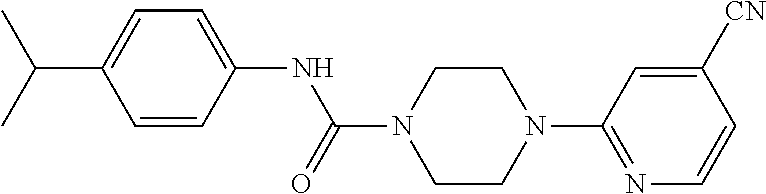


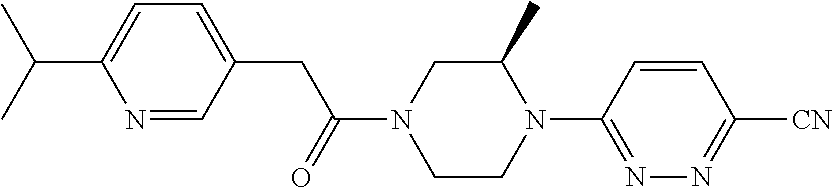


| TABLE 1 | |||||
| Synth- | |||||
| IC50 | Ki | etic | |||
| Michaelis | Morrison | Route | |||
| No. | Structure | μMa | nMb | ClogPc | # |
| 1 |
 |
0.844 | — | 3.3 | |
| 2 |
 |
>10 | — | 1.5 | I |
| 3 |
 |
>10 | — | 2.5 | I |
| 4 |
 |
>10 | — | 4.1 | |
| 5 |
 |
0.994 | — | 2.9 | I |
| 6 |
 |
>10 | — | 2.0 | |
| 7 |
 |
0.611 | — | 3.4 | I |
| 8 |
 |
>10 | — | 3.6 | I |
| 9 |
 |
1.376 | — | 3.5 | |
| 10 |
 |
>10 | — | 1.6 | |
| 11 |
 |
>10 | — | 2.7 | |
| 12 |
 |
>10 | — | 1.6 | I |
| 13 |
 |
>10 | — | 1.5 | I |
| 14 |
 |
>10 | — | 2.6 | |
| 15 |
 |
>10 | — | 2.5 | I |
| 16 |
 |
>10 | — | 3.2 | I |
| 17 |
 |
>10 | — | 1.6 | I |
| 18 |
 |
>10 | — | 2.9 | I |
| 19 |
 |
>10 | — | 2.4 | |
| 20 |
 |
>10 | — | 1.4 | I |
| 21 |
 |
>10 | — | 3.7 | I |
| 22 |
 |
>10 | — | 1.1 | I |
| 23 |
 |
>10 | — | 3.1 | |
| 24 |
 |
>10 | — | 2.5 | I |
| 25 |
 |
>10 | — | 1.2 | I |
| 26 |
 |
>10 | — | 2.5 | I |
| 27 |
 |
>10 | — | 1.6 | I |
| 28 |
 |
>10 | — | 2.9 | II |
| 29 |
 |
0.773 | — | 3.4 | |
| 30 |
 |
1.540 | — | 3.2 | II |
| 31 |
 |
0.122 | 3.6 | 3.3 | II |
| 32 |
 |
>10 | — | 3.7 | IV |
| 33 |
 |
0.370 | — | 2.9 | II |
| 34 |
 |
0.08 | 43 | 3.7 | II |
| 35 |
 |
6.89 | — | 3.3 | |
| 36 |
 |
3.084 | — | 3.8 | XVIII |
| 37 |
 |
>10 | — | 2.9 | XXIV |
| 38 |
 |
1.64 | — | 2.9 | XVIII |
| 39 |
 |
0.394 | — | 2.9 | |
| 40 |
 |
0.027 | 15 | 3.2 | XVIII |
| 41 |
 |
1.28 | — | 4.3 | XVIII |
| 42 |
 |
0.196 | — | 4.2 | XVIII |
| 43 |
 |
0.228 | — | 4.1 | XVIII |
| 44 |
 |
7.35 | — | 4.0 | XVIII |
| 45 |
 |
2.31 | — | 4.5 | XVIII |
| 46 |
 |
3.52 | — | 5.8 | XVIII |
| 47 |
 |
0.259 | — | 2.2 | |
| 48 |
 |
1.06 | — | 4.0 | XVIII |
| 49 |
 |
0.308 | — | 3.4 | |
| 50 |
 |
0.342 | — | 3.7 | VI |
| 51 |
 |
0.346 | — | 2.2 | V |
| 52 |
 |
0.024 | 11 | 2.7 | VI |
| 53 |
 |
0.14 | 74 | 2.2 | V |
| 54 |
 |
0.008 | 4 | 1.9 | |
| 55 |
 |
0.004 | 1 | 2.3 | VI |
| 56 |
 |
0.003 | 0.7 | 3.1 | |
| 57 |
 |
0.0018 | 0.22 | 3.5 | VI |
| 58 |
 |
>10 | — | 1.7 | |
| 59 |
 |
0.023 | 10.7 | 2.4 | |
| 60 |
 |
1.20 | — | 2.8 | |
| 61 |
 |
2.65 | — | 5.1 | XVIII |
| 62 |
 |
0.157 | — | 4.1 | |
| 63 |
 |
>10 | — | 0.9 | XVIII |
| 64 |
 |
>10 | — | 1.7 | II |
| 65 |
 |
0.378 | — | 1.4 | VIII |
| 66 |
 |
0.016 | 7.8 | 2.4 | V |
| 67 |
 |
7.63 | — | 3.0 | XX |
| 68 |
 |
0.007 | 2.8 | 1.9 | VI |
| 69 |
 |
0.441 | — | 2.3 | |
| 70 |
 |
7.02 | — | 2.4 | XIX |
| 71 |
 |
0.313 | — | 1.9 | IX |
| 72 |
 |
>10 | — | 1.3 | XV |
| 73 |
 |
0.0037 | 0.97 | 2.7 | VI |
| 74 |
 |
0.0064 | 1.8 | 3.9 | |
| 75 |
 |
>10 | — | 1.5 | I |
| 76 |
 |
0.0056 | 1.8 | 3.6 | III |
| 77 |
 |
0.043 | 20.8 | 3.6 | VI |
| 78 |
 |
0.469 | — | 2.7 | X |
| 79 |
 |
>100 | — | 2.7 | |
| 80 |
 |
0.107 | 55.7 | 2.9 | III |
| 81 |
 |
0.365 | — | 3.1 | XII |
| 82 |
 |
0.114 | 62.5 | 0.85 | XV |
| 83 |
 |
3.04 | — | 3.0 | X |
| 84 |
 |
0.017 | 9.1 | 2.7 | X |
| 85 |
 |
0.012 | 7.1 | 1.8 | X |
| 86 |
 |
0.052 | 26.6 | 1.8 | X |
| 87 |
 |
0.023 | 12.3 | 1.6 | X |
| 88 |
 |
0.069 | 36.3 | 2.0 | VII |
| 89 |
 |
0.545 | — | 1.6 | X |
| 90 |
 |
0.046 | 28.3 | 2.3 | X |
| 91 |
 |
0.068 | 35 | 1.6 | X |
| 92 |
 |
0.076 | 40.8 | 1.6 | X |
| 93 |
 |
>10 | — | −0.1 | XIII |
| 94 |
 |
0.0038 | 1.1 | 2.0 | X |
| 95 |
 |
0.116 | 51 | 1.7 | X |
| 96 |
 |
1.41 | — | 0.4 | X |
| 97 |
 |
>10 | — | 1.4 | X |
| 98 |
 |
0.365 | — | 1.7 | XIV |
| 99 |
 |
0.367 | — | 1.7 | |
| 100 |
 |
0.005 | 1.5 | 2.0 | X |
| 101 |
 |
>10 | — | 1.9 | XVII |
| 102 |
 |
0.643 | — | 2.3 | XVII |
| 103 |
 |
>10 | — | 2.2 | X |
| 104 |
 |
0.03 | 17 | 0.85 | XV |
| 105 |
 |
0.093 | 44.8 | 1.7 | |
| 106 |
 |
0.504 | 5.9 | 0.4 | XV |
| 107 |
 |
0.045 | 21.1 | 1.7 | X |
| 108 |
 |
0.029 | 14.1 | 3.0 | |
| 109 |
 |
0.0078 | 8.1 | 2.0 | XI |
| 110 |
 |
0.06 | 33.7 | 2.8 | III |
| 111 |
 |
>10 | — | 1.9 | VI |
| 112 |
 |
>10 | — | 1.6 | X |
| 113 |
 |
0.044 | 21 | 3.2 | VIII |
| 114 |
 |
0.682 | — | 2.4 | X |
| 115 |
 |
>10 | — | 1.5 | XI |
| 116 |
 |
0.024 | 12.5 | 3.7 | VI |
| 117 |
 |
0.006 | 1.8 | 3.7 | VI |
| 118 |
 |
0.335 | 5.0 | 1.5 | X |
| 119 |
 |
0.01 | 3.3 | 2.0 | |
| 120 |
 |
0.003 | 0.64 | 3.6 | VI |
| 121 |
 |
0.0059 | 1.4 | 2.9 | X |
| 122 |
 |
0.011 | 4.1 | 3.3 | XXI |
| 123 |
 |
0.002 | 0.13 | 2.9 | X |
| 124 |
 |
0.004 | 1.1 | 2.9 | X |
| 125 |
 |
>10 | — | 1.5 | VI |
| 126 |
 |
0.001 | 0.09 | 2.9 | X |
| 127 |
 |
>10 | — | 2.1 | X |
| 128 |
 |
0.006 | 1.3 | 2.5 | XXI |
| 129 |
 |
0.04 (22.4) | 22.4 | 2.0 | X |
| 130 |
 |
>10 | — | 1.9 | VI |
| 131 |
 |
0.022 | 9 | 1.4 | XV |
| 132 |
 |
0.03 | 12.6 | 1.4 | XV |
| 133 |
 |
0.017 | 9.7 | 2.6 | XXIII |
| 134 |
 |
0.024 | 10.6 | 2.6 | XXIII |
| 135 |
 |
0.06 | 38 | 2.0 | X |
| 136 |
 |
0.008 | 2.4 | 3.4 | X |
| 137 |
 |
0.002 | 0.27 | 3.4 | X |
| 138 |
 |
0.012 | 7.6 | 3.0 | III |
| 139 |
 |
0.011 | 4.7 | 3.0 | III |
| 140 |
 |
0.004 | 1 | 3.3 | X |
| 141 |
 |
0.006 | 1.7 | 3.3 | X |
| 142 |
 |
— | 1.5 | 1.9 | X |
| 143 |
 |
— | 1.6 | 3.2 | X |
| 144 |
 |
— | 2.5 | 2.5 | X |
| 145 |
 |
— | 1.5 | 2.5 | X |
| 146 |
 |
>10 | — | 1.8 | X |
| aMichaelis Menten % Activity = 100/(1 + (X/IC50)) | |||||
| bMorrison Ki, % activity = Vo*(1 − ((((Et + X + (Ki*(1 + (S/Km)))) − (((Et + X + (Ki*(1 + (S/Km))))∧2) − 4*Et*X)∧0.5))/(2*Et))) | |||||
| cClogP is calculated using ChemBioDraw Ultra 14.0 | |||||
- Leonardi, R.; Zhang, Y. M.; Rock, C. O.; Jackowski, S. Coenzyme A: back in action. Prog. Lipid Res. 2005, 44, 125-153.
- Jackowski, S.; Rock, C. O. Regulation of coenzyme A biosynthesis. J. Bacteriol. 1981, 148, 926-932.
- Zhou, B.; Westaway, S. K.; Levinson, B.; Johnson, M. A.; Gitschier, J.; Hayflick, S. J. A novel pantothenate kinase gene (PANK2) is defective in Hallervorden-Spatz syndrome. Nat. Genet. 2001, 28, 345-349.
- Zhang, Y. M.; Rock, C. O.; Jackowski, S. Feedback regulation of murine pantothenate kinase 3 by coenzyme A and coenzyme A thioesters. J Bio. Chem. 2005, 280, 32594-32601.
- Rock, C. O.; Karim, M. A.; Zhang, Y. M.; Jackowski, S. The murine pantothenate kinase (Pank1) gene encodes two differentially regulated pantothenate kinase isozymes. Gene 2002, 291, 35-43.
- Johnson, M. A.; Kuo, Y. M.; Westaway, S. K.; Parker, S. M.; Ching, K. H.; Gitschier, J.; Hayflick, S. J. Mitochondrial localization of human PANK2 and hypotheses of secondary iron accumulation in pantothenate kinase-associated neurodegeneration. Ann. N Y. Acad. Sci. 2004, 1012, 282-298.
- Kotzbauer, P. T.; Truax, A. C.; Trojanowski, J. Q.; Lee, V. M. Altered neuronal mitochondrial coenzyme A synthesis in neurodegeneration with brain iron accumulation caused by abnormal processing, stability, and catalytic activity of
mutant pantothenate kinase 2. J. Neurosci. 2005, 25, 689-698. - Kuo, Y. M.; Duncan, J. L.; Westaway, S. K.; Yang, H.; Nune, G.; Xu, E. Y.; Hayflick, S. J.; Gitschier, J. Deficiency of pantothenate kinase 2 (Pank2) in mice leads to retinal degeneration and azoospermia. Hum. Mol. Genet. 2005, 14, 49-57.
- Garcia, M.; Leonardi, R.; Zhang, Y. M.; Rehg, J. E.; Jackowski, S. Germline deletion of
pantothenate kinases - Leonardi, R.; Rehg, J. E.; Rock, C. O.; Jackowski,
S. Pantothenate Kinase 1 is required to support the metabolic transition from the fed to the fasted state. PloS one 2010, 5, e11107. - Leonardi, R.; Rock, C. O.; Jackowski, S. Pank1 deletion in leptin-deficient mice reduces hyperglycaemia and hyperinsulinaemia and modifies global metabolism without affecting insulin resistance.
Diabetologia 2014, 57, 1466-1475. - Sabatti, C.; Service, S. K.; Hartikainen, A. L.; Pouta, A.; Ripatti, S.; Brodsky, J.; Jones, C. G.; Zaitlen, N. A.; Varilo, T.; Kaakinen, M.; Sovio, U.; Ruokonen, A.; Laitinen, J.; Jakkula, E.; Coin, L.; Hoggart, C.; Collins, A.; Turunen, H.; Gabriel, S.; Elliot, P.; McCarthy, M. I.; Daly, M. J.; Jarvelin, M. R.; Freimer, N. B.; Peltonen, L. Genome-wide association analysis of metabolic traits in a birth cohort from a founder population. Nature Genet. 2009, 41, 35-46.
- Sharma, L. K.; Leonardi, R.; Lin, W.; Boyd, V. A.; Goktug, A.; Shelat, A. A.; Chen, T.; W.; Jackowski, S.; Rock, C. O., A High-Throughput Screen Reveals New Small-Molecule Activators and Inhibitors of Pantothenate Kinases J. Med. Chem. 2015, 58, 1563-1568.
- Shultz, M. D. Setting expectations in molecular optimizations: Strengths and limitations of commonly used composite parameters. Bioorg. Med. Chem. Lett. 2013, 23, 5980-5991.
- Leeson, P. D.; Springthorpe, B.: The influence of drug-like concepts on decision-making in medicinal chemistry. Nat. Rev. Drug. Discov. 2007, 6, 881-890.
Claims (16)


Priority Applications (1)
| Application Number | Priority Date | Filing Date | Title |
|---|---|---|---|
| US16/307,473 US10899734B2 (en) | 2016-06-23 | 2017-06-23 | Small molecule modulators of pantothenate kinases |
Applications Claiming Priority (3)
| Application Number | Priority Date | Filing Date | Title |
|---|---|---|---|
| US201662354012P | 2016-06-23 | 2016-06-23 | |
| US16/307,473 US10899734B2 (en) | 2016-06-23 | 2017-06-23 | Small molecule modulators of pantothenate kinases |
| PCT/US2017/039037 WO2017223474A1 (en) | 2016-06-23 | 2017-06-23 | Small molecule modulators of pantothenate kinases |
Related Parent Applications (1)
| Application Number | Title | Priority Date | Filing Date |
|---|---|---|---|
| PCT/US2017/039037 A-371-Of-International WO2017223474A1 (en) | 2016-06-23 | 2017-06-23 | Small molecule modulators of pantothenate kinases |
Related Child Applications (1)
| Application Number | Title | Priority Date | Filing Date |
|---|---|---|---|
| US17/120,800 Continuation US12552765B2 (en) | 2016-06-23 | 2020-12-14 | Small molecule modulators of pantothenate kinases |
Publications (2)
| Publication Number | Publication Date |
|---|---|
| US20190300499A1 US20190300499A1 (en) | 2019-10-03 |
| US10899734B2 true US10899734B2 (en) | 2021-01-26 |
Family
ID=60783428
Family Applications (2)
| Application Number | Title | Priority Date | Filing Date |
|---|---|---|---|
| US16/307,473 Active US10899734B2 (en) | 2016-06-23 | 2017-06-23 | Small molecule modulators of pantothenate kinases |
| US17/120,800 Active 2040-03-22 US12552765B2 (en) | 2016-06-23 | 2020-12-14 | Small molecule modulators of pantothenate kinases |
Family Applications After (1)
| Application Number | Title | Priority Date | Filing Date |
|---|---|---|---|
| US17/120,800 Active 2040-03-22 US12552765B2 (en) | 2016-06-23 | 2020-12-14 | Small molecule modulators of pantothenate kinases |
Country Status (13)
| Country | Link |
|---|---|
| US (2) | US10899734B2 (en) |
| EP (1) | EP3474667A4 (en) |
| JP (1) | JP7078555B2 (en) |
| KR (1) | KR102459256B1 (en) |
| CN (1) | CN109561680B (en) |
| AU (1) | AU2017281907B2 (en) |
| DO (1) | DOP2018000293A (en) |
| IL (1) | IL263649B (en) |
| MX (1) | MX383697B (en) |
| SA (1) | SA518400696B1 (en) |
| SG (1) | SG11201811023UA (en) |
| WO (1) | WO2017223474A1 (en) |
| ZA (1) | ZA201808099B (en) |
Cited By (3)
| Publication number | Priority date | Publication date | Assignee | Title |
|---|---|---|---|---|
| US11547709B2 (en) | 2017-12-27 | 2023-01-10 | St. Jude Children's Research Hospital, Inc. | Methods of treating disorders associated with castor |
| US11891378B2 (en) | 2017-12-27 | 2024-02-06 | St. Jude Children's Research Hospital, Inc. | Small molecule modulators of pantothenate kinases |
| US12552765B2 (en) | 2016-06-23 | 2026-02-17 | St. Jude Children's Research Hospital, Inc. | Small molecule modulators of pantothenate kinases |
Families Citing this family (10)
| Publication number | Priority date | Publication date | Assignee | Title |
|---|---|---|---|---|
| CA3106470A1 (en) * | 2018-07-17 | 2020-01-23 | Nippon Chemiphar Co., Ltd. | T-type calcium channel blocker |
| WO2020198526A2 (en) * | 2019-03-27 | 2020-10-01 | St. Jude Children's Research Hospital | Small molecule modulators of pank |
| EP3950059A4 (en) * | 2019-03-29 | 2023-01-11 | Nippon Chemiphar Co., Ltd. | USE OF T-TYPE CALCIUM CHANNEL BLOCKERS FOR THE TREATMENT OF PRURITIS |
| JP2022081710A (en) * | 2019-03-29 | 2022-06-01 | ユーティアイ リミテッド パートナーシップ | Use of t-type calcium channel blocker for treating rheumatoid arthritis |
| IL326597A (en) | 2019-10-07 | 2026-04-01 | Contineum Therapeutics Inc | Muscarinic acetylcholine m1 receptor antagonists |
| US11752149B2 (en) | 2019-12-02 | 2023-09-12 | Pipeline Therapeutics, Inc. | Muscarinic acetylcholine M1 receptor antagonists |
| EP4262814A4 (en) * | 2020-12-16 | 2025-02-26 | St. Jude Children's Research Hospital, Inc. | METHODS OF TREATING CASTOR-RELATED DISORDERS |
| US20240116892A1 (en) * | 2022-08-08 | 2024-04-11 | Ajax Therapeutics, Inc. | Heterocyclic amide and urea compounds as jak2 inhibitors |
| WO2026012398A1 (en) * | 2024-07-09 | 2026-01-15 | 长春金赛药业有限责任公司 | Small molecule modulator of pantothenate kinase pank, pharmaceutical composition and use thereof |
| CN119745886B (en) * | 2025-01-20 | 2026-04-14 | 中国药科大学 | Application of 4-isopropylphenyl acetylpiperazine in preparation of anti-Alzheimer disease drugs |
Citations (15)
| Publication number | Priority date | Publication date | Assignee | Title |
|---|---|---|---|---|
| US20030114517A1 (en) | 2000-09-14 | 2003-06-19 | Greenlee William J. | Substituted urea neuropeptide Y Y5 receptor antagonists |
| WO2004011441A1 (en) | 2002-07-26 | 2004-02-05 | Euro-Celtique S.A. | Pyridazinylpiperazine derivatives for treating pain |
| WO2004058754A1 (en) | 2002-12-24 | 2004-07-15 | Euro-Celtique S.A. | Benzoazolypiperazine derivatives having mglur1- and mglur5-antagonistic activity |
| US20060035884A1 (en) | 2004-05-20 | 2006-02-16 | Elan Pharmaceuticals, Inc. | N-cyclic sulfonamido inhibitors of gamma secretase |
| US20090306100A1 (en) | 2006-11-07 | 2009-12-10 | Joseph Barbosa | Methods of treating schizophrenia |
| US20100041663A1 (en) | 2008-07-18 | 2010-02-18 | Novartis Ag | Organic Compounds as Smo Inhibitors |
| US7754724B2 (en) | 2005-06-30 | 2010-07-13 | Dow Agrosciences Llc | N-substituted piperazines |
| US20100210594A1 (en) | 2007-07-27 | 2010-08-19 | Boehringer Ingelheim International Gmbh | Substituted arylsulfonylaminomethylphosphonic acid derivatives, their preparation and their use in the treatment of type i and ii diabetes mellitus |
| US20110021530A1 (en) | 2008-02-25 | 2011-01-27 | Xenon Pharmaceuticals Inc. | Pyridazine derivatives and their use as therapeutic agents in the treatment of skin disorders |
| US8153633B2 (en) | 2007-06-25 | 2012-04-10 | Amgen Inc. | Phthalazine compounds, compositions and methods of use |
| US8227467B2 (en) | 2003-06-12 | 2012-07-24 | Purdue Pharma L.P. | Therapeutic agents useful for treating pain |
| US20140275095A1 (en) | 2013-03-13 | 2014-09-18 | Janssen Pharmaceutica Nv | Substituted piperidine compounds and their use as orexin receptor modulators |
| US8975398B2 (en) | 2012-05-11 | 2015-03-10 | Abbvie Inc. | NAMPT inhibitors |
| WO2016168619A1 (en) | 2015-04-17 | 2016-10-20 | Indiana University Research And Technology Corporation | Hepatitis b viral assembly effectors |
| WO2017223474A1 (en) | 2016-06-23 | 2017-12-28 | St. Jude Children's Research Hospital | Small molecule modulators of pantothenate kinases |
Family Cites Families (18)
| Publication number | Priority date | Publication date | Assignee | Title |
|---|---|---|---|---|
| US4216212A (en) | 1978-06-08 | 1980-08-05 | The Procter & Gamble Company | Pyrazolidine anti-inflammatory composition and methods of use |
| AU6144098A (en) | 1997-02-14 | 1998-09-08 | Bayer Corporation | Amide derivatives as selective neuropeptide y receptor antagonists |
| CN1474810A (en) * | 2000-09-14 | 2004-02-11 | ���鹫˾ | Substituted urea, neuropeptide YY5 receptor antagonist |
| US20050256130A1 (en) | 2002-06-12 | 2005-11-17 | Chemocentryx, Inc. | Substituted piperazines |
| MXPA04012393A (en) | 2002-06-12 | 2005-06-17 | Chemocentryx | 1-aryl-4-substituted piperazines derivatives for use as ccr1 antagonists for the treatment of inflammation and immune disorders. |
| AU2004261249B2 (en) * | 2003-07-30 | 2008-09-04 | Xenon Pharmaceuticals Inc. | Pyridazine derivatives and their use as therapeutic agents |
| US8618097B2 (en) | 2007-07-05 | 2013-12-31 | Array Biopharma, Inc. | Pyrimidyl cyclopentanes as AKT protein kinase inhibitors |
| US8431608B2 (en) | 2007-08-17 | 2013-04-30 | Icagen Inc. | Heterocycles as potassium channel modulators |
| US20120058530A1 (en) | 2009-04-02 | 2012-03-08 | University Of Florida Research Foundation Inc. | Engineering the pathway for succinate production |
| MX2012002532A (en) | 2009-09-01 | 2012-04-11 | Novozymes Inc | Methods for improving malic acid production in filamentous fungi. |
| US9187772B2 (en) | 2010-09-01 | 2015-11-17 | University Of Florida Research Foundation, Inc. | L-malate production by metabolically engineered escherichia coli |
| DK2621481T4 (en) | 2010-09-27 | 2023-01-09 | Exelixis Inc | Dual inhibitors of MET and VEGF for the treatment of castration-resistant prostate cancer and osteoblastic bone metastases |
| ES2540956T3 (en) | 2011-07-01 | 2015-07-15 | Remynd Nv | 1,2,4-Thiadiazol-5-ylpiperazine derivatives useful in the treatment of neurodegenerative diseases |
| MX2020006754A (en) | 2017-12-27 | 2021-01-29 | St Jude Childrens Res Hospital Inc | SMALL MOLECULE MODULATORS OF PANTOTHENATO-KINASES. |
| WO2019133634A1 (en) | 2017-12-27 | 2019-07-04 | St. Jude Children's Research Hospital | Small molecule modulators of pantothenate kinases |
| JP7527967B2 (en) | 2017-12-27 | 2024-08-05 | セント ジュード チルドレンズ リサーチ ホスピタル,インコーポレイティド | Methods of Treating CASTOR-Related Disorders |
| CA3106470A1 (en) | 2018-07-17 | 2020-01-23 | Nippon Chemiphar Co., Ltd. | T-type calcium channel blocker |
| EP4262814A4 (en) | 2020-12-16 | 2025-02-26 | St. Jude Children's Research Hospital, Inc. | METHODS OF TREATING CASTOR-RELATED DISORDERS |
-
2017
- 2017-06-23 WO PCT/US2017/039037 patent/WO2017223474A1/en not_active Ceased
- 2017-06-23 SG SG11201811023UA patent/SG11201811023UA/en unknown
- 2017-06-23 US US16/307,473 patent/US10899734B2/en active Active
- 2017-06-23 JP JP2018566834A patent/JP7078555B2/en active Active
- 2017-06-23 EP EP17816310.1A patent/EP3474667A4/en active Pending
- 2017-06-23 MX MX2018015170A patent/MX383697B/en unknown
- 2017-06-23 CN CN201780043423.3A patent/CN109561680B/en active Active
- 2017-06-23 KR KR1020197000671A patent/KR102459256B1/en active Active
- 2017-06-23 AU AU2017281907A patent/AU2017281907B2/en active Active
-
2018
- 2018-11-29 ZA ZA2018/08099A patent/ZA201808099B/en unknown
- 2018-12-11 IL IL263649A patent/IL263649B/en unknown
- 2018-12-19 SA SA518400696A patent/SA518400696B1/en unknown
- 2018-12-21 DO DO2018000293A patent/DOP2018000293A/en unknown
-
2020
- 2020-12-14 US US17/120,800 patent/US12552765B2/en active Active
Patent Citations (17)
| Publication number | Priority date | Publication date | Assignee | Title |
|---|---|---|---|---|
| US20030114517A1 (en) | 2000-09-14 | 2003-06-19 | Greenlee William J. | Substituted urea neuropeptide Y Y5 receptor antagonists |
| WO2004011441A1 (en) | 2002-07-26 | 2004-02-05 | Euro-Celtique S.A. | Pyridazinylpiperazine derivatives for treating pain |
| WO2004058754A1 (en) | 2002-12-24 | 2004-07-15 | Euro-Celtique S.A. | Benzoazolypiperazine derivatives having mglur1- and mglur5-antagonistic activity |
| US20100004254A1 (en) | 2002-12-24 | 2010-01-07 | Purdue Pharma L.P. | Therapeutic agents useful for treating pain |
| US8227467B2 (en) | 2003-06-12 | 2012-07-24 | Purdue Pharma L.P. | Therapeutic agents useful for treating pain |
| US20060035884A1 (en) | 2004-05-20 | 2006-02-16 | Elan Pharmaceuticals, Inc. | N-cyclic sulfonamido inhibitors of gamma secretase |
| US20130072497A1 (en) | 2005-06-30 | 2013-03-21 | Dow Agrosciences Llc | N- substituted piperazines |
| US7754724B2 (en) | 2005-06-30 | 2010-07-13 | Dow Agrosciences Llc | N-substituted piperazines |
| US20090306100A1 (en) | 2006-11-07 | 2009-12-10 | Joseph Barbosa | Methods of treating schizophrenia |
| US8153633B2 (en) | 2007-06-25 | 2012-04-10 | Amgen Inc. | Phthalazine compounds, compositions and methods of use |
| US20100210594A1 (en) | 2007-07-27 | 2010-08-19 | Boehringer Ingelheim International Gmbh | Substituted arylsulfonylaminomethylphosphonic acid derivatives, their preparation and their use in the treatment of type i and ii diabetes mellitus |
| US20110021530A1 (en) | 2008-02-25 | 2011-01-27 | Xenon Pharmaceuticals Inc. | Pyridazine derivatives and their use as therapeutic agents in the treatment of skin disorders |
| US20100041663A1 (en) | 2008-07-18 | 2010-02-18 | Novartis Ag | Organic Compounds as Smo Inhibitors |
| US8975398B2 (en) | 2012-05-11 | 2015-03-10 | Abbvie Inc. | NAMPT inhibitors |
| US20140275095A1 (en) | 2013-03-13 | 2014-09-18 | Janssen Pharmaceutica Nv | Substituted piperidine compounds and their use as orexin receptor modulators |
| WO2016168619A1 (en) | 2015-04-17 | 2016-10-20 | Indiana University Research And Technology Corporation | Hepatitis b viral assembly effectors |
| WO2017223474A1 (en) | 2016-06-23 | 2017-12-28 | St. Jude Children's Research Hospital | Small molecule modulators of pantothenate kinases |
Non-Patent Citations (37)
| Title |
|---|
| Cecil Textbook of Medicine, edited by Bennet, J.C., and Plum F., 20th edition,vol. 1, 1004-1010, 1996. * |
| Cohen et al., Current Opinion in Chemical Biology, 3,459-465, 1999. * |
| Dansie et al. (2014) Physiological roles of the pantothenate kinases, Biochem. Soc. Trans. 42:1033-1036. |
| Dermeret al., Bio/Technology, 1994, 12:320. * |
| European Search Report and Written Opinion dated Oct. 29, 2019 by the European Patent Office for EP Application No. 17816310.1, filed on Jun. 23, 2017 and published as EP3474667 on May 1, 2019 (Applicant-St. Jude Children's Research Hospital, Inc.) (9 Pages). |
| European Search Report and Written Opinion dated Oct. 29, 2019 by the European Patent Office for EP Application No. 17816310.1, filed on Jun. 23, 2017 and published as EP3474667 on May 1, 2019 (Applicant—St. Jude Children's Research Hospital, Inc.) (9 Pages). |
| Freshney et al.,Culture of Animal Cells, A Manual of Basic Technique, Alan R. Liss, Inc., 1983, New York, p4. * |
| Garcia et al. (2012) Germline deletion of pantothenate kinases 1 and 2 reveals the key roles for CoA in postnatal metabolism, PLoS one 7: e40871. |
| International Preliminary Report on Patentability dated Dec. 25, 2018 by the International Searching Authority for International Application No. PCT/US2017/039037, filed on Jun. 23, 2017 and published as WO 2017/223474 on Dec. 28, 2017(Applicant-St. Jude Children's Research Hospital) (6 Pages). |
| International Preliminary Report on Patentability dated Dec. 25, 2018 by the International Searching Authority for International Application No. PCT/US2017/039037, filed on Jun. 23, 2017 and published as WO 2017/223474 on Dec. 28, 2017(Applicant—St. Jude Children's Research Hospital) (6 Pages). |
| International Search Report and Written Opinion dated Mar. 27, 2019 by the International Searching Authority for International Application No. PCT/US2018/067538, filed on Dec. 26, 2018 and published as on (Applicant-St. Jude Children's Research Hospital) (8 Pages). |
| International Search Report and Written Opinion dated Mar. 27, 2019 by the International Searching Authority for International Application No. PCT/US2018/067538, filed on Dec. 26, 2018 and published as on (Applicant—St. Jude Children's Research Hospital) (8 Pages). |
| International Search Report and Written Opinion dated Mar. 27, 2019 by the International Searching Authority for International Application No. PCT/US2018/067539, filed on Dec. 26, 2018 and published as on (Applicant-St. Jude Children's Research Hospital) (8 Pages). |
| International Search Report and Written Opinion dated Mar. 27, 2019 by the International Searching Authority for International Application No. PCT/US2018/067539, filed on Dec. 26, 2018 and published as on (Applicant—St. Jude Children's Research Hospital) (8 Pages). |
| International Search Report and Written Opinion were dated Mar. 21, 2019 by the International Searching Authority for International Application No. PCT/US2018/067536, filed on Dec. 26, 2018 (Applicant-St. Jude Children's Research Hospital) ( Pages). |
| International Search Report and Written Opinion were dated Mar. 21, 2019 by the International Searching Authority for International Application No. PCT/US2018/067536, filed on Dec. 26, 2018 (Applicant—St. Jude Children's Research Hospital) ( Pages). |
| International Search Report and Written Opinion were dated Nov. 9, 2017 by the International Searching Authority for International Application No. PCT/US2017/039037, filed on Jun. 23, 2017 and published as WO 2017/223474 on Dec. 28, 2017(Applicant-St. Jude Children's Research Hospital) (9 Pages). |
| International Search Report and Written Opinion were dated Nov. 9, 2017 by the International Searching Authority for International Application No. PCT/US2017/039037, filed on Jun. 23, 2017 and published as WO 2017/223474 on Dec. 28, 2017(Applicant—St. Jude Children's Research Hospital) (9 Pages). |
| Jackowski and Rock (1981) Regulation of coenzyme A biosynthesis. J. Bacteriol. 148: 926-932. |
| Johnson et al. (2004) Mitochondrial localization of human PANK2 and hypotheses of secondary iron accumulation in pantothenate kinase-associated neurodegeneration, Ann. N Y. Acad. Sci. 1012: 282-298. |
| Kotzbauer et al. (2005) Altered neuronal mitochondrial coenzyme A synthesis in neurodegeneration with brain iron accumulation caused by abnormal processing, stability, and catalytic activity of mutant pantothenate kinase 2, Neurosci. 25: 689-698. |
| Kuo et al. Deficiency of pantothenate kinase 2 (Pank2) in mice leads to retinal degeneration and azoospermia. Hum. Mol. Genet. (2005), 14, 49-57. |
| Leonardi et al. (2007) Localization and Regulation of Mouse Pantothenate Kinase 2, FEBS Lett. 581:4639-4644. |
| Leonardi et al. (2010) Pantothenate Kinase 1 is required to support the metabolic transition from the fed to the fasted state, PloS one 5: el1107. |
| Leonardi et al. (2014) Pank 1 deletion in leptin-deficient mice reduces hyperglycaemia and hyperinsulinaemia and modifies global metabolism without affecting insulin resistance, Diabetologia 57: 1466-1475. |
| PubChem Compound Summary for CID 121060331 deposited on Jun. 17, 2016 (Jun. 17, 2016) pp. 1-10. p. 3. |
| PubChem Compound Summary for CID 75373203 Create Date: Jul. 12, 2014 (Jul. 12, 2014) Date Accessed: Feb. 20, 2019 (Feb. 20, 2019); pg. 4, compound listed. |
| Pubmed Compound Summary for CID 110727414, ‘AKOS027640281’, U.S. National Library of Medicine, (2016), (https://pubchem.ncbi.nlm.nih.gov/compound/110727414); p3. |
| Pubmed Compound Summary for CID 110727414, 'AKOS027640281', U.S. National Library of Medicine, (2016), (https://pubchem.ncbi.nlm.nih.gov/compound/110727414); p3. |
| Pubmed Compound Summary for CID 53621124, ‘MolPort-020-021-215’, U.S. National Library of Medicine, (2011),(https://pubchem.ncbi.nlm.nih.gov/compound/53621124); p3. |
| Pubmed Compound Summary for CID 53621124, 'MolPort-020-021-215', U.S. National Library of Medicine, (2011),(https://pubchem.ncbi.nlm.nih.gov/compound/53621124); p3. |
| Sabatti et al., Genome-wide association analysis of metabolic traits in a birth cohort from a founder population. Nature Genet. (2009), 41, 35-46. |
| Sharma et. al. (2015) A High-Throughput Screen Reveals New Small-Molecule Activators and Inhibitors of Pantothenate Kinases, Med. Chem. 58: 1563-1568. |
| Tafesse et al. ‘Synthesis and evaluation of pyridazinylpiperazines as vanilloid receptor 1 antagonists’ Bioorganic & Medicinal Chemistry Letters, (2004) vol. 14, p. 5513-5519; p5515. |
| Tafesse et al. 'Synthesis and evaluation of pyridazinylpiperazines as vanilloid receptor 1 antagonists' Bioorganic & Medicinal Chemistry Letters, (2004) vol. 14, p. 5513-5519; p5515. |
| Zhang et al. (2006) Biochemical Properties of Human Pantothenate Kinase 2 Isoforms and Mutations Linked to Pantothenate Kinase-associated Neurodegeneration, J. Biol. Chem. 281:107-114. |
| Zhou et al. (2001) A novel pantothenate kinase gene (PANK2) is defective in Hallervorden-Spatz syndrome, Nat. Genet. 28: 345-349. |
Cited By (4)
| Publication number | Priority date | Publication date | Assignee | Title |
|---|---|---|---|---|
| US12552765B2 (en) | 2016-06-23 | 2026-02-17 | St. Jude Children's Research Hospital, Inc. | Small molecule modulators of pantothenate kinases |
| US11547709B2 (en) | 2017-12-27 | 2023-01-10 | St. Jude Children's Research Hospital, Inc. | Methods of treating disorders associated with castor |
| US11891378B2 (en) | 2017-12-27 | 2024-02-06 | St. Jude Children's Research Hospital, Inc. | Small molecule modulators of pantothenate kinases |
| US12545663B2 (en) | 2017-12-27 | 2026-02-10 | St. Jude Children's Research Hospital, Inc. | Small molecule modulators of pantothenate kinases |
Also Published As
| Publication number | Publication date |
|---|---|
| WO2017223474A1 (en) | 2017-12-28 |
| EP3474667A4 (en) | 2019-11-27 |
| US12552765B2 (en) | 2026-02-17 |
| IL263649B (en) | 2022-04-01 |
| AU2017281907A1 (en) | 2019-01-03 |
| IL263649A (en) | 2019-01-31 |
| KR20190022620A (en) | 2019-03-06 |
| EP3474667A1 (en) | 2019-05-01 |
| US20190300499A1 (en) | 2019-10-03 |
| MX2018015170A (en) | 2019-07-04 |
| CN109561680B (en) | 2021-07-13 |
| AU2017281907B2 (en) | 2021-10-21 |
| SG11201811023UA (en) | 2019-01-30 |
| CA3025260A1 (en) | 2017-12-28 |
| ZA201808099B (en) | 2019-07-31 |
| RU2019101613A3 (en) | 2020-12-03 |
| BR112018076441A2 (en) | 2019-04-09 |
| JP2019518764A (en) | 2019-07-04 |
| JP7078555B2 (en) | 2022-05-31 |
| US20210246113A1 (en) | 2021-08-12 |
| CN109561680A (en) | 2019-04-02 |
| SA518400696B1 (en) | 2023-01-09 |
| DOP2018000293A (en) | 2019-04-15 |
| NZ749147A (en) | 2024-04-26 |
| MX383697B (en) | 2025-03-14 |
| KR102459256B1 (en) | 2022-10-25 |
| RU2019101613A (en) | 2020-07-23 |
Similar Documents
| Publication | Publication Date | Title |
|---|---|---|
| US12552765B2 (en) | Small molecule modulators of pantothenate kinases | |
| US12545663B2 (en) | Small molecule modulators of pantothenate kinases | |
| US9206176B2 (en) | Substituted N-(3-(pyrimidin-4-yl)phenyl)acrylamide analogs as tyrosine receptor kinase BTK inhibitors | |
| US20250090526A1 (en) | Methods of treating disorders associated with castor | |
| US20150368208A1 (en) | Substituted N-(3-(Pyrimidin-4-YL)Phenyl)Acrylamide Analogs as Tyrosine Receptor Kinase BTK Inhibitors | |
| US12534451B2 (en) | Small molecule modulators of PanK | |
| WO2019133634A1 (en) | Small molecule modulators of pantothenate kinases | |
| CA3025260C (en) | Small molecule modulators of pantothenate kinases | |
| RU2764652C2 (en) | Low molecular pantothenate kinase modulators | |
| RU2797123C2 (en) | Low-molecular modulators of pantothenakinases | |
| US12486254B2 (en) | Uracil derivatives for stimulating read-through of premature termination codons | |
| BR112018076441B1 (en) | Small Molecule Modulators of Pantothenate Kinases and Their Uses | |
| HK40006981A (en) | Small molecule modulators of pantothenate kinases | |
| HK40006981B (en) | Small molecule modulators of pantothenate kinases |
Legal Events
| Date | Code | Title | Description |
|---|---|---|---|
| FEPP | Fee payment procedure |
Free format text: ENTITY STATUS SET TO UNDISCOUNTED (ORIGINAL EVENT CODE: BIG.); ENTITY STATUS OF PATENT OWNER: LARGE ENTITY Free format text: ENTITY STATUS SET TO UNDISCOUNTED (ORIGINAL EVENT CODE: BIG.); ENTITY STATUS OF PATENT OWNER: SMALL ENTITY |
|
| FEPP | Fee payment procedure |
Free format text: ENTITY STATUS SET TO SMALL (ORIGINAL EVENT CODE: SMAL); ENTITY STATUS OF PATENT OWNER: LARGE ENTITY Free format text: ENTITY STATUS SET TO SMALL (ORIGINAL EVENT CODE: SMAL); ENTITY STATUS OF PATENT OWNER: SMALL ENTITY |
|
| AS | Assignment |
Owner name: ST. JUDE CHILDREN'S RESEARCH HOSPITAL, TENNESSEE Free format text: ASSIGNMENT OF ASSIGNORS INTEREST;ASSIGNORS:SHARMA, LALIT KUMAR;LEE, RICHARD E.;ROCK, CHARLES O.;AND OTHERS;SIGNING DATES FROM 20160707 TO 20160708;REEL/FRAME:049663/0753 Owner name: ST. JUDE CHILDREN'S RESEARCH HOSPITAL, TENNESSEE Free format text: ASSIGNMENT OF ASSIGNORS INTEREST;ASSIGNOR:LIU, JIUYU;REEL/FRAME:049664/0058 Effective date: 20181116 |
|
| STPP | Information on status: patent application and granting procedure in general |
Free format text: NON FINAL ACTION MAILED |
|
| STPP | Information on status: patent application and granting procedure in general |
Free format text: RESPONSE TO NON-FINAL OFFICE ACTION ENTERED AND FORWARDED TO EXAMINER |
|
| STPP | Information on status: patent application and granting procedure in general |
Free format text: NON FINAL ACTION MAILED |
|
| STPP | Information on status: patent application and granting procedure in general |
Free format text: NOTICE OF ALLOWANCE MAILED -- APPLICATION RECEIVED IN OFFICE OF PUBLICATIONS |
|
| STPP | Information on status: patent application and granting procedure in general |
Free format text: PUBLICATIONS -- ISSUE FEE PAYMENT VERIFIED |
|
| STCF | Information on status: patent grant |
Free format text: PATENTED CASE |
|
| AS | Assignment |
Owner name: ST. JUDE CHILDREN'S RESEARCH HOSPITAL, INC., TENNESSEE Free format text: CORRECTIVE ASSIGNMENT TO CORRECT THE RECEIVING PARTY ASSIGNEE NAME TO READ AS ST. JUDE CHILDREN'S RESEARCH HOSPITAL, INC. PREVIOUSLY RECORDED ON REEL 049664 FRAME 0058. ASSIGNOR(S) HEREBY CONFIRMS THE ASSIGNMENT;ASSIGNOR:LIU, JIUYU;REEL/FRAME:057394/0741 Effective date: 20181116 Owner name: ST. JUDE CHILDREN'S RESEARCH HOSPITAL, INC., TENNESSEE Free format text: CORRECTIVE ASSIGNMENT TO CORRECT THE RECEIVING PARTY ASSIGNEE NAME TO READ AS ST. JUDE CHILDREN'S RESEARCH HOSPITAL, INC. PREVIOUSLY RECORDED ON REEL 049663 FRAME 0753. ASSIGNOR(S) HEREBY CONFIRMS THE ASSIGNMENT;ASSIGNORS:SHARMA, LALIT KUMAR;LEE, RICHARD E.;ROCK, CHARLES O.;AND OTHERS;SIGNING DATES FROM 20160707 TO 20160708;REEL/FRAME:057394/0711 |
|
| FEPP | Fee payment procedure |
Free format text: ENTITY STATUS SET TO UNDISCOUNTED (ORIGINAL EVENT CODE: BIG.); ENTITY STATUS OF PATENT OWNER: LARGE ENTITY |
|
| MAFP | Maintenance fee payment |
Free format text: PAYMENT OF MAINTENANCE FEE, 4TH YEAR, LARGE ENTITY (ORIGINAL EVENT CODE: M1551); ENTITY STATUS OF PATENT OWNER: LARGE ENTITY Year of fee payment: 4 |