US10885648B2 - Method of reconstructing three dimensional image using structured light pattern system - Google Patents
Method of reconstructing three dimensional image using structured light pattern system Download PDFInfo
- Publication number
- US10885648B2 US10885648B2 US16/186,463 US201816186463A US10885648B2 US 10885648 B2 US10885648 B2 US 10885648B2 US 201816186463 A US201816186463 A US 201816186463A US 10885648 B2 US10885648 B2 US 10885648B2
- Authority
- US
- United States
- Prior art keywords
- image
- relative position
- reference image
- dots
- captured image
- Prior art date
- Legal status (The legal status is an assumption and is not a legal conclusion. Google has not performed a legal analysis and makes no representation as to the accuracy of the status listed.)
- Expired - Fee Related, expires
Links
Images




Classifications
-
- G—PHYSICS
- G06—COMPUTING OR CALCULATING; COUNTING
- G06T—IMAGE DATA PROCESSING OR GENERATION, IN GENERAL
- G06T7/00—Image analysis
- G06T7/50—Depth or shape recovery
- G06T7/521—Depth or shape recovery from laser ranging, e.g. using interferometry; from the projection of structured light
-
- G—PHYSICS
- G06—COMPUTING OR CALCULATING; COUNTING
- G06T—IMAGE DATA PROCESSING OR GENERATION, IN GENERAL
- G06T15/00—3D [Three Dimensional] image rendering
- G06T15/06—Ray-tracing
-
- G—PHYSICS
- G01—MEASURING; TESTING
- G01B—MEASURING LENGTH, THICKNESS OR SIMILAR LINEAR DIMENSIONS; MEASURING ANGLES; MEASURING AREAS; MEASURING IRREGULARITIES OF SURFACES OR CONTOURS
- G01B11/00—Measuring arrangements characterised by the use of optical techniques
- G01B11/24—Measuring arrangements characterised by the use of optical techniques for measuring contours or curvatures
- G01B11/25—Measuring arrangements characterised by the use of optical techniques for measuring contours or curvatures by projecting a pattern, e.g. one or more lines, moiré fringes on the object
- G01B11/2513—Measuring arrangements characterised by the use of optical techniques for measuring contours or curvatures by projecting a pattern, e.g. one or more lines, moiré fringes on the object with several lines being projected in more than one direction, e.g. grids, patterns
-
- G—PHYSICS
- G06—COMPUTING OR CALCULATING; COUNTING
- G06T—IMAGE DATA PROCESSING OR GENERATION, IN GENERAL
- G06T7/00—Image analysis
- G06T7/70—Determining position or orientation of objects or cameras
-
- H—ELECTRICITY
- H04—ELECTRIC COMMUNICATION TECHNIQUE
- H04N—PICTORIAL COMMUNICATION, e.g. TELEVISION
- H04N13/00—Stereoscopic video systems; Multi-view video systems; Details thereof
- H04N13/20—Image signal generators
- H04N13/204—Image signal generators using stereoscopic image cameras
- H04N13/254—Image signal generators using stereoscopic image cameras in combination with electromagnetic radiation sources for illuminating objects
-
- H—ELECTRICITY
- H04—ELECTRIC COMMUNICATION TECHNIQUE
- H04N—PICTORIAL COMMUNICATION, e.g. TELEVISION
- H04N13/00—Stereoscopic video systems; Multi-view video systems; Details thereof
- H04N13/20—Image signal generators
- H04N13/271—Image signal generators wherein the generated image signals comprise depth maps or disparity maps
-
- G—PHYSICS
- G06—COMPUTING OR CALCULATING; COUNTING
- G06T—IMAGE DATA PROCESSING OR GENERATION, IN GENERAL
- G06T2207/00—Indexing scheme for image analysis or image enhancement
- G06T2207/10—Image acquisition modality
- G06T2207/10028—Range image; Depth image; 3D point clouds
-
- G—PHYSICS
- G06—COMPUTING OR CALCULATING; COUNTING
- G06T—IMAGE DATA PROCESSING OR GENERATION, IN GENERAL
- G06T2207/00—Indexing scheme for image analysis or image enhancement
- G06T2207/20—Special algorithmic details
- G06T2207/20021—Dividing image into blocks, subimages or windows
-
- G—PHYSICS
- G06—COMPUTING OR CALCULATING; COUNTING
- G06T—IMAGE DATA PROCESSING OR GENERATION, IN GENERAL
- G06T2211/00—Image generation
- G06T2211/40—Computed tomography
- G06T2211/416—Exact reconstruction
-
- H—ELECTRICITY
- H04—ELECTRIC COMMUNICATION TECHNIQUE
- H04N—PICTORIAL COMMUNICATION, e.g. TELEVISION
- H04N13/00—Stereoscopic video systems; Multi-view video systems; Details thereof
- H04N2013/0074—Stereoscopic image analysis
- H04N2013/0081—Depth or disparity estimation from stereoscopic image signals
Definitions
- the present inventive concept relates to a method of reconstructing a three dimensional image using a structured light pattern system.
- Structured light systems are used to reconstruct a three dimensional image of an object.
- the structured light systems perform various stereo matching algorithms that correlate patches of pixels in the captured image of the camera and the reference image of the projector, which demand massive computation for comparing and selecting a best-matched patch with excessive power consumption.
- the stereo matching algorithms may continue to access a memory storing the reference image while they are in operation.
- a method of reconstructing a three dimensional image using a structured light pattern system is provided as follows.
- a class identifier of an observed pixel on a captured image by a camera is extracted.
- the observed pixel has a coordinate (x, y) on the captured image.
- a first relative position of the x coordinate of the observed pixel in a tile domain of the captured image is calculated.
- a second relative position of one of a plurality of dots in a tile domain of a reference image using the extracted class identifier is calculated.
- a disparity of the observed pixel using the first relative position and the second relative position is calculated.
- a method of reconstructing a three dimensional image using a structured light pattern system is provided as follows.
- a projected image to be projected onto an object is generated from a reference image.
- the reference image includes a plurality of tiles.
- Each of the tiles includes a plurality of dots each of which is assigned to one of a plurality of class identifiers.
- a captured image is generated from the projected image onto the object.
- a class identifier of an observed pixel on the captured image is generated.
- a first relative position of the observed pixel in a tile domain of the captured image is calculated.
- a second relative position of one of the plurality of dots in a tile domain of the reference image is calculated using the extracted class identifier and a y coordinate of the observed pixel.
- a disparity of the observed pixel is calculated using the first relative position and the second relative position.
- a method of reconstructing a three dimensional image using a structured light pattern system is provided as follows.
- a reference image including a plurality of tiles is generated. Each of the tiles includes a plurality of dots each of which is assigned to one of a plurality of class identifiers.
- a projected image generated from the reference image is projected onto an object having a three-dimensional surface. The projected image onto the object is captured to generate a captured image.
- a class identifier from an observed pixel on the captured image is extracted. The observed pixel is translated into a tile domain of the captured image to generate a first relative position in the tile domain of the captured image.
- a second relative position of one of the plurality of dots in a tile domain of the reference image is calculated using the extracted class identifier.
- a disparity of the observed pixel is calculated using the first relative position and the second relative position.
- a three-dimensional profile of the object is generated using the disparity.
- FIG. 1 shows a block diagram of a structured light pattern system according to an exemplary embodiment of the present inventive concept
- FIG. 2 shows a process flow for generating a depth map using a structured light pattern system according to an exemplary embodiment of the present inventive concept
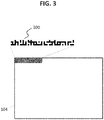
- FIG. 3 shows a reference image having structured-light patterns according to an exemplary embodiment of the present inventive concept
- FIG. 4A shows a plurality of class identifiers assigned to structured-light patterns of a reference image according to an exemplary embodiment of the present inventive concept
- FIG. 4B shows a plurality of class identifiers assigned in a sub-dot scale to structured-light patterns of a reference image according to an exemplary embodiment of the present inventive concept
- FIG. 5 shows a distribution of a plurality of class identifiers on a tile domain of a reference image according to an exemplary embodiment of the present inventive concept
- FIG. 6 shows rotation of structured patterns in a reference image at a predetermined rotation angle ⁇ according to an exemplary embodiment of the present inventive concept
- FIG. 7 shows a captured image of an object according to an exemplary embodiment of the present inventive concept.
- FIG. 1 shows a block diagram of a structured light pattern system 100 .
- the structured light pattern system 100 includes a projector 101 , a camera 102 and a processor 103 .
- the structured light pattern system 100 may be a stand-alone system.
- the present inventive concept is not limited thereto.
- the structured light pattern system 100 may be part of a handheld device, such as, but not limited to, a smartphone, a cellphone or a digital camera.
- the processor 103 sends a reference image 104 having a structured-light pattern to the projector 101 projecting the reference image 104 onto an object 105 .
- the object 105 is represented by a line for simplicity of description.
- the object 105 may include, but not limited to, a human face or a scene, for example.
- the processor 103 may be a microprocessor or a programmed software codes, a dedicated integrated circuit or a combination of both.
- the processor 103 may operate according to codes implemented completely via software, via software accelerated by a graphics processing unit (GPU) or a multicore system.
- the processor 103 may include a dedicated hardware implemented for the processing operations. Both hardware and software configurations may provide different stages of parallelism.
- the projector 101 and the camera 102 may be matched in the visible region or in the infrared light spectrum, which may not be visible to human eyes. For the convenience of description, it is assumed hereinafter that the projector 101 and the camera 102 are matched in the infrared light spectrum.
- the projector 101 may generate an infrared light having a projected image from the reference image 104 and illuminate the projected image onto the object 105 .
- the projector 101 may include a light source, such as a laser diode or light-emitting-diode (LED).
- the projected image may have a structured-light pattern rotated from that of the reference image 104 at a predetermined rotation angle. The rotation will be described in more detail with reference to FIG. 6 .
- the camera 102 captures the projected image onto the object 105 and generates a captured image 106 .
- the camera 102 may be an infrared camera having an infrared image sensor.
- the captured image 106 is transmitted to the processor 103 , and the processor 103 generates a depth map 107 of the object 105 .
- the processor 103 may calculate a disparity without correlating the reference image 104 and the captured image 106 , thereby reducing the amount of computation and power consumption, and thereby avoiding access to a memory storing the reference image 104 .
- FIG. 2 shows a process flow for generating the depth map 107 using the structured light pattern system 100 .
- FIG. 3 shows the reference image 104 having structured-light patterns.
- FIG. 4A shows a plurality of class identifiers assigned to structured-light patterns of the reference image 104 .
- FIG. 4B shows a plurality of class identifiers assigned in a sub-dot scale to structured-light patterns of the reference image 104 .
- FIG. 5 shows a distribution of a plurality of class identifier on a tile domain of the reference image 104 .
- FIG. 6 shows rotation of structured-light patterns in the reference image 104 at a predetermined rotation angle ⁇ .
- FIG. 7 shows the captured image 106 of the object 105 .
- the “tile domain” of the reference image 104 represents relative coordinates on which the plurality of dots of each tile are distributed with a unique relative location.
- a structured light pattern system that is used in the industry may perform a matching operation to identify, using various stereo matching algorithms, a conjugate pixel of the reference image 104 corresponding to an observed pixel of the captured image 106 .
- the matching algorithms may demand massive computation for comparison.
- the matching algorithms may also cause a high input/output (I/O) access to a memory storing the reference image 104 .
- I/O input/output
- the Kinetic performs the PrimeSense algorithm that extracts observed dots, then matches a patch around each dot, with corresponding patches in the reference image using the normalized cross correlation (NCC) algorithm.
- the NCC algorithm performs about twenty (20) NCC patch matches per pixel, with the minimum NCC score being selected. Then a sequential region growing process is performed to create a dense disparity map. Each of dot extraction, NCC patch matching, disparity selection and region growing takes considerable time with many pixel lookup and operations.
- x′ represents a first relative position of an observed pixel p c (x, y) within a tile domain of the captured image 106 , an observed position x of the observed pixel p c (x, y) being translated into the first relative position x′ (hereinafter, x′ will also be referred to as a translated position x′), x is a value of x coordinate in a row (or a horizontal direction) of the captured image 106 and y is a value of y coordinate in a column (or a vertical direction) of the captured image 106 .
- x_ref represents a second relative position of a dot corresponding to the observed pixel p c (x, y) within a tile domain of the reference image 104 , the second relative position x_ref of the dot being calculated using a function derived from a distribution of a plurality of class identifiers assigned to a plurality of dots of the reference image 104 (hereinafter, x_ref will be referred to as a conjugate reference position x_ref).
- Equation 2 The distribution of the class identifiers are fitted into Equation 2, and the function may be expressed as Equation 3 or Equation 4.
- Equation 3 The functions expressed in Equations 2, 3 and 4 each may represent a distribution of the plurality of class identifiers on the tile domain of the reference image 104 .
- Equations 2, 3 and 4 will be described below.
- the processor 103 generates the reference image 104 to be illuminated onto the object 105 .
- the reference image 104 includes a tile 300 that is repeated or tiled in both horizontal direction and vertical direction to completely fill the reference image 104 .
- the tile 300 is repeated ten times in the horizontal direction and 160 times in the vertical direction for the projector 101 having a VGA resolution, for example.
- the tile 300 may include a plurality of dots.
- the tile 300 includes 48 dots arranged in the horizontal direction, and four dots arranged in the vertical direction.
- the tile 300 includes 196 (48 ⁇ 4) dots.
- Each dot black or white
- Each dot has surrounding black or white dots uniquely arranged such that each dot and its surrounding black or white dots may constitute a unique pattern in the tile 300 .
- FIG. 4A shows a plurality of class identifiers id_z assigned to structured light patterns of the reference image 104 .
- the structured light patterns may include the plurality of dots uniquely arranged as shown in tile 300 of FIG. 3 .
- the present inventive concept is not limited thereto.
- the structured light patterns may include various patterns.
- the structured light patterns may include a binary encoded pattern or a star-like pattern.
- each of the class identifiers id_z is assigned to one of the plurality of dots in the tile 300 of the reference image 104 . Since the tile 300 has 192 unique patterns, each pattern (or each dot) may be classified with a unique class identifier among the class identifiers id_z having values from 1 to 192.
- the class identifiers id_z are assigned to the dots left-to-right in a row, then continue to be assigned left-to-right in the next row until the class identifiers id_z all are assigned to the dots in the tile 300 .
- the class identifiers id_z may be integers, and the integer values of the class identifiers id_z successively increase.
- FIG. 4B shows a plurality of class identifiers assigned in a sub-dot scale to structured-light patterns of the reference image 104 .
- each of the class identifiers id_z need to support sub-dot shifts of the structured-light patterns on the captured image 106 .
- each dot is additionally divided into a plurality of sub-dots, equal to the desired level of sub-dot precision. For example, each dot may be divided into 3 ⁇ 3 sub-dots such that the tile 300 includes 1728 (4 ⁇ 48 ⁇ 16) unique sub-dots.
- FIG. 4B shows partially the plurality of class identifiers.
- each dot having its corresponding class identifier id_z is represented by a point uniquely defined in the tile domain of the reference image 104 .
- the class identifiers id_z are distributed over the tile domain of the reference image 104 .
- the distribution of the class identifiers id_z in FIG. 4B may be visualized as shown in FIG. 5 .
- the class identifiers id_z are represented by values in the z-axis.
- the distribution of the class identifiers id_z may be fitted to a fitting function ID (y, x_ref) such that the fitting function ID (y, x_ref) may represent the distribution of the class identifiers over the tile domain of the tile 300 .
- Equation 3 the “mod” function returns the remainder after division of (z ⁇ 1) by (4*s), where (z ⁇ 1) is the dividend and (4*s) is the divisor.
- the reformulated function (y, z) of Equation 3 returns the second relative position x_ref within the tile domain of the reference image 104 .
- Equation 2 may be reformulated to calculate the second relative position x_ref as follows:
- Equation 4 For y, z, s and ⁇ , the reformulated function F x (y, z) of Equation 4 returns the second relative position x_ref the tile domain of the reference image 104 .
- step S 220 the projector 101 generates a projected image 400 from the reference image 104 and illuminates the projected image 400 onto the object 105 .
- the plurality of dots of the reference image 104 are transferred to the projected image 400 .
- the projected image 400 may be rotated at a predetermined rotation angle ⁇ as shown in FIG. 6 .
- the predetermined rotation angle ⁇ may be 12 degree, for example.
- the present inventive concept is not limited thereto.
- the predetermined rotation angle ⁇ may be an angle below 90 degree. [Please elaborate on what effects are obtained by the rotation.]
- step S 230 the camera 102 captures the projected image 400 onto the object 105 and generates the captured image 106 .
- FIG. 7 an exemplary captured image is shown.
- the object 105 that is three-dimensional may deform the projected image 400 along a three-dimensional surface profile of the object 105 .
- the resolutions of the projector 101 and the camera 102 may be different.
- the projector 101 may project the reference image 104 in a video graphics array (VGA) resolution (e.g., 640 ⁇ 480 pixels), and the camera 102 may have a resolution that is higher (e.g., 1280 ⁇ 720 pixels).
- VGA video graphics array
- the captured image 106 may be down-sampled and/or only the area illuminated by the projector 101 may be analyzed to generate the depth map 107 .
- the observed pixel p c (x, y) may need translation into the tile domain of the captured image 106 , thereby generating the first relative position x′ within the tile domain. Since the second relative position x_ref is a relative position within the tile domain of the reference image 104 , rather than the absolute position in an entire row in the reference image 104 , the observed position x of the observed pixel p c (x, y) need to be translated to the tile domain of the captured image 106 .
- the “tile domain” of the captured image 106 represents relative coordinates on which the plurality of projected dots of each projected tile onto the object 105 are distributed with a unique relative location within each projected tile of the captured image 106 . The translation will be described in detail with reference to step S 250 .
- step S 240 the processor 103 analyzes the captured image 106 to extract a class identifier id_z of the observed pixel p c (x, y), for example, from the captured image 106 .
- the processor 103 may scan the captured image 106 as shown in FIG. 7 line by line.
- the processor 103 moves a window 500 along a scan line 600 , thereby extracting a class identifier within a pixel of the window 500 using various algorithms. Examples of those various algorithms to extract a class identifier are provided in U.S. patent application Ser. No. 15/907,242 to Shi et al., of which specification is entirely incorporated herein by reference.
- step S 250 the processor 103 translates the observed pixel p c (x, y) into the tile domain of the captured image 106 , thereby generating the first relative position x′ for the observed pixel p c (x, y).
- the following equation may be used to calculate the first relative position x′ of the observed pixel p c (x, y): x ⁇ F (( x+x _offset) % (48* s ))*cos ⁇ (( y+y _offset) % (48* s*b ))*sin ⁇ , [Equation 5]
- step S 260 the processor 103 calculates the second reference position x_ref using the Equation 3 or Equation 4. With a row number (or y coordinate) of the observed pixel p c (x, y) in the captured image 106 and the class identifier id_z obtained in step S 240 , the Equation 3 returns the second relative position x_ref of a dot on the reference image 104 corresponding to the observed pixel p c (x, y) on the captured image 106 .
- step S 270 the processor 103 calculates a depth map using a disparity to reconstruct the three-dimensional surface profile of the object 105 .
- the processor 103 may calculate a disparity d according to the Equation 1, and reconstruct a three-dimensional surface profile of the object 105 using the disparity (d).
Landscapes
- Engineering & Computer Science (AREA)
- Physics & Mathematics (AREA)
- General Physics & Mathematics (AREA)
- Theoretical Computer Science (AREA)
- Computer Vision & Pattern Recognition (AREA)
- Multimedia (AREA)
- Signal Processing (AREA)
- Optics & Photonics (AREA)
- Computer Graphics (AREA)
- Electromagnetism (AREA)
- Length Measuring Devices By Optical Means (AREA)
- Image Processing (AREA)
Abstract
Description
d=x′−x_ref [Equation 1]
z=ID(y,x_ref) [Equation 2]
where z is a class identifier having an integer value between 1 to 1728, x_ref represents the second relative position in a row within the tile domain of the
x_ref=F x(y,z)
F x(y,z)=a*(z−mod(z−1,4*s)−1)+b*y [Equation 3]
-
- where,
- y is a y coordinate in the
reference image 104 that may be referred as a row number, which corresponds to a y coordinate of the capturedimage 106, - s is a horizontal dot sampling rate which corresponds to a number of pixels arranged horizontally in a dot,
- a=1/(4s·sin θ),
- b=1/tan θ,
- θ is a rotation angle which will defined with reference to
FIG. 6 , and - z is a pixel class identifier that is extracted in step S240.
-
- where,
- y is a y coordinate in the
reference image 104 - s is a horizontal dot sampling rate,
- z is a pixel class identifier that is extracted in step S240,
- a=1/(4s·sin θ), and
- b=1/tan θ.
x←F((x+x_offset) % (48*s))*cos θ−((y+y_offset) % (48*s*b))*sin θ, [Equation 5]
-
- wherein:
- x is a x coordinate in the captured
image 106, - y is a y coordinate in the captured
image 106 - % is a remainder operator,
- s is a horizontal dot sampling rate,
- z is a class identifier for the observed pixel pc (x, y),
- b=1/tan θ, and
- x_offset and y_offset that are system parameter set by a calibration of the structured
light pattern system 100.
Claims (20)
Priority Applications (2)
| Application Number | Priority Date | Filing Date | Title |
|---|---|---|---|
| US16/186,463 US10885648B2 (en) | 2018-07-20 | 2018-11-09 | Method of reconstructing three dimensional image using structured light pattern system |
| KR1020190022326A KR102724529B1 (en) | 2018-07-20 | 2019-02-26 | Method of reconstructing three dimensional image using structured light pattern system |
Applications Claiming Priority (2)
| Application Number | Priority Date | Filing Date | Title |
|---|---|---|---|
| US201862701500P | 2018-07-20 | 2018-07-20 | |
| US16/186,463 US10885648B2 (en) | 2018-07-20 | 2018-11-09 | Method of reconstructing three dimensional image using structured light pattern system |
Publications (2)
| Publication Number | Publication Date |
|---|---|
| US20200027228A1 US20200027228A1 (en) | 2020-01-23 |
| US10885648B2 true US10885648B2 (en) | 2021-01-05 |
Family
ID=69163135
Family Applications (1)
| Application Number | Title | Priority Date | Filing Date |
|---|---|---|---|
| US16/186,463 Expired - Fee Related US10885648B2 (en) | 2018-07-20 | 2018-11-09 | Method of reconstructing three dimensional image using structured light pattern system |
Country Status (2)
| Country | Link |
|---|---|
| US (1) | US10885648B2 (en) |
| KR (1) | KR102724529B1 (en) |
Families Citing this family (1)
| Publication number | Priority date | Publication date | Assignee | Title |
|---|---|---|---|---|
| EP4054187B1 (en) * | 2021-03-04 | 2024-08-21 | Essilor International | Calibration method of a portable electronic device |
Citations (7)
| Publication number | Priority date | Publication date | Assignee | Title |
|---|---|---|---|---|
| US20140219549A1 (en) | 2013-02-01 | 2014-08-07 | Electronics And Telecommunications Research Institute | Method and apparatus for active stereo matching |
| US20150145959A1 (en) * | 2013-11-26 | 2015-05-28 | Rowan University | Use of Spatially Structured Light for Dynamic Three Dimensional Reconstruction and Reality Augmentation |
| US20160245641A1 (en) | 2015-02-19 | 2016-08-25 | Microsoft Technology Licensing, Llc | Projection transformations for depth estimation |
| US9915827B2 (en) | 2014-08-12 | 2018-03-13 | Mantis Vision Ltd. | System, method and computer program product to project light pattern |
| US10008027B1 (en) | 2014-10-20 | 2018-06-26 | Henry Harlyn Baker | Techniques for determining a three-dimensional representation of a surface of an object from a set of images |
| US20190102044A1 (en) * | 2017-09-29 | 2019-04-04 | Apple Inc. | Depth-Based Touch Detection |
| US20190339369A1 (en) * | 2018-05-04 | 2019-11-07 | Microsoft Technology Licensing, Llc | Field Calibration of a Structured Light Range-Sensor |
Family Cites Families (3)
| Publication number | Priority date | Publication date | Assignee | Title |
|---|---|---|---|---|
| US20180213201A1 (en) | 2015-07-21 | 2018-07-26 | Heptagon Micro Optics Pte. Ltd. | Generating a disparity map based on stereo images of a scene |
| US10973581B2 (en) | 2016-06-17 | 2021-04-13 | 7D Surgical Inc. | Systems and methods for obtaining a structured light reconstruction of a 3D surface |
| KR101765257B1 (en) | 2016-08-12 | 2017-08-04 | 한국과학기술원 | Method for acquiring three dimensional image information, and computing device implementing the samemethod |
-
2018
- 2018-11-09 US US16/186,463 patent/US10885648B2/en not_active Expired - Fee Related
-
2019
- 2019-02-26 KR KR1020190022326A patent/KR102724529B1/en active Active
Patent Citations (7)
| Publication number | Priority date | Publication date | Assignee | Title |
|---|---|---|---|---|
| US20140219549A1 (en) | 2013-02-01 | 2014-08-07 | Electronics And Telecommunications Research Institute | Method and apparatus for active stereo matching |
| US20150145959A1 (en) * | 2013-11-26 | 2015-05-28 | Rowan University | Use of Spatially Structured Light for Dynamic Three Dimensional Reconstruction and Reality Augmentation |
| US9915827B2 (en) | 2014-08-12 | 2018-03-13 | Mantis Vision Ltd. | System, method and computer program product to project light pattern |
| US10008027B1 (en) | 2014-10-20 | 2018-06-26 | Henry Harlyn Baker | Techniques for determining a three-dimensional representation of a surface of an object from a set of images |
| US20160245641A1 (en) | 2015-02-19 | 2016-08-25 | Microsoft Technology Licensing, Llc | Projection transformations for depth estimation |
| US20190102044A1 (en) * | 2017-09-29 | 2019-04-04 | Apple Inc. | Depth-Based Touch Detection |
| US20190339369A1 (en) * | 2018-05-04 | 2019-11-07 | Microsoft Technology Licensing, Llc | Field Calibration of a Structured Light Range-Sensor |
Non-Patent Citations (1)
| Title |
|---|
| Fenallo, Sean Ryan et al., "HyperDepth: Learning Depth from Structured Light Without Matching", 2016 IEEE Conference on Computer Vision and Pattern Recognition (CVPR), Jun. 27-30, 2016, Las Vegas, NV, USA, pp. 5441-5450. |
Also Published As
| Publication number | Publication date |
|---|---|
| KR102724529B1 (en) | 2024-10-30 |
| US20200027228A1 (en) | 2020-01-23 |
| KR20200010006A (en) | 2020-01-30 |
Similar Documents
| Publication | Publication Date | Title |
|---|---|---|
| JP7350343B2 (en) | Method and system for generating three-dimensional images of objects | |
| US10771689B2 (en) | Image processing method and device, computer-readable storage medium and electronic device | |
| US10902668B2 (en) | 3D geometric modeling and 3D video content creation | |
| US10663567B2 (en) | Field calibration of a structured light range-sensor | |
| US9392262B2 (en) | System and method for 3D reconstruction using multiple multi-channel cameras | |
| US10973581B2 (en) | Systems and methods for obtaining a structured light reconstruction of a 3D surface | |
| US20180204329A1 (en) | Generating a Distance Map Based on Captured Images of a Scene | |
| US9546863B2 (en) | Three-dimensional measuring apparatus and control method therefor | |
| JP5633058B1 (en) | 3D measuring apparatus and 3D measuring method | |
| US20140139632A1 (en) | Depth imaging method and apparatus with adaptive illumination of an object of interest | |
| EP3392831A1 (en) | Three-dimensional sensor system and three-dimensional data acquisition method | |
| US20150229911A1 (en) | One method of binocular depth perception based on active structured light | |
| US10574956B2 (en) | System and method for automatic alignment and projection mapping | |
| US11030732B2 (en) | Information processing device, information processing system, and image processing method for generating a sum picture by adding pixel values of multiple pictures | |
| KR20160127057A (en) | Structured stereo | |
| US20180213201A1 (en) | Generating a disparity map based on stereo images of a scene | |
| US20190353477A1 (en) | Three-dimensional sensor system and three-dimensional data acquisition method | |
| US10885648B2 (en) | Method of reconstructing three dimensional image using structured light pattern system | |
| JP3988879B2 (en) | Stereo image generation method, stereo image generation apparatus, stereo image generation program, and recording medium | |
| US9721348B2 (en) | Apparatus and method for raw-cost calculation using adaptive window mask | |
| KR20160093769A (en) | Virtual Contents Creation Method and System with Space Matching Scheme | |
| CN117974885A (en) | Structured light three-dimensional reconstruction method and system | |
| JP4433907B2 (en) | Three-dimensional shape measuring apparatus and method | |
| US11854302B2 (en) | System and method for calibrating a three-dimensional scanning device | |
| KR101765257B1 (en) | Method for acquiring three dimensional image information, and computing device implementing the samemethod |
Legal Events
| Date | Code | Title | Description |
|---|---|---|---|
| FEPP | Fee payment procedure |
Free format text: ENTITY STATUS SET TO UNDISCOUNTED (ORIGINAL EVENT CODE: BIG.); ENTITY STATUS OF PATENT OWNER: LARGE ENTITY |
|
| AS | Assignment |
Owner name: SAMSUNG ELECTRONICS CO., LTD., KOREA, REPUBLIC OF Free format text: ASSIGNMENT OF ASSIGNORS INTEREST;ASSIGNORS:SHI, LILONG;WANG, YIBING MICHELLE;REEL/FRAME:048484/0788 Effective date: 20181108 |
|
| STPP | Information on status: patent application and granting procedure in general |
Free format text: NOTICE OF ALLOWANCE MAILED -- APPLICATION RECEIVED IN OFFICE OF PUBLICATIONS |
|
| STCF | Information on status: patent grant |
Free format text: PATENTED CASE |
|
| FEPP | Fee payment procedure |
Free format text: MAINTENANCE FEE REMINDER MAILED (ORIGINAL EVENT CODE: REM.); ENTITY STATUS OF PATENT OWNER: LARGE ENTITY |
|
| LAPS | Lapse for failure to pay maintenance fees |
Free format text: PATENT EXPIRED FOR FAILURE TO PAY MAINTENANCE FEES (ORIGINAL EVENT CODE: EXP.); ENTITY STATUS OF PATENT OWNER: LARGE ENTITY |
|
| STCH | Information on status: patent discontinuation |
Free format text: PATENT EXPIRED DUE TO NONPAYMENT OF MAINTENANCE FEES UNDER 37 CFR 1.362 |
|
| FP | Lapsed due to failure to pay maintenance fee |
Effective date: 20250105 |