US10868960B2 - Imaging apparatus - Google Patents
Imaging apparatus Download PDFInfo
- Publication number
- US10868960B2 US10868960B2 US16/449,411 US201916449411A US10868960B2 US 10868960 B2 US10868960 B2 US 10868960B2 US 201916449411 A US201916449411 A US 201916449411A US 10868960 B2 US10868960 B2 US 10868960B2
- Authority
- US
- United States
- Prior art keywords
- setting
- timing
- setting information
- user
- imaging apparatus
- Prior art date
- Legal status (The legal status is an assumption and is not a legal conclusion. Google has not performed a legal analysis and makes no representation as to the accuracy of the status listed.)
- Active
Links
Images




Classifications
-
- H04N5/232411—
-
- H—ELECTRICITY
- H04—ELECTRIC COMMUNICATION TECHNIQUE
- H04N—PICTORIAL COMMUNICATION, e.g. TELEVISION
- H04N23/00—Cameras or camera modules comprising electronic image sensors; Control thereof
- H04N23/60—Control of cameras or camera modules
- H04N23/617—Upgrading or updating of programs or applications for camera control
-
- G—PHYSICS
- G06—COMPUTING OR CALCULATING; COUNTING
- G06F—ELECTRIC DIGITAL DATA PROCESSING
- G06F3/00—Input arrangements for transferring data to be processed into a form capable of being handled by the computer; Output arrangements for transferring data from processing unit to output unit, e.g. interface arrangements
- G06F3/01—Input arrangements or combined input and output arrangements for interaction between user and computer
- G06F3/048—Interaction techniques based on graphical user interfaces [GUI]
- G06F3/0484—Interaction techniques based on graphical user interfaces [GUI] for the control of specific functions or operations, e.g. selecting or manipulating an object, an image or a displayed text element, setting a parameter value or selecting a range
- G06F3/04847—Interaction techniques to control parameter settings, e.g. interaction with sliders or dials
-
- H—ELECTRICITY
- H04—ELECTRIC COMMUNICATION TECHNIQUE
- H04N—PICTORIAL COMMUNICATION, e.g. TELEVISION
- H04N23/00—Cameras or camera modules comprising electronic image sensors; Control thereof
- H04N23/60—Control of cameras or camera modules
- H04N23/67—Focus control based on electronic image sensor signals
-
- H—ELECTRICITY
- H04—ELECTRIC COMMUNICATION TECHNIQUE
- H04N—PICTORIAL COMMUNICATION, e.g. TELEVISION
- H04N23/00—Cameras or camera modules comprising electronic image sensors; Control thereof
- H04N23/80—Camera processing pipelines; Components thereof
-
- H—ELECTRICITY
- H04—ELECTRIC COMMUNICATION TECHNIQUE
- H04N—PICTORIAL COMMUNICATION, e.g. TELEVISION
- H04N23/00—Cameras or camera modules comprising electronic image sensors; Control thereof
- H04N23/95—Computational photography systems, e.g. light-field imaging systems
- H04N23/951—Computational photography systems, e.g. light-field imaging systems by using two or more images to influence resolution, frame rate or aspect ratio
-
- H04N5/23212—
-
- H04N5/23229—
-
- H—ELECTRICITY
- H04—ELECTRIC COMMUNICATION TECHNIQUE
- H04N—PICTORIAL COMMUNICATION, e.g. TELEVISION
- H04N23/00—Cameras or camera modules comprising electronic image sensors; Control thereof
- H04N23/60—Control of cameras or camera modules
- H04N23/65—Control of camera operation in relation to power supply
- H04N23/651—Control of camera operation in relation to power supply for reducing power consumption by affecting camera operations, e.g. sleep mode, hibernation mode or power off of selective parts of the camera
Definitions
- the present disclosure relates to an imaging apparatus having a function that can be customized by a user regarding a setting of a predetermined function.
- JP 2004-334209 A discloses a method related to control of a control setting of a camera.
- JP 2004-334209 A discloses a control method for a camera.
- the control method includes a step of determining an elapsed time from power-off in the camera when the camera is powered on, a step of returning at least one control setting to a continuous value when the elapsed time is shorter than a predetermined threshold.
- the method further includes a step of returning at least one control setting to a default value when the elapsed time is longer than the predetermined threshold.
- the present disclosure provides an imaging apparatus capable of returning a changed setting to an original setting at the time of customization, at a timing desired by a user, when the user further temporarily changes the customized setting in accordance with the user's preference.
- an imaging apparatus that allows a user to register a setting of a predetermined function.
- the imaging apparatus includes a storage part and a controller.
- the storage part is configured to store setting information including a base setting which is a content of the setting registered by the user regarding the setting of the predetermined function.
- the controller is configured to change the setting information in accordance with an instruction by the user, and thereafter, to return a content of the changed setting information to the base setting at a predetermined timing.
- the controller sets a predetermined timing based on an instruction by the user.
- a changed setting can be returned to an original setting at the time of customization at a desired timing when the user further temporarily changes the customized setting in accordance with the user's preference, and the convenience of the user can be improved.
- FIG. 1 is a block diagram showing a configuration of a digital camera according to an embodiment of the present disclosure
- FIG. 2 is a diagram explaining a photo style
- FIG. 3 is a diagram explaining a my photo style
- FIG. 4 is a diagram explaining photo style setting information and my photo style setting information stored in the digital camera
- FIG. 5 is a diagram explaining the transition of setting information about the photo style
- FIG. 6 is a diagram explaining the relationship between the my photo style setting information before change and the changed my photo style setting information
- FIG. 7 is a diagram explaining a setting screen of reset timing to a registered content of the my photo style setting information
- FIG. 8 is a diagram showing a configuration example of reset timing setting information
- FIG. 9 is a diagram explaining a menu screen for resetting the temporarily changed my photo style setting information to a base setting
- FIG. 10 is a flowchart showing processing executed by a controller when a my photo style function is selected
- FIG. 11 is a flowchart showing reset processing of the my photo style setting information to the registered content
- FIG. 12 is a diagram explaining custom setting information
- FIG. 13 is a diagram explaining a setting screen of reset timing to a registered content of the custom setting information.
- FIG. 1 is a diagram showing a configuration of a digital camera according to an embodiment of the present disclosure
- a digital camera 100 captures an object and generates image data.
- the digital camera 100 according to the present embodiment has a function that allows a user to customize various settings (control parameters) in accordance with the user's preference.
- the digital camera 100 captures an object image formed via an optical system 110 with an image sensor 115 and generates image data.
- An image processor 120 performs various types of processing on the imaging data generated by the image sensor 115 to generate image data.
- a controller 135 records the image data generated by the image processor 120 in a memory card 142 mounted in a card slot 140 . Further, the controller 135 may display (reproduce) the image data recorded in the memory card 142 on a liquid crystal monitor 130 in accordance with an operation of an operation part 150 by the user.
- the optical system 110 includes a focus lens, a zoom lens, an optical image stabilizer (OIS), an aperture, a shutter, and the like.
- the various lenses included in the optical system 110 may be composed of any number of lenses or any group.
- the image sensor 115 captures an object image formed via the optical system 110 to generate imaging data.
- the image sensor 115 generates image data of a new frame at a predetermined frame rate (for example, 30 frames/second).
- the generation timing of imaging data and an electronic shutter operation in the image sensor 115 are controlled by the controller 135 .
- the image sensor 115 may use various image sensors such as a CMOS image sensor, a CCD image sensor, or an NMOS image sensor.
- the image processor 120 performs various types of processing on the imaging data output from the image sensor 115 to generate image data. Further, the image processor 120 performs various types of processing on the image data read out from the memory card 142 to generate an image to be displayed on the liquid crystal monitor 130 . Examples of various types of processing include white balance correction, gamma correction, YC conversion processing, electronic zoom processing, compression processing, expansion processing, and the like, but the various types of processing are not limited thereto.
- the image processor 120 may be constituted of a hardwired electronic circuit, or may be constituted of a microcomputer using a program, a processor, or the like.
- the liquid crystal monitor 130 is provided on the back surface of the digital camera 100 .
- the liquid crystal monitor 130 displays an image based on the image data processed by the image processor 120 .
- another monitor such as an organic EL monitor may be used.
- the controller 135 includes a CPU and integrally controls the operation of the entire digital camera 100 .
- the controller 135 may include, instead of the CPU, a processor configured with dedicated electronic circuits designed to achieve a predetermined function. That is, the controller 135 can be achieved by various processors such as a CPU, an MPU, a GPU, a DSU, an FPGA, and an ASIC. Controller 135 may be configured with one or more processors. The controller 135 may be configured with one semiconductor chip together with the image processor 120 and the like. Although not shown, the controller 135 incorporates a ROM. In addition, various programs such as auto focus control (AF control) executed by the controller 135 are stored in the ROM. Further, the controller 135 incorporates a RAM (not shown) that functions as an operation region of the CPU.
- AF control auto focus control
- the buffer memory 125 is a storage medium that functions as a work memory of the image processor 120 and the controller 135 .
- the buffer memory 125 is realized by a dynamic random access memory (DRAM) or the like.
- the card slot 140 is a unit in which the detachable memory card 142 is inserted.
- the memory card 142 can be connected to the card slot 140 electrically and mechanically.
- the memory card 142 is an external memory internally provided with a storing element such as a flash memory.
- the memory card 142 can store data such as image data generated by the image processor 120 .
- a flash memory 145 is a non-volatile storage medium.
- the operation part 150 is a general term of hard keys such as operation buttons and operation levers exteriorly mounted on the digital camera 100 , and receives operations by the user.
- the operation part 150 includes, for example, a release button, a mode dial, and a touch panel.
- the operation part 150 transmits an operation signal corresponding to the user operation to the controller 135 .
- a Wi-Fi module 155 is a communication module (circuit) that performs communication in accordance with the communication standard IEEE 802.11 or the Wi-Fi standard.
- the digital camera 100 can communicate with other devices equipped with the Wi-Fi module via the Wi-Fi module 155 .
- the digital camera 100 may communicate directly with other devices via the Wi-Fi module 155 or may communicate with other devices via an access point.
- a Bluetooth module 160 is a module (circuit) for performing communication in accordance with the communication standard 802.15.1, that is, the Bluetooth (registered trademark) standard.
- the digital camera 100 can perform communication conforming to the Bluetooth standard with other devices via the Bluetooth module 160 .
- the digital camera 100 has a plurality of shooting modes prepared in advance so that the user can easily shoot an image with a desired color tone and image quality.
- this shooting mode is called “photo style”.
- photo styles such as “standard”, “vivid”, “natural” and “monochrome” are prepared.
- Standard is a standard setting
- vivid is a mode that provides high saturation, high contrast, and vivid effects.
- Natural is a mode in which the contrast is low and a soft effect is obtained.
- “Monochrome” is a mode for obtaining a monochrome effect without tint.
- control parameters are set such that an image having an effect indicated by the photo style is captured. Specifically, for each photo style, values of control parameters of contrast, highlight, shadow, saturation, hue, sharpness, and noise reduction are set so as to obtain an effect indicated by each photo style.
- control parameters such as contrast and saturation can be changed for each photo style in accordance with the user's preference.
- the setting obtained by changing the control parameter of the photo style prepared in advance in accordance with the user's preference can be registered in the digital camera 100 as “my photo style”.
- my photo styles In the present embodiment, up to 10 my photo styles can be registered (by way of example and not limitation).
- FIG. 3 is a diagram explaining the my photo style.
- control parameters of contrast, highlight, shadow, saturation, hue, sharpness, and noise reduction can be set to values desired by the user.
- WB white balance
- FIG. 4 is a diagram explaining the photo style setting information and the my photo style setting information stored in the flash memory 145 .
- the registered setting of the my photo style can be temporarily changed in accordance with the user's preference.
- the user may want to finely adjust control parameters in accordance with a situation at a shooting site.
- the setting of the my photo style can be temporarily changed in accordance with the user's preference.
- the temporarily changed setting of the my photo style is to be returned to an original setting at a predetermined timing designated by the user.
- FIG. 5 is a diagram explaining the transition between photo style setting information 20 , my photo style setting information 40 , and my photo style setting information 40 a whose setting has been temporarily changed.
- the digital camera 100 stores the photo style setting information 20 set in advance.
- the user can change part of the contents of the photo style setting information 20 (that is, control parameters) in accordance with the user's preference. For example, with regard to the “natural” photo style, saturation and sharpness can be changed to user's favorite values.
- the photo style setting information 20 changed in accordance with the user's preference is registered in the digital camera 100 as the my photo style setting information 40 .
- the user can temporarily change (e.g., finely adjust) a part of the settings of the registered my photo style setting information 40 (hereinafter referred to as “base setting”) in accordance with conditions of a shooting site etc. (a difference in weather such as sunny or cloudy or a balance of a color of each shooting subject).
- the temporarily changed my photo style setting information 40 a is held in the digital camera 100 .
- the temporarily changed my photo style setting information 40 a may be returned to the original base setting, or the setting may be maintained as it is. Whether the temporary change is returned to the base setting or maintained when the digital camera 100 is powered off or the like is based on the designation by the user.
- FIG. 6 is a diagram explaining the storage state of the my photo style setting information in the flash memory 145 .
- the my photo style setting information 40 generated and registered by the user based on the photo style setting information 20 is stored in the storage area of the flash memory 145 .
- the my photo style setting information 40 related to the selected my photo style is copied to the work area.
- my photo style is selected by the user through operation of a mode dial or a predetermined button.
- the my photo style setting information 40 b is stored in the work area of the flash memory 145 . Thereafter, when a part of the setting of the my photo style is changed by the user, the my photo style setting information 40 b stored in the work area is changed based on the change.
- a setting 42 related to a my photo style 2 is changed by the user, and the my photo style setting information 40 b in the work area is changed in accordance with the change. That is, the my photo style setting information 40 b includes a setting 42 b related to the my photo style 2 after the change. In this manner, the change by the user is reflected in the my photo style setting information 40 b in the work area.
- the user can specify, for example, the following three timings as the timing for returning the my photo style setting information 40 b to the original setting (base setting).
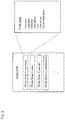
- FIG. 7 is a diagram explaining a setting screen for specifying the timing of resetting the my photo style setting information 40 b whose setting has been changed to the original base setting (registration content).
- a setting screen 132 is a screen related to the setting of the my photo style, and is displayed on the liquid crystal monitor 130 as one of menu setting screens.
- a setting screen 134 for setting the reset timing is displayed.
- the item “switch my photo style” on the setting screen 134 is, for example, an item for setting whether or not the changed my photo style setting information 40 b is returned to the base setting when the my photo style is switched to another my photo style through a mode dial operation. If “ON” is set, the my photo style setting information 40 b is reset by switching the my photo style, and if “OFF” is set, the my photo style setting information 40 b is maintained even if the my photo style is switched.
- the item “sleep mode” is an item for setting whether or not the changed my photo style setting information 40 b is changed to the base setting when the digital camera 100 is in the sleep mode.
- the item “power switch” is an item for setting whether or not the changed my photo style setting information 40 b is returned to the base setting when the power switch of the digital camera 100 is operated (OFF operation or ON operation).
- FIG. 8 shows an example of the reset timing setting information.
- the controller 135 calls the screen of the temporarily changed my photo style from the menu of the digital camera 100 , and further displays a call/registration menu 138 as shown in FIG. 9 on this screen.
- the setting of the temporarily changed my photo style setting information 40 b is returned to the base setting. As described above, it is possible to return the temporarily changed my photo style setting information 40 b to the base setting as needed by the user operation.
- FIG. 10 is a flowchart showing processing executed by the controller 135 when the my photo style is selected by the user.
- the controller 135 determines whether a new my photo style has been selected by the user (S 11 ). For example, the controller 135 determines whether a new my photo style has been selected based on an operation of a mode dial or a predetermined switch by the user.
- the controller 135 copies the setting information 40 (base setting) stored in the storage area of the selected my photo style to the work area (S 12 ).
- the controller 135 refers to the my photo style setting information 40 b stored in the work area, not in the storage area, to perform various settings related to the shooting operation.
- the controller 135 changes the setting value corresponding to the change in the my photo style setting information 40 b stored in the work area to a value finely adjusted (customized) by the user (S 14 ).
- the controller 135 can perform image capturing based on the setting reflecting the temporary change by referring to the my photo style setting information 40 b held in the work area.
- FIG. 11 is a flowchart showing reset processing of the my photo style setting information 40 a whose setting has been changed, which is executed by the controller 135 .
- the controller 135 detects whether or not a predetermined event has occurred (S 21 ).
- the predetermined event is an event related to the reset of the my photo style setting information 40 a whose setting has been changed, and is, for example, the power on of the digital camera 100 , return from the sleep mode, and switching of the my photo style.
- the controller 135 can refer to a reset timing setting information 136 to determine a predetermined event.
- the controller 135 When the occurrence of a predetermined event is detected (YES in S 21 ), the controller 135 refers to the reset timing setting information 136 stored in the flash memory 145 , and confirms whether or not the change of the my photo style setting information 40 a should be reset based on the detected event (S 22 ).
- the controller 135 determines that the change of the my photo style setting information 40 b should be reset. In contrast, if the detected predetermined event is “return from sleep mode” or “power on”, the controller 135 determines that the change of the my photo style setting information 40 a should not be reset.
- the controller 135 returns the my photo style setting information 40 b stored in the work area to the base setting (S 24 ). Specifically, the controller 135 copies the my photo style setting information 40 stored in the storage area to the work area. That is, the my photo style setting information 40 a stored in the work area is overwritten with the my photo style setting information 40 stored in the storage area. With this, the my photo style setting information 40 b in the work area, which is referred to by the controller 135 , is returned to the base setting.
- the controller 135 maintains the changed my photo style setting information 40 a (S 25 ).
- the user can specify the timing at which the changed setting of the my photo style setting information 40 a should be reset.
- the timing for returning the setting of the my photo style setting information 40 a temporarily changed by the user to the original setting can be set to a timing desired by the user, and the convenience of the user can be improved.
- the digital camera 100 may be powered off until the shutter chance of the subject comes in order to save energy.
- the shutter chance comes and the digital camera 100 is powered on
- the user needs to change (finely adjust) the my photo style again, so that the convenience of the user is lost. Therefore, by setting the temporary change of the my photo style not to be reset when the power switch is operated on the setting screen 134 as shown in FIG. 7 , it is possible to reduce the loss of the convenience of the user as described above.
- the digital camera 100 (an example of the imaging apparatus) according to the present embodiment is an imaging apparatus that allows the user to register the setting of the my photo style (an example of the predetermined function).
- the digital camera 100 includes the flash memory 145 (an example of a storage part) storing my the photo style setting information 40 including the base setting which is the content of the setting registered by the user regarding the setting of the my photo style, and the controller 135 that changes the my photo style setting information 40 in accordance with the instruction by the user, and then returns the contents of the changed my photo style setting information 40 a and 40 b to the base setting at a predetermined timing (power off, switching to sleep mode, etc.).
- the controller 135 sets a predetermined timing based on the instruction by the user.
- the predetermined timing is, for example, at least one of the timing at which the power switch of the digital camera 100 is operated, the timing at which the digital camera 100 transitions to the sleep mode or the timing at which the digital camera 100 returns from the sleep mode, and the timing at which the operation mode is switched.
- the user can specify the timing for returning the temporary change in the setting of the my photo style to the original base setting, and the convenience of the user can be improved.
- the configuration has been described in which the user can specify the timing for returning the setting temporarily changed by the user to the original base setting.
- Such control is not limited to the setting of the my photo style, but can be applied to other settings customized by the user in accordance with the user's preferences. This will be described below.
- the digital camera 100 has a custom mode that allows custom registrations of a plurality of settings including a photo style.
- the custom mode the user can collectively register a plurality of settings set in the digital camera 100 .
- FIG. 12 is a diagram explaining custom setting information which is setting information on the custom mode.
- Custom setting information includes combinations of various settings including a photo style setting, an auto focus (AF) setting, a shooting mode (M/A/S/P), shutter speed, an aperture value, exposure compensation, ISO sensitivity, white balance (WB), and a monitor display setting.
- the user sets each setting (control parameter) such as a photo style setting, a setting related to an auto focus (switching between auto focus and manual focus, setting of type of auto focus, etc.), a shooting mode (M/A/SIP), etc. to a desired value and registers the settings in the digital camera 100 as a custom registration. For example, up to 10 custom registrations may be registered.
- the user can set the digital camera 100 to a desired setting by selecting a desired one of the registered custom registrations.
- the user can temporarily change the setting of this custom registration as in the case of the my photo style setting. Furthermore, the user can designate the timing of restoring the temporary change as in the case of the my photo style setting.
- FIG. 13 is a diagram explaining a setting screen for specifying the timing of resetting the temporary change of the custom registration.
- the liquid crystal monitor 130 displays a setting screen 137 for setting the reset timing.
- the item “mode dial” on the setting screen 137 is an item for setting whether or not the temporarily changed setting of the selected custom registration is returned to the original setting when the mode dial is operated. If the setting is returned to the original setting of the custom registration, set it to “ON”, and if the changes are kept without returning to the original settings, set it to “OFF”.
- the item “sleep mode” is an item for setting whether or not the temporarily changed setting of the custom registration is returned to the original setting when the digital camera 100 is switched to the sleep mode.
- the item “power switch” is an item for setting whether or not the temporarily changed setting of the custom registration is reset to the original setting when the power switch of the digital camera 100 is operated (powered on or off).
- the contents set by the user on the setting screen 137 are stored in the flash memory 145 as reset timing setting information in the custom mode.
- the user can specify the timing of restoring the temporary change in the setting of the custom registration as in the case of the my photo style setting.
- the first embodiment has been described as an example of the technique disclosed in the present application.
- the technology in the present disclosure is not limited to this, and is applicable to embodiments in which changes, replacements, additions, omissions, and the like are appropriately made.
- each component described in the first and second embodiments may be combined to make a new embodiment.
- the setting of the my photo style setting and the custom registration is an example of the first setting.
- the first setting includes various digital camera settings that may be customized by the user in accordance with the user's preferences.
- the imaging apparatus may be an electronic device (for example, a video camera, a smartphone, a tablet terminal, and the like) having an image capturing function and a communication function.
- the present disclosure is useful for an imaging apparatus that allows a user to set control parameters in accordance with the user's preference.
Landscapes
- Engineering & Computer Science (AREA)
- Multimedia (AREA)
- Signal Processing (AREA)
- Theoretical Computer Science (AREA)
- General Engineering & Computer Science (AREA)
- Computing Systems (AREA)
- Human Computer Interaction (AREA)
- Physics & Mathematics (AREA)
- General Physics & Mathematics (AREA)
- Software Systems (AREA)
- Studio Devices (AREA)
- Exposure Control For Cameras (AREA)
Abstract
Description
Claims (10)
Applications Claiming Priority (2)
| Application Number | Priority Date | Filing Date | Title |
|---|---|---|---|
| JP2018122137A JP7065363B2 (en) | 2018-06-27 | 2018-06-27 | Imaging device |
| JP2018-122137 | 2018-06-27 |
Publications (2)
| Publication Number | Publication Date |
|---|---|
| US20200007785A1 US20200007785A1 (en) | 2020-01-02 |
| US10868960B2 true US10868960B2 (en) | 2020-12-15 |
Family
ID=69054835
Family Applications (1)
| Application Number | Title | Priority Date | Filing Date |
|---|---|---|---|
| US16/449,411 Active US10868960B2 (en) | 2018-06-27 | 2019-06-23 | Imaging apparatus |
Country Status (2)
| Country | Link |
|---|---|
| US (1) | US10868960B2 (en) |
| JP (1) | JP7065363B2 (en) |
Families Citing this family (1)
| Publication number | Priority date | Publication date | Assignee | Title |
|---|---|---|---|---|
| KR102546599B1 (en) * | 2018-10-12 | 2023-06-23 | 삼성전자주식회사 | Display apparatus, server and the control method thereof |
Citations (4)
| Publication number | Priority date | Publication date | Assignee | Title |
|---|---|---|---|---|
| JP2003289471A (en) | 2002-03-28 | 2003-10-10 | Fuji Photo Film Co Ltd | Imaging device |
| US6778770B1 (en) * | 2003-04-30 | 2004-08-17 | Hewlett-Packard Development Company, Lp. | Camera control settings with persistence based on elapsed time since power-off |
| JP2008078738A (en) | 2006-09-19 | 2008-04-03 | Ricoh Co Ltd | Imaging apparatus and control method thereof |
| US20080111886A1 (en) * | 2006-11-13 | 2008-05-15 | Samsung Electronics Co., Ltd | Image display device and method thereof |
Family Cites Families (4)
| Publication number | Priority date | Publication date | Assignee | Title |
|---|---|---|---|---|
| JPH1042175A (en) * | 1996-07-23 | 1998-02-13 | Canon Inc | Electronics |
| JP2001186406A (en) * | 1999-12-27 | 2001-07-06 | Olympus Optical Co Ltd | Electronic camera |
| JP4028358B2 (en) * | 2002-02-05 | 2007-12-26 | 株式会社リコー | Imaging apparatus, display control method, program, and recording medium |
| JP6149696B2 (en) * | 2013-11-07 | 2017-06-21 | ソニー株式会社 | Information processing apparatus, information processing method, and program |
-
2018
- 2018-06-27 JP JP2018122137A patent/JP7065363B2/en active Active
-
2019
- 2019-06-23 US US16/449,411 patent/US10868960B2/en active Active
Patent Citations (5)
| Publication number | Priority date | Publication date | Assignee | Title |
|---|---|---|---|---|
| JP2003289471A (en) | 2002-03-28 | 2003-10-10 | Fuji Photo Film Co Ltd | Imaging device |
| US6778770B1 (en) * | 2003-04-30 | 2004-08-17 | Hewlett-Packard Development Company, Lp. | Camera control settings with persistence based on elapsed time since power-off |
| JP2004334209A (en) | 2003-04-30 | 2004-11-25 | Hewlett-Packard Development Co Lp | Camera control setting method and camera provided with the method |
| JP2008078738A (en) | 2006-09-19 | 2008-04-03 | Ricoh Co Ltd | Imaging apparatus and control method thereof |
| US20080111886A1 (en) * | 2006-11-13 | 2008-05-15 | Samsung Electronics Co., Ltd | Image display device and method thereof |
Also Published As
| Publication number | Publication date |
|---|---|
| JP7065363B2 (en) | 2022-05-12 |
| US20200007785A1 (en) | 2020-01-02 |
| JP2020005091A (en) | 2020-01-09 |
Similar Documents
| Publication | Publication Date | Title |
|---|---|---|
| CN104247398B (en) | Picture pick-up device and its control method | |
| JP6911135B2 (en) | Imaging equipment, imaging methods, and programs | |
| US9609167B2 (en) | Imaging device capable of temporarily storing a plurality of image data, and control method for an imaging device | |
| US12407915B2 (en) | Imaging apparatus | |
| US11622175B2 (en) | Electronic apparatus and control method thereof | |
| US12177581B2 (en) | Image processing device, image processing method, image processing program, and imaging device | |
| US10868960B2 (en) | Imaging apparatus | |
| US11343438B1 (en) | Instant auto exposure control with multiple cameras | |
| US9912873B2 (en) | Image pickup apparatus equipped with display section and method of controlling the same | |
| JP2019071536A (en) | Imaging device | |
| US11523052B2 (en) | Electronic apparatus, control method of electronic apparatus, and non-transitory computer readable medium | |
| JP7233038B2 (en) | Imaging device | |
| US10212357B2 (en) | Imaging apparatus and control method to realize accurate exposure | |
| JP2012090041A (en) | Image processing device, method, and program | |
| JP2019205063A (en) | Imaging apparatus and control method and program thereof | |
| US11336802B2 (en) | Imaging apparatus | |
| JP2011151693A (en) | Image processing apparatus | |
| US12542865B2 (en) | Communication device and control device | |
| US20250184440A1 (en) | Imaging apparatus | |
| JP6624895B2 (en) | Image processing apparatus, imaging apparatus, control method, and program | |
| US20260046524A1 (en) | Image processing apparatus, image processing method, and non-transitory computer readable medium | |
| JP5942522B2 (en) | Imaging device | |
| JP2019062369A (en) | Image pickup apparatus and control method thereof, control method of electronic device thereof, program | |
| JP5082996B2 (en) | Imaging device | |
| US20060109356A1 (en) | Electronic camera |
Legal Events
| Date | Code | Title | Description |
|---|---|---|---|
| FEPP | Fee payment procedure |
Free format text: ENTITY STATUS SET TO UNDISCOUNTED (ORIGINAL EVENT CODE: BIG.); ENTITY STATUS OF PATENT OWNER: LARGE ENTITY |
|
| STPP | Information on status: patent application and granting procedure in general |
Free format text: DOCKETED NEW CASE - READY FOR EXAMINATION |
|
| AS | Assignment |
Owner name: PANASONIC INTELLECTUAL PROPERTY MANAGEMENT CO., LT Free format text: ASSIGNMENT OF ASSIGNORS INTEREST;ASSIGNOR:OSUKA, KYOSUKE;REEL/FRAME:051183/0305 Effective date: 20190618 Owner name: PANASONIC INTELLECTUAL PROPERTY MANAGEMENT CO., LTD., JAPAN Free format text: ASSIGNMENT OF ASSIGNORS INTEREST;ASSIGNOR:OSUKA, KYOSUKE;REEL/FRAME:051183/0305 Effective date: 20190618 |
|
| STPP | Information on status: patent application and granting procedure in general |
Free format text: PUBLICATIONS -- ISSUE FEE PAYMENT VERIFIED |
|
| STCF | Information on status: patent grant |
Free format text: PATENTED CASE |
|
| MAFP | Maintenance fee payment |
Free format text: PAYMENT OF MAINTENANCE FEE, 4TH YEAR, LARGE ENTITY (ORIGINAL EVENT CODE: M1551); ENTITY STATUS OF PATENT OWNER: LARGE ENTITY Year of fee payment: 4 |