US10858358B2 - S1PR2 antagonists and uses therefor - Google Patents
S1PR2 antagonists and uses therefor Download PDFInfo
- Publication number
- US10858358B2 US10858358B2 US16/586,498 US201916586498A US10858358B2 US 10858358 B2 US10858358 B2 US 10858358B2 US 201916586498 A US201916586498 A US 201916586498A US 10858358 B2 US10858358 B2 US 10858358B2
- Authority
- US
- United States
- Prior art keywords
- isopropyl
- pyridin
- pyrazolo
- dimethyl
- dichloropyridin
- Prior art date
- Legal status (The legal status is an assumption and is not a legal conclusion. Google has not performed a legal analysis and makes no representation as to the accuracy of the status listed.)
- Active
Links
- 0 C1=CC=NC=C1.CC.CC[Y]C[Y](C)[Y].[1*]N1N=C([2*])C2=C1N=CC=C2.[3*]C.[4*]C Chemical compound C1=CC=NC=C1.CC.CC[Y]C[Y](C)[Y].[1*]N1N=C([2*])C2=C1N=CC=C2.[3*]C.[4*]C 0.000 description 10
- ZDBCZKLBLIUHNJ-UHFFFAOYSA-N CC(C)C(=C[N+](=O)[O-])C(C)C.CC(C)C(=NC#N)C(C)C.CC(C)C1=C(C(C)C)C(=O)C1=O.CC(C)C1=NS(=O)(=O)N=C1C(C)C.CC(C)C1=NS(=O)N=C1C(C)C.CC(C)C1=NSN=C1C(C)C.CN=C(C(C)C)C(C)C Chemical compound CC(C)C(=C[N+](=O)[O-])C(C)C.CC(C)C(=NC#N)C(C)C.CC(C)C1=C(C(C)C)C(=O)C1=O.CC(C)C1=NS(=O)(=O)N=C1C(C)C.CC(C)C1=NS(=O)N=C1C(C)C.CC(C)C1=NSN=C1C(C)C.CN=C(C(C)C)C(C)C ZDBCZKLBLIUHNJ-UHFFFAOYSA-N 0.000 description 2
- AJMLOQIYNHYJDI-DAFNUICNSA-N CC1=NN(C)C2=NC(CN(C)/C(=N/C#N)N(C)C3=CC(Cl)=NC(Cl)=C3)=CC(C(C)C)=C12 Chemical compound CC1=NN(C)C2=NC(CN(C)/C(=N/C#N)N(C)C3=CC(Cl)=NC(Cl)=C3)=CC(C(C)C)=C12 AJMLOQIYNHYJDI-DAFNUICNSA-N 0.000 description 2
- ZQLQEGKCSXSPJU-QVTSOHHYSA-N CC1=NN(C)C2=NC(CN(C)/C(=N/C#N)N(CC3=CC=CC=C3)C3=CC(Cl)=NC(Cl)=C3)=CC(C(C)C)=C12 Chemical compound CC1=NN(C)C2=NC(CN(C)/C(=N/C#N)N(CC3=CC=CC=C3)C3=CC(Cl)=NC(Cl)=C3)=CC(C(C)C)=C12 ZQLQEGKCSXSPJU-QVTSOHHYSA-N 0.000 description 2
- CVGYNOCQHWTGOI-DNTJNYDQSA-N CCCCN(N/C(=C/C#N)NC1=CC(Cl)=NC(Cl)=C1)C1=CC(C(C)C)=C2C(C)=NN(C)C2=N1 Chemical compound CCCCN(N/C(=C/C#N)NC1=CC(Cl)=NC(Cl)=C1)C1=CC(C(C)C)=C2C(C)=NN(C)C2=N1 CVGYNOCQHWTGOI-DNTJNYDQSA-N 0.000 description 2
- UHYQDGSEOPSABZ-FWROZDFHSA-N BrCCCBr.CC1=NN(C)C2=C1C(C(C)C)=CC(CC/C(CC1=CC(Cl)=NC(Cl)=C1)=N/C#N)=N2.CC1=NN(C)C2=C1C(C(C)C)=CC(CN1CCCN(C3=CC(Cl)=NC(Cl)=C3)/C1=N\C#N)=N2 Chemical compound BrCCCBr.CC1=NN(C)C2=C1C(C(C)C)=CC(CC/C(CC1=CC(Cl)=NC(Cl)=C1)=N/C#N)=N2.CC1=NN(C)C2=C1C(C(C)C)=CC(CN1CCCN(C3=CC(Cl)=NC(Cl)=C3)/C1=N\C#N)=N2 UHYQDGSEOPSABZ-FWROZDFHSA-N 0.000 description 1
- ABMYMIMWYRLHKA-UHFFFAOYSA-N C1CCOC1.CC1=NN(C)C2=C1C(C(C)C)=CC(=O)N2.CC1=NN(C)C2=C1C(C(C)C)=CC(Br)=N2.CC1=NN(C)C2=C1C(C(C)C)=CC(C#N)=N2.CC1=NN(C)C2=C1C(C(C)C)=CC(CN)=N2.CCOC(=O)CC(=O)CC(C)C.CCOO.CN1N=CC=C1N Chemical compound C1CCOC1.CC1=NN(C)C2=C1C(C(C)C)=CC(=O)N2.CC1=NN(C)C2=C1C(C(C)C)=CC(Br)=N2.CC1=NN(C)C2=C1C(C(C)C)=CC(C#N)=N2.CC1=NN(C)C2=C1C(C(C)C)=CC(CN)=N2.CCOC(=O)CC(=O)CC(C)C.CCOO.CN1N=CC=C1N ABMYMIMWYRLHKA-UHFFFAOYSA-N 0.000 description 1
- UMWOZSHEFWQVDF-QPSGOUHRSA-O CC(C)c1cc(CN(C(C)C)/C(/Nc2cc(Cl)nc(Cl)c2)=C/C#N)nc2c1c(C)[nH+][n]2C Chemical compound CC(C)c1cc(CN(C(C)C)/C(/Nc2cc(Cl)nc(Cl)c2)=C/C#N)nc2c1c(C)[nH+][n]2C UMWOZSHEFWQVDF-QPSGOUHRSA-O 0.000 description 1
- MSKIMPGWRLUWRC-UHFFFAOYSA-N CC(C)c1cc(CN/C(/N(Cc2ccccc2)c2cc(Cl)nc(Cl)c2)=N/C#N)nc2c1c(C)n[n]2C Chemical compound CC(C)c1cc(CN/C(/N(Cc2ccccc2)c2cc(Cl)nc(Cl)c2)=N/C#N)nc2c1c(C)n[n]2C MSKIMPGWRLUWRC-UHFFFAOYSA-N 0.000 description 1
- KOXXDWWQKGXBTL-IUXPMGMMSA-N CC1=CC(C/C(=C\C#N)CCC2=NC3=C(C(C(C)C)=C2)C(C)=NN3C)=CC(Cl)=N1 Chemical compound CC1=CC(C/C(=C\C#N)CCC2=NC3=C(C(C(C)C)=C2)C(C)=NN3C)=CC(Cl)=N1 KOXXDWWQKGXBTL-IUXPMGMMSA-N 0.000 description 1
- RCVLCUIOBQQSLK-UHFFFAOYSA-N CC1=CC(CC(=O)CN(C)C2=NC3=C(C(N(C)C)=C2)C(C)=NN3C)=CC(Cl)=N1 Chemical compound CC1=CC(CC(=O)CN(C)C2=NC3=C(C(N(C)C)=C2)C(C)=NN3C)=CC(Cl)=N1 RCVLCUIOBQQSLK-UHFFFAOYSA-N 0.000 description 1
- LIZJCQZIRBEOHE-AQHIEDMUSA-N CC1=CC(N(/C(=C\C#N)N(C)CC2=CC(C(C)C)=C3C(C)=NN(C)C3=N2)C(C)C)=CC(Cl)=N1 Chemical compound CC1=CC(N(/C(=C\C#N)N(C)CC2=CC(C(C)C)=C3C(C)=NN(C)C3=N2)C(C)C)=CC(Cl)=N1 LIZJCQZIRBEOHE-AQHIEDMUSA-N 0.000 description 1
- MYEFHDSPLDQFJH-UYOCIXKTSA-N CC1=CC(N(/C(=C\C#N)NCC2=CC(C(C)C)=C3C(C)=NN(C)C3=N2)C(C)C)=CC(Cl)=N1 Chemical compound CC1=CC(N(/C(=C\C#N)NCC2=CC(C(C)C)=C3C(C)=NN(C)C3=N2)C(C)C)=CC(Cl)=N1 MYEFHDSPLDQFJH-UYOCIXKTSA-N 0.000 description 1
- NOGTYOUMVBXCFC-PNHLSOANSA-N CC1=CC(N(/C(=N\C#N)N(C)CC2=CC(C(C)C)=C3C(C)=NN(C)C3=N2)C(C)C)=CC(Cl)=N1 Chemical compound CC1=CC(N(/C(=N\C#N)N(C)CC2=CC(C(C)C)=C3C(C)=NN(C)C3=N2)C(C)C)=CC(Cl)=N1 NOGTYOUMVBXCFC-PNHLSOANSA-N 0.000 description 1
- GTRNJOSXEQYFJD-UHFFFAOYSA-N CC1=CC(N(/C(=N\C#N)NCC2=CC(C(C)C)=C3C(C)=NN(C)C3=N2)C(C)C)=CC(Cl)=N1 Chemical compound CC1=CC(N(/C(=N\C#N)NCC2=CC(C(C)C)=C3C(C)=NN(C)C3=N2)C(C)C)=CC(Cl)=N1 GTRNJOSXEQYFJD-UHFFFAOYSA-N 0.000 description 1
- ZQXQOMQSTZRRMA-WNFQYIGGSA-N CC1=CC(N(C)/C(=C\C#N)N(C)CC2=CC(C(C)C)=C3C(C)=NN(C)C3=N2)=CC(Cl)=N1 Chemical compound CC1=CC(N(C)/C(=C\C#N)N(C)CC2=CC(C(C)C)=C3C(C)=NN(C)C3=N2)=CC(Cl)=N1 ZQXQOMQSTZRRMA-WNFQYIGGSA-N 0.000 description 1
- IRNHGIXPZZMLLV-UHFFFAOYSA-N CC1=CC(N(C)CC(=O)CC2=CC(Cl)=NC(Cl)=C2)=NC2=C1C(N(C)C)=NN2C.CC1=NN(C)C2=C1C(C(C)C)=CC(C(=O)CC(=O)CC1=CC(Cl)=NC(Cl)=C1)=N2.CC1=NN(C)C2=C1C(C(C)C)=CC(N(C)CC(=O)CC1=CC(Cl)=NC(I)=C1)=N2.CC1=NN(C)C2=C1C(C(F)(F)F)=CC(N(C)CC(=O)CC1=CC(Cl)=NC(Cl)=C1)=N2.CC1=NN(C)C2=C1C(C(F)(F)F)=CC(NCC(=O)CC1=CC(Cl)=NC(Cl)=C1)=N2.CCN(CC(=O)CC1=CC(Cl)=NC(Cl)=C1)C1=NC2=C(C(C(C)C)=C1)C(C)=NN2C Chemical compound CC1=CC(N(C)CC(=O)CC2=CC(Cl)=NC(Cl)=C2)=NC2=C1C(N(C)C)=NN2C.CC1=NN(C)C2=C1C(C(C)C)=CC(C(=O)CC(=O)CC1=CC(Cl)=NC(Cl)=C1)=N2.CC1=NN(C)C2=C1C(C(C)C)=CC(N(C)CC(=O)CC1=CC(Cl)=NC(I)=C1)=N2.CC1=NN(C)C2=C1C(C(F)(F)F)=CC(N(C)CC(=O)CC1=CC(Cl)=NC(Cl)=C1)=N2.CC1=NN(C)C2=C1C(C(F)(F)F)=CC(NCC(=O)CC1=CC(Cl)=NC(Cl)=C1)=N2.CCN(CC(=O)CC1=CC(Cl)=NC(Cl)=C1)C1=NC2=C(C(C(C)C)=C1)C(C)=NN2C IRNHGIXPZZMLLV-UHFFFAOYSA-N 0.000 description 1
- JHTDPOXLUDYDDA-PPDIBHTLSA-N CC1=CC(N(CC2=CC=CC=C2)/C(=C\C#N)N(C)CC2=CC(C(C)C)=C3C(C)=NN(C)C3=N2)=CC(Cl)=N1 Chemical compound CC1=CC(N(CC2=CC=CC=C2)/C(=C\C#N)N(C)CC2=CC(C(C)C)=C3C(C)=NN(C)C3=N2)=CC(Cl)=N1 JHTDPOXLUDYDDA-PPDIBHTLSA-N 0.000 description 1
- NFFQZTLHBYIGKU-IOXNKQMXSA-N CC1=CN(C)C2=NC(C(C)N/C(=C/C#N)NC3=CC(Cl)=NC(Cl)=C3)=CC(C(C)C)=C12 Chemical compound CC1=CN(C)C2=NC(C(C)N/C(=C/C#N)NC3=CC(Cl)=NC(Cl)=C3)=CC(C(C)C)=C12 NFFQZTLHBYIGKU-IOXNKQMXSA-N 0.000 description 1
- ZYVJUODEJVANSU-UHFFFAOYSA-N CC1=CN(C)C2=NC(C(C)N/C(=N/C#N)NC3=CC(Cl)=NC(Cl)=C3)=CC(C(C)C)=C12 Chemical compound CC1=CN(C)C2=NC(C(C)N/C(=N/C#N)NC3=CC(Cl)=NC(Cl)=C3)=CC(C(C)C)=C12 ZYVJUODEJVANSU-UHFFFAOYSA-N 0.000 description 1
- DJOUFHPOXLHVOL-LIMNOBDPSA-N CC1=CN(C)C2=NC(CN(/C(=C/C#N)N(C)C3=CC(Cl)=NC(Cl)=C3)C(C)C)=CC(C(C)C)=C12 Chemical compound CC1=CN(C)C2=NC(CN(/C(=C/C#N)N(C)C3=CC(Cl)=NC(Cl)=C3)C(C)C)=CC(C(C)C)=C12 DJOUFHPOXLHVOL-LIMNOBDPSA-N 0.000 description 1
- QIRVXPPLKAWPSX-QPJQQBGISA-N CC1=CN(C)C2=NC(CN(/C(=C/C#N)NC3=CC(Cl)=NC(Cl)=C3)C(C)C)=CC(C(C)C)=C12 Chemical compound CC1=CN(C)C2=NC(CN(/C(=C/C#N)NC3=CC(Cl)=NC(Cl)=C3)C(C)C)=CC(C(C)C)=C12 QIRVXPPLKAWPSX-QPJQQBGISA-N 0.000 description 1
- XQAVCXBNYNMYAN-ZZIIXHQDSA-N CC1=CN(C)C2=NC(CN(/C(=N/C#N)N(C)C3=CC(Cl)=NC(Cl)=C3)C(C)C)=CC(C(C)C)=C12 Chemical compound CC1=CN(C)C2=NC(CN(/C(=N/C#N)N(C)C3=CC(Cl)=NC(Cl)=C3)C(C)C)=CC(C(C)C)=C12 XQAVCXBNYNMYAN-ZZIIXHQDSA-N 0.000 description 1
- RTGLJNXOBLFQLI-UHFFFAOYSA-N CC1=CN(C)C2=NC(CN(/C(=N/C#N)NC3=CC(Cl)=NC(Cl)=C3)C(C)C)=CC(C(C)C)=C12 Chemical compound CC1=CN(C)C2=NC(CN(/C(=N/C#N)NC3=CC(Cl)=NC(Cl)=C3)C(C)C)=CC(C(C)C)=C12 RTGLJNXOBLFQLI-UHFFFAOYSA-N 0.000 description 1
- UPOJJLDTETUGBQ-YXSASFKJSA-N CC1=CN(C)C2=NC(CN(C)/C(=C/C#N)N(C)C3=CC(Cl)=NC(Cl)=C3)=CC(C(C)C)=C12 Chemical compound CC1=CN(C)C2=NC(CN(C)/C(=C/C#N)N(C)C3=CC(Cl)=NC(Cl)=C3)=CC(C(C)C)=C12 UPOJJLDTETUGBQ-YXSASFKJSA-N 0.000 description 1
- SEOVAKJDLNIBHM-CGOBSMCZSA-N CC1=CN(C)C2=NC(CN(C)/C(=C/C#N)NC3=CC(Cl)=NC(Cl)=C3)=CC(C(C)C)=C12 Chemical compound CC1=CN(C)C2=NC(CN(C)/C(=C/C#N)NC3=CC(Cl)=NC(Cl)=C3)=CC(C(C)C)=C12 SEOVAKJDLNIBHM-CGOBSMCZSA-N 0.000 description 1
- WCEIURWLRHAZOM-ROMGYVFFSA-N CC1=CN(C)C2=NC(CN(C)/C(=N/C#N)N(C)C3=CC(Cl)=NC(Cl)=C3)=CC(C(C)C)=C12 Chemical compound CC1=CN(C)C2=NC(CN(C)/C(=N/C#N)N(C)C3=CC(Cl)=NC(Cl)=C3)=CC(C(C)C)=C12 WCEIURWLRHAZOM-ROMGYVFFSA-N 0.000 description 1
- UXTOZAFYAILWID-UHFFFAOYSA-N CC1=CN(C)C2=NC(CN(C)/C(=N/C#N)NC3=CC(Cl)=NC(Cl)=C3)=CC(C(C)C)=C12 Chemical compound CC1=CN(C)C2=NC(CN(C)/C(=N/C#N)NC3=CC(Cl)=NC(Cl)=C3)=CC(C(C)C)=C12 UXTOZAFYAILWID-UHFFFAOYSA-N 0.000 description 1
- JHMLNJSNCRMLCU-LUOAPIJWSA-N CC1=CN(C)C2=NC(CN(CC3=CC=CC=C3)/C(=C/C#N)N(C)C3=CC(Cl)=NC(Cl)=C3)=CC(C(C)C)=C12 Chemical compound CC1=CN(C)C2=NC(CN(CC3=CC=CC=C3)/C(=C/C#N)N(C)C3=CC(Cl)=NC(Cl)=C3)=CC(C(C)C)=C12 JHMLNJSNCRMLCU-LUOAPIJWSA-N 0.000 description 1
- ZOMUGENOPOVGGC-NSKAYECMSA-N CC1=CN(C)C2=NC(CN(CC3=CC=CC=C3)/C(=C/C#N)NC3=CC(Cl)=NC(Cl)=C3)=CC(C(C)C)=C12 Chemical compound CC1=CN(C)C2=NC(CN(CC3=CC=CC=C3)/C(=C/C#N)NC3=CC(Cl)=NC(Cl)=C3)=CC(C(C)C)=C12 ZOMUGENOPOVGGC-NSKAYECMSA-N 0.000 description 1
- IGEPBOSUJVNGKR-VEWQFJOQSA-N CC1=CN(C)C2=NC(CN(CC3=CC=CC=C3)/C(=N/C#N)N(C)C3=CC(Cl)=NC(Cl)=C3)=CC(C(C)C)=C12 Chemical compound CC1=CN(C)C2=NC(CN(CC3=CC=CC=C3)/C(=N/C#N)N(C)C3=CC(Cl)=NC(Cl)=C3)=CC(C(C)C)=C12 IGEPBOSUJVNGKR-VEWQFJOQSA-N 0.000 description 1
- MDYINSRDSQOIHY-UHFFFAOYSA-N CC1=CN(C)C2=NC(CN(CC3=CC=CC=C3)/C(=N/C#N)NC3=CC(Cl)=NC(Cl)=C3)=CC(C(C)C)=C12 Chemical compound CC1=CN(C)C2=NC(CN(CC3=CC=CC=C3)/C(=N/C#N)NC3=CC(Cl)=NC(Cl)=C3)=CC(C(C)C)=C12 MDYINSRDSQOIHY-UHFFFAOYSA-N 0.000 description 1
- XMDHOVXXEOKEEN-IOXNKQMXSA-N CC1=CN(C)C2=NC(CN/C(=C/C#N)N(C)C3=CC(Cl)=NC(Cl)=C3)=CC(C(C)C)=C12 Chemical compound CC1=CN(C)C2=NC(CN/C(=C/C#N)N(C)C3=CC(Cl)=NC(Cl)=C3)=CC(C(C)C)=C12 XMDHOVXXEOKEEN-IOXNKQMXSA-N 0.000 description 1
- DEGBNJNSZOIXMR-KALUYTGESA-N CC1=CN(C)C2=NC(CN/C(=C/C#N)N(CC3=CC=CC=C3)C3=CC(Cl)=NC(Cl)=C3)=CC(C(C)C)=C12 Chemical compound CC1=CN(C)C2=NC(CN/C(=C/C#N)N(CC3=CC=CC=C3)C3=CC(Cl)=NC(Cl)=C3)=CC(C(C)C)=C12 DEGBNJNSZOIXMR-KALUYTGESA-N 0.000 description 1
- KOQHDPYQJPPNJI-IPKBDRFQSA-N CC1=CN(C)C2=NC(CN/C(=C/C#N)NC3=CC(Cl)=NC(Cl)=C3)=CC(C(C)C)=C12 Chemical compound CC1=CN(C)C2=NC(CN/C(=C/C#N)NC3=CC(Cl)=NC(Cl)=C3)=CC(C(C)C)=C12 KOQHDPYQJPPNJI-IPKBDRFQSA-N 0.000 description 1
- JMYYKXAUCRZUNJ-UHFFFAOYSA-N CC1=CN(C)C2=NC(CN/C(=N/C#N)N(C)C3=CC(Cl)=NC(Cl)=C3)=CC(C(C)C)=C12 Chemical compound CC1=CN(C)C2=NC(CN/C(=N/C#N)N(C)C3=CC(Cl)=NC(Cl)=C3)=CC(C(C)C)=C12 JMYYKXAUCRZUNJ-UHFFFAOYSA-N 0.000 description 1
- ZDLSUUVAESPLAJ-UHFFFAOYSA-N CC1=CN(C)C2=NC(CN/C(=N/C#N)N(CC3=CC=CC=C3)C3=CC(Cl)=NC(Cl)=C3)=CC(C(C)C)=C12 Chemical compound CC1=CN(C)C2=NC(CN/C(=N/C#N)N(CC3=CC=CC=C3)C3=CC(Cl)=NC(Cl)=C3)=CC(C(C)C)=C12 ZDLSUUVAESPLAJ-UHFFFAOYSA-N 0.000 description 1
- RGSLXIUOFJGFSZ-UHFFFAOYSA-N CC1=CN(C)C2=NC(CN/C(=N/C#N)NC3=CC(Cl)=NC(Cl)=C3)=CC(C(C)C)=C12 Chemical compound CC1=CN(C)C2=NC(CN/C(=N/C#N)NC3=CC(Cl)=NC(Cl)=C3)=CC(C(C)C)=C12 RGSLXIUOFJGFSZ-UHFFFAOYSA-N 0.000 description 1
- ZLHUZTNMBFZHRO-HCDFXORVSA-N CC1=CN(C)C2=NC(CN3CCCN(C4=CC(Cl)=NC(Cl)=C4)/C3=C\C#N)=CC(C(C)C)=C12 Chemical compound CC1=CN(C)C2=NC(CN3CCCN(C4=CC(Cl)=NC(Cl)=C4)/C3=C\C#N)=CC(C(C)C)=C12 ZLHUZTNMBFZHRO-HCDFXORVSA-N 0.000 description 1
- MIBQTWSXTBPUSK-VYIQYICTSA-N CC1=CN(C)C2=NC(CN3CCCN(C4=CC(Cl)=NC(Cl)=C4)/C3=N\C#N)=CC(C(C)C)=C12 Chemical compound CC1=CN(C)C2=NC(CN3CCCN(C4=CC(Cl)=NC(Cl)=C4)/C3=N\C#N)=CC(C(C)C)=C12 MIBQTWSXTBPUSK-VYIQYICTSA-N 0.000 description 1
- HHHDXGNKZIKKJL-SQFVCTCFSA-N CC1=CN(C)C2=NC(CN3CCN(C4=CC(Cl)=NC(Cl)=C4)/C3=C\C#N)=CC(C(C)C)=C12 Chemical compound CC1=CN(C)C2=NC(CN3CCN(C4=CC(Cl)=NC(Cl)=C4)/C3=C\C#N)=CC(C(C)C)=C12 HHHDXGNKZIKKJL-SQFVCTCFSA-N 0.000 description 1
- SJKZZBUVTQXFMF-ROMGYVFFSA-N CC1=CN(C)C2=NC(CN3CCN(C4=CC(Cl)=NC(Cl)=C4)/C3=N\C#N)=CC(C(C)C)=C12 Chemical compound CC1=CN(C)C2=NC(CN3CCN(C4=CC(Cl)=NC(Cl)=C4)/C3=N\C#N)=CC(C(C)C)=C12 SJKZZBUVTQXFMF-ROMGYVFFSA-N 0.000 description 1
- FHLSZPPJVPKZHJ-NGYBGAFCSA-N CC1=CN(C)C2=NC(N(C)N/C(=C/C#N)NC3=CC(Cl)=NC(Cl)=C3)=CC(C(C)C)=C12 Chemical compound CC1=CN(C)C2=NC(N(C)N/C(=C/C#N)NC3=CC(Cl)=NC(Cl)=C3)=CC(C(C)C)=C12 FHLSZPPJVPKZHJ-NGYBGAFCSA-N 0.000 description 1
- YUSWNBPEELIIHK-UHFFFAOYSA-N CC1=CN(C)C2=NC(N(C)N/C(=N/C#N)NC3=CC(Cl)=NC(Cl)=C3)=CC(C(C)C)=C12 Chemical compound CC1=CN(C)C2=NC(N(C)N/C(=N/C#N)NC3=CC(Cl)=NC(Cl)=C3)=CC(C(C)C)=C12 YUSWNBPEELIIHK-UHFFFAOYSA-N 0.000 description 1
- QYVDUQIYERCZBI-UQQQWYQISA-N CC1=NC(Cl)=CC(C/C(CCC2=CC(C(C)C)=C3C(C)=NN(C)C3=N2)=N\C#N)=C1 Chemical compound CC1=NC(Cl)=CC(C/C(CCC2=CC(C(C)C)=C3C(C)=NN(C)C3=N2)=N\C#N)=C1 QYVDUQIYERCZBI-UQQQWYQISA-N 0.000 description 1
- KGLJUWGRLBFFFC-LVWGJNHUSA-N CC1=NC(Cl)=CC(N(C)/C(=N\C#N)N(C)CC2=CC(C(C)C)=C3C(C)=NN(C)C3=N2)=C1 Chemical compound CC1=NC(Cl)=CC(N(C)/C(=N\C#N)N(C)CC2=CC(C(C)C)=C3C(C)=NN(C)C3=N2)=C1 KGLJUWGRLBFFFC-LVWGJNHUSA-N 0.000 description 1
- LYQHNTONBDMBGW-KSEXSDGBSA-N CC1=NC(Cl)=CC(N/C(=C\C#N)CC(CC2=CC=CC=C2)C2=CC(C(C)C)=C3C(=N2)N(C)/N=C\3C)=C1 Chemical compound CC1=NC(Cl)=CC(N/C(=C\C#N)CC(CC2=CC=CC=C2)C2=CC(C(C)C)=C3C(=N2)N(C)/N=C\3C)=C1 LYQHNTONBDMBGW-KSEXSDGBSA-N 0.000 description 1
- FULPXNOIFATLBN-JJFYIABZSA-N CC1=NC(Cl)=CC(N/C(=C\C#N)CN(CC2=CC=CC=C2)C2=CC(C(C)C)=C3C(=N2)N(C)/N=C\3C)=C1 Chemical compound CC1=NC(Cl)=CC(N/C(=C\C#N)CN(CC2=CC=CC=C2)C2=CC(C(C)C)=C3C(=N2)N(C)/N=C\3C)=C1 FULPXNOIFATLBN-JJFYIABZSA-N 0.000 description 1
- DDACSNYSPVKZHC-UHFFFAOYSA-N CC1=NC(Cl)=CC(N/C(CC(CC2=CC=CC=C2)C2=CC(C(C)C)=C3C(C)=NN(C)C3=N2)=N\C#N)=C1 Chemical compound CC1=NC(Cl)=CC(N/C(CC(CC2=CC=CC=C2)C2=CC(C(C)C)=C3C(C)=NN(C)C3=N2)=N\C#N)=C1 DDACSNYSPVKZHC-UHFFFAOYSA-N 0.000 description 1
- WKGIEQRHASVBNP-UHFFFAOYSA-N CC1=NC(Cl)=CC(N/C(CN(CC2=CC=CC=C2)C2=CC(C(C)C)=C3C(C)=NN(C)C3=N2)=N\C#N)=C1 Chemical compound CC1=NC(Cl)=CC(N/C(CN(CC2=CC=CC=C2)C2=CC(C(C)C)=C3C(C)=NN(C)C3=N2)=N\C#N)=C1 WKGIEQRHASVBNP-UHFFFAOYSA-N 0.000 description 1
- UISJARPQSJXFMR-UHFFFAOYSA-N CC1=NN(C)C2=C1C(C(C)C)=CC(=O)N2.CC1=NN(C)C2=C1C(C(C)C)=CC(Br)=N2.CC1=NN(C)C2=C1C(C(C)C)=CC(NN)=N2.CCOC(=O)CC(=O)CC(C)C.CN1N=CC=C1N Chemical compound CC1=NN(C)C2=C1C(C(C)C)=CC(=O)N2.CC1=NN(C)C2=C1C(C(C)C)=CC(Br)=N2.CC1=NN(C)C2=C1C(C(C)C)=CC(NN)=N2.CCOC(=O)CC(=O)CC(C)C.CN1N=CC=C1N UISJARPQSJXFMR-UHFFFAOYSA-N 0.000 description 1
- PMWCOUXDFPIOGS-MVGPHLPASA-N CC1=NN(C)C2=C1C(C(C)C)=CC(CC/C(=N/C#N)N(CC1=CC=CC=C1)C1=CC(Cl)=NC(Cl)=C1)=N2.CC1=NN(C)C2=C1C(C(C)C)=CC(CC/C(CC1=CC(Cl)=NC(Cl)=C1)=N/C#N)=N2 Chemical compound CC1=NN(C)C2=C1C(C(C)C)=CC(CC/C(=N/C#N)N(CC1=CC=CC=C1)C1=CC(Cl)=NC(Cl)=C1)=N2.CC1=NN(C)C2=C1C(C(C)C)=CC(CC/C(CC1=CC(Cl)=NC(Cl)=C1)=N/C#N)=N2 PMWCOUXDFPIOGS-MVGPHLPASA-N 0.000 description 1
- RUYYDKIZTQYBJE-ZEGLFDRFSA-N CC1=NN(C)C2=C1C(C(C)C)=CC(CC/C(=N/C#N)N(CC1=CC=CC=C1)C1=CC(Cl)=NC(Cl)=C1)=N2.CC1=NN(C)C2=C1C(C(C)C)=CC(CN(C)/C(=N/C#N)N(CC1=CC=CC=C1)C1=CC(Cl)=NC(Cl)=C1)=N2 Chemical compound CC1=NN(C)C2=C1C(C(C)C)=CC(CC/C(=N/C#N)N(CC1=CC=CC=C1)C1=CC(Cl)=NC(Cl)=C1)=N2.CC1=NN(C)C2=C1C(C(C)C)=CC(CN(C)/C(=N/C#N)N(CC1=CC=CC=C1)C1=CC(Cl)=NC(Cl)=C1)=N2 RUYYDKIZTQYBJE-ZEGLFDRFSA-N 0.000 description 1
- GKBTXMOMTNGPAI-GBTINZSNSA-N CC1=NN(C)C2=C1C(C(C)C)=CC(CC/C(CC1=CC(Cl)=NC(Cl)=C1)=N/C#N)=N2.CC1=NN(C)C2=C1C(C(C)C)=CC(CN)=N2.CS/C(=N\C#N)NC1=CC(Cl)=NC(Cl)=C1.[C-]#[N+]/N=C(\CCC1=NC2=C(C(C)=C1)C(C)=NN2C)CC1=CC(Cl)=NC(Cl)=C1 Chemical compound CC1=NN(C)C2=C1C(C(C)C)=CC(CC/C(CC1=CC(Cl)=NC(Cl)=C1)=N/C#N)=N2.CC1=NN(C)C2=C1C(C(C)C)=CC(CN)=N2.CS/C(=N\C#N)NC1=CC(Cl)=NC(Cl)=C1.[C-]#[N+]/N=C(\CCC1=NC2=C(C(C)=C1)C(C)=NN2C)CC1=CC(Cl)=NC(Cl)=C1 GKBTXMOMTNGPAI-GBTINZSNSA-N 0.000 description 1
- BBYQEZNRGMOROM-UHHZWLGESA-N CC1=NN(C)C2=C1C(C(C)C)=CC(NC/C(CC1=CC(Cl)=NC(Cl)=C1)=N/C#N)=N2.CC1=NN(C)C2=C1C(C(C)C)=CC(NN)=N2.CS/C(=N\C#N)NC1=CC(Cl)=NC(Cl)=C1.[C-]#[N+]/N=C(\CNC1=NC2=C(C(C(C)C)=C1)C(C)=NN2C)CC1=CC(Cl)=NC(Cl)=C1 Chemical compound CC1=NN(C)C2=C1C(C(C)C)=CC(NC/C(CC1=CC(Cl)=NC(Cl)=C1)=N/C#N)=N2.CC1=NN(C)C2=C1C(C(C)C)=CC(NN)=N2.CS/C(=N\C#N)NC1=CC(Cl)=NC(Cl)=C1.[C-]#[N+]/N=C(\CNC1=NC2=C(C(C(C)C)=C1)C(C)=NN2C)CC1=CC(Cl)=NC(Cl)=C1 BBYQEZNRGMOROM-UHHZWLGESA-N 0.000 description 1
- WCBZSZGKCRXZMN-UHFFFAOYSA-N CC1=NN(C)C2=C1C(C(C)C)=CC(NC1=C(NC3=CC(Cl)=NC(Cl)=C3)C(=O)C1=O)=N2.CC1=NN(C)C2=C1C(C(C)C)=CC(NC1=NS(=O)N=C1NC1=CC(Cl)=NC(Cl)=C1)=N2 Chemical compound CC1=NN(C)C2=C1C(C(C)C)=CC(NC1=C(NC3=CC(Cl)=NC(Cl)=C3)C(=O)C1=O)=N2.CC1=NN(C)C2=C1C(C(C)C)=CC(NC1=NS(=O)N=C1NC1=CC(Cl)=NC(Cl)=C1)=N2 WCBZSZGKCRXZMN-UHFFFAOYSA-N 0.000 description 1
- UWUMLMCTSBQRJH-IFRROFPPSA-N CC1=NN(C)C2=NC(C(N/C(=C/C#N)NC3=CC(Cl)=NC(Cl)=C3)C(C)C)=CC(C(C)C)=C12 Chemical compound CC1=NN(C)C2=NC(C(N/C(=C/C#N)NC3=CC(Cl)=NC(Cl)=C3)C(C)C)=CC(C(C)C)=C12 UWUMLMCTSBQRJH-IFRROFPPSA-N 0.000 description 1
- WRAAPXMTPMTPDH-UHFFFAOYSA-N CC1=NN(C)C2=NC(C(N/C(=N/C#N)NC3=CC(Cl)=NC(Cl)=C3)C(C)C)=CC(C(C)C)=C12 Chemical compound CC1=NN(C)C2=NC(C(N/C(=N/C#N)NC3=CC(Cl)=NC(Cl)=C3)C(C)C)=CC(C(C)C)=C12 WRAAPXMTPMTPDH-UHFFFAOYSA-N 0.000 description 1
- RFGMGQOVDCRMGV-FBCYGCLPSA-N CC1=NN(C)C2=NC(N(N/C(=C/C#N)NC3=CC(Cl)=NC(Cl)=C3)C(C)C)=CC(C(C)C)=C12 Chemical compound CC1=NN(C)C2=NC(N(N/C(=C/C#N)NC3=CC(Cl)=NC(Cl)=C3)C(C)C)=CC(C(C)C)=C12 RFGMGQOVDCRMGV-FBCYGCLPSA-N 0.000 description 1
- ZXGUDSOZQYTINA-UHFFFAOYSA-N CC1=NN(C)C2=NC(N(N/C(=N/C#N)NC3=CC(Cl)=NC(Cl)=C3)C(C)C)=CC(C(C)C)=C12 Chemical compound CC1=NN(C)C2=NC(N(N/C(=N/C#N)NC3=CC(Cl)=NC(Cl)=C3)C(C)C)=CC(C(C)C)=C12 ZXGUDSOZQYTINA-UHFFFAOYSA-N 0.000 description 1
- JEFIVWKWLDLGKK-UHFFFAOYSA-N CC1=NN(C)C2=NC(NCC(=O)CC3=CC(Cl)=NC(Cl)=C3)=CC(C(C)C)=C12 Chemical compound CC1=NN(C)C2=NC(NCC(=O)CC3=CC(Cl)=NC(Cl)=C3)=CC(C(C)C)=C12 JEFIVWKWLDLGKK-UHFFFAOYSA-N 0.000 description 1
- ZGBYPDLYNZHTPO-IFRROFPPSA-N CCC(N/C(=C/C#N)NC1=CC(Cl)=NC(Cl)=C1)C1=CC(C(C)C)=C2C(C)=NN(C)C2=N1 Chemical compound CCC(N/C(=C/C#N)NC1=CC(Cl)=NC(Cl)=C1)C1=CC(C(C)C)=C2C(C)=NN(C)C2=N1 ZGBYPDLYNZHTPO-IFRROFPPSA-N 0.000 description 1
- RNCUMFOSEHLBJR-UHFFFAOYSA-N CCC(N/C(=N/C#N)NC1=CC(Cl)=NC(Cl)=C1)C1=CC(C(C)C)=C2C(C)=NN(C)C2=N1 Chemical compound CCC(N/C(=N/C#N)NC1=CC(Cl)=NC(Cl)=C1)C1=CC(C(C)C)=C2C(C)=NN(C)C2=N1 RNCUMFOSEHLBJR-UHFFFAOYSA-N 0.000 description 1
- BHDWHZZDAZKIDV-NYAPKIOYSA-N CCCCN(C1=CC(Cl)=NC(Cl)=C1)/C(=C\C#N)NCC1=CC(C(C)C)=C2C(C)=CN(C)C2=N1 Chemical compound CCCCN(C1=CC(Cl)=NC(Cl)=C1)/C(=C\C#N)NCC1=CC(C(C)C)=C2C(C)=CN(C)C2=N1 BHDWHZZDAZKIDV-NYAPKIOYSA-N 0.000 description 1
- XBTBRLMIKANQSO-UHFFFAOYSA-N CCCCN(C1=CC(Cl)=NC(Cl)=C1)/C(=N\C#N)NCC1=CC(C(C)C)=C2C(C)=CN(C)C2=N1 Chemical compound CCCCN(C1=CC(Cl)=NC(Cl)=C1)/C(=N\C#N)NCC1=CC(C(C)C)=C2C(C)=CN(C)C2=N1 XBTBRLMIKANQSO-UHFFFAOYSA-N 0.000 description 1
- AATBYALWPHVJGN-NUGSKGIGSA-N CCCCN(CC1=CC(C(C)C)=C2C(C)=NN(C)C2=N1)/C(=C/C#N)NC1=CC(C)=NC(Cl)=C1 Chemical compound CCCCN(CC1=CC(C(C)C)=C2C(C)=NN(C)C2=N1)/C(=C/C#N)NC1=CC(C)=NC(Cl)=C1 AATBYALWPHVJGN-NUGSKGIGSA-N 0.000 description 1
- XRHXNOOVMXQFOO-UHFFFAOYSA-N CCCCN(CC1=CC(C(C)C)=C2C(C)=NN(C)C2=N1)/C(=N/C#N)NC1=CC(C)=NC(Cl)=C1 Chemical compound CCCCN(CC1=CC(C(C)C)=C2C(C)=NN(C)C2=N1)/C(=N/C#N)NC1=CC(C)=NC(Cl)=C1 XRHXNOOVMXQFOO-UHFFFAOYSA-N 0.000 description 1
- FICGDNCTSFLVLN-UHFFFAOYSA-N CCCCN(N/C(=N/C#N)NC1=CC(Cl)=NC(Cl)=C1)C1=CC(C(C)C)=C2C(C)=NN(C)C2=N1 Chemical compound CCCCN(N/C(=N/C#N)NC1=CC(Cl)=NC(Cl)=C1)C1=CC(C(C)C)=C2C(C)=NN(C)C2=N1 FICGDNCTSFLVLN-UHFFFAOYSA-N 0.000 description 1
- VLKAIHWNAIILLD-YXSASFKJSA-N CCCN(C1=CC(Cl)=NC(Cl)=C1)/C(=C\C#N)NCC1=CC(C(C)C)=C2C(C)=NN(C)C2=N1 Chemical compound CCCN(C1=CC(Cl)=NC(Cl)=C1)/C(=C\C#N)NCC1=CC(C(C)C)=C2C(C)=NN(C)C2=N1 VLKAIHWNAIILLD-YXSASFKJSA-N 0.000 description 1
- JMSQIEVNMOGMEN-UHFFFAOYSA-N CCCN(C1=CC(Cl)=NC(Cl)=C1)/C(=N\C#N)NCC1=CC(C(C)C)=C2C(C)=NN(C)C2=N1 Chemical compound CCCN(C1=CC(Cl)=NC(Cl)=C1)/C(=N\C#N)NCC1=CC(C(C)C)=C2C(C)=NN(C)C2=N1 JMSQIEVNMOGMEN-UHFFFAOYSA-N 0.000 description 1
- KDPWHOGLHMSQMW-GZIVZEMBSA-N CCCN(CC1=CC(C(C)C)=C2C(C)=NN(C)C2=N1)/C(=C/C#N)NC1=CC(C)=NC(Cl)=C1 Chemical compound CCCN(CC1=CC(C(C)C)=C2C(C)=NN(C)C2=N1)/C(=C/C#N)NC1=CC(C)=NC(Cl)=C1 KDPWHOGLHMSQMW-GZIVZEMBSA-N 0.000 description 1
- RCKBMIXGNBBFGF-UHFFFAOYSA-N CCCN(CC1=CC(C(C)C)=C2C(C)=NN(C)C2=N1)/C(=N/C#N)NC1=CC(C)=NC(Cl)=C1 Chemical compound CCCN(CC1=CC(C(C)C)=C2C(C)=NN(C)C2=N1)/C(=N/C#N)NC1=CC(C)=NC(Cl)=C1 RCKBMIXGNBBFGF-UHFFFAOYSA-N 0.000 description 1
- OREMQTIBPNBEED-FBCYGCLPSA-N CCCN(N/C(=C/C#N)NC1=CC(Cl)=NC(Cl)=C1)C1=CC(C(C)C)=C2C(C)=NN(C)C2=N1 Chemical compound CCCN(N/C(=C/C#N)NC1=CC(Cl)=NC(Cl)=C1)C1=CC(C(C)C)=C2C(C)=NN(C)C2=N1 OREMQTIBPNBEED-FBCYGCLPSA-N 0.000 description 1
- VTPPJMXSLVEDCW-UHFFFAOYSA-N CCCN(N/C(=N/C#N)NC1=CC(Cl)=NC(Cl)=C1)C1=CC(C(C)C)=C2C(C)=NN(C)C2=N1 Chemical compound CCCN(N/C(=N/C#N)NC1=CC(Cl)=NC(Cl)=C1)C1=CC(C(C)C)=C2C(C)=NN(C)C2=N1 VTPPJMXSLVEDCW-UHFFFAOYSA-N 0.000 description 1
- KOAQMIKEUNSYBM-WNFQYIGGSA-N CCN(C1=CC(Cl)=NC(C)=C1)/C(=C\C#N)NCC1=CC(C(C)C)=C2C(C)=NN(C)C2=N1 Chemical compound CCN(C1=CC(Cl)=NC(C)=C1)/C(=C\C#N)NCC1=CC(C(C)C)=C2C(C)=NN(C)C2=N1 KOAQMIKEUNSYBM-WNFQYIGGSA-N 0.000 description 1
- CIKLYXHLFSOFSN-UHFFFAOYSA-N CCN(C1=CC(Cl)=NC(C)=C1)/C(=N\C#N)NCC1=CC(C(C)C)=C2C(C)=NN(C)C2=N1 Chemical compound CCN(C1=CC(Cl)=NC(C)=C1)/C(=N\C#N)NCC1=CC(C(C)C)=C2C(C)=NN(C)C2=N1 CIKLYXHLFSOFSN-UHFFFAOYSA-N 0.000 description 1
- RBDJBFKKPQEACS-QPSGOUHRSA-N CCN(CC1=CC(C(C)C)=C2C(C)=CN(C)C2=N1)/C(=C/C#N)NC1=CC(Cl)=NC(Cl)=C1 Chemical compound CCN(CC1=CC(C(C)C)=C2C(C)=CN(C)C2=N1)/C(=C/C#N)NC1=CC(Cl)=NC(Cl)=C1 RBDJBFKKPQEACS-QPSGOUHRSA-N 0.000 description 1
- QBYVHRZIRDECRB-UHFFFAOYSA-N CCN(CC1=CC(C(C)C)=C2C(C)=CN(C)C2=N1)/C(=N/C#N)NC1=CC(Cl)=NC(Cl)=C1 Chemical compound CCN(CC1=CC(C(C)C)=C2C(C)=CN(C)C2=N1)/C(=N/C#N)NC1=CC(Cl)=NC(Cl)=C1 QBYVHRZIRDECRB-UHFFFAOYSA-N 0.000 description 1
- NMVLROXTKXNEIF-UHFFFAOYSA-O CCN(Cc1nc([n](C)[nH+]c2C)c2c(C(C)C)c1)/C(/Nc1cc(Cl)nc(Cl)c1)=N/C#N Chemical compound CCN(Cc1nc([n](C)[nH+]c2C)c2c(C(C)C)c1)/C(/Nc1cc(Cl)nc(Cl)c1)=N/C#N NMVLROXTKXNEIF-UHFFFAOYSA-O 0.000 description 1
- FLDBEOKUVPNYCG-CNHKJKLMSA-N CCN(N/C(=C/C#N)NC1=CC(Cl)=NC(Cl)=C1)C1=CC(C(C)C)=C2C(C)=NN(C)C2=N1 Chemical compound CCN(N/C(=C/C#N)NC1=CC(Cl)=NC(Cl)=C1)C1=CC(C(C)C)=C2C(C)=NN(C)C2=N1 FLDBEOKUVPNYCG-CNHKJKLMSA-N 0.000 description 1
- MJDXGAZQBSCJNT-UHFFFAOYSA-N CCN(N/C(=N/C#N)NC1=CC(Cl)=NC(Cl)=C1)C1=CC(C(C)C)=C2C(C)=NN(C)C2=N1 Chemical compound CCN(N/C(=N/C#N)NC1=CC(Cl)=NC(Cl)=C1)C1=CC(C(C)C)=C2C(C)=NN(C)C2=N1 MJDXGAZQBSCJNT-UHFFFAOYSA-N 0.000 description 1
- UPFGXXSBMYMBJC-UHFFFAOYSA-N CS/C(=N\C#N)NC1=CC(Cl)=NC(Cl)=C1.N#CN.N#CNC(=S)NC1=CC(Cl)=NC(Cl)=C1.NC1=CC(Cl)=NC(Cl)=C1.S=C(Cl)Cl.S=C(Cl)NC1=CC(Cl)=NC(Cl)=C1 Chemical compound CS/C(=N\C#N)NC1=CC(Cl)=NC(Cl)=C1.N#CN.N#CNC(=S)NC1=CC(Cl)=NC(Cl)=C1.NC1=CC(Cl)=NC(Cl)=C1.S=C(Cl)Cl.S=C(Cl)NC1=CC(Cl)=NC(Cl)=C1 UPFGXXSBMYMBJC-UHFFFAOYSA-N 0.000 description 1
Images


Classifications
-
- A—HUMAN NECESSITIES
- A61—MEDICAL OR VETERINARY SCIENCE; HYGIENE
- A61K—PREPARATIONS FOR MEDICAL, DENTAL OR TOILETRY PURPOSES
- A61K31/00—Medicinal preparations containing organic active ingredients
- A61K31/33—Heterocyclic compounds
- A61K31/395—Heterocyclic compounds having nitrogen as a ring hetero atom, e.g. guanethidine or rifamycins
- A61K31/435—Heterocyclic compounds having nitrogen as a ring hetero atom, e.g. guanethidine or rifamycins having six-membered rings with one nitrogen as the only ring hetero atom
- A61K31/44—Non condensed pyridines; Hydrogenated derivatives thereof
- A61K31/4427—Non condensed pyridines; Hydrogenated derivatives thereof containing further heterocyclic ring systems
- A61K31/444—Non condensed pyridines; Hydrogenated derivatives thereof containing further heterocyclic ring systems containing a six-membered ring with nitrogen as a ring heteroatom, e.g. amrinone
-
- A—HUMAN NECESSITIES
- A61—MEDICAL OR VETERINARY SCIENCE; HYGIENE
- A61P—SPECIFIC THERAPEUTIC ACTIVITY OF CHEMICAL COMPOUNDS OR MEDICINAL PREPARATIONS
- A61P11/00—Drugs for disorders of the respiratory system
-
- A—HUMAN NECESSITIES
- A61—MEDICAL OR VETERINARY SCIENCE; HYGIENE
- A61P—SPECIFIC THERAPEUTIC ACTIVITY OF CHEMICAL COMPOUNDS OR MEDICINAL PREPARATIONS
- A61P15/00—Drugs for genital or sexual disorders; Contraceptives
-
- A—HUMAN NECESSITIES
- A61—MEDICAL OR VETERINARY SCIENCE; HYGIENE
- A61P—SPECIFIC THERAPEUTIC ACTIVITY OF CHEMICAL COMPOUNDS OR MEDICINAL PREPARATIONS
- A61P19/00—Drugs for skeletal disorders
- A61P19/08—Drugs for skeletal disorders for bone diseases, e.g. rachitism, Paget's disease
- A61P19/10—Drugs for skeletal disorders for bone diseases, e.g. rachitism, Paget's disease for osteoporosis
-
- A—HUMAN NECESSITIES
- A61—MEDICAL OR VETERINARY SCIENCE; HYGIENE
- A61P—SPECIFIC THERAPEUTIC ACTIVITY OF CHEMICAL COMPOUNDS OR MEDICINAL PREPARATIONS
- A61P25/00—Drugs for disorders of the nervous system
-
- A—HUMAN NECESSITIES
- A61—MEDICAL OR VETERINARY SCIENCE; HYGIENE
- A61P—SPECIFIC THERAPEUTIC ACTIVITY OF CHEMICAL COMPOUNDS OR MEDICINAL PREPARATIONS
- A61P25/00—Drugs for disorders of the nervous system
- A61P25/28—Drugs for disorders of the nervous system for treating neurodegenerative disorders of the central nervous system, e.g. nootropic agents, cognition enhancers, drugs for treating Alzheimer's disease or other forms of dementia
-
- A—HUMAN NECESSITIES
- A61—MEDICAL OR VETERINARY SCIENCE; HYGIENE
- A61P—SPECIFIC THERAPEUTIC ACTIVITY OF CHEMICAL COMPOUNDS OR MEDICINAL PREPARATIONS
- A61P27/00—Drugs for disorders of the senses
- A61P27/02—Ophthalmic agents
-
- A—HUMAN NECESSITIES
- A61—MEDICAL OR VETERINARY SCIENCE; HYGIENE
- A61P—SPECIFIC THERAPEUTIC ACTIVITY OF CHEMICAL COMPOUNDS OR MEDICINAL PREPARATIONS
- A61P3/00—Drugs for disorders of the metabolism
- A61P3/08—Drugs for disorders of the metabolism for glucose homeostasis
- A61P3/10—Drugs for disorders of the metabolism for glucose homeostasis for hyperglycaemia, e.g. antidiabetics
-
- A—HUMAN NECESSITIES
- A61—MEDICAL OR VETERINARY SCIENCE; HYGIENE
- A61P—SPECIFIC THERAPEUTIC ACTIVITY OF CHEMICAL COMPOUNDS OR MEDICINAL PREPARATIONS
- A61P9/00—Drugs for disorders of the cardiovascular system
-
- A—HUMAN NECESSITIES
- A61—MEDICAL OR VETERINARY SCIENCE; HYGIENE
- A61P—SPECIFIC THERAPEUTIC ACTIVITY OF CHEMICAL COMPOUNDS OR MEDICINAL PREPARATIONS
- A61P9/00—Drugs for disorders of the cardiovascular system
- A61P9/10—Drugs for disorders of the cardiovascular system for treating ischaemic or atherosclerotic diseases, e.g. antianginal drugs, coronary vasodilators, drugs for myocardial infarction, retinopathy, cerebrovascula insufficiency, renal arteriosclerosis
-
- A—HUMAN NECESSITIES
- A61—MEDICAL OR VETERINARY SCIENCE; HYGIENE
- A61P—SPECIFIC THERAPEUTIC ACTIVITY OF CHEMICAL COMPOUNDS OR MEDICINAL PREPARATIONS
- A61P9/00—Drugs for disorders of the cardiovascular system
- A61P9/12—Antihypertensives
-
- C—CHEMISTRY; METALLURGY
- C07—ORGANIC CHEMISTRY
- C07C—ACYCLIC OR CARBOCYCLIC COMPOUNDS
- C07C229/00—Compounds containing amino and carboxyl groups bound to the same carbon skeleton
- C07C229/02—Compounds containing amino and carboxyl groups bound to the same carbon skeleton having amino and carboxyl groups bound to acyclic carbon atoms of the same carbon skeleton
- C07C229/04—Compounds containing amino and carboxyl groups bound to the same carbon skeleton having amino and carboxyl groups bound to acyclic carbon atoms of the same carbon skeleton the carbon skeleton being acyclic and saturated
- C07C229/24—Compounds containing amino and carboxyl groups bound to the same carbon skeleton having amino and carboxyl groups bound to acyclic carbon atoms of the same carbon skeleton the carbon skeleton being acyclic and saturated having more than one carboxyl group bound to the carbon skeleton, e.g. aspartic acid
-
- C—CHEMISTRY; METALLURGY
- C07—ORGANIC CHEMISTRY
- C07C—ACYCLIC OR CARBOCYCLIC COMPOUNDS
- C07C317/00—Sulfones; Sulfoxides
- C07C317/44—Sulfones; Sulfoxides having sulfone or sulfoxide groups and carboxyl groups bound to the same carbon skeleton
- C07C317/48—Sulfones; Sulfoxides having sulfone or sulfoxide groups and carboxyl groups bound to the same carbon skeleton the carbon skeleton being further substituted by singly-bound nitrogen atoms, not being part of nitro or nitroso groups
-
- C—CHEMISTRY; METALLURGY
- C07—ORGANIC CHEMISTRY
- C07D—HETEROCYCLIC COMPOUNDS
- C07D471/00—Heterocyclic compounds containing nitrogen atoms as the only ring hetero atoms in the condensed system, at least one ring being a six-membered ring with one nitrogen atom, not provided for by groups C07D451/00 - C07D463/00
- C07D471/02—Heterocyclic compounds containing nitrogen atoms as the only ring hetero atoms in the condensed system, at least one ring being a six-membered ring with one nitrogen atom, not provided for by groups C07D451/00 - C07D463/00 in which the condensed system contains two hetero rings
- C07D471/04—Ortho-condensed systems
-
- C—CHEMISTRY; METALLURGY
- C07—ORGANIC CHEMISTRY
- C07F—ACYCLIC, CARBOCYCLIC OR HETEROCYCLIC COMPOUNDS CONTAINING ELEMENTS OTHER THAN CARBON, HYDROGEN, HALOGEN, OXYGEN, NITROGEN, SULFUR, SELENIUM OR TELLURIUM
- C07F9/00—Compounds containing elements of Groups 5 or 15 of the Periodic Table
- C07F9/02—Phosphorus compounds
- C07F9/28—Phosphorus compounds with one or more P—C bonds
- C07F9/38—Phosphonic acids [RP(=O)(OH)2]; Thiophosphonic acids ; [RP(=X1)(X2H)2(X1, X2 are each independently O, S or Se)]
- C07F9/3804—Phosphonic acids [RP(=O)(OH)2]; Thiophosphonic acids ; [RP(=X1)(X2H)2(X1, X2 are each independently O, S or Se)] not used, see subgroups
- C07F9/3808—Acyclic saturated acids which can have further substituents on alkyl
-
- C—CHEMISTRY; METALLURGY
- C07—ORGANIC CHEMISTRY
- C07F—ACYCLIC, CARBOCYCLIC OR HETEROCYCLIC COMPOUNDS CONTAINING ELEMENTS OTHER THAN CARBON, HYDROGEN, HALOGEN, OXYGEN, NITROGEN, SULFUR, SELENIUM OR TELLURIUM
- C07F9/00—Compounds containing elements of Groups 5 or 15 of the Periodic Table
- C07F9/02—Phosphorus compounds
- C07F9/06—Phosphorus compounds without P—C bonds
- C07F9/08—Esters of oxyacids of phosphorus
- C07F9/09—Esters of phosphoric acids
- C07F9/091—Esters of phosphoric acids with hydroxyalkyl compounds with further substituents on alkyl
-
- C—CHEMISTRY; METALLURGY
- C07—ORGANIC CHEMISTRY
- C07F—ACYCLIC, CARBOCYCLIC OR HETEROCYCLIC COMPOUNDS CONTAINING ELEMENTS OTHER THAN CARBON, HYDROGEN, HALOGEN, OXYGEN, NITROGEN, SULFUR, SELENIUM OR TELLURIUM
- C07F9/00—Compounds containing elements of Groups 5 or 15 of the Periodic Table
- C07F9/02—Phosphorus compounds
- C07F9/547—Heterocyclic compounds, e.g. containing phosphorus as a ring hetero atom
- C07F9/6558—Heterocyclic compounds, e.g. containing phosphorus as a ring hetero atom containing at least two different or differently substituted hetero rings neither condensed among themselves nor condensed with a common carbocyclic ring or ring system
- C07F9/65583—Heterocyclic compounds, e.g. containing phosphorus as a ring hetero atom containing at least two different or differently substituted hetero rings neither condensed among themselves nor condensed with a common carbocyclic ring or ring system each of the hetero rings containing nitrogen as ring hetero atom
-
- C—CHEMISTRY; METALLURGY
- C07—ORGANIC CHEMISTRY
- C07J—STEROIDS
- C07J31/00—Normal steroids containing one or more sulfur atoms not belonging to a hetero ring
- C07J31/006—Normal steroids containing one or more sulfur atoms not belonging to a hetero ring not covered by C07J31/003
Definitions
- the present invention generally relates to methods for treating the inherited blinding disorder familial exudative vitreoretinopathy (FEVR) through S1PR2 inhibition.
- the invention also relates to (Z)-2-cyano-1-(2,6-dichloropyridin-4-yl)-3-((4-isopropyl-1,3-dimethyl-1H-pyrazolo[3,4-b]pyridin-6-yl)methyl)guanidine and analogs thereof, and their use in treating retinopathies and diseases characterized by insufficient angiogenesis.
- the retina is a thin layer of neural tissue lining the back of the eye responsible for sensing visual stimuli.
- the retinal vasculature is initiated by endothelial sprouts that lay down the primary arteries and veins that project outward radially from the optic disc to the retinal periphery, with a pair of capillary beds located on either side of the central layer of neurons further penetrating the retina.
- the primary vasculature undergoes maturation to specify arteries and veins, the nascent network is pruned, and the blood-retina barrier is formed.
- vascular smooth muscle cells and pericytes also known as mural cells, contractile cells that wrap around endothelial cells of capillaries
- FEVR retinal vascular development is usually accomplished around term birth but is delayed or arrested in FEVR.
- FEVR is characterized by hypovascularization of the retina due to the failure of peripheral retinal vascularization, followed by secondary aberrant neovascularization. Severe forms of FEVR present with bilateral congenital retinal folds or retinal detachment ( FIG. 1 ).
- management of FEVR is by laser and surgery. While interventions improve the chance of retaining vision, more than 75% of eyes remain legally blind despite current best efforts. Despite current laser and surgery treatment, loss of vision occurs in the majority of FEVR patients. The ideal treatment for this condition would entail early detection with early intervention with a therapy that will prevent the complications from progressing altogether.
- FZD4 is part of the frizzled family of seven transmembrane receptors that are normally activated by the Wnt family of ligands.
- FZD4 is unique among the frizzled receptor family in that it is specifically activated by the non-Wnt ligand norrin, the product of the NDP gene.
- Norrin is secreted from Muller glial cells and binds to FZD4 receptors located on vascular endothelial cells.
- LRP5 is a co-receptor for FZD4 and is required for FZD4 to function. Mutations in FZD4, NDP, and LRP5 have been shown to cause FEVR. (Mutant frizzled-4 disrupts retinal angiogenesis in familial exudative vitreoretinopathy.
- TSPAN12 is expressed in endothelial cells, directly binds to FZD4, and enhances the interaction between norrin, FZD4, and LRP5. It is unclear whether FZD4 signals through the canonical Wnt pathway ( FIG. 2 ), or signals via a non-canonical Wnt pathway. Mutations in TSPAN12 have also been shown to cause FEVR. (Recessive Mutations in ISPAN12 Cause Retinal Dysplasia and Severe Familial Exudative Vitreoretinopathy (FEVR). James A. Poulter; Alice E. Davidson; Manir Ali; David F. Gilmour; David A. Parry; Helen A. Mintz-Hittner; Ian M. Carr; Helen M.
- Mouse knockout models for Fzd4, Tspan12, Lrp5, and Ndp serve as accurate mimics of the ocular phenotypes observed in FEVR patients. These models have allowed for a detailed analysis of the FEVR phenotype. An important observation from the mouse studies was that, although retinal vasculature is impaired in mouse models of FEVR, the retina itself appeared morphologically normal, offering a window of opportunity for intervention that could prevent vision loss.
- Sphingosine-1-phosphate is a blood borne lipid second messenger generated from the metabolism of sphingomyelin through the action of sphingomyelinase, ceramidase, and sphingosine kinase ( FIG. 3 ).
- the main sites of S1P generation are endothelial cells and erythrocytes.
- S1P activates the endothelial differentiation family of G protein coupled receptors, named S1PR1-5 (formerly Edg1-5).
- S1PRs are expressed in different cell types, and regulate numerous biological processes.
- S1PR1, -2, and -3 function are of particular interest as they are expressed on vascular endothelial cells and regulate vascular development and stability.
- S1PR1 is essential for vascular stabilization and increases vascular migration.
- S1PR1 couples to G i and activates the phosphatidylinositol 3-kinase pathway, which through Rac affects actin assembly and cell migration.
- a similar overlapping function has been reported for S1PR3 coupling to G q .
- S1PR2 antagonizes S1PR1 and -3 signaling.
- S1PR2 primarily activates G 12/13 and activates the Rho-Rho kinase pathway and inhibits Rac function ( FIG. 4 ). The balance between these antagonizing S1PR pathways determines the endothelial cell response to S1P. (Sphingosine 1-phosphate receptor signaling.
- the present technology provides for a composition and method that safely and effectively treats individuals suffering from FEVR through the administration of therapeutically effective amounts of S1PR2 inhibitors.
- the technology provides a kit comprising a pharmaceutical composition comprising S1PR2 inhibitors, which may include small molecules or biologics, and instructions for administering to a subject the composition for treating a subject who is suffering from FEVR.
- the term “inhibition” refers to the reduction of biological activity of a protein, preferably the reduction of activity of the human protein S1PR2.
- the term “gene” is meant a nucleic acid molecule that codes for a particular protein, or in certain cases, a functional or structural RNA molecule.
- protein and “polypeptide” are used synonymously to mean any peptide-linked chain of amino acids, regardless of length or post-translational modification, e.g., glycosylation or phosphorylation.
- wild type refers to a naturally-occurring (e.g., native, WT) nucleic acid or polypeptide.
- treatment and “therapy” are defined as the application or administration of a therapeutic agent to a patient or subject, or application or administration of the therapeutic agent to an isolated tissue or cell line from a patient or subject, who has a disorder or disease, a symptom of disorder or disease or a predisposition toward a disorder or disease, with the purpose to cure, heal, alleviate, relieve, alter, remedy, ameliorate, improve or affect the disorder or disease, the symptoms of disorder or disease, or the predisposition toward disorder or disease.
- terapéuticaally effective amount means the amount of the S1PR2 inhibitor that will elicit the desired therapeutic effect or response.
- patient refers to a mammalian (e.g., human, rodent, non-human primates, canine, bovine, ovine, equine, feline, etc.) subject to be treated, diagnosed, and/or to obtain a biological sample from.
- mammalian e.g., human, rodent, non-human primates, canine, bovine, ovine, equine, feline, etc.
- kit refers to a packaged product comprising components with which to administer the therapeutically effective amount of the S1PR2 inhibitor for treatment of FEVR.
- the kit preferably comprises a box or container that holds the components of the kit.
- the box or container is affixed with a label or a Food and Drug Administration approved protocol.
- the box or container holds components of the technology that are preferably contained within plastic, polyethylene, polypropylene, ethylene, or propylene vessels.
- the vessels can be capped-tubes or bottles.
- the kit can also include instructions for administering the S1PR2 inhibitor.
- the present invention derives in part from the finding that inhibition of S1PR2 activity (for example, through the administration of a S1PR2 antagonist) is capable of ameliorating vascularization of the retina in subjects that would otherwise exhibit hypovascularization or avascularization during retinal development followed by aberrant ocular neovascularization that may compromise retinal integrity and function, for example in subjects with FEVR.
- administration of a S1PR2 antagonist can ameliorate the developmental hypovascularization or avascularization that occurs in this developmental disease and allow for the establishment of a vascular bed during retinal development, thereby avoiding the harmful aberrant neovascularization that would normally follow in such disease afflicted subjects, the overall effect of the S1PR2 antagonist being amelioration of retinal vascularization.
- the present invention relates to S1PR2 antagonists of general formula (IX) in which Z is not —(C ⁇ O)— and of general formula (X), described below, which in particular can be used for treating a retinopathy or a disease characterized by insufficient angiogenesis.
- the S1PR2 antagonist may be administered to a subject in need thereof, and may be contained in a pharmaceutical composition described herein.
- the retinopathy may be diabetic retinopathy, macular degeneration, hypertensive retinopathy, radiation retinopathy, solar retinopathy, retinopathy of prematurity (ROP), Norrie disease (ND), familial exudative vitreoretinopathy (FEVR), Coats' disease, sickle cell retinopathy, retinitis pigmentosa, or the like.
- the disease characterized by insufficient angiogenesis may be atherosclerosis, hypertension, diabetes, restenosis, pre-eclampsia, menorrhagia, neonatal respiratory distress, pulmonary fibrosis, nephropathy, osteoporosis, amyotrophic lateral sclerosis, stroke, Alzheimer's disease, or the like.
- the invention provides a method for inducing the establishment of a normal retinal vascular bed in a subject at risk of hypovascularization or avascularization of the retina, comprising administering to the subject a therapeutically effective amount of a S1PR2 antagonist.
- the subject is at risk of consequent aberrant neovascularization.
- the subject is at risk of consequent loss of retinal integrity or retinal detachment.
- the subject has or is at risk of FEVR.
- the invention provides a method for normalizing vascularization of the retina in a subject having reduced Fzd4 activity in the retinal vasculature, comprising administering to the subject a therapeutically effective amount of a S1PR2 antagonist.
- the subject is at risk of consequent aberrant neovascularization.
- the subject is at risk of consequent loss of retinal integrity or retinal detachment.
- the subject has or is at risk of FEVR.
- the invention provides a method for inducing the establishment of a normal retinal vascular bed in a subject having reduced Fzd4 activity in the retinal vasculature, comprising administering to the subject a therapeutically effective amount of a S1PR2 antagonist.
- the subject is at risk of consequent aberrant neovascularization.
- the subject is at risk of consequent loss of retinal integrity or retinal detachment.
- the subject has or is at risk of FEVR.
- the invention provides a method for normalizing vascularization of the retina in a subject having reduced NDP activity in the retinal vasculature, comprising administering to the subject a therapeutically effective amount of a S1PR2 antagonist.
- the subject is at risk of consequent aberrant neovascularization.
- the subject is at risk of consequent loss of retinal integrity or retinal detachment.
- the subject has or is at risk of FEVR.
- the invention provides a method for inducing the establishment of a normal retinal vascular bed in a subject having reduced NDP activity in the retinal vasculature, comprising administering to the subject a therapeutically effective amount of a S1PR2 antagonist.
- the subject is at risk of consequent aberrant neovascularization.
- the subject is at risk of consequent loss of retinal integrity or retinal detachment.
- the subject has or is at risk of FEVR.
- the invention provides a method for normalizing vascularization of the retina in a subject having reduced TSPAN12 activity in the retinal vasculature, comprising administering to the subject a therapeutically effective amount of a S1PR2 antagonist.
- the subject is at risk of consequent aberrant neovascularization.
- the subject is at risk of consequent loss of retinal integrity or retinal detachment.
- the subject has or is at risk of FEVR.
- the invention provides a method for inducing the establishment of a normal retinal vascular bed in a subject having reduced TSPAN12 activity in the retinal vasculature, comprising administering to the subject a therapeutically effective amount of a S1PR2 antagonist.
- the subject is at risk of consequent aberrant neovascularization.
- the subject is at risk of consequent loss of retinal integrity or retinal detachment.
- the subject has or is at risk of FEVR.
- the invention provides a method for normalizing vascularization of the retina in a subject having reduced LRP5 activity in the retinal vasculature, comprising administering to the subject a therapeutically effective amount of a S1PR2 antagonist.
- the subject is at risk of consequent aberrant neovascularization.
- the subject is at risk of consequent loss of retinal integrity or retinal detachment.
- the subject has or is at risk of FEVR.
- the invention provides a method for inducing the establishment of a normal retinal vascular bed in a subject having reduced LRP5 activity in the retinal vasculature, comprising administering to the subject a therapeutically effective amount of a S1PR2 antagonist.
- the subject is at risk of consequent aberrant neovascularization.
- the subject is at risk of consequent loss of retinal integrity or retinal detachment.
- the subject has or is at risk of FEVR.
- the invention provides a method for inducing normal vascularization of a retina in a subject having or at risk of FEVR, comprising administering to the subject a therapeutically effective amount of a S1PR2 antagonist.
- the invention provides a method for increasing vascularization of a retina in a subject having or at risk of FEVR, comprising administering to the subject a therapeutically effective amount of a S1PR2 antagonist.
- the invention provides a method for reducing hypovascularization or avascularization of the retina in a subject having or at risk of FEVR, comprising administering to the subject a therapeutically effective amount of a S1PR2 antagonist.
- the invention provides a method for inducing the establishment of a normal retinal vascular bed in a subject having or at risk of FEVR, comprising administering to the subject a therapeutically effective amount of a S1PR2 antagonist.
- the invention provides a method for reducing hypovascularization or avascularization of the peripheral retina in a subject having or at risk of FEVR, comprising administering to the subject a therapeutically effective amount of a S1PR2 antagonist.
- administration of a therapeutically effective amount of a S1PR2 antagonist can be prior to the establishment/appearance of an abnormal hypovascular or avascular retinal region.
- the invention provides a method for inducing normal vascularization of the peripheral retina in a subject having or at risk of FEVR, comprising administering to the subject a therapeutically effective amount of a S1PR2 antagonist.
- the invention provides a method for increasing vascularization of the peripheral retina in a subject having or at risk of FEVR, comprising administering to the subject a therapeutically effective amount of a S1PR2 antagonist.
- the invention provides a method for the inhibition of aberrant neovascularization of the retina in a subject having or at risk of FEVR, comprising administering to the subject a therapeutically effective amount of a S1PR2 antagonist.
- the invention provides a method for reducing the loss of retinal integrity in a subject having or at risk of FEVR, comprising administering to the subject a therapeutically effective amount of a S1PR2 antagonist.
- the invention provides a method for reducing the loss of vision in a subject having or at risk of FEVR, comprising administering to the subject a therapeutically effective amount of a S1PR2 antagonist.
- the invention provides a method for reducing retinal detachment in a subject having or at risk of FEVR, comprising administering to the subject a therapeutically effective amount of a S1PR2 antagonist.
- the invention provides a composition useful for normalizing vascularization of the retina in a subject at risk of hypovascularization or avascularization of the retina.
- the subject is at risk of consequent aberrant neovascularization.
- the subject is at risk of consequent loss of retinal integrity or retinal detachment.
- the subject has or is at risk of FEVR
- the composition is a pharmaceutical composition comprising an S1PR2 antagonist, which pharmaceutical composition is useful for intravitreal administration of the S1PR2 antagonist.
- the invention provides a composition useful for inducing the establishment of a normal retinal vascular bed in a subject at risk of hypovascularization or avascularization of the retina.
- the subject is at risk of consequent aberrant neovascularization.
- the subject is at risk of consequent loss of retinal integrity or retinal detachment.
- the subject has or is at risk of FEVR
- the composition is a pharmaceutical composition comprising an S1PR2 antagonist, which pharmaceutical composition is useful for intravitreal administration of the S1PR2 antagonist.
- the invention provides a composition useful for normalizing vascularization of the retina in a subject having reduced Fzd4 activity in the retinal vasculature.
- the subject is at risk of consequent aberrant neovascularization.
- the subject is at risk of consequent loss of retinal integrity or retinal detachment.
- the subject has or is at risk of FEVR.
- the composition is a pharmaceutical composition comprising an S1PR2 antagonist, which pharmaceutical composition is useful for intravitreal administration of the S1PR2 antagonist.
- the invention provides a composition useful for inducing the establishment of a normal retinal vascular bed in a subject having reduced Fzd4 activity in the retinal vasculature.
- the subject is at risk of consequent aberrant neovascularization.
- the subject is at risk of consequent loss of retinal integrity or retinal detachment.
- the subject has or is at risk of FEVR.
- the composition is a pharmaceutical composition comprising an S1PR2 antagonist, which pharmaceutical composition is useful for intravitreal administration of the S1PR2 antagonist.
- the invention provides a composition useful for normalizing vascularization of the retina in a subject having reduced NDP activity in the retinal vasculature.
- the subject is at risk of consequent aberrant neovascularization.
- the subject is at risk of consequent loss of retinal integrity or retinal detachment.
- the subject has or is at risk of FEVR.
- the composition is a pharmaceutical composition comprising an S1PR2 antagonist, which pharmaceutical composition is useful for intravitreal administration of the S1PR2 antagonist.
- the invention provides a composition useful for inducing the establishment of a normal retinal vascular bed in a subject having reduced NDP activity in the retinal vasculature.
- the subject is at risk of consequent aberrant neovascularization.
- the subject is at risk of consequent loss of retinal integrity or retinal detachment.
- the subject has or is at risk of FEVR
- the composition is a pharmaceutical composition comprising an S1PR2 antagonist, which pharmaceutical composition is useful for intravitreal administration of the S1PR2 antagonist.
- the invention provides a composition useful for normalizing vascularization of the retina in a subject having reduced LRP5 activity in the retinal vasculature.
- the subject is at risk of consequent aberrant neovascularization.
- the subject is at risk of consequent loss of retinal integrity or retinal detachment.
- the subject has or is at risk of FEVR.
- the composition is a pharmaceutical composition comprising an S1PR2 antagonist, which pharmaceutical composition is useful for intravitreal administration of the S1PR2 antagonist.
- the invention provides a composition useful for inducing the establishment of a normal retinal vascular bed in a subject having reduced LRP5 activity in the retinal vasculature.
- the subject is at risk of consequent aberrant neovascularization.
- the subject is at risk of consequent loss of retinal integrity or retinal detachment.
- the subject has or is at risk of FEVR.
- the composition is a pharmaceutical composition comprising an S1PR2 antagonist, which pharmaceutical composition is useful for intravitreal administration of the S1PR2 antagonist.
- the invention provides a composition useful for normalizing vascularization of the retina in a subject having reduced TSPAN12 activity in the retinal vasculature.
- the subject is at risk of consequent aberrant neovascularization.
- the subject is at risk of consequent loss of retinal integrity or retinal detachment.
- the subject has or is at risk of FEVR.
- the composition is a pharmaceutical composition comprising an S1PR2 antagonist, which pharmaceutical composition is useful for intravitreal administration of the S1PR2 antagonist.
- the invention provides a composition useful for inducing the establishment of a normal retinal vascular bed in a subject having reduced TSPAN12 activity in the retinal vasculature.
- the subject is at risk of consequent aberrant neovascularization.
- the subject is at risk of consequent loss of retinal integrity or retinal detachment.
- the subject has or is at risk of FEVR.
- the composition is a pharmaceutical composition comprising an S1PR2 antagonist, which pharmaceutical composition is useful for intravitreal administration of the S1PR2 antagonist.
- the invention provides a composition useful for inducing normal vascularization of a retina in a subject having or at risk of FEVR.
- the composition is a pharmaceutical composition comprising an S1PR2 antagonist, which pharmaceutical composition is useful for intravitreal administration of the S1PR2 antagonist.
- the invention provides a composition useful for increasing vascularization of a retina in a subject having or at risk of FEVR.
- the composition is a pharmaceutical composition comprising an S1PR2 antagonist, which pharmaceutical composition is useful for intravitreal administration of the S1PR2 antagonist.
- the invention provides a composition useful for reducing hypovascularization or avascularization of the retina in a subject having or at risk of FEVR.
- the composition is a pharmaceutical composition comprising an S1PR2 antagonist, which pharmaceutical composition is useful for intravitreal administration of the S1PR2 antagonist.
- the invention provides a composition useful for the establishment of a normal retinal vascular bed in the retina of a subject having or at risk of FEVR.
- the composition is a pharmaceutical composition comprising an S1PR2 antagonist, which pharmaceutical composition is useful for intravitreal administration of the S1PR2 antagonist.
- the invention provides a composition useful for reducing hypovascularization of the peripheral retina in a subject having or at risk of FEVR.
- the composition is a pharmaceutical composition comprising an S1PR2 antagonist, which pharmaceutical composition is useful for intravitreal administration of the S1PR2 antagonist.
- the invention provides a composition useful for inducing normal vascularization of the peripheral retina in a subject having or at risk of FEVR.
- the composition is a pharmaceutical composition comprising an S1PR2 antagonist, which pharmaceutical composition is useful for intravitreal administration of the S1PR2 antagonist.
- the invention provides a composition useful for increasing vascularization of the peripheral retina in a subject having or at risk of FEVR.
- the composition is a pharmaceutical composition comprising an S1PR2 antagonist, which pharmaceutical composition is useful for intravitreal administration of the S1PR2 antagonist.
- the invention provides a composition useful for the inhibition of aberrant neovascularization of the retina in a subject having or at risk of FEVR.
- the composition is a pharmaceutical composition comprising an S1PR2 antagonist, which pharmaceutical composition is useful for intravitreal administration of the S1PR2 antagonist.
- the invention provides a composition useful for reducing the loss of retinal integrity in a subject having or at risk of FEVR.
- the composition is a pharmaceutical composition comprising an S1PR2 antagonist, which pharmaceutical composition is useful for intravitreal administration of the S1PR2 antagonist.
- the invention provides a composition useful for reducing the loss of vision in a subject having or at risk of FEVR.
- the composition is a pharmaceutical composition comprising an S1PR2 antagonist, which pharmaceutical composition is useful for intravitreal administration of the S1PR2 antagonist.
- the invention provides a composition useful for reducing retinal detachment in a subject having or at risk of FEVR.
- the composition is a pharmaceutical composition comprising an S1PR2 antagonist, which pharmaceutical composition is useful for intravitreal administration of the S1PR2 antagonist.
- the invention provides a method for treating a subject having or at risk of FEVR, comprising administering to the subject a therapeutically effective amount of a S1PR2 antagonist.
- the invention provides a pharmaceutical composition useful for the treatment of FEVR, comprising a therapeutically effective amount of a S1PR2 antagonist.
- the pharmaceutical composition is useful for intravitreal delivery of the S1PR2 antagonist.
- the invention provides a kit comprising a pharmaceutical composition of the invention, which may include instructions for administering the pharmaceutical composition to a subject in need thereof.
- the kit is useful for the treatment of FEVR.
- the kit is useful for the treatment of inducing the establishment of a normal retinal vascular bed in a subject at risk of hypovascularization or avascularization of the retina, comprising administering to the subject a therapeutically effective amount of a S1PR2 antagonist.
- the kit is useful for the treatment of consequent aberrant neovascularization.
- the kit is useful for the treatment of consequent loss of retinal integrity or retinal detachment.
- G 1 may be CR 12 or NR 13 ;
- R 12 and R 13 may each be independently selected from the group consisting of H, C 1 -C 4 alkyl, and benzyl;
- R c and R d may be independently selected from the group consisting of H, C 1 -C 4 alkyl, and benzyl; or
- R c and R d may be joined to form a 5- or 6-membered heterocycloalkyl ring; and, the cyano group may be in the (Z) or (E) configuration.
- G 1 is CR 12 and R 12 is H; and, R d is H.
- the compound may be: (E)-2-cyano-3-(2,6-dichloropyridin-4-yl)-1-((4-isopropyl-1,3-dimethyl-1H-pyrazolo[3,4-b]pyridin-6-yl)methyl)-1-methylguanidine; (E)-2-cyano-3-(2,6-dichloropyridin-4-yl)-1-ethyl-1-((4-isopropyl-1,3-dimethyl-1H-pyrazolo[3,4-b]pyridin-6-yl)methyl)guanidine; (E)-2-cyano-3-(2,6-dichloropyridin-4-yl)-1-((4-isopropyl-1,3-dimethyl-1H-pyrazolo[3,4-b]pyridin-6-yl) methyl)-1-propylguan
- G 1 is CR 12 and R 12 is H; and, R c is H.
- the compound may be: (Z)-2-cyano-1-(2,6-dichloropyridin-4-yl)-3-((4-isopropyl-1,3-dimethyl-1H-pyrazolo[3,4-b]pyridin-6-yl)methyl)-1-methylguanidine; (Z)-2-cyano-1-(2,6-dichloropyridin-4-yl)-1-ethyl-3-((4-isopropyl-1,3-dimethyl-1H-pyrazolo [3,4-b ]pyridin-6-yl)methyl)guanidine; (Z)-2-cyano-1-(2,6-dichloropyridin-4-yl)-3-((4-isopropyl-1,3-dimethyl-1H-pyrazolo[3,4-b]pyridin-6-yl)methyl)guanidine; (Z)-2-cyano
- G 1 is CR 12 ; and, R c and R d are each H.
- the compound may be: (Z)-2-cyano-1-(2,6-dichloropyridin-4-yl)-3-(1-(4-isopropyl-1,3-dimethyl-1H-pyrazolo[3,4-b]pyridin-6-yl)ethyl)guanidine; (Z)-2-cyano-1-(2,6-dichloropyridin-4-yl)-3-(1-(4-isopropyl-1,3-dimethyl-1H-pyrazolo[3,4-b]pyridin-6-yl) propyl)guanidine; (Z)-2-cyano-1-(2,6-dichloropyridin-4-yl)-3-(1-(4-isopropyl-1,3-dimethyl-1H-pyrazolo[3,4-b]pyridin-6-yl) propyl)guanidine; (Z)
- G 1 is NR 13 ; and, 12 c and R d are each H.
- the compound may be: (E)-N′-cyano-N-(2,6-dichloropyridin-4-yl)-2-(4-isopropyl-1,3-dimethyl-1H-pyrazolo[3,4-b]pyridin-6-yl)hydrazinecarboximidamide; (E)-N′-cyano-N-(2,6-dichloropyridin-4-yl)-2-(4-isopropyl-1,3-dimethyl-1H-pyrazolo[3,4-b]pyridin-6-yl)-2-methylhydrazinecarboximidamide; (E)-N′-cyano-N-(2,6-dichloropyridin-4-yl)-2-ethyl-2-(4-isopropyl-1,3-dimethyl-1H-pyrazol
- G 1 is CR 12 and R 12 is H.
- the compound may be: (Z)-2-cyano-1-(2,6-dichloropyridin-4-yl)-3-((4-isopropyl-1,3-dimethyl-1H-pyrazolo[3,4-b]pyridin-6-yl)methyl)-1,3-dimethylguanidine; (Z)-2-cyano-1-(2,6-dichloropyridin-4-yl)-3-isopropyl-3-((4-isopropyl-1,3-dimethyl-1H-pyrazolo[3,4-b]pyridin-6-yl) methyl)-1-methylguanidine; (Z)-2-cyano-1-(2,6-dichloropyridin-4-yl)-1-isopropyl-3-((4-isopropyl-1,3-dimethyl-1H-pyrazolo[3,4-b]
- G 1 is CR 12 and CR 12 is H; and, R c and R d are joined to form a 5- or 6-membered heterocycloalkyl ring.
- the compound may be: (Z)—N-(1-(2,6-dichloropyridin-4-yl)-3-((4-isopropyl-1,3-dimethyl-1H-pyrazolo[3,4-b ]pyridin-6-yl)methyl)tetrahydropyrimidin-2(1H)-ylidene)cyanamide; (Z)—N-(1-(2,6-dichloropyridin-4-yl)-3-((4-isopropyl-1,3-dimethyl-1H-pyrazolo[3,4-b]pyridin-6-yl) methyl)imidazolidin-2-ylidene)cyanamide; or, a diastereomer of the foregoing, wherein the
- the method may comprise administering to the subject a pharmaceutically effective amount of a compound of formula (XII), or a pharmaceutically-acceptable salt thereof.
- the eye condition may be caused by a primary defect in retinal vascularization followed by secondary aberrant neovascularization that can result in retina detachment.
- the eye condition may also be a retinopathy, which may be diabetic retinopathy, macular degeneration, hypertensive retinopathy, radiation retinopathy, solar retinopathy, retinopathy of prematurity (ROP), Norrie disease (ND), familial exudative vitreoretinopathy (FEVR), Coats' disease, sickle cell retinopathy, or retinitis pigmentosa.
- retinopathy may be FEVR.
- the method may comprise administering to the subject a pharmaceutically effective amount of the compound of formula (XII), or a pharmaceutically-acceptable salt thereof.
- the disease may be atherosclerosis, hypertension, diabetes, restenosis, pre-eclampsia, menorrhagia, neonatal respiratory distress, pulmonary fibrosis, nephropathy, osteoporosis, amyotrophic lateral sclerosis, stroke, or Alzheimer's disease.
- FIG. 1 illustrates vascularization of the human eye.
- A Normally, the retinal vasculature projects outward from the optic disc to the retinal periphery. Familial exudative vitreoretinopathy (FEVR) is an inherited disorder that results in hypovascularization of the retina (B) and subsequent aberrant neovascularization can result in retinal detachment (C).
- FEVR Familial exudative vitreoretinopathy
- FIG. 2 illustrates the canonical Wnt pathway compared to the Norrin pathway.
- Norrin signaling through the Frizzled-4 receptor regulates vascular development in the retina, which is hypothesized to signal through beta-catenin.
- Mutations in the genes encoding for Norrin, Frizzled-4, LRP5, and TSPAN12 cause familial exudative vitreoretinopathy (FEVR). See Cell 139, 227-29 (2009).
- FIG. 3 illustrates a pathway for generation of Sphingosine-1-phosphate (S1P).
- FIG. 4 illustrates sphingosine-1-P receptor (S1PR) signaling pathways.
- S1PR1, 2, and 3 are found on vascular endothelial cells.
- S1PR1 and S1PR3 drive vascular migration while S1PR2 counteracts their action.
- inhibition of S1PR2 (inhibiting an inhibitor of vascular migration) will result in restoration of normal retinal vascularization for the retinal vascular developmental disorder familial exudative vitreoretinopathy (FEVR). (Fig from Nat. Rev. Cancer 10, 489-503 (2010)).
- FIG. 5 illustrates the amelioration of vasculature patterning in the Tspan12 ⁇ / ⁇ mouse model of FEVR upon inactivation of the S1pr2 gene.
- Retinas were flat mounted at P17 and the vasculature visualized by confocal microscopy subsequent to staining with iso-lectin B4 AlexaFluor 594.
- FIG. 6 illustrates amelioration of vasculature patterning in the Fzd4 ⁇ / ⁇ mouse model of FEVR upon inactivation of the S1pr2 gene.
- Retinas were flat mounted at P17 and the vasculature visualized by confocal microscopy subsequent to staining with iso-lectin B4 AlexaFluor 594.
- FIG. 7 illustrates that treatment of Fzd4 ⁇ / ⁇ mice with the S1PR2 antagonist JTE-013 ameliorates the FEVR phenotype.
- Fzd4 ⁇ / ⁇ mice were injected with 0.5 mg/kg JTE-013 intraperitoneally every second day from P7 to P25.
- Retinas were flat mounted at P25 and the vasculature visualized by confocal microscopy subsequent to staining with iso-lectin B4 AlexaFluor 594. There was substantial restoration of normal retinal vascular patterning in the mice treated with JTE-013.
- FIG. 8 illustrates the sphingosine-1-phosphate receptor 2 (S1PR2) binding pocket.
- S1PR2 sphingosine-1-phosphate receptor 2
- the amino acids are as follows: Tyr18, Lys22, Glu23, Leu25, Glu26, Gln28, Glu29, Thr30, Arg33, Ala36, Ser37, Ile40, Phe86, Asn89, Thr90, Leu92, Ser93, Gly94, Ser95, Thr97, Leu98, Trp105, Arg108, Glu109, Val182, Leu183, Pro184, Tyr268, Lys269, Ala270, His271, Tyr272, Phe274, and Ala275. These amino acids are located on transmembrane domains I, II, III and VII of the protein.
- the human S1PR2 ligand binding pocket is shown with JTE-013 bound. JTE-013 is a compound with 18 nM affinity for S1PR2 and 100-fold greater specificity for S1PR2 versus other S1PRs. Molecular modeling of the S1PR2 binding pocket was used to identify S1PR2 antagonists.
- FIG. 9 illustrates the sphingosine-1-phosphate and its identified target regions. These identified compounds interact with the binding pocket more strongly than its known receptor, and thus prevent S1P from binding. The identified compounds are available for purchase.
- FIG. 10 illustrates that inactivation of the fzd4 gene in adult zebrafish results in the aberrant neovascularization observed in humans and mice.
- a pair of TALEN nucleases was created. The founders carrying a significant proportion of the mutation were mated to flil:EGFP transgenic fish (GFP marker for vasculature) and the resulting F1 fish were grown to adulthood. An insertion of 10 nucleotides was confirmed in the open reading frame of the fzd4 gene. Pairs of fzd4 heterozygous fish were mated to produce progeny containing homozygous mutants.
- Homozygous mutant fish did not have any apparent embryonic phenotype and were grown to adulthood.
- retinas were dissected and flat mounted from wild-type and mutant fish and were visualized by confocal microscopy.
- the homozygous fzd4 ⁇ / ⁇ mutants have a large area of avascularity and an abnormal vascular pattern in the vascularized areas.
- FIG. 11 A-D illustrates 21 compounds that were identified as viable new S1PR2 antagonists.
- compositions and methods for treating retinal vascular disorders through the administration of therapeutically effective amounts of S1PR2 antagonists are described.
- the treatment regime in a preferred embodiment, is geared towards the treatment of FEVR.
- the S1PR2 antagonist may be a compound characterized by the following general formula (IX):
- R 1 is C 1 -C 12 alkyl
- R 2 , R 3 , and R 4 are each independently hydrogen, halogen, C 1 -C 6 alkyl, C 1 -C 4 alkoxy, C 1 -C 6 perhaloalkyl, C 1 -C 4 perhaloalkoxy, amino, mono- or di-C 1 -C 4 alkylamino, C 3 -C 7 cycloalkyl or C 3 -C 7 cycloalkyloxy;
- R 3 and R 4 can be positioned at h, i or j, but not simultaneously at the same position;
- each instance of R 5 is independently selected from hydrogen, halogen, C 1 -C 6 alkyl, C 1 -C 4 alkoxy, C 1 -C 6 perhaloalkyl, C 1 -C 4 perhaloalkoxy, amino, mono- or di-C 1 -C 4 alkylamino, C 3 -C 7 cycloalkyl, and C 3 -C 7 cycloalkyloxy;
- n 0, 1, 2, 3 or 4;
- X is NR a , CH 2 , or —C( ⁇ O)—, wherein each instance of R a is independently selected from hydrogen and C 1 -C 3 alkyl;
- Y 1 and Y 2 are each independently selected from NR a , CH 2 , and O;
- Z is any geometric isomer of a group selected from one of the following:
- X is not —NH— and/or R 3 and R 4 are not isopropyl.
- the S1PR2 antagonist may be one of Compounds 1-7.
- Compounds 1-7 shown below, are analogues of JTE-013 that inhibit S1PR2 and have improved stability compared to JTE-013, which are described in International Patent Application No. PCT/US2011/040637 (WO 2011/159864).
- the S1PR2 antagonist for use in the disclosed compositions, methods and kits is selected from:
- the S1PR2 antagonist may be a compound of general formula IX, wherein Z is not —(C ⁇ O)—, and in particular, the S1PR2 antagonist may comprise a bioisosteric replacement of the urea linkage in JTE-013 or an analog thereof.
- the S1PR2 antagonist may also be a compound characterized by the following general formula (X):
- R 1 is C 1 -C 12 alkyl
- R 2 , R 3 , and R 4 are each independently hydrogen, halogen, C 1 -C 6 alkyl, C 1 -C 4 alkoxy, C 1 -C 6 perhaloalkyl, C 1 -C 4 perhaloalkoxy, amino, mono- or di-C 1 -C 4 alkylamino, C 3 -C 7 cycloalkyl or C 3 -C 7 cycloalkyloxy;
- R 3 and R 4 can be positioned at h, i, or j, but not simultaneously at the same position;
- each instance of R 5 is independently selected from hydrogen, halogen, C 1 -C 6 alkyl, C 1 -C 4 alkoxy, C 1 -C 6 perhaloalkyl, C 1 -C 4 perhaloalkoxy, amino, mono- or di-C 1 -C 4 alkylamino, C 3 -C 7 cycloalkyl, and C 3 -C 7 cycloalkyloxy;
- n 0, 1, 2, 3 or 4;
- X and Y are each independently selected from NR a , O, and CH 2 , wherein each instance of R a is independently selected from hydrogen and C 1 -C 3 alkyl;
- Z is any geometric isomer of a group selected from one of the following:
- Z is not —C( ⁇ O)—.
- the S1PR2 antagonist for use in the disclosed compositions, methods and kits may be selected from one of Compounds 8 and 9, shown below.
- the therapeutically effective amount of the S1PR2 antagonist has a formula selected from the following compounds: 2-[3-[(4-amino-2-methylpyrimidin-5-yl)methyl]-4-methyl-1,3-thiazol-3-ium-5-yl]ethyl hydrogen phosphate (PubChem ID No. 3382778), [(2S,3R)-2-azaniumyl-3-hydroxyoctadecyl] hydrogen phosphate (PubChem No.
- Suitable compounds for use in the compositions, methods and kits disclosed herein are compounds that antagonize S1PR2.
- S1PR2 antagonists include those known and described in the art (see, for example, International Patent Applications Nos. PCT/US2013/033289 (WO 2013/148460) and PCT/US2014/011033 (WO 2014/158302); U.S. Pat. No. 8,703,797; WO 2011/159864; WO 2008/154470; and WO 2001/098301), as well as those compounds identified herein that interact with the S1PR2 binding pocket (see, for example, FIGS. 8, 9 and 11 ).
- Analogues of these compounds that antagonize S1PR2 are also contemplated for use in the disclosed compositions, methods and kits in certain embodiments.
- Antagonism of S1PR2 can be readily tested using methods such as those described herein and known in the art.
- the S1PR2 antagonist can be 1-(2,6-dichloro-4-pyridyl)-3-[(4-isopropyl-1,3-dimethyl-pyrazolo[3,4-b]pyridin-6-yl)amino]urea, with the following chemical structure:
- the S1PR2 antagonist can be a compound characterized by the following general formula (I):
- R 1 is a C 1 -C 12 alkyl
- R 2 , R 3 and R 4 are each independently hydrogen, halogen, C1-C 6 alkyl, C 1 -C 6 perhaloalkyi, C1-C4 perhaloalkoxy, amino, mono- or di C 1 -C 4 alkylamino, C 3 -C 7 cycloalkyl or C3-C7 cycloalkoxy, and R 3 and R 4 are optionally positioned at h, i, or j, but not simultaneously at the same position, and
- R 5 is , halogen, C 1 -C 6 alkyl, C 1 -C 6 perhaloalkyi, C 1 -C 4 perhaloalkoxy, amino, mono- or di C 1 -C 4 alkylamino, C 3 -C 7 cycloalkyl or C 3 -C 7 cycloalkoxy, and—n is 0, 1 , 2, 3 or 4.
- the S1PR2 antagonist can be a compound characterized by the general formula a general formula II
- X is NR a R b , SR b , F, CI, Br or I, and
- R 1 is H or R b
- R 2 is H, F, CI, Br, I, or R b
- R a is H or R b
- R b is branched or linear alkyl having 1 to 12 carbon atoms, wherein one or more, preferably 1 to 7 hydrogen atoms may be replaced by F, CI, Br, I, OR a , COOR 3 , CN, N(R a ) 2 and wherein one or more, preferably 1 to 7 non-adjacent CH 2 -group may be replaced by O, NR a , S or SO 2 , and/or by —CH ⁇ CH— groups, or is cycloalkyl or cycloalkylalkylene having 3 to 7 ring carbon atoms, and
- W is C ⁇ O, C ⁇ S, SO 2 or SO, and
- Q is NR3, —O— or —S—
- R is hydrogen, R b , Ar or Het
- Ar is a monocyclic or bicyclic, saturated, unsaturated or aromatic carbocyclic ring having 6 to 14 carbon atoms which may be unsubstituted, mono-, di-, or tri-substituted by F, CI, Br, I, R b , OR3, —[C(R 3 ) 2 ]n-OR 3 , N(R 3 ) 2 , —[C(R 3 )2]n-N(R 3 ) 2 , N0 2 , CN, COOR 3 , CF 3 , OCF 3 , CON(R 3 ), NR 3 COA, NR 3 CON(R 3 ) 2 , —[C(R 3 ) 2 ]n-Het, —[C(R 3 ) 2 ]n-Nr, —[C(R 3 ) 2 ]n-cycloalkyl, —[C(R 3 ) 2 ]n-CON
- R 1 is H or R b .
- R 2 is H, F, CI, Br, I, or R b , and
- R 3 is is H or R b .
- n 0, 1, 2, 3, 4, 5, 6, 7 or 8;
- the compound may be a compound selected from:
- the compound may be a compound selected from:
- the S1PR2 antagonist can be a compound with the general formula (III): Ar 2 —X Y Z—W—Ar 1 (formula III)
- Ar 1 is optionally substituted heterocycle or aromatic heterocycle
- Ar 2 is optionally substituted heterocycle or aromatic heterocycle
- W is NR a —, O, or —CH 2 —, wherein R a is hydrogen or C 1 -C 3 alkyl;
- Z is —C( ⁇ O)—, —C( ⁇ S)—, O, —CH 2 —, ⁇ N—, or ⁇ CH—;
- Y is —NR a —, —C( ⁇ O)—, —N ⁇ , —CH ⁇ , ⁇ N—, or ⁇ CH—;
- X is —NR a —, —N ⁇ , —CH ⁇ , or —CH 2 —.
- the S1PR2 antagonist can be a compound with the general formula IV:
- Ar 1 is aromatic heterocycle
- W is NR a —, O, or —CH 2 —, wherein R a is hydrogen or C 1 -C 3 alkyl;
- Z is —C( ⁇ O)—, —C( ⁇ S)—, O, —CH 2 —, ⁇ N—, or ⁇ CH—;
- Y is —NR a —, —C( ⁇ O)—, —N ⁇ , —CH ⁇ , ⁇ N—, or ⁇ CH—;
- X is —NR a —, —N ⁇ , —CH ⁇ , or —CH 2 —;
- R 1 is C 1 -C 12 alkyl
- R 2 , R 3 , and R 4 are each independently hydrogen, halogen, C 1 -C 6 alkyl, C 1 -C 4 alkoxy, C 1 -C 6 perhaloalkyl, C 1 -C 4 perhaloalkoxy, amino, mono- or di-C 1 -C 4 alkylamino, C 3 -C 7 cycloalkyl, or C 3 -C 7 cycloalkyloxy;
- R 3 and R 4 can be positioned at h, i, or j, but not simultaneously at the same position
- X 2 is N or —CR b —wherein R b is hydrogen, halogen, C 1 -C 6 alkyl, C 1 -C 4 alkoxy, C 1 -C 6 perhaloalkyl, C 1 -C 4 perhaloalkoxy, amino, mono- or di-C 1 -C 4 alkylamino, C 3 -C 7 cycloalkyl, or C 3 -C 7 cycloalkyloxy.
- the S1PR2 antagonist can be a compound with the general formula V:
- R 1 is C 1 -C 12 alkyl
- R 2 , R 3 , and R 4 are each independently hydrogen, halogen, C 1 -C 6 alkyl, C 1 -C 4 alkoxy, C 1 -C 6 perhaloalkyl, C 1 -C 4 perhaloalkoxy, amino, mono- or di-C 1 -C 4 alkylamino, C 3 -C 7 cycloalkyl, or C 3 -C 7 cycloalkyloxy;
- R 3 and R 4 can be positioned at h, i, or j, but not simultaneously at the same position;
- each instance of R 5 is halogen, C 1 -C 6 alkyl, C 1 -C 4 alkoxy, C 1 -C 6 perhaloalkyl, C 1 -C 4 perhaloalkoxy, amino, mono- or di-C 1 -C 4 alkylamino, C 3 -C 7 cycloalkyl, or C 3 -C 7 cycloalkyloxy; and
- n 0, 1, 2, 3, or 4.
- R 1 is C 1 -C 3 alkyl
- R 2 is C 1 -C 3 alkyl
- R 3 is at position h, and is C 1 -C 6 alkyl
- R 4 is hydrogen
- R 5 is halogen
- n 2.
- the S1PR2 antagonist can be a compound with the general formula VI:
- A is a direct bond or (CR) and B, C and D are independently selected from the group consisting of (CR) and N, wherein R is H or alkyl, provided however, not all, of B, C and D are N and, when A is a direct bond, D is (CR);
- R 3 is selected from the group consisting of alkyl
- X is selected from the group consisting of O, NR 4 and CR 4 R 5 , wherein R 4 and R 5 are independently selected from the group consisting of H and alkyl;
- Y is selected from the group consisting of O or S;
- Z is a substituted aryl ring.
- the S1PR2 antagonist can be a compound with the general formula VII:
- R 1 and R 2 are independently selected from the group consisting of H and alkyl, methoxy, hydroxyl, halogen, nitrile, and trifluoromethyl;
- R 3 is independently selected from the group consisting of alkyl, methoxy, hydroxyl, halogen, nitrile, and trifluoromethyl;
- D is CR or N
- R is H or alkyl
- X is O, NR 4 , CR 4 R 5 , where R 4 and R 5 are independently selected from the group consisting of H and alkyl, e.g. lower alkyl and may have from 1 to 10 carbons, and may be cyclic or branched chain alkyl having 3 to 10 carbons, methoxy, hydroxyl, F, Br, I, nitrile, and trifluoromethyl;
- Y is O or S
- Z is a substituted aryl ring, having the following structure:
- R 6 and R 7 are independently selected from the group consisting of alkyl and may include from 1 to 10 carbons, and may be cyclic or branched chain alkyl having 3 to 10 carbons, methoxy, hydroxyl, halogen, nitrile, and trifluoromethyl; and
- E is N or CR
- R 1 , R 2 and R 3 are independently H, halogen, methyl, or isopropyl;
- X is NR 4 ;
- R 4 is H
- Y is O
- R 6 and R 7 are independently H or chloro
- E is N or CR
- R is H.
- the S1PR2 antagonist can be a small molecule selected from the group consisting of: N-(3,5-dichlorophenyl)-2-(4-methyl-1,8-naphthyridin-2-yl) hydrazinecarboxamide; N-(3,5-dichlorophenyl)-2-(4-isopropyl-1,8-naphthyridin-2-yl) hydrazinecarboxamide; N-(3,5-dichlorophenyl)-2-(4-isopropyl-5,8-dimethylquinolin-2-yl) hydrazinecarboxamide; N-(3,5-dichlorophenyl)-2-(4-isopropylquinolin-2-yl) hydrazinecarboxamide; N-(2,6-dichloropyridin-4-yl)-2-(4,8-dimethylquinolin-2-yl) hydrazinecarboxamide; N-(2,
- the S1PR2 antagonist can be a compound with the general formula VIII:
- R 1 R 2 are independently selected from the group consisting of H and alkyl, methoxy, hydroxyl, halogen, nitrile, and trifluoromethyl;
- R 3 is independently selected from the group consisting of alkyl, methoxy, hydroxyl, halogen, nitrile, and trifluoromethyl;
- X is O, NR 4 , CR 4 R 5 , where R 4 and R 5 are independently selected from the group consisting of H and alkyl, e.g. lower alkyl and may have from 1 to 10 carbons, and may be cyclic or branched chain alkyl having 3 to 10 carbons, methoxy, hydroxyl, F, Br, I, nitrile, and trifluoromethyl;
- Y is O or S
- R is H, methoxy or alkyl
- Z is a substituted aryl ring, having the following structure:
- R 6 and R 7 are independently selected from the group consisting of alkyl and may include from 1 to 10 carbons, and may be cyclic or branched chain alkyl having 3 to 10 carbons, methoxy, ethoxy, propoxy, butoxy, hydroxyl, halogen, nitrile, and trifluoromethyl; and E is Nor CR;
- R 1 , R 2 and R 3 are independently methyl or isopropyl
- X is NR 4 or CR 4 R 5 ;
- R 4 is H
- R 5 is H
- Y is O
- R 6 and R 7 are independently selected from the group consisting of alkyl and may include from 1 to 5 carbons, methoxy, ethoxy, propoxy, butoxy, chloro and trifluoromethyl;
- E is N or CR
- R is H or methoxy.
- the S1PR2 antagonist can be a small molecule selected from the group consisting of: N-(3,5-dichlorophenyl)-2-(7-isopropyl-1,3-dimethyl-1H-pyrazolo[4,3-b]pyridin-5-yl)hydrazinecarboxamide; 1-(2,6-dichloropyridin-4-yl)-3-((7-isopropyl-1,3-dimethyl-1H-pyrazolo[4,3-b]pyridin-5-yl)methyl)urea; N-(2-butyl-6-chloropyridin-4-yl)-2-(7-isopropyl-1,3-dimethyl-1H-pyrazolo[4,3-b]pyridin-5-yl)hydrazinecarboxamide; N-(2-chloro-6-ethoxypyridin-4-yl)-2-(7-isopropyl-1,3-dimethyl-1H-pyrazol
- the S1PR2 antagonist may be (Z)-3-((2,6-dichloropyridin-4-yl)amino)-3-(((4-isopropyl-1,3-dimethyl-1H-pyrazolo[3,4-b]pyridin-6-yl)methyl)amino)acrylonitrile (referred to herein as “Compound Z”) or an analog thereof, or a pharmaceutically acceptable salt of the foregoing.
- Compound Z has the following structure:
- the analog of Compound Z may be a compound of formula (XI):
- G is CR 10 or NR 11 , wherein R 10 and R 11 are each independently selected from the group consisting of H, C 1 -C 4 alkyl, and benzyl;
- R x and R y are independently selected from the group consisting of H, C 1 -C 4 alkyl, and benzyl; or R x and R y are joined to form a 5- or 6-membered heterocycloalkyl ring; and,
- the cyano group is in the (Z) or (E) configuration.
- the analog of Compound Z is a compound of formula (XI), wherein:
- the compound may be selected from the following:
- the analog of Compound Z is a compound of formula (XI), wherein:
- G is CR 10 and R 10 is H;
- R x is H.
- the compound may be selected from the following:
- the analog of Compound Z is a compound of formula (XI), wherein:
- the compound may be selected from the following:
- the analog of Compound Z is a compound of formula (XI), wherein:
- the compound may be selected from the following:
- the analog of Compound Z is a compound of formula (XI), wherein:
- the compound may be selected from the following:
- the analog of Compound Z is a compound of formula (XI), wherein:
- the compound may be selected from the following:
- the analog of Compound Z is a compound selected from the following:
- the S1PR2 antagonist may be (Z)-2-cyano-1-(2,6-dichloropyridin-4-yl)-3-((4-isopropyl-1,3-dimethyl-1H-pyrazolo[3,4-b]pyridin-6-yl)methyl)guanidine (referred to herein as “Compound Y”) or an analog thereof, or a pharmaceutically acceptable salt of the foregoing.
- Compound Y has the following structure:
- the analog of Compound Y may be a compound of formula (XII):
- G 1 is CR 12 or NR 13 , wherein R 12 and R 13 are each independently selected from the group consisting of H, C 1 -C 4 alkyl, and benzyl;
- R c and R d are independently selected from the group consisting of H, C 1 -C 4 alkyl, and benzyl; or R c and R d are joined to form a 5- or 6-membered heterocycloalkyl ring; and,
- the cyano group is in the (Z) or (E) configuration.
- the analog of Compound Y is a compound of formula (XII), wherein:
- the compound may be selected from the following:
- the analog of Compound Y is a compound of formula (XII), wherein:
- the compound may be selected from the following:
- the analog of Compound Y is a compound of formula (XII), wherein:
- the compound may be selected from the following:
- the analog of Compound Y is a compound of formula (XII), wherein:
- the compound may be selected from the following:
- the analog of Compound Y is a compound of formula (XII), wherein:
- the compound may be selected from the following:
- the analog of Compound Y is a compound of formula (XII), wherein:
- the compound may be selected from the following:
- the analog of Compound Y is a compound selected from the following:
- the S1PR2 antagonist compounds are typically formulated for therapeutic use.
- the invention relates to pharmaceutical compositions comprising a S1PR2 antagonist compound and a pharmaceutically acceptable carrier, diluent, or excipient.
- the pharmaceutical compositions may be prepared by known procedures using well-known and readily available ingredients (see, for example, Remington: The Science and Practice of Pharmacy (20th ed.), ed. A. R. Gennaro, Lippincott Williams & Wilkins, (2000) and Encyclopedia of Pharmaceutical Technology, eds. J. Swarbrick and J. C. Boylan, Marcel Dekker, New York (1988-1999)).
- compositions may be administered to a subject by any suitable route, e.g., systemically by intravenous injection, directly through intraocular injection, by eye drops, orally, or the like.
- the compositions may be administered directly to a target site by, for example, surgical delivery to an internal or external target site, or by catheter to a site accessible by a blood vessel.
- a composition as described herein may be delivered through intraocular injection, by drops, orally, or intravenously.
- the compositions may be administered in a single bolus, multiple injections, or by continuous infusion (e.g., intravenously, or interathecally by peritoneal dialysis, pump infusion).
- the compositions are preferably formulated in a sterilized pyrogen-free form.
- the compositions described herein may be in a form suitable for sterile injection. To prepare such a composition, the suitable active therapeutic(s) are dissolved or suspended in a parenterally acceptable liquid vehicle.
- acceptable vehicles and solvents that may be employed are water, water adjusted to a suitable pH by addition of an appropriate amount of hydrochloric acid, sodium hydroxide or a suitable buffer, 1,3-butanediol, Ringer's solution, and isotonic sodium chloride solution and dextrose solution.
- the aqueous formulation may also contain one or more preservatives (e.g., methyl, ethyl or n-propyl p-hydroxybenzoate).
- a dissolution enhancing or solubilizing agent can be added, or the solvent may include 10-60% w/w of propylene glycol or the like.
- compositions described herein may be administered to mammals (e.g., rodents, humans, nonhuman primates, canines, felines, ovines, bovines) in any suitable formulation according to conventional pharmaceutical practice (see, e.g., Remington: The Science and Practice of Pharmacy (20th ed.), ed. A. R. Gennaro, Lippincott Williams & Wilkins, (2000) and Encyclopedia of Pharmaceutical Technology, eds. J. Swarbrick and J. C. Boylan, Marcel Dekker, New York (1988-1999), a standard text in this field, and in USP/NF).
- a description of exemplary pharmaceutically acceptable carriers and diluents, as well as pharmaceutical formulations, can be found in Remington: supra.
- Other substances may be added to the compositions to stabilize and/or preserve the compositions.
- the therapeutic methods described herein in general include administration of a therapeutically effective amount of the compositions described herein to a subject (e.g., animal, human) in need thereof, including a mammal, particularly a human.
- a subject e.g., animal, human
- Such treatment will be suitably administered to subjects, particularly humans, suffering from, having, susceptible to, or at risk for a disease, disorder, or symptom thereof. Determination of those subjects “at risk” can be made by any objective or subjective determination by a diagnostic test or opinion of a subject or health care provider.
- the methods and compositions herein may be used in the treatment of any other disorders or diseases relating to anemia.
- compositions described herein are preferably administered to a mammal (e.g., human) in an effective amount, that is, an amount capable of producing a desirable result in a treated mammal (e.g., treating FEVR through administration of S1PR2 antagonists).
- a mammal e.g., human
- an effective amount that is, an amount capable of producing a desirable result in a treated mammal (e.g., treating FEVR through administration of S1PR2 antagonists).
- a therapeutically effective amount can be determined according to standard methods.
- Toxicity and therapeutic efficacy of the compositions utilized in methods of the technology can be determined by standard pharmaceutical procedures. As is well known in the medical and veterinary arts, dosage for any one subject depends on many factors, including the subject's size, body surface area, age, the particular composition to be administered, time and route of administration, general health, and other drugs being administered concurrently. A delivery dose of a composition as described herein may be determined based on preclinical efficacy and safety.
- Fzd4 ⁇ / ⁇ S1pr2 ⁇ / ⁇ mice were also generated and these mice also show amelioration of retinal vasculature patterning ( FIG. 6 ).
- FIG. 6 Vascular development in the retina and inner ear: control by Norrin and Frizzled-4, a high-affinity ligand-receptor pair.
- S1PR2 inhibition of S1PR2 is a significant therapeutic approach for FEVR.
- Fzd4 ⁇ / ⁇ mice Post-natal treatment of Fzd4 ⁇ / ⁇ mice with the S1PR2 antagonist JTE-013 was able to ameliorate FEVR retinal vascularization defects ( FIG. 7 ).
- Fzd4 ⁇ / ⁇ mice were injected with 0.5 mg/kg JTE-013 intraperitoneally every second day from P7 to P25.
- retinas were flat mounted at P25 and the vasculature visualized by confocal microscopy subsequent to staining with iso-lectin B4 AlexaFluor 594.
- Vascular development in the retina and inner ear control by Norrin and Frizzled-4, a high-affinity ligand-receptor pair.
- Xu Q Wang Y, Dabdoub A, Smallwood P M, Williams J, Woods C, Kelley M W, Jiang L, Tasman W, Zhang K, Nathans J. Cell 116, 883-95 (2004).
- G protein coupled receptors are considered highly druggable, and a broad specificity S1PR agonist (Fingolimod, trade name Gilenya) that simultaneously targets S1PR1-3 and -5 is on the market for the treatment of multiple sclerosis.
- Computer aided drug design has been used in the past to successfully design and synthesize small molecule inhibitors of lipid enzymes that are now in late stage preclinical evaluation for a subsequent Phase 1/2a clinical trial.
- MOE Molecular Operating Environment
- the main ligand of the S1PR2 receptor, S1P has three distinct chemical regions. These regions were used to search the PubChem and hit-to-lead databases for similar molecules containing either region 1, 2 or 3. As well, sulfate groups were also included in the search as they are bioisosteres of phosphate. Compounds were identified based on the following criteria: they must have a molecular weight less than 390, an XLogP value between ⁇ 1 and 7 for regions 2 and 3, or an XLogP value less than 5 and a total polar surface area from 35-120 for region 1. The compounds identified from each region were imported into MOE as a database.
- Knockout approaches permit the generation of zebrafish models that recapitulate human diseases, allowing for a rapid intermediate in vivo step for drug screening prior to more time consuming and expensive mammalian studies.
- the S1PR2 drug target and the FZD4 pathway are highly conserved between zebrafish, mice, and humans.
- the TALEN system was used to generate germ line fzd4 ⁇ / ⁇ zebrafish ( FIG. 10 ).
- mice For work in mice, compounds are delivered by intraocular injection to the eye (0.01-30 ⁇ M) of mice between P17 and P28 that can be effectively treated by a S1PR2 antagonist. This time frame is similar to that at what stage FEVR occurs in humans. Retinal phenotypes and ocular function are then determined as described above for the study of the the Tspan12 ⁇ / ⁇ and Fzd4 ⁇ / ⁇ FEVR mouse models and other genetic models of FEVR.
Landscapes
- Health & Medical Sciences (AREA)
- Chemical & Material Sciences (AREA)
- Organic Chemistry (AREA)
- General Health & Medical Sciences (AREA)
- Engineering & Computer Science (AREA)
- Bioinformatics & Cheminformatics (AREA)
- Life Sciences & Earth Sciences (AREA)
- Pharmacology & Pharmacy (AREA)
- Veterinary Medicine (AREA)
- Public Health (AREA)
- Animal Behavior & Ethology (AREA)
- Medicinal Chemistry (AREA)
- Nuclear Medicine, Radiotherapy & Molecular Imaging (AREA)
- General Chemical & Material Sciences (AREA)
- Chemical Kinetics & Catalysis (AREA)
- Neurology (AREA)
- Heart & Thoracic Surgery (AREA)
- Cardiology (AREA)
- Physical Education & Sports Medicine (AREA)
- Diabetes (AREA)
- Neurosurgery (AREA)
- Biomedical Technology (AREA)
- Rheumatology (AREA)
- Endocrinology (AREA)
- Orthopedic Medicine & Surgery (AREA)
- Emergency Medicine (AREA)
- Obesity (AREA)
- Epidemiology (AREA)
- Biochemistry (AREA)
- Molecular Biology (AREA)
- Hospice & Palliative Care (AREA)
- Psychiatry (AREA)
- Pulmonology (AREA)
- Hematology (AREA)
- Vascular Medicine (AREA)
- Urology & Nephrology (AREA)
- Ophthalmology & Optometry (AREA)
- Reproductive Health (AREA)
- Pharmaceuticals Containing Other Organic And Inorganic Compounds (AREA)
- Medicines That Contain Protein Lipid Enzymes And Other Medicines (AREA)
Abstract
Description

or a pharmaceutically-acceptable salt thereof. In formula (XII), G1 may be CR12 or NR13; R12 and R13 may each be independently selected from the group consisting of H, C1-C4 alkyl, and benzyl; Rc and Rd may be independently selected from the group consisting of H, C1-C4 alkyl, and benzyl; or Rc and Rd may be joined to form a 5- or 6-membered heterocycloalkyl ring; and, the cyano group may be in the (Z) or (E) configuration.


and —C(═O)—.


and —C(═O)—.

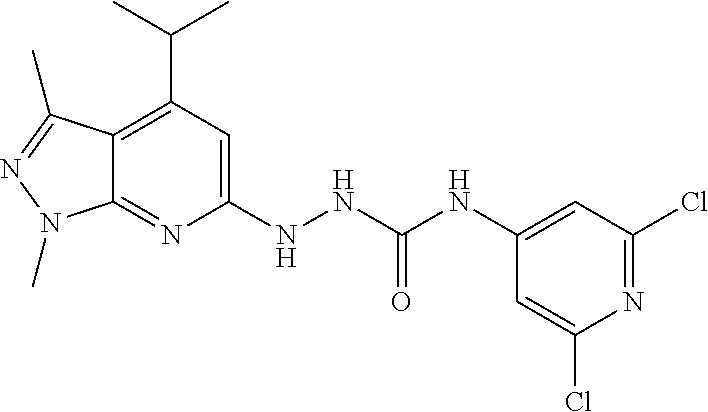

Ar2—X Y Z—W—Ar1 (formula III)


-
- G is CR10 and R10 is H; and,
- Ry is H.


and,


and,
-
- G is CR10; and,
- Rx and Ry are each H.


and,
-
- G is NR11; and,
- Rx and Ry are each H.


and,
-
- G is CR10 and R10 is H.


and,
-
- G is CR10 and CR10 is H; and,
- Rx and Ry are joined to form a 5- or 6-membered heterocycloalkyl ring.


and,


-
- G1 is CR12 and R12 is H; and,
- Rd is H.


and,
-
- G1 is CR12 and R12 is H; and,
- Rc is H.


and,
-
- G1 is CR12; and,
- Rc and Rd are each H.


and,
-
- G1 is NR13; and,
- Rc and Rd are each H.


and,
-
- G1 is CR12 and R12 is H.


and,
-
- G is CR12 and CR12 is H; and,
- Rc and Rd are joined to form a 5- or 6-membered heterocycloalkyl ring.


and,


Claims (20)

Priority Applications (1)
| Application Number | Priority Date | Filing Date | Title |
|---|---|---|---|
| US16/586,498 US10858358B2 (en) | 2015-06-01 | 2019-09-27 | S1PR2 antagonists and uses therefor |
Applications Claiming Priority (6)
| Application Number | Priority Date | Filing Date | Title |
|---|---|---|---|
| US201562169375P | 2015-06-01 | 2015-06-01 | |
| PCT/CA2016/050620 WO2016191872A1 (en) | 2015-06-01 | 2016-06-01 | S1pr2 antagonists and uses therefor |
| US201715578998A | 2017-12-01 | 2017-12-01 | |
| US16/234,014 US20190127372A1 (en) | 2015-06-01 | 2018-12-27 | S1pr2 antagonists and uses therefor |
| US16/269,339 US10487082B2 (en) | 2015-06-01 | 2019-02-06 | S1PR2 antagonists and uses therefor |
| US16/586,498 US10858358B2 (en) | 2015-06-01 | 2019-09-27 | S1PR2 antagonists and uses therefor |
Related Parent Applications (1)
| Application Number | Title | Priority Date | Filing Date |
|---|---|---|---|
| US16/269,339 Continuation-In-Part US10487082B2 (en) | 2015-06-01 | 2019-02-06 | S1PR2 antagonists and uses therefor |
Publications (2)
| Publication Number | Publication Date |
|---|---|
| US20200017494A1 US20200017494A1 (en) | 2020-01-16 |
| US10858358B2 true US10858358B2 (en) | 2020-12-08 |
Family
ID=69140008
Family Applications (1)
| Application Number | Title | Priority Date | Filing Date |
|---|---|---|---|
| US16/586,498 Active US10858358B2 (en) | 2015-06-01 | 2019-09-27 | S1PR2 antagonists and uses therefor |
Country Status (1)
| Country | Link |
|---|---|
| US (1) | US10858358B2 (en) |
Families Citing this family (1)
| Publication number | Priority date | Publication date | Assignee | Title |
|---|---|---|---|---|
| JP2022536702A (en) * | 2019-06-13 | 2022-08-18 | ジー・オプティクス・インコーポレイテッド | High definition and extended depth of focus intraocular lens |
Citations (15)
| Publication number | Priority date | Publication date | Assignee | Title |
|---|---|---|---|---|
| WO2001098301A1 (en) | 2000-06-20 | 2001-12-27 | Japan Tobacco Inc. | Pyrazolopyridine compounds and use thereof as drugs |
| WO2003051876A1 (en) | 2001-12-14 | 2003-06-26 | Japan Tobacco Inc. | Pyrazolopyridine derivatives and medicinal use thereof |
| US20040235794A1 (en) | 2001-09-04 | 2004-11-25 | Shinji Nakade | Remedies for respiratory diseases comprising sphingosine-1-phosphate receptor controller |
| US20060148844A1 (en) | 2002-06-26 | 2006-07-06 | Ono Pharmaceutical Co., Ltd | Pharmaceutical composition for treatment of disease due to vascular constriction or vasodilation |
| WO2008154470A1 (en) | 2007-06-08 | 2008-12-18 | University Of Connecticut | Nhibitor of the receptor activity of the s1p2 receptor for inhibiting pathological angiogenesis in the eye |
| WO2009074969A2 (en) | 2007-12-12 | 2009-06-18 | University Of Lausanne | Sphingosine-1-phosphate, analogs and antagonists for use as medicaments |
| WO2010030976A2 (en) | 2008-09-12 | 2010-03-18 | University Of Connecticut | Methods and compositions for inhibiting atherosclerosis and vascular inflammation |
| WO2011041287A1 (en) | 2009-09-29 | 2011-04-07 | Allergan, Inc. | Condensed ring pyridine compounds as subtype-selective modulators of sphingosine-1-phosphate-2 (s1p2) receptors |
| WO2011058993A1 (en) | 2009-11-16 | 2011-05-19 | 国立大学法人大阪大学 | Method for screening for novel bone resorption inhibitor |
| WO2011084486A1 (en) | 2009-12-21 | 2011-07-14 | Epitherix, Llc | 1h-pyrazolo[3,4-b]pyridines and therapeutic uses thereof |
| WO2011087051A1 (en) | 2010-01-14 | 2011-07-21 | 国立大学法人金沢大学 | Therapeutic agent for atherosclerosis comprising s1p2 receptor antagonist |
| WO2011159864A1 (en) | 2010-06-17 | 2011-12-22 | Bracco Imaging S.P.A. | Jte013 analogs and methods of making and using same |
| WO2012164103A2 (en) | 2011-06-03 | 2012-12-06 | Universität Zürich | Blockers of the nogo-a s1pr pathway for the treatment of diseases characterized by neuronal damage and lack of subsequent repair |
| CA2868277A1 (en) | 2012-03-26 | 2013-10-03 | Rolf E. Swenson | Novel sphingosine 1-phosphate receptor antagonists |
| US10487082B2 (en) * | 2015-06-01 | 2019-11-26 | Dalhousie University | S1PR2 antagonists and uses therefor |
-
2019
- 2019-09-27 US US16/586,498 patent/US10858358B2/en active Active
Patent Citations (17)
| Publication number | Priority date | Publication date | Assignee | Title |
|---|---|---|---|---|
| WO2001098301A1 (en) | 2000-06-20 | 2001-12-27 | Japan Tobacco Inc. | Pyrazolopyridine compounds and use thereof as drugs |
| US20040235794A1 (en) | 2001-09-04 | 2004-11-25 | Shinji Nakade | Remedies for respiratory diseases comprising sphingosine-1-phosphate receptor controller |
| WO2003051876A1 (en) | 2001-12-14 | 2003-06-26 | Japan Tobacco Inc. | Pyrazolopyridine derivatives and medicinal use thereof |
| US20060148844A1 (en) | 2002-06-26 | 2006-07-06 | Ono Pharmaceutical Co., Ltd | Pharmaceutical composition for treatment of disease due to vascular constriction or vasodilation |
| WO2008154470A1 (en) | 2007-06-08 | 2008-12-18 | University Of Connecticut | Nhibitor of the receptor activity of the s1p2 receptor for inhibiting pathological angiogenesis in the eye |
| US20090004207A1 (en) | 2007-06-08 | 2009-01-01 | Timothy Tun Hla | Methods and Compositions for Inhibiting Pathological Angiogenesis in the Eye |
| WO2009074969A2 (en) | 2007-12-12 | 2009-06-18 | University Of Lausanne | Sphingosine-1-phosphate, analogs and antagonists for use as medicaments |
| WO2010030976A2 (en) | 2008-09-12 | 2010-03-18 | University Of Connecticut | Methods and compositions for inhibiting atherosclerosis and vascular inflammation |
| WO2011041287A1 (en) | 2009-09-29 | 2011-04-07 | Allergan, Inc. | Condensed ring pyridine compounds as subtype-selective modulators of sphingosine-1-phosphate-2 (s1p2) receptors |
| CA2775587A1 (en) | 2009-09-29 | 2011-04-07 | Allergan, Inc. | Condensed ring pyridine compounds as subtype-selective modulators of sphingosine-1-phosphate-2 (s1p2) receptors |
| WO2011058993A1 (en) | 2009-11-16 | 2011-05-19 | 国立大学法人大阪大学 | Method for screening for novel bone resorption inhibitor |
| WO2011084486A1 (en) | 2009-12-21 | 2011-07-14 | Epitherix, Llc | 1h-pyrazolo[3,4-b]pyridines and therapeutic uses thereof |
| WO2011087051A1 (en) | 2010-01-14 | 2011-07-21 | 国立大学法人金沢大学 | Therapeutic agent for atherosclerosis comprising s1p2 receptor antagonist |
| WO2011159864A1 (en) | 2010-06-17 | 2011-12-22 | Bracco Imaging S.P.A. | Jte013 analogs and methods of making and using same |
| WO2012164103A2 (en) | 2011-06-03 | 2012-12-06 | Universität Zürich | Blockers of the nogo-a s1pr pathway for the treatment of diseases characterized by neuronal damage and lack of subsequent repair |
| CA2868277A1 (en) | 2012-03-26 | 2013-10-03 | Rolf E. Swenson | Novel sphingosine 1-phosphate receptor antagonists |
| US10487082B2 (en) * | 2015-06-01 | 2019-11-26 | Dalhousie University | S1PR2 antagonists and uses therefor |
Non-Patent Citations (9)
| Title |
|---|
| Extended European Search Report dated Nov. 21, 2017 in EP Application No. 15802481.0, filed Dec. 1, 2016 to Dalhousie University, 7 pages. |
| Junge, H. et al., "TSPAN12 Regulates Retinal Vascular Development by Promoting Norrin-but not Wnt-Induced FZD4/beta-Catenin Signaling". Cell, Oct. 16, 2009 (Oct. 16, 2009), vol. 139, pp. 299-311, p. 299, cols. 1 and 2. |
| Okamoto, Y. et al., "Sphingosine-1-Phosphate-Specific G Protein-Coupled Receptors as Novel Therapeutic Targets for Atherosclerosis". Pharmaceuticals, Jan. 4, 2011 (Apr. 1, 2011), vol. 4, pp. 117-137. |
| Park et al, "Inhibition of Sphingosine 1-Phosphate Receptor 2 Protects against Renal Ischemia-Reperfusion Injury", J. Am. Soc. Nephrol, Feb. 2012, 23(2), 266-280. |
| PCT Search Report and Written Opinion dated Aug. 11, 2016 in PCT Application No. PCT/CA2016/050620, filed on Jun. 1, 2016 to Applicant Dalhousie University, 19 pages. |
| PCT Search Report and Written Opinion dated Sep. 3, 2015 for PCT/CA2015/050503, filed Jun. 1, 2015, titled Treatment of Familial Exudative Vitreoretinopathy Through S1PR2 Inhibition, Applicant Dalhousie University, 12 pages. |
| Sumida, G., et al., "S1P2 receptor Regulation of Sphingosine-1-Phosphate Effects on Conventional Outflow Physiology". American Journal of Physiology-Cell Physiology, Feb. 2, 2011 (Feb. 2, 2011), vol. 300, pp. C1164-C1171, abstract. |
| Sumida, G., et al., "S1P2 receptor Regulation of Sphingosine-1-Phosphate Effects on Conventional Outflow Physiology". American Journal of Physiology—Cell Physiology, Feb. 2, 2011 (Feb. 2, 2011), vol. 300, pp. C1164-C1171, abstract. |
| Xu, Q. et al., "Vascular Development in the Retina and Inner Ear: Control by Norrin and Frizzled-4, a High-Affinity Ligand-Receptor Pair". Cell, Mar. 19, 2004 (Mar. 19, 2004), vol. 116, pp. 883-895, p. 883, cols. 1 and 2. |
Also Published As
| Publication number | Publication date |
|---|---|
| US20200017494A1 (en) | 2020-01-16 |
Similar Documents
| Publication | Publication Date | Title |
|---|---|---|
| US20200347058A1 (en) | S1pr2 antagonists and uses therefor | |
| US8697627B2 (en) | Compositions and methods for treating alzheimer's disease | |
| US10548892B2 (en) | Bicyclic compounds and methods for their use in treating autism spectrum disorders and neurodevelopmental disorders | |
| US20080254140A1 (en) | Combination Methods and Therapies for Treating Opthalmic Conditions with 13-Cis-Retinyl Derivatives | |
| KR20020081459A (en) | Drugs for complications of diabetes and neuropathy and utilization thereof | |
| JP2010504338A (en) | Hydrogenated pyrido [4,3-b] indole for the treatment of amyotrophic lateral sclerosis (ALS) | |
| JP2023504194A (en) | Therapeutic compounds for method of use in insulin resistance | |
| US10487082B2 (en) | S1PR2 antagonists and uses therefor | |
| JP2021518347A (en) | Agonists and usage of peroxisome proliferator-activated receptor alpha | |
| US10858358B2 (en) | S1PR2 antagonists and uses therefor | |
| US8513280B2 (en) | Use of epothilones in the treatment of neuronal connectivity defects such as schizophrenia and autism | |
| US10058543B2 (en) | Treatment of familial exudative vitreoretinopathy through S1PR2 inhibition | |
| ES2971592T3 (en) | Compositions for the treatment of degenerative retinal diseases | |
| JP2016502497A (en) | Methods of Treating Type I and Type II Diabetes | |
| WO2001097797A1 (en) | Paradoxical pharmacology | |
| US9422239B1 (en) | Dual PPAR-δ PPAR-γ agonists | |
| US20210061800A1 (en) | Compounds for treating eye diseases and methods thereof | |
| US20090221610A1 (en) | Compositions and Methods for Treating Cognitive Disorders | |
| HK40102267A (en) | Methods for treating autism spectrum disorders (asd) | |
| WO2015199503A1 (en) | Pharmaceutical composition for preventing and treating degenerative brain diseases, containing cx-4945 as active ingredient | |
| EA041892B1 (en) | METHODS AND COMPOSITIONS FOR TREATMENT OF AGING-ASSOCIATED DISORDERS USING CCR3 INHIBITORS |
Legal Events
| Date | Code | Title | Description |
|---|---|---|---|
| FEPP | Fee payment procedure |
Free format text: ENTITY STATUS SET TO UNDISCOUNTED (ORIGINAL EVENT CODE: BIG.); ENTITY STATUS OF PATENT OWNER: SMALL ENTITY |
|
| FEPP | Fee payment procedure |
Free format text: ENTITY STATUS SET TO SMALL (ORIGINAL EVENT CODE: SMAL); ENTITY STATUS OF PATENT OWNER: SMALL ENTITY |
|
| STPP | Information on status: patent application and granting procedure in general |
Free format text: DOCKETED NEW CASE - READY FOR EXAMINATION |
|
| STPP | Information on status: patent application and granting procedure in general |
Free format text: NON FINAL ACTION MAILED |
|
| AS | Assignment |
Owner name: DALHOUSIE UNIVERSITY, CANADA Free format text: ASSIGNMENT OF ASSIGNORS INTEREST;ASSIGNORS:MCMASTER, CHRISTOPHER;SIMMS, GORDON;SIGNING DATES FROM 20200626 TO 20200630;REEL/FRAME:053154/0882 |
|
| STPP | Information on status: patent application and granting procedure in general |
Free format text: RESPONSE TO NON-FINAL OFFICE ACTION ENTERED AND FORWARDED TO EXAMINER |
|
| STPP | Information on status: patent application and granting procedure in general |
Free format text: PUBLICATIONS -- ISSUE FEE PAYMENT RECEIVED |
|
| STCF | Information on status: patent grant |
Free format text: PATENTED CASE |
|
| MAFP | Maintenance fee payment |
Free format text: PAYMENT OF MAINTENANCE FEE, 4TH YR, SMALL ENTITY (ORIGINAL EVENT CODE: M2551); ENTITY STATUS OF PATENT OWNER: SMALL ENTITY Year of fee payment: 4 |