US10851970B2 - Casing, electronic device, and method of fabricating casing - Google Patents

Casing, electronic device, and method of fabricating casing Download PDF

Info

Publication number
US10851970B2
US10851970B2 US16/423,195 US201916423195A US10851970B2 US 10851970 B2 US10851970 B2 US 10851970B2 US 201916423195 A US201916423195 A US 201916423195A US 10851970 B2 US10851970 B2 US 10851970B2
Authority
US
United States
Prior art keywords
light
light shielding
shielding layer
light transmission
layer
Prior art date
Legal status (The legal status is an assumption and is not a legal conclusion. Google has not performed a legal analysis and makes no representation as to the accuracy of the status listed.)
Active
Application number
US16/423,195
Other versions
US20200271302A1 (en
Inventor
Yi-An Chen
Hsin-Chi Chen
Yu-Teng Chang
Ying-Chi Wu
Hsiang-Ho Lo
Current Assignee (The listed assignees may be inaccurate. Google has not performed a legal analysis and makes no representation or warranty as to the accuracy of the list.)
Wistron Corp
Original Assignee
Wistron Corp
Priority date (The priority date is an assumption and is not a legal conclusion. Google has not performed a legal analysis and makes no representation as to the accuracy of the date listed.)
Filing date
Publication date
Application filed by Wistron Corp filed Critical Wistron Corp
Assigned to WISTRON CORPORATION reassignment WISTRON CORPORATION ASSIGNMENT OF ASSIGNORS INTEREST (SEE DOCUMENT FOR DETAILS). Assignors: CHANG, YU-TENG, CHEN, HSIN-CHI, CHEN, YI-AN, LO, HSIANG-HO, WU, YING-CHI
Publication of US20200271302A1 publication Critical patent/US20200271302A1/en
Application granted granted Critical
Publication of US10851970B2 publication Critical patent/US10851970B2/en
Active legal-status Critical Current
Anticipated expiration legal-status Critical

Links

Images

Classifications

    • FMECHANICAL ENGINEERING; LIGHTING; HEATING; WEAPONS; BLASTING
    • F21LIGHTING
    • F21VFUNCTIONAL FEATURES OR DETAILS OF LIGHTING DEVICES OR SYSTEMS THEREOF; STRUCTURAL COMBINATIONS OF LIGHTING DEVICES WITH OTHER ARTICLES, NOT OTHERWISE PROVIDED FOR
    • F21V11/00Screens not covered by groups F21V1/00, F21V3/00, F21V7/00 or F21V9/00
    • F21V11/08Screens not covered by groups F21V1/00, F21V3/00, F21V7/00 or F21V9/00 using diaphragms containing one or more apertures
    • BPERFORMING OPERATIONS; TRANSPORTING
    • B32LAYERED PRODUCTS
    • B32BLAYERED PRODUCTS, i.e. PRODUCTS BUILT-UP OF STRATA OF FLAT OR NON-FLAT, e.g. CELLULAR OR HONEYCOMB, FORM
    • B32B27/00Layered products comprising a layer of synthetic resin
    • B32B27/06Layered products comprising a layer of synthetic resin as the main or only constituent of a layer, which is next to another layer of the same or of a different material
    • HELECTRICITY
    • H05ELECTRIC TECHNIQUES NOT OTHERWISE PROVIDED FOR
    • H05KPRINTED CIRCUITS; CASINGS OR CONSTRUCTIONAL DETAILS OF ELECTRIC APPARATUS; MANUFACTURE OF ASSEMBLAGES OF ELECTRICAL COMPONENTS
    • H05K5/00Casings, cabinets or drawers for electric apparatus
    • H05K5/02Details
    • H05K5/0217Mechanical details of casings
    • H05K5/0243Mechanical details of casings for decorative purposes
    • BPERFORMING OPERATIONS; TRANSPORTING
    • B32LAYERED PRODUCTS
    • B32BLAYERED PRODUCTS, i.e. PRODUCTS BUILT-UP OF STRATA OF FLAT OR NON-FLAT, e.g. CELLULAR OR HONEYCOMB, FORM
    • B32B27/00Layered products comprising a layer of synthetic resin
    • B32B27/36Layered products comprising a layer of synthetic resin comprising polyesters
    • B32B27/365Layered products comprising a layer of synthetic resin comprising polyesters comprising polycarbonates
    • BPERFORMING OPERATIONS; TRANSPORTING
    • B32LAYERED PRODUCTS
    • B32BLAYERED PRODUCTS, i.e. PRODUCTS BUILT-UP OF STRATA OF FLAT OR NON-FLAT, e.g. CELLULAR OR HONEYCOMB, FORM
    • B32B33/00Layered products characterised by particular properties or particular surface features, e.g. particular surface coatings; Layered products designed for particular purposes not covered by another single class
    • GPHYSICS
    • G06COMPUTING OR CALCULATING; COUNTING
    • G06FELECTRIC DIGITAL DATA PROCESSING
    • G06F1/00Details not covered by groups G06F3/00 - G06F13/00 and G06F21/00
    • G06F1/16Constructional details or arrangements
    • G06F1/1613Constructional details or arrangements for portable computers
    • G06F1/1633Constructional details or arrangements of portable computers not specific to the type of enclosures covered by groups G06F1/1615 - G06F1/1626
    • BPERFORMING OPERATIONS; TRANSPORTING
    • B32LAYERED PRODUCTS
    • B32BLAYERED PRODUCTS, i.e. PRODUCTS BUILT-UP OF STRATA OF FLAT OR NON-FLAT, e.g. CELLULAR OR HONEYCOMB, FORM
    • B32B2307/00Properties of the layers or laminate
    • B32B2307/40Properties of the layers or laminate having particular optical properties
    • B32B2307/41Opaque
    • BPERFORMING OPERATIONS; TRANSPORTING
    • B32LAYERED PRODUCTS
    • B32BLAYERED PRODUCTS, i.e. PRODUCTS BUILT-UP OF STRATA OF FLAT OR NON-FLAT, e.g. CELLULAR OR HONEYCOMB, FORM
    • B32B2307/00Properties of the layers or laminate
    • B32B2307/40Properties of the layers or laminate having particular optical properties
    • B32B2307/412Transparent
    • BPERFORMING OPERATIONS; TRANSPORTING
    • B41PRINTING; LINING MACHINES; TYPEWRITERS; STAMPS
    • B41CPROCESSES FOR THE MANUFACTURE OR REPRODUCTION OF PRINTING SURFACES
    • B41C1/00Forme preparation
    • B41C1/14Forme preparation for stencil-printing or silk-screen printing
    • BPERFORMING OPERATIONS; TRANSPORTING
    • B41PRINTING; LINING MACHINES; TYPEWRITERS; STAMPS
    • B41MPRINTING, DUPLICATING, MARKING, OR COPYING PROCESSES; COLOUR PRINTING
    • B41M1/00Inking and printing with a printer's forme
    • B41M1/12Stencil printing; Silk-screen printing
    • BPERFORMING OPERATIONS; TRANSPORTING
    • B41PRINTING; LINING MACHINES; TYPEWRITERS; STAMPS
    • B41MPRINTING, DUPLICATING, MARKING, OR COPYING PROCESSES; COLOUR PRINTING
    • B41M1/00Inking and printing with a printer's forme
    • B41M1/14Multicolour printing
    • B41M1/18Printing one ink over another
    • BPERFORMING OPERATIONS; TRANSPORTING
    • B41PRINTING; LINING MACHINES; TYPEWRITERS; STAMPS
    • B41MPRINTING, DUPLICATING, MARKING, OR COPYING PROCESSES; COLOUR PRINTING
    • B41M1/00Inking and printing with a printer's forme
    • B41M1/26Printing on other surfaces than ordinary paper
    • B41M1/30Printing on other surfaces than ordinary paper on organic plastics, horn or similar materials
    • FMECHANICAL ENGINEERING; LIGHTING; HEATING; WEAPONS; BLASTING
    • F21LIGHTING
    • F21WINDEXING SCHEME ASSOCIATED WITH SUBCLASSES F21K, F21L, F21S and F21V, RELATING TO USES OR APPLICATIONS OF LIGHTING DEVICES OR SYSTEMS
    • F21W2111/00Use or application of lighting devices or systems for signalling, marking or indicating, not provided for in codes F21W2102/00 – F21W2107/00
    • FMECHANICAL ENGINEERING; LIGHTING; HEATING; WEAPONS; BLASTING
    • F21LIGHTING
    • F21YINDEXING SCHEME ASSOCIATED WITH SUBCLASSES F21K, F21L, F21S and F21V, RELATING TO THE FORM OR THE KIND OF THE LIGHT SOURCES OR OF THE COLOUR OF THE LIGHT EMITTED
    • F21Y2115/00Light-generating elements of semiconductor light sources
    • F21Y2115/10Light-emitting diodes [LED]

Definitions

  • the disclosure relates to a casing, an electronic device, and a method of fabricating the same; more particularly, the disclosure relates to a casing featuring a smooth appearance and capable of performing an indication function, an electronic device, and a method of fabricating the same.
  • a light transmissive material and an opaque material are formed on the casing through double injection to achieve a visually hidden effect.
  • gaps or small protrusions generated by mutual extrusion and formed at the junction of the two material layers formed through double injection molding which easily leads to a tactile sensation of step difference and reduces the effect of hiding the icons or symbols. Accordingly, said issues have to be overcome by the manufacturers who intend to fabricate the casing having the simple appearance and achieving functional decorative effects.
  • the disclosure provides a method of fabricating of a casing with a texture satisfying the sense of touch and sight.
  • the disclosure provides a casing with a texture satisfying the sense of touch and sight.
  • the disclosure provides an electronic device adopting said casing with the texture satisfying the sense of touch and sight.
  • a method of fabricating a casing includes: providing a polycarbonate substrate, printing a first material on the polycarbonate substrate to form a light shielding layer by using a first screen, and printing a second material on the light shielding layer to form a light transmission layer by using a second screen.
  • the light shielding layer has at least one patterned light transmissive region, and the light transmission layer covers the at least one patterned transmissive region and a portion of the polycarbonate substrate exposed by the at least one patterned transmissive region.
  • Mesh counts of the first screen is greater than mesh counts of the second screen.
  • a casing in an embodiment of the disclosure, includes a polycarbonate substrate, a light shielding layer, and a light transmission layer.
  • the light shielding layer is formed on the polycarbonate substrate and has at least one patterned transmissive region.
  • the light transmission layer is formed on the light shielding layer and covers the at least one patterned transmissive region and a portion of the polycarbonate substrate exposed by the at least one patterned transmissive region.
  • a thickness of the light transmission layer is greater than a thickness of the light shielding layer.
  • an electronic device in an embodiment of the disclosure, includes a casing and a light source.
  • the casing includes a polycarbonate substrate, a light shielding layer, and a light transmission layer.
  • the light shielding layer is formed on the polycarbonate substrate and has at least one patterned transmissive region.
  • the light transmission layer is formed on the light shielding layer and covers the at least one patterned transmissive region and a portion of the polycarbonate substrate exposed by the at least one patterned transmissive region.
  • a thickness of the light transmission layer is greater than a thickness of the light shielding layer.
  • the light source is configured to emit a light beam, and the light beam passes through the polycarbonate substrate, the at least one patterned transmissive region of the light shielding layer, and the light transmission layer.
  • the step of forming the light shielding layer and the light transmission layer includes: enabling a thickness of the light transmission layer to be greater than a thickness of the light shielding layer.
  • At least one portion of the light transmission layer covers the at least one patterned transmissive region.
  • the step of forming the light transmission layer includes: enabling a thickness of the at least one portion of the light transmission layer to be greater than a thickness of the other portion of the light transmission layer.
  • a ratio of the mesh counts of the second screen to the mesh counts of the first screen is within a range from 0.4 to 0.7.
  • the method of fabricating the casing further includes: curing the first material before forming the light transmission layer, so as to form the light shielding layer.
  • the method of fabricating the casing further includes: curing the second material to form the light transmission layer.
  • the method of fabricating the casing further includes: forming a protection layer on the light transmission layer.
  • the method of fabricating the casing further includes: after forming the light shielding layer and the light transmission layer, cutting the polycarbonate substrate, the light shielding layer, and the light transmission layer.
  • At least one portion of the light transmission layer of the casing covers the at least one patterned transmissive region, and a thickness of the at least one portion of the light transmission layer is greater than a thickness of the other portion of the light transmission layer.
  • the casing further includes a protection layer formed on the light transmission layer.
  • the second material backfills and fills the patterned transmissive region of the light shielding layer made of the first material, which is conducive to the reduction of the tactile sensation of step difference of the patterned transmissive region of the light shielding layer, thus concealing patterns or symbols on the casing.
  • the electronic device provided in one or more embodiments of the disclosure adopts the aforesaid casing, and thus the visual sensation of the step difference generated by the light beam emitted by the light source of the electronic device can also be reduced significantly after the light beam passes through the patterned transmissive region of the light shielding layer.
  • FIG. 1 is a schematic view of a casing according to an embodiment of the disclosure.
  • FIG. 2A through FIG. 2E are schematic cross-sectional views showing a process of fabricating the casing depicted in FIG. 1 .
  • FIG. 3 is an enlarged schematic view of a partial region I of the casing depicted in FIG. 2E .
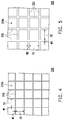
  • FIG. 4 is a schematic view illustrating a first screen used in a process of fabricating a casing according to an embodiment of the disclosure.
  • FIG. 5 is a schematic view illustrating a second screen used in a process of fabricating a casing according to an embodiment of the disclosure.
  • FIG. 6 is a schematic view of an electronic device according to an embodiment of the disclosure.
  • FIG. 7 is a schematic cross-sectional view of a casing according to another embodiment of the disclosure.
  • FIG. 1 is a schematic view of a casing 10 according to an embodiment of the disclosure.
  • FIG. 2A through FIG. 2E are schematic cross-sectional views showing a process of fabricating the casing 10 depicted in FIG. 1 .
  • FIG. 7 is a schematic cross-sectional view of a casing according to another embodiment of the disclosure. Note that FIG. 2A through FIG. 2E correspond to the sectional line A-A′ depicted in FIG. 1 .
  • the casing 10 depicted in FIG. 1 is exemplified as having one icon or symbol, and the type and the number of the icon or symbol on the casing are not limited in the disclosure.
  • the transmission layer 120 depicted in FIG. 2E is omitted in FIG.
  • the mesh lines 215 of the first screen 210 depicted in FIG. 4 is omitted in the first screen 210 depicted in FIG. 2A and FIG. 2B
  • the mesh lines 225 of the second screen 220 depicted in FIG. 5 is omitted in the second screen 220 depicted in FIG. 2C and FIG. 2D .
  • a substrate 100 is provided.
  • a material of the substrate 100 includes an organic polymer (e.g., polycarbonate, epoxy resin, or polymethyl methacrylate) or other materials suitable for making the casing.
  • a light shielding layer 110 is formed on the substrate 100 .
  • a step of forming the light shielding layer 110 may be performed through screen printing.
  • the step of forming the light shielding layer 110 includes: placing a first screen 210 above the substrate 100 and coating the first screen 210 with a first material ink LM 1 , as shown in FIG.
  • a scraper 205 moves along a direction on a surface of the first screen 210 to press the first screen 210 onto the printed substrate 100 and print the first material ink LM 1 from mesh openings 210 a (shown in FIG. 4 ) of the first screen 210 to the substrate 100 .
  • a first material layer 110 r can be formed on the substrate 100 .
  • the first material layer 110 r is then dried to form the light shielding layer 110 .
  • the method of fabricating the casing 10 may selectively include curing the first material layer 110 r to form the light shielding layer 110 , and the curing method may include baking, illuminating, or any other curing method known to people having ordinary skill in the pertinent art.
  • the light shielding layer 110 has an opening 110 a , and the step of forming the light shielding layer 110 may further selectively include: patterning the opening 110 a to form a patterned opening. That is, the first screen 210 used in the step of forming the first material layer 110 r may be a patterned screen, and patterns are formed on the first material layer 110 r through screen printing. As shown in FIG.
  • an orthogonal projection at an edge of the opening 110 a on the substrate 100 defined by the light shielding layer 110 may be an icon or symbol indicative of a muted microphone, which should however not be construed as a limitation in the disclosure; in other embodiments, the orthogonal projection at the edge of the opening 110 a on the substrate 100 defined by the light shielding layer 110 may also be an indicative symbol representing a power switch.
  • the opening 110 a of the light shielding layer 110 allows light to pass through; namely, the area occupied by the opening 110 a may be a light transmissive region of the light shielding layer 110 .
  • a step of forming the light transmission layer 120 may be performed through screen printing.
  • the step of forming the light transmission layer 120 includes: placing a second screen 220 above the substrate 100 and coating the second screen 220 with a second material ink LM 2 ; next, the scraper 205 moves along a direction on a surface of the second screen 220 to press the second screen 220 onto the printed substrate 100 and print the second material ink LM 2 from mesh openings 220 a (shown in FIG. 5 ) of the second screen 220 to the substrate 100 .
  • a second material layer 120 r can be formed on the substrate 100 .
  • the second material layer 120 r covers the light shielding layer 110 and a portion of the substrate 100 exposed by the opening 110 a of the light shielding layer 110 .
  • the second material ink LM 2 printed around the opening 110 a of the light shielding layer 110 may backfill and fill the opening 110 a of the light shielding layer 110 , so that the thickness of the second material layer 120 r in the opening 110 a is greater than the thickness of the second material layer 120 r on the light shielding layer 110 , which is conducive to the reduction of the tactile sensation of step difference of the opening 110 a of the light shielding layer 110 .
  • the second material layer 120 r is then dried to form the light transmission layer 120 .
  • the method of fabricating the casing 10 may selectively include curing the second material layer 120 r to form the light transmission layer 120 , and the curing method may include baking, illuminating, or any other curing method known to people having ordinary skill in the pertinent art. Additionally, in some embodiments, the method of fabricating a casing 10 A may also selectively include forming a protection layer 130 on the light transmission layer 120 .
  • the casing may have a plurality of patterns or symbols defined by a plurality of openings 110 a of the light shielding layer 110 , and the method of fabricating the casing may selectively include cutting the substrate 100 , the light shielding layer 110 , and the light transmission layer 120 after forming the light shielding layer 110 and the light transmission layer 120 . That is, the method of fabricating the casing 10 is applicable when plural casings having a plurality of identical or different transparent icons arc to be fabricated in batches. So far the fabrication of the casing 10 provided in the present embodiment is completed.
  • FIG. 3 is an enlarged schematic view of a partial region I of the casing 10 depicted in FIG. 2E .
  • FIG. 4 is a schematic view illustrating the first screen 210 used in a process of fabricating the casing 10 according to an embodiment of the disclosure.
  • FIG. 5 is a schematic view illustrating the second screen 220 used in a process of fabricating the casing 10 according to an embodiment of the disclosure.
  • the casing 10 includes the substrate 100 , the light shielding layer 110 , and the light transmission layer 120 .
  • the light shielding layer 110 is disposed on the substrate 100 and has the opening 110 a .
  • the light transmission layer 120 is disposed on the light shielding layer 110 and covers the opening 110 a and a portion of the substrate 100 exposed by the opening 110 a . It should be mentioned that a thickness t 1 of the light transmission layer 120 is greater than a thickness t 2 of the light shielding layer 110 .
  • the thickness of the second material layer 120 r printed on the substrate 100 is greater than the thickness of the first material layer 110 r printed on the substrate 100 .
  • the thickness of the first material layer 110 r is small, so that the step difference made up by the opening 110 a of the light shielding layer 110 to be filled up is small; the thickness of the second material layer 120 r is large, so that the second material ink LM 2 backfills and fills the opening 110 a of the light shielding layer 110 before the second material ink LM 2 is dried, which is conducive to the reduction of the tactile sensation of step difference of the opening 110 a of the light shielding layer 110 .
  • the definition of the mesh counts of the screens is explained hereinafter.
  • the first screen 210 is constituted by a plurality of the mesh lines 215 arranged in two intersecting directions, which forms a plurality of mesh openings 210 a
  • the second screen 220 is constituted by a plurality of the mesh lines 225 arranged in two intersecting directions, which forms a plurality of mesh openings 220 a
  • the definition of the mesh counts refers to the number of mesh openings of the screen having a plurality of the mesh lines arranged in a direction within a one-inch length range.
  • the mesh lines 215 of the first screen 210 have a width W 1 , a distance S 1 is between two adjacent mesh lines 215 arranged in the same direction, and the mesh counts of the first screen 210 is one inch/(W 1 +S 1 ); the mesh lines 225 of the second screen 220 have a width W 2 , a distance S 2 is between two adjacent mesh lines 225 arranged in the same direction, and the mesh counts of the second screen 220 is one inch/(W 2 +S 2 ).
  • the definition of the mesh counts may also refer to the number of mesh openings of the screen within one square inch.
  • the mesh counts of the first screen 210 may also be one square inch/(W 1 +S 1 ) 2
  • the mesh counts of the second screen 220 may also be one square inch/(W 2 +S 2 ) 2 .
  • the mesh counts of the first screen 210 can be selectively greater than the mesh counts of the second screen 220 ; in other words, the area occupied by the mesh openings 220 a of the second screen 220 can be selectively greater than the area occupied by the mesh openings 210 a of the first screen 210 .
  • a ratio of the mesh counts of the second screen 220 to the mesh counts of the first screen 210 may be within a range from 0.4 to 0.7.
  • the amount of the second material ink LM 2 printed on the substrate 100 is greater than the amount of the first material ink LM 1 printed on the substrate 100 , so that the second material ink LM 2 backfills and fills the opening 110 a of the light shielding layer 110 in the step of forming the second material layer 120 r , which is conducive to the reduction of the tactile sensation of step difference of the opening 110 a of the light shielding layer 110 and further concealing patterns or symbols on the casing.
  • a thickness t 1 of the light transmission layer 120 formed by the second material ink LM 2 is greater than a thickness t 2 of the light shielding layer 11 formed by the first material ink LM 1
  • a thickness t 1 - 2 of one portion of the light transmission layer 120 overlapping the opening 112 a in a normal direction of the substrate 100 is greater than a thickness t 1 - 1 of the other portion of the light transmission layer 120 overlapping the light shielding layer 110 in the normal direction of the substrate 100 .
  • the thickness of one portion of the light transmission layer 120 at the opening 110 a of the light shielding layer 110 is large, so that the step difference generated by the light transmission layer 120 in the opening 110 a is apparently less than the step difference generated by the opening 110 a of the light shielding layer 110 ; that is, the portion of the light transmission layer 120 filling the opening 110 a of the light shielding layer 110 contributes to the reduction of the tactile sensation of the step difference of the opening 110 a of the light shielding layer 110 .
  • FIG. 6 is a schematic view of an electronic device according to an embodiment of the disclosure.
  • the electronic device 1 adopts the casing 10 described in the previous embodiments, and therefore the same or similar structural arrangement and technical effects will not be further described below.
  • the electronic device 1 further has light sources 50 configured to light beams LT, and the number of the light sources 50 is two, for instance.
  • the two light sources 50 are light emitting diodes and can be selectively disposed on one side of the substrate 100 away from the light shielding layer 110 , and the two light sources 50 in the normal direction of the substrate 100 are overlapped with the light transmissive region of the light shielding layer 110 .
  • the electronic device can further selectively include a light guide plate, and the light sources 50 in the normal direction of the substrate 100 may not be overlapped with the light transmissive region of the light shielding layer 110 .
  • the light sources 50 may be disposed on a light incident surface of the light guide plate, and the light exit surface of the light guide plate is overlapped with the light transmissive region of the light shielding layer 110 . That is, the arrangement of the casing 10 and the light sources 50 is not limited to the arrangement depicted in the drawings of the disclosure.
  • the light beams LT emitted by the light sources 50 are transmitted toward one side of the substrate 100 where the light shielding layer 110 is disposed, pass through the light transmissive region of the light shielding layer 110 and the light transmission layer 120 , and are transmitted to human eyes.
  • the visual sensation of the step difference of the light transmissive region of the light shielding layer 110 is obviously significant reduced. Namely, while the user is using the electronic device 1 , the user is able to have better experiences in tactile and visual sensations.
  • the second material since the amount of the second material printed on the substrate is greater than the amount of the first material printed on the substrate, the second material backfills and fills the patterned transmissive region of the light shielding layer made of the first material, which is conducive to the reduction of the tactile sensation of step difference of the patterned transmissive region of the light shielding layer, concealing patterns or symbols on the casing.
  • the electronic device provided in one or more embodiments of the disclosure adopts the aforesaid casing, and thus the visual sensation of the step difference generated by the light beam emitted by the light source of the electronic device can also be reduced significantly after the light beam passes through the patterned transmissive region of the light shielding layer.

Landscapes

  • Engineering & Computer Science (AREA)
  • General Engineering & Computer Science (AREA)
  • Computer Hardware Design (AREA)
  • Theoretical Computer Science (AREA)
  • Human Computer Interaction (AREA)
  • Physics & Mathematics (AREA)
  • General Physics & Mathematics (AREA)
  • Microelectronics & Electronic Packaging (AREA)
  • Laminated Bodies (AREA)
  • Illuminated Signs And Luminous Advertising (AREA)

Abstract

A method of fabricating a casing including steps of providing a polycarbonate substrate, printing a first material on the polycarbonate substrate to form a light shielding layer by using a first screen, and printing a second material on the light shielding layer to form a light transmission layer by using a second screen is provided. The light shielding layer has at least one patterned transmissive region. The light transmission layer covers the at least one patterned transmissive region and a portion of polycarbonate substrate exposed by the at least one patterned transmissive region. Mesh counts of the first screen is greater than that of the second screen. A casing including a polycarbonate substrate, a light shielding layer, and a light transmission layer is provided. A thickness of the light transmission layer is greater than a thickness of the light shielding layer. An electronic device adopting the casing is provided.

Description

CROSS-REFERENCE TO RELATED APPLICATION
This application claims the priority benefit of Taiwan application serial no. 108106373, filed on Feb. 25, 2019. The entirety of the above-mentioned patent application is hereby incorporated by reference herein and made a part of this specification.
BACKGROUND Technical Field
The disclosure relates to a casing, an electronic device, and a method of fabricating the same; more particularly, the disclosure relates to a casing featuring a smooth appearance and capable of performing an indication function, an electronic device, and a method of fabricating the same.
Description of Related Art
With the advancement of technology, electronic products and home appliances for different purposes have gradually become indispensable in people's lives. In addition to functional improvements of smart phones, notebook computers, information home appliances, etc., the requirements for product appearance are increasing. In order to enhance the elegance of the appearance of the electronic devices, manufacturers are committed to the development of hidden functional icons.
In general, a light transmissive material and an opaque material are formed on the casing through double injection to achieve a visually hidden effect. However, there tend to be gaps or small protrusions generated by mutual extrusion and formed at the junction of the two material layers formed through double injection molding, which easily leads to a tactile sensation of step difference and reduces the effect of hiding the icons or symbols. Accordingly, said issues have to be overcome by the manufacturers who intend to fabricate the casing having the simple appearance and achieving functional decorative effects.
SUMMARY
The disclosure provides a method of fabricating of a casing with a texture satisfying the sense of touch and sight.
The disclosure provides a casing with a texture satisfying the sense of touch and sight.
The disclosure provides an electronic device adopting said casing with the texture satisfying the sense of touch and sight.
In an embodiment of the disclosure, a method of fabricating a casing includes: providing a polycarbonate substrate, printing a first material on the polycarbonate substrate to form a light shielding layer by using a first screen, and printing a second material on the light shielding layer to form a light transmission layer by using a second screen. The light shielding layer has at least one patterned light transmissive region, and the light transmission layer covers the at least one patterned transmissive region and a portion of the polycarbonate substrate exposed by the at least one patterned transmissive region. Mesh counts of the first screen is greater than mesh counts of the second screen.
In an embodiment of the disclosure, a casing includes a polycarbonate substrate, a light shielding layer, and a light transmission layer. The light shielding layer is formed on the polycarbonate substrate and has at least one patterned transmissive region. The light transmission layer is formed on the light shielding layer and covers the at least one patterned transmissive region and a portion of the polycarbonate substrate exposed by the at least one patterned transmissive region. A thickness of the light transmission layer is greater than a thickness of the light shielding layer.
In an embodiment of the disclosure, an electronic device includes a casing and a light source. The casing includes a polycarbonate substrate, a light shielding layer, and a light transmission layer. The light shielding layer is formed on the polycarbonate substrate and has at least one patterned transmissive region. The light transmission layer is formed on the light shielding layer and covers the at least one patterned transmissive region and a portion of the polycarbonate substrate exposed by the at least one patterned transmissive region. A thickness of the light transmission layer is greater than a thickness of the light shielding layer. The light source is configured to emit a light beam, and the light beam passes through the polycarbonate substrate, the at least one patterned transmissive region of the light shielding layer, and the light transmission layer.
According to an embodiment of the disclosure, the step of forming the light shielding layer and the light transmission layer includes: enabling a thickness of the light transmission layer to be greater than a thickness of the light shielding layer.
According to an embodiment of the disclosure, at least one portion of the light transmission layer covers the at least one patterned transmissive region. The step of forming the light transmission layer includes: enabling a thickness of the at least one portion of the light transmission layer to be greater than a thickness of the other portion of the light transmission layer.
According to an embodiment of the disclosure, a ratio of the mesh counts of the second screen to the mesh counts of the first screen is within a range from 0.4 to 0.7.
According to an embodiment of the disclosure, the method of fabricating the casing further includes: curing the first material before forming the light transmission layer, so as to form the light shielding layer.
According to an embodiment of the disclosure, the method of fabricating the casing further includes: curing the second material to form the light transmission layer.
According to an embodiment of the disclosure, the method of fabricating the casing further includes: forming a protection layer on the light transmission layer.
According to an embodiment of the disclosure, the method of fabricating the casing further includes: after forming the light shielding layer and the light transmission layer, cutting the polycarbonate substrate, the light shielding layer, and the light transmission layer.
According to an embodiment of the disclosure, at least one portion of the light transmission layer of the casing covers the at least one patterned transmissive region, and a thickness of the at least one portion of the light transmission layer is greater than a thickness of the other portion of the light transmission layer.
According to an embodiment of the disclosure, the casing further includes a protection layer formed on the light transmission layer.
As provided above, in the casing and the method of fabricating the same according to one or more embodiments of the disclosure, since the amount of the second material printed on the substrate is greater than the amount of the first material printed on the substrate, the second material backfills and fills the patterned transmissive region of the light shielding layer made of the first material, which is conducive to the reduction of the tactile sensation of step difference of the patterned transmissive region of the light shielding layer, thus concealing patterns or symbols on the casing. In another aspect, the electronic device provided in one or more embodiments of the disclosure adopts the aforesaid casing, and thus the visual sensation of the step difference generated by the light beam emitted by the light source of the electronic device can also be reduced significantly after the light beam passes through the patterned transmissive region of the light shielding layer.
To make the above features and advantages provided in one or more of the embodiments more comprehensible, several embodiments accompanied with drawings are described in detail as follows.
BRIEF DESCRIPTION OF THE DRAWINGS
The accompanying drawings are included to provide a further understanding of the disclosure, and are incorporated in and constitute a part of this specification. The drawings illustrate embodiments of the disclosure and, together with the description, serve to explain the principles described herein.
FIG. 1 is a schematic view of a casing according to an embodiment of the disclosure.
FIG. 2A through FIG. 2E are schematic cross-sectional views showing a process of fabricating the casing depicted in FIG. 1.
FIG. 3 is an enlarged schematic view of a partial region I of the casing depicted in FIG. 2E.
FIG. 4 is a schematic view illustrating a first screen used in a process of fabricating a casing according to an embodiment of the disclosure.
FIG. 5 is a schematic view illustrating a second screen used in a process of fabricating a casing according to an embodiment of the disclosure.
FIG. 6 is a schematic view of an electronic device according to an embodiment of the disclosure.
FIG. 7 is a schematic cross-sectional view of a casing according to another embodiment of the disclosure.
DESCRIPTION OF THE EMBODIMENTS
Descriptions provided in the disclosure are given with reference to the exemplary embodiments illustrated with accompanied drawings, wherein same or similar parts are denoted with same reference numerals. Wherever possible, the same reference numbers are used in the drawings and the description to refer to the same or like parts.
FIG. 1 is a schematic view of a casing 10 according to an embodiment of the disclosure. FIG. 2A through FIG. 2E are schematic cross-sectional views showing a process of fabricating the casing 10 depicted in FIG. 1. FIG. 7 is a schematic cross-sectional view of a casing according to another embodiment of the disclosure. Note that FIG. 2A through FIG. 2E correspond to the sectional line A-A′ depicted in FIG. 1. It should be mentioned that the casing 10 depicted in FIG. 1 is exemplified as having one icon or symbol, and the type and the number of the icon or symbol on the casing are not limited in the disclosure. Besides, for a clear illustration, the transmission layer 120 depicted in FIG. 2E is omitted in FIG. 1, the mesh lines 215 of the first screen 210 depicted in FIG. 4 is omitted in the first screen 210 depicted in FIG. 2A and FIG. 2B, and the mesh lines 225 of the second screen 220 depicted in FIG. 5 is omitted in the second screen 220 depicted in FIG. 2C and FIG. 2D.
With reference to FIG. 2A, a substrate 100 is provided. A material of the substrate 100 includes an organic polymer (e.g., polycarbonate, epoxy resin, or polymethyl methacrylate) or other materials suitable for making the casing. As shown in FIG. 2A to FIG. 2C, a light shielding layer 110 is formed on the substrate 100. For instance, according to the embodiment, a step of forming the light shielding layer 110 may be performed through screen printing. Specifically, the step of forming the light shielding layer 110 includes: placing a first screen 210 above the substrate 100 and coating the first screen 210 with a first material ink LM1, as shown in FIG. 2A; next, a scraper 205 moves along a direction on a surface of the first screen 210 to press the first screen 210 onto the printed substrate 100 and print the first material ink LM1 from mesh openings 210 a (shown in FIG. 4) of the first screen 210 to the substrate 100. As shown in FIG. 2B, after the scraper 205 moves from one side of the first screen 210 to the other side of the first screen 210, a first material layer 110 r can be formed on the substrate 100. The first material layer 110 r is then dried to form the light shielding layer 110. According to the embodiment, the method of fabricating the casing 10 may selectively include curing the first material layer 110 r to form the light shielding layer 110, and the curing method may include baking, illuminating, or any other curing method known to people having ordinary skill in the pertinent art.
With reference to FIG. 2C, the light shielding layer 110 has an opening 110 a, and the step of forming the light shielding layer 110 may further selectively include: patterning the opening 110 a to form a patterned opening. That is, the first screen 210 used in the step of forming the first material layer 110 r may be a patterned screen, and patterns are formed on the first material layer 110 r through screen printing. As shown in FIG. 1, an orthogonal projection at an edge of the opening 110 a on the substrate 100 defined by the light shielding layer 110 may be an icon or symbol indicative of a muted microphone, which should however not be construed as a limitation in the disclosure; in other embodiments, the orthogonal projection at the edge of the opening 110 a on the substrate 100 defined by the light shielding layer 110 may also be an indicative symbol representing a power switch. Note that the opening 110 a of the light shielding layer 110 allows light to pass through; namely, the area occupied by the opening 110 a may be a light transmissive region of the light shielding layer 110.
As can be seen from FIG. 2C to FIG. 2E that after the light shielding layer 110 is formed through curing, the light transmission layer 120 is formed on the substrate 100. According to the embodiment, a step of forming the light transmission layer 120 may be performed through screen printing. For instance, the step of forming the light transmission layer 120 includes: placing a second screen 220 above the substrate 100 and coating the second screen 220 with a second material ink LM2; next, the scraper 205 moves along a direction on a surface of the second screen 220 to press the second screen 220 onto the printed substrate 100 and print the second material ink LM2 from mesh openings 220 a (shown in FIG. 5) of the second screen 220 to the substrate 100. After the scraper 205 moves from one side of the second screen 220 to the other side of the second screen 220, a second material layer 120 r can be formed on the substrate 100. The second material layer 120 r covers the light shielding layer 110 and a portion of the substrate 100 exposed by the opening 110 a of the light shielding layer 110. It is worth mentioning that, in the step of forming the second material layer 120 r, since the second material ink LM2 still has the flowability before it is dried, the second material ink LM2 printed around the opening 110 a of the light shielding layer 110 may backfill and fill the opening 110 a of the light shielding layer 110, so that the thickness of the second material layer 120 r in the opening 110 a is greater than the thickness of the second material layer 120 r on the light shielding layer 110, which is conducive to the reduction of the tactile sensation of step difference of the opening 110 a of the light shielding layer 110.
The second material layer 120 r is then dried to form the light transmission layer 120. According to the embodiment, the method of fabricating the casing 10 may selectively include curing the second material layer 120 r to form the light transmission layer 120, and the curing method may include baking, illuminating, or any other curing method known to people having ordinary skill in the pertinent art. Additionally, in some embodiments, the method of fabricating a casing 10A may also selectively include forming a protection layer 130 on the light transmission layer 120. In other embodiments, the casing may have a plurality of patterns or symbols defined by a plurality of openings 110 a of the light shielding layer 110, and the method of fabricating the casing may selectively include cutting the substrate 100, the light shielding layer 110, and the light transmission layer 120 after forming the light shielding layer 110 and the light transmission layer 120. That is, the method of fabricating the casing 10 is applicable when plural casings having a plurality of identical or different transparent icons arc to be fabricated in batches. So far the fabrication of the casing 10 provided in the present embodiment is completed.
FIG. 3 is an enlarged schematic view of a partial region I of the casing 10 depicted in FIG. 2E. FIG. 4 is a schematic view illustrating the first screen 210 used in a process of fabricating the casing 10 according to an embodiment of the disclosure. FIG. 5 is a schematic view illustrating the second screen 220 used in a process of fabricating the casing 10 according to an embodiment of the disclosure.
With reference to FIG. 3, the casing 10 includes the substrate 100, the light shielding layer 110, and the light transmission layer 120. The light shielding layer 110 is disposed on the substrate 100 and has the opening 110 a. The light transmission layer 120 is disposed on the light shielding layer 110 and covers the opening 110 a and a portion of the substrate 100 exposed by the opening 110 a. It should be mentioned that a thickness t1 of the light transmission layer 120 is greater than a thickness t2 of the light shielding layer 110. For instance, in the method of fabricating the casing 10, since the mesh counts of the first screen 210 is different from the mesh counts of the second screen 220, the thickness of the second material layer 120 r printed on the substrate 100 is greater than the thickness of the first material layer 110 r printed on the substrate 100. Here, the thickness of the first material layer 110 r is small, so that the step difference made up by the opening 110 a of the light shielding layer 110 to be filled up is small; the thickness of the second material layer 120 r is large, so that the second material ink LM2 backfills and fills the opening 110 a of the light shielding layer 110 before the second material ink LM2 is dried, which is conducive to the reduction of the tactile sensation of step difference of the opening 110 a of the light shielding layer 110. The definition of the mesh counts of the screens is explained hereinafter.
As shown in FIG. 4 and FIG. 5, the first screen 210 is constituted by a plurality of the mesh lines 215 arranged in two intersecting directions, which forms a plurality of mesh openings 210 a, and the second screen 220 is constituted by a plurality of the mesh lines 225 arranged in two intersecting directions, which forms a plurality of mesh openings 220 a. In some embodiments, note that the definition of the mesh counts refers to the number of mesh openings of the screen having a plurality of the mesh lines arranged in a direction within a one-inch length range. For instance, the mesh lines 215 of the first screen 210 have a width W1, a distance S1 is between two adjacent mesh lines 215 arranged in the same direction, and the mesh counts of the first screen 210 is one inch/(W1+S1); the mesh lines 225 of the second screen 220 have a width W2, a distance S2 is between two adjacent mesh lines 225 arranged in the same direction, and the mesh counts of the second screen 220 is one inch/(W2+S2). However, these should not be construed as limitations in the disclosure; in other embodiments, the definition of the mesh counts may also refer to the number of mesh openings of the screen within one square inch. For instance, the mesh counts of the first screen 210 may also be one square inch/(W1+S1)2, and the mesh counts of the second screen 220 may also be one square inch/(W2+S2)2.
According to the embodiment, the mesh counts of the first screen 210 can be selectively greater than the mesh counts of the second screen 220; in other words, the area occupied by the mesh openings 220 a of the second screen 220 can be selectively greater than the area occupied by the mesh openings 210 a of the first screen 210. In some embodiments, a ratio of the mesh counts of the second screen 220 to the mesh counts of the first screen 210 may be within a range from 0.4 to 0.7. As such, in the step of forming the light shielding layer 110 and the step of forming the light transmission layer 120, the amount of the second material ink LM2 printed on the substrate 100 is greater than the amount of the first material ink LM1 printed on the substrate 100, so that the second material ink LM2 backfills and fills the opening 110 a of the light shielding layer 110 in the step of forming the second material layer 120 r, which is conducive to the reduction of the tactile sensation of step difference of the opening 110 a of the light shielding layer 110 and further concealing patterns or symbols on the casing.
As shown in FIG. 2E and FIG. 3, hence, after the material ink (i.e., the first material ink LM1 and the second material ink LM2) is dried and cured, a thickness t1 of the light transmission layer 120 formed by the second material ink LM2 is greater than a thickness t2 of the light shielding layer 11 formed by the first material ink LM1, and a thickness t1-2 of one portion of the light transmission layer 120 overlapping the opening 112 a in a normal direction of the substrate 100 is greater than a thickness t1-1 of the other portion of the light transmission layer 120 overlapping the light shielding layer 110 in the normal direction of the substrate 100. From another perspective, the thickness of one portion of the light transmission layer 120 at the opening 110 a of the light shielding layer 110 is large, so that the step difference generated by the light transmission layer 120 in the opening 110 a is apparently less than the step difference generated by the opening 110 a of the light shielding layer 110; that is, the portion of the light transmission layer 120 filling the opening 110 a of the light shielding layer 110 contributes to the reduction of the tactile sensation of the step difference of the opening 110 a of the light shielding layer 110.
FIG. 6 is a schematic view of an electronic device according to an embodiment of the disclosure. With reference to FIG. 6, the electronic device 1 adopts the casing 10 described in the previous embodiments, and therefore the same or similar structural arrangement and technical effects will not be further described below. According to the embodiment, the electronic device 1 further has light sources 50 configured to light beams LT, and the number of the light sources 50 is two, for instance. For instance, the two light sources 50 are light emitting diodes and can be selectively disposed on one side of the substrate 100 away from the light shielding layer 110, and the two light sources 50 in the normal direction of the substrate 100 are overlapped with the light transmissive region of the light shielding layer 110. However, these should not be construed as limitations in the disclosure; according to some embodiments, the electronic device can further selectively include a light guide plate, and the light sources 50 in the normal direction of the substrate 100 may not be overlapped with the light transmissive region of the light shielding layer 110. For instance, the light sources 50 may be disposed on a light incident surface of the light guide plate, and the light exit surface of the light guide plate is overlapped with the light transmissive region of the light shielding layer 110. That is, the arrangement of the casing 10 and the light sources 50 is not limited to the arrangement depicted in the drawings of the disclosure.
To be specific, the light beams LT emitted by the light sources 50 are transmitted toward one side of the substrate 100 where the light shielding layer 110 is disposed, pass through the light transmissive region of the light shielding layer 110 and the light transmission layer 120, and are transmitted to human eyes. Note that after a user receives the light beams LT emitted from the casing 10, the visual sensation of the step difference of the light transmissive region of the light shielding layer 110 is obviously significant reduced. Namely, while the user is using the electronic device 1, the user is able to have better experiences in tactile and visual sensations.
To sum up, in the casing and the method of fabricating the same according to one or more embodiments of the disclosure, since the amount of the second material printed on the substrate is greater than the amount of the first material printed on the substrate, the second material backfills and fills the patterned transmissive region of the light shielding layer made of the first material, which is conducive to the reduction of the tactile sensation of step difference of the patterned transmissive region of the light shielding layer, concealing patterns or symbols on the casing. In another aspect, the electronic device provided in one or more embodiments of the disclosure adopts the aforesaid casing, and thus the visual sensation of the step difference generated by the light beam emitted by the light source of the electronic device can also be reduced significantly after the light beam passes through the patterned transmissive region of the light shielding layer.
It will be apparent to those skilled in the art that various modifications and variations can be made to the structure provided in the disclosure without departing from the scope or spirit indicated herein. In view of the foregoing, it is intended that the disclosure cover modifications and variations provided they fall within the scope of the following claims and their equivalents.

Claims (11)

What is claimed is:
1. A method of fabricating a casing, comprising:
providing a polycarbonate substrate;
printing a first material on the polycarbonate substrate by using a first screen to form a light shielding layer, wherein the light shielding layer has at least one patterned transmissive region; and
printing a second material on the light shielding layer by using a second screen to form a light transmission layer, such that the light transmission layer covers the at least one patterned transmissive region and a portion of the polycarbonate substrate exposed by the at least one patterned transmissive region, wherein mesh counts of the first screen is greater than mesh counts of the second screen,
wherein the step of forming the light shielding layer and the light transmission layer comprises:
enabling a thickness of the light transmission layer to be greater than a thickness of the light shielding layer.
2. The method according to claim 1, wherein at least one portion of the light transmission layer covers the at least one patterned transmissive region, and the step of forming the light transmission layer comprises:
enabling a thickness of the at least one portion of the light transmission layer to be greater than a thickness of the other portion of the light transmission layer.
3. The method according to claim 1, wherein a ratio of the mesh counts of the second screen to the mesh counts of the first screen is within a range from 0.4 to 0.7.
4. The method according to claim 1, further comprising:
before forming the light transmission layer, curing the first material to form the light shielding layer.
5. The method according to claim 1, further comprising:
curing the second material to form the light transmission layer.
6. The method according to claim 1, further comprising:
forming a protection layer on the light transmission layer.
7. The method according to claim 1, further comprising:
after forming the light shielding layer and the light transmission layer, cutting the polycarbonate substrate, the light shielding layer, and the light transmission layer.
8. A casing comprising:
a polycarbonate substrate;
a light shielding layer formed on the polycarbonate substrate and having at least one patterned transmissive region; and
a light transmission layer formed on the light shielding layer and covering the at least one patterned transmissive region and a portion of the polycarbonate substrate exposed by the at least one patterned transmissive region, wherein a thickness of the light transmission layer is greater than a thickness of the light shielding layer.
9. The casing according to claim 8, wherein at least one portion of the light transmission layer covers the at least one patterned transmissive region, and a thickness of the at least one portion of the light transmission layer is greater than a thickness of the other portion of the light transmission layer.
10. The casing according to claim 8, further comprising a protection layer, wherein the protection layer is formed on the light transmission layer.
11. An electronic device comprising:
a casing comprising:
a polycarbonate substrate;
a light shielding layer formed on the polycarbonate substrate and having at least one patterned transmissive region; and
a light transmission layer formed on the light shielding layer and covering the at least one patterned transmissive region and a portion of the polycarbonate substrate exposed by the at least one patterned transmissive region, wherein a thickness of the light transmission layer is greater than a thickness of the light shielding layer; and
a light source configured to emit a light beam, wherein the light beam passes through the polycarbonate substrate, the at least one patterned transmissive region of the light shielding layer, and the light transmission layer.
US16/423,195 2019-02-25 2019-05-28 Casing, electronic device, and method of fabricating casing Active US10851970B2 (en)

Applications Claiming Priority (3)

Application Number Priority Date Filing Date Title
TW108106373 2019-02-25
TW108106373A TWI749292B (en) 2019-02-25 2019-02-25 Case, electronic device and method of fabricating case
TW108106373A 2019-02-25

Publications (2)

Publication Number Publication Date
US20200271302A1 US20200271302A1 (en) 2020-08-27
US10851970B2 true US10851970B2 (en) 2020-12-01

Family

ID=72141179

Family Applications (1)

Application Number Title Priority Date Filing Date
US16/423,195 Active US10851970B2 (en) 2019-02-25 2019-05-28 Casing, electronic device, and method of fabricating casing

Country Status (3)

Country Link
US (1) US10851970B2 (en)
CN (1) CN111605275B (en)
TW (1) TWI749292B (en)

Citations (6)

* Cited by examiner, † Cited by third party
Publication number Priority date Publication date Assignee Title
US20100045897A1 (en) * 2007-08-14 2010-02-25 Kyung Mo Kim Condensing film for lcd backlight unit
US20110051412A1 (en) * 2009-08-27 2011-03-03 Chansung Jeong Backlight unit and display device
US20110299134A1 (en) * 2010-06-08 2011-12-08 Canon Kabushiki Kaisha Operation device and image reading apparatus
US20120170253A1 (en) * 2011-01-05 2012-07-05 Sangtae Park Display device
US20150217681A1 (en) * 2013-11-21 2015-08-06 Ford Global Technologies, Llc Illuminating decal for a vehicle
US10520159B1 (en) * 2018-10-16 2019-12-31 Optronics International, Llc Vehicle lamp

Family Cites Families (5)

* Cited by examiner, † Cited by third party
Publication number Priority date Publication date Assignee Title
TW200708214A (en) * 2005-08-04 2007-02-16 Speed Tech Corp Key pad assembly and fabricating method thereof
US20080191904A1 (en) * 2007-02-12 2008-08-14 Kai-Jie Tsao Method For Manufacturing Thin Keypad Assembly And Such Assembly
CN104422975A (en) * 2013-08-22 2015-03-18 明兴光电股份有限公司 Method for manufacturing shading pattern
TWI622970B (en) * 2017-03-02 2018-05-01 元太科技工業股份有限公司 Cover plate structure and display device
TWM551070U (en) * 2017-06-27 2017-11-01 Sonison Baby Products Co Ltd Electric breast pump body control panel backlight structure improvement

Patent Citations (6)

* Cited by examiner, † Cited by third party
Publication number Priority date Publication date Assignee Title
US20100045897A1 (en) * 2007-08-14 2010-02-25 Kyung Mo Kim Condensing film for lcd backlight unit
US20110051412A1 (en) * 2009-08-27 2011-03-03 Chansung Jeong Backlight unit and display device
US20110299134A1 (en) * 2010-06-08 2011-12-08 Canon Kabushiki Kaisha Operation device and image reading apparatus
US20120170253A1 (en) * 2011-01-05 2012-07-05 Sangtae Park Display device
US20150217681A1 (en) * 2013-11-21 2015-08-06 Ford Global Technologies, Llc Illuminating decal for a vehicle
US10520159B1 (en) * 2018-10-16 2019-12-31 Optronics International, Llc Vehicle lamp

Also Published As

Publication number Publication date
TW202033075A (en) 2020-09-01
CN111605275A (en) 2020-09-01
US20200271302A1 (en) 2020-08-27
TWI749292B (en) 2021-12-11
CN111605275B (en) 2022-07-15

Similar Documents

Publication Publication Date Title
KR102616605B1 (en) Multilayer structure for accommodating electronics and related method of manufacture
KR101484944B1 (en) Electronic device case and manufacturing method thereof
JP6073987B2 (en) Touch display device
US20140178647A1 (en) Window glass having inlay printing part in bezel area and method for manufacturing the same
TWI411843B (en) Display
KR20130137438A (en) Touch sensor and the manufacturing method
KR101510580B1 (en) Conductive film, method for manufacturing the same, and touch screen including the same
KR102443605B1 (en) Cover window for display device and manufacturing method thereof
US10948651B1 (en) Keyboard backlight module and manufacturing method thereof
KR20140030727A (en) Touch panel and method for manufacturing the same
TWI594154B (en) Touch panel and manufacturing method thereof
TWI549047B (en) Touch panels and fabrication methods thereof
KR101665906B1 (en) Conductive film, method for making the same, and touch screen including the same
TW201708796A (en) Light sensor structure and method for manufacturing thereof
US10851970B2 (en) Casing, electronic device, and method of fabricating casing
KR101330937B1 (en) A method manufacturing a back lighting structure of a mobile terminal, a back lighting structure of a mobile terminal and a mobile terminal having a back lighting structure
JP6396830B2 (en) Sensor panel and method for manufacturing sensor panel
JP5849028B2 (en) Shielding device, input device, display device, and electronic device
CN104422975A (en) Method for manufacturing shading pattern
TWI541692B (en) Touch panel
TW201413530A (en) Touch panel
JP2016173736A (en) Sensor panel and manufacturing method therefor
JP2018106396A (en) Transparent conductive laminate, touch panel and display device
JP5745605B2 (en) Molded member and translucent input device
JP5960570B2 (en) Input device, display device, and electronic device

Legal Events

Date Code Title Description
FEPP Fee payment procedure

Free format text: ENTITY STATUS SET TO UNDISCOUNTED (ORIGINAL EVENT CODE: BIG.); ENTITY STATUS OF PATENT OWNER: LARGE ENTITY

AS Assignment

Owner name: WISTRON CORPORATION, TAIWAN

Free format text: ASSIGNMENT OF ASSIGNORS INTEREST;ASSIGNORS:CHEN, YI-AN;CHEN, HSIN-CHI;CHANG, YU-TENG;AND OTHERS;REEL/FRAME:049354/0843

Effective date: 20190527

STPP Information on status: patent application and granting procedure in general

Free format text: NOTICE OF ALLOWANCE MAILED -- APPLICATION RECEIVED IN OFFICE OF PUBLICATIONS

STPP Information on status: patent application and granting procedure in general

Free format text: PUBLICATIONS -- ISSUE FEE PAYMENT RECEIVED

STCF Information on status: patent grant

Free format text: PATENTED CASE

MAFP Maintenance fee payment

Free format text: PAYMENT OF MAINTENANCE FEE, 4TH YEAR, LARGE ENTITY (ORIGINAL EVENT CODE: M1551); ENTITY STATUS OF PATENT OWNER: LARGE ENTITY

Year of fee payment: 4