US10824873B2 - Information processing apparatus, control method, and program - Google Patents
Information processing apparatus, control method, and program Download PDFInfo
- Publication number
- US10824873B2 US10824873B2 US16/071,010 US201616071010A US10824873B2 US 10824873 B2 US10824873 B2 US 10824873B2 US 201616071010 A US201616071010 A US 201616071010A US 10824873 B2 US10824873 B2 US 10824873B2
- Authority
- US
- United States
- Prior art keywords
- frame
- product
- video
- registration
- payment
- Prior art date
- Legal status (The legal status is an assumption and is not a legal conclusion. Google has not performed a legal analysis and makes no representation as to the accuracy of the status listed.)
- Active, expires
Links
Images




Classifications
-
- G06K9/00744—
-
- G—PHYSICS
- G07—CHECKING-DEVICES
- G07G—REGISTERING THE RECEIPT OF CASH, VALUABLES, OR TOKENS
- G07G1/00—Cash registers
- G07G1/12—Cash registers electronically operated
-
- G—PHYSICS
- G06—COMPUTING OR CALCULATING; COUNTING
- G06F—ELECTRIC DIGITAL DATA PROCESSING
- G06F18/00—Pattern recognition
- G06F18/20—Analysing
- G06F18/22—Matching criteria, e.g. proximity measures
-
- G06K9/00624—
-
- G06K9/6215—
-
- G—PHYSICS
- G06—COMPUTING OR CALCULATING; COUNTING
- G06Q—INFORMATION AND COMMUNICATION TECHNOLOGY [ICT] SPECIALLY ADAPTED FOR ADMINISTRATIVE, COMMERCIAL, FINANCIAL, MANAGERIAL OR SUPERVISORY PURPOSES; SYSTEMS OR METHODS SPECIALLY ADAPTED FOR ADMINISTRATIVE, COMMERCIAL, FINANCIAL, MANAGERIAL OR SUPERVISORY PURPOSES, NOT OTHERWISE PROVIDED FOR
- G06Q20/00—Payment architectures, schemes or protocols
- G06Q20/08—Payment architectures
- G06Q20/20—Point-of-sale [POS] network systems
- G06Q20/208—Input by product or record sensing, e.g. weighing or scanner processing
-
- G—PHYSICS
- G06—COMPUTING OR CALCULATING; COUNTING
- G06V—IMAGE OR VIDEO RECOGNITION OR UNDERSTANDING
- G06V10/00—Arrangements for image or video recognition or understanding
- G06V10/70—Arrangements for image or video recognition or understanding using pattern recognition or machine learning
- G06V10/74—Image or video pattern matching; Proximity measures in feature spaces
- G06V10/761—Proximity, similarity or dissimilarity measures
-
- G—PHYSICS
- G06—COMPUTING OR CALCULATING; COUNTING
- G06V—IMAGE OR VIDEO RECOGNITION OR UNDERSTANDING
- G06V20/00—Scenes; Scene-specific elements
-
- G—PHYSICS
- G06—COMPUTING OR CALCULATING; COUNTING
- G06V—IMAGE OR VIDEO RECOGNITION OR UNDERSTANDING
- G06V20/00—Scenes; Scene-specific elements
- G06V20/40—Scenes; Scene-specific elements in video content
- G06V20/46—Extracting features or characteristics from the video content, e.g. video fingerprints, representative shots or key frames
-
- G—PHYSICS
- G07—CHECKING-DEVICES
- G07G—REGISTERING THE RECEIPT OF CASH, VALUABLES, OR TOKENS
- G07G1/00—Cash registers
-
- G—PHYSICS
- G07—CHECKING-DEVICES
- G07G—REGISTERING THE RECEIPT OF CASH, VALUABLES, OR TOKENS
- G07G1/00—Cash registers
- G07G1/0018—Constructional details, e.g. of drawer, printing means, input means
-
- G—PHYSICS
- G07—CHECKING-DEVICES
- G07G—REGISTERING THE RECEIPT OF CASH, VALUABLES, OR TOKENS
- G07G1/00—Cash registers
- G07G1/0036—Checkout procedures
-
- G06K9/183—
-
- G—PHYSICS
- G06—COMPUTING OR CALCULATING; COUNTING
- G06V—IMAGE OR VIDEO RECOGNITION OR UNDERSTANDING
- G06V30/00—Character recognition; Recognising digital ink; Document-oriented image-based pattern recognition
- G06V30/10—Character recognition
- G06V30/22—Character recognition characterised by the type of writing
- G06V30/224—Character recognition characterised by the type of writing of printed characters having additional code marks or containing code marks
- G06V30/2247—Characters composed of bars, e.g. CMC-7
Definitions
- the present invention relates to an apparatus used for payment for products.
- a process of registering a product as a payment target is performed.
- a process is performed by causing a barcode reader or the like provided in the product registration apparatus to read a barcode or the like attached to the product.
- Patent Document 1 discloses a technique for collectively registering a plurality of products as payment targets, by imaging the plurality of products placed on a placement table from different directions by a plurality of cameras.
- Patent Document 1 Japanese Patent Application Publication No. 2013-054673
- the products are collectively registered as payment targets by imaging the products after all the products are placed on the placement table. Therefore, even if some products are placed on the placement table, the products placed on the placement table cannot be registered as payment targets until the remaining products are placed on the placement table.
- An object of the present invention is to provide a technique of improving the efficiency of work of registering a product as a payment target.
- An information processing apparatus of the present invention includes: 1) a comparison unit which compares a first frame of a video with a second frame to determine a product that is not included in the first frame but included in the second frame, the second frame being generated at a time later than the first frame in the video; and 2) a registration unit which registers the determined product as a payment target.
- a control method of the present invention is executed by a computer.
- the control method includes: 1) a comparison step of comparing a first frame of a video with a second frame to determine a product that is not included in the first frame but is included in the second frame, the second frame being generated at a time later than the first frame in the video; and 2) a registration step of registering the determined product as a payment target.
- a program of the present invention causes a computer to execute each step of the control method of the present invention.
- FIG. 1 is a block diagram illustrating a product registration apparatus according to Example Embodiment 1.
- FIG. 2 is a diagram illustrating a hardware configuration of a computer that implements the product registration apparatus of Example Embodiment 1.
- FIG. 3 is a diagram illustrating an installation location of a camera.
- FIG. 4 is a flowchart illustrating the flow of processes executed by the product registration apparatus of Example Embodiment 1.
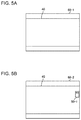
- FIG. 5 is a first diagram illustrating a first frame and a second frame.
- FIG. 6 is a second diagram illustrating a first frame and a second frame.
- FIG. 7 is a diagram illustrating a scene in which matching of objects is performed.
- FIG. 8 is a diagram illustrating a scene in which a plurality of objects having a high similarity in feature value are included in one frame.
- FIG. 9 are diagrams illustrating a method of determining a frame to be processed.
- FIG. 10 is a diagram illustrating payment information in a table format.
- FIG. 11 is a diagram illustrating a case in which two products are stacked and placed on a placement table.
- FIG. 12 is a diagram for explaining an operation of a product registration apparatus of Example Embodiment 2.
- FIG. 13 is a diagram illustrating a case where products represented by two objects are different products.
- FIG. 14 is a diagram illustrating a case where products represented by two objects are the same product.
- FIG. 15 is a flowchart illustrating the flow of processes executed by the product registration apparatus of Example Embodiment 2.
- each block represents a functional unit configuration, instead of a hardware unit configuration.
- FIG. 1 is a block diagram illustrating a product registration apparatus 20 according to Example Embodiment 1.
- the product registration apparatus 20 is used in a process of registering a product as a payment target (hereinafter, referred to as a product registration process).
- the user store clerk, customer, or the like
- the product registration apparatus 20 includes a comparison unit 22 and a registration unit 24 .
- the comparison unit 22 compares a first frame with a second frame of a video (hereinafter referred to as a product video) that is generated by the camera. The second frame is generated at a time later than the first frame.
- the comparison unit 22 determines a product that is not included in the first frame but included in the second frame.
- the registration unit 24 registers the determined product (product that is not included in the first frame but included in the second frame) as a payment target.
- the product registration apparatus 20 of the present example embodiment when a new product is included in the product video, the product is registered as a payment target. Therefore, only by putting the product in the imaging range of the camera, the product registration apparatus 20 can register the product as a payment target. Therefore, it is possible to easily perform the product registration process.
- the product registration apparatus 20 of the present example embodiment in a case of registering a plurality of products as payment targets, the products that is put into the imaging range are registered as payment targets, without waiting for that all products are put into the imaging range of the camera (for example, placed on the placement table). Therefore, the efficiency of the product registration process is improved.
- the store clerk A takes out the product from the shopping basket and places it on the placement table.
- the store clerk B puts the products registered as a payment target by the product registration apparatus 20 into a bag.
- the store clerk B can put the products registered as payment targets into a bag, without waiting for all the products to be placed on the placement table. Therefore, it is possible to shorten the time required for the entire registration work, as compared with the case where it is necessary to wait for all products to be placed on the placement table.
- Each functional configuration unit of the product registration apparatus 20 may be realized by hardware (for example, a hard-wired electronic circuit) that realizes each functional configuration unit, or a combination of hardware and software (for example, a combination of an electronic circuit, a program for controlling the electronic circuit, and the like).
- hardware for example, a hard-wired electronic circuit
- software for example, a combination of an electronic circuit, a program for controlling the electronic circuit, and the like.
- FIG. 2 is a diagram illustrating a hardware configuration of a computer 200 that implements the product registration apparatus 20 of Example Embodiment 1.
- the computer 200 may be implemented using a special-purpose apparatus designed for cash register terminal or may be implemented using a general-purpose apparatus such as a personal computer (PC) or a portable terminal.
- PC personal computer
- the computer 200 includes a bus 202 , a processor 204 , a memory 206 , a storage 208 , an input and output interface 210 , and a network interface 212 .
- the bus 202 is a data transmission path through which the processor 204 , the memory 206 , the storage 208 , the input and output interface 210 , and the network interface 212 mutually transmit and receive data.
- a method of connecting the processor 204 and the like to each other is not limited to bus connection.
- the processor 204 is an arithmetic processing apparatus such as a central processing unit (CPU) or a graphics processing unit (GPU).
- the memory 206 is a memory such as a random access memory (RAM) or a read only memory (ROM).
- the storage 208 is a storage apparatus such as a hard disk, a solid state drive (SSD), or a memory card. Further, the storage 208 may be a memory such as a RAM or a ROM.
- the input and output interface 210 is an interface for connecting the computer 200 and an input/output device.
- a touch panel 214 a drawer 216 , a change machine 218 , a receipt printer 220 , and the like are connected to the input and output interface 210 .
- the touch panel 214 is used, for example, to manually input the amount of money of a product. Further, the touch panel 214 displays various types of information, such as information on a product registered as a payment target.
- the drawer 216 stores coins and bills.
- the change machine 218 has an input port for inputting the money and an output port for discharging the change.
- the receipt printer 220 issues a receipt or the like.
- An input interface other than the touch panel 214 such as a keyboard, may be connected to the computer 200 .
- the network interface 212 is an interface for communicably connecting the computer 200 to an external apparatus.
- the network interface 212 may be a network interface for connection with a wired line, or a network interface for connection with a wireless line.
- the computer 200 that realizes the product registration apparatus 20 is connected to a store server or the like that manages various apparatuses installed in the store through the network.
- the storage 208 stores a program module for implementing each of the functions of the product registration apparatus 20 .
- the processor 204 implements each of the functions corresponding to the program modules.
- the processor 204 may execute the modules after reading them into the memory 206 , or may execute the modules without reading them into the memory 206 .
- each program module may be stored in the memory 206 .
- the computer 200 may not include the storage 208 .
- the computer 200 does not necessarily need to be communicably connected to other apparatuses through a network. Therefore, the computer 200 may not include the network interface 212 .
- the computer 200 may not include the drawer 216 , the change machine 218 , and the receipt printer 220 .
- the camera 30 is any camera that can image surroundings and generate a moving image.
- the camera 30 may be provided in a housing dedicated to the camera or may be provided integrally with another apparatus (such as a camera incorporated in a smartphone).
- the installation location of the camera 30 may be any location capable of imaging the product.
- the camera 30 is fixed at a position where the placement table is looked down on directly below, the placement table being used when the store clerk registers the product being a payment target.
- FIG. 3 is a diagram illustrating an installation location of the camera 30 .
- the camera 30 looks down on the placement table 40 on which the product is placed.
- the installation position of the camera 30 is not limited to the position shown in FIG. 3 .
- FIG. 4 is a flowchart illustrating the flow of processes executed by the product registration apparatus 20 of example embodiment 1.
- the comparison unit 22 determines whether or not there is a product that is not included in the first frame, among the products included in the second frame (S 102 ). If there is a product that is not included in the first frame, among the products included in the second frame (S 102 : YES), the registration unit 24 registers the corresponding products as payment targets (S 104 ). If there is no product that is not included in the first frame, among the products included in the second frame (S 102 : NO), the process of FIG. 4 ends.
- the product registration apparatus 20 acquires a product video from the camera 30 .
- the product registration apparatus 20 is connected to the camera 30 so as to be communicable.
- the product registration apparatus 20 may acquire the product video from the storage apparatus.
- the product registration apparatus 20 is connected to the storage apparatus so as to be communicable.
- the product registration apparatus 20 may always acquire product videos or may acquire them for a specific period of time. In the latter case, for example, the product registration apparatus 20 starts acquiring the product video at the timing of starting the product registration process, and ends acquiring the product video at the timing of ending the product registration process. The product registration process is started or ended, for example, when the user performs a predetermined input operation on the product registration apparatus 20 .
- the comparison unit 22 compares the first frame with the second frame to determine a product that is not included in the first frame, among the products included in the second frame (S 102 ). The method will be specifically described below.
- FIG. 5 is the first diagram illustrating the first frame and the second frame.
- a frame 60 - 1 represents the first frame and a frame 60 - 2 represents the second frame.
- Each frame is generated by the camera 30 fixed so as to look down on the placement table 40 from directly above.
- the shopping basket containing the product to be registered as the payment target is placed outside the right side of the imaging range of the camera 30 in a case where the placement table 40 is viewed in plan.
- the user store clerk, customer, or the like
- the product is not included in the frame 60 - 1 .
- the comparison unit 22 determines the product 50 - 1 as a product that is included in the frame 60 - 2 but not included in the frame 60 - 1 .
- the registration unit 24 registers the product 50 - 1 as a payment target.
- FIG. 6 is the second diagram illustrating the first frame and the second frame. Each frame in FIG. 6 is generated after the frame 60 - 2 in FIG. 5 . Therefore, in FIG. 6 , the product 50 - 1 has already been placed on the placement table 40 . Therefore, the product 50 - 1 is included in the frame 60 - 1 .
- the frame 60 - 2 includes not only the product 50 - 1 but also the product 50 - 2 . Therefore, the comparison unit 22 determines the product 50 - 2 as a product that is included in the frame 60 - 2 but not included in the frame 60 - 1 . As a result, the registration unit 24 registers the product 50 - 2 as a payment target.
- the product 50 - 1 is also included in the frame 60 - 1 . Therefore, according to the result of the comparison between the frames shown in FIG. 6 , the product 50 - 1 is not registered as a payment target. In this case, the product 50 - 1 has already been registered as s a payment target at the timing when the product 50 - 1 is moved to be placed on the placement table 40 (for example, at the timing when the frames 60 - 1 and 60 - 2 in FIG. 5 are compared by the comparison unit 22 ).
- the comparison unit 22 In order to compare the products included in two frames, the comparison unit 22 needs to distinguish between the products included in the respective frames. Hereinafter, a method by which the comparison unit 22 distinguishes between products will be exemplified.
- the comparison unit 22 holds in advance the captured image generated by the camera 30 in a state where the product is not included in the imaging range, as a reference image. Then, the comparison unit 22 extracts a difference between the first frame and the reference image, thereby extracting an object not included in the reference image from the first frame. Then, each extracted object is handled as a product. The comparison unit 22 performs the same process on the second frame.
- the comparison unit 22 performs matching between the object extracted from the first frame and the object extracted from the second frame. More specifically, the comparison unit 22 compares the feature value of each object extracted from the first frame with the feature value of each object extracted from the second frame, and handles the objects having the high degree of matching of the feature values (high similarity), as the same objects. Then, the comparison unit 22 handles an object that does not match any object extracted from the first frame (an object having low similarity with any object extracted from the first frame), among the objects extracted from the second frame, as the product that is included in the second frame but not included in the first frame.
- the feature value of an object is information indicating features such as the shape, color, and pattern of the object.
- FIG. 7 is a diagram illustrating a state of performing matching of objects.
- an object 80 - 1 is included in the frame 60 - 1 .
- an object 80 - 2 and an object 80 - 3 are included in the frame 60 - 2 .
- the shape of the object 80 - 1 has a high similarity with the shape of the object 80 - 2 , but it has low similarity with the shape of the object 80 - 3 . Therefore, the comparison unit 22 determines that the object 80 - 1 and the object 80 - 2 represent the same product. As a result, the comparison unit 22 handles the product represented by the object 80 - 3 as a product that is included in the frame 60 - 2 but not included in the frame 60 - 1 .
- FIG. 8 is a diagram illustrating a scene in which a plurality of objects having a high similarity in feature value are included in one frame.
- the object 80 - 1 is included in the frame 60 - 1
- the object 80 - 2 and the object 80 - 3 are included in the frame 60 - 2 .
- the object 80 - 1 and the object 80 - 2 represent the same product.
- the product represented by the object 80 - 3 is the product of the same type as the type of the product represented by the object 80 - 1 and the object 80 - 2 . Therefore, the feature values respectively calculated for the object 80 - 1 to the object 80 - 3 have high degree of coincidence with each other.
- the comparison unit 22 determines the object 80 representing the same product, using the position of each object 80 . Specifically, the comparison unit 22 handles the product represented by the object 80 - 2 having a short distance to the object 80 - 1 included in the frame 60 - 1 as the same product as the product represented by the object 80 - 1 . On the other hand, the comparison unit 22 handles the product represented by the object 80 - 3 having a long distance to the object 80 - 1 , as a product different from the product represented by the object 80 - 1 (a product newly imaged by the camera 30 ). That is, the comparison unit 22 handles the product represented by the object 80 - 3 as a product that is included in the frame 60 - 2 but not included in the frame 60 - 1 .
- the comparison unit 22 may determine the identifier of the product (hereinafter referred to as a product identifier (ID)) included in the frame and distinguish the product using the product ID.
- ID the product identifier
- the product ID is stored in association with the image of the product in a product database that manages information on each product.
- the comparison unit 22 extracts an object from a frame in the same manner as the method described in Method 1.
- the comparison unit 22 determines the product ID of the product represented by each object included in the frame, by matching the extracted object with the image of each product stored in the product database. By doing so, the comparison unit 22 distinguishes each product included in the frame according to the product ID of the product.
- the method of determining the product ID is not limited to the above method.
- the comparison unit 22 may determine the product ID of the product by analyzing various codes (barcode, QR code (registered trademark), or the like) attached to the product included in the frame.
- the comparison unit 22 cannot distinguish between products of the same type included in one frame by the product IDs. In this case, similar to the method described with reference to FIG. 8 in Method 1, the comparison unit 22 determines the object representing the same product, using the position of each object.
- the comparison unit 22 handles the product represented by the object 80 - 2 having a short distance to the object 80 - 1 included in the frame 60 - 1 as the same product as the product represented by the object 80 - 1 .
- the comparison unit 22 handles the product represented by the object 80 - 3 having a long distance to the object 80 - 1 , as a product different from the product represented by the object 80 - 1 (a product newly imaged by the camera 30 ).
- the comparison unit 22 handles two different frames included in the product video, as a first frame and a second frame.
- the second frame is a frame generated after the first frame.
- FIG. 9 are diagrams illustrating a method of determining a frame to be processed.
- the first frame is a frame a and the second frame is a frame b
- a pair of the first frame and the second frame is expressed as P(a, b).
- a and b are frame numbers, respectively.
- the comparison unit 22 sets two consecutive frames in time series as a first frame and a second frame. That is, assuming that the frame number of the first frame is the pair of the first frame and the second frame is P(F i , F i +1). Further, in FIG. 9A , the comparison unit 22 performs a comparison process on all the pairs P(F i , F i +1) included in the frame F 1 to frame F n (F n >F 1 ). Therefore, the next pair of P(F i , F i +1) is P(F i +1, F i +2). Note that, the method of determining the first frame F 1 and the last frame F n will be described later.
- FIG. 9B similarly to FIG. 9A , P(F i , F i +1) which is a pair of consecutive two frames in the time series is compared by the comparison unit 22 .
- the comparison unit 22 selects each pair excluding a predetermined interval k. Therefore, the next pair of P(F i , F i +1) is P(F n +k, F n +k+1).
- the value of k can be set to any value.
- the information indicating k may be preset in the comparison unit 22 or may be stored in a storage unit accessible from the comparison unit 22 .
- the comparison unit 22 sets the frame later than the first frame by a predetermined number m as the second frame. That is, a pair of P(F i , F i +m) is selected as the first frame and the second frame. Further, in FIG. 9C , the frame handled as the first frame by the comparison unit 22 is the frame handled as the second frame in the previous comparison process. Therefore, the next pair of P(F i , F i +m) is P(F i +m, F i +2m).
- the value of m can be set to any value.
- the information indicating k may be preset in the comparison unit 22 or may be stored in a storage unit accessible from the comparison unit 22 .
- the comparison unit 22 sets the pair of P(F i , F i +m) as the first frame and the second frame.
- each pair is selected excluding a predetermined interval k (k>m). Therefore, the next pair of P(F i , F i +m) is P(F i +k, F i +k+m).
- Information indicating which one of the methods described with reference to FIGS. 9A to 9D described above is used to determine the pair of the first frame and the second frame may be set in advance in the comparison unit 22 , or may be stored in a storage apparatus accessible from the comparison unit 22 . Further, the method of determining the pair of the first frame and the second frame is not limited to the above method.
- the comparison unit 22 sets the product video generated from the start of execution of the product registration apparatus 20 until the end of the execution of the product registration apparatus 20 as a target of a comparison process.
- F 1 is a frame generated when the execution of the product registration apparatus 20 is started
- F n is a frame generated immediately before the end of the execution of the product registration apparatus 20 .
- the comparison unit 22 sets the product video generated during the period from receiving the input operation instructing the start of the registration process of the payment target to receiving the input operation instructing the end of the registration process of the payment target as an object to be subject to the compare process.
- Ft is a frame generated at the timing of receiving the input operation instructing the start of the registration process of the payment target
- F n is a frame generated at the timing of receiving the input operation instructing the end of the registration process of the payment target.
- the operation to instruct the start of the registration process of the payment target is an operation to press a button “start registration”, for example.
- the operation to instruct the end of the registration process of the payment target is an operation to press a button “subtotal”, for example.
- the registration unit 24 registers a product that is not included in the first frame, among the products included in the second frame, as a payment target (S 104 ). For example, the registration unit 24 generates payment information on the product to be registered as a payment target and registers the product as a payment target.
- the payment information is information on the payment process of a product registered as a payment target.
- the registration unit 24 stores the generated payment information in a storage unit inside or outside the product registration apparatus 20 .
- the payment target for one payment process may include a plurality of products.
- the product registration apparatus 20 registers one or a plurality of products which are registered during a period after receiving an input operation instructing the start of the registration process of a payment target until receiving an input operation instructing the end of the registration process of a payment target, as the payment target in one payment process.
- the payment information representing the payment target for one payment process indicates the ID or the like of each product registered as a payment target. Further, the payment information may further indicate the number of products registered as payment targets, a transaction number, price of each product, a payment amount of money, or the like.
- FIG. 10 is a diagram illustrating payment information in a table format.
- the payment information shown in FIG. 10 is referred to as payment information 300 .
- the payment information 300 has two columns, Payment information ID 302 and Product list 304 .
- Product list 304 is a list of product IDs registered as the payment targets.
- Product ID 306 is the ID of the product registered as a payment target.
- the product registration apparatus 20 determines the product ID of the product to be registered as a payment target, using the product video.
- the timing at which the product registration apparatus 20 determines the product ID of the product included in the product image varies.
- the comparison unit 22 determines the product ID of each product from the frame to be compared.
- the registration unit 24 uses the ID of the product determined by the comparison unit 22 .
- the registration unit 24 determines the product ID of the product when registering the product as the payment target.
- the method of determining the product ID of the product by using the product video is as described above.
- the product registration apparatus 20 may be an apparatus operated by a store clerk or may be an apparatus operated by a customer. In the latter case, the customer herself causes the product registration apparatus 20 to perform the product registration process.
- the product registration apparatus 20 may or may not have a function of performing a payment process of the product registered as a payment target.
- the payment process includes a process of presenting to the customer, a payment amount indicated in the payment information, a process of receiving customer's payment, a process of counting up the paid-in money, a process of discharging change to the customer, a process of issuing a receipt, or the like.
- an apparatus having a function of performing the payment process is installed separately in the store.
- FIG. 11 is a diagram illustrating a case in which two products are stacked and placed on the placement table 40 .
- the comparison unit 22 performs the comparison process, with the frame before the product 50 - 1 stacked on the product 50 - 2 is included as the first frame, and the frame after the product 50 - 1 stacked on the product 50 - 2 is included as the second frame.
- the comparison unit 22 determines that the product 50 - 1 is a product that is included in the second frame but is not included in the first frame. Therefore, the registration unit 24 registers the product 50 - 1 as a payment target.
- the product 50 - 2 is hidden behind the product 50 - 1 and is not included in the product image 32 , it is not registered as a payment target at this timing.
- the comparison unit 22 performs a comparison process, with the frame before the product 50 - 2 is included as the first frame and the frame after the product 50 - 2 is included as the second frame. As a result, the comparison unit 22 determines that the product 50 - 2 is a product that is included in the second frame but is not included in the first frame. Therefore, the registration unit 24 registers the product 50 - 2 as a payment target.
- each product 50 can be registered as a payment target. Therefore, since it is possible to place a plurality of products 50 on the placement table 40 at a time, the labor for moving the products 50 is reduced.
- a product registration apparatus 20 according to Example Embodiment 2 has the configuration shown in FIG. 1 , similar to the product registration apparatus 20 of Example Embodiment 1. Except as described below, the product registration apparatus 20 of Example Embodiment 2 has the same functions of the product registration apparatus 20 of Example Embodiment 1.
- the product registration apparatus 20 of Example Embodiment 2 operates such that a product is not erroneously registered twice as a payment target, in a case or the like where the product is not temporarily captured by the camera 30 . This will be specifically described below.
- FIG. 12 is a diagram for explaining an operation of a product registration apparatus 20 of Example Embodiment 2.
- the video configured with the frame a to frame b of the product video 32 is represented as a partial video V(a, b).
- the object 80 - 1 is extracted from the partial video V(F n1 , F n2 ).
- the object 80 - 2 is extracted from the partial video V(F n3 , F n4 ).
- the product represented by the object 80 - 1 and the product represented by the object 80 - 2 are the same type of products. Both the object 80 - 1 and the object 80 - 2 are not extracted from the partial video V(F n2 +1, F n3 ⁇ 1).
- FIG. 12 there are two cases of 1) a case where the product represented by the object 80 - 1 and the product represented by the object 80 - 2 are different products, and 2) a case where the product represented by the object 80 - 1 and the product represented by the object 80 - 2 are the same products.
- FIG. 13 is a diagram illustrating a case where the product represented by the object 80 - 1 and the product represented by the object 80 - 2 are different products.
- FIG. 14 is a diagram illustrating a case where the product represented by the object 80 - 1 and the product represented by the object 80 - 2 are the same products.
- the user first takes out the product 50 - 1 from the shopping basket and passes the product 50 - 1 on the placement table 40 . Therefore, the object 80 - 1 representing the product 50 - 1 is extracted from the partial video V(F n1 , F n2 ). After a while, the user takes out the product 50 - 2 from the shopping basket and passes the product 50 - 2 on the placement table 40 . Therefore, the object 80 - 2 representing the product 50 - 2 is extracted from the partial video V(F n3 , F n4 ). Further, both the object 80 - 1 and the object 80 - 2 are not extracted from the partial video V(F n2 +1, F n3 ⁇ 1). In this case, the registration unit 24 needs to register both the product 50 - 1 represented by the object 80 - 1 and the product 50 - 2 represented by the object 80 - 2 , as payment targets.
- the user first takes out the product 50 - 1 from the shopping basket and places it on the placement table 40 . Therefore, the object 80 - 1 representing the product 50 - 1 is extracted from the partial video V(F n1 , F n2 ). Thereafter, while the partial video V(F n2 +1, F n3 ⁇ 1) is generated, the user's hand 90 is in the imaging range of the camera 30 so as to cover the product 50 - 1 . Therefore, during this time, product 50 - 1 is not included in the product video 32 . Thereafter, the user's hand 90 is no longer included in the product video 32 , and the product 50 - 1 is again included in the product video 32 .
- the object 80 - 2 representing the product 50 - 1 is extracted from the partial video V(F n3 , F n4 ). Therefore, the object representing the product 50 - 1 is not extracted from the partial video V(F 2n +1, F 3n ⁇ 1).
- the registration unit 24 should recognize that the product represented by the object 80 - 1 and the product represented by the object 80 - 2 are the same product and should register the product 50 - 1 as a payment target. If the registration unit 24 individually registers the product represented by the object 80 - 1 and the product represented by the object 80 - 2 , one product is mistakenly registered twice as a payment target (so-called double reading occurs).
- the product registration apparatus 20 of Example Embodiment 2 operates as follows. First, in a case where there is a product that is included in the second frame but not included in the first frame, the comparison unit 22 determines whether or not there is a frame including a product of the same type as the type of the product in a frame sequence between a frame prior to the second frame by a predetermined number and the previous frame of the second frame. If there is a frame including a product of the same type as the type of the product in the frame sequence, the registration unit 24 does not register the product as a payment target. On the other hand, if there is no frame including a product of the same type as the type of the product in the frame sequence, the registration unit 24 registers the product as a payment target.
- the comparison unit 22 performs the comparison process, with the frame Fan as the second frame and the frame F 3n ⁇ 1 as the first frame.
- the comparison unit 22 determines whether or not a product of the same type as the type of the product represented by the object 80 - 2 is included in a frame sequence from a frame prior to the frame F 3n by a predetermined number to the frame F 3n ⁇ 1.
- the frame sequence includes frames before frame Fen. Therefore, in the frame sequence, there is a frame from which the object 80 - 1 is extracted. Then, the product represented by the object 80 - 1 and the product represented by the object 80 - 2 are the same type of products. Therefore, the registration unit 24 does not register the product represented by the object 80 - 2 extracted from the frame Fan as a payment target.
- the registration unit 24 registers the product represented by the object 80 - 2 included in the frame Fan as a payment target.
- the above-described process focuses on a difference between the length of time in which a certain product is not temporarily included in the product video 32 as illustrated in FIG. 14 (the length of a partial video V(F n2 +1, F n3 ⁇ 1) as in FIG. 14 ) and the length of time in which different products of the same type are not included in the product video 32 in a case where each of those products is registered as illustrated in FIG. 13 (the length of a partial video V(F n2 +1, F n3 ⁇ 1) in FIG. 13 ).
- the length of time in which a certain product is not temporarily included in the product video 32 as in FIG. 14 is shorter than the time from registering the first product to registering the next product in the case of registering two different products as a payment target.
- the comparison unit 22 registers the product as a payment target.
- the product registration apparatus 20 of Example Embodiment 2 prevents a product that is not temporarily included in the product video 32 from being registered twice as a payment target by mistake, and accurately recognizes the number of products registered as a payment target.
- the predetermined number can be set to any number.
- the predetermined number may be preset in the comparison unit 22 or may be stored in a storage apparatus accessible from the comparison unit 22 .
- a predetermined time may be set.
- the comparison unit 22 calculates the predetermined number by calculating the product of the frame rate of the product video 32 and the predetermined time.
- the comparison unit 22 uses “a frame sequence between a frame prior to the second frame by a predetermined number and the previous frame of the second frame”, but the end of this frame sequence is not necessarily limited to a frame immediately before the second frame.
- the comparison unit 22 may use “a frame sequence between a frame prior to the second frame by a first predetermined number and a frame prior to the second frame by a second predetermined number”.
- the first predetermined number is larger than the second predetermined number.
- the first predetermined number and the second predetermined number can be set to any number.
- FIG. 15 is a flowchart illustrating the flow of a process executed by the product registration apparatus 20 of example embodiment 2.
- the comparison unit 22 determines whether or not there is a product that is not included in the first frame, among the products included in the second frame (S 202 ). In a case where there is a product that is not included in the first frame, among the products included in the second frame (S 202 : YES), the process of FIG. 15 proceeds to S 204 . On the other hand, if there is no product that is not included in the first frame, among the products included in the second frame (S 202 : NO), the process of FIG. 15 ends.
- the comparison unit 22 determines whether or not there is a frame including a product of the same type as the type of the product (hereinafter referred to as “corresponding product”) included in the second frame but not included in the first frame, in a frame sequence from a frame prior to the second frame by a predetermined number to a frame immediately before the second frame.
- corresponding product a product of the same type as the type of the product included in the second frame but not included in the first frame
- the product registration apparatus 20 of the second embodiment is realized by using the computer 200 as in the first embodiment (see FIG. 2 ).
- each program module stored in the storage 208 described above further includes a program for realizing each function described in the present example embodiment.
- An information processing apparatus including
- a comparison unit which compares a first frame of a video with a second frame which to determine a product that is not included in the first frame but included in the second frame, the second frame being generated at a time later than the first frame in the video;
- a registration unit which registers the determined product as a payment target.
- the comparison unit extracts objects from the first frame and the second frame respectively, and sets a product represented by an object having low similarity with each object extracted from the first frame, among the objects extracted from the second frame, as a product that is not included in the first frame but included in the second frame.
- the registration unit does not register the product that is not included in the first frame but included in the second frame as a payment target.
- a camera images a table on which a product of a payment target is placed from above, the camera generating the video.
- a control method executed by a computer comprising:
- a registration step of registering the determined product as a payment target a registration step of registering the determined product as a payment target.
- an identifier of a product represented by each extracted object is determined by using information in which an image and an identifier of a product are associated with each other, and
- the product that is not included in the first frame but included in the second frame is determined by comparing an identifier of each product included in the first frame with an identifier of each product included in the second frame.
- the registration step in a case where a product of the same type as the type of the product not included in the first frame but included in the second frame is included in a frame sequence between a frame prior to the second frame by a predetermined number and a previous frame of the second frame, the product that is not included in the first frame but included in the second frame is not registered as a payment target.
- a camera images a table on which a product being a payment target is placed from above which generates the video captures.
Landscapes
- Engineering & Computer Science (AREA)
- General Physics & Mathematics (AREA)
- Physics & Mathematics (AREA)
- Theoretical Computer Science (AREA)
- Business, Economics & Management (AREA)
- Computer Vision & Pattern Recognition (AREA)
- Multimedia (AREA)
- Accounting & Taxation (AREA)
- Data Mining & Analysis (AREA)
- Artificial Intelligence (AREA)
- Evolutionary Computation (AREA)
- General Business, Economics & Management (AREA)
- Strategic Management (AREA)
- Finance (AREA)
- Bioinformatics & Computational Biology (AREA)
- Health & Medical Sciences (AREA)
- Bioinformatics & Cheminformatics (AREA)
- General Health & Medical Sciences (AREA)
- Evolutionary Biology (AREA)
- General Engineering & Computer Science (AREA)
- Computing Systems (AREA)
- Life Sciences & Earth Sciences (AREA)
- Databases & Information Systems (AREA)
- Software Systems (AREA)
- Medical Informatics (AREA)
- Management, Administration, Business Operations System, And Electronic Commerce (AREA)
- Cash Registers Or Receiving Machines (AREA)
- Image Analysis (AREA)
Abstract
Description
Claims (13)
Applications Claiming Priority (3)
| Application Number | Priority Date | Filing Date | Title |
|---|---|---|---|
| JP2016009749 | 2016-01-21 | ||
| JP2016-009749 | 2016-01-21 | ||
| PCT/JP2016/087281 WO2017126256A1 (en) | 2016-01-21 | 2016-12-14 | Information processing device, control method, and program |
Publications (2)
| Publication Number | Publication Date |
|---|---|
| US20190026562A1 US20190026562A1 (en) | 2019-01-24 |
| US10824873B2 true US10824873B2 (en) | 2020-11-03 |
Family
ID=59362578
Family Applications (1)
| Application Number | Title | Priority Date | Filing Date |
|---|---|---|---|
| US16/071,010 Active 2037-02-27 US10824873B2 (en) | 2016-01-21 | 2016-12-14 | Information processing apparatus, control method, and program |
Country Status (3)
| Country | Link |
|---|---|
| US (1) | US10824873B2 (en) |
| JP (1) | JP6801677B2 (en) |
| WO (1) | WO2017126256A1 (en) |
Families Citing this family (2)
| Publication number | Priority date | Publication date | Assignee | Title |
|---|---|---|---|---|
| JP2023122106A (en) * | 2022-02-22 | 2023-09-01 | ブラザー工業株式会社 | Article identification system, article identification device, program |
| JP2024091181A (en) * | 2022-12-23 | 2024-07-04 | 富士通株式会社 | Information processing program, information processing method, and information processing device |
Citations (8)
| Publication number | Priority date | Publication date | Assignee | Title |
|---|---|---|---|---|
| JP2004127013A (en) | 2002-10-03 | 2004-04-22 | Matsushita Electric Ind Co Ltd | Point of sale information management device |
| JP2013041465A (en) | 2011-08-17 | 2013-02-28 | Toshiba Tec Corp | Product storage device, product registration device, and product registration method |
| JP2013054673A (en) | 2011-09-06 | 2013-03-21 | Toshiba Tec Corp | Information processor and program |
| US20140023241A1 (en) | 2012-07-23 | 2014-01-23 | Toshiba Tec Kabushiki Kaisha | Dictionary registration apparatus and method for adding feature amount data to recognition dictionary |
| JP2014052805A (en) | 2012-09-06 | 2014-03-20 | Toshiba Tec Corp | Information processing apparatus and program |
| US20150193759A1 (en) * | 2014-01-07 | 2015-07-09 | Toshiba Tec Kabushiki Kaisha | Object recognition device, checkout terminal, and method for processing information |
| WO2015147333A1 (en) | 2014-03-28 | 2015-10-01 | 日本電気株式会社 | Sales registration apparatus, program, and sales registration method |
| US20160086148A1 (en) * | 2014-09-22 | 2016-03-24 | Casio Computer Co., Ltd. | Merchandise item registration apparatus, and merchandise item registration method |
-
2016
- 2016-12-14 WO PCT/JP2016/087281 patent/WO2017126256A1/en not_active Ceased
- 2016-12-14 US US16/071,010 patent/US10824873B2/en active Active
- 2016-12-14 JP JP2017562473A patent/JP6801677B2/en active Active
Patent Citations (9)
| Publication number | Priority date | Publication date | Assignee | Title |
|---|---|---|---|---|
| JP2004127013A (en) | 2002-10-03 | 2004-04-22 | Matsushita Electric Ind Co Ltd | Point of sale information management device |
| JP2013041465A (en) | 2011-08-17 | 2013-02-28 | Toshiba Tec Corp | Product storage device, product registration device, and product registration method |
| JP2013054673A (en) | 2011-09-06 | 2013-03-21 | Toshiba Tec Corp | Information processor and program |
| US20140023241A1 (en) | 2012-07-23 | 2014-01-23 | Toshiba Tec Kabushiki Kaisha | Dictionary registration apparatus and method for adding feature amount data to recognition dictionary |
| JP2014021915A (en) | 2012-07-23 | 2014-02-03 | Toshiba Tec Corp | Commodity recognition device and recognition dictionary adding program |
| JP2014052805A (en) | 2012-09-06 | 2014-03-20 | Toshiba Tec Corp | Information processing apparatus and program |
| US20150193759A1 (en) * | 2014-01-07 | 2015-07-09 | Toshiba Tec Kabushiki Kaisha | Object recognition device, checkout terminal, and method for processing information |
| WO2015147333A1 (en) | 2014-03-28 | 2015-10-01 | 日本電気株式会社 | Sales registration apparatus, program, and sales registration method |
| US20160086148A1 (en) * | 2014-09-22 | 2016-03-24 | Casio Computer Co., Ltd. | Merchandise item registration apparatus, and merchandise item registration method |
Non-Patent Citations (2)
| Title |
|---|
| International Search Report corresponding to PCT/JP2016/087281 dated Mar. 14, 2017 (one page). |
| Japanese Notice of Reasons for Refusal issued in Japanese Patent Application No. 2017-562473, dated Jul. 28, 2020, 3 pages. |
Also Published As
| Publication number | Publication date |
|---|---|
| JPWO2017126256A1 (en) | 2018-11-15 |
| US20190026562A1 (en) | 2019-01-24 |
| JP6801677B2 (en) | 2020-12-16 |
| WO2017126256A1 (en) | 2017-07-27 |
Similar Documents
| Publication | Publication Date | Title |
|---|---|---|
| JP6686290B2 (en) | System and method | |
| US10762486B2 (en) | Information processing apparatus, information processing method, and non-transitory storage medium | |
| JP6555866B2 (en) | Product registration apparatus and program | |
| EP3239943A1 (en) | Monitoring device and method | |
| US20190019207A1 (en) | Apparatus and method for store analysis | |
| JP2014049014A (en) | Commodity recognition apparatus and commodity recognition program | |
| US20170344972A1 (en) | Recognition system, information processing apparatus, and information processing method | |
| US9412045B2 (en) | Commodity registration apparatus and commodity registration method | |
| US20160180315A1 (en) | Information processing apparatus using object recognition, and commodity identification method by the same | |
| US20160132855A1 (en) | Commodity sales data processing apparatus, reading apparatus and method by the same | |
| US20160371769A1 (en) | Information processing apparatus and information processing method | |
| JP2023121779A (en) | Information processing system, customer identification apparatus, information processing method and program | |
| JP2019021105A (en) | Product reading apparatus and product reading program | |
| JP6443184B2 (en) | Checkout system, product registration device, checkout device, program, and checkout method | |
| US10824873B2 (en) | Information processing apparatus, control method, and program | |
| JP2018159965A (en) | Information processing system, information processing device, information processing method, and information processing program | |
| JPWO2018074027A1 (en) | Abnormality detection apparatus, control method, and program | |
| US20180240093A1 (en) | Information processing apparatus and information processing method | |
| US20210241356A1 (en) | Information processing apparatus, control method, and program | |
| CN102789569B (en) | Code reading device and code read method | |
| JP7243766B2 (en) | Information processing device and control method | |
| US20250014008A1 (en) | Product registration device and method | |
| US20220092573A1 (en) | Portable terminal and information processing method for a portable terminal | |
| JP6696554B2 (en) | Payment system and payment method | |
| US20160232510A1 (en) | Checkout apparatus and method for presenting candidate merchandise |
Legal Events
| Date | Code | Title | Description |
|---|---|---|---|
| AS | Assignment |
Owner name: NEC CORPORATION, JAPAN Free format text: ASSIGNMENT OF ASSIGNORS INTEREST;ASSIGNORS:KINNO, DAI;IWAMOTO, KOTA;MATSUMOTO, SHINICHI;AND OTHERS;REEL/FRAME:046387/0687 Effective date: 20180703 |
|
| FEPP | Fee payment procedure |
Free format text: ENTITY STATUS SET TO UNDISCOUNTED (ORIGINAL EVENT CODE: BIG.); ENTITY STATUS OF PATENT OWNER: LARGE ENTITY |
|
| STPP | Information on status: patent application and granting procedure in general |
Free format text: DOCKETED NEW CASE - READY FOR EXAMINATION |
|
| STPP | Information on status: patent application and granting procedure in general |
Free format text: NON FINAL ACTION MAILED |
|
| STPP | Information on status: patent application and granting procedure in general |
Free format text: RESPONSE TO NON-FINAL OFFICE ACTION ENTERED AND FORWARDED TO EXAMINER |
|
| STPP | Information on status: patent application and granting procedure in general |
Free format text: FINAL REJECTION MAILED |
|
| STPP | Information on status: patent application and granting procedure in general |
Free format text: NOTICE OF ALLOWANCE MAILED -- APPLICATION RECEIVED IN OFFICE OF PUBLICATIONS |
|
| STPP | Information on status: patent application and granting procedure in general |
Free format text: PUBLICATIONS -- ISSUE FEE PAYMENT VERIFIED |
|
| STCF | Information on status: patent grant |
Free format text: PATENTED CASE |
|
| MAFP | Maintenance fee payment |
Free format text: PAYMENT OF MAINTENANCE FEE, 4TH YEAR, LARGE ENTITY (ORIGINAL EVENT CODE: M1551); ENTITY STATUS OF PATENT OWNER: LARGE ENTITY Year of fee payment: 4 |