US10772964B2 - Composition comprising a polymer and a bioactive agent and method of preparing thereof - Google Patents
Composition comprising a polymer and a bioactive agent and method of preparing thereof Download PDFInfo
- Publication number
- US10772964B2 US10772964B2 US15/188,783 US201615188783A US10772964B2 US 10772964 B2 US10772964 B2 US 10772964B2 US 201615188783 A US201615188783 A US 201615188783A US 10772964 B2 US10772964 B2 US 10772964B2
- Authority
- US
- United States
- Prior art keywords
- polymer
- composition
- poly
- ester
- urea
- Prior art date
- Legal status (The legal status is an assumption and is not a legal conclusion. Google has not performed a legal analysis and makes no representation as to the accuracy of the status listed.)
- Active
Links
- 239000000203 mixture Substances 0.000 title claims abstract description 337
- 229920000642 polymer Polymers 0.000 title claims abstract description 253
- 238000000034 method Methods 0.000 title claims abstract description 67
- 239000012867 bioactive agent Substances 0.000 title claims abstract description 48
- 241001515965 unidentified phage Species 0.000 claims abstract description 191
- 150000001413 amino acids Chemical class 0.000 claims abstract description 144
- 150000003839 salts Chemical class 0.000 claims abstract description 109
- 239000000843 powder Substances 0.000 claims abstract description 13
- XSQUKJJJFZCRTK-UHFFFAOYSA-N Urea Chemical compound NC(N)=O XSQUKJJJFZCRTK-UHFFFAOYSA-N 0.000 claims description 193
- VTYYLEPIZMXCLO-UHFFFAOYSA-L Calcium carbonate Chemical compound [Ca+2].[O-]C([O-])=O VTYYLEPIZMXCLO-UHFFFAOYSA-L 0.000 claims description 173
- 150000002148 esters Chemical class 0.000 claims description 150
- 239000004202 carbamide Substances 0.000 claims description 124
- 150000002009 diols Chemical class 0.000 claims description 94
- 229910000019 calcium carbonate Inorganic materials 0.000 claims description 86
- -1 poly (ester amide Chemical class 0.000 claims description 77
- 150000001408 amides Chemical class 0.000 claims description 72
- 239000003960 organic solvent Substances 0.000 claims description 71
- XLYOFNOQVPJJNP-UHFFFAOYSA-N water Substances O XLYOFNOQVPJJNP-UHFFFAOYSA-N 0.000 claims description 65
- 238000002156 mixing Methods 0.000 claims description 58
- QVGXLLKOCUKJST-UHFFFAOYSA-N atomic oxygen Chemical compound [O] QVGXLLKOCUKJST-UHFFFAOYSA-N 0.000 claims description 54
- 239000001095 magnesium carbonate Substances 0.000 claims description 54
- 229910000021 magnesium carbonate Inorganic materials 0.000 claims description 54
- 239000001301 oxygen Substances 0.000 claims description 54
- 229910052760 oxygen Inorganic materials 0.000 claims description 54
- ZLNQQNXFFQJAID-UHFFFAOYSA-L magnesium carbonate Chemical compound [Mg+2].[O-]C([O-])=O ZLNQQNXFFQJAID-UHFFFAOYSA-L 0.000 claims description 53
- 125000004406 C3-C8 cycloalkylene group Chemical group 0.000 claims description 50
- OYQYHJRSHHYEIG-UHFFFAOYSA-N ethyl carbamate;urea Chemical compound NC(N)=O.CCOC(N)=O OYQYHJRSHHYEIG-UHFFFAOYSA-N 0.000 claims description 49
- FAPWRFPIFSIZLT-UHFFFAOYSA-M Sodium chloride Chemical compound [Na+].[Cl-] FAPWRFPIFSIZLT-UHFFFAOYSA-M 0.000 claims description 40
- 150000005690 diesters Chemical class 0.000 claims description 40
- UCPYLLCMEDAXFR-UHFFFAOYSA-N triphosgene Chemical compound ClC(Cl)(Cl)OC(=O)OC(Cl)(Cl)Cl UCPYLLCMEDAXFR-UHFFFAOYSA-N 0.000 claims description 37
- 150000008574 D-amino acids Chemical class 0.000 claims description 36
- 230000008569 process Effects 0.000 claims description 32
- 239000000047 product Substances 0.000 claims description 31
- 239000012044 organic layer Substances 0.000 claims description 30
- QORWJWZARLRLPR-UHFFFAOYSA-H tricalcium bis(phosphate) Chemical compound [Ca+2].[Ca+2].[Ca+2].[O-]P([O-])([O-])=O.[O-]P([O-])([O-])=O QORWJWZARLRLPR-UHFFFAOYSA-H 0.000 claims description 30
- 229910052799 carbon Inorganic materials 0.000 claims description 29
- OKTJSMMVPCPJKN-UHFFFAOYSA-N Carbon Chemical compound [C] OKTJSMMVPCPJKN-UHFFFAOYSA-N 0.000 claims description 28
- 238000003756 stirring Methods 0.000 claims description 28
- 238000001035 drying Methods 0.000 claims description 26
- 238000004108 freeze drying Methods 0.000 claims description 25
- 102000004190 Enzymes Human genes 0.000 claims description 24
- 108090000790 Enzymes Proteins 0.000 claims description 24
- 238000004519 manufacturing process Methods 0.000 claims description 24
- JOYRKODLDBILNP-UHFFFAOYSA-N Ethyl urethane Chemical compound CCOC(N)=O JOYRKODLDBILNP-UHFFFAOYSA-N 0.000 claims description 23
- 150000001875 compounds Chemical class 0.000 claims description 23
- VEXZGXHMUGYJMC-UHFFFAOYSA-M Chloride anion Chemical compound [Cl-] VEXZGXHMUGYJMC-UHFFFAOYSA-M 0.000 claims description 22
- 238000012696 Interfacial polycondensation Methods 0.000 claims description 19
- 238000005406 washing Methods 0.000 claims description 19
- 238000001694 spray drying Methods 0.000 claims description 18
- 230000005661 hydrophobic surface Effects 0.000 claims description 17
- 239000000725 suspension Substances 0.000 claims description 17
- 239000012265 solid product Substances 0.000 claims description 15
- 230000000844 anti-bacterial effect Effects 0.000 claims description 14
- 238000001291 vacuum drying Methods 0.000 claims description 14
- 238000009826 distribution Methods 0.000 claims description 13
- 239000003814 drug Substances 0.000 claims description 13
- 229940079593 drug Drugs 0.000 claims description 13
- 239000003242 anti bacterial agent Substances 0.000 claims description 12
- 238000005266 casting Methods 0.000 claims description 12
- 210000003169 central nervous system Anatomy 0.000 claims description 10
- 230000003115 biocidal effect Effects 0.000 claims description 9
- 159000000003 magnesium salts Chemical class 0.000 claims description 9
- 239000002260 anti-inflammatory agent Substances 0.000 claims description 8
- 159000000007 calcium salts Chemical class 0.000 claims description 8
- 238000001704 evaporation Methods 0.000 claims description 8
- 150000007530 organic bases Chemical class 0.000 claims description 8
- 150000003431 steroids Chemical class 0.000 claims description 8
- 229920001982 poly(ester urethane) Polymers 0.000 claims description 7
- 102000004169 proteins and genes Human genes 0.000 claims description 7
- 230000002924 anti-infective effect Effects 0.000 claims description 6
- 229940121363 anti-inflammatory agent Drugs 0.000 claims description 6
- 230000002421 anti-septic effect Effects 0.000 claims description 6
- 239000002246 antineoplastic agent Substances 0.000 claims description 6
- 229940034982 antineoplastic agent Drugs 0.000 claims description 6
- 239000003904 antiprotozoal agent Substances 0.000 claims description 6
- 239000003433 contraceptive agent Substances 0.000 claims description 6
- 229940111134 coxibs Drugs 0.000 claims description 6
- 239000003255 cyclooxygenase 2 inhibitor Substances 0.000 claims description 6
- 239000012039 electrophile Substances 0.000 claims description 6
- 239000005556 hormone Substances 0.000 claims description 6
- 229940088597 hormone Drugs 0.000 claims description 6
- 239000000041 non-steroidal anti-inflammatory agent Substances 0.000 claims description 6
- 229940021182 non-steroidal anti-inflammatory drug Drugs 0.000 claims description 6
- 108090000623 proteins and genes Proteins 0.000 claims description 6
- 229960005486 vaccine Drugs 0.000 claims description 6
- 108700010839 phage proteins Proteins 0.000 claims description 5
- OIGNJSKKLXVSLS-VWUMJDOOSA-N prednisolone Chemical compound O=C1C=C[C@]2(C)[C@H]3[C@@H](O)C[C@](C)([C@@](CC4)(O)C(=O)CO)[C@@H]4[C@@H]3CCC2=C1 OIGNJSKKLXVSLS-VWUMJDOOSA-N 0.000 claims description 5
- 229960005205 prednisolone Drugs 0.000 claims description 5
- 230000000202 analgesic effect Effects 0.000 claims description 4
- 230000000840 anti-viral effect Effects 0.000 claims description 4
- 159000000009 barium salts Chemical class 0.000 claims description 4
- 229910000389 calcium phosphate Inorganic materials 0.000 claims description 4
- 239000001506 calcium phosphate Substances 0.000 claims description 4
- 235000011010 calcium phosphates Nutrition 0.000 claims description 4
- 230000002254 contraceptive effect Effects 0.000 claims description 4
- 159000000008 strontium salts Chemical class 0.000 claims description 4
- 102000004157 Hydrolases Human genes 0.000 claims description 3
- 108090000604 Hydrolases Proteins 0.000 claims description 3
- 102000004317 Lyases Human genes 0.000 claims description 3
- 108090000856 Lyases Proteins 0.000 claims description 3
- 239000000758 substrate Substances 0.000 claims 18
- FGUUSXIOTUKUDN-IBGZPJMESA-N C1(=CC=CC=C1)N1C2=C(NC([C@H](C1)NC=1OC(=NN=1)C1=CC=CC=C1)=O)C=CC=C2 Chemical compound C1(=CC=CC=C1)N1C2=C(NC([C@H](C1)NC=1OC(=NN=1)C1=CC=CC=C1)=O)C=CC=C2 FGUUSXIOTUKUDN-IBGZPJMESA-N 0.000 claims 4
- 229960001193 diclofenac sodium Drugs 0.000 claims 2
- JGMJQSFLQWGYMQ-UHFFFAOYSA-M sodium;2,6-dichloro-n-phenylaniline;acetate Chemical compound [Na+].CC([O-])=O.ClC1=CC=CC(Cl)=C1NC1=CC=CC=C1 JGMJQSFLQWGYMQ-UHFFFAOYSA-M 0.000 claims 2
- 229920002959 polymer blend Polymers 0.000 abstract description 57
- 239000000945 filler Substances 0.000 abstract description 21
- 239000000872 buffer Substances 0.000 abstract description 18
- 229940024606 amino acid Drugs 0.000 description 129
- 235000001014 amino acid Nutrition 0.000 description 129
- HEDRZPFGACZZDS-UHFFFAOYSA-N Chloroform Chemical compound ClC(Cl)Cl HEDRZPFGACZZDS-UHFFFAOYSA-N 0.000 description 110
- ROHFNLRQFUQHCH-YFKPBYRVSA-N L-leucine Chemical compound CC(C)C[C@H](N)C(O)=O ROHFNLRQFUQHCH-YFKPBYRVSA-N 0.000 description 109
- YMWUJEATGCHHMB-UHFFFAOYSA-N Dichloromethane Chemical compound ClCCl YMWUJEATGCHHMB-UHFFFAOYSA-N 0.000 description 66
- 239000004395 L-leucine Substances 0.000 description 61
- 235000019454 L-leucine Nutrition 0.000 description 61
- 229960003136 leucine Drugs 0.000 description 61
- 208000027418 Wounds and injury Diseases 0.000 description 60
- 206010052428 Wound Diseases 0.000 description 59
- 238000002360 preparation method Methods 0.000 description 54
- 239000000243 solution Substances 0.000 description 54
- 239000007787 solid Substances 0.000 description 46
- 0 [2*]C(CC(=O)[3*]C(=O)CCCC([4*])C(=O)O[1*]OC(=O)C([2*])CC(=O)CC)C(=O)O[1*]OC(=O)C([4*])CC Chemical compound [2*]C(CC(=O)[3*]C(=O)CCCC([4*])C(=O)O[1*]OC(=O)C([2*])CC(=O)CC)C(=O)O[1*]OC(=O)C([4*])CC 0.000 description 45
- XEKOWRVHYACXOJ-UHFFFAOYSA-N Ethyl acetate Chemical compound CCOC(C)=O XEKOWRVHYACXOJ-UHFFFAOYSA-N 0.000 description 42
- XXMIOPMDWAUFGU-UHFFFAOYSA-N hexane-1,6-diol Chemical compound OCCCCCCO XXMIOPMDWAUFGU-UHFFFAOYSA-N 0.000 description 36
- CXMXRPHRNRROMY-UHFFFAOYSA-N sebacic acid Chemical compound OC(=O)CCCCCCCCC(O)=O CXMXRPHRNRROMY-UHFFFAOYSA-N 0.000 description 36
- 239000007788 liquid Substances 0.000 description 31
- CDBYLPFSWZWCQE-UHFFFAOYSA-L Sodium Carbonate Chemical compound [Na+].[Na+].[O-]C([O-])=O CDBYLPFSWZWCQE-UHFFFAOYSA-L 0.000 description 30
- UIIMBOGNXHQVGW-UHFFFAOYSA-M Sodium bicarbonate Chemical compound [Na+].OC([O-])=O UIIMBOGNXHQVGW-UHFFFAOYSA-M 0.000 description 29
- OGOWDCHWBXQZIN-CDJGTPELSA-N C[C@@H]1COC2C1OC[C@H]2C.C[C@H]1COC2C1OC[C@H]2C Chemical compound C[C@@H]1COC2C1OC[C@H]2C.C[C@H]1COC2C1OC[C@H]2C OGOWDCHWBXQZIN-CDJGTPELSA-N 0.000 description 26
- 241000588724 Escherichia coli Species 0.000 description 26
- 229910000391 tricalcium phosphate Inorganic materials 0.000 description 26
- IADGNODOIVDYPD-GZWUKOKXSA-N CC.CC.CC.CC.C[C@@H]1COC2C1OC[C@H]2C.C[C@H]1COC2C1OC[C@H]2C Chemical compound CC.CC.CC.CC.C[C@@H]1COC2C1OC[C@H]2C.C[C@H]1COC2C1OC[C@H]2C IADGNODOIVDYPD-GZWUKOKXSA-N 0.000 description 25
- 239000010410 layer Substances 0.000 description 23
- CURLTUGMZLYLDI-UHFFFAOYSA-N carbon dioxide Natural products O=C=O CURLTUGMZLYLDI-UHFFFAOYSA-N 0.000 description 22
- 235000010216 calcium carbonate Nutrition 0.000 description 20
- 229940088598 enzyme Drugs 0.000 description 20
- 230000015572 biosynthetic process Effects 0.000 description 19
- ZMXDDKWLCZADIW-UHFFFAOYSA-N N,N-Dimethylformamide Chemical compound CN(C)C=O ZMXDDKWLCZADIW-UHFFFAOYSA-N 0.000 description 18
- BLFLLBZGZJTVJG-UHFFFAOYSA-N benzocaine Chemical compound CCOC(=O)C1=CC=C(N)C=C1 BLFLLBZGZJTVJG-UHFFFAOYSA-N 0.000 description 18
- 239000000463 material Substances 0.000 description 18
- 241000588769 Proteus <enterobacteria> Species 0.000 description 17
- 241000191940 Staphylococcus Species 0.000 description 17
- 239000003463 adsorbent Substances 0.000 description 17
- 238000003786 synthesis reaction Methods 0.000 description 17
- MYSWGUAQZAJSOK-UHFFFAOYSA-N ciprofloxacin Chemical compound C12=CC(N3CCNCC3)=C(F)C=C2C(=O)C(C(=O)O)=CN1C1CC1 MYSWGUAQZAJSOK-UHFFFAOYSA-N 0.000 description 16
- 230000000670 limiting effect Effects 0.000 description 16
- 235000014380 magnesium carbonate Nutrition 0.000 description 16
- KJIFKLIQANRMOU-UHFFFAOYSA-N oxidanium;4-methylbenzenesulfonate Chemical compound O.CC1=CC=C(S(O)(=O)=O)C=C1 KJIFKLIQANRMOU-UHFFFAOYSA-N 0.000 description 16
- 238000006065 biodegradation reaction Methods 0.000 description 15
- 150000008575 L-amino acids Chemical class 0.000 description 14
- KZSNJWFQEVHDMF-BYPYZUCNSA-N L-valine Chemical compound CC(C)[C@H](N)C(O)=O KZSNJWFQEVHDMF-BYPYZUCNSA-N 0.000 description 14
- 239000000706 filtrate Substances 0.000 description 14
- 239000000178 monomer Substances 0.000 description 14
- 239000011780 sodium chloride Substances 0.000 description 14
- 229910000030 sodium bicarbonate Inorganic materials 0.000 description 13
- UHOVQNZJYSORNB-UHFFFAOYSA-N Benzene Chemical compound C1=CC=CC=C1 UHOVQNZJYSORNB-UHFFFAOYSA-N 0.000 description 12
- 241000589517 Pseudomonas aeruginosa Species 0.000 description 12
- PMZURENOXWZQFD-UHFFFAOYSA-L Sodium Sulfate Chemical compound [Na+].[Na+].[O-]S([O-])(=O)=O PMZURENOXWZQFD-UHFFFAOYSA-L 0.000 description 12
- 241000194017 Streptococcus Species 0.000 description 12
- 239000011521 glass Substances 0.000 description 12
- 229910017053 inorganic salt Inorganic materials 0.000 description 12
- 229910000029 sodium carbonate Inorganic materials 0.000 description 12
- 238000001179 sorption measurement Methods 0.000 description 12
- XDTMQSROBMDMFD-UHFFFAOYSA-N Cyclohexane Chemical compound C1CCCCC1 XDTMQSROBMDMFD-UHFFFAOYSA-N 0.000 description 11
- 239000002253 acid Substances 0.000 description 11
- YXFVVABEGXRONW-UHFFFAOYSA-N toluene Substances CC1=CC=CC=C1 YXFVVABEGXRONW-UHFFFAOYSA-N 0.000 description 11
- 230000029663 wound healing Effects 0.000 description 11
- IAZDPXIOMUYVGZ-UHFFFAOYSA-N Dimethylsulphoxide Chemical compound CS(C)=O IAZDPXIOMUYVGZ-UHFFFAOYSA-N 0.000 description 10
- 239000007832 Na2SO4 Substances 0.000 description 10
- 238000004458 analytical method Methods 0.000 description 10
- 229910052938 sodium sulfate Inorganic materials 0.000 description 10
- 229920001817 Agar Polymers 0.000 description 9
- 241000191967 Staphylococcus aureus Species 0.000 description 9
- 239000008272 agar Substances 0.000 description 9
- 229940088710 antibiotic agent Drugs 0.000 description 9
- 229960005274 benzocaine Drugs 0.000 description 9
- 239000002904 solvent Substances 0.000 description 9
- QDGAVODICPCDMU-UHFFFAOYSA-N 2-amino-3-[3-[bis(2-chloroethyl)amino]phenyl]propanoic acid Chemical compound OC(=O)C(N)CC1=CC=CC(N(CCCl)CCCl)=C1 QDGAVODICPCDMU-UHFFFAOYSA-N 0.000 description 8
- DHMQDGOQFOQNFH-UHFFFAOYSA-N Glycine Chemical compound NCC(O)=O DHMQDGOQFOQNFH-UHFFFAOYSA-N 0.000 description 8
- 230000002378 acidificating effect Effects 0.000 description 8
- 235000008206 alpha-amino acids Nutrition 0.000 description 8
- 229960003405 ciprofloxacin Drugs 0.000 description 8
- 238000003795 desorption Methods 0.000 description 8
- 150000002430 hydrocarbons Chemical group 0.000 description 8
- 125000001449 isopropyl group Chemical group [H]C([H])([H])C([H])(*)C([H])([H])[H] 0.000 description 8
- 125000005489 p-toluenesulfonic acid group Chemical class 0.000 description 8
- 125000002914 sec-butyl group Chemical group [H]C([H])([H])C([H])([H])C([H])(*)C([H])([H])[H] 0.000 description 8
- 239000007921 spray Substances 0.000 description 8
- FFEARJCKVFRZRR-UHFFFAOYSA-N L-Methionine Natural products CSCCC(N)C(O)=O FFEARJCKVFRZRR-UHFFFAOYSA-N 0.000 description 7
- AGPKZVBTJJNPAG-WHFBIAKZSA-N L-isoleucine Chemical compound CC[C@H](C)[C@H](N)C(O)=O AGPKZVBTJJNPAG-WHFBIAKZSA-N 0.000 description 7
- 229930182844 L-isoleucine Natural products 0.000 description 7
- FFEARJCKVFRZRR-BYPYZUCNSA-N L-methionine Chemical compound CSCC[C@H](N)C(O)=O FFEARJCKVFRZRR-BYPYZUCNSA-N 0.000 description 7
- 229930195722 L-methionine Natural products 0.000 description 7
- COLNVLDHVKWLRT-QMMMGPOBSA-N L-phenylalanine Chemical compound OC(=O)[C@@H](N)CC1=CC=CC=C1 COLNVLDHVKWLRT-QMMMGPOBSA-N 0.000 description 7
- 241000607142 Salmonella Species 0.000 description 7
- 239000006227 byproduct Substances 0.000 description 7
- WMPOZLHMGVKUEJ-UHFFFAOYSA-N decanedioyl dichloride Chemical compound ClC(=O)CCCCCCCCC(Cl)=O WMPOZLHMGVKUEJ-UHFFFAOYSA-N 0.000 description 7
- 238000010438 heat treatment Methods 0.000 description 7
- 230000002779 inactivation Effects 0.000 description 7
- 229960000310 isoleucine Drugs 0.000 description 7
- 230000004060 metabolic process Effects 0.000 description 7
- 229960004452 methionine Drugs 0.000 description 7
- 230000007935 neutral effect Effects 0.000 description 7
- 239000011148 porous material Substances 0.000 description 7
- 230000002829 reductive effect Effects 0.000 description 7
- 230000000717 retained effect Effects 0.000 description 7
- KVCGISUBCHHTDD-UHFFFAOYSA-M sodium;4-methylbenzenesulfonate Chemical compound [Na+].CC1=CC=C(S([O-])(=O)=O)C=C1 KVCGISUBCHHTDD-UHFFFAOYSA-M 0.000 description 7
- JOXIMZWYDAKGHI-UHFFFAOYSA-N toluene-4-sulfonic acid Chemical class CC1=CC=C(S(O)(=O)=O)C=C1 JOXIMZWYDAKGHI-UHFFFAOYSA-N 0.000 description 7
- 229960004295 valine Drugs 0.000 description 7
- 241000894006 Bacteria Species 0.000 description 6
- 108090000317 Chymotrypsin Proteins 0.000 description 6
- QNAYBMKLOCPYGJ-UHFFFAOYSA-N D-alpha-Ala Natural products CC([NH3+])C([O-])=O QNAYBMKLOCPYGJ-UHFFFAOYSA-N 0.000 description 6
- QNAYBMKLOCPYGJ-UWTATZPHSA-N L-Alanine Natural products C[C@@H](N)C(O)=O QNAYBMKLOCPYGJ-UWTATZPHSA-N 0.000 description 6
- ONIBWKKTOPOVIA-BYPYZUCNSA-N L-Proline Chemical compound OC(=O)[C@@H]1CCCN1 ONIBWKKTOPOVIA-BYPYZUCNSA-N 0.000 description 6
- QNAYBMKLOCPYGJ-REOHCLBHSA-N L-alanine Chemical compound C[C@H](N)C(O)=O QNAYBMKLOCPYGJ-REOHCLBHSA-N 0.000 description 6
- 229930182821 L-proline Natural products 0.000 description 6
- WYURNTSHIVDZCO-UHFFFAOYSA-N Tetrahydrofuran Chemical compound C1CCOC1 WYURNTSHIVDZCO-UHFFFAOYSA-N 0.000 description 6
- 229960003767 alanine Drugs 0.000 description 6
- 125000002947 alkylene group Chemical group 0.000 description 6
- 229960002376 chymotrypsin Drugs 0.000 description 6
- 230000003628 erosive effect Effects 0.000 description 6
- 238000002386 leaching Methods 0.000 description 6
- 229940124641 pain reliever Drugs 0.000 description 6
- 238000006068 polycondensation reaction Methods 0.000 description 6
- 229960002429 proline Drugs 0.000 description 6
- SQGYOTSLMSWVJD-UHFFFAOYSA-N silver(1+) nitrate Chemical compound [Ag+].[O-]N(=O)=O SQGYOTSLMSWVJD-UHFFFAOYSA-N 0.000 description 6
- IFGCUJZIWBUILZ-UHFFFAOYSA-N sodium 2-[[2-[[hydroxy-(3,4,5-trihydroxy-6-methyloxan-2-yl)oxyphosphoryl]amino]-4-methylpentanoyl]amino]-3-(1H-indol-3-yl)propanoic acid Chemical compound [Na+].C=1NC2=CC=CC=C2C=1CC(C(O)=O)NC(=O)C(CC(C)C)NP(O)(=O)OC1OC(C)C(O)C(O)C1O IFGCUJZIWBUILZ-UHFFFAOYSA-N 0.000 description 6
- 230000000087 stabilizing effect Effects 0.000 description 6
- 239000000126 substance Substances 0.000 description 6
- RKDVKSZUMVYZHH-UHFFFAOYSA-N 1,4-dioxane-2,5-dione Chemical compound O=C1COC(=O)CO1 RKDVKSZUMVYZHH-UHFFFAOYSA-N 0.000 description 5
- UXVMQQNJUSDDNG-UHFFFAOYSA-L Calcium chloride Chemical compound [Cl-].[Cl-].[Ca+2] UXVMQQNJUSDDNG-UHFFFAOYSA-L 0.000 description 5
- 108010088842 Fibrinolysin Proteins 0.000 description 5
- 108010003272 Hyaluronate lyase Proteins 0.000 description 5
- 102000001974 Hyaluronidases Human genes 0.000 description 5
- FXHOOIRPVKKKFG-UHFFFAOYSA-N N,N-Dimethylacetamide Chemical compound CN(C)C(C)=O FXHOOIRPVKKKFG-UHFFFAOYSA-N 0.000 description 5
- 241000589516 Pseudomonas Species 0.000 description 5
- UIIMBOGNXHQVGW-DEQYMQKBSA-M Sodium bicarbonate-14C Chemical compound [Na+].O[14C]([O-])=O UIIMBOGNXHQVGW-DEQYMQKBSA-M 0.000 description 5
- 229920006362 Teflon® Polymers 0.000 description 5
- 239000000654 additive Substances 0.000 description 5
- 150000001371 alpha-amino acids Chemical class 0.000 description 5
- 229920002988 biodegradable polymer Polymers 0.000 description 5
- 239000004621 biodegradable polymer Substances 0.000 description 5
- 239000011575 calcium Substances 0.000 description 5
- 229960003563 calcium carbonate Drugs 0.000 description 5
- 239000001110 calcium chloride Substances 0.000 description 5
- 229910001628 calcium chloride Inorganic materials 0.000 description 5
- 125000004432 carbon atom Chemical group C* 0.000 description 5
- 239000012153 distilled water Substances 0.000 description 5
- 229940001501 fibrinolysin Drugs 0.000 description 5
- 239000000499 gel Substances 0.000 description 5
- 230000002439 hemostatic effect Effects 0.000 description 5
- 229960002773 hyaluronidase Drugs 0.000 description 5
- 150000007529 inorganic bases Chemical class 0.000 description 5
- 125000000959 isobutyl group Chemical group [H]C([H])([H])C([H])(C([H])([H])[H])C([H])([H])* 0.000 description 5
- JJTUDXZGHPGLLC-UHFFFAOYSA-N lactide Chemical compound CC1OC(=O)C(C)OC1=O JJTUDXZGHPGLLC-UHFFFAOYSA-N 0.000 description 5
- 229960001708 magnesium carbonate Drugs 0.000 description 5
- 239000002245 particle Substances 0.000 description 5
- 235000018102 proteins Nutrition 0.000 description 5
- 238000000926 separation method Methods 0.000 description 5
- 239000006228 supernatant Substances 0.000 description 5
- 210000001519 tissue Anatomy 0.000 description 5
- GHXZTYHSJHQHIJ-UHFFFAOYSA-N Chlorhexidine Chemical compound C=1C=C(Cl)C=CC=1NC(N)=NC(N)=NCCCCCCN=C(N)N=C(N)NC1=CC=C(Cl)C=C1 GHXZTYHSJHQHIJ-UHFFFAOYSA-N 0.000 description 4
- 241000194033 Enterococcus Species 0.000 description 4
- ULGZDMOVFRHVEP-RWJQBGPGSA-N Erythromycin Chemical compound O([C@@H]1[C@@H](C)C(=O)O[C@@H]([C@@]([C@H](O)[C@@H](C)C(=O)[C@H](C)C[C@@](C)(O)[C@H](O[C@H]2[C@@H]([C@H](C[C@@H](C)O2)N(C)C)O)[C@H]1C)(C)O)CC)[C@H]1C[C@@](C)(OC)[C@@H](O)[C@H](C)O1 ULGZDMOVFRHVEP-RWJQBGPGSA-N 0.000 description 4
- ODKSFYDXXFIFQN-BYPYZUCNSA-N L-arginine Chemical compound OC(=O)[C@@H](N)CCCN=C(N)N ODKSFYDXXFIFQN-BYPYZUCNSA-N 0.000 description 4
- 235000014852 L-arginine Nutrition 0.000 description 4
- 229930064664 L-arginine Natural products 0.000 description 4
- 229910020096 MgCl2—NaCl Inorganic materials 0.000 description 4
- 239000004365 Protease Substances 0.000 description 4
- JUJWROOIHBZHMG-UHFFFAOYSA-N Pyridine Chemical group C1=CC=NC=C1 JUJWROOIHBZHMG-UHFFFAOYSA-N 0.000 description 4
- 241000607768 Shigella Species 0.000 description 4
- VYPSYNLAJGMNEJ-UHFFFAOYSA-N Silicium dioxide Chemical compound O=[Si]=O VYPSYNLAJGMNEJ-UHFFFAOYSA-N 0.000 description 4
- 230000000996 additive effect Effects 0.000 description 4
- 108010027597 alpha-chymotrypsin Proteins 0.000 description 4
- 239000003054 catalyst Substances 0.000 description 4
- 229960003260 chlorhexidine Drugs 0.000 description 4
- 238000009833 condensation Methods 0.000 description 4
- 230000005494 condensation Effects 0.000 description 4
- 229920001577 copolymer Polymers 0.000 description 4
- 125000002993 cycloalkylene group Chemical group 0.000 description 4
- 230000003247 decreasing effect Effects 0.000 description 4
- KPHWPUGNDIVLNH-UHFFFAOYSA-M diclofenac sodium Chemical compound [Na+].[O-]C(=O)CC1=CC=CC=C1NC1=C(Cl)C=CC=C1Cl KPHWPUGNDIVLNH-UHFFFAOYSA-M 0.000 description 4
- 230000000694 effects Effects 0.000 description 4
- 208000015181 infectious disease Diseases 0.000 description 4
- JVTAAEKCZFNVCJ-UHFFFAOYSA-N lactic acid Chemical class CC(O)C(O)=O JVTAAEKCZFNVCJ-UHFFFAOYSA-N 0.000 description 4
- 231100001231 less toxic Toxicity 0.000 description 4
- 229960005190 phenylalanine Drugs 0.000 description 4
- XHXFXVLFKHQFAL-UHFFFAOYSA-N phosphoryl trichloride Chemical compound ClP(Cl)(Cl)=O XHXFXVLFKHQFAL-UHFFFAOYSA-N 0.000 description 4
- 238000000746 purification Methods 0.000 description 4
- 239000000741 silica gel Substances 0.000 description 4
- 229910002027 silica gel Inorganic materials 0.000 description 4
- 229960003600 silver sulfadiazine Drugs 0.000 description 4
- UEJSSZHHYBHCEL-UHFFFAOYSA-N silver(1+) sulfadiazinate Chemical compound [Ag+].C1=CC(N)=CC=C1S(=O)(=O)[N-]C1=NC=CC=N1 UEJSSZHHYBHCEL-UHFFFAOYSA-N 0.000 description 4
- FYSNRJHAOHDILO-UHFFFAOYSA-N thionyl chloride Chemical group ClS(Cl)=O FYSNRJHAOHDILO-UHFFFAOYSA-N 0.000 description 4
- 229940124549 vasodilator Drugs 0.000 description 4
- 239000003071 vasodilator agent Substances 0.000 description 4
- 102000029816 Collagenase Human genes 0.000 description 3
- 108060005980 Collagenase Proteins 0.000 description 3
- LYCAIKOWRPUZTN-UHFFFAOYSA-N Ethylene glycol Chemical compound OCCO LYCAIKOWRPUZTN-UHFFFAOYSA-N 0.000 description 3
- 101710196208 Fibrinolytic enzyme Proteins 0.000 description 3
- 108010010803 Gelatin Proteins 0.000 description 3
- VEXZGXHMUGYJMC-UHFFFAOYSA-N Hydrochloric acid Chemical class Cl VEXZGXHMUGYJMC-UHFFFAOYSA-N 0.000 description 3
- NNJVILVZKWQKPM-UHFFFAOYSA-N Lidocaine Chemical compound CCN(CC)CC(=O)NC1=C(C)C=CC=C1C NNJVILVZKWQKPM-UHFFFAOYSA-N 0.000 description 3
- UILOTUUZKGTYFQ-UHFFFAOYSA-N Mafenide acetate Chemical compound CC(O)=O.NCC1=CC=C(S(N)(=O)=O)C=C1 UILOTUUZKGTYFQ-UHFFFAOYSA-N 0.000 description 3
- 241000124008 Mammalia Species 0.000 description 3
- 229920000954 Polyglycolide Polymers 0.000 description 3
- 108090000190 Thrombin Proteins 0.000 description 3
- 108090000631 Trypsin Proteins 0.000 description 3
- 102000004142 Trypsin Human genes 0.000 description 3
- 208000025865 Ulcer Diseases 0.000 description 3
- 238000013019 agitation Methods 0.000 description 3
- 230000000884 anti-protozoa Effects 0.000 description 3
- 239000003429 antifungal agent Substances 0.000 description 3
- 239000003443 antiviral agent Substances 0.000 description 3
- 230000001580 bacterial effect Effects 0.000 description 3
- 125000001797 benzyl group Chemical group [H]C1=C([H])C([H])=C(C([H])=C1[H])C([H])([H])* 0.000 description 3
- 229910052791 calcium Inorganic materials 0.000 description 3
- 239000004227 calcium gluconate Substances 0.000 description 3
- 235000013927 calcium gluconate Nutrition 0.000 description 3
- 229960004494 calcium gluconate Drugs 0.000 description 3
- NEEHYRZPVYRGPP-UHFFFAOYSA-L calcium;2,3,4,5,6-pentahydroxyhexanoate Chemical group [Ca+2].OCC(O)C(O)C(O)C(O)C([O-])=O.OCC(O)C(O)C(O)C(O)C([O-])=O NEEHYRZPVYRGPP-UHFFFAOYSA-L 0.000 description 3
- 239000001569 carbon dioxide Substances 0.000 description 3
- 229910002092 carbon dioxide Inorganic materials 0.000 description 3
- 150000005323 carbonate salts Chemical class 0.000 description 3
- 230000015556 catabolic process Effects 0.000 description 3
- 238000006243 chemical reaction Methods 0.000 description 3
- 150000001805 chlorine compounds Chemical class 0.000 description 3
- VNFPBHJOKIVQEB-UHFFFAOYSA-N clotrimazole Chemical compound ClC1=CC=CC=C1C(N1C=NC=C1)(C=1C=CC=CC=1)C1=CC=CC=C1 VNFPBHJOKIVQEB-UHFFFAOYSA-N 0.000 description 3
- 238000013270 controlled release Methods 0.000 description 3
- 125000000753 cycloalkyl group Chemical group 0.000 description 3
- 238000006731 degradation reaction Methods 0.000 description 3
- MTHSVFCYNBDYFN-UHFFFAOYSA-N diethylene glycol Chemical compound OCCOCCO MTHSVFCYNBDYFN-UHFFFAOYSA-N 0.000 description 3
- 229920001971 elastomer Polymers 0.000 description 3
- 239000000839 emulsion Substances 0.000 description 3
- 230000008020 evaporation Effects 0.000 description 3
- 235000013305 food Nutrition 0.000 description 3
- 235000013373 food additive Nutrition 0.000 description 3
- 239000008273 gelatin Substances 0.000 description 3
- 229920000159 gelatin Polymers 0.000 description 3
- 235000019322 gelatine Nutrition 0.000 description 3
- 235000011852 gelatine desserts Nutrition 0.000 description 3
- 230000007062 hydrolysis Effects 0.000 description 3
- 238000006460 hydrolysis reaction Methods 0.000 description 3
- 230000028993 immune response Effects 0.000 description 3
- 230000002163 immunogen Effects 0.000 description 3
- 238000011534 incubation Methods 0.000 description 3
- 235000014655 lactic acid Nutrition 0.000 description 3
- 229960004194 lidocaine Drugs 0.000 description 3
- 229960002721 mafenide acetate Drugs 0.000 description 3
- 239000011777 magnesium Substances 0.000 description 3
- 230000014759 maintenance of location Effects 0.000 description 3
- 229960000282 metronidazole Drugs 0.000 description 3
- VAOCPAMSLUNLGC-UHFFFAOYSA-N metronidazole Chemical compound CC1=NC=C([N+]([O-])=O)N1CCO VAOCPAMSLUNLGC-UHFFFAOYSA-N 0.000 description 3
- 239000002674 ointment Substances 0.000 description 3
- 229920000747 poly(lactic acid) Polymers 0.000 description 3
- 239000011833 salt mixture Substances 0.000 description 3
- 229930195734 saturated hydrocarbon Natural products 0.000 description 3
- 229910001961 silver nitrate Inorganic materials 0.000 description 3
- 235000017557 sodium bicarbonate Nutrition 0.000 description 3
- YLQBMQCUIZJEEH-UHFFFAOYSA-N tetrahydrofuran Natural products C=1C=COC=1 YLQBMQCUIZJEEH-UHFFFAOYSA-N 0.000 description 3
- 229960004072 thrombin Drugs 0.000 description 3
- 231100000331 toxic Toxicity 0.000 description 3
- 230000002588 toxic effect Effects 0.000 description 3
- 229960001322 trypsin Drugs 0.000 description 3
- 239000012588 trypsin Substances 0.000 description 3
- 238000009777 vacuum freeze-drying Methods 0.000 description 3
- MTCFGRXMJLQNBG-REOHCLBHSA-N (2S)-2-Amino-3-hydroxypropansäure Chemical compound OC[C@H](N)C(O)=O MTCFGRXMJLQNBG-REOHCLBHSA-N 0.000 description 2
- MINDHVHHQZYEEK-UHFFFAOYSA-N (E)-(2S,3R,4R,5S)-5-[(2S,3S,4S,5S)-2,3-epoxy-5-hydroxy-4-methylhexyl]tetrahydro-3,4-dihydroxy-(beta)-methyl-2H-pyran-2-crotonic acid ester with 9-hydroxynonanoic acid Natural products CC(O)C(C)C1OC1CC1C(O)C(O)C(CC(C)=CC(=O)OCCCCCCCCC(O)=O)OC1 MINDHVHHQZYEEK-UHFFFAOYSA-N 0.000 description 2
- XVMSFILGAMDHEY-UHFFFAOYSA-N 6-(4-aminophenyl)sulfonylpyridin-3-amine Chemical compound C1=CC(N)=CC=C1S(=O)(=O)C1=CC=C(N)C=N1 XVMSFILGAMDHEY-UHFFFAOYSA-N 0.000 description 2
- 108010001478 Bacitracin Proteins 0.000 description 2
- OYPRJOBELJOOCE-UHFFFAOYSA-N Calcium Chemical compound [Ca] OYPRJOBELJOOCE-UHFFFAOYSA-N 0.000 description 2
- 208000035874 Excoriation Diseases 0.000 description 2
- AEMRFAOFKBGASW-UHFFFAOYSA-N Glycolic acid Chemical compound OCC(O)=O AEMRFAOFKBGASW-UHFFFAOYSA-N 0.000 description 2
- 229920002683 Glycosaminoglycan Polymers 0.000 description 2
- 206010061218 Inflammation Diseases 0.000 description 2
- HNDVDQJCIGZPNO-YFKPBYRVSA-N L-histidine Chemical compound OC(=O)[C@@H](N)CC1=CN=CN1 HNDVDQJCIGZPNO-YFKPBYRVSA-N 0.000 description 2
- OUYCCCASQSFEME-QMMMGPOBSA-N L-tyrosine Chemical compound OC(=O)[C@@H](N)CC1=CC=C(O)C=C1 OUYCCCASQSFEME-QMMMGPOBSA-N 0.000 description 2
- GSDSWSVVBLHKDQ-JTQLQIEISA-N Levofloxacin Chemical compound C([C@@H](N1C2=C(C(C(C(O)=O)=C1)=O)C=C1F)C)OC2=C1N1CCN(C)CC1 GSDSWSVVBLHKDQ-JTQLQIEISA-N 0.000 description 2
- 108090001060 Lipase Proteins 0.000 description 2
- 239000004367 Lipase Substances 0.000 description 2
- 102000004882 Lipase Human genes 0.000 description 2
- TWRXJAOTZQYOKJ-UHFFFAOYSA-L Magnesium chloride Chemical compound [Mg+2].[Cl-].[Cl-] TWRXJAOTZQYOKJ-UHFFFAOYSA-L 0.000 description 2
- 241001465754 Metazoa Species 0.000 description 2
- AFVFQIVMOAPDHO-UHFFFAOYSA-N Methanesulfonic acid Chemical compound CS(O)(=O)=O AFVFQIVMOAPDHO-UHFFFAOYSA-N 0.000 description 2
- 108010062010 N-Acetylmuramoyl-L-alanine Amidase Proteins 0.000 description 2
- 229930193140 Neomycin Natural products 0.000 description 2
- 108010067372 Pancreatic elastase Proteins 0.000 description 2
- 102000016387 Pancreatic elastase Human genes 0.000 description 2
- 108090000526 Papain Proteins 0.000 description 2
- 108091005804 Peptidases Proteins 0.000 description 2
- 102000035195 Peptidases Human genes 0.000 description 2
- 201000011252 Phenylketonuria Diseases 0.000 description 2
- YGYAWVDWMABLBF-UHFFFAOYSA-N Phosgene Chemical compound ClC(Cl)=O YGYAWVDWMABLBF-UHFFFAOYSA-N 0.000 description 2
- 108010040201 Polymyxins Proteins 0.000 description 2
- DNIAPMSPPWPWGF-UHFFFAOYSA-N Propylene glycol Chemical compound CC(O)CO DNIAPMSPPWPWGF-UHFFFAOYSA-N 0.000 description 2
- CZMRCDWAGMRECN-UGDNZRGBSA-N Sucrose Chemical compound O[C@H]1[C@H](O)[C@@H](CO)O[C@@]1(CO)O[C@@H]1[C@H](O)[C@@H](O)[C@H](O)[C@@H](CO)O1 CZMRCDWAGMRECN-UGDNZRGBSA-N 0.000 description 2
- 229930006000 Sucrose Natural products 0.000 description 2
- 239000004809 Teflon Substances 0.000 description 2
- 239000004098 Tetracycline Substances 0.000 description 2
- 238000005299 abrasion Methods 0.000 description 2
- 230000009471 action Effects 0.000 description 2
- 230000002411 adverse Effects 0.000 description 2
- 150000001370 alpha-amino acid derivatives Chemical class 0.000 description 2
- 239000002269 analeptic agent Substances 0.000 description 2
- 229940035676 analgesics Drugs 0.000 description 2
- 235000019730 animal feed additive Nutrition 0.000 description 2
- 239000000730 antalgic agent Substances 0.000 description 2
- 230000003110 anti-inflammatory effect Effects 0.000 description 2
- 229940030225 antihemorrhagics Drugs 0.000 description 2
- 229960005475 antiinfective agent Drugs 0.000 description 2
- 229940064004 antiseptic throat preparations Drugs 0.000 description 2
- 238000003556 assay Methods 0.000 description 2
- 229960003071 bacitracin Drugs 0.000 description 2
- 229930184125 bacitracin Natural products 0.000 description 2
- CLKOFPXJLQSYAH-ABRJDSQDSA-N bacitracin A Chemical compound C1SC([C@@H](N)[C@@H](C)CC)=N[C@@H]1C(=O)N[C@@H](CC(C)C)C(=O)N[C@H](CCC(O)=O)C(=O)N[C@@H]([C@@H](C)CC)C(=O)N[C@@H]1C(=O)N[C@H](CCCN)C(=O)N[C@@H]([C@@H](C)CC)C(=O)N[C@H](CC=2C=CC=CC=2)C(=O)N[C@@H](CC=2N=CNC=2)C(=O)N[C@H](CC(O)=O)C(=O)N[C@@H](CC(N)=O)C(=O)NCCCC1 CLKOFPXJLQSYAH-ABRJDSQDSA-N 0.000 description 2
- 125000002619 bicyclic group Chemical group 0.000 description 2
- 229960005069 calcium Drugs 0.000 description 2
- 239000003795 chemical substances by application Substances 0.000 description 2
- 239000012320 chlorinating reagent Substances 0.000 description 2
- 230000001684 chronic effect Effects 0.000 description 2
- 229960001747 cinchocaine Drugs 0.000 description 2
- PUFQVTATUTYEAL-UHFFFAOYSA-N cinchocaine Chemical compound C1=CC=CC2=NC(OCCCC)=CC(C(=O)NCCN(CC)CC)=C21 PUFQVTATUTYEAL-UHFFFAOYSA-N 0.000 description 2
- 229960002424 collagenase Drugs 0.000 description 2
- 229940124558 contraceptive agent Drugs 0.000 description 2
- 238000001816 cooling Methods 0.000 description 2
- 230000006378 damage Effects 0.000 description 2
- 150000002016 disaccharides Chemical class 0.000 description 2
- 238000004090 dissolution Methods 0.000 description 2
- 238000004821 distillation Methods 0.000 description 2
- 229960003276 erythromycin Drugs 0.000 description 2
- VJYFKVYYMZPMAB-UHFFFAOYSA-N ethoprophos Chemical compound CCCSP(=O)(OCC)SCCC VJYFKVYYMZPMAB-UHFFFAOYSA-N 0.000 description 2
- 238000001914 filtration Methods 0.000 description 2
- 239000012634 fragment Substances 0.000 description 2
- 150000004676 glycans Chemical class 0.000 description 2
- 239000002874 hemostatic agent Substances 0.000 description 2
- 235000011167 hydrochloric acid Nutrition 0.000 description 2
- 239000000017 hydrogel Substances 0.000 description 2
- 238000011065 in-situ storage Methods 0.000 description 2
- 230000004054 inflammatory process Effects 0.000 description 2
- 229960003376 levofloxacin Drugs 0.000 description 2
- 235000019421 lipase Nutrition 0.000 description 2
- AMXOYNBUYSYVKV-UHFFFAOYSA-M lithium bromide Chemical compound [Li+].[Br-] AMXOYNBUYSYVKV-UHFFFAOYSA-M 0.000 description 2
- KDXKERNSBIXSRK-UHFFFAOYSA-N lysine Chemical compound NCCCCC(N)C(O)=O KDXKERNSBIXSRK-UHFFFAOYSA-N 0.000 description 2
- GVALZJMUIHGIMD-UHFFFAOYSA-H magnesium phosphate Chemical compound [Mg+2].[Mg+2].[Mg+2].[O-]P([O-])([O-])=O.[O-]P([O-])([O-])=O GVALZJMUIHGIMD-UHFFFAOYSA-H 0.000 description 2
- 239000004137 magnesium phosphate Substances 0.000 description 2
- 229910000157 magnesium phosphate Inorganic materials 0.000 description 2
- 229960002261 magnesium phosphate Drugs 0.000 description 2
- 235000010994 magnesium phosphates Nutrition 0.000 description 2
- 210000004962 mammalian cell Anatomy 0.000 description 2
- 230000000813 microbial effect Effects 0.000 description 2
- 150000007522 mineralic acids Chemical class 0.000 description 2
- 125000002950 monocyclic group Chemical group 0.000 description 2
- 150000002772 monosaccharides Chemical class 0.000 description 2
- 229960003128 mupirocin Drugs 0.000 description 2
- 229930187697 mupirocin Natural products 0.000 description 2
- DDHVILIIHBIMQU-YJGQQKNPSA-L mupirocin calcium hydrate Chemical compound O.O.[Ca+2].C[C@H](O)[C@H](C)[C@@H]1O[C@H]1C[C@@H]1[C@@H](O)[C@@H](O)[C@H](C\C(C)=C\C(=O)OCCCCCCCCC([O-])=O)OC1.C[C@H](O)[C@H](C)[C@@H]1O[C@H]1C[C@@H]1[C@@H](O)[C@@H](O)[C@H](C\C(C)=C\C(=O)OCCCCCCCCC([O-])=O)OC1 DDHVILIIHBIMQU-YJGQQKNPSA-L 0.000 description 2
- 229960004927 neomycin Drugs 0.000 description 2
- 102000039446 nucleic acids Human genes 0.000 description 2
- 108020004707 nucleic acids Proteins 0.000 description 2
- 150000007523 nucleic acids Chemical class 0.000 description 2
- 235000008935 nutritious Nutrition 0.000 description 2
- 150000007524 organic acids Chemical class 0.000 description 2
- 235000005985 organic acids Nutrition 0.000 description 2
- 229940055729 papain Drugs 0.000 description 2
- 235000019834 papain Nutrition 0.000 description 2
- 230000036961 partial effect Effects 0.000 description 2
- 244000052769 pathogen Species 0.000 description 2
- 230000001717 pathogenic effect Effects 0.000 description 2
- 230000002572 peristaltic effect Effects 0.000 description 2
- UHZYTMXLRWXGPK-UHFFFAOYSA-N phosphorus pentachloride Chemical group ClP(Cl)(Cl)(Cl)Cl UHZYTMXLRWXGPK-UHFFFAOYSA-N 0.000 description 2
- 125000003367 polycyclic group Chemical group 0.000 description 2
- 229920001282 polysaccharide Polymers 0.000 description 2
- 239000005017 polysaccharide Substances 0.000 description 2
- 229960001896 pramocaine Drugs 0.000 description 2
- DQKXQSGTHWVTAD-UHFFFAOYSA-N pramocaine Chemical compound C1=CC(OCCCC)=CC=C1OCCCN1CCOCC1 DQKXQSGTHWVTAD-UHFFFAOYSA-N 0.000 description 2
- 238000012545 processing Methods 0.000 description 2
- UMJSCPRVCHMLSP-UHFFFAOYSA-N pyridine Natural products COC1=CC=CN=C1 UMJSCPRVCHMLSP-UHFFFAOYSA-N 0.000 description 2
- 238000004445 quantitative analysis Methods 0.000 description 2
- 230000001105 regulatory effect Effects 0.000 description 2
- 238000007151 ring opening polymerisation reaction Methods 0.000 description 2
- 238000003860 storage Methods 0.000 description 2
- 239000005720 sucrose Substances 0.000 description 2
- 230000000153 supplemental effect Effects 0.000 description 2
- 230000001629 suppression Effects 0.000 description 2
- 230000002459 sustained effect Effects 0.000 description 2
- 238000012360 testing method Methods 0.000 description 2
- 229960002372 tetracaine Drugs 0.000 description 2
- GKCBAIGFKIBETG-UHFFFAOYSA-N tetracaine Chemical compound CCCCNC1=CC=C(C(=O)OCCN(C)C)C=C1 GKCBAIGFKIBETG-UHFFFAOYSA-N 0.000 description 2
- 229960002180 tetracycline Drugs 0.000 description 2
- 229930101283 tetracycline Natural products 0.000 description 2
- 235000019364 tetracycline Nutrition 0.000 description 2
- 150000003522 tetracyclines Chemical class 0.000 description 2
- 238000002211 ultraviolet spectrum Methods 0.000 description 2
- 230000003612 virological effect Effects 0.000 description 2
- 229940088594 vitamin Drugs 0.000 description 2
- 239000011782 vitamin Substances 0.000 description 2
- 235000013343 vitamin Nutrition 0.000 description 2
- 229930003231 vitamin Natural products 0.000 description 2
- 150000003722 vitamin derivatives Chemical class 0.000 description 2
- 229940063674 voltaren Drugs 0.000 description 2
- PUPZLCDOIYMWBV-UHFFFAOYSA-N (+/-)-1,3-Butanediol Chemical compound CC(O)CCO PUPZLCDOIYMWBV-UHFFFAOYSA-N 0.000 description 1
- DECBQELQORZLLP-UAIOPKHMSA-N 1-[(e)-[(e)-3-(5-nitrofuran-2-yl)prop-2-enylidene]amino]imidazolidine-2,4-dione Chemical compound O1C([N+](=O)[O-])=CC=C1\C=C\C=N\N1C(=O)NC(=O)C1 DECBQELQORZLLP-UAIOPKHMSA-N 0.000 description 1
- LBLYYCQCTBFVLH-UHFFFAOYSA-N 2-Methylbenzenesulfonic acid Chemical compound CC1=CC=CC=C1S(O)(=O)=O LBLYYCQCTBFVLH-UHFFFAOYSA-N 0.000 description 1
- PWKSKIMOESPYIA-UHFFFAOYSA-N 2-acetamido-3-sulfanylpropanoic acid Chemical compound CC(=O)NC(CS)C(O)=O PWKSKIMOESPYIA-UHFFFAOYSA-N 0.000 description 1
- HBAQYPYDRFILMT-UHFFFAOYSA-N 8-[3-(1-cyclopropylpyrazol-4-yl)-1H-pyrazolo[4,3-d]pyrimidin-5-yl]-3-methyl-3,8-diazabicyclo[3.2.1]octan-2-one Chemical class C1(CC1)N1N=CC(=C1)C1=NNC2=C1N=C(N=C2)N1C2C(N(CC1CC2)C)=O HBAQYPYDRFILMT-UHFFFAOYSA-N 0.000 description 1
- 208000010444 Acidosis Diseases 0.000 description 1
- 241000510930 Brachyspira pilosicoli Species 0.000 description 1
- IYQAYHBDLWPKJT-UHFFFAOYSA-N CC(C)(C)C1CC1C(C)(C)C.CC(C)(C)C1CCC(C(C)(C)C)C1.CC(C)(C)C1CCC(C(C)(C)C)CC1 Chemical compound CC(C)(C)C1CC1C(C)(C)C.CC(C)(C)C1CCC(C(C)(C)C)C1.CC(C)(C)C1CCC(C(C)(C)C)CC1 IYQAYHBDLWPKJT-UHFFFAOYSA-N 0.000 description 1
- MIWFMNLZNRJQJV-UHFFFAOYSA-N CC(C)(C)CC1CC1C(C)(C)C.CC(C)(C)CC1CC1CC(C)(C)C Chemical compound CC(C)(C)CC1CC1C(C)(C)C.CC(C)(C)CC1CC1CC(C)(C)C MIWFMNLZNRJQJV-UHFFFAOYSA-N 0.000 description 1
- WYDFGSUMQGKALG-HOTGVXAUSA-N CC(C)C[C@H](N)C(=O)OCCCCCCOC(=O)[C@@H](N)CC(C)C Chemical compound CC(C)C[C@H](N)C(=O)OCCCCCCOC(=O)[C@@H](N)CC(C)C WYDFGSUMQGKALG-HOTGVXAUSA-N 0.000 description 1
- CKLJMWTZIZZHCS-UHFFFAOYSA-N D-OH-Asp Natural products OC(=O)C(N)CC(O)=O CKLJMWTZIZZHCS-UHFFFAOYSA-N 0.000 description 1
- 239000012591 Dulbecco’s Phosphate Buffered Saline Substances 0.000 description 1
- 239000004471 Glycine Substances 0.000 description 1
- 241000282412 Homo Species 0.000 description 1
- 241000588748 Klebsiella Species 0.000 description 1
- CKLJMWTZIZZHCS-UWTATZPHSA-N L-Aspartic acid Natural products OC(=O)[C@H](N)CC(O)=O CKLJMWTZIZZHCS-UWTATZPHSA-N 0.000 description 1
- CKLJMWTZIZZHCS-REOHCLBHSA-N L-aspartic acid Chemical compound OC(=O)[C@@H](N)CC(O)=O CKLJMWTZIZZHCS-REOHCLBHSA-N 0.000 description 1
- 229930195714 L-glutamate Natural products 0.000 description 1
- WHUUTDBJXJRKMK-VKHMYHEASA-N L-glutamic acid Chemical compound OC(=O)[C@@H](N)CCC(O)=O WHUUTDBJXJRKMK-VKHMYHEASA-N 0.000 description 1
- OFOBLEOULBTSOW-UHFFFAOYSA-N Malonic acid Chemical compound OC(=O)CC(O)=O OFOBLEOULBTSOW-UHFFFAOYSA-N 0.000 description 1
- 108091005461 Nucleic proteins Proteins 0.000 description 1
- 206010031252 Osteomyelitis Diseases 0.000 description 1
- 208000004210 Pressure Ulcer Diseases 0.000 description 1
- 241000700159 Rattus Species 0.000 description 1
- UWHCKJMYHZGTIT-UHFFFAOYSA-N Tetraethylene glycol, Natural products OCCOCCOCCOCCO UWHCKJMYHZGTIT-UHFFFAOYSA-N 0.000 description 1
- 241000700605 Viruses Species 0.000 description 1
- 206010048038 Wound infection Diseases 0.000 description 1
- 239000002250 absorbent Substances 0.000 description 1
- 230000002745 absorbent Effects 0.000 description 1
- 238000010521 absorption reaction Methods 0.000 description 1
- 230000007950 acidosis Effects 0.000 description 1
- 208000026545 acidosis disease Diseases 0.000 description 1
- 230000003213 activating effect Effects 0.000 description 1
- 230000001154 acute effect Effects 0.000 description 1
- 229940126575 aminoglycoside Drugs 0.000 description 1
- 239000007864 aqueous solution Substances 0.000 description 1
- 229960005261 aspartic acid Drugs 0.000 description 1
- 244000052616 bacterial pathogen Species 0.000 description 1
- 230000008901 benefit Effects 0.000 description 1
- 239000011173 biocomposite Substances 0.000 description 1
- 230000017531 blood circulation Effects 0.000 description 1
- 210000000988 bone and bone Anatomy 0.000 description 1
- 150000001721 carbon Chemical group 0.000 description 1
- 125000003178 carboxy group Chemical group [H]OC(*)=O 0.000 description 1
- 238000005119 centrifugation Methods 0.000 description 1
- 230000008859 change Effects 0.000 description 1
- 239000003153 chemical reaction reagent Substances 0.000 description 1
- 238000004587 chromatography analysis Methods 0.000 description 1
- 230000004087 circulation Effects 0.000 description 1
- 239000011248 coating agent Substances 0.000 description 1
- 238000000576 coating method Methods 0.000 description 1
- 238000002485 combustion reaction Methods 0.000 description 1
- 238000010924 continuous production Methods 0.000 description 1
- 238000007796 conventional method Methods 0.000 description 1
- 125000004122 cyclic group Chemical group 0.000 description 1
- PDXRQENMIVHKPI-UHFFFAOYSA-N cyclohexane-1,1-diol Chemical compound OC1(O)CCCCC1 PDXRQENMIVHKPI-UHFFFAOYSA-N 0.000 description 1
- 230000002950 deficient Effects 0.000 description 1
- 208000002925 dental caries Diseases 0.000 description 1
- 238000010511 deprotection reaction Methods 0.000 description 1
- 238000011161 development Methods 0.000 description 1
- 238000000502 dialysis Methods 0.000 description 1
- 150000004891 diazines Chemical class 0.000 description 1
- 238000009792 diffusion process Methods 0.000 description 1
- 239000003480 eluent Substances 0.000 description 1
- 238000005516 engineering process Methods 0.000 description 1
- 230000007515 enzymatic degradation Effects 0.000 description 1
- 230000008029 eradication Effects 0.000 description 1
- 125000001033 ether group Chemical group 0.000 description 1
- 239000003527 fibrinolytic agent Substances 0.000 description 1
- 230000003480 fibrinolytic effect Effects 0.000 description 1
- 229940124307 fluoroquinolone Drugs 0.000 description 1
- 239000006260 foam Substances 0.000 description 1
- 239000002778 food additive Substances 0.000 description 1
- 229960002375 furazidin Drugs 0.000 description 1
- 210000004051 gastric juice Anatomy 0.000 description 1
- 230000009477 glass transition Effects 0.000 description 1
- 239000003102 growth factor Substances 0.000 description 1
- 229960002885 histidine Drugs 0.000 description 1
- 239000012456 homogeneous solution Substances 0.000 description 1
- 239000001257 hydrogen Substances 0.000 description 1
- 229910052739 hydrogen Inorganic materials 0.000 description 1
- IXCSERBJSXMMFS-UHFFFAOYSA-N hydrogen chloride Substances Cl.Cl IXCSERBJSXMMFS-UHFFFAOYSA-N 0.000 description 1
- 229910000041 hydrogen chloride Inorganic materials 0.000 description 1
- 230000002209 hydrophobic effect Effects 0.000 description 1
- 229920001600 hydrophobic polymer Polymers 0.000 description 1
- 239000007943 implant Substances 0.000 description 1
- 238000002513 implantation Methods 0.000 description 1
- 239000004615 ingredient Substances 0.000 description 1
- 208000014674 injury Diseases 0.000 description 1
- 230000003993 interaction Effects 0.000 description 1
- 239000000543 intermediate Substances 0.000 description 1
- 230000001788 irregular Effects 0.000 description 1
- 210000003734 kidney Anatomy 0.000 description 1
- 208000017169 kidney disease Diseases 0.000 description 1
- 239000004310 lactic acid Substances 0.000 description 1
- 208000019423 liver disease Diseases 0.000 description 1
- 244000144972 livestock Species 0.000 description 1
- 230000001926 lymphatic effect Effects 0.000 description 1
- 230000002101 lytic effect Effects 0.000 description 1
- 239000003120 macrolide antibiotic agent Substances 0.000 description 1
- 229920002521 macromolecule Polymers 0.000 description 1
- 210000002540 macrophage Anatomy 0.000 description 1
- 229910052749 magnesium Inorganic materials 0.000 description 1
- 229910001629 magnesium chloride Inorganic materials 0.000 description 1
- VTHJTEIRLNZDEV-UHFFFAOYSA-L magnesium dihydroxide Chemical compound [OH-].[OH-].[Mg+2] VTHJTEIRLNZDEV-UHFFFAOYSA-L 0.000 description 1
- 239000000347 magnesium hydroxide Substances 0.000 description 1
- 229910001862 magnesium hydroxide Inorganic materials 0.000 description 1
- 238000003760 magnetic stirring Methods 0.000 description 1
- 238000007726 management method Methods 0.000 description 1
- 229940098779 methanesulfonic acid Drugs 0.000 description 1
- 239000011859 microparticle Substances 0.000 description 1
- 238000012986 modification Methods 0.000 description 1
- 230000004048 modification Effects 0.000 description 1
- 238000005580 one pot reaction Methods 0.000 description 1
- 238000012856 packing Methods 0.000 description 1
- 208000028169 periodontal disease Diseases 0.000 description 1
- COLNVLDHVKWLRT-UHFFFAOYSA-N phenylalanine Natural products OC(=O)C(N)CC1=CC=CC=C1 COLNVLDHVKWLRT-UHFFFAOYSA-N 0.000 description 1
- 229920001606 poly(lactic acid-co-glycolic acid) Polymers 0.000 description 1
- 229920000867 polyelectrolyte Polymers 0.000 description 1
- 229920000728 polyester Polymers 0.000 description 1
- 229920001223 polyethylene glycol Polymers 0.000 description 1
- 239000005373 porous glass Substances 0.000 description 1
- 238000001556 precipitation Methods 0.000 description 1
- 125000002924 primary amino group Chemical group [H]N([H])* 0.000 description 1
- 230000017854 proteolysis Effects 0.000 description 1
- 238000010992 reflux Methods 0.000 description 1
- 238000009877 rendering Methods 0.000 description 1
- 238000007789 sealing Methods 0.000 description 1
- 150000003330 sebacic acids Chemical class 0.000 description 1
- 229960001153 serine Drugs 0.000 description 1
- 230000035939 shock Effects 0.000 description 1
- 229960001516 silver nitrate Drugs 0.000 description 1
- 239000002356 single layer Substances 0.000 description 1
- 206010040872 skin infection Diseases 0.000 description 1
- 238000000935 solvent evaporation Methods 0.000 description 1
- 241000894007 species Species 0.000 description 1
- 238000005507 spraying Methods 0.000 description 1
- 230000001954 sterilising effect Effects 0.000 description 1
- 125000001424 substituent group Chemical group 0.000 description 1
- WPLOVIFNBMNBPD-ATHMIXSHSA-N subtilin Chemical compound CC1SCC(NC2=O)C(=O)NC(CC(N)=O)C(=O)NC(C(=O)NC(CCCCN)C(=O)NC(C(C)CC)C(=O)NC(=C)C(=O)NC(CCCCN)C(O)=O)CSC(C)C2NC(=O)C(CC(C)C)NC(=O)C1NC(=O)C(CCC(N)=O)NC(=O)C(CC(C)C)NC(=O)C(NC(=O)C1NC(=O)C(=C/C)/NC(=O)C(CCC(N)=O)NC(=O)C(CC(C)C)NC(=O)C(C)NC(=O)CNC(=O)C(NC(=O)C(NC(=O)C2NC(=O)CNC(=O)C3CCCN3C(=O)C(NC(=O)C3NC(=O)C(CC(C)C)NC(=O)C(=C)NC(=O)C(CCC(O)=O)NC(=O)C(NC(=O)C(CCCCN)NC(=O)C(N)CC=4C5=CC=CC=C5NC=4)CSC3)C(C)SC2)C(C)C)C(C)SC1)CC1=CC=CC=C1 WPLOVIFNBMNBPD-ATHMIXSHSA-N 0.000 description 1
- 229940124530 sulfonamide Drugs 0.000 description 1
- 230000004083 survival effect Effects 0.000 description 1
- 238000013268 sustained release Methods 0.000 description 1
- 230000002194 synthesizing effect Effects 0.000 description 1
- 230000001225 therapeutic effect Effects 0.000 description 1
- 238000002560 therapeutic procedure Methods 0.000 description 1
- 231100000419 toxicity Toxicity 0.000 description 1
- 230000001988 toxicity Effects 0.000 description 1
- 230000007704 transition Effects 0.000 description 1
- ZIBGPFATKBEMQZ-UHFFFAOYSA-N triethylene glycol Chemical compound OCCOCCOCCO ZIBGPFATKBEMQZ-UHFFFAOYSA-N 0.000 description 1
- 230000001228 trophic effect Effects 0.000 description 1
- 229960004441 tyrosine Drugs 0.000 description 1
- 231100000397 ulcer Toxicity 0.000 description 1
- 210000005166 vasculature Anatomy 0.000 description 1
- 238000009423 ventilation Methods 0.000 description 1
- 238000011179 visual inspection Methods 0.000 description 1
- 238000005303 weighing Methods 0.000 description 1
- 230000037314 wound repair Effects 0.000 description 1
Images


Classifications
-
- A—HUMAN NECESSITIES
- A61—MEDICAL OR VETERINARY SCIENCE; HYGIENE
- A61K—PREPARATIONS FOR MEDICAL, DENTAL OR TOILETRY PURPOSES
- A61K47/00—Medicinal preparations characterised by the non-active ingredients used, e.g. carriers or inert additives; Targeting or modifying agents chemically bound to the active ingredient
- A61K47/30—Macromolecular organic or inorganic compounds, e.g. inorganic polyphosphates
- A61K47/34—Macromolecular compounds obtained otherwise than by reactions only involving carbon-to-carbon unsaturated bonds, e.g. polyesters, polyamino acids, polysiloxanes, polyphosphazines, copolymers of polyalkylene glycol or poloxamers
-
- A—HUMAN NECESSITIES
- A01—AGRICULTURE; FORESTRY; ANIMAL HUSBANDRY; HUNTING; TRAPPING; FISHING
- A01N—PRESERVATION OF BODIES OF HUMANS OR ANIMALS OR PLANTS OR PARTS THEREOF; BIOCIDES, e.g. AS DISINFECTANTS, AS PESTICIDES OR AS HERBICIDES; PEST REPELLANTS OR ATTRACTANTS; PLANT GROWTH REGULATORS
- A01N25/00—Biocides, pest repellants or attractants, or plant growth regulators, characterised by their forms, or by their non-active ingredients or by their methods of application, e.g. seed treatment or sequential application; Substances for reducing the noxious effect of the active ingredients to organisms other than pests
- A01N25/08—Biocides, pest repellants or attractants, or plant growth regulators, characterised by their forms, or by their non-active ingredients or by their methods of application, e.g. seed treatment or sequential application; Substances for reducing the noxious effect of the active ingredients to organisms other than pests containing solids as carriers or diluents
- A01N25/10—Macromolecular compounds
-
- A—HUMAN NECESSITIES
- A61—MEDICAL OR VETERINARY SCIENCE; HYGIENE
- A61K—PREPARATIONS FOR MEDICAL, DENTAL OR TOILETRY PURPOSES
- A61K2300/00—Mixtures or combinations of active ingredients, wherein at least one active ingredient is fully defined in groups A61K31/00 - A61K41/00
-
- A—HUMAN NECESSITIES
- A61—MEDICAL OR VETERINARY SCIENCE; HYGIENE
- A61K—PREPARATIONS FOR MEDICAL, DENTAL OR TOILETRY PURPOSES
- A61K31/00—Medicinal preparations containing organic active ingredients
- A61K31/16—Amides, e.g. hydroxamic acids
- A61K31/165—Amides, e.g. hydroxamic acids having aromatic rings, e.g. colchicine, atenolol, progabide
- A61K31/167—Amides, e.g. hydroxamic acids having aromatic rings, e.g. colchicine, atenolol, progabide having the nitrogen of a carboxamide group directly attached to the aromatic ring, e.g. lidocaine, paracetamol
-
- A—HUMAN NECESSITIES
- A61—MEDICAL OR VETERINARY SCIENCE; HYGIENE
- A61K—PREPARATIONS FOR MEDICAL, DENTAL OR TOILETRY PURPOSES
- A61K31/00—Medicinal preparations containing organic active ingredients
- A61K31/21—Esters, e.g. nitroglycerine, selenocyanates
- A61K31/215—Esters, e.g. nitroglycerine, selenocyanates of carboxylic acids
- A61K31/235—Esters, e.g. nitroglycerine, selenocyanates of carboxylic acids having an aromatic ring attached to a carboxyl group
- A61K31/24—Esters, e.g. nitroglycerine, selenocyanates of carboxylic acids having an aromatic ring attached to a carboxyl group having an amino or nitro group
- A61K31/245—Amino benzoic acid types, e.g. procaine, novocaine
-
- A—HUMAN NECESSITIES
- A61—MEDICAL OR VETERINARY SCIENCE; HYGIENE
- A61K—PREPARATIONS FOR MEDICAL, DENTAL OR TOILETRY PURPOSES
- A61K31/00—Medicinal preparations containing organic active ingredients
- A61K31/33—Heterocyclic compounds
- A61K31/395—Heterocyclic compounds having nitrogen as a ring hetero atom, e.g. guanethidine or rifamycins
- A61K31/495—Heterocyclic compounds having nitrogen as a ring hetero atom, e.g. guanethidine or rifamycins having six-membered rings with two or more nitrogen atoms as the only ring heteroatoms, e.g. piperazine or tetrazines
- A61K31/496—Non-condensed piperazines containing further heterocyclic rings, e.g. rifampin, thiothixene or sparfloxacin
-
- A—HUMAN NECESSITIES
- A61—MEDICAL OR VETERINARY SCIENCE; HYGIENE
- A61K—PREPARATIONS FOR MEDICAL, DENTAL OR TOILETRY PURPOSES
- A61K33/00—Medicinal preparations containing inorganic active ingredients
- A61K33/06—Aluminium, calcium or magnesium; Compounds thereof, e.g. clay
- A61K33/10—Carbonates; Bicarbonates
-
- A—HUMAN NECESSITIES
- A61—MEDICAL OR VETERINARY SCIENCE; HYGIENE
- A61K—PREPARATIONS FOR MEDICAL, DENTAL OR TOILETRY PURPOSES
- A61K38/00—Medicinal preparations containing peptides
- A61K38/16—Peptides having more than 20 amino acids; Gastrins; Somatostatins; Melanotropins; Derivatives thereof
- A61K38/43—Enzymes; Proenzymes; Derivatives thereof
- A61K38/46—Hydrolases (3)
- A61K38/48—Hydrolases (3) acting on peptide bonds (3.4)
- A61K38/482—Serine endopeptidases (3.4.21)
- A61K38/4826—Trypsin (3.4.21.4) Chymotrypsin (3.4.21.1)
-
- A—HUMAN NECESSITIES
- A61—MEDICAL OR VETERINARY SCIENCE; HYGIENE
- A61K—PREPARATIONS FOR MEDICAL, DENTAL OR TOILETRY PURPOSES
- A61K45/00—Medicinal preparations containing active ingredients not provided for in groups A61K31/00 - A61K41/00
- A61K45/06—Mixtures of active ingredients without chemical characterisation, e.g. antiphlogistics and cardiaca
-
- A—HUMAN NECESSITIES
- A61—MEDICAL OR VETERINARY SCIENCE; HYGIENE
- A61K—PREPARATIONS FOR MEDICAL, DENTAL OR TOILETRY PURPOSES
- A61K47/00—Medicinal preparations characterised by the non-active ingredients used, e.g. carriers or inert additives; Targeting or modifying agents chemically bound to the active ingredient
- A61K47/02—Inorganic compounds
-
- A—HUMAN NECESSITIES
- A61—MEDICAL OR VETERINARY SCIENCE; HYGIENE
- A61K—PREPARATIONS FOR MEDICAL, DENTAL OR TOILETRY PURPOSES
- A61K9/00—Medicinal preparations characterised by special physical form
- A61K9/14—Particulate form, e.g. powders, Processes for size reducing of pure drugs or the resulting products, Pure drug nanoparticles
- A61K9/16—Agglomerates; Granulates; Microbeadlets ; Microspheres; Pellets; Solid products obtained by spray drying, spray freeze drying, spray congealing,(multiple) emulsion solvent evaporation or extraction
- A61K9/1605—Excipients; Inactive ingredients
- A61K9/1611—Inorganic compounds
-
- A—HUMAN NECESSITIES
- A61—MEDICAL OR VETERINARY SCIENCE; HYGIENE
- A61K—PREPARATIONS FOR MEDICAL, DENTAL OR TOILETRY PURPOSES
- A61K9/00—Medicinal preparations characterised by special physical form
- A61K9/14—Particulate form, e.g. powders, Processes for size reducing of pure drugs or the resulting products, Pure drug nanoparticles
- A61K9/19—Particulate form, e.g. powders, Processes for size reducing of pure drugs or the resulting products, Pure drug nanoparticles lyophilised, i.e. freeze-dried, solutions or dispersions
-
- A—HUMAN NECESSITIES
- A61—MEDICAL OR VETERINARY SCIENCE; HYGIENE
- A61L—METHODS OR APPARATUS FOR STERILISING MATERIALS OR OBJECTS IN GENERAL; DISINFECTION, STERILISATION OR DEODORISATION OF AIR; CHEMICAL ASPECTS OF BANDAGES, DRESSINGS, ABSORBENT PADS OR SURGICAL ARTICLES; MATERIALS FOR BANDAGES, DRESSINGS, ABSORBENT PADS OR SURGICAL ARTICLES
- A61L15/00—Chemical aspects of, or use of materials for, bandages, dressings or absorbent pads
- A61L15/16—Bandages, dressings or absorbent pads for physiological fluids such as urine or blood, e.g. sanitary towels, tampons
- A61L15/22—Bandages, dressings or absorbent pads for physiological fluids such as urine or blood, e.g. sanitary towels, tampons containing macromolecular materials
- A61L15/225—Mixtures of macromolecular compounds
-
- A—HUMAN NECESSITIES
- A61—MEDICAL OR VETERINARY SCIENCE; HYGIENE
- A61L—METHODS OR APPARATUS FOR STERILISING MATERIALS OR OBJECTS IN GENERAL; DISINFECTION, STERILISATION OR DEODORISATION OF AIR; CHEMICAL ASPECTS OF BANDAGES, DRESSINGS, ABSORBENT PADS OR SURGICAL ARTICLES; MATERIALS FOR BANDAGES, DRESSINGS, ABSORBENT PADS OR SURGICAL ARTICLES
- A61L15/00—Chemical aspects of, or use of materials for, bandages, dressings or absorbent pads
- A61L15/16—Bandages, dressings or absorbent pads for physiological fluids such as urine or blood, e.g. sanitary towels, tampons
- A61L15/42—Use of materials characterised by their function or physical properties
- A61L15/425—Porous materials, e.g. foams or sponges
-
- A—HUMAN NECESSITIES
- A61—MEDICAL OR VETERINARY SCIENCE; HYGIENE
- A61L—METHODS OR APPARATUS FOR STERILISING MATERIALS OR OBJECTS IN GENERAL; DISINFECTION, STERILISATION OR DEODORISATION OF AIR; CHEMICAL ASPECTS OF BANDAGES, DRESSINGS, ABSORBENT PADS OR SURGICAL ARTICLES; MATERIALS FOR BANDAGES, DRESSINGS, ABSORBENT PADS OR SURGICAL ARTICLES
- A61L15/00—Chemical aspects of, or use of materials for, bandages, dressings or absorbent pads
- A61L15/16—Bandages, dressings or absorbent pads for physiological fluids such as urine or blood, e.g. sanitary towels, tampons
- A61L15/42—Use of materials characterised by their function or physical properties
- A61L15/46—Deodorants or malodour counteractants, e.g. to inhibit the formation of ammonia or bacteria
-
- A—HUMAN NECESSITIES
- A61—MEDICAL OR VETERINARY SCIENCE; HYGIENE
- A61L—METHODS OR APPARATUS FOR STERILISING MATERIALS OR OBJECTS IN GENERAL; DISINFECTION, STERILISATION OR DEODORISATION OF AIR; CHEMICAL ASPECTS OF BANDAGES, DRESSINGS, ABSORBENT PADS OR SURGICAL ARTICLES; MATERIALS FOR BANDAGES, DRESSINGS, ABSORBENT PADS OR SURGICAL ARTICLES
- A61L15/00—Chemical aspects of, or use of materials for, bandages, dressings or absorbent pads
- A61L15/16—Bandages, dressings or absorbent pads for physiological fluids such as urine or blood, e.g. sanitary towels, tampons
- A61L15/42—Use of materials characterised by their function or physical properties
- A61L15/62—Compostable, hydrosoluble or hydrodegradable materials
-
- A—HUMAN NECESSITIES
- A61—MEDICAL OR VETERINARY SCIENCE; HYGIENE
- A61L—METHODS OR APPARATUS FOR STERILISING MATERIALS OR OBJECTS IN GENERAL; DISINFECTION, STERILISATION OR DEODORISATION OF AIR; CHEMICAL ASPECTS OF BANDAGES, DRESSINGS, ABSORBENT PADS OR SURGICAL ARTICLES; MATERIALS FOR BANDAGES, DRESSINGS, ABSORBENT PADS OR SURGICAL ARTICLES
- A61L26/00—Chemical aspects of, or use of materials for, wound dressings or bandages in liquid, gel or powder form
- A61L26/0009—Chemical aspects of, or use of materials for, wound dressings or bandages in liquid, gel or powder form containing macromolecular materials
- A61L26/0052—Mixtures of macromolecular compounds
-
- A—HUMAN NECESSITIES
- A61—MEDICAL OR VETERINARY SCIENCE; HYGIENE
- A61L—METHODS OR APPARATUS FOR STERILISING MATERIALS OR OBJECTS IN GENERAL; DISINFECTION, STERILISATION OR DEODORISATION OF AIR; CHEMICAL ASPECTS OF BANDAGES, DRESSINGS, ABSORBENT PADS OR SURGICAL ARTICLES; MATERIALS FOR BANDAGES, DRESSINGS, ABSORBENT PADS OR SURGICAL ARTICLES
- A61L26/00—Chemical aspects of, or use of materials for, wound dressings or bandages in liquid, gel or powder form
- A61L26/0061—Use of materials characterised by their function or physical properties
- A61L26/0066—Medicaments; Biocides
-
- A—HUMAN NECESSITIES
- A61—MEDICAL OR VETERINARY SCIENCE; HYGIENE
- A61L—METHODS OR APPARATUS FOR STERILISING MATERIALS OR OBJECTS IN GENERAL; DISINFECTION, STERILISATION OR DEODORISATION OF AIR; CHEMICAL ASPECTS OF BANDAGES, DRESSINGS, ABSORBENT PADS OR SURGICAL ARTICLES; MATERIALS FOR BANDAGES, DRESSINGS, ABSORBENT PADS OR SURGICAL ARTICLES
- A61L26/00—Chemical aspects of, or use of materials for, wound dressings or bandages in liquid, gel or powder form
- A61L26/0061—Use of materials characterised by their function or physical properties
- A61L26/0085—Porous materials, e.g. foams or sponges
-
- A—HUMAN NECESSITIES
- A61—MEDICAL OR VETERINARY SCIENCE; HYGIENE
- A61L—METHODS OR APPARATUS FOR STERILISING MATERIALS OR OBJECTS IN GENERAL; DISINFECTION, STERILISATION OR DEODORISATION OF AIR; CHEMICAL ASPECTS OF BANDAGES, DRESSINGS, ABSORBENT PADS OR SURGICAL ARTICLES; MATERIALS FOR BANDAGES, DRESSINGS, ABSORBENT PADS OR SURGICAL ARTICLES
- A61L26/00—Chemical aspects of, or use of materials for, wound dressings or bandages in liquid, gel or powder form
- A61L26/0061—Use of materials characterised by their function or physical properties
- A61L26/009—Materials resorbable by the body
-
- C—CHEMISTRY; METALLURGY
- C08—ORGANIC MACROMOLECULAR COMPOUNDS; THEIR PREPARATION OR CHEMICAL WORKING-UP; COMPOSITIONS BASED THEREON
- C08G—MACROMOLECULAR COMPOUNDS OBTAINED OTHERWISE THAN BY REACTIONS ONLY INVOLVING UNSATURATED CARBON-TO-CARBON BONDS
- C08G69/00—Macromolecular compounds obtained by reactions forming a carboxylic amide link in the main chain of the macromolecule
- C08G69/44—Polyester-amides
-
- C—CHEMISTRY; METALLURGY
- C08—ORGANIC MACROMOLECULAR COMPOUNDS; THEIR PREPARATION OR CHEMICAL WORKING-UP; COMPOSITIONS BASED THEREON
- C08G—MACROMOLECULAR COMPOUNDS OBTAINED OTHERWISE THAN BY REACTIONS ONLY INVOLVING UNSATURATED CARBON-TO-CARBON BONDS
- C08G71/00—Macromolecular compounds obtained by reactions forming a ureide or urethane link, otherwise, than from isocyanate radicals in the main chain of the macromolecule
- C08G71/04—Polyurethanes
-
- C—CHEMISTRY; METALLURGY
- C08—ORGANIC MACROMOLECULAR COMPOUNDS; THEIR PREPARATION OR CHEMICAL WORKING-UP; COMPOSITIONS BASED THEREON
- C08L—COMPOSITIONS OF MACROMOLECULAR COMPOUNDS
- C08L75/00—Compositions of polyureas or polyurethanes; Compositions of derivatives of such polymers
- C08L75/02—Polyureas
-
- C—CHEMISTRY; METALLURGY
- C08—ORGANIC MACROMOLECULAR COMPOUNDS; THEIR PREPARATION OR CHEMICAL WORKING-UP; COMPOSITIONS BASED THEREON
- C08L—COMPOSITIONS OF MACROMOLECULAR COMPOUNDS
- C08L77/00—Compositions of polyamides obtained by reactions forming a carboxylic amide link in the main chain; Compositions of derivatives of such polymers
- C08L77/04—Polyamides derived from alpha-amino carboxylic acids
-
- C—CHEMISTRY; METALLURGY
- C08—ORGANIC MACROMOLECULAR COMPOUNDS; THEIR PREPARATION OR CHEMICAL WORKING-UP; COMPOSITIONS BASED THEREON
- C08L—COMPOSITIONS OF MACROMOLECULAR COMPOUNDS
- C08L77/00—Compositions of polyamides obtained by reactions forming a carboxylic amide link in the main chain; Compositions of derivatives of such polymers
- C08L77/12—Polyester-amides
-
- C—CHEMISTRY; METALLURGY
- C12—BIOCHEMISTRY; BEER; SPIRITS; WINE; VINEGAR; MICROBIOLOGY; ENZYMOLOGY; MUTATION OR GENETIC ENGINEERING
- C12N—MICROORGANISMS OR ENZYMES; COMPOSITIONS THEREOF; PROPAGATING, PRESERVING, OR MAINTAINING MICROORGANISMS; MUTATION OR GENETIC ENGINEERING; CULTURE MEDIA
- C12N7/00—Viruses; Bacteriophages; Compositions thereof; Preparation or purification thereof
-
- A—HUMAN NECESSITIES
- A61—MEDICAL OR VETERINARY SCIENCE; HYGIENE
- A61K—PREPARATIONS FOR MEDICAL, DENTAL OR TOILETRY PURPOSES
- A61K9/00—Medicinal preparations characterised by special physical form
- A61K9/0012—Galenical forms characterised by the site of application
- A61K9/0014—Skin, i.e. galenical aspects of topical compositions
-
- A—HUMAN NECESSITIES
- A61—MEDICAL OR VETERINARY SCIENCE; HYGIENE
- A61K—PREPARATIONS FOR MEDICAL, DENTAL OR TOILETRY PURPOSES
- A61K9/00—Medicinal preparations characterised by special physical form
- A61K9/0012—Galenical forms characterised by the site of application
- A61K9/0019—Injectable compositions; Intramuscular, intravenous, arterial, subcutaneous administration; Compositions to be administered through the skin in an invasive manner
- A61K9/0024—Solid, semi-solid or solidifying implants, which are implanted or injected in body tissue
-
- A—HUMAN NECESSITIES
- A61—MEDICAL OR VETERINARY SCIENCE; HYGIENE
- A61K—PREPARATIONS FOR MEDICAL, DENTAL OR TOILETRY PURPOSES
- A61K9/00—Medicinal preparations characterised by special physical form
- A61K9/10—Dispersions; Emulsions
- A61K9/12—Aerosols; Foams
-
- A—HUMAN NECESSITIES
- A61—MEDICAL OR VETERINARY SCIENCE; HYGIENE
- A61K—PREPARATIONS FOR MEDICAL, DENTAL OR TOILETRY PURPOSES
- A61K9/00—Medicinal preparations characterised by special physical form
- A61K9/14—Particulate form, e.g. powders, Processes for size reducing of pure drugs or the resulting products, Pure drug nanoparticles
- A61K9/141—Intimate drug-carrier mixtures characterised by the carrier, e.g. ordered mixtures, adsorbates, solid solutions, eutectica, co-dried, co-solubilised, co-kneaded, co-milled, co-ground products, co-precipitates, co-evaporates, co-extrudates, co-melts; Drug nanoparticles with adsorbed surface modifiers
- A61K9/143—Intimate drug-carrier mixtures characterised by the carrier, e.g. ordered mixtures, adsorbates, solid solutions, eutectica, co-dried, co-solubilised, co-kneaded, co-milled, co-ground products, co-precipitates, co-evaporates, co-extrudates, co-melts; Drug nanoparticles with adsorbed surface modifiers with inorganic compounds
-
- A—HUMAN NECESSITIES
- A61—MEDICAL OR VETERINARY SCIENCE; HYGIENE
- A61K—PREPARATIONS FOR MEDICAL, DENTAL OR TOILETRY PURPOSES
- A61K9/00—Medicinal preparations characterised by special physical form
- A61K9/70—Web, sheet or filament bases ; Films; Fibres of the matrix type containing drug
- A61K9/7007—Drug-containing films, membranes or sheets
-
- A—HUMAN NECESSITIES
- A61—MEDICAL OR VETERINARY SCIENCE; HYGIENE
- A61L—METHODS OR APPARATUS FOR STERILISING MATERIALS OR OBJECTS IN GENERAL; DISINFECTION, STERILISATION OR DEODORISATION OF AIR; CHEMICAL ASPECTS OF BANDAGES, DRESSINGS, ABSORBENT PADS OR SURGICAL ARTICLES; MATERIALS FOR BANDAGES, DRESSINGS, ABSORBENT PADS OR SURGICAL ARTICLES
- A61L2300/00—Biologically active materials used in bandages, wound dressings, absorbent pads or medical devices
- A61L2300/20—Biologically active materials used in bandages, wound dressings, absorbent pads or medical devices containing or releasing organic materials
- A61L2300/30—Compounds of undetermined constitution extracted from natural sources, e.g. Aloe Vera
-
- A—HUMAN NECESSITIES
- A61—MEDICAL OR VETERINARY SCIENCE; HYGIENE
- A61L—METHODS OR APPARATUS FOR STERILISING MATERIALS OR OBJECTS IN GENERAL; DISINFECTION, STERILISATION OR DEODORISATION OF AIR; CHEMICAL ASPECTS OF BANDAGES, DRESSINGS, ABSORBENT PADS OR SURGICAL ARTICLES; MATERIALS FOR BANDAGES, DRESSINGS, ABSORBENT PADS OR SURGICAL ARTICLES
- A61L2300/00—Biologically active materials used in bandages, wound dressings, absorbent pads or medical devices
- A61L2300/40—Biologically active materials used in bandages, wound dressings, absorbent pads or medical devices characterised by a specific therapeutic activity or mode of action
- A61L2300/404—Biocides, antimicrobial agents, antiseptic agents
-
- C—CHEMISTRY; METALLURGY
- C08—ORGANIC MACROMOLECULAR COMPOUNDS; THEIR PREPARATION OR CHEMICAL WORKING-UP; COMPOSITIONS BASED THEREON
- C08G—MACROMOLECULAR COMPOUNDS OBTAINED OTHERWISE THAN BY REACTIONS ONLY INVOLVING UNSATURATED CARBON-TO-CARBON BONDS
- C08G2230/00—Compositions for preparing biodegradable polymers
-
- C—CHEMISTRY; METALLURGY
- C08—ORGANIC MACROMOLECULAR COMPOUNDS; THEIR PREPARATION OR CHEMICAL WORKING-UP; COMPOSITIONS BASED THEREON
- C08G—MACROMOLECULAR COMPOUNDS OBTAINED OTHERWISE THAN BY REACTIONS ONLY INVOLVING UNSATURATED CARBON-TO-CARBON BONDS
- C08G2310/00—Agricultural use or equipment
-
- C—CHEMISTRY; METALLURGY
- C12—BIOCHEMISTRY; BEER; SPIRITS; WINE; VINEGAR; MICROBIOLOGY; ENZYMOLOGY; MUTATION OR GENETIC ENGINEERING
- C12N—MICROORGANISMS OR ENZYMES; COMPOSITIONS THEREOF; PROPAGATING, PRESERVING, OR MAINTAINING MICROORGANISMS; MUTATION OR GENETIC ENGINEERING; CULTURE MEDIA
- C12N2795/00—Bacteriophages
- C12N2795/00011—Details
- C12N2795/00032—Use of virus as therapeutic agent, other than vaccine, e.g. as cytolytic agent
-
- C—CHEMISTRY; METALLURGY
- C12—BIOCHEMISTRY; BEER; SPIRITS; WINE; VINEGAR; MICROBIOLOGY; ENZYMOLOGY; MUTATION OR GENETIC ENGINEERING
- C12N—MICROORGANISMS OR ENZYMES; COMPOSITIONS THEREOF; PROPAGATING, PRESERVING, OR MAINTAINING MICROORGANISMS; MUTATION OR GENETIC ENGINEERING; CULTURE MEDIA
- C12N2795/00—Bacteriophages
- C12N2795/00011—Details
- C12N2795/00051—Methods of production or purification of viral material
Definitions
- wound dressings are designed with care so that their application will not infect or inflame a wound. Additionally, many wound dressings are designed to provide therapeutic benefits. For example, wound dressings comprising a polymer and bactericidal substances are commonly used in the treatment of superficial wounds. Additional wound dressings utilized for wound healing may further include at least one additional bioactive agent (e.g., pain relievers or bactericidal substances) released in a controlled manner as a result of diffusion, enzymatic degradation (e.g., proteolytic degradation), surface erosion, bulk erosion, or combinations thereof.
- additional bioactive agent e.g., pain relievers or bactericidal substances
- patient refers to humans and other animals (e.g., mammals).
- Deep wound infections are often difficult to treat and frequently become infected by multiple pathogenic organisms due to insufficient immune response in areas with minimal vasculature. Antibiotics may penetrate poorly into deep wounds, making eradication of infection extremely difficult.
- wound dressings comprising a polymer and at least one antibiotic may be used in the treatment of both superficial wounds and deep wounds, their efficacy may be increasingly limited by the development of antibiotic resistance at the wound site.
- bactericidal substances such as silver sulfadiazine (and related diazine derivatives of sulfanilamide), furagin (and/or pharmaceutically acceptable salts thereof) and chlorhexidine (and/or pharmaceutically acceptable salts thereof) in addition to or in place of antibiotics in antibacterial wound dressings.
- utilization of such substances may be limited by their inherent toxicity, particularly in patients with underlying kidney or liver disease.
- Bactericidal substances of natural origin including highly specific viruses that can infect bacteria, referred to herein as bacteriophages, may present a promising alternative treatment.
- Bacteriophages are also referred to as “phages” herein. Bacteriophages have been reported to be effective in treating skin infections caused by Pseudomonas bacteria, Staphylococcus bacteria, Klebsiella bacteria, Proteus bacteria, Escherichia coli , and other pathogenic bacterial species. Bacteriophage tends to be highly specific for certain bacteria, so bacteriophage therapy may be targeted to kill specific pathogens without disturbing normal bacterial flora.
- Polymers mixed with bacteriophage may be superior to liquid preparations of bacteriophage for the treatment of deep and chronic wounds due to the potential for controlled release of the bacteriophage.
- many currently available polymer-bacteriophage compositions comprise immobilized bacteriophage with reduced bactericidal activity or polymers that are not biodegradable, necessitating deliberate removal of the wound dressing.
- polymers that can be prepared under mild conditions without using toxic catalysts and that can degrade by erosion into neutral byproducts, such as normal products of human metabolism.
- the aforementioned polymers may be useful in the treatment of both superficial and deep wounds.
- FIG. 1A-C depicts the UV spectra of Staphylophage, MgCO 3 /Staphylophage,F 0 obtained after step 2 (Example 4), and MgCO 3 /Staphylophage,F1 obtained after step 3 (Example 4), respectively.
- FIG. 2A-C depicts the UV spectra of Staphylophage, CaCO 3 /Staphylophage,F 0 obtained after step 2 (Example 4), and CaCO 3 /Staphylophage,F1 obtained after step 3 (Example 4), respectively.
- FIG. 3 depicts the appearance of an exemplary perforated polymeric film.
- FIG. 4 shows a representative example of the antibacterial activity of Staphylophage adsorbed on CaCO 3 , the wet solid after Step 1 and 2 (Example 4), in a double agar overlay assay.
- FIG. 5 shows representative examples of the antibacterial activity of Intestiphage adsorbed on CaCO 3 , the wet solid after Step 1 and 2 (Example 4), in a double agar overlay assay.
- a polymer that can be biodegradable a polymer that can be biodegradable
- a composition comprising the polymer, a bioactive agent, and optionally a filler
- methods of preparation thereof a composition in a powdery form comprising a bacteriophage.
- a dash (“-”) that is not between two letters or symbols is used to indicate a point of attachment for a substituent.
- —(CH 2 ) 6 — is attached on each end through a carbon atom.
- alkylene herein refers to a bivalent hydrocarbon group selected from linear and branched saturated hydrocarbon groups comprising, for example, from 1 to 18 carbon atoms, such as from 1 to 12, further such as from 1 to 10, even further such as from 1 to 6, carbon atoms.
- alkylene include —CH 2 —, —(CH 2 ) 2 —, —(CH 2 ) 6 —, and —(CH 2 ) 8 —.
- alkylene is interrupted by at least one oxygen, it means that at least one pair of neighboring carbons in an alkylene is separated by one oxygen, such as in the ether groups —CH 2 —O—CH 2 —, —CH 2 —CH 2 —O—CH 2 —CH 2 —, and —CH 2 —O—CH 2 —CH 2 —O—CH 2 —CH 2 —.
- cycloalkylene refers to a bivalent hydrocarbon group selected from saturated cyclic hydrocarbon groups, comprising monocyclic and polycyclic (e.g., bicyclic and tricyclic) groups, wherein the two points of attachment are on the cyclic ring.
- the cycloalkyl group may comprise from 3 to 12 carbon atoms, such as from 3 to 8, further such as from 3 to 6, from 3 to 5, or from 3 to 4, carbon atoms.
- Non-limiting examples of cycloalkylene include
- cycloalkylalkylene refers to a bivalent hydrocarbon group wherein a saturated cyclic hydrocarbon group, chosen from monocyclic and polycyclic (e.g., bicyclic and tricyclic) groups, is substituted by at least one hydrocarbon group chosen from linear and branched saturated hydrocarbon group comprising, for example, from 1 to 18 carbon atoms, and wherein at least one of the two points of attachment is on the at least one hydrocarbon group chosen from linear and branched saturated hydrocarbon groups.
- cycloalkylalkylene include
- L-amino acid and “D-amino acid” (or D-enantiomer) refers to amino acid stereoisomers. All known naturally occurring amino acids except for glycine, which adopts a single conformation, can exist in two isomeric states. L-amino acids and D-amino acids are analogous to left-handed and right-handed enantiomers. L-amino acids are primarily utilized in mammalian cells to produce proteins.
- a “patient” refers to a human or other animal, for example a mammal.
- the patient is a mammal, and in other specific embodiments, the patient is human.
- a compound that is “poorly soluble” in a solvent is a compound that is “slightly soluble,” “very slightly soluble,” or “practically insoluble” in the solvent according to the definitions provided in the United States Pharmacopeia (USP).
- USP United States Pharmacopeia
- Solubility definition part of solute (mg/mL) (mg/mL) Very soluble (VS) ⁇ 1 >1,000 1,000 Freely soluble (FS) from 1 to 10 100-1,000 100 Soluble from 10 to 30 33-1000 33 Sparingly soluble (SPS) from 30 to 100 10-33 10 Slightly soluble (SS) from 100 to 1,000 1-10 1 Very slightly from 1,000 to 10,000 0.1-1 0.1 soluble (VSS) Practically insoluble (PI) >10,000 ⁇ 0.1 0.01
- a “polymer blend” is a mixture comprising at least two polymers, wherein the at least two polymers are not the same.
- the disclosure provides an amino acid based polymer that can be biodegradable.
- Amino acid based polymers that can be biodegradable are suitable for preparing a composition further comprising at least one bioactive agent, such as bacteriophage.
- bacteriophage is dispersed, mixed, dissolved, homogenized, or covalently bonded in a composition further comprising an amino acid based polymer.
- the amino acid based polymers can be solubilized in chloroform, an organic solvent which may not inactivate the at least one bioactive agent such as bacteriophage during the preparation of the composition.
- the polymer can be solubilized in an organic solvent.
- the polymer can be solubilized in chloroform, dichloromethane, or ethyl acetate.
- biodegradable polymers including commercially available poly(lactide/glycolide) copolymers, are also soluble in chloroform. However, these biodegradable polymers can be used but are less suitable for preparing a composition further comprising at least one bioactive agent, such as the at least one bioactive agent disclosed herein, since they may have some limitations compared to amino acid based biodegradable polymers, which are listed in Table 1 below:
- poly(ester amide)s After ultimate biodegradation of poly(ester amide)s, e.g. on the basis of sebacic acid, neutral ⁇ -amino acids (zwitterionic compounds) and fatty diols along with sebacic acid are released; the latter has pK a1 4.72 and pK a2 5.45 that is by approximately one unit of pK a lower when compared to glycolic and lactic acids.
- the medium should be close to physiological since normal products of metabolism - carbon dioxide and ⁇ -amino acids along with neutral fatty diols are released.
- the preparation of poly(ester amide)s is described in R. Katsarava, V. Beridze, N.
- biodegradation of poly(glycolic acid) and poly(lactic acid)s may lead to the production of much higher quantities of acidic products per unit weight of the polymers are released compared to poly(ester amide)s.
- poly(lactide/glycolide) polyesters may be less promising than amino acid based polymers that can be bio-degradable for preparing a composition further comprising at least one bioactive agent such as bacteriophage.
- polymers provided herein may be synthesized using organic solvents that are compatible with bacteriophage.
- polymers provided herein may be synthesized using organic solvents such as chloroform, dichloromethane, and ethyl acetate as opposed to dimethylformamide (DMF), dimethylacetamide (DMA), and dimethylsulfoxide (DMSO).
- organic solvents DMF, DMA, and DMSO which have previously been used in the synthesis of bio-degradable amino acid based polymers, are not compatible with bacteriophage, rendering polymers produced using these solvents less suitable for the preparation of compositions comprising bacteriophage.
- polymers provided herein do not comprise L-phenylalanine, an amino acid found in some previous polymeric blends used for the preparation of compositions further comprising at least one bioactive agent.
- L-phenylalanine an amino acid found in some previous polymeric blends used for the preparation of compositions further comprising at least one bioactive agent.
- the presence of L-phenylalanine in a polymer may led to adverse events in patients suffering from phenylketonuria.
- Exemplary amino acids used to produce polymers described herein include, but are not limited to, L-glycine, L-alanine, L-valine, L-leucine, L-isoleucine, L-proline, L-methionine, L-phenylalanine, L-tryptophan, and D isomers thereof.
- the at least one diol is a compound of formula HO—R 1 —OH, wherein R 1 is chosen from an alkylene optionally interrupted by at least one oxygen, a cycloalkylene, a cycloalkylalkylene,
- the at least one diacid is a compound of formula HO—(CO)—R 3 —(CO)—OH, wherein R 3 is an alkylene, and
- the at least one amino acid is chosen from a naturally occurring amino acid or a non-naturally occurring amino acid.
- a poly (ester urea) wherein at least one diol and at least one amino acid are linked together through an ester bond and a urea bond (in other words, at least one diol, a carbonic acid, and at least one amino acid are linked together through an ester bond and a urea bond);
- the at least one diol is a compound of formula HO—R 1 —OH, wherein R 1 is chosen from C 1 -C 12 alkylene optionally interrupted by at least one oxygen, C 3 -C 8 cycloalkylene, C 3 -C 10 cycloalkylalkylene,
- the at least one diacid is a compound of formula HO—(CO)—R 3 —(CO)—OH, wherein R 3 is chosen from C 1 -C 12 alkylene;
- the at least one amino acid is a naturally occurring amino acid or a non-naturally occurring amino acid, such as an L-amino acid or D-amino acid, further such as L-glycine, L-alanine, L-valine, L-leucine, L-isoleucine, L-proline, L-methionine, L-phenylalanine, or L-tryptophan, or D isomers thereof.
- L-amino acid or D-amino acid further such as L-glycine, L-alanine, L-valine, L-leucine, L-isoleucine, L-proline, L-methionine, L-phenylalanine, or L-tryptophan, or D isomers thereof.
- R 1 is chosen from C 2 -C 12 alkylene optionally interrupted by at least one oxygen, C 3 -C 8 cycloalkylene, C 3 -C 10 cycloalkylalkylene,
- R 3 is chosen from C 2 -C 12 alkylene.
- the polymer is selected from:
- the at least one diol is a compound of formula HO—R 1 —OH, wherein R 1 is chosen from C 1 -C 12 alkylene optionally interrupted by at least one oxygen, C 3 -C 6 cycloalkylene, C 3 -C 10 cycloalkylalkylene,
- the at least one diacid is a compound of formula HO—(CO)—R 3 —(CO)—OH, wherein R 3 is C 1 -C 12 alkylene;
- the at least one amino acid is a naturally occurring amino acid or non-naturally occurring amino acid, such as L-amino acid or D-amino acid, further such as L-valine, L-leucine, L-isoleucine, L-methionine, or L-phenylalanine, or D isomers thereof.
- R 1 is chosen from C 2 -C 12 alkylene optionally interrupted by at least one oxygen, C 3 -C 8 cycloalkylene, C 3 -C 10 cycloalkylalkylene,
- R 3 is chosen from C 2 -C 12 alkylene.
- the polymer is grindable. In some embodiments, the grindable polymer is poly (ester urea). In some embodiments, the grindable polymer is poly (ester urea) with low molecular weight, such as 5-6 kDa weight average.
- the polymer is the poly (ester amide urea). In some embodiments, the poly (ester amide urea) comprises the following two blocks with random distribution thereof:
- R 1 is chosen from C 1 -C 12 alkylene optionally interrupted by at least one oxygen, C 3 -C 8 cycloalkylene, C 3-10 cycloalkylalkyene,
- R 3 is chosen from C 1 -C 12 alkylene
- R 2 and R 4 are independently chosen from the side chains of L- and D-amino acids such that the carbon to which R 2 or R 4 is attached has L or D chirality.
- R 2 and R 4 are independently chosen from —CH(CH 3 ) 2 , —CH 2 CH(CH 3 ) 2 , —CH(CH 3 )CH 2 CH 3 , and —CH 2 C 6 H 5 .
- R 2 and R 4 can also be independently chosen from —(CH 2 ) 3 CH 3 and —(CH 2 ) 3 SCH 3 , such that the carbons to which they are attached have R or S chirality.
- R 1 is chosen from C 2 -C 12 alkylene optionally interrupted by at least one oxygen, C 3 -C 8 cycloalkylene, C 3 -C 10 cycloalkylalkylene,
- R 3 is chosen from C 2 -C 12 alkylene.
- R 1 is —(CH 2 ) 6 —.
- R 3 is —(CH 2 ) 8 —.
- R 2 and R 4 are chosen from the side chain of L-leucine.
- the polymer is the poly (ester urethane urea). In some embodiments, the poly (ester urethane urea) comprises the following two blocks with random distribution thereof:
- R 1 and R 5 are independently chosen from C 1 -C 12 alkylene optionally interrupted by at least one oxygen, C 3 -C 8 cycloalkylene, C 3 -C 10 cycloalkylalkylene,
- R 2 and R 4 are independently chosen from the side chains of L- and D-amino acids such that the carbon to which R 2 or R 4 is attached has L or D chirality.
- R 2 and R 4 are independently chosen from —CH(CH 3 ) 2 , —CH 2 CH(CH 3 ) 2 , —CH(CH 3 )CH 2 CH 3 , and —CH 2 C 6 H 5 .
- R 2 and R 4 can also be independently chosen from —(CH 2 ) 3 CH 3 and —(CH 2 ) 3 SCH 3 , with the carbons to which they are attached having R or S chirality.
- R 1 and R 5 are independently chosen from C 2 -C 12 alkylene optionally interrupted by at least one oxygen, C 3 -C 8 cycloalkylene, C 3 -C 10 cycloalkylalkylene,
- R 1 is —(CH 2 ) 6 —.
- R 3 is —(CH 2 ) 8 —.
- R 2 and R 4 are chosen from the side chain of L-leucine.
- the polymer is the poly (ester amide urethane urea). In some embodiments, the poly (ester amide urethane urea) comprises the following three blocks with random distribution thereof:
- R 1 and R 5 are independently chosen from C 1 -C 12 alkylene optionally interrupted by at least one oxygen, C 3 -C 8 cycloalkylene, C 3 -C 10 cycloalkylalkylene,
- R 3 is C 1 -C 12 alkylene
- R 2 and R 4 are independently chosen from the side chains of L- and D-amino acids such that the carbon to which R 2 or R 4 is attached has L or D chirality.
- R 2 and R 4 are independently chosen from —CH(CH 3 ) 2 , —CH 2 CH(CH 3 ) 2 , —CH(CH 3 )CH 2 CH 3 , and —CH 2 C 6 H 5 ;
- R 2 and R 4 are independently chosen from —(CH 2 ) 3 CH 3 and —(CH 2 ) 3 SCH 3 , with the carbons to which they are attached having R or S chirality.
- R 1 and R 5 are independently chosen from C 2 -C 12 alkylene optionally interrupted by at least one oxygen, C 3 -C 8 cycloalkylene, C 3 -C 10 cycloalkylalkylene,
- R 3 is chosen from C 2 -C 12 alkylene.
- R 1 is —(CH 2 ) 6 —.
- R 3 is —(CH 2 ) 8 —.
- R 2 and R 4 are chosen from the side chain of L-leucine.
- the polymer is the poly (ester amide urethane). In some embodiments, the poly (ester amide urethane) comprises the following two blocks with random distribution thereof:
- R 1 and R 5 are independently chosen from C 1 -C 12 alkylene optionally interrupted by at least one oxygen, C 3 -C 8 cycloalkylene, C 3 -C 10 cycloalkylalkylene,
- R 3 is C 1 -C 12 alkylene
- R 2 and R 4 are independently chosen from the side chains of L- and D-amino acids such that the carbon to which R 2 or R 4 is attached has L or D chirality.
- R 2 and R 4 are independently chosen from —CH(CH 3 ) 2 , CH 2 CH(CH 3 ) 2 , CH(CH 3 )CH 2 CH 3 , and CH 2 C 6 H 5 ;
- R 2 and R 4 can also be independently chosen from (CH 2 ) 3 CH 3 and (CH 2 ) 3 SCH 3 , with the carbons to which they are attached having R or S chirality.
- R 1 and R 5 are independently chosen from C 2 -C 12 alkylene optionally interrupted by at least one oxygen, C 3 -C 8 cycloalkylene, C 3 -C 10 cycloalkylalkylene,
- R 3 is chosen from C 2 -C 12 alkylene.
- R 1 is —(CH 2 ) 6 —.
- R 3 is —(CH 2 ) 8 —.
- R 2 and R 4 are chosen from the side chain of L-leucine.
- Also provided herein is a polymer blend comprising at least two polymers disclosed herein, wherein the at least two polymers are not the same.
- polymer blend comprising a first polymer and a second polymer, wherein the first polymer is chosen from:
- a poly (ester urea) wherein at least one diol and at least one amino acid are linked together through an ester bond and a urea bond (in other words, at least one diol, a carbonic acid, and at least one amino acid are linked together through an ester bond and a urea bond);
- the at least one diol is a compound of formula HO—R 1 —OH, wherein R 1 is chosen from C 1 -C 12 alkylene optionally interrupted by at least one oxygen, C 3 -C 8 cycloalkylene, C 3 -C 10 cycloalkylalkylene,
- the at least one diacid is a compound of formula HO—(CO)—R 3 —(CO)—OH, wherein R 3 is chosen from C 1 -C 12 alkylene;
- the at least one amino acid is a naturally occurring amino acid or a non-naturally occurring amino acid, such as an L-amino acid or D-amino acid, further such as L-glycine, L-alanine, L-valine, L-leucine, L-isoleucine, L-proline, L-methionine, L-phenylalanine, or L-tryptophan, or D isomers thereof; and
- the second polymer is a poly (ester amide) wherein at least one diol, at least one diacid and at least one amino acid are linked together through an ester bond and an amide bond,
- the at least one dial is a compound of formula HO—R 1 —OH, wherein R 1 is chosen from C 1 -C 12 alkylene optionally interrupted by at least one oxygen, C 3 -C 8 cycloalkylene, C 3 -C 10 cycloalkylalkylene,
- the at least one diacid is a compound of formula HO—(CO)—R 3 —(CO)—OH, wherein R 3 is chosen from C 1 -C 12 alkylene;
- the at least one amino acid is a naturally occurring amino acid or a non-naturally occurring amino acid, such as an L-amino acid or D-amino acid, further such as L-glycine, L-alanine, L-valine, L-leucine, L-isoleucine, L-proline, L-methionine, L-phenylalanine, or L-tryptophan, or D isomers thereof,
- the second polymer is a polymer chosen from
- a poly (ester urea) wherein at least one dial and at least one amino acid are linked together through an ester bond and a urea bond (in other words, at least one dial, a carbonic acid, and at least one amino acid are linked together through an ester bond and a urea bond);
- the at least one diol is a compound of formula HO—R 1 —OH, wherein R 1 is chosen from C 1 -C 12 alkylene optionally interrupted by at least one oxygen, C 3 -C 8 cycloalkylene, C 3 -C 10 cycloalkylalkylene,
- the at least one diacid is a compound of formula HO—(CO)—R 3 —(CO)—OH, wherein R 3 is chosen from C 1 -C 12 alkylene;
- the at least one amino acid is a naturally occurring amino acid or a non-naturally occurring amino acid, such as an L-amino acid or D-amino acid, further such as L-glycine, L-alanine, L-valine, L-leucine, L-isoleucine, L-proline, L-methionine, L-phenylalanine, or L-tryptophan, or D isomers thereof,
- first polymer and the second polymer are not the same.
- R 1 for the first polymer is chosen from C 2 -C 12 alkylene optionally interrupted by at least one oxygen, C 3 -C 8 cycloalkylene, C 3 -C 10 cycloalkylalkylene,
- R 1 for the second polymer is chosen from C 2 -C 12 alkylene optionally interrupted by at least one oxygen, C 3 -C 8 cycloalkylene, C 3 -C 10 cycloalkylalkylene,
- R 3 for the first polymer is chosen from C 2 -C 12 alkylene.
- R 3 for the second polymer is chosen from C 2 -C 12 alkylene.
- the second polymer is a poly(ester amide). In some embodiments of the polymer blend, the second polymer is a poly(ester amide), wherein the at least one amino acid includes L-leucine. In some embodiments of the polymer blend, the second polymer is a poly(ester amide), wherein the at least one diol includes 1,6-hexanediol. In some embodiments of the polymer blend, the second polymer is a poly(ester amide), wherein the at least one diacid includes sebacic acid.
- the second polymer is a poly(ester amide), wherein the at least one diol includes 1,6-hexanediol, the at least one diacid includes sebacic acid, and the at least one amino acid includes L-leucine.
- the second polymer is a poly(ester amide), wherein the at least one amino acid is L-leucine. In some embodiments of the polymer blend, the second polymer is a poly(ester amide), wherein the at least one diol is 1,6-hexanediol. In some embodiments of the polymer blend, the second polymer is a poly(ester amide), wherein the at least one diacid is sebacic acid.
- the second polymer is a poly(ester amide), wherein the at least one diol is 1,6-hexanediol, the at least one diacid is sebacic acid, and the at least one amino acid is L-leucine.
- the first polymer is a poly(ester urea). In some embodiments of the polymer blend, the first polymer is a poly(ester urea), wherein the at least one diol includes 1,6-hexanediol. In some embodiments of the polymer blend, the first polymer is a poly(ester urea), wherein the at least one diacid includes carbonic acid. In some embodiments of the polymer blend, the first polymer is a poly(ester urea), wherein the at least one amino acid includes L-leucine.
- the first polymer is a poly(ester urea), wherein the at least one amino acid includes L-leucine, the at least one diol includes 1,6-hexanediol, and the at least one diacid includes carbonic acid.
- the first polymer is a poly(ester urea), wherein the at least one diol is 1,6-hexanediol. In some embodiments of the polymer blend, the first polymer is a poly(ester urea), wherein the at least one diacid is carbonic acid. In some embodiments of the polymer blend, the first polymer is a poly(ester urea), wherein the at least one amino acid is L-leucine.
- the first polymer is a poly(ester urea), wherein the at least one amino acid is L-leucine, the at least one diol is 1,6-hexanediol, and the at least one diacid is carbonic acid.
- the first polymer is a poly(ester urea) and the second polymer is a poly(ester amide).
- the first polymer is a poly(ester urea), wherein the at least one diol includes 1,6-hexanediol, the at least one diacid includes carbonic acid, and the at least one amino acid includes L-leucine, and the second polymer is a poly(ester amide).
- the first polymer is a poly(ester urea) and the second polymer is a poly(ester amide), wherein the at least one diol includes 1,6-hexanediol, the at least one diacid includes sebacic acid, and the at least one amino acid includes L-leucine.
- the first polymer is a poly(ester urea), wherein the at least one diol includes 1,6-hexanediol, the at least one diacid includes carbonic acid, and the at least one amino acid includes L-leucine
- the second polymer is a poly(ester amide), wherein the at least one diol includes 1,6-hexanediol, the at least one diacid includes sebacic acid, and the at least one amino acid includes L-leucine.
- the first polymer is a poly(ester urea) and the second polymer is a poly(ester amide).
- the first polymer is a poly(ester urea), wherein the at least one diol is 1,6-hexanediol, the at least one diacid is carbonic acid, and the at least one amino acid is L-leucine, and the second polymer is a poly(ester amide).
- the first polymer is a poly(ester urea) and the second polymer is a poly(ester amide), wherein the at least one diol is 1,6-hexanediol, the at least one diacid is sebacic acid, and the at least one amino acid is L-leucine.
- the first polymer is a poly(ester urea), wherein the at least one diol is 1,6-hexanediol, the at least one diacid is carbonic acid, and the at least one amino acid is L-leucine
- the second polymer is a poly(ester amide), wherein the at least one diol is 1,6-hexanediol, the at least one diacid is sebacic acid, and the at least one amino acid is L-leucine.
- the first polymer is a poly(ester urea) and the second polymer is a poly(ester amide), wherein the poly(ester urea) comprises repeating units of:
- poly(ester amide) comprises repeating units of:
- R 1 is chosen from C 1 -C 12 alkylene optionally interrupted by at least one oxygen, C 3 -C 8 cycloalkylene, C 3 -C 10 cycloalkylalkylene,
- R 3 is C 1 -C 12 alkylene
- R 2 and R 4 are independently chosen from the side chains of L- and D-amino acids so that the carbon to which R 2 or R 4 is attached has L or D chirality.
- the ratio of the first polymer to the second polymer ranges from 0.01:0.99 to 0.99:0.01, such as 0.05:0.95 to 0.95:0.05, further such as 0.30:0.70 to 0.70:0.30, and further such as 0.4:0.6 to 0.6:0.4.
- the ratio of the first polymer to the second polymer is 0.4:0.6.
- the ratio of the first polymer to the second polymer is 0.4:0.6, wherein the first polymer is a poly(ester urea) and the second polymer is a poly(ester amide). In some embodiments of the polymer blend, the ratio of the first polymer to the second polymer is 0.4:0.6, wherein the first polymer is a poly(ester urea), wherein the at least one diol is 1,6-hexanediol, the at least one diacid is carbonic acid, and the at least one amino acid is L-leucine, and the second polymer is a poly(ester amide), wherein the at least one diol is 1,6-hexanediol, the at least one diacid is sebacic acid, and the at least one amino acid is L-leucine.
- R 1 is chosen from C 1 -C 12 alkylene optionally interrupted by at least one oxygen, C 3 -C 8 cycloalkylene, C 3 -C 10 cycloalkylalkylene,
- R 2 and R 4 are independently chosen from the side chains of L- and D-amino acids such that the carbon to which R 2 or R 4 is attached has L or D chirality.
- R 2 and R 4 are independently chosen from —CH(CH 3 ) 2 , CH 2 CH(CH 3 ) 2 , CH(CH 3 )CH 2 CH 3 , and CH 2 C 6 H 5 ;
- R 2 and R 4 can also be independently chosen from (CH 2 ) 3 CH 3 and (CH 2 ) 3 SCH 3 , with the carbons to which they are attached having R or S chirality;
- the at least one acid that is not an amino acid is chosen from inorganic and organic acids such as sulfonic, sulfuric, and hydrochloric acids, including toluene sulfonic acid (o-toluene, m-toluene, and p-toluenesulfonic acids and methane sulfonic acid.
- inorganic and organic acids such as sulfonic, sulfuric, and hydrochloric acids, including toluene sulfonic acid (o-toluene, m-toluene, and p-toluenesulfonic acids and methane sulfonic acid.
- R 1 is chosen from C 2 -C 12 alkylene optionally interrupted by at least one oxygen, C 3 -C 8 cycloalkylene, C 3 -C 10 cycloalkylalkylene,
- R 2 and R 4 both are the side chain of L-leucine.
- R 1 is —(CH 2 ) 6 —.
- the at least one acid is p-toluenesulfonic acid monohydrate.
- R 2 or R 4 may interfere with diester formation.
- protection and deprotection steps known in the art be utilized when R 2 or R 4 is, for example, the side chain of a poly-functional amino acid, such as L-arginine, L-aspartic acid, L-cysteine, L-glutamate, L-histidine, L-lysine, L-tyrosine, L-serine, and D isomers thereof.
- the process provided herein for preparing a diester utilizes cyclohexane, a less toxic organic solvent than toluene or benzene, organic solvents used in some previously disclosed processes for producing monomers and intermediates for the synthesis of amino acid based polymers.
- Cyclohexane demonstrates similar azeotrope properties to benzene under the reaction conditions described herein.
- step c mixing the mixtures from step a and b and stirring vigorously;
- R 1 and R 5 are independently chosen from C 1 -C 12 alkylene optionally interrupted by at least one oxygen, C 3 -C 8 cycloalkylene, C 3 -C 10 cycloalkylalkylene,
- R 3 is C 2 -C 12 alkylene.
- R 1 and R 5 are independently chosen from C 2 -C 12 alkylene optionally interrupted by at least one oxygen, C 3 -C 8 cycloalkylene, C 3 -C 10 cycloalkylalkylene,
- R 3 is C 2 -C 12 alkylene.
- the organic solvent is chloroform, dichloromethane, or ethyl acetate.
- the at least one base is an inorganic base, such as sodium carbonate.
- the organic solvent is amylene-stabilized.
- the chloroform, dichloromethane, or ethyl acetate is amylene-stabilized.
- the organic layer obtained in step d is further washed with water one or more times.
- the organic layer obtained after the organic layer obtained in step d is further washed with water one or more times may be used directly for preparing the second composition described below without separation of the polymer.
- the poly (ester amide urea) can be prepared by a process comprising
- step c mixing the mixtures from step a and b and stirring vigorously, and
- diester has the following formula:
- R 1 is chosen from C 1 -C 12 alkylene optionally interrupted by at least one oxygen, C 3 -C 8 cycloalkylene, C 3 -C 10 cycloalkylalkylene,
- R 3 is C 1 -C 12 alkylene
- R 2 and R 4 are independently chosen from the side chains of L- and D-amino acids such that the carbon to which R 2 or R 4 is attached has L or D chirality.
- R 2 and R 4 are independently chosen from —CH(CH 3 ) 2 , CH 2 CH(CH 3 ) 2 , CH(CH 3 )CH 2 CH 3 , and CH 2 C 6 H 5 ;
- R 2 and R 4 can also be independently chosen from (CH 2 ) 3 CH 3 and (CH 2 ) 3 SCH 3 , with the carbons to which they are attached having R or S chirality.
- R 1 is chosen from C 2 -C 12 alkylene optionally interrupted by at least one oxygen, C 3 -C 8 cycloalkylene, C 3 -C 10 cycloalkylalkylene,
- R 3 is C 2 -C 12 alkylene.
- the salt of the diester is p-toluenesulfonic acid salt of the diester. In some embodiments, the salt of the diester is a p-toluenesulfonic acid salt of bis-(L-leucine)-1,6-hexylene diester.
- the p-toluenesulfonic acid salt of bis-(L-leucine)-1,6-hexylene diester is prepared by direct condensation of L-leucine with 1,6-hexanediol in the presence of p-toluenesulfonic acid monohydrate in refluxed cyclohexane, wherein the ratio of L-leucine to 1,6-hexanediol to p-toluenesulfonic acid monohydrate is 2:1:X, wherein X is greater than 2.
- the at least one base is an inorganic base, such as sodium carbonate. In some embodiments, the at least one organic base is pyridine.
- the organic solvent is chloroform, dichloromethane, or ethyl acetate. In some embodiments, the organic solvent is amylene-stabilized or anhydrous. For example, in some embodiments, the organic solvent is amylene-stabilized chloroform, amylene-stabilized dichloromethane, or anhydrous ethyl acetate.
- the poly (ester amide urea) is retained in the organic layer obtained in step d.
- the organic layer obtained in step d is further washed with water at least one time.
- the organic layer obtained after the organic layer obtained in step d is further washed with water one or more times may be used directly for preparing the second composition described below without separation of the polymer.
- the by-products of the interfacial polycondensation are highly water soluble and are retained in water phase.
- the by-products of the interfacial polycondensation include sodium chloride and sodium p-toluenesulfonate.
- the poly (ester urethane urea) can be prepared by a process comprising
- step c mixing the mixtures from step a and b and stirring vigorously, and
- the diester has the following formula:
- R 1 and R 5 are independently chosen from C 1 -C 12 alkylene optionally interrupted by at least one oxygen, C 3 -C 8 cycloalkylene, C 3 -C 10 cycloalkylalkylene,
- R 2 and R 4 are independently chosen from the side chains of L- and D-amino acids such that the carbon to which R 2 or R 4 is attached has L or D chirality.
- R 2 and R 4 are independently chosen from —CH(CH 3 ) 2 , CH 2 CH(CH 3 ) 2 , CH(CH 3 )CH 2 CH 3 , and CH 2 C 6 H 5 ;
- R 2 and R 4 can also be independently chosen from (CH 2 ) 3 CH 3 and (CH 2 ) 3 SCH 3 , with the carbons to which they are attached having R or S chirality.
- R 1 and R 5 are independently chosen from C 2 -C 12 alkylene optionally interrupted by at least one oxygen, C 3 -C 8 cycloalkylene, C 3 -C 10 cycloalkylalkylene,
- the salt of the diester is p-toluenesulfonic acid salt of the diester. In some embodiments, the salt of the diester is a p-toluenesulfonic acid salt of bis-(L-leucine)-1,6-hexylene diester.
- the p-toluenesulfonic acid salt of bis-(L-leucine)-1,6-hexylene diester is prepared by direct condensation of L-leucine with 1,6-hexanediol in the presence of p-toluenesulfonic acid monohydrate in refluxed cyclohexane, wherein the ratio of L-leucine to 1,6-hexanediol to p-toluenesulfonic acid monohydrate is 2:1:X, wherein X is greater than 2.
- the at least one base is an inorganic base, such as sodium carbonate. In some embodiments, the at least one organic base is pyridine.
- the organic solvent is chloroform, dichloromethane, or ethyl acetate. In some embodiments, the organic solvent is amylene-stabilized or anhydrous. For example, in some embodiments, the organic solvent is amylene-stabilized chloroform, amylene-stabilized dichloromethane, or anhydrous ethyl acetate.
- the poly (ester urethane urea) is retained in the organic layer obtained in step d.
- the organic layer obtained after the organic layer obtained in step d is further washed with water one or more times may be used directly for preparing the second composition described below without separation of the polymer.
- the organic layer obtained in step d is further washed with water at least one time.
- the by-products of the interfacial polycondensation are highly water soluble and are retained in water phase.
- the by-products of the interfacial polycondensation include sodium chloride and sodium p-toluenesulfonate.
- Poly (ester urea) can be prepared by a process comprising
- step c mixing the mixtures from step a and b and stirring vigorously, and
- the diester has the following formula:
- R 1 is chosen from C 1 -C 12 alkylene optionally interrupted by at least one oxygen, C 3 -C 8 cycloalkylene, C 3 -C 10 cycloalkylalkylene,
- R 2 and R 4 are independently chosen from the side chains of L- and D-amino acids such that the carbon to which R 2 or R 4 is attached has L or D chirality.
- R 2 and R 4 are independently chosen from —CH(CH 3 ) 2 , CH 2 CH(CH 3 ) 2 , CH(CH 3 )CH 2 CH 3 , and CH 2 C 6 H 5 ;
- R 2 and R 4 can also be independently chosen from (CH 2 ) 3 CH 3 and (CH 2 ) 3 SCH 3 , with the carbons to which they are attached having R or S chirality.
- R 1 is chosen from C 2 -C 12 alkylene optionally interrupted by at least one oxygen, C 3 -C 8 cycloalkylene, C 3 -C 10 cycloalkylalkylene,
- the salt of the diester is p-toluenesulfonic acid salt of the diester. In some embodiments, the salt of the diester is a p-toluenesulfonic acid salt of bis-(L-leucine)-1,6-hexylene diester.
- the p-toluenesulfonic acid salt of bis-(L-leucine)-1,6-hexylene diester is prepared by direct condensation of L-leucine with 1,6-hexanediol in the presence of p-toluenesulfonic acid monohydrate in refluxed cyclohexane, wherein the ratio of L-leucine to 1,6-hexanediol to p-toluenesulfonic acid monohydrate is 2:1:X, wherein X is greater than 2.
- the organic solvent is chloroform, dichloromethane, or ethyl acetate.
- the at least one base is an inorganic base, such as sodium carbonate.
- the organic solvent is amylene-stabilized.
- the chloroform, dichloromethane, or ethyl acetate is amylene-stabilized.
- the organic layer obtained in step d is further washed with water.
- the organic layer obtained after the organic layer obtained in step d is further washed with water one or more times may be used directly for preparing the second composition described below without separation of the polymer.
- Processes for preparing polymers described herein may be completed more quickly than some previously disclosed processes for preparing amino acid based polymers.
- some previously disclosed amino acid based polymers required 14 to 16 hours to synthesize via solution polycondensation, whereas synthesis of a polymer as described herein may be completed in 15 to 20 minutes.
- processes for preparing polymers described herein do not utilize harmful organic solvents such benzene and toluene, which are required for the synthesis of some previously disclosed biodegradable amino acid based polymers.
- processes for preparing polymers described herein do not utilize organic solvents such as DMF, DMA, and DMSO, which are required for the synthesis of some previously disclosed biodegradable amino acid based polymers.
- DMF, DMA, and DMSO are not compatible with some bioactive agents, including bacteriophage.
- processes for preparing polymers described herein utilize cost-effective and readily-purchasable reagents such as sebacoyl chloride and triphosgene.
- amino acid based polymers prepared by processes described herein do not need to be separated from the resulting reaction solution prior to preparing a composition comprising the polymer and at least one bioactive agent, such as bacteriophage.
- amino acid based polymers prepared by processes described herein do not require purification prior to preparing a composition comprising the polymer and at least one bioactive agent, such as bacteriophage.
- the polymers described herein may be suitable for preparing bacteriophage-containing compositions for use in wound healing because polymers described herein can be solubilized in chloroform, an organic solvent that does not inactivate bacteriophages when exposure thereto is relatively short, and the ultimate products of their degradation (carbon dioxide, ⁇ -amino acids, and neutral fatty diols) can be normal products of human metabolism. Additionally, the ultimate products of their degradation may activate macrophages to produce growth factors that could accelerate and improve wound healing. This is in contrast to many wound dressing materials (e.g., poly(lactide/glycolide) copolymers) that degrade into acidic products that may be harmful to bacteriophages and mammalian cells. Degradation of the polymers described herein may result from hydrolysis of ester bonds in the polymer backbone.
- Polymers provided herein can be formed as non-woven porous materials.
- salt leaching may be used to prepare polymeric films of high porosity.
- the non-woven porous polymeric materials can be applied to wounds in place of a gauze.
- a non-woven porous polymeric material of the disclosure is soaked in liquid bacteriophage and used as a wound dressing.
- the non-woven porous polymeric material may expedite wound healing.
- the non-woven porous polymeric material adheres to the wound site. In some embodiments, adherence of the non-woven porous polymeric material to the wound site results in at least partial suppression of inflammation.
- Non-woven porous polymeric materials do not require removal from the wound site because the materials are biodegradable.
- the non-woven porous polymeric material may be at least partially degraded during the wound healing process.
- the non-woven porous polymeric material may be 0.1%, 0.5%, 1%, 5%, 10%, 15%, 20%, 25%, 30%, 35%, 40%, 45%, 50%, 55%, 60%, 65%, 70%, 75%, 80%, 85%, 90%, 95%, 99%, 99.5%, 99.9% or 100% degraded during the wound healing process.
- the non-woven porous polymeric material may be completely degraded during the wound healing process.
- Also provided herein is a process for preparing a non-woven porous polymeric material comprising the steps of:
- step b casting the resulting mixture from step a onto a hydrophobic surface
- the organic solvent is chloroform, dichloromethane, or ethyl acetate.
- the salt is sodium chloride.
- the mixture is cast between two glass plates and dried for approximately 24 hours.
- drying occurs due to solvent evaporation.
- salt leaching occurs as a result of immersing the film in water for an effective period of time (e.g., 1, 12, 24, or 36 hours).
- Bacteriophages are polyelectrolytes that have an internal charge dipole.
- a first composition in a powdery form comprising at least one bacteriophage.
- composition comprising at least one bacteriophage and at least one inorganic salt.
- the composition is in the form of dry powder.
- compositions comprising at least one bacteriophage and at least one inorganic salt may be less likely to provoke an immune response in a patient than previously published phage delivery technologies, which generally utilized phage stabilizing additives that may be immunogenic.
- phage stabilizing additives that may be immunogenic.
- gelatin may cause an immune response in some patients.
- the at least one inorganic salt is selected from inorganic salts having poor water solubility, such as calcium salts, magnesium salts, strontium salts, and barium salts, and particularly such as calcium salts and magnesium salts.
- the at least one inorganic salt is selected from calcium carbonate, calcium phosphate, magnesium carbonate, and magnesium phosphate.
- compositions comprising at least one bacteriophage and at least one inorganic salt may protect bacteriophage, which are known to be pH-sensitive, when the compositions are used to treat wounds.
- bacteriophage which are known to be pH-sensitive
- a composition comprising at least one bacteriophage and at least one poorly soluble carbonate salt may protect bacteriophage in wound environments that are more acidic than the surrounding tissue.
- compositions comprising at least one bacteriophage and at least one inorganic salt may be more therapeutically effective than compositions comprising at least one bacteriophage and no inorganic salts to buffer the wound environment.
- the at least one inorganic salt is a mixture of MgCO 3 and CaCO 3 .
- the weight ratio of MgCO 3 to CaCO 3 ranges from 5:95 to 95:5, such as the ratio is 5:95.
- the at least one inorganic salt such as calcium and magnesium salts may, in some embodiments, positively influence wound healing by stabilizing and activating the bacteriophage.
- the first composition further comprises at least one other bioactive agent.
- the at least one other bioactive agent is selected from: antiseptics, anti-infectives, antibiotics, pain relievers, antibacterials, antiprotozoal agents, and antiviral agents, analgesics, anti-inflammatory agents including steroids and non-steroidal anti-inflammatory agents including COX-2 inhibitors and anti-neoplastic agents, contraceptives, CNS active drugs, hormones, enzymes, hemostatics, proteases, collagenases, and vaccines. Examples of those bioactive agents can be found in other parts of this disclosure.
- the first composition is in the form of a spray or patch. In other embodiments, the first composition is in the form of a gel or an ointment.
- the first composition in dry powder form comprising at least one bacteriophage and at least one inorganic salt can be used to treat infected wounds and cavities. These preparations could also be used to treat osteomyelitis and to fill/reconstruct bone tissues, and could be used in a variety of dental products.
- the first composition can be also used in food processing to provide food safety.
- CaCO 3 and Ca 3 (PO 4 ) 2 with adsorbed phages can be very useful in food processing since the salts themselves are widely used as food additives.
- the first composition can be also used in livestock against pathogenic bacteria, e.g. pathogenic E. coli, Salmonella , etc. These preparations can be added to feed, and carbonate salts can protect the phages from inactivation by the action of acidic media of gastric juice.
- the first composition can further be used in agriculture to treat plants.
- the at least one salt is selected from inorganic salts as disclosed herein.
- the at least one salt and at least one bacteriophage in the form of liquid is mixed in an appropriate w/v (g/mL) ratio such as a ratio of 1:10.
- the process for preparing the first composition is carried out at room temperature and under sterile conditions.
- a first composition comprising at least one bacteriophage and components from buffer.
- the first composition is in a powdery form.
- the buffer comprises at least one inorganic salt.
- the buffer is TMN (Tris-MgCl 2 —NaCl) buffer.
- the buffer is Dulbecco's Phosphate Buffered Saline with MgCl 2 and CaCl 2 .
- a process for preparing the first composition comprising 1) mixing at least one bacteriophage and at least one buffer, and 2) drying the mixture through vacuum drying, freeze drying, lyophilization, or spray-drying. In some embodiments, the mixture is dried through freeze drying.
- a second composition comprising at least one polymer described herein, at least one bioactive agent, and, in some embodiments, at least one filler.
- the at least one polymer is an amino acid based polymer as described herein.
- the at least one polymer is a polymer blend as described herein.
- the second composition may be applied to an internal or external surface of the body to deliver an effective amount of the at least one bioactive agent.
- the bioactive agent is selected from bacteriophage and phage product.
- phage product include endolysin, phage proteins, and phage enzymes.
- the bioactive agent comprises one or more of an antiseptic, an anti-infective (e.g., a bacteriophage), a bacteriophage-derived product (e.g., endolysin, phage protein, or phage enzyme), an antibiotic, an antibacterial, an antiprotozoal agent, an antiviral, an analgesic, an anti-inflammatory agent (e.g., steroids or non-steroidal anti-inflammatory agents such as COX-2 inhibitors), an anti-neoplastic agent, a contraceptive, a central nervous system (CNS) active drug, an hormone, an enzyme, or a vaccine.
- an antiseptic e.g., an anti-infective (e.g., a bacteriophage), a bacteriophage-derived product (e.g., endolysin, phage protein, or phage enzyme), an antibiotic, an antibacterial, an antiprotozoal agent, an antiviral, an analgesic, an anti-
- the bioactive agent comprises one or more of a phage stabilizing additive, a fibrinolytic enzyme, a metabolic process stimulating agent, a vasodilator, a pain killer, mono- and disaccharides, polysaccharides and mucopolysaccharides, an anti-protozoa drug, an anti-fungal drug, a hemostatic, a vitamin, an anti-inflammatory steroid, or an anti-inflammatory non-steroid drug.
- Non-limiting examples of the enzymes include those that can catalyze the hydrolysis (erosion) of the polymer disclosed herein.
- the hydrolysis (erosion) of the polymers disclosed herein can be important for the release of the at least one bioactive agent into the surrounding tissues.
- At least one enzyme may also be used, as a non-limiting example, to treat wounds and abrasions by removing the dead or infected skin from the site of injury.
- Non-limiting examples of the at least one enzyme include papain, collagenase, elastase, fibrinolysin, hyaluronidase, trypsin, ⁇ -chymotrypsin and lipase.
- the at least one enzyme is selected from trypsin, ⁇ -chymotrypsin and lipase.
- Non-limiting examples of antibiotics include fluoroquinolones (e.g., tetracycline, ciprofloxacin, and levofloxacin), monoxycarbolic acid antibiotics (e.g., mupirocin), aminoglycosides (e.g., neomycin), macrolide antibiotics (e.g., erythromycin), bacitracin, Polymyxin, and mixtures thereof.
- Additional non-limiting examples of antibiotics include silver salts (e.g., silver sulfadiazine and silver nitrate), chlorohexidine, and mafenide acetate.
- a non-limiting example of a phage stabilizing additive is calcium gluconate.
- Non-limiting examples of fibrinolytic enzymes include hyaluronidase and fibrinolysin.
- a non-limiting example of a metabolic process simulating agent is methyluracyl.
- vasodilators include sodium hydrocarbonate and L-arginine.
- Exemplary pain relievers include, but are not limited to, benzocaine, lidocaine, tetracaine, pramocaine, dibucaine, and mixtures thereof.
- a non-limiting example of an anti-protozoa drug is metronidazole.
- a non-limiting example of an anti-fungal drug is clotrimazolum.
- a non-limiting example of a hemostatic is thrombin.
- a non-limiting example of an anti-inflammatory steroid is prednisolone.
- a non-limiting example of an anti-inflammatory non-steroid drug is sodium diclofenac (Voltaren).
- the second composition comprises at least one antibiotic selected from silver salts (e.g., silver sulfadiazine and silver nitrate), chlorohexidine, and mafenide acetate.
- silver salts e.g., silver sulfadiazine and silver nitrate
- chlorohexidine e.g., chlorohexidine
- mafenide acetate e.g., mafenide acetate
- the second composition comprises calcium gluconate as a phage stabilizing additive.
- the second composition comprises at least one fibrinolytic enzyme selected from hyaluronidase and fibrinolysin.
- the composition comprises methyluracyl as a metabolic process simulating agent.
- the second composition comprises sodium hydrocarbonate or L-arginine as a vasodilator.
- the second composition comprises benzocaine.
- the second composition comprises metronidazole.
- the second composition comprises clotrimazolum.
- the second composition comprises thrombin.
- the second composition comprises prednisolone.
- the second composition comprises sodium diclofenac.
- the at least one filler is selected from inorganic salts, sucrose, and gelatin.
- the inorganic salts include calcium salts, magnesium salts, strontium salts, and barium salts.
- the at least one filler is selected from calcium salts and magnesium salts.
- the at least one filler is selected from calcium carbonate, calcium phosphate, magnesium carbonate, and magnesium phosphate.
- the at least one filler is selected from calcium carbonate and magnesium carbonate.
- the at least one filler is a mixture of calcium carbonate and magnesium carbonate.
- the at least one polymer is selected from poly (ester amide urea), poly (ester urethane urea), poly (ester amide urethane urea), and poly (ester amide urethane).
- the second composition comprises at least one polymer selected from poly (ester amide urea), poly (ester urethane urea), poly (ester amide urethane urea), and poly (ester amide urethane), at least one bacteriophage or phage product, calcium carbonate, magnesium carbonate, benzocaine, ciprofloxacin, and an enzyme such as chymotrypsin.
- the second composition comprises a poly (ester amide urea), at least one bacteriophage or phage product, calcium carbonate, magnesium carbonate, benzocaine, ciprofloxacin, and an enzyme such as chymotrypsin.
- the at least one polymer is a polymer blend as described herein. In some embodiments of the second composition, the at least one polymer is a polymer blend wherein the first polymer is a poly(ester urea) and the second polymer is a poly(ester amide).
- the first polymer is a poly(ester urea), wherein the at least one diol is 1,6-hexanediol, the at least one diacid is carbonic acid, and the at least one amino acid is L-leucine
- the second polymer is a poly(ester amide), wherein the at least one diol is 1,6-hexanediol, the at least one diacid is sebacic acid, and the at least one amino acid is L-leucine.
- the second composition comprises a poly(ester urea), a poly(ester amide), at least one bacteriophage or phage product, calcium carbonate, magnesium carbonate, benzocaine, ciprofloxacin, and an enzyme such as chymotrypsin.
- the at least one polymer is grindable.
- the second composition comprising a grindable polymer is in the form of fine powder suitable for application in a spray wound dressing.
- the second composition described herein may also possess desirable mechanical properties for wound dressings, including tissue-like elasticity.
- the second composition described herein may possess sufficient plasticity to form a film, which can be manually deformed to fit tightly to an irregular biological surface (e.g., a concave wound surface).
- the second composition is in the form of a perforated film, a patch, or a spray. In other embodiments of the second composition, the second composition is in the form of an unperforated film, a gel, a hydrogel, or an ointment. In some embodiments of the second composition, the film form of the second composition may be a single layer or multiple layers.
- patches and perforated films can be of any practical dimension. Additionally, the patches and perforated films disclosed herein can be designed in virtually any size or shape, as may be useful for one or more specific applications. Additionally, films made from the second composition described herein may be readily separable by gentle manual force, desirably leaving each sheet of film intact upon separation.
- the second composition is in the form of a non-woven porous material.
- salt leaching may be used to prepare non-woven porous materials.
- the second composition in the form of a non-woven porous material adheres to the wound site. In some embodiments, adherence of the non-woven porous material to the wound site results in at least partial suppression of inflammation.
- Also provided herein is a process for preparing a non-woven porous polymeric material comprising the steps of:
- step b casting the resulting mixture from step a onto a hydrophobic surface
- the second composition may be used to provide a coating on a support material, which may or may not be biodegradable, such as a fibrous or non-fibrous three-dimensional construct or a woven support.
- Constructs prepared with the second composition may be part of devices including a support material to be used as, for example, bandages for wounds or burn dressings.
- constructs comprising the second composition may be surgically implanted.
- Constructs according to the present disclosure may also be formed into devices for wound packing, such as gel foams, or may be used as components in surgical appliances, such as Penrose drains, indwelling catheters, catheters for peritoneal dialysis, and any other appliances that are in contact with body cavities, the blood circulation, or the lymphatic circulation and are used to treat both infection and potential infections.
- Additional non-limiting embodiments include constructs for oral hygiene such as gum implants (e.g., for periodontal disease or dental caries). Such constructs may contain at least one or more bioactive agent released in a controlled manner upon erosion of the construct. Suitable selections of particular bioactive agents and effective amounts thereof will be readily apparent to the person skilled in the art in view of the intended site of implantation.
- the wound is open or infected.
- the at least one bacteriophage in the second composition is specific for bacteria found in the wound.
- step b casting the resulting mixture from step a onto a hydrophobic surface
- the organic solvent is dichloromethane.
- the mixture comprises 13% w/v polymer.
- mixing in step a is performed slowly at a speed of 100 rpm or lower.
- mixing in step a is accomplished using a friction type homogenizer with pestle at a speed of 100 rpm or lower. In some embodiments, mixing in step a occurs for 10 minutes.
- the hydrophobic surface is a Teflon petri dish.
- removal of the organic solvent occurs via evaporation. In some embodiments, removal of the organic solvent occurs via evaporation over the course of four days.
- a vacuum-drier is used to remove excess solvent.
- the vacuum-drier operates at 37° C.
- the organic solvent is chloroform. In other embodiments, the organic solvent is dichloromethane or ethyl acetate.
- the mixture comprising an organic solvent and at least one polymer further comprises additional bioactive agent chosen from antiseptics, anti-infectives, such as bacteriophages, antibiotics, antibacterials, antiprotozoal agents, and antiviral agents, analgesics, anti-inflammatory agents including steroids and non-steroidal anti-inflammatory agents including COX-2 inhibitors, anti-neoplastic agents, contraceptives, CNS active drugs, hormones, hemostatics, enzymes, proteases, and vaccines.
- additional bioactive agent chosen from antiseptics, anti-infectives, such as bacteriophages, antibiotics, antibacterials, antiprotozoal agents, and antiviral agents, analgesics, anti-inflammatory agents including steroids and non-steroidal anti-inflammatory agents including COX-2 inhibitors, anti-neoplastic agents, contraceptives, CNS active drugs, hormones, hemostatic
- step b casting the resulting mixture from step a onto a hydrophobic surface
- the second composition comprises poly (ester amide urea), at least one or more bacteriophage, calcium carbonate, magnesium carbonate, benzocaine, ciprofloxacin, and chymotrypsin.
- a wound dressing comprising the first composition or the second composition disclosed herein.
- an implantable surgical device comprising the first composition or the second composition disclosed herein.
- a food or animal feed additive comprising the first composition or the second composition disclosed herein.
- Also provided herein is a method of treating agricultural crops comprising administering the first composition or the second composition disclosed herein.
- the first composition or the second composition is administered by spraying the composition on the agricultural crops.
- All exemplary preparations should be performed under sterile conditions with sterile glass-ware and storage vessels.
- a chemical hood with good ventilation or a biological hood should be used when performing exemplary preparations described below.
- R2 and R4 are defined as before, which can be the same or different, both amino acids together are 2 moles), HO—R1-OH (R1 is defined as before, 1 mole), and p-TsOH monohydrate (2 moles) is refluxed in cyclohexane.
- L-amino acids such as L-leucine.
- HO—R 1 —OH can be any aliphatic diol, including ⁇ , ⁇ -alkylene diols like HO—(CH 2 ) k —OH (i.e. non-branched), branched diols (e.g., 1,2-propylene glycol), cyclic diols (e.g. dianhydrohexitols and cyclohexanediol), or oligomeric diols based on ethylene glycol such as diethylene glycol, triethylene glycol, tetraethylene glycol, or poly(ethylene glycol)s).
- a further example of HO—R 1 —OH can be 1,6-hexanediol.
- One exemplary diester is bis(L-leucine)-1,6-hexylene diester with the following structure:
- Di-p-toluenesulfonic acid salt of bis-(L-leucine)-1,6-hexylene diester may be prepared by refluxing a mixture of L-leucine (2 moles), 1,6-hexanediol (1 mole), and p-TsOH monohydrate (2 or more moles) in cyclohexane.
- Diacid chloride of formula Cl(CO)—R 3 —(CO)Cl can be prepared as follows: gently heating (such as heating at 40-50° C.) free di-acids (OH(CO)—R 3 —(CO)OH) with excess of chlorinating agent that is thionyl chloride, or 2 moles of chlorinating agent what is phosphorus pentachloride PCl 5 (2 moles per 1 mole of di-acid), without using any catalyst and organic solvent; additional heating at 40-50° C. for 12 h after complete dissolution of solid diacid; removing the excess thionyl chloride or phosphorus oxychloride (POCl 3 ) at 40-50° C. under reduced pressure.
- R3 is as defined before.
- Di-chloroformate Cl(CO)—O—R 5 —O—(CO)Cl can be prepared as follows: gently heating (40-50° C.) the HO—R 5 —OH with excess phosgene (6-8 moles per 1 mole of diol) in tetrahydrofuran (THF) solution until complete dissolution of solid diol; additional heating at 40-50° C. for 12 h; removing THF and excess phosgene at 40-50° C. under reduced pressure.
- THF tetrahydrofuran
- Poly(ester urea), poly(ester urethane), poly(ester amide urea), poly(ester urethane urea), poly(ester amide urethane), and poly(ester amide urethane urea) are prepared using the following protocol.
- the second solution is quickly added to the first solution at 15-20° C. to produce a water/organic mixture.
- the water/organic mixture is vigorously stirred for approximately 15-20 minutes. After the cessation of stirring, the mixture is allowed to separate, resulting in a two-layer system.
- the lower layer comprising polymer in chloroform, is separated and washed 3 times (3 ⁇ 6 L) with distilled water to remove the salts (sodium chloride, sodium carbonate/bicarbonate, and sodium p-toluene sulfonate).
- the chloroform layer is separated after each wash step. After washing, the chloroform layer is dried over anhydrous Na 2 SO 4 (0.8-1.0 kg) and filtered off.
- the obtained chloroform layer is stored for the subsequent applications, including, but not limited to, the preparation of bacteriophage containing bio-composites.
- the second solution contains two bis-electrophilic monomers, i.e., a diacid chloride and tri-phosgene, at a molar ratio ranging from 0.95:(0.05/3) to 0.05:(0.95/3).
- the second solution contains a mixture of two bis-electrophilic monomers, i.e., a dichloroformate of a diol and tri-phosgene, at a molar ratio ranging from 0.95:(0.05/3) to 0.05:(0.95/3).
- the second solution contains a mixture of three bis-electrophilic monomers, a diacid chloride, a dichloroformate of a diol, and tri-phosgene, at a molar ratio ranging from 0.9:0.05:(0.05/3) to 0.05:0.05:(0.9/3).
- the second solution contains a mixture of two bis-electrophilic monomers, i.e., a diacid chloride and a dichloroformate of a diol, at a molar ratio ranging from 0.99:0.01 to 0.01:0.99, such as 0.05:0.95 to 0.95:0.05, and further such as 0.10:0.90 to 0.90:0.10.
- the polymer is isolated after the polycondensation reaction by placing the obtained chloroform layer in a glass vessel and removing the solvent (chloroform) by distillation under atmospheric pressure.
- atmospheric pressure may be relative depending on geographic location, and the exact transition point may vary slightly depending on ambient conditions, for example, geographic location or temperature.
- Di-p-toluenesulfonic acid salt of bis(L-leucine)-1,6-hexylene diester (1.378 g, 2.0 mol) was added to a reactor suitable for interfacial polycondensation. Water (15.0 L) was added to the reactor with stirring. To the obtained suspension, anhydrous sodium carbonate (0.636 kg, 6.0 mol) was added and stirred at room temperature for approximately 30-40 min (the first solution).
- the water/organic mixture was stirred vigorously for about 15-20 min. Following cessation of stirring, the mixture was allowed to separate completely, resulting in a two-layer system.
- the lower layer containing poly(ester urea amide) in chloroform was separated and washed 3 times (3 ⁇ 6 L) with distilled water to remove the salts (sodium chloride, sodium carbonate/bicarbonate, and sodium p-toluene-sulfonate).
- the chloroform layer was separated after each wash step.
- the chloroform layer was separated again, dried over anhydrous Na 2 SO 4 (0.8-1.0 kg), and filtered off.
- the solution was then diluted up to the desired concentration, 0.6 kg of the polymer in 8.0 L of chloroform.
- the filtered solution contained ca. 0.78 kg of the polymer in ca. 6.5 L of chloroform.
- 2.75 L of amylene-stabilized chloroform was added to 5.25 L of the polymer solution.
- the resulting solution contains 0.6 kg of the polymer in 8.0 L chloroform and is ready for preparing the composition.
- the polymer was isolated right after the polycondensation reaction according to the following procedure: the obtained chloroform layer after filtering off Na 2 SO 4 was placed in glass vessel and the solvent (chloroform) was removed by distillation under atmospheric pressure (ca. 5.5-6.0 LL chloroform is collected). Afterwards, 6.0 Ls of hot water (ca. 70-80° C.) were added to the formed mass. The resulting rubbery polymer was removed from the glass vessel and placed onto the Teflon® plates, squeezed to remove and pour out the residual water, the plates was placed in an oven equipped with a fan and dried at 100° C. For a final drying the polymer was moved to a vacuum-drier and dried at 100° C. up to constant weight.
- poly(ester urea urethane) can be prepared by interfacial polycondensation of di-p-toluenesulfonic acid salt of bis-(L-leucine)-1,6-hexylene diester (1.0 mole) with a mixture of di-chloroformate of 1,6-hexanediol/triphosgene at a molar ratio 0.15:(0.85/3).
- the chloroform layer was separated after each portion of washing with water. After washing, chloroform layer was separated again, dried over anhydrous Na 2 SO 4 (0.8-1.0 kg) and filtered off. The obtained chloroform solution was stored for the subsequent use.
- Powdery salts with immobilized bacteriophages were prepared by the incubation of at least one salt in a liquid preparation of at least one bacteriophage and subsequent drying using vacuum-drying, freeze-drying, or spray-drying methods.
- the at least one salt i.e., absorbent
- the average particle size of MgCO 3 , CaCO 3 , and Ca 3 (PO 4 ) 2 is 200, 50, and 5 ⁇ m, respectively.
- the at least one bacteriophage was selected from, for example, Staphylococcus aureus , Pyophage (a cocktail of five phages: E. coli, Proteus, Staphylococcus aureus, Streptococcus , and Pseudomonas aeruginosa ) and Intestiphage (a cocktail of seven phages: E. coli, Proteus, Staphylococcus aureus, Streptococcus, Pseudomonas aeruginosa, Shigella , and Salmonella ). All were prepared by Biochimpharm, LLC, Tbilisi, Ga.
- Step 2 Filtration of the Obtained Suspension, Obtaining (Wet) “Phage-Adsorbed” Solid Product
- Step 1 The suspension obtained in Step 1 was filtered off under sterile conditions.
- the filtrates (F) are referred below as Salt/Bacteriophage,F 0 :
- the filtrates were analyzed for Plaque Forming Units (PFU) to determine which portions of phages were adsorbed by solid adsorbents and which portion was lost with the filtrates.
- PFU Plaque Forming Units
- the phage-containing (phage-immobilized) wet solid products that was obtained on the filter contained about 0.7 L (20-23) % of the initial liquid.
- the obtained wet solid products were moved to sterile glass vessels.
- These wet (W) solids were referred below as Salt/Bacteriophage,W 0 :
- the wet solids obtained were used for:
- Admixtures refer to, for example, both proteins and products of bacterial lysis—debris of nucleic acids (absorb at 260 nm) and proteins (absorb at 280 nm). See, e.g. F .- X. Schmid, Biological Macromolecules: UV - visible Spectrophotometty. ENCYCLOPEDIA OF LIFE SCIENCES /& 2001 Macmillan Publishers Ltd, Nature Publishing Group /www.els.net). A wide absorption pick in the region 250-300 nm (see FIGS. 1 and 2 ) corresponds to a mixture of debris of nucleic acids and proteins.
- Step 3 Washing of the Obtained Solid Product by Saline Solution (optional; can be done for several times in case of need)
- Salt/Bacteriophage,W 0 product (ca. 1.0 kg-0.3 kg of the adsorbent+0.7 kg of adsorbed water) obtained after Step 2 was treated by saline (0.9% NaCl solution) similar to the procedure described in the Step 1: to the moist solid (1.0 kg) was added 3.0 L of saline solution and the mixture was thoroughly homogenized by stirring for 20-30 min. The stirring was stopped, the mixture was kept at r.t. for additional 30 min without agitation and filtered off.
- the filtrates obtained after Step 3 were analyzed for PFU to determine which portions of phages were adsorbed by the solid adsorbents and which portions were lost with the filtrates.
- Step 4 Drying of the Obtained Solid Products Salt/Bacterio-Phage,W 0 or Salt/Bacteriophage,W 1
- Vacuum drying is the simplest drying method as it does not require the use of complex and expensive equipment. However, vacuum drying requires the use of water adsorbents (anhydrous CaCl 2 or Na 2 SO 4 , or silica gel) that should be regenerated (dried at 200-250° C. to remove water) before the repeated use.
- water adsorbents anhydrous CaCl 2 or Na 2 SO 4 , or silica gel
- Freeze-drying does not require the use of water adsorbent, but freeze-driers are generally more expensive than vacuum-driers. It should be noted that freeze-drying of Salt/Bacteriophage,W wet solids takes about 5-fold less time than freeze-drying of liquid bacteriophages since freeze drying of Salt/Bacteriophage,W wet solids utilizes 5-fold less water.
- Spray-drying requires the most expensive equipment, but it is preferable to vacuum drying and freeze-drying for continuous processes.
- Salt/Bacteriophage,W wet solids are mixed with saline solutions (1.0 kg of wet solid +3.0 L of saline solution ⁇ w/v ratio 1:10 per dry adsorbent) to obtain suspensions that are to be supplied (feed) to spray drier.
- saline solutions 1.0 kg of wet solid +3.0 L of saline solution ⁇ w/v ratio 1:10 per dry adsorbent
- Mild conditions for spray drying bacteriophages are found—air temperature at the inlet 90-95° C., and 50° C. at the outlet; the latter is to be regulated by the selection of suspension's appropriate feed rate.
- dry powdery preparations contain NaCl (27 g that comes from 3.0 L of saline solution).
- the dried solids to be obtained after drying of Salt/Bacteriophage,W 0 are labeled as Salt/Bacteriophage,W 0 VD (vacuum dried) or Salt/Bacteriophage,W 0 FD
- coli (7.0 ⁇ 10 9 ⁇ 2.0 ⁇ 10 6 )/(7.0 ⁇ 10 9 ) ⁇ 100 ⁇ 100%
- Proteus (8.0 ⁇ 10 9 ⁇ 2.0 ⁇ 10 4 )/(8.0 ⁇ 10 9 ) ⁇ 100 ⁇ 100%
- Staphylococcus (8.0 ⁇ 10 9 ⁇ 1.0 ⁇ 10 4 )/(8.0 ⁇ 10 9 ) ⁇ 100 ⁇ 100%
- Streptococcus (9.0 ⁇ 10 9 ⁇ 5.0 ⁇ 10 3 )/(9.0 ⁇ 10 9 ) ⁇ 100 ⁇ 100%
- Pseudomonas aeruginosa (5.0 ⁇ 10 9 ⁇ 1.0 ⁇ 10 5 )/(5.0 ⁇ 10 9 ) ⁇ 100 ⁇ 100%
- Proteus (3.0 ⁇ 10 9 -5.0 ⁇ 10 6 )/(5.0 ⁇ 10 9 ) ⁇ 100 ⁇ 99.9%
- Staphylococcus (3.0 ⁇ 10 9 ⁇ 2.0 ⁇ 10 7 )/(3.0 ⁇ 10 9 ) ⁇ 100 ⁇ 99.3%
- Streptococcus (2.0 ⁇ 10 9 ⁇ 3.0 ⁇ 10 6 )/(2.0 ⁇ 10 9 ) ⁇ 100 ⁇ 99.8%
- Pseudomonas aeruginosa (9.0 ⁇ 10 8 ⁇ 1.0 ⁇ 10 6 )/(9.0 ⁇ 10 8 ) ⁇ 100 ⁇ 99.9%
- the filtrates obtained after Step 2 contained too low quantity (in terms of PFUs) of bacteriophages (Samples #2 of the Cases 1-6) compared to initial PFUs (Samples #1 of the Cases 1-6). This could be connected with either inactivation of phages or their adsorption by the used salts.
- Step 3 After washing (Step 3) of wet solids Salt/Bacteriophage,W 0 with saline solution, some portions of bacteriophages were lost as determined by measuring PFUs of the filtrates Salt/Bacteriophage,F 1 (shown for Staphylophage, Samples #4 of the Cases 1-3). However, the basic portions of the phages were retained by the salt adsorbents MgCO 3 , CaCO 3 , and Ca 3 (PO 4 ) 2 as proved by high PFUs of the phages desorbed with saline solution from wet solids Salt/Bacteriophage,W 1 (Samples #5 of the Cases 1-3).
- MgCO 3 can be added to the dry powdery phage preparation obtained on the basis of Ca-salts.
- PFU of the phages desorbed from the vacuum-dried powdery preparation CaCO3/Pyophage, W 0 VD PFU of the phages desorbed from the wet preparation (desorbed Components of serial from the wet preparation Pyophage, PFU CaCO 3 /Pyophage, W 0 ) E.
- PFU of the phages desorbed from the freeze-dried powdery preparation CaCO 3 /Pyophage, W 0 FD PFU of the phages desorbed from the wet preparation (desorbed Components of serial from the wet preparation Pyophage, PFU CaCo 3 /Pyophage, W 0 ) E.
- the PFU of the bacteriophages desorbed from the powdery preparation CaCO 3 /Pyophage, W 0 FD (Case 8) was a little bit higher than the PFU of the bacteriophages desorbed from the powdery preparation CaCO 3 /Pyophage, W 0 VD (Case 7).
- the obtained results may be connected with either inactivation of bacteriophages during drying (maybe less in case of freeze-drying) or incomplete desorption of bacteriophages under the used conditions (i.e. desorption with saline solution at room temperature)—the latter appeared to be more likely.
- Spray drying conditions Spray drier: NIRO MOBILE MINORTM (Denmark) equipped with a rotary atomizer
- Bacteriophages Serial phages of “Biochimpharm, LLC (Georgia) Staph. a. & E. coli
- Protocol of spray drying of liquid phages 80.0 g of one of the fillers (NaHCO 3 , MgCO 3 , or CaCO 3 ) was added to 1.0 L of liquid bacteriophage (Staph. a. or E. coli , serial liquid phages, without purification) and thoroughly stirred.
- Sodium bicarbonate (NaHCO 3 ) formed a homogeneous solution whereas others (MgCO 3 or CaCO 3 ), formed suspensions (all are referred to as bacteriophage/salt mixtures).
- a bacteriophage/salt mixture was supplied to NIRO MOBILE MINORTM spray-drier equipped with a rotary atomizer via peristaltic pump at a feed rate 1.0 L/h.
- MgCO 3 or CaCO 3 bacteriophage/salt mixtures (suspensions) was permanently stirred to avoid the precipitation of the solid (salts).
- the temperature on the outlet was kept at 50° C. that was mild for bacteriophage drying that resulted in powdery preparations.
- the obtained powdery bacteriophage preparations were subjected to the analysis on bacteriophage content.
- wet solids should be mixed with saline solutions (1.0 kg of wet solid +3.0 L of saline solution—w/v ratio 1:10 per dry adsorbent) to obtain suspensions that could be supplied (feed) to spray drier.
- saline solutions 1.0 kg of wet solid +3.0 L of saline solution—w/v ratio 1:10 per dry adsorbent
- the drying conditions were the same as above (inlet air temperature 90-95° C., the temperature on the outlet was kept at 50° C.; feed rate 1.0 L/h).
- the obtained dry powdery preparations contained NaCl (27 g that came from 3.0 L of saline solution).
- a powdery salt with immobilized Pyophage was prepared (1:10 w/v ratio) by adding 10.0 L of liquid bacteriophage with an activity of 10 8 -10 9 PFU (plaque forming units) to 1.0 kg of medical grade calcium carbonate CaCO 3 with an average particle size of 50 ⁇ m at room temperature.
- the mixture of calcium carbonate and bacteriophage was thoroughly homogenized by stirring for 20-30 minutes. After cessation of stirring, the mixture was incubated at room temperature for 30 min without agitation. The suspension was then filtered off to obtain separated wet solid and filtrate.
- the wet solid was dried by either vacuum drying at 40-45° C. over a water adsorbent material (anhydrous CaCl 2 or Na 2 SO 4 , or silica gel), freeze-drying, or spray drying as disclosed above.
- the resulting dried powder comprised calcium carbonate with immobilized bacteriophages.
- a powder of medical grade magnesium carbonate with an average particle size of 200 ⁇ m was added to the dried powder at a weight ratio of 5/95 (MgCO 3 /CaCO 3 ) and thoroughly homogenized.
- the obtained mixture was labeled as (Ca 95 Mg 5 )CO 3 /Bacteriophage.
- the obtained mixture was poured onto a hydrophobic surface (Teflon® dishes (25 ⁇ 26 cm ⁇ cm)) and the chloroform was completely evaporated at room temperature under atmospheric pressure.
- the films were then dried at 40° C. under reduced pressure for 24 hr.
- the films were removed from the hydrophobic surface, perforated, and packed. See FIG. 4 for illustrative purpose of the perforated films.
- serial liquid phages may be used for preparing the second composition.
- a solution of the poly(ester urea amide) prepared as described above and liquid phage are mixed vigorously until the formation of fine emulsion.
- Different ingredients such as various Ca and Mg salts or other salts, as well as various bioactive agents can be added to this emulsion.
- the obtained emulsion is then cast onto a hydrophobic surface, quickly frozen, and subjected to freeze-drying. The films are removed from the hydrophobic base, perforated, and packed.
- Example 6 Preparation of a Poly(Ester Urea Amide) (8L6) 0.6 -(1L6) 0.4
- the homo-poly(ester amide) 8L6 composed of L-leucine (L), 1,6-hexanediol (6) and sebacic acids (8), obtained by interfacial polycondensation (IP) of L6 with sebacoyl chloride, may be used for preparing bacteriophage-containing compositions.
- IP interfacial polycondensation
- T g 37° C.
- 8L6 is too pliable and sticky for many applications.
- 8L6 could be modified to contain some relatively rigid fragments to increase T g .
- more rigid fragments of poly(ester urea), composed of L-leucine, 1,6-hexanediol and carbonic acid, referred to herein as 1L6, were incorporated into the poly(ester amide)'s 8L6 backbone.
- the increase rigidity of the poly(ester urea) fragments may be attributed to their dense intermolecular hydrogen bond networks.
- At least one sebacic acid is replaced by at least one carbonic acid in the polymeric backbone.
- Replacing sebacic acid in the polymeric backbone with carbonic acid may increase the T g up to 60° C.
- the product poly(ester urea amide) may be labelled (8L6) 0.6 -(1L6) 0.4 .
- the product poly(ester urea amide) is synthesized by interfacial polycondensation of di-p-toluenesulfonic acid salts of bis-(L-leucine)-1,6-hexylene diester with a mixture of sebacoyl chloride/triphosgene at 60/(40:3) mole/mole ratio.
- dichloromethane is less toxic that many other organic solvents commonly used to synthesize polymers similar to the present example.
- dichloromethane is considered to be about 10 times less toxic than chloroform.
- the amino acid based monomer used in the synthesis described above may be prepared by direct condensation of 2.0 moles of L-leucine with 1.0 mole of 1,6-hexanediol in the presence of 2.1 moles of p-toluenesulfonic acid monohydrate in refluxed cyclohexane.
- Cyclohexane is less toxic than benzene and toluene, two organics solvents used in alternative processes for prearing amino acid based monomers.
- sebacoyl chloride a readily purchasable product, which facilitates the preparation of the target polymer.
- sebacoyl chloride is used directly for synthesizing the target polymer.
- a part of the sebacoyl chloride is substituted by the less expensive triphosgene, making the preparation of the target polymer more cost effective than the synthesis of some alternative amino acid based polymers.
- the target polymer does not contain L-phenylalanine. The presence of L-phenylalanine in a polymer may led to adverse events in patients suffering from phenylketonuria.
- Powdery salts with immobilized bacteriophages were prepared by the incubation of at least one salt in a liquid preparation of at least one bacteriophage and subsequent drying using vacuum-drying or freeze-drying.
- TMN Tris-MgCl 2 —NaCl
- the sealed vessel containing the powdery salts with immobilized bacteriophages is stored at 4° C. until use.
- Sterile, medical grade CaCO 3 with a mean particle size of 6-8 ⁇ m is used to prepare the powdery salts with immobilized bacteriophages.
- TMN buffer 10 mL of liquid bacteriophage (10 9 to 10 10 PFU/mL) in TMN buffer is freeze-dried to prepare freeze-dried TMN buffer with incrusted (impregnated) bacteriophages.
- the freeze-drier Before freeze drying the liquid bacteriophage in TMN, the freeze-drier is switched on, all stopcock are closed, and a vacuum is applied. The rubber joint of the freeze-drier is cleaned using a sterilizing liquid such as chloroform prior to use.
- the vacuum is removed, and the flask is removed from the freeze-drier.
- the mass of the product is determined, and the freeze-dried powdery bacteriophage is stored in a sealed container at 4° C.
- Powdery bacteriophage without salt may be prepared by dialyzing the liquid bacteriophage in TMN in water prior to cooling and freeze-drying the liquid bacteriophage.
- Powdery bacteriophage compositions prepared by the procedures above are non-immunogenic.
- powdery water insoluble carbonate salts with immobilized bacteriophages may protect the bacteriophages when the first composition is used in the treatment of a wound with increased acidity (acidosis).
- a 4 mL solution containing 13% w/v of poly (ester urea amide) in dichloromethane was poured into a cylindrical sterile glass vessel containing 30 to 35 mg of freeze-dried bacteriophage.
- the poly(ester urea amide) was prepared as in Examples 3 or 6 above, and the freeze-dried bacteriophages were prepared as described in Example 7.
- the resulting solution was thoroughly homogenized at a speed to 100 rpm or lower to avoid splashing.
- the obtained mixture was poured onto a hydrophobic surface (a sterile Teflon® dish) and the dichloromethane was evaporated at room temperature under atmospheric pressure for 4 days. The films were then dried at 37° C. under reduced pressure until the film reached a constant weight.
- Dry films were stored at 4° C. until further use.
- the at least one diol is a compound of formula:
- R 1 is chosen from C 1 -C 12 alkylene optionally interrupted by at least one oxygen, C 3 -C 8 cycloalkylene, C 3 -C 10 cycloalkylalkylene,
- the at least one diacid is a compound of formula:
- R 3 is C 1 -C 12 alkylene
- the at least one amino acid is chosen from a naturally occurring amino acid and non-naturally occurring amino acid.
- R 1 is chosen from C 2 -C 12 alkylene optionally interrupted by at least one oxygen, C 3 -C 8 cycloalkylene, C 3 -C 10 cycloalkylalkylene,
- the at least one diacid is a compound of formula:
- R 3 is C 2 -C 12 alkylene
- the at least one amino acid is chosen from a naturally occurring amino acid and non-naturally occurring amino acid.
- R 1 is chosen from C 1 -C 12 alkylene optionally interrupted by at least one oxygen, C 3 -C 8 cycloalkylene, C 3 -C 10 cycloalkylalkylene,
- R 3 is C 1 -C 12 alkylene
- R 2 and R 4 are independently chosen from the side chains of L- and D-amino acids so that the carbon to which R 2 or R 4 is attached has L or D chirality.
- R 1 and R 6 are independently chosen from C 1 -C 12 alkylene optionally interrupted by at least one oxygen, C 3 -C 8 cycloalkylene, C 3 -C 10 cycloalkylalkylene,
- R 2 and R 4 are independently chosen from the side chains of L- and D-amino acids so that the carbon to which R 2 or R 4 is attached has L or D chirality.
- R 1 and R 5 are independently chosen from C 1 -C 12 alkylene optionally interrupted by at least one oxygen, C 3 -C 8 cycloalkylene, C 3 -C 10 cycloalkylalkylene,
- R 3 is C 1 -C 12 alkylene
- R 2 and R 4 are independently chosen from the side chains of L- and D-amino acids so that the carbon to which R 2 or R 4 is attached has L or D chirality.
- R 1 and R 5 are independently chosen from C 1 -C 12 alkylene optionally interrupted by at least one oxygen, C 3 -C 8 cycloalkylene, C 3 -C 10 cycloalkylalkylene,
- R 3 is C 1 -C 12 alkylene
- R 2 and R 4 are the same and selected from the side chains of L- and D-amino acids so that the carbon to which R 2 or R 4 is attached has L or D chirality.
- a polymer blend comprising a first polymer and a second polymer, the first polymer being a polymer of any one of embodiments 1-13, and the second polymer being selected from a polymer of any one of embodiments 1-13 and a poly (ester amide) wherein at least one diol, at least one diacid and at least one amino acid are linked together through an ester bond and an amide bond and wherein the at least one diol, at least one diacid, and at least one amino acid are as defined in embodiment 1, and further wherein the first and second polymers are not the same polymer.
- 21. The polymer blend of embodiment 19, wherein the poly(ester urea) comprises repeating units of:
- poly(ester amide) comprises repeating units of:
- R 1 is chosen from C 1 -C 12 alkylene optionally interrupted by at least one oxygen, C 3 -C 8 cycloalkylene, C 3 -C 10 cycloalkylalkylene,
- R 3 is C 1 -C 12 alkylene
- R 2 and R 4 are independently chosen from the side chains of L- and D-amino acids so that the carbon to which R 2 or R 4 is attached has L or D chirality.
- a composition comprising a polymer of any one of embodiments 1-13 or a polymer blend of any one of embodiments 14-22 and at least one bioactive agent.
- composition of embodiment 23, further comprising at least one filler.
- composition of embodiment 24, wherein the at least one filler includes at least one of an inorganic salt, sucrose, gelatin, or a buffer.
- composition of embodiments 23 or 24, wherein the at least one filler includes at least one of calcium salts, magnesium salts, or mixtures thereof.
- the at least one bioactive agent is chosen from an antiseptic, an anti-infective, bacteriophage, a bacteriophage-derived product, endolysins, a phage protein, a phage enzyme, an antibiotic, an antibacterial, an antiprotozoal agent, an
- composition of any one of embodiments 23-29 comprising at least one of calcium gluconate, a phage stabilizing additive, hyaluronidase, fibrinolysin, a fibrinolytic enzyme, methyluracyl, a metabolic process stimulating agent, sodium hydrocarbonate, L-arginine, a vasodilator, mono- and disaccharides, polysaccharides and mucopolysaccharides, metronidazole, an anti-protozoa drug, clotrimazolum, an anti-fungal drug, thrombin, a hemostatic, a vitamin, or mixtures thereof. 31.
- the at least one bioactive agent includes a bacteriophage-derived product selected from endolysins, EPS depolymerases, depolymerases, hydrolases, lyases, phage enzymes, phage early proteins, phage holins, and mixtures thereof.
- the at least one bioactive agent includes at least one pain reliever. 34.
- composition of embodiment 33 wherein the at least one pain reliever is chosen from benzocaine, lidocaine, tetracaine, pramocaine, dibucaine, and mixtures thereof.
- the at least one bioactive agent includes at least one antibiotic.
- the at least one antibiotic is chosen from tetracycline, ciprofloxacin, levofloxacin, mupirocin, neomycin, erythromycin, bacitracin, polymyxin, chlorohexidine, mafenide acetate, silver sulfadiazine, silver nitrate, and mixtures thereof. 37.
- 44. The composition of any one of embodiments 23-43, wherein the composition is in the form of a non-woven porous material.
- step b casting the resulting mixture from step a onto a hydrophobic surface
- composition of any one of embodiments 23-43, wherein the composition is in the form of a gel is in the form of a gel.
- a composition comprising at least one bacteriophage and at least one salt.
- composition of embodiment 53, wherein the at least one salt is inorganic.
- composition of embodiment 53 or 54, wherein the at least one salt is chosen from calcium salts, magnesium salts, strontium salts, and barium salts.
- composition of any one of embodiments 53-55, wherein the at least one salt is chosen from calcium salts and magnesium salts.
- composition of any one of embodiments 53-57, wherein the at least one salt is a mixture of calcium carbonate and magnesium carbonate.
- a composition comprising at least one bacteriophage and at least one buffer, wherein the composition is in the form of a dry powder.
- composition of embodiment 61, wherein the buffer is TMN (Tris-MgCl 2 —NaCl) buffer.
- a wound dressing comprising the composition of any one of embodiments 23-62.
- An implantable surgical device comprising the composition of any one of embodiments 23-62.
- a food or animal feed additive comprising the composition of any one of embodiments 23-62.
- a method for treating agricultural crops comprising administering the composition of any one of embodiments 23-62 on the agricultural crops.
- a method of treating a patient having a wound in need thereof comprising inserting into the wound or covering the wound with a composition of any one of embodiments 23-62.
- composition also comprises at least one bacteriophage lytic for bacteria found in the wound.
- composition also comprises an enzyme capable of hydrolytically cleaving the polymer.
- a process for preparing the composition of embodiment 61 comprising:
- a process for preparing the composition of embodiment 31, comprising:
- R 1 is chosen from C 1 -C 12 alkylene optionally interrupted by at least one oxygen, C 3 -C 8 cycloalkylene, C 3 -C 10 cycloalkylalkylene,
- R 2 and R 4 are independently chosen from the side chains of L- and D-amino acids such that the carbon to which R 2 or R 4 is attached has L or D chirality;
- the at least one acid that is not an amino acid is chosen from inorganic and organic acids such as sulfonic, sulfuric, and hydrochloric acids.
- step c mixing the mixtures from step a and b and stirring vigorously,
- the diester has the following formula
- R 1 and R 5 are independently chosen from C 1 -C 12 alkylene optionally interrupted by at least one oxygen, C 3 -C 8 cycloalkylene, C 3 -C 10 cycloalkylalkylene,
- R 3 is C 1 -C 12 alkylene
- R 2 and R 4 are the same and selected from the side chains of L- and D-amino acids so that the carbon to which R 2 or R 4 is attached has L or D chirality.
- a process for preparing a poly (ester amide urea) comprising:
- step c mixing the mixtures from step a and b and stirring vigorously, and
- diester has the following formula:
- R 1 is chosen from C 1 -C 12 alkylene optionally interrupted by at least one oxygen, C 3 -C 8 cycloalkylene, C 3 -C 10 cycloalkylalkylene,
- R 3 is C 1 -C 12 alkylene
- R 2 and R 4 are independently chosen from the side chains of L- and D-amino acids such that the carbon to which R 2 or R 4 is attached has L or D chirality.
- step c mixing the mixtures from step a and b and stirring vigorously, and
- the diester has the following formula:
- R 1 and R 5 are independently chosen from C 1 -C 12 alkylene optionally interrupted by at least one oxygen, C 3 -C 8 cycloalkylene, C 3 -C 10 cycloalkylalkylene,
- R 2 and R 4 are independently chosen from the side chains of L- and D-amino acids such that the carbon to which R 2 or R 4 is attached has L or D chirality.
- step c mixing the mixtures from step a and b and stirring vigorously, and
- the diester has the following formula:
- R 1 is chosen from C 1 -C 12 alkylene optionally interrupted by at least one oxygen, C 3 -C 8 cycloalkylene, C 3 -C 10 cycloalkylalkylene,
- R 2 and R 4 are independently chosen from the side chains of L- and D-amino acids such that the carbon to which R 2 or R 4 is attached has L or D chirality.
Landscapes
- Health & Medical Sciences (AREA)
- Chemical & Material Sciences (AREA)
- Life Sciences & Earth Sciences (AREA)
- General Health & Medical Sciences (AREA)
- Veterinary Medicine (AREA)
- Public Health (AREA)
- Epidemiology (AREA)
- Animal Behavior & Ethology (AREA)
- Engineering & Computer Science (AREA)
- Medicinal Chemistry (AREA)
- Pharmacology & Pharmacy (AREA)
- Materials Engineering (AREA)
- Bioinformatics & Cheminformatics (AREA)
- Organic Chemistry (AREA)
- Inorganic Chemistry (AREA)
- Hematology (AREA)
- Wood Science & Technology (AREA)
- Zoology (AREA)
- Chemical Kinetics & Catalysis (AREA)
- Polymers & Plastics (AREA)
- Genetics & Genomics (AREA)
- Immunology (AREA)
- Proteomics, Peptides & Aminoacids (AREA)
- Microbiology (AREA)
- Virology (AREA)
- General Engineering & Computer Science (AREA)
- Biotechnology (AREA)
- Biomedical Technology (AREA)
- Biochemistry (AREA)
- Emergency Medicine (AREA)
- Dentistry (AREA)
- Environmental Sciences (AREA)
- Toxicology (AREA)
- Plant Pathology (AREA)
- Pest Control & Pesticides (AREA)
- Agronomy & Crop Science (AREA)
- Pain & Pain Management (AREA)
- Gastroenterology & Hepatology (AREA)
- Dispersion Chemistry (AREA)
- Medicinal Preparation (AREA)
Abstract
Description


| SUPPLEMENTAL TABLE 1 |
| USP Definitions of Solubility |
| Parts of solvent | Solubility | Solubility | |
| Description form | required for one | range | assigned |
| (Solubility definition) | part of solute | (mg/mL) | (mg/mL) |
| Very soluble (VS) | <1 | >1,000 | 1,000 |
| Freely soluble (FS) | from 1 to 10 | 100-1,000 | 100 |
| Soluble | from 10 to 30 | 33-1000 | 33 |
| Sparingly soluble (SPS) | from 30 to 100 | 10-33 | 10 |
| Slightly soluble (SS) | from 100 to 1,000 | 1-10 | 1 |
| Very slightly | from 1,000 to 10,000 | 0.1-1 | 0.1 |
| soluble (VSS) | |||
| Practically insoluble (PI) | >10,000 | <0.1 | 0.01 |
| TABLE 1 |
| Amino acid based biodegradable polymers vs. poly(lactide/glycolide) copolymers |
| Amino acid based biodegradable | |
| polymers (Properties achieved in | Poly(lactide/glycolide)copolymers |
| some embodiments) | (General properties) |
| Polycondensation synthesis without | Ring-opening polymerization using toxic |
| using any toxic catalyst | metalorganic catalysts |
| Synthesis under normal atmospheric | Synthesis via ring-opening polymerization |
| conditions at room temperature | under extra-dry conditions at 195-230° C. |
| Higher hydrophilicity and, hence, better | Hydrophobic polymers, relatively poor |
| compatibility with tissues | compatibility with tissues |
| Longer shelf-life | Thermodynamically unstable polymers, |
| depolymerize on storage | |
| A wide range of material properties | Narrow range of desirable material |
| including elasticity desirable for wound | properties, poor elasticity |
| dressings | |
| A high range of biodegradation rates | A narrow range of biodegradation rates, |
| that can be regulated by impregnating | poor possibility to regulate them by |
| enzymes | impregnating enzymes |
| A variable hydrophobicity/ | Low variability of hydrophobicity/hydrophili- |
| hydrophilicity balance suitable for | city balance suitable for constructing a drug |
| constructing a drug sustained/ | sustained/controlled release devices |
| controlled release devices | |
| High nutritious properties owing to | Poor nutritious properties (no amino acid |
| release of α-amino acids upon | released upon biodegradation) |
| biodegradation | |
| Lower acidic or neutral medium after | Higher acidic medium after ultimate |
| ultimate biodegradation1 | biodegradation1 |
| 1After ultimate biodegradation of poly(glycolic acid), poly(lactic acid)s, or poly(lactic-co-glycolic acid), glycolic and lactic acids are released that have pKa 3.83 and 3.86, accordingly. After ultimate biodegradation of poly(ester amide)s, e.g. on the basis of sebacic acid, neutral α-amino acids (zwitterionic compounds) and fatty diols along with sebacic acid are released; the latter has pKa1 4.72 and pKa2 5.45 that is by approximately one unit of pKa lower when compared to glycolic and lactic acids. After ultimate biodegradation of amino acid based poly(ester urea)s, the medium should be close to physiological since normal products of metabolism - carbon dioxide and α-amino acids along with neutral fatty diols are released. The preparation of poly(ester amide)s is described in R. Katsarava, V. Beridze, N. Arabuli, D. Kharadze, C. C. Chu, C. Y. Won. Amino acid based bioanalogous polymers. Synthesis and study of regular poly(ester amide)s based on bis(α-amino acid) α, ω-alkylene diesters and aliphatic dicarboxylic acids. J. Polym. Sci.: Part A: Polym. Chem. 37, 391-407 (1999) | |
-
- after biodegradation of 1.0 g of poly(glycolic acid), 1.31 g (0.017 mole) of glycolic acid is released,
- after biodegradation of 1.0 g of poly(lactic acid), 1.25 g (0.014 mole) of lactic acid is released,
- after biodegradation of 1.0 g of poly(ester amide) composed of phenylalanine, sebacic acid and 1,6-hexanediol, only 0.35 g (0.0017 mole) of sebacic acid is released, and
- after biodegradation of 1.0 g of co-poly(ester urea amide), which can be useful, for example, for preparing bacteriophage containing composition, a negligible quantity −0.09 g (0.00044 mole) of sebacic acid is released.
- after biodegradation of co-poly(ester urea urethane), normal products of metabolism—carbon dioxide and α-amino acids along with neutral fatty diols are released (i.e., no acidic component is released).


wherein


wherein
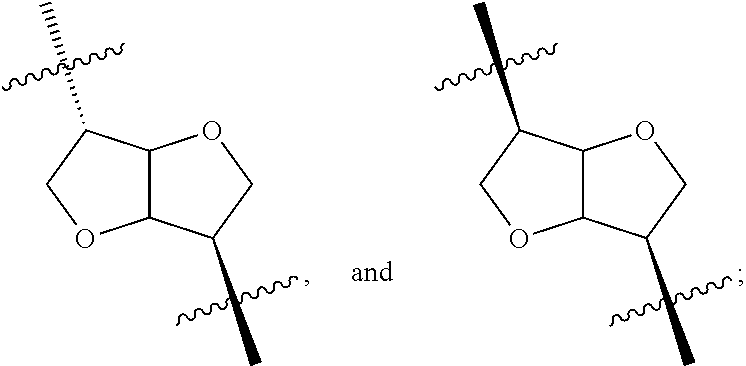
and


wherein


wherein


in the second polymer.

and the poly(ester amide) comprises repeating units of:


comprising:

HO—R1—OH, at least one acid that is not an amino acid, and cyclohexane,
wherein


and


wherein


wherein

and


wherein

and

-
- a. mixing a liquid comprising at least one bacteriophage with a mixture comprising an organic solvent and at least one polymer disclosed herein; optionally adding at least one filler selected from the inorganic salts disclosed above and at least one another bioactive agent;
- b. casting the resulting mixture from step a onto a hydrophobic surface; and
- c. removing the organic solvent to obtain a film containing the second composition.


(R2 and R4 are defined as before, which can be the same or different, both amino acids together are 2 moles), HO—R1-OH (R1 is defined as before, 1 mole), and p-TsOH monohydrate (2 moles) is refluxed in cyclohexane.

include L-amino acids, such as L-leucine.

-
- Vacuum drying at 40-45° C. over a water adsorbent (anhydrous CaCl2 or Na2SO4, or silica gel),
- Freeze-drying, and
- Spray-drying.
| Sample # | Liquid bacteriophage sample | PFU | pH |
| 1 | Staphylococcus aureus * | 0.9 × 10⁸ | 7.74 |
| 2 | MgCO3/Staphylophage, F0 | 2.0 × 10⁶ | 9.47 |
| 3 | MgCO3/Staphylophage, W0 ** | 4.0 × 10⁷ | 9.48 |
| 4 | MgCO3/Staphylophage, F1 | 1.0 × 10² | 9.52 |
| 5 | MgCO3/Staphylophage, W1 *** | 0.9 × 10⁷ | 9.42 |
| * Serial preparation of Biochimpharm, LLC, Tbilisi, Georgia | |||
| ** Desorbed from MgCO3/Staphylophage, W0 | |||
| *** Desorbed from MgCO3/Staphylophage, W1 | |||
Degree of the adsorption of Staphylophages after the Step 1=(0.9×10⁸−2.0×10⁶)/(0.9×108)×100=97.8%.
Degree of the adsorption (retention) of Staphylophages after the
Also see
| Sample # | Liquid bacteriophage sample | PFU | pH |
| 1 | Staphylococcus aureus * | 2.0 × 10⁸ | 7.76 |
| 2 | CaCO3/Staphylophage, F0 | 3.0 × 10⁶ | 7.39 |
| 3 | CaCO3/Staphylophage, W0 ** | 1.0 × 10⁸ | 7.59 |
| 4 | CaCO3/Staphylophage, F1 | 1.0 × 10⁵ | 7.31 |
| 5 | CaCO3/Staphylophage, W1*** | 9.0 × 10⁷ | 7.38 |
| * Serial preparation of Biochimpharm, LLC, Tbilisi, Georgia | |||
| ** Desorbed from CaCO3/Staphylophage, W0 | |||
| *** Desorbed from CaCO3/Staphylophage, W1 | |||
Degree of the adsorption of Staphylophages after Step 1=(2.0×10⁸−3.0×10⁶)/(2.0×108)×100=98.5%.
Degree of the adsorption (retention) of Staphylophages after
Also see
| Sample # | Liquid bacteriophage sample | PFU | pH |
| 1 | Staphylococcus aureus * | 7.0 × 10⁹ | 7.65 |
| 2 | Ca3(PO4)2/Staphylophage, F0 | 7.0 × 10⁷ | 7.72 |
| 3 | Ca3(PO4)2/Staphylophage, W0 ** | 4.0 × 10⁹ | 7.79 |
| 4 | Ca3(PO4)2/Staphylophage, F1 | 1.0 × 10⁷ | 7.77 |
| 5 | Ca3(PO4)2/Staphylophage, W1 *** | 2.0 × 10⁹ | 7.58 |
| * Serial preparation of Biochimpharm, LLC, Tbilisi, Georgia | |||
| ** Desorbed from Ca3(PO4)2/Staphylophage, W0 | |||
| *** Desorbed from Ca3(PO4)2/Staphylophage, W1 | |||
Degree of the adsorption of Staphylophages after Step 1=(7.0×10⁹−7.0×10⁷)/(7×109)×100=99.0%
Degree of the adsorption (retention) of Staphylophages after
| Sample # | Liquid bacteriophage sample | PFU | pH |
| 1 | Pyophage* | 7.36 | |
| E. coli | 7.0 × 10⁹ | ||
| Proteus | 8.0 × 10⁹ | ||
| Staphylococcus | 8.0 × 10⁹ | ||
| Streptococcus | 9.0 × 10⁹ | ||
| Pseudomonas aeruginosa | 5.0 × 10⁹ | ||
| 2 | CaCO3/Pyophage, F0 | 7.41 | |
| E. coli | 2.0 × 10⁶ | ||
| Proteus | 2.0 × 10⁴ | ||
| Staphylococcus | 1.0 × 10⁴ | ||
| Streptococcus Pseudomonas | 5.0 × 10³ | ||
| aeruginosa | 1.0 × 10⁵ | ||
| 3 | CaCO3/Pyophage, W0** | 7.66 | |
| E. coli | 2.0 × 10⁸ | ||
| Proteus | 1.0 × 10⁸ | ||
| Staphylococcus | 1.0 × 10⁷ | ||
| Streptococcus Pseudomonas | 1.0 × 10⁶ | ||
| aeruginosa | 1.0 × 10⁷ | ||
| *Serial preparation of Biochimpharm, LLC, Tbilisi, Georgia | |||
| **Desorbed from CaCO3/Pyophage, W0 | |||
Degree of the adsorption of the phages at Step 1:
E. coli=(7.0×10⁹−2.0×10⁶)/(7.0×109)×100≈100%
Proteus=(8.0×10⁹−2.0×10⁴)/(8.0×109)×100≈100%
Staphylococcus=(8.0×10⁹−1.0×10⁴)/(8.0×109)×100≈100%
Streptococcus=(9.0×10⁹−5.0×10³)/(9.0×109)×100≈100%
Pseudomonas aeruginosa=(5.0×10⁹−1.0×10⁵)/(5.0×109)×100≈100%
| Sample # | Liquid bacteriophage sample | PFU | pH |
| 1 | Pyophage* | 7.15 | |
| E. coli | 5.0 × 10⁹ | ||
| Proteus | 3.0 × 10⁹ | ||
| Staphylococcus | 3.0 × 10⁹ | ||
| Streptococcus | 2.0 × 10⁹ | ||
| Pseudomonas aeruginosa | 9.0 × 10⁸ | ||
| 2 | Ca3(PO4)2/Pyophage, F0 | 7.59 | |
| E. coli | 5.0 × 10⁶ | ||
| Proteus | 9.0 × 10⁷ | ||
| Staphylococcus | 2.0 × 10⁷ | ||
| Streptococcus Pseudomonas | 3.0 × 10⁶ | ||
| aeruginosa | 1.0 × 10⁶ | ||
| 3 | Ca3(PO4)2/Pyophage, W0** | 7.49 | |
| E. coli | 4.0 × 10⁸ | ||
| Proteus | 5.0 × 10⁸ | ||
| Staphylococcus | 2.0 × 10⁸ | ||
| Streptococcus Pseudomonas | 4.0 × 10⁵ | ||
| aeruginosa | 3.0 × 10⁷ | ||
| *Serial preparation of Biochimpharm, LLC, Tbilisi, Georgia | |||
| **Desorbed from Ca3(PO4)2/Pyophage, W0 | |||
Degree of the Adsorption of the Phages at Step 1:
E. coli=(5.0×10⁹-5.0×10⁶)/(5.0×109)×100≈99.9% Proteus=(3.0×10⁹−9.0×10⁷)/(3.0×109)×100=97.0% Staphylococcus=(3.0×10⁹−2.0×10⁷)/(3.0×109)×100≈99.3% Streptococcus=(2.0×10⁹−3.0×10⁶)/(2.0×109)×100≈99.8% Pseudomonas aeruginosa=(9.0×10⁸−1.0×10⁶)/(9.0×108)×100≈99.9%
| Sample # | Liquid bacteriophage sample | PFU | pH |
| 1 | Intestiphage* | 7.37 | |
| E. coli | 6.0 × 10⁹ | ||
| Proteus | 9.0 × 10⁹ | ||
| Staphylococcus | 7.0 × 10⁹ | ||
| Enterococcus | 1.0 × 10⁹ | ||
| Pseudomonas aeruginosa | 7.0 × 10⁹ | ||
| Shigella | 3.0 × 10⁹ | ||
| Salmonella | 1.0 × 10⁹ | ||
| 2 | CaCO3/Intestiphage, F0 | 7.40 | |
| E. coli | 4.0 × 10⁶ | ||
| Proteus | 8.0 × 10⁴ | ||
| Staphylococcus | 1.0 × 10⁴ | ||
| Enterococcus | 7.0 × 10⁷ | ||
| Pseudomonas aeruginosa | 1.0 × 10⁵ | ||
| Salmonella | 2.0 × 10⁵ | ||
| 8.0 × 10⁷ | |||
| 3 | CaCO3/Intestiphage, W0** | 7.60 | |
| E. coli | 3.0 × 10⁸ | ||
| Proteus | 2.0 × 10⁸ | ||
| Staphylococcus | 3.0 × 10⁷ | ||
| Enterococcus | 5.0 × 10⁷ | ||
| Pseudomonas aeruginosa | 7.0 × 10⁷ | ||
| Shigella | 2.0 × 10⁶ | ||
| Salmonella | 7.0 × 10⁷ | ||
| *Serial preparation of Biochimpharm, LLC, Tbilisi, Georgia | |||
| **Desorbed from CaCO3/Intestiphage, W0 | |||
Degree of the Adsorption of the Phages at Step 1:
E. coli=(6.0×10⁹−4.0×10⁶)/(6.0×109)×100≈99.9%
Proteus=(9.0×10⁹−8.0×10⁴)/(9.0×109)×100≈100.0%
Staphylococcus=(7.0×10⁹−1.0×10⁴)/(7.0×109)×100≈100.0%
Enterococcus=(1.0×10⁹−7.0×10⁴)/(1.0×109)×100≈93.0%
Pseudomonas aeruginosa=(7.0×10⁹−1.0×10⁵)/(7.0×109)×100≈100.0%
Shigella=(3.0×10⁹−2.0×10⁵)/(3.0×109)×100≈100%
Salmonella=(1.0×10⁹−8.0×10⁷)/(1.0×109)×100=92%
| PFU of the phages desorbed | ||
| from the vacuum-dried powdery | ||
| preparation CaCO3/Pyophage, | ||
| W0VD (PFU of the phages | ||
| desorbed from the wet | ||
| preparation (desorbed | ||
| Components of serial | from the wet preparation | |
| Pyophage, | PFU | CaCO3/Pyophage, W0) |
| E. coli | 7.0 × 10⁹ | 9.0 × 10⁷ (2.0 × 10⁸) |
| Proteus | 8.0 × 10⁹ | 8.0 × 10⁷ (1.0 × 10⁸) |
| Staphylococcus aureus | 8.0 × 10⁹ | 8.0 × 10⁶ (1.0 × 10⁷) |
| Streptococcus | 9.0 × 10⁹ | 8.0 × 10⁵ (1.0 × 10⁶) |
| Pseudomonas aeruginosa | 5.0 × 10⁹ | 4.0 × 10⁷ (7.0 × 10⁷) |
B. Freeze Drying
| PFU of the phages desorbed | ||
| from the freeze-dried powdery | ||
| preparation CaCO3/Pyophage, | ||
| W0FD (PFU of the phages | ||
| desorbed from the wet | ||
| preparation (desorbed | ||
| Components of serial | from the wet preparation | |
| Pyophage, | PFU | CaCo3/Pyophage, W0) |
| E. coli | 7.0 × 10⁹ | 1.0 × 10⁸ (2.0 × 10⁸) |
| Proteus | 8.6 × 10⁹ | 1.0 × 10⁸ (1.0 × 10⁸) |
| Staphylococcus aureus | 8.6 × 10⁹ | 9.0 × 10⁶ (1.0 × 10⁷) |
| Streptococcus | 9.0 × 10⁹ | 9.0 × 10⁵ (1.0 × 10⁶) |
| Pseudomonas aeruginosa | 5.6 × 10⁹ | 6.0 × 10⁷ (7.0 × 10⁷) |
| PFU, after | |||||
| drying ** | PFU, initial | ||||
| PFU, | (desorbed | PFU, after | |||
| # | Bacteriophage | Filler, w/v % | initial* | phages) | drying |
| 1 | E. coli | CaCO3, | 5.0 × 10⁸ | 2.0 × 10⁸ | 2.5 |
| 8.0 | |||||
| 2 | Staphylococcus | CaCO3, | 3.0 × 10⁸ | 9.0 × 10⁶ | 33.0 |
| aureus | 8.0 | ||||
| 3 | E. coli | MgCO3, | 5.0 × 10⁸ | 2.0 × 10⁷ | 25.0 |
| 8.0 | |||||
| 4 | Staphylococcus | MgCO3, | 3.0 × 10⁸ | 5.0 × 10⁶ | 60.0 |
| aureus | 8.0 | ||||
| 5 | E. coli | NaHCO3, | 5.0 × 10⁸ | 2.0 × 10⁶ | 250.0 |
| 8.0 | |||||
| 6 | Staphylococcus | NaHCO3, | 3.0 × 10⁸ | 2.0 × 10⁴ | 15,000.0 |
| aureus | 8.0 | ||||
| *PFU of liquid bacteriophages subjected to spray drying | |||||
| ** PFU of the bacteriophages desorbed form the dried preparations | |||||


wherein


wherein

and

wherein


wherein

15. The polymer blend of embodiment 14, wherein the second polymer is a poly (ester amide) in which at least one dial, at least one diacid, and at least one amino acid are as defined in embodiment 1.
16. The polymer blend of
17. The polymer blend of
18. The polymer blend of any one of
19. The polymer blend of any one of embodiments 14-18, wherein the first polymer is a poly (ester urea) and the second polymer is a poly(ester amide).
20. The polymer blend of embodiment 19, wherein the poly(ester amide) is composed of L-leucine, 1,6-hexanediol, and sebacic acid and the poly(ester urea) is composed of L-leucine, 1,6-hexanediol, and carbonic acid.
21. The polymer blend of embodiment 19, wherein the poly(ester urea) comprises repeating units of:

and the poly(ester amide) comprises repeating units of:


30. The composition of any one of embodiments 23-29, comprising at least one of calcium gluconate, a phage stabilizing additive, hyaluronidase, fibrinolysin, a fibrinolytic enzyme, methyluracyl, a metabolic process stimulating agent, sodium hydrocarbonate, L-arginine, a vasodilator, mono- and disaccharides, polysaccharides and mucopolysaccharides, metronidazole, an anti-protozoa drug, clotrimazolum, an anti-fungal drug, thrombin, a hemostatic, a vitamin, or mixtures thereof.
31. The composition of any one of embodiments 23-30, wherein the at least one bioactive agent includes at least one bacteriophage.
32. The composition of any one of embodiments 23-31, wherein the at least one bioactive agent includes a bacteriophage-derived product selected from endolysins, EPS depolymerases, depolymerases, hydrolases, lyases, phage enzymes, phage early proteins, phage holins, and mixtures thereof.
33. The composition of any one of embodiments 23-32, wherein the at least one bioactive agent includes at least one pain reliever.
34. The composition of embodiment 33, wherein the at least one pain reliever is chosen from benzocaine, lidocaine, tetracaine, pramocaine, dibucaine, and mixtures thereof.
35. The composition of any one of embodiments 23-34, wherein the at least one bioactive agent includes at least one antibiotic.
36. The composition of embodiment 35, wherein the at least one antibiotic is chosen from tetracycline, ciprofloxacin, levofloxacin, mupirocin, neomycin, erythromycin, bacitracin, polymyxin, chlorohexidine, mafenide acetate, silver sulfadiazine, silver nitrate, and mixtures thereof.
37. The composition of embodiment 35 or 36, wherein the at least one bioactive agent further includes at least one bacteriophage.
38. The composition of embodiment 37, wherein the at least one bioactive agent further includes at least one pain reliever.
39. The composition of any one of embodiments 23-38, wherein the at least one bioactive agent includes at least one enzyme.
40. The composition of embodiment 39, wherein the at least one enzyme is chosen from papain, collagenase, chymotrypsin, trypsin, elastase, fibrinolysin, hyaluronidase, alpha-chymotrypsin, and mixtures thereof.
41. The composition of any one of embodiments 23-40, wherein the at least one bioactive agent includes at least one anti-bacterial agent.
42. The composition of any one of embodiments 23-40, wherein the at least one bioactive agent includes at least one anti-viral agent.
43. The composition of
44. The composition of any one of embodiments 23-43, wherein the composition is in the form of a non-woven porous material.
45. The composition of embodiment 44, wherein the non-woven porous material is prepared by:
-
- a. mixing the composition of embodiment 53 or 61 with a mixture comprising an organic solvent and a polymer of any one of embodiments 1-13 or a polymer blend of any one of embodiments 14-21; optionally adding at least one other bioactive agent;
- b. casting the resulting mixture from step a onto a hydrophobic surface; and
- c. removing the organic solvent to obtain a film.
79. The process of embodiment 78, wherein removing the organic solvent includes evaporating the organic solvent.
80. A process for preparing the composition ofembodiment 23, comprising: - a. mixing the at least one bioactive agent with a mixture comprising an organic solvent and a polymer of any one of embodiments 1-13 or a polymer blend of any one of embodiments 14-21;
- b. casting the resulting mixture from step a onto a hydrophobic surface; and
- c. removing the organic solvent to obtain a film.
81. A process for preparing the salt of a diester,


HO—R1—OH, at least one acid that is not an amino acid, and cyclohexane,


wherein


and


and
Claims (23)


Priority Applications (3)
| Application Number | Priority Date | Filing Date | Title |
|---|---|---|---|
| US15/188,783 US10772964B2 (en) | 2015-06-23 | 2016-06-21 | Composition comprising a polymer and a bioactive agent and method of preparing thereof |
| US16/992,643 US11564894B2 (en) | 2016-06-21 | 2020-08-13 | Composition comprising amino acid polymers and a bioactive agent and method of preparing thereof |
| US17/813,871 US11684587B2 (en) | 2016-06-21 | 2022-07-20 | Composition comprising amino acid polymers and a bioactive agent and method of preparing thereof |
Applications Claiming Priority (2)
| Application Number | Priority Date | Filing Date | Title |
|---|---|---|---|
| US201562183657P | 2015-06-23 | 2015-06-23 | |
| US15/188,783 US10772964B2 (en) | 2015-06-23 | 2016-06-21 | Composition comprising a polymer and a bioactive agent and method of preparing thereof |
Related Child Applications (1)
| Application Number | Title | Priority Date | Filing Date |
|---|---|---|---|
| US16/992,643 Continuation-In-Part US11564894B2 (en) | 2016-06-21 | 2020-08-13 | Composition comprising amino acid polymers and a bioactive agent and method of preparing thereof |
Publications (2)
| Publication Number | Publication Date |
|---|---|
| US20160375139A1 US20160375139A1 (en) | 2016-12-29 |
| US10772964B2 true US10772964B2 (en) | 2020-09-15 |
Family
ID=57585046
Family Applications (1)
| Application Number | Title | Priority Date | Filing Date |
|---|---|---|---|
| US15/188,783 Active US10772964B2 (en) | 2015-06-23 | 2016-06-21 | Composition comprising a polymer and a bioactive agent and method of preparing thereof |
Country Status (5)
| Country | Link |
|---|---|
| US (1) | US10772964B2 (en) |
| EP (1) | EP3310829A4 (en) |
| CN (1) | CN107922565B (en) |
| CA (1) | CA2988679A1 (en) |
| WO (1) | WO2016207725A1 (en) |
Cited By (3)
| Publication number | Priority date | Publication date | Assignee | Title |
|---|---|---|---|---|
| US11058131B2 (en) | 2015-04-16 | 2021-07-13 | Kennesaw State University Research And Service Foundation, Inc. | Escherichia coli O157:H7 bacteriophage Φ241 |
| US20230015373A1 (en) * | 2016-06-21 | 2023-01-19 | Phagelux (Canada) Inc. | Composition comprising amino acid polymers and a bioactive agent and method of preparing thereof |
| US12396460B2 (en) | 2019-06-17 | 2025-08-26 | Precisio Biotix Therapeutics, Inc. | Bacterial control through dispersion of bacteriophage powders |
Families Citing this family (12)
| Publication number | Priority date | Publication date | Assignee | Title |
|---|---|---|---|---|
| US11413319B2 (en) | 2016-06-23 | 2022-08-16 | Phagelux (Canada) Inc. | Microencapsulation of bacteriophages and related products |
| US12611435B2 (en) | 2016-06-23 | 2026-04-28 | Precisio Biotix Therapeutics, Inc. | Microencapsulation of bacteriophages and related products |
| US10849944B2 (en) | 2016-06-23 | 2020-12-01 | Phagelux (Canada) Inc. | Microencapsulation of bacteriophages and related products |
| US20210112816A1 (en) * | 2017-04-26 | 2021-04-22 | Phagelux (Canada) Inc. | Plasma immobilization of bacteriophages and applications thereof |
| AU2018313107A1 (en) * | 2017-08-07 | 2020-02-20 | The University Of Akron | Poly(ester urea)s for shape memory and drug delivery |
| CN107625725B (en) * | 2017-09-08 | 2021-11-16 | 中国科学院过程工程研究所 | Nano-silver-containing antibacterial hydrogel based on amino acid and preparation method and application thereof |
| CA3096783C (en) * | 2019-06-20 | 2021-04-27 | Phagelux Canada Inc. | Disinfection of bacteriophages products using supercritical carbon dioxide. |
| DE102020100725A1 (en) * | 2020-01-14 | 2021-07-15 | Justus Gross | Bacteriophage supplies and bacteriophage application device |
| CN111876400B (en) * | 2020-08-06 | 2022-05-24 | 昆明理工大学 | Normal temperature lyase Sly and polynucleotide for coding same |
| CN113214612B (en) * | 2021-04-13 | 2022-12-30 | 中北大学 | PBSeT/Zinc gluconate puncture-resistant biodegradable material and preparation method thereof |
| CN114907546B (en) * | 2022-05-12 | 2023-06-02 | 四川大学 | Multifunctional polyurea acid ester derivative and preparation method and application thereof |
| CA3231440A1 (en) * | 2023-03-09 | 2025-07-08 | Precisio Biotix Therapeutics, Inc. | Encapsulation of non-steroidal anti-inflammatory drugs (nsaids) |
Citations (27)
| Publication number | Priority date | Publication date | Assignee | Title |
|---|---|---|---|---|
| FR2344583A1 (en) | 1976-03-17 | 1977-10-14 | Rhone Poulenc Ind | Polyurethane prepn. using compatible polyol blend - comprising butane-diol and polyhydroxy polyesteramide |
| US4375734A (en) * | 1981-08-17 | 1983-03-08 | University Patents, Inc. | Protection of plants against frost injury using ice nucleation-inhibiting species-specific bacteriophages |
| JPH02110000A (en) * | 1988-10-19 | 1990-04-23 | Mitsubishi Heavy Ind Ltd | Detection of bacteriophage |
| JPH03118306A (en) * | 1989-08-21 | 1991-05-20 | Unilever Nv | Use of virus to undesirable microorganism |
| US5204257A (en) * | 1991-04-29 | 1993-04-20 | Autogen Instruments, Inc. | Method of recovering bacteriophage |
| US5710233A (en) | 1994-02-25 | 1998-01-20 | Rhein Chemie Rheinau Gmbh | Polyurethane elastomers with reduced gas permeability |
| US6187316B1 (en) * | 1994-02-17 | 2001-02-13 | Merck Patent Gmbh | Antiviral or antifungal composition and method |
| US20020015720A1 (en) * | 2000-01-11 | 2002-02-07 | Ramaz Katsarava | Polymer blends as biodegradable matrices for preparing biocomposites |
| US6503538B1 (en) | 2000-08-30 | 2003-01-07 | Cornell Research Foundation, Inc. | Elastomeric functional biodegradable copolyester amides and copolyester urethanes |
| US20060024357A1 (en) * | 2004-05-12 | 2006-02-02 | Medivas, Llc | Wound healing polymer compositions and methods for use thereof |
| CA2610745A1 (en) | 2005-06-03 | 2006-12-14 | Medivas, Llc | Therapeutic polymers and methods of use |
| US20060286064A1 (en) | 2000-08-30 | 2006-12-21 | Medivas, Llc | Therapeutic polymers and methods |
| US20070077272A1 (en) * | 2005-09-22 | 2007-04-05 | Medivas, Llc | Solid polymer delivery compositions and methods for use thereof |
| US20070106035A1 (en) | 2005-10-26 | 2007-05-10 | Medivas, Llc | Aromatic di-acid-containing poly (ester amide) polymers and methods of use |
| US20070128250A1 (en) * | 2005-10-21 | 2007-06-07 | Medivas, Llc | Poly(ester urea) polymers and methods of use |
| CA2649672A1 (en) | 2006-05-02 | 2007-11-15 | Medivas, Llc | Delivery of ophthalmologic agents to the exterior or interior of the eye |
| US7304122B2 (en) | 2001-08-30 | 2007-12-04 | Cornell Research Foundation, Inc. | Elastomeric functional biodegradable copolyester amides and copolyester urethanes |
| WO2007146119A2 (en) | 2006-06-09 | 2007-12-21 | Medivas, Llc | Biodegradable polymer adhesion barriers |
| US20090246336A1 (en) * | 2008-03-25 | 2009-10-01 | Ecolab Inc. | Bacteriophage treatment for reducing and preventing bacterial contamination |
| US7649022B2 (en) | 2007-03-30 | 2010-01-19 | Medivas, Llc | Bioabsorbable elastomeric polymer networks, cross-linkers and methods of use |
| US20100040664A1 (en) | 2008-08-13 | 2010-02-18 | Medivas, Llc | Aabb-poly(depsipeptide) biodegradable polymers and methods of use |
| US7794706B2 (en) | 2003-10-14 | 2010-09-14 | Medivas, Llc | Bioactive wound dressings and implantable devices and methods of use |
| US7863406B2 (en) | 2004-06-03 | 2011-01-04 | Cornell Research Foundation, Inc. | Unsaturated poly(ester-amide) biomaterials |
| GEP20125618B (en) | 2010-01-15 | 2012-08-27 | Biodegradable copolymers of poly (ester urea) and method for obtaining same | |
| WO2013048604A2 (en) * | 2011-06-28 | 2013-04-04 | The Government Of The United States Of America As Represented By The Secretary Of The Department Of Health And Human Services | Controlled covalent attachment of bioactive bacteriophage for regulating biofilm development |
| US8445627B2 (en) | 2006-03-24 | 2013-05-21 | Medivas, Llc | Alkylene-dicarboxylate-containing biodegradable poly(ester-amides) and methods of use |
| WO2015066173A1 (en) | 2013-10-29 | 2015-05-07 | The University Of Akron | Resorbable, amino acid-based poly(ester urea)s scaffold for vascular graft tissue engineering |
Family Cites Families (2)
| Publication number | Priority date | Publication date | Assignee | Title |
|---|---|---|---|---|
| CA2596011C (en) * | 2005-02-17 | 2013-05-14 | Medivas, Llc | Polymer particle delivery compositions and methods of use |
| CN103619327A (en) * | 2010-12-29 | 2014-03-05 | 嘉德治疗股份有限公司 | Ocular drug delivery system |
-
2016
- 2016-06-21 WO PCT/IB2016/001006 patent/WO2016207725A1/en not_active Ceased
- 2016-06-21 EP EP16813797.4A patent/EP3310829A4/en active Pending
- 2016-06-21 CA CA2988679A patent/CA2988679A1/en active Pending
- 2016-06-21 US US15/188,783 patent/US10772964B2/en active Active
- 2016-06-21 CN CN201680047225.XA patent/CN107922565B/en active Active
Patent Citations (31)
| Publication number | Priority date | Publication date | Assignee | Title |
|---|---|---|---|---|
| FR2344583A1 (en) | 1976-03-17 | 1977-10-14 | Rhone Poulenc Ind | Polyurethane prepn. using compatible polyol blend - comprising butane-diol and polyhydroxy polyesteramide |
| US4375734A (en) * | 1981-08-17 | 1983-03-08 | University Patents, Inc. | Protection of plants against frost injury using ice nucleation-inhibiting species-specific bacteriophages |
| JPH02110000A (en) * | 1988-10-19 | 1990-04-23 | Mitsubishi Heavy Ind Ltd | Detection of bacteriophage |
| JPH03118306A (en) * | 1989-08-21 | 1991-05-20 | Unilever Nv | Use of virus to undesirable microorganism |
| EP0414304B1 (en) * | 1989-08-21 | 1994-11-02 | Unilever N.V. | Aqueous antibacterial compositions comprising surfactant and bacteriophage |
| US5204257A (en) * | 1991-04-29 | 1993-04-20 | Autogen Instruments, Inc. | Method of recovering bacteriophage |
| US6187316B1 (en) * | 1994-02-17 | 2001-02-13 | Merck Patent Gmbh | Antiviral or antifungal composition and method |
| US5710233A (en) | 1994-02-25 | 1998-01-20 | Rhein Chemie Rheinau Gmbh | Polyurethane elastomers with reduced gas permeability |
| US6703040B2 (en) | 2000-01-11 | 2004-03-09 | Intralytix, Inc. | Polymer blends as biodegradable matrices for preparing biocomposites |
| US20020015720A1 (en) * | 2000-01-11 | 2002-02-07 | Ramaz Katsarava | Polymer blends as biodegradable matrices for preparing biocomposites |
| US7408018B2 (en) | 2000-08-30 | 2008-08-05 | Cornell Research Foundation, Inc. | Elastomeric functional biodegradable copolyester amides and copolyester urethanes |
| US20060286064A1 (en) | 2000-08-30 | 2006-12-21 | Medivas, Llc | Therapeutic polymers and methods |
| US6503538B1 (en) | 2000-08-30 | 2003-01-07 | Cornell Research Foundation, Inc. | Elastomeric functional biodegradable copolyester amides and copolyester urethanes |
| US7304122B2 (en) | 2001-08-30 | 2007-12-04 | Cornell Research Foundation, Inc. | Elastomeric functional biodegradable copolyester amides and copolyester urethanes |
| US7794706B2 (en) | 2003-10-14 | 2010-09-14 | Medivas, Llc | Bioactive wound dressings and implantable devices and methods of use |
| US20060024357A1 (en) * | 2004-05-12 | 2006-02-02 | Medivas, Llc | Wound healing polymer compositions and methods for use thereof |
| US7863406B2 (en) | 2004-06-03 | 2011-01-04 | Cornell Research Foundation, Inc. | Unsaturated poly(ester-amide) biomaterials |
| CA2610745A1 (en) | 2005-06-03 | 2006-12-14 | Medivas, Llc | Therapeutic polymers and methods of use |
| US20070077272A1 (en) * | 2005-09-22 | 2007-04-05 | Medivas, Llc | Solid polymer delivery compositions and methods for use thereof |
| US20070128250A1 (en) * | 2005-10-21 | 2007-06-07 | Medivas, Llc | Poly(ester urea) polymers and methods of use |
| US20070106035A1 (en) | 2005-10-26 | 2007-05-10 | Medivas, Llc | Aromatic di-acid-containing poly (ester amide) polymers and methods of use |
| US8445627B2 (en) | 2006-03-24 | 2013-05-21 | Medivas, Llc | Alkylene-dicarboxylate-containing biodegradable poly(ester-amides) and methods of use |
| CA2649672A1 (en) | 2006-05-02 | 2007-11-15 | Medivas, Llc | Delivery of ophthalmologic agents to the exterior or interior of the eye |
| US20070299155A1 (en) * | 2006-06-09 | 2007-12-27 | Medivas, Llc | Biodegradable polymer adhesion barriers |
| WO2007146119A2 (en) | 2006-06-09 | 2007-12-21 | Medivas, Llc | Biodegradable polymer adhesion barriers |
| US7649022B2 (en) | 2007-03-30 | 2010-01-19 | Medivas, Llc | Bioabsorbable elastomeric polymer networks, cross-linkers and methods of use |
| US20090246336A1 (en) * | 2008-03-25 | 2009-10-01 | Ecolab Inc. | Bacteriophage treatment for reducing and preventing bacterial contamination |
| US20100040664A1 (en) | 2008-08-13 | 2010-02-18 | Medivas, Llc | Aabb-poly(depsipeptide) biodegradable polymers and methods of use |
| GEP20125618B (en) | 2010-01-15 | 2012-08-27 | Biodegradable copolymers of poly (ester urea) and method for obtaining same | |
| WO2013048604A2 (en) * | 2011-06-28 | 2013-04-04 | The Government Of The United States Of America As Represented By The Secretary Of The Department Of Health And Human Services | Controlled covalent attachment of bioactive bacteriophage for regulating biofilm development |
| WO2015066173A1 (en) | 2013-10-29 | 2015-05-07 | The University Of Akron | Resorbable, amino acid-based poly(ester urea)s scaffold for vascular graft tissue engineering |
Non-Patent Citations (4)
| Title |
|---|
| European Search Report dated Jul. 9, 2019 for European Patent application 16813797.4 corresponding to the present application. |
| International Search Report issued in International Application No. PCT/IB2016/001006, filed on Jun. 21, 2016, and mailed from the Canadian Intellectual Property Office dated Oct. 17, 2016. |
| Partial European Search Report and provisional opinion dated Apr. 11, 2019 for European Patent application 116813797.4 corresponding to the present application. |
| Translation of Georgian Patent P 2012 5618 B, cited in "Foreign Patent Documents" section. |
Cited By (4)
| Publication number | Priority date | Publication date | Assignee | Title |
|---|---|---|---|---|
| US11058131B2 (en) | 2015-04-16 | 2021-07-13 | Kennesaw State University Research And Service Foundation, Inc. | Escherichia coli O157:H7 bacteriophage Φ241 |
| US20230015373A1 (en) * | 2016-06-21 | 2023-01-19 | Phagelux (Canada) Inc. | Composition comprising amino acid polymers and a bioactive agent and method of preparing thereof |
| US11684587B2 (en) * | 2016-06-21 | 2023-06-27 | Phagelux (Canada) Inc. | Composition comprising amino acid polymers and a bioactive agent and method of preparing thereof |
| US12396460B2 (en) | 2019-06-17 | 2025-08-26 | Precisio Biotix Therapeutics, Inc. | Bacterial control through dispersion of bacteriophage powders |
Also Published As
| Publication number | Publication date |
|---|---|
| CA2988679A1 (en) | 2016-12-29 |
| CN107922565A (en) | 2018-04-17 |
| US20160375139A1 (en) | 2016-12-29 |
| WO2016207725A1 (en) | 2016-12-29 |
| EP3310829A1 (en) | 2018-04-25 |
| CN107922565B (en) | 2022-01-04 |
| EP3310829A4 (en) | 2019-08-07 |
Similar Documents
| Publication | Publication Date | Title |
|---|---|---|
| US20160375139A1 (en) | Composition comprising a polymer and a bioactive agent and method of preparing thereof | |
| CA2396344C (en) | Polymer blends as biodegradable matrices for preparing biocomposites | |
| Rajkumar et al. | Chitosan-based biomaterial in wound healing: a review | |
| US6703040B2 (en) | Polymer blends as biodegradable matrices for preparing biocomposites | |
| Atefyekta et al. | Antimicrobial peptide-functionalized mesoporous hydrogels | |
| AU2016203767B2 (en) | Compositions and uses of materials with high antimicrobial activity and low toxicity | |
| JP6224069B2 (en) | Compositions and uses of antibacterial agents with histocompatibility properties | |
| CN109789218A (en) | Microencapsulation of phage and related products | |
| US11684587B2 (en) | Composition comprising amino acid polymers and a bioactive agent and method of preparing thereof | |
| AU2018264151B2 (en) | Chitosan-Derivative Compounds and Methods of Controlling Microbial Populations | |
| RU2736061C1 (en) | Method of producing biocomposite based on airgel of bacterial cellulose having haemostatic properties | |
| RU2582220C1 (en) | Wound dressing based on chitosan | |
| US12611435B2 (en) | Microencapsulation of bacteriophages and related products | |
| JP6456897B2 (en) | Wound healing agent having antibacterial properties and promoting wound healing | |
| JP2002511493A (en) | Breakdown of bacterial resistance by low solubility antibiotics | |
| RU2814059C1 (en) | Method of producing biocomposite materials with regenerative and antiseptic properties based on bacterial cellulose hydrogels | |
| Roy et al. | Potential Biomedical Applications of Marine Sponge-Derived Chitosan: Current Breakthroughs in Drug Delivery for Wound Care | |
| Yusuf | Biomedical applications of chitosan | |
| Bodenberger et al. | Jelly Bombs–Hydrogels as Weapons against Microorganisms | |
| CA3173663A1 (en) | Method for promoting wound healing | |
| Saarani et al. | Antibacterial Properties of Guided Bone Regeneration Membrane for Periodontal Applications |
Legal Events
| Date | Code | Title | Description |
|---|---|---|---|
| AS | Assignment |
Owner name: PHAGELUX, INC., CAYMAN ISLANDS Free format text: ASSIGNMENT OF ASSIGNORS INTEREST;ASSIGNORS:KATSARAVA, RAMAZ;TUGUSHI, DAVID;BERIDZE, VAKHTANG;AND OTHERS;SIGNING DATES FROM 20160616 TO 20160617;REEL/FRAME:038978/0018 |
|
| AS | Assignment |
Owner name: PHAGELUX (CANADA), INC., CANADA Free format text: ASSIGNMENT OF ASSIGNORS INTEREST;ASSIGNOR:PHAGELUX, INC.;REEL/FRAME:039042/0188 Effective date: 20160620 |
|
| FEPP | Fee payment procedure |
Free format text: ENTITY STATUS SET TO SMALL (ORIGINAL EVENT CODE: SMAL); ENTITY STATUS OF PATENT OWNER: SMALL ENTITY |
|
| STPP | Information on status: patent application and granting procedure in general |
Free format text: RESPONSE TO NON-FINAL OFFICE ACTION ENTERED AND FORWARDED TO EXAMINER |
|
| STPP | Information on status: patent application and granting procedure in general |
Free format text: NON FINAL ACTION MAILED |
|
| STPP | Information on status: patent application and granting procedure in general |
Free format text: RESPONSE TO NON-FINAL OFFICE ACTION ENTERED AND FORWARDED TO EXAMINER |
|
| STPP | Information on status: patent application and granting procedure in general |
Free format text: NON FINAL ACTION MAILED |
|
| STPP | Information on status: patent application and granting procedure in general |
Free format text: RESPONSE TO NON-FINAL OFFICE ACTION ENTERED AND FORWARDED TO EXAMINER |
|
| STPP | Information on status: patent application and granting procedure in general |
Free format text: FINAL REJECTION MAILED |
|
| STPP | Information on status: patent application and granting procedure in general |
Free format text: RESPONSE AFTER FINAL ACTION FORWARDED TO EXAMINER |
|
| STPP | Information on status: patent application and granting procedure in general |
Free format text: RESPONSE AFTER FINAL ACTION FORWARDED TO EXAMINER |
|
| STPP | Information on status: patent application and granting procedure in general |
Free format text: PUBLICATIONS -- ISSUE FEE PAYMENT VERIFIED |
|
| STCF | Information on status: patent grant |
Free format text: PATENTED CASE |
|
| AS | Assignment |
Owner name: PRECISIOBIOTIX TECHNOLOGIES INC., CANADA Free format text: ASSIGNMENT OF ASSIGNORS INTEREST;ASSIGNOR:PHAGELUX (CANADA), INC.;REEL/FRAME:065569/0684 Effective date: 20230331 |
|
| AS | Assignment |
Owner name: PRECISIO BIOTIX THERAPEUTICS, INC., DELAWARE Free format text: NUNC PRO TUNC ASSIGNMENT;ASSIGNOR:PRECISIOBIOTIX TECHNOLOGIES INC.;REEL/FRAME:066704/0012 Effective date: 20231023 |
|
| MAFP | Maintenance fee payment |
Free format text: PAYMENT OF MAINTENANCE FEE, 4TH YR, SMALL ENTITY (ORIGINAL EVENT CODE: M2551); ENTITY STATUS OF PATENT OWNER: SMALL ENTITY Year of fee payment: 4 |