US10698874B2 - System, method, and program for business intelligence using table operations in a relational database - Google Patents
System, method, and program for business intelligence using table operations in a relational database Download PDFInfo
- Publication number
- US10698874B2 US10698874B2 US15/562,542 US201615562542A US10698874B2 US 10698874 B2 US10698874 B2 US 10698874B2 US 201615562542 A US201615562542 A US 201615562542A US 10698874 B2 US10698874 B2 US 10698874B2
- Authority
- US
- United States
- Prior art keywords
- column
- key
- attribute value
- value
- columns
- Prior art date
- Legal status (The legal status is an assumption and is not a legal conclusion. Google has not performed a legal analysis and makes no representation as to the accuracy of the status listed.)
- Active, expires
Links
Images





Classifications
-
- G—PHYSICS
- G06—COMPUTING OR CALCULATING; COUNTING
- G06F—ELECTRIC DIGITAL DATA PROCESSING
- G06F16/00—Information retrieval; Database structures therefor; File system structures therefor
- G06F16/20—Information retrieval; Database structures therefor; File system structures therefor of structured data, e.g. relational data
- G06F16/22—Indexing; Data structures therefor; Storage structures
- G06F16/2282—Tablespace storage structures; Management thereof
-
- G—PHYSICS
- G06—COMPUTING OR CALCULATING; COUNTING
- G06F—ELECTRIC DIGITAL DATA PROCESSING
- G06F16/00—Information retrieval; Database structures therefor; File system structures therefor
-
- G—PHYSICS
- G06—COMPUTING OR CALCULATING; COUNTING
- G06F—ELECTRIC DIGITAL DATA PROCESSING
- G06F16/00—Information retrieval; Database structures therefor; File system structures therefor
- G06F16/20—Information retrieval; Database structures therefor; File system structures therefor of structured data, e.g. relational data
- G06F16/21—Design, administration or maintenance of databases
- G06F16/211—Schema design and management
-
- G—PHYSICS
- G06—COMPUTING OR CALCULATING; COUNTING
- G06F—ELECTRIC DIGITAL DATA PROCESSING
- G06F16/00—Information retrieval; Database structures therefor; File system structures therefor
- G06F16/20—Information retrieval; Database structures therefor; File system structures therefor of structured data, e.g. relational data
- G06F16/23—Updating
-
- G—PHYSICS
- G06—COMPUTING OR CALCULATING; COUNTING
- G06F—ELECTRIC DIGITAL DATA PROCESSING
- G06F16/00—Information retrieval; Database structures therefor; File system structures therefor
- G06F16/20—Information retrieval; Database structures therefor; File system structures therefor of structured data, e.g. relational data
- G06F16/28—Databases characterised by their database models, e.g. relational or object models
- G06F16/284—Relational databases
Definitions
- the present invention relates to a table operation system, a table operation method, and a table operation program configured to operate a table of a predetermined database.
- FIG. 16 is a schematic diagram illustrating various tables included in a database.
- FIG. 16 illustrates a purchase table, a customer master, a product master, and a store master.
- a customer ID In the purchase table, a customer ID, a product ID, a store ID, and a purchase quantity are associated with each other so as to indicate which customer purchased how many of which product at which store.
- the customer master indicates an attribute value of a particular customer (age in the example illustrated in FIG. 16 ) for each customer ID.
- the product master indicates an attribute value of a particular product (a product category in the example illustrated in FIG. 16 ) for each product ID.
- the store master indicates the attribute of a particular store (in the example illustrated in FIG. 16 , a district where the store is located) for each store ID.
- a BI tool extracts information satisfying a condition designated by an analyst from the database exemplified in FIG. 16 . It is supposed that the analyst wishes to know a “purchase quantity of jackets purchased by people in twenties at Kawasaki”. In this case, the analyst designates a condition of “twenties” with respect to the customer, designates a condition of “jacket” with respect to the product, and designates a condition of “Kawasaki” with respect to the store.
- the BI tool narrows down the customer ID of a customer corresponding to “twenties” from the customer master, narrows down the product ID of a product corresponding to “jacket” from the product master, and narrows down the store ID of a store corresponding to “Kawasaki” from the store master.
- the BI tool specifies a row including a combination of the above-mentioned customer ID, product ID, and store ID from the purchase table. In this example, rows A and C in the purchase table are specified. Then, the BI tool calculates the sum of the purchase quantity in each of these rows to present to the analyst.
- FIG. 16 although information on purchase time is not included in the purchase table, it is also conceivable that the analyst requests to display a change in purchase quantity per period (for example, every month) in the purchase table, including the purchase time.
- the BI tool calculates the “purchase quantity of jackets purchased by people in twenties at Kawasaki” for each month as described above and displays a graph exemplified in FIG. 17 .
- FIG. 17 exemplifies a monthly change in “purchase quantity of jackets purchased by people in twenties at Kawasaki”. The analyst can check information visualized as exemplified in FIG. 17 to make the decision.
- Patent Literature 1 describes an analysis environment in which a relational database server and an online analytical processing (OLAP) server are connected through a network.
- OLAP online analytical processing
- an analyst can designate only the information indicated as an attribute in each master (for example, the customer master, the product master, and the store master exemplified in FIG. 16 ) as a condition. Additionally, designation of such a condition is not necessarily appropriate. For example, the above example has indicated a case where the analyst designates the condition of “twenties” with respect to the customer, designates the condition of “jacket” with respect to the product, and designates the condition of “Kawasaki” with respect to the store. According to designation of such conditions, there may be cases where information to be helpful for decision-making is not presented.
- a table operation system is characterized by including a designation accepting means configured to accept designation of at least two foreign key columns, designation of a relation value column, and designation of a type of a statistical model associated with the relation value column in a table having two or more foreign key columns and one or more relation value columns; a data acquiring means configured to specify individual tables to serve as reference destinations of the designated respective foreign key columns and acquire a total value of relation values in the relation value column for each combination of key values in primary key columns of the specified individual tables; a grouping means configured to group the respective key values in the primary key columns of the individual tables on the basis of the total value acquired for each combination of the key values in the primary key columns of the individual tables and the statistical model of the designated type; and an attribute value column adding means configured to add, to each individual table, an attribute value column of which attribute value is identification information on a group to which each key value in each primary key column of each individual table belongs.
- a table operation method is characterized by accepting designation of at least two foreign key columns, designation of a relation value column, and designation of a type of a statistical model associated with the relation value column in a table having two or more foreign key columns and one or more relation value columns; specifying individual tables to serve as reference destinations of the designated respective foreign key columns and acquiring a total value of relation values in the relation value column for each combination of key values in primary key columns of the specified individual tables; grouping the respective key values in the primary key columns of the individual tables on the basis of the total value acquired for each combination of the key values in the primary key columns of the individual tables and the statistical model of the designated type; and adding, to each individual table, an attribute value column of which attribute value is identification information on a group to which each key value in each primary key column of each individual table belongs.
- a table operation program is characterized by causing a computer to execute designation accepting processing of accepting designation of at least two foreign key columns, designation of a relation value column, and designation of a type of a statistical model associated with the relation value column in a table having two or more foreign key columns and one or more relation value columns; data acquiring processing of specifying individual tables to serve as reference destinations of the designated respective foreign key columns and acquiring a total value of relation values in the relation value column for each combination of key values in primary key columns of the specified individual tables; grouping processing of grouping the respective key values in the primary key columns of the individual tables on the basis of the total value acquired for each combination of the key values in the primary key columns of the individual tables and the statistical model of the designated type; and attribute value column adding processing of adding, to each individual table, an attribute value column of which attribute value is identification information on a group to which each key value in each primary key column of each individual table belongs.
- FIG. 1 It depicts an explanatory diagram illustrating an example of a relational database.
- FIG. 2 It depicts an explanatory diagram illustrating an example of a third table.
- FIG. 3 It depicts a block diagram illustrating a configuration example of a table operation system of a first exemplary embodiment of the present invention.
- FIG. 4 It depicts a schematic diagram illustrating a state in which customer IDs and product IDs before grouping are arranged in order.
- FIG. 5 It depicts an explanatory diagram schematically illustrating an example of a customer ID group and a product ID group that have been determined.
- FIG. 6 It depicts an explanatory diagram illustrating an example of a customer master and a product master to which attribute value columns have been newly added.
- FIG. 7 It depicts a flowchart illustrating an example of processing progress according to the first exemplary embodiment of the present invention.
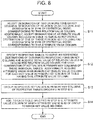
- FIG. 8 It depicts a flowchart illustrating an example of processing progress according to a second exemplary embodiment of the present invention.
- FIG. 9 It depicts an explanatory diagram illustrating an example of a GUI used in the present invention.
- FIG. 10 It depicts an explanatory diagram illustrating an example of a GUI used in the present invention.
- FIG. 11 It depicts an explanatory diagram illustrating an example of a case where a key column includes a plurality of columns.
- FIG. 12 It depicts an explanatory diagram illustrating an example of a case where a relation value column includes a plurality of columns.
- FIG. 13 It depicts an explanatory diagram illustrating an example of a table in which the relation value column is not explicitly indicated.
- FIG. 14 It depicts an overview block diagram illustrating a configuration example of a computer according to each exemplary embodiment of the present invention.
- FIG. 15 It depicts a block diagram illustrating the outline of the present invention.
- FIG. 16 It depicts a schematic diagram illustrating various tables included in a database.
- FIG. 17 It depicts a schematic diagram illustrating a display example by a BI tool.
- schema setting information Information defining the configuration of individual tables included in a relational database and a reference relationship between the tables is referred to as schema setting information.
- the schema setting information is created in advance by an analyst. Then, the individual tables included in the relational database are created in accordance with this schema setting information.
- FIG. 1 is an explanatory diagram illustrating an example of the relational database (hereinafter, referred to as RDB).
- RDB relational database
- FIG. 1 illustrates a case where the RDB includes a purchase table, a customer master, a product master, and a store master as tables.
- the purchase table represents a purchase record of an individual purchase.
- a customer ID, a product ID, a store ID, a purchase quantity, and a purchase price are associated with each other in the purchase table. Therefore, each row of the purchase table illustrated in FIG. 1 indicates who purchased how many of which product at which store at what price.
- the customer master represents the attribute of an individual customer.
- the customer ID, the age, and the sex are associated with each other in the customer master. Therefore, each row of the customer master illustrated in FIG. 1 indicates the age and sex of each customer.
- the product master represents the attribute of an individual product.
- the product ID and a product category are associated with each other in the product master. Therefore, each row of the product master illustrated in FIG. 1 indicates the product category of each product.
- the store master represents the attribute of an individual store.
- the store ID and a district where the store is located are associated with each other in the store master. Therefore, each row of the store master illustrated in FIG. 1 indicates a district where each store is located.
- the purchase table corresponds to a fact table.
- each of the customer master, the product master, and the store master corresponds to a master table.
- the customer ID in the purchase table serves as a reference source when the customer master is referred to
- the product ID in the purchase table serves as a reference source when the product master is referred to
- the store ID in the purchase table serves as a reference source when the store master is referred to.
- Such reference relationships and the configuration of individual tables are defined by the schema setting information created in advance by the analyst.
- FIG. 1 illustrates an RDB in which the reference relationships are defined as a star schema, but the reference relationships in the RDB may be defined as a snowflake schema.
- the individual tables have columns (refer to FIG. 1 ).
- the columns can be classified into a key column and a value column.
- the key columns can be classified into a foreign key column and a primary key column.
- a specific value of a key held in the key column is referred to as a key value.
- the foreign key column is a column holding a foreign key.
- the foreign key is a key that serves as a reference source when another table is referred to.
- each of a “customer ID” column, a “product ID” column, and a “store ID” column of the purchase table corresponds to the foreign key column.
- the primary key column is a column holding a primary key.
- the primary key is a key that serves as a reference destination when referred to from another table.
- each of a “customer ID” column of the customer master, a “product ID” column of the product master, and a “store ID” column of the store master corresponds to the primary key.
- the value column can be classified into a relation value column and an attribute value column.
- the relation value column is a column holding a relation value.
- the relation value is a value representing a relationship between a plurality of key values. Therefore, the relation value is associated with a plurality of key values in a table.
- the “plurality of key values” mentioned here may be all foreign keys or may include a foreign key and a primary key. In the example illustrated in FIG. 1 , each of a “purchase quantity” column and a “purchase price” column of the purchase table corresponds to the relation value column.
- the attribute value column is a column holding an attribute value.
- the attribute value is a value representing the attribute of one primary key. Therefore, the attribute value is associated with one primary key in a table.
- each of an “age” column and a “sex” column of the customer master, a “product category” column of the product master, and a “district” column of the store master corresponds to the attribute value column.
- the tables can be classified into three classifications, for example, from a first table to a third table indicated below.
- the first table is a table including two or more foreign key columns.
- An example of the first table is, for example, the fact table.
- the purchase table corresponds to the first table.
- the second table is a table including only one primary key column as a key column.
- An example of the second table is, for example, the master table.
- each of the customer master, the product master, and the store master corresponds to the second table.
- the third table is a table having one primary key column and one or more foreign key columns.
- the third table is used, for example, in the snowflake schema.
- An example of the third table is illustrated in FIG. 2 .
- a column labeled “FK” is the foreign key column and a column labeled “PK” is the primary key column.
- a table 91 illustrated in FIG. 2 includes one primary key column (“customer ID” column) and one foreign key column (“company ID” column). Therefore, the table 91 illustrated in FIG. 2 corresponds to the third table.
- FIG. 2 illustrates a case where the table 91 includes one foreign key column, but the number of foreign key columns included in the third table may be two or more.
- a table having a plurality of key columns (whether to be the primary key column or the foreign key column is irrelevant) can have the relation value column. Therefore, the first table and the third table can have the relation value columns.
- the purchase table illustrated in FIG. 1 corresponds to the first table and has the “purchase quantity” column and the “purchase price” column as the relation value columns.
- the table 91 exemplified in FIG. 2 corresponds to the third table and has a “length of service” column as the relation value column.
- a table having a plurality of key columns (whether to be the primary key column or the foreign key column is irrelevant) may not have any relation value column.
- a table having the primary key column can have the attribute value column. Therefore, the second table and the third table can have the attribute value columns.
- Each of the customer master, the product master, and the store master illustrated in FIG. 1 corresponds to the second table and has the attribute value column.
- a table having the primary key column may not have the attribute value column.
- the table 91 exemplified in FIG. 2 does not have the attribute value column.
- each column included in each table defined by the schema setting information is not limited to the example illustrated in FIG. 1 . That is, the configuration of the tables defined by the schema setting information created in advance by the analyst is not limited to the example illustrated in FIG. 1 .
- the reference relationships between the tables defined by the schema setting information is not limited to the example illustrated in FIG. 1 .
- FIG. 1 has exemplified the purchase table, the product master, the customer master, and the store master, but the contents represented by the individual tables are also not particularly limited.
- FIG. 3 is a block diagram illustrating a configuration example of a table operation system of a first exemplary embodiment of the present invention.
- the table operation system 1 of the first exemplary embodiment includes a database management unit 2 (hereinafter simply referred to as DB management unit 2 ), a designation accepting unit 3 , a data acquiring unit 4 , a grouping unit 5 , and an attribute value column adding unit 6 .
- the DB management unit 2 is a database management system (DBMS) that manages a relational database (RDB) 7 .
- DBMS database management system
- RDB relational database
- Reference relationships between tables included in the RDB 7 is defined by schema setting information created in advance by an analyst.
- the configuration of each table included in the RDB 7 is also defined by this schema setting information.
- the RDB 7 in which the configuration of each table and the reference relationships between the tables are defined by the schema setting information includes a table having two or more foreign key columns and one or more relation value columns.
- this RDB 7 also includes individual tables to serve as reference destinations of these respective foreign key columns.
- the following description assumes that the RDB 7 in which the configuration of each table and the reference relationships between the tables are defined by the schema setting information is the RDB exemplified in FIG. 1 .
- the purchase table illustrated in FIG. 1 corresponds to a “table having two or more foreign key columns and one or more relation value columns”.
- all of the customer master, the product master, and the store master illustrated in FIG. 1 correspond to “individual tables to serve as reference destinations of respective foreign key columns”.
- the table operation system 1 performs processing of adding an attribute value column to some of these tables. Therefore, in some tables, an attribute value column not defined in the schema setting information is added.
- the designation accepting unit 3 accepts designation of at least two foreign key columns in a table having two or more foreign key columns and one or more relation value columns (in this example, the purchase table) from an operator of the table operation system 1 (hereinafter simply referred to as operator). Furthermore, the designation accepting unit 3 also accepts designation of one relation value column in that table and designation of a type of a statistical model associated with this relation value column. Examples of the types of statistical models include a Poisson distribution and a Gaussian distribution but are not limited to these distributions.
- the operator can designate, for example, the Poisson distribution as the type of the statistical model to be associated with the “purchase quantity” column.
- the operator can designate, for example, the Gaussian distribution as the type of the statistical model to be associated with the “purchase price” column.
- the designation accepting unit 3 may display, for example, a graphical user interface (GUI) for the operator to input designation of the foreign key column, the relation value column, and the type of the statistical model on a display device (illustration is omitted in FIG. 3 ) and accept designation of the foreign key column, the relation value column, and the type of the statistical model via this GUI.
- GUI graphical user interface
- description will be given using as an example a case where the designation accepting unit 3 accepts designation of information via a GUI.
- the designation accepting unit 3 has accepted designation of the “customer ID” column and the “product ID” column from among the foreign key columns of the purchase table illustrated in FIG. 1 .
- description will be given using as an example a case where the designation accepting unit 3 has accepted designation of the “purchase quantity” column from among the relation value columns of the purchase table illustrated in FIG. 1 and also accepted designation of the Poisson distribution as the type of the statistical model.
- the foreign key columns, the relation value columns, and the type of the statistical model designated by the operator are not limited to the above examples.
- the number of designated foreign key columns may be three or more.
- the data acquiring unit 4 specifies individual tables to serve as reference destinations of respective foreign keys designated by the operator. Then, the data acquiring unit 4 acquires, from the RDB 7 , a total value of the relation values in the designated relation value column for each combination of the key values in the primary key columns of the specified individual tables.
- the data acquiring unit 4 specifies the customer master as a table to serve as a reference destination of the “customer ID” column.
- the data acquiring unit 4 also specifies the product master as a table to serve as a reference destination of the “product ID” column.
- the data acquiring unit 4 then acquires the total value of the relation values in the designated relation value column for each combination of the key values in the primary key column of the customer master and the key values in the primary key column of the product master, from the table including this relation value column (in this example, the purchase table).
- the “purchase quantity” column is designated as the relation value column. Therefore, the data acquiring unit 4 acquires, from the purchase table, the total value of the purchase quantity for each combination of the key values in the primary key column of the customer master and the key values in the primary key column of the product master.
- the primary key column of the customer master is the “customer ID” column in the customer master
- the primary key column of the product master is the “product ID” column in the product master.
- an example of processing of acquiring the total value of the purchase quantity will be indicated using a combination of a customer ID “183” and a product ID “50” as an example of combinations of the key values in the above-mentioned primary key columns.
- the data acquiring unit 4 requests the DB management unit 2 to search for a row matching the combination of the customer ID “183” and the product ID “50” in the purchase table and return a sum value of purchase quantity values in these respective rows. In the example illustrated in FIG.
- a row B and a row E are the rows matching the combination of the customer ID “183” and the product ID “50” in the purchase table. Therefore, the DB management unit 2 calculates a sum value “7” of a value “3” of the purchase quantity in the row B and a value “4” of the purchase quantity of the row E and returns a result of the calculation to the data acquiring unit 4 as the total value of the purchase quantity. As a result, the data acquiring unit 4 acquires the total value of the purchase quantity for the combination of the customer ID “183” and the product ID “50”.
- a case where the data acquiring unit 4 acquires the total value of the purchase quantity is indicated using the combination of the customer ID “183” and the product ID “50” as an example.
- the data acquiring unit 4 similarly acquires the total value of the purchase quantity with respect to all combinations of the values of the customer ID and the product ID.
- the data acquiring unit 4 can acquire the total value of the purchase quantity for each combination by generating an SQL requesting for the total value of the purchase quantity for each combination of the key values in the primary key column of the customer master (the customer ID in the customer master) and the key values in the primary key column of the product master (the product ID in the product master) and inputting this SQL to the DB management unit 2 .
- the grouping unit 5 groups the key values in the primary key columns of these individual tables.
- the grouping unit 5 Processing of the grouping unit 5 will be described using a specific example.
- the above example has indicated a case where the data acquiring unit 4 acquires the total value of the purchase quantity for each combination of the values of the customer ID and the product ID.
- the Poisson distribution is designated as the type of the statistical model.
- the grouping unit 5 groups the customer IDs in the customer master and the product IDs in the product master on the basis of the total value of the purchase quantity for each combination of the values of the customer ID and the product ID and the Poisson distribution.
- customer ID group a group of the customer IDs
- product ID group a group of the product IDs
- the grouping unit 5 groups the customer IDs and the product IDs such that each individual customer ID belongs to only one customer ID group and each individual product ID belongs to only one product ID group. Note that assigning a group in this manner such that one key value belongs to only one group is called clustering.
- the customer ID will be represented by a sign “c”. Meanwhile, the product ID will be represented by a sign “i”.
- the total value of the relation values corresponding to a combination of the customer ID “c” and the product ID “i” (the total value of the purchase quantity in this example) will be referred to as a total value x c,i .
- a total value “7” is obtained for a combination of a customer ID “183” and a product ID “50” as in the example described above.
- x 183,50 7 is established.
- FIG. 4 illustrates a state in which the customer IDs and the product IDs before grouping are arranged in order.
- FIG. 4 indicates a state in which the customer IDs are arranged in order in a horizontal axis direction and the product IDs are arranged in order in a vertical axis direction.
- total values of the purchase quantity corresponding to combinations of the customer IDs and the product IDs are illustrated therein.
- x 3,5 illustrated in FIG. 4 is a total value of the purchase quantity corresponding to a combination of a customer ID “3” and a product ID “5”.
- FIG. 5 is an explanatory diagram schematically illustrating an example of the customer ID group and the product ID group determined by the grouping unit 5 .
- the grouping unit 5 separately determines a plurality of customer ID groups and product ID groups. However, in FIG. 5 , only a customer ID group with an ID “9” and a product ID group with an ID “4” are illustrated in order to simplify the explanation.
- Each of the number of customer ID groups and the number of product ID groups may be assigned to a fixed value or may not be limited to a fixed value.
- the number of customer ID groups is K C and the IDs of the respective customer ID groups are 1 to K C .
- the number of product ID groups is K I and the IDs of the respective product ID groups are 1 to K I .
- the ID of a customer ID group is “k” (k is one of 1 to K C )
- this customer ID group is referred to as a customer ID group “k”. This point similarly applies to the product ID groups as well.
- a customer ID and a product ID belonging to groups are indicated in parentheses. For example, customer IDs “1”, “3”, and so on belong to a customer ID group “9”. Product IDs “2”, “5”, and so on belong to a product ID group “4”.
- a combination of one customer ID group and one product ID group corresponds to total values according to combinations of the customer IDs belonging to the one customer ID group and the product IDs belonging to the one product ID group. For example, in the example illustrated in FIG. 5 , x 1,2 , x 3,5 , and so on correspond to a combination of the customer ID group “9” and the product ID group “4”.
- FIG. 5 can be said to be a diagram obtained by modifying FIG. 4 such that the customer IDs belonging to the same customer ID group are consecutively arranged and the product IDs belonging to the same product ID group are consecutively arranged.
- a customer ID group to which the customer ID “c” belongs is referred to as z C c .
- z C c a customer ID group to which the customer ID “c” belongs.
- z C 3 1
- 4 may be expressed by a vector in which only elements corresponding to the ID of the customer ID group are allocated to 1 and the other elements are allocated to 0.
- z C 3 (1, 0, 0, 0, 0, 0, . . . ) T .
- z I i a product ID group to which the product ID “i” belongs.
- z I 2 4
- z I i may be expressed by a vector in which only elements corresponding to the ID of the product ID group are allocated to 1 and the other elements are allocated to 0.
- p(x c,i ) the probability of the total value appearing under a parameter of a statistical model.
- p(x c,i ) is expressed by following formula (1).
- ⁇ (z C c ,z I i ) is a parameter of a distribution of the total values of the purchase quantity corresponding to a combination of the customer ID group “z C c ” to which the customer ID “c” belongs and the product ID group “z I i ” to which the product ID “i” belongs.
- This distribution is a distribution designated by the operator and, in this example, is the Poisson distribution. That is, in this example, ⁇ (z C c ,z I i ) is a parameter of the Poisson distribution corresponding to the combination of “z C c ” and “z I i ”. Additionally, p(x c,i ) is the probability of appearing under such a parameter of the Poisson distribution.
- the parameter of the distribution is only required to be a parameter according to the type of the distribution. For example, the parameters of the Gaussian distribution are average and variance.
- the grouping unit 5 uses formula (2) indicated below.
- Formula (2) is the likelihood of a combination of each customer ID group to which the individual customer ID belongs, each product ID group to which the individual product ID belongs, and the parameter ( ⁇ (z C c ,z I i )) of the distribution according to the combination of the customer ID group and the product ID group.
- S c is a set of customer IDs
- S i is a set of product IDs.
- the grouping unit 5 determines each customer ID group and each product ID group using the likelihood calculated by formula (2). At this time, the grouping unit 5 also determines the parameter ( ⁇ (z C c ,z I i )) of the distribution according to the combination of the customer ID group and the product ID group for each combination.
- the grouping unit 5 can sequentially update z C c , z I i , and ⁇ (z C c ,z I i ) in formula (2) such that the likelihood calculated by formula (2) increases and separately settle each customer ID group, each product ID group, and the parameter of the distribution according to the combination of the customer ID group and the product ID group.
- the grouping unit 5 can use expectation-maximization (EM).
- the method of maximizing the likelihood is an example and the grouping unit 5 may use a method other than the method of maximizing the likelihood (for example, a variational Bayes method and a Gibbs sampling method) to determine each customer ID group, each product ID group, and so on.
- the ID of a customer ID group to which an individual customer ID belongs can be associated with this individual customer ID in the customer master as an attribute value.
- the ID of a product ID group to which an individual product ID belongs can be associated with this individual product ID in the product master as an attribute value.
- the attribute value column adding unit 6 adds, to each of the individual tables to serve as reference destinations of the designated respective foreign keys, an attribute value column of which attribute value is the ID of a group to which the key value in the primary key column of each of the individual tables belongs.
- the attribute value column adding unit 6 adds, to the customer master, an attribute value column of which attribute value is the ID of a customer ID group to which the customer ID belongs.
- the attribute value column adding unit 6 adds, to the product master, an attribute value column of which attribute value is the ID of a product ID group to which the product ID belongs.
- FIG. 6 illustrates an example of the customer master and the product master to which the attribute value columns have been newly added. Note that, in FIG. 6 , the illustration of the purchase table and the store master illustrated in FIG. 1 is omitted. In this example, since the description has been given using as an example a case where the “customer ID” column and the “product ID” column are designated from among the foreign key columns, the attribute value columns are newly added to the customer master and the product master. If the “store ID” column is included in the designated foreign key columns, the attribute value column will be newly added to the store master to serve as a reference destination of the “store ID” column.
- the IDs of the customer ID groups and the IDs of the product ID groups are represented by numbers and accordingly, the attribute values in the added attribute value columns are also indicated by numbers.
- the IDs of the customer ID groups and the IDs of the product ID groups may be represented by names easy for the analyst to understand and such easily understandable names may be employed for the attribute values in the added attribute value columns. This point similarly applies to a second exemplary embodiment described later.
- the DB management unit 2 , the designation accepting unit 3 , the data acquiring unit 4 , the grouping unit 5 , and the attribute value column adding unit 6 are realized by, for example, a CPU of a computer working in accordance with a program.
- the CPU simply reads a table operation program from a program recording medium such as a program storage device (illustration is omitted in FIG. 3 ) of the computer and, in accordance with this table operation program, works as the DB management unit 2 , the designation accepting unit 3 , the data acquiring unit 4 , the grouping unit 5 , and the attribute value column adding unit 6 .
- the DB management unit 2 may be separately realized by different pieces of hardware. These points similarly apply to the second exemplary embodiment described later.
- the table operation system 1 may have a configuration in which two or more physically separated devices are connected by wired or wireless connection. This point also applies to the second exemplary embodiment described later.
- FIG. 7 is a flowchart illustrating an example of processing progress according to the first exemplary embodiment of the present invention.
- the designation accepting unit 3 accepts designation of at least two foreign key columns in a table having two or more foreign key columns and one or more relation value columns and also accepts designation of one relation value column in this table and designation of the type of a statistical model associated with this relation value column (step S 1 ).
- the designation accepting unit 3 displays a GUI for a user to input these items on a display device (illustration is omitted in FIG. 3 ) and accepts designation of each of the above items via this GUI. A specific example of the GUI will be described later.
- the following description also uses as an example a case where the “customer ID” column and the “product ID” column of the purchase table illustrated in FIG. 1 are designated as the foreign key columns and the “purchase quantity” column of this purchase table is designated as the relation value column.
- the Poisson distribution is designated as the type of the statistical model is taken as an example.
- the data acquiring unit 4 specifies respective tables to serve as reference destinations of the foreign key columns designated in step S 1 .
- the data acquiring unit 4 specifies the customer master and the product master (refer to FIG. 1 ), which are reference destinations of the “customer ID” column and the “product ID” column of the purchase table, respectively.
- the data acquiring unit 4 acquires, from the purchase table of the RDB 7 , a total value of the relation values in the designated relation value column for each combination of the key values in the primary key columns of these individual tables (step S 2 ).
- the data acquiring unit 4 generates an SQL requesting for the total value of the purchase quantity for each combination of respective customer IDs held in the “customer ID” column of the customer master and respective product IDs held in the “product ID” column of the product master and inputs this SQL to the DB management unit 2 .
- the DB management unit 2 executes processing of searching the purchase table (refer to FIG. 1 ) for a row matching the combination of the customer ID and the product ID in accordance with this SQL and calculating a sum value of the purchase quantity in the found row for each combination of the customer ID and the product ID.
- the DB management unit 2 returns the sum value of the purchase quantity calculated for each combination of the customer ID and the product ID to the data acquiring unit 4 .
- the data acquiring unit 4 acquires the total value of the purchase quantity for each combination.
- the grouping unit 5 groups the respective key values in the primary key columns of the respective tables specified in step S 2 (step S 3 ).
- the grouping unit 5 sequentially updates the customer ID group (z C c ) to which the individual customer ID belongs, the product ID group (z I i ) to which the individual product ID belongs, and the parameter ⁇ (z C c ,z I i ) of the Poisson distribution corresponding to the combination of “z C c ,” and “z I i ” such that the likelihood calculated by formula (2) increases, thereby separately settling each customer ID group, each product ID group, and the parameter of the Poisson distribution according to the combination of the customer ID group and the product ID group.
- the attribute value column adding unit 6 adds an attribute value column of which attribute is the ID of a group to which the key value in the primary key column of each table belongs (step S 4 ).
- the attribute value column adding unit 6 adds, to the customer master, an attribute value column of which attribute value is the ID of a customer ID group to which the customer ID belongs.
- the attribute value column adding unit 6 adds, to the product master, an attribute value column of which attribute value is the ID of a product ID group to which the product ID belongs.
- new attribute value columns are added to the customer master and the product master.
- the attribute value columns not defined in the schema setting information are added to tables to serve as reference destinations of the foreign key columns designated in step S 1 . Therefore, when causing a BI tool to present information matching the desired condition, the analyst can include the attribute value in the added attribute value column (the ID of a group to which the primary key belongs) into the condition. For example, if an analyst wishes to know the purchase quantity of a product belonging to a product ID group “11”, which has been purchased by a customer belonging to a customer ID group “5”, the analyst can designate a condition of “customer ID group “5”” with respect to the customer and a condition of “product ID group “11”” with respect to the product.
- the grouping unit 5 groups the key values in the primary key columns such that the likelihood of the groups and the parameter increases. Each group obtained as a result thereof cannot be grasped by the analyst from the RDB 7 created in accordance with the schema setting information.
- the ID of such a group is added as a new attribute value to a table to serve as a reference destination. Therefore, according to the present invention, it becomes possible for the analyst to designate a condition that the analyst could not notice from the configuration of the tables defined in the schema setting information. As a result, the BI tool can extract more easily analyzable information from the RDB 7 to present to the analyst.
- the data acquiring unit 4 simply acquires the total value of the relation values for each combination of the customer IDs in the customer master, the product IDs in the product master, and the store IDs in the store master.
- the grouping unit 5 simply groups the customer IDs, the product IDs, and the store IDs separately.
- the grouping unit 5 can update the respective groups to which respective keys to be grouped belong and a parameter of a distribution according to the combination of these respective groups (the statistical model of the designated type) such that the likelihood of the respective groups and the parameter of the distribution according to the combination of the respective groups increases, thereby settling the respective groups and the parameter of the distribution according to the combination of the respective groups.
- the grouping unit 5 simply updates a customer ID group to which the individual customer ID in the customer master belongs, a product ID group to which the individual product ID in the product master belongs, a store ID group to which the individual store ID in the store master belongs, and a parameter of a distribution according to the combination of the customer ID group, the product ID group, and the store ID group such that the likelihood thereof is increased, thereby settling each product ID group, each customer ID group, each store ID group, and the parameter of the distribution.
- the attribute value column adding unit 6 can newly add an attribute value column to each of the customer master, the product master, and the store master.
- a table operation system according to a second exemplary embodiment of the present invention can be represented by the block diagram illustrated in FIG. 3 like the table operation system of the first exemplary embodiment, the table operation system of the second exemplary embodiment will be described with reference to FIG. 3 . Descriptions of matters similar to those of the first exemplary embodiment will be omitted as appropriate.
- the table operation system 1 of the second exemplary embodiment includes a DB management unit 2 , a designation accepting unit 3 , a data acquiring unit 4 , a grouping unit 5 , and an attribute value column adding unit 6 (refer to FIG. 3 ).
- the DB management unit 2 is similar to the DB management unit 2 in the first exemplary embodiment. Also in the second exemplary embodiment, description will be made on the assumption that an RDB 7 in which the configuration of each table and reference relationships between the tables are defined by the schema setting information is the RDB exemplified in FIG. 1 .
- the designation accepting unit 3 accepts designation of at least two foreign key columns in a table having two or more foreign key columns and one or more relation value columns and also accepts designation of one relation value column in this table and designation of the type of a statistical model associated with this relation value column. This action is similar to that in the first exemplary embodiment.
- the present exemplary embodiment also use as an example a case where the “customer ID” column and the “product ID” column of the purchase table illustrated in FIG. 1 are designated as the foreign key columns and the “purchase quantity” column of this purchase table is designated as the relation value column.
- a case where the Poisson distribution is designated as the type of the statistical model is taken as an example.
- the designation accepting unit 3 further accepts designation of an attribute value column included in a table to serve as a reference destination of one designated foreign key column and also accepts designation of the type of a statistical model associated with this attribute value column.
- the number of attribute value columns designated in the second exemplary embodiment is one or more.
- the type of the statistical model is designated for each designated attribute value column.
- the “customer ID” column and the “product ID” column of the purchase table are designated as the foreign key columns. Accordingly, a table to serve as a reference destination of this “customer ID” column is the customer master and a table to serve as a reference destination of the “product ID” column is the product master (refer to FIG. 1 ). Then, the customer master has the “age” column and the “sex” column as the attribute value columns, whereas the product master has the “product category” column as the attribute value column (refer to FIG. 1 ).
- the designation accepting unit 3 accepts designation of one or more attribute value columns from among the “age” column, the “sex” column, and the “product category” column.
- the designation accepting unit 3 accepts designation of one attribute value column.
- the one attribute value column is the “age” column
- the operator can designate the type of the statistical model in accordance with the attribute value column to be designated.
- the Gaussian distribution can be designated as the type of the statistical model to be associated with the “age” column.
- description will be given using as an example a case where the Gaussian distribution is designated as the type of the statistical model to be associated with the “age” column.
- a Bernoulli distribution can be designated.
- a multinomial distribution can be designated.
- the data acquiring unit 4 specifies individual tables to serve as reference destinations of the respective foreign keys designated by the operator. Then, the data acquiring unit 4 acquires, from the RDB 7 , a total value of the relation values in the designated relation value column for each combination of the key values in the primary key columns of the specified individual tables. This action is similar to that in the first exemplary embodiment.
- the data acquiring unit 4 further acquires the attribute value in the designated attribute value column for each key value in the primary key column of a table having this attribute value column.
- the “age” column is designated as the attribute value column.
- a table having the “age” column is the customer master and the primary key column of this customer master is the “customer ID” column (refer to FIG. 1 ). Therefore, in this case, the data acquiring unit 4 acquires the attribute value in the “age” column for each customer ID included in the customer master.
- the data acquiring unit 4 can generate an SQL requesting for the attribute value in the designated attribute value column for each key value in the primary key column of a table having this attribute value column and input this SQL to the DB management unit 2 , thereby acquiring the attribute value for each key value.
- the grouping unit 5 groups the key values in the primary key columns of these individual tables. In other words, the grouping unit 5 groups the key values in the primary key columns also using the attribute value in the designated attribute value column.
- the age corresponding to the customer ID “c” is assumed as a c .
- the probability of the age a c appearing under a parameter of a statistical model (in other words, the probability of the age corresponding to the customer ID “c” being a c ) is referred to as p(a c ).
- p(a c ) is expressed by following formula (3).
- p ( a c ) p ( a c
- ⁇ (z C c ) represents a parameter of the distribution of age corresponding to the customer ID group “z C c ” to which the customer ID “c” belongs.
- This distribution is a statistical model of the type associated with the attribute value column. In addition, this type is designated by the operator. In this example, this distribution is a Gaussian distribution.
- the grouping unit 5 uses formula (4) indicated below.
- Formula (4) is the likelihood of a combination of each customer ID group to which the individual customer ID belongs, each product ID group to which the individual product ID belongs, the parameter ( ⁇ (z C c ,z I i )) of the distribution according to the combination of the customer ID group and the product ID group, and the parameter ( ⁇ (z C c )) of the distribution according to the customer ID group.
- the grouping unit 5 determines each customer ID group and each product ID group using the likelihood calculated by formula (4). At that time, the grouping unit 5 also determines the parameter ( ⁇ (z C c ,z I i )) of the distribution according to the combination of the customer ID group and the product ID group for each combination and additionally determines the parameter ( ⁇ (z C c )) of the distribution according to each customer ID group as well for each customer ID group.
- the grouping unit 5 can sequentially updates z C c , z I i , ⁇ (z C c ,z I i ), and ⁇ (z C c ) in formula (4) such that the likelihood calculated by formula (4) increases, thereby separately settling each customer ID group, each product ID group, the parameter of the distribution according to the combination of the customer ID group and the product ID group, and the parameter of the distribution according to the customer ID group.
- the action of the grouping unit 5 to update each group and parameter such that the likelihood increases and settle each group and parameter is similar to the action in the first exemplary embodiment.
- the ID of a customer ID group to which an individual customer ID belongs can be associated with this individual customer ID in the customer master as an attribute value.
- the ID of a product ID group to which an individual product ID belongs can be associated with this individual product ID in the product master as an attribute value.
- the attribute value column adding unit 6 adds, to each of the individual tables to serve as reference destinations of the designated respective foreign keys, an attribute value column of which attribute value is the ID of a group to which the key value in the primary key column of each of the individual tables belongs.
- the action of the attribute value column adding unit 6 in the second exemplary embodiment is similar to the action of the attribute value column adding unit 6 in the first exemplary embodiment.
- the attribute value column adding unit 6 adds, to the customer master, an attribute value column of which attribute value is the ID of a customer ID group to which the customer ID belongs.
- the attribute value column adding unit 6 adds, to the product master, an attribute value column of which attribute value is the ID of a product ID group to which the product ID belongs.
- FIG. 8 is a flowchart illustrating an example of processing progress according to the second exemplary embodiment of the present invention.
- the designation accepting unit 3 accepts designation of at least two foreign key columns in a table having two or more foreign key columns and one or more relation value columns and also accepts designation of one relation value column in this table and designation of the type of a statistical model associated with this relation value column. Additionally, the designation accepting unit 3 accepts designation of an attribute value column included in a table to serve as a reference destination of one of those foreign key columns and designation of the type of a statistical model associated with this attribute value column (step S 11 ). The designation accepting unit 3 displays a GUI for a user to input these items on a display device (illustration is omitted in FIG. 3 ) and accepts designation of each of the above items via this GUI. A specific example of the GUI will be described later.
- the following description also uses as an example a case where the “customer ID” column and the “product ID” column of the purchase table illustrated in FIG. 1 are designated as the foreign key columns and the “purchase quantity” column of this purchase table is designated as the relation value column.
- a case where the Poisson distribution is designated as the type of the statistical model associated with the relation value column is taken as an example.
- a case where the “age” column is designated as the attribute value column and the Gaussian distribution is designated as the type of the statistical model associated with the attribute value column will be taken as an example.
- next step S 12 the data acquiring unit 4 specifies respective tables to serve as reference destinations of the foreign key columns designated in step S 11 .
- the data acquiring unit 4 specifies the customer master and the product master (refer to FIG. 1 ), which are reference destinations of the “customer ID” column and the “product ID” column of the purchase table, respectively.
- the data acquiring unit 4 acquires, from the purchase table of the RDB 7 , a total value of the relation values in the designated relation value column for each combination of the key values in the primary key columns of these individual tables. This action is similar to that in step S 2 in the first exemplary embodiment.
- step S 12 the data acquiring unit 4 further acquires the attribute value in the designated attribute value column for each key in the primary key column of a table having this attribute value column (step S 12 ).
- a table having the “age” column designated as the attribute value column is the customer master (refer to FIG. 1 ). Therefore, in this example, the data acquiring unit 4 acquires the attribute value in the “age” column for each customer ID held in the “customer ID” column of the customer master.
- the data acquiring unit 4 generates an SQL requesting for the attribute value in the “age” column for each customer ID held in the “customer ID” column of the customer master and inputs this SQL to the DB management unit 2 .
- the DB management unit 2 executes processing of extracting the attribute value in the “age” column for each customer ID held in the “customer ID” column of the customer master and returns the attribute value in the “age” column that has been extracted for each customer ID to the data acquiring unit 4 .
- the data acquiring unit 4 acquires the attribute value of each customer ID.
- the grouping unit 5 groups the respective key values in the primary key columns of the respective tables specified in step S 12 (the customer master and the product master) (step S 13 ).
- the grouping unit 5 sequentially updates the customer ID group (z C c ) to which the individual customer ID belongs, the product ID group (z I i ) to which the individual product ID belongs, the parameter ⁇ (z C c ,z I i ) of the Poisson distribution corresponding to the combination of “z C c ” and “z I i ”, and the parameter ⁇ (z C c ) of the Gaussian distribution corresponding to “z C c ” such that the likelihood calculated by formula (4) increases, thereby separately settling each customer ID group, each product ID group, the parameter of the Poisson distribution according to the combination of the customer ID group and the product ID group, and the parameter of the Gaussian distribution according to the customer ID group.
- the attribute value column adding unit 6 adds, to each table specified in step S 12 , an attribute value column of which attribute is the ID of a group to which the key value in the primary key column of each table belongs (step S 14 ).
- the processing in step S 14 is similar to the processing in step S 4 of the first exemplary embodiment. As a result, as illustrated in FIG. 6 , new attribute value columns are added to the customer master and the product master.
- the second exemplary embodiment an effect similar to that of the first exemplary embodiment is obtained.
- the grouping is performed by considering the designated attribute value column. Therefore, the accuracy of grouping the key values in the primary key column is improved. As a result, the analyst can more appropriately designate a condition for obtaining easily analyzable information.
- the description has been given using as an example a case where the “age” column of the customer master is designated as the attribute value column.
- the “age” column is an example of the attribute value column and an attribute value column other than the “age” column may be designated.
- the number of attribute value columns designated by the operator may be two or more.
- the grouping unit 5 is only required to perform the grouping in step S 13 using a calculation formula for the likelihood according to the designated attribute value column.
- GUI displayed in the first exemplary embodiment and the second exemplary embodiment when the designation accepting unit 3 accepts designation of a variety of items will be described.
- a common GUI can be used in the first exemplary embodiment and the second exemplary embodiment.
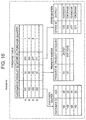
- FIGS. 9 and 10 are explanatory diagrams illustrating examples of a GUI used in the present invention.
- a screen used as a GUI includes, for example, a table name display field 51 , a selected table name display field 52 , a column name display field 53 , a first selected column name display field 54 , reference destination table name display fields 55 and 56 , a second selected column name display field 57 , a type selection field 58 , and buttons 61 to 64 .
- the selected table name display field 52 , the column name display field 53 , the first selected column name display field 54 , the reference destination table name display fields 55 and 56 , the second selected column name display field 57 , and the type selection field 58 are blank in an initial state.
- the table name display field 51 is a field that displays the table name of each table.
- the designation accepting unit 3 displays the table names of the respective tables defined in the schema setting information in the table name display field 51 .
- FIGS. 9 and 10 exemplify a state in which the designation accepting unit 3 displays three table names such as “order” in the table name display field 51 .
- the selected table name display field 52 is a field that displays the table name selected by the operator. For example, when a click operation is performed on one table name from among the table names displayed in the table name display field 51 , the designation accepting unit 3 judges that the one table name has been selected and displays this one table name in the selected table name display field 52 .
- FIGS. 9 and 10 exemplify a state in which the designation accepting unit 3 displays the table name “order” in the selected table name display field 52 as a result of the operator clicking “order” in the table name display field 51 .
- the column name display field 53 is a field that displays the column name of each column included in a table indicated by the selected table name.
- FIGS. 9 and 10 exemplify a state in which the designation accepting unit 3 displays the column names of respective columns included in a table having a table name of “order” in the column name display field 53 .
- a sign “PK” is affixed to the column name of the primary key column and a sign “FK” is affixed to the column name of the foreign key column.
- the first selected column name display field 54 is a field that displays the column name of the selected foreign key column.
- a foreign key column of which column name is displayed in the first selected column name display field 54 is a foreign key column designated by the operator.
- the selection operation (in other words, the designation operation) for the foreign key column is, for example, an operation of clicking the column name of the foreign key column displayed in the column name display field 53 and subsequently clicking the button 61 .
- the designation accepting unit 3 displays the column name of this foreign key column in the first selected column name display field 54 and deletes this column name from the column name display field 53 .
- the operator performs the above-described selection operation on at least two foreign key columns and the designation accepting unit 3 judges that these foreign key columns have been designated.
- FIG. 10 exemplifies a state in which a foreign key column having a column name of “customer_cd” and a foreign key column having a column name of “item_cd” are designated by the operator.
- the designation accepting unit 3 deletes the column name of this foreign key column from the first selected column name display field 54 and displays this column name again in the column name display field 53 .
- the designation accepting unit 3 also displays the table name of a table to serve as a reference destination of the foreign key column of which column name is displayed in the first selected column name display field 54 (that is, the foreign key column designated by the operator) in the reference destination table name display fields 55 and 56 .
- FIG. 10 exemplifies a state in which a table name “customer” of a table to serve as a reference destination of the foreign key column having the column name of “customer_cd” and a table name “item” of a table to serve as a reference destination of the foreign key column having the column name of “item_cd” are displayed in the reference destination table name display fields 55 and 56 .
- the operator can grasp a table to serve as a reference destination of the designated foreign key column.
- the second selected column name display field 57 is a field that displays the column name of the selected relation value column or the column name of the selected attribute value column.
- a value column of which column name is displayed in the second selected column name display field 57 is a relation value column or an attribute value column designated by the operator.
- the selection operation (in other words, the designation operation) for the relation value column is, for example, an operation of clicking the column name of the relation value column displayed in the column name display field 53 and subsequently clicking the button 63 .
- the designation accepting unit 3 displays the column name of this relation value column in the second selected column name display field 57 and deletes this column name from the column name display field 53 .
- the operator performs the above-described selection operation on one relation value column and the designation accepting unit 3 judges that this relation value column has been designated.
- the type selection field 58 is a field for selecting the type of the statistical model corresponding to the value column indicated by the column name displayed in the second selected column name display field 57 .
- the type selection field 58 is a pull-down menu is exemplified.
- the operator can select the type of the statistical model corresponding to the value column indicated by the column name displayed in the second selected column name display field 57 .
- the designation accepting unit 3 judges that the type of the statistical model corresponding to the value column indicated by the column name displayed in the second selected column name display field 57 has been designated.
- the selection operation for the attribute value column and the selection operation for the type of the statistical model corresponding to the attribute value column are similar to the selection operation for the relation value column and the selection operation for the type of the statistical model corresponding to the relation value column.
- the operator is only required to click the column name of the attribute value column displayed in the column name display field 53 and click the button 63 .
- the designation accepting unit 3 displays the column name of this attribute value column in the second selected column name display field 57 and deletes this column name from the column name display field 53 .
- the operator performs the above-described operation on an attribute value column to be selected and the designation accepting unit 3 judges that this attribute value column has been designated.
- the operator can select the type of the statistical model corresponding to the attribute value column.
- this operation it is judged that the type of the statistical model corresponding to the attribute value column displayed in the second selected column name display field 57 has been selected.
- the table operation system 1 may not use these attribute value column and statistical model.
- the operator when canceling the designation of the relation value column or the attribute value column, the operator is only required to click the column name of the relation value column or the column name of the attribute value column displayed in the second selected column name display field 57 and subsequently click the button 64 .
- the designation accepting unit 3 deletes the column name of this relation value column or the column name of this attribute value column from the second selected column name display field 57 and displays this column name again in the column name display field 53 .
- the designation accepting unit 3 can accept designation of a variety of items through the GUI as described above.
- the GUI is not limited to the GUIs exemplified in FIGS. 9 and 10 .
- the designation accepting unit 3 may accept designation of a variety of items without using a GUI.
- each of the above-described exemplary embodiments has described as an example a case where the grouping unit 5 performs the grouping such that one key value belongs to only one group.
- the grouping unit 5 may group the key values by permitting one key value to belong to a plurality of groups.
- the grouping unit 5 may determine the customer ID group and the product ID group in such a manner that each individual customer ID belongs to one or a plurality of customer ID groups and each individual product ID belongs to one or a plurality of product ID groups.
- the key column may include a plurality of columns.
- the key value may be represented by a vector.
- FIG. 11 is an explanatory diagram illustrating an example of a case where the key column includes a plurality of columns.
- FIG. 11 exemplifies a key column for uniquely identifying individual employees belonging to a group company.
- the key column exemplified in FIG. 11 includes a “company ID” column and an “in-company employee ID” column. There is a case where a plurality of companies forming the group company uses the same in-company employee ID. For example, as illustrated in FIG.
- FIG. 11 it is supposed that there are different employees having the same in-company employee ID “12345” in a company “1001” and a company “1002”. In such a case, it is not possible to uniquely identify each individual employee belonging to the group company when only the in-company employee ID is employed. However, each individual employee belonging to the group company can be uniquely identified using the combination of the “company ID” column and the “in-company employee ID” column as the key column. For example, in the example illustrated in FIG. 11 , respective different employees can be uniquely identified by a key value of (1001,12345) and a key value of (1002,12345).
- FIG. 11 has exemplified a case where the key column includes two columns, but the key column may include three or more columns.
- the relation value column may include a plurality of columns.
- the relation value column may be represented by a vector.
- FIG. 12 is an explanatory diagram illustrating an example of a case where the relation value column includes a plurality of columns.
- FIG. 12 exemplifies a relation value column holding the number of purchases.
- a case where the relation value column holding the number of purchases includes a “daytime number of purchases” column and a “nighttime number of purchases” column is exemplified.
- the purchase quantity in a row P illustrated in FIG. 12 can be represented by a vector of ( 12 , 5 ).
- the purchase quantity in a row Q illustrated in FIG. 12 can be represented by a vector of ( 7 , 10 ).
- FIG. 12 has exemplified a case where the relation value column includes two columns, but the relation value column may include three or more columns.
- FIG. 13 is an explanatory diagram illustrating an example of a table in which the relation value column is not explicitly indicated.
- the table illustrated in FIG. 13 includes a “customer ID” column and a “company ID” column as the key columns.
- the “company ID” column holds the ID of a company for which a person specified by the customer ID is working.
- the relation value column is not explicitly indicated. However, FIG. 13 can be regarded that there is a relation value column that holds a relation value of “whether there is employment relationship between customer and company”.
- the relation value of “whether there is employment relationship between customer and company” is obtained as one of binary values (in this example, the binary values are assumed as “0” and “1”).
- the value of the relation value in this case is “1” and, when there is no employment relationship therebetween, the value of the relation value in this case is “0”.
- the relation value of “whether there is employment relationship between customer and company” is “1”. Therefore, it can be regarded that a relation value column in which “1” is held as the relation value of “whether there is employment relationship between customer and company” is present for all the rows exemplified in FIG. 13 . Meanwhile, for example, it is supposed that a row in which the customer ID “180” and the company ID “1355” are associated with each other does not exist in the table exemplified in FIG. 13 . In this case, the relation value of “whether there is employment relationship between customer and company” is “0” in regard to the relationship between the customer ID “180” and the company ID “1355”.
- FIG. 14 is an overview block diagram illustrating a configuration example of a computer according to each exemplary embodiment of the present invention.
- the computer 1000 includes a CPU 1001 , a main storage device 1002 , an auxiliary storage device 1003 , an interface 1004 , a display device 1005 , and an input device 1006 .
- the table operation system of each exemplary embodiment is implemented in the computer 1000 .
- the action of the table operation system is stored in the auxiliary storage device 1003 in the form of a program (table operation program).
- the CPU 1001 retrieves the program from the auxiliary storage device 1003 to develop in the main storage device 1002 and executes the above processing in accordance with this program.
- the auxiliary storage device 1003 is an example of a non-transitory tangible medium.
- Other examples of non-transitory tangible media include magnetic disks, magneto-optical disks, CD-ROMs, DVD-ROMs, and semiconductor memories connected via the interface 1004 .
- this program when this program is delivered to the computer 1000 via a communication line, the computer 1000 that has received the delivery may develop the program in the main storage device 1002 and execute the above processing.
- the program may be for realizing a part of the above-described processing. Additionally, the program may be a differential program that realizes the above-described processing in combination with another program already stored in the auxiliary storage device 1003 .
- FIG. 15 is a block diagram illustrating the outline of the present invention.
- the table operation system of the present invention includes a designation accepting means 71 , a data acquiring means 72 , a grouping means 73 , and an attribute value column adding means 74 .
- the designation accepting means 71 (for example, the designation accepting unit 3 ) accepts designation of at least two foreign key columns, designation of a relation value column, and designation of the type of a statistical model associated with this relation value column in a table having two or more foreign key columns and one or more relation value columns.
- the data acquiring means 72 (for example, the data acquiring unit 4 ) specifies individual tables to serve as reference destinations of the designated respective foreign key columns and, for each combination of the key values in the primary key columns of the specified individual tables, acquires a total value of the relation values in the relation value column.
- the grouping means 73 (for example, the grouping unit 5 ) groups the respective key values in the primary key columns of the individual tables on the basis of the total value acquired for each combination of the key values in the primary key columns of the individual tables and the statistical model of the designated type.
- the attribute value column adding means 74 adds, to each individual table, an attribute value column of which attribute value is identification information on a group to which each key value in each primary key column of each individual table belongs.
- a configuration may be employed in which the designation accepting means 71 accepts designation of an attribute value column included in a table to serve as a reference destination of one of the designated foreign key columns and designation of a type of a statistical model associated with the attribute value column, the data acquiring means 72 acquires an attribute value in the designated attribute value column for each key value in a primary key column of the table having the attribute value column, and the grouping means 73 groups the respective key values in the primary key columns of the individual tables on the basis of a total value acquired for each combination of the key values in the primary key columns of the individual tables to serve as reference destinations of the designated respective foreign key columns, the statistical model of the type associated with the relation value column, the attribute value acquired for each key value in the primary key column of the table having the attribute value column, and the statistical model of the type associated with the attribute value column.
- the designation accepting means 71 may be configured to display a screen including a table name display field that displays a table name of each table (for example, the table name display field 51 ), a column name display field that displays a column name of each column included in a table indicated by a selected table name (for example, the column name display field 53 ), a selected column name display field that displays a column name of a selected relation value column or a column name of a selected attribute value column (for example, the second selected column name display field 57 ), and a type selection field for selecting a type of a statistical model corresponding to a column name displayed in the selected column name display field (for example, the type selection field 58 ), accept designation of at least two foreign key columns when column names of the at least two foreign key columns are selected from among column names displayed in the column name display field, accept designation of a relation value column and designation of a type of a statistical model associated with the relation value column when a column name of the relation value column is selected from among column names displayed in the column name display field,
- the grouping means 73 may be configured to group the key values such that one key value belongs to only one group.
- the grouping means 73 may be configured to group the key values by permitting one key value to belong to a plurality of groups.
- the present invention is suitably applied to a table operation system which operates a table of a predetermined database.
Landscapes
- Engineering & Computer Science (AREA)
- Theoretical Computer Science (AREA)
- Databases & Information Systems (AREA)
- Data Mining & Analysis (AREA)
- Physics & Mathematics (AREA)
- General Engineering & Computer Science (AREA)
- General Physics & Mathematics (AREA)
- Software Systems (AREA)
- Information Retrieval, Db Structures And Fs Structures Therefor (AREA)
- Management, Administration, Business Operations System, And Electronic Commerce (AREA)
Abstract
Description
p(x c,i)=p(x c,i|θ(z C c ,z I i)) formula (1)
p(a c)=p(a c|α(z C c)) formula (3)
- 1 Table operation system
- 2 Database management unit (DB management unit)
- 3 Designation accepting unit
- 4 Data acquiring unit
- 5 Grouping unit
- 6 Attribute value column adding unit
Claims (6)
Applications Claiming Priority (3)
| Application Number | Priority Date | Filing Date | Title |
|---|---|---|---|
| JP2015-069370 | 2015-03-30 | ||
| JP2015069370 | 2015-03-30 | ||
| PCT/JP2016/001011 WO2016157707A1 (en) | 2015-03-30 | 2016-02-25 | Table operation system, method, and program |
Publications (2)
| Publication Number | Publication Date |
|---|---|
| US20180107699A1 US20180107699A1 (en) | 2018-04-19 |
| US10698874B2 true US10698874B2 (en) | 2020-06-30 |
Family
ID=57006912
Family Applications (1)
| Application Number | Title | Priority Date | Filing Date |
|---|---|---|---|
| US15/562,542 Active 2036-11-01 US10698874B2 (en) | 2015-03-30 | 2016-02-25 | System, method, and program for business intelligence using table operations in a relational database |
Country Status (3)
| Country | Link |
|---|---|
| US (1) | US10698874B2 (en) |
| JP (1) | JPWO2016157707A1 (en) |
| WO (1) | WO2016157707A1 (en) |
Families Citing this family (1)
| Publication number | Priority date | Publication date | Assignee | Title |
|---|---|---|---|---|
| US11481364B2 (en) * | 2019-12-16 | 2022-10-25 | Alibaba Group Holding Limited | Row-column formatting for relational databases |
Citations (14)
| Publication number | Priority date | Publication date | Assignee | Title |
|---|---|---|---|---|
| JP2001216307A (en) | 2000-01-31 | 2001-08-10 | Teijin Ltd | Relational database management system and storage medium storing the same |
| US20030018620A1 (en) | 2001-06-26 | 2003-01-23 | International Business Machines Corporation | Storing data mining clustering results in a relational database for querying and reporting |
| JP2004287914A (en) | 2003-03-24 | 2004-10-14 | Hitachi Information Systems Ltd | Multi-dimensional analysis system |
| US20040225673A1 (en) * | 2003-05-05 | 2004-11-11 | International Business Machines Corporation | Range-clustered tables in a database management system |
| US20080270339A1 (en) * | 2007-04-25 | 2008-10-30 | Microsoft Corporation | Predicate based group management |
| US20120109875A1 (en) * | 2010-10-31 | 2012-05-03 | Microsoft Corporation | Organization of data mart using clustered key |
| US20120254173A1 (en) * | 2011-03-31 | 2012-10-04 | Goetz Graefe | Grouping data |
| US20130144833A1 (en) * | 2011-12-06 | 2013-06-06 | International Business Machines Corporation | Processing data in a data warehouse |
| US20130339379A1 (en) * | 2012-06-13 | 2013-12-19 | Oracle International Corporation | Information retrieval and navigation using a semantic layer and dynamic objects |
| US20140101154A1 (en) * | 2012-10-10 | 2014-04-10 | Oracle Financial Services Software Limited | Simplifying grouping of data items stored in a database |
| JP2015026188A (en) | 2013-07-25 | 2015-02-05 | 株式会社日立製作所 | Database analysis apparatus and method |
| US20150205855A1 (en) * | 2012-08-03 | 2015-07-23 | Nec Corporation | Product management method, product management device, product management system, and program |
| US20180225581A1 (en) * | 2016-03-16 | 2018-08-09 | Nec Corporation | Prediction system, method, and program |
| US20180247364A1 (en) * | 2015-02-25 | 2018-08-30 | Nec Corporation | Grouping system and recommended-product determination system |
-
2016
- 2016-02-25 US US15/562,542 patent/US10698874B2/en active Active
- 2016-02-25 WO PCT/JP2016/001011 patent/WO2016157707A1/en not_active Ceased
- 2016-02-25 JP JP2017509208A patent/JPWO2016157707A1/en active Pending
Patent Citations (14)
| Publication number | Priority date | Publication date | Assignee | Title |
|---|---|---|---|---|
| JP2001216307A (en) | 2000-01-31 | 2001-08-10 | Teijin Ltd | Relational database management system and storage medium storing the same |
| US20030018620A1 (en) | 2001-06-26 | 2003-01-23 | International Business Machines Corporation | Storing data mining clustering results in a relational database for querying and reporting |
| JP2004287914A (en) | 2003-03-24 | 2004-10-14 | Hitachi Information Systems Ltd | Multi-dimensional analysis system |
| US20040225673A1 (en) * | 2003-05-05 | 2004-11-11 | International Business Machines Corporation | Range-clustered tables in a database management system |
| US20080270339A1 (en) * | 2007-04-25 | 2008-10-30 | Microsoft Corporation | Predicate based group management |
| US20120109875A1 (en) * | 2010-10-31 | 2012-05-03 | Microsoft Corporation | Organization of data mart using clustered key |
| US20120254173A1 (en) * | 2011-03-31 | 2012-10-04 | Goetz Graefe | Grouping data |
| US20130144833A1 (en) * | 2011-12-06 | 2013-06-06 | International Business Machines Corporation | Processing data in a data warehouse |
| US20130339379A1 (en) * | 2012-06-13 | 2013-12-19 | Oracle International Corporation | Information retrieval and navigation using a semantic layer and dynamic objects |
| US20150205855A1 (en) * | 2012-08-03 | 2015-07-23 | Nec Corporation | Product management method, product management device, product management system, and program |
| US20140101154A1 (en) * | 2012-10-10 | 2014-04-10 | Oracle Financial Services Software Limited | Simplifying grouping of data items stored in a database |
| JP2015026188A (en) | 2013-07-25 | 2015-02-05 | 株式会社日立製作所 | Database analysis apparatus and method |
| US20180247364A1 (en) * | 2015-02-25 | 2018-08-30 | Nec Corporation | Grouping system and recommended-product determination system |
| US20180225581A1 (en) * | 2016-03-16 | 2018-08-09 | Nec Corporation | Prediction system, method, and program |
Non-Patent Citations (1)
| Title |
|---|
| International Search Report for PCT/JP2016/001011 dated May 24, 2016. |
Also Published As
| Publication number | Publication date |
|---|---|
| JPWO2016157707A1 (en) | 2018-02-01 |
| US20180107699A1 (en) | 2018-04-19 |
| WO2016157707A1 (en) | 2016-10-06 |
Similar Documents
| Publication | Publication Date | Title |
|---|---|---|
| CN109299090B (en) | Foundation centrality calculating method, system, computer equipment and storage medium | |
| US20170039233A1 (en) | Sankey diagram graphical user interface customization | |
| US11762819B2 (en) | Clustering model analysis for big data environments | |
| US11808603B2 (en) | Determining item locations using crowdsourced data | |
| CN105528387A (en) | Segmentation discovery, evaluation and implementation platform | |
| US12086820B2 (en) | Technology opportunity mapping | |
| US11308102B2 (en) | Data catalog automatic generation system and data catalog automatic generation method | |
| JP6810745B2 (en) | Systems and methods for segmenting customers with mixed attribute types using target clustering techniques | |
| US20170140402A1 (en) | Sales forecast display method, sales forecast display apparatus, and recording medium | |
| US20200286022A1 (en) | Platform for In-Memory Analysis of Network Data Applied to Site Selection with Current Market Information, Demand Estimates, and Competitor Information | |
| Baizyldayeva et al. | Decision making procedure: applications of IBM SPSS cluster analysis and decision tree | |
| US20170140395A1 (en) | Selling status display method, selling status display apparatus, and recording medium | |
| US8856126B2 (en) | Simplifying grouping of data items stored in a database | |
| Ranggadara et al. | Applying customer loyalty classification with RFM and Naïve Bayes for better decision making | |
| Goar et al. | Business decision making by big data analytics | |
| CN113946755A (en) | Information pushing method, device and equipment based on association rule and storage medium | |
| Ajay et al. | Analyzing and predicting the sales forecasting using modified Random Forest and Decision Tree algorithm | |
| Halawi et al. | Harnessing the power of analytics | |
| CN111581222A (en) | Correlation analysis method and device of business data, computer equipment and computer storage medium | |
| US10698874B2 (en) | System, method, and program for business intelligence using table operations in a relational database | |
| WO2018185899A1 (en) | Library retrieval device, library retrieval system and library retrieval method | |
| US20250028985A1 (en) | System and method for data structuring for artificial intelligence and a user interface for presenting the same | |
| Bhargavi et al. | Comparative study of consumer purchasing and decision pattern analysis using pincer search based data mining method | |
| JP7326640B1 (en) | Information processing method, computer program and information processing apparatus | |
| JP5444282B2 (en) | Data shaping system, method, and program |
Legal Events
| Date | Code | Title | Description |
|---|---|---|---|
| AS | Assignment |
Owner name: NEC CORPORATION, JAPAN Free format text: ASSIGNMENT OF ASSIGNORS INTEREST;ASSIGNOR:NAKADAI, SHINJI;REEL/FRAME:043727/0271 Effective date: 20170907 |
|
| FEPP | Fee payment procedure |
Free format text: ENTITY STATUS SET TO UNDISCOUNTED (ORIGINAL EVENT CODE: BIG.); ENTITY STATUS OF PATENT OWNER: LARGE ENTITY |
|
| STPP | Information on status: patent application and granting procedure in general |
Free format text: DOCKETED NEW CASE - READY FOR EXAMINATION |
|
| STPP | Information on status: patent application and granting procedure in general |
Free format text: NON FINAL ACTION MAILED |
|
| STPP | Information on status: patent application and granting procedure in general |
Free format text: RESPONSE TO NON-FINAL OFFICE ACTION ENTERED AND FORWARDED TO EXAMINER |
|
| STCF | Information on status: patent grant |
Free format text: PATENTED CASE |
|
| CC | Certificate of correction | ||
| MAFP | Maintenance fee payment |
Free format text: PAYMENT OF MAINTENANCE FEE, 4TH YEAR, LARGE ENTITY (ORIGINAL EVENT CODE: M1551); ENTITY STATUS OF PATENT OWNER: LARGE ENTITY Year of fee payment: 4 |