US10696663B2 - Chromene derivatives as inhibitors of TCR-NCK interaction - Google Patents
Chromene derivatives as inhibitors of TCR-NCK interaction Download PDFInfo
- Publication number
- US10696663B2 US10696663B2 US16/287,771 US201916287771A US10696663B2 US 10696663 B2 US10696663 B2 US 10696663B2 US 201916287771 A US201916287771 A US 201916287771A US 10696663 B2 US10696663 B2 US 10696663B2
- Authority
- US
- United States
- Prior art keywords
- compound
- pharmaceutically acceptable
- acceptable salt
- compounds
- nitrogen
- Prior art date
- Legal status (The legal status is an assumption and is not a legal conclusion. Google has not performed a legal analysis and makes no representation as to the accuracy of the status listed.)
- Active
Links
- 0 [1*]CC1=CC=C2OCC(C[2*])=C(C3=CC=CC=C3)C2=C1.[3*]C Chemical compound [1*]CC1=CC=C2OCC(C[2*])=C(C3=CC=CC=C3)C2=C1.[3*]C 0.000 description 24
- VKDXFJLVUUCAKH-UHFFFAOYSA-N CN(C)CCNC(=O)C1=C(C2=CC=C(F)C=C2)C2=C(C=CC(F)=C2)OC1 Chemical compound CN(C)CCNC(=O)C1=C(C2=CC=C(F)C=C2)C2=C(C=CC(F)=C2)OC1 VKDXFJLVUUCAKH-UHFFFAOYSA-N 0.000 description 3
- JOFRSUPXNSATHH-UHFFFAOYSA-N CN1CCN(CC2=C(C3=CC=C(F)C=C3)C3=C(C=CC(F)=C3)OC2)CC1 Chemical compound CN1CCN(CC2=C(C3=CC=C(F)C=C3)C3=C(C=CC(F)=C3)OC2)CC1 JOFRSUPXNSATHH-UHFFFAOYSA-N 0.000 description 3
- XXARLKNSPVBUSQ-UHFFFAOYSA-N O=C(O)CCOC1=CC2=C(C=C1)OCC(CN1CCCC1)=C2C1=CC=C(F)C=C1 Chemical compound O=C(O)CCOC1=CC2=C(C=C1)OCC(CN1CCCC1)=C2C1=CC=C(F)C=C1 XXARLKNSPVBUSQ-UHFFFAOYSA-N 0.000 description 3
- QHXIZQRTOGOWLV-UHFFFAOYSA-N CC(C)(O)C1NC(CCOC2=CC3=C(C=C2)OCC(CN2CCCC2)=C3C2=CC=C(F)C=C2)=NO1 Chemical compound CC(C)(O)C1NC(CCOC2=CC3=C(C=C2)OCC(CN2CCCC2)=C3C2=CC=C(F)C=C2)=NO1 QHXIZQRTOGOWLV-UHFFFAOYSA-N 0.000 description 2
- MLSQFPWUZVVUFW-UHFFFAOYSA-N CC(C)(O)CCOC1=CC2=C(C=C1)OCC(C(=O)N1CCCC1)=C2C1=CC=C(F)C=C1 Chemical compound CC(C)(O)CCOC1=CC2=C(C=C1)OCC(C(=O)N1CCCC1)=C2C1=CC=C(F)C=C1 MLSQFPWUZVVUFW-UHFFFAOYSA-N 0.000 description 2
- ILNCVRGGBKHQQV-UHFFFAOYSA-N CC(C)(O)CCOC1=CC2=C(C=C1)OCC(CN1CCCC1)=C2C1=CC=C(F)C=C1 Chemical compound CC(C)(O)CCOC1=CC2=C(C=C1)OCC(CN1CCCC1)=C2C1=CC=C(F)C=C1 ILNCVRGGBKHQQV-UHFFFAOYSA-N 0.000 description 2
- QXALUNHYJJONQH-UHFFFAOYSA-N CC(C)C(F)(F)F Chemical compound CC(C)C(F)(F)F QXALUNHYJJONQH-UHFFFAOYSA-N 0.000 description 2
- VDACDXIGTZUINN-UHFFFAOYSA-N CC(C)C(F)(F)F.CC(C)C(F)F.CC(C)CF Chemical compound CC(C)C(F)(F)F.CC(C)C(F)F.CC(C)CF VDACDXIGTZUINN-UHFFFAOYSA-N 0.000 description 2
- IAYLTTTYLMIBGQ-UHFFFAOYSA-N CC(C)C1=CC2=C(C=C1)OCC(CN1CCCC1)=C2C1=CC=C(F)C=C1 Chemical compound CC(C)C1=CC2=C(C=C1)OCC(CN1CCCC1)=C2C1=CC=C(F)C=C1 IAYLTTTYLMIBGQ-UHFFFAOYSA-N 0.000 description 2
- FGFTXGYPKHIPPZ-UHFFFAOYSA-N CC(C)N1CCCC1.CC(C)N1CCCCC1.CC(C)N1CCN(C)CC1.CC(C)N1CCOCC1 Chemical compound CC(C)N1CCCC1.CC(C)N1CCCCC1.CC(C)N1CCN(C)CC1.CC(C)N1CCOCC1 FGFTXGYPKHIPPZ-UHFFFAOYSA-N 0.000 description 2
- FPDFKVCBQIHZNB-UHFFFAOYSA-N CC(C)OC1=CC2=C(C=C1)OCC(CN1CCCC1)=C2C1=CC=C(F)C=C1 Chemical compound CC(C)OC1=CC2=C(C=C1)OCC(CN1CCCC1)=C2C1=CC=C(F)C=C1 FPDFKVCBQIHZNB-UHFFFAOYSA-N 0.000 description 2
- KNTUIWXRWMCODU-UHFFFAOYSA-N CC1(F)CN(CC2=C(C3=CC=C(F)C=C3)C3=C(C=CC(OCCC(=O)O)=C3)OC2)CC1(F)F Chemical compound CC1(F)CN(CC2=C(C3=CC=C(F)C=C3)C3=C(C=CC(OCCC(=O)O)=C3)OC2)CC1(F)F KNTUIWXRWMCODU-UHFFFAOYSA-N 0.000 description 2
- KLFQLVDCBJJXMA-UHFFFAOYSA-N CC1=CC2=C(C=C1)OCC(C(=O)N1CCN(C)CC1)=C2C1=CC=C(F)C=C1 Chemical compound CC1=CC2=C(C=C1)OCC(C(=O)N1CCN(C)CC1)=C2C1=CC=C(F)C=C1 KLFQLVDCBJJXMA-UHFFFAOYSA-N 0.000 description 2
- RENXKDVSQCXUKJ-UHFFFAOYSA-N CC1=CC2=C(C=C1)OCC(CN1CCCC1)=C2C1=CC=C(F)C=C1 Chemical compound CC1=CC2=C(C=C1)OCC(CN1CCCC1)=C2C1=CC=C(F)C=C1 RENXKDVSQCXUKJ-UHFFFAOYSA-N 0.000 description 2
- XSUQKONIVPFSHH-UHFFFAOYSA-N CCNC(=O)C1=C(C2=CC=C(F)C=C2)C2=C(C=CC(OC(F)(F)F)=C2)OC1 Chemical compound CCNC(=O)C1=C(C2=CC=C(F)C=C2)C2=C(C=CC(OC(F)(F)F)=C2)OC1 XSUQKONIVPFSHH-UHFFFAOYSA-N 0.000 description 2
- IFNXKULAXRFCMN-UHFFFAOYSA-N CCNCC1=C(C2=CC=C(F)C=C2)C2=C(C=CC(OC(F)F)=C2)OC1 Chemical compound CCNCC1=C(C2=CC=C(F)C=C2)C2=C(C=CC(OC(F)F)=C2)OC1 IFNXKULAXRFCMN-UHFFFAOYSA-N 0.000 description 2
- VHTYPPKGQYHDMJ-UHFFFAOYSA-N CN(C)CCNC(=O)C1=C(C2=CC=C(F)C=C2)C2=C(C=CC(OC(F)(F)F)=C2)OC1 Chemical compound CN(C)CCNC(=O)C1=C(C2=CC=C(F)C=C2)C2=C(C=CC(OC(F)(F)F)=C2)OC1 VHTYPPKGQYHDMJ-UHFFFAOYSA-N 0.000 description 2
- ZCXFKJQTWORBAS-UHFFFAOYSA-N CN(C)CCNCC1=C(C2=CC=C(F)C=C2)C2=C(C=CC(F)=C2)OC1 Chemical compound CN(C)CCNCC1=C(C2=CC=C(F)C=C2)C2=C(C=CC(F)=C2)OC1 ZCXFKJQTWORBAS-UHFFFAOYSA-N 0.000 description 2
- RTZQNBJDFBMYRF-UHFFFAOYSA-N CN1CCN(C(=O)C2=C(C3=CC=C(F)C=C3)C3=C(C=CC(F)=C3)OC2)CC1 Chemical compound CN1CCN(C(=O)C2=C(C3=CC=C(F)C=C3)C3=C(C=CC(F)=C3)OC2)CC1 RTZQNBJDFBMYRF-UHFFFAOYSA-N 0.000 description 2
- QFHJUJCCAKWXRG-UHFFFAOYSA-N CN1CCN(CC2=C(C3=CC=C(C(F)(F)F)C=C3)C3=C(C=CC(OCCC(=O)O)=C3)OC2)CC1 Chemical compound CN1CCN(CC2=C(C3=CC=C(C(F)(F)F)C=C3)C3=C(C=CC(OCCC(=O)O)=C3)OC2)CC1 QFHJUJCCAKWXRG-UHFFFAOYSA-N 0.000 description 2
- OTMLJDJMSHYIAC-UHFFFAOYSA-N CN1CCN(CC2=C(C3=CC=C(F)C=C3)C3=C(C=CC(OC(F)(F)F)=C3)OC2)CC1 Chemical compound CN1CCN(CC2=C(C3=CC=C(F)C=C3)C3=C(C=CC(OC(F)(F)F)=C3)OC2)CC1 OTMLJDJMSHYIAC-UHFFFAOYSA-N 0.000 description 2
- UEIIXXFMBUXSCN-UHFFFAOYSA-N COC1=CC2=C(C=C1)OCC(CN1CCCC1)=C2C1=CC(F)=CC=C1 Chemical compound COC1=CC2=C(C=C1)OCC(CN1CCCC1)=C2C1=CC(F)=CC=C1 UEIIXXFMBUXSCN-UHFFFAOYSA-N 0.000 description 2
- CPVICEZHXKRKOZ-UHFFFAOYSA-N FC1=CC=C(C2=C(CN3CCCC3)COC3=C2C=C(F)C=C3)C=C1 Chemical compound FC1=CC=C(C2=C(CN3CCCC3)COC3=C2C=C(F)C=C3)C=C1 CPVICEZHXKRKOZ-UHFFFAOYSA-N 0.000 description 2
- BPHAAZOUORQQCT-UHFFFAOYSA-N FC1=CC=C(C2=C(CN3CCCC3)COC3=C2C=C(OCCC2=NN=NN2)C=C3)C=C1 Chemical compound FC1=CC=C(C2=C(CN3CCCC3)COC3=C2C=C(OCCC2=NN=NN2)C=C3)C=C1 BPHAAZOUORQQCT-UHFFFAOYSA-N 0.000 description 2
- JGSGJVXWELLPDG-UHFFFAOYSA-N FC1=CC=C(C2=C(CN3CCCC3)COC3=C2C=C(OCCN2CCCCC2)C=C3)C=C1 Chemical compound FC1=CC=C(C2=C(CN3CCCC3)COC3=C2C=C(OCCN2CCCCC2)C=C3)C=C1 JGSGJVXWELLPDG-UHFFFAOYSA-N 0.000 description 2
- OSSHZBJNUPJGPX-UHFFFAOYSA-N FC1=CC=C(C2=C(CN3CCOCC3)COC3=C2C=C(OC(F)(F)F)C=C3)C=C1 Chemical compound FC1=CC=C(C2=C(CN3CCOCC3)COC3=C2C=C(OC(F)(F)F)C=C3)C=C1 OSSHZBJNUPJGPX-UHFFFAOYSA-N 0.000 description 2
- LPPMWEUNEWYPES-UHFFFAOYSA-N N/C(CCOC1=CC2=C(C=C1)OCC(CN1CCCC1)=C2C1=CC=C(F)C=C1)=N\O Chemical compound N/C(CCOC1=CC2=C(C=C1)OCC(CN1CCCC1)=C2C1=CC=C(F)C=C1)=N\O LPPMWEUNEWYPES-UHFFFAOYSA-N 0.000 description 2
- OXFVUECFVOIKAX-UHFFFAOYSA-N O=C(C1=C(C2=CC=C(F)C=C2)C2=C(C=CC(F)=C2)OC1)N1CCCC1 Chemical compound O=C(C1=C(C2=CC=C(F)C=C2)C2=C(C=CC(F)=C2)OC1)N1CCCC1 OXFVUECFVOIKAX-UHFFFAOYSA-N 0.000 description 2
- SLDGCTMYOFCVNX-UHFFFAOYSA-N O=C(O)CCOC1=CC2=C(C=C1)OCC(C(=O)N1CCCC1)=C2C1=CC=C(F)C=C1 Chemical compound O=C(O)CCOC1=CC2=C(C=C1)OCC(C(=O)N1CCCC1)=C2C1=CC=C(F)C=C1 SLDGCTMYOFCVNX-UHFFFAOYSA-N 0.000 description 2
- MXOAXENXKNLFGZ-UHFFFAOYSA-N O=C(O)COC1=CC2=C(C=C1)OCC(CN1CCCC1)=C2C1=CC=C(F)C=C1 Chemical compound O=C(O)COC1=CC2=C(C=C1)OCC(CN1CCCC1)=C2C1=CC=C(F)C=C1 MXOAXENXKNLFGZ-UHFFFAOYSA-N 0.000 description 2
- OBSMSLWNPDPVBN-UHFFFAOYSA-N O=C1NC(CCOC2=CC3=C(C=C2)OCC(CN2CCCC2)=C3C2=CC=C(F)C=C2)=NO1 Chemical compound O=C1NC(CCOC2=CC3=C(C=C2)OCC(CN2CCCC2)=C3C2=CC=C(F)C=C2)=NO1 OBSMSLWNPDPVBN-UHFFFAOYSA-N 0.000 description 2
- KIWFLMODOSVIOL-UHFFFAOYSA-N [C-]#[N+]CCOC1=CC2=C(C=C1)OCC(CN1CCCC1)=C2C1=CC=C(F)C=C1 Chemical compound [C-]#[N+]CCOC1=CC2=C(C=C1)OCC(CN1CCCC1)=C2C1=CC=C(F)C=C1 KIWFLMODOSVIOL-UHFFFAOYSA-N 0.000 description 2
- YBVDBQZEMVXQCB-UHFFFAOYSA-N BrB(Br)Br.COC1=CC=C2OCC(CN3CCCC3)=C(C3=CC=C(F)C=C3)C2=C1.N#CCCOC1=CC=C2OCC(CN3CCCC3)=C(C3=CC=C(F)C=C3)C2=C1.O=C(O)CCOC1=CC=C2OCC(CN3CCCC3)=C(C3=CC=C(F)C=C3)C2=C1.OC1=CC=C2OCC(CN3CCCC3)=C(C3=CC=C(F)C=C3)C2=C1.[CH3-].[I-32].[I-33] Chemical compound BrB(Br)Br.COC1=CC=C2OCC(CN3CCCC3)=C(C3=CC=C(F)C=C3)C2=C1.N#CCCOC1=CC=C2OCC(CN3CCCC3)=C(C3=CC=C(F)C=C3)C2=C1.O=C(O)CCOC1=CC=C2OCC(CN3CCCC3)=C(C3=CC=C(F)C=C3)C2=C1.OC1=CC=C2OCC(CN3CCCC3)=C(C3=CC=C(F)C=C3)C2=C1.[CH3-].[I-32].[I-33] YBVDBQZEMVXQCB-UHFFFAOYSA-N 0.000 description 1
- UZURTQHPMXADGG-UHFFFAOYSA-N C(C1)CC2C1CC=CC2 Chemical compound C(C1)CC2C1CC=CC2 UZURTQHPMXADGG-UHFFFAOYSA-N 0.000 description 1
- AEBWATHAIVJLTA-UHFFFAOYSA-N C(C1)CC2C1CCC2 Chemical compound C(C1)CC2C1CCC2 AEBWATHAIVJLTA-UHFFFAOYSA-N 0.000 description 1
- FTTATHOUSOIFOQ-UHFFFAOYSA-N C(C1)CN2C1CNCC2 Chemical compound C(C1)CN2C1CNCC2 FTTATHOUSOIFOQ-UHFFFAOYSA-N 0.000 description 1
- CTDQAGUNKPRERK-UHFFFAOYSA-N C(CC1)CC11CCCCC1 Chemical compound C(CC1)CC11CCCCC1 CTDQAGUNKPRERK-UHFFFAOYSA-N 0.000 description 1
- NINJAJLCZUYDGV-UHFFFAOYSA-N C(CC1)CC11CNCC1 Chemical compound C(CC1)CC11CNCC1 NINJAJLCZUYDGV-UHFFFAOYSA-N 0.000 description 1
- GBCQLGDTLMHVHU-UHFFFAOYSA-N C(CC1)CC2C1CCCCC2 Chemical compound C(CC1)CC2C1CCCCC2 GBCQLGDTLMHVHU-UHFFFAOYSA-N 0.000 description 1
- IPJCLLYWCZQEGJ-UHFFFAOYSA-N C.C.C.C.CC(C)(O)CCBr.CC(C)(O)CCOC1=CC=C2OCC(C(=O)N3CCCC3)=C(C3=CC=C(F)C=C3)C2=C1.COC1=CC=C2OCC(C=O)=C(C3=CC=C(F)C=C3)C2=C1.O=C(C1=C(C2=CC=C(F)C=C2)C2=CC(O)=CC=C2OC1)N1CCCC1.O=C(O)C1=C(C2=CC=C(F)C=C2)C2=CC(O)=CC=C2OC1.O=CC1=C(C2=CC=C(F)C=C2)C2=CC(O)=CC=C2OC1.[I-42] Chemical compound C.C.C.C.CC(C)(O)CCBr.CC(C)(O)CCOC1=CC=C2OCC(C(=O)N3CCCC3)=C(C3=CC=C(F)C=C3)C2=C1.COC1=CC=C2OCC(C=O)=C(C3=CC=C(F)C=C3)C2=C1.O=C(C1=C(C2=CC=C(F)C=C2)C2=CC(O)=CC=C2OC1)N1CCCC1.O=C(O)C1=C(C2=CC=C(F)C=C2)C2=CC(O)=CC=C2OC1.O=CC1=C(C2=CC=C(F)C=C2)C2=CC(O)=CC=C2OC1.[I-42] IPJCLLYWCZQEGJ-UHFFFAOYSA-N 0.000 description 1
- IYPFRXYLBYHQCU-UHFFFAOYSA-N C.C.CC1=CC=C2OCC(C(=O)NCCN(C)C)=C(C3=CC=C(F)C=C3)C2=C1.CC1=CC=C2OCC(C(=O)O)=C(C3=CC=C(F)C=C3)C2=C1.CC1=CC=C2OCC(C=O)=C(C3=CC=C(F)C=C3)C2=C1.CC1=CC=C2OCC(CCl)=C(C3=CC=C(F)C=C3)C2=C1.CC1=CC=C2OCC(CN3CCN(C)CC3)=C(C3=CC=C(F)C=C3)C2=C1.CC1=CC=C2OCC(CN3CCOCC3)=C(C3=CC=C(F)C=C3)C2=C1.CC1=CC=C2OCC=C(C3=CC=C(F)C=C3)C2=C1.CC1=CC=C2OCCC(=O)C2=C1.CCNCC1=C(C2=CC=C(F)C=C2)C2=CC(C)=CC=C2OC1.O=C(O)CCOC1=CC=C(OC(F)(F)F)C=C1.OC1=CC=C(OC(F)(F)F)C=C1.[I-10].[I-11] Chemical compound C.C.CC1=CC=C2OCC(C(=O)NCCN(C)C)=C(C3=CC=C(F)C=C3)C2=C1.CC1=CC=C2OCC(C(=O)O)=C(C3=CC=C(F)C=C3)C2=C1.CC1=CC=C2OCC(C=O)=C(C3=CC=C(F)C=C3)C2=C1.CC1=CC=C2OCC(CCl)=C(C3=CC=C(F)C=C3)C2=C1.CC1=CC=C2OCC(CN3CCN(C)CC3)=C(C3=CC=C(F)C=C3)C2=C1.CC1=CC=C2OCC(CN3CCOCC3)=C(C3=CC=C(F)C=C3)C2=C1.CC1=CC=C2OCC=C(C3=CC=C(F)C=C3)C2=C1.CC1=CC=C2OCCC(=O)C2=C1.CCNCC1=C(C2=CC=C(F)C=C2)C2=CC(C)=CC=C2OC1.O=C(O)CCOC1=CC=C(OC(F)(F)F)C=C1.OC1=CC=C(OC(F)(F)F)C=C1.[I-10].[I-11] IYPFRXYLBYHQCU-UHFFFAOYSA-N 0.000 description 1
- FMVVKWHKROFRMU-UHFFFAOYSA-N C.C.FC1=CC=C(C2=C(CN3CCCC3)COC3=CC=C(OCCBr)C=C32)C=C1.FC1=CC=C(C2=C(CN3CCCC3)COC3=CC=C(OCCN4CCCCC4)C=C32)C=C1.OC1=CC=C2OCC(CN3CCCC3)=C(C3=CC=C(F)C=C3)C2=C1.[I-39] Chemical compound C.C.FC1=CC=C(C2=C(CN3CCCC3)COC3=CC=C(OCCBr)C=C32)C=C1.FC1=CC=C(C2=C(CN3CCCC3)COC3=CC=C(OCCN4CCCCC4)C=C32)C=C1.OC1=CC=C2OCC(CN3CCCC3)=C(C3=CC=C(F)C=C3)C2=C1.[I-39] FMVVKWHKROFRMU-UHFFFAOYSA-N 0.000 description 1
- VAYXUHCXWFGWFG-UHFFFAOYSA-N C.C.N#CCCOC1=CC=C2OCC(C(=O)N3CCCC3)=C(C3=CC=C(F)C=C3)C2=C1.O=C(C1=C(C2=CC=C(F)C=C2)C2=CC(O)=CC=C2OC1)N1CCCC1.O=C(O)CCOC1=CC=C2OCC(C(=O)N3CCCC3)=C(C3=CC=C(F)C=C3)C2=C1.[I-40] Chemical compound C.C.N#CCCOC1=CC=C2OCC(C(=O)N3CCCC3)=C(C3=CC=C(F)C=C3)C2=C1.O=C(C1=C(C2=CC=C(F)C=C2)C2=CC(O)=CC=C2OC1)N1CCCC1.O=C(O)CCOC1=CC=C2OCC(C(=O)N3CCCC3)=C(C3=CC=C(F)C=C3)C2=C1.[I-40] VAYXUHCXWFGWFG-UHFFFAOYSA-N 0.000 description 1
- HRBOEMXLSBGBJH-UHFFFAOYSA-N C.CC(C)(O)CCBr.CC(C)(O)CCOC1=CC=C2OCC(CN3CCCC3)=C(C3=CC=C(F)C=C3)C2=C1.CCOC(=O)CCBr.OC1=CC=C2OCC(CN3CCCC3)=C(C3=CC=C(F)C=C3)C2=C1.[I-35] Chemical compound C.CC(C)(O)CCBr.CC(C)(O)CCOC1=CC=C2OCC(CN3CCCC3)=C(C3=CC=C(F)C=C3)C2=C1.CCOC(=O)CCBr.OC1=CC=C2OCC(CN3CCCC3)=C(C3=CC=C(F)C=C3)C2=C1.[I-35] HRBOEMXLSBGBJH-UHFFFAOYSA-N 0.000 description 1
- SXGYDIAEEIGZGH-UHFFFAOYSA-N C.CCNCC1=C(C2=CC=C(F)C=C2)C2=C(C=CC(OCC3CC3)=C2)OC1.COC1=CC2=C(C=C1)OCC(C(C)=O)=C2C1=CC=C(F)C=C1.COC1=CC2=C(C=C1)OCC(CN1CCCC1)=C2C1=CC=C(F)C=C1 Chemical compound C.CCNCC1=C(C2=CC=C(F)C=C2)C2=C(C=CC(OCC3CC3)=C2)OC1.COC1=CC2=C(C=C1)OCC(C(C)=O)=C2C1=CC=C(F)C=C1.COC1=CC2=C(C=C1)OCC(CN1CCCC1)=C2C1=CC=C(F)C=C1 SXGYDIAEEIGZGH-UHFFFAOYSA-N 0.000 description 1
- FDFDZRDVYURSRX-UHFFFAOYSA-N C1=CC2C3CCC(CC3)C2C=C1.C1=CC2C3CCC(NC3)C2C=C1.C1=CC2C3CCC(OC3)C2C=C1.C1=CC2C3CCC(SC3)C2C=C1.C1CC2CC1CN2.C1CC2CCC(C1)C2.C1CC2CCC(C1)N2.C1CC2CCC(C2)N1.C1CC2CCC1C2.C1CC2CCC1C2.C1CC2CCC1CC2.C1CC2CCC1CN2.C1CC2CCC1CO2.C1CC2CCC1CS2.C1CC2CCC1O2.C1CC2CCN(C1)C2.C1CC2CNC(C1)C2.C1CC2CNCC1C2.C1CC2CNCC1N2.C1CC2CNCC1O2.C1CC2COCC1N2.C1CC2OCC1O2.C1CN2CCC(C2)O1.C1CN2CCC1CC2.C1NC2CNC1C2.C1OC2CNC1C2 Chemical compound C1=CC2C3CCC(CC3)C2C=C1.C1=CC2C3CCC(NC3)C2C=C1.C1=CC2C3CCC(OC3)C2C=C1.C1=CC2C3CCC(SC3)C2C=C1.C1CC2CC1CN2.C1CC2CCC(C1)C2.C1CC2CCC(C1)N2.C1CC2CCC(C2)N1.C1CC2CCC1C2.C1CC2CCC1C2.C1CC2CCC1CC2.C1CC2CCC1CN2.C1CC2CCC1CO2.C1CC2CCC1CS2.C1CC2CCC1O2.C1CC2CCN(C1)C2.C1CC2CNC(C1)C2.C1CC2CNCC1C2.C1CC2CNCC1N2.C1CC2CNCC1O2.C1CC2COCC1N2.C1CC2OCC1O2.C1CN2CCC(C2)O1.C1CN2CCC1CC2.C1NC2CNC1C2.C1OC2CNC1C2 FDFDZRDVYURSRX-UHFFFAOYSA-N 0.000 description 1
- FERJLQPLVASNSO-UHFFFAOYSA-N C1=CCC2CCCC2C1.C1CC2(CCN1)COC2.C1CC2CCCC2C1.C1CC2CNCCN2C1.C1CCC2(C1)CCNC2.C1CCC2(CC1)CCCC2.C1CCC2CC2C1.C1CCC2CCCCC2CC1 Chemical compound C1=CCC2CCCC2C1.C1CC2(CCN1)COC2.C1CC2CCCC2C1.C1CC2CNCCN2C1.C1CCC2(C1)CCNC2.C1CCC2(CC1)CCCC2.C1CCC2CC2C1.C1CCC2CCCCC2CC1 FERJLQPLVASNSO-UHFFFAOYSA-N 0.000 description 1
- SHOMMGQAMRXRRK-UHFFFAOYSA-N C1C2CCCC1C2 Chemical compound C1C2CCCC1C2 SHOMMGQAMRXRRK-UHFFFAOYSA-N 0.000 description 1
- SZGNBTKONHLUIC-UHFFFAOYSA-L C1CCNC1.C=CC#N.CC1=CC=C(O)C=C1.CC1=CC=C2OCC(C=O)=C(C3=CC=C(F)C=C3)C2=C1.CC1=CC=C2OCC(CCl)=C(C3=CC=C(F)C=C3)C2=C1.CC1=CC=C2OCC(CO)=C(C3=CC=C(F)C=C3)C2=C1.CC1=CC=C2OCC=C(C3=CC=C(F)C=C3)C2=C1.CC1=CC=C2OCCC(=O)C2=C1.FC1=CC=C(Br)C=C1.O=CC(F)(F)F.O=COO[K].O=COO[K].O=S(=O)(O)C(F)(F)F.[C-]#[N+]CCOC1=CC=C(C)C=C1.[KH].[KH] Chemical compound C1CCNC1.C=CC#N.CC1=CC=C(O)C=C1.CC1=CC=C2OCC(C=O)=C(C3=CC=C(F)C=C3)C2=C1.CC1=CC=C2OCC(CCl)=C(C3=CC=C(F)C=C3)C2=C1.CC1=CC=C2OCC(CO)=C(C3=CC=C(F)C=C3)C2=C1.CC1=CC=C2OCC=C(C3=CC=C(F)C=C3)C2=C1.CC1=CC=C2OCCC(=O)C2=C1.FC1=CC=C(Br)C=C1.O=CC(F)(F)F.O=COO[K].O=COO[K].O=S(=O)(O)C(F)(F)F.[C-]#[N+]CCOC1=CC=C(C)C=C1.[KH].[KH] SZGNBTKONHLUIC-UHFFFAOYSA-L 0.000 description 1
- RECARUFTCUAFPV-UHFFFAOYSA-N C1OCC11CCNCC1 Chemical compound C1OCC11CCNCC1 RECARUFTCUAFPV-UHFFFAOYSA-N 0.000 description 1
- TVXBHAXZHXTZIY-UHFFFAOYSA-N C=C1NC(C(C)C)=NO1.CC(C)C1=NN=NN1.CC(C)C1=NOC(C(C)(C)O)=N1.CC(C)N1CCCCC1.CC(C)N1CCN(C)CC1 Chemical compound C=C1NC(C(C)C)=NO1.CC(C)C1=NN=NN1.CC(C)C1=NOC(C(C)(C)O)=N1.CC(C)N1CCCCC1.CC(C)N1CCN(C)CC1 TVXBHAXZHXTZIY-UHFFFAOYSA-N 0.000 description 1
- YSXFGFLKYAUZBJ-UHFFFAOYSA-N C=CC#N.CC1=CC=C2OCC(CN3CCCC3)=C(C3=CC=C(F)C=C3)C2=C1.CC1=CC=C2OCC(CN3CCCC3)=C(C3=CC=C(F)C=C3)C2=C1.Cl.Cl.Cl.O=COCCOC1=CC=C2OCC(CN3CCCC3)=C(C3=CC=C(F)C=C3)C2=C1.OC1=CC=C2OCC(CN3CCCC3)=C(C3=CC=C(F)C=C3)C2=C1.[C-]#[N+]CCOC1=CC=C2OCC(CN3CCCC3)=C(C3=CC=C(F)C=C3)C2=C1 Chemical compound C=CC#N.CC1=CC=C2OCC(CN3CCCC3)=C(C3=CC=C(F)C=C3)C2=C1.CC1=CC=C2OCC(CN3CCCC3)=C(C3=CC=C(F)C=C3)C2=C1.Cl.Cl.Cl.O=COCCOC1=CC=C2OCC(CN3CCCC3)=C(C3=CC=C(F)C=C3)C2=C1.OC1=CC=C2OCC(CN3CCCC3)=C(C3=CC=C(F)C=C3)C2=C1.[C-]#[N+]CCOC1=CC=C2OCC(CN3CCCC3)=C(C3=CC=C(F)C=C3)C2=C1 YSXFGFLKYAUZBJ-UHFFFAOYSA-N 0.000 description 1
- OQOIGDCUVRZXFM-UHFFFAOYSA-N CC(=O)C1=C(C2=CC=C(F)C=C2)C2=C(C=CC(OCC3CC3)=C2)OC1.CC1=C(C2=CC=C(F)C=C2)C2=C(C=CC(O)=C2)OC1.CC1=C(C2=CC=C(F)C=C2)C2=C(C=CC(OCC3CC3)=C2)OC1.CCC1=C(C2=CC=C(F)C=C2)C2=C(C=CC(OCC3CC3)=C2)OC1.CCC1=C(C2=CC=C(F)C=C2)C2=C(C=CC(OCC3CC3)=C2)OC1.OC1=CC2=C(C=C1)OCC(CN1CCCC1)=C2C1=CC=C(F)C=C1 Chemical compound CC(=O)C1=C(C2=CC=C(F)C=C2)C2=C(C=CC(OCC3CC3)=C2)OC1.CC1=C(C2=CC=C(F)C=C2)C2=C(C=CC(O)=C2)OC1.CC1=C(C2=CC=C(F)C=C2)C2=C(C=CC(OCC3CC3)=C2)OC1.CCC1=C(C2=CC=C(F)C=C2)C2=C(C=CC(OCC3CC3)=C2)OC1.CCC1=C(C2=CC=C(F)C=C2)C2=C(C=CC(OCC3CC3)=C2)OC1.OC1=CC2=C(C=C1)OCC(CN1CCCC1)=C2C1=CC=C(F)C=C1 OQOIGDCUVRZXFM-UHFFFAOYSA-N 0.000 description 1
- KUUSITOHZZQFLX-UHFFFAOYSA-N CC(C)(C)C1(C(C)(C)C)CC1 Chemical compound CC(C)(C)C1(C(C)(C)C)CC1 KUUSITOHZZQFLX-UHFFFAOYSA-N 0.000 description 1
- XFYUNFVXXMBQKJ-UHFFFAOYSA-N CC(C)(COC1=CC2=C(C=C1)OCC(CN1CCCC1)=C2C1=CC=C(C(F)(F)F)C=C1)C(=O)O Chemical compound CC(C)(COC1=CC2=C(C=C1)OCC(CN1CCCC1)=C2C1=CC=C(C(F)(F)F)C=C1)C(=O)O XFYUNFVXXMBQKJ-UHFFFAOYSA-N 0.000 description 1
- DXCJJIZQBSOQSZ-UHFFFAOYSA-N CC(C)(COC1=CC2=C(C=C1)OCC(CN1CCCC1)=C2C1=CC=C(F)C=C1)C(=O)O Chemical compound CC(C)(COC1=CC2=C(C=C1)OCC(CN1CCCC1)=C2C1=CC=C(F)C=C1)C(=O)O DXCJJIZQBSOQSZ-UHFFFAOYSA-N 0.000 description 1
- ZHKHIXVEYXQCGS-UHFFFAOYSA-N CC(C)(COC1=CC2=C(C=C1)OCC(CN1CCCCC1)=C2C1=CC=C(C(F)(F)F)C=C1)C(=O)O Chemical compound CC(C)(COC1=CC2=C(C=C1)OCC(CN1CCCCC1)=C2C1=CC=C(C(F)(F)F)C=C1)C(=O)O ZHKHIXVEYXQCGS-UHFFFAOYSA-N 0.000 description 1
- UCRNHFPIZWEOIB-UHFFFAOYSA-N CC(C)(COC1=CC2=C(C=C1)OCC(CN1CCCCC1)=C2C1=CC=C(F)C=C1)C(=O)O Chemical compound CC(C)(COC1=CC2=C(C=C1)OCC(CN1CCCCC1)=C2C1=CC=C(F)C=C1)C(=O)O UCRNHFPIZWEOIB-UHFFFAOYSA-N 0.000 description 1
- PAPYNMMEVYMMIJ-UHFFFAOYSA-N CC(C)(COc1ccc2OCC(CN3CCOCC3)=C(c3ccc(C(F)(F)F)cc3)c2c1)C(O)=O Chemical compound CC(C)(COc1ccc2OCC(CN3CCOCC3)=C(c3ccc(C(F)(F)F)cc3)c2c1)C(O)=O PAPYNMMEVYMMIJ-UHFFFAOYSA-N 0.000 description 1
- KQNPFQTWMSNSAP-UHFFFAOYSA-N CC(C)C(=O)O Chemical compound CC(C)C(=O)O KQNPFQTWMSNSAP-UHFFFAOYSA-N 0.000 description 1
- CNCBPHUUFFXVSV-UHFFFAOYSA-N CC(C)C(C)(C)C(=O)O.CC(C)CC(=O)O.CC(C)CC(C)(C)C(=O)O.CC(C)CCCC(=O)O Chemical compound CC(C)C(C)(C)C(=O)O.CC(C)CC(=O)O.CC(C)CC(C)(C)C(=O)O.CC(C)CCCC(=O)O CNCBPHUUFFXVSV-UHFFFAOYSA-N 0.000 description 1
- VOKPJWHADMBYMO-UHFFFAOYSA-N CC(C)C1=CC2=C(C=C1)OCC(C(=O)N1CCN(C)CC1)=C2C1=CC=C(F)C=C1 Chemical compound CC(C)C1=CC2=C(C=C1)OCC(C(=O)N1CCN(C)CC1)=C2C1=CC=C(F)C=C1 VOKPJWHADMBYMO-UHFFFAOYSA-N 0.000 description 1
- LJQVRBYODUPFNI-UHFFFAOYSA-N CC(C)C1=NC(C2=CC=CC=C2)=NO1 Chemical compound CC(C)C1=NC(C2=CC=CC=C2)=NO1 LJQVRBYODUPFNI-UHFFFAOYSA-N 0.000 description 1
- JQUOKYQIDNVLMR-UHFFFAOYSA-N CC(C)C1=NOC(C(C)C)=N1.CC(C)N1CCN(C(C)C)CC1 Chemical compound CC(C)C1=NOC(C(C)C)=N1.CC(C)N1CCN(C(C)C)CC1 JQUOKYQIDNVLMR-UHFFFAOYSA-N 0.000 description 1
- DJZSWDGOGKUDCE-UHFFFAOYSA-N CC(C)C1CC1.CC(C)CC1CC1 Chemical compound CC(C)C1CC1.CC(C)CC1CC1 DJZSWDGOGKUDCE-UHFFFAOYSA-N 0.000 description 1
- LGMHXFYALPPNBR-UHFFFAOYSA-N CC(C)CC/C(N)=N/O.CC(C)CCC#N.CC(C)CCC(=O)O.CC(C)CCC(C)(C)O Chemical compound CC(C)CC/C(N)=N/O.CC(C)CCC#N.CC(C)CCC(=O)O.CC(C)CCC(C)(C)O LGMHXFYALPPNBR-UHFFFAOYSA-N 0.000 description 1
- XIMCWSMVGVJQQN-UHFFFAOYSA-N CC(C)CC1CC1 Chemical compound CC(C)CC1CC1 XIMCWSMVGVJQQN-UHFFFAOYSA-N 0.000 description 1
- DVTLNEIMHOIMOD-UHFFFAOYSA-N CC(C)CCOC(C)C.CC(C)COC(C)C.CC(C)OC(C)(C)C(C)C.CC(C)OCC(C)(C)C(C)C Chemical compound CC(C)CCOC(C)C.CC(C)COC(C)C.CC(C)OC(C)(C)C(C)C.CC(C)OCC(C)(C)C(C)C DVTLNEIMHOIMOD-UHFFFAOYSA-N 0.000 description 1
- BRNMRXOWBVONRX-UHFFFAOYSA-N CC(C)N1CC(F)(F)C(F)(F)C1.CC(C)N1CCC(F)(F)C1 Chemical compound CC(C)N1CC(F)(F)C(F)(F)C1.CC(C)N1CCC(F)(F)C1 BRNMRXOWBVONRX-UHFFFAOYSA-N 0.000 description 1
- FABFTMWTUSSLEY-UHFFFAOYSA-N CC(C)N1CCCC1.CC(C)N1CCCCC1 Chemical compound CC(C)N1CCCC1.CC(C)N1CCCCC1 FABFTMWTUSSLEY-UHFFFAOYSA-N 0.000 description 1
- OGLNIDUYMTUHFI-UHFFFAOYSA-N CC(C)OC(C)(C)C(=O)C(C)C.CC(C)OCC(=O)C(C)C.CC(C)OCC(C)(C)C(=O)C(C)C.CC(C)OCCC(=O)C(C)C Chemical compound CC(C)OC(C)(C)C(=O)C(C)C.CC(C)OCC(=O)C(C)C.CC(C)OCC(C)(C)C(=O)C(C)C.CC(C)OCCC(=O)C(C)C OGLNIDUYMTUHFI-UHFFFAOYSA-N 0.000 description 1
- DLAOUDKRIRMIJB-UHFFFAOYSA-N CC(C)OC1=CC2=C(C=C1)OCC(C(=O)N1CCN(C)CC1)=C2C1=CC=C(F)C=C1 Chemical compound CC(C)OC1=CC2=C(C=C1)OCC(C(=O)N1CCN(C)CC1)=C2C1=CC=C(F)C=C1 DLAOUDKRIRMIJB-UHFFFAOYSA-N 0.000 description 1
- SCSUKXHSPGPSSW-UHFFFAOYSA-N CC(C)Oc1ccc2OCC(C(N(CC3)CCN3I)=O)=C(c(cc3)ccc3F)c2c1 Chemical compound CC(C)Oc1ccc2OCC(C(N(CC3)CCN3I)=O)=C(c(cc3)ccc3F)c2c1 SCSUKXHSPGPSSW-UHFFFAOYSA-N 0.000 description 1
- GKXBOTOQMSFVHJ-UHFFFAOYSA-N CC1(F)CCN(C/C2=C(\C3=CC=C(F)C=C3)C3=C(C=CC(OCCC(=O)O)=C3)OC2)C1.CN1CCN(C(=O)/C2=C(\C3=CC=C(F)C=C3)C3=C(C=CC(OCCC(=O)O)=C3)OC2)CC1.CN1CCN(C/C2=C(\C3=CC=C(F)C=C3)C3=C(C=CC(OCCC(=O)O)=C3)OC2)CC1.O=C(O)CCOC1=CC2=C(C=C1)OC/C(C(=O)N1CCCC1)=C\2C1=CC=C(F)C=C1.O=C(O)CCOC1=CC2=C(C=C1)OC/C(CN1CCCC1)=C\2C1=CC=C(F)C=C1.O=C(O)CCOC1=CC2=C(C=C1)OC/C(CN1CCCCC1)=C\2C1=CC=C(F)C=C1 Chemical compound CC1(F)CCN(C/C2=C(\C3=CC=C(F)C=C3)C3=C(C=CC(OCCC(=O)O)=C3)OC2)C1.CN1CCN(C(=O)/C2=C(\C3=CC=C(F)C=C3)C3=C(C=CC(OCCC(=O)O)=C3)OC2)CC1.CN1CCN(C/C2=C(\C3=CC=C(F)C=C3)C3=C(C=CC(OCCC(=O)O)=C3)OC2)CC1.O=C(O)CCOC1=CC2=C(C=C1)OC/C(C(=O)N1CCCC1)=C\2C1=CC=C(F)C=C1.O=C(O)CCOC1=CC2=C(C=C1)OC/C(CN1CCCC1)=C\2C1=CC=C(F)C=C1.O=C(O)CCOC1=CC2=C(C=C1)OC/C(CN1CCCCC1)=C\2C1=CC=C(F)C=C1 GKXBOTOQMSFVHJ-UHFFFAOYSA-N 0.000 description 1
- QYLVHDIDRCNGLH-UHFFFAOYSA-N CC1(F)CCN(CC2=C(C3=CC=C(F)C=C3)C3=C(C=CC(OCC(=O)O)=C3)OC2)C1 Chemical compound CC1(F)CCN(CC2=C(C3=CC=C(F)C=C3)C3=C(C=CC(OCC(=O)O)=C3)OC2)C1 QYLVHDIDRCNGLH-UHFFFAOYSA-N 0.000 description 1
- AZYLERULXBCYLD-UHFFFAOYSA-N CC1(F)CCN(CC2=C(C3=CC=C(F)C=C3)C3=C(C=CC(OCC(C)(C)C(=O)O)=C3)OC2)C1 Chemical compound CC1(F)CCN(CC2=C(C3=CC=C(F)C=C3)C3=C(C=CC(OCC(C)(C)C(=O)O)=C3)OC2)C1 AZYLERULXBCYLD-UHFFFAOYSA-N 0.000 description 1
- YIBYUHHXEOTLQN-UHFFFAOYSA-N CC1(F)CCN(CC2=C(C3=CC=C(F)C=C3)C3=C(C=CC(OCCC(=O)O)=C3)OC2)C1 Chemical compound CC1(F)CCN(CC2=C(C3=CC=C(F)C=C3)C3=C(C=CC(OCCC(=O)O)=C3)OC2)C1 YIBYUHHXEOTLQN-UHFFFAOYSA-N 0.000 description 1
- WQXXRXULKVUNRP-UHFFFAOYSA-N CC1(F)CN(CC2=C(C3=CC=C(F)C=C3)C3=C(C=CC(OCC(=O)O)=C3)OC2)CC1(F)F Chemical compound CC1(F)CN(CC2=C(C3=CC=C(F)C=C3)C3=C(C=CC(OCC(=O)O)=C3)OC2)CC1(F)F WQXXRXULKVUNRP-UHFFFAOYSA-N 0.000 description 1
- GAULWWXGGGEFHJ-UHFFFAOYSA-N CC1=C(C2=CC=C(F)C=C2)C2=C(C=CC(OC(F)F)=C2)OC1.CCC1=C(C2=CC=C(F)C=C2)C2=C(C=CC(OC(F)F)=C2)OC1.CCC1=C(C2=CC=C(F)C=C2)C2=C(C=CC(OC(F)F)=C2)OC1.CCC1=C(C2=CC=C(F)C=C2)C2=C(C=CC(OC)=C2)OC1.CCC1=C(C2=CC=C(F)C=C2)C2=C(C=CC(OC)=C2)OC1.COC1=CC2=C(C=C1)OCC(C)=C2C1=CC=C(F)C=C1 Chemical compound CC1=C(C2=CC=C(F)C=C2)C2=C(C=CC(OC(F)F)=C2)OC1.CCC1=C(C2=CC=C(F)C=C2)C2=C(C=CC(OC(F)F)=C2)OC1.CCC1=C(C2=CC=C(F)C=C2)C2=C(C=CC(OC(F)F)=C2)OC1.CCC1=C(C2=CC=C(F)C=C2)C2=C(C=CC(OC)=C2)OC1.CCC1=C(C2=CC=C(F)C=C2)C2=C(C=CC(OC)=C2)OC1.COC1=CC2=C(C=C1)OCC(C)=C2C1=CC=C(F)C=C1 GAULWWXGGGEFHJ-UHFFFAOYSA-N 0.000 description 1
- YTRDKNMEHGSPJA-UHFFFAOYSA-N CC1=CC=C2OCC=C(C3=CC=C(F)C=C3)C2=C1.CN(C)CCNC(=O)C1=C(C2=CC=C(F)C=C2)C2=CC(F)=CC=C2OC1.CN(C)CCNCC1=C(C2=CC=C(F)C=C2)C2=CC(F)=CC=C2OC1.CN1CCN(C(=O)C2=C(C3=CC=C(F)C=C3)C3=CC(F)=CC=C3OC2)CC1.CN1CCN(CC2=C(C3=CC=C(F)C=C3)C3=CC(F)=CC=C3OC2)CC1.FC1=CC=C(C2=C(CCl)COC3=CC=C(F)C=C32)C=C1.FC1=CC=C(C2=C(CN3CCCC3)COC3=CC=C(F)C=C32)C=C1.N#CCCOC1=CC=C(F)C=C1.O=C(C1=C(C2=CC=C(F)C=C2)C2=CC(F)=CC=C2OC1)N1CCCC1.O=C(O)C1=C(C2=CC=C(F)C=C2)C2=CC(F)=CC=C2OC1.O=C1CCOC2=CC=C(F)C=C12.O=CC1=C(C2=CC=C(F)C=C2)C2=CC(F)=CC=C2OC1.OC1=CC=C(F)C=C1.[I-58].[I-59].[I-60].[I-61].[I-62].[I-63] Chemical compound CC1=CC=C2OCC=C(C3=CC=C(F)C=C3)C2=C1.CN(C)CCNC(=O)C1=C(C2=CC=C(F)C=C2)C2=CC(F)=CC=C2OC1.CN(C)CCNCC1=C(C2=CC=C(F)C=C2)C2=CC(F)=CC=C2OC1.CN1CCN(C(=O)C2=C(C3=CC=C(F)C=C3)C3=CC(F)=CC=C3OC2)CC1.CN1CCN(CC2=C(C3=CC=C(F)C=C3)C3=CC(F)=CC=C3OC2)CC1.FC1=CC=C(C2=C(CCl)COC3=CC=C(F)C=C32)C=C1.FC1=CC=C(C2=C(CN3CCCC3)COC3=CC=C(F)C=C32)C=C1.N#CCCOC1=CC=C(F)C=C1.O=C(C1=C(C2=CC=C(F)C=C2)C2=CC(F)=CC=C2OC1)N1CCCC1.O=C(O)C1=C(C2=CC=C(F)C=C2)C2=CC(F)=CC=C2OC1.O=C1CCOC2=CC=C(F)C=C12.O=CC1=C(C2=CC=C(F)C=C2)C2=CC(F)=CC=C2OC1.OC1=CC=C(F)C=C1.[I-58].[I-59].[I-60].[I-61].[I-62].[I-63] YTRDKNMEHGSPJA-UHFFFAOYSA-N 0.000 description 1
- ZWKAYTXEZGIAJE-UHFFFAOYSA-N CC1=NOC(C)=C1C1=CC2=C(C=C1)OCC(CN1CCC(C)CC1)=C2C1=CC=C(F)C=C1 Chemical compound CC1=NOC(C)=C1C1=CC2=C(C=C1)OCC(CN1CCC(C)CC1)=C2C1=CC=C(F)C=C1 ZWKAYTXEZGIAJE-UHFFFAOYSA-N 0.000 description 1
- UXOFNUUEUKOWEK-UHFFFAOYSA-N CC1CCN(CC2=C(C3=CC=C(F)C=C3)C3=C(C=CC=C3)OC2)CC1.CCC1=C(C2=CC=C(F)C=C2)C2=C(C=CC(OC)=C2)OC1.CCC1=C(C2=CC=C(F)C=C2)C2=C(C=CC(OC)=C2)OC1.FC(F)(F)C1=CC=C(C2=C(CN3CCCCC3)COC3=C2C=CC=C3)C=C1.FC1=CC=C(C2=C(CN3CCCCC3)COC3=C2C=CC=C3)C=C1.FC1=CC=C(C2=C(CN3CCCCC3)COC3=C2C=CC=C3)C=C1 Chemical compound CC1CCN(CC2=C(C3=CC=C(F)C=C3)C3=C(C=CC=C3)OC2)CC1.CCC1=C(C2=CC=C(F)C=C2)C2=C(C=CC(OC)=C2)OC1.CCC1=C(C2=CC=C(F)C=C2)C2=C(C=CC(OC)=C2)OC1.FC(F)(F)C1=CC=C(C2=C(CN3CCCCC3)COC3=C2C=CC=C3)C=C1.FC1=CC=C(C2=C(CN3CCCCC3)COC3=C2C=CC=C3)C=C1.FC1=CC=C(C2=C(CN3CCCCC3)COC3=C2C=CC=C3)C=C1 UXOFNUUEUKOWEK-UHFFFAOYSA-N 0.000 description 1
- RWJGTOOLCSLUBZ-UHFFFAOYSA-N CCCCOC1=CC=C(F)C(C2=CC3=C(C=C2)OCC(CN2CCC(C)CC2)=C3C2=CC=C(F)C=C2)=C1.CCCCOC1=CC=C(F)C(C2=CC3=C(C=C2)OCC(CN2CCCCC2)=C3C2=CC=C(C(F)(F)F)C=C2)=C1.CCCCOC1=CC=C(F)C(C2=CC3=C(C=C2)OCC(CN2CCCCC2)=C3C2=CC=C(F)C=C2)=C1.CN1CCN(CC2=C(C3=CC=C(F)C=C3)C3=C(C=CC=C3)OC2)CC1.CN1CCN(CC2=C(C3=CC=C(F)C=C3)C3=C(C=CC=C3)OC2)CC1.FC1=CC=C(C2=C(CN3CCCCC3)COC3=C2C=C(C2=CC(F)=CC=C2F)C=C3)C=C1 Chemical compound CCCCOC1=CC=C(F)C(C2=CC3=C(C=C2)OCC(CN2CCC(C)CC2)=C3C2=CC=C(F)C=C2)=C1.CCCCOC1=CC=C(F)C(C2=CC3=C(C=C2)OCC(CN2CCCCC2)=C3C2=CC=C(C(F)(F)F)C=C2)=C1.CCCCOC1=CC=C(F)C(C2=CC3=C(C=C2)OCC(CN2CCCCC2)=C3C2=CC=C(F)C=C2)=C1.CN1CCN(CC2=C(C3=CC=C(F)C=C3)C3=C(C=CC=C3)OC2)CC1.CN1CCN(CC2=C(C3=CC=C(F)C=C3)C3=C(C=CC=C3)OC2)CC1.FC1=CC=C(C2=C(CN3CCCCC3)COC3=C2C=C(C2=CC(F)=CC=C2F)C=C3)C=C1 RWJGTOOLCSLUBZ-UHFFFAOYSA-N 0.000 description 1
- JQVTUDYQDSLMMP-UHFFFAOYSA-N CCCCOC1=CC=C(F)C(C2=CC3=C(C=C2)OCC(CN2CCCCC2)=C3C2=CC=C(C(F)(F)F)C=C2)=C1.CCCCOC1=CC=C(F)C(C2=CC3=C(C=C2)OCC(CN2CCCCC2)=C3C2=CC=C(F)C=C2)=C1.CN1CCN(CC2=C(C3=CC=C(F)C=C3)C3=C(C=CC=C3)OC2)CC1.CN1CCN(CC2=C(C3=CC=C(F)C=C3)C3=C(C=CC=C3)OC2)CC1.FC1=CC=C(C2=C(CN3CCCCC3)COC3=C2C=C(C2=CC(F)=CC=C2F)C=C3)C=C1 Chemical compound CCCCOC1=CC=C(F)C(C2=CC3=C(C=C2)OCC(CN2CCCCC2)=C3C2=CC=C(C(F)(F)F)C=C2)=C1.CCCCOC1=CC=C(F)C(C2=CC3=C(C=C2)OCC(CN2CCCCC2)=C3C2=CC=C(F)C=C2)=C1.CN1CCN(CC2=C(C3=CC=C(F)C=C3)C3=C(C=CC=C3)OC2)CC1.CN1CCN(CC2=C(C3=CC=C(F)C=C3)C3=C(C=CC=C3)OC2)CC1.FC1=CC=C(C2=C(CN3CCCCC3)COC3=C2C=C(C2=CC(F)=CC=C2F)C=C3)C=C1 JQVTUDYQDSLMMP-UHFFFAOYSA-N 0.000 description 1
- AXCHKHGMZWEZFJ-UHFFFAOYSA-N CCNC(=O)C1=C(C2=CC=C(F)C=C2)C2=C(C=CC(OC(F)F)=C2)OC1 Chemical compound CCNC(=O)C1=C(C2=CC=C(F)C=C2)C2=C(C=CC(OC(F)F)=C2)OC1 AXCHKHGMZWEZFJ-UHFFFAOYSA-N 0.000 description 1
- STFSATMCIGHFKC-UHFFFAOYSA-N CCNC(=O)C1=C(C2=CC=C(F)C=C2)C2=C(C=CC(OC)=C2)OC1.COC1=CC2=C(C=C1)OCC(C(=O)N1CCCC1)=C2C1=CC=C(F)C=C1.FC1=CC=C(C2=C(CN3CCCC3)COC3=C2C=C(OC(F)(F)F)C=C3)C=C1.FC1=CC=C(C2=C(CN3CCCC3)COC3=C2C=C(OC(F)F)C=C3)C=C1.FC1=CC=C(C2=C(CN3CCCC3)COC3=C2C=C(OCC2CC2)C=C3)C=C1.FC1=CC=C(C2=C(CN3CCCC3)COC3=C2C=CC=C3)C=C1 Chemical compound CCNC(=O)C1=C(C2=CC=C(F)C=C2)C2=C(C=CC(OC)=C2)OC1.COC1=CC2=C(C=C1)OCC(C(=O)N1CCCC1)=C2C1=CC=C(F)C=C1.FC1=CC=C(C2=C(CN3CCCC3)COC3=C2C=C(OC(F)(F)F)C=C3)C=C1.FC1=CC=C(C2=C(CN3CCCC3)COC3=C2C=C(OC(F)F)C=C3)C=C1.FC1=CC=C(C2=C(CN3CCCC3)COC3=C2C=C(OCC2CC2)C=C3)C=C1.FC1=CC=C(C2=C(CN3CCCC3)COC3=C2C=CC=C3)C=C1 STFSATMCIGHFKC-UHFFFAOYSA-N 0.000 description 1
- NGPGXKAALOKVAV-UHFFFAOYSA-N CCNC(=O)C1=C(C2=CC=C(F)C=C2)C2=C(C=CC(OCC3CC3)=C2)OC1.CN(C)CCNC(=O)C1=C(C2=CC=C(F)C=C2)C2=C(C=CC(OCC3CC3)=C2)OC1.CN(C)CCNCC1=C(C2=CC=C(F)C=C2)C2=C(C=CC(OCC3CC3)=C2)OC1.CN1CCN(C(=O)C2=C(C3=CC=C(F)C=C3)C3=C(C=CC(OCC4CC4)=C3)OC2)CC1.CN1CCN(CC2=C(C3=CC=C(F)C=C3)C3=C(C=CC(OCC4CC4)=C3)OC2)CC1.FC1=CC=C(C2=C(CN3CCOCC3)COC3=C2C=C(OCC2CC2)C=C3)C=C1 Chemical compound CCNC(=O)C1=C(C2=CC=C(F)C=C2)C2=C(C=CC(OCC3CC3)=C2)OC1.CN(C)CCNC(=O)C1=C(C2=CC=C(F)C=C2)C2=C(C=CC(OCC3CC3)=C2)OC1.CN(C)CCNCC1=C(C2=CC=C(F)C=C2)C2=C(C=CC(OCC3CC3)=C2)OC1.CN1CCN(C(=O)C2=C(C3=CC=C(F)C=C3)C3=C(C=CC(OCC4CC4)=C3)OC2)CC1.CN1CCN(CC2=C(C3=CC=C(F)C=C3)C3=C(C=CC(OCC4CC4)=C3)OC2)CC1.FC1=CC=C(C2=C(CN3CCOCC3)COC3=C2C=C(OCC2CC2)C=C3)C=C1 NGPGXKAALOKVAV-UHFFFAOYSA-N 0.000 description 1
- CIYCWTWQODLGKX-UHFFFAOYSA-N CCNCC1=C(C2=CC=C(F)C=C2)C2=C(C=CC(OC(F)(F)F)=C2)OC1 Chemical compound CCNCC1=C(C2=CC=C(F)C=C2)C2=C(C=CC(OC(F)(F)F)=C2)OC1 CIYCWTWQODLGKX-UHFFFAOYSA-N 0.000 description 1
- VETUWSBFMYEPTF-UHFFFAOYSA-N CCNCC1=C(C2=CC=C(F)C=C2)C2=C(C=CC(OC(F)(F)F)=C2)OC1.CN(C)CCNCC1=C(C2=CC=C(F)C=C2)C2=C(C=CC(OC(F)(F)F)=C2)OC1.CN(C)CCNCC1=C(C2=CC=C(F)C=C2)C2=C(C=CC(OC(F)F)=C2)OC1.CN1CCN(CC2=C(C3=CC=C(F)C=C3)C3=C(C=CC(OC(F)F)=C3)OC2)CC1.FC1=CC=C(C2=C(CN3CCCCC3)COC3=C2C=C(OC(F)(F)F)C=C3)C=C1.O=C(C1=C(C2=CC=C(F)C=C2)C2=C(C=CC(OCC3CC3)=C2)OC1)N1CCCC1 Chemical compound CCNCC1=C(C2=CC=C(F)C=C2)C2=C(C=CC(OC(F)(F)F)=C2)OC1.CN(C)CCNCC1=C(C2=CC=C(F)C=C2)C2=C(C=CC(OC(F)(F)F)=C2)OC1.CN(C)CCNCC1=C(C2=CC=C(F)C=C2)C2=C(C=CC(OC(F)F)=C2)OC1.CN1CCN(CC2=C(C3=CC=C(F)C=C3)C3=C(C=CC(OC(F)F)=C3)OC2)CC1.FC1=CC=C(C2=C(CN3CCCCC3)COC3=C2C=C(OC(F)(F)F)C=C3)C=C1.O=C(C1=C(C2=CC=C(F)C=C2)C2=C(C=CC(OCC3CC3)=C2)OC1)N1CCCC1 VETUWSBFMYEPTF-UHFFFAOYSA-N 0.000 description 1
- ZXBLLYZJZHWZLQ-UHFFFAOYSA-N CCNCC1=C(C2=CC=C(F)C=C2)C2=C(C=CC(OC)=C2)OC1.COC1=CC2=C(C=C1)OCC(C(=O)N1CCN(C)CC1)=C2C1=CC=C(F)C=C1.COC1=CC2=C(C=C1)OCC(C(=O)NCCN(C)C)=C2C1=CC=C(F)C=C1.COC1=CC2=C(C=C1)OCC(CN1CCCCC1)=C2C1=CC=C(F)C=C1.COC1=CC2=C(C=C1)OCC(CN1CCN(C)CC1)=C2C1=CC=C(F)C=C1.COC1=CC2=C(C=C1)OCC(CNCCN(C)C)=C2C1=CC=C(F)C=C1 Chemical compound CCNCC1=C(C2=CC=C(F)C=C2)C2=C(C=CC(OC)=C2)OC1.COC1=CC2=C(C=C1)OCC(C(=O)N1CCN(C)CC1)=C2C1=CC=C(F)C=C1.COC1=CC2=C(C=C1)OCC(C(=O)NCCN(C)C)=C2C1=CC=C(F)C=C1.COC1=CC2=C(C=C1)OCC(CN1CCCCC1)=C2C1=CC=C(F)C=C1.COC1=CC2=C(C=C1)OCC(CN1CCN(C)CC1)=C2C1=CC=C(F)C=C1.COC1=CC2=C(C=C1)OCC(CNCCN(C)C)=C2C1=CC=C(F)C=C1 ZXBLLYZJZHWZLQ-UHFFFAOYSA-N 0.000 description 1
- GDHKJXRTTCONME-UHFFFAOYSA-N CN(C)CCNC(=O)C1=C(C2=CC=C(F)C=C2)C2=C(C=CC(C(F)F)=C2)OC1 Chemical compound CN(C)CCNC(=O)C1=C(C2=CC=C(F)C=C2)C2=C(C=CC(C(F)F)=C2)OC1 GDHKJXRTTCONME-UHFFFAOYSA-N 0.000 description 1
- KKAZINYUOKJKNM-UHFFFAOYSA-N CN(C)CCNC(=O)C1=C(C2=CC=C(F)C=C2)C2=C(C=CC(CF)=C2)OC1 Chemical compound CN(C)CCNC(=O)C1=C(C2=CC=C(F)C=C2)C2=C(C=CC(CF)=C2)OC1 KKAZINYUOKJKNM-UHFFFAOYSA-N 0.000 description 1
- MHUIVYNJFVEKGZ-UHFFFAOYSA-N CN(C)CCNC(=O)C1=C(C2=CC=C(F)C=C2)C2=C(C=CC(OC(F)F)=C2)OC1 Chemical compound CN(C)CCNC(=O)C1=C(C2=CC=C(F)C=C2)C2=C(C=CC(OC(F)F)=C2)OC1 MHUIVYNJFVEKGZ-UHFFFAOYSA-N 0.000 description 1
- ZBEFRYAZMIAAON-UHFFFAOYSA-N CN(C)CCNCC1=C(C2=CC=C(C(F)(F)F)C=C2)C2=C(C=CC(OCCC(=O)O)=C2)OC1 Chemical compound CN(C)CCNCC1=C(C2=CC=C(C(F)(F)F)C=C2)C2=C(C=CC(OCCC(=O)O)=C2)OC1 ZBEFRYAZMIAAON-UHFFFAOYSA-N 0.000 description 1
- KTVNCLKVKBCGAS-UHFFFAOYSA-N CN(C)CCNCC1=C(C2=CC=C(F)C=C2)C2=C(C=CC(C(F)F)=C2)OC1 Chemical compound CN(C)CCNCC1=C(C2=CC=C(F)C=C2)C2=C(C=CC(C(F)F)=C2)OC1 KTVNCLKVKBCGAS-UHFFFAOYSA-N 0.000 description 1
- XSMMYUYWBCYWNV-UHFFFAOYSA-N CN(C)CCNCC1=C(C2=CC=C(F)C=C2)C2=C(C=CC(CF)=C2)OC1 Chemical compound CN(C)CCNCC1=C(C2=CC=C(F)C=C2)C2=C(C=CC(CF)=C2)OC1 XSMMYUYWBCYWNV-UHFFFAOYSA-N 0.000 description 1
- OFUOCHAGVIFUDA-UHFFFAOYSA-N CN(C)CCNCC1=C(C2=CC=C(F)C=C2)C2=C(C=CC(OCCC(=O)O)=C2)OC1 Chemical compound CN(C)CCNCC1=C(C2=CC=C(F)C=C2)C2=C(C=CC(OCCC(=O)O)=C2)OC1 OFUOCHAGVIFUDA-UHFFFAOYSA-N 0.000 description 1
- YDVQCRIXLRNSTI-UHFFFAOYSA-N CN1CCN(C(=O)C2=C(C3=CC=C(C(F)(F)F)C=C3)C3=C(C=CC(OCCC(=O)O)=C3)OC2)CC1 Chemical compound CN1CCN(C(=O)C2=C(C3=CC=C(C(F)(F)F)C=C3)C3=C(C=CC(OCCC(=O)O)=C3)OC2)CC1 YDVQCRIXLRNSTI-UHFFFAOYSA-N 0.000 description 1
- FWLYIXUNVNRWGF-UHFFFAOYSA-N CN1CCN(C(=O)C2=C(C3=CC=C(F)C=C3)C3=C(C=CC(C(F)F)=C3)OC2)CC1 Chemical compound CN1CCN(C(=O)C2=C(C3=CC=C(F)C=C3)C3=C(C=CC(C(F)F)=C3)OC2)CC1 FWLYIXUNVNRWGF-UHFFFAOYSA-N 0.000 description 1
- VDPKTANEKNAIMY-UHFFFAOYSA-N CN1CCN(C(=O)C2=C(C3=CC=C(F)C=C3)C3=C(C=CC(CC(C)(C)O)=C3)OC2)CC1 Chemical compound CN1CCN(C(=O)C2=C(C3=CC=C(F)C=C3)C3=C(C=CC(CC(C)(C)O)=C3)OC2)CC1 VDPKTANEKNAIMY-UHFFFAOYSA-N 0.000 description 1
- QYNSKNDGAJTYFG-UHFFFAOYSA-N CN1CCN(C(=O)C2=C(C3=CC=C(F)C=C3)C3=C(C=CC(CF)=C3)OC2)CC1 Chemical compound CN1CCN(C(=O)C2=C(C3=CC=C(F)C=C3)C3=C(C=CC(CF)=C3)OC2)CC1 QYNSKNDGAJTYFG-UHFFFAOYSA-N 0.000 description 1
- ZBQBCAFKFPKTRU-UHFFFAOYSA-N CN1CCN(C(=O)C2=C(C3=CC=C(F)C=C3)C3=C(C=CC(Cl)=C3)OC2)CC1 Chemical compound CN1CCN(C(=O)C2=C(C3=CC=C(F)C=C3)C3=C(C=CC(Cl)=C3)OC2)CC1 ZBQBCAFKFPKTRU-UHFFFAOYSA-N 0.000 description 1
- ZXNXRGVNDDLNCK-UHFFFAOYSA-N CN1CCN(C(=O)C2=C(C3=CC=C(F)C=C3)C3=C(C=CC(OC(F)(F)F)=C3)OC2)CC1 Chemical compound CN1CCN(C(=O)C2=C(C3=CC=C(F)C=C3)C3=C(C=CC(OC(F)(F)F)=C3)OC2)CC1 ZXNXRGVNDDLNCK-UHFFFAOYSA-N 0.000 description 1
- PYBLQQMXDGFLBF-UHFFFAOYSA-N CN1CCN(C(=O)C2=C(C3=CC=C(F)C=C3)C3=C(C=CC(OC(F)F)=C3)OC2)CC1 Chemical compound CN1CCN(C(=O)C2=C(C3=CC=C(F)C=C3)C3=C(C=CC(OC(F)F)=C3)OC2)CC1 PYBLQQMXDGFLBF-UHFFFAOYSA-N 0.000 description 1
- DJEPMAJCRPVVFK-UHFFFAOYSA-N CN1CCN(C(=O)C2=C(C3=CC=C(F)C=C3)C3=C(C=CC(OC4CC4)=C3)OC2)CC1 Chemical compound CN1CCN(C(=O)C2=C(C3=CC=C(F)C=C3)C3=C(C=CC(OC4CC4)=C3)OC2)CC1 DJEPMAJCRPVVFK-UHFFFAOYSA-N 0.000 description 1
- CZVZJXUCZBGMQK-UHFFFAOYSA-N CN1CCN(C(=O)C2=C(C3=CC=C(F)C=C3)C3=C(C=CC(OCC4CC4)=C3)OC2)CC1.CN1CCN(CC2=C(C3=CC=C(F)C=C3)C3=C(C=CC(OCC4CC4)=C3)OC2)CC1.FC1=CC=C(C2=C(CN3CCOCC3)COC3=C2C=C(OCC2CC2)C=C3)C=C1.O=C(C1=C(C2=CC=C(F)C=C2)C2=C(C=CC(OCC3CC3)=C2)OC1)N1CCCC1 Chemical compound CN1CCN(C(=O)C2=C(C3=CC=C(F)C=C3)C3=C(C=CC(OCC4CC4)=C3)OC2)CC1.CN1CCN(CC2=C(C3=CC=C(F)C=C3)C3=C(C=CC(OCC4CC4)=C3)OC2)CC1.FC1=CC=C(C2=C(CN3CCOCC3)COC3=C2C=C(OCC2CC2)C=C3)C=C1.O=C(C1=C(C2=CC=C(F)C=C2)C2=C(C=CC(OCC3CC3)=C2)OC1)N1CCCC1 CZVZJXUCZBGMQK-UHFFFAOYSA-N 0.000 description 1
- VKXYHCZWFYIRDX-UHFFFAOYSA-N CN1CCN(C(=O)C2=C(C3=CC=C(F)C=C3)C3=C(C=CC(OCCC(=O)O)=C3)OC2)CC1 Chemical compound CN1CCN(C(=O)C2=C(C3=CC=C(F)C=C3)C3=C(C=CC(OCCC(=O)O)=C3)OC2)CC1 VKXYHCZWFYIRDX-UHFFFAOYSA-N 0.000 description 1
- XPMCDSUAMGRJKR-UHFFFAOYSA-N CN1CCN(C(=O)C2=C(C3=CC=C(F)C=C3)C3=C(C=CC=C3)OC2)CC1 Chemical compound CN1CCN(C(=O)C2=C(C3=CC=C(F)C=C3)C3=C(C=CC=C3)OC2)CC1 XPMCDSUAMGRJKR-UHFFFAOYSA-N 0.000 description 1
- YGEMTHSIPOIANH-VVGHENPDSA-N CN1CCN(C(=O)C2=C(C3=CC=C(F)C=C3)C3=CC(C(F)(F)F)=CC=C3OC2)CC1.FC1=CC=C(Br)C=C1.FC1=CC=C(C2=C(CCl)COC3=CC=C(C(F)(F)F)C=C32)C=C1.FC1=CC=C(C2=C(CN3CCCC3)COC3=CC=C(C(F)(F)F)C=C32)C=C1.FC1=CC=C(C2=CCOC3=CC=C(C(F)(F)F)C=C32)C=C1.O=C(O)C1=C(C2=CC=CC=C2)C2=CC(C(F)(F)F)=CC=C2OC1.O=C(O)CCBr.O=C(O)CCOC1=CC=C(C(F)(F)F)C=C1.O=C1CCOC2=CC=C(C(F)(F)F)C=C12.O=P(Cl)(Cl)Cl.OC1=CC=C(C(F)(F)F)C=C1.OCC1=C(C2=CC=C(F)C=C2)C2=CC(C(F)(F)F)=CC=C2OC1.[2H]CF.[H]C(=O)C1=C(C2=CC=C(F)C=C2)C2=CC(C(F)(F)F)=CC=C2OC1.[I-17].[I-26].[Li]CCCC Chemical compound CN1CCN(C(=O)C2=C(C3=CC=C(F)C=C3)C3=CC(C(F)(F)F)=CC=C3OC2)CC1.FC1=CC=C(Br)C=C1.FC1=CC=C(C2=C(CCl)COC3=CC=C(C(F)(F)F)C=C32)C=C1.FC1=CC=C(C2=C(CN3CCCC3)COC3=CC=C(C(F)(F)F)C=C32)C=C1.FC1=CC=C(C2=CCOC3=CC=C(C(F)(F)F)C=C32)C=C1.O=C(O)C1=C(C2=CC=CC=C2)C2=CC(C(F)(F)F)=CC=C2OC1.O=C(O)CCBr.O=C(O)CCOC1=CC=C(C(F)(F)F)C=C1.O=C1CCOC2=CC=C(C(F)(F)F)C=C12.O=P(Cl)(Cl)Cl.OC1=CC=C(C(F)(F)F)C=C1.OCC1=C(C2=CC=C(F)C=C2)C2=CC(C(F)(F)F)=CC=C2OC1.[2H]CF.[H]C(=O)C1=C(C2=CC=C(F)C=C2)C2=CC(C(F)(F)F)=CC=C2OC1.[I-17].[I-26].[Li]CCCC YGEMTHSIPOIANH-VVGHENPDSA-N 0.000 description 1
- XZGZIKIMPQRZCR-UHFFFAOYSA-N CN1CCN(CC2=C(C3=CC=C(F)C=C3)C3=C(C=CC(C(F)F)=C3)OC2)CC1 Chemical compound CN1CCN(CC2=C(C3=CC=C(F)C=C3)C3=C(C=CC(C(F)F)=C3)OC2)CC1 XZGZIKIMPQRZCR-UHFFFAOYSA-N 0.000 description 1
- OWNFLIIQMVRFIO-UHFFFAOYSA-N CN1CCN(CC2=C(C3=CC=C(F)C=C3)C3=C(C=CC(CF)=C3)OC2)CC1 Chemical compound CN1CCN(CC2=C(C3=CC=C(F)C=C3)C3=C(C=CC(CF)=C3)OC2)CC1 OWNFLIIQMVRFIO-UHFFFAOYSA-N 0.000 description 1
- HNNPEYUTVRZLHB-UHFFFAOYSA-N CN1CCN(CC2=C(C3=CC=C(F)C=C3)C3=C(C=CC(OC(F)F)=C3)OC2)CC1.COC1=CC2=C(C=C1)OCC(C(=O)N1CCN(C)CC1)=C2C1=CC=C(F)C=C1.COC1=CC2=C(C=C1)OCC(CN1CCCCC1)=C2C1=CC=C(F)C=C1.COC1=CC2=C(C=C1)OCC(CN1CCN(C)CC1)=C2C1=CC=C(F)C=C1.FC1=CC=C(C2=C(CN3CCCCC3)COC3=C2C=C(OC(F)(F)F)C=C3)C=C1 Chemical compound CN1CCN(CC2=C(C3=CC=C(F)C=C3)C3=C(C=CC(OC(F)F)=C3)OC2)CC1.COC1=CC2=C(C=C1)OCC(C(=O)N1CCN(C)CC1)=C2C1=CC=C(F)C=C1.COC1=CC2=C(C=C1)OCC(CN1CCCCC1)=C2C1=CC=C(F)C=C1.COC1=CC2=C(C=C1)OCC(CN1CCN(C)CC1)=C2C1=CC=C(F)C=C1.FC1=CC=C(C2=C(CN3CCCCC3)COC3=C2C=C(OC(F)(F)F)C=C3)C=C1 HNNPEYUTVRZLHB-UHFFFAOYSA-N 0.000 description 1
- OLTCHQFYHJZUPH-UHFFFAOYSA-N CN1CCN(CC2=C(C3=CC=C(F)C=C3)C3=C(C=CC(OCCC(=O)O)=C3)OC2)CC1 Chemical compound CN1CCN(CC2=C(C3=CC=C(F)C=C3)C3=C(C=CC(OCCC(=O)O)=C3)OC2)CC1 OLTCHQFYHJZUPH-UHFFFAOYSA-N 0.000 description 1
- BDUHESBQNDBZNS-UHFFFAOYSA-N CN1CCN(CCOC2=CC3=C(C=C2)OCC(C(=O)N2CCCC2)=C3C2=CC=C(F)C=C2)CC1 Chemical compound CN1CCN(CCOC2=CC3=C(C=C2)OCC(C(=O)N2CCCC2)=C3C2=CC=C(F)C=C2)CC1 BDUHESBQNDBZNS-UHFFFAOYSA-N 0.000 description 1
- QNWGUEDWLFCLMB-UHFFFAOYSA-N COC1=CC2=C(C=C1)OCC(C(=O)N1CCCC1)=C2C1=CC=C(F)C=C1.FC1=CC=C(C2=C(CN3CCCC3)COC3=C2C=C(OC(F)(F)F)C=C3)C=C1.FC1=CC=C(C2=C(CN3CCCC3)COC3=C2C=C(OC(F)F)C=C3)C=C1.FC1=CC=C(C2=C(CN3CCCC3)COC3=C2C=C(OCC2CC2)C=C3)C=C1.FC1=CC=C(C2=C(CN3CCCC3)COC3=C2C=CC=C3)C=C1 Chemical compound COC1=CC2=C(C=C1)OCC(C(=O)N1CCCC1)=C2C1=CC=C(F)C=C1.FC1=CC=C(C2=C(CN3CCCC3)COC3=C2C=C(OC(F)(F)F)C=C3)C=C1.FC1=CC=C(C2=C(CN3CCCC3)COC3=C2C=C(OC(F)F)C=C3)C=C1.FC1=CC=C(C2=C(CN3CCCC3)COC3=C2C=C(OCC2CC2)C=C3)C=C1.FC1=CC=C(C2=C(CN3CCCC3)COC3=C2C=CC=C3)C=C1 QNWGUEDWLFCLMB-UHFFFAOYSA-N 0.000 description 1
- YFEZHMPVJMRICJ-UHFFFAOYSA-N COC1=CC2=C(C=C1)OCC(C(=O)N1CCN(C)CC1)=C2C1=CC(F)=CC=C1 Chemical compound COC1=CC2=C(C=C1)OCC(C(=O)N1CCN(C)CC1)=C2C1=CC(F)=CC=C1 YFEZHMPVJMRICJ-UHFFFAOYSA-N 0.000 description 1
- MNSQWUWNDHBPNH-UHFFFAOYSA-N COC1=CC2=C(C=C1)OCC(C(=O)N1CCN(C)CC1)=C2C1=CC=C(C#N)C=C1 Chemical compound COC1=CC2=C(C=C1)OCC(C(=O)N1CCN(C)CC1)=C2C1=CC=C(C#N)C=C1 MNSQWUWNDHBPNH-UHFFFAOYSA-N 0.000 description 1
- SBKCHTJFOXZACY-UHFFFAOYSA-N COC1=CC2=C(C=C1)OCC(C(=O)N1CCN(C)CC1)=C2C1=CC=C(C(F)(F)F)C=C1 Chemical compound COC1=CC2=C(C=C1)OCC(C(=O)N1CCN(C)CC1)=C2C1=CC=C(C(F)(F)F)C=C1 SBKCHTJFOXZACY-UHFFFAOYSA-N 0.000 description 1
- CQYLLIOBQNOQDI-UHFFFAOYSA-N COC1=CC2=C(C=C1)OCC(C(=O)N1CCN(C)CC1)=C2C1=CC=C(Cl)C=C1 Chemical compound COC1=CC2=C(C=C1)OCC(C(=O)N1CCN(C)CC1)=C2C1=CC=C(Cl)C=C1 CQYLLIOBQNOQDI-UHFFFAOYSA-N 0.000 description 1
- KJNIZVORVZRUOT-UHFFFAOYSA-N COC1=CC2=C(C=C1)OCC(CN1CCCC1)=C2C1=CC=C(C#N)C=C1 Chemical compound COC1=CC2=C(C=C1)OCC(CN1CCCC1)=C2C1=CC=C(C#N)C=C1 KJNIZVORVZRUOT-UHFFFAOYSA-N 0.000 description 1
- LAHOISLWPGSEMW-UHFFFAOYSA-N COC1=CC2=C(C=C1)OCC(CN1CCCC1)=C2C1=CC=C(C(F)(F)F)C=C1 Chemical compound COC1=CC2=C(C=C1)OCC(CN1CCCC1)=C2C1=CC=C(C(F)(F)F)C=C1 LAHOISLWPGSEMW-UHFFFAOYSA-N 0.000 description 1
- RGJIBKBCXYNYAA-UHFFFAOYSA-N COC1=CC2=C(C=C1)OCC(CN1CCCC1)=C2C1=CC=C(Cl)C=C1 Chemical compound COC1=CC2=C(C=C1)OCC(CN1CCCC1)=C2C1=CC=C(Cl)C=C1 RGJIBKBCXYNYAA-UHFFFAOYSA-N 0.000 description 1
- VMMKGVRPILDZML-UHFFFAOYSA-N COC1=CC2=C(C=C1)OCC(CN1CCCC1)=C2C1=CC=C(F)C=C1 Chemical compound COC1=CC2=C(C=C1)OCC(CN1CCCC1)=C2C1=CC=C(F)C=C1 VMMKGVRPILDZML-UHFFFAOYSA-N 0.000 description 1
- GRPPNHUXTPAYIX-UHFFFAOYSA-N COC1=CC2=C(C=C1)OCC(CN1CCCC1)=C2C1=CC=C(F)C=C1.FC(F)(F)C1=CC=C(C2=C(CN3CCCCC3)COC3=C2C=CC=C3)C=C1.FC1=CC=C(C2=C(CN3CCCCC3)COC3=C2C=CC=C3)C=C1.FC1=CC=C(C2=C(CN3CCCCC3)COC3=C2C=CC=C3)C=C1.OC1=CC2=C(C=C1)OCC(CN1CCCC1)=C2C1=CC=C(F)C=C1 Chemical compound COC1=CC2=C(C=C1)OCC(CN1CCCC1)=C2C1=CC=C(F)C=C1.FC(F)(F)C1=CC=C(C2=C(CN3CCCCC3)COC3=C2C=CC=C3)C=C1.FC1=CC=C(C2=C(CN3CCCCC3)COC3=C2C=CC=C3)C=C1.FC1=CC=C(C2=C(CN3CCCCC3)COC3=C2C=CC=C3)C=C1.OC1=CC2=C(C=C1)OCC(CN1CCCC1)=C2C1=CC=C(F)C=C1 GRPPNHUXTPAYIX-UHFFFAOYSA-N 0.000 description 1
- ZIOGWFFFUFKUKG-UHFFFAOYSA-N FC1=CC=C(C2=C(C3=NC(C4=CC=CC=C4)=NO3)COC3=C2C=C(OCC2CC2)C=C3)C=C1 Chemical compound FC1=CC=C(C2=C(C3=NC(C4=CC=CC=C4)=NO3)COC3=C2C=C(OCC2CC2)C=C3)C=C1 ZIOGWFFFUFKUKG-UHFFFAOYSA-N 0.000 description 1
- PSPZHKCVCCWQBL-UHFFFAOYSA-N FC1=CC=C(C2=C(CN3CCCC3)COC3=C2C=C(C(F)F)C=C3)C=C1 Chemical compound FC1=CC=C(C2=C(CN3CCCC3)COC3=C2C=C(C(F)F)C=C3)C=C1 PSPZHKCVCCWQBL-UHFFFAOYSA-N 0.000 description 1
- ULKBLCZOCCQNHM-UHFFFAOYSA-N FC1=CC=C(C2=C(CN3CCCC3)COC3=C2C=C(Cl)C=C3)C=C1 Chemical compound FC1=CC=C(C2=C(CN3CCCC3)COC3=C2C=C(Cl)C=C3)C=C1 ULKBLCZOCCQNHM-UHFFFAOYSA-N 0.000 description 1
- BTFLJEWPAFAIKR-UHFFFAOYSA-N FC1=CC=C(C2=C(CN3CCCC3)COC3=C2C=C(OC2CC2)C=C3)C=C1 Chemical compound FC1=CC=C(C2=C(CN3CCCC3)COC3=C2C=C(OC2CC2)C=C3)C=C1 BTFLJEWPAFAIKR-UHFFFAOYSA-N 0.000 description 1
- JOPLGMZSVSUYCY-UHFFFAOYSA-N FC1=CC=C(C2=C(CN3CCCC3)COC3=CC=C(OCCC4=NN=NN4)C=C32)C=C1.N#CCCOC1=CC=C2OCC(CN3CCCC3)=C(C3=CC=C(F)C=C3)C2=C1.[I-32].[I-34] Chemical compound FC1=CC=C(C2=C(CN3CCCC3)COC3=CC=C(OCCC4=NN=NN4)C=C32)C=C1.N#CCCOC1=CC=C2OCC(CN3CCCC3)=C(C3=CC=C(F)C=C3)C2=C1.[I-32].[I-34] JOPLGMZSVSUYCY-UHFFFAOYSA-N 0.000 description 1
- FLIGSCNVLAXWFT-UHFFFAOYSA-N FC1=CC=C(C2=C(CN3CCCCC3)COC3=C2C=C(OC(F)F)C=C3)C=C1 Chemical compound FC1=CC=C(C2=C(CN3CCCCC3)COC3=C2C=C(OC(F)F)C=C3)C=C1 FLIGSCNVLAXWFT-UHFFFAOYSA-N 0.000 description 1
- QXQCGSCSTKGYKC-UHFFFAOYSA-N FCC1=CC2=C(C=C1)OCC(CN1CCCC1)=C2C1=CC=C(F)C=C1 Chemical compound FCC1=CC2=C(C=C1)OCC(CN1CCCC1)=C2C1=CC=C(F)C=C1 QXQCGSCSTKGYKC-UHFFFAOYSA-N 0.000 description 1
- DKQIYKWZWFGANW-UHFFFAOYSA-N N#CCCOC1=CC=C2OCC(CN3CCCC3)=C(C3=CC=C(F)C=C3)C2=C1.N=C(CCOC1=CC=C2OCC(CN3CCCC3)=C(C3=CC=C(F)C=C3)C2=C1)ON.O=C1N=C(CCOC2=CC=C3OCC(CN4CCCC4)=C(C4=CC=C(F)C=C4)C3=C2)NO1.[I-32].[I-36].[I-37] Chemical compound N#CCCOC1=CC=C2OCC(CN3CCCC3)=C(C3=CC=C(F)C=C3)C2=C1.N=C(CCOC1=CC=C2OCC(CN3CCCC3)=C(C3=CC=C(F)C=C3)C2=C1)ON.O=C1N=C(CCOC2=CC=C3OCC(CN4CCCC4)=C(C4=CC=C(F)C=C4)C3=C2)NO1.[I-32].[I-36].[I-37] DKQIYKWZWFGANW-UHFFFAOYSA-N 0.000 description 1
- FSPMERDGDDETTO-UHFFFAOYSA-N NCCOc(cc1)cc2c1OCC(I)=C2c(cc1)ccc1N Chemical compound NCCOc(cc1)cc2c1OCC(I)=C2c(cc1)ccc1N FSPMERDGDDETTO-UHFFFAOYSA-N 0.000 description 1
- PCDCYEQORIHQBR-UHFFFAOYSA-N O=C(C1=C(C2=CC=C(F)C=C2)C2=C(C=CC(C(F)F)=C2)OC1)N1CCCC1 Chemical compound O=C(C1=C(C2=CC=C(F)C=C2)C2=C(C=CC(C(F)F)=C2)OC1)N1CCCC1 PCDCYEQORIHQBR-UHFFFAOYSA-N 0.000 description 1
- VBDHPIJVVMCYEQ-UHFFFAOYSA-N O=C(C1=C(C2=CC=C(F)C=C2)C2=C(C=CC(CF)=C2)OC1)N1CCCC1 Chemical compound O=C(C1=C(C2=CC=C(F)C=C2)C2=C(C=CC(CF)=C2)OC1)N1CCCC1 VBDHPIJVVMCYEQ-UHFFFAOYSA-N 0.000 description 1
- PHHGLMFWAUQLDX-UHFFFAOYSA-N O=C(C1=C(C2=CC=C(F)C=C2)C2=C(C=CC(OC(F)(F)F)=C2)OC1)N1CCCC1 Chemical compound O=C(C1=C(C2=CC=C(F)C=C2)C2=C(C=CC(OC(F)(F)F)=C2)OC1)N1CCCC1 PHHGLMFWAUQLDX-UHFFFAOYSA-N 0.000 description 1
- IGXUTVKVRNSJFF-UHFFFAOYSA-N O=C(C1=C(C2=CC=C(F)C=C2)C2=C(C=CC(OC(F)F)=C2)OC1)N1CCCC1 Chemical compound O=C(C1=C(C2=CC=C(F)C=C2)C2=C(C=CC(OC(F)F)=C2)OC1)N1CCCC1 IGXUTVKVRNSJFF-UHFFFAOYSA-N 0.000 description 1
- WLVNRLFINSBATH-UHFFFAOYSA-N O=C(C1=C(C2=CC=C(F)C=C2)C2=C(C=CC(OCCN3CCCCC3)=C2)OC1)N1CCCC1 Chemical compound O=C(C1=C(C2=CC=C(F)C=C2)C2=C(C=CC(OCCN3CCCCC3)=C2)OC1)N1CCCC1 WLVNRLFINSBATH-UHFFFAOYSA-N 0.000 description 1
- BAXULRHLWDFCMY-UHFFFAOYSA-N O=C(O)CCCOC1=CC2=C(C=C1)OCC(CN1CCCC1)=C2C1=CC=C(F)C=C1 Chemical compound O=C(O)CCCOC1=CC2=C(C=C1)OCC(CN1CCCC1)=C2C1=CC=C(F)C=C1 BAXULRHLWDFCMY-UHFFFAOYSA-N 0.000 description 1
- DQLIXGDDVSFKEB-UHFFFAOYSA-N O=C(O)CCOC1=CC2=C(C=C1)OCC(CN1CCCC1)=C2C1=CC=C(C(F)(F)F)C=C1 Chemical compound O=C(O)CCOC1=CC2=C(C=C1)OCC(CN1CCCC1)=C2C1=CC=C(C(F)(F)F)C=C1 DQLIXGDDVSFKEB-UHFFFAOYSA-N 0.000 description 1
- NSTDQATZDSAURK-UHFFFAOYSA-N O=C(O)CCOC1=CC2=C(C=C1)OCC(CN1CCCCC1)=C2C1=CC=C(C(F)(F)F)C=C1 Chemical compound O=C(O)CCOC1=CC2=C(C=C1)OCC(CN1CCCCC1)=C2C1=CC=C(C(F)(F)F)C=C1 NSTDQATZDSAURK-UHFFFAOYSA-N 0.000 description 1
- GAYSZMUTZQNADP-UHFFFAOYSA-N O=C(O)CCOC1=CC2=C(C=C1)OCC(CN1CCCCC1)=C2C1=CC=C(F)C=C1 Chemical compound O=C(O)CCOC1=CC2=C(C=C1)OCC(CN1CCCCC1)=C2C1=CC=C(F)C=C1 GAYSZMUTZQNADP-UHFFFAOYSA-N 0.000 description 1
- VEWSLKXKWJGGRF-UHFFFAOYSA-N OC(CCOc1ccc2OCC(CN3CCOCC3)=C(c(cc3)ccc3F)c2c1)=O Chemical compound OC(CCOc1ccc2OCC(CN3CCOCC3)=C(c(cc3)ccc3F)c2c1)=O VEWSLKXKWJGGRF-UHFFFAOYSA-N 0.000 description 1
- ARXVFYOHCMDUMU-UHFFFAOYSA-N OC(CCOc1ccc2OCC(CN3CCOCC3)=C(c3ccc(C(F)(F)F)cc3)c2c1)=O Chemical compound OC(CCOc1ccc2OCC(CN3CCOCC3)=C(c3ccc(C(F)(F)F)cc3)c2c1)=O ARXVFYOHCMDUMU-UHFFFAOYSA-N 0.000 description 1
Images

Classifications
-
- C—CHEMISTRY; METALLURGY
- C07—ORGANIC CHEMISTRY
- C07D—HETEROCYCLIC COMPOUNDS
- C07D413/00—Heterocyclic compounds containing two or more hetero rings, at least one ring having nitrogen and oxygen atoms as the only ring hetero atoms
- C07D413/02—Heterocyclic compounds containing two or more hetero rings, at least one ring having nitrogen and oxygen atoms as the only ring hetero atoms containing two hetero rings
- C07D413/06—Heterocyclic compounds containing two or more hetero rings, at least one ring having nitrogen and oxygen atoms as the only ring hetero atoms containing two hetero rings linked by a carbon chain containing only aliphatic carbon atoms
-
- C—CHEMISTRY; METALLURGY
- C07—ORGANIC CHEMISTRY
- C07D—HETEROCYCLIC COMPOUNDS
- C07D311/00—Heterocyclic compounds containing six-membered rings having one oxygen atom as the only hetero atom, condensed with other rings
- C07D311/02—Heterocyclic compounds containing six-membered rings having one oxygen atom as the only hetero atom, condensed with other rings ortho- or peri-condensed with carbocyclic rings or ring systems
- C07D311/04—Benzo[b]pyrans, not hydrogenated in the carbocyclic ring
- C07D311/58—Benzo[b]pyrans, not hydrogenated in the carbocyclic ring other than with oxygen or sulphur atoms in position 2 or 4
-
- A—HUMAN NECESSITIES
- A61—MEDICAL OR VETERINARY SCIENCE; HYGIENE
- A61K—PREPARATIONS FOR MEDICAL, DENTAL OR TOILETRY PURPOSES
- A61K31/00—Medicinal preparations containing organic active ingredients
- A61K31/33—Heterocyclic compounds
- A61K31/335—Heterocyclic compounds having oxygen as the only ring hetero atom, e.g. fungichromin
- A61K31/35—Heterocyclic compounds having oxygen as the only ring hetero atom, e.g. fungichromin having six-membered rings with one oxygen as the only ring hetero atom
- A61K31/352—Heterocyclic compounds having oxygen as the only ring hetero atom, e.g. fungichromin having six-membered rings with one oxygen as the only ring hetero atom condensed with carbocyclic rings, e.g. methantheline
-
- A—HUMAN NECESSITIES
- A61—MEDICAL OR VETERINARY SCIENCE; HYGIENE
- A61K—PREPARATIONS FOR MEDICAL, DENTAL OR TOILETRY PURPOSES
- A61K31/00—Medicinal preparations containing organic active ingredients
- A61K31/33—Heterocyclic compounds
- A61K31/395—Heterocyclic compounds having nitrogen as a ring hetero atom, e.g. guanethidine or rifamycins
- A61K31/40—Heterocyclic compounds having nitrogen as a ring hetero atom, e.g. guanethidine or rifamycins having five-membered rings with one nitrogen as the only ring hetero atom, e.g. sulpiride, succinimide, tolmetin, buflomedil
- A61K31/4025—Heterocyclic compounds having nitrogen as a ring hetero atom, e.g. guanethidine or rifamycins having five-membered rings with one nitrogen as the only ring hetero atom, e.g. sulpiride, succinimide, tolmetin, buflomedil not condensed and containing further heterocyclic rings, e.g. cromakalim
-
- A—HUMAN NECESSITIES
- A61—MEDICAL OR VETERINARY SCIENCE; HYGIENE
- A61K—PREPARATIONS FOR MEDICAL, DENTAL OR TOILETRY PURPOSES
- A61K31/00—Medicinal preparations containing organic active ingredients
- A61K31/33—Heterocyclic compounds
- A61K31/395—Heterocyclic compounds having nitrogen as a ring hetero atom, e.g. guanethidine or rifamycins
- A61K31/435—Heterocyclic compounds having nitrogen as a ring hetero atom, e.g. guanethidine or rifamycins having six-membered rings with one nitrogen as the only ring hetero atom
- A61K31/44—Non condensed pyridines; Hydrogenated derivatives thereof
- A61K31/445—Non condensed piperidines, e.g. piperocaine
- A61K31/4523—Non condensed piperidines, e.g. piperocaine containing further heterocyclic ring systems
- A61K31/453—Non condensed piperidines, e.g. piperocaine containing further heterocyclic ring systems containing a six-membered ring with oxygen as a ring hetero atom
-
- A—HUMAN NECESSITIES
- A61—MEDICAL OR VETERINARY SCIENCE; HYGIENE
- A61K—PREPARATIONS FOR MEDICAL, DENTAL OR TOILETRY PURPOSES
- A61K31/00—Medicinal preparations containing organic active ingredients
- A61K31/33—Heterocyclic compounds
- A61K31/395—Heterocyclic compounds having nitrogen as a ring hetero atom, e.g. guanethidine or rifamycins
- A61K31/495—Heterocyclic compounds having nitrogen as a ring hetero atom, e.g. guanethidine or rifamycins having six-membered rings with two or more nitrogen atoms as the only ring heteroatoms, e.g. piperazine or tetrazines
- A61K31/496—Non-condensed piperazines containing further heterocyclic rings, e.g. rifampin, thiothixene or sparfloxacin
-
- A—HUMAN NECESSITIES
- A61—MEDICAL OR VETERINARY SCIENCE; HYGIENE
- A61K—PREPARATIONS FOR MEDICAL, DENTAL OR TOILETRY PURPOSES
- A61K31/00—Medicinal preparations containing organic active ingredients
- A61K31/33—Heterocyclic compounds
- A61K31/395—Heterocyclic compounds having nitrogen as a ring hetero atom, e.g. guanethidine or rifamycins
- A61K31/535—Heterocyclic compounds having nitrogen as a ring hetero atom, e.g. guanethidine or rifamycins having six-membered rings with at least one nitrogen and one oxygen as the ring hetero atoms, e.g. 1,2-oxazines
- A61K31/5375—1,4-Oxazines, e.g. morpholine
- A61K31/5377—1,4-Oxazines, e.g. morpholine not condensed and containing further heterocyclic rings, e.g. timolol
-
- A—HUMAN NECESSITIES
- A61—MEDICAL OR VETERINARY SCIENCE; HYGIENE
- A61P—SPECIFIC THERAPEUTIC ACTIVITY OF CHEMICAL COMPOUNDS OR MEDICINAL PREPARATIONS
- A61P1/00—Drugs for disorders of the alimentary tract or the digestive system
-
- A—HUMAN NECESSITIES
- A61—MEDICAL OR VETERINARY SCIENCE; HYGIENE
- A61P—SPECIFIC THERAPEUTIC ACTIVITY OF CHEMICAL COMPOUNDS OR MEDICINAL PREPARATIONS
- A61P1/00—Drugs for disorders of the alimentary tract or the digestive system
- A61P1/16—Drugs for disorders of the alimentary tract or the digestive system for liver or gallbladder disorders, e.g. hepatoprotective agents, cholagogues, litholytics
-
- A—HUMAN NECESSITIES
- A61—MEDICAL OR VETERINARY SCIENCE; HYGIENE
- A61P—SPECIFIC THERAPEUTIC ACTIVITY OF CHEMICAL COMPOUNDS OR MEDICINAL PREPARATIONS
- A61P11/00—Drugs for disorders of the respiratory system
- A61P11/06—Antiasthmatics
-
- A—HUMAN NECESSITIES
- A61—MEDICAL OR VETERINARY SCIENCE; HYGIENE
- A61P—SPECIFIC THERAPEUTIC ACTIVITY OF CHEMICAL COMPOUNDS OR MEDICINAL PREPARATIONS
- A61P17/00—Drugs for dermatological disorders
-
- A—HUMAN NECESSITIES
- A61—MEDICAL OR VETERINARY SCIENCE; HYGIENE
- A61P—SPECIFIC THERAPEUTIC ACTIVITY OF CHEMICAL COMPOUNDS OR MEDICINAL PREPARATIONS
- A61P17/00—Drugs for dermatological disorders
- A61P17/06—Antipsoriatics
-
- A—HUMAN NECESSITIES
- A61—MEDICAL OR VETERINARY SCIENCE; HYGIENE
- A61P—SPECIFIC THERAPEUTIC ACTIVITY OF CHEMICAL COMPOUNDS OR MEDICINAL PREPARATIONS
- A61P19/00—Drugs for skeletal disorders
- A61P19/02—Drugs for skeletal disorders for joint disorders, e.g. arthritis, arthrosis
-
- A—HUMAN NECESSITIES
- A61—MEDICAL OR VETERINARY SCIENCE; HYGIENE
- A61P—SPECIFIC THERAPEUTIC ACTIVITY OF CHEMICAL COMPOUNDS OR MEDICINAL PREPARATIONS
- A61P19/00—Drugs for skeletal disorders
- A61P19/08—Drugs for skeletal disorders for bone diseases, e.g. rachitism, Paget's disease
-
- A—HUMAN NECESSITIES
- A61—MEDICAL OR VETERINARY SCIENCE; HYGIENE
- A61P—SPECIFIC THERAPEUTIC ACTIVITY OF CHEMICAL COMPOUNDS OR MEDICINAL PREPARATIONS
- A61P21/00—Drugs for disorders of the muscular or neuromuscular system
- A61P21/04—Drugs for disorders of the muscular or neuromuscular system for myasthenia gravis
-
- A—HUMAN NECESSITIES
- A61—MEDICAL OR VETERINARY SCIENCE; HYGIENE
- A61P—SPECIFIC THERAPEUTIC ACTIVITY OF CHEMICAL COMPOUNDS OR MEDICINAL PREPARATIONS
- A61P29/00—Non-central analgesic, antipyretic or antiinflammatory agents, e.g. antirheumatic agents; Non-steroidal antiinflammatory drugs [NSAID]
-
- A—HUMAN NECESSITIES
- A61—MEDICAL OR VETERINARY SCIENCE; HYGIENE
- A61P—SPECIFIC THERAPEUTIC ACTIVITY OF CHEMICAL COMPOUNDS OR MEDICINAL PREPARATIONS
- A61P3/00—Drugs for disorders of the metabolism
- A61P3/08—Drugs for disorders of the metabolism for glucose homeostasis
- A61P3/10—Drugs for disorders of the metabolism for glucose homeostasis for hyperglycaemia, e.g. antidiabetics
-
- A—HUMAN NECESSITIES
- A61—MEDICAL OR VETERINARY SCIENCE; HYGIENE
- A61P—SPECIFIC THERAPEUTIC ACTIVITY OF CHEMICAL COMPOUNDS OR MEDICINAL PREPARATIONS
- A61P35/00—Antineoplastic agents
-
- A—HUMAN NECESSITIES
- A61—MEDICAL OR VETERINARY SCIENCE; HYGIENE
- A61P—SPECIFIC THERAPEUTIC ACTIVITY OF CHEMICAL COMPOUNDS OR MEDICINAL PREPARATIONS
- A61P35/00—Antineoplastic agents
- A61P35/02—Antineoplastic agents specific for leukemia
-
- A—HUMAN NECESSITIES
- A61—MEDICAL OR VETERINARY SCIENCE; HYGIENE
- A61P—SPECIFIC THERAPEUTIC ACTIVITY OF CHEMICAL COMPOUNDS OR MEDICINAL PREPARATIONS
- A61P37/00—Drugs for immunological or allergic disorders
-
- A—HUMAN NECESSITIES
- A61—MEDICAL OR VETERINARY SCIENCE; HYGIENE
- A61P—SPECIFIC THERAPEUTIC ACTIVITY OF CHEMICAL COMPOUNDS OR MEDICINAL PREPARATIONS
- A61P37/00—Drugs for immunological or allergic disorders
- A61P37/02—Immunomodulators
-
- A—HUMAN NECESSITIES
- A61—MEDICAL OR VETERINARY SCIENCE; HYGIENE
- A61P—SPECIFIC THERAPEUTIC ACTIVITY OF CHEMICAL COMPOUNDS OR MEDICINAL PREPARATIONS
- A61P37/00—Drugs for immunological or allergic disorders
- A61P37/08—Antiallergic agents
-
- C—CHEMISTRY; METALLURGY
- C07—ORGANIC CHEMISTRY
- C07D—HETEROCYCLIC COMPOUNDS
- C07D311/00—Heterocyclic compounds containing six-membered rings having one oxygen atom as the only hetero atom, condensed with other rings
- C07D311/02—Heterocyclic compounds containing six-membered rings having one oxygen atom as the only hetero atom, condensed with other rings ortho- or peri-condensed with carbocyclic rings or ring systems
- C07D311/04—Benzo[b]pyrans, not hydrogenated in the carbocyclic ring
- C07D311/22—Benzo[b]pyrans, not hydrogenated in the carbocyclic ring with oxygen or sulfur atoms directly attached in position 4
-
- C—CHEMISTRY; METALLURGY
- C07—ORGANIC CHEMISTRY
- C07D—HETEROCYCLIC COMPOUNDS
- C07D405/00—Heterocyclic compounds containing both one or more hetero rings having oxygen atoms as the only ring hetero atoms, and one or more rings having nitrogen as the only ring hetero atom
- C07D405/02—Heterocyclic compounds containing both one or more hetero rings having oxygen atoms as the only ring hetero atoms, and one or more rings having nitrogen as the only ring hetero atom containing two hetero rings
- C07D405/04—Heterocyclic compounds containing both one or more hetero rings having oxygen atoms as the only ring hetero atoms, and one or more rings having nitrogen as the only ring hetero atom containing two hetero rings directly linked by a ring-member-to-ring-member bond
-
- C—CHEMISTRY; METALLURGY
- C07—ORGANIC CHEMISTRY
- C07D—HETEROCYCLIC COMPOUNDS
- C07D405/00—Heterocyclic compounds containing both one or more hetero rings having oxygen atoms as the only ring hetero atoms, and one or more rings having nitrogen as the only ring hetero atom
- C07D405/02—Heterocyclic compounds containing both one or more hetero rings having oxygen atoms as the only ring hetero atoms, and one or more rings having nitrogen as the only ring hetero atom containing two hetero rings
- C07D405/06—Heterocyclic compounds containing both one or more hetero rings having oxygen atoms as the only ring hetero atoms, and one or more rings having nitrogen as the only ring hetero atom containing two hetero rings linked by a carbon chain containing only aliphatic carbon atoms
-
- C—CHEMISTRY; METALLURGY
- C07—ORGANIC CHEMISTRY
- C07D—HETEROCYCLIC COMPOUNDS
- C07D405/00—Heterocyclic compounds containing both one or more hetero rings having oxygen atoms as the only ring hetero atoms, and one or more rings having nitrogen as the only ring hetero atom
- C07D405/02—Heterocyclic compounds containing both one or more hetero rings having oxygen atoms as the only ring hetero atoms, and one or more rings having nitrogen as the only ring hetero atom containing two hetero rings
- C07D405/12—Heterocyclic compounds containing both one or more hetero rings having oxygen atoms as the only ring hetero atoms, and one or more rings having nitrogen as the only ring hetero atom containing two hetero rings linked by a chain containing hetero atoms as chain links
-
- C—CHEMISTRY; METALLURGY
- C07—ORGANIC CHEMISTRY
- C07D—HETEROCYCLIC COMPOUNDS
- C07D405/00—Heterocyclic compounds containing both one or more hetero rings having oxygen atoms as the only ring hetero atoms, and one or more rings having nitrogen as the only ring hetero atom
- C07D405/14—Heterocyclic compounds containing both one or more hetero rings having oxygen atoms as the only ring hetero atoms, and one or more rings having nitrogen as the only ring hetero atom containing three or more hetero rings
-
- C—CHEMISTRY; METALLURGY
- C07—ORGANIC CHEMISTRY
- C07D—HETEROCYCLIC COMPOUNDS
- C07D413/00—Heterocyclic compounds containing two or more hetero rings, at least one ring having nitrogen and oxygen atoms as the only ring hetero atoms
- C07D413/02—Heterocyclic compounds containing two or more hetero rings, at least one ring having nitrogen and oxygen atoms as the only ring hetero atoms containing two hetero rings
- C07D413/12—Heterocyclic compounds containing two or more hetero rings, at least one ring having nitrogen and oxygen atoms as the only ring hetero atoms containing two hetero rings linked by a chain containing hetero atoms as chain links
-
- C—CHEMISTRY; METALLURGY
- C07—ORGANIC CHEMISTRY
- C07D—HETEROCYCLIC COMPOUNDS
- C07D413/00—Heterocyclic compounds containing two or more hetero rings, at least one ring having nitrogen and oxygen atoms as the only ring hetero atoms
- C07D413/14—Heterocyclic compounds containing two or more hetero rings, at least one ring having nitrogen and oxygen atoms as the only ring hetero atoms containing three or more hetero rings
Definitions
- the present invention relates to a group of compounds containing a chromene core and having the ability to inhibit lymphocyte proliferation by blocking the interaction of TCR with Nck. Therefore, such compounds are useful for treating diseases, disorders, or conditions where such interaction triggers a complication such as transplant rejection reactions, immune or autoimmune disease or proliferation.
- T-cells are at the center of all immunological mechanisms. T-cells can recognize both foreign and self-antigens, and activate the immune response against them. T-cells recognize antigens via the T-cell antigen receptor (TCR), which is responsible for the transmission of signals to the cytoplasm.
- TCR T-cell antigen receptor
- the T-cell recognizes the antigen peptide associated with MHC (pMHC) via the TCR and is able to translate the small differences in the chemical composition of the pMHC into different quantitative and qualitative results. While a variety of control mechanisms to prevent activation of T-cells bearing TCRs with significant affinity for MHC loaded with self-peptides exists, including suppression of potentially auto-reactive T-cells during maturation in the thymus, these mechanisms are somewhat insufficient in patients what develop autoimmune diseases and auto-reactive T-cells are activated and expand, overcoming homeostatic controls.
- pMHC antigen peptide associated with MHC
- the TCR Upon stimulation, the TCR is activated and undergoes a conformational change that results in the recruitment of different proteins forming the “TCR signalosome” responsible for signal transduction and cell activation.
- This complex includes the cytosolic protein non-catalytic region of tyrosine kinase protein (Nck) that binds to the proline-rich sequence (PRS) motif present in the CD3 ⁇ subunit of the TCR.
- Nck cytosolic protein non-catalytic region of tyrosine kinase protein
- PRS proline-rich sequence
- Nck has been attributed an important role in the function of mature T-cells through studies in knock-out mice lacking Nck1 in all tissues and lacking Nck2 conditionally only in T-cells. In these models, the number of peripheral T-cells expressing a TCR with low avidity for self-antigens fell sharply, and a general deterioration in the activation of T-cells by stimulation with weak antigens was observed.
- Nck Nck binding site in the TCR
- the PRS motif Nck binding site in the TCR
- mutation of the PRS motif altered the ability of mice to activate an adaptive immune response in vivo.
- an inhibitor peptide with high affinity for the SH3.1 domain of Nck alters the assembly of the TCR signalosome, suggesting that the recruitment of Nck is a critical early step in TCR signaling, which represents a target for the modulation of the immune system.
- WO 2010/064707 describes a series of compounds derived from 2H-chomene for the prevention or treatment of a disease induced by an undesired lymphocyte infiltration mediated by sphingosine-1-phosphate (S1P1).
- WO 2012/042078 also describes chrome derivative with inhibitory capacity of the TCR-Nck interaction in T-cells and their use for the treatment of autoimmune diseases, inflammatory diseases, or transplant rejection.
- novel compounds which are capable of inhibiting TCR-Nck interactions in T lymphocytes, and that are good drug candidates.
- the compounds should exhibit good activity on in vivo pharmacological trial, good oral absorption when administered orally, as well as being metabolically stable and having a favorable pharmacokinetic profile. Moreover, the compounds should not be toxic and present minimal side effects.
- FIG. 1 depicts an exemplary compound dilution scheme.
- the present invention provides a compound of Formula I:
- the present invention provides a compound of Formula I wherein said compound is other than:
- the present invention provides a compound of Formula I wherein said compound is other than:
- aliphatic or “aliphatic group”, as used herein, means a straight-chain (i.e. unbranched) or branched, substituted or unsubstituted hydrocarbon chain that is completely saturated or that contains one or more units of unsaturation, or a monocyclic hydrocarbon or bicyclic hydrocarbon that is completely saturated or that contains one or more units of unsaturation, but which is not aromatic (also referred to herein as “carbocycle,” “cycloaliphatic” or “cycloalkyl”), that has a single point of attachment to the rest of the molecule.
- aliphatic groups contain 1-6 aliphatic carbon atoms. In some embodiments, aliphatic groups contain 1-5 aliphatic carbon atoms.
- aliphatic groups contain 1-4 aliphatic carbon atoms. In still other embodiments, aliphatic groups contain 1-3 aliphatic carbon atoms, and in yet other embodiments, aliphatic groups contain 1-2 aliphatic carbon atoms.
- “cycloaliphatic” refers to a monocyclic C 3 -C 6 hydrocarbon that is completely saturated or that contains one or more units of unsaturation, but which is not aromatic, that has a single point of attachment to the rest of the molecule.
- Suitable aliphatic groups include, but are not limited to, linear or branched, substituted or unsubstituted alkyl, alkenyl, alkynyl groups and hybrids thereof such as (cycloalkyl)alkyl, (cycloalkenyl)alkyl or (cycloalkyl)alkenyl.
- bicyclic ring or “bicyclic ring system” refers to any bicyclic ring system, i.e. carbocyclic or heterocyclic, saturated or having one or more units of unsaturation, having one or more atoms in common between the two rings of the ring system.
- the term includes any permissible ring fusion, such as ortho-fused or spirocyclic.
- heterocyclic is a subset of “bicyclic” that requires that one or more heteroatoms are present in one or both rings of the bicycle.
- Such heteroatoms may be present at ring junctions and are optionally substituted, and may be selected from nitrogen (including N-oxides), oxygen, sulfur (including oxidized forms such as sulfones and sulfonates), phosphorus (including oxidized forms such as phosphates), boron, etc.
- a bicyclic group has 7-12 ring members and 0-4 heteroatoms independently selected from nitrogen, oxygen, or sulfur.
- the term “bridged bicyclic” refers to any bicyclic ring system, i.e. carbocyclic or heterocyclic, saturated or partially unsaturated, having at least one bridge.
- a “bridge” is an unbranched chain of atoms or an atom or a valence bond connecting two bridgeheads, where a “bridgehead” is any skeletal atom of the ring system which is bonded to three or more skeletal atoms (excluding hydrogen).
- a bridged bicyclic group has 7-12 ring members and 0-4 heteroatoms independently selected from nitrogen, oxygen, or sulfur.
- Such bridged bicyclic groups are well-known in the art and include those groups set forth below where each group is attached to the rest of the molecule at any substitutable carbon or nitrogen atom.
- a bridged bicyclic group is optionally substituted with one or more substituents as set forth for aliphatic groups. Additionally or alternatively, any substitutable nitrogen of a bridged bicyclic group is optionally substituted.
- Exemplary bicyclic rings include:
- Exemplary bridged bicyclics include:
- lower alkyl refers to a C 1-4 straight or branched alkyl group.
- exemplary lower alkyl groups are methyl, ethyl, propyl, isopropyl, butyl, isobutyl, and tert-butyl.
- lower haloalkyl refers to a C 1-4 straight or branched alkyl group that is substituted with one or more halogen atoms.
- heteroatom means one or more of oxygen, sulfur, nitrogen, phosphorus, or silicon (including, any oxidized form of nitrogen, sulfur, phosphorus, or silicon; the quaternized form of any basic nitrogen or; a substitutable nitrogen of a heterocyclic ring, for example N (as in 3,4-dihydro-2H-pyrrolyl), NH (as in pyrrolidinyl) or NR + (as in N-substituted pyrrolidinyl)).
- unsaturated means that a moiety has one or more units of unsaturation.
- bivalent C 1-4 (or C 1-6 ) saturated or unsaturated, straight or branched, hydrocarbon chain refers to bivalent alkylene, alkenylene, and alkynylene chains that are straight or branched as defined herein.
- alkylene refers to a bivalent alkyl group.
- An “alkylene chain” is a polymethylene group, i.e., —(CH 2 ) n —, wherein n is a positive integer, preferably from 1 to 6, from 1 to 4, from 1 to 3, from 1 to 2, or from 2 to 3.
- a substituted alkylene chain is a polymethylene group in which one or more methylene hydrogen atoms are replaced with a substituent. Suitable substituents include those described below for a substituted aliphatic group.
- alkenylene refers to a bivalent alkenyl group.
- a substituted alkenylene chain is a polymethylene group containing at least one double bond in which one or more hydrogen atoms are replaced with a substituent. Suitable substituents include those described below for a substituted aliphatic group.
- cyclopropylenyl refers to a bivalent cyclopropyl group of the following structure:
- halogen means F, Cl, Br, or I.
- aryl used alone or as part of a larger moiety as in “aralkyl,” “aralkoxy,” or “aryloxyalkyl,” refers to monocyclic or bicyclic ring systems having a total of five to fourteen ring members, wherein at least one ring in the system is aromatic and wherein each ring in the system contains 3 to 7 ring members.
- aryl may be used interchangeably with the term “aryl ring.”
- aryl refers to an aromatic ring system which includes, but not limited to, phenyl, biphenyl, naphthyl, anthracyl and the like, which may bear one or more substituents.
- aryl is a group in which an aromatic ring is fused to one or more non-aromatic rings, such as indanyl, phthalimidyl, naphthimidyl, phenanthridinyl, or tetrahydronaphthyl, and the like.
- heteroaryl and “heteroar-,” used alone or as part of a larger moiety, e.g., “heteroaralkyl,” or “heteroaralkoxy,” refer to groups having 5 to 10 ring atoms, preferably 5, 6, or 9 ring atoms; having 6, 10, or 14 ⁇ electrons shared in a cyclic array; and having, in addition to carbon atoms, from one to five heteroatoms.
- heteroatom refers to nitrogen, oxygen, or sulfur, and includes any oxidized form of nitrogen or sulfur, and any quaternized form of a basic nitrogen.
- Heteroaryl groups include, without limitation, thienyl, furanyl, pyrrolyl, imidazolyl, pyrazolyl, triazolyl, tetrazolyl, oxazolyl, isoxazolyl, oxadiazolyl, thiazolyl, isothiazolyl, thiadiazolyl, pyridyl, pyridazinyl, pyrimidinyl, pyrazinyl, indolizinyl, purinyl, naphthyridinyl, and pteridinyl.
- heteroaryl and “heteroar-”, as used herein, also include groups in which a heteroaromatic ring is fused to one or more aryl, cycloaliphatic, or heterocyclyl rings, where the radical or point of attachment is on the heteroaromatic ring.
- Nonlimiting examples include indolyl, isoindolyl, benzothienyl, benzofuranyl, dibenzofuranyl, indazolyl, benzimidazolyl, benzthiazolyl, quinolyl, isoquinolyl, cinnolinyl, phthalazinyl, quinazolinyl, quinoxalinyl, 4H-quinolizinyl, carbazolyl, acridinyl, phenazinyl, phenothiazinyl, phenoxazinyl, tetrahydroquinolinyl, tetrahydroisoquinolinyl, and pyrido[2,3-b]-1,4-oxazin-3(4H)-one.
- heteroaryl group may be mono- or bicyclic.
- heteroaryl may be used interchangeably with the terms “heteroaryl ring,” “heteroaryl group,” or “heteroaromatic,” any of which terms include rings that are optionally substituted.
- heteroarylkyl refers to an alkyl group substituted by a heteroaryl, wherein the alkyl and heteroaryl portions independently are optionally substituted.
- heterocycle As used herein, the terms “heterocycle,” “heterocyclyl,” “heterocyclic radical,” and “heterocyclic ring” are used interchangeably and refer to a stable 5- to 7-membered monocyclic or 7-10-membered bicyclic heterocyclic moiety that is either saturated or partially unsaturated, and having, in addition to carbon atoms, one or more, preferably one to four, heteroatoms, as defined above.
- nitrogen includes a substituted nitrogen.
- the nitrogen may be N (as in 3,4-dihydro-2H-pyrrolyl), NH (as in pyrrolidinyl), or + NR (as in N-substituted pyrrolidinyl).
- a heterocyclic ring can be attached to its pendant group at any heteroatom or carbon atom that results in a stable structure and any of the ring atoms can be optionally substituted.
- saturated or partially unsaturated heterocyclic radicals include, without limitation, tetrahydrofuranyl, tetrahydrothiophenyl pyrrolidinyl, piperidinyl, pyrrolinyl, tetrahydroquinolinyl, tetrahydroisoquinolinyl, decahydroquinolinyl, oxazolidinyl, piperazinyl, dioxanyl, dioxolanyl, diazepinyl, oxazepinyl, thiazepinyl, morpholinyl, and quinuclidinyl.
- heterocycle refers to an alkyl group substituted by a heterocyclyl, wherein the alkyl and heterocyclyl portions independently are optionally substituted.
- partially unsaturated refers to a ring moiety that includes at least one double or triple bond.
- partially unsaturated is intended to encompass rings having multiple sites of unsaturation, but is not intended to include aryl or heteroaryl moieties, as herein defined.
- compounds of the invention may contain “optionally substituted” moieties.
- substituted whether preceded by the term “optionally” or not, means that one or more hydrogens of the designated moiety are replaced with a suitable substituent.
- an “optionally substituted” group may have a suitable substituent at each substitutable position of the group, and when more than one position in any given structure may be substituted with more than one substituent selected from a specified group, the substituent may be either the same or different at every position.
- Combinations of substituents envisioned by this invention are preferably those that result in the formation of stable or chemically feasible compounds.
- stable refers to compounds that are not substantially altered when subjected to conditions to allow for their production, detection, and, in certain embodiments, their recovery, purification, and use for one or more of the purposes disclosed herein.
- Suitable monovalent substituents on a substitutable carbon atom of an “optionally substituted” group are independently halogen; —(CH 2 ) 0-4 R ⁇ ; —(CH 2 ) 0-4 OR ⁇ ; —O(CH 2 ) 0-4 R, —O—(CH 2 ) 0-4 C(O)OR ⁇ ; —(CH 2 ) 0-4 CH(OR ⁇ ) 2 ; —(CH 2 ) 0-4 SR ⁇ ; —(CH 2 ) 0-4 Ph, which may be substituted with R ⁇ ; —(CH 2 ) 0-4 O(CH 2 ) 0-1 Ph which may be substituted with R ⁇ ; —CH ⁇ CHPh, which may be substituted with R ⁇ ; —(CH 2 ) 0-4 O(CH 2 ) 0-1 -pyridyl which may be substituted with R ⁇ ; —NO 2 ; —CN; —N 3
- Suitable monovalent substituents on R ⁇ are independently halogen, —(CH 2 ) 0-2 R • ; -(haloR • ); —(CH 2 ) 0-2 OH; —(CH 2 ) 0-2 OR • ; —(CH 2 ) 0-2 CH(OR • ) 2 ; —O(haloR • ); —CN; —N 3 ; —(CH 2 ) 0-2 C(O)R • ; —(CH 2 ) 0-2 C(O)OH; —(CH 2 ) 0-2 C(O)OR • ; —(CH 2 ) 0-2 SR • ; —(CH 2 ) 0-2 SH; —(CH 2 ) 0-2 NH 2 ; —(CH 2 ) 0-2 NHR • ; —(CH 2 ) 0-2 NR′ 2
- Suitable divalent substituents on a saturated carbon atom of an “optionally substituted” group include the following: ⁇ O; ⁇ S; ⁇ NNR* 2 ; ⁇ NNHC(O)R*; ⁇ NNHC(O)OR*; ⁇ NNHS(O) 2 R*; ⁇ NR*; ⁇ NOR • ; —O(C(R* 2 )) 2-3 O—; or —S(C(R* 2 )) 2-3 S—; wherein each independent occurrence of R* is selected from hydrogen, C 1-6 aliphatic which may be substituted as defined below, or an unsubstituted 5-6-membered saturated, partially unsaturated, or aryl ring having 0-4 heteroatoms independently selected from nitrogen, oxygen, or sulfur.
- Suitable divalent substituents that are bound to vicinal substitutable carbons of an “optionally substituted” group include: —O(CR* 2 ) 2-3 O—, wherein each independent occurrence of R* is selected from hydrogen, C 1-6 aliphatic which may be substituted as defined below, or an unsubstituted 5-6-membered saturated, partially unsaturated, or aryl ring having 0-4 heteroatoms independently selected from nitrogen, oxygen, or sulfur.
- Suitable substituents on the aliphatic group of R* include halogen, —R • ; -(haloR • ); —OH, —OR • ; —O(haloR • ); —CN; —C(O)OH; —C(O)OR • ; —NH 2 ; —NHR • ; —NR • 2 ; or —NO 2 ; wherein each R • is unsubstituted or where preceded by “halo” is substituted only with one or more halogens, and is independently C 1-4 aliphatic, —CH 2 Ph; —O(CH 2 ) 0-1 Ph; or a 5-6-membered saturated; partially unsaturated; or aryl ring having 0-4 heteroatoms independently selected from nitrogen, oxygen, or sulfur.
- Suitable substituents on a substitutable nitrogen of an “optionally substituted” group include —R ⁇ ; —NR ⁇ 2 ; —C(O)R ⁇ ; —C(O)OR ⁇ ; —C(O)C(O)R ⁇ ; —C(O)CH 2 C(O)R ⁇ ; —S(O) 2 R ⁇ ; —S(O) 2 NR ⁇ 2 ; —C(S)NR ⁇ 2 ; —C(NH)NR ⁇ 2 ; or —N(R ⁇ )S(O) 2 R ⁇ ; wherein each R ⁇ is independently hydrogen, C 1-6 aliphatic which may be substituted as defined below, unsubstituted —OPh, or an unsubstituted 5-6-membered saturated, partially unsaturated, or aryl ring having 0-4 heteroatoms independently selected from nitrogen, oxygen, or sulfur, or, notwithstanding the definition above, two independent occurrence
- Suitable substituents on the aliphatic group of R ⁇ are independently halogen, —R • ; -(haloR • ); —OH; —OR • ; —O(haloR • ); —CN; —C(O)OH; —C(O)OR • ; —NH 2 ; —NHR • ; —NR • 2 ; or —NO 2 ; wherein each R • is unsubstituted or where preceded by “halo” is substituted only with one or more halogens, and is independently C 1-4 aliphatic, —CH 2 Ph; —O(CH 2 ) 0-1 Ph; or a 5-6-membered saturated; partially unsaturated; or aryl ring having 0-4 heteroatoms independently selected from nitrogen, oxygen, or sulfur.
- the term “pharmaceutically acceptable salt” refers to those salts which are, within the scope of sound medical judgment, suitable for use in contact with the tissues of humans and lower animals without undue toxicity, irritation, allergic response and the like, and are commensurate with a reasonable benefit/risk ratio.
- Pharmaceutically acceptable salts are well-known in the art. For example, S. M. Berge et al., describe pharmaceutically acceptable salts in detail in J. Pharmaceutical Sciences, 1977, 66, 1-19, incorporated herein by reference.
- Pharmaceutically acceptable salts of the compounds of this invention include those derived from suitable inorganic and organic acids and bases.
- Examples of pharmaceutically acceptable, nontoxic acid addition salts are salts of an amino group formed with inorganic acids such as hydrochloric acid, hydrobromic acid, phosphoric acid, sulfuric acid and perchloric acid or with organic acids such as acetic acid, oxalic acid, maleic acid, tartaric acid, citric acid, succinic acid or malonic acid or by using other methods used in the art such as ion exchange.
- inorganic acids such as hydrochloric acid, hydrobromic acid, phosphoric acid, sulfuric acid and perchloric acid
- organic acids such as acetic acid, oxalic acid, maleic acid, tartaric acid, citric acid, succinic acid or malonic acid or by using other methods used in the art such as ion exchange.
- salts include adipate, alginate, ascorbate, aspartate, benzenesulfonate, benzoate, bisulfate, borate, butyrate, camphorate, camphorsulfonate, citrate, cyclopentanepropionate, digluconate, dodecylsulfate, ethanesulfonate, formate, fumarate, glucoheptonate, glycerophosphate, gluconate, hemisulfate, heptanoate, hexanoate, hydroiodide, 2-hydroxy-ethanesulfonate, lactobionate, lactate, laurate, lauryl sulfate, malate, maleate, malonate, methanesulfonate, 2-naphthalenesulfonate, nicotinate, nitrate, oleate, oxalate, palmitate, pamoate, pectinate,
- Salts derived from appropriate bases include alkali metal, alkaline earth metal, ammonium and N + (C 1-4 alkyl) 4 salts.
- Representative alkali or alkaline earth metal salts include sodium, lithium, potassium, calcium, magnesium, and the like.
- Further pharmaceutically acceptable salts include, when appropriate, nontoxic ammonium, quaternary ammonium, and amine cations formed using counterions such as halide, hydroxide, carboxylate, sulfate, phosphate, nitrate, lower alkyl sulfonate and aryl sulfonate.
- structures depicted herein are also meant to include all isomeric (e.g., enantiomeric, diastereomeric, and geometric (or conformational)) forms of the structure; for example, the R and S configurations for each asymmetric center, Z and E double bond isomers, and Z and E conformational isomers. Therefore, single stereochemical isomers as well as enantiomeric, diastereomeric, and geometric (or conformational) mixtures of the present compounds are within the scope of the invention. Unless otherwise stated, all tautomeric forms of the compounds of the invention are within the scope of the invention.
- structures depicted herein are also meant to include compounds that differ only in the presence of one or more isotopically enriched atoms.
- compounds having the present structures including the replacement of hydrogen by deuterium or tritium, or the replacement of a carbon by a 13 C- or 14 C-enriched carbon are within the scope of this invention.
- Such compounds are useful, for example, as analytical tools, as probes in biological assays, or as therapeutic agents in accordance with the present invention.
- an inhibitor is defined as a compound that binds to and/or inhibits TCR-Nck with measurable affinity.
- an inhibitor has an IC 50 and/or binding constant of less than about 100 ⁇ M, less than about 50 ⁇ M, less than about 1 ⁇ M, less than about 500 nM, less than about 100 nM, less than about 10 nM, or less than about 1 nM.
- measurable affinity and “measurably inhibit,” as used herein, means a measurable change in TCR activity between a sample comprising a compound of the present invention, or composition thereof, TCR, and Nck, and an equivalent sample comprising TCR and Nck in the absence of said compound, or composition thereof.
- modulate and “modulating,” as used herein, means to influence or alter the activity. Modulation comprises stabilization, destabilization, enhancement, and suppression.
- protein-protein interaction means the high specificity physical contact between two or more protein molecules. A person having ordinary skill in the art would appreciate that such interaction include short-term, transient interaction, as well as stable interactions.
- the present invention provides a compound of Formula I:
- R 1 is R, halogen, —CN, —OR, or —N(R) 2 .
- R 1 is hydrogen
- R 1 is halogen or —CN.
- R 1 is R, —OR, or —N(R) 2 .
- R 1 is —CH 3 , —CD 3 , —CH(CH 3 ) 2 ,
- R 1 is N-(2-aminoethyl)-2-aminoethyl-N-(2-aminoethyl)-2-aminoethyl-N-(2-aminoethyl)-2-aminoethyl-N-(2-aminoethyl)-2-aminoethyl-N-(2-aminoethyl)-2-aminoethyl
- R 1 is R. In some embodiments, R is optionally substituted C 1-6 aliphatic. In some embodiments, R is optionally substituted C 1-6 alkyl. In some embodiments, R is C 1-6 alkyl optionally substituted by halogen or —COOH. In some embodiments, R is C 1-6 alkyl substituted 1-6 times by halogen. In some embodiments, R is C 1-6 alkyl substituted 1 time by —COOH.
- R 1 is N-(2-aminoethyl)-2-aminoethyl-N-(2-aminoethyl)-2-aminoethyl-N-(2-aminoethyl)-2-aminoethyl-N-(2-aminoethyl)-2-aminoethyl-N-(2-aminoethyl)-2-aminoethyl
- R 1 is N-(2-aminoethyl)-2-aminoethyl-N-(2-aminoethyl)-2-aminoethyl-N-(2-aminoethyl)-2-aminoethyl-N-(2-aminoethyl)-2-aminoethyl-N-(2-aminoethyl)-2-aminoethyl
- R 1 is N-(2-aminoethyl)-2-aminoethyl-N-(2-aminoethyl)-2-aminoethyl-N-(2-aminoethyl)-2-aminoethyl-N-(2-aminoethyl)-2-aminoethyl-N-(2-aminoethyl)-2-aminoethyl
- R 1 is phenyl
- R 1 is N-(2-aminoethyl)-2-aminoethyl-N-(2-aminoethyl)-2-aminoethyl-N-(2-aminoethyl)-2-aminoethyl-N-(2-aminoethyl)-2-aminoethyl-N-(2-aminoethyl)-2-aminoethyl
- R 1 is selected from those depicted in Table 1, below.
- R 2 is R, halogen, —C(O)N(R) 2 , or —N(R) 2 .
- R 2 is hydrogen
- R 2 is R.
- R 2 is halogen
- R 2 is —C(O)N(R) 2 , or —N(R) 2 .
- R 2 is —C(O)N(R) 2 , or —N(R) 2 wherein each R is independently hydrogen or an optionally substituted group selected from C 1-6 aliphatic, a 3-8 member saturated or partially unsaturated monocyclic carbocyclic ring, phenyl, a 4-8 membered saturated or partially unsaturated monocyclic heterocyclic ring having 1-2 heteroatoms independently selected from nitrogen, oxygen, or sulfur, a 5-6 membered monocyclic heteroaromatic ring having 1-4 heteroatoms independently selected from nitrogen, oxygen, or sulfur.
- R 2 is —C(O)N(R) 2 , or —N(R) 2 wherein the two R groups on the nitrogen are taken together with their intervening atoms to form an optionally substituted 5-6 membered heterocyclic ring having 0-1 heteroatoms in addition to the nitrogen attached thereto wherein such heteroatom is oxygen, nitrogen, or sulfur.
- R 2 is —N(R) 2 wherein the two R groups on the nitrogen are taken together with their intervening atoms to form a 5-6 membered heterocyclic ring having no heteroatom in addition to the nitrogen attached thereto, and wherein such 5-6 membered heterocyclic ring is optionally substituted 1-6 times by C 1-3 aliphatic or halogen.
- R 2 is —NCH 2 CH 3 or —N(CH 2 ) 2 N(CH 3 ) 2 .
- R 2 is
- R 2 is
- R 2 is
- R 2 is
- R 2 is selected from those depicted in Table 1, below.
- R 3 is hydrogen or an electron withdrawing group.
- R 3 is hydrogen
- R 3 is an electron withdrawing group. Electron withdrawing groups are well-known to one of ordinary skill in the art and include those described in detail in March's Advanced Organic Chemistry, 5 th Ed., Ed.: Smith, M. B. and March, J., John Wiley & Sons, New York: 2001.
- R 3 is an electron withdrawing group selected from halogen, —CN, —NO 2 , or C 1-4 aliphatic substituted with 1-9 halogens.
- R 3 is halogen
- R 3 is fluoro, chloro, or bromo.
- R 3 is fluoro
- R 3 is selected from,
- R 3 is
- R 3 is selected from those depicted in Table 1, below.
- R is independently hydrogen or an optionally substituted group selected from C 1-6 aliphatic, a 3-8 member saturated or partially unsaturated monocyclic carbocyclic ring, phenyl, a 4-8 membered saturated or partially unsaturated monocyclic heterocyclic ring having 1-2 heteroatoms independently selected from nitrogen, oxygen, or sulfur, a 5-6 membered monocyclic heteroaromatic ring having 1-4 heteroatoms independently selected from nitrogen, oxygen, or sulfur; or two R groups on the same nitrogen are taken together with their intervening atoms to form an optionally substituted 5-6 membered heterocyclic ring having 0-1 heteroatoms in addition to the nitrogen attached thereto wherein such heteroatom is oxygen, nitrogen, or sulfur.
- R is selected from those depicted in Table 1, below.
- L 1 is a covalent bond or a C 1-4 bivalent straight or branched saturated or unsaturated hydrocarbon chain wherein 1-2 methylene units of the chain are independently and optionally replaced with —O—, —C(O)—, —C(O)O—, —OC(O)—, —C(S)—, —C(R) 2 —, —C(F) 2 —, —N(R)—, —C(O)N(R)—, —RNC(O)—, —OC(O)N(R)—, —N(R)C(O)N(R)—, or -Cy-.
- L 1 is a covenant bond.
- L 1 is a C 1-4 bivalent straight or branched saturated or unsaturated hydrocarbon chain wherein 1-2 methylene units of the chain are independently and optionally replaced with —O—, —C(O)—, —C(O)O—, —OC(O)—, —C(S)—, —C(R) 2 —, —C(F) 2 —, —N(R)—, —C(O)N(R)—, —RNC(O)—, —OC(O)N(R)—, or —N(R)C(O)N(R)—.
- L 1 is a C 1-4 bivalent straight or branched saturated or unsaturated hydrocarbon chain wherein 1-2 methylene units of the chain are independently and optionally replaced with —O—, —C(R) 2 —, —C(O)N(R)—, or —RNC(O)—.
- L 1 is a C 1-4 bivalent straight saturated or unsaturated hydrocarbon chain wherein 1-2 methylene units of the chain are independently and optionally replaced with —O—, —C(R) 2 —, —C(O)N(R)—, or —RNC(O)—.
- L 1 is a C 1-4 bivalent branched saturated or unsaturated hydrocarbon chain wherein 1-2 methylene units of the chain are independently and optionally replaced with —O—, —C(R) 2 —, —C(O)N(R)—, or —RNC(O)—.
- L 1 is —O—.
- L 1 is N
- L 1 is N
- L 1 is selected from those depicted in Table 1, below.
- L 2 is a covalent bond or a C 1-4 bivalent straight or branched saturated or unsaturated hydrocarbon chain wherein 1-2 methylene units of the chain are independently and optionally replaced with —O—, —C(O)—, —C(O)O—, —OC(O)—, —C(S)—, —C(R) 2 —, —CH(R)—, —C(F) 2 —, —N(R)—, —C(O)N(R)—, —RNC(O)—, —OC(O)N(R)—, or —N(R)C(O)N(R)—.
- L 2 is a covalent bond
- L 2 is a C 1-4 bivalent straight or branched saturated or unsaturated hydrocarbon chain wherein 1-2 methylene units of the chain are independently and optionally replaced with —O—, —C(O)—, —C(O)O—, —OC(O)—, —C(S)—, —C(R) 2 —, —CH(R)—, —C(F) 2 —, —N(R)—, —C(O)N(R)—, —RNC(O)—, —OC(O)N(R)—, or —N(R)C(O)N(R)—.
- L 2 is a C 1-4 bivalent straight or branched saturated or unsaturated hydrocarbon chain wherein 1 methylene unit of the chain is replaced with —O—, —C(O)—, —C(O)O—, —OC(O)—, —C(R) 2 —, —C(F) 2 —, —N(R)—, —C(O)N(R)—, —RNC(O)—.
- L 2 is a C 1-4 bivalent straight or branched saturated or unsaturated hydrocarbon chain.
- L 2 is —C(O)—.
- L 2 is —CH 2 — or —(CH 2 ) 2 —.
- L 2 is selected from those depicted in Table 1, below.
- each -Cy- is independently a bivalent optionally substituted 3-8 membered saturated or partially unsaturated monocyclic carbocyclic ring, optionally substituted phenylene, an optionally substituted 4-8 membered saturated or partially unsaturated monocyclic heterocyclic ring having 1-3 heteroatoms independently selected from nitrogen, oxygen, or sulfur, an optionally substituted 5-6 membered monocyclic heteroaromatic ring having 1-4 heteroatoms independently selected from nitrogen, oxygen, or sulfur, an optionally substituted 8-10 membered bicyclic or bridged bicyclic saturated or partially unsaturated heterocyclic ring having 1-5 heteroatoms independently selected from nitrogen, oxygen, or sulfur, or an optionally substituted 8-10 membered bicyclic or bridged bicyclic heteroaromatic ring having 1-5 heteroatoms independently selected from nitrogen, oxygen, or sulfur.
- -Cy- is a bivalent optionally substituted 3-8 membered saturated or partially unsaturated monocyclic carbocyclic ring. In some embodiments, -Cy- is an optionally substituted phenylene. In some embodiments, -Cy- is an optionally substituted 4-8 membered saturated or partially unsaturated monocyclic heterocyclic ring having 1-3 heteroatoms independently selected from nitrogen, oxygen, or sulfur. In some embodiments, -Cy- is an optionally substituted 5-6 membered monocyclic heteroaromatic ring having 1-4 heteroatoms independently selected from nitrogen, oxygen, or sulfur.
- -Cy- is an optionally substituted 8-10 membered bicyclic or bridged bicyclic saturated or partially unsaturated heterocyclic ring having 1-5 heteroatoms independently selected from nitrogen, oxygen, or sulfur. In some embodiments, -Cy- is an optionally substituted 8-10 membered bicyclic or bridged bicyclic heteroaromatic ring having 1-5 heteroatoms independently selected from nitrogen, oxygen, or sulfur.
- -Cy- is selected from those depicted in Table 1, below.
- the present invention provides a compound of Formula II:
- each R 1 , R 2 , R 3 , R, L 1 , L 2 , and -Cy- is defined above and described in the embodiments herein, both singly and in combination.
- the present invention provides a compound of Formula III:
- each R 1 , R 2 , R, L 1 , L 2 , and -Cy- is defined above and described in the embodiments herein, both singly and in combination.
- the present invention provides a compound of Formulae IV-a, IV-b, IV-c, or IV-d:
- each R 1 , R, and L 2 is defined above and described in the embodiments herein, both singly and in combination.
- the present invention provides a compound of Formulae V-a, V-b, V-c, or V-d:
- each R 1 and R is defined above and described in the embodiments herein, both singly and in combination.
- the present invention provides a compound of any of Formulae VI-a, VI-b, VI-c, and VI-d:
- each R 1 and R is defined above and described in the embodiments herein, both singly and in combination.
- the present invention provides a compound of Formula VII:
- each R 1 , R 2 , R 3 , R, and L 2 is defined above and described in the embodiments herein, both singly and in combination.
- the present invention provides a compound of Formula VIII:
- each R 2 , R 3 , L 1 , and L 2 is defined above and described in the embodiments herein, both singly and in combination.
- the present invention provides a compound of Formula IX:
- each R 2 , R 3 , and L 2 is defined above and described in the embodiments herein, both singly and in combination.
- the present invention provides a compound of Formula X:
- each R, R 2 , R 3 , and L 1 is defined above and described in the embodiments herein, both singly and in combination.
- the present invention provides a compound of Formulae XI-a or XI-b:
- each R, R 2 , R 3 , and L 1 is defined above and described in the embodiments herein, both singly and in combination.
- the present invention provides a compound of Formula XII:
- each R 2 , R 3 , L 1 and L 2 is defined above and described in the embodiments herein, both singly and in combination.
- the present invention provides a compound of Formula XIII:
- each R 1 , R 2 , R 3 , and L 2 is defined above and described in the embodiments herein, both singly and in combination.
- the present invention provides a compound set forth in Table 1, above, or a pharmaceutically acceptable salt thereof.
- the invention provides a composition comprising a compound of this invention or a pharmaceutically acceptable derivative thereof and a pharmaceutically acceptable carrier, adjuvant, or vehicle.
- the amount of compound in compositions of this invention is such that is effective to measurably modulate the interaction between TCR and Nck, in a biological sample or in a patient.
- the amount of compound in compositions of this invention is such that is effective to measurably modulate the interaction between TCR and Nck in a biological sample or in a patient.
- a composition of this invention is formulated for administration to a patient in need of such composition.
- a composition of this invention is formulated for oral administration to a patient.
- patient means an animal, preferably a mammal, and most preferably a human.
- compositions of this invention refers to a non-toxic carrier, adjuvant, or vehicle that does not destroy the pharmacological activity of the compound with which it is formulated.
- Pharmaceutically acceptable carriers, adjuvants, or vehicles that may be used in the compositions of this invention include, but are not limited to, ion exchangers, alumina, aluminum stearate, lecithin, serum proteins, such as human serum albumin, buffer substances such as phosphates, glycine, sorbic acid, potassium sorbate, partial glyceride mixtures of saturated vegetable fatty acids, water, salts, or electrolytes, such as protamine sulfate, disodium hydrogen phosphate, potassium hydrogen phosphate, sodium chloride, zinc salts, colloidal silica, magnesium trisilicate, polyvinyl pyrrolidone, cellulose-based substances, polyethylene glycol, sodium carboxymethylcellulose, polyacrylates, waxes, polyethylene-polyoxypropylene
- compositions of the present invention may be administered orally, parenterally, by inhalation spray, topically, rectally, nasally, buccally, vaginally or via an implanted reservoir.
- parenteral as used herein includes subcutaneous, intravenous, intramuscular, intra-articular, intra-synovial, intrasternal, intrathecal, intrahepatic, intralesional and intracranial injection or infusion techniques.
- the compositions are administered orally, intraperitoneally or intravenously.
- Sterile injectable forms of the compositions of this invention may be aqueous or oleaginous suspension. These suspensions may be formulated according to techniques known in the art using suitable dispersing or wetting agents and suspending agents.
- the sterile injectable preparation may also be a sterile injectable solution or suspension in a non-toxic parenterally acceptable diluent or solvent, for example as a solution in 1,3-butanediol.
- a non-toxic parenterally acceptable diluent or solvent for example as a solution in 1,3-butanediol.
- acceptable vehicles and solvents that may be employed are water, Ringer's solution and isotonic sodium chloride solution.
- sterile, fixed oils are conventionally employed as a solvent or suspending medium.
- any bland fixed oil may be employed including synthetic mono- or di-glycerides.
- Fatty acids such as oleic acid and its glyceride derivatives are useful in the preparation of injectables, as are natural pharmaceutically-acceptable oils, such as olive oil or castor oil, especially in their polyoxyethylated versions.
- These oil solutions or suspensions may also contain a long-chain alcohol diluent or dispersant, such as carboxymethyl cellulose or similar dispersing agents that are commonly used in the formulation of pharmaceutically acceptable dosage forms including emulsions and suspensions.
- Other commonly used surfactants such as Tweens, Spans and other emulsifying agents or bioavailability enhancers which are commonly used in the manufacture of pharmaceutically acceptable solid, liquid, or other dosage forms may also be used for the purposes of formulation.
- compositions of this invention may be orally administered in any orally acceptable dosage form including, but not limited to, capsules, tablets, aqueous suspensions or solutions.
- carriers commonly used include lactose and corn starch.
- Lubricating agents such as magnesium stearate, are also typically added.
- useful diluents include lactose and dried cornstarch.
- aqueous suspensions are required for oral use, the active ingredient is combined with emulsifying and suspending agents. If desired, certain sweetening, flavoring or coloring agents may also be added.
- compositions of this invention may be administered in the form of suppositories for rectal administration.
- suppositories for rectal administration.
- suppositories can be prepared by mixing the agent with a suitable non-irritating excipient that is solid at room temperature but liquid at rectal temperature and therefore will melt in the rectum to release the drug.
- suitable non-irritating excipient include cocoa butter, beeswax and polyethylene glycols.
- compositions of this invention may also be administered topically, especially when the target of treatment includes areas or organs readily accessible by topical application, including diseases of the eye, the skin, or the lower intestinal tract. Suitable topical formulations are readily prepared for each of these areas or organs.
- Topical application for the lower intestinal tract can be effected in a rectal suppository formulation (see supra) or in a suitable enema formulation. Topically-transdermal patches may also be used.
- compositions may be formulated in a suitable ointment containing the active component suspended or dissolved in one or more carriers.
- Carriers for topical administration of compounds of this invention include, but are not limited to, mineral oil, liquid petrolatum, white petrolatum, propylene glycol, polyoxyethylene, polyoxypropylene compound, emulsifying wax and water.
- provided pharmaceutically acceptable compositions can be formulated in a suitable lotion or cream containing the active components suspended or dissolved in one or more pharmaceutically acceptable carriers.
- Suitable carriers include, but are not limited to, mineral oil, sorbitan monostearate, polysorbate 60, cetyl esters wax, cetearyl alcohol, 2-octyldodecanol, benzyl alcohol and water.
- compositions may be formulated as micronized suspensions in isotonic, pH adjusted sterile saline, or, preferably, as solutions in isotonic, pH adjusted sterile saline, either with or without a preservative such as benzylalkonium chloride.
- the pharmaceutically acceptable compositions may be formulated in an ointment such as petrolatum.
- compositions of this invention may also be administered by nasal aerosol or inhalation.
- Such compositions are prepared according to techniques well-known in the art of pharmaceutical formulation and may be prepared as solutions in saline, employing benzyl alcohol or other suitable preservatives, absorption promoters to enhance bioavailability, fluorocarbons, and/or other conventional solubilizing or dispersing agents.
- compositions of this invention are formulated for oral administration. Such formulations may be administered with or without food. In some embodiments, pharmaceutically acceptable compositions of this invention are administered without food. In other embodiments, pharmaceutically acceptable compositions of this invention are administered with food.
- compositions of the present invention that may be combined with the carrier materials to produce a composition in a single dosage form will vary depending upon the host treated, the particular mode of administration.
- provided compositions should be formulated so that a dosage of between 0.01-100 mg/kg body weight/day of the inhibitor can be administered to a patient receiving these compositions.
- a specific dosage and treatment regimen for any particular patient will depend upon a variety of factors, including the activity of the specific compound employed, the age, body weight, general health, sex, diet, time of administration, rate of excretion, drug combination, and the judgment of the treating physician and the severity of the particular disease being treated.
- the amount of a compound of the present invention in the composition will also depend upon the particular compound in the composition.
- compositions described herein are generally useful for the modulation of TCR signaling and T-cell activation via modulation of the interaction between TCR and Nck.
- the activity of a compound utilized in this invention as a modulator of the TCR-Nck interaction may be assayed in vitro, in vivo or in a cell line.
- In vitro assays include, for example, assays that measure the proliferation of T-lymphocytes (e.g., Tse, W. T. et al., Transplantation, 2003, 75(3): 389-97, whose contents is incorporated here by reference); measure the polymerization of the actin cytoskeleton induced in T-cells after TCR stimulation (e.g., Fuller, C. L. et al., Immunol. Rev.
- In vivo assays include standard animal models for immune and autoimmune disease, which are well-known and are part of the state of the art such as, for example, delayed hypersensitivity (e.g., Kudlacz, E. et al., Am. J.
- treatment refers to reversing, alleviating, delaying the onset of, or inhibiting the progress of a disease or disorder, or one or more symptoms thereof, as described herein.
- treatment may be administered after one or more symptoms have developed.
- treatment may be administered in the absence of symptoms.
- treatment may be administered to a susceptible individual prior to the onset of symptoms (e.g., in light of a history of symptoms and/or in light of genetic or other susceptibility factors). Treatment may also be continued after symptoms have resolved, for example to prevent or delay their recurrence.
- the present invention provides a method for treating a TCR-Nck mediated disorder comprising the step of administering to a patient in need thereof a compound of the present invention, or pharmaceutically acceptable composition thereof.
- TCR-Nck mediated disorders means any disease, or other deleterious condition, in which the TCR is known to play a role. Accordingly, another embodiment of the present invention relates to treating or lessening the severity of one or more diseases in which TCR is known to play a role.
- TCT-Nck mediated disorders include, without limitation, autoimmune and inflammatory disorders; disorders associated with transplantation; proliferative disorders; and neurological disorders.
- O'Sea J. et al., Nat. Rev. Drug Doscpv. 2004, 3(7): 555-64; Cetkovic-Cvrlje, M. et al., Curr. Pharm. Des. 2004, 10(15): 1767-84; Cetkovic-Cvrlje, M. et al., Arch. Immunol. Ther. Exp. 2004, 52(2): 69-82).
- autoimmune and inflammatory disorder refers to those diseases, illnesses, or conditions engendered when the host's systems are attacked by the host's own immune system.
- the targets of autoimmune interaction can range anywhere from the cellular level (e.g., myelin basic protein in multiple sclerosis, or the thyrotropin receptor in Graves' disease) to organ specific effects in rheumatoid arthritis or Crohn's disease to system wide effects as seen in systemic lupus erythematosus.
- cytokine over expression for example TNF- ⁇ , IL-2, or IL-2 receptor in inflammatory bowel disease, or under expression (IL-10 under expression in Type 1 diabetes), to defects in allele expression (HLA Class I B27 in ankylosing spondylitis), to altered expression of apoptosis proteins (under expression of Fas in autoimmune lymphoproliferative syndrome type I (ALPS 1). See “Harrison's Principles of Internal Medicine”, 16th ed., McGraw-Hill, N.Y., 2005; Chapter 295 for additional information on autoimmune diseases.
- the autoimmune or inflammatory disorder is Addison's disease, agammaglobulinemia, alopecia areata, alopecia universalis, amyloidosis, ankylosing spondylitis, anti-GBM/anti-TBM nephritis, antiphospholipid syndrome, autoimmune angioedema, autoimmune dysautonomia, autoimmune encelphalomyelitis, autoimmune hepatitis, autoimmune inner ear disease (Meniere's disease), autoimmune myocarditis, autoimmune pancreatitis, autoimmune retinopathy, autoimmune urticarial, axon and neuronal neropathy, Baló disease, Behçet's disease, benign mucosal pemphigoid, bullous pemhigoid, Castleman disease, Celiac disease, Chagasa disease, chronic inflammatory demyelination polyneuropathy, chronic recurrent multifocal osteomyelitis, Churg-Straus
- the disorder is associated with transplantation. In some embodiments the disorder associated with transplantation is transplant rejection. In some embodiments the disorder associated with transplantation is graft-versus-host disease.
- the disorder is a proliferative disorder. In some embodiments, the proliferative disorder is a cancer.
- cancer refers to cells having the capacity for autonomous growth, i.e., an abnormal state or condition characterized by rapidly proliferating cell growth.
- the term is meant to include all types of cancerous growths or oncogenic processes, metastatic tissues or malignantly transformed cells, tissues, or organs, irrespective of histopathologic type or stage of invasiveness.
- tumor refers to cancerous cells, e.g., a mass of cancer cells.
- carcinoma is art recognized and refers to malignancies of epithelial or endocrine tissues including respiratory system carcinomas, gastrointestinal system carcinomas, genitourinary system carcinomas, testicular carcinomas, breast carcinomas, prostatic carcinomas, endocrine system carcinomas, and melanomas.
- An “adenocarcinoma” refers to a carcinoma derived from glandular tissue or in which the tumor cells form recognizable glandular structures.
- the term “sarcoma” is art recognized and refers to malignant tumors of mesenchymal derivation.
- Cancers include, without limitation, leukemias (e.g., acute leukemia, acute lymphocytic leukemia, acute myelocytic leukemia, acute myeloblastic leukemia, acute promyelocytic leukemia, acute myelomonocytic leukemia, acute monocytic leukemia, acute erythroleukemia, chronic leukemia, chronic myelocytic leukemia, chronic lymphocytic leukemia), polycythemia vera, lymphoma (e.g., Hodgkin's disease or non-Hodgkin's disease), Waldenstrom's macroglobulinemia, multiple myeloma, heavy chain disease, and solid tumors such as sarcomas and carcinomas (e.g., fibrosarcoma, myxosarcoma, liposarcoma, chondrosarcoma, osteogenic sarcoma, chordoma, angiosarcoma, endothelio
- the proliferative disorder is a hematological cancers. In some embodiments the proliferative disorder is a leukemia. In some embodiments, the leukemia is a T-cell leukemia.
- the disorder is a neurological disorder.
- the neurological disorder is Balo's disease, chronic inflammatory demyelinating polyneuropathy, Devic's neuromyelitis optica, Marburg acute multiple sclerosis, multiple sclerosis, Schilder's disease, or perivenous encephalomyelitis.
- compositions of this invention can be administered to humans and other animals orally, rectally, parenterally, intracisternally, intravaginally, intraperitoneally, topically (as by powders, ointments, or drops), bucally, as an oral or nasal spray, or the like, depending on the severity of the infection being treated.
- the compounds of the invention may be administered orally or parenterally at dosage levels of about 0.01 mg/kg to about 50 mg/kg and preferably from about 1 mg/kg to about 25 mg/kg, of subject body weight per day, one or more times a day, to obtain the desired therapeutic effect.
- Liquid dosage forms for oral administration include, but are not limited to, pharmaceutically acceptable emulsions, microemulsions, solutions, suspensions, syrups and elixirs.
- the liquid dosage forms may contain inert diluents commonly used in the art such as, for example, water or other solvents, solubilizing agents and emulsifiers such as ethyl alcohol, isopropyl alcohol, ethyl carbonate, ethyl acetate, benzyl alcohol, benzyl benzoate, propylene glycol, 1,3-butylene glycol, dimethylformamide, oils (in particular, cottonseed, groundnut, corn, germ, olive, castor, and sesame oils), glycerol, tetrahydrofurfuryl alcohol, polyethylene glycols and fatty acid esters of sorbitan, and mixtures thereof.
- the oral compositions can also include adjuvants such as, for example, water or other solvents, solubil
- sterile injectable aqueous or oleaginous suspensions may be formulated according to the known art using suitable dispersing or wetting agents and suspending agents.
- the sterile injectable preparation may also be a sterile injectable solution, suspension or emulsion in a nontoxic parenterally acceptable diluent or solvent, for example, as a solution in 1,3-butanediol.
- acceptable vehicles and solvents that may be employed are water, Ringer's solution, U.S.P. and isotonic sodium chloride solution.
- sterile, fixed oils are conventionally employed as a solvent or suspending medium.
- any bland fixed oil can be employed including synthetic mono- or diglycerides.
- fatty acids such as oleic acid are used in the preparation of injectables.
- Injectable formulations can be sterilized, for example, by filtration through a bacterial-retaining filter, or by incorporating sterilizing agents in the form of sterile solid compositions which can be dissolved or dispersed in sterile water or other sterile injectable medium prior to use.
- the rate of compound release can be controlled.
- biodegradable polymers include poly(orthoesters) and poly(anhydrides).
- Depot injectable formulations are also prepared by entrapping the compound in liposomes or microemulsions that are compatible with body tissues.
- compositions for rectal or vaginal administration are preferably suppositories which can be prepared by mixing the compounds of this invention with suitable non-irritating excipients or carriers such as cocoa butter, polyethylene glycol or a suppository wax which are solid at ambient temperature but liquid at body temperature and therefore melt in the rectum or vaginal cavity and release the active compound.
- suitable non-irritating excipients or carriers such as cocoa butter, polyethylene glycol or a suppository wax which are solid at ambient temperature but liquid at body temperature and therefore melt in the rectum or vaginal cavity and release the active compound.
- Solid dosage forms for oral administration include capsules, tablets, pills, powders, and granules.
- the active compound is mixed with at least one inert, pharmaceutically acceptable excipient or carrier such as sodium citrate or dicalcium phosphate and/or a) fillers or extenders such as starches, lactose, sucrose, glucose, mannitol, and silicic acid, b) binders such as, for example, carboxymethylcellulose, alginates, gelatin, polyvinylpyrrolidinone, sucrose, and acacia, c) humectants such as glycerol, d) disintegrating agents such as agar-agar, calcium carbonate, potato or tapioca starch, alginic acid, certain silicates, and sodium carbonate, e) solution retarding agents such as paraffin, f) absorption accelerators such as quaternary ammonium compounds, g) wetting agents such as, for example, cetyl alcohol and gly
- Solid compositions of a similar type may also be employed as fillers in soft and hard-filled gelatin capsules using such excipients as lactose or milk sugar as well as high molecular weight polyethylene glycols and the like.
- the solid dosage forms of tablets, dragees, capsules, pills, and granules can be prepared with coatings and shells such as enteric coatings and other coatings well-known in the pharmaceutical formulating art. They may optionally contain opacifying agents and can also be of a composition that they release the active ingredient(s) only, or preferentially, in a certain part of the intestinal tract, optionally, in a delayed manner. Examples of embedding compositions that can be used include polymeric substances and waxes. Solid compositions of a similar type may also be employed as fillers in soft and hard-filled gelatin capsules using such excipients as lactose or milk sugar as well as high molecular weight polyethylene glycols and the like.
- the active compounds can also be in micro-encapsulated form with one or more excipients as noted above.
- the solid dosage forms of tablets, dragees, capsules, pills, and granules can be prepared with coatings and shells such as enteric coatings, release controlling coatings and other coatings well-known in the pharmaceutical formulating art.
- the active compound may be admixed with at least one inert diluent such as sucrose, lactose or starch.
- Such dosage forms may also comprise, as is normal practice, additional substances other than inert diluents, e.g., tableting lubricants and other tableting aids such a magnesium stearate and microcrystalline cellulose.
- the dosage forms may also comprise buffering agents. They may optionally contain opacifying agents and can also be of a composition that they release the active ingredient(s) only, or preferentially, in a certain part of the intestinal tract, optionally, in a delayed manner.
- buffering agents include polymeric substances and waxes.
- Dosage forms for topical or transdermal administration of a compound of this invention include ointments, pastes, creams, lotions, gels, powders, solutions, sprays, inhalants or patches.
- the active component is admixed under sterile conditions with a pharmaceutically acceptable carrier and any needed preservatives or buffers as may be required.
- Ophthalmic formulation, ear drops, and eye drops are also contemplated as being within the scope of this invention.
- the present invention contemplates the use of transdermal patches, which have the added advantage of providing controlled delivery of a compound to the body.
- Such dosage forms can be made by dissolving or dispensing the compound in the proper medium.
- Absorption enhancers can also be used to increase the flux of the compound across the skin. The rate can be controlled by either providing a rate controlling membrane or by dispersing the compound in a polymer matrix or gel.
- biological sample includes, without limitation, cell cultures or extracts thereof; biopsied material obtained from a mammal or extracts thereof; and blood, saliva, urine, feces, semen, tears, or other body fluids or extracts thereof.
- the present invention provides a method for treating a disorder mediated by TCR-Nck interaction in a patient in need thereof, comprising the step of administering to said patient a compound according to the present invention or pharmaceutically acceptable composition thereof.
- the method of modulating TCR-Nck is used to treat autoimmune and inflammatory disorders; disorders associated with transplantation; proliferative disorders; and neurological disorders.
- the method of modulating TCR-Nck is used to treat alopecia areata.
- alopecia areata See, e.g., Petukhova, L. et al., Nature, 2010, 466(7302): 113-17).
- the present invention provides a method of treating alopecia areata, in a patient in need thereof, comprising the step of administering to said patient a provided compound or a pharmaceutically acceptable salt thereof.
- the method of modulating TCR-Nck is used to treat ankylosing spondylitis.
- ankylosing spondylitis See, e.g., Smith, J. A., Curr Allergy Asthma Rep. 2015, 15(1): 489).
- the present invention provides a method of treating ankylosing spondylitis, in a patient in need thereof, comprising the step of administering to said patient a provided compound or a pharmaceutically acceptable salt thereof.
- the method of modulating TCR-Nck is used to treat asthma.
- the present invention provides a method of treating asthma, in a patient in need thereof, comprising the step of administering to said patient a provided compound or a pharmaceutically acceptable salt thereof.
- the method of modulating TCR-Nck is used to treat autoimmune hepatitis.
- autoimmune hepatitis See, e.g., Manns, M. P. et al., Hepatology, 2010, 51(6), 2193-213.
- the present invention provides a method of treating autoimmune hepatitis, in a patient in need thereof, comprising the step of administering to said patient a provided compound or a pharmaceutically acceptable salt thereof.
- the method of modulating TCR-Nck is used to treat autoimmune lymphoproliferative syndrome (ALPS).
- ALPS autoimmune lymphoproliferative syndrome
- the present invention provides a method of treating ALPS, in a patient in need thereof, comprising the step of administering to said patient a provided compound or a pharmaceutically acceptable salt thereof.
- the method of modulating TCR-Nck is used to autoimmune myocarditis.
- the present invention provides a method of treating autoimmune myocarditis, in a patient in need thereof, comprising the step of administering to said patient a provided compound or a pharmaceutically acceptable salt thereof.
- the method of modulating TCR-Nck is used to autoimmune orchitis.
- the present invention provides a method of treating autoimmune orchitis, in a patient in need thereof, comprising the step of administering to said patient a provided compound or a pharmaceutically acceptable salt thereof.
- the method of modulating TCR-Nck is used to autoimmune pancreatitis.
- the present invention provides a method of treating autoimmune pancreatitis, in a patient in need thereof, comprising the step of administering to said patient a provided compound or a pharmaceutically acceptable salt thereof.
- the method of modulating TCR-Nck is used to treat atopic dermatitis.
- atopic dermatitis See, e.g., Nograles, K. E. et al., J. Allergy Clin. Immunol., 2009, 123(6): 1244-52).
- the present invention provides a method of treating systemic atopic dermatitis, in a patient in need thereof, comprising the step of administering to said patient a provided compound or a pharmaceutically acceptable salt thereof.
- the method of modulating TCR-Nck is used to treat Behçet's disease.
- Behçet's disease See, e.g., Direskeneli, H., Genetics Research International, 2013, Article ID 249157 doi:10.1155/2013/249157.
- the present invention provides a method of treating Behçet's disease, in a patient in need thereof, comprising the step of administering to said patient a provided compound or a pharmaceutically acceptable salt thereof.
- the method of modulating TCR-Nck is used to treat Castleman disease.
- Castleman disease See, e.g., Al-Maghrabi, J. et al., Histopathology, 2005, 48(3): 233-38.
- the present invention provides a method of treating Castleman disease, in a patient in need thereof, comprising the step of administering to said patient a provided compound or a pharmaceutically acceptable salt thereof.
- the method of modulating TCR-Nck is used to treat Celiac disease.
- Celiac disease See, e.g., Mazzarella, G., World J. Gastroenterol., 2015, 21(24): 7349-56).
- the present invention provides a method of treating Celiac disease, in a patient in need thereof, comprising the step of administering to said patient a provided compound or a pharmaceutically acceptable salt thereof.
- the method of modulating TCR-Nck is used to treat chronic inflammatory demyelinating polyneuropathy.
- chronic inflammatory demyelinating polyneuropathy See, e.g., Notturno, F. et al., J. Neuroimmunol. 2008, 197(2): 124-7).
- the present invention provides a method of treating chronic inflammatory demyelinating polyneuropathy, in a patient in need thereof, comprising the step of administering to said patient a provided compound or a pharmaceutically acceptable salt thereof.
- the method of modulating TCR-Nck is used to treat Cogan's syndrome.
- the present invention provides a method of treating Cogan's syndrome, in a patient in need thereof, comprising the step of administering to said patient a provided compound or a pharmaceutically acceptable salt thereof.
- the method of modulating TCR-Nck is used to treat Churg-Strauss syndrome.
- the present invention provides a method of treating Churg-Strauss syndrome, in a patient in need thereof, comprising the step of administering to said patient a provided compound or a pharmaceutically acceptable salt thereof.
- the method of modulating TCR-Nck is used to treat Crohn's disease.
- the present invention provides a method of treating Crohn's disease, in a patient in need thereof, comprising the step of administering to said patient a provided compound or a pharmaceutically acceptable salt thereof.
- the method of modulating TCR-Nck is used to treat Evans syndrome.
- Evans syndrome See, e.g., Teachery, D. T. et al., Blood, 2004, 105(6):2443-48).
- the present invention provides a method of treating Evans syndrome, in a patient in need thereof, comprising the step of administering to said patient a provided compound or a pharmaceutically acceptable salt thereof.
- the method of modulating TCR-Nck is used to treat inclusion body myositis.
- the present invention provides a method of treating inclusion body myositis, in a patient in need thereof, comprising the step of administering to said patient a provided compound or a pharmaceutically acceptable salt thereof.
- the method of modulating TCR-Nck is used to treat inflammatory bowel disease.
- inflammatory bowel disease See, e.g., Zenewicz, L. A. et al., Trends Mol. Med., 2009, 15(5): 199-207).
- the present invention provides a method of treating inflammatory bowel disease, in a patient in need thereof, comprising the step of administering to said patient a provided compound or a pharmaceutically acceptable salt thereof.
- the method of modulating TCR-Nck is used to treat Kawasaki disease.
- Kawasaki disease See, e.g., Onouchi, Y. et al., Nature Genetics, 2008, 40: 35-42).
- the present invention provides a method of treating Kawasaki disease, in a patient in need thereof, comprising the step of administering to said patient a provided compound or a pharmaceutically acceptable salt thereof.
- the method of modulating TCR-Nck is used to treat Lyme disease (chronic).
- Lyme disease chronic
- the present invention provides a method of treating Lyme disease (chronic), in a patient in need thereof, comprising the step of administering to said patient a provided compound or a pharmaceutically acceptable salt thereof.
- the method of modulating TCR-Nck is used to treat multiple sclerosis.
- the present invention provides a method of treating multiple sclerosis, in a patient in need thereof, comprising the step of administering to said patient a provided compound or a pharmaceutically acceptable salt thereof.
- the method of modulating TCR-Nck is used to treat myasthenia gravis.
- myasthenia gravis See, e.g., Meriggioli, M. N. and Sanders, D. B. S., Lancet Neurology, 2009, 8(5): 475-90).
- the present invention provides a method of treating myasthenia gravis, in a patient in need thereof, comprising the step of administering to said patient a provided compound or a pharmaceutically acceptable salt thereof.
- the method of modulating TCR-Nck is used to treat psoriasis.
- the present invention provides a method of treating psoriasis, in a patient in need thereof, comprising the step of administering to said patient a provided compound or a pharmaceutically acceptable salt thereof.
- the method of modulating TCR-Nck is used to treat psoriatic arthritis.
- the present invention provides a method of treating psoriatic arthritis, in a patient in need thereof, comprising the step of administering to said patient a provided compound or a pharmaceutically acceptable salt thereof.
- the method of modulating TCR-Nck is used to treat rheumatoid arthritis.
- the present invention provides a method of treating rheumatoid arthritis, in a patient in need thereof, comprising the step of administering to said patient a provided compound or a pharmaceutically acceptable salt thereof.
- the method of modulating TCR-Nck is used to treat systemic lupus erythematosus.
- systemic lupus erythematosus See, e.g., Crispin, J. C. et al., J. Immunol., 2008, 181(12): 8761-66; Linterman, M. A. et al., J. Exp. Med. 2009, 206(3): 561-76).
- the present invention provides a method of treating systemic lupus erythematosus, in a patient in need thereof, comprising the step of administering to said patient a provided compound or a pharmaceutically acceptable salt thereof.
- the method of modulating TCR-Nck is used to treat type I diabetes.
- type I diabetes See, e.g., Roep, B. O., Diabetologia, 46(3): 305-21).
- the present invention provides a method of treating type I diabetes, in a patient in need thereof, comprising the step of administering to said patient a provided compound or a pharmaceutically acceptable salt thereof.
- the method of modulating TCR-Nck is used to treat ulcerative colitis.
- ulcerative colitis See, e.g., Kappeler, A. and Mueller, C., Histol Histopathol., 2000, 15(1): 167-72).
- the present invention provides a method of treating ulcerative colitis, in a patient in need thereof, comprising the step of administering to said patient a provided compound or a pharmaceutically acceptable salt thereof.
- the method of modulating TCR-Nck is used to treat uveitis.
- the present invention provides a method of treating uveitis, in a patient in need thereof, comprising the step of administering to said patient a provided compound or a pharmaceutically acceptable salt thereof.
- the method of modulating TCR-Nck is used to treat vitiligo.
- the present invention provides a method of treating vitiligo, in a patient in need thereof, comprising the step of administering to said patient a provided compound or a pharmaceutically acceptable salt thereof.
- the method of modulating TCR-Nck is used to treat rejection of transplants.
- the present invention provides a method of treating rejection of transplants, in a patient in need thereof, comprising the step of administering to said patient a provided compound or a pharmaceutically acceptable salt thereof.
- the method of modulating TCR-Nck is used to treat granulomatosis with polyangiitis (Wegener's granulomatosis).
- Wgener's granulomatosis See, e.g., Morgan, M. D. et al., Arthritis & Rheumatism, 2011, 63(7): 2127-37.
- the present invention provides a method of treating granulomatosis with polyangiitis (Wegener's granulomatosis), in a patient in need thereof, comprising the step of administering to said patient a provided compound or a pharmaceutically acceptable salt thereof.
- the method of modulating TCR-Nck is used to treat hematological cancer. Accordingly, in some embodiments, the present invention provides a method of treating hematological cancer, in a patient in need thereof, comprising the step of administering to said patient a provided compound or a pharmaceutically acceptable salt thereof.
- the method of modulating TCR-Nck is used to treat transplant rejection.
- the method of modulating TCR-Nck is used to treat graft-versus-host disease.
- the present invention provides a method of treating a disorder associated with transplantation, in a patient in need thereof, comprising the step of administering to said patient a provided compound or a pharmaceutically acceptable salt thereof.
- a compound of the current invention can be administered alone or in combination with one or more other therapeutic compounds, possible combination therapy taking the form of fixed combinations or the administration of a compound of the invention and one or more other therapeutic compounds being staggered or given independently of one another, or the combined administration of fixed combinations and one or more other therapeutic compounds.
- additional therapeutic agents that are normally administered to treat a particular disease, or condition, are known as “appropriate for the disease, or condition, being treated.”
- Those additional agents may be administered separately from an inventive compound-containing composition, as part of a multiple dosage regimen.
- those agents may be part of a single dosage form, mixed together with a compound of this invention in a single composition. If administered as part of a multiple dosage regime, the two active agents may be submitted simultaneously, sequentially or within a period of time from one another normally within five hours from one another.
- the term “combination,” “combined,” and related terms refers to the simultaneous or sequential administration of therapeutic agents in accordance with this invention.
- a compound of the present invention may be administered with another therapeutic agent simultaneously or sequentially in separate unit dosage forms or together in a single unit dosage form.
- the present invention provides a single unit dosage form comprising a compound of the current invention, an additional therapeutic agent, and a pharmaceutically acceptable carrier, adjuvant, or vehicle.
- compositions of this invention should be formulated so that a dosage of between 0.01-100 mg/kg body weight/day of an inventive compound can be administered.
- compositions which comprise an additional therapeutic agent that additional therapeutic agent and the compound of this invention may act synergistically. Therefore, the amount of additional therapeutic agent in such compositions will be less than that required in a monotherapy utilizing only that therapeutic agent. In such compositions a dosage of between 0.01-1,000 fig/kg body weight/day of the additional therapeutic agent can be administered.
- the amount of additional therapeutic agent present in the compositions of this invention will be no more than the amount that would normally be administered in a composition comprising that therapeutic agent as the only active agent.
- the amount of additional therapeutic agent in the presently disclosed compositions will range from about 50% to 100% of the amount normally present in a composition comprising that agent as the only therapeutically active agent.
- the present invention provides a composition comprising a compound of formula I and one or more additional therapeutic agents.
- the therapeutic agent may be administered together with a compound of formula I, or may be administered prior to or following administration of a compound of formula I. Suitable therapeutic agents are described in further detail below.
- a compound of formula I may be administered up to 5 minutes, 10 minutes, 15 minutes, 30 minutes, 1 hour, 2 hours, 3 hours, 4 hours, 5, hours, 6 hours, 7 hours, 8 hours, 9 hours, 10 hours, 11 hours, 12 hours, 13 hours, 14 hours, 15 hours, 16 hours, 17 hours, or 18 hours before the therapeutic agent.
- a compound of formula I may be administered up to 5 minutes, 10 minutes, 15 minutes, 30 minutes, 1 hour, 2 hours, 3 hours, 4 hours, 5, hours, 6 hours, 7 hours, 8 hours, 9 hours, 10 hours, 11 hours, 12 hours, 13 hours, 14 hours, 15 hours, 16 hours, 17 hours, or 18 hours following the therapeutic agent.
- the present invention provides a method of treating a TCR-Nck mediated disease, disorder or condition by administering to a patient in need thereof a compound of formula I and one or more additional therapeutic agents.
- additional therapeutic agents may be small molecules or recombinant biologic agents and include, for example, acetaminophen, non-steroidal anti-inflammatory drugs (NSAIDS) such as aspirin, ibuprofen, naproxen, etodolac (Lodine®) and celecoxib, colchicine (Colcrys®), corticosteroids such as prednisone, prednisolone, methylprednisolone, hydrocortisone, and the like, probenecid, allopurinol, febuxostat (Uloric®), sulfasalazine (Azulfidine®), antimalarials such as hydroxychloroquine (Plaquenil®) and chloroquine (Aralen®), methot
- the present invention provides a method of treating rheumatoid arthritis comprising administering to a patient in need thereof a compound of formula I and one or more additional therapeutic agents selected from non-steroidal anti-inflammatory drugs (NSAIDS) such as aspirin, ibuprofen, naproxen, etodolac (Lodine®) and celecoxib, corticosteroids such as prednisone, prednisolone, methylprednisolone, hydrocortisone, and the like, sulfasalazine (Azulfidine®), antimalarials such as hydroxychloroquine (Plaquenil®) and chloroquine (Aralen®), methotrexate (Rheumatrex®), gold salts such as gold thioglucose (Solganal®), gold thiomalate (Myochrysine®) and auranofin (Ridaura®), D-penicillamine (De
- the present invention provides a method of treating osteoarthritis comprising administering to a patient in need thereof a compound of formula I and one or more additional therapeutic agents selected from acetaminophen, non-steroidal anti-inflammatory drugs (NSAIDS) such as aspirin, ibuprofen, naproxen, etodolac (Lodine®) and celecoxib, diclofenac, cortisone, hyaluronic acid (Synvisc® or Hyalgan®) and monoclonal antibodies such as tanezumab.
- NSAIDS non-steroidal anti-inflammatory drugs
- the present invention provides a method of treating systemic lupus erythematosus comprising administering to a patient in need thereof a compound of formula I and one or more additional therapeutic agents selected from acetaminophen, non-steroidal anti-inflammatory drugs (NSAIDS) such as aspirin, ibuprofen, naproxen, etodolac (Lodine®) and celecoxib, corticosteroids such as prednisone, prednisolone, methylprednisolone, hydrocortisone, and the like, antimalarials such as hydroxychloroquine (Plaquenil®) and chloroquine (Aralen®), cyclophosphamide (Cytoxan®), methotrexate (Rheumatrex®), azathioprine (Imuran®) and anticoagulants such as heparin (Calcinparine® or Liquaemin®) and warfarin (Couma
- the present invention provides a method of treating Crohn's disease, ulcerative colitis, or inflammatory bowel disease comprising administering to a patient in need thereof a compound of formula I and one or more additional therapeutic agents selected from mesalamine (Asacol®) sulfasalazine (Azulfidine®), antidiarrheals such as diphenoxylate (Lomotil®) and loperamide (Imodium®), bile acid binding agents such as cholestyramine, alosetron (Lotronex®), lubiprostone (Amitiza®), laxatives such as Milk of Magnesia, polyethylene glycol (MiraLax®), Dulcolax®, Correctol® and Senokot® and anticholinergics or antispasmodics such as dicyclomine (Bentyl®), anti-TNF therapies, steroids, and antibiotics such as Flagyl or ciprofloxacin.
- mesalamine Asacol®
- the present invention provides a method of treating asthma comprising administering to a patient in need thereof a compound of formula I and one or more additional therapeutic agents selected from Singulair®, beta-2 agonists such as albuterol (Ventolin® HFA, Proventil® HFA), levalbuterol (Xopenex®), metaproterenol (Alupent®), pirbuterol acetate (Maxair®), terbutaline sulfate (Brethaire®), salmeterol xinafoate (Serevent®) and formoterol (Foradil®), anticholinergic agents such as ipratropium bromide (Atrovent®) and tiotropium (Spiriva®), inhaled corticosteroids such as prednisone, prednisolone, beclomethasone dipropionate (Beclovent®, Qvar®, and Vanceril®), triamcinolone acetonide (Azmacort
- the present invention provides a method of treating a hematological malignancy comprising administering to a patient in need thereof a compound of formula I and one or more additional therapeutic agents selected from rituximab (Rituxan®), cyclophosphamide (Cytoxan®), doxorubicin (Hydrodaunorubicin®), vincristine (Oncovin®), prednisone, a hedgehog signaling inhibitor, a BTK inhibitor, a JAK/pan-JAK inhibitor, a PI3K inhibitor, a SYK inhibitor, and combinations thereof.
- the present invention provides a method of treating or lessening the severity of a disease comprising administering to a patient in need thereof a compound of formula I and a BTK inhibitor, wherein the disease is selected from inflammatory bowel disease, arthritis, systemic lupus erythematosus (SLE), vasculitis, idiopathic thrombocytopenic purpura (ITP), rheumatoid arthritis, psoriatic arthritis, osteoarthritis, Still's disease, juvenile arthritis, diabetes, myasthenia gravis, Hashimoto's thyroiditis, Ord's thyroiditis, Graves' disease, autoimmune thyroiditis, Sjogren's syndrome, multiple sclerosis, systemic sclerosis, Lyme neuroborreliosis, Guillain-Barre syndrome, acute disseminated encephalomyelitis, Addison's disease, opsoclonus-myoclonus syndrome, ankylosing spondylosis, antiphospho
- the present invention provides a method of treating or lessening the severity of a disease comprising administering to a patient in need thereof a compound of formula I and a PI3K inhibitor, wherein the disease is selected from a cancer, a neurodegenerative disorder, an angiogenic disorder, a viral disease, an autoimmune disease, an inflammatory disorder, a hormone-related disease, conditions associated with organ transplantation, immunodeficiency disorders, a destructive bone disorder, a proliferative disorder, an infectious disease, a condition associated with cell death, thrombin-induced platelet aggregation, chronic myelogenous leukemia (CML), chronic lymphocytic leukemia (CLL), liver disease, pathologic immune conditions involving T-cell activation, a cardiovascular disorder, and a CNS disorder.
- the disease is selected from a cancer, a neurodegenerative disorder, an angiogenic disorder, a viral disease, an autoimmune disease, an inflammatory disorder, a hormone-related disease, conditions associated with organ transplantation, immunode
- the present invention provides a method of treating or lessening the severity of a disease comprising administering to a patient in need thereof a compound of formula I and a Bcl-2 inhibitor, wherein the disease is an inflammatory disorder, an autoimmune disorder, a proliferative disorder, an endocrine disorder, a neurological disorder, or a disorder associated with transplantation.
- a compound of the current invention may also be used to advantage in combination with antiproliferative compounds.
- antiproliferative compounds include, but are not limited to aromatase inhibitors; antiestrogens; topoisomerase I inhibitors; topoisomerase II inhibitors; microtubule active compounds; alkylating compounds; histone deacetylase inhibitors; compounds which induce cell differentiation processes; cyclooxygenase inhibitors; MMP inhibitors; mTOR inhibitors; antineoplastic antimetabolites; platin compounds; compounds targeting/decreasing a protein or lipid kinase activity and further anti-angiogenic compounds; compounds which target, decrease or inhibit the activity of a protein or lipid phosphatase; gonadorelin agonists; anti-androgens; methionine aminopeptidase inhibitors; matrix metalloproteinase inhibitors; bisphosphonates; biological response modifiers; antiproliferative antibodies; heparanase inhibitors; inhibitors of Ras
- aromatase inhibitor as used herein relates to a compound which inhibits estrogen production, for instance, the conversion of the substrates androstenedione and testosterone to estrone and estradiol, respectively.
- the term includes, but is not limited to steroids, especially atamestane, exemestane and formestane and, in particular, non-steroids, especially aminoglutethimide, roglethimide, pyridoglutethimide, trilostane, testolactone, ketokonazole, vorozole, fadrozole, anastrozole and letrozole.
- Exemestane is marketed under the trade name AromasinTM.
- Formestane is marketed under the trade name LentaronTM.
- Fadrozole is marketed under the trade name AfemaTM.
- Anastrozole is marketed under the trade name ArimidexTM.
- Letrozole is marketed under the trade names FemaraTM or FemarTM.
- Aminoglutethimide is marketed under the trade name OrimetenTM.
- a combination of the invention comprising a chemotherapeutic agent which is an aromatase inhibitor is particularly useful for the treatment of hormone receptor positive tumors, such as breast tumors.
- antiestrogen as used herein relates to a compound which antagonizes the effect of estrogens at the estrogen receptor level.
- the term includes, but is not limited to tamoxifen, fulvestrant, raloxifene and raloxifene hydrochloride.
- Tamoxifen is marketed under the trade name NolvadexTM.
- Raloxifene hydrochloride is marketed under the trade name EvistaTM.
- Fulvestrant can be administered under the trade name FaslodexTM.
- anti-androgen as used herein relates to any substance which is capable of inhibiting the biological effects of androgenic hormones and includes, but is not limited to, bicalutamide (CasodexTM).
- gonadorelin agonist as used herein includes, but is not limited to abarelix, goserelin and goserelin acetate. Goserelin can be administered under the trade name ZoladexTM.
- topoisomerase I inhibitor includes, but is not limited to topotecan, gimatecan, irinotecan, camptothecian and its analogues, 9-nitrocamptothecin and the macromolecular camptothecin conjugate PNU-166148.
- Irinotecan can be administered, e.g., in the form as it is marketed, e.g., under the trademark CamptosarTM.
- Topotecan is marketed under the trade name HycamptinTM.
- topoisomerase II inhibitor includes, but is not limited to the anthracyclines such as doxorubicin (including liposomal formulation, such as CaelyxTM), daunorubicin, epirubicin, idarubicin and nemorubicin, the anthraquinones mitoxantrone and losoxantrone, and the podophillotoxines etoposide and teniposide.
- Etoposide is marketed under the trade name EtopophosTM.
- Teniposide is marketed under the trade name VM 26-Bristol
- Doxorubicin is marketed under the trade name AcriblastinTM or AdriamycinTM.
- Epirubicin is marketed under the trade name FarmorubicinTM.
- Idarubicin is marketed under the trade name ZavedosTM.
- Mitoxantrone is marketed under the trade name Novantron.
- microtubule active agent relates to microtubule stabilizing, microtubule destabilizing compounds and microtublin polymerization inhibitors including, but not limited to taxanes, such as paclitaxel and docetaxel; vinca alkaloids, such as vinblastine or vinblastine sulfate, vincristine or vincristine sulfate, and vinorelbine; discodermolides; cochicine and epothilones and derivatives thereof.
- Paclitaxel is marketed under the trade name TaxolTM.
- Docetaxel is marketed under the trade name TaxotereTM.
- Vinblastine sulfate is marketed under the trade name Vinblastin R. PTM.
- Vincristine sulfate is marketed under the trade name FarmistinTM.
- alkylating agent includes, but is not limited to, cyclophosphamide, ifosfamide, melphalan or nitrosourea (BCNU or Gliadel). Cyclophosphamide is marketed under the trade name CyclostinTM. Ifosfamide is marketed under the trade name HoloxanTM.
- histone deacetylase inhibitors or “HDAC inhibitors” relates to compounds which inhibit the histone deacetylase and which possess antiproliferative activity. This includes, but is not limited to, suberoylanilide hydroxamic acid (SAHA).
- SAHA suberoylanilide hydroxamic acid
- antimetabolite includes, but is not limited to, 5-fluorouracil or 5-FU, capecitabine, gemcitabine, DNA demethylating compounds, such as 5-azacytidine and decitabine, methotrexate and edatrexate, and folic acid antagonists such as pemetrexed.
- Capecitabine is marketed under the trade name XelodaTM.
- Gemcitabine is marketed under the trade name GemzarTM.
- platinum compound as used herein includes, but is not limited to, carboplatin, cis-platin, cisplatinum and oxaliplatin.
- Carboplatin can be administered, e.g., in the form as it is marketed, e.g., under the trademark CarboplatTM.
- Oxaliplatin can be administered, e.g., in the form as it is marketed, e.g., under the trademark EloxatinTM.
- the term “compounds targeting/decreasing a protein or lipid kinase activity; or a protein or lipid phosphatase activity; or further anti-angiogenic compounds” as used herein includes, but is not limited to, protein tyrosine kinase and/or serine and/or threonine kinase inhibitors or lipid kinase inhibitors, such as a) compounds targeting, decreasing or inhibiting the activity of the platelet-derived growth factor-receptors (PDGFR), such as compounds which target, decrease or inhibit the activity of PDGFR, especially compounds which inhibit the PDGF receptor, such as an N-phenyl-2-pyrimidine-amine derivative, such as imatinib, SU101, SU6668 and GFB-111; b) compounds targeting, decreasing or inhibiting the activity of the fibroblast growth factor-receptors (FGFR); c) compounds targeting, decreasing or inhibiting the activity of the insulin-like growth factor receptor I (IGF-IR
- PI3K inhibitor includes, but is not limited to compounds having inhibitory activity against one or more enzymes in the phosphatidylinositol-3-kinase family, including, but not limited to PI3K ⁇ , PI3K ⁇ , PI3K ⁇ , PI3K, PI3K-C2 ⁇ , PI3K-C2 ⁇ , PI3K-C2 ⁇ , Vps34, p110- ⁇ , p110- ⁇ , p110- ⁇ , p110- ⁇ , p110- ⁇ , p85- ⁇ , p85- ⁇ , p55- ⁇ , p150, p101, and p87.
- PI3K inhibitors useful in this invention include but are not limited to ATU-027, SF-1126, DS-7423, PBI-05204, GSK-2126458, ZSTK-474, buparlisib, pictrelisib, PF-4691502, BYL-719, dactolisib, XL-147, XL-765, and idelalisib.
- Bcl-2 inhibitor includes, but is not limited to compounds having inhibitory activity against B-cell lymphoma 2 protein (Bcl-2), including but not limited to ABT-199, ABT-731, ABT-737, apogossypol, Ascenta's pan-Bcl-2 inhibitors, curcumin (and analogs thereof), dual Bcl-2/Bcl-xL inhibitors (Infinity Pharmaceuticals/Novartis Pharmaceuticals), Genasense (G3139), HA14-1 (and analogs thereof; see WO 2008/118802), navitoclax (and analogs thereof, see U.S. Pat. No.
- the Bcl-2 inhibitor is a small molecule therapeutic. In some embodiments the Bcl-2 inhibitor is a peptidomimetic.
- BTK inhibitor includes, but is not limited to compounds having inhibitory activity against Bruton's Tyrosine Kinase (BTK), including, but not limited to AVL-292 and ibrutinib.
- SYK inhibitor includes, but is not limited to compounds having inhibitory activity against spleen tyrosine kinase (SYK), including but not limited to PRT-062070, R-343, R-333, Excellair, PRT-062607, and fostamatinib
- BTK inhibitory compounds and conditions treatable by such compounds in combination with compounds of this invention can be found in WO 2008/039218 and WO 2011/090760, the entirety of which are incorporated herein by reference.
- SYK inhibitory compounds and conditions treatable by such compounds in combination with compounds of this invention can be found in WO 2003/063794, WO 2005/007623, and WO 2006/078846, the entirety of which are incorporated herein by reference.
- PI3K inhibitory compounds and conditions treatable by such compounds in combination with compounds of this invention can be found in WO 2004/019973, WO 2004/089925, WO 2007/016176, U.S. Pat. No. 8,138,347, WO 2002/088112, WO 2007/084786, WO 2007/129161, WO 2006/122806, WO 2005/113554, and WO 2007/044729 the entirety of which are incorporated herein by reference.
- JAK inhibitory compounds and conditions treatable by such compounds in combination with compounds of this invention can be found in WO 2009/114512, WO 2008/109943, WO 2007/053452, WO 2000/142246, and WO 2007/070514, the entirety of which are incorporated herein by reference.
- anti-angiogenic compounds include compounds having another mechanism for their activity, e.g., unrelated to protein or lipid kinase inhibition e.g., thalidomide (ThalomidTM) and TNP-470.
- ThilomidTM thalidomide
- TNP-470 TNP-470.
- proteasome inhibitors useful for use in combination with compounds of the invention include, but are not limited to bortezomib, disulfiram, epigallocatechin-3-gallate (EGCG), salinosporamide A, carfilzomib, ONX-0912, CEP-18770, and MLN9708.
- Compounds which target, decrease or inhibit the activity of a protein or lipid phosphatase are e.g., inhibitors of phosphatase 1, phosphatase 2A, or CDC25, such as okadaic acid or a derivative thereof.
- Compounds which induce cell differentiation processes include, but are not limited to, retinoic acid, ⁇ - ⁇ - or ⁇ -tocopherol or ⁇ - ⁇ - or ⁇ -tocotrienol.
- cyclooxygenase inhibitor as used herein includes, but is not limited to, Cox-2 inhibitors, 5-alkyl substituted 2-arylaminophenylacetic acid and derivatives, such as celecoxib (CelebrexTM), rofecoxib (VioxxTM), etoricoxib, valdecoxib or a 5-alkyl-2-arylaminophenylacetic acid, such as 5-methyl-2-(2′-chloro-6′-fluoroanilino)phenyl acetic acid, lumiracoxib.
- Cox-2 inhibitors such as celecoxib (CelebrexTM), rofecoxib (VioxxTM), etoricoxib, valdecoxib or a 5-alkyl-2-arylaminophenylacetic acid, such as 5-methyl-2-(2′-chloro-6′-fluoroanilino)phenyl acetic acid, lumiracoxib.
- bisphosphonates as used herein includes, but is not limited to, etridonic, clodronic, tiludronic, pamidronic, alendronic, ibandronic, risedronic and zoledronic acid.
- Etridonic acid is marketed under the trade name DidronelTM.
- Clodronic acid is marketed under the trade name BonefosTM.
- Tiludronic acid is marketed under the trade name SkelidTM.
- Pamidronic acid is marketed under the trade name ArediaTM.
- Alendronic acid is marketed under the trade name FosamaxTM.
- Ibandronic acid is marketed under the trade name BondranatTM.
- Risedronic acid is marketed under the trade name ActonelTM.
- Zoledronic acid is marketed under the trade name ZometaTM.
- mTOR inhibitors relates to compounds which inhibit the mammalian target of rapamycin (mTOR) and which possess antiproliferative activity such as sirolimus (Rapamune®), everolimus (CerticanTM), CCI-779 and ABT578.
- heparanase inhibitor refers to compounds which target, decrease or inhibit heparin sulfate degradation.
- the term includes, but is not limited to, PI-88.
- biological response modifier refers to a lymphokine or interferons.
- inhibitor of Ras oncogenic isoforms such as H-Ras, K-Ras, or N-Ras, as used herein refers to compounds which target, decrease or inhibit the oncogenic activity of Ras; for example, a “famesyl transferase inhibitor” such as L-744832, DK8G557 or R115777 (ZarnestraTM).
- telomerase inhibitor refers to compounds which target, decrease or inhibit the activity of telomerase. Compounds which target, decrease or inhibit the activity of telomerase are especially compounds which inhibit the telomerase receptor, such as telomestatin.
- methionine aminopeptidase inhibitor refers to compounds which target, decrease or inhibit the activity of methionine aminopeptidase.
- Compounds which target, decrease or inhibit the activity of methionine aminopeptidase include, but are not limited to, bengamide or a derivative thereof.
- proteasome inhibitor refers to compounds which target, decrease or inhibit the activity of the proteasome.
- Compounds which target, decrease or inhibit the activity of the proteasome include, but are not limited to, Bortezomib (VelcadeTM) and MLN 341.
- matrix metalloproteinase inhibitor or (“MMP” inhibitor) as used herein includes, but is not limited to, collagen peptidomimetic and nonpeptidomimetic inhibitors, tetracycline derivatives, e.g., hydroxamate peptidomimetic inhibitor batimastat and its orally bioavailable analogue marimastat (BB-2516), prinomastat (AG3340), metastat (NSC 683551) BMS-279251, BAY 12-9566, TAA211, MMI270B or AAJ996.
- MMP matrix metalloproteinase inhibitor
- FMS-like tyrosine kinase inhibitors which are compounds targeting, decreasing or inhibiting the activity of FMS-like tyrosine kinase receptors (Flt-3R); interferon, 1- ⁇ -D-arabinofuransylcytosine (ara-c) and bisulfan; and ALK inhibitors, which are compounds which target, decrease or inhibit anaplastic lymphoma kinase.
- FMS-like tyrosine kinase receptors are especially compounds, proteins or antibodies which inhibit members of the Flt-3R receptor kinase family, such as PKC412, midostaurin, a staurosporine derivative, SU11248 and MLN518.
- HSP90 inhibitors includes, but is not limited to, compounds targeting, decreasing or inhibiting the intrinsic ATPase activity of HSP90; degrading, targeting, decreasing or inhibiting the HSP90 client proteins via the ubiquitin proteasome pathway.
- Compounds targeting, decreasing or inhibiting the intrinsic ATPase activity of HSP90 are especially compounds, proteins or antibodies which inhibit the ATPase activity of HSP90, such as 17-allylamino,17-demethoxygeldanamycin (17AAG), a geldanamycin derivative; other geldanamycin related compounds; radicicol and HDAC inhibitors.
- antiproliferative antibodies includes, but is not limited to, trastuzumab (HerceptinTM), Trastuzumab-DMI, erbitux, bevacizumab (AvastinTM), rituximab (Rituxan®), PRO64553 (anti-CD40) and 2C4 Antibody.
- antibodies is meant intact monoclonal antibodies, polyclonal antibodies, multispecific antibodies formed from at least 2 intact antibodies, and antibodies fragments so long as they exhibit the desired biological activity.
- compounds of the current invention can be used in combination with standard leukemia therapies, especially in combination with therapies used for the treatment of AML.
- compounds of the current invention can be administered in combination with, for example, farnesyl transferase inhibitors and/or other drugs useful for the treatment of AML, such as Daunorubicin, Adriamycin, Ara-C, VP-16, Teniposide, Mitoxantrone, Idarubicin, Carboplatinum and PKC412.
- HDAC histone deacetylase
- FK228 previously FR9012228
- Trichostatin A compounds disclosed in U.S. Pat.
- No. 6,552,065 including, but not limited to, N-hydroxy-3-[4-[[[2-(2-methyl-1H-indol-3-yl)-ethyl]-amino]methyl]phenyl]-2E-2-propenamide, or a pharmaceutically acceptable salt thereof and N-hydroxy-3-[4-[(2-hydroxyethyl) ⁇ 2-(1H-indol-3-yl)ethyl]-amino]methyl]phenyl]-2E-2-propenamide, or a pharmaceutically acceptable salt thereof, especially the lactate salt.
- Somatostatin receptor antagonists as used herein refer to compounds which target, treat or inhibit the somatostatin receptor such as octreotide, and SOM230.
- Tumor cell damaging approaches refer to approaches such as ionizing radiation.
- ionizing radiation means ionizing radiation that occurs as either electromagnetic rays (such as X-rays and gamma rays) or particles (such as alpha and beta particles). Ionizing radiation is provided in, but not limited to, radiation therapy and is known in the art. See Hellman, “Principles of Radiation Therapy”, Cancer, in Principles and Practice of Oncology”, Devita et al., Eds., 4 th Edition, Vol. 1, pp. 248-275 (1993).
- EDG binders and ribonucleotide reductase inhibitors.
- EDG binders refers to a class of immunosuppressants that modulates lymphocyte recirculation, such as FTY720.
- ribonucleotide reductase inhibitors refers to pyrimidine or purine nucleoside analogs including, but not limited to, fludarabine and/or cytosine arabinoside (ara-C), 6-thioguanine, 5-fluorouracil, cladribine, 6-mercaptopurine (especially in combination with ara-C against ALL) and/or pentostatin.
- Ribonucleotide reductase inhibitors are especially hydroxyurea or 2-hydroxy-1H-isoindole-1,3-dione derivatives.
- VEGF vascular endothelial growth factor
- compounds, proteins or monoclonal antibodies of VEGF such as 1-(4-chloroanilino)-4-(4-pyridylmethyl)phthalazine or a pharmaceutically acceptable salt thereof, 1-(4-chloroanilino)-4-(4-pyridylmethyl)phthalazine succinate; AngiostatinTM; EndostatinTM; anthranilic acid amides; ZD4190; ZD6474; SU5416; SU6668; bevacizumab; or anti-VEGF antibodies or anti-VEGF receptor antibodies, such as rhuMAb and RHUFab, VEGF aptamer such as Macugon; FLT-4 inhibitors, FLT-3 inhibitors, VEGFR-2 IgGI antibody, Angiozyme (RPI 4610) and Bevacizumab (AvastinTM).
- VEGF aptamer such as Macugon
- Photodynamic therapy refers to therapy which uses certain chemicals known as photosensitizing compounds to treat or prevent cancers.
- Examples of photodynamic therapy include treatment with compounds, such as VisudyneTM and porfimer sodium.
- Angiostatic steroids refers to compounds which block or inhibit angiogenesis, such as, e.g., anecortave, triamcinolone, hydrocortisone, 11- ⁇ -epihydrocotisol, cortexolone, 17 ⁇ -hydroxyprogesterone, corticosterone, desoxycorticosterone, testosterone, estrone and dexamethasone.
- angiogenesis such as, e.g., anecortave, triamcinolone, hydrocortisone, 11- ⁇ -epihydrocotisol, cortexolone, 17 ⁇ -hydroxyprogesterone, corticosterone, desoxycorticosterone, testosterone, estrone and dexamethasone.
- Implants containing corticosteroids refers to compounds, such as fluocinolone and dexamethasone.
- chemotherapeutic compounds include, but are not limited to, plant alkaloids, hormonal compounds and antagonists; biological response modifiers, preferably lymphokines or interferons; antisense oligonucleotides or oligonucleotide derivatives; shRNA or siRNA; or miscellaneous compounds or compounds with other or unknown mechanism of action.
- the structure of the active compounds identified by code numbers, generic or trade names may be taken from the actual edition of the standard compendium “The Merck Index” or from databases, e.g., Patents International (e.g., IMS World Publications).
- a compound of the current invention may also be used in combination with known therapeutic processes, for example, the administration of hormones or radiation.
- a provided compound is used as a radiosensitizer, especially for the treatment of tumors which exhibit poor sensitivity to radiotherapy.
- the compounds of this invention, or pharmaceutical compositions thereof, may also be incorporated into compositions for coating an implantable medical device, such as prostheses, artificial valves, vascular grafts, stents and catheters.
- an implantable medical device such as prostheses, artificial valves, vascular grafts, stents and catheters.
- Vascular stents for example, have been used to overcome restenosis (re-narrowing of the vessel wall after injury).
- patients using stents or other implantable devices risk clot formation or platelet activation. These unwanted effects may be prevented or mitigated by pre-coating the device with a pharmaceutically acceptable composition comprising a kinase inhibitor.
- Implantable devices coated with a compound of this invention are another embodiment of the present invention.
- the compounds of this invention may be prepared or isolated in general by synthetic and/or semi-synthetic methods known to those skilled in the art for analogous compounds and by methods described in detail in the Examples, herein.
- LG includes, but is not limited to, halogens (e.g., fluoride, chloride, bromide, iodide), sulfonates (e.g., mesylate, tosylate, benzenesulfonate, brosylate, nosylate, triflate), diazonium, and the like.
- halogens e.g., fluoride, chloride, bromide, iodide
- sulfonates e.g., mesylate, tosylate, benzenesulfonate, brosylate, nosylate, triflate
- diazonium and the like.
- oxygen protecting group includes, for example, carbonyl protecting groups, hydroxyl protecting groups, etc.
- Hydroxyl protecting groups are well-known in the art and include those described in detail in Protecting Groups in Organic Synthesis , T. W. Greene and P. G. M. Wuts, 3 rd edition, John Wiley & Sons, 1999, the entirety of which is incorporated herein by reference.
- suitable hydroxyl protecting groups include, but are not limited to, esters, allyl ethers, ethers, silyl ethers, alkyl ethers, arylalkyl ethers, and alkoxyalkyl ethers.
- esters include formates, acetates, carbonates, and sulfonates.
- Specific examples include formate, benzoyl formate, chloroacetate, trifluoroacetate, methoxyacetate, triphenylmethoxyacetate, p-chlorophenoxyacetate, 3-phenylpropionate, 4-oxopentanoate, 4,4-(ethylenedithio)pentanoate, pivaloate (trimethylacetyl), crotonate, 4-methoxy-crotonate, benzoate, p-benylbenzoate, 2,4,6-trimethylbenzoate, carbonates such as methyl, 9-fluorenylmethyl, ethyl, 2,2,2-trichloroethyl, 2-(trimethylsilyl)ethyl, 2-(phenylsulfonyl)ethyl, vinyl, allyl, and p-nitrobenzyl.
- silyl ethers examples include trimethylsilyl, triethylsilyl, t-butyldimethylsilyl, t-butyldiphenylsilyl, triisopropylsilyl, and other trialkylsilyl ethers.
- Alkyl ethers include methyl, benzyl, p-methoxybenzyl, 3,4-dimethoxybenzyl, trityl, t-butyl, allyl, and allyloxycarbonyl ethers or derivatives.
- Alkoxyalkyl ethers include acetals such as methoxymethyl, methylthiomethyl, (2-methoxyethoxy)methyl, benzyloxymethyl, beta-(trimethylsilyl)ethoxymethyl, and tetrahydropyranyl ethers.
- arylalkyl ethers include benzyl, p-methoxybenzyl (MPM), 3,4-dimethoxybenzyl, o-nitrobenzyl, p-nitrobenzyl, p-halobenzyl, 2,6-dichlorobenzyl, p-cyanobenzyl, and 2- and 4-picolyl.
- Amino protecting groups are well-known in the art and include those described in detail in Protecting Groups in Organic Synthesis , T. W. Greene and P. G. M. Wuts, 3 rd edition, John Wiley & Sons, 1999, the entirety of which is incorporated herein by reference.
- Suitable amino protecting groups include, but are not limited to, aralkylamines, carbamates, cyclic imides, allyl amines, amides, and the like.
- Examples of such groups include t-butyloxycarbonyl (BOC), ethyloxycarbonyl, methyloxycarbonyl, trichloroethyloxycarbonyl, allyloxycarbonyl (Alloc), benzyloxocarbonyl (CBZ), allyl, phthalimide, benzyl (Bn), fluorenylmethylcarbonyl (Fmoc), formyl, acetyl, chloroacetyl, dichloroacetyl, trichloroacetyl, phenylacetyl, trifluoroacetyl, benzoyl, and the like.
- Triflic acid (2.14 mL) was added drop wise over 10 min to a well-stirred mixture of compound 2 (4 g, 16.06 mmol) in TFA (4.56 g, 40.0 mmol) at 0° C.
- the reaction mixture was stirred for 24 h.
- the reaction mixture was poured into cold H 2 O (100 mL) and extracted with EtOAc (2 ⁇ 150 mL).
- the combined organic layers were washed with H 2 O (100 mL) and brine (100 mL), separated and then dried over anhydrous Na 2 SO 4 . Purification of the crude product by column chromatography (Hexane:EtOAc; 95:5) yielded compound 3 (2.8 g).
- n-BuLi (4.9 mL, 1.6 M in hexane, 8.0 mmol) was added drop wise over 10 min at ⁇ 78° C. to a well-stirred mixture of 4-fluoro-bromobenzne (1.0 g, 8.0 mmol) in THF (20 mL). The reaction was stirred at ⁇ 78° C. for 30 min. Compound 3 (4.5 g, 30.4 mmol) was dissolved in THF (20 mL) and added to the reaction drop wise over 10 min at ⁇ 78° C. The reaction temperature was gradually raised to ⁇ 50° C. and stirred until the starting material was consumed as monitored by TLC. After 4 h, the reaction temperature was brought to ⁇ 30° C. On completion aq.
- Step 7 Synthesis of N-(2-(dimethylamino)ethyl)-4-(4-fluorophenyl)-6-(trifluoromethoxy)-2H-chromene-3-carboxamide (I-10)
- Triflic acid (1.64 mL) was added drop wise over 10 min to a well stirred mixture of compound 9 (2.9 g, 0.012 mmol) in TFA (2.38 mL, 0.03 mol) at 0° C. The reaction was stirred at this temperature for 24 h. On completion the contents were poured into cold H 2 O (100 mL) and extracted with EtOAc (2 ⁇ 100 mL). The combined organic layers were washed with H 2 O (100 mL) and brine (100 mL), separated and then dried over anhydrous Na 2 SO 4 . Purification of the crude product by column chromatography (hexane:EtOAc; 95:5) yielded compound 10 (15 g).
- n-BuLi (16.0 mL, 1.6 M in hexane, 6.94 mol) was added drop wise over 10 min to a well-stirred mixture of 3-fluoro-bromobenzne (1.2 g, 6.94 mol) in THF (20 mL) at ⁇ 78° C. The reaction temperature was allowed to rise slowly to ⁇ 50° C. and was then stirred for 1 h. Compound 10 (1.5 g, 6.94 mol) was dissolved in THF (20 mL) and added to the reaction at ⁇ 78° C. drop wise over 10 min and the reaction mixture was allowed to warm to rt and then stirred for 2 h. On completion aq.
- Step 7 Synthesis of 1-((4-(4-fluorophenyl)-6-(trifluoromethyl)-2H-chromen-3-yl)methyl)pyrrolidine (I-17)
- Step 2 Synthesis of (4-(4-fluorophenyl)-6-(trifluoromethyl)-2H-chromen-3-yl)(4-methylpiperazin-1-yl)methanone (I-26)
- BBr 3 (11.4 g, 1.3 eq.) was added drop wise at 0° C. to a solution of 1-((4-(4-fluorophenyl)-6-methoxy-2H-chromen-3-yl)methyl)pyrrolidine 27 (10 g, 1 eq.) in dry DCM (150 mL), followed by stirring at rt overnight.
- the reaction was monitored by TLC; on completion, the reaction mixture was poured into ice cold water and extracted with DCM (2 ⁇ 150 mL). The combined organic layers were washed with water (2 ⁇ 70 mL) and brine solution (20 mL), and dried over Na 2 SO 4 . Purification of crude product by column chromatography (40% ethyl acetate in hexane) yielded the 4.7 g of M-1.
- Step 2 Synthesis of 3-((4-(4-fluorophenyl)-3-(pyrrolidin-1-ylmethyl)-2H-chromen-6-yl)oxy)propanenitrile (I-32)
- Triflic acid (5.78 mL) was added drop wise over 10 min to a well-stirred mixture of compound 18 (7.2 g, 43.6 mmol) in TFA (19.89 g, 174.4 mmol) at 0° C. The reaction was stirred for 24 h. On completion the mixture was poured into cold H 2 O (100 mL) and extracted with EtOAc (2 ⁇ 150 mL). The combined organic layers were washed with H 2 O (100 mL) and brine (100 mL), separated and then dried over anhydrous Na 2 SO 4 . Purification of the crude product by column chromatography (hexane:EtOAc; 95:5) yielded compound 19 (4.6 g).
- n-BuLi (26 mL, 1.6 M in hexane, 42.0 mmol) was added of over 10 min to a well-stirred mixture of 4-fluoro-bromobenzne (7.3 g, 42.0 mmol) in THF (60 mL) at ⁇ 78° C.
- the reaction was stirred at ⁇ 78° C. for 30 min.
- Compound 19 (4.6 g, 27.8 mmol) was dissolved in THF (20 mL) and added drop wise over 10 min to the reaction at ⁇ 78° C., then the reaction temperature was gradually raised to ⁇ 50° C.
- the reaction was monitoring by TLC; after the starting material was consumed (4 h) the reaction temperature was raised to ⁇ 30° C.
- Step 6 Synthesis of (6-fluoro-4-(4-fluorophenyl)-2H-chromen-3-yl)(4-methylpiperazin-1-yl)methanone (I-58)
- HOBt (159 mg, 1.04 mmol) was added to a mixture of compound 22 (300 mg, 1.04 mmol), N-methyl piperazine (156 mg, 1.56 mmol), EDC-HCl (299 mg, 1.56 mmol), and DIPEA (400 mg, 3.13 mmol) in THF (10 mL) at rt.
- the reaction mixture was then irradiated ( ⁇ -wave) for 3 min.
- the reaction mixture was poured into cold H 2 O (20 mL) and extracted with EtOAc (2 ⁇ 30 mL).
- the combined organic layers were washed with H 2 O (20 mL) and brine (10 mL), and separated and then dried over anhydrous Na 2 SO 4 . Purification of the crude product by column chromatography yielded 25 mg of I-58.
- HOBt (159 mg, 1.04 mmol) was added to a solution mixture of compound 22 (300 mg, 1.04 mmol), pyrrolidine (110 mg, 1.56 mmol), EDC-HCl (299 mg, 1.56 mmol), and DIPEA (400 mg, 3.13 mmol) in THF (10 mL) at rt. The reaction mixture was then irradiated (t-wave) for 3 min. On completion the reaction mixture was poured into cold H 2 O (20 mL) and extracted with EtOAc (2 ⁇ 30 mL). The combined organic layers were washed with H 2 O (20 mL) and brine (10 mL), and separated and then dried over anhydrous Na 2 SO 4 . Purification of the crude product by column chromatography yielded 28 mg of I-62.
- Methyl magnesium bromide (11.04 mL, 33.14 mmol) was added drop wise over 10 min to a well-stirred mixture of ethyl 3-bromopropanoate (compound 24; 2.0 g, 11.04 mmol) in diethyl ether (25 mL) at ⁇ 20° C.
- the reaction mixture was stirred at rt for over 2 h.
- On completion the reaction mixture was poured into aq. NH 4 Cl (25 mL) and extracted with EtOAc (2 ⁇ 25 mL). The combined organic layers were washed with H 2 O (100 mL) and brine (100 mL), separated and then dried over anhydrous Na 2 SO 4 . Evaporated under reduced pressure yielded 2.1 g of crude compound 25 which was used directly in the next step without any further purification.
- Step 2 Synthesis of 4-((4-(4-fluorophenyl)-3-(pyrrolidin-1-ylmethyl)-2H-chromen-6-yl)oxy)-2-methylbutan-2-ol (I-35)
- Step 4 Synthesis of (4-(4-fluorophenyl)-6-(3-hydroxy-3-methylbutoxy)-2H-chromen-3-yl)(pyrrolidin-1-yl)methanone (I-42)
- Step 1 Synthesis of 3-((4-(4-fluorophenyl)-3-(pyrrolidine-1-carbonyl)-2H-chromen-6-yl)oxy)propanenitrile
- Step 2 Synthesis of 3-((4-(4-fluorophenyl)-3-(pyrrolidine-1-carbonyl)-2H-chromen-6-yl)oxy)propanoic acid (I-40)
- Step 1 Synthesis of 1-((6-(2-bromoethoxy)-4-(4-fluorophenyl)-2H-chromen-3-yl)methyl)pyrrolidine
- Step 2 Synthesis of 1-(2-((4-(4-fluorophenyl)-3-(pyrrolidin-1-ylmethyl)-2H-chromen-6-yl)oxy)ethyl)piperidine (I-39)
- Microsomal stability assays were performed using mouse, rat, and human cell lines according to methods well-known in the art. Microsomal stability results are shown in Table 2 for selected compounds of the invention.
- the compound numbers correspond to the compound numbers in Table 1.
- Compounds having a designation of “A” provide a half-life of greater than thirty (>30) minutes; compounds having a designation as “B” provide a half-life of between ten (10) and thirty (30) minutes; and compounds having a designation as “C” provide a half-life of less than ten ( ⁇ 10) minutes. “N/A” indicates not assayed.
- a Biophotonic Cell (BICELL) based on Fabry-Perot interferometers was used as the photonic transducer.
- the BICELL was fabricated using SU8 in cyclopentanone according to known methods (e.g., Georgia, M. F. et al., Sensors, 2014, 14(4): 6695-6700). Cured film was then treated with 95% sulfuric acid for 10 seconds. Streptavidin was then immobilized on the sensing surface in phosphate buffered saline (PBS; pH 7.4) over 20 min at 37° C. followed by blocking of the surface with 5% skin milk in PBS (pH 7.4). Biotinylated CD3 ⁇ peptide (SEQ ID NO: 001) in PBS (pH 7.4) was incubated with the streptavidin coated film to biofunctionalize the sensing surface (20 min at 37° C.).
- Compounds having a designation of “A” provide an Increased Relative Optical Power ( ⁇ IROP) of less than or equal to thirty percent ( ⁇ 30%); compounds having a designation of “B” provide a ⁇ IROP of between thirty and fifty percent (>30% to ⁇ 50%); compounds having a designation of “C” provide an ⁇ IROP of between fifty and seventy percent (>50% to ⁇ 70%); and compounds having a designation of “D” provide a ⁇ IROP of greater than seventy percent (>70%).
- ⁇ IROP Increased Relative Optical Power
- a reaction vessel was charged with 1-Bromo-4-fluorobenzene (153 mL) and THF (1.125 L) and cooled to ⁇ 78° C. to ⁇ 70° C.
- Bu-Li in hexane (1.6M; 1.0 L) was added drop-wise to the reaction at ⁇ 78° C. to ⁇ 70° C. through an addition funnel over a period of 15-20 min.
- 6-methoxychroman-4-one (225 g, 1.26 mol) dissolved in THF (1.125 L) was added drop-wise to the reaction at ⁇ 78° C. to ⁇ 70° C. through an addition funnel over a period of 15-20 min and the reaction was stirred for 2 h at the same temperature.
- Step 7 Synthesis of 1-((4-(4-fluorophenyl)-6-methoxy-2H-chromen-3-yl)methyl)pyrrolidine
- Step 8 Synthesis of 1-((4-(4-fluorophenyl)-6-methoxy-2H-chromen-3-yl)methyl)pyrrolidine hydrochloride
- Neat BBr 3 (100 g, 38 mL, 0.4 mol) was added to a solution of 1-((4-(4-fluorophenyl)-6-methoxy-2H-chromen-3-yl)methyl)pyrrolidine hydrochloride (100 g, 0.27 mol) in dry DCM (1500 mL) at 0-10° C. and after completion of the addition the mixture was stirred at RT for 16 h. The DCM layer was decanted to separate the gummy product mass. The product was quenched with methanol and diluted with water to precipitate out the product. The precipitated solid was filtered and suck dried to yield 4-(4-fluorophenyl)-3-(pyrrolidin-1-ylmethyl)-2H-chromen-6-ol (75 g. 86%).
- Step 10 Synthesis of 3-((4-(4-fluorophenyl)-3-(pyrrolidin-1-ylmethyl)-2H-chromen-6-yl)oxy)propanenitrile
- Step 11 Synthesis of 3-((4-(4-fluorophenyl)-3-(pyrrolidin-1-ylmethyl)-2H-chromen-6-yl)oxy)propanoic acid hydrochloride
- HTRF Homogeneous Time-Resolved Fluorescence
- Jurkat cells ⁇ 1.3 ⁇ 10 6 cells/mL were harvested on the day of experimentation. Cells were washed with PBS and resuspended in Assay Buffer (RPMI 1640 media plus 10% FBS) and counted.
- Assay Buffer RPMI 1640 media plus 10% FBS
- Cell count was performed by first diluting 10 ⁇ L of cells with 90 ⁇ L of media/PBS (1:10). Twenty (20) ⁇ L of the diluted cell suspension was then added to 20 ⁇ L of trypan blue solution (1:1) and mixed carefully to avoid aerosol formation. The cell culture mixture was then loaded on a Hemocytometer until the area under the coverslip was sufficiently full and the suspension was allowed to settle in the Haemocytometer for at least 10 minutes before counting. Viable cells (clear) and dead cells (blue) were counted in four (4) corners 1 mm squares, including cells that touched the tope line or vertical perimeter line of any corner square, but not the cells that touched either the bottom line or right-vertical perimeter line of any corner square.
- Cells/mL Cells in all four squares ⁇ 10 ⁇ 2 ⁇ 104/4
- Jurkat cells were seeded in Assay media at a total volume of 4 ⁇ L/well (40K cells/well) in a 384-low volume white flat bottom plate. The cells were then incubated at 37° C./5% CO 2 for 30 minutes. The cells were then treated in duplicate with test compounds (3 ⁇ ) and reference compounds (3 ⁇ ) in a total volume of 4 ⁇ L, respectively.
- a compound dilution scheme is exemplified in FIG. 1.
- the plate was then transferred to an incubator maintained at 37° C./5% CO 2 for 2 minutes. Following incubation, cells were stimulated with 20 ⁇ g/mL of anti-CD3 antibody (1 mg/mL stock) and assay media was used to bring the total well volume 4 ⁇ L/well. The plate was then transferred to the incubator maintained at 37° C./5% CO 2 for 2.5 minutes. Following incubation, 4 ⁇ L of lysis buffer (4 ⁇ ) provided in the kit was added to each well. The plate was then incubated at RT for 1 hour with gentle shaking. Following incubation, 4 ⁇ L of detection mix was added to each well and the plate was sealed with a plate sealer and left overnight at RT in the dark.
- the Envision reader was set-up for Eu 3+ cryptate and fluorescence emission was read at two different wavelengths (620 nm and 665 nm).
- the data is represented by the signal form the two wavelengths:
- the ratio of the signal is calculated for each individual well:
- ZAP70 IC 50 results are shown in Table 6 for select compounds of the invention.
- the compound numbers correspond to the compound numbers in Table 1.
- Compounds having a designation of “A” provide an IC 50 of less than one nanomolar ( ⁇ 1 nm).
- Compounds having a designation of “B” provide an IC 50 of between one and less than ten nanomolar (1 nm ⁇ x ⁇ 10 nm).
- Compounds having a designation of “C” provide an IC 50 of between ten and less than fifty nanomolar (10 nm ⁇ x ⁇ 50 nm).
- Compounds having a designation of “D” provide an IC 50 of greater than fifty nanomolar or greater ( ⁇ 50 nm). “ND” indicates not determined.
- ZAP70 percent maximum inhibition results are shown in Table 7 for select compounds of the invention.
- the compound numbers correspond to the compound numbers in Table 1.
- Compounds having a designation of “A” provide a percent maximum inhibition of greater than fifty percent (>50%).
- Compounds having a designation of “B” provide a percent maximum inhibition of between fifty and greater than forty percent (50% ⁇ x>40%).
- Compounds having a designation of “C” provide a percent maximum inhibition of between forty and greater than thirty percent (40% ⁇ x>30%).
- Compounds having a designation of “D” provide a percent maximum inhibition of thirty percent or less ( ⁇ 30%).
Landscapes
- Health & Medical Sciences (AREA)
- Chemical & Material Sciences (AREA)
- Organic Chemistry (AREA)
- Medicinal Chemistry (AREA)
- Veterinary Medicine (AREA)
- Public Health (AREA)
- General Health & Medical Sciences (AREA)
- Animal Behavior & Ethology (AREA)
- Life Sciences & Earth Sciences (AREA)
- Pharmacology & Pharmacy (AREA)
- Chemical Kinetics & Catalysis (AREA)
- General Chemical & Material Sciences (AREA)
- Nuclear Medicine, Radiotherapy & Molecular Imaging (AREA)
- Bioinformatics & Cheminformatics (AREA)
- Engineering & Computer Science (AREA)
- Diabetes (AREA)
- Immunology (AREA)
- Pulmonology (AREA)
- Rheumatology (AREA)
- Epidemiology (AREA)
- Pain & Pain Management (AREA)
- Hematology (AREA)
- Dermatology (AREA)
- Obesity (AREA)
- Endocrinology (AREA)
- Emergency Medicine (AREA)
- Physical Education & Sports Medicine (AREA)
- Orthopedic Medicine & Surgery (AREA)
- Oncology (AREA)
- Gastroenterology & Hepatology (AREA)
- Neurology (AREA)
- Pharmaceuticals Containing Other Organic And Inorganic Compounds (AREA)
- Pyrane Compounds (AREA)
- Plural Heterocyclic Compounds (AREA)
- Medicines That Contain Protein Lipid Enzymes And Other Medicines (AREA)
- Saccharide Compounds (AREA)
- Heterocyclic Carbon Compounds Containing A Hetero Ring Having Oxygen Or Sulfur (AREA)
Abstract
Description

or a pharmaceutically acceptable salt thereof, wherein each variable is as defined and described herein.
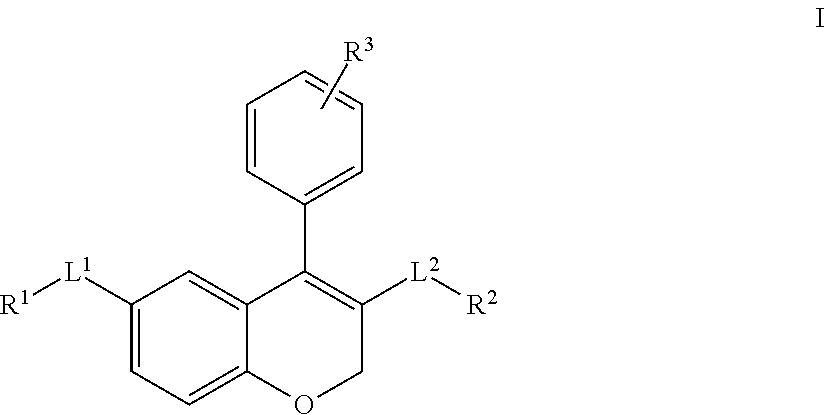
or a pharmaceutically acceptable salt thereof, wherein:
- R1 is R, halogen, —CN, —OR, or —N(R)2;
- R2 is R, halogen, —C(O)N(R)2, or —N(R)2;
- R3 is hydrogen or an electron withdrawing group;
- each R is independently hydrogen or an optionally substituted group selected from C1-6 aliphatic, a 3-8 member saturated or partially unsaturated monocyclic carbocyclic ring, phenyl, a 4-8 membered saturated or partially unsaturated monocyclic heterocyclic ring having 1-2 heteroatoms independently selected from nitrogen, oxygen, or sulfur, a 5-6 membered monocyclic heteroaromatic ring having 1-4 heteroatoms independently selected from nitrogen, oxygen, or sulfur; or
- two R groups on the same nitrogen are taken together with their intervening atoms to form an optionally substituted 5-6 membered heterocyclic ring having 0-1 heteroatoms in addition to the nitrogen attached thereto wherein such heteroatom is oxygen, nitrogen, or sulfur;
- L1 is a covalent bond or a C1-4 bivalent straight or branched saturated or unsaturated hydrocarbon chain wherein 1-2 methylene units of the chain are independently and optionally replaced with —O—, —C(O)—, —C(O)O—, —OC(O)—, —C(S)—, —C(R)2—, —C(F)2—, —N(R)—, —C(O)N(R)—, —RNC(O)—, —OC(O)N(R)—, —N(R)C(O)N(R)—, or -Cy-;
- L2 is a covalent bond or a C1-4 bivalent straight or branched saturated or unsaturated hydrocarbon chain wherein 1-2 methylene units of the chain are independently and optionally replaced with —O—, —C(O)—, —C(O)O—, —OC(O)—, —C(S)—, —C(R)2—, —CH(R)—, —C(F)2—, —N(R)—, —C(O)N(R)—, —RNC(O)—, —OC(O)N(R)—, or —N(R)C(O)N(R)—; and
- Cy is a bivalent optionally substituted 3-8 membered saturated or partially unsaturated monocyclic carbocyclic ring, optionally substituted phenylene, an optionally substituted 4-8 membered saturated or partially unsaturated monocyclic heterocyclic ring having 1-3 heteroatoms independently selected from nitrogen, oxygen, or sulfur, an optionally substituted 5-6 membered monocyclic heteroaromatic ring having 1-4 heteroatoms independently selected from nitrogen, oxygen, or sulfur.


Exemplary bridged bicyclics include:


or a pharmaceutically acceptable salt thereof, wherein:
- R1 is R, halogen, —CN, —OR, or —N(R)2;
- R2 is R, halogen, —C(O)N(R)2, or —N(R)2;
- R3 is hydrogen or an electron withdrawing group;
- each R is independently hydrogen or an optionally substituted group selected from C1-6 aliphatic, a 3-8 member saturated or partially unsaturated monocyclic carbocyclic ring, phenyl, a 4-8 membered saturated or partially unsaturated monocyclic heterocyclic ring having 1-2 heteroatoms independently selected from nitrogen, oxygen, or sulfur, a 5-6 membered monocyclic heteroaromatic ring having 1-4 heteroatoms independently selected from nitrogen, oxygen, or sulfur; or
- two R groups on the same nitrogen are taken together with their intervening atoms to form an optionally substituted 5-6 membered heterocyclic ring having 0-1 heteroatoms in addition to the nitrogen attached thereto wherein such heteroatom is oxygen, nitrogen, or sulfur;
- L1 is a covalent bond or a C1-4 bivalent straight or branched saturated or unsaturated hydrocarbon chain wherein 1-2 methylene units of the chain are independently and optionally replaced with —O—, —C(O)—, —C(O)O—, —OC(O)—, —C(S)—, —C(R)2—, —C(F)2—, —N(R)—, —C(O)N(R)—, —RNC(O)—, —OC(O)N(R)—, —N(R)C(O)N(R)—, or -Cy-;
- L2 is a covalent bond or a C1-4 bivalent straight or branched saturated or unsaturated hydrocarbon chain wherein 1-2 methylene units of the chain are independently and optionally replaced with —O—, —C(O)—, —C(O)O—, —OC(O)—, —C(S)—, —C(R)2—, —CH(R)—, —C(F)2—, —N(R)—, —C(O)N(R)—, —RNC(O)—, —OC(O)N(R)—, or —N(R)C(O)N(R)—; and
- each Cy is independently a bivalent optionally substituted 3-8 membered saturated or partially unsaturated monocyclic carbocyclic ring, optionally substituted phenylene, an optionally substituted 4-8 membered saturated or partially unsaturated monocyclic heterocyclic ring having 1-3 heteroatoms independently selected from nitrogen, oxygen, or sulfur, an optionally substituted 5-6 membered monocyclic heteroaromatic ring having 1-4 heteroatoms independently selected from nitrogen, oxygen, or sulfur.


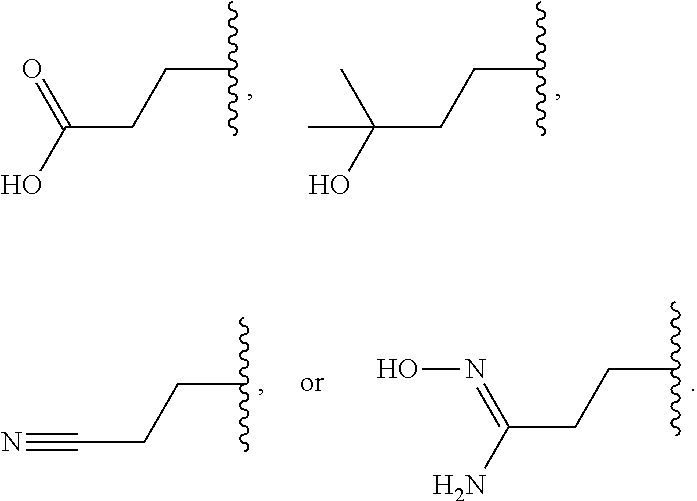


or a pharmaceutically acceptable salt thereof, wherein each R1, R2, R3, R, L1, L2, and -Cy- is defined above and described in the embodiments herein, both singly and in combination.

or a pharmaceutically acceptable salt thereof, wherein each R1, R2, R, L1, L2, and -Cy- is defined above and described in the embodiments herein, both singly and in combination.

or a pharmaceutically acceptable salt thereof, wherein each R1, R, and L2, is defined above and described in the embodiments herein, both singly and in combination.

or a pharmaceutically acceptable salt thereof, wherein each R1 and R is defined above and described in the embodiments herein, both singly and in combination.

or a pharmaceutically acceptable salt thereof, wherein each R1 and R, is defined above and described in the embodiments herein, both singly and in combination.

or a pharmaceutically acceptable salt thereof, wherein each R1, R2, R3, R, and L2, is defined above and described in the embodiments herein, both singly and in combination.

or a pharmaceutically acceptable salt thereof, wherein each R2, R3, L1, and L2, is defined above and described in the embodiments herein, both singly and in combination.

or a pharmaceutically acceptable salt thereof, wherein each R2, R3, and L2, is defined above and described in the embodiments herein, both singly and in combination.

or a pharmaceutically acceptable salt thereof, wherein each R, R2, R3, and L1, is defined above and described in the embodiments herein, both singly and in combination.

or a pharmaceutically acceptable salt thereof, wherein each R, R2, R3, and L1, is defined above and described in the embodiments herein, both singly and in combination.
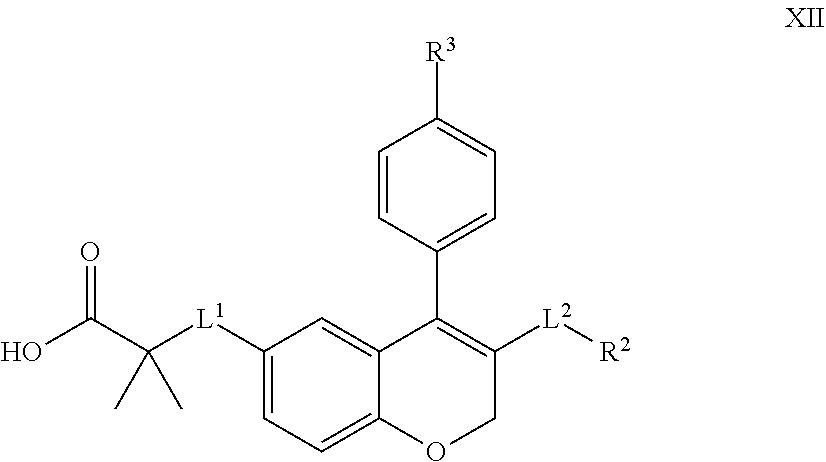
or a pharmaceutically acceptable salt thereof, wherein each R2, R3, L1 and L2, is defined above and described in the embodiments herein, both singly and in combination.
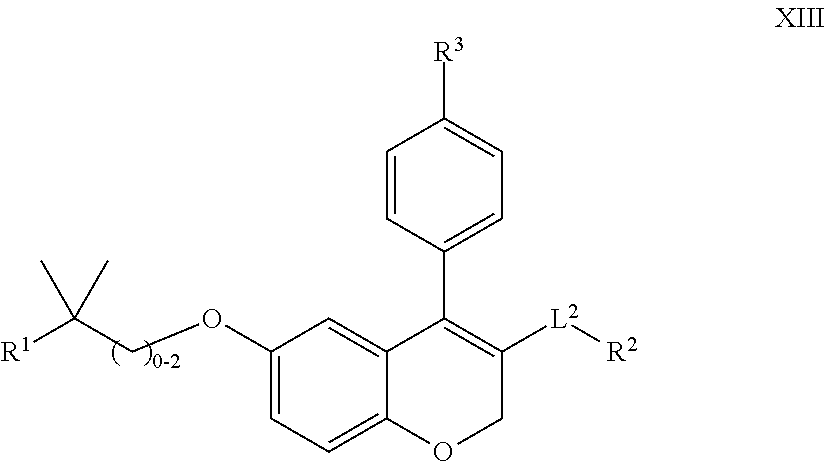
or a pharmaceutically acceptable salt thereof, wherein each R1, R2, R3, and L2, is defined above and described in the embodiments herein, both singly and in combination.
| TABLE 1 |
| Exemplary Compounds |
 |
I-1 |
 |
I-2 |
 |
I-3 |
 |
I-4 |
 |
I-5 |
 |
I-6 |
 |
I-7 |
 |
I-8 |
 |
I-9 |
 |
I-10 |
 |
I-11 |
 |
I-12 |
 |
I-13 |
 |
I-14 |
 |
I-15 |
 |
I-16 |
 |
I-17 |
 |
I-18 |
 |
I-19 |
 |
I-20 |
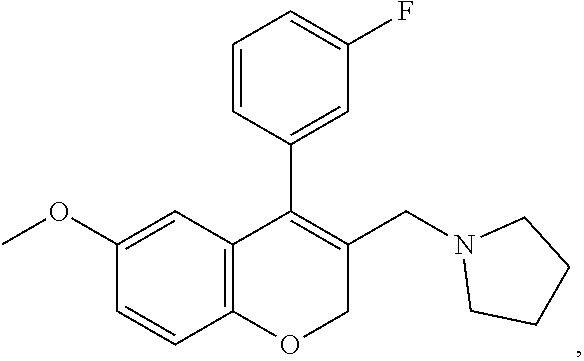 |
I-21 |
 |
I-22 |
 |
I-23 |
 |
I-24 |
 |
I-25 |
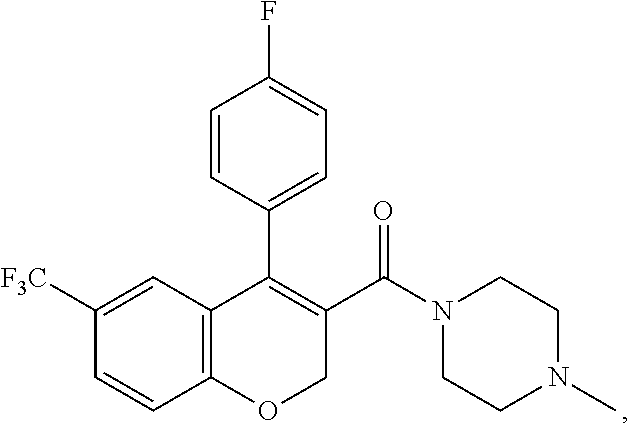 |
I-26 |
 |
I-27 |
 |
I-28 |
 |
I-29 |
 |
I-30 |
 |
I-31 |
 |
I-32 |
 |
I-33 |
 |
I-34 |
 |
I-35 |
 |
I-36 |
 |
I-37 |
 |
I-38 |
 |
I-39 |
 |
I-40 |
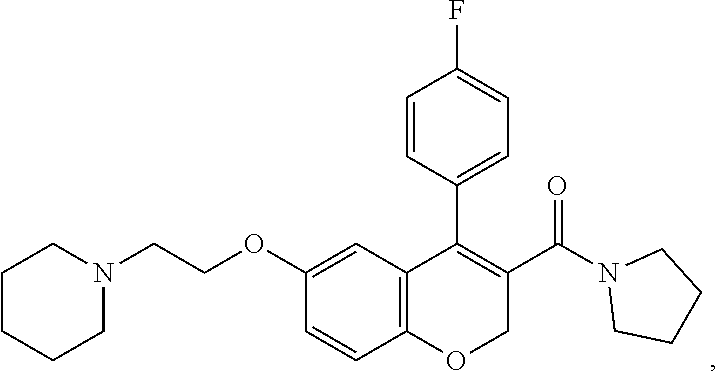 |
I-41 |
 |
I-42 |
 |
I-43 |
 |
I-44 |
 |
I-45 |
 |
I-46 |
 |
I-47 |
 |
I-48 |
 |
I-49 |
 |
I-50 |
 |
I-51 |
 |
I-52 |
 |
I-53 |
 |
I-54 |
 |
I-55 |
 |
I-56 |
 |
I-57 |
 |
I-58 |
 |
I-59 |
 |
I-60 |
 |
I-61 |
 |
I-62 |
 |
I-63 |
 |
I-64 |
 |
I-65 |
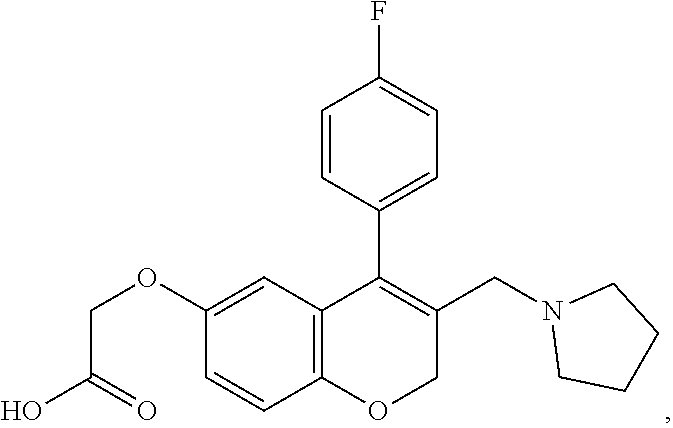 |
I-65 |
 |
I-66 |
 |
I-67 |
 |
I-68 |
 |
I-69 |
 |
I-70 |
 |
I-71 |
 |
I-72 |
 |
I-73 |
 |
I-74 |
 |
I-76 |
 |
I-76 |
 |
I-77 |
 |
I-78 |
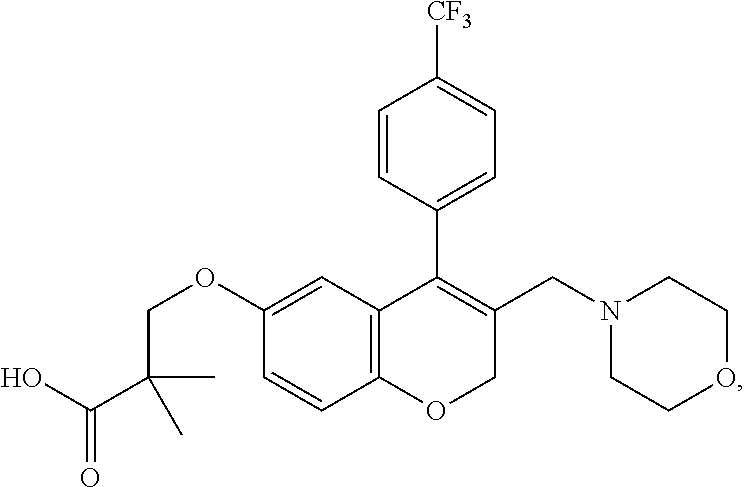 |
I-79 |
 |
I-80 |
 |
I-81 |
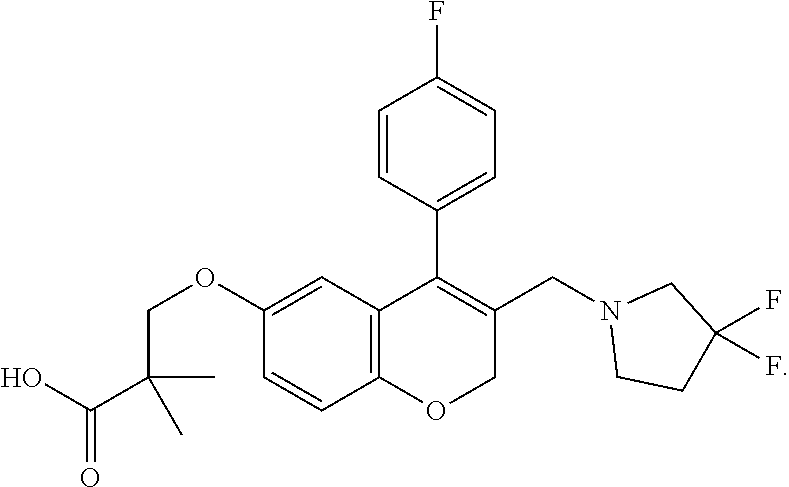 |
I-82 |
-
- 4A MS: 4 Å molecular sieves
- AcOH: acetic acid
- Anhyd: anhydrous
- aq: aqueous
- BH3-THF: borane tetrahydrofuran complex
- BINAP: (2,2′-bis(diphenylphosphino)-1,1′-binaphthyl)
- Bn: benzyl
- Boc: tert-butoxycarbonyl
- (Boc)2O: di-tert-butyl dicarbonate
- BrettPhos: 2-(Dicyclohexylphosphino)3,6-dimethoxy-2′,4′,6′-triisopropyl-1,1′-biphenyl
- CbzCl: benzyl chloroformate
- Cbz-OSU: N-(Benzyloxycarbonyloxy)succinimide
- CHIRAL-HPLC: chiral high performance liquid chromatography
- CMBP: (cyanomethylene)tributylphosphorane
- Conc.: concentrated
- CuCN: copper cyanide
- d: days
- DAST: diethylaminosulfur trifluoride
- DavePhos: 2-Dicyclohexylphosphino-2′-(N,N-dimethylamino)biphenyl
- dba: dibenzylideneacetone
- DBU: 1,8-diazobicyclo[5.4.0]undec-7-ene
- DCE: 1,2-dichloroethane
- DCM: dichloromethane
- DEA: diethylamine
- DIBAL-H: diisobutylaluminium hydride
- DIPEA: N,N-diisopropylethylamine
- DMA: N,N-dimethylacetamide
- DMAP: 4-dimethylaminopyridine
- DMF: N,N-dimethylformamide
- DMPU: 1,3-dimethyl-3,4,5,6-tetrahydro-2-pyrimidinone
- DMSO: dimethyl sulfoxide
- DPPA: diphenylphosphoryl azide
- dppf: 1,1′-bis(diphenylphosphino)ferrocene
- EA: ethyl acetate
- EDCI: 1-β-dimethylaminopropyl)-3-ethylcarbodiimide hydrochloride
- EDTA: ethylenediaminetetraacetic acid
- ee: enantiomeric excess
- ESI: electrospray ionization
- Et3N: triethylamine
- Et2O: diethyl ether
- EtOAc: ethyl acetate
- EtOH: ethanol
- Fmoc: fluorenylmethyloxycarbonyl
- Fmoc-OSu: N-(9-fluorenylmethoxycarbonyloxy)succinimide
- h: hours
- HATU: N,N,N′,N′-tetramethyl-O-(7-azabenzotriazol-1-yl)uranium
- hexafluorophosphate
- HOBt: Hydroxybenzotriazole
- HPLC: high performance liquid chromatography
- HCl: hydrochloric acid
- IBX: 2-iodoxybenzoic acid
- IPA: isopropyl alcohol
- JackiePhos: 2-{Bis[3,5-bis(trifluoromethyl)phenyl]phosphino}-3,6-dimethoxy-2′,4′,6′-triisopropyl-1,1′-biphenyl, Bis(3,5-bis(trifluoromethyl)phenyl)(2′,4′,6′-triisopropyl-3,6-dimethoxybiphenyl-2-yl)phosphine
- LDA: lithium diisopropylamide
- M: molar
- mCPBA: meta-chloroperoxybenzoic acid
- Me: methyl
- MeCN: acetonitrile
- MeOH: methanol
- MgO: magnesium oxide
- min: minutes
- mL: milliliters
- mM: millimolar
- mmol: millimoles
- MOM: methoxymethyl
- MsCl: Mesyl Chloride
- MTBE: methyl tert-butyl ether
- NMP: N-methyl-2-pyrrolidone
- n-BuLi: n-butyl lithium
- NBS: N-bromosuccinimide
- NIS: N-iodosuccinimide
- NMO: 4-methylmorpholine N-oxide
- NMP: N-methylpyrrolidine
- NMR: Nuclear Magnetic Resonance
- OC: degrees Celsius
- PBS: phosphate buffered saline
- Pd/C: palladium on carbon
- Pd2(dba)3: tris(dibenzylideneacetone)dipalladium(O)
- PE: petroleum ether
- prep-HPLC: preparative high performance liquid chromatography
- P(o-tol)3: tri(o-tolyl)phosphine
- PTFE: polytetrafluoroethylene
- Rel: relative
- rt: room temperature
- RuPhos: 2-dicyclohexylphosphino-2′,6′-diisopropoxybiphenyl
- sat: saturated
- SFC: supercritical fluid chromatography
- SGC: silica gel chromatography
- STAB: sodium triacetoxyborohydride
- TBAB: Tetra-n-butylammonium bromide
- TBAF: Tetra-n-butylammonium fluoride
- TBSCl: tert-Butyldimethylsilyl chloride
- tBuOK: potassium tert-butoxide
- tBuONa: sodium tert-butoxide
- TEA: triethylamine
- TEBAC: Benzyltriethylammonium chloride
- Tf: trifluoromethanesulfonate
- TfAA: trifluoromethanesulfonic anhydride
- TFA: trifluoracetic acid
- TIPS: triisopropylsilyl
- TLC: thin layer chromatography
- THF: tetrahydrofuran
- TMSCN: trimethylsilyl cyanide
- pTSA: para-toluenesulfonic acid
- TsOH: p-Toluenesulfonic acid
- XantPhos: 4,5-Bis(diphenylphosphino)-9,9-dimethylxanthene
- XPhos: 2-Dicyclohexylphosphino-2′,4′,6′-triisopropylbiphenyl
General Methods of Providing the Present Compounds


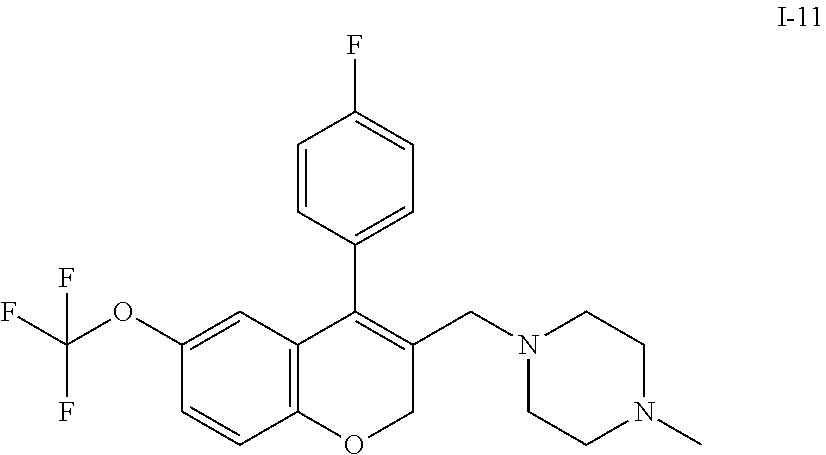


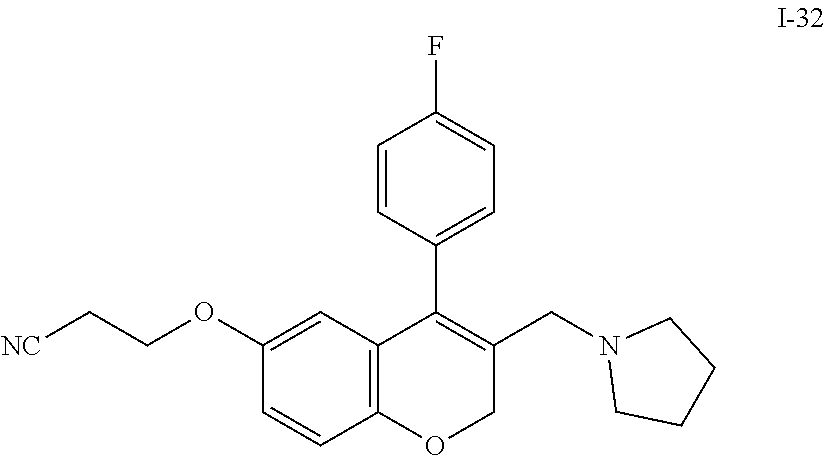


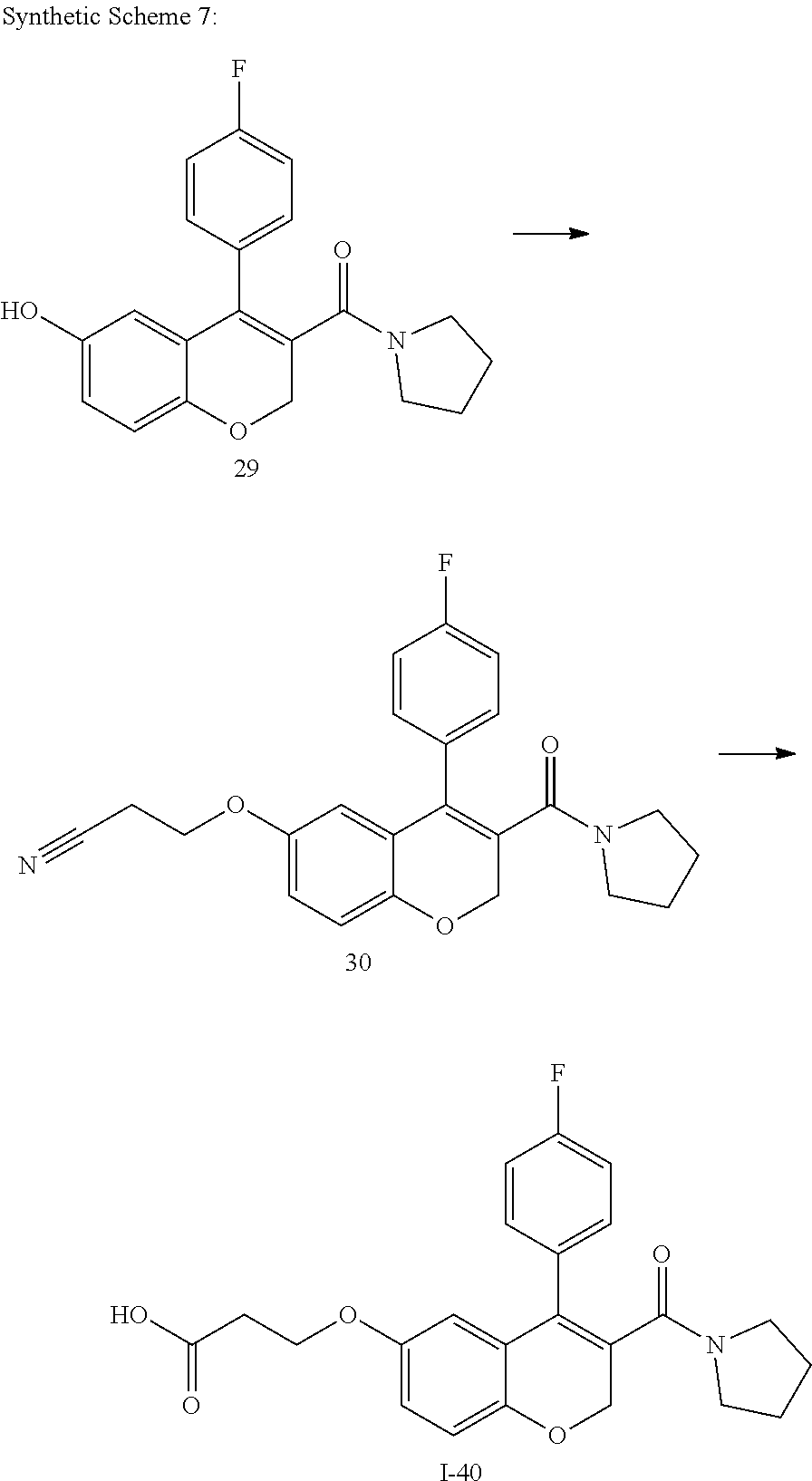


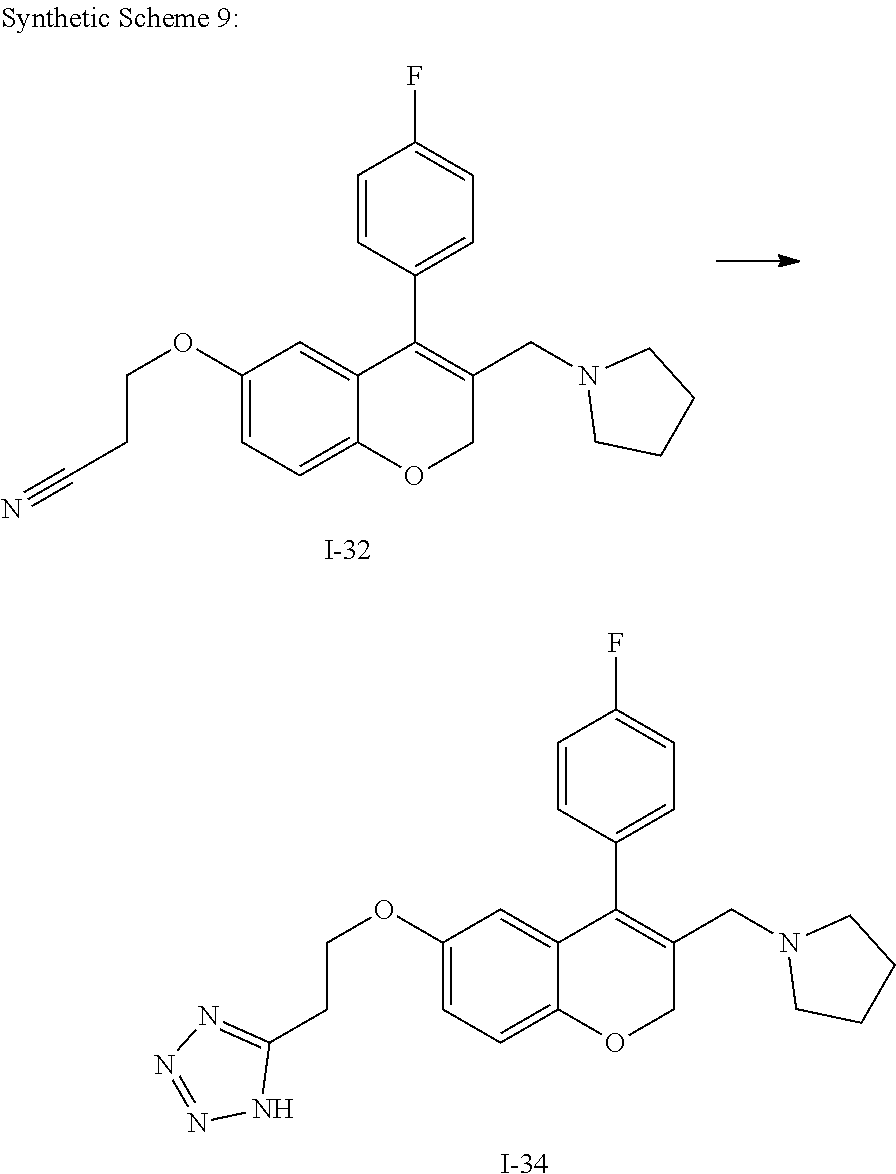
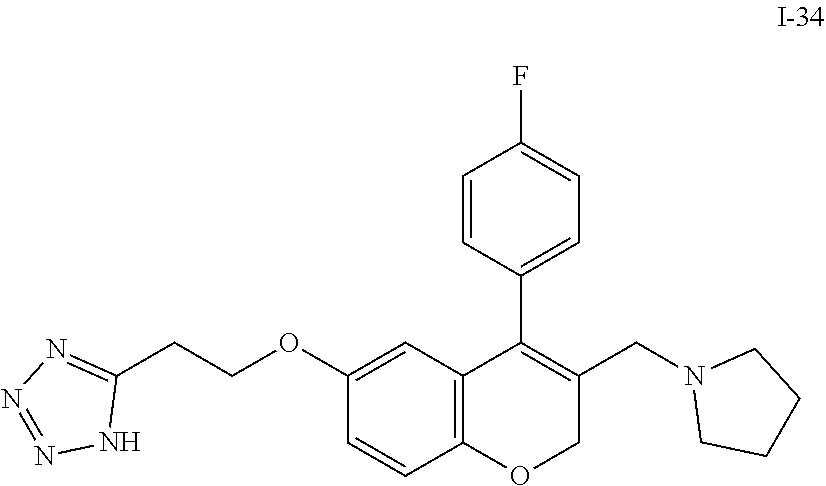

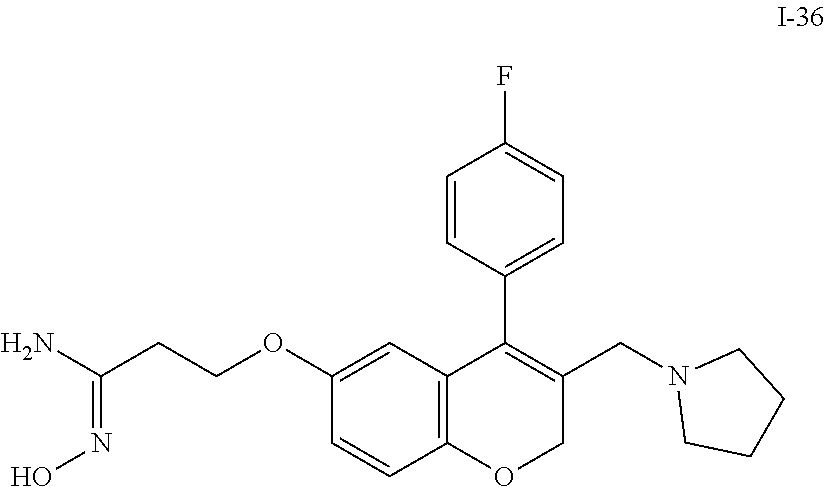

| TABLE 2 |
| Microsomal Stability |
| Microsomal | Microsomal | Microsomal | |||
| Stability | Stability | Stability | |||
| Compound | (T1/2 min) | (T1/2 min) | (T1/2 min) | ||
| # | Mouse | Rat | Human | ||
| I-1 | C | C | C | ||
| I-2 | C | C | B | ||
| I-3 | C | C | B | ||
| I-4 | B | B | A | ||
| I-5 | B | B | B | ||
| I-6 | A | C | A | ||
| I-7 | C | C | B | ||
| I-8 | C | C | A | ||
| I-9 | B | C | B | ||
| I-10 | A | A | A | ||
| I-11 | A | A | A | ||
| I-12 | A | A | B | ||
| I-13 | C | C | B | ||
| I-14 | C | C | B | ||
| I-15 | C | C | B | ||
| I-16 | B | C | A | ||
| I-17 | A | B | A | ||
| I-18 | N/A | N/A | N/A | ||
| I-19 | C | C | B | ||
| I-20 | C | C | B | ||
| I-21 | C | C | B | ||
| I-22 | C | C | B | ||
| I-23 | C | B | B | ||
| I-24 | C | C | C | ||
| I-25 | C | C | B | ||
| I-26 | C | C | B | ||
| I-27 | C | C | C | ||
| I-28 | C | C | C | ||
| I-29 | C | B | C | ||
| I-30 | C | B | A | ||
| I-31 | C | C | B | ||
| I-32 | B | C | B | ||
| I-33 | A | A | A | ||
| I-34 | A | A | A | ||
| I-35 | B | C | A | ||
| I-36 | B | B | A | ||
| I-37 | A | B | A | ||
| I-38 | N/A | N/A | N/A | ||
| I-39 | A | A | A | ||
| I-40 | A | A | A | ||
| I-41 | A | A | C | ||
| I-42 | C | B | C | ||
| I-43 | C | A | C | ||
| I-44 | C | C | C | ||
| I-45 | N/A | N/A | N/A | ||
| I-46 | N/A | N/A | N/A | ||
| I-47 | N/A | N/A | N/A | ||
| I-48 | N/A | N/A | N/A | ||
| I-49 | N/A | N/A | N/A | ||
| I-50 | N/A | N/A | N/A | ||
| I-51 | N/A | N/A | N/A | ||
| I-52 | N/A | N/A | N/A | ||
| I-53 | N/A | N/A | N/A | ||
| I-54 | N/A | N/A | N/A | ||
| I-55 | N/A | N/A | N/A | ||
| I-56 | N/A | N/A | N/A | ||
| I-57 | N/A | N/A | N/A | ||
| I-58 | C | C | A | ||
| I-59 | B | C | A | ||
| I-60 | N/A | N/A | N/A | ||
| I-61 | C | C | B | ||
| I-62 | N/A | N/A | N/A | ||
| I-63 | B | C | A | ||
| TABLE 3 |
| Competitive Binding |
| Compound # | ΔIROP | ||
| I-1 | C | ||
| I-2 | C | ||
| I-3 | B | ||
| I-4 | B | ||
| I-5 | B | ||
| I-6 | C | ||
| I-8 | B | ||
| I-9 | D | ||
| I-10 | A | ||
| I-12 | C | ||
| I-13 | A | ||
| I-14 | C | ||
| I-15 | C | ||
| I-16 | B | ||
| I-17 | C | ||
| I-19 | C | ||
| I-20 | B | ||
| I-21 | C | ||
| I-22 | B | ||
| I-23 | A | ||
| I-24 | C | ||
| I-25 | B | ||
| I-26 | C | ||
| I-28 | D | ||
| I-29 | B | ||
| I-30 | C | ||
| I-31 | C | ||
| I-32 | B | ||
| I-33 | A | ||
| I-40 | D | ||
| I-44 | D | ||


| TABLE 4 |
| pZAP70 Inhibition Materials |
| Materials | Catalog Number | Supplier |
| RPMI 1640 cell | R6504 | Sigma-Aldrich |
| culture media | ||
| PBS | 10010031 | Thermo Fisher |
| Scientific | ||
| BSA | B6917 | Sigma-Aldrich |
| ProxiPlate-384 Plus | 6008281 | PerkinElmer |
| Shallow Well | ||
| Microplates (White) | ||
| CD3 monoclonal | 16-0037-81 | Thermo Fisher |
| antibody (OKT3) | Scientific | |
| functional grade | ||
| Histopaque-1077 | 10771 | Sigma-Aldrich |
| Total ZAP-70 HTRF kit | 64ZATPEG | Cisbio |
| HBSS | 14025092 | Thermo fisher |
Cells/mL=Cells in all four squares×10×2×104/4
-
- 104=Volume conversion factor to 1 mL; 10=dilution factor of cell suspension; 2=Dilution factor with trypan blue
- Total cell count=cells/mL×Total volume (mL) of cell suspension
- % Cell viability=(Number of viable cells counted/total number of cells counted (viable+dead))×100
| TABLE 6 |
| pZAP70 Inhibition IC50 |
| Compound | IC50 | ||
| # | (nM) | ||
| I-3 | A | ||
| I-11 | B | ||
| I-12 | ND | ||
| I-13 | B | ||
| I-14 | A | ||
| I-15 | A | ||
| I-16 | A | ||
| I-19 | B | ||
| I-20 | A | ||
| I-21 | B | ||
| I-22 | ND | ||
| I-23 | B | ||
| I-24 | B | ||
| I-27 | D | ||
| I-30 | B | ||
| I-33 | B | ||
| I-34 | A | ||
| I-35 | B | ||
| I-36 | A | ||
| I-37 | B | ||
| I-39 | B | ||
| I-40 | B | ||
| I-41 | B | ||
| I-42 | D | ||
| I-43 | C | ||
| I-44 | B | ||
| I-58 | D | ||
| I-59 | A | ||
| I-61 | B | ||
| I-62 | B | ||
| I-63 | B | ||
| I-64 | B | ||
| I-65 | A | ||
| I-66 | B | ||
| I-67 | C | ||
| I-68 | A | ||
| I-69 | B | ||
| I-70 | B | ||
| I-76 | B | ||
| I-76 | B | ||
| I-79 | B | ||
| I-80 | B | ||
| I-81 | B | ||
| TABLE 7 |
| pZAP70 Inhibition- |
| Maximum Percent Inhibition |
| Compound # | % Inhibition | ||
| I-3 | D | ||
| I-11 | D | ||
| I-12 | D | ||
| I-13 | B | ||
| I-14 | C | ||
| I-15 | C | ||
| I-16 | C | ||
| I-19 | A | ||
| I-20 | B | ||
| I-21 | B | ||
| I-22 | D | ||
| I-23 | A | ||
| I-24 | B | ||
| I-27 | D | ||
| I-30 | B | ||
| I-33 | A | ||
| I-34 | C | ||
| I-35 | D | ||
| I-36 | B | ||
| I-37 | C | ||
| I-39 | D | ||
| I-40 | C | ||
| I-41 | C | ||
| I-42 | D | ||
| I-43 | C | ||
| I-44 | C | ||
| I-58 | C | ||
| I-59 | C | ||
| I-61 | B | ||
| I-62 | C | ||
| I-63 | C | ||
| I-64 | C | ||
| I-65 | A | ||
| I-66 | A | ||
| I-67 | A | ||
| I-68 | A | ||
| I-69 | A | ||
| I-70 | B | ||
| I-76 | A | ||
| I-76 | B | ||
| I-79 | A | ||
| I-80 | A | ||
| I-81 | A | ||
Claims (21)


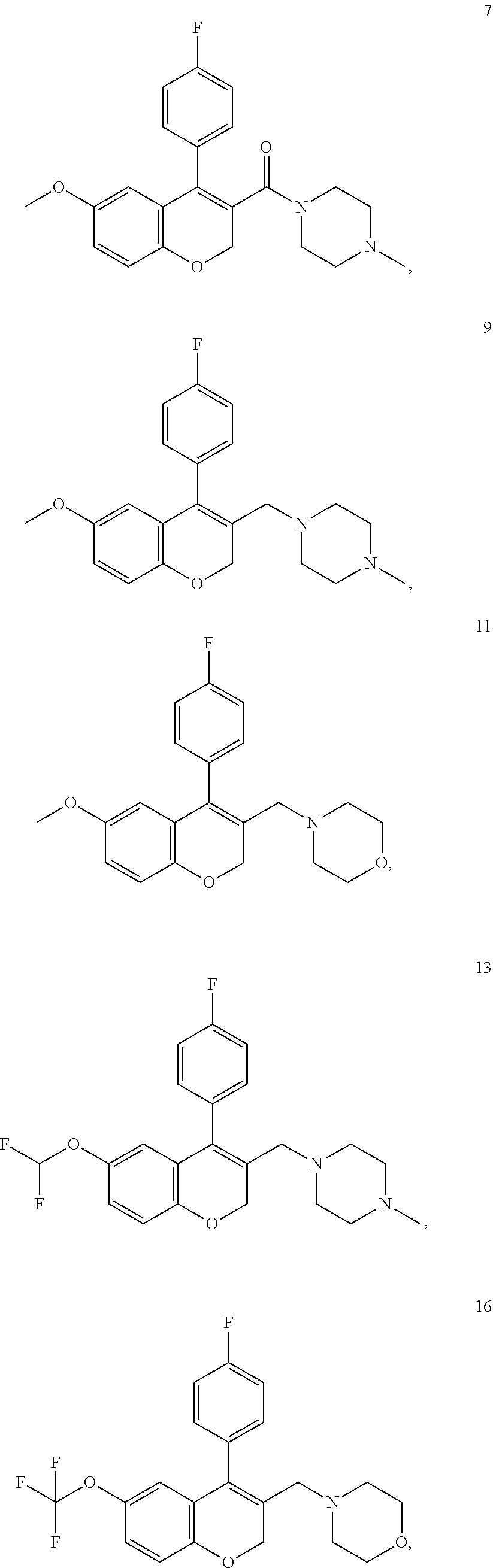


Priority Applications (5)
| Application Number | Priority Date | Filing Date | Title |
|---|---|---|---|
| US16/287,771 US10696663B2 (en) | 2018-02-27 | 2019-02-27 | Chromene derivatives as inhibitors of TCR-NCK interaction |
| US16/878,842 US11008310B2 (en) | 2018-02-27 | 2020-05-20 | Chromene derivatives as inhibitors of TCR-Nck interaction |
| US17/240,041 US11807633B2 (en) | 2018-02-27 | 2021-04-26 | Chromene derivatives as inhibitors of TCR-Nck interaction |
| US18/471,594 US12319675B2 (en) | 2018-02-27 | 2023-09-21 | Chromene derivatives as inhibitors of TCR-Nck interaction |
| US19/196,040 US20250346586A1 (en) | 2018-02-27 | 2025-05-01 | Chromene derivatives as inhibitors of tcr-nck interaction |
Applications Claiming Priority (2)
| Application Number | Priority Date | Filing Date | Title |
|---|---|---|---|
| US201862635834P | 2018-02-27 | 2018-02-27 | |
| US16/287,771 US10696663B2 (en) | 2018-02-27 | 2019-02-27 | Chromene derivatives as inhibitors of TCR-NCK interaction |
Related Child Applications (1)
| Application Number | Title | Priority Date | Filing Date |
|---|---|---|---|
| US16/878,842 Continuation US11008310B2 (en) | 2018-02-27 | 2020-05-20 | Chromene derivatives as inhibitors of TCR-Nck interaction |
Publications (2)
| Publication Number | Publication Date |
|---|---|
| US20190263792A1 US20190263792A1 (en) | 2019-08-29 |
| US10696663B2 true US10696663B2 (en) | 2020-06-30 |
Family
ID=65724589
Family Applications (5)
| Application Number | Title | Priority Date | Filing Date |
|---|---|---|---|
| US16/287,771 Active US10696663B2 (en) | 2018-02-27 | 2019-02-27 | Chromene derivatives as inhibitors of TCR-NCK interaction |
| US16/878,842 Active US11008310B2 (en) | 2018-02-27 | 2020-05-20 | Chromene derivatives as inhibitors of TCR-Nck interaction |
| US17/240,041 Active US11807633B2 (en) | 2018-02-27 | 2021-04-26 | Chromene derivatives as inhibitors of TCR-Nck interaction |
| US18/471,594 Active US12319675B2 (en) | 2018-02-27 | 2023-09-21 | Chromene derivatives as inhibitors of TCR-Nck interaction |
| US19/196,040 Pending US20250346586A1 (en) | 2018-02-27 | 2025-05-01 | Chromene derivatives as inhibitors of tcr-nck interaction |
Family Applications After (4)
| Application Number | Title | Priority Date | Filing Date |
|---|---|---|---|
| US16/878,842 Active US11008310B2 (en) | 2018-02-27 | 2020-05-20 | Chromene derivatives as inhibitors of TCR-Nck interaction |
| US17/240,041 Active US11807633B2 (en) | 2018-02-27 | 2021-04-26 | Chromene derivatives as inhibitors of TCR-Nck interaction |
| US18/471,594 Active US12319675B2 (en) | 2018-02-27 | 2023-09-21 | Chromene derivatives as inhibitors of TCR-Nck interaction |
| US19/196,040 Pending US20250346586A1 (en) | 2018-02-27 | 2025-05-01 | Chromene derivatives as inhibitors of tcr-nck interaction |
Country Status (16)
| Country | Link |
|---|---|
| US (5) | US10696663B2 (en) |
| EP (1) | EP3759086A1 (en) |
| JP (3) | JP7317032B2 (en) |
| KR (2) | KR20260028873A (en) |
| CN (2) | CN112189009B (en) |
| AU (2) | AU2019229258B2 (en) |
| BR (1) | BR112020017386A2 (en) |
| CA (1) | CA3091202A1 (en) |
| CO (1) | CO2020010537A2 (en) |
| EA (1) | EA202091742A1 (en) |
| IL (2) | IL301120B2 (en) |
| MX (2) | MX2020008814A (en) |
| PH (1) | PH12020500638A1 (en) |
| SG (1) | SG11202008067QA (en) |
| WO (1) | WO2019169001A1 (en) |
| ZA (1) | ZA202310843B (en) |
Cited By (1)
| Publication number | Priority date | Publication date | Assignee | Title |
|---|---|---|---|---|
| US11807633B2 (en) | 2018-02-27 | 2023-11-07 | Artax Biopharma Inc. | Chromene derivatives as inhibitors of TCR-Nck interaction |
Families Citing this family (4)
| Publication number | Priority date | Publication date | Assignee | Title |
|---|---|---|---|---|
| IL330287A (en) * | 2023-12-22 | 2026-08-01 | Artax Biopharma Inc | SOLID AND SALT FORMS OF TCR-NcK MODULATORS AND USES THEREOF |
| WO2025255109A1 (en) * | 2024-06-03 | 2025-12-11 | Artax Biopharma Inc. | Combination of a chromene derivative tcr inhibitor and a pde4 inhibitor |
| WO2025255091A1 (en) * | 2024-06-03 | 2025-12-11 | Artax Biopharma Inc. | Combination of a chromene derivative tcr inhibitor and a jak inhibitor |
| WO2025255093A1 (en) * | 2024-06-03 | 2025-12-11 | Artax Biopharma Inc. | Combination of a car-t therapy and a chromene derivative tcr inhibitor |
Citations (35)
| Publication number | Priority date | Publication date | Assignee | Title |
|---|---|---|---|---|
| WO1999033825A1 (en) | 1997-12-23 | 1999-07-08 | Merck Patent Gmbh | N-phenylamide and n-pyridylamide derivatives, method of preparing them and pharmaceutical compositons containing them |
| WO2001042246A2 (en) | 1999-12-10 | 2001-06-14 | Pfizer Products Inc. | PYRROLO[2,3-d]PYRIMIDINE COMPOUNDS |
| WO2002088112A1 (en) | 2001-04-27 | 2002-11-07 | Zenyaku Kogyo Kabushiki Kaisha | Heterocyclic compound and antitumor agent containing the same as active ingredient |
| WO2003016270A2 (en) | 2001-08-11 | 2003-02-27 | Bristol-Myers Squibb Pharma Company | Selective estrogen receptor modulators |
| WO2004019973A1 (en) | 2002-08-14 | 2004-03-11 | Atugen Ag | Use of protein kinase n beta |
| WO2004089925A1 (en) | 2003-04-03 | 2004-10-21 | Semafore Pharmaceuticals, Inc. | Pi-3 kinase inhibitor prodrugs |
| WO2004106328A1 (en) | 2003-05-30 | 2004-12-09 | Gemin X Biotechnologies Inc. | Triheterocyclic compounds, compositions, and methods for treating cancer or viral diseases |
| WO2005007623A2 (en) | 2003-07-03 | 2005-01-27 | The Trustees Of The University Of Pennsylvania | Inhibition of syk kinase expression |
| WO2005113554A2 (en) | 2004-05-13 | 2005-12-01 | Icos Corporation | Method of preparing 3-phenyl-2-[9h-purin-6-ylamino)-methyl]-3h-quinazolin-4-one and substituted and related compounds |
| US7060827B2 (en) | 2002-02-01 | 2006-06-13 | Rigel Pharmaceuticals, Inc. | Intermediates useful for making 2,4-pyrimidinediamine compounds |
| WO2006078846A1 (en) | 2005-01-19 | 2006-07-27 | Rigel Pharmaceuticals, Inc. | Prodrugs of 2,4-pyrimidinediamine compounds and their uses |
| WO2006122806A2 (en) | 2005-05-20 | 2006-11-23 | Novartis Ag | 1,3-dihydro-imidazo [4,5-c] quinolin-2-ones as lipid kinase inhibitors |
| WO2007016176A2 (en) | 2005-07-28 | 2007-02-08 | Phoenix Biotechnology Inc. | Scf extract containing cardiac glycoside |
| WO2007044729A2 (en) | 2005-10-07 | 2007-04-19 | Exelixis, Inc. | N- (3-amino-quinoxalin-2-yl) -sulfonamide derivatives and their use as phosphatidylinositol 3-kinase inhibitors |
| WO2007053452A1 (en) | 2005-11-01 | 2007-05-10 | Targegen, Inc. | Bi-aryl meta-pyrimidine inhibitors of kinases |
| WO2007070514A1 (en) | 2005-12-13 | 2007-06-21 | Incyte Corporation | Heteroaryl substituted pyrrolo[2,3-b]pyridines and pyrrolo[2,3-b]pyrimidines as janus kinase inhibitors |
| WO2007084786A1 (en) | 2006-01-20 | 2007-07-26 | Novartis Ag | Pyrimidine derivatives used as pi-3 kinase inhibitors |
| WO2007129161A2 (en) | 2006-04-26 | 2007-11-15 | F. Hoffmann-La Roche Ag | Thieno [3, 2-d] pyrimidine derivative useful as pi3k inhibitor |
| WO2008039218A2 (en) | 2006-09-22 | 2008-04-03 | Pharmacyclics, Inc. | Inhibitors of bruton's tyrosine kinase |
| US7390799B2 (en) | 2005-05-12 | 2008-06-24 | Abbott Laboratories | Apoptosis promoters |
| WO2008109943A1 (en) | 2007-03-12 | 2008-09-18 | Cytopia Research Pty Ltd | Phenyl amino pyrimidine compounds and uses thereof |
| WO2008118802A1 (en) | 2007-03-23 | 2008-10-02 | Regents Of The University Of Minnesota | Therapeutic compounds |
| WO2009114512A1 (en) | 2008-03-11 | 2009-09-17 | Incyte Corporation | Azetidine and cyclobutane derivatives as jak inhibitors |
| WO2010026269A1 (en) | 2008-09-05 | 2010-03-11 | Universidad Politécnica de Madrid | Optical detection system for labelling-free high-sensitivity bioassays |
| WO2010064707A1 (en) | 2008-12-05 | 2010-06-10 | アステラス製薬株式会社 | 2h-chromene compound and derivative thereof |
| WO2011090760A1 (en) | 2009-12-29 | 2011-07-28 | Avila Therapeutics, Inc. | Heteroaryl compounds and uses thereof |
| US8138347B2 (en) | 2007-05-18 | 2012-03-20 | Glaxosmithkline Llc | Quinoline derivatives as PI3 kinase inhibitors |
| WO2012042078A1 (en) | 2010-09-28 | 2012-04-05 | Consejo Superior De Investigaciones Científicas (Csic) | Chromene derivatives |
| WO2013019926A1 (en) | 2011-08-04 | 2013-02-07 | The United States Of America, As Represented By The Secretary, Department Of Health And Human Services | Treatment and prevention of diseases mediated by microorganisms via drug-mediated manipulation of the eicosanoid balance |
| US8614231B2 (en) | 2008-06-30 | 2013-12-24 | Consejo Superior De Investigaciones Cientificas | Immunosuppressor based on the blockage of TCR-Nck interaction |
| WO2014020159A1 (en) | 2012-08-03 | 2014-02-06 | Universidad Politécnica de Madrid | Interferometric detection method |
| CN104844471A (en) | 2015-04-21 | 2015-08-19 | 银杏树药业(苏州)有限公司 | Compound used as DOR receptor antagonist |
| EP3059232A1 (en) | 2013-10-18 | 2016-08-24 | Artax Biopharma Inc. | Chromene derivatives substituted by alkoxide as inhibitors of the tcr-nck interaction |
| EP3059231A1 (en) | 2013-10-18 | 2016-08-24 | Artax Biopharma Inc. | Chromene derivatives as inhibitors of tcr-nck interaction |
| WO2016166239A1 (en) | 2015-04-16 | 2016-10-20 | Chiesi Farmaceutici S.P.A. | Chromene derivatives as phoshoinositide 3-kinases inhibitors |
Family Cites Families (11)
| Publication number | Priority date | Publication date | Assignee | Title |
|---|---|---|---|---|
| FR901228A (en) | 1943-01-16 | 1945-07-20 | Deutsche Edelstahlwerke Ag | Ring gap magnet system |
| AU781986B2 (en) | 1999-11-05 | 2005-06-23 | Cytovia, Inc. | Substituted 4H-chromene and analogs as activators of caspases and inducers of apoptosis and the use thereof |
| US7026491B2 (en) | 2000-07-21 | 2006-04-11 | Chugai Seiyaku Kabushiki Kaisha | Coumarin derivatives useful as TNFα inhibitors |
| PE20020354A1 (en) | 2000-09-01 | 2002-06-12 | Novartis Ag | HYDROXAMATE COMPOUNDS AS HISTONE-DESACETILASE (HDA) INHIBITORS |
| EP1392283A4 (en) | 2001-05-16 | 2004-10-20 | Cytovia Inc | COUMARINS AND SUBSTITUTED QUINOLINES USED AS CASPASE ACTIVATORS |
| WO2003062272A1 (en) | 2002-01-24 | 2003-07-31 | Consejo Superior De Investigaciones Científicas | Novel strategy for modulating t cell activation which is based on regulating the cd3ε - nck interaction |
| US7476741B2 (en) | 2002-05-16 | 2009-01-13 | Cytovia, Inc. | Substituted 4H-chromens, 2H-chromenes, chromans and analogs as activators of caspases and inducers of apoptosis and the use thereof |
| GB0607389D0 (en) | 2006-04-12 | 2006-05-24 | Novartis Ag | Organic compounds |
| EP2177505A4 (en) * | 2007-08-10 | 2011-08-31 | Astellas Pharma Inc | BICYCLIC ACYLGUANIDINE DERIVATIVE |
| CN102159562A (en) | 2008-07-16 | 2011-08-17 | 百时美施贵宝公司 | Chromene modulators of chemokine receptor activity |
| KR20260028873A (en) | 2018-02-27 | 2026-03-04 | 아텍스 바이오파마 인코포레이티드 | Chromene derivatives as inhibitors of tcr-nck interaction |
-
2019
- 2019-02-27 KR KR1020267003633A patent/KR20260028873A/en active Pending
- 2019-02-27 IL IL301120A patent/IL301120B2/en unknown
- 2019-02-27 MX MX2020008814A patent/MX2020008814A/en unknown
- 2019-02-27 BR BR112020017386-0A patent/BR112020017386A2/en unknown
- 2019-02-27 WO PCT/US2019/019856 patent/WO2019169001A1/en not_active Ceased
- 2019-02-27 CN CN201980020981.7A patent/CN112189009B/en active Active
- 2019-02-27 AU AU2019229258A patent/AU2019229258B2/en active Active
- 2019-02-27 CN CN202311248809.1A patent/CN117304157A/en active Pending
- 2019-02-27 EP EP19710272.6A patent/EP3759086A1/en active Pending
- 2019-02-27 US US16/287,771 patent/US10696663B2/en active Active
- 2019-02-27 CA CA3091202A patent/CA3091202A1/en active Pending
- 2019-02-27 EA EA202091742A patent/EA202091742A1/en unknown
- 2019-02-27 JP JP2020544852A patent/JP7317032B2/en active Active
- 2019-02-27 SG SG11202008067QA patent/SG11202008067QA/en unknown
- 2019-02-27 KR KR1020207027883A patent/KR102924679B1/en active Active
-
2020
- 2020-05-20 US US16/878,842 patent/US11008310B2/en active Active
- 2020-08-20 PH PH12020500638A patent/PH12020500638A1/en unknown
- 2020-08-24 MX MX2023005716A patent/MX2023005716A/en unknown
- 2020-08-24 IL IL276887A patent/IL276887B2/en unknown
- 2020-08-26 CO CONC2020/0010537A patent/CO2020010537A2/en unknown
-
2021
- 2021-04-26 US US17/240,041 patent/US11807633B2/en active Active
-
2023
- 2023-06-12 JP JP2023096315A patent/JP7521070B2/en active Active
- 2023-09-21 US US18/471,594 patent/US12319675B2/en active Active
- 2023-11-24 ZA ZA2023/10843A patent/ZA202310843B/en unknown
- 2023-12-12 AU AU2023282201A patent/AU2023282201B2/en active Active
-
2024
- 2024-07-10 JP JP2024111017A patent/JP2024138421A/en active Pending
-
2025
- 2025-05-01 US US19/196,040 patent/US20250346586A1/en active Pending
Patent Citations (42)
| Publication number | Priority date | Publication date | Assignee | Title |
|---|---|---|---|---|
| US20020068739A1 (en) * | 1997-12-23 | 2002-06-06 | Merck Patent Gesellschaft Mit Beschrankter Haftung | New N-phenylamide and N-pyridylamide derivatives, method of preparing them and pharmaceutical compositions containing them |
| WO1999033825A1 (en) | 1997-12-23 | 1999-07-08 | Merck Patent Gmbh | N-phenylamide and n-pyridylamide derivatives, method of preparing them and pharmaceutical compositons containing them |
| WO2001042246A2 (en) | 1999-12-10 | 2001-06-14 | Pfizer Products Inc. | PYRROLO[2,3-d]PYRIMIDINE COMPOUNDS |
| WO2002088112A1 (en) | 2001-04-27 | 2002-11-07 | Zenyaku Kogyo Kabushiki Kaisha | Heterocyclic compound and antitumor agent containing the same as active ingredient |
| WO2003016270A2 (en) | 2001-08-11 | 2003-02-27 | Bristol-Myers Squibb Pharma Company | Selective estrogen receptor modulators |
| US20030105148A1 (en) * | 2001-08-11 | 2003-06-05 | Kaltenbach Robert F. | Selective estrogen receptor modulators |
| US7060827B2 (en) | 2002-02-01 | 2006-06-13 | Rigel Pharmaceuticals, Inc. | Intermediates useful for making 2,4-pyrimidinediamine compounds |
| WO2004019973A1 (en) | 2002-08-14 | 2004-03-11 | Atugen Ag | Use of protein kinase n beta |
| WO2004089925A1 (en) | 2003-04-03 | 2004-10-21 | Semafore Pharmaceuticals, Inc. | Pi-3 kinase inhibitor prodrugs |
| WO2004106328A1 (en) | 2003-05-30 | 2004-12-09 | Gemin X Biotechnologies Inc. | Triheterocyclic compounds, compositions, and methods for treating cancer or viral diseases |
| WO2005007623A2 (en) | 2003-07-03 | 2005-01-27 | The Trustees Of The University Of Pennsylvania | Inhibition of syk kinase expression |
| WO2005113554A2 (en) | 2004-05-13 | 2005-12-01 | Icos Corporation | Method of preparing 3-phenyl-2-[9h-purin-6-ylamino)-methyl]-3h-quinazolin-4-one and substituted and related compounds |
| WO2006078846A1 (en) | 2005-01-19 | 2006-07-27 | Rigel Pharmaceuticals, Inc. | Prodrugs of 2,4-pyrimidinediamine compounds and their uses |
| US7390799B2 (en) | 2005-05-12 | 2008-06-24 | Abbott Laboratories | Apoptosis promoters |
| WO2006122806A2 (en) | 2005-05-20 | 2006-11-23 | Novartis Ag | 1,3-dihydro-imidazo [4,5-c] quinolin-2-ones as lipid kinase inhibitors |
| WO2007016176A2 (en) | 2005-07-28 | 2007-02-08 | Phoenix Biotechnology Inc. | Scf extract containing cardiac glycoside |
| WO2007044729A2 (en) | 2005-10-07 | 2007-04-19 | Exelixis, Inc. | N- (3-amino-quinoxalin-2-yl) -sulfonamide derivatives and their use as phosphatidylinositol 3-kinase inhibitors |
| WO2007053452A1 (en) | 2005-11-01 | 2007-05-10 | Targegen, Inc. | Bi-aryl meta-pyrimidine inhibitors of kinases |
| WO2007070514A1 (en) | 2005-12-13 | 2007-06-21 | Incyte Corporation | Heteroaryl substituted pyrrolo[2,3-b]pyridines and pyrrolo[2,3-b]pyrimidines as janus kinase inhibitors |
| WO2007084786A1 (en) | 2006-01-20 | 2007-07-26 | Novartis Ag | Pyrimidine derivatives used as pi-3 kinase inhibitors |
| WO2007129161A2 (en) | 2006-04-26 | 2007-11-15 | F. Hoffmann-La Roche Ag | Thieno [3, 2-d] pyrimidine derivative useful as pi3k inhibitor |
| WO2008039218A2 (en) | 2006-09-22 | 2008-04-03 | Pharmacyclics, Inc. | Inhibitors of bruton's tyrosine kinase |
| WO2008109943A1 (en) | 2007-03-12 | 2008-09-18 | Cytopia Research Pty Ltd | Phenyl amino pyrimidine compounds and uses thereof |
| WO2008118802A1 (en) | 2007-03-23 | 2008-10-02 | Regents Of The University Of Minnesota | Therapeutic compounds |
| US8138347B2 (en) | 2007-05-18 | 2012-03-20 | Glaxosmithkline Llc | Quinoline derivatives as PI3 kinase inhibitors |
| WO2009114512A1 (en) | 2008-03-11 | 2009-09-17 | Incyte Corporation | Azetidine and cyclobutane derivatives as jak inhibitors |
| US8338439B2 (en) | 2008-06-27 | 2012-12-25 | Celgene Avilomics Research, Inc. | 2,4-disubstituted pyrimidines useful as kinase inhibitors |
| US8614231B2 (en) | 2008-06-30 | 2013-12-24 | Consejo Superior De Investigaciones Cientificas | Immunosuppressor based on the blockage of TCR-Nck interaction |
| WO2010026269A1 (en) | 2008-09-05 | 2010-03-11 | Universidad Politécnica de Madrid | Optical detection system for labelling-free high-sensitivity bioassays |
| WO2010064707A1 (en) | 2008-12-05 | 2010-06-10 | アステラス製薬株式会社 | 2h-chromene compound and derivative thereof |
| WO2011090760A1 (en) | 2009-12-29 | 2011-07-28 | Avila Therapeutics, Inc. | Heteroaryl compounds and uses thereof |
| EP2623503A1 (en) | 2010-09-28 | 2013-08-07 | Consejo Superior De Investigaciones Científicas (CSIC) | Chromene derivatives |
| WO2012042078A1 (en) | 2010-09-28 | 2012-04-05 | Consejo Superior De Investigaciones Científicas (Csic) | Chromene derivatives |
| US9120764B2 (en) | 2010-09-28 | 2015-09-01 | Consejo Superior De Investigaciones Cientificas | Chromene derivatives |
| WO2013019926A1 (en) | 2011-08-04 | 2013-02-07 | The United States Of America, As Represented By The Secretary, Department Of Health And Human Services | Treatment and prevention of diseases mediated by microorganisms via drug-mediated manipulation of the eicosanoid balance |
| WO2014020159A1 (en) | 2012-08-03 | 2014-02-06 | Universidad Politécnica de Madrid | Interferometric detection method |
| EP3059232A1 (en) | 2013-10-18 | 2016-08-24 | Artax Biopharma Inc. | Chromene derivatives substituted by alkoxide as inhibitors of the tcr-nck interaction |
| EP3059231A1 (en) | 2013-10-18 | 2016-08-24 | Artax Biopharma Inc. | Chromene derivatives as inhibitors of tcr-nck interaction |
| US10106518B2 (en) | 2013-10-18 | 2018-10-23 | Artax Biopharma Inc. | Chromene derivatives as inhibitors of TCR-Nck interaction |
| US10131647B2 (en) * | 2013-10-18 | 2018-11-20 | Artex Biopharma Inc. | Chromene derivatives substituted by alkoxide as inhibitors of the TCR-Nck interaction |
| WO2016166239A1 (en) | 2015-04-16 | 2016-10-20 | Chiesi Farmaceutici S.P.A. | Chromene derivatives as phoshoinositide 3-kinases inhibitors |
| CN104844471A (en) | 2015-04-21 | 2015-08-19 | 银杏树药业(苏州)有限公司 | Compound used as DOR receptor antagonist |
Non-Patent Citations (54)
Cited By (2)
| Publication number | Priority date | Publication date | Assignee | Title |
|---|---|---|---|---|
| US11807633B2 (en) | 2018-02-27 | 2023-11-07 | Artax Biopharma Inc. | Chromene derivatives as inhibitors of TCR-Nck interaction |
| US12319675B2 (en) * | 2018-02-27 | 2025-06-03 | Artax Biopharma Inc. | Chromene derivatives as inhibitors of TCR-Nck interaction |
Also Published As
Similar Documents
| Publication | Publication Date | Title |
|---|---|---|
| US11707457B2 (en) | IRAK degraders and uses thereof | |
| US12551564B2 (en) | IRAK degraders and uses thereof | |
| US11834449B2 (en) | TYK2 inhibitors and uses thereof | |
| US20250333417A1 (en) | Irak degraders and uses thereof | |
| US12319675B2 (en) | Chromene derivatives as inhibitors of TCR-Nck interaction | |
| US20230391797A1 (en) | Tyk2 inhibitors and uses thereof | |
| US12466841B2 (en) | Substituted pyrrolo[3,4-c]pyridines as HPK1 antagonists | |
| US20250375460A1 (en) | Stat degraders and uses thereof | |
| US20240262830A1 (en) | Ire1a modulators and uses thereof | |
| HK40103536A (en) | Chromene derivatives as inhibitors of tcr-nck interaction | |
| EA045073B1 (en) | CHROMENE DERIVATIVES AS TCR-NCK INTERACTION INHIBITORS | |
| US20260125397A1 (en) | Mk2 degraders and uses thereof | |
| EA049390B1 (en) | CHROME DERIVATIVES AS INHIBITORS OF TCR-NCK INTERACTION | |
| WO2025137442A1 (en) | SOLID AND SALT FORMS OF TCR-NcK MODULATORS AND USES THEREOF |
Legal Events
| Date | Code | Title | Description |
|---|---|---|---|
| FEPP | Fee payment procedure |
Free format text: ENTITY STATUS SET TO UNDISCOUNTED (ORIGINAL EVENT CODE: BIG.); ENTITY STATUS OF PATENT OWNER: SMALL ENTITY |
|
| FEPP | Fee payment procedure |
Free format text: ENTITY STATUS SET TO SMALL (ORIGINAL EVENT CODE: SMAL); ENTITY STATUS OF PATENT OWNER: SMALL ENTITY |
|
| AS | Assignment |
Owner name: ARTAX BIOPHARMA INC., MASSACHUSETTS Free format text: ASSIGNMENT OF ASSIGNORS INTEREST;ASSIGNORS:CASTRO, JULIO;MATEOS, ANDRES GAGETE;MACHIN, PETER J.;AND OTHERS;SIGNING DATES FROM 20190303 TO 20190313;REEL/FRAME:048782/0441 |
|
| AS | Assignment |
Owner name: ARTAX BIOPHARMA INC., MASSACHUSETTS Free format text: CORRECTIVE ASSIGNMENT TO CORRECT THE COVER SHEET PREVIOUSLY RECORDED AT REEL: 048782 FRAME: 0441. ASSIGNOR(S) HEREBY CONFIRMS THE ASSIGNMENT;ASSIGNORS:CASTRO, JULIO;GAGETE MATEOS, ANDRES;MACHIN, PETER J.;AND OTHERS;SIGNING DATES FROM 20190303 TO 20190313;REEL/FRAME:048825/0840 |
|
| STPP | Information on status: patent application and granting procedure in general |
Free format text: NON FINAL ACTION MAILED |
|
| STPP | Information on status: patent application and granting procedure in general |
Free format text: RESPONSE TO NON-FINAL OFFICE ACTION ENTERED AND FORWARDED TO EXAMINER |
|
| STPP | Information on status: patent application and granting procedure in general |
Free format text: FINAL REJECTION MAILED |
|
| STPP | Information on status: patent application and granting procedure in general |
Free format text: NOTICE OF ALLOWANCE MAILED -- APPLICATION RECEIVED IN OFFICE OF PUBLICATIONS |
|
| STPP | Information on status: patent application and granting procedure in general |
Free format text: PUBLICATIONS -- ISSUE FEE PAYMENT VERIFIED |
|
| STCF | Information on status: patent grant |
Free format text: PATENTED CASE |
|
| MAFP | Maintenance fee payment |
Free format text: PAYMENT OF MAINTENANCE FEE, 4TH YR, SMALL ENTITY (ORIGINAL EVENT CODE: M2551); ENTITY STATUS OF PATENT OWNER: SMALL ENTITY Year of fee payment: 4 |