US10690675B2 - Methods for enriching glycopeptides for global analysis of glycoproteins - Google Patents
Methods for enriching glycopeptides for global analysis of glycoproteins Download PDFInfo
- Publication number
- US10690675B2 US10690675B2 US15/952,946 US201815952946A US10690675B2 US 10690675 B2 US10690675 B2 US 10690675B2 US 201815952946 A US201815952946 A US 201815952946A US 10690675 B2 US10690675 B2 US 10690675B2
- Authority
- US
- United States
- Prior art keywords
- glycan
- complex
- glycoproteins
- identified
- dendrimer
- Prior art date
- Legal status (The legal status is an assumption and is not a legal conclusion. Google has not performed a legal analysis and makes no representation as to the accuracy of the status listed.)
- Active
Links
- 0 [1*]B(C)O Chemical compound [1*]B(C)O 0.000 description 9
- IQZHBAIFQSOBDY-UHFFFAOYSA-N O=C=O.[H]C1=CC2=C(C=C1)COB2C Chemical compound O=C=O.[H]C1=CC2=C(C=C1)COB2C IQZHBAIFQSOBDY-UHFFFAOYSA-N 0.000 description 4
- SRBDVJICDHINSW-UHFFFAOYSA-N C.CB(O)C1=CC(CN)=CC=C1.CB(O)C1=CC(F)=CC=C1CN.CB(O)C1=CC=C(F)C=C1CN.CB(O)C1=CC=C(OC=O)C=C1[N+](=O)[O-] Chemical compound C.CB(O)C1=CC(CN)=CC=C1.CB(O)C1=CC(F)=CC=C1CN.CB(O)C1=CC=C(F)C=C1CN.CB(O)C1=CC=C(OC=O)C=C1[N+](=O)[O-] SRBDVJICDHINSW-UHFFFAOYSA-N 0.000 description 2
- BHIYXXFXEVLNLO-UHFFFAOYSA-N O=C=O.[H]C1=CC2=C(C=C1)CCB2O Chemical compound O=C=O.[H]C1=CC2=C(C=C1)CCB2O BHIYXXFXEVLNLO-UHFFFAOYSA-N 0.000 description 1
- VXDGEAYKTHEYPI-UHFFFAOYSA-N OB1OCc(cc2)c1cc2C(O)=O Chemical compound OB1OCc(cc2)c1cc2C(O)=O VXDGEAYKTHEYPI-UHFFFAOYSA-N 0.000 description 1
Images









Classifications
-
- G—PHYSICS
- G01—MEASURING; TESTING
- G01N—INVESTIGATING OR ANALYSING MATERIALS BY DETERMINING THEIR CHEMICAL OR PHYSICAL PROPERTIES
- G01N33/00—Investigating or analysing materials by specific methods not covered by groups G01N1/00 - G01N31/00
- G01N33/48—Biological material, e.g. blood, urine; Haemocytometers
- G01N33/50—Chemical analysis of biological material, e.g. blood, urine; Testing involving biospecific ligand binding methods; Immunological testing
- G01N33/68—Chemical analysis of biological material, e.g. blood, urine; Testing involving biospecific ligand binding methods; Immunological testing involving proteins, peptides or amino acids
- G01N33/6803—General methods of protein analysis not limited to specific proteins or families of proteins
- G01N33/6842—Proteomic analysis of subsets of protein mixtures with reduced complexity, e.g. membrane proteins, phosphoproteins, organelle proteins
-
- C—CHEMISTRY; METALLURGY
- C07—ORGANIC CHEMISTRY
- C07F—ACYCLIC, CARBOCYCLIC OR HETEROCYCLIC COMPOUNDS CONTAINING ELEMENTS OTHER THAN CARBON, HYDROGEN, HALOGEN, OXYGEN, NITROGEN, SULFUR, SELENIUM OR TELLURIUM
- C07F5/00—Compounds containing elements of Groups 3 or 13 of the Periodic Table
- C07F5/02—Boron compounds
- C07F5/025—Boronic and borinic acid compounds
-
- G—PHYSICS
- G01—MEASURING; TESTING
- G01N—INVESTIGATING OR ANALYSING MATERIALS BY DETERMINING THEIR CHEMICAL OR PHYSICAL PROPERTIES
- G01N1/00—Sampling; Preparing specimens for investigation
- G01N1/28—Preparing specimens for investigation including physical details of (bio-)chemical methods covered elsewhere, e.g. G01N33/50, C12Q
- G01N1/40—Concentrating samples
- G01N1/405—Concentrating samples by adsorption or absorption
-
- G—PHYSICS
- G01—MEASURING; TESTING
- G01N—INVESTIGATING OR ANALYSING MATERIALS BY DETERMINING THEIR CHEMICAL OR PHYSICAL PROPERTIES
- G01N33/00—Investigating or analysing materials by specific methods not covered by groups G01N1/00 - G01N31/00
- G01N33/48—Biological material, e.g. blood, urine; Haemocytometers
- G01N33/50—Chemical analysis of biological material, e.g. blood, urine; Testing involving biospecific ligand binding methods; Immunological testing
- G01N33/68—Chemical analysis of biological material, e.g. blood, urine; Testing involving biospecific ligand binding methods; Immunological testing involving proteins, peptides or amino acids
- G01N33/6803—General methods of protein analysis not limited to specific proteins or families of proteins
- G01N33/6848—Methods of protein analysis involving mass spectrometry
-
- G—PHYSICS
- G01—MEASURING; TESTING
- G01N—INVESTIGATING OR ANALYSING MATERIALS BY DETERMINING THEIR CHEMICAL OR PHYSICAL PROPERTIES
- G01N2440/00—Post-translational modifications [PTMs] in chemical analysis of biological material
- G01N2440/38—Post-translational modifications [PTMs] in chemical analysis of biological material addition of carbohydrates, e.g. glycosylation, glycation
-
- G—PHYSICS
- G01—MEASURING; TESTING
- G01N—INVESTIGATING OR ANALYSING MATERIALS BY DETERMINING THEIR CHEMICAL OR PHYSICAL PROPERTIES
- G01N2570/00—Omics, e.g. proteomics, glycomics or lipidomics; Methods of analysis focusing on the entire complement of classes of biological molecules or subsets thereof, i.e. focusing on proteomes, glycomes or lipidomes
Definitions
- Protein glycosylation is ubiquitous in biological systems and essential for cell survival. However, the heterogeneity of glycans and low abundance of many glycoproteins complicate their global analysis. Glycosylation is one of the most common and essential protein modifications in cells. It often determines protein folding, trafficking and stability, and regulates many cellular events, especially cell-cell communication, cell-matrix interactions, and cellular response to environmental cues. Glycoproteins contain a wealth of information related to cellular developmental and diseased statuses, and aberrant protein glycosylation is directly related to human disease, including cancer and infectious diseases. Global analysis of protein glycosylation is critical in understanding glycoprotein functions and identifying glycoproteins as biomarkers and drug targets. However, due to the low abundance of many glycoproteins and heterogeneity of glycans, it is extraordinarily challenging to comprehensively analyze glycoproteins in complex biological samples.
- MS mass spectrometry
- glycoprotein/glycopeptide enrichment methods In order to comprehensively analyze protein glycosylation in complex biological samples, several glycoprotein/glycopeptide enrichment methods have been reported, including lectin-based and hydrazide chemistry-based methods, and hydrophilic interaction liquid chromatography (HILIC).
- lectin-based methods are most commonly used to enrich glycopeptides prior to MS analysis. Due to the inherent specificity of lectins, each type of lectin can only recognize a specific glycan structure, and thus, no single lectin or a combination of several lectins can universally enrich all glycosylated peptides or proteins.
- HILIC has also been extensively used to enrich glycopeptides based on their increased hydrophilicity by glycans.
- IsoTaG isotope-targeted glycoproteomics
- NGAG solid phase extraction of N-linked glycans and glycosite-containing peptides
- boronic acid was demonstrated to have potential in enriching glycopeptides for the global analysis of protein glycosylation because of its reversible covalent interactions with glycans.
- the method suffers from relatively weak interactions; therefore, low-abundance glycoproteins are not effectively enriched. Accordingly, methods and compositions for enriching glycoproteins are needed that overcome the problems of the low abundance of many glycoproteins and heterogeneity of glycans.
- Some embodiments of the present disclosure can be a method for enriching a glycocompound, the glycocompound can comprise a glycan component and the method can comprise: contacting the glycocompound with a boronic acid compound to form a glycocompound-boronic acid complex, wherein the glycocompound can be reversibly bound to the boronic acid compound.
- the boronic acid compound can be a compound of Formula I:
- R 1 can be selected from unsubstituted or substituted alkyl, unsubstituted or substituted heteroalkyl, unsubstituted or substituted aryl, and unsubstituted or substituted heteroaryl; and R 2 can be selected from H, a substituted or unsubstituted C 1 -C 6 alkyl, and a C 1 -C 3 alkylene, which together with R 1 can form a five- to seven-membered ring.
- Some embodiments of the present disclosure can be a composition comprising: a dendrimer-boronic acid (DBA) complex; and a glycocompound reversibly bound to the DBA complex to form a glycocompound-DBA complex.
- the DBA complex can comprise a boronic acid compound of Formula I conjugated to a dendrimer, wherein Formula I can be:
- R 1 can be selected from unsubstituted or substituted alkyl, unsubstituted or substituted heteroalkyl, unsubstituted or substituted aryl, and unsubstituted or substituted heteroaryl; and R 2 can be selected from H, a substituted or unsubstituted C 1 -C 6 alkyl, and a C 1 -C 3 alkylene, which together with R 1 can form a five- to seven-membered ring.
- Some embodiments of the present disclosure can be a method for analyzing glycosylation sites on a glycocompound, the glycocompound can comprise at least one glycan component, the method can comprise: contacting the glycocompound with a dendrimer-boronic acid (DBA) complex to form a glycocompound-(DBA) complex; washing the glycocompound-DBA complex to remove non-glycocompounds from the glycocompound-DBA complex; releasing the glycocompound from the DBA complex to form an enriched glycocompound; cleaving the at least one glycan component from the enriched glycocompound; and analyzing the at least one glycan component.
- DBA dendrimer-boronic acid
- FIG. 1 a -1 b Structures of boronic acid derivatives and experimental results using different derivatives.
- FIG. 1 a Structures of boronic acid derivatives tested in this work.
- FIG. 1 b The number of glycopeptides identified with each BA derivative at varying pH values from the parallel experiments.
- FIG. 2 a -2 d Principle and experimental results of the synergistic interactions between the DBA beads and several sugars from one glycopeptide.
- FIG. 2 a The structure of BA derivative II (benzoboroxole) conjugated dendrimer.
- FIG. 2 b An example of the synergistic interactions between multiple benzoboroxole molecules in a dendrimer and several sugars within one glycan of a glycopeptide.
- FIG. 2 c The effect of synthesis cycles and corresponding dendrimer size on the enrichment of glycopeptides: total glycopeptides (left bars), unique glycopeptides (middle bars) and glycoproteins (right bars) identified in parallel experiments.
- FIG. 2 d The effect of reaction time on the N-glycopeptide identification.
- FIG. 3 a -3 c Comparison of three enrichment methods.
- FIG. 3 a Optimization of the concentrations of TFA as the ion-pairing reagent for ZIC-HILIC enrichment.
- FIG. 3 b The numbers of unique glycopeptides (left bars) and glycoproteins (right bars) identified using each of the three methods (Lectin, ZIC-HILIC and DBA) from parallel experiments.
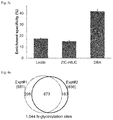
- FIG. 3 c Comparison of the enrichment specificity for three enrichment methods.
- the error bar represents the standard error of the mean calculated from triplicate experiments.
- FIG. 4 a -4 f Comprehensive analysis of protein N- and O-glycosylation in yeast.
- FIG. 4 a Protein N-glycosylation sites identified in biological duplicate experiments.
- FIG. 4 b Abundance distributions of the whole proteome (left bars) and N-glycoproteins identified here (right bars).
- FIG. 4 c Distribution of the number of mannose residues per glycan on all identified O-glycopeptides including total O-glycopeptides (left bars) and unique O-glycopeptides (right bars).
- FIG. 4 d Percentages of S, T and N in O-glycopeptides (right bars) compared to the whole proteome (left bars).
- FIG. 4 e Comparison of O- and N-glycoproteins identified in yeast cells.
- FIG. 4 f Clustering of O-glycoproteins based on cellular compartment. P values are calculated by a modified Fisher's exact test.
- FIG. 5 a -5 g Comprehensive analysis of protein N-glycosylation in human cells.
- FIG. 5 a Comparison of unique protein N-glycosylation sites identified in MCF7 cells in duplicate experiments.
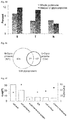
- FIG. 5 b Comparison of unique glycosylation sites and glycoproteins identified with the boronic acid derivative magnetic beads (designated as BA, shown in left bars) and with the dendrimer beads conjugated with the boronic acid derivative (DBA) (right bars).
- FIG. 5 c Abundance distributions of N-glycoproteins identified with the BA (left bars) or DBA (right bars) beads.
- FIG. 5 d Protein clustering results for 180 N-glycoproteins identified exclusively in Jurkat cells.
- FIG. 5 a Comparison of unique protein N-glycosylation sites identified in MCF7 cells in duplicate experiments.
- FIG. 5 b Comparison of unique glycosylation sites and glycoproteins identified with the boronic acid derivative magnetic beads (designated as BA, shown in left bars) and with the dendrim
- FIG. 5 e Distribution of membrane proteins (Type I, II, III & IV, and multi-pass transmembrane (TM)) among all identified N-glycoproteins.
- FIG. 5 f N-glycosylation site locations on 301 receptors with X-axis as the TM domain. Each glycoprotein sequence was aligned against the transmembrane (TM) domain, and the glycosylation sites are indicated as yellow dots. All sites are located in the extracellular space.
- FIG. 5 g Domain analysis of N-glycoproteins showing the number of N-glycoproteins containing the most highly-enriched domains and their corresponding P values.
- FIG. 6 a -6 d The synergistic interactions dramatically enhanced the enrichment of O-GlcNAcylated peptides.
- FIG. 6 a Comparison of glycoproteins with one HexNAc identified with BA (right bars) and DBA (left bars), which clearly shows that the results from DBA are substantially better.
- FIG. 6 b Distribution of O-glycoproteins modified with HexNAc(1) identified in HEK 293T cells based on cellular compartment.
- FIG. 6 c Proposed mechanism of the interactions between DBA and GlcNAc benefiting from synergistic interactions.
- FIG. 6 d Cellular compartment distributions of glycoproteins containing one HexNAc identified in the three types of human cells (left bars—MCF7, middle bars—Jurkat and right bars—HEK 293T).
- FIG. 7 Synthesis of the dendrimer with functional amine groups. Lysine molecules are used as the building blocks to construct the dendrimer on the amine-derivatized magnetic bead.
- FIG. 8 Conjugation of benzoboroxole to the dendrimer. After synthesizing the dendrimer on the magnetic beads, benzoboroxole molecules are conjugated to the dendrimer.
- FIG. 9 The specificity of glycopeptide enrichment in correlation to the DBA bead size.
- the specificity of the N-glycopeptide identifications increases with the number of the dendrimer synthesis cycles, and it levels off after the fourth cycle.
- the overall specificity of glycopeptide enrichment should be higher considering that O-glycopeptides were also enriched.
- FIG. 10 Effect of solvents on glycopeptide enrichment from a human cell lysate (HEK 293T). Left bars—total glycopeptides, middle bars—unique glycopeptides and right bars—glycoproteins.
- FIG. 11 Washing buffer optimization for glycopeptide enrichment. Left bars—total glycopeptides, middle bars—unique glycopeptides and right bars—glycoproteins.
- FIG. 12 The effect of washing times on glycopeptide enrichment. Left bars—total glycopeptides, middle bars—unique glycopeptides and right bars—glycoproteins.
- FIG. 13 Evaluation of the effect of sample size on the identification of glycopeptides and glycoproteins with the DBA enrichment followed by LC-MS analysis. Left bars—unique glycopeptides, and right bars—glycoproteins. The error bar represents the standard error of the mean calculated from duplicate experiments.
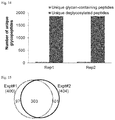
- FIG. 14 Duplicate experimental results for assessing residual N-glycans after PNGase F treatment. Only about 2% N-glycopeptides contained residual glycans after the three-hour treatment (left bars—unique glycan-containing peptides, and right bars—unique deglycosylated peptides).
- FIG. 15 Comparison of N-glycoproteins identified in yeast cells in duplicate experiments. A number of N-glycoproteins were identified in yeast using methods described herein.
- FIG. 16 Comparison of the abundance distributions of yeast N-glycoproteins identified in this work (right bars) and identified previously with the phenylboronic acid beads (left bars). More N-glycoproteins were identified in each bin with the disclosed method, especially for low-abundance N-glycoproteins.
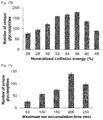
- FIG. 17 a -17 e MS parameters were optimized for yeast intact O-glycopeptide analysis using the Orbitrap cell to record tandem mass spectra of glycopeptides.
- FIG. 17 a AGC target for full MS
- FIG. 17 b AGC target for MS2 (tandem mass spectrum)
- FIG. 17 c comparison of Top10 (selection of the 10 most abundant ion species) and Top15 (selection of the 15 most abundant ion species) methods
- FIG. 17 d normalized collision energy
- FIG. 17 e maximum ion accumulation time for MS2.
- the error bar represents the standard error of the mean calculated from duplicate experiments.
- FIG. 18 Clustering of identified O-glycoproteins in yeast based on molecular function. P values were calculated using a modified Fisher's exact test.
- FIG. 19 Comparison of N-glycoproteins identified in MCF7 cells from duplicate experiments. A number of N-glycoproteins were identified in MCF7 cells using methods described herein.
- FIG. 20 The distribution of unique N-glycosylation sites per glycoprotein in human cells. Many proteins were shown to be glycosylated and to contain multiple unique glycosylation sites.
- FIG. 21 a -21 b Clustering of N-glycoproteins. Clustering is based on ( FIG. 21 a ) molecular function and ( FIG. 21 b ) cellular compartment. P values were calculated using a modified Fisher's exact test.
- FIG. 22 a -22 b Glycosylation sites in murine brain tissues. The number of protein N-glycosylation sites ( FIG. 22 a ) and glycoproteins ( FIG. 22 b ) identified in mouse brain tissues from biological duplicate experiments.
- FIG. 23 Clustering of glycoproteins identified in mouse brain tissues based on biological process. P values were calculated using a modified Fisher's exact test.
- FIG. 24 a -24 b CD N-glycoproteins identified in three types of human cells.
- FIG. 25 Exemplary glycoproteins. Two examples of glycoproteins (CD30 and CD96) with domain and glycosylation site information in Jurkat cells.
- Ranges can be expressed herein as from “about” or “approximately” one particular value and/or to “about” or “approximately” another particular value. When such a range is expressed, another embodiment includes from the one particular value and/or to the other particular value.
- Embodiments of the present disclosure include compositions and methods for effectively enriching glycocompounds, including glycopeptides and glycoproteins, that allow global analysis of glycosylation sites on glycocompounds.
- a “glycocompound” is a compound that contains a glycan component which includes one or more hydroxyl groups.
- a glycocompounds can be for example, a glycoprotein, a glycopeptide, a glycolipid, and the like.
- the glycocompound can be a glycopeptide or a glycoprotein.
- glycopeptide is a compound in which a glycan (e.g., carbohydrate) component is linked to a peptide component
- a glycoprotein is a compound in which a glycan (e.g., carbohydrate) component is linked to a protein component.
- the method can comprise contacting the glycocompound with a boronic acid compound to form a glycocompound-boronic acid-complex.
- a “boronic acid compound” is a boric-acid derivative compound with a general formula of:
- the glycocompound can be reversibly bound to the boronic acid compound. In some embodiments, the glycocompound can be reversibly covalently bound to the boronic acid compound. In some embodiments, the glycan component of the glycocompound can be reversibly bound to the boronic acid compound. In some embodiments, a hydroxyl moiety, or a plurality of hydroxyl moieties, on the glycan component of the glycocompound can be reversibly bound to the boronic acid compound. In some embodiments, the binding of the glycocompound to the boronic acid compound can be pH dependent.
- the glycocompound under basic conditions, can bind to the boronic acid compound to form the glycocompound-boronic acid-complex and under acidic conditions, the glycocompound can be released from the boronic acid compound.
- One advantage of the reversible nature of the glycocompound-boronic acid-complex formation is that the enriched glycocompound can remain intact after release of the glycocompound from the boronic acid compound, which can allow for site identification, analysis of glycan structures and identification of protein glycosylation.
- contacting the glycocompound with the boronic acid compound step can be performed under basic conditions, i.e., at a basic pH. In some embodiments, the contacting step can be at a pH of from about 7 to about 14.
- the contacting step can be at a pH of from about 8 to about 14. In some embodiments, the contacting step can be at a pH of about 8, about 9, about 10, about 11, about 12, about 13, or about 14. In some embodiments, the contacting step can be at a pH of about 10. In some embodiments, the contacting step can be at a pH of about 11. In some embodiments, the contacting step can be performed at a pH of from about 10 to about 11.
- the boronic acid compound can be a compound of Formula I:
- R 1 can be selected from unsubstituted or substituted alkyl, unsubstituted or substituted heteroalkyl, unsubstituted or substituted aryl, and unsubstituted or substituted heteroaryl; and R 2 can be selected from H, a substituted or unsubstituted C 1 -C 6 alkyl, and a C 1 -C 3 alkylene, which together with R 1 can form a five- to seven-membered ring.
- R 1 can be an unsubstituted or substituted aryl and R 2 can be H.
- R 1 can be an unsubstituted or substituted aryl and R 2 can a methylene, which together with R 1 can form a five-membered ring.
- the compound of Formula I can be:
- R 3 , R 4 , R 5 , and R 6 can be independently selected from H, halogen, —C( ⁇ O)—OH, —(C 1-8 - alkylenyl)-NH 2 , and —NO 2 ; and at least one of R 3 , R 4 , R 5 , and R 6 is not H.
- R 6 can be selected from —NO 2 , and —(C 1-8 -alkylenyl)-NH 2 ; and one of R 3 and R 4 can be independently selected from halogen, —C( ⁇ O)—OH, and H.
- R 6 can be —(C 1-8 -alkylenyl)-NH 2 ; one of R 3 and R 4 can be halogen; and R 5 can be H.
- R 6 can be —CH 2 —NH 2 ; R 3 can be H; R 4 can be F and R 5 can be H.
- R 6 can be —CH 2 —NH 2 ; and one of R 3 can be F; R 4 can be H and R 5 can be H.
- R 3 can be —CH 2 —NH 2
- R 4 , R 5 , and R 6 can each be H.
- the compound of Formula I can be:
- R 7 is selected from C( ⁇ O)—OH, or —CH 2 —NH 2 .
- the compound of Formula I can be
- the compound of Formula I can be selected from the group consisting of:
- the boronic acid compound e.g., the compound of Formula I
- dendrimers are highly branched, star-shaped macromolecules that can have nanometer-scale dimensions.
- Dendrimers can be generally defined by three components: a central core, an interior dendritic structure (the branches), and an exterior surface with functional surface groups. The varied combination of these components can yield products of different shapes and sizes with shielded interior cores.
- the dendrimer can be, for example, a polyamidoamine (PAMAM) dendrimer, poly (propylene imine) (PPI) dendrimer, and the like.
- PAMAM polyamidoamine
- PPI poly (propylene imine)
- the boronic acid compound of Formula II can be conjugated to a dendrimer.
- one boronic acid compound molecule is bound to each dendrimer. In some embodiments, a plurality of boronic acid compound molecules is bound to each dendrimer. The number of boronic acid compound molecules bound to one dendrimer can be proportional to the dendrimer size. In some embodiments where a plurality of boronic acid compound molecules are bound to a single dendrimer, multiple glycocompounds can interact with the plurality of boronic acid compound molecules bound to the single dendrimer. Without wishing to be bound by theory, it is thought that multiple glycans from one glycocompound synergistically interact with different boronic acid compound molecules on a single dendrimer.
- the dendrimer size can increase with the number of rounds of synthesis, as well as the number of boronic acid compound molecules after conjugation.
- the number of glycocompound interactions increases linearly with each round of dendrimer synthesis from a first cycle to a fourth cycle of synthesis (where when the cycle number is zero, the boronic acid compound is not conjugated to a dendrimer, i.e., the boronic acid compound is free of dendrimer).
- the cycle number is zero, the boronic acid compound is not conjugated to a dendrimer, i.e., the boronic acid compound is free of dendrimer.
- the dendrimer can be bound to a bead, such as for example and not limitation, a magnetic bead.
- the magnetic bead can comprise, for example, silanized iron oxide that can be further derivatized.
- the magnetic bead can be an amine derivatized bead, a carboxyl derivatized bead, and the like.
- Some embodiments of the present disclosure can be a method for identifying a plurality of distinct glycosylation sites located on the glycocompound.
- the method can comprise identifying a plurality of distinct O-glycosylation sites, N-glycosylation sites, and/or combinations thereof, wherein the sites can be glycosylation sites on a glycocompound, for example, a glycopeptide, a glycoprotein, and the like.
- One advantage of some embodiments of the present disclosure is the ability to identify and analyze glycocompounds without sample restriction. That is, the disclosed methods can be applied for glycocompound analysis in any sample, including, but not limited to, whole cell lysates, animal tissues, plant and clinical samples (such as for example and not limitation, bodily fluid samples (e.g., blood, saliva, sputum, cerebrospinal fluid), and tissue samples).
- any sample including, but not limited to, whole cell lysates, animal tissues, plant and clinical samples (such as for example and not limitation, bodily fluid samples (e.g., blood, saliva, sputum, cerebrospinal fluid), and tissue samples).
- bodily fluid samples e.g., blood, saliva, sputum, cerebrospinal fluid
- tissue samples e.g., cell samples, cell samples, and tissue samples.
- glycocompounds can be enriched in in human cells and the identity and structure of glycans and glycosylation sites can be analyzed in human cells.
- the compositions and methods disclosed herein can be applied to human cells.
- the glycocompounds can be enriched in human cells.
- the glycocompounds and respective O- and/or N-glycosylation sites can be identified and analyzed in human cells.
- glycan structure can be analyzed and determined in human cells.
- Some embodiments of the present disclosure can include a method comprising enriching a glycocompound by contacting the glycocompound with a boronic acid compound to form a glycocompound-boronic acid-complex; and identifying a glycosylation site located on the glycocompound.
- the method can comprise identifying a plurality of glycosylation sites located on the glycocompound, e.g., N- or O-glycosylation sites, or a combination thereof.
- the boronic acid compound can be conjugated to a dendrimer.
- the boronic acid compound can be a compound of Formula II.
- the boronic acid compound of Formula II can be conjugated to a dendrimer.
- Some embodiments of the present disclosure can include a method for identifying a plurality of glycosylation sites located on a glycocompound.
- the method can include contacting the glycocompound with a boronic acid compound to form a glycocompound-boronic acid complex.
- the contacting step can be performed at a basic pH, e.g., a pH of about 7 to about 14.
- the method can further comprise washing the glycocompound-boronic acid-complex to enrich glycocompound.
- the method can further comprise releasing the glycocompound from the boronic acid compound.
- the releasing step can be at an acidic pH, e.g., at a pH of from about 0 to about 7.
- the releasing step can be at a pH of from about 0 to about 7. In some embodiments, the releasing step can be at a pH of from about 0 to about 6. In some embodiments, the releasing step can be at a pH of about 6, about 5, about 4, about 3, about 2, about 1, or about 0. In some embodiments, the releasing step can be at a pH of about 5. In some embodiments, the method can further comprise cleaving at least one glycan component from the glycocompound to form a free glycan. In some embodiments, the cleaving step can comprise contacting the enriched glycocompound with a peptide-N-glycosidase F (PNGase F) to form a free N-glycan.
- PNGase F peptide-N-glycosidase F
- the method can further comprise analyzing a plurality of glycosylation sites located on the glycocompound.
- the glycosylation sites can be N-glycosylation sites, O-glycosylation sites, or combination thereof.
- the analyzing step can comprise analyzing the free glycans.
- the glycosylation sites can be identified by mass spectrometry.
- the free glycans can be analyzed by mass spectrometry.
- the glycosylation sites can be identified by liquid chromatography-mass spectrometry, e.g., LC-MS and/or LC-MS/MS.
- the free glycans can be analyzed by liquid chromatography-mass spectrometry, e.g., LC-MS and/or LC-MS/MS.
- Some embodiments of the present disclosure include a composition comprising a dendrimer-boronic-acid (DBA) complex that can comprise a compound of Formula I conjugated to a dendrimer to form a DBA complex and a glycocompound reversibly bound to the DBA complex.
- DBA dendrimer-boronic-acid
- the compound of Formula I can be:
- R 1 can be selected from unsubstituted or substituted alkyl, unsubstituted or substituted heteroalkyl, unsubstituted or substituted aryl, and unsubstituted or substituted heteroaryl; and R 2 can selected from H, a substituted or unsubstituted C 1 -C 6 alkyl, and a C 1 -C 3 alkylene, which together with R 1 can form a five- to seven-membered ring.
- R 1 can be an unsubstituted or substituted aryl and R 2 can be H.
- R 1 can be an unsubstituted or substituted aryl and R 2 can a methylene, which together with R 1 can form a five-membered ring.
- the compound of Formula I can be:
- R 3 , R 4 , R 5 , and R 6 can be independently selected from H, halogen, —C( ⁇ O)—OH, —(C 1-8 -alkylenyl)-NH 2 , and —NO 2 ; and at least one of R 3 , R 4 , R 5 , and R 6 is not H.
- R 6 can be selected from —NO 2 , and —(C 1-8 -alkylenyl)-NH 2 ; and one of R 3 and R 4 can be independently selected from halogen, —C( ⁇ O)—OH, and H.
- R 6 can be —(C 1-8 -alkylenyl)-NH 2 ; one of R 3 and R 4 can be halogen; and R 5 can be H.
- R 6 can be —CH 2 —NH 2 ; R 3 can be H; R 4 can be F and R 5 can be H.
- R 6 can be —CH 2 —NH 2 ; and one of R 3 can be F; R 4 can be H and R 5 can be H.
- R 3 can be —CH 2 —NH 2
- R 4 , R 5 , and R 6 can each be H.
- the compound of Formula I can be:
- R 7 is selected from C( ⁇ O)—OH, or —CH 2 —NH 2 .
- the compound of Formula I can be
- the compound of Formula I can be selected from the group consisting of:
- the boronic-acid-dendrimer (DBA) complex can be reversibly bound to a glycan component of the glycocompound. In some embodiments, the DBA complex can be reversibly bound to at least one hydroxyl moiety on the glycan component of the glycocompound.
- the dendrimer-boronic-acid (DBA) complex can comprise a bead, such as for example and not limitation, a magnetic bead, to form a dendrimer-boronic-acid (DBA) bead.
- the bead e.g., magnetic bead
- the DBA complex or DBA bead comprises a plurality of boronic acid compounds conjugated to a single dendrimer.
- Some embodiments of the present disclosure include methods for enriching O-GlcNAcylated proteins, and identifying glycosylation sites on the same.
- Protein O-GlcNAcylation was discovered more than three decades ago, and it has been reported to be involved in many cellular events, from regulating cell signaling to gene expression. It can be challenging to enrich O-GlcNAcylated proteins because only one sugar (GlcNAc) is bound to S or T, and this sugar does not contain a cis-1,2-diol.
- boronic acid can interact with sugars without cis-1,2-diols, such as glucose and GlcNAc, the interaction is weak, and enrichment is therefore less effective.
- O-GlcNAcylated proteins can be enriched with the DBA beads disclosed herein.
- DBA beads disclosed herein.
- the effective enrichment of O-GlcNAcylated peptides may be attributed to the synergistic interactions with DBA beads. Multiple sugars from one glycan can synergistically interact with different benzoboroxole molecules on a single dendrimer bead.
- DMEM Dulbecco's Modified Eagle's Medium
- PBS phosphate buffered saline
- EDC N-(3-dimethylaminopropyl)-N′-ethylcarbodiimide hydrochloride
- 4-carboxy-2-nitrophenylboronic acid (2-aminomethyl-5-fluoro) phenylboronic acid hydrochloride, 2-aminomethyl-4-fluorophenylboronic acid hydrochloride, trifluoroacetic acid, formic acid (FA), trimethylamine (TEA), piperidine (pyp), methanol, chloroform, dichloromethane (DCM), acetonitrile (ACN), and dimethylsulfoxide (DMSO) were from Sigma-Aldrich.
- DMEM Dulbecco's Modified Eagle's Medium
- PBS phosphate buffered saline
- EDC N-(3-dimethylaminopropyl)-
- 3-aminomethylphenylboronic acid hydrochloride was from Frontier Scientific Inc.
- 5-carboxybenzoboroxole e.g., “Formula II comprising a carboxyl group to bind to a magnetic bead
- 1-hydroxy-7-azabenzotriazole HOAt
- the solvent containing the MagnaBindTM amine derivatized beads was gradually changed from water to isopropanol to finally DCM (Supplementary FIGS. 1 and 2 ). Then Fmoc-L-Lys(Boc)-OSu was reacted with the amino beads in DCM containing 0.3% TEA overnight. On the following day the beads were washed with DCM three times, and the Boc protection group was removed by incubation of beads in 50% TFA in DCM at room temperature for two hours. The beads were washed with DCM three times and one time with 3% TEA in DCM.
- Yeast cells (strain BY4742, MAT alpha, derived from S288c) were grown in yeast extract peptone dextrose (YPD) media until they reached log-phase (optical density (OD) was about 1.0 at 600 nm). For biological duplicate experiments, cells were grown independently. Yeast cells were harvested by centrifugation and resuspended in a buffer containing 50 mM 4-(2-hydroxyethyl)-1-piperazineethanesulfonic acid (HEPES), pH 7.4, 150 mM NaCl, 0.5% sodium deoxycholate (SDC) and protease inhibitor cocktail (one tablet (complete mini, Roche) per 10 ml lysis buffer) at 4° C.
- HEPES 4-(2-hydroxyethyl)-1-piperazineethanesulfonic acid
- SDC sodium deoxycholate
- protease inhibitor cocktail one tablet (complete mini, Roche) per 10 ml lysis buffer
- mice For mouse brain samples, brain tissues from two C 57 BL/6 mice (3 and 6 months) were frozen in liquid nitrogen and homogenized in the RIPA buffer mentioned above. The mixtures were incubated on ice for an hour, and then clarified by centrifugation at 5,000 g for 20 minutes. Half of the supernatants ( ⁇ 8 mg proteins per experiment) were used for protein glycosylation analysis.
- DTT dithiothreitol
- RT 15 mM iodoacetamide
- mammalian peptides were dissolved in 100 mM ammonium acetate buffer and incubated for one hour with different boronic acid derivatized magnetic beads at room temperature. After incubation, the beads were washed with the binding buffer, and enriched peptides were eluted first by incubation with a solution containing ACN:H 2 O:TFA (50:49:1) at 37° C. for 30 min. Then the peptides were eluted two more times through incubation with 5% formic acid at 56° C. for 5 min each time.
- the beads were then washed again with the enrichment buffer for five times before glycopeptide elution using the elution buffer (0.2 M ⁇ -methyl mannoside, 0.2 M ⁇ -methyl glucoside, 0.2 M galactose, and 0.5 M N-Acetyl-D-Glucosamine in PBS).
- the elution was performed twice with vortex for half an hour each, and the eluents were combined.
- SeQuant® ZIC-HILIC SPE cartridges (the Nest Group) were washed with ten column volumes of 1.0% TFA in water, followed by three washes with the loading buffer (1.0% TFA in 80% ACN, 20% H 2 O). Peptides were loaded onto the column in the loading buffer using a slow flow rate. The flow-through was re-loaded onto the column once. The column was then washed with the loading buffer three times. Glycopeptides were eluted using 1.0% TFA in water three times, and the eluents were combined.
- enriched samples were dried in a lyophilizer overnight.
- the completely dried samples were dissolved in 40 mM ammonium bicarbonate in heavy-oxygen water (H 2 18 O) and treated with PNGase F (lyophilized powder from Sigma Aldrich) at 37° C. for 3 hours.
- PNGase F lyophilized powder from Sigma Aldrich
- peptide samples were purified using a stage tip.
- the sample was separated into 10 fractions using a 4.6 ⁇ 250 mm 5 ⁇ m particle reversed phase column (Waters) with a 40-min gradient of 5-50% ACN with 10 mM ammonium acetate. Every fraction was further purified with stage tip before LC-MS/MS.
- Fractionated and purified peptide samples were resuspended in a solvent of 5.0% ACN and 4.0% FA, and 4 ⁇ L was loaded onto a microcapillary column packed with C18 beads (Magic C18AQ, 3 ⁇ m, 200 ⁇ , 75 ⁇ m ⁇ 16 cm) using a WPS-3000TPLRS autosampler (UltiMate 3000 thermostatted Rapid Separation Pulled Loop Wellplate Sampler, Dionex).
- Peptides were separated by reversed-phase chromatography using an UltiMate 3000 binary pump with a 90-min gradient of 4-30% ACN (in 0.125% FA) and detected in a hybrid dual-cell quadrupole linear ion trap-orbitrap mass spectrometer (LTQ Orbitrap Elite, ThermoFisher) using a data-dependent Top20 method. For each cycle, one full MS scan (resolution: 60,000) in the Orbitrap at 10 6 AGC target was followed by up to 20 MS/MS in the LTQ for the most intense ions.
- the isolation window was 2 Da, which is the most commonly used, and the activation energy was 40% normalized collision energy (NCE), which was obtained through testing different NCEs to acquire the best results for the machine used here.
- NCE normalized collision energy
- Selected ions were excluded from further analysis for 90 s. Ions with a single or unassigned charge were not sequenced. Maximum ion accumulation times (Maximum IT) were 1000 ms for each full MS scan and 50 ms for MS/MS scans.
- Maximum IT Maximum ion accumulation times
- HCD Higher-energy collisional dissociation
- the raw files were converted into mzXML format prior to the database search.
- the SEQUEST algorithm version 28 was used to search all MS/MS spectra against either a database containing sequences of yeast ( Saccharomyces cerevisiae ) proteins downloaded from SGD (http://www.yeastgenome.org/) or human ( Homo sapiens ) proteins downloaded from UniProt.
- the following parameters were used for the database search: 10 ppm precursor mass tolerance; 1.0 Da product ion mass tolerance; fully tryptic digestion; up to two missed cleavages; variable modifications: oxidation of methionine (+15.9949) and 18 O tag of Asn (+2.9883); fixed modifications: carbamidomethylation of cysteine (+57.0214).
- LDA linear discriminant analysis
- O-glycopeptide identification we used ByonicTM software. Some parameters are similar as above. For yeast intact O-glycopeptide analysis, up to ten mannoses per glycan were searched for raw files. In order to control false positive rates, every peptide was required to have ⁇ 0.001 for 1 D PEP (one dimensional posterior error probability) and >4 for
- Protein glycosylation site localization In order to evaluate the confidence of the glycosylation site assignment, a Modscore was calculated for each identified glycopeptides, which is similar to Ascore. An algorithm considering all possible glycosylation sites of a peptide was used to generate the Modscore. It examines the presence or absence of MS/MS fragment ions unique to each glycosylation site and indicates the likelihood that the best site match is correct when compared with the next best match. Sites with Modscore ⁇ 19 (P ⁇ 0.01, cumulative binomial probability) were considered to be confidently localized.
- FIG. 1 a The structures of boronic acid (BA) derivatives tested here are displayed in FIG. 1 a .
- BA boronic acid
- the derivatives IV and V enriched slightly more unique glycopeptides compared to phenylboronic acid (III). Although the pK a of derivative I (9.2) is similar to that of phenylboronic acid (9.0), enrichment with I resulted in the identification of more unique glycopeptides.
- the adjacent nitrogen may form an extra hydrogen bond with a nearby hydroxyl group on the glycan, which enhances the interactions between the BA derivative and glycans and facilitates the enrichment.
- Formula II (benzoboroxole) allowed the identification of the greatest number of glycopeptides.
- the method based on Formula II (benzoboroxole) was systematically optimized for site-specific and global analysis of glycoproteins in combination with MS, and the results were dramatically improved compared to any other boronic acids tested.
- a dendrimer was synthesized as the platform for synergistic interactions such that the number of benzoboroxole (Formula II) molecules bound to a dendrimer could be easily adjusted. More importantly, the dendrimer branches also provide structural flexibility to enhance the synergistic interactions.
- the dendrimer was first synthesized and bound to magnetic beads, and next the BA derivative, benzoboroxole, was conjugated to the dendrimer ( FIG. 7 and FIG. 8 ).
- Many benzoboroxole (Formula II) molecules were bound to one dendrimer, as shown in FIG. 2 a , and the number of benzoboroxole (Formula II) molecules on one dendrimer bead was proportional to the dendrimer size. In this case, several sugars from one glycan can interact with multiple benzoboroxole (Formula II) molecules simultaneously ( FIG. 2 b ).
- Dendrimer size can have a large impact on the synergistic interactions, and the effect of dendrimer size was systematically evaluated.
- the number of benzoboroxole (Formula II) molecules on the beads attempted to remain the same, and the amount of starting materials (peptides from HEK 293T cells) was also the same.
- FIG. 2 c when the cycle number is zero, the magnetic beads are directly conjugated with benzoboroxole (Formula II) without a dendrimer.
- the dendrimer size increased with the number of rounds of synthesis, as well as the number of benzoboroxole (Formula II) molecules after conjugation.
- Example 2B Based on the results from Example 2B ( FIG. 10 ), several washing buffers were tested, and the results are in FIG. 11 .
- the enrichment was performed in DMSO containing 0.5% trimethylamine (TEA) for one hour, and then washed the beads with different buffer combinations.
- the enriched peptides were subsequently deglycosylated and analyzed by LC-MS/MS.
- the lowest number of glycoproteins we identified in one MS run was about 200 from the 10 ⁇ g group among the samples tested here.
- the sample loss coming from every step may be a problem.
- lysis buffer or digestion buffer lysis buffer or digestion buffer
- the sample transfer from tube to tube could result in a considerable (relatively higher percentage) sample loss.
- More samples allowed us to identify higher numbers of unique glycopeptides and glycoproteins.
- the protein amount reached ⁇ 300 ⁇ g the increasing trend of the number of identified glycopeptides and glycoproteinslowed down, and both the 500 ⁇ g and 1000 ⁇ g groups yielded almost the same results.
- the MS speed and sensitivity may also dramatically affect the number of unique glycopeptides identified.
- a machine with higher speed and sensitivity allows us to identify more glycoproteins using the same amount of material or the same number of glycoproteins using a lower amount of material.
- the protein digestion efficiency and peptide purification efficiency are lower than 100%, and therefore, the resulting peptide amounts subjected to the DBA enrichment in the current experiment should be slightly lower than the sample amounts shown in the figure.
- DBA Dendrimer-conjugated Boronic Acid derivative
- WGA wheat germ agglutinin
- ConA concanavalin A
- ZIC-HILIC zwitterionic hydrophilic interaction liquid chromatography
- the numbers of glycopeptides and non-glycopeptides identified in each of the parallel experiments was compared, and the results showed that the DBA method had the highest specificity ( FIG. 3 c ).
- the principle of the ZIC-HILIC method is based on the hydrophilic property difference between glycopeptides and non-glycopeptides. Therefore, some hydrophilic but non-glycosylated peptides can also be enriched, lowering the enrichment specificity.
- DBA outperformed the other two methods, while ZIC-HILIC had better performance than lectin.
- the disclosed method also has the highest enrichment specificity.
- N-glycoprotein analysis 881 sites on 400 proteins identified in one experiment and 836 sites on 404 proteins in another. Overall, 1,044 N-glycosylation sites ( FIG. 4 a ) on 501 proteins ( FIG. 15 ) were identified. To ensure that the sites were confidently identified, very stringent criteria were applied during analysis. First, the false positive rate at the N-glycopeptide level was well-controlled under 1.0%, based on the target-decoy method. Additionally, all N-glycosylation sites were required to contain the motif NX[S/T/C], where X is any amino acid except proline.
- the N-glycosylation site was also required to contain heavy oxygen ( 18 O) as a tag.
- heavy oxygen 18 O
- the reaction was run for only three hours. It is known that within three hours under mild conditions, spontaneous asparagine deamidation is negligible.
- the reversible covalent interactions can leave enriched glycopeptides with intact glycans for site identification and glycan structure elucidation.
- O-glycans consist of only mannose, but the number of mannose per glycan varies.
- the disclosed enrichment method can also enable global analysis of O-glycoproteins.
- high-energy collisional dissociation HCD was employed for glycopeptide fragmentation, and the tandem mass spectra were recorded in the Orbitrap cell.
- HCD high-energy collisional dissociation
- HCD high-energy collisional dissociation
- tandem mass spectra were recorded in the Orbitrap cell.
- Several important machine parameters, such as automatic gain control (AGC) target for MS and MS 2 , normalized collision energy, and maximum ion accumulation time for MS 2 were optimized ( FIG. 17 ).
- ByonicTM was used to search the raw files for the identification of protein O-mannosylation.
- the distribution of the number of mannose per glycan is in FIG. 4 c .
- the number of unique glycopeptides with one mannose is the highest, and the second are those with four mannoses.
- the number decreases with the increasing number of mannoses.
- the site localization confidence is lower than that of N-glycosylation due to the neutral loss of O-glycans and the presence of many serine and threonine residues on O-glycopeptides ( FIG. 4 d ).
- S and T were more frequent in the identified unique O-glycopeptides, and the occurrence of T was almost two times as many (9.0 vs. 11.8% for S and 5.9 vs. 10.7% for T).
- the frequency of N (N-glycosylation sites) in the identified O-glycopeptides was lower than the whole proteome (6.1 vs. 4.5%).
- DAVID Database for Annotation, Visualization and Integrated Discovery
- the DBA method was applied to comprehensively analyze protein N-glycosylation in different types of human cells.
- Biological duplicate experiments were performed for MCF7 cells, and the number of glycosylation sites and glycoproteins identified in each experiment is shown in FIG. 5 a and FIG. 19 .
- FDR false discovery rate
- 2,710 N-glycosylation sites on 1,127 proteins were identified in one experiment, and 2,815 sites on 1,156 proteins in another.
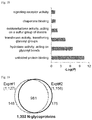
- 2,340 common sites were identified in both experiments, which represent 86.3% and 83.1% of the total sites identified from each experiment, respectively.
- the overlap at the glycoprotein level was even higher: 981 common glycoproteins were identified.
- a total of 3,185 glycosylation sites were identified on 1,302 proteins in MCF7 cells.
- the method was also employed to globally analyze protein N-glycosylation in HEK 293T and Jurkat cells; 3,052 sites were identified on 1,301 proteins in HEK 293T cells, and 2,120 sites on 948 proteins were found in Jurkat cells.
- the effect of the dendrimer on glycopeptide enrichment was further investigated by comparing DBA vs. benzoboroxole (Formula II) conjugated magnetic beads without the dendrimer (designated as BA beads).
- DBA vs. benzoboroxole conjugated magnetic beads without the dendrimer
- BA beads With the DBA beads, 88% more N-glycosylation sites and 79% more glycoproteins were identified compared to the BA beads ( FIG. 5 b ).
- the abundance distributions of all glycoproteins identified using either the DBA or BA beads are displayed in FIG. 5 c (abundances from an online database (PaxDb)).
- the number of glycoproteins identified using the DBA beads was higher than that with the BA beads in each abundance category and the DBA method was especially superior for glycoproteins with very low abundance (less than 10 ppm).
- proteins related to glycosyl-transferase activity are the most highly enriched with a P value of 8.5E-35 ( FIG. 21 a ), and 108 N-glycoproteins belong to this category. In yeast, this group of proteins is the second most highly enriched.
- the following groups of N-glycoproteins are also highly enriched in human cells: receptor binding, signaling receptor activity, growth factor binding proteins, glycosaminoglycan binding, cell adhesion molecule binding, and active transmembrane transporter activity.
- glycoproteins are known to be membrane proteins.
- 1,251 out of 1,906 N-glycoproteins are membrane proteins, which are highly enriched with an extremely low P value of 1.6E-192.
- Glycoproteins in the cell periphery, vesicle, ER, Golgi, and extracellular space are all enriched with very low P values ( FIG. 21 b ).
- 524 of identified membrane proteins are type I membrane proteins, 177 are type II, and 348 proteins contain multiple transmembrane domains ( FIG. 5 e ).
- a total of 301 receptors were identified among these N-glycoproteins; glycosylation site locations for receptors identified as type I and II membrane proteins are shown in FIG. 5 f . All sites (1,079 sites) were located in the extracellular space, which corresponds very well with the belief that glycans are located on the extracellular side of surface membrane proteins.
- N-glycoproteins contain different types of Ig domains (such as I-set, V-set and C1-set). Besides Ig domains, other domains related to cell-cell adhesion are also highly enriched, including fibronectin type III, cadherin and laminin G ( FIG. 5 g ). Domains corresponding with receptor activities, such as PTK (protein tyrosine kinase) and EGF (epidermal growth factor)-like domains, are also highly enriched.
- PTK protein tyrosine kinase
- EGF epidermatitis
- the disclosed methods were further applied to analyze protein N-glycosylation in mouse brain tissues, and biological duplicate experiments were performed. After protein extraction and digestion, glycopeptides were enriched using the DBA beads, and enriched glycopeptides were fractionated, followed by analysis with an online LC-MS system.
- the effective enrichment of O-GlcNAcylated peptides may be attributed to the synergistic interactions with DBA beads.
- multiple hydroxyl groups in each GlcNAc may form reversible covalent bonds with several benzoboroxle molecules on a dendrimer bead, as shown in FIG. 6 c .
- the synergistic interactions can dramatically facilitate the enrichment of O-GlcNAcylated peptides with DBA.
- glycoproteins with one HexNAc The results are highly reproducible in different types of human cells (HEK 293T, MCF7 and Jurkat), for example, in glycoproteins with one HexNAc.
- the greatest number of identified glycoproteins (about 50%) are located in the nucleus of each cell type ( FIG. 6 d ), and about 30% of them are in the cytoplasm.
- Glycoproteins in the nucleus and the cytoplasm are normally O-GlcNAcylated.
- ⁇ 12% of them are in the ER/Golgi. Only a small portion of glycoproteins ( ⁇ 7%) are secreted proteins, which are likely O-GalNAcylated.
- CDs Cluster of differentiation (CD) molecules are those located on the cell surface that provide immunophenotyping targets for cell classification.
- 188 CD proteins were identified as N-glycoproteins.
- MCF7 115
- HEK 293T HEK 293T
- TNFRSF8 also called CD30
- CD30 is a receptor for TNFSF8/CD30L and may play a role in the regulation of cellular growth and transformation of activated lymphoblasts.
- N101, N120 and N295 we identified three N-glycosylation sites (N101, N120 and N295), and all these sites were located in the TFNR domain, which is well-known to bind growth factors, and glycans on these domains may affect the binding.
- CD96 is T-cell surface protein tactile and may be involved in adhesive interactions of activated T and NK cells during the late phase of the immune response. It contains three Ig domains (Ig-like V type 1, Ig-like V type 2 and Ig-like C2-type). Six out of the eight N-glycosylation sites were identified in two domains, and all sites are located in the extracellular space. Glycosylation sites identified on CDs may carry more meaningful information for cell classification and serve as effective biomarkers for disease detection.
Landscapes
- Life Sciences & Earth Sciences (AREA)
- Health & Medical Sciences (AREA)
- Engineering & Computer Science (AREA)
- Molecular Biology (AREA)
- Physics & Mathematics (AREA)
- Chemical & Material Sciences (AREA)
- Immunology (AREA)
- Bioinformatics & Cheminformatics (AREA)
- Bioinformatics & Computational Biology (AREA)
- Hematology (AREA)
- Biomedical Technology (AREA)
- Urology & Nephrology (AREA)
- Biophysics (AREA)
- Biochemistry (AREA)
- General Physics & Mathematics (AREA)
- Pathology (AREA)
- General Health & Medical Sciences (AREA)
- Analytical Chemistry (AREA)
- Food Science & Technology (AREA)
- Medicinal Chemistry (AREA)
- Proteomics, Peptides & Aminoacids (AREA)
- Biotechnology (AREA)
- Cell Biology (AREA)
- Microbiology (AREA)
- Spectroscopy & Molecular Physics (AREA)
- Organic Chemistry (AREA)
- Peptides Or Proteins (AREA)
- Investigating Or Analysing Biological Materials (AREA)
Abstract
Description

wherein: R1 can be selected from unsubstituted or substituted alkyl, unsubstituted or substituted heteroalkyl, unsubstituted or substituted aryl, and unsubstituted or substituted heteroaryl; and R2 can be selected from H, a substituted or unsubstituted C1-C6 alkyl, and a C1-C3 alkylene, which together with R1 can form a five- to seven-membered ring.

wherein: R1 can be selected from unsubstituted or substituted alkyl, unsubstituted or substituted heteroalkyl, unsubstituted or substituted aryl, and unsubstituted or substituted heteroaryl; and R2 can be selected from H, a substituted or unsubstituted C1-C6 alkyl, and a C1-C3 alkylene, which together with R1 can form a five- to seven-membered ring.

In some embodiments, the glycocompound can be reversibly bound to the boronic acid compound. In some embodiments, the glycocompound can be reversibly covalently bound to the boronic acid compound. In some embodiments, the glycan component of the glycocompound can be reversibly bound to the boronic acid compound. In some embodiments, a hydroxyl moiety, or a plurality of hydroxyl moieties, on the glycan component of the glycocompound can be reversibly bound to the boronic acid compound. In some embodiments, the binding of the glycocompound to the boronic acid compound can be pH dependent. For example, in some embodiments, under basic conditions, the glycocompound can bind to the boronic acid compound to form the glycocompound-boronic acid-complex and under acidic conditions, the glycocompound can be released from the boronic acid compound. One advantage of the reversible nature of the glycocompound-boronic acid-complex formation is that the enriched glycocompound can remain intact after release of the glycocompound from the boronic acid compound, which can allow for site identification, analysis of glycan structures and identification of protein glycosylation. In some embodiments, contacting the glycocompound with the boronic acid compound step can be performed under basic conditions, i.e., at a basic pH. In some embodiments, the contacting step can be at a pH of from about 7 to about 14. In some embodiments, the contacting step can be at a pH of from about 8 to about 14. In some embodiments, the contacting step can be at a pH of about 8, about 9, about 10, about 11, about 12, about 13, or about 14. In some embodiments, the contacting step can be at a pH of about 10. In some embodiments, the contacting step can be at a pH of about 11. In some embodiments, the contacting step can be performed at a pH of from about 10 to about 11.
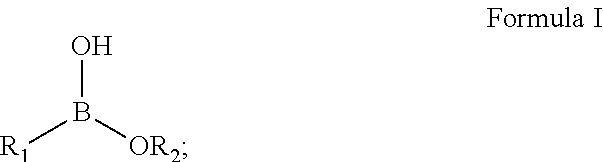
wherein R1 can be selected from unsubstituted or substituted alkyl, unsubstituted or substituted heteroalkyl, unsubstituted or substituted aryl, and unsubstituted or substituted heteroaryl; and R2 can be selected from H, a substituted or unsubstituted C1-C6 alkyl, and a C1-C3 alkylene, which together with R1 can form a five- to seven-membered ring. In some embodiments, R1 can be an unsubstituted or substituted aryl and R2 can be H. In some embodiments, R1 can be an unsubstituted or substituted aryl and R2 can a methylene, which together with R1 can form a five-membered ring. In some embodiments the compound of Formula I can be:
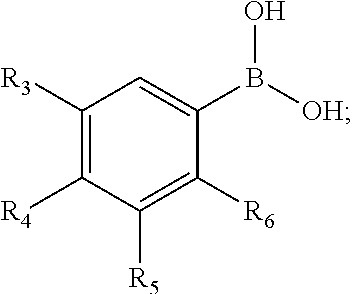
wherein R3, R4, R5, and R6 can be independently selected from H, halogen, —C(═O)—OH, —(C1-8- alkylenyl)-NH2, and —NO2; and at least one of R3, R4, R5, and R6 is not H. In some embodiments, R6 can be selected from —NO2, and —(C1-8-alkylenyl)-NH2; and one of R3 and R4 can be independently selected from halogen, —C(═O)—OH, and H. In some embodiments, R6 can be —(C1-8-alkylenyl)-NH2; one of R3 and R4 can be halogen; and R5 can be H. In some embodiments, R6 can be —CH2—NH2; R3 can be H; R4 can be F and R5 can be H. In some embodiments, R6 can be —CH2—NH2; and one of R3 can be F; R4 can be H and R5 can be H. In some embodiments, R3 can be —CH2—NH2, and R4, R5, and R6 can each be H. In some embodiments, the compound of Formula I can be:

wherein R7 is selected from C(═O)—OH, or —CH2—NH2. In some embodiments, the compound of Formula I can be


wherein R1 can be selected from unsubstituted or substituted alkyl, unsubstituted or substituted heteroalkyl, unsubstituted or substituted aryl, and unsubstituted or substituted heteroaryl; and R2 can selected from H, a substituted or unsubstituted C1-C6 alkyl, and a C1-C3 alkylene, which together with R1 can form a five- to seven-membered ring. In some embodiments, R1 can be an unsubstituted or substituted aryl and R2 can be H. In some embodiments, R1 can be an unsubstituted or substituted aryl and R2 can a methylene, which together with R1 can form a five-membered ring.

wherein R3, R4, R5, and R6 can be independently selected from H, halogen, —C(═O)—OH, —(C1-8-alkylenyl)-NH2, and —NO2; and at least one of R3, R4, R5, and R6 is not H. In some embodiments, R6 can be selected from —NO2, and —(C1-8-alkylenyl)-NH2; and one of R3 and R4 can be independently selected from halogen, —C(═O)—OH, and H. In some embodiments, R6 can be —(C1-8-alkylenyl)-NH2; one of R3 and R4 can be halogen; and R5 can be H. In some embodiments, R6 can be —CH2—NH2; R3 can be H; R4 can be F and R5 can be H. In some embodiments, R6 can be —CH2—NH2; and one of R3 can be F; R4 can be H and R5 can be H. In some embodiments, R3 can be —CH2—NH2, and R4, R5, and R6 can each be H. In some embodiments, the compound of Formula I can be:

wherein R7 is selected from C(═O)—OH, or —CH2—NH2. In some embodiments, the compound of Formula I can be

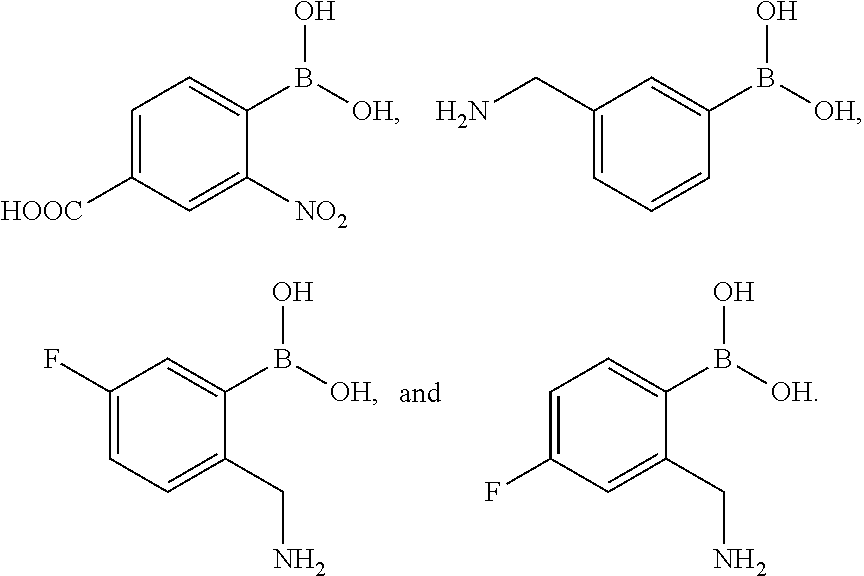
Claims (10)


Priority Applications (1)
| Application Number | Priority Date | Filing Date | Title |
|---|---|---|---|
| US15/952,946 US10690675B2 (en) | 2017-04-14 | 2018-04-13 | Methods for enriching glycopeptides for global analysis of glycoproteins |
Applications Claiming Priority (2)
| Application Number | Priority Date | Filing Date | Title |
|---|---|---|---|
| US201762485588P | 2017-04-14 | 2017-04-14 | |
| US15/952,946 US10690675B2 (en) | 2017-04-14 | 2018-04-13 | Methods for enriching glycopeptides for global analysis of glycoproteins |
Publications (2)
| Publication Number | Publication Date |
|---|---|
| US20180299462A1 US20180299462A1 (en) | 2018-10-18 |
| US10690675B2 true US10690675B2 (en) | 2020-06-23 |
Family
ID=63789937
Family Applications (1)
| Application Number | Title | Priority Date | Filing Date |
|---|---|---|---|
| US15/952,946 Active US10690675B2 (en) | 2017-04-14 | 2018-04-13 | Methods for enriching glycopeptides for global analysis of glycoproteins |
Country Status (1)
| Country | Link |
|---|---|
| US (1) | US10690675B2 (en) |
Families Citing this family (3)
| Publication number | Priority date | Publication date | Assignee | Title |
|---|---|---|---|---|
| MA50552A (en) * | 2017-11-09 | 2020-09-16 | Novo Nordisk As | GLUCOSE SENSITIVE ALBUMIN BINDING DERIVATIVES |
| CN110702916B (en) * | 2019-04-15 | 2022-06-21 | 四川大学华西医院 | Quantitative analysis method for integrating proteome and glycoprotein |
| CN120009459A (en) * | 2025-04-21 | 2025-05-16 | 山东省食品药品检验研究院 | A quantitative analysis method for deamidation modification in peptides |
Citations (1)
| Publication number | Priority date | Publication date | Assignee | Title |
|---|---|---|---|---|
| US20080200434A1 (en) * | 2006-09-14 | 2008-08-21 | Daniloff George Y | Chemical Target-Binding Compositions |
-
2018
- 2018-04-13 US US15/952,946 patent/US10690675B2/en active Active
Patent Citations (1)
| Publication number | Priority date | Publication date | Assignee | Title |
|---|---|---|---|---|
| US20080200434A1 (en) * | 2006-09-14 | 2008-08-21 | Daniloff George Y | Chemical Target-Binding Compositions |
Non-Patent Citations (4)
| Title |
|---|
| Griffin et al. Solvent extraction and purification of sugars from hemicellulose hydrolysates using boronic acid carriers. J Chem Technol Biotechnol 79:505-511 (online: 2004). (Year: 2004). * |
| James et al. A saccharide ‘sponge’. Synthesis and properties of a dendritic boronic acid. Chem. Commun., 6:705-706, 1996. (Year: 1996). * |
| James et al. A saccharide 'sponge'. Synthesis and properties of a dendritic boronic acid. Chem. Commun., 6:705-706, 1996. (Year: 1996). * |
| Pal A. A thesis: Design, Synthesis, and Screening of a Library of Peptidyl Bis-Boroxoles as Low Molecular Weight Receptors for Complex Oligosaccharides in Neutral Water: Identification of a Selective Receptor for the Tumour Marker TF-Antigen, U of Alberta, Fall 2009, Edmonton, Alberta, pp. 1-135. (Year: 2009). * |
Also Published As
| Publication number | Publication date |
|---|---|
| US20180299462A1 (en) | 2018-10-18 |
Similar Documents
| Publication | Publication Date | Title |
|---|---|---|
| Qin et al. | Spatiotemporally-resolved mapping of RNA binding proteins via functional proximity labeling reveals a mitochondrial mRNA anchor promoting stress recovery | |
| Chen et al. | A universal chemical enrichment method for mapping the yeast N-glycoproteome by mass spectrometry (MS) | |
| Zhang et al. | Simultaneous characterization of glyco-and phosphoproteomes of mouse brain membrane proteome with electrostatic repulsion hydrophilic interaction chromatography | |
| Wu et al. | Global profiling of phosphopeptides by titania affinity enrichment | |
| EP2419739B1 (en) | Method for quantifying modified peptides | |
| Cheng et al. | Large-scale characterization of intact N-glycopeptides using an automated glycoproteomic method | |
| EP1352249B1 (en) | Proteome analysis method | |
| Fileén et al. | Quantitative proteomics reveals GIMAP family proteins 1 and 4 to be differentially regulated during human T helper cell differentiation | |
| US20180299462A1 (en) | Methods for Enriching Glycopeptides for Global Analysis of Glycoproteins | |
| Tutturen et al. | A technique for the specific enrichment of citrulline-containing peptides | |
| EP3080608A2 (en) | Mass labels | |
| Wiedmer et al. | Metabolic mapping of the human solute carrier superfamily | |
| Xiao et al. | Mass spectrometric analysis of the N-glycoproteome in statin-treated liver cells with two lectin-independent chemical enrichment methods | |
| Medvedev et al. | Affinity‐based proteomic profiling: Problems and achievements | |
| Bodnar et al. | Synthesis and evaluation of carboxymethyl chitosan for glycopeptide enrichment | |
| EP2108957A1 (en) | Compounds and methods for the labelling and affinity-selection of proteins | |
| EP2235040A1 (en) | Selective enrichment of post-translationally modified proteins and/or peptides | |
| EP1780537A1 (en) | Method of proteome analysis for phosphorylated protein | |
| Sun et al. | Systematic and site-specific analysis of N-glycoproteins on the cell surface by integrating bioorthogonal chemistry and MS-based proteomics | |
| EP4419915A2 (en) | Systems and methods for biomolecule assays | |
| JP2011516463A (en) | Selective enrichment of N-terminally modified peptides from complex samples | |
| WO2024261269A1 (en) | Method for detecting ligand-target interactions using solvent- induced precipitation in intact cells | |
| Li et al. | Improved analysis ZIC-HILIC-HCD-Orbitrap method for mapping the glycopeptide by mass spectrometry | |
| WO2015048663A1 (en) | Solid phase extraction of global peptides, glycopeptides, and glycans using chemical immobilization in a pipette tip | |
| Mäusbacher et al. | Glycoprotein capture and quantitative phosphoproteomics indicate coordinated regulation of cell migration upon lysophosphatidic acid stimulation |
Legal Events
| Date | Code | Title | Description |
|---|---|---|---|
| FEPP | Fee payment procedure |
Free format text: ENTITY STATUS SET TO UNDISCOUNTED (ORIGINAL EVENT CODE: BIG.); ENTITY STATUS OF PATENT OWNER: SMALL ENTITY |
|
| FEPP | Fee payment procedure |
Free format text: ENTITY STATUS SET TO SMALL (ORIGINAL EVENT CODE: SMAL); ENTITY STATUS OF PATENT OWNER: SMALL ENTITY |
|
| AS | Assignment |
Owner name: GEORGIA TECH RESEARCH CORPORATION, GEORGIA Free format text: ASSIGNMENT OF ASSIGNORS INTEREST;ASSIGNORS:WU, RONGHU;CHEN, WEIXUAN;SIGNING DATES FROM 20180417 TO 20180419;REEL/FRAME:045987/0406 |
|
| STPP | Information on status: patent application and granting procedure in general |
Free format text: DOCKETED NEW CASE - READY FOR EXAMINATION |
|
| AS | Assignment |
Owner name: NATIONAL SCIENCE FOUNDATION, VIRGINIA Free format text: CONFIRMATORY LICENSE;ASSIGNOR:GEORGIA INSTITUTE OF TECHNOLOGY;REEL/FRAME:048379/0405 Effective date: 20190206 |
|
| STPP | Information on status: patent application and granting procedure in general |
Free format text: NON FINAL ACTION MAILED |
|
| STPP | Information on status: patent application and granting procedure in general |
Free format text: RESPONSE TO NON-FINAL OFFICE ACTION ENTERED AND FORWARDED TO EXAMINER |
|
| STPP | Information on status: patent application and granting procedure in general |
Free format text: NON FINAL ACTION MAILED |
|
| STPP | Information on status: patent application and granting procedure in general |
Free format text: RESPONSE TO NON-FINAL OFFICE ACTION ENTERED AND FORWARDED TO EXAMINER |
|
| STPP | Information on status: patent application and granting procedure in general |
Free format text: FINAL REJECTION MAILED |
|
| STPP | Information on status: patent application and granting procedure in general |
Free format text: RESPONSE AFTER FINAL ACTION FORWARDED TO EXAMINER |
|
| STPP | Information on status: patent application and granting procedure in general |
Free format text: NOTICE OF ALLOWANCE MAILED -- APPLICATION RECEIVED IN OFFICE OF PUBLICATIONS |
|
| STPP | Information on status: patent application and granting procedure in general |
Free format text: NOTICE OF ALLOWANCE MAILED -- APPLICATION RECEIVED IN OFFICE OF PUBLICATIONS |
|
| STPP | Information on status: patent application and granting procedure in general |
Free format text: PUBLICATIONS -- ISSUE FEE PAYMENT VERIFIED |
|
| STCF | Information on status: patent grant |
Free format text: PATENTED CASE |
|
| MAFP | Maintenance fee payment |
Free format text: PAYMENT OF MAINTENANCE FEE, 4TH YR, SMALL ENTITY (ORIGINAL EVENT CODE: M2551); ENTITY STATUS OF PATENT OWNER: SMALL ENTITY Year of fee payment: 4 |