US10675609B2 - Articles with soil-shedding performance - Google Patents
Articles with soil-shedding performance Download PDFInfo
- Publication number
- US10675609B2 US10675609B2 US15/441,720 US201715441720A US10675609B2 US 10675609 B2 US10675609 B2 US 10675609B2 US 201715441720 A US201715441720 A US 201715441720A US 10675609 B2 US10675609 B2 US 10675609B2
- Authority
- US
- United States
- Prior art keywords
- article
- hydrogel
- containing material
- external surface
- test
- Prior art date
- Legal status (The legal status is an assumption and is not a legal conclusion. Google has not performed a legal analysis and makes no representation as to the accuracy of the status listed.)
- Active, expires
Links
- 239000000463 material Substances 0.000 claims abstract description 549
- 239000000017 hydrogel Substances 0.000 claims abstract description 479
- XLYOFNOQVPJJNP-UHFFFAOYSA-N water Substances O XLYOFNOQVPJJNP-UHFFFAOYSA-N 0.000 claims abstract description 205
- 239000002689 soil Substances 0.000 claims abstract description 114
- 238000003860 storage Methods 0.000 claims abstract description 49
- 238000004519 manufacturing process Methods 0.000 claims abstract description 37
- 238000010276 construction Methods 0.000 claims abstract description 16
- 238000000034 method Methods 0.000 claims description 125
- 238000012360 testing method Methods 0.000 claims description 113
- 239000000758 substrate Substances 0.000 claims description 104
- 238000005070 sampling Methods 0.000 claims description 90
- 229920000642 polymer Polymers 0.000 claims description 49
- 229920002635 polyurethane Polymers 0.000 claims description 32
- 239000004814 polyurethane Substances 0.000 claims description 32
- 230000009477 glass transition Effects 0.000 claims description 31
- KXDHJXZQYSOELW-UHFFFAOYSA-M Carbamate Chemical compound NC([O-])=O KXDHJXZQYSOELW-UHFFFAOYSA-M 0.000 claims description 7
- 229920006037 cross link polymer Polymers 0.000 claims description 5
- 239000011521 glass Substances 0.000 claims description 5
- 239000010985 leather Substances 0.000 claims description 5
- 229910052573 porcelain Inorganic materials 0.000 claims description 4
- 239000004575 stone Substances 0.000 claims description 4
- 229910010293 ceramic material Inorganic materials 0.000 claims description 3
- 239000002131 composite material Substances 0.000 claims description 3
- 239000007769 metal material Substances 0.000 claims description 3
- 238000009825 accumulation Methods 0.000 abstract description 26
- 239000002699 waste material Substances 0.000 abstract description 3
- 238000010413 gardening Methods 0.000 abstract description 2
- -1 dirt Substances 0.000 description 86
- 239000010408 film Substances 0.000 description 85
- 125000003118 aryl group Chemical group 0.000 description 38
- 229920002647 polyamide Polymers 0.000 description 35
- 229920000098 polyolefin Polymers 0.000 description 34
- 239000004952 Polyamide Substances 0.000 description 33
- 229920001577 copolymer Polymers 0.000 description 31
- 125000001931 aliphatic group Chemical group 0.000 description 30
- 150000001875 compounds Chemical class 0.000 description 27
- 229920000570 polyether Polymers 0.000 description 26
- 229920006395 saturated elastomer Polymers 0.000 description 25
- 229910052782 aluminium Inorganic materials 0.000 description 23
- XAGFODPZIPBFFR-UHFFFAOYSA-N aluminium Chemical compound [Al] XAGFODPZIPBFFR-UHFFFAOYSA-N 0.000 description 23
- LYCAIKOWRPUZTN-UHFFFAOYSA-N Ethylene glycol Chemical compound OCCO LYCAIKOWRPUZTN-UHFFFAOYSA-N 0.000 description 22
- 239000004721 Polyphenylene oxide Substances 0.000 description 21
- 239000010410 layer Substances 0.000 description 21
- 238000002791 soaking Methods 0.000 description 21
- 230000008961 swelling Effects 0.000 description 19
- 125000004432 carbon atom Chemical group C* 0.000 description 17
- 229920000728 polyester Polymers 0.000 description 17
- 239000003822 epoxy resin Substances 0.000 description 16
- 229920000647 polyepoxide Polymers 0.000 description 16
- 230000009467 reduction Effects 0.000 description 16
- 238000000576 coating method Methods 0.000 description 15
- 239000011248 coating agent Substances 0.000 description 14
- 125000000217 alkyl group Chemical group 0.000 description 13
- 238000004458 analytical method Methods 0.000 description 13
- 239000012948 isocyanate Substances 0.000 description 13
- 238000005259 measurement Methods 0.000 description 13
- 229920000036 polyvinylpyrrolidone Polymers 0.000 description 13
- 239000001267 polyvinylpyrrolidone Substances 0.000 description 13
- 235000013855 polyvinylpyrrolidone Nutrition 0.000 description 13
- 229920003171 Poly (ethylene oxide) Polymers 0.000 description 12
- 239000008367 deionised water Substances 0.000 description 12
- 229910021641 deionized water Inorganic materials 0.000 description 12
- 230000008569 process Effects 0.000 description 12
- 208000021017 Weight Gain Diseases 0.000 description 11
- MTHSVFCYNBDYFN-UHFFFAOYSA-N diethylene glycol Chemical compound OCCOCCO MTHSVFCYNBDYFN-UHFFFAOYSA-N 0.000 description 11
- 125000002887 hydroxy group Chemical group [H]O* 0.000 description 11
- 150000002513 isocyanates Chemical class 0.000 description 11
- 239000000178 monomer Substances 0.000 description 11
- 230000004584 weight gain Effects 0.000 description 11
- 235000019786 weight gain Nutrition 0.000 description 11
- 229920001400 block copolymer Polymers 0.000 description 10
- 229920000515 polycarbonate Polymers 0.000 description 10
- 239000004417 polycarbonate Substances 0.000 description 10
- 229920001296 polysiloxane Polymers 0.000 description 10
- KXDHJXZQYSOELW-UHFFFAOYSA-N Carbamic acid Chemical group NC(O)=O KXDHJXZQYSOELW-UHFFFAOYSA-N 0.000 description 9
- DNIAPMSPPWPWGF-UHFFFAOYSA-N Propylene glycol Chemical compound CC(O)CO DNIAPMSPPWPWGF-UHFFFAOYSA-N 0.000 description 9
- 150000001413 amino acids Chemical class 0.000 description 9
- 230000008859 change Effects 0.000 description 9
- 239000003795 chemical substances by application Substances 0.000 description 9
- 238000004132 cross linking Methods 0.000 description 9
- 125000005647 linker group Chemical group 0.000 description 9
- 239000000203 mixture Substances 0.000 description 9
- 238000009428 plumbing Methods 0.000 description 9
- 230000003068 static effect Effects 0.000 description 9
- 238000009736 wetting Methods 0.000 description 9
- UPMLOUAZCHDJJD-UHFFFAOYSA-N 4,4'-Diphenylmethane Diisocyanate Chemical compound C1=CC(N=C=O)=CC=C1CC1=CC=C(N=C=O)C=C1 UPMLOUAZCHDJJD-UHFFFAOYSA-N 0.000 description 8
- RTZKZFJDLAIYFH-UHFFFAOYSA-N Diethyl ether Chemical compound CCOCC RTZKZFJDLAIYFH-UHFFFAOYSA-N 0.000 description 8
- PPBRXRYQALVLMV-UHFFFAOYSA-N Styrene Chemical compound C=CC1=CC=CC=C1 PPBRXRYQALVLMV-UHFFFAOYSA-N 0.000 description 8
- 239000000654 additive Substances 0.000 description 8
- 239000011247 coating layer Substances 0.000 description 8
- 229910052751 metal Inorganic materials 0.000 description 8
- 239000002184 metal Substances 0.000 description 8
- 229920005862 polyol Polymers 0.000 description 8
- 238000005507 spraying Methods 0.000 description 8
- 229920002554 vinyl polymer Polymers 0.000 description 8
- VVJKKWFAADXIJK-UHFFFAOYSA-N Allylamine Chemical compound NCC=C VVJKKWFAADXIJK-UHFFFAOYSA-N 0.000 description 7
- QGZKDVFQNNGYKY-UHFFFAOYSA-O Ammonium Chemical compound [NH4+] QGZKDVFQNNGYKY-UHFFFAOYSA-O 0.000 description 7
- 239000004970 Chain extender Substances 0.000 description 7
- 239000004698 Polyethylene Substances 0.000 description 7
- 125000002947 alkylene group Chemical group 0.000 description 7
- 150000001412 amines Chemical class 0.000 description 7
- 230000006835 compression Effects 0.000 description 7
- 238000007906 compression Methods 0.000 description 7
- 239000004744 fabric Substances 0.000 description 7
- 150000003951 lactams Chemical class 0.000 description 7
- 239000007788 liquid Substances 0.000 description 7
- 239000012528 membrane Substances 0.000 description 7
- 229920003023 plastic Polymers 0.000 description 7
- 239000004033 plastic Substances 0.000 description 7
- 229920000573 polyethylene Polymers 0.000 description 7
- 150000003077 polyols Chemical class 0.000 description 7
- 229920001451 polypropylene glycol Polymers 0.000 description 7
- 239000000126 substance Substances 0.000 description 7
- 239000002352 surface water Substances 0.000 description 7
- KWIUHFFTVRNATP-UHFFFAOYSA-N Betaine Natural products C[N+](C)(C)CC([O-])=O KWIUHFFTVRNATP-UHFFFAOYSA-N 0.000 description 6
- 0 CO[2*]OC(=O)N[1*]NC(C)=O Chemical compound CO[2*]OC(=O)N[1*]NC(C)=O 0.000 description 6
- 244000025254 Cannabis sativa Species 0.000 description 6
- 239000004593 Epoxy Substances 0.000 description 6
- PEDCQBHIVMGVHV-UHFFFAOYSA-N Glycerine Chemical compound OCC(O)CO PEDCQBHIVMGVHV-UHFFFAOYSA-N 0.000 description 6
- KWIUHFFTVRNATP-UHFFFAOYSA-O N,N,N-trimethylglycinium Chemical compound C[N+](C)(C)CC(O)=O KWIUHFFTVRNATP-UHFFFAOYSA-O 0.000 description 6
- YXHXDEBLSQQHQE-UHFFFAOYSA-N N.N.OP(O)=O Chemical class N.N.OP(O)=O YXHXDEBLSQQHQE-UHFFFAOYSA-N 0.000 description 6
- PXHVJJICTQNCMI-UHFFFAOYSA-N Nickel Chemical compound [Ni] PXHVJJICTQNCMI-UHFFFAOYSA-N 0.000 description 6
- 229910019142 PO4 Inorganic materials 0.000 description 6
- 239000004433 Thermoplastic polyurethane Substances 0.000 description 6
- 239000000853 adhesive Substances 0.000 description 6
- 230000001070 adhesive effect Effects 0.000 description 6
- WNLRTRBMVRJNCN-UHFFFAOYSA-N adipic acid Chemical compound OC(=O)CCCCC(O)=O WNLRTRBMVRJNCN-UHFFFAOYSA-N 0.000 description 6
- SJNALLRHIVGIBI-UHFFFAOYSA-N allyl cyanide Chemical compound C=CCC#N SJNALLRHIVGIBI-UHFFFAOYSA-N 0.000 description 6
- 125000003277 amino group Chemical group 0.000 description 6
- 229960003237 betaine Drugs 0.000 description 6
- WERYXYBDKMZEQL-UHFFFAOYSA-N butane-1,4-diol Chemical compound OCCCCO WERYXYBDKMZEQL-UHFFFAOYSA-N 0.000 description 6
- 229920001971 elastomer Polymers 0.000 description 6
- 125000001072 heteroaryl group Chemical group 0.000 description 6
- NAQMVNRVTILPCV-UHFFFAOYSA-N hexane-1,6-diamine Chemical compound NCCCCCCN NAQMVNRVTILPCV-UHFFFAOYSA-N 0.000 description 6
- 238000012417 linear regression Methods 0.000 description 6
- 230000007246 mechanism Effects 0.000 description 6
- NBIIXXVUZAFLBC-UHFFFAOYSA-K phosphate Chemical compound [O-]P([O-])([O-])=O NBIIXXVUZAFLBC-UHFFFAOYSA-K 0.000 description 6
- 239000010452 phosphate Substances 0.000 description 6
- WTJKGGKOPKCXLL-RRHRGVEJSA-N phosphatidylcholine Chemical compound CCCCCCCCCCCCCCCC(=O)OC[C@H](COP([O-])(=O)OCC[N+](C)(C)C)OC(=O)CCCCCCCC=CCCCCCCCC WTJKGGKOPKCXLL-RRHRGVEJSA-N 0.000 description 6
- YPFDHNVEDLHUCE-UHFFFAOYSA-N propane-1,3-diol Chemical compound OCCCO YPFDHNVEDLHUCE-UHFFFAOYSA-N 0.000 description 6
- 125000001453 quaternary ammonium group Chemical group 0.000 description 6
- BDHFUVZGWQCTTF-UHFFFAOYSA-M sulfonate Chemical compound [O-]S(=O)=O BDHFUVZGWQCTTF-UHFFFAOYSA-M 0.000 description 6
- 229920002803 thermoplastic polyurethane Polymers 0.000 description 6
- PUPZLCDOIYMWBV-UHFFFAOYSA-N (+/-)-1,3-Butanediol Chemical compound CC(O)CCO PUPZLCDOIYMWBV-UHFFFAOYSA-N 0.000 description 5
- HRPVXLWXLXDGHG-UHFFFAOYSA-N Acrylamide Chemical compound NC(=O)C=C HRPVXLWXLXDGHG-UHFFFAOYSA-N 0.000 description 5
- 239000004971 Cross linker Substances 0.000 description 5
- 239000004743 Polypropylene Substances 0.000 description 5
- 229910000831 Steel Inorganic materials 0.000 description 5
- 230000008901 benefit Effects 0.000 description 5
- 238000009792 diffusion process Methods 0.000 description 5
- 238000001125 extrusion Methods 0.000 description 5
- RRAMGCGOFNQTLD-UHFFFAOYSA-N hexamethylene diisocyanate Chemical compound O=C=NCCCCCCN=C=O RRAMGCGOFNQTLD-UHFFFAOYSA-N 0.000 description 5
- WGCNASOHLSPBMP-UHFFFAOYSA-N hydroxyacetaldehyde Natural products OCC=O WGCNASOHLSPBMP-UHFFFAOYSA-N 0.000 description 5
- 125000001997 phenyl group Chemical group [H]C1=C([H])C([H])=C(*)C([H])=C1[H] 0.000 description 5
- 229920001223 polyethylene glycol Polymers 0.000 description 5
- 229920001155 polypropylene Polymers 0.000 description 5
- 239000005060 rubber Substances 0.000 description 5
- 239000010959 steel Substances 0.000 description 5
- 229920001169 thermoplastic Polymers 0.000 description 5
- 229920006345 thermoplastic polyamide Polymers 0.000 description 5
- DVKJHBMWWAPEIU-UHFFFAOYSA-N toluene 2,4-diisocyanate Chemical compound CC1=CC=C(N=C=O)C=C1N=C=O DVKJHBMWWAPEIU-UHFFFAOYSA-N 0.000 description 5
- 125000000391 vinyl group Chemical group [H]C([*])=C([H])[H] 0.000 description 5
- ARXKVVRQIIOZGF-UHFFFAOYSA-N 1,2,4-butanetriol Chemical compound OCCC(O)CO ARXKVVRQIIOZGF-UHFFFAOYSA-N 0.000 description 4
- UNVGBIALRHLALK-UHFFFAOYSA-N 1,5-Hexanediol Chemical compound CC(O)CCCCO UNVGBIALRHLALK-UHFFFAOYSA-N 0.000 description 4
- PJLHTVIBELQURV-UHFFFAOYSA-N 1-pentadecene Chemical compound CCCCCCCCCCCCCC=C PJLHTVIBELQURV-UHFFFAOYSA-N 0.000 description 4
- PBLZLIFKVPJDCO-UHFFFAOYSA-N 12-aminododecanoic acid Chemical compound NCCCCCCCCCCCC(O)=O PBLZLIFKVPJDCO-UHFFFAOYSA-N 0.000 description 4
- SMZOUWXMTYCWNB-UHFFFAOYSA-N 2-(2-methoxy-5-methylphenyl)ethanamine Chemical compound COC1=CC=C(C)C=C1CCN SMZOUWXMTYCWNB-UHFFFAOYSA-N 0.000 description 4
- NIXOWILDQLNWCW-UHFFFAOYSA-N 2-Propenoic acid Natural products OC(=O)C=C NIXOWILDQLNWCW-UHFFFAOYSA-N 0.000 description 4
- YEBSYMIZFYCPRG-UHFFFAOYSA-N 3-(oxomethylidene)penta-1,4-diene-1,5-dione Chemical compound O=C=CC(=C=O)C=C=O YEBSYMIZFYCPRG-UHFFFAOYSA-N 0.000 description 4
- NIXOWILDQLNWCW-UHFFFAOYSA-M Acrylate Chemical compound [O-]C(=O)C=C NIXOWILDQLNWCW-UHFFFAOYSA-M 0.000 description 4
- VYZAMTAEIAYCRO-UHFFFAOYSA-N Chromium Chemical compound [Cr] VYZAMTAEIAYCRO-UHFFFAOYSA-N 0.000 description 4
- BAPJBEWLBFYGME-UHFFFAOYSA-N Methyl acrylate Chemical compound COC(=O)C=C BAPJBEWLBFYGME-UHFFFAOYSA-N 0.000 description 4
- ZOKXTWBITQBERF-UHFFFAOYSA-N Molybdenum Chemical compound [Mo] ZOKXTWBITQBERF-UHFFFAOYSA-N 0.000 description 4
- 229920002125 Sokalan® Polymers 0.000 description 4
- 229940048053 acrylate Drugs 0.000 description 4
- 239000002318 adhesion promoter Substances 0.000 description 4
- 125000003342 alkenyl group Chemical group 0.000 description 4
- XXROGKLTLUQVRX-UHFFFAOYSA-N allyl alcohol Chemical compound OCC=C XXROGKLTLUQVRX-UHFFFAOYSA-N 0.000 description 4
- 150000001408 amides Chemical class 0.000 description 4
- 125000003178 carboxy group Chemical group [H]OC(*)=O 0.000 description 4
- 239000008199 coating composition Substances 0.000 description 4
- 125000004122 cyclic group Chemical group 0.000 description 4
- 238000001035 drying Methods 0.000 description 4
- JBKVHLHDHHXQEQ-UHFFFAOYSA-N epsilon-caprolactam Chemical compound O=C1CCCCCN1 JBKVHLHDHHXQEQ-UHFFFAOYSA-N 0.000 description 4
- 150000002148 esters Chemical class 0.000 description 4
- 125000000524 functional group Chemical group 0.000 description 4
- 230000014509 gene expression Effects 0.000 description 4
- 150000002430 hydrocarbons Chemical group 0.000 description 4
- 239000001257 hydrogen Substances 0.000 description 4
- 229910052739 hydrogen Inorganic materials 0.000 description 4
- 239000011147 inorganic material Substances 0.000 description 4
- 230000003993 interaction Effects 0.000 description 4
- 150000002739 metals Chemical class 0.000 description 4
- 239000011733 molybdenum Substances 0.000 description 4
- 125000001624 naphthyl group Chemical group 0.000 description 4
- 239000004584 polyacrylic acid Substances 0.000 description 4
- 229920006327 polystyrene foam Polymers 0.000 description 4
- 229920000909 polytetrahydrofuran Polymers 0.000 description 4
- 150000003839 salts Chemical class 0.000 description 4
- CXMXRPHRNRROMY-UHFFFAOYSA-N sebacic acid Chemical compound OC(=O)CCCCCCCCC(O)=O CXMXRPHRNRROMY-UHFFFAOYSA-N 0.000 description 4
- 239000004447 silicone coating Substances 0.000 description 4
- 239000004416 thermosoftening plastic Substances 0.000 description 4
- AFFLGGQVNFXPEV-UHFFFAOYSA-N 1-decene Chemical group CCCCCCCCC=C AFFLGGQVNFXPEV-UHFFFAOYSA-N 0.000 description 3
- JRZJOMJEPLMPRA-UHFFFAOYSA-N 1-nonene Chemical compound CCCCCCCC=C JRZJOMJEPLMPRA-UHFFFAOYSA-N 0.000 description 3
- 241000083700 Ambystoma tigrinum virus Species 0.000 description 3
- IJGRMHOSHXDMSA-UHFFFAOYSA-N Atomic nitrogen Chemical compound N#N IJGRMHOSHXDMSA-UHFFFAOYSA-N 0.000 description 3
- 229930185605 Bisphenol Natural products 0.000 description 3
- 239000004215 Carbon black (E152) Substances 0.000 description 3
- BVKZGUZCCUSVTD-UHFFFAOYSA-L Carbonate Chemical compound [O-]C([O-])=O BVKZGUZCCUSVTD-UHFFFAOYSA-L 0.000 description 3
- 239000005057 Hexamethylene diisocyanate Substances 0.000 description 3
- WHNWPMSKXPGLAX-UHFFFAOYSA-N N-Vinyl-2-pyrrolidone Chemical compound C=CN1CCCC1=O WHNWPMSKXPGLAX-UHFFFAOYSA-N 0.000 description 3
- 229920000299 Nylon 12 Polymers 0.000 description 3
- YZCKVEUIGOORGS-IGMARMGPSA-N Protium Chemical compound [1H] YZCKVEUIGOORGS-IGMARMGPSA-N 0.000 description 3
- 238000010521 absorption reaction Methods 0.000 description 3
- 239000001361 adipic acid Substances 0.000 description 3
- 235000011037 adipic acid Nutrition 0.000 description 3
- 125000003545 alkoxy group Chemical group 0.000 description 3
- 125000000304 alkynyl group Chemical group 0.000 description 3
- 229910045601 alloy Inorganic materials 0.000 description 3
- 239000000956 alloy Substances 0.000 description 3
- IISBACLAFKSPIT-UHFFFAOYSA-N bisphenol A Chemical compound C=1C=C(O)C=CC=1C(C)(C)C1=CC=C(O)C=C1 IISBACLAFKSPIT-UHFFFAOYSA-N 0.000 description 3
- 229910052799 carbon Inorganic materials 0.000 description 3
- 239000011651 chromium Substances 0.000 description 3
- 238000009833 condensation Methods 0.000 description 3
- 230000005494 condensation Effects 0.000 description 3
- 230000001143 conditioned effect Effects 0.000 description 3
- 230000003750 conditioning effect Effects 0.000 description 3
- 125000000392 cycloalkenyl group Chemical group 0.000 description 3
- 125000000753 cycloalkyl group Chemical group 0.000 description 3
- 150000001991 dicarboxylic acids Chemical class 0.000 description 3
- 239000011152 fibreglass Substances 0.000 description 3
- 229930195733 hydrocarbon Natural products 0.000 description 3
- 238000001746 injection moulding Methods 0.000 description 3
- 229910052750 molybdenum Inorganic materials 0.000 description 3
- 239000011368 organic material Substances 0.000 description 3
- 239000002245 particle Substances 0.000 description 3
- 229920000915 polyvinyl chloride Polymers 0.000 description 3
- 125000006413 ring segment Chemical group 0.000 description 3
- 239000007787 solid Substances 0.000 description 3
- 230000009182 swimming Effects 0.000 description 3
- 238000003856 thermoforming Methods 0.000 description 3
- 229920002725 thermoplastic elastomer Polymers 0.000 description 3
- 239000012815 thermoplastic material Substances 0.000 description 3
- 230000007704 transition Effects 0.000 description 3
- ZWVMLYRJXORSEP-UHFFFAOYSA-N 1,2,6-Hexanetriol Chemical compound OCCCCC(O)CO ZWVMLYRJXORSEP-UHFFFAOYSA-N 0.000 description 2
- NJXYTXADXSRFTJ-UHFFFAOYSA-N 1,2-Dimethoxy-4-vinylbenzene Chemical compound COC1=CC=C(C=C)C=C1OC NJXYTXADXSRFTJ-UHFFFAOYSA-N 0.000 description 2
- NNOZGCICXAYKLW-UHFFFAOYSA-N 1,2-bis(2-isocyanatopropan-2-yl)benzene Chemical compound O=C=NC(C)(C)C1=CC=CC=C1C(C)(C)N=C=O NNOZGCICXAYKLW-UHFFFAOYSA-N 0.000 description 2
- ALQLPWJFHRMHIU-UHFFFAOYSA-N 1,4-diisocyanatobenzene Chemical compound O=C=NC1=CC=C(N=C=O)C=C1 ALQLPWJFHRMHIU-UHFFFAOYSA-N 0.000 description 2
- VQOXUMQBYILCKR-UHFFFAOYSA-N 1-Tridecene Chemical compound CCCCCCCCCCCC=C VQOXUMQBYILCKR-UHFFFAOYSA-N 0.000 description 2
- CRSBERNSMYQZNG-UHFFFAOYSA-N 1-dodecene Chemical compound CCCCCCCCCCC=C CRSBERNSMYQZNG-UHFFFAOYSA-N 0.000 description 2
- UZKWTJUDCOPSNM-UHFFFAOYSA-N 1-ethenoxybutane Chemical compound CCCCOC=C UZKWTJUDCOPSNM-UHFFFAOYSA-N 0.000 description 2
- ADOBXTDBFNCOBN-UHFFFAOYSA-N 1-heptadecene Chemical compound CCCCCCCCCCCCCCCC=C ADOBXTDBFNCOBN-UHFFFAOYSA-N 0.000 description 2
- GQEZCXVZFLOKMC-UHFFFAOYSA-N 1-hexadecene Chemical compound CCCCCCCCCCCCCCC=C GQEZCXVZFLOKMC-UHFFFAOYSA-N 0.000 description 2
- KWKAKUADMBZCLK-UHFFFAOYSA-N 1-octene Chemical compound CCCCCCC=C KWKAKUADMBZCLK-UHFFFAOYSA-N 0.000 description 2
- HFDVRLIODXPAHB-UHFFFAOYSA-N 1-tetradecene Chemical compound CCCCCCCCCCCCC=C HFDVRLIODXPAHB-UHFFFAOYSA-N 0.000 description 2
- DCTOHCCUXLBQMS-UHFFFAOYSA-N 1-undecene Chemical compound CCCCCCCCCC=C DCTOHCCUXLBQMS-UHFFFAOYSA-N 0.000 description 2
- YBYIRNPNPLQARY-UHFFFAOYSA-N 1H-indene Natural products C1=CC=C2CC=CC2=C1 YBYIRNPNPLQARY-UHFFFAOYSA-N 0.000 description 2
- XHZPRMZZQOIPDS-UHFFFAOYSA-N 2-Methyl-2-[(1-oxo-2-propenyl)amino]-1-propanesulfonic acid Chemical compound OS(=O)(=O)CC(C)(C)NC(=O)C=C XHZPRMZZQOIPDS-UHFFFAOYSA-N 0.000 description 2
- ATVJXMYDOSMEPO-UHFFFAOYSA-N 3-prop-2-enoxyprop-1-ene Chemical compound C=CCOCC=C ATVJXMYDOSMEPO-UHFFFAOYSA-N 0.000 description 2
- NZEDMAWEJPYWCD-UHFFFAOYSA-N 3-prop-2-enylsulfonylprop-1-ene Chemical compound C=CCS(=O)(=O)CC=C NZEDMAWEJPYWCD-UHFFFAOYSA-N 0.000 description 2
- SOGAXMICEFXMKE-UHFFFAOYSA-N Butylmethacrylate Chemical compound CCCCOC(=O)C(C)=C SOGAXMICEFXMKE-UHFFFAOYSA-N 0.000 description 2
- OKTJSMMVPCPJKN-UHFFFAOYSA-N Carbon Chemical compound [C] OKTJSMMVPCPJKN-UHFFFAOYSA-N 0.000 description 2
- 229920000049 Carbon (fiber) Polymers 0.000 description 2
- WSFSSNUMVMOOMR-UHFFFAOYSA-N Formaldehyde Chemical compound O=C WSFSSNUMVMOOMR-UHFFFAOYSA-N 0.000 description 2
- 229910001335 Galvanized steel Inorganic materials 0.000 description 2
- QIGBRXMKCJKVMJ-UHFFFAOYSA-N Hydroquinone Chemical compound OC1=CC=C(O)C=C1 QIGBRXMKCJKVMJ-UHFFFAOYSA-N 0.000 description 2
- XEEYBQQBJWHFJM-UHFFFAOYSA-N Iron Chemical compound [Fe] XEEYBQQBJWHFJM-UHFFFAOYSA-N 0.000 description 2
- OFOBLEOULBTSOW-UHFFFAOYSA-N Malonic acid Chemical compound OC(=O)CC(O)=O OFOBLEOULBTSOW-UHFFFAOYSA-N 0.000 description 2
- 239000004677 Nylon Substances 0.000 description 2
- ALQSHHUCVQOPAS-UHFFFAOYSA-N Pentane-1,5-diol Chemical compound OCCCCCO ALQSHHUCVQOPAS-UHFFFAOYSA-N 0.000 description 2
- 229920002614 Polyether block amide Polymers 0.000 description 2
- 239000002202 Polyethylene glycol Substances 0.000 description 2
- NINIDFKCEFEMDL-UHFFFAOYSA-N Sulfur Chemical compound [S] NINIDFKCEFEMDL-UHFFFAOYSA-N 0.000 description 2
- KKEYFWRCBNTPAC-UHFFFAOYSA-N Terephthalic acid Chemical compound OC(=O)C1=CC=C(C(O)=O)C=C1 KKEYFWRCBNTPAC-UHFFFAOYSA-N 0.000 description 2
- RTAQQCXQSZGOHL-UHFFFAOYSA-N Titanium Chemical compound [Ti] RTAQQCXQSZGOHL-UHFFFAOYSA-N 0.000 description 2
- ZJCCRDAZUWHFQH-UHFFFAOYSA-N Trimethylolpropane Chemical compound CCC(CO)(CO)CO ZJCCRDAZUWHFQH-UHFFFAOYSA-N 0.000 description 2
- ORLQHILJRHBSAY-UHFFFAOYSA-N [1-(hydroxymethyl)cyclohexyl]methanol Chemical compound OCC1(CO)CCCCC1 ORLQHILJRHBSAY-UHFFFAOYSA-N 0.000 description 2
- FDLQZKYLHJJBHD-UHFFFAOYSA-N [3-(aminomethyl)phenyl]methanamine Chemical compound NCC1=CC=CC(CN)=C1 FDLQZKYLHJJBHD-UHFFFAOYSA-N 0.000 description 2
- 230000002745 absorbent Effects 0.000 description 2
- 239000002250 absorbent Substances 0.000 description 2
- 230000009471 action Effects 0.000 description 2
- 230000000996 additive effect Effects 0.000 description 2
- 150000001298 alcohols Chemical class 0.000 description 2
- 125000004450 alkenylene group Chemical group 0.000 description 2
- 125000002178 anthracenyl group Chemical group C1(=CC=CC2=CC3=CC=CC=C3C=C12)* 0.000 description 2
- 230000009286 beneficial effect Effects 0.000 description 2
- 125000003785 benzimidazolyl group Chemical group N1=C(NC2=C1C=CC=C2)* 0.000 description 2
- 125000001164 benzothiazolyl group Chemical group S1C(=NC2=C1C=CC=C2)* 0.000 description 2
- 125000004541 benzoxazolyl group Chemical group O1C(=NC2=C1C=CC=C2)* 0.000 description 2
- 230000001588 bifunctional effect Effects 0.000 description 2
- 125000002529 biphenylenyl group Chemical group C1(=CC=CC=2C3=CC=CC=C3C12)* 0.000 description 2
- JKJWYKGYGWOAHT-UHFFFAOYSA-N bis(prop-2-enyl) carbonate Chemical compound C=CCOC(=O)OCC=C JKJWYKGYGWOAHT-UHFFFAOYSA-N 0.000 description 2
- FACXGONDLDSNOE-UHFFFAOYSA-N buta-1,3-diene;styrene Chemical compound C=CC=C.C=CC1=CC=CC=C1.C=CC1=CC=CC=C1 FACXGONDLDSNOE-UHFFFAOYSA-N 0.000 description 2
- 239000004917 carbon fiber Substances 0.000 description 2
- 150000001733 carboxylic acid esters Chemical class 0.000 description 2
- 150000001735 carboxylic acids Chemical class 0.000 description 2
- 238000012512 characterization method Methods 0.000 description 2
- 229910052804 chromium Inorganic materials 0.000 description 2
- 239000004927 clay Substances 0.000 description 2
- 238000004140 cleaning Methods 0.000 description 2
- 229910017052 cobalt Inorganic materials 0.000 description 2
- 239000010941 cobalt Substances 0.000 description 2
- GUTLYIVDDKVIGB-UHFFFAOYSA-N cobalt atom Chemical compound [Co] GUTLYIVDDKVIGB-UHFFFAOYSA-N 0.000 description 2
- 239000004567 concrete Substances 0.000 description 2
- 229920006147 copolyamide elastomer Polymers 0.000 description 2
- 125000005442 diisocyanate group Chemical group 0.000 description 2
- ZITKDVFRMRXIJQ-UHFFFAOYSA-N dodecane-1,2-diol Chemical compound CCCCCCCCCCC(O)CO ZITKDVFRMRXIJQ-UHFFFAOYSA-N 0.000 description 2
- 229920006332 epoxy adhesive Polymers 0.000 description 2
- 229920006334 epoxy coating Polymers 0.000 description 2
- 125000003700 epoxy group Chemical group 0.000 description 2
- 125000004185 ester group Chemical group 0.000 description 2
- FJKIXWOMBXYWOQ-UHFFFAOYSA-N ethenoxyethane Chemical compound CCOC=C FJKIXWOMBXYWOQ-UHFFFAOYSA-N 0.000 description 2
- 125000001033 ether group Chemical group 0.000 description 2
- SUPCQIBBMFXVTL-UHFFFAOYSA-N ethyl 2-methylprop-2-enoate Chemical compound CCOC(=O)C(C)=C SUPCQIBBMFXVTL-UHFFFAOYSA-N 0.000 description 2
- 125000001495 ethyl group Chemical group [H]C([H])([H])C([H])([H])* 0.000 description 2
- DNJIEGIFACGWOD-UHFFFAOYSA-N ethyl mercaptane Natural products CCS DNJIEGIFACGWOD-UHFFFAOYSA-N 0.000 description 2
- 230000004907 flux Effects 0.000 description 2
- 239000006260 foam Substances 0.000 description 2
- 239000012634 fragment Substances 0.000 description 2
- 125000002541 furyl group Chemical group 0.000 description 2
- 239000008397 galvanized steel Substances 0.000 description 2
- 229920001519 homopolymer Polymers 0.000 description 2
- 125000002883 imidazolyl group Chemical group 0.000 description 2
- 238000010348 incorporation Methods 0.000 description 2
- 125000003392 indanyl group Chemical group C1(CCC2=CC=CC=C12)* 0.000 description 2
- 125000003454 indenyl group Chemical group C1(C=CC2=CC=CC=C12)* 0.000 description 2
- 238000002347 injection Methods 0.000 description 2
- 239000007924 injection Substances 0.000 description 2
- 229910010272 inorganic material Inorganic materials 0.000 description 2
- 229920000554 ionomer Polymers 0.000 description 2
- 230000001788 irregular Effects 0.000 description 2
- IQPQWNKOIGAROB-UHFFFAOYSA-N isocyanate group Chemical group [N-]=C=O IQPQWNKOIGAROB-UHFFFAOYSA-N 0.000 description 2
- QQVIHTHCMHWDBS-UHFFFAOYSA-N isophthalic acid Chemical compound OC(=O)C1=CC=CC(C(O)=O)=C1 QQVIHTHCMHWDBS-UHFFFAOYSA-N 0.000 description 2
- 125000001449 isopropyl group Chemical group [H]C([H])([H])C([H])(*)C([H])([H])[H] 0.000 description 2
- 125000002183 isoquinolinyl group Chemical group C1(=NC=CC2=CC=CC=C12)* 0.000 description 2
- 150000002596 lactones Chemical class 0.000 description 2
- FQPSGWSUVKBHSU-UHFFFAOYSA-N methacrylamide Chemical compound CC(=C)C(N)=O FQPSGWSUVKBHSU-UHFFFAOYSA-N 0.000 description 2
- VNWKTOKETHGBQD-UHFFFAOYSA-N methane Chemical compound C VNWKTOKETHGBQD-UHFFFAOYSA-N 0.000 description 2
- 125000002496 methyl group Chemical group [H]C([H])([H])* 0.000 description 2
- 238000000465 moulding Methods 0.000 description 2
- 239000010813 municipal solid waste Substances 0.000 description 2
- ZETYUTMSJWMKNQ-UHFFFAOYSA-N n,n',n'-trimethylhexane-1,6-diamine Chemical compound CNCCCCCCN(C)C ZETYUTMSJWMKNQ-UHFFFAOYSA-N 0.000 description 2
- 125000004108 n-butyl group Chemical group [H]C([H])([H])C([H])([H])C([H])([H])C([H])([H])* 0.000 description 2
- 125000004123 n-propyl group Chemical group [H]C([H])([H])C([H])([H])C([H])([H])* 0.000 description 2
- 229910052759 nickel Inorganic materials 0.000 description 2
- 229910001000 nickel titanium Inorganic materials 0.000 description 2
- BDJRBEYXGGNYIS-UHFFFAOYSA-N nonanedioic acid Chemical compound OC(=O)CCCCCCCC(O)=O BDJRBEYXGGNYIS-UHFFFAOYSA-N 0.000 description 2
- 229920001778 nylon Polymers 0.000 description 2
- CCCMONHAUSKTEQ-UHFFFAOYSA-N octadec-1-ene Chemical compound CCCCCCCCCCCCCCCCC=C CCCMONHAUSKTEQ-UHFFFAOYSA-N 0.000 description 2
- 125000001715 oxadiazolyl group Chemical group 0.000 description 2
- 125000002971 oxazolyl group Chemical group 0.000 description 2
- 230000035699 permeability Effects 0.000 description 2
- 125000001792 phenanthrenyl group Chemical group C1(=CC=CC=2C3=CC=CC=C3C=CC12)* 0.000 description 2
- WLJVNTCWHIRURA-UHFFFAOYSA-N pimelic acid Chemical compound OC(=O)CCCCCC(O)=O WLJVNTCWHIRURA-UHFFFAOYSA-N 0.000 description 2
- 229920002401 polyacrylamide Polymers 0.000 description 2
- 229920000058 polyacrylate Polymers 0.000 description 2
- 229920000768 polyamine Polymers 0.000 description 2
- 229920001748 polybutylene Polymers 0.000 description 2
- 238000006068 polycondensation reaction Methods 0.000 description 2
- 229920000921 polyethylene adipate Polymers 0.000 description 2
- 230000000379 polymerizing effect Effects 0.000 description 2
- 229920000379 polypropylene carbonate Polymers 0.000 description 2
- 239000004800 polyvinyl chloride Substances 0.000 description 2
- UIIIBRHUICCMAI-UHFFFAOYSA-N prop-2-ene-1-sulfonic acid Chemical compound OS(=O)(=O)CC=C UIIIBRHUICCMAI-UHFFFAOYSA-N 0.000 description 2
- OCAAZRFBJBEVPS-UHFFFAOYSA-N prop-2-enyl carbamate Chemical compound NC(=O)OCC=C OCAAZRFBJBEVPS-UHFFFAOYSA-N 0.000 description 2
- KIDHWZJUCRJVML-UHFFFAOYSA-N putrescine Chemical compound NCCCCN KIDHWZJUCRJVML-UHFFFAOYSA-N 0.000 description 2
- 125000003373 pyrazinyl group Chemical group 0.000 description 2
- 125000003226 pyrazolyl group Chemical group 0.000 description 2
- 125000000714 pyrimidinyl group Chemical group 0.000 description 2
- HNJBEVLQSNELDL-UHFFFAOYSA-N pyrrolidin-2-one Chemical compound O=C1CCCN1 HNJBEVLQSNELDL-UHFFFAOYSA-N 0.000 description 2
- 125000000168 pyrrolyl group Chemical group 0.000 description 2
- 125000002943 quinolinyl group Chemical group N1=C(C=CC2=CC=CC=C12)* 0.000 description 2
- 238000009877 rendering Methods 0.000 description 2
- GHMLBKRAJCXXBS-UHFFFAOYSA-N resorcinol Chemical compound OC1=CC=CC(O)=C1 GHMLBKRAJCXXBS-UHFFFAOYSA-N 0.000 description 2
- 239000004576 sand Substances 0.000 description 2
- 238000001179 sorption measurement Methods 0.000 description 2
- 241000894007 species Species 0.000 description 2
- 229920000468 styrene butadiene styrene block copolymer Polymers 0.000 description 2
- TYFQFVWCELRYAO-UHFFFAOYSA-N suberic acid Chemical compound OC(=O)CCCCCCC(O)=O TYFQFVWCELRYAO-UHFFFAOYSA-N 0.000 description 2
- 125000001424 substituent group Chemical group 0.000 description 2
- 125000000547 substituted alkyl group Chemical group 0.000 description 2
- 239000011593 sulfur Substances 0.000 description 2
- 229910052717 sulfur Inorganic materials 0.000 description 2
- ISXSCDLOGDJUNJ-UHFFFAOYSA-N tert-butyl prop-2-enoate Chemical compound CC(C)(C)OC(=O)C=C ISXSCDLOGDJUNJ-UHFFFAOYSA-N 0.000 description 2
- 125000001712 tetrahydronaphthyl group Chemical group C1(CCCC2=CC=CC=C12)* 0.000 description 2
- 125000003831 tetrazolyl group Chemical group 0.000 description 2
- 229920001187 thermosetting polymer Polymers 0.000 description 2
- 125000001113 thiadiazolyl group Chemical group 0.000 description 2
- 125000000335 thiazolyl group Chemical group 0.000 description 2
- 150000007970 thio esters Chemical class 0.000 description 2
- 125000003396 thiol group Chemical group [H]S* 0.000 description 2
- 229910052719 titanium Inorganic materials 0.000 description 2
- 239000010936 titanium Substances 0.000 description 2
- 125000003944 tolyl group Chemical group 0.000 description 2
- 230000001052 transient effect Effects 0.000 description 2
- QXJQHYBHAIHNGG-UHFFFAOYSA-N trimethylolethane Chemical compound OCC(C)(CO)CO QXJQHYBHAIHNGG-UHFFFAOYSA-N 0.000 description 2
- HVLLSGMXQDNUAL-UHFFFAOYSA-N triphenyl phosphite Chemical compound C=1C=CC=CC=1OP(OC=1C=CC=CC=1)OC1=CC=CC=C1 HVLLSGMXQDNUAL-UHFFFAOYSA-N 0.000 description 2
- 229920001567 vinyl ester resin Polymers 0.000 description 2
- UIYCHXAGWOYNNA-UHFFFAOYSA-N vinyl sulfide Chemical compound C=CSC=C UIYCHXAGWOYNNA-UHFFFAOYSA-N 0.000 description 2
- 125000005023 xylyl group Chemical group 0.000 description 2
- 239000004711 α-olefin Substances 0.000 description 2
- DGVVWUTYPXICAM-UHFFFAOYSA-N β‐Mercaptoethanol Chemical compound OCCS DGVVWUTYPXICAM-UHFFFAOYSA-N 0.000 description 2
- ZOKCNEIWFQCSCM-UHFFFAOYSA-N (2-methyl-4-phenylpent-4-en-2-yl)benzene Chemical compound C=1C=CC=CC=1C(C)(C)CC(=C)C1=CC=CC=C1 ZOKCNEIWFQCSCM-UHFFFAOYSA-N 0.000 description 1
- KIUKXJAPPMFGSW-DNGZLQJQSA-N (2S,3S,4S,5R,6R)-6-[(2S,3R,4R,5S,6R)-3-Acetamido-2-[(2S,3S,4R,5R,6R)-6-[(2R,3R,4R,5S,6R)-3-acetamido-2,5-dihydroxy-6-(hydroxymethyl)oxan-4-yl]oxy-2-carboxy-4,5-dihydroxyoxan-3-yl]oxy-5-hydroxy-6-(hydroxymethyl)oxan-4-yl]oxy-3,4,5-trihydroxyoxane-2-carboxylic acid Chemical compound CC(=O)N[C@H]1[C@H](O)O[C@H](CO)[C@@H](O)[C@@H]1O[C@H]1[C@H](O)[C@@H](O)[C@H](O[C@H]2[C@@H]([C@@H](O[C@H]3[C@@H]([C@@H](O)[C@H](O)[C@H](O3)C(O)=O)O)[C@H](O)[C@@H](CO)O2)NC(C)=O)[C@@H](C(O)=O)O1 KIUKXJAPPMFGSW-DNGZLQJQSA-N 0.000 description 1
- PSGCQDPCAWOCSH-UHFFFAOYSA-N (4,7,7-trimethyl-3-bicyclo[2.2.1]heptanyl) prop-2-enoate Chemical compound C1CC2(C)C(OC(=O)C=C)CC1C2(C)C PSGCQDPCAWOCSH-UHFFFAOYSA-N 0.000 description 1
- JAMNSIXSLVPNLC-UHFFFAOYSA-N (4-ethenylphenyl) acetate Chemical compound CC(=O)OC1=CC=C(C=C)C=C1 JAMNSIXSLVPNLC-UHFFFAOYSA-N 0.000 description 1
- FRPLKHQCXVNBNO-UHFFFAOYSA-N (4-ethenylphenyl)-diphenylphosphane Chemical compound C1=CC(C=C)=CC=C1P(C=1C=CC=CC=1)C1=CC=CC=C1 FRPLKHQCXVNBNO-UHFFFAOYSA-N 0.000 description 1
- TVXNKQRAZONMHJ-UHFFFAOYSA-M (4-ethenylphenyl)methyl-trimethylazanium;chloride Chemical compound [Cl-].C[N+](C)(C)CC1=CC=C(C=C)C=C1 TVXNKQRAZONMHJ-UHFFFAOYSA-M 0.000 description 1
- LAIJAUHBAWLPCO-UHFFFAOYSA-N (4-tert-butylcyclohexyl) prop-2-enoate Chemical compound CC(C)(C)C1CCC(OC(=O)C=C)CC1 LAIJAUHBAWLPCO-UHFFFAOYSA-N 0.000 description 1
- 125000000008 (C1-C10) alkyl group Chemical group 0.000 description 1
- 125000004169 (C1-C6) alkyl group Chemical group 0.000 description 1
- 125000003161 (C1-C6) alkylene group Chemical group 0.000 description 1
- PSBDWGZCVUAZQS-UHFFFAOYSA-N (dimethylsulfonio)acetate Chemical compound C[S+](C)CC([O-])=O PSBDWGZCVUAZQS-UHFFFAOYSA-N 0.000 description 1
- SKYXLDSRLNRAPS-UHFFFAOYSA-N 1,2,4-trifluoro-5-methoxybenzene Chemical compound COC1=CC(F)=C(F)C=C1F SKYXLDSRLNRAPS-UHFFFAOYSA-N 0.000 description 1
- CORMBJOFDGICKF-UHFFFAOYSA-N 1,3,5-trimethoxy 2-vinyl benzene Natural products COC1=CC(OC)=C(C=C)C(OC)=C1 CORMBJOFDGICKF-UHFFFAOYSA-N 0.000 description 1
- YJCVRMIJBXTMNR-UHFFFAOYSA-N 1,3-dichloro-2-ethenylbenzene Chemical compound ClC1=CC=CC(Cl)=C1C=C YJCVRMIJBXTMNR-UHFFFAOYSA-N 0.000 description 1
- SBJCUZQNHOLYMD-UHFFFAOYSA-N 1,5-Naphthalene diisocyanate Chemical compound C1=CC=C2C(N=C=O)=CC=CC2=C1N=C=O SBJCUZQNHOLYMD-UHFFFAOYSA-N 0.000 description 1
- ATOUXIOKEJWULN-UHFFFAOYSA-N 1,6-diisocyanato-2,2,4-trimethylhexane Chemical compound O=C=NCCC(C)CC(C)(C)CN=C=O ATOUXIOKEJWULN-UHFFFAOYSA-N 0.000 description 1
- PQUXFUBNSYCQAL-UHFFFAOYSA-N 1-(2,3-difluorophenyl)ethanone Chemical compound CC(=O)C1=CC=CC(F)=C1F PQUXFUBNSYCQAL-UHFFFAOYSA-N 0.000 description 1
- ZVEMLYIXBCTVOF-UHFFFAOYSA-N 1-(2-isocyanatopropan-2-yl)-3-prop-1-en-2-ylbenzene Chemical compound CC(=C)C1=CC=CC(C(C)(C)N=C=O)=C1 ZVEMLYIXBCTVOF-UHFFFAOYSA-N 0.000 description 1
- FUTCIAPZBUVCKJ-UHFFFAOYSA-N 1-[4-(2-oxo-azacyclotridecane-1-carbonyl)benzoyl]-azacyclotridecan-2-one Chemical compound C=1C=C(C(=O)N2C(CCCCCCCCCCC2)=O)C=CC=1C(=O)N1CCCCCCCCCCCC1=O FUTCIAPZBUVCKJ-UHFFFAOYSA-N 0.000 description 1
- ZBOGEEDESQCKBM-UHFFFAOYSA-N 1-benzhydryl-4-ethenylbenzene Chemical compound C1=CC(C=C)=CC=C1C(C=1C=CC=CC=1)C1=CC=CC=C1 ZBOGEEDESQCKBM-UHFFFAOYSA-N 0.000 description 1
- SSZOCHFYWWVSAI-UHFFFAOYSA-N 1-bromo-2-ethenylbenzene Chemical compound BrC1=CC=CC=C1C=C SSZOCHFYWWVSAI-UHFFFAOYSA-N 0.000 description 1
- KQJQPCJDKBKSLV-UHFFFAOYSA-N 1-bromo-3-ethenylbenzene Chemical compound BrC1=CC=CC(C=C)=C1 KQJQPCJDKBKSLV-UHFFFAOYSA-N 0.000 description 1
- SRXJYTZCORKVNA-UHFFFAOYSA-N 1-bromoethenylbenzene Chemical compound BrC(=C)C1=CC=CC=C1 SRXJYTZCORKVNA-UHFFFAOYSA-N 0.000 description 1
- SZBXTBGNJLZMHB-UHFFFAOYSA-N 1-chloro-2,4-diisocyanatobenzene Chemical compound ClC1=CC=C(N=C=O)C=C1N=C=O SZBXTBGNJLZMHB-UHFFFAOYSA-N 0.000 description 1
- BOVQCIDBZXNFEJ-UHFFFAOYSA-N 1-chloro-3-ethenylbenzene Chemical compound ClC1=CC=CC(C=C)=C1 BOVQCIDBZXNFEJ-UHFFFAOYSA-N 0.000 description 1
- KTZVZZJJVJQZHV-UHFFFAOYSA-N 1-chloro-4-ethenylbenzene Chemical compound ClC1=CC=C(C=C)C=C1 KTZVZZJJVJQZHV-UHFFFAOYSA-N 0.000 description 1
- WQDGTJOEMPEHHL-UHFFFAOYSA-N 1-chloro-4-prop-1-en-2-ylbenzene Chemical compound CC(=C)C1=CC=C(Cl)C=C1 WQDGTJOEMPEHHL-UHFFFAOYSA-N 0.000 description 1
- SLBOQBILGNEPEB-UHFFFAOYSA-N 1-chloroprop-2-enylbenzene Chemical compound C=CC(Cl)C1=CC=CC=C1 SLBOQBILGNEPEB-UHFFFAOYSA-N 0.000 description 1
- OZCMOJQQLBXBKI-UHFFFAOYSA-N 1-ethenoxy-2-methylpropane Chemical compound CC(C)COC=C OZCMOJQQLBXBKI-UHFFFAOYSA-N 0.000 description 1
- LAYAKLSFVAPMEL-UHFFFAOYSA-N 1-ethenoxydodecane Chemical compound CCCCCCCCCCCCOC=C LAYAKLSFVAPMEL-UHFFFAOYSA-N 0.000 description 1
- OVGRCEFMXPHEBL-UHFFFAOYSA-N 1-ethenoxypropane Chemical compound CCCOC=C OVGRCEFMXPHEBL-UHFFFAOYSA-N 0.000 description 1
- LVJZCPNIJXVIAT-UHFFFAOYSA-N 1-ethenyl-2,3,4,5,6-pentafluorobenzene Chemical compound FC1=C(F)C(F)=C(C=C)C(F)=C1F LVJZCPNIJXVIAT-UHFFFAOYSA-N 0.000 description 1
- OEVVKKAVYQFQNV-UHFFFAOYSA-N 1-ethenyl-2,4-dimethylbenzene Chemical compound CC1=CC=C(C=C)C(C)=C1 OEVVKKAVYQFQNV-UHFFFAOYSA-N 0.000 description 1
- VGWWQZSCLBZOGK-UHFFFAOYSA-N 1-ethenyl-2-(trifluoromethyl)benzene Chemical compound FC(F)(F)C1=CC=CC=C1C=C VGWWQZSCLBZOGK-UHFFFAOYSA-N 0.000 description 1
- YNQXOOPPJWSXMW-UHFFFAOYSA-N 1-ethenyl-2-fluorobenzene Chemical compound FC1=CC=CC=C1C=C YNQXOOPPJWSXMW-UHFFFAOYSA-N 0.000 description 1
- NVZWEEGUWXZOKI-UHFFFAOYSA-N 1-ethenyl-2-methylbenzene Chemical compound CC1=CC=CC=C1C=C NVZWEEGUWXZOKI-UHFFFAOYSA-N 0.000 description 1
- ARHOUOIHKWELMD-UHFFFAOYSA-N 1-ethenyl-3-(trifluoromethyl)benzene Chemical compound FC(F)(F)C1=CC=CC(C=C)=C1 ARHOUOIHKWELMD-UHFFFAOYSA-N 0.000 description 1
- ZJSKEGAHBAHFON-UHFFFAOYSA-N 1-ethenyl-3-fluorobenzene Chemical compound FC1=CC=CC(C=C)=C1 ZJSKEGAHBAHFON-UHFFFAOYSA-N 0.000 description 1
- JZHGRUMIRATHIU-UHFFFAOYSA-N 1-ethenyl-3-methylbenzene Chemical compound CC1=CC=CC(C=C)=C1 JZHGRUMIRATHIU-UHFFFAOYSA-N 0.000 description 1
- SYZVQXIUVGKCBJ-UHFFFAOYSA-N 1-ethenyl-3-nitrobenzene Chemical compound [O-][N+](=O)C1=CC=CC(C=C)=C1 SYZVQXIUVGKCBJ-UHFFFAOYSA-N 0.000 description 1
- CEWDRCQPGANDRS-UHFFFAOYSA-N 1-ethenyl-4-(trifluoromethyl)benzene Chemical compound FC(F)(F)C1=CC=C(C=C)C=C1 CEWDRCQPGANDRS-UHFFFAOYSA-N 0.000 description 1
- GRFNSWBVXHLTCI-UHFFFAOYSA-N 1-ethenyl-4-[(2-methylpropan-2-yl)oxy]benzene Chemical compound CC(C)(C)OC1=CC=C(C=C)C=C1 GRFNSWBVXHLTCI-UHFFFAOYSA-N 0.000 description 1
- OBRYRJYZWVLVLF-UHFFFAOYSA-N 1-ethenyl-4-ethoxybenzene Chemical compound CCOC1=CC=C(C=C)C=C1 OBRYRJYZWVLVLF-UHFFFAOYSA-N 0.000 description 1
- JWVTWJNGILGLAT-UHFFFAOYSA-N 1-ethenyl-4-fluorobenzene Chemical compound FC1=CC=C(C=C)C=C1 JWVTWJNGILGLAT-UHFFFAOYSA-N 0.000 description 1
- UAJRSHJHFRVGMG-UHFFFAOYSA-N 1-ethenyl-4-methoxybenzene Chemical compound COC1=CC=C(C=C)C=C1 UAJRSHJHFRVGMG-UHFFFAOYSA-N 0.000 description 1
- RTBFRGCFXZNCOE-UHFFFAOYSA-N 1-methylsulfonylpiperidin-4-one Chemical compound CS(=O)(=O)N1CCC(=O)CC1 RTBFRGCFXZNCOE-UHFFFAOYSA-N 0.000 description 1
- XLPJNCYCZORXHG-UHFFFAOYSA-N 1-morpholin-4-ylprop-2-en-1-one Chemical class C=CC(=O)N1CCOCC1 XLPJNCYCZORXHG-UHFFFAOYSA-N 0.000 description 1
- IBTLFDCPAJLATQ-UHFFFAOYSA-N 1-prop-2-enoxybutane Chemical compound CCCCOCC=C IBTLFDCPAJLATQ-UHFFFAOYSA-N 0.000 description 1
- FCBZNZYQLJTCKR-UHFFFAOYSA-N 1-prop-2-enoxyethanol Chemical compound CC(O)OCC=C FCBZNZYQLJTCKR-UHFFFAOYSA-N 0.000 description 1
- QEDJMOONZLUIMC-UHFFFAOYSA-N 1-tert-butyl-4-ethenylbenzene Chemical compound CC(C)(C)C1=CC=C(C=C)C=C1 QEDJMOONZLUIMC-UHFFFAOYSA-N 0.000 description 1
- GUOSQNAUYHMCRU-UHFFFAOYSA-N 11-Aminoundecanoic acid Chemical compound NCCCCCCCCCCC(O)=O GUOSQNAUYHMCRU-UHFFFAOYSA-N 0.000 description 1
- WULAHPYSGCVQHM-UHFFFAOYSA-N 2-(2-ethenoxyethoxy)ethanol Chemical compound OCCOCCOC=C WULAHPYSGCVQHM-UHFFFAOYSA-N 0.000 description 1
- NOOYFQLPKUQDNE-UHFFFAOYSA-N 2-(bromomethyl)prop-2-enoic acid Chemical compound OC(=O)C(=C)CBr NOOYFQLPKUQDNE-UHFFFAOYSA-N 0.000 description 1
- VLSRKCIBHNJFHA-UHFFFAOYSA-N 2-(trifluoromethyl)prop-2-enoic acid Chemical compound OC(=O)C(=C)C(F)(F)F VLSRKCIBHNJFHA-UHFFFAOYSA-N 0.000 description 1
- GOXQRTZXKQZDDN-UHFFFAOYSA-N 2-Ethylhexyl acrylate Chemical compound CCCCC(CC)COC(=O)C=C GOXQRTZXKQZDDN-UHFFFAOYSA-N 0.000 description 1
- DABQKEQFLJIRHU-UHFFFAOYSA-N 2-Propenoic acid, 2-methyl-, 3,3,5-trimethylcyclohexyl ester Chemical compound CC1CC(OC(=O)C(C)=C)CC(C)(C)C1 DABQKEQFLJIRHU-UHFFFAOYSA-N 0.000 description 1
- LCZVSXRMYJUNFX-UHFFFAOYSA-N 2-[2-(2-hydroxypropoxy)propoxy]propan-1-ol Chemical compound CC(O)COC(C)COC(C)CO LCZVSXRMYJUNFX-UHFFFAOYSA-N 0.000 description 1
- QKBKGNDTLQFSEU-UHFFFAOYSA-N 2-bromo-3,3,3-trifluoroprop-1-ene Chemical compound FC(F)(F)C(Br)=C QKBKGNDTLQFSEU-UHFFFAOYSA-N 0.000 description 1
- HMENQNSSJFLQOP-UHFFFAOYSA-N 2-bromoprop-2-enoic acid Chemical compound OC(=O)C(Br)=C HMENQNSSJFLQOP-UHFFFAOYSA-N 0.000 description 1
- ISRGONDNXBCDBM-UHFFFAOYSA-N 2-chlorostyrene Chemical compound ClC1=CC=CC=C1C=C ISRGONDNXBCDBM-UHFFFAOYSA-N 0.000 description 1
- PGYJSURPYAAOMM-UHFFFAOYSA-N 2-ethenoxy-2-methylpropane Chemical compound CC(C)(C)OC=C PGYJSURPYAAOMM-UHFFFAOYSA-N 0.000 description 1
- VUIWJRYTWUGOOF-UHFFFAOYSA-N 2-ethenoxyethanol Chemical compound OCCOC=C VUIWJRYTWUGOOF-UHFFFAOYSA-N 0.000 description 1
- PDELBHCVXBSVPJ-UHFFFAOYSA-N 2-ethenyl-1,3,5-trimethylbenzene Chemical compound CC1=CC(C)=C(C=C)C(C)=C1 PDELBHCVXBSVPJ-UHFFFAOYSA-N 0.000 description 1
- SFHOANYKPCNYMB-UHFFFAOYSA-N 2-ethenyl-1,3-difluorobenzene Chemical compound FC1=CC=CC(F)=C1C=C SFHOANYKPCNYMB-UHFFFAOYSA-N 0.000 description 1
- DBWWINQJTZYDFK-UHFFFAOYSA-N 2-ethenyl-1,4-dimethylbenzene Chemical compound CC1=CC=C(C)C(C=C)=C1 DBWWINQJTZYDFK-UHFFFAOYSA-N 0.000 description 1
- XUDBVJCTLZTSDC-UHFFFAOYSA-N 2-ethenylbenzoic acid Chemical compound OC(=O)C1=CC=CC=C1C=C XUDBVJCTLZTSDC-UHFFFAOYSA-N 0.000 description 1
- WROUWQQRXUBECT-UHFFFAOYSA-N 2-ethylacrylic acid Chemical compound CCC(=C)C(O)=O WROUWQQRXUBECT-UHFFFAOYSA-N 0.000 description 1
- AJKXDPSHWRTFOZ-UHFFFAOYSA-N 2-ethylhexane-1,6-diol Chemical compound CCC(CO)CCCCO AJKXDPSHWRTFOZ-UHFFFAOYSA-N 0.000 description 1
- WDQMWEYDKDCEHT-UHFFFAOYSA-N 2-ethylhexyl 2-methylprop-2-enoate Chemical compound CCCCC(CC)COC(=O)C(C)=C WDQMWEYDKDCEHT-UHFFFAOYSA-N 0.000 description 1
- YQIGLEFUZMIVHU-UHFFFAOYSA-N 2-methyl-n-propan-2-ylprop-2-enamide Chemical compound CC(C)NC(=O)C(C)=C YQIGLEFUZMIVHU-UHFFFAOYSA-N 0.000 description 1
- UTYRFBWBJRYRSO-UHFFFAOYSA-N 2-methyl-n-tritylprop-2-enamide Chemical compound C=1C=CC=CC=1C(C=1C=CC=CC=1)(NC(=O)C(=C)C)C1=CC=CC=C1 UTYRFBWBJRYRSO-UHFFFAOYSA-N 0.000 description 1
- LPNSCOVIJFIXTJ-UHFFFAOYSA-N 2-methylidenebutanamide Chemical compound CCC(=C)C(N)=O LPNSCOVIJFIXTJ-UHFFFAOYSA-N 0.000 description 1
- IIYDTSAAECYHAE-UHFFFAOYSA-N 2-methylidenebutanoyl chloride Chemical compound CCC(=C)C(Cl)=O IIYDTSAAECYHAE-UHFFFAOYSA-N 0.000 description 1
- HEBDGRTWECSNNT-UHFFFAOYSA-N 2-methylidenepentanoic acid Chemical compound CCCC(=C)C(O)=O HEBDGRTWECSNNT-UHFFFAOYSA-N 0.000 description 1
- QTWJRLJHJPIABL-UHFFFAOYSA-N 2-methylphenol;3-methylphenol;4-methylphenol Chemical compound CC1=CC=C(O)C=C1.CC1=CC=CC(O)=C1.CC1=CC=CC=C1O QTWJRLJHJPIABL-UHFFFAOYSA-N 0.000 description 1
- QWGRWMMWNDWRQN-UHFFFAOYSA-N 2-methylpropane-1,3-diol Chemical compound OCC(C)CO QWGRWMMWNDWRQN-UHFFFAOYSA-N 0.000 description 1
- RUMACXVDVNRZJZ-UHFFFAOYSA-N 2-methylpropyl 2-methylprop-2-enoate Chemical compound CC(C)COC(=O)C(C)=C RUMACXVDVNRZJZ-UHFFFAOYSA-N 0.000 description 1
- CFVWNXQPGQOHRJ-UHFFFAOYSA-N 2-methylpropyl prop-2-enoate Chemical compound CC(C)COC(=O)C=C CFVWNXQPGQOHRJ-UHFFFAOYSA-N 0.000 description 1
- HEDYZFYQYPWWCC-UHFFFAOYSA-N 2-prop-1-en-2-ylaniline Chemical compound CC(=C)C1=CC=CC=C1N HEDYZFYQYPWWCC-UHFFFAOYSA-N 0.000 description 1
- BXCJDECTRRMSCV-UHFFFAOYSA-N 2-prop-2-enoxybenzaldehyde Chemical compound C=CCOC1=CC=CC=C1C=O BXCJDECTRRMSCV-UHFFFAOYSA-N 0.000 description 1
- KXYAVSFOJVUIHT-UHFFFAOYSA-N 2-vinylnaphthalene Chemical compound C1=CC=CC2=CC(C=C)=CC=C21 KXYAVSFOJVUIHT-UHFFFAOYSA-N 0.000 description 1
- ODJQKYXPKWQWNK-UHFFFAOYSA-N 3,3'-Thiobispropanoic acid Chemical compound OC(=O)CCSCCC(O)=O ODJQKYXPKWQWNK-UHFFFAOYSA-N 0.000 description 1
- 125000004336 3,3-dimethylpentyl group Chemical group [H]C([H])([H])C([H])([H])C(C([H])([H])[H])(C([H])([H])[H])C([H])([H])C([H])([H])* 0.000 description 1
- FIXKCCRANLATRP-UHFFFAOYSA-N 3,5,5-trimethylhexyl prop-2-enoate Chemical compound CC(C)(C)CC(C)CCOC(=O)C=C FIXKCCRANLATRP-UHFFFAOYSA-N 0.000 description 1
- WDBZEBXYXWWDPJ-UHFFFAOYSA-N 3-(2-methylphenoxy)propanoic acid Chemical compound CC1=CC=CC=C1OCCC(O)=O WDBZEBXYXWWDPJ-UHFFFAOYSA-N 0.000 description 1
- DSSAWHFZNWVJEC-UHFFFAOYSA-N 3-(ethenoxymethyl)heptane Chemical compound CCCCC(CC)COC=C DSSAWHFZNWVJEC-UHFFFAOYSA-N 0.000 description 1
- REEBWSYYNPPSKV-UHFFFAOYSA-N 3-[(4-formylphenoxy)methyl]thiophene-2-carbonitrile Chemical compound C1=CC(C=O)=CC=C1OCC1=C(C#N)SC=C1 REEBWSYYNPPSKV-UHFFFAOYSA-N 0.000 description 1
- NWBTXZPDTSKZJU-UHFFFAOYSA-N 3-[dimethyl(trimethylsilyloxy)silyl]propyl 2-methylprop-2-enoate Chemical compound CC(=C)C(=O)OCCC[Si](C)(C)O[Si](C)(C)C NWBTXZPDTSKZJU-UHFFFAOYSA-N 0.000 description 1
- HBOYQHJSMXAOKY-UHFFFAOYSA-N 3-[methyl-bis(trimethylsilyloxy)silyl]propyl 2-methylprop-2-enoate Chemical compound CC(=C)C(=O)OCCC[Si](C)(O[Si](C)(C)C)O[Si](C)(C)C HBOYQHJSMXAOKY-UHFFFAOYSA-N 0.000 description 1
- IFSSSYDVRQSDSG-UHFFFAOYSA-N 3-ethenylaniline Chemical compound NC1=CC=CC(C=C)=C1 IFSSSYDVRQSDSG-UHFFFAOYSA-N 0.000 description 1
- WJIOHMVWGVGWJW-UHFFFAOYSA-N 3-methyl-n-[4-[(3-methylpyrazole-1-carbonyl)amino]butyl]pyrazole-1-carboxamide Chemical compound N1=C(C)C=CN1C(=O)NCCCCNC(=O)N1N=C(C)C=C1 WJIOHMVWGVGWJW-UHFFFAOYSA-N 0.000 description 1
- PAKCOSURAUIXFG-UHFFFAOYSA-N 3-prop-2-enoxypropane-1,2-diol Chemical compound OCC(O)COCC=C PAKCOSURAUIXFG-UHFFFAOYSA-N 0.000 description 1
- BESKSSIEODQWBP-UHFFFAOYSA-N 3-tris(trimethylsilyloxy)silylpropyl 2-methylprop-2-enoate Chemical compound CC(=C)C(=O)OCCC[Si](O[Si](C)(C)C)(O[Si](C)(C)C)O[Si](C)(C)C BESKSSIEODQWBP-UHFFFAOYSA-N 0.000 description 1
- JLBJTVDPSNHSKJ-UHFFFAOYSA-N 4-Methylstyrene Chemical compound CC1=CC=C(C=C)C=C1 JLBJTVDPSNHSKJ-UHFFFAOYSA-N 0.000 description 1
- LBSXSAXOLABXMF-UHFFFAOYSA-N 4-Vinylaniline Chemical compound NC1=CC=C(C=C)C=C1 LBSXSAXOLABXMF-UHFFFAOYSA-N 0.000 description 1
- HMBNQNDUEFFFNZ-UHFFFAOYSA-N 4-ethenoxybutan-1-ol Chemical compound OCCCCOC=C HMBNQNDUEFFFNZ-UHFFFAOYSA-N 0.000 description 1
- DPAUCHAAEWIRKG-UHFFFAOYSA-N 4-ethenyl-2-methoxy-1-phenylmethoxybenzene Chemical compound COC1=CC(C=C)=CC=C1OCC1=CC=CC=C1 DPAUCHAAEWIRKG-UHFFFAOYSA-N 0.000 description 1
- DTGDMPJDZKDHEP-UHFFFAOYSA-N 4-ethenylbicyclo[4.2.0]octa-1(6),2,4-triene Chemical compound C=CC1=CC=C2CCC2=C1 DTGDMPJDZKDHEP-UHFFFAOYSA-N 0.000 description 1
- KFDVPJUYSDEJTH-UHFFFAOYSA-N 4-ethenylpyridine Chemical compound C=CC1=CC=NC=C1 KFDVPJUYSDEJTH-UHFFFAOYSA-N 0.000 description 1
- DXPPIEDUBFUSEZ-UHFFFAOYSA-N 6-methylheptyl prop-2-enoate Chemical compound CC(C)CCCCCOC(=O)C=C DXPPIEDUBFUSEZ-UHFFFAOYSA-N 0.000 description 1
- COCLLEMEIJQBAG-UHFFFAOYSA-N 8-methylnonyl 2-methylprop-2-enoate Chemical compound CC(C)CCCCCCCOC(=O)C(C)=C COCLLEMEIJQBAG-UHFFFAOYSA-N 0.000 description 1
- LVGFPWDANALGOY-UHFFFAOYSA-N 8-methylnonyl prop-2-enoate Chemical compound CC(C)CCCCCCCOC(=O)C=C LVGFPWDANALGOY-UHFFFAOYSA-N 0.000 description 1
- OGOYZCQQQFAGRI-UHFFFAOYSA-N 9-ethenylanthracene Chemical compound C1=CC=C2C(C=C)=C(C=CC=C3)C3=CC2=C1 OGOYZCQQQFAGRI-UHFFFAOYSA-N 0.000 description 1
- NLHHRLWOUZZQLW-UHFFFAOYSA-N Acrylonitrile Chemical compound C=CC#N NLHHRLWOUZZQLW-UHFFFAOYSA-N 0.000 description 1
- 229910000851 Alloy steel Inorganic materials 0.000 description 1
- RMZIOVJHUJAAEY-UHFFFAOYSA-N Allyl butyrate Chemical compound CCCC(=O)OCC=C RMZIOVJHUJAAEY-UHFFFAOYSA-N 0.000 description 1
- WOPDMJYIAAXDMN-UHFFFAOYSA-N Allyl methyl sulfone Chemical compound CS(=O)(=O)CC=C WOPDMJYIAAXDMN-UHFFFAOYSA-N 0.000 description 1
- LSNNMFCWUKXFEE-UHFFFAOYSA-M Bisulfite Chemical compound OS([O-])=O LSNNMFCWUKXFEE-UHFFFAOYSA-M 0.000 description 1
- 229920003313 Bynel® Polymers 0.000 description 1
- 125000006374 C2-C10 alkenyl group Chemical group 0.000 description 1
- XGNMYOSGLQVPFQ-UHFFFAOYSA-N CCCC(=O)OCCOC Chemical compound CCCC(=O)OCCOC XGNMYOSGLQVPFQ-UHFFFAOYSA-N 0.000 description 1
- IHALHHXZPUDKRZ-UHFFFAOYSA-N COCCOC(=O)CC1=CC=C(CC2=CC=C(CC(=O)OCC(CO)(CO)COC(=O)CC3=CC=C(CC4=CC=C(CC(=O)OCCOC)C=C4)C=C3)C=C2)C=C1.COCCOC(=O)CC1=CC=C(CC2=CC=C(CC(=O)OCC(O)(O)COC(=O)CC3=CC=C(CC4=CC=C(CC(=O)OCCOC)C=C4)C=C3)C=C2)C=C1.[H]C(CSCCOC(=O)CC1=CC=C(CC2=CC=C(CC(=O)OCC(CO)(CO)COC(=O)CC3=CC=C(CC4=CC=C(CC(=O)OCCSCC(C)N5CCCC5=O)C=C4)C=C3)C=C2)C=C1)N1CCCC1=O.[H]C(CSCCOC(=O)CC1=CC=C(CC2=CC=C(CC(=O)OCC(O)(O)COC(=O)CC3=CC=C(CC4=CC=C(CC(=O)OCCSCC(C)N5CCCC5=O)C=C4)C=C3)C=C2)C=C1)N1CCCC1=O Chemical compound COCCOC(=O)CC1=CC=C(CC2=CC=C(CC(=O)OCC(CO)(CO)COC(=O)CC3=CC=C(CC4=CC=C(CC(=O)OCCOC)C=C4)C=C3)C=C2)C=C1.COCCOC(=O)CC1=CC=C(CC2=CC=C(CC(=O)OCC(O)(O)COC(=O)CC3=CC=C(CC4=CC=C(CC(=O)OCCOC)C=C4)C=C3)C=C2)C=C1.[H]C(CSCCOC(=O)CC1=CC=C(CC2=CC=C(CC(=O)OCC(CO)(CO)COC(=O)CC3=CC=C(CC4=CC=C(CC(=O)OCCSCC(C)N5CCCC5=O)C=C4)C=C3)C=C2)C=C1)N1CCCC1=O.[H]C(CSCCOC(=O)CC1=CC=C(CC2=CC=C(CC(=O)OCC(O)(O)COC(=O)CC3=CC=C(CC4=CC=C(CC(=O)OCCSCC(C)N5CCCC5=O)C=C4)C=C3)C=C2)C=C1)N1CCCC1=O IHALHHXZPUDKRZ-UHFFFAOYSA-N 0.000 description 1
- RJAVZYVXEYMCDL-UHFFFAOYSA-N COCCOC(=O)NC1=CC=C(CC2=CC=C(N=C=O)C=C2)C=C1 Chemical compound COCCOC(=O)NC1=CC=C(CC2=CC=C(N=C=O)C=C2)C=C1 RJAVZYVXEYMCDL-UHFFFAOYSA-N 0.000 description 1
- 229910000975 Carbon steel Inorganic materials 0.000 description 1
- 229910001018 Cast iron Inorganic materials 0.000 description 1
- 229910000531 Co alloy Inorganic materials 0.000 description 1
- 229910000684 Cobalt-chrome Inorganic materials 0.000 description 1
- 208000015943 Coeliac disease Diseases 0.000 description 1
- 229910000599 Cr alloy Inorganic materials 0.000 description 1
- XFXPMWWXUTWYJX-UHFFFAOYSA-N Cyanide Chemical compound N#[C-] XFXPMWWXUTWYJX-UHFFFAOYSA-N 0.000 description 1
- 229920002307 Dextran Polymers 0.000 description 1
- GDFCSMCGLZFNFY-UHFFFAOYSA-N Dimethylaminopropyl Methacrylamide Chemical compound CN(C)CCCNC(=O)C(C)=C GDFCSMCGLZFNFY-UHFFFAOYSA-N 0.000 description 1
- LFQSCWFLJHTTHZ-UHFFFAOYSA-N Ethanol Chemical compound CCO LFQSCWFLJHTTHZ-UHFFFAOYSA-N 0.000 description 1
- JIGUQPWFLRLWPJ-UHFFFAOYSA-N Ethyl acrylate Chemical compound CCOC(=O)C=C JIGUQPWFLRLWPJ-UHFFFAOYSA-N 0.000 description 1
- JOYRKODLDBILNP-UHFFFAOYSA-N Ethyl urethane Chemical compound CCOC(N)=O JOYRKODLDBILNP-UHFFFAOYSA-N 0.000 description 1
- KMTRUDSVKNLOMY-UHFFFAOYSA-N Ethylene carbonate Chemical compound O=C1OCCO1 KMTRUDSVKNLOMY-UHFFFAOYSA-N 0.000 description 1
- 229920002430 Fibre-reinforced plastic Polymers 0.000 description 1
- WOBHKFSMXKNTIM-UHFFFAOYSA-N Hydroxyethyl methacrylate Chemical compound CC(=C)C(=O)OCCO WOBHKFSMXKNTIM-UHFFFAOYSA-N 0.000 description 1
- 239000005058 Isophorone diisocyanate Substances 0.000 description 1
- JHWNWJKBPDFINM-UHFFFAOYSA-N Laurolactam Chemical compound O=C1CCCCCCCCCCCN1 JHWNWJKBPDFINM-UHFFFAOYSA-N 0.000 description 1
- FYYHWMGAXLPEAU-UHFFFAOYSA-N Magnesium Chemical compound [Mg] FYYHWMGAXLPEAU-UHFFFAOYSA-N 0.000 description 1
- CERQOIWHTDAKMF-UHFFFAOYSA-N Methacrylic acid Chemical compound CC(=C)C(O)=O CERQOIWHTDAKMF-UHFFFAOYSA-N 0.000 description 1
- VVQNEPGJFQJSBK-UHFFFAOYSA-N Methyl methacrylate Chemical compound COC(=O)C(C)=C VVQNEPGJFQJSBK-UHFFFAOYSA-N 0.000 description 1
- 238000006845 Michael addition reaction Methods 0.000 description 1
- 229910001182 Mo alloy Inorganic materials 0.000 description 1
- CGBJNXSXKKUGML-UHFFFAOYSA-N N#COC1=CC=C(CC2=CC=C(N=C=O)C=C2)C=C1 Chemical compound N#COC1=CC=C(CC2=CC=C(N=C=O)C=C2)C=C1 CGBJNXSXKKUGML-UHFFFAOYSA-N 0.000 description 1
- 108010049175 N-substituted Glycines Proteins 0.000 description 1
- OMRDSWJXRLDPBB-UHFFFAOYSA-N N=C=O.N=C=O.C1CCCCC1 Chemical compound N=C=O.N=C=O.C1CCCCC1 OMRDSWJXRLDPBB-UHFFFAOYSA-N 0.000 description 1
- 229910000990 Ni alloy Inorganic materials 0.000 description 1
- 229920000571 Nylon 11 Polymers 0.000 description 1
- QVHMSMOUDQXMRS-UHFFFAOYSA-N PPG n4 Chemical compound CC(O)COC(C)COC(C)COC(C)CO QVHMSMOUDQXMRS-UHFFFAOYSA-N 0.000 description 1
- 229920011033 Pebax® MH 1657 Polymers 0.000 description 1
- ISWSIDIOOBJBQZ-UHFFFAOYSA-N Phenol Chemical compound OC1=CC=CC=C1 ISWSIDIOOBJBQZ-UHFFFAOYSA-N 0.000 description 1
- 229910000566 Platinum-iridium alloy Inorganic materials 0.000 description 1
- 229920003300 Plexar® Polymers 0.000 description 1
- 229920000616 Poly(1,4-butylene adipate) Polymers 0.000 description 1
- 239000004793 Polystyrene Substances 0.000 description 1
- 239000004783 Serene Substances 0.000 description 1
- KDYFGRWQOYBRFD-UHFFFAOYSA-N Succinic acid Natural products OC(=O)CCC(O)=O KDYFGRWQOYBRFD-UHFFFAOYSA-N 0.000 description 1
- 239000003490 Thiodipropionic acid Substances 0.000 description 1
- ATJFFYVFTNAWJD-UHFFFAOYSA-N Tin Chemical compound [Sn] ATJFFYVFTNAWJD-UHFFFAOYSA-N 0.000 description 1
- XTXRWKRVRITETP-UHFFFAOYSA-N Vinyl acetate Chemical compound CC(=O)OC=C XTXRWKRVRITETP-UHFFFAOYSA-N 0.000 description 1
- BZHJMEDXRYGGRV-UHFFFAOYSA-N Vinyl chloride Chemical compound ClC=C BZHJMEDXRYGGRV-UHFFFAOYSA-N 0.000 description 1
- YIMQCDZDWXUDCA-UHFFFAOYSA-N [4-(hydroxymethyl)cyclohexyl]methanol Chemical compound OCC1CCC(CO)CC1 YIMQCDZDWXUDCA-UHFFFAOYSA-N 0.000 description 1
- PRMXGHSBZOCMBO-UHFFFAOYSA-N [H]C(CSCCO)N1CCCC1=O Chemical compound [H]C(CSCCO)N1CCCC1=O PRMXGHSBZOCMBO-UHFFFAOYSA-N 0.000 description 1
- AOYJISNQMSDAHR-UHFFFAOYSA-N [ethenoxy(ethoxy)methoxy]ethane Chemical compound CCOC(OCC)OC=C AOYJISNQMSDAHR-UHFFFAOYSA-N 0.000 description 1
- 230000001133 acceleration Effects 0.000 description 1
- 239000002253 acid Substances 0.000 description 1
- 150000003926 acrylamides Chemical class 0.000 description 1
- 150000001252 acrylic acid derivatives Chemical class 0.000 description 1
- 150000001253 acrylic acids Chemical class 0.000 description 1
- 229920006397 acrylic thermoplastic Polymers 0.000 description 1
- 229920000122 acrylonitrile butadiene styrene Polymers 0.000 description 1
- XECAHXYUAAWDEL-UHFFFAOYSA-N acrylonitrile butadiene styrene Chemical compound C=CC=C.C=CC#N.C=CC1=CC=CC=C1 XECAHXYUAAWDEL-UHFFFAOYSA-N 0.000 description 1
- 239000004676 acrylonitrile butadiene styrene Substances 0.000 description 1
- HFBMWMNUJJDEQZ-UHFFFAOYSA-N acryloyl chloride Chemical compound ClC(=O)C=C HFBMWMNUJJDEQZ-UHFFFAOYSA-N 0.000 description 1
- 230000004913 activation Effects 0.000 description 1
- 125000002252 acyl group Chemical group 0.000 description 1
- 239000004840 adhesive resin Substances 0.000 description 1
- 229920006223 adhesive resin Polymers 0.000 description 1
- 125000002723 alicyclic group Chemical group 0.000 description 1
- 239000004844 aliphatic epoxy resin Substances 0.000 description 1
- 125000002009 alkene group Chemical group 0.000 description 1
- 150000001336 alkenes Chemical class 0.000 description 1
- 125000005250 alkyl acrylate group Chemical group 0.000 description 1
- XYLMUPLGERFSHI-UHFFFAOYSA-N alpha-Methylstyrene Chemical compound CC(=C)C1=CC=CC=C1 XYLMUPLGERFSHI-UHFFFAOYSA-N 0.000 description 1
- PNEYBMLMFCGWSK-UHFFFAOYSA-N aluminium oxide Inorganic materials [O-2].[O-2].[O-2].[Al+3].[Al+3] PNEYBMLMFCGWSK-UHFFFAOYSA-N 0.000 description 1
- 125000003368 amide group Chemical group 0.000 description 1
- 150000001414 amino alcohols Chemical class 0.000 description 1
- 229920013822 aminosilicone Polymers 0.000 description 1
- JFCQEDHGNNZCLN-UHFFFAOYSA-N anhydrous glutaric acid Natural products OC(=O)CCCC(O)=O JFCQEDHGNNZCLN-UHFFFAOYSA-N 0.000 description 1
- 238000010539 anionic addition polymerization reaction Methods 0.000 description 1
- 239000003963 antioxidant agent Substances 0.000 description 1
- 239000002216 antistatic agent Substances 0.000 description 1
- 238000013459 approach Methods 0.000 description 1
- 239000008365 aqueous carrier Substances 0.000 description 1
- 150000001491 aromatic compounds Chemical class 0.000 description 1
- QVGXLLKOCUKJST-UHFFFAOYSA-N atomic oxygen Chemical compound [O] QVGXLLKOCUKJST-UHFFFAOYSA-N 0.000 description 1
- 230000004888 barrier function Effects 0.000 description 1
- 229920005601 base polymer Polymers 0.000 description 1
- 235000013361 beverage Nutrition 0.000 description 1
- 125000002619 bicyclic group Chemical group 0.000 description 1
- JGCWKVKYRNXTMD-UHFFFAOYSA-N bicyclo[2.2.1]heptane;isocyanic acid Chemical compound N=C=O.N=C=O.C1CC2CCC1C2 JGCWKVKYRNXTMD-UHFFFAOYSA-N 0.000 description 1
- 230000037396 body weight Effects 0.000 description 1
- DQXBYHZEEUGOBF-UHFFFAOYSA-N but-3-enoic acid;ethene Chemical compound C=C.OC(=O)CC=C DQXBYHZEEUGOBF-UHFFFAOYSA-N 0.000 description 1
- OWBTYPJTUOEWEK-UHFFFAOYSA-N butane-2,3-diol Chemical compound CC(O)C(C)O OWBTYPJTUOEWEK-UHFFFAOYSA-N 0.000 description 1
- KDYFGRWQOYBRFD-NUQCWPJISA-N butanedioic acid Chemical compound O[14C](=O)CC[14C](O)=O KDYFGRWQOYBRFD-NUQCWPJISA-N 0.000 description 1
- CQEYYJKEWSMYFG-UHFFFAOYSA-N butyl acrylate Chemical compound CCCCOC(=O)C=C CQEYYJKEWSMYFG-UHFFFAOYSA-N 0.000 description 1
- 238000004364 calculation method Methods 0.000 description 1
- 150000001721 carbon Chemical group 0.000 description 1
- 239000010962 carbon steel Substances 0.000 description 1
- 150000007942 carboxylates Chemical group 0.000 description 1
- 125000002091 cationic group Chemical group 0.000 description 1
- 239000000919 ceramic Substances 0.000 description 1
- 238000006243 chemical reaction Methods 0.000 description 1
- 239000007795 chemical reaction product Substances 0.000 description 1
- HNEGQIOMVPPMNR-IHWYPQMZSA-N citraconic acid Chemical compound OC(=O)C(/C)=C\C(O)=O HNEGQIOMVPPMNR-IHWYPQMZSA-N 0.000 description 1
- 229940018557 citraconic acid Drugs 0.000 description 1
- 239000010952 cobalt-chrome Substances 0.000 description 1
- 239000003086 colorant Substances 0.000 description 1
- 238000006482 condensation reaction Methods 0.000 description 1
- 238000007796 conventional method Methods 0.000 description 1
- 229930003836 cresol Natural products 0.000 description 1
- 239000013078 crystal Substances 0.000 description 1
- 239000003484 crystal nucleating agent Substances 0.000 description 1
- 230000001186 cumulative effect Effects 0.000 description 1
- 238000005520 cutting process Methods 0.000 description 1
- 125000002993 cycloalkylene group Chemical group 0.000 description 1
- 125000001995 cyclobutyl group Chemical group [H]C1([H])C([H])([H])C([H])(*)C1([H])[H] 0.000 description 1
- 125000000582 cycloheptyl group Chemical group [H]C1([H])C([H])([H])C([H])([H])C([H])([H])C([H])(*)C([H])([H])C1([H])[H] 0.000 description 1
- OIWOHHBRDFKZNC-UHFFFAOYSA-N cyclohexyl 2-methylprop-2-enoate Chemical compound CC(=C)C(=O)OC1CCCCC1 OIWOHHBRDFKZNC-UHFFFAOYSA-N 0.000 description 1
- 125000000113 cyclohexyl group Chemical group [H]C1([H])C([H])([H])C([H])([H])C([H])(*)C([H])([H])C1([H])[H] 0.000 description 1
- 125000000640 cyclooctyl group Chemical group [H]C1([H])C([H])([H])C([H])([H])C([H])([H])C([H])(*)C([H])([H])C([H])([H])C1([H])[H] 0.000 description 1
- 125000001511 cyclopentyl group Chemical group [H]C1([H])C([H])([H])C([H])([H])C([H])(*)C1([H])[H] 0.000 description 1
- 125000001559 cyclopropyl group Chemical group [H]C1([H])C([H])([H])C1([H])* 0.000 description 1
- 230000001419 dependent effect Effects 0.000 description 1
- 238000001601 dielectric barrier discharge ionisation Methods 0.000 description 1
- 238000000113 differential scanning calorimetry Methods 0.000 description 1
- 238000001938 differential scanning calorimetry curve Methods 0.000 description 1
- 239000000539 dimer Substances 0.000 description 1
- 239000004205 dimethyl polysiloxane Substances 0.000 description 1
- 229910001873 dinitrogen Inorganic materials 0.000 description 1
- 150000002009 diols Chemical class 0.000 description 1
- FHESUNXRPBHDQM-UHFFFAOYSA-N diphenyl benzene-1,3-dicarboxylate Chemical compound C=1C=CC(C(=O)OC=2C=CC=CC=2)=CC=1C(=O)OC1=CC=CC=C1 FHESUNXRPBHDQM-UHFFFAOYSA-N 0.000 description 1
- 238000007598 dipping method Methods 0.000 description 1
- SZXQTJUDPRGNJN-UHFFFAOYSA-N dipropylene glycol Chemical compound OCCCOCCCO SZXQTJUDPRGNJN-UHFFFAOYSA-N 0.000 description 1
- 238000006073 displacement reaction Methods 0.000 description 1
- 150000004662 dithiols Chemical class 0.000 description 1
- 229940069096 dodecene Drugs 0.000 description 1
- GMSCBRSQMRDRCD-UHFFFAOYSA-N dodecyl 2-methylprop-2-enoate Chemical compound CCCCCCCCCCCCOC(=O)C(C)=C GMSCBRSQMRDRCD-UHFFFAOYSA-N 0.000 description 1
- 230000009977 dual effect Effects 0.000 description 1
- 230000000694 effects Effects 0.000 description 1
- 239000013013 elastic material Substances 0.000 description 1
- 239000000806 elastomer Substances 0.000 description 1
- 238000005516 engineering process Methods 0.000 description 1
- 239000003623 enhancer Substances 0.000 description 1
- WGXGKXTZIQFQFO-CMDGGOBGSA-N ethenyl (e)-3-phenylprop-2-enoate Chemical compound C=COC(=O)\C=C\C1=CC=CC=C1 WGXGKXTZIQFQFO-CMDGGOBGSA-N 0.000 description 1
- ZBGRMWIREQJHPK-UHFFFAOYSA-N ethenyl 2,2,2-trifluoroacetate Chemical compound FC(F)(F)C(=O)OC=C ZBGRMWIREQJHPK-UHFFFAOYSA-N 0.000 description 1
- YCUBDDIKWLELPD-UHFFFAOYSA-N ethenyl 2,2-dimethylpropanoate Chemical compound CC(C)(C)C(=O)OC=C YCUBDDIKWLELPD-UHFFFAOYSA-N 0.000 description 1
- FFYWKOUKJFCBAM-UHFFFAOYSA-N ethenyl 2-methylprop-2-enoate Chemical compound CC(=C)C(=O)OC=C FFYWKOUKJFCBAM-UHFFFAOYSA-N 0.000 description 1
- ZLHVSEPPILCZHH-UHFFFAOYSA-N ethenyl 4-tert-butylbenzoate Chemical compound CC(C)(C)C1=CC=C(C(=O)OC=C)C=C1 ZLHVSEPPILCZHH-UHFFFAOYSA-N 0.000 description 1
- WBZPMFHFKXZDRZ-UHFFFAOYSA-N ethenyl 6,6-dimethylheptanoate Chemical compound CC(C)(C)CCCCC(=O)OC=C WBZPMFHFKXZDRZ-UHFFFAOYSA-N 0.000 description 1
- TVFJAZCVMOXQRK-UHFFFAOYSA-N ethenyl 7,7-dimethyloctanoate Chemical compound CC(C)(C)CCCCCC(=O)OC=C TVFJAZCVMOXQRK-UHFFFAOYSA-N 0.000 description 1
- PQLFROTZSIMBKR-UHFFFAOYSA-N ethenyl carbonochloridate Chemical group ClC(=O)OC=C PQLFROTZSIMBKR-UHFFFAOYSA-N 0.000 description 1
- CMDXMIHZUJPRHG-UHFFFAOYSA-N ethenyl decanoate Chemical compound CCCCCCCCCC(=O)OC=C CMDXMIHZUJPRHG-UHFFFAOYSA-N 0.000 description 1
- AFSIMBWBBOJPJG-UHFFFAOYSA-N ethenyl octadecanoate Chemical compound CCCCCCCCCCCCCCCCCC(=O)OC=C AFSIMBWBBOJPJG-UHFFFAOYSA-N 0.000 description 1
- BLZSRIYYOIZLJL-UHFFFAOYSA-N ethenyl pentanoate Chemical compound CCCCC(=O)OC=C BLZSRIYYOIZLJL-UHFFFAOYSA-N 0.000 description 1
- UIWXSTHGICQLQT-UHFFFAOYSA-N ethenyl propanoate Chemical compound CCC(=O)OC=C UIWXSTHGICQLQT-UHFFFAOYSA-N 0.000 description 1
- STVZJERGLQHEKB-UHFFFAOYSA-N ethylene glycol dimethacrylate Chemical compound CC(=C)C(=O)OCCOC(=O)C(C)=C STVZJERGLQHEKB-UHFFFAOYSA-N 0.000 description 1
- 229920005648 ethylene methacrylic acid copolymer Polymers 0.000 description 1
- 239000005038 ethylene vinyl acetate Substances 0.000 description 1
- 239000004794 expanded polystyrene Substances 0.000 description 1
- 238000002474 experimental method Methods 0.000 description 1
- 239000000835 fiber Substances 0.000 description 1
- 239000011151 fibre-reinforced plastic Substances 0.000 description 1
- 125000003983 fluorenyl group Chemical group C1(=CC=CC=2C3=CC=CC=C3CC12)* 0.000 description 1
- 239000000499 gel Substances 0.000 description 1
- 239000002241 glass-ceramic Substances 0.000 description 1
- 150000004676 glycans Chemical class 0.000 description 1
- VOZRXNHHFUQHIL-UHFFFAOYSA-N glycidyl methacrylate Chemical compound CC(=C)C(=O)OCC1CO1 VOZRXNHHFUQHIL-UHFFFAOYSA-N 0.000 description 1
- 239000004845 glycidylamine epoxy resin Substances 0.000 description 1
- PCHJSUWPFVWCPO-UHFFFAOYSA-N gold Chemical compound [Au] PCHJSUWPFVWCPO-UHFFFAOYSA-N 0.000 description 1
- 229910052737 gold Inorganic materials 0.000 description 1
- 239000010931 gold Substances 0.000 description 1
- 229920000578 graft copolymer Polymers 0.000 description 1
- 239000010438 granite Substances 0.000 description 1
- 239000008187 granular material Substances 0.000 description 1
- 230000005484 gravity Effects 0.000 description 1
- 125000001475 halogen functional group Chemical group 0.000 description 1
- LNEPOXFFQSENCJ-UHFFFAOYSA-N haloperidol Chemical compound C1CC(O)(C=2C=CC(Cl)=CC=2)CCN1CCCC(=O)C1=CC=C(F)C=C1 LNEPOXFFQSENCJ-UHFFFAOYSA-N 0.000 description 1
- 125000000592 heterocycloalkyl group Chemical group 0.000 description 1
- XXMIOPMDWAUFGU-UHFFFAOYSA-N hexane-1,6-diol Chemical compound OCCCCCCO XXMIOPMDWAUFGU-UHFFFAOYSA-N 0.000 description 1
- LNCPIMCVTKXXOY-UHFFFAOYSA-N hexyl 2-methylprop-2-enoate Chemical compound CCCCCCOC(=O)C(C)=C LNCPIMCVTKXXOY-UHFFFAOYSA-N 0.000 description 1
- LNMQRPPRQDGUDR-UHFFFAOYSA-N hexyl prop-2-enoate Chemical compound CCCCCCOC(=O)C=C LNMQRPPRQDGUDR-UHFFFAOYSA-N 0.000 description 1
- 229920002674 hyaluronan Polymers 0.000 description 1
- 229960003160 hyaluronic acid Drugs 0.000 description 1
- 150000002431 hydrogen Chemical group 0.000 description 1
- 239000003999 initiator Substances 0.000 description 1
- 239000011229 interlayer Substances 0.000 description 1
- 229910052742 iron Inorganic materials 0.000 description 1
- JEIPFZHSYJVQDO-UHFFFAOYSA-N iron(III) oxide Inorganic materials O=[Fe]O[Fe]=O JEIPFZHSYJVQDO-UHFFFAOYSA-N 0.000 description 1
- 125000000959 isobutyl group Chemical group [H]C([H])([H])C([H])(C([H])([H])[H])C([H])([H])* 0.000 description 1
- NIMLQBUJDJZYEJ-UHFFFAOYSA-N isophorone diisocyanate Chemical class CC1(C)CC(N=C=O)CC(C)(CN=C=O)C1 NIMLQBUJDJZYEJ-UHFFFAOYSA-N 0.000 description 1
- 238000003475 lamination Methods 0.000 description 1
- PBOSTUDLECTMNL-UHFFFAOYSA-N lauryl acrylate Chemical compound CCCCCCCCCCCCOC(=O)C=C PBOSTUDLECTMNL-UHFFFAOYSA-N 0.000 description 1
- 229910052749 magnesium Inorganic materials 0.000 description 1
- 239000011777 magnesium Substances 0.000 description 1
- 239000004579 marble Substances 0.000 description 1
- 229910001092 metal group alloy Inorganic materials 0.000 description 1
- 229910044991 metal oxide Inorganic materials 0.000 description 1
- 150000004706 metal oxides Chemical class 0.000 description 1
- VHRYZQNGTZXDNX-UHFFFAOYSA-N methacryloyl chloride Chemical compound CC(=C)C(Cl)=O VHRYZQNGTZXDNX-UHFFFAOYSA-N 0.000 description 1
- AYLRODJJLADBOB-QMMMGPOBSA-N methyl (2s)-2,6-diisocyanatohexanoate Chemical compound COC(=O)[C@@H](N=C=O)CCCCN=C=O AYLRODJJLADBOB-QMMMGPOBSA-N 0.000 description 1
- JFZUABNDWZQLIJ-UHFFFAOYSA-N methyl 2-[(2-chloroacetyl)amino]benzoate Chemical compound COC(=O)C1=CC=CC=C1NC(=O)CCl JFZUABNDWZQLIJ-UHFFFAOYSA-N 0.000 description 1
- YHLVIDQQTOMBGN-UHFFFAOYSA-N methyl prop-2-enyl carbonate Chemical compound COC(=O)OCC=C YHLVIDQQTOMBGN-UHFFFAOYSA-N 0.000 description 1
- 230000004048 modification Effects 0.000 description 1
- 238000012986 modification Methods 0.000 description 1
- 125000002950 monocyclic group Chemical group 0.000 description 1
- CBCWMRSMUMTGAX-UHFFFAOYSA-N n'-[(4-ethenylphenyl)methyl]-n-methylethane-1,2-diamine Chemical compound CNCCNCC1=CC=C(C=C)C=C1 CBCWMRSMUMTGAX-UHFFFAOYSA-N 0.000 description 1
- HQHSMYARHRXIDS-UHFFFAOYSA-N n,n-dimethyl-1-phenylprop-2-en-1-amine Chemical compound CN(C)C(C=C)C1=CC=CC=C1 HQHSMYARHRXIDS-UHFFFAOYSA-N 0.000 description 1
- 229940088644 n,n-dimethylacrylamide Drugs 0.000 description 1
- YLGYACDQVQQZSW-UHFFFAOYSA-N n,n-dimethylprop-2-enamide Chemical compound CN(C)C(=O)C=C YLGYACDQVQQZSW-UHFFFAOYSA-N 0.000 description 1
- UUORTJUPDJJXST-UHFFFAOYSA-N n-(2-hydroxyethyl)prop-2-enamide Chemical compound OCCNC(=O)C=C UUORTJUPDJJXST-UHFFFAOYSA-N 0.000 description 1
- OMNKZBIFPJNNIO-UHFFFAOYSA-N n-(2-methyl-4-oxopentan-2-yl)prop-2-enamide Chemical compound CC(=O)CC(C)(C)NC(=O)C=C OMNKZBIFPJNNIO-UHFFFAOYSA-N 0.000 description 1
- ZEMHQYNMVKDBFJ-UHFFFAOYSA-N n-(3-hydroxypropyl)prop-2-enamide Chemical compound OCCCNC(=O)C=C ZEMHQYNMVKDBFJ-UHFFFAOYSA-N 0.000 description 1
- RWJGITGQDQSWJG-UHFFFAOYSA-N n-(3-methoxypropyl)prop-2-enamide Chemical compound COCCCNC(=O)C=C RWJGITGQDQSWJG-UHFFFAOYSA-N 0.000 description 1
- TVMXDCGIABBOFY-UHFFFAOYSA-N n-Octanol Natural products CCCCCCCC TVMXDCGIABBOFY-UHFFFAOYSA-N 0.000 description 1
- MVBJSQCJPSRKSW-UHFFFAOYSA-N n-[1,3-dihydroxy-2-(hydroxymethyl)propan-2-yl]prop-2-enamide Chemical compound OCC(CO)(CO)NC(=O)C=C MVBJSQCJPSRKSW-UHFFFAOYSA-N 0.000 description 1
- BYJPRUDFDZPCBH-UHFFFAOYSA-N n-[2-(2-hydroxyethoxy)ethyl]prop-2-enamide Chemical compound OCCOCCNC(=O)C=C BYJPRUDFDZPCBH-UHFFFAOYSA-N 0.000 description 1
- SHXRPEYRCYQSFS-UHFFFAOYSA-N n-benzhydrylprop-2-enamide Chemical compound C=1C=CC=CC=1C(NC(=O)C=C)C1=CC=CC=C1 SHXRPEYRCYQSFS-UHFFFAOYSA-N 0.000 description 1
- BPCNEKWROYSOLT-UHFFFAOYSA-N n-phenylprop-2-enamide Chemical compound C=CC(=O)NC1=CC=CC=C1 BPCNEKWROYSOLT-UHFFFAOYSA-N 0.000 description 1
- QNILTEGFHQSKFF-UHFFFAOYSA-N n-propan-2-ylprop-2-enamide Chemical compound CC(C)NC(=O)C=C QNILTEGFHQSKFF-UHFFFAOYSA-N 0.000 description 1
- XFHJDMUEHUHAJW-UHFFFAOYSA-N n-tert-butylprop-2-enamide Chemical compound CC(C)(C)NC(=O)C=C XFHJDMUEHUHAJW-UHFFFAOYSA-N 0.000 description 1
- 229920003052 natural elastomer Polymers 0.000 description 1
- 229920001194 natural rubber Polymers 0.000 description 1
- SLCVBVWXLSEKPL-UHFFFAOYSA-N neopentyl glycol Chemical compound OCC(C)(C)CO SLCVBVWXLSEKPL-UHFFFAOYSA-N 0.000 description 1
- HLXZNVUGXRDIFK-UHFFFAOYSA-N nickel titanium Chemical compound [Ti].[Ti].[Ti].[Ti].[Ti].[Ti].[Ti].[Ti].[Ti].[Ti].[Ti].[Ni].[Ni].[Ni].[Ni].[Ni].[Ni].[Ni].[Ni].[Ni].[Ni].[Ni].[Ni].[Ni].[Ni] HLXZNVUGXRDIFK-UHFFFAOYSA-N 0.000 description 1
- 229910052757 nitrogen Inorganic materials 0.000 description 1
- 239000004843 novolac epoxy resin Substances 0.000 description 1
- HMZGPNHSPWNGEP-UHFFFAOYSA-N octadecyl 2-methylprop-2-enoate Chemical compound CCCCCCCCCCCCCCCCCCOC(=O)C(C)=C HMZGPNHSPWNGEP-UHFFFAOYSA-N 0.000 description 1
- FSAJWMJJORKPKS-UHFFFAOYSA-N octadecyl prop-2-enoate Chemical compound CCCCCCCCCCCCCCCCCCOC(=O)C=C FSAJWMJJORKPKS-UHFFFAOYSA-N 0.000 description 1
- OEIJHBUUFURJLI-UHFFFAOYSA-N octane-1,8-diol Chemical compound OCCCCCCCCO OEIJHBUUFURJLI-UHFFFAOYSA-N 0.000 description 1
- 239000005416 organic matter Substances 0.000 description 1
- 125000000466 oxiranyl group Chemical group 0.000 description 1
- 125000001820 oxy group Chemical group [*:1]O[*:2] 0.000 description 1
- 239000001301 oxygen Substances 0.000 description 1
- 229910052760 oxygen Inorganic materials 0.000 description 1
- HDBWAWNLGGMZRQ-UHFFFAOYSA-N p-Vinylbiphenyl Chemical group C1=CC(C=C)=CC=C1C1=CC=CC=C1 HDBWAWNLGGMZRQ-UHFFFAOYSA-N 0.000 description 1
- 238000005192 partition Methods 0.000 description 1
- 239000008188 pellet Substances 0.000 description 1
- HVAMZGADVCBITI-UHFFFAOYSA-M pent-4-enoate Chemical compound [O-]C(=O)CCC=C HVAMZGADVCBITI-UHFFFAOYSA-M 0.000 description 1
- WXZMFSXDPGVJKK-UHFFFAOYSA-N pentaerythritol Chemical compound OCC(CO)(CO)CO WXZMFSXDPGVJKK-UHFFFAOYSA-N 0.000 description 1
- PNJWIWWMYCMZRO-UHFFFAOYSA-N pent‐4‐en‐2‐one Natural products CC(=O)CC=C PNJWIWWMYCMZRO-UHFFFAOYSA-N 0.000 description 1
- 230000002093 peripheral effect Effects 0.000 description 1
- 150000002978 peroxides Chemical class 0.000 description 1
- 150000002989 phenols Chemical class 0.000 description 1
- 125000002467 phosphate group Chemical group [H]OP(=O)(O[H])O[*] 0.000 description 1
- OJMIONKXNSYLSR-UHFFFAOYSA-N phosphorous acid Chemical compound OP(O)O OJMIONKXNSYLSR-UHFFFAOYSA-N 0.000 description 1
- 230000000704 physical effect Effects 0.000 description 1
- 238000004375 physisorption Methods 0.000 description 1
- HWLDNSXPUQTBOD-UHFFFAOYSA-N platinum-iridium alloy Chemical class [Ir].[Pt] HWLDNSXPUQTBOD-UHFFFAOYSA-N 0.000 description 1
- 229920000083 poly(allylamine) Polymers 0.000 description 1
- 229920000435 poly(dimethylsiloxane) Polymers 0.000 description 1
- 229920001200 poly(ethylene-vinyl acetate) Polymers 0.000 description 1
- 229920003229 poly(methyl methacrylate) Polymers 0.000 description 1
- 229920002492 poly(sulfone) Polymers 0.000 description 1
- 229920002239 polyacrylonitrile Polymers 0.000 description 1
- 229920013639 polyalphaolefin Polymers 0.000 description 1
- 229920001610 polycaprolactone Polymers 0.000 description 1
- 239000004632 polycaprolactone Substances 0.000 description 1
- 125000003367 polycyclic group Chemical group 0.000 description 1
- 239000005056 polyisocyanate Substances 0.000 description 1
- 229920001228 polyisocyanate Polymers 0.000 description 1
- 239000002861 polymer material Substances 0.000 description 1
- 229920001282 polysaccharide Polymers 0.000 description 1
- 239000005017 polysaccharide Substances 0.000 description 1
- 229920002223 polystyrene Polymers 0.000 description 1
- 229920001343 polytetrafluoroethylene Polymers 0.000 description 1
- 229920006295 polythiol Polymers 0.000 description 1
- 229920001290 polyvinyl ester Polymers 0.000 description 1
- 239000011148 porous material Substances 0.000 description 1
- 239000000843 powder Substances 0.000 description 1
- 230000036316 preload Effects 0.000 description 1
- 238000003825 pressing Methods 0.000 description 1
- 238000002203 pretreatment Methods 0.000 description 1
- 239000000047 product Substances 0.000 description 1
- POSICDHOUBKJKP-UHFFFAOYSA-N prop-2-enoxybenzene Chemical compound C=CCOC1=CC=CC=C1 POSICDHOUBKJKP-UHFFFAOYSA-N 0.000 description 1
- HUGHWHMUUQNACD-UHFFFAOYSA-N prop-2-enoxymethylbenzene Chemical compound C=CCOCC1=CC=CC=C1 HUGHWHMUUQNACD-UHFFFAOYSA-N 0.000 description 1
- WIPLNCYPGHUSGF-UHFFFAOYSA-N prop-2-enyl 2-bromo-2-methylpropanoate Chemical compound CC(C)(Br)C(=O)OCC=C WIPLNCYPGHUSGF-UHFFFAOYSA-N 0.000 description 1
- VMBJJCDVORDOCF-UHFFFAOYSA-N prop-2-enyl 2-chloroacetate Chemical compound ClCC(=O)OCC=C VMBJJCDVORDOCF-UHFFFAOYSA-N 0.000 description 1
- WXKCRCGKCOKJEF-UHFFFAOYSA-N prop-2-enyl 2-cyanoacetate Chemical compound C=CCOC(=O)CC#N WXKCRCGKCOKJEF-UHFFFAOYSA-N 0.000 description 1
- FBCQUCJYYPMKRO-UHFFFAOYSA-N prop-2-enyl 2-methylprop-2-enoate Chemical compound CC(=C)C(=O)OCC=C FBCQUCJYYPMKRO-UHFFFAOYSA-N 0.000 description 1
- AXLMPTNTPOWPLT-UHFFFAOYSA-N prop-2-enyl 3-oxobutanoate Chemical compound CC(=O)CC(=O)OCC=C AXLMPTNTPOWPLT-UHFFFAOYSA-N 0.000 description 1
- LYBIZMNPXTXVMV-UHFFFAOYSA-N propan-2-yl prop-2-enoate Chemical compound CC(C)OC(=O)C=C LYBIZMNPXTXVMV-UHFFFAOYSA-N 0.000 description 1
- BQSZNEVPSCKFPQ-UHFFFAOYSA-N propane-1,2,2,3-tetrol Chemical compound OCC(O)(O)CO BQSZNEVPSCKFPQ-UHFFFAOYSA-N 0.000 description 1
- 125000004368 propenyl group Chemical group C(=CC)* 0.000 description 1
- 125000001436 propyl group Chemical group [H]C([*])([H])C([H])([H])C([H])([H])[H] 0.000 description 1
- PNXMTCDJUBJHQJ-UHFFFAOYSA-N propyl prop-2-enoate Chemical compound CCCOC(=O)C=C PNXMTCDJUBJHQJ-UHFFFAOYSA-N 0.000 description 1
- 125000004076 pyridyl group Chemical group 0.000 description 1
- 150000003254 radicals Chemical class 0.000 description 1
- 239000000376 reactant Substances 0.000 description 1
- 238000004064 recycling Methods 0.000 description 1
- 229920005989 resin Polymers 0.000 description 1
- 239000011347 resin Substances 0.000 description 1
- 230000000717 retained effect Effects 0.000 description 1
- 238000000518 rheometry Methods 0.000 description 1
- 229920003031 santoprene Polymers 0.000 description 1
- 229930195734 saturated hydrocarbon Natural products 0.000 description 1
- 125000002914 sec-butyl group Chemical group [H]C([H])([H])C([H])([H])C([H])(*)C([H])([H])[H] 0.000 description 1
- MTCFGRXMJLQNBG-UHFFFAOYSA-N serine Chemical compound OCC(N)C(O)=O MTCFGRXMJLQNBG-UHFFFAOYSA-N 0.000 description 1
- 238000010008 shearing Methods 0.000 description 1
- 229920005573 silicon-containing polymer Polymers 0.000 description 1
- 238000004088 simulation Methods 0.000 description 1
- 239000002356 single layer Substances 0.000 description 1
- 150000003384 small molecules Chemical class 0.000 description 1
- 229940047670 sodium acrylate Drugs 0.000 description 1
- CJGJYOBXQLCLRG-UHFFFAOYSA-M sodium;2-hydroxy-3-prop-2-enoxypropane-1-sulfonate Chemical compound [Na+].[O-]S(=O)(=O)CC(O)COCC=C CJGJYOBXQLCLRG-UHFFFAOYSA-M 0.000 description 1
- SONHXMAHPHADTF-UHFFFAOYSA-M sodium;2-methylprop-2-enoate Chemical compound [Na+].CC(=C)C([O-])=O SONHXMAHPHADTF-UHFFFAOYSA-M 0.000 description 1
- 239000003381 stabilizer Substances 0.000 description 1
- 239000010935 stainless steel Substances 0.000 description 1
- 229910001220 stainless steel Inorganic materials 0.000 description 1
- 229920006132 styrene block copolymer Polymers 0.000 description 1
- 229920006249 styrenic copolymer Polymers 0.000 description 1
- 229940117986 sulfobetaine Drugs 0.000 description 1
- 125000001273 sulfonato group Chemical group [O-]S(*)(=O)=O 0.000 description 1
- 150000003457 sulfones Chemical class 0.000 description 1
- 239000004583 superabsorbent polymers (SAPs) Substances 0.000 description 1
- 229920003051 synthetic elastomer Polymers 0.000 description 1
- 239000005061 synthetic rubber Substances 0.000 description 1
- 229910052715 tantalum Inorganic materials 0.000 description 1
- GUVRBAGPIYLISA-UHFFFAOYSA-N tantalum atom Chemical compound [Ta] GUVRBAGPIYLISA-UHFFFAOYSA-N 0.000 description 1
- 229920001897 terpolymer Polymers 0.000 description 1
- SJMYWORNLPSJQO-UHFFFAOYSA-N tert-butyl 2-methylprop-2-enoate Chemical compound CC(=C)C(=O)OC(C)(C)C SJMYWORNLPSJQO-UHFFFAOYSA-N 0.000 description 1
- 125000000999 tert-butyl group Chemical group [H]C([H])([H])C(*)(C([H])([H])[H])C([H])([H])[H] 0.000 description 1
- AWARHXCROCWEAK-UHFFFAOYSA-N tert-butyl n-prop-2-enylcarbamate Chemical compound CC(C)(C)OC(=O)NCC=C AWARHXCROCWEAK-UHFFFAOYSA-N 0.000 description 1
- 238000010998 test method Methods 0.000 description 1
- UWHCKJMYHZGTIT-UHFFFAOYSA-N tetraethylene glycol Chemical compound OCCOCCOCCOCCO UWHCKJMYHZGTIT-UHFFFAOYSA-N 0.000 description 1
- 229920006344 thermoplastic copolyester Polymers 0.000 description 1
- 229920002397 thermoplastic olefin Polymers 0.000 description 1
- 229920006342 thermoplastic vulcanizate Polymers 0.000 description 1
- 239000010409 thin film Substances 0.000 description 1
- 235000019303 thiodipropionic acid Nutrition 0.000 description 1
- ZIBGPFATKBEMQZ-UHFFFAOYSA-N triethylene glycol Chemical compound OCCOCCOCCO ZIBGPFATKBEMQZ-UHFFFAOYSA-N 0.000 description 1
- OEIXGLMQZVLOQX-UHFFFAOYSA-N trimethyl-[3-(prop-2-enoylamino)propyl]azanium;chloride Chemical compound [Cl-].C[N+](C)(C)CCCNC(=O)C=C OEIXGLMQZVLOQX-UHFFFAOYSA-N 0.000 description 1
- XAASNKQYFKTYTR-UHFFFAOYSA-N tris(trimethylsilyloxy)silicon Chemical compound C[Si](C)(C)O[Si](O[Si](C)(C)C)O[Si](C)(C)C XAASNKQYFKTYTR-UHFFFAOYSA-N 0.000 description 1
- 238000007666 vacuum forming Methods 0.000 description 1
- 229940117958 vinyl acetate Drugs 0.000 description 1
- KOZCZZVUFDCZGG-UHFFFAOYSA-N vinyl benzoate Chemical compound C=COC(=O)C1=CC=CC=C1 KOZCZZVUFDCZGG-UHFFFAOYSA-N 0.000 description 1
- 239000001993 wax Substances 0.000 description 1
- 238000005303 weighing Methods 0.000 description 1
- 239000002023 wood Substances 0.000 description 1
- 239000008096 xylene Substances 0.000 description 1
- INRGAWUQFOBNKL-UHFFFAOYSA-N {4-[(Vinyloxy)methyl]cyclohexyl}methanol Chemical compound OCC1CCC(COC=C)CC1 INRGAWUQFOBNKL-UHFFFAOYSA-N 0.000 description 1
Images


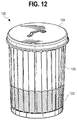


Classifications
-
- B—PERFORMING OPERATIONS; TRANSPORTING
- B01—PHYSICAL OR CHEMICAL PROCESSES OR APPARATUS IN GENERAL
- B01J—CHEMICAL OR PHYSICAL PROCESSES, e.g. CATALYSIS OR COLLOID CHEMISTRY; THEIR RELEVANT APPARATUS
- B01J20/00—Solid sorbent compositions or filter aid compositions; Sorbents for chromatography; Processes for preparing, regenerating or reactivating thereof
- B01J20/28—Solid sorbent compositions or filter aid compositions; Sorbents for chromatography; Processes for preparing, regenerating or reactivating thereof characterised by their form or physical properties
- B01J20/28014—Solid sorbent compositions or filter aid compositions; Sorbents for chromatography; Processes for preparing, regenerating or reactivating thereof characterised by their form or physical properties characterised by their form
- B01J20/28047—Gels
-
- B—PERFORMING OPERATIONS; TRANSPORTING
- B01—PHYSICAL OR CHEMICAL PROCESSES OR APPARATUS IN GENERAL
- B01J—CHEMICAL OR PHYSICAL PROCESSES, e.g. CATALYSIS OR COLLOID CHEMISTRY; THEIR RELEVANT APPARATUS
- B01J20/00—Solid sorbent compositions or filter aid compositions; Sorbents for chromatography; Processes for preparing, regenerating or reactivating thereof
- B01J20/22—Solid sorbent compositions or filter aid compositions; Sorbents for chromatography; Processes for preparing, regenerating or reactivating thereof comprising organic material
- B01J20/26—Synthetic macromolecular compounds
- B01J20/265—Synthetic macromolecular compounds modified or post-treated polymers
- B01J20/267—Cross-linked polymers
-
- B—PERFORMING OPERATIONS; TRANSPORTING
- B32—LAYERED PRODUCTS
- B32B—LAYERED PRODUCTS, i.e. PRODUCTS BUILT-UP OF STRATA OF FLAT OR NON-FLAT, e.g. CELLULAR OR HONEYCOMB, FORM
- B32B27/00—Layered products comprising a layer of synthetic resin
- B32B27/06—Layered products comprising a layer of synthetic resin as the main or only constituent of a layer, which is next to another layer of the same or of a different material
-
- B—PERFORMING OPERATIONS; TRANSPORTING
- B32—LAYERED PRODUCTS
- B32B—LAYERED PRODUCTS, i.e. PRODUCTS BUILT-UP OF STRATA OF FLAT OR NON-FLAT, e.g. CELLULAR OR HONEYCOMB, FORM
- B32B3/00—Layered products comprising a layer with external or internal discontinuities or unevennesses, or a layer of non-planar shape; Layered products comprising a layer having particular features of form
- B32B3/10—Layered products comprising a layer with external or internal discontinuities or unevennesses, or a layer of non-planar shape; Layered products comprising a layer having particular features of form characterised by a discontinuous layer, i.e. formed of separate pieces of material
-
- C—CHEMISTRY; METALLURGY
- C08—ORGANIC MACROMOLECULAR COMPOUNDS; THEIR PREPARATION OR CHEMICAL WORKING-UP; COMPOSITIONS BASED THEREON
- C08L—COMPOSITIONS OF MACROMOLECULAR COMPOUNDS
- C08L75/00—Compositions of polyureas or polyurethanes; Compositions of derivatives of such polymers
- C08L75/04—Polyurethanes
-
- C—CHEMISTRY; METALLURGY
- C08—ORGANIC MACROMOLECULAR COMPOUNDS; THEIR PREPARATION OR CHEMICAL WORKING-UP; COMPOSITIONS BASED THEREON
- C08G—MACROMOLECULAR COMPOUNDS OBTAINED OTHERWISE THAN BY REACTIONS ONLY INVOLVING UNSATURATED CARBON-TO-CARBON BONDS
- C08G2210/00—Compositions for preparing hydrogels
-
- Y—GENERAL TAGGING OF NEW TECHNOLOGICAL DEVELOPMENTS; GENERAL TAGGING OF CROSS-SECTIONAL TECHNOLOGIES SPANNING OVER SEVERAL SECTIONS OF THE IPC; TECHNICAL SUBJECTS COVERED BY FORMER USPC CROSS-REFERENCE ART COLLECTIONS [XRACs] AND DIGESTS
- Y10—TECHNICAL SUBJECTS COVERED BY FORMER USPC
- Y10T—TECHNICAL SUBJECTS COVERED BY FORMER US CLASSIFICATION
- Y10T428/00—Stock material or miscellaneous articles
- Y10T428/24—Structurally defined web or sheet [e.g., overall dimension, etc.]
- Y10T428/24802—Discontinuous or differential coating, impregnation or bond [e.g., artwork, printing, retouched photograph, etc.]
Definitions
- the present disclosure relates to articles of manufacture and components thereof that are used in conditions conducive to the accumulation of soil on the articles or components.
- Articles of various types are used for a variety of activities where the articles frequently are exposed to soil during use and thus often accumulate soil (e.g., wet or moist inorganic materials such as mud, dirt, and gravel, wet or moist organic material such as grass, turf, and excrement, and wet or moist combinations of inorganic and organic materials) when the articles are used under conditions where soil is present.
- soil e.g., wet or moist inorganic materials such as mud, dirt, and gravel, wet or moist organic material such as grass, turf, and excrement, and wet or moist combinations of inorganic and organic materials
- surfaces of the articles can accumulate soil: the soil on the articles can accumulate from direct contact with soil or from soil splattering on the articles.
- components of a vehicle can accumulate soil due to splattering from a roadway or surface being traveled over.
- objects used in playgrounds, in construction areas, or the garden can be subject to exposure to soil in the area of use by splattering or direct contact with unpaved surfaces.
- FIG. 1 is a view of a hydrogel-containing material defining an external surface of a mud flap.
- FIG. 2A is a view of a hydrogel-containing material defining a portion of the external surface of a traffic cone.
- FIG. 2B is a view of a hydrogel-containing material defining a portion of the external surface of a traffic cone displaying a message.
- FIG. 3 is a view of a hydrogel-containing material defining a portion of the external surface of a barricade.
- FIG. 4 is a view of a hydrogel-containing material defining a portion of the external surface of a suitcase.
- FIG. 5 is a view of a hydrogel-containing material defining a portion of the external surface of a toilet bowl.
- FIG. 6 is a view of a hydrogel-containing material defining a portion of the external surface of a tire side wall, wheel, and rim.
- FIG. 7 is a view of a hydrogel-containing material defining a portion of the external surface of a sign.
- FIG. 8 is a view of a hydrogel-containing material defining a portion of the external surface of a cooler.
- FIG. 9 is a view of a hydrogel-containing material defining a portion of the external surface of a windshield wiper.
- FIG. 10 is a view of a hydrogel-containing material defining a portion of the external surface of a roll of construction barricade tape.
- FIG. 11 is a view of a hydrogel-containing material defining a portion of the external surface of a stroller.
- FIG. 12 is a view of a hydrogel-containing material defining a portion of the external surface of a trash can.
- FIG. 13 is a view of a hydrogel-containing material defining a portion of the external surface of a license plate.
- FIG. 14 is a view of a hydrogel-containing material defining a portion of the external surface of a bumper.
- FIG. 15 is a view of a hydrogel-containing material defining a portion of the external surface of an all-terrain vehicle.
- FIG. 16 is a view of a hydrogel-containing material defining a portion of the external surface of a bicycle.
- FIG. 17 is a view of a hydrogel-containing material defining a portion of the external surface of a side view mirror.
- FIG. 18 is a view of a hydrogel-containing material defining a portion of the external surface of an above-ground swimming pool.
- FIG. 19A is a view of a portion of a hydrogel-containing material adjacent to a substrate body.
- FIG. 19B is a view of a portion of a hydrogel-containing material in a saturated state adjacent to a substrate body.
- FIG. 20A is a view of a portion of a hydrogel-containing material adjacent to a tie layer on a substrate body.
- FIG. 20B is a view of a portion of a hydrogel-containing material adjacent to a tie layer on a base coating on a substrate body.
- the present disclosure is directed to an article of manufacture, or components thereof having surface-defining materials that are capable of taking up water. It has been discovered that particular materials comprising a polymeric hydrogel when disposed on an externally-facing surface of an article can be effective at preventing or reducing the accumulation of soil on externally-facing surfaces of the article. Additionally, it has been found that the selection of certain polymeric hydrogel materials, in terms of their physical characteristics as measured using the test methods described herein, is useful to achieve specific performance benefits for the articles as disclosed herein. Accordingly, the present disclosure describes articles, components of articles, use of these polymeric hydrogel materials in articles and components of articles, as well as methods of manufacturing and using the articles and components of articles. The material which includes the polymeric hydrogel defines at least a portion of a surface of the articles.
- the material defines at least a portion of an exterior surface of the component or article that is externally-facing.
- preventing or reducing soil accumulation on articles can provide many benefits. Preventing or reducing soil accumulation on articles during use on unpaved, muddy, or wet surfaces can significantly affect the weight of accumulated soil adhered to the article during use. Preventing or reducing soil accumulation on an article can help improve safety. Further, preventing or reducing soil accumulation on the article can make it easier to clean the article following use.
- the present disclosure is directed to an article of manufacture.
- the article includes a first external surface and a material defining at least a portion of the first external surface.
- the material defining at least a portion of the first external surface includes a polymeric hydrogel.
- the hydrogel-containing material has a water uptake capacity at 24 hours greater than 40% by weight, as characterized by the Water Uptake Capacity Test with the Article Sampling Procedure.
- the hydrogel-containing material can be present in an area of the first external surface which is expected to collect, or be exposed to, soil during use of the article.
- the article can be a first component configured to be secured to a second component as part of a second article of manufacture such that the first external surface of the first component is externally facing on the second article of manufacture.
- the first component can be a component which prevents or reduces soil accumulation such that the second article of manufacture retains at least 10% less soil by weight as compared to a third article of manufacture which is identical to the second article except that the third article is free of the material comprising a polymeric hydrogel.
- the first component can also be a component which prevents or reduces soil accumulation such that the second article of manufacture retains at least 15% less soil by weight as compared to a third article of manufacture which is identical to the second article except that the third article is free of the material comprising a polymeric hydrogel.
- the hydrogel-containing material may reduce a force of adhesion of accumulated soil on the first component such that at least 10% less force is required to dislodge the accumulated soil from the first component of the second article as compared to a third article of manufacture which is identical to the second article except that the third article of manufacture is free of the hydrogel-containing material.
- the present disclosure is directed to a second article of manufacture comprising a first component having a first external surface where a material defines at least a portion of the first external surface in an area expected to collect, or be exposed to, soil during use of the article, where the material compositionally comprises a polymeric hydrogel, and has a water uptake capacity at 24 hours greater than 40% by weight, as characterized by the Water Uptake Capacity Test with the Article Sampling Procedure.
- the present disclosure is directed to methods of manufacturing the articles of the present invention comprising receiving a first component having a first external surface and a material defining at least a portion of the first external surface compositionally comprising a polymeric hydrogel, wherein the hydrogel-containing material has a water uptake capacity at 24 hours greater than 40% by weight, as characterized by the Water Uptake Capacity Test with the Article Sampling Procedure, receiving a second component, and securing at least a portion of the first component having the hydrogel-containing material to the second component to form the article such that the first external surface of the first component is externally facing on the article.
- the present disclosure is directed to methods of deflecting soil from an article having a first external surface and having a material defining at least a portion of the first external surface compositionally comprising a polymeric hydrogel, wherein the hydrogel-containing material has a water uptake capacity at 24 hours greater than 40% by weight, as characterized by the Water Uptake Capacity Test with the Article Sampling Procedure, the method comprising wetting the hydrogel-containing material and exposing the hydrogel-containing material to soil.
- the present disclosure is directed to use of a material compositionally comprising a polymeric hydrogel, the hydrogel-containing material having a water uptake capacity at 24 hours greater than 40% by weight, as characterized by the Water Uptake Capacity Test with the Article Sampling Procedure, to deflect soil from a first external surface of an article, by providing the hydrogel-containing material on at least a portion of the first external surface of the article, wetting the hydrogel-containing material, and exposing the hydrogel-containing material to soil.
- the method may further include pressing the wetted hydrogel-containing material to at least partially compress the wetted hydrogel-containing material and releasing the article from contact to release the compression from the wet hydrogel-containing material.
- soil can include any of a variety of wet or moist materials commonly present on a ground, roadway, walkway, construction area, garden, plumbing fixture, or playing surface and which might otherwise adhere to an external surface of an article.
- Soil can include wet or moist inorganic materials such as mud, sand, dirt, and gravel; wet or moist organic matter such as grass, turf, leaves, other vegetation, and excrement; and combinations of wet or moist inorganic and organic materials such as clay.
- the hydrogel-containing material of the present disclosure when sufficiently wet with water (including water containing dissolved, dispersed or otherwise suspended substances) can provide compressive compliance and/or expulsion of water taken up by the hydrogel-containing material.
- the compressive compliance of the hydrogel-containing material when wet, the expulsion of liquid from the hydrogel-containing material when wet, or more preferably both in combination can disrupt the adhesion of soil to the article and cohesion of the soil particles to each other.
- This disruption in the adhesion and/or cohesion of soil is believed to be a responsible mechanism for preventing (or otherwise reducing) the soil from accumulating on the surface of the article (due to the presence of the wet hydrogel-containing material), or at least allows the soil to be removed with less effort (e.g., easier to wipe, brush, or otherwise physically remove).
- preventing soil from accumulating on articles can provide numerous benefits, such as maintaining debris-free surfaces or preventing weight accumulation on the articles.
- “externally-facing” refers to the surface of a component which is intended to be externally-facing during use of the article, and not necessarily the surface which is externally-facing during various manufacturing steps.
- hydrogel-containing material refers to a material compositionally comprising a polymeric hydrogel.
- film includes one or more layers disposed on at least a portion of a surface, where the layer(s) can be provided as a single continuous segment on the surface or in multiple discontinuous segments on the surface, and is not intended to be limited by any application process (e.g., co-extrusion, injection molding, lamination, spray coating, etc.).
- weight refers to a mass value, such as having the units of grams, kilograms, and the like.
- concentration ranging from 40% by weight to 60% by weight includes concentrations of 40% by weight, 60% by weight, and all water uptake capacities between 40% by weight and 60% by weight (e.g., 40.1%, 41%, 45%, 50%, 52.5%, 55%, 59%, etc . . . ).
- the term “receiving”, such as for “receiving the component”, when recited in the claims, is not intended to require any particular delivery or receipt of the provided item. Rather, the term “receiving” is merely used to recite items that will be referred to in subsequent elements of the claim(s), for purposes of clarity and ease of readability.
- the terms “about” and “substantially” are used herein with respect to measurable values and ranges due to expected variations known to those skilled in the art (e.g., limitations and variability in measurements).
- the terms “at least one” and “one or more of” an element are used interchangeably, and have the same meaning that includes a single element and a plurality of the elements, and may also be represented by the suffix “(s)” at the end of the element.
- “at least one polyurethane”, “one or more polyurethanes”, and “polyurethane(s)” may be used interchangeably and have the same meaning.
- the article of manufacture of the present disclosure may be designed for a variety of uses, such as transportation, vehicle safety, storage, recreation, leisure, waste disposal, construction, gardening, or traffic control.
- Some articles of manufacture, or a component thereof, as disclosed herein, are intended for outdoor use on unpaved surfaces (in part or in whole), such as on a ground surface including one or more of wet or moist grass, turf, gravel, sand, dirt, clay, mud, and the like.
- articles of manufacture and components thereof as disclosed herein are intended for indoor applications, such as indoor plumbing.
- the article of manufacture is a plumbing article or a component of a plumbing article, a component of a vehicle, a transportation container or a component of a transportation container, a refuse container or a component of a refuse container, an article of construction equipment or a component of an article of construction equipment, an article of play equipment or a component of an article of play equipment, an article of landscaping equipment or a component of an article of landscaping equipment, or an article of furniture or a component of an article of furniture.
- components/articles include a mud flap, a windshield wiper, a license plate, a rim of a wheel, a tire sidewall, a hubcap, a bumper, a side-view mirror, a piece of luggage, a cooler, a bag, including a mail delivery bag, a stroller, a mail delivery cart, a cone, a pylon, a sign, outdoor tape, a barricade, toys, outdoor play equipment and a toilet (including the bowl or tank).
- FIGS. 1-18 illustrate examples of articles of manufacture having a hydrogel-containing material defining at least a portion of an external surface.
- FIG. 1 illustrates a view of a mud flap 10 where a hydrogel-containing material 18 defines the mud flap surface 12 .
- the mud flap 10 has a front face 12 , a rear face 14 and a planar attachment tab 11 .
- the front face 12 may be oriented toward a vehicle tire when mounted on a vehicle.
- the front face 12 or rear face 14 may have the hydrogel-containing material 18 in selected locations, or the hydrogel-containing material 18 may define an entire surface of the mud flap, as shown for the front face 12 in FIG. 1 .
- the planar attachment tab 11 may extend from a top portion 13 of the mud flap 10 .
- the planar attachment tab 11 may include a pair of attachment apertures 15 for attaching the mud flap to a vehicle.
- the mud flap 10 may be made of rubber or other suitable durable material. Alternatively, portions of the mud flap may be made from the material comprising the polymeric hydrogel as disclosed herein.
- FIG. 2A illustrates a traffic cone 20 having a hydrogel-containing material 22 defining a portion of the external surface 26 .
- the traffic cone 20 may be made of concrete, polymer material (e.g., thermoplastic, polyvinylchlorides), or rubber. Traffic cone 20 is shown in a cone shape with a mostly square base 24 , although the base and sides of the traffic cone may have other shapes (e.g., triangular base, pyramidal shaped cone). Traffic cone 20 may alternatively be referred to as a traffic pylon, road cone, highway cone, safety cone, or construction cone. As shown in FIG.
- the traffic cone 20 a may bear images 28 a or writings 22 a on the external surface 26 a to communicate a hazard warning.
- a hydrogel-containing material may define the entire exterior surface 26 / 26 a of the traffic cone 20 / 20 a , or may define selected portions of the exterior surface.
- the images 28 a and/or writings 22 a may be composed of the hydrogel-containing material and the remainder of the surface 26 a not so covered, or vice versa.
- FIG. 3 illustrates a barricade 30 , with an optional light 34 , having a hydrogel-containing material 32 defining a portion of the external surface 36 . Alternating orange and white diagonal stripes can be present in area 38 to communicate a hazard.
- the hydrogel-containing material defines only a lower portion of the barricade 30 in FIG. 3
- the hydrogel-containing material may also define the remaining portions of the external surface 36 .
- Barricade 30 is shown with a collapsible A-frame structure for illustration purposes only, as other configurations may also be used, such as a barrel, a sawhorse, or other commonly used forms.
- FIG. 4 illustrates a piece of luggage, in the form of a wheeled suitcase 40 .
- Suitcase 40 is shown with wheels 44 and handles 48 a and 48 b .
- Hydrogel-containing material 42 is shown defining a portion of external surface 46 .
- the hydrogel-containing material may also be used with other forms of luggage such as any bag, case, or container to hold an article during transit (e.g., trunk, tote, purse, briefcase, mail delivery bag).
- Suitable materials for luggage include nylon, leather, polycarbonate, PVC, or other polymeric materials, to which the hydrogel-containing material can be adhered.
- FIG. 5 illustrates a plumbing fixture, specifically a toilet 50 , with a bowl 54 and tank 58 .
- a hydrogel-containing material 52 defining a portion of the external surface 56 .
- the hydrogel-containing material may also be used with other types of plumbing fixtures, such as bidets, fountains, sinks, etc.
- Suitable materials for plumbing fixtures include porcelain, ceramic, stone (e.g., marble, granite), enameled cast iron, vitreous china, metal, plastic.
- the hydrogel-containing material can be adhered to any of these surfaces.
- FIG. 6 illustrates a tire 60 mounted on a wheel 64 , the wheel having a rim 68 .
- a hydrogel-containing material 62 is shown defining a portion of a side wall 66 of the tire 60 , the wheel 64 , and the rim 68 .
- the hydrogel-containing material may be used with tires from other types of vehicles (e.g., trucks, airplanes, bicycles, motorcycles, ATVs).
- a hydrogel-containing material can also define a portion of the surface of a hubcap that would be externally facing when mounted on a vehicle.
- FIG. 7 illustrates a sign, shown as a highway road sign 70 .
- Sign 70 has an external surface 76 with a hydrogel-containing material 72 defining portions of the external surface.
- the message 74 of the sign may be composed of the hydrogel-containing material.
- a conventional highway road sign is shown, the sign may take other forms.
- a barricade or traffic cone as discussed above, may serve the dual purpose of a sign to convey information and to impede or direct the flow the traffic.
- FIG. 8 illustrates a cooler 80 having a handle 84 , a lid 85 , an external surface 86 and a hydrogel-containing material 82 defining a portion of the external surface 86 .
- the hydrogel-containing material at the surface of a cooler can advantageously help maintain its surface free of contaminating soil.
- the term “cooler” includes any insulated container used for food or beverages. Suitable materials for coolers include metal, vinyl, plastics and foam (e.g., expanded polystyrene foam). The hydrogel-containing material can be adhered to any of these surfaces.
- FIG. 9 illustrates a windshield wiper 90 with a blade 94 , an arm 95 , an external surface 96 and a hydrogel-containing material 92 defining a portion of the external surface 96 on the arm 95 .
- the hydrogel-containing material is shown on the arm 95 , it also may define a portion of the surface of the blade 94 .
- the surface of a windshield wiper blade is often made of rubber whereas the arm portion if often made of galvanized steel.
- the hydrogel-containing material can be adhered to either of these types of surfaces.
- FIG. 10 illustrates a roll of tape 100 , which may be, for example construction barricade tape, barrier tape, hazard tape, caution tape etc.
- the tape 100 is shown with an external facing surface 106 having a hydrogel-containing material 102 defining a portion of the external surface 106 .
- Construction barricade or hazard tape having a hydrogel-containing material at the surface provides the advantage over ordinary construction barricade or hazard tape of shedding soil that might otherwise obscure important information or a safety message on the tape.
- Suitable materials for making construction barricade/hazard tape include tear-proof plastic materials such as polyethylene, polypropylene, or nylon, to which a hydrogel-containing material can be adhered.
- FIG. 11 illustrates a vehicle in the form of a stroller 110 having a frame, 111 , seat 113 , wheels 114 a and 114 b , and handles 118 .
- a hydrogel-containing material 112 is shown defining portions of the external surface 116 and the surface of the wheel 114 a .
- the hydrogel-containing material can be used with strollers having any number of wheels.
- Other suitable vehicle types include, for example, a mail delivery cart.
- FIG. 12 illustrates a refuse container in the form of a garbage can 120 having a lid 124 , an external surface 126 , and a hydrogel-containing material 122 defining a portion of the external surface 126 .
- Other types of refuse containers that can be used with the hydrogel-containing material include recycling bins or dumpsters, and may be wheeled or stationary, and are commonly made of metals or plastics, to which the hydrogel-containing material can be adhered.
- FIG. 13 illustrates a license plate 130 having hydrogel-containing material 132 defining a portion of an external surface 136 designed to face away from a vehicle.
- the hydrogel-containing material may also, or alternatively, define a portion of the back surface of a license plate.
- License plates having a hydrogel-containing material at the surface provide the advantage over an ordinary license plate of shedding soil that might otherwise obscure vehicle identification information.
- License plates are commonly made of metal, e.g., aluminum, to which a hydrogel-containing material can be adhered.
- FIG. 14 illustrates a vehicle bumper 140 having a hydrogel-containing material 142 defining a portion of an external surface 146 .
- Suitable materials for the external surface of a bumper, to which a hydrogel-containing material can be adhered include metals like steel and aluminum, plastics (e.g., thermoplastic olefins, polycarbonates, polypropylenes, polyurethanes, polyamides, or blends of these), rubber, or fiberglass.
- FIG. 15 illustrates a vehicle that is an all-terrain vehicle 150 having front and rear tires 154 a / 154 b and a hydrogel-containing material 152 defining various locations on the external surface of the vehicle 150 , such as on the underside of fender 156 or the side walls of the tires 154 a / 154 b .
- a hydrogel-containing material can adhere to the material forming the fender, commonly plastics such as polyethylene or polypropylene, and the material forming the tires, such as rubber.
- FIG. 16 illustrates a vehicle that is a bicycle 160 having a frame 168 , a mirror 164 and a hydrogel-containing material 162 defining portions of the external surface 166 of the frame 168 and the mirror 164 .
- suitable vehicles include those with greater or lesser numbers of wheels.
- Suitable materials for the frame, to which the hydrogel-containing material can be adhered include carbon steel, chrome molybdenum steel, aluminum, titanium, and carbon fiber.
- FIG. 17 illustrates a side view mirror 170 having a hydrogel-containing material 172 defining a portion of an external surface 176 of the mirror.
- the location of the hydrogel-containing material in FIG. 17 is purely for illustration purposes as it may be disposed elsewhere on a side view mirror, e.g., on at least a portion of a back surface of a side view mirror.
- FIG. 18 illustrates play equipment in the form of an above-ground swimming pool 180 having a hydrogel-containing material 182 defining a portion of the external surface 186 .
- Suitable materials for a swimming pool that a hydrogel-containing material can be adhered to include fiberglass, heavy duty aluminum, galvanized steel, or other steel alloy that may be coated (e.g., vinyl) to prevent rust.
- the material can extend across an entire externally-facing surface such as an entire side surface of an article, or in alternative aspects, the material can be present as one or more segments that are present at separate, discrete locations on an externally-facing side or surface of an article or component of an article.
- the articles and components of the invention may be manufactured according to conventional techniques (e.g., molding, extrusion, thermoforming).
- the components and articles can be manufactured with one or more layers, may be produced from any suitable material(s), and can provide a good interfacial bond to the hydrogel-containing material, as discussed below.
- the hydrogel-containing material 192 may be disposed directly adjacent a substrate body 194 of an article 190 .
- suitable materials for the substrate body include one or more polymeric materials such as thermoplastic elastomers; thermoset polymers; elastomeric polymers; silicone polymers; natural and synthetic rubbers; composite materials including polymers reinforced with carbon fiber and/or glass; natural leather; natural stone; porcelain materials; ceramic materials (e.g., of alumina and glass-ceramics and the like); metallic materials (including metals, metal alloys, and metal oxides); glass materials; and combinations thereof.
- polymeric substrate materials include polyurethane and its copolymers, silicone and its copolymers, ethylene vinyl-acetate, polyvinyl chloride, polyolefins, cellulosics, polyamides, polytetrafluoroethylenes, polyesters, polycarbonates, polysulfones, acrylonitrile butadiene styrene copolymers, and acrylics.
- metals and alloys include those based on tantalum, gold, magnesium, aluminum, titanium, steel (e.g., stainless steel), platinum-iridium alloy, nickel-chrome alloy, nickel-titanium alloy (e.g. nitinol), cobalt-chrome alloy, and the like.
- the substrate can comprise alloys of cobalt, nickel, chromium, and molybdenum. (e.g., 35% cobalt, 35% nickel, 20% chromium, and 10% molybdenum; or 50% cobalt, 20% nickel, 20% chromium, and 10% molybdenum).
- alloys of cobalt, nickel, chromium, and molybdenum e.g., 35% cobalt, 35% nickel, 20% chromium, and 10% molybdenum; or 50% cobalt, 20% nickel, 20% chromium, and 10% molybdenum.
- the component or article is manufactured with a substrate surface made from one or more polymeric materials having similar chemistries to that of the hydrogel-containing material.
- the substrate and the hydrogel-containing material can both comprise or consist essentially of polymers having the same or similar functional groups, and/or can comprise or consist essentially of polymers having the same or similar levels of polarity.
- the substrate and the hydrogel-containing material can both comprise or consist essentially of one or more polyurethanes (e.g., thermoplastic polyurethanes), one or more polyamides (e.g., thermoplastic polyamides), one or more polyethers (e.g., thermoplastic polyethers), one or more polyesters (e.g., thermoplastic polyesters), or the like.
- the similar chemistries can be beneficial for improving manufacturing compatibilities between the hydrogel-containing material and the substrate, and also for improving their interfacial bond strength.
- tie layers 206 can be applied between the substrate 204 and the hydrogel-containing material 202 in order to improve their interlayer bonding.
- Tie layers can be formed of materials having some functional groups or chain fragments which have compatibility with the first layer material and other groups or chain fragments which have compatibility with the second layer material.
- Materials which have been employed for tie layers include functionally modified polyolefins (for example, Plexar®, available from Equistar Chemicals, Houston, Tex.) or an adhesive resin such as Bynel® or Nucral® (an ethylene methacrylic acid copolymer) available from DuPont, Wilmington, Del.
- a surface to be coated with the hydrogel-containing material may also be pre-treated with a polymer to form a monolayer of polymer on the surface.
- Pretreating the surface can result in better adhesion of the hydrogel-containing material to the substrate (i.e., a primer).
- Pre-treatment may be useful in situations where the surface is especially difficult to adhere to.
- multiple layers of primer coats may be applied to the surface to provide specific functionality or improved performance to the surface. Any polymer known to one of skill in the art may be used for pre-treating a surface.
- a derivatized 4-arm PEG e.g., dihydroxyhydrocinnamic acid-modified 4-arm PEG
- poly(N-substituted glycine) polymers poly(N-substituted glycine) polymers
- poly(zwitterion) polymers such as poly(methacryloylphosphatidylcholine) or sulfobetaine or carboxybetaine containing acrylate polymers
- polysaccharides such as hyaluronic acid or dextran
- the substrate surface of a component or article may be coated with a base coating layer and a hydrogel-containing material disposed on the base coating layer.
- the base coating layer may be any material suitable for forming a coating layer. Non-limiting examples include epoxy coatings, silicone coatings, epoxy-silicone coatings, etc.
- the base coating layer can be formed from an epoxy resin composition.
- the epoxy coating is generally formed by curing an epoxy resin composition that comprises an epoxy resin and an amine-based curing agent for curing the epoxy resin.
- the epoxy resin can be chosen from any suitable epoxy resin including, but not limited to, bisphenol epoxy resin, glycidylester epoxy resin, glycidylamine epoxy resin, phenol novolac epoxy resin, cresol epoxy resin, dimer acid modified epoxy resin, aliphatic epoxy resin, alicyclic epoxy resin, epoxidized oil epoxy resin, etc., and combinations of two or more thereof.
- suitable bisphenol epoxy resins include bisphenol A-type and F-type resins.
- the base coat composition also generally includes an amine-based curing agent for curing the epoxy resin. Examples of suitable amine-based curing agents include, for example, modified Mannich amines formed by Mannich condensation reaction of phenols, formalin, and amine compounds, aliphatic polyamine, etc.
- the amine-based curing agent may be present in an amount such that the number of amino groups of the amine-based curing agent is chemically equivalent to the number of epoxy groups of the epoxy resin.
- the curing agent can be present in an amount providing an amino group to epoxy group ratio of 0.35:1 to 0.9:1; even 0.4:1 to 0.8:1.
- the amine-based curing agent can be present in an amount of about 10 to about 80 parts by weight with respect to 100 parts by weight of the epoxy resin.
- numerical values can be combined to form new and non-disclosed ranges.
- Other suitable base coating materials include, but are not limited to, room-temperature curable silicone coatings, epoxy-silicone coatings, and silicone epoxy hybrid.
- the base coating can comprise an epoxy modified adhesion promoter.
- the epoxy modified adhesion promoter can comprise a curable amino silicone material and an epoxy compound, where the epoxy modified adhesion promoter is not fully compatible with the base polymer of the base coating.
- the base coating can comprise the epoxy modified adhesion promoter in an amount of from about 0.1 weight percent to about 20 weight percent; from about 0.3 weight percent to about 5 weight percent; even from about 0.5 weight percent to about 2 weight percent.
- numerical values can be combined to form new and nondisclosed ranges.
- the base coat can be applied to and adhere to a variety of surfaces including, but not limited to metal (e.g., steel, iron, aluminum, etc.), fiberglass, wood, fiber-reinforced plastic, concrete etc.
- the coating system can be applied to a target substrate by applying the base coating layer to the target substrate, applying a hydrogel-containing composition to the base coating layer prior to the base coating being fully cured, and curing the coating compositions.
- the respective coating compositions can be applied by any suitable methods including, but not limited to, by brush, by roller, by spraying, by dipping, etc. Curing can be accomplished by any suitable curing mechanism including, for example, moisture condensation.
- the base coating and the hydrogel-containing composition can be applied to provide layers of a desired thickness (e.g., a base coating and a hydrogel-containing material layer).
- a desired thickness e.g., a base coating and a hydrogel-containing material layer.
- the base coating has a thickness of from 50 micrometers to about 500 micrometers; from about 100 micrometers to about 300 micrometers; even from about 150 micrometers to about 200 micrometers.
- the hydrogel-containing material can have a thickness of from 50 micrometers to about 400 micrometers; from about 100 micrometers to about 300 micrometers; even from about 150 micrometers to about 250 micrometers between the base coating and the hydrogel-containing material.
- the hydrogel-containing material can be disposed on a substrate surface without a base coating or tie coat layer.
- the hydrogel-containing material can be adhered directly to the base coating composition, for example, in situations where the hydrogel-containing material adheres sufficiently to the base coating composition such that an adhesive or binding layer such as a tie-coat layer is not required.
- the hydrogel-containing material 202 is disposed over a tie-coat layer 206 that covers a base coating 208 that covers the substrate body 204 .
- the hydrogel-containing material defining at least a portion of the first external surface can be present in the form of a thin film.
- suitable average thicknesses for a film in a dry state range from 0.025 millimeters to 5 millimeters, from 0.5 millimeters to 3 millimeters, from 0.25 millimeters to 1 millimeter, from 0.25 millimeters to 2 millimeters, from 0.25 millimeters to 5 millimeters, from 0.15 millimeters to 1 millimeter, from 0.15 millimeters to 1.5 millimeters, from 0.1 millimeters to 1.5 millimeters, from 0.1 millimeters to 2 millimeters, from 0.1 millimeters to 5 millimeters, from 0.1 millimeters to 1 millimeter, or from 0.1 millimeters to 0.5 millimeters.
- the thickness of the hydrogel-containing material is measured between the interfa
- polymer refers to a molecule having polymerized units of one or more species of monomer.
- polymer is understood to include both homopolymers and copolymers.
- copolymer refers to a polymer having polymerized units of two or more species of monomers, and is understood to include terpolymers.
- reference to “a” polymer or other chemical compound refers to one or more molecules of the polymer or chemical compound, rather than being limited to a single molecule of the polymer or chemical compound.
- the one or more molecules may or may not be identical, so long as they fall under the category of the chemical compound.
- a polylaurolactam is interpreted to include one or more polymer molecules of the polylaurolactam, where the polymer molecules may or may not be identical (e.g., different molecular weights and/or isomers).
- the material defining at least a portion of the first external surface composition ally comprises a polymeric hydrogel.
- the presence of the polymeric hydrogel allows the hydrogel-containing material to absorb or otherwise take up water.
- the material can include a polymeric hydrogel that can quickly take up water from an external environment (e.g., from mud, wet grass, presoaking, and the like).
- this uptake of water by the hydrogel-containing material causes the polymeric hydrogel of the material to untwist and stretch under the pressure of the water, while retaining its overall structural integrity through its crosslinking (physical or covalent crosslinking).
- This stretching and expansion of the polymeric hydrogel can cause the hydrogel-containing material to swell and become more compliant (e.g., compressible, expandable, and stretchable).
- compliant refers to the stiffness of an elastic material, and can be determined by the storage modulus of the hydrogel-containing material. The lower the degree of crosslinking in a material, or the greater the distance between crosslinks in a material, the more compliant the material.
- the swelling of the hydrogel-containing material can be observed as an increase in thickness from the dry-state thickness of the hydrogel-containing material (e.g., 195 shown in FIG. 19A ), through a range of intermediate-state thicknesses as additional water is absorbed, and finally to a saturated-state thickness (e.g., 197 shown in FIG. 19B ), which is an average thickness of the hydrogel-containing material when fully saturated with water.
- the saturated-state thickness for the fully saturated hydrogel-containing material can be greater than 150%, greater than 200%, greater than 250%, greater than 300%, greater than 350%, greater than 400%, or greater than 500%, of the dry-state thickness for the same hydrogel-containing material.
- the saturated-state thickness for the fully saturated hydrogel-containing material can range from 150% to 500%, from 150% to 400%, from 150% to 300%, or from 200% to 300% of the dry-state thickness for the same hydrogel-containing material.
- suitable average thicknesses for the hydrogel-containing material in a wet state range from 0.2 millimeters to 10 millimeters, from 0.2 millimeters to 5 millimeters, from 0.2 millimeters to 2 millimeters, from 0.25 millimeters to 2 millimeters, or from 0.5 millimeters to 1 millimeter.
- the hydrogel-containing material can quickly take up water that is in contact with the hydrogel-containing material.
- the hydrogel-containing material can take up water due to splashing or spraying from mud, wet pavement, or wet grass.
- the hydrogel-containing material can be pre-conditioned with water so that the hydrogel-containing material is partially or fully saturated, such as by spraying or soaking with water prior to use.
- the total amount of water that the hydrogel-containing material can take up depends on a variety of factors, such as its composition (e.g., its hydrophilicity), its cross-linking density, its thickness, and its interfacial bond to the substrate. For example, it is believed that a hydrogel-containing material having a higher hydrophilicity and a lower cross-linking density can increase the maximum water uptake. On the other hand, the interfacial bond between the hydrogel-containing material and the substrate can potentially restrict the swelling of the hydrogel-containing material due to its relatively thin dimensions.
- the maximum water uptake and the maximum percent swell of the hydrogel-containing material can differ between the hydrogel-containing material in a neat state (e.g., isolated film by itself) and the hydrogel-containing material as present on the substrate.
- the water uptake capacity and the water uptake rate of the hydrogel-containing material are dependent on the size and shape of its geometry, and are typically based on the same factors. However, it has been found that, to account for part dimensions when measuring water uptake capacity, it is possible to derive an intrinsic, steady-state material property. Therefore, conservation of mass can be used to define the ratio of water weight absorbed to the initial dry weight of the hydrogel-containing material at very long time scales (i.e. when the ratio is no longer changing at a measurable rate.)
- the water uptake rate is transient and is preferably defined kinetically.
- the three primary factors for water uptake rate for a given part geometry include time, thickness, and the exposed surface area available for water flux.
- the weight of water taken up can be used as a metric of water uptake rate, but the water flux can also be accounted for by normalizing by the exposed surface area.
- a thin rectangular film can be defined by 2 ⁇ L ⁇ W, where L is the length of one side and W is the width. The value is doubled to account for the two major surfaces of the film, but the prefactor can be eliminated when the film has a non-absorbing, structural layer secured to one of the major surfaces.
- Normalizing for thickness and time can require a more detailed analysis because they are coupled variables. Water penetrates deeper into the material as more time passes in the experiment, and therefore, there is more functional (e.g., absorbent) material available at longer time scales.
- One dimensional diffusion models can explain the relationship between time and thickness through material properties, such as diffusivity. In particular, the weight of water taken up per exposed surface area should yield a straight line when plotted against the square root of time.
- the compliance of the hydrogel-containing material may also increase from being relatively stiff (dry state) to being increasingly stretchable, compressible, and malleable (in partially and fully saturated states).
- the increased compliance accordingly can allow the hydrogel-containing material to readily compress under an applied pressure (e.g., splashing mud, spraying water, applied pressure during cleaning), which can quickly expel at least a portion of its retained water (depending on the extent of compression). While not wishing to be bound by theory, it is believed that this combination of compressive compliance and water expulsion can disrupt the adhesion and cohesion of soil, which prevents or otherwise reduces the accumulation of soil on the component or article.
- the compressed hydrogel-containing material may also be capable of quickly re-absorbing water when the compression is released.
- the hydrogel-containing material can dynamically expel and re-uptake water.
- the hydrogel-containing material can continue to prevent soil accumulation over extended periods of time, particularly when there is water available for re-uptake.
- the incorporation of the hydrogel-containing material to the component or article is believed to disrupt the adhesion and cohesion of soil to the component or article, thereby reducing the adhesive/cohesive activation energies otherwise required to induce the flow of the soil particles.
- the article can be provided in a pre-conditioned state where the hydrogel-containing material is partially or fully saturated with water. This can be accomplished in a variety of manners, such as spraying the article with water, soaking the article in water, or otherwise exposing the hydrogel-containing material to water in a sufficient amount for a sufficient duration. Alternatively (or additionally), when water or wet substances are present on the ground, the components and articles of the invention can be used in a conventional manner until the hydrogel-containing material absorbs a sufficient amount of water or wet substances to reach its pre-conditioned state.
- the increased compliance is believed, under some conditions, to lead to inhomogeneous shear states in the soil when compressed in the normal or vertical direction, which can also lead to increased interfacial shear stresses and a decrease in soil accumulation.
- the hydrogel-containing material can swell during water re-uptake (and also during initial uptake) in a non-uniform manner. This may result from the uptaken water tending to travel in a path perpendicular to the hydrogel-containing material's surface, and therefore not migrating substantially in a transverse direction generally in the plane of the hydrogel-containing material once absorbed.
- This uneven, perpendicular water uptake and relative lack of transverse water intra-film transport can form an irregular or rough texture or small ridges for the hydrogel-containing material's surface. The presence of these small ridges on the irregular surface from the non-uniform swelling is also believed to potentially further disrupt the adhesion of the soil at the hydrogel-containing material, and thus may loosen the soil and further promote soil shedding.
- the increased compliance of the hydrogel-containing material may allow the hydrogel-containing material to be more malleable and stretchable when swelled.
- the increased elongation or stretchiness of the hydrogel-containing material when partially or fully saturated with water can increase the extent that the hydrogel-containing material stretches during this flexing, which can induce additional shear on any adhered soil. Compression forces on the hydrogel-containing material can help to expel the water and can be particularly strong at points of contact.
- hydrogel-containing material related to compression/expansion compliance and the elongation compliance are believed to be closely interrelated, and they can depend on the same hydrogel-containing material properties (e.g., a hydrophilic hydrogel-containing material able to rapidly take up and expel relatively large amounts of water compared to the hydrogel-containing material's size or thickness).
- hydrogel-containing material properties e.g., a hydrophilic hydrogel-containing material able to rapidly take up and expel relatively large amounts of water compared to the hydrogel-containing material's size or thickness.
- a distinction is in their mechanisms for preventing soil accumulation, for example surface adhesion disruption versus shear inducement.
- the water re-uptake is believed to potentially act to quickly expand or swell the hydrogel-containing material after being compressed to expel water. Rapid water uptake can provide a mechanism for replenishing the hydrogel-containing material water content.
- Rapid replenishment of the hydrogel-containing material water content can restore the hydrogel-containing material to its compliant state, returning it to a state where stretching and shearing forces can contribute to soil shedding.
- replenishment of the hydrogel-containing material water content can permit subsequent water expulsion to provide an additional mechanism for preventing soil accumulation (e.g., application of water pressure and modification of soil rheology).
- the water absorption/expulsion cycle can provide a unique combination for preventing soil accumulation on the component or article.
- the hydrogel-containing material defining at least a portion of a first external surface of a component of an article is wetted and exposed to soil.
- the wetting and exposure to soil may take place simultaneously or the hydrogel-containing material may be first wetted followed by exposure to soil.
- at least a portion of the water in the soil migrates from the soil into the hydrogel-containing material, thus wetting the hydrogel-containing material. Wiping, spraying, or splashing a wetted hydrogel-containing material exposed to soil can result in the compression/expansion compliance to shed soil from the hydrogel-containing material as discussed above.
- the hydrogel-containing material In addition to being effective at preventing soil accumulation, the hydrogel-containing material has also been found to be sufficiently durable for its intended use. Durability is based on the nature and strength of the interfacial bond of the hydrogel-containing material to the substrate, as well as the physical properties of the hydrogel-containing material itself. For many examples, during the useful life of the hydrogel-containing material, the hydrogel-containing material may not delaminate from the substrate, and it can be substantially abrasion- and wear-resistant (e.g., maintaining its structural integrity without rupturing or tearing).
- the dry and wet states of the hydrogel-containing material can allow the hydrogel-containing material to dynamically adapt in durability to account for dry and wet conditions.
- the hydrogel-containing material when used in dry conditions, can also be dry, which renders it stiffer and more wear resistant.
- the hydrogel-containing material can quickly take up water to achieve a partially or fully saturated condition, which may be a swollen and/or compliant state.
- the hydrogel-containing material is particularly beneficial for use in wet environments, such as with muddy surfaces, grass surfaces, and the like.
- the material of the present disclosure can compositionally include a polymeric hydrogel that allows the material to take up water.
- take up refers to the drawing of a liquid (e.g., water) from an external source into the hydrogel-containing material, such as by absorption, adsorption, or both.
- water refers to an aqueous liquid that can be pure water, or can be an aqueous carrier with lesser amounts of dissolved, dispersed or otherwise suspended substances (e.g., particulates, other liquids, and the like).
- the ability of the hydrogel-containing material to uptake water and to correspondingly swell and increase in compliance can reflect its ability to prevent soil accumulation during use.
- the hydrogel-containing material takes up water (e.g., through absorption, adsorption, capillary action, etc.)
- the water taken up transitions the hydrogel-containing material from a dry, relatively more rigid state to a partially or fully saturated state that is relatively more compliant.
- the hydrogel-containing material can reduce in volume, such as to expel at least a portion of its water.
- This expelled water is believed to reduce the adhesive/cohesive forces of soil particles at the hydrogel-containing material, which taken alone, or more preferably in combination with the compliance, can prevent or otherwise reduce soil accumulation. Accordingly, the hydrogel-containing material can undergo dynamic transitions during use or with the application of force, and these dynamic transitions can result in forces which dislodge accumulated soil or otherwise reduce soil accumulation.
- the components and articles can be characterized in terms of the hydrogel-containing material's water uptake capacity and rate, swell capacity, contact angle when wet, coefficient of friction when wet and dry, reduction in storage modulus from dry to wet, reduction in glass transition temperature from dry to wet, and the like.
- Article Sampling Procedure “Co-Extruded Film Sampling Procedure”, “Neat Film Sampling Procedure”, “Neat Material Sampling Procedure”, “Water Uptake Capacity Test”, “Water Uptake Rate Test”, “Swelling Capacity Test”, “Contact Angle Test”, “Coefficient of Friction Test”, “Storage Modulus Test”, “Glass Transition Temperature Test”, “Impact Energy Test”, and “Soil Shedding Test” as used herein refer to the respective sampling procedures and test methodologies described in the Property Analysis And Characterization Procedure section below. These sampling procedures and test methodologies characterize the properties of the recited materials, films, articles and components, and the like, and are not required to be performed as active steps in the claims.
- the hydrogel-containing material as secured to, present in, or defining a portion of an article or component has a water uptake capacity at 24 hours greater than 40% by weight, as characterized by the Water Uptake Capacity Test with the Article Sampling Procedure, each as described below. It is believed that if a particular material is not capable of taking up greater than 40% by weight in water within a 24-hour period, either due to its water uptake rate being too slow, or its ability to take up water is too low (e.g., due to its thinness, not enough material may be present, or the overall capacity of the material to take up water is too low), then the material will not be effective in preventing or reducing soil accumulation.
- the hydrogel-containing material as secured to, present in, or defining a portion of an article or component has a water uptake capacity at 24 hours greater than 50% by weight, greater than 100% by weight, greater than 150% by weight, or greater than 200% by weight. In other aspects, the material as secured to, present in, or defining a portion of an article or component has a water uptake capacity at 24 hours less than 900% by weight, less than 750% by weight, less than 600% by weight, or less than 500% by weight.
- the hydrogel-containing material as secured to, present in, or defining a portion of an article or component has a water uptake capacity at 24 hours ranging from 40% by weight to 900% by weight.
- the hydrogel-containing material can have a water uptake capacity ranging from 100% by weight to 900% by weight, from 100% by weight to 750% by weight, from 100% by weight to 700% by weight, from 150% by weight to 600% by weight, from 200% by weight to 500% by weight, or from 300% by weight to 500% by weight.
- water uptake capacities are determined by the Water Uptake Capacity Test with the Article Sampling Procedure, and can apply to samples taken at any suitable representative location along the hydrogel-containing material, where the samples may be acquired pursuant to the Article Sampling Procedure.
- the water uptake capacity of the hydrogel-containing material can alternatively be measured in a simulated environment with the hydrogel-containing material co-extruded with a backing substrate.
- the backing substrate can be produced from any suitable material that is compatible with the hydrogel-containing material.
- suitable water uptake capacities at 24 hours for the hydrogel-containing material as co-extruded with a backing substrate include those discussed above for the Water Uptake Capacity Test with the Article Sampling Procedure.
- the interfacial bond formed between the hydrogel-containing material and the backing substrate can restrict the extent that the hydrogel-containing material can take up water and/or swell.
- the hydrogel-containing material as bonded to backing substrate or co-extruded with a backing substrate can potentially have a lower water uptake capacity and/or a lower swell capacity compared to the same hydrogel-containing material in a neat film form or a neat material form.
- the water uptake capacity and the water uptake rate of the hydrogel-containing material can also be characterized based on the hydrogel-containing material in neat form (i.e., an isolated film that is not bonded to another material).
- the hydrogel-containing material in neat form can have a water uptake capacity at 24 hours greater than 40% by weight, greater than 100% by weight, greater than 300% by weight, or greater than 1000% by weight, as characterized by the Water Uptake Capacity Test with the Neat Film Sampling Procedure.
- the hydrogel-containing material in neat form can also have a water uptake capacity at 24 hours less than 900% by weight, less than 800% by weight, less than 700% by weight, less than 600% by weight, or less than 500% by weight.
- the hydrogel-containing material in neat form has a water uptake capacity at 24 hours ranging from 40% by weight to 900% by weight, from 150% by weight to 700% by weight, from 200% by weight to 600% by weight, or from 300% by weight to 500% by weight.
- the hydrogel-containing material as secured to, present in, or defining a portion of an article or component of an article may also have a water uptake rate greater than 20 grams/(meter 2 -minutes 1/2 ), as characterized by the Water Uptake Rate Test with the Article Sampling Procedure.
- the hydrogel-containing material as secured to, present in, or defining a portion of a component or an article has a water uptake rate greater than 20 grams/(meter 2 -minutes 1/2 ), greater than 100 grams/(meter 2 -minutes 1/2 ), greater than 200 grams/(meter 2 -minutes 1/2 ), greater than 400 grams/(meter 2 -minutes 1/2 ), or greater than 600 grams/(meter 2 -minutes 1/2 ).
- the hydrogel-containing material as secured to, present in, or defining a portion of a component or an article has a water uptake rate ranging from 1 to 1,500 grams/(meter 2 -minutes 1/2 ), 20 to 1,300 grams/(meter 2 -minutes 1/2 ), from 30 to 1,200 grams/(meter 2 -minutes 1/2 ), from 30 to 800 grams/(meter 2 -minutes 1/2 ), from 100 to 800 grams/(meter 2 -minutes 1/2 ), from 100 to 600 grams/(meter 2 -minutes 1/2 ), from 150 to 450 grams/(meter 2 -minutes 1/2 ), from 200 to 1,000 grams/(meter 2 -minutes 1/2 ), from 400 to 1,000 grams/(meter 2 -minutes 1/2 ), or from 600 to 900 grams/(meter 2 -minutes 1/2 ).
- Suitable water uptake rates for the hydrogel-containing material as secured to a co-extruded backing substrate as characterized by the Water Uptake Rate Test with the Co-extruded Film Sampling Procedure, and as provided in neat form, as characterized by the Water Uptake Rate Test with the Neat Film Sampling Procedure, each include those discussed above for the Water Uptake Rate Test with the Article Sampling Procedure.
- the hydrogel-containing material as secured to, present in, or defining a portion of a component or an article can also swell, increasing the hydrogel-containing material's thickness and/or volume, due to water uptake.
- This swelling of the hydrogel-containing material can be a convenient indicator showing that the hydrogel-containing material is taking up water, and can assist in rendering the hydrogel-containing material compliant.
- the hydrogel-containing material as secured to a component or article has an increase in thickness (or swell thickness increase) at 1 hour of greater than 20% or greater than 50%, for example ranging from 30% to 350%, from 50% to 400%, from 50% to 300%, from 100% to 300%, from 100% to 200%, or from 150% to 250%, as characterized by the Swelling Capacity Test with the Article Sampling Procedure.
- the hydrogel-containing material as secured to a component or article has an increase in thickness at 24 hours ranging from 45% to 400%, from 100% to 350%, or from 150% to 300%.
- the hydrogel-containing material as secured to, present in, or defining a portion of a component or article can have an increase in volume (or volumetric swell increase) at 1 hour of greater than 50%, for example ranging from 10% to 130%, from 30% to 100%, or from 50% to 90%.
- the hydrogel-containing material as secured to, present in, or defining a portion of a component or article can have an increase in volume at 24 hours ranging from 25% to 200%, from 50% to 150%, or from 75% to 100%.
- suitable increases in film thickness and volume at 1 hour and 24 hours for the hydrogel-containing material as secured to a co-extruded backing substrate, as characterized by the Swelling Capacity Test with the Co-extruded Film Sampling Procedure include those discussed above for the Swelling Capacity Test with the Article Sampling Procedure.
- the hydrogel-containing material in neat form can have an increase in thickness at 1 hour ranging from 35% to 400%, from 50% to 300%, or from 100% to 200%, as characterized by the Swelling Capacity Test with the Neat Film Sampling Procedure.
- the hydrogel-containing material in neat form can have an increase in thickness at 24 hours ranging 45% to 500%, from 100% to 400%, or from 150% to 300%.
- the hydrogel-containing material in neat form can have an increase in volume at 1 hour ranging from 50% to 500%, from 75% to 400%, or from 100% to 300%.
- the surface of the hydrogel-containing material preferably exhibits hydrophilic properties.
- the hydrophilic properties of the hydrogel-containing material surface can be characterized by determining the static sessile drop contact angle of the hydrogel-containing material's surface.
- the hydrogel-containing material in a dry state has a static sessile drop contact angle (or dry-state contact angle) of less than 105°, or less than 95°, less than 85°, as characterized by the Contact Angle Test (independent of film sampling process).
- the hydrogel-containing material in a dry state has a static sessile drop contact angle ranging from 60° to 100°, from 70° to 100°, or from 65° to 95°.
- the hydrogel-containing material in a saturated state has a static sessile drop contact angle (or wet-state contact angle) of less than 90°, less than 80°, less than 70°, or less than 60°. In some further examples, the hydrogel-containing material in a saturated state has a static sessile drop contact angle ranging from 45° to 75°. In some cases, the dry-state static sessile drop contact angle of the hydrogel-containing material surface is greater than the wet-state static sessile drop contact angle of the material surface by at least 10°, at least 15°, or at least 20°, for example from 10° to 40°, from 10° to 30°, or from 10° to 20°.
- the surface of the hydrogel-containing material can also exhibit a low coefficient of friction when partially or fully saturated.
- suitable coefficients of friction for the hydrogel-containing material in a dry state are less than 1.5, for instance ranging from 0.3 to 1.3, or from 0.3 to 0.7, as characterized by the Coefficient of Friction Test (independent of film sampling process).
- suitable coefficients of friction for the hydrogel-containing material in a saturated state are less than 0.8 or less than 0.6, for instance ranging from 0.05 to 0.6, from 0.1 to 0.6, or from 0.3 to 0.5.
- the hydrogel-containing material can exhibit a reduction in its coefficient of friction from its dry state to its saturated state, such as a reduction ranging from 15% to 90%, or from 50% to 80%.
- the dry-state coefficient of friction is greater than the wet-state coefficient of friction for the hydrogel-containing material, for example being higher by a value of at least 0.3 or 0.5, such as 0.3 to 1.2 or 0.5 to 1.
- the compliance of the hydrogel-containing material can be characterized by its storage modulus in the dry state (when equilibrated at 0% relative humidity (RH)), in a partially wetted state (e.g., when equilibrated at 50% RH), and in a wetted state (when equilibrated at 90% RH), and by reductions in its storage modulus between the dry and saturated states.
- the hydrogel-containing material can have a reduction in storage modulus ( ⁇ E′) from the dry state relative to the wetted state.
- ⁇ E′ reduction in storage modulus
- the hydrogel-containing material exhibits a reduction in the storage modulus from its dry state to its saturated state of more than 20%, more than 40%, more than 60%, more than 75%, more than 90%, or more than 99%, relative to the storage modulus in the dry state, and as characterized by the Storage Modulus Test with the Neat Film Sampling Process or the Neat Material Sampling Process.
- the dry-state storage modulus of the hydrogel-containing material is greater than its wet-state (or saturated-state) storage modulus by more than 25 megaPascals (MPa), by more than 50 MPa, by more than 100 MPa, by more than 300 MPa, or by more than 500 MPa, for example ranging from 25 MPa to 800 MPa, from 50 MPa to 800 MPa, from 100 MPa to 800 MPa, from 200 MPa to 800 MPa, from 400 MPa to 800 MPa, from 25 MPa to 200 MPa, from 25 MPa to 100 MPa, or from 50 MPa to 200 MPa.
- MPa megaPascals
- the dry-state storage modulus can range from 40 MPa to 800 MPa, from 100 MPa to 600 MPa, or from 200 MPa to 400 MPa, as characterized by the Storage Modulus Test. Additionally, the wet-state storage modulus can range from 0.003 MPa to 100 MPa, from 1 MPa to 60 MPa, or from 20 MPa to 40 MPa.
- the hydrogel-containing material in addition to a reduction in storage modulus, can also exhibit a reduction in its glass transition temperature from the dry state (when equilibrated at 0% relative humidity (RH) to the wetted state (when equilibrated at 90% RH). While not wishing to be bound by theory, it is believed that the water taken up by the hydrogel-containing material plasticizes the hydrogel-containing material, which reduces its storage modulus and its glass transition temperature, rendering the hydrogel-containing material more compliant (e.g., compressible, expandable, and stretchable).
- RH relative humidity
- the hydrogel-containing material can exhibit a reduction in glass transition temperature ( ⁇ T g ) from its dry-state glass transition temperature to its wet-state glass transition temperature of more than a 5° C. difference, more than a 6° C. difference, more than a 10° C. difference, or more than a 15° C. difference, as characterized by the Glass Transition Temperature Test with the Neat Film Sampling Process or the Neat Material Sampling Process.
- the reduction in glass transition temperature ( ⁇ T g ) can range from more than a 5° C. difference to a 40° C. difference, from more than a 6° C. difference to a 50° C. difference, from more than a 10° C. difference to a 30° C.
- the hydrogel-containing material can also exhibit a dry glass transition temperature ranging from ⁇ 40° C. to ⁇ 80° C., or from ⁇ 40° C. to ⁇ 60° C.
- the reduction in glass transition temperature ( ⁇ T g ) can range from a 5° C. difference to a 40° C. difference, from a 10° C. difference to a 30° C. difference, or from a 15° C. difference to a 20° C. difference.
- the hydrogel-containing material can also exhibit a dry glass transition temperature ranging from ⁇ 40° C. to ⁇ 80° C., or from ⁇ 40° C. to ⁇ 60° C.
- the hydrogel-containing material can exhibit a soil shedding ability with a relative impact energy ranging from 0 to 0.9, from 0.2 to 0.7, or from 0.4 to 0.5, as characterized by the Impact Energy Test with the Co-extruded Film Sampling Procedure.
- the hydrogel-containing material is preferably durable enough, and has a sufficient bond to the component or article, for use over extended durations.
- one or more portions of the component or article can be manufactured with one or more surface materials capable of taking up water (e.g., the surface material can include one or more polymeric hydrogels).
- the above-discussed properties for the hydrogel-containing material and the below-discussed compositions for the hydrogel-containing material apply to the surface material(s) for components of articles (e.g., mud flaps, traffic cones, tire sidewalls).
- the hydrogel-containing material (and the surface material for the component of an article of manufacture) compositionally includes a hydrogel and, optionally, one or more additives.
- the term “hydrogel” refers to a polymeric material that is capable of taking up at least 10% by weight in water, based on a dry weight of the polymeric material.
- the hydrogel can include a crosslinked or crosslinkable polymeric network, where crosslinks interconnect multiple polymer chains to form the polymeric network, and where the crosslinks can be physical crosslinks, covalent crosslinks, or can include both physical and covalent crosslinks (within the same polymeric network).
- the hydrogel constitutes more than 50% by weight of the entire hydrogel-containing material, or more than 75% by weight, or more 85% by weight, or more than 95% by weight.
- the hydrogel-containing material consists essentially of the hydrogel.
- a copolymer chain can form entangled regions and/or crystalline regions through non-covalent (non-bonding) interactions, such as, for example, an ionic bond, a polar bond, and/or a hydrogen bond.
- non-bonding such as, for example, an ionic bond, a polar bond, and/or a hydrogen bond.
- the crystalline regions create the physical crosslink between the copolymer chains whereas the non-bonding interactions form the crystalline domains (which include hard segments, as described below).
- These hydrogels can exhibit sol-gel reversibility, allowing them to function as thermoplastic polymers, which can be advantageous for manufacturing and recyclability.
- the hydrogel of the hydrogel-containing material includes a physically crosslinked polymeric network to function as a thermoplastic hydrogel.
- the physically crosslinked hydrogels can be characterized by hard segments and soft segments, which can exist as phase separated regions within the polymeric network while the hydrogel-containing material is in a solid (non-molten) state.
- the hard segments can form portions of the polymer chain backbones, and can exhibit high polarities, allowing the hard segments of multiple polymer chains to aggregate together, or interact with each other, to form semi-crystalline regions of the polymeric network.
- a “semi-crystalline” or “crystalline” region has an ordered molecular structure with sharp melt points, which remains solid until a given quantity of heat is absorbed and then rapidly changes into a low viscosity liquid.
- a “pseudo-crystalline” region has properties of a crystal, but does not exhibit a true crystalline diffraction pattern.
- the term “crystalline region” will be used herein to collectively refer to a crystalline region, a semi-crystalline region, and a pseudo-crystalline region of a polymeric network.
- the soft segments can be longer, more flexible, untwistable, hydrophilic regions of the polymeric network that allow the polymer network to expand and swell under the pressure of taken up water.
- the soft segments can constitute amorphous hydrophilic regions of the hydrogel or crosslinked polymeric network.
- the soft segments, or amorphous regions can also form portions of the backbones of the polymer chains along with the hard segments. Additionally, one or more portions of the soft segments, or amorphous regions, can be grafted or otherwise extend as pendant chains that extend from the backbones at the soft segments.
- the soft segments, or amorphous regions can be covalently bonded to the hard segments, or crystalline regions (e.g., through carbamate linkages). For example, a plurality of amorphous hydrophilic regions can be covalently bonded to the crystalline regions of the hard segments.
- the hydrogel or crosslinked polymeric network includes a plurality of copolymer chains wherein at least a portion of the copolymer chains each comprise a hard segment physically crosslinked to other hard segments of the copolymer chains and a soft segment covalently bonded to the hard segment, such as through a carbamate group or an ester group.
- the hydrogel, or crosslinked polymeric network includes a plurality of copolymer chains wherein at least a portion of the copolymer chains each comprise a first chain segment physically crosslinked to at least one other copolymer chain of the plurality of copolymer chains and a hydrophilic segment (e.g., a polyether chain segment) covalently bonded to the first chain segment, such as through a carbamate group or an ester group.
- a hydrophilic segment e.g., a polyether chain segment
- the hydrogel or crosslinked polymeric network includes a plurality of copolymer chains, wherein at least a portion of the copolymer chains each include a first segment forming at least a crystalline region with other hard segments of the copolymer chains; and a second segment, such as a soft segment (e.g., a segment having polyether chains or one or more ether groups) covalently bonded to the first segment, where the soft segment forms amorphous regions of the hydrogel or crosslinked polymeric network.
- the hydrogel or crosslinked polymeric network includes a plurality of copolymer chains, where at least a portion of the copolymer chains have hydrophilic segments.
- the soft segments, or amorphous regions, of the copolymer chains can constitute a substantial portion of the polymeric network, allowing their hydrophilic segments or groups to attract water molecules.
- the soft segments, or amorphous regions are present in the copolymer chains in a ratio (relative to the hard segments, or crystalline regions) that is at least or greater than 20:1 by weight, that ranges from 20:1 to 110:1 by weight, or from 40:1 to 110:1 by weight, or from 40:1 to 80:1 by weight, or from 60:1 to 80:1.
- Covalently crosslinked hydrogels can be prepared by covalently linking the polymer chains together using one or more multi-functional compounds, such as, for example, a molecule having at least two ethylenically-unsaturated groups, at least two oxirane groups (e.g., diepoxides), or combinations thereof (e.g., glycidyl methacrylate); and can also include any suitable intermediate chain segment, such as C 1-30 , C 2-20 , or C 2-10 hydrocarbon, polyether, or polyester chain segments.
- multi-functional compounds such as, for example, a molecule having at least two ethylenically-unsaturated groups, at least two oxirane groups (e.g., diepoxides), or combinations thereof (e.g., glycidyl methacrylate)
- any suitable intermediate chain segment such as C 1-30 , C 2-20 , or C 2-10 hydrocarbon, polyether, or polyester chain segments.
- the multi-functional compounds can include at least three functional groups selected from the group consisting of isocyanidyl, hydroxyl, amino, sulfhydryl, carboxyl or derivatives thereof, and combinations thereof.
- the multi-functional compound can be a polyol having three or more hydroxyl groups (e.g., glycerol, trimethylolpropane, 1,2,6-hexanetriol, 1,2,4-butanetriol, trimethylolethane) or a polyisocyanate having three or more isocyanate groups.
- the multi-functional compound can include, for example, carboxylic acids or activated forms thereof having three or more carboxyl groups (or activated forms thereof, polyamines having three or more amino groups, and polyols having three or more hydroxyl groups (e.g., glycerol, trimethylolpropane, 1,2,6-hexanetriol, 1,2,4-butanetriol, and trimethylolethane).
- the multi-functional compound can be a compound having two ethylenically-unsaturated groups.
- the crosslinking density of the crosslinked hydrogel can impact the structural integrity and water uptake capacities of the hydrogel-containing material. If the crosslinking density is too high, the resulting hydrogel-containing material can be stiff and less compliant, which can reduce its water uptake and swelling capacity. On the other hand, if the crosslinking density is too low, then the resulting hydrogel-containing material can lose its structural integrity when saturated. As such, the hydrogel(s) of the hydrogel-containing material can have a balanced crosslinking density such that it retains its structural integrity, yet is also sufficiently compliant when partially or fully saturated with water.
- the crosslinked polymer network of the hydrogel for the hydrogel-containing material can include any suitable polymer chains that provide the desired functional properties (e.g., water uptake, swelling, and more generally, preventing soil accumulation), and also desirably provide good durability.
- the hydrogel can be based on one or more polyurethanes, one or more polyamides, one or more polyolefins, and combinations thereof (e.g., a hydrogel based on polyurethane(s) and polyamide(s)).
- the hydrogel or crosslinked polymeric network can include a plurality of copolymer chains wherein at least a portion of the copolymer chains each include a polyurethane segment, a polyamide segment, or a combination thereof.
- the one or more polyurethanes, one or more polyamides, one or more polyolefins, and combinations thereof include polysiloxane segments and/or ionomer segments.
- the hydrogel includes a crosslinked polymeric network with one or more polyurethane copolymer chains (i.e., a plurality of polyurethane chains) that are physically and/or covalently crosslinked (referred to as a “polyurethane hydrogel”).
- the polyurethane hydrogel can be produced by polymerizing one or more isocyanates with one or more polyols to produce copolymer chains having carbamate linkages (—N(CO)O—) as illustrated below in Formula 1, where the isocyanate(s) each can include two or more isocyanate (—NCO) groups per molecule, such as 2, 3, or 4 isocyanate groups per molecule (although, single-functional isocyanates can also be optionally included, e.g., as chain terminating units).
- each R 1 independently is an aliphatic or aromatic segment, and each R 2 is a hydrophilic segment.
- any of the functional groups or chemical compounds described herein can be substituted or unsubstituted.
- a “substituted” group or chemical compound, such as an alkyl, alkenyl, alkynyl, cycloalkyl, cycloalkenyl, aryl, heteroaryl, alkoxyl, ester, ether, or carboxylic ester refers to an alkyl, alkenyl, alkynyl, cycloalkyl, cycloalkenyl, aryl, heteroaryl, alkoxyl, ester, ether, or carboxylic ester group, has at least one hydrogen radical that is substituted with a non-hydrogen radical (i.e., a substitutent).
- non-hydrogen radicals include, but are not limited to, alkyl, cycloalkyl, alkenyl, cycloalkenyl, alkynyl, ether, aryl, heteroaryl, heterocycloalkyl, hydroxyl, oxy (or oxo), alkoxyl, ester, thioester, acyl, carboxyl, cyano, nitro, amino, amido, sulfur, and halo.
- substituents can be bound to the same carbon or two or more different carbon atoms.
- isocyanates can also be chain extended with one or more chain extenders to bridge two or more isocyanates. This can produce polyurethane copolymer chains as illustrated below in Formula 2, wherein R 3 includes the chain extender.
- Each segment R 1 , or the first segment in Formulas 1 and 2 can independently include a linear or branched C 3-30 segment, based on the particular isocyanate(s) used, and can be aliphatic, aromatic, or include a combination of aliphatic portions(s) and aromatic portion(s).
- aliphatic refers to a saturated or unsaturated organic molecule that does not include a cyclically conjugated ring system having delocalized pi electrons.
- aromatic refers to a cyclically conjugated ring system having delocalized pi electrons, which exhibits greater stability than a hypothetical ring system having localized pi electrons.
- each segment R 1 can include a linear aliphatic group, a branched aliphatic group, a cycloaliphatic group, or combinations thereof.
- each segment R 1 can include a linear or branched C 3-20 alkylene segment (e.g., C 4-15 alkylene or C 6-10 alkylene), one or more C 3-8 cycloalkylene segments (e.g., cyclopropyl, cyclobutyl, cyclopentyl, cyclohexyl, cycloheptyl, or cyclooctyl), and combinations thereof.
- suitable aliphatic diisocyanates for producing the polyurethane copolymer chains include hexamethylene diisocyanate (HDI), isophorone diisocyanate butyl ene diisocyanate (BDI), bisisocyanatocyclohexylmethane (HMDI), 2,2,4-trimethylhexamethylene diisocyanate (TMDI), bisisocyanatomethylcyclohexane, bisisocyanatomethyltricyclodecane, norbornane diisocyanate (NDI), cyclohexane diisocyanate (CHDI), 4,4′-dicyclohexylmethane diisocyanate (H12MDI), diisocyanatododecane, lysine diisocyanate, and combinations thereof.
- HDI hexamethylene diisocyanate
- BDI isophorone diisocyanate butyl ene diisocyanate
- HMDI
- each segment R 1 can include one or more aromatic groups, such as phenyl, naphthyl, tetrahydronaphthyl, phenanthrenyl, biphenylenyl, indanyl, indenyl, anthracenyl, and fluorenyl.
- aromatic groups such as phenyl, naphthyl, tetrahydronaphthyl, phenanthrenyl, biphenylenyl, indanyl, indenyl, anthracenyl, and fluorenyl.
- an aromatic group can be an unsubstituted aromatic group or a substituted aromatic group, and can also include heteroaromatic groups.
- Heteroaromatic refers to monocyclic or polycyclic (e.g., fused bicyclic and fused tricyclic) aromatic ring systems, where one to four ring atoms are selected from oxygen, nitrogen, or sulfur, and the remaining ring atoms are carbon, and where the ring system is joined to the remainder of the molecule by any of the ring atoms.
- heteroaryl groups examples include pyridyl, pyrazinyl, pyrimidinyl, pyrrolyl, pyrazolyl, imidazolyl, thiazolyl, tetrazolyl, oxazolyl, isooxazolyl, thiadiazolyl, oxadiazolyl, furanyl, quinolinyl, isoquinolinyl, benzoxazolyl, benzimidazolyl, and benzothiazolyl.
- Suitable aromatic diisocyanates for producing the polyurethane copolymer chains include toluene diisocyanate (TDI), TDI adducts with trimethyloylpropane (TMP), methylene diphenyl diisocyanate (MDI), xylene diisocyanate (XDI), tetramethylxylylene diisocyanate (TMXDI), hydrogenated xylene diisocyanate (HXDI), naphthalene 1,5-diisocyanate (NDI), 1,5-tetrahydronaphthalene diisocyanate, para-phenylene diisocyanate (PPDI), 3,3′-dimethyldiphenyl-4, 4′-diisocyanate (DDDI), 4,4′-dibenzyl diisocyanate (DBDI), 4-chloro-1,3-phenylene diisocyanate, and combinations thereof.
- the copolymer chains are substantially free of
- the polyurethane copolymer chains are produced from diisocyanates including HMDI, TDI, MDI, H12 aliphatics, and combinations thereof.
- Suitable triisocyanates for producing the polyurethane copolymer chains include TDI, HDI, and IPDI adducts with trimethyloylpropane (TMP), uretdiones (i.e., dimerized isocyanates), polymeric MDI, and combinations thereof.
- TMP trimethyloylpropane
- uretdiones i.e., dimerized isocyanates
- polymeric MDI and combinations thereof.
- Segment R 3 in Formula 2 can include a linear or branched C 2 -C 10 segment, based on the particular chain extender polyol used, and can be, for example, aliphatic, aromatic, or polyether.
- suitable chain extender polyols for producing the polyurethane copolymer chains include ethylene glycol, lower oligomers of ethylene glycol (e.g., diethylene glycol, triethylene glycol, and tetraethylene glycol), 1,2-propylene glycol, 1,3-propylene glycol, lower oligomers of propylene glycol (e.g., dipropylene glycol, tripropylene glycol, and tetrapropylene glycol), 1,4-butylene glycol, 2,3-butylene glycol, 1,6-hexanediol, 1,8-octanediol, neopentyl glycol, 1,4-cyclohexanedimethanol, 2-ethyl-1,6-hex
- Segment R 2 in Formula 1 and 2 can include polyether, polyester, polycarbonate, an aliphatic group, or an aromatic group, wherein the aliphatic group or aromatic group is substituted with one or more pendant hydrophilic groups selected from the group consisting of hydroxyl, polyether, polyester, polylactone (e.g., polyvinylpyrrolidone (PVP)), amino, carboxylate, sulfonate, phosphate, ammonium (e.g., tertiary and quaternary ammonium), zwitterion (e.g., a betaine, such as poly(carboxybetaine) (pCB) and ammonium phosphonates such as phosphatidylcholine), and combinations thereof.
- PVP polyvinylpyrrolidone
- zwitterion e.g.
- the hydrophilic segment of R 2 can form portions of the hydrogel backbone, or be grafted to the hydrogel backbone as a pendant group.
- the pendant hydrophilic group or segment is bonded to the aliphatic group or aromatic group through a linker.
- Each segment R 2 can be present in an amount of 5% to 85% by weight, from 5% to 70% by weight, or from 10% to 50% by weight, based on the total weight of the reactant monomers.
- At least one R 2 segment includes a polyether segment (i.e., a segment having one or more ether groups).
- Suitable polyethers include, but are not limited to polyethylene oxide (PEO), polypropylene oxide (PPO), polytetrahydrofuran (PTHF), polytetramethylene oxide (PTMO), and combinations thereof.
- PEO polyethylene oxide
- PPO polypropylene oxide
- PTHF polytetrahydrofuran
- PTMO polytetramethylene oxide
- alkyl refers to straight chained and branched saturated hydrocarbon groups containing one to thirty carbon atoms, for example, one to twenty carbon atoms, or one to ten carbon atoms.
- C n means the alkyl group has “n” carbon atoms.
- C 4 alkyl refers to an alkyl group that has 4 carbon atoms.
- C 1-7 alkyl refers to an alkyl group having a number of carbon atoms encompassing the entire range (i.e., 1 to 7 carbon atoms), as well as all subgroups (e.g., 1-6, 2-7, 1-5, 3-6, 1, 2, 3, 4, 5, 6, and 7 carbon atoms).
- alkyl groups include, methyl, ethyl, n-propyl, isopropyl, n-butyl, sec-butyl (2-methylpropyl), t-butyl (1,1-dimethylethyl), 3,3-dimethylpentyl, and 2-ethylhexyl.
- an alkyl group can be an unsubstituted alkyl group or a substituted alkyl group.
- At least one R 2 segment includes a polyester segment.
- the polyester can be derived from the polyesterification of one or more dihydric alcohols (e.g., ethylene glycol, 1,3-propylene glycol, 1,2-propylene glycol, 1,4-butanediol, 1,3-butanediol, 2-methylpentanediol-1,5, diethylene glycol, 1,5-pentanediol, 1,5-hexanediol, 1,2-dodecanediol, cyclohexanedimethanol, and combinations thereof) with one or more dicarboxylic acids (e.g., adipic acid, succinic acid, sebacic acid, suberic acid, methyladipic acid, glutaric acid, pimelic acid, azelaic acid, thiodipropionic acid and citraconic acid and combinations thereof).
- dihydric alcohols e.g., ethylene glycol, 1,3-propylene glyco
- the polyester also can be derived from polycarbonate prepolymers, such as poly(hexamethylene carbonate) glycol, poly(propylene carbonate) glycol, poly(tetramethylene carbonate)glycol, and poly(nonanemethylene carbonate) glycol.
- Suitable polyesters can include, for example, polyethylene adipate (PEA), poly(1,4-butylene adipate), poly(tetramethylene adipate), poly(hexamethylene adipate), polycaprolactone, polyhexamethylene carbonate, poly(propylene carbonate), poly(tetramethylene carbonate), poly(nonanemethylene carbonate), and combinations thereof.
- At least one R 2 segment includes a polycarbonate segment.
- the polycarbonate can be derived from the reaction of one or more dihydric alcohols (e.g., ethylene glycol, 1,3-propylene glycol, 1,2-propylene glycol, 1,4-butanediol, 1,3-butanediol, 2-methylpentanediol-1,5, diethylene glycol, 1,5-pentanediol, 1,5-hexanediol, 1,2-dodecanediol, cyclohexanedimethanol, and combinations thereof) with ethylene carbonate.
- dihydric alcohols e.g., ethylene glycol, 1,3-propylene glycol, 1,2-propylene glycol, 1,4-butanediol, 1,3-butanediol, 2-methylpentanediol-1,5, diethylene glycol, 1,5-pentanediol, 1,5-hexanedio
- At least one R 2 segment includes an aliphatic group substituted with one or more hydrophilic groups selected from the group consisting of hydroxyl, polyether, polyester, polylactone (e.g., polyvinylpyrrolidone), amino, carboxylate, sulfonate, phosphate, ammonium (e.g., tertiary and quaternary ammonium), zwitterion (e.g., a betaine, such as poly(carboxybetaine) (pCB) and ammonium phosphonates such as phosphatidylcholine), and combinations thereof.
- hydrophilic groups selected from the group consisting of hydroxyl, polyether, polyester, polylactone (e.g., polyvinylpyrrolidone), amino, carboxylate, sulfonate, phosphate, ammonium (e.g., tertiary and quaternary ammonium), zwitterion (e.g., a betaine, such as poly(car
- the aliphatic group is linear and can include, for example, a C 1-20 alkylene chain or a C 1-20 alkenylene chain (e.g., methylene, ethylene, propylene, butylene, pentylene, hexylene, heptylene, octylene, nonylene, decylene, undecylene, dodecylene, tridecylene, ethenylene, propenylene, butenylene, pentenylene, hexenylene, heptenylene, octenylene, nonenylene, decenylene, undecenylene, dodecenylene, tridecenylene).
- a C 1-20 alkylene chain or a C 1-20 alkenylene chain e.g., methylene, ethylene, propylene, butylene, pentylene, hexylene, heptylene, octylene, nonylene, decy
- alkylene refers to a bivalent hydrocarbon.
- C n means the alkylene group has “n” carbon atoms.
- C 1-6 alkylene refers to an alkylene group having, e.g., 1, 2, 3, 4, 5, or 6 carbon atoms.
- alkenylene refers to a bivalent hydrocarbon having at least one double bond.
- At least one R 2 segment includes an aromatic group substituted with one or more hydrophilic groups selected from the group consisting of hydroxyl, polyether, polyester, polylactone (e.g., polyvinylpyrrolidone), amino, carboxylate, sulfonate, phosphate, ammonium (e.g., tertiary and quaternary ammonium), zwitterion (e.g., a betaine, such as poly(carboxybetaine) (pCB) and ammonium phosphonates such as phosphatidylcholine), and combinations thereof.
- hydrophilic groups selected from the group consisting of hydroxyl, polyether, polyester, polylactone (e.g., polyvinylpyrrolidone), amino, carboxylate, sulfonate, phosphate, ammonium (e.g., tertiary and quaternary ammonium), zwitterion (e.g., a betaine, such as poly(carboxybe
- Suitable aromatic groups include, but are not limited to, phenyl, naphthyl, tetrahydronaphthyl, phenanthrenyl, biphenylenyl, indanyl, indenyl, anthracenyl, fluorenylpyridyl, pyrazinyl, pyrimidinyl, pyrrolyl, pyrazolyl, imidazolyl, thiazolyl, tetrazolyl, oxazolyl, isooxazolyl, thiadiazolyl, oxadiazolyl, furanyl, quinolinyl, isoquinolinyl, benzoxazolyl, benzimidazolyl, and benzothiazolyl.
- the aliphatic and aromatic groups are substituted with an appropriate number of pendant hydrophilic and/or charged groups so as to provide the resulting hydrogel with the properties described herein.
- the pendant hydrophilic group is one or more (e.g., 2, 3, 4, 5, 6, 7, 8, 9, 10 or more) hydroxyl groups.
- the pendant hydrophilic group is one or more (e.g., 2, 3, 4, 5, 6, 7, 8, 9, 10 or more) amino groups.
- the pendant hydrophilic group is one or more (e.g., 2, 3, 4, 5, 6, 7, 8, 9, 10 or more) carboxylate groups.
- the aliphatic group can include polyacrylic acid.
- the pendant hydrophilic group is one or more (e.g., 2, 3, 4, 5, 6, 7, 8, 9, 10 or more) sulfonate groups. In some cases, the pendant hydrophilic group is one or more (e.g., 2, 3, 4, 5, 6, 7, 8, 9, 10 or more) phosphate groups. In some aspects, the pendant hydrophilic group is one or more ammonium groups (e.g., tertiary and/or quaternary ammonium). In other aspects, the pendant hydrophilic group is one or more zwitterions (e.g., a betaine, such as poly(carboxybetaine) (pCB) and ammonium phosphonates such as phosphatidylcholine).
- pCB poly(carboxybetaine)
- ammonium phosphonates such as phosphatidylcholine
- the R 2 segment includes charged groups that are capable of binding to a counterion to ionically crosslink the polymer the polymer network and form ionomers.
- R 2 is an aliphatic or aromatic group having pendant amino, carboxylate, sulfonate, phosphate, ammonium, zwitterionic groups, or combinations thereof.
- the pendant hydrophilic group is at least one polyether, such as two polyethers. In other cases, the pendant hydrophilic group is at least one polyester. In various cases, the pendant hydrophilic group is a polylactone (e.g., polyvinylpyrrolidone). Each carbon atom of the pendant hydrophilic group can optionally be substituted with, e.g., C 1-6 alkyl. In some of these aspects, the aliphatic and aromatic groups can be graft polymers, wherein the pendant groups are homopolymers (e.g., polyethers, polyesters, polyvinylpyrrolidone).
- the pendant hydrophilic group is a polyether (e.g., polyethylene oxide and polyethylene glycol), polyvinylpyrrolidone, polyacrylic acid, or combinations thereof.
- a polyether e.g., polyethylene oxide and polyethylene glycol
- polyvinylpyrrolidone e.g., polyvinylpyrrolidone
- polyacrylic acid e.g., polyacrylic acid, or combinations thereof.
- the pendant hydrophilic group can be bonded to the aliphatic group or aromatic group through a linker.
- the linker can be any bifunctional small molecule (e.g., C 1-20 ) capable of linking the pendant hydrophilic group to the aliphatic or aromatic group.
- the linker can include a diisocyanate, as previously described herein, which when linked to the pendant hydrophilic group and to the aliphatic or aromatic group forms a carbamate bond.
- the linker can be 4,4′-diphenylmethane diisocyanate (MDI), as shown below.
- the pendant hydrophilic group is polyethylene oxide and the linking group is MDI, as shown below.
- the pendant hydrophilic group is functionalized to enable it to bond to the aliphatic or aromatic group, optionally through the linker.
- the pendant hydrophilic group includes an alkene group, which can undergo a Michael addition with a sulfhydryl-containing bifunctional molecule (i.e., a molecule having a second reactive group, such as a hydroxyl group or amino group), to result in a hydrophilic group that can react with the polymer backbone, optionally through the linker, using the second reactive group.
- a sulfhydryl-containing bifunctional molecule i.e., a molecule having a second reactive group, such as a hydroxyl group or amino group
- the pendant hydrophilic group is polyvinylpyrrolidone
- it can react with the sulfhydryl group on mercaptoethanol to result in hydroxyl-functionalized polyvinylpyrrolidone, as shown below.
- At least one R 2 segment is polytetramethylene oxide.
- at least one R 2 segment can be an aliphatic polyol functionalized with polyethylene oxide or polyvinylpyrrolidone, such as the polyols described in E.P. Patent No. 2 462 908.
- the R 2 segment can be derived from the reaction product of a polyol (e.g., pentaerythritol or 2,2,3-trihydroxypropanol) and either MDI-derivatized methoxypolyethylene glycol (to obtain compounds as shown in Formulas 6 or 7) or with MDI-derivatized polyvinylpyrrolidone (to obtain compounds as shown in Formulas 8 or 9) that had been previously been reacted with mercaptoethanol, as shown below,
- a polyol e.g., pentaerythritol or 2,2,3-trihydroxypropanol
- MDI-derivatized methoxypolyethylene glycol to obtain compounds as shown in Formulas 6 or 7
- MDI-derivatized polyvinylpyrrolidone to obtain compounds as shown in Formulas 8 or 9 that had been previously been reacted with mercaptoethanol
- At least one R 2 is a polysiloxane.
- R 2 can be derived from a silicone monomer of Formula 10, such as a silicone monomer disclosed in U.S. Pat. No. 5,969,076, which is hereby incorporated by reference:
- a is 1 to 10 or larger (e.g., 1, 2, 3, 4, 5, 6, 7, 8, 9, or 10);
- each R 4 independently is hydrogen, C 1-18 alkyl, C 2-18 alkenyl, aryl, or polyether;
- each R 5 independently is C 1-10 alkylene, polyether, or polyurethane.
- each R 4 independently is H, C 1-10 alkyl, C 2-10 alkenyl, C 1-6 aryl, polyethylene, polypropylene, or polybutylene.
- each R 4 can independently be selected from the group consisting of methyl, ethyl, n-propyl, isopropyl, n-butyl, isobutyl, s-butyl, t-butyl, ethenyl, propenyl, phenyl, and polyethylene.
- each R 5 independently is C 1-10 alkylene (e.g., methylene, ethylene, propylene, butylene, pentylene, hexylene, heptylene, octylene, nonylene, or decylene).
- each R 5 is polyether (e.g., polyethylene, polypropylene, or polybutylene).
- each R 5 is polyurethane.
- the hydrogel includes a crosslinked polymeric network that includes copolymer chains that are derivatives of polyurethane.
- This crosslinked polymeric network can be produced by polymerizing one or more isocyanates with one or more polyamino compounds, polysulfhydryl compounds, or combinations thereof, as shown in Formulas 11 and 12, below:
- isocyanates can also be chain extended with one or more polyamino or polythiol chain extenders to bridge two or more isocyanates, such as previously described for the polyurethanes of Formula 2.
- the polyurethane hydrogel is composed of MDI, PTMO, and 1,4-butylene glycol, as described in U.S. Pat. No. 4,523,005, which is hereby incorporated by reference in its entirety.
- the polyurethane hydrogel is physically crosslinked through e.g., nonpolar or polar interactions between the urethane or carbamate groups on the polymers (the hard segments), and is a thermoplastic polyurethane (TPU), or specifically, a hydrophilic thermoplastic polyurethane.
- TPU thermoplastic polyurethane
- component R 1 in Formula 1, and components R 1 and R 3 in Formula 2 forms the portion of the polymer often referred to as the “hard segment”
- component R 2 forms the portion of the polymer often referred to as the “soft segment”.
- the soft segment can be covalently bonded to the hard segment.
- thermoplastic polyurethane hydrogels suitable for the present use include, but are not limited to those under the tradename “TECOPHILIC”, such as TG-500, TG-2000, SP-80A-150, SP-93A-100, SP-60D-60 (Lubrizol, Countryside, Ill.), “ESTANE” (e.g., ALR G 500; Lubrizol, Countryside, Ill.).
- TECOPHILIC such as TG-500, TG-2000, SP-80A-150, SP-93A-100, SP-60D-60
- ESTANE e.g., ALR G 500; Lubrizol, Countryside, Ill.
- the polyurethane hydrogel is covalently crosslinked, as previously described herein.
- the polyamide segment of the polyamide hydrogel comprises or consists essentially of a polyamide.
- the polyamide hydrogel can be formed from the polycondensation of a polyamide prepolymer with a hydrophilic prepolymer to form a block copolyamide.
- the polyamide segment of the polyamide hydrogel can be derived from the condensation of polyamide prepolymers, such as lactams, amino acids, and/or diamino compounds with dicarboxylic acids, or activated forms thereof.
- the resulting polyamide segments include amide linkages (—(CO)NH—).
- amino acid refers to a molecule having at least one amino group and at least one carboxyl group.
- Each polyamide segment of the polyamide hydrogel can be the same or different.
- the polyamide segment is derived from the polycondensation of lactams and/or amino acids, and includes an amide segment having a structure shown in Formula 13, below, wherein R 6 is the segment of the block copolymer derived from the lactam or amino acid, and R 2 is the segment derived from a hydrophilic prepolymer:
- R 6 is derived from a lactam. In some cases, R 6 is derived from a C 3-20 lactam, or a C 4-15 lactam, or a C 6-12 lactam. For example, R 6 can be derived from caprolactam or laurolactam. In some cases, R 6 ′ is derived from one or more amino acids. In various cases, R 6 is derived from a C 4-25 amino acid, or a C 5-20 amino acid, or a C 8-15 amino acid. For example, R 6 ′ can be derived from 12-aminolauric acid or 11-aminoundecanoic acid.
- Formula 13 includes a polyamide-polyether block copolymer segment, as shown below:
- n is 1-8.
- m is 4-15, or 6-12 (e.g., 6, 7, 8, 9, 10, 11, or 12), and n is 1 2, or 3.
- m can be 11 or 12, and n can be 1 or 3.
- the polyamide segment of the polyamide hydrogel is derived from the condensation of diamino compounds with dicarboxylic acids, or activated forms thereof, and includes an amide segment having a structure shown in Formula 15, below, wherein R 7 is the segment of the block copolymer derived from the diamino compound, R 8 is the segment derived from the dicarboxylic acid compound, and R 2 is the segment derived from a hydrophilic prepolymer:
- R 7 is derived from a diamino compound that includes an aliphatic group having C 4-15 carbon atoms, or C 5-10 carbon atoms, or C 6-9 carbon atoms.
- the diamino compound includes an aromatic group, such as phenyl, naphthyl, xylyl, and tolyl.
- Suitable diamino compounds include, but are not limited to, hexamethylene diamine (HMD), tetramethylene diamine, trimethyl hexamethylene diamine (TMD), m-xylylene diamine (MXD), and 1,5-pentamine diamine.
- R 8 is derived from a dicarboxylic acid or activated form thereof, includes an aliphatic group having C 4-15 carbon atoms, or C 5-12 carbon atoms, or C 6-10 carbon atoms.
- the dicarboxylic acid or activated form thereof includes an aromatic group, such as phenyl, naphthyl, xylyl, and tolyl.
- Suitable carboxylic acids or activated forms thereof include, but are not limited to adipic acid, sebacic acid, terephthalic acid, and isophthalic acid.
- the copolymer chains are substantially free of aromatic groups.
- each polyamide segment is independently derived from a polyamide prepolymer selected from the group consisting of 12-aminolauric acid, caprolactam, hexamethylene diamine and adipic acid.
- the polyamide hydrogels can also be chain extended with one or more polyamino, polycarboxyl (or derivatives thereof), or amino acid chain extenders, as previously described herein.
- the chain extender can include a diol, dithiol, amino alcohol, aminoalkyl mercaptan, hydroxyalkyl mercaptan, a phosphite or a bisacyllactam compound (e.g., triphenylphosphite, N,N′-terephthaloyl bis-laurolactam, and diphenyl isophthalate).
- Each component R 2 of Formula 13 and 15 independently is polyether, polyester, polycarbonate, an aliphatic group, or an aromatic group, wherein the aliphatic group or aromatic group is substituted with one or more pendant hydrophilic groups, as previously described herein, wherein the pendant group can optionally be bonded to the aliphatic or aromatic group through a linker, as previously described herein.
- R 2 is derived from a compound selected from the group consisting of polyethylene oxide (PEO), polypropylene oxide (PPO), polytetrahydrofuran (PTHF), polytetramethylene oxide (PTMO), a polyethylene oxide-functionalized aliphatic or aromatic group, a polyvinylpyrrolidone-functionalized aliphatic of aromatic group, and combinations thereof.
- R 2 is derived from a compound selected from the group consisting of polyethylene oxide (PEO), polypropylene oxide (PPO), polytetramethylene oxide (PTMO), a polyethylene oxide-functionalized aliphatic or aromatic group, and combinations thereof.
- R 2 can be derived from a compound selected from the group consisting of polyethylene oxide (PEO), polytetramethylene oxide (PTMO), and combinations thereof.
- the polyamide hydrogel is physically crosslinked through, e.g., nonpolar or polar interactions between the polyamide groups on the polymers, and is a thermoplastic polyamide, or in particular, a hydrophilic thermoplastic polyamide.
- component R 6 in Formula 13 and components R 7 and R 8 in Formula 15 form the portion of the polymer often referred to as the “hard segment”, and component R 2 forms the portion of the polymer often referred to as the “soft segment”. Therefore, in some aspects, the hydrogel or crosslinked polymeric network can include a physically crosslinked polymeric network having one or more polymer chains with amide linkages.
- the hydrogel or crosslinked polymeric network includes plurality of block copolymer chains, wherein at least a portion of the block copolymer chains each include a polyamide block and a hydrophilic block, (e.g., a polyether block) covalently bonded to the polyamide block to result in a thermoplastic polyamide block copolymer hydrogel (i.e., a polyamide-polyether block copolymer).
- the polyamide segments can interact with each other to form the crystalline region.
- the polyamide block copolymer chains can each comprise a plurality of polyamide segments forming crystalline regions with other polyamide segments of the polyamide block copolymer chains, and a plurality of hydrophilic segments covalently bonded to the polyamide segments.
- the polyamide is polyamide-11 or polyamide-12 and the polyether is selected from the group consisting of polyethylene oxide, polypropylene oxide, and polytetramethylene oxide.
- thermoplastic polyamide hydrogels suitable for the present use include those under the tradename “PEBAX” (e.g., “PEBAX MH1657” and “PEBAX MV1074”) from Arkema, Inc., Clear Lake, Tex.), and “SERENE” coating (Sumedics, Eden Prairie, Minn.).
- the polyamide hydrogel is covalently crosslinked, as previously described herein.
- the hydrogel comprises or consists essentially of a polyolefin hydrogel.
- the polyolefin hydrogel can be formed through free radical, cationic, and/or anionic polymerization by methods well known to those skilled in the art (e.g., using a peroxide initiator, heat, and/or light).
- the hydrogel or crosslinked polymeric network can include one or more, or a plurality, of polyolefin chains.
- the polyolefin can include polyacrylamide, polyacrylate, polyacrylic acid and derivatives or salts thereof, polyacrylohalide, polyacrylonitrile, polyallyl alcohol, polyallyl ether, polyallyl ester, polyallyl carbonate, polyallyl carbamate, polyallyl sulfone, polyallyl sulfonic acid, polyallyl amine, polyallyl cyanide, polyvinyl ester, polyvinyl thioester, polyvinyl pyrrolidone, poly ⁇ -olefin, polystyrene, and combinations thereof.
- the polyolefin can be derived from a monomer selected from the group consisting of acrylamide, acrylate, acrylic acid and derivatives or salts thereof, acrylohalide, acrylonitrile, allyl alcohol, allyl ether, allyl ester, allyl carbonate, allyl carbamate, allyl sulfone, allyl sulfonic acid, allyl amine, allyl cyanide, vinyl ester, vinyl thioester, vinyl pyrrolidone, ⁇ -olefin, styrene, and combinations thereof.
- acrylamide acrylate
- acrylic acid and derivatives or salts thereof acrylohalide
- acrylonitrile allyl alcohol, allyl ether, allyl ester, allyl carbonate, allyl carbamate, allyl sulfone, allyl sulfonic acid, allyl amine, allyl cyanide, vinyl ester, vinyl thioest
- the polyolefin is derived from an acrylamide.
- Suitable acrylamides can include, but are not limited to, acrylamide, methacrylamide, ethylacrylamide, N,N-dimethylacrylamide, N-isopropylacrylamide, N-tert-butylacrylamide, N-isopropylmethacrylamide, N-phenylacrylamide, N-diphenylmethylacrylamide, N-(triphenylmethyl)methacrylamide, N-hydroxyethyl acrylamide, 3-acryloylamino-1-propanol, N-acryloylamido-ethoxyethanol, N-[tris(hydroxymethyl)methyl]acrylamide, N-(3-methoxypropyl)acrylamide, N-[3-(dimethylamino)propyl]methacrylamide, (3-acrylamidopropyl)trimethylammonium chloride, diacetone acrylamide, 2-acrylamido-2-methyl-1-propanesulf
- the polyolefin is derived from an acrylate (e.g., acrylate and/or alkylacrylate).
- Suitable acrylates include, but are not limited to, methyl acrylate, ethyl acrylate, propyl acrylate, isopropyl acrylate, n-butyl acrylate, isobutyl acrylate, tert-butyl acrylate, hexyl acrylate, isooctyl acrylate, isodecyl acrylate, octadecyl acrylate, lauryl acrylate, 2-ethylhexyl acrylate, 4-tert-butylcyclohexyl acrylate, 3,5,5-trimethylhexyl acrylate, isobornyl acrylate, vinyl methacrylate, allyl methacrylate, methyl methacrylate, ethyl methacrylate, butyl methacrylate, isobuty
- the polyolefin is derived from an acrylic acid or a derivative or salt thereof.
- Suitable acrylic acids include, but are not limited to acrylic acid, sodium acrylate, methacrylic acid, sodium methacrylate, 2-ethylacrylic acid, 2-propylacrylic acid, 2-bromoacrylic acid, 2-(bromomethyl)acrylic acid, 2-(trifluoromethyl)acrylic acid, acryloyl chloride, methacryloyl chloride, and 2-ethyl acryloyl chloride.
- the polyolefin can be derived from an allyl alcohol, allyl ether, allyl ester, allyl carbonate, allyl carbamate, allyl sulfone, allyl sulfonic acid, allyl amine, allyl cyanide, or a combination thereof.
- the polyolefin segment can be derived from allyloxyethanol, 3-allyloxy-1,2-propanediol, allyl butyl ether, allyl benzyl ether, allyl ethyl ether, allyl phenyl ether, allyl 2,4,6-tribromophenyl ether, 2-allyloxybenzaldehyde, 2-allyloxy-2-hydroxybenzophenone, allyl acetate, allyl acetoacetate, allyl chloroacetate, allylcyanoacetate, allyl 2-bromo-2-methylpropionate, allyl butyrate, allyltrifluoroacetae, allyl methyl carbonate, tert-butyl N-allylcarbamate, allyl methyl sulfone, 3-allyloxy-2-hydroxy-1-propane sulfonic acid, 3-allyloxy-2-hydroxy-1-propanesulfonic acid sodium salt, allyl
- the polyolefin can be derived from a vinyl ester, vinyl thioester, vinyl pyrrolidone (e.g., N-vinyl pyrrolidone), and combinations thereof.
- the vinyl monomer can be vinyl chloroformate, vinyl acetate, vinyl decanoate, vinyl neodecanoate, vinyl neononanoate, vinylpivalate, vinyl propionate, vinyl stearate, vinyl valerate, vinyl trifluoroacetate, vinyl benzoate, vinyl 4-tert-butylbenzoate, vinyl cinnamate, butyl vinyl ether, tert-butyl vinyl ether, cyclohexyl vinyl ether, dodecyl vinyl ether, ethylene glycol vinyl ether, 2-ethylhexyl vinyl ether, ethyl vinyl ether, ethyl-1-propenyl ether, isobutyl vinyl ether, propyl vinyl ether, 2-chloro
- the polyolefin can be derived from an alpha-olefin, such as 1-octene, 1-nonene, 1-decene, 1-undecene, 1-dodecene, 1-tridecene, 1-tetradecene, 1-pentadecene, 1-hexadecene, 1-pentadecene, 1-heptadecene, and 1-octadecene.
- an alpha-olefin such as 1-octene, 1-nonene, 1-decene, 1-undecene, 1-dodecene, 1-tridecene, 1-tetradecene, 1-pentadecene, 1-hexadecene, 1-pentadecene, 1-heptadecene, and 1-octadecene.
- the polyolefin segment containing R 7 can be derived from a styrene.
- Suitable styrene monomers include styrene, ⁇ -bromostyrene, 2,4-diphenyl-4-methyl-1-pentene, ⁇ -methylstyrene, 4-acetoxy styrene, 4-benzhydryl styrene, 4-tert-butyl styrene, 2,4-dimethyl styrene, 2,5-dimethylstyrene, 2-methylstyrene, 3-methylstyrene, 4-methylstyrene, 2-(trifluoromethyl)styrene, 3-(trifluoromethyl)styrene, 4-(trifluoromethyl)styrene, 2,4,6-trimethyl styrene, vinylbenzyl chloride, 4-benzyloxy-3-methoxystyrene, 4-tert-butoxy sty
- the polyolefin comprises a hydrophilic portion.
- the hydrophilic portion of the polyolefin hydrogel can be pendant to the polyolefin backbone, or the hydrophilic portion can function as a covalent crosslinker of the polyolefin hydrogel.
- the hydrophilic portion of the polyolefin hydrogel includes a pendant polyether, polyester, polycarbonate, hydroxyl, lactone (e.g., pyrrolidone), amino, carboxylate, sulfonate, phosphate, ammonium (e.g., tertiary and quaternary ammonium), zwitterion group (e.g., a betaine, such as poly(carboxybetaine) (pCB) and ammonium phosphonates such as phosphatidylcholine), or combinations thereof.
- a betaine such as poly(carboxybetaine) (pCB) and ammonium phosphonates such as phosphatidylcholine
- Polyolefin hydrogels containing a pendant hydrophilic portion can be formed by copolymerizing a polyolefin monomer, as previously described, with a second polymer olefin monomer having a hydrophilic side chain, such as acrylic acid or polyvinylpyrrolidone).
- the polyolefin hydrogel or crosslinked polymeric network includes a plurality of polyolefin chains wherein at least a portion of the polyolefin chains each comprise a first chain segment physically crosslinked to at least one other polyolefin chain of the plurality of polyolefin chains and one or more hydrophilic chain segments covalently bonded to the first chain segment.
- the hydrophilic portion of the polyolefin hydrogel is a hydrophilic crosslinker.
- the crosslinker can include polyether, polyester, polycarbonate, hydroxyl, lactone (e.g., pyrrolidone), amino, carboxylate, sulfonate, phosphate, ammonium (e.g., tertiary and quaternary ammonium), a zwitterion (e.g., a betaine, such as poly(carboxybetaine) (pCB) and ammonium phosphonates such as phosphatidylcholine), and combinations thereof.
- the hydrophilic crosslinker can be derived from a molecule having at least two ethylenically-unsaturated groups, such as a polyethylene glycol dimethacrylate.
- Suitable commercially available polyolefin films include, but are not limited to the “POLYOX” product line by Dow Chemical, Midland Mich., and styrenic block co-polymers.
- styrenic co-polymers include, but are not limited to TPE-s (e.g., styrene-butadiene-styrene (SBS) block copolymers, such as “SOFPRENE” and styrene-ethylene-butylene-styrene (SEBS) block copolymer, such as “LAPRENE”, by SO.F.TER.
- thermoplastic copolyester elastomers e.g., thermoplastic elastomer vulconates (TPE-v or TPV)
- thermoplastic elastomer vulconates such as “FORPRENE” by SO.F.TER. GROUP), “TERMOTON-V” by Termopol, Istanbul Turkey
- TPE block copolymers such as “SANTOPRENE” (ExxonMobil, Irving, Tex.).
- the polyolefin prepolymer described above is co-polymerized with a silicone prepolymer to form a silicone hydrogel.
- the silicone prepolymer, the polyolefin prepolymer, or both can function as the crosslinker.
- silicone monomers include, but are not limited to, 3-methacryloxypropyl tris(trimethylsiloxy)silane (TRIS), and monomethacryloxypropyl terminated polydimethylsiloxane (mPDMS), m vinyl [3-[,3,3-trimethyl-1,1bis(trimethylsiloxy)-disiloxanyl]propyl]carbamate, 3-methacryl oxypropyl-bis(trimethyl siloxy)methyl silane, and methacryloxypropylpentamethyl disiloxane.
- TMS 3-methacryloxypropyl tris(trimethylsiloxy)silane
- mPDMS monomethacryloxypropyl terminated polydimethylsiloxane
- the hydrogel-containing material can also optionally include one or more additives, such as antioxidants, colorants, stabilizers, anti-static agents, wax packages, antiblocking agents, crystal nucleating agents, melt strength enhancers, anti-stain agents, stain blockers, hydrophilicity-enhancing additives, and combinations thereof.
- additives such as antioxidants, colorants, stabilizers, anti-static agents, wax packages, antiblocking agents, crystal nucleating agents, melt strength enhancers, anti-stain agents, stain blockers, hydrophilicity-enhancing additives, and combinations thereof.
- hydrophilicity-enhancing additives such as one or more super-absorbent polymers (e.g., superabsorbent polyacrylic acid or copolymers thereof).
- hydrophilicity-enhancing additives include those commercially available under the tradenames “CREASORB” or “CREABLOCK” by Evonik, Mobile, Ala., “HYSORB” by BASF, Wyandotte, Mich., “WASTE LOCK PAM” by M 2 Polymer Technologies, Inc., Dundee Township, Ill., and “AQUA KEEP” by Sumitomo Seika, New York, N.Y.
- the incorporation of the hydrophilicity-enhancing additive can assist the hydrogel by increasing the water uptake rate and/or capacity for the hydrogel-containing material.
- suitable concentrations of the hydrophilicity-enhancing additive in the hydrogel-containing material range from 0.1% to 15% by weight, from 0.5% to 10% by weight, or from 1% to 5% by weight, based on the total weight of the hydrogel-containing material.
- the hydrogel-containing material can define an exterior or externally-facing surface of the component or article.
- a water-permeable membrane can define the exterior externally-facing surface of the component or article, and can be in direct contact with the hydrogel-containing material.
- at least a portion of the exterior surface of the component or article can be defined by a first side of the water-permeable membrane, with the hydrogel-containing material present between the substrate and the membrane.
- the level of water permeability of the water-permeable membrane is sufficient for water to rapidly partition from the exterior surface (i.e., the first side of the membrane), across the second side of the membrane, and into the hydrogel-containing material.
- the level of water permeability of the water-permeable membrane can be sufficient for a sample of the component or article obtained in accordance with the Article Sampling Procedure to have a water uptake capacity of greater than 40% by weight at 24 hours and/or at 1 hour.
- the components and articles of the present disclosure can be manufactured using a variety of different manufacturing techniques.
- the hydrogel-containing material and the substrate can be formed using methods such as injection molding, cast molding, thermoforming, vacuum forming, extrusion, spray coating, and the like.
- the hydrogel-containing material is joined with a substrate with the use of a co-extrusion.
- the hydrogel-containing material can be co-extruded with a thermoplastic material used to form a thin backing substrate, where the resulting co-extrudate can be provided in a web or sheet form.
- the web or sheet can then be placed in a vacuum thermoforming tool to produce the three-dimensional geometry of the external-facing side.
- the backing substrate provides a first function in this step by creating a structural support for the relatively thinner and weaker hydrogel-containing material.
- the co-extruded web/sheet can then be placed in a mold cavity, where the hydrogel-containing material is preferably positioned away from the injection sprues.
- Another thermoplastic material can then be back injected into the mold to bond to the backing substrate, opposite of the hydrogel-containing material. This illustrates the second function of the backing substrate, namely to protect the hydrogel-containing material from the injection pressure.
- the injected thermoplastic material can be the same or different from the material used to produce the backing substrate. Preferably, they include the same or similar materials (e.g., both being thermoplastic polyurethanes).
- the hydrogel-containing material is joined with the substrate with the use of injection molding.
- a substrate material is preferably injected into a mold to produce the backing substrate.
- the backing substrate can then be back injected with the hydrogel-containing material to produce the hydrogel-containing material bonded to the backing substrate.
- hydrogel-containing material can function as an external-facing surface of the component or article.
- the interfacial bond can restrict the extent that the hydrogel-containing material can take up water and/or swell.
- various properties of the hydrogel-containing material can be characterized using samples prepared with the following sampling procedures:
- This procedure can be used to obtain a sample of the hydrogel-containing material from a component of an article or from the article itself.
- This procedure may be used to obtain a sample of the hydrogel-containing material when it is present on a component of an article (e.g., when the hydrogel-containing material is affixed to a substrate, or when the hydrogel-containing material is integrally formed in the component).
- a sample including the hydrogel-containing material in a non-wetted state e.g., at 25° C. and 20% relative humidity
- the process may be performed by first separating the component of the article from an associated component of the article.
- the process is performed by separating the sample of the hydrogel-containing material from the remainder of the component or article, and removing any other materials from the sample that can uptake water and potentially skew the water uptake measurements of the sample.
- a sample surface can be skinned, abraded, scraped, or otherwise cleaned to remove any adhesives, yarns, fibers, foams, and the like that could potentially take up water themselves.
- the entire component or article can constitute the sample.
- components or articles having a small size, few or just a single component, or that are composed largely or entirely of the hydrogel-containing material can be used directly as the sample (e.g., a license plate, a mudflap).
- the resulting sample includes the hydrogel-containing material and any substrate bonded thereto, and thus maintains the interfacial bond between the hydrogel-containing material and the associated substrate.
- this test can simulate how the hydrogel-containing material will perform as part of a component or an article. Additionally, this sample is also useful in cases where the interfacial bond between the hydrogel-containing material and the substrate is less defined, such as where the hydrogel-containing material is highly diffused into the substrate (e.g., with a concentration gradient).
- the sample is taken at a location on the component or article that provides a substantially constant thickness for the hydrogel-containing material (within +/ ⁇ 10% of the average thickness), and has a surface area of 4 square centimeters (cm 2 ).
- sample sizes with smaller cross-sectional surface areas can be taken and the area-specific measurements adjusted accordingly.
- This procedure can be used to obtain a sample of hydrogel-containing material when it is co-extruded onto a backing substrate.
- the backing substrate is produced from a second material that is compatible with the hydrogel-containing material.
- samples taken from co-extrusions are suitable substitutes to samples taken from components or articles. Additionally, this sample is also useful in cases where the interfacial bond between the hydrogel-containing material and the backing substrate is less defined, such as where the hydrogel-containing material is highly diffused into the material of the backing substrate (e.g., with a concentration gradient).
- the hydrogel-containing material is co-extruded with the backing substrate as a web or sheet having a substantially constant film thickness for the hydrogel-containing material (within +/ ⁇ 10% of the average thickness), and cooled to solidify the resulting web or sheet.
- a sample of the hydrogel-containing material secured to the backing substrate is then cut from the resulting web or sheet, with a sample size surface area of 4 cm 2 , such that the hydrogel-containing material of the resulting sample remains secured to the backing substrate.
- This procedure can be used to obtain a sample of the hydrogel-containing material as a film when the hydrogel-containing material is isolated in a neat form (i.e., without any bonded substrate).
- the hydrogel-containing material is extruded as a web or sheet having a substantially constant thickness for the hydrogel-containing material (within +/ ⁇ 10% of the average thickness), and cooled to solidify the resulting web or sheet.
- a sample of the hydrogel-containing material having a surface area of 4 cm 2 is then cut from the resulting web or sheet.
- the hydrogel-containing material can be cut from a substrate of a component or an article, or from a backing substrate of a co-extruded sheet or web, thereby isolating the hydrogel-containing material.
- a sample of the hydrogel-containing material having a surface area of 4 cm 2 is then cut from the resulting isolated hydrogel-containing material.
- This procedure can be used to obtain a sample of a hydrogel-containing material used to form the hydrogel-containing material as a film.
- the hydrogel-containing material is provided in media form, such as flakes, granules, powders, pellets, and the like. If a source of the hydrogel-containing material is not available in a neat form, the material can be cut, scraped, or ground from a substrate, a component, or an article, or from a backing substrate of a co-extruded sheet or web, thereby isolating the hydrogel-containing material.
- This test measures the water uptake capacity of the hydrogel-containing material after a given soaking duration for a sample (e.g., taken with the above-discussed Article Sampling Procedure, Co-extruded Film Sampling Procedure, or the Neat Film Sampling Procedure).
- the sample is initially dried at 60° C. until there is no weight change for consecutive measurement intervals of at least 30 minutes apart (e.g., a 24-hour drying period at 60° C. is typically a suitable duration).
- the total weight of the dried sample (Wt, sample,dry ) is then measured in grams.
- the dried sample is then allowed to cool down to 25° C., and is fully immersed in a deionized water bath maintained at 25° C. After a given soaking duration, the sample is removed from the deionized water bath, blotted with a cloth to remove surface water, and the total weight of the soaked sample (Wt, sample,wet ) is measured in grams.
- any suitable soaking duration can be used, where a 24-hour soaking duration is believed to simulate saturation conditions for the material of the present disclosure. Accordingly, as used herein, the expression “having a water uptake capacity at 5 minutes of . . . ” refers to a soaking duration of 5 minutes, having a water uptake capacity at 1 hour of . . . ” refers to a soaking duration of 1 hour, the expression “having a water uptake capacity at 24 hours of . . . ” refers to a soaking duration of 24 hours, and the like.
- the total weight of a sample taken pursuant to the Article Sampling Procedure or the Co-extruded Film Sampling Procedure includes the weight of the hydrogel-containing material as dried or soaked (Wt, film,dry or Wt, film,wet ) and the weight of the backing substrate (Wt, substrate ).
- the weight of the substrate (Wt, substrate ) needs to be subtracted from the sample measurements.
- the weight of the substrate (Wt, substrate ) is calculated using the sample surface area (e.g., 4 cm 2 ), an average measured thickness of the substrate in the sample, and the average density of the substrate material.
- the weight of the substrate (Wt, substrate ) is determined by taking a second sample using the same sampling procedure as used for the primary sample, and having the same dimensions (surface area and film/substrate thicknesses) as the primary sample.
- the hydrogel-containing material of the second sample is then cut apart from the substrate of the second sample to provide an isolated substrate.
- the isolated substrate is then dried at 60° C. for 24 hours, which can be performed at the same time as the primary sample drying.
- the weight of the isolated substrate (Wt, substrate ) is then measured in grams.
- the resulting substrate weight (Wt, substrate ) is then subtracted from the weights of the dried and soaked primary sample (Wt, sample,dry and Wt, sample,wet ) to provide the weights of the hydrogel-containing material as dried and soaked (W,t film,dry and Wt, film,wet ), as depicted below by Equations 1 and 2:
- Wt film,dry Wt, sample,dry ⁇ Wt, substrate (Equation 1)
- Wt, film,wet Wt, sample,wet ⁇ Wt, substrate (Equation 2)
- the weight of the dried hydrogel-containing material (Wt, film,dry ) is then subtracted from the weight of the soaked hydrogel-containing material (Wt, film,wet ) to provide the weight of water that was taken up by the hydrogel-containing material, which is then divided by the weight of the dried hydrogel-containing material (Wt, film,dry ) to provide the water uptake capacity for the given soaking duration as a percentage, as depicted below by Equation 3:
- Water ⁇ ⁇ Uptake ⁇ ⁇ Capacity Wt ⁇ , film , wet ⁇ - Wt ⁇ , film , dry Wt ⁇ , film , dry ⁇ ( 100 ⁇ % ) ( Equation ⁇ ⁇ 3 )
- a water uptake capacity of 50% at 1 hour means that the soaked hydrogel-containing material weighed 1.5 times more than its dry-state weight after soaking for 1 hour, where there is a 1:2 weight ratio of water to hydrogel-containing material.
- a water uptake capacity of 500% at 24 hours means that the soaked hydrogel-containing material weighed 5 times more than its dry-state weight after soaking for 24 hours, where there is a 4:1 weight ratio of water to hydrogel-containing material.
- This test measures the water uptake rate of the hydrogel-containing material by modeling weight gain as a function of soaking time for a sample with a one-dimensional diffusion model.
- the sample can be taken with any of the above-discussed Article Sampling Procedure, Co-extruded Film Sampling Procedure, or the Neat Film Sampling Procedure.
- the sample is initially dried at 60° C. until there is no weight change for consecutive measurement intervals of at least 30 minutes apart (a 24-hour drying period at 60° C. is typically a suitable duration).
- the total weight of the dried sample (Wt, sample,dry ) is then measured in grams. Additionally, the average thickness of the hydrogel-containing material for the dried sample is measured for use in calculating the water uptake rate, as explained below.
- the dried sample is then allowed to cooled down to 25° C., and is fully immersed in a deionized water bath maintained at 25° C. Between soaking durations of 1, 2, 4, 9, 16, and 25 minutes, the sample is removed from the deionized water bath, blotted with a cloth to remove surface water, and the total weight of the soaked sample (Wt, sample,wet,t ) is measured, where “t” refers to the particular soaking-duration data point (e.g., 1, 2, 4, 9, 16, or 25 minutes).
- the exposed surface area of the soaked sample (A t ) is also measured with calipers for determining the specific weight gain, as explained below.
- the exposed surface area refers to the surface area that comes into contact with the deionized water when fully immersed in the bath.
- the samples For samples obtained using the Article Sampling Procedure and the Co-extruded Film Sampling Procedure, the samples only have one major surface exposed. However, for samples obtained using the Neat Film Sampling Procedure, both major surfaces are exposed. For convenience, the surface areas of the peripheral edges of the sample are ignored due to their relatively small dimensions.
- the measured sample is fully immersed back in the deionized water bath between measurements.
- the 1, 2, 4, 9, 16, and 25 minute durations refer to cumulative soaking durations while the sample is fully immersed in the deionized water bath (i.e., after the first minute of soaking and first measurement, the sample is returned to the bath for one more minute of soaking before measuring at the 2-minute mark).
- the total weight of a sample taken pursuant to the Article Sampling Procedure or the Co-extruded Film Sampling Procedure includes the weight of the hydrogel-containing material as dried or soaked (Wt, film,dry or Wt, film,wet,t ) and the weight of the backing substrate (Wt, substrate ).
- the weight of the substrate (Wt, substrate ) needs to be subtracted from the sample weight measurements. This can be accomplished using the same steps discussed above in the Water Uptake Capacity Test to provide the resulting hydrogel-containing material weights Wt, film,dry and Wt, film,wet,t for each soaking-duration measurement.
- the specific weight gain (Ws, film,t ) from water uptake for each soaked sample is then calculated as the difference between the weight of the soaked sample (Wt, film,wet,t ) and the weight of the initial dried sample (Wt, film,dry ), where the resulting difference is then divided by the exposed surface area of the soaked sample (A t ), as depicted below by Equation 4:
- Ws ⁇ , film , t ⁇ Wt ⁇ , film , wet , t ⁇ - Wt ⁇ , film , dry A t ( Equation ⁇ ⁇ 4 ) where t refers to the particular soaking-duration data point (e.g., 1, 2, 4, 9, 16, or 25 minutes), as mentioned above.
- the water uptake rate for the hydrogel-containing material is then determined as the slope of the specific weight gains (Ws, film,t ) versus the square root of time (in minutes), as determined by a least squares linear regression of the data points.
- the plot of the specific weight gains (Ws, film,t ) versus the square root of time (in minutes) provides an initial slope that is substantially linear (to provide the water uptake rate by the linear regression analysis).
- the specific weight gains will slow down, indicating a reduction in the water uptake rate, until the saturated state is reached. This is believed to be due to the water being sufficiently diffused throughout the hydrogel-containing material as the water uptake approaches saturation, and will vary depending on thickness.
- the specific weight gain data points at 1, 2, 4, and 9 minutes are used in the linear regression analysis. In these cases, the data points at 16 and 25 minutes can begin to significantly diverge from the linear slope due to the water uptake approaching saturation, and are omitted from the linear regression analysis.
- the specific weight gain data points at 1, 2, 4, 9, 16, and 25 minutes are used in the linear regression analysis.
- the resulting slope defining the water uptake rate for the sampled hydrogel-containing material has units of weight/(surface area-square root of time), such as grams/(meter 2 -minutes 1/2 ).
- some film or substrate surfaces can create surface phenomenon that quickly attract and retain water molecules (e.g., via surface hydrogen bonding or capillary action) without actually drawing the water molecules into the film or substrate.
- samples of these films or substrates can show rapid specific weight gains for the 1-minute sample, and possibly for the 2-minute sample. After that, however, further weight gain is negligible.
- the linear regression analysis is only applied if the specific weight gain data points at 1, 2, and 4 minutes continue to show an increase in water uptake. If not, the water uptake rate under this test methodology is considered to be about zero grams/(meter 2 -minutes 1/2 ).
- This test measures the swelling capacity of the hydrogel-containing material in terms of increases in thickness and volume after a given soaking duration for a sample (e.g., taken with the above-discussed Article Sampling Procedure, Co-extruded Film Sampling Procedure, or the Neat Film Sampling Procedure).
- the sample is initially dried at 60° C. until there is no weight change for consecutive measurement intervals of at least 30 minutes apart (a 24-hour drying period is typically a suitable duration).
- the dimensions of the dried sample are then measured (e.g., thickness, length, and width for a rectangular sample; thickness and diameter for a circular sample, etc . . . ).
- the dried sample is then fully immersed in a deionized water bath maintained at 25° C. After a given soaking duration, the sample is removed from the deionized water bath, blotted with a cloth to remove surface water, and the same dimensions for the soaked sample are re-measured.
- any suitable soaking duration can be used. Accordingly, as used herein, the expressions “having a swelling thickness (or volume) increase at 5 minutes of . . . ” refers to a soaking duration of 5 minutes, having a swelling thickness (or volume) increase at 1 hour of . . . ” refers to a test duration of 1 hour, the expression “having a swelling thickness (or volume) increase at 24 hours of . . . ” refers to a test duration of 24 hours, and the like.
- the swelling of the hydrogel-containing material is determined by (i) an increase in the thickness between the dried and soaked hydrogel-containing material, by (ii) an increase in the volume between the dried and soaked hydrogel-containing material, or (iii) both.
- the increase in thickness between the dried and soaked hydrogel-containing material is calculated by subtracting the measured thickness of the initial dried hydrogel-containing material from the measured thickness of the soaked hydrogel-containing material.
- the increase in volume between the dried and soaked hydrogel-containing material is calculated by subtracting the measured volume of the initial dried hydrogel-containing material from the measured volume of the soaked hydrogel-containing material.
- the increases in the thickness and volume can also be represented as percentage increases relative to the dry thickness or volume, respectively.
- This test measures the contact angle of the hydrogel-containing material surface based on a static sessile drop contact angle measurement for a sample (e.g., taken with the above-discussed Article Sampling Procedure, Co-extruded Film Sampling Procedure, or the Neat Film Sampling Procedure).
- the contact angle refers to the angle at which a liquid interface meets a solid surface, and is an indicator of how hydrophilic the surface is.
- the sample For a dry test (i.e., to determine a dry-state contact angle), the sample is initially equilibrated at 25° C. and 20% humidity for 24 hours.
- a wet test i.e., to determine a wet-state contact angle
- the sample is fully immersed in a deionized water bath maintained at 25° C. for 24 hours. After that, the sample is removed from the bath and blotted with a cloth to remove surface water, and clipped to a glass slide if needed to prevent curling.
- the dry or wet sample is then placed on a moveable stage of a contact angle goniometer commercially available under the tradename “RAME-HART F290” from Rame-Hart Instrument Co., Succasunna, N.J.
- a 10-microliter droplet of deionized water is then placed on the sample using a syringe and automated pump.
- An image is then immediately taken of the droplet (before hydrogel-containing material can take up the droplet), and the contact angle of both edges of the water droplet are measured from the image.
- the decrease in contact angle between the dried and wet samples is calculated by subtracting the measured contact angle of the wet hydrogel-containing material from the measured contact angle of the dry hydrogel-containing material.
- This test measures the coefficient of friction of the hydrogel-containing material surface for a sample (e.g., taken with the above-discussed Article Sampling Procedure, Co-extruded Film Sampling Procedure, or the Neat Film Sampling Procedure).
- a sample e.g., taken with the above-discussed Article Sampling Procedure, Co-extruded Film Sampling Procedure, or the Neat Film Sampling Procedure.
- a dry test i.e., to determine a dry-state coefficient of friction
- the sample is initially equilibrated at 25° C. and 20% humidity for 24 hours.
- a wet test i.e., to determine a wet-state coefficient of friction
- the sample is fully immersed in a deionized water bath maintained at 25° C. for 24 hours. After that, the sample is removed from the bath and blotted with a cloth to remove surface water.
- the measurement is performed with an aluminum sled mounted on an aluminum test track, which is used to perform a sliding friction test for test sample on an aluminum surface of the test track.
- the test track measures 127 millimeters wide by 610 millimeters long.
- the aluminum sled measures 76.2 millimeters ⁇ 76.2 millimeters, with a 9.5 millimeter radius cut into the leading edge.
- the contact area of the aluminum sled with the track is 76.2 millimeters ⁇ 66.6 millimeters, or 5,100 square millimeters).
- the dry or wet sample is attached to the bottom of the sled using a room temperature-curing two-part epoxy adhesive commercially available under the tradename “LOCTITE 608” from Henkel, Düsseldorf, Germany.
- the adhesive is used to maintain the planarity of the wet sample, which can curl when saturated.
- a polystyrene foam having a thickness of about 25.4 millimeters is attached to the top surface of the sled (opposite of the test sample) for structural support.
- the sliding friction test is conducted using a screw-driven load frame.
- a tow cable is attached to the sled with a mount supported in the polystyrene foam structural support, and is wrapped around a pulley to drag the sled across the aluminum test track.
- the sliding or frictional force is measured using a load transducer with a capacity of 2,000 Newtons.
- the normal force is controlled by placing weights on top of the aluminum sled, supported by the polystyrene foam structural support, for a total sled weight of 20.9 kilograms (205 Newtons).
- the crosshead of the test frame is increased at a rate of 5 millimeters/second, and the total test displacement is 250 millimeters.
- the coefficient of friction is calculated based on the steady-state force parallel to the direction of movement required to pull the sled at constant velocity.
- the coefficient of friction itself is found by dividing the steady-state pull force by the applied normal force. Any transient value relating static coefficient of friction at the start of the test is ignored.
- This test measures the resistance of the hydrogel-containing material to being deformed (ratio of stress to strain) when a vibratory or oscillating force is applied to it, and is a good indicator of film compliance in the dry and wet states.
- a sample is provided in neat form using the Neat Film Sampling Procedure, which is modified such that the surface area of the test sample is rectangular with dimensions of 5.35 millimeters wide and 10 millimeters long.
- the thickness can range from 0.1 millimeters to 2 millimeters, and the specific range is not particularly limited as the end modulus result is normalized according to thickness.
- the storage modulus (E′) with units of megaPascals (MPa) of the sample is determined by dynamic mechanical analysis (DMA) using a DMA analyzer commercially available under the tradename “Q800 DMA ANALYZER” from TA Instruments, New Castle, Del., which is equipped with a relative humidity accessory to maintain the sample at constant temperature and relative humidity during the analysis.
- DMA dynamic mechanical analysis
- the thickness of the test sample is measured using calipers (for use in the modulus calculations).
- the test sample is then clamped into the DMA analyzer, which is operated at the following stress/strain conditions during the analysis: isothermal temperature of 25° C., frequency of 1 Hertz, strain amplitude of 10 micrometers, preload of 1 Newton, and force track of 125%.
- the DMA analysis is performed at a constant 25° C.
- RH time/relative humidity
- the E′ value (in MPa) is determined from the DMA curve according to standard DMA techniques at the end of each time segment with a constant RH value. Namely, the E′ value at 0% RH (i.e., the dry-state storage modulus) is the value at the end of step (i), the E′ value at 50% RH is the value at the end of step (ii), and the E′ value at 90% RH (i.e., the wet-state storage modulus) is the value at the end of step (iii) in the specified time/relative humidity profile.
- the E′ value at 0% RH i.e., the dry-state storage modulus
- the E′ value at 50% RH is the value at the end of step (ii)
- the E′ value at 90% RH i.e., the wet-state storage modulus
- the hydrogel-containing material can be characterized by its dry-state storage modulus, its wet-state storage modulus, or the reduction in storage modulus between the dry-state and wet-state, where wet-state storage modulus is less than the dry-state storage modulus.
- This reduction in storage modulus can be listed as a difference between the dry-state storage modulus and the wet-state storage modulus, or as a percentage change relative to the dry-state storage modulus.
- This test measures the glass transition temperature (T g ) of the hydrogel-containing material for a sample, where the hydrogel-containing material is provided in neat form, such as with the Neat Film Sampling Procedure or the Neat Material Sampling Procedure, with a 10-milligram sample weight.
- T g glass transition temperature
- the glass transition temperature is determined with DMA using a DMA analyzer commercially available under the tradename “Q2000 DMA ANALYZER” from TA Instruments, New Castle, Del., which is equipped with aluminum hermetic pans with pinhole lids, and the sample chamber is purged with 50 milliliters/minute of nitrogen gas during analysis.
- Samples in the dry state are prepared by holding at 0% RH until constant weight (less than 0.01% weight change over 120 minute period).
- Samples in the wet state are prepared by conditioning at a constant 25° C. according to the following time/relative humidity (RH) profile: (i) 250 minutes at 0% RH, (ii) 250 minutes at 50% RH, and (iii) 1,440 minutes at 90% RH.
- Step (iii) of the conditioning program can be terminated early if sample weight is measured during conditioning and is measured to be substantially constant within 0.05% during an interval of 100 minutes.
- the sample is prepared in either the dry or wet state, it is analyzed by DSC to provide a heat flow versus temperature curve.
- the DSC analysis is performed with the following time/temperature profile: (i) equilibrate at ⁇ 90° C. for 2 minutes, (ii) ramp at +10° C./minute to 250° C., (iii) ramp at ⁇ 50° C./minute to ⁇ 90° C., and (iv) ramp at +10° C./minute to 250° C.
- the glass transition temperature value (in Celsius) is determined from the DSC curve according to standard DSC techniques.
- This test measures the ability of a hydrogel-containing material sample to shed soil under particular test conditions, where the sample is prepared using the Co-extruded Film Sampling Procedure or the Neat Film Sampling Procedure (to obtain a suitable sample surface area). Initially, the sample is fully immersed in a water bath maintained at 25° C. for 24 hours), and then removed from the bath and blotted with a cloth to remove surface water.
- the saturated test sample is then adhered to an aluminum block having a 25.4-millimeter thickness and a 76.2 millimeters ⁇ 76.2 millimeters surface area, using a room temperature-curing two-part epoxy adhesive commercially available under the tradename “LOCTITE 608” from Henkel, Düsseldorf, Germany.
- the adhesive is used to maintain the planarity of the soaked sample, which can curl when saturated.
- a bed of soil of about 75 millimeters in height is placed on top of a flat plastic plate.
- the soil is commercially available under the tradename “TIMBERLINE TOP SOIL”, model 50051562, from Timberline (subsidiary of Old Castle, Inc., Atlanta, Ga.) and was sifted with a square mesh with a pore dimension of 1.5 millimeter on each side.
- the sample is then compressed into the soil under body weight. The weight is removed from the sample, and the sample is then twisted by 90 degrees in the plane of the plate and then lifted vertically. If no soil clogs the sample, no further testing is conducted.
- the soil is knocked loose by dropping a 25.4-millimeter diameter steel ball weighing 67 grams onto the top side of the aluminum block (opposite of the test sample and clogged soil).
- the initial drop height is 152 millimeters (6 inches) above the aluminum block. If the soil does not come loose, the ball drop height is increased by an additional 152 millimeters (6 inches) and dropped again. This procedure of increasing the ball drop height by 152 millimeter (6 inch) increments is repeated until the soil on the bottom of the aluminum block (i.e., on the sample) is knocked loose.
- the ball drop height can be converted into unclogging impact energy by multiplying the ball drop height by the ball mass (67 grams) and the acceleration of gravity (9.8 meters/second).
- the unclogging impact energy in Joules equals the ball drop height in inches multiplied by 0.0167.
- the procedure is performed on both the aluminum block with the hydrogel-containing material sample and a control aluminum block without the hydrogel-containing material, and the relative ball drop height, and therefore relative impact energy, is determined as the ball drop height for the aluminum block with the hydrogel-containing material sample divided by the control aluminum block without the hydrogel-containing material.
- a result of zero for the relative ball drop height (or relative impact energy) indicates that no soil clogged to the aluminum block initially when the sample was compressed into the test soil (i.e., in which case the ball drop and control portions of the test are omitted).
- This test measures the mud shedding ability of a component or an article, and does not require any sampling procedure. Initially, the component or article is fully immersed in a water bath maintained at 25° C. for 20 minutes), and then removed from the bath and blotted with a cloth to remove surface water, and its initial weight is measured.
- the soaked component/article is then placed on a support and positioned as the article is positioned during normal use.
- the component or article is then exposed to test soil in a manner which approximates the manner in which the component or article is exposed to mud or dirt during normal use. For example, if the component or article is a mudflap for a vehicle, the mudflap is positioned vertically, at an angle approximating the angle it is attached in a wheel well of a vehicle during normal use. Soil is then sprayed at the mudflap. The amount and velocity of the soil are selected to approximate the conditions which the component or article would be exposed to during normal use.
- test soil is commercially available under the tradename “TIMBERLINE TOP SOIL”, model 50051562, from Timberline (subsidiary of Old Castle, Inc., Atlanta, Ga.), and the moisture content is adjusted so that the shear strength value is between 3 and 4 kilograms/cm 2 on a shear vane tester available from Test Mark Industries (East furniture, Ohio.
- the component/article is carefully removed from the support and its post-test weight is measured. The difference between the post-test weight and the initial weight of the component or article, due to soil accumulation, is then determined.
- An article of manufacture comprising: a first external surface; and a material defining at least a portion of the first external surface, the material compositionally comprising a polymeric hydrogel, and having a water uptake capacity at 24 hours greater than 40% by weight, as characterized by the Water Uptake Capacity Test with the Article Sampling Procedure.
- the material defining at least a portion of the first external surface of the article has a dry-state thickness ranging from 0.1 millimeters to 5 millimeters
- the polymeric hydrogel of the material composition ally comprises a crosslinked polymeric network that has a plurality of copolymer chains, the plurality of copolymer chains comprising one or more hard segments physically crosslinked to other hard segments of the copolymer chains; and one or more hydrophilic soft segments covalently bonded to the hard segments, wherein the one or more hydrophilic soft segments are present in the copolymer chains at a ratio ranging from 20:1 to 110:1 by weight relative to the one or more hard segments.
- the polymeric hydrogel of the material composition ally comprises semi-crystalline regions and amorphous regions, and wherein the amorphous regions are covalently bonded to the semi-crystalline regions with carbamate linkages, and are present in the polymeric hydrogel at a ratio of at least 20:1 by weight relative to the semi-crystalline regions.
- polymeric hydrogel comprises a physically crosslinked polymer network having one or more polyurethane chains.
- the first external surface comprises one or more of a polymeric material, a composite material, a natural leather material, natural stone, a metallic material, a ceramic material, a porcelain material, or a glass material, or combinations thereof.
- the article is a plumbing article or a component of a plumbing article, a component of a vehicle, a transportation container or a component of a transportation container, a refuse container or a component of a refuse container, an article of construction equipment or a component of an article of construction equipment, an article of play equipment or a component of an article of play equipment, an article of landscaping equipment or a component of an article of landscaping equipment, or an article of furniture or a component of an article of furniture.
- An article of manufacture comprising the first component of clause 16 and a second component secured to at least a portion of the first component to form the second article such that the first external surface of the first component is externally facing on the second article.
- a method of manufacturing the article of clause 17, wherein the method comprises receiving the first component, receiving the second component, and securing the at least a portion of the first component to the second component to form the second article such that the first external surface of the first component is externally facing on the second article.
- a method of deflecting soil from the article of any one of clauses 1-20 comprising: wetting the material defining at least a portion of the first external surface; and exposing the material defining at least a portion of the first external surface to soil.
Landscapes
- Chemical & Material Sciences (AREA)
- Organic Chemistry (AREA)
- Chemical Kinetics & Catalysis (AREA)
- Analytical Chemistry (AREA)
- Dispersion Chemistry (AREA)
- Health & Medical Sciences (AREA)
- Medicinal Chemistry (AREA)
- Polymers & Plastics (AREA)
- Laminated Bodies (AREA)
Abstract
Description

In these aspects, each R1 independently is an aliphatic or aromatic segment, and each R2 is a hydrophilic segment.


In some exemplary aspects, the pendant hydrophilic group is polyethylene oxide and the linking group is MDI, as shown below.


wherein the variables are as described above. Additionally, the isocyanates can also be chain extended with one or more polyamino or polythiol chain extenders to bridge two or more isocyanates, such as previously described for the polyurethanes of Formula 2.

In some aspects, R6 is derived from a lactam. In some cases, R6 is derived from a C3-20 lactam, or a C4-15 lactam, or a C6-12 lactam. For example, R6 can be derived from caprolactam or laurolactam. In some cases, R6′ is derived from one or more amino acids. In various cases, R6 is derived from a C4-25 amino acid, or a C5-20 amino acid, or a C8-15 amino acid. For example, R6′ can be derived from 12-aminolauric acid or 11-aminoundecanoic acid.

wherein m is 3-20, and n is 1-8. In some exemplary aspects, m is 4-15, or 6-12 (e.g., 6, 7, 8, 9, 10, 11, or 12), and n is 1 2, or 3. For example, m can be 11 or 12, and n can be 1 or 3.

Wtfilm,dry=Wt,sample,dry−Wt,substrate (Equation 1)
Wt,film,wet=Wt,sample,wet−Wt,substrate (Equation 2)
For example, a water uptake capacity of 50% at 1 hour means that the soaked hydrogel-containing material weighed 1.5 times more than its dry-state weight after soaking for 1 hour, where there is a 1:2 weight ratio of water to hydrogel-containing material. Similarly, a water uptake capacity of 500% at 24 hours means that the soaked hydrogel-containing material weighed 5 times more than its dry-state weight after soaking for 24 hours, where there is a 4:1 weight ratio of water to hydrogel-containing material.
3. Water Uptake Rate Test
where t refers to the particular soaking-duration data point (e.g., 1, 2, 4, 9, 16, or 25 minutes), as mentioned above.
Claims (34)
Priority Applications (1)
| Application Number | Priority Date | Filing Date | Title |
|---|---|---|---|
| US15/441,720 US10675609B2 (en) | 2016-03-02 | 2017-02-24 | Articles with soil-shedding performance |
Applications Claiming Priority (2)
| Application Number | Priority Date | Filing Date | Title |
|---|---|---|---|
| US201662302411P | 2016-03-02 | 2016-03-02 | |
| US15/441,720 US10675609B2 (en) | 2016-03-02 | 2017-02-24 | Articles with soil-shedding performance |
Publications (2)
| Publication Number | Publication Date |
|---|---|
| US20170252722A1 US20170252722A1 (en) | 2017-09-07 |
| US10675609B2 true US10675609B2 (en) | 2020-06-09 |
Family
ID=59723112
Family Applications (1)
| Application Number | Title | Priority Date | Filing Date |
|---|---|---|---|
| US15/441,720 Active 2037-09-25 US10675609B2 (en) | 2016-03-02 | 2017-02-24 | Articles with soil-shedding performance |
Country Status (1)
| Country | Link |
|---|---|
| US (1) | US10675609B2 (en) |
Families Citing this family (2)
| Publication number | Priority date | Publication date | Assignee | Title |
|---|---|---|---|---|
| US11001031B2 (en) * | 2017-10-19 | 2021-05-11 | Nike, Inc. | Composite materials, methods of making, methods of use, and articles incorporating the composite materials |
| USD1015243S1 (en) | 2021-03-31 | 2024-02-20 | Caterpillar Sarl | Mudflap with bracket |
Citations (155)
| Publication number | Priority date | Publication date | Assignee | Title |
|---|---|---|---|---|
| US2920983A (en) | 1957-11-21 | 1960-01-12 | Du Pont | Hydrophilic polyurethane foam structure and process |
| US3463662A (en) | 1967-04-19 | 1969-08-26 | American Standard Inc | Polyurethane-polysiloxane graft copolymers |
| US3637001A (en) | 1967-12-28 | 1972-01-25 | Dunlop Co Ltd | Pneumatic tyres |
| US4118354A (en) | 1972-11-24 | 1978-10-03 | Dai-Ichi Kogyo Seiyaku Co., Ltd. | Polyurethane hydrogel and method for the production of the same |
| US4271608A (en) | 1978-08-16 | 1981-06-09 | Yasushi Tomuro | Spike shoe |
| US4501591A (en) | 1983-12-27 | 1985-02-26 | Monsanto Company | Process for conveniently providing stain-resistant polyamide carpets |
| US4520138A (en) | 1984-04-23 | 1985-05-28 | Shell Oil Company | Dull, smooth unit soles |
| US4523005A (en) | 1981-10-30 | 1985-06-11 | Thermedics, Inc. | Extrudable polyurethane for prosthetic devices prepared from a diisocyanate, a polytetramethylene ether polyol, and 1,4-butane diol |
| US4661099A (en) * | 1983-11-17 | 1987-04-28 | Bayer Aktiengesellschaft | Self-adhesive sheet-like structures, process for their preparation and their use |
| US4924608A (en) | 1988-10-11 | 1990-05-15 | Mogonye Jerry R | Safety footwear with replaceable sole pad |
| US4990357A (en) | 1989-05-04 | 1991-02-05 | Becton, Dickinson And Company | Elastomeric segmented hydrophilic polyetherurethane based lubricious coatings |
| US5120816A (en) | 1987-12-02 | 1992-06-09 | Tyndale Plains-Hunter Ltd. | Hydrophilic polyurethanes of improved strength |
| US5160790A (en) | 1990-11-01 | 1992-11-03 | C. R. Bard, Inc. | Lubricious hydrogel coatings |
| DE4138941A1 (en) | 1991-11-27 | 1993-06-03 | Winfried Heinzel | Sports shoe with coated metal studs - sprayed with ceramic and anti-stick coatings |
| US5314478A (en) | 1991-03-29 | 1994-05-24 | Kyocera Corporation | Artificial bone connection prosthesis |
| JPH06253905A (en) | 1993-03-03 | 1994-09-13 | Showa Rubber Kk | Non-slip sole |
| US5480377A (en) | 1991-08-07 | 1996-01-02 | New Dimensions In Medicine, Inc. | Wound dressing having a roll configuration |
| DE29602823U1 (en) | 1996-02-17 | 1996-04-25 | UVEX Arbeitsschutz GmbH & Co. KG, 90766 Fürth | Shoe, in particular work safety shoe with a sweat-absorbing insole or sweat-absorbing insole for a shoe |
| JPH08258511A (en) | 1995-03-24 | 1996-10-08 | Bridgestone Corp | Traveling body with lug |
| US5576072A (en) | 1995-02-01 | 1996-11-19 | Schneider (Usa), Inc. | Process for producing slippery, tenaciously adhering hydrogel coatings containing a polyurethane-urea polymer hydrogel commingled with at least one other, dissimilar polymer hydrogel |
| US5591779A (en) | 1994-11-22 | 1997-01-07 | Imperial Chemical Industries Plc | Process for making flexible foams |
| GB2313537A (en) | 1996-05-30 | 1997-12-03 | Fii Footwear Management Ltd | Footwear item |
| JPH105005A (en) | 1996-06-21 | 1998-01-13 | Koshin Gomme Kk | Antislip shoe sole |
| US5763335A (en) | 1996-05-21 | 1998-06-09 | H.H. Brown Shoe Technologies, Inc. | Composite material for absorbing and dissipating body fluids and moisture |
| US5832636A (en) | 1996-09-06 | 1998-11-10 | Nike, Inc. | Article of footwear having non-clogging sole |
| US5943792A (en) | 1997-10-20 | 1999-08-31 | Powell; Douglas S. | Footwear traction device |
| US5969076A (en) | 1998-05-15 | 1999-10-19 | Bausch & Lomb Incorporated | Thermoplastic silicone-containing hydrogels |
| US6003191A (en) | 1996-09-23 | 1999-12-21 | The Procter & Gamble Company | Cleaning implement |
| TW377281B (en) | 1995-03-15 | 1999-12-21 | Acushnet Co | Conforming shoe construction and gel compositions therefor |
| US6011104A (en) | 1998-01-20 | 2000-01-04 | Udy; Joseph D. | Footware dressings incorporating fluorocarbons |
| US6046295A (en) | 1993-08-20 | 2000-04-04 | 3M Innovative Properties Company | Room temperature curable silane-terminated polyurethane dispersions |
| JP2000166609A (en) | 1998-12-02 | 2000-06-20 | Ryobi Ltd | Shoes for fishing |
| US6076283A (en) | 1998-11-30 | 2000-06-20 | Srl, Inc. | Shoes and shoe outsoles for wet surfaces |
| WO2000043449A1 (en) | 1999-01-22 | 2000-07-27 | Spalding Sports Worldwide, Inc. | Golf ball containing gel |
| US6112380A (en) | 1997-02-07 | 2000-09-05 | Lulirama International, Inc. | Novelty lace having expandable aglets |
| JP2000308501A (en) | 1999-04-28 | 2000-11-07 | Achilles Corp | Antislip body for shoe sole and its production |
| US6162369A (en) | 1997-05-14 | 2000-12-19 | 3M Innovative Properties Company | Fluorochemical composition comprising a polyurethane having a fluorochemical oligomer and a hydrophilic segment to impart stain release properties to a substrate |
| US6203812B1 (en) | 1998-06-29 | 2001-03-20 | Hydromer, Inc. | Hydrophilic polymer blends used to prevent cow skin infections |
| US20010053897A1 (en) | 1998-11-05 | 2001-12-20 | The B.F. Goodrich Company | Hydrogels containing substances |
| US6335392B1 (en) | 1998-10-21 | 2002-01-01 | Sumitomo Rubber Industries, Ltd. | Outsole of shoes |
| US6367167B1 (en) | 1999-04-14 | 2002-04-09 | Nike, Inc. | Durable outsole for article of footwear |
| US20020116843A1 (en) | 1999-10-19 | 2002-08-29 | Harrison Donald G. | Injection molded article of footwear and method of manufacturing |
| US20020152638A1 (en) | 2001-03-12 | 2002-10-24 | E. S. Originals, Inc. | Shoe having a fabric outsole and manufacturing process thereof and system for customized ordering thereof |
| JP2002325601A (en) | 2001-04-27 | 2002-11-12 | Hyogo Shoes Kk | Spiked shoes |
| US20020188057A1 (en) | 1994-04-19 | 2002-12-12 | Chen John Y. | Gelatinous elastomer compositions and articles for use as fishing bait |
| US20030074718A1 (en) | 2001-10-22 | 2003-04-24 | English Victoria W. | Toe booties |
| US6555619B1 (en) * | 2000-06-29 | 2003-04-29 | The University Of Akron | Physically crosslinked amphiphilic networks, methods of preparation, and uses thereof |
| US6627321B1 (en) * | 1998-12-23 | 2003-09-30 | Astra Tech Ab | Implants with modified surfaces for increased biocompatibility, and method for production thereof |
| US20030213148A1 (en) | 2002-05-17 | 2003-11-20 | Kayce Knowles | Shoe with cleats and cleat cleaner membrane |
| US20030226283A1 (en) | 2002-06-06 | 2003-12-11 | Glide'n Lock Gmbh | Outsole |
| US20040020080A1 (en) | 2002-07-31 | 2004-02-05 | Anthony Cox | Shoe bottom having interspersed materials |
| US6698110B1 (en) | 2002-10-28 | 2004-03-02 | Timothy A. Robbins | Spiked shoe having a spike cleaning cushion |
| US20040143180A1 (en) * | 2001-11-27 | 2004-07-22 | Sheng-Ping Zhong | Medical devices visible under magnetic resonance imaging |
| CN2627866Y (en) | 2003-07-02 | 2004-07-28 | 杨丽华 | Health care straw braided slippers |
| US20040147188A1 (en) | 2003-01-28 | 2004-07-29 | 3M Innovative Properties Company | Fluorochemical urethane composition for treatment of fibrous substrates |
| US6782642B2 (en) | 2000-08-02 | 2004-08-31 | Adidas International | Light running shoe |
| US20040255362A1 (en) | 2002-12-30 | 2004-12-23 | Soerens Dave A. | Breathable elastomeric glove |
| WO2005000061A1 (en) | 2003-06-26 | 2005-01-06 | Sympatex Technologies Gmbh | Watertight outsole for footwear, which is permeable to water vapour |
| US6855743B1 (en) | 2001-10-29 | 2005-02-15 | Nanosystems Research, Inc. | Reinforced, laminated, impregnated, and composite-like materials as crosslinked polyvinyl alcohol hydrogel structures |
| US6874251B2 (en) | 2000-01-31 | 2005-04-05 | Geox S.P.A. | Waterproofed vapor-permeable sole for shoes |
| US20050075027A1 (en) | 2003-10-07 | 2005-04-07 | Etchells Marc D. | Moisture management system |
| JP2005111691A (en) | 2003-10-03 | 2005-04-28 | Daicel Degussa Ltd | Composite molded product and its manufacturing method |
| US6922918B2 (en) | 2003-01-29 | 2005-08-02 | H. H. Brown Shoe Technologies Inc. | Method and apparatus for a shoe having an odor and moisture absorbent pad |
| US6948264B1 (en) | 2000-04-26 | 2005-09-27 | Lyden Robert M | Non-clogging sole for article of footwear |
| US6949271B2 (en) | 2002-03-07 | 2005-09-27 | Petroferm, Inc. | Dust repellant compositions |
| US20050288440A1 (en) | 2004-06-21 | 2005-12-29 | Chou Richard T | Polyolefin foams for footwear foam applications |
| WO2006015325A1 (en) | 2004-07-30 | 2006-02-09 | Bay Materials, Llc | Method of reducing stress relaxation in polymer articles and articles formed thereby |
| US7020988B1 (en) | 2003-08-29 | 2006-04-04 | Pierre Andre Senizergues | Footwear with enhanced impact protection |
| US20060141186A1 (en) | 2004-12-28 | 2006-06-29 | Janssen Robert A | Gloves with hydrogel coating for damp hand donning and method of making same |
| US20070017124A1 (en) | 2003-04-03 | 2007-01-25 | John Koo | Alternating bonded particles and protrusions |
| US20070124960A1 (en) | 2005-12-05 | 2007-06-07 | The Grandoe Corporation | Multilayered footwear |
| US20070141306A1 (en) | 2005-12-21 | 2007-06-21 | Toshihiro Kasai | Process for preparing a superhydrophobic coating |
| WO2007090245A1 (en) | 2006-02-07 | 2007-08-16 | Simon Jeremy Skirrow | Antisoiling improvements to outsoles |
| KR100750324B1 (en) | 2006-12-29 | 2007-08-20 | 김용주 | Shoe insole using loofah and manufacturing method thereof |
| WO2007135069A1 (en) | 2006-05-22 | 2007-11-29 | Basf Se | Shoe soles displaying water absorbing properties |
| EP1894482A2 (en) | 2006-08-29 | 2008-03-05 | Mmi-Ipco, Llc | Temperature and moisture responsive smart textile |
| US7373739B2 (en) | 2005-12-21 | 2008-05-20 | Brown Shoe Company, Inc. | Shoe sole having fabric and method for adhering fabric to shoe sole |
| US20080120869A1 (en) | 2006-11-27 | 2008-05-29 | Normand Roy | Footwear cover having water absorbent characteristics and non slip, longwear soles |
| US20080155857A1 (en) | 2006-10-30 | 2008-07-03 | Rosen Steven E | Shoe Containing A Progressive Compression Element |
| US20080241371A1 (en) | 2004-01-29 | 2008-10-02 | The Lubrizol Corporation | Temporary, Water-Proof, Clear or Tinted System, Method of Use and Removal |
| JP2008260889A (en) | 2007-04-13 | 2008-10-30 | Bridgestone Corp | Foam rubber and tires and shoes provided with the same |
| US7451511B2 (en) | 2003-02-05 | 2008-11-18 | Brown Shoe Company, Inc. | Shoe sole and method |
| US7451557B2 (en) | 2004-06-04 | 2008-11-18 | Nike, Inc. | Article of footwear with a removable midsole element |
| CN201157028Y (en) | 2008-03-07 | 2008-12-03 | 申长乐 | Shoes |
| US20080314287A1 (en) | 2007-06-20 | 2008-12-25 | 3M Innovative Properties Company | Fluorochemical urethane-silane compounds and aqueous compositions thereof |
| EP2030517A1 (en) | 2006-06-09 | 2009-03-04 | Mizuno Corporation | Swimsuit and process for manufacturing the same |
| US20090061744A1 (en) | 2007-08-28 | 2009-03-05 | Rajeev Bajaj | Polishing pad and method of use |
| US20090084477A1 (en) | 2007-09-27 | 2009-04-02 | Paul Harry Sandstrom | Tire having tread with repellent groove surface |
| US20090090031A1 (en) | 2007-10-08 | 2009-04-09 | Man-Young Jung | Anti-slip footwear |
| US7594345B2 (en) | 2005-10-12 | 2009-09-29 | Nike, Inc. | Article of footwear having sole with ribbed structure |
| KR20090124313A (en) | 2008-05-29 | 2009-12-03 | 이우원 | Shoe soles |
| CN201360601Y (en) | 2009-02-27 | 2009-12-16 | 赵光洁 | Simple floor wiping shoes |
| US20090313855A1 (en) | 2006-02-07 | 2009-12-24 | Simon Jeremy Skirrow | Self cleaning outsoles for shoes |
| TW201002788A (en) | 2008-04-21 | 2010-01-16 | Ppg Ind Ohio Inc | Low temperature application coating composition comprising polyurea and a phosphorus-containing polyol and footwear comprising polyurea |
| US20100048752A1 (en) | 2008-08-21 | 2010-02-25 | Nova Chemicals Inc. | Crosslinked polymer composition |
| US20100083534A1 (en) | 2008-10-03 | 2010-04-08 | Schering-Plough Healthcare Products, Inc. | Multilayer laminate footwear insole |
| CN201445011U (en) | 2009-07-15 | 2010-05-05 | 吴江市东塔鞋业有限公司 | Sole |
| US20100113733A1 (en) | 2007-03-29 | 2010-05-06 | Lubrizol Advanced Materials, Inc. | Low Haze Thermoplastic Polyurethane Using Mixture Of Chain Extenders Including 1,3-And 1,4-Cyclohexanedimethanol |
| JP2010099332A (en) | 2008-10-24 | 2010-05-06 | Sankoo:Kk | Footwear pad and pad holder |
| US20100109200A1 (en) | 2007-03-29 | 2010-05-06 | Lubrizol Advanced Materials, Inc. | Thermoplastic Polyurethane Prepared Using A Mixture Of Polyester Diol And Poly(Propylene Oxide) Diol |
| US20100146824A1 (en) | 2007-06-04 | 2010-06-17 | Europsuole S.P.A. | Membrane with suction cups having the shape of an open hourglass moulded in flexible thermoplastic material onto a hydrophilic and/or breathable support |
| US20100154253A1 (en) | 2007-05-25 | 2010-06-24 | Asics Corporation | Outer sole and shoes |
| US7752775B2 (en) | 2000-03-10 | 2010-07-13 | Lyden Robert M | Footwear with removable lasting board and cleats |
| US20100215707A1 (en) | 2009-02-25 | 2010-08-26 | Mcdonald Thomas | Activated creatinine and precursors thereof as antibacterial agents, compositions and products containing such agents and uses thereof |
| US7785521B1 (en) | 2009-08-28 | 2010-08-31 | Sung-Ho Chen | Method of manufacturing shoe outsoles from waste plant fibers |
| US7814687B2 (en) | 2007-02-16 | 2010-10-19 | Nike, Inc. | Article of footwear including a reflective outsole |
| CN101873812A (en) | 2007-09-25 | 2010-10-27 | 爱鞋仕环球有限公司 | Articles made from recycled materials and methods of making the same |
| US7854076B2 (en) | 2005-09-27 | 2010-12-21 | Uhlsport Gmbh | Sports shoe and method of its manufacture |
| US20100323573A1 (en) | 2004-10-06 | 2010-12-23 | Benjamin Chu | High flux and low fouling filtration media |
| US20110008612A1 (en) | 2009-07-10 | 2011-01-13 | Korea University Research And Business Foundation | Self-cleaning surfaces |
| CN101953525A (en) | 2009-07-15 | 2011-01-26 | 吴江市东塔鞋业有限公司 | Slipper |
| CN101953534A (en) | 2009-07-15 | 2011-01-26 | 吴江市东塔鞋业有限公司 | Sole |
| EP2292113A2 (en) | 2009-09-03 | 2011-03-09 | Michaela Aussieker | Sole |
| CN102038315A (en) | 2009-10-19 | 2011-05-04 | 吴江源兴工艺鞋业有限公司 | Shoes |
| US20110112236A1 (en) | 2009-11-12 | 2011-05-12 | Kraton Polymers U.S. Llc | Thermoplastic polyurethane block copolymer compositions |
| CN102250407A (en) | 2011-05-27 | 2011-11-23 | 晋江国盛鞋材有限公司 | Formula of sole material |
| US20110287929A1 (en) | 2010-05-18 | 2011-11-24 | Cellect Plastics Llc. | Foam compositions for selective recovery of oil spills and other applications |
| US8110242B2 (en) | 2006-03-24 | 2012-02-07 | Zimmer, Inc. | Methods of preparing hydrogel coatings |
| US20120088602A1 (en) | 2010-10-12 | 2012-04-12 | E.I. Du Pont De Nemours And Company | Compositions of organic acid modified ionomers filled with silica |
| EP2462908A1 (en) | 2010-12-10 | 2012-06-13 | Industrial Technology Research Institute | Medical dressing and negative pressure wound therapy apparatus using the same |
| US20120148778A1 (en) | 2010-12-10 | 2012-06-14 | Jacqueline Anne Dawkins | Mat apparatus preventing the spread of bacteria infection |
| US20120151805A1 (en) | 2009-08-28 | 2012-06-21 | Geox S.P.A. | Insert for vapor-permeable and waterproof soles |
| CN102595949A (en) | 2009-11-10 | 2012-07-18 | 耐克国际有限公司 | Footwear incorporating a composite shell sole structure |
| US20120210608A1 (en) | 2011-02-22 | 2012-08-23 | Nike, Inc. | Article of Footwear with Adjustable Cleats |
| US20120216423A1 (en) | 2000-03-10 | 2012-08-30 | Lyden Robert M | Custom article of footwear and method of making the same |
| US20120260535A1 (en) | 2011-04-18 | 2012-10-18 | Nike, Inc. | Outsole with Extendable Traction Elements |
| US8291617B2 (en) | 2008-02-26 | 2012-10-23 | Heart And Sole Usa, Llc | Cushioned athletic cleated shoes |
| US8303977B2 (en) | 2008-09-30 | 2012-11-06 | Endo Pharmaceuticals Solutions Inc. | Long term drug delivery devices with polyurethane-based polymers and their manufacture |
| KR20120124616A (en) | 2011-05-04 | 2012-11-14 | 한국신발피혁연구소 | Styrene-butadiene rubber having hydrophlilic radical for outsole of shoes, rubber composition comprising the same, and method for manufacturing the same |
| US20120312192A1 (en) | 2011-06-09 | 2012-12-13 | Michael Ray Detty | Anti-Fouling Coating Compositions and Methods For Preventing the Fouling of Surfaces |
| KR101232846B1 (en) | 2012-06-25 | 2013-02-13 | 화인케미칼 주식회사 | Sponge composition for shoe sole |
| US20130109804A1 (en) | 2010-04-14 | 2013-05-02 | Mitsubishi Chemical Corporation | Polycarbonate diol and producing method thereof, and polyurethane and active energy ray-curable polymer composition both formed using same |
| WO2013106658A1 (en) | 2012-01-11 | 2013-07-18 | Mission Product Holdings, Inc. | Lubricating agent for cleats and method of applying the lubricating agent to cleats |
| US20130260104A1 (en) | 2012-04-03 | 2013-10-03 | Nike, Inc. | Yarns, Threads, And Textiles Incorporating A Thermoplastic Polymer Material |
| US20130260629A1 (en) | 2009-02-06 | 2013-10-03 | Nike, Inc. | Methods Of Joining Textiles And Other Elements Incorporating A Thermoplastic Polymer Material |
| US20130255103A1 (en) | 2012-04-03 | 2013-10-03 | Nike, Inc. | Apparel And Other Products Incorporating A Thermoplastic Polymer Material |
| CN103357062A (en) | 2012-03-26 | 2013-10-23 | 约泰实业股份有限公司 | Fiber hydrogel and preparation method thereof |
| US8609766B2 (en) | 2010-06-30 | 2013-12-17 | Dow Global Technologies Llc | Polymer compositions |
| US20130340295A1 (en) | 2012-06-20 | 2013-12-26 | Nike, Inc. | Sole Structure for Article of Footwear |
| US20140024768A1 (en) | 2012-07-20 | 2014-01-23 | The Government Of The United States Of America, As Represented By The Secretary Of The Navy | Carboxybetaine-functionalized diols and zwitterionic polyurethane hydrogels derived therefrom |
| WO2014025161A1 (en) | 2012-08-09 | 2014-02-13 | 화인케미칼 주식회사 | Sponge composition for shoe sole |
| US20140075791A1 (en) | 2012-09-14 | 2014-03-20 | Jefrrey M. Smith | Outsole cover |
| CN103757744A (en) | 2014-01-24 | 2014-04-30 | 哈尔滨工程大学 | Hydrogel antifouling fiber, preparation method thereof and preparation method of implanted type high-strength hydrogel antiflouling coating layer |
| US8791200B2 (en) | 2008-09-04 | 2014-07-29 | Bayer Materialscience Ag | TCD based hydrophilic polyurethane dispersions |
| US8796394B2 (en) | 2009-08-27 | 2014-08-05 | Northwestern University | Antifouling hydrogels, coatings, and methods of synthesis and use thereof |
| WO2014126643A1 (en) | 2013-02-15 | 2014-08-21 | Momentative Performance Materials, Inc. | Antifouling system comprising silicone hydrogel |
| CN203952576U (en) | 2014-07-24 | 2014-11-26 | 马压男 | A kind of preventing shoes from wetting |
| US8906497B2 (en) | 2009-01-22 | 2014-12-09 | Eurofoam Gmbh | Foam element with hydrophilic substances incorporated in it |
| DE102013221204A1 (en) | 2013-10-18 | 2015-04-23 | Fraunhofer-Gesellschaft zur Förderung der angewandten Forschung e.V. | Silicone-free hydrogel, process for its preparation, molded part thereof, and uses |
| CN104549961A (en) | 2014-12-10 | 2015-04-29 | 青岛无为保温材料有限公司 | Ship anti-pollution method |
| US20150307745A1 (en) | 2012-12-31 | 2015-10-29 | Dow Global Technologies Llc | Siloxane-urethane foul release coatings |
| US20160058107A1 (en) | 2014-08-27 | 2016-03-03 | Nike, Inc. | Article of footwear with soil-shedding performance |
| US20160136912A1 (en) | 2008-11-14 | 2016-05-19 | Nike, Inc. | Decorated Sole Elements for Articles of Footwear and Processes for Making Thereof |
| US20160286905A1 (en) | 2013-11-15 | 2016-10-06 | Nike, Inc. | Article of footwear having ground surface material accumulation prevention structure |
| US20160295959A1 (en) | 2015-04-08 | 2016-10-13 | Nike, Inc. | Article of Footwear With Sole Structure Having Frusto-Conical Structures |
-
2017
- 2017-02-24 US US15/441,720 patent/US10675609B2/en active Active
Patent Citations (185)
| Publication number | Priority date | Publication date | Assignee | Title |
|---|---|---|---|---|
| US2920983A (en) | 1957-11-21 | 1960-01-12 | Du Pont | Hydrophilic polyurethane foam structure and process |
| US3463662A (en) | 1967-04-19 | 1969-08-26 | American Standard Inc | Polyurethane-polysiloxane graft copolymers |
| US3637001A (en) | 1967-12-28 | 1972-01-25 | Dunlop Co Ltd | Pneumatic tyres |
| US4118354A (en) | 1972-11-24 | 1978-10-03 | Dai-Ichi Kogyo Seiyaku Co., Ltd. | Polyurethane hydrogel and method for the production of the same |
| US4271608A (en) | 1978-08-16 | 1981-06-09 | Yasushi Tomuro | Spike shoe |
| US4523005A (en) | 1981-10-30 | 1985-06-11 | Thermedics, Inc. | Extrudable polyurethane for prosthetic devices prepared from a diisocyanate, a polytetramethylene ether polyol, and 1,4-butane diol |
| US4661099A (en) * | 1983-11-17 | 1987-04-28 | Bayer Aktiengesellschaft | Self-adhesive sheet-like structures, process for their preparation and their use |
| US4501591A (en) | 1983-12-27 | 1985-02-26 | Monsanto Company | Process for conveniently providing stain-resistant polyamide carpets |
| US4520138A (en) | 1984-04-23 | 1985-05-28 | Shell Oil Company | Dull, smooth unit soles |
| US5120816A (en) | 1987-12-02 | 1992-06-09 | Tyndale Plains-Hunter Ltd. | Hydrophilic polyurethanes of improved strength |
| US4924608A (en) | 1988-10-11 | 1990-05-15 | Mogonye Jerry R | Safety footwear with replaceable sole pad |
| US4990357A (en) | 1989-05-04 | 1991-02-05 | Becton, Dickinson And Company | Elastomeric segmented hydrophilic polyetherurethane based lubricious coatings |
| US5160790A (en) | 1990-11-01 | 1992-11-03 | C. R. Bard, Inc. | Lubricious hydrogel coatings |
| US5314478A (en) | 1991-03-29 | 1994-05-24 | Kyocera Corporation | Artificial bone connection prosthesis |
| US5480377A (en) | 1991-08-07 | 1996-01-02 | New Dimensions In Medicine, Inc. | Wound dressing having a roll configuration |
| DE4138941A1 (en) | 1991-11-27 | 1993-06-03 | Winfried Heinzel | Sports shoe with coated metal studs - sprayed with ceramic and anti-stick coatings |
| JPH06253905A (en) | 1993-03-03 | 1994-09-13 | Showa Rubber Kk | Non-slip sole |
| US6046295A (en) | 1993-08-20 | 2000-04-04 | 3M Innovative Properties Company | Room temperature curable silane-terminated polyurethane dispersions |
| US20020188057A1 (en) | 1994-04-19 | 2002-12-12 | Chen John Y. | Gelatinous elastomer compositions and articles for use as fishing bait |
| US5591779A (en) | 1994-11-22 | 1997-01-07 | Imperial Chemical Industries Plc | Process for making flexible foams |
| US5576072A (en) | 1995-02-01 | 1996-11-19 | Schneider (Usa), Inc. | Process for producing slippery, tenaciously adhering hydrogel coatings containing a polyurethane-urea polymer hydrogel commingled with at least one other, dissimilar polymer hydrogel |
| TW377281B (en) | 1995-03-15 | 1999-12-21 | Acushnet Co | Conforming shoe construction and gel compositions therefor |
| JPH08258511A (en) | 1995-03-24 | 1996-10-08 | Bridgestone Corp | Traveling body with lug |
| DE29602823U1 (en) | 1996-02-17 | 1996-04-25 | UVEX Arbeitsschutz GmbH & Co. KG, 90766 Fürth | Shoe, in particular work safety shoe with a sweat-absorbing insole or sweat-absorbing insole for a shoe |
| US5763335A (en) | 1996-05-21 | 1998-06-09 | H.H. Brown Shoe Technologies, Inc. | Composite material for absorbing and dissipating body fluids and moisture |
| GB2313537A (en) | 1996-05-30 | 1997-12-03 | Fii Footwear Management Ltd | Footwear item |
| JPH105005A (en) | 1996-06-21 | 1998-01-13 | Koshin Gomme Kk | Antislip shoe sole |
| US5832636A (en) | 1996-09-06 | 1998-11-10 | Nike, Inc. | Article of footwear having non-clogging sole |
| US6003191A (en) | 1996-09-23 | 1999-12-21 | The Procter & Gamble Company | Cleaning implement |
| US6112380A (en) | 1997-02-07 | 2000-09-05 | Lulirama International, Inc. | Novelty lace having expandable aglets |
| US6162369A (en) | 1997-05-14 | 2000-12-19 | 3M Innovative Properties Company | Fluorochemical composition comprising a polyurethane having a fluorochemical oligomer and a hydrophilic segment to impart stain release properties to a substrate |
| US5943792A (en) | 1997-10-20 | 1999-08-31 | Powell; Douglas S. | Footwear traction device |
| US6011104A (en) | 1998-01-20 | 2000-01-04 | Udy; Joseph D. | Footware dressings incorporating fluorocarbons |
| US5969076A (en) | 1998-05-15 | 1999-10-19 | Bausch & Lomb Incorporated | Thermoplastic silicone-containing hydrogels |
| US6203812B1 (en) | 1998-06-29 | 2001-03-20 | Hydromer, Inc. | Hydrophilic polymer blends used to prevent cow skin infections |
| US6335392B1 (en) | 1998-10-21 | 2002-01-01 | Sumitomo Rubber Industries, Ltd. | Outsole of shoes |
| US20010053897A1 (en) | 1998-11-05 | 2001-12-20 | The B.F. Goodrich Company | Hydrogels containing substances |
| US6076283A (en) | 1998-11-30 | 2000-06-20 | Srl, Inc. | Shoes and shoe outsoles for wet surfaces |
| JP2000166609A (en) | 1998-12-02 | 2000-06-20 | Ryobi Ltd | Shoes for fishing |
| US6627321B1 (en) * | 1998-12-23 | 2003-09-30 | Astra Tech Ab | Implants with modified surfaces for increased biocompatibility, and method for production thereof |
| WO2000043449A1 (en) | 1999-01-22 | 2000-07-27 | Spalding Sports Worldwide, Inc. | Golf ball containing gel |
| US6367167B1 (en) | 1999-04-14 | 2002-04-09 | Nike, Inc. | Durable outsole for article of footwear |
| JP2000308501A (en) | 1999-04-28 | 2000-11-07 | Achilles Corp | Antislip body for shoe sole and its production |
| US20020116843A1 (en) | 1999-10-19 | 2002-08-29 | Harrison Donald G. | Injection molded article of footwear and method of manufacturing |
| US6874251B2 (en) | 2000-01-31 | 2005-04-05 | Geox S.P.A. | Waterproofed vapor-permeable sole for shoes |
| US7752775B2 (en) | 2000-03-10 | 2010-07-13 | Lyden Robert M | Footwear with removable lasting board and cleats |
| US20120216424A1 (en) | 2000-03-10 | 2012-08-30 | Lyden Robert M | Custom article of footwear and method of making the same |
| US20120216423A1 (en) | 2000-03-10 | 2012-08-30 | Lyden Robert M | Custom article of footwear and method of making the same |
| US6948264B1 (en) | 2000-04-26 | 2005-09-27 | Lyden Robert M | Non-clogging sole for article of footwear |
| US6555619B1 (en) * | 2000-06-29 | 2003-04-29 | The University Of Akron | Physically crosslinked amphiphilic networks, methods of preparation, and uses thereof |
| US6782642B2 (en) | 2000-08-02 | 2004-08-31 | Adidas International | Light running shoe |
| CN1471453A (en) | 2001-03-12 | 2004-01-28 | Shoes with fabric outsoles and method of manufacture | |
| US20020152638A1 (en) | 2001-03-12 | 2002-10-24 | E. S. Originals, Inc. | Shoe having a fabric outsole and manufacturing process thereof and system for customized ordering thereof |
| JP2002325601A (en) | 2001-04-27 | 2002-11-12 | Hyogo Shoes Kk | Spiked shoes |
| JP4864227B2 (en) | 2001-04-27 | 2012-02-01 | 兵庫シューズ株式会社 | Spiked shoes |
| US20030074718A1 (en) | 2001-10-22 | 2003-04-24 | English Victoria W. | Toe booties |
| US6855743B1 (en) | 2001-10-29 | 2005-02-15 | Nanosystems Research, Inc. | Reinforced, laminated, impregnated, and composite-like materials as crosslinked polyvinyl alcohol hydrogel structures |
| US20040143180A1 (en) * | 2001-11-27 | 2004-07-22 | Sheng-Ping Zhong | Medical devices visible under magnetic resonance imaging |
| US6949271B2 (en) | 2002-03-07 | 2005-09-27 | Petroferm, Inc. | Dust repellant compositions |
| US20060035030A1 (en) | 2002-03-07 | 2006-02-16 | Petroferm, Inc. | Dust repellant compositions |
| US20030213148A1 (en) | 2002-05-17 | 2003-11-20 | Kayce Knowles | Shoe with cleats and cleat cleaner membrane |
| US20030226283A1 (en) | 2002-06-06 | 2003-12-11 | Glide'n Lock Gmbh | Outsole |
| US20040020080A1 (en) | 2002-07-31 | 2004-02-05 | Anthony Cox | Shoe bottom having interspersed materials |
| US6698110B1 (en) | 2002-10-28 | 2004-03-02 | Timothy A. Robbins | Spiked shoe having a spike cleaning cushion |
| US20040255362A1 (en) | 2002-12-30 | 2004-12-23 | Soerens Dave A. | Breathable elastomeric glove |
| US20040147188A1 (en) | 2003-01-28 | 2004-07-29 | 3M Innovative Properties Company | Fluorochemical urethane composition for treatment of fibrous substrates |
| US6922918B2 (en) | 2003-01-29 | 2005-08-02 | H. H. Brown Shoe Technologies Inc. | Method and apparatus for a shoe having an odor and moisture absorbent pad |
| US7845096B2 (en) | 2003-02-05 | 2010-12-07 | Brown Shoe Company, Inc. | Shoe sole |
| US7451511B2 (en) | 2003-02-05 | 2008-11-18 | Brown Shoe Company, Inc. | Shoe sole and method |
| US20070017124A1 (en) | 2003-04-03 | 2007-01-25 | John Koo | Alternating bonded particles and protrusions |
| WO2005000061A1 (en) | 2003-06-26 | 2005-01-06 | Sympatex Technologies Gmbh | Watertight outsole for footwear, which is permeable to water vapour |
| CN2627866Y (en) | 2003-07-02 | 2004-07-28 | 杨丽华 | Health care straw braided slippers |
| US7020988B1 (en) | 2003-08-29 | 2006-04-04 | Pierre Andre Senizergues | Footwear with enhanced impact protection |
| CN1890097A (en) | 2003-10-03 | 2007-01-03 | 大赛璐-德固萨株式会社 | Composite formed body and method for producing same, and resin for bonding |
| JP2005111691A (en) | 2003-10-03 | 2005-04-28 | Daicel Degussa Ltd | Composite molded product and its manufacturing method |
| US7169720B2 (en) | 2003-10-07 | 2007-01-30 | Etchells Marc D | Moisture management system |
| US20050075027A1 (en) | 2003-10-07 | 2005-04-07 | Etchells Marc D. | Moisture management system |
| US20080241371A1 (en) | 2004-01-29 | 2008-10-02 | The Lubrizol Corporation | Temporary, Water-Proof, Clear or Tinted System, Method of Use and Removal |
| US7451557B2 (en) | 2004-06-04 | 2008-11-18 | Nike, Inc. | Article of footwear with a removable midsole element |
| US20050288440A1 (en) | 2004-06-21 | 2005-12-29 | Chou Richard T | Polyolefin foams for footwear foam applications |
| WO2006015325A1 (en) | 2004-07-30 | 2006-02-09 | Bay Materials, Llc | Method of reducing stress relaxation in polymer articles and articles formed thereby |
| US20100323573A1 (en) | 2004-10-06 | 2010-12-23 | Benjamin Chu | High flux and low fouling filtration media |
| US20060141186A1 (en) | 2004-12-28 | 2006-06-29 | Janssen Robert A | Gloves with hydrogel coating for damp hand donning and method of making same |
| US7854076B2 (en) | 2005-09-27 | 2010-12-21 | Uhlsport Gmbh | Sports shoe and method of its manufacture |
| US7594345B2 (en) | 2005-10-12 | 2009-09-29 | Nike, Inc. | Article of footwear having sole with ribbed structure |
| US20070124960A1 (en) | 2005-12-05 | 2007-06-07 | The Grandoe Corporation | Multilayered footwear |
| US7373739B2 (en) | 2005-12-21 | 2008-05-20 | Brown Shoe Company, Inc. | Shoe sole having fabric and method for adhering fabric to shoe sole |
| US20070141306A1 (en) | 2005-12-21 | 2007-06-21 | Toshihiro Kasai | Process for preparing a superhydrophobic coating |
| WO2007090245A1 (en) | 2006-02-07 | 2007-08-16 | Simon Jeremy Skirrow | Antisoiling improvements to outsoles |
| US20090313855A1 (en) | 2006-02-07 | 2009-12-24 | Simon Jeremy Skirrow | Self cleaning outsoles for shoes |
| US8110242B2 (en) | 2006-03-24 | 2012-02-07 | Zimmer, Inc. | Methods of preparing hydrogel coatings |
| WO2007135069A1 (en) | 2006-05-22 | 2007-11-29 | Basf Se | Shoe soles displaying water absorbing properties |
| US20090234039A1 (en) | 2006-05-22 | 2009-09-17 | Basf Se | Shoe soles displaying water absorbing properties |
| EP2030517A1 (en) | 2006-06-09 | 2009-03-04 | Mizuno Corporation | Swimsuit and process for manufacturing the same |
| EP1894482A2 (en) | 2006-08-29 | 2008-03-05 | Mmi-Ipco, Llc | Temperature and moisture responsive smart textile |
| US20080155857A1 (en) | 2006-10-30 | 2008-07-03 | Rosen Steven E | Shoe Containing A Progressive Compression Element |
| US20080120869A1 (en) | 2006-11-27 | 2008-05-29 | Normand Roy | Footwear cover having water absorbent characteristics and non slip, longwear soles |
| KR100750324B1 (en) | 2006-12-29 | 2007-08-20 | 김용주 | Shoe insole using loofah and manufacturing method thereof |
| US7814687B2 (en) | 2007-02-16 | 2010-10-19 | Nike, Inc. | Article of footwear including a reflective outsole |
| US20100109200A1 (en) | 2007-03-29 | 2010-05-06 | Lubrizol Advanced Materials, Inc. | Thermoplastic Polyurethane Prepared Using A Mixture Of Polyester Diol And Poly(Propylene Oxide) Diol |
| US20100113733A1 (en) | 2007-03-29 | 2010-05-06 | Lubrizol Advanced Materials, Inc. | Low Haze Thermoplastic Polyurethane Using Mixture Of Chain Extenders Including 1,3-And 1,4-Cyclohexanedimethanol |
| JP2008260889A (en) | 2007-04-13 | 2008-10-30 | Bridgestone Corp | Foam rubber and tires and shoes provided with the same |
| US20100154253A1 (en) | 2007-05-25 | 2010-06-24 | Asics Corporation | Outer sole and shoes |
| US20100146824A1 (en) | 2007-06-04 | 2010-06-17 | Europsuole S.P.A. | Membrane with suction cups having the shape of an open hourglass moulded in flexible thermoplastic material onto a hydrophilic and/or breathable support |
| US20080314287A1 (en) | 2007-06-20 | 2008-12-25 | 3M Innovative Properties Company | Fluorochemical urethane-silane compounds and aqueous compositions thereof |
| US20090061744A1 (en) | 2007-08-28 | 2009-03-05 | Rajeev Bajaj | Polishing pad and method of use |
| CN101801601A (en) | 2007-08-28 | 2010-08-11 | 塞米奎斯特股份有限公司 | Polishing pad and method of use |
| US20140217636A1 (en) | 2007-09-25 | 2014-08-07 | Aetrex Worldwide, Inc. | Articles prepared using recycled materials and methods of preparation thereof |
| CN101873812A (en) | 2007-09-25 | 2010-10-27 | 爱鞋仕环球有限公司 | Articles made from recycled materials and methods of making the same |
| US20090084477A1 (en) | 2007-09-27 | 2009-04-02 | Paul Harry Sandstrom | Tire having tread with repellent groove surface |
| US20090090031A1 (en) | 2007-10-08 | 2009-04-09 | Man-Young Jung | Anti-slip footwear |
| US7832120B2 (en) | 2007-10-08 | 2010-11-16 | Man-Young Jung | Anti-slip footwear |
| US8291617B2 (en) | 2008-02-26 | 2012-10-23 | Heart And Sole Usa, Llc | Cushioned athletic cleated shoes |
| CN201157028Y (en) | 2008-03-07 | 2008-12-03 | 申长乐 | Shoes |
| TW201002788A (en) | 2008-04-21 | 2010-01-16 | Ppg Ind Ohio Inc | Low temperature application coating composition comprising polyurea and a phosphorus-containing polyol and footwear comprising polyurea |
| KR20090124313A (en) | 2008-05-29 | 2009-12-03 | 이우원 | Shoe soles |
| US20100048752A1 (en) | 2008-08-21 | 2010-02-25 | Nova Chemicals Inc. | Crosslinked polymer composition |
| US8791200B2 (en) | 2008-09-04 | 2014-07-29 | Bayer Materialscience Ag | TCD based hydrophilic polyurethane dispersions |
| US8303977B2 (en) | 2008-09-30 | 2012-11-06 | Endo Pharmaceuticals Solutions Inc. | Long term drug delivery devices with polyurethane-based polymers and their manufacture |
| US20100083534A1 (en) | 2008-10-03 | 2010-04-08 | Schering-Plough Healthcare Products, Inc. | Multilayer laminate footwear insole |
| JP2010099332A (en) | 2008-10-24 | 2010-05-06 | Sankoo:Kk | Footwear pad and pad holder |
| US20160136912A1 (en) | 2008-11-14 | 2016-05-19 | Nike, Inc. | Decorated Sole Elements for Articles of Footwear and Processes for Making Thereof |
| US8906497B2 (en) | 2009-01-22 | 2014-12-09 | Eurofoam Gmbh | Foam element with hydrophilic substances incorporated in it |
| US20130260629A1 (en) | 2009-02-06 | 2013-10-03 | Nike, Inc. | Methods Of Joining Textiles And Other Elements Incorporating A Thermoplastic Polymer Material |
| US20100215707A1 (en) | 2009-02-25 | 2010-08-26 | Mcdonald Thomas | Activated creatinine and precursors thereof as antibacterial agents, compositions and products containing such agents and uses thereof |
| CN201360601Y (en) | 2009-02-27 | 2009-12-16 | 赵光洁 | Simple floor wiping shoes |
| US20110008612A1 (en) | 2009-07-10 | 2011-01-13 | Korea University Research And Business Foundation | Self-cleaning surfaces |
| CN101953534A (en) | 2009-07-15 | 2011-01-26 | 吴江市东塔鞋业有限公司 | Sole |
| CN101953525A (en) | 2009-07-15 | 2011-01-26 | 吴江市东塔鞋业有限公司 | Slipper |
| CN201445011U (en) | 2009-07-15 | 2010-05-05 | 吴江市东塔鞋业有限公司 | Sole |
| US8796394B2 (en) | 2009-08-27 | 2014-08-05 | Northwestern University | Antifouling hydrogels, coatings, and methods of synthesis and use thereof |
| US20120151805A1 (en) | 2009-08-28 | 2012-06-21 | Geox S.P.A. | Insert for vapor-permeable and waterproof soles |
| US7785521B1 (en) | 2009-08-28 | 2010-08-31 | Sung-Ho Chen | Method of manufacturing shoe outsoles from waste plant fibers |
| EP2292113A2 (en) | 2009-09-03 | 2011-03-09 | Michaela Aussieker | Sole |
| CN102038315A (en) | 2009-10-19 | 2011-05-04 | 吴江源兴工艺鞋业有限公司 | Shoes |
| CN102595949A (en) | 2009-11-10 | 2012-07-18 | 耐克国际有限公司 | Footwear incorporating a composite shell sole structure |
| US20110112236A1 (en) | 2009-11-12 | 2011-05-12 | Kraton Polymers U.S. Llc | Thermoplastic polyurethane block copolymer compositions |
| US20130109804A1 (en) | 2010-04-14 | 2013-05-02 | Mitsubishi Chemical Corporation | Polycarbonate diol and producing method thereof, and polyurethane and active energy ray-curable polymer composition both formed using same |
| US20110287929A1 (en) | 2010-05-18 | 2011-11-24 | Cellect Plastics Llc. | Foam compositions for selective recovery of oil spills and other applications |
| US8853289B2 (en) | 2010-05-18 | 2014-10-07 | Scott C. Smith | Foam compositions for selective recovery of oil spills and other applications |
| US8609766B2 (en) | 2010-06-30 | 2013-12-17 | Dow Global Technologies Llc | Polymer compositions |
| US20120088602A1 (en) | 2010-10-12 | 2012-04-12 | E.I. Du Pont De Nemours And Company | Compositions of organic acid modified ionomers filled with silica |
| EP2462908A1 (en) | 2010-12-10 | 2012-06-13 | Industrial Technology Research Institute | Medical dressing and negative pressure wound therapy apparatus using the same |
| US20120148778A1 (en) | 2010-12-10 | 2012-06-14 | Jacqueline Anne Dawkins | Mat apparatus preventing the spread of bacteria infection |
| US20120210608A1 (en) | 2011-02-22 | 2012-08-23 | Nike, Inc. | Article of Footwear with Adjustable Cleats |
| US20120260535A1 (en) | 2011-04-18 | 2012-10-18 | Nike, Inc. | Outsole with Extendable Traction Elements |
| KR20120124616A (en) | 2011-05-04 | 2012-11-14 | 한국신발피혁연구소 | Styrene-butadiene rubber having hydrophlilic radical for outsole of shoes, rubber composition comprising the same, and method for manufacturing the same |
| CN102250407A (en) | 2011-05-27 | 2011-11-23 | 晋江国盛鞋材有限公司 | Formula of sole material |
| US20120312192A1 (en) | 2011-06-09 | 2012-12-13 | Michael Ray Detty | Anti-Fouling Coating Compositions and Methods For Preventing the Fouling of Surfaces |
| WO2013106658A1 (en) | 2012-01-11 | 2013-07-18 | Mission Product Holdings, Inc. | Lubricating agent for cleats and method of applying the lubricating agent to cleats |
| CN103357062A (en) | 2012-03-26 | 2013-10-23 | 约泰实业股份有限公司 | Fiber hydrogel and preparation method thereof |
| US20130255103A1 (en) | 2012-04-03 | 2013-10-03 | Nike, Inc. | Apparel And Other Products Incorporating A Thermoplastic Polymer Material |
| US20130260104A1 (en) | 2012-04-03 | 2013-10-03 | Nike, Inc. | Yarns, Threads, And Textiles Incorporating A Thermoplastic Polymer Material |
| US20130340295A1 (en) | 2012-06-20 | 2013-12-26 | Nike, Inc. | Sole Structure for Article of Footwear |
| KR101232846B1 (en) | 2012-06-25 | 2013-02-13 | 화인케미칼 주식회사 | Sponge composition for shoe sole |
| US20150141539A1 (en) | 2012-06-25 | 2015-05-21 | Fine Chemical Co., Ltd. | Spongy composition for shoe sole |
| US20150353474A1 (en) | 2012-07-20 | 2015-12-10 | The Government Of The United States Of America, As Represented By The Secretary Of The Navy | Carboxybetaine-functionalized diols |
| US20140024768A1 (en) | 2012-07-20 | 2014-01-23 | The Government Of The United States Of America, As Represented By The Secretary Of The Navy | Carboxybetaine-functionalized diols and zwitterionic polyurethane hydrogels derived therefrom |
| US9139684B2 (en) | 2012-07-20 | 2015-09-22 | The United States Of America, As Represented By The Secretary Of The Navy | Carboxybetaine-functionalized diols and zwitterionic polyurethane hydrogels derived therefrom |
| US9206114B1 (en) | 2012-07-20 | 2015-12-08 | The United States Of America, As Represented By The Secretary Of The Navy | Carboxybetaine-functionalized diols |
| WO2014025161A1 (en) | 2012-08-09 | 2014-02-13 | 화인케미칼 주식회사 | Sponge composition for shoe sole |
| US20140075791A1 (en) | 2012-09-14 | 2014-03-20 | Jefrrey M. Smith | Outsole cover |
| US20150307745A1 (en) | 2012-12-31 | 2015-10-29 | Dow Global Technologies Llc | Siloxane-urethane foul release coatings |
| US20150353741A1 (en) | 2013-02-15 | 2015-12-10 | Momentive Performance Materials Inc. | Antifouling system comprising silicone hydrogel |
| WO2014126643A1 (en) | 2013-02-15 | 2014-08-21 | Momentative Performance Materials, Inc. | Antifouling system comprising silicone hydrogel |
| DE102013221204A1 (en) | 2013-10-18 | 2015-04-23 | Fraunhofer-Gesellschaft zur Förderung der angewandten Forschung e.V. | Silicone-free hydrogel, process for its preparation, molded part thereof, and uses |
| US20160286905A1 (en) | 2013-11-15 | 2016-10-06 | Nike, Inc. | Article of footwear having ground surface material accumulation prevention structure |
| CN103757744A (en) | 2014-01-24 | 2014-04-30 | 哈尔滨工程大学 | Hydrogel antifouling fiber, preparation method thereof and preparation method of implanted type high-strength hydrogel antiflouling coating layer |
| CN203952576U (en) | 2014-07-24 | 2014-11-26 | 马压男 | A kind of preventing shoes from wetting |
| US9456654B2 (en) | 2014-08-27 | 2016-10-04 | Nike, Inc. | Article of footwear with soil-shedding performance |
| US10076156B2 (en) | 2014-08-27 | 2018-09-18 | Nike, Inc. | Article of footwear with soil-shedding performance |
| US20160058107A1 (en) | 2014-08-27 | 2016-03-03 | Nike, Inc. | Article of footwear with soil-shedding performance |
| US10130140B2 (en) | 2014-08-27 | 2018-11-20 | Nike, Inc. | Article of footwear with soil-shedding performance |
| US10092062B2 (en) | 2014-08-27 | 2018-10-09 | Nike, Inc. | Article of footwear with soil-shedding performance |
| US10051913B2 (en) | 2014-08-27 | 2018-08-21 | Nike, Inc. | Article of footwear with soil-shedding performance |
| US10064447B2 (en) | 2014-08-27 | 2018-09-04 | Nike, Inc. | Article of footwear with soil-shedding performance |
| US10070685B2 (en) | 2014-08-27 | 2018-09-11 | Nike, Inc. | Article of footwear with soil-shedding performance |
| US10076154B2 (en) | 2014-08-27 | 2018-09-18 | Nike, Inc. | Article of footwear with soil-shedding performance |
| US10076155B2 (en) | 2014-08-27 | 2018-09-18 | Nike, Inc. | Article of footwear with soil-shedding performance |
| US9392841B2 (en) | 2014-08-27 | 2016-07-19 | Nike Innovate C.V. | Article of footwear with soil-shedding performance |
| US10076157B2 (en) | 2014-08-27 | 2018-09-18 | Nike, Inc. | Article of footwear with soil-shedding performance |
| US10076158B2 (en) | 2014-08-27 | 2018-09-18 | Nike, Inc. | Article of footwear with soil-shedding performance |
| US10085513B2 (en) | 2014-08-27 | 2018-10-02 | Nike, Inc. | Article of footwear with soil-shedding performance |
| CN104549961A (en) | 2014-12-10 | 2015-04-29 | 青岛无为保温材料有限公司 | Ship anti-pollution method |
| US20160295959A1 (en) | 2015-04-08 | 2016-10-13 | Nike, Inc. | Article of Footwear With Sole Structure Having Frusto-Conical Structures |
Non-Patent Citations (33)
| Title |
|---|
| Alf et al., Chemical vapor deposition of conformal, functional, and responsive polymer films, Adv. Mater., 22(18):1993-2027 (2010). |
| Arkema, Pebax® Polyether Block Am ides brochure, applicant's internal files Jun. 22, 2015. |
| Blanco-Fuente et al. "Tanned Leather: a Good Model for Determining Hydrogels Bioadhesion", Int. J. of Pharma., vol. 138, 1996, p. 103-112 (Year: 1996). * |
| Chen et al., An new avenue to nonfouling materials, Adv. Mater., 20(2):335-8 (2008). |
| Dyson, R.W. "Specialty Polymers" Blackie & Son Ltd. (1987). |
| European Patent Application GB1515179.8, European Search Report dated Mar. 22, 2016. |
| Garcia, M.A., "Patent Picks: Marine Coating Technologies," Chemical & Engineering News, 94(4):34 (Jan. 25, 2016). |
| Invitation to Pay Additional Fees and Communication Relating to the Results of the Partial International Search for International Application No. PCT/US2015/047081, dated Nov. 26, 2015 (5 pages). |
| Jiang et al.,Ultralow-fouling, functionalizable, and hydrolyzable zwitterionic materials and their derivatives for biological applications, Adv. Mater., 22(9):920-32 (2010). |
| Lee et al., Mechanical properties of amphiphilic urethane acrylate ionomer hydrogels having heterophasic gel structure, coli. Polymer Sci., 277(2-3):265-9 (1999). |
| Lubrizol Corporation, "Medical Device Solutions," Brochure (2014). |
| Lubrizol Corporation, "Tecophilic Extrusion Grade," Technical Data Sheet(2013). |
| Lubrizol Corporation, "Tecophilic Hydrogel," Technical Data Sheet (2013). |
| Lubrizol Corporation, "Tecophilic Solution Grade," Technical Data Sheet(2013). |
| Lubrizol Corporation, Your Link to: Advanced Wound Care Brochure (Sep. 2013). |
| Lubrizol Estane® MVT 70AT3 Thermoplastic Polyurethane, Moisture Vapor Transmission. |
| Paleos, "What are Hydrogels?", 2012, p. 1-4, acquired from http://pittsburghplastics.com/assets/files/What%20Are%v 20Hydrogels.pdf. |
| PCT Patent Application PCT/US2015/047081 filed on Aug. 27, 2015, International Search Report and Written Opinion dated Mar. 22, 2016. |
| PCT Patent Application PCT/US2015/047082 filed on Aug. 27, 2015, International Search Report and Written Opinion dated Nov. 26, 2015. |
| PCT Patent Application PCT/US2015/047083 filed on Aug. 27, 2015, International Search Report and Written Opinion dated Nov. 26, 2015. |
| PCT Patent Application PCT/US2015/047084 filed on Aug. 27, 2015, International Search Report and Written Opinion dated Nov. 27, 2015. |
| PCT Patent Application PCT/US2015/047086 filed on Aug. 27, 2015, International Search Report and Written Opinion dated Nov. 26, 2015. |
| PCT Patent Application PCT/US2015/047087 filed on Aug. 27, 2015, International Search Report and Written Opinion dated Dec. 8, 2015. |
| Retrieved from the Internet: URL:https://en.wikipedia.org/wiki/Gel#Hydrogels [retrieved on Aug. 24, 2016]. |
| Salerno-Kochan et al., "Materials Used in Functional Outerwear-Characteristics and Customer Preferences," in Science in Research and Practice, pp. 159-167 (Eds. Choch6f Andrzej, Sep. 2014). |
| Salerno-Kochan et al., "Materials Used in Functional Outerwear—Characteristics and Customer Preferences," in Science in Research and Practice, pp. 159-167 (Eds. Choch6f Andrzej, Sep. 2014). |
| Shao et al., "Difference in hydration between carboxybetaine and sulfobetained", J. Phys. Chem. B, 114(49):16625-31 (2010). |
| Traubel, H. "New Materials Permeable to Water Vapor" Springer; DOI: 10.1007/978-3-642-59978-1. |
| U.S. Appl. No. 14/814,214, filed Jul. 30, 2015, Notice of Allowance dated Aug. 10, 2016. |
| U.S. Appl. No. 14/814,219, filed Jul. 30, 2015, Notice of Allowance dated Mar. 31, 2016. |
| Wikipedia: "Glass transition," XP002751026, retrieved on Dec. 4, 2015, from https://en.wikipedia.org/wiki/Giass_transition, modified Oct. 3, 2015 (11 pages). |
| Yang et al., The effect of lightly crosslinked poly(carboxybetained) hydrogel coating on the performance of sensors in whole blood, Biomaterials, 33:7945-51 (2012). |
| Zwitter Technology: a new technology platform for biofouling control, Seattle,Washington, Jan. 10, 2014. |
Also Published As
| Publication number | Publication date |
|---|---|
| US20170252722A1 (en) | 2017-09-07 |
Similar Documents
| Publication | Publication Date | Title |
|---|---|---|
| US11540591B2 (en) | Hydrogel tie layer | |
| US20220386740A1 (en) | Articles of footwear, apparel, and sports equipment with soil-shedding properties | |
| US11103026B2 (en) | Article of footwear with soil-shedding performance | |
| US10405604B2 (en) | Article of footwear with soil-shedding performance | |
| US10362834B2 (en) | Hydrogel connection | |
| US10675609B2 (en) | Articles with soil-shedding performance | |
| US10455893B2 (en) | Hydrogel with mesh for soil deflection |
Legal Events
| Date | Code | Title | Description |
|---|---|---|---|
| AS | Assignment |
Owner name: MARC ADLER LLC, PENNSYLVANIA Free format text: ASSIGNMENT OF ASSIGNORS INTEREST;ASSIGNOR:ADLER, MARC S.;REEL/FRAME:042867/0278 Effective date: 20170328 Owner name: NIKE, INC., OREGON Free format text: ASSIGNMENT OF ASSIGNORS INTEREST;ASSIGNORS:BAGHDADI, HOSSEIN A.;DYER, CALEB W.;MAURER, MYRON;AND OTHERS;SIGNING DATES FROM 20170606 TO 20170614;REEL/FRAME:042867/0244 Owner name: NIKE, INC., OREGON Free format text: ASSIGNMENT OF ASSIGNORS INTEREST;ASSIGNOR:MARC ADLER LLC;REEL/FRAME:042867/0252 Effective date: 20170328 |
|
| STPP | Information on status: patent application and granting procedure in general |
Free format text: NON FINAL ACTION MAILED |
|
| STPP | Information on status: patent application and granting procedure in general |
Free format text: RESPONSE TO NON-FINAL OFFICE ACTION ENTERED AND FORWARDED TO EXAMINER |
|
| STPP | Information on status: patent application and granting procedure in general |
Free format text: NON FINAL ACTION MAILED |
|
| STPP | Information on status: patent application and granting procedure in general |
Free format text: RESPONSE TO NON-FINAL OFFICE ACTION ENTERED AND FORWARDED TO EXAMINER |
|
| STPP | Information on status: patent application and granting procedure in general |
Free format text: FINAL REJECTION MAILED |
|
| STPP | Information on status: patent application and granting procedure in general |
Free format text: RESPONSE AFTER FINAL ACTION FORWARDED TO EXAMINER |
|
| STPP | Information on status: patent application and granting procedure in general |
Free format text: ADVISORY ACTION MAILED |
|
| STPP | Information on status: patent application and granting procedure in general |
Free format text: DOCKETED NEW CASE - READY FOR EXAMINATION |
|
| STPP | Information on status: patent application and granting procedure in general |
Free format text: NOTICE OF ALLOWANCE MAILED -- APPLICATION RECEIVED IN OFFICE OF PUBLICATIONS |
|
| STPP | Information on status: patent application and granting procedure in general |
Free format text: PUBLICATIONS -- ISSUE FEE PAYMENT VERIFIED |
|
| STCF | Information on status: patent grant |
Free format text: PATENTED CASE |
|
| CC | Certificate of correction | ||
| MAFP | Maintenance fee payment |
Free format text: PAYMENT OF MAINTENANCE FEE, 4TH YEAR, LARGE ENTITY (ORIGINAL EVENT CODE: M1551); ENTITY STATUS OF PATENT OWNER: LARGE ENTITY Year of fee payment: 4 |