US10629539B2 - Package structure and method of fabricating the same - Google Patents
Package structure and method of fabricating the same Download PDFInfo
- Publication number
- US10629539B2 US10629539B2 US15/841,331 US201715841331A US10629539B2 US 10629539 B2 US10629539 B2 US 10629539B2 US 201715841331 A US201715841331 A US 201715841331A US 10629539 B2 US10629539 B2 US 10629539B2
- Authority
- US
- United States
- Prior art keywords
- semiconductor die
- attach film
- die
- conductive pattern
- die attach
- Prior art date
- Legal status (The legal status is an assumption and is not a legal conclusion. Google has not performed a legal analysis and makes no representation as to the accuracy of the status listed.)
- Active
Links
Images
Classifications
-
- H—ELECTRICITY
- H01—ELECTRIC ELEMENTS
- H01L—SEMICONDUCTOR DEVICES NOT COVERED BY CLASS H10
- H01L23/00—Details of semiconductor or other solid state devices
- H01L23/52—Arrangements for conducting electric current within the device in operation from one component to another, i.e. interconnections, e.g. wires, lead frames
- H01L23/538—Arrangements for conducting electric current within the device in operation from one component to another, i.e. interconnections, e.g. wires, lead frames the interconnection structure between a plurality of semiconductor chips being formed on, or in, insulating substrates
- H01L23/5389—Arrangements for conducting electric current within the device in operation from one component to another, i.e. interconnections, e.g. wires, lead frames the interconnection structure between a plurality of semiconductor chips being formed on, or in, insulating substrates the chips being integrally enclosed by the interconnect and support structures
-
- H—ELECTRICITY
- H01—ELECTRIC ELEMENTS
- H01L—SEMICONDUCTOR DEVICES NOT COVERED BY CLASS H10
- H01L21/00—Processes or apparatus adapted for the manufacture or treatment of semiconductor or solid state devices or of parts thereof
- H01L21/02—Manufacture or treatment of semiconductor devices or of parts thereof
- H01L21/04—Manufacture or treatment of semiconductor devices or of parts thereof the devices having potential barriers, e.g. a PN junction, depletion layer or carrier concentration layer
- H01L21/48—Manufacture or treatment of parts, e.g. containers, prior to assembly of the devices, using processes not provided for in a single one of the groups H01L21/18 - H01L21/326 or H10D48/04 - H10D48/07
- H01L21/4814—Conductive parts
- H01L21/4846—Leads on or in insulating or insulated substrates, e.g. metallisation
- H01L21/4853—Connection or disconnection of other leads to or from a metallisation, e.g. pins, wires, bumps
-
- H—ELECTRICITY
- H01—ELECTRIC ELEMENTS
- H01L—SEMICONDUCTOR DEVICES NOT COVERED BY CLASS H10
- H01L21/00—Processes or apparatus adapted for the manufacture or treatment of semiconductor or solid state devices or of parts thereof
- H01L21/02—Manufacture or treatment of semiconductor devices or of parts thereof
- H01L21/04—Manufacture or treatment of semiconductor devices or of parts thereof the devices having potential barriers, e.g. a PN junction, depletion layer or carrier concentration layer
- H01L21/48—Manufacture or treatment of parts, e.g. containers, prior to assembly of the devices, using processes not provided for in a single one of the groups H01L21/18 - H01L21/326 or H10D48/04 - H10D48/07
- H01L21/4814—Conductive parts
- H01L21/4846—Leads on or in insulating or insulated substrates, e.g. metallisation
- H01L21/4857—Multilayer substrates
-
- H—ELECTRICITY
- H01—ELECTRIC ELEMENTS
- H01L—SEMICONDUCTOR DEVICES NOT COVERED BY CLASS H10
- H01L21/00—Processes or apparatus adapted for the manufacture or treatment of semiconductor or solid state devices or of parts thereof
- H01L21/02—Manufacture or treatment of semiconductor devices or of parts thereof
- H01L21/04—Manufacture or treatment of semiconductor devices or of parts thereof the devices having potential barriers, e.g. a PN junction, depletion layer or carrier concentration layer
- H01L21/48—Manufacture or treatment of parts, e.g. containers, prior to assembly of the devices, using processes not provided for in a single one of the groups H01L21/18 - H01L21/326 or H10D48/04 - H10D48/07
- H01L21/4814—Conductive parts
- H01L21/4846—Leads on or in insulating or insulated substrates, e.g. metallisation
- H01L21/486—Via connections through the substrate with or without pins
-
- H—ELECTRICITY
- H01—ELECTRIC ELEMENTS
- H01L—SEMICONDUCTOR DEVICES NOT COVERED BY CLASS H10
- H01L21/00—Processes or apparatus adapted for the manufacture or treatment of semiconductor or solid state devices or of parts thereof
- H01L21/02—Manufacture or treatment of semiconductor devices or of parts thereof
- H01L21/04—Manufacture or treatment of semiconductor devices or of parts thereof the devices having potential barriers, e.g. a PN junction, depletion layer or carrier concentration layer
- H01L21/50—Assembly of semiconductor devices using processes or apparatus not provided for in a single one of the groups H01L21/18 - H01L21/326 or H10D48/04 - H10D48/07 e.g. sealing of a cap to a base of a container
- H01L21/56—Encapsulations, e.g. encapsulation layers, coatings
- H01L21/565—Moulds
-
- H—ELECTRICITY
- H01—ELECTRIC ELEMENTS
- H01L—SEMICONDUCTOR DEVICES NOT COVERED BY CLASS H10
- H01L21/00—Processes or apparatus adapted for the manufacture or treatment of semiconductor or solid state devices or of parts thereof
- H01L21/02—Manufacture or treatment of semiconductor devices or of parts thereof
- H01L21/04—Manufacture or treatment of semiconductor devices or of parts thereof the devices having potential barriers, e.g. a PN junction, depletion layer or carrier concentration layer
- H01L21/50—Assembly of semiconductor devices using processes or apparatus not provided for in a single one of the groups H01L21/18 - H01L21/326 or H10D48/04 - H10D48/07 e.g. sealing of a cap to a base of a container
- H01L21/56—Encapsulations, e.g. encapsulation layers, coatings
- H01L21/568—Temporary substrate used as encapsulation process aid
-
- H—ELECTRICITY
- H01—ELECTRIC ELEMENTS
- H01L—SEMICONDUCTOR DEVICES NOT COVERED BY CLASS H10
- H01L21/00—Processes or apparatus adapted for the manufacture or treatment of semiconductor or solid state devices or of parts thereof
- H01L21/67—Apparatus specially adapted for handling semiconductor or electric solid state devices during manufacture or treatment thereof; Apparatus specially adapted for handling wafers during manufacture or treatment of semiconductor or electric solid state devices or components ; Apparatus not specifically provided for elsewhere
- H01L21/683—Apparatus specially adapted for handling semiconductor or electric solid state devices during manufacture or treatment thereof; Apparatus specially adapted for handling wafers during manufacture or treatment of semiconductor or electric solid state devices or components ; Apparatus not specifically provided for elsewhere for supporting or gripping
- H01L21/6835—Apparatus specially adapted for handling semiconductor or electric solid state devices during manufacture or treatment thereof; Apparatus specially adapted for handling wafers during manufacture or treatment of semiconductor or electric solid state devices or components ; Apparatus not specifically provided for elsewhere for supporting or gripping using temporarily an auxiliary support
-
- H—ELECTRICITY
- H01—ELECTRIC ELEMENTS
- H01L—SEMICONDUCTOR DEVICES NOT COVERED BY CLASS H10
- H01L23/00—Details of semiconductor or other solid state devices
- H01L23/28—Encapsulations, e.g. encapsulating layers, coatings, e.g. for protection
- H01L23/31—Encapsulations, e.g. encapsulating layers, coatings, e.g. for protection characterised by the arrangement or shape
- H01L23/3107—Encapsulations, e.g. encapsulating layers, coatings, e.g. for protection characterised by the arrangement or shape the device being completely enclosed
- H01L23/3114—Encapsulations, e.g. encapsulating layers, coatings, e.g. for protection characterised by the arrangement or shape the device being completely enclosed the device being a chip scale package, e.g. CSP
-
- H—ELECTRICITY
- H01—ELECTRIC ELEMENTS
- H01L—SEMICONDUCTOR DEVICES NOT COVERED BY CLASS H10
- H01L23/00—Details of semiconductor or other solid state devices
- H01L23/52—Arrangements for conducting electric current within the device in operation from one component to another, i.e. interconnections, e.g. wires, lead frames
- H01L23/538—Arrangements for conducting electric current within the device in operation from one component to another, i.e. interconnections, e.g. wires, lead frames the interconnection structure between a plurality of semiconductor chips being formed on, or in, insulating substrates
- H01L23/5383—Multilayer substrates
-
- H—ELECTRICITY
- H01—ELECTRIC ELEMENTS
- H01L—SEMICONDUCTOR DEVICES NOT COVERED BY CLASS H10
- H01L23/00—Details of semiconductor or other solid state devices
- H01L23/52—Arrangements for conducting electric current within the device in operation from one component to another, i.e. interconnections, e.g. wires, lead frames
- H01L23/538—Arrangements for conducting electric current within the device in operation from one component to another, i.e. interconnections, e.g. wires, lead frames the interconnection structure between a plurality of semiconductor chips being formed on, or in, insulating substrates
- H01L23/5384—Conductive vias through the substrate with or without pins, e.g. buried coaxial conductors
-
- H—ELECTRICITY
- H01—ELECTRIC ELEMENTS
- H01L—SEMICONDUCTOR DEVICES NOT COVERED BY CLASS H10
- H01L23/00—Details of semiconductor or other solid state devices
- H01L23/52—Arrangements for conducting electric current within the device in operation from one component to another, i.e. interconnections, e.g. wires, lead frames
- H01L23/538—Arrangements for conducting electric current within the device in operation from one component to another, i.e. interconnections, e.g. wires, lead frames the interconnection structure between a plurality of semiconductor chips being formed on, or in, insulating substrates
- H01L23/5386—Geometry or layout of the interconnection structure
-
- H—ELECTRICITY
- H01—ELECTRIC ELEMENTS
- H01L—SEMICONDUCTOR DEVICES NOT COVERED BY CLASS H10
- H01L23/00—Details of semiconductor or other solid state devices
- H01L23/58—Structural electrical arrangements for semiconductor devices not otherwise provided for, e.g. in combination with batteries
- H01L23/64—Impedance arrangements
- H01L23/66—High-frequency adaptations
-
- H—ELECTRICITY
- H01—ELECTRIC ELEMENTS
- H01L—SEMICONDUCTOR DEVICES NOT COVERED BY CLASS H10
- H01L24/00—Arrangements for connecting or disconnecting semiconductor or solid-state bodies; Methods or apparatus related thereto
- H01L24/01—Means for bonding being attached to, or being formed on, the surface to be connected, e.g. chip-to-package, die-attach, "first-level" interconnects; Manufacturing methods related thereto
- H01L24/18—High density interconnect [HDI] connectors; Manufacturing methods related thereto
- H01L24/19—Manufacturing methods of high density interconnect preforms
-
- H—ELECTRICITY
- H01—ELECTRIC ELEMENTS
- H01L—SEMICONDUCTOR DEVICES NOT COVERED BY CLASS H10
- H01L24/00—Arrangements for connecting or disconnecting semiconductor or solid-state bodies; Methods or apparatus related thereto
- H01L24/01—Means for bonding being attached to, or being formed on, the surface to be connected, e.g. chip-to-package, die-attach, "first-level" interconnects; Manufacturing methods related thereto
- H01L24/18—High density interconnect [HDI] connectors; Manufacturing methods related thereto
- H01L24/20—Structure, shape, material or disposition of high density interconnect preforms
-
- H—ELECTRICITY
- H01—ELECTRIC ELEMENTS
- H01L—SEMICONDUCTOR DEVICES NOT COVERED BY CLASS H10
- H01L24/00—Arrangements for connecting or disconnecting semiconductor or solid-state bodies; Methods or apparatus related thereto
- H01L24/01—Means for bonding being attached to, or being formed on, the surface to be connected, e.g. chip-to-package, die-attach, "first-level" interconnects; Manufacturing methods related thereto
- H01L24/26—Layer connectors, e.g. plate connectors, solder or adhesive layers; Manufacturing methods related thereto
- H01L24/28—Structure, shape, material or disposition of the layer connectors prior to the connecting process
- H01L24/29—Structure, shape, material or disposition of the layer connectors prior to the connecting process of an individual layer connector
-
- H—ELECTRICITY
- H01—ELECTRIC ELEMENTS
- H01Q—ANTENNAS, i.e. RADIO AERIALS
- H01Q1/00—Details of, or arrangements associated with, antennas
- H01Q1/12—Supports; Mounting means
- H01Q1/22—Supports; Mounting means by structural association with other equipment or articles
- H01Q1/2283—Supports; Mounting means by structural association with other equipment or articles mounted in or on the surface of a semiconductor substrate as a chip-type antenna or integrated with other components into an IC package
-
- H—ELECTRICITY
- H01—ELECTRIC ELEMENTS
- H01Q—ANTENNAS, i.e. RADIO AERIALS
- H01Q21/00—Antenna arrays or systems
- H01Q21/0087—Apparatus or processes specially adapted for manufacturing antenna arrays
-
- H—ELECTRICITY
- H01—ELECTRIC ELEMENTS
- H01Q—ANTENNAS, i.e. RADIO AERIALS
- H01Q21/00—Antenna arrays or systems
- H01Q21/06—Arrays of individually energised antenna units similarly polarised and spaced apart
- H01Q21/061—Two dimensional planar arrays
- H01Q21/065—Patch antenna array
-
- H—ELECTRICITY
- H01—ELECTRIC ELEMENTS
- H01Q—ANTENNAS, i.e. RADIO AERIALS
- H01Q21/00—Antenna arrays or systems
- H01Q21/28—Combinations of substantially independent non-interacting antenna units or systems
-
- H—ELECTRICITY
- H01—ELECTRIC ELEMENTS
- H01Q—ANTENNAS, i.e. RADIO AERIALS
- H01Q25/00—Antennas or antenna systems providing at least two radiating patterns
-
- H—ELECTRICITY
- H01—ELECTRIC ELEMENTS
- H01Q—ANTENNAS, i.e. RADIO AERIALS
- H01Q9/00—Electrically-short antennas having dimensions not more than twice the operating wavelength and consisting of conductive active radiating elements
- H01Q9/04—Resonant antennas
- H01Q9/16—Resonant antennas with feed intermediate between the extremities of the antenna, e.g. centre-fed dipole
- H01Q9/18—Vertical disposition of the antenna
-
- H—ELECTRICITY
- H01—ELECTRIC ELEMENTS
- H01L—SEMICONDUCTOR DEVICES NOT COVERED BY CLASS H10
- H01L2221/00—Processes or apparatus adapted for the manufacture or treatment of semiconductor or solid state devices or of parts thereof covered by H01L21/00
- H01L2221/67—Apparatus for handling semiconductor or electric solid state devices during manufacture or treatment thereof; Apparatus for handling wafers during manufacture or treatment of semiconductor or electric solid state devices or components; Apparatus not specifically provided for elsewhere
- H01L2221/683—Apparatus for handling semiconductor or electric solid state devices during manufacture or treatment thereof; Apparatus for handling wafers during manufacture or treatment of semiconductor or electric solid state devices or components; Apparatus not specifically provided for elsewhere for supporting or gripping
- H01L2221/68304—Apparatus for handling semiconductor or electric solid state devices during manufacture or treatment thereof; Apparatus for handling wafers during manufacture or treatment of semiconductor or electric solid state devices or components; Apparatus not specifically provided for elsewhere for supporting or gripping using temporarily an auxiliary support
- H01L2221/68345—Apparatus for handling semiconductor or electric solid state devices during manufacture or treatment thereof; Apparatus for handling wafers during manufacture or treatment of semiconductor or electric solid state devices or components; Apparatus not specifically provided for elsewhere for supporting or gripping using temporarily an auxiliary support used as a support during the manufacture of self supporting substrates
-
- H—ELECTRICITY
- H01—ELECTRIC ELEMENTS
- H01L—SEMICONDUCTOR DEVICES NOT COVERED BY CLASS H10
- H01L2221/00—Processes or apparatus adapted for the manufacture or treatment of semiconductor or solid state devices or of parts thereof covered by H01L21/00
- H01L2221/67—Apparatus for handling semiconductor or electric solid state devices during manufacture or treatment thereof; Apparatus for handling wafers during manufacture or treatment of semiconductor or electric solid state devices or components; Apparatus not specifically provided for elsewhere
- H01L2221/683—Apparatus for handling semiconductor or electric solid state devices during manufacture or treatment thereof; Apparatus for handling wafers during manufacture or treatment of semiconductor or electric solid state devices or components; Apparatus not specifically provided for elsewhere for supporting or gripping
- H01L2221/68304—Apparatus for handling semiconductor or electric solid state devices during manufacture or treatment thereof; Apparatus for handling wafers during manufacture or treatment of semiconductor or electric solid state devices or components; Apparatus not specifically provided for elsewhere for supporting or gripping using temporarily an auxiliary support
- H01L2221/68359—Apparatus for handling semiconductor or electric solid state devices during manufacture or treatment thereof; Apparatus for handling wafers during manufacture or treatment of semiconductor or electric solid state devices or components; Apparatus not specifically provided for elsewhere for supporting or gripping using temporarily an auxiliary support used as a support during manufacture of interconnect decals or build up layers
-
- H—ELECTRICITY
- H01—ELECTRIC ELEMENTS
- H01L—SEMICONDUCTOR DEVICES NOT COVERED BY CLASS H10
- H01L2221/00—Processes or apparatus adapted for the manufacture or treatment of semiconductor or solid state devices or of parts thereof covered by H01L21/00
- H01L2221/67—Apparatus for handling semiconductor or electric solid state devices during manufacture or treatment thereof; Apparatus for handling wafers during manufacture or treatment of semiconductor or electric solid state devices or components; Apparatus not specifically provided for elsewhere
- H01L2221/683—Apparatus for handling semiconductor or electric solid state devices during manufacture or treatment thereof; Apparatus for handling wafers during manufacture or treatment of semiconductor or electric solid state devices or components; Apparatus not specifically provided for elsewhere for supporting or gripping
- H01L2221/68304—Apparatus for handling semiconductor or electric solid state devices during manufacture or treatment thereof; Apparatus for handling wafers during manufacture or treatment of semiconductor or electric solid state devices or components; Apparatus not specifically provided for elsewhere for supporting or gripping using temporarily an auxiliary support
- H01L2221/68372—Apparatus for handling semiconductor or electric solid state devices during manufacture or treatment thereof; Apparatus for handling wafers during manufacture or treatment of semiconductor or electric solid state devices or components; Apparatus not specifically provided for elsewhere for supporting or gripping using temporarily an auxiliary support used to support a device or wafer when forming electrical connections thereto
-
- H—ELECTRICITY
- H01—ELECTRIC ELEMENTS
- H01L—SEMICONDUCTOR DEVICES NOT COVERED BY CLASS H10
- H01L2221/00—Processes or apparatus adapted for the manufacture or treatment of semiconductor or solid state devices or of parts thereof covered by H01L21/00
- H01L2221/67—Apparatus for handling semiconductor or electric solid state devices during manufacture or treatment thereof; Apparatus for handling wafers during manufacture or treatment of semiconductor or electric solid state devices or components; Apparatus not specifically provided for elsewhere
- H01L2221/683—Apparatus for handling semiconductor or electric solid state devices during manufacture or treatment thereof; Apparatus for handling wafers during manufacture or treatment of semiconductor or electric solid state devices or components; Apparatus not specifically provided for elsewhere for supporting or gripping
- H01L2221/68304—Apparatus for handling semiconductor or electric solid state devices during manufacture or treatment thereof; Apparatus for handling wafers during manufacture or treatment of semiconductor or electric solid state devices or components; Apparatus not specifically provided for elsewhere for supporting or gripping using temporarily an auxiliary support
- H01L2221/68381—Details of chemical or physical process used for separating the auxiliary support from a device or wafer
- H01L2221/68386—Separation by peeling
-
- H—ELECTRICITY
- H01—ELECTRIC ELEMENTS
- H01L—SEMICONDUCTOR DEVICES NOT COVERED BY CLASS H10
- H01L2223/00—Details relating to semiconductor or other solid state devices covered by the group H01L23/00
- H01L2223/58—Structural electrical arrangements for semiconductor devices not otherwise provided for
- H01L2223/64—Impedance arrangements
- H01L2223/66—High-frequency adaptations
- H01L2223/6661—High-frequency adaptations for passive devices
- H01L2223/6677—High-frequency adaptations for passive devices for antenna, e.g. antenna included within housing of semiconductor device
-
- H—ELECTRICITY
- H01—ELECTRIC ELEMENTS
- H01L—SEMICONDUCTOR DEVICES NOT COVERED BY CLASS H10
- H01L2224/00—Indexing scheme for arrangements for connecting or disconnecting semiconductor or solid-state bodies and methods related thereto as covered by H01L24/00
- H01L2224/01—Means for bonding being attached to, or being formed on, the surface to be connected, e.g. chip-to-package, die-attach, "first-level" interconnects; Manufacturing methods related thereto
- H01L2224/02—Bonding areas; Manufacturing methods related thereto
- H01L2224/04—Structure, shape, material or disposition of the bonding areas prior to the connecting process
- H01L2224/04105—Bonding areas formed on an encapsulation of the semiconductor or solid-state body, e.g. bonding areas on chip-scale packages
-
- H—ELECTRICITY
- H01—ELECTRIC ELEMENTS
- H01L—SEMICONDUCTOR DEVICES NOT COVERED BY CLASS H10
- H01L2224/00—Indexing scheme for arrangements for connecting or disconnecting semiconductor or solid-state bodies and methods related thereto as covered by H01L24/00
- H01L2224/01—Means for bonding being attached to, or being formed on, the surface to be connected, e.g. chip-to-package, die-attach, "first-level" interconnects; Manufacturing methods related thereto
- H01L2224/10—Bump connectors; Manufacturing methods related thereto
- H01L2224/12—Structure, shape, material or disposition of the bump connectors prior to the connecting process
- H01L2224/12105—Bump connectors formed on an encapsulation of the semiconductor or solid-state body, e.g. bumps on chip-scale packages
-
- H—ELECTRICITY
- H01—ELECTRIC ELEMENTS
- H01L—SEMICONDUCTOR DEVICES NOT COVERED BY CLASS H10
- H01L2224/00—Indexing scheme for arrangements for connecting or disconnecting semiconductor or solid-state bodies and methods related thereto as covered by H01L24/00
- H01L2224/01—Means for bonding being attached to, or being formed on, the surface to be connected, e.g. chip-to-package, die-attach, "first-level" interconnects; Manufacturing methods related thereto
- H01L2224/18—High density interconnect [HDI] connectors; Manufacturing methods related thereto
- H01L2224/20—Structure, shape, material or disposition of high density interconnect preforms
- H01L2224/21—Structure, shape, material or disposition of high density interconnect preforms of an individual HDI interconnect
- H01L2224/214—Connecting portions
-
- H—ELECTRICITY
- H01—ELECTRIC ELEMENTS
- H01L—SEMICONDUCTOR DEVICES NOT COVERED BY CLASS H10
- H01L2224/00—Indexing scheme for arrangements for connecting or disconnecting semiconductor or solid-state bodies and methods related thereto as covered by H01L24/00
- H01L2224/73—Means for bonding being of different types provided for in two or more of groups H01L2224/10, H01L2224/18, H01L2224/26, H01L2224/34, H01L2224/42, H01L2224/50, H01L2224/63, H01L2224/71
- H01L2224/732—Location after the connecting process
- H01L2224/73251—Location after the connecting process on different surfaces
- H01L2224/73267—Layer and HDI connectors
-
- H—ELECTRICITY
- H01—ELECTRIC ELEMENTS
- H01L—SEMICONDUCTOR DEVICES NOT COVERED BY CLASS H10
- H01L2224/00—Indexing scheme for arrangements for connecting or disconnecting semiconductor or solid-state bodies and methods related thereto as covered by H01L24/00
- H01L2224/80—Methods for connecting semiconductor or other solid state bodies using means for bonding being attached to, or being formed on, the surface to be connected
- H01L2224/83—Methods for connecting semiconductor or other solid state bodies using means for bonding being attached to, or being formed on, the surface to be connected using a layer connector
-
- H—ELECTRICITY
- H01—ELECTRIC ELEMENTS
- H01L—SEMICONDUCTOR DEVICES NOT COVERED BY CLASS H10
- H01L2224/00—Indexing scheme for arrangements for connecting or disconnecting semiconductor or solid-state bodies and methods related thereto as covered by H01L24/00
- H01L2224/80—Methods for connecting semiconductor or other solid state bodies using means for bonding being attached to, or being formed on, the surface to be connected
- H01L2224/83—Methods for connecting semiconductor or other solid state bodies using means for bonding being attached to, or being formed on, the surface to be connected using a layer connector
- H01L2224/8319—Arrangement of the layer connectors prior to mounting
- H01L2224/83191—Arrangement of the layer connectors prior to mounting wherein the layer connectors are disposed only on the semiconductor or solid-state body
-
- H—ELECTRICITY
- H01—ELECTRIC ELEMENTS
- H01L—SEMICONDUCTOR DEVICES NOT COVERED BY CLASS H10
- H01L2224/00—Indexing scheme for arrangements for connecting or disconnecting semiconductor or solid-state bodies and methods related thereto as covered by H01L24/00
- H01L2224/91—Methods for connecting semiconductor or solid state bodies including different methods provided for in two or more of groups H01L2224/80 - H01L2224/90
- H01L2224/92—Specific sequence of method steps
- H01L2224/922—Connecting different surfaces of the semiconductor or solid-state body with connectors of different types
- H01L2224/9222—Sequential connecting processes
- H01L2224/92242—Sequential connecting processes the first connecting process involving a layer connector
- H01L2224/92244—Sequential connecting processes the first connecting process involving a layer connector the second connecting process involving a build-up interconnect
-
- H—ELECTRICITY
- H01—ELECTRIC ELEMENTS
- H01L—SEMICONDUCTOR DEVICES NOT COVERED BY CLASS H10
- H01L2224/00—Indexing scheme for arrangements for connecting or disconnecting semiconductor or solid-state bodies and methods related thereto as covered by H01L24/00
- H01L2224/93—Batch processes
- H01L2224/95—Batch processes at chip-level, i.e. with connecting carried out on a plurality of singulated devices, i.e. on diced chips
- H01L2224/97—Batch processes at chip-level, i.e. with connecting carried out on a plurality of singulated devices, i.e. on diced chips the devices being connected to a common substrate, e.g. interposer, said common substrate being separable into individual assemblies after connecting
-
- H—ELECTRICITY
- H01—ELECTRIC ELEMENTS
- H01L—SEMICONDUCTOR DEVICES NOT COVERED BY CLASS H10
- H01L23/00—Details of semiconductor or other solid state devices
- H01L23/28—Encapsulations, e.g. encapsulating layers, coatings, e.g. for protection
- H01L23/31—Encapsulations, e.g. encapsulating layers, coatings, e.g. for protection characterised by the arrangement or shape
- H01L23/3107—Encapsulations, e.g. encapsulating layers, coatings, e.g. for protection characterised by the arrangement or shape the device being completely enclosed
- H01L23/3121—Encapsulations, e.g. encapsulating layers, coatings, e.g. for protection characterised by the arrangement or shape the device being completely enclosed a substrate forming part of the encapsulation
- H01L23/3128—Encapsulations, e.g. encapsulating layers, coatings, e.g. for protection characterised by the arrangement or shape the device being completely enclosed a substrate forming part of the encapsulation the substrate having spherical bumps for external connection
-
- H—ELECTRICITY
- H01—ELECTRIC ELEMENTS
- H01L—SEMICONDUCTOR DEVICES NOT COVERED BY CLASS H10
- H01L23/00—Details of semiconductor or other solid state devices
- H01L23/48—Arrangements for conducting electric current to or from the solid state body in operation, e.g. leads, terminal arrangements ; Selection of materials therefor
- H01L23/488—Arrangements for conducting electric current to or from the solid state body in operation, e.g. leads, terminal arrangements ; Selection of materials therefor consisting of soldered or bonded constructions
- H01L23/498—Leads, i.e. metallisations or lead-frames on insulating substrates, e.g. chip carriers
- H01L23/49811—Additional leads joined to the metallisation on the insulating substrate, e.g. pins, bumps, wires, flat leads
- H01L23/49816—Spherical bumps on the substrate for external connection, e.g. ball grid arrays [BGA]
-
- H—ELECTRICITY
- H01—ELECTRIC ELEMENTS
- H01L—SEMICONDUCTOR DEVICES NOT COVERED BY CLASS H10
- H01L23/00—Details of semiconductor or other solid state devices
- H01L23/48—Arrangements for conducting electric current to or from the solid state body in operation, e.g. leads, terminal arrangements ; Selection of materials therefor
- H01L23/488—Arrangements for conducting electric current to or from the solid state body in operation, e.g. leads, terminal arrangements ; Selection of materials therefor consisting of soldered or bonded constructions
- H01L23/498—Leads, i.e. metallisations or lead-frames on insulating substrates, e.g. chip carriers
- H01L23/49827—Via connections through the substrates, e.g. pins going through the substrate, coaxial cables
-
- H—ELECTRICITY
- H01—ELECTRIC ELEMENTS
- H01L—SEMICONDUCTOR DEVICES NOT COVERED BY CLASS H10
- H01L2924/00—Indexing scheme for arrangements or methods for connecting or disconnecting semiconductor or solid-state bodies as covered by H01L24/00
- H01L2924/19—Details of hybrid assemblies other than the semiconductor or other solid state devices to be connected
- H01L2924/1901—Structure
- H01L2924/19011—Structure including integrated passive components
Definitions
- Semiconductor devices and integrated circuits used in a variety of electronic applications are typically manufactured on a single semiconductor wafer.
- the dies of the wafer may be processed and packaged with other semiconductor devices (e.g. antenna) or dies at the wafer level, and various technologies have been developed for the wafer level packaging.
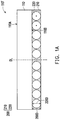
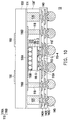
- FIG. 1A to FIG. 10 are schematic sectional views of various stages in a method of fabricating a package structure according to some exemplary embodiments of the present disclosure.
- first and second features are formed in direct contact
- additional features may be formed between the first and second features, such that the first and second features may not be in direct contact
- present disclosure may repeat reference numerals and/or letters in the various examples. This repetition is for the purpose of simplicity and clarity and does not in itself dictate a relationship between the various embodiments and/or configurations discussed.
- spatially relative terms such as “beneath,” “below,” “lower,” “above,” “upper” and the like, may be used herein for ease of description to describe one element or feature's relationship to another element(s) or feature(s) as illustrated in the figures.
- the spatially relative terms are intended to encompass different orientations of the device in use or operation in addition to the orientation depicted in the figures.
- the apparatus may be otherwise oriented (rotated 90 degrees or at other orientations) and the spatially relative descriptors used herein may likewise be interpreted accordingly.
- testing structures may be included to aid in the verification testing of the 3D packaging or 3DIC devices.
- the testing structures may include, for example, test pads formed in a redistribution layer or on a substrate that allows the testing of the 3D packaging or 3DIC, the use of probes and/or probe cards, and the like.
- the verification testing may be performed on intermediate structures as well as the final structure.
- the structures and methods disclosed herein may be used in conjunction with testing methodologies that incorporate intermediate verification of known good dies to increase the yield and decrease costs.
- FIG. 1A to FIG. 10 are schematic sectional views of various stages in a method of fabricating a package structure according to some exemplary embodiments of the present disclosure.
- a semiconductor wafer 110 including a plurality of semiconductor dies (not shown) is provided.
- the semiconductor wafer 110 is a silicon bulk wafer.
- the semiconductor wafer 110 is a reconstituted wafer.
- the semiconductor wafer 110 may further include active components, passive components, conductive elements or doped regions therein, but for illustration purposes, these components or elements are omitted in the figures.
- the semiconductor wafer 110 has an active surface 110 A, and a backside surface 110 B opposite to the active surface 110 A.
- a die attach film 200 is disposed on the backside surface 110 B of the semiconductor wafer 110 .
- the semiconductor wafer 110 is backside thinned to a desirable thickness before disposing the die attach film 200 .
- the die attach film 200 comprises a plurality of fillers 220 dispersed within a film material 210 .
- the film material 210 may be a polymer-based glue material or a thermal-plastic resin material that can be hardened when heated or cured.
- the plurality of fillers 220 for example, may be inorganic particles, such as Al 2 O 3 particles, metal oxide particles or the like. In some embodiments, the fillers 220 may be particles of spherical shapes.
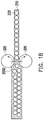
- the fillers 220 included in the die attach film 200 are arranged in a single layer. That is, the thickness of the die attach film 200 is principally decided by the largest dimension of the particles or the particle diameter of the fillers 220 . In one embodiment, the fillers 220 included in the die attach film 200 are uniformly arranged beside one another as a monolayer layer. In some embodiments, the die attach film 200 is obtained through a press rolling process. For instance, as shown in FIG. 1B , the mixture including the film material 210 and the fillers 220 is pressed by the rollers 205 with a specific distance 205 D apart.
- the press rolling process makes sure spreading out the fillers 220 evenly in the die attach film 200 of a specific thickness 200 D so that the fillers 220 are dispersed in the film material 210 side-by-side as a monolayer, and the fillers 220 are not stacked on each other.
- the plurality of fillers 220 may have an average diameter 220 D, and the fillers 220 are preferably particles of a substantially uniform size or diameter.
- the average thickness (or the height) 200 D of the die attach film 200 is substantially equal to the average diameter 220 D of the plurality of fillers 220 .
- the diameter 220 D of the plurality of fillers 220 is at least larger than 100 ⁇ m. In some embodiments, the diameter 220 D of the plurality of fillers 220 is in a range from 100 ⁇ m 150 ⁇ m. In some embodiments, the content of the plurality of fillers 220 in the die attach film 200 is in the range of 20% by volume to 40% by volume. In some embodiments, the average thickness 200 D of the die attach film 200 is in a range from 100 ⁇ m to 150 ⁇ m.
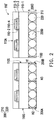
- semiconductor dies 110 ′ are provided and each semiconductor die 100 ′ has a die attach film 200 attached to its backside 110 B.
- the semiconductor dies 110 ′ may be obtained by performing a wafer dicing process to the semiconductor wafer 110 and the die attach film 200 as depicted in FIG. 1A and FIG. 1B , such that the semiconductor wafer 110 is singulated into a plurality of semiconductor dies 110 ′ (along with the diced die attach film 200 thereon).
- the wafer dicing process is performed at the dicing line(s) DL as shown in FIG. 1A to separate the semiconductor dies 110 ′.
- FIG. 1A the dicing line(s) DL
- each of the semiconductor die 110 ′ includes a semiconductor substrate 110 - 1 , a plurality of conductive pads 110 - 2 formed on the semiconductor substrate 110 - 1 , and a passivation layer 110 - 3 .
- the passivation layer 110 - 3 is formed over the substrate 110 - 1 and has a plurality of opening so as to partially expose the conductive pads 110 - 2 .
- the semiconductor substrate 110 - 1 is a silicon substrate including active components (e.g., transistors, diodes, optoelectronic devices or the like) and passive components (e.g., resistors, capacitors, inductors, transducers or the like) formed therein.
- the conductive pads 110 - 2 are aluminum pads, copper pads or other suitable metallic pads.
- the passivation layer 110 - 3 includes a silicon oxide layer, a silicon nitride layer, a silicon oxy-nitride layer or a dielectric layer formed by other suitable dielectric materials.
- conductive pillars 110 - 4 are formed on the exposed conductive pads 110 - 2 of the semiconductor die 110 ′, and a protection layer 110 - 5 is formed on the passivation layer 110 - 3 but exposes the conductive pillars 110 - 4 .
- the conductive pillars 110 - 4 are copper pillars or copper alloy pillars.
- the protection layer 110 - 5 includes a polymer layer having sufficient thickness to protect the conductive pillars 110 - 4 .
- the protection layer 110 - 5 includes a polybenzoxazole (PBO) layer, a polyimide (PI) layer or layers of other suitable polymer materials.
- the protection layer 110 - 5 may be made of inorganic materials.
- the die attach film 200 attached to each of the semiconductor dies 110 ′ for example, includes a first side surface 200 A and a second side surface 200 B opposite to the first side surface 200 A, and the first side surface 200 A and the second side surface 200 B of the die attach film 200 are respectively aligned with the two opposite side surfaces 1105 of the semiconductor die 110 ′.
- the die attach film 200 at the first side surface 200 A has a first height H 1
- the die attach film 200 at the second side surface 200 B has a second height H 2 .
- a height variation between the first height H 1 , the second height H 2 and the average height H 3 of the die attach film 200 is within 10 ⁇ m. In certain embodiments, the height variation between the first height H 1 , the second height H 2 and the average height H 3 of the die attach film 200 is within 2.5 ⁇ m. Alternatively, the height variation between the first height H 1 , the second height H 2 and the average height H 3 is very small or nearly zero. In some embodiments, the die attach film 200 has a substantially uniform height or thickness over the whole area of the semiconductor die 100 ′.
- the height variation in each portion of the die attach film 200 may be controlled within 10 ⁇ m.
- the height 200 D of the die attach film 200 may be defined and controlled through the plurality of fillers 220 . Therefore, a height variation of the semiconductor die 110 ′ formed on the die attach film 200 may also be minimized.
- a height variation of the die attach film 200 will become more prominent with the increase in thickness of the die attach film 200 , which may eventually affect the die height and process yield of the package.
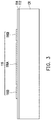
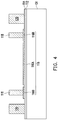
- a debond layer 112 , a buffer layer 114 and a conductive pattern 116 are formed on a carrier CR.
- the carrier CR may be a glass carrier or any suitable carrier used in the method of fabricating the package structure.
- the conductive pattern 116 is formed on the buffer layer 114 , and includes a first portion 116 A and a second portion 116 B surrounding the first portion 116 A.
- the buffer layer 114 is located between the debond layer 112 and the conductive pattern 116
- the debond layer 112 is located between the carrier CR and the buffer layer 114 .
- a portion of the buffer layer 114 is exposed by the conductive pattern 116 .
- the buffer layer 114 may be omitted; in other words, merely the debond layer 112 is formed over the carrier CR.
- the conductive pattern 116 may be a single-layer structure without separate portions.
- the material of the debond layer 112 may be any material suitable for debonding the carrier CR from the above layers disposed thereon.
- the debond layer 112 may include a release layer (such as a light-to-heat conversion (“LTHC”) layer) and an adhesive layer (such as an ultra-violet curable adhesive or a heat curable adhesive layer).
- the buffer layer 114 may be a dielectric material layer.
- the buffer layer 114 may be a polymer layer which is made of polyimide, polybenzoxazole (PBO), benzocyclobutene (BCB), or any other suitable polymer-based dielectric material.
- the debond layer 112 and the buffer layer 114 may be formed by a suitable fabrication technique such as spin-coating, lamination, deposition, or the like.
- a material of the conductive pattern 116 for example, includes aluminum, titanium, copper, nickel, tungsten, and/or alloys thereof.
- the conductive pattern 116 may be formed by a suitable fabrication technique such as plating process, photolithography and etching processes, or the like.
- the patterning process includes performing a dry etching process, a wet etching process, or a combination thereof.
- the conductive pattern 116 may serve as a ground plate for the later-formed antenna patterns.
- a plurality of through insulator vias 118 and antennas 120 are formed on the buffer layer 114 .
- the through insulator vias 118 and antennas 120 are formed by photolithography, plating, photoresist stripping processes or any other suitable methods.
- the through insulator vias 118 may be formed by forming a mask pattern (not shown) covering the conductive pattern 116 and the buffer layer 114 with openings exposing a portion of the conductive pattern 116 , then forming a metallic material filling the openings to form the through insulator vias 118 by electroplating or deposition and then removing the mask pattern.
- the disclosure is not limited thereto.
- a material of the through insulator vias 118 may include a metal material such as copper or copper alloys, or the like.
- the antennas 120 may be dipole antennas.
- the through insulator vias 118 are for example formed on the second portion 116 B of the conductive pattern 116 , while the antennas 120 are formed on the buffer layer 114 adjacent to the through insulator vias 118 .
- the number of the through insulator vias 118 and antennas 120 can be selected based on product demand.
- the semiconductor die 110 ′ may be picked and placed on the first portion 116 A of the conductive pattern 116 , and attached (or adhered) to the conductive pattern 116 through the die attach film 200 .
- the semiconductor die 110 ′ is for example surrounded by the through insulator vias 118 .
- each of the fillers 220 in the die attach film 200 is in contact with the backside surface 110 B of the semiconductor die 110 ′ and in contact with the conductive pattern 116 (first portion 116 A of conductive pattern 116 ).
- the number of semiconductor dies 110 ′ are not limited thereto.
- more than one of the semiconductor die 110 ′ may be picked and placed on the conductive pattern 116 , wherein the semiconductor die 110 ′ placed on the conductive pattern 116 may be arranged in an array.
- the through insulator vias 118 may be classified into groups. The number of the semiconductor die 110 ′ may correspond to the number of the groups of the through insulator vias 118 .
- one or more of the semiconductor die 110 ′ is picked and placed on the conductive pattern 116 after the formation of the through insulator vias 118 and antennas 120 .
- the disclosure is not limited thereto.
- one or more of the semiconductor die 110 ′ may be picked and placed on the conductive pattern 116 before the formation of the through insulator vias 118 and antennas 120 .
- an insulating material 130 is formed on the buffer layer 114 , the conductive pattern 116 and over the semiconductor die 110 ′.
- the insulating material 106 is formed through, for example, a compression molding process, filling up the gaps between the semiconductor die 110 ′, the die attach film 200 , the through insulator vias 118 and the antennas 120 .
- the insulating material 130 for example encapsulates the semiconductor die 110 ′, the die attach film 200 , the plurality of fillers 220 , the conductive pattern 116 , the through insulator vias 118 and the antennas 120 .
- the conductive pillars 110 - 4 and the protection layer 110 - 5 of the semiconductor die 110 ′ are encapsulated and well protected by the insulating material 130 .
- the conductive pillars 110 - 4 and the protection layer 110 - 5 of the semiconductor die 110 ′ are not revealed and are well protected by the insulating material 130 .
- the insulating material 130 includes epoxy resins or other suitable resins.
- the insulating material 130 has low permittivity (Dk) and low loss tangent (Df) properties. Depending on the frequency range of the high-speed applications, suitable materials of the insulating material 130 may be selected based on the required electrical properties of the package structure.
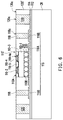
- the insulating material 130 is partially removed to expose the conductive pillars 110 - 4 and the through insulator vias 118 .
- the insulating material 130 and the protection layer 110 - 5 are ground or polished by a mechanical grinding process, fly cutting process, and/or a chemical mechanical polishing (CMP) process to reveal the top surfaces 110 - 4 a of the conductive pillars 110 - 4 .
- the through insulator vias 118 may be partially polished so that the top surfaces 118 a of the through insulator vias 118 are levelled with the top surfaces 110 - 4 a of the conductive pillars 110 - 4 .
- the insulating material 130 is polished to form an insulating encapsulant 130 ′.
- the top surface 130 a of the insulating encapsulant 130 ′, the top surfaces 118 a of the through insulator vias 118 , the top surfaces 120 a of the antennas 120 , and the active surface 110 A of the semiconductor die 110 ′ are substantially coplanar and levelled with one another.
- a cleaning step may be optionally performed, for example to clean and remove the residue generated from the grinding or polishing step.
- a redistribution layer 140 is formed on the semiconductor die 110 ′, the through insulator vias 118 , the antennas 120 and on the insulating encapsulant 130 ′. As shown in FIG. 7 , the redistribution layer 140 is formed on the top surface 130 a of the insulating encapsulant 130 ′. In some embodiments, the redistribution layer 150 is electrically connected to the second portion 116 B of the conductive pattern 116 through the through insulator vias 118 , and is electrically connected to the semiconductor die 110 ′ through the conductive pillars 110 - 4 . In some embodiments, as shown in FIG.
- the semiconductor die 110 ′ is located between the redistribution layer 140 and the die attach film 200 .
- the insulating encapsulant 130 is located between the redistribution layer 140 and the buffer layer 114 , and located between the redistribution layer 140 and the conductive pattern 116 .
- the formation of the redistribution layer 140 includes sequentially forming one or more polymer dielectric layers 140 A and one or more metallization layers 140 B in alternation.
- the metallization layers 140 B are sandwiched between the polymer dielectric layers 140 A.
- the top surface of the topmost layer of the metallization layers 140 B is exposed by the topmost layer of the polymer dielectric layers 140 A and the lowest layer of the metallization layers 140 B is exposed by the lowest layer of the polymer dielectric layers 152 to connect the through insulator vias 118 and the conductive pillars 110 - 4 of the semiconductor die 110 ′.
- the material of the metallization layers 140 B includes aluminum, titanium, copper, nickel, tungsten, and/or alloys thereof, and the metallization layers 140 B may be formed by electroplating or deposition.
- the material of the polymer dielectric layers 140 A includes polyimide, epoxy resin, acrylic resin, phenol resin, benzocyclobutene (BCB), polybenzooxazole (PBO), or any other suitable polymer-based dielectric material.
- a plurality of under-ball metallurgy (UBM) patterns 140 C is formed on the exposed top surface of the topmost layer of the metallization layers 140 B for electrically connecting with conductive elements (e.g. conductive balls) and/or semiconductor elements (e.g., passive components or active components).
- conductive elements e.g. conductive balls
- semiconductor elements e.g., passive components or active components
- the material of the under-ball metallurgy patterns 140 C may include copper, nickel, titanium, tungsten, or alloys thereof or the like, and may be formed by an electroplating process.
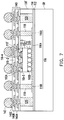
- conductive elements 145 are formed on the redistribution layer 140 .
- the conductive elements 145 are formed on the redistribution layer 140 through the under-ball metallurgy patterns 140 C. In some embodiments, some of the conductive elements 145 are electrically connected to the semiconductor die 110 ′ through the under-ball metallurgy patterns 140 C and the redistribution layer 140 , and some of the conductive elements 145 are electrically connected to the conductive pattern 116 through the under-ball metallurgy patterns 140 C, the redistribution layer 140 , and the through insulator vias 118 . In some embodiments, the conductive elements 145 are, for example, solder balls or ball grid array (BGA) balls. In some embodiments, the conductive elements 145 may be disposed on the under-ball metallurgy patterns 140 C by a ball placement process or a reflow process.
- BGA ball grid array
- the structure shown in FIG. 7 is turned upside down and attached to a tape 310 (e.g., a dicing tape 310 ) supported by a frame 320 .
- a tape 310 e.g., a dicing tape 310
- the carrier CR is debonded and is separated from the semiconductor die 110 ′ and the buffer layer 114 .
- the debonding process includes projecting a light such as a laser light or an UV light on the debond layer 112 so that the carrier CR can be easily removed along with the debond layer 112 .
- the buffer layer 114 may be peeled from the carrier CR by irradiating laser onto the debond layer 112 (e.g., the LTHC release layer). In alternative embodiments, the buffer layer 114 may be removed along with the debond layer 112 and the carrier CR, so that surfaces of the insulating encapsulant 130 and the conductive patterns 106 are exposed.
- a molding compound 150 is formed on the buffer layer 114 and over the semiconductor die 110 ′ and the conductive pattern 116 .
- the buffer layer 114 is sandwiched between the molding compound 150 and the insulating encapsulant 130 ′.
- the buffer layer 114 may be optionally removed prior to forming the molding compound 150 .
- the molding compound 150 includes, for example, epoxy resins or any other suitable type of molding materials.
- the material of the molding compound 150 has low permittivity (Dk) and low loss tangent (Df) properties.
- suitable materials of the encapsulant may be selected based on the required electrical properties of the package.
- the material of the molding compound 150 can be the same as the material of the insulating encapsulant 130 ′.
- the material of the molding compound 150 can be different from the material of the insulating encapsulant 130 ′, but the disclosure is not limited thereto.
- a plurality of antenna patterns 160 are formed on the molding compound 150 , and over the buffer layer 114 .
- the molding compound 150 is for example located between the antenna patterns 160 and the buffer layer 114 .
- the antenna patterns 160 are formed on a surface of the molding compound 150 opposite to a side where the buffer layer 114 is located.
- the antenna patterns 160 are electrically coupled with the conductive patterns (first portion 116 A), wherein the conductive patterns (first portion 116 A) may serve as ground plates.
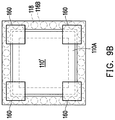
- the antenna patterns 160 are formed by forming a metallization layer (not shown) by electroplating or deposition over the molding compound 150 and then patterning the metallization layer by photolithographic and etching processes. In an alternative embodiment, the antenna patterns 160 are formed by forming a metallization layer (not shown) by a plating process. In some embodiments, the antenna patterns 160 may include patch antennas, which are arranged in form of a matrix to surround the semiconductor die 110 ′. As more clearly shown from a top view of the structure presented in FIG.
- the antenna patterns 160 are arrange around the semiconductor die 110 ′ and at locations near four corners of the semiconductor die 110 ′ and partially overlapped with the corners of the semiconductor die 110 ′ from the top view.
- the antenna patterns 160 may be fully overlapped with the semiconductor die 110 ′ from the top view.
- the semiconductor die 110 ′ are surrounded by the through insulator vias 118 , while locations of the antenna patterns 160 partially overlap with the locations of the through insulator vias.
- the disclosure is not limited by the embodiments of the disclosure, and in alternative embodiments, the arrangement of the antenna patterns 160 may be adjusted based on product requirement.
- a dicing process is performed along the dicing lines DL (shown in FIG. 9A ) to cut the whole wafer structure (cutting through the molding compound 150 , the insulating encapsulant 130 ′ and the redistribution layer 140 ) into a plurality of packages 10 .
- the dicing process is a wafer dicing process including mechanical blade sawing or laser cutting.
- the separated packages 10 may for example, be disposed onto a circuit substrate or onto other components based on requirements.
- the plurality of fillers is uniformly arranged as a monolayer in the die attach film, and the diameter of the plurality of fillers is substantially equal to the height of the die attach film.
- a height variation between each portion of the die attach film may be reduced to a minimum, and the height of the semiconductor die formed thereon may be appropriately controlled.
- the thick die attach film having aligned fillers may be used to increase a distance between the semiconductor die and the antenna patterns formed on the molding compound. As such, an interference to the performance of the antenna patterns can be reduced, and the process yield of the package may be improved.
- a package structure including a semiconductor die, a redistribution layer, a plurality of antenna patterns, a die attach film and an insulating encapsulant.
- the semiconductor die have an active surface and a backside surface opposite to the active surface.
- the redistribution layer is located on the active surface of the semiconductor die and electrically connected to the semiconductor die.
- the plurality of antenna patterns is located over the backside surface of the semiconductor die.
- the die attach film is located in between the semiconductor die and the plurality of antenna patterns, wherein the die attach film includes a plurality of fillers, and an average height of the die attach film is substantially equal to an average diameter of the plurality of fillers.
- the insulating encapsulant is located in between the redistribution layer and the plurality of antenna patterns, wherein the insulating encapsulant encapsulates the semiconductor die and the die attach film.
- a package structure including a semiconductor die, a redistribution layer, a conductive pattern, a die attach film, a plurality of fillers, an insulating encapsulant and a plurality of antenna patterns.
- the semiconductor die have an active surface and a backside surface opposite to the active surface.
- the redistribution layer is located on the active surface of the semiconductor die and electrically connected to the semiconductor die.
- the conductive pattern is located on the backside surface of the semiconductor die.
- the die attach film is located in between the semiconductor die and the conductive pattern, wherein the die attach film has a first side surface with a first height H 1 , a second side surface opposite to the first side surface with a second height H 2 , and an average height of the die attach film being H 3 , wherein a height variation between any two of the first height H 1 , the second height H 2 and the average height H 3 is within 10 ⁇ m.
- the plurality of fillers is dispersed in the die attach film, wherein the plurality of fillers is arranged as a monolayer within the die attach film.
- the insulating encapsulant is located in between the redistribution layer and the conductive pattern, wherein the insulating encapsulant encapsulates the semiconductor die and the die attach film.
- the plurality of antenna patterns is located on the backside surface of the semiconductor die and on the conductive pattern.
- a method of fabricating a package structure comprises the following steps.
- a semiconductor die is provided having an active surface and a backside surface opposite to the active surface.
- a die attach film is formed on the backside surface of the semiconductor die, wherein the die attach film comprises a plurality of fillers therein and an average height of the die attach film is substantially equal to an average diameter of the plurality of fillers.
- a conductive pattern is formed on a carrier.
- the semiconductor die is bonded on the conductive pattern through the die attach film.
- the insulating encapsulant is formed to encapsulate the semiconductor die and the die attach film.
- a redistribution layer is formed on the active surface of the semiconductor die and on the insulating encapsulant.
- the carrier is debonded.
- a plurality of antenna patterns is formed over the backside surface of the semiconductor die and over the conductive pattern.
Landscapes
- Engineering & Computer Science (AREA)
- Microelectronics & Electronic Packaging (AREA)
- Computer Hardware Design (AREA)
- Power Engineering (AREA)
- Physics & Mathematics (AREA)
- Condensed Matter Physics & Semiconductors (AREA)
- General Physics & Mathematics (AREA)
- Manufacturing & Machinery (AREA)
- Ceramic Engineering (AREA)
- Geometry (AREA)
- Structures Or Materials For Encapsulating Or Coating Semiconductor Devices Or Solid State Devices (AREA)
Abstract
Description
Claims (19)
Priority Applications (4)
| Application Number | Priority Date | Filing Date | Title |
|---|---|---|---|
| US15/841,331 US10629539B2 (en) | 2017-11-07 | 2017-12-14 | Package structure and method of fabricating the same |
| US16/848,863 US11094642B2 (en) | 2017-11-07 | 2020-04-15 | Package structure |
| US17/402,593 US11973038B2 (en) | 2017-11-07 | 2021-08-15 | Package structure with improved antenna patterns performance |
| US18/616,212 US20240234329A1 (en) | 2017-11-07 | 2024-03-26 | Method of forming package structure |
Applications Claiming Priority (2)
| Application Number | Priority Date | Filing Date | Title |
|---|---|---|---|
| US201762582330P | 2017-11-07 | 2017-11-07 | |
| US15/841,331 US10629539B2 (en) | 2017-11-07 | 2017-12-14 | Package structure and method of fabricating the same |
Related Child Applications (1)
| Application Number | Title | Priority Date | Filing Date |
|---|---|---|---|
| US16/848,863 Continuation US11094642B2 (en) | 2017-11-07 | 2020-04-15 | Package structure |
Publications (2)
| Publication Number | Publication Date |
|---|---|
| US20190139897A1 US20190139897A1 (en) | 2019-05-09 |
| US10629539B2 true US10629539B2 (en) | 2020-04-21 |
Family
ID=66328846
Family Applications (4)
| Application Number | Title | Priority Date | Filing Date |
|---|---|---|---|
| US15/841,331 Active US10629539B2 (en) | 2017-11-07 | 2017-12-14 | Package structure and method of fabricating the same |
| US16/848,863 Active US11094642B2 (en) | 2017-11-07 | 2020-04-15 | Package structure |
| US17/402,593 Active 2038-07-10 US11973038B2 (en) | 2017-11-07 | 2021-08-15 | Package structure with improved antenna patterns performance |
| US18/616,212 Pending US20240234329A1 (en) | 2017-11-07 | 2024-03-26 | Method of forming package structure |
Family Applications After (3)
| Application Number | Title | Priority Date | Filing Date |
|---|---|---|---|
| US16/848,863 Active US11094642B2 (en) | 2017-11-07 | 2020-04-15 | Package structure |
| US17/402,593 Active 2038-07-10 US11973038B2 (en) | 2017-11-07 | 2021-08-15 | Package structure with improved antenna patterns performance |
| US18/616,212 Pending US20240234329A1 (en) | 2017-11-07 | 2024-03-26 | Method of forming package structure |
Country Status (1)
| Country | Link |
|---|---|
| US (4) | US10629539B2 (en) |
Cited By (3)
| Publication number | Priority date | Publication date | Assignee | Title |
|---|---|---|---|---|
| US11024954B2 (en) | 2018-05-14 | 2021-06-01 | Mediatek Inc. | Semiconductor package with antenna and fabrication method thereof |
| US11043730B2 (en) * | 2018-05-14 | 2021-06-22 | Mediatek Inc. | Fan-out package structure with integrated antenna |
| US11652273B2 (en) | 2018-05-14 | 2023-05-16 | Mediatek Inc. | Innovative air gap for antenna fan out package |
Families Citing this family (10)
| Publication number | Priority date | Publication date | Assignee | Title |
|---|---|---|---|---|
| TWI663701B (en) * | 2017-04-28 | 2019-06-21 | Siliconware Precision Industries Co., Ltd. | Electronic package and method for fabricating the same |
| US10411752B1 (en) * | 2018-10-29 | 2019-09-10 | Globalfoundries Inc. | Methods, apparatus, and system for high-bandwidth on-mold antennas |
| US11031342B2 (en) | 2017-11-15 | 2021-06-08 | Taiwan Semiconductor Manufacturing Company, Ltd. | Semiconductor package and method |
| KR102582422B1 (en) * | 2018-06-29 | 2023-09-25 | 삼성전자주식회사 | Semiconductor Package having Redistribution layer |
| US10818588B2 (en) * | 2019-01-31 | 2020-10-27 | Taiwan Semiconductor Manufacturing Company, Ltd. | Semiconductor device, package structure and method of fabricating the same |
| US10879170B2 (en) * | 2019-04-21 | 2020-12-29 | Taiwan Semiconductor Manufacturing Company, Ltd. | Semiconductor package and manufacturing method thereof |
| CN110429068A (en) * | 2019-08-09 | 2019-11-08 | 芯光科技新加坡有限公司 | A kind of antenna packages structure and preparation method thereof, communication equipment |
| KR102731798B1 (en) * | 2019-12-10 | 2024-11-19 | 삼성전기주식회사 | Antenna substrate and antenna module comprising the same |
| US11205627B2 (en) * | 2020-02-12 | 2021-12-21 | Advanced Semiconductor Engineering, Inc. | Semiconductor device package including emitting devices and method of manufacturing the same |
| CN113078455B (en) * | 2021-04-13 | 2022-10-14 | 长沙新雷半导体科技有限公司 | Manufacturing method of packaged antenna, packaged antenna and electronic equipment |
Citations (12)
| Publication number | Priority date | Publication date | Assignee | Title |
|---|---|---|---|---|
| US20050248019A1 (en) * | 2004-05-10 | 2005-11-10 | Te-Tsung Chao | Overhang support for a stacked semiconductor device, and method of forming thereof |
| US20140252646A1 (en) * | 2013-03-06 | 2014-09-11 | Taiwan Semiconductor Manufacturing Company, Ltd. | Interconnect Structure for Package-on-Package Devices |
| US9000584B2 (en) | 2011-12-28 | 2015-04-07 | Taiwan Semiconductor Manufacturing Company, Ltd. | Packaged semiconductor device with a molding compound and a method of forming the same |
| US9048233B2 (en) | 2010-05-26 | 2015-06-02 | Taiwan Semiconductor Manufacturing Company, Ltd. | Package systems having interposers |
| US9064874B2 (en) | 2012-05-18 | 2015-06-23 | International Business Machines Corporation | Interconnect with titanium—oxide diffusion barrier |
| US9111949B2 (en) | 2012-04-09 | 2015-08-18 | Taiwan Semiconductor Manufacturing Company, Ltd. | Methods and apparatus of wafer level package for heterogeneous integration technology |
| US9263511B2 (en) | 2013-02-11 | 2016-02-16 | Taiwan Semiconductor Manufacturing Co., Ltd. | Package with metal-insulator-metal capacitor and method of manufacturing the same |
| US9281254B2 (en) | 2014-02-13 | 2016-03-08 | Taiwan Semiconductor Manufacturing Company, Ltd. | Methods of forming integrated circuit package |
| US20160148857A1 (en) * | 2014-11-26 | 2016-05-26 | Taiwan Semiconductor Manufacturing Company, Ltd. | Semicondutor Device and Method of Manufacture |
| US9368460B2 (en) | 2013-03-15 | 2016-06-14 | Taiwan Semiconductor Manufacturing Company, Ltd. | Fan-out interconnect structure and method for forming same |
| US9372206B2 (en) | 2011-02-11 | 2016-06-21 | Taiwan Semiconductor Manufacturing Co., Ltd. | Testing of semiconductor chips with microbumps |
| US9496189B2 (en) | 2014-06-13 | 2016-11-15 | Taiwan Semiconductor Manufacturing Company, Ltd. | Stacked semiconductor devices and methods of forming same |
Family Cites Families (7)
| Publication number | Priority date | Publication date | Assignee | Title |
|---|---|---|---|---|
| JP2010528450A (en) * | 2007-02-09 | 2010-08-19 | エルジー イノテック カンパニー リミテッド | Multifunctional die adhesive film and semiconductor element packaging method using the same |
| US9613830B2 (en) * | 2011-12-30 | 2017-04-04 | Deca Technologies Inc. | Fully molded peripheral package on package device |
| US9589862B2 (en) * | 2013-03-11 | 2017-03-07 | Taiwan Semiconductor Manufacturing Company, Ltd. | Interconnect structures and methods of forming same |
| US9431369B2 (en) * | 2012-12-13 | 2016-08-30 | Taiwan Semiconductor Manufacturing Company, Ltd. | Antenna apparatus and method |
| US10541464B2 (en) * | 2017-01-17 | 2020-01-21 | Sony Corporation | Microwave antenna coupling apparatus, microwave antenna apparatus and microwave antenna package |
| US11569176B2 (en) * | 2017-03-21 | 2023-01-31 | Amkor Technology Singapore Holding Pte. Ltd. | Semiconductor device and method of manufacturing thereof |
| US10872868B2 (en) * | 2017-10-25 | 2020-12-22 | Sj Semiconductor (Jiangyin) Corporation | Fan-out antenna packaging structure and preparation method thereof |
-
2017
- 2017-12-14 US US15/841,331 patent/US10629539B2/en active Active
-
2020
- 2020-04-15 US US16/848,863 patent/US11094642B2/en active Active
-
2021
- 2021-08-15 US US17/402,593 patent/US11973038B2/en active Active
-
2024
- 2024-03-26 US US18/616,212 patent/US20240234329A1/en active Pending
Patent Citations (13)
| Publication number | Priority date | Publication date | Assignee | Title |
|---|---|---|---|---|
| US20050248019A1 (en) * | 2004-05-10 | 2005-11-10 | Te-Tsung Chao | Overhang support for a stacked semiconductor device, and method of forming thereof |
| US9048233B2 (en) | 2010-05-26 | 2015-06-02 | Taiwan Semiconductor Manufacturing Company, Ltd. | Package systems having interposers |
| US9372206B2 (en) | 2011-02-11 | 2016-06-21 | Taiwan Semiconductor Manufacturing Co., Ltd. | Testing of semiconductor chips with microbumps |
| US9000584B2 (en) | 2011-12-28 | 2015-04-07 | Taiwan Semiconductor Manufacturing Company, Ltd. | Packaged semiconductor device with a molding compound and a method of forming the same |
| US9111949B2 (en) | 2012-04-09 | 2015-08-18 | Taiwan Semiconductor Manufacturing Company, Ltd. | Methods and apparatus of wafer level package for heterogeneous integration technology |
| US9064874B2 (en) | 2012-05-18 | 2015-06-23 | International Business Machines Corporation | Interconnect with titanium—oxide diffusion barrier |
| US9263511B2 (en) | 2013-02-11 | 2016-02-16 | Taiwan Semiconductor Manufacturing Co., Ltd. | Package with metal-insulator-metal capacitor and method of manufacturing the same |
| US9048222B2 (en) | 2013-03-06 | 2015-06-02 | Taiwan Semiconductor Manufacturing Company, Ltd. | Method of fabricating interconnect structure for package-on-package devices |
| US20140252646A1 (en) * | 2013-03-06 | 2014-09-11 | Taiwan Semiconductor Manufacturing Company, Ltd. | Interconnect Structure for Package-on-Package Devices |
| US9368460B2 (en) | 2013-03-15 | 2016-06-14 | Taiwan Semiconductor Manufacturing Company, Ltd. | Fan-out interconnect structure and method for forming same |
| US9281254B2 (en) | 2014-02-13 | 2016-03-08 | Taiwan Semiconductor Manufacturing Company, Ltd. | Methods of forming integrated circuit package |
| US9496189B2 (en) | 2014-06-13 | 2016-11-15 | Taiwan Semiconductor Manufacturing Company, Ltd. | Stacked semiconductor devices and methods of forming same |
| US20160148857A1 (en) * | 2014-11-26 | 2016-05-26 | Taiwan Semiconductor Manufacturing Company, Ltd. | Semicondutor Device and Method of Manufacture |
Cited By (4)
| Publication number | Priority date | Publication date | Assignee | Title |
|---|---|---|---|---|
| US11024954B2 (en) | 2018-05-14 | 2021-06-01 | Mediatek Inc. | Semiconductor package with antenna and fabrication method thereof |
| US11043730B2 (en) * | 2018-05-14 | 2021-06-22 | Mediatek Inc. | Fan-out package structure with integrated antenna |
| US11652273B2 (en) | 2018-05-14 | 2023-05-16 | Mediatek Inc. | Innovative air gap for antenna fan out package |
| US11742564B2 (en) | 2018-05-14 | 2023-08-29 | Mediatek Inc. | Fan-out package structure with integrated antenna |
Also Published As
| Publication number | Publication date |
|---|---|
| US20210375774A1 (en) | 2021-12-02 |
| US11094642B2 (en) | 2021-08-17 |
| US20200243454A1 (en) | 2020-07-30 |
| US20240234329A1 (en) | 2024-07-11 |
| US11973038B2 (en) | 2024-04-30 |
| US20190139897A1 (en) | 2019-05-09 |
Similar Documents
| Publication | Publication Date | Title |
|---|---|---|
| US11973038B2 (en) | Package structure with improved antenna patterns performance | |
| US11282796B2 (en) | Integrated fan-out package and method of fabricating the same | |
| US20240014151A1 (en) | Package structure and manufacturing method thereof | |
| US20240387367A1 (en) | Method of manufacturing electronic apparatus | |
| US10872862B2 (en) | Package structure having bridge structure for connection between semiconductor dies and method of fabricating the same | |
| US20220336386A1 (en) | Package structure and manufacturing method thereof | |
| US12074066B2 (en) | Integrated circuit component with conductive terminals of different dimensions and package structure having the same | |
| US10854569B2 (en) | Package structure, semiconductor device and method of fabricating the same | |
| US11145595B2 (en) | Integrated fan-out package with antenna components and manufacturing method thereof | |
| US11776838B2 (en) | Semiconductor package and manufacturing method thereof | |
| US11289418B2 (en) | Package structure and manufacturing method thereof | |
| US10074615B1 (en) | Package structure and method of fabricating the same | |
| US20200105545A1 (en) | Semiconductor package and manufacturing method thereof | |
| US11374303B2 (en) | Package structure and method of fabricating the same | |
| US20230115449A1 (en) | Package structure and method of fabricating the same |
Legal Events
| Date | Code | Title | Description |
|---|---|---|---|
| AS | Assignment |
Owner name: TAIWAN SEMICONDUCTOR MANUFACTURING CO., LTD., TAIW Free format text: ASSIGNMENT OF ASSIGNORS INTEREST;ASSIGNORS:LIANG, FANG-YU;WU, KAI-CHIANG;REEL/FRAME:044391/0888 Effective date: 20171130 Owner name: TAIWAN SEMICONDUCTOR MANUFACTURING CO., LTD., TAIWAN Free format text: ASSIGNMENT OF ASSIGNORS INTEREST;ASSIGNORS:LIANG, FANG-YU;WU, KAI-CHIANG;REEL/FRAME:044391/0888 Effective date: 20171130 |
|
| FEPP | Fee payment procedure |
Free format text: ENTITY STATUS SET TO UNDISCOUNTED (ORIGINAL EVENT CODE: BIG.); ENTITY STATUS OF PATENT OWNER: LARGE ENTITY |
|
| STPP | Information on status: patent application and granting procedure in general |
Free format text: FINAL REJECTION MAILED |
|
| STPP | Information on status: patent application and granting procedure in general |
Free format text: ADVISORY ACTION MAILED |
|
| STPP | Information on status: patent application and granting procedure in general |
Free format text: DOCKETED NEW CASE - READY FOR EXAMINATION |
|
| STPP | Information on status: patent application and granting procedure in general |
Free format text: NOTICE OF ALLOWANCE MAILED -- APPLICATION RECEIVED IN OFFICE OF PUBLICATIONS |
|
| STCF | Information on status: patent grant |
Free format text: PATENTED CASE |
|
| MAFP | Maintenance fee payment |
Free format text: PAYMENT OF MAINTENANCE FEE, 4TH YEAR, LARGE ENTITY (ORIGINAL EVENT CODE: M1551); ENTITY STATUS OF PATENT OWNER: LARGE ENTITY Year of fee payment: 4 |