US10626148B2 - Glycopeptides conjugates and uses thereof - Google Patents
Glycopeptides conjugates and uses thereof Download PDFInfo
- Publication number
- US10626148B2 US10626148B2 US15/549,086 US201615549086A US10626148B2 US 10626148 B2 US10626148 B2 US 10626148B2 US 201615549086 A US201615549086 A US 201615549086A US 10626148 B2 US10626148 B2 US 10626148B2
- Authority
- US
- United States
- Prior art keywords
- substituted
- compound
- pharmaceutically acceptable
- stereoisomers
- prodrugs
- Prior art date
- Legal status (The legal status is an assumption and is not a legal conclusion. Google has not performed a legal analysis and makes no representation as to the accuracy of the status listed.)
- Expired - Fee Related
Links
- 0 [1*]N([2*])[C@]1(C)C[C@H](OC2C(O)[C@@H](O)C(CO)O[C@@H]2OC2=C3C=C4C=C2OC2=CC=C(C=C2Cl)[C@@H](O)[C@@H]2NC(=O)[C@H](CC(=O)[C@@H]4NC(=O)[C@H](CC(N)=O)CC(=O)[C@H](NC(=O)[C@@H](CC(C)C)NC)[C@H](O)C4=CC(Cl)=C(C=C4)O3)C3=CC=C(O)C(=C3)C3=C(O)C=C(O)C=C3[C@@H](C(=O)N*[Y])NC2=O)OC(C)[C@@H]1O Chemical compound [1*]N([2*])[C@]1(C)C[C@H](OC2C(O)[C@@H](O)C(CO)O[C@@H]2OC2=C3C=C4C=C2OC2=CC=C(C=C2Cl)[C@@H](O)[C@@H]2NC(=O)[C@H](CC(=O)[C@@H]4NC(=O)[C@H](CC(N)=O)CC(=O)[C@H](NC(=O)[C@@H](CC(C)C)NC)[C@H](O)C4=CC(Cl)=C(C=C4)O3)C3=CC=C(O)C(=C3)C3=C(O)C=C(O)C=C3[C@@H](C(=O)N*[Y])NC2=O)OC(C)[C@@H]1O 0.000 description 8
- XJPUBWQTXKUCTN-IIEWYQSYSA-N CN[C@H](CC(C)C)C(=O)N[C@H]1C(=O)C[C@@H](CC(N)=O)C(=O)N[C@H]2C(=O)C[C@H]3C(=O)N[C@H](C(=O)N[C@H](C(=O)NCCCCCCN(CC4=CC=CC=N4)CC4=NC=CC=C4)C4=CC(O)=CC(O)=C4C4=CC3=CC=C4O)[C@H](O)C3=CC=C(OC4=CC2=CC(=C4O[C@H]2OC(CO)[C@H](O)C(O)C2O[C@H]2C[C@@](C)(N)[C@H](O)C(C)O2)OC2=C(Cl)C=C(C=C2)[C@H]1O)C(Cl)=C3 Chemical compound CN[C@H](CC(C)C)C(=O)N[C@H]1C(=O)C[C@@H](CC(N)=O)C(=O)N[C@H]2C(=O)C[C@H]3C(=O)N[C@H](C(=O)N[C@H](C(=O)NCCCCCCN(CC4=CC=CC=N4)CC4=NC=CC=C4)C4=CC(O)=CC(O)=C4C4=CC3=CC=C4O)[C@H](O)C3=CC=C(OC4=CC2=CC(=C4O[C@H]2OC(CO)[C@H](O)C(O)C2O[C@H]2C[C@@](C)(N)[C@H](O)C(C)O2)OC2=C(Cl)C=C(C=C2)[C@H]1O)C(Cl)=C3 XJPUBWQTXKUCTN-IIEWYQSYSA-N 0.000 description 2
- QEJITPMKVFXHFN-MTSBNRAUSA-N CC(C)(C)OC(=O)CCCCCCCCCC1=NC=CC=C1.CC(C)(C)OC(=O)CCCCCCCN(CC1=NC=CC=C1)CC1=NC=CC=C1.CC(C)(C)OC(=O)NCCCN.CN[C@H](CC(C)C)C(=O)N[C@H]1C(=O)C[C@@H](CC(N)=O)C(=O)N[C@H]2C(=O)C[C@H]3C(=O)N[C@H](C(=O)N[C@H](C(=O)NCCCCCCN(CC4=CC=CC=N4)CC4=NC=CC=C4)C4=CC(O)=CC(O)=C4C4=CC3=CC=C4O)[C@H](O)C3=CC=C(OC4=CC2=CC(=C4O[C@H]2OC(CO)[C@H](O)C(O)C2O[C@H]2C[C@@](C)(N)[C@H](O)C(C)O2)OC2=C(Cl)C=C(C=C2)[C@H]1O)C(Cl)=C3.NCCCCCCN(CC1=NC=CC=C1)CC1=NC=CC=C1.O=CC1=NC=CC=C1.O=CC1=NC=CC=C1 Chemical compound CC(C)(C)OC(=O)CCCCCCCCCC1=NC=CC=C1.CC(C)(C)OC(=O)CCCCCCCN(CC1=NC=CC=C1)CC1=NC=CC=C1.CC(C)(C)OC(=O)NCCCN.CN[C@H](CC(C)C)C(=O)N[C@H]1C(=O)C[C@@H](CC(N)=O)C(=O)N[C@H]2C(=O)C[C@H]3C(=O)N[C@H](C(=O)N[C@H](C(=O)NCCCCCCN(CC4=CC=CC=N4)CC4=NC=CC=C4)C4=CC(O)=CC(O)=C4C4=CC3=CC=C4O)[C@H](O)C3=CC=C(OC4=CC2=CC(=C4O[C@H]2OC(CO)[C@H](O)C(O)C2O[C@H]2C[C@@](C)(N)[C@H](O)C(C)O2)OC2=C(Cl)C=C(C=C2)[C@H]1O)C(Cl)=C3.NCCCCCCN(CC1=NC=CC=C1)CC1=NC=CC=C1.O=CC1=NC=CC=C1.O=CC1=NC=CC=C1 QEJITPMKVFXHFN-MTSBNRAUSA-N 0.000 description 1
- MYPYJXKWCTUITO-JSTMVCMCSA-N CC(C)C[C@H](C(N[C@H]([C@@H](c(cc1Cl)ccc1Oc(cc([C@H](C(NC(c(cc1-c(c([C@@H](C(O)=O)NC([C@H]([C@@H]2O)N3)=O)cc(O)c4)c4O)ccc1O)C3=O)=O)NC([C@H](CC(N)=O)N1)=O)cc3Oc4ccc2cc4Cl)c3O[C@H](C(C2O)O[C@@H](CC3(C)N)OC(C)[C@@H]3O)OC(CO)[C@@H]2O)O)C1=O)=O)NC Chemical compound CC(C)C[C@H](C(N[C@H]([C@@H](c(cc1Cl)ccc1Oc(cc([C@H](C(NC(c(cc1-c(c([C@@H](C(O)=O)NC([C@H]([C@@H]2O)N3)=O)cc(O)c4)c4O)ccc1O)C3=O)=O)NC([C@H](CC(N)=O)N1)=O)cc3Oc4ccc2cc4Cl)c3O[C@H](C(C2O)O[C@@H](CC3(C)N)OC(C)[C@@H]3O)OC(CO)[C@@H]2O)O)C1=O)=O)NC MYPYJXKWCTUITO-JSTMVCMCSA-N 0.000 description 1
- WXRDDGNRXDDZLZ-MNLQAOMVSA-N CC[C@H](CC(C)C)C(=O)N[C@H]1C(=O)C[C@@H](CC(N)=O)C(=O)N[C@H]2C(=O)C[C@H]3C(=O)N[C@H](C(=O)N[C@H](C(=O)O)C4=CC(O)=CC(O)=C4C4=CC3=CC=C4O)[C@H](O)C3=CC=C(OC4=CC2=CC(=C4O[C@H]2OC(CO)[C@H](O)C(O)C2O[C@H]2C[C@@](C)(N)[C@@H](O)C(C)O2)OC2=C(Cl)C=C(C=C2)[C@H]1O)C(Cl)=C3 Chemical compound CC[C@H](CC(C)C)C(=O)N[C@H]1C(=O)C[C@@H](CC(N)=O)C(=O)N[C@H]2C(=O)C[C@H]3C(=O)N[C@H](C(=O)N[C@H](C(=O)O)C4=CC(O)=CC(O)=C4C4=CC3=CC=C4O)[C@H](O)C3=CC=C(OC4=CC2=CC(=C4O[C@H]2OC(CO)[C@H](O)C(O)C2O[C@H]2C[C@@](C)(N)[C@@H](O)C(C)O2)OC2=C(Cl)C=C(C=C2)[C@H]1O)C(Cl)=C3 WXRDDGNRXDDZLZ-MNLQAOMVSA-N 0.000 description 1
- WHIULNJSBUHGCZ-UHFFFAOYSA-N CN.CNC1CCC1C(=O)O Chemical compound CN.CNC1CCC1C(=O)O WHIULNJSBUHGCZ-UHFFFAOYSA-N 0.000 description 1
- QOAXTAGWVZVUBM-UHFFFAOYSA-N CNC(CC(C1)N)C1C(O)=O Chemical compound CNC(CC(C1)N)C1C(O)=O QOAXTAGWVZVUBM-UHFFFAOYSA-N 0.000 description 1
Images


Classifications
-
- C—CHEMISTRY; METALLURGY
- C07—ORGANIC CHEMISTRY
- C07K—PEPTIDES
- C07K9/00—Peptides having up to 20 amino acids, containing saccharide radicals and having a fully defined sequence; Derivatives thereof
- C07K9/006—Peptides having up to 20 amino acids, containing saccharide radicals and having a fully defined sequence; Derivatives thereof the peptide sequence being part of a ring structure
- C07K9/008—Peptides having up to 20 amino acids, containing saccharide radicals and having a fully defined sequence; Derivatives thereof the peptide sequence being part of a ring structure directly attached to a hetero atom of the saccharide radical, e.g. actaplanin, avoparcin, ristomycin, vancomycin
-
- A—HUMAN NECESSITIES
- A61—MEDICAL OR VETERINARY SCIENCE; HYGIENE
- A61K—PREPARATIONS FOR MEDICAL, DENTAL OR TOILETRY PURPOSES
- A61K38/00—Medicinal preparations containing peptides
- A61K38/04—Peptides having up to 20 amino acids in a fully defined sequence; Derivatives thereof
- A61K38/14—Peptides containing saccharide radicals; Derivatives thereof, e.g. bleomycin, phleomycin, muramylpeptides or vancomycin
-
- A—HUMAN NECESSITIES
- A61—MEDICAL OR VETERINARY SCIENCE; HYGIENE
- A61P—SPECIFIC THERAPEUTIC ACTIVITY OF CHEMICAL COMPOUNDS OR MEDICINAL PREPARATIONS
- A61P31/00—Antiinfectives, i.e. antibiotics, antiseptics, chemotherapeutics
- A61P31/04—Antibacterial agents
-
- A—HUMAN NECESSITIES
- A61—MEDICAL OR VETERINARY SCIENCE; HYGIENE
- A61K—PREPARATIONS FOR MEDICAL, DENTAL OR TOILETRY PURPOSES
- A61K38/00—Medicinal preparations containing peptides
-
- Y—GENERAL TAGGING OF NEW TECHNOLOGICAL DEVELOPMENTS; GENERAL TAGGING OF CROSS-SECTIONAL TECHNOLOGIES SPANNING OVER SEVERAL SECTIONS OF THE IPC; TECHNICAL SUBJECTS COVERED BY FORMER USPC CROSS-REFERENCE ART COLLECTIONS [XRACs] AND DIGESTS
- Y02—TECHNOLOGIES OR APPLICATIONS FOR MITIGATION OR ADAPTATION AGAINST CLIMATE CHANGE
- Y02A—TECHNOLOGIES FOR ADAPTATION TO CLIMATE CHANGE
- Y02A50/00—TECHNOLOGIES FOR ADAPTATION TO CLIMATE CHANGE in human health protection, e.g. against extreme weather
- Y02A50/30—Against vector-borne diseases, e.g. mosquito-borne, fly-borne, tick-borne or waterborne diseases whose impact is exacerbated by climate change
Definitions
- the present disclosure relates to the field of medicinal chemistry and more particularly to the development of antibacterial compounds.
- the present disclosure particularly relates to vancomycin conjugates, its stereoisomers, prodrugs, pharmaceutically acceptable salts, and metal coordination complexes thereof.
- the present disclosure also relates to pharmaceutical compositions comprising vancomycin conjugates, its stereoisomers, prodrugs, pharmaceutically acceptable salts, metal coordination complex thereof with one or more other pharmaceutical compositions or an antibiotic.
- the present disclosure further relates to a process of preparing said conjugates, its stereoisomers, prodrugs, pharmaceutically acceptable salts, and metal coordination complex thereof, and pharmaceutical compositions as described above.
- the present disclosure also relates to compositions and methods of treating conditions and diseases that are mediated by bacteria.
- Vancomycin is a glycopeptide antibiotic that has become drug of last resort to treat life-threatening bacterial infections such as those caused by methicillin-resistant S. aureus (MRSA).
- MRSA methicillin-resistant S. aureus
- 2,3 Vancomycin binds to D-Ala-D-Ala terminus of peptidoglycan pentapeptide of the bacterial cell wall, thus inhibiting transpeptidase-catalyzed cross-linking and maturation of the bacterial cell wall.
- telavancin avancin
- dalbavancin avancin
- oritavancin semi-synthetic glycopeptides
- Gram negative bacterial infections also pose an equal threat to human life.
- the WHO Global Report on Surveillance of Antimicrobial Resistance 2014 describes that gram negative bacteria like E. coli and K. pneumoniae have developed more than 50% of resistance to commonly used antibacterial drugs.
- carbepenem-resistant bacteria such as New Delhi Metallo ⁇ -lactamase-I (NDM-1) bacteria have become resistant to even last line of antibiotics, such as colistin. 6,7
- R 1 and R 2 are independently selected from hydrogen, substituted or unsubstituted C 1 -C 18 aliphatic radical or substituted or unsubstituted C 4 -C 18 aromatic radical;
- L is selected from substituted or unsubstituted C 1 -C 18 aliphatic radical or substituted or unsubstituted C 4 -C 18 aromatic radical;
- Y is selected from NR 3 R 4 or substituted C 4 -C 18 aromatic radical, wherein R 3 and R 4 are independently selected from substituted C 1 -C 18 aliphatic radical or substituted C 4 -C 18 aromatic radical.
- the present disclosure further relates to a pharmaceutical composition
- a pharmaceutical composition comprising a compound of Formula I, its stereoisomers, prodrugs, or pharmaceutically acceptable salts, and a metal coordination complex thereof and an antibiotic.
- the present disclosure further relates to a compound of Formula I, its stereoisomers, prodrugs, or pharmaceutically acceptable salts, and a metal coordination complex thereof or a pharmaceutical composition comprising a compound of Formula I, its stereoisomers, prodrugs, or pharmaceutically acceptable salts, and a metal coordination complex thereof and an antibiotic, for use as a medicament.
- the present disclosure also relates to a compound of Formula I, its stereoisomers, prodrugs, or pharmaceutically acceptable salts, and a metal coordination complex thereof or a pharmaceutical composition comprising a compound of Formula I, its stereoisomers, prodrugs, or pharmaceutically acceptable salts, and a metal coordination complex thereof and an antibiotic, for use in a treatment of a bacterial infection.
- the present disclosure relates to a method for the treatment of bacterial infection in a subject comprising: administering to the subject an effective amount of a compound of Formula I, its stereoisomers, prodrugs, or pharmaceutically acceptable salts, and a metal coordination complex thereof or a pharmaceutical composition comprising a compound of Formula I, its stereoisomers, prodrugs, or pharmaceutically acceptable salts, and a metal coordination complex thereof and an antibiotic.
- the present disclosure further relates to a pharmaceutical composition
- a pharmaceutical composition comprising a compound of Formula I or its stereoisomers, prodrugs pharmaceutically acceptable salts, and a metal coordination complex thereof, together with a pharmaceutically acceptable carrier.
- the present disclosure relates to a process for preparation of a compound of Formula I, its stereoisomers, prodrugs, or pharmaceutically acceptable salts, and a metal coordination complex thereof or a pharmaceutical composition comprising a compound of Formula I, its stereoisomers, prodrugs, or pharmaceutically acceptable salts, and a metal coordination complex thereof and an antibiotic.
- FIG. 1 illustrates In-vivo antibacterial activity against Klebsiella pneumoniae sepsis infection model.
- FIG. 2 illustrates in-vivo antibacterial activity of vancomycin, linezolid and compound 4 in murine renal infection model against VRE at 12 mg/kg.
- FIG. 3 illustrates NDM-1 enzyme inhibition by compound 4 (IC 50 ⁇ 6 ⁇ M).
- FIG. 4 illustrates (A) identification of intracellular UDP-MurNAc-pentadepsipeptide by monitoring absorbance at 260 nm wavelength; (B) identification of UDP-MurNAc-pentadepsipeptide by mass spectrometry as indicated by the peak at m/z 1150.53.
- FIG. 5 illustrates bacterial resistance development study of vancomycin and compound 4 against MRSA.
- alkyl or “unsubstituted C 1 -C 18 aliphatic radical” refers to a monoradical branched or unbranched saturated hydrocarbon chain having from 1 to 18 carbon atoms. This term is exemplified by groups such as methyl, ethyl, n-propyl, iso-propyl, n-butyl, iso-butyl, t-butyl, n-hexyl, n-decyl, tetradecyl, and the like.
- substituted alkyl or “substituted C 1 -C 18 aliphatic radical” refers to an alkyl group as defined above, having 1, 2, 3, or 4 substituents, preferably 1, 2 or 3 substituents, selected from the group consisting of alkyl, alkenyl, alkynyl, alkoxy, acyl, acyloxy, acylamino, amino, monoalkylamino, dialkylamino, trialkylamino, halogen, hydroxy, hydroxyalkyl, keto, thiocarbonyl, carboxy, alkylcarboxy, hydroxyamino, alkoxyamino, nitro, azido, cyano, cycloalkyl, cycloalkylalkyl, aryl, arylalkyl, heterocyclyl, heterocyclylalkyl, heteroaryl, heteroarylalkyl, cycloalkenyl, cycloalkylamino, arylamino
- alkenyl refers to a monoradical of a branched or unbranched unsaturated hydrocarbon group preferably having from 2, 3, 4, 5, 6, 7, 8, 9, 10, 11, 12, 13, 14, 15, 16, 17, 18, 19 or 20 carbon atoms, more preferably 2, 3, 4, 5, 6, 7, 8, 9 or 10 carbon atoms and even more preferably 2, 3, 4, 5 or 6 carbon atoms and having 1, 2, 3, 4, 5 or 6 double bond (vinyl), preferably 1 double bond.
- Preferred alkenyl groups include ethenyl or vinyl (—CH ⁇ CH 2 ), 1-propylene or allyl (—CH 2 CH ⁇ CH 2 ), isopropylene (—C(CH 3 ) ⁇ CH 2 ), bicyclo [2.2.1] heptene, and the like.
- substituted alkenyl refers to an alkenyl group as defined above having 1, 2, 3, or 4 substituents, and preferably 1, 2, or 3 substituents, selected from the group consisting of alkyl, alkenyl, alkynyl, alkoxy, acyl, acyloxy, acylamino, amino, halogen, hydroxy, hydroxyalkyl, keto, thiocarbonyl, carboxy, alkylcarboxy, hydroxyamino, alkoxyamino, nitro, azido, cyano, cycloalkyl, cycloalkylalkyl, aryl, arylalkyl, heterocyclyl, heterocyclylalkyl, heteroaryl, heteroarylalkyl, cycloalkenyl, cycloalkylamino, arylamino, heterocyclylamino, heteroarylamino, cycloalkyloxy, aryloxy, heterocyclyloxy or heteroaryl
- alkynyl refers to a monoradical of an unsaturated hydrocarbon, preferably having from 2, 3, 4, 5, 6, 7, 8, 9, 10, 11, 12, 13, 14, 15, 16, 17, 18, 19 or 20 carbon atoms, more preferably 2, 3, 4, 5, 6, 7, 8, 9 or 10 carbon atoms and even more preferably 2, 3, 4, 5 or 6 carbon atoms and having 1, 2, 3, 4, 5 or 6 sites of acetylene (triple bond) unsaturation, preferably 1 triple bond.
- Preferred alkynyl groups include ethynyl, (—C ⁇ CH), propargyl (or prop-1-yn-3-yl-CH 2 C ⁇ CH), homopropargyl (or but-1-yn-4-yl, —CH 2 CH 2 C ⁇ CH) and the like.
- substituted alkynyl refers to an alkynyl group as defined above having 1, 2, 3, or 4 substituents, and preferably 1, 2, or 3 substituents, selected from the group consisting of alkyl, alkenyl, alkynyl, alkoxy, acyl, acyloxy, acylamino, amino, halogen, hydroxy, hydroxyalkyl, keto, thiocarbonyl, carboxy, alkylcarboxy, hydroxyamino, alkoxyamino, nitro, azido, cyano, cycloalkyl, cycloalkylalkyl, aryl, arylalkyl, heterocyclyl, heterocyclylalkyl, heteroaryl, heteroarylalkyl, cycloalkenyl, cycloalkylamino, arylamino, heterocyclylamino, heteroarylamino, cycloalkyloxy, aryloxy, heterocyclyloxy or hetero
- Halo or “Halogen”, alone or in combination with any other term means halogens such as chloro (Cl), fluoro (F), bromo (Br) and iodo (I).
- Haloalkyl refers to a straight chain or branched chain haloalkyl group with 1 to 6 carbon atoms.
- the alkyl group may be partly or totally halogenated.
- Representative examples of haloalkyl groups include but are not limited to fluoromethyl, chloromethyl, bromomethyl, difluoromethyl, dichloromethyl, dibromomethyl, trifluoromethyl, trichloromethyl, 2-fluoroethyl, 2-chloroethyl, 2-bromoethyl, 2,2,2-trifluoroethyl, 3-fluoropropyl, 3-chloropropyl, 3-bromopropyl and the like.
- substituted or unsubstituted C 4 -C 18 aromatic radical refers to a substituted or unsubstituted C 4 -C 18 “aryl” or “heteroaryl”.
- aryl refers to an aromatic carbocyclic group of 4 to 18 carbon atoms having a single ring (e.g. phenyl) or multiple rings (e.g. biphenyl), or multiple condensed (fused) rings (e.g. naphthyl or anthranyl).
- Preferred aryls include phenyl, naphthyl and the like.
- substituted aryl refers to an aryl group as defined above having 1, 2, 3, or 4 substituents, and preferably 1, 2, or 3 substituents, selected from the group consisting of alkyl, alkenyl, alkynyl, alkoxy, acyl, acyloxy, acylamino, amino, halogen, hydroxy, hydroxyalkyl, keto, thiocarbonyl, carboxy, alkylcarboxy, hydroxyamino, alkoxyamino, nitro, azido, cyano, cycloalkyl, cycloalkylalkyl, aryl, arylalkyl, heterocyclyl, heterocyclylalkyl, heteroaryl, heteroarylalkyl, cycloalkenyl, cycloalkylamino, arylamino, heterocyclylamino, heteroarylamino, cycloalkyloxy, aryloxy, heterocyclyloxy or heteroaryloxy.
- arylalkyl refers to an aryl group covalently linked to an alkylene group, where aryl and alkylene are defined herein.
- hydroxyalkyl refers to the groups-alkylene-OH.
- carboxyalkyl refers to the groups-alkylene-C(O)OH.
- cycloalkyl refers to carbocyclic groups of from 3 to 20 carbon atoms having a single cyclic ring or multiple condensed rings which may be partially unsaturated.
- Such cycloalkyl groups include, by way of example, single ring structures such as cyclopropyl, cyclobutyl, cyclopentyl, cyclopentenyl, cyclohexyl, cyclohexenyl, cyclooctyl, and the like, or multiple ring structures such as adamantanyl, bicyclo[2.2.1]heptane, 1,3,3-trimethylbicyclo[2.2.1]hept-2-yl, (2,3,3-trimethylbicyclo[2.2.1]hept-2-yl), or carbocyclic groups to which is fused an aryl group, for example indane, and the like.
- substituted cycloalkyl refers to cycloalkyl groups having 1, 2, 3, or 4 substituents, and preferably 1, 2, or 3 substituents, selected from the group consisting of alkyl, alkenyl, alkynyl, alkoxy, acyl, acyloxy, acylamino, amino, halogen, hydroxy, hydroxyalkyl, keto, thiocarbonyl, carboxy, alkylcarboxy, hydroxyamino, alkoxyamino, nitro, azido, cyano, cycloalkyl, cycloalkylalkyl, aryl, arylalkyl, heterocyclyl, heterocyclylalkyl, heteroaryl, heteroarylalkyl, cycloalkenyl, cycloalkylamino, arylamino, heterocyclylamino, heteroarylamino, cycloalkyloxy, aryloxy, heterocyclyloxy or heteroaryl
- Cycloalkylalkyl refers to an alkyl radical as defined above which is substituted by a cycloalkyl radical as defined above.
- Representative examples of cycloalkylalkyl include but are not limited to cyclopropylmethyl, cyclobutylmethyl, cyclopentylmethyl, cyclohexylmethyl, 1-cyclopentylethyl, 1-cyclohexylethyl, 2-cyclopentylethyl, 2-cyclohexylethyl, cyclobutylpropyl, cyclopentylpropyl, cyclohexylbutyl and the like.
- heterocyclyl refers to a saturated or partially unsaturated group having a single ring or multiple condensed rings, having from 1 to 40 carbon atoms and from 1 to 10 hetero atoms, preferably 1, 2, 3 or 4 heteroatoms, selected from nitrogen, sulfur, phosphorus, and/or oxygen within the ring.
- Heterocyclic groups can have a single ring or multiple condensed rings, and include tetrahydrofuranyl, morpholinyl, piperidinyl, piperazinyl, dihydropyridinyl, tetrahydroquinolinyl, pyrrolidinyl and the like.
- heterocyclylalkyl refers to a heterocyclyl group covalently linked to an alkylene group, where heterocyclyl and alkylene are defined herein.
- heteroaryl refers to an aromatic cyclic group having 4, 5, 6, 7, 8, 9, 10, 11, 12, 13, 14, 15, 16, 17, or 18 carbon atoms and 1, 2, 3 or 4 heteroatoms selected from oxygen, nitrogen and sulfur within at least one ring (if there is more than one ring).
- Such heteroaryl groups can have a single ring (e.g. pyridyl or furyl) or multiple condensed rings (e.g. indolizinyl, benzothiazolyl, or benzothienyl).
- heteroaryls include, but are not limited to, [1,2,4] oxadiazole, [1,3,4] oxadiazole, [1,2,4] thiadiazole, [1,3,4] thiadiazole, pyrrole, imidazole, pyrazole, pyridine, pyrazine, pyrimidine, pyridazine, indolizine, isoindole, indole, indazole, purine, quinolizine, isoquinoline, quinoline, phthalazine, quinoxaline, quinazoline, cinnoline, pteridine, carbazole, carboline, phenanthridine, acridine, phenanthroline, isothiazole, phenazine, isoxazole, phenoxazine, phenothiazine, furan, thiophene, oxazole, thiazole, triazole, triazine,
- the compounds described herein may contain one or more chiral centers and/or double bonds and therefore, may exist as stereoisomers, such as double-bond isomers (i.e., geometric isomers), regioisomers, enantiomers or diastereomers. Accordingly, the chemical structures depicted herein encompass all possible enantiomers and stereoisomers of the illustrated or identified compounds including the stereoisomerically pure form (e.g., geometrically pure, enantiomerically pure or diastereomerically pure) and enantiomeric and stereoisomeric mixtures.
- stereoisomers such as double-bond isomers (i.e., geometric isomers), regioisomers, enantiomers or diastereomers.
- Enantiomeric and stereoisomeric mixtures can be resolved into their component enantiomers or stereoisomers using separation techniques or chiral synthesis techniques well known to the person skilled in the art.
- the compounds may also exist in several tautomeric forms including the enol form, the keto form and mixtures thereof. Accordingly, the chemical structures depicted herein encompass all possible tautomeric forms of the illustrated or identified compounds.
- prodrug refers to an inactive, bioreversible derivatives of a compound of Formula I that must undergo an enzymatic and/or chemical transformation in vivo to release the active compound of Formula I, which can then elicit its desired pharmacological effect in the body.
- “Pharmaceutically acceptable salt” embraces salts with a pharmaceutically acceptable acid or base.
- Pharmaceutically acceptable acids include both inorganic acids, for example hydrochloric, sulphuric, phosphoric, diphosphoric, hydrobromic, hydroiodic and nitric acid and organic acids, for example citric, fumaric, maleic, malic, mandelic, ascorbic, oxalic, succinic, tartaric, benzoic, acetic, methanesulphonic, ethanesulphonic, benzenesulphonic or p-toluenesulphonic acid.
- Pharmaceutically acceptable bases include alkali metal (e.g. sodium or potassium) and alkali earth metal (e.g. calcium or magnesium) hydroxides and organic bases, for example alkyl amines, arylalkyl amines and heterocyclic amines.
- “Glycopeptide” refers to a heptapeptide antibiotics characterized by a multi-ring peptide core substituted with a saccharide groups.
- peptide refers to a compound consisting of two or more amino acids linked in a chain, the carboxyl group of each acid being joined to the amino group.
- metal coordination complex refers to coordination complex that is the product of a Lewis acid-base reaction in which neutral molecules or anions (called ligands) bond to a central metal atom (or ion) by coordinate covalent bonds.
- “Vancomycin” refers to the glycopeptide class of antibiotic having the structural formula
- —NH 2 , —NHCH 3 represents N van , and N len respectively.
- Vancosamine moiety of vancomycin is shown as the N-site where a substituent can be covalently attached to the structure of Vancomycin.
- Glycopeptide antibiotic vancomycin is one of the antibiotics of last resort used in the treatment of life-threatening infections caused by gram positive bacteria.
- the present disclosure particularly relates to dipicolyl-vancomycin conjugates and their pharmaceutical compositions.
- the compounds of the instant disclosure exhibit very high antibacterial activity against vancomycin-resistant enterococci and staphylococci.
- R 1 and R 2 are independently selected from hydrogen, substituted or unsubstituted C 1 -C 18 aliphatic radical, or substituted or unsubstituted C 4 -C 18 aromatic radical;
- L is selected from substituted or unsubstituted C 1 -C 18 aliphatic radical or substituted or unsubstituted C 4 -C 18 aromatic radical;
- Y is selected from NR 3 R 4 or substituted C 4 -C 18 aromatic radical, wherein R 3 and R 4 are independently selected from substituted C 1 -C 18 aliphatic radical or substituted C 4 -C 18 aromatic radical.
- the present disclosure relates to compounds of Formula II
- the present disclosure relates to compounds of Formula I, its stereoisomers, prodrugs, or pharmaceutically acceptable salts thereof:
- R 1 and R 2 are independently selected from hydrogen, or substituted or unsubstituted C 1 -C 18 aliphatic radical
- L is selected from substituted or unsubstituted C 1 -C 18 aliphatic radical or substituted or unsubstituted C 4 -C 18 aromatic radical;
- Y is selected from NR 3 R 4 or substituted C 4 -C 18 aromatic radical, wherein R 3 and R 4 are independently selected from substituted C 1 -C 18 aliphatic radical or substituted C 4 -C 18 aromatic radical.
- the present disclosure relates to compounds of Formula I, its stereoisomers, prodrugs, or pharmaceutically acceptable salts, its stereoisomers, prodrugs, or pharmaceutically acceptable salts thereof:
- R 1 and R 2 are independently selected from hydrogen, or substituted or unsubstituted C 4 -C 18 aromatic radical;
- L is selected from substituted or unsubstituted C 1 -C 18 aliphatic radical or substituted or unsubstituted C 4 -C 18 aromatic radical;
- Y is selected from NR 3 R 4 or substituted C 4 -C 18 aromatic radical, wherein R 3 and R 4 are independently selected from substituted C 1 -C 18 aliphatic radical or substituted C 4 -C 18 aromatic radical.
- the present disclosure relates to compounds of Formula I, its stereoisomers, prodrugs, or pharmaceutically acceptable salts, its stereoisomers, prodrugs, or pharmaceutically acceptable salts thereof:
- R 1 and R 2 are independently selected from substituted or unsubstituted C 1 -C 18 aliphatic radical, or substituted or unsubstituted C 4 -C 18 aromatic radical;
- L is selected from substituted or unsubstituted C 1 -C 18 aliphatic radical or substituted or unsubstituted C 4 -C 18 aromatic radical;
- Y is selected from NR 3 R 4 or substituted C 4 -C 18 aromatic radical, wherein R 3 and R 4 are independently selected from substituted C 1 -C 18 aliphatic radical or substituted C 4 -C 18 aromatic radical.
- the present disclosure relates to compounds of Formula I, its stereoisomers, prodrugs, or pharmaceutically acceptable salts, its stereoisomers, prodrugs, or pharmaceutically acceptable salts thereof:
- R 1 and R 2 are independently selected from hydrogen
- L is selected from substituted or unsubstituted C 1 -C 18 aliphatic radical or substituted or unsubstituted C 4 -C 18 aromatic radical;
- Y is selected from NR 3 R 4 or substituted C 4 -C 18 aromatic radical, wherein R 3 and R 4 are independently selected from substituted C 1 -C 18 aliphatic radical or substituted C 4 -C 18 aromatic radical.
- the present disclosure relates to compounds of Formula I, its stereoisomers, prodrugs, or pharmaceutically acceptable salts, its stereoisomers, prodrugs, or pharmaceutically acceptable salts thereof:
- R 1 and R 2 are independently selected from hydrogen
- L is selected from substituted or unsubstituted C 1 -C 18 aliphatic radical
- Y is selected from NR 3 R 4 or substituted C 4 -C 18 aromatic radical, wherein R 3 and R 4 are independently selected from substituted C 1 -C 18 aliphatic radical or substituted C 4 -C 18 aromatic radical.
- the present disclosure relates to compounds of Formula I, its stereoisomers, prodrugs, or pharmaceutically acceptable salts, its stereoisomers, prodrugs, or pharmaceutically acceptable salts thereof:
- R 1 and R 2 are independently selected from hydrogen
- L is selected from unsubstituted C 1 -C 18 aliphatic radical
- Y is selected from NR 3 R 4 or substituted C 4 -C 18 aromatic radical, wherein R 3 and R 4 are independently selected from substituted C 1 -C 18 aliphatic radical or substituted C 4 -C 18 aromatic radical.
- the present disclosure relates to compounds of Formula I, its stereoisomers, prodrugs, or pharmaceutically acceptable salts, its stereoisomers, prodrugs, or pharmaceutically acceptable salts thereof:
- R 1 and R 2 are independently selected from hydrogen
- L is selected from unsubstituted C 1 -C 18 aliphatic radical
- Y is selected from NR 3 R 4 , wherein R 3 and R 4 are independently selected from substituted C 1 -C 18 aliphatic radical or substituted C 4 -C 18 aromatic radical.
- the present disclosure relates to compounds of Formula I, its stereoisomers, prodrugs, or pharmaceutically acceptable salts, its stereoisomers, prodrugs, or pharmaceutically acceptable salts thereof:
- R 1 and R 2 are independently selected from hydrogen
- L is selected from unsubstituted C 1 -C 18 aliphatic radical
- Y is substituted C 4 -C 18 aromatic radical.
- the present disclosure relates to compounds of Formula I, its stereoisomers, prodrugs, or pharmaceutically acceptable salts, its stereoisomers, prodrugs, or pharmaceutically acceptable salts thereof:
- R 1 and R 2 are independently selected from hydrogen
- L is selected from unsubstituted C 1 -C 18 aliphatic radical
- Y is selected from NR 3 R 4 , wherein R 3 and R 4 are independently selected from substituted C 1 -C 18 aliphatic radical.
- the present disclosure relates to compounds of Formula I, its stereoisomers, prodrugs, or pharmaceutically acceptable salts, its stereoisomers, prodrugs, or pharmaceutically acceptable salts thereof:
- R 1 and R 2 are independently selected from hydrogen
- L is selected from unsubstituted C 1 -C 18 aliphatic radical
- Y is selected from NR 3 R 4 , wherein R 3 and R 4 are independently selected from C 1 -C 18 aliphatic radical substituted with C 6 -C 10 aryl or C 5 -C 10 heteroaryl.
- the present disclosure relates to compounds of Formula I, its stereoisomers, prodrugs, or pharmaceutically acceptable salts, its stereoisomers, prodrugs, or pharmaceutically acceptable salts thereof:
- R 1 and R 2 are independently selected from hydrogen
- L is selected from unsubstituted C 3 -C 8 aliphatic radical
- Y is selected from NR 3 R 4 , wherein R 3 and R 4 are independently selected from C 1 -C 4 aliphatic radical substituted with C 5 -C 10 heteroaryl.
- the present disclosure relates to compounds of Formula I, its stereoisomers, prodrugs, or pharmaceutically acceptable salts, its stereoisomers, prodrugs, or pharmaceutically acceptable salts thereof:
- R 1 and R 2 are independently selected from hydrogen
- L is selected from substituted or unsubstituted C 4 -C 18 aromatic radical
- Y is selected from NR 3 R 4 , wherein R 3 and R 4 are independently selected from C 1 -C 4 aliphatic radical substituted with C 5 -C 10 heteroaryl.
- the present disclosure relates to compounds of Formula I, its stereoisomers, prodrugs, or pharmaceutically acceptable salts, its stereoisomers, prodrugs, or pharmaceutically acceptable salts thereof:
- R 1 and R 2 are independently selected from hydrogen, substituted or unsubstituted C 1 -C 18 aliphatic radical, or substituted or unsubstituted C 4 -C 18 aromatic radical;
- L is selected from substituted or unsubstituted C 6 aliphatic radical
- Y is selected from NR 3 R 4 or substituted C 4 -C 18 aromatic radical, wherein R 3 and R 4 are independently selected from substituted C 1 -C 18 aliphatic radical or substituted C 4 -C 18 aromatic radical.
- the present disclosure relates to compounds of Formula I, its stereoisomers, prodrugs, or pharmaceutically acceptable salts, its stereoisomers, prodrugs, or pharmaceutically acceptable salts thereof:
- R 1 and R 2 are independently selected from hydrogen, substituted or unsubstituted C 1 -C 18 aliphatic radical
- L is selected from substituted or unsubstituted C 1 -C 18 aliphatic radical
- Y is selected from NR 3 R 4 or substituted C 4 -C 18 aromatic radical, wherein R 3 and R 4 are independently selected from substituted C 1 -C 18 aliphatic radical or substituted C 4 -C 18 aromatic radical.
- the present disclosure relates to compounds of Formula I, its stereoisomers, prodrugs, or pharmaceutically acceptable salts, its stereoisomers, prodrugs, or pharmaceutically acceptable salts thereof:
- R 1 and R 2 are independently selected from hydrogen, or substituted or unsubstituted C 4 -C 18 aromatic radical;
- L is selected from unsubstituted C 1 -C 18 aliphatic radical
- Y is selected from NR 3 R 4 or substituted C 4 -C 18 aromatic radical, wherein R 3 and R 4 are independently selected from substituted C 1 -C 18 aliphatic radical or substituted C 4 -C 18 aromatic radical.
- the present disclosure relates to compounds of Formula I, its stereoisomers, prodrugs, or pharmaceutically acceptable salts, its stereoisomers, prodrugs, or pharmaceutically acceptable salts thereof:
- R 1 and R 2 are independently selected from substituted or unsubstituted C 1 -C 18 aliphatic radical, or substituted or unsubstituted C 4 -C 18 aromatic radical;
- L is selected from unsubstituted C 1 -C 18 aliphatic radical
- Y is selected from NR 3 R 4 , wherein R 3 and R 4 are independently selected from substituted C 1 -C 18 aliphatic radical or substituted C 4 -C 18 aromatic radical.
- the present disclosure relates to compounds of Formula I, its stereoisomers, prodrugs, or pharmaceutically acceptable salts, its stereoisomers, prodrugs, or pharmaceutically acceptable salts thereof:
- R 1 and R 2 are independently selected from hydrogen, substituted or unsubstituted C 1 -C 18 aliphatic radical, or substituted or unsubstituted C 4 -C 18 aromatic radical;
- L is selected from unsubstituted C 1 -C 18 aliphatic radical
- Y is substituted C 4 -C 18 aromatic radical.
- the present disclosure relates to compounds of Formula I, its stereoisomers, prodrugs, or pharmaceutically acceptable salts, its stereoisomers, prodrugs, or pharmaceutically acceptable salts thereof:
- R 1 and R 2 are independently selected from hydrogen, or substituted or unsubstituted C 4 -C 18 aromatic radical;
- L is selected from unsubstituted C 1 -C 18 aliphatic radical
- Y is selected from NR 3 R 4 , wherein R 3 and R 4 are independently selected from substituted C 1 -C 18 aliphatic radical.
- the present disclosure relates to compounds of Formula I, its stereoisomers, prodrugs, or pharmaceutically acceptable salts, its stereoisomers, prodrugs, or pharmaceutically acceptable salts thereof:
- R 1 and R 2 are independently selected from substituted or unsubstituted C 1 -C 18 aliphatic radical
- L is selected from unsubstituted C 1 -C 18 aliphatic radical
- Y is selected from NR 3 R 4 , wherein R 3 and R 4 are independently selected from C 1 -C 18 aliphatic radical substituted with C 6 -C 10 aryl or C 5 -C 10 heteroaryl.
- the present disclosure relates to compounds of Formula I, its stereoisomers, prodrugs, or pharmaceutically acceptable salts, its stereoisomers, prodrugs, or pharmaceutically acceptable salts thereof:
- R 1 and R 2 are independently selected from substituted or unsubstituted C 4 -C 18 aromatic radical;
- L is selected from unsubstituted C 3 -C 8 aliphatic radical
- Y is selected from NR 3 R 4 , wherein R 3 and R 4 are independently selected from C 1 -C 4 aliphatic radical substituted with C 5 -C 10 heteroaryl.
- the present disclosure relates to compounds of Formula I, its stereoisomers, prodrugs, or pharmaceutically acceptable salts, its stereoisomers, prodrugs, or pharmaceutically acceptable salts thereof:
- R 1 and R 2 are independently selected from substituted or unsubstituted C 4 -C 18 aromatic radical;
- L is selected from substituted or unsubstituted C 4 -C 18 aromatic radical
- Y is selected from NR 3 R 4 , wherein R 3 and R 4 are independently selected from C 1 -C 4 aliphatic radical substituted with C 5 -C 10 heteroaryl.
- the present disclosure relates to compounds of Formula I, its stereoisomers, prodrugs, or pharmaceutically acceptable salts, its stereoisomers, prodrugs, or pharmaceutically acceptable salts thereof:
- R 1 and R 2 are independently selected from hydrogen, substituted or unsubstituted C 2 -C 18 aliphatic radical or substituted or unsubstituted C 4 -C 18 aromatic radical;
- L is selected from substituted or unsubstituted C 2 -C 12 aliphatic radical
- Y is selected from NR 3 R 4 or substituted C 4 -C 18 aromatic radical, wherein R 3 and R 4 are independently selected from H, substituted C 1 -C 10 aliphatic radical or substituted C 4 -C 18 aromatic radical.
- the present disclosure relates to compounds of Formula I, its stereoisomers, prodrugs, or pharmaceutically acceptable salts, its stereoisomers, prodrugs, or pharmaceutically acceptable salts thereof:
- R 1 and R 2 are independently selected from hydrogen, substituted or unsubstituted C 2 -C 18 aliphatic radical or substituted or unsubstituted C 4 -C 18 aromatic radical;
- L is selected from substituted or unsubstituted C 2 -C 10 aliphatic radical
- Y is selected from NR 3 R 4 , wherein R 3 and R 4 are independently selected from H, substituted C 1 -C 10 aliphatic radical or substituted C 4 -C 18 aromatic radical.
- the present disclosure relates to compounds of Formula I, its stereoisomers, prodrugs, or pharmaceutically acceptable salts, its stereoisomers, prodrugs, or pharmaceutically acceptable salts thereof:
- R 1 and R 2 are independently selected from hydrogen, substituted or unsubstituted C 2 -C 18 aliphatic radical, or substituted or unsubstituted C 4 -C 18 aromatic radical;
- L is selected from substituted or unsubstituted C 4 -C 8 aliphatic radical
- Y is selected from NR 3 R 4 , wherein R 3 and R 4 are independently selected C 1 -C 6 aliphatic radical substituted with C 4 -C 18 heteroaryl, wherein C 4 -C 18 heteroaryl is optionally substituted with up to four substituents selected from halogen, substituted or unsubstituted C 1 -C 18 aliphatic radical or substituted or unsubstituted C 4 -C 18 aromatic radical
- the present disclosure relates to compounds of Formula I, its stereoisomers, prodrugs, or pharmaceutically acceptable salts, its stereoisomers, prodrugs, or pharmaceutically acceptable salts thereof:
- R 1 and R 2 are independently selected from hydrogen, unsubstituted C 2 -C 10 aliphatic radical or substituted or unsubstituted C 4 -C 10 aromatic radical;
- L is selected from substituted or unsubstituted C 6 aliphatic radical
- Y is selected from NR 3 R 4 , wherein R 3 and R 4 are independently selected from C 1 -C 3 aliphatic radical substituted with C 5 heteroaryl.
- One embodiment of the present disclosure is a compound of Formula I, its stereoisomers, prodrugs, or pharmaceutically acceptable salts, its stereoisomers, prodrugs, or pharmaceutically acceptable salts thereof, selected from,
- An embodiment of the present disclosure also relates to a compound of Formula I, its stereoisomers, prodrugs, or pharmaceutically acceptable salts, its stereoisomers, prodrugs, or pharmaceutically acceptable salts thereof, for use as a medicament.
- Another embodiment of the present disclosure also relates to a compound of Formula I, its stereoisomers, prodrugs, or pharmaceutically acceptable salts, its stereoisomers, prodrugs, or pharmaceutically acceptable salts thereof, for use in treatment of a bacterial infection.
- Another embodiment of the present disclosure also relates to a compound of Formula I, its stereoisomers, prodrugs, or pharmaceutically acceptable salts, its stereoisomers, prodrugs, or pharmaceutically acceptable salts thereof, for use in treatment of a bacterial infection caused by Mycobacterium tuberculosis.
- Yet another embodiment of the present disclosure also relates to a compound of Formula I, its stereoisomers, prodrugs, or pharmaceutically acceptable salts, its stereoisomers, prodrugs, or pharmaceutically acceptable salts thereof, for use in the treatment of diseases caused by gram positive bacteria.
- Yet another embodiment of the present disclosure also relates to a compound of Formula I, its stereoisomers, prodrugs, or pharmaceutically acceptable salts thereof, for use in the treatment of diseases caused by gram negative bacteria.
- Yet another embodiment of the present disclosure also relates to a compound of Formula I, its stereoisomers, prodrugs, or pharmaceutically acceptable salts thereof for use in treatment of a bacterial infection, wherein the bacterium comprises a vancomycin-resistant bacterium, a methicillin-resistant bacterium, or carbapenem-resistant bacterium.
- Yet another embodiment of the present disclosure also relates to a compound of Formula I or its stereoisomers, prodrugs and the pharmaceutically acceptable salts thereof for use in treatment of a bacterial infection, wherein the bacterium comprises a vancomycin-resistant Staphylococcus aureus , a vancomycin-resistant Enterococcus faecium , a vancomycin-resistant Enterococcus faecalis , a methicillin-resistant Staphylococcus aureus , or a meropenem-resistant NDM-1 gene expressing gram negative pathogens.
- the bacterium comprises a vancomycin-resistant Staphylococcus aureus , a vancomycin-resistant Enterococcus faecium , a vancomycin-resistant Enterococcus faecalis , a methicillin-resistant Staphylococcus aureus , or a meropenem-resistant NDM-1 gene expressing gram negative
- Yet another embodiment of the present disclosure also relates to a method for treatment of bacterial infection in a subject comprising: administering to the subject an effective amount of the compound of Formula I, its stereoisomers, prodrugs, or pharmaceutically acceptable salts thereof.
- the subject can be any living organism, particularly animal or human, preferably human.
- Yet another embodiment of the present disclosure also relates to a method for treatment of bacterial infection in a subject caused by a gram-positive bacterium comprising: administering to the subject an effective amount of the compound of Formula I, its stereoisomers, prodrugs, or pharmaceutically acceptable salts thereof.
- Yet another embodiment of the present disclosure also relates to a method for treatment of bacterial infection in a subject caused by a gram-negative bacterium comprising: administering to the subject an effective amount of the compound of Formula I, its stereoisomers, prodrugs, or pharmaceutically acceptable salts thereof.
- Yet another embodiment of the present disclosure also relates to a method for treatment of bacterial infection in a subject caused by a drug-resistant bacterium comprising: administering to the subject an effective amount of the compound of Formula I, its stereoisomers, prodrugs, or pharmaceutically acceptable salts thereof.
- Yet another embodiment of the present disclosure also relates to a method for treatment of bacterial infection in a subject caused by a vancomycin-resistant bacterium comprising: administering to the subject an effective amount of the compound of Formula I, its stereoisomers, prodrugs, or pharmaceutically acceptable salts thereof.
- Yet another embodiment of the present disclosure also relates to a method for treatment of bacterial infection in a subject caused by a methicillin-resistant bacterium comprising: administering to the subject an effective amount of the compound of Formula I, its stereoisomers, prodrugs, or pharmaceutically acceptable salts thereof.
- Yet another embodiment of the present disclosure also relates to a method for treatment of bacterial infection in a subject caused by a carbapenem-resistant bacterium comprising: administering to the subject an effective amount of the compound of Formula I, its stereoisomers, prodrugs, or pharmaceutically acceptable salts thereof.
- Yet another embodiment of the present disclosure also relates to a method for treatment of bacterial infection in a subject caused by a drug-resistant bacterium, wherein the bacterium comprises a vancomycin-resistant Staphylococcus aureus , a vancomycin-resistant Enterococcus faecium , a vancomycin-resistant Enterococcus faecalis , or a methicillin-resistant Staphylococcus aureus or a meropenem-resistant NDM-1 gene expressing gram negative pathogens, comprising: administering to the subject an effective amount of the compound of Formula I, its stereoisomers, prodrugs, or pharmaceutically acceptable salts thereof.
- the bacterium comprises a vancomycin-resistant Staphylococcus aureus , a vancomycin-resistant Enterococcus faecium , a vancomycin-resistant Enterococcus faecalis , or a methicillin-resistant Staphylococc
- Another embodiment of the present disclosure relates to a process of preparing the compounds of Formula I, its stereoisomers, prodrugs, or pharmaceutically acceptable salts thereof.
- Another embodiment of the present disclosure relates to a pharmaceutical composition
- a pharmaceutical composition comprising a compound of Formula I or its pharmaceutically acceptable salts thereof, together with a pharmaceutically acceptable carrier and a method of preparing the same.
- Yet another embodiment of the present disclosure relates to a pharmaceutical composition
- a pharmaceutical composition comprising a therapeutically effective amount of a compound of the present disclosure, alone or in combination with one or more pharmaceutically acceptable carriers.
- the present disclosure provides a metal coordination complex of a compound of Formula I
- R 1 and R 2 are independently selected from hydrogen, substituted or unsubstituted C 1 -C 18 aliphatic radical or substituted or unsubstituted C 4 -C 18 aromatic radical;
- L is selected from substituted or unsubstituted C 1 -C 18 aliphatic radical or substituted or unsubstituted C 4 -C 18 aromatic radical;
- Y is selected from NR 3 R 4 or substituted C 4 -C 18 aromatic radical, wherein R 3 and R 4 are independently selected from substituted C 1 -C 18 aliphatic radical or substituted C 4 -C 18 aromatic radical; and the metal is a transitional metal.
- the present disclosure relates to a metal coordination complex of a compound of Formula I, its stereoisomers, prodrugs, or pharmaceutically acceptable salts thereof, and a metal:
- R 1 and R 2 are independently selected from hydrogen, or substituted or unsubstituted C 1 -C 18 aliphatic radical
- L is selected from substituted or unsubstituted C 1 -C 18 aliphatic radical or substituted or unsubstituted C 4 -C 18 aromatic radical;
- Y is selected from NR 3 R 4 or substituted C 4 -C 18 aromatic radical, wherein R 3 and R 4 are independently selected from substituted C 1 -C 18 aliphatic radical or substituted C 4 -C 18 aromatic radical; and
- the metal is a transitional metal.
- the present disclosure relates to a metal coordination complex of a compound of Formula I, its stereoisomers, prodrugs, or pharmaceutically acceptable salts thereof, and a metal:
- R 1 and R 2 are independently selected from hydrogen, or substituted or unsubstituted C 4 -C 18 aromatic radical;
- L is selected from substituted or unsubstituted C 1 -C 18 aliphatic radical or substituted or unsubstituted C 4 -C 18 aromatic radical;
- Y is selected from NR 3 R 4 or substituted C 4 -C 18 aromatic radical, wherein R 3 and R 4 are independently selected from substituted C 1 -C 18 aliphatic radical or substituted C 4 -C 18 aromatic radical; and
- the metal is a transitional metal
- the present disclosure relates to a metal coordination complex of a compound of Formula I, its stereoisomers, prodrugs, or pharmaceutically acceptable salts thereof, and a metal:
- R 1 and R 2 are independently selected from substituted or unsubstituted C 1 -C 18 aliphatic radical, or substituted or unsubstituted C 4 -C 18 aromatic radical;
- L is selected from substituted or unsubstituted C 1 -C 18 aliphatic radical or substituted or unsubstituted C 4 -C 18 aromatic radical;
- Y is selected from NR 3 R 4 or substituted C 4 -C 18 aromatic radical, wherein R 3 and R 4 are independently selected from substituted C 1 -C 18 aliphatic radical or substituted C 4 -C 18 aromatic radical; and
- the metal is a transitional metal.
- the present disclosure relates to a metal coordination complex of a compound of Formula I, its stereoisomers, prodrugs, or pharmaceutically acceptable salts thereof, and a metal:
- R 1 and R 2 are independently selected from hydrogen
- L is selected from substituted or unsubstituted C 1 -C 18 aliphatic radical or substituted or unsubstituted C 4 -C 18 aromatic radical;
- Y is selected from NR 3 R 4 or substituted C 4 -C 18 aromatic radical, wherein R 3 and R 4 are independently selected from substituted C 1 -C 18 aliphatic radical or substituted C 4 -C 18 aromatic radical; and
- the metal is a transitional metal.
- the present disclosure relates to a metal coordination complex of a compound of Formula I, its stereoisomers, prodrugs, or pharmaceutically acceptable salts thereof, and a metal:
- R 1 and R 2 are independently selected from hydrogen
- L is selected from substituted or unsubstituted C 1 -C 18 aliphatic radical
- Y is selected from NR 3 R 4 or substituted C 4 -C 18 aromatic radical, wherein R 3 and R 4 are independently selected from substituted C 1 -C 18 aliphatic radical or substituted C 4 -C 18 aromatic radical; and
- the metal is a transitional metal.
- the present disclosure relates to a metal coordination complex of a compound of Formula I, its stereoisomers, prodrugs, or pharmaceutically acceptable salts thereof, and a metal:
- R 1 and R 2 are independently selected from hydrogen
- L is selected from unsubstituted C 1 -C 18 aliphatic radical
- Y is selected from NR 3 R 4 or substituted C 4 -C 18 aromatic radical, wherein R 3 and R 4 are independently selected from substituted C 1 -C 18 aliphatic radical or substituted C 4 -C 18 aromatic radical; and
- the metal is a transitional metal.
- the present disclosure relates to a metal coordination complex of a compound of Formula I, its stereoisomers, prodrugs, or pharmaceutically acceptable salts thereof, and a metal:
- R 1 and R 2 are independently selected from hydrogen
- L is selected from unsubstituted C 1 -C 18 aliphatic radical
- Y is selected from NR 3 R 4 , wherein R 3 and R 4 are independently selected from substituted C 1 -C 18 aliphatic radical or substituted C 4 -C 18 aromatic radical; and
- the metal is a transitional metal.
- the present disclosure relates to a metal coordination complex of a compound of Formula I, its stereoisomers, prodrugs, or pharmaceutically acceptable salts thereof, and a metal:
- R 1 and R 2 are independently selected from hydrogen
- L is selected from unsubstituted C 1 -C 18 aliphatic radical
- Y is substituted C 4 -C 18 aromatic radical
- the metal is a transitional metal.
- the present disclosure relates to a metal coordination complex of a compound of Formula I, its stereoisomers, prodrugs, or pharmaceutically acceptable salts thereof, and a metal:
- R 1 and R 2 are independently selected from hydrogen
- L is selected from unsubstituted C 1 -C 18 aliphatic radical
- Y is selected from NR 3 R 4 , wherein R 3 and R 4 are independently selected from substituted C 1 -C 18 aliphatic radical;
- the metal is a transitional metal.
- the present disclosure relates to a metal coordination complex of a compound of Formula I, its stereoisomers, prodrugs, or pharmaceutically acceptable salts thereof, and a metal:
- R 1 and R 2 are independently selected from hydrogen
- L is selected from unsubstituted C 1 -C 18 aliphatic radical
- Y is selected from NR 3 R 4 , wherein R 3 and R 4 are independently selected from C 1 -C 18 aliphatic radical substituted with C 6 -C 10 aryl or C 5 -C 10 heteroaryl; and
- the metal is a transitional metal.
- the present disclosure relates to a metal coordination complex of a compound of Formula I, its stereoisomers, prodrugs, or pharmaceutically acceptable salts thereof, and a metal:
- R 1 and R 2 are independently selected from hydrogen
- L is selected from unsubstituted C 3 -C 5 aliphatic radical
- Y is selected from NR 3 R 4 , wherein R 3 and R 4 are independently selected from C 1 -C 4 aliphatic radical substituted with C 5 -C 10 heteroaryl; and
- the metal is a transitional metal.
- the present disclosure relates to a metal coordination complex of a compound of Formula I, its stereoisomers, prodrugs, or pharmaceutically acceptable salts thereof, and a metal:
- R 1 and R 2 are independently selected from hydrogen
- L is selected from substituted or unsubstituted C 4 -C 18 aromatic radical
- Y is selected from NR 3 R 4 , wherein R 3 and R 4 are independently selected from C 1 -C 4 aliphatic radical substituted with C 5 -C 10 heteroaryl; and
- the metal is a transitional metal.
- the present disclosure relates to a metal coordination complex of a compound of Formula I, its stereoisomers, prodrugs, or pharmaceutically acceptable salts thereof, and a metal:
- R 1 and R 2 are independently selected from hydrogen, substituted or unsubstituted C 1 -C 18 aliphatic radical, or substituted or unsubstituted C 4 -C 18 aromatic radical;
- L is selected from substituted or unsubstituted C 1 -C 18 aliphatic radical or substituted or unsubstituted C 4 -C 18 aromatic radical;
- Y is selected from NR 3 R 4 or substituted C 4 -C 18 aromatic radical, wherein R 3 and R 4 are independently selected from substituted C 1 -C 18 aliphatic radical or substituted C 4 -C 18 aromatic radical; and
- the metal is a transitional metal selected from the group consisting of manganese, titanium, cobalt, copper, vanadium, nickel, tungsten, molybdenum, chromium, zinc, and combinations thereof.
- the present disclosure relates to a metal coordination complex of a compound of Formula I, its stereoisomers, prodrugs, or pharmaceutically acceptable salts thereof, and a metal:
- R 1 and R 2 are independently selected from hydrogen, or substituted or unsubstituted C 1 -C 18 aliphatic radical
- L is selected from substituted or unsubstituted C 1 -C 18 aliphatic radical
- Y is selected from NR 3 R 4 or substituted C 4 -C 18 aromatic radical, wherein R 3 and R 4 are independently selected from substituted C 1 -C 18 aliphatic radical or substituted C 4 -C 18 aromatic radical; and
- the metal is a transitional metal.
- the present disclosure relates to a metal coordination complex of a compound of Formula I, its stereoisomers, prodrugs, or pharmaceutically acceptable salts thereof, and a metal:
- R 1 and R 2 are independently selected from hydrogen, or substituted or unsubstituted C 4 -C 18 aromatic radical;
- L is selected from unsubstituted C 1 -C 18 aliphatic radical
- Y is selected from NR 3 R 4 or substituted C 4 -C 18 aromatic radical, wherein R 3 and R 4 are independently selected from substituted C 1 -C 18 aliphatic radical or substituted C 4 -C 18 aromatic radical; and
- the metal is a transitional metal.
- the present disclosure relates to a metal coordination complex of a compound of Formula I, its stereoisomers, prodrugs, or pharmaceutically acceptable salts thereof, and a metal:
- R 1 and R 2 are independently selected from substituted or unsubstituted C 1 -C 18 aliphatic radical, or substituted or unsubstituted C 4 -C 18 aromatic radical;
- L is selected from unsubstituted C 1 -C 18 aliphatic radical
- Y is selected from NR 3 R 4 , wherein R 3 and R 4 are independently selected from substituted C 1 -C 18 aliphatic radical or substituted C 4 -C 18 aromatic radical; and
- the metal is a transitional metal.
- the present disclosure relates to a metal coordination complex of a compound of Formula I, its stereoisomers, prodrugs, or pharmaceutically acceptable salts thereof, and a metal:
- R 1 and R 2 are independently selected from hydrogen, substituted or unsubstituted C 1 -C 18 aliphatic radical, or substituted or unsubstituted C 4 -C 18 aromatic radical;
- L is selected from unsubstituted C 1 -C 18 aliphatic radical
- Y is substituted C 4 -C 18 aromatic radical
- the metal is a transitional metal.
- the present disclosure relates to a metal coordination complex of a compound of Formula I, its stereoisomers, prodrugs, or pharmaceutically acceptable salts thereof, and a metal:
- R 1 and R 2 are independently selected from hydrogen, or substituted or unsubstituted C 4 -C 18 aromatic radical;
- L is selected from unsubstituted C 1 -C 18 aliphatic radical
- Y is selected from NR 3 R 4 , wherein R 3 and R 4 are independently selected from substituted C 1 -C 18 aliphatic radical;
- the metal is a transitional metal.
- the present disclosure relates to a metal coordination complex of a compound of Formula I, its stereoisomers, prodrugs, or pharmaceutically acceptable salts thereof, and a metal:
- R 1 and R 2 are independently selected from substituted or unsubstituted C 1 -C 18 aliphatic radical
- L is selected from unsubstituted C 1 -C 18 aliphatic radical
- Y is selected from NR 3 R 4 , wherein R 3 and R 4 are independently selected from C 1 -C 18 aliphatic radical substituted with C 6 -C 10 aryl or C 5 -C 10 heteroaryl; and
- the metal is a transitional metal.
- the present disclosure relates to a metal coordination complex of a compound of Formula I, its stereoisomers, prodrugs, or pharmaceutically acceptable salts thereof, and a metal:
- R 1 and R 2 are independently selected from substituted or unsubstituted C 4 -C 18 aromatic radical;
- L is selected from unsubstituted C 3 -C 8 aliphatic radical
- Y is selected from NR 3 R 4 , wherein R 3 and R 4 are independently selected from C 1 -C 4 aliphatic radical substituted with C 5 -C 10 heteroaryl; and
- the metal is a transitional metal.
- the present disclosure relates to a metal coordination complex of a compound of Formula I, its stereoisomers, prodrugs, or pharmaceutically acceptable salts thereof, and a metal:
- R 1 and R 2 are independently selected from substituted or unsubstituted C 4 -C 18 aromatic radical;
- L is selected from substituted or unsubstituted C 4 -C 18 aromatic radical
- Y is selected from NR 3 R 4 , wherein R 3 and R 4 are independently selected from C 1 -C 4 aliphatic radical substituted with C 5 -C 10 heteroaryl; and
- the metal is a transitional metal.
- the present disclosure relates to a metal coordination complex of a compound of Formula I, its stereoisomers, prodrugs, or pharmaceutically acceptable salts thereof, and a metal:
- R 1 and R 2 are independently selected from hydrogen, substituted or unsubstituted C 2 -C 18 aliphatic radical or substituted or unsubstituted C 4 -C 18 aromatic radical;
- L is selected from substituted or unsubstituted C 2 -C 12 aliphatic radical
- Y is selected from NR 3 R 4 or substituted C 4 -C 18 aromatic radical, wherein R 3 and R 4 are independently selected from H, substituted C 1 -C 10 aliphatic radical or substituted C 4 -C 18 aromatic radical; and
- the metal is a transitional metal.
- the present disclosure relates to a metal coordination complex of a compound of Formula I, its stereoisomers, prodrugs, or pharmaceutically acceptable salts thereof, and a metal:
- R 1 and R 2 are independently selected from hydrogen, substituted or unsubstituted C 2 -C 18 aliphatic radical or substituted or unsubstituted C 4 -C 18 aromatic radical;
- L is selected from substituted or unsubstituted C 2 -C 10 aliphatic radical
- Y is selected from NR 3 R 4 , wherein R 3 and R 4 are independently selected from H, substituted C 1 -C 10 aliphatic radical or substituted C 4 -C 18 aromatic radical; and
- the metal is a transitional metal.
- the present disclosure relates to a metal coordination complex of a compound of Formula I, its stereoisomers, prodrugs, or pharmaceutically acceptable salts thereof, and a metal:
- R 1 and R 2 are independently selected from hydrogen, substituted or unsubstituted C 2 -C 18 aliphatic radical or substituted or unsubstituted C 4 -C 18 aromatic radical;
- L is selected from substituted or unsubstituted C 4 -C 8 aliphatic radical
- Y is selected from NR 3 R 4 , wherein R 3 and R 4 are independently selected C 1 -C 6 aliphatic radical substituted with C 4 -C 18 heteroaryl, wherein C 4 -C 18 heteroaryl is optionally substituted with up to four substituents selected from halogen, substituted or unsubstituted C 1 -C 18 aliphatic radical or substituted or unsubstituted C 4 -C 18 aromatic radical; and the metal is a transitional metal selected from the group consisting of manganese, titanium, cobalt, copper, vanadium, nickel, tungsten, molybdenum, and chromium, zinc, and combinations thereof.
- the present disclosure relates to a metal coordination complex of a compound of Formula I, its stereoisomers, prodrugs, or pharmaceutically acceptable salts thereof, and a metal:
- R 1 and R 2 are independently selected from hydrogen, unsubstituted C 2 -C 10 aliphatic radical or substituted or unsubstituted C 4 -C 10 aromatic radical;
- L is selected from substituted or unsubstituted C 6 aliphatic radical
- Y is selected from NR 3 R 4 , wherein R 3 and R 4 are independently selected from C 1 -C 3 aliphatic radical substituted with C 5 heteroaryl;
- the metal is zinc.
- One embodiment of the present disclosure is a metal coordination complex of a compound of Formula I, its stereoisomers, prodrugs, or pharmaceutically acceptable salts thereof, and a metal, selected from,
- An embodiment of the present disclosure also relates to a metal coordination complex of a compound of Formula I, its stereoisomers, prodrugs, or pharmaceutically acceptable salts thereof, and a metal, for use as a medicament.
- Another embodiment of the present disclosure also relates to a metal coordination complex of a compound of Formula I, its stereoisomers, prodrugs, or pharmaceutically acceptable salts thereof, and a metal, for use in treatment of a bacterial infection.
- Another embodiment of the present disclosure also relates to a metal coordination complex of a compound of Formula I, its stereoisomers, prodrugs, or pharmaceutically acceptable salts thereof, and a metal, for use in treatment of a bacterial infection caused by Mycobacterium tuberculosis.
- Yet another embodiment of the present disclosure also relates to a metal coordination complex of a compound of Formula I, its stereoisomers, prodrugs, or pharmaceutically acceptable salts thereof, and a metal, for use in the treatment of diseases caused by gram positive bacteria.
- Yet another embodiment of the present disclosure also relates to a metal coordination complex of a compound of Formula I, its stereoisomers, prodrugs, or pharmaceutically acceptable salts thereof, and a metal, for use in the treatment of diseases caused by gram negative bacteria.
- Yet another embodiment of the present disclosure also relates to a metal coordination complex of a compound of Formula I, its stereoisomers, prodrugs, or pharmaceutically acceptable salts thereof, and a metal for use in treatment of a bacterial infection, wherein the bacterium comprises a vancomycin-resistant bacterium, a methicillin-resistant bacterium, or carbapenem-resistant bacterium.
- Yet another embodiment of the present disclosure also relates to a metal coordination complex of a compound of Formula I, its stereoisomers, prodrugs, or pharmaceutically acceptable salts thereof, and a metal for use in treatment of a bacterial infection, wherein the bacterium comprises a vancomycin-resistant Staphylococcus aureus , a vancomycin-resistant Enterococcus faecium , a methicillin-resistant Staphylococcus aureus , or a meropenem-resistant NDM-1 gene expressing gram negative pathogens.
- Yet another embodiment of the present disclosure also relates to a method for treatment of bacterial infection in a subject comprising: administering to the subject an effective amount of the metal coordination complex of a compound of Formula I, its stereoisomers, prodrugs, or pharmaceutically acceptable salts thereof, and a metal.
- Yet another embodiment of the present disclosure also relates to a method for treatment of bacterial infection in a subject caused by a gram-positive bacterium comprising: administering to the subject an effective amount of the metal coordination complex of a compound of Formula I, its stereoisomers, prodrugs, or pharmaceutically acceptable salts thereof, and a metal.
- Yet another embodiment of the present disclosure also relates to a method for treatment of bacterial infection in a subject caused by a gram-negative bacterium comprising: administering to the subject an effective amount of the metal coordination complex of a compound of Formula I, its stereoisomers, prodrugs, or pharmaceutically acceptable salts thereof, and a metal.
- Yet another embodiment of the present disclosure also relates to a method for treatment of bacterial infection in a subject caused by a drug-resistant bacterium comprising: administering to the subject an effective amount of the metal coordination complex of a compound of Formula I, its stereoisomers, prodrugs, or pharmaceutically acceptable salts thereof, and a metal.
- Yet another embodiment of the present disclosure also relates to a method for treatment of bacterial infection in a subject caused by a vancomycin-resistant bacterium comprising: administering to the subject an effective amount of the metal coordination complex of a compound of Formula I, its stereoisomers, prodrugs, or pharmaceutically acceptable salts thereof, and a metal.
- Yet another embodiment of the present disclosure also relates to a method for treatment of bacterial infection in a subject caused by a methicillin-resistant bacterium comprising: administering to the subject an effective amount of the metal coordination complex of a compound of Formula I, its stereoisomers, prodrugs, or pharmaceutically acceptable salts thereof, and a metal.
- Yet another embodiment of the present disclosure also relates to a method for treatment of bacterial infection in a subject caused by a carbapenem-resistant bacterium comprising: administering to the subject an effective amount of the metal coordination complex of a compound of Formula I, its stereoisomers, prodrugs, or pharmaceutically acceptable salts thereof, and a metal.
- Yet another embodiment of the present disclosure also relates to a method for treatment of bacterial infection in a subject caused by a drug-resistant bacterium, wherein the bacterium comprises a vancomycin-resistant Staphylococcus aureus , a vancomycin-resistant Enterococcus faecium or a methicillin-resistant Staphylococcus aureus or a meropenem-resistant NDM-1 gene expressing gram negative pathogens, comprising: administering to the subject an effective amount of the metal coordination complex of a compound of Formula I, its stereoisomers, prodrugs, or pharmaceutically acceptable salts thereof, and a metal.
- the bacterium comprises a vancomycin-resistant Staphylococcus aureus , a vancomycin-resistant Enterococcus faecium or a methicillin-resistant Staphylococcus aureus or a meropenem-resistant NDM-1 gene expressing gram negative pathogens
- Another embodiment of the present disclosure relates to a pharmaceutical composition
- a pharmaceutical composition comprising a metal coordination complex of a compound of Formula I, its stereoisomers, prodrugs, or pharmaceutically acceptable salts thereof, and a metal, together with a pharmaceutically acceptable carrier and a method of preparing the same.
- Another embodiment of the present disclosure relates to a method of preparing the metal coordination complexes of a compound of Formula I, its stereoisomers, prodrugs, or pharmaceutically acceptable salts thereof, and a metal.
- Yet another embodiment of the present disclosure relates to a pharmaceutical composition
- a pharmaceutical composition comprising a therapeutically effective amount of a metal coordination complex of a compound of Formula I, its stereoisomers, prodrugs, or pharmaceutically acceptable salts thereof, and a metal, alone or in combination with one or more pharmaceutically acceptable carriers.
- An embodiment of the present disclosure relates to a pharmaceutical composition
- a pharmaceutical composition comprising a compound of Formula I, its stereoisomers, prodrugs, or pharmaceutically acceptable salts thereof, and an antibiotic and a method of preparing the same.
- Another embodiment of the present disclosure relates to a pharmaceutical composition
- a pharmaceutical composition comprising a compound of Formula I, its stereoisomers, prodrugs, or pharmaceutically acceptable salts thereof and ⁇ -lactam antibiotic and a method of preparing the same.
- ⁇ -lactam include penicillins, cephalosporins, carbapenems and monobactams
- Yet another embodiment of the present disclosure relates to a pharmaceutical composition
- a pharmaceutical composition comprising a compound of Formula I, its stereoisomers, prodrugs, or pharmaceutically acceptable salts thereof and meropenem antibiotic and a method of preparing the same.
- Yet another embodiment of the present disclosure relates to a pharmaceutical composition
- a pharmaceutical composition comprising a compound of Formula I, its stereoisomers, prodrugs, or pharmaceutically acceptable salts thereof and carbapenem.
- An embodiment of the present disclosure also relates to a pharmaceutical composition
- a pharmaceutical composition comprising a compound of Formula I, its stereoisomers, prodrugs, or pharmaceutically acceptable salts thereof and an antibiotic, for use as a medicament.
- Another embodiment of the present disclosure also relates to a pharmaceutical composition
- a pharmaceutical composition comprising a compound of Formula I, its stereoisomers, prodrugs, or pharmaceutically acceptable salts thereof and an antibiotic, for use in treatment of a bacterial infection.
- Another embodiment of the present disclosure also relates to a pharmaceutical composition
- a pharmaceutical composition comprising a compound of Formula I, its stereoisomers, prodrugs, or pharmaceutically acceptable salts thereof and an antibiotic, for use in treatment of a bacterial infection caused by Mycobacterium tuberculosis.
- Yet another embodiment of the present disclosure also relates to a pharmaceutical composition
- a pharmaceutical composition comprising a compound of Formula I, its stereoisomers, prodrugs, or pharmaceutically acceptable salts thereof and an antibiotic, for use in the treatment of diseases caused by gram positive bacteria.
- Yet another embodiment of the present disclosure also relates to a pharmaceutical composition
- a pharmaceutical composition comprising a compound of Formula I, its stereoisomers, prodrugs, or pharmaceutically acceptable salts thereof and an antibiotic, for use in the treatment of diseases caused by gram negative bacteria.
- Yet another embodiment of the present disclosure also relates to a pharmaceutical composition
- a pharmaceutical composition comprising a compound of Formula I, its stereoisomers, prodrugs, or pharmaceutically acceptable salts thereof and an antibiotic for use in treatment of a bacterial infection, wherein the bacterium comprises a vancomycin-resistant bacterium, a methicillin-resistant bacterium, or carbapenem-resistant bacterium.
- Yet another embodiment of the present disclosure also relates to a pharmaceutical composition
- a pharmaceutical composition comprising a compound of Formula I, its stereoisomers, prodrugs, or pharmaceutically acceptable salts thereof and an antibiotic for use in treatment of a bacterial infection
- the bacterium comprises a vancomycin-resistant Staphylococcus aureus , a vancomycin-resistant Enterococcus faecium , a methicillin-resistant Staphylococcus aureus , or a meropenem-resistant NDM-1 gene expressing gram negative pathogens.
- Yet another embodiment of the present disclosure also relates to a method for treatment of bacterial infection in a subject comprising: administering to the subject an effective amount of a pharmaceutical composition comprising a compound of Formula I, its stereoisomers, prodrugs, or pharmaceutically acceptable salts thereof and an antibiotic.
- Yet another embodiment of the present disclosure also relates to a method for treatment of bacterial infection in a subject caused by a gram-positive bacterium comprising: administering to the subject an effective amount of a pharmaceutical composition comprising a compound of Formula I, its stereoisomers, prodrugs, or pharmaceutically acceptable salts thereof and an antibiotic.
- Yet another embodiment of the present disclosure also relates to a method for treatment of bacterial infection in a subject caused by a gram-negative bacterium comprising: administering to the subject an effective amount of a pharmaceutical composition comprising a compound of Formula I, its stereoisomers, prodrugs, or pharmaceutically acceptable salts thereof and an antibiotic.
- Yet another embodiment of the present disclosure also relates to a method for treatment of bacterial infection in a subject caused by a drug-resistant bacterium comprising: administering to the subject an effective amount of a pharmaceutical composition comprising a compound of Formula I, its stereoisomers, prodrugs, or pharmaceutically acceptable salts thereof and an antibiotic.
- Yet another embodiment of the present disclosure also relates to a method for treatment of bacterial infection in a subject caused by a vancomycin-resistant bacterium comprising: administering to the subject an effective amount of a pharmaceutical composition comprising a compound of Formula I, its stereoisomers, prodrugs, or pharmaceutically acceptable salts thereof and an antibiotic.
- Yet another embodiment of the present disclosure also relates to a method for treatment of bacterial infection in a subject caused by a methicillin-resistant bacterium comprising: administering to the subject an effective amount of a pharmaceutical composition comprising a compound of Formula I, its stereoisomers, prodrugs, or pharmaceutically acceptable salts thereof and an antibiotic.
- Yet another embodiment of the present disclosure also relates to a method for treatment of bacterial infection in a subject caused by a carbapenem-resistant bacterium comprising: administering to the subject an effective amount of a pharmaceutical composition comprising a compound of Formula I, its stereoisomers, prodrugs, or pharmaceutically acceptable salts thereof and an antibiotic.
- Yet another embodiment of the present disclosure also relates to a method for treatment of bacterial infection in a subject caused by a drug-resistant bacterium, wherein the bacterium comprises a vancomycin-resistant Staphylococcus aureus , a vancomycin-resistant Enterococcus faecium or a methicillin-resistant Staphylococcus aureus or a meropenem-resistant NDM-1 gene expressing gram negative pathogens, comprising: administering to the subject an effective amount of a pharmaceutical composition comprising a compound of Formula I, its stereoisomers, prodrugs, or pharmaceutically acceptable salts thereof and an antibiotic.
- a pharmaceutical composition comprising a compound of Formula I, its stereoisomers, prodrugs, or pharmaceutically acceptable salts thereof and an antibiotic.
- An embodiment of the present disclosure relates to a pharmaceutical composition
- a pharmaceutical composition comprising a metal coordination complex of a compound of Formula I, its stereoisomers, prodrugs, or pharmaceutically acceptable salts thereof, and a metal, and an antibiotic and a method of preparing the same.
- Another embodiment of the present disclosure relates to a pharmaceutical composition
- a pharmaceutical composition comprising a metal coordination complex of a compound of Formula I, its stereoisomers, prodrugs, or pharmaceutically acceptable salts thereof, and a metal, and ⁇ -lactam antibiotic and a method of preparing the same.
- Yet another embodiment of the present disclosure relates a pharmaceutical composition
- a pharmaceutical composition comprising a metal coordination complex of a compound of Formula I, its stereoisomers, prodrugs, or pharmaceutically acceptable salts thereof, and a metal, and meropenem antibiotic and a method of preparing the same.
- Yet another embodiment of the present disclosure relates to a pharmaceutical composition
- a pharmaceutical composition comprising a metal coordination complex of a compound of Formula I, its stereoisomers, prodrugs, or pharmaceutically acceptable salts thereof, and a metal, and carbapenem.
- An embodiment of the present disclosure also relates to a pharmaceutical composition
- a pharmaceutical composition comprising a metal coordination complex of a compound of Formula I, its stereoisomers, prodrugs, or pharmaceutically acceptable salts thereof, and a metal, and an antibiotic, for use as a medicament.
- Another embodiment of the present disclosure also relates to a pharmaceutical composition
- a pharmaceutical composition comprising a metal coordination complex of a compound of Formula I, its stereoisomers, prodrugs, or pharmaceutically acceptable salts thereof, and a metal, and an antibiotic, for use in treatment of a bacterial infection.
- Another embodiment of the present disclosure also relates to a pharmaceutical composition
- a pharmaceutical composition comprising a metal coordination complex of a compound of Formula I, its stereoisomers, prodrugs, or pharmaceutically acceptable salts thereof, and a metal, and an antibiotic, for use in treatment of a bacterial infection caused by Mycobacterium tuberculosis.
- Yet another embodiment of the present disclosure also relates to a pharmaceutical composition
- a pharmaceutical composition comprising a metal coordination complex of a compound of Formula I, its stereoisomers, prodrugs, or pharmaceutically acceptable salts thereof, and a metal, and an antibiotic, for use in the treatment of diseases caused by gram positive bacteria.
- Yet another embodiment of the present disclosure also relates to a pharmaceutical composition
- a pharmaceutical composition comprising a metal coordination complex of a compound of Formula I, its stereoisomers, prodrugs, or pharmaceutically acceptable salts thereof, and a metal, and an antibiotic, for use in the treatment of diseases caused by gram negative bacteria.
- Yet another embodiment of the present disclosure also relates to a pharmaceutical composition
- a pharmaceutical composition comprising a metal coordination complex of a compound of Formula I, its stereoisomers, prodrugs, or pharmaceutically acceptable salts thereof, and a metal, and an antibiotic for use in treatment of a bacterial infection, wherein the bacterium comprises a vancomycin-resistant bacterium, a methicillin-resistant bacterium, or carbapenem-resistant bacterium.
- Yet another embodiment of the present disclosure also relates to a pharmaceutical composition
- a pharmaceutical composition comprising a metal coordination complex of a compound of Formula I, its stereoisomers, prodrugs, or pharmaceutically acceptable salts thereof, and a metal, and an antibiotic for use in treatment of a bacterial infection
- the bacterium comprises a vancomycin-resistant Staphylococcus aureus , a vancomycin-resistant Enterococcus faecium , a methicillin-resistant Staphylococcus aureus , or a meropenem-resistant NDM-1 gene expressing gram negative pathogens.
- Yet another embodiment of the present disclosure also relates to a method for treatment of bacterial infection in a subject comprising: administering to the subject an effective amount of a pharmaceutical composition comprising a metal coordination complex of a compound of Formula I, its stereoisomers, prodrugs, or pharmaceutically acceptable salts thereof, and a metal, and an antibiotic.
- Yet another embodiment of the present disclosure also relates to a method for treatment of bacterial infection in a subject caused by a gram-positive bacterium comprising: administering to the subject an effective amount of a pharmaceutical composition comprising a metal coordination complex of a compound of Formula I, its stereoisomers, prodrugs, or pharmaceutically acceptable salts thereof, and a metal, and an antibiotic.
- Yet another embodiment of the present disclosure also relates to a method for treatment of bacterial infection in a subject caused by a gram-negative bacterium comprising: administering to the subject an effective amount of a pharmaceutical composition comprising a metal coordination complex of a compound of Formula I, its stereoisomers, prodrugs, or pharmaceutically acceptable salts thereof, and a metal, and an antibiotic.
- Yet another embodiment of the present disclosure also relates to a method for treatment of bacterial infection in a subject caused by a drug-resistant bacterium comprising: administering to the subject an effective amount of a pharmaceutical composition comprising a metal coordination complex of a compound of Formula I, its stereoisomers, prodrugs, or pharmaceutically acceptable salts thereof, and a metal, and an antibiotic.
- Yet another embodiment of the present disclosure also relates to a method for treatment of bacterial infection in a subject caused by a vancomycin-resistant bacterium comprising: administering to the subject an effective amount of a pharmaceutical composition comprising a metal coordination complex of a compound of Formula I, its stereoisomers, prodrugs, or pharmaceutically acceptable salts thereof, and a metal, and an antibiotic.
- Yet another embodiment of the present disclosure also relates to a method for treatment of bacterial infection in a subject caused by a methicillin-resistant bacterium comprising: administering to the subject an effective amount of a pharmaceutical composition comprising a metal coordination complex of a compound of Formula I, its stereoisomers, prodrugs, or pharmaceutically acceptable salts thereof, and a metal, and an antibiotic.
- Yet another embodiment of the present disclosure also relates to a method for treatment of bacterial infection in a subject caused by a carbapenem-resistant bacterium comprising: administering to the subject an effective amount of a pharmaceutical composition comprising a metal coordination complex of a compound of Formula I, its stereoisomers, prodrugs, or pharmaceutically acceptable salts thereof, and a metal, and an antibiotic.
- Yet another embodiment of the present disclosure also relates to a method for treatment of bacterial infection in a subject caused by a drug-resistant bacterium, wherein the bacterium comprises a vancomycin-resistant Staphylococcus aureus , a vancomycin-resistant Enterococcus faecium or a methicillin-resistant Staphylococcus aureus or a meropenem-resistant NDM-1 gene expressing gram negative pathogens, comprising: administering to the subject an effective amount of a pharmaceutical composition comprising a metal coordination complex of a compound of Formula I, its stereoisomers, prodrugs, or pharmaceutically acceptable salts thereof, and a metal, and an antibiotic.
- a pharmaceutical composition comprising a metal coordination complex of a compound of Formula I, its stereoisomers, prodrugs, or pharmaceutically acceptable salts thereof, and a metal, and an antibiotic.
- the antibacterial activity of disclosed compound in the present invention was found to be 1.2 ⁇ M against vancomycin-resistant Enterococci (VRE) which is 700-fold more effective than vancomycin. Also, this compound resensitized meropenem to meropenem-resistant bacteria such as NDM-1 producing gram negative bacteria. This compound showed excellent in-vivo antibacterial activity in combination with meropenem in bacterial sepsis infection model caused by NDM-1 producing K. pneumoniae . These compounds are the first examples of a new generation of glycopeptide antibiotics that can be developed to tackle vancomycin-resistant enterococcal infections.
- Mass spectra were obtained using 6538-UHD Accurate mass Q-TOF LC-MS instrument.
- Bacterial strains MRSA ATCC 33591, E. faecalis ATCC 51575, E. faecium ATCC 51559 and K. pneumoniae ATCC BAA2146 were obtained from ATCC (Rockville, Md.).
- Clinical isolates K. pneumoniae R3949, K. pneumoniae R3934, E. coli R3336 and A. baumanii R676 were obtained from National Institute of Mental Health and Neuro Sciences (NIMHANS), Bengaluru. Tryptic-soy agar media was used for all the bacteria.
- Eppendorf 5810R centrifuge was used.
- TECAN Infinite series, M200 pro
- Plate Reader was used to measure absorbance.
- CD-1 or BALB/c mice were used for in-vivo studies
- Dipicolyl-vancomycin conjugate (4) of the instant disclosure were synthesized by coupling carboxylic group of vancomycin with dipicolyl-1,6-hexadiamine (3) (Scheme 1) through amide coupling using O-benzotriazole-N,N,N′,N′-tetramethyl-uronium-hexafluorophosphate (HBTU).
- HBTU O-benzotriazole-N,N,N′,N′-tetramethyl-uronium-hexafluorophosphate
- the product was purified by preparative reversed-phase HPLC using about 0.1% trifluoro acetic acid in H 2 O/acetonitrile mixture (0-100%) as mobile phase and then lyophilized to afford tris-(trifluoroacetate) salts of dipicolyl-vancomycin conjugate (4) with 70% yield.
- C 18 column (10 mm diameter, 250 mm length) and UV detector (at 270 nm wave length) were used.
- the collected fractions, from HPLC were frozen by liquid N 2 and lyophilized using freeze dryer. This conjugate was characterized by 1 H-NMR and HR-MS.
- Dipicolyl-vancomycin conjugate (4) was dissolved in water. To this, one equivalent of zinc sulphate (0.9 mg) was added to it and mixed vigorously at room temperature for about 30 min. Then, dipicolyl-vancomycin-zinc complex (5) was characterized by HR-MS.
- dipicolyl-vancomycin conjugate (4) was dissolved in water. To this, one equivalent of zinc sulphate (0.9 mg) was added to it and mixed vigorously at room temperature for about 1.5 h. Then, dipicolyl-vancomycin-zinc complex (6) was characterized by HR-MS.
- MIC Minimum Inhibitory Concentration
- Test compounds were assayed in a micro-dilution broth format. Stock solutions were made by serially diluting the compounds using autoclaved millipore water or broth media. The antibacterial activity of the compounds was determined against gram positive bactreia like methicillin-resistant S. aureus (MRSA), vancomycin-intermediate-resistant S. aureus (VISA), vancomycin-sensitive E. faecium (VSE), vancomycin-resistant E. faecalis and vancomycin-resistant E. faecium (VRE). Antibacterial activity of dipicolyl-vancomycin conjugate conjugate (4) in combination with meropemem was determined against gram-negative bacteria such as K.
- MRSA methicillin-resistant S. aureus
- VSE vancomycin-sensitive E. faecium
- VRE vancomycin-resistant E. faecium
- the Dipicolyl-vancomycin conjugate is developed using facile synthetic methodology. These vancomycin conjugates showed strong, broad-spectrum antibacterial activity and about 700-fold more active than parent drug, vancomycin against VRE. Thus, this strategy can be a promising approach to develop new generation of antibiotics to tackle multidrug-resistant bacterial infections.
- dipicolyl-vancomycin conjugate (4) in presence of zinc sulphate, wherein it forms dipicolyl-vancomycin-zinc complex (5).
- This complex did not restore the activity of meropenem against NDM-1 Gram-negative pathogens.
- Sepsis infection model About six-week-old, female CD-1 mice (weight, ⁇ 19-24 g) were used for the experiments. Mice were infected intraperitoneally (i.p.) with a dose of ⁇ 10 6 CFU/mouse of meropenem-resistant NDM-1 K. pneumoniae R3934. Then, mice were treated twice at 1 h and 24 h post-infection with a specified i.p. dose of either saline, meropenem (10 mg/kg), compound 4 (10 mg/kg), or a combination of compound 4 (10 mg/kg) and meropenem (10 mg/kg). Here, colistin (5 mg/kg) was used as a positive control.
- mice were euthanized after 48 h post-infection and then liver, spleen, kidney and lungs were collected to find out the bacterial density in these organs. Organs were placed into 10 ml sterile saline on ice, and then homogenized. The dilutions of the homogenate were plated onto agar plates, which were incubated for 24 h at 37° C. The bacterial titer was expressed as log 10 CFU/g of organ weight.
- mice Female CD-1 mice 6 to 8 weeks of age and weighing 20 to 25 g were used in this study. On day ⁇ 7, all mice were injected intravenously (i.v.) with 0.2 mL of 0.2% ⁇ -carrageenan to increase their susceptibility to bacterial renal infection. ⁇ -Carrageenan increases mice susceptibility to renal infection following i.v. injection, possibly by forming a lattice structure in renal tissue and forming a support structure for bacterial attachment and growth. Bacterial strains that fail to cause renal infection in normal mice produce significant renal infections in ⁇ -carrageenan-treated mice. On day 0, all mice were injected i.v.
- the NDM-1 was produced by E. coli BL21 (DE3) carrying pET30a-NDM-1 in LB medium. Initially, the purified NDM-1 enzyme (5 nM, HEPES buffer, pH-7.4) was supplemented with 20 ⁇ M ZnSO 4 for 30 min. Next, the enzyme was pre-incubated with the inhibitor (compound 4) for 20 min prior to the initiation of the assay by the addition of the substrate (Nitrocefin, 30 ⁇ M). Assays were read in 96-well microplate format at 490 nm (absorbance) using TECAN plate reader (Infinite Pro.) at 37° C. IC 50s were deduced from a plot of percent loss of activity versus inhibitor concentration.
- NDM-1 inhibition assay was performed in presence of inhibitors (compound 4 and vancomycin) using nitrocefin as a substrate.
- the results demonstrate that compound 4 showed potent in-vitro dose-dependent inhibition of NDM-1 ( FIG. 3 ) with the IC 50 of ⁇ 6 ⁇ M whereas vancomycin had no effect on the activity of NDM-1.
- test compounds vancomycin (5 ⁇ M), compound 4 and physical mixture of compound 4 with zinc sulphate (5 ⁇ M) were added and incubated for another 60 min.
- Cells were collected and washed with sterile water to remove the antimicrobial agents and then extracted with boiling water. The cell extract was then centrifuged and the supernatant lyophilized. Then, the lyophilized powder was dissolved in 2 mL of water and pH was adjusted to 2.0 with 20% phosphoric acid.
- the UDP-linked cell wall precursors in the solution were analyzed by RP-HPLC monitoring the UV absorbance peak at 260 nm wavelength and confirmed by HR-MS mass spectrometry.
- MIC values of the compound 4 and vancomycin were determined against MRSA as described above.
- the bacterial dilution was made by using the bacteria from sub-MIC concentration of the compounds (at MIC/2). Then, the concentration of this bacteria was adjusted to ⁇ 10 5 CFU/mL based on OD 600 and subjected to next MIC assay. After a 24 h incubation period, again bacterial dilution was prepared by using the bacterial suspension from sub-MIC concentration of the compound (at MIC/2) and assayed for another MIC experiment. The process was repeated for 25 passages, and the fold increase in MIC was determined. The results indicate the fold of increase in MIC every day.
- the disclosed compounds and/, its stereoisomers, prodrugs, or pharmaceutically acceptable salts, and metal coordination complexes thereof described the present disclosure can provide better interaction with the cell wall of the bacteria.
- This increased association with bacterial cell wall precursors can serve as to inhibit the cell wall biosynthesis in both sensitive and resistant bacteria.
Landscapes
- Health & Medical Sciences (AREA)
- Chemical & Material Sciences (AREA)
- Life Sciences & Earth Sciences (AREA)
- Medicinal Chemistry (AREA)
- General Health & Medical Sciences (AREA)
- Organic Chemistry (AREA)
- Proteomics, Peptides & Aminoacids (AREA)
- Animal Behavior & Ethology (AREA)
- Veterinary Medicine (AREA)
- Public Health (AREA)
- Pharmacology & Pharmacy (AREA)
- Biochemistry (AREA)
- Epidemiology (AREA)
- Molecular Biology (AREA)
- Genetics & Genomics (AREA)
- Gastroenterology & Hepatology (AREA)
- Engineering & Computer Science (AREA)
- Bioinformatics & Cheminformatics (AREA)
- Immunology (AREA)
- Biophysics (AREA)
- Nuclear Medicine, Radiotherapy & Molecular Imaging (AREA)
- Communicable Diseases (AREA)
- Oncology (AREA)
- Chemical Kinetics & Catalysis (AREA)
- General Chemical & Material Sciences (AREA)
- Medicines That Contain Protein Lipid Enzymes And Other Medicines (AREA)
- Pharmaceuticals Containing Other Organic And Inorganic Compounds (AREA)
- Peptides Or Proteins (AREA)
Abstract

Description

its stereoisomers, prodrugs, or pharmaceutically acceptable salts, and a metal coordination complex thereof:
wherein R1 and R2 are independently selected from hydrogen, substituted or unsubstituted C1-C18 aliphatic radical or substituted or unsubstituted C4-C18 aromatic radical;
L is selected from substituted or unsubstituted C1-C18 aliphatic radical or substituted or unsubstituted C4-C18 aromatic radical; and
Y is selected from NR3R4 or substituted C4-C18 aromatic radical, wherein R3 and R4 are independently selected from substituted C1-C18 aliphatic radical or substituted C4-C18 aromatic radical.

and is also represented in the disclosure by the formula provided below:

wherein —NH2, —NHCH3 represents Nvan, and Nlen respectively.
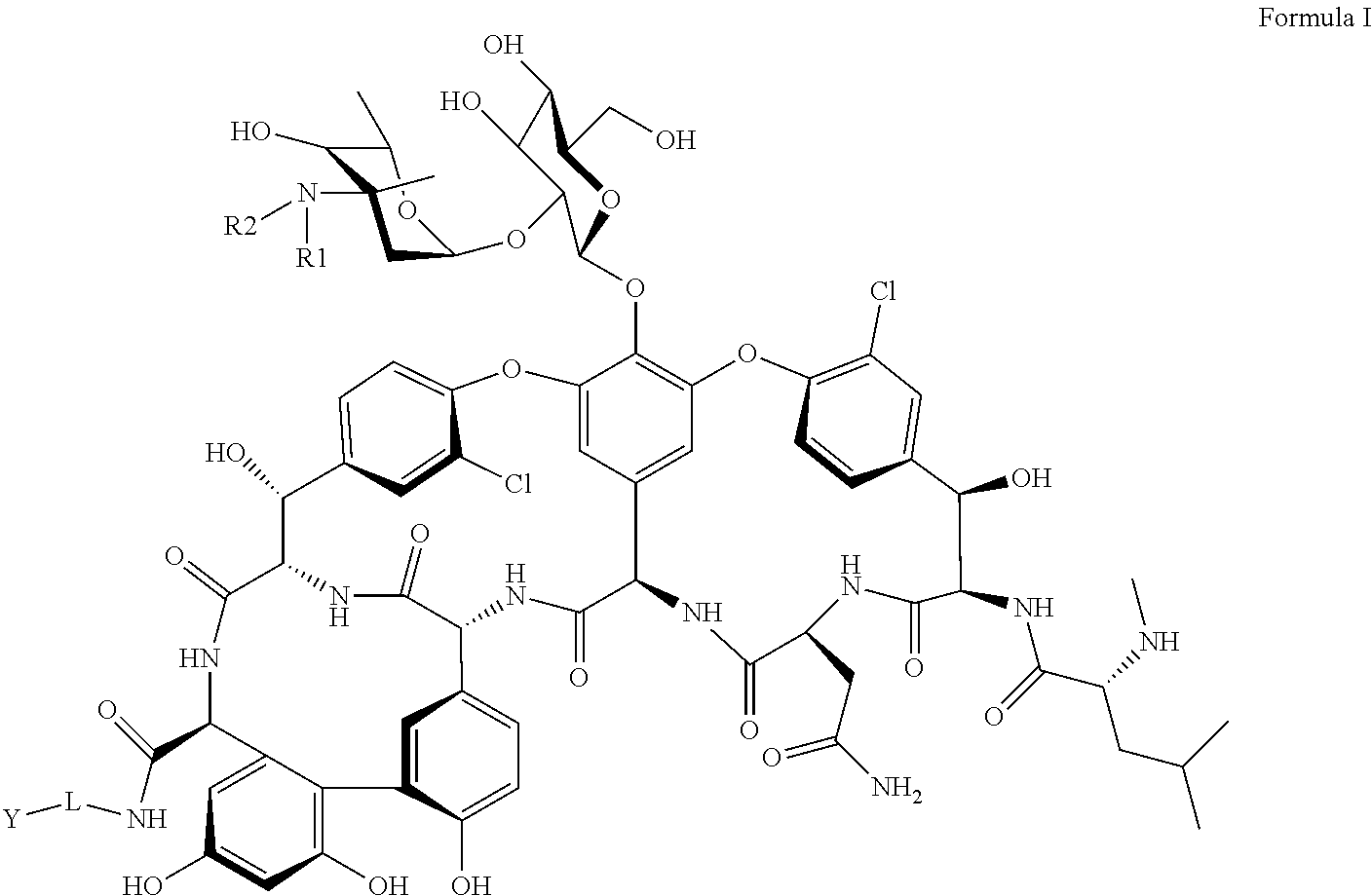
its stereoisomers, prodrugs, or pharmaceutically acceptable salts, its stereoisomers, prodrugs, or pharmaceutically acceptable salts thereof:
wherein R1 and R2 are independently selected from hydrogen, substituted or unsubstituted C1-C18 aliphatic radical, or substituted or unsubstituted C4-C18 aromatic radical;
L is selected from substituted or unsubstituted C1-C18 aliphatic radical or substituted or unsubstituted C4-C18 aromatic radical; and Y is selected from NR3R4 or substituted C4-C18 aromatic radical, wherein R3 and R4 are independently selected from substituted C1-C18 aliphatic radical or substituted C4-C18 aromatic radical.

its stereoisomers, prodrugs, or pharmaceutically acceptable salts thereof.

its stereoisomers, prodrugs, or pharmaceutically acceptable salts thereof, and a metal:
wherein R1 and R2 are independently selected from hydrogen, substituted or unsubstituted C1-C18 aliphatic radical or substituted or unsubstituted C4-C18 aromatic radical;
L is selected from substituted or unsubstituted C1-C18 aliphatic radical or substituted or unsubstituted C4-C18 aromatic radical;
Y is selected from NR3R4 or substituted C4-C18 aromatic radical, wherein R3 and R4 are independently selected from substituted C1-C18 aliphatic radical or substituted C4-C18 aromatic radical; and
the metal is a transitional metal.
the metal is a transitional metal selected from the group consisting of manganese, titanium, cobalt, copper, vanadium, nickel, tungsten, molybdenum, and chromium, zinc, and combinations thereof.


| TABLE 1 |
| Antibacterial activities of vancomycin derivatives. aMethicillin- |
| resistant S. aureus (ATCC 33591). bVancomycin intermediate |
| resistant S. aureus. cVancomycin-sensitive E. faecium (ATCC |
| 19634). dVancomycin-resistant E. faecium (VanA, ATCC 51559). |
| eVancomycin-resistant E. faecalis (VanA, ATCC 51575). |
| MIC (μM) |
| Drug | MRSA | VISA | VSEm | VREm | VREs |
| Vancomycin | 0.63 | 13 | 0.6 | 750 | 250 |
| 4 | 0.6 | 0.4 | 0.3 | 1.2 | 2.5 |
| 3 | >100 | >100 | >100 | >100 | >100 |
| 5 | 0.3 | 0.3 | 0.31 | 0.6 | 1.5 |
| TABLE 2 |
| Antibacterial activities against |
| meropenem-resistant gram negative bacteria. |
| MIC of Meropenem (μg/mL) |
| NDM-1 | In presence | In presence | |||
| expressing | of compound | In absence of | of compound | In absence of | |
| |
4 at 12 | compound | 4 | 5 at 12 μM | compound 5 |
| Klebsiella | 3.1 | >100 | >100 | >100 |
| pneumoniae | ||||
| R3949 | ||||
| Klebsiella | 3.1 | >100 | >100 | >100 |
| pneumoniae | ||||
| R3934 | ||||
| Klebsiella | 1.5 | >100 | >100 | >100 |
| pneumoniae | ||||
| | ||||
| BAA2146 | ||||
| Escherichia | ||||
| 12 | >100 | >100 | >100 | |
| coli R3336 | ||||
- 1) N. Woodford, D. M. Livermore, Infections caused by gram positive bacteria: A review of the global challenge. J. Infect. 59, S4-S16 (2009).
- 2) D. Kahne, C. Leimkuhler, W. Lu, C. T. Walsh, Glycopeptide and lipopeptide antibiotics. Chem. Rev. 105, 425-448 (2005).
- 3) C. K. Naber, Staphylococcus aureus bacteremia: Epidemiology, pathophysiology, and management strategies. Clin. Infect. Dis. 48, S231-S237 (2009).
- 4) C. T. Walsh, S. L. Fisher, I. S. Park, M. Prahalad, Z. Wu, Bacterial resistance to vancomycin: Five genes and one missing hydrogen bond tell the story. Chem. Biol. 3, 21-28 (1996).
- 5) L. Cui, X. Ma, K. Sato, K. Okuma, F. C. Tenover, E. M. Mamizuka, C. G. Gemmell, M. N. Kim, M. C. Ploy, N. El-Solh, V. Ferraz, K. Hiramatsu, Cell wall thickening is a common feature of vancomycin resistance in Staphylococcus aureus. J. Clin. Microbiol. 41, 5-14 (2003).
- 6) A. Y. Peleg, D. C. Hooper, Hospital-acquired infections due to gram negative bacteria. N. Engl. J. Med. 362, 1804-1813 (2010).
- 7) Antimicrobial resistance: global report on surveillance. World health Organization. Geneva. 2014.
Claims (17)


Applications Claiming Priority (3)
| Application Number | Priority Date | Filing Date | Title |
|---|---|---|---|
| IN605CH2015 | 2015-02-06 | ||
| IN605/CHE/2015 | 2015-02-06 | ||
| PCT/IN2016/050047 WO2016125193A1 (en) | 2015-02-06 | 2016-02-05 | Glycopeptides conjugates and uses thereof |
Publications (2)
| Publication Number | Publication Date |
|---|---|
| US20180009848A1 US20180009848A1 (en) | 2018-01-11 |
| US10626148B2 true US10626148B2 (en) | 2020-04-21 |
Family
ID=55854762
Family Applications (1)
| Application Number | Title | Priority Date | Filing Date |
|---|---|---|---|
| US15/549,086 Expired - Fee Related US10626148B2 (en) | 2015-02-06 | 2016-02-05 | Glycopeptides conjugates and uses thereof |
Country Status (4)
| Country | Link |
|---|---|
| US (1) | US10626148B2 (en) |
| EP (1) | EP3253776A1 (en) |
| CA (1) | CA2975975A1 (en) |
| WO (1) | WO2016125193A1 (en) |
Cited By (1)
| Publication number | Priority date | Publication date | Assignee | Title |
|---|---|---|---|---|
| WO2022054057A1 (en) | 2020-09-11 | 2022-03-17 | Supertrans Medical Ltd | Drug conjugates and uses thereof |
Citations (1)
| Publication number | Priority date | Publication date | Assignee | Title |
|---|---|---|---|---|
| WO2013072838A1 (en) * | 2011-11-14 | 2013-05-23 | Jawaharlal Nehru Centre For Advanced Scientific Research | Cationic antibacterial composition |
Family Cites Families (1)
| Publication number | Priority date | Publication date | Assignee | Title |
|---|---|---|---|---|
| US20070224273A1 (en) * | 2004-09-28 | 2007-09-27 | Bing Xu | Multifunctional Supramolecular Hydrogels as Biomaterials |
-
2016
- 2016-02-05 WO PCT/IN2016/050047 patent/WO2016125193A1/en not_active Ceased
- 2016-02-05 EP EP16718913.3A patent/EP3253776A1/en not_active Withdrawn
- 2016-02-05 US US15/549,086 patent/US10626148B2/en not_active Expired - Fee Related
- 2016-02-05 CA CA2975975A patent/CA2975975A1/en not_active Abandoned
Patent Citations (1)
| Publication number | Priority date | Publication date | Assignee | Title |
|---|---|---|---|---|
| WO2013072838A1 (en) * | 2011-11-14 | 2013-05-23 | Jawaharlal Nehru Centre For Advanced Scientific Research | Cationic antibacterial composition |
Non-Patent Citations (1)
| Title |
|---|
| Deresinski, Clinical Infectious Diseases, 2009; 49:1072-9. (Year: 2009). * |
Cited By (1)
| Publication number | Priority date | Publication date | Assignee | Title |
|---|---|---|---|---|
| WO2022054057A1 (en) | 2020-09-11 | 2022-03-17 | Supertrans Medical Ltd | Drug conjugates and uses thereof |
Also Published As
| Publication number | Publication date |
|---|---|
| WO2016125193A1 (en) | 2016-08-11 |
| US20180009848A1 (en) | 2018-01-11 |
| EP3253776A1 (en) | 2017-12-13 |
| CA2975975A1 (en) | 2016-08-11 |
Similar Documents
| Publication | Publication Date | Title |
|---|---|---|
| US10047126B2 (en) | Polymyxin derivatives as antimicrobial compounds | |
| CA2886402A1 (en) | Tazobactam arginine antibiotic compositions | |
| US20160361292A1 (en) | Molecules That Inhibit Efflux Pumps in Multi-Drug Resistant Bacteria and Uses Thereof | |
| US20160175287A1 (en) | Antimicrobial compositions and methods of use thereof | |
| CN106414444B (en) | Nitrogen-containing compound and their purposes | |
| US10626148B2 (en) | Glycopeptides conjugates and uses thereof | |
| US10711040B2 (en) | Low substituted polymyxins and compositions thereof | |
| US20050004095A1 (en) | Carbacephem beta-lactam antibiotics | |
| EP3212183B1 (en) | Synergistic compositions for treating microbial infections | |
| EP4558512B1 (en) | Lipooligoureas, pharmaceutical composition, and lipooligoureas for use as medicament | |
| US9951039B2 (en) | Pyrimidines for treatment of bacterial infections | |
| RU2757741C1 (en) | Ciprofloxacin derivative with antibacterial activity against antibiotic-resistant strains of microorganisms | |
| WO2020057422A1 (en) | Vancomycin sulfonium derivative and preparation method therefor, pharmaceutical composition, and uses | |
| WO2014161412A1 (en) | Tricyclic quinolone derivative and preparation method and use thereof | |
| CN108727332A (en) | A kind of propylene ties Ciprofloxacin-isatin hybrid and its preparation method and use | |
| US10717757B2 (en) | Ketolides having antibacterial activity | |
| US20170342110A1 (en) | Glycopeptides and uses thereof | |
| Murthy et al. | P779 Pharmacokinetics of ceftobiprole following single and multiple intravenous infusions administered to healthy subjects | |
| AU2021261230A1 (en) | Guanidine-modified C-terminus vancomycin compounds, compositions and methods | |
| WO2025064681A1 (en) | Compounds and methods for treating bacterial infections | |
| CN106084068A (en) | One group of enterobactin antibiotic derivatives and application thereof | |
| WO2025183585A1 (en) | Peptide with antibacterial activity | |
| JP2014503578A (en) | Novel azacoumarin derivatives having MDR pump inhibitory activity | |
| Groesen | an.(2022, October 12) | |
| KR20160068783A (en) | Vancomycin-sugar conjugates and uses thereof |
Legal Events
| Date | Code | Title | Description |
|---|---|---|---|
| STPP | Information on status: patent application and granting procedure in general |
Free format text: NON FINAL ACTION MAILED |
|
| STPP | Information on status: patent application and granting procedure in general |
Free format text: RESPONSE TO NON-FINAL OFFICE ACTION ENTERED AND FORWARDED TO EXAMINER |
|
| STPP | Information on status: patent application and granting procedure in general |
Free format text: EX PARTE QUAYLE ACTION MAILED |
|
| STPP | Information on status: patent application and granting procedure in general |
Free format text: RESPONSE TO EX PARTE QUAYLE ACTION ENTERED AND FORWARDED TO EXAMINER |
|
| STPP | Information on status: patent application and granting procedure in general |
Free format text: NOTICE OF ALLOWANCE MAILED -- APPLICATION RECEIVED IN OFFICE OF PUBLICATIONS |
|
| STCF | Information on status: patent grant |
Free format text: PATENTED CASE |
|
| FEPP | Fee payment procedure |
Free format text: MAINTENANCE FEE REMINDER MAILED (ORIGINAL EVENT CODE: REM.); ENTITY STATUS OF PATENT OWNER: LARGE ENTITY |
|
| LAPS | Lapse for failure to pay maintenance fees |
Free format text: PATENT EXPIRED FOR FAILURE TO PAY MAINTENANCE FEES (ORIGINAL EVENT CODE: EXP.); ENTITY STATUS OF PATENT OWNER: LARGE ENTITY |
|
| STCH | Information on status: patent discontinuation |
Free format text: PATENT EXPIRED DUE TO NONPAYMENT OF MAINTENANCE FEES UNDER 37 CFR 1.362 |
|
| STCH | Information on status: patent discontinuation |
Free format text: PATENT EXPIRED DUE TO NONPAYMENT OF MAINTENANCE FEES UNDER 37 CFR 1.362 |
|
| FP | Lapsed due to failure to pay maintenance fee |
Effective date: 20240421 |