US10617998B2 - Methods to extract carbon dioxide from the atmosphere using a solar PV module as part of a combined cycle energy converter - Google Patents
Methods to extract carbon dioxide from the atmosphere using a solar PV module as part of a combined cycle energy converter Download PDFInfo
- Publication number
- US10617998B2 US10617998B2 US15/948,484 US201815948484A US10617998B2 US 10617998 B2 US10617998 B2 US 10617998B2 US 201815948484 A US201815948484 A US 201815948484A US 10617998 B2 US10617998 B2 US 10617998B2
- Authority
- US
- United States
- Prior art keywords
- air
- carbon dioxide
- heat
- coolant liquid
- heated
- Prior art date
- Legal status (The legal status is an assumption and is not a legal conclusion. Google has not performed a legal analysis and makes no representation as to the accuracy of the status listed.)
- Active
Links
- 238000000034 method Methods 0.000 title claims abstract description 39
- CURLTUGMZLYLDI-UHFFFAOYSA-N Carbon dioxide Chemical compound O=C=O CURLTUGMZLYLDI-UHFFFAOYSA-N 0.000 title claims description 108
- 239000001569 carbon dioxide Substances 0.000 title claims description 76
- 229910002092 carbon dioxide Inorganic materials 0.000 title claims description 76
- 239000007788 liquid Substances 0.000 claims abstract description 48
- 239000002826 coolant Substances 0.000 claims abstract description 34
- 230000005855 radiation Effects 0.000 claims abstract description 17
- BVKZGUZCCUSVTD-UHFFFAOYSA-M Bicarbonate Chemical compound OC([O-])=O BVKZGUZCCUSVTD-UHFFFAOYSA-M 0.000 claims abstract description 13
- 230000000694 effects Effects 0.000 claims abstract description 10
- KWYUFKZDYYNOTN-UHFFFAOYSA-M Potassium hydroxide Chemical compound [OH-].[K+] KWYUFKZDYYNOTN-UHFFFAOYSA-M 0.000 claims description 33
- 230000005611 electricity Effects 0.000 claims description 12
- 238000010438 heat treatment Methods 0.000 claims description 9
- XLYOFNOQVPJJNP-UHFFFAOYSA-N water Substances O XLYOFNOQVPJJNP-UHFFFAOYSA-N 0.000 claims description 8
- 239000000758 substrate Substances 0.000 abstract description 4
- 239000002274 desiccant Substances 0.000 description 21
- 239000000463 material Substances 0.000 description 8
- 230000008569 process Effects 0.000 description 7
- OKKJLVBELUTLKV-UHFFFAOYSA-N Methanol Chemical compound OC OKKJLVBELUTLKV-UHFFFAOYSA-N 0.000 description 6
- 238000004378 air conditioning Methods 0.000 description 6
- 238000006243 chemical reaction Methods 0.000 description 6
- 239000012530 fluid Substances 0.000 description 6
- 229910000028 potassium bicarbonate Inorganic materials 0.000 description 6
- 239000011736 potassium bicarbonate Substances 0.000 description 6
- TYJJADVDDVDEDZ-UHFFFAOYSA-M potassium hydrogencarbonate Chemical compound [K+].OC([O-])=O TYJJADVDDVDEDZ-UHFFFAOYSA-M 0.000 description 6
- 230000015572 biosynthetic process Effects 0.000 description 5
- 239000002904 solvent Substances 0.000 description 5
- 238000003860 storage Methods 0.000 description 5
- 238000003786 synthesis reaction Methods 0.000 description 5
- 238000003795 desorption Methods 0.000 description 4
- 239000005431 greenhouse gas Substances 0.000 description 4
- 239000013529 heat transfer fluid Substances 0.000 description 4
- VNWKTOKETHGBQD-UHFFFAOYSA-N methane Chemical compound C VNWKTOKETHGBQD-UHFFFAOYSA-N 0.000 description 4
- 239000006096 absorbing agent Substances 0.000 description 3
- 238000010521 absorption reaction Methods 0.000 description 3
- 230000003197 catalytic effect Effects 0.000 description 3
- 238000002485 combustion reaction Methods 0.000 description 3
- 239000000356 contaminant Substances 0.000 description 3
- 238000010612 desalination reaction Methods 0.000 description 3
- VTYYLEPIZMXCLO-UHFFFAOYSA-L Calcium carbonate Chemical compound [Ca+2].[O-]C([O-])=O VTYYLEPIZMXCLO-UHFFFAOYSA-L 0.000 description 2
- OKTJSMMVPCPJKN-UHFFFAOYSA-N Carbon Chemical compound [C] OKTJSMMVPCPJKN-UHFFFAOYSA-N 0.000 description 2
- 230000008859 change Effects 0.000 description 2
- 238000004891 communication Methods 0.000 description 2
- 239000002803 fossil fuel Substances 0.000 description 2
- 229910002804 graphite Inorganic materials 0.000 description 2
- 239000010439 graphite Substances 0.000 description 2
- 239000012770 industrial material Substances 0.000 description 2
- 235000015497 potassium bicarbonate Nutrition 0.000 description 2
- 238000005057 refrigeration Methods 0.000 description 2
- 230000000630 rising effect Effects 0.000 description 2
- 238000009423 ventilation Methods 0.000 description 2
- 241000283690 Bos taurus Species 0.000 description 1
- 239000011358 absorbing material Substances 0.000 description 1
- 230000004075 alteration Effects 0.000 description 1
- 229910000019 calcium carbonate Inorganic materials 0.000 description 1
- 239000004568 cement Substances 0.000 description 1
- 238000010276 construction Methods 0.000 description 1
- 238000001816 cooling Methods 0.000 description 1
- 238000005516 engineering process Methods 0.000 description 1
- 230000007613 environmental effect Effects 0.000 description 1
- 238000009313 farming Methods 0.000 description 1
- 239000007789 gas Substances 0.000 description 1
- 230000002209 hydrophobic effect Effects 0.000 description 1
- 238000004519 manufacturing process Methods 0.000 description 1
- 238000002156 mixing Methods 0.000 description 1
- 238000012986 modification Methods 0.000 description 1
- 230000004048 modification Effects 0.000 description 1
- 239000003507 refrigerant Substances 0.000 description 1
- 239000004065 semiconductor Substances 0.000 description 1
- 238000001228 spectrum Methods 0.000 description 1
- 238000010792 warming Methods 0.000 description 1
- 239000002918 waste heat Substances 0.000 description 1
Images


Classifications
-
- B—PERFORMING OPERATIONS; TRANSPORTING
- B01—PHYSICAL OR CHEMICAL PROCESSES OR APPARATUS IN GENERAL
- B01D—SEPARATION
- B01D53/00—Separation of gases or vapours; Recovering vapours of volatile solvents from gases; Chemical or biological purification of waste gases, e.g. engine exhaust gases, smoke, fumes, flue gases, aerosols
- B01D53/34—Chemical or biological purification of waste gases
- B01D53/46—Removing components of defined structure
- B01D53/62—Carbon oxides
-
- B—PERFORMING OPERATIONS; TRANSPORTING
- B01—PHYSICAL OR CHEMICAL PROCESSES OR APPARATUS IN GENERAL
- B01D—SEPARATION
- B01D53/00—Separation of gases or vapours; Recovering vapours of volatile solvents from gases; Chemical or biological purification of waste gases, e.g. engine exhaust gases, smoke, fumes, flue gases, aerosols
- B01D53/34—Chemical or biological purification of waste gases
- B01D53/74—General processes for purification of waste gases; Apparatus or devices specially adapted therefor
- B01D53/77—Liquid phase processes
- B01D53/78—Liquid phase processes with gas-liquid contact
-
- C—CHEMISTRY; METALLURGY
- C01—INORGANIC CHEMISTRY
- C01D—COMPOUNDS OF ALKALI METALS, i.e. LITHIUM, SODIUM, POTASSIUM, RUBIDIUM, CAESIUM, OR FRANCIUM
- C01D7/00—Carbonates of sodium, potassium or alkali metals in general
- C01D7/07—Preparation from the hydroxides
-
- H—ELECTRICITY
- H02—GENERATION; CONVERSION OR DISTRIBUTION OF ELECTRIC POWER
- H02S—GENERATION OF ELECTRIC POWER BY CONVERSION OF INFRARED RADIATION, VISIBLE LIGHT OR ULTRAVIOLET LIGHT, e.g. USING PHOTOVOLTAIC [PV] MODULES
- H02S40/00—Components or accessories in combination with PV modules, not provided for in groups H02S10/00 - H02S30/00
- H02S40/40—Thermal components
- H02S40/44—Means to utilise heat energy, e.g. hybrid systems producing warm water and electricity at the same time
-
- B—PERFORMING OPERATIONS; TRANSPORTING
- B01—PHYSICAL OR CHEMICAL PROCESSES OR APPARATUS IN GENERAL
- B01D—SEPARATION
- B01D2251/00—Reactants
- B01D2251/30—Alkali metal compounds
- B01D2251/306—Alkali metal compounds of potassium
-
- B—PERFORMING OPERATIONS; TRANSPORTING
- B01—PHYSICAL OR CHEMICAL PROCESSES OR APPARATUS IN GENERAL
- B01D—SEPARATION
- B01D2251/00—Reactants
- B01D2251/50—Inorganic acids
- B01D2251/506—Sulfuric acid
-
- B—PERFORMING OPERATIONS; TRANSPORTING
- B01—PHYSICAL OR CHEMICAL PROCESSES OR APPARATUS IN GENERAL
- B01D—SEPARATION
- B01D2251/00—Reactants
- B01D2251/60—Inorganic bases or salts
- B01D2251/604—Hydroxides
-
- B—PERFORMING OPERATIONS; TRANSPORTING
- B01—PHYSICAL OR CHEMICAL PROCESSES OR APPARATUS IN GENERAL
- B01D—SEPARATION
- B01D2257/00—Components to be removed
- B01D2257/50—Carbon oxides
- B01D2257/504—Carbon dioxide
-
- B—PERFORMING OPERATIONS; TRANSPORTING
- B01—PHYSICAL OR CHEMICAL PROCESSES OR APPARATUS IN GENERAL
- B01D—SEPARATION
- B01D2258/00—Sources of waste gases
- B01D2258/06—Polluted air
-
- Y—GENERAL TAGGING OF NEW TECHNOLOGICAL DEVELOPMENTS; GENERAL TAGGING OF CROSS-SECTIONAL TECHNOLOGIES SPANNING OVER SEVERAL SECTIONS OF THE IPC; TECHNICAL SUBJECTS COVERED BY FORMER USPC CROSS-REFERENCE ART COLLECTIONS [XRACs] AND DIGESTS
- Y02—TECHNOLOGIES OR APPLICATIONS FOR MITIGATION OR ADAPTATION AGAINST CLIMATE CHANGE
- Y02A—TECHNOLOGIES FOR ADAPTATION TO CLIMATE CHANGE
- Y02A50/00—TECHNOLOGIES FOR ADAPTATION TO CLIMATE CHANGE in human health protection, e.g. against extreme weather
- Y02A50/20—Air quality improvement or preservation, e.g. vehicle emission control or emission reduction by using catalytic converters
-
- Y—GENERAL TAGGING OF NEW TECHNOLOGICAL DEVELOPMENTS; GENERAL TAGGING OF CROSS-SECTIONAL TECHNOLOGIES SPANNING OVER SEVERAL SECTIONS OF THE IPC; TECHNICAL SUBJECTS COVERED BY FORMER USPC CROSS-REFERENCE ART COLLECTIONS [XRACs] AND DIGESTS
- Y02—TECHNOLOGIES OR APPLICATIONS FOR MITIGATION OR ADAPTATION AGAINST CLIMATE CHANGE
- Y02C—CAPTURE, STORAGE, SEQUESTRATION OR DISPOSAL OF GREENHOUSE GASES [GHG]
- Y02C20/00—Capture or disposal of greenhouse gases
- Y02C20/40—Capture or disposal of greenhouse gases of CO2
-
- Y—GENERAL TAGGING OF NEW TECHNOLOGICAL DEVELOPMENTS; GENERAL TAGGING OF CROSS-SECTIONAL TECHNOLOGIES SPANNING OVER SEVERAL SECTIONS OF THE IPC; TECHNICAL SUBJECTS COVERED BY FORMER USPC CROSS-REFERENCE ART COLLECTIONS [XRACs] AND DIGESTS
- Y02—TECHNOLOGIES OR APPLICATIONS FOR MITIGATION OR ADAPTATION AGAINST CLIMATE CHANGE
- Y02E—REDUCTION OF GREENHOUSE GAS [GHG] EMISSIONS, RELATED TO ENERGY GENERATION, TRANSMISSION OR DISTRIBUTION
- Y02E10/00—Energy generation through renewable energy sources
- Y02E10/50—Photovoltaic [PV] energy
-
- Y—GENERAL TAGGING OF NEW TECHNOLOGICAL DEVELOPMENTS; GENERAL TAGGING OF CROSS-SECTIONAL TECHNOLOGIES SPANNING OVER SEVERAL SECTIONS OF THE IPC; TECHNICAL SUBJECTS COVERED BY FORMER USPC CROSS-REFERENCE ART COLLECTIONS [XRACs] AND DIGESTS
- Y02—TECHNOLOGIES OR APPLICATIONS FOR MITIGATION OR ADAPTATION AGAINST CLIMATE CHANGE
- Y02E—REDUCTION OF GREENHOUSE GAS [GHG] EMISSIONS, RELATED TO ENERGY GENERATION, TRANSMISSION OR DISTRIBUTION
- Y02E10/00—Energy generation through renewable energy sources
- Y02E10/60—Thermal-PV hybrids
Definitions
- This invention relates Carbon Dioxide reclamation devices and, in particular, to a system and method of reclaiming Carbon Dioxide from the atmosphere using uniquely designed solar PV modules.
- Greenhouse gases in particular Carbon Dioxide (CO 2 ), have contributed to the warming of the Earth due to the greenhouse effect.
- CO 2 Carbon Dioxide
- U.S. Pat. No. 7,914,758 generally describes a CO 2 control device and method for capturing CO 2 from fluid flow, including: a flow-through apparatus and an CO 2 absorbing filter treated with an alkaline material which is housed within the flow-through apparatus.
- the flow-through apparatus receives fluid flow and the CO 2 from the fluid flow is absorbed by the CO 2 absorbing filter.
- the absorbed CO 2 is converted into CaCO 3 which is combined with volcanic ash to form a useful cement material.
- U.S. Pat. No. 9,000,289 generally describes methods and systems for air conditioning, capturing combustion contaminants, desalination, and other processes using liquid desiccants.
- U.S. Pat. No. 9,086,223 generally describes methods and systems for air conditioning, capturing combustion contaminants, desalination, and other processes using liquid desiccants.
- U.S. Pat. No. 9,243,810 generally describes a desiccant air conditioning system that treats an air stream entering a building space.
- the system includes a conditioner having multiple structures arranged in a substantially vertical orientation, each having at least one surface across which a liquid desiccant can flow.
- the air stream flows through or between the structures such that the liquid desiccant dehumidifies the air stream in a warm weather operation mode and humidifies the air stream in a cold weather operation mode.
- Each structure further includes a desiccant collector at a lower end of the at least one surface for collecting liquid desiccant that has flowed across the at least one surface of the structure.
- a regenerator receives liquid desiccant from the desiccant collectors in the conditioner and causes the liquid desiccant to desorb water in the warm weather operation mode and to absorb water in the cold weather operation mode.
- U.S. Pat. No. 9,273,877 generally describes a desiccant air conditioning system for coolant an air stream entering a building space includes a conditioner and a regenerator.
- the conditioner includes structures arranged in a substantially vertical orientation that are spaced apart from each other with an air stream gap between each pair of adjacent structures.
- Each structure has a surface facing an air stream gap across which a liquid desiccant can flow.
- the air stream flows through the air stream gaps between the structures such that the liquid desiccant dehumidifies the air stream.
- Each structure further includes a separate desiccant collector at a lower end of the surface for collecting liquid desiccant that has flowed across the surface of the structure.
- the desiccant collectors are spaced apart from each other to permit airflow therebetween.
- a photovoltaic-thermal module heats a heat transfer fluid used to heat the liquid desiccant in the regenerator.
- U.S. Pat. No. 9,377,207 generally describes methods and systems for air conditioning, capturing combustion contaminants, desalination, and other processes using liquid desiccants.
- U.S. Pat. No. 9,429,332 generally describes a desiccant air conditioning system for treating an air stream entering a building space includes a conditioner, an air treatment unit, and a regenerator.
- the air treatment unit acts as an evaporative chiller in a warm weather operation mode to cool heat transfer fluid used in the conditioner.
- the evaporative chiller receives at least a portion of a dehumidified air stream exiting the conditioner and heat transfer fluid from the conditioner, and causes the portion of the dehumidified air stream to absorb water from a water source and thereby cool the heat transfer fluid.
- the regenerator receives liquid desiccant from the conditioner and absorbs water from the liquid desiccant.
- WO2007146050A2 generally describes a bio-renewable thermal energy heating and coolant system which is capable of rejection, reclamation and cogeneration.
- the refrigeration system of the present invention utilizes one or more evaporators and one or more condensers to transform thermal energy in the form of waste heat in one environment for use in another environment.
- the hot and cold sides of the refrigeration process may be split for multiple applications for increased utilization of the system energy.
- the environmental variables are balanced so as to optimize the properties of the refrigerant and the capabilities of the system compressor.
- WO2008009049 generally describes a method and apparatus in which, at an absorber station, CO 2 is absorbed from a gas stream into a suitable solvent whereby to convert the solvent into a CO 2 -enriched medium, which is conveyed to a desorber station, typically nearer to a solar energy field than to the absorber station.
- Working fluid heated in the solar energy field by insolation, is employed to effect desorption of CO 2 from the CO 2 -enriched medium, whereby to produce separate CO 2 and regenerated solvent streams.
- the regenerated solvent stream is recycled to the absorber station.
- the CO 2 -enriched medium and/or the regenerated solvent stream may be selectively accumulated so as to respectively optimize the timing and rate of absorption and desorption of CO 2 and/or to provide a storage of solar energy.
- WO2009065577 generally describes a grid-connected power plant, having the following systems which are adjusted in their capacitance to each other: a) a wind power plant, water power plant, solar-thermal system and/or photovoltaic system for the production of electrical energy for operating the systems b) through f); b) a CO 2 absorption system for the absorption of atmospheric CO 2 ; c) a CO 2 desorption system for the desorption of the CO 2 gained in b); d) an electrochemical or solar-thermal H 2 synthesis system for the operating system e); e) a synthesis system selected from the group catalytic methanol synthesis, catalytic DME synthesis, catalytic methane synthesis; f) a storage system selected from the group methanol storage system, DME storage system, methane storage system.
- the invention also relates to the use of such a power plant and methods for the operation of such a power plant.
- International Patent Publication No. WO2009103963A1 generally describes an integrated ventilation and heating system for a room, building or the like comprises a ventilation stack having an interior space, a first opening which in use provides fluid communication between the interior space and the room, building or the like to be ventilated, and a second opening which in use provides fluid communication between the interior space and ambient atmosphere, the interior space in use providing a mixing space for air entering the stack from the room and air entering the stack from the ambient atmosphere.
- a heating control device controls the operation of a heating apparatus that provides heat to the room, building or the like.
- a system controller controls both the operation of the heating control device and the size of at least the second opening according to a pre-determined room condition.
- WO2015035521 generally describes a membrane-less electrochemical reactor for use in processes for the electro-reduction of CO 2 .
- the reactor has an anode and a 3D cathode, separated by an electronically insulating layer, preferably a porous hydrophilic material or a hydrophobic material.
- a method for reclaiming Carbon Dioxide from air includes absorbing solar radiation using a photovoltaic panel, wherein the solar photovoltaic panel is a uniquely designed H-SPV panel that includes a suitable substrate back layer of the H-SPV panel of high thermal conductivity.
- This back layer stores the heat that was absorbed by the semiconducting layer of the H-SPV panel, is the substrate of the H-SPV panel.
- this substrate is cooled by the air rising behind the panel, thereby cooling also the absorbing photovoltaic layer.
- the combined cycle energy converter includes a second back supporting panel forming an enclosed airspace, producing heated air, causing the heated air to rise, sucking in more air to be heated, wherein the air includes Carbon Dioxide, chemically removing the Carbon Dioxide from the heated air, using a coolant liquid, wherein the coolant liquid in a heat exchanger, when in contact with the Carbon Dioxide in the heated air, forms a bicarbonate, and releasing air that has had the Carbon Dioxide chemically removed.
- the solar radiation heats the plate of the H-SPV panel, producing heated air, causing the heated air to rise, sucking in more air to be heated, wherein the air includes Carbon Dioxide.
- the system further includes a heat exchanger, wherein the heat exchanger includes a coolant liquid configured to chemically removing the Carbon Dioxide from the heated air such that, when the coolant liquid is in contact with the Carbon Dioxide in the heated air, the coolant liquid reacts with the Carbon Dioxide, forming a bicarbonate, and an air exhaust opening configured to enable air that has had the Carbon Dioxide chemically removed to be released.
- a method to extract the Carbon Dioxide from the air is provided.
- the air is brought in direct contact with the liquid that contains the KOH solution.
- a special filter is used impregnated with a reactive material to react with the CO 2 in the atmosphere.
- the filter may provide a large area to intercept the airflow with the CO 2 in it.
- the filter may be changed periodically.
- the coolant liquid that acts as a heat exchanger laminally flows by the whole back plate of the H-SPV module to cool the H-SPV module and, in the process, may react with the CO 2 to extract the CO 2 .
- This aspect may be used if the H-SPV module is part of a roof top.
- FIG. 1 shows a system for reclaiming CO 2 from the atmosphere, according to an embodiment of the present invention.
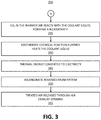
- FIGS. 2-3 show a method for reclaiming CO 2 from the atmosphere, according to an embodiment of the present invention.
- FIG. 1 a system 100 for reclaiming CO 2 from the atmosphere is illustratively depicted, in accordance with an embodiment of the present invention.
- Greenhouse uses do not isolate themselves to one isolated section of the atmosphere. Therefore, in order to extract unwanted greenhouse gases from the atmosphere, a meaningful part of the atmosphere has to be circulated. This may be achieved with the use of solar energy technology.
- the system 100 includes an SPV/thermal electricity converter 105 configured to convert solar radiation 107 and heat to electricity. It is noted, however, that strictly SPV modules may also be used in conjunction with the present system 100 , while maintaining the spirit of the present invention. According to an embodiment, the system 100 shown in FIG. 1 represents a 1 m 2 module. However, other sized modules may also be used in conjunction with the present invention.
- the SPV converter 105 includes two or more thermally conductive plates 110 (which only includes heat absorbing film 111 on the H-SPV plate, which is the plate towards the Sun's radiation), forming a heat isolator, wherein CO 2 -containing air 115 can be heated by the heat absorbed by the plates 110 , resulting in the rise of the air 115 due to the chimney effect.
- the film 111 includes graphite. However, it is noted that other heat absorbing materials may also be used for the film 111 .
- the plates 110 include a front, heat-absorbing plate, and a back supporting member plate configured to create the chimney effect.
- the geometry and thermal properties of the films 111 that determine the chimney effect between the two plates 110 are configured in such a way that every minute approximately 1 m 3 air 115 will be heated and go up between the plates 110 .
- air 115 flow rates may also be achieved using the system 100 of the present invention.
- the semiconductor material of the SPV converter 105 absorbs the sun's radiation throughout the whole electromagnetic spectrum and converts approximately 20% of the solar radiation 107 to electricity, and 80% of the absorbed energy will heat the SPV material.
- this heat will in turn heat up the air between the plates.
- the warmer lighter air 115 will begin to rise with the chimney-effect, sucking in more air 115 below.
- the system 100 further includes a heat exchanger 120 configured to receive the air 115 warms between the plates 110 .
- a heat exchanger 120 configured to receive the air 115 warms between the plates 110 .
- the heat of the air 115 is exchanged with a coolant liquid 125 .
- the coolant liquid 125 includes KOH in water.
- other coolant liquids 125 may also be used in conjunction with the present system 100 while maintaining the spirit of the present invention.
- the CO 2 in the air 115 reacts with the coolant liquid 125 , forming a bicarbonate, which can be precipitated at the heat load out of the coolant liquid 125 .
- the chemical reaction which is an exothermic chemical reaction, further increases the temperature of the coolant liquid 125 .
- some of the thermal energy absorbed by the system 100 is converted to electricity. By collecting the thermal energy, the system 100 has a combined cycle SPV/thermal converter 105 , which may reach over 50% efficiency.
- the heat exchanger 120 further includes an air exhaust opening 130 for removal of the air 135 that has had some or all of the CO 2 removed in the heat exchanger 120 .
- the air is brought in direct contact with the liquid that contains the KOH solution.
- a special filter is used impregnated with a reactive material to react with the CO 2 in the atmosphere.
- the filter may provide a large area to intercept the airflow with the CO 2 in it.
- the filter may be changed periodically.
- the coolant liquid that acts as a heat exchanger laminally flows by the whole back plate of the H-SPV module to cool the H-SPV module and, in the process, may react with the CO 2 to extract the CO 2 .
- This embodiment may be used if the H-SPV module is part of a roof top.
- FIGS. 2-3 a method 200 for reclaiming CO 2 from the atmosphere is illustratively depicted, in accordance with an embodiment of the present invention.
- a CO 2 extracting apparatus is coupled to a SPV/thermal converter 105 capable of converting solar radiation 107 and thermal energy to electricity, creating a CO 2 extracting system 100 .
- This system 100 is installed.
- this system 100 includes two or more SPV panel plates 110 to form a heat isolator.
- the heat absorbing film 111 of the SPV plates 110 absorbs solar radiation 107 , converting some of the solar radiation 107 to electricity and further heating the SPV panel 105 .
- the warmer air 115 rises between the plates 110 , due to the chimney-effect, sucking in more outside air into the heat isolator. According to an embodiment, the rising air 115 results in an approximate 1 m 3 of air 115 to flow between the plates 110 per minute.
- the warmer air 115 passes through a heat exchanger 120 where, at step 230 , the heat of the air 115 is exchanged with a coolant liquid 125 .
- the coolant liquid 125 includes KOH. It is noted, however, that other coolant liquids 125 may also be used, while maintaining the spirit of the present invention.
- the CO 2 in the air 115 reacts with the coolant liquid 125 , forming a bicarbonate, which can be precipitated at the heat load out of the coolant liquid 125 .
- the chemical reaction which is an exothermic chemical reaction, further increases the temperature of the coolant liquid 125 .
- step 245 some of the thermal energy absorbed by the system 100 is converted to electricity using the SPV/thermal converter 105 .
- the bicarbonate containing the CO 2 is removed from the system 100 and collected.
- the treated air 135 is released through an air exhaust opening 130 .
- the articles “a,” “an,” and “the” are intended to mean that there are one or more of the elements.
- the adjective “another,” when used to introduce an element, is intended to mean one or more elements.
- the terms “including” and “having” are intended to be inclusive such that there may be additional elements other than the listed elements.
Landscapes
- Chemical & Material Sciences (AREA)
- Engineering & Computer Science (AREA)
- Environmental & Geological Engineering (AREA)
- General Chemical & Material Sciences (AREA)
- Health & Medical Sciences (AREA)
- Biomedical Technology (AREA)
- Analytical Chemistry (AREA)
- Oil, Petroleum & Natural Gas (AREA)
- Chemical Kinetics & Catalysis (AREA)
- Organic Chemistry (AREA)
- Inorganic Chemistry (AREA)
- Materials Engineering (AREA)
- Gas Separation By Absorption (AREA)
- Treating Waste Gases (AREA)
Abstract
Description
Claims (5)
Priority Applications (4)
| Application Number | Priority Date | Filing Date | Title |
|---|---|---|---|
| US15/948,484 US10617998B2 (en) | 2018-04-09 | 2018-04-09 | Methods to extract carbon dioxide from the atmosphere using a solar PV module as part of a combined cycle energy converter |
| PCT/IB2019/052888 WO2019197975A1 (en) | 2018-04-09 | 2019-04-09 | Air solar heating with integrated co2 from air absorption system |
| HUE19724241A HUE066119T2 (en) | 2018-04-09 | 2019-04-09 | Co2 from air absorption method |
| EP19724241.5A EP3773994B1 (en) | 2018-04-09 | 2019-04-09 | Co2 from air absorption method |
Applications Claiming Priority (1)
| Application Number | Priority Date | Filing Date | Title |
|---|---|---|---|
| US15/948,484 US10617998B2 (en) | 2018-04-09 | 2018-04-09 | Methods to extract carbon dioxide from the atmosphere using a solar PV module as part of a combined cycle energy converter |
Publications (2)
| Publication Number | Publication Date |
|---|---|
| US20190308137A1 US20190308137A1 (en) | 2019-10-10 |
| US10617998B2 true US10617998B2 (en) | 2020-04-14 |
Family
ID=66542465
Family Applications (1)
| Application Number | Title | Priority Date | Filing Date |
|---|---|---|---|
| US15/948,484 Active US10617998B2 (en) | 2018-04-09 | 2018-04-09 | Methods to extract carbon dioxide from the atmosphere using a solar PV module as part of a combined cycle energy converter |
Country Status (4)
| Country | Link |
|---|---|
| US (1) | US10617998B2 (en) |
| EP (1) | EP3773994B1 (en) |
| HU (1) | HUE066119T2 (en) |
| WO (1) | WO2019197975A1 (en) |
Families Citing this family (2)
| Publication number | Priority date | Publication date | Assignee | Title |
|---|---|---|---|---|
| CN114892832A (en) * | 2022-04-29 | 2022-08-12 | 上海交通大学 | A solar powered passive ventilation interlayer humidity control and dehumidification structure |
| WO2024112429A1 (en) * | 2022-11-22 | 2024-05-30 | The Regents Of The University Of California | Passive carbon capture device using solar energy |
Citations (6)
| Publication number | Priority date | Publication date | Assignee | Title |
|---|---|---|---|---|
| WO2007146050A2 (en) | 2006-06-07 | 2007-12-21 | Waters Hot, Inc. | Bio-renewable thermal energy heating and cooling system and method |
| WO2009065577A1 (en) | 2007-11-22 | 2009-05-28 | Gregor Waldstein | Modular power plant unconnected to the grid |
| WO2009103963A1 (en) | 2008-02-18 | 2009-08-27 | E-Stack Ltd. | An integrated ventilation and heating system and a method of operating the same |
| US7914758B2 (en) | 2008-11-19 | 2011-03-29 | Murray Kenneth D | Captured CO2 from atmospheric, industrial and vehicle combustion waste |
| WO2015035521A1 (en) | 2013-09-12 | 2015-03-19 | Mantra Energy Alternatives Ltd | Membrane-less reactor for the electro-reduction of carbon dioxide |
| US9000289B2 (en) | 2010-05-25 | 2015-04-07 | 7Ac Technologies, Inc. | Photovoltaic-thermal (PVT) module with storage tank and associated methods |
Family Cites Families (3)
| Publication number | Priority date | Publication date | Assignee | Title |
|---|---|---|---|---|
| AU2007276694A1 (en) | 2006-07-17 | 2008-01-24 | Commonwealth Scientific And Industrial Research Organisation | CO2 capture using solar thermal energy |
| US20120003722A1 (en) * | 2009-03-18 | 2012-01-05 | Coaway Llc | Carbon dioxide removal systems |
| US20120219484A1 (en) * | 2011-02-25 | 2012-08-30 | Clark Tyler A | Method and apparatus for sequestering carbon from atmospheric air using hydroxide compound |
-
2018
- 2018-04-09 US US15/948,484 patent/US10617998B2/en active Active
-
2019
- 2019-04-09 EP EP19724241.5A patent/EP3773994B1/en active Active
- 2019-04-09 HU HUE19724241A patent/HUE066119T2/en unknown
- 2019-04-09 WO PCT/IB2019/052888 patent/WO2019197975A1/en not_active Ceased
Patent Citations (11)
| Publication number | Priority date | Publication date | Assignee | Title |
|---|---|---|---|---|
| WO2007146050A2 (en) | 2006-06-07 | 2007-12-21 | Waters Hot, Inc. | Bio-renewable thermal energy heating and cooling system and method |
| WO2009065577A1 (en) | 2007-11-22 | 2009-05-28 | Gregor Waldstein | Modular power plant unconnected to the grid |
| WO2009103963A1 (en) | 2008-02-18 | 2009-08-27 | E-Stack Ltd. | An integrated ventilation and heating system and a method of operating the same |
| US7914758B2 (en) | 2008-11-19 | 2011-03-29 | Murray Kenneth D | Captured CO2 from atmospheric, industrial and vehicle combustion waste |
| US9000289B2 (en) | 2010-05-25 | 2015-04-07 | 7Ac Technologies, Inc. | Photovoltaic-thermal (PVT) module with storage tank and associated methods |
| US9086223B2 (en) | 2010-05-25 | 2015-07-21 | 7Ac Technologies, Inc. | Methods and systems for desiccant air conditioning |
| US9243810B2 (en) | 2010-05-25 | 2016-01-26 | 7AC Technologies | Methods and systems for desiccant air conditioning |
| US9273877B2 (en) | 2010-05-25 | 2016-03-01 | 7Ac Technologies, Inc. | Methods and systems for desiccant air conditioning |
| US9377207B2 (en) | 2010-05-25 | 2016-06-28 | 7Ac Technologies, Inc. | Water recovery methods and systems |
| US9429332B2 (en) | 2010-05-25 | 2016-08-30 | 7Ac Technologies, Inc. | Desiccant air conditioning methods and systems using evaporative chiller |
| WO2015035521A1 (en) | 2013-09-12 | 2015-03-19 | Mantra Energy Alternatives Ltd | Membrane-less reactor for the electro-reduction of carbon dioxide |
Also Published As
| Publication number | Publication date |
|---|---|
| US20190308137A1 (en) | 2019-10-10 |
| EP3773994B1 (en) | 2023-11-15 |
| EP3773994A1 (en) | 2021-02-17 |
| HUE066119T2 (en) | 2024-07-28 |
| WO2019197975A1 (en) | 2019-10-17 |
Similar Documents
| Publication | Publication Date | Title |
|---|---|---|
| JP6211644B2 (en) | Method and system using liquid desiccant for air conditioning and other processes | |
| Milani et al. | Experimentally validated model for atmospheric water generation using a solar assisted desiccant dehumidification system | |
| WO2018046979A1 (en) | Method of generating power, cold, and distilled water using atmospheric evaporation driven systems | |
| Siddiqui et al. | Current trends on extraction of water from air: an alternative solution to water supply | |
| EP3773994B1 (en) | Co2 from air absorption method | |
| Anand et al. | Performance analysis of combined two stage desalination and cooling plant with different solar collectors | |
| WO2023210581A1 (en) | Carbon dioxide recovery system | |
| Qandil et al. | Experimental analysis of atmospheric water harvester using ammonia vapour absorption system | |
| KR102781396B1 (en) | Heat pump system with high energy use efficiency | |
| CN106030214A (en) | Cooler | |
| CN119686416A (en) | Air water extraction device and method operating under full working conditions | |
| Henning et al. | Solar cooling and refrigeration with high temperature lifts–thermodynamic background and technical solution | |
| WO2008135990A2 (en) | Method and system for cooling by using solar energy | |
| CN118546551A (en) | Preparation method of foam material, solar photovoltaic roof and operation mode | |
| Jani | Solar assisted sustainable built environment: A review | |
| Mehta | Regeneration of liquid desiccant using solar energy | |
| Jani | Use of renewable solar energy in desiccant assisted cooling techniques | |
| Davani et al. | Experimental analysis of a multistage water desalination system utilizing an evacuated parabolic solar trough with a solar tracker | |
| Jani | An overview on use of renewable solar energy in desiccant based thermal cooling systems | |
| US20230302395A1 (en) | Membrane-based desorption cooling method for passive thermal management | |
| Sharma et al. | Optimizing Solar Collector Temperature for Power Generation | |
| Mishra et al. | An Overview of Various Techniques of Atmospheric Water Extraction | |
| Singh et al. | RECENT TRENDS IN SOLAR THERMAL COOLING TECHNOLOGIES. | |
| Pervez et al. | Design and Fabrication of Setup for Harvesting Water from Atmospheric Air-A Review | |
| JP2025051105A (en) | Carbon Dioxide Capture System |
Legal Events
| Date | Code | Title | Description |
|---|---|---|---|
| FEPP | Fee payment procedure |
Free format text: ENTITY STATUS SET TO UNDISCOUNTED (ORIGINAL EVENT CODE: BIG.); ENTITY STATUS OF PATENT OWNER: MICROENTITY |
|
| FEPP | Fee payment procedure |
Free format text: ENTITY STATUS SET TO SMALL (ORIGINAL EVENT CODE: SMAL); ENTITY STATUS OF PATENT OWNER: MICROENTITY Free format text: ENTITY STATUS SET TO MICRO (ORIGINAL EVENT CODE: MICR); ENTITY STATUS OF PATENT OWNER: MICROENTITY |
|
| STPP | Information on status: patent application and granting procedure in general |
Free format text: NON FINAL ACTION MAILED |
|
| STPP | Information on status: patent application and granting procedure in general |
Free format text: RESPONSE TO NON-FINAL OFFICE ACTION ENTERED AND FORWARDED TO EXAMINER |
|
| STPP | Information on status: patent application and granting procedure in general |
Free format text: NOTICE OF ALLOWANCE MAILED -- APPLICATION RECEIVED IN OFFICE OF PUBLICATIONS |
|
| STCF | Information on status: patent grant |
Free format text: PATENTED CASE |
|
| AS | Assignment |
Owner name: HOLISTIC SOLAR HOLDINGS, INC., NEW JERSEY Free format text: ASSIGNMENT OF ASSIGNORS INTEREST;ASSIGNORS:KISS, ZOLTAN;JOHNSON, ORIAN;BLOW, SCOTT A.;AND OTHERS;SIGNING DATES FROM 20180417 TO 20180423;REEL/FRAME:059166/0324 |
|
| FEPP | Fee payment procedure |
Free format text: MAINTENANCE FEE REMINDER MAILED (ORIGINAL EVENT CODE: REM.); ENTITY STATUS OF PATENT OWNER: MICROENTITY |
|
| FEPP | Fee payment procedure |
Free format text: SURCHARGE FOR LATE PAYMENT, MICRO ENTITY (ORIGINAL EVENT CODE: M3554); ENTITY STATUS OF PATENT OWNER: MICROENTITY |
|
| MAFP | Maintenance fee payment |
Free format text: PAYMENT OF MAINTENANCE FEE, 4TH YEAR, MICRO ENTITY (ORIGINAL EVENT CODE: M3551); ENTITY STATUS OF PATENT OWNER: MICROENTITY Year of fee payment: 4 |