US10530655B2 - Control apparatus in a plurality of control apparatuses for managing management information - Google Patents
Control apparatus in a plurality of control apparatuses for managing management information Download PDFInfo
- Publication number
- US10530655B2 US10530655B2 US15/242,634 US201615242634A US10530655B2 US 10530655 B2 US10530655 B2 US 10530655B2 US 201615242634 A US201615242634 A US 201615242634A US 10530655 B2 US10530655 B2 US 10530655B2
- Authority
- US
- United States
- Prior art keywords
- management information
- control apparatus
- information
- memory unit
- resource management
- Prior art date
- Legal status (The legal status is an assumption and is not a legal conclusion. Google has not performed a legal analysis and makes no representation as to the accuracy of the status listed.)
- Expired - Fee Related, expires
Links
Images




Classifications
-
- H—ELECTRICITY
- H04—ELECTRIC COMMUNICATION TECHNIQUE
- H04L—TRANSMISSION OF DIGITAL INFORMATION, e.g. TELEGRAPHIC COMMUNICATION
- H04L41/00—Arrangements for maintenance, administration or management of data switching networks, e.g. of packet switching networks
- H04L41/08—Configuration management of networks or network elements
- H04L41/0893—Assignment of logical groups to network elements
-
- G—PHYSICS
- G06—COMPUTING OR CALCULATING; COUNTING
- G06F—ELECTRIC DIGITAL DATA PROCESSING
- G06F3/00—Input arrangements for transferring data to be processed into a form capable of being handled by the computer; Output arrangements for transferring data from processing unit to output unit, e.g. interface arrangements
- G06F3/06—Digital input from, or digital output to, record carriers, e.g. RAID, emulated record carriers or networked record carriers
- G06F3/0601—Interfaces specially adapted for storage systems
- G06F3/0602—Interfaces specially adapted for storage systems specifically adapted to achieve a particular effect
- G06F3/061—Improving I/O performance
-
- G—PHYSICS
- G06—COMPUTING OR CALCULATING; COUNTING
- G06F—ELECTRIC DIGITAL DATA PROCESSING
- G06F3/00—Input arrangements for transferring data to be processed into a form capable of being handled by the computer; Output arrangements for transferring data from processing unit to output unit, e.g. interface arrangements
- G06F3/06—Digital input from, or digital output to, record carriers, e.g. RAID, emulated record carriers or networked record carriers
- G06F3/0601—Interfaces specially adapted for storage systems
- G06F3/0628—Interfaces specially adapted for storage systems making use of a particular technique
- G06F3/0655—Vertical data movement, i.e. input-output transfer; data movement between one or more hosts and one or more storage devices
- G06F3/0658—Controller construction arrangements
-
- G—PHYSICS
- G06—COMPUTING OR CALCULATING; COUNTING
- G06F—ELECTRIC DIGITAL DATA PROCESSING
- G06F3/00—Input arrangements for transferring data to be processed into a form capable of being handled by the computer; Output arrangements for transferring data from processing unit to output unit, e.g. interface arrangements
- G06F3/06—Digital input from, or digital output to, record carriers, e.g. RAID, emulated record carriers or networked record carriers
- G06F3/0601—Interfaces specially adapted for storage systems
- G06F3/0668—Interfaces specially adapted for storage systems adopting a particular infrastructure
- G06F3/067—Distributed or networked storage systems, e.g. storage area networks [SAN], network attached storage [NAS]
-
- H—ELECTRICITY
- H04—ELECTRIC COMMUNICATION TECHNIQUE
- H04L—TRANSMISSION OF DIGITAL INFORMATION, e.g. TELEGRAPHIC COMMUNICATION
- H04L41/00—Arrangements for maintenance, administration or management of data switching networks, e.g. of packet switching networks
- H04L41/08—Configuration management of networks or network elements
- H04L41/0803—Configuration setting
- H04L41/0813—Configuration setting characterised by the conditions triggering a change of settings
-
- H—ELECTRICITY
- H04—ELECTRIC COMMUNICATION TECHNIQUE
- H04L—TRANSMISSION OF DIGITAL INFORMATION, e.g. TELEGRAPHIC COMMUNICATION
- H04L41/00—Arrangements for maintenance, administration or management of data switching networks, e.g. of packet switching networks
- H04L41/08—Configuration management of networks or network elements
- H04L41/0866—Checking the configuration
- H04L41/0873—Checking configuration conflicts between network elements
Definitions
- the embodiments discussed therein are directed to a control apparatus, an information processing system, and a computer-readable storage medium having a control program stored therein.
- storage apparatuses preferably exchange information on resources managed by those storage apparatuses at regular intervals.
- the information to be exchanged includes, for example, the status of storage devices, information indicating whether or not the storage devices are accessible, and information indicating connection paths between the storage devices and whether or not the connection patties are connectable.
- resource management information is updated in a storage apparatus
- storage apparatuses can share resource management information of local and other storage apparatuses, by exchanging all resource management information including the updated information, with each other.
- One solution to prevent old resource management information from being looked up is that a storage apparatus attempting to look up resource management information of other storage apparatuses inquires whether or not the resource management information has been updated, by sending the resource management information possessed by the inquiring storage apparatus, for example. If the resource management information has been updated, the inquiring storage apparatus can obtain new resource management information from other storage apparatuses, and look up the information.
- Resource management information is relatively large in size, however. Hence, if resource management information is sent every time other storage apparatuses attempt to utilize the resource management information, an increase in the communication data volume may be induced, which might induce a reduced performance of the system.
- the above-described disadvantage is not limited to storage systems.
- such a disadvantage may also be experienced in a wide variety of information processing systems wherein multiple control apparatuses share management information with each other, such as systems wherein multiple monitor apparatuses exchange monitor information about targets to be monitored.
- a control apparatus in a plurality of control apparatuses provided in a system the control apparatus served as a first control apparatus which includes a memory unit and a processor.
- the memory unit stores a plurality of management information managed by respective control apparatuses and a plurality of modification information indicating update statuses of respective management information.
- the processor compares the first modification information which is received, with first modification information stored in the memory unit.
- the processor When the first modification information which is received does not match the first modification information stored in the memory unit, the processor notifies the second control apparatus of a response including information about the first management information and the first modification information stored in the memory unit, to cause the first management information and the first modification information stored in the second control apparatus, to be updated.
- FIG. 1 is a diagram illustrating an example of a configuration of a storage system as one example of one embodiment
- FIG. 2 is a diagram illustrating an example of a hardware configuration of a CM
- FIG. 3 is a diagram illustrating an example of a functional configuration of a CM
- FIG. 4 is a diagram illustrating an example of data structure of resource information
- FIG. 5 is a sequence chart illustrating an example of operation upon a startup or incorporation of apparatuses
- FIGS. 6-11 are diagrams illustrating an example of the state of the resource management information in the illustration in FIG. 5 ;
- FIG. 12 is a sequence chart illustrating an example of operation upon a startup or incorporation of apparatuses
- FIGS. 13-19 are diagrams illustrating an example of the state of the resource management information in the illustration in FIG. 12 ;
- FIG. 20 is a sequence chart illustrating an example of operation when resource management information is update
- FIGS. 21 and 22 are diagrams illustrating an example of the state of the resource management information in the illustration in FIG. 20 ;
- FIG. 23 is a sequence chart illustrating an example of operation before a lookup of resource management information
- FIGS. 24-26 are diagrams illustrating an example of the state of the resource management information in the illustration in FIG. 23 ;
- FIG. 27 is a flowchart illustrating an example of operation of distribution processing of resource management information
- FIG. 28 is a flowchart illustrating an example of operation of obtainment request processing of resource management information
- FIG. 29 is a flowchart illustrating an example of operation of response processing to an obtainment request demand
- FIG. 30 is a flowchart illustrating an example of operation of response reception processing.
- FIG. 31 is a flowchart illustrating an example of operation of obtainment request processing before a lookup of resource management information.
- FIG. 1 is a diagram illustrating an example of a configuration of a storage system 1 as one example of one embodiment.
- the storage system 1 includes a relay apparatus 2 , multiple (two in FIG. 1 ) controller enclosures (CEs) 3 - 1 and 3 - 2 , and multiple (two in FIG. 1 ) drive enclosures (DEs) 5 - 1 and 5 - 2 , for example.
- CEs controller enclosures
- DEs drive enclosures
- the storage system 1 includes multiple storage devices 51 provided in the DEs 5 , for providing the host apparatus 6 with storage areas in the storage devices 51 .
- the storage system 1 may store data across the multiple storage devices 51 in a distributed or redundant manner, by the Redundant Arrays of Inexpensive Disks (RAID) technique, for example.
- the CEs 3 may contain the storage devices 51 .
- the DE 5 - 1 (DE #00) and the DE 5 - 2 (DE #10) are connected to the CE 3 - 1 (CE #0) and the CE 3 - 2 (CE #1), respectively.
- the CE 3 - 1 and the DE 5 - 1 connected to the CE 3 - 1 may be collectively referred to as a storage apparatus 10 - 1
- the CE 3 - 2 and the DE 5 - 2 connected to the CE 3 - 2 may be collectively referred to as a storage apparatus 10 - 2
- an example will be described wherein the storage apparatuses 10 - 1 and 10 - 2 are collectively operated as a single storage apparatus (storage system 1 ), for managing and manipulating data.
- each CE 3 is connected to one of the DEs 5 in the example in FIG. 1 , this is not limiting. Multiple DEs 5 may be connected to each CE 3 in parallel, or one or more additional DEs 5 may be connected to a DE 5 connected to a CE 3 in a cascade connection.
- Each CE 3 is connected to the relay apparatus 2 and its corresponding DE 5 , and represents one example of a control casing that carries out various controls.
- Each CE 3 may include one or more controller modules (CMs) 4 .
- the CE 3 - 1 (CE #0) includes two CMs, namely, CM 4 - 1 (CM #0) and CM 4 - 2 (CM #1), whereas the CE 3 - 2 (CE #1) includes two CMs, namely, CM 4 - 3 (CM #2) and CM 4 - 4 (CM #3).
- Each CM 4 represents one example of a control apparatus that controls access requests issued from the host apparatus 6 to the DE 5 .
- Examples of the CMs 4 include computers, such as information processing apparatus, e.g., servers and personal computers (PCs), for example.
- each CM 4 configures a redundant configuration (e.g., is duplicated) with the other CM 4 in the CE 3 .
- One CM 4 (CM 4 - 1 and 4 - 3 in FIG. 1 ) of the CMs 4 in each CE 3 functions as the master CM 4 that principally controls the storage apparatus 10 , in the CE 3 .
- the non-master CM 4 (CM 4 - 2 and 4 - 4 in FIG. 1 ) of the CMs 4 in the CE 3 functions as the slave CM 4 that will serve as a master when the master CM 4 fails or is detached. Which of the CMs 4 functions as the master and which of the CMs 4 functions as the slave may be determined upon a startup of the storage apparatuses 10 .
- the relay apparatus 2 represents one example of a relay apparatus that communicatively connects the multiple CMs 4 such that the multiple CMs 4 send and receive information to and from each other.
- the relay apparatus 2 include routers, such as front end routers (FRTs), for example.
- the relay apparatus 2 includes multiple adaptors compliant with the Peripheral Component Interconnect (PCI) Express (PCIe) standard, for example, and may be connected to each of the multiple CMs 4 through PCIe-compliant cables.
- PCIe Peripheral Component Interconnect Express
- the CMs 4 in different CEs 3 may communicate with each other via the relay apparatus 2 , while the CMs 4 in the same CE 3 may communicate with each other through cables (e.g., SAS cables) connecting the CMs 4 , for example.
- SAS is the abbreviation for the Serial Attached Small Computer System Interface (SCSI).
- the multiple CMs 4 can control the storage system 1 , or can share (synchronize) or notify information about accesses and the like to the multiple storage devices 51 , by exchanging information with each other.
- the CMs 4 exchange resource information 7 (refer to FIG. 1 ) with each other, the resource information 7 that is utilized for managing resources in the storage system 1 .
- the storage system 1 represents one example of an information processing system wherein each of multiple control apparatuses shares management information.
- the CEs 3 - 1 and 3 - 2 may have similar configurations, and the CMs 4 - 1 through 4 - 4 may have similar configurations. Hence, the CMs 4 will be described focusing on an arbitrary CM 4 . The details of the CMs 4 will be described later.
- Each DE 5 represents one example of an apparatus (device) that includes multiple (three in FIG. 1 ) storage devices 51 (storage devices #0 through #2) and carries out accesses, such as writes and reads data to and from the storage devices 51 , in response to a request from the CMs 4 .
- Each DE 5 may also include one or more (two in FIG. 1 ) input/output modules (IOMs) 52 , as one example of a control unit that controls accesses to the storage devices 51 in the DE 5 and makes a living confirmation to the storage devices 51 .
- the IOMs 52 can control the DE 5 in a collective manner, and can execute processing as switch apparatuses that relay data between the CMs 4 connected to that DE 5 (e.g., the CMs 4 - 1 and 4 - 2 in the case of the DE 5 - 1 in FIG. 1 ) and the storage devices 51 . Examples of such switch apparatuses include SAS expanders.
- the IOMs 52 may also be connected to the IOMs 52 in the other DE 5 .
- the storage devices 51 represent one example of hardware that stores various data, programs, and the like. Examples of the storage devices 51 include a wide variety of storage devices, such as magnetic disks, e.g., hard disk drives (HDDs), semiconductor drive devices, e.g., solid state drives (SSDs), for example.
- HDDs hard disk drives
- SSDs solid state drives
- each CE 3 may be connected directly or indirectly to the DE 5 related to that CE 3 , for providing redundant access paths.
- each of the CMs 4 - 1 and 4 - 2 in the CE 3 - 1 may be connected to the two IOMs 52 in the DE 5 - 1 through cables, such as SAS cables, in FIG. 1 .
- the host apparatus 6 represents one example of an upper apparatus connected to the multiple CMs 4 .
- the host apparatus 6 can issue an access request for making various accesses to the multiple DEs 5 (storage devices 51 ).
- the host apparatus 6 may be connected to the multiple CMs 4 through a switch for switching paths between the host apparatus 6 and the multiple CMs 4 , or through a network, such as a local area network (LAN) or the Internet.
- a network such as a local area network (LAN) or the Internet.
- the storage system 1 is provided with a rack (not illustrated) for enclosing the relay apparatus 2 , the CEs 3 , and the DEs 5 , for example, such that the relay apparatus 2 , the CEs 3 , and the DEs 5 can be mounted to or unmounted from the rack.
- FIG. 2 is a diagram illustrating an example of a hardware configuration of a CM 4 .
- the CM 4 includes a central processing unit (CPU) 4 a , a memory 4 b , a storing unit 4 c , an interface unit 4 d , and an I/O unit 4 e , for example.
- the CPU 4 a represents one example of a computing device (processor) that carried out various controls and computations.
- the CPU 4 a may be communicatively connected to each block in the CM 4 through a bus.
- electric circuits such as integrated circuits (ICs), e.g., micro processing units (MPUs), application specific integrated circuits (ASICs), field programmable gate arrays (FPGAs), may be used, for example.
- ICs integrated circuits
- MPUs micro processing units
- ASICs application specific integrated circuits
- FPGAs field programmable gate arrays
- the memory 4 b represents one example of hardware that stores various data and programs.
- the memory 4 b may include storage areas for storing resource information 7 depicted in FIG. 1 , or may be also used as a cache memory that temporarily stores data or programs used for making accesses to the DEs 5 .
- Examples of the memory 4 b include a volatile memory, such as a random access memory (RAM), for example.
- RAM random access memory
- the storing unit 4 c represents one example of hardware that stores various data, programs, and the like.
- Examples of the storing unit 4 c include a wide variety of storage devices, such as magnetic disks, e.g., HDDs, semiconductor drive devices, e.g., SSDs, non-volatile memories, e.g., flush memories and read only memories (ROMs), for example.
- magnetic disks e.g., HDDs
- semiconductor drive devices e.g., SSDs
- non-volatile memories e.g., flush memories and read only memories (ROMs)
- the storing unit 4 c can store a control program 40 that embodies all or a part of functions of the CMs 4 .
- the CPU 4 a can embody the functions of the CMs 4 by loading the control program 40 stored in the storing unit 4 c into the memory 4 b for executing it, for example.
- the interface unit 4 d represents one example of a communication interface that controls connections and communications among the host apparatus 6 , the DE 5 , the CMs 4 in the other CE 3 (via the relay apparatus 2 ), the other CM 4 in the CE 3 , and an operation terminal or the like used by an operator.
- the interface unit 4 d may include adaptors (ports) for connecting the IFs 4 d - 1 through 4 d - 3 depicted in FIG. 1 , or the operation terminal.
- the control program 40 may be downloaded to the CM 4 from a network (not illustrated) through the interface unit 4 d.
- the IF 4 d - 1 represents one example of a communication interface that controls connections and communications with the relay apparatus 2 .
- Examples of the IF 4 d - 1 include one or more non-transparent bridges (NTBs) including adaptors compliant with the PCIe or the like, for example.
- NTBs non-transparent bridges
- the IF 4 d - 2 represents one example of a communication interface (host interface) that controls connections and communications with the host apparatus 6 .
- Examples of the IF 4 d - 2 include one or more channel adapters (CAs) including adaptors compliant with LANs, the SAS, the Fibre Channel (FC), or InfiniBand, for example.
- CAs channel adapters
- the IF 4 d - 2 may be connected to the host apparatus 6 through a cable or the like compliant with such a standard.
- the IF 4 d - 3 represents one example of a communication interface that controls connections and communications with the DE 5 (the storage devices 51 ).
- the IF 4 d - 3 may include multiple (two in the example in FIG. 1 ) IOCs 4 g and an expander (EXP) 4 h , for example.
- Each IOC 4 g represents one example of an I/O control unit that controls accesses (I/Os) to the DE 5 .
- the EXP 4 h represents one example of a module for increasing the number of devices that can be connected to the CM 4 (through SAS connections, for example).
- the EXP 4 h may be connected to the DE 5 through SAS-compliant cables or the like.
- the multiple IOCs 4 g are connected to the EXP 4 h in the local CM 4 and to the EXP 4 h in the other CM 4 in the CE 3
- the EXPs 4 h are connected to the IOMs 52 in the DE 5 related to that CE 3 .
- the interface unit 4 d may include a reader unit that reads data or programs stored in a storage medium 4 f .
- the reader unit may include a connection terminal or a device, to which the computer-readable storage medium 4 f can be connected or inserted.
- Examples of the reader unit include an adaptor compliant with the Universal Serial Bus (USB) or the like, a drive device for accessing a storage disk, a card reader for accessing a flush memory (e.g., an SD card), for example.
- the storage medium 4 f may include the control program 40 stored therein.
- the I/O unit 4 e may include at least some of an input unit (e.g., a mouse, a keyboard, operation buttons) and an output unit (e.g., a display).
- an input unit e.g., a mouse, a keyboard, operation buttons
- an output unit e.g., a display
- the input unit may be used by a user or operator for establishing or modifying settings, making an operation, such as mode selections (switches), on the system, or entering data.
- the output unit may be used by the operator or the other user, for checking the settings, or for outputting various notifications.
- CM 4 The hardware configuration of the CM 4 described above is merely exemplary. Any hardware components may be added to or omitted from the other CM 4 in the CE 3 , or in that CM 4 (e.g., any blocks may be added or omitted), the hardware may be divided or combined into any combinations, or any buses may be added or omitted, where appropriate.
- FIG. 3 is a diagram illustrating an example of a functional configuration of one of the CMs 4 depicted in FIG. 1 .
- some of elements or cables in the storage system 1 depicted in FIG. 1 are omitted.
- the CM 4 includes a memory unit 41 , an update processing unit 42 , a communication unit 43 , and an update determining unit 44 , for example. While an example of a functional configuration of the CM 4 - 1 serving as the master CM 4 in the CE 3 - 1 , is depicted in the example in FIG. 3 , the CM 4 - 2 serving as the slave CM 4 , the CMs 4 - 3 and 4 - 4 in the other CE 3 - 2 may have function configurations similar to that of the CM 4 - 1 .
- the memory unit 41 includes storage areas for storing information of resource information 7 , and may be embodied by at least a part of the storage areas in the memory 4 b depicted in FIG. 2 , for example.
- the resource information 7 includes resource management information 8 a and 8 b for managing resources of the storage apparatuses 10 - 1 and 10 - 2 configuring the storage system 1 , as exemplified in FIGS. 3 and 4 .
- resource management information 8 a and 8 b are simply referred to as the resource management information 8 .
- the resource management information 8 a and 8 b is an example of information about resources that managed by the CE 3 - 1 (CE #0) and the CE 3 - 2 (CE #1), and is managed by the CMs 4 in the corresponding CEs 3 .
- Each of the multiple CMs 4 - 1 through 4 - 4 in the storage system 1 stores resource information 7 including resource management information 8 a and 8 b , and can control the storage system 1 (the CEs 3 ) by updating and looking up the information.
- the resource management information 8 possessed by each CM 4 has the same data structure, and is managed in the similar manner.
- the resource management information 8 includes the fields “CM#x status” indicating the status of each CM 4 in the respective CEs 3 , and the fields “DE#y IOM#i status” indicating the status of each IOM 52 in the DEs 5 corresponding to the respective CEs 3 , for example.
- the resource management information 8 also includes the status of each storage device 51 in the DE 5 corresponding to the respective CEs 3 , namely, the fields “DE#y Disk#j status” and “DE#y Disk#j Accessible or not”, indicating the status of each disk and whether that disk is accessible or not.
- the resource management information 8 further includes the status of each access path, namely, the fields “Connection path#z status” and “Connection path#z Connectable or not”, indicating the status of each connection path and whether that connection path in the CE 3 is connectable or not.
- the connection paths are the Paths #0 through #3 in FIG. 1 , between the CMs 4 and the DEs 5 , for example.
- the variables ‘x’, ‘y’ ‘z’, ‘i’, and ‘j’ in the above field names take arbitrary values specifying devices or paths in the CEs 3 (refer to FIG. 1 ).
- the statuses of the CMs 4 take one of the following values: ‘0’ indicating “Suspended”, “1” indicating “Operating”, and “2” indicating “Failed”, for example.
- the statuses similar to those of the CMs 4 may be set to the statuses of the IOMs 52 and the statuses of the storage devices 51 in the DEs 5 .
- the statuses of the connection paths take one of the following values: ‘0’ indicating “Online” and “1” indicating “Offline (Disconnected)”, for example.
- the information indicating whether the storage devices 51 are accessible or not and the information indicating whether the connection paths are connectable or not take one of the following values: ‘0’ indicating “Accessible” or “Connectable”, and “1” indicating “Not accessible” or “Not connectable”, for example.
- the resource management information 8 in accordance with one embodiment includes counter values 9 , in addition to the information described above.
- the counter value 9 is information provided for each resource management information 8 (i.e., for each CE 3 ), and represents one example of information indicating a modification to the resource management information 8 .
- the counter value 9 corresponding to the resource management information 8 a may be referred to as a counter value 9 a
- the counter value 9 corresponding to the resource management information 8 b may be referred to as a counter value 9 b.
- the counter values 9 are included in the respective resource management information 8 in FIG. 4 , this is not limiting.
- the counter values 9 may be maintained separately from the resource management information 8 .
- the counter values 9 may be stored in storage areas in the memory unit 41 , which are different from storage areas for the resource management information 8 , or may be stored in registers or the like provided in the CMs 4 . In the following descriptions, as depicted in FIG. 4 , it is assumed that the counter values 9 are included in the resource management information 8 .
- the multiple resource management information 8 included in the resource information 7 is one example of a plurality of management information managed by the multiple CMs 4
- the counter value 9 corresponding to the resource management information 8 represents one example of a plurality of modification information indicating update statuses of respective management information.
- the memory unit 41 represents one example of a memory unit that stores the multiple resource management information 8 and the multiple counter values 9 .
- the resource management information 8 is a minimum unit of the resource information 7 for updating the resource information 7 .
- that CM 4 can update its resource information 7 to its latest version, by overwriting the resource management information 8 for the update.
- the update processing unit 42 updates the resource information 7 .
- the update processing unit 42 may update the resource information 7 by modifying the counter value 9 in the resource management information 8 upon updating at least a part of the resource management information 8 for the local CE 3 .
- the update processing unit 42 in the CE 3 - 1 updates the resource management information 8 a for the CE 3 - 1 , and increments the counter value 9 a (e.g., increments the counter value 9 a by one).
- the initial value of the counter value 9 in the initial state of the CEs 3 is ‘0’, for example.
- the update processing unit 42 may update the resource information 7 , based on information obtained by the communication unit 43 from the CM 4 in the other CE 3 .
- the update processing unit 42 overwrites the resource management information 8 stored in the local CM 4 , with the resource management information 8 including the counter value 9 obtained by the communication unit 43 .
- the update processing unit 42 represents one example of a modifying unit that modifies the counter value 9 in response to a modification to the resource management information 8 .
- the respective resource management information 8 is updated in different timing, and the counter values 9 in the resource management information 8 managed by the CMs 4 in the different CEs 3 are updated in different timing, in the CMs 4 in the different CEs 3 .
- the communication unit 43 communicates information about the resource information 7 to and from the other CMs 4 .
- such communications by the communication unit 43 include an inquiry as to whether or not the resource management information 8 managed by the other CE 3 , which is possessed by the local CM 4 , has been updated; a response to an inquiry from another CM 4 ; a distribution of the resource management information 8 managed by the local CE 3 to the other CMs 4 ; and an obtainment of the resource management information 8 managed by the CE 3 of another CM 4 distributed from that CM 4 .
- the communication unit 43 sends the counter value 9 in the resource management information 8 for the other CE 3 possessed by the local CM 4 , to the other CE 3 .
- the communication unit 43 makes the response according to a result of the determination for the inquiry by the update determining unit 44 .
- the communication unit 43 distributes the resource management information 8 including the counter value 9 , to the other CMs 4 .
- a distribution and an obtainment of the resource management information 8 can be achieved by a wide variety of known techniques.
- a distribution and an obtainment of the resource management information 8 may be achieved by a direct memory access (DMA).
- the communication unit 43 may notify a destination CM 4 of information, such as the address in the memory unit 41 (e.g., the memory 4 b ), which stores the resource management information 8 to be distributed, for example.
- a DMA may be made on the address in the memory unit 41 , notified from another CM 4 , thereby obtaining the resource management information 8 distributed from the other CM 4 .
- each CM 4 may be informed of a storage address of the resource management information 8 in a destination CM 4 in advance or upon a distribution. Then, for distributing the resource management information 8 , the communication unit 43 may write the resource management information 8 to be distributed, into the address in the destination CM 4 by a DMA.
- the update determining unit 44 determines whether or not the resource information 7 has been updated. There are two types of determinations: a determination as to whether or not the resource management information 8 for the local CE 3 has been updated in response to an inquiry from another CM 4 ; and a determination as to whether or not the resource management information 8 for the other CE 3 has been updated.
- the update determining unit 44 compares the counter value 9 included in an inquiry from another CM 4 , with the counter value 9 in the resource management information 8 for the local CE 3 stored in the local CM 4 . When the two counter values 9 match (there is no difference as a result of the comparison), the update determining unit 44 causes the communication unit 43 to make a response indicating that the resource management information 8 stored in the local CM 4 has not been updated.
- a response indicating that the resource management information 8 has not been updated includes information indicating no update (e.g., a value of ‘0’), for example.
- the update determining unit 44 causes the communication unit 43 to response with information of the resource management information 8 for the local CE 3 (e.g., the storage address thereof), for example.
- the update determining unit 44 makes an inquiry to a CM 4 in the CE 3 that manages resources in the resource management information 8 , based on the counter value 9 in the resource management information 8 . The update determining unit 44 then determines whether or not the resource management information 8 has been updated, based on the response result.
- the update determining unit 44 in order to check whether or not the resource management information 8 is the latest, notifies the other CE 3 of the counter value 9 in the resource management information 8 via the communication unit 43 .
- the update determining unit 44 determines that the resource management information 8 possessed by the local CM 4 is the latest. In this case, the update processing unit 42 suppresses the resource management information 8 from being updated, and that CM 4 utilizes the resource management information 8 .
- the update determining unit 44 determines that the resource management information 8 possessed by the local CM 4 is not the latest. In this case, the update determining unit 44 notifies the communication unit 43 of the received address, for obtaining the latest resource management information 8 .
- the response result contains information of the latest resource management information 8 , in other words, where the update determining unit 44 in the other CM 4 determines that the two counter values 9 do not match.
- one of such cases is that, after the resource management information 8 is updated in the CE 3 of the other CM 4 , the resource management information 8 (before distribution) is looked up in the local CM 4 before the resource management information 8 is distributed (obtained).
- a CM 4 utilizes the resource management information 8 for the other CE 3 in several cases. Such cases include, for example, where the CM 4 controls accesses to the DE 5 connected to the other CE 3 for balancing the load, and where a CM 4 that functions as the master for managing the entire storage system 1 , attempts to know the statuses of the resources in the entire storage system 1 .
- the update determining unit 44 represents one example of a comparison unit that, in response to receiving, from another CM 4 , the counter value 9 corresponding to the resource management information 8 managed by the local CM 4 , compares the counter value 9 which is received, with the counter value 9 stored in the memory unit 41 .
- the communication unit 43 represents one example of a notification unit that, when the received counter value 9 and the counter value 9 stored in the memory unit 41 do not match in the comparison by the update determining unit 44 , notifies the other CMs 4 of a response including information about the resource management information 8 and the counter value 9 stored in the memory unit 41 , to cause the resource management information 8 and the counter value 9 stored in the other CMs 4 to be updated.
- the communication unit 43 as an example of the notification unit can suppress the response from being sent, when the received counter value 9 and the counter value 9 stored in the memory unit 41 match.
- the latest resource management information 8 for each CE 3 is possessed by the master CM 4 in that CE 3 .
- the latest resource management information 8 a for the CE 3 - 1 (CE #0) is possessed by the master CM 4 - 1 (CM #0)
- the latest resource management information 8 b for the CE 3 - 2 (CE #1) is possessed by the master CM 4 - 3 (CM #2).
- the storage apparatuses 10 are started or incorporated (processing T 1 ).
- resource management information 8 possessed by each CM 4 is empty, and counter values 9 have been initialized to their initial values (e.g., ‘0’).
- the update processing unit 42 in the master CM #0 collects information in the local CE #0, generates resource management information 8 a , and increments the counter value 9 a (processing T 2 ).
- the counter value 9 a in the resource management information 8 a in the master CM #0 is updated to “1”.
- the status of the resource management information 8 after similar processing is carried out in the master CM #2 is also depicted in FIG. 7 . This also applies to FIGS. 8-11 .
- the communication unit 43 in the master CM #0 then distributes the generated resource management information 8 a including the counter value 9 a , to the other CMs 4 , e.g., the CM 1 #1 through the CM #3 (processing T 3 ; refer to FIG. 27 ).
- Each update processing unit 42 in the other CMs 4 updates the resource management information 8 a possessed by that CM 4 , with the obtained resource management information 8 a (processing T 4 -T 6 ).
- Similar processing is carried out on resource management information 8 b , and resource information 7 used to complete the startup of the storage apparatuses 10 is prepared in each CM 4 , as depicted in FIG. 8 .
- the communication unit 43 selects one unselected CM 4 from all of the CMs 4 in the storage system 1 (Step S 1 ), and determines whether or not the selected CM 4 is the local CM 4 (Step S 2 ). When the selected CM 4 is the local CM 4 (the Yes route from Step S 2 ), the processing transitions to Step S 1 .
- the communication unit 43 determines whether or not the selected CM 4 is operating (Step S 3 ). Note that this determination can be made by a wide variety of know techniques, such as looking up the resource management information 8 for the selected CM 4 or polling (e.g., making a living confirmation to) that CM 4 , and detailed description therefor will be omitted.
- Step S 4 When the selected CM 4 is not operating (the No route from Step S 3 ), the processing transitions to Step S 1 .
- the communication unit 43 distributes the resource management information 8 for the local CE 3 generated by the update processing unit 42 , to the selected CM 4 (Step S 4 ). Note that this distribution can be made by sending information (e.g., the storage address) of the resource management information 8 , to the selected CM 4 , such that the selected CM 4 can make a DMA to that storage address, for example.
- the communication unit 43 determines whether or not all of the CMs 4 have been selected (Step S 5 ). When there is any unselected CM 4 (the No route from Step S 5 ), the processing transitions to Step S 1 . In contrast, when all of the CMs 4 have been selected (the Yes route from Step S 5 ), the distribution processing ends.
- the update determining unit 44 in the master CM #0 may determine that the counter value 9 b in the resource management information 8 b for the other CE #1 has an initial value of ‘0’ and that the resource management information 8 b has not been obtained yet.
- the communication unit 43 in the master CM #0 sends an update determination request, i.e., an obtainment request for the latest resource management information 8 b , to the master CM #2 possessing the resource management information 8 b , via the communication unit 43 (processing T 7 ; refer to FIG. 9 ). Note that this obtainment request includes the counter value 9 b (‘0’, in this case) for the resource management information 8 b.
- the update determining unit 44 in the master CM #0 may cause the communication unit 43 to issue an obtainment request, even when the counter value 9 b in the resource management information 8 b for the other CE #1 is not the initial value in the processing T 7 .
- the communication unit 43 selects one of unselected resource management information 8 from all resource management information 8 (Step S 11 ), and determines whether or not the master CM 4 (i.e., the destination CM 4 of an obtainment request) managing the selected resource management information 8 , is operating (Step S 12 ).
- Step S 11 When the obtainment request destination CM 4 is not operating (the No route from Step S 12 ), the processing transitions to Step S 11 . In contrast, when the obtainment request destination CM 4 is operating (the Yes route from Step S 12 ), the communication unit 43 sends the counter value 9 in the obtainment target resource management information 8 possessed by the local CM 4 , to the obtainment request destination CM 4 possessing the latest resource management information 8 (Step S 13 ).
- the communication unit 43 determines whether or not all resource management information 8 has been selected (Step S 14 ). When there is any unselected resource management information 8 (the No route from Step S 14 ), the processing transitions to Step S 11 . In contrast, when all resource management information 8 has been selected (the Yes route from Step S 14 ), the obtainment request processing ends.
- the master CM #2 executes response processing based on the obtainment request, as exemplified in FIG. 29 (processing T 8 ).
- the update determining unit 44 in the master CM #2 compares the counter value 9 b included in the obtainment request, with the counter value 9 b in the resource management information 8 b possessed by the local CM 4 , to determine whether or not the two counter values 9 b are different (Step S 21 ).
- the update determining unit 44 causes the communication unit 43 to respond with information of the latest resource management information 8 b possessed by the local CM 4 , e.g., a storage address (Step S 22 ) and the response processing ends.
- the update determining unit 44 causes the communication unit 43 to respond that the resource management information 8 b has not been updated, e.g., to respond with a value of ‘0’, (Step S 23 ) and the response processing ends.
- resource management information 8 b has not been generated yet or is being generated.
- the latest resource management information 8 b is distributed in processing similar to the processing T 3 -T 6 .
- the master CM #0 executes response reception processing exemplified in FIG. 30 , based on the response result from the master CM #2 (processing T 9 ).
- the update determining unit 44 in the master CM #0 determines whether or not the received response is ‘0’, in other words, the resource management information 8 b is the latest (Step S 31 ).
- the latest resource management information 8 b is obtained from the responded address of the master CM #2.
- the resource management information 8 b possessed by the local CM 4 is updated (Step S 32 ; refer to FIG. 11 ), and the response reception processing ends.
- the update determining unit 44 does not update the resource management information 8 b since the resource management information 8 b is the latest (refer to FIG. 10 ) and the response reception processing ends.
- the storage apparatuses 10 are started or incorporated (processing T 11 ).
- resource management information 8 possessed by each CM 4 is empty, and counter values 9 have been initialized to their initial values (e.g., ‘0’).
- the update processing unit 42 in the incorporated slave CM #1 sends an update request for the resource management information 8 a , to the master CM #0 (processing T 12 ; refer to FIG. 14 ). Similar processing carried out in the slave CM #3 is also depicted in FIG. 14 . This also applies to FIGS. 15-19 .
- the update processing unit 42 in the master CM #0 In response to receiving the update request from the slave CM #1, the update processing unit 42 in the master CM #0 generates the resource management information 8 a for the CE #0, and increments the counter value 9 a , similarly to the processing T 3 in FIG. 5 (processing T 13 ; refer to FIG. 15 ).
- the communication unit 43 in the master CM #0 also distributes the generated resource management information 8 a including the counter value 9 a , to the other CMs 4 , e.g., the CM #1 through the CM #3, similarly to the processing T 4 in FIG. 5 (processing T 14 ; refer to FIG. 16 and FIG. 27 ).
- Each update processing unit 42 in the other CMs 4 updates the resource management information 8 a possessed by that CM 4 , with the obtained resource management information 8 a (processing T 15 -T 17 ).
- the update determining unit 44 in the slave CM #1 may determine that the counter value 9 b in the resource management information 8 b for the other CE #1 has an initial value of ‘0’ and that the latest resource management information 8 b has not been obtained yet.
- the communication unit 43 in the slave CM #1 sends an obtainment request including the counter value 9 b (‘0’, in this case) for the resource management information 8 b , to the master CM #2 possessing the resource management information 8 b , via the communication unit 43 (processing T 18 ; refer to FIG. 17 and FIG. 28 ).
- the update determining unit 44 in the slave CM #1 may cause the communication unit 43 to issue an obtainment request, even when the counter value 9 b in the resource management information 8 b for the other CE #1 is not the initial value in the processing T 18 .
- the master CM #2 executes response processing based on the obtainment request exemplified in FIG. 29 (processing T 19 ).
- the slave CM #1 executes response reception processing exemplified in FIG. 30 , based on the response result from the master CM #2 (processing T 20 ).
- the update determining unit 44 in the slave CM #1 does not update the resource management information 8 b since resource management information 8 b possessed by the local CM 4 is the latest, as described above (refer to FIG. 18 ).
- the update determining unit 44 extracts the latest resource management information 8 b from the responded address of the master CM #2, to update the resource management information 8 b possessed by the local CM 4 , since the resource management information 8 b possessed by the local CM 4 is not the latest (refer to FIG. 19 ).
- the master CM #0 generates and distributes the resource management information 8 a spontaneously, upon a startup or incorporation of the storage apparatuses 10 (refer to the processing T 2 and T 3 in FIG. 5 ).
- the master CM #0 generates and distributes the resource management information 8 a , in response to an update request from the slave CM #1 (refer to the processing T 13 and T 14 in FIG. 12 ).
- the master CM #0 may carry out the following processing.
- the master CM #0 executes the processing T 13 (generation of the resource management information 8 a and update of the counter value 9 a to “1”) and 114 (distribution of the resource management information 8 a ) in FIG. 12 , and then executes the processing T 7 and T 9 in FIG. 5 .
- the master CM #0 may execute the processing T 2 and T 3 in FIG. 5 after executing the processing T 13 and T 14 .
- the master CM #0 executes the processing T 14 (distribution of the resource management information 8 a ) in FIG. 12 based on an update request from the slave CM #1 and then executes the processing T 7 and T 9 in FIG. 5 .
- the master CM #0 may execute the processing T 2 and T 3 in FIG. 5 again, after executing the processing T 14 .
- the master CM #0 may complete the processing T 2 (generation of the resource management information 8 a and update of the counter value 9 a to “1”) and the processing T 3 (distribution of the resource management information 8 a ) in FIG. 5 .
- the master CM #0 may then execute the processing T 13 (update of the resource management information 8 a and update of the counter value 9 a to “2”) and processing T 14 (distribution of the resource management information 8 a ) in FIG. 12 , based on an update request from the slave CM #1, and then execute the processing T 7 and T 9 in FIG. 5 .
- the master CM #0 executes the processing T 13 (update of the resource management information 8 a and update of the counter value 9 a to “2”) and the processing T 14 (distribution of the resource management information 8 a ) in FIG. 12 , based on an update request from the slave CM #1, and then executes the processing T 7 and T 9 in FIG. 5 .
- a master CM 4 in response to receiving an update request from a slave CM 4 , a master CM 4 preferably processes the update request, regardless whether or not the resource management information 8 is generated or distributed spontaneously. This reduces the risk of the resource management information 8 being utilized by a slave CM 4 before the resource management information 8 is updated.
- the CMs 4 in the same CE 3 make living confirmations to each other by polling at regular intervals in the storage system 1 .
- a description will be made for an example of an operation when the slave CM #1 in the CE #0 is detached and the resource management information 8 a is updated. Similar processing may be carried out by a new master CM #1, when the master CM 4 (e.g., the CE #0) is detached and the slave CM (e.g., the CM #1) becomes a new master.
- the master CM #0 makes a living confirmation to the slave CM #1 at regular intervals (processing T 22 ).
- the master CM 1 #0 detects the detachment of the CM #1 during the living confirmation.
- the update processing unit 42 updates the resource management information 8 a , and increments the counter value 9 a (processing T 23 ). For example, as depicted in FIG. 21 , if the master CM #0 detects the detachment of the slave CM #1 when the counter value 9 a in the resource management information 8 a is “10”, the update processing unit 42 updates the CM 4 status for the slave CM #1 in the resource management information 8 a , and updates the counter value 9 a to “11” by incrementing it.
- the communication unit 43 in the master CM #0 distributes the updated resource management information 8 a including the counter value 9 a , to the other CMs 4 , e.g., the CM #2 and the CM #3, similarly to the processing T 4 in FIG. 5 (processing T 24 ; refer to FIG. 27 ).
- Each update processing unit 42 in the other CMs 4 updates the resource management information 8 a possessed by that CM 4 , with the obtained resource management information 8 a (processing T 25 and T 26 ; refer to FIG. 22 ).
- the determination as to whether or not the selected CM 4 is operating in Step S 3 in FIG. 27 suppresses distribution of the resource management information 8 a , to the detached slave CM #1 (the No route from Step S 3 ).
- a CM 4 may check whether or not resource management information 8 for the other CE 3 is the latest, before looking up the resource management information 8 .
- the update processing unit 42 in the master CM #2 updates the resource management information 8 b for the CE #1 (processing T 31 ).
- the master CM #2 also increments the counter value 9 b in the resource management information 8 b (processing T 32 ).
- the slave CM #1 in the CE #0 attempts to look up the resource management information 8 b for the CE #1 (processing T 33 ).
- the update determining unit 44 in the slave CM #1 makes an obtainment request (update determination request) for the target resource management information 8 b , to the master CM #2 in the CE #1 (processing T 34 ; refer to FIG. 24 and FIG. 31 ).
- the communication unit 43 determines whether or not the master CM 4 (i.e., the destination CM 4 of an obtainment request) managing the target resource management information 8 , is operating (Step S 41 ).
- the obtainment request processing ends.
- the CM 4 e.g., the slave CM #1
- the CM 4 may notify an administration terminal or the like used by an administrator, of an error.
- the CM 4 may look up the resource management information 8 , and execute the processing in Step S 41 again by selecting the CM 4 other than the obtainment request destination CM 4 in the CE 3 , as a new obtainment request destination CM 4 .
- the communication unit 43 sends the counter value 9 in the requested resource management information 8 possessed by the local CM 4 , to the obtainment request destination CM 4 possessing the latest resource management information 8 (Step S 42 ) and the obtainment request processing ends.
- the master CM #2 executes response processing exemplified in FIG. 29 , based on the obtainment request (processing T 35 ).
- the update determining unit 44 in the master CM #2 causes the communication unit 43 to make a response with an address of the resource management information 8 b possessed by the local CM #2.
- the update determining unit 44 causes the communication unit 43 to respond with ‘0’.
- the slave CM #1 executes response reception processing exemplified in FIG. 30 , based on the response result from the master CM #2 (processing T 36 ).
- the update determining unit 44 in the slave CM #1 does not update the resource management information 8 b since the resource management information 8 b possessed by the local CM 4 is the latest, as described above.
- the update determining unit 44 extracts the latest resource management information 8 b from the responded address of the master CM #2, to update the resource management information 8 b possessed by the local CM 4 , since the resource management information 8 b possessed by the local CM 4 is not the latest (refer to FIG. 26 ).
- the slave CM #1 looks up the resource management information 8 b for the CE #1 (processing T 37 ). In this manner, the processing before the resource management information 8 is looked up by the CM 4 , ends.
- An increase in the communication data volume may be induced if the CMs 4 check whether resource management information 8 is the latest before making lookup, for all of the items in the resource management information 8 .
- the CMs 4 may execute an obtainment request (update determination request) processing for resource management information 8 , only for limited items in the resource management information 8 before making a lookup.
- the obtainment request processing for resource management information 8 may be made before making a lookup, only for relatively important items (e.g., the statuses of the CMs 4 ) relevant to operations of the storage system 1 , such as living confirmations of the other CMs 4 , for example.
- relatively important items e.g., the statuses of the CMs 4
- living confirmations of the other CMs 4 for example.
- the storage system 1 in accordance with one embodiment is provided with a counter for managing resource management information 8 in each CM 4 , which is counted up in response to a change in the statuses of the managed resources.
- the counter is counted up, the resource management information 8 for the modified resource and the counter value 9 are notified to the other CMs 4 .
- Each CM 4 makes an inquiry to the other CM 4 , as to whether or not the resource management information 8 for the other CM 4 is the latest, by sending the corresponding counter value 9 .
- the CM 4 can obtain the latest resource management information 8 .
- the communication data volume would be increased, if relatively large-sized data (e.g., resource management information 8 ) is sent every time an inquiry is made by sending resource information 7 , for utilizing resource management information 8 managed by another CM 4 .
- resource management information 8 in a minimum data size possessed by each CM 4 is exchanged among the CMs 4 , data exchange can be efficiently achieved in a smaller communication data volume. As a result, a reduction in the performance of the storage system 1 due to communications of management information among the CMs 4 can be suppressed.
- CMs 4 For example, in a large-scale storage system 1 having a large number of CEs 3 (e.g., 16 CEs 3 ), the number of CMs 4 , to which resource management information 8 and counter values 9 are to be sent, is increased.
- Such a system is more susceptible to the processing delay in source CMs 4 and congestions on propagation paths, as compared to the example described above. As a result, the delay would be extended until destinations CM 4 obtain the latest information after resource management information 8 and a counter value 9 are updated in a source CM 4 .
- the CMs 4 make an inquiry as to whether or not the resource management information 8 has been updated before utilizing it. As a result, the risk of wrong (obsolete) resource management information 8 to be looked up, can be reduced.
- the resource management information 8 is prevented from being sent by the other CM 4 .
- an increase in the communication data volume is suppressed, and the probability of congestions on the propagation paths is reduced.
- the technique in accordance with one embodiment is preferably used for a storage system 1 , particularly a system including a large-scale storage system 1 , where the performance and the accuracy of processing are requested.
- a counter value 9 is attached to resource management information 8 , as an indicator indicating whether or not the resource management information 8 has been modified.
- counter values 9 are defined as numeral values rather than date and time information, it is possible to eliminate a function to synchronize date and time among the CMs 4 used in the case where date and time information is provided to resource management information 8 . This helps to simplify the functions of the storage system 1 . Furthermore, it is also possible to eliminate any countermeasures to adjust time differences among the CMs 4 upon synchronizing date and time, such as, functions to advance or retard date and time.
- function blocks in the CMs 4 depicted in FIG. 3 may be combined into any combinations, or may be divided.
- the storage system 1 has been described to include two CEs 3 , this is not limiting and the storage system 1 may be provided with N CEs 3 (N is an arbitrary natural number).
- the memory unit 41 may include resource management information 8 and counter values 9 in numbers identical to the number of the storage apparatuses 10 (CEs 3 ) configuring the storage system 1 .
- a CM 4 distributes, to the other CMs 4 , resource management information 8 and a counter value 9 corresponding to the local CE 3 in resource information 7 possessed by that CM 4
- this is not limiting.
- a CM 4 may distribute, to the other CMs 4 , at least apart of resource management information 8 and a counter value 9 corresponding to the local CE 3 in resource information 7 possessed by that CM 4 , such as the entire resource information 7 .
- each of the multiple CMs 4 includes functions to distribute and obtain resource management information 8 and a counter value 9 in one embodiment, this is not limiting.
- some of the CMs 4 may distribute resource management information 8
- the rest of the CMs 4 may obtain the resource management information 8 .
- each of the CMs 4 may execute a control programs 40 for embodying the respective divided functions (roles), namely, the functions of the update processing unit 42 , the communication unit 43 , and the update determining unit 44 which are divided into the distribution and obtainment functions, for example.
- the storage system 1 has been described as an information processing system wherein the respective control apparatuses share management information in one embodiment, this is not limiting.
- Another example of the above-described information processing system may be a computer system to which multiple peripheral devices are connected, such as an information processing system including multiple servers and multiple service processors that control and monitor the multiple servers, for example.
- an information processing system including multiple servers and multiple service processors that control and monitor the multiple servers, for example.
- the technique in accordance with one embodiment can be utilized for sharing respective monitor information of the multiple service processors, among the service processors, as one example of the control apparatuses.
- the monitor information which is as one example of management information, may be related to counter values for determining whether or not obtainment and distribution of the monitor information are requested.
- resources managed by control apparatuses are organized, a formatting system employed by the control apparatuses is provided for managing their own resources, and a data description system is established for describing the statuses of the resources managed by multiple control apparatuses.
- the technique in accordance with one embodiment is easily applied to such information processing systems.
- a reduction in the performance of the system caused by exchange of management information among control apparatuses can be suppressed.
Landscapes
- Engineering & Computer Science (AREA)
- Theoretical Computer Science (AREA)
- Computer Networks & Wireless Communication (AREA)
- Signal Processing (AREA)
- Human Computer Interaction (AREA)
- Physics & Mathematics (AREA)
- General Engineering & Computer Science (AREA)
- General Physics & Mathematics (AREA)
- Debugging And Monitoring (AREA)
Abstract
Description
- Patent Document 1: Japanese Laid-open Patent Publication No. 2002-120417
- Patent Document 2: Japanese Registered Patent Publication No. 62-36574
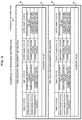
-
- When a spontaneous generation of the
resource management information 8 a (processing T2 inFIG. 5 ) has not been done yet.
- When a spontaneous generation of the
-
- When the spontaneous generation of the
resource management information 8 a (processing T2 inFIG. 5 ) is being executed, or the generation is completed but a distribution (processing T3 inFIG. 5 ) has not been done yet.
- When the spontaneous generation of the
-
- When the spontaneous distribution of the
resource management information 8 a (processing T3 inFIG. 5 ) is being executed or has been completed.
- When the spontaneous distribution of the
Claims (16)
Applications Claiming Priority (2)
| Application Number | Priority Date | Filing Date | Title |
|---|---|---|---|
| JP2015179377A JP6641813B2 (en) | 2015-09-11 | 2015-09-11 | Control device, information processing system, and control program |
| JP2015-179377 | 2015-09-11 |
Publications (2)
| Publication Number | Publication Date |
|---|---|
| US20170078151A1 US20170078151A1 (en) | 2017-03-16 |
| US10530655B2 true US10530655B2 (en) | 2020-01-07 |
Family
ID=58237473
Family Applications (1)
| Application Number | Title | Priority Date | Filing Date |
|---|---|---|---|
| US15/242,634 Expired - Fee Related US10530655B2 (en) | 2015-09-11 | 2016-08-22 | Control apparatus in a plurality of control apparatuses for managing management information |
Country Status (2)
| Country | Link |
|---|---|
| US (1) | US10530655B2 (en) |
| JP (1) | JP6641813B2 (en) |
Families Citing this family (3)
| Publication number | Priority date | Publication date | Assignee | Title |
|---|---|---|---|---|
| JP6984496B2 (en) | 2018-03-09 | 2021-12-22 | 富士通株式会社 | Storage management equipment, storage systems, and storage management programs |
| CN111045857B (en) * | 2018-10-12 | 2023-11-28 | 伊姆西Ip控股有限责任公司 | Method for data backup and recovery, electronic device and computer readable storage medium |
| US20250133683A1 (en) * | 2023-10-18 | 2025-04-24 | Dell Products L.P. | Computing chassis including storage devices and network devices |
Citations (19)
| Publication number | Priority date | Publication date | Assignee | Title |
|---|---|---|---|---|
| JPS57109049A (en) | 1980-12-26 | 1982-07-07 | Fujitsu Ltd | Updating and using processing system for afterimage log file |
| JP2002116939A (en) | 2000-10-06 | 2002-04-19 | Telecommunication Advancement Organization Of Japan | Distributed database system |
| JP2002120417A (en) | 2000-10-17 | 2002-04-23 | Canon Inc | Peripheral device management device, printing device, peripheral device management system, printing system, peripheral device management method, resource updating method, and storage medium |
| US6438563B1 (en) * | 1998-11-27 | 2002-08-20 | Nec Corporation | Method and device for synchronizing databases in a network management system |
| US20040215780A1 (en) * | 2003-03-31 | 2004-10-28 | Nec Corporation | Distributed resource management system |
| US20040213247A1 (en) * | 2000-09-11 | 2004-10-28 | Takashi Seki | Communication network system and method for synchronously controlling path connection |
| US20050125515A1 (en) * | 2003-12-06 | 2005-06-09 | Daniel Dufour | Method and system for verifying managed object status before update |
| US20080137672A1 (en) * | 2006-12-11 | 2008-06-12 | Murata Machinery, Ltd. | Relay server and relay communication system |
| US20080219274A1 (en) * | 2007-02-07 | 2008-09-11 | Hiromitsu Kato | On-vehicle gateway device, method for controlling an on-vehicle gateway device, connection device and connection control method |
| US20090141635A1 (en) * | 2007-11-30 | 2009-06-04 | Mark Cameron Little | Using status inquiry and status response messages to exchange management information |
| US20090157984A1 (en) * | 2007-12-18 | 2009-06-18 | Junichi Hara | Avoiding use of an inter-unit network in a storage system having multiple storage control units |
| US20090228506A1 (en) * | 2008-03-10 | 2009-09-10 | Fujitsu Limited | Information processing apparatus |
| US20100115078A1 (en) * | 2007-03-30 | 2010-05-06 | Yasuo Ishikawa | Distributed storage system |
| US20110113469A1 (en) * | 2009-11-06 | 2011-05-12 | Ricoh Company, Ltd. | Network synchronization system and information processing apparatus |
| US20120072587A1 (en) * | 2010-09-16 | 2012-03-22 | Ricoh Company, Ltd. | Managed device, device management apparatus, and device management system |
| US20140372601A1 (en) * | 2013-06-12 | 2014-12-18 | Hitachi, Ltd. | Monitoring apparatus and monitoring method |
| US9043460B1 (en) * | 2013-03-01 | 2015-05-26 | Mobile Iron, Inc. | Distributed management with embedded agents in enterprise apps |
| JP5747133B1 (en) | 2014-06-11 | 2015-07-08 | 株式会社東芝 | Shared storage system and method for controlling access to storage device |
| US20180199239A1 (en) * | 2014-03-13 | 2018-07-12 | Vodafone Ip Licensing Limited | Management of resource allocation in a mobile telecommunication network |
Family Cites Families (3)
| Publication number | Priority date | Publication date | Assignee | Title |
|---|---|---|---|---|
| JP4224289B2 (en) * | 2002-11-20 | 2009-02-12 | 日本電信電話株式会社 | Data replication management method |
| JP4857055B2 (en) * | 2006-09-08 | 2012-01-18 | 株式会社日立製作所 | Storage system, control method therefor, and storage control device |
| JP5903774B2 (en) * | 2011-04-19 | 2016-04-13 | 富士通株式会社 | Storage device, control device, and control method |
-
2015
- 2015-09-11 JP JP2015179377A patent/JP6641813B2/en not_active Expired - Fee Related
-
2016
- 2016-08-22 US US15/242,634 patent/US10530655B2/en not_active Expired - Fee Related
Patent Citations (20)
| Publication number | Priority date | Publication date | Assignee | Title |
|---|---|---|---|---|
| JPS57109049A (en) | 1980-12-26 | 1982-07-07 | Fujitsu Ltd | Updating and using processing system for afterimage log file |
| US6438563B1 (en) * | 1998-11-27 | 2002-08-20 | Nec Corporation | Method and device for synchronizing databases in a network management system |
| US20040213247A1 (en) * | 2000-09-11 | 2004-10-28 | Takashi Seki | Communication network system and method for synchronously controlling path connection |
| JP2002116939A (en) | 2000-10-06 | 2002-04-19 | Telecommunication Advancement Organization Of Japan | Distributed database system |
| JP2002120417A (en) | 2000-10-17 | 2002-04-23 | Canon Inc | Peripheral device management device, printing device, peripheral device management system, printing system, peripheral device management method, resource updating method, and storage medium |
| US20040215780A1 (en) * | 2003-03-31 | 2004-10-28 | Nec Corporation | Distributed resource management system |
| US20050125515A1 (en) * | 2003-12-06 | 2005-06-09 | Daniel Dufour | Method and system for verifying managed object status before update |
| US20080137672A1 (en) * | 2006-12-11 | 2008-06-12 | Murata Machinery, Ltd. | Relay server and relay communication system |
| US20080219274A1 (en) * | 2007-02-07 | 2008-09-11 | Hiromitsu Kato | On-vehicle gateway device, method for controlling an on-vehicle gateway device, connection device and connection control method |
| US20100115078A1 (en) * | 2007-03-30 | 2010-05-06 | Yasuo Ishikawa | Distributed storage system |
| US20090141635A1 (en) * | 2007-11-30 | 2009-06-04 | Mark Cameron Little | Using status inquiry and status response messages to exchange management information |
| US20090157984A1 (en) * | 2007-12-18 | 2009-06-18 | Junichi Hara | Avoiding use of an inter-unit network in a storage system having multiple storage control units |
| US20090228506A1 (en) * | 2008-03-10 | 2009-09-10 | Fujitsu Limited | Information processing apparatus |
| US20110113469A1 (en) * | 2009-11-06 | 2011-05-12 | Ricoh Company, Ltd. | Network synchronization system and information processing apparatus |
| US20120072587A1 (en) * | 2010-09-16 | 2012-03-22 | Ricoh Company, Ltd. | Managed device, device management apparatus, and device management system |
| US9043460B1 (en) * | 2013-03-01 | 2015-05-26 | Mobile Iron, Inc. | Distributed management with embedded agents in enterprise apps |
| US20140372601A1 (en) * | 2013-06-12 | 2014-12-18 | Hitachi, Ltd. | Monitoring apparatus and monitoring method |
| US20180199239A1 (en) * | 2014-03-13 | 2018-07-12 | Vodafone Ip Licensing Limited | Management of resource allocation in a mobile telecommunication network |
| JP5747133B1 (en) | 2014-06-11 | 2015-07-08 | 株式会社東芝 | Shared storage system and method for controlling access to storage device |
| US20150363284A1 (en) | 2014-06-11 | 2015-12-17 | Kabushiki Kaisha Toshiba | Shared storage system and method for controlling access to storage device |
Non-Patent Citations (1)
| Title |
|---|
| Japanese Office Action dated Feb. 26, 2019 for corresponding Japanese Patent Application No. 2015-179377, with English Translation, 7 pages. |
Also Published As
| Publication number | Publication date |
|---|---|
| JP2017054416A (en) | 2017-03-16 |
| US20170078151A1 (en) | 2017-03-16 |
| JP6641813B2 (en) | 2020-02-05 |
Similar Documents
| Publication | Publication Date | Title |
|---|---|---|
| EP3458931B1 (en) | Independent scaling of compute resources and storage resources in a storage system | |
| US9734093B2 (en) | Management of secured storage devices in an information handling system | |
| JP5069732B2 (en) | Computer device, computer system, adapter succession method | |
| US11416446B2 (en) | Systems and methods for remote management of non-standard devices | |
| US20160155131A1 (en) | System and method for fully testing a system before and after an upgrade to verify full use case compliance | |
| US10606784B1 (en) | Software filtering of redundant sideband device management bus communications | |
| CN111147274B (en) | System and method for creating a highly available arbitration set for a cluster solution | |
| US11157427B2 (en) | Configurable method to associate drive slot to bus number | |
| US11126516B2 (en) | Dynamic formation of a failure domain | |
| JP2009237826A (en) | Storage system and volume management method therefor | |
| US10530655B2 (en) | Control apparatus in a plurality of control apparatuses for managing management information | |
| EP3479256B1 (en) | Fabric encapsulated resilient storage | |
| US9569316B2 (en) | Managing VIOS failover in a single storage adapter environment | |
| CN112764667B (en) | Method, apparatus, storage system and computer program product for storage management | |
| US11137927B2 (en) | Storage mirroring decision by capability sets | |
| US20220129357A1 (en) | Cluster system and fail-over control method of cluster system | |
| JP5511546B2 (en) | Fault tolerant computer system, switch device connected to multiple physical servers and storage device, and server synchronization control method | |
| US20210157609A1 (en) | Systems and methods for monitoring and validating server configurations | |
| US10791024B1 (en) | Adaptive network interface configuration | |
| US11755334B2 (en) | Systems and methods for augmented notifications in remote management of an IHS (information handling system) | |
| JP6217358B2 (en) | Information processing apparatus and recovery management method |
Legal Events
| Date | Code | Title | Description |
|---|---|---|---|
| AS | Assignment |
Owner name: FUJITSU LIMITED, JAPAN Free format text: ASSIGNMENT OF ASSIGNORS INTEREST;ASSIGNORS:USUDA, YOSUKE;IGA, TOSHIO;SIGNING DATES FROM 20160720 TO 20160809;REEL/FRAME:039493/0444 |
|
| STPP | Information on status: patent application and granting procedure in general |
Free format text: FINAL REJECTION MAILED |
|
| STPP | Information on status: patent application and granting procedure in general |
Free format text: DOCKETED NEW CASE - READY FOR EXAMINATION |
|
| STPP | Information on status: patent application and granting procedure in general |
Free format text: NON FINAL ACTION MAILED |
|
| STPP | Information on status: patent application and granting procedure in general |
Free format text: RESPONSE TO NON-FINAL OFFICE ACTION ENTERED AND FORWARDED TO EXAMINER |
|
| STPP | Information on status: patent application and granting procedure in general |
Free format text: NOTICE OF ALLOWANCE MAILED -- APPLICATION RECEIVED IN OFFICE OF PUBLICATIONS |
|
| ZAAA | Notice of allowance and fees due |
Free format text: ORIGINAL CODE: NOA |
|
| ZAAB | Notice of allowance mailed |
Free format text: ORIGINAL CODE: MN/=. |
|
| STPP | Information on status: patent application and granting procedure in general |
Free format text: PUBLICATIONS -- ISSUE FEE PAYMENT VERIFIED |
|
| STCF | Information on status: patent grant |
Free format text: PATENTED CASE |
|
| FEPP | Fee payment procedure |
Free format text: MAINTENANCE FEE REMINDER MAILED (ORIGINAL EVENT CODE: REM.); ENTITY STATUS OF PATENT OWNER: LARGE ENTITY |
|
| LAPS | Lapse for failure to pay maintenance fees |
Free format text: PATENT EXPIRED FOR FAILURE TO PAY MAINTENANCE FEES (ORIGINAL EVENT CODE: EXP.); ENTITY STATUS OF PATENT OWNER: LARGE ENTITY |
|
| STCH | Information on status: patent discontinuation |
Free format text: PATENT EXPIRED DUE TO NONPAYMENT OF MAINTENANCE FEES UNDER 37 CFR 1.362 |
|
| FP | Lapsed due to failure to pay maintenance fee |
Effective date: 20240107 |