US10437817B2 - Concurrent segmentation using vector processing - Google Patents

Concurrent segmentation using vector processing Download PDF

Info

Publication number
US10437817B2
US10437817B2 US16/113,151 US201816113151A US10437817B2 US 10437817 B2 US10437817 B2 US 10437817B2 US 201816113151 A US201816113151 A US 201816113151A US 10437817 B2 US10437817 B2 US 10437817B2
Authority
US
United States
Prior art keywords
data
streams
data sub
stream
sub
Prior art date
Legal status (The legal status is an assumption and is not a legal conclusion. Google has not performed a legal analysis and makes no representation as to the accuracy of the status listed.)
Active
Application number
US16/113,151
Other versions
US20180365284A1 (en
Inventor
Michael Hirsch
Yair Toaff
Yehonatan DAVID
Current Assignee (The listed assignees may be inaccurate. Google has not performed a legal analysis and makes no representation or warranty as to the accuracy of the list.)
Huawei Technologies Co Ltd
Original Assignee
Huawei Technologies Co Ltd
Priority date (The priority date is an assumption and is not a legal conclusion. Google has not performed a legal analysis and makes no representation as to the accuracy of the date listed.)
Filing date
Publication date
Application filed by Huawei Technologies Co Ltd filed Critical Huawei Technologies Co Ltd
Assigned to HUAWEI TECHNOLOGIES CO., LTD. reassignment HUAWEI TECHNOLOGIES CO., LTD. ASSIGNMENT OF ASSIGNORS INTEREST (SEE DOCUMENT FOR DETAILS). Assignors: TOAFF, YAIR, DAVID, Yehonatan, HIRSCH, MICHAEL
Publication of US20180365284A1 publication Critical patent/US20180365284A1/en
Application granted granted Critical
Publication of US10437817B2 publication Critical patent/US10437817B2/en
Active legal-status Critical Current
Anticipated expiration legal-status Critical

Links

Images

Classifications

    • GPHYSICS
    • G06COMPUTING OR CALCULATING; COUNTING
    • G06FELECTRIC DIGITAL DATA PROCESSING
    • G06F16/00Information retrieval; Database structures therefor; File system structures therefor
    • G06F16/10File systems; File servers
    • G06F16/17Details of further file system functions
    • G06F16/174Redundancy elimination performed by the file system
    • GPHYSICS
    • G06COMPUTING OR CALCULATING; COUNTING
    • G06FELECTRIC DIGITAL DATA PROCESSING
    • G06F16/00Information retrieval; Database structures therefor; File system structures therefor
    • G06F16/20Information retrieval; Database structures therefor; File system structures therefor of structured data, e.g. relational data
    • G06F16/23Updating
    • G06F16/2365Ensuring data consistency and integrity
    • GPHYSICS
    • G06COMPUTING OR CALCULATING; COUNTING
    • G06FELECTRIC DIGITAL DATA PROCESSING
    • G06F16/00Information retrieval; Database structures therefor; File system structures therefor
    • G06F16/10File systems; File servers
    • G06F16/17Details of further file system functions
    • GPHYSICS
    • G06COMPUTING OR CALCULATING; COUNTING
    • G06FELECTRIC DIGITAL DATA PROCESSING
    • G06F16/00Information retrieval; Database structures therefor; File system structures therefor
    • G06F16/20Information retrieval; Database structures therefor; File system structures therefor of structured data, e.g. relational data
    • G06F16/27Replication, distribution or synchronisation of data between databases or within a distributed database system; Distributed database system architectures therefor
    • HELECTRICITY
    • H03ELECTRONIC CIRCUITRY
    • H03MCODING; DECODING; CODE CONVERSION IN GENERAL
    • H03M7/00Conversion of a code where information is represented by a given sequence or number of digits to a code where the same, similar or subset of information is represented by a different sequence or number of digits
    • H03M7/30Compression; Expansion; Suppression of unnecessary data, e.g. redundancy reduction
    • H03M7/3084Compression; Expansion; Suppression of unnecessary data, e.g. redundancy reduction using adaptive string matching, e.g. the Lempel-Ziv method
    • H03M7/3091Data deduplication

Definitions

  • the present disclosure in some embodiments thereof, relates to segmenting an input data stream and, more specifically, but not exclusively, to segmenting an input data stream by splitting the input data stream to a plurality of data sub-streams segmented in parallel using vector processing.
  • data deduplication (often called “intelligent compression” or “single-instance storage”) which is a method of reducing the data volume by eliminating redundant data.
  • block deduplication may present better results with respect to data compression. In block deduplication only one unique instance of a data segment (block) of a data stream is actually retained while redundant data segment(s) which are identical to the already retained data segment are replaced with a pointer to a copy of the retained data segment.
  • Block deduplication processes a data stream that may include multiple data types, for example, data files, media files, stream data and the like to identify unique instances of one or more data segments (blocks).
  • a unique number (hash value) is generated for each segment using a hash algorithm, for example, a Rabin-Karp rolling hash and/or a Buzhash.
  • the hash value generated for each segment is compared to existing hash values generated for previous segments and in case the hash value equals to an existing hash value, the segment is not retained but rather replaced with a pointer to the copy of the existing segment. Furthermore, in case the segment is updated, only the changed data may be retained while the remaining unchanged data which may include a significant amount of the segment is not retained.
  • Rolling hash techniques may be used for segmenting the data stream as known in the industry. Using a rolling hash, a hash value is calculated for shifting sequences of data in the data stream (in each rolling sequence an ending data item is omitted and a new data item is inserted). The calculated hash value is checked for compliance with pre-defined one or more segmentation criteria and in case the compliance is identified, the start of the respective rolling sequence is designated as a segment boundary or cut point.
  • a system for segmenting an input data stream comprising a processor adapted to split an input data stream to a plurality of data sub-streams such that each of the plurality of data sub-streams has an overlapping portion with a consecutive data sub-stream of the plurality of data sub-streams; create, concurrently, a plurality of segmented data sub-streams by concurrently segmenting the plurality of data sub-streams each in one of a plurality of processing pipelines of the processor; and join the plurality of segmented data sub-streams to create a segmented data stream by synchronizing a sequencing of each of the plurality of segmented data sub-streams according to at least one overlapping segment in the overlapping portion of each two consecutive data sub-streams of the plurality of data sub-streams.
  • concurrent has thereby the meaning of overlapping in duration also including the meaning of simultaneous, e.g. happening at the same time.
  • the processor is a single-instruction-multiple-data, SIMD, processor.
  • the processor is adapted to segment each of the plurality of data sub-streams by calculating a rolling hash value for a rolling sequence applied over each of a plurality of sequences of consecutive data items of each of the plurality of data sub-streams and designating each of the plurality of sequences as a variable size segment when the rolling hash value complies with at least one segmentation criterion, wherein the rolling sequence comprises a subset of consecutive data items of a respective sequence.
  • each of the plurality of sequences includes a pre-defined minimum number of the consecutive data items.
  • the processor is adapted to designate at least one large sequence of the plurality of sequences as the variable size segment in case a number of the consecutive data items of the at least one large sequence exceeds a pre-defined maximum value before detecting compliance of the rolling hash value with the at least one segmentation criterion.
  • the processor is adapted to sequentially segment the input data stream in case the synchronization fails.
  • a method for segmenting an input data stream comprising splitting an input data stream to a plurality of data sub-streams such that each of the plurality of data sub-streams has an overlapping portion with a consecutive data sub-stream of the plurality of data sub-streams; creating, concurrently, a plurality of segmented data sub-streams by concurrently segmenting the plurality of data sub-streams each in one of a plurality of processing pipelines of the processor; and joining the plurality of segmented data sub-streams to create a segmented data stream by synchronizing a sequencing of each of the plurality of segmented data sub-streams according to at least one overlapping segment in the overlapping portion of each two consecutive data sub-streams of the plurality of data sub-streams.
  • each of the plurality of data sub-streams is segmented by calculating a rolling hash value for a rolling sequence applied over each of a plurality of sequences of consecutive data items of each of the plurality of data sub-streams and designating each of the plurality of sequences as a variable size segment when the rolling hash value complies with at least one segmentation criterion, wherein the rolling sequence comprises a subset of consecutive data items of a respective sequence.
  • each of the plurality of sequences includes a pre-defined minimum number of the consecutive data items.
  • At least one large sequence of the plurality of sequences is designated as the variable size segment in case a number of the consecutive data items of the at least one large sequence exceeds a pre-defined maximum value before detecting compliance of the rolling hash value with the at least one segmentation criterion.
  • the input data stream is sequentially segmented in case the synchronization fails.
  • FIG. 1 is a schematic illustration of an exemplary system for segmenting an input data stream by splitting the input data stream to a plurality of data sub-streams segmented in parallel using vector processing, according to some embodiments of the present disclosure
  • FIG. 2 is a flowchart of an exemplary process for segmenting an input data stream by splitting the input data stream to a plurality of data sub-streams segmented in parallel using vector processing, according to some embodiments of the present disclosure
  • FIG. 3 is a schematic illustration of an exemplary process of splitting an input data stream to a plurality of sub-streams, according to some embodiment of the present disclosure
  • FIG. 4 is a schematic illustration of an exemplary process of joining a plurality of segmented data sub-streams to create a segmented data stream, according to some embodiment of the present disclosure
  • FIG. 5 is a schematic illustration of an exemplary process of segmenting an input data stream using rolling hash segmentation
  • FIG. 6 is schematic illustration of an exemplary process for concurrently segmenting in parallel a plurality of data sub-streams using rolling hash segmentation, according to some embodiment of the present disclosure
  • FIG. 7A is a schematic illustration of an exemplary process for concurrently segmenting in parallel a plurality of data sub-streams at a 1st point in time, according to some embodiment of the present disclosure
  • FIG. 7B is a schematic illustration of an exemplary process for concurrently segmenting in parallel a plurality of data sub-streams at a 2nd point in time, according to some embodiment of the present disclosure
  • FIG. 7C is a schematic illustration of an exemplary process for concurrently segmenting in parallel a plurality of data sub-streams at a 3rd point in time, according to some embodiment of the present disclosure
  • FIG. 7D is a schematic illustration of an exemplary process for concurrently segmenting in parallel a plurality of data sub-streams at a 4th point in time, according to some embodiment of the present disclosure
  • FIG. 7E is a schematic illustration of an exemplary process for concurrently segmenting in parallel a plurality of data sub-streams at a 5th point in time, according to some embodiment of the present disclosure
  • FIG. 7F is a schematic illustration of an exemplary process for concurrently segmenting in parallel a plurality of data sub-streams at a 6th point in time, according to some embodiment of the present disclosure
  • FIG. 7G is a schematic illustration of an exemplary process for concurrently segmenting in parallel a plurality of data sub-streams at a 7th point in time, according to some embodiment of the present disclosure
  • FIG. 7H is a schematic illustration of an exemplary process for concurrently segmenting in parallel a plurality of data sub-streams at an 8th point in time, according to some embodiment of the present disclosure
  • FIG. 7I is a schematic illustration of an exemplary process for concurrently segmenting in parallel a plurality of data sub-streams at a 9th point in time, according to some embodiment of the present disclosure
  • FIG. 7J is a schematic illustration of an exemplary process for concurrently segmenting in parallel a plurality of data sub-streams at a 10th point in time, according to some embodiment of the present disclosure
  • FIG. 7K is a schematic illustration of an exemplary process for concurrently segmenting in parallel a plurality of data sub-streams at an 11th fifth point in time, according to some embodiment of the present disclosure
  • FIG. 7L is a schematic illustration of an exemplary process for concurrently segmenting in parallel a plurality of data sub-streams at a 12th point in time, according to some embodiment of the present disclosure.
  • FIG. 7M is a schematic illustration of an exemplary process for concurrently segmenting in parallel a plurality of data sub-streams at a 13th point in time, according to some embodiment of the present disclosure.
  • the present disclosure in some embodiments thereof, relates to segmenting an input data stream and, more specifically, but not exclusively, to segmenting an input data stream by splitting the input data stream to a plurality of data sub-streams segmented in parallel using vector processing.
  • the present disclosure presents systems and methods for segmenting an input data stream using vector processing as part of a deduplication process applied to the input data stream in order to reduce the amount of data of the input data stream for example, data files, media files, streaming data and the like by removing redundant (duplicated) data segments.
  • the deduplication process for reducing the amount of data of the input data stream is performed in order to reduce storage space and/or network bandwidth required for storing and/or transferring the input data stream.
  • the segmentation is done by splitting the input data stream to a plurality of data sub-streams, segmenting the data sub-streams in parallel each by one of a plurality of processing pipelines of vector processor(s) for example a single instruction multiple data (SIMD) processor and joining the segmented data sub-streams to form a segmented data stream.
  • the input-data stream is split to the plurality of data sub-streams such that each data sub-stream has an overlapping portion of data with a subsequent data sub-stream.
  • the data sub-streams are joined to each other by synchronizing the data segments (blocks) in the overlapping portions between every two data sub-streams.
  • the segmentation of each of the data sub-streams may be done using one or more of a plurality of segmentation techniques, for example, calculating a unique hash value for a rolling sequence shifted along the data sub-stream and comparing the hash value to one or more segmentation criteria.
  • the hash value may be calculated by one or more of a plurality of hash algorithms, for example, a Rabin-Karp rolling hash or a Buzhash.
  • the input data stream is segmented serially in the event the synchronization of one or more of the data sub-streams fails.
  • Concurrent segmentation using the plurality of processing pipelines of the vector processing architecture may present significant advantages compared to existing sequential segmentation methods.
  • the vector processing technology is rapidly advancing in many aspects, for example, number of processing pipelines available in modern processors, number of data items that may be processed in parallel and/or processing power of the processor(s).
  • efficient segmentation of the input data stream may have a major contribution to the effectivity of the entire deduplication process it may be one of the major time consuming and/or processor intensive operations of the deduplication process. Since the data items of the input sequence may be regarded as independent from each other, the input data stream may be split and processed in parallel taking full advantage of the vector processing technology, for example, the SIMD processor(s) and/or engine(s).
  • Processing the input data stream using the vector processor(s) may significantly reduce the segmentation time compared to the sequential segmentation employed by current segmentation methods. As segmentation time is significantly reduced, the entire deduplication process may be significantly shortened and may possibly remove bottlenecks in data transfer and/or data storage operations.
  • the concurrent segmentation using the plurality of processing pipelines of the vector processing architecture applies standard segmentation techniques which are used by the existing sequential segmentation methods. This may allow backward compliance in the segmentation process thus no impact is inflicted to the other operations and/or algorithms applied during the deduplication process. Moreover, the backward compliance of the segmentation techniques used by the concurrent segmentation process presented in the present disclosure may allow coupling the concurrent segmentation process with sequential segmentation process(s) such that some portions of the input data stream are processed concurrently while other portions may be processed sequentially.
  • the present disclosure may be a system, a method, and/or a computer program product.
  • the computer program product may include a computer readable storage medium (or media) having computer readable program instructions thereon for causing a processor to carry out aspects of the present disclosure.
  • the computer readable storage medium can be a tangible device that can retain and store instructions for use by an instruction execution device.
  • the computer readable storage medium may be, for example, but is not limited to, an electronic storage device, a magnetic storage device, an optical storage device, an electromagnetic storage device, a semiconductor storage device, or any suitable combination of the foregoing.
  • Computer readable program instructions described herein can be downloaded to respective computing/processing devices from a computer readable storage medium or to an external computer or external storage device via a network, for example, the Internet, a local area network, a wide area network and/or a wireless network.
  • a network for example, the Internet, a local area network, a wide area network and/or a wireless network.
  • the computer readable program instructions may execute entirely on the user's computer, partly on the user's computer, as a stand-alone software package, partly on the user's computer and partly on a remote computer or entirely on the remote computer or server.
  • the remote computer may be connected to the user's computer through any type of network, including a local area network (LAN) or a wide area network (WAN), or the connection may be made to an external computer (for example, through the Internet using an Internet Service Provider).
  • LAN local area network
  • WAN wide area network
  • Internet Service Provider for example, AT&T, MCI, Sprint, EarthLink, MSN, GTE, etc.
  • electronic circuitry including, for example, programmable logic circuitry, field-programmable gate arrays (FPGA), or programmable logic arrays (PLA) may execute the computer readable program instructions by utilizing state information of the computer readable program instructions to personalize the electronic circuitry, in order to perform aspects of the present disclosure.
  • FPGA field-programmable gate arrays
  • PLA programmable logic arrays
  • each block in the flowchart or block diagrams may represent a module, segment, or portion of instructions, which comprises one or more executable instructions for implementing the specified logical function(s).
  • the functions noted in the block may occur out of the order noted in the figures.
  • two blocks shown in succession may, in fact, be executed substantially concurrently, or the blocks may sometimes be executed in the reverse order, depending upon the functionality involved.
  • FIG. 1 is a schematic illustration of an exemplary system for segmenting an input data stream by splitting the input data stream to a plurality of data sub-streams segmented in parallel using vector processing, according to some embodiments of the present disclosure.
  • a system 100 includes an input/output (I/O) interface 102 for receiving and/or designating an input data stream 120 and/or outputting a segmented data stream 130 , a processor(s) 104 comprising a plurality of processing pipelines 106 for segmenting the input data stream 120 to create the segmented data stream 130 and a program store 108 .
  • the input data stream 120 may be received in one or more formats, for example, a data file, a media file, a streaming data and the like.
  • the input data stream 120 includes a plurality of data items, for example, bytes, words, double-words and/or pixels which may be arranged in sequence as a stream.
  • the I/O interface 102 may include one or more interfaces, for example, a network interface, a memory interface and/or a storage interface. The I/O interface 102 may be used, for example, for receiving and/or transmitting the data streams 120 and/or 130 over a network, for fetching and/or storing the data streams 120 and/or 130 to a memory device and/or a storage device and the like.
  • the processor(s) 104 may include one or more processors each having one or more cores. The processor(s) 104 further includes vector processing capabilities such as the plurality of processing pipelines 106 .
  • the processing pipelines 106 support multiple independent execution pipelines each capable of processing data, for example, multiple processors, multiple cores, vector processors, and/or SIMD processor and/or a SIMD engine.
  • the SIMD engine comprises a plurality of processing pipelines 106 capable of concurrently processing multiple data items at a single instruction of the processor(s) 104 .
  • the program store 108 may include one or more non-transitory persistent storage devices, for example, a hard drive, a Flash array and the like.
  • FIG. 2 is a flowchart of an exemplary process for segmenting an input data stream by splitting the input data stream to a plurality of data sub-streams segmented in parallel using vector processing, according to some embodiments of the present disclosure.
  • a segmentation process 200 may be performed by a system such as the system 100 .
  • the process 200 is applied for segmenting the input data stream 120 by splitting the input data stream 120 to a plurality of data sub-streams that are concurrently segmented in parallel by the plurality of processing pipelines 106 and joined to create a segmented data stream such as the segmented data stream 130 .
  • the segmentation process 200 may be done by one or more software modules, for example, a coordinator 110 and/or a worker 112 comprising a plurality of program instructions executed by the processor(s) 104 and/or the processing pipelines 106 from the program store 108 .
  • the workers 112 may include one or more microcode modules embedded with the processing pipelines 106 , where the microcode modules include program instructions executed by the processing pipelines 106 .
  • the coordinator 110 may be executed, for example, by a processing unit of the processor(s) 104 .
  • the coordinator 110 may manage and/or coordinate the segmentation process, for example, distribute data between the plurality of processing pipelines 106 , collect data from the plurality of processing pipelines 106 , synchronize data, synchronize tasks, coordinates the workers 112 and/or the like.
  • the processor(s) 104 and/or each of the processing pipelines 106 may execute an instance of the worker 112 to process concurrently the data sub-streams of the input data stream 120 .
  • the processor(s) 104 is a vector processor comprising the processing pipelines 106 that are independent processing units, each processing pipeline 106 may independently execute a worker 112 instance.
  • the worker 112 may be executed by the processor(s) 104 that assigns data to each of the processing pipelines 106 of the SIMD engine.
  • the processor(s) 104 may then initiate a single instruction to instruct all the processing pipelines 106 of the SIMD engine to concurrently execute the same operation (instruction), each processing pipeline 106 processing its respective assigned data.
  • the process 200 starts with the coordinator 110 receiving the input data stream 120 .
  • the coordinator 110 splits the input data stream 120 to a plurality of data sub-streams and distributes them to a plurality of workers 112 each executed by a respective one of the processing pipelines 106 .
  • the number of the data sub-streams may be selected according to a number of available processing pipelines such as the processing pipelines 106 .
  • the worker 110 is executed by the processor(s) 104 that assigns data of the respective data sub-stream to each of the processing pipelines 106 of the SIMD engine.
  • the coordinator 110 splits the input data stream 120 such that each pair of consecutive data sub-streams has an overlapping portion with an adjacent data sub-stream, i.e.
  • the coordinator 110 may set the size of the overlapping portion to best accommodate one or more segmentation techniques used by the worker(s) 110 to segment each of the plurality of the data sub-streams as described hereinafter.
  • FIG. 3 is a schematic illustration of an exemplary process of splitting an input data stream to a plurality of sub-streams, according to some embodiment of the present disclosure.
  • a coordinator such as the coordinator 110 receives an exemplary input data stream such as the input data stream 120 and processed by a plurality of worker(s) such as the worker 112 .
  • the coordinator 110 splits the input data stream 120 , for example, to four data sub-streams 300 A, 300 B, 300 C and 300 D.
  • the number of the data sub-streams described herein is arbitrary selected.
  • the number of the data sub-streams may be selected according to a number of available processing pipelines such as the processing pipelines 106 , for example, 4, 8, 16, 64, 128, 256 and/or 256.
  • the coordinator 110 splits the input data streams 120 such that each of the input data streams 300 A, 300 B, 300 C and 300 D has an overlapping portion with an adjacent preceding and/or succeeding data sub-stream 300 A, 300 B, 300 C and/or 300 D.
  • the data sub-stream 300 A has an overlapping portion 302 A with the data sub-stream 300 B
  • the data sub-stream 300 B has an overlapping portion 302 B with the data sub-stream 300 C
  • the data sub-stream 300 C has an overlapping portion 302 C with the data sub-stream 300 D.
  • central data sub-streams such as, for example, the data sub-stream 300 B and 300 C each have two overlapping portions, a first overlapping portion such as 302 A and 302 B respectively with a preceding data-sub-stream, 300 A and 300 B respectively and a second overlapping portion such as 302 B and 302 C respectively with a succeeding data-sub-stream, 300 C and 300 D respectively.
  • the coordinator 110 may select and/or adapt the size of the overlapping portion to best accommodate the segmentation technique(s) used to segment the data sub-streams 300 A, 300 B, 220 C and 300 D.
  • the size of the overlapping portion such as the overlapping portions 302 A, 302 B and/or 302 B is selected to include several data segments (blocks), for example, 4, 8 and/or 16 segments. While most of the segmentation techniques may create variable size segments, the segments may maintain an average segments size, for example, 4 kilobytes (KB) which may vary between a pre-defined minimum segments size and a pre-defined maximum segments size.
  • the worker(s) 112 concurrently segment the data sub-streams 300 A- 300 D.
  • each of the workers 112 segments a respective more than one of the data sub-streams 300 A- 300 D to create a respective more than one segmented data sub-streams.
  • the processor(s) 104 executes the worker 112 which initiates a single instruction for the processing pipelines 106 of the SIMD engine to concurrently segment its respective data sub-stream 300 A- 300 D.
  • the workers 112 may use one or more of a plurality of segmentation techniques to segment the respective data sub-stream, for example, calculating rolling hash values for rolling sequences shifted over each of the data sub-streams and checking compliance of the rolling hash value with one or more segmentation criteria.
  • the workers 112 may use other segmentation methods as is known in the art and/or yet to be known since any applicable segmentation technique may be applied for the process 200 .
  • the worker 112 executed by the processor(s) 104 assigns each of the SIMD engine processing pipelines 106 with data of the respective one of the data sub-streams 300 A- 300 D.
  • the SIMD engine processing pipelines 106 concurrently segment the data sub-streams 300 A- 300 D at a single instruction by the worker 112 (processor(s) 104 ).
  • the worker(s) 112 start segmenting each of the data segments (blocks) with the pre-defined minimum size.
  • the worker 112 starts calculating the hash value for data items following the pre-defined minimum size.
  • the size of the data segments may be, for example, 4 KB, 6 KB and/or 8 KB which may best fit current processing, storage and/or networking throughput and performance such that the overhead of processing the data segments is optimized with respect to the number of segments.
  • the pre-defined minimum size may be for example, 2 KB.
  • the worker(s) 112 apply a pre-defined maximum size to each of the data segments (blocks) in the segmented data sub-streams.
  • the worker 112 may “cut”, i.e. designate the data segment in case the pre-defined maximum size of data items is reached before the worker 112 detects compliance of the rolling hash value with the one or more segmentation criteria.
  • the pre-defined maximum size may be for example, 16 KB.
  • the coordinator 110 synchronizes the data sub-streams 300 A- 300 D to recover the original sequencing and order of the original input data stream 120 .
  • the coordinator 110 synchronizes the data sub-streams 300 A- 300 D by analyzing the segmented overlapping portions 302 A- 302 C shared by each pair of consecutive data sub-streams of the data sub-streams 300 A- 300 D.
  • the coordinator 110 may identify the identical segmentation area(s) among the consecutive data sub-streams 300 A- 300 D to properly synchronize the segmentation of the data sub-streams 300 A- 300 D.
  • the coordinator 110 joins together the segmented data sub-streams to create the complete segmented data stream 130 corresponding to the originally received input data stream 120 .
  • the coordinator 110 segments the input data stream 120 , i.e. without splitting the input data stream 120 and employing the worker(s) 112 to concurrently segment the data sub-streams 300 A- 300 D.
  • FIG. 4 is a schematic illustration of an exemplary process of joining a plurality of segmented data sub-streams to create a segmented data stream, according to some embodiment of the present disclosure.
  • a processor such as the processor(s) 104 comprises a plurality of independent processing pipelines
  • each processing pipeline executes an instance of a worker such as the worker 112 .
  • the plurality of workers such as the worker 112 segment their respective data sub-streams such as the data sub-streams 300 A- 300 D to create corresponding segmented data sub-streams 400 A, 400 B, 400 C and 400 D.
  • the worker 112 is executed by the processor(s) 104 that assigns each of the processing pipelines 106 of the SIMD engine with data of the respective one of the data sub-streams 300 A- 300 D.
  • the SIMD engine processing pipelines 106 may concurrently segment the data sub-streams 300 A- 300 D at an instruction(s) of the worker 112 (executed by the processor(s) 104 ).
  • a coordinator such as the coordinator 110 joins the segmented data-streams 400 A- 400 D to create the segmented data stream 130 which corresponds to the input data stream 120 .
  • the coordinator 110 joins the segmented data sub-streams 400 A- 400 D to maintain the order as in the original input data stream 120 by synchronizing the sequencing of the data items of segmented overlapping portions 402 A, 402 B and 402 C which correspond to original overlapping portions such as the overlapping portions 302 A, 302 B and 302 C respectively.
  • Each adjacent pair of the segmented data sub-streams 400 A- 400 D includes a respective segmented overlapping portion of the segmented overlapping portions 402 A- 402 C. Since each of worker(s) 112 uses the same segmentation technique and the same segmentation criteria, the overlapping portion(s) 302 A- 302 C are segmented identically. For example, the segmented overlapping portion 402 A is identically segmented by both the processing pipeline 106 segmenting the segmented data sub-stream 400 A and the processing pipeline 106 segmenting the segmented data sub-stream 400 B.
  • segmented overlapping portion 402 B is identically segmented by both the processing pipeline 106 segmenting the segmented data sub-stream 400 B and the processing pipeline 106 segmenting the segmented data sub-stream 400 C.
  • segmented overlapping portion 402 C is identically segmented by both the processing pipeline 106 segmenting the segmented data sub-stream 400 C and the processing pipeline 106 segmenting the segmented data sub-stream 400 D.
  • the coordinator 110 joins the segmented data sub-streams 400 A- 400 D to create the segmented data stream 130 by synchronizing the sequencing of the segmented data sub-stream 400 A- 400 D based on the data segments identified in the each of the overlapping portions 402 A- 402 C.
  • the segmentation of each of the data sub-streams is done by shifting a rolling sequence over each of the data sub-streams and calculating a rolling hash value.
  • the rolling hash value is checked for compliance with one or more segmentation criteria to identify a data segment.
  • FIG. 5 is schematic illustration of an exemplary process of segmenting an input data stream using rolling hash segmentation.
  • An input data stream such as the input data stream 120 is segmented to designate a plurality data segments (blocks) in the input data stream 120 to create a segmented data stream such as the segmented data stream 130 .
  • Detecting each of the segments includes 3 main steps, a skip 510 , an initialization 512 , a roll 514 and a cut 516 .
  • the skip 510 includes skipping a pre-defined minimum number of data items in the input data stream 120 such that each of the segments has a minimum size.
  • the initialization 512 includes shifting through a pre-defined number of data items required to set a minimum data size for calculating a rolling hash value, for example, 16, 64 and/or 128 data items.
  • the roll 514 includes calculating a rolling hash value for a rolling sequence shifted over the input data stream and comparing the calculated hash value to one or more segmentation criteria to detect a segment. When the hash value complies (satisfies) with the segmentation criteria, a cut 516 is made and the data segment which comprises the data items up to the point of the cut 516 is designated a segment.
  • the segmentation process starts from the beginning of the input data stream 120 and starts over again with the skip 510 , the initialization 512 , the roll 514 and the cut 516 from the point of each cut, i.e. the end of a previous data segment to detect and designate a following data segment.
  • the segmentation process is repeated throughout the input data stream 120 such that a plurality of data segments, such as the segments 520 _ 1 , 520 _ 2 and 520 _ 3 is designated in the input data stream 120 to create a segmented data stream 130 .
  • FIG. 6 is schematic illustration of an exemplary process for concurrently segmenting in parallel a plurality of data sub-streams using rolling hash segmentation, according to some embodiment of the present disclosure.
  • a coordinator such as the coordinator 110 splits an input data stream such as the input data stream 120 to a plurality of data sub-streams, for example, 4 such as the data sub-streams 300 A, 300 B, 300 C and 300 D.
  • a processor such as the processor(s) 104 comprises a plurality of independent processing pipelines, each processing pipeline executes an instance of a worker such as the worker 112 .
  • the plurality of workers such as the workers 112 , for example, four concurrently segment the data sub-streams 300 A, 300 B, 300 C and 300 D concurrently using the rolling hash segmentation to create respective segmented data sub-streams such as the segmented data sub-streams 400 A, 400 B, 400 C and 400 D.
  • Each of the workers 112 processes (segments) a respective one or more of the data sub-streams 300 A, 300 B, 300 C and 300 D.
  • Each of the workers 112 applies the rolling hash segmentation technique (as described herein above) comprising a skip such as the skip 510 , an initialization such as the initialization 512 , a roll such as the roll 514 and a cut such as the cut 516 .
  • each of the workers 112 may detect a different size data segment such as for the respective data segments, for example, 520 A_ 1 , 520 B_ 1 , 520 C_ 1 and/or 520 D_ 1 .
  • the worker 112 repeats the process throughout its respective one of the data sub-streams 300 A- 300 D.
  • the workers 112 perform the segmentation process independently from each other and may therefore consume different processing time thus the segmentation processes carried out by the plurality of workers 112 may complete at the different time for each of the segmented data sub-streams 400 A- 400 D.
  • the worker 112 is executed by the processor(s) 104 that assigns each of the processing pipelines 106 of the SIMD engine with data of the respective one of the data sub-streams 300 A- 300 D.
  • the SIMD engine processing pipelines 106 may concurrently segment the data sub-streams 300 A- 300 D at an instruction(s) of the worker 112 (executed by the processor(s) 104 ).
  • the SIMD engine processing pipelines 106 process concurrently their respective data until one of the SIMD engine processing pipelines 106 detects a cut 516 .
  • the worker 112 (executed by the processor(s) 104 ) may stop all the SIMD engine processing pipelines 106 since all SIMD engine processing pipelines 106 need to execute the same instruction of the worker 112 .
  • the worker 112 may serially process the respective data sub-stream of the SIMD engine processing pipeline 106 that detected the cut 516 by completing the skip 510 and the initialization 512 before instructing all the SIMD engine processing pipelines 106 to resume the roll 514 .
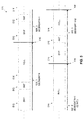
  • FIG. 7A , FIG. 7B , FIG. 7C , FIG. 7D , FIG. 7E , FIG. 7F , FIG. 7G , FIG. 7H , FIG. 7I , FIG. 7J , FIG. 7K , FIG. 7L and FIG. 7M which are schematic illustrations of an exemplary process for concurrently segmenting in parallel a plurality of data sub-streams at varies points in time, according to some embodiment of the present disclosure.
  • a coordinator such as the coordinator 110 first splits an input data stream such as the input data stream 120 to a plurality of data sub-streams, for example, 4 such as the data sub-streams 300 A, 300 B, 300 C and 300 D.
  • a plurality of processing pipeline such as the workers 112 , for example, four concurrently segment the data sub-streams 300 A, 300 B, 300 C and 300 D in parallel using the rolling hash segmentation technique to create respective segmented data sub-streams such as the segmented data sub-streams 400 A, 400 B, 400 C and 400 D.
  • the processing pipeline 106 may be independent processing pipelines and/or processing pipelines of an SIMD processor and/or engine. Each of the processing pipeline 106 segments (processes) a respective on of the data sub-streams 300 A- 300 D.
  • Each of the processing pipeline 106 applies the rolling hash segmentation comprising a skip such as the skip 510 , an initialization such as the initialization 512 , a roll such as the roll 514 and a cut such as the cut 516 to a respective one of the data sub-streams 300 A- 300 D.
  • FIG. 7A through 7M present a concurrent segmentation progress done by four workers 112 each executed by one of four processing pipelines 106 .
  • the workers 112 segment concurrently and independently the data sub-streams in streams 300 A- 300 D to create the segmented data sub-streams 400 A- 400 D.
  • the four data sub-streams 300 A- 300 D are segmented at the same time with the skip 510 , initialization 512 and rolling calculation 514 .
  • the processing pipeline 106 segmenting the segmented data sub-stream 400 B is the first to detect a data segment and cut 516 the sequence to designate a segment 520 . Following the cut 516 the processing pipeline 106 segmenting the segmented data sub-stream 400 B moves on to perform the skip 510 and the initialization 512 for the following data segment starting at the end of the designated data segment. As seen in FIG.
  • the v segmenting the segmented data sub-stream 400 B detects a second data segment and cuts 516 the sequence to designate the segment 520 .
  • the two processing pipelines 106 segmenting the segmented data sub-stream 400 B and 400 C detect a third data segment and a first data segment respectively and cut 516 the sequences to designate the segments 520 .
  • the processing pipelines 106 advance with the segmentation process as presented in the FIG. 7D through FIG.
  • the processing pipeline 106 processing the segmented data sub-stream 400 B reaches the end of the segmented data sub-stream 400 B and completes the segmentation process.
  • the processing pipeline 106 which created the segmented data sub-stream 400 B halts and waits for the other processing pipelines 106 to complete the segmentation of the other segmented data sub-streams 400 A, 400 C and 400 D.
  • the roll 514 at all the other processing pipelines 106 is paused until the processing pipeline 106 that made the cut 516 completes the skip 510 and the initialization 512 .
  • the worker 112 executed by the processor(s) 104 ) may instruct all the processing pipelines 106 of the SIMD engine to resume the roll 514 .
  • the workers 112 processing the segmented data sub-streams 400 C and 400 D also complete the segmentation process and halt.
  • the processing pipeline 106 processing the segmented data sub-stream 400 A finally completes the segmentation process and halts.
  • the coordinator 110 may join the 400 A- 400 D by synchronizing segmented overlapping such as the segmented overlapping portions 402 A- 402 C to create the segmented data sub-stream 130 .
  • SIMD vector processing
  • composition or method may include additional ingredients and/or steps, but only if the additional ingredients and/or steps do not materially alter the basic and novel characteristics of the claimed composition or method.
  • a compound or “at least one compound” may include a plurality of compounds, including mixtures thereof.

Landscapes

  • Engineering & Computer Science (AREA)
  • Theoretical Computer Science (AREA)
  • Databases & Information Systems (AREA)
  • Data Mining & Analysis (AREA)
  • Physics & Mathematics (AREA)
  • General Engineering & Computer Science (AREA)
  • General Physics & Mathematics (AREA)
  • Computing Systems (AREA)
  • Computer Security & Cryptography (AREA)
  • Image Processing (AREA)
  • Multi Processors (AREA)

Abstract

A system for segmenting an input data stream, comprising a processor adapted to split an input data stream to a plurality of data sub-streams such that each of the plurality of data sub-streams has an overlapping portion with a consecutive data sub-stream of the plurality of data sub-streams, create concurrently a plurality of segmented data sub-streams by concurrently segmenting the plurality of data sub-streams each in one of a plurality of processing pipelines of the processor and join the plurality of segmented data sub-streams to create a segmented data stream by synchronizing a sequencing of each of the plurality of segmented data sub-streams according to one or more overlapping segments in the overlapping portion of each two consecutive data sub-streams of the plurality of data sub-streams.

Description

CROSS-REFERENCE TO RELATED APPLICATIONS
This application is a continuation of International Application No. PCT/EP2016/058671, filed on Apr. 19, 2016, the disclosure of which is hereby incorporated by reference in its entirety.
BACKGROUND
The present disclosure, in some embodiments thereof, relates to segmenting an input data stream and, more specifically, but not exclusively, to segmenting an input data stream by splitting the input data stream to a plurality of data sub-streams segmented in parallel using vector processing.
In present times being an information era, the volumes of data which need to be stored and/or transferred between locations rapidly increase. The enormous quantities of data may present major cost and/or complexity challenges with respect to storage space for storing the data and/or network bandwidth for transferring it.
One solution commonly used for reducing the amount of data for storage and/or transfer is data deduplication (often called “intelligent compression” or “single-instance storage”) which is a method of reducing the data volume by eliminating redundant data. While there are methods for file deduplication, block deduplication may present better results with respect to data compression. In block deduplication only one unique instance of a data segment (block) of a data stream is actually retained while redundant data segment(s) which are identical to the already retained data segment are replaced with a pointer to a copy of the retained data segment. Block deduplication processes a data stream that may include multiple data types, for example, data files, media files, stream data and the like to identify unique instances of one or more data segments (blocks). A unique number (hash value) is generated for each segment using a hash algorithm, for example, a Rabin-Karp rolling hash and/or a Buzhash. The hash value generated for each segment is compared to existing hash values generated for previous segments and in case the hash value equals to an existing hash value, the segment is not retained but rather replaced with a pointer to the copy of the existing segment. Furthermore, in case the segment is updated, only the changed data may be retained while the remaining unchanged data which may include a significant amount of the segment is not retained.
One of the main challenges is effectively segmenting the data stream such that the segments are affected as little as possible by changes to the segments' data contents. Rolling hash techniques may be used for segmenting the data stream as known in the industry. Using a rolling hash, a hash value is calculated for shifting sequences of data in the data stream (in each rolling sequence an ending data item is omitted and a new data item is inserted). The calculated hash value is checked for compliance with pre-defined one or more segmentation criteria and in case the compliance is identified, the start of the respective rolling sequence is designated as a segment boundary or cut point.
SUMMARY
According to a first aspect of the present disclosure there is provided a system for segmenting an input data stream, comprising a processor adapted to split an input data stream to a plurality of data sub-streams such that each of the plurality of data sub-streams has an overlapping portion with a consecutive data sub-stream of the plurality of data sub-streams; create, concurrently, a plurality of segmented data sub-streams by concurrently segmenting the plurality of data sub-streams each in one of a plurality of processing pipelines of the processor; and join the plurality of segmented data sub-streams to create a segmented data stream by synchronizing a sequencing of each of the plurality of segmented data sub-streams according to at least one overlapping segment in the overlapping portion of each two consecutive data sub-streams of the plurality of data sub-streams.
The term concurrent has thereby the meaning of overlapping in duration also including the meaning of simultaneous, e.g. happening at the same time.
According to a first implementation form of the first aspect of the present disclosure as such the processor is a single-instruction-multiple-data, SIMD, processor.
According to a second implementation form of the first aspect as such or according to the first implementation form of the first aspect the processor is adapted to segment each of the plurality of data sub-streams by calculating a rolling hash value for a rolling sequence applied over each of a plurality of sequences of consecutive data items of each of the plurality of data sub-streams and designating each of the plurality of sequences as a variable size segment when the rolling hash value complies with at least one segmentation criterion, wherein the rolling sequence comprises a subset of consecutive data items of a respective sequence.
According to a third implementation form of the first aspect as such or according to any of the first or second implementation form of the first aspect each of the plurality of sequences includes a pre-defined minimum number of the consecutive data items.
According to a fourth implementation form of the first aspect as such or according to any of the first to third implementation form of the first aspect the processor is adapted to designate at least one large sequence of the plurality of sequences as the variable size segment in case a number of the consecutive data items of the at least one large sequence exceeds a pre-defined maximum value before detecting compliance of the rolling hash value with the at least one segmentation criterion.
According to a fifth implementation form of the first aspect as such or according to any of the first to fourth implementation form the processor is adapted to sequentially segment the input data stream in case the synchronization fails.
According to a second aspect of the present disclosure there is provided a method for segmenting an input data stream, comprising splitting an input data stream to a plurality of data sub-streams such that each of the plurality of data sub-streams has an overlapping portion with a consecutive data sub-stream of the plurality of data sub-streams; creating, concurrently, a plurality of segmented data sub-streams by concurrently segmenting the plurality of data sub-streams each in one of a plurality of processing pipelines of the processor; and joining the plurality of segmented data sub-streams to create a segmented data stream by synchronizing a sequencing of each of the plurality of segmented data sub-streams according to at least one overlapping segment in the overlapping portion of each two consecutive data sub-streams of the plurality of data sub-streams.
According to a first implementation form of the second aspect of the present disclosure as such each of the plurality of data sub-streams is segmented by calculating a rolling hash value for a rolling sequence applied over each of a plurality of sequences of consecutive data items of each of the plurality of data sub-streams and designating each of the plurality of sequences as a variable size segment when the rolling hash value complies with at least one segmentation criterion, wherein the rolling sequence comprises a subset of consecutive data items of a respective sequence.
According to a second implementation form of the second aspect as such or according to the first implementation form of the second aspect each of the plurality of sequences includes a pre-defined minimum number of the consecutive data items.
According to a third implementation form of the second aspect as such or according to any of the first or second implementation form of the second aspect at least one large sequence of the plurality of sequences is designated as the variable size segment in case a number of the consecutive data items of the at least one large sequence exceeds a pre-defined maximum value before detecting compliance of the rolling hash value with the at least one segmentation criterion.
According to a fourth implementation form of the second aspect as such or according to any of the first to third implementation form of the second aspect the input data stream is sequentially segmented in case the synchronization fails.
BRIEF DESCRIPTION OF THE SEVERAL VIEWS OF THE DRAWINGS
Some embodiments of the disclosure are herein described, by way of example only, with reference to the accompanying drawings. With specific reference now to the drawings in detail, it is stressed that the particulars shown are by way of example and for purposes of illustrative discussion of embodiments of the disclosure. In this regard, the description taken with the drawings makes apparent to those skilled in the art how embodiments of the disclosure may be practiced.
In the drawings:
FIG. 1 is a schematic illustration of an exemplary system for segmenting an input data stream by splitting the input data stream to a plurality of data sub-streams segmented in parallel using vector processing, according to some embodiments of the present disclosure;
FIG. 2 is a flowchart of an exemplary process for segmenting an input data stream by splitting the input data stream to a plurality of data sub-streams segmented in parallel using vector processing, according to some embodiments of the present disclosure;
FIG. 3 is a schematic illustration of an exemplary process of splitting an input data stream to a plurality of sub-streams, according to some embodiment of the present disclosure;
FIG. 4 is a schematic illustration of an exemplary process of joining a plurality of segmented data sub-streams to create a segmented data stream, according to some embodiment of the present disclosure;
FIG. 5 is a schematic illustration of an exemplary process of segmenting an input data stream using rolling hash segmentation;
FIG. 6 is schematic illustration of an exemplary process for concurrently segmenting in parallel a plurality of data sub-streams using rolling hash segmentation, according to some embodiment of the present disclosure;
FIG. 7A is a schematic illustration of an exemplary process for concurrently segmenting in parallel a plurality of data sub-streams at a 1st point in time, according to some embodiment of the present disclosure;
FIG. 7B is a schematic illustration of an exemplary process for concurrently segmenting in parallel a plurality of data sub-streams at a 2nd point in time, according to some embodiment of the present disclosure;
FIG. 7C is a schematic illustration of an exemplary process for concurrently segmenting in parallel a plurality of data sub-streams at a 3rd point in time, according to some embodiment of the present disclosure;
FIG. 7D is a schematic illustration of an exemplary process for concurrently segmenting in parallel a plurality of data sub-streams at a 4th point in time, according to some embodiment of the present disclosure;
FIG. 7E is a schematic illustration of an exemplary process for concurrently segmenting in parallel a plurality of data sub-streams at a 5th point in time, according to some embodiment of the present disclosure;
FIG. 7F is a schematic illustration of an exemplary process for concurrently segmenting in parallel a plurality of data sub-streams at a 6th point in time, according to some embodiment of the present disclosure;
FIG. 7G is a schematic illustration of an exemplary process for concurrently segmenting in parallel a plurality of data sub-streams at a 7th point in time, according to some embodiment of the present disclosure;
FIG. 7H is a schematic illustration of an exemplary process for concurrently segmenting in parallel a plurality of data sub-streams at an 8th point in time, according to some embodiment of the present disclosure;
FIG. 7I is a schematic illustration of an exemplary process for concurrently segmenting in parallel a plurality of data sub-streams at a 9th point in time, according to some embodiment of the present disclosure;
FIG. 7J is a schematic illustration of an exemplary process for concurrently segmenting in parallel a plurality of data sub-streams at a 10th point in time, according to some embodiment of the present disclosure;
FIG. 7K is a schematic illustration of an exemplary process for concurrently segmenting in parallel a plurality of data sub-streams at an 11th fifth point in time, according to some embodiment of the present disclosure;
FIG. 7L is a schematic illustration of an exemplary process for concurrently segmenting in parallel a plurality of data sub-streams at a 12th point in time, according to some embodiment of the present disclosure; and
FIG. 7M is a schematic illustration of an exemplary process for concurrently segmenting in parallel a plurality of data sub-streams at a 13th point in time, according to some embodiment of the present disclosure.
DETAILED DESCRIPTION
The present disclosure, in some embodiments thereof, relates to segmenting an input data stream and, more specifically, but not exclusively, to segmenting an input data stream by splitting the input data stream to a plurality of data sub-streams segmented in parallel using vector processing.
The present disclosure presents systems and methods for segmenting an input data stream using vector processing as part of a deduplication process applied to the input data stream in order to reduce the amount of data of the input data stream for example, data files, media files, streaming data and the like by removing redundant (duplicated) data segments. The deduplication process for reducing the amount of data of the input data stream is performed in order to reduce storage space and/or network bandwidth required for storing and/or transferring the input data stream. The segmentation is done by splitting the input data stream to a plurality of data sub-streams, segmenting the data sub-streams in parallel each by one of a plurality of processing pipelines of vector processor(s) for example a single instruction multiple data (SIMD) processor and joining the segmented data sub-streams to form a segmented data stream. The input-data stream is split to the plurality of data sub-streams such that each data sub-stream has an overlapping portion of data with a subsequent data sub-stream. After segmentation of all the data sub-streams is complete, the data sub-streams are joined to each other by synchronizing the data segments (blocks) in the overlapping portions between every two data sub-streams. Since the same segmentation technique and/or segmentation criteria is applied to the data sub-streams by the processing pipelines, it is expected that the segmentation in the overlapping portions is identical and therefore may be used for synchronizing the data sub-streams to each other. The segmentation of each of the data sub-streams may be done using one or more of a plurality of segmentation techniques, for example, calculating a unique hash value for a rolling sequence shifted along the data sub-stream and comparing the hash value to one or more segmentation criteria. The hash value may be calculated by one or more of a plurality of hash algorithms, for example, a Rabin-Karp rolling hash or a Buzhash.
Optionally, the input data stream is segmented serially in the event the synchronization of one or more of the data sub-streams fails.
Concurrent segmentation using the plurality of processing pipelines of the vector processing architecture may present significant advantages compared to existing sequential segmentation methods. The vector processing technology is rapidly advancing in many aspects, for example, number of processing pipelines available in modern processors, number of data items that may be processed in parallel and/or processing power of the processor(s). While efficient segmentation of the input data stream may have a major contribution to the effectivity of the entire deduplication process it may be one of the major time consuming and/or processor intensive operations of the deduplication process. Since the data items of the input sequence may be regarded as independent from each other, the input data stream may be split and processed in parallel taking full advantage of the vector processing technology, for example, the SIMD processor(s) and/or engine(s). Processing the input data stream using the vector processor(s) may significantly reduce the segmentation time compared to the sequential segmentation employed by current segmentation methods. As segmentation time is significantly reduced, the entire deduplication process may be significantly shortened and may possibly remove bottlenecks in data transfer and/or data storage operations.
Furthermore, the concurrent segmentation using the plurality of processing pipelines of the vector processing architecture applies standard segmentation techniques which are used by the existing sequential segmentation methods. This may allow backward compliance in the segmentation process thus no impact is inflicted to the other operations and/or algorithms applied during the deduplication process. Moreover, the backward compliance of the segmentation techniques used by the concurrent segmentation process presented in the present disclosure may allow coupling the concurrent segmentation process with sequential segmentation process(s) such that some portions of the input data stream are processed concurrently while other portions may be processed sequentially.
Before explaining at least one embodiment of the disclosure in detail, it is to be understood that the disclosure is not necessarily limited in its application to the details of construction and the arrangement of the components and/or methods set forth in the following description and/or illustrated in the drawings and/or the Examples. The disclosure is capable of other embodiments or of being practiced or carried out in various ways.
The present disclosure may be a system, a method, and/or a computer program product. The computer program product may include a computer readable storage medium (or media) having computer readable program instructions thereon for causing a processor to carry out aspects of the present disclosure.
The computer readable storage medium can be a tangible device that can retain and store instructions for use by an instruction execution device. The computer readable storage medium may be, for example, but is not limited to, an electronic storage device, a magnetic storage device, an optical storage device, an electromagnetic storage device, a semiconductor storage device, or any suitable combination of the foregoing.
Computer readable program instructions described herein can be downloaded to respective computing/processing devices from a computer readable storage medium or to an external computer or external storage device via a network, for example, the Internet, a local area network, a wide area network and/or a wireless network.
The computer readable program instructions may execute entirely on the user's computer, partly on the user's computer, as a stand-alone software package, partly on the user's computer and partly on a remote computer or entirely on the remote computer or server. In the latter scenario, the remote computer may be connected to the user's computer through any type of network, including a local area network (LAN) or a wide area network (WAN), or the connection may be made to an external computer (for example, through the Internet using an Internet Service Provider). In some embodiments, electronic circuitry including, for example, programmable logic circuitry, field-programmable gate arrays (FPGA), or programmable logic arrays (PLA) may execute the computer readable program instructions by utilizing state information of the computer readable program instructions to personalize the electronic circuitry, in order to perform aspects of the present disclosure.
Aspects of the present disclosure are described herein with reference to flowchart illustrations and/or block diagrams of methods, apparatus (systems), and computer program products according to embodiments of the disclosure. It will be understood that each block of the flowchart illustrations and/or block diagrams, and combinations of blocks in the flowchart illustrations and/or block diagrams, can be implemented by computer readable program instructions.
The flowchart and block diagrams in the Figures illustrate the architecture, functionality, and operation of possible implementations of systems, methods, and computer program products according to various embodiments of the present disclosure. In this regard, each block in the flowchart or block diagrams may represent a module, segment, or portion of instructions, which comprises one or more executable instructions for implementing the specified logical function(s). In some alternative implementations, the functions noted in the block may occur out of the order noted in the figures. For example, two blocks shown in succession may, in fact, be executed substantially concurrently, or the blocks may sometimes be executed in the reverse order, depending upon the functionality involved. It will also be noted that each block of the block diagrams and/or flowchart illustration, and combinations of blocks in the block diagrams and/or flowchart illustration, can be implemented by special purpose hardware-based systems that perform the specified functions or acts or carry out combinations of special purpose hardware and computer instructions.
Reference is now made to FIG. 1, which is a schematic illustration of an exemplary system for segmenting an input data stream by splitting the input data stream to a plurality of data sub-streams segmented in parallel using vector processing, according to some embodiments of the present disclosure. A system 100 includes an input/output (I/O) interface 102 for receiving and/or designating an input data stream 120 and/or outputting a segmented data stream 130, a processor(s) 104 comprising a plurality of processing pipelines 106 for segmenting the input data stream 120 to create the segmented data stream 130 and a program store 108. The input data stream 120 may be received in one or more formats, for example, a data file, a media file, a streaming data and the like. The input data stream 120 includes a plurality of data items, for example, bytes, words, double-words and/or pixels which may be arranged in sequence as a stream. The I/O interface 102 may include one or more interfaces, for example, a network interface, a memory interface and/or a storage interface. The I/O interface 102 may be used, for example, for receiving and/or transmitting the data streams 120 and/or 130 over a network, for fetching and/or storing the data streams 120 and/or 130 to a memory device and/or a storage device and the like. The processor(s) 104 may include one or more processors each having one or more cores. The processor(s) 104 further includes vector processing capabilities such as the plurality of processing pipelines 106. The processing pipelines 106 support multiple independent execution pipelines each capable of processing data, for example, multiple processors, multiple cores, vector processors, and/or SIMD processor and/or a SIMD engine. The SIMD engine comprises a plurality of processing pipelines 106 capable of concurrently processing multiple data items at a single instruction of the processor(s) 104. The program store 108 may include one or more non-transitory persistent storage devices, for example, a hard drive, a Flash array and the like.
Reference is also made to FIG. 2, which is a flowchart of an exemplary process for segmenting an input data stream by splitting the input data stream to a plurality of data sub-streams segmented in parallel using vector processing, according to some embodiments of the present disclosure. A segmentation process 200 may be performed by a system such as the system 100. The process 200 is applied for segmenting the input data stream 120 by splitting the input data stream 120 to a plurality of data sub-streams that are concurrently segmented in parallel by the plurality of processing pipelines 106 and joined to create a segmented data stream such as the segmented data stream 130.
The segmentation process 200 may be done by one or more software modules, for example, a coordinator 110 and/or a worker 112 comprising a plurality of program instructions executed by the processor(s) 104 and/or the processing pipelines 106 from the program store 108. Optionally, the workers 112 may include one or more microcode modules embedded with the processing pipelines 106, where the microcode modules include program instructions executed by the processing pipelines 106. The coordinator 110 may be executed, for example, by a processing unit of the processor(s) 104. The coordinator 110 may manage and/or coordinate the segmentation process, for example, distribute data between the plurality of processing pipelines 106, collect data from the plurality of processing pipelines 106, synchronize data, synchronize tasks, coordinates the workers 112 and/or the like. The processor(s) 104 and/or each of the processing pipelines 106 may execute an instance of the worker 112 to process concurrently the data sub-streams of the input data stream 120. In case the processor(s) 104 is a vector processor comprising the processing pipelines 106 that are independent processing units, each processing pipeline 106 may independently execute a worker 112 instance. However, in case the processor(s) 104 incorporates the SIMD engine, the worker 112 may be executed by the processor(s) 104 that assigns data to each of the processing pipelines 106 of the SIMD engine. The processor(s) 104 may then initiate a single instruction to instruct all the processing pipelines 106 of the SIMD engine to concurrently execute the same operation (instruction), each processing pipeline 106 processing its respective assigned data.
As shown at 202, the process 200 starts with the coordinator 110 receiving the input data stream 120.
As shown at 204, the coordinator 110 splits the input data stream 120 to a plurality of data sub-streams and distributes them to a plurality of workers 112 each executed by a respective one of the processing pipelines 106. The number of the data sub-streams may be selected according to a number of available processing pipelines such as the processing pipelines 106. In case the process 200 is performed by the processor(s) 104 having the SIMD engine, the worker 110 is executed by the processor(s) 104 that assigns data of the respective data sub-stream to each of the processing pipelines 106 of the SIMD engine. The coordinator 110 splits the input data stream 120 such that each pair of consecutive data sub-streams has an overlapping portion with an adjacent data sub-stream, i.e. a preceding data sub-stream and/or succeeding data sub-stream. The coordinator 110 may set the size of the overlapping portion to best accommodate one or more segmentation techniques used by the worker(s) 110 to segment each of the plurality of the data sub-streams as described hereinafter.
Reference is now made to FIG. 3, which is a schematic illustration of an exemplary process of splitting an input data stream to a plurality of sub-streams, according to some embodiment of the present disclosure. A coordinator such as the coordinator 110 receives an exemplary input data stream such as the input data stream 120 and processed by a plurality of worker(s) such as the worker 112. The coordinator 110 splits the input data stream 120, for example, to four data sub-streams 300A, 300B, 300C and 300D. The number of the data sub-streams described herein is arbitrary selected. The number of the data sub-streams may be selected according to a number of available processing pipelines such as the processing pipelines 106, for example, 4, 8, 16, 64, 128, 256 and/or 256. Moreover, with the advancement of processor technology the number of the processing pipelines 106 capable of parallel processing constantly increases thus the number of the data sub-streams may increase accordingly. It is expected that in most cases (i.e. a sufficiently large input data stream 120), the segmentation performance is increased with the increase of processing pipelines. The coordinator 110 splits the input data streams 120 such that each of the input data streams 300A, 300B, 300C and 300D has an overlapping portion with an adjacent preceding and/or succeeding data sub-stream 300A, 300B, 300C and/or 300D. For example, the data sub-stream 300A has an overlapping portion 302A with the data sub-stream 300B, the data sub-stream 300B has an overlapping portion 302B with the data sub-stream 300C and the data sub-stream 300C has an overlapping portion 302C with the data sub-stream 300D. As evident, central data sub-streams such as, for example, the data sub-stream 300B and 300C each have two overlapping portions, a first overlapping portion such as 302A and 302B respectively with a preceding data-sub-stream, 300A and 300B respectively and a second overlapping portion such as 302B and 302C respectively with a succeeding data-sub-stream, 300C and 300D respectively. The coordinator 110 may select and/or adapt the size of the overlapping portion to best accommodate the segmentation technique(s) used to segment the data sub-streams 300A, 300B, 220C and 300D. Typically the size of the overlapping portion such as the overlapping portions 302A, 302B and/or 302B is selected to include several data segments (blocks), for example, 4, 8 and/or 16 segments. While most of the segmentation techniques may create variable size segments, the segments may maintain an average segments size, for example, 4 kilobytes (KB) which may vary between a pre-defined minimum segments size and a pre-defined maximum segments size.
Reference is made once again to FIG. 2. As shown at 206, the worker(s) 112 concurrently segment the data sub-streams 300A-300D. In case the processing pipelines 106 are each independently executing the worker 112, each of the workers 112 segments a respective more than one of the data sub-streams 300A-300D to create a respective more than one segmented data sub-streams. In case the processing pipelines 106 are SIMD processing pipelines, the processor(s) 104 executes the worker 112 which initiates a single instruction for the processing pipelines 106 of the SIMD engine to concurrently segment its respective data sub-stream 300A-300D. The workers 112 may use one or more of a plurality of segmentation techniques to segment the respective data sub-stream, for example, calculating rolling hash values for rolling sequences shifted over each of the data sub-streams and checking compliance of the rolling hash value with one or more segmentation criteria. The workers 112 may use other segmentation methods as is known in the art and/or yet to be known since any applicable segmentation technique may be applied for the process 200. For the processor(s) 104 having the SIMD engine, the worker 112 executed by the processor(s) 104 assigns each of the SIMD engine processing pipelines 106 with data of the respective one of the data sub-streams 300A-300D. The SIMD engine processing pipelines 106 concurrently segment the data sub-streams 300A-300D at a single instruction by the worker 112 (processor(s) 104).
Optionally, the worker(s) 112 start segmenting each of the data segments (blocks) with the pre-defined minimum size. When each of the workers 112 applies the rolling hash segmentation technique, the worker 112 starts calculating the hash value for data items following the pre-defined minimum size. Typically, for data deduplication, the size of the data segments may be, for example, 4 KB, 6 KB and/or 8 KB which may best fit current processing, storage and/or networking throughput and performance such that the overhead of processing the data segments is optimized with respect to the number of segments. Based on the typical segment size, the pre-defined minimum size may be for example, 2 KB.
Optionally, the worker(s) 112 apply a pre-defined maximum size to each of the data segments (blocks) in the segmented data sub-streams. When each of the workers 112 applies the rolling hash segmentation technique, the worker 112 may “cut”, i.e. designate the data segment in case the pre-defined maximum size of data items is reached before the worker 112 detects compliance of the rolling hash value with the one or more segmentation criteria. Based on the typical segment size, the pre-defined maximum size may be for example, 16 KB.
As shown at 208, after the worker(s) 112 have completed segmenting their respective data sub-streams 300A-300D, the coordinator 110 synchronizes the data sub-streams 300A-300D to recover the original sequencing and order of the original input data stream 120. The coordinator 110 synchronizes the data sub-streams 300A-300D by analyzing the segmented overlapping portions 302A-302C shared by each pair of consecutive data sub-streams of the data sub-streams 300A-300D. Since all the worker(s) 112 use the same segmentation technique and the same segmentation criterion(s) to segment the data sub-streams 300A-300D, it is expected that the respective overlapping portions 302A-302C of each two adjacent segmented data sub-streams 300A-300D are segmented identically. The coordinator 110 may identify the identical segmentation area(s) among the consecutive data sub-streams 300A-300D to properly synchronize the segmentation of the data sub-streams 300A-300D.
As shown at 210, after the coordinator 110 synchronizes the segmented data sub-streams 300A-300D, the coordinator 110 joins together the segmented data sub-streams to create the complete segmented data stream 130 corresponding to the originally received input data stream 120.
Optionally, in case the coordinator 110 fails the synchronize the segmented data sub-streams 300A-300D, the coordinator 110 segments the input data stream 120, i.e. without splitting the input data stream 120 and employing the worker(s) 112 to concurrently segment the data sub-streams 300A-300D.
Reference is now made to FIG. 4, which is a schematic illustration of an exemplary process of joining a plurality of segmented data sub-streams to create a segmented data stream, according to some embodiment of the present disclosure. In case a processor such as the processor(s) 104 comprises a plurality of independent processing pipelines, each processing pipeline executes an instance of a worker such as the worker 112. The plurality of workers such as the worker 112 segment their respective data sub-streams such as the data sub-streams 300A-300D to create corresponding segmented data sub-streams 400A, 400B, 400C and 400D. In case the processor(s) 104 has an SIMD engine, the worker 112 is executed by the processor(s) 104 that assigns each of the processing pipelines 106 of the SIMD engine with data of the respective one of the data sub-streams 300A-300D. The SIMD engine processing pipelines 106 may concurrently segment the data sub-streams 300A-300D at an instruction(s) of the worker 112 (executed by the processor(s) 104). After all the worker(s) 112 complete segmenting the data sub-streams 300A-300D and provide the respective segmented data sub-streams 400A-400D, a coordinator such as the coordinator 110 joins the segmented data-streams 400A-400D to create the segmented data stream 130 which corresponds to the input data stream 120. The coordinator 110 joins the segmented data sub-streams 400A-400D to maintain the order as in the original input data stream 120 by synchronizing the sequencing of the data items of segmented overlapping portions 402A, 402B and 402C which correspond to original overlapping portions such as the overlapping portions 302A, 302B and 302C respectively. Each adjacent pair of the segmented data sub-streams 400A-400D includes a respective segmented overlapping portion of the segmented overlapping portions 402A-402C. Since each of worker(s) 112 uses the same segmentation technique and the same segmentation criteria, the overlapping portion(s) 302A-302C are segmented identically. For example, the segmented overlapping portion 402A is identically segmented by both the processing pipeline 106 segmenting the segmented data sub-stream 400A and the processing pipeline 106 segmenting the segmented data sub-stream 400B. Similarly, the segmented overlapping portion 402B is identically segmented by both the processing pipeline 106 segmenting the segmented data sub-stream 400B and the processing pipeline 106 segmenting the segmented data sub-stream 400C. In the same way, the segmented overlapping portion 402C is identically segmented by both the processing pipeline 106 segmenting the segmented data sub-stream 400C and the processing pipeline 106 segmenting the segmented data sub-stream 400D.
The coordinator 110 joins the segmented data sub-streams 400A-400D to create the segmented data stream 130 by synchronizing the sequencing of the segmented data sub-stream 400A-400D based on the data segments identified in the each of the overlapping portions 402A-402C.
In some embodiments of the present disclosure, the segmentation of each of the data sub-streams is done by shifting a rolling sequence over each of the data sub-streams and calculating a rolling hash value. The rolling hash value is checked for compliance with one or more segmentation criteria to identify a data segment.
Before further presenting the embodiments utilizing the rolling hash segmentation, the segmentation process using rolling sequences and rolling hash is first described.
Reference is now made to FIG. 5, which is schematic illustration of an exemplary process of segmenting an input data stream using rolling hash segmentation. An input data stream such as the input data stream 120 is segmented to designate a plurality data segments (blocks) in the input data stream 120 to create a segmented data stream such as the segmented data stream 130. Detecting each of the segments includes 3 main steps, a skip 510, an initialization 512, a roll 514 and a cut 516. The skip 510 includes skipping a pre-defined minimum number of data items in the input data stream 120 such that each of the segments has a minimum size. The initialization 512 includes shifting through a pre-defined number of data items required to set a minimum data size for calculating a rolling hash value, for example, 16, 64 and/or 128 data items. The roll 514 includes calculating a rolling hash value for a rolling sequence shifted over the input data stream and comparing the calculated hash value to one or more segmentation criteria to detect a segment. When the hash value complies (satisfies) with the segmentation criteria, a cut 516 is made and the data segment which comprises the data items up to the point of the cut 516 is designated a segment. The segmentation process starts from the beginning of the input data stream 120 and starts over again with the skip 510, the initialization 512, the roll 514 and the cut 516 from the point of each cut, i.e. the end of a previous data segment to detect and designate a following data segment. The segmentation process is repeated throughout the input data stream 120 such that a plurality of data segments, such as the segments 520_1, 520_2 and 520_3 is designated in the input data stream 120 to create a segmented data stream 130.
Reference is now made to FIG. 6, which is schematic illustration of an exemplary process for concurrently segmenting in parallel a plurality of data sub-streams using rolling hash segmentation, according to some embodiment of the present disclosure. A coordinator such as the coordinator 110 splits an input data stream such as the input data stream 120 to a plurality of data sub-streams, for example, 4 such as the data sub-streams 300A, 300B, 300C and 300D. In case a processor such as the processor(s) 104 comprises a plurality of independent processing pipelines, each processing pipeline executes an instance of a worker such as the worker 112. The plurality of workers such as the workers 112, for example, four concurrently segment the data sub-streams 300A, 300B, 300C and 300D concurrently using the rolling hash segmentation to create respective segmented data sub-streams such as the segmented data sub-streams 400A, 400B, 400C and 400D. Each of the workers 112 processes (segments) a respective one or more of the data sub-streams 300A, 300B, 300C and 300D. Each of the workers 112 applies the rolling hash segmentation technique (as described herein above) comprising a skip such as the skip 510, an initialization such as the initialization 512, a roll such as the roll 514 and a cut such as the cut 516. Since the rolling hash segmentation technique employs variable size segmentation, each of the workers 112 may detect a different size data segment such as for the respective data segments, for example, 520A_1, 520B_1, 520C_1 and/or 520D_1. After one of the workers 112 detects a data segment (compliance of the rolling hash value with the segmentation criteria) and designates the segment, the worker 112 repeats the process throughout its respective one of the data sub-streams 300A-300D. The workers 112 perform the segmentation process independently from each other and may therefore consume different processing time thus the segmentation processes carried out by the plurality of workers 112 may complete at the different time for each of the segmented data sub-streams 400A-400D. In case the processing pipelines 106 are SIMD engine processing pipelines 106, the worker 112 is executed by the processor(s) 104 that assigns each of the processing pipelines 106 of the SIMD engine with data of the respective one of the data sub-streams 300A-300D. The SIMD engine processing pipelines 106 may concurrently segment the data sub-streams 300A-300D at an instruction(s) of the worker 112 (executed by the processor(s) 104). The SIMD engine processing pipelines 106 process concurrently their respective data until one of the SIMD engine processing pipelines 106 detects a cut 516. At that point, the worker 112 (executed by the processor(s) 104) may stop all the SIMD engine processing pipelines 106 since all SIMD engine processing pipelines 106 need to execute the same instruction of the worker 112. The worker 112 may serially process the respective data sub-stream of the SIMD engine processing pipeline 106 that detected the cut 516 by completing the skip 510 and the initialization 512 before instructing all the SIMD engine processing pipelines 106 to resume the roll 514.
Reference is now made to FIG. 7A, FIG. 7B, FIG. 7C, FIG. 7D, FIG. 7E, FIG. 7F, FIG. 7G, FIG. 7H, FIG. 7I, FIG. 7J, FIG. 7K, FIG. 7L and FIG. 7M which are schematic illustrations of an exemplary process for concurrently segmenting in parallel a plurality of data sub-streams at varies points in time, according to some embodiment of the present disclosure. A coordinator such as the coordinator 110 first splits an input data stream such as the input data stream 120 to a plurality of data sub-streams, for example, 4 such as the data sub-streams 300A, 300B, 300C and 300D. A plurality of processing pipeline such as the workers 112, for example, four concurrently segment the data sub-streams 300A, 300B, 300C and 300D in parallel using the rolling hash segmentation technique to create respective segmented data sub-streams such as the segmented data sub-streams 400A, 400B, 400C and 400D. As described herein above the processing pipeline 106 may be independent processing pipelines and/or processing pipelines of an SIMD processor and/or engine. Each of the processing pipeline 106 segments (processes) a respective on of the data sub-streams 300A-300D. Each of the processing pipeline 106 applies the rolling hash segmentation comprising a skip such as the skip 510, an initialization such as the initialization 512, a roll such as the roll 514 and a cut such as the cut 516 to a respective one of the data sub-streams 300A-300D.
FIG. 7A through 7M present a concurrent segmentation progress done by four workers 112 each executed by one of four processing pipelines 106. The workers 112 segment concurrently and independently the data sub-streams in streams 300A-300D to create the segmented data sub-streams 400A-400D.
As seen in FIG. 7A, the four data sub-streams 300A-300D are segmented at the same time with the skip 510, initialization 512 and rolling calculation 514. The processing pipeline 106 segmenting the segmented data sub-stream 400B is the first to detect a data segment and cut 516 the sequence to designate a segment 520. Following the cut 516 the processing pipeline 106 segmenting the segmented data sub-stream 400B moves on to perform the skip 510 and the initialization 512 for the following data segment starting at the end of the designated data segment. As seen in FIG. 7B, while the processing pipeline 106 processing the segmented data sub-stream 400A, 400C and 400D are still executing the roll 514, the v segmenting the segmented data sub-stream 400B detects a second data segment and cuts 516 the sequence to designate the segment 520. As seen in FIG. 7C, while the v processing the segmented data sub-stream 400A and 400D are still executing the roll 514, the two processing pipelines 106 segmenting the segmented data sub-stream 400B and 400C detect a third data segment and a first data segment respectively and cut 516 the sequences to designate the segments 520. The processing pipelines 106 advance with the segmentation process as presented in the FIG. 7D through FIG. 7M to create the segmented data sub-streams 400A-400D. As seen in FIG. 7H, the processing pipeline 106 processing the segmented data sub-stream 400B reaches the end of the segmented data sub-stream 400B and completes the segmentation process. Once completing the segmentation sequence, the processing pipeline 106 which created the segmented data sub-stream 400B halts and waits for the other processing pipelines 106 to complete the segmentation of the other segmented data sub-streams 400A, 400C and 400D.
As described herein above, for processing pipelines 106 of the SIMD engine, when one of the processing pipelines 106 detects the cut 516 and designates the segment 520, the roll 514 at all the other processing pipelines 106 is paused until the processing pipeline 106 that made the cut 516 completes the skip 510 and the initialization 512. After the detecting processing pipeline 106 that made the cut 516 completes the skip 510 and the initialization 512, the worker 112 (executed by the processor(s) 104) may instruct all the processing pipelines 106 of the SIMD engine to resume the roll 514. As seen in FIG. 7L, the workers 112 processing the segmented data sub-streams 400C and 400D also complete the segmentation process and halt. As seen in FIG. 7M, the processing pipeline 106 processing the segmented data sub-stream 400A finally completes the segmentation process and halts. Once all the processing pipelines 106 complete segmenting the respective segmented data sub-streams 400A-400D the coordinator 110 may join the 400A-400D by synchronizing segmented overlapping such as the segmented overlapping portions 402A-402C to create the segmented data sub-stream 130.
The descriptions of the various embodiments of the present disclosure have been presented for purposes of illustration, but are not intended to be exhaustive or limited to the embodiments disclosed. Many modifications and variations will be apparent to those of ordinary skill in the art without departing from the scope and spirit of the described embodiments. The terminology used herein was chosen to best explain the principles of the embodiments, the practical application or technical improvement over technologies found in the marketplace, or to enable others of ordinary skill in the art to understand the embodiments disclosed herein.
It is expected that during the life of a patent maturing from this application many relevant vector processing technologies such as SIMD will be developed and the scope of the term SIMD is intended to include all such new technologies a priori.
As used herein the term “about” refers to ±10%.
The terms “comprises”, “comprising”, “includes”, “including”, “having” and their conjugates mean “including but not limited to”. This term encompasses the terms “consisting of” and “consisting essentially of”.
The phrase “consisting essentially of” means that the composition or method may include additional ingredients and/or steps, but only if the additional ingredients and/or steps do not materially alter the basic and novel characteristics of the claimed composition or method.
As used herein, the singular form “a”, “an” and “the” include plural references unless the context clearly dictates otherwise. For example, the term “a compound” or “at least one compound” may include a plurality of compounds, including mixtures thereof.
The word “exemplary” is used herein to mean “serving as an example, instance or illustration”. Any embodiment described as “exemplary” is not necessarily to be construed as preferred or advantageous over other embodiments and/or to exclude the incorporation of features from other embodiments.
The word “optionally” is used herein to mean “is provided in some embodiments and not provided in other embodiments”. Any particular embodiment of the disclosure may include a plurality of “optional” features unless such features conflict.
It is appreciated that certain features of the disclosure, which are, for clarity, described in the context of separate embodiments, may also be provided in combination in a single embodiment. Conversely, various features of the disclosure, which are, for brevity, described in the context of a single embodiment, may also be provided separately or in any suitable sub combination or as suitable in any other described embodiment of the disclosure. Certain features described in the context of various embodiments are not to be considered essential features of those embodiments, unless the embodiment is inoperative without those elements.

Claims (18)

What is claimed is:
1. A computing system for segmenting an input data stream, comprising:
a vector processor including a plurality of processing pipelines, the vector processor configured to:
split an input data stream to a plurality of data sub-streams, wherein each data sub-stream of the plurality of data sub-streams has an overlapping portion that overlaps with another data sub-stream of the plurality of data sub-streams;
create a plurality of segmented data sub-streams by concurrently segmenting each of the data sub-streams of the plurality of data sub-streams into a corresponding processing pipeline of the plurality of processing pipelines of the vector processor; and
join the segmented data sub-streams in the plurality of segmented data sub-streams to create a segmented data stream by synchronizing a sequencing of the segmented data sub-streams in the plurality of segmented data sub-streams according to at least one overlapping portion of two data sub-streams.
2. The computing system according to claim 1, wherein the vector processor is a single-instruction-multiple-data (SIMD) processor.
3. The computing system according to claim 1, wherein each data sub-stream of the plurality of data sub-streams includes data items, and the vector processor is further configured to:
for each data sub-stream of the plurality of data sub-streams, segment the data sub-stream by calculating a rolling hash value for a rolling sequence applied over each data sequence of a plurality of data sequences of consecutive data items of the data sub-stream, and designate each of the plurality of data sequences as a variable size segment when the rolling hash value complies with at least one segmentation criterion, wherein the rolling sequence comprises a subset of consecutive data items of a respective data sequence.
4. The computing system according to claim 3, wherein each of the plurality of data sequences includes a pre-defined minimum number of the consecutive data items.
5. The computing system according to claim 3, wherein the vector processor is further configured to:
designate at least one large sequence of the plurality of data sequences as the variable size segment in response to determining that a number of the consecutive data items of the at least one large sequence exceeds a pre-defined maximum value before detecting compliance of the rolling hash value with the at least one segmentation criterion.
6. The computing system according to claim 1, wherein the vector processor is further configured to:
sequentially segment the input data stream in response to determining that the synchronizing the sequencing of the segmented data sub-streams fails.
7. A method for segmenting an input data stream, comprising:
splitting an input data stream to a plurality of data sub-streams, wherein each data sub-stream of the plurality of data sub-streams has an overlapping portion that overlaps with a data sub-stream of the plurality of data sub-streams;
creating a plurality of segmented data sub-streams by concurrently segmenting each of the data subs-streams of the plurality of data sub-streams into a corresponding processing pipeline of a plurality of processing pipelines of a vector processor; and
joining the segmented data sub-streams in the plurality of segmented data sub-streams to create a segmented data stream by synchronizing a sequencing of the segmented data sub-streams in the plurality of segmented data sub-streams according to at least one overlapping portion of two data sub-streams.
8. The method according to claim 7, wherein the vector processor is a single-instruction-multiple-data (SIMD) processor.
9. The method according to claim 7, wherein each data sub-stream of the plurality of data sub-streams includes data items, and the method further comprises:
for each data sub-stream of the plurality of data sub-streams, segmenting the data sub-stream by calculating a rolling hash value for a rolling sequence applied over each data sequence of a plurality of data sequences of consecutive data items of the data sub-stream, and designating each of the plurality of data sequences as a variable size segment when the rolling hash value complies with at least one segmentation criterion, wherein the rolling sequence comprises a subset of consecutive data items of a respective data sequence.
10. The method according to claim 9, wherein each of the plurality of data sequences includes a pre-defined minimum number of the consecutive data items.
11. The method according to claim 9, further comprising:
designating at least one large sequence of the plurality of data sequences as the variable size segment in response to determining that a number of the consecutive data items of the at least one large sequence exceeds a pre-defined maximum value before detecting compliance of the rolling hash value with the at least one segmentation criterion.
12. The method according to claim 7, wherein the input data stream is sequentially segmented in response to determining that the synchronizing the sequencing of the segmented data sub-streams fails.
13. A non-transitory computer readable storage medium storing instructions that, when executed, cause a vector processor to segment an input data stream, by performing the steps of:
splitting an input data stream to a plurality of data sub-streams, wherein each data sub-stream of the plurality of data sub-streams has an overlapping portion that overlaps with a data sub-stream of the plurality of data sub-streams;
creating a plurality of segmented data sub-streams by concurrently segmenting each of the data subs-streams of the plurality of data sub-streams into a corresponding processing pipeline of a plurality of processing pipelines of a processor; and
joining the segmented data sub-streams in the plurality of segmented data sub-streams to create a segmented data stream by synchronizing a sequencing of the segmented data sub-streams in the plurality of segmented data sub-streams according to at least one overlapping portion of two data sub-streams.
14. The computer readable storage medium according to claim 13, wherein the vector processor is a single-instruction-multiple-data (SIMD) processor.
15. The computer readable storage medium according to claim 13, wherein each data sub-stream of the plurality of data sub-streams includes data items, and the steps further comprise:
for each data sub-stream of the plurality of data sub-streams, segmenting the data sub-stream by calculating a rolling hash value for a rolling sequence applied over each data sequence of a plurality of data sequences of consecutive data items of the data sub-stream, and designating each of the plurality of data sequences as a variable size segment when the rolling hash value complies with at least one segmentation criterion, wherein the rolling sequence comprises a subset of consecutive data items of a respective data sequence.
16. The computer readable storage medium according to claim 15, wherein each of the plurality of data sequences includes a pre-defined minimum number of the consecutive data items.
17. The computer readable storage medium according to claim 15, wherein the steps further comprise:
designating at least one large sequence of the plurality of data sequences as the variable size segment in response to determining that a number of the consecutive data items of the at least one large sequence exceeds a pre-defined maximum value before detecting compliance of the rolling hash value with the at least one segmentation criterion.
18. The computer readable storage medium according to claim 13, wherein the input data stream is sequentially segmented in response to determining that the synchronizing the sequencing of the segmented data sub-streams fails.
US16/113,151 2016-04-19 2018-08-27 Concurrent segmentation using vector processing Active US10437817B2 (en)

Applications Claiming Priority (1)

Application Number Priority Date Filing Date Title
PCT/EP2016/058671 WO2017182062A1 (en) 2016-04-19 2016-04-19 Concurrent segmentation using vector processing

Related Parent Applications (1)

Application Number Title Priority Date Filing Date
PCT/EP2016/058671 Continuation WO2017182062A1 (en) 2016-04-19 2016-04-19 Concurrent segmentation using vector processing

Publications (2)

Publication Number Publication Date
US20180365284A1 US20180365284A1 (en) 2018-12-20
US10437817B2 true US10437817B2 (en) 2019-10-08

Family

ID=55809097

Family Applications (1)

Application Number Title Priority Date Filing Date
US16/113,151 Active US10437817B2 (en) 2016-04-19 2018-08-27 Concurrent segmentation using vector processing

Country Status (6)

Country Link
US (1) US10437817B2 (en)
EP (1) EP3257160A1 (en)
JP (1) JP6537202B2 (en)
CN (1) CN107004031A (en)
SG (1) SG11201704733VA (en)
WO (1) WO2017182062A1 (en)

Cited By (1)

* Cited by examiner, † Cited by third party
Publication number Priority date Publication date Assignee Title
USD927802S1 (en) * 2019-11-25 2021-08-10 Fna Group, Inc. Pressure washer

Families Citing this family (8)

* Cited by examiner, † Cited by third party
Publication number Priority date Publication date Assignee Title
US10019342B2 (en) * 2015-12-24 2018-07-10 Intel Corporation Data flow programming of computing apparatus with vector estimation-based graph partitioning
US10990282B1 (en) 2017-11-28 2021-04-27 Pure Storage, Inc. Hybrid data tiering with cloud storage
US12393332B2 (en) 2017-11-28 2025-08-19 Pure Storage, Inc. Providing storage services and managing a pool of storage resources
US11392553B1 (en) 2018-04-24 2022-07-19 Pure Storage, Inc. Remote data management
US11436344B1 (en) 2018-04-24 2022-09-06 Pure Storage, Inc. Secure encryption in deduplication cluster
US10387659B1 (en) 2018-10-31 2019-08-20 Capital One Services, Llc Methods and systems for de-duplication of findings
CN111090397B (en) * 2019-12-12 2021-10-22 苏州浪潮智能科技有限公司 A data deduplication method, system, device and computer-readable storage medium
CN112653539B (en) * 2020-12-29 2023-06-20 杭州趣链科技有限公司 A storage method, device and equipment for data to be stored

Citations (62)

* Cited by examiner, † Cited by third party
Publication number Priority date Publication date Assignee Title
US5990810A (en) 1995-02-17 1999-11-23 Williams; Ross Neil Method for partitioning a block of data into subblocks and for storing and communcating such subblocks
WO2004017524A1 (en) 2002-08-14 2004-02-26 Koninklijke Philips Electronics N.V. Parallel implementation for viterbi-based detection method
US6704730B2 (en) 2000-02-18 2004-03-09 Avamar Technologies, Inc. Hash file system and method for use in a commonality factoring system
US20060247928A1 (en) 2005-04-28 2006-11-02 James Stuart Jeremy Cowdery Method and system for operating audio encoders in parallel
US20060253418A1 (en) 2002-02-04 2006-11-09 Elizabeth Charnock Method and apparatus for sociological data mining
US20070116117A1 (en) * 2005-11-18 2007-05-24 Apple Computer, Inc. Controlling buffer states in video compression coding to enable editing and distributed encoding
US20100125605A1 (en) 2008-11-18 2010-05-20 Yahoo! Inc. System and method for data privacy in url based context queries
US20100125569A1 (en) 2008-11-18 2010-05-20 Yahoo! Inc. System and method for autohyperlinking and navigation in url based context queries
JP2011003975A (en) 2009-06-16 2011-01-06 Sharp Corp Error correction encoding apparatus and error correction decoding apparatus
US8024317B2 (en) 2008-11-18 2011-09-20 Yahoo! Inc. System and method for deriving income from URL based context queries
US8032508B2 (en) 2008-11-18 2011-10-04 Yahoo! Inc. System and method for URL based query for retrieving data related to a context
US8060492B2 (en) 2008-11-18 2011-11-15 Yahoo! Inc. System and method for generation of URL based context queries
US20120123999A1 (en) 2010-11-16 2012-05-17 Actifio, Inc. System and method for managing data with service level agreements that may specify non-uniform copying of data
CN102722583A (en) 2012-06-07 2012-10-10 无锡众志和达存储技术有限公司 Hardware accelerating device for data de-duplication and method
US8299944B2 (en) 2010-11-16 2012-10-30 Actifio, Inc. System and method for creating deduplicated copies of data storing non-lossy encodings of data directly in a content addressable store
USD676167S1 (en) 2012-07-13 2013-02-12 Litek Enterprise Co., Ltd. Exterior surface configuration of vehicular headlight
US8396905B2 (en) 2010-11-16 2013-03-12 Actifio, Inc. System and method for improved garbage collection operations in a deduplicated store by tracking temporal relationships among copies
US8402004B2 (en) 2010-11-16 2013-03-19 Actifio, Inc. System and method for creating deduplicated copies of data by tracking temporal relationships among copies and by ingesting difference data
US8407428B2 (en) 2010-05-20 2013-03-26 Hicamp Systems, Inc. Structured memory coprocessor
US8417674B2 (en) 2010-11-16 2013-04-09 Actifio, Inc. System and method for creating deduplicated copies of data by sending difference data between near-neighbor temporal states
US20130087297A1 (en) 2011-10-10 2013-04-11 Lori Wolin VertiQuiet
USD680519S1 (en) 2012-03-14 2013-04-23 Yamaha Corporation Digital mixer
US8504791B2 (en) 2007-01-26 2013-08-06 Hicamp Systems, Inc. Hierarchical immutable content-addressable memory coprocessor
US8601222B2 (en) 2010-05-13 2013-12-03 Fusion-Io, Inc. Apparatus, system, and method for conditional and atomic storage operations
US20140006858A1 (en) 2011-12-05 2014-01-02 Noam Sid Helfman Universal pluggable cloud disaster recovery system
US20140015309A1 (en) 2010-12-28 2014-01-16 Jochen Mayer Pressure transmission device for a vehicle, power-assisted braking system and method
US8688650B2 (en) 2011-08-01 2014-04-01 Actifio, Inc. Data fingerprinting for copy accuracy assurance
US8726331B2 (en) * 1999-10-08 2014-05-13 Interval Licensing Llc System and method for the broadcast dissemination of time-ordered data
CN103814361A (en) 2011-09-19 2014-05-21 国际商业机器公司 Scalable deduplication system with small blocks
US8788769B2 (en) 2010-11-16 2014-07-22 Actifio, Inc. System and method for performing backup or restore operations utilizing difference information and timeline state information
US8843489B2 (en) 2010-11-16 2014-09-23 Actifio, Inc. System and method for managing deduplicated copies of data using temporal relationships among copies
US8849759B2 (en) 2012-01-13 2014-09-30 Nexenta Systems, Inc. Unified local storage supporting file and cloud object access
WO2014184857A1 (en) 2013-05-13 2014-11-20 株式会社日立製作所 Duplication elimination system and method therefor
US8904126B2 (en) 2010-11-16 2014-12-02 Actifio, Inc. System and method for performing a plurality of prescribed data management functions in a manner that reduces redundant access operations to primary storage
US8935506B1 (en) 2011-03-31 2015-01-13 The Research Foundation For The State University Of New York MemX: virtualization of cluster-wide memory
US20150019833A1 (en) * 2013-07-15 2015-01-15 International Business Machines Corporation Hierarchical content defined segmentation of data
US20150019510A1 (en) * 2013-07-15 2015-01-15 International Business Machines Corporation Applying a maximum size bound on content defined segmentation of data
US8966191B2 (en) 2011-03-18 2015-02-24 Fusion-Io, Inc. Logical interface for contextual storage
US20150142745A1 (en) 2013-11-18 2015-05-21 Actifio, Inc. Computerized methods and apparatus for incremental database backup using change tracking
US20150161194A1 (en) 2013-12-06 2015-06-11 Actifio, Inc. System and method for rapid estimation of data similarity
US9075710B2 (en) 2012-04-17 2015-07-07 SanDisk Technologies, Inc. Non-volatile key-value store
US9076599B2 (en) 2011-10-14 2015-07-07 Tdk Corporation Laminated ceramic electronic parts
US20150227890A1 (en) 2014-02-07 2015-08-13 Kristin Kaye Bednarek Communications system and smart device apps supporting segmented order distributed distribution system
US20150227600A1 (en) 2014-02-13 2015-08-13 Actifio, Inc. Virtual data backup
US20150228004A1 (en) 2014-02-07 2015-08-13 Kristin Kaye Bednarek Smart Device Apps and Incentives For Encouraging The Creation and Sharing Electronic Lists To Imrpove Targeted Marketing While Preserving User Anonymity
USD737528S1 (en) 2013-09-18 2015-08-25 Alfred Kaercher Gmbh & Co. Kg High pressure cleaner
US9157876B2 (en) 2011-07-25 2015-10-13 Electro Scientific Industries, Inc. Method and apparatus for characterizing objects and monitoring manufacturing processes
US9256368B2 (en) 2010-09-30 2016-02-09 Nec Corporation System and method for deduplication of distributed data
US20160070714A1 (en) 2014-09-10 2016-03-10 Netapp, Inc. Low-overhead restartable merge operation with efficient crash recovery
US20160077926A1 (en) 2014-09-16 2016-03-17 Actifio, Inc. System and method for multi-hop data backup
US20160092552A1 (en) 2014-09-26 2016-03-31 Oracle International Corporation Method and system for implementing efficient classification and exploration of data
US20160132523A1 (en) 2014-11-12 2016-05-12 Strato Scale Ltd. Exploiting node-local deduplication in distributed storage system
USD756678S1 (en) 2014-05-19 2016-05-24 Ascion, Llc Adjustable bed
US9380351B2 (en) * 2014-01-17 2016-06-28 Lg Display Co., Ltd. Apparatus for transmitting encoded video stream and method for transmitting the same
US9384254B2 (en) 2012-06-18 2016-07-05 Actifio, Inc. System and method for providing intra-process communication for an application programming interface
US20170011120A1 (en) * 2015-07-06 2017-01-12 International Business Machines Corporation Multiple sub-string searching
US9548908B2 (en) 2012-08-21 2017-01-17 Cisco Technology, Inc. Flow de-duplication for network monitoring
US9563555B2 (en) 2011-03-18 2017-02-07 Sandisk Technologies Llc Systems and methods for storage allocation
US9563683B2 (en) 2013-05-14 2017-02-07 Actifio, Inc. Efficient data replication
US20170068751A1 (en) 2014-05-07 2017-03-09 Sankhya Technologies Private Limited Manifold system and synthesis of a manifold system from input models
US9665304B2 (en) 2011-09-07 2017-05-30 Nec Corporation Storage system with fast snapshot tree search
US9772916B2 (en) 2014-06-17 2017-09-26 Actifio, Inc. Resiliency director

Family Cites Families (1)

* Cited by examiner, † Cited by third party
Publication number Priority date Publication date Assignee Title
KR101474149B1 (en) * 2013-06-28 2014-12-17 삼성전기주식회사 Shield part, method of fabricating the same, and contactless power transmission device having the shield part

Patent Citations (96)

* Cited by examiner, † Cited by third party
Publication number Priority date Publication date Assignee Title
US5990810A (en) 1995-02-17 1999-11-23 Williams; Ross Neil Method for partitioning a block of data into subblocks and for storing and communcating such subblocks
US8726331B2 (en) * 1999-10-08 2014-05-13 Interval Licensing Llc System and method for the broadcast dissemination of time-ordered data
US6704730B2 (en) 2000-02-18 2004-03-09 Avamar Technologies, Inc. Hash file system and method for use in a commonality factoring system
US20060253418A1 (en) 2002-02-04 2006-11-09 Elizabeth Charnock Method and apparatus for sociological data mining
US7143091B2 (en) 2002-02-04 2006-11-28 Cataphorn, Inc. Method and apparatus for sociological data mining
WO2004017524A1 (en) 2002-08-14 2004-02-26 Koninklijke Philips Electronics N.V. Parallel implementation for viterbi-based detection method
US20060247928A1 (en) 2005-04-28 2006-11-02 James Stuart Jeremy Cowdery Method and system for operating audio encoders in parallel
CN101167127A (en) 2005-04-28 2008-04-23 杜比实验室特许公司 Method and system for parallel operation of audio encoders
US20070116117A1 (en) * 2005-11-18 2007-05-24 Apple Computer, Inc. Controlling buffer states in video compression coding to enable editing and distributed encoding
US8504791B2 (en) 2007-01-26 2013-08-06 Hicamp Systems, Inc. Hierarchical immutable content-addressable memory coprocessor
US8032508B2 (en) 2008-11-18 2011-10-04 Yahoo! Inc. System and method for URL based query for retrieving data related to a context
US9400987B2 (en) 2008-11-18 2016-07-26 Excalibur Ip, Llc System and method for deriving income from URL based context queries
US8060492B2 (en) 2008-11-18 2011-11-15 Yahoo! Inc. System and method for generation of URL based context queries
US8024317B2 (en) 2008-11-18 2011-09-20 Yahoo! Inc. System and method for deriving income from URL based context queries
US20100125605A1 (en) 2008-11-18 2010-05-20 Yahoo! Inc. System and method for data privacy in url based context queries
US20100125569A1 (en) 2008-11-18 2010-05-20 Yahoo! Inc. System and method for autohyperlinking and navigation in url based context queries
JP2011003975A (en) 2009-06-16 2011-01-06 Sharp Corp Error correction encoding apparatus and error correction decoding apparatus
US9015425B2 (en) 2009-09-09 2015-04-21 Intelligent Intellectual Property Holdings 2, LLC. Apparatus, systems, and methods for nameless writes
US9251062B2 (en) 2009-09-09 2016-02-02 Intelligent Intellectual Property Holdings 2 Llc Apparatus, system, and method for conditional and atomic storage operations
US9424184B2 (en) 2009-09-09 2016-08-23 Sandisk Technologies Llc Apparatus, systems, and methods for nameless writes
US20160140004A1 (en) 2009-09-09 2016-05-19 Longitude Enterprise Flash S.A.R.L. Apparatus, system, and method for conditional and atomic storage operations
US8601222B2 (en) 2010-05-13 2013-12-03 Fusion-Io, Inc. Apparatus, system, and method for conditional and atomic storage operations
US8407428B2 (en) 2010-05-20 2013-03-26 Hicamp Systems, Inc. Structured memory coprocessor
US9256368B2 (en) 2010-09-30 2016-02-09 Nec Corporation System and method for deduplication of distributed data
US8396905B2 (en) 2010-11-16 2013-03-12 Actifio, Inc. System and method for improved garbage collection operations in a deduplicated store by tracking temporal relationships among copies
US8788769B2 (en) 2010-11-16 2014-07-22 Actifio, Inc. System and method for performing backup or restore operations utilizing difference information and timeline state information
US9372758B2 (en) 2010-11-16 2016-06-21 Actifio, Inc. System and method for performing a plurality of prescribed data management functions in a manner that reduces redundant access operations to primary storage
US20150019556A1 (en) 2010-11-16 2015-01-15 Actifio, Inc. System and method for managing deduplicated copies of data using temporal relationships among copies
US9384207B2 (en) 2010-11-16 2016-07-05 Actifio, Inc. System and method for creating deduplicated copies of data by tracking temporal relationships among copies using higher-level hash structures
US8417674B2 (en) 2010-11-16 2013-04-09 Actifio, Inc. System and method for creating deduplicated copies of data by sending difference data between near-neighbor temporal states
US8402004B2 (en) 2010-11-16 2013-03-19 Actifio, Inc. System and method for creating deduplicated copies of data by tracking temporal relationships among copies and by ingesting difference data
US9372866B2 (en) 2010-11-16 2016-06-21 Actifio, Inc. System and method for creating deduplicated copies of data by sending difference data between near-neighbor temporal states
US8843489B2 (en) 2010-11-16 2014-09-23 Actifio, Inc. System and method for managing deduplicated copies of data using temporal relationships among copies
US8965854B2 (en) 2010-11-16 2015-02-24 Actifio, Inc. System and method for creating deduplicated copies of data by tracking temporal relationships among copies using higher-level hash structures
US8299944B2 (en) 2010-11-16 2012-10-30 Actifio, Inc. System and method for creating deduplicated copies of data storing non-lossy encodings of data directly in a content addressable store
US20120123999A1 (en) 2010-11-16 2012-05-17 Actifio, Inc. System and method for managing data with service level agreements that may specify non-uniform copying of data
US8904126B2 (en) 2010-11-16 2014-12-02 Actifio, Inc. System and method for performing a plurality of prescribed data management functions in a manner that reduces redundant access operations to primary storage
US20150106580A1 (en) 2010-11-16 2015-04-16 Actifio, Inc. System and method for performing backup or restore operations utilizing difference information and timeline state information
US20140015309A1 (en) 2010-12-28 2014-01-16 Jochen Mayer Pressure transmission device for a vehicle, power-assisted braking system and method
US9323465B2 (en) 2011-03-18 2016-04-26 SanDisk Technologies, Inc. Systems and methods for persistent atomic storage operations
US8966191B2 (en) 2011-03-18 2015-02-24 Fusion-Io, Inc. Logical interface for contextual storage
US9563555B2 (en) 2011-03-18 2017-02-07 Sandisk Technologies Llc Systems and methods for storage allocation
US9250817B2 (en) 2011-03-18 2016-02-02 SanDisk Technologies, Inc. Systems and methods for contextual storage
US8935506B1 (en) 2011-03-31 2015-01-13 The Research Foundation For The State University Of New York MemX: virtualization of cluster-wide memory
US9157876B2 (en) 2011-07-25 2015-10-13 Electro Scientific Industries, Inc. Method and apparatus for characterizing objects and monitoring manufacturing processes
US8688650B2 (en) 2011-08-01 2014-04-01 Actifio, Inc. Data fingerprinting for copy accuracy assurance
US8983915B2 (en) 2011-08-01 2015-03-17 Actifio, Inc. Successive data fingerprinting for copy accuracy assurance
US8874863B2 (en) 2011-08-01 2014-10-28 Actifio, Inc. Data replication system
US9251198B2 (en) 2011-08-01 2016-02-02 Actifio, Inc. Data replication system
US9244967B2 (en) 2011-08-01 2016-01-26 Actifio, Inc. Incremental copy performance between data stores
US20150178347A1 (en) 2011-08-01 2015-06-25 Actifio, Inc. Successive data fingerprinting for copy accuracy assurance
US9665304B2 (en) 2011-09-07 2017-05-30 Nec Corporation Storage system with fast snapshot tree search
US20150286443A1 (en) 2011-09-19 2015-10-08 International Business Machines Corporation Scalable deduplication system with small blocks
CN103814361A (en) 2011-09-19 2014-05-21 国际商业机器公司 Scalable deduplication system with small blocks
US20130087297A1 (en) 2011-10-10 2013-04-11 Lori Wolin VertiQuiet
US9076599B2 (en) 2011-10-14 2015-07-07 Tdk Corporation Laminated ceramic electronic parts
US20140006858A1 (en) 2011-12-05 2014-01-02 Noam Sid Helfman Universal pluggable cloud disaster recovery system
US8849759B2 (en) 2012-01-13 2014-09-30 Nexenta Systems, Inc. Unified local storage supporting file and cloud object access
USD680519S1 (en) 2012-03-14 2013-04-23 Yamaha Corporation Digital mixer
US9075710B2 (en) 2012-04-17 2015-07-07 SanDisk Technologies, Inc. Non-volatile key-value store
CN102722583A (en) 2012-06-07 2012-10-10 无锡众志和达存储技术有限公司 Hardware accelerating device for data de-duplication and method
US9501546B2 (en) 2012-06-18 2016-11-22 Actifio, Inc. System and method for quick-linking user interface jobs across services based on system implementation information
US9384254B2 (en) 2012-06-18 2016-07-05 Actifio, Inc. System and method for providing intra-process communication for an application programming interface
US9754005B2 (en) 2012-06-18 2017-09-05 Actifio, Inc. System and method for incrementally backing up out-of-band data
US9495435B2 (en) 2012-06-18 2016-11-15 Actifio, Inc. System and method for intelligent database backup
US9659077B2 (en) 2012-06-18 2017-05-23 Actifio, Inc. System and method for efficient database record replication using different replication strategies based on the database records
US9501545B2 (en) 2012-06-18 2016-11-22 Actifio, Inc. System and method for caching hashes for co-located data in a deduplication data store
USD676167S1 (en) 2012-07-13 2013-02-12 Litek Enterprise Co., Ltd. Exterior surface configuration of vehicular headlight
US9548908B2 (en) 2012-08-21 2017-01-17 Cisco Technology, Inc. Flow de-duplication for network monitoring
WO2014184857A1 (en) 2013-05-13 2014-11-20 株式会社日立製作所 Duplication elimination system and method therefor
US20150356134A1 (en) 2013-05-13 2015-12-10 Hitachi, Ltd. De-duplication system and method thereof
US9563683B2 (en) 2013-05-14 2017-02-07 Actifio, Inc. Efficient data replication
US9646067B2 (en) 2013-05-14 2017-05-09 Actifio, Inc. Garbage collection predictions
US20150019510A1 (en) * 2013-07-15 2015-01-15 International Business Machines Corporation Applying a maximum size bound on content defined segmentation of data
US20150019833A1 (en) * 2013-07-15 2015-01-15 International Business Machines Corporation Hierarchical content defined segmentation of data
USD737528S1 (en) 2013-09-18 2015-08-25 Alfred Kaercher Gmbh & Co. Kg High pressure cleaner
US9665437B2 (en) 2013-11-18 2017-05-30 Actifio, Inc. Test-and-development workflow automation
US20150142745A1 (en) 2013-11-18 2015-05-21 Actifio, Inc. Computerized methods and apparatus for incremental database backup using change tracking
US20150143063A1 (en) 2013-11-18 2015-05-21 Actifio, Inc. Successive data fingerprinting for copy accuracy assurance
US20150142750A1 (en) 2013-11-18 2015-05-21 Actifio, Inc. Data management virtualization
US20150142748A1 (en) 2013-11-18 2015-05-21 Actifio, Inc. Computerized methods and apparatus for data cloning
US20150161194A1 (en) 2013-12-06 2015-06-11 Actifio, Inc. System and method for rapid estimation of data similarity
US9380351B2 (en) * 2014-01-17 2016-06-28 Lg Display Co., Ltd. Apparatus for transmitting encoded video stream and method for transmitting the same
US20150227890A1 (en) 2014-02-07 2015-08-13 Kristin Kaye Bednarek Communications system and smart device apps supporting segmented order distributed distribution system
US20150228004A1 (en) 2014-02-07 2015-08-13 Kristin Kaye Bednarek Smart Device Apps and Incentives For Encouraging The Creation and Sharing Electronic Lists To Imrpove Targeted Marketing While Preserving User Anonymity
US20150227601A1 (en) 2014-02-13 2015-08-13 Actifio, Inc. Virtual data backup
US20150227602A1 (en) 2014-02-13 2015-08-13 Actifio, Inc. Virtual data backup
US20150227600A1 (en) 2014-02-13 2015-08-13 Actifio, Inc. Virtual data backup
US20170068751A1 (en) 2014-05-07 2017-03-09 Sankhya Technologies Private Limited Manifold system and synthesis of a manifold system from input models
USD756678S1 (en) 2014-05-19 2016-05-24 Ascion, Llc Adjustable bed
US9772916B2 (en) 2014-06-17 2017-09-26 Actifio, Inc. Resiliency director
US20160070714A1 (en) 2014-09-10 2016-03-10 Netapp, Inc. Low-overhead restartable merge operation with efficient crash recovery
US20160077926A1 (en) 2014-09-16 2016-03-17 Actifio, Inc. System and method for multi-hop data backup
US20160092552A1 (en) 2014-09-26 2016-03-31 Oracle International Corporation Method and system for implementing efficient classification and exploration of data
US20160132523A1 (en) 2014-11-12 2016-05-12 Strato Scale Ltd. Exploiting node-local deduplication in distributed storage system
US20170011120A1 (en) * 2015-07-06 2017-01-12 International Business Machines Corporation Multiple sub-string searching

Non-Patent Citations (4)

* Cited by examiner, † Cited by third party
Title
"Data Domain Files IPO, Cuts Deal with Quantum," Science X Network, Phys.org (Mar. 31, 2007).
"Optimizing Rolling Hash computation using SIMD Vector registers," XP 002763854, pp. 1-3, (2013).
Bhagwat et al., "Extreme Binning: Scalable, Parallel Deduplication for Chunk-based File Backup", Modeling, Analysis and Simulation of Computer and Telecommunication Systems, 2009. Mascots '09. IEEE International Symposium on, IEEE, Piscataway, NJ, USA, Sep. 21, 2009, pp. 1-9.
Zhu "Avoiding the Disk Bottleneck in the Data Domain Deduplication File System", (2008).

Cited By (1)

* Cited by examiner, † Cited by third party
Publication number Priority date Publication date Assignee Title
USD927802S1 (en) * 2019-11-25 2021-08-10 Fna Group, Inc. Pressure washer

Also Published As

Publication number Publication date
JP2018514823A (en) 2018-06-07
EP3257160A1 (en) 2017-12-20
JP6537202B2 (en) 2019-07-03
CN107004031A (en) 2017-08-01
SG11201704733VA (en) 2017-11-29
US20180365284A1 (en) 2018-12-20
WO2017182062A1 (en) 2017-10-26

Similar Documents

Publication Publication Date Title
US10437817B2 (en) Concurrent segmentation using vector processing
US9471386B2 (en) Allocating resources to tasks in a build process
US9495197B2 (en) Reliable and scalable image transfer for data centers with low connectivity using redundancy detection
US20180173732A1 (en) Methods and devices for data de-duplication
US9560393B2 (en) Media processing node
US20140068577A1 (en) Automatic Exploitation of Data Parallelism in Streaming Applications
US9361185B1 (en) Capturing post-snapshot quiescence writes in a branching image backup chain
US10459961B2 (en) Vector processing for segmentation hash values calculation
US20160299956A1 (en) Data ingestion process
US9311190B1 (en) Capturing post-snapshot quiescence writes in a linear image backup chain
US9304864B1 (en) Capturing post-snapshot quiescence writes in an image backup
CN106104483A (en) Exception Handling in Microprocessor Systems
US10979502B2 (en) Method, device and computer program product for parallel migration of data
US20160154867A1 (en) Data Stream Processing Using a Distributed Cache
CN104581200B (en) The method and apparatus of section transcoding
US10182113B2 (en) Stream data processing system and processing method
CN103176843B (en) The file migration method and apparatus of MapReduce distributed system
US9241046B2 (en) Methods and systems for speeding up data recovery
CN115664826A (en) Data file encryption method and device, computing equipment and storage medium
US20260017092A1 (en) Method and apparatus for migrating a window of a window operator in a stream processing system
CN104978345B (en) A kind of data processing method and device based on MapReduce
KR101669356B1 (en) Mapreduce method for triangle enumeration and apparatus thereof
NL2015248B1 (en) Method and system for managing client data replacement.
CN121530672A (en) A method, apparatus and related products for processing network resource data

Legal Events

Date Code Title Description
AS Assignment

Owner name: HUAWEI TECHNOLOGIES CO., LTD., CHINA

Free format text: ASSIGNMENT OF ASSIGNORS INTEREST;ASSIGNORS:HIRSCH, MICHAEL;DAVID, YEHONATAN;TOAFF, YAIR;SIGNING DATES FROM 20180823 TO 20180824;REEL/FRAME:046710/0434

FEPP Fee payment procedure

Free format text: ENTITY STATUS SET TO UNDISCOUNTED (ORIGINAL EVENT CODE: BIG.); ENTITY STATUS OF PATENT OWNER: LARGE ENTITY

STPP Information on status: patent application and granting procedure in general

Free format text: RESPONSE TO NON-FINAL OFFICE ACTION ENTERED AND FORWARDED TO EXAMINER

STPP Information on status: patent application and granting procedure in general

Free format text: NOTICE OF ALLOWANCE MAILED -- APPLICATION RECEIVED IN OFFICE OF PUBLICATIONS

STPP Information on status: patent application and granting procedure in general

Free format text: NOTICE OF ALLOWANCE MAILED -- APPLICATION RECEIVED IN OFFICE OF PUBLICATIONS

STPP Information on status: patent application and granting procedure in general

Free format text: PUBLICATIONS -- ISSUE FEE PAYMENT VERIFIED

STCF Information on status: patent grant

Free format text: PATENTED CASE

MAFP Maintenance fee payment

Free format text: PAYMENT OF MAINTENANCE FEE, 4TH YEAR, LARGE ENTITY (ORIGINAL EVENT CODE: M1551); ENTITY STATUS OF PATENT OWNER: LARGE ENTITY

Year of fee payment: 4