US10435564B2 - Rhodamine-based colorant compound and process for producing same - Google Patents
Rhodamine-based colorant compound and process for producing same Download PDFInfo
- Publication number
- US10435564B2 US10435564B2 US15/754,495 US201615754495A US10435564B2 US 10435564 B2 US10435564 B2 US 10435564B2 US 201615754495 A US201615754495 A US 201615754495A US 10435564 B2 US10435564 B2 US 10435564B2
- Authority
- US
- United States
- Prior art keywords
- compound
- general formula
- compound represented
- carbon atoms
- alkyl group
- Prior art date
- Legal status (The legal status is an assumption and is not a legal conclusion. Google has not performed a legal analysis and makes no representation as to the accuracy of the status listed.)
- Expired - Fee Related
Links
- 0 CC.CC.[4*]N([4*])C1=CC2=C(C=C1)C1(OC(=O)C3=C1C=CC=C3)C1=CC3=C(C=C1O2)C1(OC(=O)C2=C1C=CC=C2)C1=CC=C(N([5*])[5*])C=C1O3 Chemical compound CC.CC.[4*]N([4*])C1=CC2=C(C=C1)C1(OC(=O)C3=C1C=CC=C3)C1=CC3=C(C=C1O2)C1(OC(=O)C2=C1C=CC=C2)C1=CC=C(N([5*])[5*])C=C1O3 0.000 description 9
- HFGWBMXGVYPFDI-UHFFFAOYSA-N CC.CC.O=C1OC2(C3=CC4=C(C=C3OC3=C2C=C2CCCN5CCCC3=C25)C2(OC(=O)C3=C2C=CC=C3)C2=C/C3=C5\C(=C/2O4)CCCN5CCC3)C2=C1C=CC=C2 Chemical compound CC.CC.O=C1OC2(C3=CC4=C(C=C3OC3=C2C=C2CCCN5CCCC3=C25)C2(OC(=O)C3=C2C=CC=C3)C2=C/C3=C5\C(=C/2O4)CCCN5CCC3)C2=C1C=CC=C2 HFGWBMXGVYPFDI-UHFFFAOYSA-N 0.000 description 5
- WICODHQOSSZAHK-UHFFFAOYSA-N CC.CC.CC.CC.O=C1OC(=O)C2=CC=CC=C12.O=C1OC2(C3=CC4=C(C=C3OC3=C2C=C2CCCN5CCCC3=C25)C2(OC(=O)C3=C2C=CC=C3)C2=C/C3=C5\C(=C/2O4)CCCN5CCC3)C2=C1C=CC=C2.O=COC1=C(C(=O)C2=CC3=C4C(=C2O)CCCN4CCC3)C=CC=C1.OC1=C2CCCN3CCCC(=C23)C=C1.OC1=CC=C(O)C=C1 Chemical compound CC.CC.CC.CC.O=C1OC(=O)C2=CC=CC=C12.O=C1OC2(C3=CC4=C(C=C3OC3=C2C=C2CCCN5CCCC3=C25)C2(OC(=O)C3=C2C=CC=C3)C2=C/C3=C5\C(=C/2O4)CCCN5CCC3)C2=C1C=CC=C2.O=COC1=C(C(=O)C2=CC3=C4C(=C2O)CCCN4CCC3)C=CC=C1.OC1=C2CCCN3CCCC(=C23)C=C1.OC1=CC=C(O)C=C1 WICODHQOSSZAHK-UHFFFAOYSA-N 0.000 description 3
- IUSZKBGDGSPPES-UHFFFAOYSA-N CBr.CBr.CBr.CCCCN(CCCC)C1=CC(O)=C(C(=O)C2=CC=CC=C2OC=O)C=C1.CCCCN(CCCC)C1=CC2=C(C=C1)C1(OC(=O)C3=C1C=CC=C3)C1=CC3=C(C=C1O2)C1(OC(=O)C2=C1C=CC=C2)C1=C(C=C(N(CCCC)CCCC)C=C1)O3.OC1=CC=C(O)C=C1 Chemical compound CBr.CBr.CBr.CCCCN(CCCC)C1=CC(O)=C(C(=O)C2=CC=CC=C2OC=O)C=C1.CCCCN(CCCC)C1=CC2=C(C=C1)C1(OC(=O)C3=C1C=CC=C3)C1=CC3=C(C=C1O2)C1(OC(=O)C2=C1C=CC=C2)C1=C(C=C(N(CCCC)CCCC)C=C1)O3.OC1=CC=C(O)C=C1 IUSZKBGDGSPPES-UHFFFAOYSA-N 0.000 description 1
- BJKQYNBWHCAFPL-UHFFFAOYSA-N CBr.CCCCN(CCCC)C1=CC(O)=C(C(=O)C2=CC=CC=C2OC=O)C=C1.CCCCN(CCCC)C1=CC(O)=CC=C1.O=C1OC(=O)C2=CC(Br)=CC=C12 Chemical compound CBr.CCCCN(CCCC)C1=CC(O)=C(C(=O)C2=CC=CC=C2OC=O)C=C1.CCCCN(CCCC)C1=CC(O)=CC=C1.O=C1OC(=O)C2=CC(Br)=CC=C12 BJKQYNBWHCAFPL-UHFFFAOYSA-N 0.000 description 1
- PJVKWIPLXKGWLK-UHFFFAOYSA-N CC(=O)O.O=COC1=C(C(=O)C2=CC3=C4C(=C2O)CCCN4CCC3)C=CC=C1 Chemical compound CC(=O)O.O=COC1=C(C(=O)C2=CC3=C4C(=C2O)CCCN4CCC3)C=CC=C1 PJVKWIPLXKGWLK-UHFFFAOYSA-N 0.000 description 1
- LANXONRVUUDPOE-UHFFFAOYSA-N CC(C)(C)C.CC(C)(C)C.CC(C)(C)C.CCN(CC)C1=CC(O)=C(C(=O)C2=CC=CC=C2OC=O)C=C1.CCN(CC)C1=CC2=C(C=C1)C1(OC(=O)C3=C1C=CC=C3)C1=CC3=C(C=C1O2)C1(OC(=O)C2=C1C=CC=C2)C1=C(C=C(N(CC)CC)C=C1)O3.OC1=CC=C(O)C=C1 Chemical compound CC(C)(C)C.CC(C)(C)C.CC(C)(C)C.CCN(CC)C1=CC(O)=C(C(=O)C2=CC=CC=C2OC=O)C=C1.CCN(CC)C1=CC2=C(C=C1)C1(OC(=O)C3=C1C=CC=C3)C1=CC3=C(C=C1O2)C1(OC(=O)C2=C1C=CC=C2)C1=C(C=C(N(CC)CC)C=C1)O3.OC1=CC=C(O)C=C1 LANXONRVUUDPOE-UHFFFAOYSA-N 0.000 description 1
- XSTUBPPQZJMUIP-UHFFFAOYSA-N CC(C)(C)C.CC(C)(C)C1=CC=C2C(=O)OC(=O)C2=C1.CCN(CC)C1=CC(O)=C(C(=O)C2=CC=CC=C2OC=O)C=C1.CCN(CC)C1=CC(O)=CC=C1 Chemical compound CC(C)(C)C.CC(C)(C)C1=CC=C2C(=O)OC(=O)C2=C1.CCN(CC)C1=CC(O)=C(C(=O)C2=CC=CC=C2OC=O)C=C1.CCN(CC)C1=CC(O)=CC=C1 XSTUBPPQZJMUIP-UHFFFAOYSA-N 0.000 description 1
- IQFUJSJPAYUGGZ-UHFFFAOYSA-Q CC.CC.CC.CC.CC.CC.O=C1OC2(C3=CC4=C5C(=C3OC3=C2C=C2OC6=C(C=C7CCCN8CCCC6=C78)C6(OC(=O)C7=C6C=CC=C7)C2=C3)CCCN5CCC4)C2=C1C=CC=C2.O=COC1=C(C2=C3C=C4CCC/[N+]5=C\4C(=C3OC3=C2C=C2OC4=C(C=C6CCCN7CCCC4=C67)C4(OC(=O)C6=C4C=CC=C6)C2=C3)CCC5)C=CC=C1.O=COC1=C(C2=C3C=C4CCC/[N+]5=C\4C(=C3OC3=C2C=C2OC4=C6CCC[N+]7=C6C(=CC4=C(C4=C(C(=O)O)C=CC=C4)C2=C3)CCC7)CCC5)C=CC=C1.[H+2].[H+2].[H+].[H+] Chemical compound CC.CC.CC.CC.CC.CC.O=C1OC2(C3=CC4=C5C(=C3OC3=C2C=C2OC6=C(C=C7CCCN8CCCC6=C78)C6(OC(=O)C7=C6C=CC=C7)C2=C3)CCCN5CCC4)C2=C1C=CC=C2.O=COC1=C(C2=C3C=C4CCC/[N+]5=C\4C(=C3OC3=C2C=C2OC4=C(C=C6CCCN7CCCC4=C67)C4(OC(=O)C6=C4C=CC=C6)C2=C3)CCC5)C=CC=C1.O=COC1=C(C2=C3C=C4CCC/[N+]5=C\4C(=C3OC3=C2C=C2OC4=C6CCC[N+]7=C6C(=CC4=C(C4=C(C(=O)O)C=CC=C4)C2=C3)CCC7)CCC5)C=CC=C1.[H+2].[H+2].[H+].[H+] IQFUJSJPAYUGGZ-UHFFFAOYSA-Q 0.000 description 1
- KIWZFNUEGZPMTJ-UHFFFAOYSA-N CC.CC.CC.CCCCN(CCCC)C1=CC(O)=C(C(=O)C2=CC=CC=C2OC=O)C=C1.CCCCN(CCCC)C1=CC2=C(C=C1)C1(OC(=O)C3=C1C=CC=C3)C1=CC3=C(C=C1O2)C1(OC(=O)C2=C1C=CC=C2)C1=C(C=C(N(CCCC)CCCC)C=C1)O3.OC1=CC=C(O)C=C1 Chemical compound CC.CC.CC.CCCCN(CCCC)C1=CC(O)=C(C(=O)C2=CC=CC=C2OC=O)C=C1.CCCCN(CCCC)C1=CC2=C(C=C1)C1(OC(=O)C3=C1C=CC=C3)C1=CC3=C(C=C1O2)C1(OC(=O)C2=C1C=CC=C2)C1=C(C=C(N(CCCC)CCCC)C=C1)O3.OC1=CC=C(O)C=C1 KIWZFNUEGZPMTJ-UHFFFAOYSA-N 0.000 description 1
- BLWKCNDCUCTWAX-UHFFFAOYSA-N CC.CC.CC.CCN(CC)C1=CC=C(C(=O)C2=C(OC=O)C=CC=C2)C(O)=C1.CCN(CC)C1=CC=C2C(=C1)OC1=C(C=C3OC4=C(C=CC(N(CC)CC)=C4)C4(OC(=O)C5=CC=CC=C54)C3=C1)C21OC(=O)C2=C1C=CC=C2.OC1=CC=C(O)C=C1 Chemical compound CC.CC.CC.CCN(CC)C1=CC=C(C(=O)C2=C(OC=O)C=CC=C2)C(O)=C1.CCN(CC)C1=CC=C2C(=C1)OC1=C(C=C3OC4=C(C=CC(N(CC)CC)=C4)C4(OC(=O)C5=CC=CC=C54)C3=C1)C21OC(=O)C2=C1C=CC=C2.OC1=CC=C(O)C=C1 BLWKCNDCUCTWAX-UHFFFAOYSA-N 0.000 description 1
- WRGWGSJLZNGVLY-UHFFFAOYSA-N CC.CC.CC.O=C1OC2(C3=CC4=C(C=C3OC3=C2C=C2CCCN5CCCC3=C25)C2(OC(=O)C3=C2C=CC=C3)C2=C/C3=C5\C(=C/2O4)CCCN5CCC3)C2=CC=CC=C12.O=COC1=C(C(=O)C2=CC3=C4C(=C2O)CCCN4CCC3)C=CC=C1.OC1=CC=C(O)C=C1 Chemical compound CC.CC.CC.O=C1OC2(C3=CC4=C(C=C3OC3=C2C=C2CCCN5CCCC3=C25)C2(OC(=O)C3=C2C=CC=C3)C2=C/C3=C5\C(=C/2O4)CCCN5CCC3)C2=CC=CC=C12.O=COC1=C(C(=O)C2=CC3=C4C(=C2O)CCCN4CCC3)C=CC=C1.OC1=CC=C(O)C=C1 WRGWGSJLZNGVLY-UHFFFAOYSA-N 0.000 description 1
- BXQMASVGDNWIGN-UHFFFAOYSA-N CC.CC1=CC2=C(C=C1)C(=O)OC2=O.O=COC1=C(C(=O)C2=CC3=C4C(=C2O)CCCN4CCC3)C=CC=C1.OC1=C2CCCN3CCCC(=C23)C=C1 Chemical compound CC.CC1=CC2=C(C=C1)C(=O)OC2=O.O=COC1=C(C(=O)C2=CC3=C4C(=C2O)CCCN4CCC3)C=CC=C1.OC1=C2CCCN3CCCC(=C23)C=C1 BXQMASVGDNWIGN-UHFFFAOYSA-N 0.000 description 1
- ZYWIDLHRSGDGLT-UHFFFAOYSA-N CC.CC1=CC=C2C(=O)OC(=O)C2=C1.CCCCN(CCCC)C1=CC(O)=C(C(=O)C2=C(OC=O)C=CC=C2)C=C1.CCCCN(CCCC)C1=CC(O)=CC=C1 Chemical compound CC.CC1=CC=C2C(=O)OC(=O)C2=C1.CCCCN(CCCC)C1=CC(O)=C(C(=O)C2=C(OC=O)C=CC=C2)C=C1.CCCCN(CCCC)C1=CC(O)=CC=C1 ZYWIDLHRSGDGLT-UHFFFAOYSA-N 0.000 description 1
- VJOFMDHNVDTKTD-UHFFFAOYSA-N CC1=C2C(=O)OC(=O)C2=CC=C1.CC1=CC=C2C(=O)OC(=O)C2=C1.O=C1OC(=O)C2=C(Cl)C(Cl)=C(Cl)C(Cl)=C12.O=C1OC(=O)C2=C(F)C(F)=C(F)C(F)=C12.O=C1OC(=O)C2=CC3=C(C=CC=C3)C=C12.O=C1OC(=O)C2=CC=CC=C12.O=C1OC(=O)C2=NC=CC=C12.O=COC1=C2C(=O)OC(=O)C2=CC=C1.O=COC1=CC=C2C(=O)OC(=O)C2=C1 Chemical compound CC1=C2C(=O)OC(=O)C2=CC=C1.CC1=CC=C2C(=O)OC(=O)C2=C1.O=C1OC(=O)C2=C(Cl)C(Cl)=C(Cl)C(Cl)=C12.O=C1OC(=O)C2=C(F)C(F)=C(F)C(F)=C12.O=C1OC(=O)C2=CC3=C(C=CC=C3)C=C12.O=C1OC(=O)C2=CC=CC=C12.O=C1OC(=O)C2=NC=CC=C12.O=COC1=C2C(=O)OC(=O)C2=CC=C1.O=COC1=CC=C2C(=O)OC(=O)C2=C1 VJOFMDHNVDTKTD-UHFFFAOYSA-N 0.000 description 1
- KNEBPZUPBIQUHU-UHFFFAOYSA-N CCCCCCN(CCCCCC)C1=CC(O)=C(C(=O)C2=C(OC=O)C=CC=C2)C=C1.CCCCCCN(CCCCCC)C1=CC(O)=CC=C1.O=C1OC(=O)C2=CC=CC=C12 Chemical compound CCCCCCN(CCCCCC)C1=CC(O)=C(C(=O)C2=C(OC=O)C=CC=C2)C=C1.CCCCCCN(CCCCCC)C1=CC(O)=CC=C1.O=C1OC(=O)C2=CC=CC=C12 KNEBPZUPBIQUHU-UHFFFAOYSA-N 0.000 description 1
- VKFZXNHVVOIFME-UHFFFAOYSA-N CCCCCCN(CCCCCC)C1=CC(O)=C(C(=O)C2=CC=CC=C2OC=O)C=C1.CCCCCCN(CCCCCC)C1=CC=C2C(=C1)OC1=C(C=C3OC4=C(C=CC(N(CCCCCC)CCCCCC)=C4)C4(OC(=O)C5=CC=CC=C54)C3=C1)C21OC(=O)C2=C1C=CC=C2.OC1=CC=C(O)C=C1 Chemical compound CCCCCCN(CCCCCC)C1=CC(O)=C(C(=O)C2=CC=CC=C2OC=O)C=C1.CCCCCCN(CCCCCC)C1=CC=C2C(=C1)OC1=C(C=C3OC4=C(C=CC(N(CCCCCC)CCCCCC)=C4)C4(OC(=O)C5=CC=CC=C54)C3=C1)C21OC(=O)C2=C1C=CC=C2.OC1=CC=C(O)C=C1 VKFZXNHVVOIFME-UHFFFAOYSA-N 0.000 description 1
- LSNRYPLZSJNWKM-UHFFFAOYSA-N CCN(CC)C1=CC=C2C(=C1)OC1=C(C=C3OC4=C(C=CC(N(CC)CC)=C4)C4(OC(=O)C5=C4C=CC=C5)C3=C1)C21OC(=O)C2=C1C=CC=C2 Chemical compound CCN(CC)C1=CC=C2C(=C1)OC1=C(C=C3OC4=C(C=CC(N(CC)CC)=C4)C4(OC(=O)C5=C4C=CC=C5)C3=C1)C21OC(=O)C2=C1C=CC=C2 LSNRYPLZSJNWKM-UHFFFAOYSA-N 0.000 description 1
- HRNLMAHQTZYMAP-UHFFFAOYSA-N O/C1=C/C=C2/CCCN3CCCC1=C23.O=C1OC(=O)C2=C(Cl)C(Cl)=C(Cl)C(Cl)=C12.O=COC1=C(Cl)C(Cl)=C(Cl)C(Cl)=C1C(=O)C1=C(\O)C2=C3\C(=C/1)CCCN3CCC2 Chemical compound O/C1=C/C=C2/CCCN3CCCC1=C23.O=C1OC(=O)C2=C(Cl)C(Cl)=C(Cl)C(Cl)=C12.O=COC1=C(Cl)C(Cl)=C(Cl)C(Cl)=C1C(=O)C1=C(\O)C2=C3\C(=C/1)CCCN3CCC2 HRNLMAHQTZYMAP-UHFFFAOYSA-N 0.000 description 1
- MEPJLTXSFCGPNQ-UHFFFAOYSA-N O=C1OC(=O)C2=C1C(F)=C(F)C(F)=C2F.O=COC1=C(C(=O)C2=CC3=C4C(=C2O)CCCN4CCC3)C(F)=C(F)C(F)=C1F.OC1=C2CCCN3CCCC(=C23)C=C1 Chemical compound O=C1OC(=O)C2=C1C(F)=C(F)C(F)=C2F.O=COC1=C(C(=O)C2=CC3=C4C(=C2O)CCCN4CCC3)C(F)=C(F)C(F)=C1F.OC1=C2CCCN3CCCC(=C23)C=C1 MEPJLTXSFCGPNQ-UHFFFAOYSA-N 0.000 description 1
- JBXVWLCDTAWIAH-UHFFFAOYSA-N O=C1OC2(C3=CC4=C(C=C3OC3=C2C=C2CCCN5CCCC3=C25)C2(OC(=O)C3=C2C(Cl)=C(Cl)C(Cl)=C3Cl)C2=CC3=C5C(=C2O4)CCCN5CCC3)C2=C(Cl)C(Cl)=C(Cl)C(Cl)=C12.O=COC1=C(Cl)C(Cl)=C(Cl)C(Cl)=C1C(=O)C1=C(O)C2=C3C(=C1)CCCN3CCC2.OC1=CC=C(O)C=C1 Chemical compound O=C1OC2(C3=CC4=C(C=C3OC3=C2C=C2CCCN5CCCC3=C25)C2(OC(=O)C3=C2C(Cl)=C(Cl)C(Cl)=C3Cl)C2=CC3=C5C(=C2O4)CCCN5CCC3)C2=C(Cl)C(Cl)=C(Cl)C(Cl)=C12.O=COC1=C(Cl)C(Cl)=C(Cl)C(Cl)=C1C(=O)C1=C(O)C2=C3C(=C1)CCCN3CCC2.OC1=CC=C(O)C=C1 JBXVWLCDTAWIAH-UHFFFAOYSA-N 0.000 description 1
- YCWFBXLGMOKXPA-UHFFFAOYSA-N O=C1OC2(C3=CC4=C(C=C3OC3=C2C=C2CCCN5CCCC3=C25)C2(OC(=O)C3=C2C(F)=C(F)C(F)=C3F)C2=CC3=C5C(=C2O4)CCCN5CCC3)C2=C(F)C(F)=C(F)C(F)=C12.O=COC1=C(C(=O)C2=CC3=C4C(=C2O)CCCN4CCC3)C(F)=C(F)C(F)=C1F.OC1=CC=C(O)C=C1 Chemical compound O=C1OC2(C3=CC4=C(C=C3OC3=C2C=C2CCCN5CCCC3=C25)C2(OC(=O)C3=C2C(F)=C(F)C(F)=C3F)C2=CC3=C5C(=C2O4)CCCN5CCC3)C2=C(F)C(F)=C(F)C(F)=C12.O=COC1=C(C(=O)C2=CC3=C4C(=C2O)CCCN4CCC3)C(F)=C(F)C(F)=C1F.OC1=CC=C(O)C=C1 YCWFBXLGMOKXPA-UHFFFAOYSA-N 0.000 description 1
- ZXCGFCUEFXJOMW-HRTUADFLSA-N O=C1O[C@@]2(C3=CC4=C(C=C3OC3=C2C=C2CCCN5CCCC3=C25)[C@@]2(OC(=O)C3=C2C=CC=C3)C2=C/C3=C5\C(=C/2O4)CCCN5CCC3)C2=CC=CC=C12.O=C1O[C@@]2(C3=CC4=C(C=C3OC3=C2C=C2CCCN5CCCC3=C25)[C@]2(OC(=O)C3=C2C=CC=C3)C2=C/C3=C5\C(=C/2O4)CCCN5CCC3)C2=CC=CC=C12.O=COC1=C(C(=O)C2=CC3=C4C(=C2O)CCCN4CCC3)C=CC=C1.OC1=CC=C(O)C=C1 Chemical compound O=C1O[C@@]2(C3=CC4=C(C=C3OC3=C2C=C2CCCN5CCCC3=C25)[C@@]2(OC(=O)C3=C2C=CC=C3)C2=C/C3=C5\C(=C/2O4)CCCN5CCC3)C2=CC=CC=C12.O=C1O[C@@]2(C3=CC4=C(C=C3OC3=C2C=C2CCCN5CCCC3=C25)[C@]2(OC(=O)C3=C2C=CC=C3)C2=C/C3=C5\C(=C/2O4)CCCN5CCC3)C2=CC=CC=C12.O=COC1=C(C(=O)C2=CC3=C4C(=C2O)CCCN4CCC3)C=CC=C1.OC1=CC=C(O)C=C1 ZXCGFCUEFXJOMW-HRTUADFLSA-N 0.000 description 1
- GWBSQWLCMZEJFL-UHFFFAOYSA-N O=COC1=C(C(=O)C2=CC3=C4C(=C2O)CCCN4CCC3)C=C2C=CC=CC2=C1 Chemical compound O=COC1=C(C(=O)C2=CC3=C4C(=C2O)CCCN4CCC3)C=C2C=CC=CC2=C1 GWBSQWLCMZEJFL-UHFFFAOYSA-N 0.000 description 1
- NNSCXQSWCWAZDO-UHFFFAOYSA-N O=COC1=C(C(=O)C2=CC3=C4C(=C2O)CCCN4CCC3)N=CC=C1 Chemical compound O=COC1=C(C(=O)C2=CC3=C4C(=C2O)CCCN4CCC3)N=CC=C1 NNSCXQSWCWAZDO-UHFFFAOYSA-N 0.000 description 1
Images


Classifications
-
- C—CHEMISTRY; METALLURGY
- C09—DYES; PAINTS; POLISHES; NATURAL RESINS; ADHESIVES; COMPOSITIONS NOT OTHERWISE PROVIDED FOR; APPLICATIONS OF MATERIALS NOT OTHERWISE PROVIDED FOR
- C09B—ORGANIC DYES OR CLOSELY-RELATED COMPOUNDS FOR PRODUCING DYES, e.g. PIGMENTS; MORDANTS; LAKES
- C09B11/00—Diaryl- or thriarylmethane dyes
- C09B11/04—Diaryl- or thriarylmethane dyes derived from triarylmethanes, i.e. central C-atom is substituted by amino, cyano, alkyl
- C09B11/10—Amino derivatives of triarylmethanes
- C09B11/24—Phthaleins containing amino groups ; Phthalanes; Fluoranes; Phthalides; Rhodamine dyes; Phthaleins having heterocyclic aryl rings; Lactone or lactame forms of triarylmethane dyes
-
- C—CHEMISTRY; METALLURGY
- C07—ORGANIC CHEMISTRY
- C07D—HETEROCYCLIC COMPOUNDS
- C07D491/00—Heterocyclic compounds containing in the condensed ring system both one or more rings having oxygen atoms as the only ring hetero atoms and one or more rings having nitrogen atoms as the only ring hetero atoms, not provided for by groups C07D451/00 - C07D459/00, C07D463/00, C07D477/00 or C07D489/00
- C07D491/22—Heterocyclic compounds containing in the condensed ring system both one or more rings having oxygen atoms as the only ring hetero atoms and one or more rings having nitrogen atoms as the only ring hetero atoms, not provided for by groups C07D451/00 - C07D459/00, C07D463/00, C07D477/00 or C07D489/00 in which the condensed system contains four or more hetero rings
-
- C—CHEMISTRY; METALLURGY
- C07—ORGANIC CHEMISTRY
- C07D—HETEROCYCLIC COMPOUNDS
- C07D493/00—Heterocyclic compounds containing oxygen atoms as the only ring hetero atoms in the condensed system
- C07D493/22—Heterocyclic compounds containing oxygen atoms as the only ring hetero atoms in the condensed system in which the condensed system contains four or more hetero rings
-
- C—CHEMISTRY; METALLURGY
- C09—DYES; PAINTS; POLISHES; NATURAL RESINS; ADHESIVES; COMPOSITIONS NOT OTHERWISE PROVIDED FOR; APPLICATIONS OF MATERIALS NOT OTHERWISE PROVIDED FOR
- C09B—ORGANIC DYES OR CLOSELY-RELATED COMPOUNDS FOR PRODUCING DYES, e.g. PIGMENTS; MORDANTS; LAKES
- C09B11/00—Diaryl- or thriarylmethane dyes
- C09B11/28—Pyronines ; Xanthon, thioxanthon, selenoxanthan, telluroxanthon dyes
-
- C—CHEMISTRY; METALLURGY
- C09—DYES; PAINTS; POLISHES; NATURAL RESINS; ADHESIVES; COMPOSITIONS NOT OTHERWISE PROVIDED FOR; APPLICATIONS OF MATERIALS NOT OTHERWISE PROVIDED FOR
- C09K—MATERIALS FOR MISCELLANEOUS APPLICATIONS, NOT PROVIDED FOR ELSEWHERE
- C09K11/00—Luminescent materials, e.g. electroluminescent or chemiluminescent
- C09K11/06—Luminescent materials, e.g. electroluminescent or chemiluminescent containing organic luminescent materials
Definitions
- the present invention relates to a rhodamine-based colorant compound and a method for producing the same.
- Non-patent document 1 As a fluorescent colorant compound, various derivatives of rhodamine have been studied.
- Patent document 1 As a fluorescent colorant compound, various derivatives of rhodamine have been studied.
- an aminobenzopyrano-xanthene colorant compound As a fluorescent colorant compound, various derivatives of rhodamine have been studied.
- Patent document 1 As a compound prepared by condensing two rhodamine molecules, there has been known an aminobenzopyrano-xanthene colorant compound (Patent document 1). It is known that this aminobenzopyrano-xanthene compound exhibits three types of molecular structures which are a neutral form, a monocationic form and a dicationic form, depending on the hydrogen-ion concentration of a solution, and that each molecular structure leads to different absorption and emission properties (Non-patent document 1).
- Patent document 1 Specification of U.S. Pat. No. 8,134,017
- Non-patent document 1 Shinichiro Kamino et al., “A red-emissive aminobenzopyrano-xanthene dye: elucidation of fluorescence emission mechanisms in solution and in the aggregate state”, Physical Chemistry Chemical Physics, 2013, 15, p. 2131-2140
- the inventors of the present application diligently conducted a series of studies to solve the aforementioned problem, and arrived at the present invention as follows. That is, the inventors found that the following compound was able to solve the above problem.
- the present invention is to provide the invention below.
- a compound having julolidine structures represented by a general formula (1):
- Q represents C(R) or N;
- Q 1 represents C(R 1 ) or N;
- R represents a hydrogen atom, a halogen atom, an alkyl group having 1 to 6 carbon atoms, or a carboxyl group, where two Rs may bind to each other to form a ring;
- R 1 represents a hydrogen atom, a halogen atom, an alkyl group having 1 to 6 carbon atoms, or a carboxyl group, where two R 1 s may bind to each other to form a ring;
- n represents a number of 0 to 3; and
- m represents a number of 0 to 3.
- each of Q 2 and Q 3 represents C(R) or N;
- R represents a hydrogen atom, a halogen atom, an alkyl group having 1 to 6 carbon atoms, or a carboxyl group;
- R 2 represents a halogen atom, an alkyl group having 1 to 6 carbon atoms, or a carboxyl group, where two R 2 s may bind to each other to form a ring;
- R 3 represents a halogen atom, an alkyl group having 1 to 6 carbon atoms, or a carboxyl group, where two R 3 s may bind to each other to form a ring;
- p represents a number of 1 to 3;
- q represents a number of 1 to 3; and
- each of R 4 and R 5 represents a hydrogen atom or an alkyl group having 1 to 6 carbon atoms.
- each of Q 2 ′ and Q 3 ′ represents C(R′) or N;
- R′ represents a hydrogen atom, a halogen atom, an alkyl group having 1 to 6 carbon atoms, or a carboxyl group;
- R 2 ′ represents a hydrogen atom, a halogen atom, an alkyl group having 1 to 6 carbon atoms, or a carboxyl group, where two R 2 ′s may bind to each other to form a ring;
- R 3 ′ represents a hydrogen atom, a halogen atom, an alkyl group having 1 to 6 carbon atoms, or a carboxyl group, where two R 3 s may bind to each other to form a ring;
- p′ represents a number of 0 to 3;
- q′ represents a number of 0 to 3;
- each of R 4 ′ and R 5 ′ represents a hydrogen atom or an alkyl group having 6 to 12 carbon atoms.
- a reagent for detecting phenols comprising a compound represented by a general formula (3):
- each of Q 4 and Q 5 represents C(R) or N;
- R represents a hydrogen atom, a halogen atom, an alkyl group having 1 to 6 carbon atoms, or a carboxyl group;
- R 6 represents a halogen atom, an alkyl group having 1 to 6 carbon atoms, or a carboxyl group, where two R 6 s may bind to each other to form a ring;
- R 7 represents a halogen atom, an alkyl group having 1 to 6 carbon atoms, or a carboxyl group, where two R 7 s may bind to each other to form a ring;
- r represents a number of 0 to 3;
- s represents a number of 0 to 3;
- each of R 8 and R 9 may represent a hydrogen atom or an alkyl group having 1 to 6 carbon atoms, or R 8 s or R 9 s may form a julolidine structure together with a nitrogen atom bonded thereto
- a method for producing a compound represented by a general formula (6) comprising:
- Q represents C(R) or N
- R represents a hydrogen atom, a halogen atom, an alkyl group having 1 to 6 carbon atoms, or a carboxyl group, where two Rs may bind to each other to form a ring
- n represents a number of 0 to 3.
- Q 2 represents C(R) or N;
- R represents a hydrogen atom, a halogen atom, an alkyl group having 1 to 6 carbon atoms, or a carboxyl group;
- R 2 represents a halogen atom, an alkyl group having 1 to 6 carbon atoms, or a carboxyl group, where two R 2 s may bind to each other to form a ring;
- p represents a number of 1 to 3;
- R 4 represents a hydrogen atom or an alkyl group having 1 to 6 carbon atoms.
- the present invention there is provided a compound capable of exhibiting different changes in hue with one kind of molecule. Further, the compound of the invention is expected as a useful and novel compound, even in terms of a detection reagent.
- FIG. 1 is a diagram showing the absorption spectra of a compound obtained in working example 1.
- FIG. 2 is a diagram showing the absorption and fluorescence spectra of the compound (in dicationic form) obtained in working example 1.
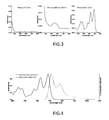
- FIG. 3 is a diagram showing the absorption spectra of a compound obtained in working example 2.
- FIG. 4 is a diagram showing the absorption and fluorescence spectra of the compound (in dicationic form) obtained in working example 2.
- FIG. 5 is a diagram showing the absorption spectra of the compound that is obtained in working example 1, but has been reacted with phenols.
- a compound of the invention is represented by the following general formula (1).
- Q represents C(R) or N;
- Q 1 represents C(R 1 ) or N;
- R represents a hydrogen atom, a halogen atom, an alkyl group having 1 to 6 carbon atoms, or a carboxyl group, where two Rs may bind to each other to form a ring;
- R 1 represents a hydrogen atom, a halogen atom, an alkyl group having 1 to 6 carbon atoms, or a carboxyl group, where two R 1 s may bind to each other to form a ring;
- n represents a number of 0 to 3; and
- m represents a number of 0 to 3.
- Examples of the halogen atoms represented by R and R 1 in the general formula (1) include a fluorine atom, a chlorine atom, a bromine atom and an iodine atom.
- the alkyl group having 1 to 6 carbon atoms may be either linear or branched, a cycloalkyl group and a bicycloalkyl group. Specific examples of such alkyl group include a methyl group, an ethyl group, a propyl group, an isopropyl group, an n-butyl group, an isobutyl group, an s-butyl group, a t-butyl group, a pentyl group and a hexyl group.
- the Rs may be identical to or different from one another, and the R 1 s may be identical to or different from one another as well.
- the compound represented by the general formula (1) may exhibit three types of structures which are a neutral form, a monocationic form and a dicationic form that are shown below.
- the compound represented by the general formula (1) includes these three types of structures.
- the compound of the invention that is represented by the general formula (1) can be produced by the following method.
- a compound represented by a general formula (5) is obtained by reacting 8-hydroxyjulolidine with a compound represented by a general formula (4). Next, the compound represented by the general formula (5) is reacted with hydroquinone in the presence of a condensing agent.
- Q represents C(R) or N
- R represents a hydrogen atom, a halogen atom, an alkyl group having 1 to 6 carbon atoms, or a carboxyl group, where two Rs may bind to each other to form a ring
- n represents a number of 0 to 3.
- halogen atom represented by R examples include a fluorine atom, a chlorine atom, a bromine atom and an iodine atom.
- alkyl group having 1 to 6 carbon atoms examples include groups similar to those in the general formula (1). When there are multiple Rs, they may be either identical to or different from one another.
- the compound represented by the general formula (5) can be obtained by mixing approximately the same amounts by mole of 8-hydroxyjulolidine and the compound represented by the general formula (4), and then refluxing the mixture in a solvent capable of dissolving the two compounds, but incapable of reacting with these compounds.
- solvent examples include toluene, xylene, benzene, dichloromethane and dichloroethane.
- this reaction be performed under an inert atmosphere such as a nitrogen gas atmosphere and an argon gas atmosphere.
- the reaction time is 3 to 15 hours, more preferably about 5 to 12 hours.
- the reaction product may be purified by, for example, silica gel chromatography.
- hydroquinone is mixed with the compound represented by the general formula (5).
- the compound represented by the general formula (5) is used in an amount of 2 to 3 equivalents, preferably about 2 equivalents based on hydroquinone, and the mixture is reacted in the presence of a condensing agent.
- a condensing agent examples thereof may include sulfuric acid, hydrochloric acid, phosphoric acid, polyphosphoric acid, sulfonic acid, methanesulfonic acid, toluenesulfonic acid, trifluoroacetic acid, trifluoromethanesulfonic acid, aluminum trichloride, zinc chloride and phosphoryl chloride.
- the reaction temperature is about room temperature to 200° C., preferably room temperature to 150° C. Although the reaction time may vary depending on the reaction temperature, it is normally about 10 min to 3 days, preferably 3 to 12 hours if heated. After the reaction is finished, the reaction solution is neutralized and then purified to obtain a compound represented by the general formula (6).
- the compound represented by the general formula (6) includes the compound represented by the general formula (1). That is, in the abovementioned reaction, identical or different kinds of the compound represented by the general formula (5) may be employed.
- the compound represented by the general formula (6) can be obtained when there are employed identical kinds of the compound represented by the general formula (5); whereas the compound represented by the general formula (1) can be obtained when there are employed different kinds of the compound represented by the general formula (5).
- the present invention also provides a compound represented by the following general formula (2).
- each of Q 2 and Q 3 represents C(R) or N;
- R represents a hydrogen atom, a halogen atom, an alkyl group having 1 to 6 carbon atoms, or a carboxyl group.
- R 2 represents a halogen atom, an alkyl group having 1 to 6 carbon atoms, or a carboxyl group, where two R 2 s may bind to each other to form a ring.
- R 3 represents a halogen atom, an alkyl group having 1 to 6 carbon atoms, or a carboxyl group, where two R 3 s may bind to each other to form a ring.
- p represents a number of 1 to 3.
- q represents a number of 1 to 3.
- Each of R 4 and R 5 represents a hydrogen atom or an alkyl group having 1 to 6 carbon atoms.
- Examples of the halogen atom represented by each of R, R 2 and R 3 in the general formula (2) include a fluorine atom, a chlorine atom, a bromine atom and an iodine atom.
- the alkyl group having 1 to 6 carbon atoms, as represented by each of R, R 2 , R 3 , R 4 and R 5 in the general formula (2) may be either linear or branched, and examples of which may even include a cycloalkyl group and a bicycloalkyl group.
- alkyl group examples include a methyl group, an ethyl group, a propyl group, an isopropyl group, an n-butyl group, an isobutyl group, an s-butyl group, a t-butyl group, a pentyl group and a hexyl group.
- the Rs may differ from one another, the R 2 s may differ from one another, and the R 3 s may differ from one another as well.
- the R 4 s and the two R 5 s the R 4 s may be either identical to or different from each other, and the R 5 s may be either identical to or different from each other as well.
- the compound represented by the general formula (2) may exhibit three types of structures which are a neutral form, a monocationic form and a dicationic form that are shown below.
- the compound represented by the general formula (2) includes these three types of structures.
- the compound of the invention that is represented by the general formula (2) can be produced by the following method.
- a compound represented by a general formula (9) is obtained by reacting a compound represented by a general formula (7) with a compound represented by a general formula (8). Next, the compound represented by the general formula (9) is reacted with hydroquinone in the presence of a condensing agent.
- Q 2 represents C(R) or N;
- R represents a hydrogen atom, a halogen atom, an alkyl group having 1 to 6 carbon atoms, or a carboxyl group.
- R 2 represents a halogen atom, an alkyl group having 1 to 6 carbon atoms, or a carboxyl group, where two R 2 s may bind to each other to form a ring.
- p represents a number of 1 to 3.
- R 4 represents a hydrogen atom or an alkyl group having 1 to 6 carbon atoms.
- Examples of the halogen atom represented by each of R and R 2 include a fluorine atom, a chlorine atom, a bromine atom and an iodine atom.
- examples of the alkyl group having 1 to 6 carbon atoms, as represented by each of R, R 2 and R 4 may include groups similar to those in the general formula (2).
- the Rs may be either identical to or different from one another, and the R 2 s may be either identical to or different from one another as well.
- the two R 4 s in the general formula (7) may be either identical to or different from each other. However, it is particularly preferred that the compound represented by the general formula (7) be that in which the two R 4 s are ethyl groups or butyl groups.
- Examples of the compound represented by the general formula (8) include compounds similar to those listed as the examples of the compound represented by the general formula (4).
- the compound represented by the general formula (9) can be obtained by mixing approximately the same amounts by mole of the compound represented by the general formula (7) and the compound represented by the general formula (8), and then refluxing the mixture in a solvent capable of dissolving the two compounds, but incapable of reacting with these compounds.
- solvent examples include toluene, xylene, benzene, dichloromethane and dichloroethane.
- this reaction be performed under an inert atmosphere such as a nitrogen gas atmosphere and an argon gas atmosphere.
- the reaction time is 5 to 48 hours, preferably about 5 to 12 hours.
- the reaction product may be purified by, for example, silica gel chromatography.
- hydroquinone is mixed with the compound represented by the general formula (9).
- the compound represented by the general formula (9) is used in an amount of 2 to 3 equivalents, preferably about 2 equivalents based on hydroquinone, and the mixture is reacted in the presence of a condensing agent.
- a condensing agent examples thereof may include sulfuric acid, hydrochloric acid, phosphoric acid, polyphosphoric acid, sulfonic acid, methanesulfonic acid, toluenesulfonic acid, trifluoroacetic acid, trifluoromethanesulfonic acid, aluminum trichloride, zinc chloride and phosphoryl chloride.
- the reaction temperature is about room temperature to 200° C., preferably room temperature to 150° C.
- the reaction time may vary depending on the reaction temperature, it is normally about 10 min to 3 days; preferably 2 to 20 hours, more preferably 3 to 12 hours, if heated.
- the reaction solution is neutralized and then purified to obtain a compound represented by the general formula (10).
- the compound represented by the general formula (10) includes the compound represented by the general formula (2). That is, in the abovementioned reaction, identical or different kinds of the compound represented by the general formula (9) may be employed.
- the compound represented by the general formula (10) can be obtained when there are employed identical kinds of the compound represented by the general formula (9); whereas the compound represented by the general formula (2) can be obtained when there are employed different kinds of the compound represented by the general formula (9).
- the present invention also provides a compound represented by the following general formula (2′).
- each of Q 2 ′ and Q 3 ′ represents C(R′) or N;
- R′ represents a hydrogen atom, a halogen atom, an alkyl group having 1 to 6 carbon atoms, or a carboxyl group.
- R 2 ′ represents a hydrogen atom, a halogen atom, an alkyl group having 1 to 6 carbon atoms, or a carboxyl group, where two R 2 ′s may bind to each other to form a ring.
- R 3 ′ represents a hydrogen atom, a halogen atom, an alkyl group having 1 to 6 carbon atoms, or a carboxyl group, where two R 3 ′s may bind to each other to form a ring.
- p′ represents a number of 0 to 3.
- q′ represents a number of 0 to 3.
- Each of R 4 ′, and R 5 ′ represents a hydrogen atom or an alkyl group having 6 to 12 carbon atoms.
- the alkyl group represented by each of R 4 ′ and R 5 ′ may be either linear or branched, examples of which may even include a cycloalkyl group and a bicycloalkyl group.
- Specific examples of such alkyl group include a hexyl group, a heptyl group, an octyl group, a nonyl group, a decyl group, an undecyl group and a dodecyl group.
- R′, R 2 ′ and R 3 ′ are similar to those listed as the specific examples of R, R 2 and R 3 in the general formula (2).
- the compound represented by the general formula (2′) may exhibit three types of structures which are a neutral form, a monocationic form and a dicationic form.
- the compound represented by the general formula (2′) includes these three types of structures.
- the compound represented by the general formula (2′) can be produced according to the method for producing the compound represented by the general formula (2).
- the present invention provides a reagent for detecting phenols.
- This reagent contains a compound represented by a general formula (3).
- each of Q 4 and Q 5 represents C(R) or N;
- R represents a hydrogen atom, a halogen atom, an alkyl group having 1 to 6 carbon atoms, or a carboxyl group.
- R 6 represents a halogen atom, an alkyl group having 1 to 6 carbon atoms, or a carboxyl group, where two R 6 s may bind to each other to form a ring.
- R 7 represents a halogen atom, an alkyl group having 1 to 6 carbon atoms, or a carboxyl group, where two R 7 s may bind to each other to form a ring.
- r represents a number of 0 to 3.
- s represents a number of 0 to 3.
- Each of R 8 and R 9 may represent a hydrogen atom or an alkyl group having 1 to 6 carbon atoms; or R 8 s or R 9 s may form a julolidine structure together with a nitrogen atom bonded thereto and a benzene ring adjacent to such nitrogen atom.
- Phenols refer to compounds consisting of hydroxy group(s) bonded to aromatic substituents, and specific examples of such phenols include the following compounds.
- the lactone ring(s) of the compound represented by the general formula (3) will open such that the structure of the compound will be converted to that having a different absorption wavelength. Since the structure of the compound of the invention that is represented by the general formula (3) changes in two stages depending on the concentration of phenols, such compound is useful as a reagent for detecting phenols of multiple stages.
- the compounds obtained in working example 1 were dissolved in chloroform, and the absorption spectrum thereof was measured (neutral form). Next, trifluoroacetic acid was added to this solution of the neutral form so that trifluoroacetic acid would be present at 0.01 vol %, followed by measuring the absorption spectrum thereof in a similar manner (monocationic form). Trifluoroacetic acid was further added to this solution of the monocationic form so that trifluoroacetic acid would be present at 0.2 vol %, followed by measuring the absorption spectrum thereof in a similar manner as well (dicationic form).
- a 0.2 vol % trifluoroacetic acid/chloroform solution of the compounds obtained in working example 1 was prepared so that the concentration of the compounds was 0.04 mmol/L, and the absorption spectrum of the solution was then measured.
- Table 1 summarizes the measurement results of absorbance at the wavelength of maximum absorption in each of working example 1 and comparative example 1. As shown in Table 1, it became clear that at the same concentration of the acid, the compound(s) of working example 1 exhibited a sensitivity about 160 times higher than that of the compound of comparative example 1.
- the compounds obtained in working example 2 were dissolved in chloroform, and the absorption spectrum thereof was measured (neutral form). Next, trifluoroacetic acid was added to this solution of the neutral form so that trifluoroacetic acid would be present at 0.01 vol %, followed by measuring the absorption spectrum thereof in a similar manner (monocationic form). Trifluoroacetic acid was further added to this solution of the monocationic form so that trifluoroacetic acid would be present at 2 vol %, followed by measuring the absorption spectrum thereof in a similar manner as well (dicationic form).
- the compound obtained in working example 1 was dissolved in chloroform so that the compound would be present at 0.2 mg/L, and catechol was then added to this solution so that it would be present at 0.3 mol/L. As a result, the solution exhibited a green color. Similarly, as a result of adding p-cresol so that it would be present at 1.0 mol/L, the solution also exhibited a green color.
- the absorption spectrum of each solution is shown in FIG. 5 .
- trimellitic anhydride was employed instead of 3,4,5,6-tetrafluorophthalic anhydride.
- the compound of the present invention as a compound capable of exhibiting different changes in hue with one kind of molecule, may be useful in various fields such as coloring materials including colorants and dyes; indicators and diagnostic agents for compounds, including reagents for detecting phenols; coloring matters for fluorescence imaging; and dye-sensitized solar cells.
Landscapes
- Chemical & Material Sciences (AREA)
- Organic Chemistry (AREA)
- Engineering & Computer Science (AREA)
- Materials Engineering (AREA)
- Heterocyclic Carbon Compounds Containing A Hetero Ring Having Oxygen Or Sulfur (AREA)
- Organic Low-Molecular-Weight Compounds And Preparation Thereof (AREA)
- Investigating Or Analyzing Non-Biological Materials By The Use Of Chemical Means (AREA)
- Nitrogen Condensed Heterocyclic Rings (AREA)
Abstract

wherein each of Q and Q1 represents C(R) or N; R represents a hydrogen atom, a halogen atom, an alkyl group having 1 to 6 carbon atoms, or a carboxyl group, where two Rs may bind to each other to form a ring; R1 represents a hydrogen atom, a halogen atom, an alkyl group having 1 to 6 carbon atoms, or a carboxyl group, where two R1s may bind to each other to form a ring; n represents a number of 0 to 3; and m represents a number of 0 to 3.
Description


- Monovalent phenol: phenol, cresol, naphthol
- Divalent phenol: catechol, resorcinol, hydroquinone
- Trivalent phenol: pyrogallol, phloroglucinol
- 1H-NMR measurement was performed using JNM-AL400 (by JEOL Ltd.) or JNM-AL300 (JEOL Ltd.)
- Absorption spectrum was measured using JASCO V-670 (by JASCO Corporation).
- Fluorescence spectrum was measured using JASCO FP-6600 (by JASCO Corporation).
- MS spectrum was measured using micrOTOF-QIII (by Bruker Daltonics) or Ultraflex (Bruker Daltonics).

Data of Compound (6-1-1):

| TABLE 1 | ||
| Absorbance | ||
| Working example 1 | 0.254 | (676 nm) | ||
| Comparative example 1 | 0.00159 | (660 nm) | ||

Data of Compound (5-2):

Data of Compound (6-2):

Data of Compound (5-3):

Data of Compound (6-3):

Data of Compound (5-4):

Data of Compound (6-4):

Data of Compound (10-5):

Data of Compound (9-6):

Data of Compound (10-6):

Data of Compound (9-7):

Data of Compound (10-7):

Data of Compound (9-8):

Data of Compound (10-8):

Data of Compound (9-9):

Data of Compound (10-9):

Data of Compound (5-1′):

Data of Compound (5-2′):

Data of Compound (5-3′):
Claims (6)


Applications Claiming Priority (3)
| Application Number | Priority Date | Filing Date | Title |
|---|---|---|---|
| JP2015-173779 | 2015-09-03 | ||
| JP2015173779 | 2015-09-03 | ||
| PCT/JP2016/075850 WO2017038987A1 (en) | 2015-09-03 | 2016-09-02 | Rhodamine-based colorant compound and process for producing same |
Publications (2)
| Publication Number | Publication Date |
|---|---|
| US20180244923A1 US20180244923A1 (en) | 2018-08-30 |
| US10435564B2 true US10435564B2 (en) | 2019-10-08 |
Family
ID=58189016
Family Applications (1)
| Application Number | Title | Priority Date | Filing Date |
|---|---|---|---|
| US15/754,495 Expired - Fee Related US10435564B2 (en) | 2015-09-03 | 2016-09-02 | Rhodamine-based colorant compound and process for producing same |
Country Status (4)
| Country | Link |
|---|---|
| US (1) | US10435564B2 (en) |
| EP (1) | EP3345973A4 (en) |
| JP (1) | JP6815651B2 (en) |
| WO (1) | WO2017038987A1 (en) |
Families Citing this family (3)
| Publication number | Priority date | Publication date | Assignee | Title |
|---|---|---|---|---|
| JP7086391B2 (en) * | 2017-09-25 | 2022-06-20 | 国立研究開発法人理化学研究所 | Quinoid-type π-conjugated near-infrared organic dye compound |
| JP7178843B2 (en) * | 2018-09-20 | 2022-11-28 | 株式会社パイロットコーポレーション | Thermochromic ink composition for writing instrument and writing instrument using the same |
| JP7088814B2 (en) * | 2018-11-14 | 2022-06-21 | 株式会社パイロットコーポレーション | Thermal discoloration ink composition for stamps and stamps using them |
Citations (12)
| Publication number | Priority date | Publication date | Assignee | Title |
|---|---|---|---|---|
| US3663571A (en) * | 1969-06-27 | 1972-05-16 | Fuji Photo Film Co Ltd | Lactone compound and process for preparation thereof |
| JPS4719799Y1 (en) | 1968-10-15 | 1972-07-05 | ||
| JPH01190484A (en) | 1988-01-27 | 1989-07-31 | Fuji Photo Film Co Ltd | Recording material |
| GB2314329A (en) | 1996-06-21 | 1997-12-24 | Yamada Chem Co | Process for the preparation of fluoran precursors |
| US6169185B1 (en) * | 1999-02-25 | 2001-01-02 | Day-Glo Color Corp. | Ink jet printing inks |
| JP2003031273A (en) | 2001-07-13 | 2003-01-31 | Mitsubishi Paper Mills Ltd | Photoelectric conversion element |
| US20060204990A1 (en) | 2001-09-07 | 2006-09-14 | Epoch Biosciences, Inc. | Compounds and methods for fluorescent labeling |
| WO2007039502A2 (en) | 2005-10-03 | 2007-04-12 | Ciba Specialty Chemicals Holding Inc. | Xanthene dyes |
| WO2011123820A2 (en) | 2010-04-02 | 2011-10-06 | Pharmacophotonics, Inc. | Novel rhodamine dyes and conjugates |
| US8134017B1 (en) | 2010-12-02 | 2012-03-13 | Riken | Compound and use thereof |
| WO2014002292A1 (en) | 2012-06-27 | 2014-01-03 | 三菱鉛筆株式会社 | Dye, microcapsule pigment using same, and ink composition for writing utensils |
| CN104479670A (en) | 2014-11-21 | 2015-04-01 | 天津理工大学 | Xanthene fluorescent dye molecular fluorescent probe as well as preparation method and application thereof |
-
2016
- 2016-09-02 WO PCT/JP2016/075850 patent/WO2017038987A1/en not_active Ceased
- 2016-09-02 JP JP2017538136A patent/JP6815651B2/en not_active Expired - Fee Related
- 2016-09-02 US US15/754,495 patent/US10435564B2/en not_active Expired - Fee Related
- 2016-09-02 EP EP16842016.4A patent/EP3345973A4/en not_active Withdrawn
Patent Citations (23)
| Publication number | Priority date | Publication date | Assignee | Title |
|---|---|---|---|---|
| JPS4719799Y1 (en) | 1968-10-15 | 1972-07-05 | ||
| US3663571A (en) * | 1969-06-27 | 1972-05-16 | Fuji Photo Film Co Ltd | Lactone compound and process for preparation thereof |
| JPH01190484A (en) | 1988-01-27 | 1989-07-31 | Fuji Photo Film Co Ltd | Recording material |
| GB2314329A (en) | 1996-06-21 | 1997-12-24 | Yamada Chem Co | Process for the preparation of fluoran precursors |
| JPH107632A (en) | 1996-06-21 | 1998-01-13 | Yamada Chem Co Ltd | Method for producing 2- (4'-N-monosubstituted amino-2'-hydroxybenzoyl) benzoic acid |
| US6169185B1 (en) * | 1999-02-25 | 2001-01-02 | Day-Glo Color Corp. | Ink jet printing inks |
| JP2003031273A (en) | 2001-07-13 | 2003-01-31 | Mitsubishi Paper Mills Ltd | Photoelectric conversion element |
| US20060204990A1 (en) | 2001-09-07 | 2006-09-14 | Epoch Biosciences, Inc. | Compounds and methods for fluorescent labeling |
| EP1934291A2 (en) | 2005-10-03 | 2008-06-25 | Ciba Holding Inc. | Xanthene dyes |
| WO2007039502A2 (en) | 2005-10-03 | 2007-04-12 | Ciba Specialty Chemicals Holding Inc. | Xanthene dyes |
| JP2009513753A (en) | 2005-10-03 | 2009-04-02 | チバ ホールディング インコーポレーテッド | Xanthene dye |
| US20090265866A1 (en) | 2005-10-03 | 2009-10-29 | Victor Paul Eliu | Xanthene Dyes |
| WO2007098336A2 (en) | 2006-02-17 | 2007-08-30 | Epoch Biosciences, Inc. | Compounds and methods for fluorescent labeling |
| EP1991705A2 (en) | 2006-02-17 | 2008-11-19 | Epoch Biosciences, Inc. | Compounds and methods for fluorescent labeling |
| JP2009527591A (en) | 2006-02-17 | 2009-07-30 | エポック バイオサイエンシズ インコーポレーティッド | Compounds and methods for fluorescent labeling |
| WO2011123820A2 (en) | 2010-04-02 | 2011-10-06 | Pharmacophotonics, Inc. | Novel rhodamine dyes and conjugates |
| EP2552492A2 (en) | 2010-04-02 | 2013-02-06 | Pharmacophotonics, Inc. | Single isomeric conjugates of rhodamine dyes |
| US20130096309A1 (en) | 2010-04-02 | 2013-04-18 | Ulf Bremberg | Novel rhodamine dyes and conjugates |
| JP2013523964A (en) | 2010-04-02 | 2013-06-17 | ファーマコフォトニクス、インコーポレイテッド | Novel rhodamine dyes and conjugates |
| US8134017B1 (en) | 2010-12-02 | 2012-03-13 | Riken | Compound and use thereof |
| WO2014002292A1 (en) | 2012-06-27 | 2014-01-03 | 三菱鉛筆株式会社 | Dye, microcapsule pigment using same, and ink composition for writing utensils |
| JP2014005422A (en) | 2012-06-27 | 2014-01-16 | Mitsubishi Pencil Co Ltd | Dye, microcapsule pigment using the same, and ink composition for writing utensils |
| CN104479670A (en) | 2014-11-21 | 2015-04-01 | 天津理工大学 | Xanthene fluorescent dye molecular fluorescent probe as well as preparation method and application thereof |
Non-Patent Citations (2)
| Title |
|---|
| Extended European Search Report dated Mar. 4, 2019 for the corresponding European Patent Application No. 16842016.4. |
| Kamino, S. et al., A red-emissive aminobenzopyrano-xanthene dye: elucidation of fluorescence emission mechanisms in solution and in the aggregate state, Phys. Chem. Chem. Phys., 2013, 15, 2131-2140. Accepted Dec. 5, 2012. |
Also Published As
| Publication number | Publication date |
|---|---|
| WO2017038987A1 (en) | 2017-03-09 |
| JP6815651B2 (en) | 2021-01-20 |
| EP3345973A1 (en) | 2018-07-11 |
| JPWO2017038987A1 (en) | 2018-08-09 |
| EP3345973A4 (en) | 2019-04-03 |
| US20180244923A1 (en) | 2018-08-30 |
Similar Documents
| Publication | Publication Date | Title |
|---|---|---|
| TWI419942B (en) | Color material and method for producing the same | |
| CN109456264A (en) | A kind of application of the fluorescence probe and preparation method thereof detecting nitroreductase with enzymatic reaction | |
| Singh et al. | Achieving flexibility/rigidity balance through asymmetric Donor− Acceptor scaffolds in pursuit of dual state emission with application in acidochromism | |
| US20180244923A1 (en) | Rhodamine-based colorant compound and process for producing same | |
| US10144722B2 (en) | Carbazole end capped bipyridine compounds and process for preparation thereof | |
| Han et al. | Novel ratio fluorescence probes for selectively detecting zinc ion based on Y-type quinoxaline framework | |
| US20200295268A1 (en) | Organic light-emitting material, method for the preparation thereof and use thereof | |
| JP5813561B2 (en) | Color material and method for producing the same | |
| EP1731898A1 (en) | Fluorescent probes | |
| Budri et al. | A novel switch on and reversible optical sensor as an efficient, selective receptor for Zn (II) ion and its biological application | |
| KR20110115211A (en) | Fluorane-based dyes for detecting tetravalent iron ions and methods for preparing the same | |
| CN103755634A (en) | 9-aminoacridine derivative and synthetic method thereof | |
| KR20130104551A (en) | Water-soluble perylene compounds having light interception and shift wavelength and process for producing the same | |
| WO2023065501A1 (en) | Aggregation-induced emission mg-rho fluorescent dye, and preparation method therefor and use thereof | |
| CN103694173B (en) | Acridone derivatives and synthesis method thereof | |
| KR102313145B1 (en) | compounds, and intermediates thereof | |
| CN111349067B (en) | Aggregation-induced emission type fluorescent material and preparation method thereof | |
| WO2014061143A1 (en) | Coloring material and method for producing same | |
| JP6869524B2 (en) | Method for Producing Aminobenzopyranoxanthene (ABPX) Dye Compound | |
| Kothavale et al. | Novel triphenylamine based rhodamine derivatives: synthesis, characterization, photophysical properties and viscosity sensitivity | |
| CN115850260B (en) | Twisted lanthanide metal europium supramolecular cage complex, preparation method and application | |
| CN119613382B (en) | Probe taking terpyridine as recognition group and containing three electron donors, and preparation method and application thereof | |
| KR102781590B1 (en) | Fluorescent compound for pH measurement based on indolizine skeleton and use thereof | |
| JP4189977B2 (en) | Ion-selective dyes and triphenodioxazine compounds | |
| KR101418655B1 (en) | Novel compound and detection method of iron ion using the same |
Legal Events
| Date | Code | Title | Description |
|---|---|---|---|
| AS | Assignment |
Owner name: RIKEN, JAPAN Free format text: ASSIGNMENT OF ASSIGNORS INTEREST;ASSIGNORS:MURANAKA, ATSUYA;SHIRASAKI, YOSHINAO;UCHIYAMA, MASANOBU;AND OTHERS;REEL/FRAME:045007/0879 Effective date: 20180117 |
|
| FEPP | Fee payment procedure |
Free format text: ENTITY STATUS SET TO UNDISCOUNTED (ORIGINAL EVENT CODE: BIG.); ENTITY STATUS OF PATENT OWNER: LARGE ENTITY |
|
| STPP | Information on status: patent application and granting procedure in general |
Free format text: NON FINAL ACTION MAILED |
|
| STPP | Information on status: patent application and granting procedure in general |
Free format text: NOTICE OF ALLOWANCE MAILED -- APPLICATION RECEIVED IN OFFICE OF PUBLICATIONS |
|
| STPP | Information on status: patent application and granting procedure in general |
Free format text: PUBLICATIONS -- ISSUE FEE PAYMENT VERIFIED |
|
| STCF | Information on status: patent grant |
Free format text: PATENTED CASE |
|
| FEPP | Fee payment procedure |
Free format text: MAINTENANCE FEE REMINDER MAILED (ORIGINAL EVENT CODE: REM.); ENTITY STATUS OF PATENT OWNER: LARGE ENTITY |
|
| LAPS | Lapse for failure to pay maintenance fees |
Free format text: PATENT EXPIRED FOR FAILURE TO PAY MAINTENANCE FEES (ORIGINAL EVENT CODE: EXP.); ENTITY STATUS OF PATENT OWNER: LARGE ENTITY |
|
| STCH | Information on status: patent discontinuation |
Free format text: PATENT EXPIRED DUE TO NONPAYMENT OF MAINTENANCE FEES UNDER 37 CFR 1.362 |
|
| FP | Lapsed due to failure to pay maintenance fee |
Effective date: 20231008 |