US10420527B2 - Determining a heart rate and a heart rate variability - Google Patents

Determining a heart rate and a heart rate variability Download PDF

Info

Publication number
US10420527B2
US10420527B2 US15/098,254 US201615098254A US10420527B2 US 10420527 B2 US10420527 B2 US 10420527B2 US 201615098254 A US201615098254 A US 201615098254A US 10420527 B2 US10420527 B2 US 10420527B2
Authority
US
United States
Prior art keywords
peak
audio signal
peaks
envelope
detected
Prior art date
Legal status (The legal status is an assumption and is not a legal conclusion. Google has not performed a legal analysis and makes no representation as to the accuracy of the status listed.)
Active, expires
Application number
US15/098,254
Other versions
US20160302732A1 (en
Inventor
Aditi MISRA
Aniruddha Sinha
Avik Ghose
Anirban Dutta Choudhury
Rohan Banerjee
Current Assignee (The listed assignees may be inaccurate. Google has not performed a legal analysis and makes no representation or warranty as to the accuracy of the list.)
Tata Consultancy Services Ltd
Original Assignee
Tata Consultancy Services Ltd
Priority date (The priority date is an assumption and is not a legal conclusion. Google has not performed a legal analysis and makes no representation as to the accuracy of the date listed.)
Filing date
Publication date
Application filed by Tata Consultancy Services Ltd filed Critical Tata Consultancy Services Ltd
Publication of US20160302732A1 publication Critical patent/US20160302732A1/en
Assigned to TATA CONSULTANCY SERVICES LIMITED reassignment TATA CONSULTANCY SERVICES LIMITED ASSIGNMENT OF ASSIGNORS INTEREST (SEE DOCUMENT FOR DETAILS). Assignors: BANERJEE, Rohan, Choudhury, Anirban Dutta, GHOSE, Avik, Misra, Aditi, SINHA, ANIRUDDHA
Application granted granted Critical
Publication of US10420527B2 publication Critical patent/US10420527B2/en
Active legal-status Critical Current
Adjusted expiration legal-status Critical

Links

Images

Classifications

    • AHUMAN NECESSITIES
    • A61MEDICAL OR VETERINARY SCIENCE; HYGIENE
    • A61BDIAGNOSIS; SURGERY; IDENTIFICATION
    • A61B7/00Instruments for auscultation
    • A61B7/02Stethoscopes
    • A61B7/04Electric stethoscopes
    • A61B7/045Detection of Korotkoff sounds
    • AHUMAN NECESSITIES
    • A61MEDICAL OR VETERINARY SCIENCE; HYGIENE
    • A61BDIAGNOSIS; SURGERY; IDENTIFICATION
    • A61B5/00Measuring for diagnostic purposes; Identification of persons
    • A61B5/72Signal processing specially adapted for physiological signals or for diagnostic purposes
    • A61B5/7235Details of waveform analysis
    • A61B5/7253Details of waveform analysis characterised by using transforms
    • AHUMAN NECESSITIES
    • A61MEDICAL OR VETERINARY SCIENCE; HYGIENE
    • A61BDIAGNOSIS; SURGERY; IDENTIFICATION
    • A61B7/00Instruments for auscultation
    • AHUMAN NECESSITIES
    • A61MEDICAL OR VETERINARY SCIENCE; HYGIENE
    • A61BDIAGNOSIS; SURGERY; IDENTIFICATION
    • A61B5/00Measuring for diagnostic purposes; Identification of persons
    • A61B5/02Detecting, measuring or recording for evaluating the cardiovascular system, e.g. pulse, heart rate, blood pressure or blood flow
    • A61B5/024Measuring pulse rate or heart rate
    • AHUMAN NECESSITIES
    • A61MEDICAL OR VETERINARY SCIENCE; HYGIENE
    • A61BDIAGNOSIS; SURGERY; IDENTIFICATION
    • A61B5/00Measuring for diagnostic purposes; Identification of persons
    • A61B5/02Detecting, measuring or recording for evaluating the cardiovascular system, e.g. pulse, heart rate, blood pressure or blood flow
    • A61B5/024Measuring pulse rate or heart rate
    • A61B5/02405Determining heart rate variability
    • AHUMAN NECESSITIES
    • A61MEDICAL OR VETERINARY SCIENCE; HYGIENE
    • A61BDIAGNOSIS; SURGERY; IDENTIFICATION
    • A61B5/00Measuring for diagnostic purposes; Identification of persons
    • A61B5/68Arrangements of detecting, measuring or recording means, e.g. sensors, in relation to patient
    • A61B5/6887Arrangements of detecting, measuring or recording means, e.g. sensors, in relation to patient mounted on external non-worn devices, e.g. non-medical devices
    • A61B5/6898Portable consumer electronic devices, e.g. music players, telephones, tablet computers
    • AHUMAN NECESSITIES
    • A61MEDICAL OR VETERINARY SCIENCE; HYGIENE
    • A61BDIAGNOSIS; SURGERY; IDENTIFICATION
    • A61B5/00Measuring for diagnostic purposes; Identification of persons
    • A61B5/72Signal processing specially adapted for physiological signals or for diagnostic purposes
    • A61B5/7235Details of waveform analysis
    • AHUMAN NECESSITIES
    • A61MEDICAL OR VETERINARY SCIENCE; HYGIENE
    • A61BDIAGNOSIS; SURGERY; IDENTIFICATION
    • A61B5/00Measuring for diagnostic purposes; Identification of persons
    • A61B5/72Signal processing specially adapted for physiological signals or for diagnostic purposes
    • A61B5/7271Specific aspects of physiological measurement analysis
    • A61B5/7282Event detection, e.g. detecting unique waveforms indicative of a medical condition

Definitions

  • the present disclosure in general relates to a field of determining heart rate and heart rate variability. More particularly, the present disclosure relates to a system and a method for determining a heart rate and a heart rate variability using a microphone of an electronic device.
  • Heart rate is a speed of heart beat measured by number of poundings of the heart per unit of time. Typically, the heart rate is measured in Beats per Minute (BPM). The heart rate may vary according to body of an individual, including absorption of oxygen and excretion of carbon dioxide.
  • Heart rate variability is a physiological phenomenon of variation in a time interval between the heartbeats. Typically, the HRV may be measured by the variation in the beat-to-beat interval.
  • HRV heart rate and heart rate variability
  • ECG heart rate and heart rate variability
  • HRV heart rate and heart rate variability
  • the photoplethysmography is well suited for determining the heart rate, however fails to determine the HRV accurately due to low temporal resolution.
  • Another solution offered is use of a digital stethoscope to capture the heartbeat sounds for extracting the heart rate and HRV of the individual.
  • high temporal resolution 44.1 kHz sampling rate
  • the solution is susceptible to mechanical friction, ambient sounds, audio feedback and noise is generated by the electronic circuits.
  • noise cancellation technique is used by applying a low-pass filter on an audio signal.
  • the noise cancellation technique cannot eliminate the noise components present in the pass band. Therefore, frequency domain representation often fails to detect the heart rate accurately due to abrupt change in dominant peak location.
  • Embodiments of the present disclosure present technological improvements as solutions to one or more of the above-mentioned technical problems recognized by the inventors in conventional systems.
  • a method for determining a heart rate and a heart rate variability of an individual comprises capturing heart sound of an individual.
  • the method further comprises amplifying, by a processor, an audio signal of the heart sound.
  • the method further comprises detecting, by the processor, an envelope of the amplified audio signal.
  • the envelope of the amplified audio signal is detected by squaring of the amplified audio signal to obtain emphasized high amplitude components and diminished low amplitude components of the audio signal, applying a band pass filter on the audio signal upon squaring and applying a Teager-Kaiser Energy Operator (TKEO) on the audio signal filtered.
  • the method further comprises detecting, by the processor, peaks in the envelope of the audio signal.
  • TKEO Teager-Kaiser Energy Operator
  • the peaks are detected by calculating difference in magnitude of a point in the audio signal with an average of magnitude of earlier points in the audio signal from last detected peak or initial sample value in processing window of the audio signal when no peak is detected.
  • the method further comprises determining, by the processor, a heart rate and a heart rate variability for the individual using the peaks detected.
  • the method further comprises classifying the peaks detected into three clusters using a k-means clustering algorithm.
  • the heart rate of the individual is determined based on the difference of consecutive peaks.
  • the difference corresponds to an average time period of heart beat.
  • the heart rate is determined by calculating an inverse of the difference of consecutive peaks.
  • the heart rate variability is determined based on the difference of consecutive peaks.
  • a system for determining a heart rate and a heart rate variability of an individual comprises a memory and a processor coupled to the memory.
  • the processor executes program instructions stored in the memory to capture heart sound of an individual.
  • the processor further executes the program instructions to amplify an audio signal of the heart sound.
  • the processor further executes the program instructions to detect an envelope of the amplified audio signal.
  • the envelope of the amplified audio signal is detected by squaring the amplified audio signal to obtain emphasized high amplitude components and diminished low amplitude components of the audio signal, applying a band pass filter on the audio signal upon squaring and applying the Teager-Kaiser Energy Operator (TKEO) on the audio signal filtered to obtain the envelope of the audio signal.
  • TKEO Teager-Kaiser Energy Operator
  • the processor further executes the program instructions to detect peaks in the envelope of the audio signal.
  • the peaks are detected by calculating difference in magnitude of a point in the audio signal with an average of magnitude of earlier points in the audio signal from last detected peak or initial sample value in processing window of the audio signal when no peak is detected.
  • the processor further executes the program instructions to determine a heart rate and a heart rate variability for the individual using the peaks detected.
  • the heart rate of the individual is estimated based on the difference of consecutive peaks.
  • the heart rate variability is determined based on the difference of consecutive peaks.
  • the processor further executes the program instructions to cluster a distance between the peaks detected using a Fuzzy C Means (FCM) clustering algorithm.
  • FCM Fuzzy C Means
  • the FCM clustering algorithm is used to remove false positive peaks and to add false negative peaks.
  • the false negative peaks are removed by calculating a mean and a standard deviation corresponding to the distance between the peaks.
  • the processor further executes the program instructions to class
  • a computer program product comprising a non-transitory computer readable medium having a computer readable program embodied therein, wherein the computer readable program, when executed on a computing device, causes the computing device to: capture heart sound of an individual; amplify an audio signal of the heart sound; detect an envelope of the amplified audio signal, wherein the envelope of the amplified audio signal is detected by; squaring of the amplified audio signal to obtain emphasized high amplitude components and diminished low amplitude components of the audio signal; applying a band pass filter (0.7-3.6 Hz) on the audio signal upon squaring; and applying a Teager-Kaiser Energy Operator (TKEO) on the audio signal filtered to obtain the envelope of the audio signal; detect peaks in the envelope of the audio signal, wherein the peaks are detected by calculating difference in magnitude of a point in the audio signal with an average of magnitude of earlier points in the audio signal from last detected peak or initial sample value in the processing window of the audio signal when no peak is detected
  • TKEO
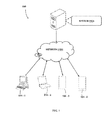
  • FIG. 1 illustrates a network implementation of a system for determining a heart rate and a heart rate variability of an individual, in accordance with an embodiment of the present disclosure.
  • FIG. 2 illustrates the system, in accordance with an embodiment of the present disclosure.
  • FIG. 3 shows heart sound captured without amplification, in accordance with an embodiment of the present disclosure.
  • FIG. 4 shows the amplified audio signal after squaring, in accordance with an embodiment of the present disclosure.
  • FIG. 5 shows the audio signal after applying band pass filter, in accordance with an embodiment of the present disclosure.
  • FIG. 6 shows the audio signal after applying the TKEO, in accordance with an embodiment of the present disclosure.
  • FIG. 7 shows peaks detected on the envelope of the time domain audio signal, in accordance with an embodiment of the present disclosure.
  • FIG. 8 shows peaks after peak correction on the time domain audio signal envelope, in accordance with an embodiment of the present disclosure.
  • FIG. 9 shows a flowchart for determining a heart rate and a heart rate variability of an individual, in accordance with an embodiment of the present disclosure.
  • the present disclosure relates to a system and a method for determining a heart rate and a heart rate variability of an individual.
  • heart sound of the individual may be captured.
  • the heart sound may be captured using a microphone of a smart phone.
  • an audio signal of the heart sound may be amplified to make the audio signal audible.
  • the audio signal may be amplified as the amplitude of the heart sound may be low.
  • an envelope of the amplified audio signal may be detected.
  • the envelope of the amplified audio signal may be detected by taking a square of the audio signal in order to emphasize high amplitude components and diminish low amplitude components of the amplified audio signal.
  • a band pass filter may be applied on the audio signal. Specifically, a second order Butterworth band pass filter may be applied on the audio signal.
  • TKEO Teager-Kaiser Energy Operator
  • an average of magnitude of all earlier points is calculated. Subsequently, a magnitude of a current point subsequent to the magnitude of points averaged in the audio signal is detected from the last detected peak or the initial sample value in the processing window when no peak is detected. Further, difference in the magnitude of the current point and the average of the earlier points is calculated to detect the peaks in the envelope. If the difference is greater than zero and the amplitude of a subsequent point following the current point's amplitude is equal or less, the current point is considered as the peak.
  • the peaks may be enumerated and an FCM clustering algorithm is run on the peak to peak distance to classify the peak to peak distances. Specifically, the peaks are classified as a cluster comprising of smaller peak to peak distances and a cluster comprising of higher peak to peak distances. Subsequently, false negative peaks are removed from the detected peaks. After removing the false negative peaks, differences in consecutive peaks are detected. The average consecutive difference corresponds to an average time period of heart beat. After obtaining the average time period of heart beat, a reciprocal of the average time period of heart beat may be calculated to estimate the average heart rate of the individual.
  • a heart rate variability may be determined based on the difference of the consecutive peaks detected. Specifically, the heart rate variability may be determined using time domain metrics on the peaks detected.
  • the system 102 may capture heart sound of an individual.
  • the system 102 may amplify an audio signal of the heart sound captured. Based on the audio signal amplified, the system 102 may detect an envelope of the amplified audio signal.
  • the system 102 may detect the envelope of the audio signal by squaring of the amplified audio signal to obtain emphasized high amplitude components and diminished low amplitude components of the audio signal, applying a band pass filter on the audio signal upon squaring and applying a Teager-Kaiser Energy Operator (TKEO) on the filtered audio signal.
  • TKEO Teager-Kaiser Energy Operator
  • the system 102 may detect peaks in the envelope of the audio signal.
  • the system 102 may detect the peaks in the envelope of the audio signal by calculating difference in magnitude of a point in the audio signal with an average of magnitude of earlier points in the audio signal from the last detected peak or initial sample value in processing window of the audio signal when no peak is detected. Based on the peaks detected, the system 102 may calculate a heart rate and a heart rate variability for the individual. Specifically, the system 102 may determine the heart rate and the heart rate variability based on differences of consecutive peaks detected.
  • system 102 may also be implemented in a variety of computing systems, such as a laptop computer, a desktop computer, a notebook, a workstation, a mainframe computer, a server, a network server, cloud, and the like. It will be understood that the system 102 may be accessed by multiple users through one or more user devices 104 - 1 , 104 - 2 . . . 104 -N, collectively referred to as user devices 104 hereinafter, or applications residing on the user devices 104 . Examples of the user devices 104 may include, but are not limited to, a portable computer, a personal digital assistant, a handheld device, and a workstation. The user devices 104 are communicatively coupled to the system 102 through a network 106 .
  • the network 106 may be a wireless network, a wired network or a combination thereof.
  • the network 106 can be implemented as one of the different types of networks, such as intranet, local area network (LAN), wide area network (WAN), the internet, and the like.
  • the network 106 may either be a dedicated network or a shared network.
  • the shared network represents an association of the different types of networks that use a variety of protocols, for example, Hypertext Transfer Protocol (HTTP), Transmission Control Protocol/Internet Protocol (TCP/IP), Wireless Application Protocol (WAP), and the like, to communicate with one another.
  • the network 106 may include a variety of network devices, including routers, bridges, servers, computing devices, storage devices, and the like.
  • the system 102 may include at least one processor 202 , an input/output (I/O) interface 204 , and a memory 206 .
  • the at least one processor 202 may be implemented as one or more microprocessors, microcomputers, microcontrollers, digital signal processors, central processing units, state machines, logic circuitries, and/or any devices that manipulate signals based on operational instructions.
  • the at least one processor 202 is configured to fetch and execute computer-readable instructions stored in the memory 206 .
  • the I/O interface 204 may include a variety of software and hardware interfaces, for example, a web interface, a graphical user interface, and the like.
  • the I/O interface 204 may allow the system 102 to interact with a user directly or through the user devices 104 . Further, the I/O interface 204 may enable the system 102 to communicate with other computing devices, such as web servers and external data servers (not shown).
  • the I/O interface 204 may facilitate multiple communications within a wide variety of networks and protocol types, including wired networks, for example, LAN, cable, etc., and wireless networks, such as WLAN, cellular, or satellite.
  • the I/O interface 204 may include one or more ports for connecting a number of devices to one another or to another server.
  • the memory 206 may include any computer-readable medium known in the art including, for example, volatile memory, such as static random access memory (SRAM) and dynamic random access memory (DRAM), and/or non-volatile memory, such as read only memory (ROM), erasable programmable ROM, flash memories, hard disks, optical disks, and magnetic tapes.
  • volatile memory such as static random access memory (SRAM) and dynamic random access memory (DRAM)
  • DRAM dynamic random access memory
  • non-volatile memory such as read only memory (ROM), erasable programmable ROM, flash memories, hard disks, optical disks, and magnetic tapes.
  • the user may use the client device 104 to access the system 102 via the I/O interface 204 .
  • the working of the system 102 may be explained in detail using FIG. 3 to FIG. 8 .
  • the system 102 may be used for determining a heart rate and a heart rate variability of an individual.
  • heart sound of the individual may be captured.
  • the heart sound may be captured using an electronic device.
  • the electronic device may capture the heart sound using a microphone embedded in it.
  • the electronic device may include, but not limited to, a smartphone, a tablet, a computer, and a wrist band such as a wrist watch. It should be understood that any electronic device that comprises a microphone may be used to capture the heart sound. Further, a digital stethoscope may be used to capture the heart sound.
  • the electronic device may be placed close to heart of the individual.
  • the electronic device e.g., a smartphone may be positioned slightly inward to mid-clavicular line on the third or fifth intercostal region on chest of the individual.
  • the microphone of the electronic device may capture the heart sound.
  • the microphone may capture the first heart sound that is louder than the second heart sound if the phone is positioned at the fifth intercostal space and vice-versa when the microphone is positioned at third intercostal space.
  • the heart sound captured may have noise and the heart sound may be low in amplitude.
  • the noise may be an ambience noise.
  • an audio signal of the heart sound may need to be amplified.
  • the audio signal may be amplified in software level such that the audio signal does not exceed an audio bit depth supported by an audio file format in the capturing device, such as the electronic device.
  • the audio signal may be amplified for guiding the individual to place the microphone of the electronic device approximately about a region close to the heart where the heart sound can be heard appropriately.
  • FIG. 3 and FIG. 4 may be used as an example. Referring to FIG. 3 , the heart sound captured without amplification, i.e., raw audio signal is shown.
  • the audio signal may be further processed to detect an envelope of the amplified audio signal.
  • the amplified audio signal may be squared.
  • the audio signal may be squared in order to emphasize high amplitude components and diminish low amplitude components of the audio signal.
  • the audio signal may be presented as shown in FIG. 4 .
  • the audio signal may be filtered by applying a band pass filter.
  • the audio signal comprises of all the frequencies in the human audible range (20 Hz to 20 kHz). Since, the frequency of the human heart beat sound is in a range of 0.7 Hz to 3.6 Hz in any circumstances, the signal is passed through a 2 nd order Butterworth band pass filter to capture the frequency present only in the range, i.e., 0.7 Hz to 3.66 Hz.
  • the audio signal after band pass filtering may be presented as shown in FIG. 5 .
  • TKEO Teager-Kaiser Energy Operator
  • the Teager-Kaiser energy operator is a nonlinear operator that calculates the energy of mono component audio signals as a product of the square of the amplitude and the frequency of the audio signal.
  • the energy of the audio signal may be obtained over a time 2T. Further, the energy of the audio signal may be estimated by using squared absolute value of the different frequency bands of Fourier transformed signal as a measure of the energy levels of respective bands.
  • an energy tracking operator i.e., Teager-Kaiser Energy Operator (TKEO) may be used.
  • TKEO Teager-Kaiser Energy Operator
  • ⁇ c [ x ( t )] [′ x ( t )]2 ⁇ x ( t )′′ x ( t )
  • x(t) is the audio signal
  • x′(t) and x′′(t) are its first and second derivatives respectively.
  • the audio signal after applying the TKEO is shown in FIG. 6 .
  • the envelope of the amplified audio signal may be detected. From the envelope, peaks of the audio signal, i.e., the energy spikes/magnitude may be detected. For calculating the peaks, an average of all earlier points from previously detected peak to current point is estimated. Subsequently, the magnitude of the current point is obtained. After obtaining the magnitude of the current point, the difference of the magnitude of the current point and the average of all earlier points from previous peak to the current point is calculated. In other words, the average of the all previous points is calculated from the previously detected peak. In another implementation, if the peak is not detected in the earlier points, an average of magnitude of points in the audio signal from initial value in processing window of the audio signal is considered.
  • the current point is considered to be a peak for the audio signal in time domain. Subsequently, the average is reset from the current point to detect new peak for subsequent magnitude of the points in the audio signal. Similarly, all the peaks are detected in the audio signal. The initial peaks detected on the envelope of the time domain audio signal are shown in FIG. 7 .
  • the peaks may have additional peaks.
  • the peaks may be false positive peaks.
  • a Fuzzy c Means (FCM) clustering algorithm may be used.
  • the positive peaks may appear due to ambient noise identified as a peak that corresponds to the first heart sound, i.e., LUBB.
  • the FCM clustering algorithm may be run to classify the peak to peak distances into two clusters. One cluster may comprise smaller peak to peak distance and second cluster may comprise higher peak to peak distance. The cluster comprising the higher peak to peak distance may correspond to correct peak to peak distances. The cluster comprising smaller peak to peak distance may correspond to the detection of false positives.
  • the positive peaks may appear due to ambient noise identified as a peak that corresponds to the louder heart sound, i.e., LUBB or DUB depending upon the positioning of the electronic device.
  • a mean and a standard deviation of all the peak to peak distances that is present in the cluster having greatest compaction are calculated. Subsequently, every peak from a common peak that has an adjoining correct peak to peak distance may be inspected. After inspection, if the next detected peak value is less than the difference of the mean and the standard deviation, the next detected peak may be discarded as the false positive peak. Further, the mean and standard deviation of all peak to peak distances are calculated until a peak with the desired value greater than the (mean-standard deviation) is obtained. After identifying a true peak, the mean and standard deviation of all peak to peak distances are re-calculated and the process is again repeated from the next peak having an adjoining true peak and a false peak
  • false negative peaks may be identified.
  • the missed peaks may result in false negatives peaks.
  • the missed peaks may occur when a louder heart sound or noise being followed by a less loud heart sound, due to difference in pressure applied on the chest while holding the electronic device by hand.
  • the region between the peaks, among which the distance has fallen in the cluster having highest centroid value is identified.
  • the peak detection is calculated between the two immediate local troughs following the points identified as peaks, between which the false peak is estimated to occur.
  • FIG. 8 may be used to illustrate the peaks after peak correction on the time domain audio signal envelope.
  • a standard deviation D std of the entire dataset may be calculated. Based on the difference of the consecutive peaks detected, the heart rate of the individual may be determined. The consecutive difference of the detected peaks may correspond to an average time period of the heart beat. Subsequently, a reciprocal of the consecutive difference of the detected peaks may be calculated to determine the average heart rate of the individual.
  • the heart rate variability of the individual may be determined. Specifically, the heart rate variability may be determined using time domain metrics of the audio signal. The heart rate variability may be determined by calculating a standard deviation of the consecutive peak to peak time differences. Further, a root mean square of the successive peak to peak time differences may be calculated. Further, a standard deviation between the successive differences of the consecutive peak to peak time differences may be calculated. Further, number of pairs of the successive peak to peak time difference that differ by more than 50 milliseconds may be calculated. Further, a proportion of the number of pairs of successive peak to peak time difference that differ by more than 50 milliseconds divided by the total number of peak to peak differences may be calculated.
  • the number of pairs of the successive peak to peak time difference that differ by more than 20 milliseconds may be calculated. Further, a proportion of the number of pairs of successive peak to peak time difference that differ by more than 20 milliseconds divided by the total number of peak to peak differences may be calculated. Based on the above conditions, the heart rate variability may be determined.
  • a method 900 for determining a heart rate and a heart rate variability of an individual is shown, in accordance with an embodiment of the present disclosure.
  • the method 900 may be described in the general context of computer executable instructions.
  • computer executable instructions can include routines, programs, objects, components, data structures, procedures, modules, functions, etc., that perform particular functions or implement particular abstract data types.
  • the method 900 may also be practiced in a distributed computing environment where functions are performed by remote processing devices that are linked through a communications network.
  • computer executable instructions may be located in both local and remote computer storage media, including memory storage devices.
  • the method 900 is described and is not intended to be construed as a limitation, and any number of the described method blocks can be combined in any order to implement the method 900 or alternate methods. Additionally, individual blocks may be deleted from the method 900 without departing from the spirit and scope of the disclosure described herein. Furthermore, the method may be implemented in any suitable hardware, software, firmware, or combination thereof. However, for ease of explanation, in the embodiments described below, the method 900 may be implemented in the above-described system 102 .
  • heart sound of an individual may be captured.
  • an audio signal of the heart sound captured may be amplified.
  • an envelope of the amplified audio signal may be detected.
  • the envelope of the amplified audio signal may be detected by squaring of the audio signal amplified to obtain emphasized high amplitude components and diminished low amplitude components of the audio signal, applying a band pass filter on the audio signal (0.7-3.6 Hz) upon squaring, and applying a Teager-Kaiser Energy Operator (TKEO) on the audio signal filtered to obtain the envelope of the audio signal.
  • TKEO Teager-Kaiser Energy Operator
  • peaks in the envelope of the audio signal may be detected.
  • the peaks may be detected by calculating difference in magnitude of a point subsequent in the audio signal with an average of magnitude of earlier points in the audio signal from the last detected peak or the initial sample value in processing window of the audio signal when no peak is detected.
  • a heart rate and a heart rate variability for the individual may be determined using the peaks detected.

Landscapes

  • Health & Medical Sciences (AREA)
  • Life Sciences & Earth Sciences (AREA)
  • Engineering & Computer Science (AREA)
  • Physics & Mathematics (AREA)
  • Molecular Biology (AREA)
  • Medical Informatics (AREA)
  • Heart & Thoracic Surgery (AREA)
  • Surgery (AREA)
  • Animal Behavior & Ethology (AREA)
  • General Health & Medical Sciences (AREA)
  • Public Health (AREA)
  • Veterinary Medicine (AREA)
  • Biomedical Technology (AREA)
  • Acoustics & Sound (AREA)
  • Hematology (AREA)
  • Biophysics (AREA)
  • Signal Processing (AREA)
  • Physiology (AREA)
  • Pathology (AREA)
  • Psychiatry (AREA)
  • Computer Vision & Pattern Recognition (AREA)
  • Artificial Intelligence (AREA)
  • Cardiology (AREA)
  • Measurement Of The Respiration, Hearing Ability, Form, And Blood Characteristics Of Living Organisms (AREA)
  • Measuring Pulse, Heart Rate, Blood Pressure Or Blood Flow (AREA)
  • Power Engineering (AREA)

Abstract

System and method for determining a heart rate and a heart rate variability of an individual is disclosed. An audio signal of heart sound is amplified. Subsequently, an envelope of the amplified audio signal is detected by squaring of the amplified audio signal to obtain emphasized high amplitude components and diminished low amplitude components of the audio signal, applying a band pass filter on the audio signal upon squaring and applying a Teager-Kaiser Energy Operator (TKEO) on the filtered audio signal. Peaks in the envelope of the audio signal are detected by calculating difference in magnitude of a point in the audio signal with an average of magnitude of earlier points in the audio signal from the last detected peak or the initial sample value in the processing window when no peak is detected. Based on the peaks detected, heart rate and heart rate variability for the individual are determined.

Description

PRIORITY CLAIM
This U.S. patent application claims priority under 35 U.S.C. § 119 to: India Application No. 1544/MUM/2015 filed on 14 Apr. 2015. The entire contents of the aforementioned application are incorporated herein by reference.
TECHNICAL FIELD
The present disclosure in general relates to a field of determining heart rate and heart rate variability. More particularly, the present disclosure relates to a system and a method for determining a heart rate and a heart rate variability using a microphone of an electronic device.
BACKGROUND
Heart rate is a speed of heart beat measured by number of poundings of the heart per unit of time. Typically, the heart rate is measured in Beats per Minute (BPM). The heart rate may vary according to body of an individual, including absorption of oxygen and excretion of carbon dioxide. Heart rate variability (HRV) is a physiological phenomenon of variation in a time interval between the heartbeats. Typically, the HRV may be measured by the variation in the beat-to-beat interval.
There exist solutions to determine heart rate and heart rate variability (HRV) of the individual using an electronic device. Typically, the existing solutions use a concept of photoplethysmography or ECG to determine heart rate and heart rate variability (HRV). Generally, the photoplethysmography is well suited for determining the heart rate, however fails to determine the HRV accurately due to low temporal resolution. Another solution offered is use of a digital stethoscope to capture the heartbeat sounds for extracting the heart rate and HRV of the individual. In spite of providing high temporal resolution (44.1 kHz sampling rate), the solution is susceptible to mechanical friction, ambient sounds, audio feedback and noise is generated by the electronic circuits. In order to eliminate the noise, noise cancellation technique is used by applying a low-pass filter on an audio signal. However, the noise cancellation technique cannot eliminate the noise components present in the pass band. Therefore, frequency domain representation often fails to detect the heart rate accurately due to abrupt change in dominant peak location.
SUMMARY
Embodiments of the present disclosure present technological improvements as solutions to one or more of the above-mentioned technical problems recognized by the inventors in conventional systems.
In one implementation, a method for determining a heart rate and a heart rate variability of an individual is disclosed. The method comprises capturing heart sound of an individual. The method further comprises amplifying, by a processor, an audio signal of the heart sound. The method further comprises detecting, by the processor, an envelope of the amplified audio signal. The envelope of the amplified audio signal is detected by squaring of the amplified audio signal to obtain emphasized high amplitude components and diminished low amplitude components of the audio signal, applying a band pass filter on the audio signal upon squaring and applying a Teager-Kaiser Energy Operator (TKEO) on the audio signal filtered. The method further comprises detecting, by the processor, peaks in the envelope of the audio signal. The peaks are detected by calculating difference in magnitude of a point in the audio signal with an average of magnitude of earlier points in the audio signal from last detected peak or initial sample value in processing window of the audio signal when no peak is detected. The method further comprises determining, by the processor, a heart rate and a heart rate variability for the individual using the peaks detected. The method further comprises classifying the peaks detected into three clusters using a k-means clustering algorithm. The heart rate of the individual is determined based on the difference of consecutive peaks. The difference corresponds to an average time period of heart beat. The heart rate is determined by calculating an inverse of the difference of consecutive peaks. The heart rate variability is determined based on the difference of consecutive peaks.
In one implementation, a system for determining a heart rate and a heart rate variability of an individual is disclosed. The system comprises a memory and a processor coupled to the memory. The processor executes program instructions stored in the memory to capture heart sound of an individual. The processor further executes the program instructions to amplify an audio signal of the heart sound. The processor further executes the program instructions to detect an envelope of the amplified audio signal. The envelope of the amplified audio signal is detected by squaring the amplified audio signal to obtain emphasized high amplitude components and diminished low amplitude components of the audio signal, applying a band pass filter on the audio signal upon squaring and applying the Teager-Kaiser Energy Operator (TKEO) on the audio signal filtered to obtain the envelope of the audio signal. The processor further executes the program instructions to detect peaks in the envelope of the audio signal. The peaks are detected by calculating difference in magnitude of a point in the audio signal with an average of magnitude of earlier points in the audio signal from last detected peak or initial sample value in processing window of the audio signal when no peak is detected. The processor further executes the program instructions to determine a heart rate and a heart rate variability for the individual using the peaks detected. The heart rate of the individual is estimated based on the difference of consecutive peaks. The heart rate variability is determined based on the difference of consecutive peaks. The processor further executes the program instructions to cluster a distance between the peaks detected using a Fuzzy C Means (FCM) clustering algorithm. The FCM clustering algorithm is used to remove false positive peaks and to add false negative peaks. The false negative peaks are removed by calculating a mean and a standard deviation corresponding to the distance between the peaks. The processor further executes the program instructions to classify the peaks detected into three clusters using a k-means clustering algorithm.
In one implementation, a computer program product comprising a non-transitory computer readable medium having a computer readable program embodied therein is disclosed, wherein the computer readable program, when executed on a computing device, causes the computing device to: capture heart sound of an individual; amplify an audio signal of the heart sound; detect an envelope of the amplified audio signal, wherein the envelope of the amplified audio signal is detected by; squaring of the amplified audio signal to obtain emphasized high amplitude components and diminished low amplitude components of the audio signal; applying a band pass filter (0.7-3.6 Hz) on the audio signal upon squaring; and applying a Teager-Kaiser Energy Operator (TKEO) on the audio signal filtered to obtain the envelope of the audio signal; detect peaks in the envelope of the audio signal, wherein the peaks are detected by calculating difference in magnitude of a point in the audio signal with an average of magnitude of earlier points in the audio signal from last detected peak or initial sample value in the processing window of the audio signal when no peak is detected; and determine a heart rate and a heart rate variability for the individual using the peaks detected.
It is to be understood that both the foregoing general description and the following detailed description are exemplary and explanatory only and are not restrictive of the invention, as claimed.
BRIEF DESCRIPTION OF THE DRAWINGS
The detailed description is described with reference to the accompanying figures. In the figures, the left-most digit(s) of a reference number identifies the figure in which the reference number first appears. The same numbers are used throughout the drawings to refer like/similar features and components.
FIG. 1 illustrates a network implementation of a system for determining a heart rate and a heart rate variability of an individual, in accordance with an embodiment of the present disclosure.
FIG. 2 illustrates the system, in accordance with an embodiment of the present disclosure.
FIG. 3 shows heart sound captured without amplification, in accordance with an embodiment of the present disclosure.
FIG. 4 shows the amplified audio signal after squaring, in accordance with an embodiment of the present disclosure.
FIG. 5 shows the audio signal after applying band pass filter, in accordance with an embodiment of the present disclosure.
FIG. 6 shows the audio signal after applying the TKEO, in accordance with an embodiment of the present disclosure.
FIG. 7 shows peaks detected on the envelope of the time domain audio signal, in accordance with an embodiment of the present disclosure.
FIG. 8 shows peaks after peak correction on the time domain audio signal envelope, in accordance with an embodiment of the present disclosure.
FIG. 9 shows a flowchart for determining a heart rate and a heart rate variability of an individual, in accordance with an embodiment of the present disclosure.
DETAILED DESCRIPTION
Exemplary embodiments are described with reference to the accompanying drawings. In the figures, the left-most digit(s) of a reference number identifies the figure in which the reference number first appears. Wherever convenient, the same reference numbers are used throughout the drawings to refer to the same or like parts. While examples and features of disclosed principles are described herein, modifications, adaptations, and other implementations are possible without departing from the spirit and scope of the disclosed embodiments. It is intended that the following detailed description be considered as exemplary only, with the true scope and spirit being indicated by the following claims.
The present disclosure relates to a system and a method for determining a heart rate and a heart rate variability of an individual. At first, heart sound of the individual may be captured. The heart sound may be captured using a microphone of a smart phone. After capturing the heart sound, an audio signal of the heart sound may be amplified to make the audio signal audible. The audio signal may be amplified as the amplitude of the heart sound may be low. Subsequently, an envelope of the amplified audio signal may be detected. The envelope of the amplified audio signal may be detected by taking a square of the audio signal in order to emphasize high amplitude components and diminish low amplitude components of the amplified audio signal. Further, a band pass filter may be applied on the audio signal. Specifically, a second order Butterworth band pass filter may be applied on the audio signal. Subsequently, a Teager-Kaiser Energy Operator (TKEO) may be applied on the audio signal amplified, squared and band passed.
After detecting the envelope of the audio signal, an average of magnitude of all earlier points is calculated. Subsequently, a magnitude of a current point subsequent to the magnitude of points averaged in the audio signal is detected from the last detected peak or the initial sample value in the processing window when no peak is detected. Further, difference in the magnitude of the current point and the average of the earlier points is calculated to detect the peaks in the envelope. If the difference is greater than zero and the amplitude of a subsequent point following the current point's amplitude is equal or less, the current point is considered as the peak.
After the peaks are detected, the peaks may be enumerated and an FCM clustering algorithm is run on the peak to peak distance to classify the peak to peak distances. Specifically, the peaks are classified as a cluster comprising of smaller peak to peak distances and a cluster comprising of higher peak to peak distances. Subsequently, false negative peaks are removed from the detected peaks. After removing the false negative peaks, differences in consecutive peaks are detected. The average consecutive difference corresponds to an average time period of heart beat. After obtaining the average time period of heart beat, a reciprocal of the average time period of heart beat may be calculated to estimate the average heart rate of the individual.
Further, a heart rate variability may be determined based on the difference of the consecutive peaks detected. Specifically, the heart rate variability may be determined using time domain metrics on the peaks detected.
While aspects of described system and method for determining a heart rate and a heart rate variability of an individual may be implemented in any number of different computing systems, environments, and/or configurations, the embodiments are described in the context of the following exemplary system.
Referring now to FIG. 1, a network implementation 100 of a system 102 for determining a heart rate and a heart rate variability of an individual is illustrated, in accordance with an embodiment of the present disclosure. The system 102 may capture heart sound of an individual. The system 102 may amplify an audio signal of the heart sound captured. Based on the audio signal amplified, the system 102 may detect an envelope of the amplified audio signal. The system 102 may detect the envelope of the audio signal by squaring of the amplified audio signal to obtain emphasized high amplitude components and diminished low amplitude components of the audio signal, applying a band pass filter on the audio signal upon squaring and applying a Teager-Kaiser Energy Operator (TKEO) on the filtered audio signal. Further, the system 102 may detect peaks in the envelope of the audio signal. The system 102 may detect the peaks in the envelope of the audio signal by calculating difference in magnitude of a point in the audio signal with an average of magnitude of earlier points in the audio signal from the last detected peak or initial sample value in processing window of the audio signal when no peak is detected. Based on the peaks detected, the system 102 may calculate a heart rate and a heart rate variability for the individual. Specifically, the system 102 may determine the heart rate and the heart rate variability based on differences of consecutive peaks detected.
Although the present disclosure is explained by considering that the system 102 is implemented on a server, it may be understood that the system 102 may also be implemented in a variety of computing systems, such as a laptop computer, a desktop computer, a notebook, a workstation, a mainframe computer, a server, a network server, cloud, and the like. It will be understood that the system 102 may be accessed by multiple users through one or more user devices 104-1, 104-2 . . . 104-N, collectively referred to as user devices 104 hereinafter, or applications residing on the user devices 104. Examples of the user devices 104 may include, but are not limited to, a portable computer, a personal digital assistant, a handheld device, and a workstation. The user devices 104 are communicatively coupled to the system 102 through a network 106.
In one implementation, the network 106 may be a wireless network, a wired network or a combination thereof. The network 106 can be implemented as one of the different types of networks, such as intranet, local area network (LAN), wide area network (WAN), the internet, and the like. The network 106 may either be a dedicated network or a shared network. The shared network represents an association of the different types of networks that use a variety of protocols, for example, Hypertext Transfer Protocol (HTTP), Transmission Control Protocol/Internet Protocol (TCP/IP), Wireless Application Protocol (WAP), and the like, to communicate with one another. Further the network 106 may include a variety of network devices, including routers, bridges, servers, computing devices, storage devices, and the like.
Referring now to FIG. 2, the system 102 is illustrated in accordance with an embodiment of the present disclosure. In one embodiment, the system 102 may include at least one processor 202, an input/output (I/O) interface 204, and a memory 206. The at least one processor 202 may be implemented as one or more microprocessors, microcomputers, microcontrollers, digital signal processors, central processing units, state machines, logic circuitries, and/or any devices that manipulate signals based on operational instructions. Among other capabilities, the at least one processor 202 is configured to fetch and execute computer-readable instructions stored in the memory 206.
The I/O interface 204 may include a variety of software and hardware interfaces, for example, a web interface, a graphical user interface, and the like. The I/O interface 204 may allow the system 102 to interact with a user directly or through the user devices 104. Further, the I/O interface 204 may enable the system 102 to communicate with other computing devices, such as web servers and external data servers (not shown). The I/O interface 204 may facilitate multiple communications within a wide variety of networks and protocol types, including wired networks, for example, LAN, cable, etc., and wireless networks, such as WLAN, cellular, or satellite. The I/O interface 204 may include one or more ports for connecting a number of devices to one another or to another server.
The memory 206 may include any computer-readable medium known in the art including, for example, volatile memory, such as static random access memory (SRAM) and dynamic random access memory (DRAM), and/or non-volatile memory, such as read only memory (ROM), erasable programmable ROM, flash memories, hard disks, optical disks, and magnetic tapes.
In one implementation, at first, the user may use the client device 104 to access the system 102 via the I/O interface 204. The working of the system 102 may be explained in detail using FIG. 3 to FIG. 8. The system 102 may be used for determining a heart rate and a heart rate variability of an individual. For determining the heart rate and the heart rate variability, heart sound of the individual may be captured. The heart sound may be captured using an electronic device. Specifically, the electronic device may capture the heart sound using a microphone embedded in it. In one example, the electronic device may include, but not limited to, a smartphone, a tablet, a computer, and a wrist band such as a wrist watch. It should be understood that any electronic device that comprises a microphone may be used to capture the heart sound. Further, a digital stethoscope may be used to capture the heart sound.
In order to capture the heart sound, the electronic device may be placed close to heart of the individual. Specifically, the electronic device, e.g., a smartphone may be positioned slightly inward to mid-clavicular line on the third or fifth intercostal region on chest of the individual. When the electronic device is placed close to the third or fifth intercostal region on the chest, the microphone of the electronic device may capture the heart sound. The microphone may capture the first heart sound that is louder than the second heart sound if the phone is positioned at the fifth intercostal space and vice-versa when the microphone is positioned at third intercostal space. As the heart sound is captured when the electronic device is kept close to the chest, the heart sound captured may have noise and the heart sound may be low in amplitude. The noise may be an ambience noise. Due to the noise, it may be difficult to hear the heart sound. In order to capture the heart sound, i.e., heart beating sound, LUBB and DUB properly, an audio signal of the heart sound may need to be amplified. Specifically, the audio signal may be amplified in software level such that the audio signal does not exceed an audio bit depth supported by an audio file format in the capturing device, such as the electronic device. Further, the audio signal may be amplified for guiding the individual to place the microphone of the electronic device approximately about a region close to the heart where the heart sound can be heard appropriately. In order to illustrate capturing of the audio signal and amplifying the audio signal, FIG. 3 and FIG. 4 may be used as an example. Referring to FIG. 3, the heart sound captured without amplification, i.e., raw audio signal is shown.
After the audio signal is amplified, the audio signal may be further processed to detect an envelope of the amplified audio signal. In order to detect the envelope, the amplified audio signal may be squared. The audio signal may be squared in order to emphasize high amplitude components and diminish low amplitude components of the audio signal. For the amplified audio signal as shown in FIG. 3, upon squaring, the audio signal may be presented as shown in FIG. 4. After squaring the amplified audio signal, the audio signal may be filtered by applying a band pass filter.
As the audio signal is captured externally, the audio signal comprises of all the frequencies in the human audible range (20 Hz to 20 kHz). Since, the frequency of the human heart beat sound is in a range of 0.7 Hz to 3.6 Hz in any circumstances, the signal is passed through a 2nd order Butterworth band pass filter to capture the frequency present only in the range, i.e., 0.7 Hz to 3.66 Hz. For the audio signal squared, the audio signal after band pass filtering may be presented as shown in FIG. 5.
Subsequently, a Teager-Kaiser Energy Operator (TKEO) may be applied on the audio signal amplified upon squaring and applying the 2nd order Butterworth band pass filter. The Teager-Kaiser energy operator is a nonlinear operator that calculates the energy of mono component audio signals as a product of the square of the amplitude and the frequency of the audio signal.
The energy of the audio signal, i.e., x(t) may be given by an equation
E=∫ −T T |x(t)|2 dt
The energy of the audio signal may be obtained over a time 2T. Further, the energy of the audio signal may be estimated by using squared absolute value of the different frequency bands of Fourier transformed signal as a measure of the energy levels of respective bands. In order to estimate an instantaneous energy of the audio signal, an energy tracking operator, i.e., Teager-Kaiser Energy Operator (TKEO) may be used.
ψc[x(t)]=[′x(t)]2−x(t)″x(t)
where x(t) is the audio signal and x′(t) and x″(t) are its first and second derivatives respectively. The audio signal after applying the TKEO is shown in FIG. 6.
After applying the TKEO on the amplified audio signal and band passed, the envelope of the amplified audio signal may be detected. From the envelope, peaks of the audio signal, i.e., the energy spikes/magnitude may be detected. For calculating the peaks, an average of all earlier points from previously detected peak to current point is estimated. Subsequently, the magnitude of the current point is obtained. After obtaining the magnitude of the current point, the difference of the magnitude of the current point and the average of all earlier points from previous peak to the current point is calculated. In other words, the average of the all previous points is calculated from the previously detected peak. In another implementation, if the peak is not detected in the earlier points, an average of magnitude of points in the audio signal from initial value in processing window of the audio signal is considered. After calculating the difference, if the difference is greater than zero and the amplitude of the point subsequent to amplitude of the current point is equal or less, then the current point is considered to be a peak for the audio signal in time domain. Subsequently, the average is reset from the current point to detect new peak for subsequent magnitude of the points in the audio signal. Similarly, all the peaks are detected in the audio signal. The initial peaks detected on the envelope of the time domain audio signal are shown in FIG. 7.
After the peaks are detected, the peaks may have additional peaks. The peaks may be false positive peaks. In order to detect false positive peaks in the audio signal, a Fuzzy c Means (FCM) clustering algorithm may be used. The positive peaks may appear due to ambient noise identified as a peak that corresponds to the first heart sound, i.e., LUBB. The FCM clustering algorithm may be run to classify the peak to peak distances into two clusters. One cluster may comprise smaller peak to peak distance and second cluster may comprise higher peak to peak distance. The cluster comprising the higher peak to peak distance may correspond to correct peak to peak distances. The cluster comprising smaller peak to peak distance may correspond to the detection of false positives.
The positive peaks may appear due to ambient noise identified as a peak that corresponds to the louder heart sound, i.e., LUBB or DUB depending upon the positioning of the electronic device. In order to correct the false positive peaks, a mean and a standard deviation of all the peak to peak distances that is present in the cluster having greatest compaction are calculated. Subsequently, every peak from a common peak that has an adjoining correct peak to peak distance may be inspected. After inspection, if the next detected peak value is less than the difference of the mean and the standard deviation, the next detected peak may be discarded as the false positive peak. Further, the mean and standard deviation of all peak to peak distances are calculated until a peak with the desired value greater than the (mean-standard deviation) is obtained. After identifying a true peak, the mean and standard deviation of all peak to peak distances are re-calculated and the process is again repeated from the next peak having an adjoining true peak and a false peak
Further, from the cluster comprising the higher peak to peak distance, false negative peaks may be identified. The missed peaks may result in false negatives peaks. The missed peaks may occur when a louder heart sound or noise being followed by a less loud heart sound, due to difference in pressure applied on the chest while holding the electronic device by hand. In order to correct the false negative peaks, the region between the peaks, among which the distance has fallen in the cluster having highest centroid value, is identified. The peak detection is calculated between the two immediate local troughs following the points identified as peaks, between which the false peak is estimated to occur. FIG. 8 may be used to illustrate the peaks after peak correction on the time domain audio signal envelope.
Subsequently, a standard deviation Dstd of the entire dataset may be calculated. Based on the difference of the consecutive peaks detected, the heart rate of the individual may be determined. The consecutive difference of the detected peaks may correspond to an average time period of the heart beat. Subsequently, a reciprocal of the consecutive difference of the detected peaks may be calculated to determine the average heart rate of the individual.
Furthermore, based on the difference of the consecutive peaks detected, the heart rate variability of the individual may be determined. Specifically, the heart rate variability may be determined using time domain metrics of the audio signal. The heart rate variability may be determined by calculating a standard deviation of the consecutive peak to peak time differences. Further, a root mean square of the successive peak to peak time differences may be calculated. Further, a standard deviation between the successive differences of the consecutive peak to peak time differences may be calculated. Further, number of pairs of the successive peak to peak time difference that differ by more than 50 milliseconds may be calculated. Further, a proportion of the number of pairs of successive peak to peak time difference that differ by more than 50 milliseconds divided by the total number of peak to peak differences may be calculated. Further, the number of pairs of the successive peak to peak time difference that differ by more than 20 milliseconds may be calculated. Further, a proportion of the number of pairs of successive peak to peak time difference that differ by more than 20 milliseconds divided by the total number of peak to peak differences may be calculated. Based on the above conditions, the heart rate variability may be determined.
Referring now to FIG. 9, a method 900 for determining a heart rate and a heart rate variability of an individual is shown, in accordance with an embodiment of the present disclosure. The method 900 may be described in the general context of computer executable instructions. Generally, computer executable instructions can include routines, programs, objects, components, data structures, procedures, modules, functions, etc., that perform particular functions or implement particular abstract data types. The method 900 may also be practiced in a distributed computing environment where functions are performed by remote processing devices that are linked through a communications network. In a distributed computing environment, computer executable instructions may be located in both local and remote computer storage media, including memory storage devices.
The order in which the method 900 is described and is not intended to be construed as a limitation, and any number of the described method blocks can be combined in any order to implement the method 900 or alternate methods. Additionally, individual blocks may be deleted from the method 900 without departing from the spirit and scope of the disclosure described herein. Furthermore, the method may be implemented in any suitable hardware, software, firmware, or combination thereof. However, for ease of explanation, in the embodiments described below, the method 900 may be implemented in the above-described system 102.
At step/block 902, heart sound of an individual may be captured.
At step/block 904, an audio signal of the heart sound captured may be amplified.
At step/block 906, an envelope of the amplified audio signal may be detected. The envelope of the amplified audio signal may be detected by squaring of the audio signal amplified to obtain emphasized high amplitude components and diminished low amplitude components of the audio signal, applying a band pass filter on the audio signal (0.7-3.6 Hz) upon squaring, and applying a Teager-Kaiser Energy Operator (TKEO) on the audio signal filtered to obtain the envelope of the audio signal.
At step/block 908, peaks in the envelope of the audio signal may be detected. The peaks may be detected by calculating difference in magnitude of a point subsequent in the audio signal with an average of magnitude of earlier points in the audio signal from the last detected peak or the initial sample value in processing window of the audio signal when no peak is detected.
At step/block 910, a heart rate and a heart rate variability for the individual may be determined using the peaks detected.
Although implementations of system and method for determining a heart rate and a heart rate variability of an individual have been described in language specific to structural features and/or methods, it is to be understood that the appended claims are not necessarily limited to the specific features or methods described. Rather, the specific features and methods are disclosed as examples of implementations for determining a heart rate and a heart rate variability of an individual.

Claims (10)

What is claimed is:
1. A method (1000) for determining a heart rate and a heart rate variability of an individual, the method (1000) comprising:
capturing heart sound of an individual;
amplifying, by a processor (202), an audio signal of the heart sound;
detecting, by the processor (202), an envelope of the amplified audio signal, wherein the envelope of the amplified audio signal is detected by;
squaring of the amplified audio signal to obtain emphasized high amplitude components and diminished low amplitude components of the audio signal;
applying a filter on the audio signal upon squaring, wherein the filter is configured with a pass band of 0.7 to 3.6 Hz; and
applying a Teager-Kaiser Energy Operator (TKEO) on the audio signal filtered to obtain the envelope of the audio signal;
detecting, by the processor (202), peaks in the envelope of the audio signal, wherein the peaks are detected by:
calculating difference in magnitude of a current point with an average of magnitude of earlier points in the audio signal from last detected peak or initial sample value in processing window of the audio signal when no peak is detected; and
evaluating if (a) the difference is positive and (b) a next subsequent data point is equal to or lesser than the current point, in order to culminate in actually detecting that the current point is a peak;
classifying, by the processor (202), peak to peak distance in the envelope into at least two clusters, to identify and correct false negative peaks and false positive peaks in the envelope of the audio signal; wherein the cluster comprising a higher peak to peak distance includes false negative peaks; and the cluster comprising a smaller peak to peak distance corresponds to detection of false positive peaks;
correcting, by the processor (202), the false positive peaks by:
calculating a mean and a standard deviation of all the peak to peak distances that are present in the cluster having smaller peak to peak distance;
inspecting every peak from a common peak, that has an adjoining correct peak to peak distance;
identifying if a next detected peak has a peak to peak distance less than the difference of the mean and the standard deviation; and
discarding the next detected peak; and
determining, by the processor (202), a heart rate and a heart rate variability for the individual using the peaks detected.
2. The method (1000) of claim 1, wherein classifying peak to peak distance in the envelope into at least two clusters comprises using a Fuzzy C Means (FCM) clustering.
3. The method (1000) of claim 1, wherein the heart rate of the individual is determined based on calculating an inverse of a difference of peak to peak time between two consecutive peaks within the envelope.
4. The method (1000) of claim 1, wherein the heart rate variability is determined by calculating one of a standard deviation of difference in peak to peak time between consecutive peaks within the envelope, a root mean square of difference in peak to peak time between successive peaks within the envelope, a standard deviation between successive differences of the consecutive peak to peak time differences, number of pairs of successive peak to peak time difference differing by more than 50 milliseconds, a proportion of the number of pairs of successive peak to peak time difference differing by more than 50 milliseconds over a total number of peak to peak differences, a number of pairs of successive peak to peak time difference that differ by more than 20 milliseconds, and a proportion of the number of pairs of successive peak to peak time difference that differ by more than 20 milliseconds divided by the total number of peak to peak differences.
5. A system (102) for determining a heart rate and a heart rate variability of an individual, the system (102) comprising:
a memory (206); and
a processor (202) coupled to the memory (206), wherein the processor (202) executes program instructions stored in the memory (206), to:
capture heart sound of an individual;
amplify an audio signal of the heart sound;
detect an envelope of the amplified audio signal, wherein the envelope of the amplified audio signal is detected by:
squaring of the amplified audio signal to obtain emphasized high amplitude components and diminished low amplitude components of the audio signal;
applying a filter on the audio signal upon squaring, wherein the filter is configured with a pass band of 0.7 to 3.6 Hz; and
applying a Teager-Kaiser Energy Operator (TKEO) on the audio signal filtered to obtain the envelope of the audio signal;
detect peaks in the envelope of the audio signal, wherein the peaks are detected by;
calculating difference in magnitude of a current point in the audio signal with an average of magnitude of earlier points in the audio signal from last detected peak or initial sample value in the processing window of the audio signal when no peak is detected; and
evaluating if (a) the difference is positive and (b) a next subsequent data point is equal to or lesser than the current point, in order to culminate in actually detecting that the current point is a peak;
classify peak to peak distance in the envelope into at least two clusters, to identify and correct false negative peaks and false positive peaks in the envelope of the audio signal; wherein the cluster comprising a higher peak to peak distance includes false negative peaks; and the cluster comprising a smaller peak to peak distance corresponds to detection of false positive peaks;
correct the false positive peaks by:
calculating a mean and a standard deviation of all the peak to peak distances that are present in the cluster having smaller peak to peak distance;
inspecting every peak from a common peak, that has an adjoining correct peak to peak distance;
identifying if a next detected peak has a peak to peak distance less than the difference of the mean and the standard deviation; and
discarding the next detected peak; and
determine a heart rate and a heart rate variability for the individual using the peaks detected.
6. The system (102) of claim 5, wherein the processor classifies peak to peak distance in the envelope into at least two clusters using a Fuzzy C Means (FCM) clustering.
7. The system (102) of claim 5, wherein the heart rate of the individual is determined based on calculating an inverse of a difference of peak to peak time between two consecutive peaks within the envelope.
8. The system (102) of claim 5, wherein the heart rate variability is determined by calculating one of a standard deviation of difference in peak to peak time between consecutive peaks within the envelope, a root mean square of difference in peak to peak time between successive peaks within the envelope, a standard deviation between successive differences of the consecutive peak to peak time differences, number of pairs of successive peak to peak time difference differing by more than 50 milliseconds, a proportion of the number of pairs of successive peak to peak time difference differing by more than 50 milliseconds over a total number of peak to peak differences, a number of pairs of successive peak to peak time difference that differ by more than 20 milliseconds, and a proportion of the number of pairs of successive peak to peak time difference that differ by more than 20 milliseconds divided by the total number of peak to peak differences.
9. The system (102) of claim 5, wherein the heart sound is captured using a microphone.
10. A computer program product comprising a non-transitory computer readable medium having a computer readable program embodied therein, wherein the computer readable program, when executed on a computing device, causes the computing device to:
capture heart sound of an individual;
amplify an audio signal of the heart sound;
detect an envelope of the amplified audio signal, wherein the envelope of the amplified audio signal is detected by:
squaring of the amplified audio signal to obtain emphasized high amplitude components and diminished low amplitude components of the audio signal;
applying a filter on the audio signal upon squaring, wherein the filter is configured with a pass band of 0.7 to 3.6 Hz; and
applying a Teager-Kaiser Energy Operator (TKEO) on the audio signal filtered to obtain the envelope of the audio signal;
detect peaks in the envelope of the audio signal, wherein the peaks are detected by;
calculating difference in magnitude of a current point in the audio signal with an average of magnitude of earlier points in the audio signal from last detected peak or initial sample value in the processing window of the audio signal when no peak is detected; and
evaluating if (a) the difference is positive and (b) a next subsequent data point is equal to or lesser than the current point, in order to culminate in actually detecting that the current point is a peak;
classify peak to peak distance in the envelope into at least two clusters, to identify and correct false negative peaks and false positive peaks in the envelope of the audio signal; wherein the cluster comprising a higher peak to peak distance includes false negative peaks; and the cluster comprising a smaller peak to peak distance corresponds to detection of false positive peaks;
correct the false positive peaks by:
calculating a mean and a standard deviation of all the peak to peak distances that are present in the cluster having smaller peak to peak distance;
inspecting every peak from a common peak, that has an adjoining correct peak to peak distance;
identifying if a next detected peak has a peak to peak distance less than the difference of the mean and the standard deviation; and
discarding the next detected peak; and
determine a heart rate and a heart rate variability for the individual using the peaks detected.
US15/098,254 2015-04-14 2016-04-13 Determining a heart rate and a heart rate variability Active 2037-03-10 US10420527B2 (en)

Applications Claiming Priority (2)

Application Number Priority Date Filing Date Title
IN1544/MUM/2015 2015-04-14
IN1544MU2015 2015-04-14

Publications (2)

Publication Number Publication Date
US20160302732A1 US20160302732A1 (en) 2016-10-20
US10420527B2 true US10420527B2 (en) 2019-09-24

Family

ID=57128131

Family Applications (1)

Application Number Title Priority Date Filing Date
US15/098,254 Active 2037-03-10 US10420527B2 (en) 2015-04-14 2016-04-13 Determining a heart rate and a heart rate variability

Country Status (2)

Country Link
US (1) US10420527B2 (en)
EP (1) EP3085308B1 (en)

Cited By (3)

* Cited by examiner, † Cited by third party
Publication number Priority date Publication date Assignee Title
US20220280132A1 (en) * 2019-09-20 2022-09-08 Ami Inc. Medical device and program
US11541246B2 (en) * 2018-12-20 2023-01-03 Sorin Crm Sas Device and method for detecting ventricular fibrillation
US12161442B2 (en) 2020-09-18 2024-12-10 Covidien Lp Method for producing an augmented physiological signal based on a measurement of activity

Families Citing this family (7)

* Cited by examiner, † Cited by third party
Publication number Priority date Publication date Assignee Title
US10463295B2 (en) * 2016-06-13 2019-11-05 Medtronic, Inc. Multi-parameter prediction of acute cardiac episodes and attacks
CN106911984B (en) * 2017-01-19 2020-08-14 同济大学 Op-amp based sound sensing circuit
CN107192984B (en) * 2017-07-19 2020-05-15 中国科学技术大学 High Precision Indoor Positioning System
JP6547054B1 (en) * 2018-11-15 2019-07-17 Ami株式会社 Medical devices and programs
CN110010145B (en) * 2019-02-28 2021-05-11 广东工业大学 Method for eliminating friction sound of electronic stethoscope
CN112494026B (en) * 2020-09-07 2023-08-29 南京云思创智信息科技有限公司 Non-contact-based remote sudden cardiac death early warning method
CN117807551B (en) * 2024-02-29 2024-05-24 深圳市魔样科技股份有限公司 Heart rate abnormality capturing method and system based on intelligent ring

Citations (6)

* Cited by examiner, † Cited by third party
Publication number Priority date Publication date Assignee Title
US7130429B1 (en) * 1998-04-08 2006-10-31 Bang & Olufsen Technology A/S Method and an apparatus for processing auscultation signals
US20090275849A1 (en) * 2008-05-02 2009-11-05 Donald-Bane Stewart Methods for Detection of Cardiac Arrhythmias
WO2012133931A1 (en) 2011-03-30 2012-10-04 Sharp Kabushiki Kaisha Multistage system and method for estimating respiration parameters from acoustic signal
KR20140092099A (en) 2013-01-15 2014-07-23 연세대학교 산학협력단 Peak detection method, peak detection apparatus and fetal heart beat detection apparatus
CN203828916U (en) 2014-04-24 2014-09-17 重庆融海超声医学工程研究中心有限公司 Fetal heart sound signal detection and processing device
CN104367344A (en) 2014-10-10 2015-02-25 广东工业大学 Method and device for detecting instant heart rate of fetus on basis of Shanon envelope

Family Cites Families (3)

* Cited by examiner, † Cited by third party
Publication number Priority date Publication date Assignee Title
US20030093002A1 (en) * 2001-11-13 2003-05-15 Kuo Terry B.J. Function indicator for autonomic nervous system based on phonocardiogram
US20100256505A1 (en) * 2009-04-03 2010-10-07 Jingping Xu Health monitoring method and system
US8591429B2 (en) * 2012-01-26 2013-11-26 Sharp Laboratories Of America, Inc. Physiological parameter estimation using phase-locked loop

Patent Citations (6)

* Cited by examiner, † Cited by third party
Publication number Priority date Publication date Assignee Title
US7130429B1 (en) * 1998-04-08 2006-10-31 Bang & Olufsen Technology A/S Method and an apparatus for processing auscultation signals
US20090275849A1 (en) * 2008-05-02 2009-11-05 Donald-Bane Stewart Methods for Detection of Cardiac Arrhythmias
WO2012133931A1 (en) 2011-03-30 2012-10-04 Sharp Kabushiki Kaisha Multistage system and method for estimating respiration parameters from acoustic signal
KR20140092099A (en) 2013-01-15 2014-07-23 연세대학교 산학협력단 Peak detection method, peak detection apparatus and fetal heart beat detection apparatus
CN203828916U (en) 2014-04-24 2014-09-17 重庆融海超声医学工程研究中心有限公司 Fetal heart sound signal detection and processing device
CN104367344A (en) 2014-10-10 2015-02-25 广东工业大学 Method and device for detecting instant heart rate of fetus on basis of Shanon envelope

Non-Patent Citations (7)

* Cited by examiner, † Cited by third party
Title
Jiang et al. "A cardiac sound characteristic waveform method for in-home heart disorder monitoring with electric stethoscope". Expert Systems with Applications, vol. 31, Issue 2, Aug. 2006, pp. 286-298. *
Kuan, K.L. (Jul. 2010). A Framework for Automated Heart and Lung Sound Analysis Using a Mobile Telemedicine Platform (Master's thesis, Massachusetts Institute of Technology). Retrieved from http://www.robots.ox.ac.uk/˜garl/papers/KuanThesis2010.pdf; 261 pages.
Kumar, D. et al. (Apr. 2011) "Noise detection during heart sound recording using periodicity signatures," Physioogical Measurement, vol 32, pp. 599-618.
Oweis et al. "Heart Sounds Segmentation Utilizing Teager Energy Operator". Journal of Medical Imaging and Health Informatics. 4. 10.1166/jmihi.2014.1292. *
Ruffo et al. "An algorithm for FHR estimation from foetal phonocardiographic signals". Biomedical Signal Processing and Control, vol. 5, Issue 2, Apr. 2010, pp. 131-141. *
S. S. Mehta, S. Sharma and N. S. Lingayat, "Development of FCM based algorithm for the delineation of QRS-complexes in Electrocardiogram," 2009 World Congress on Nature & Biologically Inspired Computing (NaBIC), Coimbatore, 2009, pp. 754-759. *
Zahorian et al. "Dual transmission model and related spectral content of the fetal heart sounds". Computer Methods and Programs in Biomedicine, vol. 108, Issue 1, Oct. 2012, pp. 20-27. *

Cited By (4)

* Cited by examiner, † Cited by third party
Publication number Priority date Publication date Assignee Title
US11541246B2 (en) * 2018-12-20 2023-01-03 Sorin Crm Sas Device and method for detecting ventricular fibrillation
US20220280132A1 (en) * 2019-09-20 2022-09-08 Ami Inc. Medical device and program
US12402854B2 (en) * 2019-09-20 2025-09-02 Ami Inc. Medical device and program
US12161442B2 (en) 2020-09-18 2024-12-10 Covidien Lp Method for producing an augmented physiological signal based on a measurement of activity

Also Published As

Publication number Publication date
US20160302732A1 (en) 2016-10-20
EP3085308B1 (en) 2018-05-09
EP3085308A1 (en) 2016-10-26

Similar Documents

Publication Publication Date Title
US10420527B2 (en) Determining a heart rate and a heart rate variability
Varghees et al. A novel heart sound activity detection framework for automated heart sound analysis
Vadrevu et al. A robust pulse onset and peak detection method for automated PPG signal analysis system
Park et al. R peak detection method using wavelet transform and modified shannon energy envelope
Phukpattaranont QRS detection algorithm based on the quadratic filter
EP2829223B1 (en) Monitoring physiological parameters
US11406328B2 (en) Low-distortion ECG denoising
Bashar et al. Developing a novel noise artifact detection algorithm for smartphone PPG signals: Preliminary results
CN103379855A (en) Respiration monitoring method and system
JP2009131628A (en) System, method and program for vital sign estimation
CN110974189A (en) Pulse wave signal quality detection method and device, equipment and system
CN107303177A (en) A detection method and system for electrocardiogram T wave and P wave
US11170760B2 (en) Detecting speech activity in real-time in audio signal
JP6534566B2 (en) Heart disease diagnostic device, heart disease diagnostic program and medium
WO2019000337A1 (en) Physiological information measuring method, storage medium, physiological information monitoring device and equipment
CN110547802B (en) Device for recognizing respiratory state
CN109077721B (en) Atrial fibrillation detection apparatus and storage medium
Mondal et al. Boundary estimation of cardiac events S1 and S2 based on Hilbert transform and adaptive thresholding approach
CN120458531B (en) Heart health state detection method and device and electronic equipment
EP3827741A1 (en) Method and system for unobtrusive liveliness detection and monitoring using dfr in an iot network
WO2021026315A1 (en) System for processing respiratory rate
CN104000581A (en) Method and device for processing electrocardiosignals
WO2018058930A1 (en) Method and device for extracting qrs complex
CN111657906B (en) Heart rate calculating method, heart rate calculating device, calculating equipment and heart rate detecting device
Moukadem et al. High Order Statistics and Time‐Frequency Domain to Classify Heart Sounds for Subjects under Cardiac Stress Test

Legal Events

Date Code Title Description
STPP Information on status: patent application and granting procedure in general

Free format text: DOCKETED NEW CASE - READY FOR EXAMINATION

STPP Information on status: patent application and granting procedure in general

Free format text: NOTICE OF ALLOWANCE MAILED -- APPLICATION RECEIVED IN OFFICE OF PUBLICATIONS

AS Assignment

Owner name: TATA CONSULTANCY SERVICES LIMITED, INDIA

Free format text: ASSIGNMENT OF ASSIGNORS INTEREST;ASSIGNORS:MISRA, ADITI;SINHA, ANIRUDDHA;GHOSE, AVIK;AND OTHERS;REEL/FRAME:049945/0190

Effective date: 20160410

STPP Information on status: patent application and granting procedure in general

Free format text: PUBLICATIONS -- ISSUE FEE PAYMENT VERIFIED

STCF Information on status: patent grant

Free format text: PATENTED CASE

MAFP Maintenance fee payment

Free format text: PAYMENT OF MAINTENANCE FEE, 4TH YEAR, LARGE ENTITY (ORIGINAL EVENT CODE: M1551); ENTITY STATUS OF PATENT OWNER: LARGE ENTITY

Year of fee payment: 4