US10401807B2 - Method for controlling nearby electronic device based on user status and electronic device thereof - Google Patents

Method for controlling nearby electronic device based on user status and electronic device thereof Download PDF

Info

Publication number
US10401807B2
US10401807B2 US14/952,367 US201514952367A US10401807B2 US 10401807 B2 US10401807 B2 US 10401807B2 US 201514952367 A US201514952367 A US 201514952367A US 10401807 B2 US10401807 B2 US 10401807B2
Authority
US
United States
Prior art keywords
status
electronic device
user
nearby
sleep
Prior art date
Legal status (The legal status is an assumption and is not a legal conclusion. Google has not performed a legal analysis and makes no representation as to the accuracy of the status listed.)
Active, expires
Application number
US14/952,367
Other versions
US20160154392A1 (en
Inventor
Han-kyung JO
Do-Yoon Kim
Current Assignee (The listed assignees may be inaccurate. Google has not performed a legal analysis and makes no representation or warranty as to the accuracy of the list.)
Samsung Electronics Co Ltd
Original Assignee
Samsung Electronics Co Ltd
Priority date (The priority date is an assumption and is not a legal conclusion. Google has not performed a legal analysis and makes no representation as to the accuracy of the date listed.)
Filing date
Publication date
Application filed by Samsung Electronics Co Ltd filed Critical Samsung Electronics Co Ltd
Assigned to SAMSUNG ELECTRONICS CO., LTD. reassignment SAMSUNG ELECTRONICS CO., LTD. ASSIGNMENT OF ASSIGNORS INTEREST (SEE DOCUMENT FOR DETAILS). Assignors: KIM, DO-YOON, Jo, Han-kyung
Publication of US20160154392A1 publication Critical patent/US20160154392A1/en
Application granted granted Critical
Publication of US10401807B2 publication Critical patent/US10401807B2/en
Active legal-status Critical Current
Adjusted expiration legal-status Critical

Links

Images

Classifications

    • GPHYSICS
    • G05CONTROLLING; REGULATING
    • G05BCONTROL OR REGULATING SYSTEMS IN GENERAL; FUNCTIONAL ELEMENTS OF SUCH SYSTEMS; MONITORING OR TESTING ARRANGEMENTS FOR SUCH SYSTEMS OR ELEMENTS
    • G05B15/00Systems controlled by a computer
    • G05B15/02Systems controlled by a computer electric
    • GPHYSICS
    • G06COMPUTING OR CALCULATING; COUNTING
    • G06FELECTRIC DIGITAL DATA PROCESSING
    • G06F3/00Input arrangements for transferring data to be processed into a form capable of being handled by the computer; Output arrangements for transferring data from processing unit to output unit, e.g. interface arrangements
    • G06F3/01Input arrangements or combined input and output arrangements for interaction between user and computer
    • GPHYSICS
    • G05CONTROLLING; REGULATING
    • G05BCONTROL OR REGULATING SYSTEMS IN GENERAL; FUNCTIONAL ELEMENTS OF SUCH SYSTEMS; MONITORING OR TESTING ARRANGEMENTS FOR SUCH SYSTEMS OR ELEMENTS
    • G05B19/00Programme-control systems
    • G05B19/02Programme-control systems electric
    • G05B19/04Programme control other than numerical control, i.e. in sequence controllers or logic controllers
    • GPHYSICS
    • G08SIGNALLING
    • G08CTRANSMISSION SYSTEMS FOR MEASURED VALUES, CONTROL OR SIMILAR SIGNALS
    • G08C17/00Arrangements for transmitting signals characterised by the use of a wireless electrical link
    • G08C17/02Arrangements for transmitting signals characterised by the use of a wireless electrical link using a radio link
    • HELECTRICITY
    • H04ELECTRIC COMMUNICATION TECHNIQUE
    • H04WWIRELESS COMMUNICATION NETWORKS
    • H04W4/00Services specially adapted for wireless communication networks; Facilities therefor
    • H04W4/50Service provisioning or reconfiguring
    • HELECTRICITY
    • H04ELECTRIC COMMUNICATION TECHNIQUE
    • H04WWIRELESS COMMUNICATION NETWORKS
    • H04W4/00Services specially adapted for wireless communication networks; Facilities therefor
    • H04W4/02Services making use of location information
    • H04W4/025Services making use of location information using location based information parameters
    • H04W4/027Services making use of location information using location based information parameters using movement velocity, acceleration information
    • HELECTRICITY
    • H04ELECTRIC COMMUNICATION TECHNIQUE
    • H04WWIRELESS COMMUNICATION NETWORKS
    • H04W4/00Services specially adapted for wireless communication networks; Facilities therefor
    • H04W4/30Services specially adapted for particular environments, situations or purposes
    • H04W4/38Services specially adapted for particular environments, situations or purposes for collecting sensor information
    • HELECTRICITY
    • H04ELECTRIC COMMUNICATION TECHNIQUE
    • H04WWIRELESS COMMUNICATION NETWORKS
    • H04W4/00Services specially adapted for wireless communication networks; Facilities therefor
    • H04W4/80Services using short range communication, e.g. near-field communication [NFC], radio-frequency identification [RFID] or low energy communication
    • HELECTRICITY
    • H04ELECTRIC COMMUNICATION TECHNIQUE
    • H04WWIRELESS COMMUNICATION NETWORKS
    • H04W84/00Network topologies
    • H04W84/02Hierarchically pre-organised networks, e.g. paging networks, cellular networks, WLAN [Wireless Local Area Network] or WLL [Wireless Local Loop]
    • H04W84/10Small scale networks; Flat hierarchical networks
    • H04W84/12WLAN [Wireless Local Area Networks]

Definitions

  • Embodiments of the present disclosure relate generally to control of an electronic device, and more particularly, to a method for controlling a nearby electronic device based on a user status, and an electronic device thereof.
  • Various types of mobile terminals such as, for example, a smart phone and a Personal Computer (PC), and various types of wearable devices, such as, for example, a smart watch and smart glasses, are widely in use.
  • a smart phone and a Personal Computer PC
  • various types of wearable devices such as, for example, a smart watch and smart glasses, are widely in use.
  • TV TeleVision
  • air conditioner various types of automotive electronics, such as, for example, a car audio system and a car navigation system, are widely in use.
  • automotive electronics such as, for example, a car audio system and a car navigation system
  • the mobile terminal, the wearable device, and the home appliances may be referred to as a mobile electronic device, a wearable electronic device, and a home electronic device, respectively.
  • Each of the devices may be collectively referred to an electronic device.
  • an aspect of the present disclosure provides a method for controlling a nearby electronic device on the basis of a user status, and an electronic device thereof.
  • a method for operating an electronic device.
  • a status of a user wearing the electronic device is determined using a sensor disposed in the electronic device.
  • An operational status of a nearby electronic device is wirelessly controlled according to the status.
  • an electronic device includes a measurement module configured to determine a status of a user, and a communication module configured to communicate with a nearby electronic device.
  • the electronic device also includes a processor configured to control the measurement module to determine the status of the user wearing the electronic device using a sensor disposed in the electronic device, and control the communication module to wirelessly control an operational status of the nearby electronic device according to the status.
  • a computer readable recording medium storing a program for performing a method for operating an electronic device.
  • the method includes determining a status of a user wearing the electronic device using a sensor disposed in the electronic device.
  • the method also includes wirelessly controlling an operational status of a nearby electronic device according to the status.
  • FIG. 1 is a diagram illustrating a block diagram of an electronic device, according to an embodiment of the present disclosure
  • FIG. 2 is a diagram illustrating a structure of a measurement module, according to an embodiment of the present disclosure
  • FIG. 3 is a diagram illustrating wireless communication between an electronic device and a nearby electronic device, according to an embodiment of the present disclosure
  • FIG. 4 is a diagram illustrating various nearby electronic devices, which wirelessly communicate with an electronic device, according to an embodiment of the present disclosure
  • FIG. 5 is a diagram illustrating an anti-drowsy alert message displayed on an electronic device, according to an embodiment of the present disclosure
  • FIG. 6 is a diagram illustrating a speed alert message displayed on an electronic device, according to an embodiment of the present disclosure
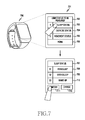
  • FIG. 7 is a diagram illustrating a determination menu displayed on an electronic device and of a user status to be measured, according to an embodiment of the present invention.
  • FIG. 8 is a diagram illustrating an automatic determination menu displayed on an electronic device and of a nearby electronic device to be controlled, according to an embodiment of the present disclosure
  • FIG. 9 is a diagram illustrating a manual determination menu displayed on an electronic device and of a nearby electronic device to be controlled, according to an embodiment of the present disclosure.
  • FIG. 10 is a diagram illustrating a sleep information report message displayed on an electronic device, according to an embodiment of the present disclosure.
  • FIG. 11 is a flowchart illustrating a method for controlling a nearby electronic device based on a user status, according to an embodiment of the present disclosure.
  • FIG. 12 is a flowchart illustrating a method for controlling a nearby electronic device based on a user status, according to an embodiment of the present disclosure.
  • FIG. 1 is a diagram illustrating an electronic device, according to an embodiment of the present disclosure.
  • an electronic device 100 may be embodied as a wearable electronic device, such as, for example, a smart watch and smart glasses, which can be worn by a user.
  • the electronic device 100 includes a processor 101 , a measurement module 102 , a memory 103 , an input/output interface 105 , a display 106 , and a communication module 107 .
  • the measurement module 102 may determine a status of a user wearing the electronic device 100 .
  • the user status may be a sleep status, a wake-up status, an exercise status, a movement status, or the like.
  • the communication module 107 may wirelessly communicate with nearby electronic devices located within a specific distance from the electronic device 100 , and may wirelessly communicate with another electronic device or a server separated by a far distance through a network.
  • the communication module 107 may include a Radio Frequency (RF) module or a wireless communication module, and the wireless communication module may include WiFi or BlueTooth (BT).
  • RF Radio Frequency
  • BT BlueTooth
  • the processor 101 may operatively control the measurement module 102 to determine the user status, and may operatively control the communication module 107 to directly and wirelessly control an operational status of a predetermined nearby electronic device, according to the user status.
  • the nearby electronic devices may be, for example, a mobile electronic device (e.g., a smart phone), a home electronic device (e.g., a smart TV), an automotive electronic device (e.g., a car navigation system), or the like.
  • the communication module 107 may perform short-distance wireless communication with the nearby electronic devices through BT, WiFi, WiFi-Direct, or the like.
  • the processor 101 may operatively control the measurement module 102 to determine at least one of the sleep status, wake-up status, exercise status, or movement status of the user. According to the status, the processor 101 may operatively and wirelessly control the communication module 107 to directly control power, screen brightness, audio level, alarm output, or the like of the predetermined nearby electronic device in various manners.
  • the memory 103 may include a volatile memory and/or a non-volatile memory.
  • the memory 103 may store, for example, instructions or data (e.g. image data) relevant to at least one other element of the electronic device 100 .
  • the input/output interface 105 may function as an interface that may transfer instructions or data input from a user or another external device to the other element(s) of the electronic device 100 . Furthermore, the input/output interface 105 may output the instructions or data received from the other element(s) of the electronic device 100 to the user or another external device.
  • the display 106 may include, for example, a Liquid Crystal Display (LCD), a Light Emitting Diode (LED) display, an Organic Light Emitting Diode (OLED) display, a Micro Electro Mechanical System (MEMS) display, or an electronic paper display.
  • the display 106 may display various types of content (e.g., text, images, videos, icons, or symbols) for the user.
  • FIG. 2 is a diagram illustrating a structure of a measurement module, according to an embodiment of the present disclosure.
  • a measurement module 202 includes, for example, at least one of a gesture sensor 202 a , a gyro sensor 202 b , a pressure sensor 202 c , a magnetic sensor 202 d , an acceleration sensor 202 e , a grip sensor 202 f , a proximity sensor 202 g , a Red, Green, Blue (RGB) sensor 202 h , a bio sensor 202 i , a temperature/humidity sensor 202 j , an illumination sensor 202 k , and an UltraViolet (UV) sensor 202 m.
  • a gesture sensor 202 a a gyro sensor 202 b
  • a pressure sensor 202 c includes, for example, at least one of a gesture sensor 202 a , a gyro sensor 202 b , a pressure sensor
  • the measurement module 202 may measure a physical quantity or may detect an operational status of an electronic device worn by a user. Thus, the measurement module 202 may convert measured or detected information into an electric signal.
  • the measurement module 202 may further include an E-nose sensor, an ElectroMyoGraphy (EMG) sensor, an ElectroEncephaloGram (EEG) sensor, an ElectroCardioGram (ECG) sensor, a fingerprint sensor, or the like.
  • EMG ElectroMyoGraphy
  • EEG ElectroEncephaloGram
  • ECG ElectroCardioGram
  • FIG. 3 is a diagram illustrating wireless communication between an electronic device and a nearby electronic device, according to an embodiment of the present disclosure.
  • An electronic device 300 is a wearable electronic device, such as, for example, a smart watch that can be worn by a user, and a nearby electronic device 310 is embodied as a mobile electronic device, such as, for example, a smart phone.
  • the electronic device 300 may directly communicate with the nearby electronic device 310 through short-distance wireless communication, such as BT, WiFi, WiFi-Direct, or the like. Further, the electronic device 300 and the nearby electronic device 310 may perform a preliminary synchronization establishment operation, and may share an operational status generated in each of the devices on a real-time basis.
  • short-distance wireless communication such as BT, WiFi, WiFi-Direct, or the like.
  • a user who wears the electronic device 300 may control at least a portion of the operational status of the nearby electronic device 310 through the electronic device 300 , and also may control at least a portion of the operational status of the electronic device 300 through the nearby electronic device 310 .
  • FIG. 4 is a diagram illustrating various nearby electronic devices that wirelessly communicate with an electronic device, according to an embodiment of the present disclosure.
  • a wearable electronic device 400 such as a smart watch that is worn on a wrist of a user, may wirelessly communicate with various types of nearby electronic devices 410 to 450 located within a specific distance.
  • the nearby electronic devices that are capable of wirelessly communicating with the electronic device 400 may include, for example, a mobile electronic device (e.g., a smart phone), a home electronic device (e.g., a smart TV), an automotive electronic device (e.g., a car navigation), or the like.
  • a mobile electronic device e.g., a smart phone
  • a home electronic device e.g., a smart TV
  • an automotive electronic device e.g., a car navigation
  • a user sitting in a living room at home may wear the electronic device 400 , and the electronic device 400 may wirelessly communicate with a smartphone 410 located within a specific distance.
  • the electronic device 400 and the smartphone 410 may perform a preliminary synchronization establishment operation, and may share an operational status generated in each of the electronic device 400 and the smartphone 410 on a real-time basis.
  • the user may manipulate the electronic device 400 to directly configure a function of determining the user status and controlling the smartphone 410 to the electronic device 400 , or may manipulate the smartphone 410 preliminarily synchronized with the electronic device 400 to indirectly configure the function of determining the user status and controlling the smartphone 410 to the electronic device 400 .
  • the electronic device 400 may determine the user status by using at least one sensor included in the electronic device 400 , and may directly and wirelessly control an operational status of a predetermined nearby electronic device according to the status.
  • the measurement module 102 of the electronic device 400 may use the acceleration sensor 200 e , the bio sensor 200 i , or the like, to determine the user status. If the status shows that there is almost no change in motion for the user during a predetermined reference time (e.g., 2 hours) and a biological change of the user corresponds to a predetermined sleep status, e.g., a para-sleep status or an ortho-sleep status, the processor 101 may operatively control the communication module 107 so that predetermined nearby electronic devices are directly and wirelessly controlled to continuously maintain a sleep status of the user.
  • a predetermined reference time e.g. 2 hours
  • a biological change of the user corresponds to a predetermined sleep status
  • the processor 101 may operatively control the communication module 107 so that predetermined nearby electronic devices are directly and wirelessly controlled to continuously maintain a sleep status of the user.
  • the user status may be induced to the ortho-sleep status by decreasing a screen brightness of a smart TV 420 located within a specific distance, by decreasing a volume level of an audio device 430 , by decreasing cold air strength or the like of an air conditioner 440 , and by decreasing a brightness of a light device 450 .
  • the user status is the ortho-sleep status
  • the user status is continuously maintained in the sleep status by powering off the smart TV 420 located within the specific distance, by powering off the audio device 430 , by adjusting the cold air strength or the like of the air conditioner 440 , and by powering off the light device 450 .
  • the nearby electronic devices 410 to 450 controlled by the electronic device 400 may be automatically predetermined through short-distance wireless communication, such as, BT, WiFi, or WiFi-Direct, or may be manually determined by the user through a menu selection. For example, the user may randomly determine the nearby electronic devices through the menu selection such that the light device 450 is not powered off even if the user status is the ortho-sleep status.
  • short-distance wireless communication such as, BT, WiFi, or WiFi-Direct
  • FIG. 5 is a diagram illustrating an anti-drowsy alert message displayed on an electronic device, according to an embodiment of the present disclosure.
  • a user that is driving by using a steering wheel 510 wears an electronic device 500 .
  • the electronic device 500 may determine a user status, and if the user status is a para-steep status, an anti-drowsy alert message (e.g., Don't sleep) may be displayed in various manners while outputting a vibration, an alarm sound, or the like.
  • an anti-drowsy alert message e.g., Don't sleep
  • the electronic device 500 may directly and wirelessly control an operational status of automotive electronic devices, such as an in-vehicle car navigation system, a car audio system, or the like, and thus, the anti-drowsy alert message, the alarm sound, or the like, can be output more intensively to the user who is driving.
  • automotive electronic devices such as an in-vehicle car navigation system, a car audio system, or the like
  • the electronic device 500 may wirelessly communicate with an automotive electronic control device, which controls an automotive engine or the like to gradually decrease a driving speed, thereby preventing a car accident caused by drowsy driving.
  • FIG. 6 is a diagram illustrating a speed alert message displayed on an electronic device, according to an embodiment of the present disclosure.
  • a user may wear an electronic device 600 , while riding sports equipment such as, for example, a bicycle, a skateboard, or the like.
  • the electronic device 600 may determine a user status, and if the user status indicates that the user is moving faster than a predetermined reference speed, an alert message (e.g., “Too fast”) is displayed to report that a movement speed is too fast while outputting a vibration and an alarm sound, thereby preventing an accident.
  • an alert message e.g., “Too fast”
  • the electronic device 600 may measure a biological change of the user. If the status shows that a heart rate of the user is faster than a predetermined reference heart rate, the electronic device 600 may display an alert message (e.g., “Too fast”) to report that the movement speed is too fast while outputting the vibration and the alarm sound, thereby avoiding an accident.
  • an alert message e.g., “Too fast”
  • FIG. 7 is a diagram illustrating a determination menu screen displayed on an electronic device and a user status to be determined, according to an embodiment of the present invention.
  • an electronic device 700 may display a determination menu screen 701 , including a user status to be determined, as a user interface screen through which user manipulation is possible.
  • the electronic device 700 displays various selective items such as, for example, a sleep status 703 , an exercise status 704 , and a movement status 705 in the format of a list capable of accepting a user touch.
  • the electronic device also displays a menu item (e.g., “more”) 706 to show additional selective items.
  • the electronic device 700 may display sub-items of detailed multiple steps corresponding to the selective item. For example, when a user selects a selective item of the sleep status 703 , sub-items of a sleep status menu 707 , including a para-sleep status 708 , an ortho-sleep status 709 , and a wake-up status 710 are displayed, as sub-items corresponding to the sleep status 703 .
  • the electronic device 700 may determine the sleep status as the para-sleep status, the ortho-sleep status, or the wake-up status.
  • the electronic device 700 may determine the sleep status only for the determination step for the ortho-sleep status.
  • respective reference values for determining the para-sleep status, the ortho-sleep status, and the wake-up status are reference values resulting from different experiments, and may be pre-stored in the electronic device 700 or may be downloaded from a server or the like connected through a network.
  • FIG. 8 is a diagram illustrating an automatic determination menu displayed on an electronic device and a nearby electronic device to be controlled, according to an embodiment of the present disclosure.
  • the electronic device 800 displays a determination menu screen 801 of the nearby electronic device to be controlled, according to a user status, as a user interface screen capable of receiving user manipulation.
  • the electronic device 800 displays selective items such as, for example, an automatic determination 803 and a manual determination 804 , in the format of a list capable of receiving a user touch, in a determination menu 802 of the nearby electronic device to be controlled.
  • the determination menu 802 may also display additional selective items.
  • the electronic device 800 may perform the automatic determination or the manual determination according to the corresponding selective item. For example, when the user selects the automatic determination 803 , the electronic device 800 may perform wireless communication with several nearby electronic devices located within a specific distance through short-distance wireless communication, such as, for example, BT, WiFi, WiFi-Direct, etc. An indicator 805 having, for example, a shape of a bar, may be displayed to report that communication is taking place with the nearby electronic device.
  • the electronic device 800 may configure a list of nearby electronic devices that are currently running. Thereafter, according to a user selection, a list 806 of nearby electronic devices to be controlled is displayed. Referring o FIG. 8 , the nearby electronic device list 806 includes, for example, a TV 807 , an audio device 808 , an air conditioner 809 , and a light device 810 , which are currently running.
  • FIG. 9 is a diagram illustrating a manual determination menu displayed on an electronic device and a nearby electronic device to be controlled, according to an embodiment of the present disclosure.
  • the electronic device 900 displays a determination menu screen 901 of the nearby electronic device to be controlled, according to a user status, as a user interface screen capable of receiving a user manipulation.
  • the electronic device 900 may display selective items including, for example, an automatic determination 903 and a manual determination 904 , in the format of a list capable of receiving a user touch, in a determination menu 902 of the nearby electronic device to be controlled.
  • the electronic device 900 may also display additional selective items.
  • the electronic device 900 may search a list 905 of nearby electronic devices to be controlled, according to a user status, from a memory of the electronic device 900 or may download the list through a network in order to display the list.
  • the nearby electronic device list 905 includes, for example, a TV 906 , an audio device 907 , an air conditioner 908 , and a light device 909 .
  • the user may select desired specific electronic devices from the list of the nearby electronic devices, and based on a user status, may determine the selected devices as the nearby electronic device to be controlled.
  • the electronic device 900 may perform wireless communication with the TV 906 and the audio device 907 located within a specific distance through short-distance wireless communication, such as, for example, BT, WiFi, WiFi-Direct, or the like.
  • the electronic device 900 may determine whether the TV 906 and the audio device 907 are currently through wireless communication with the TV 906 and the audio device 907 . If it is determined that the TV 907 and the audio device 907 are running, these devices may be determined as the nearby electronic devices to be controlled based on a user status.
  • a message such as a user selection error, may be displayed. Accordingly, the user may simply select only desired specific nearby electronic devices from the nearby electronic device list 905 . Further, the user may confirm whether a user selection is valid.
  • FIG. 10 is a diagram illustrating a sleep information report message displayed on an electronic device, according to an embodiment of the present disclosure.
  • An electronic device 1000 may store various user statuses in a memory. For example, if the user status is a sleep status, in order to maintain the sleep status of a user, the user status should not be displayed but should instead be stored in the electronic device 1000 . The user status may be stored in association with a sleep time as sleep information of the user.
  • the electronic device 1000 may display a time 1004 of sleep as sleep time information 1003 of the user.
  • the detailed sleep information 1006 includes, for example, a real sleep time 1008 of a para-sleep status 1007 and a real sleep time 1010 of an ortho-sleep status 1009 .
  • FIG. 11 is a flowchart illustrating a method for controlling a nearby electronic device based on a user status, according to an embodiment of the present disclosure.
  • the electronic device 1000 automatically enters a user status determination mode, or manually enters the user status determination mode through a user selection.
  • step 1101 upon entering the user status determination mode, the electronic device 1000 drives at least one sensor (e.g., an acceleration sensor, a bio sensor, or the like) included in the electronic device 1000 , and performs a time counting operation.
  • at least one sensor e.g., an acceleration sensor, a bio sensor, or the like
  • the electronic device 1000 uses the sensor to detect a user's movement, motion, heart rate, or the like, and counts a time during which the detected values are changed or maintained.
  • the user status is determined to be a sleep status, a wake-up status, an exercise status, a movement status, or the like.
  • the electronic device 1000 analyzes a determination of the user status to determine a more detailed user status. For example, if the user status is the sleep status, the user status may be divided it into a para-sleep status, an ortho-sleep status, and the like.
  • the electronic device 1000 wirelessly controls an operational status of nearby electronic devices based on the user status. For example, if the user status is the para-sleep status, the electronic device 1000 may decrease a screen brightness, an audio level, or the like, of a nearby TV so that the user is able to enter the ortho-sleep status.
  • the electronic device 1000 may power off the nearby TV, so that the user can maintain the ortho-sleep status.
  • FIG. 12 is a flowchart illustrating a method for controlling a nearby electronic device based on a user status, according to an embodiment of the present disclosure.
  • the electronic device 1000 automatically enters a user status determination mode, or manually enters the user status determination mode according to a user's selection or the like.
  • the electronic device 1000 determines a user status to be determined and a nearby electronic device to be controlled.
  • the user may select at least one of a sleep status, a wake-up status, an exercise status, and a movement status as the user status to be determined, and may select at least one of a mobile electronic device (e.g., a smart phone), a home electronic device (e.g., a smart TV), and an automotive electronic device (e.g., a car navigation system) as the nearby electronic device to be controlled.
  • a mobile electronic device e.g., a smart phone
  • a home electronic device e.g., a smart TV
  • an automotive electronic device e.g., a car navigation system
  • the electronic device 1000 determines whether the user status to be determined and the nearby electronic device to be controlled are determined.
  • the user status and the nearby electronic device may be automatically determined by a specific application that is running in the electronic device 1000 .
  • the methodology repeats step 1202 . If the user status and the nearby electronic device have been determined, the electronic device 1000 drives at least one sensor (e.g., an acceleration sensor, a bio sensor, or the like) necessary to measure the user status, and performs a time counting operation, in step 1203 .
  • the electronic device 1000 drives at least one sensor (e.g., an acceleration sensor, a bio sensor, or the like) necessary to measure the user status, and performs a time counting operation, in step 1203 .
  • the electronic device 1000 uses the sensor to detect a user's movement, motion, heart rate, or the like, and counts a time during which the detected values are changed or maintained.
  • the user status may be determined as a sleep status, a wake-up status, an exercise status, a movement status, or the like, or only one specific user status selected by the user may be determined.
  • the electronic device 1000 analyzes a determination result of the user status to determine a more detailed user status. For example, if the user status is the sleep status, the user status may be divided it into a para-sleep status, an ortho-sleep status, and the like.
  • step 1206 it is determined whether the user enters a specific user status. If the user enters a specific user status, the electronic device 1000 confirms a current operational status of a specific nearby electronic device located within a specific distance through short-distance wireless communication, such as BT, WiFi, WiFi-Direct, or the like, and stores identification information of the specific nearby electronic device and current operational status information.
  • short-distance wireless communication such as BT, WiFi, WiFi-Direct, or the like
  • the electronic device 1000 wirelessly controls the operational status of the specific nearby electronic device based on the user status. For example, if the user status is the para-sleep status, the electronic device 1000 may confirm and store a current screen brightness and audio level information of a nearby TV, and thereafter, may decrease the current screen brightness, audio level, or the like of the TV, so that the user is able to enter the ortho-sleep status.
  • the electronic device 1000 may power off the nearby TV, so that the user can maintain the ortho-sleep status.
  • step 1206 it is determined whether the user is released from the specific user status, in step 1209 . If the user is released from the specific user status, the electronic device 1000 restores the operational status of the specific nearby electronic device located within the specific distance to an original status through short-distance wireless communication, such as BT, WiFi, WiFi-Direct, or the like, in step 1210 .
  • short-distance wireless communication such as BT, WiFi, WiFi-Direct, or the like
  • the electronic device 1000 may confirm the previously stored screen brightness and audio level information of the TV, and thereafter, may power on the TV and restore the screen brightness and audio level of the TV to the original status.
  • the electronic device 1000 determines whether the user status determination mode is released by, for example, user selection or the like, in step 1211 . If the user status determination mode is not released, the methodology returns to step 1206 . If the user status determination mode is released, the methodology of FIG. 12 terminates.

Landscapes

  • Engineering & Computer Science (AREA)
  • Physics & Mathematics (AREA)
  • General Physics & Mathematics (AREA)
  • Computer Networks & Wireless Communication (AREA)
  • General Engineering & Computer Science (AREA)
  • Signal Processing (AREA)
  • Automation & Control Theory (AREA)
  • Theoretical Computer Science (AREA)
  • Human Computer Interaction (AREA)
  • Telephone Function (AREA)
  • User Interface Of Digital Computer (AREA)

Abstract

A method and an apparatus are provided for operating an electronic device. A status of a user wearing the electronic device is determined using a sensor disposed in the electronic device. An operational status of a nearby electronic device is wirelessly controlled according to the status.

Description

PRIORITY
This application claims priority under 35 U.S.C. § 119(a) to an application filed in the Korean Intellectual Property Office on Nov. 27, 2014 and assigned Serial No. 10-2014-0167505, the content of which is incorporated herein by reference.
BACKGROUND
1. Field of the Disclosure
Embodiments of the present disclosure relate generally to control of an electronic device, and more particularly, to a method for controlling a nearby electronic device based on a user status, and an electronic device thereof.
2. Description of the Related Art
Various types of mobile terminals, such as, for example, a smart phone and a Personal Computer (PC), and various types of wearable devices, such as, for example, a smart watch and smart glasses, are widely in use.
Further, various types of home appliances, such as, for example, a smart TeleVision (TV), and an air conditioner, and various types of automotive electronics, such as, for example, a car audio system and a car navigation system, are widely in use.
The mobile terminal, the wearable device, and the home appliances may be referred to as a mobile electronic device, a wearable electronic device, and a home electronic device, respectively. Each of the devices may be collectively referred to an electronic device.
SUMMARY
The present disclosure has been made to address at least the above problems and/or disadvantages and to provide at least the advantages described below. Accordingly, an aspect of the present disclosure provides a method for controlling a nearby electronic device on the basis of a user status, and an electronic device thereof.
According to an embodiment of the present disclosure, a method is provided for operating an electronic device. A status of a user wearing the electronic device is determined using a sensor disposed in the electronic device. An operational status of a nearby electronic device is wirelessly controlled according to the status.
According to an embodiment of the present disclosure, an electronic device is provided that includes a measurement module configured to determine a status of a user, and a communication module configured to communicate with a nearby electronic device. The electronic device also includes a processor configured to control the measurement module to determine the status of the user wearing the electronic device using a sensor disposed in the electronic device, and control the communication module to wirelessly control an operational status of the nearby electronic device according to the status.
According to another embodiment of the present disclosure, a computer readable recording medium storing a program for performing a method for operating an electronic device is provided. The method includes determining a status of a user wearing the electronic device using a sensor disposed in the electronic device. The method also includes wirelessly controlling an operational status of a nearby electronic device according to the status.
BRIEF DESCRIPTION OF THE DRAWINGS
The above and other aspects, features and advantages of the present disclosure will be more apparent from the following detailed description when taken in conjunction with the accompanying drawings, in which:
FIG. 1 is a diagram illustrating a block diagram of an electronic device, according to an embodiment of the present disclosure;
FIG. 2 is a diagram illustrating a structure of a measurement module, according to an embodiment of the present disclosure;
FIG. 3 is a diagram illustrating wireless communication between an electronic device and a nearby electronic device, according to an embodiment of the present disclosure;
FIG. 4 is a diagram illustrating various nearby electronic devices, which wirelessly communicate with an electronic device, according to an embodiment of the present disclosure;
FIG. 5 is a diagram illustrating an anti-drowsy alert message displayed on an electronic device, according to an embodiment of the present disclosure;
FIG. 6 is a diagram illustrating a speed alert message displayed on an electronic device, according to an embodiment of the present disclosure;
FIG. 7 is a diagram illustrating a determination menu displayed on an electronic device and of a user status to be measured, according to an embodiment of the present invention;
FIG. 8 is a diagram illustrating an automatic determination menu displayed on an electronic device and of a nearby electronic device to be controlled, according to an embodiment of the present disclosure;
FIG. 9 is a diagram illustrating a manual determination menu displayed on an electronic device and of a nearby electronic device to be controlled, according to an embodiment of the present disclosure;
FIG. 10 is a diagram illustrating a sleep information report message displayed on an electronic device, according to an embodiment of the present disclosure;
FIG. 11 is a flowchart illustrating a method for controlling a nearby electronic device based on a user status, according to an embodiment of the present disclosure; and
FIG. 12 is a flowchart illustrating a method for controlling a nearby electronic device based on a user status, according to an embodiment of the present disclosure.
DETAILED DESCRIPTION
Embodiments of the present disclosure are described in detail with reference to the accompanying drawings. The same or similar components may be designated by the same or similar reference numerals although they are illustrated in different drawings. Detailed descriptions of constructions or processes known in the art may be omitted to avoid obscuring the subject matter of the present invention.
FIG. 1 is a diagram illustrating an electronic device, according to an embodiment of the present disclosure. For example, an electronic device 100 may be embodied as a wearable electronic device, such as, for example, a smart watch and smart glasses, which can be worn by a user.
Referring to FIG. 1, the electronic device 100 includes a processor 101, a measurement module 102, a memory 103, an input/output interface 105, a display 106, and a communication module 107. The measurement module 102 may determine a status of a user wearing the electronic device 100. The user status may be a sleep status, a wake-up status, an exercise status, a movement status, or the like.
The communication module 107 may wirelessly communicate with nearby electronic devices located within a specific distance from the electronic device 100, and may wirelessly communicate with another electronic device or a server separated by a far distance through a network. For example, the communication module 107 may include a Radio Frequency (RF) module or a wireless communication module, and the wireless communication module may include WiFi or BlueTooth (BT).
The processor 101 may operatively control the measurement module 102 to determine the user status, and may operatively control the communication module 107 to directly and wirelessly control an operational status of a predetermined nearby electronic device, according to the user status.
The nearby electronic devices may be, for example, a mobile electronic device (e.g., a smart phone), a home electronic device (e.g., a smart TV), an automotive electronic device (e.g., a car navigation system), or the like. The communication module 107 may perform short-distance wireless communication with the nearby electronic devices through BT, WiFi, WiFi-Direct, or the like.
The processor 101 may operatively control the measurement module 102 to determine at least one of the sleep status, wake-up status, exercise status, or movement status of the user. According to the status, the processor 101 may operatively and wirelessly control the communication module 107 to directly control power, screen brightness, audio level, alarm output, or the like of the predetermined nearby electronic device in various manners.
The memory 103 may include a volatile memory and/or a non-volatile memory. The memory 103 may store, for example, instructions or data (e.g. image data) relevant to at least one other element of the electronic device 100.
The input/output interface 105, for example, may function as an interface that may transfer instructions or data input from a user or another external device to the other element(s) of the electronic device 100. Furthermore, the input/output interface 105 may output the instructions or data received from the other element(s) of the electronic device 100 to the user or another external device.
The display 106 may include, for example, a Liquid Crystal Display (LCD), a Light Emitting Diode (LED) display, an Organic Light Emitting Diode (OLED) display, a Micro Electro Mechanical System (MEMS) display, or an electronic paper display. The display 106, for example, may display various types of content (e.g., text, images, videos, icons, or symbols) for the user.
FIG. 2 is a diagram illustrating a structure of a measurement module, according to an embodiment of the present disclosure. Referring to FIG. 2, a measurement module 202 includes, for example, at least one of a gesture sensor 202 a, a gyro sensor 202 b, a pressure sensor 202 c, a magnetic sensor 202 d, an acceleration sensor 202 e, a grip sensor 202 f, a proximity sensor 202 g, a Red, Green, Blue (RGB) sensor 202 h, a bio sensor 202 i, a temperature/humidity sensor 202 j, an illumination sensor 202 k, and an UltraViolet (UV) sensor 202 m.
The measurement module 202 may measure a physical quantity or may detect an operational status of an electronic device worn by a user. Thus, the measurement module 202 may convert measured or detected information into an electric signal. The measurement module 202 may further include an E-nose sensor, an ElectroMyoGraphy (EMG) sensor, an ElectroEncephaloGram (EEG) sensor, an ElectroCardioGram (ECG) sensor, a fingerprint sensor, or the like.
FIG. 3 is a diagram illustrating wireless communication between an electronic device and a nearby electronic device, according to an embodiment of the present disclosure. An electronic device 300 is a wearable electronic device, such as, for example, a smart watch that can be worn by a user, and a nearby electronic device 310 is embodied as a mobile electronic device, such as, for example, a smart phone.
The electronic device 300 may directly communicate with the nearby electronic device 310 through short-distance wireless communication, such as BT, WiFi, WiFi-Direct, or the like. Further, the electronic device 300 and the nearby electronic device 310 may perform a preliminary synchronization establishment operation, and may share an operational status generated in each of the devices on a real-time basis.
For example, a user who wears the electronic device 300 may control at least a portion of the operational status of the nearby electronic device 310 through the electronic device 300, and also may control at least a portion of the operational status of the electronic device 300 through the nearby electronic device 310.
FIG. 4 is a diagram illustrating various nearby electronic devices that wirelessly communicate with an electronic device, according to an embodiment of the present disclosure. A wearable electronic device 400, such as a smart watch that is worn on a wrist of a user, may wirelessly communicate with various types of nearby electronic devices 410 to 450 located within a specific distance.
The nearby electronic devices that are capable of wirelessly communicating with the electronic device 400 may include, for example, a mobile electronic device (e.g., a smart phone), a home electronic device (e.g., a smart TV), an automotive electronic device (e.g., a car navigation), or the like.
Referring to FIG. 4, a user sitting in a living room at home may wear the electronic device 400, and the electronic device 400 may wirelessly communicate with a smartphone 410 located within a specific distance. The electronic device 400 and the smartphone 410 may perform a preliminary synchronization establishment operation, and may share an operational status generated in each of the electronic device 400 and the smartphone 410 on a real-time basis.
For example, the user may manipulate the electronic device 400 to directly configure a function of determining the user status and controlling the smartphone 410 to the electronic device 400, or may manipulate the smartphone 410 preliminarily synchronized with the electronic device 400 to indirectly configure the function of determining the user status and controlling the smartphone 410 to the electronic device 400.
When the function of determining the user status and controlling the nearby electronic device is configured directly or indirectly, as described above, the electronic device 400 may determine the user status by using at least one sensor included in the electronic device 400, and may directly and wirelessly control an operational status of a predetermined nearby electronic device according to the status.
For example, the measurement module 102 of the electronic device 400 may use the acceleration sensor 200 e, the bio sensor 200 i, or the like, to determine the user status. If the status shows that there is almost no change in motion for the user during a predetermined reference time (e.g., 2 hours) and a biological change of the user corresponds to a predetermined sleep status, e.g., a para-sleep status or an ortho-sleep status, the processor 101 may operatively control the communication module 107 so that predetermined nearby electronic devices are directly and wirelessly controlled to continuously maintain a sleep status of the user.
For example, if the user status is the para-sleep status, the user status may be induced to the ortho-sleep status by decreasing a screen brightness of a smart TV 420 located within a specific distance, by decreasing a volume level of an audio device 430, by decreasing cold air strength or the like of an air conditioner 440, and by decreasing a brightness of a light device 450.
If the user status is the ortho-sleep status, the user status is continuously maintained in the sleep status by powering off the smart TV 420 located within the specific distance, by powering off the audio device 430, by adjusting the cold air strength or the like of the air conditioner 440, and by powering off the light device 450.
The nearby electronic devices 410 to 450 controlled by the electronic device 400 may be automatically predetermined through short-distance wireless communication, such as, BT, WiFi, or WiFi-Direct, or may be manually determined by the user through a menu selection. For example, the user may randomly determine the nearby electronic devices through the menu selection such that the light device 450 is not powered off even if the user status is the ortho-sleep status.
FIG. 5 is a diagram illustrating an anti-drowsy alert message displayed on an electronic device, according to an embodiment of the present disclosure. Referring to FIG. 5, for example, a user that is driving by using a steering wheel 510 wears an electronic device 500. The electronic device 500 may determine a user status, and if the user status is a para-steep status, an anti-drowsy alert message (e.g., Don't sleep) may be displayed in various manners while outputting a vibration, an alarm sound, or the like.
Further, if the user status is an ortho-sleep status, the electronic device 500 may directly and wirelessly control an operational status of automotive electronic devices, such as an in-vehicle car navigation system, a car audio system, or the like, and thus, the anti-drowsy alert message, the alarm sound, or the like, can be output more intensively to the user who is driving.
Furthermore, if the user status is the ortho-sleep status, the electronic device 500 may wirelessly communicate with an automotive electronic control device, which controls an automotive engine or the like to gradually decrease a driving speed, thereby preventing a car accident caused by drowsy driving.
FIG. 6 is a diagram illustrating a speed alert message displayed on an electronic device, according to an embodiment of the present disclosure. Referring to FIG. 6, for example, a user may wear an electronic device 600, while riding sports equipment such as, for example, a bicycle, a skateboard, or the like.
The electronic device 600 may determine a user status, and if the user status indicates that the user is moving faster than a predetermined reference speed, an alert message (e.g., “Too fast”) is displayed to report that a movement speed is too fast while outputting a vibration and an alarm sound, thereby preventing an accident.
Further, the electronic device 600 may measure a biological change of the user. If the status shows that a heart rate of the user is faster than a predetermined reference heart rate, the electronic device 600 may display an alert message (e.g., “Too fast”) to report that the movement speed is too fast while outputting the vibration and the alarm sound, thereby avoiding an accident.
FIG. 7 is a diagram illustrating a determination menu screen displayed on an electronic device and a user status to be determined, according to an embodiment of the present invention. Referring to FIG. 7, an electronic device 700 may display a determination menu screen 701, including a user status to be determined, as a user interface screen through which user manipulation is possible.
For example, within a determination menu 702 of the user status to be determined, the electronic device 700 displays various selective items such as, for example, a sleep status 703, an exercise status 704, and a movement status 705 in the format of a list capable of accepting a user touch. The electronic device also displays a menu item (e.g., “more”) 706 to show additional selective items.
Upon selecting any one of the selective items, the electronic device 700 may display sub-items of detailed multiple steps corresponding to the selective item. For example, when a user selects a selective item of the sleep status 703, sub-items of a sleep status menu 707, including a para-sleep status 708, an ortho-sleep status 709, and a wake-up status 710 are displayed, as sub-items corresponding to the sleep status 703.
If the user touches a confirm button 711 after selecting the para-sleep status 708, the ortho-sleep status 709, and the wake-up status 710 among the sub-items, the electronic device 700 may determine the sleep status as the para-sleep status, the ortho-sleep status, or the wake-up status.
If the user touches a change button 712 after selecting only the ortho-sleep status 709 among the sub-items, the electronic device 700 may determine the sleep status only for the determination step for the ortho-sleep status. Herein, respective reference values for determining the para-sleep status, the ortho-sleep status, and the wake-up status are reference values resulting from different experiments, and may be pre-stored in the electronic device 700 or may be downloaded from a server or the like connected through a network.
FIG. 8 is a diagram illustrating an automatic determination menu displayed on an electronic device and a nearby electronic device to be controlled, according to an embodiment of the present disclosure. Referring to FIG. 8, the electronic device 800 displays a determination menu screen 801 of the nearby electronic device to be controlled, according to a user status, as a user interface screen capable of receiving user manipulation.
For example, the electronic device 800 displays selective items such as, for example, an automatic determination 803 and a manual determination 804, in the format of a list capable of receiving a user touch, in a determination menu 802 of the nearby electronic device to be controlled. The determination menu 802 may also display additional selective items.
When any one of the selective items is selected, the electronic device 800 may perform the automatic determination or the manual determination according to the corresponding selective item. For example, when the user selects the automatic determination 803, the electronic device 800 may perform wireless communication with several nearby electronic devices located within a specific distance through short-distance wireless communication, such as, for example, BT, WiFi, WiFi-Direct, etc. An indicator 805 having, for example, a shape of a bar, may be displayed to report that communication is taking place with the nearby electronic device.
Through the wireless communication with the nearby electronic devices, the electronic device 800 may configure a list of nearby electronic devices that are currently running. Thereafter, according to a user selection, a list 806 of nearby electronic devices to be controlled is displayed. Referring o FIG. 8, the nearby electronic device list 806 includes, for example, a TV 807, an audio device 808, an air conditioner 809, and a light device 810, which are currently running.
FIG. 9 is a diagram illustrating a manual determination menu displayed on an electronic device and a nearby electronic device to be controlled, according to an embodiment of the present disclosure. Referring to FIG. 9, the electronic device 900 displays a determination menu screen 901 of the nearby electronic device to be controlled, according to a user status, as a user interface screen capable of receiving a user manipulation.
The electronic device 900 may display selective items including, for example, an automatic determination 903 and a manual determination 904, in the format of a list capable of receiving a user touch, in a determination menu 902 of the nearby electronic device to be controlled. The electronic device 900 may also display additional selective items.
When a user selects a selective item of the manual determination 903, the electronic device 900 may search a list 905 of nearby electronic devices to be controlled, according to a user status, from a memory of the electronic device 900 or may download the list through a network in order to display the list.
Referring to FIG. 9, the nearby electronic device list 905 includes, for example, a TV 906, an audio device 907, an air conditioner 908, and a light device 909. The user may select desired specific electronic devices from the list of the nearby electronic devices, and based on a user status, may determine the selected devices as the nearby electronic device to be controlled.
For example, when the user selects only the TV 906 and the audio device 907 from the nearby electronic device list 905, the electronic device 900 may perform wireless communication with the TV 906 and the audio device 907 located within a specific distance through short-distance wireless communication, such as, for example, BT, WiFi, WiFi-Direct, or the like.
The electronic device 900 may determine whether the TV 906 and the audio device 907 are currently through wireless communication with the TV 906 and the audio device 907. If it is determined that the TV 907 and the audio device 907 are running, these devices may be determined as the nearby electronic devices to be controlled based on a user status.
If it is determined that the TV 906 and the audio device 907 are not running, a message, such as a user selection error, may be displayed. Accordingly, the user may simply select only desired specific nearby electronic devices from the nearby electronic device list 905. Further, the user may confirm whether a user selection is valid.
FIG. 10 is a diagram illustrating a sleep information report message displayed on an electronic device, according to an embodiment of the present disclosure. An electronic device 1000 may store various user statuses in a memory. For example, if the user status is a sleep status, in order to maintain the sleep status of a user, the user status should not be displayed but should instead be stored in the electronic device 1000. The user status may be stored in association with a sleep time as sleep information of the user.
Referring to FIG. 10, if the user status shows is changed from the sleep status to a wake-up status, or if the user requests a sleep information report 1002 through a key manipulation or the like, the electronic device 1000 may display a time 1004 of sleep as sleep time information 1003 of the user.
Further, when the user selects a detail button 1005 displayed on the sleep information report screen, more detailed sleep information 1006 may be displayed. The detailed sleep information 1006 includes, for example, a real sleep time 1008 of a para-sleep status 1007 and a real sleep time 1010 of an ortho-sleep status 1009.
FIG. 11 is a flowchart illustrating a method for controlling a nearby electronic device based on a user status, according to an embodiment of the present disclosure. Referring to FIG. 11, in step 1100, when a user wears the electronic device 1000, the electronic device 1000 automatically enters a user status determination mode, or manually enters the user status determination mode through a user selection.
In step 1101, upon entering the user status determination mode, the electronic device 1000 drives at least one sensor (e.g., an acceleration sensor, a bio sensor, or the like) included in the electronic device 1000, and performs a time counting operation.
In step 1102, the electronic device 1000 uses the sensor to detect a user's movement, motion, heart rate, or the like, and counts a time during which the detected values are changed or maintained. Thus, the user status is determined to be a sleep status, a wake-up status, an exercise status, a movement status, or the like.
In step 1103, the electronic device 1000 analyzes a determination of the user status to determine a more detailed user status. For example, if the user status is the sleep status, the user status may be divided it into a para-sleep status, an ortho-sleep status, and the like.
In step 1104, the electronic device 1000 wirelessly controls an operational status of nearby electronic devices based on the user status. For example, if the user status is the para-sleep status, the electronic device 1000 may decrease a screen brightness, an audio level, or the like, of a nearby TV so that the user is able to enter the ortho-sleep status.
Further, if the user status is the ortho-sleep status, the electronic device 1000 may power off the nearby TV, so that the user can maintain the ortho-sleep status.
FIG. 12 is a flowchart illustrating a method for controlling a nearby electronic device based on a user status, according to an embodiment of the present disclosure. Referring to FIG. 12, in step 1200, when a user wears the electronic device 1000, the electronic device 1000 automatically enters a user status determination mode, or manually enters the user status determination mode according to a user's selection or the like.
In step 1201, upon entering the user status determination mode, the electronic device 1000 determines a user status to be determined and a nearby electronic device to be controlled. For example, the user may select at least one of a sleep status, a wake-up status, an exercise status, and a movement status as the user status to be determined, and may select at least one of a mobile electronic device (e.g., a smart phone), a home electronic device (e.g., a smart TV), and an automotive electronic device (e.g., a car navigation system) as the nearby electronic device to be controlled.
In stem 1202, according to the user's selection as described above, the electronic device 1000 determines whether the user status to be determined and the nearby electronic device to be controlled are determined. The user status and the nearby electronic device may be automatically determined by a specific application that is running in the electronic device 1000.
If the user status and the nearby electronic device have not been determined, the methodology repeats step 1202. If the user status and the nearby electronic device have been determined, the electronic device 1000 drives at least one sensor (e.g., an acceleration sensor, a bio sensor, or the like) necessary to measure the user status, and performs a time counting operation, in step 1203.
In step 1204, the electronic device 1000 uses the sensor to detect a user's movement, motion, heart rate, or the like, and counts a time during which the detected values are changed or maintained. Thus, the user status may be determined as a sleep status, a wake-up status, an exercise status, a movement status, or the like, or only one specific user status selected by the user may be determined.
In step 1205, the electronic device 1000 analyzes a determination result of the user status to determine a more detailed user status. For example, if the user status is the sleep status, the user status may be divided it into a para-sleep status, an ortho-sleep status, and the like.
In step 1206, it is determined whether the user enters a specific user status. If the user enters a specific user status, the electronic device 1000 confirms a current operational status of a specific nearby electronic device located within a specific distance through short-distance wireless communication, such as BT, WiFi, WiFi-Direct, or the like, and stores identification information of the specific nearby electronic device and current operational status information.
In step 1208, the electronic device 1000 wirelessly controls the operational status of the specific nearby electronic device based on the user status. For example, if the user status is the para-sleep status, the electronic device 1000 may confirm and store a current screen brightness and audio level information of a nearby TV, and thereafter, may decrease the current screen brightness, audio level, or the like of the TV, so that the user is able to enter the ortho-sleep status.
Further, if the user status is the ortho-sleep status, the electronic device 1000 may power off the nearby TV, so that the user can maintain the ortho-sleep status.
If the user does not enter a specific user status, in step 1206, it is determined whether the user is released from the specific user status, in step 1209. If the user is released from the specific user status, the electronic device 1000 restores the operational status of the specific nearby electronic device located within the specific distance to an original status through short-distance wireless communication, such as BT, WiFi, WiFi-Direct, or the like, in step 1210.
For example, if the user status is released from the ortho-sleep status, and thus, transitions to the wake-up status, the electronic device 1000 may confirm the previously stored screen brightness and audio level information of the TV, and thereafter, may power on the TV and restore the screen brightness and audio level of the TV to the original status.
If the user is not released from the specific user status in step 1209, or after the operation status is restored in step 1210, or after an operational status is controlled in step 1208, the electronic device 1000 determines whether the user status determination mode is released by, for example, user selection or the like, in step 1211. If the user status determination mode is not released, the methodology returns to step 1206. If the user status determination mode is released, the methodology of FIG. 12 terminates.
While the present disclosure has been shown and described with reference to embodiments thereof, it will be understood by those skilled in the art that various changes in form and detail may be made therein without departing from the spirit and scope of the present disclosure as defined by the appended claims and their equivalents.

Claims (16)

What is claimed is:
1. A method for operating an electronic device, the method comprising:
identifying, by a wearable electronic device, a motion status of a user wearing the wearable electronic device using a sensor disposed in the wearable electronic device, wherein the motion status of the user comprises at least one of a sleep status, a wake-up status, an exercise status, and a movement status of the user;
in response to identifying the motion status of the user, identifying a subcategory status of the identified motion status of the user wearing the wearable electronic device, wherein the subcategory status includes a more detailed user status of the identified motion status;
detecting, by the wearable electronic device, a nearby electronic device;
determining an appropriate control for the nearby electronic device according to the identified motion status and the identified subcategory status; and
wirelessly controlling, by the wearable electronic device, an operational status of the nearby electronic device according to the appropriate control,
wherein the subcategory status of the sleep status includes one of a para-sleep status and an ortho-sleep status.
2. The method of claim 1, wherein
the nearby electronic device includes at least one of a mobile electronic device, a home electronic device, and an automotive electronic device.
3. The method of claim 1, wherein wirelessly controlling the operational status of the nearby electronic device comprises wirelessly controlling at least one of a power, a screen brightness, an audio level, and an alarm output of the nearby electronic device.
4. The method of claim 3, wherein detecting the nearby electronic device comprises:
automatically detecting the nearby electronic device through wireless communication with the wearable electronic device; or
manually detecting the nearby electronic device based on a selection by the user.
5. The method of claim 1, wherein the operational status of the nearby electronic device is wirelessly controlled through at least one of BlueTooth (BT), WiFi, and WiFi-Direct.
6. The method of claim 1, further comprising, prior to wirelessly controlling the operational status of the nearby electronic device, confirming the operational status of the nearby electronic device and storing the operational status in the wearable electronic device.
7. The method of claim 1, further comprising, if the identified motion status of the user is the sleep status, storing the identified motion status in the electronic device without displaying an indication at the wearable electronic device.
8. The method of claim 7, further comprising, if the identified motion status of the user changes from the sleep status to the wake-up status, restoring the operational status of the nearby electronic device to a previous operational status that existed prior to the sleep status.
9. A wearable electronic device comprising:
a measurement module configured to identify a motion status of a user wearing the wearable electronic device;
a communication module configured to communicate with a nearby electronic device; and
a processor is configured to:
control the measurement module to identify the motion status of the user using a sensor disposed in the wearable electronic device, wherein the motion status of the user comprises at least one of a sleep status, a wake-up status, an exercise status, and a movement status of the user,
in response to identifying the motion status of the user, identify a subcategory status of the identified motion status of the user, wherein the subcategory status includes a more detailed user status of the identified motion status,
detect the nearby electronic device,
determine an appropriate control for the nearby electronic device according to the identified motion status and the identified subcategory status,
control the communication module to wirelessly control an operational status of the nearby electronic device according to the appropriate control,
wherein the subcategory status of the sleep status includes one of a para-sleep status and an ortho-sleep status.
10. The wearable electronic device of claim 9, wherein
the nearby electronic device includes at least one of a mobile electronic device, a home electronic device, and an automotive electronic device.
11. The wearable electronic device of claim 9, wherein, in wirelessly controlling the operational status of the nearby electronic device, the processor is further configured to wirelessly control at least one of a power, a screen brightness, an audio level, and an alarm output of the nearby electronic device.
12. The wearable electronic device of claim 11, wherein the nearby electronic device is automatically detected through wireless communication with the wearable electronic device or is manually determined based on a selection by the user.
13. The wearable electronic device of claim 9, wherein the processor wirelessly controls the operational status of the nearby electronic device through at least one of BlueTooth (BT), WiFi, and WiFi-Direct.
14. The wearable electronic device of claim 9, wherein, prior to wirelessly controlling the operational status of the nearby electronic device, the processor is further configured to confirm the operational status of the nearby electronic device and to store the operational status in the wearable electronic device.
15. The wearable electronic device of claim 9, wherein, if the identified motion status of the user is the sleep status, the processor is further configured to store the identified motion status in the wearable electronic device without displaying the identified motion status at the wearable electronic device, and
wherein, if the identified motion status of the user changes from the sleep status to the wake-up status, the processor is further configured to restore the operational status of the nearby electronic device to a previous operational status that existed prior to the sleep status.
16. A non-transitory computer readable recording medium storing a program for performing a method for operating a wearable electronic device, the method comprising:
identifying, by a wearable electronic device, a motion status of a user wearing the wearable electronic device using a sensor disposed in the wearable electronic device, wherein the motion status of the user comprises at least one of a sleep status, a wake-up status, an exercise status, and a movement status of the user;
in response to identifying the motion status of the user, identifying a subcategory status of the identified motion status of the user wearing the wearable electronic device, wherein the subcategory status includes a more detailed user status of the identified motion status;
detecting, by the wearable electronic device, a nearby electronic device;
determining an appropriate control for the nearby electronic device according to the identified motion status and the identified subcategory status; and
wirelessly controlling, by the wearable electronic device, an operational status of the nearby electronic device according to the appropriate control,
wherein the subcategory status of the sleep status includes one of a para-sleep status and an ortho-sleep status.
US14/952,367 2014-11-27 2015-11-25 Method for controlling nearby electronic device based on user status and electronic device thereof Active 2036-08-03 US10401807B2 (en)

Applications Claiming Priority (2)

Application Number Priority Date Filing Date Title
KR1020140167505A KR102391502B1 (en) 2014-11-27 2014-11-27 Method for controlling nearby electronic device based on user status and electronic device thereof
KR10-2014-0167505 2014-11-27

Publications (2)

Publication Number Publication Date
US20160154392A1 US20160154392A1 (en) 2016-06-02
US10401807B2 true US10401807B2 (en) 2019-09-03

Family

ID=54770852

Family Applications (1)

Application Number Title Priority Date Filing Date
US14/952,367 Active 2036-08-03 US10401807B2 (en) 2014-11-27 2015-11-25 Method for controlling nearby electronic device based on user status and electronic device thereof

Country Status (4)

Country Link
US (1) US10401807B2 (en)
EP (1) EP3026937B1 (en)
KR (1) KR102391502B1 (en)
CN (1) CN105652706A (en)

Cited By (14)

* Cited by examiner, † Cited by third party
Publication number Priority date Publication date Assignee Title
CN111243254A (en) * 2020-01-15 2020-06-05 安徽工程大学 Wireless transmission circuits, devices and equipment
US10952673B2 (en) 2015-11-13 2021-03-23 International Business Machines Corporation Instant messaging status reporting based on smart watch activity
US11395232B2 (en) * 2020-05-13 2022-07-19 Roku, Inc. Providing safety and environmental features using human presence detection
US11537093B2 (en) * 2019-03-08 2022-12-27 Citizen Watch Co., Ltd. Mobile device and mobile device system
US11602611B2 (en) 2013-03-15 2023-03-14 Sleepme Inc. System for enhancing sleep recovery and promoting weight loss
US11736767B2 (en) 2020-05-13 2023-08-22 Roku, Inc. Providing energy-efficient features using human presence detection
US11866060B1 (en) * 2018-07-31 2024-01-09 United Services Automobile Association (Usaa) Routing or driving systems and methods based on sleep pattern information
US11883606B2 (en) 2013-03-15 2024-01-30 Sleep Solutions Inc. Stress reduction and sleep promotion system
US11896774B2 (en) 2013-03-15 2024-02-13 Sleep Solutions Inc. System for enhancing sleep recovery and promoting weight loss
US12096857B2 (en) 2013-03-15 2024-09-24 Sleep Solutions Inc. Article comprising a temperature-conditioned surface, thermoelectric control unit, and method for temperature-conditioning the surface of an article
US12101531B2 (en) 2020-05-13 2024-09-24 Roku, Inc. Providing customized entertainment experience using human presence detection
US12161227B2 (en) 2013-03-15 2024-12-10 Sleep Solutions Inc. System for enhancing sleep recovery and promoting weight loss
US12208216B2 (en) 2015-09-15 2025-01-28 Sleep Solutions Inc. System for enhancing sleep recovery and promoting weight loss
US12318214B2 (en) 2013-03-15 2025-06-03 Sleep Solutions Inc Stress reduction and sleep promotion system

Families Citing this family (15)

* Cited by examiner, † Cited by third party
Publication number Priority date Publication date Assignee Title
JP5980258B2 (en) * 2014-03-11 2016-08-31 キヤノン株式会社 Information processing apparatus, information processing apparatus control method, and program
US10681479B2 (en) * 2015-01-30 2020-06-09 Cassia Networks Inc. Methods, devices and systems for bluetooth audio transmission
US9769594B2 (en) 2015-01-30 2017-09-19 Cassia Networks Inc. Methods, devices and systems for increasing wireless communication range
US10225098B2 (en) 2015-01-30 2019-03-05 Cassia Networks Inc. Methods, devices and systems for supporting wireless communication
US10178494B2 (en) 2015-01-30 2019-01-08 Cassia Networks Inc. Bluetooth transparent relay
CN106453700A (en) * 2016-09-23 2017-02-22 努比亚技术有限公司 Mobile terminal display control apparatus and method
US10511928B2 (en) * 2017-08-07 2019-12-17 Google Llc Spatial audio triggered by a users physical environment
KR102552714B1 (en) * 2018-03-30 2023-07-06 현대모비스 주식회사 Wearable device for a vehicle and operating method thereof
EP3637203A1 (en) * 2018-10-10 2020-04-15 Vestel Elektronik Sanayi ve Ticaret A.S. Building automation system and method of its operation
US10657968B1 (en) * 2018-11-19 2020-05-19 Google Llc Controlling device output according to a determined condition of a user
CN109672981A (en) * 2019-01-10 2019-04-23 联动优势电子商务有限公司 Prevent the method and device that Team Member is discrete
CN110491102B (en) * 2019-09-18 2021-04-23 江苏科技大学 A wearable assisted driving fatigue reminder device
WO2021064557A1 (en) * 2019-09-30 2021-04-08 Resmed Sensor Technologies Limited Systems and methods for adjusting electronic devices
GB2617154A (en) * 2022-03-31 2023-10-04 Sony Group Corp Data processing apparatus and method
KR102649849B1 (en) * 2022-12-15 2024-03-21 양진환 Health management apparatus of evaluating a value for healthcare efforts and method for providing discount insurance service using the same

Citations (25)

* Cited by examiner, † Cited by third party
Publication number Priority date Publication date Assignee Title
US20080157956A1 (en) 2006-12-29 2008-07-03 Nokia Corporation Method for the monitoring of sleep using an electronic device
KR20090005269A (en) 2008-11-28 2009-01-13 고려대학교 산학협력단 Sleep Induction Device and Sleep Induction Method
US20090253454A1 (en) * 2008-04-02 2009-10-08 Sampson Scott E Automatic changing mode of a communication device
EP2423785A2 (en) 2010-08-24 2012-02-29 LG Electronics Inc. Mobile terminal and method of controlling operation of the mobile terminal
KR20120051125A (en) 2010-11-12 2012-05-22 디노플러스 (주) Providing system of sleeping environment using ubiquitous and method thereof
CN102665132A (en) 2012-04-27 2012-09-12 青岛海信传媒网络技术有限公司 Automatic smart television control method and television equipment
US8335568B2 (en) 2004-03-16 2012-12-18 Medtronic, Inc. Controlling therapy based on sleep quality
CN102857824A (en) 2012-09-18 2013-01-02 深圳Tcl新技术有限公司 Method and device for enabling playing device to enter into standby state
US20130158368A1 (en) * 2000-06-16 2013-06-20 Bodymedia, Inc. System for monitoring and managing body weight and other physiological conditions including iterative and personalized planning, intervention and reporting capability
US20140037109A1 (en) 2012-08-03 2014-02-06 Samsung Electronics Co. Ltd. Method and apparatus for alarm service using context awareness in portable terminal
US8655307B1 (en) * 2012-10-26 2014-02-18 Lookout, Inc. System and method for developing, updating, and using user device behavioral context models to modify user, device, and application state, settings and behavior for enhanced user security
US20140073486A1 (en) * 2012-09-04 2014-03-13 Bobo Analytics, Inc. Systems, devices and methods for continuous heart rate monitoring and interpretation
KR101386823B1 (en) 2013-10-29 2014-04-17 김재철 2 level drowsy driving prevention apparatus through motion, face, eye,and mouth recognition
US20140120961A1 (en) * 2012-10-26 2014-05-01 Lookout, Inc. System and method for secure message composition of security messages
CN103777615A (en) 2014-01-28 2014-05-07 宇龙计算机通信科技(深圳)有限公司 Control device and method of intelligent home appliance
US20140171055A1 (en) 2012-12-17 2014-06-19 Casio Computer Co., Ltd. Portable electronic device, communication system, announcement controlling method, and storage medium storing program
CN103893963A (en) 2014-03-27 2014-07-02 宇龙计算机通信科技(深圳)有限公司 Self-charging smart exercising device and method for monitoring exercising strength
US20140240122A1 (en) * 2014-02-27 2014-08-28 Fitbit, Inc. Notifications on a User Device Based on Activity Detected By an Activity Monitoring Device
CN104110888A (en) 2014-06-18 2014-10-22 芜湖美的厨卫电器制造有限公司 Water heater, water heater system, control method, wearable intelligent device and mobile terminal
CN104122864A (en) 2014-07-18 2014-10-29 李久朝 System for detecting human body status and capable of controlling household appliance through human body status
CN104154633A (en) 2014-08-19 2014-11-19 珠海格力电器股份有限公司 Intelligent control method, device and system for air conditioner
CN104170360A (en) 2014-02-14 2014-11-26 华为终端有限公司 Intelligent response method of user equipment and user equipment
US9020572B2 (en) * 2008-02-21 2015-04-28 Dexcom, Inc. Systems and methods for processing, transmitting and displaying sensor data
US20150251074A1 (en) * 2012-09-04 2015-09-10 Whoop, Inc. Automated exercise recommendations
US20160151603A1 (en) * 2013-07-08 2016-06-02 Resmed Sensor Technologies Limited Methods and systems for sleep management

Patent Citations (25)

* Cited by examiner, † Cited by third party
Publication number Priority date Publication date Assignee Title
US20130158368A1 (en) * 2000-06-16 2013-06-20 Bodymedia, Inc. System for monitoring and managing body weight and other physiological conditions including iterative and personalized planning, intervention and reporting capability
US8335568B2 (en) 2004-03-16 2012-12-18 Medtronic, Inc. Controlling therapy based on sleep quality
US20080157956A1 (en) 2006-12-29 2008-07-03 Nokia Corporation Method for the monitoring of sleep using an electronic device
US9020572B2 (en) * 2008-02-21 2015-04-28 Dexcom, Inc. Systems and methods for processing, transmitting and displaying sensor data
US20090253454A1 (en) * 2008-04-02 2009-10-08 Sampson Scott E Automatic changing mode of a communication device
KR20090005269A (en) 2008-11-28 2009-01-13 고려대학교 산학협력단 Sleep Induction Device and Sleep Induction Method
EP2423785A2 (en) 2010-08-24 2012-02-29 LG Electronics Inc. Mobile terminal and method of controlling operation of the mobile terminal
KR20120051125A (en) 2010-11-12 2012-05-22 디노플러스 (주) Providing system of sleeping environment using ubiquitous and method thereof
CN102665132A (en) 2012-04-27 2012-09-12 青岛海信传媒网络技术有限公司 Automatic smart television control method and television equipment
US20140037109A1 (en) 2012-08-03 2014-02-06 Samsung Electronics Co. Ltd. Method and apparatus for alarm service using context awareness in portable terminal
US20140073486A1 (en) * 2012-09-04 2014-03-13 Bobo Analytics, Inc. Systems, devices and methods for continuous heart rate monitoring and interpretation
US20150251074A1 (en) * 2012-09-04 2015-09-10 Whoop, Inc. Automated exercise recommendations
CN102857824A (en) 2012-09-18 2013-01-02 深圳Tcl新技术有限公司 Method and device for enabling playing device to enter into standby state
US8655307B1 (en) * 2012-10-26 2014-02-18 Lookout, Inc. System and method for developing, updating, and using user device behavioral context models to modify user, device, and application state, settings and behavior for enhanced user security
US20140120961A1 (en) * 2012-10-26 2014-05-01 Lookout, Inc. System and method for secure message composition of security messages
US20140171055A1 (en) 2012-12-17 2014-06-19 Casio Computer Co., Ltd. Portable electronic device, communication system, announcement controlling method, and storage medium storing program
US20160151603A1 (en) * 2013-07-08 2016-06-02 Resmed Sensor Technologies Limited Methods and systems for sleep management
KR101386823B1 (en) 2013-10-29 2014-04-17 김재철 2 level drowsy driving prevention apparatus through motion, face, eye,and mouth recognition
CN103777615A (en) 2014-01-28 2014-05-07 宇龙计算机通信科技(深圳)有限公司 Control device and method of intelligent home appliance
CN104170360A (en) 2014-02-14 2014-11-26 华为终端有限公司 Intelligent response method of user equipment and user equipment
US20140240122A1 (en) * 2014-02-27 2014-08-28 Fitbit, Inc. Notifications on a User Device Based on Activity Detected By an Activity Monitoring Device
CN103893963A (en) 2014-03-27 2014-07-02 宇龙计算机通信科技(深圳)有限公司 Self-charging smart exercising device and method for monitoring exercising strength
CN104110888A (en) 2014-06-18 2014-10-22 芜湖美的厨卫电器制造有限公司 Water heater, water heater system, control method, wearable intelligent device and mobile terminal
CN104122864A (en) 2014-07-18 2014-10-29 李久朝 System for detecting human body status and capable of controlling household appliance through human body status
CN104154633A (en) 2014-08-19 2014-11-19 珠海格力电器股份有限公司 Intelligent control method, device and system for air conditioner

Non-Patent Citations (3)

* Cited by examiner, † Cited by third party
Title
Chinese Office Action dated Jun. 4, 2018 issued in counterpart application No. 201510848933.0, 50 pages.
Chinese Office Action dated Sep. 19. 2017 issued in counterpart application No. 201510848933.0, 44 pages.
European Search Report dated Jan. 27, 2016 issued in counterpart application No. 15196777.5-1870, 6 pages.

Cited By (17)

* Cited by examiner, † Cited by third party
Publication number Priority date Publication date Assignee Title
US12096857B2 (en) 2013-03-15 2024-09-24 Sleep Solutions Inc. Article comprising a temperature-conditioned surface, thermoelectric control unit, and method for temperature-conditioning the surface of an article
US12318214B2 (en) 2013-03-15 2025-06-03 Sleep Solutions Inc Stress reduction and sleep promotion system
US12251521B2 (en) 2013-03-15 2025-03-18 Sleep Solutions Inc. Stress reduction and sleep promotion system
US11602611B2 (en) 2013-03-15 2023-03-14 Sleepme Inc. System for enhancing sleep recovery and promoting weight loss
US12161227B2 (en) 2013-03-15 2024-12-10 Sleep Solutions Inc. System for enhancing sleep recovery and promoting weight loss
US11883606B2 (en) 2013-03-15 2024-01-30 Sleep Solutions Inc. Stress reduction and sleep promotion system
US11896774B2 (en) 2013-03-15 2024-02-13 Sleep Solutions Inc. System for enhancing sleep recovery and promoting weight loss
US12208216B2 (en) 2015-09-15 2025-01-28 Sleep Solutions Inc. System for enhancing sleep recovery and promoting weight loss
US10952673B2 (en) 2015-11-13 2021-03-23 International Business Machines Corporation Instant messaging status reporting based on smart watch activity
US11866060B1 (en) * 2018-07-31 2024-01-09 United Services Automobile Association (Usaa) Routing or driving systems and methods based on sleep pattern information
US11537093B2 (en) * 2019-03-08 2022-12-27 Citizen Watch Co., Ltd. Mobile device and mobile device system
CN111243254A (en) * 2020-01-15 2020-06-05 安徽工程大学 Wireless transmission circuits, devices and equipment
US11902901B2 (en) * 2020-05-13 2024-02-13 Roku, Inc. Providing safety and environmental features using human presence detection
US12101531B2 (en) 2020-05-13 2024-09-24 Roku, Inc. Providing customized entertainment experience using human presence detection
US11736767B2 (en) 2020-05-13 2023-08-22 Roku, Inc. Providing energy-efficient features using human presence detection
US20220256467A1 (en) * 2020-05-13 2022-08-11 Roku, Inc. Providing safety and environmental features using human presence detection
US11395232B2 (en) * 2020-05-13 2022-07-19 Roku, Inc. Providing safety and environmental features using human presence detection

Also Published As

Publication number Publication date
EP3026937B1 (en) 2019-04-17
KR20160063782A (en) 2016-06-07
EP3026937A1 (en) 2016-06-01
CN105652706A (en) 2016-06-08
KR102391502B1 (en) 2022-04-28
US20160154392A1 (en) 2016-06-02

Similar Documents

Publication Publication Date Title
US10401807B2 (en) Method for controlling nearby electronic device based on user status and electronic device thereof
US9020695B2 (en) In-vehicle device, control method thereof, and remote control system
EP3549004B1 (en) Augmented reality control of internet of things devices
US9602584B2 (en) System with distributed process unit
US10200780B2 (en) Method and apparatus for conveying battery life of wireless earpiece
EP3486746B1 (en) Apparatus control system
CN107710724B (en) Method of controlling display, electronic device, and computer-readable recording medium
EP3691281A1 (en) Adapting user interface of display apparatus according to remote control device
KR20160123879A (en) Electronic apparatus and method for displaying screen thereof
CN107106032A (en) The apparatus and method for controlling wearable device
EP3783499A2 (en) Method for determining role of electronic device and electronic device thereof
JP7081093B2 (en) Display control device, display control method and display control system
CN107577273A (en) Information display device, method for information display, recording medium and information display system
KR102594947B1 (en) Electronic device for providing meditation contents and operating method thereof
JP6380408B2 (en) Mobile device and method for establishing a wireless link
KR20190100767A (en) Electronic device and method for providing information regarding cardiovascular state of user
US10992926B2 (en) Head mounted display system capable of displaying a virtual scene and a real scene in a picture-in-picture mode, related method and related non-transitory computer readable storage medium
US11726589B2 (en) Electronic device and feedback providing method
US20200327867A1 (en) Head mounted display system capable of displaying a virtual scene and a map of a real environment in a picture-in-picture mode, related method and related non-transitory computer readable storage medium
EP3112991A1 (en) Method and apparatus for context based application grouping in virtual reality
JP2015153301A (en) Vending machine, vending machine control method and program
KR102283257B1 (en) Apparatus, method and system for walk-donation
KR20180124698A (en) Button Device and the method for Controlling Function thereof
US10498729B2 (en) Device and method for transmitting message
JP2010087944A (en) Waiting time information notification system

Legal Events

Date Code Title Description
AS Assignment

Owner name: SAMSUNG ELECTRONICS CO., LTD., KOREA, REPUBLIC OF

Free format text: ASSIGNMENT OF ASSIGNORS INTEREST;ASSIGNORS:JO, HAN-KYUNG;KIM, DO-YOON;SIGNING DATES FROM 20151124 TO 20151125;REEL/FRAME:037597/0597

STPP Information on status: patent application and granting procedure in general

Free format text: FINAL REJECTION MAILED

STPP Information on status: patent application and granting procedure in general

Free format text: NOTICE OF ALLOWANCE MAILED -- APPLICATION RECEIVED IN OFFICE OF PUBLICATIONS

STPP Information on status: patent application and granting procedure in general

Free format text: AWAITING TC RESP., ISSUE FEE NOT PAID

STPP Information on status: patent application and granting procedure in general

Free format text: NOTICE OF ALLOWANCE MAILED -- APPLICATION RECEIVED IN OFFICE OF PUBLICATIONS

STPP Information on status: patent application and granting procedure in general

Free format text: PUBLICATIONS -- ISSUE FEE PAYMENT RECEIVED

STPP Information on status: patent application and granting procedure in general

Free format text: PUBLICATIONS -- ISSUE FEE PAYMENT VERIFIED

STCF Information on status: patent grant

Free format text: PATENTED CASE

MAFP Maintenance fee payment

Free format text: PAYMENT OF MAINTENANCE FEE, 4TH YEAR, LARGE ENTITY (ORIGINAL EVENT CODE: M1551); ENTITY STATUS OF PATENT OWNER: LARGE ENTITY

Year of fee payment: 4