US10396289B2 - Spiro organic compounds, material comprising the same for organic electroluminescence devices, and organic electroluminescence device comprising the material - Google Patents
Spiro organic compounds, material comprising the same for organic electroluminescence devices, and organic electroluminescence device comprising the material Download PDFInfo
- Publication number
- US10396289B2 US10396289B2 US15/339,141 US201615339141A US10396289B2 US 10396289 B2 US10396289 B2 US 10396289B2 US 201615339141 A US201615339141 A US 201615339141A US 10396289 B2 US10396289 B2 US 10396289B2
- Authority
- US
- United States
- Prior art keywords
- radicals
- optionally substituted
- layer
- mmol
- organic
- Prior art date
- Legal status (The legal status is an assumption and is not a legal conclusion. Google has not performed a legal analysis and makes no representation as to the accuracy of the status listed.)
- Active, expires
Links
- 0 CN(C)C/[SH]=P/*OI Chemical compound CN(C)C/[SH]=P/*OI 0.000 description 10
- JBPUVASTQSNTLF-UHFFFAOYSA-N C1=CC(C2=CC=C3C(=C2)OC2=C3C=CC=C2)=CC(N(C2=C/C3=C/C=C\C4=C3C(=C2)C42C3=C(C=CC=C3)C3=C2C=CC=C3)C2=CC=CC3=C2C=CC=C3)=C1.C1=CC=C(C2=CC=C(N(C3=CC=CC(C4=CC=C5C(=C4)OC4=C5C=CC=C4)=C3)C3=C/C4=C(\C=C/3)C3=C(C=CC=C3)C43C4=CC=CC5=CC=CC3=C54)C=C2)C=C1.CC1=CC(C2=CC=C(N(C3=CC=C(C4=CC=C5OC6=C(C=CC=C6)C5=C4)C=C3)C3=C/C4=C/C=C\C5=C4C(=C3)C53C4=C(C=CC=C4)C4=C3C=CC=C4)C=C2)=CC=C1 Chemical compound C1=CC(C2=CC=C3C(=C2)OC2=C3C=CC=C2)=CC(N(C2=C/C3=C/C=C\C4=C3C(=C2)C42C3=C(C=CC=C3)C3=C2C=CC=C3)C2=CC=CC3=C2C=CC=C3)=C1.C1=CC=C(C2=CC=C(N(C3=CC=CC(C4=CC=C5C(=C4)OC4=C5C=CC=C4)=C3)C3=C/C4=C(\C=C/3)C3=C(C=CC=C3)C43C4=CC=CC5=CC=CC3=C54)C=C2)C=C1.CC1=CC(C2=CC=C(N(C3=CC=C(C4=CC=C5OC6=C(C=CC=C6)C5=C4)C=C3)C3=C/C4=C/C=C\C5=C4C(=C3)C53C4=C(C=CC=C4)C4=C3C=CC=C4)C=C2)=CC=C1 JBPUVASTQSNTLF-UHFFFAOYSA-N 0.000 description 2
- PSSKCILFVFHZNY-UHFFFAOYSA-N C1=CC=C(C2=CC(N(C3=CC=C(N4C5=CC=CC=C5C5=C4C=CC(C4=CC=CC=C4)=C5)C=C3)C3=C/C4=C(\C=C/3)C3=C(C=CC=C3)C43C4=CC=CC5=CC=CC3=C54)=CC=C2)C=C1.C1=CC=C(C2=CC=C(N(C3=CC=C(N4C5=CC=CC=C5C5=C4C=CC(C4=CC=CC=C4)=C5)C=C3)C3=C/C4=C(\C=C/3)C3=C(C=CC=C3)C43C4=CC=CC5=CC=CC3=C54)C=C2)C=C1.C1=CC=C(N(C2=CC=C(C3=C/C=C4C(=C/3)/C3=C(C=CC=C3)N/4C3=CC=CC=C3)C=C2)C2=CC=C(C3=C/C4=C(/C=C/3)C3=C(C=CC=C3)C43C4=CC=C/C5=C/C=C\C3=C45)C=C2)C=C1 Chemical compound C1=CC=C(C2=CC(N(C3=CC=C(N4C5=CC=CC=C5C5=C4C=CC(C4=CC=CC=C4)=C5)C=C3)C3=C/C4=C(\C=C/3)C3=C(C=CC=C3)C43C4=CC=CC5=CC=CC3=C54)=CC=C2)C=C1.C1=CC=C(C2=CC=C(N(C3=CC=C(N4C5=CC=CC=C5C5=C4C=CC(C4=CC=CC=C4)=C5)C=C3)C3=C/C4=C(\C=C/3)C3=C(C=CC=C3)C43C4=CC=CC5=CC=CC3=C54)C=C2)C=C1.C1=CC=C(N(C2=CC=C(C3=C/C=C4C(=C/3)/C3=C(C=CC=C3)N/4C3=CC=CC=C3)C=C2)C2=CC=C(C3=C/C4=C(/C=C/3)C3=C(C=CC=C3)C43C4=CC=C/C5=C/C=C\C3=C45)C=C2)C=C1 PSSKCILFVFHZNY-UHFFFAOYSA-N 0.000 description 2
- OTQKWUPDFMHMBK-UHFFFAOYSA-N C1=CC=C(C2=CC(N(C3=CC=C4C(=C3)N(C3=CC=CC=C3)C3=C4C=CC=C3)C3=C/C4=C(\C=C/3)C3=C(C=CC=C3)C43C4=CC=CC5=CC=CC3=C54)=CC=C2)C=C1.C1=CC=C(C2=CC=C(N(C3=CC4=C(C=C3)N(C3=CC=CC=C3)C3=C4C=CC=C3)C3=C/C4=C(\C=C/3)C3=C(C=CC=C3)C43C4=CC=CC5=CC=CC3=C54)C=C2)C=C1.C1=CC=C(C2=CC=C(N(C3=CC=C4C(=C3)N(C3=CC=CC=C3)C3=C4C=CC=C3)C3=C/C4=C(\C=C/3)C3=C(C=CC=C3)C43C4=CC=CC5=CC=CC3=C54)C=C2)C=C1 Chemical compound C1=CC=C(C2=CC(N(C3=CC=C4C(=C3)N(C3=CC=CC=C3)C3=C4C=CC=C3)C3=C/C4=C(\C=C/3)C3=C(C=CC=C3)C43C4=CC=CC5=CC=CC3=C54)=CC=C2)C=C1.C1=CC=C(C2=CC=C(N(C3=CC4=C(C=C3)N(C3=CC=CC=C3)C3=C4C=CC=C3)C3=C/C4=C(\C=C/3)C3=C(C=CC=C3)C43C4=CC=CC5=CC=CC3=C54)C=C2)C=C1.C1=CC=C(C2=CC=C(N(C3=CC=C4C(=C3)N(C3=CC=CC=C3)C3=C4C=CC=C3)C3=C/C4=C(\C=C/3)C3=C(C=CC=C3)C43C4=CC=CC5=CC=CC3=C54)C=C2)C=C1 OTQKWUPDFMHMBK-UHFFFAOYSA-N 0.000 description 2
- QRNTXMCHVVHTPJ-UHFFFAOYSA-N C1=CC=C(C2=CC(N(C3=CC=C4C(=C3)OC3=C4C=CC=C3)C3=C/C4=C(\C=C/3)C3=C(C=CC=C3)C43C4=CC=CC5=CC=CC3=C54)=CC=C2)C=C1.C1=CC=C(C2=CC=C(N(C3=C4OC5=C(C=CC=C5)C4=CC=C3)C3=C/C4=C(\C=C/3)C3=C(C=CC=C3)C43C4=CC=CC5=CC=CC3=C54)C=C2)C=C1.C1=CC=C(C2=CC=C(N(C3=CC=C(C4=C5OC6=C(C=CC=C6)C5=CC=C4)C=C3)C3=C/C4=C(\C=C/3)C3=C(C=CC=C3)C43C4=CC=CC5=CC=CC3=C54)C=C2)C=C1 Chemical compound C1=CC=C(C2=CC(N(C3=CC=C4C(=C3)OC3=C4C=CC=C3)C3=C/C4=C(\C=C/3)C3=C(C=CC=C3)C43C4=CC=CC5=CC=CC3=C54)=CC=C2)C=C1.C1=CC=C(C2=CC=C(N(C3=C4OC5=C(C=CC=C5)C4=CC=C3)C3=C/C4=C(\C=C/3)C3=C(C=CC=C3)C43C4=CC=CC5=CC=CC3=C54)C=C2)C=C1.C1=CC=C(C2=CC=C(N(C3=CC=C(C4=C5OC6=C(C=CC=C6)C5=CC=C4)C=C3)C3=C/C4=C(\C=C/3)C3=C(C=CC=C3)C43C4=CC=CC5=CC=CC3=C54)C=C2)C=C1 QRNTXMCHVVHTPJ-UHFFFAOYSA-N 0.000 description 2
- LFKXBJOHJLHRAC-UHFFFAOYSA-N C1=CC=C(C2=CC3=C(C=C2)N(C2=CC=C(N(C4=CC=CC=C4)C4=CC=C(C5=C/C6=C(/C=C/5)C5=C(C=CC=C5)C65C6=C7C(=CC=C6)/C=C\C=C/75)C=C4)C=C2)C2=CC=CC=C23)C=C1.C1=CC=C(C2=CC=C(N(C3=CC=C(C4=C/C5=C(/C=C/4)C4=C(C=CC=C4)C54C5=C6C(=CC=C5)/C=C\C=C/64)C=C3)C3=CC=C(N4C5=CC=CC=C5C5=C4C=CC(C4=CC=CC=C4)=C5)C=C3)C=C2)C=C1.C1=CC=C(C2=CC=C(N(C3=CC=C(N4C5=CC=CC=C5C5=C4C=CC(C4=CC=CC=C4)=C5)C=C3)C3=CC=CC4=C3C3=C(C=CC=C3)C43C4=CC=CC5=CC=CC3=C54)C=C2)C=C1 Chemical compound C1=CC=C(C2=CC3=C(C=C2)N(C2=CC=C(N(C4=CC=CC=C4)C4=CC=C(C5=C/C6=C(/C=C/5)C5=C(C=CC=C5)C65C6=C7C(=CC=C6)/C=C\C=C/75)C=C4)C=C2)C2=CC=CC=C23)C=C1.C1=CC=C(C2=CC=C(N(C3=CC=C(C4=C/C5=C(/C=C/4)C4=C(C=CC=C4)C54C5=C6C(=CC=C5)/C=C\C=C/64)C=C3)C3=CC=C(N4C5=CC=CC=C5C5=C4C=CC(C4=CC=CC=C4)=C5)C=C3)C=C2)C=C1.C1=CC=C(C2=CC=C(N(C3=CC=C(N4C5=CC=CC=C5C5=C4C=CC(C4=CC=CC=C4)=C5)C=C3)C3=CC=CC4=C3C3=C(C=CC=C3)C43C4=CC=CC5=CC=CC3=C54)C=C2)C=C1 LFKXBJOHJLHRAC-UHFFFAOYSA-N 0.000 description 2
- CGKOADXHQXPGGU-UHFFFAOYSA-N C1=CC=C(C2=CC=C(N(C3=CC(C4=C/C=C5C(=C/4)\C4=C(C=CC=C4)N\5C4=CC=CC=C4)=CC=C3)C3=C/C4=C/C=C\C5=C4C(=C3)C53C4=C(C=CC=C4)C4=C3C=CC=C4)C=C2)C=C1.C1=CC=C(C2=CC=C(N(C3=CC=C(C4=CC=C5C(=C4)N(C4=CC=CC=C4)C4=C5C=CC=C4)C=C3)C3=C/C4=C(\C=C/3)C3=C(C=CC=C3)C43C4=CC=CC5=CC=CC3=C54)C=C2)C=C1.C1=CC=C(C2=CC=C(N(C3=CC=CC(C4=CC=C5C(=C4)C4=C(C=CC=C4)N5C4=CC=CC=C4)=C3)C3=C/C4=C(\C=C/3)C3=C(C=CC=C3)C43C4=CC=CC5=CC=CC3=C54)C=C2)C=C1 Chemical compound C1=CC=C(C2=CC=C(N(C3=CC(C4=C/C=C5C(=C/4)\C4=C(C=CC=C4)N\5C4=CC=CC=C4)=CC=C3)C3=C/C4=C/C=C\C5=C4C(=C3)C53C4=C(C=CC=C4)C4=C3C=CC=C4)C=C2)C=C1.C1=CC=C(C2=CC=C(N(C3=CC=C(C4=CC=C5C(=C4)N(C4=CC=CC=C4)C4=C5C=CC=C4)C=C3)C3=C/C4=C(\C=C/3)C3=C(C=CC=C3)C43C4=CC=CC5=CC=CC3=C54)C=C2)C=C1.C1=CC=C(C2=CC=C(N(C3=CC=CC(C4=CC=C5C(=C4)C4=C(C=CC=C4)N5C4=CC=CC=C4)=C3)C3=C/C4=C(\C=C/3)C3=C(C=CC=C3)C43C4=CC=CC5=CC=CC3=C54)C=C2)C=C1 CGKOADXHQXPGGU-UHFFFAOYSA-N 0.000 description 2
- VDBUXIADOVLAKV-UHFFFAOYSA-N C1=CC=C(C2=CC=C(N(C3=CC(C4=CC=C(N5C6=CC=CC=C6C6=C5C=CC(C5=CC=CC=C5)=C6)C=C4)=CC=C3)C3=C/C4=C(\C=C/3)C3=C(C=CC=C3)C43C4=CC=CC5=CC=CC3=C54)C=C2)C=C1.C1=CC=C(C2=CC=C(N(C3=CC=CC(C4=CC=C(N5C6=CC=CC=C6C6=C5C=CC(C5=CC=CC=C5)=C6)C=C4)=C3)C3=C/C4=C/C=C\C5=C4C(=C3)C53C4=C(C=CC=C4)C4=C3C=CC=C4)C=C2)C=C1.CC1=CC(C2=CC=C(N(C3=CC=C(N4C5=CC=CC=C5C5=C4C=CC(C4=CC=CC=C4)=C5)C=C3)C3=C/C4=C/C=C\C5=C4C(=C3)C53C4=C(C=CC=C4)C4=C3C=CC=C4)C=C2)=CC=C1 Chemical compound C1=CC=C(C2=CC=C(N(C3=CC(C4=CC=C(N5C6=CC=CC=C6C6=C5C=CC(C5=CC=CC=C5)=C6)C=C4)=CC=C3)C3=C/C4=C(\C=C/3)C3=C(C=CC=C3)C43C4=CC=CC5=CC=CC3=C54)C=C2)C=C1.C1=CC=C(C2=CC=C(N(C3=CC=CC(C4=CC=C(N5C6=CC=CC=C6C6=C5C=CC(C5=CC=CC=C5)=C6)C=C4)=C3)C3=C/C4=C/C=C\C5=C4C(=C3)C53C4=C(C=CC=C4)C4=C3C=CC=C4)C=C2)C=C1.CC1=CC(C2=CC=C(N(C3=CC=C(N4C5=CC=CC=C5C5=C4C=CC(C4=CC=CC=C4)=C5)C=C3)C3=C/C4=C/C=C\C5=C4C(=C3)C53C4=C(C=CC=C4)C4=C3C=CC=C4)C=C2)=CC=C1 VDBUXIADOVLAKV-UHFFFAOYSA-N 0.000 description 2
- JILBJEJUHARXAF-UHFFFAOYSA-N C1=CC=C(C2=CC=C(N(C3=CC(C4=CC=C(N5C6=CC=CC=C6C6=C5C=CC=C6)C=C4)=CC=C3)C3=C/C4=C(\C=C/3)C3=C(C=CC=C3)C43C4=CC=CC5=CC=CC3=C54)C=C2)C=C1.C1=CC=C(C2=CC=C(N(C3=CC=C(C4=CC=C(N5C6=CC=CC=C6C6=C5C=CC(C5=CC=CC=C5)=C6)C=C4)C=C3)C3=C/C4=C(\C=C/3)C3=C(C=CC=C3)C43C4=CC=CC5=CC=CC3=C54)C=C2)C=C1.C1=CC=C(C2=CC=C(N(C3=CC=C(N4C5=CC=CC=C5C5=C4C=CC(C4=CC=CC=C4)=C5)C=C3)C3=C/C4=C(\C=C/3)C3=C(C=C(C5=CC=CC=C5)C=C3)C43C4=CC=CC5=CC=CC3=C54)C=C2)C=C1 Chemical compound C1=CC=C(C2=CC=C(N(C3=CC(C4=CC=C(N5C6=CC=CC=C6C6=C5C=CC=C6)C=C4)=CC=C3)C3=C/C4=C(\C=C/3)C3=C(C=CC=C3)C43C4=CC=CC5=CC=CC3=C54)C=C2)C=C1.C1=CC=C(C2=CC=C(N(C3=CC=C(C4=CC=C(N5C6=CC=CC=C6C6=C5C=CC(C5=CC=CC=C5)=C6)C=C4)C=C3)C3=C/C4=C(\C=C/3)C3=C(C=CC=C3)C43C4=CC=CC5=CC=CC3=C54)C=C2)C=C1.C1=CC=C(C2=CC=C(N(C3=CC=C(N4C5=CC=CC=C5C5=C4C=CC(C4=CC=CC=C4)=C5)C=C3)C3=C/C4=C(\C=C/3)C3=C(C=C(C5=CC=CC=C5)C=C3)C43C4=CC=CC5=CC=CC3=C54)C=C2)C=C1 JILBJEJUHARXAF-UHFFFAOYSA-N 0.000 description 2
- MPWGNUVDIGTTKB-UHFFFAOYSA-N C1=CC=C(C2=CC=C(N(C3=CC=C(C4=C/C5=C(/C=C/4)C4=C(C=CC=C4)C54C5=C6C(=CC=C5)/C=C\C=C/64)C=C3)C3=CC=C(N4C5=CC=CC=C5C5=C4C=CC=C5)C=C3)C=C2)C=C1 Chemical compound C1=CC=C(C2=CC=C(N(C3=CC=C(C4=C/C5=C(/C=C/4)C4=C(C=CC=C4)C54C5=C6C(=CC=C5)/C=C\C=C/64)C=C3)C3=CC=C(N4C5=CC=CC=C5C5=C4C=CC=C5)C=C3)C=C2)C=C1 MPWGNUVDIGTTKB-UHFFFAOYSA-N 0.000 description 2
- RLBQOVGSWBPHRZ-UHFFFAOYSA-N C1=CC=C(C2=CC=C(N(C3=CC=C(C4=C/C5=C(/C=C/4)C4=C(C=CC=C4)C54C5=CC=C/C6=C/C=C\C4=C56)C=C3)C3=C/C=C4C(=C/3)/C3=C(C=CC=C3)N/4C3=CC=CC=C3)C=C2)C=C1.C1=CC=C(C2=CC=C(N(C3=CC=C(C4=C5\C6=C(C=CC=C6)O\C5=C/C=C\4)C=C3)C3=CC=CC4=C3C3=C(C=CC=C3)C43C4=CC=CC5=CC=CC3=C54)C=C2)C=C1.C1=CC=C(N2C3=CC=C(C4=CC=C(N(C5=CC6=C(C=C5)C5=C(C=CC=C5)C=C6)C5=C/C6=C/C=C\C7=C6C(=C5)C75C6=C(C=CC=C6)C6=C5C=CC=C6)C=C4)C=C3C3=C2C=CC=C3)C=C1 Chemical compound C1=CC=C(C2=CC=C(N(C3=CC=C(C4=C/C5=C(/C=C/4)C4=C(C=CC=C4)C54C5=CC=C/C6=C/C=C\C4=C56)C=C3)C3=C/C=C4C(=C/3)/C3=C(C=CC=C3)N/4C3=CC=CC=C3)C=C2)C=C1.C1=CC=C(C2=CC=C(N(C3=CC=C(C4=C5\C6=C(C=CC=C6)O\C5=C/C=C\4)C=C3)C3=CC=CC4=C3C3=C(C=CC=C3)C43C4=CC=CC5=CC=CC3=C54)C=C2)C=C1.C1=CC=C(N2C3=CC=C(C4=CC=C(N(C5=CC6=C(C=C5)C5=C(C=CC=C5)C=C6)C5=C/C6=C/C=C\C7=C6C(=C5)C75C6=C(C=CC=C6)C6=C5C=CC=C6)C=C4)C=C3C3=C2C=CC=C3)C=C1 RLBQOVGSWBPHRZ-UHFFFAOYSA-N 0.000 description 2
- LYABXMMXIZMNNQ-UHFFFAOYSA-N C1=CC=C(C2=CC=C(N(C3=CC=C(C4=C/C5=C(/C=C/4)C4=C(C=CC=C4)C54C5=CC=C/C6=C/C=C\C4=C56)C=C3)C3=C4OC5=C(C=CC=C5)C4=CC=C3)C=C2)C=C1.C1=CC=C(C2=CC=C(N(C3=CC=C(C4=CC=C5OC6=C(C=CC=C6)C5=C4)C=C3)C3=CC=CC4=C3C3=C(C=CC=C3)C43C4=CC=CC5=CC=CC3=C54)C=C2)C=C1.C1=CC=C(N(C2=CC=C(C3=C4OC5=C(C=CC=C5)C4=CC=C3)C=C2)C2=CC=C(C3=C/C4=C(/C=C/3)C3=C(C=CC=C3)C43C4=CC=C/C5=C/C=C\C3=C45)C=C2)C=C1 Chemical compound C1=CC=C(C2=CC=C(N(C3=CC=C(C4=C/C5=C(/C=C/4)C4=C(C=CC=C4)C54C5=CC=C/C6=C/C=C\C4=C56)C=C3)C3=C4OC5=C(C=CC=C5)C4=CC=C3)C=C2)C=C1.C1=CC=C(C2=CC=C(N(C3=CC=C(C4=CC=C5OC6=C(C=CC=C6)C5=C4)C=C3)C3=CC=CC4=C3C3=C(C=CC=C3)C43C4=CC=CC5=CC=CC3=C54)C=C2)C=C1.C1=CC=C(N(C2=CC=C(C3=C4OC5=C(C=CC=C5)C4=CC=C3)C=C2)C2=CC=C(C3=C/C4=C(/C=C/3)C3=C(C=CC=C3)C43C4=CC=C/C5=C/C=C\C3=C45)C=C2)C=C1 LYABXMMXIZMNNQ-UHFFFAOYSA-N 0.000 description 2
- PQIXFNSZAKOCPR-UHFFFAOYSA-N CC1(C)C2=C(C=CC=C2)C2=C/C=C(N(C3=CC=C(C4=CC=CC=C4)C=C3)C3=C/C4=C/C=C\C5=C4C(=C3)C53C4=C(C=CC=C4)C4=C3C=CC=C4)\C=C\21.CC1(C)C2=CC(C3=CC(N(C4=CC=C(C5=CC=CC=C5)C=C4)C4=C/C5=C(\C=C/4)C4=C(C=CC=C4)C54C5=CC=CC6=CC=CC4=C65)=CC=C3)=CC=C2C2=C1C=CC=C2.CC1=CC(C2=CC=C(N(C3=CC=C(C4=C/C=C5\C6=C(C=CC=C6)C(C)(C)\C5=C\4)C=C3)C3=C/C4=C/C=C\C5=C4C(=C3)C53C4=C(C=CC=C4)C4=C3C=CC=C4)C=C2)=CC=C1 Chemical compound CC1(C)C2=C(C=CC=C2)C2=C/C=C(N(C3=CC=C(C4=CC=CC=C4)C=C3)C3=C/C4=C/C=C\C5=C4C(=C3)C53C4=C(C=CC=C4)C4=C3C=CC=C4)\C=C\21.CC1(C)C2=CC(C3=CC(N(C4=CC=C(C5=CC=CC=C5)C=C4)C4=C/C5=C(\C=C/4)C4=C(C=CC=C4)C54C5=CC=CC6=CC=CC4=C65)=CC=C3)=CC=C2C2=C1C=CC=C2.CC1=CC(C2=CC=C(N(C3=CC=C(C4=C/C=C5\C6=C(C=CC=C6)C(C)(C)\C5=C\4)C=C3)C3=C/C4=C/C=C\C5=C4C(=C3)C53C4=C(C=CC=C4)C4=C3C=CC=C4)C=C2)=CC=C1 PQIXFNSZAKOCPR-UHFFFAOYSA-N 0.000 description 2
- MMEPALLOEYINDB-UHFFFAOYSA-N CC1(C)C2=CC(C3=CC(N(C4=CC=C(C5=CC=CC(C6=CC=CC=C6)=C5)C=C4)C4=C/C5=C(\C=C/4)C4=C(C=CC=C4)C54C5=CC=CC6=CC=CC4=C65)=CC=C3)=CC=C2C2=C1C=CC=C2.CC1=C(N(C2=CC=CC(C3=CC=C4C(=C3)C(C)(C)C3=C4C=CC=C3)=C2)C2=C/C3=C/C=C\C4=C3C(=C2)C42C3=C(C=CC=C3)C3=C2C=CC=C3)C=CC(C2=CC=CC=C2)=C1.CC1=CC(C2=CC=C(N(C3=CC=C(C4=C/C=C5\C6=C(C=CC=C6)C(C)(C)\C5=C\4)C=C3)C3=C/C4=C/C=C\C5=C4C(=C3)C53C4=C(C=CC=C4)C4=C3C=C(C3=CC=CC=C3)C=C4)C=C2)=CC=C1 Chemical compound CC1(C)C2=CC(C3=CC(N(C4=CC=C(C5=CC=CC(C6=CC=CC=C6)=C5)C=C4)C4=C/C5=C(\C=C/4)C4=C(C=CC=C4)C54C5=CC=CC6=CC=CC4=C65)=CC=C3)=CC=C2C2=C1C=CC=C2.CC1=C(N(C2=CC=CC(C3=CC=C4C(=C3)C(C)(C)C3=C4C=CC=C3)=C2)C2=C/C3=C/C=C\C4=C3C(=C2)C42C3=C(C=CC=C3)C3=C2C=CC=C3)C=CC(C2=CC=CC=C2)=C1.CC1=CC(C2=CC=C(N(C3=CC=C(C4=C/C=C5\C6=C(C=CC=C6)C(C)(C)\C5=C\4)C=C3)C3=C/C4=C/C=C\C5=C4C(=C3)C53C4=C(C=CC=C4)C4=C3C=C(C3=CC=CC=C3)C=C4)C=C2)=CC=C1 MMEPALLOEYINDB-UHFFFAOYSA-N 0.000 description 2
- YBTAZJHYVJZVGS-UHFFFAOYSA-N CC1(C)C2=CC(C3=CC=C(N(C4=CC=C(C5=CC=CC=C5)C=C4)C4=C/C5=C(\C=C/4)C4=C(C=CC=C4)C54C5=CC=CC6=CC(C7=CC=CC=C7)=CC4=C65)C=C3)=CC=C2C2=C1C=CC=C2.CC1(C)C2=CC(N(C3=CC=C(C4=CC=C(C5=CC=CC=C5)C=C4)C=C3)C3=C/C4=C(\C=C/3)C3=C(C=CC=C3)C43C4=CC=CC5=CC=CC3=C54)=CC=C2C2=C1C=CC=C2.CC1(C)C2=CC(N(C3=CC=CC(C4=CC=CC=C4)=C3)C3=C/C4=C(\C=C/3)C3=C(C=C(C5=CC=CC=C5)C=C3)C43C4=CC=CC5=CC=CC3=C54)=CC=C2C2=C1C=CC=C2 Chemical compound CC1(C)C2=CC(C3=CC=C(N(C4=CC=C(C5=CC=CC=C5)C=C4)C4=C/C5=C(\C=C/4)C4=C(C=CC=C4)C54C5=CC=CC6=CC(C7=CC=CC=C7)=CC4=C65)C=C3)=CC=C2C2=C1C=CC=C2.CC1(C)C2=CC(N(C3=CC=C(C4=CC=C(C5=CC=CC=C5)C=C4)C=C3)C3=C/C4=C(\C=C/3)C3=C(C=CC=C3)C43C4=CC=CC5=CC=CC3=C54)=CC=C2C2=C1C=CC=C2.CC1(C)C2=CC(N(C3=CC=CC(C4=CC=CC=C4)=C3)C3=C/C4=C(\C=C/3)C3=C(C=C(C5=CC=CC=C5)C=C3)C43C4=CC=CC5=CC=CC3=C54)=CC=C2C2=C1C=CC=C2 YBTAZJHYVJZVGS-UHFFFAOYSA-N 0.000 description 2
- NEMKUFDVBHAWAO-UHFFFAOYSA-N CC1(C)C2=CC(C3=CC=C(N(C4=CC=C(C5=CC=CC=C5)C=C4)C4=C/C5=C(\C=C/4)C4=C(C=CC=C4)C54C5=CC=CC6=CC=CC4=C65)C=C3)=CC=C2C2=C1C=CC=C2.CC1(C)C2=CC(N(C3=CC=C(C4=CC=CC=C4)C=C3)C3=C/C4=C(\C=C/3)C3=C(C=CC=C3)C43C4=CC=CC5=CC=CC3=C54)=CC=C2C2=C1C=CC=C2.CC1(C)C2=CC(N(C3=CC=CC(C4=CC=CC=C4)=C3)C3=C/C4=C(\C=C/3)C3=C(C=CC=C3)C43C4=CC=CC5=CC=CC3=C54)=CC=C2C2=C1C=CC=C2 Chemical compound CC1(C)C2=CC(C3=CC=C(N(C4=CC=C(C5=CC=CC=C5)C=C4)C4=C/C5=C(\C=C/4)C4=C(C=CC=C4)C54C5=CC=CC6=CC=CC4=C65)C=C3)=CC=C2C2=C1C=CC=C2.CC1(C)C2=CC(N(C3=CC=C(C4=CC=CC=C4)C=C3)C3=C/C4=C(\C=C/3)C3=C(C=CC=C3)C43C4=CC=CC5=CC=CC3=C54)=CC=C2C2=C1C=CC=C2.CC1(C)C2=CC(N(C3=CC=CC(C4=CC=CC=C4)=C3)C3=C/C4=C(\C=C/3)C3=C(C=CC=C3)C43C4=CC=CC5=CC=CC3=C54)=CC=C2C2=C1C=CC=C2 NEMKUFDVBHAWAO-UHFFFAOYSA-N 0.000 description 2
- IARIXLYRFOPIGA-UHFFFAOYSA-N CC1(C)C2=CC(C3=CC=C(N(C4=CC=CC=C4)C4=CC=C(C5=C/C6=C(/C=C/5)C5=C(C=CC=C5)C65C6=CC=C/C7=C/C=C\C5=C67)C=C4)C=C3)=CC=C2C2=C1C=CC=C2.CC1(C)C2=CC(N(C3=CC=C(C4=CC=CC=C4)C=C3)C3=CC=C(C4=C/C5=C(/C=C/4)C4=C(C=CC=C4)C54C5=CC=C/C6=C/C=C\C4=C56)C=C3)=CC=C2C2=C1C=CC=C2.CC1(C)C2=CC=C(C3=CC=C(N(C4=CC=C(C5=CC=CC=C5)C=C4)C4=CC=CC5=C4C4=C(C=CC=C4)C54C5=CC=CC6=CC=CC4=C65)C=C3)C=C2C2=C1C=CC=C2 Chemical compound CC1(C)C2=CC(C3=CC=C(N(C4=CC=CC=C4)C4=CC=C(C5=C/C6=C(/C=C/5)C5=C(C=CC=C5)C65C6=CC=C/C7=C/C=C\C5=C67)C=C4)C=C3)=CC=C2C2=C1C=CC=C2.CC1(C)C2=CC(N(C3=CC=C(C4=CC=CC=C4)C=C3)C3=CC=C(C4=C/C5=C(/C=C/4)C4=C(C=CC=C4)C54C5=CC=C/C6=C/C=C\C4=C56)C=C3)=CC=C2C2=C1C=CC=C2.CC1(C)C2=CC=C(C3=CC=C(N(C4=CC=C(C5=CC=CC=C5)C=C4)C4=CC=CC5=C4C4=C(C=CC=C4)C54C5=CC=CC6=CC=CC4=C65)C=C3)C=C2C2=C1C=CC=C2 IARIXLYRFOPIGA-UHFFFAOYSA-N 0.000 description 2
- RDNHVOROWAKLEY-UHFFFAOYSA-N CC1(C)C2=CC(N(C3=CC=C(C4=CC=CC=C4)C=C3)C3=CC(C4=C/C5=C(\C=C/4)C4=C(C=C(C6=CC=CC=C6)C=C4)C54C5=CC=CC6=CC=CC4=C65)=CC=C3)=CC=C2C2=C1C=CC=C2.CC1(C)C2=CC=C(C3=CC=C(N(C4=CC=C(C5=CC=CC=C5)C=C4)C4=CC=CC5=C4C4=C(C=C(C6=CC=CC=C6)C=C4)C54C5=CC=CC6=CC=CC4=C65)C=C3)C=C2C2=C1C=CC=C2.CC1=CC(N(C2=CC=C(C3=CC=C4C(=C3)C(C)(C)C3=C4C=CC=C3)C=C2)C2=CC=C(C3=C/C4=C(/C=C/3)C3=C(C=CC=C3)C43C4=CC=C/C5=C/C=C\C3=C45)C=C2)=CC=C1 Chemical compound CC1(C)C2=CC(N(C3=CC=C(C4=CC=CC=C4)C=C3)C3=CC(C4=C/C5=C(\C=C/4)C4=C(C=C(C6=CC=CC=C6)C=C4)C54C5=CC=CC6=CC=CC4=C65)=CC=C3)=CC=C2C2=C1C=CC=C2.CC1(C)C2=CC=C(C3=CC=C(N(C4=CC=C(C5=CC=CC=C5)C=C4)C4=CC=CC5=C4C4=C(C=C(C6=CC=CC=C6)C=C4)C54C5=CC=CC6=CC=CC4=C65)C=C3)C=C2C2=C1C=CC=C2.CC1=CC(N(C2=CC=C(C3=CC=C4C(=C3)C(C)(C)C3=C4C=CC=C3)C=C2)C2=CC=C(C3=C/C4=C(/C=C/3)C3=C(C=CC=C3)C43C4=CC=C/C5=C/C=C\C3=C45)C=C2)=CC=C1 RDNHVOROWAKLEY-UHFFFAOYSA-N 0.000 description 2
- PKSZCKOPVUXCCG-UHFFFAOYSA-N Br/C1=C/C=C\C2=C1OC1=C2C=CC=C1.C1=CC2=C(C=C1)C1=C(/C=C\C=C/1)O2.C1CCOC1 Chemical compound Br/C1=C/C=C\C2=C1OC1=C2C=CC=C1.C1=CC2=C(C=C1)C1=C(/C=C\C=C/1)O2.C1CCOC1 PKSZCKOPVUXCCG-UHFFFAOYSA-N 0.000 description 1
- VUXSDYSOSYGBSK-UHFFFAOYSA-N Br/C1=C/C=C\C2=C1OC1=C2C=CC=C1.C1=CC=C(C2=CC=C(N/C3=C/C=C\C4=C3OC3=C4C=CC=C3)C=C2)C=C1.NC1=CC=C(C2=CC=CC=C2)C=C1 Chemical compound Br/C1=C/C=C\C2=C1OC1=C2C=CC=C1.C1=CC=C(C2=CC=C(N/C3=C/C=C\C4=C3OC3=C4C=CC=C3)C=C2)C=C1.NC1=CC=C(C2=CC=CC=C2)C=C1 VUXSDYSOSYGBSK-UHFFFAOYSA-N 0.000 description 1
- YWTZUSRAVFGVLC-UHFFFAOYSA-N Br/C1=C/C=C\C2=C1OC1=C2C=CC=C1.NCl.OBO/C1=C/C=C\C2=C1OC1=C2C=CC=C1 Chemical compound Br/C1=C/C=C\C2=C1OC1=C2C=CC=C1.NCl.OBO/C1=C/C=C\C2=C1OC1=C2C=CC=C1 YWTZUSRAVFGVLC-UHFFFAOYSA-N 0.000 description 1
- VGFXRRNGTNJZCD-UHFFFAOYSA-N BrC1=C/C2=C(\C=C/1)N(C1=CC=CC=C1)C1=C2C=CC=C1.C1=CC=C(C2=CC=C(NC3=C/C4=C(\C=C/3)N(C3=CC=CC=C3)C3=C4C=CC=C3)C=C2)C=C1.NC1=CC=C(C2=CC=CC=C2)C=C1 Chemical compound BrC1=C/C2=C(\C=C/1)N(C1=CC=CC=C1)C1=C2C=CC=C1.C1=CC=C(C2=CC=C(NC3=C/C4=C(\C=C/3)N(C3=CC=CC=C3)C3=C4C=CC=C3)C=C2)C=C1.NC1=CC=C(C2=CC=CC=C2)C=C1 VGFXRRNGTNJZCD-UHFFFAOYSA-N 0.000 description 1
- HZWZFEBUTNTKCH-UHFFFAOYSA-N BrC1=CC(/C2=C/C=C\C3=C2OC2=C3C=CC=C2)=CC=C1.BrC1=CC=CC(I)=C1.C1=CC=C(P(C2=CC=CC=C2)C2=CC=CC=C2)C=C1.C1=CC=C(P(C2=CC=CC=C2)C2=CC=CC=C2)C=C1.C1=CC=C(P(C2=CC=CC=C2)C2=CC=CC=C2)C=C1.C1=CC=C(P(C2=CC=CC=C2)C2=CC=CC=C2)C=C1.OBO/C1=C/C=C\C2=C1OC1=C2C=CC=C1.[Pd] Chemical compound BrC1=CC(/C2=C/C=C\C3=C2OC2=C3C=CC=C2)=CC=C1.BrC1=CC=CC(I)=C1.C1=CC=C(P(C2=CC=CC=C2)C2=CC=CC=C2)C=C1.C1=CC=C(P(C2=CC=CC=C2)C2=CC=CC=C2)C=C1.C1=CC=C(P(C2=CC=CC=C2)C2=CC=CC=C2)C=C1.C1=CC=C(P(C2=CC=CC=C2)C2=CC=CC=C2)C=C1.OBO/C1=C/C=C\C2=C1OC1=C2C=CC=C1.[Pd] HZWZFEBUTNTKCH-UHFFFAOYSA-N 0.000 description 1
- PSXDAFIZPFSMJO-UHFFFAOYSA-N BrC1=CC(/C2=C/C=C\C3=C2OC2=C3C=CC=C2)=CC=C1.C1=CC=C(C2=CC=C(NC3=CC(/C4=C/C=C\C5=C4OC4=C5C=CC=C4)=CC=C3)C=C2)C=C1.NC1=CC=C(C2=CC=CC=C2)C=C1 Chemical compound BrC1=CC(/C2=C/C=C\C3=C2OC2=C3C=CC=C2)=CC=C1.C1=CC=C(C2=CC=C(NC3=CC(/C4=C/C=C\C5=C4OC4=C5C=CC=C4)=CC=C3)C=C2)C=C1.NC1=CC=C(C2=CC=CC=C2)C=C1 PSXDAFIZPFSMJO-UHFFFAOYSA-N 0.000 description 1
- GCPUAIRAMXGZRK-UHFFFAOYSA-N BrC1=CC(C2=CC3=C(C=C2)C2=C(/C=C(C4=CC=CC=C4)\C=C/2)C32C3=CC=CC4=CC=CC2=C43)=CC=C1.CC1(C)C2=CC(N(C3=CC=C(C4=CC=CC=C4)C=C3)C3=CC(C4=C/C5=C(\C=C/4)C4=C(C=C(C6=CC=CC=C6)C=C4)C54C5=CC=CC6=CC=CC4=C65)=CC=C3)=CC=C2C2=C1C=CC=C2.CC1(C)C2=CC(NC3=CC=C(C4=CC=CC=C4)C=C3)=CC=C2C2=C1C=CC=C2 Chemical compound BrC1=CC(C2=CC3=C(C=C2)C2=C(/C=C(C4=CC=CC=C4)\C=C/2)C32C3=CC=CC4=CC=CC2=C43)=CC=C1.CC1(C)C2=CC(N(C3=CC=C(C4=CC=CC=C4)C=C3)C3=CC(C4=C/C5=C(\C=C/4)C4=C(C=C(C6=CC=CC=C6)C=C4)C54C5=CC=CC6=CC=CC4=C65)=CC=C3)=CC=C2C2=C1C=CC=C2.CC1(C)C2=CC(NC3=CC=C(C4=CC=CC=C4)C=C3)=CC=C2C2=C1C=CC=C2 GCPUAIRAMXGZRK-UHFFFAOYSA-N 0.000 description 1
- FZUXTQYKYOFXBC-UHFFFAOYSA-N BrC1=CC(C2=CC3=C(C=C2)C2=C(/C=C\C=C/2)C32C3=CC=CC4=CC=CC2=C43)=CC=C1.BrC1=CC=CC(I)=C1.C1=CC=C(P(C2=CC=CC=C2)C2=CC=CC=C2)C=C1.C1=CC=C(P(C2=CC=CC=C2)C2=CC=CC=C2)C=C1.C1=CC=C(P(C2=CC=CC=C2)C2=CC=CC=C2)C=C1.C1=CC=C(P(C2=CC=CC=C2)C2=CC=CC=C2)C=C1.OB(O)C1=CC2=C(C=C1)C1=C(/C=C\C=C/1)C21C2=CC=CC3=CC=CC1=C32.[Pd] Chemical compound BrC1=CC(C2=CC3=C(C=C2)C2=C(/C=C\C=C/2)C32C3=CC=CC4=CC=CC2=C43)=CC=C1.BrC1=CC=CC(I)=C1.C1=CC=C(P(C2=CC=CC=C2)C2=CC=CC=C2)C=C1.C1=CC=C(P(C2=CC=CC=C2)C2=CC=CC=C2)C=C1.C1=CC=C(P(C2=CC=CC=C2)C2=CC=CC=C2)C=C1.C1=CC=C(P(C2=CC=CC=C2)C2=CC=CC=C2)C=C1.OB(O)C1=CC2=C(C=C1)C1=C(/C=C\C=C/1)C21C2=CC=CC3=CC=CC1=C32.[Pd] FZUXTQYKYOFXBC-UHFFFAOYSA-N 0.000 description 1
- DVEFWIRCUTXBJF-UHFFFAOYSA-N BrC1=CC(C2=CC3=C(C=C2)C2=C(C=C(C4=CC=CC=C4)C=C2)C32C3=C4C(=CC=C3)/C=C\C=C/42)=CC=C1.BrC1=CC=CC(I)=C1.C1=CC=C(P(C2=CC=CC=C2)C2=CC=CC=C2)C=C1.C1=CC=C(P(C2=CC=CC=C2)C2=CC=CC=C2)C=C1.C1=CC=C(P(C2=CC=CC=C2)C2=CC=CC=C2)C=C1.C1=CC=C(P(C2=CC=CC=C2)C2=CC=CC=C2)C=C1.OB(O)C1=CC2=C(C=C1)C1=C(C=C(C3=CC=CC=C3)C=C1)C21C2=C3C(=CC=C2)/C=C\C=C/31.[Pd] Chemical compound BrC1=CC(C2=CC3=C(C=C2)C2=C(C=C(C4=CC=CC=C4)C=C2)C32C3=C4C(=CC=C3)/C=C\C=C/42)=CC=C1.BrC1=CC=CC(I)=C1.C1=CC=C(P(C2=CC=CC=C2)C2=CC=CC=C2)C=C1.C1=CC=C(P(C2=CC=CC=C2)C2=CC=CC=C2)C=C1.C1=CC=C(P(C2=CC=CC=C2)C2=CC=CC=C2)C=C1.C1=CC=C(P(C2=CC=CC=C2)C2=CC=CC=C2)C=C1.OB(O)C1=CC2=C(C=C1)C1=C(C=C(C3=CC=CC=C3)C=C1)C21C2=C3C(=CC=C2)/C=C\C=C/31.[Pd] DVEFWIRCUTXBJF-UHFFFAOYSA-N 0.000 description 1
- NAHGSMSXLJBYGJ-UHFFFAOYSA-N BrC1=CC2=C(C=C1)C/C1=C/C=C\C=C\21.C1=CC=C(P(C2=CC=CC=C2)C2=CC=CC=C2)C=C1.O=[N+]([O-])C1=CC=C(Br)C=C1C1=CC=CC=C1 Chemical compound BrC1=CC2=C(C=C1)C/C1=C/C=C\C=C\21.C1=CC=C(P(C2=CC=CC=C2)C2=CC=CC=C2)C=C1.O=[N+]([O-])C1=CC=C(Br)C=C1C1=CC=CC=C1 NAHGSMSXLJBYGJ-UHFFFAOYSA-N 0.000 description 1
- JIAQYUSWEFKIOU-UHFFFAOYSA-N BrC1=CC2=C(C=C1)C1=C(/C=C\C=C/1)C21C2=CC=CC3=CC=CC1=C32.C1=CC=C(C2=CC=C(N(C3=C/C4=C(\C=C/3)C3=C(C=CC=C3)C43C4=CC=CC5=CC=CC3=C54)/C3=C/C=C\C4=C3OC3=C4C=CC=C3)C=C2)C=C1.C1=CC=C(C2=CC=C(N/C3=C/C=C\C4=C3OC3=C4C=CC=C3)C=C2)C=C1 Chemical compound BrC1=CC2=C(C=C1)C1=C(/C=C\C=C/1)C21C2=CC=CC3=CC=CC1=C32.C1=CC=C(C2=CC=C(N(C3=C/C4=C(\C=C/3)C3=C(C=CC=C3)C43C4=CC=CC5=CC=CC3=C54)/C3=C/C=C\C4=C3OC3=C4C=CC=C3)C=C2)C=C1.C1=CC=C(C2=CC=C(N/C3=C/C=C\C4=C3OC3=C4C=CC=C3)C=C2)C=C1 JIAQYUSWEFKIOU-UHFFFAOYSA-N 0.000 description 1
- OOCQWEDUGWZPRD-UHFFFAOYSA-N BrC1=CC2=C(C=C1)C1=C(/C=C\C=C/1)C21C2=CC=CC3=CC=CC1=C32.C1=CC=C(C2=CC=C(N(C3=CC4=C(C=C3)N(C3=CC=CC=C3)C3=C4C=CC=C3)C3=C/C4=C(\C=C/3)C3=C(C=CC=C3)C43C4=CC=CC5=CC=CC3=C54)C=C2)C=C1.C1=CC=C(C2=CC=C(NC3=CC4=C(C=C3)N(C3=CC=CC=C3)C3=C4C=CC=C3)C=C2)C=C1 Chemical compound BrC1=CC2=C(C=C1)C1=C(/C=C\C=C/1)C21C2=CC=CC3=CC=CC1=C32.C1=CC=C(C2=CC=C(N(C3=CC4=C(C=C3)N(C3=CC=CC=C3)C3=C4C=CC=C3)C3=C/C4=C(\C=C/3)C3=C(C=CC=C3)C43C4=CC=CC5=CC=CC3=C54)C=C2)C=C1.C1=CC=C(C2=CC=C(NC3=CC4=C(C=C3)N(C3=CC=CC=C3)C3=C4C=CC=C3)C=C2)C=C1 OOCQWEDUGWZPRD-UHFFFAOYSA-N 0.000 description 1
- UFYPMVMUULYRIY-UHFFFAOYSA-N BrC1=CC2=C(C=C1)C1=C(/C=C\C=C/1)C21C2=CC=CC3=CC=CC1=C32.C1=CC=C(C2=CC=C(N(C3=CC=C(C4=CC=C(N5C6=CC=CC=C6C6=C5C=CC(C5=CC=CC=C5)=C6)C=C4)C=C3)C3=C/C4=C(\C=C/3)C3=C(C=CC=C3)C43C4=CC=CC5=CC=CC3=C54)C=C2)C=C1.C1=CC=C(C2=CC=C(NC3=CC=C(C4=CC=C(N5C6=CC=CC=C6C6=C5C=CC(C5=CC=CC=C5)=C6)C=C4)C=C3)C=C2)C=C1 Chemical compound BrC1=CC2=C(C=C1)C1=C(/C=C\C=C/1)C21C2=CC=CC3=CC=CC1=C32.C1=CC=C(C2=CC=C(N(C3=CC=C(C4=CC=C(N5C6=CC=CC=C6C6=C5C=CC(C5=CC=CC=C5)=C6)C=C4)C=C3)C3=C/C4=C(\C=C/3)C3=C(C=CC=C3)C43C4=CC=CC5=CC=CC3=C54)C=C2)C=C1.C1=CC=C(C2=CC=C(NC3=CC=C(C4=CC=C(N5C6=CC=CC=C6C6=C5C=CC(C5=CC=CC=C5)=C6)C=C4)C=C3)C=C2)C=C1 UFYPMVMUULYRIY-UHFFFAOYSA-N 0.000 description 1
- SORBWFMZJYWYLF-UHFFFAOYSA-N BrC1=CC2=C(C=C1)C1=C(/C=C\C=C/1)C21C2=CC=CC3=CC=CC1=C32.C1CCOC1.CC(=O)O.Cl.IC1=CC=CC2=C1C=CC=C2.O=C1C2=C(C=CC(Br)=C2)C2=C1/C=C\C=C/2.OC1(C2=C3C=CC=CC3=CC=C2)C2=C(C=CC(Br)=C2)C2=C1/C=C\C=C/2.[Li]CCCC Chemical compound BrC1=CC2=C(C=C1)C1=C(/C=C\C=C/1)C21C2=CC=CC3=CC=CC1=C32.C1CCOC1.CC(=O)O.Cl.IC1=CC=CC2=C1C=CC=C2.O=C1C2=C(C=CC(Br)=C2)C2=C1/C=C\C=C/2.OC1(C2=C3C=CC=CC3=CC=C2)C2=C(C=CC(Br)=C2)C2=C1/C=C\C=C/2.[Li]CCCC SORBWFMZJYWYLF-UHFFFAOYSA-N 0.000 description 1
- ZIMMRTUDOAQHQG-UHFFFAOYSA-N BrC1=CC2=C(C=C1)C1=C(/C=C\C=C/1)C21C2=CC=CC3=CC=CC1=C32.CC1(C)C2=CC(N(C3=CC=C(C4=CC=CC=C4)C=C3)C3=C/C4=C(\C=C/3)C3=C(C=CC=C3)C43C4=CC=CC5=CC=CC3=C54)=CC=C2C2=C1C=CC=C2.CC1(C)C2=CC(NC3=CC=C(C4=CC=CC=C4)C=C3)=CC=C2C2=C1C=CC=C2 Chemical compound BrC1=CC2=C(C=C1)C1=C(/C=C\C=C/1)C21C2=CC=CC3=CC=CC1=C32.CC1(C)C2=CC(N(C3=CC=C(C4=CC=CC=C4)C=C3)C3=C/C4=C(\C=C/3)C3=C(C=CC=C3)C43C4=CC=CC5=CC=CC3=C54)=CC=C2C2=C1C=CC=C2.CC1(C)C2=CC(NC3=CC=C(C4=CC=CC=C4)C=C3)=CC=C2C2=C1C=CC=C2 ZIMMRTUDOAQHQG-UHFFFAOYSA-N 0.000 description 1
- PIZPXGJHYAUNGE-UHFFFAOYSA-N BrC1=CC2=C(C=C1)C1=C(/C=C\C=C/1)C21C2=CC=CC3=CC=CC1=C32.NN=Cl.OB(O)C1=CC2=C(C=C1)C1=C(/C=C\C=C/1)C21C2=CC=CC3=CC=CC1=C32 Chemical compound BrC1=CC2=C(C=C1)C1=C(/C=C\C=C/1)C21C2=CC=CC3=CC=CC1=C32.NN=Cl.OB(O)C1=CC2=C(C=C1)C1=C(/C=C\C=C/1)C21C2=CC=CC3=CC=CC1=C32 PIZPXGJHYAUNGE-UHFFFAOYSA-N 0.000 description 1
- VOGNUMJFBKKTCK-UHFFFAOYSA-N BrC1=CC2=C(C=C1)C1=C(C=C(Br)C=C1)C21C2=C3C(=CC=C2)/C=C\C=C/31.BrC1=CC2=C(C=C1)C1=C(C=C(C3=CC=CC=C3)C=C1)C21C2=C3C(=CC=C2)/C=C\C=C/31.C1=CC=C(P(C2=CC=CC=C2)C2=CC=CC=C2)C=C1.C1=CC=C(P(C2=CC=CC=C2)C2=CC=CC=C2)C=C1.C1=CC=C(P(C2=CC=CC=C2)C2=CC=CC=C2)C=C1.C1=CC=C(P(C2=CC=CC=C2)C2=CC=CC=C2)C=C1.OBOC1=CC=CC=C1.[Pd] Chemical compound BrC1=CC2=C(C=C1)C1=C(C=C(Br)C=C1)C21C2=C3C(=CC=C2)/C=C\C=C/31.BrC1=CC2=C(C=C1)C1=C(C=C(C3=CC=CC=C3)C=C1)C21C2=C3C(=CC=C2)/C=C\C=C/31.C1=CC=C(P(C2=CC=CC=C2)C2=CC=CC=C2)C=C1.C1=CC=C(P(C2=CC=CC=C2)C2=CC=CC=C2)C=C1.C1=CC=C(P(C2=CC=CC=C2)C2=CC=CC=C2)C=C1.C1=CC=C(P(C2=CC=CC=C2)C2=CC=CC=C2)C=C1.OBOC1=CC=CC=C1.[Pd] VOGNUMJFBKKTCK-UHFFFAOYSA-N 0.000 description 1
- WGUNSBUJLSHESU-UHFFFAOYSA-N BrC1=CC2=C(C=C1)C1=C(C=C(Br)C=C1)C21C2=C3C(=CC=C2)/C=C\C=C/31.C1CCOC1.CC(=O)O.Cl.IC1=CC=CC2=C1C=CC=C2.O=C1C2=C(C=CC(Br)=C2)C2=C1C=C(Br)C=C2.OC1(C2=CC=CC3=C2C=CC=C3)C2=C(C=CC(Br)=C2)C2=C1C=C(Br)C=C2.[Li]CCCC Chemical compound BrC1=CC2=C(C=C1)C1=C(C=C(Br)C=C1)C21C2=C3C(=CC=C2)/C=C\C=C/31.C1CCOC1.CC(=O)O.Cl.IC1=CC=CC2=C1C=CC=C2.O=C1C2=C(C=CC(Br)=C2)C2=C1C=C(Br)C=C2.OC1(C2=CC=CC3=C2C=CC=C3)C2=C(C=CC(Br)=C2)C2=C1C=C(Br)C=C2.[Li]CCCC WGUNSBUJLSHESU-UHFFFAOYSA-N 0.000 description 1
- NAZHKTSBWKDXQD-UHFFFAOYSA-N BrC1=CC2=C(C=C1)C1=C(C=C(C3=CC=CC=C3)C=C1)C21C2=C3C(=CC=C2)/C=C\C=C/31.NCl.OB(O)C1=CC2=C(C=C1)C1=C(C=C(C3=CC=CC=C3)C=C1)C21C2=C3C(=CC=C2)/C=C\C=C/31 Chemical compound BrC1=CC2=C(C=C1)C1=C(C=C(C3=CC=CC=C3)C=C1)C21C2=C3C(=CC=C2)/C=C\C=C/31.NCl.OB(O)C1=CC2=C(C=C1)C1=C(C=C(C3=CC=CC=C3)C=C1)C21C2=C3C(=CC=C2)/C=C\C=C/31 NAZHKTSBWKDXQD-UHFFFAOYSA-N 0.000 description 1
- RMBQLCZPLWGQOA-UHFFFAOYSA-N BrC1=CC2=C(C=CC=C2)C(I)=C1.BrC1=CC2=CC=CC3=C2C(=C1)C31C2=C(C=CC=C2)C2=C1/C=C\C=C/2.C1CCOC1.CC(=O)O.Cl.O=C1C2=C(C=CC=C2)C2=C1/C=C\C=C/2.OC1(C2=C3C=CC=CC3=CC(Br)=C2)C2=C(C=CC=C2)C2=C1/C=C\C=C/2.[Li]CCCC Chemical compound BrC1=CC2=C(C=CC=C2)C(I)=C1.BrC1=CC2=CC=CC3=C2C(=C1)C31C2=C(C=CC=C2)C2=C1/C=C\C=C/2.C1CCOC1.CC(=O)O.Cl.O=C1C2=C(C=CC=C2)C2=C1/C=C\C=C/2.OC1(C2=C3C=CC=CC3=CC(Br)=C2)C2=C(C=CC=C2)C2=C1/C=C\C=C/2.[Li]CCCC RMBQLCZPLWGQOA-UHFFFAOYSA-N 0.000 description 1
- AYODFAYKMNLMLZ-UHFFFAOYSA-N BrC1=CC2=CC=CC3=C2C(=C1)C31C2=C(C=CC=C2)C2=C1/C=C\C=C/2.CC1(C)C2=CC(N(C3=CC=C(C4=CC=CC=C4)C=C3)C3=C/C4=C/C=C\C5=C4\C(=C/3)C53C4=C(C=CC=C4)C4=C3C=CC=C4)=CC=C2C2=C1C=CC=C2.CC1(C)C2=CC(NC3=CC=C(C4=CC=CC=C4)C=C3)=CC=C2C2=C1C=CC=C2 Chemical compound BrC1=CC2=CC=CC3=C2C(=C1)C31C2=C(C=CC=C2)C2=C1/C=C\C=C/2.CC1(C)C2=CC(N(C3=CC=C(C4=CC=CC=C4)C=C3)C3=C/C4=C/C=C\C5=C4\C(=C/3)C53C4=C(C=CC=C4)C4=C3C=CC=C4)=CC=C2C2=C1C=CC=C2.CC1(C)C2=CC(NC3=CC=C(C4=CC=CC=C4)C=C3)=CC=C2C2=C1C=CC=C2 AYODFAYKMNLMLZ-UHFFFAOYSA-N 0.000 description 1
- QSFMFFPQCIIZPR-UHFFFAOYSA-N BrC1=CC=C(C2=CC3=C(C=C2)C2=C(/C=C\C=C/2)C32C3=CC=CC4=CC=CC2=C43)C=C1.BrC1=CC=C(I)C=C1.C1=CC=C(P(C2=CC=CC=C2)C2=CC=CC=C2)C=C1.C1=CC=C(P(C2=CC=CC=C2)C2=CC=CC=C2)C=C1.C1=CC=C(P(C2=CC=CC=C2)C2=CC=CC=C2)C=C1.C1=CC=C(P(C2=CC=CC=C2)C2=CC=CC=C2)C=C1.OB(O)C1=CC2=C(C=C1)C1=C(/C=C\C=C/1)C21C2=CC=CC3=CC=CC1=C32.[Pd] Chemical compound BrC1=CC=C(C2=CC3=C(C=C2)C2=C(/C=C\C=C/2)C32C3=CC=CC4=CC=CC2=C43)C=C1.BrC1=CC=C(I)C=C1.C1=CC=C(P(C2=CC=CC=C2)C2=CC=CC=C2)C=C1.C1=CC=C(P(C2=CC=CC=C2)C2=CC=CC=C2)C=C1.C1=CC=C(P(C2=CC=CC=C2)C2=CC=CC=C2)C=C1.C1=CC=C(P(C2=CC=CC=C2)C2=CC=CC=C2)C=C1.OB(O)C1=CC2=C(C=C1)C1=C(/C=C\C=C/1)C21C2=CC=CC3=CC=CC1=C32.[Pd] QSFMFFPQCIIZPR-UHFFFAOYSA-N 0.000 description 1
- ONRYMCIYEUMBSH-UHFFFAOYSA-M BrC1=CC=C(C2=CC=C(I)C=C2)C=C1.BrC1=CC=C(C2=CC=C(N3C4=C(C=C(C5=CC=CC=C5)C=C4)C4=C/C=C/C=C\43)C=C2)C=C1.C1=CC=C(C2=CC3=C(C=C2)C/C2=C/C=C\C=C\32)C=C1.O=COO[K].[KH] Chemical compound BrC1=CC=C(C2=CC=C(I)C=C2)C=C1.BrC1=CC=C(C2=CC=C(N3C4=C(C=C(C5=CC=CC=C5)C=C4)C4=C/C=C/C=C\43)C=C2)C=C1.C1=CC=C(C2=CC3=C(C=C2)C/C2=C/C=C\C=C\32)C=C1.O=COO[K].[KH] ONRYMCIYEUMBSH-UHFFFAOYSA-M 0.000 description 1
- YNCIHHZDHQNAAJ-UHFFFAOYSA-N BrC1=CC=C(C2=CC=C(N3C4=C(C=C(C5=CC=CC=C5)C=C4)C4=C\C=C/C=C\43)C=C2)C=C1.C1=CC=C(C2=CC=C(NC3=CC=C(C4=CC=C(N5C6=CC=CC=C6C6=C5C=CC(C5=CC=CC=C5)=C6)C=C4)C=C3)C=C2)C=C1.NC1=CC=C(C2=CC=CC=C2)C=C1 Chemical compound BrC1=CC=C(C2=CC=C(N3C4=C(C=C(C5=CC=CC=C5)C=C4)C4=C\C=C/C=C\43)C=C2)C=C1.C1=CC=C(C2=CC=C(NC3=CC=C(C4=CC=C(N5C6=CC=CC=C6C6=C5C=CC(C5=CC=CC=C5)=C6)C=C4)C=C3)C=C2)C=C1.NC1=CC=C(C2=CC=CC=C2)C=C1 YNCIHHZDHQNAAJ-UHFFFAOYSA-N 0.000 description 1
- ZXHCONXOIXLBQV-BMWCXSTRSA-K C1=CC2=C3C(=C1)O[Al]14(O/C5=C/C=C\C6=C5N1=CC=C6)(O/C1=C/C=C\C5=C1N4=CC=C5)N3=CC=C2.C1=CC=C(N(C2=CC=C(C3=CC=C(N(C4=CC=CC=C4)C4=C5C=CC=CC5=CC=C4)C=C3)C=C2)C2=C3C=CC=CC3=CC=C2)C=C1.C1=CC=C(N(C2=CC=C(N(C3=CC=C(N(C4=CC=CC=C4)C4=CC=C5C=CC=CC5=C4)C=C3)C3=CC=C(N(C4=CC=CC=C4)C4=CC=C5C=CC=CC5=C4)C=C3)C=C2)C2=CC=C3C=CC=CC3=C2)C=C1.C1=CC=C(N(C2=CC=CC=C2)C2=CC=C(/C=C/C3=CC=C(C4=CC=C(/C=C/C5=CC=C(N(C6=CC=CC=C6)C6=CC=CC=C6)C=C5)C=C4)C=C3)C=C2)C=C1.C1=CC=C2C(=C1)C(C1=CC=C3C=CC=CC3=C1)=C1C=CC=CC1=C2C1=CC=C2C=CC=CC2=C1.[2H]N=P Chemical compound C1=CC2=C3C(=C1)O[Al]14(O/C5=C/C=C\C6=C5N1=CC=C6)(O/C1=C/C=C\C5=C1N4=CC=C5)N3=CC=C2.C1=CC=C(N(C2=CC=C(C3=CC=C(N(C4=CC=CC=C4)C4=C5C=CC=CC5=CC=C4)C=C3)C=C2)C2=C3C=CC=CC3=CC=C2)C=C1.C1=CC=C(N(C2=CC=C(N(C3=CC=C(N(C4=CC=CC=C4)C4=CC=C5C=CC=CC5=C4)C=C3)C3=CC=C(N(C4=CC=CC=C4)C4=CC=C5C=CC=CC5=C4)C=C3)C=C2)C2=CC=C3C=CC=CC3=C2)C=C1.C1=CC=C(N(C2=CC=CC=C2)C2=CC=C(/C=C/C3=CC=C(C4=CC=C(/C=C/C5=CC=C(N(C6=CC=CC=C6)C6=CC=CC=C6)C=C5)C=C4)C=C3)C=C2)C=C1.C1=CC=C2C(=C1)C(C1=CC=C3C=CC=CC3=C1)=C1C=CC=CC1=C2C1=CC=C2C=CC=CC2=C1.[2H]N=P ZXHCONXOIXLBQV-BMWCXSTRSA-K 0.000 description 1
- QPWXHOLJFXETFN-UHFFFAOYSA-N C1=CC=C(C2=CC=C3CC4=C(/C=C\C=C/4)C3=C2)C=C1.C1=CC=C(P(C2=CC=CC=C2)C2=CC=CC=C2)C=C1.C1=CC=C(P(C2=CC=CC=C2)C2=CC=CC=C2)C=C1.C1=CC=C(P(C2=CC=CC=C2)C2=CC=CC=C2)C=C1.C1=CC=C(P(C2=CC=CC=C2)C2=CC=CC=C2)C=C1.IC1=CC=CC=C1.OB(O)C1=CC2=C(C=C1)CC1=C2/C=C\C=C/1.[Pd] Chemical compound C1=CC=C(C2=CC=C3CC4=C(/C=C\C=C/4)C3=C2)C=C1.C1=CC=C(P(C2=CC=CC=C2)C2=CC=CC=C2)C=C1.C1=CC=C(P(C2=CC=CC=C2)C2=CC=CC=C2)C=C1.C1=CC=C(P(C2=CC=CC=C2)C2=CC=CC=C2)C=C1.C1=CC=C(P(C2=CC=CC=C2)C2=CC=CC=C2)C=C1.IC1=CC=CC=C1.OB(O)C1=CC2=C(C=C1)CC1=C2/C=C\C=C/1.[Pd] QPWXHOLJFXETFN-UHFFFAOYSA-N 0.000 description 1
- SASFYDICAOUJOT-UHFFFAOYSA-N C1=CC=C(P(C2=CC=CC=C2)C2=CC=CC=C2)C=C1.C1=CC=C(P(C2=CC=CC=C2)C2=CC=CC=C2)C=C1.C1=CC=C(P(C2=CC=CC=C2)C2=CC=CC=C2)C=C1.C1=CC=C(P(C2=CC=CC=C2)C2=CC=CC=C2)C=C1.CC1(C)C2=C(C=CC(Br)=C2)C2=C\C=C(Br)/C=C\21.CC1(C)C2=C(C=CC(C3=CC=CC=C3)=C2)C2=C\C=C(Br)/C=C\21.OBOC1=CC=CC=C1.[Pd] Chemical compound C1=CC=C(P(C2=CC=CC=C2)C2=CC=CC=C2)C=C1.C1=CC=C(P(C2=CC=CC=C2)C2=CC=CC=C2)C=C1.C1=CC=C(P(C2=CC=CC=C2)C2=CC=CC=C2)C=C1.C1=CC=C(P(C2=CC=CC=C2)C2=CC=CC=C2)C=C1.CC1(C)C2=C(C=CC(Br)=C2)C2=C\C=C(Br)/C=C\21.CC1(C)C2=C(C=CC(C3=CC=CC=C3)=C2)C2=C\C=C(Br)/C=C\21.OBOC1=CC=CC=C1.[Pd] SASFYDICAOUJOT-UHFFFAOYSA-N 0.000 description 1
- IQDVCXXCWALWHU-UHFFFAOYSA-N C1=CC=C(P(C2=CC=CC=C2)C2=CC=CC=C2)C=C1.C1=CC=C(P(C2=CC=CC=C2)C2=CC=CC=C2)C=C1.C1=CC=C(P(C2=CC=CC=C2)C2=CC=CC=C2)C=C1.C1=CC=C(P(C2=CC=CC=C2)C2=CC=CC=C2)C=C1.CC1=C(B(O)O)C=CC=C1.CC1=C(C2=CC(N)=CC=C2)C=CC=C1.NC1=CC=CC(Br)=C1.[Pd] Chemical compound C1=CC=C(P(C2=CC=CC=C2)C2=CC=CC=C2)C=C1.C1=CC=C(P(C2=CC=CC=C2)C2=CC=CC=C2)C=C1.C1=CC=C(P(C2=CC=CC=C2)C2=CC=CC=C2)C=C1.C1=CC=C(P(C2=CC=CC=C2)C2=CC=CC=C2)C=C1.CC1=C(B(O)O)C=CC=C1.CC1=C(C2=CC(N)=CC=C2)C=CC=C1.NC1=CC=CC(Br)=C1.[Pd] IQDVCXXCWALWHU-UHFFFAOYSA-N 0.000 description 1
- MEGLNYKBGNCNIN-UHFFFAOYSA-N C1=CC=C(P(C2=CC=CC=C2)C2=CC=CC=C2)C=C1.C1=CC=C(P(C2=CC=CC=C2)C2=CC=CC=C2)C=C1.C1=CC=C(P(C2=CC=CC=C2)C2=CC=CC=C2)C=C1.C1=CC=C(P(C2=CC=CC=C2)C2=CC=CC=C2)C=C1.NC1=CC=C(Br)C=C1.NC1=CC=C(C2=CC=CC=C2)C=C1.OB(O)C1=CC=CC=C1.[Pd] Chemical compound C1=CC=C(P(C2=CC=CC=C2)C2=CC=CC=C2)C=C1.C1=CC=C(P(C2=CC=CC=C2)C2=CC=CC=C2)C=C1.C1=CC=C(P(C2=CC=CC=C2)C2=CC=CC=C2)C=C1.C1=CC=C(P(C2=CC=CC=C2)C2=CC=CC=C2)C=C1.NC1=CC=C(Br)C=C1.NC1=CC=C(C2=CC=CC=C2)C=C1.OB(O)C1=CC=CC=C1.[Pd] MEGLNYKBGNCNIN-UHFFFAOYSA-N 0.000 description 1
- BQUGPILBLINNBP-UHFFFAOYSA-N CC1(C)C2=C(C=CC(C3=CC=CC=C3)=C2)C2=C\C=C(Br)/C=C\21.CC1(C)C2=CC(NC3=CC=C(C4=CC=CC=C4)C=C3)=CC=C2C2=C1C=C(C1=CC=CC=C1)C=C2.NC1=CC=C(C2=CC=CC=C2)C=C1 Chemical compound CC1(C)C2=C(C=CC(C3=CC=CC=C3)=C2)C2=C\C=C(Br)/C=C\21.CC1(C)C2=CC(NC3=CC=C(C4=CC=CC=C4)C=C3)=CC=C2C2=C1C=C(C1=CC=CC=C1)C=C2.NC1=CC=C(C2=CC=CC=C2)C=C1 BQUGPILBLINNBP-UHFFFAOYSA-N 0.000 description 1
- YVNNOBUMVCSFEB-UHFFFAOYSA-N CC1(C)C2=C(C=CC(C3=CC=CC=C3)=C2)C2=C\C=C(Br)/C=C\21.CC1=C(C2=CC=CC(N)=C2)C=CC=C1.CC1=C(C2=CC=CC(NC3=CC=C4C(=C3)C(C)(C)C3=C4C=CC(C4=CC=CC=C4)=C3)=C2)C=CC=C1 Chemical compound CC1(C)C2=C(C=CC(C3=CC=CC=C3)=C2)C2=C\C=C(Br)/C=C\21.CC1=C(C2=CC=CC(N)=C2)C=CC=C1.CC1=C(C2=CC=CC(NC3=CC=C4C(=C3)C(C)(C)C3=C4C=CC(C4=CC=CC=C4)=C3)=C2)C=CC=C1 YVNNOBUMVCSFEB-UHFFFAOYSA-N 0.000 description 1
- LPFJZDUFKFXXJT-UHFFFAOYSA-N CC1(C)C2=C(C=CC=C2)C2=C1/C=C(Br)\C=C/2.CC1(C)C2=CC(NC3=CC=C(C4=CC=CC=C4)C=C3)=CC=C2C2=C1C=CC=C2.NC1=CC=C(C2=CC=CC=C2)C=C1 Chemical compound CC1(C)C2=C(C=CC=C2)C2=C1/C=C(Br)\C=C/2.CC1(C)C2=CC(NC3=CC=C(C4=CC=CC=C4)C=C3)=CC=C2C2=C1C=CC=C2.NC1=CC=C(C2=CC=CC=C2)C=C1 LPFJZDUFKFXXJT-UHFFFAOYSA-N 0.000 description 1
- NQKVZZHGNKDYHQ-UHFFFAOYSA-N CC1(C)C2=C(C=CC=C2)C2=C\C=C(Br)/C=C\21.CC1=C(C2=CC=CC(N)=C2)C=CC=C1.CC1=C(C2=CC=CC(NC3=CC=C4C(=C3)C(C)(C)C3=C4C=CC=C3)=C2)C=CC=C1 Chemical compound CC1(C)C2=C(C=CC=C2)C2=C\C=C(Br)/C=C\21.CC1=C(C2=CC=CC(N)=C2)C=CC=C1.CC1=C(C2=CC=CC(NC3=CC=C4C(=C3)C(C)(C)C3=C4C=CC=C3)=C2)C=CC=C1 NQKVZZHGNKDYHQ-UHFFFAOYSA-N 0.000 description 1
- RULHOKFIDGDDLI-UHFFFAOYSA-N O=[N+]([O-])C1=CC=C(Br)C=C1C1=CC=CC=C1.O=[N+]([O-])C1=CC=C(Br)C=C1I.OB(O)C1=CC=CC=C1 Chemical compound O=[N+]([O-])C1=CC=C(Br)C=C1C1=CC=CC=C1.O=[N+]([O-])C1=CC=C(Br)C=C1I.OB(O)C1=CC=CC=C1 RULHOKFIDGDDLI-UHFFFAOYSA-N 0.000 description 1
Classifications
-
- H01L51/006—
-
- H—ELECTRICITY
- H10—SEMICONDUCTOR DEVICES; ELECTRIC SOLID-STATE DEVICES NOT OTHERWISE PROVIDED FOR
- H10K—ORGANIC ELECTRIC SOLID-STATE DEVICES
- H10K85/00—Organic materials used in the body or electrodes of devices covered by this subclass
- H10K85/60—Organic compounds having low molecular weight
- H10K85/631—Amine compounds having at least two aryl rest on at least one amine-nitrogen atom, e.g. triphenylamine
- H10K85/633—Amine compounds having at least two aryl rest on at least one amine-nitrogen atom, e.g. triphenylamine comprising polycyclic condensed aromatic hydrocarbons as substituents on the nitrogen atom
-
- C—CHEMISTRY; METALLURGY
- C07—ORGANIC CHEMISTRY
- C07C—ACYCLIC OR CARBOCYCLIC COMPOUNDS
- C07C211/00—Compounds containing amino groups bound to a carbon skeleton
- C07C211/43—Compounds containing amino groups bound to a carbon skeleton having amino groups bound to carbon atoms of six-membered aromatic rings of the carbon skeleton
- C07C211/54—Compounds containing amino groups bound to a carbon skeleton having amino groups bound to carbon atoms of six-membered aromatic rings of the carbon skeleton having amino groups bound to two or three six-membered aromatic rings
-
- C—CHEMISTRY; METALLURGY
- C07—ORGANIC CHEMISTRY
- C07C—ACYCLIC OR CARBOCYCLIC COMPOUNDS
- C07C211/00—Compounds containing amino groups bound to a carbon skeleton
- C07C211/43—Compounds containing amino groups bound to a carbon skeleton having amino groups bound to carbon atoms of six-membered aromatic rings of the carbon skeleton
- C07C211/57—Compounds containing amino groups bound to a carbon skeleton having amino groups bound to carbon atoms of six-membered aromatic rings of the carbon skeleton having amino groups bound to carbon atoms of six-membered aromatic rings being part of condensed ring systems of the carbon skeleton
- C07C211/61—Compounds containing amino groups bound to a carbon skeleton having amino groups bound to carbon atoms of six-membered aromatic rings of the carbon skeleton having amino groups bound to carbon atoms of six-membered aromatic rings being part of condensed ring systems of the carbon skeleton with at least one of the condensed ring systems formed by three or more rings
-
- C—CHEMISTRY; METALLURGY
- C07—ORGANIC CHEMISTRY
- C07D—HETEROCYCLIC COMPOUNDS
- C07D209/00—Heterocyclic compounds containing five-membered rings, condensed with other rings, with one nitrogen atom as the only ring hetero atom
- C07D209/56—Ring systems containing three or more rings
- C07D209/80—[b, c]- or [b, d]-condensed
- C07D209/82—Carbazoles; Hydrogenated carbazoles
- C07D209/86—Carbazoles; Hydrogenated carbazoles with only hydrogen atoms, hydrocarbon or substituted hydrocarbon radicals, directly attached to carbon atoms of the ring system
-
- C—CHEMISTRY; METALLURGY
- C07—ORGANIC CHEMISTRY
- C07D—HETEROCYCLIC COMPOUNDS
- C07D209/00—Heterocyclic compounds containing five-membered rings, condensed with other rings, with one nitrogen atom as the only ring hetero atom
- C07D209/56—Ring systems containing three or more rings
- C07D209/80—[b, c]- or [b, d]-condensed
- C07D209/82—Carbazoles; Hydrogenated carbazoles
- C07D209/88—Carbazoles; Hydrogenated carbazoles with hetero atoms or with carbon atoms having three bonds to hetero atoms with at the most one bond to halogen, e.g. ester or nitrile radicals, directly attached to carbon atoms of the ring system
-
- C—CHEMISTRY; METALLURGY
- C07—ORGANIC CHEMISTRY
- C07D—HETEROCYCLIC COMPOUNDS
- C07D307/00—Heterocyclic compounds containing five-membered rings having one oxygen atom as the only ring hetero atom
- C07D307/77—Heterocyclic compounds containing five-membered rings having one oxygen atom as the only ring hetero atom ortho- or peri-condensed with carbocyclic rings or ring systems
- C07D307/91—Dibenzofurans; Hydrogenated dibenzofurans
-
- H01L51/0061—
-
- H—ELECTRICITY
- H10—SEMICONDUCTOR DEVICES; ELECTRIC SOLID-STATE DEVICES NOT OTHERWISE PROVIDED FOR
- H10K—ORGANIC ELECTRIC SOLID-STATE DEVICES
- H10K85/00—Organic materials used in the body or electrodes of devices covered by this subclass
- H10K85/60—Organic compounds having low molecular weight
- H10K85/631—Amine compounds having at least two aryl rest on at least one amine-nitrogen atom, e.g. triphenylamine
- H10K85/636—Amine compounds having at least two aryl rest on at least one amine-nitrogen atom, e.g. triphenylamine comprising heteroaromatic hydrocarbons as substituents on the nitrogen atom
-
- C—CHEMISTRY; METALLURGY
- C07—ORGANIC CHEMISTRY
- C07C—ACYCLIC OR CARBOCYCLIC COMPOUNDS
- C07C2603/00—Systems containing at least three condensed rings
- C07C2603/02—Ortho- or ortho- and peri-condensed systems
- C07C2603/04—Ortho- or ortho- and peri-condensed systems containing three rings
- C07C2603/06—Ortho- or ortho- and peri-condensed systems containing three rings containing at least one ring with less than six ring members
- C07C2603/10—Ortho- or ortho- and peri-condensed systems containing three rings containing at least one ring with less than six ring members containing five-membered rings
- C07C2603/12—Ortho- or ortho- and peri-condensed systems containing three rings containing at least one ring with less than six ring members containing five-membered rings only one five-membered ring
- C07C2603/18—Fluorenes; Hydrogenated fluorenes
-
- C—CHEMISTRY; METALLURGY
- C07—ORGANIC CHEMISTRY
- C07C—ACYCLIC OR CARBOCYCLIC COMPOUNDS
- C07C2603/00—Systems containing at least three condensed rings
- C07C2603/93—Spiro compounds
- C07C2603/94—Spiro compounds containing "free" spiro atoms
-
- C—CHEMISTRY; METALLURGY
- C07—ORGANIC CHEMISTRY
- C07C—ACYCLIC OR CARBOCYCLIC COMPOUNDS
- C07C2603/00—Systems containing at least three condensed rings
- C07C2603/93—Spiro compounds
- C07C2603/95—Spiro compounds containing "not free" spiro atoms
- C07C2603/96—Spiro compounds containing "not free" spiro atoms containing at least one ring with less than six members
- C07C2603/97—Spiro compounds containing "not free" spiro atoms containing at least one ring with less than six members containing five-membered rings
-
- H01L51/0056—
-
- H01L51/0058—
-
- H01L51/0072—
-
- H01L51/0073—
-
- H01L51/0081—
-
- H01L51/5056—
-
- H—ELECTRICITY
- H10—SEMICONDUCTOR DEVICES; ELECTRIC SOLID-STATE DEVICES NOT OTHERWISE PROVIDED FOR
- H10K—ORGANIC ELECTRIC SOLID-STATE DEVICES
- H10K50/00—Organic light-emitting devices
- H10K50/10—OLEDs or polymer light-emitting diodes [PLED]
- H10K50/14—Carrier transporting layers
- H10K50/15—Hole transporting layers
-
- H—ELECTRICITY
- H10—SEMICONDUCTOR DEVICES; ELECTRIC SOLID-STATE DEVICES NOT OTHERWISE PROVIDED FOR
- H10K—ORGANIC ELECTRIC SOLID-STATE DEVICES
- H10K85/00—Organic materials used in the body or electrodes of devices covered by this subclass
- H10K85/30—Coordination compounds
- H10K85/321—Metal complexes comprising a group IIIA element, e.g. Tris (8-hydroxyquinoline) gallium [Gaq3]
- H10K85/324—Metal complexes comprising a group IIIA element, e.g. Tris (8-hydroxyquinoline) gallium [Gaq3] comprising aluminium, e.g. Alq3
-
- H—ELECTRICITY
- H10—SEMICONDUCTOR DEVICES; ELECTRIC SOLID-STATE DEVICES NOT OTHERWISE PROVIDED FOR
- H10K—ORGANIC ELECTRIC SOLID-STATE DEVICES
- H10K85/00—Organic materials used in the body or electrodes of devices covered by this subclass
- H10K85/60—Organic compounds having low molecular weight
- H10K85/615—Polycyclic condensed aromatic hydrocarbons, e.g. anthracene
- H10K85/624—Polycyclic condensed aromatic hydrocarbons, e.g. anthracene containing six or more rings
-
- H—ELECTRICITY
- H10—SEMICONDUCTOR DEVICES; ELECTRIC SOLID-STATE DEVICES NOT OTHERWISE PROVIDED FOR
- H10K—ORGANIC ELECTRIC SOLID-STATE DEVICES
- H10K85/00—Organic materials used in the body or electrodes of devices covered by this subclass
- H10K85/60—Organic compounds having low molecular weight
- H10K85/615—Polycyclic condensed aromatic hydrocarbons, e.g. anthracene
- H10K85/626—Polycyclic condensed aromatic hydrocarbons, e.g. anthracene containing more than one polycyclic condensed aromatic rings, e.g. bis-anthracene
-
- H—ELECTRICITY
- H10—SEMICONDUCTOR DEVICES; ELECTRIC SOLID-STATE DEVICES NOT OTHERWISE PROVIDED FOR
- H10K—ORGANIC ELECTRIC SOLID-STATE DEVICES
- H10K85/00—Organic materials used in the body or electrodes of devices covered by this subclass
- H10K85/60—Organic compounds having low molecular weight
- H10K85/649—Aromatic compounds comprising a hetero atom
- H10K85/657—Polycyclic condensed heteroaromatic hydrocarbons
- H10K85/6572—Polycyclic condensed heteroaromatic hydrocarbons comprising only nitrogen in the heteroaromatic polycondensed ring system, e.g. phenanthroline or carbazole
-
- H—ELECTRICITY
- H10—SEMICONDUCTOR DEVICES; ELECTRIC SOLID-STATE DEVICES NOT OTHERWISE PROVIDED FOR
- H10K—ORGANIC ELECTRIC SOLID-STATE DEVICES
- H10K85/00—Organic materials used in the body or electrodes of devices covered by this subclass
- H10K85/60—Organic compounds having low molecular weight
- H10K85/649—Aromatic compounds comprising a hetero atom
- H10K85/657—Polycyclic condensed heteroaromatic hydrocarbons
- H10K85/6574—Polycyclic condensed heteroaromatic hydrocarbons comprising only oxygen in the heteroaromatic polycondensed ring system, e.g. cumarine dyes
Definitions
- the present invention relates to a novel organic compound, a material comprising the same for organic electroluminescence devices, and an organic electroluminescence device comprising the material.
- organic electroluminescence is a phenomenon in which electric energy is converted into light energy with the aid of an organic substance.
- Organic electroluminescence devices utilizing organic electroluminescence generally have a structure including an anode, a cathode and an organic layer sandwiched therebetween.
- the organic layer is provided for increasing the efficiency and stability of the organic electroluminescence devices, and generally has a multi-layer structure formed with different substances.
- the multi-layer structure includes, for example, a hole injection layer, a hole transport layer, an emission layer, an electron transport layer, and an electron injection layer, etc.
- the materials used as the organic layer may be classified, according to their functions, into emission materials and charge transport materials, for example, hole injection material, hole transport material, electron transport material, electron injection material and so on.
- the efficiency, service life, and drive voltage are correlated with each other.
- the drive voltage declines correspondingly.
- crystallization of the organic substance due to Joule heating occurred upon driving is lowered, resulting in a tendency to life extension.
- the efficiency of the organic electroluminescent device cannot be maximized by simply improving the organic layer, since when an optimized combination of the energy level, the T1 value, and the intrinsic characteristics (mobility, and interface characteristics, etc.) of the organic layers is formed, long life and high efficiency cannot be achieved at the same time.
- aromatic amine As a hole transport layer substance in the organic electroluminescence device, aromatic amine is used. This is because generally the efficacy of a variety of amines is disclosed in the prior art, in terms of the improvement of the performance of the organic electroluminescence devices.
- the improved factors include higher hole transport mobility, more amorphous structure, higher glass transition temperature, and higher electronic chemical stability.
- the organic electroluminescence devices fabricated by using such amines with improved performances in various aspects are also improved in the performances in various aspects, such as, higher luminous efficiency, extended shipping and storage life, and more excellent thermal resistance.
- U.S. Pat. No. 5,061,569 issued to Van et al an improved arylamine as a hole transport substance is disclosed.
- U.S. Pat. No. 5,061,569 issued to Van et al an improved arylamine as a hole transport substance is disclosed.
- U.S. Pat. No. 5,061,569 issued to Van et al an improved arylamine as a hole transport
- amines In the hole transport layer in an organic electroluminescence device, generally no other organic compounds than aromatic amines are used, and the hole transport characteristic of aromatic amines are generally accepted. However, when the aromatic amines are used as a hole transport layer in a two-layer organic electroluminescence device, a vital defect exists. Because amines are generally a strong electron donor, they interact with a light emitting substance used in the electron transport layer to form a fluorescence quenching center, thus reducing the luminous efficiency of the organic electroluminescence device.
- electrons are passed from the electron transport layer to the emission layer, and the holes are passed from the hole transport layer to the emission layer. Then, they are recombined to form excitons.
- the substances used in the hole transport layer needs to have a low HOMO value and thus generally have a low T1 value.
- the excitons generated in the emission layer flow to the hole transport layer, causing unbalanced charges in the emission layer and light emitting in or at the interface of the hole transport layer. This leads to low color purity and decreased efficiency and service life of the organic electroluminescence device.
- a substance having a high hole mobility may be used to reduce the drive voltage.
- the hole mobility is faster than the electron mobility, which causes unbalanced charges in the emission layer, and thus causes the occurrence of low color purity and efficiency and shortened service life of the organic electroluminescence devices.
- a hole injection layer material having a high glass transition temperature which can solve one of the causes to shortened service life of the organic electroluminescence device by delaying the diffusion of a metal compound from the anode electrode (ITO) to the organic layer, and is highly stable with respect to Joule heating occurred during driving the device.
- the glass transition temperature of the hole transport layer material is low, the surface evenness of the thin film is caused to decrease when the device is driven. This problem is reported to have a high impact on the service life of the device.
- the organic electroluminescence device is mainly formed by deposition. Therefore, there is a need at present for developing a plating tolerant material, that is, a strongly thermal resistant material.
- the substance for forming an organic layer in the device for example, the hole injection substance, the hole transport substance, the emission substance, the electron transport substance, the electron injection substance, and so on, should be a stable and high-efficiency material.
- the hole injection substance, the hole transport substance, the emission substance, the electron transport substance, the electron injection substance, and so on should be a stable and high-efficiency material.
- no stable and high-efficiency organic materials for organic electroluminescence devices are well developed at present. Therefore, there is a persistent need in the art for developing novel materials with low drive voltage, high efficiency, and long life.
- An objective of the present invention is to provide a novel organic compound, which can be used in organic electroluminescence devices as a hole injection layer substance, a hole transport layer substance, an electron blocking layer substance, or an emission layer substance, and functions to lower the drive voltage, and increase the luminous efficiency, luminance, thermal stability, color purity, and service life of the devices.
- Another objective of the present invention is to provide a hole injection layer material, a hole transport layer material, an electron blocking layer material, and an emission layer material comprising the novel organic compound.
- a further objective of the present invention is to provide an organic electroluminescence device using the novel organic compound.
- the present invention provides a novel organic compound represented by General Formula 1 below:
- Ar1 and Ar3 are the same or different in each case, and are an aromatic or heteroaromatic ring system having 6 to 60 carbon atoms selected from the group consisting of benzene, biphenyl, naphthalene, phenanthrene, fluorene, dibenzofuran, dibenzothiophene (each of which may be substituted with one or more radicals R5), substituted or unsubstituted spirobifluorene, or a combination of 2, 3, 4, or 5 thereof (which are the same or different in each case);
- Ar2 is a heteroaromatic ring system having 6 to 60 carbon atoms selected from the group consisting of benzene, biphenyl, naphthalene, phenanthrene, fluorene, spirobifluorene, dibenzofuran, and dibenzothiophene (each of which may be substituted with one or more radicals R5);
- R5 is the same or different in each case, and is one selected from the group consisting of H, D, F, Cl, Br, I, CN, Si(R2) 3 , a linear alkyl, alkoxy or thioalkyl having 1 to 31 carbon atoms or a branched alkyl or cycloalkyl, alkoxy, or thioalkyl having 3 to 31 carbon atoms, an aromatic or heteroaromatic ring system having 6 to 60 carbon atoms selected from the group consisting of benzene, naphthalene, phenanthrene, fluorene, spirobifluorene, dibenzofuran, dibenzothiophen or a combination of 2, 3, 4, or 5 thereof (which are the same or different in each case), an aryloxy having 5 to 40 aromatic ring atoms, or an aralkyl having 5 to 40 aromatic ring atoms; and R5 are the same or different in each case;
- SPIRO is a compound of General Formula 2 below:
- R1, R2, R3, and R4 are the same or different in each case, and are selected from H, D, F, Cl, Br, I, CN, Si(R) 3 , a linear alkyl, alkoxy or thioalkyl having 1 to 40 carbon atoms or a branched alkyl or cycloalkyl, alkoxy, or thioalkyl having 3 to 40 carbon atoms, an aromatic or heteroaromatic ring system having 6 to 60 carbon atoms selected from the group consisting of benzene, naphthalene, phenanthrene, fluorene, spirobifluorene, dibenzofuran, dibenzothiophen, or a combination of 2, 3, 4, or 5 thereof (which are the same or different in each case), an aryloxy having 5 to 60 aromatic ring atoms, or an aralkyl having 5 to 60 aromatic ring atoms.
- the present invention provides a hole injection layer material, a hole transport layer material, an electron blocking layer material, and an emission layer material comprising the organic compound of General Formula 1.
- the present invention relates to an organic electroluminescence device, which has one or more organic thin film layers, including at least an emission layer, deposited between a cathode and anode, in the organic electroluminescence device. At least one or more of the organic thin film layers contains one or a combination of two or more of the organic compounds of General Formula 1.
- the present invention relates to organic electroluminescence devices characterized as described above.
- the organic compound according to the present invention can be used in organic electroluminescence devices as a hole injection layer substance, a hole transport layer substance, an electron blocking layer substance, and an emission layer substance such as green and red phosphorescent host substance, and when used in the organic electroluminescence devices, can reduce the drive voltage, and increase the luminous efficiency, brightness, thermal stability, color purity and service life of the devices.
- the organic electroluminescence device fabricated by using the organic compound of the present invention has the characteristics of high efficiency and long service life.
- the present invention relates to a novel compound represented by General Formula 1 below:
- Ar1 and Ar3 are the same or different in each case, and are an aromatic or heteroaromatic ring system having 6 to 60 carbon atoms selected from the group consisting of benzene, biphenyl, naphthalene, phenanthrene, fluorene, dibenzofuran, dibenzothiophene (each of which may be substituted with one or more radicals R5), substituted or unsubstituted spirobifluorene, or a combination of 2, 3, 4, or 5 thereof (which are the same or different in each case);
- Ar2 is a heteroaromatic ring system having 6 to 60 carbon atoms selected from the group consisting of benzene, biphenyl, naphthalene, phenanthrene, fluorene, spirobifluorene, dibenzofuran, and dibenzothiophene (each of which may be substituted with one or more radicals R5);
- R5 is the same or different in each case, and is one selected from the group consisting of H. D, F, Cl, Br, I, CN, Si(R) 3 , a linear alkyl, alkoxy or thioalkyl having 1 to 31 carbon atoms or a branched alkyl or cycloalkyl, alkoxy, or thioalkyl having 3 to 31 carbon atoms, an aromatic or heteroaromatic ring system having 6 to 60 carbon atoms selected from the group consisting of benzene, naphthalene, phenanthrene, fluorene, spirobifluorene, dibenzofuran, dibenzothiophen, or a combination of 2, 3, 4, or 5 thereof (which are the same or different in each case), an aryloxy having 5 to 40 aromatic ring atoms, or an aralkyl having 5 to 40 aromatic ring atoms; and
- SPIRO is a compound represented by General Formula 2 below:
- R1, R2, R3, and R4 are the same or different in each case, and are selected from H, D, F, Cl, Br, I, CN, Si(R) 3 , a linear alkyl, alkoxy or thioalkyl having 1 to 40 carbon atoms or a branched alkyl or cycloalkyl, alkoxy, or thioalkyl having 3 to 40 carbon atoms, an aromatic or heteroaromatic ring system having 6 to 60 carbon atoms selected from the group consisting of benzene, naphthalene, phenanthrene, fluorene, spirobifluorene, dibenzofuran, dibenzothiophen, or a combination of 2, 3, 4, or 5 thereof (which are the same or different in each case), an aryloxy having 5 to 60 aromatic ring atoms, or an aralkyl having 5 to 60 aromatic ring atoms.
- Ar1 and Ar3 are the same or different in each case, and are an aromatic or heteroaromatic ring system having 6 to 31 carbon atoms selected from the group consisting of benzene, naphthalene, phenanthrene, fluorene, dibenzofuran, dibenzothiophene (each of which may be substituted with one or more radicals R5), and substituted or unsubstituted spirobifluorene;
- Ar2 is a heteroaromatic ring system having 6 to 31 carbon atoms selected from the group consisting of benzene, naphthalene, phenanthrene, fluorene, spirobifluorene, dibenzofuran, and dibenzothiophene (each of which may be substituted with one or more radicals R5);
- R1, R2, R3, R4, and R5 are the same or different in each case, and are selected from H, D, F, Cl, Br, I, CN, Si(R) 3 , a linear alkyl, alkoxy or thioalkyl having 1 to 25 carbon atoms or a branched alkyl or cycloalkyl, alkoxy, or thioalkyl having 3 to 25 carbon atoms, an aromatic or heteroaromatic ring system having 6 to 31 carbon atoms selected from the group consisting of benzene, naphthalene, phenanthrene, fluorene, spirobifluorene, dibenzofuran, and dibenzothiophen, an aryloxy having 5 to 31 aromatic ring atoms, or an aralkyl having 5 to 31 aromatic ring atoms.
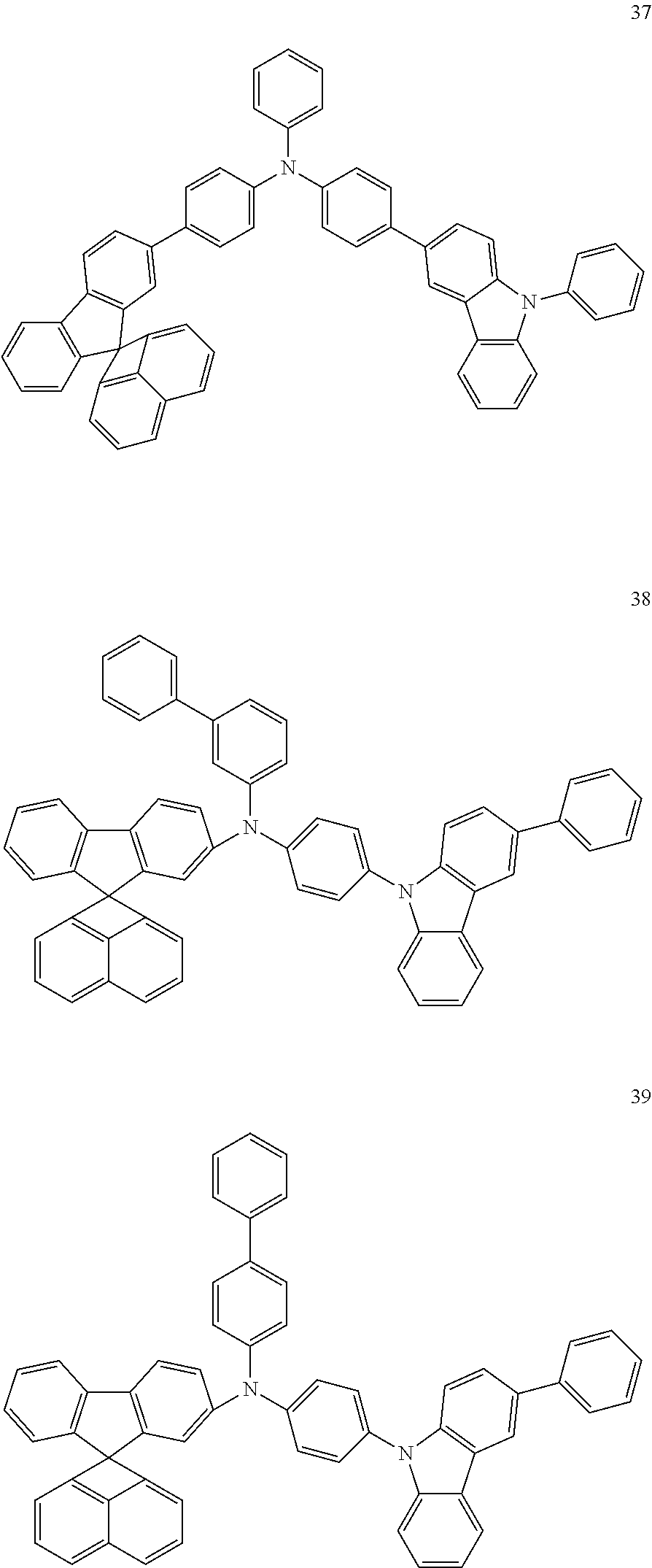
- the organic compound may be any one of Compounds 1 to 49:
- the organic compound provided in the present invention can be used in organic electroluminescence devices as a hole injection layer material, a hole transport layer material, an electron blocking layer material, or an emission layer material.
- the emission layer material may be a green or red phosphorescent host material.
- the present invention also relates to a hole injection layer material, a hole transport layer material, an electron blocking layer material, or an emission layer material comprising the organic compound above.
- the hole injection layer material, the hole transport layer material, the electron blocking layer material, and the emission layer material can not only be in various states, for example liquid state, but also added with commonly used substances.
- the present invention further relates to an organic electroluminescence device, which has one or more organic thin film layers, including an emission layer, deposited between an anode and a cathode. At least one of the organic thin film layers contains one or a combination of two or more of the organic compounds of General Formula 1.
- At least one of the hole injection layer material, the hole transport layer material, the electron blocking layer material, and the emission layer material of the organic electroluminescence device contains the organic compound of General Formula 1.
- the organic electroluminescence device has a structure where the anode, a hole injection layer, a hole transport layer, the emission layer, an electron transport layer, an electron injection layer, and the cathode are laminated.
- an electron blocking layer and a hole blocking layer may be added.
- the organic thin film layers include a hole injection layer, a hole transport layer, the emission layer, an electron transport layer, and an electron injection layer, and the organic compound of General Formula 1 is contained in at least one of the hole injection layer, the hole transport layer, and the emission layer.
- the organic electroluminescence device of the present invention is described by way of examples. However, the organic electroluminescence device of the present invention is not limited thereto.
- the organic electroluminescence device of the present invention has a structure comprising the anode (hole injection electrode), a hole injection layer (HIL), a hole transport layer (HTL), the emission layer (EML), and the cathode (electron injection electrode) laminated in sequence.
- an electron blocking layer (EBL) may be added between the anode and the emission layer
- a hole blocking layer (HBL) may be added between the cathode and the emission layer.
- the organic electroluminescence device of the present invention is fabricated by a process comprising the following steps.
- Step 1 An anode material is laminated through a conventional process on a surface of a substrate to form an anode.
- the substrate used is a glass or transparent plastic substrate having good penetrability, surface smoothness, operability, and waterproof performance.
- the anode material may be transparent and highly conductive indium tin oxide (ITO), indium zinc oxide (IZO), tin dioxide (SnO 2 ), and zinc oxide (ZnO) etc.
- ITO indium tin oxide
- IZO indium zinc oxide
- SnO 2 tin dioxide
- ZnO zinc oxide
- Step 2 A hole injection layer (HIL) material is applied onto a surface of the anode through a conventional process by vacuum deposition or by spin coating, to form a hole injection layer.
- the hole injection layer material may be, in addition to the organic compound of the present invention, for example, CuPc, m-MTDATA, m-MTDAPB, and starburst amines TCTA, 2-TNATA, or IDE406 commercially available from Idemitsu Kosan Co., Ltd.
- Step 3 A hole transport layer (HTL) material is applied onto a surface of the hole injection layer through a conventional process by vacuum thermal deposition or by spin coating, to form a hole transport layer.
- the hole transport layer material may be, in addition to the organic compound of the present invention, ⁇ -NPD, NPB, or TPD.
- Step 4 An emission layer (EML) material is applied onto a surface of the hole transport layer through a conventional process by vacuum thermal deposition or by spin coating, to form an emission layer.
- the emission layer substance may be the organic compound of the present invention, Alq 3 , and the like, when the sole light-emitting substance or light emitting host substance is green; and may be Balq (bis(8-hydroxyquinolinato) beryllium), DPVBi series, spiro substance, spiro-DPVBi, LiPBO, bis(biphenylvinyl)benzene, aluminium-quinoline metal comlex, and compexes of imidazole, thiazole, and oxadiazole with metals, when the sole light-emitting substance or light emitting host substance is blue.
- the organic compound of the present invention may be used as a red phosphorescent host substance.
- the emission layer substance may include a dopant used with the light emitting host, and the florescent dopant may be IDE102 and IDE105 commercially available from Idemitsu Kosan Co., Ltd; and the phosphorescent dopant may be Ir(ppy)3, FIrpic (see [Chihaya Adachi et al., Appl. Phys. Lett., 2001, 79, 3082-3084]), PtOEP, and TBE002.
- the florescent dopant may be IDE102 and IDE105 commercially available from Idemitsu Kosan Co., Ltd; and the phosphorescent dopant may be Ir(ppy)3, FIrpic (see [Chihaya Adachi et al., Appl. Phys. Lett., 2001, 79, 3082-3084]), PtOEP, and TBE002.
- an electron blocking layer may be added between the hole transport layer and the emission layer.
- Step 5 An electron transport layer (ETL) material is applied onto a surface of the emission layer through a conventional process by vacuum thermal deposition or by spin coating, to form an electron transport layer.
- the electron transport layer material is not particularly limited, and preferably Alq 3 .
- HBL hole blocking layer
- a hole blocking layer (HBL) material is applied onto a surface of the emission layer through a conventional process by vacuum thermal deposition or by spin coating, to form a hole blocking layer.
- the hole blocking layer material is not particularly limited, which may be, in addition to the organic compound of General Formula 1 of the present invention, Liq, bis(2-methyl-8-quinolinolato)-(1,1′-Biphenyl-4-olato)aluminum, BCP, and LiF etc.
- Step 6 An electron injection layer (EIL) material is applied onto a surface of the electron transport layer through a conventional process by vacuum thermal deposition or by spin coating, to form an electron injection layer.
- the electron injection layer substance may be LiF, Liq, Li 2 O, BaO, NaCl, CsF, and so on.
- Step 7 A cathode material is applied onto the electron injection layer through a conventional process by vacuum thermal deposition or by spin coating, to form a cathode.
- the cathode material may be Li, Al, Al—Li, Ca, Mg, Mg—In, Mg—Ag, and the like. Furthermore, for the organic electroluminescence devices, a light penetrable transparent cathode can be fabricated when indium tin oxide (ITO) or indium zinc oxide (IZO) is used.
- ITO indium tin oxide
- IZO indium zinc oxide
- a capping layer may be further formed on a surface of the cathode.
- 1-iodonaphthalene (2.54 g, 10 mmol) was dissolved in tetrahydrofuran (15 mL) and cooled to ⁇ 78° C.
- n-butyllithium (2 M, 4 mL) was added dropwise, and stirred at ⁇ 78° C. for 1 hr.
- 2-bromo-9-fluorenone (2.59 g, 10 mmol) dissolved in tetrahydrofuran (30 mL) was slowly added dropwise, and warmed to normal temperature. After the reaction was terminated, MC and 2N HCl were added, and the organic layer was extracted.
- 3-bromo-1-iodonaphthalene (3.33 g, 10 mmol) was dissolved in tetrahydrofuran (15 mL), and then cooled to ⁇ 78° C.
- n-butyllithium 2.5 M, 4 mL was added dropwise and stirred at ⁇ 78° C. for 1 hr.
- 9H-fluorenone (1.80 g, 10 mmol) dissolved in tetrahydrofuran (30 mL) was slowly added dropwise, and warmed to normal temperature. After the reaction was terminated, MC and 2N HCl were added, and the organic layer was extracted.
- phenylboromc acid (1.22 g, 10 mmol) and 4-bromoaniline (1.72 g, 10 mmol) were mixed and dissolved in tetrahydrofuran (20 mL).
- Pd(PPh 3 ) 4 (0.58 g, 0.5 mmol) and K 2 CO 3 (2 M, 15 ml, 30 mmol) were added and refluxed for 24 hrs.
- o-methylphenylboronic acid (1.34 g, 10 mmol) and 3-bromoaniline (1.72 g, 10 mmol) were mixed and dissolved in tetrahydrofuran (20 mL). Then Pd(PPh 3 ) 4 (0.58 g, 0.5 mmol) and K 2 CO 3 (2 M, 15 mL, 30 mmol) were added and refluxed for 24 hrs.
- dibenzofuran (1.68 g, 10 mmol) was dissolved in tetrahydrofuran (10 mL), and mixed with n-BuLi (2.5 M, 4 mL) at ⁇ 40° C.
- the cooling device was removed, and the reaction solution was placed in a water bath and warmed to room temperature in about 30 min, and then stirred for 2 hrs. Then, the reaction solution was cooled to ⁇ 78° C., and 1,2-dibromoethane (2.82 g, 15 mmol) in tetrahydrofuran (10 mL) was added dropwise.
- the cooling device was removed, and the mixture was placed in a water bath and warmed to room temperature in about 30 min, and then stood for 2 hrs.
- reaction solution was washed with a saturated sodium chloride solution, taken up in a 2 N aqueous HCl solution, stirred for 30 min, and extracted with diethyl ether.
- An ITO anode (5 ⁇ /cm 2 , 1200 ⁇ ) coated glass substrate was cut to have a size of 45 mm ⁇ 45 mm ⁇ 0.7 mm, ultrasonicated for 5 min in isopropanol and pure water, rinsed for 30 min with ozone under UV irradiation, and then disposed on a vacuum coating equipment.
- 2-TNATA was deposited to form a hole injection layer of 300 ⁇ in thickness; and a corresponding ingredient was selected from Compounds 2, 5, 6, 7, 12, 17, 20, 25, 28, 33, 34, 38, 41, 45, and 49 of the present invention and deposited under vacuum on a surface of the hole injection layer, to form a hole transport layer of 900 ⁇ in thickness.
- AND and DPAVBi were deposited at a weight ratio of 97:3 under vacuum on a surface of the hole transport layer, to form an emission layer of 300 ⁇ in thickness.
- Alq 3 was deposited on a surface of the emission layer, to form an electron transport layer of 300 ⁇ in thickness; LiF was deposited on a surface of the electron transport layer, to form an electron injection layer of 10 ⁇ in thickness; Al was deposited on a surface of the electron injection layer, to form a second electrode (cathode) of 1000 ⁇ in thickness.
- an organic electroluminescence device was obtained.
- the organic electroluminescence device was sealed with a water absorbing material containing a UV curable binder on a surface of the cathode, to protect the organic electroluminescence device from being influenced by oxygen or moisture in the atmosphere.
- Example 2 This example was the same as Example 1 except that ⁇ -NPD was used as the electron transport layer in place of the compound of the present invention.
- the organic compound of the present invention is used as a hole transport substance, the luminous efficiency of the organic electroluminescence devices is improved. Therefore, the organic compound of the present invention enables the device to be driven at a reduced voltage, and can reduce the power consumption as well. Furthermore, the luminous service of the organic electroluminescence devices is also enhanced.
Landscapes
- Chemical & Material Sciences (AREA)
- Organic Chemistry (AREA)
- Physics & Mathematics (AREA)
- Spectroscopy & Molecular Physics (AREA)
- Engineering & Computer Science (AREA)
- Materials Engineering (AREA)
- Electroluminescent Light Sources (AREA)
Abstract

Description


| TABLE 1 | ||||||
| Current | Luminous | CIE | ||||
| density | Voltage | efficiency | system | |||
| Material | (mA/cm2) | (V) | (Cd/A) | (X Y) | ||
| Comparative | NPD | 10 | 4.1 | 4.50 | (0.150 |
| Example 1 | 0.090) | ||||
| Example1 | Compound | 10 | 4.0 | 7.27 | (0.149 |
| 2 | 0.088) | ||||
| Example2 | Compound | 10 | 4.1 | 7.43 | (0.150 |
| 5 | 0.089) | ||||
| Example3 | Compound | 10 | 4.0 | 6.96 | (0.150 |
| 6 | 0.086) | ||||
| Example4 | Compound | 10 | 3.9 | 7.62 | (0.151 |
| 7 | 0.090) | ||||
| Example5 | Compound | 10 | 3.9 | 7.63 | (0.150 |
| 12 | 0.089) | ||||
| Example6 | Compound | 10 | 4.0 | 7.69 | (0.150 |
| 17 | 0.090) | ||||
| Example7 | Compound | 10 | 3.9 | 7.41 | (0.148 |
| 20 | 0.089) | ||||
| Example8 | Compound | 10 | 3.9 | 7.49 | (0.150 |
| 25 | 0.088) | ||||
| Example9 | Compound | 10 | 4.0 | 7.48 | (0.149 |
| 28 | 0.089) | ||||
| Example10 | Compound | 10 | 3.9 | 7.51 | (0.150 |
| 33 | 0.089) | ||||
| Example11 | Compound | 10 | 3.7 | 7.33 | (0.149 |
| 34 | 0.089) | ||||
| Example12 | Compound | 10 | 3.8 | 7.59 | (0.150 |
| 38 | 0.087) | ||||
| Example13 | Compound | 10 | 4.1 | 7.83 | (0.150 |
| 41 | 0.091) | ||||
| Example14 | Compound | 10 | 4.0 | 7.38 | (0.150 |
| 45 | 0.087) | ||||
| Example15 | Compound | 10 | 4.0 | 7.45 | (0.150 |
| 49 | 0.090) | ||||
Claims (7)




Applications Claiming Priority (6)
| Application Number | Priority Date | Filing Date | Title |
|---|---|---|---|
| CN201510732870 | 2015-10-30 | ||
| CN201510732870.2 | 2015-10-30 | ||
| CN201510732870 | 2015-10-30 | ||
| CN201510765354.XA CN106397223B (en) | 2015-08-01 | 2015-11-11 | An organic compound, an organic electroluminescent device material comprising the compound, and an organic electroluminescent device comprising the material |
| CN201510765354 | 2015-11-11 | ||
| CN201510765354.X | 2015-11-11 |
Publications (2)
| Publication Number | Publication Date |
|---|---|
| US20170125677A1 US20170125677A1 (en) | 2017-05-04 |
| US10396289B2 true US10396289B2 (en) | 2019-08-27 |
Family
ID=58634773
Family Applications (1)
| Application Number | Title | Priority Date | Filing Date |
|---|---|---|---|
| US15/339,141 Active 2037-03-15 US10396289B2 (en) | 2015-10-30 | 2016-10-31 | Spiro organic compounds, material comprising the same for organic electroluminescence devices, and organic electroluminescence device comprising the material |
Country Status (1)
| Country | Link |
|---|---|
| US (1) | US10396289B2 (en) |
Families Citing this family (5)
| Publication number | Priority date | Publication date | Assignee | Title |
|---|---|---|---|---|
| EP3518303B1 (en) | 2018-01-26 | 2021-10-06 | Samsung Display Co., Ltd. | N-(4-(8-(phenyl)naphthalen-2-yl)phenyl)-n,n'-di(phenyl)-amine derivatives and related compounds for use in organic electroluminescence devices |
| JP7465062B2 (en) | 2018-01-26 | 2024-04-10 | 三星ディスプレイ株式會社 | Organic electroluminescent device and monoamine compound for organic electroluminescent device |
| CN111936530B (en) | 2018-08-17 | 2023-07-18 | 株式会社Lg化学 | Polymer, coating composition containing same, and organic light-emitting device using same |
| KR102867205B1 (en) | 2019-03-20 | 2025-10-01 | 삼성디스플레이 주식회사 | AMINE-BASED compound and organic light emitting device comprising the same |
| CN111748339A (en) * | 2019-03-29 | 2020-10-09 | 南京高光半导体材料有限公司 | Organic electroluminescent compound and manufacturing method of device thereof |
Citations (6)
| Publication number | Priority date | Publication date | Assignee | Title |
|---|---|---|---|---|
| US20030118866A1 (en) | 2001-10-30 | 2003-06-26 | Lg Electronics Inc. | Organic electroluminescent device |
| CN1787988A (en) | 2003-05-15 | 2006-06-14 | 出光兴产株式会社 | Arylamine compounds and organic electroluminescent devices comprising them |
| CN103664644A (en) | 2012-08-31 | 2014-03-26 | 海洋王照明科技股份有限公司 | Organic semiconductor material containing aniline and preparation method thereof, and organic electroluminescence device |
| US20150065730A1 (en) | 2012-02-14 | 2015-03-05 | Merck Patent Gmbh | Spirobifluorene compounds for organic electroluminescent devices |
| KR20150030300A (en) | 2013-09-11 | 2015-03-20 | 엘지디스플레이 주식회사 | Fluorescent compound and Organic light emitting diode device using the same |
| CN104628581A (en) | 2015-02-04 | 2015-05-20 | 北京鼎材科技有限公司 | 2,6,6,8-tetra-substituted-6H-benzo[cd]pyrene compound and organic electroluminescence device containing same |
-
2016
- 2016-10-31 US US15/339,141 patent/US10396289B2/en active Active
Patent Citations (9)
| Publication number | Priority date | Publication date | Assignee | Title |
|---|---|---|---|---|
| US20030118866A1 (en) | 2001-10-30 | 2003-06-26 | Lg Electronics Inc. | Organic electroluminescent device |
| CN1231096C (en) | 2001-10-30 | 2005-12-07 | Lg电子株式会社 | Organic electroluminescent element |
| CN1787988A (en) | 2003-05-15 | 2006-06-14 | 出光兴产株式会社 | Arylamine compounds and organic electroluminescent devices comprising them |
| US20070018569A1 (en) | 2003-05-15 | 2007-01-25 | Idemitsu Kosan Co., Ltd. | Arylamine compound and organic electroluminescence device containing the same |
| US20150065730A1 (en) | 2012-02-14 | 2015-03-05 | Merck Patent Gmbh | Spirobifluorene compounds for organic electroluminescent devices |
| CN105218302A (en) | 2012-02-14 | 2016-01-06 | 默克专利有限公司 | For spiral shell two fluorene compound of organic electroluminescence device |
| CN103664644A (en) | 2012-08-31 | 2014-03-26 | 海洋王照明科技股份有限公司 | Organic semiconductor material containing aniline and preparation method thereof, and organic electroluminescence device |
| KR20150030300A (en) | 2013-09-11 | 2015-03-20 | 엘지디스플레이 주식회사 | Fluorescent compound and Organic light emitting diode device using the same |
| CN104628581A (en) | 2015-02-04 | 2015-05-20 | 北京鼎材科技有限公司 | 2,6,6,8-tetra-substituted-6H-benzo[cd]pyrene compound and organic electroluminescence device containing same |
Non-Patent Citations (1)
| Title |
|---|
| Office Action and Search Report dated Sep. 19, 2017, by the State Intellectual Property Office of People's Republic of China in corresponding Chinese Patent Application No. 201510765354.X. (5 pages). |
Also Published As
| Publication number | Publication date |
|---|---|
| US20170125677A1 (en) | 2017-05-04 |
Similar Documents
| Publication | Publication Date | Title |
|---|---|---|
| US9455411B2 (en) | Organic electroluminescent materials and devices | |
| KR101881645B1 (en) | Novel organic compound and materials for organic electroluminescent devices comprising the same and organic electroluminescent devices comprising the same and | |
| US8889271B2 (en) | Compound containing a 5-membered heterocycle and organic light-emitting diode using same, and terminal for same | |
| US9997726B2 (en) | Dibenzothiophene-containing materials in phosphorescent light emitting diodes | |
| US11251378B2 (en) | Organic light-emitting diode having alleviated luminance reduction in low dynamic range | |
| CN106883205B (en) | Novel compound and organic light-emitting device comprising same | |
| KR20110041726A (en) | Aromatic Compounds and Organic Electroluminescent Devices Using the Same | |
| CN121873021A (en) | Compound and organic light emitting device comprising the same | |
| KR20150102735A (en) | Organic electroluminescent device | |
| KR101026175B1 (en) | Fluorene carbazole derivatives and organic light emitting device comprising the same | |
| KR101914338B1 (en) | Novel organic compound and materials for organic electroluminescent devices comprising the same and organic electroluminescent devices comprising the same and | |
| US10396290B2 (en) | Spiro organic compounds, material comprising the same for organic electroluminescence devices, and organic electroluminescence device comprising the material | |
| CN106255695B (en) | Compound and organic light-emitting element containing same | |
| KR20150102733A (en) | Organic compounds for forming capping layer of an organic electroluminescent device and an organic electroluminescent device comprising the same | |
| US20170125677A1 (en) | Novel organic compound, material comprising the same for organic electroluminescence devices, and organic electroluminescence device comprising the material | |
| KR102429520B1 (en) | Novel compound and organic electroluminescent device comprising same | |
| CN106573905A (en) | Novel compound and orgarnic light emitting device containing same | |
| US12473306B2 (en) | Boron compound and organic light-emitting diode including same | |
| EP3915982A1 (en) | Compound and organic light-emitting device including same | |
| KR101565039B1 (en) | Novel organic compounds and an organic electroluminescent device comprising the same | |
| CN106848072A (en) | Organic illuminating element | |
| US20180315931A1 (en) | Compound containing a 5-membered heterocycle and organic light-emitting diode using same, and terminal for same | |
| KR102630946B1 (en) | Novel compound and organic electroluminescent device comprising same | |
| US9938287B1 (en) | Blue fluorescence dopant compound and organic electroluminescent device using the same | |
| CN106458893A (en) | Novel compound and organic light-emitting element comprising same |
Legal Events
| Date | Code | Title | Description |
|---|---|---|---|
| AS | Assignment |
Owner name: NANJING TOPTO MATERIALS CO., LTD., CHINA Free format text: ASSIGNMENT OF ASSIGNORS INTEREST;ASSIGNORS:KIM, JIN WOO;QIAN, CHAO;XU, JUN;AND OTHERS;REEL/FRAME:040426/0867 Effective date: 20161115 |
|
| STPP | Information on status: patent application and granting procedure in general |
Free format text: FINAL REJECTION MAILED |
|
| STPP | Information on status: patent application and granting procedure in general |
Free format text: RESPONSE AFTER FINAL ACTION FORWARDED TO EXAMINER |
|
| STPP | Information on status: patent application and granting procedure in general |
Free format text: DOCKETED NEW CASE - READY FOR EXAMINATION |
|
| STPP | Information on status: patent application and granting procedure in general |
Free format text: NOTICE OF ALLOWANCE MAILED -- APPLICATION RECEIVED IN OFFICE OF PUBLICATIONS |
|
| STPP | Information on status: patent application and granting procedure in general |
Free format text: PUBLICATIONS -- ISSUE FEE PAYMENT VERIFIED |
|
| STCF | Information on status: patent grant |
Free format text: PATENTED CASE |
|
| MAFP | Maintenance fee payment |
Free format text: PAYMENT OF MAINTENANCE FEE, 4TH YR, SMALL ENTITY (ORIGINAL EVENT CODE: M2551); ENTITY STATUS OF PATENT OWNER: SMALL ENTITY Year of fee payment: 4 |
|
| AS | Assignment |
Owner name: JIANGSU TOPTO NEW MATERIALS TECHNOLOGY CO., LTD., CHINA Free format text: ASSIGNMENT OF ASSIGNORS INTEREST;ASSIGNOR:NANJING TOPTO MATERIALS CO., LTD.;REEL/FRAME:073723/0736 Effective date: 20251208 |