US10379560B2 - Home automation system device power optimization - Google Patents
Home automation system device power optimization Download PDFInfo
- Publication number
- US10379560B2 US10379560B2 US14/875,327 US201514875327A US10379560B2 US 10379560 B2 US10379560 B2 US 10379560B2 US 201514875327 A US201514875327 A US 201514875327A US 10379560 B2 US10379560 B2 US 10379560B2
- Authority
- US
- United States
- Prior art keywords
- room
- power state
- home automation
- automation system
- sleep interval
- Prior art date
- Legal status (The legal status is an assumption and is not a legal conclusion. Google has not performed a legal analysis and makes no representation as to the accuracy of the status listed.)
- Active, expires
Links
Images


Classifications
-
- G—PHYSICS
- G05—CONTROLLING; REGULATING
- G05F—SYSTEMS FOR REGULATING ELECTRIC OR MAGNETIC VARIABLES
- G05F1/00—Automatic systems in which deviations of an electric quantity from one or more predetermined values are detected at the output of the system and fed back to a device within the system to restore the detected quantity to its predetermined value or values, i.e. retroactive systems
- G05F1/66—Regulating electric power
-
- G—PHYSICS
- G05—CONTROLLING; REGULATING
- G05B—CONTROL OR REGULATING SYSTEMS IN GENERAL; FUNCTIONAL ELEMENTS OF SUCH SYSTEMS; MONITORING OR TESTING ARRANGEMENTS FOR SUCH SYSTEMS OR ELEMENTS
- G05B15/00—Systems controlled by a computer
- G05B15/02—Systems controlled by a computer electric
-
- H—ELECTRICITY
- H04—ELECTRIC COMMUNICATION TECHNIQUE
- H04L—TRANSMISSION OF DIGITAL INFORMATION, e.g. TELEGRAPHIC COMMUNICATION
- H04L12/00—Data switching networks
- H04L12/02—Details
- H04L12/12—Arrangements for remote connection or disconnection of substations or of equipment thereof
-
- H—ELECTRICITY
- H04—ELECTRIC COMMUNICATION TECHNIQUE
- H04L—TRANSMISSION OF DIGITAL INFORMATION, e.g. TELEGRAPHIC COMMUNICATION
- H04L12/00—Data switching networks
- H04L12/28—Data switching networks characterised by path configuration, e.g. LAN [Local Area Networks] or WAN [Wide Area Networks]
- H04L12/2803—Home automation networks
-
- H—ELECTRICITY
- H04—ELECTRIC COMMUNICATION TECHNIQUE
- H04L—TRANSMISSION OF DIGITAL INFORMATION, e.g. TELEGRAPHIC COMMUNICATION
- H04L12/00—Data switching networks
- H04L12/28—Data switching networks characterised by path configuration, e.g. LAN [Local Area Networks] or WAN [Wide Area Networks]
- H04L12/2803—Home automation networks
- H04L12/2807—Exchanging configuration information on appliance services in a home automation network
-
- H04L67/22—
-
- H—ELECTRICITY
- H04—ELECTRIC COMMUNICATION TECHNIQUE
- H04L—TRANSMISSION OF DIGITAL INFORMATION, e.g. TELEGRAPHIC COMMUNICATION
- H04L67/00—Network arrangements or protocols for supporting network services or applications
- H04L67/50—Network services
- H04L67/535—Tracking the activity of the user
-
- H—ELECTRICITY
- H04—ELECTRIC COMMUNICATION TECHNIQUE
- H04L—TRANSMISSION OF DIGITAL INFORMATION, e.g. TELEGRAPHIC COMMUNICATION
- H04L12/00—Data switching networks
- H04L12/28—Data switching networks characterised by path configuration, e.g. LAN [Local Area Networks] or WAN [Wide Area Networks]
- H04L12/2803—Home automation networks
- H04L2012/2847—Home automation networks characterised by the type of home appliance used
Definitions
- the present disclosure relates generally to home automation systems and more specifically to power optimization of home automation system devices.
- Home automation systems are becoming increasingly popular in both residential and commercial buildings. Such systems may be capable of controlling, switching data between, and otherwise interacting with a wide variety of devices, including lighting devices, security devices, audio/video (A/V) devices, heating ventilation and cooling (HVAC) devices, and/or other types of devices.
- lighting devices security devices
- audio/video (A/V) devices audio/video (A/V) devices
- HVAC heating ventilation and cooling
- wired e.g., Ethernet
- LAN local area network
- wireless LANs e.g., Wi-Fi
- Wi-Fi wireless local area network
- A/C alternating current
- exiting the low-power state when there is an attempt to use the device may introduce unacceptable amounts of delay (e.g., control lag), causing the home automation system to feel unresponsive. There may be significant delay (e.g., hundreds of milliseconds or even seconds) until the device can recognize the attempt at use, exit the low-power state (e.g., sleep state), and then take the appropriate action. Unresponsiveness may impair the user experience, hindering the deployment of battery-powered devices as a replacement for wired devices.
- delay e.g., control lag
- Example techniques are provided for power optimization of a home automation system device (e.g., a battery-powered device) based on service states for a room associated with the device, or other user activity. Such techniques may transition the device preemptively to a full-power in-use power state, when it is likely that the device will be used (but before any current attempt to use the device). In such manner, the device may be prepositioned to quickly respond when a user or another device should try to interact with it.
- a home automation system device e.g., a battery-powered device
- Such techniques may transition the device preemptively to a full-power in-use power state, when it is likely that the device will be used (but before any current attempt to use the device). In such manner, the device may be prepositioned to quickly respond when a user or another device should try to interact with it.
- a host controller of the home automation system determines a service state for each of one or more services available in a room of a structure (e.g., a residential dwelling or commercial building) that is associated with the device.
- the host controller may configure the device to be maintained by default in a low-power inactive state while there are no active services in the room.
- the device may duty cycle one or more hardware components (e.g., a Bluetooth low energy (BLE) adaptor, a microcontroller, etc.) according to a first sleep interval (e.g., 1000 milliseconds (ms)).
- BLE Bluetooth low energy
- ms milliseconds
- the host controller may signal the device to preemptively transition from the inactive state to a full-power in-use state.
- the device may duty cycle the one or more hardware components according to a second sleep interval (e.g., 15 ms) that may have a length that is at least two orders of magnitude less than the first sleep interval.
- the transition may be performed absent any current attempt to use the device by a user or another device of the home automation system, to prime the device to be able to quickly respond should the user or another device try to interact with it.
- the device may remain in the in-use state until an internal timer (e.g., a 60 second timer) expires since a last use of the device or since entering the state and no use occurring. Then, the device may transition to a moderate-power active state. When in the active state, the device may duty cycle the one or more hardware components according to a third sleep interval (e.g., 150 ms) that may have a length that is at least an order of magnitude less than the first sleep interval, but is longer than the second sleep interval.
- the host controller may signal the device when there are no active services in the room, and, in response thereto, the device may transition from the active state back to the inactive state. A variety of other state transitions may also be possible.
- power usage is optimized based on user activity other than, or in addition to, the service state for the room associated with the device.
- the other user activity looked to may take a variety of different forms.
- the user activity is the user navigating to a screen for controlling the room associated with the device in a control user interface (UI).
- UI control user interface
- the user activity is the user using a second device (e.g., a remote control) of the home automation system that is associated with (e.g., bound to) the room associated with the device.
- the user activity is detecting presence of the user within the room associated with the device using a presence detection system.
- the user activity is an indication of probable use in the room based on an activity history.
- the host may configure the device to be maintained by default in the low-power inactive state.
- the host controller may signal the device to preemptively transition from the low-power inactive state to the full-power in-use state. The transition may be performed absent any current attempt to use the device by a user or another device of the home automation system.
- the device may remain in the in-use state until an internal timer expires since a last use of the device or since entering the state and no use occurring. Then the device may transition to a moderate-power active state.
- the host controller may signal the device when there is no user activity related to the room, and in response thereto the device may transition from the active state back to the inactive state.
- FIG. 1 is a block diagram of an example architecture of a home automation system operable to control devices about a structure;
- FIG. 2 is a block diagram of a battery-powered interconnection device of the home automation system that may serve as an illustrative example of one type of device that may be power optimized according to the techniques described herein;
- FIG. 3 is a transition diagram of an example power optimization technique for a device based on service states for a room associated with the device;
- FIG. 4 is a transition diagram of an example power optimization technique for a device based on a user navigating to a screen for controlling a room associated with the device in a control UI;
- FIG. 5 is a transition diagram of an example power optimization technique for a device based on use of a second device associated with the room;
- FIG. 6 is a transition diagram of an example power optimization technique for a device based on user presence detection.
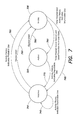
- FIG. 7 is a transition diagram of an example power optimization technique for a device based on an activity history.
- home automation system should be interpreted broadly to encompass various types of home control, “smart home”, and/or device control systems that may control devices (e.g., lighting devices, security devices, A/V devices, HVAC devices, electronic door locks, and/or other types of devices) within a structure, such as a residential dwelling or commercial building.
- devices e.g., lighting devices, security devices, A/V devices, HVAC devices, electronic door locks, and/or other types of devices
- a home automation system may control a variety of different types of devices, or devices of only a particular type (e.g., only lighting devices, only A/V devices, etc.).
- mobile device refers to an electronic device that executes a general-purpose operating system and is adapted to be transported on one's person.
- Devices such as smartphones and tablet computers should be considered mobile devices.
- Desktop computers, servers, or other primarily-stationary computing devices generally should not be considered mobile devices.
- the term “service” refers to an activity offered by a home automation system that involves interactions between one or more devices of a home automation system.
- a service may, but need not, correspond to one or more unique paths between devices that are used to provide the activity (e.g., audio and video paths from source devices to output devices).
- An example of a service may be a “Cable TV” service that corresponds to paths between a cable box and a television, that are utilized to provide a cable television viewing activity.
- room refers to an interior portion of a structure or an exterior space associated with a structure, in which one or more services may be provided.
- a room may correspond to a single physical room of the structure, an aggregation of multiple physical rooms of the structure, a sub-portion of a physical room of the structure, or a particular delineation of exterior space associated with the structure.
- FIG. 1 is a block diagram of an example architecture 100 of a home automation system operable to control devices about a structure (e.g., a residential dwelling or commercial building).
- a host controller 110 coupled to an in-home local area network (LAN) (e.g., a Wi-Fi network) 150 .
- the host controller may include hardware components such as a processor, a memory and a storage device, which collectively store and execute host software 111 configured to monitor the control the operations of devices 112 - 124 , as well as to provide UI interpretation, system administration and monitoring, synchronization with cloud services 180 and mobile devices 160 , activity recording, activity prediction and other types of functionality.
- the host controller 110 may maintain in its storage device a home database 130 that stores configuration information including services the home automation system is configured to provide, user content such as scenes that are configured for a user of the home automation system, media content associated with a user of the home automation system (e.g., favorites), system state information indicating a present condition of the home automation system, as well as other types of data.
- the home database 130 may further maintain a record of historical activity in the home automation system. Such portion of the home database may be referred to as a history database.
- the devices 112 - 124 of the home automation system may include lighting devices 112 , such as lighting controllers, lamp modules, dimmer modules, switches, keypads, fan controllers and the like; security devices 114 , such as home monitors/cameras, motion sensors, home healthcare sensors, related controllers and the like; audio devices 116 and video devices 118 (collectively A/V devices), such as A/V device controllers, media servers, audio amplifiers, cable boxes, and the like; electronic door locks 120 and other types of motor or relay operated devices; HVAC devices 122 , such as thermostats; interconnection devices 124 , such as IR blasters, matrix switchers, signal extenders and the like, as well as other types of home automation system devices.
- lighting devices 112 such as lighting controllers, lamp modules, dimmer modules, switches, keypads, fan controllers and the like
- security devices 114 such as home monitors/cameras, motion sensors, home healthcare sensors, related controllers and the like
- audio devices 116 and video devices 118 collectively A
- At least some of the devices 112 - 124 may be battery-powered. Each of the devices 112 - 124 may be associated with (i.e. configured to be used in connection with) a room. The devices 112 - 124 may physically reside in the room with which they are associated or reside elsewhere (e.g., a remote equipment rack).
- the communications capabilities of the devices 112 - 124 of the home automation system may vary.
- the devices may include both a LAN interface (e.g., a Wi-Fi adaptor) to enable them to communicate with the host controller 110 and other devices via the in-home LAN 150 (e.g., Wi-Fi), or a wireless personal area network (WPAN) interface (e.g., a BLE adaptor) to enable them to communicate with the host controller 110 and other devices via a WLAN (not shown).
- a LAN interface e.g., a Wi-Fi adaptor
- WPAN wireless personal area network
- BLE wireless personal area network
- some devices may only have ports or transceivers for wired or point-to-point wireless communication (e.g., RS-232, relay or general-purpose input/output (GPIO) ports, infrared (IR) transceivers, etc.) and communicate with the host controller 110 and other devices using such ports.
- Some of the devices e.g., an interconnection device such as an IR blaster
- some devices may include a LAN interface (e.g., a Wi-Fi interface), but not be configured to communicate with the host controller 110 directly over the in-home LAN 150 , but instead communicate via Internet 170 , cloud services 180 and third party infrastructure 190 .
- a LAN interface e.g., a Wi-Fi interface
- HVAC devices 122 are shown in FIG. 1 as an example of one type of device that may communicate in this manner, other types of devices 112 - 124 may alternatively use this method of communication, and vice versa.
- a user may control the home automation system using a remote control 140 that communicates with the host controller 110 through the in-home LAN 150 (e.g., via Wi-Fi) or directly with the host controller 110 via point-to-point wireless signals (e.g. via IR or radio frequency RF signals).
- the remote control 140 may include hardware components such as a processor, a memory and a storage device, which store and execute software (e.g., an application (app)) configured to interface with the host controller 110 and cloud services 180 , and generate and display a home automation control UI, among other functionality.
- the remote control 140 may further include a display screen (e.g., a touch screen) for showing the control UI, and input devices (e.g., buttons, a touch sensor of the touch screen, etc.) for receiving user input related to the control UI.
- a user may further control the home automation system using a mobile device 160 that communicates with the host controller 110 via the in-home LAN 150 or using a mobile data connection to the Internet 170 .
- the mobile device 160 may include hardware components such as a processor, a memory and a storage device, which store and execute an app 162 (e.g., a mobile app) configured to interface with the host controller 110 and/or cloud services 180 , and generate and display a home automation control UI, among other functionality.
- the mobile device 160 may further include a display screen (e.g., a touch screen) for showing the control UI, and an input device (e.g., a touch sensor of the touch screen) for receiving user input related to the control UI.
- the host device 110 and mobile device 160 may communicate via the Internet 170 with cloud services 180 and its host application program interfaces (APIs) 182 and mobile APIs 184 .
- the cloud services 180 may provide remote access to home automation control, a persistent backup of the home database 130 (storing data in a configuration database 186 ), interfaces to third party infrastructure (via third party adaptors 188 ), user profiles and usage tracking (storing data in user database 189 ), a mechanism for over-the-air updates, host crash reporting, and license management, among other functions.
- FIG. 2 is a block diagram of a battery-powered interconnection device (e.g., an IR blaster) 124 of the home automation system, that may serve as an illustrative example of one type of device that may be power optimized according to the techniques described herein.
- the device 124 may include various hardware components, such as a WPAN interface (e.g., a BLE adaptor) 210 , an IR transceiver 220 and a microcontroller 230 , among others.
- the WPAN interface 210 may be used to receive configuration programming from the host controller 110 , including power optimization programming that sets a default power optimization state, indicates timer values for certain transitions between power optimization states, and defines other parameters.
- the WPAN interface 210 may be used to receive control messages from the host controller 110 regarding desired operations of A/V devices 116 , 118 , as well as signals that indicate when certain transitions should be made between power optimization states (e.g., based on service states, or other user activity).
- the IR transceiver 230 may be configured to send IR commands to the A/V devices 116 , 118 of the home automation system to cause them to perform desired actions.
- the IR commands may be based on the control messages from the host controller 110 regarding desired operations of A/V devices 116 , 118 .
- the WPAN interface 210 and IR transceiver 220 may operate under the control of the microcontroller 230 , which may be programmed to generate appropriate IR commands for the IR transceiver 220 in response to control messages received on the WPAN interface 210 , among other operational functions.
- the microcontroller 230 may also be programmed to manage power drain from a battery 240 (e.g., a commodity alkaline battery) by the hardware components of the device 124 .
- the microcontroller 230 may transition the device 124 among multiple power optimization states (e.g., a low-power inactive-state, a moderate-power active state, and a full-power in-use state), which (among other possible power conservation measures) may duty cycle one or more hardware components (e.g., the WPAN interface 210 , the microcontroller 230 , etc.) according to sleep intervals.
- multiple power optimization states e.g., a low-power inactive-state, a moderate-power active state, and a full-power in-use state
- the microcontroller 230 may transition the device 124 among multiple power optimization states (e.g., a low-power inactive-state, a moderate-power active state, and a full-power in-use state), which (among other possible power conservation measures) may duty cycle one or more hardware components (e.g., the WPAN interface 210 , the microcontroller 230 , etc.) according to sleep intervals.
- a low-power inactive state may be programmed as a default state of the device 124 , and utilize a sleep interval on the order of thousands of milliseconds (e.g., 1000 ms). Such a sleep interval may allow for low power usage (e.g., 1 mA of power drain), however, there may be noticeable delay (e.g., control lag) should messages be sent to the device 124 while it is in this state. Accordingly, such state may be appropriate only for when the device 124 is likely not to be used.
- a moderate-power active state may utilize a sleep interval on the order of hundreds of milliseconds (e.g., 150 ms). Such a sleep interval may allow for moderate power usage, and provide slight, but generally unnoticeable delay should messages be sent to the device 124 while in this state. Accordingly, such state may be appropriate for when the device 124 is somewhat likely to be used, providing a reasonable level of responsiveness.
- a full-power in-use state may utilize a sleep interval on the order of tens of milliseconds (e.g., 15 ms). Such a sleep interval may be considered to utilize “full-power” even though the device sleeps at some times, as it is the highest power consumption state provided in the available power optimization state.
- the in-use state may provide the highest level of responsiveness slight, (e.g., no noticeable delay). Accordingly, such state may be appropriate for when the device 124 is very likely to be used.
- the microcontroller 230 of the device 124 may be programmed (e.g., by the host controller 110 ) to maintain the device in the inactive state most of the time, and transition preemptively to the in-use state when it is very likely the device will be used (e.g., based on service states, or other user activity, for a room associated with the device), but before any actual current attempt to use the device.
- the microcontroller 230 may further be programmed (e.g., by the host controller 110 ) to maintain the device 124 in the active state when it is somewhat likely the device 124 will be used (e.g., based on expiration of an internal timer since a last use of the device or since entering the in-use state and no use occurring).
- Various other transitions may be provided as detailed below.
- FIG. 3 is a transition diagram of an example power optimization technique for a device 124 based on service states for a room associated with the device.
- the transitions may be programmed into the micro controller 230 .
- the microcontroller 230 may maintain the device 124 in the low-power inactive state 310 , while there are no active services in the room, looping at transition 340 .
- the host controller 110 may signal the device 124 .
- the service need not actually use the device 124 (e.g., the device may not be on one or more unique paths between devices associated with the service). Rather, the service may simply serve as an indicia of user activity in the room.
- the microcontroller 230 may preemptively transition the device from the inactive state 310 to the full-power in-use state 330 .
- the transition may be performed absent any current attempt to use the device 124 .
- the microcontroller 230 may maintain an internal timer (e.g., a 60 seconds timer) that runs since a last use of the device (e.g., a last IR command sent) or the transition to the in-use state 330 was made and no actual use occurred.
- the microcontroller 230 may transition the device 124 to the moderate-power active state 320 .
- the host controller 110 may signal the device when there are no active services in the room.
- the microcontroller 230 may transition the device 124 from the active state 320 back to the inactive state 310 . Transitions 360 and 370 may be combined into a single transition 395 directly to the inactive state 310 when both conditions are met.
- the microcontroller 230 may transition the device to the in-use state 330 .
- the microcontroller 230 may transition the device to the in-use state 330 .
- the user activity may take a form other than service state for the room associated with the device 124 .
- the user activity may be the user navigating to a screen for controlling the room associated with the device in a control UI of an app 162 that is displayed on the mobile device 160 or that is displayed on a remote control 140 used to control the home automation system.
- FIG. 4 is a transition diagram of an example power optimization technique for a device 124 based on a user navigating to a screen for controlling the room associated with the device in a control UI.
- the microcontroller 230 may maintain the device 124 in the low-power inactive state 310 , while the control UI is not showing a screen for controlling the room (e.g., is showing a screen for controlling another room), looping at transition 440 .
- the host controller 110 may signal the device 124 , and at transition 450 , the microcontroller 230 may preemptively transition the device from the inactive state 310 to the full-power in-use state 330 .
- the transition may be performed absent any current attempt to use the device 124 .
- the microcontroller 230 may maintain an internal timer (e.g., a 60 second timer) that runs since a last use of the device (e.g., a last IR command sent) or the transition to the in-use state 330 was made and no actual use occurred.
- the microcontroller 230 may transition the device 124 to the moderate-power active state 320 .
- the host controller 110 may signal the device when the user navigates to another screen in the control UI (e.g., a screen for controlling another room).
- the microcontroller 230 may transition the device 124 from the active state 320 back to the inactive state 310 . Transitions 460 and 470 may be combined into a single transition 495 directly to the inactive state 310 when both conditions are met.
- the microcontroller 230 may transition the device to the in-use state 330 .
- the microcontroller 230 may transition the device to the in-use state 330 .
- the user activity may be the user using a second (i.e., different) device associated with the room.
- the second, different device may be the remote control 140 , which may be bound to the room associated with the device 124 (e.g., configured specifically to control services in that room).
- FIG. 5 is a transition diagram of an example power optimization technique for a device 124 based on use of a second device associated with the room.
- the microcontroller 230 may maintain the device 124 in the low-power inactive state 310 , while the second device (e.g., remote control 140 ) is inactive, looping at transition 540 .
- the second device e.g., remote control 140
- a notification may be sent to the host controller 110 and the host controller may signal the device to preemptively transition from the inactive state 310 to the full-power in-use state 330 , at transition 550 .
- the transition may be performed absent any current attempt to use the device 124 .
- the microcontroller 230 may maintain an internal timer (e.g., a 60 second timer) that runs since a last use of the device (e.g., a last IR command sent) or the transition to the in-use state 330 was made and no actual use occurred.
- the microcontroller 230 may transition the device 124 to the moderate-power active state 320 .
- the host controller 110 may determine when the second device (e.g., remote control 140 ) becomes inactive (e.g., the user has not pressed a button on the remote control 140 for a predetermined length of time), and signal the device 124 to transition from the active state 320 back to the inactive state 310 , at transition 570 .
- Transitions 560 and 570 may be combined into a single transition 595 directly to the inactive state 310 when both conditions are met.
- the microcontroller 230 may transition the device to the in-use state 330 .
- the microcontroller 230 may transition the device to the in-use state 330 .
- the user activity may be presence of the user within the room associated with the device 124 , detected by a presence detection system.
- the presence detection system may take any of a variety of forms, including interior motion sensors/home monitors, a Bluetooth-based indoor positioning system, a Wi-Fi-based indoor positioning system, manual user location reporting, etc.
- FIG. 6 is a transition diagram of an example power optimization technique for a device based on user presence detection.
- the microcontroller 230 may maintain the device 124 in the low-power inactive state 310 , while user presence is not detected in the room associated with the device, looping at transition 640 .
- the host controller 110 may signal the device 124 , and at transition 650 , the microcontroller 230 may preemptively transition the device from the inactive state 310 to the full-power in-use state 330 . The transition may be performed absent any current attempt to use the device 124 .
- the microcontroller 230 may maintain an internal timer (e.g., a 60 second timer) that runs since a last use of the device (e.g., a last IR command sent) or the transition to the in-use state 330 was made and no actual use occurred.
- an internal timer e.g., a 60 second timer
- the microcontroller 230 may transition the device 124 to the moderate-power active state 320 .
- the host controller 110 may signal the device when the user presence is no longer detected in the room.
- the microcontroller 230 may transition the device 124 from the active state 320 back to the inactive state 310 .
- Transitions 660 and 670 may be combined into a single transition 695 directly to the inactive state 310 when both conditions are met.
- the microcontroller 230 may transition the device to the in-use state 330 .
- the microcontroller 230 may transition the device to the in-use state 330 .
- the user activity may be the an indication of probable use based on an activity history maintained in a history database (e.g., a portion of the home database 130 ).
- a history database may record events that occurred in the home automation system at various prior times. Based on a comparison of a present time (e.g., present time of day and a present day of week) with a time of each of the events (e.g., a time of day and a day of week of each event), the host controller 110 may determine whether it is probable that the device 124 will be used.
- the comparison may look for events involving the room of the device 124 that occurred on a same day of the week as the present day of week, in a time window that encompasses the present time of day on any day of the week, or in a time window that encompasses the present time of day on a same day of the week as the present day of the week.
- FIG. 7 is a transition diagram of an example power optimization technique for a device 124 based on an activity history.
- the microcontroller 230 may maintain the device 124 in the low-power inactive state 310 while the activity history indicates it is improbable the device 124 will be used, looping at transition 740 .
- the host controller 110 may notify the device 124 when the activity history indicates probable use of the device, and at transition 750 , the microcontroller 230 may preemptively transition the device from the inactive state 310 to the full-power in-use state 330 . The transition may be performed absent any current attempt to use the device 124 .
- the microcontroller 230 may maintain an internal timer (e.g., a 60 seconds timer) that runs since a last use of the device (e.g., a last IR command sent) or the transition to the in-use state 330 was made and no actual use occurred.
- an internal timer e.g., a 60 seconds timer
- the microcontroller 230 may transition the device 124 to the moderate-power active state 320 .
- the host controller 110 may notify the device 124 when the activity history indicates improbable use of the device and, at transition 770 , the microcontroller 230 may transition the device 124 from the active state 320 back to the inactive state 310 .
- Transitions 760 and 770 may be combined into a single transition 795 directly to the inactive state 310 when both conditions are met.
- transition 780 if the device 124 is used (e.g., is requested to send an IR command) while in the active state 320 , the microcontroller 230 may transition the device to the in-use state 330 .
- transition 790 if the device 124 is used (e.g., is requested to send an IR command) while the device is in the inactive state 310 (e.g., an unexpected use of the device), the microcontroller 230 may transition the device to the in-use state 330 .
- the techniques may be adapted for use with more limited types of home automation systems.
- the techniques may be used with a home automation system that provides only lighting control (i.e., a lighting control system), a home automation system that provides only A/V control (i.e., an A/V control system), etc.
- interconnection device 124 such as an IR blaster
- IR blaster an IR blaster
- the techniques may be used with various other devices of the home automation system, including devices 112 - 122 and, at least in some cases, remote control 140 (the remote control itself being considered a device).
- the techniques may be used with battery-powered devices (e.g., a battery-powered interconnection device 124 , such as a battery-powered IR blaster) it should be remembered that the techniques may be used with wired devices as well, to achieve power conservation, reduce heat generation, or other goals independent of conserving battery power.
- battery-powered devices e.g., a battery-powered interconnection device 124 , such as a battery-powered IR blaster
- Software implementations may include electronic device-executable instructions (e.g., computer-executable instructions) stored in a non-transitory electronic device-readable medium (e.g., a non-transitory computer-readable medium), such as a volatile or persistent memory, a hard-disk, a compact disk (CD), or other tangible medium.
- Hardware implementations may include logic circuits, application specific integrated circuits, and/or other types of hardware components.
- combined software/hardware implementations may include both electronic device-executable instructions stored in a non-transitory electronic device-readable medium, as well as one or more hardware components, for example, processors, memories, etc. Above all, it should be understood that the above embodiments are meant to be taken only by way of example.
Landscapes
- Engineering & Computer Science (AREA)
- Automation & Control Theory (AREA)
- Computer Networks & Wireless Communication (AREA)
- Signal Processing (AREA)
- General Physics & Mathematics (AREA)
- Physics & Mathematics (AREA)
- General Engineering & Computer Science (AREA)
- Radar, Positioning & Navigation (AREA)
- Electromagnetism (AREA)
- Power Engineering (AREA)
- Computer Hardware Design (AREA)
- Selective Calling Equipment (AREA)
- Remote Monitoring And Control Of Power-Distribution Networks (AREA)
- Circuit Arrangement For Electric Light Sources In General (AREA)
- Supply And Distribution Of Alternating Current (AREA)
- Control Of Multiple Motors (AREA)
Abstract
Description
Claims (13)
Priority Applications (10)
| Application Number | Priority Date | Filing Date | Title |
|---|---|---|---|
| US14/875,327 US10379560B2 (en) | 2015-10-05 | 2015-10-05 | Home automation system device power optimization |
| JP2018515797A JP6932124B2 (en) | 2015-10-05 | 2016-10-04 | Power optimization of home automation system equipment |
| EP16794452.9A EP3360294B8 (en) | 2015-10-05 | 2016-10-04 | Home automation system device power optimization |
| AU2016336004A AU2016336004B2 (en) | 2015-10-05 | 2016-10-04 | Home automation system device power optimization |
| ES16794452T ES2824118T3 (en) | 2015-10-05 | 2016-10-04 | Energy optimization of a home automation system device |
| PCT/US2016/055347 WO2017062367A1 (en) | 2015-10-05 | 2016-10-04 | Home automation system device power optimization |
| CN201680058432.5A CN108141396B (en) | 2015-10-05 | 2016-10-04 | Home automation system equipment power optimization |
| KR1020187009273A KR102566857B1 (en) | 2015-10-05 | 2016-10-04 | Home Automation System Device Power Optimization |
| CA2993855A CA2993855C (en) | 2015-10-05 | 2016-10-04 | Home automation system device power optimization |
| IL258489A IL258489B (en) | 2015-10-05 | 2018-04-03 | Home automation system device power optimization |
Applications Claiming Priority (1)
| Application Number | Priority Date | Filing Date | Title |
|---|---|---|---|
| US14/875,327 US10379560B2 (en) | 2015-10-05 | 2015-10-05 | Home automation system device power optimization |
Publications (2)
| Publication Number | Publication Date |
|---|---|
| US20170097651A1 US20170097651A1 (en) | 2017-04-06 |
| US10379560B2 true US10379560B2 (en) | 2019-08-13 |
Family
ID=57281274
Family Applications (1)
| Application Number | Title | Priority Date | Filing Date |
|---|---|---|---|
| US14/875,327 Active 2036-08-30 US10379560B2 (en) | 2015-10-05 | 2015-10-05 | Home automation system device power optimization |
Country Status (10)
| Country | Link |
|---|---|
| US (1) | US10379560B2 (en) |
| EP (1) | EP3360294B8 (en) |
| JP (1) | JP6932124B2 (en) |
| KR (1) | KR102566857B1 (en) |
| CN (1) | CN108141396B (en) |
| AU (1) | AU2016336004B2 (en) |
| CA (1) | CA2993855C (en) |
| ES (1) | ES2824118T3 (en) |
| IL (1) | IL258489B (en) |
| WO (1) | WO2017062367A1 (en) |
Families Citing this family (2)
| Publication number | Priority date | Publication date | Assignee | Title |
|---|---|---|---|---|
| CN110392475B (en) * | 2019-07-19 | 2021-07-16 | 青岛海尔科技有限公司 | Method and device for adjusting the area corresponding to a smart device based on the Internet of Things |
| ES3061353T3 (en) * | 2019-09-11 | 2026-04-01 | Savant Systems Inc | Redundant control for wireless devices in a home automation system |
Citations (58)
| Publication number | Priority date | Publication date | Assignee | Title |
|---|---|---|---|---|
| US4506144A (en) * | 1982-07-19 | 1985-03-19 | Cincinnati Milacron Inc. | Control for radiant heating |
| EP0252118A1 (en) | 1985-12-19 | 1988-01-13 | MIRELL, Stuart G. | Electromagnetic therapy control system |
| US5781783A (en) * | 1996-06-28 | 1998-07-14 | Intel Corporation | Method and apparatus for dynamically adjusting the power consumption of a circuit block within an integrated circuit |
| US5926404A (en) * | 1995-05-23 | 1999-07-20 | Dell Usa, L.P. | Computer system with unattended operation power-saving suspend mode |
| US6516421B1 (en) * | 1999-10-27 | 2003-02-04 | International Business Machines Corporation | Method and means for adjusting the timing of user-activity-dependent changes of operational state of an apparatus |
| US20050210206A1 (en) * | 2004-03-16 | 2005-09-22 | Woodbridge Nancy G | Anticipatory power control of memory |
| US20060184287A1 (en) * | 2005-02-15 | 2006-08-17 | Belady Christian L | System and method for controlling power to resources based on historical utilization data |
| US20070050654A1 (en) * | 2005-08-30 | 2007-03-01 | Microsoft Corporation | Keep awake heuristic |
| US20070113111A1 (en) * | 2005-11-14 | 2007-05-17 | Franck Dahan | Standby Mode for Power Management |
| US20070143801A1 (en) | 2005-12-20 | 2007-06-21 | Madonna Robert P | System and method for a programmable multimedia controller |
| US20080162968A1 (en) * | 2006-12-29 | 2008-07-03 | Thomas Bernard Breen | Wake interval adjustment based on charge level |
| US20080189420A1 (en) * | 2007-02-06 | 2008-08-07 | Allan Herrod | Method and System for Mobilizing a Management Service Platform |
| US20080270814A1 (en) * | 2007-04-27 | 2008-10-30 | Bellsouth Intellectual Property Corporation | Controlling power states of a peripheral device in response to user proximity |
| EP2051379A1 (en) | 2007-10-16 | 2009-04-22 | Vestel Elektronik Sanayi ve Ticaret A.S. | Intelligent home automation system providing power saving In standby mode |
| WO2009134894A2 (en) | 2008-05-02 | 2009-11-05 | Shankar Mukherjee | Power management of networked devices |
| US20090312029A1 (en) * | 2008-06-13 | 2009-12-17 | Qualcomm Incorporated | Wireless communication device configured to enter an active state based upon a detection of a potential request for communication session resources |
| US20100100716A1 (en) * | 2008-10-22 | 2010-04-22 | Microsoft Corporation | Conserving Power Using Predictive Modelling and Signaling |
| US20100218005A1 (en) * | 2009-02-23 | 2010-08-26 | Microsoft Corporation | Energy-aware server management |
| US20100235662A1 (en) * | 2009-03-12 | 2010-09-16 | Cisco Technology, Inc. | Server power manager and method for dynamically managing server power consumption |
| US20110055606A1 (en) * | 2009-08-25 | 2011-03-03 | Meng-Chyi Wu | Computer system, integrated chip, super io module and control method of the computer system |
| US20110060931A1 (en) * | 2009-09-10 | 2011-03-10 | Sivakumar Radhakrishnan | Power measurement techniques of a system-on-chip (soc) |
| EP2354889A1 (en) | 2010-02-04 | 2011-08-10 | Alcatel Lucent | Method for regulating the power consumption of devices by using the concept of the presence of a softswitch |
| US20110252252A1 (en) * | 2010-04-12 | 2011-10-13 | Xerox Corporation | System and method for identifying and reducing power consumption based on an inactivity period |
| US20110264931A1 (en) * | 2008-07-10 | 2011-10-27 | 1E Limited, A British Company Of Cp House | Power control system for workstations |
| US20120110360A1 (en) * | 2010-10-27 | 2012-05-03 | Microsoft Corporation | Application-specific power management |
| US20120191993A1 (en) * | 2011-01-21 | 2012-07-26 | Research In Motion Limited | System and method for reducing power consumption in an electronic device having a touch-sensitive display |
| US8235810B2 (en) * | 2008-03-02 | 2012-08-07 | Igt | Regulated gaming trusted energy saving |
| DE202012009494U1 (en) | 2012-10-02 | 2012-10-10 | Abb Ag | People presence detection network with a variety of home installation / building system technology devices |
| US20120274564A1 (en) * | 2011-04-29 | 2012-11-01 | Texas Instruments Incorporated | Activity Sensing Using Piezoelectric Sensors for Ultra Low Power Operation of Devices with Significant Inactivity Time |
| US20120284543A1 (en) * | 2011-05-02 | 2012-11-08 | Microsoft Corporation | User input triggered device power management |
| US20130036318A1 (en) * | 2008-07-18 | 2013-02-07 | EchoStar Technologies, L.L.C. | Systems and methods for controlling power consumption in electronic devices |
| US20130042131A1 (en) * | 2011-08-10 | 2013-02-14 | Microsoft Corporation | Suspension and/or throttling of processes for connected standby |
| US20130099124A1 (en) * | 2011-10-21 | 2013-04-25 | Nest Labs, Inc. | Integrating sensing systems into thermostat housing in manners facilitating compact and visually pleasing physical characteristics thereof |
| US20130198540A1 (en) * | 2012-02-01 | 2013-08-01 | Sejoong LEE | Dynamic Power Management in Real Time Systems |
| US20130198538A1 (en) * | 2012-01-31 | 2013-08-01 | Broadcom Corporation | Enhanced Buffer-Batch management for Energy Efficient Networking |
| US20130283025A1 (en) | 2012-04-19 | 2013-10-24 | Savant Systems, Llc | Configuration interface for a programmable multimedia controller |
| US20130326250A1 (en) * | 2012-05-31 | 2013-12-05 | At&T Intellectual Property I, Lp | Managing power consumption of electronic devices responsive to usage forecast |
| US20130332760A1 (en) * | 2012-06-08 | 2013-12-12 | Russell Dean Reece | Thermal-based acoustic management |
| US20140059372A1 (en) * | 2012-08-24 | 2014-02-27 | Samsung Electronics Co., Ltd. | Method and apparatus to save power upon resume in multi-core system |
| US20140157026A1 (en) * | 2012-12-05 | 2014-06-05 | Advanced Micro Devices, Inc. | Methods and apparatus for dynamically adjusting a power level of an electronic device |
| US20140181556A1 (en) * | 2012-12-21 | 2014-06-26 | Advanced Micro Devices, Inc. | Idle Phase Exit Prediction |
| US20140189410A1 (en) * | 2012-12-31 | 2014-07-03 | Richard Michael Wolski | Systems and methods for predictive power management in a computing center |
| US8803799B2 (en) * | 2011-03-29 | 2014-08-12 | Hong Fu Jin Precision Industry (Shenzhen) Co., Ltd. | Screen protection system and method of an electronic device |
| US8810719B2 (en) * | 2012-02-23 | 2014-08-19 | Pixart Imaging Inc. | Electronic apparatus having camera sensing circuit and object sensing circuit used for switching between two different operation modes and related computer-readable medium |
| US8839006B2 (en) * | 2010-05-28 | 2014-09-16 | Nvidia Corporation | Power consumption reduction systems and methods |
| US8850251B1 (en) * | 2011-01-19 | 2014-09-30 | Intellectual Ventures Fund 79 Llc | Methods, devices, and mediums associated with controlling a power mode |
| US20140347294A1 (en) * | 2013-05-22 | 2014-11-27 | Samsung Electronics Co., Ltd. | Method for controlling state change and executing function and electronic device supporting the same |
| US20150085725A1 (en) | 2013-09-23 | 2015-03-26 | Texas Instruments Incorporated | Power efficient method for wi-fi home automation |
| US20150100802A1 (en) * | 2013-10-07 | 2015-04-09 | Nvidia Corporation | Reducing power consumption in multi-display environments |
| US9009516B1 (en) * | 2014-02-19 | 2015-04-14 | Google Inc. | Adjusting a power mode of a wearable computing device based on motion data |
| US20150169036A1 (en) * | 2013-12-17 | 2015-06-18 | Inder M. Sodhi | Rescheduling workloads to enforce and maintain a duty cycle |
| US20150220131A1 (en) * | 2012-07-17 | 2015-08-06 | Google Inc. | System wakeup based on changes in physical environment |
| US9153125B2 (en) | 2005-12-20 | 2015-10-06 | Savant Systems, Llc | Programmable multimedia controller with programmable services |
| US20150341184A1 (en) | 2014-05-20 | 2015-11-26 | Savant Systems, Llc | Automatic configuration of control device user interface in a home automation system |
| US20160061469A1 (en) * | 2013-03-21 | 2016-03-03 | Cornell University | Building power management systems |
| US20160124401A1 (en) * | 2014-10-31 | 2016-05-05 | Samsung Electronics Co., Ltd. | Method and system for personalized, secure, and intuitive smart home control using a smart hand |
| US20160154452A1 (en) * | 2014-12-02 | 2016-06-02 | Arm Limited | System and method for controlling the power mode of operation of a memory device |
| US20160321183A1 (en) * | 2015-05-01 | 2016-11-03 | Advanced Micro Devices, Inc. | Early cache prefetching in preparation for exit from idle mode |
Family Cites Families (7)
| Publication number | Priority date | Publication date | Assignee | Title |
|---|---|---|---|---|
| JP2006303898A (en) * | 2005-04-20 | 2006-11-02 | Matsushita Electric Ind Co Ltd | Device control system, control device, and device control method |
| JP4927591B2 (en) * | 2007-02-21 | 2012-05-09 | シャープ株式会社 | Electronic device startup mode setting method and electronic device |
| JP2010157808A (en) * | 2008-12-26 | 2010-07-15 | Revsonic Kk | Reception processing apparatus, and electronic apparatus system |
| US20100291976A1 (en) * | 2009-05-15 | 2010-11-18 | Novatel Wireless | Method and apparatus for power conservation for an electronic device |
| JP5027267B2 (en) * | 2010-03-15 | 2012-09-19 | 三菱電機株式会社 | Communication system, remote controller and equipment |
| EP2629543A1 (en) * | 2012-02-20 | 2013-08-21 | Thomson Licensing | Method and controller for device power state control |
| JP2013195341A (en) * | 2012-03-22 | 2013-09-30 | Sharp Corp | Recognition system, controller therefor, and recognition method |
-
2015
- 2015-10-05 US US14/875,327 patent/US10379560B2/en active Active
-
2016
- 2016-10-04 CA CA2993855A patent/CA2993855C/en active Active
- 2016-10-04 AU AU2016336004A patent/AU2016336004B2/en active Active
- 2016-10-04 CN CN201680058432.5A patent/CN108141396B/en active Active
- 2016-10-04 WO PCT/US2016/055347 patent/WO2017062367A1/en not_active Ceased
- 2016-10-04 KR KR1020187009273A patent/KR102566857B1/en active Active
- 2016-10-04 ES ES16794452T patent/ES2824118T3/en active Active
- 2016-10-04 EP EP16794452.9A patent/EP3360294B8/en active Active
- 2016-10-04 JP JP2018515797A patent/JP6932124B2/en active Active
-
2018
- 2018-04-03 IL IL258489A patent/IL258489B/en unknown
Patent Citations (60)
| Publication number | Priority date | Publication date | Assignee | Title |
|---|---|---|---|---|
| US4506144A (en) * | 1982-07-19 | 1985-03-19 | Cincinnati Milacron Inc. | Control for radiant heating |
| EP0252118A1 (en) | 1985-12-19 | 1988-01-13 | MIRELL, Stuart G. | Electromagnetic therapy control system |
| US5926404A (en) * | 1995-05-23 | 1999-07-20 | Dell Usa, L.P. | Computer system with unattended operation power-saving suspend mode |
| US5781783A (en) * | 1996-06-28 | 1998-07-14 | Intel Corporation | Method and apparatus for dynamically adjusting the power consumption of a circuit block within an integrated circuit |
| US6516421B1 (en) * | 1999-10-27 | 2003-02-04 | International Business Machines Corporation | Method and means for adjusting the timing of user-activity-dependent changes of operational state of an apparatus |
| US20050210206A1 (en) * | 2004-03-16 | 2005-09-22 | Woodbridge Nancy G | Anticipatory power control of memory |
| US20060184287A1 (en) * | 2005-02-15 | 2006-08-17 | Belady Christian L | System and method for controlling power to resources based on historical utilization data |
| US20070050654A1 (en) * | 2005-08-30 | 2007-03-01 | Microsoft Corporation | Keep awake heuristic |
| US20070113111A1 (en) * | 2005-11-14 | 2007-05-17 | Franck Dahan | Standby Mode for Power Management |
| US20070143801A1 (en) | 2005-12-20 | 2007-06-21 | Madonna Robert P | System and method for a programmable multimedia controller |
| US9153125B2 (en) | 2005-12-20 | 2015-10-06 | Savant Systems, Llc | Programmable multimedia controller with programmable services |
| US20080162968A1 (en) * | 2006-12-29 | 2008-07-03 | Thomas Bernard Breen | Wake interval adjustment based on charge level |
| US20080189420A1 (en) * | 2007-02-06 | 2008-08-07 | Allan Herrod | Method and System for Mobilizing a Management Service Platform |
| US20080270814A1 (en) * | 2007-04-27 | 2008-10-30 | Bellsouth Intellectual Property Corporation | Controlling power states of a peripheral device in response to user proximity |
| EP2051379A1 (en) | 2007-10-16 | 2009-04-22 | Vestel Elektronik Sanayi ve Ticaret A.S. | Intelligent home automation system providing power saving In standby mode |
| US8235810B2 (en) * | 2008-03-02 | 2012-08-07 | Igt | Regulated gaming trusted energy saving |
| WO2009134894A2 (en) | 2008-05-02 | 2009-11-05 | Shankar Mukherjee | Power management of networked devices |
| US8488500B2 (en) | 2008-05-02 | 2013-07-16 | Dhaani Systems | Power management of networked devices |
| US20090312029A1 (en) * | 2008-06-13 | 2009-12-17 | Qualcomm Incorporated | Wireless communication device configured to enter an active state based upon a detection of a potential request for communication session resources |
| US20110264931A1 (en) * | 2008-07-10 | 2011-10-27 | 1E Limited, A British Company Of Cp House | Power control system for workstations |
| US20130036318A1 (en) * | 2008-07-18 | 2013-02-07 | EchoStar Technologies, L.L.C. | Systems and methods for controlling power consumption in electronic devices |
| US20100100716A1 (en) * | 2008-10-22 | 2010-04-22 | Microsoft Corporation | Conserving Power Using Predictive Modelling and Signaling |
| US20100218005A1 (en) * | 2009-02-23 | 2010-08-26 | Microsoft Corporation | Energy-aware server management |
| US20100235662A1 (en) * | 2009-03-12 | 2010-09-16 | Cisco Technology, Inc. | Server power manager and method for dynamically managing server power consumption |
| US20110055606A1 (en) * | 2009-08-25 | 2011-03-03 | Meng-Chyi Wu | Computer system, integrated chip, super io module and control method of the computer system |
| US20110060931A1 (en) * | 2009-09-10 | 2011-03-10 | Sivakumar Radhakrishnan | Power measurement techniques of a system-on-chip (soc) |
| EP2354889A1 (en) | 2010-02-04 | 2011-08-10 | Alcatel Lucent | Method for regulating the power consumption of devices by using the concept of the presence of a softswitch |
| US20110252252A1 (en) * | 2010-04-12 | 2011-10-13 | Xerox Corporation | System and method for identifying and reducing power consumption based on an inactivity period |
| US8839006B2 (en) * | 2010-05-28 | 2014-09-16 | Nvidia Corporation | Power consumption reduction systems and methods |
| US20120110360A1 (en) * | 2010-10-27 | 2012-05-03 | Microsoft Corporation | Application-specific power management |
| US8850251B1 (en) * | 2011-01-19 | 2014-09-30 | Intellectual Ventures Fund 79 Llc | Methods, devices, and mediums associated with controlling a power mode |
| US20120191993A1 (en) * | 2011-01-21 | 2012-07-26 | Research In Motion Limited | System and method for reducing power consumption in an electronic device having a touch-sensitive display |
| US8803799B2 (en) * | 2011-03-29 | 2014-08-12 | Hong Fu Jin Precision Industry (Shenzhen) Co., Ltd. | Screen protection system and method of an electronic device |
| US20120274564A1 (en) * | 2011-04-29 | 2012-11-01 | Texas Instruments Incorporated | Activity Sensing Using Piezoelectric Sensors for Ultra Low Power Operation of Devices with Significant Inactivity Time |
| US20120284543A1 (en) * | 2011-05-02 | 2012-11-08 | Microsoft Corporation | User input triggered device power management |
| US20130042131A1 (en) * | 2011-08-10 | 2013-02-14 | Microsoft Corporation | Suspension and/or throttling of processes for connected standby |
| US20130099124A1 (en) * | 2011-10-21 | 2013-04-25 | Nest Labs, Inc. | Integrating sensing systems into thermostat housing in manners facilitating compact and visually pleasing physical characteristics thereof |
| US20130198538A1 (en) * | 2012-01-31 | 2013-08-01 | Broadcom Corporation | Enhanced Buffer-Batch management for Energy Efficient Networking |
| US20130198540A1 (en) * | 2012-02-01 | 2013-08-01 | Sejoong LEE | Dynamic Power Management in Real Time Systems |
| US8810719B2 (en) * | 2012-02-23 | 2014-08-19 | Pixart Imaging Inc. | Electronic apparatus having camera sensing circuit and object sensing circuit used for switching between two different operation modes and related computer-readable medium |
| US20130283025A1 (en) | 2012-04-19 | 2013-10-24 | Savant Systems, Llc | Configuration interface for a programmable multimedia controller |
| US20130326250A1 (en) * | 2012-05-31 | 2013-12-05 | At&T Intellectual Property I, Lp | Managing power consumption of electronic devices responsive to usage forecast |
| US20130332760A1 (en) * | 2012-06-08 | 2013-12-12 | Russell Dean Reece | Thermal-based acoustic management |
| US20150220131A1 (en) * | 2012-07-17 | 2015-08-06 | Google Inc. | System wakeup based on changes in physical environment |
| US20140059372A1 (en) * | 2012-08-24 | 2014-02-27 | Samsung Electronics Co., Ltd. | Method and apparatus to save power upon resume in multi-core system |
| DE202012009494U1 (en) | 2012-10-02 | 2012-10-10 | Abb Ag | People presence detection network with a variety of home installation / building system technology devices |
| US20140157026A1 (en) * | 2012-12-05 | 2014-06-05 | Advanced Micro Devices, Inc. | Methods and apparatus for dynamically adjusting a power level of an electronic device |
| US20140181556A1 (en) * | 2012-12-21 | 2014-06-26 | Advanced Micro Devices, Inc. | Idle Phase Exit Prediction |
| US9110671B2 (en) * | 2012-12-21 | 2015-08-18 | Advanced Micro Devices, Inc. | Idle phase exit prediction |
| US20140189410A1 (en) * | 2012-12-31 | 2014-07-03 | Richard Michael Wolski | Systems and methods for predictive power management in a computing center |
| US20160061469A1 (en) * | 2013-03-21 | 2016-03-03 | Cornell University | Building power management systems |
| US20140347294A1 (en) * | 2013-05-22 | 2014-11-27 | Samsung Electronics Co., Ltd. | Method for controlling state change and executing function and electronic device supporting the same |
| US20150085725A1 (en) | 2013-09-23 | 2015-03-26 | Texas Instruments Incorporated | Power efficient method for wi-fi home automation |
| US20150100802A1 (en) * | 2013-10-07 | 2015-04-09 | Nvidia Corporation | Reducing power consumption in multi-display environments |
| US20150169036A1 (en) * | 2013-12-17 | 2015-06-18 | Inder M. Sodhi | Rescheduling workloads to enforce and maintain a duty cycle |
| US9009516B1 (en) * | 2014-02-19 | 2015-04-14 | Google Inc. | Adjusting a power mode of a wearable computing device based on motion data |
| US20150341184A1 (en) | 2014-05-20 | 2015-11-26 | Savant Systems, Llc | Automatic configuration of control device user interface in a home automation system |
| US20160124401A1 (en) * | 2014-10-31 | 2016-05-05 | Samsung Electronics Co., Ltd. | Method and system for personalized, secure, and intuitive smart home control using a smart hand |
| US20160154452A1 (en) * | 2014-12-02 | 2016-06-02 | Arm Limited | System and method for controlling the power mode of operation of a memory device |
| US20160321183A1 (en) * | 2015-05-01 | 2016-11-03 | Advanced Micro Devices, Inc. | Early cache prefetching in preparation for exit from idle mode |
Non-Patent Citations (3)
| Title |
|---|
| "Notification of Transmittal of the International Search Report and the Written Opinion of the International Searching Authority, or the Declaration," International Filing Date: Oct. 4, 2016, International Application No. PCT/US2016/055347, Applicant: Savant Systems, LLC., dated Dec. 21, 2016, pp. 1-14. |
| Shah, Jalpa, et al., "Wireless Smart Power Saving System for Home Automation," Emerging Technology Trends in Electronics, Communication and Networking (ET2ECN), 2012 1st International Conference on, IEEE, Dec. 19, 2012, pp. 1-6. |
| Yingshi, Kang, "Electrical Power Anticipation for Smart Home Product Based on Evolutionary Algorithms," Computer Science and Information Technology (ICCSIT), 2010 3rd IEEE International Conference on, IEEE, Piscataway, NJ, USA, Jul. 9, 201, pp. 1-4. |
Also Published As
| Publication number | Publication date |
|---|---|
| KR20180063104A (en) | 2018-06-11 |
| EP3360294A1 (en) | 2018-08-15 |
| CA2993855C (en) | 2023-12-19 |
| AU2016336004A1 (en) | 2018-02-08 |
| EP3360294B1 (en) | 2020-08-12 |
| CN108141396B (en) | 2020-12-15 |
| CN108141396A (en) | 2018-06-08 |
| IL258489A (en) | 2018-05-31 |
| JP6932124B2 (en) | 2021-09-08 |
| US20170097651A1 (en) | 2017-04-06 |
| IL258489B (en) | 2022-06-01 |
| KR102566857B1 (en) | 2023-08-11 |
| JP2018538771A (en) | 2018-12-27 |
| ES2824118T3 (en) | 2021-05-11 |
| AU2016336004B2 (en) | 2020-04-09 |
| WO2017062367A1 (en) | 2017-04-13 |
| EP3360294B8 (en) | 2020-10-07 |
| CA2993855A1 (en) | 2017-04-13 |
Similar Documents
| Publication | Publication Date | Title |
|---|---|---|
| CN104914834B (en) | The control method of household electrical appliance, the control device of household electrical appliance and terminal | |
| CN105765899A (en) | Method and apparatus for controlling home devices on group basis in a home network system | |
| US11817965B2 (en) | System and method for aggregating and analyzing the status of a system | |
| JP2017506027A (en) | System, apparatus and equipment for adjusting environment using network device and remote sensor information | |
| US20160054017A1 (en) | Air conditioning management device, air conditioning system, and program | |
| EP3726492B1 (en) | Controlled appliance and method for interacting with a remote control device via the ble standard | |
| KR20160028740A (en) | Home gateway and mehtod for controlling thereof | |
| US9123237B2 (en) | Controlling a remote electronic device in a control state | |
| CA2993855C (en) | Home automation system device power optimization | |
| CN110148291A (en) | Control interface display method, device, home appliance and remote control device | |
| US11837081B2 (en) | Remote control device and method for interacting with a controlled appliance via the BLE standard | |
| US20150142135A1 (en) | Door/window sensor | |
| KR20250051290A (en) | Apparatus and method of providing power saving management for each space | |
| JP2020057965A (en) | Control system and program | |
| JP2014064190A (en) | Management device, apparatus control system, management method, management program, and recording medium |
Legal Events
| Date | Code | Title | Description |
|---|---|---|---|
| AS | Assignment |
Owner name: SAVANT SYSTEMS, LLC, MASSACHUSETTS Free format text: ASSIGNMENT OF ASSIGNORS INTEREST;ASSIGNORS:SILVA, MICHAEL C.;DRUMMOND, ERICK W.;CIPOLLO, NICHOLAS J.;SIGNING DATES FROM 20160210 TO 20160211;REEL/FRAME:038175/0648 |
|
| STPP | Information on status: patent application and granting procedure in general |
Free format text: FINAL REJECTION MAILED |
|
| STPP | Information on status: patent application and granting procedure in general |
Free format text: NOTICE OF ALLOWANCE MAILED -- APPLICATION RECEIVED IN OFFICE OF PUBLICATIONS |
|
| STCF | Information on status: patent grant |
Free format text: PATENTED CASE |
|
| FEPP | Fee payment procedure |
Free format text: ENTITY STATUS SET TO UNDISCOUNTED (ORIGINAL EVENT CODE: BIG.); ENTITY STATUS OF PATENT OWNER: LARGE ENTITY |
|
| AS | Assignment |
Owner name: SAVANT SYSTEMS, INC., MASSACHUSETTS Free format text: MERGER AND CHANGE OF NAME;ASSIGNORS:SAVANT SYSTEMS, LLC;SAVANT SYSTEMS, INC.;REEL/FRAME:052910/0083 Effective date: 20200524 |
|
| AS | Assignment |
Owner name: PNC BANK, NATIONAL ASSOCIATION, PENNSYLVANIA Free format text: SECURITY INTEREST;ASSIGNORS:SAVANT SYSTEMS, INC.;CONSUMER LIGHTING (U.S.), LLC;REEL/FRAME:053095/0001 Effective date: 20200630 |
|
| AS | Assignment |
Owner name: RACEPOINT ENERGY, LLC, OHIO Free format text: RELEASE BY SECURED PARTY;ASSIGNOR:PNC BANK, NATIONAL ASSOCIATION;REEL/FRAME:059910/0312 Effective date: 20220331 Owner name: SAVANT TECHNOLOGIES LLC, OHIO Free format text: RELEASE BY SECURED PARTY;ASSIGNOR:PNC BANK, NATIONAL ASSOCIATION;REEL/FRAME:059910/0312 Effective date: 20220331 Owner name: SAVANT SYSTEMS, INC., MASSACHUSETTS Free format text: RELEASE BY SECURED PARTY;ASSIGNOR:PNC BANK, NATIONAL ASSOCIATION;REEL/FRAME:059910/0312 Effective date: 20220331 |
|
| MAFP | Maintenance fee payment |
Free format text: PAYMENT OF MAINTENANCE FEE, 4TH YEAR, LARGE ENTITY (ORIGINAL EVENT CODE: M1551); ENTITY STATUS OF PATENT OWNER: LARGE ENTITY Year of fee payment: 4 |