US1037859A - Cylinder-core. - Google Patents
Cylinder-core. Download PDFInfo
- Publication number
- US1037859A US1037859A US54029710A US1910540297A US1037859A US 1037859 A US1037859 A US 1037859A US 54029710 A US54029710 A US 54029710A US 1910540297 A US1910540297 A US 1910540297A US 1037859 A US1037859 A US 1037859A
- Authority
- US
- United States
- Prior art keywords
- core
- cylinder
- liner
- cores
- shell
- Prior art date
- Legal status (The legal status is an assumption and is not a legal conclusion. Google has not performed a legal analysis and makes no representation as to the accuracy of the status listed.)
- Expired - Lifetime
Links
Images

Classifications
-
- B—PERFORMING OPERATIONS; TRANSPORTING
- B22—CASTING; POWDER METALLURGY
- B22D—CASTING OF METALS; CASTING OF OTHER SUBSTANCES BY THE SAME PROCESSES OR DEVICES
- B22D19/00—Casting in, on, or around objects which form part of the product
Definitions
- FREDERICK E. BURR or BAY CITY, MICHIGAN, AssIGNoR To EDWARD o EWEN., oF
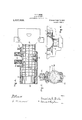
- Figure 1 is a vertical cross section of a cylinder of an explosion engine cast around niy improved core.
- Figs. 2 and 3 are transverse cross sections on the lines 2 2 and 3--3 ot Fig. 1 respectively.
- Fig. 4 is a View of my inlproved core together with auxiliary cores prepared for a cylinder of an explosion engine, part of the auxiliary cores being shown in cross Section.
- F ig. 5 is an end view of the same with one of the auxiliary cores omit-ted.
- Fig. G is a half cross section on the line (lof Fig. l.
- Lined cylinders for pumps and engines may be formed without the labor of boring the cylinders and litting in the liners by pouring the metal forming the body of the cylinder around the liner in the proper mold;
- Aluminum is the most desirable metal for the body of the cylinderdhecause ot its lightness in proportion to its strength, and cast iron liners havethe most satistaon tory 'wearing properties.
- Other metals such as bronze and steel may also be employed for liners.
- Thisl invention relates to a core so constructed that the metal shell shall be supported in proper position within the mold, and so that the softer lighter metal can tion' around the core and shell to assun'ie the correct. torni and at the saine time hold the shell in position.
- 'lhe construction shown in the drawing is a cylinder of a three-port, twocycle, explo! sion-engine and the core for the saine.
- the lower or base part. l0 of the cylinder casting has the usual insuring-caps 11, and apertures l2 tunning hand holes. Extending upward 't'roni the base part is the evi/linear proper,
- 'intake ports 19 and intermediate ports 20 may be provided, as Well as the connection Q1 for the explosive vapor from the carbureter.
- the liner may also be formed with these ports and with longitudinal and transverse grooves 24 as shown in the drawings. ',lhe cooling liquid may escape through the opening 25.
- the grooves preferably stop short of the ports. Any other desired irregularities may be formed on the shell.
- the cylinder may be cast in the usual niolds, ⁇ vith the liner 13 either horizontal or vertical in the mold as desired.
- Figs. l and 5 the manner of uniting thefcores is shown, Fig. a showing the main central core 28 having an extension 29, and one-half ot'- the cores for forming the ports and the spaces for the cooling liquid; these auxiliary cores being shown in cross section in Fig. 5.
- the cores 32 will form the exhaust ports 18; the core the passage 21 for theexplosivevapor; the small core 31, the by-pass Q2; and the core 35 will form the passage 17 for the cooling liquid.
- the cores 3Q, 33 and 34 may be held in ⁇ position by pins 36 extending up from those portions of the niainicore 28. which project through. the ports in the liner 13. t
- the main coreiQS should be formed from friable inaterial,which will stand consider able heat without crumbling and may be belted before or utter the liner is in position.
- the other cores will be ofi. the usual composition.
- the liner 13 may be heated in any desired manner. After the liner suiiiciently heated, the auxiliary cores 31, 32, 33, 34- and 35 are secured in position and the united structure placed in; ⁇
- the liner should always be made of a metal having a higher melting pointthan the shell that 'surrounds'ih Many modifications may be made in the details ofthe cores and liner Withoutdeparting from the spirit of my invention.
- a core for combined aluminum andcas* iron cylinders comprising a cylindrical shell of cast-iron of substantially even thickness throughout and having shallow grooves, and a body of baked friable material extending through the shell and projecting from the' ends thereof for supporting the same, and auxiliary cores for orming passages in the vWall'of the cylinder.
Landscapes
- Engineering & Computer Science (AREA)
- Mechanical Engineering (AREA)
- Cylinder Crankcases Of Internal Combustion Engines (AREA)
- Molds, Cores, And Manufacturing Methods Thereof (AREA)
Description
FLE. BURK.
CYLINDER GORE.
APPLIOATIQN FILED nu. 27, 1910.
lnurnnn- Hitman P. E. BURK.
CYLINDER GORE.
APPLIOATION FILED JAN. 27, 1910.
Patented Sept. 10, 1912 2 SHEETS-SHEET 2.
' UNITED STATES PATENT OFFICE.
FREDERICK E. BURR, or BAY CITY, MICHIGAN, AssIGNoR To EDWARD o EWEN., oF
' SAGINAW, MICHIGAN.
CYLINDER-CORE.
To all whom 'it may concern:
Bel itI known that l, Fnnonnicn E. lumi,
a citizen of the United States, anda resident of Bay City, in the county of Bay and State of Michigan, have invented a new and lniproved Cylinder-Core, of which the following is a speciiication.
This invent-ion relates to the art of inet-al founding, and the object ot my improvements is to provide cores `for the cylinders ot' engines and pumps whereby the casting of cylinders having a body` of a light metal lined with a thin shell of a harder heavier metal-is rendered feasible.
ln the accompanying drawings, Figure 1 is a vertical cross section of a cylinder of an explosion engine cast around niy improved core. Figs. 2 and 3 are transverse cross sections on the lines 2 2 and 3--3 ot Fig. 1 respectively. Fig. 4 is a View of my inlproved core together with auxiliary cores prepared for a cylinder of an explosion engine, part of the auxiliary cores being shown in cross Section. F ig. 5 is an end view of the same with one of the auxiliary cores omit-ted. Fig. G is a half cross section on the line (lof Fig. l.
Similar reference characters refer to like parts throughout the several views.
Lined cylinders for pumps and engines may be formed without the labor of boring the cylinders and litting in the liners by pouring the metal forming the body of the cylinder around the liner in the proper mold; Aluminum is the most desirable metal for the body of the cylinderdhecause ot its lightness in proportion to its strength, and cast iron liners havethe most satistaon tory 'wearing properties. Other metals such as bronze and steel may also be employed for liners.
Thisl invention relates to a core so constructed that the metal shell shall be supported in proper position within the mold, and so that the softer lighter metal can tion' around the core and shell to assun'ie the correct. torni and at the saine time hold the shell in position.
'lhe construction shown in the drawing is a cylinder of a three-port, twocycle, explo! sion-engine and the core for the saine. The lower or base part. l0 of the cylinder casting has the usual insuring-caps 11, and apertures l2 tunning hand holes. Extending upward 't'roni the base part is the evi/linear proper,
Specification of Letters Patent. V
Application filed January 27, 1910.
Patented sept. 1o, 1912. Serial` No. 540,297.
consisting of a liner 13, of Wear-resisting metal, preferably of cast iron, and the body comprising the shells 14 and 15 of lighter met-al and having a lower melting point than the liner, preferably aluniinum,`se arated by the Water spaces 16 and 17I in t e usual manner. The usual exhaustwports 18,
'intake ports 19 and intermediate ports 20 may be provided, as Well as the connection Q1 for the explosive vapor from the carbureter. The ports 19 and QOare shown connected by the by-pass 22. The liner may also be formed with these ports and with longitudinal and transverse grooves 24 as shown in the drawings. ',lhe cooling liquid may escape through the opening 25. The grooves preferably stop short of the ports. Any other desired irregularities may be formed on the shell. Y
The cylinder may be cast in the usual niolds,\vith the liner 13 either horizontal or vertical in the mold as desired. In Figs. l and 5 the manner of uniting thefcores is shown, Fig. a showing the main central core 28 having an extension 29, and one-half ot'- the cores for forming the ports and the spaces for the cooling liquid; these auxiliary cores being shown in cross section in Fig. 5. The large core 31 (F ig. 4) willV form the passage 1G for the cooling liquid and aperture 25. This core is not= shown in Fig. 5. The cores 32 will form the exhaust ports 18; the core the passage 21 for theexplosivevapor; the small core 31, the by-pass Q2; and the core 35 will form the passage 17 for the cooling liquid. The cores 3Q, 33 and 34 may be held in` position by pins 36 extending up from those portions of the niainicore 28. which project through. the ports in the liner 13. t
The main coreiQS should be formed from friable inaterial,which will stand consider able heat without crumbling and may be belted before or utter the liner is in position. The other cores will be ofi. the usual composition. p
lili/When the mold has been prepared and the" metal ttor the body melted, the liner 13 may be heated in any desired manner. After the liner suiiiciently heated, the auxiliary cores 31, 32, 33, 34- and 35 are secured in position and the united structure placed in;`
the liner 13, ridges being formed which extend into the grooves in the shell. If the outer surface of the shell 13 is left uninished it will usually be irregular enough'Y to insure a suicient union. The liner should always be made of a metal having a higher melting pointthan the shell that 'surrounds'ih Many modifications may be made in the details ofthe cores and liner Withoutdeparting from the spirit of my invention.
Having now explained my improvements, what I claim as my invention and desire to secure by Letters Patent is A core for combined aluminum andcas* iron cylinders, comprising a cylindrical shell of cast-iron of substantially even thickness throughout and having shallow grooves, and a body of baked friable material extending through the shell and projecting from the' ends thereof for supporting the same, and auxiliary cores for orming passages in the vWall'of the cylinder.
In testimony whereof I have signed this specification in the presence of t-Wo subscribing Witnesses.
` `FREDERICK E. BURK.
Witnesses:
NEWELL A. EDDY, Jr., EDWARD C. EWI-1N.
Priority Applications (1)
| Application Number | Priority Date | Filing Date | Title |
|---|---|---|---|
| US54029710A US1037859A (en) | 1910-01-27 | 1910-01-27 | Cylinder-core. |
Applications Claiming Priority (1)
| Application Number | Priority Date | Filing Date | Title |
|---|---|---|---|
| US54029710A US1037859A (en) | 1910-01-27 | 1910-01-27 | Cylinder-core. |
Publications (1)
| Publication Number | Publication Date |
|---|---|
| US1037859A true US1037859A (en) | 1912-09-10 |
Family
ID=3106136
Family Applications (1)
| Application Number | Title | Priority Date | Filing Date |
|---|---|---|---|
| US54029710A Expired - Lifetime US1037859A (en) | 1910-01-27 | 1910-01-27 | Cylinder-core. |
Country Status (1)
| Country | Link |
|---|---|
| US (1) | US1037859A (en) |
Cited By (3)
| Publication number | Priority date | Publication date | Assignee | Title |
|---|---|---|---|---|
| US2880485A (en) * | 1954-12-08 | 1959-04-07 | Gen Motors Corp | Water jacket coring for casting internal combustion engine blocks |
| US4922863A (en) * | 1989-04-18 | 1990-05-08 | Tecumseh Products Company | Cast engine cylinder having an internal passageway and method of making same |
| US4969263A (en) * | 1989-04-18 | 1990-11-13 | Tecumseh Products Company | Method of making a cast engine cylinder having an internal passageway |
-
1910
- 1910-01-27 US US54029710A patent/US1037859A/en not_active Expired - Lifetime
Cited By (3)
| Publication number | Priority date | Publication date | Assignee | Title |
|---|---|---|---|---|
| US2880485A (en) * | 1954-12-08 | 1959-04-07 | Gen Motors Corp | Water jacket coring for casting internal combustion engine blocks |
| US4922863A (en) * | 1989-04-18 | 1990-05-08 | Tecumseh Products Company | Cast engine cylinder having an internal passageway and method of making same |
| US4969263A (en) * | 1989-04-18 | 1990-11-13 | Tecumseh Products Company | Method of making a cast engine cylinder having an internal passageway |
Similar Documents
| Publication | Publication Date | Title |
|---|---|---|
| BR112013018322B1 (en) | METHOD FOR THE PRODUCTION OF A PISTON RING AND PISTON RING | |
| FI92982B (en) | Sideboard for treating metal, which sideboard has a refractory bottom lining and method for producing said refractory bottom lining | |
| US1490849A (en) | Method of making pistons | |
| US4003422A (en) | Process for making a composite cylinder head assembly | |
| US4903652A (en) | Cylinder liner insert and method of making engine block therewith | |
| US2042015A (en) | Apparatus for casting sleeve-like bodies | |
| US2956846A (en) | Aluminum piston with aluminum alloy ring carrier | |
| JPS60257963A (en) | Production of mud pump liner | |
| US2737427A (en) | Trunk piston | |
| US1388552A (en) | High-speed piston | |
| US789358A (en) | Chambered projectile. | |
| JPS5689368A (en) | Production of centrifugally cast roll of high chromium cast iron | |
| US1347480A (en) | Internal-combustion motor | |
| US1486694A (en) | Ladle stopper rod | |
| US1831583A (en) | Piston for internal combustion engines | |
| US1862279A (en) | Bearing | |
| US1517070A (en) | Piston ring | |
| US1248266A (en) | Internal-combustion engine. | |
| US1296596A (en) | Metal-mold. | |
| US678458A (en) | Knob. | |
| US2107009A (en) | Apparatus for molding strut pistons | |
| US2438206A (en) | Rotor for vibrator units | |
| US1915970A (en) | Cylinder head | |
| US1296598A (en) | Metal-mold. | |
| US1388534A (en) | Mold for ingots and other heavy steel castings |