US10364240B2 - Aryl sulfonamides - Google Patents
Aryl sulfonamides Download PDFInfo
- Publication number
- US10364240B2 US10364240B2 US15/697,414 US201715697414A US10364240B2 US 10364240 B2 US10364240 B2 US 10364240B2 US 201715697414 A US201715697414 A US 201715697414A US 10364240 B2 US10364240 B2 US 10364240B2
- Authority
- US
- United States
- Prior art keywords
- unsubstituted
- substituted
- group
- mmol
- alkyl
- Prior art date
- Legal status (The legal status is an assumption and is not a legal conclusion. Google has not performed a legal analysis and makes no representation as to the accuracy of the status listed.)
- Expired - Lifetime
Links
- 0 C*C1=CC=CC=C1NSO(O)C1=CC=CC=C1.CC.C[Y] Chemical compound C*C1=CC=CC=C1NSO(O)C1=CC=CC=C1.CC.C[Y] 0.000 description 35
- GRTFPPGXKYAUNS-UHFFFAOYSA-N C=CC(C)(C)C.CC(=O)C(C)(C)C.CC(C)(C)C#CC1=CC=CC=C1.CC(C)(C)C#N.CC(C)(C)C(C)(C)C.CC(C)(C)C(C)(C)CCO.CC(C)(C)C(C)(C)CO.CC(C)(C)C(F)(F)F.CC(C)(C)C1(C)OCCO1.CC(C)(C)C1=C(F)N=CC=C1.CC(C)(C)C1=CC=CC=C1.CC(C)(C)C1=CN=CN=C1.CC(C)(C)C1=CN=CO1.CC(C)(C)C1=COC=C1.CC(C)(C)C1=COC=N1.CC(C)(C)C1=CSC=C1.CC(C)(C)C1=NC=CO1.CC(C)(C)F.CC(C)(C)N1C=CC=N1.CC(C)(C)N1CCNCC1.CC(C)(C)N1CCOCC1.CC(C)(C)OC(F)(F)F.CC(C)(C)S(C)(=O)=O.CC1=NC(C)=C(C(C)(C)C)O1.CC1=NC=C(C(C)(C)C)O1.CCC(C)(C)C(C)(C)C.CCOC(C)(C)C.COC(=O)CCC(C)(C)C.[H]C(C)(C)C Chemical compound C=CC(C)(C)C.CC(=O)C(C)(C)C.CC(C)(C)C#CC1=CC=CC=C1.CC(C)(C)C#N.CC(C)(C)C(C)(C)C.CC(C)(C)C(C)(C)CCO.CC(C)(C)C(C)(C)CO.CC(C)(C)C(F)(F)F.CC(C)(C)C1(C)OCCO1.CC(C)(C)C1=C(F)N=CC=C1.CC(C)(C)C1=CC=CC=C1.CC(C)(C)C1=CN=CN=C1.CC(C)(C)C1=CN=CO1.CC(C)(C)C1=COC=C1.CC(C)(C)C1=COC=N1.CC(C)(C)C1=CSC=C1.CC(C)(C)C1=NC=CO1.CC(C)(C)F.CC(C)(C)N1C=CC=N1.CC(C)(C)N1CCNCC1.CC(C)(C)N1CCOCC1.CC(C)(C)OC(F)(F)F.CC(C)(C)S(C)(=O)=O.CC1=NC(C)=C(C(C)(C)C)O1.CC1=NC=C(C(C)(C)C)O1.CCC(C)(C)C(C)(C)C.CCOC(C)(C)C.COC(=O)CCC(C)(C)C.[H]C(C)(C)C GRTFPPGXKYAUNS-UHFFFAOYSA-N 0.000 description 4
- IPPXBWBTHCJXHW-UHFFFAOYSA-N CC(C)(C)Br.CC(C)(C)C.CC(C)(C)Cl.CC(C)(C)[N+](=O)[O-].CC(C)C(C)(C)C.CC(C)CC(C)(C)C.CC(C)OC(C)(C)C.CCC(C)(C)C.COC(C)(C)C Chemical compound CC(C)(C)Br.CC(C)(C)C.CC(C)(C)Cl.CC(C)(C)[N+](=O)[O-].CC(C)C(C)(C)C.CC(C)CC(C)(C)C.CC(C)OC(C)(C)C.CCC(C)(C)C.COC(C)(C)C IPPXBWBTHCJXHW-UHFFFAOYSA-N 0.000 description 4
- FVHPPDPGRUBKQI-UHFFFAOYSA-N CC(C)(C)C(C)(C)C1=CN=CO1.CC(C)(C)C(C)(C)C1=COC=N1.CC(C)(C)C(C)(C)C1=NC=CO1.CC(C)(C)C1(C)CCOCC1.CC(C)(C)C1=CC=CN1.CC(C)(C)C1=CC=CO1.CC(C)(C)C1=CSN=N1.CC(C)(C)C1CCOCC1.CC(C)(C)N1CCC(F)(F)CC1.CC(C)(C)N1CCCC1.CC(C)(C)N1CCCCC1.CC(C)(C)N1CCCCC1.CC(C)(C)N1CCSCC1.CC(C)(C)OC(=O)N1C=CC=C1C(C)(C)C.CC1=C(C(C)(C)C)OC=N1.CC1=NN=C(C(C)(C)C)O1.CC1=NOC(C)=C1C(C)(C)C.CC1CN(C(C)(C)C)CC(C)O1.CC1COC(C)(C(C)(C)C)O1.CC1OC(C)(C(C)(C)C)OC1C.CN1N=NN=C1C(C)(C)C.COC(=O)C(C)(C)C(C)(C)C Chemical compound CC(C)(C)C(C)(C)C1=CN=CO1.CC(C)(C)C(C)(C)C1=COC=N1.CC(C)(C)C(C)(C)C1=NC=CO1.CC(C)(C)C1(C)CCOCC1.CC(C)(C)C1=CC=CN1.CC(C)(C)C1=CC=CO1.CC(C)(C)C1=CSN=N1.CC(C)(C)C1CCOCC1.CC(C)(C)N1CCC(F)(F)CC1.CC(C)(C)N1CCCC1.CC(C)(C)N1CCCCC1.CC(C)(C)N1CCCCC1.CC(C)(C)N1CCSCC1.CC(C)(C)OC(=O)N1C=CC=C1C(C)(C)C.CC1=C(C(C)(C)C)OC=N1.CC1=NN=C(C(C)(C)C)O1.CC1=NOC(C)=C1C(C)(C)C.CC1CN(C(C)(C)C)CC(C)O1.CC1COC(C)(C(C)(C)C)O1.CC1OC(C)(C(C)(C)C)OC1C.CN1N=NN=C1C(C)(C)C.COC(=O)C(C)(C)C(C)(C)C FVHPPDPGRUBKQI-UHFFFAOYSA-N 0.000 description 4
- SMBFHJNRJHAKGZ-UHFFFAOYSA-N CC(C)(C)c(cc1)ccc1S(Nc(c(C(c1ccncc1)=O)c1)ccc1Cl)(=O)=O Chemical compound CC(C)(C)c(cc1)ccc1S(Nc(c(C(c1ccncc1)=O)c1)ccc1Cl)(=O)=O SMBFHJNRJHAKGZ-UHFFFAOYSA-N 0.000 description 4
- SVGOTDQNYSIGHW-UHFFFAOYSA-N CC1=CC=C(C(=O)C2=C(NS(=O)(=O)C3=CC=C(C(C)(C)C4=COC=N4)C=C3)C=CC(Cl)=C2)C=N1 Chemical compound CC1=CC=C(C(=O)C2=C(NS(=O)(=O)C3=CC=C(C(C)(C)C4=COC=N4)C=C3)C=CC(Cl)=C2)C=N1 SVGOTDQNYSIGHW-UHFFFAOYSA-N 0.000 description 4
- IPNYUSGRMDDAAM-UHFFFAOYSA-N CC1=NC(C(=O)C2=C(NS(=O)(=O)C3=CC=C(C4=CN=C(C)O4)C=C3)C=CC(Cl)=C2)=CC=C1 Chemical compound CC1=NC(C(=O)C2=C(NS(=O)(=O)C3=CC=C(C4=CN=C(C)O4)C=C3)C=CC(Cl)=C2)=CC=C1 IPNYUSGRMDDAAM-UHFFFAOYSA-N 0.000 description 4
- UVZOZMAYQVPIQS-UHFFFAOYSA-N CC(=O)OCC(C)(C)C1=CC=C(S(=O)(=O)NC2=C(C(=O)C3=CC=NC=C3)C=C(Cl)C=C2)C=C1 Chemical compound CC(=O)OCC(C)(C)C1=CC=C(S(=O)(=O)NC2=C(C(=O)C3=CC=NC=C3)C=C(Cl)C=C2)C=C1 UVZOZMAYQVPIQS-UHFFFAOYSA-N 0.000 description 3
- HRRJAVIXHMJLTL-UHFFFAOYSA-N CC(C)(C)C1=CC=C(S(=O)(=O)NC2=C(C(=O)C3=CC=C(Cl)N=C3)C=C(Cl)C=C2)C=C1 Chemical compound CC(C)(C)C1=CC=C(S(=O)(=O)NC2=C(C(=O)C3=CC=C(Cl)N=C3)C=C(Cl)C=C2)C=C1 HRRJAVIXHMJLTL-UHFFFAOYSA-N 0.000 description 3
- FJQPSGFDHLUXMV-UHFFFAOYSA-N CC(C)(C)C1=CC=C(S(=O)(=O)NC2=C(C(=O)C3=NC=CC=N3)C=C(Cl)C=C2)C=C1 Chemical compound CC(C)(C)C1=CC=C(S(=O)(=O)NC2=C(C(=O)C3=NC=CC=N3)C=C(Cl)C=C2)C=C1 FJQPSGFDHLUXMV-UHFFFAOYSA-N 0.000 description 3
- RQXYQJPSWSQVJE-UHFFFAOYSA-N CC(C)(C)C1=CC=C(S(=O)(=O)NC2=C(C(=O)C3=NNC=C3)C=C(Cl)C=C2)C=C1 Chemical compound CC(C)(C)C1=CC=C(S(=O)(=O)NC2=C(C(=O)C3=NNC=C3)C=C(Cl)C=C2)C=C1 RQXYQJPSWSQVJE-UHFFFAOYSA-N 0.000 description 3
- NQUCDXFIYNUFOU-UHFFFAOYSA-N CC(C)(C1=CC=C(S(=O)(=O)NC2=C(C(=O)C3=CC=NC=C3)C=C(Cl)C=C2)C=C1)C1=COC=N1 Chemical compound CC(C)(C1=CC=C(S(=O)(=O)NC2=C(C(=O)C3=CC=NC=C3)C=C(Cl)C=C2)C=C1)C1=COC=N1 NQUCDXFIYNUFOU-UHFFFAOYSA-N 0.000 description 3
- KXUMINWXDVBKRS-UHFFFAOYSA-N CC(C)(C1=CC=C(S(=O)(=O)NC2=C(C(=O)C3=CC=NC=C3)C=C(Cl)C=C2)C=C1)C1=NC=CO1 Chemical compound CC(C)(C1=CC=C(S(=O)(=O)NC2=C(C(=O)C3=CC=NC=C3)C=C(Cl)C=C2)C=C1)C1=NC=CO1 KXUMINWXDVBKRS-UHFFFAOYSA-N 0.000 description 3
- CNSFANGYZDOBBZ-UHFFFAOYSA-N CC(C)SC1=CC=C(S(=O)(=O)NC2=C(C(=O)C3=CC=NC=C3)C=C(Cl)C=C2)C=C1 Chemical compound CC(C)SC1=CC=C(S(=O)(=O)NC2=C(C(=O)C3=CC=NC=C3)C=C(Cl)C=C2)C=C1 CNSFANGYZDOBBZ-UHFFFAOYSA-N 0.000 description 3
- NJGBTWZCSPCYQR-UHFFFAOYSA-N CC1(C2=CC=C(S(=O)(=O)NC3=C(C(=O)C4=CC=NC=C4)C=C(Cl)C=C3)C=C2)CCOCC1 Chemical compound CC1(C2=CC=C(S(=O)(=O)NC3=C(C(=O)C4=CC=NC=C4)C=C(Cl)C=C3)C=C2)CCOCC1 NJGBTWZCSPCYQR-UHFFFAOYSA-N 0.000 description 3
- AEYMKLNZWCFRLV-UHFFFAOYSA-N CC1=C(C(=O)C2=C(NS(=O)(=O)C3=CC=C(C4=CN=CO4)C=C3)C=CC(Cl)=C2)C=CC=N1 Chemical compound CC1=C(C(=O)C2=C(NS(=O)(=O)C3=CC=C(C4=CN=CO4)C=C3)C=CC(Cl)=C2)C=CC=N1 AEYMKLNZWCFRLV-UHFFFAOYSA-N 0.000 description 3
- QABNGHYOMHTRLD-UHFFFAOYSA-N CC1=CC=CC(C(=O)C2=C(NS(=O)(=O)C3=CC=C(C(C)(C)C4=NC=CO4)C=C3)C=CC(Cl)=C2)=N1 Chemical compound CC1=CC=CC(C(=O)C2=C(NS(=O)(=O)C3=CC=C(C(C)(C)C4=NC=CO4)C=C3)C=CC(Cl)=C2)=N1 QABNGHYOMHTRLD-UHFFFAOYSA-N 0.000 description 3
- AAHZBAYAPUITFQ-UHFFFAOYSA-N CC1=NC=C(C(=O)C2=C(NS(=O)(=O)C3=CC(F)=C(N4CCOCC4)C=C3)C=CC(Cl)=C2)C=C1 Chemical compound CC1=NC=C(C(=O)C2=C(NS(=O)(=O)C3=CC(F)=C(N4CCOCC4)C=C3)C=CC(Cl)=C2)C=C1 AAHZBAYAPUITFQ-UHFFFAOYSA-N 0.000 description 3
- SSKABHQYNDEKOL-UHFFFAOYSA-N CCC(C)(C)c(cc1)ccc1S(Nc(ccc(Cl)c1)c1C(c1ccncc1)=O)(=O)=O Chemical compound CCC(C)(C)c(cc1)ccc1S(Nc(ccc(Cl)c1)c1C(c1ccncc1)=O)(=O)=O SSKABHQYNDEKOL-UHFFFAOYSA-N 0.000 description 3
- DFMFBKHBACRILC-IYBDPMFKSA-N C[C@H]1CN(C2=C(F)C=C(S(=O)(=O)NC3=C(C(=O)C4=CC=NC=C4)C=C(Cl)C=C3)C=C2)C[C@@H](C)O1 Chemical compound C[C@H]1CN(C2=C(F)C=C(S(=O)(=O)NC3=C(C(=O)C4=CC=NC=C4)C=C(Cl)C=C3)C=C2)C[C@@H](C)O1 DFMFBKHBACRILC-IYBDPMFKSA-N 0.000 description 3
- GCWRCNRBFFLLGC-UHFFFAOYSA-N Cc1nccc(C(c(cc(cc2)Cl)c2NS(c2ccc(CCC(OC)=O)cc2)(=O)=O)=O)c1 Chemical compound Cc1nccc(C(c(cc(cc2)Cl)c2NS(c2ccc(CCC(OC)=O)cc2)(=O)=O)=O)c1 GCWRCNRBFFLLGC-UHFFFAOYSA-N 0.000 description 3
- QJUUWDZFLQPPJZ-UHFFFAOYSA-N O=C(C1=CC=CN=C1)C1=C(NS(=O)(=O)C2=CC=C(C3=CN=CO3)C=C2)C=CC(Cl)=C1 Chemical compound O=C(C1=CC=CN=C1)C1=C(NS(=O)(=O)C2=CC=C(C3=CN=CO3)C=C2)C=CC(Cl)=C1 QJUUWDZFLQPPJZ-UHFFFAOYSA-N 0.000 description 3
- DDLGMNHNYBYZNA-UHFFFAOYSA-N O=C(C1=CC=NC=C1)C1=C(NS(=O)(=O)C2=CC=C(C3=CN=CN=C3)C=C2)C=CC(Cl)=C1 Chemical compound O=C(C1=CC=NC=C1)C1=C(NS(=O)(=O)C2=CC=C(C3=CN=CN=C3)C=C2)C=CC(Cl)=C1 DDLGMNHNYBYZNA-UHFFFAOYSA-N 0.000 description 3
- MDBUJNQHSGPUIA-UHFFFAOYSA-N O=C(C1=CC=NC=C1)C1=C(NS(=O)(=O)C2=CC=C(N3CCCCC3)C=C2)C=CC(Cl)=C1 Chemical compound O=C(C1=CC=NC=C1)C1=C(NS(=O)(=O)C2=CC=C(N3CCCCC3)C=C2)C=CC(Cl)=C1 MDBUJNQHSGPUIA-UHFFFAOYSA-N 0.000 description 3
- OAVHJORNCVCOLH-UHFFFAOYSA-N O=C(C1=CN=CC=C1)C1=C(NS(=O)(=O)C2=CC=C(N3CCOCC3)C=C2)C=C(F)C(F)=C1 Chemical compound O=C(C1=CN=CC=C1)C1=C(NS(=O)(=O)C2=CC=C(N3CCOCC3)C=C2)C=C(F)C(F)=C1 OAVHJORNCVCOLH-UHFFFAOYSA-N 0.000 description 3
- HTNDACHVFIJNRL-UHFFFAOYSA-N [H]N(C1=CC=C(Cl)C=C1C(=O)C1=CC=NC(C)=C1)S(=O)(=O)C1=CC=C(S(C)(=O)=O)C=C1 Chemical compound [H]N(C1=CC=C(Cl)C=C1C(=O)C1=CC=NC(C)=C1)S(=O)(=O)C1=CC=C(S(C)(=O)=O)C=C1 HTNDACHVFIJNRL-UHFFFAOYSA-N 0.000 description 3
- ZOUPHAYDPRGXKH-UHFFFAOYSA-N [H]N(C1=CC=C(Cl)C=C1C(=O)C1=CC=NC=C1)S(=O)(=O)C1=CC=C(CCC2=NC=CO2)C=C1 Chemical compound [H]N(C1=CC=C(Cl)C=C1C(=O)C1=CC=NC=C1)S(=O)(=O)C1=CC=C(CCC2=NC=CO2)C=C1 ZOUPHAYDPRGXKH-UHFFFAOYSA-N 0.000 description 3
- HTUHBIWBZUBZRB-UHFFFAOYSA-N CC(=O)N1CCN(C2=CC=C(S(=O)(=O)NC3=C(C(=O)C4=CC=NC=C4)C=C(Cl)C=C3)C=C2)CC1 Chemical compound CC(=O)N1CCN(C2=CC=C(S(=O)(=O)NC3=C(C(=O)C4=CC=NC=C4)C=C(Cl)C=C3)C=C2)CC1 HTUHBIWBZUBZRB-UHFFFAOYSA-N 0.000 description 2
- IZISMXMXCLUHGI-UHFFFAOYSA-N CC(C)(C)C(=O)NC1=CC=C(Cl)C=C1 Chemical compound CC(C)(C)C(=O)NC1=CC=C(Cl)C=C1 IZISMXMXCLUHGI-UHFFFAOYSA-N 0.000 description 2
- SYYNJVKWDUXFCT-UHFFFAOYSA-N CC(C)(C)C1=CC(C(F)(F)F)=CN=C1.CC(C)(C)C1=CC=NC(C(F)(F)F)=C1.CC(C)(C)C1=CC=NN=C1.CC(C)(C)C1=CN=C(C(F)(F)F)N=C1.CC(C)(C)C1=CN=CN=C1 Chemical compound CC(C)(C)C1=CC(C(F)(F)F)=CN=C1.CC(C)(C)C1=CC=NC(C(F)(F)F)=C1.CC(C)(C)C1=CC=NN=C1.CC(C)(C)C1=CN=C(C(F)(F)F)N=C1.CC(C)(C)C1=CN=CN=C1 SYYNJVKWDUXFCT-UHFFFAOYSA-N 0.000 description 2
- CFEYTKAXCQIQBL-UHFFFAOYSA-N CC(C)(C)C1=CC(Cl)=[N+]([O-])C=C1.CC(C)(C)C1=CC=NC(C#N)=C1.CC(C)(C)C1=CC=NC(Cl)=C1.CC(C)(C)C1=CC=NC(Cl)=C1.CC(C)(C)C1=CC=NC(S(C)(=O)=O)=C1.CC(C)(C)C1=CN=C(S(C)(=O)=O)C=C1.CC(C)(C)C1=C[N+]([O-])=CC=C1.CC1=C(C(C)(C)C)C=CC=N1.CC1=C(C(C)(C)C)C=CC=N1O.CC1=C(C(C)(C)C)C=CC=[N+]1[O-].CC1=CC(C(C)(C)C)=CC=N1.CC1=NC=C(C(C)(C)C)C=C1.CC1=[N+]([O-])C=C(C(C)(C)C)C=C1.COC1=NC=CC(C(C)(C)C)=C1.CSC1=CC(C(C)(C)C)=CC=N1.CSC1=NC=C(C(C)(C)C)C=C1 Chemical compound CC(C)(C)C1=CC(Cl)=[N+]([O-])C=C1.CC(C)(C)C1=CC=NC(C#N)=C1.CC(C)(C)C1=CC=NC(Cl)=C1.CC(C)(C)C1=CC=NC(Cl)=C1.CC(C)(C)C1=CC=NC(S(C)(=O)=O)=C1.CC(C)(C)C1=CN=C(S(C)(=O)=O)C=C1.CC(C)(C)C1=C[N+]([O-])=CC=C1.CC1=C(C(C)(C)C)C=CC=N1.CC1=C(C(C)(C)C)C=CC=N1O.CC1=C(C(C)(C)C)C=CC=[N+]1[O-].CC1=CC(C(C)(C)C)=CC=N1.CC1=NC=C(C(C)(C)C)C=C1.CC1=[N+]([O-])C=C(C(C)(C)C)C=C1.COC1=NC=CC(C(C)(C)C)=C1.CSC1=CC(C(C)(C)C)=CC=N1.CSC1=NC=C(C(C)(C)C)C=C1 CFEYTKAXCQIQBL-UHFFFAOYSA-N 0.000 description 2
- UPAINCFRSYQUOG-UHFFFAOYSA-N CC(C)(C)C1=CC=C(Cl)N=C1.CC(C)(C)C1=CC=CC=[N+]1[O-].CC(C)(C)C1=CC=NC=N1.CC(C)(C)C1=CN=C(N2CCOCC2)C=C1.CC(C)(C)C1=CN=CC=N1.CC(C)(C)C1=NC=CC=C1.CC(C)(C)C1=NC=CC=N1.CC(C)(C)C1=NC=CS1.CC(C)(C)C1=NNC=C1.CC1=CC=NC=C1C(C)(C)C.CC1=NC(C(C)(C)C)=CC=C1.CN1C=C(C(C)(C)C)N=N1.CN1C=CN=C1C(C)(C)C.CN1N=C(C(C)(C)C)C2=C1C=CC=C2.CN1N=NC=C1C(C)(C)C Chemical compound CC(C)(C)C1=CC=C(Cl)N=C1.CC(C)(C)C1=CC=CC=[N+]1[O-].CC(C)(C)C1=CC=NC=N1.CC(C)(C)C1=CN=C(N2CCOCC2)C=C1.CC(C)(C)C1=CN=CC=N1.CC(C)(C)C1=NC=CC=C1.CC(C)(C)C1=NC=CC=N1.CC(C)(C)C1=NC=CS1.CC(C)(C)C1=NNC=C1.CC1=CC=NC=C1C(C)(C)C.CC1=NC(C(C)(C)C)=CC=C1.CN1C=C(C(C)(C)C)N=N1.CN1C=CN=C1C(C)(C)C.CN1N=C(C(C)(C)C)C2=C1C=CC=C2.CN1N=NC=C1C(C)(C)C UPAINCFRSYQUOG-UHFFFAOYSA-N 0.000 description 2
- JYNRCTGNUWIOCC-UHFFFAOYSA-N CC(C)(C)C1=CC=C(S(=O)(=O)NC2=C(C(=O)C3=CC=C[N+]([O-])=C3)C=C(Cl)C=C2)C=C1 Chemical compound CC(C)(C)C1=CC=C(S(=O)(=O)NC2=C(C(=O)C3=CC=C[N+]([O-])=C3)C=C(Cl)C=C2)C=C1 JYNRCTGNUWIOCC-UHFFFAOYSA-N 0.000 description 2
- SFEITTVAHPCONL-UHFFFAOYSA-N CC(C)(C)C1=CC=C(S(=O)(=O)NC2=C(C(=O)C3=CC=NC(S(C)(=O)=O)=C3)C=C(Cl)C=C2)C=C1 Chemical compound CC(C)(C)C1=CC=C(S(=O)(=O)NC2=C(C(=O)C3=CC=NC(S(C)(=O)=O)=C3)C=C(Cl)C=C2)C=C1 SFEITTVAHPCONL-UHFFFAOYSA-N 0.000 description 2
- YKRJSZRXUBAFON-UHFFFAOYSA-N CC(C)(C)C1=CC=C(S(=O)(=O)NC2=C(C(=O)C3=CC=NC=C3)C=C(F)C=C2)C=C1 Chemical compound CC(C)(C)C1=CC=C(S(=O)(=O)NC2=C(C(=O)C3=CC=NC=C3)C=C(F)C=C2)C=C1 YKRJSZRXUBAFON-UHFFFAOYSA-N 0.000 description 2
- NOSFESUGDNNCFP-UHFFFAOYSA-N CC(C)(C)C1=CC=C(S(=O)(=O)NC2=C(C(=O)C3=CC=NC=C3)C=CC(Cl)=C2)C=C1 Chemical compound CC(C)(C)C1=CC=C(S(=O)(=O)NC2=C(C(=O)C3=CC=NC=C3)C=CC(Cl)=C2)C=C1 NOSFESUGDNNCFP-UHFFFAOYSA-N 0.000 description 2
- ZKVAOBRUMPEXTG-UHFFFAOYSA-N CC(C)(C)C1=CC=C(S(=O)(=O)NC2=C(C(=O)C3=CC=NC=N3)C=C(Cl)C=C2)C=C1 Chemical compound CC(C)(C)C1=CC=C(S(=O)(=O)NC2=C(C(=O)C3=CC=NC=N3)C=C(Cl)C=C2)C=C1 ZKVAOBRUMPEXTG-UHFFFAOYSA-N 0.000 description 2
- WFRZATMZFQSDFI-UHFFFAOYSA-N CC(C)(C)C1=CC=C(S(=O)(=O)NC2=C(C(=O)C3=CN=C(N4CCOCC4)C=C3)C=C(Cl)C=C2)C=C1 Chemical compound CC(C)(C)C1=CC=C(S(=O)(=O)NC2=C(C(=O)C3=CN=C(N4CCOCC4)C=C3)C=C(Cl)C=C2)C=C1 WFRZATMZFQSDFI-UHFFFAOYSA-N 0.000 description 2
- CGNBINVSTGGRLK-UHFFFAOYSA-N CC(C)(C)C1=CC=C(S(=O)(=O)NC2=C(C(=O)C3=CN=CC=C3)C(F)=C(F)C=C2)C=C1 Chemical compound CC(C)(C)C1=CC=C(S(=O)(=O)NC2=C(C(=O)C3=CN=CC=C3)C(F)=C(F)C=C2)C=C1 CGNBINVSTGGRLK-UHFFFAOYSA-N 0.000 description 2
- PCDNWEFDIUWKPA-UHFFFAOYSA-N CC(C)(C)C1=CC=C(S(=O)(=O)NC2=C(C(=O)C3=NC=CS3)C=C(Cl)C=C2)C=C1 Chemical compound CC(C)(C)C1=CC=C(S(=O)(=O)NC2=C(C(=O)C3=NC=CS3)C=C(Cl)C=C2)C=C1 PCDNWEFDIUWKPA-UHFFFAOYSA-N 0.000 description 2
- DXYJWBPTTAZMJB-UHFFFAOYSA-N CC(C)(C)C1=CC=NC=C1.CC(C)(C)C1=CN=CC=C1 Chemical compound CC(C)(C)C1=CC=NC=C1.CC(C)(C)C1=CN=CC=C1 DXYJWBPTTAZMJB-UHFFFAOYSA-N 0.000 description 2
- UTPDYJUBTDFAOK-UHFFFAOYSA-N CC(C)(C)OC(=O)N1C(C2=CC=C(S(=O)(=O)NC3=C(C(=O)C4=CC=NC=C4)C=C(Cl)C=C3)C=C2)=CC2=C1C=CC=C2 Chemical compound CC(C)(C)OC(=O)N1C(C2=CC=C(S(=O)(=O)NC3=C(C(=O)C4=CC=NC=C4)C=C(Cl)C=C3)C=C2)=CC2=C1C=CC=C2 UTPDYJUBTDFAOK-UHFFFAOYSA-N 0.000 description 2
- SAOHOXWCOCZCPH-UHFFFAOYSA-N CC(C)(C)OC(=O)N1C=CC=C1C1=CC=C(S(=O)(=O)NC2=C(C(=O)C3=CC=NC=C3)C=C(Cl)C=C2)C=C1 Chemical compound CC(C)(C)OC(=O)N1C=CC=C1C1=CC=C(S(=O)(=O)NC2=C(C(=O)C3=CC=NC=C3)C=C(Cl)C=C2)C=C1 SAOHOXWCOCZCPH-UHFFFAOYSA-N 0.000 description 2
- USXIOINEWWTDIS-UHFFFAOYSA-N CC(C)(C)c(cc1)ccc1S(Nc(ccc(Cl)c1)c1C(c1ccc(C)nc1)=O)(=O)=O Chemical compound CC(C)(C)c(cc1)ccc1S(Nc(ccc(Cl)c1)c1C(c1ccc(C)nc1)=O)(=O)=O USXIOINEWWTDIS-UHFFFAOYSA-N 0.000 description 2
- QZUDQWONANYOHL-UHFFFAOYSA-N CC(C)(C1=CC=C(S(=O)(=O)NC2=C(C(=O)C3=CC=[N+]([O-])C=C3)C=C(Cl)C=C2)C=C1)C1=NC=CO1 Chemical compound CC(C)(C1=CC=C(S(=O)(=O)NC2=C(C(=O)C3=CC=[N+]([O-])C=C3)C=C(Cl)C=C2)C=C1)C1=NC=CO1 QZUDQWONANYOHL-UHFFFAOYSA-N 0.000 description 2
- WIZJTBNAJRLYDE-UHFFFAOYSA-N CC(C)(C1=CC=C(S(=O)(=O)NC2=C(C(=O)C3=CN=CC=C3)C=C(Cl)C=C2)C=C1)C1=NC=CO1 Chemical compound CC(C)(C1=CC=C(S(=O)(=O)NC2=C(C(=O)C3=CN=CC=C3)C=C(Cl)C=C2)C=C1)C1=NC=CO1 WIZJTBNAJRLYDE-UHFFFAOYSA-N 0.000 description 2
- GCFUXDVQNMSRSC-UHFFFAOYSA-N CC(C)(C1=CC=C(S(=O)(=O)NC2=C(C(=O)C3=CN=CC=C3)C=C(F)C(F)=C2)C=C1)C1=NC=CO1 Chemical compound CC(C)(C1=CC=C(S(=O)(=O)NC2=C(C(=O)C3=CN=CC=C3)C=C(F)C(F)=C2)C=C1)C1=NC=CO1 GCFUXDVQNMSRSC-UHFFFAOYSA-N 0.000 description 2
- TVDIXCWCXMBKSU-UHFFFAOYSA-N CC(C)(C1=CC=C(S(=O)(=O)NC2=C(C(=O)C3=C[N+]([O-])=CC=C3)C=C(Cl)C=C2)C=C1)C1=NC=CO1 Chemical compound CC(C)(C1=CC=C(S(=O)(=O)NC2=C(C(=O)C3=C[N+]([O-])=CC=C3)C=C(Cl)C=C2)C=C1)C1=NC=CO1 TVDIXCWCXMBKSU-UHFFFAOYSA-N 0.000 description 2
- XRJXNGROBYTWOD-UHFFFAOYSA-N CC(C)(C1=CC=C(S(=O)(=O)NC2=C(C(=O)C3=NC=CC=C3)C=C(Cl)C=C2)C=C1)C1=NC=CO1 Chemical compound CC(C)(C1=CC=C(S(=O)(=O)NC2=C(C(=O)C3=NC=CC=C3)C=C(Cl)C=C2)C=C1)C1=NC=CO1 XRJXNGROBYTWOD-UHFFFAOYSA-N 0.000 description 2
- QMUBWWRYMZUVPL-UHFFFAOYSA-N CC(C)OC1=CC=C(S(=O)(=O)NC2=C(C(=O)C3=CC=NC=C3)C=C(Cl)C=C2)C=C1 Chemical compound CC(C)OC1=CC=C(S(=O)(=O)NC2=C(C(=O)C3=CC=NC=C3)C=C(Cl)C=C2)C=C1 QMUBWWRYMZUVPL-UHFFFAOYSA-N 0.000 description 2
- DZHGXRANHZOYQM-UHFFFAOYSA-N CC(C)Oc(cc1)ccc1S(Nc(ccc(Cl)c1)c1C(c1cccnc1)=O)(=O)=O Chemical compound CC(C)Oc(cc1)ccc1S(Nc(ccc(Cl)c1)c1C(c1cccnc1)=O)(=O)=O DZHGXRANHZOYQM-UHFFFAOYSA-N 0.000 description 2
- QVRGAPRMAURSMX-UHFFFAOYSA-N CC.CC(=O)C1=C(NS(=O)(=O)C2=CC=C(Br)C=C2)C=CC=C1.CC(=O)C1=C(NS(=O)(=O)C2=CC=CC=C2)C=CC=C1 Chemical compound CC.CC(=O)C1=C(NS(=O)(=O)C2=CC=C(Br)C=C2)C=CC=C1.CC(=O)C1=C(NS(=O)(=O)C2=CC=CC=C2)C=CC=C1 QVRGAPRMAURSMX-UHFFFAOYSA-N 0.000 description 2
- UPMDCQKAEQUFMD-UHFFFAOYSA-N CC.O=C(C1=CC=[N+]([O-])C=C1)C1=C(NS(=O)(=O)C2=CC=CC=C2)C=CC(Cl)=C1 Chemical compound CC.O=C(C1=CC=[N+]([O-])C=C1)C1=C(NS(=O)(=O)C2=CC=CC=C2)C=CC(Cl)=C1 UPMDCQKAEQUFMD-UHFFFAOYSA-N 0.000 description 2
- XFAMXEZYVPBVMI-UHFFFAOYSA-N CC1(C2=CC=C(S(=O)(=O)NC3=C(C(=O)C4=CC=CC=N4)C=C(Cl)C=C3)C=C2)CCOCC1 Chemical compound CC1(C2=CC=C(S(=O)(=O)NC3=C(C(=O)C4=CC=CC=N4)C=C(Cl)C=C3)C=C2)CCOCC1 XFAMXEZYVPBVMI-UHFFFAOYSA-N 0.000 description 2
- OYKHRRRRGIJIIR-UHFFFAOYSA-N CC1(C2=CC=C(S(=O)(=O)NC3=C(C(=O)C4=CC=NC=C4)C=C(Cl)C=C3)C=C2)OCCO1 Chemical compound CC1(C2=CC=C(S(=O)(=O)NC3=C(C(=O)C4=CC=NC=C4)C=C(Cl)C=C3)C=C2)OCCO1 OYKHRRRRGIJIIR-UHFFFAOYSA-N 0.000 description 2
- MICKPVYGVLKJJJ-UHFFFAOYSA-N CC1(C2=CC=C(S(=O)(=O)NC3=C(C(=O)C4=CC=[N+]([O-])C=C4)C=C(Cl)C=C3)C=C2)CCOCC1 Chemical compound CC1(C2=CC=C(S(=O)(=O)NC3=C(C(=O)C4=CC=[N+]([O-])C=C4)C=C(Cl)C=C3)C=C2)CCOCC1 MICKPVYGVLKJJJ-UHFFFAOYSA-N 0.000 description 2
- YCCXGFTWJNJVHZ-UHFFFAOYSA-N CC1(C2=CC=C(S(=O)(=O)NC3=C(C(=O)C4=CC=[N+]([O-])C=C4)C=C(Cl)C=C3)C=C2)OCCO1 Chemical compound CC1(C2=CC=C(S(=O)(=O)NC3=C(C(=O)C4=CC=[N+]([O-])C=C4)C=C(Cl)C=C3)C=C2)OCCO1 YCCXGFTWJNJVHZ-UHFFFAOYSA-N 0.000 description 2
- IURAIAJMBHUDBN-UHFFFAOYSA-N CC1(C2=CC=C(S(=O)(=O)NC3=C(C(=O)C4=CN=CC=C4)C=C(Cl)C=C3)C=C2)CCOCC1 Chemical compound CC1(C2=CC=C(S(=O)(=O)NC3=C(C(=O)C4=CN=CC=C4)C=C(Cl)C=C3)C=C2)CCOCC1 IURAIAJMBHUDBN-UHFFFAOYSA-N 0.000 description 2
- RAMAQVUCIPMWQL-UHFFFAOYSA-N CC1(C2=CC=C(S(=O)(=O)NC3=C(C(=O)C4=C[N+]([O-])=CC=C4)C=C(Cl)C=C3)C=C2)CCOCC1 Chemical compound CC1(C2=CC=C(S(=O)(=O)NC3=C(C(=O)C4=C[N+]([O-])=CC=C4)C=C(Cl)C=C3)C=C2)CCOCC1 RAMAQVUCIPMWQL-UHFFFAOYSA-N 0.000 description 2
- GWJRFVGBHBERQB-UHFFFAOYSA-N CC1=C(C(=O)C2=C(NS(=O)(=O)C3=CC=C(C4(C)CCOCC4)C=C3)C=CC(Cl)=C2)C=CC=N1 Chemical compound CC1=C(C(=O)C2=C(NS(=O)(=O)C3=CC=C(C4(C)CCOCC4)C=C3)C=CC(Cl)=C2)C=CC=N1 GWJRFVGBHBERQB-UHFFFAOYSA-N 0.000 description 2
- SBWJLHPCEHEABR-UHFFFAOYSA-N CC1=CC(C#N)=CC=N1 Chemical compound CC1=CC(C#N)=CC=N1 SBWJLHPCEHEABR-UHFFFAOYSA-N 0.000 description 2
- OBQMBHRRROYZCS-UHFFFAOYSA-N CC1=CC(C(=O)C2=C(NS(=O)(=O)C3=CC=C(OC(C)C)C=C3)C=CC(Cl)=C2)=CC=N1 Chemical compound CC1=CC(C(=O)C2=C(NS(=O)(=O)C3=CC=C(OC(C)C)C=C3)C=CC(Cl)=C2)=CC=N1 OBQMBHRRROYZCS-UHFFFAOYSA-N 0.000 description 2
- WHYUWYDQRGXLPV-UHFFFAOYSA-N CC1=CC(C(=O)C2=C(NS(=O)(=O)C3=CC=C(OC(F)(F)F)C=C3)C=CC(Cl)=C2)=CC=N1 Chemical compound CC1=CC(C(=O)C2=C(NS(=O)(=O)C3=CC=C(OC(F)(F)F)C=C3)C=CC(Cl)=C2)=CC=N1 WHYUWYDQRGXLPV-UHFFFAOYSA-N 0.000 description 2
- KVFTWDNYNCLZKA-UHFFFAOYSA-N CC1=CC=C(S(=O)(=O)NC2=C(C(=O)C3=CC=NC=C3)C=C(Cl)C=C2)C=C1 Chemical compound CC1=CC=C(S(=O)(=O)NC2=C(C(=O)C3=CC=NC=C3)C=C(Cl)C=C2)C=C1 KVFTWDNYNCLZKA-UHFFFAOYSA-N 0.000 description 2
- DEJQEPBWGLUZJS-UHFFFAOYSA-N CC1=NC(C(=O)C2=C(NS(=O)(=O)C3=CC=C(C4(C)CCOCC4)C=C3)C=CC(Cl)=C2)=CC=C1 Chemical compound CC1=NC(C(=O)C2=C(NS(=O)(=O)C3=CC=C(C4(C)CCOCC4)C=C3)C=CC(Cl)=C2)=CC=C1 DEJQEPBWGLUZJS-UHFFFAOYSA-N 0.000 description 2
- WCQLGILQVDJKRE-UHFFFAOYSA-N CC1=NC(C(=O)C2=CC(Cl)=CC=C2N)=CC=C1 Chemical compound CC1=NC(C(=O)C2=CC(Cl)=CC=C2N)=CC=C1 WCQLGILQVDJKRE-UHFFFAOYSA-N 0.000 description 2
- VOCNRPSKUVPJCF-CALCHBBNSA-N CC1=NC=C(C(=O)C2=C(NS(=O)(=O)C3=CC(F)=C(N4C[C@H](C)O[C@H](C)C4)C=C3)C=CC(Cl)=C2)C=C1 Chemical compound CC1=NC=C(C(=O)C2=C(NS(=O)(=O)C3=CC(F)=C(N4C[C@H](C)O[C@H](C)C4)C=C3)C=CC(Cl)=C2)C=C1 VOCNRPSKUVPJCF-CALCHBBNSA-N 0.000 description 2
- BEEBVQCHEBDNID-UHFFFAOYSA-N CC1=NC=C(C(=O)C2=C(NS(=O)(=O)C3=CC=C(C(C)(C)C4=NC=CO4)C=C3)C=CC(Cl)=C2)C=C1 Chemical compound CC1=NC=C(C(=O)C2=C(NS(=O)(=O)C3=CC=C(C(C)(C)C4=NC=CO4)C=C3)C=CC(Cl)=C2)C=C1 BEEBVQCHEBDNID-UHFFFAOYSA-N 0.000 description 2
- JDQACCWHYLNTAT-UHFFFAOYSA-N CC1=NC=C(C(=O)C2=C(NS(=O)(=O)C3=CC=C(C4(C)CCOCC4)C=C3)C=CC(Cl)=C2)C=C1 Chemical compound CC1=NC=C(C(=O)C2=C(NS(=O)(=O)C3=CC=C(C4(C)CCOCC4)C=C3)C=CC(Cl)=C2)C=C1 JDQACCWHYLNTAT-UHFFFAOYSA-N 0.000 description 2
- YEVADSZMEBMWOU-UHFFFAOYSA-N CC1=NC=CC(C(=O)C2=C(N)C=CC(Cl)=C2)=C1 Chemical compound CC1=NC=CC(C(=O)C2=C(N)C=CC(Cl)=C2)=C1 YEVADSZMEBMWOU-UHFFFAOYSA-N 0.000 description 2
- ZQHDSXGBCRTQDU-UHFFFAOYSA-N CC1=NN=C(C2=CC=CC(S(=O)(=O)NC3=C(C(=O)C4=CC=NC=C4)C=C(Cl)C=C3)=C2)O1 Chemical compound CC1=NN=C(C2=CC=CC(S(=O)(=O)NC3=C(C(=O)C4=CC=NC=C4)C=C(Cl)C=C3)=C2)O1 ZQHDSXGBCRTQDU-UHFFFAOYSA-N 0.000 description 2
- CFCVYMWGFHGGRF-UHFFFAOYSA-N CC1=NOC(C)=C1C1=CC=C(S(=O)(=O)NC2=C(C(=O)C3=CC=NC=C3)C=C(Cl)C=C2)C=C1 Chemical compound CC1=NOC(C)=C1C1=CC=C(S(=O)(=O)NC2=C(C(=O)C3=CC=NC=C3)C=C(Cl)C=C2)C=C1 CFCVYMWGFHGGRF-UHFFFAOYSA-N 0.000 description 2
- ITIVVPSRJXMQDB-UHFFFAOYSA-N CC1=[N+]([O-])C=C(C(=O)C2=C(NS(=O)(=O)C3=CC=C(C4(C)CCOCC4)C=C3)C=CC(Cl)=C2)C=C1 Chemical compound CC1=[N+]([O-])C=C(C(=O)C2=C(NS(=O)(=O)C3=CC=C(C4(C)CCOCC4)C=C3)C=CC(Cl)=C2)C=C1 ITIVVPSRJXMQDB-UHFFFAOYSA-N 0.000 description 2
- CZXPHOJHRLPOLA-UHFFFAOYSA-N CC1COC(C)(C2=CC=C(S(=O)(=O)NC3=C(C(=O)C4=CC=NC=C4)C=C(Cl)C=C3)C=C2)O1 Chemical compound CC1COC(C)(C2=CC=C(S(=O)(=O)NC3=C(C(=O)C4=CC=NC=C4)C=C(Cl)C=C3)C=C2)O1 CZXPHOJHRLPOLA-UHFFFAOYSA-N 0.000 description 2
- CJKMAKNSFDMXKI-UHFFFAOYSA-N CCC1=CC=C(S(=O)(=O)NC2=C(C(=O)C3=CC=NC=C3)C=C(Br)C=C2)C=C1 Chemical compound CCC1=CC=C(S(=O)(=O)NC2=C(C(=O)C3=CC=NC=C3)C=C(Br)C=C2)C=C1 CJKMAKNSFDMXKI-UHFFFAOYSA-N 0.000 description 2
- FSPDQZIBXCZBTA-UHFFFAOYSA-N CCC1=CC=C(S(=O)(=O)NC2=C(C(=O)C3=CC=NC=C3)C=C(Cl)C=C2)C=C1 Chemical compound CCC1=CC=C(S(=O)(=O)NC2=C(C(=O)C3=CC=NC=C3)C=C(Cl)C=C2)C=C1 FSPDQZIBXCZBTA-UHFFFAOYSA-N 0.000 description 2
- DORQWLQRKMCLIB-UHFFFAOYSA-N CN(C)C(=O)C(C)(C)C1=CC=C(S(=O)(=O)NC2=C(C(=O)C3=CC=NC=C3)C=C(Cl)C=C2)C=C1 Chemical compound CN(C)C(=O)C(C)(C)C1=CC=C(S(=O)(=O)NC2=C(C(=O)C3=CC=NC=C3)C=C(Cl)C=C2)C=C1 DORQWLQRKMCLIB-UHFFFAOYSA-N 0.000 description 2
- FLJKBQYYUQAHNS-UHFFFAOYSA-N CN(C)C(=O)CCC1=CC=C(S(=O)(=O)NC2=C(C(=O)C3=CC=NC=C3)C=C(Cl)C=C2)C=C1 Chemical compound CN(C)C(=O)CCC1=CC=C(S(=O)(=O)NC2=C(C(=O)C3=CC=NC=C3)C=C(Cl)C=C2)C=C1 FLJKBQYYUQAHNS-UHFFFAOYSA-N 0.000 description 2
- NHYASGDXJCWGTH-UHFFFAOYSA-N CN1C=C(C(=O)C2=CC(Cl)=CC=C2NS(=O)(=O)C2=CC=C(C(C)(C)C)C=C2)N=N1 Chemical compound CN1C=C(C(=O)C2=CC(Cl)=CC=C2NS(=O)(=O)C2=CC=C(C(C)(C)C)C=C2)N=N1 NHYASGDXJCWGTH-UHFFFAOYSA-N 0.000 description 2
- QMLWZWKIFPTVFQ-UHFFFAOYSA-N CN1N=C(C(=O)C2=C(NS(=O)(=O)C3=CC=C(C(C)(C)C)C=C3)C=CC(Cl)=C2)C2=C1C=CC=C2 Chemical compound CN1N=C(C(=O)C2=C(NS(=O)(=O)C3=CC=C(C(C)(C)C)C=C3)C=CC(Cl)=C2)C2=C1C=CC=C2 QMLWZWKIFPTVFQ-UHFFFAOYSA-N 0.000 description 2
- KOCOTXSMDJPTDH-UHFFFAOYSA-N CN1N=NC=C1C(=O)C1=CC(Cl)=CC=C1NS(=O)(=O)C1=CC=C(C(C)(C)C)C=C1 Chemical compound CN1N=NC=C1C(=O)C1=CC(Cl)=CC=C1NS(=O)(=O)C1=CC=C(C(C)(C)C)C=C1 KOCOTXSMDJPTDH-UHFFFAOYSA-N 0.000 description 2
- ALDQWYQFYBPDLD-UHFFFAOYSA-N COC1=C(Cl)C=CC(NS(=O)(=O)C2=CC=C(C(C)(C)C)C=C2)=C1C(=O)C1=CC=NC=C1 Chemical compound COC1=C(Cl)C=CC(NS(=O)(=O)C2=CC=C(C(C)(C)C)C=C2)=C1C(=O)C1=CC=NC=C1 ALDQWYQFYBPDLD-UHFFFAOYSA-N 0.000 description 2
- WMHPYCQFQYWTAN-UHFFFAOYSA-N COC1=CC=C(S(=O)(=O)NC2=C(C(=O)C3=CC=CC=N3)C=C(Cl)C=C2)C=C1 Chemical compound COC1=CC=C(S(=O)(=O)NC2=C(C(=O)C3=CC=CC=N3)C=C(Cl)C=C2)C=C1 WMHPYCQFQYWTAN-UHFFFAOYSA-N 0.000 description 2
- MMSSACANTYGWFF-UHFFFAOYSA-N CS(=O)(=O)C1=CC=C(S(=O)(=O)NC2=C(C(=O)C3=CC=NC=C3)C=C(Cl)C=C2)C=C1 Chemical compound CS(=O)(=O)C1=CC=C(S(=O)(=O)NC2=C(C(=O)C3=CC=NC=C3)C=C(Cl)C=C2)C=C1 MMSSACANTYGWFF-UHFFFAOYSA-N 0.000 description 2
- KQVKONIVITVLAM-UHFFFAOYSA-N CS(=O)(=O)C1=CC=C(S(=O)(=O)NC2=C(C(=O)C3=CN=CC=C3)C=C(Cl)C=C2)C=C1 Chemical compound CS(=O)(=O)C1=CC=C(S(=O)(=O)NC2=C(C(=O)C3=CN=CC=C3)C=C(Cl)C=C2)C=C1 KQVKONIVITVLAM-UHFFFAOYSA-N 0.000 description 2
- DIJHIJMLWZYVAL-IYBDPMFKSA-N C[C@H]1CN(C2=C(F)C=C(S(=O)(=O)NC3=C(C(=O)C4=CC=[N+]([O-])C=C4)C=C(Cl)C=C3)C=C2)C[C@@H](C)O1 Chemical compound C[C@H]1CN(C2=C(F)C=C(S(=O)(=O)NC3=C(C(=O)C4=CC=[N+]([O-])C=C4)C=C(Cl)C=C3)C=C2)C[C@@H](C)O1 DIJHIJMLWZYVAL-IYBDPMFKSA-N 0.000 description 2
- OZLWVBZYNFNNTL-IYBDPMFKSA-N C[C@H]1CN(C2=C(F)C=C(S(=O)(=O)NC3=C(C(=O)C4=CN=CC=C4)C=C(Cl)C=C3)C=C2)C[C@@H](C)O1 Chemical compound C[C@H]1CN(C2=C(F)C=C(S(=O)(=O)NC3=C(C(=O)C4=CN=CC=C4)C=C(Cl)C=C3)C=C2)C[C@@H](C)O1 OZLWVBZYNFNNTL-IYBDPMFKSA-N 0.000 description 2
- WCYHTZUDYMHFAV-CALCHBBNSA-N C[C@H]1CN(C2=CC=C(S(=O)(=O)NC3=C(C(=O)C4=CC=NC=C4)C=C(Cl)C=C3)C=C2)C[C@@H](C)O1 Chemical compound C[C@H]1CN(C2=CC=C(S(=O)(=O)NC3=C(C(=O)C4=CC=NC=C4)C=C(Cl)C=C3)C=C2)C[C@@H](C)O1 WCYHTZUDYMHFAV-CALCHBBNSA-N 0.000 description 2
- ZSDNOIYOFIDITJ-CALCHBBNSA-N C[C@H]1CN(C2=CC=C(S(=O)(=O)NC3=C(C(=O)C4=CC=[N+]([O-])C=C4)C=C(Cl)C=C3)C=C2)C[C@@H](C)O1 Chemical compound C[C@H]1CN(C2=CC=C(S(=O)(=O)NC3=C(C(=O)C4=CC=[N+]([O-])C=C4)C=C(Cl)C=C3)C=C2)C[C@@H](C)O1 ZSDNOIYOFIDITJ-CALCHBBNSA-N 0.000 description 2
- DJUQOTYUKCLFSL-UHFFFAOYSA-N C[N+]1=CC=C(C(C)(C)C)C=C1 Chemical compound C[N+]1=CC=C(C(C)(C)C)C=C1 DJUQOTYUKCLFSL-UHFFFAOYSA-N 0.000 description 2
- LMDJMTDZULLTGY-UHFFFAOYSA-N NC1=C(C(=O)C2=CC=CC=N2)C=C(Cl)C=C1 Chemical compound NC1=C(C(=O)C2=CC=CC=N2)C=C(Cl)C=C1 LMDJMTDZULLTGY-UHFFFAOYSA-N 0.000 description 2
- QQXZBCLLSFRZMW-UHFFFAOYSA-N NC1=CC=C(Cl)C=C1C(=O)C1=CN=C(Cl)C=C1 Chemical compound NC1=CC=C(Cl)C=C1C(=O)C1=CN=C(Cl)C=C1 QQXZBCLLSFRZMW-UHFFFAOYSA-N 0.000 description 2
- PAYRUJLWNCNPSJ-UHFFFAOYSA-N Nc1ccccc1 Chemical compound Nc1ccccc1 PAYRUJLWNCNPSJ-UHFFFAOYSA-N 0.000 description 2
- XJOZXAOSVUTESG-UHFFFAOYSA-N O=C(C1=CC=NC=C1)C1=C(CS(=O)(=O)C2=CC=C(OC(F)(F)F)C=C2)C=CC(Br)=C1 Chemical compound O=C(C1=CC=NC=C1)C1=C(CS(=O)(=O)C2=CC=C(OC(F)(F)F)C=C2)C=CC(Br)=C1 XJOZXAOSVUTESG-UHFFFAOYSA-N 0.000 description 2
- AUCCSTCHDWDFTJ-UHFFFAOYSA-N O=C(C1=CC=NC=C1)C1=C(NS(=O)(=O)C2=CC(F)=C(N3CCOCC3)C=C2)C=CC(Cl)=C1 Chemical compound O=C(C1=CC=NC=C1)C1=C(NS(=O)(=O)C2=CC(F)=C(N3CCOCC3)C=C2)C=CC(Cl)=C1 AUCCSTCHDWDFTJ-UHFFFAOYSA-N 0.000 description 2
- ZFACXJFGUZPDGM-UHFFFAOYSA-N O=C(C1=CC=NC=C1)C1=C(NS(=O)(=O)C2=CC3=C(C=C2)CCNC3)C=CC(Cl)=C1 Chemical compound O=C(C1=CC=NC=C1)C1=C(NS(=O)(=O)C2=CC3=C(C=C2)CCNC3)C=CC(Cl)=C1 ZFACXJFGUZPDGM-UHFFFAOYSA-N 0.000 description 2
- NEMWBDKWYAQBHE-UHFFFAOYSA-N O=C(C1=CC=NC=C1)C1=C(NS(=O)(=O)C2=CC=C(Br)C=C2)C=CC(Cl)=C1 Chemical compound O=C(C1=CC=NC=C1)C1=C(NS(=O)(=O)C2=CC=C(Br)C=C2)C=CC(Cl)=C1 NEMWBDKWYAQBHE-UHFFFAOYSA-N 0.000 description 2
- QCQXCACBQWRAHI-UHFFFAOYSA-N O=C(C1=CC=NC=C1)C1=C(NS(=O)(=O)C2=CC=C(C3=C(F)N=CC=C3)C=C2)C=CC(Cl)=C1 Chemical compound O=C(C1=CC=NC=C1)C1=C(NS(=O)(=O)C2=CC=C(C3=C(F)N=CC=C3)C=C2)C=CC(Cl)=C1 QCQXCACBQWRAHI-UHFFFAOYSA-N 0.000 description 2
- SHXYXXFAKIAEMR-UHFFFAOYSA-N O=C(C1=CC=NC=C1)C1=C(NS(=O)(=O)C2=CC=C(C3=CC4=C(C=CC=C4)N3)C=C2)C=CC(Cl)=C1 Chemical compound O=C(C1=CC=NC=C1)C1=C(NS(=O)(=O)C2=CC=C(C3=CC4=C(C=CC=C4)N3)C=C2)C=CC(Cl)=C1 SHXYXXFAKIAEMR-UHFFFAOYSA-N 0.000 description 2
- MDWXGFJYTNOARG-UHFFFAOYSA-N O=C(C1=CC=NC=C1)C1=C(NS(=O)(=O)C2=CC=C(C3=CC=CC=C3)C=C2)C=CC(Cl)=C1 Chemical compound O=C(C1=CC=NC=C1)C1=C(NS(=O)(=O)C2=CC=C(C3=CC=CC=C3)C=C2)C=CC(Cl)=C1 MDWXGFJYTNOARG-UHFFFAOYSA-N 0.000 description 2
- SOWVRCFNBHHROL-UHFFFAOYSA-N O=C(C1=CC=NC=C1)C1=C(NS(=O)(=O)C2=CC=C(C3=CC=CN3)C=C2)C=CC(Cl)=C1 Chemical compound O=C(C1=CC=NC=C1)C1=C(NS(=O)(=O)C2=CC=C(C3=CC=CN3)C=C2)C=CC(Cl)=C1 SOWVRCFNBHHROL-UHFFFAOYSA-N 0.000 description 2
- RVRRLRFQJJZNPP-UHFFFAOYSA-N O=C(C1=CC=NC=C1)C1=C(NS(=O)(=O)C2=CC=C(C3=CC=CO3)C=C2)C=CC(Cl)=C1 Chemical compound O=C(C1=CC=NC=C1)C1=C(NS(=O)(=O)C2=CC=C(C3=CC=CO3)C=C2)C=CC(Cl)=C1 RVRRLRFQJJZNPP-UHFFFAOYSA-N 0.000 description 2
- RTKDFNSPSDEHEI-UHFFFAOYSA-N O=C(C1=CC=NC=C1)C1=C(NS(=O)(=O)C2=CC=C(C3=CN=CO3)C=C2)C=CC(Cl)=C1 Chemical compound O=C(C1=CC=NC=C1)C1=C(NS(=O)(=O)C2=CC=C(C3=CN=CO3)C=C2)C=CC(Cl)=C1 RTKDFNSPSDEHEI-UHFFFAOYSA-N 0.000 description 2
- SOQMYMUXTCADGN-UHFFFAOYSA-N O=C(C1=CC=NC=C1)C1=C(NS(=O)(=O)C2=CC=C(C3=COC=C3)C=C2)C=CC(Cl)=C1 Chemical compound O=C(C1=CC=NC=C1)C1=C(NS(=O)(=O)C2=CC=C(C3=COC=C3)C=C2)C=CC(Cl)=C1 SOQMYMUXTCADGN-UHFFFAOYSA-N 0.000 description 2
- XFOJPIFYEYDKKC-UHFFFAOYSA-N O=C(C1=CC=NC=C1)C1=C(NS(=O)(=O)C2=CC=C(C3=CSN=N3)C=C2)C=CC(Cl)=C1 Chemical compound O=C(C1=CC=NC=C1)C1=C(NS(=O)(=O)C2=CC=C(C3=CSN=N3)C=C2)C=CC(Cl)=C1 XFOJPIFYEYDKKC-UHFFFAOYSA-N 0.000 description 2
- ANENPIZAGBLSEU-UHFFFAOYSA-N O=C(C1=CC=NC=C1)C1=C(NS(=O)(=O)C2=CC=C(N3CCC3)C=C2)C=CC(Cl)=C1 Chemical compound O=C(C1=CC=NC=C1)C1=C(NS(=O)(=O)C2=CC=C(N3CCC3)C=C2)C=CC(Cl)=C1 ANENPIZAGBLSEU-UHFFFAOYSA-N 0.000 description 2
- MNBUDSSLSRYWHX-UHFFFAOYSA-N O=C(C1=CC=NC=C1)C1=C(NS(=O)(=O)C2=CC=C(N3CCCC3)C=C2)C=CC(Cl)=C1 Chemical compound O=C(C1=CC=NC=C1)C1=C(NS(=O)(=O)C2=CC=C(N3CCCC3)C=C2)C=CC(Cl)=C1 MNBUDSSLSRYWHX-UHFFFAOYSA-N 0.000 description 2
- XHQITZKPHBTDQM-UHFFFAOYSA-N O=C(C1=CC=NC=C1)C1=C(NS(=O)(=O)C2=CC=C(N3CCNCC3)C=C2)C=CC(Cl)=C1 Chemical compound O=C(C1=CC=NC=C1)C1=C(NS(=O)(=O)C2=CC=C(N3CCNCC3)C=C2)C=CC(Cl)=C1 XHQITZKPHBTDQM-UHFFFAOYSA-N 0.000 description 2
- YLIFIMQUTIPJHH-UHFFFAOYSA-N O=C(C1=CC=NC=C1)C1=C(NS(=O)(=O)C2=CC=C(N3CCOCC3)C=C2)C=CC(Cl)=C1 Chemical compound O=C(C1=CC=NC=C1)C1=C(NS(=O)(=O)C2=CC=C(N3CCOCC3)C=C2)C=CC(Cl)=C1 YLIFIMQUTIPJHH-UHFFFAOYSA-N 0.000 description 2
- MOOBGYSBQNTSFE-UHFFFAOYSA-N O=C(C1=CC=NC=C1)C1=C(NS(=O)(=O)C2=CC=C(N3CCS(=O)(=O)CC3)C=C2)C=CC(Cl)=C1 Chemical compound O=C(C1=CC=NC=C1)C1=C(NS(=O)(=O)C2=CC=C(N3CCS(=O)(=O)CC3)C=C2)C=CC(Cl)=C1 MOOBGYSBQNTSFE-UHFFFAOYSA-N 0.000 description 2
- WUDSUFANEADHTQ-UHFFFAOYSA-N O=C(C1=CC=NC=C1)C1=C(NS(=O)(=O)C2=CC=C(N3CCSCC3)C=C2)C=CC(Cl)=C1 Chemical compound O=C(C1=CC=NC=C1)C1=C(NS(=O)(=O)C2=CC=C(N3CCSCC3)C=C2)C=CC(Cl)=C1 WUDSUFANEADHTQ-UHFFFAOYSA-N 0.000 description 2
- XJNWBZFDSDEBRN-UHFFFAOYSA-N O=C(C1=CC=NC=C1)C1=C(NS(=O)(=O)C2=CC=C(OC(F)(F)F)C=C2)C=CC(Cl)=C1 Chemical compound O=C(C1=CC=NC=C1)C1=C(NS(=O)(=O)C2=CC=C(OC(F)(F)F)C=C2)C=CC(Cl)=C1 XJNWBZFDSDEBRN-UHFFFAOYSA-N 0.000 description 2
- ORTVKHPKQRZATD-UHFFFAOYSA-N O=C(C1=CC=[N+]([O-])C=C1)C1=C(NS(=O)(=O)C2=CC(F)=C(N3CCOCC3)C=C2)C=CC(Cl)=C1 Chemical compound O=C(C1=CC=[N+]([O-])C=C1)C1=C(NS(=O)(=O)C2=CC(F)=C(N3CCOCC3)C=C2)C=CC(Cl)=C1 ORTVKHPKQRZATD-UHFFFAOYSA-N 0.000 description 2
- SNKYUTXYPFEABO-UHFFFAOYSA-N O=C(C1=CC=[N+]([O-])C=C1)C1=C(NS(=O)(=O)C2=CC=C(C3=COC=C3)C=C2)C=CC(Cl)=C1 Chemical compound O=C(C1=CC=[N+]([O-])C=C1)C1=C(NS(=O)(=O)C2=CC=C(C3=COC=C3)C=C2)C=CC(Cl)=C1 SNKYUTXYPFEABO-UHFFFAOYSA-N 0.000 description 2
- SKMHBFWLUDFNFF-UHFFFAOYSA-N O=C(C1=CC=[N+]([O-])C=C1)C1=C(NS(=O)(=O)C2=CC=C(N3CCOCC3)C=C2)C=CC(Cl)=C1 Chemical compound O=C(C1=CC=[N+]([O-])C=C1)C1=C(NS(=O)(=O)C2=CC=C(N3CCOCC3)C=C2)C=CC(Cl)=C1 SKMHBFWLUDFNFF-UHFFFAOYSA-N 0.000 description 2
- BRMDCLBDVPSSRN-UHFFFAOYSA-N [H]N(C1=CC=C(Cl)C=C1C(=O)C1=CC=NC=C1)S(=O)(=O)C1=CC=C(C(C)(C)C2=CN=CO2)C=C1 Chemical compound [H]N(C1=CC=C(Cl)C=C1C(=O)C1=CC=NC=C1)S(=O)(=O)C1=CC=C(C(C)(C)C2=CN=CO2)C=C1 BRMDCLBDVPSSRN-UHFFFAOYSA-N 0.000 description 2
- MCOKYRDLEAHNGP-UHFFFAOYSA-N [H]N(C1=CC=C(Cl)C=C1C(=O)C1=CC=[N+]([O-])C=C1)S(=O)(=O)C1=CC=C(C(C)(C)C2=CN=CO2)C=C1 Chemical compound [H]N(C1=CC=C(Cl)C=C1C(=O)C1=CC=[N+]([O-])C=C1)S(=O)(=O)C1=CC=C(C(C)(C)C2=CN=CO2)C=C1 MCOKYRDLEAHNGP-UHFFFAOYSA-N 0.000 description 2
- WDCIZLFTWGUHNZ-UHFFFAOYSA-N [H]N(C1=CC=C(Cl)C=C1C(=O)C1=CN=C(C)C=C1)S(=O)(=O)C1=CC=C(C(C)(C)C2=CN=CO2)C=C1 Chemical compound [H]N(C1=CC=C(Cl)C=C1C(=O)C1=CN=C(C)C=C1)S(=O)(=O)C1=CC=C(C(C)(C)C2=CN=CO2)C=C1 WDCIZLFTWGUHNZ-UHFFFAOYSA-N 0.000 description 2
- QUSIIDJKCDOIER-UHFFFAOYSA-N BrC1=CCN=C1.BrC1=CN(CC2=CC=CC=C2)N=C1.BrC1=CN(CC2=CC=CC=C2)N=C1.N#C[Cu].NC1=CC=C(Cl)C=C1.NC1=CC=C(Cl)C=C1C(=O)C1=CN(CC2=CC=CC=C2)N=C1.NC1=CC=C(Cl)C=C1C(=O)C1=CNN=C1 Chemical compound BrC1=CCN=C1.BrC1=CN(CC2=CC=CC=C2)N=C1.BrC1=CN(CC2=CC=CC=C2)N=C1.N#C[Cu].NC1=CC=C(Cl)C=C1.NC1=CC=C(Cl)C=C1C(=O)C1=CN(CC2=CC=CC=C2)N=C1.NC1=CC=C(Cl)C=C1C(=O)C1=CNN=C1 QUSIIDJKCDOIER-UHFFFAOYSA-N 0.000 description 1
- HTOXTWLQPDRQOY-UHFFFAOYSA-N BrC1=NC=CS1.CC1=NC=CS1.C[Si](C)(C)C1=CN=C(C(O)C2=CC(Cl)=CC=C2[N+](=O)[O-])S1.C[Si](C)(C)C1=CN=CS1.NC1=CC=C(Cl)C=C1C(=O)C1=NC=CS1.NC1=CC=C(Cl)C=C1C(=O)C1=NC=CS1.O=C(C1=CC(Cl)=CC=C1[N+](=O)[O-])C1=NC=CS1.O=C(C1=CC(Cl)=CC=C1[N+](=O)[O-])C1=NC=CS1.O=C(C1=CN=CS1)C1=CC(Cl)=CC=C1[N+](=O)[O-].O=C(C1=CN=CS1)C1=CC(Cl)=CC=C1[N+](=O)[O-].O=CC1=C([N+](=O)[O-])C=CC(Cl)=C1.O=CC1=C([N+](=O)[O-])C=CC(Cl)=C1.O=CC1=C([N+](=O)[O-])C=CC(Cl)=C1.O=[N+]([O-])C1=CC=C(Cl)C=C1C(O)C1=CN=CS1.O=[N+]([O-])C1=CC=C(Cl)C=C1C(O)C1=NC=CS1.O=[N+]([O-])C1=CC=C(Cl)C=C1C(O)C1=NC=CS1 Chemical compound BrC1=NC=CS1.CC1=NC=CS1.C[Si](C)(C)C1=CN=C(C(O)C2=CC(Cl)=CC=C2[N+](=O)[O-])S1.C[Si](C)(C)C1=CN=CS1.NC1=CC=C(Cl)C=C1C(=O)C1=NC=CS1.NC1=CC=C(Cl)C=C1C(=O)C1=NC=CS1.O=C(C1=CC(Cl)=CC=C1[N+](=O)[O-])C1=NC=CS1.O=C(C1=CC(Cl)=CC=C1[N+](=O)[O-])C1=NC=CS1.O=C(C1=CN=CS1)C1=CC(Cl)=CC=C1[N+](=O)[O-].O=C(C1=CN=CS1)C1=CC(Cl)=CC=C1[N+](=O)[O-].O=CC1=C([N+](=O)[O-])C=CC(Cl)=C1.O=CC1=C([N+](=O)[O-])C=CC(Cl)=C1.O=CC1=C([N+](=O)[O-])C=CC(Cl)=C1.O=[N+]([O-])C1=CC=C(Cl)C=C1C(O)C1=CN=CS1.O=[N+]([O-])C1=CC=C(Cl)C=C1C(O)C1=NC=CS1.O=[N+]([O-])C1=CC=C(Cl)C=C1C(O)C1=NC=CS1 HTOXTWLQPDRQOY-UHFFFAOYSA-N 0.000 description 1
- SOOYJUOYVPDRJX-UHFFFAOYSA-N BrC1=NC=CS1.NC1=C(C(=O)C2=CN=CS2)C=C(Cl)C=C1.O=C(C1=CN=CS1)C1=C([N+](=O)[O-])C=CC(Cl)=C1.O=CC1=C([N+](=O)[O-])C=CC(Cl)=C1 Chemical compound BrC1=NC=CS1.NC1=C(C(=O)C2=CN=CS2)C=C(Cl)C=C1.O=C(C1=CN=CS1)C1=C([N+](=O)[O-])C=CC(Cl)=C1.O=CC1=C([N+](=O)[O-])C=CC(Cl)=C1 SOOYJUOYVPDRJX-UHFFFAOYSA-N 0.000 description 1
- UUSKKDBAILXQMK-UHFFFAOYSA-N C.CC(=O)C(C)(C)C1=CC=CC=C1.CC(C)(C1=CC=CC=C1)C1=COC=N1 Chemical compound C.CC(=O)C(C)(C)C1=CC=CC=C1.CC(C)(C1=CC=CC=C1)C1=COC=N1 UUSKKDBAILXQMK-UHFFFAOYSA-N 0.000 description 1
- KKJAXXJUXKXYHZ-UHFFFAOYSA-N C.CC(C)(C(=O)O)C1=CC=CC=C1.CON(C)C(=O)C(C)(C)C1=CC=CC=C1 Chemical compound C.CC(C)(C(=O)O)C1=CC=CC=C1.CON(C)C(=O)C(C)(C)C1=CC=CC=C1 KKJAXXJUXKXYHZ-UHFFFAOYSA-N 0.000 description 1
- DIRUOZQCDHHWQP-UHFFFAOYSA-M C.CC(C)(C)C(=O)NC1=CC=C(Cl)C=C1.CC1=NC=CC=C1C(=O)C1=CC(Cl)=CC=C1N.CC1=NC=CC=C1C(=O)C1=CC(Cl)=CC=C1NC(=O)C(C)(C)C.CON(C)C(=O)C1=CC=CN=C1C.[Li]C1=CC(Cl)=CC=C1N([Li])C(=O)C(C)(C)C.[Li]CCCC Chemical compound C.CC(C)(C)C(=O)NC1=CC=C(Cl)C=C1.CC1=NC=CC=C1C(=O)C1=CC(Cl)=CC=C1N.CC1=NC=CC=C1C(=O)C1=CC(Cl)=CC=C1NC(=O)C(C)(C)C.CON(C)C(=O)C1=CC=CN=C1C.[Li]C1=CC(Cl)=CC=C1N([Li])C(=O)C(C)(C)C.[Li]CCCC DIRUOZQCDHHWQP-UHFFFAOYSA-M 0.000 description 1
- BPZJSDKHHGPVJK-UHFFFAOYSA-N C.CC(C)(C1=CC=C(S(=O)(=O)Cl)C=C1)C1=COC=N1.CC(C)(C1=CC=CC=C1)C1=COC=N1 Chemical compound C.CC(C)(C1=CC=C(S(=O)(=O)Cl)C=C1)C1=COC=N1.CC(C)(C1=CC=CC=C1)C1=COC=N1 BPZJSDKHHGPVJK-UHFFFAOYSA-N 0.000 description 1
- OCIYCQDTALTTNJ-UHFFFAOYSA-N C.NC1=C(C(=O)C2=CC=NC=C2)C=C(Br)C=C1.NC1=CC=C(Br)C=C1.[C-]#[N+]C1=CC=NC=C1 Chemical compound C.NC1=C(C(=O)C2=CC=NC=C2)C=C(Br)C=C1.NC1=CC=C(Br)C=C1.[C-]#[N+]C1=CC=NC=C1 OCIYCQDTALTTNJ-UHFFFAOYSA-N 0.000 description 1
- POYYWKPSYNAGGS-UHFFFAOYSA-N C.NC1=C(C(=O)C2=CC=NC=C2)C=C(F)C=C1.NC1=CC=C(F)C=C1.[C-]#[N+]C1=CC=NC=C1 Chemical compound C.NC1=C(C(=O)C2=CC=NC=C2)C=C(F)C=C1.NC1=CC=C(F)C=C1.[C-]#[N+]C1=CC=NC=C1 POYYWKPSYNAGGS-UHFFFAOYSA-N 0.000 description 1
- BAASBJWVCOTLGF-UHFFFAOYSA-N C.NC1=C(C(=O)C2=CC=NC=C2)C=CC(Cl)=C1.NC1=CC=CC(Cl)=C1.[C-]#[N+]C1=CC=NC=C1 Chemical compound C.NC1=C(C(=O)C2=CC=NC=C2)C=CC(Cl)=C1.NC1=CC=CC(Cl)=C1.[C-]#[N+]C1=CC=NC=C1 BAASBJWVCOTLGF-UHFFFAOYSA-N 0.000 description 1
- IYKSXFOSKGPMKV-UHFFFAOYSA-N C.NC1=C(C(=O)C2=CC=NC=C2)C=CC=C1Cl.NC1=CC=CC=C1Cl.[C-]#[N+]C1=CC=NC=C1 Chemical compound C.NC1=C(C(=O)C2=CC=NC=C2)C=CC=C1Cl.NC1=CC=CC=C1Cl.[C-]#[N+]C1=CC=NC=C1 IYKSXFOSKGPMKV-UHFFFAOYSA-N 0.000 description 1
- UOPHOEUMFXDPBF-UHFFFAOYSA-N C1=CC=C(C2=CN=CO2)C=C1.O=S(=O)(Cl)C1=CC=C(C2=CN=CO2)C=C1.[C-]#[N+]CS(=O)(=O)C1=CC=C(C)C=C1 Chemical compound C1=CC=C(C2=CN=CO2)C=C1.O=S(=O)(Cl)C1=CC=C(C2=CN=CO2)C=C1.[C-]#[N+]CS(=O)(=O)C1=CC=C(C)C=C1 UOPHOEUMFXDPBF-UHFFFAOYSA-N 0.000 description 1
- XDPAAUMDOJCATJ-UHFFFAOYSA-N C1=CC=C(C2=NNN=N2)C=C1.CN1N=NC(C2=CC(S(=O)(=O)Cl)=CC=C2)=N1.CN1N=NC(C2=CC=CC=C2)=N1.N#CC1=CC=CC=C1 Chemical compound C1=CC=C(C2=NNN=N2)C=C1.CN1N=NC(C2=CC(S(=O)(=O)Cl)=CC=C2)=N1.CN1N=NC(C2=CC=CC=C2)=N1.N#CC1=CC=CC=C1 XDPAAUMDOJCATJ-UHFFFAOYSA-N 0.000 description 1
- PIBWTRKARMAOFN-UHFFFAOYSA-N C1=CC=C(CCC2=NC=CO2)C=C1 Chemical compound C1=CC=C(CCC2=NC=CO2)C=C1 PIBWTRKARMAOFN-UHFFFAOYSA-N 0.000 description 1
- PZWAQQSNGFSJEE-UHFFFAOYSA-N C1=CC=CC=C1.CC.CC.O=S(=O)(Cl)C1=CC=CC=C1 Chemical compound C1=CC=CC=C1.CC.CC.O=S(=O)(Cl)C1=CC=CC=C1 PZWAQQSNGFSJEE-UHFFFAOYSA-N 0.000 description 1
- JCUGVWIARBGORB-UHFFFAOYSA-N C1=CNN=N1.CC(C)(C(=O)Cl)C1=CC=CC=C1.CC(C)(C(=O)O)C1=CC=CC=C1.CC(C)(C1=CC=C(S(=O)(=O)Cl)C=C1)C1=NC=CO1.CC(C)(C1=CC=CC=C1)C1=NC=CO1.O=S(=O)(O)Cl.O=S(Cl)Cl Chemical compound C1=CNN=N1.CC(C)(C(=O)Cl)C1=CC=CC=C1.CC(C)(C(=O)O)C1=CC=CC=C1.CC(C)(C1=CC=C(S(=O)(=O)Cl)C=C1)C1=NC=CO1.CC(C)(C1=CC=CC=C1)C1=NC=CO1.O=S(=O)(O)Cl.O=S(Cl)Cl JCUGVWIARBGORB-UHFFFAOYSA-N 0.000 description 1
- FFIFOFFWKSOMBY-UHFFFAOYSA-N C1=COC=N1.NC1=C(C(=O)C2=COC=N2)C=C(Cl)C=C1.O=C(C1=COC=N1)C1=C([N+](=O)[O-])C=CC(Cl)=C1.O=CC1=C([N+](=O)[O-])C=CC(Cl)=C1 Chemical compound C1=COC=N1.NC1=C(C(=O)C2=COC=N2)C=C(Cl)C=C1.O=C(C1=COC=N1)C1=C([N+](=O)[O-])C=CC(Cl)=C1.O=CC1=C([N+](=O)[O-])C=CC(Cl)=C1 FFIFOFFWKSOMBY-UHFFFAOYSA-N 0.000 description 1
- JBRUVWAHWNJVSN-UHFFFAOYSA-N C1CCC1.CC(C)(C)C Chemical compound C1CCC1.CC(C)(C)C JBRUVWAHWNJVSN-UHFFFAOYSA-N 0.000 description 1
- VBNCOZPMPOBNQF-UHFFFAOYSA-N C=C(=C)(C)C1=CC(Cl)=[N+]([O-])C=C1.CC(C)(C)C1=CC=C(Cl)N=C1.CC(C)(C)C1=CC=NC(C#N)=C1.CC(C)(C)C1=CC=NC(Cl)=C1.CC(C)(C)C1=CC=NC(Cl)=C1.CC(C)(C)C1=CC=NC(S(C)(=O)=O)=C1.CC(C)(C)C1=CC=NC=C1.CC(C)(C)C1=CC=[N+]([O-])C=C1.CC(C)(C)C1=CN=C(S(C)(=O)=O)C=C1.CC(C)(C)C1=CN=CC=C1.CC(C)(C)C1=C[N+]([O-])=CC=C1.CC1=C(C(C)(C)C)C=CC=N1O.CC1=C(C(C)(C)C)C=CC=[N+]1[O-].CC1=CC(C(C)(C)C)=CC=N1.CC1=NC=C(C(C)(C)C)C=C1.CC1=[N+]([O-])C=C(C(C)(C)C)C=C1.COC1=NC=CC(C(C)(C)C)=C1.CSC1=CC(C(C)(C)C)=CC=N1 Chemical compound C=C(=C)(C)C1=CC(Cl)=[N+]([O-])C=C1.CC(C)(C)C1=CC=C(Cl)N=C1.CC(C)(C)C1=CC=NC(C#N)=C1.CC(C)(C)C1=CC=NC(Cl)=C1.CC(C)(C)C1=CC=NC(Cl)=C1.CC(C)(C)C1=CC=NC(S(C)(=O)=O)=C1.CC(C)(C)C1=CC=NC=C1.CC(C)(C)C1=CC=[N+]([O-])C=C1.CC(C)(C)C1=CN=C(S(C)(=O)=O)C=C1.CC(C)(C)C1=CN=CC=C1.CC(C)(C)C1=C[N+]([O-])=CC=C1.CC1=C(C(C)(C)C)C=CC=N1O.CC1=C(C(C)(C)C)C=CC=[N+]1[O-].CC1=CC(C(C)(C)C)=CC=N1.CC1=NC=C(C(C)(C)C)C=C1.CC1=[N+]([O-])C=C(C(C)(C)C)C=C1.COC1=NC=CC(C(C)(C)C)=C1.CSC1=CC(C(C)(C)C)=CC=N1 VBNCOZPMPOBNQF-UHFFFAOYSA-N 0.000 description 1
- RIZUHANUUNVXRG-UHFFFAOYSA-N C=C(C)(C)=O.CC(C)(C)C.CC(C)(C)C#N.CC(C)(C)CO.CC(C)(C)Cl.CC(C)(C)N1CCOCC1.CC(C)(C)S(C)(=O)=O.COC(C)(C)C.CSC(C)(C)C.[H]C(C)(C)C Chemical compound C=C(C)(C)=O.CC(C)(C)C.CC(C)(C)C#N.CC(C)(C)CO.CC(C)(C)Cl.CC(C)(C)N1CCOCC1.CC(C)(C)S(C)(=O)=O.COC(C)(C)C.CSC(C)(C)C.[H]C(C)(C)C RIZUHANUUNVXRG-UHFFFAOYSA-N 0.000 description 1
- JZKPALSNPFXDSH-UHFFFAOYSA-N C=C(C)(C)=O.CC(C)(C)C.CC(C)(C)C#N.CC(C)(C)Cl.CC(C)(C)N1CCOCC1.CC(C)(C)S(C)(=O)=O.CCC(C)(C)C.COC(C)(C)C.CSC(C)(C)C Chemical compound C=C(C)(C)=O.CC(C)(C)C.CC(C)(C)C#N.CC(C)(C)Cl.CC(C)(C)N1CCOCC1.CC(C)(C)S(C)(=O)=O.CCC(C)(C)C.COC(C)(C)C.CSC(C)(C)C JZKPALSNPFXDSH-UHFFFAOYSA-N 0.000 description 1
- ACQMIWUIOLQHHZ-UHFFFAOYSA-N C=C(C)(C)=O.CC(C)(C)C.CC(C)(C)C#N.CC(C)(C)Cl.CC(C)(C)N1CCOCC1.CC(C)(C)S(C)(=O)=O.CCC(C)(C)C.COC(C)(C)C.CSC(C)(C)C.[H]C(C)(C)C Chemical compound C=C(C)(C)=O.CC(C)(C)C.CC(C)(C)C#N.CC(C)(C)Cl.CC(C)(C)N1CCOCC1.CC(C)(C)S(C)(=O)=O.CCC(C)(C)C.COC(C)(C)C.CSC(C)(C)C.[H]C(C)(C)C ACQMIWUIOLQHHZ-UHFFFAOYSA-N 0.000 description 1
- IEBXBUOPJGNVMZ-UHFFFAOYSA-N CC(=O)C1=CC=C(S(=O)(=O)CC2=C(C(=O)C3=CC=NC(C)=C3)C=C(Cl)C=C2)C=C1 Chemical compound CC(=O)C1=CC=C(S(=O)(=O)CC2=C(C(=O)C3=CC=NC(C)=C3)C=C(Cl)C=C2)C=C1 IEBXBUOPJGNVMZ-UHFFFAOYSA-N 0.000 description 1
- DAEKRTQMEPGMPJ-UHFFFAOYSA-N CC(=O)C1=CC=C(S(=O)(=O)CC2=C(C(=O)C3=CC=NC=C3)C=C(Br)C=C2)C=C1 Chemical compound CC(=O)C1=CC=C(S(=O)(=O)CC2=C(C(=O)C3=CC=NC=C3)C=C(Br)C=C2)C=C1 DAEKRTQMEPGMPJ-UHFFFAOYSA-N 0.000 description 1
- NPRKDMCJLLUZJP-UHFFFAOYSA-N CC(=O)C1=CC=C(S(=O)(=O)CC2=C(C(=O)C3=C[N+]([O-])=CC=C3)C=C(Cl)C=C2)C=C1 Chemical compound CC(=O)C1=CC=C(S(=O)(=O)CC2=C(C(=O)C3=C[N+]([O-])=CC=C3)C=C(Cl)C=C2)C=C1 NPRKDMCJLLUZJP-UHFFFAOYSA-N 0.000 description 1
- FGAMXEOKRGPSEA-UHFFFAOYSA-N CC(=O)C1=CC=C(S(=O)(=O)CC2=CC=C(Cl)C=C2C(=O)C2=C(C)N=CC=C2)C=C1 Chemical compound CC(=O)C1=CC=C(S(=O)(=O)CC2=CC=C(Cl)C=C2C(=O)C2=C(C)N=CC=C2)C=C1 FGAMXEOKRGPSEA-UHFFFAOYSA-N 0.000 description 1
- MYHPXJTVVZZTMD-UHFFFAOYSA-N CC(=O)C1=CC=C(S(=O)(=O)CC2=CC=C(Cl)C=C2C(=O)C2=C(C)[N+]([O-])=CC=C2)C=C1 Chemical compound CC(=O)C1=CC=C(S(=O)(=O)CC2=CC=C(Cl)C=C2C(=O)C2=C(C)[N+]([O-])=CC=C2)C=C1 MYHPXJTVVZZTMD-UHFFFAOYSA-N 0.000 description 1
- RXJWKYVTTWNGDX-UHFFFAOYSA-N CC(=O)C1=CC=C(S(=O)(=O)CC2=CC=C(Cl)C=C2C(=O)C2=CN=C(C)C=C2)C=C1 Chemical compound CC(=O)C1=CC=C(S(=O)(=O)CC2=CC=C(Cl)C=C2C(=O)C2=CN=C(C)C=C2)C=C1 RXJWKYVTTWNGDX-UHFFFAOYSA-N 0.000 description 1
- VJOQMFFOCKXSRU-UHFFFAOYSA-N CC(=O)C1=CC=C(S(=O)(=O)CC2=CC=C(Cl)C=C2C(=O)C2=C[N+]([O-])=C(C)C=C2)C=C1 Chemical compound CC(=O)C1=CC=C(S(=O)(=O)CC2=CC=C(Cl)C=C2C(=O)C2=C[N+]([O-])=C(C)C=C2)C=C1 VJOQMFFOCKXSRU-UHFFFAOYSA-N 0.000 description 1
- FRLFKDHDPIEJER-UHFFFAOYSA-N CC(=O)C1=CC=C(S(=O)(=O)Cl)C=C1.CC(=O)C1=CC=C(S(=O)(=O)NC2=C(C(O)C3=CC=NC=C3)C=C(Cl)C=C2)C=C1.NC1=C(C(=O)C2=CC=NC=C2)C=C(Cl)C=C1.NC1=C(C(O)C2=CC=NC=C2)C=C(Cl)C=C1 Chemical compound CC(=O)C1=CC=C(S(=O)(=O)Cl)C=C1.CC(=O)C1=CC=C(S(=O)(=O)NC2=C(C(O)C3=CC=NC=C3)C=C(Cl)C=C2)C=C1.NC1=C(C(=O)C2=CC=NC=C2)C=C(Cl)C=C1.NC1=C(C(O)C2=CC=NC=C2)C=C(Cl)C=C1 FRLFKDHDPIEJER-UHFFFAOYSA-N 0.000 description 1
- PSOOXYMCDZECJX-UHFFFAOYSA-N CC(=O)C1=CC=C(S(=O)(=O)NC2=C(C(=O)C3=CC=NC(C)=C3)C=C(Cl)C=C2)C=C1 Chemical compound CC(=O)C1=CC=C(S(=O)(=O)NC2=C(C(=O)C3=CC=NC(C)=C3)C=C(Cl)C=C2)C=C1 PSOOXYMCDZECJX-UHFFFAOYSA-N 0.000 description 1
- ILZXQHYLZGAXNI-UHFFFAOYSA-N CC(=O)C1=CC=C(S(=O)(=O)NC2=C(C(=O)C3=CC=NC=C3)C=C(Br)C=C2)C=C1 Chemical compound CC(=O)C1=CC=C(S(=O)(=O)NC2=C(C(=O)C3=CC=NC=C3)C=C(Br)C=C2)C=C1 ILZXQHYLZGAXNI-UHFFFAOYSA-N 0.000 description 1
- FYDDHURLODGYCI-UHFFFAOYSA-N CC(=O)C1=CC=C(S(=O)(=O)NC2=C(C(=O)C3=CC=NC=C3)C=C(Cl)C=C2)C=C1 Chemical compound CC(=O)C1=CC=C(S(=O)(=O)NC2=C(C(=O)C3=CC=NC=C3)C=C(Cl)C=C2)C=C1 FYDDHURLODGYCI-UHFFFAOYSA-N 0.000 description 1
- SFQJLENSSRDSSZ-UHFFFAOYSA-N CC(=O)C1=CC=C(S(=O)(=O)NC2=C(C(=O)C3=C[N+]([O-])=C(C)C=C3)C=C(Cl)C=C2)C=C1 Chemical compound CC(=O)C1=CC=C(S(=O)(=O)NC2=C(C(=O)C3=C[N+]([O-])=C(C)C=C3)C=C(Cl)C=C2)C=C1 SFQJLENSSRDSSZ-UHFFFAOYSA-N 0.000 description 1
- HKMPLSIYHIFSIE-UHFFFAOYSA-N CC(=O)C1=CC=C(S(=O)(=O)NC2=CC=C(Cl)C=C2C(=O)C2=CN=C(C)C=C2)C=C1 Chemical compound CC(=O)C1=CC=C(S(=O)(=O)NC2=CC=C(Cl)C=C2C(=O)C2=CN=C(C)C=C2)C=C1 HKMPLSIYHIFSIE-UHFFFAOYSA-N 0.000 description 1
- XSKYEGXKYATCRE-UHFFFAOYSA-N CC(C)(C(=O)Cl)C1=CC=CC=C1 Chemical compound CC(C)(C(=O)Cl)C1=CC=CC=C1 XSKYEGXKYATCRE-UHFFFAOYSA-N 0.000 description 1
- VKLQYTLWERZJEP-UHFFFAOYSA-N CC(C)(C(N)=O)c1ccccc1 Chemical compound CC(C)(C(N)=O)c1ccccc1 VKLQYTLWERZJEP-UHFFFAOYSA-N 0.000 description 1
- IOFRPLWGKWVQOQ-UHFFFAOYSA-N CC(C)(C)C(=O)NC1=C(C(=O)C2=CC=NC(Cl)=C2)C=C(Cl)C=C1.COC1=CC(C(=O)C2=C(N)C=CC(Cl)=C2)=CC=N1 Chemical compound CC(C)(C)C(=O)NC1=C(C(=O)C2=CC=NC(Cl)=C2)C=C(Cl)C=C1.COC1=CC(C(=O)C2=C(N)C=CC(Cl)=C2)=CC=N1 IOFRPLWGKWVQOQ-UHFFFAOYSA-N 0.000 description 1
- JHHAHJYCEUADNY-UHFFFAOYSA-N CC(C)(C)C(=O)NC1=C(C(=O)C2=CC=NC=C2)C(F)=C(F)C=C1.CC(C)(C)C(=O)NC1=C(C(O)C2=CC=NC=C2)C(F)=C(F)C=C1.CC(C)(C)C(=O)NC1=CC(F)=C(F)C=C1.NC1=C(C(=O)C2=CC=NC=C2)C(F)=C(F)C=C1.NC1=CC(F)=C(F)C=C1 Chemical compound CC(C)(C)C(=O)NC1=C(C(=O)C2=CC=NC=C2)C(F)=C(F)C=C1.CC(C)(C)C(=O)NC1=C(C(O)C2=CC=NC=C2)C(F)=C(F)C=C1.CC(C)(C)C(=O)NC1=CC(F)=C(F)C=C1.NC1=C(C(=O)C2=CC=NC=C2)C(F)=C(F)C=C1.NC1=CC(F)=C(F)C=C1 JHHAHJYCEUADNY-UHFFFAOYSA-N 0.000 description 1
- VKYAHWWKHPTDRR-UHFFFAOYSA-N CC(C)(C)C(=O)NC1=C(C(=O)C2=CC=NN=C2)C=C(Cl)C=C1.CC1=CC(=O)OC1=O.CC1=CC(Cl)=NN=C1Cl.CC1=CC(O)=NN=C1O.CC1=CC=NN=C1.COC(=O)C1=CC=NN=C1.NC1=C(C(=O)C2=CC=NN=C2)C=C(Cl)C=C1.O=C(O)C1=CC=NN=C1 Chemical compound CC(C)(C)C(=O)NC1=C(C(=O)C2=CC=NN=C2)C=C(Cl)C=C1.CC1=CC(=O)OC1=O.CC1=CC(Cl)=NN=C1Cl.CC1=CC(O)=NN=C1O.CC1=CC=NN=C1.COC(=O)C1=CC=NN=C1.NC1=C(C(=O)C2=CC=NN=C2)C=C(Cl)C=C1.O=C(O)C1=CC=NN=C1 VKYAHWWKHPTDRR-UHFFFAOYSA-N 0.000 description 1
- WJELVNYAWTXMLN-UHFFFAOYSA-N CC(C)(C)C(=O)NC1=C(C(=O)C2=CN=CC=C2)C=C(Cl)C=C1 Chemical compound CC(C)(C)C(=O)NC1=C(C(=O)C2=CN=CC=C2)C=C(Cl)C=C1 WJELVNYAWTXMLN-UHFFFAOYSA-N 0.000 description 1
- ZWAGQKPTWDSVME-UHFFFAOYSA-N CC(C)(C)C(=O)NC1=C(C(=O)C2=CN=CC=N2)C=C(Cl)C=C1.CC(C)(C)C(=O)NC1=CC=C(Cl)C=C1.NC1=C(C(=O)C2=CN=CC=N2)C=C(Cl)C=C1 Chemical compound CC(C)(C)C(=O)NC1=C(C(=O)C2=CN=CC=N2)C=C(Cl)C=C1.CC(C)(C)C(=O)NC1=CC=C(Cl)C=C1.NC1=C(C(=O)C2=CN=CC=N2)C=C(Cl)C=C1 ZWAGQKPTWDSVME-UHFFFAOYSA-N 0.000 description 1
- NFEUAJWJKSEVAO-UHFFFAOYSA-N CC(C)(C)C(=O)NC1=C(C(O)C2=CN=CC=C2)C=C(Cl)C=C1 Chemical compound CC(C)(C)C(=O)NC1=C(C(O)C2=CN=CC=C2)C=C(Cl)C=C1 NFEUAJWJKSEVAO-UHFFFAOYSA-N 0.000 description 1
- MOHFEAUDEKWRMI-UHFFFAOYSA-N CC(C)(C)C(=O)NC1=CC(F)=C(F)C=C1.CC(C)(C)C(=O)NC1=CC=C(F)C(F)=C1C(=O)C1=CC=CN=C1.CC(C)(C)C(=O)NC1=CC=C(F)C(F)=C1C(O)C1=CC=CN=C1.NC1=CC=C(F)C(F)=C1C(=O)C1=CC=CN=C1 Chemical compound CC(C)(C)C(=O)NC1=CC(F)=C(F)C=C1.CC(C)(C)C(=O)NC1=CC=C(F)C(F)=C1C(=O)C1=CC=CN=C1.CC(C)(C)C(=O)NC1=CC=C(F)C(F)=C1C(O)C1=CC=CN=C1.NC1=CC=C(F)C(F)=C1C(=O)C1=CC=CN=C1 MOHFEAUDEKWRMI-UHFFFAOYSA-N 0.000 description 1
- YBLWNCJIQNYEMH-UHFFFAOYSA-N CC(C)(C)C(=O)NC1=CC=C(Cl)C=C1.CC(C)(C)C(=O)NC1=CC=C(Cl)C=C1C(=O)C1=NC=NC=C1.CC1=NC=NC=C1.COC(=O)C1=NC=NC=C1.NC1=CC=C(Cl)C=C1.NC1=CC=C(Cl)C=C1C(=O)C1=NC=NC=C1.O=C(O)C1=NC=NC=C1 Chemical compound CC(C)(C)C(=O)NC1=CC=C(Cl)C=C1.CC(C)(C)C(=O)NC1=CC=C(Cl)C=C1C(=O)C1=NC=NC=C1.CC1=NC=NC=C1.COC(=O)C1=NC=NC=C1.NC1=CC=C(Cl)C=C1.NC1=CC=C(Cl)C=C1C(=O)C1=NC=NC=C1.O=C(O)C1=NC=NC=C1 YBLWNCJIQNYEMH-UHFFFAOYSA-N 0.000 description 1
- MYUNYGYBNQZYQY-UHFFFAOYSA-N CC(C)(C)C(=O)NC1=CC=C(Cl)C=C1.CC1=CC=C(C(=O)C2=CC(Cl)=CC=C2N)C=N1.CC1=CC=C(C(=O)C2=CC(Cl)=CC=C2NC(=O)C(C)(C)C)C=N1 Chemical compound CC(C)(C)C(=O)NC1=CC=C(Cl)C=C1.CC1=CC=C(C(=O)C2=CC(Cl)=CC=C2N)C=N1.CC1=CC=C(C(=O)C2=CC(Cl)=CC=C2NC(=O)C(C)(C)C)C=N1 MYUNYGYBNQZYQY-UHFFFAOYSA-N 0.000 description 1
- IDFSWPJZTXXNEG-UHFFFAOYSA-N CC(C)(C)C(=O)NC1=CC=C(Cl)C=C1.CC1=CC=CC(C(=O)C2=C(N)C=CC(Cl)=C2)=N1.CC1=CC=CC(C(=O)C2=C(N)C=CC(Cl)=C2)=N1.CC1=CC=CC(C(=O)O)=N1.CC1=CC=CC(C)=N1.CCOC(=O)C1=NC(C)=CC=C1 Chemical compound CC(C)(C)C(=O)NC1=CC=C(Cl)C=C1.CC1=CC=CC(C(=O)C2=C(N)C=CC(Cl)=C2)=N1.CC1=CC=CC(C(=O)C2=C(N)C=CC(Cl)=C2)=N1.CC1=CC=CC(C(=O)O)=N1.CC1=CC=CC(C)=N1.CCOC(=O)C1=NC(C)=CC=C1 IDFSWPJZTXXNEG-UHFFFAOYSA-N 0.000 description 1
- LNSUKEVSLSTXDU-UHFFFAOYSA-N CC(C)(C)C(=O)NC1=CC=C(Cl)C=C1.CN1C=CC(C(=O)C2=CC(Cl)=CC=C2N)=N1.CN1C=CC(C(=O)C2=CC(Cl)=CC=C2NC(=O)C(C)(C)C)=N1 Chemical compound CC(C)(C)C(=O)NC1=CC=C(Cl)C=C1.CN1C=CC(C(=O)C2=CC(Cl)=CC=C2N)=N1.CN1C=CC(C(=O)C2=CC(Cl)=CC=C2NC(=O)C(C)(C)C)=N1 LNSUKEVSLSTXDU-UHFFFAOYSA-N 0.000 description 1
- GKZDURUZIUZRHU-UHFFFAOYSA-N CC(C)(C)C(=O)NC1=CC=C(Cl)C=C1.CN1C=CC(C(=O)C2=CC(Cl)=CC=C2NC(=O)C(C)(C)C)=N1.NC1=CC=C(Cl)C=C1C(=O)C1=NNC=C1 Chemical compound CC(C)(C)C(=O)NC1=CC=C(Cl)C=C1.CN1C=CC(C(=O)C2=CC(Cl)=CC=C2NC(=O)C(C)(C)C)=N1.NC1=CC=C(Cl)C=C1C(=O)C1=NNC=C1 GKZDURUZIUZRHU-UHFFFAOYSA-N 0.000 description 1
- VPUPXFDBBFADAN-UHFFFAOYSA-N CC(C)(C)C(=O)NC1=CC=C(Cl)C=C1.CN1N=CC=C1C(=O)C1=CC(Cl)=CC=C1N.CN1N=CC=C1C(=O)C1=CC(Cl)=CC=C1NC(=O)C(C)(C)C Chemical compound CC(C)(C)C(=O)NC1=CC=C(Cl)C=C1.CN1N=CC=C1C(=O)C1=CC(Cl)=CC=C1N.CN1N=CC=C1C(=O)C1=CC(Cl)=CC=C1NC(=O)C(C)(C)C VPUPXFDBBFADAN-UHFFFAOYSA-N 0.000 description 1
- TZDOCGOHYWVVRT-UHFFFAOYSA-N CC(C)(C)C(=O)NC1=CC=C(Cl)C=C1.COC(=O)C1=NC=CC=N1.ClC1=NC=CC=N1.N#CC1=NC=CC=N1.NC1=C(C(=O)C2=NC=CC=N2)C=C(Cl)C=C1.O=C(C1=NC=CC=N1)C1=C(NP)C=CC(Cl)=C1 Chemical compound CC(C)(C)C(=O)NC1=CC=C(Cl)C=C1.COC(=O)C1=NC=CC=N1.ClC1=NC=CC=N1.N#CC1=NC=CC=N1.NC1=C(C(=O)C2=NC=CC=N2)C=C(Cl)C=C1.O=C(C1=NC=CC=N1)C1=C(NP)C=CC(Cl)=C1 TZDOCGOHYWVVRT-UHFFFAOYSA-N 0.000 description 1
- POKNDOMWNTXTCN-UHFFFAOYSA-N CC(C)(C)C(=O)NC1=CC=C(Cl)C=C1C(=O)C1=CC=NC=C1.CC(C)(C)C(=O)NC1=CC=C(Cl)C=C1C(=O)C1=CC=[N+]([O-])C=C1 Chemical compound CC(C)(C)C(=O)NC1=CC=C(Cl)C=C1C(=O)C1=CC=NC=C1.CC(C)(C)C(=O)NC1=CC=C(Cl)C=C1C(=O)C1=CC=[N+]([O-])C=C1 POKNDOMWNTXTCN-UHFFFAOYSA-N 0.000 description 1
- WEMFBVFWDMCTKA-UHFFFAOYSA-N CC(C)(C)C1=CC(Cl)=[N+]([O-])C=C1.CC(C)(C)C1=CC=NC(C#N)=C1.CC(C)(C)C1=CC=NC(Cl)=C1.CC(C)(C)C1=CC=NC(Cl)=C1.CC(C)(C)C1=CC=NC(S(C)(=O)=O)=C1.CC(C)(C)C1=CC=NC=C1.CC(C)(C)C1=CC=[N+]([O-])C=C1.CC(C)(C)C1=CN=CC=C1.CC(C)(C)C1=C[N+]([O-])=CC=C1.CC1=C(C(C)(C)C)C=CC=N1.CC1=C(C(C)(C)C)C=CC=N1O.CC1=C(C(C)(C)C)C=CC=[N+]1[O-].CC1=CC(C(C)(C)C)=CC=N1.CC1=NC=C(C(C)(C)C)C=C1.CC1=[N+]([O-])C=C(C(C)(C)C)C=C1.COC1=NC=CC(C(C)(C)C)=C1.CSC1=CC(C(C)(C)C)=CC=N1.CSC1=NC=C(C(C)(C)C)C=C1 Chemical compound CC(C)(C)C1=CC(Cl)=[N+]([O-])C=C1.CC(C)(C)C1=CC=NC(C#N)=C1.CC(C)(C)C1=CC=NC(Cl)=C1.CC(C)(C)C1=CC=NC(Cl)=C1.CC(C)(C)C1=CC=NC(S(C)(=O)=O)=C1.CC(C)(C)C1=CC=NC=C1.CC(C)(C)C1=CC=[N+]([O-])C=C1.CC(C)(C)C1=CN=CC=C1.CC(C)(C)C1=C[N+]([O-])=CC=C1.CC1=C(C(C)(C)C)C=CC=N1.CC1=C(C(C)(C)C)C=CC=N1O.CC1=C(C(C)(C)C)C=CC=[N+]1[O-].CC1=CC(C(C)(C)C)=CC=N1.CC1=NC=C(C(C)(C)C)C=C1.CC1=[N+]([O-])C=C(C(C)(C)C)C=C1.COC1=NC=CC(C(C)(C)C)=C1.CSC1=CC(C(C)(C)C)=CC=N1.CSC1=NC=C(C(C)(C)C)C=C1 WEMFBVFWDMCTKA-UHFFFAOYSA-N 0.000 description 1
- YBCGYYAGEZCXHT-UHFFFAOYSA-N CC(C)(C)C1=CC=C(Cl)N=C1.CC(C)(C)C1=CC=CC=[N+]1[O-].CC(C)(C)C1=CC=NC=N1.CC(C)(C)C1=CN=C(N2CCOCC2)C=C1.CC(C)(C)C1=CN=C(S(C)(=O)=O)C=C1.CC(C)(C)C1=CN=CC=N1.CC(C)(C)C1=NC=CC=C1.CC(C)(C)C1=NC=CC=N1.CC(C)(C)C1=NC=CS1.CC(C)(C)C1=NNC=C1.CC1=CC=NC=C1C(C)(C)C.CC1=NC(C(C)(C)C)=CN=C1.CN1C=C(C(C)(C)C)N=N1.CN1C=CN=C1C(C)(C)C.CN1N=C(C(C)(C)C)C2=C1C=CC=C2.CN1N=NC=C1C(C)(C)C Chemical compound CC(C)(C)C1=CC=C(Cl)N=C1.CC(C)(C)C1=CC=CC=[N+]1[O-].CC(C)(C)C1=CC=NC=N1.CC(C)(C)C1=CN=C(N2CCOCC2)C=C1.CC(C)(C)C1=CN=C(S(C)(=O)=O)C=C1.CC(C)(C)C1=CN=CC=N1.CC(C)(C)C1=NC=CC=C1.CC(C)(C)C1=NC=CC=N1.CC(C)(C)C1=NC=CS1.CC(C)(C)C1=NNC=C1.CC1=CC=NC=C1C(C)(C)C.CC1=NC(C(C)(C)C)=CN=C1.CN1C=C(C(C)(C)C)N=N1.CN1C=CN=C1C(C)(C)C.CN1N=C(C(C)(C)C)C2=C1C=CC=C2.CN1N=NC=C1C(C)(C)C YBCGYYAGEZCXHT-UHFFFAOYSA-N 0.000 description 1
- QPCNJCOKGGBGNO-UHFFFAOYSA-N CC(C)(C)C1=CC=C(S(=O)(=O)CC2=C(C(=O)C3=CC=CC=N3)C=C(Cl)C=C2)C=C1 Chemical compound CC(C)(C)C1=CC=C(S(=O)(=O)CC2=C(C(=O)C3=CC=CC=N3)C=C(Cl)C=C2)C=C1 QPCNJCOKGGBGNO-UHFFFAOYSA-N 0.000 description 1
- YHCMWVZBCWWQRR-UHFFFAOYSA-N CC(C)(C)C1=CC=C(S(=O)(=O)CC2=C(C(=O)C3=CC=NC(C#N)=C3)C=C(Cl)C=C2)C=C1.CC(C)(C)C1=CC=C(S(=O)(=O)CC2=C(C(=O)C3=CC=[N+]([O-])C=C3)C=C(Cl)C=C2)C=C1 Chemical compound CC(C)(C)C1=CC=C(S(=O)(=O)CC2=C(C(=O)C3=CC=NC(C#N)=C3)C=C(Cl)C=C2)C=C1.CC(C)(C)C1=CC=C(S(=O)(=O)CC2=C(C(=O)C3=CC=[N+]([O-])C=C3)C=C(Cl)C=C2)C=C1 YHCMWVZBCWWQRR-UHFFFAOYSA-N 0.000 description 1
- VKAKBASGFWCMHL-UHFFFAOYSA-N CC(C)(C)C1=CC=C(S(=O)(=O)CC2=C(C(=O)C3=CC=NC(Cl)=C3)C=C(Cl)C=C2)C=C1 Chemical compound CC(C)(C)C1=CC=C(S(=O)(=O)CC2=C(C(=O)C3=CC=NC(Cl)=C3)C=C(Cl)C=C2)C=C1 VKAKBASGFWCMHL-UHFFFAOYSA-N 0.000 description 1
- NHUNHPZTUVNDBZ-UHFFFAOYSA-N CC(C)(C)C1=CC=C(S(=O)(=O)CC2=C(C(=O)C3=CC=NC(S(C)(=O)=O)=C3)C=C(Cl)C=C2)C=C1 Chemical compound CC(C)(C)C1=CC=C(S(=O)(=O)CC2=C(C(=O)C3=CC=NC(S(C)(=O)=O)=C3)C=C(Cl)C=C2)C=C1 NHUNHPZTUVNDBZ-UHFFFAOYSA-N 0.000 description 1
- JCQDZGKWMXBFPJ-UHFFFAOYSA-N CC(C)(C)C1=CC=C(S(=O)(=O)CC2=C(C(=O)C3=CC=NC=C3)C(F)=C(F)C=C2)C=C1 Chemical compound CC(C)(C)C1=CC=C(S(=O)(=O)CC2=C(C(=O)C3=CC=NC=C3)C(F)=C(F)C=C2)C=C1 JCQDZGKWMXBFPJ-UHFFFAOYSA-N 0.000 description 1
- RXVRBFSWOPOWJR-UHFFFAOYSA-N CC(C)(C)C1=CC=C(S(=O)(=O)CC2=C(C(=O)C3=CC=NC=C3)C=C(Br)C=C2)C=C1 Chemical compound CC(C)(C)C1=CC=C(S(=O)(=O)CC2=C(C(=O)C3=CC=NC=C3)C=C(Br)C=C2)C=C1 RXVRBFSWOPOWJR-UHFFFAOYSA-N 0.000 description 1
- ZWYMLYUVBGGGDT-UHFFFAOYSA-N CC(C)(C)C1=CC=C(S(=O)(=O)CC2=C(C(=O)C3=CC=NC=C3)C=C(F)C(F)=C2)C=C1 Chemical compound CC(C)(C)C1=CC=C(S(=O)(=O)CC2=C(C(=O)C3=CC=NC=C3)C=C(F)C(F)=C2)C=C1 ZWYMLYUVBGGGDT-UHFFFAOYSA-N 0.000 description 1
- XCTFNSATMRJRST-UHFFFAOYSA-N CC(C)(C)C1=CC=C(S(=O)(=O)CC2=C(C(=O)C3=CC=NC=C3)C=C(F)C=C2)C=C1 Chemical compound CC(C)(C)C1=CC=C(S(=O)(=O)CC2=C(C(=O)C3=CC=NC=C3)C=C(F)C=C2)C=C1 XCTFNSATMRJRST-UHFFFAOYSA-N 0.000 description 1
- VFOHFLPXFQPTBI-UHFFFAOYSA-N CC(C)(C)C1=CC=C(S(=O)(=O)CC2=C(C(=O)C3=CC=NC=C3)C=CC(Cl)=C2)C=C1 Chemical compound CC(C)(C)C1=CC=C(S(=O)(=O)CC2=C(C(=O)C3=CC=NC=C3)C=CC(Cl)=C2)C=C1 VFOHFLPXFQPTBI-UHFFFAOYSA-N 0.000 description 1
- SZXKGIQLSNMHRH-UHFFFAOYSA-N CC(C)(C)C1=CC=C(S(=O)(=O)CC2=C(C(=O)C3=CC=NC=N3)C=C(Cl)C=C2)C=C1 Chemical compound CC(C)(C)C1=CC=C(S(=O)(=O)CC2=C(C(=O)C3=CC=NC=N3)C=C(Cl)C=C2)C=C1 SZXKGIQLSNMHRH-UHFFFAOYSA-N 0.000 description 1
- GYHSYFKEVVRXFL-UHFFFAOYSA-N CC(C)(C)C1=CC=C(S(=O)(=O)CC2=C(C(=O)C3=CN=C(Cl)C=C3)C=C(Cl)C=C2)C=C1 Chemical compound CC(C)(C)C1=CC=C(S(=O)(=O)CC2=C(C(=O)C3=CN=C(Cl)C=C3)C=C(Cl)C=C2)C=C1 GYHSYFKEVVRXFL-UHFFFAOYSA-N 0.000 description 1
- ZLLQWVUZEUWWSU-UHFFFAOYSA-N CC(C)(C)C1=CC=C(S(=O)(=O)CC2=C(C(=O)C3=CN=C(S(C)(=O)=O)C=C3)C=C(Cl)C=C2)C=C1 Chemical compound CC(C)(C)C1=CC=C(S(=O)(=O)CC2=C(C(=O)C3=CN=C(S(C)(=O)=O)C=C3)C=C(Cl)C=C2)C=C1 ZLLQWVUZEUWWSU-UHFFFAOYSA-N 0.000 description 1
- XMCXVXSJAREREE-UHFFFAOYSA-N CC(C)(C)C1=CC=C(S(=O)(=O)CC2=C(C(=O)C3=CN=CC=C3)C=C(Cl)C=C2)C=C1 Chemical compound CC(C)(C)C1=CC=C(S(=O)(=O)CC2=C(C(=O)C3=CN=CC=C3)C=C(Cl)C=C2)C=C1 XMCXVXSJAREREE-UHFFFAOYSA-N 0.000 description 1
- LWSANZPDMKKJNA-UHFFFAOYSA-N CC(C)(C)C1=CC=C(S(=O)(=O)CC2=C(C(=O)C3=CN=CC=N3)C=C(Cl)C=C2)C=C1 Chemical compound CC(C)(C)C1=CC=C(S(=O)(=O)CC2=C(C(=O)C3=CN=CC=N3)C=C(Cl)C=C2)C=C1 LWSANZPDMKKJNA-UHFFFAOYSA-N 0.000 description 1
- LIVSUNFYYATEDD-UHFFFAOYSA-N CC(C)(C)C1=CC=C(S(=O)(=O)CC2=C(C(=O)C3=C[N+]([O-])=CC=C3)C=C(Cl)C=C2)C=C1 Chemical compound CC(C)(C)C1=CC=C(S(=O)(=O)CC2=C(C(=O)C3=C[N+]([O-])=CC=C3)C=C(Cl)C=C2)C=C1 LIVSUNFYYATEDD-UHFFFAOYSA-N 0.000 description 1
- KNGYEEMREHIPDX-UHFFFAOYSA-N CC(C)(C)C1=CC=C(S(=O)(=O)CC2=C(S(=O)(=O)C3=CC=[N+]([O-])C=C3)C=C(Cl)C=C2)C=C1 Chemical compound CC(C)(C)C1=CC=C(S(=O)(=O)CC2=C(S(=O)(=O)C3=CC=[N+]([O-])C=C3)C=C(Cl)C=C2)C=C1 KNGYEEMREHIPDX-UHFFFAOYSA-N 0.000 description 1
- HMXJTAUSAFSUCR-UHFFFAOYSA-N CC(C)(C)C1=CC=C(S(=O)(=O)CC2=CC=C(Cl)C=C2C(=O)C2=CC=NC=C2)C=C1 Chemical compound CC(C)(C)C1=CC=C(S(=O)(=O)CC2=CC=C(Cl)C=C2C(=O)C2=CC=NC=C2)C=C1 HMXJTAUSAFSUCR-UHFFFAOYSA-N 0.000 description 1
- FJILZXHWKNBYSM-UHFFFAOYSA-N CC(C)(C)C1=CC=C(S(=O)(=O)CC2=CC=C(Cl)C=C2C(=O)C2=CC=[N+]([O-])C=C2)C=C1 Chemical compound CC(C)(C)C1=CC=C(S(=O)(=O)CC2=CC=C(Cl)C=C2C(=O)C2=CC=[N+]([O-])C=C2)C=C1 FJILZXHWKNBYSM-UHFFFAOYSA-N 0.000 description 1
- FLIQUAKWFAQZAL-UHFFFAOYSA-N CC(C)(C)C1=CC=C(S(=O)(=O)CC2=CC=C(Cl)C=C2C(=O)C2=CN=C(N3CCOCC3)C=C2)C=C1 Chemical compound CC(C)(C)C1=CC=C(S(=O)(=O)CC2=CC=C(Cl)C=C2C(=O)C2=CN=C(N3CCOCC3)C=C2)C=C1 FLIQUAKWFAQZAL-UHFFFAOYSA-N 0.000 description 1
- LBXPSUGALYXTSD-UHFFFAOYSA-N CC(C)(C)C1=CC=C(S(=O)(=O)NC2=C(C(=O)C3=CC(Cl)=[N+]([O-])C=C3)C=C(Cl)C=C2)C=C1 Chemical compound CC(C)(C)C1=CC=C(S(=O)(=O)NC2=C(C(=O)C3=CC(Cl)=[N+]([O-])C=C3)C=C(Cl)C=C2)C=C1 LBXPSUGALYXTSD-UHFFFAOYSA-N 0.000 description 1
- VKCCMLORNVJVLH-UHFFFAOYSA-N CC(C)(C)C1=CC=C(S(=O)(=O)NC2=C(C(=O)C3=CC=CC=N3)C=C(Cl)C=C2)C=C1 Chemical compound CC(C)(C)C1=CC=C(S(=O)(=O)NC2=C(C(=O)C3=CC=CC=N3)C=C(Cl)C=C2)C=C1 VKCCMLORNVJVLH-UHFFFAOYSA-N 0.000 description 1
- NKFIIBNFBHUUBL-UHFFFAOYSA-N CC(C)(C)C1=CC=C(S(=O)(=O)NC2=C(C(=O)C3=CC=CC=[N+]3[O-])C=C(Cl)C=C2)C=C1 Chemical compound CC(C)(C)C1=CC=C(S(=O)(=O)NC2=C(C(=O)C3=CC=CC=[N+]3[O-])C=C(Cl)C=C2)C=C1 NKFIIBNFBHUUBL-UHFFFAOYSA-N 0.000 description 1
- LFWVCWWMFMYSOG-UHFFFAOYSA-N CC(C)(C)C1=CC=C(S(=O)(=O)NC2=C(C(=O)C3=CC=CN=C3)C=C(Cl)C=C2)C=C1 Chemical compound CC(C)(C)C1=CC=C(S(=O)(=O)NC2=C(C(=O)C3=CC=CN=C3)C=C(Cl)C=C2)C=C1 LFWVCWWMFMYSOG-UHFFFAOYSA-N 0.000 description 1
- VZIYZFBXDMSXNC-UHFFFAOYSA-N CC(C)(C)C1=CC=C(S(=O)(=O)NC2=C(C(=O)C3=CC=NC(C#N)=C3)C=C(Cl)C=C2)C=C1 Chemical compound CC(C)(C)C1=CC=C(S(=O)(=O)NC2=C(C(=O)C3=CC=NC(C#N)=C3)C=C(Cl)C=C2)C=C1 VZIYZFBXDMSXNC-UHFFFAOYSA-N 0.000 description 1
- HHIFURJBSOMROQ-UHFFFAOYSA-N CC(C)(C)C1=CC=C(S(=O)(=O)NC2=C(C(=O)C3=CC=NC(Cl)=C3)C=C(Cl)C=C2)C=C1 Chemical compound CC(C)(C)C1=CC=C(S(=O)(=O)NC2=C(C(=O)C3=CC=NC(Cl)=C3)C=C(Cl)C=C2)C=C1 HHIFURJBSOMROQ-UHFFFAOYSA-N 0.000 description 1
- JBXUEZZDBPVCMC-UHFFFAOYSA-N CC(C)(C)C1=CC=C(S(=O)(=O)NC2=C(C(=O)C3=CC=NC=C3)C(F)=C(F)C=C2)C=C1 Chemical compound CC(C)(C)C1=CC=C(S(=O)(=O)NC2=C(C(=O)C3=CC=NC=C3)C(F)=C(F)C=C2)C=C1 JBXUEZZDBPVCMC-UHFFFAOYSA-N 0.000 description 1
- AWMBKXODVABIDV-UHFFFAOYSA-N CC(C)(C)C1=CC=C(S(=O)(=O)NC2=C(C(=O)C3=CC=NC=C3)C=C(Br)C=C2)C=C1 Chemical compound CC(C)(C)C1=CC=C(S(=O)(=O)NC2=C(C(=O)C3=CC=NC=C3)C=C(Br)C=C2)C=C1 AWMBKXODVABIDV-UHFFFAOYSA-N 0.000 description 1
- WOBPAAQMCPABAS-UHFFFAOYSA-N CC(C)(C)C1=CC=C(S(=O)(=O)NC2=C(C(=O)C3=CC=NC=C3)C=C(F)C(F)=C2)C=C1 Chemical compound CC(C)(C)C1=CC=C(S(=O)(=O)NC2=C(C(=O)C3=CC=NC=C3)C=C(F)C(F)=C2)C=C1 WOBPAAQMCPABAS-UHFFFAOYSA-N 0.000 description 1
- YIWBFVJIIDYUAN-UHFFFAOYSA-N CC(C)(C)C1=CC=C(S(=O)(=O)NC2=C(C(=O)C3=CC=NC=C3)C=C(S(=O)(=O)N3CCCC3)C=C2)C=C1 Chemical compound CC(C)(C)C1=CC=C(S(=O)(=O)NC2=C(C(=O)C3=CC=NC=C3)C=C(S(=O)(=O)N3CCCC3)C=C2)C=C1 YIWBFVJIIDYUAN-UHFFFAOYSA-N 0.000 description 1
- GICSZPWMOSWEMY-UHFFFAOYSA-N CC(C)(C)C1=CC=C(S(=O)(=O)NC2=C(C(=O)C3=CC=NC=C3)C=CC=C2Cl)C=C1 Chemical compound CC(C)(C)C1=CC=C(S(=O)(=O)NC2=C(C(=O)C3=CC=NC=C3)C=CC=C2Cl)C=C1 GICSZPWMOSWEMY-UHFFFAOYSA-N 0.000 description 1
- JRWROCIMSDXGOZ-UHFFFAOYSA-N CC(C)(C)C1=CC=C(S(=O)(=O)NC2=C(C(=O)C3=CC=[N+]([O-])C=C3)C=C(Cl)C=C2)C=C1 Chemical compound CC(C)(C)C1=CC=C(S(=O)(=O)NC2=C(C(=O)C3=CC=[N+]([O-])C=C3)C=C(Cl)C=C2)C=C1 JRWROCIMSDXGOZ-UHFFFAOYSA-N 0.000 description 1
- PLPNMCHGFSQPKI-UHFFFAOYSA-N CC(C)(C)C1=CC=C(S(=O)(=O)NC2=C(C(=O)C3=CN=C(S(C)(=O)=O)C=C3)C=C(Cl)C=C2)C=C1 Chemical compound CC(C)(C)C1=CC=C(S(=O)(=O)NC2=C(C(=O)C3=CN=C(S(C)(=O)=O)C=C3)C=C(Cl)C=C2)C=C1 PLPNMCHGFSQPKI-UHFFFAOYSA-N 0.000 description 1
- QBECNXROOIXIGG-UHFFFAOYSA-N CC(C)(C)C1=CC=C(S(=O)(=O)NC2=C(C(=O)C3=CN=CC=N3)C=C(Cl)C=C2)C=C1 Chemical compound CC(C)(C)C1=CC=C(S(=O)(=O)NC2=C(C(=O)C3=CN=CC=N3)C=C(Cl)C=C2)C=C1 QBECNXROOIXIGG-UHFFFAOYSA-N 0.000 description 1
- DNUWOFGYGBPULX-UHFFFAOYSA-N CC(C)(C)C1=CC=C(S(=O)(=O)NC2=CC=C(Cl)C=C2C(=O)C2=CC=CC=C2)C=C1 Chemical compound CC(C)(C)C1=CC=C(S(=O)(=O)NC2=CC=C(Cl)C=C2C(=O)C2=CC=CC=C2)C=C1 DNUWOFGYGBPULX-UHFFFAOYSA-N 0.000 description 1
- PVKHEMVPVVXABS-UHFFFAOYSA-N CC(C)(C)C1=CC=C(S(=O)(=O)NC2=CC=C(S(=O)(=O)N3CCCC3)C=C2C(=O)C2=CC=[N+]([O-])C=C2)C=C1 Chemical compound CC(C)(C)C1=CC=C(S(=O)(=O)NC2=CC=C(S(=O)(=O)N3CCCC3)C=C2C(=O)C2=CC=[N+]([O-])C=C2)C=C1 PVKHEMVPVVXABS-UHFFFAOYSA-N 0.000 description 1
- RLYQUWIBOUVXHR-UHFFFAOYSA-N CC(C)(C)C1=CC=CC=[N+]1[O-].CC(C)(C)C1=CN=C(N2CCOCC2)C=C1.CC(C)(C)C1=CN=CC=N1.CC(C)(C)C1=NC=CC=C1.CC(C)(C)C1=NC=CC=N1.CC(C)(C)C1=NC=CS1.CC(C)(C)C1=NNC=C1.CC1=CC=NC=C1C(C)(C)C.CC1=NC(C(C)(C)C)=CC=C1.CN1C=C(C(C)(C)C)N=N1.CN1C=CN=C1C(C)(C)C.CN1C=NC=C1C(C)(C)C.CN1N=C(C(C)(C)C)C2=C1C=CC=C2 Chemical compound CC(C)(C)C1=CC=CC=[N+]1[O-].CC(C)(C)C1=CN=C(N2CCOCC2)C=C1.CC(C)(C)C1=CN=CC=N1.CC(C)(C)C1=NC=CC=C1.CC(C)(C)C1=NC=CC=N1.CC(C)(C)C1=NC=CS1.CC(C)(C)C1=NNC=C1.CC1=CC=NC=C1C(C)(C)C.CC1=NC(C(C)(C)C)=CC=C1.CN1C=C(C(C)(C)C)N=N1.CN1C=CN=C1C(C)(C)C.CN1C=NC=C1C(C)(C)C.CN1N=C(C(C)(C)C)C2=C1C=CC=C2 RLYQUWIBOUVXHR-UHFFFAOYSA-N 0.000 description 1
- FUDRERWFWQEEKY-UHFFFAOYSA-N CC(C)(C)c1ccnc(C(F)(F)F)c1 Chemical compound CC(C)(C)c1ccnc(C(F)(F)F)c1 FUDRERWFWQEEKY-UHFFFAOYSA-N 0.000 description 1
- OQSCERIJWXIDGD-UHFFFAOYSA-N CC(C)(C)c1ccnnc1 Chemical compound CC(C)(C)c1ccnnc1 OQSCERIJWXIDGD-UHFFFAOYSA-N 0.000 description 1
- MEQPNQYIROUWQB-UHFFFAOYSA-N CC(C)(C)c1cnc(C(F)(F)F)nc1 Chemical compound CC(C)(C)c1cnc(C(F)(F)F)nc1 MEQPNQYIROUWQB-UHFFFAOYSA-N 0.000 description 1
- RNJGLDVYTATINF-UHFFFAOYSA-N CC(C)(C)c1cncnc1 Chemical compound CC(C)(C)c1cncnc1 RNJGLDVYTATINF-UHFFFAOYSA-N 0.000 description 1
- JMBFAHDIXIXZHO-UHFFFAOYSA-N CC(C)(C)c1cnnc(C(F)(F)F)c1 Chemical compound CC(C)(C)c1cnnc(C(F)(F)F)c1 JMBFAHDIXIXZHO-UHFFFAOYSA-N 0.000 description 1
- SRECLPXWFMJMIY-UHFFFAOYSA-N CC(C)(C1=CC=C(S(=O)(=O)Cl)C=C1)C1=CN=CO1 Chemical compound CC(C)(C1=CC=C(S(=O)(=O)Cl)C=C1)C1=CN=CO1 SRECLPXWFMJMIY-UHFFFAOYSA-N 0.000 description 1
- XAAHWCQEWWDPPY-UHFFFAOYSA-N CC(C)(C1=CC=C(S(=O)(=O)NC2=C(C(=O)C3=CC=NC(Cl)=C3)C=C(Cl)C=C2)C=C1)C1=NC=CO1 Chemical compound CC(C)(C1=CC=C(S(=O)(=O)NC2=C(C(=O)C3=CC=NC(Cl)=C3)C=C(Cl)C=C2)C=C1)C1=NC=CO1 XAAHWCQEWWDPPY-UHFFFAOYSA-N 0.000 description 1
- RMFYEFGOFVDQTO-UHFFFAOYSA-N CC(C)(C1=CC=C(S(=O)(=O)NC2=C(C(=O)C3=CC=NC=C3)C=C(Cl)C=C2)C=C1)N1CCCCC1=O Chemical compound CC(C)(C1=CC=C(S(=O)(=O)NC2=C(C(=O)C3=CC=NC=C3)C=C(Cl)C=C2)C=C1)N1CCCCC1=O RMFYEFGOFVDQTO-UHFFFAOYSA-N 0.000 description 1
- GOJKSRNIRZKUPN-UHFFFAOYSA-N CC(C)(C1=CC=CC=C1)C1=CN=CO1 Chemical compound CC(C)(C1=CC=CC=C1)C1=CN=CO1 GOJKSRNIRZKUPN-UHFFFAOYSA-N 0.000 description 1
- UCBXFAUMQIPDIR-UHFFFAOYSA-N CC(C)(C1=CC=CC=C1S(=O)(=O)NC1=CC=C(Cl)C=C1C(=O)C1=CC=NC=C1)C1=NC=CO1 Chemical compound CC(C)(C1=CC=CC=C1S(=O)(=O)NC1=CC=C(Cl)C=C1C(=O)C1=CC=NC=C1)C1=NC=CO1 UCBXFAUMQIPDIR-UHFFFAOYSA-N 0.000 description 1
- VHPZLUWLYYVGFU-UHFFFAOYSA-N CC(C)(CO)C1=CC=C(S(=O)(=O)NC2=C(C(=O)C3=CC=NC=C3)C=C(Cl)C=C2)C=C1 Chemical compound CC(C)(CO)C1=CC=C(S(=O)(=O)NC2=C(C(=O)C3=CC=NC=C3)C=C(Cl)C=C2)C=C1 VHPZLUWLYYVGFU-UHFFFAOYSA-N 0.000 description 1
- KYHOLCAHTRKUEL-UHFFFAOYSA-N CC(C)(CO)C1=CC=C(S(=O)(=O)NC2=C(C(=O)C3=CC=[N+]([O-])C=C3)C=C(Cl)C=C2)C=C1 Chemical compound CC(C)(CO)C1=CC=C(S(=O)(=O)NC2=C(C(=O)C3=CC=[N+]([O-])C=C3)C=C(Cl)C=C2)C=C1 KYHOLCAHTRKUEL-UHFFFAOYSA-N 0.000 description 1
- GCXUBLYHZJTZGM-UHFFFAOYSA-N CC(C)C1=CC=C(S(=O)(=O)CC2=CC=C(Br)C=C2C(=O)C2=CC=NC=C2)C=C1 Chemical compound CC(C)C1=CC=C(S(=O)(=O)CC2=CC=C(Br)C=C2C(=O)C2=CC=NC=C2)C=C1 GCXUBLYHZJTZGM-UHFFFAOYSA-N 0.000 description 1
- ZKZXOEKTWBMMCP-UHFFFAOYSA-N CC(C)C1=CC=C(S(=O)(=O)NC2=C(C(=O)C3=CC=NC=C3)C=C(Br)C=C2)C=C1 Chemical compound CC(C)C1=CC=C(S(=O)(=O)NC2=C(C(=O)C3=CC=NC=C3)C=C(Br)C=C2)C=C1 ZKZXOEKTWBMMCP-UHFFFAOYSA-N 0.000 description 1
- GXLMBBNXBUNWCK-UHFFFAOYSA-N CC(C)OC1=CC=C(S(=O)(=O)CC2=C(C(=O)C3=CC=NC=C3)C=C(Br)C=C2)C=C1 Chemical compound CC(C)OC1=CC=C(S(=O)(=O)CC2=C(C(=O)C3=CC=NC=C3)C=C(Br)C=C2)C=C1 GXLMBBNXBUNWCK-UHFFFAOYSA-N 0.000 description 1
- NMMBPSDAFWHKKG-UHFFFAOYSA-N CC(C)OC1=CC=C(S(=O)(=O)CC2=C(C(=O)C3=CC=NC=C3)C=C(Cl)C=C2)C=C1 Chemical compound CC(C)OC1=CC=C(S(=O)(=O)CC2=C(C(=O)C3=CC=NC=C3)C=C(Cl)C=C2)C=C1 NMMBPSDAFWHKKG-UHFFFAOYSA-N 0.000 description 1
- LPNINWWNGUXMNF-UHFFFAOYSA-N CC(C)OC1=CC=C(S(=O)(=O)CC2=C(C(=O)C3=CN=CC=C3)C=C(Cl)C=C2)C=C1 Chemical compound CC(C)OC1=CC=C(S(=O)(=O)CC2=C(C(=O)C3=CN=CC=C3)C=C(Cl)C=C2)C=C1 LPNINWWNGUXMNF-UHFFFAOYSA-N 0.000 description 1
- DBOOVRFZCUSBJF-UHFFFAOYSA-N CC(C)OC1=CC=C(S(=O)(=O)NC2=C(C(=O)C3=CC=NC=C3)C=C(Br)C=C2)C=C1 Chemical compound CC(C)OC1=CC=C(S(=O)(=O)NC2=C(C(=O)C3=CC=NC=C3)C=C(Br)C=C2)C=C1 DBOOVRFZCUSBJF-UHFFFAOYSA-N 0.000 description 1
- QIGUSNIFPVCARD-UHFFFAOYSA-N CC(CCO)(CCO)C1=CC=CC=C1 Chemical compound CC(CCO)(CCO)C1=CC=CC=C1 QIGUSNIFPVCARD-UHFFFAOYSA-N 0.000 description 1
- MPESPLOKKWYTCF-UHFFFAOYSA-N CC(CCO)(CCO)C1=CC=CC=C1.CC1(C2=CC=C(S(=O)(=O)Cl)C=C2)CCOCC1.CC1(C2=CC=CC=C2)CCOCC1.CC1=CC=C(S(=O)(=O)OCCC(C)(CCO)C2=CC=CC=C2)C=C1 Chemical compound CC(CCO)(CCO)C1=CC=CC=C1.CC1(C2=CC=C(S(=O)(=O)Cl)C=C2)CCOCC1.CC1(C2=CC=CC=C2)CCOCC1.CC1=CC=C(S(=O)(=O)OCCC(C)(CCO)C2=CC=CC=C2)C=C1 MPESPLOKKWYTCF-UHFFFAOYSA-N 0.000 description 1
- YMRBITWYHGUVCS-UHFFFAOYSA-N CC.CC.CC.CC.CC(=O)C1=C(NS(=O)(=O)C2=CC=CC=C2)C=CC=C1 Chemical compound CC.CC.CC.CC.CC(=O)C1=C(NS(=O)(=O)C2=CC=CC=C2)C=CC=C1 YMRBITWYHGUVCS-UHFFFAOYSA-N 0.000 description 1
- UKHNMGWMJFLTMU-UHFFFAOYSA-N CC.CC.CC.CC.CC.CC.CC.CC.CC.CC.CC.CC.CC.CC.CC.CC.CC.CC.CC.CC.CC.CC.CC.CC.CC.CC.CC.CC.CC.CC.CC.O=C(C1=C(NS(=O)(=O)C2=CC=CC=C2)C=CC=C1)C1=C2C=CN=CC2=CC=N1.O=C(C1=CC=CC=C1NS(=O)(=O)C1=CC=CC=C1)C1=NC=CC=N1.O=C(C1=CC=NN=C1)C1=CC=CC=C1NS(=O)(=O)C1=CC=CC=C1.O=C(C1=CN=CC=N1)C1=CC=CC=C1NS(=O)(=O)C1=CC=CC=C1.O=C(C1=CN=CN=C1)C1=CC=CC=C1NS(=O)(=O)C1=CC=CC=C1 Chemical compound CC.CC.CC.CC.CC.CC.CC.CC.CC.CC.CC.CC.CC.CC.CC.CC.CC.CC.CC.CC.CC.CC.CC.CC.CC.CC.CC.CC.CC.CC.CC.O=C(C1=C(NS(=O)(=O)C2=CC=CC=C2)C=CC=C1)C1=C2C=CN=CC2=CC=N1.O=C(C1=CC=CC=C1NS(=O)(=O)C1=CC=CC=C1)C1=NC=CC=N1.O=C(C1=CC=NN=C1)C1=CC=CC=C1NS(=O)(=O)C1=CC=CC=C1.O=C(C1=CN=CC=N1)C1=CC=CC=C1NS(=O)(=O)C1=CC=CC=C1.O=C(C1=CN=CN=C1)C1=CC=CC=C1NS(=O)(=O)C1=CC=CC=C1 UKHNMGWMJFLTMU-UHFFFAOYSA-N 0.000 description 1
- FGEZGTDHKYGVHI-UHFFFAOYSA-N CC.CC.CC.CC.CC.CC.CC.CC.CC.CC.CC.CC.CC.CC.CC.CC.CC.CC.CC.CC.CC.CC.CC.CC.CC.CC.CC.CC.CC.O=C(C1=CC=CS1)C1=C(NS(=O)(=O)C2=CC=CC=C2)C=CC=C1.O=C(C1=CSC=C1)C1=C(NS(=O)(=O)C2=CC=CC=C2)C=CC=C1.O=C(C1=NOC=C1)C1=C(NS(=O)(=O)C2=CC=CC=C2)C=CC=C1.O=C(C1=NON=C1)C1=C(NS(=O)(=O)C2=CC=CC=C2)C=CC=C1.O=C(C1=NSC=C1)C1=C(NS(=O)(=O)C2=CC=CC=C2)C=CC=C1 Chemical compound CC.CC.CC.CC.CC.CC.CC.CC.CC.CC.CC.CC.CC.CC.CC.CC.CC.CC.CC.CC.CC.CC.CC.CC.CC.CC.CC.CC.CC.O=C(C1=CC=CS1)C1=C(NS(=O)(=O)C2=CC=CC=C2)C=CC=C1.O=C(C1=CSC=C1)C1=C(NS(=O)(=O)C2=CC=CC=C2)C=CC=C1.O=C(C1=NOC=C1)C1=C(NS(=O)(=O)C2=CC=CC=C2)C=CC=C1.O=C(C1=NON=C1)C1=C(NS(=O)(=O)C2=CC=CC=C2)C=CC=C1.O=C(C1=NSC=C1)C1=C(NS(=O)(=O)C2=CC=CC=C2)C=CC=C1 FGEZGTDHKYGVHI-UHFFFAOYSA-N 0.000 description 1
- ZWRWQDZXKQPGBB-UHFFFAOYSA-N CC.CC.CC.CC.CC.CC.CC.CC.CC.CC.CC.CC.CC.CC.CC.CC.CC.CC.CC.CC.CC.CC.CC.CC.CC.CC.CC.CC.O=C(C1=C(NS(=O)(=O)C2=CC=CC=C2)C=CC=C1)C1=C2C=CC=CC2=CC=N1.O=C(C1=C(NS(=O)(=O)C2=CC=CC=C2)C=CC=C1)C1=C2C=CN=CC2=CC=N1.O=C(C1=C(NS(=O)(=O)C2=CC=CC=C2)C=CC=C1)C1=C2C=NC=CC2=CC=N1.O=C(C1=C(NS(=O)(=O)C2=CC=CC=C2)C=CC=C1)C1=C2N=CC=CC2=CC=N1 Chemical compound CC.CC.CC.CC.CC.CC.CC.CC.CC.CC.CC.CC.CC.CC.CC.CC.CC.CC.CC.CC.CC.CC.CC.CC.CC.CC.CC.CC.O=C(C1=C(NS(=O)(=O)C2=CC=CC=C2)C=CC=C1)C1=C2C=CC=CC2=CC=N1.O=C(C1=C(NS(=O)(=O)C2=CC=CC=C2)C=CC=C1)C1=C2C=CN=CC2=CC=N1.O=C(C1=C(NS(=O)(=O)C2=CC=CC=C2)C=CC=C1)C1=C2C=NC=CC2=CC=N1.O=C(C1=C(NS(=O)(=O)C2=CC=CC=C2)C=CC=C1)C1=C2N=CC=CC2=CC=N1 ZWRWQDZXKQPGBB-UHFFFAOYSA-N 0.000 description 1
- QMQUOFLNGLKPKI-UHFFFAOYSA-N CC.CC.CC.CC.CC.CC.CC.CC.CC.CC.CC.CC.CC.CC.CC.CC.CC.CC.CC.CC.CC.CC.CC.CC.CC.O=C(C1=CN=NO1)C1=C(NS(=O)(=O)C2=CC=CC=C2)C=CC=C1.O=C(C1=CON=N1)C1=C(NS(=O)(=O)C2=CC=CC=C2)C=CC=C1.O=C(C1=NC=NO1)C1=C(NS(=O)(=O)C2=CC=CC=C2)C=CC=C1.O=C(C1=NN=CO1)C1=C(NS(=O)(=O)C2=CC=CC=C2)C=CC=C1.O=C(C1=NOC=N1)C1=C(NS(=O)(=O)C2=CC=CC=C2)C=CC=C1 Chemical compound CC.CC.CC.CC.CC.CC.CC.CC.CC.CC.CC.CC.CC.CC.CC.CC.CC.CC.CC.CC.CC.CC.CC.CC.CC.O=C(C1=CN=NO1)C1=C(NS(=O)(=O)C2=CC=CC=C2)C=CC=C1.O=C(C1=CON=N1)C1=C(NS(=O)(=O)C2=CC=CC=C2)C=CC=C1.O=C(C1=NC=NO1)C1=C(NS(=O)(=O)C2=CC=CC=C2)C=CC=C1.O=C(C1=NN=CO1)C1=C(NS(=O)(=O)C2=CC=CC=C2)C=CC=C1.O=C(C1=NOC=N1)C1=C(NS(=O)(=O)C2=CC=CC=C2)C=CC=C1 QMQUOFLNGLKPKI-UHFFFAOYSA-N 0.000 description 1
- OXNWHWWXRKBKQB-UHFFFAOYSA-N CC.CC.CC.CC.CC.CC.CC.CC.CC.CC.CC.CC.CC.CC.CC.CC.CC.CC.CC1=CC=C(S(=O)(=O)NC2=CC=C(C)C=C2C(=O)C2=C(C)C=CC=N2)C=C1.CC1=CC=C(S(=O)(=O)NC2=CC=C(C)C=C2C(=O)C2=CC=CC(C)=N2)C=C1.O=C(C1=CC=CC=C1NS(=O)(=O)C1=CC=CC=C1)C1=CC=CC=[N+]1[O-].O=C(C1=CC=CC=N1)C1=CC=CC=C1NS(=O)(=O)C1=CC=CC=C1 Chemical compound CC.CC.CC.CC.CC.CC.CC.CC.CC.CC.CC.CC.CC.CC.CC.CC.CC.CC.CC1=CC=C(S(=O)(=O)NC2=CC=C(C)C=C2C(=O)C2=C(C)C=CC=N2)C=C1.CC1=CC=C(S(=O)(=O)NC2=CC=C(C)C=C2C(=O)C2=CC=CC(C)=N2)C=C1.O=C(C1=CC=CC=C1NS(=O)(=O)C1=CC=CC=C1)C1=CC=CC=[N+]1[O-].O=C(C1=CC=CC=N1)C1=CC=CC=C1NS(=O)(=O)C1=CC=CC=C1 OXNWHWWXRKBKQB-UHFFFAOYSA-N 0.000 description 1
- MDTXRFCBOFFNMP-UHFFFAOYSA-N CC.CC.CC.CC.CC.CC.CC.CC.CC.CC.CC.CC.CC.CC.CC.CC.CC.CC.CC1=CC=C(S(=O)(=O)NC2=CC=C(C)C=C2C(=O)C2=CC=NC(C)=C2)C=C1.CC1=CC=C(S(=O)(=O)NC2=CC=C(C)C=C2C(=O)C2=CC=NC=C2C)C=C1.O=C(C1=CC=NC=C1)C1=CC=CC=C1NS(=O)(=O)C1=CC=CC=C1.O=C(C1=CC=[N+]([O-])C=C1)C1=CC=CC=C1NS(=O)(=O)C1=CC=CC=C1 Chemical compound CC.CC.CC.CC.CC.CC.CC.CC.CC.CC.CC.CC.CC.CC.CC.CC.CC.CC.CC1=CC=C(S(=O)(=O)NC2=CC=C(C)C=C2C(=O)C2=CC=NC(C)=C2)C=C1.CC1=CC=C(S(=O)(=O)NC2=CC=C(C)C=C2C(=O)C2=CC=NC=C2C)C=C1.O=C(C1=CC=NC=C1)C1=CC=CC=C1NS(=O)(=O)C1=CC=CC=C1.O=C(C1=CC=[N+]([O-])C=C1)C1=CC=CC=C1NS(=O)(=O)C1=CC=CC=C1 MDTXRFCBOFFNMP-UHFFFAOYSA-N 0.000 description 1
- LSLFQZSLZLNVPA-UHFFFAOYSA-N CC.CC.CC.CC.CC.CC.CC.CC.CC.CC.CC.CC.CC.CC.CC.CC.CC.CC.CC1=CC=C(S(=O)(=O)NC2=CC=C(C)C=C2C(=O)C2=CC=[N+]([O-])C(C)=C2)C=C1.CC1=CC=C(S(=O)(=O)NC2=CC=C(C)C=C2C(=O)C2=CC=[N+]([O-])C=C2C)C=C1.O=C(C1=CC=CN=N1)C1=CC=CC=C1NS(=O)(=O)C1=CC=CC=C1.O=C(C1=CC=NC=N1)C1=CC=CC=C1NS(=O)(=O)C1=CC=CC=C1 Chemical compound CC.CC.CC.CC.CC.CC.CC.CC.CC.CC.CC.CC.CC.CC.CC.CC.CC.CC.CC1=CC=C(S(=O)(=O)NC2=CC=C(C)C=C2C(=O)C2=CC=[N+]([O-])C(C)=C2)C=C1.CC1=CC=C(S(=O)(=O)NC2=CC=C(C)C=C2C(=O)C2=CC=[N+]([O-])C=C2C)C=C1.O=C(C1=CC=CN=N1)C1=CC=CC=C1NS(=O)(=O)C1=CC=CC=C1.O=C(C1=CC=NC=N1)C1=CC=CC=C1NS(=O)(=O)C1=CC=CC=C1 LSLFQZSLZLNVPA-UHFFFAOYSA-N 0.000 description 1
- IGBCGCLXQDTEJI-UHFFFAOYSA-N CC.CC.CC.CC.CC.CC.CC.CC.CC.CC.CC.CC.CC.CC.CC.CC1=CC=C(S(=O)(=O)NC2=CC=C(C)C=C2C(=O)C2=C(C)C=CC=[N+]2[O-])C=C1.CC1=CC=C(S(=O)(=O)NC2=CC=C(C)C=C2C(=O)C2=CC=CC(C)=[N+]2[O-])C=C1.CC1=CC=C(S(=O)(=O)NC2=CC=C(C)C=C2C(=O)C2=CC=CN=C2C)C=C1.O=C(C1=CC=CN=C1)C1=CC=CC=C1NS(=O)(=O)C1=CC=CC=C1 Chemical compound CC.CC.CC.CC.CC.CC.CC.CC.CC.CC.CC.CC.CC.CC.CC.CC1=CC=C(S(=O)(=O)NC2=CC=C(C)C=C2C(=O)C2=C(C)C=CC=[N+]2[O-])C=C1.CC1=CC=C(S(=O)(=O)NC2=CC=C(C)C=C2C(=O)C2=CC=CC(C)=[N+]2[O-])C=C1.CC1=CC=C(S(=O)(=O)NC2=CC=C(C)C=C2C(=O)C2=CC=CN=C2C)C=C1.O=C(C1=CC=CN=C1)C1=CC=CC=C1NS(=O)(=O)C1=CC=CC=C1 IGBCGCLXQDTEJI-UHFFFAOYSA-N 0.000 description 1
- RNQPVDNKVLQXEN-UHFFFAOYSA-N CC.CC.CC.CC.CC.CC.CC.CC.CC.CC.CC.CC.CC.CC.CC.CC1=CC=C(S(=O)(=O)NC2=CC=C(C)C=C2C(=O)C2=CC=C(C)N=C2)C=C1.CC1=CC=C(S(=O)(=O)NC2=CC=C(C)C=C2C(=O)C2=CC=C(C)[N+]([O-])=C2)C=C1.CC1=CC=C(S(=O)(=O)NC2=CC=C(C)C=C2C(=O)C2=CC=C[N+]([O-])=C2C)C=C1.O=C(C1=CC=C[N+]([O-])=C1)C1=CC=CC=C1NS(=O)(=O)C1=CC=CC=C1 Chemical compound CC.CC.CC.CC.CC.CC.CC.CC.CC.CC.CC.CC.CC.CC.CC.CC1=CC=C(S(=O)(=O)NC2=CC=C(C)C=C2C(=O)C2=CC=C(C)N=C2)C=C1.CC1=CC=C(S(=O)(=O)NC2=CC=C(C)C=C2C(=O)C2=CC=C(C)[N+]([O-])=C2)C=C1.CC1=CC=C(S(=O)(=O)NC2=CC=C(C)C=C2C(=O)C2=CC=C[N+]([O-])=C2C)C=C1.O=C(C1=CC=C[N+]([O-])=C1)C1=CC=CC=C1NS(=O)(=O)C1=CC=CC=C1 RNQPVDNKVLQXEN-UHFFFAOYSA-N 0.000 description 1
- CJSWRDMARLUJRJ-UHFFFAOYSA-N CC.O=C(C1=CC=NC=C1)C1=CC(Cl)=CC=C1NSO(O)C1=CC=CC=C1 Chemical compound CC.O=C(C1=CC=NC=C1)C1=CC(Cl)=CC=C1NSO(O)C1=CC=CC=C1 CJSWRDMARLUJRJ-UHFFFAOYSA-N 0.000 description 1
- JWCICPFWJAWGRW-UHFFFAOYSA-N CC1(C2=CC=C(S(=O)(=O)Cl)C=C2)CCOCC1 Chemical compound CC1(C2=CC=C(S(=O)(=O)Cl)C=C2)CCOCC1 JWCICPFWJAWGRW-UHFFFAOYSA-N 0.000 description 1
- VUTYEPGLWVQAMQ-UHFFFAOYSA-N CC1(C2=CC=C(S(=O)(=O)NC3=CC=C(Cl)C=C3C(=O)C3=NNC=C3)C=C2)CCOCC1 Chemical compound CC1(C2=CC=C(S(=O)(=O)NC3=CC=C(Cl)C=C3C(=O)C3=NNC=C3)C=C2)CCOCC1 VUTYEPGLWVQAMQ-UHFFFAOYSA-N 0.000 description 1
- HTRPHIRYBKTYQQ-UHFFFAOYSA-N CC1(C2=CC=CC=C2)CCOCC1 Chemical compound CC1(C2=CC=CC=C2)CCOCC1 HTRPHIRYBKTYQQ-UHFFFAOYSA-N 0.000 description 1
- ZWEMLTYTMIXYOR-UHFFFAOYSA-N CC1=C(C#N)C=CN=C1.CC1=CC=CN(O)=C1.CC1=CC=CN=C1.CC1=CN=CC=C1C(=O)C1=C(N)C=CC(Cl)=C1 Chemical compound CC1=C(C#N)C=CN=C1.CC1=CC=CN(O)=C1.CC1=CC=CN=C1.CC1=CN=CC=C1C(=O)C1=C(N)C=CC(Cl)=C1 ZWEMLTYTMIXYOR-UHFFFAOYSA-N 0.000 description 1
- FAUONTNUWIUZHU-UHFFFAOYSA-N CC1=C(C(=O)C2=C(NS(=O)(=O)C3=CC=C(C(C)(C)C)C=C3)C=CC(Cl)=C2)C=CC=[N+]1[O-] Chemical compound CC1=C(C(=O)C2=C(NS(=O)(=O)C3=CC=C(C(C)(C)C)C=C3)C=CC(Cl)=C2)C=CC=[N+]1[O-] FAUONTNUWIUZHU-UHFFFAOYSA-N 0.000 description 1
- CWBAWOIXWPTTBS-UHFFFAOYSA-N CC1=C(C(=O)C2=C(NS(=O)(=O)C3=CC=C(OC(C)C)C=C3)C=CC(Cl)=C2)C=CC=N1 Chemical compound CC1=C(C(=O)C2=C(NS(=O)(=O)C3=CC=C(OC(C)C)C=C3)C=CC(Cl)=C2)C=CC=N1 CWBAWOIXWPTTBS-UHFFFAOYSA-N 0.000 description 1
- QEIMSJXHWROQQP-UHFFFAOYSA-N CC1=C(C(=O)C2=C(NS(=O)(=O)C3=CC=C(OC(C)C)C=C3)C=CC(Cl)=C2)C=CC=[N+]1[O-] Chemical compound CC1=C(C(=O)C2=C(NS(=O)(=O)C3=CC=C(OC(C)C)C=C3)C=CC(Cl)=C2)C=CC=[N+]1[O-] QEIMSJXHWROQQP-UHFFFAOYSA-N 0.000 description 1
- OTJKMDACHXOYMG-UHFFFAOYSA-N CC1=C(C(=O)C2=C(NS(=O)(=O)C3=CC=C(OC(F)(F)F)C=C3)C=CC(Cl)=C2)C=CC=N1 Chemical compound CC1=C(C(=O)C2=C(NS(=O)(=O)C3=CC=C(OC(F)(F)F)C=C3)C=CC(Cl)=C2)C=CC=N1 OTJKMDACHXOYMG-UHFFFAOYSA-N 0.000 description 1
- PBWWTQKHYGHNOV-UHFFFAOYSA-N CC1=C(C(=O)C2=C(NS(=O)(=O)C3=CC=C(S(C)(=O)=O)C=C3)C=CC(Cl)=C2)C=CC=N1 Chemical compound CC1=C(C(=O)C2=C(NS(=O)(=O)C3=CC=C(S(C)(=O)=O)C=C3)C=CC(Cl)=C2)C=CC=N1 PBWWTQKHYGHNOV-UHFFFAOYSA-N 0.000 description 1
- VQXDQAAODSFPJR-UHFFFAOYSA-N CC1=C(C(=O)C2=CC(Cl)=CC=C2CS(=O)(=O)C2=CC=C(C(C)(C)C)C=C2)C=CC=N1 Chemical compound CC1=C(C(=O)C2=CC(Cl)=CC=C2CS(=O)(=O)C2=CC=C(C(C)(C)C)C=C2)C=CC=N1 VQXDQAAODSFPJR-UHFFFAOYSA-N 0.000 description 1
- JEHBOWXXYOJMRF-UHFFFAOYSA-N CC1=C(C(=O)C2=CC(Cl)=CC=C2CS(=O)(=O)C2=CC=C(C(C)(C)C)C=C2)C=CC=[N+]1[O-] Chemical compound CC1=C(C(=O)C2=CC(Cl)=CC=C2CS(=O)(=O)C2=CC=C(C(C)(C)C)C=C2)C=CC=[N+]1[O-] JEHBOWXXYOJMRF-UHFFFAOYSA-N 0.000 description 1
- MCGKXIYTQYZROK-UHFFFAOYSA-N CC1=C(C(=O)C2=CC(Cl)=CC=C2CS(=O)(=O)C2=CC=C(C3=CN=CO3)C=C2)C=CC=N1 Chemical compound CC1=C(C(=O)C2=CC(Cl)=CC=C2CS(=O)(=O)C2=CC=C(C3=CN=CO3)C=C2)C=CC=N1 MCGKXIYTQYZROK-UHFFFAOYSA-N 0.000 description 1
- WGLITQBVUYCACJ-UHFFFAOYSA-N CC1=C(C(=O)C2=CC(Cl)=CC=C2CS(=O)(=O)C2=CC=C(OC(C)C)C=C2)C=CC=N1 Chemical compound CC1=C(C(=O)C2=CC(Cl)=CC=C2CS(=O)(=O)C2=CC=C(OC(C)C)C=C2)C=CC=N1 WGLITQBVUYCACJ-UHFFFAOYSA-N 0.000 description 1
- MQVHJOYBEZPSKW-UHFFFAOYSA-N CC1=C(C(=O)C2=CC(Cl)=CC=C2CS(=O)(=O)C2=CC=C(OC(C)C)C=C2)C=CC=[N+]1[O-] Chemical compound CC1=C(C(=O)C2=CC(Cl)=CC=C2CS(=O)(=O)C2=CC=C(OC(C)C)C=C2)C=CC=[N+]1[O-] MQVHJOYBEZPSKW-UHFFFAOYSA-N 0.000 description 1
- YFTXFMTVFWKALW-UHFFFAOYSA-N CC1=C(C(=O)C2=CC(Cl)=CC=C2CS(=O)(=O)C2=CC=C(OC(F)(F)F)C=C2)C=CC=N1 Chemical compound CC1=C(C(=O)C2=CC(Cl)=CC=C2CS(=O)(=O)C2=CC=C(OC(F)(F)F)C=C2)C=CC=N1 YFTXFMTVFWKALW-UHFFFAOYSA-N 0.000 description 1
- JFXSNGKBVCSBPS-UHFFFAOYSA-N CC1=C(C(=O)C2=CC(Cl)=CC=C2CS(=O)(=O)C2=CC=C(OC(F)(F)F)C=C2)C=CC=[N+]1[O-] Chemical compound CC1=C(C(=O)C2=CC(Cl)=CC=C2CS(=O)(=O)C2=CC=C(OC(F)(F)F)C=C2)C=CC=[N+]1[O-] JFXSNGKBVCSBPS-UHFFFAOYSA-N 0.000 description 1
- RXFWYLKQZIPRFV-UHFFFAOYSA-N CC1=C(C(=O)C2=CC(Cl)=CC=C2CS(=O)(=O)C2=CC=C(S(C)(=O)=O)C=C2)C=CC=N1 Chemical compound CC1=C(C(=O)C2=CC(Cl)=CC=C2CS(=O)(=O)C2=CC=C(S(C)(=O)=O)C=C2)C=CC=N1 RXFWYLKQZIPRFV-UHFFFAOYSA-N 0.000 description 1
- CNMUAMOOBRGELI-UHFFFAOYSA-N CC1=C(C(=O)C2=CC(Cl)=CC=C2CS(=O)(=O)C2=CC=C(S(C)(=O)=O)C=C2)C=CC=[N+]1[O-] Chemical compound CC1=C(C(=O)C2=CC(Cl)=CC=C2CS(=O)(=O)C2=CC=C(S(C)(=O)=O)C=C2)C=CC=[N+]1[O-] CNMUAMOOBRGELI-UHFFFAOYSA-N 0.000 description 1
- BWNLLGBVJUFAGX-UHFFFAOYSA-N CC1=C(C(=O)C2=CC(Cl)=CC=C2NS(=O)(=O)C2=CC=C(OC(F)(F)F)C=C2)C=CC=N1O Chemical compound CC1=C(C(=O)C2=CC(Cl)=CC=C2NS(=O)(=O)C2=CC=C(OC(F)(F)F)C=C2)C=CC=N1O BWNLLGBVJUFAGX-UHFFFAOYSA-N 0.000 description 1
- QANVKEHOGOYCMY-UHFFFAOYSA-N CC1=C(C2=CC=C(S(=O)(=O)Cl)C=C2)OC=N1 Chemical compound CC1=C(C2=CC=C(S(=O)(=O)Cl)C=C2)OC=N1 QANVKEHOGOYCMY-UHFFFAOYSA-N 0.000 description 1
- MRIBOTVGLWLQAT-UHFFFAOYSA-N CC1=C(Cl)C=C(C(=O)C2=CC=NC=C2)C(N)=C1.COC1=C(Cl)C=CC(N)=C1.COC1=C(Cl)C=CC([N+](=O)[O-])=C1.NC1=C(Cl)C=CC([N+](=O)[O-])=C1.O=[N+]([O-])C1=CC(O)=C(Cl)C=C1 Chemical compound CC1=C(Cl)C=C(C(=O)C2=CC=NC=C2)C(N)=C1.COC1=C(Cl)C=CC(N)=C1.COC1=C(Cl)C=CC([N+](=O)[O-])=C1.NC1=C(Cl)C=CC([N+](=O)[O-])=C1.O=[N+]([O-])C1=CC(O)=C(Cl)C=C1 MRIBOTVGLWLQAT-UHFFFAOYSA-N 0.000 description 1
- TVEAMBYLBAZLNQ-UHFFFAOYSA-N CC1=CC(C(=O)C2=C(CS(=O)(=O)C3=CC=C(C(C)(C)C)C=C3)C=CC(Cl)=C2)=CC=N1 Chemical compound CC1=CC(C(=O)C2=C(CS(=O)(=O)C3=CC=C(C(C)(C)C)C=C3)C=CC(Cl)=C2)=CC=N1 TVEAMBYLBAZLNQ-UHFFFAOYSA-N 0.000 description 1
- HZTLJUOPZIEBBC-UHFFFAOYSA-N CC1=CC(C(=O)C2=C(CS(=O)(=O)C3=CC=C(C(C)(C)C)C=C3)C=CC(Cl)=C2)=CC=[N+]1[O-] Chemical compound CC1=CC(C(=O)C2=C(CS(=O)(=O)C3=CC=C(C(C)(C)C)C=C3)C=CC(Cl)=C2)=CC=[N+]1[O-] HZTLJUOPZIEBBC-UHFFFAOYSA-N 0.000 description 1
- AHTNWEMASHTEGK-UHFFFAOYSA-N CC1=CC(C(=O)C2=C(CS(=O)(=O)C3=CC=C(OC(C)C)C=C3)C=CC(Cl)=C2)=CC=N1 Chemical compound CC1=CC(C(=O)C2=C(CS(=O)(=O)C3=CC=C(OC(C)C)C=C3)C=CC(Cl)=C2)=CC=N1 AHTNWEMASHTEGK-UHFFFAOYSA-N 0.000 description 1
- YKSOTYUQEIWFQF-UHFFFAOYSA-N CC1=CC(C(=O)C2=C(CS(=O)(=O)C3=CC=C(OC(C)C)C=C3)C=CC(Cl)=C2)=CC=[N+]1[O-] Chemical compound CC1=CC(C(=O)C2=C(CS(=O)(=O)C3=CC=C(OC(C)C)C=C3)C=CC(Cl)=C2)=CC=[N+]1[O-] YKSOTYUQEIWFQF-UHFFFAOYSA-N 0.000 description 1
- QMSLEFURISFDFN-UHFFFAOYSA-N CC1=CC(C(=O)C2=C(CS(=O)(=O)C3=CC=C(OC(F)(F)F)C=C3)C=CC(Cl)=C2)=CC=N1 Chemical compound CC1=CC(C(=O)C2=C(CS(=O)(=O)C3=CC=C(OC(F)(F)F)C=C3)C=CC(Cl)=C2)=CC=N1 QMSLEFURISFDFN-UHFFFAOYSA-N 0.000 description 1
- GVOGFVDQMIDCQW-UHFFFAOYSA-N CC1=CC(C(=O)C2=C(CS(=O)(=O)C3=CC=C(OC(F)(F)F)C=C3)C=CC(Cl)=C2)=CC=[N+]1[O-] Chemical compound CC1=CC(C(=O)C2=C(CS(=O)(=O)C3=CC=C(OC(F)(F)F)C=C3)C=CC(Cl)=C2)=CC=[N+]1[O-] GVOGFVDQMIDCQW-UHFFFAOYSA-N 0.000 description 1
- SGNPDTCQCMIALN-UHFFFAOYSA-N CC1=CC(C(=O)C2=C(CS(=O)(=O)C3=CC=C(S(C)(=O)=O)C=C3)C=CC(Cl)=C2)=CC=N1 Chemical compound CC1=CC(C(=O)C2=C(CS(=O)(=O)C3=CC=C(S(C)(=O)=O)C=C3)C=CC(Cl)=C2)=CC=N1 SGNPDTCQCMIALN-UHFFFAOYSA-N 0.000 description 1
- OICRIYDRRQKBDJ-UHFFFAOYSA-N CC1=CC(C(=O)C2=C(N)C=CC(Cl)=C2)=CC=N1.CC1=NC=CC(C#N)=C1.CC1=NC=CC=C1.CC1=[N+]([O-])C=CC=C1 Chemical compound CC1=CC(C(=O)C2=C(N)C=CC(Cl)=C2)=CC=N1.CC1=NC=CC(C#N)=C1.CC1=NC=CC=C1.CC1=[N+]([O-])C=CC=C1 OICRIYDRRQKBDJ-UHFFFAOYSA-N 0.000 description 1
- XUFOGEWNIZRFHC-UHFFFAOYSA-N CC1=CC(C(=O)C2=C(NS(=O)(=O)C3=CC=C(C(C)(C)C)C=C3)C=CC(Cl)=C2)=CC=N1 Chemical compound CC1=CC(C(=O)C2=C(NS(=O)(=O)C3=CC=C(C(C)(C)C)C=C3)C=CC(Cl)=C2)=CC=N1 XUFOGEWNIZRFHC-UHFFFAOYSA-N 0.000 description 1
- QPGMNGYTRCAEGV-UHFFFAOYSA-N CC1=CC(C(=O)C2=C(NS(=O)(=O)C3=CC=C(C4(C)CCOCC4)C=C3)C=CC(Cl)=C2)=CC=N1 Chemical compound CC1=CC(C(=O)C2=C(NS(=O)(=O)C3=CC=C(C4(C)CCOCC4)C=C3)C=CC(Cl)=C2)=CC=N1 QPGMNGYTRCAEGV-UHFFFAOYSA-N 0.000 description 1
- SQCDQVFKGKHNKU-UHFFFAOYSA-N CC1=CC(C(=O)C2=C(NS(=O)(=O)C3=CC=C(C4(C)CCOCC4)C=C3)C=CC(Cl)=C2)=CC=[N+]1[O-] Chemical compound CC1=CC(C(=O)C2=C(NS(=O)(=O)C3=CC=C(C4(C)CCOCC4)C=C3)C=CC(Cl)=C2)=CC=[N+]1[O-] SQCDQVFKGKHNKU-UHFFFAOYSA-N 0.000 description 1
- OCXVRGXLVLTLTE-UHFFFAOYSA-N CC1=CC(C(=O)C2=C(NS(=O)(=O)C3=CC=C(C4=NC=CO4)C=C3)C=CC(Cl)=C2)=CC=N1 Chemical compound CC1=CC(C(=O)C2=C(NS(=O)(=O)C3=CC=C(C4=NC=CO4)C=C3)C=CC(Cl)=C2)=CC=N1 OCXVRGXLVLTLTE-UHFFFAOYSA-N 0.000 description 1
- DWCDKSMXGFXHSL-UHFFFAOYSA-N CC1=CC(C(=O)C2=C(NS(=O)(=O)C3=CC=C(OC(C)C)C=C3)C=CC(Cl)=C2)=CC=[N+]1[O-] Chemical compound CC1=CC(C(=O)C2=C(NS(=O)(=O)C3=CC=C(OC(C)C)C=C3)C=CC(Cl)=C2)=CC=[N+]1[O-] DWCDKSMXGFXHSL-UHFFFAOYSA-N 0.000 description 1
- IFZGCMMNKJZPGQ-UHFFFAOYSA-N CC1=CC(C(=O)C2=CC(Cl)=CC=C2CS(=O)(=O)C2=CC=C(C3=CN=CO3)C=C2)=CC=N1 Chemical compound CC1=CC(C(=O)C2=CC(Cl)=CC=C2CS(=O)(=O)C2=CC=C(C3=CN=CO3)C=C2)=CC=N1 IFZGCMMNKJZPGQ-UHFFFAOYSA-N 0.000 description 1
- HRYKWXDWZCWABJ-UHFFFAOYSA-N CC1=CC=NC=C1C(=O)C1=CC(Cl)=CC=C1CS(=O)(=O)C1=CC=C(C2=CN=CO2)C=C1 Chemical compound CC1=CC=NC=C1C(=O)C1=CC(Cl)=CC=C1CS(=O)(=O)C1=CC=C(C2=CN=CO2)C=C1 HRYKWXDWZCWABJ-UHFFFAOYSA-N 0.000 description 1
- YQPOTDGNULLFHZ-UHFFFAOYSA-N CC1=CC=NC=C1C(=O)C1=CC(Cl)=CC=C1NS(=O)(=O)C1=CC=C(C2=CN=CO2)C=C1 Chemical compound CC1=CC=NC=C1C(=O)C1=CC(Cl)=CC=C1NS(=O)(=O)C1=CC=C(C2=CN=CO2)C=C1 YQPOTDGNULLFHZ-UHFFFAOYSA-N 0.000 description 1
- FUEHWKNTFUEANG-UHFFFAOYSA-N CC1=CN=CC=C1C(=O)C1=C(CS(=O)(=O)C2=CC=C(C(C)(C)C)C=C2)C=CC(Cl)=C1 Chemical compound CC1=CN=CC=C1C(=O)C1=C(CS(=O)(=O)C2=CC=C(C(C)(C)C)C=C2)C=CC(Cl)=C1 FUEHWKNTFUEANG-UHFFFAOYSA-N 0.000 description 1
- LHZJSFJFJBCCHW-UHFFFAOYSA-N CC1=CN=CC=C1C(=O)C1=C(N)C=CC(Cl)=C1 Chemical compound CC1=CN=CC=C1C(=O)C1=C(N)C=CC(Cl)=C1 LHZJSFJFJBCCHW-UHFFFAOYSA-N 0.000 description 1
- FTHQBLVYEQTWCB-UHFFFAOYSA-N CC1=N(O)C=C(C(=O)C2=CC(Cl)=CC=C2NS(=O)(=O)C2=CC=C(S(C)(=O)=O)C=C2)C=C1 Chemical compound CC1=N(O)C=C(C(=O)C2=CC(Cl)=CC=C2NS(=O)(=O)C2=CC=C(S(C)(=O)=O)C=C2)C=C1 FTHQBLVYEQTWCB-UHFFFAOYSA-N 0.000 description 1
- UQKJHOKQDAMJKJ-UHFFFAOYSA-N CC1=NC(C(=O)C2=C(CS(=O)(=O)C3=CC=C(C(C)(C)C)C=C3)C=CC(Cl)=C2)=CC=C1 Chemical compound CC1=NC(C(=O)C2=C(CS(=O)(=O)C3=CC=C(C(C)(C)C)C=C3)C=CC(Cl)=C2)=CC=C1 UQKJHOKQDAMJKJ-UHFFFAOYSA-N 0.000 description 1
- DDISCQPCKPECDW-UHFFFAOYSA-N CC1=NC(C(=O)C2=C(CS(=O)(=O)C3=CC=C(C4=CN=CO4)C=C3)C=CC(Cl)=C2)=CC=C1 Chemical compound CC1=NC(C(=O)C2=C(CS(=O)(=O)C3=CC=C(C4=CN=CO4)C=C3)C=CC(Cl)=C2)=CC=C1 DDISCQPCKPECDW-UHFFFAOYSA-N 0.000 description 1
- QFFJZCKRJQACRC-UHFFFAOYSA-N CC1=NC(C(=O)C2=C(NS(=O)(=O)C3=CC=C(C(C)(C)C)C=C3)C=CC(Cl)=C2)=CC=C1 Chemical compound CC1=NC(C(=O)C2=C(NS(=O)(=O)C3=CC=C(C(C)(C)C)C=C3)C=CC(Cl)=C2)=CC=C1 QFFJZCKRJQACRC-UHFFFAOYSA-N 0.000 description 1
- XKQBFQCHXFDUKO-UHFFFAOYSA-N CC1=NC(C(=O)C2=C(NS(=O)(=O)C3=CC=C(C4=CN=CO4)C=C3)C=CC(Cl)=C2)=CC=C1 Chemical compound CC1=NC(C(=O)C2=C(NS(=O)(=O)C3=CC=C(C4=CN=CO4)C=C3)C=CC(Cl)=C2)=CC=C1 XKQBFQCHXFDUKO-UHFFFAOYSA-N 0.000 description 1
- XURDEECPHYDEIO-UHFFFAOYSA-N CC1=NC(C(=O)C2=CC(Cl)=CC=C2CS(=O)(=O)C2=CC=C(C3=CN=C(C)O3)C=C2)=CC=C1 Chemical compound CC1=NC(C(=O)C2=CC(Cl)=CC=C2CS(=O)(=O)C2=CC=C(C3=CN=C(C)O3)C=C2)=CC=C1 XURDEECPHYDEIO-UHFFFAOYSA-N 0.000 description 1
- HVORDZUNPAQHEH-UHFFFAOYSA-N CC1=NC(C)=C(C2=CC=C(S(=O)(=O)CC3=CC=C(Cl)C=C3C(=O)C3=CC=NC=C3)C=C2)O1 Chemical compound CC1=NC(C)=C(C2=CC=C(S(=O)(=O)CC3=CC=C(Cl)C=C3C(=O)C3=CC=NC=C3)C=C2)O1 HVORDZUNPAQHEH-UHFFFAOYSA-N 0.000 description 1
- QBLNIXCYGZILRP-UHFFFAOYSA-N CC1=NC(C)=C(C2=CC=C(S(=O)(=O)NC3=C(C(=O)C4=CC=NC=C4)C=C(Cl)C=C3)C=C2)O1 Chemical compound CC1=NC(C)=C(C2=CC=C(S(=O)(=O)NC3=C(C(=O)C4=CC=NC=C4)C=C(Cl)C=C3)C=C2)O1 QBLNIXCYGZILRP-UHFFFAOYSA-N 0.000 description 1
- HGRAUFOMFIYZPF-UHFFFAOYSA-N CC1=NC=C(C(=O)C2=C(NS(=O)(=O)C3=CC(F)=C(Br)C=C3)C=CC(Cl)=C2)C=C1 Chemical compound CC1=NC=C(C(=O)C2=C(NS(=O)(=O)C3=CC(F)=C(Br)C=C3)C=CC(Cl)=C2)C=C1 HGRAUFOMFIYZPF-UHFFFAOYSA-N 0.000 description 1
- FAHQWGJTPOFEJO-UHFFFAOYSA-N CC1=NC=C(C(=O)C2=C(NS(=O)(=O)C3=CC=C(Br)C=C3)C=CC(Cl)=C2)C=C1 Chemical compound CC1=NC=C(C(=O)C2=C(NS(=O)(=O)C3=CC=C(Br)C=C3)C=CC(Cl)=C2)C=C1 FAHQWGJTPOFEJO-UHFFFAOYSA-N 0.000 description 1
- LYYVPJYKSNLVDH-UHFFFAOYSA-N CC1=NC=C(C(=O)C2=C(NS(=O)(=O)C3=CC=C(C4=CN=C(C)O4)C=C3)C=CC(Cl)=C2)C=C1 Chemical compound CC1=NC=C(C(=O)C2=C(NS(=O)(=O)C3=CC=C(C4=CN=C(C)O4)C=C3)C=CC(Cl)=C2)C=C1 LYYVPJYKSNLVDH-UHFFFAOYSA-N 0.000 description 1
- LMCTYGSRGRBZQE-UHFFFAOYSA-N CC1=NC=C(C(=O)C2=C(NS(=O)(=O)C3=CC=C(C4=CN=CO4)C=C3)C=CC(Cl)=C2)C=C1 Chemical compound CC1=NC=C(C(=O)C2=C(NS(=O)(=O)C3=CC=C(C4=CN=CO4)C=C3)C=CC(Cl)=C2)C=C1 LMCTYGSRGRBZQE-UHFFFAOYSA-N 0.000 description 1
- YXORAJUDVUOFMW-UHFFFAOYSA-N CC1=NC=C(C(=O)C2=C(NS(=O)(=O)C3=CC=C(C4=NN=C(C)O4)C=C3)C=CC(Cl)=C2)C=C1 Chemical compound CC1=NC=C(C(=O)C2=C(NS(=O)(=O)C3=CC=C(C4=NN=C(C)O4)C=C3)C=CC(Cl)=C2)C=C1 YXORAJUDVUOFMW-UHFFFAOYSA-N 0.000 description 1
- HFVISUOGBHJCHU-HTZLVSCSSA-N CC1=NC=C(C(=O)C2=C(NS(=O)(=O)C3=CC=C(C4C[C@H](C)O[C@H](C)C4)C=C3)C=CC(Cl)=C2)C=C1 Chemical compound CC1=NC=C(C(=O)C2=C(NS(=O)(=O)C3=CC=C(C4C[C@H](C)O[C@H](C)C4)C=C3)C=CC(Cl)=C2)C=C1 HFVISUOGBHJCHU-HTZLVSCSSA-N 0.000 description 1
- DNRBQWDCDFWGSW-HDICACEKSA-N CC1=NC=C(C(=O)C2=C(NS(=O)(=O)C3=CC=C(N4C[C@H](C)O[C@H](C)C4)C=C3)C=CC(Cl)=C2)C=C1 Chemical compound CC1=NC=C(C(=O)C2=C(NS(=O)(=O)C3=CC=C(N4C[C@H](C)O[C@H](C)C4)C=C3)C=CC(Cl)=C2)C=C1 DNRBQWDCDFWGSW-HDICACEKSA-N 0.000 description 1
- XLMKJKFIVALQTK-UHFFFAOYSA-N CC1=NC=C(C(=O)C2=C(NS(=O)(=O)C3=CC=C(OC(C)C)C=C3)C=CC(Cl)=C2)C=C1 Chemical compound CC1=NC=C(C(=O)C2=C(NS(=O)(=O)C3=CC=C(OC(C)C)C=C3)C=CC(Cl)=C2)C=C1 XLMKJKFIVALQTK-UHFFFAOYSA-N 0.000 description 1
- CRAZDSRXAYLRJQ-UHFFFAOYSA-N CC1=NC=C(C(=O)C2=C(NS(=O)(=O)C3=CC=C(OC(F)(F)F)C=C3)C=CC(Cl)=C2)C=C1 Chemical compound CC1=NC=C(C(=O)C2=C(NS(=O)(=O)C3=CC=C(OC(F)(F)F)C=C3)C=CC(Cl)=C2)C=C1 CRAZDSRXAYLRJQ-UHFFFAOYSA-N 0.000 description 1
- NJJBNAKDZXDSKH-UHFFFAOYSA-N CC1=NC=C(C(=O)C2=C(NS(=O)(=O)C3=CC=C(S(C)(=O)=O)C=C3)C=CC(Cl)=C2)C=C1 Chemical compound CC1=NC=C(C(=O)C2=C(NS(=O)(=O)C3=CC=C(S(C)(=O)=O)C=C3)C=CC(Cl)=C2)C=C1 NJJBNAKDZXDSKH-UHFFFAOYSA-N 0.000 description 1
- CTFVUXJEAOIIJC-UHFFFAOYSA-N CC1=NC=C(C(=O)C2=CC(Cl)=CC=C2CS(=O)(=O)C2=CC=C(C(C)(C)C)C=C2)C=C1 Chemical compound CC1=NC=C(C(=O)C2=CC(Cl)=CC=C2CS(=O)(=O)C2=CC=C(C(C)(C)C)C=C2)C=C1 CTFVUXJEAOIIJC-UHFFFAOYSA-N 0.000 description 1
- HOJVNPGHMKKSKA-UHFFFAOYSA-N CC1=NC=C(C(=O)C2=CC(Cl)=CC=C2CS(=O)(=O)C2=CC=C(C3=C(C)N=CO3)C=C2)C=C1 Chemical compound CC1=NC=C(C(=O)C2=CC(Cl)=CC=C2CS(=O)(=O)C2=CC=C(C3=C(C)N=CO3)C=C2)C=C1 HOJVNPGHMKKSKA-UHFFFAOYSA-N 0.000 description 1
- ZPGJZEYXMQGDNV-UHFFFAOYSA-N CC1=NC=C(C(=O)C2=CC(Cl)=CC=C2CS(=O)(=O)C2=CC=C(C3=CN=C(C)O3)C=C2)C=C1 Chemical compound CC1=NC=C(C(=O)C2=CC(Cl)=CC=C2CS(=O)(=O)C2=CC=C(C3=CN=C(C)O3)C=C2)C=C1 ZPGJZEYXMQGDNV-UHFFFAOYSA-N 0.000 description 1
- NNLRIUGJLDRIHC-UHFFFAOYSA-N CC1=NC=C(C(=O)C2=CC(Cl)=CC=C2CS(=O)(=O)C2=CC=C(C3=CN=CO3)C=C2)C=C1 Chemical compound CC1=NC=C(C(=O)C2=CC(Cl)=CC=C2CS(=O)(=O)C2=CC=C(C3=CN=CO3)C=C2)C=C1 NNLRIUGJLDRIHC-UHFFFAOYSA-N 0.000 description 1
- DORKVPTYULUBJP-UHFFFAOYSA-N CC1=NC=C(C(=O)C2=CC(Cl)=CC=C2CS(=O)(=O)C2=CC=C(CC(F)(F)F)C=C2)C=C1 Chemical compound CC1=NC=C(C(=O)C2=CC(Cl)=CC=C2CS(=O)(=O)C2=CC=C(CC(F)(F)F)C=C2)C=C1 DORKVPTYULUBJP-UHFFFAOYSA-N 0.000 description 1
- LGCALBNBFSIDOR-UHFFFAOYSA-N CC1=NC=C(C(=O)C2=CC(Cl)=CC=C2CS(=O)(=O)C2=CC=C(OC(C)C)C=C2)C=C1 Chemical compound CC1=NC=C(C(=O)C2=CC(Cl)=CC=C2CS(=O)(=O)C2=CC=C(OC(C)C)C=C2)C=C1 LGCALBNBFSIDOR-UHFFFAOYSA-N 0.000 description 1
- KNOYYTRUUVCBCB-UHFFFAOYSA-N CC1=NC=C(C(=O)C2=CC(Cl)=CC=C2CS(=O)(=O)C2=CC=C(S(C)(=O)=O)C=C2)C=C1 Chemical compound CC1=NC=C(C(=O)C2=CC(Cl)=CC=C2CS(=O)(=O)C2=CC=C(S(C)(=O)=O)C=C2)C=C1 KNOYYTRUUVCBCB-UHFFFAOYSA-N 0.000 description 1
- ARALQGOUUWXDFP-UHFFFAOYSA-N CC1=NC=C(C(=O)C2=CC(Cl)=CC=C2NS(=O)(=O)C2=CC=C(C3=C(C)N=CO3)C=C2)C=C1 Chemical compound CC1=NC=C(C(=O)C2=CC(Cl)=CC=C2NS(=O)(=O)C2=CC=C(C3=C(C)N=CO3)C=C2)C=C1 ARALQGOUUWXDFP-UHFFFAOYSA-N 0.000 description 1
- ACSNDJTZQWNDQK-UHFFFAOYSA-N CC1=NC=C(C2=CC=C(S(=O)(=O)Cl)C=C2)O1 Chemical compound CC1=NC=C(C2=CC=C(S(=O)(=O)Cl)C=C2)O1 ACSNDJTZQWNDQK-UHFFFAOYSA-N 0.000 description 1
- UUOXOSKCMUHWLD-UHFFFAOYSA-N CC1=NC=CC=C1C(=O)C1=C(NS(=O)(=O)C2=CC=C(C(C)(C)C)C=C2)C=CC(Cl)=C1 Chemical compound CC1=NC=CC=C1C(=O)C1=C(NS(=O)(=O)C2=CC=C(C(C)(C)C)C=C2)C=CC(Cl)=C1 UUOXOSKCMUHWLD-UHFFFAOYSA-N 0.000 description 1
- RHNQTXIUTFFGRY-UHFFFAOYSA-N CC1=NN(CC2=CC=C(S(=O)(=O)NC3=CC=C(Cl)C=C3C(=O)C3=CC=NC=C3)C=C2)C(C(F)(F)F)=C1 Chemical compound CC1=NN(CC2=CC=C(S(=O)(=O)NC3=CC=C(Cl)C=C3C(=O)C3=CC=NC=C3)C=C2)C(C(F)(F)F)=C1 RHNQTXIUTFFGRY-UHFFFAOYSA-N 0.000 description 1
- YGPJMTGAELUFTQ-UHFFFAOYSA-N CC1=NN=C(C2=CC=C(S(=O)(=O)NC3=C(C(=O)C4=CN=CC=C4)C=C(Cl)C=C3)C=C2)O1 Chemical compound CC1=NN=C(C2=CC=C(S(=O)(=O)NC3=C(C(=O)C4=CN=CC=C4)C=C(Cl)C=C3)C=C2)O1 YGPJMTGAELUFTQ-UHFFFAOYSA-N 0.000 description 1
- HKUJRYUUZIBDTD-UHFFFAOYSA-N CC1=NN=C(C2=CC=C(S(=O)(=O)NC3=C(C(=O)C4=NC=CC=C4)C=C(Cl)C=C3)C=C2)O1 Chemical compound CC1=NN=C(C2=CC=C(S(=O)(=O)NC3=C(C(=O)C4=NC=CC=C4)C=C(Cl)C=C3)C=C2)O1 HKUJRYUUZIBDTD-UHFFFAOYSA-N 0.000 description 1
- WDBHVSQZEACEJU-UHFFFAOYSA-N CC1=[N+]([O-])C=C(C(=O)C2=C(NS(=O)(=O)C3=CC(F)=C(C(=O)OC(C)(C)C)C=C3)C=CC(Cl)=C2)C=C1 Chemical compound CC1=[N+]([O-])C=C(C(=O)C2=C(NS(=O)(=O)C3=CC(F)=C(C(=O)OC(C)(C)C)C=C3)C=CC(Cl)=C2)C=C1 WDBHVSQZEACEJU-UHFFFAOYSA-N 0.000 description 1
- NIOQGSASPUNCNU-UHFFFAOYSA-N CC1=[N+]([O-])C=C(C(=O)C2=C(NS(=O)(=O)C3=CC(F)=C(N4CCOCC4)C=C3)C=CC(Cl)=C2)C=C1 Chemical compound CC1=[N+]([O-])C=C(C(=O)C2=C(NS(=O)(=O)C3=CC(F)=C(N4CCOCC4)C=C3)C=CC(Cl)=C2)C=C1 NIOQGSASPUNCNU-UHFFFAOYSA-N 0.000 description 1
- ZORBVUDAFDULND-CALCHBBNSA-N CC1=[N+]([O-])C=C(C(=O)C2=C(NS(=O)(=O)C3=CC(F)=C(N4C[C@H](C)O[C@H](C)C4)C=C3)C=CC(Cl)=C2)C=C1 Chemical compound CC1=[N+]([O-])C=C(C(=O)C2=C(NS(=O)(=O)C3=CC(F)=C(N4C[C@H](C)O[C@H](C)C4)C=C3)C=CC(Cl)=C2)C=C1 ZORBVUDAFDULND-CALCHBBNSA-N 0.000 description 1
- JNXONJSMGZULEQ-UHFFFAOYSA-N CC1=[N+]([O-])C=C(C(=O)C2=C(NS(=O)(=O)C3=CC=C(C(C)(C)C)C=C3)C=CC(Cl)=C2)C=C1 Chemical compound CC1=[N+]([O-])C=C(C(=O)C2=C(NS(=O)(=O)C3=CC=C(C(C)(C)C)C=C3)C=CC(Cl)=C2)C=C1 JNXONJSMGZULEQ-UHFFFAOYSA-N 0.000 description 1
- RUOFJKXDQYEWCJ-UHFFFAOYSA-N CC1=[N+]([O-])C=C(C(=O)C2=C(NS(=O)(=O)C3=CC=C(N4CCOCC4)C=C3)C=CC(Cl)=C2)C=C1 Chemical compound CC1=[N+]([O-])C=C(C(=O)C2=C(NS(=O)(=O)C3=CC=C(N4CCOCC4)C=C3)C=CC(Cl)=C2)C=C1 RUOFJKXDQYEWCJ-UHFFFAOYSA-N 0.000 description 1
- VFMJIJSFZSUUSI-HDICACEKSA-N CC1=[N+]([O-])C=C(C(=O)C2=C(NS(=O)(=O)C3=CC=C(N4C[C@H](C)O[C@H](C)C4)C=C3)C=CC(Cl)=C2)C=C1 Chemical compound CC1=[N+]([O-])C=C(C(=O)C2=C(NS(=O)(=O)C3=CC=C(N4C[C@H](C)O[C@H](C)C4)C=C3)C=CC(Cl)=C2)C=C1 VFMJIJSFZSUUSI-HDICACEKSA-N 0.000 description 1
- QAITWIBIJLYZQJ-UHFFFAOYSA-N CC1=[N+]([O-])C=C(C(=O)C2=C(NS(=O)(=O)C3=CC=C(OC(C)C)C=C3)C=CC(Cl)=C2)C=C1 Chemical compound CC1=[N+]([O-])C=C(C(=O)C2=C(NS(=O)(=O)C3=CC=C(OC(C)C)C=C3)C=CC(Cl)=C2)C=C1 QAITWIBIJLYZQJ-UHFFFAOYSA-N 0.000 description 1
- UYDWOCBSVDGHRY-UHFFFAOYSA-N CC1=[N+]([O-])C=C(C(=O)C2=C(NS(=O)(=O)C3=CC=C(OC(F)(F)F)C=C3)C=CC(Cl)=C2)C=C1 Chemical compound CC1=[N+]([O-])C=C(C(=O)C2=C(NS(=O)(=O)C3=CC=C(OC(F)(F)F)C=C3)C=CC(Cl)=C2)C=C1 UYDWOCBSVDGHRY-UHFFFAOYSA-N 0.000 description 1
- SEWZRYLHFHKJRZ-UHFFFAOYSA-N CC1=[N+]([O-])C=C(C(=O)C2=CC(Cl)=CC=C2CS(=O)(=O)C2=CC=C(C(C)(C)C)C=C2)C=C1 Chemical compound CC1=[N+]([O-])C=C(C(=O)C2=CC(Cl)=CC=C2CS(=O)(=O)C2=CC=C(C(C)(C)C)C=C2)C=C1 SEWZRYLHFHKJRZ-UHFFFAOYSA-N 0.000 description 1
- IUYRTGZRYKIWHD-UHFFFAOYSA-N CC1=[N+]([O-])C=C(C(=O)C2=CC(Cl)=CC=C2CS(=O)(=O)C2=CC=C(OC(C)C)C=C2)C=C1 Chemical compound CC1=[N+]([O-])C=C(C(=O)C2=CC(Cl)=CC=C2CS(=O)(=O)C2=CC=C(OC(C)C)C=C2)C=C1 IUYRTGZRYKIWHD-UHFFFAOYSA-N 0.000 description 1
- UMOCKLVLOTZILB-UHFFFAOYSA-N CC1=[N+]([O-])C=C(C(=O)C2=CC(Cl)=CC=C2CS(=O)(=O)C2=CC=C(OC(F)(F)F)C=C2)C=C1 Chemical compound CC1=[N+]([O-])C=C(C(=O)C2=CC(Cl)=CC=C2CS(=O)(=O)C2=CC=C(OC(F)(F)F)C=C2)C=C1 UMOCKLVLOTZILB-UHFFFAOYSA-N 0.000 description 1
- CTTYIVFLANKVCI-UHFFFAOYSA-N CC1=[N+]([O-])C=C(C(=O)C2=CC(Cl)=CC=C2CS(=O)(=O)C2=CC=C(S(C)(=O)=O)C=C2)C=C1 Chemical compound CC1=[N+]([O-])C=C(C(=O)C2=CC(Cl)=CC=C2CS(=O)(=O)C2=CC=C(S(C)(=O)=O)C=C2)C=C1 CTTYIVFLANKVCI-UHFFFAOYSA-N 0.000 description 1
- GWHVRWCMAXZEBZ-UHFFFAOYSA-N CC1=[N+]([O-])C=C(C(=O)C2=CC(Cl)=CC=C2NS(=O)(=O)C2=CC=C(C(C)(C)C3=NC=CO3)C=C2)C=C1 Chemical compound CC1=[N+]([O-])C=C(C(=O)C2=CC(Cl)=CC=C2NS(=O)(=O)C2=CC=C(C(C)(C)C3=NC=CO3)C=C2)C=C1 GWHVRWCMAXZEBZ-UHFFFAOYSA-N 0.000 description 1
- ZTNLUDSKAPDYEE-UHFFFAOYSA-N CC1=[N+]([O-])C=CC(C(=O)C2=C(NS(=O)(=O)C3=CC=C(C(C)(C)C)C=C3)C=CC(Cl)=C2)=C1 Chemical compound CC1=[N+]([O-])C=CC(C(=O)C2=C(NS(=O)(=O)C3=CC=C(C(C)(C)C)C=C3)C=CC(Cl)=C2)=C1 ZTNLUDSKAPDYEE-UHFFFAOYSA-N 0.000 description 1
- BFHBJGPSDWBFOP-UHFFFAOYSA-N CCC(C)(C)C1=CC=C(S(=O)(=O)CC2=C(C(=O)C3=CC=NC=C3)C=C(Cl)C=C2)C=C1 Chemical compound CCC(C)(C)C1=CC=C(S(=O)(=O)CC2=C(C(=O)C3=CC=NC=C3)C=C(Cl)C=C2)C=C1 BFHBJGPSDWBFOP-UHFFFAOYSA-N 0.000 description 1
- GDSSZKUUMKKUSY-UHFFFAOYSA-N CCC1=CC=C(S(=O)(=O)CC2=C(C(=O)C3=CC=NC=C3)C=C(Br)C=C2)C=C1 Chemical compound CCC1=CC=C(S(=O)(=O)CC2=C(C(=O)C3=CC=NC=C3)C=C(Br)C=C2)C=C1 GDSSZKUUMKKUSY-UHFFFAOYSA-N 0.000 description 1
- LCGCRQAHSNHFIQ-UHFFFAOYSA-N CCC1=CC=C(S(=O)(=O)CC2=CC=C(Cl)C=C2C(=O)C2=CC=NC=C2)C=C1 Chemical compound CCC1=CC=C(S(=O)(=O)CC2=CC=C(Cl)C=C2C(=O)C2=CC=NC=C2)C=C1 LCGCRQAHSNHFIQ-UHFFFAOYSA-N 0.000 description 1
- WGWARZZLYZEJHU-UHFFFAOYSA-N CCN1CCN(C2=CC=C(S(=O)(=O)NC3=C(C(=O)C4=CC=NC=C4)C=C(Cl)C=C3)C=C2)CC1 Chemical compound CCN1CCN(C2=CC=C(S(=O)(=O)NC3=C(C(=O)C4=CC=NC=C4)C=C(Cl)C=C3)C=C2)CC1 WGWARZZLYZEJHU-UHFFFAOYSA-N 0.000 description 1
- LUXSVEQJRXJVQH-UHFFFAOYSA-N CCOC(=O)C1=CC=C(N)C=C1.CCOC(=O)C1=CC=C(S(=O)(=O)Cl)C=C1.NC1=CC=C(C(=O)O)C=C1 Chemical compound CCOC(=O)C1=CC=C(N)C=C1.CCOC(=O)C1=CC=C(S(=O)(=O)Cl)C=C1.NC1=CC=C(C(=O)O)C=C1 LUXSVEQJRXJVQH-UHFFFAOYSA-N 0.000 description 1
- GDBAPOVJQZHXGY-UHFFFAOYSA-N CCOC(=O)CNC(=O)C1=CC(Cl)=CC=C1NS(=O)(=O)C1=CC=C(OC)C=C1 Chemical compound CCOC(=O)CNC(=O)C1=CC(Cl)=CC=C1NS(=O)(=O)C1=CC=C(OC)C=C1 GDBAPOVJQZHXGY-UHFFFAOYSA-N 0.000 description 1
- NBMSTZVOWQIJDW-UHFFFAOYSA-N CN1C=C(C(=O)C2=CC(Cl)=CC=C2N)N=N1 Chemical compound CN1C=C(C(=O)C2=CC(Cl)=CC=C2N)N=N1 NBMSTZVOWQIJDW-UHFFFAOYSA-N 0.000 description 1
- TYMKBMLUTIGJOT-UHFFFAOYSA-N CN1C=C(C(=O)C2=CC(Cl)=CC=C2[N+](=O)[O-])N=N1.CN1N=NC=C1C(=O)C1=CC(Cl)=CC=C1[N+](=O)[O-].[H]N1N=NC=C1C(=O)C1=CC(Cl)=CC=C1[N+](=O)[O-] Chemical compound CN1C=C(C(=O)C2=CC(Cl)=CC=C2[N+](=O)[O-])N=N1.CN1N=NC=C1C(=O)C1=CC(Cl)=CC=C1[N+](=O)[O-].[H]N1N=NC=C1C(=O)C1=CC(Cl)=CC=C1[N+](=O)[O-] TYMKBMLUTIGJOT-UHFFFAOYSA-N 0.000 description 1
- KAUYQSZTDJXZJO-UHFFFAOYSA-N CN1C=CN=C1.CN1C=CN=C1C(=O)C1=C(N)C=CC(Cl)=C1.NC1=C(C(=O)O)C=C(Cl)C=C1 Chemical compound CN1C=CN=C1.CN1C=CN=C1C(=O)C1=C(N)C=CC(Cl)=C1.NC1=C(C(=O)O)C=C(Cl)C=C1 KAUYQSZTDJXZJO-UHFFFAOYSA-N 0.000 description 1
- SJDGRDICZNSXMJ-UHFFFAOYSA-N CN1C=CN=C1C(=O)C1=C(NS(=O)(=O)C2=CC=C(C(C)(C)C)C=C2)C=CC(Cl)=C1 Chemical compound CN1C=CN=C1C(=O)C1=C(NS(=O)(=O)C2=CC=C(C(C)(C)C)C=C2)C=CC(Cl)=C1 SJDGRDICZNSXMJ-UHFFFAOYSA-N 0.000 description 1
- CTTZMKXKGPJZAR-DMNAFPGBSA-N CN1CCNCC1.COC1=CC=C(S(=O)(=O)NC2=C(C(=O)N3CCN(C)CC3)C=C(Cl)C=C2)C=C1.COC1=CC=C(S(=O)(=O)NC2=C(C(=O)N3CCNCC3)C=C(Cl)C=C2)C=C1.COC1=CC=C(S(=O)(=O)NC2=C(C(=O)O)C=C(Cl)C=C2)C=C1.[3H]B([3H])[U] Chemical compound CN1CCNCC1.COC1=CC=C(S(=O)(=O)NC2=C(C(=O)N3CCN(C)CC3)C=C(Cl)C=C2)C=C1.COC1=CC=C(S(=O)(=O)NC2=C(C(=O)N3CCNCC3)C=C(Cl)C=C2)C=C1.COC1=CC=C(S(=O)(=O)NC2=C(C(=O)O)C=C(Cl)C=C2)C=C1.[3H]B([3H])[U] CTTZMKXKGPJZAR-DMNAFPGBSA-N 0.000 description 1
- SXEKOSDFKDNNHM-UHFFFAOYSA-N CN1N=NC(C2=CC=CC(S(=O)(=O)NC3=CC=C(Cl)C=C3C(=O)C3=CC=NC=C3)=C2)=N1 Chemical compound CN1N=NC(C2=CC=CC(S(=O)(=O)NC3=CC=C(Cl)C=C3C(=O)C3=CC=NC=C3)=C2)=N1 SXEKOSDFKDNNHM-UHFFFAOYSA-N 0.000 description 1
- RRHOHAUZJJRSHW-UHFFFAOYSA-N CN1N=NC=C1C(=O)C1=CC(Cl)=CC=C1N Chemical compound CN1N=NC=C1C(=O)C1=CC(Cl)=CC=C1N RRHOHAUZJJRSHW-UHFFFAOYSA-N 0.000 description 1
- KKDZSYZHRRDKDZ-UHFFFAOYSA-N CN1N=NN=C1C1=CC=C(S(=O)(=O)NC2=CC=C(Cl)C=C2C(=O)C2=CC=NC=C2)C=C1 Chemical compound CN1N=NN=C1C1=CC=C(S(=O)(=O)NC2=CC=C(Cl)C=C2C(=O)C2=CC=NC=C2)C=C1 KKDZSYZHRRDKDZ-UHFFFAOYSA-N 0.000 description 1
- HGNGFWZUKXOPPP-UHFFFAOYSA-N COC(=O)CCC1=CC=C(S(=O)(=O)CC2=C(C(=O)C3=CC=NC(C)=C3)C=C(Cl)C=C2)C=C1 Chemical compound COC(=O)CCC1=CC=C(S(=O)(=O)CC2=C(C(=O)C3=CC=NC(C)=C3)C=C(Cl)C=C2)C=C1 HGNGFWZUKXOPPP-UHFFFAOYSA-N 0.000 description 1
- VJWHGCNYXRATNQ-UHFFFAOYSA-N COC(=O)CCC1=CC=C(S(=O)(=O)CC2=CC=C(Cl)C=C2C(=O)C2=C(C)N=CC=C2)C=C1 Chemical compound COC(=O)CCC1=CC=C(S(=O)(=O)CC2=CC=C(Cl)C=C2C(=O)C2=C(C)N=CC=C2)C=C1 VJWHGCNYXRATNQ-UHFFFAOYSA-N 0.000 description 1
- ONYXGEOCHDWMFO-UHFFFAOYSA-N COC(=O)CCC1=CC=C(S(=O)(=O)CC2=CC=C(Cl)C=C2C(=O)C2=C(C)[N+]([O-])=CC=C2)C=C1 Chemical compound COC(=O)CCC1=CC=C(S(=O)(=O)CC2=CC=C(Cl)C=C2C(=O)C2=C(C)[N+]([O-])=CC=C2)C=C1 ONYXGEOCHDWMFO-UHFFFAOYSA-N 0.000 description 1
- NPSVDRWRXGYZTL-UHFFFAOYSA-N COC(=O)CCC1=CC=C(S(=O)(=O)CC2=CC=C(Cl)C=C2C(=O)C2=CN=C(C)C=C2)C=C1 Chemical compound COC(=O)CCC1=CC=C(S(=O)(=O)CC2=CC=C(Cl)C=C2C(=O)C2=CN=C(C)C=C2)C=C1 NPSVDRWRXGYZTL-UHFFFAOYSA-N 0.000 description 1
- IXRGSLBDBMFFME-UHFFFAOYSA-N COC(=O)CCC1=CC=C(S(=O)(=O)CC2=CC=C(Cl)C=C2C(=O)C2=C[N+]([O-])=C(C)C=C2)C=C1 Chemical compound COC(=O)CCC1=CC=C(S(=O)(=O)CC2=CC=C(Cl)C=C2C(=O)C2=C[N+]([O-])=C(C)C=C2)C=C1 IXRGSLBDBMFFME-UHFFFAOYSA-N 0.000 description 1
- FYWBSYBXZYTZBM-UHFFFAOYSA-N COC(=O)CCC1=CC=C(S(=O)(=O)NC2=C(C(=O)C3=C(C)N=CC=C3)C=C(Cl)C=C2)C=C1 Chemical compound COC(=O)CCC1=CC=C(S(=O)(=O)NC2=C(C(=O)C3=C(C)N=CC=C3)C=C(Cl)C=C2)C=C1 FYWBSYBXZYTZBM-UHFFFAOYSA-N 0.000 description 1
- IOTIUSJITLYMIW-UHFFFAOYSA-N COC(=O)CCC1=CC=C(S(=O)(=O)NC2=C(C(=O)C3=CC=NC=C3)C=C(Cl)C=C2)C=C1 Chemical compound COC(=O)CCC1=CC=C(S(=O)(=O)NC2=C(C(=O)C3=CC=NC=C3)C=C(Cl)C=C2)C=C1 IOTIUSJITLYMIW-UHFFFAOYSA-N 0.000 description 1
- DSTYIYJVFNISRX-UHFFFAOYSA-N COC(=O)CCC1=CC=C(S(=O)(=O)NC2=C(C(=O)C3=CN=C(C)C=C3)C=C(Cl)C=C2)C=C1 Chemical compound COC(=O)CCC1=CC=C(S(=O)(=O)NC2=C(C(=O)C3=CN=C(C)C=C3)C=C(Cl)C=C2)C=C1 DSTYIYJVFNISRX-UHFFFAOYSA-N 0.000 description 1
- JBOCAVWGWXRRSG-UHFFFAOYSA-N COC(=O)CCC1=CC=C(S(=O)(=O)NC2=C(C(=O)C3=C[N+]([O-])=C(C)C=C3)C=C(Cl)C=C2)C=C1 Chemical compound COC(=O)CCC1=CC=C(S(=O)(=O)NC2=C(C(=O)C3=C[N+]([O-])=C(C)C=C3)C=C(Cl)C=C2)C=C1 JBOCAVWGWXRRSG-UHFFFAOYSA-N 0.000 description 1
- YABFMJYRSZMPLN-UHFFFAOYSA-N COC(=O)CCC1=CC=C(S(=O)(=O)NC2=CC=C(Cl)C=C2C(=O)C2=CN=CC=C2)C=C1 Chemical compound COC(=O)CCC1=CC=C(S(=O)(=O)NC2=CC=C(Cl)C=C2C(=O)C2=CN=CC=C2)C=C1 YABFMJYRSZMPLN-UHFFFAOYSA-N 0.000 description 1
- XOIFLVYMAVBEOV-UHFFFAOYSA-N COC1=C(C(=O)C2=CC=NC=C2)C(N)=CC=C1Cl Chemical compound COC1=C(C(=O)C2=CC=NC=C2)C(N)=CC=C1Cl XOIFLVYMAVBEOV-UHFFFAOYSA-N 0.000 description 1
- KZQVNPPMFDWNHQ-UHFFFAOYSA-N COC1=CC=C(S(=O)(=O)CC2=CC=C(Br)C=C2C(=O)C2=CC=NC=C2)C=C1 Chemical compound COC1=CC=C(S(=O)(=O)CC2=CC=C(Br)C=C2C(=O)C2=CC=NC=C2)C=C1 KZQVNPPMFDWNHQ-UHFFFAOYSA-N 0.000 description 1
- MPHJVJOOCUNJTB-UHFFFAOYSA-N COC1=CC=C(S(=O)(=O)CC2=CC=C(Cl)C=C2C(=O)C2=CC=CC=N2)C=C1 Chemical compound COC1=CC=C(S(=O)(=O)CC2=CC=C(Cl)C=C2C(=O)C2=CC=CC=N2)C=C1 MPHJVJOOCUNJTB-UHFFFAOYSA-N 0.000 description 1
- KTPOAIFAGXRDHS-UHFFFAOYSA-N COC1=CC=C(S(=O)(=O)CC2=CC=C(Cl)C=C2C(=O)C2=CC=NC=C2)C=C1 Chemical compound COC1=CC=C(S(=O)(=O)CC2=CC=C(Cl)C=C2C(=O)C2=CC=NC=C2)C=C1 KTPOAIFAGXRDHS-UHFFFAOYSA-N 0.000 description 1
- GFCASFOMTBNPEX-UHFFFAOYSA-N COC1=CC=C(S(=O)(=O)NC2=C(C(=O)C3=CC=NC=C3)C=C(Br)C=C2)C=C1 Chemical compound COC1=CC=C(S(=O)(=O)NC2=C(C(=O)C3=CC=NC=C3)C=C(Br)C=C2)C=C1 GFCASFOMTBNPEX-UHFFFAOYSA-N 0.000 description 1
- OMIPMPIZYDXFMI-UHFFFAOYSA-N COC1=CC=C(S(=O)(=O)NC2=C(C(=O)C3=CC=NC=C3)C=C(Cl)C=C2)C=C1 Chemical compound COC1=CC=C(S(=O)(=O)NC2=C(C(=O)C3=CC=NC=C3)C=C(Cl)C=C2)C=C1 OMIPMPIZYDXFMI-UHFFFAOYSA-N 0.000 description 1
- IPNLJPFWZVTWJC-UHFFFAOYSA-N COC1=CC=C(S(=O)(=O)NC2=C(C(=O)C3=NC=CN3C)C=C(Cl)C=C2)C=C1 Chemical compound COC1=CC=C(S(=O)(=O)NC2=C(C(=O)C3=NC=CN3C)C=C(Cl)C=C2)C=C1 IPNLJPFWZVTWJC-UHFFFAOYSA-N 0.000 description 1
- GFBJKVLEIFULKS-UHFFFAOYSA-N COC1=CC=C(S(=O)(=O)NC2=C(C(=O)N3CCNCC3)C=C(Cl)C=C2)C=C1 Chemical compound COC1=CC=C(S(=O)(=O)NC2=C(C(=O)N3CCNCC3)C=C(Cl)C=C2)C=C1 GFBJKVLEIFULKS-UHFFFAOYSA-N 0.000 description 1
- UUURKCVXWNMCCY-QURUIDKKSA-N COC1=CC=C(S(=O)(=O)NC2=C(C(=O)NCCCC3=CC=CC=C3)C=C(Cl)C=C2)C=C1.COC1=CC=C(S(=O)(=O)NC2=C(C(=O)O)C=C(Cl)C=C2)C=C1.NCCCC1=CC=CC=C1.[3H]B([3H])[U] Chemical compound COC1=CC=C(S(=O)(=O)NC2=C(C(=O)NCCCC3=CC=CC=C3)C=C(Cl)C=C2)C=C1.COC1=CC=C(S(=O)(=O)NC2=C(C(=O)O)C=C(Cl)C=C2)C=C1.NCCCC1=CC=CC=C1.[3H]B([3H])[U] UUURKCVXWNMCCY-QURUIDKKSA-N 0.000 description 1
- UYZRPGALSJWDEL-UHFFFAOYSA-N COC1=CC=C(S(=O)(=O)NC2=CC=C(Cl)C=C2C(=O)N2CCCC(CC3=CC=CC=C3)C2)C=C1 Chemical compound COC1=CC=C(S(=O)(=O)NC2=CC=C(Cl)C=C2C(=O)N2CCCC(CC3=CC=CC=C3)C2)C=C1 UYZRPGALSJWDEL-UHFFFAOYSA-N 0.000 description 1
- MFMAQSKUXRMEJS-UHFFFAOYSA-N COC1=CC=C(S(=O)(=O)NC2=CC=C(Cl)C=C2C(=O)N2CCCCC2)C=C1 Chemical compound COC1=CC=C(S(=O)(=O)NC2=CC=C(Cl)C=C2C(=O)N2CCCCC2)C=C1 MFMAQSKUXRMEJS-UHFFFAOYSA-N 0.000 description 1
- UQUJWSMBUSRDDO-UHFFFAOYSA-N COC1=CC=C(S(=O)(=O)NC2=CC=C(Cl)C=C2C(=O)NC2=CC=CC=C2)C=C1 Chemical compound COC1=CC=C(S(=O)(=O)NC2=CC=C(Cl)C=C2C(=O)NC2=CC=CC=C2)C=C1 UQUJWSMBUSRDDO-UHFFFAOYSA-N 0.000 description 1
- JWFPAIPDVHGXSU-UHFFFAOYSA-N COC1=CC=C(S(=O)(=O)NC2=CC=C(Cl)C=C2C(=O)NCC2=CC=CC=C2)C=C1 Chemical compound COC1=CC=C(S(=O)(=O)NC2=CC=C(Cl)C=C2C(=O)NCC2=CC=CC=C2)C=C1 JWFPAIPDVHGXSU-UHFFFAOYSA-N 0.000 description 1
- UTBHUCRSQGRZTL-UHFFFAOYSA-N COC1=CC=C(S(=O)(=O)NC2=CC=C(Cl)C=C2C(=O)NCCC2=CC=CC=C2)C=C1 Chemical compound COC1=CC=C(S(=O)(=O)NC2=CC=C(Cl)C=C2C(=O)NCCC2=CC=CC=C2)C=C1 UTBHUCRSQGRZTL-UHFFFAOYSA-N 0.000 description 1
- NSFGMWRZTFNTHF-UHFFFAOYSA-N COC1=NC=CC(C(=O)C2=C(NS(=O)(=O)C3=CC=C(C(C)(C)C)C=C3)C=CC(Cl)=C2)=C1 Chemical compound COC1=NC=CC(C(=O)C2=C(NS(=O)(=O)C3=CC=C(C(C)(C)C)C=C3)C=CC(Cl)=C2)=C1 NSFGMWRZTFNTHF-UHFFFAOYSA-N 0.000 description 1
- XPEBHNRDNKOBLD-UHFFFAOYSA-N CS(=O)(=O)C1=CC=C(S(=O)(=O)CC2=C(C(=O)C3=CC=NC=C3)C=C(Br)C=C2)C=C1 Chemical compound CS(=O)(=O)C1=CC=C(S(=O)(=O)CC2=C(C(=O)C3=CC=NC=C3)C=C(Br)C=C2)C=C1 XPEBHNRDNKOBLD-UHFFFAOYSA-N 0.000 description 1
- ADGQVLDABRXEOI-UHFFFAOYSA-N CS(=O)(=O)C1=CC=C(S(=O)(=O)CC2=C(C(=O)C3=CC=NC=C3)C=C(Cl)C=C2)C=C1 Chemical compound CS(=O)(=O)C1=CC=C(S(=O)(=O)CC2=C(C(=O)C3=CC=NC=C3)C=C(Cl)C=C2)C=C1 ADGQVLDABRXEOI-UHFFFAOYSA-N 0.000 description 1
- YWJIRHZYFDRPQN-UHFFFAOYSA-N CS(=O)(=O)C1=CC=C(S(=O)(=O)CC2=C(C(=O)C3=CN=CC=C3)C=C(Cl)C=C2)C=C1 Chemical compound CS(=O)(=O)C1=CC=C(S(=O)(=O)CC2=C(C(=O)C3=CN=CC=C3)C=C(Cl)C=C2)C=C1 YWJIRHZYFDRPQN-UHFFFAOYSA-N 0.000 description 1
- SCOZIGUDLVHQOP-UHFFFAOYSA-N CS(=O)(=O)C1=CC=C(S(=O)(=O)CC2=C(C(=O)C3=C[N+]([O-])=CC=C3)C=C(Cl)C=C2)C=C1 Chemical compound CS(=O)(=O)C1=CC=C(S(=O)(=O)CC2=C(C(=O)C3=C[N+]([O-])=CC=C3)C=C(Cl)C=C2)C=C1 SCOZIGUDLVHQOP-UHFFFAOYSA-N 0.000 description 1
- DZRGWDNZRXMHAP-UHFFFAOYSA-N CS(=O)(=O)C1=CC=C(S(=O)(=O)NC2=C(C(=O)C3=CC=NC=C3)C=C(Br)C=C2)C=C1 Chemical compound CS(=O)(=O)C1=CC=C(S(=O)(=O)NC2=C(C(=O)C3=CC=NC=C3)C=C(Br)C=C2)C=C1 DZRGWDNZRXMHAP-UHFFFAOYSA-N 0.000 description 1
- LUXPDZYUMHGKGE-UHFFFAOYSA-N CS(=O)(=O)C1=CC=C(S(=O)(=O)NC2=C(C(=O)C3=C[N+]([O-])=C(Cl)C=C3)C=C(Cl)C=C2)C=C1 Chemical compound CS(=O)(=O)C1=CC=C(S(=O)(=O)NC2=C(C(=O)C3=C[N+]([O-])=C(Cl)C=C3)C=C(Cl)C=C2)C=C1 LUXPDZYUMHGKGE-UHFFFAOYSA-N 0.000 description 1
- HXHMYYGSMXXGJS-UHFFFAOYSA-N CSC1=CC(C(=O)C2=C(NS(=O)(=O)C3=CC=C(C(C)(C)C)C=C3)C=CC(Cl)=C2)=CC=N1 Chemical compound CSC1=CC(C(=O)C2=C(NS(=O)(=O)C3=CC=C(C(C)(C)C)C=C3)C=CC(Cl)=C2)=CC=N1 HXHMYYGSMXXGJS-UHFFFAOYSA-N 0.000 description 1
- YZIYDLOYYKWBSV-UHFFFAOYSA-N CSC1=CC(C(=O)C2=CC(Cl)=CC=C2CS(=O)(=O)C2=CC=C(C(C)(C)C)C=C2)=CC=N1 Chemical compound CSC1=CC(C(=O)C2=CC(Cl)=CC=C2CS(=O)(=O)C2=CC=C(C(C)(C)C)C=C2)=CC=N1 YZIYDLOYYKWBSV-UHFFFAOYSA-N 0.000 description 1
- YAUNTFQGZGUUET-UHFFFAOYSA-N CSC1=NC=C(C(=O)C2=C(CS(=O)(=O)C3=CC=C(C(C)(C)C)C=C3)C=CC(Cl)=C2)C=C1 Chemical compound CSC1=NC=C(C(=O)C2=C(CS(=O)(=O)C3=CC=C(C(C)(C)C)C=C3)C=CC(Cl)=C2)C=C1 YAUNTFQGZGUUET-UHFFFAOYSA-N 0.000 description 1
- OPIWOFMKUXUEKS-UHFFFAOYSA-N CSC1=NC=C(C(=O)C2=C(NS(=O)(=O)C3=CC=C(C(C)(C)C)C=C3)C=CC(Cl)=C2)C=C1 Chemical compound CSC1=NC=C(C(=O)C2=C(NS(=O)(=O)C3=CC=C(C(C)(C)C)C=C3)C=CC(Cl)=C2)C=C1 OPIWOFMKUXUEKS-UHFFFAOYSA-N 0.000 description 1
- HYVBEKCSYWRVJE-LZFXEFOOSA-N C[C@@H]1OC(C)(C2=CC=C(S(=O)(=O)NC3=C(C(=O)C4=CC=NC=C4)C=C(Cl)C=C3)C=C2)O[C@@H]1C Chemical compound C[C@@H]1OC(C)(C2=CC=C(S(=O)(=O)NC3=C(C(=O)C4=CC=NC=C4)C=C(Cl)C=C3)C=C2)O[C@@H]1C HYVBEKCSYWRVJE-LZFXEFOOSA-N 0.000 description 1
- KGUGUCRAEAQKFG-XEWABKELSA-N C[C@H]1CC(C2=CC=C(S(=O)(=O)NC3=C(C(=O)C4=CN=CC=C4)C=C(Cl)C=C3)C=C2)C[C@@H](C)O1 Chemical compound C[C@H]1CC(C2=CC=C(S(=O)(=O)NC3=C(C(=O)C4=CN=CC=C4)C=C(Cl)C=C3)C=C2)C[C@@H](C)O1 KGUGUCRAEAQKFG-XEWABKELSA-N 0.000 description 1
- YTEIEPZBBCLHMO-IYBDPMFKSA-N C[C@H]1CN(C2=C(F)C=C(S(=O)(=O)NC3=C(C(=O)C4=C[N+]([O-])=CC=C4)C=C(Cl)C=C3)C=C2)C[C@@H](C)O1 Chemical compound C[C@H]1CN(C2=C(F)C=C(S(=O)(=O)NC3=C(C(=O)C4=C[N+]([O-])=CC=C4)C=C(Cl)C=C3)C=C2)C[C@@H](C)O1 YTEIEPZBBCLHMO-IYBDPMFKSA-N 0.000 description 1
- RXBAKQSGZGJWEA-CALCHBBNSA-N C[C@H]1CN(C2=CC=C(S(=O)(=O)NC3=C(C(=O)C4=CN=CC=C4)C=C(Cl)C=C3)C=C2)C[C@@H](C)O1 Chemical compound C[C@H]1CN(C2=CC=C(S(=O)(=O)NC3=C(C(=O)C4=CN=CC=C4)C=C(Cl)C=C3)C=C2)C[C@@H](C)O1 RXBAKQSGZGJWEA-CALCHBBNSA-N 0.000 description 1
- LSOFGLZAFFQZGB-CALCHBBNSA-N C[C@H]1CN(C2=CC=C(S(=O)(=O)NC3=C(C(=O)C4=C[N+]([O-])=CC=C4)C=C(Cl)C=C3)C=C2)C[C@@H](C)O1 Chemical compound C[C@H]1CN(C2=CC=C(S(=O)(=O)NC3=C(C(=O)C4=C[N+]([O-])=CC=C4)C=C(Cl)C=C3)C=C2)C[C@@H](C)O1 LSOFGLZAFFQZGB-CALCHBBNSA-N 0.000 description 1
- HYVBEKCSYWRVJE-HZPDHXFCSA-N C[C@H]1OC(C)(C2=CC=C(S(=O)(=O)NC3=C(C(=O)C4=CC=NC=C4)C=C(Cl)C=C3)C=C2)O[C@@H]1C Chemical compound C[C@H]1OC(C)(C2=CC=C(S(=O)(=O)NC3=C(C(=O)C4=CC=NC=C4)C=C(Cl)C=C3)C=C2)O[C@@H]1C HYVBEKCSYWRVJE-HZPDHXFCSA-N 0.000 description 1
- HYKBCWKMKDDCTE-UHFFFAOYSA-N Cc(cc1)ncc1C(c(cc(cc1)Cl)c1N)=O Chemical compound Cc(cc1)ncc1C(c(cc(cc1)Cl)c1N)=O HYKBCWKMKDDCTE-UHFFFAOYSA-N 0.000 description 1
- ULBKKURSVWKBJN-UHFFFAOYSA-N N#CC1=CC=CC(S(=O)(=O)CC2=C(C(=O)C3=CC=NC=C3)C=C(Cl)C=C2)=C1 Chemical compound N#CC1=CC=CC(S(=O)(=O)CC2=C(C(=O)C3=CC=NC=C3)C=C(Cl)C=C2)=C1 ULBKKURSVWKBJN-UHFFFAOYSA-N 0.000 description 1
- LDESJOUIPCFKRJ-UHFFFAOYSA-N NC1=C(C(=O)C2=CC=NC=C2)C=C(F)C(F)=C1.NC1=CC(F)=C(F)C=C1.O=[N+]([O-])C1=CC(F)=C(F)C=C1 Chemical compound NC1=C(C(=O)C2=CC=NC=C2)C=C(F)C(F)=C1.NC1=CC(F)=C(F)C=C1.O=[N+]([O-])C1=CC(F)=C(F)C=C1 LDESJOUIPCFKRJ-UHFFFAOYSA-N 0.000 description 1
- MQUCNIRUSYYNTP-UHFFFAOYSA-N NC1=C(C(=O)C2=CN=CC=C2)C=C(Cl)C=C1 Chemical compound NC1=C(C(=O)C2=CN=CC=C2)C=C(Cl)C=C1 MQUCNIRUSYYNTP-UHFFFAOYSA-N 0.000 description 1
- XNJISEKVUCQSDM-UHFFFAOYSA-N NC1=CC(F)=C(F)C=C1C(=O)C1=CC=CN=C1.NC1=CC=C(F)C(F)=C1 Chemical compound NC1=CC(F)=C(F)C=C1C(=O)C1=CC=CN=C1.NC1=CC=C(F)C(F)=C1 XNJISEKVUCQSDM-UHFFFAOYSA-N 0.000 description 1
- FPRZFKUEVICJMQ-UHFFFAOYSA-N NC1=CC=C(Cl)C=C1C(=O)C1=CC=NC=C1 Chemical compound NC1=CC=C(Cl)C=C1C(=O)C1=CC=NC=C1 FPRZFKUEVICJMQ-UHFFFAOYSA-N 0.000 description 1
- IMYJPUGGLYFQDO-UHFFFAOYSA-N O=C(C1=CC=CN=C1)C1=C(NS(=O)(=O)C2=CC=C(C3=COC=N3)C=C2)C=CC(Cl)=C1 Chemical compound O=C(C1=CC=CN=C1)C1=C(NS(=O)(=O)C2=CC=C(C3=COC=N3)C=C2)C=CC(Cl)=C1 IMYJPUGGLYFQDO-UHFFFAOYSA-N 0.000 description 1
- BEKORJYGGAPVHU-UHFFFAOYSA-N O=C(C1=CC=NC=C1)C1=C(CS(=O)(=O)C2=CC=C(Br)C=C2)C=CC(Cl)=C1 Chemical compound O=C(C1=CC=NC=C1)C1=C(CS(=O)(=O)C2=CC=C(Br)C=C2)C=CC(Cl)=C1 BEKORJYGGAPVHU-UHFFFAOYSA-N 0.000 description 1
- CBAFCWKXRQFSOA-UHFFFAOYSA-N O=C(C1=CC=NC=C1)C1=C(CS(=O)(=O)C2=CC=C(C(F)(F)F)C=C2)C=CC(Cl)=C1 Chemical compound O=C(C1=CC=NC=C1)C1=C(CS(=O)(=O)C2=CC=C(C(F)(F)F)C=C2)C=CC(Cl)=C1 CBAFCWKXRQFSOA-UHFFFAOYSA-N 0.000 description 1
- BYEJQMMFVMAHJF-UHFFFAOYSA-N O=C(C1=CC=NC=C1)C1=C(CS(=O)(=O)C2=CC=C(C3=CC=CC=C3)C=C2)C=CC(Cl)=C1 Chemical compound O=C(C1=CC=NC=C1)C1=C(CS(=O)(=O)C2=CC=C(C3=CC=CC=C3)C=C2)C=CC(Cl)=C1 BYEJQMMFVMAHJF-UHFFFAOYSA-N 0.000 description 1
- RDNDQVMPXREIRD-UHFFFAOYSA-N O=C(C1=CC=NC=C1)C1=C(CS(=O)(=O)C2=CC=C(Cl)C=C2)C=CC(Cl)=C1 Chemical compound O=C(C1=CC=NC=C1)C1=C(CS(=O)(=O)C2=CC=C(Cl)C=C2)C=CC(Cl)=C1 RDNDQVMPXREIRD-UHFFFAOYSA-N 0.000 description 1
- VXBZVFDYNWCPCU-UHFFFAOYSA-N O=C(C1=CC=NC=C1)C1=C(CS(=O)(=O)C2=CC=C(OC(F)(F)F)C=C2)C=CC(Cl)=C1 Chemical compound O=C(C1=CC=NC=C1)C1=C(CS(=O)(=O)C2=CC=C(OC(F)(F)F)C=C2)C=CC(Cl)=C1 VXBZVFDYNWCPCU-UHFFFAOYSA-N 0.000 description 1
- BXVCFQYXOFLNBW-UHFFFAOYSA-N O=C(C1=CC=NC=C1)C1=C(NS(=O)(=O)C2=CC(F)=C(Br)C=C2)C=CC(Cl)=C1 Chemical compound O=C(C1=CC=NC=C1)C1=C(NS(=O)(=O)C2=CC(F)=C(Br)C=C2)C=CC(Cl)=C1 BXVCFQYXOFLNBW-UHFFFAOYSA-N 0.000 description 1
- VCIPMBGBHIKDLX-UHFFFAOYSA-N O=C(C1=CC=NC=C1)C1=C(NS(=O)(=O)C2=CC=C(C(F)(F)F)C=C2)C=CC(Cl)=C1 Chemical compound O=C(C1=CC=NC=C1)C1=C(NS(=O)(=O)C2=CC=C(C(F)(F)F)C=C2)C=CC(Cl)=C1 VCIPMBGBHIKDLX-UHFFFAOYSA-N 0.000 description 1
- COVKUBODRBZWPI-UHFFFAOYSA-N O=C(C1=CC=NC=C1)C1=C(NS(=O)(=O)C2=CC=C(C3=CC=CS3)C=C2)C=CC(Cl)=C1 Chemical compound O=C(C1=CC=NC=C1)C1=C(NS(=O)(=O)C2=CC=C(C3=CC=CS3)C=C2)C=CC(Cl)=C1 COVKUBODRBZWPI-UHFFFAOYSA-N 0.000 description 1
- RBBSADXGJYTODF-UHFFFAOYSA-N O=C(C1=CC=NC=C1)C1=C(NS(=O)(=O)C2=CC=C(C3=CN=C4C=CC=CC4=C3)C=C2)C=CC(Cl)=C1 Chemical compound O=C(C1=CC=NC=C1)C1=C(NS(=O)(=O)C2=CC=C(C3=CN=C4C=CC=CC4=C3)C=C2)C=CC(Cl)=C1 RBBSADXGJYTODF-UHFFFAOYSA-N 0.000 description 1
- UIGDKAXWQJACCQ-UHFFFAOYSA-N O=C(C1=CC=NC=C1)C1=C(NS(=O)(=O)C2=CC=C(C3=CSC=C3)C=C2)C=CC(Cl)=C1 Chemical compound O=C(C1=CC=NC=C1)C1=C(NS(=O)(=O)C2=CC=C(C3=CSC=C3)C=C2)C=CC(Cl)=C1 UIGDKAXWQJACCQ-UHFFFAOYSA-N 0.000 description 1
- NNCITNBVLCUINN-UHFFFAOYSA-N O=C(C1=CC=NC=C1)C1=C(NS(=O)(=O)C2=CC=C(C3=NC=CO3)C=C2)C=CC(Cl)=C1 Chemical compound O=C(C1=CC=NC=C1)C1=C(NS(=O)(=O)C2=CC=C(C3=NC=CO3)C=C2)C=CC(Cl)=C1 NNCITNBVLCUINN-UHFFFAOYSA-N 0.000 description 1
- WPFBFGFHOYCVCW-UHFFFAOYSA-N O=C(C1=CC=NC=C1)C1=C(NS(=O)(=O)C2=CC=C(Cl)C=C2)C=CC(Cl)=C1 Chemical compound O=C(C1=CC=NC=C1)C1=C(NS(=O)(=O)C2=CC=C(Cl)C=C2)C=CC(Cl)=C1 WPFBFGFHOYCVCW-UHFFFAOYSA-N 0.000 description 1
- IOSUAWDFYFIXQF-UHFFFAOYSA-N O=C(C1=CC=NC=C1)C1=C(NS(=O)(=O)C2=CC=C(N3CCN(CC(F)(F)F)CC3)C=C2)C=CC(Cl)=C1 Chemical compound O=C(C1=CC=NC=C1)C1=C(NS(=O)(=O)C2=CC=C(N3CCN(CC(F)(F)F)CC3)C=C2)C=CC(Cl)=C1 IOSUAWDFYFIXQF-UHFFFAOYSA-N 0.000 description 1
- VNMHTSYNIJFYQR-UHFFFAOYSA-N O=C(C1=CC=NC=C1)C1=C(NS(=O)(=O)C2=CC=C(OC(F)(F)F)C=C2)C=CC(Br)=C1 Chemical compound O=C(C1=CC=NC=C1)C1=C(NS(=O)(=O)C2=CC=C(OC(F)(F)F)C=C2)C=CC(Br)=C1 VNMHTSYNIJFYQR-UHFFFAOYSA-N 0.000 description 1
- XASMAIKKRFGWPV-UHFFFAOYSA-O O=C(C1=CC=NC=C1)C1=C(NS(=O)(=O)C2=CC=C([N+](=O)O)C=C2)C=CC(Cl)=C1 Chemical compound O=C(C1=CC=NC=C1)C1=C(NS(=O)(=O)C2=CC=C([N+](=O)O)C=C2)C=CC(Cl)=C1 XASMAIKKRFGWPV-UHFFFAOYSA-O 0.000 description 1
- XUXLAFYFPKKKQK-UHFFFAOYSA-N O=C(C1=CC=NC=C1)C1=CC(Br)=CC=C1CS(=O)(=O)C1=CC=C(C2=CN=CO2)C=C1 Chemical compound O=C(C1=CC=NC=C1)C1=CC(Br)=CC=C1CS(=O)(=O)C1=CC=C(C2=CN=CO2)C=C1 XUXLAFYFPKKKQK-UHFFFAOYSA-N 0.000 description 1
- IFBKLDMBNVGTDY-UHFFFAOYSA-N O=C(C1=CC=NC=C1)C1=CC(Cl)=CC=C1CS(=O)(=O)C1=CC=C(C2=CN=CO2)C=C1 Chemical compound O=C(C1=CC=NC=C1)C1=CC(Cl)=CC=C1CS(=O)(=O)C1=CC=C(C2=CN=CO2)C=C1 IFBKLDMBNVGTDY-UHFFFAOYSA-N 0.000 description 1
- FGWGLRJMIPVNFL-UHFFFAOYSA-N O=C(C1=CC=NC=C1)C1=CC(Cl)=CC=C1CS(=O)(=O)C1=CC=C(I)C=C1 Chemical compound O=C(C1=CC=NC=C1)C1=CC(Cl)=CC=C1CS(=O)(=O)C1=CC=C(I)C=C1 FGWGLRJMIPVNFL-UHFFFAOYSA-N 0.000 description 1
- QGSQXFLGSAWLPC-UHFFFAOYSA-N O=C(C1=CC=NC=C1)C1=CC(Cl)=CC=C1NS(=O)(=O)C1=CC=C(C2=NC=CS2)C=C1 Chemical compound O=C(C1=CC=NC=C1)C1=CC(Cl)=CC=C1NS(=O)(=O)C1=CC=C(C2=NC=CS2)C=C1 QGSQXFLGSAWLPC-UHFFFAOYSA-N 0.000 description 1
- LEGXIJNSUDNUJZ-UHFFFAOYSA-N O=C(C1=CC=NC=C1)C1=CC(Cl)=CC=C1NS(=O)(=O)C1=CC=C(CN2C=CC=N2)C=C1 Chemical compound O=C(C1=CC=NC=C1)C1=CC(Cl)=CC=C1NS(=O)(=O)C1=CC=C(CN2C=CC=N2)C=C1 LEGXIJNSUDNUJZ-UHFFFAOYSA-N 0.000 description 1
- ABLZKGQSKGXCMY-UHFFFAOYSA-N O=C(C1=CC=NC=C1)C1=CC(Cl)=CC=C1NS(=O)(=O)C1=CC=C(I)C=C1 Chemical compound O=C(C1=CC=NC=C1)C1=CC(Cl)=CC=C1NS(=O)(=O)C1=CC=C(I)C=C1 ABLZKGQSKGXCMY-UHFFFAOYSA-N 0.000 description 1
- HPCWELVLBVZWEZ-UHFFFAOYSA-N O=C(C1=CC=NC=N1)C1=C(CS(=O)(=O)C2=CC=C(C3=CN=CO3)C=C2)C=CC(Cl)=C1 Chemical compound O=C(C1=CC=NC=N1)C1=C(CS(=O)(=O)C2=CC=C(C3=CN=CO3)C=C2)C=CC(Cl)=C1 HPCWELVLBVZWEZ-UHFFFAOYSA-N 0.000 description 1
- GAOKHIDHUOBEGG-UHFFFAOYSA-N O=C(C1=CC=NC=N1)C1=C(NS(=O)(=O)C2=CC=C(C3=CN=CO3)C=C2)C=CC(Cl)=C1 Chemical compound O=C(C1=CC=NC=N1)C1=C(NS(=O)(=O)C2=CC=C(C3=CN=CO3)C=C2)C=CC(Cl)=C1 GAOKHIDHUOBEGG-UHFFFAOYSA-N 0.000 description 1
- RROWZZKHOKYDCP-UHFFFAOYSA-N O=C(C1=CC=[N+]([O-])C=C1)C1=C(NS(=O)(=O)C2=CC(F)=C(Br)C=C2)C=CC(Cl)=C1 Chemical compound O=C(C1=CC=[N+]([O-])C=C1)C1=C(NS(=O)(=O)C2=CC(F)=C(Br)C=C2)C=CC(Cl)=C1 RROWZZKHOKYDCP-UHFFFAOYSA-N 0.000 description 1
- FVHDVJVSMPAPAQ-UHFFFAOYSA-N O=C(C1=CC=[N+]([O-])C=C1)C1=C(NS(=O)(=O)C2=CC=C(Br)C=C2)C=CC(Cl)=C1 Chemical compound O=C(C1=CC=[N+]([O-])C=C1)C1=C(NS(=O)(=O)C2=CC=C(Br)C=C2)C=CC(Cl)=C1 FVHDVJVSMPAPAQ-UHFFFAOYSA-N 0.000 description 1
- XUJUCCPEGCMXSR-UHFFFAOYSA-N O=C(C1=CC=[N+]([O-])C=C1)C1=C(NS(=O)(=O)C2=CC=C(C3=CN=CO3)C=C2)C=CC(Cl)=C1 Chemical compound O=C(C1=CC=[N+]([O-])C=C1)C1=C(NS(=O)(=O)C2=CC=C(C3=CN=CO3)C=C2)C=CC(Cl)=C1 XUJUCCPEGCMXSR-UHFFFAOYSA-N 0.000 description 1
- YVGQWOWCUORSLB-UHFFFAOYSA-N O=C(C1=CC=[N+]([O-])C=C1)C1=CC(Cl)=CC=C1[N+](=O)[O-] Chemical compound O=C(C1=CC=[N+]([O-])C=C1)C1=CC(Cl)=CC=C1[N+](=O)[O-] YVGQWOWCUORSLB-UHFFFAOYSA-N 0.000 description 1
- HZYYZJIKTQBYED-UHFFFAOYSA-N O=C(C1=CN=C(Cl)C=C1)C1=CC(Cl)=CC=C1[N+](=O)[O-] Chemical compound O=C(C1=CN=C(Cl)C=C1)C1=CC(Cl)=CC=C1[N+](=O)[O-] HZYYZJIKTQBYED-UHFFFAOYSA-N 0.000 description 1
- SDKRCYRLIINHRD-UHFFFAOYSA-N O=C(C1=CN=CC=C1)C1=C(CS(=O)(=O)C2=CC=C(OC(F)(F)F)C=C2)C=CC(Cl)=C1 Chemical compound O=C(C1=CN=CC=C1)C1=C(CS(=O)(=O)C2=CC=C(OC(F)(F)F)C=C2)C=CC(Cl)=C1 SDKRCYRLIINHRD-UHFFFAOYSA-N 0.000 description 1
- ASBKRTDZWCGPGM-UHFFFAOYSA-N O=C(C1=CN=CC=C1)C1=C(NS(=O)(=O)C2=CC(F)=C(Br)C=C2)C=CC(Cl)=C1 Chemical compound O=C(C1=CN=CC=C1)C1=C(NS(=O)(=O)C2=CC(F)=C(Br)C=C2)C=CC(Cl)=C1 ASBKRTDZWCGPGM-UHFFFAOYSA-N 0.000 description 1
- LMYFDMGBJNXAAJ-UHFFFAOYSA-N O=C(C1=CN=CC=C1)C1=C(NS(=O)(=O)C2=CC=C(Br)C=C2)C=C(F)C(F)=C1 Chemical compound O=C(C1=CN=CC=C1)C1=C(NS(=O)(=O)C2=CC=C(Br)C=C2)C=C(F)C(F)=C1 LMYFDMGBJNXAAJ-UHFFFAOYSA-N 0.000 description 1
- QKQFFTJHSHQKQN-UHFFFAOYSA-N O=C(C1=CN=CC=C1)C1=C(NS(=O)(=O)C2=CC=C(Br)C=C2)C=CC(Cl)=C1 Chemical compound O=C(C1=CN=CC=C1)C1=C(NS(=O)(=O)C2=CC=C(Br)C=C2)C=CC(Cl)=C1 QKQFFTJHSHQKQN-UHFFFAOYSA-N 0.000 description 1
- QKBRFTIZBGGOSU-UHFFFAOYSA-N O=C(C1=CN=CC=C1)C1=C(NS(=O)(=O)C2=CC=C(C3=NC=CS3)C=C2)C=CC(Cl)=C1 Chemical compound O=C(C1=CN=CC=C1)C1=C(NS(=O)(=O)C2=CC=C(C3=NC=CS3)C=C2)C=CC(Cl)=C1 QKBRFTIZBGGOSU-UHFFFAOYSA-N 0.000 description 1
- FXKGQIIPJLWRON-UHFFFAOYSA-N O=C(C1=CN=CC=C1)C1=C(NS(=O)(=O)C2=CC=C(N3CCOCC3)C=C2)C=CC(Cl)=C1 Chemical compound O=C(C1=CN=CC=C1)C1=C(NS(=O)(=O)C2=CC=C(N3CCOCC3)C=C2)C=CC(Cl)=C1 FXKGQIIPJLWRON-UHFFFAOYSA-N 0.000 description 1
- YERSKXNAZSPKPN-UHFFFAOYSA-N O=C(C1=CN=CC=C1)C1=CC(Cl)=CC=C1NS(=O)(=O)C1=CC=C(OC(F)(F)F)C=C1 Chemical compound O=C(C1=CN=CC=C1)C1=CC(Cl)=CC=C1NS(=O)(=O)C1=CC=C(OC(F)(F)F)C=C1 YERSKXNAZSPKPN-UHFFFAOYSA-N 0.000 description 1
- VQBJQDJWFYBJQV-UHFFFAOYSA-N O=C(C1=C[N+]([O-])=CC=C1)C1=C(NS(=O)(=O)C2=CC=C(N3CCOCC3)C=C2)C=CC(Cl)=C1 Chemical compound O=C(C1=C[N+]([O-])=CC=C1)C1=C(NS(=O)(=O)C2=CC=C(N3CCOCC3)C=C2)C=CC(Cl)=C1 VQBJQDJWFYBJQV-UHFFFAOYSA-N 0.000 description 1
- LXRXMJBITIFLPR-UHFFFAOYSA-N O=C(C1=NC=CC=N1)C1=C(CS(=O)(=O)C2=CC=C(C3=CN=CO3)C=C2)C=CC(Cl)=C1 Chemical compound O=C(C1=NC=CC=N1)C1=C(CS(=O)(=O)C2=CC=C(C3=CN=CO3)C=C2)C=CC(Cl)=C1 LXRXMJBITIFLPR-UHFFFAOYSA-N 0.000 description 1
- ASBVEFRFMRHTKN-UHFFFAOYSA-N O=C(C1=NC=CC=N1)C1=C(NS(=O)(=O)C2=CC=C(C3=CN=CO3)C=C2)C=CC(Cl)=C1 Chemical compound O=C(C1=NC=CC=N1)C1=C(NS(=O)(=O)C2=CC=C(C3=CN=CO3)C=C2)C=CC(Cl)=C1 ASBVEFRFMRHTKN-UHFFFAOYSA-N 0.000 description 1
- XBPXHMUVFLFPAM-UHFFFAOYSA-N O=C(c1ccncc1)c(cc(cc1)Br)c1NS(c(cc1)ccc1-c1cnc[o]1)(=O)=O Chemical compound O=C(c1ccncc1)c(cc(cc1)Br)c1NS(c(cc1)ccc1-c1cnc[o]1)(=O)=O XBPXHMUVFLFPAM-UHFFFAOYSA-N 0.000 description 1
- KZXFTOGQQCNEHZ-UHFFFAOYSA-N O=C(c1ccncc1)c1cc(Cl)ccc1Nc1ccccc1 Chemical compound O=C(c1ccncc1)c1cc(Cl)ccc1Nc1ccccc1 KZXFTOGQQCNEHZ-UHFFFAOYSA-N 0.000 description 1
- WRTJEDMUNVJMNQ-UHFFFAOYSA-N O=S(=O)(Cl)C1=CC=C(CCC2=NC=CO2)C=C1 Chemical compound O=S(=O)(Cl)C1=CC=C(CCC2=NC=CO2)C=C1 WRTJEDMUNVJMNQ-UHFFFAOYSA-N 0.000 description 1
- CSKNSYBAZOQPLR-UHFFFAOYSA-N O=S(c1ccccc1)(Cl)=O Chemical compound O=S(c1ccccc1)(Cl)=O CSKNSYBAZOQPLR-UHFFFAOYSA-N 0.000 description 1
- XAUGWFWQVYXATQ-UHFFFAOYSA-N O=S(c1ccccc1)(Nc1ccccc1)=O Chemical compound O=S(c1ccccc1)(Nc1ccccc1)=O XAUGWFWQVYXATQ-UHFFFAOYSA-N 0.000 description 1
- RPPTVJODPZOEDV-UHFFFAOYSA-N O=[N+]([O-])C1=CC=C(Cl)C=C1C(O)C1=CN=C(Cl)C=C1 Chemical compound O=[N+]([O-])C1=CC=C(Cl)C=C1C(O)C1=CN=C(Cl)C=C1 RPPTVJODPZOEDV-UHFFFAOYSA-N 0.000 description 1
- VAKJRPZYPHFVAX-UHFFFAOYSA-N [H]N1N=NC=C1C(=O)C1=CC(Cl)=CC=C1N Chemical compound [H]N1N=NC=C1C(=O)C1=CC(Cl)=CC=C1N VAKJRPZYPHFVAX-UHFFFAOYSA-N 0.000 description 1
Images

Classifications
-
- C—CHEMISTRY; METALLURGY
- C07—ORGANIC CHEMISTRY
- C07D—HETEROCYCLIC COMPOUNDS
- C07D417/00—Heterocyclic compounds containing two or more hetero rings, at least one ring having nitrogen and sulfur atoms as the only ring hetero atoms, not provided for by group C07D415/00
- C07D417/02—Heterocyclic compounds containing two or more hetero rings, at least one ring having nitrogen and sulfur atoms as the only ring hetero atoms, not provided for by group C07D415/00 containing two hetero rings
- C07D417/12—Heterocyclic compounds containing two or more hetero rings, at least one ring having nitrogen and sulfur atoms as the only ring hetero atoms, not provided for by group C07D415/00 containing two hetero rings linked by a chain containing hetero atoms as chain links
-
- A—HUMAN NECESSITIES
- A61—MEDICAL OR VETERINARY SCIENCE; HYGIENE
- A61K—PREPARATIONS FOR MEDICAL, DENTAL OR TOILETRY PURPOSES
- A61K31/00—Medicinal preparations containing organic active ingredients
- A61K31/33—Heterocyclic compounds
- A61K31/395—Heterocyclic compounds having nitrogen as a ring hetero atom, e.g. guanethidine or rifamycins
- A61K31/435—Heterocyclic compounds having nitrogen as a ring hetero atom, e.g. guanethidine or rifamycins having six-membered rings with one nitrogen as the only ring hetero atom
- A61K31/44—Non condensed pyridines; Hydrogenated derivatives thereof
- A61K31/4409—Non condensed pyridines; Hydrogenated derivatives thereof only substituted in position 4, e.g. isoniazid, iproniazid
-
- A—HUMAN NECESSITIES
- A61—MEDICAL OR VETERINARY SCIENCE; HYGIENE
- A61K—PREPARATIONS FOR MEDICAL, DENTAL OR TOILETRY PURPOSES
- A61K31/00—Medicinal preparations containing organic active ingredients
- A61K31/33—Heterocyclic compounds
- A61K31/395—Heterocyclic compounds having nitrogen as a ring hetero atom, e.g. guanethidine or rifamycins
- A61K31/435—Heterocyclic compounds having nitrogen as a ring hetero atom, e.g. guanethidine or rifamycins having six-membered rings with one nitrogen as the only ring hetero atom
- A61K31/44—Non condensed pyridines; Hydrogenated derivatives thereof
- A61K31/4427—Non condensed pyridines; Hydrogenated derivatives thereof containing further heterocyclic ring systems
- A61K31/443—Non condensed pyridines; Hydrogenated derivatives thereof containing further heterocyclic ring systems containing a five-membered ring with oxygen as a ring hetero atom
-
- A—HUMAN NECESSITIES
- A61—MEDICAL OR VETERINARY SCIENCE; HYGIENE
- A61K—PREPARATIONS FOR MEDICAL, DENTAL OR TOILETRY PURPOSES
- A61K31/00—Medicinal preparations containing organic active ingredients
- A61K31/33—Heterocyclic compounds
- A61K31/395—Heterocyclic compounds having nitrogen as a ring hetero atom, e.g. guanethidine or rifamycins
- A61K31/435—Heterocyclic compounds having nitrogen as a ring hetero atom, e.g. guanethidine or rifamycins having six-membered rings with one nitrogen as the only ring hetero atom
- A61K31/44—Non condensed pyridines; Hydrogenated derivatives thereof
- A61K31/4427—Non condensed pyridines; Hydrogenated derivatives thereof containing further heterocyclic ring systems
- A61K31/4439—Non condensed pyridines; Hydrogenated derivatives thereof containing further heterocyclic ring systems containing a five-membered ring with nitrogen as a ring hetero atom, e.g. omeprazole
-
- A—HUMAN NECESSITIES
- A61—MEDICAL OR VETERINARY SCIENCE; HYGIENE
- A61K—PREPARATIONS FOR MEDICAL, DENTAL OR TOILETRY PURPOSES
- A61K31/00—Medicinal preparations containing organic active ingredients
- A61K31/33—Heterocyclic compounds
- A61K31/395—Heterocyclic compounds having nitrogen as a ring hetero atom, e.g. guanethidine or rifamycins
- A61K31/435—Heterocyclic compounds having nitrogen as a ring hetero atom, e.g. guanethidine or rifamycins having six-membered rings with one nitrogen as the only ring hetero atom
- A61K31/44—Non condensed pyridines; Hydrogenated derivatives thereof
- A61K31/445—Non condensed piperidines, e.g. piperocaine
- A61K31/4523—Non condensed piperidines, e.g. piperocaine containing further heterocyclic ring systems
- A61K31/4545—Non condensed piperidines, e.g. piperocaine containing further heterocyclic ring systems containing a six-membered ring with nitrogen as a ring hetero atom, e.g. pipamperone, anabasine
-
- A—HUMAN NECESSITIES
- A61—MEDICAL OR VETERINARY SCIENCE; HYGIENE
- A61K—PREPARATIONS FOR MEDICAL, DENTAL OR TOILETRY PURPOSES
- A61K31/00—Medicinal preparations containing organic active ingredients
- A61K31/33—Heterocyclic compounds
- A61K31/395—Heterocyclic compounds having nitrogen as a ring hetero atom, e.g. guanethidine or rifamycins
- A61K31/495—Heterocyclic compounds having nitrogen as a ring hetero atom, e.g. guanethidine or rifamycins having six-membered rings with two or more nitrogen atoms as the only ring heteroatoms, e.g. piperazine or tetrazines
- A61K31/496—Non-condensed piperazines containing further heterocyclic rings, e.g. rifampin, thiothixene or sparfloxacin
-
- A—HUMAN NECESSITIES
- A61—MEDICAL OR VETERINARY SCIENCE; HYGIENE
- A61K—PREPARATIONS FOR MEDICAL, DENTAL OR TOILETRY PURPOSES
- A61K31/00—Medicinal preparations containing organic active ingredients
- A61K31/33—Heterocyclic compounds
- A61K31/395—Heterocyclic compounds having nitrogen as a ring hetero atom, e.g. guanethidine or rifamycins
- A61K31/535—Heterocyclic compounds having nitrogen as a ring hetero atom, e.g. guanethidine or rifamycins having six-membered rings with at least one nitrogen and one oxygen as the ring hetero atoms, e.g. 1,2-oxazines
- A61K31/5375—1,4-Oxazines, e.g. morpholine
- A61K31/5377—1,4-Oxazines, e.g. morpholine not condensed and containing further heterocyclic rings, e.g. timolol
-
- A—HUMAN NECESSITIES
- A61—MEDICAL OR VETERINARY SCIENCE; HYGIENE
- A61K—PREPARATIONS FOR MEDICAL, DENTAL OR TOILETRY PURPOSES
- A61K31/00—Medicinal preparations containing organic active ingredients
- A61K31/33—Heterocyclic compounds
- A61K31/395—Heterocyclic compounds having nitrogen as a ring hetero atom, e.g. guanethidine or rifamycins
- A61K31/54—Heterocyclic compounds having nitrogen as a ring hetero atom, e.g. guanethidine or rifamycins having six-membered rings with at least one nitrogen and one sulfur as the ring hetero atoms, e.g. sulthiame
- A61K31/541—Non-condensed thiazines containing further heterocyclic rings
-
- A—HUMAN NECESSITIES
- A61—MEDICAL OR VETERINARY SCIENCE; HYGIENE
- A61K—PREPARATIONS FOR MEDICAL, DENTAL OR TOILETRY PURPOSES
- A61K45/00—Medicinal preparations containing active ingredients not provided for in groups A61K31/00 - A61K41/00
- A61K45/06—Mixtures of active ingredients without chemical characterisation, e.g. antiphlogistics and cardiaca
-
- A—HUMAN NECESSITIES
- A61—MEDICAL OR VETERINARY SCIENCE; HYGIENE
- A61P—SPECIFIC THERAPEUTIC ACTIVITY OF CHEMICAL COMPOUNDS OR MEDICINAL PREPARATIONS
- A61P11/00—Drugs for disorders of the respiratory system
- A61P11/06—Antiasthmatics
-
- A—HUMAN NECESSITIES
- A61—MEDICAL OR VETERINARY SCIENCE; HYGIENE
- A61P—SPECIFIC THERAPEUTIC ACTIVITY OF CHEMICAL COMPOUNDS OR MEDICINAL PREPARATIONS
- A61P17/00—Drugs for dermatological disorders
- A61P17/06—Antipsoriatics
-
- A—HUMAN NECESSITIES
- A61—MEDICAL OR VETERINARY SCIENCE; HYGIENE
- A61P—SPECIFIC THERAPEUTIC ACTIVITY OF CHEMICAL COMPOUNDS OR MEDICINAL PREPARATIONS
- A61P19/00—Drugs for skeletal disorders
- A61P19/02—Drugs for skeletal disorders for joint disorders, e.g. arthritis, arthrosis
-
- A—HUMAN NECESSITIES
- A61—MEDICAL OR VETERINARY SCIENCE; HYGIENE
- A61P—SPECIFIC THERAPEUTIC ACTIVITY OF CHEMICAL COMPOUNDS OR MEDICINAL PREPARATIONS
- A61P29/00—Non-central analgesic, antipyretic or antiinflammatory agents, e.g. antirheumatic agents; Non-steroidal antiinflammatory drugs [NSAID]
-
- A—HUMAN NECESSITIES
- A61—MEDICAL OR VETERINARY SCIENCE; HYGIENE
- A61P—SPECIFIC THERAPEUTIC ACTIVITY OF CHEMICAL COMPOUNDS OR MEDICINAL PREPARATIONS
- A61P35/00—Antineoplastic agents
-
- A—HUMAN NECESSITIES
- A61—MEDICAL OR VETERINARY SCIENCE; HYGIENE
- A61P—SPECIFIC THERAPEUTIC ACTIVITY OF CHEMICAL COMPOUNDS OR MEDICINAL PREPARATIONS
- A61P35/00—Antineoplastic agents
- A61P35/02—Antineoplastic agents specific for leukemia
-
- A—HUMAN NECESSITIES
- A61—MEDICAL OR VETERINARY SCIENCE; HYGIENE
- A61P—SPECIFIC THERAPEUTIC ACTIVITY OF CHEMICAL COMPOUNDS OR MEDICINAL PREPARATIONS
- A61P37/00—Drugs for immunological or allergic disorders
- A61P37/02—Immunomodulators
-
- A—HUMAN NECESSITIES
- A61—MEDICAL OR VETERINARY SCIENCE; HYGIENE
- A61P—SPECIFIC THERAPEUTIC ACTIVITY OF CHEMICAL COMPOUNDS OR MEDICINAL PREPARATIONS
- A61P37/00—Drugs for immunological or allergic disorders
- A61P37/02—Immunomodulators
- A61P37/06—Immunosuppressants, e.g. drugs for graft rejection
-
- A—HUMAN NECESSITIES
- A61—MEDICAL OR VETERINARY SCIENCE; HYGIENE
- A61P—SPECIFIC THERAPEUTIC ACTIVITY OF CHEMICAL COMPOUNDS OR MEDICINAL PREPARATIONS
- A61P37/00—Drugs for immunological or allergic disorders
- A61P37/08—Antiallergic agents
-
- C—CHEMISTRY; METALLURGY
- C07—ORGANIC CHEMISTRY
- C07D—HETEROCYCLIC COMPOUNDS
- C07D213/00—Heterocyclic compounds containing six-membered rings, not condensed with other rings, with one nitrogen atom as the only ring hetero atom and three or more double bonds between ring members or between ring members and non-ring members
- C07D213/02—Heterocyclic compounds containing six-membered rings, not condensed with other rings, with one nitrogen atom as the only ring hetero atom and three or more double bonds between ring members or between ring members and non-ring members having three double bonds between ring members or between ring members and non-ring members
- C07D213/04—Heterocyclic compounds containing six-membered rings, not condensed with other rings, with one nitrogen atom as the only ring hetero atom and three or more double bonds between ring members or between ring members and non-ring members having three double bonds between ring members or between ring members and non-ring members having no bond between the ring nitrogen atom and a non-ring member or having only hydrogen or carbon atoms directly attached to the ring nitrogen atom
- C07D213/24—Heterocyclic compounds containing six-membered rings, not condensed with other rings, with one nitrogen atom as the only ring hetero atom and three or more double bonds between ring members or between ring members and non-ring members having three double bonds between ring members or between ring members and non-ring members having no bond between the ring nitrogen atom and a non-ring member or having only hydrogen or carbon atoms directly attached to the ring nitrogen atom with substituted hydrocarbon radicals attached to ring carbon atoms
- C07D213/26—Radicals substituted by halogen atoms or nitro radicals
-
- C—CHEMISTRY; METALLURGY
- C07—ORGANIC CHEMISTRY
- C07D—HETEROCYCLIC COMPOUNDS
- C07D213/00—Heterocyclic compounds containing six-membered rings, not condensed with other rings, with one nitrogen atom as the only ring hetero atom and three or more double bonds between ring members or between ring members and non-ring members
- C07D213/02—Heterocyclic compounds containing six-membered rings, not condensed with other rings, with one nitrogen atom as the only ring hetero atom and three or more double bonds between ring members or between ring members and non-ring members having three double bonds between ring members or between ring members and non-ring members
- C07D213/04—Heterocyclic compounds containing six-membered rings, not condensed with other rings, with one nitrogen atom as the only ring hetero atom and three or more double bonds between ring members or between ring members and non-ring members having three double bonds between ring members or between ring members and non-ring members having no bond between the ring nitrogen atom and a non-ring member or having only hydrogen or carbon atoms directly attached to the ring nitrogen atom
- C07D213/24—Heterocyclic compounds containing six-membered rings, not condensed with other rings, with one nitrogen atom as the only ring hetero atom and three or more double bonds between ring members or between ring members and non-ring members having three double bonds between ring members or between ring members and non-ring members having no bond between the ring nitrogen atom and a non-ring member or having only hydrogen or carbon atoms directly attached to the ring nitrogen atom with substituted hydrocarbon radicals attached to ring carbon atoms
- C07D213/44—Radicals substituted by doubly-bound oxygen, sulfur, or nitrogen atoms, or by two such atoms singly-bound to the same carbon atom
- C07D213/46—Oxygen atoms
- C07D213/50—Ketonic radicals
-
- C—CHEMISTRY; METALLURGY
- C07—ORGANIC CHEMISTRY
- C07D—HETEROCYCLIC COMPOUNDS
- C07D213/00—Heterocyclic compounds containing six-membered rings, not condensed with other rings, with one nitrogen atom as the only ring hetero atom and three or more double bonds between ring members or between ring members and non-ring members
- C07D213/02—Heterocyclic compounds containing six-membered rings, not condensed with other rings, with one nitrogen atom as the only ring hetero atom and three or more double bonds between ring members or between ring members and non-ring members having three double bonds between ring members or between ring members and non-ring members
- C07D213/04—Heterocyclic compounds containing six-membered rings, not condensed with other rings, with one nitrogen atom as the only ring hetero atom and three or more double bonds between ring members or between ring members and non-ring members having three double bonds between ring members or between ring members and non-ring members having no bond between the ring nitrogen atom and a non-ring member or having only hydrogen or carbon atoms directly attached to the ring nitrogen atom
- C07D213/24—Heterocyclic compounds containing six-membered rings, not condensed with other rings, with one nitrogen atom as the only ring hetero atom and three or more double bonds between ring members or between ring members and non-ring members having three double bonds between ring members or between ring members and non-ring members having no bond between the ring nitrogen atom and a non-ring member or having only hydrogen or carbon atoms directly attached to the ring nitrogen atom with substituted hydrocarbon radicals attached to ring carbon atoms
- C07D213/44—Radicals substituted by doubly-bound oxygen, sulfur, or nitrogen atoms, or by two such atoms singly-bound to the same carbon atom
- C07D213/52—Sulfur atoms
-
- C—CHEMISTRY; METALLURGY
- C07—ORGANIC CHEMISTRY
- C07D—HETEROCYCLIC COMPOUNDS
- C07D213/00—Heterocyclic compounds containing six-membered rings, not condensed with other rings, with one nitrogen atom as the only ring hetero atom and three or more double bonds between ring members or between ring members and non-ring members
- C07D213/02—Heterocyclic compounds containing six-membered rings, not condensed with other rings, with one nitrogen atom as the only ring hetero atom and three or more double bonds between ring members or between ring members and non-ring members having three double bonds between ring members or between ring members and non-ring members
- C07D213/04—Heterocyclic compounds containing six-membered rings, not condensed with other rings, with one nitrogen atom as the only ring hetero atom and three or more double bonds between ring members or between ring members and non-ring members having three double bonds between ring members or between ring members and non-ring members having no bond between the ring nitrogen atom and a non-ring member or having only hydrogen or carbon atoms directly attached to the ring nitrogen atom
- C07D213/60—Heterocyclic compounds containing six-membered rings, not condensed with other rings, with one nitrogen atom as the only ring hetero atom and three or more double bonds between ring members or between ring members and non-ring members having three double bonds between ring members or between ring members and non-ring members having no bond between the ring nitrogen atom and a non-ring member or having only hydrogen or carbon atoms directly attached to the ring nitrogen atom with hetero atoms or with carbon atoms having three bonds to hetero atoms with at the most one bond to halogen, e.g. ester or nitrile radicals, directly attached to ring carbon atoms
- C07D213/62—Oxygen or sulfur atoms
- C07D213/70—Sulfur atoms
-
- C—CHEMISTRY; METALLURGY
- C07—ORGANIC CHEMISTRY
- C07D—HETEROCYCLIC COMPOUNDS
- C07D213/00—Heterocyclic compounds containing six-membered rings, not condensed with other rings, with one nitrogen atom as the only ring hetero atom and three or more double bonds between ring members or between ring members and non-ring members
- C07D213/02—Heterocyclic compounds containing six-membered rings, not condensed with other rings, with one nitrogen atom as the only ring hetero atom and three or more double bonds between ring members or between ring members and non-ring members having three double bonds between ring members or between ring members and non-ring members
- C07D213/04—Heterocyclic compounds containing six-membered rings, not condensed with other rings, with one nitrogen atom as the only ring hetero atom and three or more double bonds between ring members or between ring members and non-ring members having three double bonds between ring members or between ring members and non-ring members having no bond between the ring nitrogen atom and a non-ring member or having only hydrogen or carbon atoms directly attached to the ring nitrogen atom
- C07D213/60—Heterocyclic compounds containing six-membered rings, not condensed with other rings, with one nitrogen atom as the only ring hetero atom and three or more double bonds between ring members or between ring members and non-ring members having three double bonds between ring members or between ring members and non-ring members having no bond between the ring nitrogen atom and a non-ring member or having only hydrogen or carbon atoms directly attached to the ring nitrogen atom with hetero atoms or with carbon atoms having three bonds to hetero atoms with at the most one bond to halogen, e.g. ester or nitrile radicals, directly attached to ring carbon atoms
- C07D213/72—Nitrogen atoms
- C07D213/74—Amino or imino radicals substituted by hydrocarbon or substituted hydrocarbon radicals
-
- C—CHEMISTRY; METALLURGY
- C07—ORGANIC CHEMISTRY
- C07D—HETEROCYCLIC COMPOUNDS
- C07D213/00—Heterocyclic compounds containing six-membered rings, not condensed with other rings, with one nitrogen atom as the only ring hetero atom and three or more double bonds between ring members or between ring members and non-ring members
- C07D213/02—Heterocyclic compounds containing six-membered rings, not condensed with other rings, with one nitrogen atom as the only ring hetero atom and three or more double bonds between ring members or between ring members and non-ring members having three double bonds between ring members or between ring members and non-ring members
- C07D213/04—Heterocyclic compounds containing six-membered rings, not condensed with other rings, with one nitrogen atom as the only ring hetero atom and three or more double bonds between ring members or between ring members and non-ring members having three double bonds between ring members or between ring members and non-ring members having no bond between the ring nitrogen atom and a non-ring member or having only hydrogen or carbon atoms directly attached to the ring nitrogen atom
- C07D213/60—Heterocyclic compounds containing six-membered rings, not condensed with other rings, with one nitrogen atom as the only ring hetero atom and three or more double bonds between ring members or between ring members and non-ring members having three double bonds between ring members or between ring members and non-ring members having no bond between the ring nitrogen atom and a non-ring member or having only hydrogen or carbon atoms directly attached to the ring nitrogen atom with hetero atoms or with carbon atoms having three bonds to hetero atoms with at the most one bond to halogen, e.g. ester or nitrile radicals, directly attached to ring carbon atoms
- C07D213/78—Carbon atoms having three bonds to hetero atoms, with at the most one bond to halogen, e.g. ester or nitrile radicals
- C07D213/84—Nitriles
-
- C—CHEMISTRY; METALLURGY
- C07—ORGANIC CHEMISTRY
- C07D—HETEROCYCLIC COMPOUNDS
- C07D213/00—Heterocyclic compounds containing six-membered rings, not condensed with other rings, with one nitrogen atom as the only ring hetero atom and three or more double bonds between ring members or between ring members and non-ring members
- C07D213/02—Heterocyclic compounds containing six-membered rings, not condensed with other rings, with one nitrogen atom as the only ring hetero atom and three or more double bonds between ring members or between ring members and non-ring members having three double bonds between ring members or between ring members and non-ring members
- C07D213/89—Heterocyclic compounds containing six-membered rings, not condensed with other rings, with one nitrogen atom as the only ring hetero atom and three or more double bonds between ring members or between ring members and non-ring members having three double bonds between ring members or between ring members and non-ring members with hetero atoms directly attached to the ring nitrogen atom
-
- C—CHEMISTRY; METALLURGY
- C07—ORGANIC CHEMISTRY
- C07D—HETEROCYCLIC COMPOUNDS
- C07D239/00—Heterocyclic compounds containing 1,3-diazine or hydrogenated 1,3-diazine rings
- C07D239/02—Heterocyclic compounds containing 1,3-diazine or hydrogenated 1,3-diazine rings not condensed with other rings
- C07D239/24—Heterocyclic compounds containing 1,3-diazine or hydrogenated 1,3-diazine rings not condensed with other rings having three or more double bonds between ring members or between ring members and non-ring members
- C07D239/26—Heterocyclic compounds containing 1,3-diazine or hydrogenated 1,3-diazine rings not condensed with other rings having three or more double bonds between ring members or between ring members and non-ring members with only hydrogen atoms, hydrocarbon or substituted hydrocarbon radicals, directly attached to ring carbon atoms
-
- C—CHEMISTRY; METALLURGY
- C07—ORGANIC CHEMISTRY
- C07D—HETEROCYCLIC COMPOUNDS
- C07D241/00—Heterocyclic compounds containing 1,4-diazine or hydrogenated 1,4-diazine rings
- C07D241/02—Heterocyclic compounds containing 1,4-diazine or hydrogenated 1,4-diazine rings not condensed with other rings
- C07D241/10—Heterocyclic compounds containing 1,4-diazine or hydrogenated 1,4-diazine rings not condensed with other rings having three double bonds between ring members or between ring members and non-ring members
- C07D241/12—Heterocyclic compounds containing 1,4-diazine or hydrogenated 1,4-diazine rings not condensed with other rings having three double bonds between ring members or between ring members and non-ring members with only hydrogen atoms, hydrocarbon or substituted hydrocarbon radicals, directly attached to ring carbon atoms
-
- C—CHEMISTRY; METALLURGY
- C07—ORGANIC CHEMISTRY
- C07D—HETEROCYCLIC COMPOUNDS
- C07D401/00—Heterocyclic compounds containing two or more hetero rings, having nitrogen atoms as the only ring hetero atoms, at least one ring being a six-membered ring with only one nitrogen atom
- C07D401/02—Heterocyclic compounds containing two or more hetero rings, having nitrogen atoms as the only ring hetero atoms, at least one ring being a six-membered ring with only one nitrogen atom containing two hetero rings
- C07D401/12—Heterocyclic compounds containing two or more hetero rings, having nitrogen atoms as the only ring hetero atoms, at least one ring being a six-membered ring with only one nitrogen atom containing two hetero rings linked by a chain containing hetero atoms as chain links
-
- C—CHEMISTRY; METALLURGY
- C07—ORGANIC CHEMISTRY
- C07D—HETEROCYCLIC COMPOUNDS
- C07D405/00—Heterocyclic compounds containing both one or more hetero rings having oxygen atoms as the only ring hetero atoms, and one or more rings having nitrogen as the only ring hetero atom
- C07D405/02—Heterocyclic compounds containing both one or more hetero rings having oxygen atoms as the only ring hetero atoms, and one or more rings having nitrogen as the only ring hetero atom containing two hetero rings
- C07D405/12—Heterocyclic compounds containing both one or more hetero rings having oxygen atoms as the only ring hetero atoms, and one or more rings having nitrogen as the only ring hetero atom containing two hetero rings linked by a chain containing hetero atoms as chain links
-
- C—CHEMISTRY; METALLURGY
- C07—ORGANIC CHEMISTRY
- C07D—HETEROCYCLIC COMPOUNDS
- C07D409/00—Heterocyclic compounds containing two or more hetero rings, at least one ring having sulfur atoms as the only ring hetero atoms
- C07D409/02—Heterocyclic compounds containing two or more hetero rings, at least one ring having sulfur atoms as the only ring hetero atoms containing two hetero rings
- C07D409/12—Heterocyclic compounds containing two or more hetero rings, at least one ring having sulfur atoms as the only ring hetero atoms containing two hetero rings linked by a chain containing hetero atoms as chain links
-
- C—CHEMISTRY; METALLURGY
- C07—ORGANIC CHEMISTRY
- C07D—HETEROCYCLIC COMPOUNDS
- C07D413/00—Heterocyclic compounds containing two or more hetero rings, at least one ring having nitrogen and oxygen atoms as the only ring hetero atoms
- C07D413/02—Heterocyclic compounds containing two or more hetero rings, at least one ring having nitrogen and oxygen atoms as the only ring hetero atoms containing two hetero rings
- C07D413/12—Heterocyclic compounds containing two or more hetero rings, at least one ring having nitrogen and oxygen atoms as the only ring hetero atoms containing two hetero rings linked by a chain containing hetero atoms as chain links
Definitions
- the present invention provides compounds, pharmaceutical compositions containing one or more of those compounds or their pharmaceutically acceptable salts, which are effective in inhibiting the binding or function of various chemokines, such TECK, to the CCR9 receptor.
- various chemokines such TECK
- the compounds and compositions have utility in treating inflammatory and immune disorder conditions and diseases.
- Chemokines are chemotactic cytokines that are released by a wide variety of cells and attract various types of immune system cells, such as macrophages, T cells, eosinophils, basophils and neutrophils, to sites of inflammation (reviewed in Schall, Cytokine, 3:165-183 (1991), Schall, et al., Curr. Opin. Immunol., 6:865 873 (1994) and Murphy, Rev. Immun., 12:593-633 (1994)).
- chemokines in addition to stimulating chemotaxis, other changes can be selectively induced by chemokines in responsive cells, including changes in cell shape, transient rises in the concentration of intracellular free calcium ions ([Ca 2+ ]), granule exocytosis, integrin up-regulation, formation of bioactive lipids (e.g., leukotrienes) and respiratory burst, associated with leukocyte activation.
- the chemokines are early triggers of the inflammatory response, causing inflammatory mediator release, chemotaxis and extravasation to sites of infection or inflammation.
- T lymphocyte (T cell) infiltration into the small intestine and colon has been linked to the pathogenesis of Coeliac diseases, food allergies, rheumatoid arthritis, human inflammatory bowel diseases (IBD) which include Crohn's disease and ulcerative colitis. Blocking trafficking of relevant T cell populations to the intestine can lead to an effective approach to treat human IBD. More recently, chemokine receptor 9 (CCR9) has been noted to be expressed on gut-homing T cells in peripheral blood, elevated in patients with small bowel inflammation such as Crohn's disease and celiac disease.
- CCR9 chemokine receptor 9
- TECK thymus-expressed chemokine
- the present invention is directed to compounds and pharmaceutically acceptable salts thereof, compositions, and methods useful in modulating CCR9 chemokine activity.
- the compounds and salts thereof, compositions, and methods described herein are useful in treating or preventing CCR9-mediated conditions or diseases, including certain inflammatory and immunoregulatory disorders and diseases.
- inventive compounds are of the formula (I):
- compositions useful in modulating CCR9 chemokine activity in another aspect, provides compositions useful in modulating CCR9 chemokine activity.
- a composition according to the present invention comprises a compound according to the invention and a pharmaceutically acceptable carrier or excipient.
- the present invention provides a method of modulating CCR9 function in a cell, comprising contacting the cell with a therapeutically effective amount of a compound or composition according to the invention.
- the present invention provides a method for modulating CCR9 function, comprising contacting a CCR9 protein with a therapeutically effective amount of a compound or composition according to the invention.
- the present invention provides a method for treating a CCR9-mediated condition or disease, comprising administering to a subject a safe and effective amount of a compound or composition according to the invention.
- the present invention further provides pharmaceutical compositions containing one or more of these compounds, as well as methods for the use of these compounds in therapeutic methods, primarily to treat diseases associated with CCR9 signaling activity.
- FIG. 1 is a graph showing in vivo efficacy for the CCR9 antagonist tested in the examples. Closed triangle: vehicle; Open circle: CCR9 antagonist of the formula:
- the present invention is directed to compounds and salts thereof, compositions and methods useful in the modulation of chemokine receptor function, particularly CCR9 function.
- Modulation of chemokine receptor activity is intended to encompass antagonism, agonism, partial antagonism, inverse agonism and/or partial agonism of the activity associated with a particular chemokine receptor, preferably the CCR9 receptor.
- the compounds of the present invention are compounds which modulate at least one function or characteristic of mammalian CCR9, for example, a human CCR9 protein.
- a binding assay e.g., ligand binding or agonist binding
- a migration assay e.g., a signaling assay (e.g., activation of a mammalian G protein, induction of rapid and transient increase in the concentration of cytosolic free calcium), and/or cellular response assay (e.g., stimulation of chemotaxis, exocytosis or inflammatory mediator release by leukocytes).
- a signaling assay e.g., activation of a mammalian G protein, induction of rapid and transient increase in the concentration of cytosolic free calcium
- cellular response assay e.g., stimulation of chemotaxis, exocytosis or inflammatory mediator release by leukocytes.
- Alkyl by itself or as part of another substituent refers to a hydrocarbon group which may be linear, cyclic, or branched or a combination thereof having the number of carbon atoms designated (i.e., C 1-8 means one to eight carbon atoms).
- alkyl groups include methyl, ethyl, n-propyl, isopropyl, n-butyl, t-butyl, isobutyl, sec-butyl, cyclohexyl, cyclopentyl, (cyclohexyl)methyl, cyclopropylmethyl, bicyclo[2.2.1]heptane, bicyclo[2.2.2]octane, etc.
- Alkyl groups can be substituted or unsubstituted, unless otherwise indicated. Examples of substituted alkyl include haloalkyl, thioalkyl, aminoalkyl, and the like.
- Alkenyl refers to an unsaturated hydrocarbon group which may be linear, cyclic or branched or a combination thereof. Alkenyl groups with 2-8 carbon atoms are preferred. The alkenyl group may contain 1, 2 or 3 carbon-carbon double bonds. Examples of alkenyl groups include ethenyl, n-propenyl, isopropenyl, n-but-2-enyl, n-hex-3-enyl, cyclohexenyl, cyclopentenyl and the like. Alkenyl groups can be substituted or unsubstituted, unless otherwise indicated.
- Alkynyl refers to an unsaturated hydrocarbon group which may be linear, cyclic or branched or a combination thereof. Alkynyl groups with 2-8 carbon atoms are preferred. The alkynyl group may contain 1, 2 or 3 carbon-carbon triple bonds. Examples of alkynyl groups include ethynyl, n-propynyl, n-but-2-ynyl, n-hex-3-ynyl and the like. Alkynyl groups can be substituted or unsubstituted, unless otherwise indicated.
- Aryl refers to a polyunsaturated, aromatic hydrocarbon group having a single ring (bicyclic) or multiple rings (preferably bicyclic) which can be fused together or linked covalently.
- Aryl groups with 6-10 carbon atoms are preferred. Examples of aryl groups include phenyl and naphthalene-1-yl, naphthalene-2-yl, biphenyl and the like.
- Aryl groups can be substituted or unsubstituted, unless otherwise indicated.
- Halo or “halogen”, by itself or as part of a substituent refers to a chlorine, bromine, iodine, or fluorine atom.
- haloalkyl as a substituted alkyl group, refers to a monohaloalkyl or polyhaloalkyl group, most typically substituted with from 1-3 halogen atoms. Examples include 1-chloroethyl, 3-bromopropyl, trifluoromethyl and the like.
- Heterocyclyl refers to a saturated or unsaturated non-aromatic group containing at least one heteroatom (typically 1 to 5 heteroatoms) selected from nitrogen, oxygen or sulfur.
- these groups contain 0-5 nitrogen atoms, 0-2 sulfur atoms and 0-2 oxygen atoms. More preferably, these groups contain 0-3 nitrogen atoms, 0-1 sulfur atoms and 0-1 oxygen atoms.
- heterocycle groups include pyrrolidine, piperidine, imidazolidine, pyrazolidine, butyrolactam, valerolactam, imidazolidinone, hydantoin, dioxolane, phthalimide, piperidine, 1,4-dioxane, morpholine, thiomorpholine, thiomorpholine-S-oxide, thiomorpholine-S,S-dioxide, piperazine, pyran, pyridone, 3-pyrroline, thiopyran, pyrone, tetrahydrofuran, tetrahydrothiophene, quinuclidine and the like.
- Preferred heterocyclic groups are monocyclic, though they may be fused or linked covalently to an aryl or heteroaryl ring system.
- heterocyclic groups may be represented by formula (A) below:
- M 1 represents O, NR 24 , S(O) l ;
- M 2 represents CR 25 R 26 , O, S(O) l , NR 24 ;
- l 0, 1 or 2;
- j is 1, 2 or 3;
- k 1, 2 or 3
- R 20 , R 21 , R 22 , R 23 , R 24 , R 25 , and R 26 are independently selected from the group consisting of hydrogen, halogen, unsubstituted or substituted C 1-8 alkyl, unsubstituted or substituted C 2-8 alkenyl, unsubstituted or substituted C 2-8 alkynyl, —COR 27 , —CO 2 R 27 , —C(O)NR 27 R 28 , —NR 27 COR 28 , —S(O) 2 R 28 , —S(O) 2 NR 28 R 29 , —NS(O) 2 R 28 R 29 , —NR 28 R 29 , —OR 28 , —V 1 COR 28 , —V 1 CO 2 R 28 , —V 1 C(O)NR 28 R 29 , —V 1 NR 28 COR 29 , —V 1 S(O) 2 R 28 , —V 1 S(O) 2 NR 28 R 29
- R 20 +R 21 +R 22 +R 23 groups that are other than hydrogen is 0, 1 or 2. More preferably, R 20 , R 21 , R 22 , R 23 , R 24 , R 25 , and R 26 are independently selected from the group consisting of hydrogen, halogen, unsubstituted or substituted C 1-8 alkyl, —C(O)R 28 , —CO 2 R 28 , —C(O)NR 28 R 29 , —NR 28 C(O)R 29 , —S(O) 2 R 28 , —S(O) 2 NR 28 R 29 , —NS(O) 2 R 28 R 29 , —NR 28 R 29 , —OR 28 , where R 28 and R 29 are independently selected from the group consisting of hydrogen, unsubstituted C 1-8 alkyl and where the aliphatic portions of each of the R 20 , R 21 , R 22 , R 23 , R 24 , R 25 and R 26 substituents are independently selected from the group consist
- R 20 , R 21 , R 22 , R 23 , R 24 , R 25 , and R 26 are independently hydrogen or C 1-4 alkyl. In another preferred embodiment, at least three of R 20 , R 21 , R 22 , R 23 , R 24 , R 25 , and R 26 are hydrogen.
- Heteroaryl refers to an aromatic group containing at least one heteroatom. Examples include pyridyl, pyridazinyl, pyrazinyl, pyrimidinyl, triazinyl, quinolinyl, quinoxalinyl, quinazolinyl, cinnolinyl, phthalazinyl, benzotriazinyl, purinyl, benzimidazolyl, benzopyrazolyl, benzotriazolyl, benzisoxazolyl, isobenzofuryl, isoindolyl, indolizinyl, benzotriazinyl, thienopyridinyl, thienopyrimidinyl, pyrazolopyrimidinyl, imidazopyridines, benzothiazolyl, benzofuranyl, benzothienyl, indolyl, quinolyl, isoquinolyl, isothiazolyl, pyrazolyl
- Preferred heteroaryl groups are those having at least one aryl ring nitrogen atom, such as quinolinyl, quinoxalinyl, purinyl, benzimidazolyl, benzopyrazolyl, benzotriazolyl, benzothiazolyl, indolyl, quinolyl, isoquinolyl and the like.
- Preferred 6-ring heteroaryl systems include pyridyl, pyridazinyl, pyrazinyl, pyrimidinyl, triazinyl and the like.
- Preferred 5-ring heteroaryl systems include isothiazolyl, pyrazolyl, imidazolyl, thienyl, furyl, triazolyl, tetrazolyl, oxazolyl, isoxazolyl, oxadiazolyl, thiadiazolyl, pyrrolyl, thiazolyl and the like.
- Heterocyclyl and heteroaryl can be attached at any available ring carbon or heteroatom.
- Each heterocyclyl and heteroaryl may have one or more rings. When multiple rings are present, they can be fused together or linked covalently.
- Each heterocyclyl and heteroaryl must contain at least one heteroatom (typically 1 to 5 heteroatoms) selected from nitrogen, oxygen or sulfur. Preferably, these groups contain 0-5 nitrogen atoms, 0-2 sulfur atoms and 0-2 oxygen atoms. More preferably, these groups contain 0-3 nitrogen atoms, 0-1 sulfur atoms and 0-1 oxygen atoms. Heterocyclyl and heteroaryl groups can be substituted or unsubstituted, unless otherwise indicated.
- the substitution may be on a carbon or heteroatom.
- the resulting group may have either a carbonyl (—C(O)—) or a N-oxide (—N + —O ⁇ ) or —S(O)— or —S(O) 2 —.
- Suitable substituents for substituted alkyl, substituted alkenyl, and substituted alkynyl include halogen, —CN, —CO 2 R′, —C(O)R′, —C(O)NR′R′′, oxo ( ⁇ O or —O ⁇ ), —OR′, —OC(O)R′, —OC(O)NR′R′′—NO 2 , —NR′C(O)R′, —NR′′′C(O)NR′R′′, —NR′R′′, —NR′CO 2 R′′, —NR′S(O) 2 R′′′, —SR′, —S(O)R′, —S(O) 2 R′, —S(O) 2 NR′R′′, —SiR′R′′R′′′, —N 3 , substituted or unsubstituted C 6-10 aryl, substituted or unsubstituted 5- to 10-membered heteroaryl, and substituted
- Suitable substituents for substituted aryl, substituted heteroaryl and substituted heterocyclyl include halogen, —CN, —CO 2 R′, —C(O)R′, —C(O)NR′R′′, oxo ( ⁇ O or —O ⁇ ), —OR′, —OC(O)R′, —OC(O)NR′R′′, —NO 2 , —NR′C(O)R′′, —NR′C(O)NR′′R′′′, —NR′R′′, —NR′CO 2 R′′, —NR′S(O) 2 R′′, —SR′, —S(O)R′, —S(O) 2 R′, —S(O) 2 NR′R′′, —NR′—C(NHR′′) ⁇ NR′′′, —SiR′R′′R′′′, —N 3 , substituted or unsubstituted C 1-8 alkyl group, substituted or unsubstit
- R′, R′′ and R′′′ each independently refer to a variety of groups including hydrogen, substituted or unsubstituted C 1-8 alkyl, substituted or unsubstituted C 2-8 alkenyl, substituted or unsubstituted C 2-8 alkynyl, substituted or unsubstituted aryl, substituted or unsubstituted heteroaryl, substituted or unsubstituted heterocyclyl, substituted or unsubstituted arylalkyl, substituted or unsubstituted aryloxyalkyl.
- R′ and R′′ When R′ and R′′ are attached to the same nitrogen atom, they can be combined with the nitrogen atom to form a 3-, 4-, 5-, 6-, or 7-membered ring (for example, —NR′R′′ includes 1-pyrrolidinyl and 4-morpholinyl).
- Two of the substituents on adjacent atoms of an aryl or heteroaryl ring may optionally be replaced with a substituent of the formula -T-C(O)—(CH 2 ) q —U—, where T and U are independently —NR′′′′—, —O—, —CH 2 — or a single bond, and q is an integer of from 0 to 2.
- two of the substituents on adjacent atoms of the aryl or heteroaryl ring may optionally be replaced with a substituent of the formula -A-(CH 2 ) r —B—, where A and B are independently —CH 2 —, —O—, —NR′′′′—, —S—, —S(O)—, —S(O) 2 —, —S(O) 2 NR′′′′— or a single bond, and r is an integer of from 1 to 3.
- One of the single bonds of the new ring so formed may optionally be replaced with a double bond.
- two of the substituents on adjacent atoms of the aryl or heteroaryl ring may optionally be replaced with a substituent of the formula —(CH 2 ) s —X—(CH 2 ) t —, where s and t are independently integers of from 0 to 3, and X is —O—, —NR′′′′—, —S—, —S(O)—, —S(O) 2 —, or —S(O) 2 NR′—.
- the substituent R′′′′ in —NR′′′′— and —S(O) 2 NR′′′′— is selected from hydrogen or unsubstituted C 1-6 alkyl.
- Heteroatom is meant to include oxygen (O), nitrogen (N), sulfur (S) and silicon (Si).
- “Pharmaceutically acceptable” carrier, diluent, or excipient is a carrier, diluent, or excipient compatible with the other ingredients of the formulation and not deleterious to the recipient thereof.
- “Pharmaceutically-acceptable salt” refers to a salt which is acceptable for administration to a patient, such as a mammal (e.g., salts having acceptable mammalian safety for a given dosage regime). Such salts can be derived from pharmaceutically-acceptable inorganic or organic bases and from pharmaceutically-acceptable inorganic or organic acids, depending on the particular substituents found on the compounds described herein. When compounds of the present invention contain relatively acidic functionalities, base addition salts can be obtained by contacting the neutral form of such compounds with a sufficient amount of the desired base, either neat or in a suitable inert solvent.
- Salts derived from pharmaceutically-acceptable inorganic bases include aluminum, ammonium, calcium, copper, ferric, ferrous, lithium, magnesium, manganic, manganous, potassium, sodium, zinc and the like.
- Salts derived from pharmaceutically-acceptable organic bases include salts of primary, secondary, tertiary and quaternary amines, including substituted amines, cyclic amines, naturally-occurring amines and the like, such as arginine, betaine, caffeine, choline, N,N′-dibenzylethylenediamine, diethylamine, 2-diethylaminoethanol, 2-dimethylaminoethanol, ethanolamine, ethylenediamine, N-ethylmorpholine, N-ethylpiperidine, glucamine, glucosamine, histidine, hydrabamine, isopropylamine, lysine, methylglucamine, morpholine, piperazine, piperidine, polyamine resins,
- salts derived from pharmaceutically-acceptable acids include acetic, ascorbic, benzenesulfonic, benzoic, camphosulfonic, citric, ethanesulfonic, fumaric, gluconic, glucoronic, glutamic, hippuric, hydrobromic, hydrochloric, isethionic, lactic, lactobionic, maleic, malic, mandelic, methanesulfonic, mucic, naphthalenesulfonic, nicotinic, nitric, pamoic, pantothenic, phosphoric, succinic, sulfuric, tartaric, p-toluenesulfonic and the like.
- salts of amino acids such as arginate and the like, and salts of organic acids like glucuronic or galactunoric acids and the like (see, for example, Berge, S. M., et al, “Pharmaceutical Salts”, J. Pharmaceutical Science, 1977, 66:1-19).
- Certain specific compounds of the present invention contain both basic and acidic functionalities that allow the compounds to be converted into either base or acid addition salts.
- the neutral forms of the compounds may be regenerated by contacting the salt with a base or acid and isolating the parent compound in the conventional manner.
- the parent form of the compound differs from the various salt forms in certain physical properties, such as solubility in polar solvents, but otherwise the salts are equivalent to the parent form of the compound for the purposes of the present invention.
- Salt thereof refers to a compound formed when the hydrogen of an acid is replaced by a cation, such as a metal cation or an organic cation and the like.
- the salt is a pharmaceutically-acceptable salt, although this is not required for salts of intermediate compounds which are not intended for administration to a patient.
- the present invention provides compounds which are in a prodrug form.
- Prodrugs of the compounds described herein are those compounds that readily undergo chemical changes under physiological conditions to provide the compounds of the present invention.
- prodrugs can be converted to the compounds of the present invention by chemical or biochemical methods in an ex vivo environment. For example, prodrugs can be slowly converted to the compounds of the present invention when placed in a transdermal patch reservoir with a suitable enzyme or chemical reagent.
- “Therapeutically effective amount” refers to an amount sufficient to effect treatment when administered to a patient in need of treatment.
- Treating” or “treatment” as used herein refers to the treating or treatment of a disease or medical condition (such as a bacterial infection) in a patient, such as a mammal (particularly a human or a companion animal) which includes: ameliorating the disease or medical condition, i.e., eliminating or causing regression of the disease or medical condition in a patient; suppressing the disease or medical condition, i.e., slowing or arresting the development of the disease or medical condition in a patient; or alleviating the symptoms of the disease or medical condition in a patient.
- a disease or medical condition such as a bacterial infection
- a patient such as a mammal (particularly a human or a companion animal) which includes: ameliorating the disease or medical condition, i.e., eliminating or causing regression of the disease or medical condition in a patient; suppressing the disease or medical condition, i.e., slowing or arresting the development of the disease or medical condition in a patient; or alleviating the symptoms of the disease or medical condition in
- Certain compounds of the present invention can exist in unsolvated forms as well as solvated forms, including hydrated forms. In general, both solvated forms and unsolvated forms are intended to be encompassed within the scope of the present invention. Certain compounds of the present invention may exist in multiple crystalline or amorphous forms (i.e., as polymorphs). In general, all physical forms are equivalent for the uses contemplated by the present invention and are intended to be within the scope of the present invention.
- Certain compounds of the present invention possess asymmetric carbon atoms (optical centers) or double bonds; the racemates, diastereomers, geometric isomers and individual isomers (e.g., separate enantiomers) are all intended to be encompassed within the scope of the present invention.
- the compounds of the present invention may also contain unnatural proportions of atomic isotopes at one or more of the atoms that constitute such compounds.
- the compounds may be radiolabeled with radioactive isotopes, such as for example tritium ( 3 H), iodine-125 ( 125 I) or carbon-14 ( 14 C). All isotopic variations of the compounds of the present invention, whether radioactive or not, are intended to be encompassed within the scope of the present invention.
- the present invention provides compounds that modulate CCR9 activity. Specifically, the invention provides compounds having anti-inflammatory or immunoregulatory activity.
- the compounds of the invention are thought to interfere with inappropriate T-cell trafficking by specifically modulating or inhibiting a chemokine receptor function.
- Chemokine receptors are integral membrane proteins which interact with an extracellular ligand, such as a chemokine, and mediate a cellular response to the ligand, e.g., chemotaxis, increased intracellular calcium ion concentration, etc.
- modulation of a chemokine receptor function e.g., interference with a chemokine receptor ligand interaction
- modulate a chemokine receptor mediated response and treat or prevent a chemokine receptor mediated condition or disease.
- Modulation of a chemokine receptor function includes both inducement and inhibition of the function. The type of modulation accomplished will depend on the characteristics of the compound, i.e., antagonist or full, partial or inverse agonist.
- the compounds provided herein interfere with the interaction between a chemokine receptor and one or more cognate ligands.
- the compounds interfere with the interaction between CCR9 and a CCR9 ligand, such as TECK.
- Compounds contemplated by the invention include, but are not limited to, the exemplary compounds provided herein and salts thereof.
- compounds of this invention act as potent CCR9 antagonists, and this antagonistic activity has been further confirmed in animal testing for inflammation, one of the hallmark disease states for CCR9. Accordingly, the compounds provided herein are useful in pharmaceutical compositions, methods for the treatment of CCR9-mediated diseases, and as controls in assays for the identification of competitive CCR9 antagonists.
- cancers that are caused by uncontrolled proliferation of T cells may be treated with a CCR9 antagonist.
- Certain types of cancer are caused by T cells expressing chemokine receptor CCR9.
- thymoma and thymic carcinoma are diseases in which cancer cells are found in the tissues of the thymus, an organ where lymphocyte development occurs. T cells in the thymus, called thymocytes, are known to express functional CCR9; its ligand is highly expressed in the thymus.
- Another example is the acute lymphocytic leukemia (ALL), also called acute lymphoblastic leukemia and acute, is a common leukemia, which can occur in children as well as adults. Recent studies have shown that T cells in patients with ALL selectively express high level of CCR9 (Qiuping Z et al., Cancer Res. 2003, 1; 63(19):6469-77).
- Chemokine receptors have been implicated in cancer. Although the exact mechanisms of chemokine receptors' involvements have yet to be full understood, such receptors are known to promote the growth of cancer cells (proliferation), facilitate the spread of cancer cells (metastasis) or help them resist program cell death (apoptosis).
- CCR9 in a cancer T cell line MOLT-4 provides the cells with a survival signal, allowing them to resist apoptosis (Youn B S, et al., Apoptosis. 2002 June; 7(3):271-6).
- thymoma thymic carcinoma and acute lymphocytic leukemia
- blocking the signaling of CCR9 should help prevent their expansion and metastasis.
- X represents from 1 to 5 substituents independently selected from the group consisting of halogen, substituted or unsubstituted C 1-8 alkyl, substituted or unsubstituted C 2-8 alkenyl, substituted or unsubstituted C 2-8 alkynyl, —CN, —NO 2 , —C(O)R 1 , —CO 2 R 1 , —C(O)NR 1 R 2 , —OR 1 , —OC(O)R 1 , —OC(O)NR 1 R 2 , —NO 2 , —NR 3 C(O)R 1 , —NR 3 C(O)NR 1 R 2 , —NR 1 R 2 , —NR 3 CO 2 R 1 , —NR 3 S(O) 2 R 1 , —SR 1 , —S(O)R 1 , —S(O) 2 R 1 , —S(O) 2 NR 1 R 2 , substituted or unsubstituted
- Y represents from 1 to 4 substituents, each independently selected from the group consisting of halogen, —CN, —NO 2 , —OR 4 , —C(O)R 4 , —CO 2 R 4 , —SR 4 , —S(O)R 4 , —S(O) 2 R 4 , and unsubstituted or substituted C 1-4 alkyl;
- L is —C(O)—, —S—, —SO— or —S(O) 2 —.
- Z represents either unsubstituted or substituted monocyclic or bicyclic 5- to 10-membered heteroaryl; unsubstituted or substituted monocyclic or bicyclic 3- to 10-membered heterocyclyl; or NR 7 R 8 .
- R 7 and R 8 are each independently selected from the group consisting of hydrogen, C 1-8 alkyl, C 2-8 alkenyl, C 2-8 alkynyl, C 6-10 aryl, C 1-8 alkylaryl, C 1-8 alkylheteroaryl, 5- to 10-membered heteroaryl and 3- to 10-membered heterocycle, or R 7 and R 8 , may together with the atom(s) to which they are attached, form an substituted or unsubstituted 5-, 6-, or 7-membered ring; and
- Z When Z is a substituted heteroaryl or substituted heterocyclyl, it may have from 1 to 5 substituents independently selected from the group consisting of halogen, unsubstituted or substituted C 1-8 alkyl, unsubstituted or substituted C 2-8 alkenyl, unsubstituted or substituted C 2-8 alkynyl, ⁇ O, —CN, —NO 2 , —OR 7 , —OC(O)R 7 , —CO 2 R 7 , —C(O)R 7 , —CONR 7 R 8 , —OC(O)NR 7 R 8 , —NR 7 C(O)R 8 , —NR 7 C(O)NR 8 R 9 , —NR 7 R 8 , —NR 7 CO 2 R 8 , —SR 7 , —S(O)R 7 , —S(O) 2 R 7 , —SO 2 NR 7 R 8 , —NR 7 SO 2 R 8 , un
- the present invention provides compounds of the formula (II) and pharmaceutically acceptable salts and N-oxides thereof:
- X 1 , X 2 , X 3 , X 4 , X 5 are each independently selected from the group consisting of hydrogen, halogen, —CN, —NO 2 , —OR 1 , —C(O)R 1 , —CO 2 R 1 , —O(CO)R 1 , —OC(O)NR 1 R 2 , —SR 1 , —SOR 1 , —SO 2 R 1 , —NR 1 R 2 , —NR 1 C(O)R 2 , —NR 1 C(O) 2 R 2 , NR 1 (CO)NR 1 R 2 , unsubstituted or substituted C 1-8 alkyl, unsubstituted or substituted C 2-8 alkenyl, unsubstituted or substituted C 2-8 alkynyl, unsubstituted or substituted C 6-10 aryl, unsubstituted or substituted 5- or 6-membered heteroaryl, and unsubstituted
- X 1 , X 2 , X 3 , X 4 , or X 5 is substituted C 1-8 alkyl, substituted C 2-8 alkenyl and substituted C 2-8 alkynyl, it may have from 1 to 3 substituents independently selected from the group consisting of halogen, —CN, ⁇ O, —OC(O)R 1 , —OR 1 , —C(O)R 1 , —CONR 1 R 2 , —NR 2 C(O)R 1 , —CO 2 R 1 , —NR 1 R 2 , —SR 1 , —S(O)R 1 , —S(O) 2 R 1 , —NR 1 SO 2 R 2 , unsubstituted or substituted aryl, unsubstituted or substituted heterocyclyl, and unsubstituted or substituted heteroaryl.
- substituents independently selected from the group consisting of halogen, —CN, ⁇ O, —OC
- Preferred substituted C 1-8 alkyl have from 1 to 3 substituents independently selected from the group consisting of halogen, —CN, ⁇ O, —OR 1 , —C(O)R 1 , —CONR 1 R 2 , —NR 2 C(O)R 1 , —CO 2 R 1 , —NR 1 R 2 , —SO 2 R 1 , unsubstituted or substituted 5- or 6-membered heteroaryl and 5- or 6-membered unsubstituted or substituted heterocyclyl.
- X 1 , X 2 , X 3 , X 4 , or X 5 is substituted C 6-10 aryl, substituted 5- or 6-membered heteroaryl and substituted 4- to 7-membered heterocycle, it may have from 1 to 3 substituents independently selected from the group consisting of halogen, —CN, —OR 1 , ⁇ O, —OC(O)R 1 , —CO 2 R 1 , —C(O)R 1 , —CONR 1 R 2 , —NR 2 C(O)R 1 , —NR 1 R 2 , —SR 1 , —S(O)R 1 , —S(O) 2 R 1 , —NR 1 SO 2 R 2 , unsubstituted C 1-8 alkyl, and unsubstituted C 1-8 haloalkyl.
- X 1 , X 2 , X 3 , X 4 , or X 5 is substituted 5- or 6-membered heteroaryl or substituted 5- or 6-membered heteroaryl, it preferably has from 1 to 3 substituents independently selected from the group consisting of halogen, —OR 1 , —C(O)R 1 , —CONR 1 R 2 , —NR 2 C(O)R 1 , —NR 1 R 2 , —SO 2 R 1 , unsubstituted or substituted C 1-8 alkyl, and unsubstituted or substituted C 1-8 haloalkyl.
- Y 1 , Y 2 , Y 3 and Y 4 are each independently selected from the group consisting of hydrogen, halogen, —CN, —NO 2 , —OR 4 , —C(O)R 4 , —SR 4 , —CF 3 , —SOR 4 , and —SO 2 R 4 .
- a compound of the present invention can have one the following formulae:
- X 1 , X a and X b are each independently as defined for X 1 in formula (II);
- Y 1 and Y a and Y b are each independently as defined for Y 1 in formula (II);
- Z′, Z 1 , Z a , Z b and Z c are independently selected from the group consisting of hydrogen, halogen, substituted or unsubstituted C 1-8 alkyl, substituted or unsubstituted C 2-8 alkenyl, substituted or unsubstituted C 2-8 alkynyl, —CN, ⁇ O, —NO 2 , —OR 10 , —OC(O)R 10 , —CO 2 R 10 , —C(O)R 10 , —C(O)NR 11 R 12 , —OC(O)NR 11 R 12 , —NR 1 C(O)R 11 , —NR 10 C(O)NR 11 R 12 , —NR 11 R 12 , —NR 10 CO 2 R 11 , —SR 10 , —S(O)R 10 , —S(O) 2 R 10 , —S(O) 2 NR 11 R 12 , —NR 10 S(O) 2 R 11
- Compounds covered by this invention also include;
- U 1 is selected from the group consisting of CH 2 , O, and NR 8 , where R 8 is as defined in formula (I).
- R 8 is as defined in formula (I). In one preferred embodiment, R 8 is hydrogen or unsubstituted C 1-6 alkyl.
- J 3 , J 4 and J 5 are selected from the group consisting of CR 30 R 31 , O, S(O) s , NR 32 , where s is 0, 1 or 2 with the proviso that p+q+r is 3, 4 or 5; and with the proviso that the resulting ring system does not contain a hydrazine functionality, a peroxide functionality nor a hydroxylamine derived functionality, and where R 30 , R 31 and R 32 are as defined for R 20 in formula (A) as previously described above.
- R 30 , R 31 and R 32 are each independently hydrogen or unsubstituted C 1-6 alkyl.
- A is CZ′, N or N + —O ⁇ , where Z′ is an Ar 2 substituent, as defined for formula (I), independently selected from the group consisting of halogen, substituted or unsubstituted C 1-8 alkyl, substituted or unsubstituted C 2-8 alkenyl, substituted or unsubstituted C 2-8 alkynyl, —CN, ⁇ O, —NO 2 , —OR 7 , —OC(O)R 7 , —CO 2 R 7 , —C(O)R 7 , —C(O)NR 8 R 9 , —OC(O)NR 8 R 9 , —NR 7 C(O)R 8 , —NR 7 C(O)NR 8 R 9 , —NR 8 R 9 , —NR 7 CO 2 R 8 , —SR 7 , —S(O)R 7 , —S(O) 2 R 7 , —S(O) 2 R 7 , —S
- E is CZ′ or N.
- G is O, S, NR 7 , where R 7 is as defined in as identified in teh exclusion for Z substituents within formulae I and II above.
- L is preferably —C(O)—.
- L is preferably —S—, —S(O)—, or —S(O) 2 —.
- L is preferably —S—, —S(O)—, or —S(O) 2 —.
- X 1 , X 2 , X 3 , X 4 , X 5 are preferably independently selected from the group consisting of hydrogen, halogen, —CN, —NO 2 , —OR 1 , —C(O)R 1 , —SO 2 R 1 , —NR 1 R 2 , unsubstituted or substituted C 1-8 alkyl, unsubstituted or substituted phenyl, unsubstituted or substituted 5- or 6-membered heteroaryl, or unsubstituted or substituted 5- or 6-membered heterocyclyl.
- At least one X substituent is situated para to the sulfonamido bond as defined in formula (I).
- either 3 or 4 substituents represented by X 1 , X 2 , X 3 , X 4 , X 5 are hydrogen, and the remaining 1 or 2 substituents are selected from the above group with the proviso that at least one substituent is other than hydrogen.
- At least one of X a , X b , X 1 , X 2 , X 3 , X 4 , X 5 or at least one X is a 6-membered hetaryl selected from the group consisting of pyridyl, pyridazinyl, pyrazinyl, pyrimidinyl and triazinyl.
- At least one of X a , X b , X 1 , X 2 , X 3 , X 4 , X 5 or at least one X is a substituted or unsubstituted 6-ring heteroaryl selected from pyrimidinyl and pyridinyl.
- At least one of X a , X b , X 1 , X 2 , X 3 , X 4 , X 5 or at least one X is a 5-membered heteroaryl systems selected from the group consisting of isothiazolyl, pyrazolyl, imidazolyl, triazolyl, tetrazolyl, oxazolyl, isoxazolyl, oxadiazolyl, thiadiazolyl, pyrrolyl and thiazolyl.
- At least one of X a , X b , X 1 , X 2 , X 3 , X 4 , X 5 or at least one X is a substituted 5-membered heteroaryl selected from pyrazolyl, tetrazolyl, oxazolyl, isoxazolyl, oxadiazolyl, pyrrolyl, furyl and thienyl.
- At least one of the substituent on X, X a , X b , X 1 , X 2 , X 3 , X 4 or X 5 is an unsubstituted 5-ring heteroaryl system selected from pyrazolyl, tetrazolyl, oxazolyl, isoxazolyl, oxadiazolyl, pyrrolyl, furyl and thienyl. More preferably, at least one of the substituent on X, X a , X b , X 1 , X 2 , X 3 , X 4 or X 5 is oxazolyl.
- each of the formulae (I-LXXV) at least one of X a , X b , X 1 , X 2 , X 3 , X 4 , X 5 or at least one X is a heterocyclic group represented by formula (A) as defined above.
- At least one of X a , X b , X 1 , X 2 , X 3 , X 4 , X 5 or at least one X is a substituted or unsubstituted heterocyclyl selected from the group including pyrrolidine, piperidine, imidazolidine, pyrazolidine, butyrolactam, valerolactam, imidazolidinone, hydantoin, dioxolane, phthalimide, piperidine, 1,4-dioxane, morpholine, thiomorpholine, thiomorpholine-S-oxide, thiomorpholine-S,S-dioxide, piperazine, pyran, pyridone, 3-pyrroline, thiopyran, pyrone, tetrahydrofuran, and tetrahydrothiophene.
- At least one of X a , X b , X 1 , X 2 , X 3 , X 4 , X 5 or at least one X is substituted or unsubstituted heterocyclic group selected from the group consisting of pyrrolidinyl, piperidinyl, piperazinyl, morpholinyl, 1,3-dioxalanyl, thiomorpholinyl, thiomorpholinyl-S,S-dioxide, piperazinyl and pyranyl.
- each of the formulae (I-LXXV) at least one of X a , X b , X 1 , X 2 , X 3 , X 4 , X 5 or at least one X is a substituted C 1-8 alkyl, where suitable substituents are as defined for formula (II).
- the substituent is a substituted or unsubstituted heterocyclic group of the formula (A) as defined in above for formula (A).
- the substituent is selected from the group including pyrrolidine, piperidine, imidazolidine, pyrazolidine, butyrolactam, valerolactam, imidazolidinone, hydantoin, dioxolane, phthalimide, piperidine, 1,4-dioxane, morpholine, thiomorpholine, thiomorpholine-S-oxide, thiomorpholine-S,S-dioxide, piperazine, pyran, pyridone, 3-pyrroline, thiopyran, pyrone, tetrahydrofuran, and tetrahydrothiophene.
- R 20 , R 21 , R 22 , R 23 , R 24 , R 25 , and R 26 are independently hydrogen or C 1-4 alkyl.
- at least three of R 20 , R 21 , R 22 , R 23 , R 24 , R 25 , and R 26 are hydrogen, j is 1 or 2, k is 1 or 2 with the proviso that j+k is 3 or 4.
- At least five of R 20 , R 21 , R 22 , R 23 , R 24 , R 25 , and R 26 are hydrogen, j is 1 or 2, k is 1 or 2 with the proviso that j+k is 3 or 4.
- each of the formulae (I-LXXV) at least one of X a , X b , X 1 , X 2 , X 3 , X 4 , X 5 or at least one X is a substituted C 1-8 alkyl, where suitable substituents are as defined for formula (II).
- the substituted C 1-8 alkyl is substituted with a 5- or 6-membered heteroaryl selected from the group consisting of pyridyl, pyridazinyl, pyrazinyl, pyrimidinyl, triazinyl, isothiazolyl, pyrazolyl, imidazolyl, thienyl, furyl, triazolyl, tetrazolyl, oxazolyl, isoxazolyl, oxadiazolyl, thiadiazolyl, pyrrolyl, and thiazolyl. More preferably, the substituted C 1-8 alkyl is substituted with oxazolyl.
- a suitable substituent for substituted C 1-8 alkyl (as X, X 1 , X 2 , X 3 , X 4 , X 5 , X a , X b , or X) can be selected from the group consisting of —CN, —OR 1 , —C(O)R 1 , —CO 2 R 1 , —O(CO)R 1 , —SO 2 R 1 and halogen.
- At least one of X a , X b , X 1 , X 2 , X 3 , X 4 , X 5 or at least one X is an unsubstituted C 1-8 alkyl.
- each of the formulae (I-LXXV) at least one of X a , X b , X 1 , X 2 , X 3 , X 4 , X 5 or at least one X is t-butyl.
- each of the formulae (I-LXXV) at least one of X a , X b , X 1 , X 2 , X 3 , X 4 , X 5 or at least one X is oxazolyl.
- At least one of X a , X b , X 1 , X 2 , X 3 , X 4 , X 5 or at least one X is morpholinyl.
- At least one of X a , X b , X 1 , X 2 , X 3 , X 4 , X 5 or at least one X is isopropoxy.
- At least one of X a , X b , X 1 , X 2 , X 3 , X 4 , X 5 or at least one X is trifluoromethoxy.
- each of the formulae (I-LXXV) at least one of X a , X b , X 1 , X 2 , X 3 , X 4 , X 5 or at least one X is —SO 2 R 3 .
- each of the formulae (I-LXXV) at least one of X a , X b , X 1 , X 2 , X 3 , X 4 , X 5 or at least one X is ethyl.
- At least one of X a , X b , X 1 , X 2 , X 3 , X 4 , X 5 or at least one X is isopropyl.
- At least one of X a , X b , X 1 , X 2 , X 3 , X 4 , X 5 or at least one X is a cyano, halogen or trifluoromethyl group.
- At least one of X a , X b , X 1 , X 2 , X 3 , X 4 , X 5 or at least one X is —C(Me) 2 CH 2 OH.
- each of the formulae (I-LXXV) at least one of X a , X b , X 1 , X 2 , X 3 , X 4 , X 5 or at least one X is —C(O)Me.
- At least one of X a , X b , X 1 , X 2 , X 3 , X 4 , X 5 or at least one X is —(CH 2 ) 2 CO 2 Me.
- At least one of X a , X b , X 1 , X 2 , X 3 , X 4 , X 5 or at least one X is isoamyl.
- At least one of X a , X b , X 1 , X 2 , X 3 , X 4 , X 5 or at least one X is 1-3,dioxalanyl.
- At least one of X a , X b , X 1 , X 2 , X 3 , X 4 , X 5 or at least one X is furyl.
- At least one of X a , X b , X 1 , X 2 , X 3 , X 4 , X 5 or at least one X is pyrazolyl.
- each of the formulae (I-LXXV) at least one of X a , X b , X 1 , X 2 , X 3 , X 4 , X 5 or at least one X is thienyl.
- the remaining substituents are hydrogen. In another embodiment, the remaining substituents are selected from the group consisting of hydrogen, halogen, cyano, or trifluoromethyl.
- At least one of X 1 , X 2 , X 3 , X 4 , and X 5 is other than hydrogen.
- X 1 is other than hydrogen and at least 2 of X 2 , X 3 , X 4 , and X 5 are hydrogen.
- at least 3 of X 2 , X 3 , X 4 , and X 5 are hydrogen; more preferably, X 2 , X 3 , X 4 , and X 5 are hydrogen.
- At least one of X 1 , X a , and X b is a substituted or unsubstituted 5- or 6-membered heteroaryl ring selected from the group consisting of pyridyl, pyridazinyl, pyrazinyl, pyrimidinyl, triazinyl, isothiazolyl, pyrazolyl, imidazolyl, thienyl, furyl, triazolyl, tetrazolyl, oxazolyl, isoxazolyl, oxadiazolyl, thiadiazolyl, pyrrolyl, and thiazolyl.
- X 1 , X a , and X b is a substituted or unsubstituted 5- or 6-membered heterocyclic ring
- the heterocycle is selected from the group consisting of pyrrolidine, piperidine, imidazolidine, pyrazolidine, butyrolactam, valerolactam, imidazolidinone, hydantoin, dioxolane, phthalimide, piperidine, 1,4-dioxane, morpholine, thiomorpholine, thiomorpholine-S-oxide, thiomorpholine-S,S-dioxide, piperazine, pyran, pyridone, 3-pyrroline, thiopyran, pyrone, tetrahydrofuran, and tetrahydrothiophene.
- At least one of X, X 1 , X 2 , X 3 , X 4 , X 5 , X a , and X b are independently selected from the group consisting of:
- At least one of X, X 1 , X 2 , X 3 , X 4 , X 5 , X a , and X b are independently selected from the group consisting of:
- one of X 1 or X b is unsubstituted C 1-8 alkyl, and X a is selected from the group consisting of —F, —Cl, —CN or —CF 3 .
- one of X 1 or X b is unsubstituted C 1-8 alkyl, and X a is hydrogen.
- X, X 1 , X a , and X b are independently selected from the group consisting of hydrogen, halogen, —CN, —NO 2 , —OH, —OR 3 (but not —OMe, —O i Pr, —OEt), —C(O)R 3 , —CO 2 R 3 , —O(CO)R 3 , —OC(O)NR 3 R 4 , —SR 3 , —S(O)R 3 , —NR 3 R 3 , —NR 5 C(O)R 3 , —NR 5 C(O) 2 R 3 , unsubstituted C 1-8 alkyl (but not ethyl, methyl, iso-propyl, isoamyl), C 1-8 haloalkyl (but not —CF 3 ), unsubstituted C 2-8 alkenyl, unsubstituted C 2
- X, X 1 , X a , and X b are independently selected from the group consisting hydrogen, —OMe, —O i Pr, —OEt, ethyl, methyl, iso-propyl, isoamyl, or —CF 3 with the proviso that at least one substituent is other than hydrogen.
- X 1 , X a , and X b are independently selected from the group consisting of hydrogen, —S(O) 2 R 3 , —NR 5 C(O)NR 3 R 4 , —NR 5 S(O) 2 R 3 , —S(O) 2 NR 3 R 4 , substituted C 1-8 alkyl (but not C 1-8 haloalkyl), substituted C 2-8 alkenyl, substituted C 2-8 alkynyl, substituted or unsubstituted 5- or 6-membered heteroaryl, or substituted or unsubstituted 4- to 7-membered heterocyclyl, with the proviso that at least one substituent is other than hydrogen.
- X 1 , X a , and X b are independently selected such that at least one substituent is unsubstituted C 1-8 alkyl.
- X 1 , X a , and X b are independently selected from the group consisting of hydrogen, —NO 2 , —OR 3 , —C(O)R 3 , —S(O) 2 R 3 , —NR 3 R 4 , substituted or unsubstituted C 1-8 alkyl, substituted or unsubstituted phenyl, substituted or unsubstituted 5- or 6-membered heteroaryl, or substituted or unsubstituted 5- or 6-membered heterocyclyl.
- X a is hydrogen.
- X a is fluorine, chlorine, —CN, —CF 3 .
- X a is hydrogen
- X b is other than hydrogen
- X a is hydrogen
- X 1 is other than hydrogen
- X a is hydrogen and X 1 is C 1-8 alkyl, having 1 to 3 substituents independently selected from the group consisting of halogen, —CN, ⁇ O, —OC(O)R 3 , —OR 3 , —C(O)R 3 , —C(O)NR 3 R 4 , —NR 4 C(O)R 3 , —CO 2 R 3 , —NR 3 R 4 , —SR 3 , —S(O)R 3 , —S(O) 2 R 3 , —NR 3 S(O) 2 R 4 , substituted or unsubstituted phenyl, and substituted or unsubstituted 5- or 6-membered heteroaryl, and substituted or unsubstituted 4- to 7-membered heterocycle.
- X a is halogen, —CF 3 , or —CN.
- X a is hydrogen and X 1 is unsubstituted C 1-8 alkyl. In another embodiment, X a is halogen, —CF 3 , or —CN.
- X a is hydrogen and X b is C 1-8 alkyl, having 1 to 3 substituents independently selected from the group consisting of halogen, —CN, ⁇ O, —OC(O)R 3 , —OR 3 , —C(O)R 3 , —C(O)NR 3 R 4 , —NR 5 C(O)R 3 , —CO 2 R 3 , —NR 3 R 4 , —S(O) 2 R 3 , substituted or unsubstituted phenyl, and substituted or unsubstituted 5- or 6-membered heteroaryl and substituted or unsubstituted 4- to 7-membered heterocycle.
- X a is halogen, —CF 3 , or —CN.
- X a is hydrogen and X b is unsubstituted C 1-8 alkyl. In another embodiment, X a is halogen, —CF 3 , or —CN.
- X a is hydrogen and X 1 is C 6-10 aryl or a heteroaryl, having from 0 to 3 substituents independently selected from the group consisting of halogen, —CN, —OR 3 , ⁇ O, —OC(O)R 3 , —CO 2 R 3 , —C(O)R 3 , —C(O)NR 3 R 4 , —NR 5 C(O)R 3 , —NR 3 R 4 , —SR 3 , —S(O)R 3 , —S(O) 2 R 3 , —NR 5 S(O) 2 R 3 , and unsubstituted C 1-8 alkyl or unsubstituted C 1-8 haloalkyl.
- X a is halogen, —CN, or —CF 3 .
- X a is hydrogen and X b is C 6-10 aryl or a heteroaryl, having from 0 to 3 substituents independently selected from the group consisting of halogen, —CN, —OR 3 , ⁇ O, —NO 2 , —OC(O)R 3 , —CO 2 R 3 , —C(O)R 3 , —C(O)NR 3 R 4 , —NR 5 C(O)R 3 , —NR 3 R 4 , —SR 3 , —S(O)R 3 , —S(O) 2 R 3 , —NR 5 S(O) 2 R 3 , and unsubstituted C 1-8 alkyl or unsubstituted C 1-8 haloalkyl.
- X a is halogen, —CN, or —CF 3 .
- X a is hydrogen and X 1 is substituted phenyl, having from 1 to 3 substituents independently selected from the group consisting of halogen, —OR 3 , —NO 2 , ⁇ O—C(O)R 3 , —C(O)NR 3 R 4 , —NR 5 C(O)R 3 , —NR 3 R 4 , —SR 3 , —NR 5 S(O) 2 R 3 , —S(O) 2 R 3 , and unsubstituted C 1-8 alkyl or unsubstituted C 1-8 haloalkyl.
- X a is halogen, —CN, or —CF 3 .
- X a is hydrogen and X b is phenyl, having from 1 to 3 substituents independently selected from the group consisting of halogen, —OR 3 , ⁇ O, —NO 2 , —C(O)R 3 , —C(O)NR 3 R 4 , —NR 5 C(O)R 3 , —NR 3 R 4 , —SR 3 , —NR 5 S(O) 2 R 3 , —S(O) 2 R 3 , and unsubstituted C 1-8 alkyl or unsubstituted C 1-8 haloalkyl.
- X a is halogen, —CN, or —CF 3 .
- X a is hydrogen and X 1 is substituted or unsubstituted 5- or 6-membered heteroaryl, having from 0 to 3 substituents independently selected from the group consisting of halogen, —OR 3 , —NO 2 , ⁇ O—C(O)R 3 , —C(O)NR 3 R 4 , —NR 5 C(O)R 3 , —NR 3 R 4 , —SR 3 , —NR 5 S(O) 2 R 3 , —S(O) 2 R 3 , and unsubstituted C 1-8 alkyl or unsubstituted C 1-8 haloalkyl.
- X a is selected from halogen, —CN, or —CF 3 .
- X a is hydrogen and X b is a 5- or 6-membered substituted or unsubstituted heteroaryl, having from 0 to 3 substituents independently selected from the group consisting of halogen, —OR 3 , ⁇ O, —NO 2 , —C(O)R 3 , —C(O)NR 3 R 4 , —NR 5 C(O)R 3 , —NR 3 R 4 , —SR 3 , —NR 5 S(O) 2 R 3 , —S(O) 2 R 3 , and unsubstituted C 1-8 alkyl or unsubstituted C 1-8 haloalkyl.
- X a is halogen, —CN, or —CF 3 .
- X a is hydrogen and X 1 is a 4- to 7-membered heterocyclyl, having 0 to 3 substituents independently selected from the group consisting of unsubstituted C 1-8 alkyl, unsubstituted C 1-8 haloalkyl, —OR 3 , —OC(O)R 3 , —CO 2 R 3 , —C(O)R 3 , —C(O)NR 3 R 4 , —NR 3 R 4 , —NR 5 C(O)R 3 , —S(O) 2 R 3 , —SR 3 and —NR 5 S(O) 2 R 3 .
- X a is selected from halogen, —CN, and —CF 3 .
- X a is hydrogen and X b is a 4- to 7-membered heterocyclyl, having from 0 to 3 substituents independently selected from the group consisting of unsubstituted C 1-8 alkyl, unsubstituted C 1-8 haloalkyl, —OR 3 , —OH, —NR 5 C(O)R 3 , —OC(O)R 3 , —CO 2 R 3 , —C(O)R 3 , —C(O)NR 3 R 4 , —NR 3 R 4 , —S(O) 2 R 3 , —SR 3 and —NR 5 (O) 2 R 3 .
- X a is selected from halogen, —CN, and —CF 3 .
- X a is hydrogen and X 1 is a 5- or 6-membered heterocyclyl, having 0 to 2 substituents independently selected from the group consisting of unsubstituted C 1-8 alkyl or unsubstituted C 1-8 haloalkyl. In other embodiments, X a is selected from halogen, —CN, and —CF 3 .
- X a is hydrogen and X b is a 5- or 6-membered heterocyclyl, having 0 to 2 substituents independently selected from the group consisting of unsubstituted C 1-8 alkyl or unsubstituted C 1-8 haloalkyl.
- X a is selected from halogen, —CN, and —CF 3 .
- X a is hydrogen and X b is selected from the group consisting of —CN, —CF 3 , halogen, —OR 3 , —S(O) 2 R 3 , —C(O)R 3 , and a substituted or unsubstituted C 1-8 alkyl, a substituted or unsubstituted 5- or 6-membered heteroaryl, and a substituted or unsubstituted 4- to 7-membered heterocycle.
- X a is selected from halogen, —CN, or —CF 3 .
- X a is hydrogen and X 1 is selected from the group consisting of —CN, —CF 3 , halogen, —OR 3 , —S(O) 2 R 3 , —C(O)R 3 , and a substituted or unsubstituted C 1-8 alkyl, a substituted or unsubstituted 5- or 6-membered heteroaryl, and a substituted or unsubstituted 4- to 7-membered heterocycle.
- X a is selected from halogen, —CN, or —CF 3 .
- the aromatic or aliphatic portions of X 1 or X b may have from 1 to 3 substituents independently selected from the group consisting of halogen, —CN, ⁇ O, —OC(O)R 3 , —OR 3 , —C(O)R 3 , —C(O)NR 3 R 4 , —NR 5 C(O)R 3 , —CO 2 R 3 , —NR 3 R 4 , —S(O) 2 R 3 , substituted or unsubstituted phenyl, substituted or unsubstituted 5- or 6-membered heteroaryl, substituted or unsubstituted 4- to 7-membered heterocycle.
- X 2 , X 3 and X 5 are hydrogen;
- X 1 and X 4 are selected from the group consisting of halogen, —CN, —NO 2 , —OH, —OR 3 , —C(O)R 3 , —CO 2 R 3 , —O(CO)R 3 , —OC(O)NR 3 R 4 , —SR 3 , —S(O)R 3 , —S(O) 2 R 3 , —NR 3 R 3 , —NR 5 C(O)R 3 , —NR 5 C(O) 2 R 3 , —NR 5 C(O)NR 3 R 4 , —NR 5 S(O) 2 R 3 , —S(O) 2 NR 3 R 4 , substituted or unsubstituted C 1-8 alkyl, substituted or unsubstituted C 2-8 alkenyl, substituted or unsubstituted C 2-8 alkynyl,
- X 4 , X 2 , X 3 and X 5 are hydrogen; and X 1 is selected from the group consisting of halogen, —CN, —NO 2 , —OH, —OR 3 , —C(O)R 3 , —CO 2 R 3 , —O(CO)R 3 , —OC(O)NR 3 R 4 , —SR 3 , —S(O)R 3 , —S(O) 2 R 3 , —NR 3 R 3 , —NR 5 C(O)R 3 , —NR 5 C(O) 2 R 3 , —NR 5 C(O)NR 3 R 4 , —NR 5 S(O) 2 R 3 , —S(O) 2 NR 3 R 4 , substituted or unsubstituted C 1-8 alkyl, substituted or unsubstituted C 2-8 alkenyl, substituted or unsubstituted C 2-8 alkyny
- X 2 , X 3 and X 5 are hydrogen
- X 4 is selected from the group consisting of hydrogen, fluorine, chlorine, —CN and trifluoromethoxy
- X 1 is selected from the group consisting of —CN, —CF 3 , halogen, —OR 3 , —S(O) 2 R 3 , —C(O)R 3 , and a substituted or unsubstituted C 1-8 alkyl, a substituted or unsubstituted 5- or 6-membered heteroaryl, and a substituted or unsubstituted 4- to 7-membered heterocycle.
- X a and X b are hydrogen; and X 1 is selected from the group consisting of halogen, —CN, —NO 2 , —OH, —OR 3 , —C(O)R 3 , —CO 2 R 3 , —O(CO)R 3 , —OC(O)NR 3 R 4 , —SR 3 , —S(O)R 3 , —S(O) 2 R 3 , —NR 3 R 3 , —NR 5 C(O)R 3 , —NR 5 C(O) 2 R 3 , —NR 5 C(O)NR 3 R 4 , —NR 5 S(O) 2 R 3 , —S(O) 2 NR 3 R 4 , substituted or unsubstituted C 1-8 alkyl, substituted or unsubstituted C 2-8 alkenyl, substituted or unsubstituted C 2-8 alkynyl
- X 1 and X b are hydrogen; and X a is selected from the group consisting of halogen, —CN, —NO 2 , —OH, —OR 3 , —C(O)R 3 , —CO 2 R 3 , —O(CO)R 3 , —OC(O)NR 3 R 4 , —SR 3 , —S(O)R 3 , —S(O) 2 R 3 , —NR 3 R 3 , —NR 5 C(O)R 3 , —NR 5 C(O) 2 R 3 , —NR 5 C(O)NR 3 R 4 , —NR 5 S(O) 2 R 3 , —S(O) 2 NR 3 R 4 , substituted or unsubstituted C 1-8 alkyl, substituted or unsubstituted C 2-8 alkenyl, substituted or unsubstituted C 2-8 alkynyl
- X a and X b are selected from the group consisting of hydrogen, fluorine, chlorine, —CN and trifluoromethoxy
- X 1 is selected from the group consisting of —CN, —CF 3 , halogen, —OR 3 , —S(O) 2 R 3 , —C(O)R 3 , and substituted or unsubstituted C 1-8 alkyl, substituted or unsubstituted 5- or 6-membered heteroaryl, and substituted or unsubstituted 4- to 7-membered heterocycle.
- X 2 , X 3 and X 5 are hydrogen, X 4 is selected from the group consisting of hydrogen, fluorine, chlorine, —CN and trifluoromethoxy and X 1 is selected from one of the residues shown below:
- Y 3 is hydrogen; when Y 1 is chlorine or bromine, then Y 2 and Y 4 are hydrogen; alternatively when Y 1 is fluorine, then Y 2 and Y 4 are hydrogen or fluorine;
- Ar 2 is selected from the following group consisting of:
- X 2 , X 3 and X 5 are hydrogen, X 4 is selected from the group consisting of hydrogen, fluorine, chlorine, —ON and trifluoromethoxy and X 1 is selected from one of the residues shown below:
- Y 3 is hydrogen; when Y 1 is chlorine or bromine, then Y 2 and Y 4 are hydrogen; alternatively when Y 1 is fluorine, then Y 2 and Y 4 are hydrogen or fluorine; and
- Ar 2 is selected from the following group consisting of:
- X a is selected from the group consisting of hydrogen, fluorine, chlorine, —CN and trifluoromethoxy, and X 1 or X b is selected from one of the residues shown below.
- Y 1 or Y b is chlorine, then Y a is hydrogen; or alternatively, when Y 1 or Y b is fluorine, then Y a is hydrogen or fluorine; Z a is hydrogen, and Z 1 or Z b are selected from the following group consisting of:
- X 1 or X b is instead selected from one of the residues shown below.
- X a is selected from the group consisting of hydrogen, fluorine, chlorine, —CN and trifluoromethoxy, and X 1 or X b is selected from one of the residues shown below.
- At least one substituent X 1 , X a or X b is other than hydrogen; Y 1 or Y b is chlorine, then Y a is hydrogen; or alternatively, when Y 1 or Y b is fluorine, then Y a is hydrogen or fluorine; and Z 1 , Z a and Z b are all simultaneously hydrogen.
- X 1 or X b is instead selected from one of the residues shown below.
- X, X 1 , X 2 , X 3 , X 4 , X 5 , X a , or X b are each independently selected from the group consisting of hydrogen, —CH ⁇ CH 2 , phenylacetylene, t-butyl, -hydroxybutyl, —C(CH 3 ) 2 CH 2 CH 2 OH, —CH 2 CH 2 CO 2 Me, —OCF 3 , —C(O)Me, —SO 2 Me, pyrazole, oxazole, and morpholinyl, with the proviso that at least one non-hydrogen substituent is present.
- X, X 1 , X 2 , X 3 , X 4 , X 5 , X a , or X b are each independently selected from the group consisting of hydrogen, —CF 3 , isoamyl, ethyl (Et), i-propyl ( i Pr), —C(CH 3 ) 2 CH 2 CH 3 , —OMe, —O- i Pr, phenyl (Ph), and —OEt, with the proviso that at least one non-hydrogen substituent is present.
- At least two substituents from the group Y 1 , Y 2 , Y 3 and Y 4 are hydrogen, with the proviso that at least one is other than hydrogen.
- Y 1 , Y 2 , Y 3 and Y 4 are selected from the group consisting of halogen, —CN, —NO 2 , —CF 3 , and —SO 2 R 4 , with the proviso that only one or two substituents are other than hydrogen, and with the proviso that at least one substituent is halogen.
- at least one substituent is a halogen atom located para to the sulfonamide bond as defined in formula (I).
- Y, Y 1 , Y 2 , Y 3 or Y 4 when Y, Y 1 , Y 2 , Y 3 or Y 4 is substituted alkyl, it preferably has from 1 to 3 substituents independently selected from the group consisting of halogen, —OR 4 , —CN, —NO 2 , ⁇ O, —OC(O)R 4 , —CO 2 R 4 , —C(O)R 4 , —CONR 4 R 5 , —NR 4 C(O)R 5 , —NR 4 R 5 , —NR 4 , —SR 4 , —SOR 4 , —SO 2 R 4 , and —NR 4 SO 2 R 5 .
- substituents independently selected from the group consisting of halogen, —OR 4 , —CN, —NO 2 , ⁇ O, —OC(O)R 4 , —CO 2 R 4 , —C(O)R 4 , —CON
- At least one of Y, Y 1 , Y 2 , Y 3 , Y 4 and Y 5 is other than hydrogen.
- At least one of Y, Y 1 , Y 2 , Y 3 , Y 4 and Y 5 is halogen, —CN, —NO 2 , —OR 6 , —C(O)R 6 , —SR 6 , —CF 3 , —S(O)R 6 , and —S(O) 2 R 13 and substituted or unsubstituted C 1-4 alkyl.
- one of Y 1 , Y a and Y b is hydrogen and the other is not hydrogen.
- Y 1 , Y a and Y b represent from 1 to 3 substituents independently selected from the group consisting of hydrogen, halogen, —CN, —NO 2 , —OR 6 , —C(O)R 6 , —SR 6 , —CF 3 , —S(O)R 6 , and —S(O) 2 R 6 and substituted or unsubstituted C 1-6 alkyl.
- Y 1 , Y a and Y b represent from 1 to 3 substituents independently selected from the group consisting of hydrogen, halogen, —CN, —NO 2 , —CF 3 , and —S(O) 2 Me.
- one of Y 1 , Y a and Y b is halogen and the other is selected from the group consisting of hydrogen, halogen, —CN, —NO 2 , —OH, —OR 6 , —C(O)R 6 , —CO 2 R 6 , —SR 6 , —S(O)R 6 , —S(O) 2 R 6 and substituted or unsubstituted C 1-4 alkyl.
- one of Y 1 , Y a and Y b is substituted alkyl, having from 1 to 3 substituents independently selected from the group consisting of halogen, —OH, —OR m , —CN, —NO 2 , ⁇ O, —OC(O)R m , —CO 2 R m , —C(O)R m , —C(O)NHR n , —C(O)NH 2 , —C(O)NR m R n , —NR m C(O)R n , —NHC(O)R n , —NR m R n , —NHR m , —NH 2 , —SR m , —S(O)R m , —S(O) 2 R m , —NR m S(O) 2 R n , and —NHS(O) 2
- Y 1 and Y a are each independently selected from the group consisting of hydrogen, halogen, —CN, —NO 2 , —OH, —OR 6 , —C(O)R 6 , —CO 2 R 6 , —SR 6 , —S(O)R 6 , —S(O) 2 R 6 , and substituted or unsubstituted C 1-4 alkyl, with the proviso that Y 1 and Y a cannot both be hydrogen simultaneously.
- Y 1 and Y a are each independently hydrogen or halogen, with the proviso that one of Y 1 and Y a is halogen.
- one halogen atom is located para to the sulfonamide bond.
- Z represents an unsubstituted or substituted 5- or 6-membered heteroaryl.
- Suitably substituted 5- or 6-membered heteroaryls may have from 1 to 3 substituents independently selected from the group consisting of halogen, unsubstituted or substituted C 1-8 alkyl, unsubstituted or substituted C 2-8 alkenyl, unsubstituted or substituted C 2-8 alkynyl, ⁇ O, —CN, —NO 2 , —OR 7 , —OC(O)R 7 , —CO 2 R 7 , —C(O)R 7 , —CONR 7 R 8 , —NR 7 C(O)R 8 , —NR 7 R 8 , —SR 7 , —SOR 7 , —SO 2 R 7 , —SO 2 NR 7 R 8 , —NR 7 SO 2 R 8 , unsubstituted or substituted phenyl
- Z represents unsubstituted or substituted 6-membered heteroaryl with up to 3 nitrogen atoms and with from 0 to 3 substituents independently selected from the group consisting of halogen, unsubstituted or substituted C 1-8 alkyl, unsubstituted or substituted C 2-8 alkenyl, unsubstituted or substituted C 2-8 alkynyl, ⁇ O, —CN, —NO 2 , —OR 7 , —OC(O)R 7 , —CO 2 R 7 , —C(O)R 7 , —CONR 7 R 8 , —NR 7 C(O)R 8 , —NR 7 R 8 , —SR 7 , —S(O)R 7 , —S(O) 2 R 7 , —SO 2 NR 7 R 8 , —NR 7 SO 2 R 8 , unsubstituted or substituted phenyl, unsubstituted or substituted phenyl, unsub
- Z can be any unsubstituted or substituted chemically allowed regioisomer of pyridyl, pyrimidinyl, pyridazinyl, pyrazinyl and the like and their respective N-oxides.
- Z is pyridinyl with from 0 to 3 substituents; pyrimidinyl with from 0 to 3 substituents; pyrazinyl with from 0 to 3 substituents; or pyridazinyl with from 0 to 3 substituents (especially, where one ring nitrogen has a ⁇ O substituent).
- Z represents unsubstituted or substituted 6-membered heteroaryl with 1 to 2 nitrogen atoms and with 0 or 2 substituents independently selected from the group consisting of halogen, unsubstituted or substituted C 1-6 alkyl, ⁇ O, —CN, —NO 2 , —OR 7 , —C(O)R 7 , —CONR 7 R 8 , —NR 7 C(O)R 8 , —NR 7 R 8 , —SR 7 , —SOR 7 , —SO 2 R 7 , —SO 2 NR 7 R 8 , —NR 7 SO 2 R 8 , unsubstituted or substituted 5- or 6-membered heteroaryl and a unsubstituted or substituted 4- to 7-membered heterocyclyl.
- Z can be any chemically allowed regioisomer of pyridyl, pyrimidinyl, pyri
- a substituent on Z is substituted C 1-8 alkyl, substituted C 2-8 alkenyl or substituted C 2-8 alkynyl, it may have from 1 to 3 substituents independently selected from the group consisting of halogen, —OR 7 , ⁇ O, —CO 2 R 7 , —C(O)R 7 , —CONR 7 R 8 , —NR 7 C(O)R 8 , —NR 7 R 8 , —SR 7 , —SOR 7 , —SO 2 R 7 , —NR 7 SO 2 R 8 , unsubstituted or substituted phenyl, unsubstituted or substituted 5- or 6-membered heteroaryl, and unsubstituted or substituted 4- to 7-membered heterocyclyl.
- it has from 1 to 3 substituents independently selected from the group consisting of halogen, —OR 7 , ⁇ O, —C(O)R 7 , —CO 2 R 7 , —CONR 7 R 8 , —NR 7 C(O)R 8 , —NR 7 R 8 , —SR 7 , —S(O)R 7 , —S(O) 2 R 7 , —SO 2 NR 7 R 8 , —NR 7 SO 2 R 8 , and 4- to 7-membered heterocyclyl.
- a substituent on Z is substituted phenyl, substituted 5- or 6-membered heteroaryl or substituted 4- to 7-membered heterocyclyl, it have from 1 to 3 substituents independently selected from the group consisting of halogen, —OR 7 , —CN, —NO 2 , ⁇ O, —OC(O)R 7 , —CO 2 R 7 , —C(O)R 7 , —CONR 7 R 8 , —NR 7 C(O)R 8 , —NR 7 R 8 , —SR 7 , —S(O)R 7 , —S(O) 2 R 7 , —NR 7 SO 2 R 8 , unsubstituted 4- to 7-membered heterocyclyl, unsubstituted C 1-8 alkyl and unsubstituted C 1-8 haloalkyl, with the proviso that if the suitable substituent on residue Z is heterocyclic, substituents on this heterocycle preferably do not include
- Z is a substituted or unsubstituted 5- to 10-membered heteroaryl, having 0 to 4 substituents as defined in formula (I).
- Z is a substituted or unsubstituted 3- to 10-membered heterocycle, having 0 to 3 substituents as defined in formula (I).
- Z is a substituted or unsubstituted 3- to 10-membered heterocycle selected from the group consisting of pyrrolidine, piperidine, imidazolidine, pyrazolidine, butyrolactam, valerolactam, imidazolidinone, hydantoin, phthalimide, piperidine, 1,4-dioxane, morpholine, thiomorpholine, thiomorpholine-S,S-dioxide, piperazine, pyran, pyridone, 3-pyrroline, thiopyran, pyrone, tetrahydrofuran, and tetrahydrothiophene.
- Z is any substituted or unsubstituted chemically allowed regioisomers of pyridyl, pyrimidinyl, pyridazinyl, pyrazinyl and the like and their respective N-oxides.
- Z is a substituted or unsubstituted 2-pyridyl.
- Z is a substituted or unsubstituted 2-pyridyl-N-oxide.
- Z is a substituted or unsubstituted 3-pyridyl.
- Z is a substituted or unsubstituted 3-pyridyl-N-oxide.
- Z is a substituted or unsubstituted 4-pyridyl.
- Z is a substituted or unsubstituted 4-pyridyl-N-oxide.
- Z is a substituted or unsubstituted pyrazolyl.
- Z is a substituted or unsubstituted imidazolyl.
- Z is a substituted or unsubstituted thiazolyl.
- Z is a substituted or unsubstituted triazolyl.
- Z is pyridinyl with from 0 to 3 substituents; pyrimidinyl with from 0 to 3 substituents; pyrazinyl with from 0 to 3 substituents; or pyridazinyl with from 0 to 3 substituents (especially, where one ring nitrogen has a ⁇ O substituent).
- Z is pyrazolyl with from 0 to 3 substituents; or imidazolyl with from 0 to 3 substituents, or thiazolyl with from 0 to 3 substituents, or triazolyl with from 0 to 3 substituents.
- Z is substituted or unsubstituted 6-membered heteroaryl with 1 to 2 nitrogen atoms and with 0 to 2 substituents independently selected from the group consisting of unsubstituted C1-6 alkyl, ⁇ O, C1-6 haloalkyl, —COOH, —NO2, or —OR10.
- Z can be any chemically allowed regioisomer of pyridyl, pyrimidinyl, pyridazinyl, pyrazinyl and the like, and their respective N-oxides.
- Z is substituted or unsubstituted 6-membered heteroaryl with 1 to 2 nitrogen atoms and with 0 to 2 substituents independently selected from the group consisting of —CH3, ⁇ O, —CF3, —OCH3.
- Z can be any chemically allowed regioisomer of pyridyl, pyrimidinyl, pyridazinyl, pyrazinyl and the like, and their respective N-oxides.
- Z is substituted or unsubstituted 6-membered heteroaryl with 1 to 2 nitrogen atoms and with 0 to 2 substituents independently selected from the group consisting of halogen, substituted C 1-6 alkyl (but not C 1-6 haloalkyl), unsubstituted or substituted C 1-6 alkenyl, unsubstituted or substituted C 1-6 alkynyl, ⁇ O, —CN, —C(O)R 10 , —C(O)NR 10 R 11 , —NR 10 C(O)R 11 , —NR 11 R 12 , —SR 10 , —S(O)R 10 , —S(O) 2 R 10 , —S(O) 2 NR 11 R 12 , —NR 10 S(O) 2 R 11 , —OC(O)R 10 , —CO 2 R 10 (but not —CO 2 H), —OC(O)
- Preferred substituents include chlorine, ⁇ O, —CN, —SCH 3 , —SO 2 CH 3 .
- Z can be any chemically allowed regioisomer of pyridyl, pyrimidinyl, pyridazinyl, pyrazinyl and the like, and their respective N-oxides.
- At least one substituent on the group Z is cyano.
- At least one substituent on the group Z is —S(O) 2 R 7 .
- R 7 is methyl.
- At least one substituent on the group Z is halogen, particularly chlorine.
- At least one substituent on the group Z is —OR 7 .
- R 7 is methyl.
- At least one substituent on the group Z is —SR 7 .
- R 7 is methyl.
- At least one substituent on the group Z is unsubstituted C 1-6 alkyl (in particular methyl) or C 1-6 haloalkyl (in particular —CF 3 ).
- At least one substituent on the group Z is substituted C 1-6 alkyl (preferably not C 1-6 haloalkyl).
- Z is a substituted or unsubstituted 6-membered heteroaryl with 1 to 2 nitrogen atoms and with 0 to 2 substituents independently selected from the group consisting of halogen, substituted C 1-6 alkyl (but not C 1-6 haloalkyl), unsubstituted or substituted C 1-6 alkenyl, unsubstituted or substituted C 1-6 alkynyl, ⁇ O, —CN, —C(O)R 10 , —C(O)NR 10 R 11 , —NR 10 C(O)R 11 , —NR 11 R 12 , —SR 10 , —S(O)R 10 , —S(O) 2 R 10 , —S(O) 2 NR 11 R 12 , —NR 10 S(O) 2 R 11 , —OC(O)R 10 , —CO 2 R 10 (but not —CO 2 H), —OC(O)R 10 , —CO 2 R 10 (but not
- Preferred substituents include chlorine, ⁇ O, —CN, —SCH 3 , —SO 2 CH 3 .
- Z can be any chemically allowed regioisomer of pyridyl, pyrimidinyl, pyridazinyl, pyrazinyl and the like, and their respective N-oxides.
- Z is a substituted or unsubstituted C 6-10 aryl or substituted or unsubstituted 5- to 10-membered heteroaryl selected from pyridyl, pyridazinyl, pyrazinyl, pyrimidinyl, triazinyl, quinolinyl, quinoxalinyl, quinazolinyl, cinnolinyl, phthalazinyl, benzotriazinyl, purinyl, benzimidazolyl, benzopyrazolyl, benzotriazolyl, benzisoxazolyl, isobenzofuryl, isoindolyl, indolizinyl, benzotriazinyl, thienopyridinyl, thienopyrimidinyl, pyrazolopyrimidinyl, imidazopyridines, benzothiazolyl, benzofuranyl, benzo
- Z is a substituted or unsubstituted heterocyclic ring system selected from pyrrolidine, piperidine, imidazolidine, pyrazolidine, butyrolactam, valerolactam, imidazolidinone, hydantoin, dioxolane, phthalimide, piperidine, 1,4-dioxane, morpholine, thiomorpholine, thiomorpholine-S-oxide, thiomorpholine-S,S-dioxide, piperazine, pyran, pyridone, 3-pyrroline, thiopyran, pyrone, tetrahydrofuran or tetrahydrothiophene.
- Z is selected from substituted and unsubstituted piperidine, substituted and unsubstituted piperazine, and substituted and unsubstituted morpholine.
- R 7 is hydrogen and R 8 is preferably selected from the group consisting of substituted or unsubstituted C 6-10 aryl, substituted or unsubstituted C 1-8 alkyl(C 1-6 )aryl, substituted or unsubstituted C 1-8 alkyl(5 to 10 membered)heteroaryl, and substituted or unsubstituted 5 to 10 membered heteroaryl.
- Z is a substituted or unsubstituted 6-membered heteroaryl selected from the group consisting of pyridyl, pyridazinyl, pyrazinyl, pyrimidinyl, and triazinyl.
- Z is a substituted or unsubstituted 5-membered heteroaryl selected from the group consisting of isothiazolyl, pyrazolyl, imidazolyl, thienyl, furyl, triazolyl, tetrazolyl, oxazolyl, isoxazolyl, oxadiazolyl, thiadiazolyl, pyrrolyl, and thiazolyl.
- Z is a heterocycle selected from the group consisting of pyrrolidine, piperidine, imidazolidine, pyrazolidine, butyrolactam, valerolactam, imidazolidinone, hydantoin, dioxolane, phthalimide, piperidine, 1,4-dioxane, morpholine, thiomorpholine, thiomorpholine-S-oxide, thiomorpholine-S,S-dioxide, piperazine, pyran, pyridone, 3-pyrroline, thiopyran, pyrone, tetrahydrofuran, and tetrahydrothiophene.
- Z is a heterocyclic group represented by formula (A) as defined above for formula (A) as defined above for formula (A).
- At least one substituent on Z is a heterocyclyl selected from the group including pyrrolidine, piperidine, imidazolidine, pyrazolidine, butyrolactam, valerolactam, imidazolidinone, hydantoin, dioxolane, phthalimide, piperidine, 1,4-dioxane, morpholine, thiomorpholine, thiomorpholine-S-oxide, thiomorpholine-S,S-dioxide, piperazine, pyran, pyridone, 3-pyrroline, thiopyran, pyrone, tetrahydrofuran, or tetrahydrothiophene.
- a heterocyclyl selected from the group including pyrrolidine, piperidine, imidazolidine, pyrazolidine, butyrolactam, valerolactam, imidazolidinone, hydantoin, dioxolane, phthalimide, piper
- R 20 , R 21 , R 22 , R 23 , R 24 , R 25 , and R 26 are independently hydrogen or C 1-4 alkyl.
- at least three of R 20 , R 21 , R 22 , R 23 , R 24 , R 25 , and R 26 are hydrogen, j is 1 or 2, k is 1 or 2 with the proviso that j+k is 3 or 4.
- At least five of R 20 , R 21 , R 22 , R 23 , R 24 , R 25 , and R 26 are hydrogen, j is 1 or 2, k is 1 or 2 with the proviso that j+k is 3 or 4.
- Z is monocyclic.
- heterocycle groups as substituents on Z are represented by formula (A) as defined in the description above for Z.
- At least one substituent on the group Z is a heterocyclyl selected from the group including pyrrolidine, piperidine, imidazolidine, pyrazolidine, butyrolactam, valerolactam, imidazolidinone, hydantoin, dioxolane, phthalimide, piperidine, 1,4-dioxane, morpholine, thiomorpholine, thiomorpholine-S-oxide, thiomorpholine-S,S-dioxide, piperazine, pyran, pyridone, 3-pyrroline, thiopyran, pyrone, tetrahydrofuran, and tetrahydrothiophene.
- a heterocyclyl selected from the group including pyrrolidine, piperidine, imidazolidine, pyrazolidine, butyrolactam, valerolactam, imidazolidinone, hydantoin, dioxolane, phthalimide,
- Z is the following residue:
- Z is selected from one of the following residues:
- Z is selected from one of the following residues:
- Z is selected from one of the following residues:
- Z has one or more substituents selected from the group consisting of:
- Z′, Z 1 , Z a , Z b and Z c are independently selected from the group consisting of hydrogen, halogen, substituted or unsubstituted C 1-8 alkyl, substituted or unsubstituted C 2-8 alkenyl, substituted or unsubstituted C 2-8 alkynyl, ⁇ O, —CN, —NO 2 , —OR 10 , —OC(O)R 10 , —CO 2 R 10 , —C(O)R 10 , —C(O)NR 11 R 12 , —NR 10 C(O)R 11 , —NR 11 R 12 , —SR 10 , —S(O)R 10 , —S(O) 2 R 1 , —S(O) 2 NR 11 R 12 , —NR 10 S(O) 2 R 11 , —OC(O)NR 11 R 12 , —NR 10 C(O)
- any of formulae (III-LXXV), Z′, Z 1 , Z a , Z b and Z c are independently selected from the group consisting of unsubstituted C 1-6 alkyl (not -Me), ⁇ O, C 1-6 haloalkyl (not —CF 3 ), —COOH, —NO 2 , or —OR 10 (not —OMe).
- Z can be any chemically allowed regioisomer of pyridyl, pyrimidinyl, pyridazinyl, pyrazinyl and the like, and their respective N-oxides.
- any of formulae (III-LXXV), Z′, Z 1 , Z a , Z b and Z c are independently selected from the group consisting of —CH 3 , ⁇ O, —CF 3 , —OCH 3 .
- Z can be any chemically allowed regioisomer of pyridyl, pyrimidinyl, pyridazinyl, pyrazinyl and the like, and their respective N-oxides.
- any of formulae (III-LXXV), Z′, Z 1 , Z a , Z b and Z c are independently selected from the group consisting of halogen, substituted C 1-6 alkyl (but not C 1-6 haloalkyl), unsubstituted or substituted C 1-6 alkenyl, unsubstituted or substituted C 1-6 alkynyl, ⁇ O, —CN, —C(O)R 10 , —C(O)NR 10 R 11 , —NR 10 C(O)R 11 , —NR 11 R 12 , —SR 10 , —S(O)R 10 , —S(O) 2 R 10 , —S(O) 2 NR 11 R 12 , —NR 10 S(O) 2 R 11 , —OC(O)R 10 , —CO 2 R 10 (but not —CO 2 H), —OC(O)NR 11 R 12 , —NR 10 C(O)NR 11
- Preferred substituents include chlorine, ⁇ O, —CN, —SCH 3 , —SO 2 CH 3 .
- Z can be any chemically allowed regioisomer of pyridyl, pyrimidinyl, pyridazinyl, pyrazinyl and the like, and their respective N-oxides.
- At least one substituent Z′, Z 1 , Z a , Z b and Z c is cyano.
- At least one substituent Z′, Z 1 , Z a , Z b and Z c is —S(O) 2 R 7 .
- R 7 is methyl.
- At least one substituent Z′, Z 1 , Z a , Z b and Z c is halogen (in particular chlorine).
- At least one substituent Z′, Z 1 , Z a , Z b and Z c is —OR 7 .
- R 7 is methyl.
- At least one substituent Z′, Z 1 , Z a , Z b and Z c is —SR 7 .
- R 7 is methyl.
- At least one substituent Z′, Z 1 , Z a , Z b and Z c is unsubstituted C 1-6 alkyl (in particular methyl) or C 1-6 haloalkyl (in particular —CF 3 ).
- At least one substituent Z′, Z 1 , Z a , Z b and Z c is substituted C 1-6 alkyl (preferably not C 1-6 haloalkyl).
- any of formulae (III-LXXV) where at least one of Z′, Z 1 , Z a , Z b and Z c are a substituted or unsubstituted 4- to 7-membered heterocycle, such suitable heterocyclic groups are represented by formula (A) as defined in above.
- R 20 , R 21 , R 22 , R 23 , R 24 , R 25 , and R 26 are independently hydrogen or C 1-4 alkyl.
- at least three of R 20 , R 21 , R 22 , R 23 , R 24 , R 25 , and R 26 are hydrogen, j is 1 or 2, k is 1 or 2 with the proviso that j+k is 3 or 4.
- At least five of R 20 , R 21 , R 22 , R 23 , R 24 , R 25 , and R 26 are hydrogen, j is 1 or 2, k is 1 or 2 with the proviso that j+k is 3 or 4.
- At least one of Z′, Z 1 , Z a , Z b and Z c is a unsubstituted or substituted heterocyclyl selected from the group including pyrrolidine, piperidine, imidazolidine, pyrazolidine, butyrolactam, valerolactam, imidazolidinone, hydantoin, dioxolane, phthalimide, piperidine, 1,4-dioxane, morpholine, thiomorpholine, thiomorpholine-S-oxide, thiomorpholine-S,S-dioxide, piperazine, pyran, pyridone, 3-pyrroline, thiopyran, pyrone, tetrahydrofuran, and tetrahydrothiophene.
- At least one of Z′, Z 1 , Z a , Z b and Z c is a substituted or unsubstituted 5- or 6-membered heteroaryl selected from the group consisting of pyridyl, pyridazinyl, pyrazinyl, pyrimidinyl, triazinyl, isothiazolyl, pyrazolyl, imidazolyl, thienyl, furyl, triazolyl, tetrazolyl, oxazolyl, isoxazolyl, oxadiazolyl, thiadiazolyl, pyrrolyl, and thiazolyl.
- any of formulae (III-LXXV) when Z′, Z 1 , Z a , Z b and Z c are substituted C 1-8 alkyl, substituted C 2-8 alkenyl or substituted C 2-8 alkynyl, it preferably has from 1 to 3 substituents independently selected from the group consisting of halogen, —OH, —OR 10 , ⁇ O, —CO 2 R 10 , —C(O)R 10 , —C(O)NR 11 R 12 , —NR 1 C(O)R 11 , —NR 11 R 12 , —SR 10 , —S(O)R 10 , —S(O) 2 R 10 , —NR 10 S(O) 2 R 11 , substituted or unsubstituted phenyl, substituted or unsubstituted 5- or 6-membered heteroaryl, and substituted or unsubstituted 4- to 7-membered heterocyclyl.
- substituents independently selected from the
- it has from 1 to 3 substituents independently selected from the group consisting of halogen, —OH, —OR 10 , ⁇ O, —C(O)R 10 , —CO 2 R 10 , —C(O)NR 11 R 12 , —NR 10 C(O)R 11 , —NR 11 R 12 , —SR 10 , —S(O)R 10 , —S(O) 2 R 10 , —S(O) 2 NR 11 R 12 , —NR 10 S(O) 2 R 11 , and 4- to 7-membered heterocyclyl.
- substituents independently selected from the group consisting of halogen, —OH, —OR 10 , ⁇ O, —C(O)R 10 , —CO 2 R 10 , —C(O)NR 11 R 12 , —NR 10 C(O)R 11 , —NR 11 R 12 , —SR 10 , —S(O)R 10 , —S(O
- R 20 , R 21 , R 22 , R 23 , R 24 , R 25 , and R 26 are independently hydrogen or C 1-4 alkyl.
- At least three of R 20 , R 21 , R 22 , R 23 , R 24 , R 25 , and R 26 are hydrogen, j is 1 or 2, k is 1 or 2 with the proviso that j+k is 3 or 4.
- at least five of R 20 , R 21 , R 22 , R 23 , R 24 , R 25 , and R 26 are hydrogen, j is 1 or 2, k is 1 or 2 with the proviso that j+k is 3 or 4.
- each of the formulae (III-LXXV) when at least one of Z′, Z 1 , Z a , Z b and Z c is a substituted C 1-8 alkyl at least one substituent is selected from the group including pyrrolidine, piperidine, imidazolidine, pyrazolidine, butyrolactam, valerolactam, imidazolidinone, hydantoin, dioxolane, phthalimide, piperidine, 1,4-dioxane, morpholine, thiomorpholine, thiomorpholine-S-oxide, thiomorpholine-S,S-dioxide, piperazine, pyran, pyridone, 3-pyrroline, thiopyran, pyrone, tetrahydrofuran, and tetrahydrothiophene.
- Z′, Z 1 , Z a , Z b or Z c are selected from one of the following residues
- Z′, Z 1 , Z a , Z b or Z c are each hydrogen.
- Z 1 , Z a , Z b or Z c are selected such that the residue Z (as defined for formula II) is:
- Z 1 , Z a , Z b or Z c are selected such that the residue Z (as defined for formula II) is selected from the group consisting of:
- Z 1 , Z a , Z b or Z c are selected such that the residue Z (as defined for formula II) is selected from the group consisting of:
- Z 1 , Z a , Z b or Z c are selected such that the residue Z (as defined for formula II) is selected from the group consisting of:
- any of formulae (III-LXXV) when Z′, Z 1 , Z a , Z b and Z c is substituted heterocyclyl or heteroaryl, it preferably has from 0 to 2 substituents independently selected from the group consisting of substituted or unsubstituted C 1-8 alkyl, —OR 10 , —OH, —C(O)R 10 , —C(O)NR 11 R 12 , —NR 11 R 12 , and —S(O) 2 R 10 .
- Z′, Z 1 , Z a , Z b , and Z c are each independently hydrogen, halogen, —CN, —OR 7 , —NR 7 R 8 , —SR 7 (e.g., thiomethyl), —SOR 7 , and —SO 2 R 7 (e.g., methylsulfonyl), unsubstituted or substituted C 1-6 alkoxyl (e.g., methoxy), unsubstituted or substituted C 1-6 alkyl (e.g., methyl), unsubstituted or substituted phenyl, or unsubstituted or substituted 5- or 6-membered heterocyclyl.
- compounds are represented by the formula (LXXVI):
- X represents OCF 3 , tert-butyl, ethyl, oxazole, C(O)CH 3 , ON, fluorine, CF 3 , isopropyoxy, isoamyl, or hydroxybutyl.
- compounds are represented by the formula (LXXVI):
- compositions that Modulate CCR9 Activity are OCF 3 , tert-butyl, ethyl, isopropyl, oxazole, C(O)CH 3 , CN, fluorine, CF 3 , isopropoxy, isoamyl, or hydroxybutyl.
- compositions that modulate CCR9 activity in humans and animals will comprise a pharmaceutically acceptable excipient or diluent and a compound having the formula provided above as formula (I).
- composition as used herein is intended to encompass a product comprising the specified ingredients in the specified amounts, as well as any product which results, directly or indirectly, from combination of the specified ingredients in the specified amounts.
- pharmaceutically acceptable it is meant the carrier, diluent or excipient must be compatible with the other ingredients of the formulation and not deleterious to the recipient thereof.
- compositions for the administration of the compounds of this invention may conveniently be presented in unit dosage form and may be prepared by any of the methods well known in the art of pharmacy. All methods include the step of bringing the active ingredient into association with the carrier which constitutes one or more accessory ingredients.
- the pharmaceutical compositions are prepared by uniformly and intimately bringing the active ingredient into association with a liquid carrier or a finely divided solid carrier or both, and then, if necessary, shaping the product into the desired formulation.
- the active object compound is included in an amount sufficient to produce the desired effect upon the process or condition of diseases.
- compositions containing the active ingredient may be in a form suitable for oral use, for example, as tablets, troches, lozenges, aqueous or oily suspensions, dispersible powders or granules, emulsions and self emulsifications as described in U.S. Patent Application 20020012680, hard or soft capsules, or syrups or elixirs.
- Compositions intended for oral use may be prepared according to any method known to the art for the manufacture of pharmaceutical compositions. Such compositions may contain one or more agents selected from sweetening agents, flavoring agents, coloring agents and preserving agents in order to provide pharmaceutically elegant and palatable preparations.
- Tablets contain the active ingredient in admixture with other non-toxic pharmaceutically acceptable excipients which are suitable for the manufacture of tablets.
- excipients may be, for example, inert diluents such as cellulose, silicon dioxide, aluminum oxide, calcium carbonate, sodium carbonate, glucose, mannitol, sorbitol, lactose, calcium phosphate or sodium phosphate; granulating and disintegrating agents, for example, corn starch, or alginic acid; binding agents, for example PVP, cellulose, PEG, starch, gelatin or acacia, and lubricating agents, for example magnesium stearate, stearic acid or talc.
- inert diluents such as cellulose, silicon dioxide, aluminum oxide, calcium carbonate, sodium carbonate, glucose, mannitol, sorbitol, lactose, calcium phosphate or sodium phosphate
- granulating and disintegrating agents for example, corn starch, or alginic
- the tablets may be uncoated or they may be coated enterically or otherwise by known techniques to delay disintegration and absorption in the gastrointestinal tract and thereby provide a sustained action over a longer period.
- a time delay material such as glyceryl monostearate or glyceryl distearate may be employed. They may also be coated by the techniques described in the U.S. Pat. Nos. 4,256,108; 4,166,452; and U.S. Pat. No. 4,265,874 to form osmotic therapeutic tablets for control release.
- Formulations for oral use may also be presented as hard gelatin capsules where the active ingredient is mixed with an inert solid diluent, for example, calcium carbonate, calcium phosphate or kaolin, or as soft gelatin capsules where the active ingredient is mixed with water or an oil medium, for example peanut oil, liquid paraffin, or olive oil.
- emulsions can be prepared with a non-water miscible ingredient such as oils and stabilized with surfactants such as mono-diglycerides, PEG esters and the like.
- Aqueous suspensions contain the active materials in admixture with excipients suitable for the manufacture of aqueous suspensions.
- excipients are suspending agents, for example sodium carboxymethylcellulose, methylcellulose, hydroxypropylmethylcellulose, sodium alginate, polyvinyl-pyrrolidone, gum tragacanth and gum acacia; dispersing or wetting agents may be a naturally-occurring phosphatide, for example lecithin, or condensation products of an alkylene oxide with fatty acids, for example polyoxyethylene stearate, or condensation products of ethylene oxide with long chain aliphatic alcohols, for example heptadecaethyleneoxycetanol, or condensation products of ethylene oxide with partial esters derived from fatty acids and a hexitol such as polyoxyethylene sorbitol monooleate, or condensation products of ethylene oxide with partial esters derived from fatty acids and hexitol anhydrides, for example polyethylene sorbitan monoole
- the aqueous suspensions may also contain one or more preservatives, for example ethyl, or n-propyl, p-hydroxybenzoate, one or more coloring agents, one or more flavoring agents, and one or more sweetening agents, such as sucrose or saccharin.
- preservatives for example ethyl, or n-propyl, p-hydroxybenzoate
- coloring agents for example ethyl, or n-propyl, p-hydroxybenzoate
- coloring agents for example ethyl, or n-propyl, p-hydroxybenzoate
- flavoring agents for example ethyl, or n-propyl, p-hydroxybenzoate
- sweetening agents such as sucrose or saccharin.
- Oily suspensions may be formulated by suspending the active ingredient in a vegetable oil, for example arachis oil, olive oil, sesame oil or coconut oil, or in a mineral oil such as liquid paraffin.
- the oily suspensions may contain a thickening agent, for example beeswax, hard paraffin or cetyl alcohol. Sweetening agents such as those set forth above, and flavoring agents may be added to provide a palatable oral preparation. These compositions may be preserved by the addition of an anti oxidant such as ascorbic acid.
- Dispersible powders and granules suitable for preparation of an aqueous suspension by the addition of water provide the active ingredient in admixture with a dispersing or wetting agent, suspending agent and one or more preservatives.
- a dispersing or wetting agent e.g., glycerol, glycerol, glycerol, glycerol, glycerol, glycerol, glycerin, glycerin, glycerin, glycerin, glycerin, sorbitol, sorbitol, sorbitol, sorbitol, sorbitol, sorbitol, sorbitol, sorbitol, sorbitol, sorbitol, glycerol, glycerol, glycerol, glycerol, glycerol, glycerol, glycerol, glycerol, glycerol
- the pharmaceutical compositions of the invention may also be in the form of oil in water emulsions.
- the oily phase may be a vegetable oil, for example olive oil or arachis oil, or a mineral oil, for example liquid paraffin or mixtures of these.
- Suitable emulsifying agents may be naturally-occurring gums, for example gum acacia or gum tragacanth, naturally-occurring phosphatides, for example soy bean, lecithin, and esters or partial esters derived from fatty acids and hexitol anhydrides, for example sorbitan monooleate, and condensation products of the said partial esters with ethylene oxide, for example polyoxyethylene sorbitan monooleate.
- the emulsions may also contain sweetening and flavoring agents.
- Syrups and elixirs may be formulated with sweetening agents, for example glycerol, propylene glycol, sorbitol or sucrose. Such formulations may also contain a demulcent, a preservative. and flavoring and coloring agents.
- Oral solutions can be prepared in combination with, for example, cyclodextrin, PEG and surfactants.
- the pharmaceutical compositions may be in the form of a sterile injectable aqueous or oleaginous suspension.
- This suspension may be formulated according to the known art using those suitable dispersing or wetting agents and suspending agents which have been mentioned above.
- the sterile injectable preparation may also be a sterile injectable solution or suspension in a non toxic parenterally acceptable diluent or solvent, for example as a solution in 1,3-butane diol.
- the acceptable vehicles and solvents that may be employed are water, Ringer's solution and isotonic sodium chloride solution.
- sterile, axed oils are conventionally employed as a solvent or suspending medium.
- any bland fixed oil may be employed including synthetic mono- or diglycerides.
- fatty acids such as oleic acid find use in the preparation of injectables.
- the compounds of the present invention may also be administered in the form of suppositories for rectal administration of the drug.
- These compositions can be prepared by mixing the drug with a suitable non-irritating excipient which is solid at ordinary temperatures but liquid at the rectal temperature and will therefore melt in the rectum to release the drug.
- a suitable non-irritating excipient which is solid at ordinary temperatures but liquid at the rectal temperature and will therefore melt in the rectum to release the drug.
- Such materials are cocoa butter and polyethylene glycols.
- the compounds can be administered viaocular delivery by means of solutions or ointments.
- transdermal delivery of the subject compounds can be accomplished by means of iontophoretic patches and the like.
- topical application For topical use, creams, ointments, jellies, solutions or suspensions containing the compounds of the present invention are employed. As used herein, topical application is also meant to include the use of mouth washes and gargles.
- compositions and methods of the present invention may further comprise other therapeutically active compounds as noted herein, such as those applied in the treatment of the above mentioned pathological conditions.
- the present invention provides methods of treating or preventing a CCR9-mediated condition or disease by administering to a subject having such a condition or disease a therapeutically effective amount of any compound of formula (I) above.
- Compounds for use in the present methods include those compounds according to formula (I), those provided above as embodiments, those specifically exemplified in the Examples below, and those provided with specific structures herein.
- the “subject” is defined herein to include animals such as mammals, including, but not limited to, primates (e.g., humans), cows, sheep, goats, horses, dogs, cats, rabbits, rats, mice and the like. In preferred embodiments, the subject is a human.
- CCR9-mediated condition or disease refers to a condition or disease characterized by inappropriate, i.e., less than or greater than normal, CCR9 functional activity.
- Inappropriate CCR9 functional activity might arise as the result of CCR9 expression in cells which normally do not express CCR9, increased CCR9 expression (leading to, e.g., inflammatory and immunoregulatory disorders and diseases) or decreased CCR9 expression.
- Inappropriate CCR9 functional activity might also arise as the result of TECK secretion by cells which normally do not secrete TECK, increased TECK expression (leading to, e.g., inflammatory and immunoregulatory disorders and diseases) or decreased TECK expression.
- a CCR9-mediated condition or disease may be completely or partially mediated by inappropriate CCR9 functional activity.
- a CCR9-mediated condition or disease is one in which modulation of CCR9 results in some effect on the underlying condition or disease (e.g., a CCR9 antagonist results in some improvement in patient well being in at least some patients).
- terapéuticaally effective amount means the amount of the subject compound that will elicit the biological or medical response of a cell, tissue, system, or animal, such as a human, that is being sought by the researcher, veterinarian, medical doctor or other treatment provider.
- diseases or conditions associated with inflammation, immune disorders, infection and cancer can be treated or prevented with the present compounds, compositions, and methods.
- diseases or conditions including chronic diseases, of humans or other species can be treated with inhibitors of CCR9 function.
- diseases or conditions include: (1) allergic diseases such as systemic anaphylaxis or hypersensitivity responses, drug allergies, insect sting allergies and food allergies, (2) inflammatory bowel diseases, such as Crohn's disease, ulcerative colitis, ileitis and enteritis, (3) vaginitis, (4) psoriasis and inflammatory dermatoses such as dermatitis, eczema, atopic dermatitis, allergic contact dermatitis, urticaria and pruritus, (5) vasculitis, (6) spondyloarthropathies, (7) scleroderma, (8) asthma and respiratory allergic diseases such as allergic asthma, allergic rhinitis, hypersensitivity lung diseases and the like, (9) autoimmune diseases, such as fibromy
- diseases or conditions can be treated with modulators and agonists of CCR9 function.
- diseases to be treated by modulating CCR9 function include cancers, cardiovascular diseases, diseases in which angiogenesis or neovascularization play a role (neoplastic diseases, retinopathy and macular degeneration), infectious diseases (viral infections, e.g., HIV infection, and bacterial infections) and immunosuppressive diseases such as organ transplant conditions and skin transplant conditions.
- organ transplant conditions is means to include bone marrow transplant conditions and solid organ (e.g., kidney, liver, lung, heart, pancreas or combination thereof) transplant conditions.
- the present methods are directed to the treatment of diseases or conditions selected from inflammatory bowel disease including Crohn's disease and Ulcerative Colitis, allergic diseases, psoriasis, atopic dermatitis and asthma, autoimmune disease such as rheumatoid arthritis and immune-mediated food allergies such as Coelaic disease.
- diseases or conditions selected from inflammatory bowel disease including Crohn's disease and Ulcerative Colitis, allergic diseases, psoriasis, atopic dermatitis and asthma, autoimmune disease such as rheumatoid arthritis and immune-mediated food allergies such as Coelaic disease.
- the compounds and compositions of the present invention may be administered by oral, parenteral (e.g., intramuscular, intraperitoneal, intravenous, ICV, intracisternal injection or infusion, subcutaneous injection, or implant), inhalation, nasal, vaginal, rectal, sublingual, or topical routes of administration and may be formulated, alone or together, in suitable dosage unit formulations containing conventional non toxic pharmaceutically acceptable carriers, adjuvants and vehicles appropriate for each rouse of administration.
- the present invention also contemplates administration of the compounds and compositions of the present invention in a depot formulation.
- an appropriate dosage level will generally be about 0.001 to 100 mg per kg patient body weight per day which can be administered in single or multiple doses.
- the dosage level will be about 0.01 to about 25 mg/kg per day; more preferably about 0.05 to about 10 mg/kg per day.
- a suitable dosage level may be about 0.01 to 25 mg/kg per day, about 0.05 to 10 mg/kg per day, or about 0.1 to 5 mg/kg per day. Within this range the dosage may be 0.005 to 0.05, 0.05 to 0.5, 0.5 to 5.0, or 5.0 to 50 mg/kg per day.
- compositions are preferably provided in the form of tablets containing 1.0 to 1000 milligrams of the active ingredient, particularly 1.0, 5.0, 10.0, 15.0, 20.0, 25.0, 50.0, 75.0, 100.0, 150.0, 200.0, 250.0, 300.0, 400.0, 500.0, 600.0, 750.0, 800.0, 900.0, and 1000.0 milligrams of the active ingredient for the symptomatic adjustment of the dosage to the patient to be treated.
- the compounds may be administered on a regimen of 1 to 4 times per day, preferably once or twice per day.
- the specific dose level and frequency of dosage for any particular patient may be varied and will depend upon a variety of factors including the activity of the specific compound employed, the metabolic stability and length of action of that compound, the age, body weight, hereditary characteristics, general health, sex, diet, mode and time of administration, rate of excretion, drug combination, the severity of the particular condition, and the host undergoing therapy.
- the present methods are directed to the treatment of allergic diseases, where a compound or composition of the invention is administered either alone or in combination with a second therapeutic agent, where said second therapeutic agent is an antihistamine.
- a compound or composition of the invention is administered either alone or in combination with a second therapeutic agent, where said second therapeutic agent is an antihistamine.
- the practitioner can administer a combination of the compound or composition of the present invention and a second therapeutic agent.
- the compound or composition and the second therapeutic agent can be administered sequentially, in any order.
- the present methods are directed to the treatment of psoriasis where a compound or composition of the invention is used alone or in combination with a second therapeutic agent such as a corticosteroid, a lubricant, a keratolytic agent, a vitamin D 3 derivative, PUVA and anthralin.
- a second therapeutic agent such as a corticosteroid, a lubricant, a keratolytic agent, a vitamin D 3 derivative, PUVA and anthralin.
- the present methods are directed to the treatment of atopic dermatitis using a compound or composition of the invention either alone or in combination with a second therapeutic agent such as a lubricant and a corticosteroid.
- the present methods are directed to the treatment of asthma using a compound or composition of the invention either alone or in combination with a second therapeutic agent such as a 32-agonist and a corticosteroid.
- the compounds and compositions of the present invention can be combined with other compounds and compositions having related utilities to prevent and treat the condition or disease of interest, such as inflammatory conditions and diseases, including inflammatory bowel disease, allergic diseases, psoriasis, atopic dermatitis and asthma, and those pathologies noted above.
- Selection of the appropriate agents for use in combination therapies can be made one of ordinary skill in the art.
- the combination of therapeutic agents may act synergistically to effect the treatment or prevention of the various disorders. Using this approach, one may be able to achieve therapeutic efficacy with lower dosages of each agent, thus reducing the potential for adverse side effects.
- the weight ratio of the compound of the present invention to the second active ingredient may be varied and will depend upon the effective dose of each ingredient. Generally, an effective dose of each will be used. Thus, for example, when a compound of the present invention is combined with an NSAID the weight ratio of the compound of the present invention to the NSAID will generally range from about 1000:1 to about 1:1000, preferably about 200:1 to about 1:200. Combinations of a compound of the present invention and other active ingredients will generally also be within the aforementioned range, but in each case, an effective dose of each active ingredient should be used.
- Reagents and solvents used below can be obtained from commercial sources such as Aldrich Chemical Co. (Milwaukee, Wis., USA).
- 1 H-NMR were recorded on a Varian Mercury 400 MHz NMR spectrometer. Significant peaks are tabulated in the order: multiplicity (s, singlet; d, doublet; t, triplet; q, quartet; m, multiplet) and number of protons.
- Mass spectrometry results are reported as the ratio of mass over charge, followed by the relative abundance of each ion (in parenthesis). In tables, a single m/e value is reported for the M+H (or, as noted, M ⁇ H) ion containing the most common atomic isotopes.
- Electrospray ionization (ESI) mass spectrometry analysis was conducted on a Hewlett-Packard MSD electrospray mass spectrometer using the HP1100 HPLC for sample delivery. Normally the analyte was dissolved in methanol at 0.1 mg/mL and 1 microliter was infused with the delivery solvent into the mass spectrometer, which scanned from 100 to 1500 daltons. All compounds could be analyzed in the positive ESI mode, using acetonitrile/water with 1% formic acid as the delivery solvent. The compounds provided below could also be analyzed in the negative ESI mode, using 2 mM NH 4 OAc in acetonitrile/water as delivery system.
- ESI Electrospray ionization
- transformations include; standard functional group manipulations; reduction such as nitro to amino; oxidations of functional groups including alcohols and pyridines; aryl substitutions via IPSO or other mechanisms for the introduction of a variety of groups including nitrile, methyl and halogen; protecting group introductions and removals; Grignard formation and reaction with an electrophile; metal-mediated cross couplings including but not limited to Buckvald, Suzuki and Sonigashira reactions; halogenations and other electrophilic aromatic substitution reactions; diazonium salt formations and reactions of these species; etherifications; cyclative condensations, dehydrations, oxidations and reductions leading to heteroaryl groups; aryl metallations and transmetallations and reaction of the ensuing aryl-metal species with an electrophile such as an acid chloride or Weinreb amide; amidations; esterifications; nuclephilic substitution reactions; alkylations; acylations; sulfonamide formation; chlorosulfonylations; ester and
- Trimethylacetyl chloride was added drop wise to a solution of desired aniline in dry pyridine and the reaction was stirred under nitrogen overnight. About half of the pyridine was removed by rotary evaporation, then the mixture was treated with 6M hydrochloric acid and extracted with ethyl acetate. The extracts were washed with saturated aqueous NaHCO 3 and with water, then were dried (MgSO4), filtered and concentrated by rotary evaporation.
- EDC and desired heteroaryl carboxylic acid were stirred in acetonitrile-THF with N,O-dimethylhydroxylamine hydrochloride and triethylamine. After stirring overnight at ambient temperature, the resulting reaction mixture was added to ice water and extracted with ethyl acetate (3 ⁇ 100 mL). The extracts were dried, filtered, and concentrated.
- N-Aryl-benzenesulfonamide 250 ⁇ mol was dissolved in 2 mL DCM and m-CPBA (1.0-1.5 eq) was then added. The reaction was shaken at RT and monitored by LC-MS. Additional m-CPBA was added as needed in aliquots until the reaction was complete. In most cases the reaction required 15-24 h r ⁇ n time. Standard workup led to the isolation of crude products, which were purified by column chromatography.
- the desired benzene derivative (1.4 mmol) was dissolved in CHCl 3 (15 mL) at 0° C., and to this was added chlorosulfonic acid (4.2 mmol). After 30 minutes, the reaction mixture was warmed to room temperature, and additional chlorosulfonic acid (4.2 mmol) was added. After a further hour, the reaction mixture was cooled to 0° C., and crushed ice added to the reaction. The reaction mixture was partitioned between 1M pH7 phosphate buffer and ether, and the ether layer washed with saturated aqueous NaCl, dried over Na 2 SO 4 , filtered, and concentrated in vacuo to yield crude product.
- the desired bromobenzenesulfonamide derivative (0.22 mmol) was dissolved in 6 ml anhydrous dioxane, and to this solution was added potassium phosphate tribasic monohydrate (1.32 mmol), rac-2,2′-bis (diphenylphosphino)-1,1′-binaphthyl (0.032 mmol), followed by the desired heterocycle (1.1 mmol).
- the mixture was purged under nitrogen, and Pd (dba) 3 (0.01 mmol) was added.
- the reaction mixture was heated overnight at 90° C., cooled, water (5 mL) added, and extracted with ethyl acetate 3 times. The combined organic layer was washed with brine, dried over magnesium sulfate, filtered and concentrated.
- the crude reaction mixture was purified using HPLC.
- the desired bromobenzenesulfonamide derivative (0.25 g, 0.55 mmol) was dissolved in 2.5 ml of anhydrous dimethylformamide. To this solution was added 0.14 g (1.3 mmol) sodium carbonate, suitable heteroaryl-3-boronic acid (0.68 mmol), and Pd(PPh 3 ) 4 19 mg (0.014 mmol). The reaction mixture was heated overnight at 80° C. under a nitrogen atmosphere. The mixture was quenched with water and extracted 3 times with dichloromethane. The organic layer was dried over magnesium sulfate, filtered, and concentrated, and the crude product purified by flash column chromatography.
- reaction mixture was then treated with 30 mL of 3N HCl and the mixture was refluxed at 110° C. for 1.5 h.
- the reaction mixture was allowed to cool down to room temperature and the solution was adjusted to pH12 with 6N NaOH and then diluted water and DCM.
- the resulting two layers were separated and the aqueous layer was extracted with DCM three times and the organic layers combined and dried over sodium sulfate. After removal of the solvent, the resulting solid was washed with ether to yield (2-amino-5-chloro-phenyl)-pyridin-4-yl-methanone (2.8 g, 75%).
- N-(4-Chloro-phenyl)-2,2-dimethyl-propionamide (3.0, 14.2 mmol) was dissolved in 15 mL THF in a dry 100 mL flask fitted with a rubber septa and nitrogen inlet and cooled to 0° C. in ice water bath for 25 minutes.
- a solution of 2.5M BuLi in hexane (17.0 mL, 42.6 mmol) was added and the mixture stirred for 45 minutes.
- To the thick yellow precipitate that formed was added a solution of pyridine-3-carboxaldehyde (3.03 g, 28.4 mmol) in 15 mL THF.
- N-[4-chloro-2-(hydroxy-pyridin-3-yl-methyl)-phenyl]-2,2-dimethyl-propionamide (1.0 g, 3.14 mmol) was dissolved in 5 mL pyridine and treated with CrO 3 (0.75 g, 7.5 mmol, 2.39 eq). The mixture was stirred under N 2 at room temperature for five hours, diluted with 20 mL 1:2 EtOAc/H 2 O, and filtered through Celite. The aqueous phase was separated and discarded, then the organics dried under vacuum yielding product (680 mg, 70%).
- N-[4-chloro-2-(pyridine-3-carbonyl)-phenyl]-2,2-dimethyl-propionamide (0.65 g) was suspended in 5 mL of 70% H 2 SO 4 and heated at 95° C. in oil bath overnight. After cooling to room temperature the solution was added drop wise with stirring to 20 mL of 40% NaOH solution placed in an ice-water bath. The fine yellow precipitate formed was collected by vacuum filtration, washed well with water and dried under vacuum to give 370 mg of product.
- reaction mixture was stirred for 2 hrs at 0° C. and then chlorotrimethylsilane (30 ml) was added at 0° C. with stirring.
- the reaction mixture was allowed to warm to room temperature and 1 N HCl aq (100 ml) was added.
- the resulting two-phase system was separated.
- the aqueous phase was adjusted to pH12 with 6N NaOH solution and extracted with ethyl acetate (2 ⁇ 150 ml).
- the combined organic extractions were dried over Na 2 SO 4 . After removal of solvent, the residue was purified by the flash chromatography using ethyl acetate/hexane (1:4) as eluent.
- BCl 3 (24 ml, 1 M in DCM, 0.024 mol) was added slowly to a solution of 4-chloroaniline (2 g, 0.016 mol) in 30 ml of trichloroethylene over a period of 15 min. at 0° C. and stirred at this temperature for an additional 10 min.
- 4-Cyano-3-methylpyridine (2.2 g, 0.019 mol) and AlCl 3 (3 g, 0.022 mol) were added at 0° C.
- the solution was allowed to warm to RT and stirred for 30 min.
- the solution was then heated at 80-90° C. for 1 hr. and the DCM was distilled off.
- the resulting solution was refluxed at 115° C.
- Iron powder (28.1 g, 0.502 mol) was added as small portions to 1,2-difluoro nitrobenzene (20.0 g, 0.126 mol) in methanol (200 ml) and heated
- BCl 3 (6.2 ml, 1M in DCM) was added drop wise to 1,2-difluoro-4aminobenzene (0.5 g, 0.004 mol) in trichloroethylene (6.5 ml) at 0° C. and this mixture stirred for 15 min.
- 4-Cyanopyridine (0.48 g, 0.005 mol) was added and the solution was warmed to RT and stirred for 30 min. The solution was then heated at 80-90° C. for 1 h. The resulting solution was refluxed at 160° C. for 4 hr and stirred at RT over night. 3N HCl was added to the reaction mixture and refluxed at 110° C. for 1.5 h.
- the reaction mixture was diluted with water and DCM.
- the resulting two layers were separated and the aqueous layer was extracted with DCM, dried over sodium sulphate and concentrated.
- the compound was purified by column chromatography using silica gel to yield title compound.
- Trimethyl acetylchloride (11.30 g, 0.093 mol) was added to a benzene (500 ml) solution of triethylamine (15.75 g, 0.155 mol) and 4-chloroaniline (10.0 g, 0.078 mol) at 0° C.
- the reaction mixture was warmed to RT and stirred for 3 h.
- the reaction mixture was then quenched with water, extracted with ethyl acetate, washed with water, brine solution and dried over Na 2 SO 4 .
- the solid product obtained was crystallized from pet ether. Yield: 14.0 g, 84.43%.
- the protected amino ketone (1.7 g, 0.0054 mol) in sulfuric acid (10 ml, 70%) was heated at 95° C. over night.
- the reaction mixture was cooled to RT and basified with 10% NaOH, extracted with DCM, washed with water, brine and dried over Na 2 SO 4 .
- the product obtained upon concentration was purified by column chromatography using basic alumina to yield title compound (0.20 g, 16%).
- the protected ketone from step 5 (0.500 g, 0.0014 mol) was suspended in concentrated HCl (5 ml) at RT, then the temperature was raised to 95° C. and the mixture stirred over night. The mixture was cooled to RT, basified with 20% NaOH solution and extracted with DCM. The combined organic layer was washed with water, brine and dried over Na 2 SO 4 . The product obtained upon concentration was purified by column chromatography using basic alumina to yield title compound (0.140 g, 37.33%).
- BCl 3 (24 ml, 1 M in DCM, 0.024 mol) was added slowly to a solution of 4-chloroaniline (2 g, 0.016 mol) in 30 ml of trichloroethylene over a period of 15 min. at 0° C. and stirred at this temperature for an additional 10 min.
- 4-Cyano-2-methylpyridine (2.2 g, 0.019 mol) and AlCl 3 (3 g, 0.022 mol) were added at 0° C.
- the solution was warmed to RT and stirred for 30 min.
- the solution was then heated at 80-90° C. for 1 h and the DCM was distilled off.
- the resulting solution was refluxed at 115° C.
- Trimethylacetyl chloride 35 g was added drop wise to a solution of 4-chloroaniline (31.9 g) in dry pyridine and the reaction was stirred under nitrogen overnight. About half of the pyridine was removed by rotary evaporation, then the mixture was treated with 6M hydrochloric acid and extracted with ethyl acetate. The extracts were washed with saturated aqueous NaHCO3 and with water, then were dried (MgSO4), filtered and concentrated by rotary evaporation. The resulting crystalline product was vacuum filtered and dried at high vacuum to constant weight, resulting in a good yield of N-(4-chloro-phenyl)-2,2-dimethyl-propionamide as fine needles.
- EDC (10 g) and 2-methyl-nicotinic acid (7.15 g) were magnetically stirred in acetonitrile-THF with N,O-dimethylhydroxylamine hydrochloride (9.75 g) and triethylamine (25 mL). After stirring overnight at ambient temperature, the resulting white suspension was added to ice water and extracted with ethyl acetate (3 ⁇ 100 mL). The extracts were dried, filtered, and concentrated to give a light amber oil.
- N-(4-chloro-phenyl)-2,2-dimethyl-propionamide (3.16 g, 14.9 mmol) in dry THF was added 2.5M n-butyllithium in hexane at ⁇ 40° C. and the mixture was stirred at 0° C. for 2 h and a suspension of white solid resulted.
- a solution of the Weinreb amide (1.80 g, 10.0 mmol) in dry THF was added drop wise and the reaction was stirred at ambient temp overnight. The mixture was diluted with water and extracted with ethyl acetate and the organic layer was dried (MgSO4), filtered and concentrated.
- N-[4-chloro-2-(2-methyl-pyridine-3-carbonyl)-phenyl]-2,2-dimethyl-propionamide intermediate (2.28 g, 6.89 mmol) was magnetically stirred with 70% sulfuric acid and heated at 75° C. and progress of the solvolysis was monitored by LC/MS. The reaction was allowed to cool to ambient temperature, and was washed with ether-hexane to remove oily by-products. The acidic aqueous layer was cooled in an ice bath and aqueous NaOH was added drop wise to basify the mixture.
- BCl 3 (6.2 ml, 1 M in DCM) was added dropwise to 1,2-difluoro-4-aminobenzene (0.5 g, 0.004 mol) in trichloroethylene (6.5 ml) at 0° C., the reaction mixture stirred for 15 min, then 3-Cyanopyridine (0.48 g, 0.005 mol) added and the solution warmed to room temperature and stirred for 30 min. The solution was then heated at 80-90° C. for 1 h. The resulting solution was refluxed at 160° C. for 4 hr, then stirred at room temperature over night, then 3N HCl was added to the reaction mixture and again refluxed at 110° C. for 1.5 h.
- Citraconic anhydride (53.4 g, 0.476 mol) was added to a boiling water (130 ml) solution of hydrazine dihydrochloride (50 g, 0.476 mol). The solution was stirred at 90° C. for 5 h. The reaction mixture was then cooled to 0° C. and the white solid filtered, washed with cold water and dried in vacuo.
- This solution was decanted into another conical flask containing potassium hydroxide pellets in 10 ml diethyl ether and the solution was stirred manually at ⁇ 15° C. for 15 min. This solution was then transferred to the suspension of the pyridazine-4-carboxylic acid and the reaction mixture was stirred at ⁇ 15° C. for 1 h. The reaction mixture was then warmed to room temperature and concentrated.
- N-4-Chlorophenyl-2,2-dimethylpropanamide (8.0 g, 0.0378 mol) in dry THF (128 ml) was cooled to 0° C.
- n-Butyllithium (6.048 g, 0.0528 mol) was added dropwise at 0° C. and stirred at 0° C. for 2.5 h.
- the reaction mixture was then cooled to ⁇ 78° C. and a THF (65 ml) solution of methylpyridazine-4-carboxylate (7.3 g, 0.0528 mol) was added dropwise. After the addition, the reaction mixture was stirred at the same temperature for 1 h and warmed to room temperature and stirred for 16 h.
- the reaction mixture was diluted with 150 ml diethyl ether and washed with water. The aqueous washing was extracted with 4 ⁇ 100 ml of diethylether. The combined organic layer was washed with brine, dried over sodium sulfate and concentrated. The compound was purified column chromatography using pet ether-ethylacetate as the eluent.
- the protected amino ketone (1.0 g, 0.0031 mol) in 10 ml of HBr was heated at 80° C. for 4 h.
- the reaction mixture was cooled to 0° C., neutralised using aqueous sodium bicarbonate, extracted with diethylether (3 ⁇ 50 ml), and the combined organic layer was washed with brine, dried over sodium sulfate and concentrated.
- the crude compound was purified by column chromatography (basic alumina) using chloroform as eluent.
- Dry hydrogen chloride gas was passed through a solution of 2-cyanopyrimidine (3.5 g, 0.0333 mol) in dry methanol (100 ml) for 1 h, and the well stoppered mixture was allowed to stand for 72 h. The mixture was concentrated under reduced pressure. The residue was basified with NaHCO 3 solution (10%) and the product was extracted with dichloromethane. The dichloromethane layer was dried over Na 2 SO 4 , and concentrated under reduced pressure. The crude ester was purified by crystallization from pet ether/diethyl ether, to yield a white solid.
- N-(4-Chlorophenyl)-2,2-dimethyl propanamide (2.0 g, 0.0095 mol) in dry THF (40 ml) was cooled to ⁇ 5° C.
- n-Butyl lithium 24 ml, 1.2 M, 0.0284 mol was added drop wise and stirred at the same temperature for 2 h.
- the reaction mixture was cooled to ⁇ 70° C. and methyl pyridin-2-carboxylate (1.96 g, 0.0142 mol) dissolved in dry THF (10 ml) and added dropwise.
- the mixture was stirred at RT for 18 h.
- the reaction mixture was quenched with water and extracted with ethyl acetate.
- the extract was washed with brine solution and concentrated.
- the product was purified by column using 5-10% of ethyl acetate in pet ether as eluent.
- N-Pivaloyl protected 2-chlorophenyl derivative (0.500 g, 0.0014 mol) was dissolved in 11 ml of methanol and 40% KOH solution was added. The reaction mixture was refluxed under nitrogen atmosphere for 28 h. The reaction mixture was cooled to room temperature and concentrated. The residue was extracted with (3 ⁇ 50 ml) diethyl ether. The combined organic layer was washed with water, dried over sodium sulfate and reduced in vacuo. The crude product was purified by column chromatography using basic alumina.
- BCl 3 (24 ml, 1 M in DCM, 0.024 mol) was added slowly to a solution of 4-chloroaniline (2 g, 0.016 mol) in 30 ml of trichloroethylene over a period of 15 min. at 0° C. and stirred at this temperature for an additional 10 min.
- 4-Cyano-3-methylpyridine (2.2 g, 0.019 mol) and AlCl 3 (3 g, 0.022 mol) were added 0° C.
- the solution was allowed to warm to RT and stirred for 30 min.
- the solution was then heated at 80-90° C. for 1 hr. and the DCM was distilled off.
- the resulting solution was refluxed at 115° C.
- 2,6-lutidine (107 g, 1 mol) was dissolved in water (2.5 L) and heated to 70° C.
- the pivaloyl protected intermediate (15 g, 0.0453 mols) was dissolved in methanol 150 ml), 40% KOH solution (60 ml) was added to it and then heated overnight at 65° C. under N 2 atmosphere. The reaction mixture was concentrated and the aqueous layer was extracted with ethyl acetate. The ethyl acetate layer was washed with brine, dried over Na 2 SO 4 and concentrated to afford the crude compound. The compound was purified by column chromatography (using 60-120 mesh size silica gel. Ethyl acetate: pet ether (7:100)) to obtain pure title compound (8.5 g, 80.50%).
- the reaction was quenched with water, partitioned between water and ethyl acetate, and the phases were separated.
- the ethyl acetate phase was washed twice with water, once with brine, dried over Na 2 SO 4 , filtered, and concentrated in vacuo to a solid.
- the solid was chromatographed, using a 20% ethyl acetate in hexane to a 40% ethyl acetate in hexane gradient, to give the two title products as pure isomers.
- n-Butyllithium (0.01739 mol, 2.5 molar in hexane) was added to a solution of oxazole (1 g, 0.015 mol) in dry THF (55 ml) at ⁇ 78° C.
- the reaction mixture was maintained at ⁇ 78° C. for 0.5 h and 2-nitro-5-chloro benzaldehyde (2.68 g, 0.01449 mol) in dry THF (10 mL) was added. Then the temperature was brought to ⁇ 25° C. and quenched with saturated NH 4 Cl solution.
- the reaction mixture was diluted with ethyl acetate. The organic layer was collected, washed with brine solution, dried over Na 2 SO 4 and concentrated.
- the product crude material obtained was purified by column chromatography (using 60-120 mesh size silica gel. Pet ether: Ethyl Acetate (100:18)) to obtain the intermediate secondary alcohol.
- the nitroketone (800 mg, 0.00344 mol) was dissolved in ethanol (25 ml), Pd—C (500 mg) was added to it and the reaction mixture heated to 60° C. and to the hot solution was added hydrazine hydrate (0.344 g, 0.00688 mol). The reaction mixture was then heated at 90° C. for 15 min. The Pd—C was filtered off from the reaction mixture and the filtrate was concentrated. This residue was dissolved in DCM and the DCM layer washed with water, brine, dried over Na 2 SO 4 and concentrated to obtain pure title compound.
- n-BuLi (0.0609 mol, 2.5 molar solution in hexane) was taken in dry ether and cooled to ⁇ 78° C. and 2-bromo thiazole (10 gm, 0.0609 mol) solution in ether (20 ml) was added during 40 min.
- This reaction mixture was stirred at ⁇ 78° C. for 0.5 h and a solution of trimethylchlorosilane (6.58 g, 0.0609 mol) in dry ether was added and stirring continued for another 1 h. After quenching with saturated NaHCO3 solution, the organic layer was collected and concentrated. The residue so obtained was purified by distillation under reduced pressure.
- 2-trimethylsilylthiazole (1 g, 0.00636 mol) was dissolved in dry THF (25 ml) and cooled to ⁇ 78° C.
- n-BuLi (0.0876 mol, 2.5 molar solution in hexane) was added at ⁇ 78° C. and the temperature maintained at ⁇ 78° C. for 0.5 h.
- 2-nitro-5-chloro benzaldehyde (1.18 g, 0.00636 mol) in THF (10 ml) was added at ⁇ 78° C. After addition was completed, the temperature was raised to ⁇ 25° C. The reaction mixture was quenched with saturated NH 4 Cl solution at ⁇ 25° C. and diluted with ethyl acetate.
- nitroketone (790 mg, 0.00295 mol) was dissolved in ethanol (25 ml), Pd—C (500 mg) was added to it and heated to 60° C. and to this hot solution was added hydrazine hydrate (0.294 g, 0.00588 mol). The reaction was then heated at 90° C. for 15 min. The Pd—C was filtered off and the filtrate was concentrated. This residue was dissolved in DCM and the DCM layer washed with water, brine, dried over Na 2 SO 4 and concentrated to obtain pure title compound
- the clear oil from above was dissolved in 30 ml of dichloromethane, and was added to a rapidly stirring biphasic mixture of 150 ml of saturated sodium bicarbonate containing 7.9 g (79 mmol) of methoxymethylamine hydrochloride and 120 ml of dichloromethane at 0° C. The mixture was allowed to warm to ambient temperature after 10 minutes, and the reaction was done after an additional 40 minutes as judged by TLC. The mixture was extracted once with 400 ml of ether, and the ether phase was washed once each with 1M HCl and brine, dried over Na 2 SO 4 , filtered, and concentrated in vacuo to the title product as a clear oil.
- the thionyl chloride derived solution was added dropwise to solution B at ⁇ 5° C. to 0° C., followed by stirring at 0° C. for 75 min.
- the reaction mixture was diluted with chloroform.
- the organic layer was separated, dried over sodium sulphate and concentrated.
- Benzonitrile (10 g, 97 mmol), sodium azide (6.93 g, 106.6 mmol) and NH 4 Cl (5.7 g, 106.6 mmol) in dry DMF (100 ml) were refluxed at 160° C. overnight and the reaction mixture was then poured into ice cold water, the pH was adjusted to 2 by adding 2N HCl and the solid filtrate collected to yield the phenyltetrazole.
- the title compound was prepared according to the general procedure for the synthesis of heterocyclyl and heteroaryl substituted phenylsulfonyl derivatives previously described, using 4-Bromo-N-[4-chloro-2-(pyridine-4-carbonyl)-phenyl]-benzenesulfonamide 0.3 g (0.66 mmol), potassium phosphate tribasic monohydrate 0.91 g (3.96 mmol), rac-2,2′-bis (diphenylphosphino)-1,1′-binaphthyl 0.12 g (0.198 mmol), piperidine 0.28 g (3.3 mmol) and Pd (dba) 3 60 mg (0.066 mmol) in 6 ml dioxane.
- the crude reaction mixture was purified using HPLC to yield the title compound as a yellow solid.
- the title compound was prepared according to the general procedure for the synthesis of heterocyclyl and heteroaryl substituted phenylsulfonyl derivatives previously described, using 4-Bromo-N-[4-chloro-2-(pyridine-4-carbonyl)-phenyl]-benzenesulfonamide 0.1 g (0.22 mmol), potassium phosphate tribasic monohydrate 0.30 g (1.2 mmol), rac-2,2′-bis (diphenylphosphino)-1,1′-binaphthyl 0.02 g (0.032 mmol), piperazine-1-carboxylic acid tert-butyl ester 0.18 g (1 mmol) and Pd (II) trifluoroacetate 10 mg (0.01 mmol) in 6 ml dioxane.
- the title compound was prepared according to the general procedure for the synthesis of heterocyclyl and heteroaryl substituted phenylsulfonyl derivatives previously described, using 4-Bromo-N-[4-chloro-2-(pyridine-4-carbonyl)-phenyl]-benzenesulfonamide 0.3 g (0.66 mmol), potassium phosphate tribasic monohydrate 0.91 g (3.96 mmol), rac-2,2′-bis (diphenylphosphino)-1,1′-binaphthyl 0.12 g (0.198 mmol), azetidine 0.18 g (3.3 mmol) and Pd (dba) 3 60 mg (0.066 mmol) in 3 ml DMF, followed by workup and HPLC purification.
- the title compound was prepared according to the general procedures for the synthesis of N-Aryl-benzenesulfonamides previously described using (2-amino-5-chloro-phenyl)-pyridin-3-yl-methanone 5 g (21.5 mmol) and 4-bromo-benzenesulfonyl chloride 5.78 g (21.5 mmol), in 150 ml anhydrous pyridine, overnight at 80° C., followed by flash column chromatography on silica gel to yield a salmon color solid.
- the title compound was prepared according to the general procedure for the synthesis of heterocyclyl and heteroaryl substituted phenylsulfonyl derivatives previously described, using 4-Bromo-N-[4-chloro-2-(pyridine-3-carbonyl)-phenyl]-benzenesulfonamide 0.3 g (0.66 mmol), potassium phosphate tribasic monohydrate 0.91 g (3.96 mmol), rac-2,2′-bis (diphenylphosphino)-1,1′-binaphthyl 0.12 g (0.198 mmol), cis-2,6-dimethylmorpholine 0.37 g (3.3 mmol) and Pd (dba) 3 60 mg (0.066 mmol) in 3 ml DMF, followed by work up and HPLC purification to yield yellow title compound.
- the title compound was prepared according to the general procedures for the synthesis of N-Aryl-benzenesulfonamides previously described using (2-amino-5-chloro-phenyl)-(6-methyl-pyridin-3-yl)-ethanone 1.5 g (6.1 mmol), and 4-bromo-benzenesulfonyl chloride 1.55 g (6.1 mmol), stirred in 12 ml anhydrous pyridine, for 2 days room temperature, yielded title compound as a yellow solid.
- the title compound was prepared according to the general procedure for the synthesis of heterocyclyl and heteroaryl substituted phenylsulfonyl derivatives previously described, using 4-Bromo-N-[4-chloro-2-(6-methyl-pyridine-3-carbonyl)-phenyl]-benzenesulfonamide.
- the title compound was prepared according to the general procedures for the synthesis of N-Aryl-benzenesulfonamides previously described using (2-amino-5-chloro-phenyl)-pyridine-4-yl-methanone 2 g (7.8 mmol), and 4-bromo-3-fluoro-benzenesulfonyl chloride 2.56 g (9.4 mmol), with stirring in 14.4 ml anhydrous pyridine, at 80° C. overnight, to yield yellow title compound.
- the title compound was prepared according to the general procedure for the synthesis of heterocyclyl and heteroaryl substituted phenylsulfonyl derivatives previously described, using 4-Bromo-N-[4-chloro-2-(2-pyridine-4-carbonyl)-phenyl]-3-fluoro-benzenesulfonamide.
- the title compound was prepared according to the general procedure for the synthesis of heterocyclyl and heteroaryl substituted phenylsulfonyl derivatives previously described, using 4-Bromo-N-[4-chloro-2-(2-pyridine-4-carbonyl)-phenyl]-3-fluoro-benzenesulfonamide.
- the title compound was prepared according to the general procedure for the synthesis of heterocyclyl and heteroaryl substituted phenylsulfonyl derivatives previously described, using 4-Bromo-N-[4,5-difluoro-2-(pyridine-3-carbonyl)-phenyl]-benzenesulfonamide 0.2 g (0.44 mmol), potassium phosphate tribasic monohydrate 0.607 g (2.64 mmol), rac-2,2′-bis (diphenylphosphino)-1,1′-binaphthyl 0.082 g (0.06 mmol), morpholine 0.30 g (2.2 mmol) and Pd (dba) 3 0.06 g (0.06 mmol) in 2 ml DMF. HPLC purification gave yellow title compound.
- the title compound was prepared according to the general procedure for the synthesis of heterocyclyl and heteroaryl substituted phenylsulfonyl derivatives previously described, using 4-Bromo-N-[4-chloro-2-(6-methyl-pyridine-3-carbonyl)-phenyl]-3-fluoro-benzenesulfonamide 0.2 g (0.4 mmol), potassium phosphate tribasic monohydrate 0.570 g (2.4 mmol), rac-2,2′-bis (diphenylphosphino)-1,1′-binaphthyl 0.077 g (0.12 mmol), morpholine 0.17 g (2 mmol) and Pd (dba) 3 0.057 g (0.06 mmol) in 2 ml DMF. HPLC purification gave a yellow compound.
- the title compound was prepared according to the general procedure for the synthesis of heterocyclyl and heteroaryl substituted phenylsulfonyl derivatives previously described, using 4-Bromo-N-[4-chloro-2-(6-methyl-pyridine-3-carbonyl)-phenyl]-3-fluoro-benzenesulfonamide 0.2 g (0.4 mmol), potassium phosphate tribasic monohydrate 0.570 g (2.4 mmol), rac-2,2′-bis (diphenylphosphino)-1,1′-binaphthyl 0.077 g (0.12 mmol), cis-2,6-dimethyl-morpholine 0.23 g (2 mmol) and Pd (dba) 3 0.057 g (0.06 mmol) in 2 ml DMF. HPLC purification gave yellow compound.
- the title compound was prepared according to the general procedures for the synthesis of N-Aryl-benzenesulfonamides previously described using (2-amino-5-chloro-phenyl)-(pyridin-3-yl)-methanone 2 g (8.7 mmol) and 4-bromo-3-fluoro-benzenesulfonyl chloride 2.35 g (8.77 mmol) in 15 ml pyridine. Purification with silica chromatography eluted with dichlorometane:10-ethyl acetate gave a yellow powder.
- the title compound was prepared according to the general procedure for the synthesis of heterocyclyl and heteroaryl substituted phenylsulfonyl derivatives previously described, using 4-Bromo-N-[4-chloro-2-(pyridine-3-carbonyl)-phenyl]-3-fluoro-benzenesulfonamide 0.2 g (0.42 mmol), potassium phosphate tribasic monohydrate 0.58 g (2.56 mmol), rac-2,2′-bis (diphenylphosphino)-1,1′-binaphthyl 0.079 g (0.12 mmol), cis-2,6-dimethyl-morpholine 0.24 g (2.13 mmol) and Pd (dba) 3 0.057 g (0.06 mmol) in 2 ml DMF. HPLC purification gave a pale yellow compound.
- the title compound was prepared according to the general procedure for the synthesis of heterocyclyl substituted phenylsulfonyl derivatives previously described, using 4-Bromo-N-[4-chloro-2-(1-oxy-pyridine-4-carbonyl)-phenyl]-benzenesulfonamide 0.3 g (0.66 mmol), potassium phosphate tribasic monohydrate 0.911 g (3.96 mmol), rac-2,2′-bis (diphenylphosphino)-1,1′-binaphthyl 0.12 g (0.18 mmol), cis-2,6-dimethyl-morpholine 0.37 g (3 mmol) and Pd (dba) 3 0.12 g (0.12 mmol) in 2 ml DMF. Purification by HPLC gave yellow compound.
- the title compound was prepared according to the general procedure for the synthesis of heterocyclyl and heteroaryl substituted phenylsulfonyl derivatives previously described, using 4-Bromo-N-[4-chloro-2-(1-oxy-pyridine-4-carbonyl)-phenyl]-3-fluoro-benzenesulfonamide 0.25 g (0.5 mmol), potassium phosphate tribasic monohydrate 0.68 g (3 mmol), rac-2,2′-bis (diphenylphosphino)-1,1′-binaphthyl 0.09 g (0.14 mmol), cis-2,6-dimethyl-morpholine 0.3 g (2.5 mmol) and Pd (dba) 3 0.135 g (0.14 mmol) in 2 ml DMF. HPLC purification gave a yellow compound.
- the title compound was prepared according to the general procedure for the synthesis of heterocyclyl and heteroaryl substituted phenylsulfonyl derivatives previously described, using 4-Bromo-N-[4-chloro-2-(1-oxy-pyridine-4-carbonyl)-phenyl]-3-fluoro-benzenesulfonamide 0.25 g (0.5 mmol), potassium phosphate tribasic monohydrate 0.68 g (3 mmol), rac-2,2′-bis (diphenylphosphino)-1,1′-binaphthyl 0.09 g (0.14 mmol), morpholine 0.21 g (1.5 mmol) and Pd (dba) 3 0.135 g (0.14 mmol) in 2 ml DMF. HPLC purification gave yellow compound.
- N-[4-Chloro-2(pyridine-4-carbonyl)-phenyl]-4-piperazin-1-yl-benzenesulfonamide 0.11 g (0.24 mmol) was dissolved in 1 ml dichloromethane, under nitrogen at 0° C., and to this solution was added triethylamine 0.05 ml (0.36 mmol) and acetic anhydride 0.027 ml (0.29 mmol). The reaction mixture was stirred at 0° C. for 30 minutes. Saturated aqueous sodium bicarbonate (3 mL) was added, followed by extraction, 3 times, with dichloromethane.
- the combined organic layesr was dried over magnesium sulfate, filtered and concentrated in vacuo.
- the title compound was purified using flash column chromatography on silica, eluted with ethyl-acetate 100% followed by dichloromethane-methanol, to yield a pale yellow compound.
- N-[4-Chloro-2(pyridine-4-carbonyl)-phenyl]-4-piperazin-1-yl-benzenesulfonamide 0.1 g (0.24 mmol) was dissolved in acetone (1.1 ml), and to this solution was added trifluoro-methanesulfonic acid 2,2,2-trifluoro-ethyl ester 70.8 mg (0.28 mmol). The mixture was refluxed for 5 hours. The reaction was cooled to room temperature, quenched with saturated aqueous sodium bicarbonate, and extracted with dichloromethane (3 times). The combined organic layer was dried over magnesium sulfate, filtered and concentrated in vacuo, to yield to 24 mg a pale yellow compound.
- the title compound was prepared according to the general procedure for the synthesis of N-Aryl-benzenesulfonamides previously described using 116 mg of (2-Amino-5-chloro-phenyl)-pyridin-4-yl-methanone and 122 mg 4-oxazol-5-yl-benzenesulfonyl chloride. Purification by purification by reversed phase HPLC gave pure product.
- the title compound was prepared according to the general procedure for the synthesis of N-Aryl-benzenesulfonamides previously described using 116 mg of (2-Amino-5-chloro-phenyl)-pyridin-4-yl-methanone and 101 mg of 4-methoxy-benzenesulfonyl chloride.
- the title compound was prepared according to the general procedure for the synthesis of N-Aryl-benzenesulfonamides previously described using 108 mg of (2-Amino-5-fluoro-phenyl)-pyridin-4-yl-methanone and 116 mg of 4-tert-butyl-benzenesulfonyl chloride.
- the title compound was prepared according to the general procedure for the synthesis of N-Aryl-benzenesulfonamides previously described using 116 mg of (2-amino-4-chloro-phenyl)-pyridin-4-yl-methanone and 116 mg of 4-tert-butyl-benzenesulfonyl chloride.
- the title compound was prepared according to the general procedure for the synthesis of N-Aryl-benzenesulfonamides previously described using 116 mg of (2-amino-5-chloro-phenyl)-pyridin-4-yl-methanone and 127 mg of 4-methanesulfonyl-benzenesulfonyl chloride.
- the title compound was prepared according to the general procedure for the synthesis of N-Aryl-benzenesulfonamides previously described using 116 mg of (2-Amino-5-chloro-phenyl)-pyrimidin-4-yl-methanone and 116 mg of 4-tert-butyl-benzenesulfonyl chloride.
- the title compound was prepared according to the general procedure for the synthesis of N-Aryl-benzenesulfonamides previously described using 123 mg of (2-Amino-5-chloro-phenyl)-(3-methyl-pyridin-4-yl)-methanone and 116 mg of 4-tert-butyl-benzenesulfonyl chloride.
- the title compound was prepared according to the general procedure for the synthesis of N-Aryl-benzenesulfonamides previously described using 116 mg of (2-amino-5-chloro-phenyl)-pyridin-4-yl-methanone and 122 mg of 4-Trifluoromethyl-benzenesulfonyl chloride.
- the title compound was prepared according to the general procedure for the synthesis of N-Aryl-benzenesulfonamides previously described using 117 mg of (2-Amino-4,5-difluoro-phenyl)-pyridin-4-yl-methanone and 116 mg of 4-tert-butyl-benzenesulfonyl chloride.
- the title compound was prepared according to the general procedure for the synthesis of N-Aryl-benzenesulfonamides previously described using 158 mg of (2-Amino-5-chloro-phenyl)-(6-morpholin-4-yl-pyridin-3-yl)-methanone and 116 mg of 4-tert-butyl-benzenesulfonyl chloride.
Landscapes
- Chemical & Material Sciences (AREA)
- Organic Chemistry (AREA)
- Health & Medical Sciences (AREA)
- General Health & Medical Sciences (AREA)
- Veterinary Medicine (AREA)
- Public Health (AREA)
- Medicinal Chemistry (AREA)
- Animal Behavior & Ethology (AREA)
- Life Sciences & Earth Sciences (AREA)
- Pharmacology & Pharmacy (AREA)
- Epidemiology (AREA)
- Chemical Kinetics & Catalysis (AREA)
- General Chemical & Material Sciences (AREA)
- Nuclear Medicine, Radiotherapy & Molecular Imaging (AREA)
- Engineering & Computer Science (AREA)
- Bioinformatics & Cheminformatics (AREA)
- Immunology (AREA)
- Pulmonology (AREA)
- Rheumatology (AREA)
- Pain & Pain Management (AREA)
- Transplantation (AREA)
- Hematology (AREA)
- Oncology (AREA)
- Orthopedic Medicine & Surgery (AREA)
- Physical Education & Sports Medicine (AREA)
- Dermatology (AREA)
- Pharmaceuticals Containing Other Organic And Inorganic Compounds (AREA)
Abstract
Description

where X, Y and Z are as defined below. Salts of these compounds are also within the scope of the invention.


-
- where formula (A) is attached via a free valence on either CR20R21; CR22R23, M1 or M2;

X Substituents
-
- suitable substituted C1-8 alkyl, substituted C2-8 alkenyl, or substituted C2-8 alkynyl may have from 1-5 substituents independently selected from the group consisting of halogen, —OH, —CN, —NO2, ═O, —OC(O)R1, —OR1, —C(O)R1, —C(O)NR1R2, —OC(O)NR1R2, —NR2C(O)R1, —NR1C(O)NR2R3, —CO2R1, —NR1R2, —NR2CO2R1, —SR1, —S(O)R1, —S(O)2R1, —S(O)2NR1R2, —NR1S(O)2R2, unsubstituted or substituted aryl, unsubstituted or substituted heteroaryl, and unsubstituted or substituted heterocyclyl;
- suitable substituted C6-10 aryl, substituted 5- to 10-membered heteroaryl, or substituted 3- to 10-membered heterocyclyl, may have from 1-4 substituents independently selected from the group consisting of halogen, unsubstituted C1-8 alkyl, unsubstituted C1-8 haloalkyl, unsubstituted 4- to 7-membered heterocycle, —CN, —NO2, —OR1, ═O, —OC(O)R1, —CO2R1, —C(O)R1, —C(O)NR1R2, —OC(O)NR1R2, —NR2C(O)R1, —NR1C(O)NR2R3, —NR1R2, —NR2CO2R1, —SR1, —S(O)R1, —S(O)2R1, —S(O)2NR1R2, and —NR1S(O)2R, with the proviso that if X represents a heterocycle, suitable substituents preferably do not include another heterocycle;
- R1, R2 and R3 are each independently selected from the group consisting of hydrogen, C1-8 alkyl, C2-8 alkenyl, C2-8 alkynyl, aryl-C1-4 alkyl, aryloxy-C1-4 alkyl, C6-10 aryl, 5- to 10-membered heteroaryl, and 3- to 10-membered heterocycle, or where R1 and R2, or R3 and R2, or R1 and R3, may together with the atom(s) to which they are attached, form an substituted or unsubstituted 5-, 6-, or 7-membered ring;
- and where the aliphatic and aromatic portions of R1, R2 and R3 are optionally further substituted with from 1 to 3 substituents selected from the group consisting of halogen, —OH, —ORm, —OC(O)NHRm, —OC(O)NRmRn, —SH, —SRm, —S(O)Rm, —S(O)2Rm, —S(O)2NH2, —S(O)2NHRm, —S(O)2NRmRn, —NHS(O)2Rm, —NRmS(O)2Rn, —C(O)NH2, —C(O)NHRm, —C(O)N(Rm)2, —C(O)Rm, —NHC(O)Rm, —NRmC(O)Rn, —NHC(O)NH2, —NRmC(O)NH2, —NRmC(O)NHRn, —NHC(O)NHRm, —NRoC(O)NRmRn, —NHC(O)N(Rm)2, —CO2H, —CO2Rm, —NHCO2Rm, —NRmCO2Rn, —CN, —NO2, —NH2, —NHRn, —NRmRn, —NRmS(O)NH2 and —NRmS(O)2NHRn, where Rm, Rn, and Ro are each independently unsubstituted C1-6 alkyl.
Y Substituents
-
- suitable substituted C1-4 alkyl may have from 1 to 3 substituents independently selected from the group consisting of halogen, —OR4, —CN, —NO2, ═O, —OC(O)R4, —CO2R4, —C(O)R4, —CONR4R5, —OC(O)NR4R5, —NR4C(O)R5, —NR4C(O)NR5R6, —NR4R5, —NR4CO2R5, —SR4, —SOR4, —SO2R4, —SO2NR4R5, and —NR4SO2R5;
- R4, R5 and R6 are each independently selected from the group consisting of hydrogen, C1-8 alkyl, C2-8 alkenyl, C2-8 alkynyl, C6-10 aryl, and 5- to 10-membered heteroaryl; or where R4 and R5, or R6 and R4 or R5 and R6, together with the atom to which they are attached, form a substituted or unsubstituted 5-, 6- or 7-membered ring;
- and where the aliphatic and aromatic portions of R4, R5, and R6 are optionally further substituted with from 1 to 3 substituents selected from the group consisting of halogen, —OH, —ORm, —OC(O)NHRm, —OC(O)NRmR″, —SH, —SRm, —S(O)Rm, —S(O)2Rm, —S(O)2NH2, —S(O)2NHRm, —S(O)2NRmR″, —NHS(O)2Rm, —NRmS(O)2Rn, —C(O)NH2, —C(O)NHRm, —C(O)N(Rm)2, —C(O)Rm, —NHC(O)Rm, —NRmC(O)Rn, —NHC(O)NH2, —NRmC(O)NH2, —NRmC(O)NHRn, —NHC(O)NHRm, —NRoC(O)NRmRn, —NHC(O)N(Rm)2, —CO2H, —CO2Rm, —NHCO2Rm, —NRmCO2Rn, —CN, —NO2, —NH2, —NHRn, —NRmRn, —NRmS(O)NH2 and —NRmS(O)2NHRn, where Rm, Rn, and Ro are each independently unsubstituted C1-6 alkyl.
Linkers
-
- where the aliphatic and aromatic portions of R7 and R8 can be substituted with 1 to 3 substituents selected from the group consisting of halogen, —OH, —ORm, —OC(O)NHRm, —OC(O)NRmRn, —SH, —SRm, —S(O)Rm, —S(O)2Rm, —S(O)2NH2, —S(O)2NHRm, —S(O)2NRmRn, —NHS(O)2Rm, —NRmS(O)2Rn, —C(O)NH2, —C(O)NHRm, —C(O)N(Rm)2, —C(O)Rm, —NHC(O)Rm, —NRmC(O)Rn, —NHC(O)NH2, —NRmC(O)NH2, —NRmC(O)NHRn, —NHC(O)NHRm, —NRoC(O)NRmRn, —NHC(O)N(Rm)2, —CO2H, —CO2Rm, —NHCO2Rm, —NRmCO2Rn, —CN, —NO2, —NH2, —NHRn, —NRmRn, —NRmS(O)NH2 and —NRmS(O)2NHRn, where Rm, Rn, and Ro are each independently unsubstituted C1-6 alkyl.
-
- suitable substituted C1-8 alkyl, C2-8 alkenyl and C2-8 alkynyl substituents on Z may have from 1 to 5 substituents independently selected from the group consisting of halogen, —OR7, —CN, —NO2, ═O, —CN, —NO2, —OC(O)R7, —CO2R7, —C(O)R7, —CONR7R8, —OC(O)NR7R8, —NR7C(O)R8, —NR7C(O)NR8R9, —NR7R8, —NR7CO2R8, —SR7, —S(O)R7, —S(O)2R7, —SO2NR7R8, —NR7SO2R8, unsubstituted or substituted phenyl, unsubstituted or substituted 5- or 6-membered heteroaryl, or unsubstituted or substituted 4- to 7-membered heterocyclyl;
- suitable substituted aryl, heteroaryl and heterocyclyl substituents on Z may have from 1 to 5 substituents independently selected from the group consisting of halogen, —OR7, —CN, —NO2, ═O, —OC(O)R7, —OC(O)R7, —CO2R7, —C(O)R7, —CONR7R8, —OC(O)NR7R8, —NR7C(O)R8, —NR7C(O)NR8R9, —NR7R8, —NR7CO2R8, —SR7, —SOR7, —SO2R7, —SO2NR7R8, —NR7SO2R8, unsubstituted 4- to 7-membered heterocyclyl, unsubstituted C1-8 alkyl and unsubstituted C1-8 haloalkyl;
- R7, R8 and R9 are each independently selected from the group consisting of hydrogen, C1-8 alkyl, C2-8 alkenyl, C2-8 alkynyl, C6-10 aryl, 5 to 10 membered heteroaryl and 3- to 10-membered heterocycle, or R7 and R8, or R8 and R9, or R7 and R9, may together with the atom(s) to which they are attached, form a substituted or unsubstituted 5-, 6-, or 7-membered ring, and;
- where the aliphatic and aromatic portions of R7, R8 and R9 are optionally further substituted with 1 to 3 substituents selected from the group consisting of halogen, —OH, —ORm, —OC(O)NHRm, —OC(O)NRmRn, —SH, —SRm, —S(O)Rm, —S(O)2Rm, —S(O)2NH2, —S(O)2NHRm, —S(O)2NRmRn, —NHS(O)2Rm, —NRmS(O)2Rn, —C(O)NH2, —C(O)NHRm, —C(O)N(Rm)2, —C(O)Rm, —NHC(O)Rm, —NRmC(O)Rn, —NHC(O)NH2, —NRmC(O)NH2, —NRmC(O)NHRn, —NHC(O)NHRm, —NRoC(O)NRmRn, —NHC(O)N(Rm)2, —CO2H, —CO2Rm, —NHCO2Rm, —NRmCO2Rn, —CN, —NO2, —NH2, —NHRn, —NRmRn, —NRmS(O)NH2 and —NRmS(O)2NHRn, where Rm, Rn, and Ro are each independently unsubstituted C1-6 alkyl;
- with the proviso that excluded from the scope of formulae (I,II) are the following compounds:
- N-[4-Chloro-2-(pyridine-2-carbonyl)-phenyl]-4-methyl-benzenesulfonamide
- N-[4-Chloro-2-(2-trifluoromethyl-pyridine-4-carbonyl)-phenyl]-4-isopropoxy-benzenesulfonamide
- 4-Chloro-N-[4-chloro-2-(pyridine-2-carbonyl)-phenyl]-benzenesulfonamide
- N-[4-Chloro-2-(pyridine-4-carbonyl)-phenyl]-4-isopropoxy-benzenesulfonamide
- N-[4-Chloro-2-(pyridine-3-carbonyl)-phenyl]-4-methoxy-benzenesulfonamide
- 4-Isopropoxy-N-[2-(pyridine-4-carbonyl)-4-trifluoromethyl-phenyl]-benzenesulfonamide
- 4-Chloro-N-[4-chloro-2-(pyridine-3-carbonyl)-phenyl]-benzenesulfonamide
- 4-Ethoxy-N-[2-(pyridine-4-carbonyl)-4-trifluoromethyl-phenyl]-benzenesulfonamide
- N-[4-Chloro-2-(1-oxy-pyridine-4-carbonyl)-phenyl]-4-isopropoxy-benzenesulfonamide
- N-[4-Chloro-2-(2-trifluoromethyl-pyrimidine-5-carbonyl)-phenyl]-4-isopropoxy-benzenesulfonamide
- N-[4-Chloro-2-(pyridazine-4-carbonyl)-phenyl]-4-isopropoxy-benzenesulfonamide
- N-[4-Chloro-2-(pyridine-2-carbonyl)-phenyl]-4-methoxy-benzenesulfonamide
- N-[4-Chloro-2-(6-trifluoromethyl-pyridazine-4-carbonyl)-phenyl]-4-isopropoxy-benzenesulfonamide
- N-[4-Chloro-2-(pyridine-3-carbonyl)-phenyl]-4-methyl-benzenesulfonamide
- N-[4-Chloro-2-(pyrimidine-5-carbonyl)-phenyl]-4-isopropoxy-benzenesulfonamide
- N-[4-Chloro-2-(pyridine-4-carbonyl)-phenyl]-4-ethoxy-benzenesulfonamide
- N-[4-Chloro-2-(pyridine-4-carbonyl)-phenyl]-4-ethyl-benzenesulfonamide
- N-[4-Chloro-2-(pyridine-4-carbonyl)-phenyl]-4-isopropyl-benzenesulfonamide
- N-[4-Chloro-2-(pyridine-4-carbonyl)-phenyl]-4-isobutyl-benzenesulfonamide
Known Compounds

where L and Z are defined as in formula (I);


where Ar2 is selected from the following residues


-
- suitable substituted C1-8 alkyl, C2-8 alkenyl, C2-8 alkynyl may have from 1 to 3 substituents independently selected from the group consisting of halogen, —OR10, —CN, —NO2, ═O, —OC(O)R10, —CO2R10, —C(O)R10, —C(O)NR10R11, —OC(O)NR10R11, —NR10C(O)R11, —NR10C(O)NR11R12, —NR10R11, —NR10CO2R11, —SR10, —S(O)R10, —S(O)2R10, —S(O)2NR10R11, —NR10S(O)2R11, unsubstituted or substituted phenyl, unsubstituted or substituted 5- or 6-membered heteroaryl, or unsubstituted or substituted 3- to 6-membered heterocyclyl;
- suitable substituted aryl, heteroaryl and heterocyclyl substituents may have from 1 to 3 substituents independently selected from the group consisting of halogen, —OR10, —CN, —NO2, ═O, —OC(O)R10, —OC(O)R10, —CO2R10, —C(O)R10, —C(O)NR10R11, —OC(O)NR10R11, —NR10C(O)R11, —NR10C(O)NR11R12, —NR10R11, —NR10CO2R11, —SR10, —S(O)R10, —S(O)2R10, —S(O)2NR10R11, —NR10S(O)2R11, unsubstituted 4- to 7-membered ring heterocyclyl, unsubstituted C1-8 alkyl and unsubstituted C1-8 haloalkyl;
- R10, R11 and R12 are each selected from hydrogen, C1-8 alkyl, C2-8 alkenyl, C2-8 alkynyl, aryl, heteroaryl, or where R10 and R11, or R11 and R12, or R10 and R12, together with the atom(s) to which they are attached, form an substituted or unsubstituted 5-, 6-, or 7-membered ring; and
- where the aliphatic and aromatic portions of R10, R11 and R12 are optionally further substituted with from 1 to 3 substituents selected from the group consisting of halogen, —OH, —ORm, —OC(O)NHRm, —OC(O)NRmRn, —SH, —SRm, —S(O)Rm, —S(O)2Rm, —S(O)2NH2, —S(O)2NHRm, —S(O)2NRmRn, —NHS(O)2Rm, —NRmS(O)2Rn, —C(O)NH2, —C(O)NHRm, —C(O)N(Rm)2, —C(O)Rm, —NHC(O)Rm, —NRmC(O)Rn, —NHC(O)NH2, —NRmC(O)NH2, —NRmC(O)NHRn, —NHC(O)NHRm, —NRoC(O)NRmRn, —NHC(O)N(Rm)2, —CO2H, —CO2Rm, —NHCO2Rm, —NRmCO2Rn, —CN, —NO2, —NH2, —NHRn, —NRmRn, —NRmS(O)NH2, and —NRmS(O)2NHRn, where Rm, Rn, and Ro are each independently unsubstituted C1-6 alkyl; with the proviso that excluded from the scope of formulae (III-LXXV) are the compounds disclosed in [0056].
- N-[4-Chloro-2-(pyridine-2-carbonyl)-phenyl]-4-methyl-benzenesulfonamide
- N-[4-Chloro-2-(2-trifluoromethyl-pyridine-4-carbonyl)-phenyl]-4-isopropoxy-benzenesulfonamide
- 4-Chloro-N-[4-chloro-2-(pyridine-2-carbonyl)-phenyl]-benzenesulfonamide
- N-[4-Chloro-2-(pyridine-4-carbonyl)-phenyl]-4-isopropoxy-benzenesulfonamide
- N-[4-Chloro-2-(pyridine-3-carbonyl)-phenyl]-4-methoxy-benzenesulfonamide
- 4-Isopropoxy-N-[2-(pyridine-4-carbonyl)-4-trifluoromethyl-phenyl]-benzenesulfonamide
- 4-Chloro-N-[4-chloro-2-(pyridine-3-carbonyl)-phenyl]-benzenesulfonamide
- 4-Ethoxy-N-[2-(pyridine-4-carbonyl)-4-trifluoromethyl-phenyl]-benzenesulfonamide
- N-[4-Chloro-2-(1-oxy-pyridine-4-carbonyl)-phenyl]-4-isopropoxy-benzenesulfonamide
- N-[4-Chloro-2-(2-trifluoromethyl-pyrimidine-5-carbonyl)-phenyl]-4-isopropoxy-benzenesulfonamide
- N-[4-Chloro-2-(pyridazine-4-carbonyl)-phenyl]-4-isopropoxy-benzenesulfonamide
- N-[4-Chloro-2-(pyridine-2-carbonyl)-phenyl]-4-methoxy-benzenesulfonamide
- N-[4-Chloro-2-(6-trifluoromethyl-pyridazine-4-carbonyl)-phenyl]-4-isopropoxy-benzenesulfonamide
- N-[4-Chloro-2-(pyridine-3-carbonyl)-phenyl]-4-methyl-benzenesulfonamide
- N-[4-Chloro-2-(pyrimidine-5-carbonyl)-phenyl]-4-isopropoxy-benzenesulfonamide
- N-[4-Chloro-2-(pyridine-4-carbonyl)-phenyl]-4-ethoxy-benzenesulfonamide
- N-[4-Chloro-2-(pyridine-4-carbonyl)-phenyl]-4-ethyl-benzenesulfonamide
- N-[4-Chloro-2-(pyridine-4-carbonyl)-phenyl]-4-isopropyl-benzenesulfonamide
- N-[4-Chloro-2-(pyridine-4-carbonyl)-phenyl]-4-isobutyl-benzenesulfonamide.
-
- suitable substituted C1-8 alkyl, substituted C2-8 alkenyl, substituted C2-8 alkynyl, substituted C6-10 aryl, substituted 5- to 10-membered heteroaryl, and substituted 3- to 10 membered heterocyclyl and R7, R8, and R9 are as defined for formula (I).


with the proviso that at least one substituent X1, Xa or Xb is other than hydrogen;


with the proviso that at least one of Z′, Z1, Za, Zb or Zc are other than hydrogen.


where X represents OCF3, tert-butyl, ethyl, oxazole, C(O)CH3, ON, fluorine, CF3, isopropyoxy, isoamyl, or hydroxybutyl.

where X represents isopropyl.

where X is OCF3, tert-butyl, ethyl, isopropyl, oxazole, C(O)CH3, CN, fluorine, CF3, isopropoxy, isoamyl, or hydroxybutyl.
Compositions that Modulate CCR9 Activity


to 60° C. Ammonium chloride (48.4 g, 0.91 mol) in water (100 ml) was added drop wise and the reaction mixture refluxed for 5 hr. The reaction mixture was filtered over Celite and washed with methanol. Methanol was removed, and the aqueous layer was extracted with ethylacetate, washed with brine, dried over sodium sulphate and concentrated to yield 1,2-difluoro-4-aminobenzene.


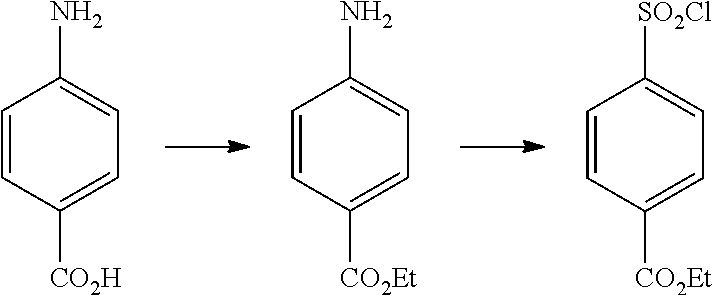


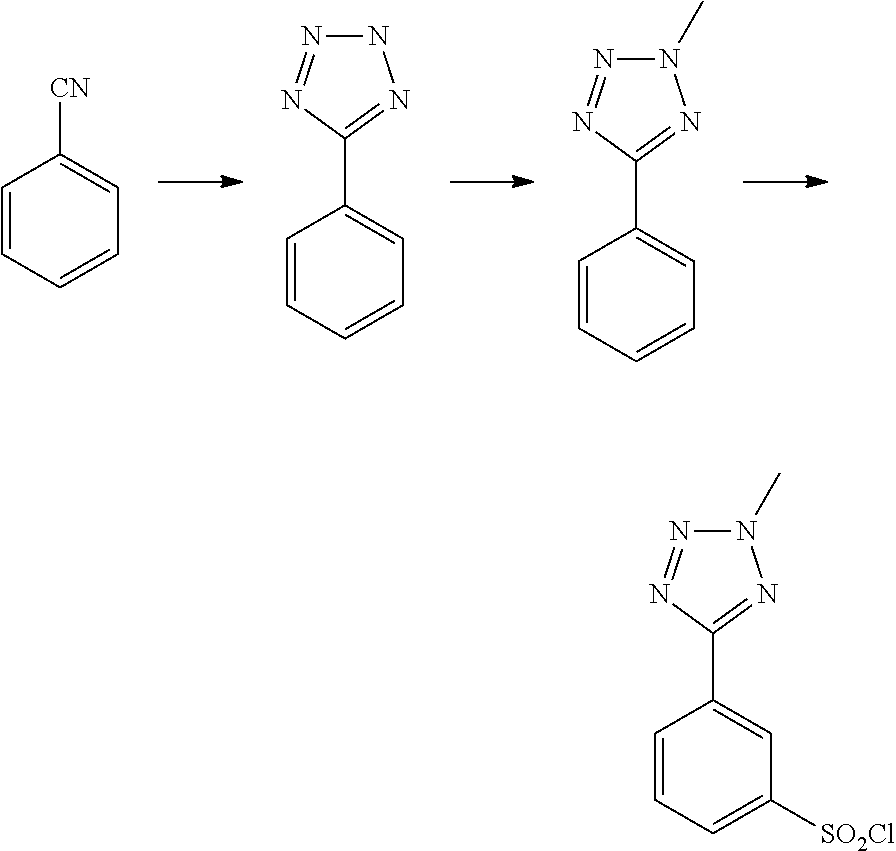


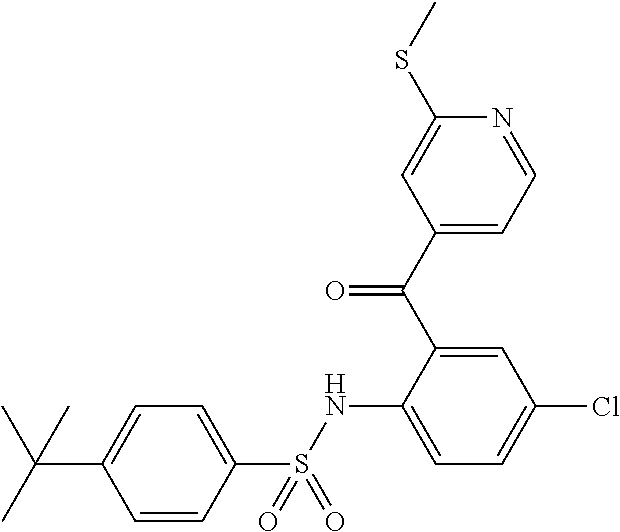


was evaluated by prophylactic administration for its ability to delay disease onset. Female mice (n=34) were dosed with 50 mg/kg twice a day by subcutaneous injections for 14 consecutive weeks starting at
| TABLE 1 |
| Compounds with activity in either or both of the |
| chemotaxis assay and calcium mobilization |
| assays, with IC50 < 1000 nM (++) |
 |
 |
 |
 |
 |
 |
 |
 |
 |
 |
 |
 |
 |
 |
 |
 |
 |
 |
 |
 |
 |
 |
 |
 |
 |
 |
 |
 |
 |
 |
 |
 |
 |
 |
 |
 |
 |
 |
 |
 |
 |
 |
 |
 |
 |
 |
 |
 |
 |
 |
 |
 |
 |
 |
 |
 |
 |
 |
 |
 |
 |
 |
 |
 |
 |
 |
 |
 |
 |
 |
 |
 |
 |
 |
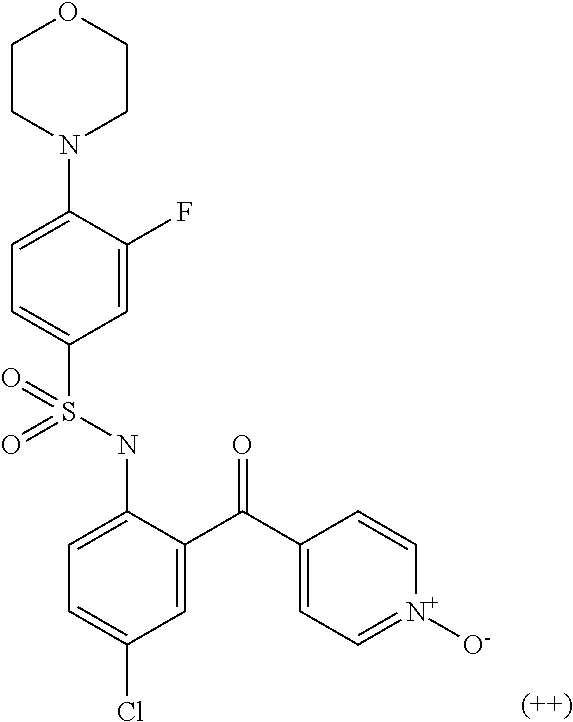 |
 |
 |
 |
 |
 |
 |
 |
 |
 |
 |
 |
 |
 |
 |
 |
 |
 |
 |
 |
 |
 |
 |
 |
 |
 |
 |
 |
 |
 |
 |
 |
 |
 |
 |
 |
 |
 |
 |
 |
 |
 |
 |
 |
 |
 |
 |
 |
 |
 |
 |
 |
 |
 |
 |
 |
 |
 |
 |
 |
 |
 |
 |
 |
 |
 |
 |
 |
 |
 |
 |
 |
 |
 |
 |
 |
 |
 |
 |
 |
 |
 |
 |
 |
 |
 |
 |
 |
 |
 |
 |
 |
 |
 |
 |
 |
 |
 |
 |
 |
 |
 |
 |
 |
 |
 |
 |
 |
 |
 |
| TABLE 2 |
| Compounds with activity in either or both of the chemotaxis assay and |
| calcium mobilization assays, with IC50 > 1000 nM (+): |
 |
 |
 |
 |
 |
 |
 |
 |
 |
 |
 |
 |
 |
 |
 |
 |
 |
 |
 |
 |
 |
 |
 |
 |
 |
 |
 |
 |
 |
 |
 |
 |
 |
 |
 |
 |
 |
 |
 |
 |
 |
 |
 |
 |
 |
 |
 |
 |
Claims (18)


Priority Applications (1)
| Application Number | Priority Date | Filing Date | Title |
|---|---|---|---|
| US15/697,414 US10364240B2 (en) | 2002-11-18 | 2017-09-06 | Aryl sulfonamides |
Applications Claiming Priority (8)
| Application Number | Priority Date | Filing Date | Title |
|---|---|---|---|
| US42767002P | 2002-11-18 | 2002-11-18 | |
| US10/716,170 US6939885B2 (en) | 2002-11-18 | 2003-11-17 | Aryl sulfonamides |
| US10/846,241 US7420055B2 (en) | 2002-11-18 | 2004-05-13 | Aryl sulfonamides |
| US12/137,006 US20090163498A1 (en) | 2002-11-18 | 2008-06-11 | Aryl Sulfonamides |
| US13/245,568 US20120014997A1 (en) | 2002-11-18 | 2011-09-26 | Aryl sulfonamides |
| US13/852,167 US20130267492A1 (en) | 2002-11-18 | 2013-03-28 | Aryl sulfonamides |
| US14/551,438 US9890148B2 (en) | 2002-11-18 | 2014-11-24 | Aryl sulfonamides |
| US15/697,414 US10364240B2 (en) | 2002-11-18 | 2017-09-06 | Aryl sulfonamides |
Related Parent Applications (1)
| Application Number | Title | Priority Date | Filing Date |
|---|---|---|---|
| US14/551,438 Continuation US9890148B2 (en) | 2002-11-18 | 2014-11-24 | Aryl sulfonamides |
Publications (2)
| Publication Number | Publication Date |
|---|---|
| US20170369483A1 US20170369483A1 (en) | 2017-12-28 |
| US10364240B2 true US10364240B2 (en) | 2019-07-30 |
Family
ID=35428241
Family Applications (6)
| Application Number | Title | Priority Date | Filing Date |
|---|---|---|---|
| US10/846,241 Expired - Lifetime US7420055B2 (en) | 2002-11-18 | 2004-05-13 | Aryl sulfonamides |
| US12/137,006 Abandoned US20090163498A1 (en) | 2002-11-18 | 2008-06-11 | Aryl Sulfonamides |
| US13/245,568 Abandoned US20120014997A1 (en) | 2002-11-18 | 2011-09-26 | Aryl sulfonamides |
| US13/852,167 Abandoned US20130267492A1 (en) | 2002-11-18 | 2013-03-28 | Aryl sulfonamides |
| US14/551,438 Expired - Fee Related US9890148B2 (en) | 2002-11-18 | 2014-11-24 | Aryl sulfonamides |
| US15/697,414 Expired - Lifetime US10364240B2 (en) | 2002-11-18 | 2017-09-06 | Aryl sulfonamides |
Family Applications Before (5)
| Application Number | Title | Priority Date | Filing Date |
|---|---|---|---|
| US10/846,241 Expired - Lifetime US7420055B2 (en) | 2002-11-18 | 2004-05-13 | Aryl sulfonamides |
| US12/137,006 Abandoned US20090163498A1 (en) | 2002-11-18 | 2008-06-11 | Aryl Sulfonamides |
| US13/245,568 Abandoned US20120014997A1 (en) | 2002-11-18 | 2011-09-26 | Aryl sulfonamides |
| US13/852,167 Abandoned US20130267492A1 (en) | 2002-11-18 | 2013-03-28 | Aryl sulfonamides |
| US14/551,438 Expired - Fee Related US9890148B2 (en) | 2002-11-18 | 2014-11-24 | Aryl sulfonamides |
Country Status (2)
| Country | Link |
|---|---|
| US (6) | US7420055B2 (en) |
| WO (1) | WO2005112925A1 (en) |
Families Citing this family (31)
| Publication number | Priority date | Publication date | Assignee | Title |
|---|---|---|---|---|
| AU2003248549B2 (en) * | 2002-05-24 | 2010-04-08 | Millennium Pharmaceuticals, Inc. | CCR9 inhibitors and methods of use thereof |
| AU2003298661B2 (en) * | 2002-11-18 | 2007-05-10 | Chemocentryx, Inc. | Aryl sulfonamides |
| US7420055B2 (en) | 2002-11-18 | 2008-09-02 | Chemocentryx, Inc. | Aryl sulfonamides |
| JP2007537275A (en) * | 2004-05-12 | 2007-12-20 | ケモセントリックス, インコーポレイテッド | Arylsulfonamide |
| US7622583B2 (en) | 2005-01-14 | 2009-11-24 | Chemocentryx, Inc. | Heteroaryl sulfonamides and CCR2 |
| CA2639913A1 (en) * | 2006-01-25 | 2007-08-02 | Synta Pharmaceutical Corp. | Phenyl and pyridyl compounds for inflammation and immune-related uses |
| US20100234364A1 (en) * | 2006-07-14 | 2010-09-16 | Arindrajit Basak | Ccr2 inhibitors and methods of use thereof |
| US7718683B2 (en) * | 2006-07-14 | 2010-05-18 | Chemocentryx, Inc. | Triazolyl phenyl benzenesulfonamides |
| PL2046762T3 (en) | 2006-07-14 | 2011-07-29 | Chemocentryx Inc | Triazolyl phenyl benzenesulfonamides |
| CN101511800B (en) * | 2006-07-14 | 2013-02-27 | 坎莫森特里克斯公司 | Triazolyl phenyl benzenesulfonamides |
| US8519135B2 (en) | 2006-07-14 | 2013-08-27 | Chemocentryx, Inc. | Heteroaryl sulfonamides and CCR2/CCR9 |
| US20080214672A1 (en) * | 2006-12-18 | 2008-09-04 | John Jessen Wright | Treatment of Asthma with Aryl Sulfonamides |
| US7776877B2 (en) * | 2007-06-22 | 2010-08-17 | Chemocentryx, Inc. | N-(2-(hetaryl)aryl) arylsulfonamides and N-(2-(hetaryl) hetaryl arylsulfonamides |
| CA2692761C (en) | 2007-07-12 | 2013-04-30 | Chemocentryx, Inc. | Fused heteroaryl pyridyl and phenyl benzenesulfonamides as ccr2 modulators for the treament of inflammation |
| CA2822039C (en) | 2010-12-16 | 2019-05-28 | Allergan, Inc. | Sulfur derivatives as chemokine receptor modulators |
| ES2791534T3 (en) | 2012-03-01 | 2020-11-04 | Allergan Inc | Benzofuran-2-sulfonamide derivatives as chemokine receptor modulators |
| WO2014008417A1 (en) * | 2012-07-04 | 2014-01-09 | Concert Pharmaceuticals, Inc. | Deuterated vercirnon |
| CN102964310A (en) * | 2012-12-03 | 2013-03-13 | 南通瑞思医药技术有限公司 | Preparation method of 2-position substituted imidazole |
| JP2017501145A (en) | 2013-12-23 | 2017-01-12 | ノージン ビーブイ | Compounds useful as CCR9 modulators |
| EP3087074A1 (en) | 2013-12-23 | 2016-11-02 | Norgine BV | Benzene sulfonamides as ccr9 inhibitors |
| MA40592A (en) | 2014-10-06 | 2016-04-14 | Chemocentryx Inc | COMPOSITIONS AND METHODS FOR THE TREATMENT OF INFLAMMATORY DISEASE OF THE INTESTINE USING A POLYTHERAPY BASED ON SMALL MOLECULE INHIBITORS OF CHEMIOKINE C-C (CCR9) AND ANTIBODY BLOCKERS ALTIPHA4-INTEGRINE |
| IL294410B2 (en) * | 2016-11-23 | 2024-02-01 | Chemocentryx Inc | Method of treating focal segmental glomerulosclerosis |
| MX386699B (en) | 2017-10-11 | 2025-03-19 | Chemocentryx Inc | TREATMENT OF FOCAL SEGMENTAL GLOMERULOSCLEROSIS WITH CCR2 ANTAGONISTS |
| KR102890201B1 (en) | 2019-07-10 | 2025-11-24 | 케모센트릭스, 인크. | Indan as a PD-L1 inhibitor |
| ES3068390T3 (en) | 2019-10-16 | 2026-05-29 | Chemocentryx Inc | Heteroaryl-biphenyl amides for the treatment of pd-l1 diseases |
| AU2020368392B2 (en) | 2019-10-16 | 2026-01-08 | Chemocentryx, Inc. | Heteroaryl-biphenyl amines for the treatment of PD-L1 diseases |
| US10792360B1 (en) | 2019-11-21 | 2020-10-06 | Chemocentryx, Inc. | Compositions and methods for treating inflammatory bowel disease using CCR9 inhibitor and anti-TNF-alpha blocking antibodies |
| TWI904146B (en) | 2020-03-31 | 2025-11-11 | 美商卡默森屈有限公司 | Compositions and methods for treating inflammatory bowel disease using ccr9 inhibitor and anti-il-23 blocking antibodies |
| US20230201144A1 (en) * | 2020-05-29 | 2023-06-29 | Novomedix, Llc | Biarylsulfonamides and pharmaceutical compositions thereof, and their use for treating fibrotic lung disease |
| CN116332856A (en) * | 2023-01-04 | 2023-06-27 | 荟达医药科技(上海)有限公司 | A kind of synthetic method of 4-pyridazine methanol |
| CN120114453B (en) * | 2025-03-31 | 2026-06-23 | 江南大学 | Use of compound C-08 in improving ulcerative colitis and intestinal barrier function |
Citations (94)
| Publication number | Priority date | Publication date | Assignee | Title |
|---|---|---|---|---|
| US2997368A (en) | 1956-12-20 | 1961-08-22 | Barent Mark | Production of manganese hydroxide |
| GB884847A (en) | 1958-04-14 | 1961-12-20 | Ciba Ltd | Mercapto compounds |
| US3121103A (en) | 1961-10-20 | 1964-02-11 | Hoffmann La Roche | Aminobenzophenones |
| US3344183A (en) | 1960-12-02 | 1967-09-26 | Hoffmann La Roche | 2 n-substituted amino benzophenones |
| US3442946A (en) | 1960-04-26 | 1969-05-06 | Hoffmann La Roche | 2-aminomercapto- and 2-aminoalkylcaptobenzophenone oximes |
| US3534062A (en) | 1967-05-16 | 1970-10-13 | Upjohn Co | Dibenzothiadiazocines |
| GB1332697A (en) | 1970-12-21 | 1973-10-03 | Hoffmann La Roche | Benzodiazepine derivatives |
| CH561703A5 (en) | 1970-12-11 | 1975-05-15 | Hoffmann La Roche | 7-Iodobenzodiazepin-2-ones - sedatives etc prepd by cyclising iodobenzophenones with glycine (esters) |
| US4117151A (en) | 1976-03-08 | 1978-09-26 | Labaz | Therapeutic sulfonamides |
| US4166452A (en) | 1976-05-03 | 1979-09-04 | Generales Constantine D J Jr | Apparatus for testing human responses to stimuli |
| EP0015214A1 (en) | 1979-02-26 | 1980-09-03 | Pierre Fabre S.A. | Derivatives of substituted 2-benzoyl glycinanilides, their preparation and their use in anxiolytic medicaments |
| US4256108A (en) | 1977-04-07 | 1981-03-17 | Alza Corporation | Microporous-semipermeable laminated osmotic system |
| US4265874A (en) | 1980-04-25 | 1981-05-05 | Alza Corporation | Method of delivering drug with aid of effervescent activity generated in environment of use |
| US4372975A (en) | 1977-06-16 | 1983-02-08 | Pierre Fabre Sa | Substituted 2-benzoyl-4-chloroglycinanilide derivatives, a process for their production, and their use as medicaments |
| DE3544409A1 (en) | 1984-12-21 | 1986-10-16 | VEB Fahlberg-List Chemische und pharmazeutische Fabriken, DDR 3013 Magdeburg | 2-Arylsulphonamido-benzo- and acetophenones and their oximes, processes for their preparation and their use in medicaments |
| DE3825041A1 (en) | 1988-07-20 | 1990-02-15 | Schering Ag | Pyrido[3,2-e][1,2,4]triazolo[1,5-a]pyrimidine-2-sulphonamides, processes for their preparation, and their use as herbicides, plant growth regulators and fungicides |
| US4954518A (en) | 1987-10-08 | 1990-09-04 | Toyama Chemical Company, Ltd. | 4H-1-benzopyran-4-one derivative or its salt, process for producing the same and pharmaceutical composition comprising the same as active ingredient |
| US4992091A (en) | 1986-07-11 | 1991-02-12 | The Dow Chemical Company | Substituted pyrazolo[1,5-a]pyrimidine-2-sulfonamides and compositions and methods of controlling undesired vegetation |
| US4997940A (en) | 1986-07-11 | 1991-03-05 | The Dow Chemical Company | Pyrazolo[1,5-a]pyrimidine-2-sulfonyl chloride and -2-sulfide compounds |
| US5021591A (en) | 1986-07-11 | 1991-06-04 | The Dow Chemical Company | Pyrazolo[1,5-a]pyrimidine-2-sulfide compounds |
| US5071468A (en) | 1988-12-23 | 1991-12-10 | Shell Internationale Research Maatschappij B.V. | Triazolopyrimidine herbicides |
| US5093364A (en) | 1988-08-24 | 1992-03-03 | Schering Agrochemicals Limited | 5-fluoroanthranilic fungicides |
| US5155121A (en) | 1990-08-16 | 1992-10-13 | Bayer Aktiengesellschaft | Phenylsulphonamide substituted pyridinealkene- and aminooxyalkanecarboxylic acid derivatives |
| US5163995A (en) | 1988-05-25 | 1992-11-17 | Dowelanco | Herbicidal alkoxy-1,2,4-triazolo[1,5-c]pyrimidine-2-sulfonamides |
| EP0526348A1 (en) | 1991-08-02 | 1993-02-03 | Sanofi | Indoline derivatives carrying an amide function, their preparation and pharmaceutical compositions containing them |
| US5185348A (en) | 1990-08-16 | 1993-02-09 | Bayer Aktiengesellschaft | Phenylsulphonamide substituted pyridinealkene- and -aminooxyalkanecarboxylic acid derivatives |
| US5217521A (en) | 1989-12-22 | 1993-06-08 | Ciba-Geigy Corporation | Triazolylsulfonamides |
| EP0556673A1 (en) | 1992-02-15 | 1993-08-25 | Hoechst Aktiengesellschaft | Ortho-substituted benzoylguanidines for the treatment and prophylaxis of heart-rhythm disorders and ischaemically induced damage, as well as inhibition of cell proliferation |
| US5338755A (en) | 1990-07-31 | 1994-08-16 | Elf Sanofi | N-sulfonylindoline derivatives, their preparation and the pharmaceutical compositions in which they are present |
| EP0613894A1 (en) | 1993-02-27 | 1994-09-07 | Nihon Nohyaku Co., Ltd. | N-Heteroaryl-N'-phenylurea derivatives, their production and use |
| WO1994020142A1 (en) | 1993-03-12 | 1994-09-15 | Center For Blood Research, Inc. | Assays and therapeutic methods based on lymphocyte chemoattractants |
| WO1995033462A1 (en) | 1994-06-02 | 1995-12-14 | Smithkline Beecham Corporation | Anti-inflammatory compounds |
| US5481005A (en) | 1990-07-31 | 1996-01-02 | Sanofi | N-sulfonylindoline derivatives, their preparation and the pharmaceutical compositions in which they are present |
| WO1996008483A1 (en) | 1994-09-16 | 1996-03-21 | Roussel Uclaf | Gallic acid derivatives, method for their preparation and their use as drugs |
| US5541186A (en) | 1993-06-28 | 1996-07-30 | Hoffmann-La Roche Inc. | Sulfonylaminopyrimidines |
| US5571775A (en) | 1994-07-11 | 1996-11-05 | Dowelanco | N-aryl[1,2,4]triazolo[1,5-a]pyridine-2-sulfonamide herbicides |
| US5589478A (en) | 1993-12-17 | 1996-12-31 | Tanabe Seiyaku Co., Ltd. | Benzenesulfonamide derivative and process for preparing thereof |
| WO1997028129A1 (en) | 1996-02-02 | 1997-08-07 | Zeneca Limited | Aminoheterocyclic derivatives as antithrombotic or anticoagulant agents |
| WO1998011218A1 (en) | 1996-09-10 | 1998-03-19 | Theodor-Kocher Institute | Cxcr3 chemokine receptor, antibodies, nucleic acids, and methods of use |
| WO1998028270A1 (en) | 1996-12-20 | 1998-07-02 | Astra Pharma Inc. | Novel compounds with analgesic effect |
| US5780488A (en) | 1996-04-03 | 1998-07-14 | Merck & Co., Inc. | Inhibitors of farnesyl-protein transferase |
| WO1998050029A1 (en) | 1997-05-07 | 1998-11-12 | University Of Pittsburgh | Inhibitors of protein isoprenyl transferases |
| WO1999017777A1 (en) | 1997-10-08 | 1999-04-15 | Merck & Co., Inc. | Inhibitors of prenyl-protein transferase |
| WO1999032433A1 (en) | 1997-12-23 | 1999-07-01 | Warner-Lambert Company | Thiourea and benzamide compounds, compositions and methods of treating or preventing inflammatory diseases and atherosclerosis |
| WO1999038845A1 (en) | 1998-01-29 | 1999-08-05 | Tularik Inc. | Ppar-gamma modulators |
| WO1999042465A2 (en) | 1998-02-18 | 1999-08-26 | Smithkline Beecham Plc | Sulphonamide derivatives being 5-ht6 receptor antagonists and process for their preparation |
| US5973148A (en) | 1996-11-13 | 1999-10-26 | Dow Agrosciences Llc | N-arylsulfilimine compounds and their use as catalysts in the preparation of N-arylarylsulfonamide compounds |
| WO1999055324A1 (en) | 1998-04-27 | 1999-11-04 | Smithkline Beecham Corporation | Ccr-3 receptor antagonists |
| WO1999055663A1 (en) | 1998-04-29 | 1999-11-04 | Vertex Pharmaceuticals Incorporated | Inhibitors of impdh enzyme |
| WO2000005214A2 (en) | 1998-07-24 | 2000-02-03 | Pfizer Inc. | Isoquinolines as urokinase inhibitors |
| US6136971A (en) | 1998-07-17 | 2000-10-24 | Roche Colorado Corporation | Preparation of sulfonamides |
| WO2000062778A1 (en) | 1999-04-15 | 2000-10-26 | Bristol-Myers Squibb Co. | Cyclic protein tyrosine kinase inhibitors |
| WO2001000579A1 (en) | 1999-06-30 | 2001-01-04 | Tularik Inc. | COMPOUNDS FOR THE MODULATION OF PPARη ACTIVITY |
| WO2001009097A1 (en) | 1999-07-30 | 2001-02-08 | Vertex Pharmaceuticals Incorporated | Cyclic amine derivatives for the treatment of neurological diseases |
| WO2001017971A1 (en) | 1999-09-06 | 2001-03-15 | Takeda Chemical Industries, Ltd. | Process for the preparation of 2,3-dihydroazepine derivatives |
| WO2001019788A2 (en) | 1999-09-17 | 2001-03-22 | Cor Therapeutics, Inc. | BENZAMIDES AND RELATED INHIBITORS OF FACTOR Xa |
| WO2001019798A2 (en) | 1999-09-17 | 2001-03-22 | Cor Therapeutics Inc. | INHIBITORS OF FACTOR Xa |
| WO2001032646A2 (en) | 1999-11-05 | 2001-05-10 | Smithkline Beecham P.L.C. | Sulfonamide derivatives |
| WO2001056989A2 (en) | 2000-02-01 | 2001-08-09 | Cor Therapeutics, Inc. | Inhibitors of factor xa |
| WO2001057020A1 (en) | 2000-02-01 | 2001-08-09 | Cor Therapeutics, Inc. | INDOLE AND BENZIMIDAZOLE INHIBITORS OF FACTOR Xa |
| WO2001056607A1 (en) | 2000-02-03 | 2001-08-09 | Eisai Co., Ltd. | Integrin expression inhibitors |
| WO2001057003A1 (en) | 2000-02-01 | 2001-08-09 | Cor Therapeutics, Inc. | 3,4-DIHYDRO-2H-BENZO[1,4]OXAZINE INHIBITORS OF FACTOR Xa |
| WO2001060319A2 (en) | 2000-02-18 | 2001-08-23 | Arch Development Corporation | Polyhydroxylated benzene-containing compounds |
| US6297195B1 (en) | 1996-07-19 | 2001-10-02 | Bayer Aktiengesellschaft | Substituted triazoloazine sulphonamides |
| US6316450B1 (en) | 1997-07-11 | 2001-11-13 | Smithkline Beecham P.L.C. | Compounds |
| WO2002000633A1 (en) | 2000-06-28 | 2002-01-03 | Tularik Inc. | Quinolinyl and benzothiazolyl ppar-gamma modulators |
| US20020009116A1 (en) | 2000-03-17 | 2002-01-24 | Fujitsu Limited | Complex coupling MQW semiconductor laser |
| US20020012680A1 (en) | 1999-02-26 | 2002-01-31 | Patel Mahesh V. | Compositions and methods for improved delivery of lipid regulating agents |
| US20020013315A1 (en) | 2000-07-06 | 2002-01-31 | Teall Martin Richard | Gamma secretase inhibitors |
| WO2002018326A1 (en) | 2000-08-31 | 2002-03-07 | Wakunaga Pharmaceutical Co., Ltd. | Novel propenohydroxamic acid derivatives |
| US20020037928A1 (en) | 2000-05-03 | 2002-03-28 | Jaen Juan C. | Combination therapeutic compositions and method of use |
| US20020037905A1 (en) | 1997-04-22 | 2002-03-28 | Dahl Bjarne H. | Substituted phenyl derivatives, their preparation and use |
| WO2002030358A2 (en) | 2000-10-11 | 2002-04-18 | Tularik Inc. | Modulation of ccr4 function |
| US6403607B1 (en) | 1998-03-30 | 2002-06-11 | Hiroyoshi Hidaka | Sulfonamide derivatives and drugs containing the same as the active ingredient |
| WO2002054867A1 (en) | 2001-01-16 | 2002-07-18 | Sumitomo Chemical Takeda Agro Company, Limited | Sulfonamide derivative-containing agricultural and horticultural composition |
| WO2002055501A2 (en) | 2001-01-12 | 2002-07-18 | Amgen Inc | N-pyridyl carboxamide derivatives and pharmaceutical compositions containing them |
| US20020103202A1 (en) | 2000-06-23 | 2002-08-01 | Pinto Donald J.P. | Heteroaryl-phenyl substituted factor Xa inhibitors |
| WO2002059080A2 (en) | 2001-01-25 | 2002-08-01 | Guilford Pharmaceuticals Inc. | Trisubstituted carbocyclic cyclophilin binding compounds and their use |
| US6432624B1 (en) | 2000-05-08 | 2002-08-13 | Fuji Photo Film Co., Ltd. | Method of processing silver halide color photographic lightsensitive material |
| US20030060460A1 (en) | 1996-12-18 | 2003-03-27 | Shuichi Ohuchida | Sulfonamide and carboxamide derivatives and drugs containing the same as the active ingredient |
| US20030139390A1 (en) | 1999-06-30 | 2003-07-24 | Tularik Inc. | Compounds for the modulation of PPARgamma activity |
| WO2003099773A1 (en) | 2002-05-24 | 2003-12-04 | Millennium Pharmaceuticals, Inc. | Ccr9 inhibitors and methods of use thereof |
| WO2005004810A2 (en) | 2003-07-02 | 2005-01-20 | Merck & Co., Inc. | Arylsulfonamide derivatives |
| US6939885B2 (en) | 2002-11-18 | 2005-09-06 | Chemocentryx | Aryl sulfonamides |
| US20060111351A1 (en) | 2002-11-18 | 2006-05-25 | Solomon Ungashe | Aryl sulfonamides |
| US20060134566A1 (en) | 2004-12-16 | 2006-06-22 | Fuji Photo Film Co., Ltd. | Silver halide photographic light-sensitive material |
| WO2006124874A2 (en) | 2005-05-12 | 2006-11-23 | Kalypsys, Inc. | Inhibitors of b-raf kinase |
| WO2007014008A2 (en) | 2005-07-22 | 2007-02-01 | Glaxo Group Limted | Benzenesulfonamide inhibitor of ccr2 chemokine receptor |
| WO2007014054A2 (en) | 2005-07-22 | 2007-02-01 | Glaxo Group Limted | Benzenesulfonamide inhibitor of ccr2 chemokine receptor |
| US7227035B2 (en) | 2002-11-18 | 2007-06-05 | Chemocentryx | Bis-aryl sulfonamides |
| US7321001B2 (en) | 2002-12-20 | 2008-01-22 | Amgen Inc. | Asthma and allergic inflammation modulators |
| US7420055B2 (en) | 2002-11-18 | 2008-09-02 | Chemocentryx, Inc. | Aryl sulfonamides |
| US20100234364A1 (en) | 2006-07-14 | 2010-09-16 | Arindrajit Basak | Ccr2 inhibitors and methods of use thereof |
| US8110576B2 (en) | 2008-06-10 | 2012-02-07 | Plexxikon Inc. | Substituted pyrrolo[2,3b]pyrazines and methods for treatment of raf protein kinase-mediated indications |
Family Cites Families (1)
| Publication number | Priority date | Publication date | Assignee | Title |
|---|---|---|---|---|
| US5156121A (en) * | 1990-05-30 | 1992-10-20 | Routery Edward E | Piston-connecting rod assembly |
-
2004
- 2004-05-13 US US10/846,241 patent/US7420055B2/en not_active Expired - Lifetime
-
2005
- 2005-05-13 WO PCT/US2005/016815 patent/WO2005112925A1/en not_active Ceased
-
2008
- 2008-06-11 US US12/137,006 patent/US20090163498A1/en not_active Abandoned
-
2011
- 2011-09-26 US US13/245,568 patent/US20120014997A1/en not_active Abandoned
-
2013
- 2013-03-28 US US13/852,167 patent/US20130267492A1/en not_active Abandoned
-
2014
- 2014-11-24 US US14/551,438 patent/US9890148B2/en not_active Expired - Fee Related
-
2017
- 2017-09-06 US US15/697,414 patent/US10364240B2/en not_active Expired - Lifetime
Patent Citations (112)
| Publication number | Priority date | Publication date | Assignee | Title |
|---|---|---|---|---|
| US2997368A (en) | 1956-12-20 | 1961-08-22 | Barent Mark | Production of manganese hydroxide |
| GB884847A (en) | 1958-04-14 | 1961-12-20 | Ciba Ltd | Mercapto compounds |
| US3442946A (en) | 1960-04-26 | 1969-05-06 | Hoffmann La Roche | 2-aminomercapto- and 2-aminoalkylcaptobenzophenone oximes |
| US3344183A (en) | 1960-12-02 | 1967-09-26 | Hoffmann La Roche | 2 n-substituted amino benzophenones |
| US3121103A (en) | 1961-10-20 | 1964-02-11 | Hoffmann La Roche | Aminobenzophenones |
| US3534062A (en) | 1967-05-16 | 1970-10-13 | Upjohn Co | Dibenzothiadiazocines |
| CH561703A5 (en) | 1970-12-11 | 1975-05-15 | Hoffmann La Roche | 7-Iodobenzodiazepin-2-ones - sedatives etc prepd by cyclising iodobenzophenones with glycine (esters) |
| GB1332697A (en) | 1970-12-21 | 1973-10-03 | Hoffmann La Roche | Benzodiazepine derivatives |
| US4117151A (en) | 1976-03-08 | 1978-09-26 | Labaz | Therapeutic sulfonamides |
| US4166452A (en) | 1976-05-03 | 1979-09-04 | Generales Constantine D J Jr | Apparatus for testing human responses to stimuli |
| US4256108A (en) | 1977-04-07 | 1981-03-17 | Alza Corporation | Microporous-semipermeable laminated osmotic system |
| US4372975A (en) | 1977-06-16 | 1983-02-08 | Pierre Fabre Sa | Substituted 2-benzoyl-4-chloroglycinanilide derivatives, a process for their production, and their use as medicaments |
| EP0015214B1 (en) | 1979-02-26 | 1982-01-27 | Pierre Fabre S.A. | Derivatives of substituted 2-benzoyl glycinanilides, their preparation and their use in anxiolytic medicaments |
| EP0015214A1 (en) | 1979-02-26 | 1980-09-03 | Pierre Fabre S.A. | Derivatives of substituted 2-benzoyl glycinanilides, their preparation and their use in anxiolytic medicaments |
| US4265874A (en) | 1980-04-25 | 1981-05-05 | Alza Corporation | Method of delivering drug with aid of effervescent activity generated in environment of use |
| DE3544409A1 (en) | 1984-12-21 | 1986-10-16 | VEB Fahlberg-List Chemische und pharmazeutische Fabriken, DDR 3013 Magdeburg | 2-Arylsulphonamido-benzo- and acetophenones and their oximes, processes for their preparation and their use in medicaments |
| US5021591A (en) | 1986-07-11 | 1991-06-04 | The Dow Chemical Company | Pyrazolo[1,5-a]pyrimidine-2-sulfide compounds |
| US4992091A (en) | 1986-07-11 | 1991-02-12 | The Dow Chemical Company | Substituted pyrazolo[1,5-a]pyrimidine-2-sulfonamides and compositions and methods of controlling undesired vegetation |
| US4997940A (en) | 1986-07-11 | 1991-03-05 | The Dow Chemical Company | Pyrazolo[1,5-a]pyrimidine-2-sulfonyl chloride and -2-sulfide compounds |
| US4954518A (en) | 1987-10-08 | 1990-09-04 | Toyama Chemical Company, Ltd. | 4H-1-benzopyran-4-one derivative or its salt, process for producing the same and pharmaceutical composition comprising the same as active ingredient |
| US5163995A (en) | 1988-05-25 | 1992-11-17 | Dowelanco | Herbicidal alkoxy-1,2,4-triazolo[1,5-c]pyrimidine-2-sulfonamides |
| DE3825041A1 (en) | 1988-07-20 | 1990-02-15 | Schering Ag | Pyrido[3,2-e][1,2,4]triazolo[1,5-a]pyrimidine-2-sulphonamides, processes for their preparation, and their use as herbicides, plant growth regulators and fungicides |
| US5093364A (en) | 1988-08-24 | 1992-03-03 | Schering Agrochemicals Limited | 5-fluoroanthranilic fungicides |
| US5071468A (en) | 1988-12-23 | 1991-12-10 | Shell Internationale Research Maatschappij B.V. | Triazolopyrimidine herbicides |
| US5217521A (en) | 1989-12-22 | 1993-06-08 | Ciba-Geigy Corporation | Triazolylsulfonamides |
| US5481005A (en) | 1990-07-31 | 1996-01-02 | Sanofi | N-sulfonylindoline derivatives, their preparation and the pharmaceutical compositions in which they are present |
| US5338755A (en) | 1990-07-31 | 1994-08-16 | Elf Sanofi | N-sulfonylindoline derivatives, their preparation and the pharmaceutical compositions in which they are present |
| US5155121A (en) | 1990-08-16 | 1992-10-13 | Bayer Aktiengesellschaft | Phenylsulphonamide substituted pyridinealkene- and aminooxyalkanecarboxylic acid derivatives |
| US5185348A (en) | 1990-08-16 | 1993-02-09 | Bayer Aktiengesellschaft | Phenylsulphonamide substituted pyridinealkene- and -aminooxyalkanecarboxylic acid derivatives |
| EP0526348A1 (en) | 1991-08-02 | 1993-02-03 | Sanofi | Indoline derivatives carrying an amide function, their preparation and pharmaceutical compositions containing them |
| WO1993003013A1 (en) | 1991-08-02 | 1993-02-18 | Elf Sanofi | Indoline derivatives having an amide function, their preparation, and pharmaceutical compositions containing them |
| EP0556673A1 (en) | 1992-02-15 | 1993-08-25 | Hoechst Aktiengesellschaft | Ortho-substituted benzoylguanidines for the treatment and prophylaxis of heart-rhythm disorders and ischaemically induced damage, as well as inhibition of cell proliferation |
| EP0556673B1 (en) | 1992-02-15 | 1997-09-17 | Hoechst Aktiengesellschaft | Ortho-substituted benzoylguanidines, process for their preparation, their use as medicament or diagnostic agent, as well as medicaments containing them |
| EP0613894A1 (en) | 1993-02-27 | 1994-09-07 | Nihon Nohyaku Co., Ltd. | N-Heteroaryl-N'-phenylurea derivatives, their production and use |
| WO1994020142A1 (en) | 1993-03-12 | 1994-09-15 | Center For Blood Research, Inc. | Assays and therapeutic methods based on lymphocyte chemoattractants |
| US5541186A (en) | 1993-06-28 | 1996-07-30 | Hoffmann-La Roche Inc. | Sulfonylaminopyrimidines |
| US5589478A (en) | 1993-12-17 | 1996-12-31 | Tanabe Seiyaku Co., Ltd. | Benzenesulfonamide derivative and process for preparing thereof |
| WO1995033462A1 (en) | 1994-06-02 | 1995-12-14 | Smithkline Beecham Corporation | Anti-inflammatory compounds |
| US5571775A (en) | 1994-07-11 | 1996-11-05 | Dowelanco | N-aryl[1,2,4]triazolo[1,5-a]pyridine-2-sulfonamide herbicides |
| WO1996008483A1 (en) | 1994-09-16 | 1996-03-21 | Roussel Uclaf | Gallic acid derivatives, method for their preparation and their use as drugs |
| WO1997028129A1 (en) | 1996-02-02 | 1997-08-07 | Zeneca Limited | Aminoheterocyclic derivatives as antithrombotic or anticoagulant agents |
| US5780488A (en) | 1996-04-03 | 1998-07-14 | Merck & Co., Inc. | Inhibitors of farnesyl-protein transferase |
| US6297195B1 (en) | 1996-07-19 | 2001-10-02 | Bayer Aktiengesellschaft | Substituted triazoloazine sulphonamides |
| WO1998011218A1 (en) | 1996-09-10 | 1998-03-19 | Theodor-Kocher Institute | Cxcr3 chemokine receptor, antibodies, nucleic acids, and methods of use |
| US5973148A (en) | 1996-11-13 | 1999-10-26 | Dow Agrosciences Llc | N-arylsulfilimine compounds and their use as catalysts in the preparation of N-arylarylsulfonamide compounds |
| US20030060460A1 (en) | 1996-12-18 | 2003-03-27 | Shuichi Ohuchida | Sulfonamide and carboxamide derivatives and drugs containing the same as the active ingredient |
| WO1998028270A1 (en) | 1996-12-20 | 1998-07-02 | Astra Pharma Inc. | Novel compounds with analgesic effect |
| US20020037905A1 (en) | 1997-04-22 | 2002-03-28 | Dahl Bjarne H. | Substituted phenyl derivatives, their preparation and use |
| WO1998050029A1 (en) | 1997-05-07 | 1998-11-12 | University Of Pittsburgh | Inhibitors of protein isoprenyl transferases |
| US6316450B1 (en) | 1997-07-11 | 2001-11-13 | Smithkline Beecham P.L.C. | Compounds |
| WO1999017777A1 (en) | 1997-10-08 | 1999-04-15 | Merck & Co., Inc. | Inhibitors of prenyl-protein transferase |
| US6297239B1 (en) | 1997-10-08 | 2001-10-02 | Merck & Co., Inc. | Inhibitors of prenyl-protein transferase |
| WO1999032433A1 (en) | 1997-12-23 | 1999-07-01 | Warner-Lambert Company | Thiourea and benzamide compounds, compositions and methods of treating or preventing inflammatory diseases and atherosclerosis |
| US6200995B1 (en) | 1998-01-29 | 2001-03-13 | Tularik Inc. | PPAR-γ modulators |
| WO1999038845A1 (en) | 1998-01-29 | 1999-08-05 | Tularik Inc. | Ppar-gamma modulators |
| WO1999042465A2 (en) | 1998-02-18 | 1999-08-26 | Smithkline Beecham Plc | Sulphonamide derivatives being 5-ht6 receptor antagonists and process for their preparation |
| US6403607B1 (en) | 1998-03-30 | 2002-06-11 | Hiroyoshi Hidaka | Sulfonamide derivatives and drugs containing the same as the active ingredient |
| WO1999055324A1 (en) | 1998-04-27 | 1999-11-04 | Smithkline Beecham Corporation | Ccr-3 receptor antagonists |
| WO1999055663A1 (en) | 1998-04-29 | 1999-11-04 | Vertex Pharmaceuticals Incorporated | Inhibitors of impdh enzyme |
| US6136971A (en) | 1998-07-17 | 2000-10-24 | Roche Colorado Corporation | Preparation of sulfonamides |
| WO2000005214A2 (en) | 1998-07-24 | 2000-02-03 | Pfizer Inc. | Isoquinolines as urokinase inhibitors |
| US20020012680A1 (en) | 1999-02-26 | 2002-01-31 | Patel Mahesh V. | Compositions and methods for improved delivery of lipid regulating agents |
| WO2000062778A1 (en) | 1999-04-15 | 2000-10-26 | Bristol-Myers Squibb Co. | Cyclic protein tyrosine kinase inhibitors |
| WO2001000579A1 (en) | 1999-06-30 | 2001-01-04 | Tularik Inc. | COMPOUNDS FOR THE MODULATION OF PPARη ACTIVITY |
| US20030139390A1 (en) | 1999-06-30 | 2003-07-24 | Tularik Inc. | Compounds for the modulation of PPARgamma activity |
| WO2001009097A1 (en) | 1999-07-30 | 2001-02-08 | Vertex Pharmaceuticals Incorporated | Cyclic amine derivatives for the treatment of neurological diseases |
| WO2001017971A1 (en) | 1999-09-06 | 2001-03-15 | Takeda Chemical Industries, Ltd. | Process for the preparation of 2,3-dihydroazepine derivatives |
| WO2001019788A2 (en) | 1999-09-17 | 2001-03-22 | Cor Therapeutics, Inc. | BENZAMIDES AND RELATED INHIBITORS OF FACTOR Xa |
| WO2001019798A2 (en) | 1999-09-17 | 2001-03-22 | Cor Therapeutics Inc. | INHIBITORS OF FACTOR Xa |
| WO2001032646A2 (en) | 1999-11-05 | 2001-05-10 | Smithkline Beecham P.L.C. | Sulfonamide derivatives |
| WO2001057020A1 (en) | 2000-02-01 | 2001-08-09 | Cor Therapeutics, Inc. | INDOLE AND BENZIMIDAZOLE INHIBITORS OF FACTOR Xa |
| WO2001056989A2 (en) | 2000-02-01 | 2001-08-09 | Cor Therapeutics, Inc. | Inhibitors of factor xa |
| US20020013314A1 (en) | 2000-02-01 | 2002-01-31 | Bing-Yan Zhu | 3,4-dihydro-2H-benzo[1,4]oxazine inhibitors of factor Xa |
| US20020065303A1 (en) | 2000-02-01 | 2002-05-30 | Bing-Yan Zhu | Bivalent phenylene inhibitors of factor Xa |
| US20020072530A1 (en) | 2000-02-01 | 2002-06-13 | Bing-Yan Zhu | Indole and benzimidazole inhibitors of factor Xa |
| WO2001057003A1 (en) | 2000-02-01 | 2001-08-09 | Cor Therapeutics, Inc. | 3,4-DIHYDRO-2H-BENZO[1,4]OXAZINE INHIBITORS OF FACTOR Xa |
| WO2001056607A1 (en) | 2000-02-03 | 2001-08-09 | Eisai Co., Ltd. | Integrin expression inhibitors |
| WO2001060319A2 (en) | 2000-02-18 | 2001-08-23 | Arch Development Corporation | Polyhydroxylated benzene-containing compounds |
| US20020009116A1 (en) | 2000-03-17 | 2002-01-24 | Fujitsu Limited | Complex coupling MQW semiconductor laser |
| US20020037928A1 (en) | 2000-05-03 | 2002-03-28 | Jaen Juan C. | Combination therapeutic compositions and method of use |
| US6653332B2 (en) | 2000-05-03 | 2003-11-25 | Tularik Inc. | Combination therapeutic compositions and method of use |
| US6432624B1 (en) | 2000-05-08 | 2002-08-13 | Fuji Photo Film Co., Ltd. | Method of processing silver halide color photographic lightsensitive material |
| US20020103202A1 (en) | 2000-06-23 | 2002-08-01 | Pinto Donald J.P. | Heteroaryl-phenyl substituted factor Xa inhibitors |
| WO2002000633A1 (en) | 2000-06-28 | 2002-01-03 | Tularik Inc. | Quinolinyl and benzothiazolyl ppar-gamma modulators |
| US20020013315A1 (en) | 2000-07-06 | 2002-01-31 | Teall Martin Richard | Gamma secretase inhibitors |
| WO2002018326A1 (en) | 2000-08-31 | 2002-03-07 | Wakunaga Pharmaceutical Co., Ltd. | Novel propenohydroxamic acid derivatives |
| WO2002030358A2 (en) | 2000-10-11 | 2002-04-18 | Tularik Inc. | Modulation of ccr4 function |
| WO2002055501A2 (en) | 2001-01-12 | 2002-07-18 | Amgen Inc | N-pyridyl carboxamide derivatives and pharmaceutical compositions containing them |
| WO2002054867A1 (en) | 2001-01-16 | 2002-07-18 | Sumitomo Chemical Takeda Agro Company, Limited | Sulfonamide derivative-containing agricultural and horticultural composition |
| WO2002059080A2 (en) | 2001-01-25 | 2002-08-01 | Guilford Pharmaceuticals Inc. | Trisubstituted carbocyclic cyclophilin binding compounds and their use |
| WO2003099773A1 (en) | 2002-05-24 | 2003-12-04 | Millennium Pharmaceuticals, Inc. | Ccr9 inhibitors and methods of use thereof |
| US8030517B2 (en) | 2002-05-24 | 2011-10-04 | Millennium Pharmaceuticals, Inc. | CCR9 inhibitors and methods of use thereof |
| US7999109B2 (en) | 2002-05-24 | 2011-08-16 | Millennium Pharmaceuticals, Inc. | CCR9 inhibitors and methods of use thereof |
| US7659272B2 (en) | 2002-05-24 | 2010-02-09 | Millennium Pharmaceuticals, Inc. | CCR9 inhibitors and methods of use thereof |
| US7282502B2 (en) | 2002-05-24 | 2007-10-16 | Millennium Pharmaceuticals, Inc. | CCR9 inhibitors and methods of use thereof |
| US7582661B2 (en) | 2002-11-18 | 2009-09-01 | Chemocentryx, Inc. | Aryl sulfonamides |
| US20060111351A1 (en) | 2002-11-18 | 2006-05-25 | Solomon Ungashe | Aryl sulfonamides |
| US20130267492A1 (en) | 2002-11-18 | 2013-10-10 | Chemocentryx, Inc. | Aryl sulfonamides |
| US7227035B2 (en) | 2002-11-18 | 2007-06-05 | Chemocentryx | Bis-aryl sulfonamides |
| US8211896B2 (en) | 2002-11-18 | 2012-07-03 | Chemocentryx, Inc. | Aryl sulfonamides |
| US7335653B2 (en) | 2002-11-18 | 2008-02-26 | Chemocentryx, Inc. | Bis-aryl sulfonamides |
| US6939885B2 (en) | 2002-11-18 | 2005-09-06 | Chemocentryx | Aryl sulfonamides |
| US7420055B2 (en) | 2002-11-18 | 2008-09-02 | Chemocentryx, Inc. | Aryl sulfonamides |
| US7321001B2 (en) | 2002-12-20 | 2008-01-22 | Amgen Inc. | Asthma and allergic inflammation modulators |
| WO2005004810A2 (en) | 2003-07-02 | 2005-01-20 | Merck & Co., Inc. | Arylsulfonamide derivatives |
| US7393873B2 (en) | 2003-07-02 | 2008-07-01 | Merck & Co., Inc. | Arylsulfonamide derivatives |
| US20060134566A1 (en) | 2004-12-16 | 2006-06-22 | Fuji Photo Film Co., Ltd. | Silver halide photographic light-sensitive material |
| WO2006124874A2 (en) | 2005-05-12 | 2006-11-23 | Kalypsys, Inc. | Inhibitors of b-raf kinase |
| WO2007014008A2 (en) | 2005-07-22 | 2007-02-01 | Glaxo Group Limted | Benzenesulfonamide inhibitor of ccr2 chemokine receptor |
| WO2007014054A2 (en) | 2005-07-22 | 2007-02-01 | Glaxo Group Limted | Benzenesulfonamide inhibitor of ccr2 chemokine receptor |
| US20100234364A1 (en) | 2006-07-14 | 2010-09-16 | Arindrajit Basak | Ccr2 inhibitors and methods of use thereof |
| US8110576B2 (en) | 2008-06-10 | 2012-02-07 | Plexxikon Inc. | Substituted pyrrolo[2,3b]pyrazines and methods for treatment of raf protein kinase-mediated indications |
Non-Patent Citations (44)
| Title |
|---|
| Berman et al., Immunol. Invest., 17, pp. 625-677, 1988. |
| Burns "Composition and methods . . . " CA 139:17596 (2003). |
| Campbell, et al., J. Exp. Med., 195(1), pp. 135-141, 2002. |
| Cohen et al. "cytokine function . . . " CA 125:31527 (1996). |
| Dahinden, et al., J. Exp. Med., 179, pp. 751-756, 1994. |
| Dannhardt, et al., 37 Eur.J.Med.Chem., pp. 147-161, 2002. |
| Davidson et al., J Exp Med., 184, pp. 241-251, 1996. |
| ESPICOM "GSK/chemocyntryx . . . " Espicom pharm$Med Device News (2006). |
| Improper Markush, Fed. Reg. vol. 76(27):7162-7175, slide 1, 64067 (2011). |
| IMS R&D Fucus "Chemokine receptor antagonist . . . " Sep. 2006. |
| Kavanaugh et al., J. Immunol., 146, pp. 4149-4156, 1991. |
| Kontoyiannis et al., Immunity, 10, pp. 387-398, 1999. |
| Kosiewicz et al., J Clin Invest., 107(6), pp. 695-702, 2001. |
| Kunkel, et al., J. Exp. Med. 192(5), pp. 761-767, 2000. |
| Lothrop et al., J.Amer.Chem.Coc., CODEN:JACSAT, 63, pp. 2564-2567, 1941. |
| Murphy, Rev. Immun., 12, pp. 593-633, 1994. |
| Nandy, Bidisha, et al., "An unusual cleavage of a C—S bond with concurrent S-arylation under palladium-copper catalysis," Tetrahedron Letters 41:7259-7262 (2000). |
| Neote, et al., Cell, 72, pp. 415-425, 1993. |
| Oba et al. "MIP-1alpha . . . " CA 142:461958 (2005). |
| Panwala, et al., J Immunol., 161, pp. 5733-5744, 1998. |
| Papadakis, et al., J. Immunol., 165, pp. 5069-5076, 2000. |
| Powrie et al., Int Immunol., 5(11), pp. 1461-1471, 1993. |
| Qiuping Z et al., Cancer Res., 63, pp. 6469-6477, 2003. |
| Sato, Tadahisa, "Pyrazolotriazole coupler, and color photographic material containing it," CA113:241390 (1990). |
| Schaarschmidt; Herzenberg, ChemBer., CODEN:CHBEAM, 53, pp. 1388-1399, 1920. |
| Schall, Cytokine, 3, pp. 165-183, 1991. |
| Schall, et al., Curr. Opin. Immunol., 6, pp. 865-873, 1994. |
| Science IP Search Report (Mar. 1, 2005). |
| SciFinder Search Results (Feb. 19, 2004). |
| SciFinder Search Results (Feb. 20, 2004). |
| Search Report (dated Sep. 3, 2002). |
| Silverman, Richard B., "The Organic Chemistry of Drug Design and Drug Action," Academic Press, pp. 65-73 (1993). |
| Silvestri et al., Medicinal Chemistry Research, 11(4), pp. 195-218, 2002. |
| Street et al., Journal of Chemical Research, Synopses, (5), pp. 154-155, 1987. |
| Tan et al. "All roads lead to . . . " SciSearch 15762026 (2006). |
| Targan et al., N Engl J Med., 337(15), pp. 1029-1035, 1997. |
| Uehara, et al., J. Immunol, 168(6), pp. 2811-2819, 2002. |
| Ullmann; Bleier, Chem.Ber., CODEN:CHBEAM, 35, pp. 4273-4280, 1902. |
| Van Riper, et al., J. Exp. Med., 177, pp. 851-856, 1993. |
| Volkonen et al., "N-(2-Benzoyl-chlorophenyl)-4-chloro-benzenesulfonamide," Acta Cryst.E64, o737 (2008). |
| Wurbel, et al., Blood, 98(9), pp. 2626-2632, 2001. |
| Youn BS, et al., Apoptosis, 7, pp. 271-276, 2002. |
| Youn et al. "Blocking . . . " CA 135:613109 (2001). |
| Zaballos, et al., J. Immunol., 162, pp. 5671-5675, 1999. |
Also Published As
| Publication number | Publication date |
|---|---|
| US20090163498A1 (en) | 2009-06-25 |
| US20130267492A1 (en) | 2013-10-10 |
| US20050137193A1 (en) | 2005-06-23 |
| US20170369483A1 (en) | 2017-12-28 |
| US7420055B2 (en) | 2008-09-02 |
| WO2005112925A1 (en) | 2005-12-01 |
| US9890148B2 (en) | 2018-02-13 |
| US20150080351A1 (en) | 2015-03-19 |
| US20120014997A1 (en) | 2012-01-19 |
Similar Documents
| Publication | Publication Date | Title |
|---|---|---|
| US9890148B2 (en) | Aryl sulfonamides | |
| US8211896B2 (en) | Aryl sulfonamides | |
| US7335653B2 (en) | Bis-aryl sulfonamides | |
| US7932252B2 (en) | Aryl sulfonamides | |
| US20060111351A1 (en) | Aryl sulfonamides | |
| US8642808B2 (en) | Bis-aryl sulfonamides |
Legal Events
| Date | Code | Title | Description |
|---|---|---|---|
| FEPP | Fee payment procedure |
Free format text: ENTITY STATUS SET TO UNDISCOUNTED (ORIGINAL EVENT CODE: BIG.); ENTITY STATUS OF PATENT OWNER: SMALL ENTITY |
|
| AS | Assignment |
Owner name: CHEMOCENTRYX, INC., CALIFORNIA Free format text: ASSIGNMENT OF ASSIGNORS INTEREST;ASSIGNORS:UNGASHE, SOLOMON;WRIGHT, JOHN J.;PENNELL, ANDREW;AND OTHERS;SIGNING DATES FROM 20040922 TO 20040927;REEL/FRAME:043586/0441 |
|
| FEPP | Fee payment procedure |
Free format text: ENTITY STATUS SET TO SMALL (ORIGINAL EVENT CODE: SMAL); ENTITY STATUS OF PATENT OWNER: SMALL ENTITY |
|
| STPP | Information on status: patent application and granting procedure in general |
Free format text: AWAITING TC RESP, ISSUE FEE PAYMENT VERIFIED |
|
| STPP | Information on status: patent application and granting procedure in general |
Free format text: PUBLICATIONS -- ISSUE FEE PAYMENT VERIFIED |
|
| STPP | Information on status: patent application and granting procedure in general |
Free format text: AWAITING TC RESP, ISSUE FEE PAYMENT VERIFIED |
|
| STPP | Information on status: patent application and granting procedure in general |
Free format text: PUBLICATIONS -- ISSUE FEE PAYMENT VERIFIED |
|
| STCF | Information on status: patent grant |
Free format text: PATENTED CASE |
|
| MAFP | Maintenance fee payment |
Free format text: PAYMENT OF MAINTENANCE FEE, 4TH YR, SMALL ENTITY (ORIGINAL EVENT CODE: M2551); ENTITY STATUS OF PATENT OWNER: SMALL ENTITY Year of fee payment: 4 |
|
| FEPP | Fee payment procedure |
Free format text: ENTITY STATUS SET TO UNDISCOUNTED (ORIGINAL EVENT CODE: BIG.); ENTITY STATUS OF PATENT OWNER: LARGE ENTITY |
|
| MAFP | Maintenance fee payment |
Free format text: PAYMENT OF MAINTENANCE FEE UNDER 1.28(C) (ORIGINAL EVENT CODE: M1559); ENTITY STATUS OF PATENT OWNER: LARGE ENTITY |
|
| AS | Assignment |
Owner name: CHEMOCENTRYX, INC., CALIFORNIA Free format text: ASSIGNEE CHANGE OF ADDRESS;ASSIGNOR:CHEMOCENTRYX, INC.;REEL/FRAME:064144/0685 Effective date: 20230623 |